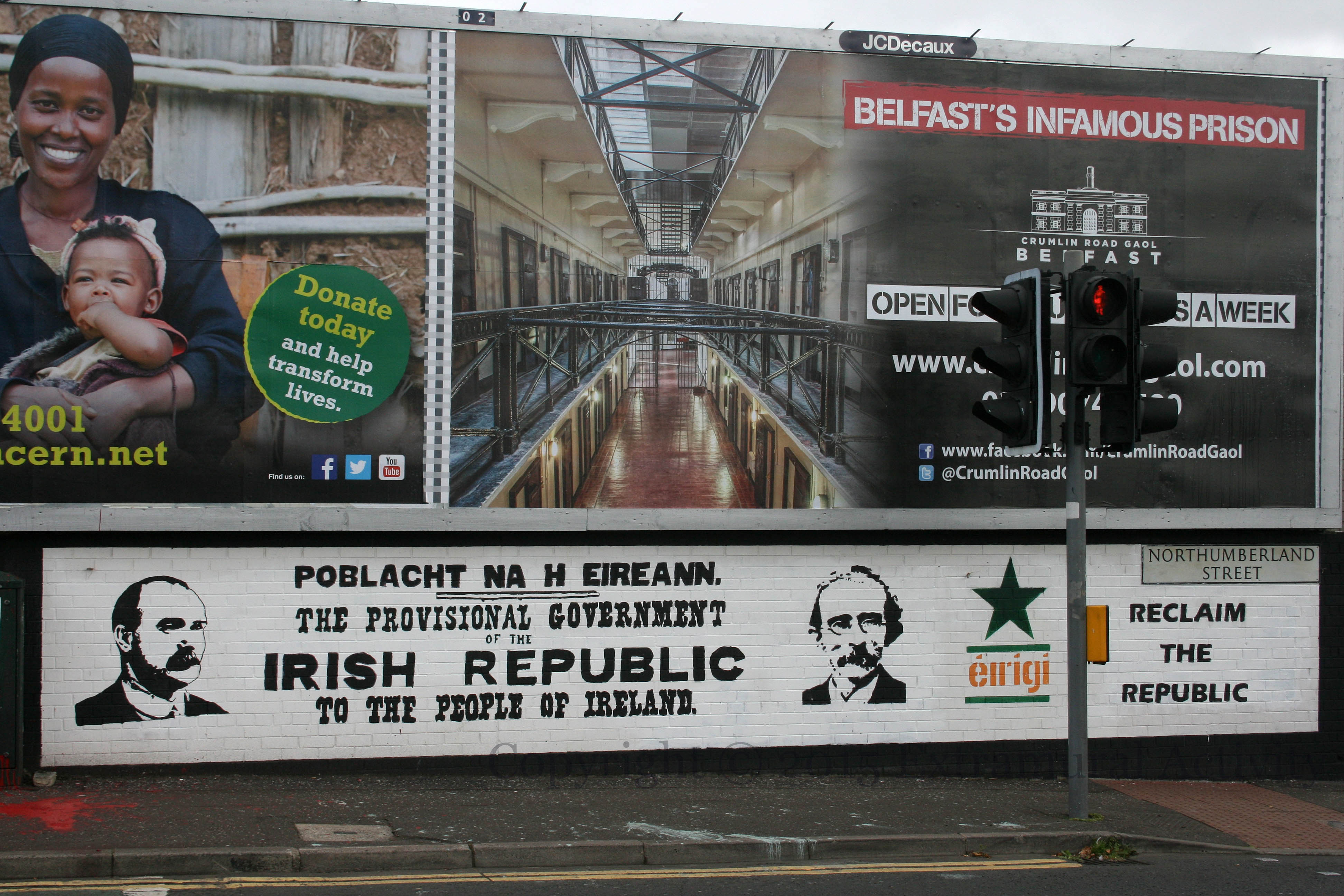
The masthead of the 1916 proclamation declaring a “Provisional Government of the Irish Republic” to the “People of Ireland” is faithfully reproduced in this éırígí stencil, along with busts of Padraıg Pearse and Tom Clarke. Pearse, Clarke, and the other signatories will likely be familiar faces in the months leading up to Easter 2016, which is at the end of March, and the anniversary of the date itself, April 24th, 1916.
See also this entry featuring a fly-paper reproduction of the 1916 Proclamation: Brotherhoods.
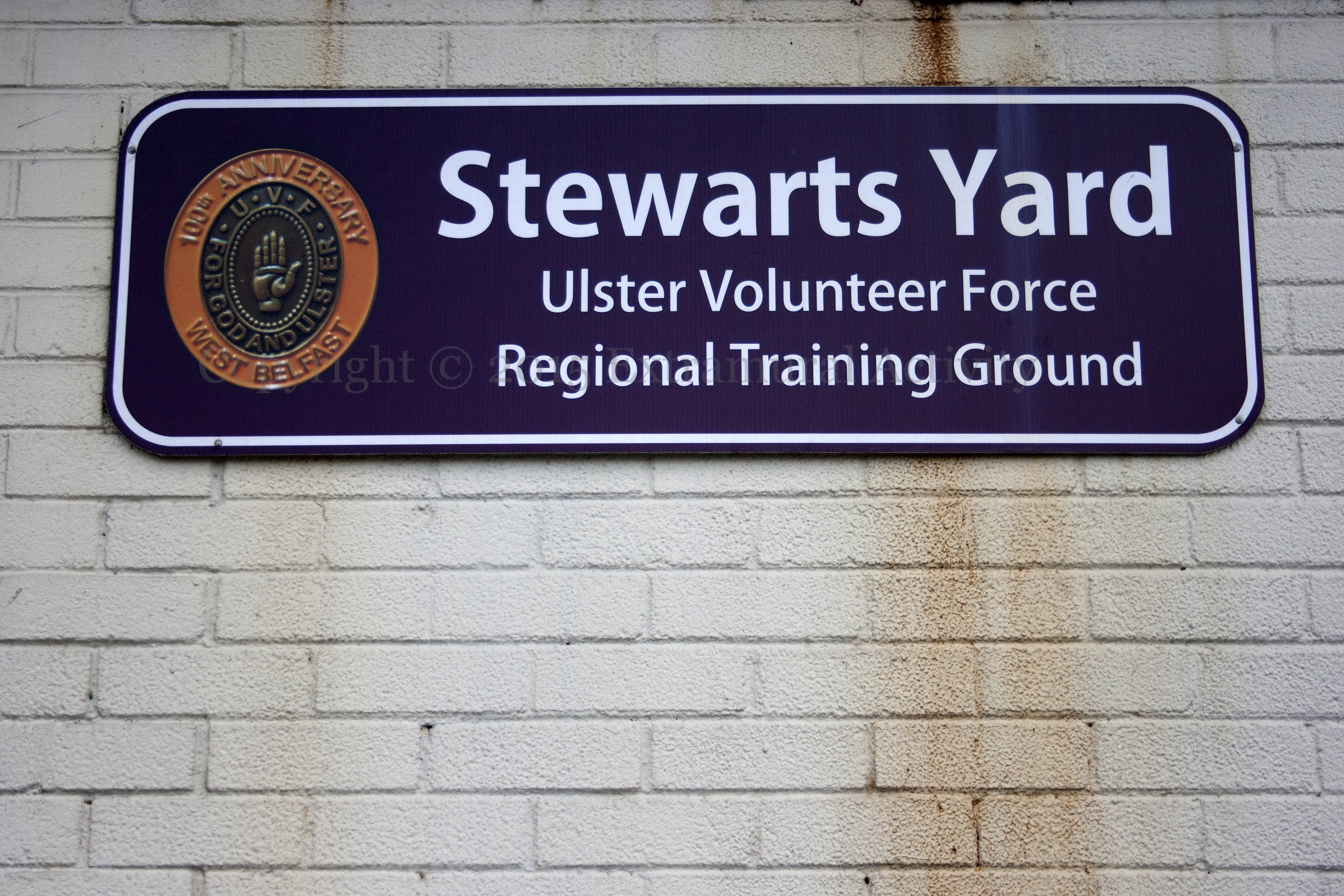
As the sign says, the area of what is now an Iceland supermarket on the Shankill Road was, at the time of World War I, a training ground for the Ulster Volunteers. The sign was erected to commemorate the 100th anniversary of the force, which then became the Ulster Volunteer Force which served in the war. “On the first day of enlistment for the West Belfast UVF, volunteers assembled at Stewart’s Yard in the Shankill Road. They were addressed by Colonel T. E. Hickman, the Conservative MP for Wolverhampton and a senior UVF figure who had become the Recruiting Officer for the whole of Ulster. Joining Hickman were James Craig MP, plus Stewart Blacker Quin, who was the Unionist candidate for West Belfast and the commander of the 1st Battalion West Belfast UVF.” (Richard S. Grayson, Belfast Boys: How Unionists and Nationalists Fought and Died Together in First World War, p. 12) “The day following the opening of enlistment for the Division, 360 men assembled at the same yard, where after being presented with a box of cigarettes, they marched to the railway station to board trains for Donard Camp near Newcastle. These men became the corps of the 9th Battalion Royal Irish Rifles.” (Bygone Days)
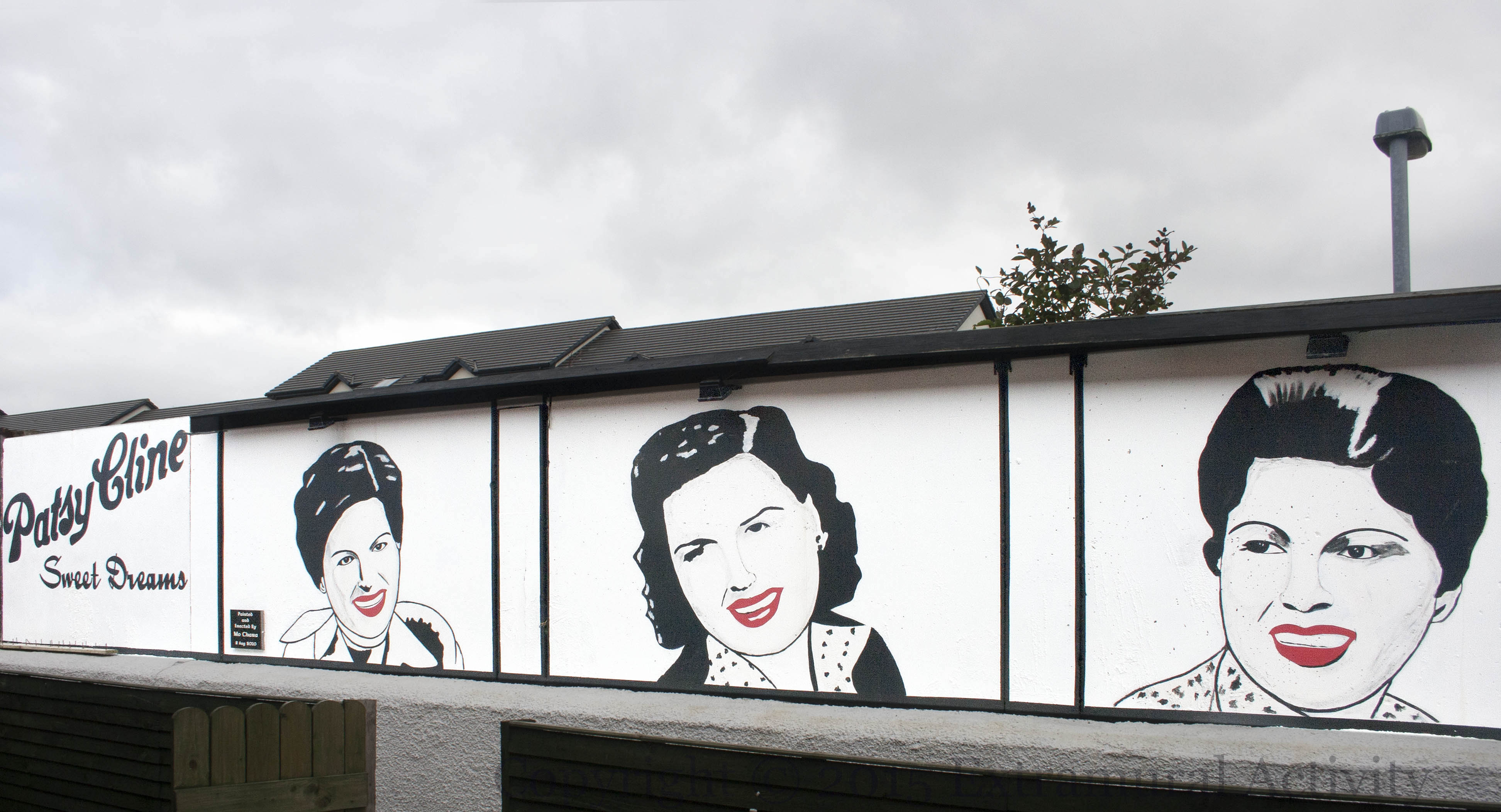
Gerard ‘Mo Chara’ Kelly painted these three images of Patsy Cline in the back garden of a Springhill neighbour. Cline died in 1963 at age 30; the three panels show different stages of her short career: the first shows her in cowboy gear, before turning to pop music, the second is based on a 1957 publicity shot for her new label, Decca, and the third shows her in 1961. Her cover of Don Gibson’s Sweet Dreams was released as a single in the wake of her death.
Here is video of Patsy singing Willie Nelson’s Crazy and, below that, Marsha Thornton doing the song from which the title of this entry comes:
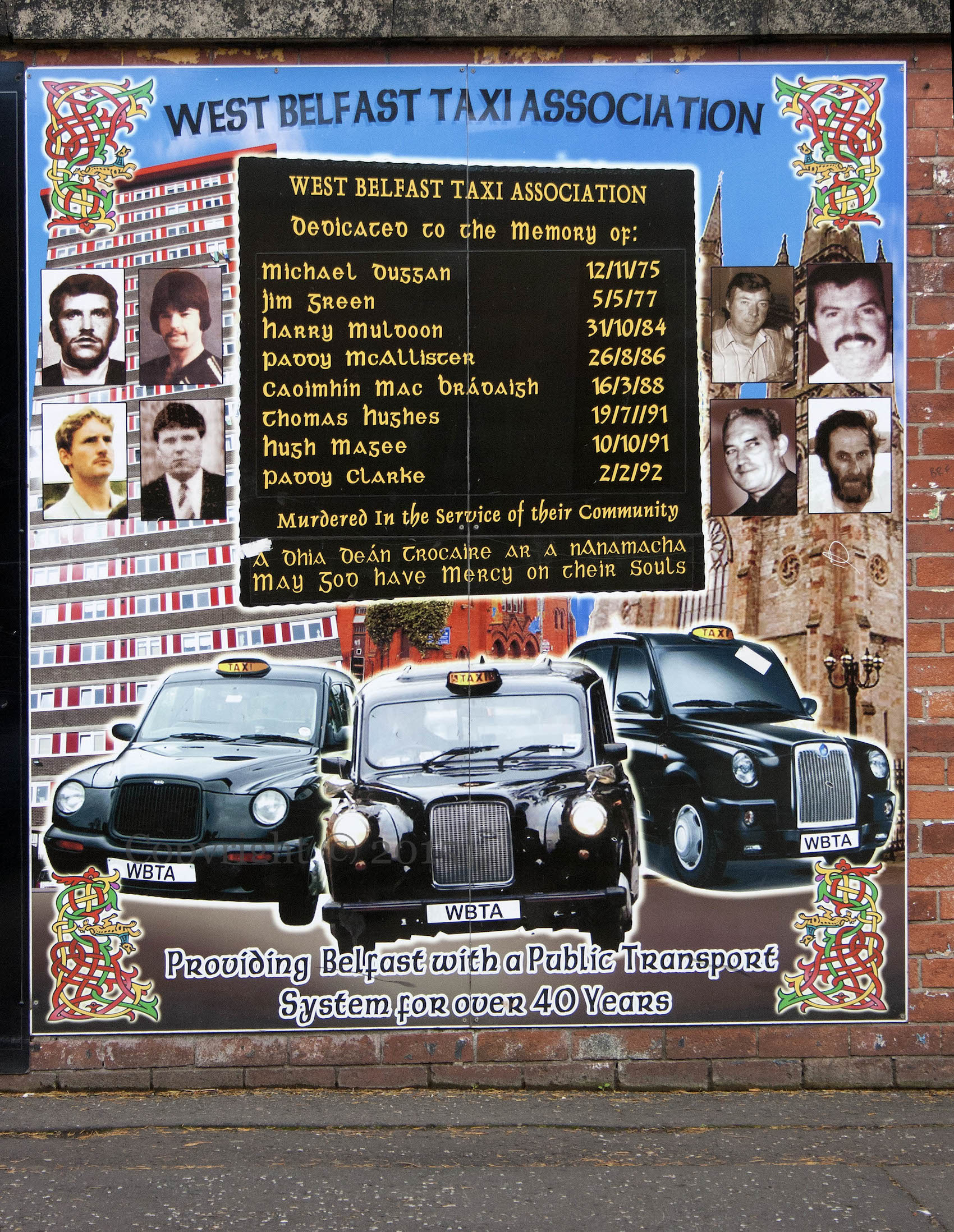
Black taxis were first brought from England to Belfast in 1970 by locals who wanted to provide an alternative, and locally-based, transport system to augment the Citybuses which were sometimes cancelled and sometimes burned out. “West Belfast Taxi Association. Providing Belfast with a public transport system for over 40 years/ A Dhıa deán trocaıre ar a nanamacha.”
The board above commemorates eight drivers who were killed during the troubles: “Dedicated to the memory of Michael Duggan 12/11/75, Jim Green 5/5/77, Harry Muldoon 31/10/84, Paddy McAllister 26/8/86, Caoımhín Mac Brádaıgh 16/3/88, Thomas Hughes 19/7/91, Hugh Magee 10/10/91, Paddy Clarke 2/2/92. Murdered in the service of their community.”
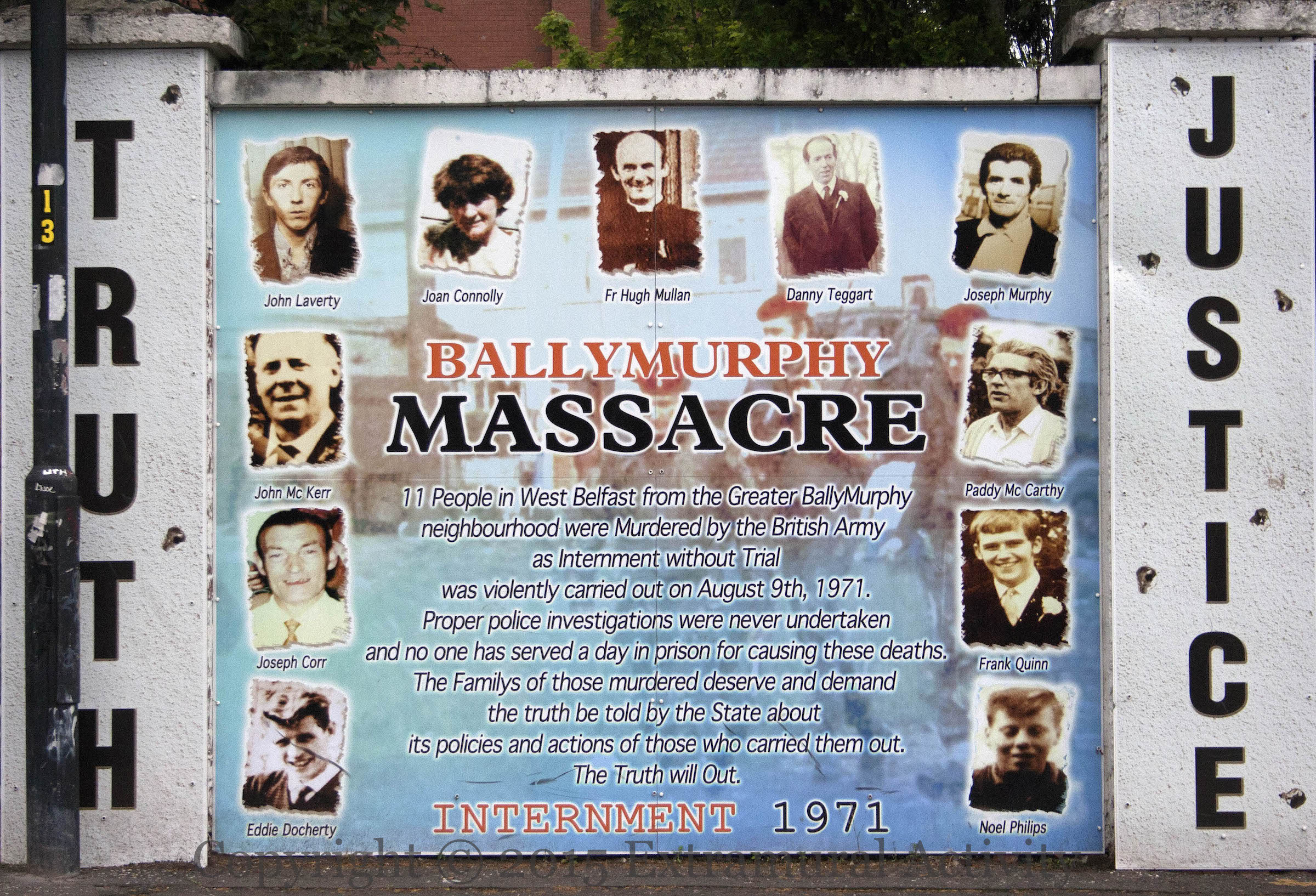
Calls for “truth” and “justice” concerning the killing in August, 1971, of 11 people from Ballymurphy, by the 1st Parachute Regiment during Operation Demetrius, the beginning of internment.
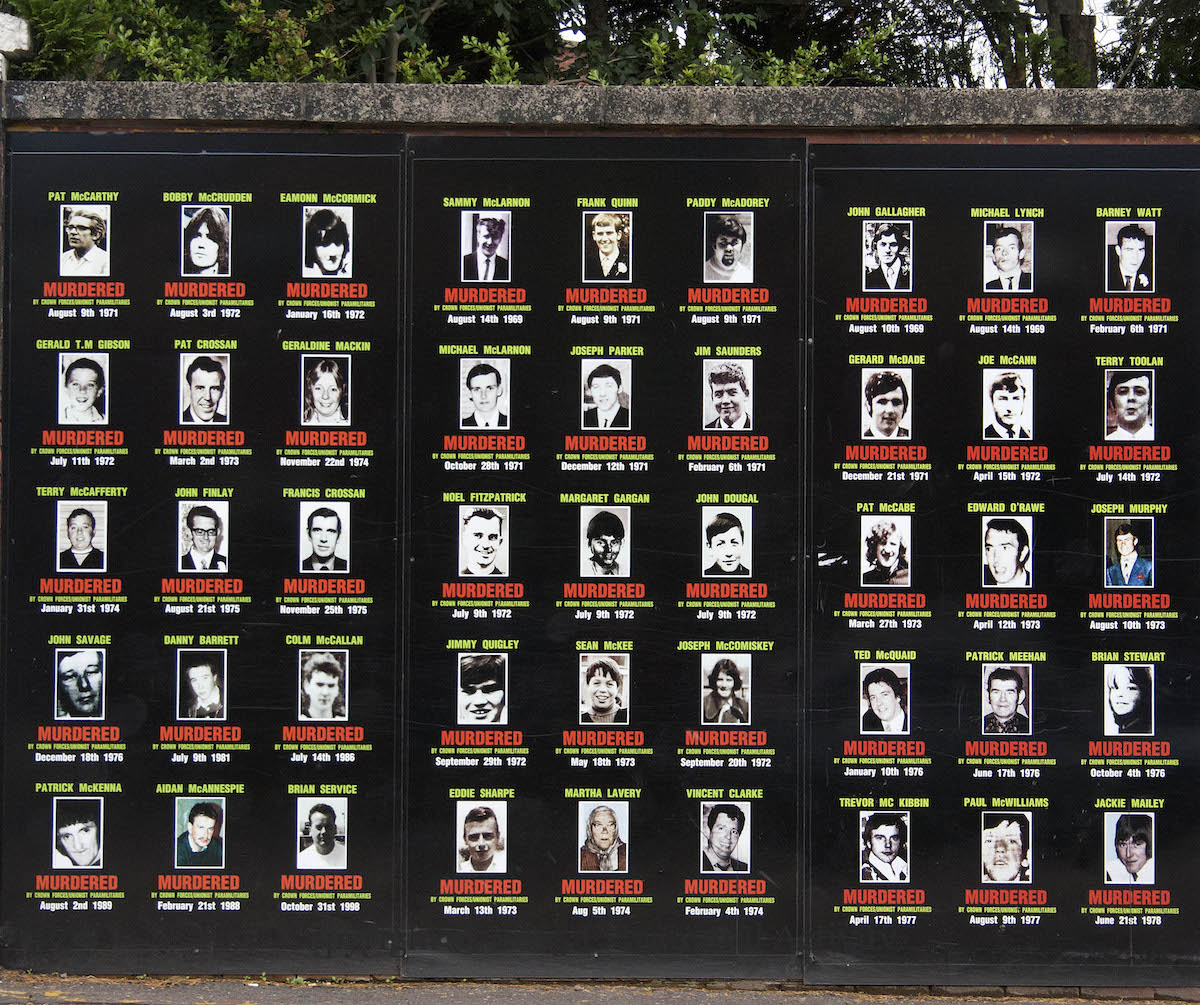
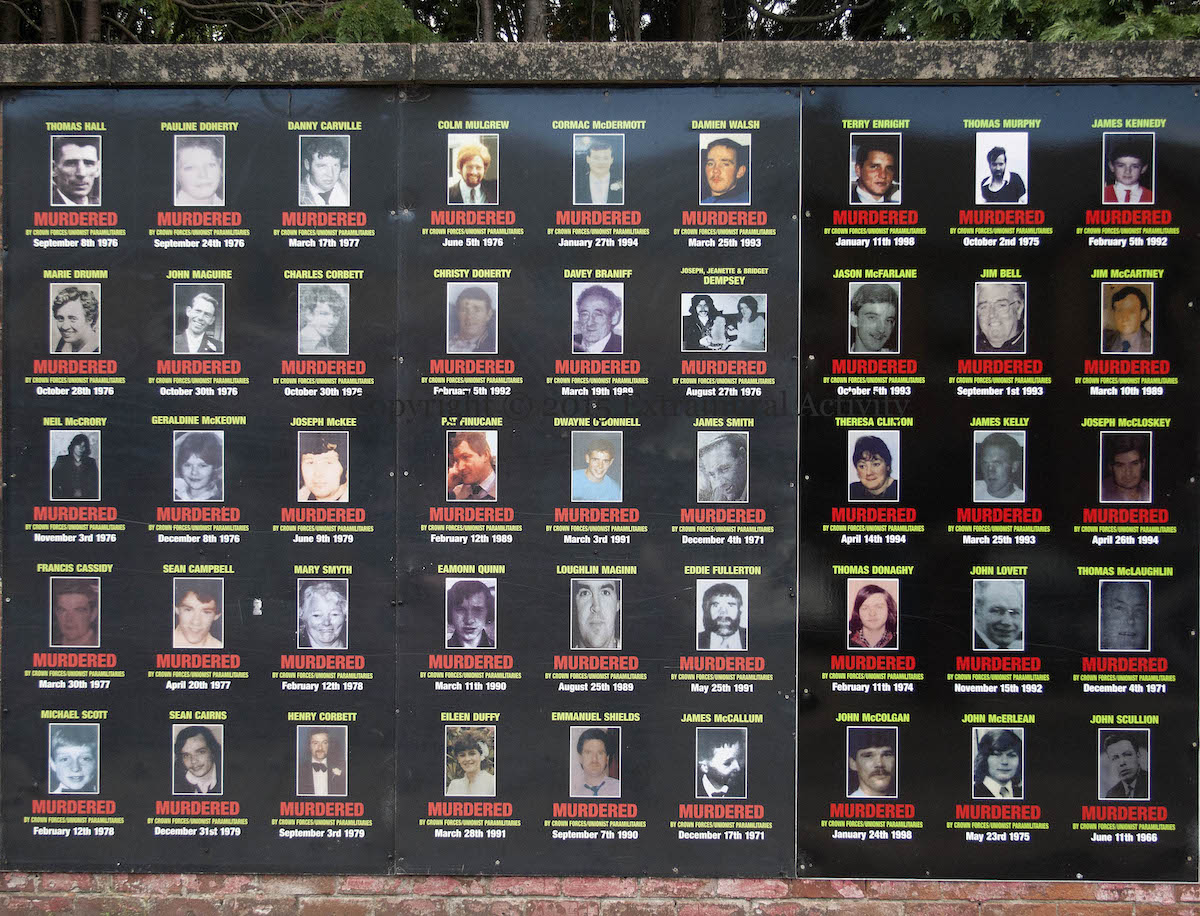
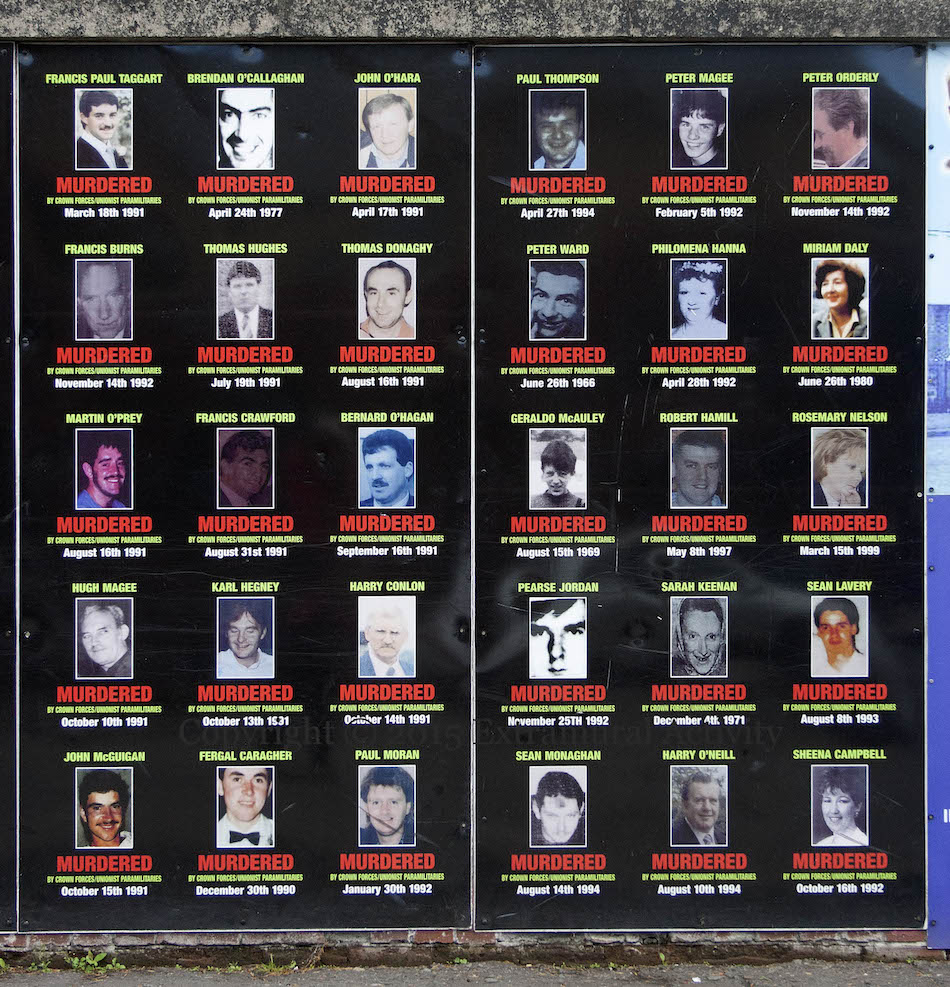
The final three panels (panels 16-18) of the ‘murdered’ follows to the right of the Ballymurphy board. (These are new additions, as compared with 2011.) They are then followed by the final board, to the WBTA.
“11 people in west Belfast from the Greater Ballymurphy neighbourhood were murdered by the British Army as internment without trial was violently carried out on August 9th, 1971. Proper police investigations were never undertaken and one has served a day in prison for causing these deaths. The familys of those murdered deserve and demand the truth be told by the state about its policies and actions of those who carried them out.”
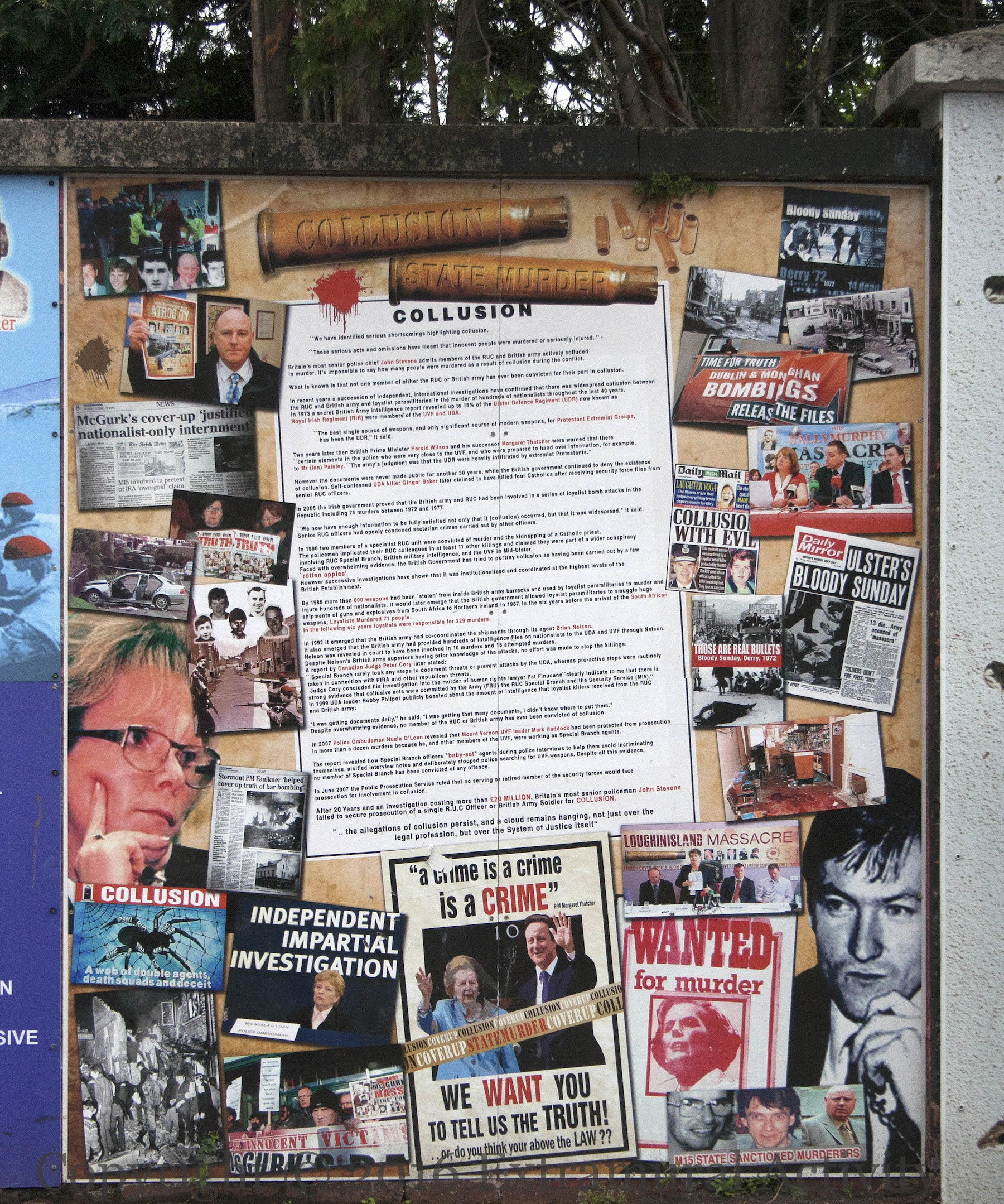
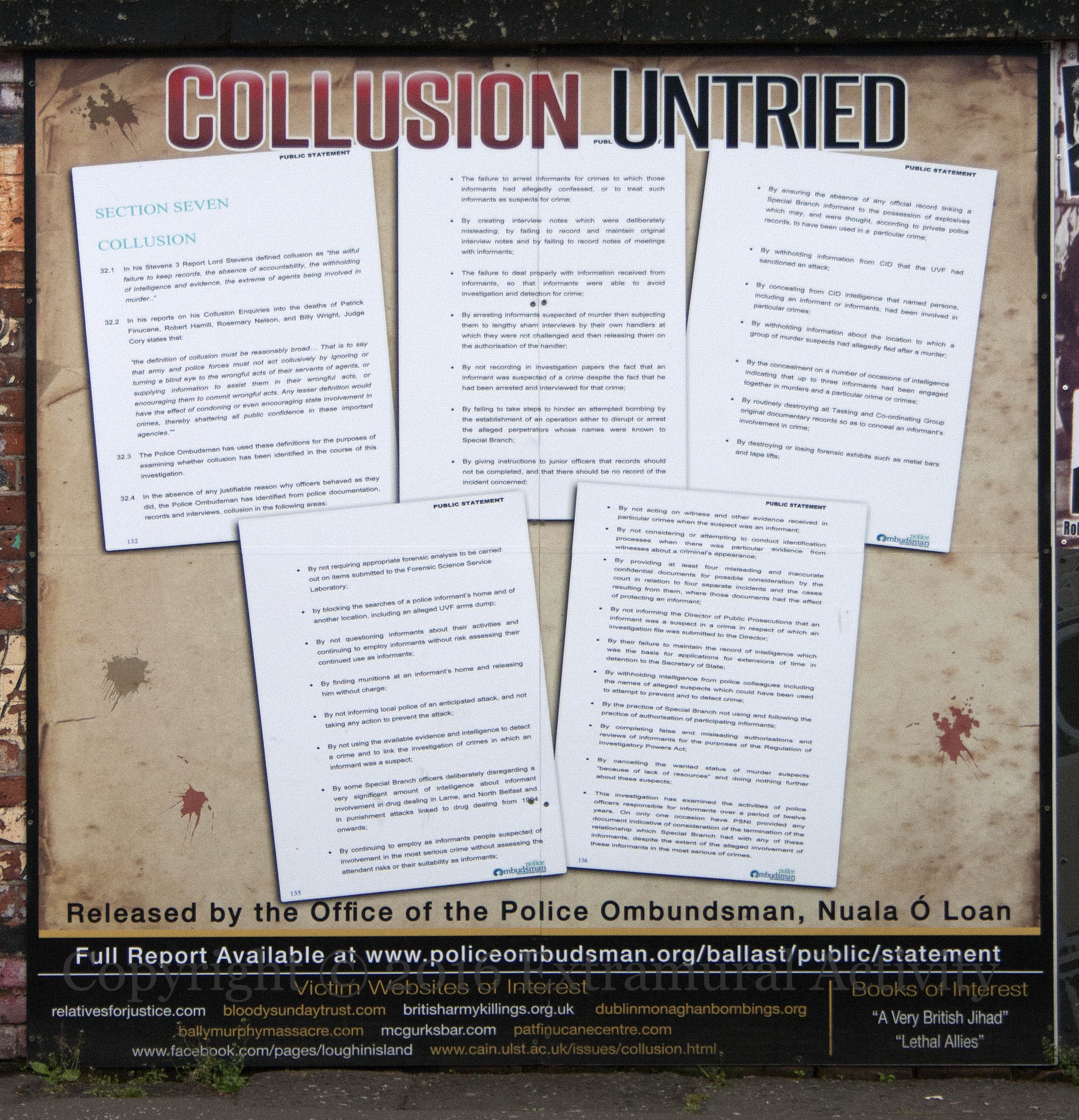
Two boards about collusion in Beechmount Avenue. The first chronicles (both in words and images) alleged instances of collusion between the RUC and loyalist paramilitaries, citing John Stevens, Peter Cory, and Nuala O’Loan – pages from the 2007 O’Loan report are shown in the second, below.
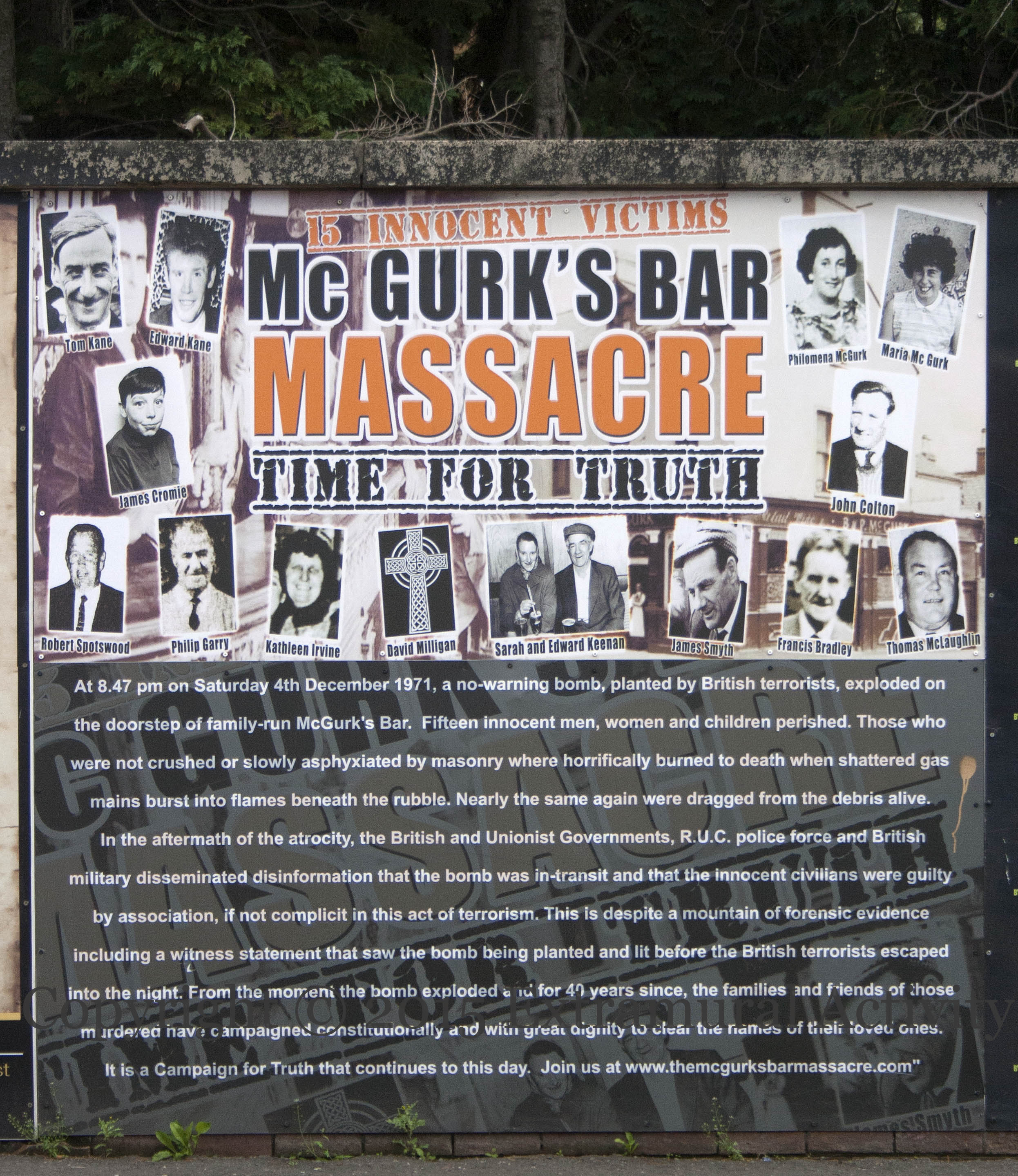
The McGurk’s Bar bombing of December, 1971 killed fifteen people – the most in a single incident during the troubles – capping what had already been a bloody year, including the “Ballymurphy Massacre” of July, in which 11 died, and starting another round of killings that would spread into the new year. Campaigners for an inquiry were busy this week in both Dublin and Belfast (Irish News).
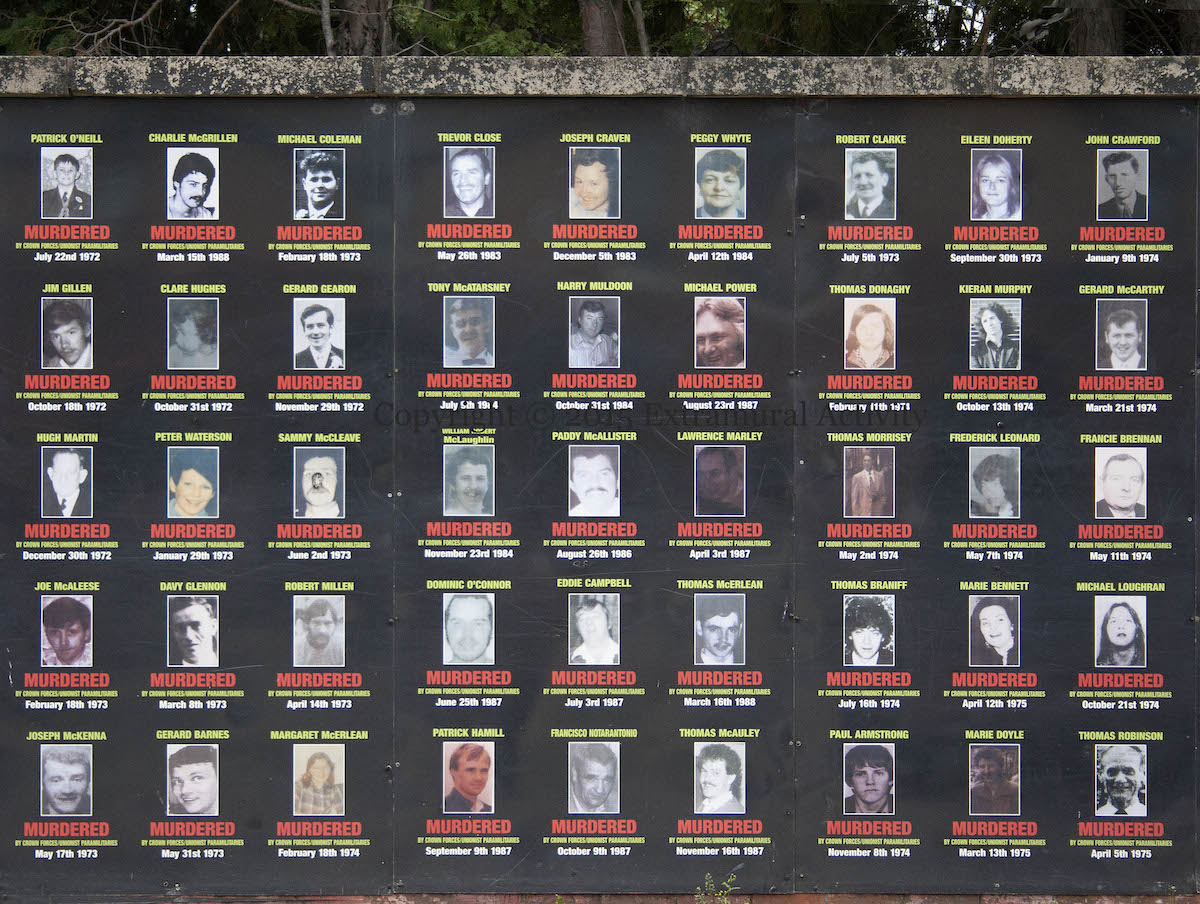
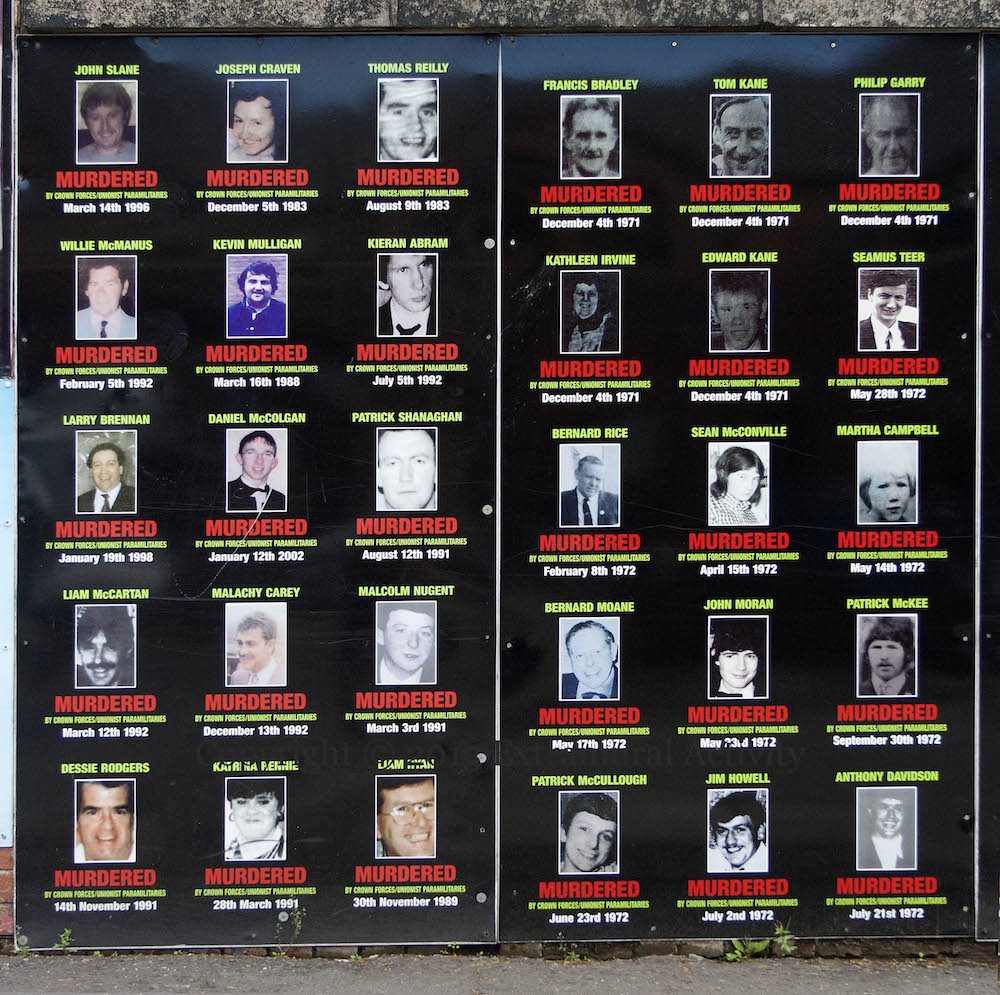
The first nine panels of the ‘murdered’ follow to the right of the McGurk’s Bar board, presented here three-at-a-time. Note that the ninth panel (with Terry Enright in the top left) was previously the 11th panel; it is not clear why it has been moved left.
The British soldiers on the right of the board above are given red berets to indicate the Paratroop Regiment, which was the regiment involved in Derry’s Bloody Sunday.
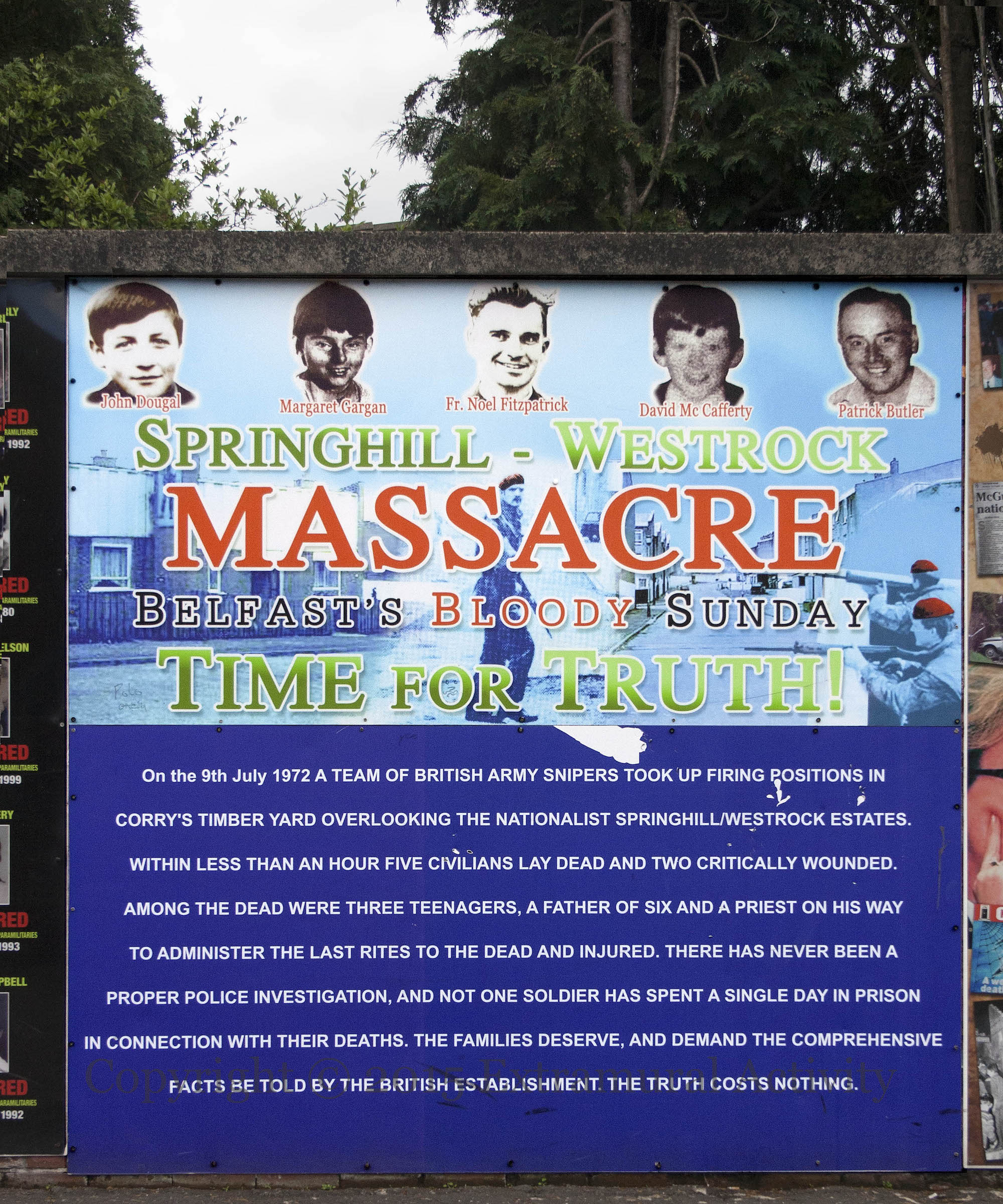
“Springhill–Westrock massacre. Belfast’s Bloody Sunday. Time for truth! On the 9th July 1972 a team of British Army snipers took up firing positions in Corry’s timber yard overlooking the nationalist Springhill/Westrock estates. Within less than an hour five civilians lay dead and two critically wounded. Among the dead were three teenagers, a father of six and a priest on his way to administer the last rites to the dead and injured. There has never been a proper police investigation, and not one solider has spent a single day in prison in connection with their deaths. The families deserve, and demand the comprehensive facts be told by the British establishment. The truth costs nothing.”
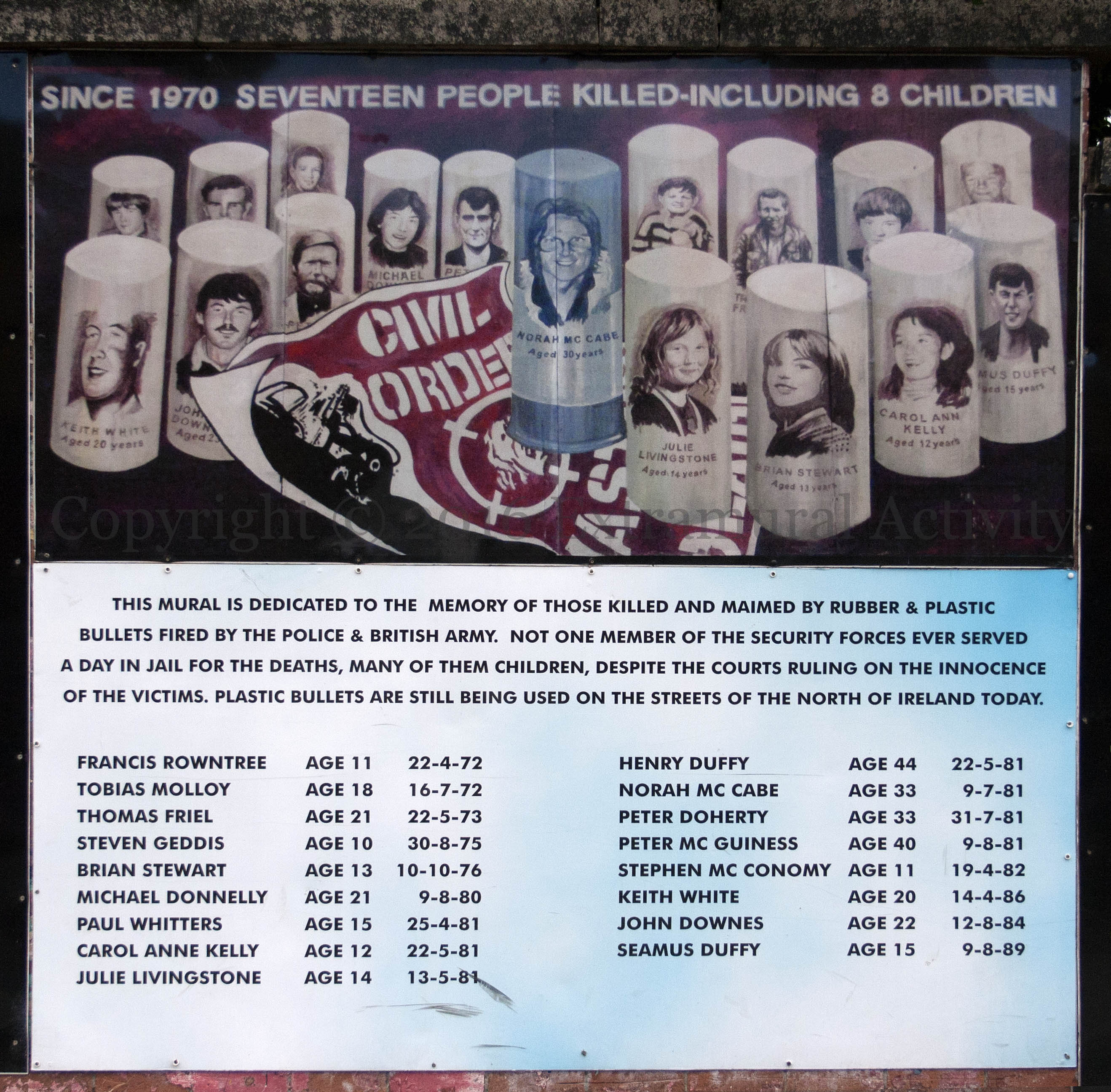
“Since 1970 seventeen people killed – including eight children”. A vintage poster against plastic bullets (see also Plastic Death in the Peter Moloney Collection for a mural) is part of this Beechmount Avenue mural showing a candle for each of the victims. The first listed (Rowntree, Molloy, Friel) were killed by rubber bullets, the rest by plastic; plastic bullets took over from rubber bullets in 1975 (WP).
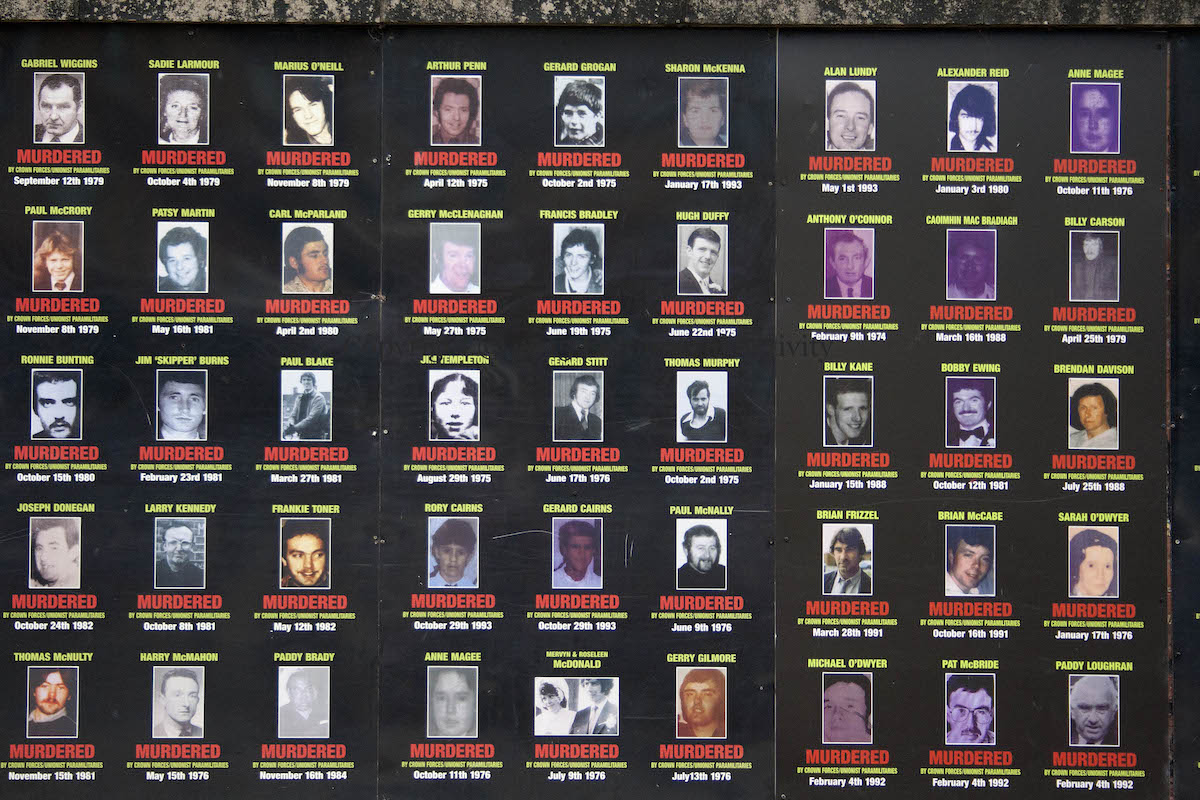
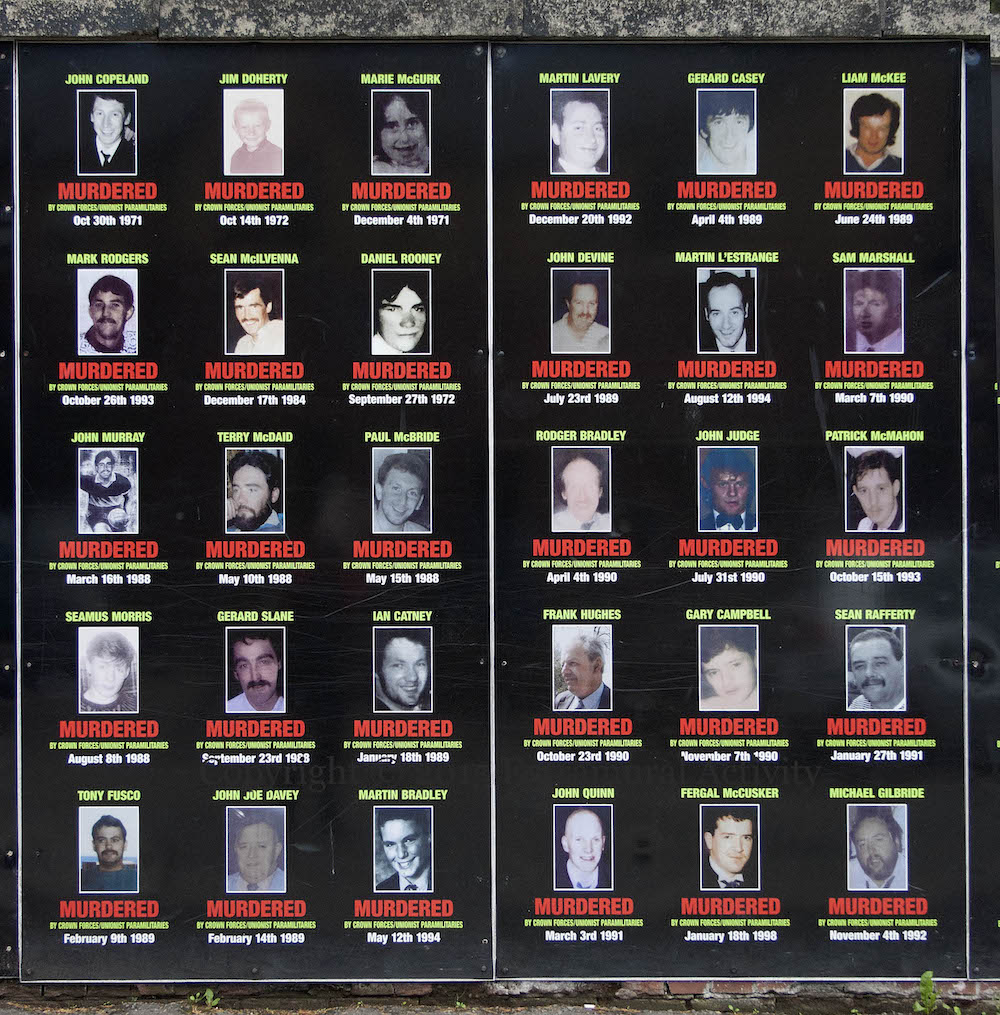
Panels 10-15 of the ‘murdered’ follow to the right of the Plastic Bullets board, here presented two-at-a-time. The 11th panel (the second one shown here, with Francis Bradley in top left) was previously the ninth panel; it is not clear why its position was swapped.