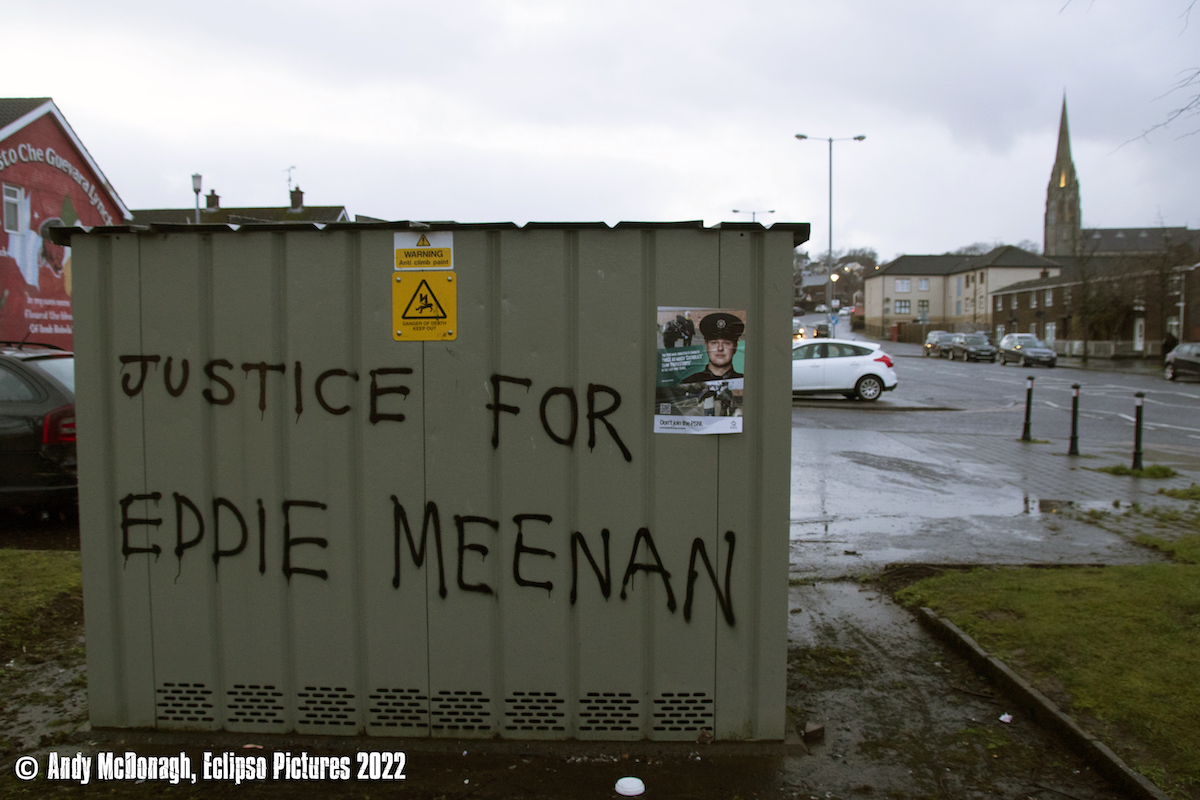
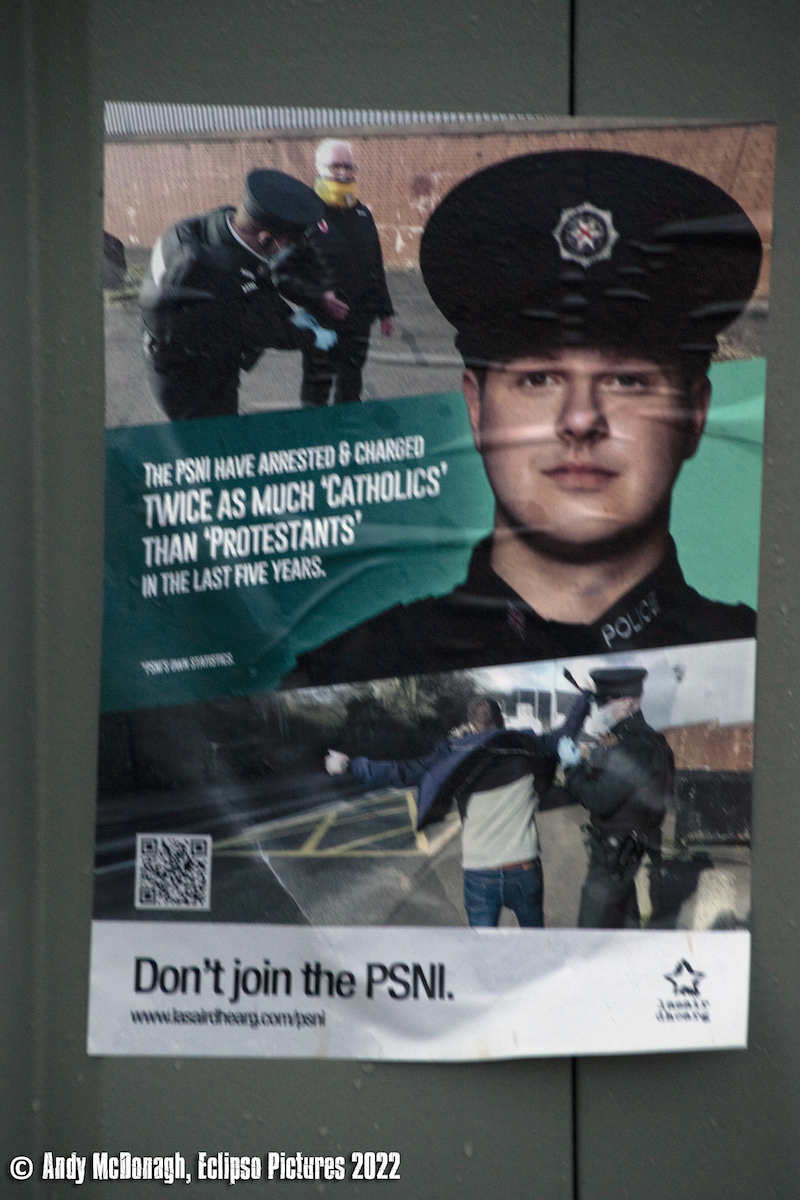
The trial has begun, before Londonderry Crown Court, of three men accused of the murder of Eddie Meenan, who was stabbed 40-50 times in November, 2018 (Derry Journal | BBC). The graffiti above is on the electrical box at the bottom of Fahan Street, next to a Lasaır Dhearg (web) ‘Don’t join the PSNI’ poster (shown below), with the Che Guevara Lynch mural visible on the left.
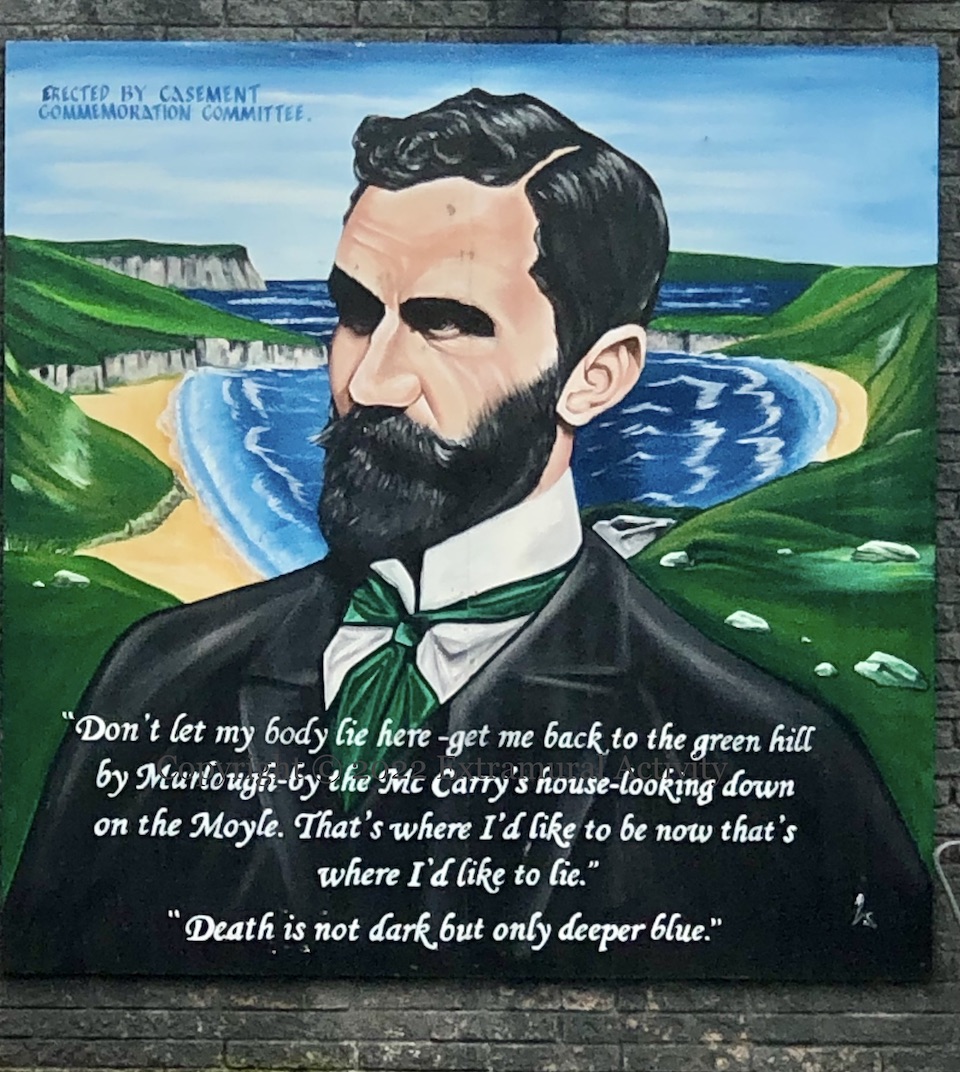
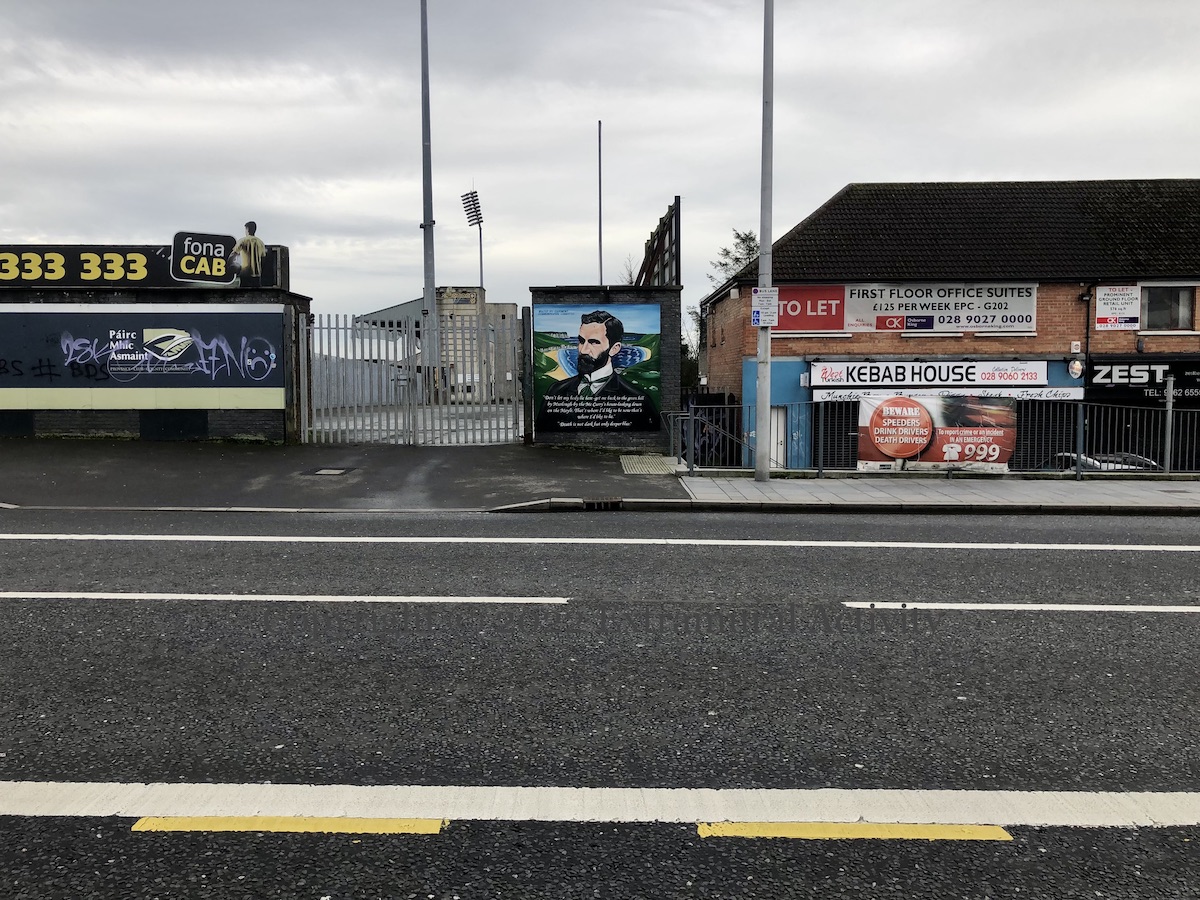
“Don’t let me body lie here – get me back to the green hill by Murlough, by the McCarry’s house, looking down on the Moyle. That’s where I’d like to be now, that’s where I’d like to lie. … Death is not dark but only deeper blue.” [Letter to Elizabeth “Eilis” Bannister, July 25th, 1916] Roger Casement was executed in Pentonville prison, in England, in 1916, for his role in gunrunning for the Rising, and his corpse was buried in the prison cemetery. Despite repeated requests for repatriation, it wasn’t until 1965 that the corpse was returned to Ireland – but to his home town of Dublin rather than to his beloved Murlough, where his cousins Eilis and Gertrude lived (in what was by then Northern Ireland): the corpse was released on condition that it not enter Northern Ireland, for fear of stoking political tensions between the sects (WP).
The Bloody Sunday march each year follows the same route as was taken on January 30th, 1972, from Creggan shops to the Bogside. For the 50th anniversary of the event, two marches took place, the earlier one ending at the NICRA memorial (unveiled in 1974) where Taoiseach Micheál Martin laid a wreath. For images see Derry Journal | Museum Of Free Derry’s Fb; for the speeches, see the MoFD youtube channel.
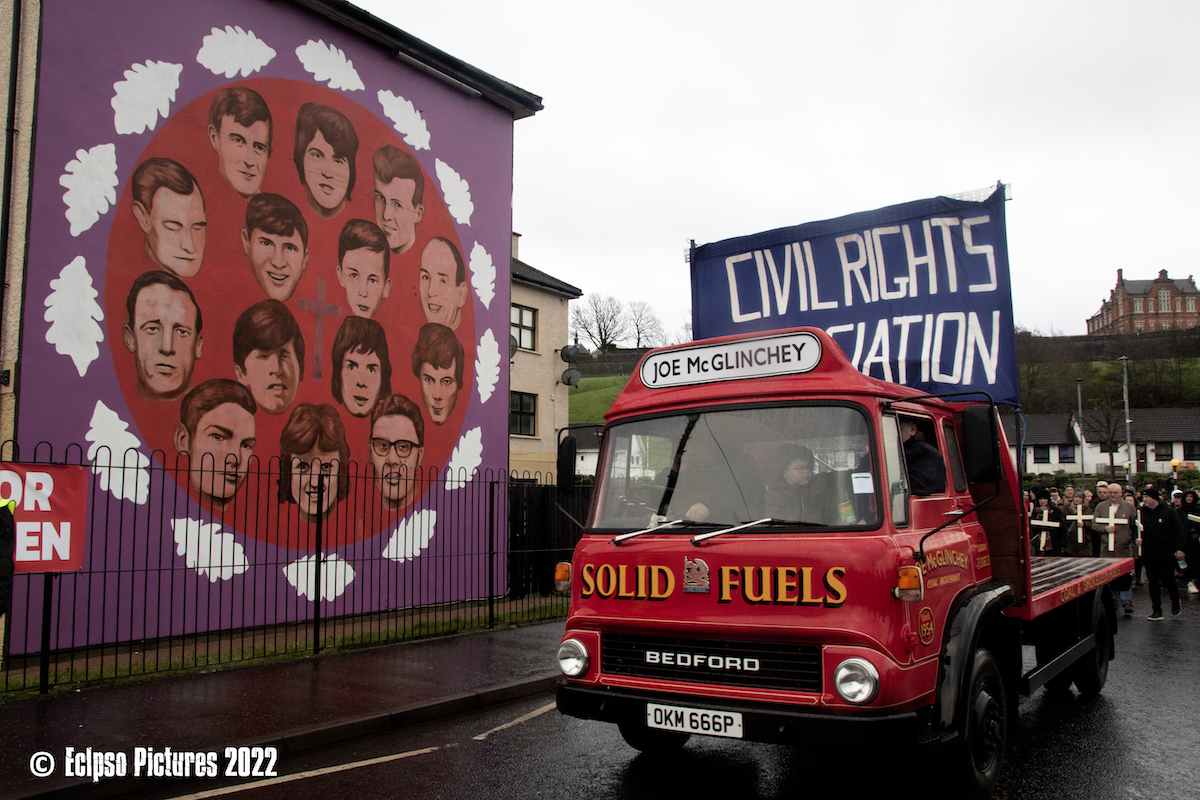
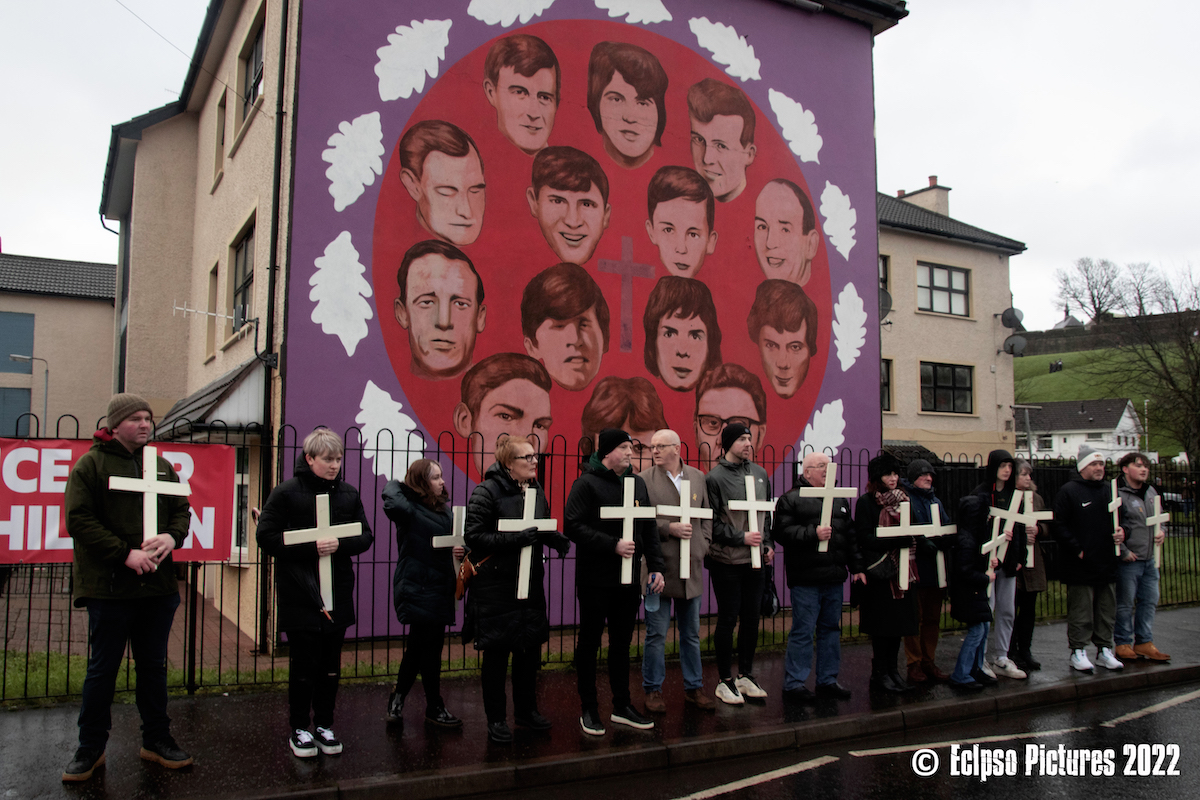
A later march ended with speeches at Free Derry Corner (Derry Journal | Derry Now). Today’s images show this march at the Bloody Sunday Commemoration mural by the Bogside Artists (originally painted in 1997 without a cross in the centre). The coal lorry in the image above is of a similar vintage to the one that led the march in 1972; the Bedford TK was built from 1960 to 1992 but Springtown Fuels (ig) appears to have one in good condition.
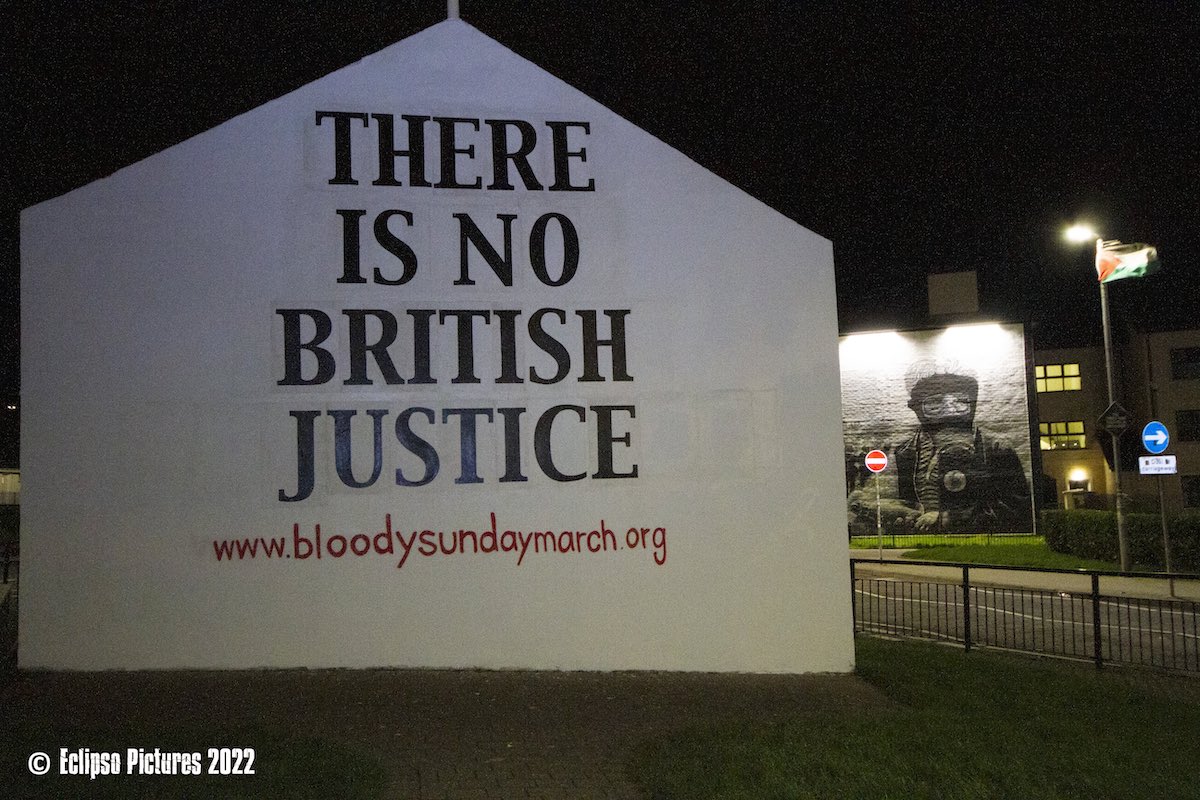
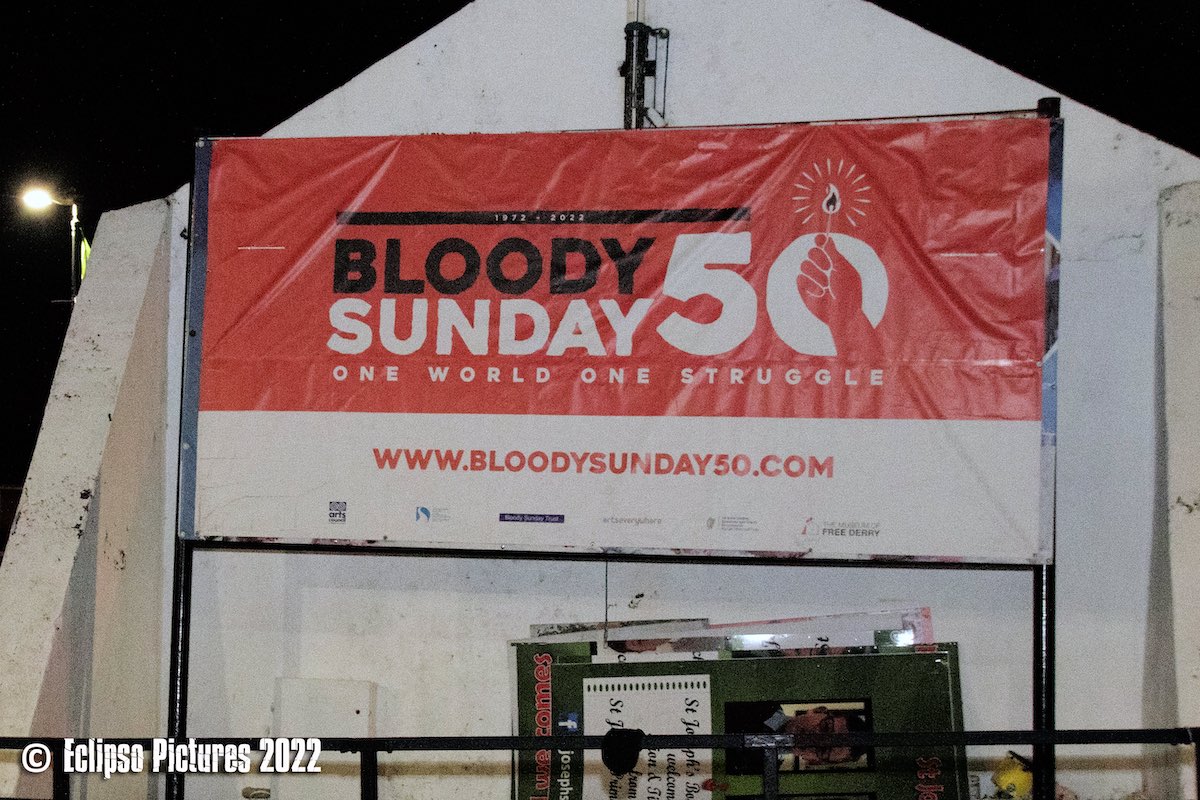
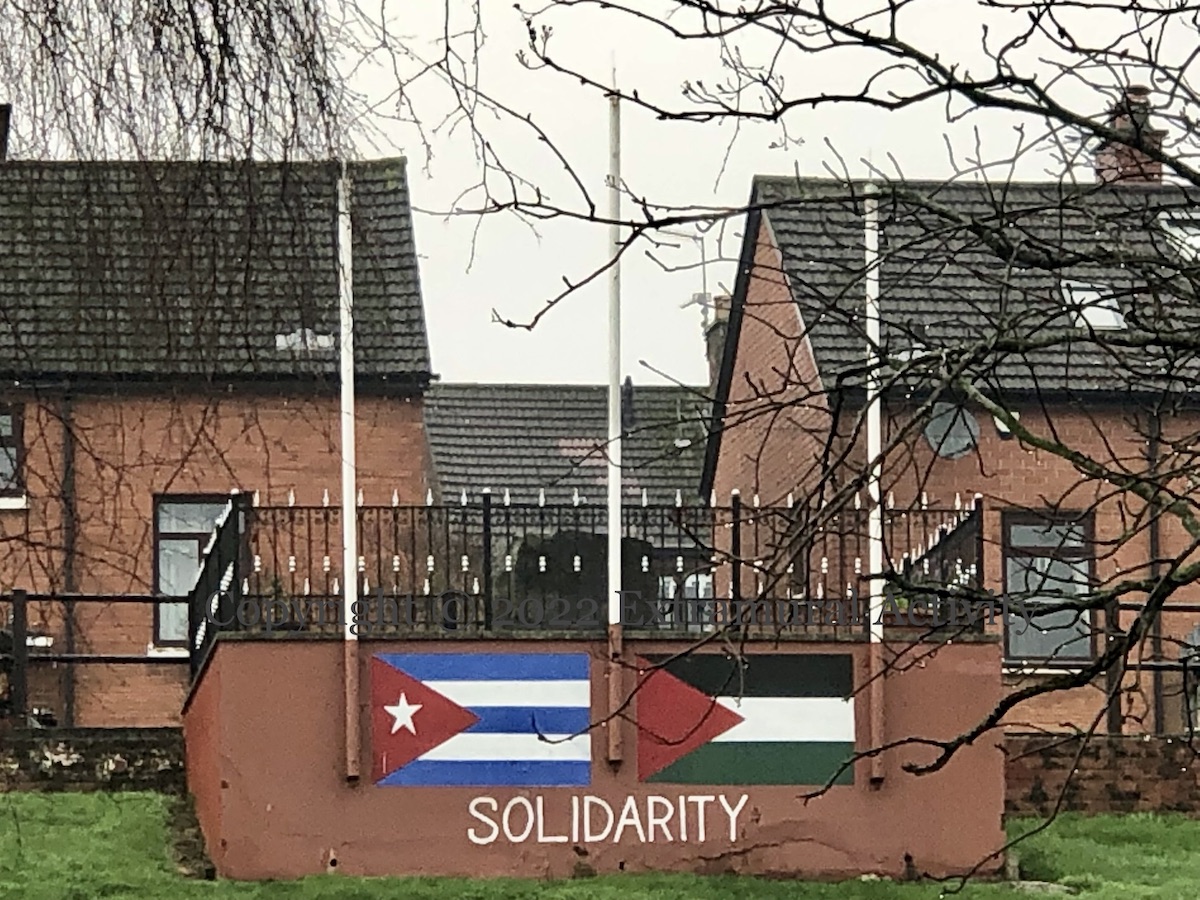
“One world, one struggle” and one common cause: British imperialism. The Palestinian flag flies beside Free Derry Corner (and the Petrol Bomber mural), which has been papered over with “There is n0 British justice” – this sets the theme for the march this afternoon (recreating the 1972 civil rights march in Derry from Creggan to the Bogside, starting at 2:30) which not only commemorates the 50th anniversary of Bloody Sunday (Bloody Sunday 50) but protests the British occupation of countries all around the world – the poster from Bloody Sunday March makes reference to the Amritsar (Jallianwala Bagh) Massacre, the Barbados Slave Code, (Second) Boer War concentration camps, and many others.
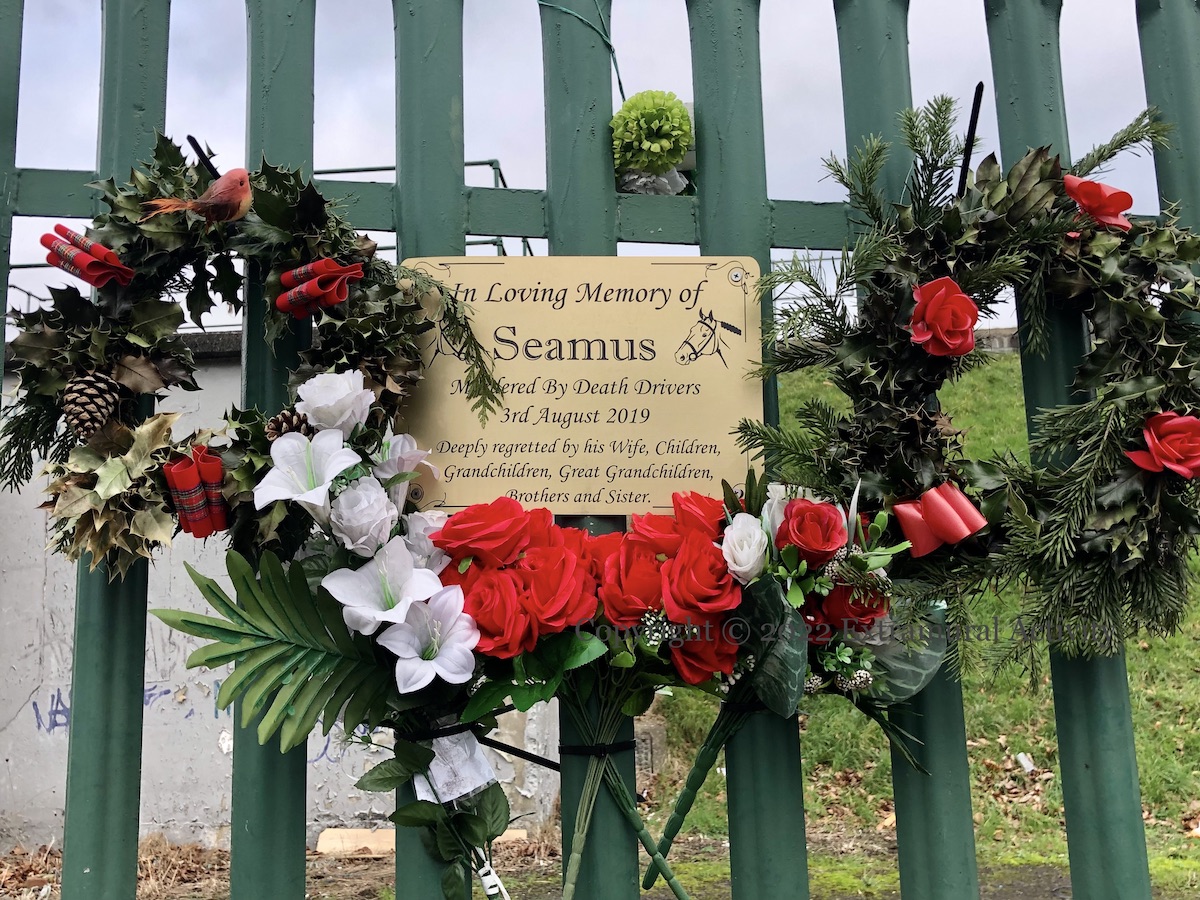
“In loving memory of Seamus, murdered by death drivers 3rd August 2019. Deeply regretted by his wife, children, grandchildren, great grandchildren, brothers and sister.” This memorial plaque is on some railings on the Whiterock Road, close to the spot where Seamus Conlon was hit by a car as he attended a funeral. One Michael Loughran was sentenced to 10 years: after a night of alcohol and cocaine, he had stolen his uncle’s car and had been “joy”-riding for 90 minutes before losing control and crashing (BelTel).
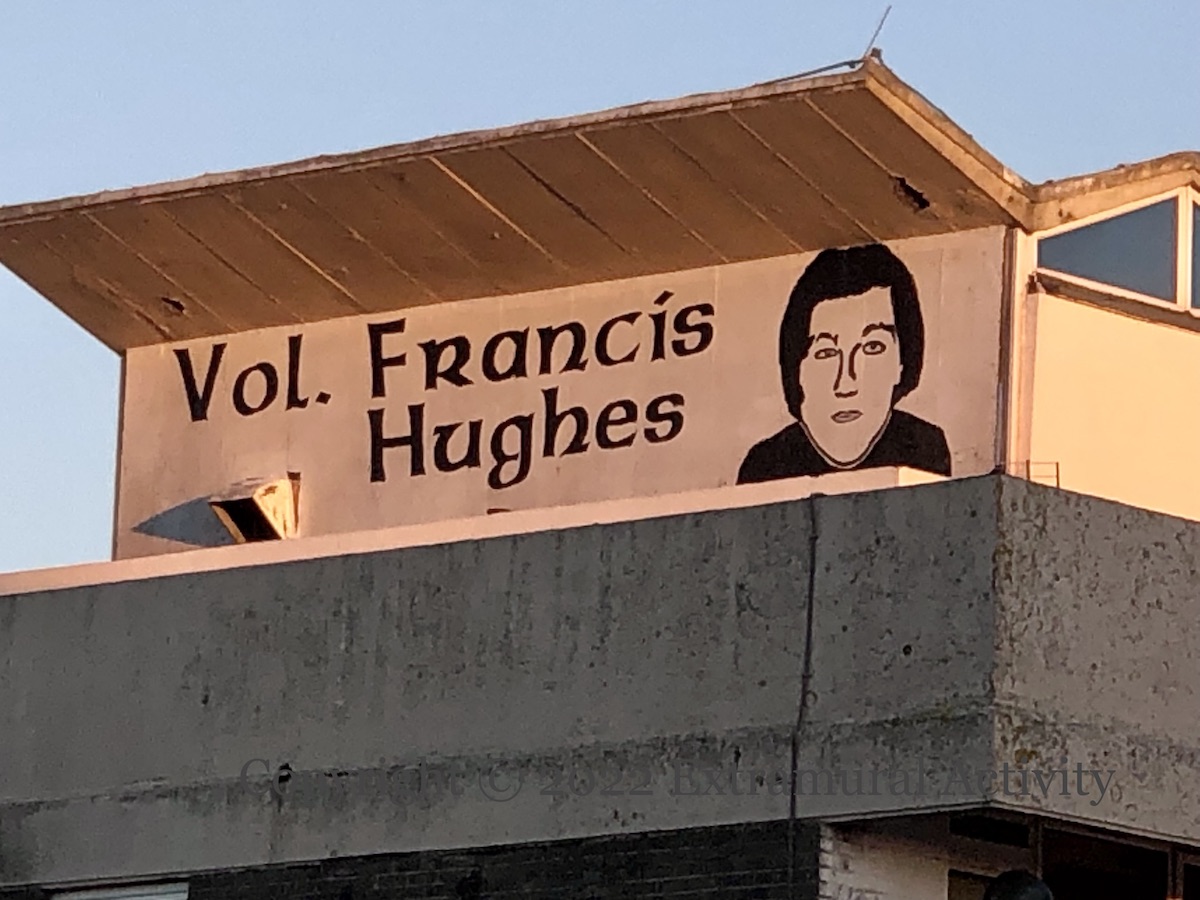
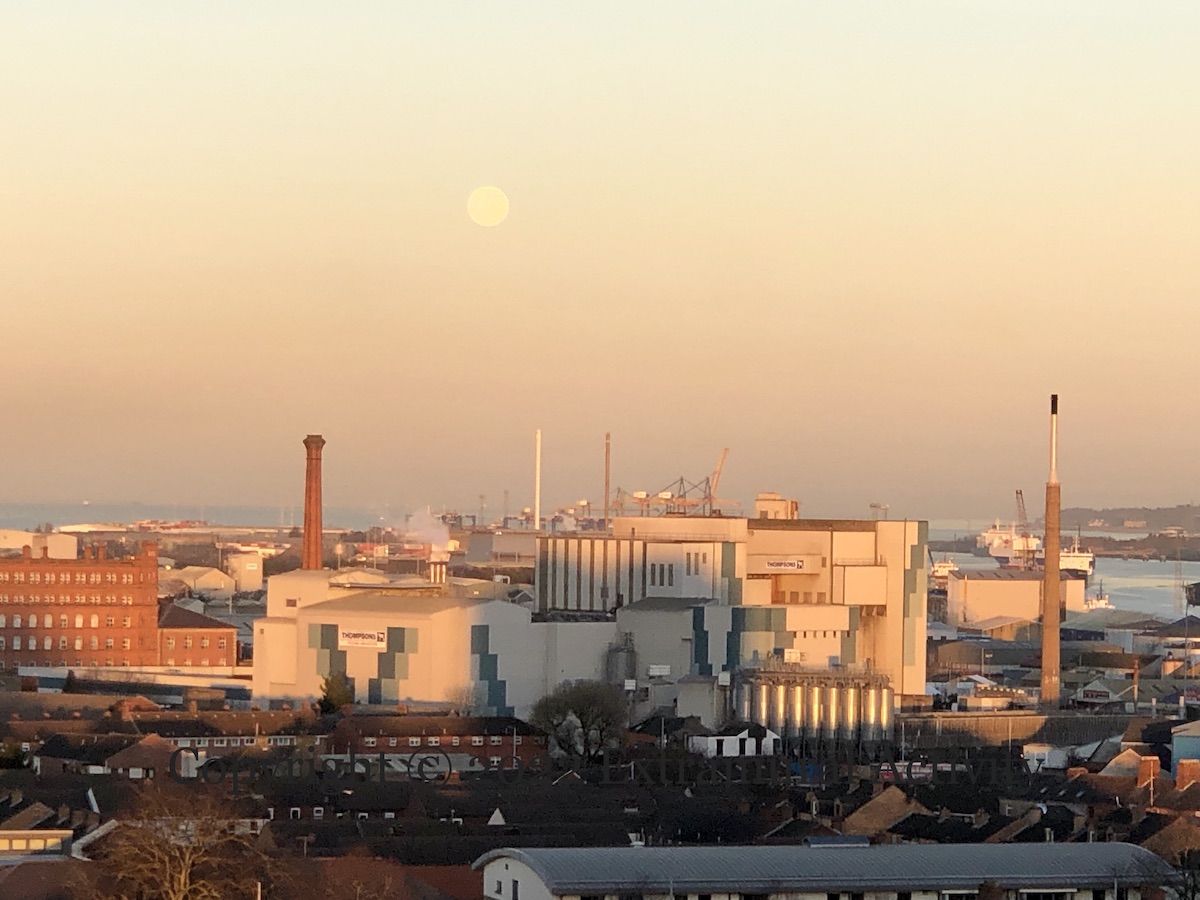
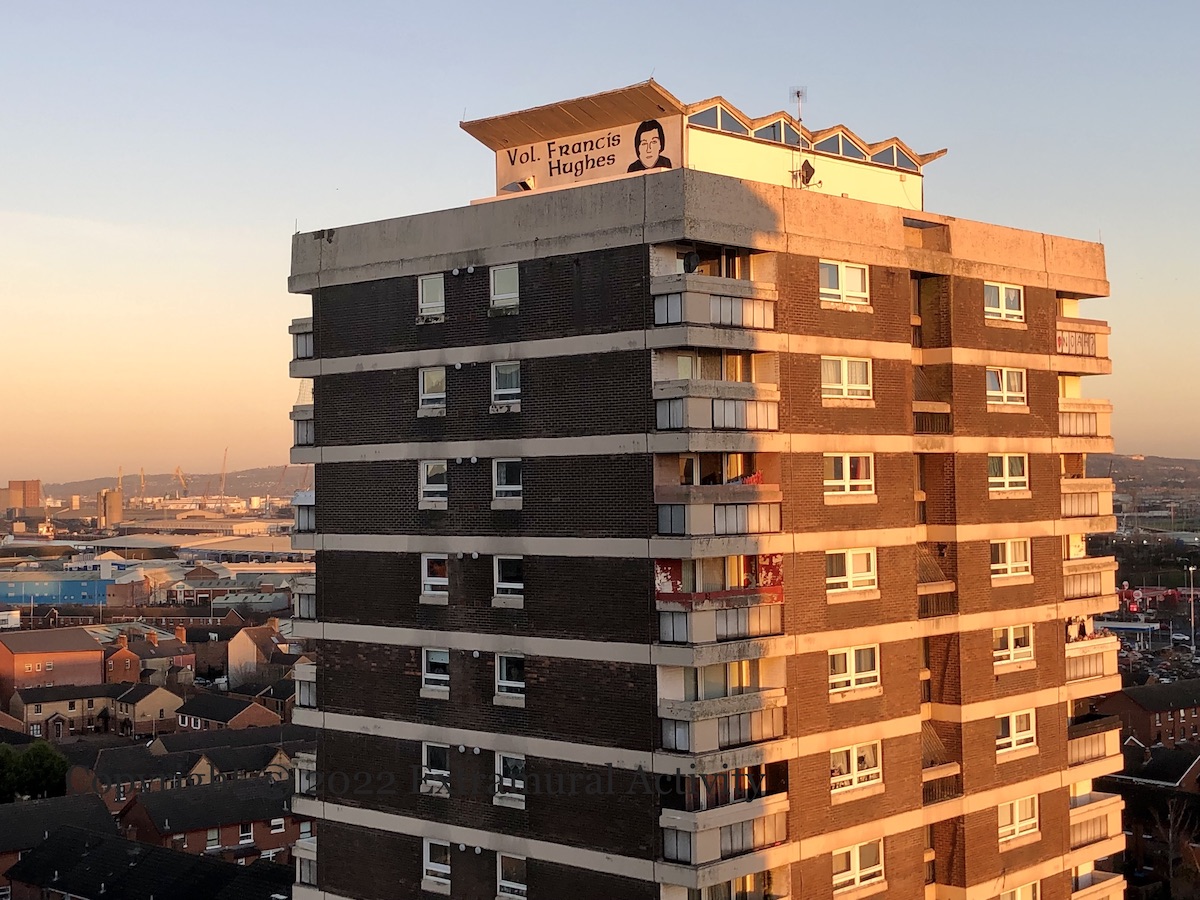
The moon rises over Thompson’s feed on York Road while the sun sets over the New Lodge tower blocks, most of which have the portraits of two deceased hunger strikers from the 70s and 80s on them, including Francis Hughes on Teach Mhéabha. (See New Lodge Flats for a full list.)
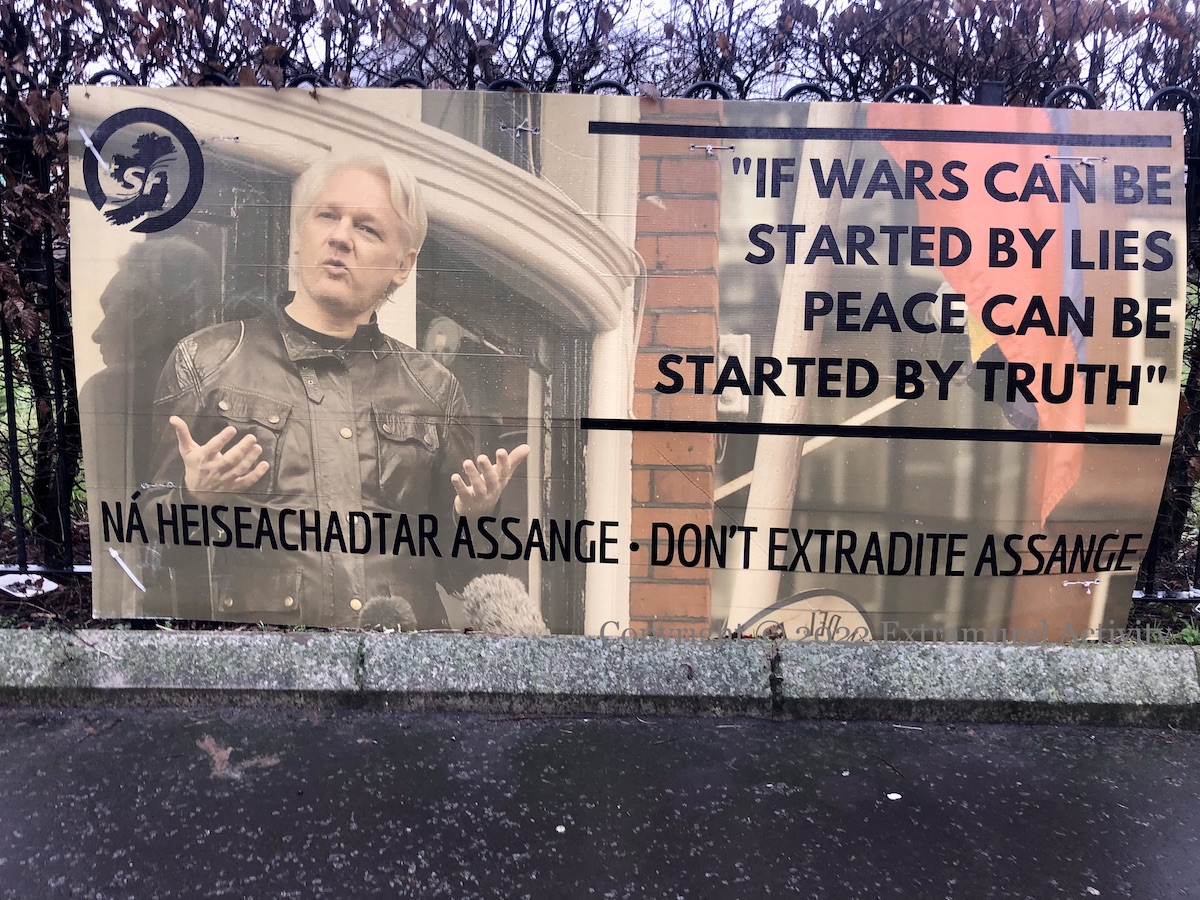
“Ná heıseachadtar Assange – Don’t extradite Assange” – in December of last year (2021) the British court of appeal ruled (NYTimes) that WikiLeaks founder Julian Assange could be extradited to the USA to face charges relating to the publication of the Chelsea Manning leaks of US operations in Iraq and Afghanistan in 2010. His fate is now in the hands of UK Home Secretary Priti Patel (Al Jazeera). The Sınn Féın board shown above is at the Falls Road-Glen Road roundabout.
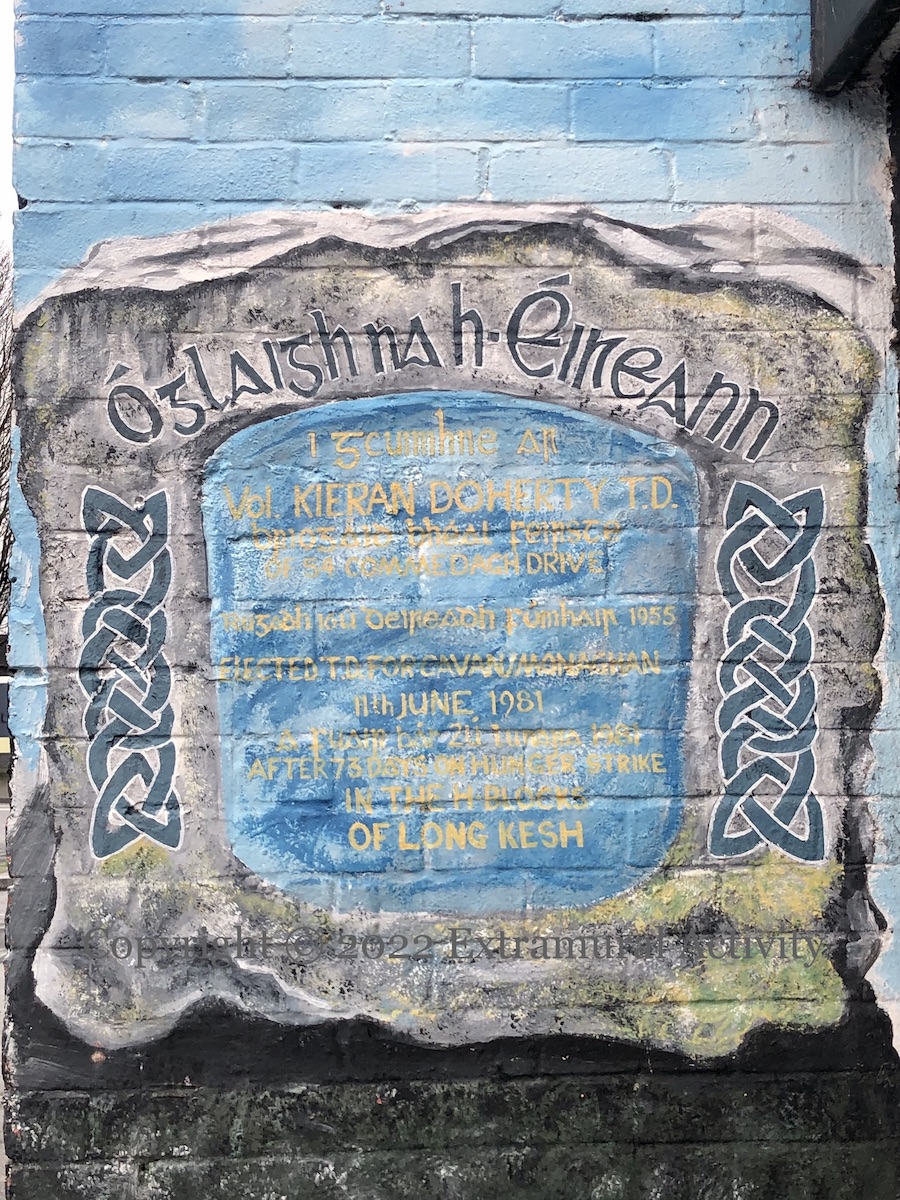
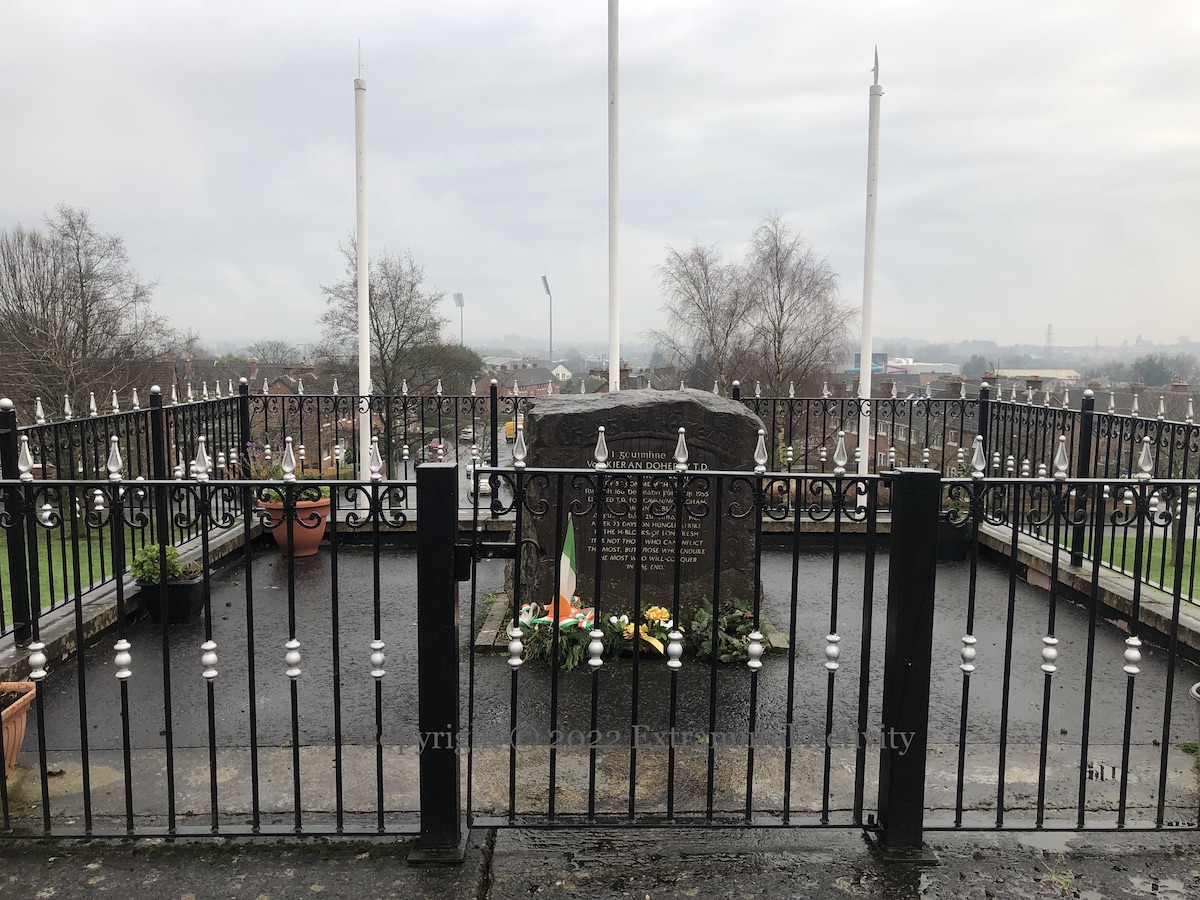
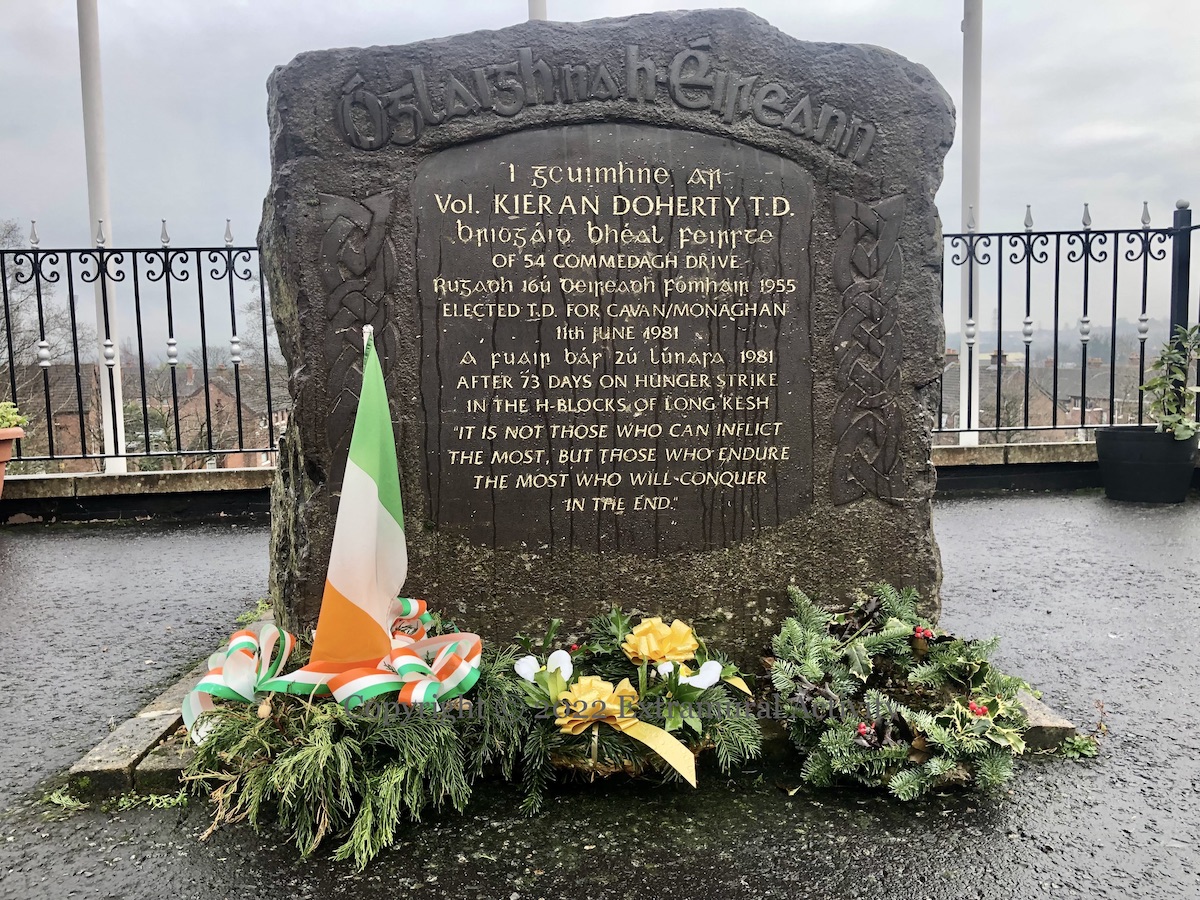
Kieran Doherty’s memorial stone (below) is recreated at the back of the mural of his funeral cortège. “I gcuımhne ar Vol. Kieran Doherty T.D. Brıogáıd Bhéal Feırste [Óglaıgh Na hÉıreann], of 54 Commedagh Drive. Rugadh 16ú Deıreadh Fómhaır 1955, elected T.D. for Cavan/Monaghan 11th June 1981, a fuaır bás 2ú Lúnasa 1981, after 73 days on hunger strike in the H-Blocks of Long Kesh. ‘It is not those who can inflict the most, but those who endure the most, who will conquer in the end’.” (The Terence MacSwiney quote is not included on the painted stone.)
 Seosamh Mac Coille Collection