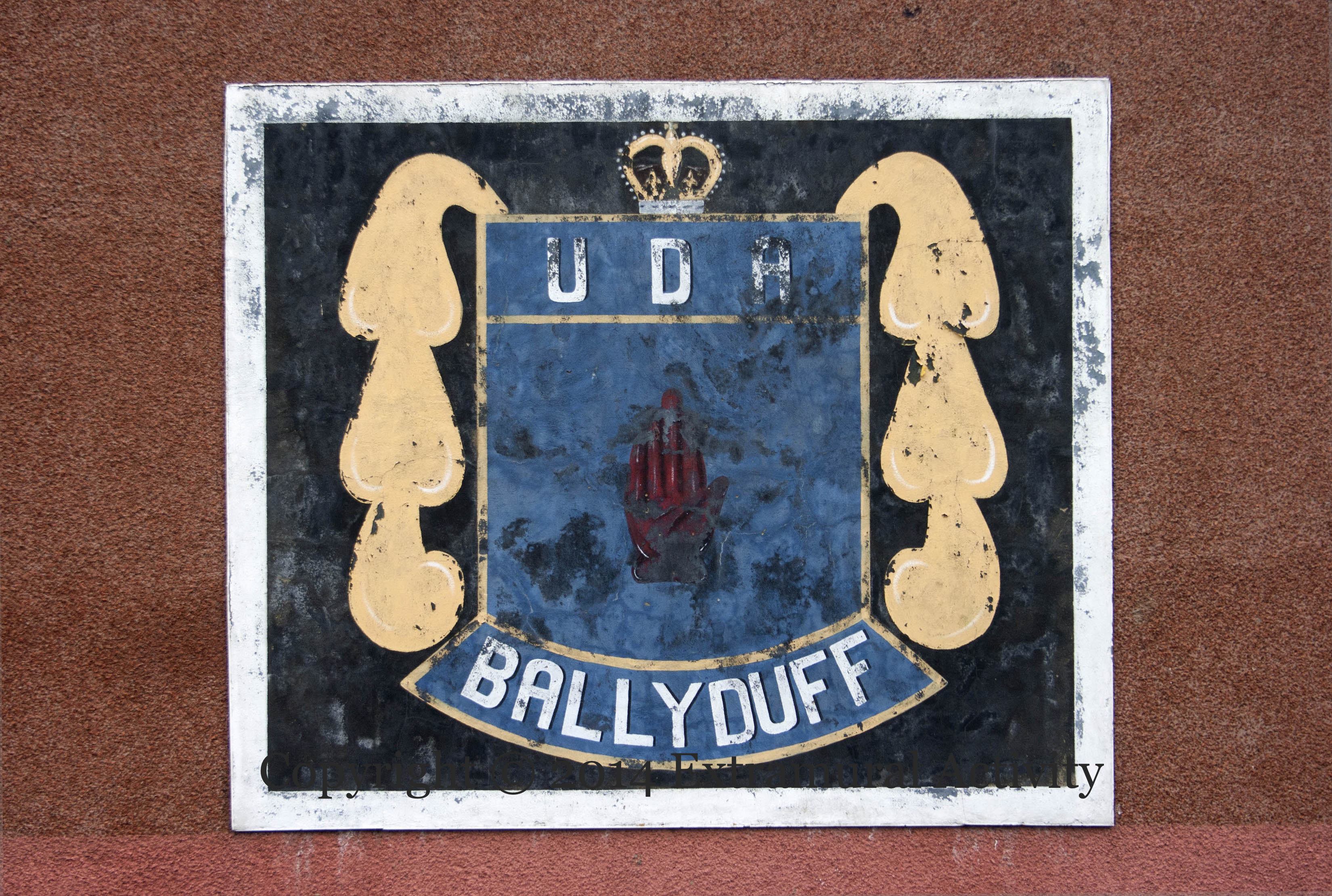
Shown above is a large (approx. 12′ x 10′) board on a gable wall in Ballyduff featuring the emblem of the UDA, including the crown and the red hand of Ulster, except that “Ballyduff” takes the place of the motto “quis separabit”.
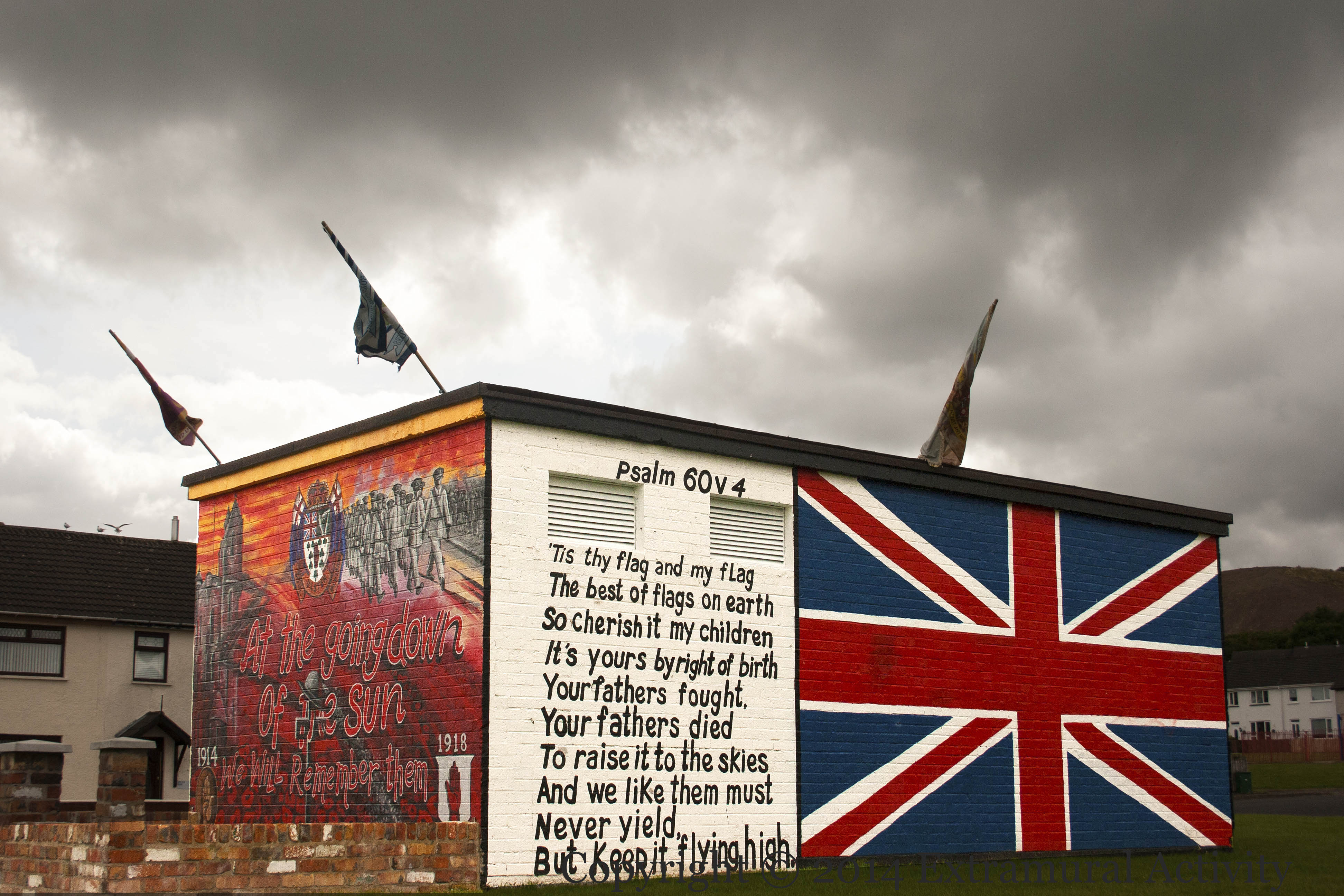
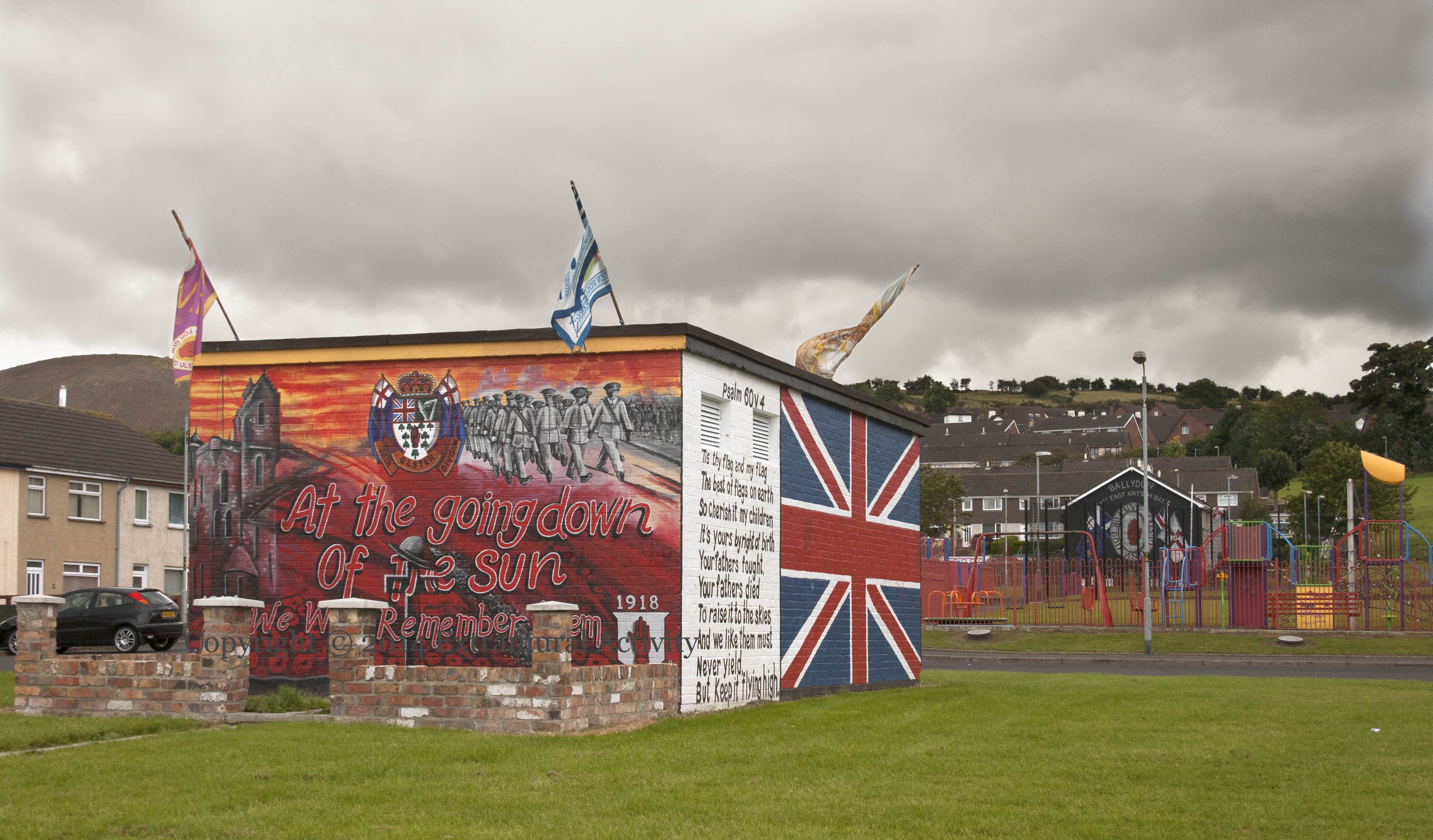
Translations of Psalm 60.4 vary, but it is something like “You (the Lord) have given those who fear you a banner so that they will not flee before your arrows”, which might work quite well alongside a Union jack. But in fact, only one source claims the poetic lines on the side of this Ballyduff electrical sub-station come from Psalm 60.4; they are rather the first stanza of a 1902 poem (earliest found mention), The UnionJack, by Edward Shirley, in Little Poems For Little People:
‘Tis thy flag and my flag, the best of flags on earth;
Oh, cherish it my children, for ’tis yours by right of birth.
Your fathers fought, your fathers died, to rear it to the skies;
And we like them will never yield, but keep it flying high.
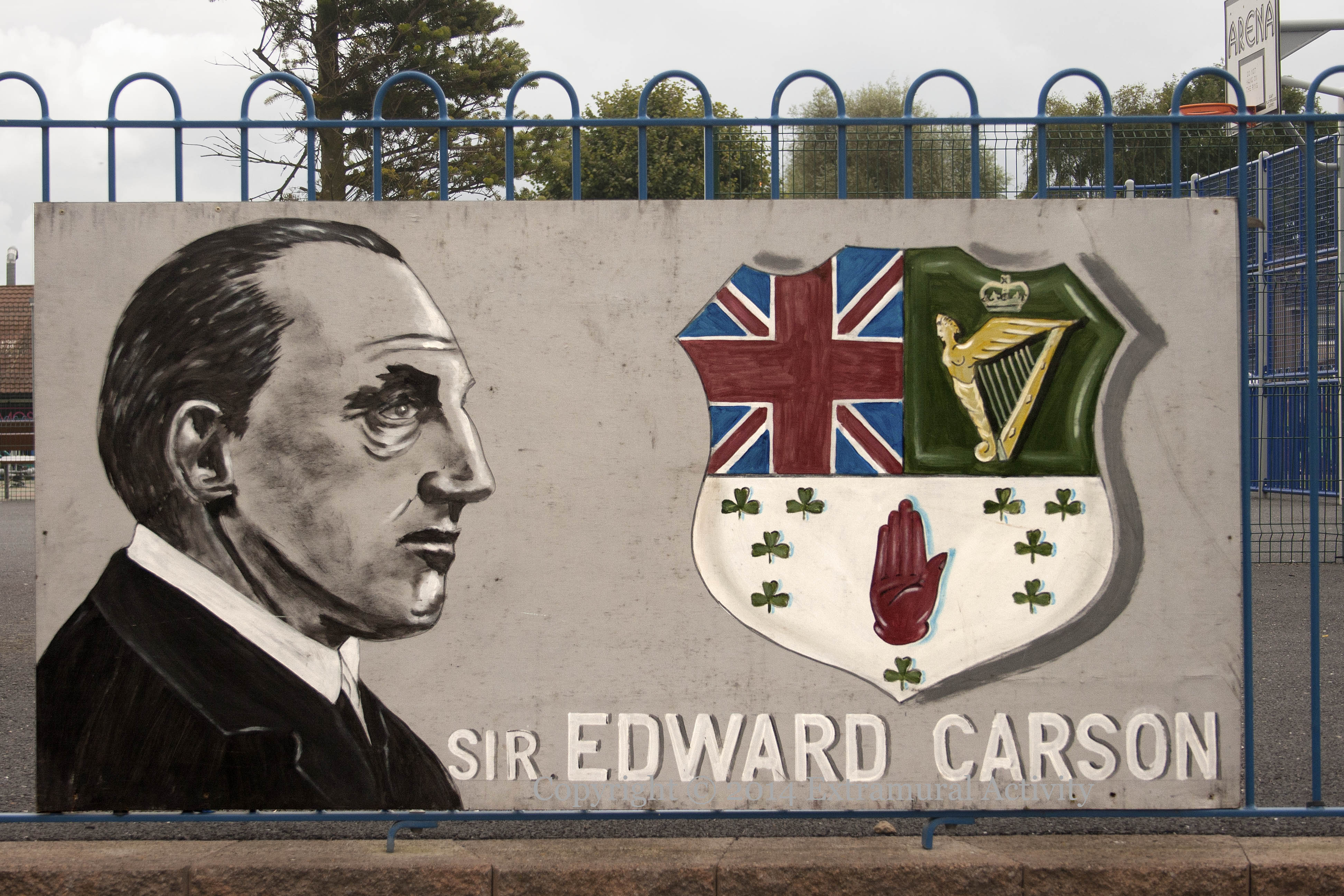
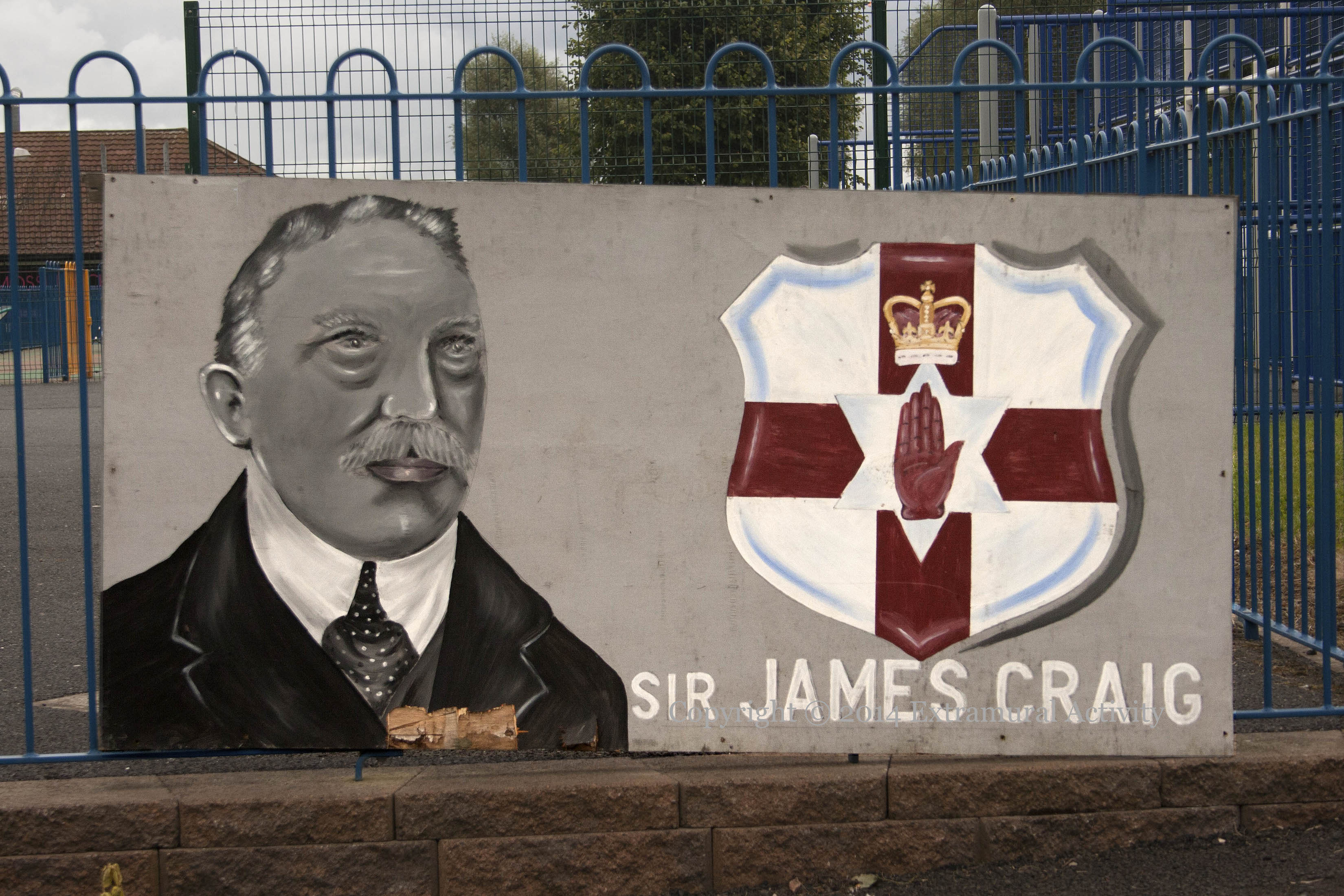
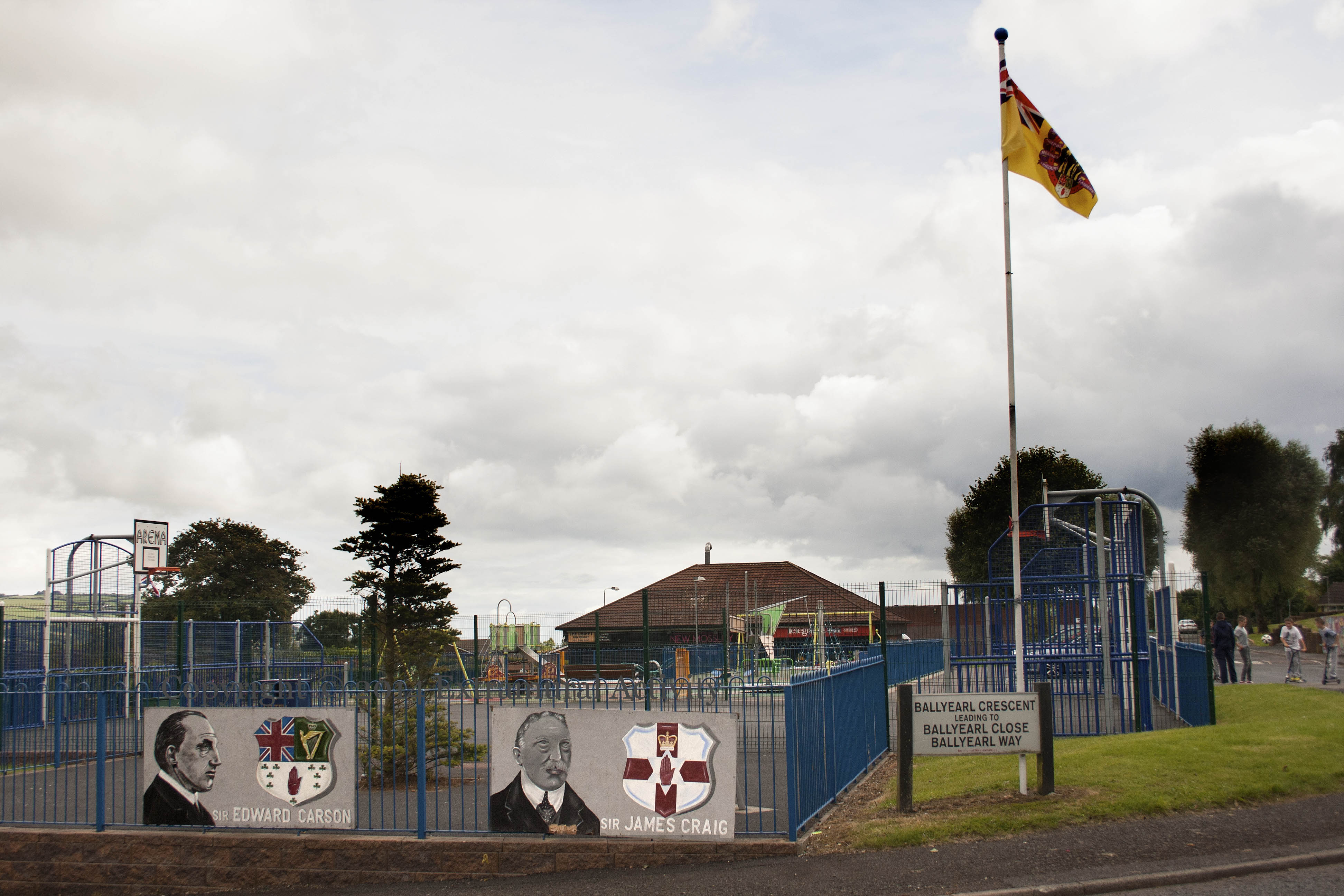
Carson (above) and Craig (below), founders of the Ulster Volunteers and the first two leaders of the Ulster Unionist Party, stand watch at the edge of an outdoor pitch and children’s playground in New Mossley, beneath a flag of the 36th (Ulster) division (see wide shot below). Carson’s profile is shown next to the emblem of the 36th division; Craig is shown next to the flag of Northern Ireland.
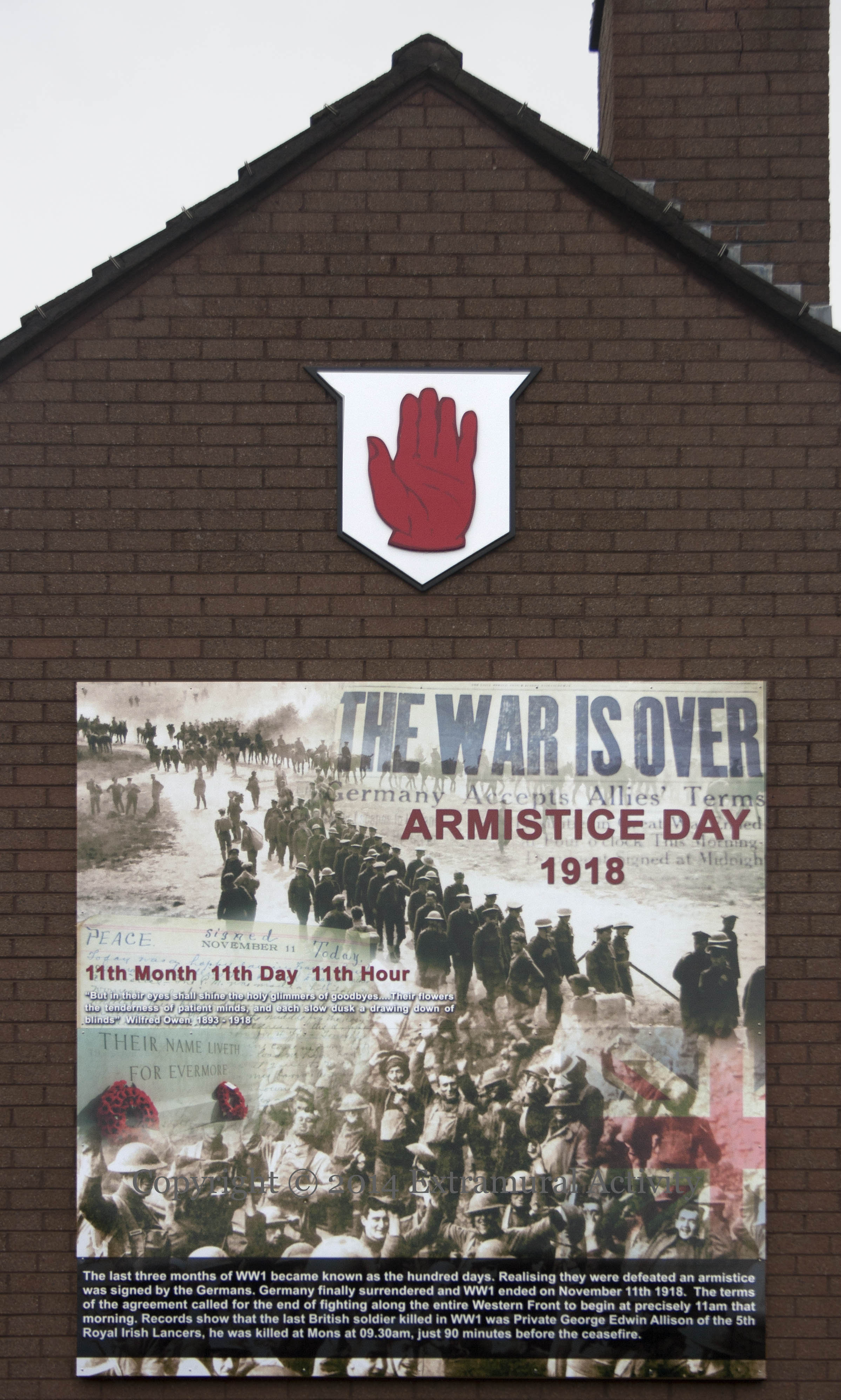
“But in their eyes shall shine the holy glimmers of goodbyes … Their flower the tenderness of patient minds, and each slow dusk a drawing down of blinds.” Lines from Wilfred Owens’ (1893-1918) ‘Anthem For Doomed Youth‘ on a new board in Lindsay Street.
The text at the bottom reads: “The last three month of WWI became known as the hundred days. Realising they were defeated an armistice was signed by the Germans. Germany finally surrendered and WWI ended on November 11th 1918. The terms of the agreement called for the end of fighting along the entire Western Front to begin a precisely 11 am that morning. Records show that the last British soldier killed in WWI was Private George Edwin Allison of the 5th Royal Irish Lancers. He was killed at Mons at 09:30 am, just 90 minutes before the ceasefire.”
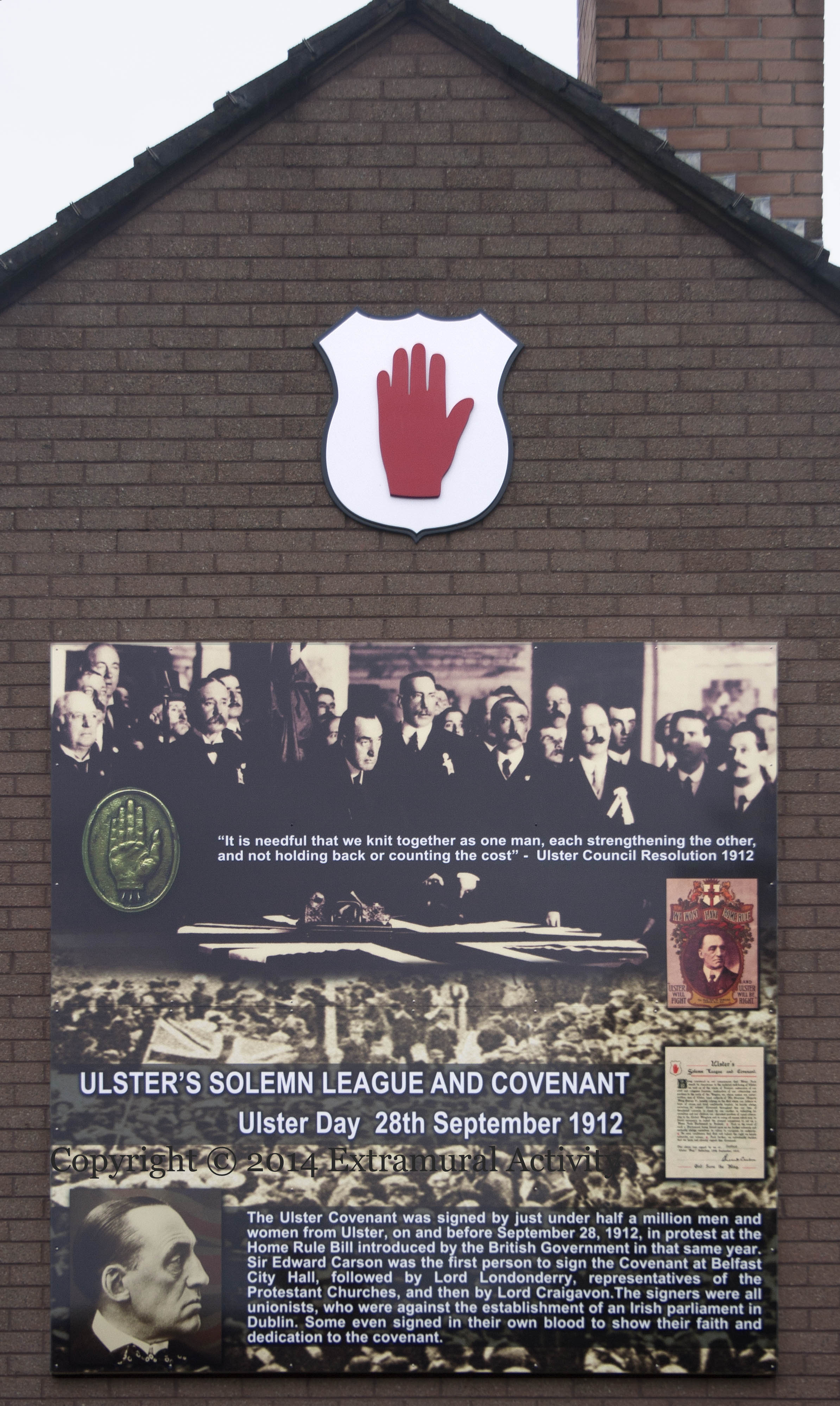
“It is needful that we knit together as one man, each strengthening the other, and not holding back of counting the cost” – Ulster [Unionist] Council Resolution 1912. The Council met on September 23rd and 471,000 people signed the covenant (figures here) on or around the 28th – Ulster Day – led by Sir Edward Carson.
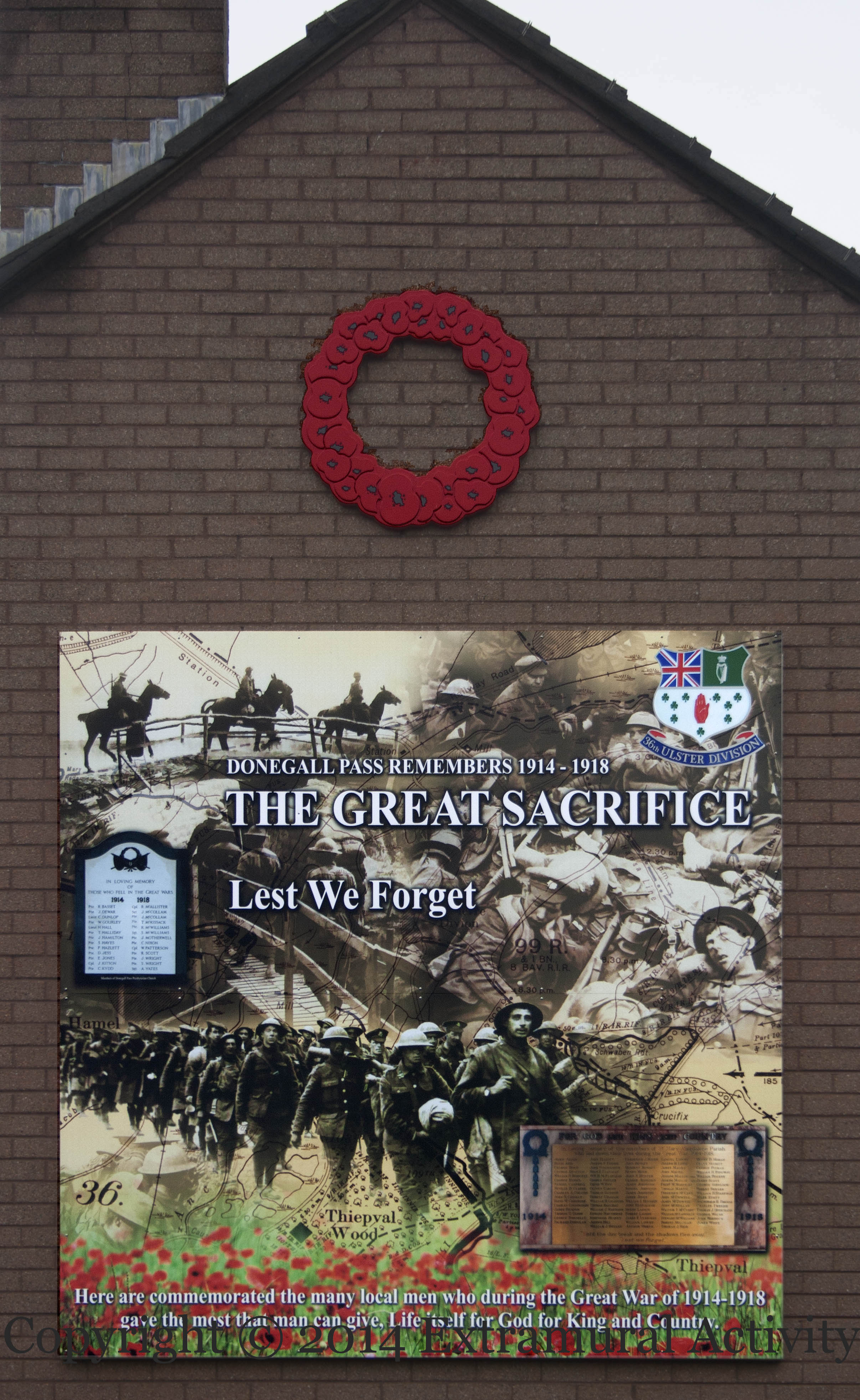
Computer-generated board in Lindsay Street showing a map of the northern end of the Western Front and images of soldiers marching, on horseback, and in the trenches: Donegall Pass remembers 1914-1918 the great sacrifice. Lest we forget. Here are commemorated the many local men who during the Great War of 1914-1918 gave the most that man can give: life itself for God for King and Country.
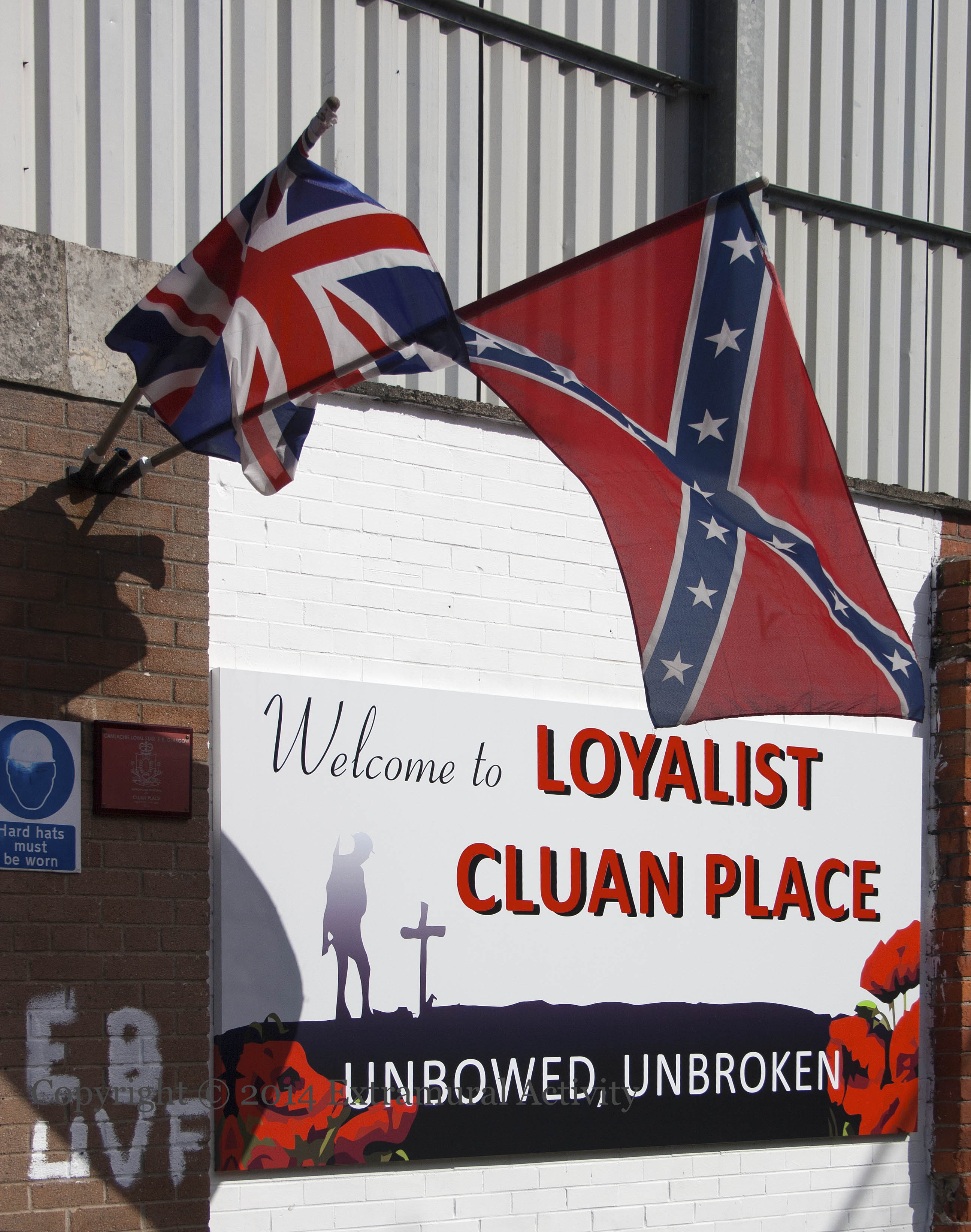
Below the “peace” line, a confederate flag flies alongside the union jack over a new board in Cluan Place reading “Unbowed, Unbroken” and “east Belfast UVF” graffiti.
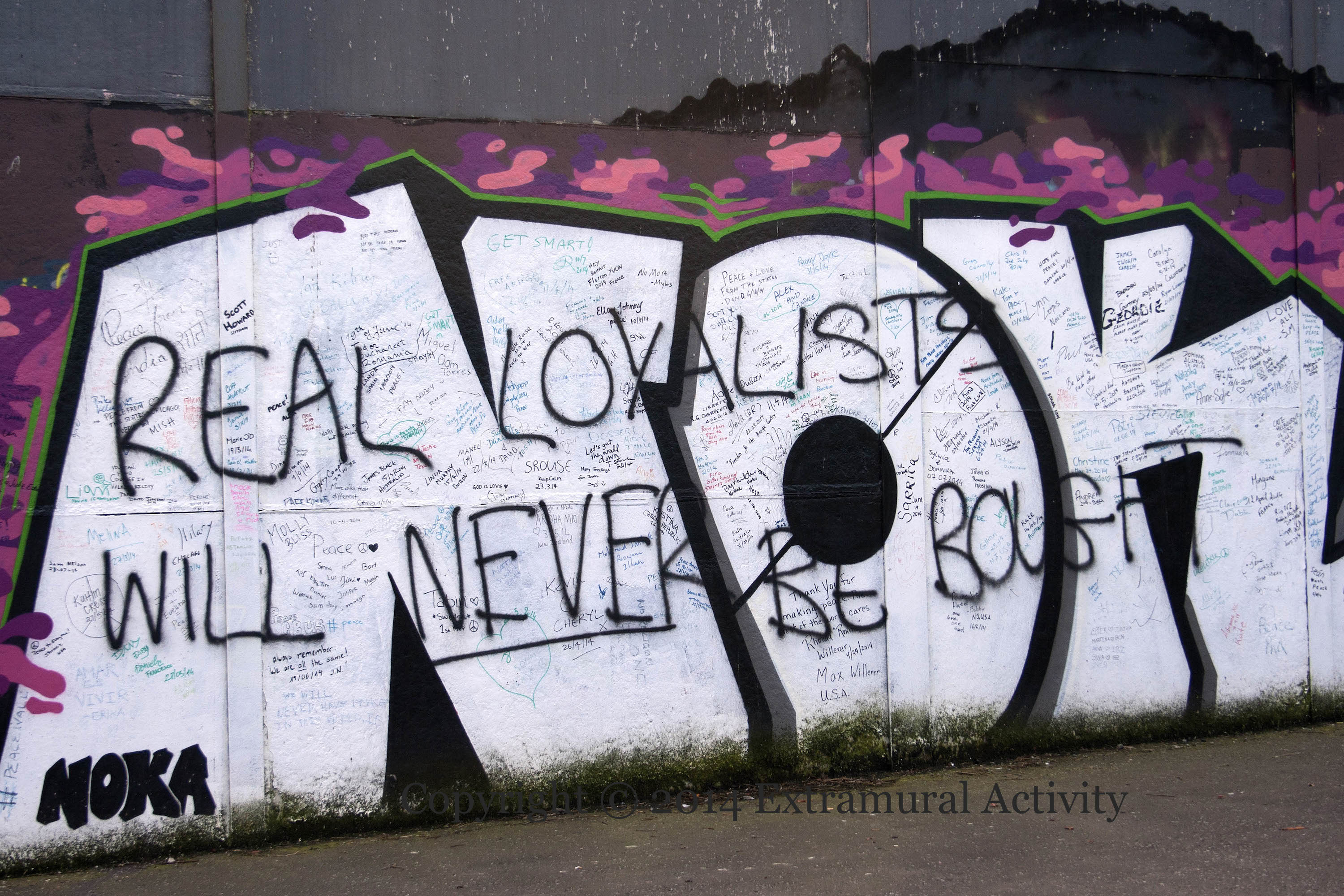
Loyalist graffiti on the topic of money for regulated bonfires and community celebrations (for more, see Culture Before Cash), atop a piece of spray-paint writing by NOKA, one of the FA Krew.
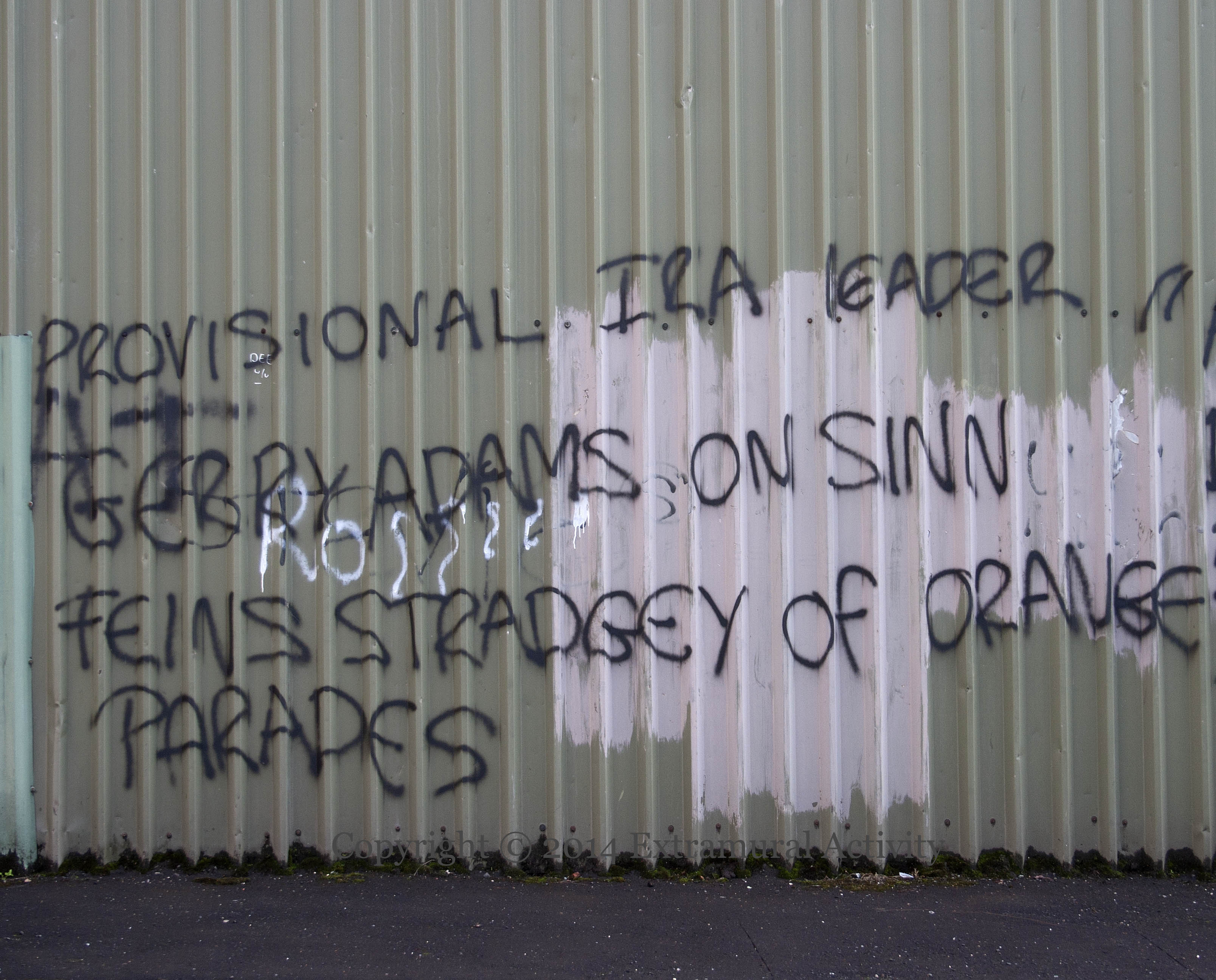
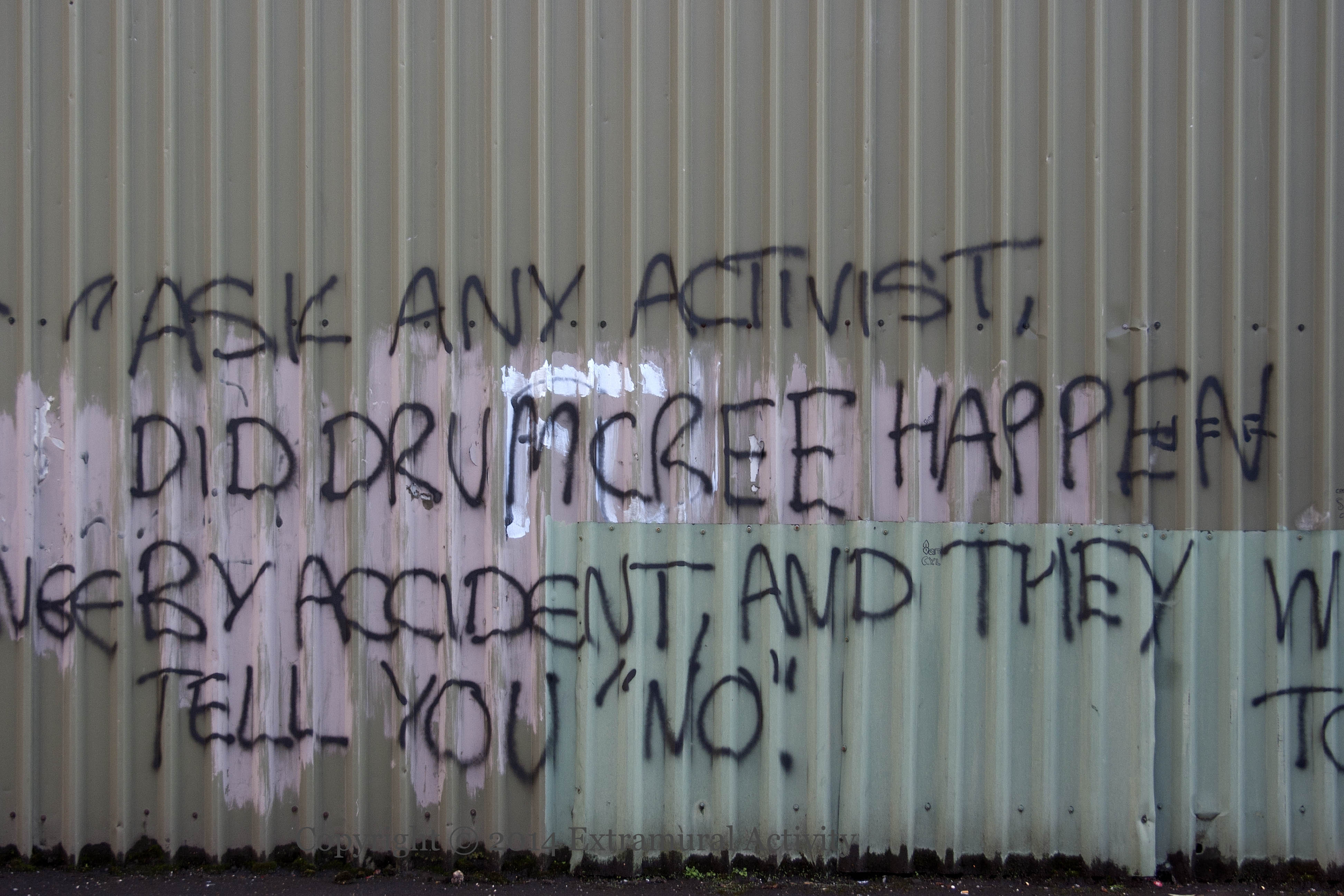
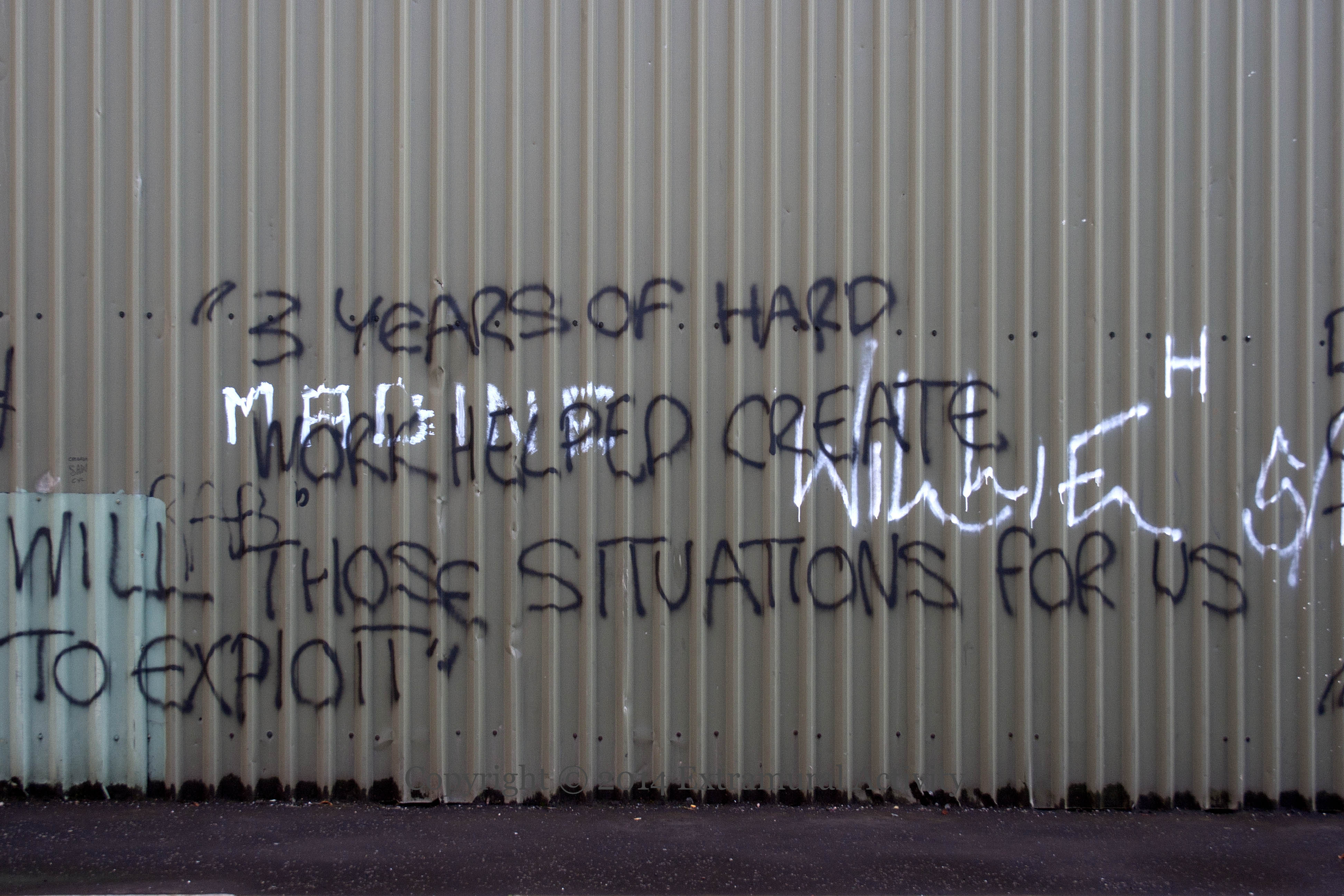
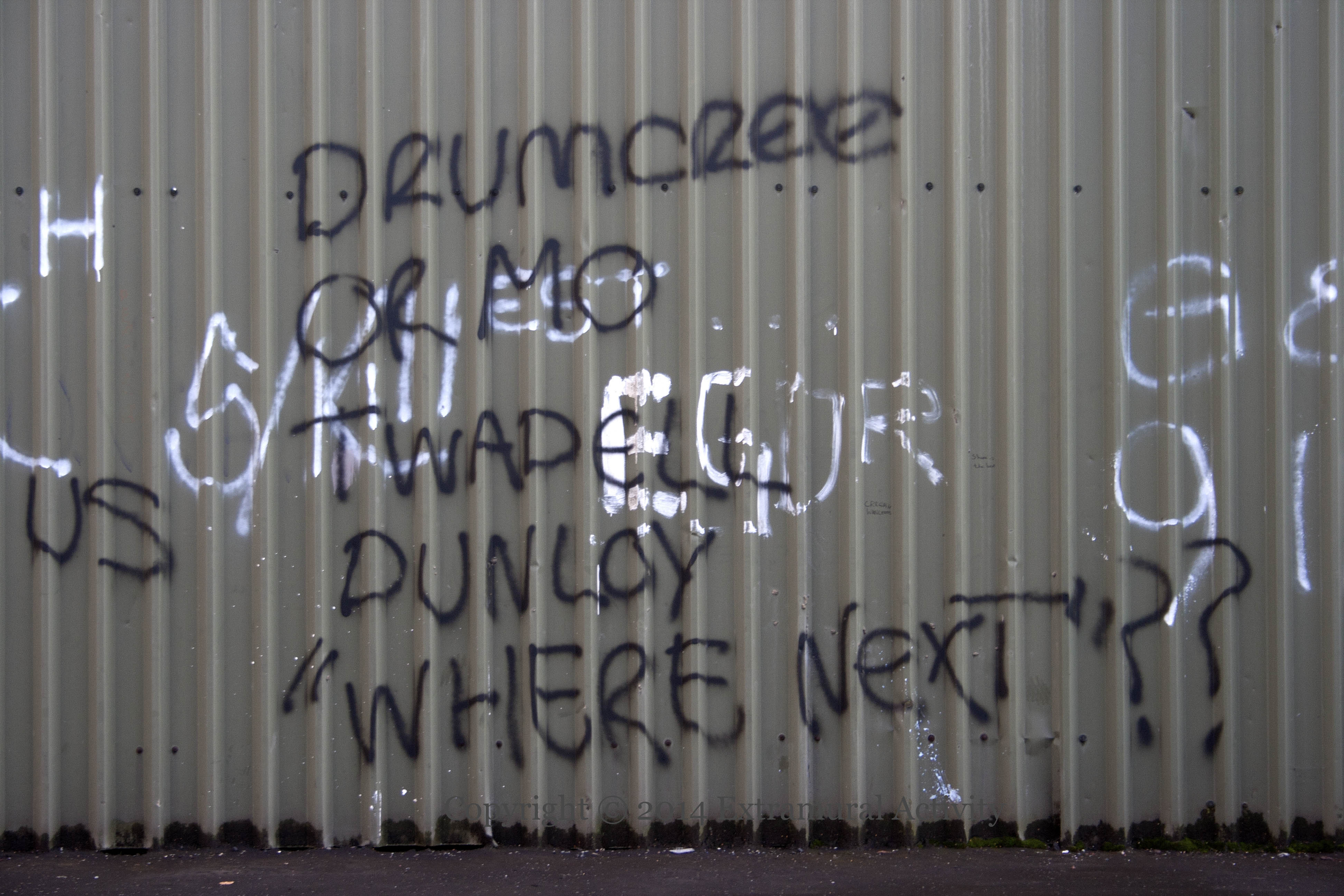
Wood (Crimes Of Loyalty p. 202) gives the following quote, reportedly a transcript of remarks made by Adams at a Sınn Féın meeting in Meath, as, “Ask any activist in the North, did Drumcree happen by accident, and he will tell you “No.”. Three years of work on the Ormeau Road, in Portadown, and parts of Fermanagh and Newry, Armagh, and in Bellaghy, and up in Londonderry [other sources, such as the Irish Times, give the much more likely “Derry”]. Three years of work went into creating that situation and fair play to those who put the work in. They are the type of scene chances we need to focus on and develop and exploit.”
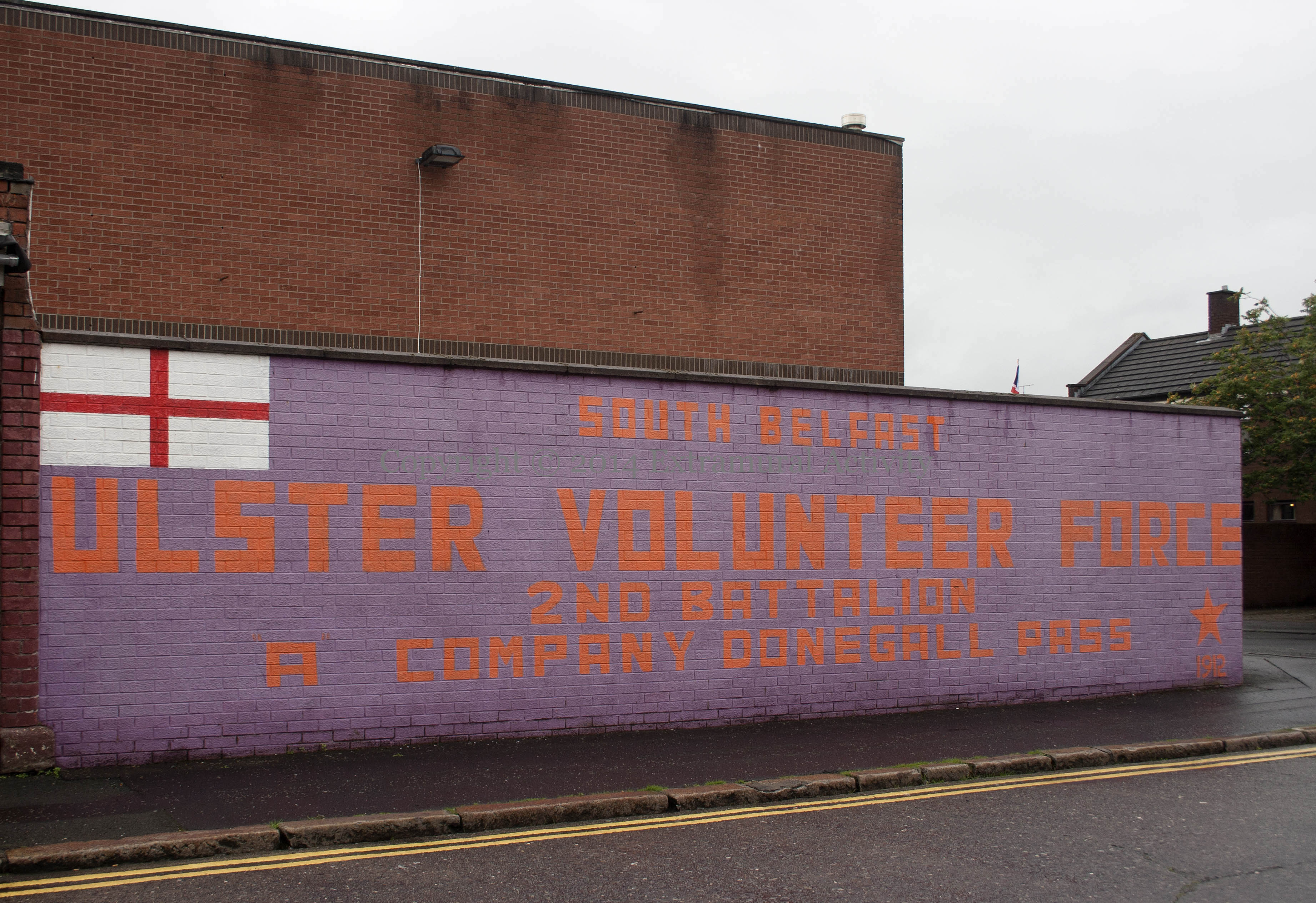
South Belfast Ulster Volunteer Force 2nd Battalion “A” Company Donegall Pass, with the flag of England (St. George’s Cross) in one corner and in the other an orange star with “1912” written below, the year the Ulster Volunteers were founded. The colour-scheme is the reverse of the Orange Order’s: its flag has the purple star of the Williamites on an orange field.
 Seosamh Mac Coille Collection