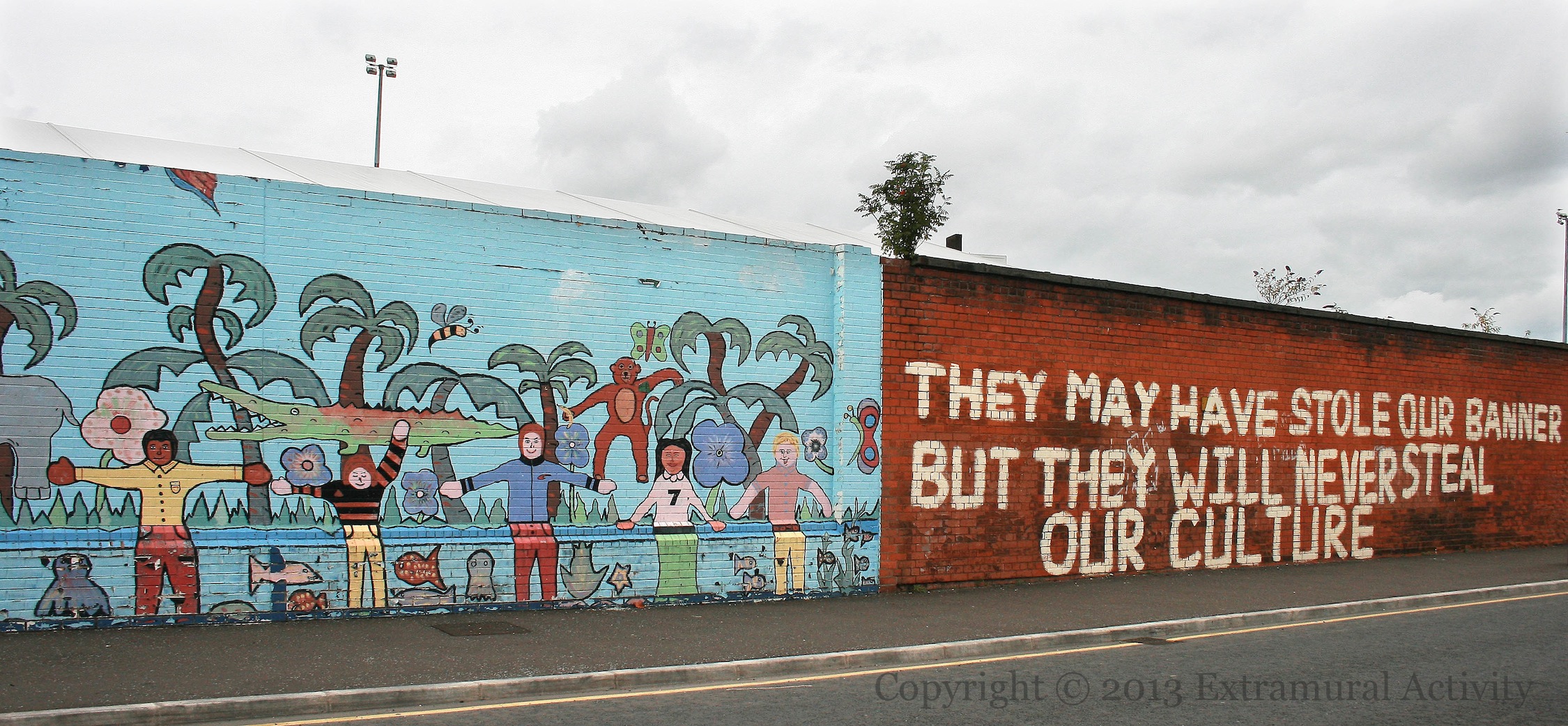
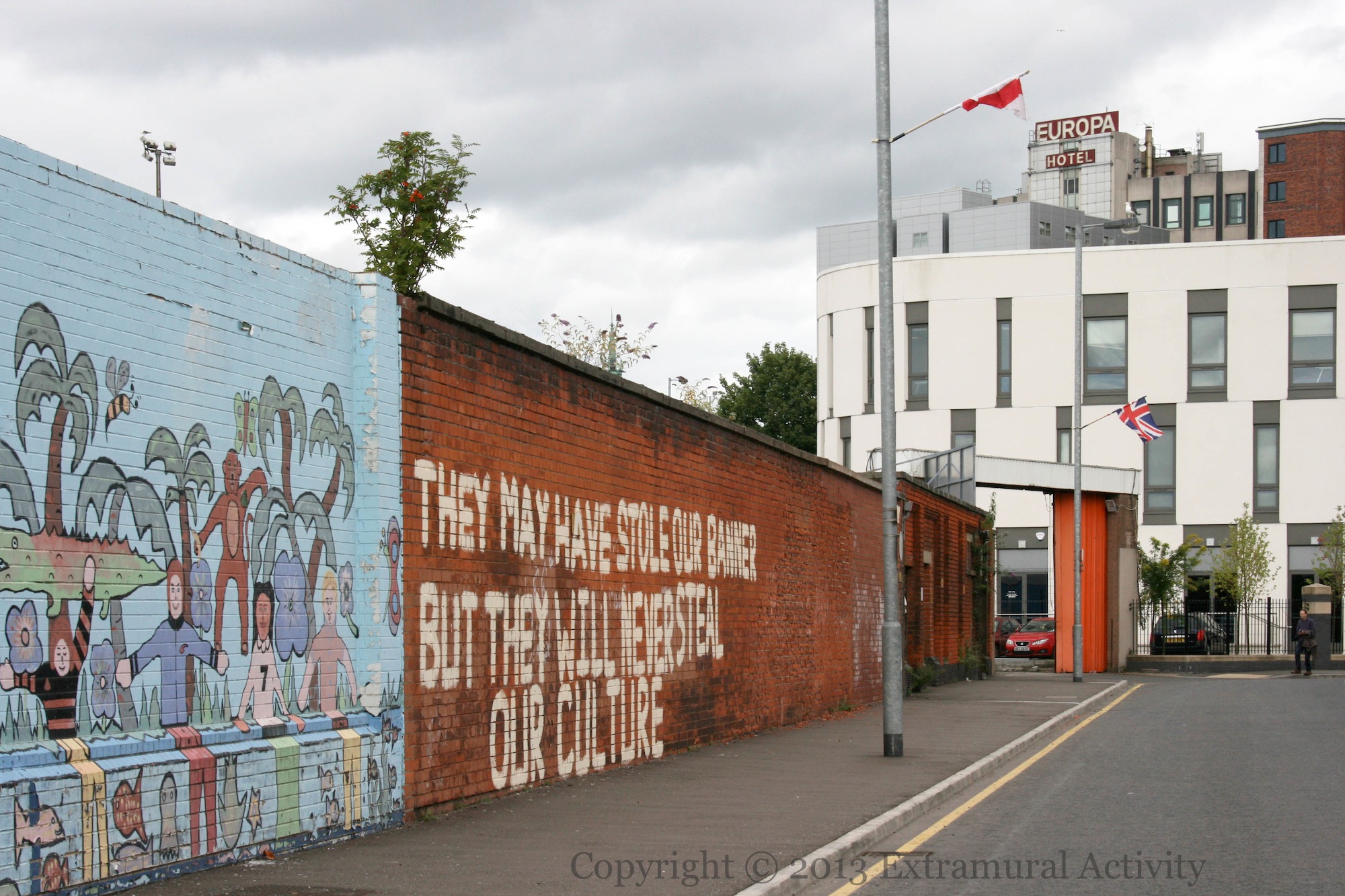
Graffiti in Linfield Gardens (off Sandy Row) making reference to the banner shown in this entry (on a bonfire) and on-going disputes over the routes established by the Parades Commission for Orange Order marches: They may have stole[n] our banner but they will never steal our culture.
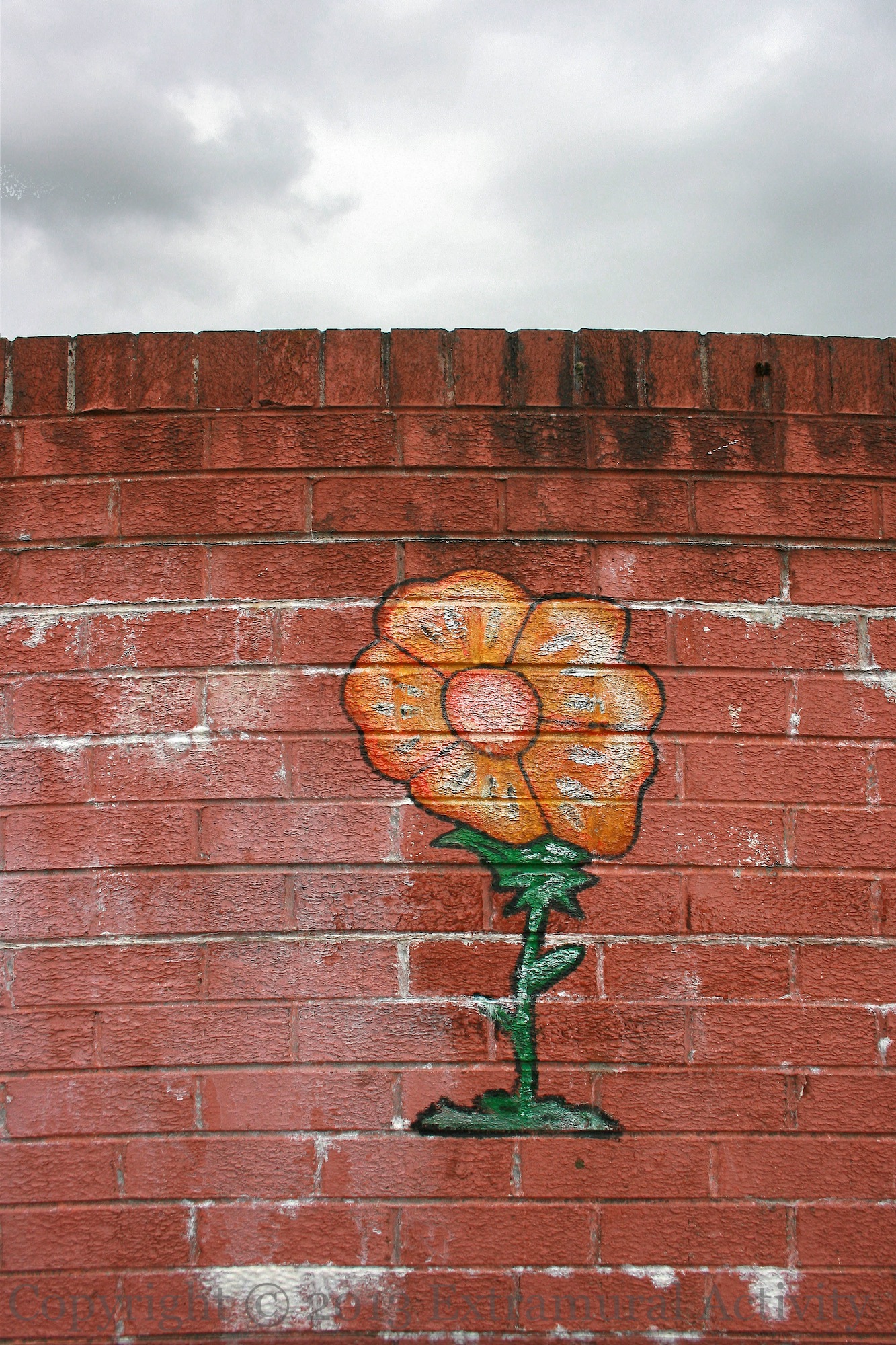
The Linfield area of south Belfast is named for the flax plant, genus Linum (presumably – there doesn’t seem to be a history of the area on-line), though that plant is blue (see this image), while this one – in Linfield Gardens – is orange.
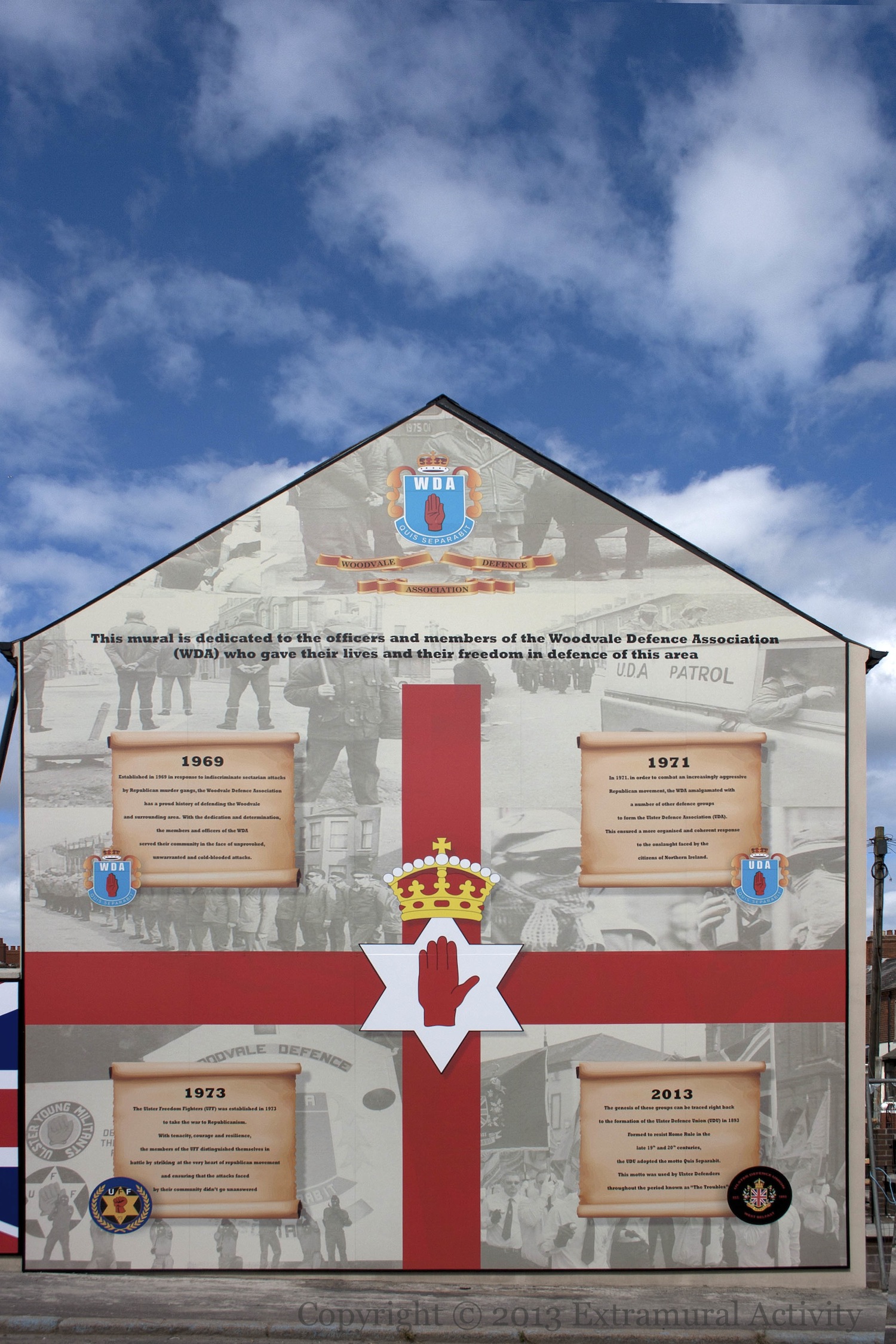
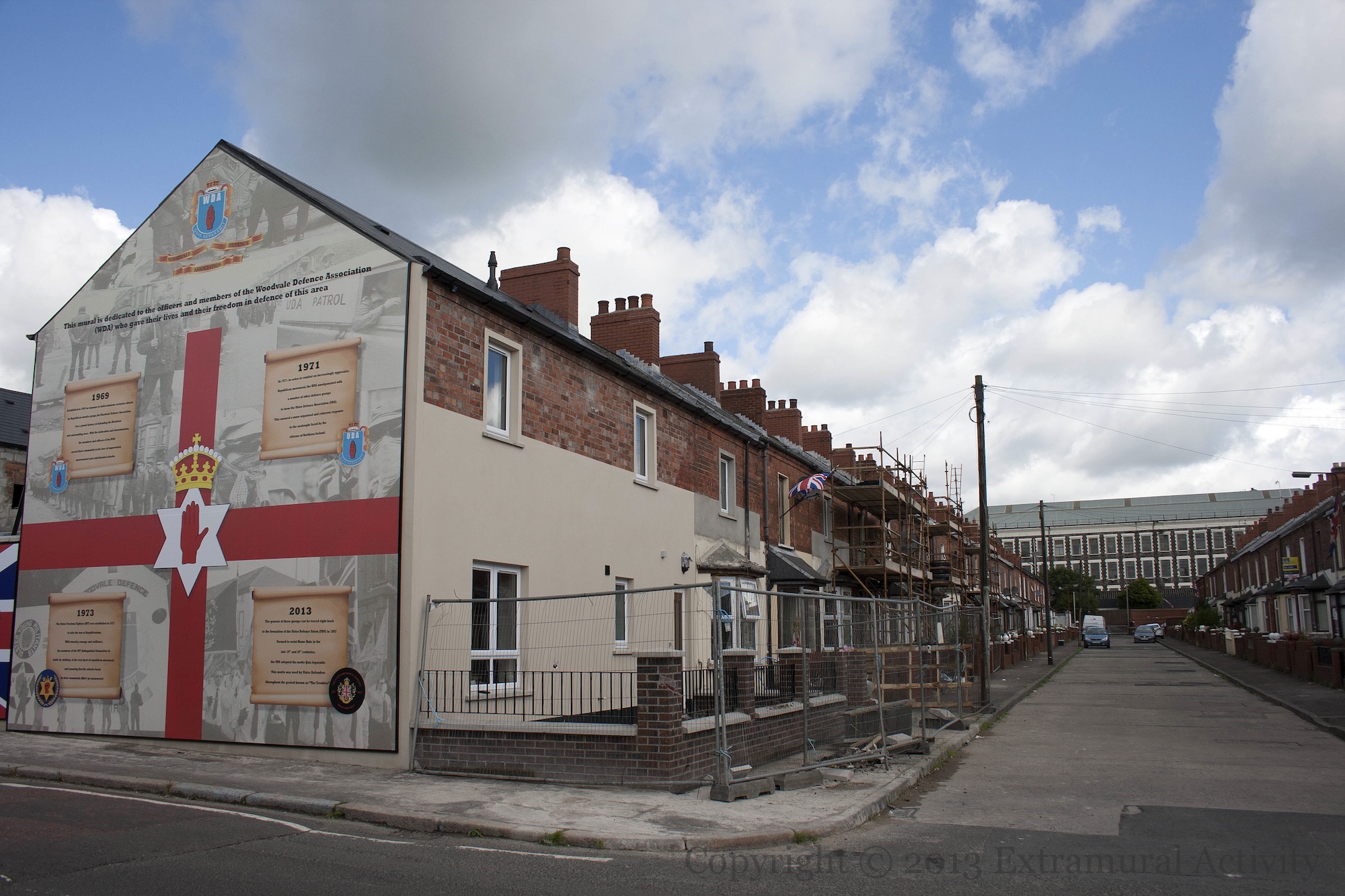
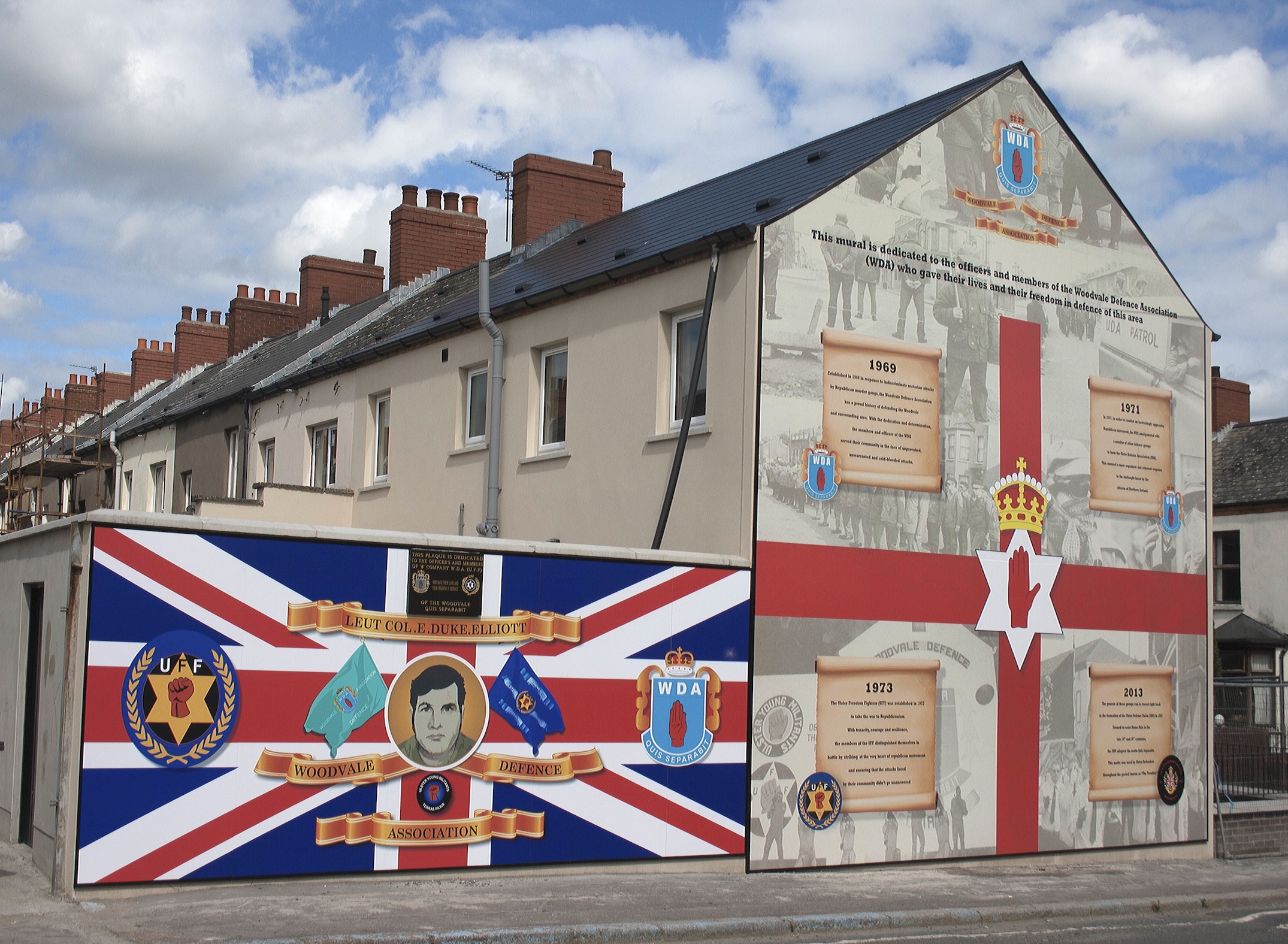
The gable wall at the end of Columbia Street (on Ohio Street) has been rebuilt and the old WDA/Duke Elliott mural has been replaced. Above is the right side of the piece, which describes the transition from the Woodvale Defence Association to the Ulster Defence Association to the Ulster Freedom Fighters, and grounds all three in the Ulster Defence union of 1893.
In the second image, below, Ewart’s mill, on the Ardoyne side of the Crumlin Rd, can be seen in the background. From the WP page on the Crumlin Rd … “The mill was built for William Ewart, a cotton trader and politician who switched his interests to the production of linen, which at the time became the leading industry in the city. During the Second World War the mill was converted from the production of linen to the manufacture of munitions.” There is a statue diagonally across the street (at the corner of Cambrai and Crumlin Roads) of a millworker.
In 1971 in order to combat an increasingly aggressive republican movement, the WDA amalgamated with a number of other defence groups in form the UDA. This ensured a more organised and coherent response to the onslaught faced by the citizens of Northern Ireland.
The UFF was established in 1973 to take the war to republicanism. With tenacity, courage and resilience the members of the UFF distinguished themselves in battle by striking at the very heart of republican movement and ensuring that the attacks faced by their community didn’t go unanswered.
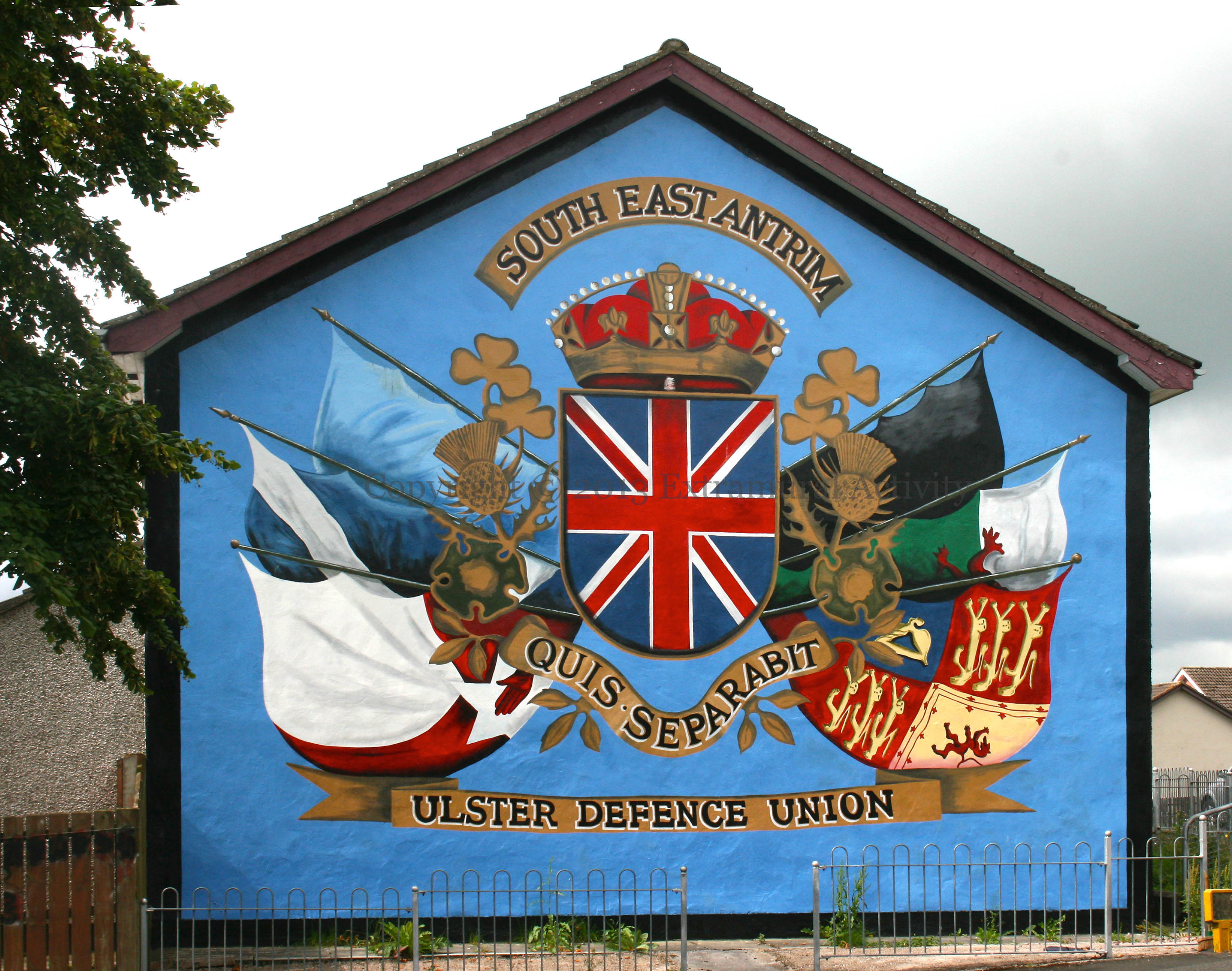
2013: The genesis of these groups can be traced right back to the formation of the UDU in 1893. Formed to resist Home Rule in the late 19th and 20th centuries, the UDU adapted the motto Quis Separabit. This motto was used by ulster defenders throughout the period known as “the troubles”.
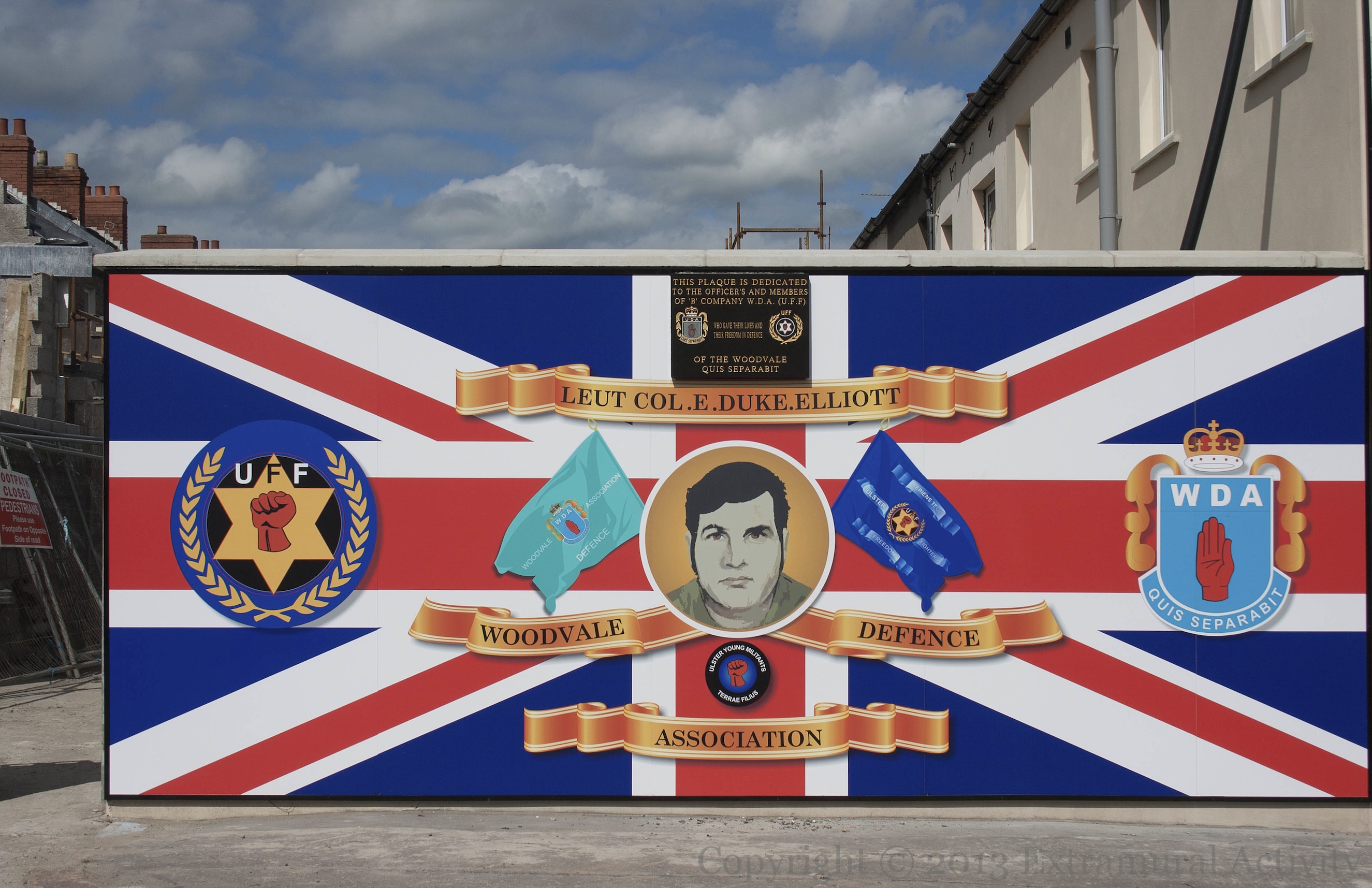
As mentioned in UDU-WDA-UDA-UFF, the end wall of Columbia Street was knocked down, taking with it a former Duke Elliott/UDA mural, which has now been replaced with boards (rather than murals) commemorating the history of the UDA and Elliott. Elliott lived one street over, in Leopold Street (WP). He was killed in 1972, at age 28, in a dispute with other UDA members.
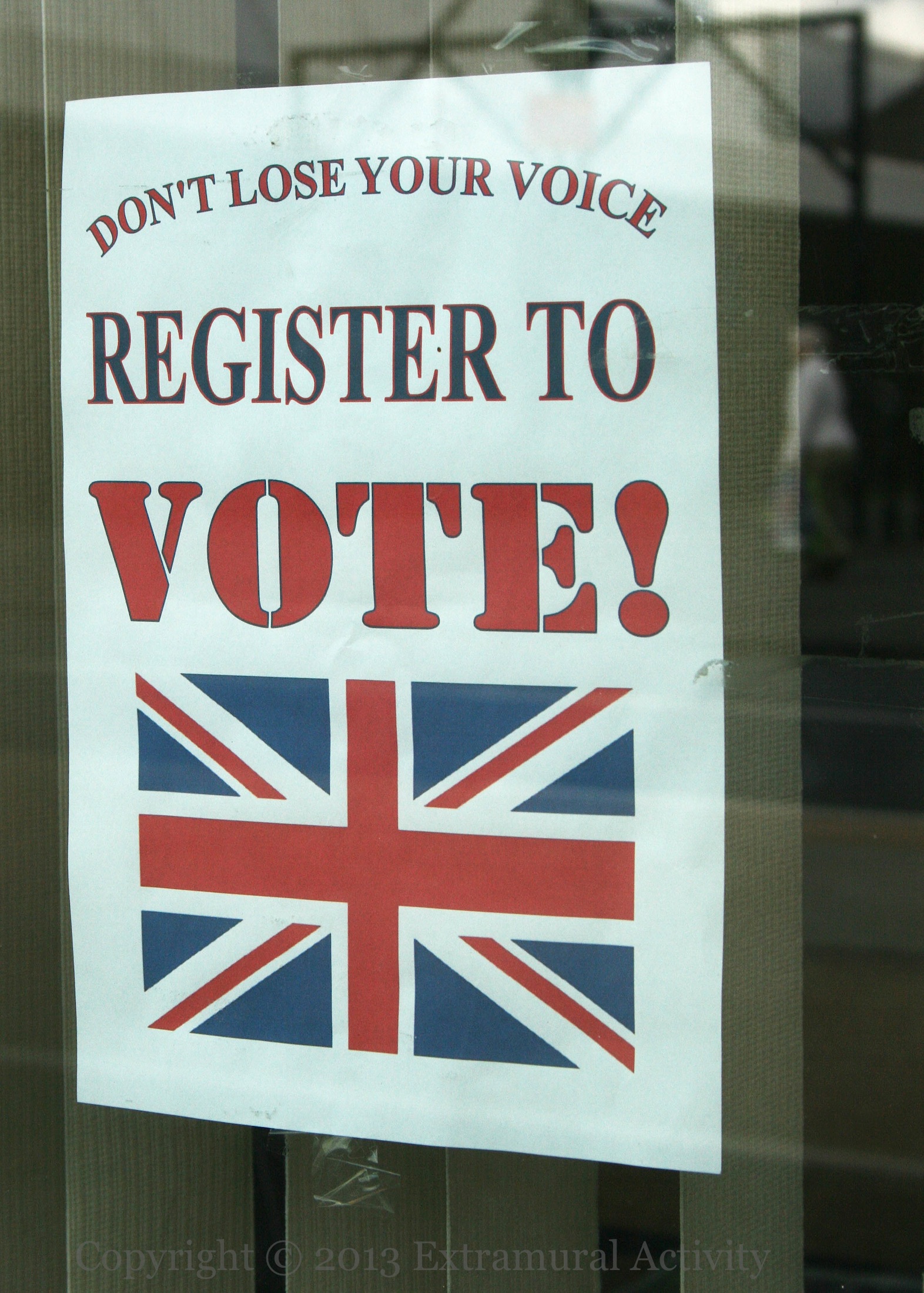
A flyer/poster in the window (of an unmarked unit, but presumably a community resource centre – next to Sam Glenn’s butchers) exhorting residents of the Shankill area to register to vote, part of the recent trend of sentiments expressing Protestant marginalization. (See previously: Carrickfergus panels one | two)
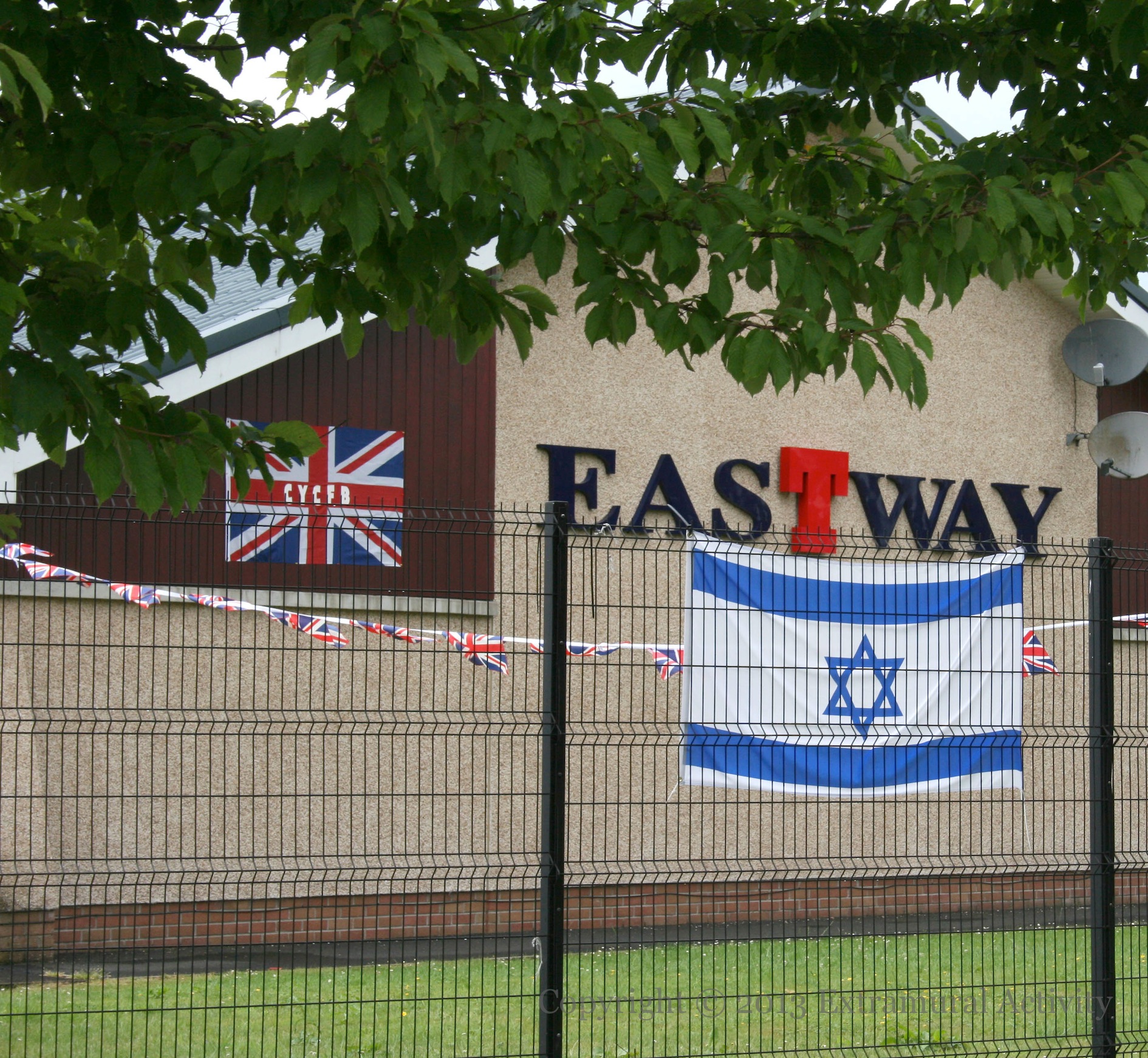
The Israeli flag flies on a fence (along with other flags, not in shot) outside the Eastway social club in Rathcoole. On the wall of the club is a union flag with the letters “CYCFB” standing for “Cloughfern Young Conquerors Flute Band”. The band will next parade in the area on August 17th. The “T” of “Eastway” is the Tennent’s Lager brand.
Shamrock, thistle, and rose are shown in this South East Antrim Ulster Defence Union mural but the daffodil is not, even though the Welsh “Red Dragon” is included alongside the Scottish Saltire, the flag of Northern Ireland, and Queen Elizabeth II’s royal standard.
The Ulster Defence Union was a loyalist organization founded to fight against Home Rule, launched on 17 March 1893. The name is now used by the post-ceasefire UDA (beginning in 2007: Newsletter | Remembrance Day Statement at CAIN).