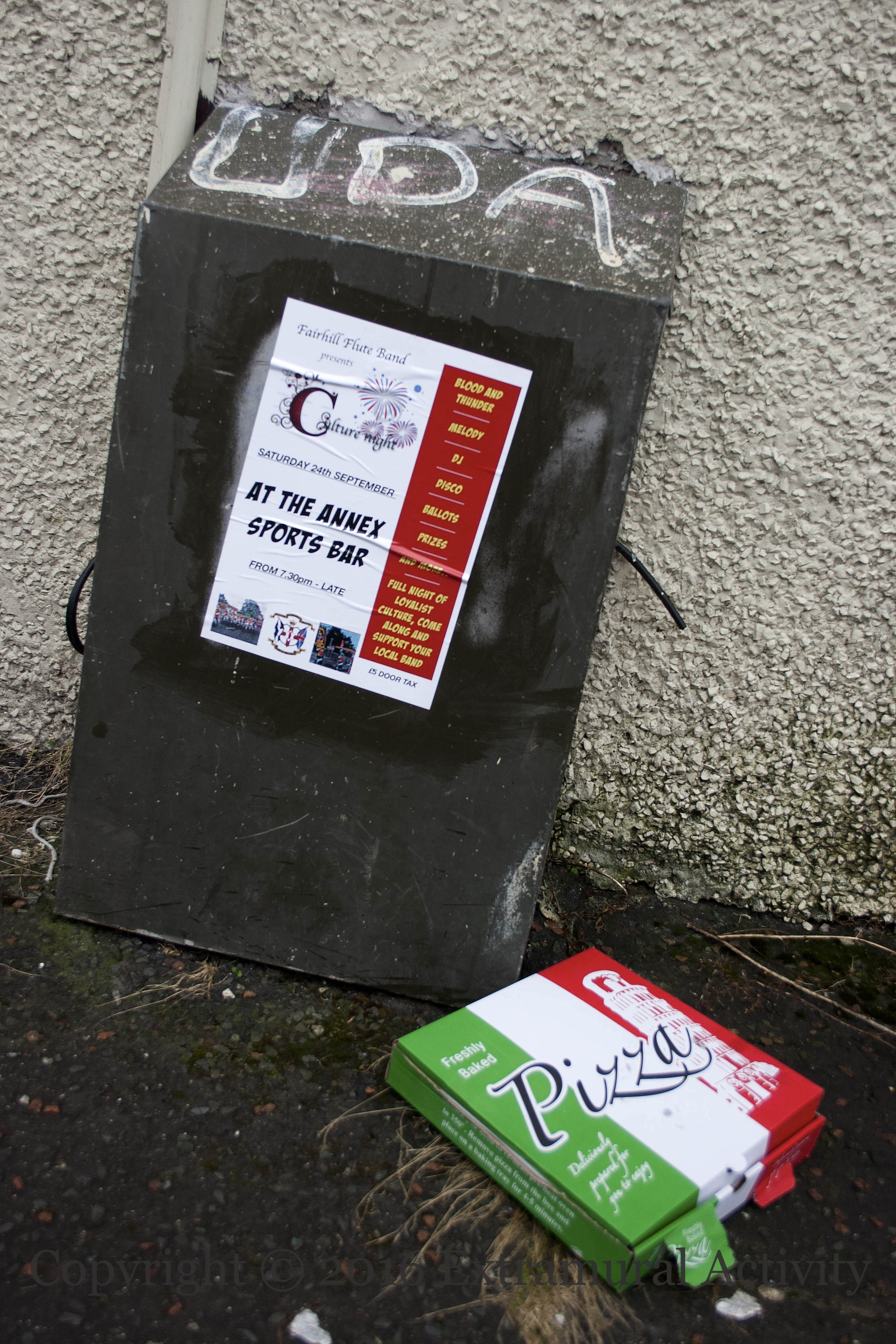
Pay the £5 “door tax” and you can attend the Fernhill Flute Band’s “Full night of loyalist culture” including “Blood And Thunder, Melody, DJ, disco, ballots, prizes, and more”.
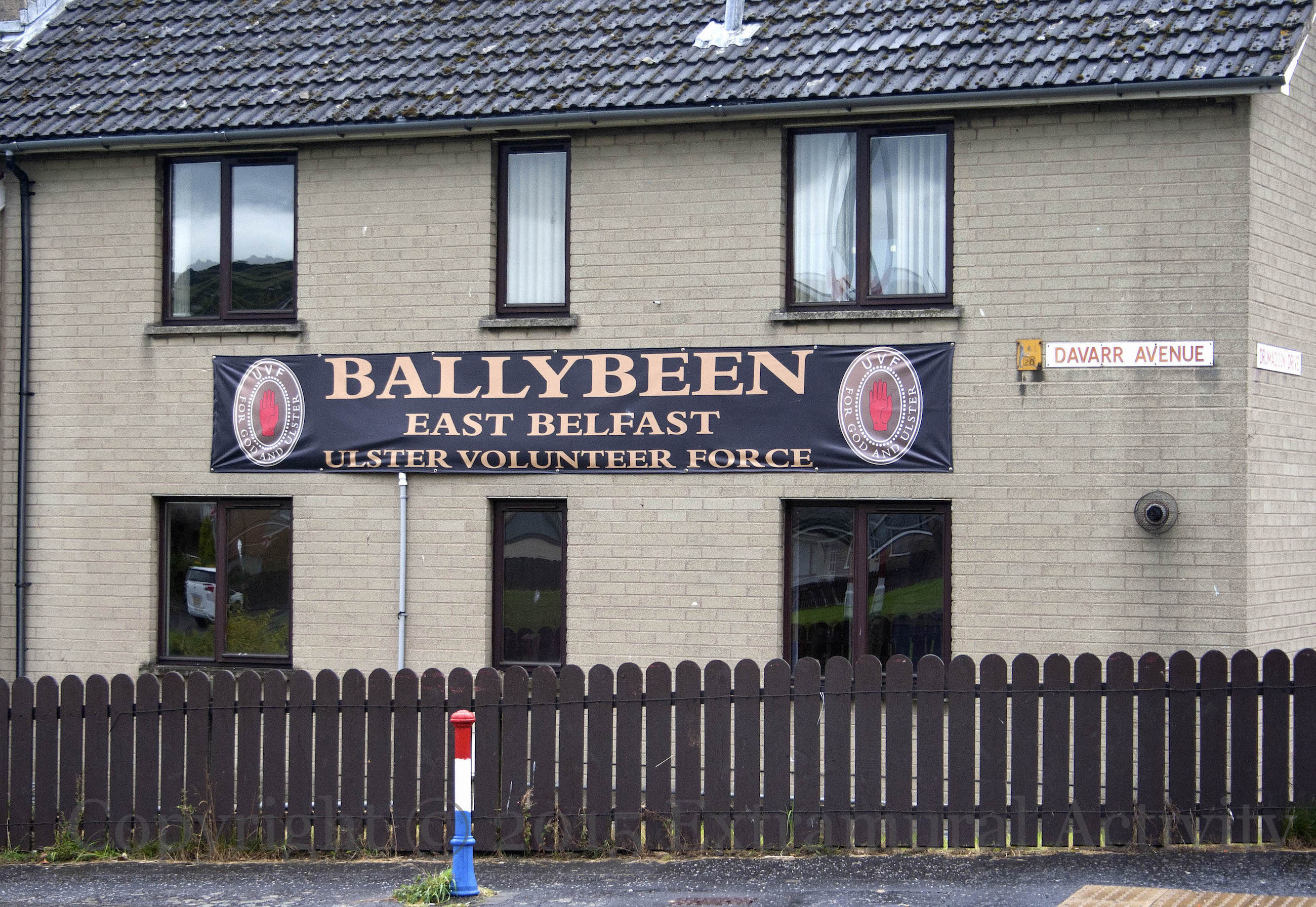
Next to the bonfire site at the southern (Drumadoon Drive) entrance to Ballybeen, the banner on the building above proclaims the area’s paramilitary allegiance: East Belfast Ulster Volunteer Force.
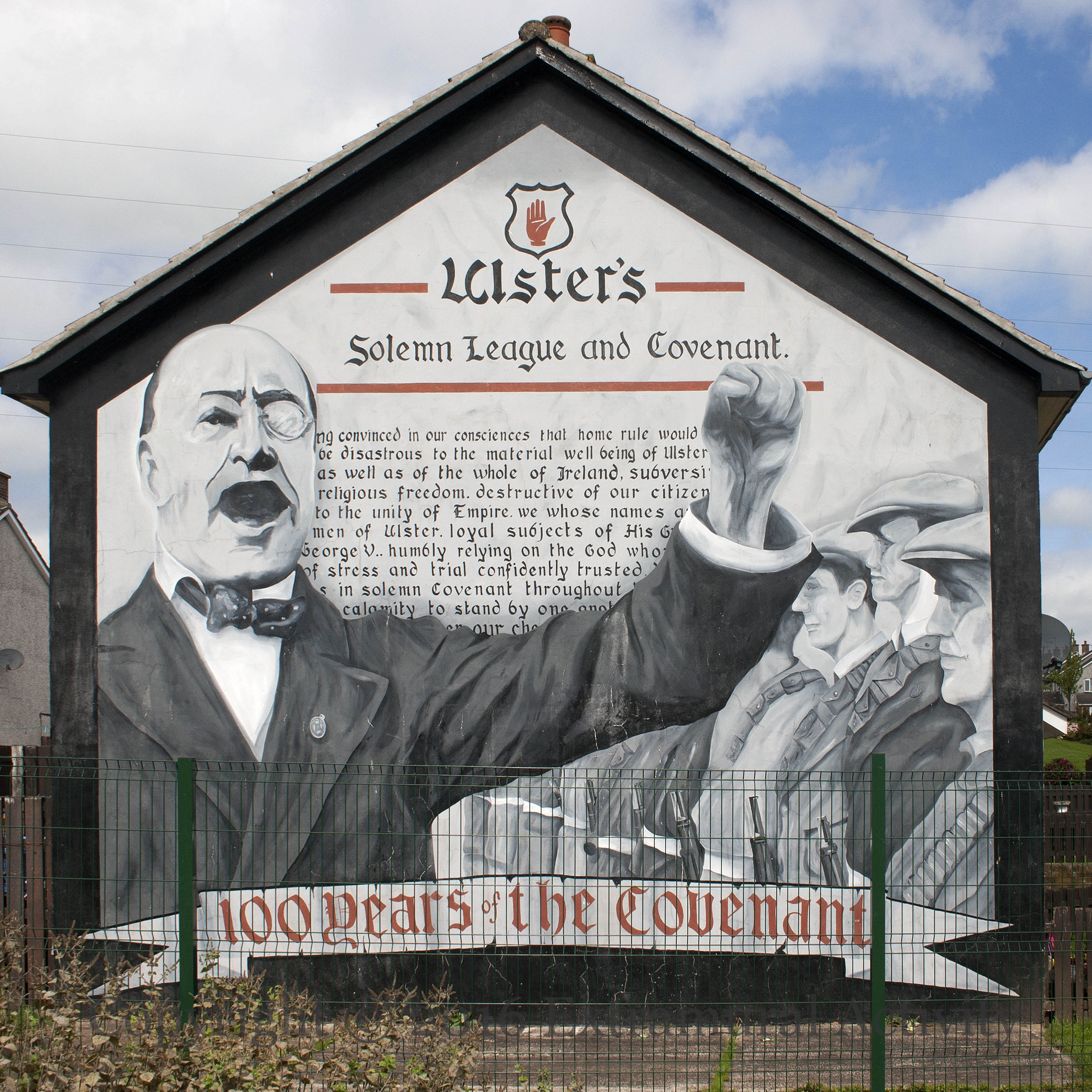
The covenant was signed in September 1912 (as captured in another famous image from Belfast’s City Hall — see Betting Office). The mural above uses the text of the Covenant as a backdrop to a composite of Edward Carson speaking and a row of Ulster Volunteers, formed in January 1913 (see the similar mural First World War).
Alain Miossec/Murals Irlande Du Nord has a post comparing this painted version with the previous plastic version, which is almost identical, apart from Stormont as a backdrop rather than the text of the Covenant.
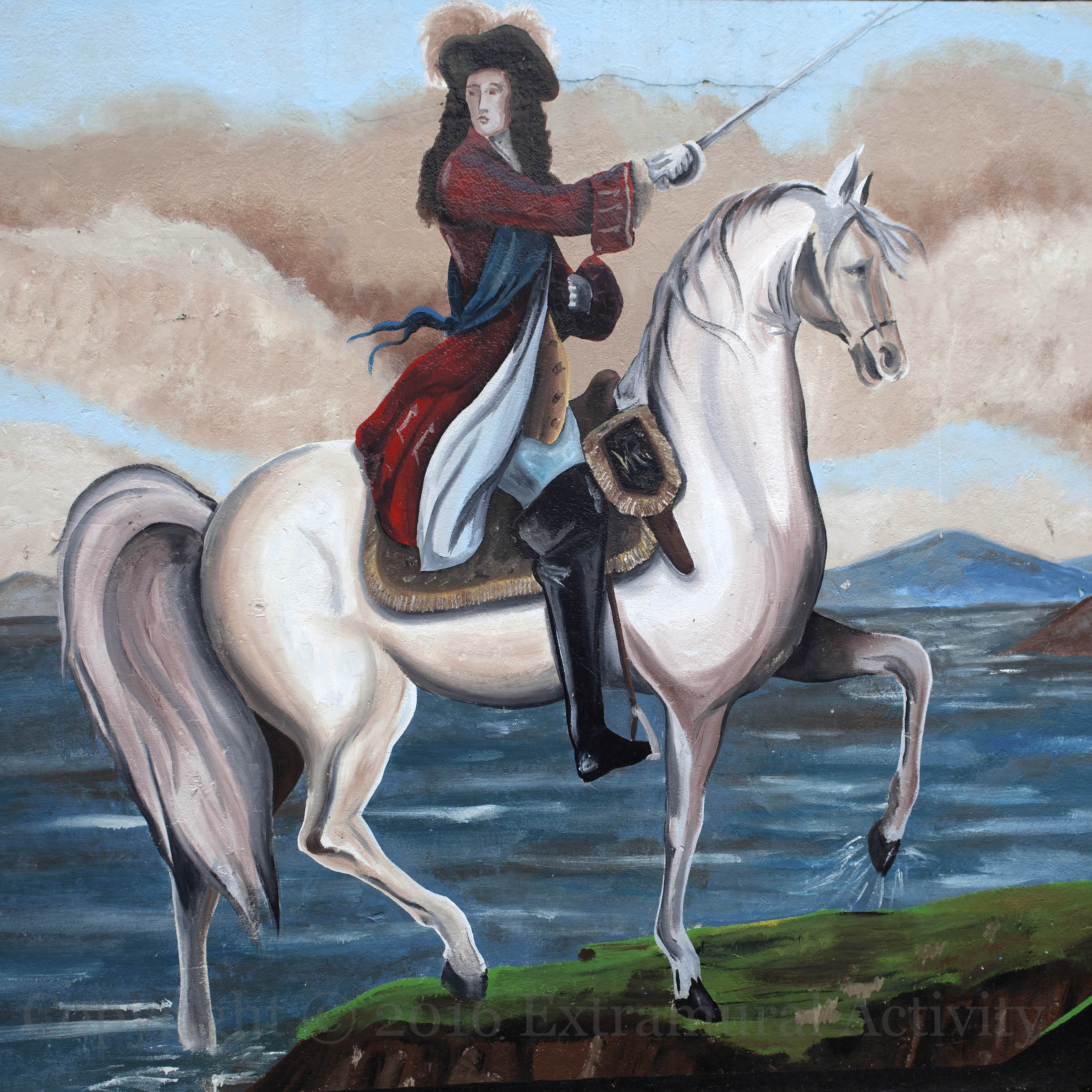
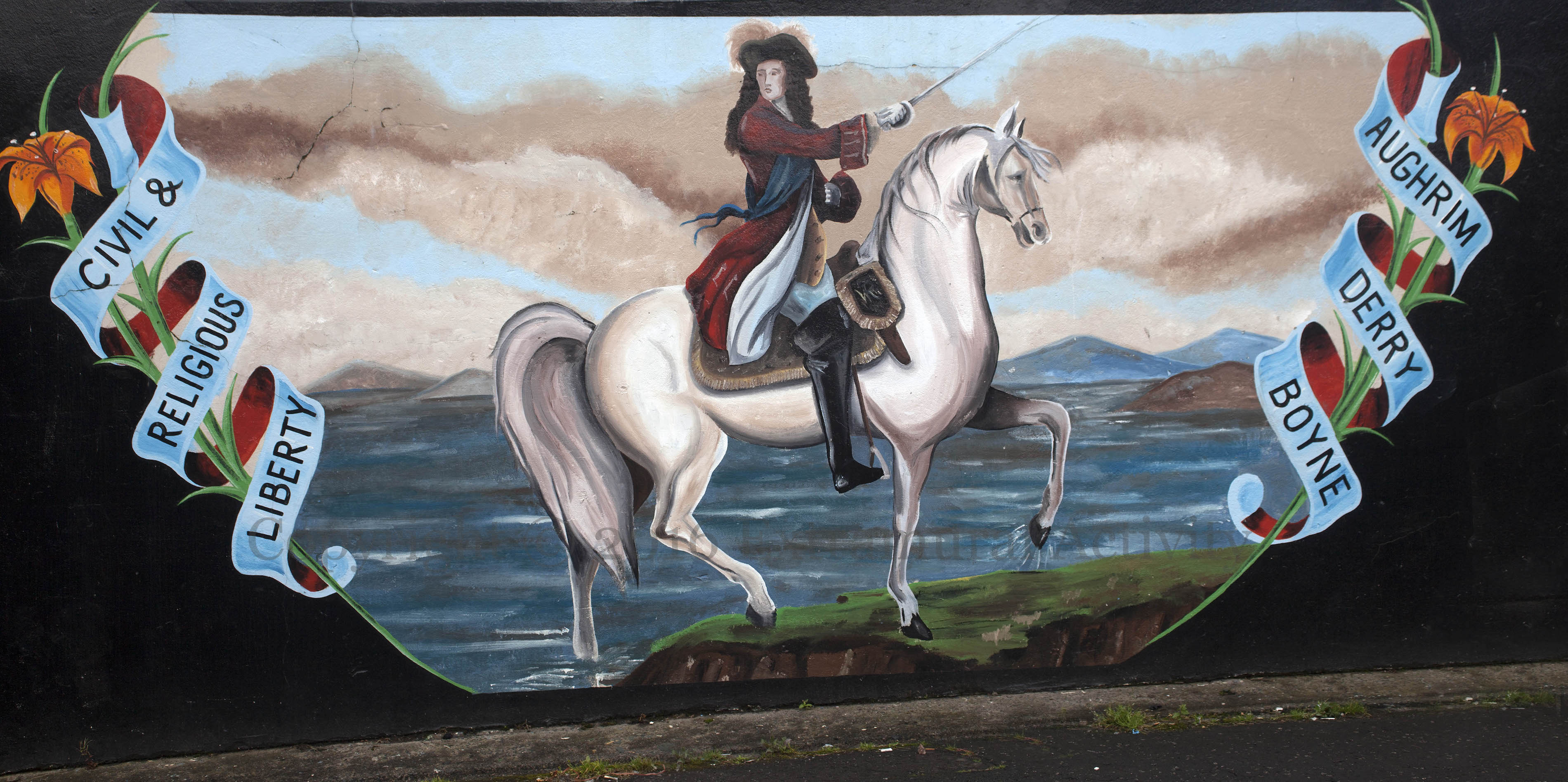
William III of England, commonly known as William of Orange, led his troops to victory on July 1st, 1690 at the Battle of the Boyne against the forces of James II, the deposed English monarch and the father of his wife. The Williamite campaign began with successful resistance against the Siege of Derry in 1689 and James’s final defeat came a year later on July 12th, at Aughrim.
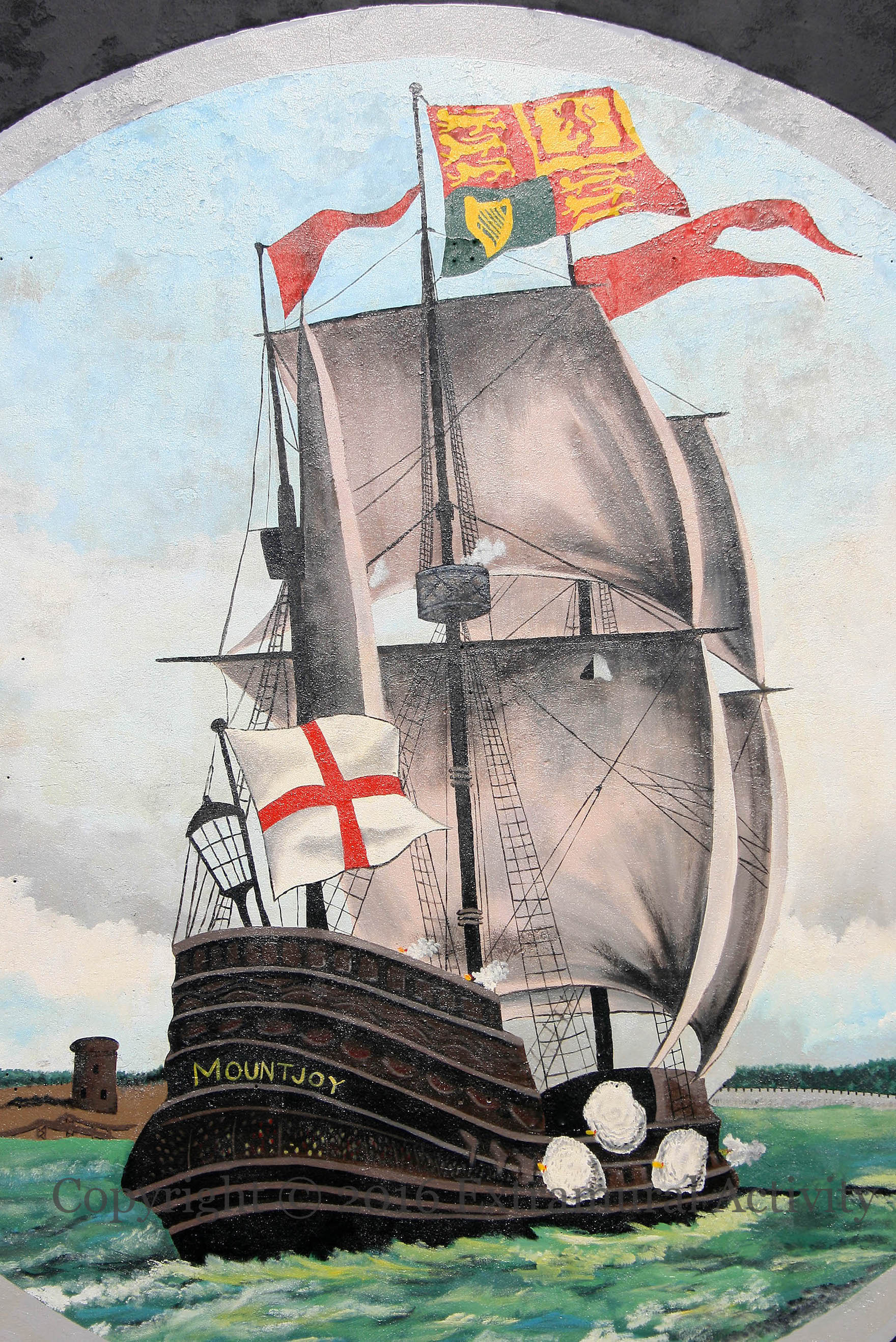
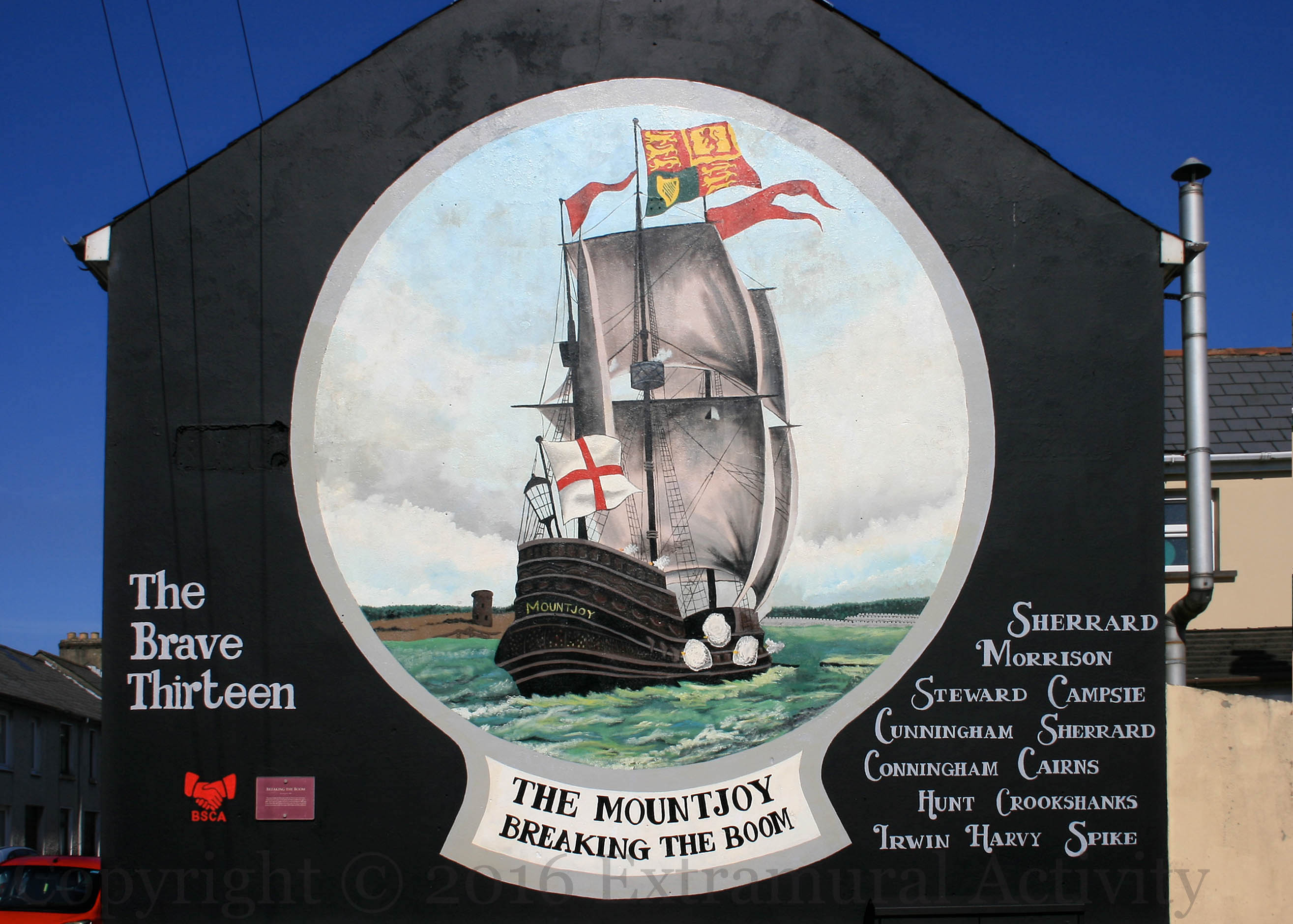
The repainting of the Mountjoy ‘Breaking The Boom‘ in the Siege Of Derry is the second of three recent works in the Waterside. (See also City Of Temperance.) The work has been retitled ‘The Brave Thirteen’ and extended to include the closing of the gates by 13 Apprentice Boys, whose surnames are given here as Sherrard, Morrison, Steward, Campsie, Cunninghman, Sherrard, Conningham, Cairns, Hunt, Crookshannks, Irwin, Harvy, Spire (for first names and alternate spellings, see Apprentice Boys).
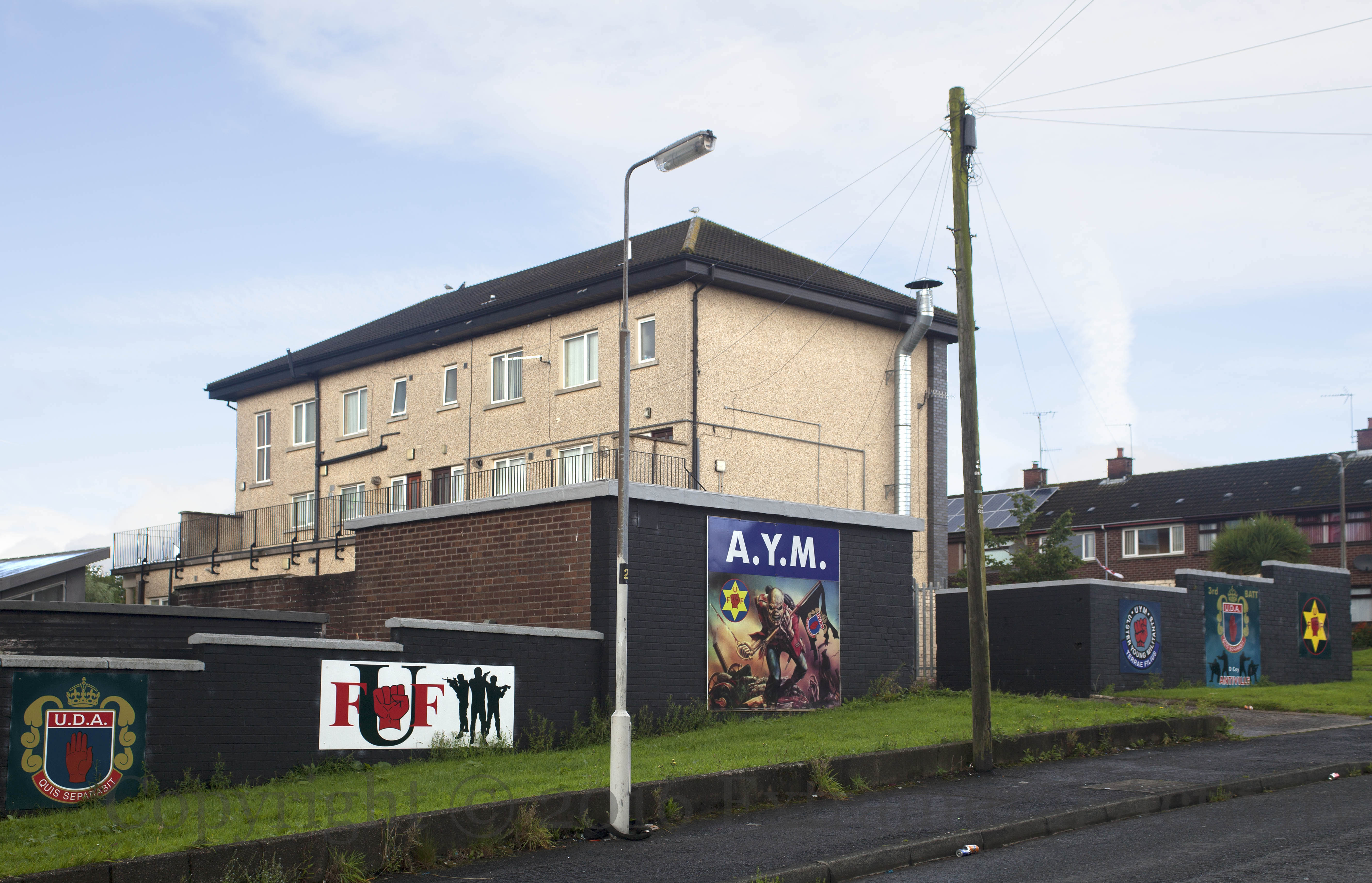
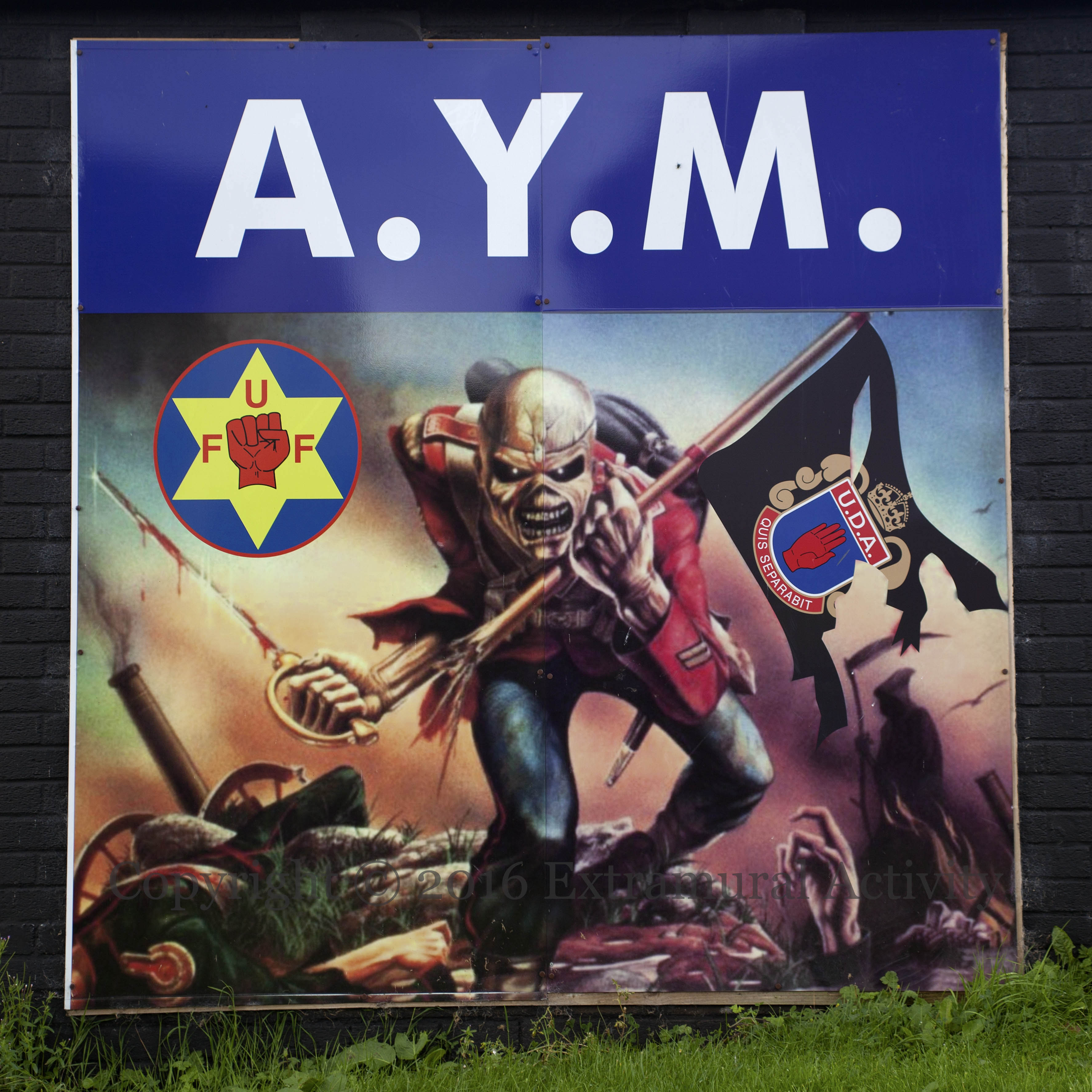
Rather than the Union flag that he carries in other murals and on the original Iron Maiden album cover (see The Trooper), in this version Eddie The Trooper carries a UDA flag (with the UFF symbol also shown). “AYM” is probably “Antiville Young Militants”.
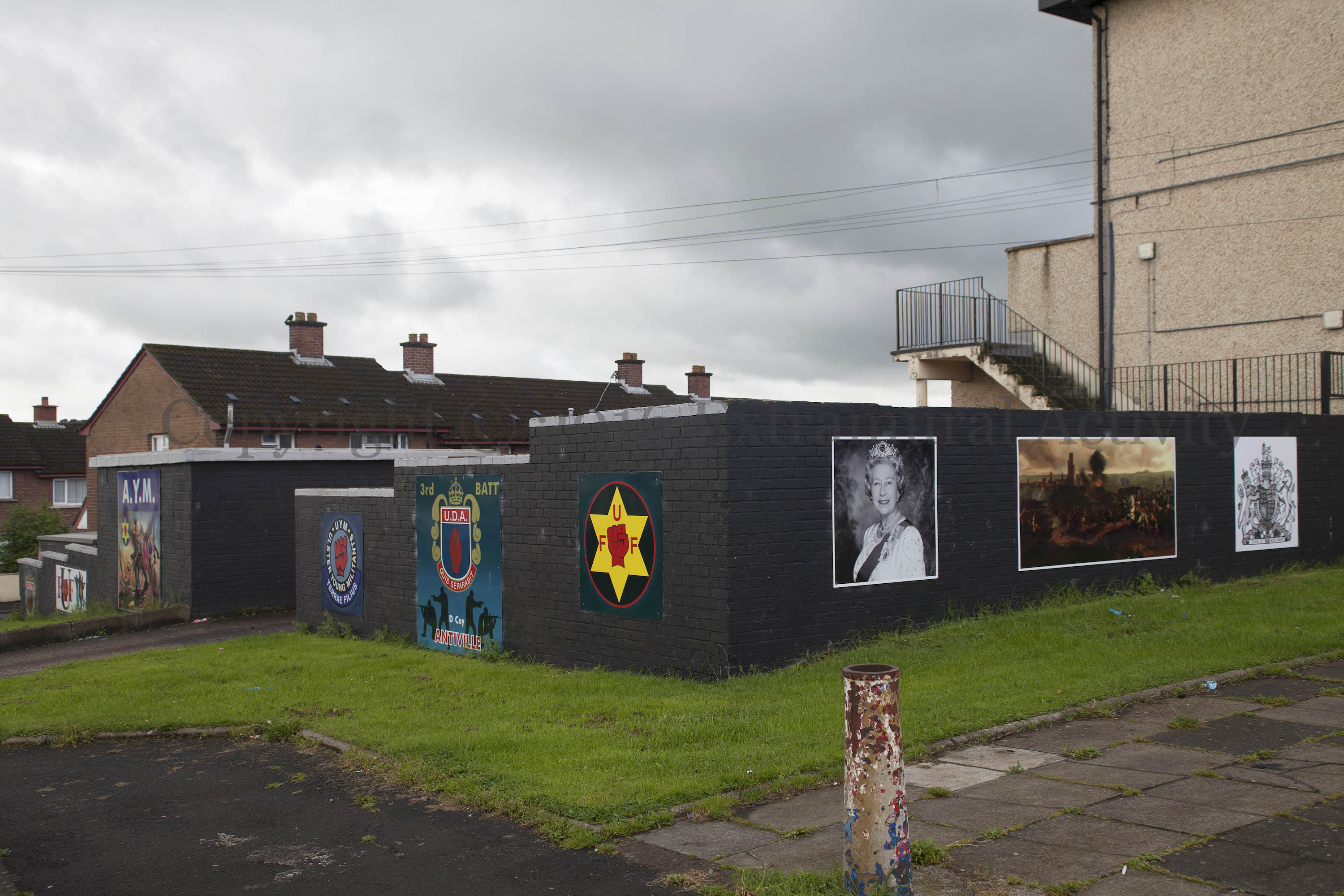
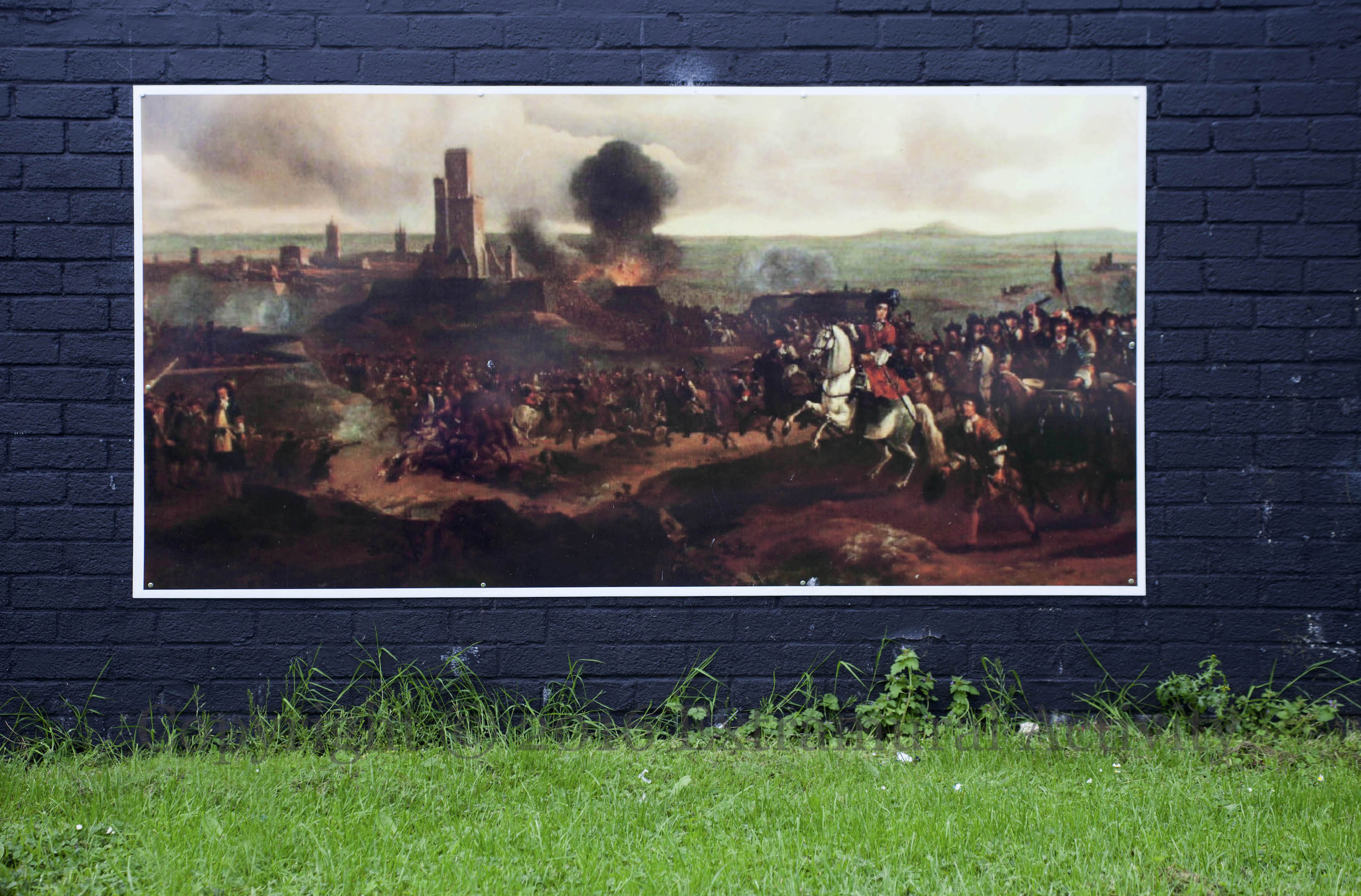
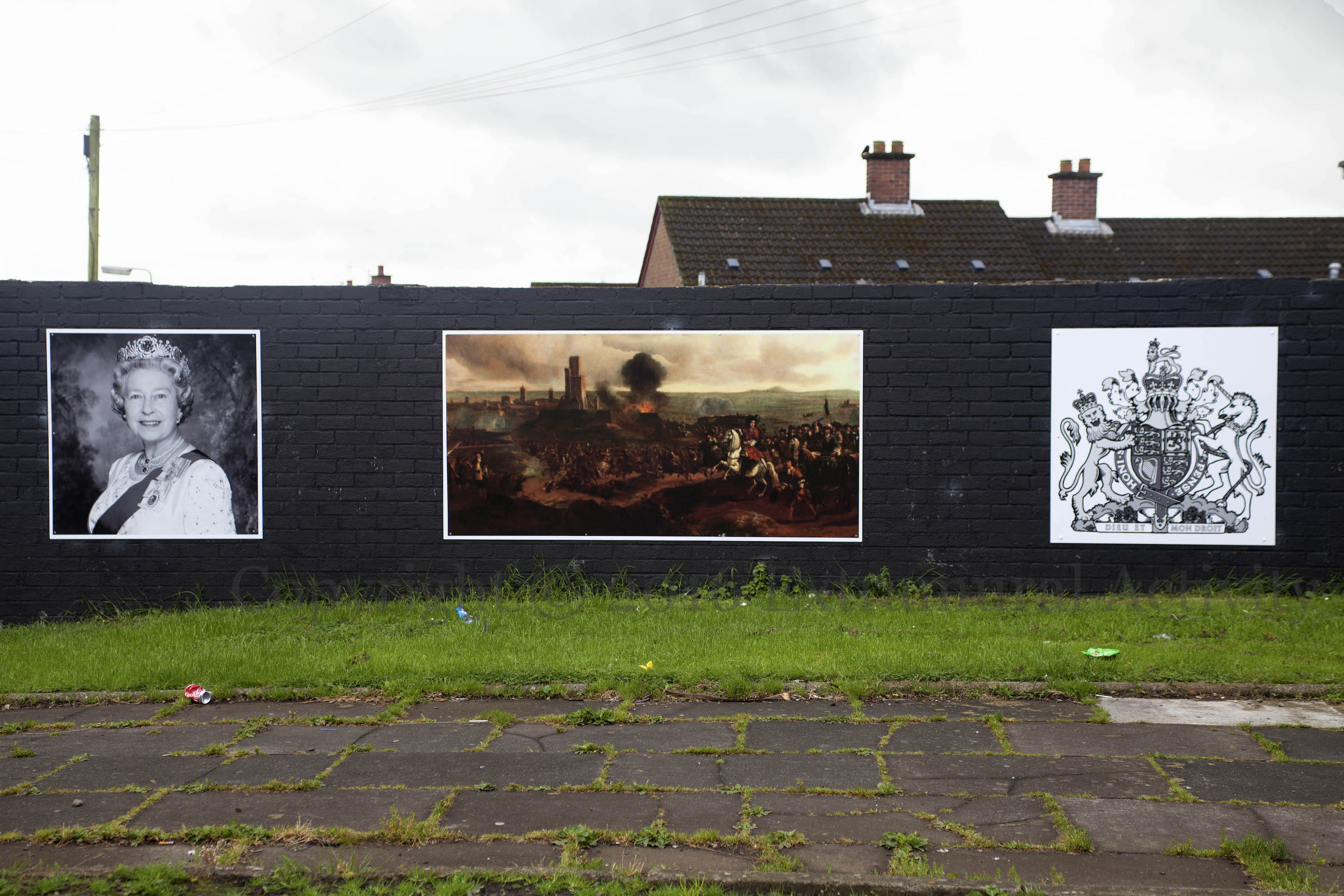
The experts’ best guess is that the gentleman on the white horse (on the right of the painting) is James Scott, Duke of Monmouth, at the siege of Maastricht in 1673. Scott was commander of the English forces fighting with the French during the Franco-Dutch war. It’s not clear, thus, what the connection is to the Antiville area of Larne or the wars fought in Ireland over the English crown. It was painted by Jan Wyck, who also did a painting of the Battle of the Boyne. On either side (as shown below) are a portrait of Queen Elizabeth II and the English version of the Royal coat of arms of the United Kingdom.
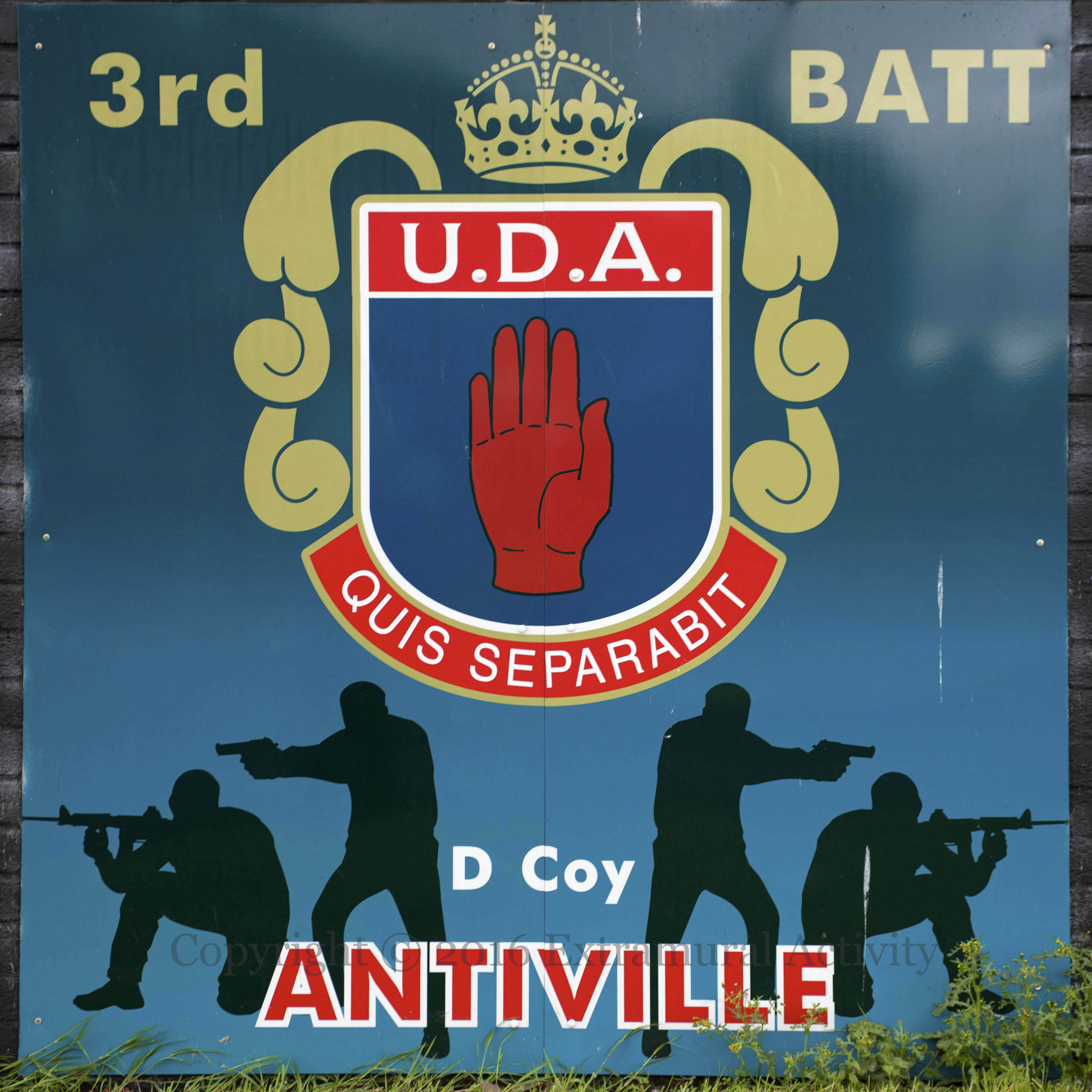
This trio of boards has been added to a wall behind the Antiville community centre, softening (somewhat) a very aggressive set of six UDA boards (seen in UDA Flag Bearer and Secret Army Silhouettes.)
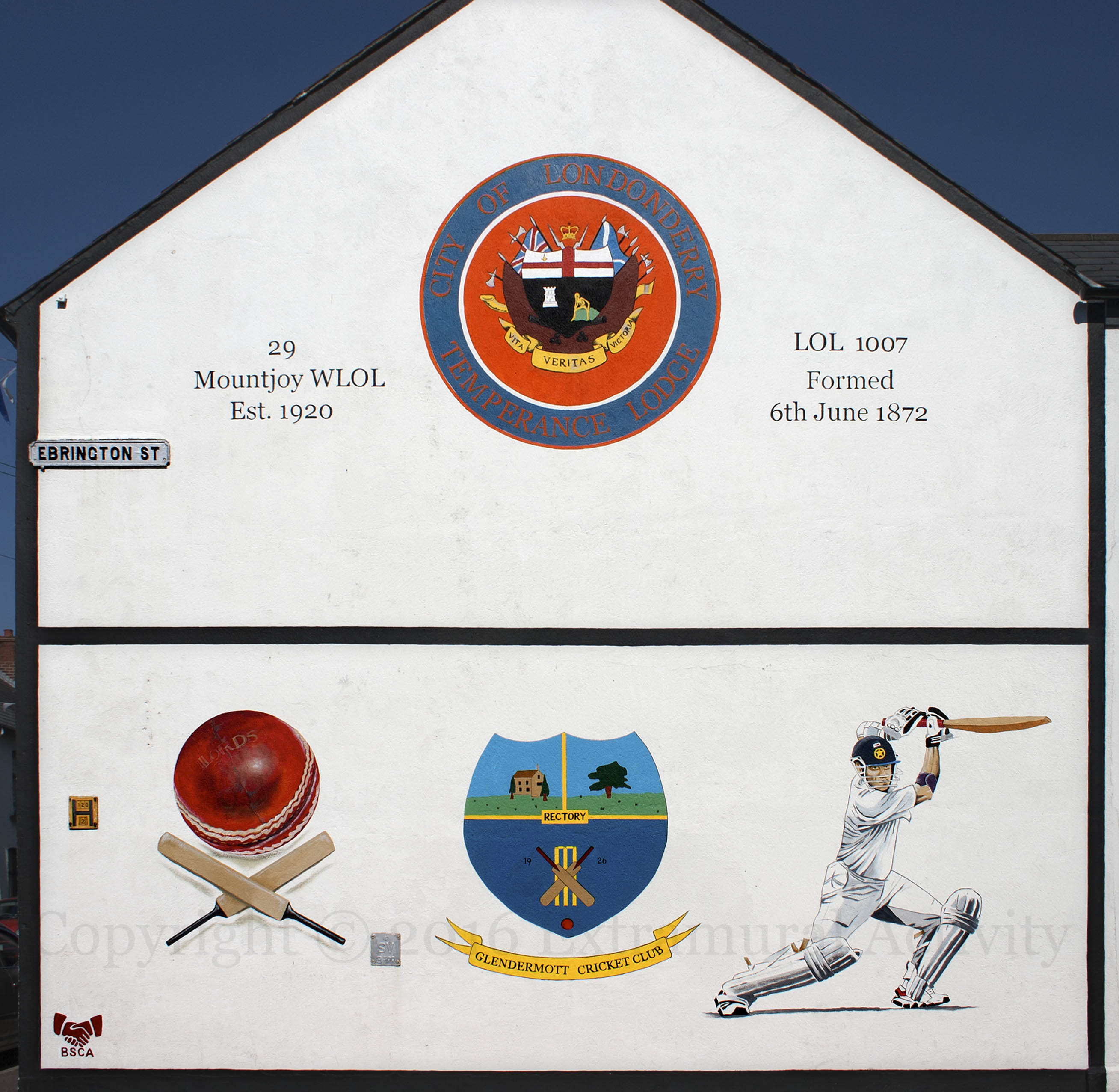
The mural above in Londonderry’s Ebrington Street celebrates three local organisations: in the upper portion, Orange Lodge #1007 “City Of Temperance” lodge (web) and Women’s Lodge #29 “Mountjoy”; in the lower portion, Glendermott Cricket Club (Tw), whose home pitch is Rectory Field (shown on the shield in the middle).