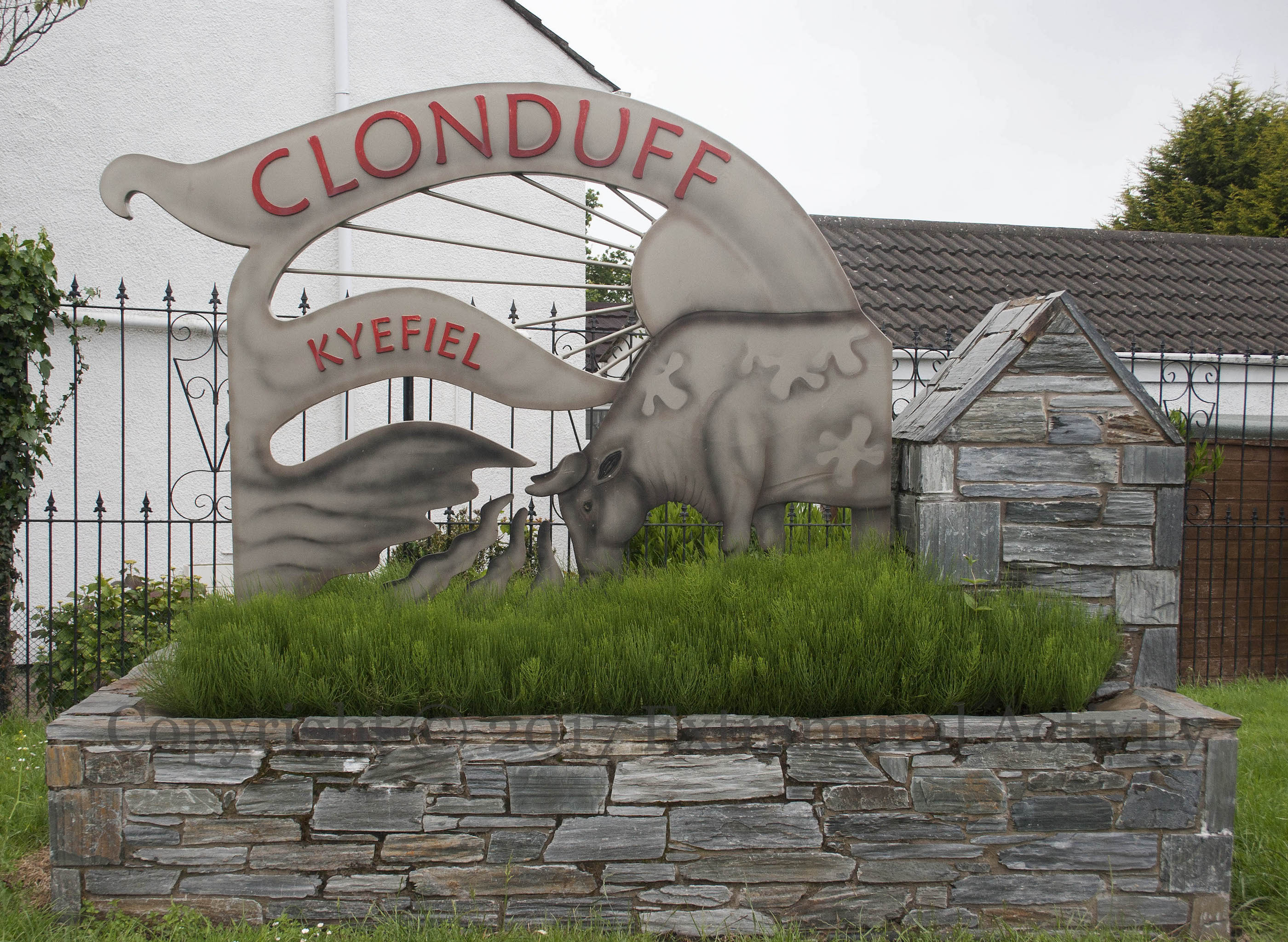
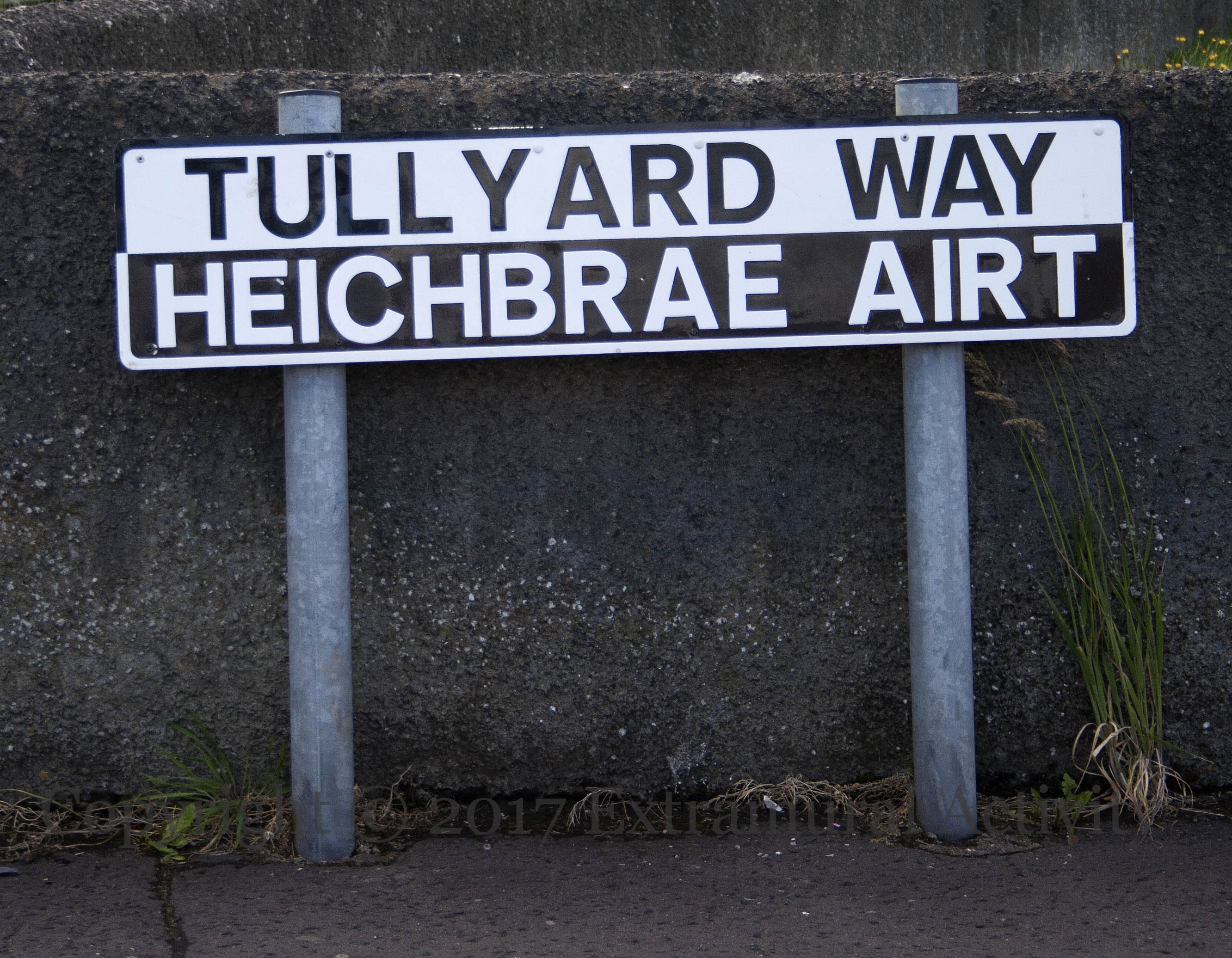
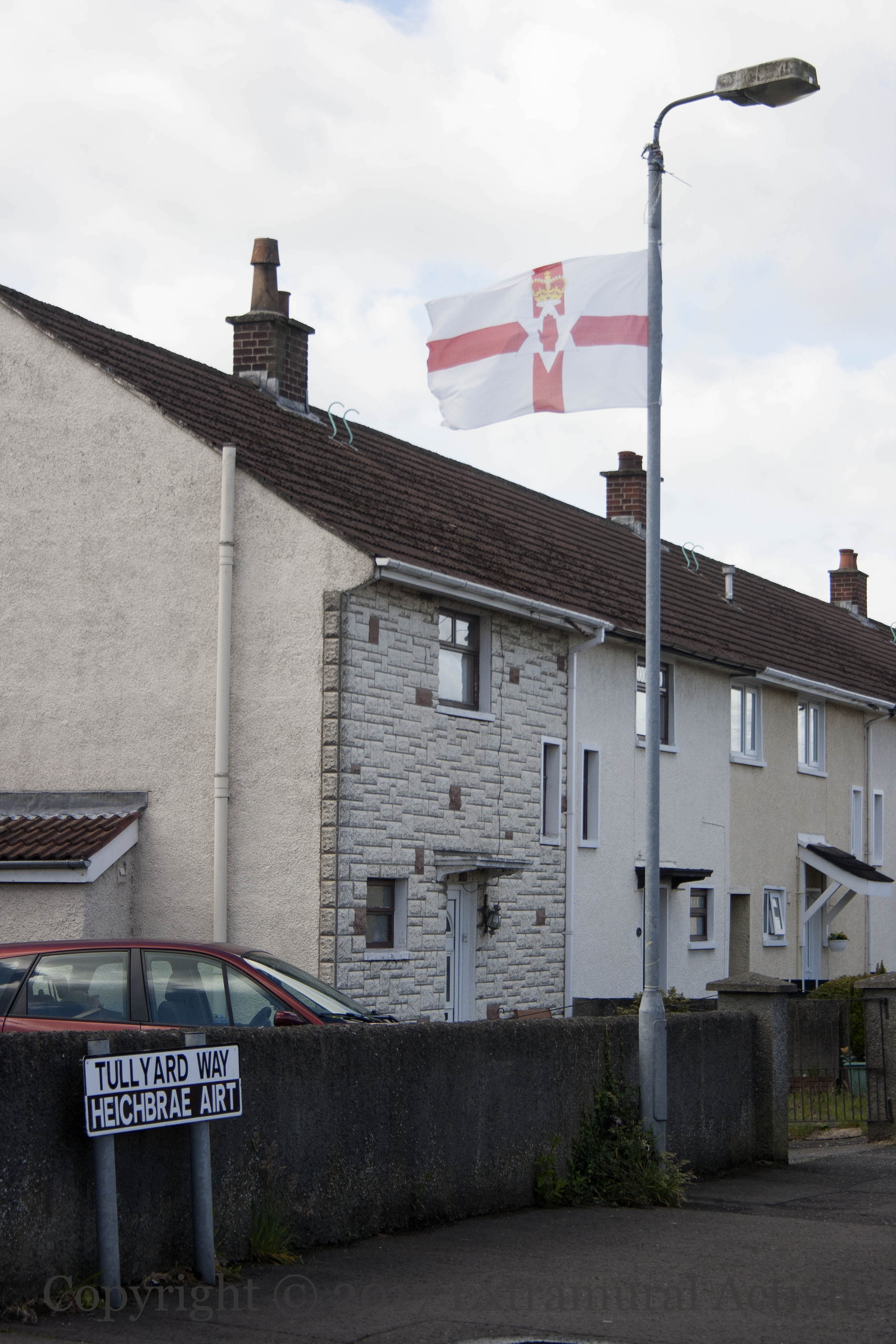
“Clonduff” in English and “Kyefiel” in Ulster Scots, a transliteration and a translation of the Irish “Cluain Daimh”, the meadow of the ox, and thus the sculpture shown above at the entrance to the area. Below are two images of “Tullyard Way”, translated into Ulster Scots as “Heichbrae Airt” from the Irish “tulach ard” (high hillside). The street signs were initially mistaken for Irish and torn down by local residents (Scots Anorak | BBC-NI).
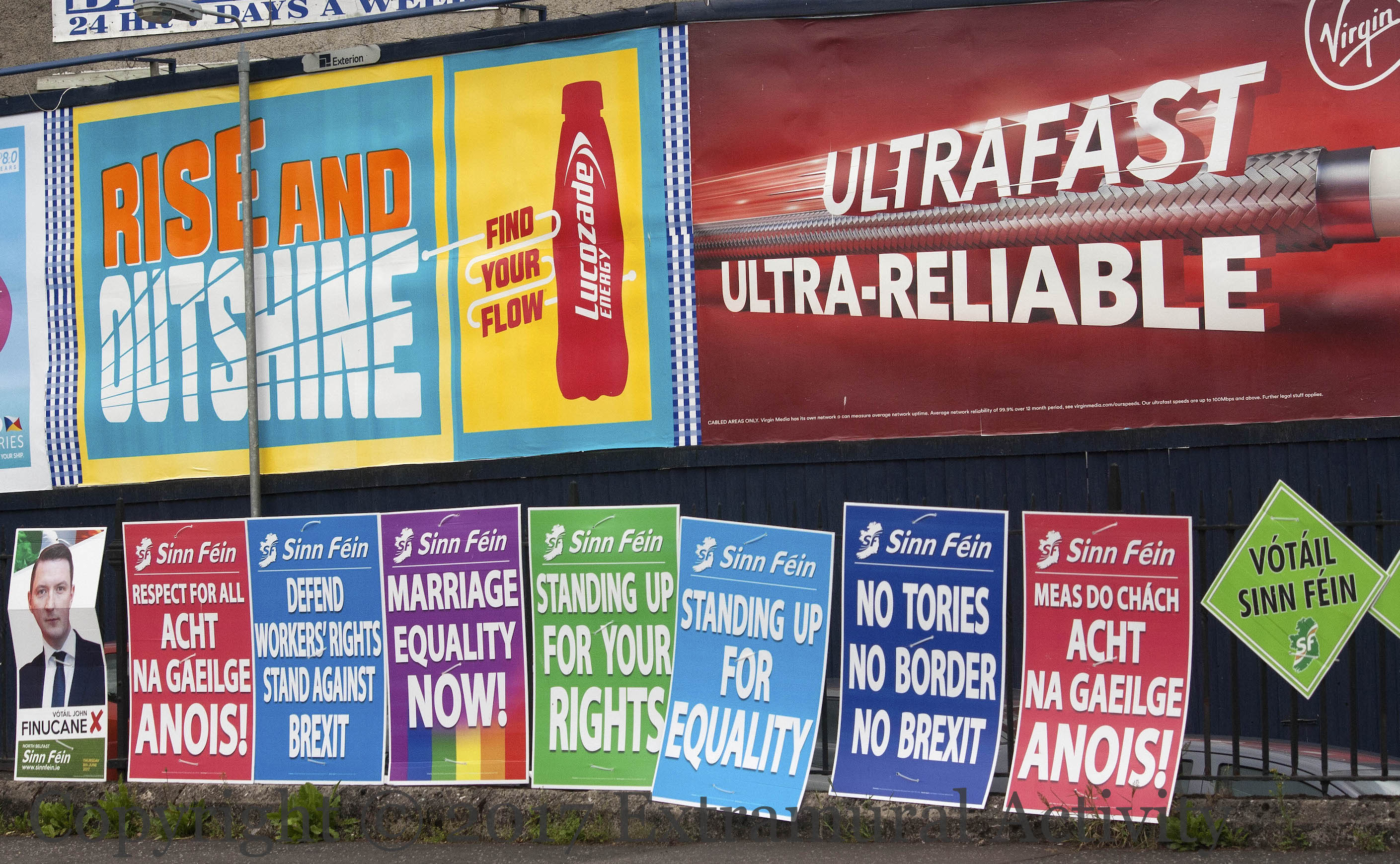
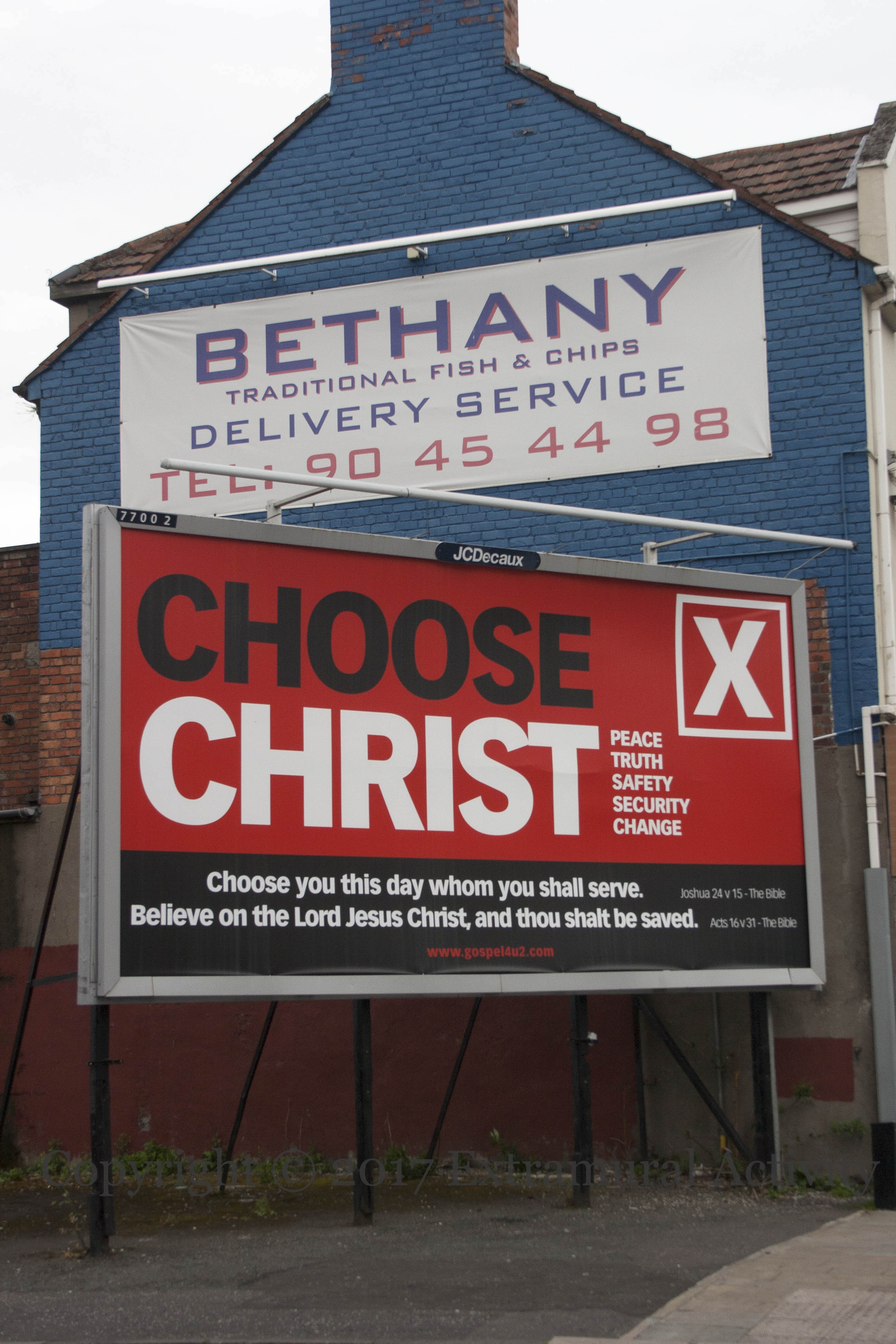
Here are two images from UK GE 2017. Above, Sınn Féın placards in a variety of bright colours (plus one for unsuccessful North Belfast candidate John Finucane). Below, “Choose Christ” and you could find both security and change!
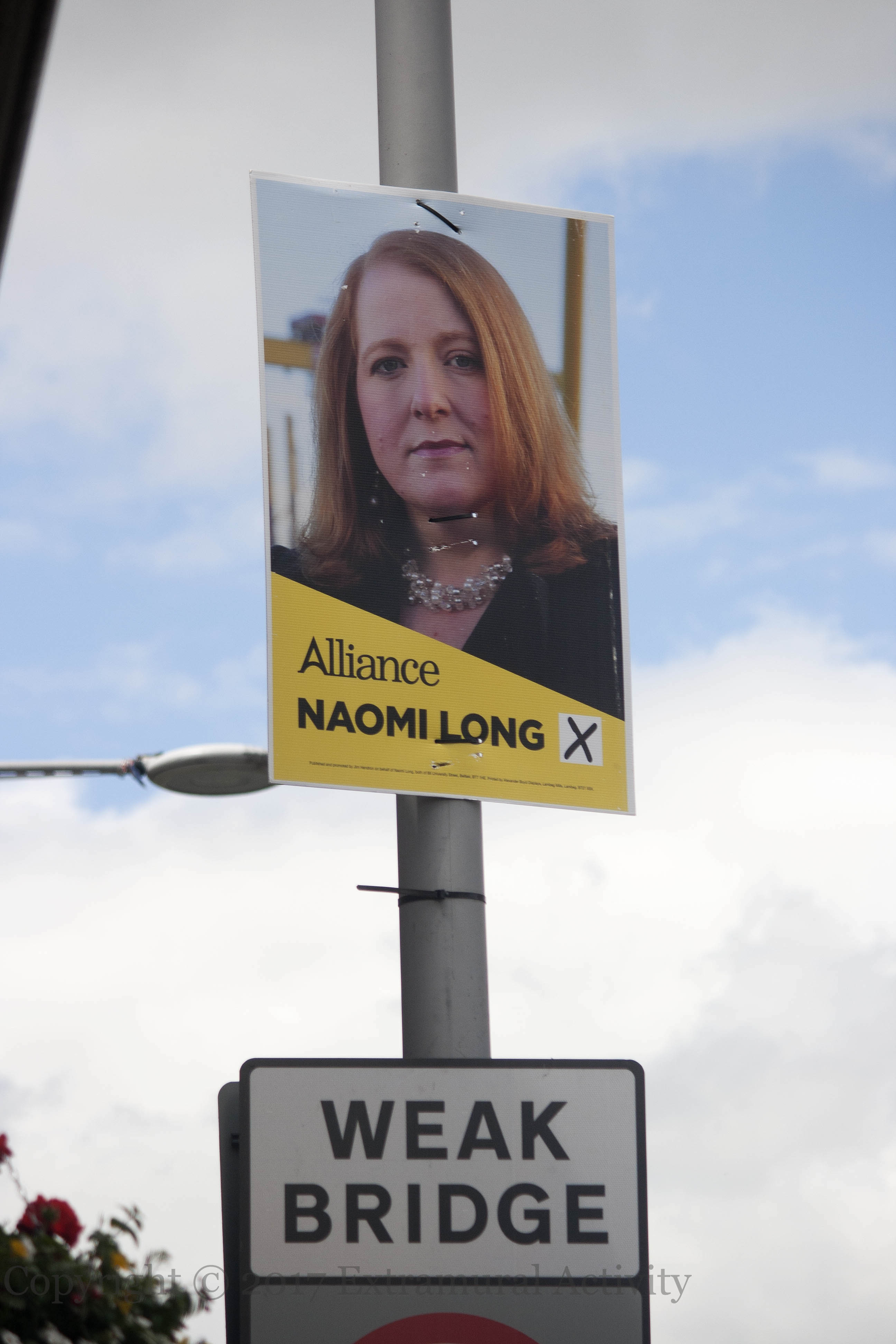
It’s back to polls on Thursday for the UK General Election, including 18 Northern Ireland constituencies. The Alliance Party is an “Other” party, neither nationalist nor unionist. Party leader Naomi Long is standing in east Belfast.
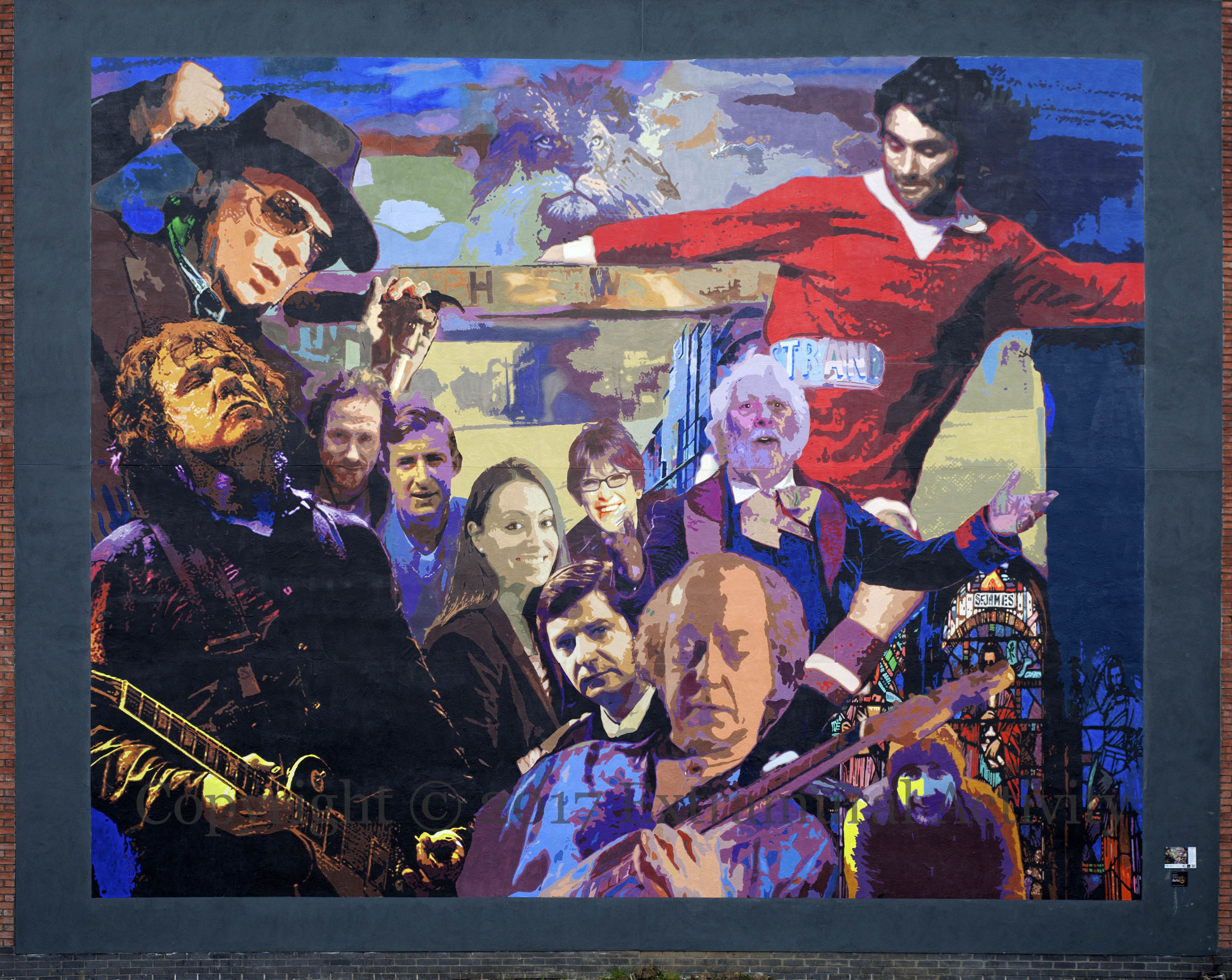
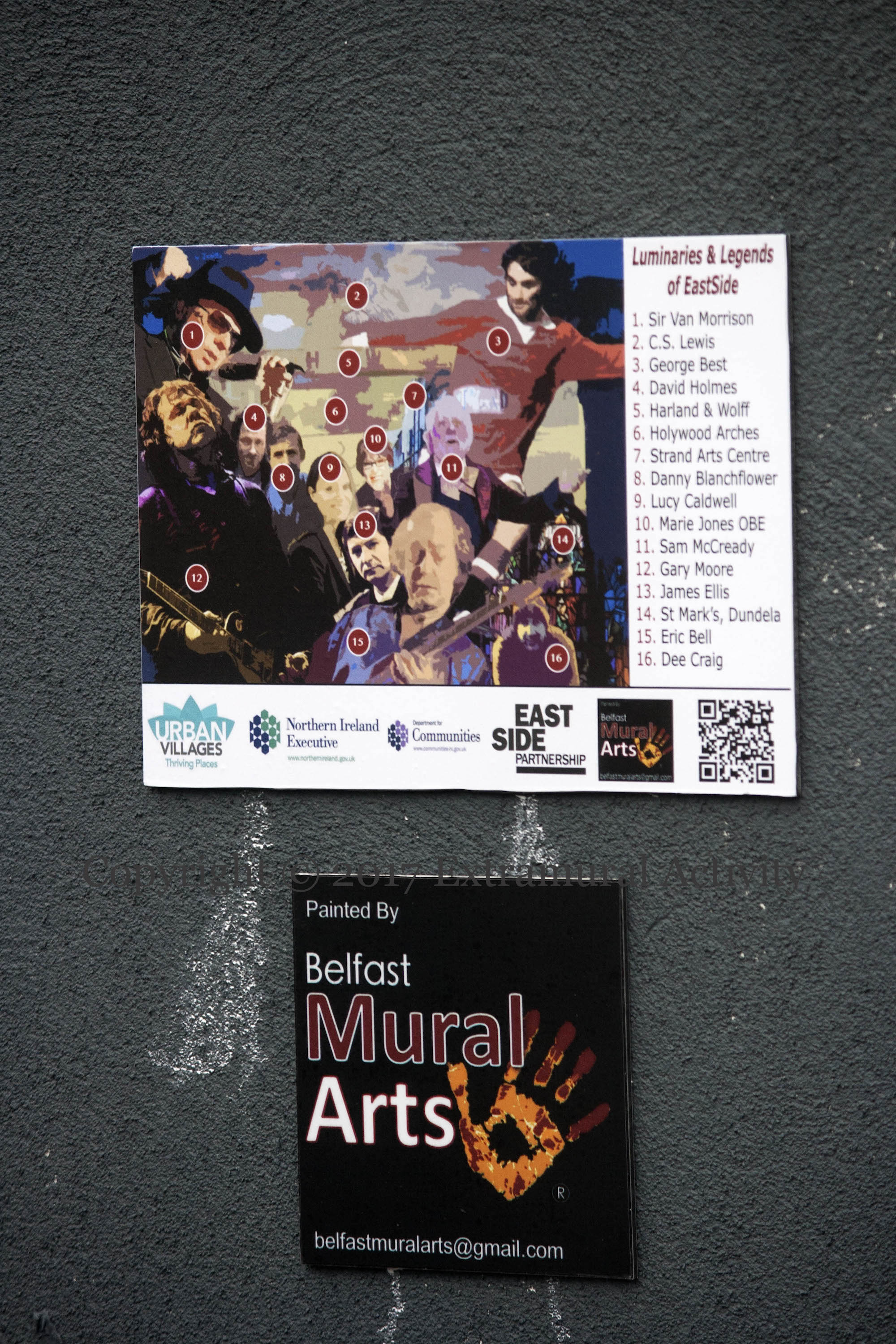
Famous faces and landmarks from east Belfast, including, in the foreground, guitarists Gary Moore and Eric Bell (from Thin Lizzy). Included in the bottom right is the artist himself, Dee Craig. For a complete list, see the info board, below.
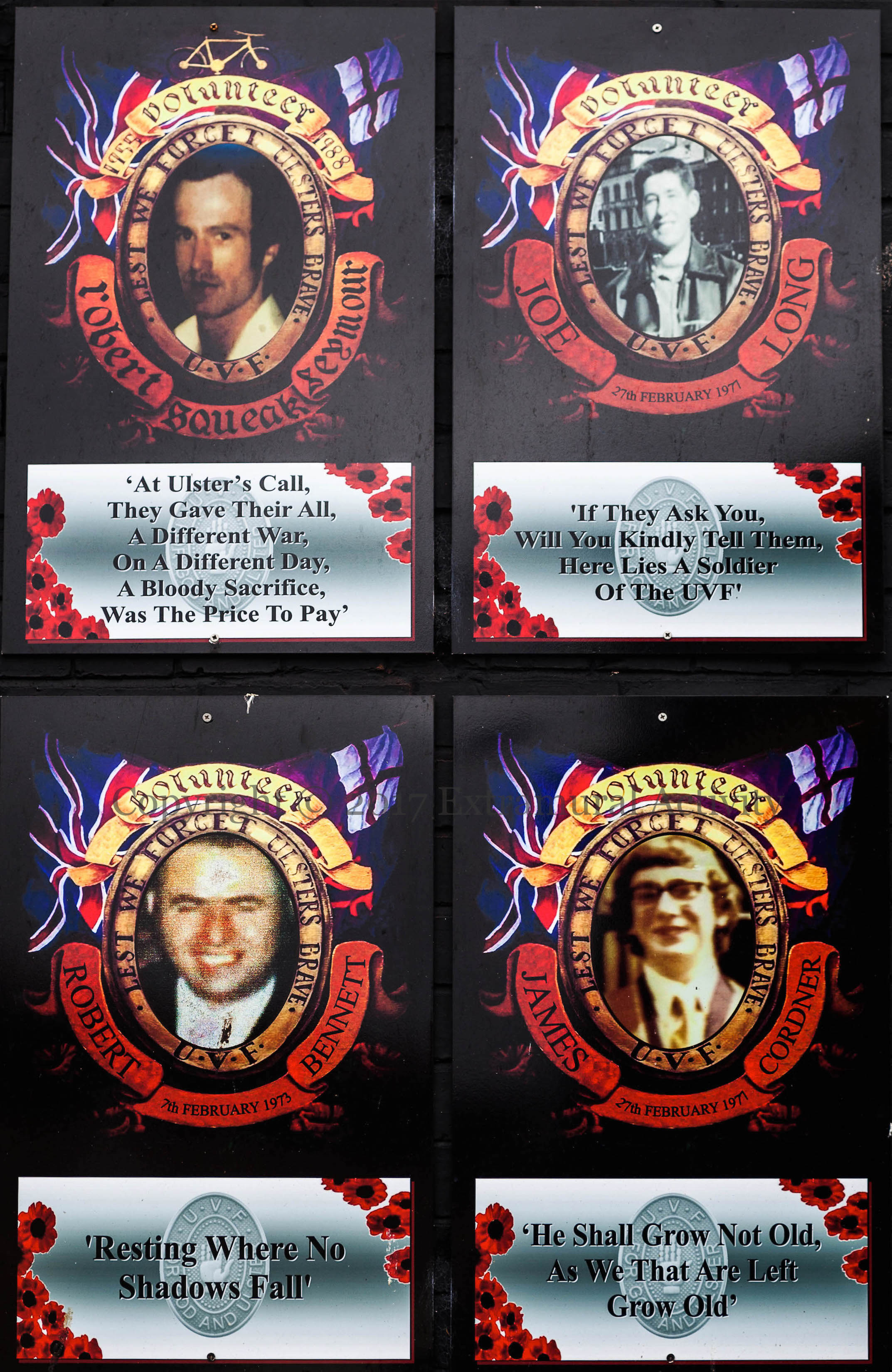
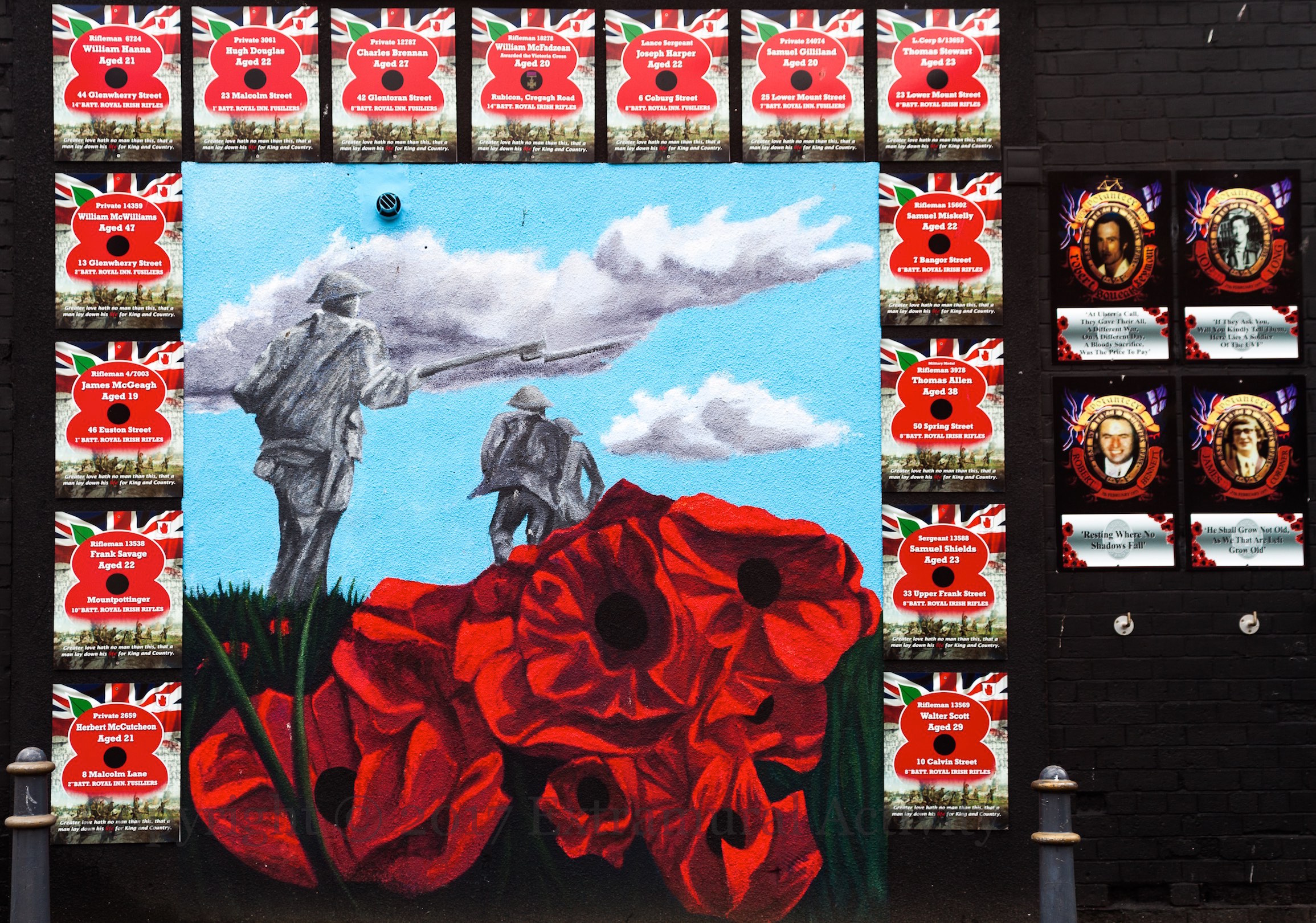
“At Ulster’s call, they gave their all, a different war, on a different day, a bloody sacrifice, was the price to pay.” Here are photographic portraits of four UVF members – Robert “Squeak” Seymour (east Belfast commander), Joe Long, Robert Bennett, James Cordner – on panels adjacent to the new Somme mural in London Road. Seymour died in 1988, the others in the early seventies.
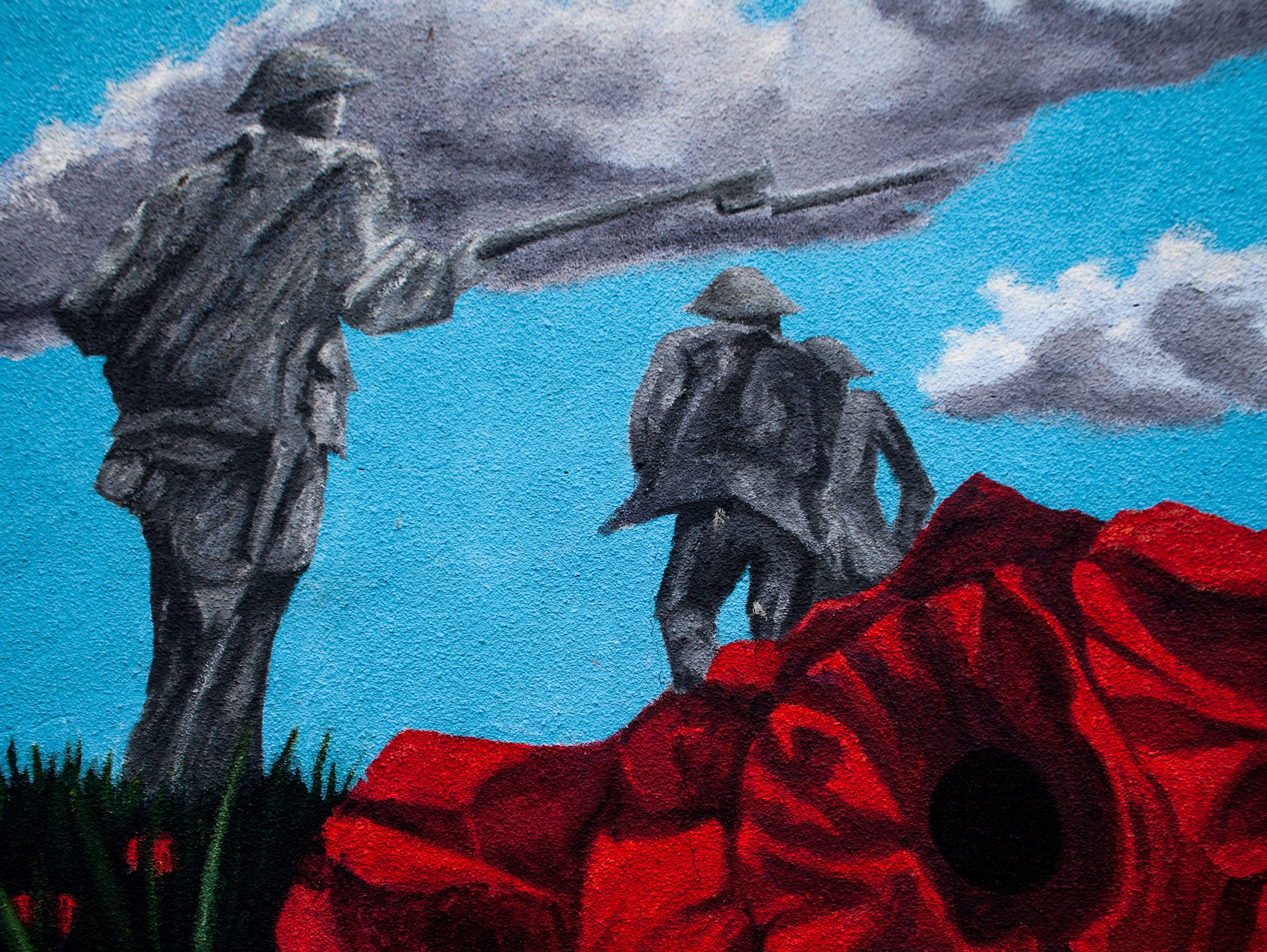
The “Jesus” tag at the corner of My Lady’s and London roads has been replaced with a WWI mural showing soldiers running through a field of poppies, and which is surrounded by plaques from the Poppy Trail with the details of some of those from the 36th (Ulster) Division who were killed.
By Mark Ervine in London Road.
For the four panels on the right, see Ulsters Brave.
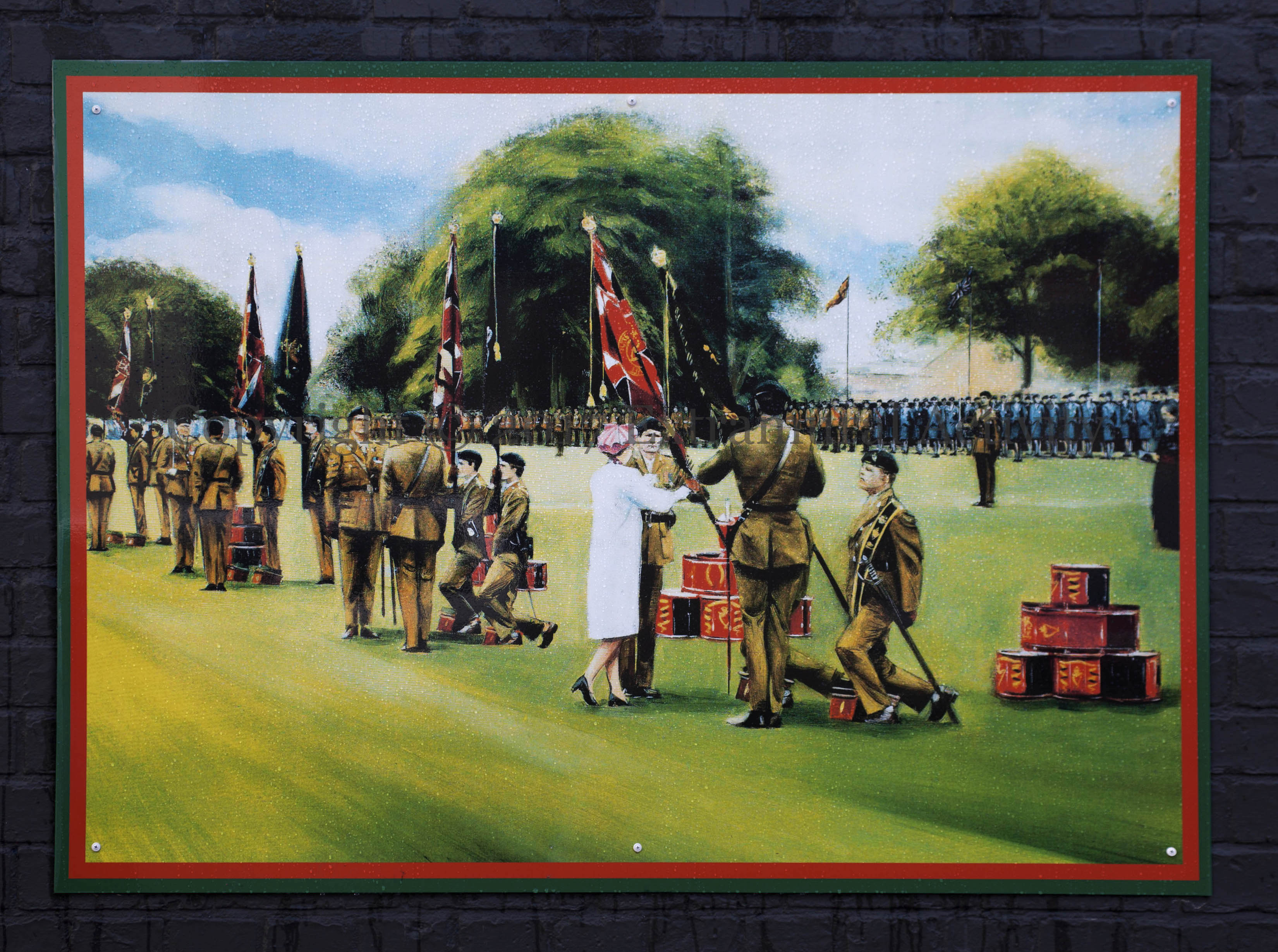
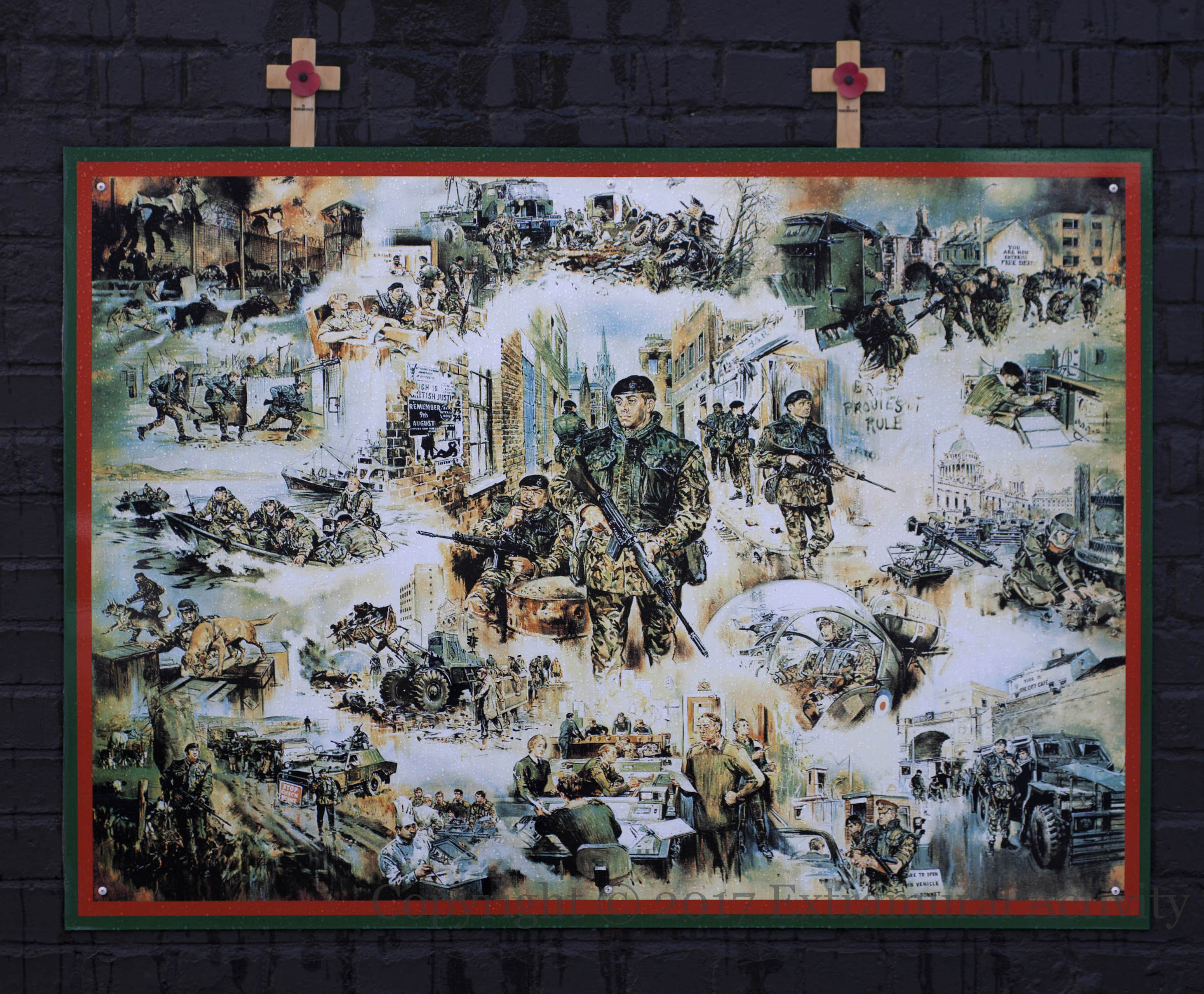
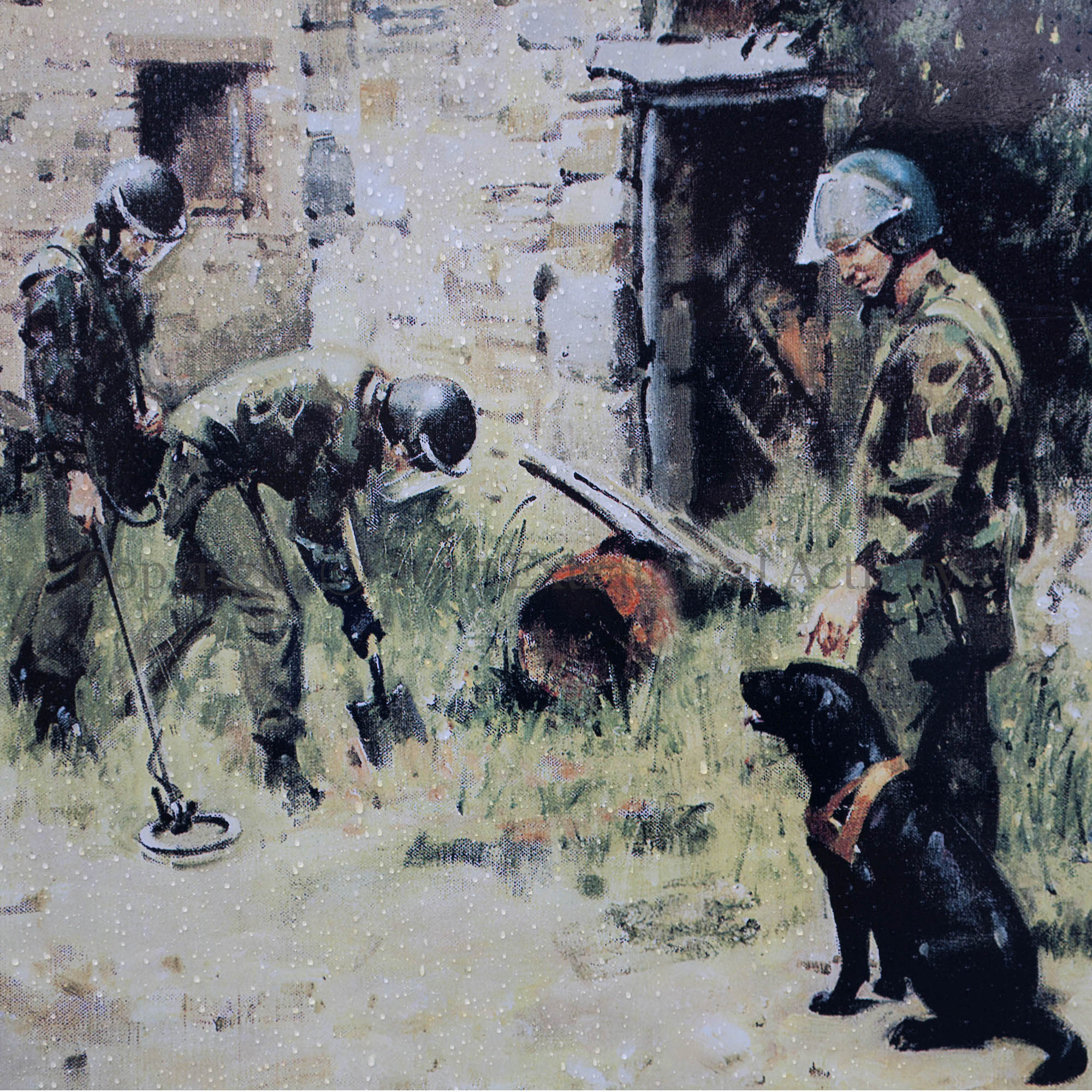
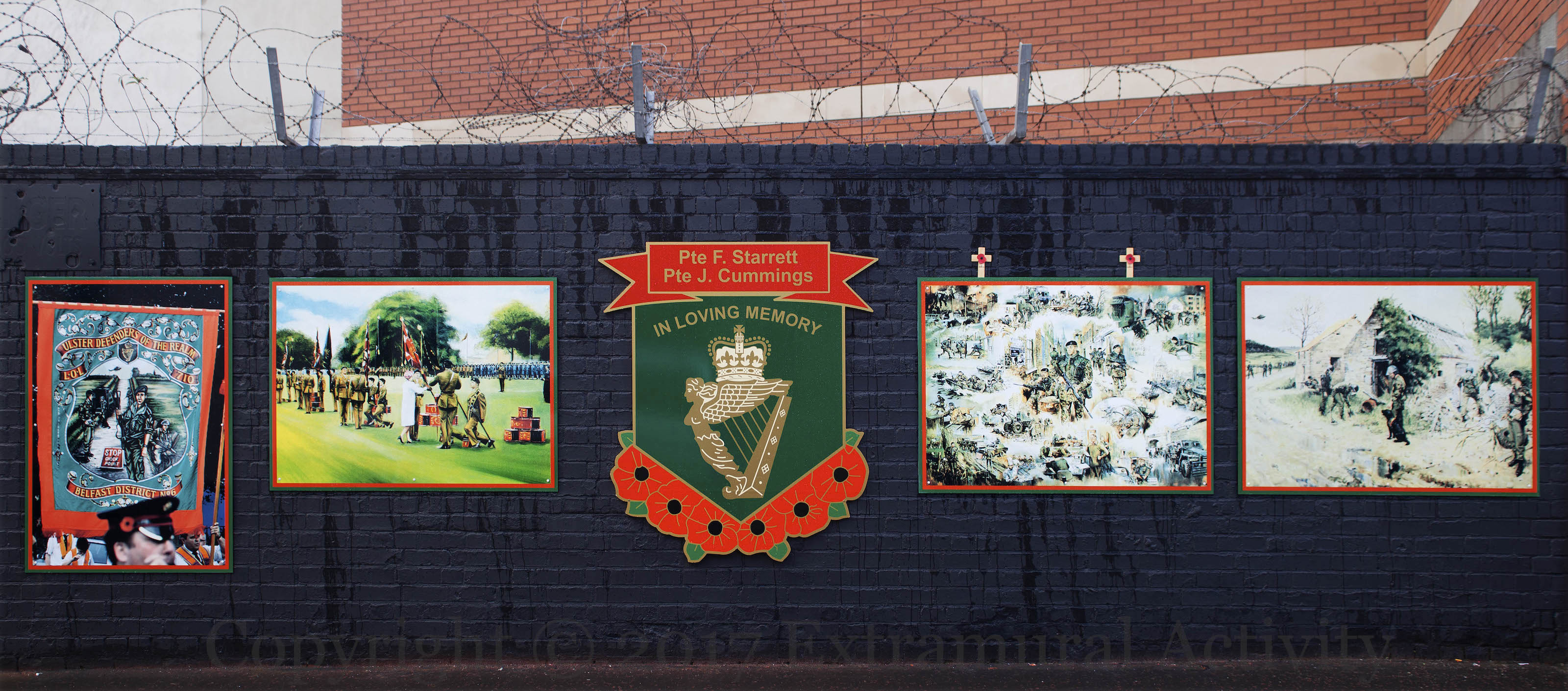
Privates Fred Starrett and James Cummings died in an IRA bombing on Belfast’s Royal Avenue on February 24th, 1988. Both Orangemen, their deaths are commemorated every year by a parade from east Belfast to the city centre. Shown in this entry are the panels from a new UDR commemorative wall in east Belfast.
The fourth panel is a collage of UDR activities (on the streets, on base, manning check-points, in boats, helicopters, with dogs) with a few pieces of republican signs as backdrop (Free Derry Corner, “Provies rule”, “Such is British justice – remember 9th August”) and the fifth shows soldiers searching for arms near some outbuildings.
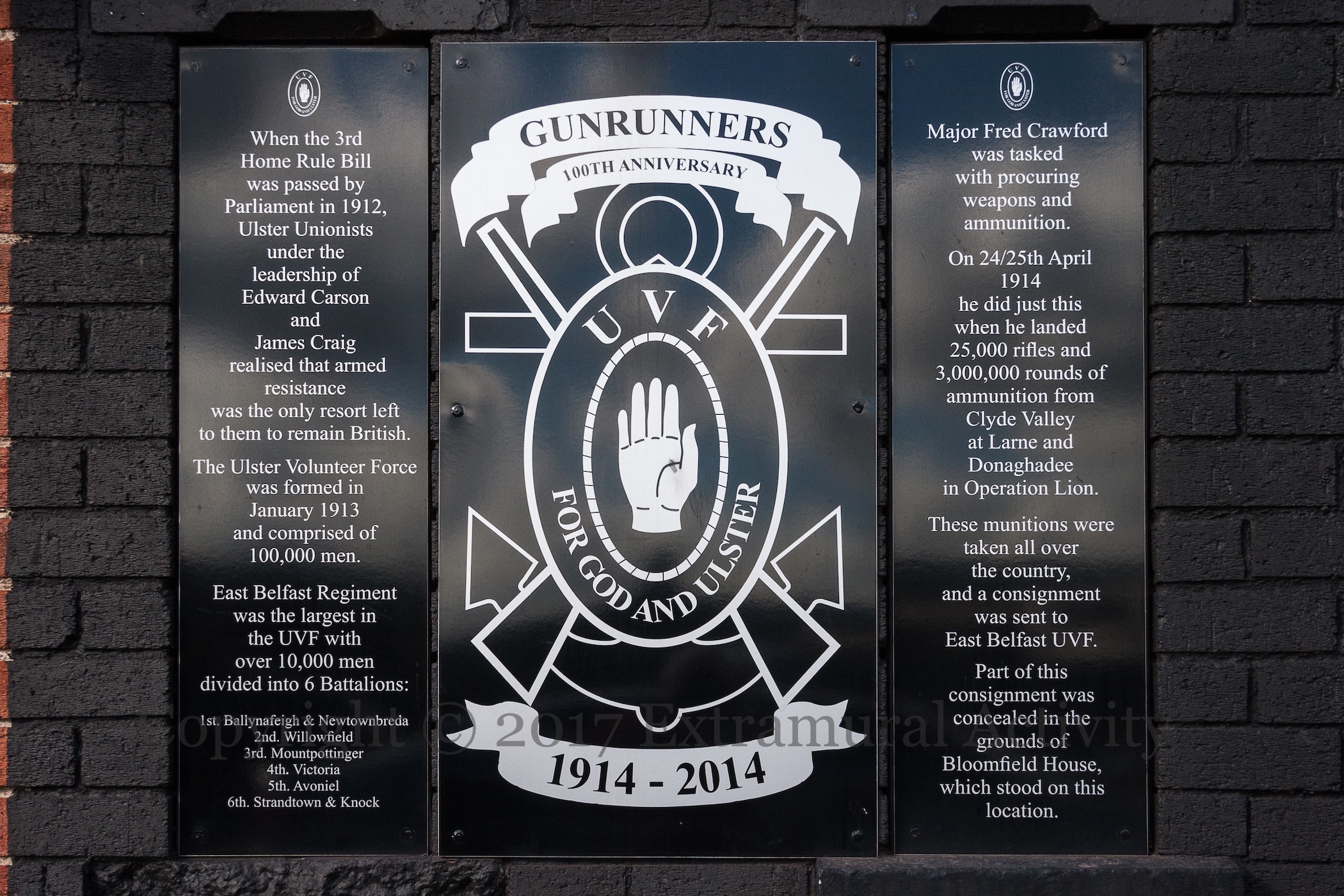
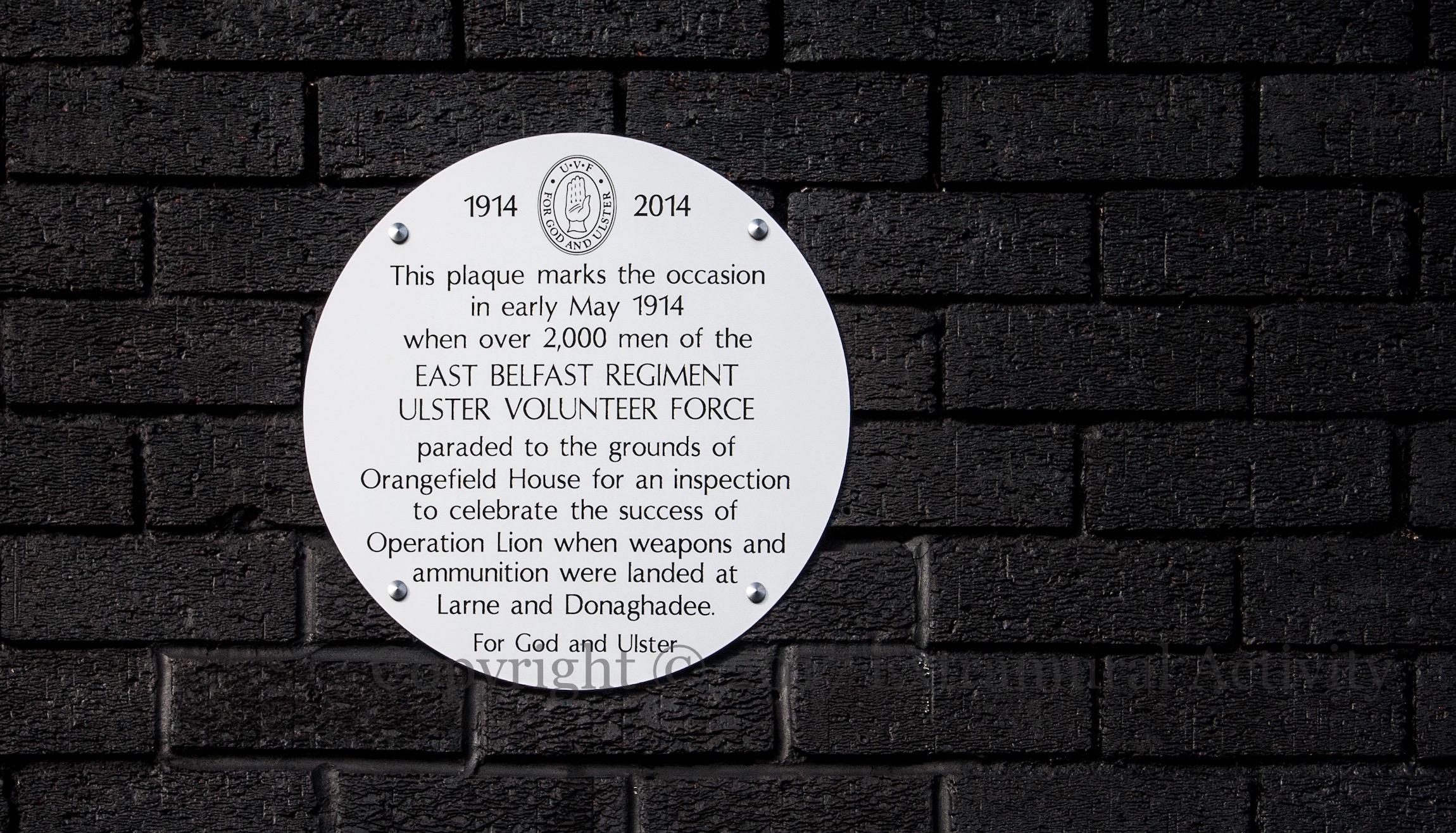
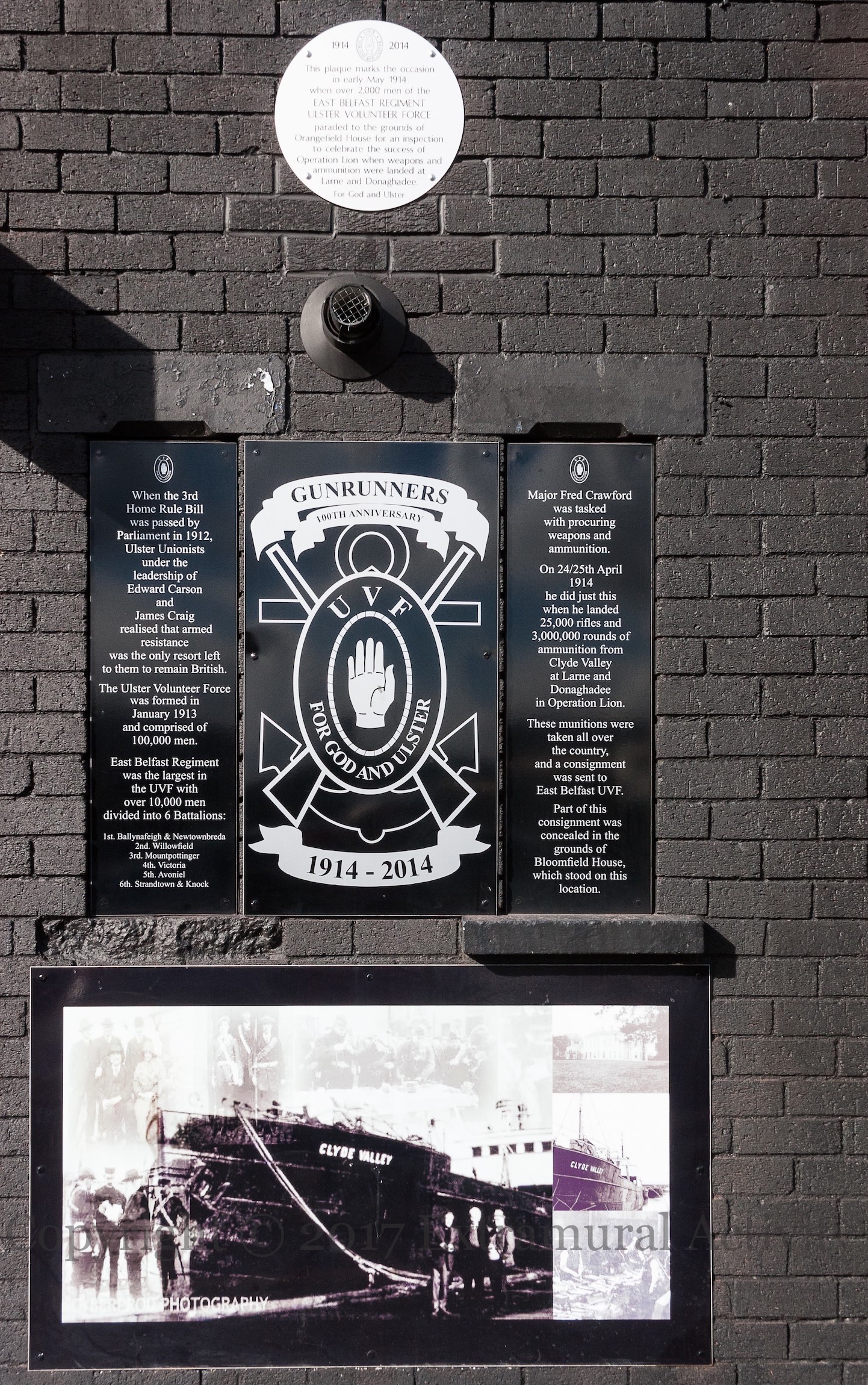
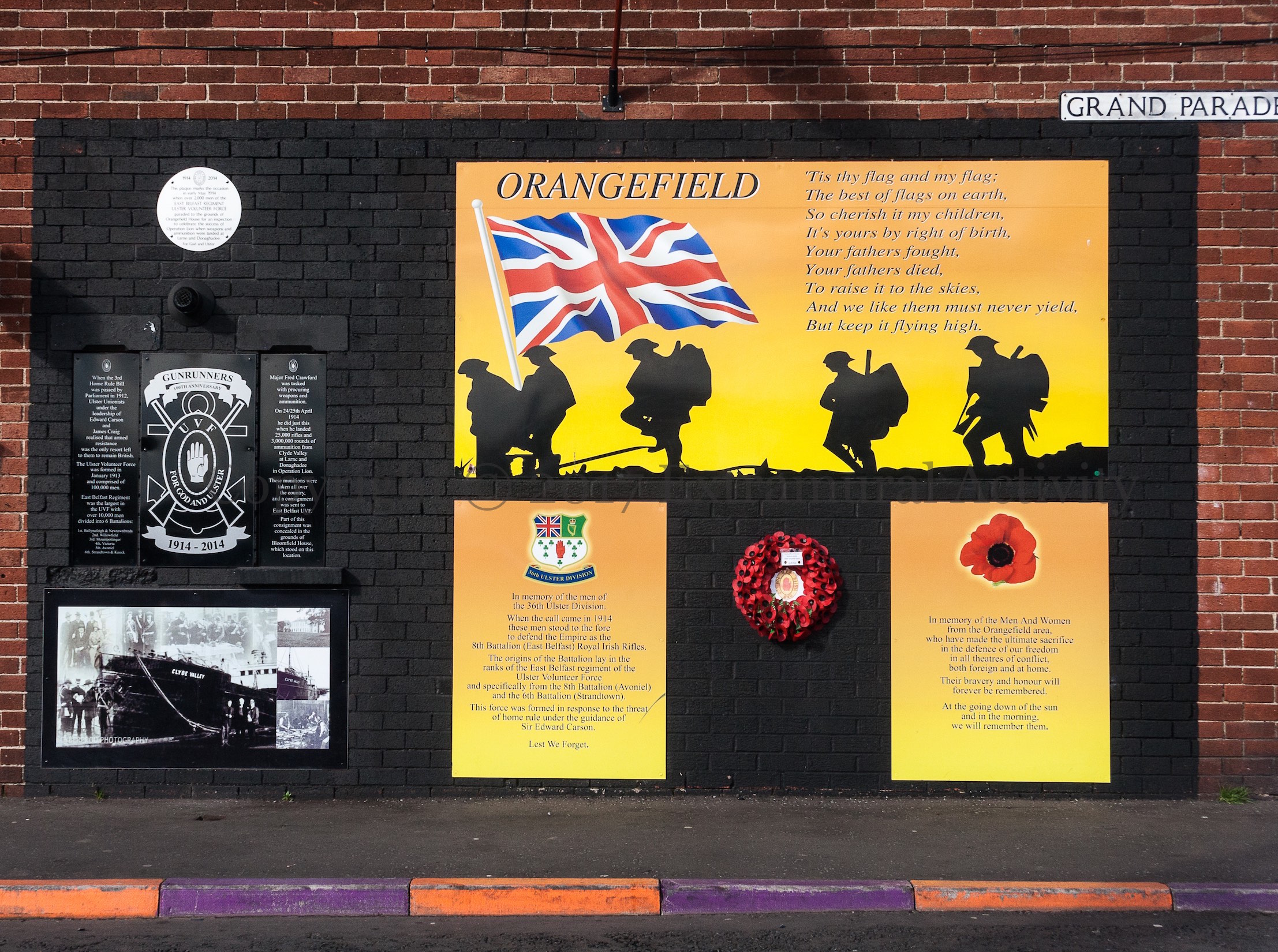
The 100th anniversary plaque and board shown in this entry are on the spot of Bloomfield House (web), where guns from Clyde Valley were held for the East Belfast battalion of the Ulster Volunteers in 1914. See also: John Henry Patterson’s involvement in Operation Lion.
“When the 3rd Home Rule Bill was passed by Parliament in 1912, Ulster Unionists under the leadership of Edward Carson and James Craig realised that armed resistance was the only resort left to them to remain British. The Ulster Volunteer Force was formed in January 1913 and comprised of 100,000 men. East Belfast Regiment was the largest in the UVF with over 10,000 men divided into 6 Battalions: 1st. Ballynafeigh & Newtownbreda, 2nd. Willowfield, 3rd. Mountpottinger, 4th. Victoria, 5th. Avoniel, 6th. Strandtown & Knock. Major Fred Crawford was tasked with procuring weapons and ammunition. On 24/25th April 1914 he did just this when landed 25,000 rifles and 3,000,000 rounds of ammunition from Clyde Valley at Larne and Donaghadee in Operation Lion. These munitions were taken all over the country, and a consignment was sent to East Belfast UVF. Part of this consignment was concealed in the grounds of Bloomfield House, which stood on this location.”
“This plaque marks the occasion in early May 1914 when over 2,000 men of the East Belfast Regiment, Ulster Volunteer Force paraded to the grounds of Orangefield House for an inspection to celebrate the success of Operation Lion when weapons and ammunition were landed at Larne and Donaghadee. For God and Ulster.”
These three are next to (and the same black background) as the Orangefield memorial – see In All Theatres Of Conflict.
The boards on the right read: “‘Tis thy flag and my flag;/The best of flags on Earth,/So cherish it my children,/It’s yours by right of birth.//Your fathers fought,/Your fathers died,/To raise it to the skies,/And we like them must never yield,/But keep it flying high.” from The UnionJack, by Edward Shirley, in Little Poems For Little People, and “In memory of the men and women from the Orangefield area, who have made the ultimate sacrifice in the defence of our freedom in all theatres of conflict, both foreign and at home.” These memorial boards are to local men who “stood to the fore to defend the Empire as the 8th Battalion (East Belfast) Royal Irish Rifles” in the 36th division, formed from formed from the “8th Battalion (Avoniel) and the 6th Battalion (Strandtown)” of the Ulster Volunteers.
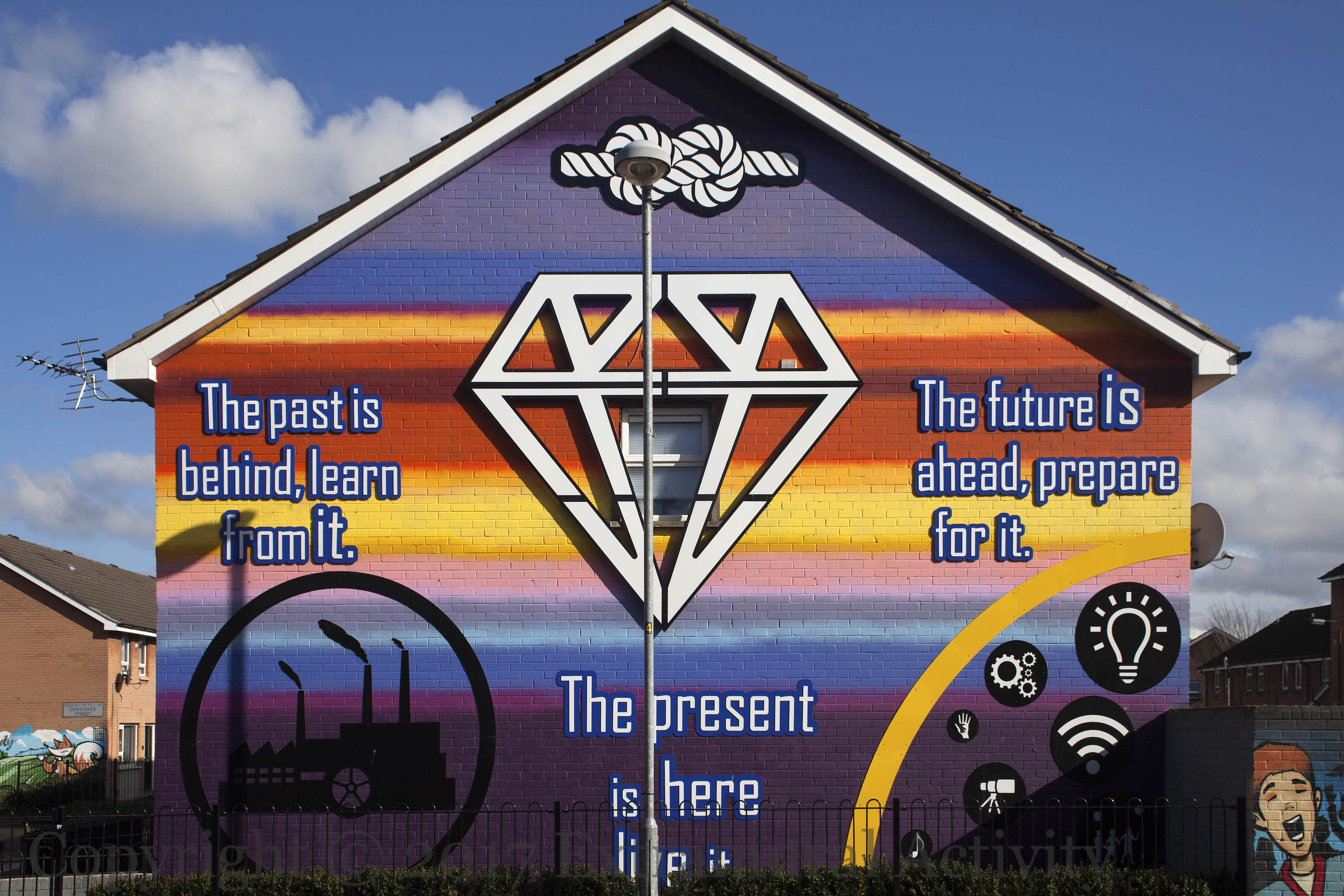
“The past is behind, learn from it. The present is here, live it. The future is ahead, prepare for it.” 2016 mural and board-cut diamond (which is lit from behind at night) in Lord Street, replacing the old LPA mural which lasted from 1997 to 2015.