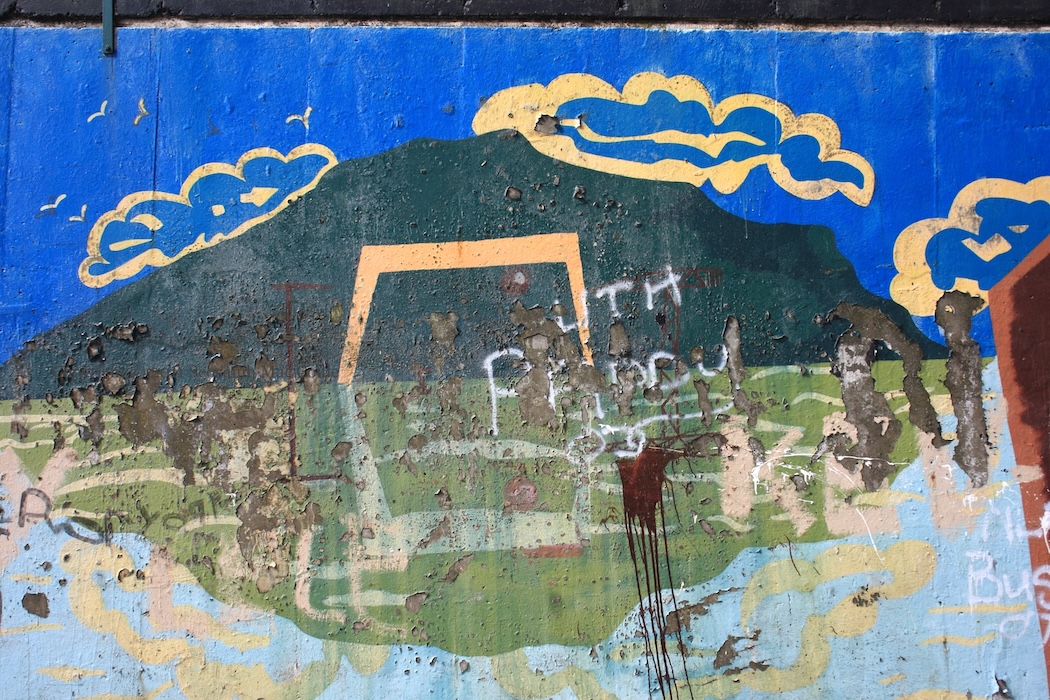
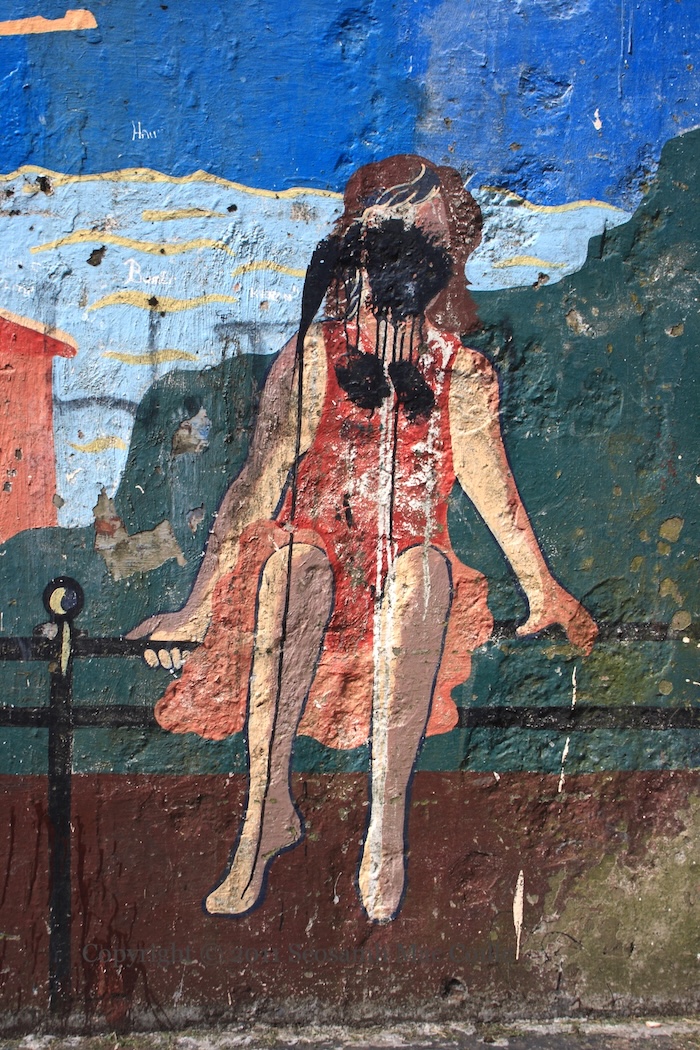
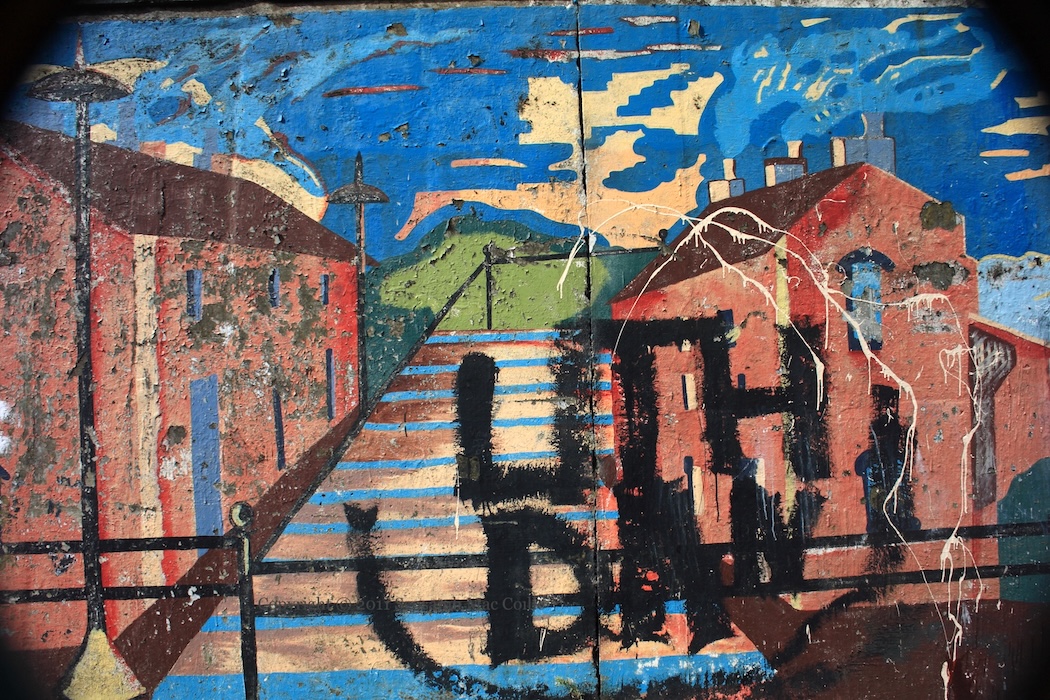
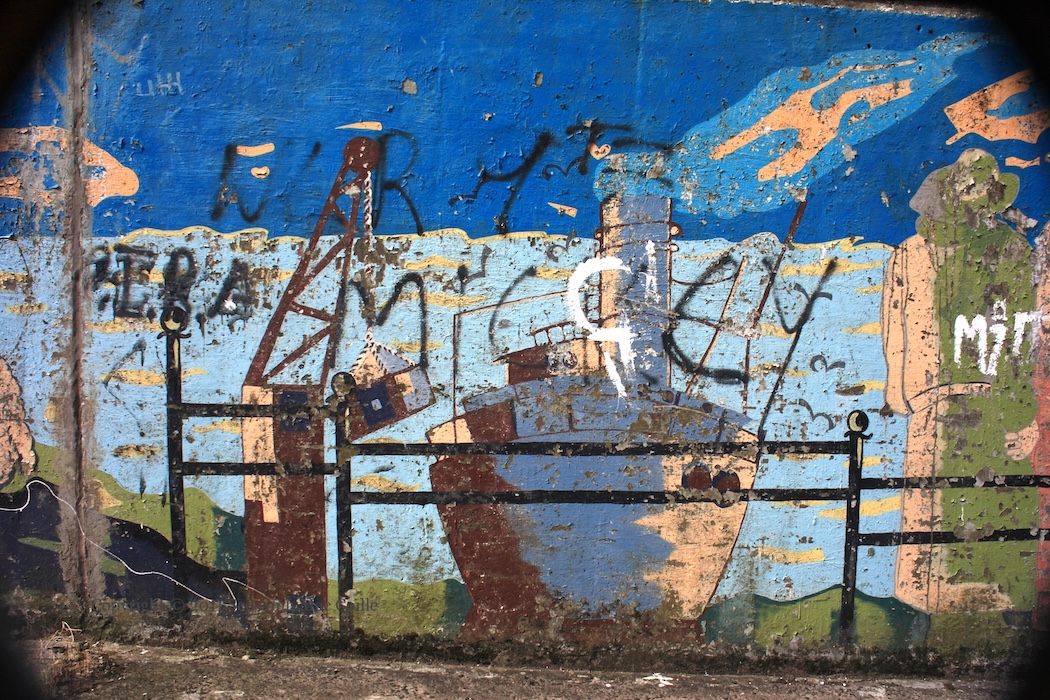
These four images are details of the scenic mural behind Finn House/Teach Fhınn in north Belfast’s New Lodge. (For another, see X04723.)
Click image to enlarge
Copyright © 2011 Seosamh Mac Coılle
X05123 X05124 X05125 X05126
These four images are details of the scenic mural behind Finn House/Teach Fhınn in north Belfast’s New Lodge. (For another, see X04723.)
Click image to enlarge
Copyright © 2011 Seosamh Mac Coılle
X05123 X05124 X05125 X05126
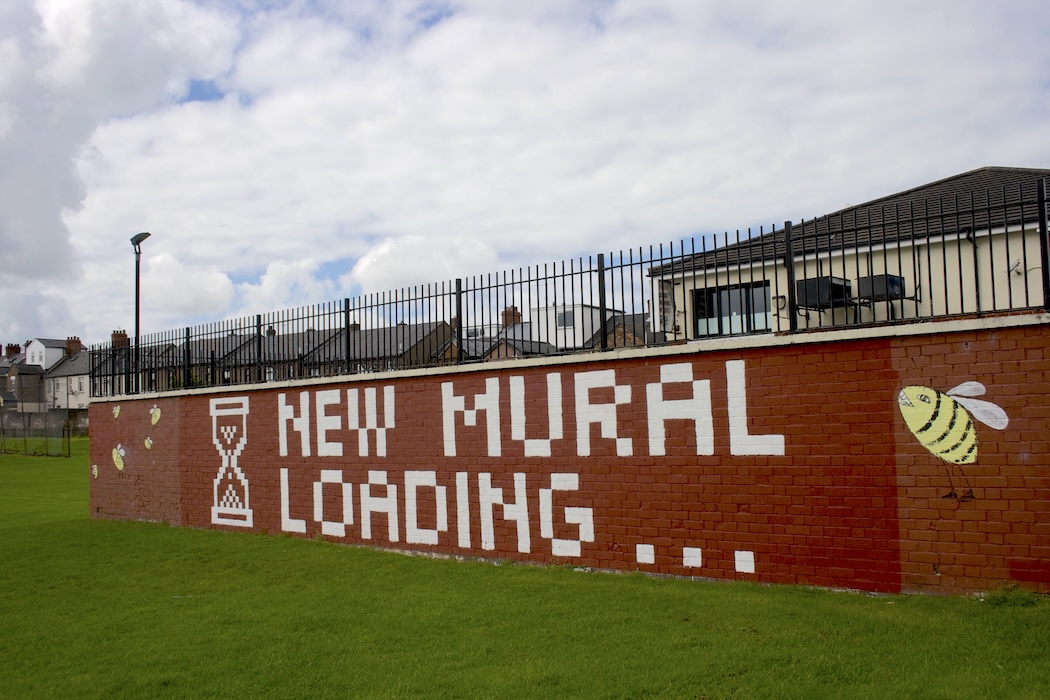
Muraling gets meta, just off the Cliftonville Road. A mural is such a familiar mode of expression in Belfast that one is expected on every wall, and even more so in the post-Agreement years when the state enters as a third source of murals. The pixelated hourglass and font of the text hearken back to computers of the 1990s.
Click image to enlarge
Copyright © 2011 Seosamh Mac Coılle
X00497
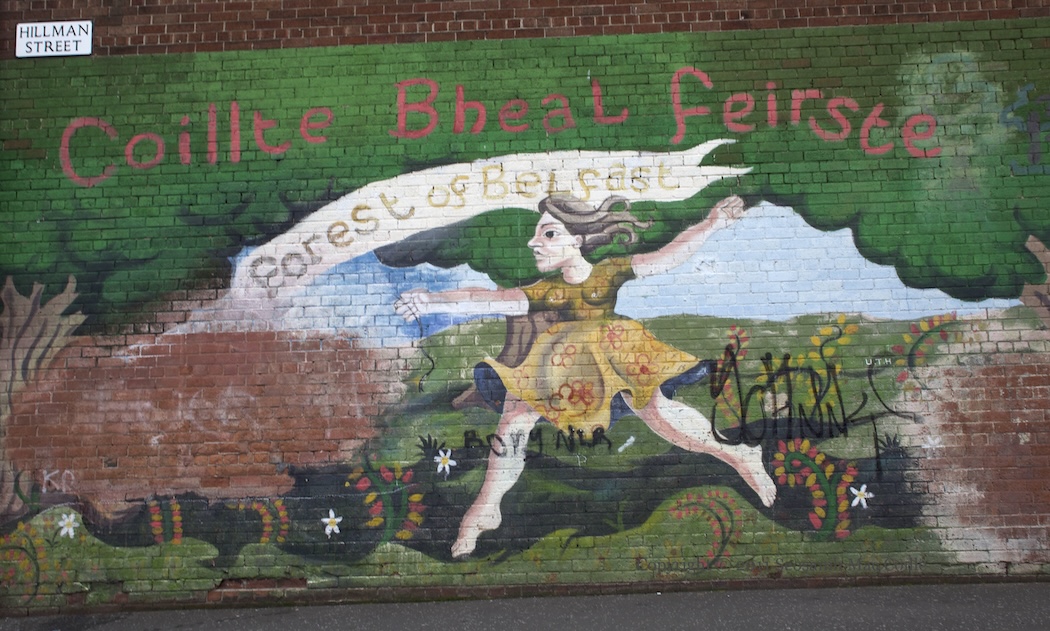
In 1992, the Forest Of Belfast project was started, a public-private to preserve old trees and encourage tree-planting. Above is one of the murals painted to publicise the effort, on Hillman Street at the Antrim Road. (Another was painted on the Falls Road.)
Click image to enlarge
Copyright © 2011 Seosamh Mac Coılle
X00431
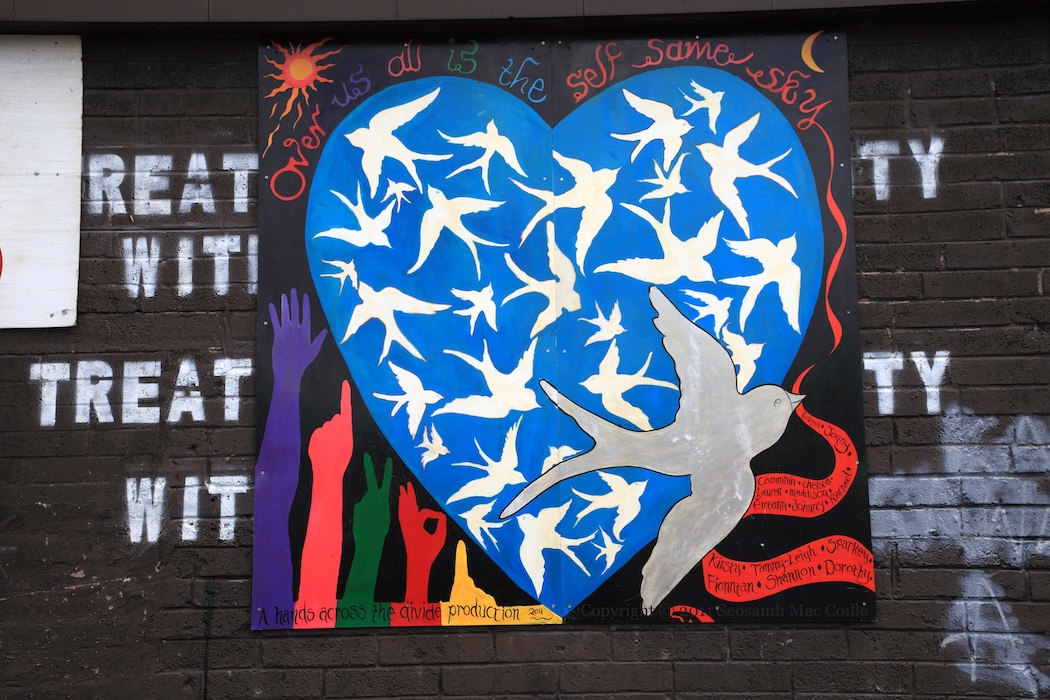
“Over us all is the self same sky”. “A hands across the divide production, 2011”. A heart filled with swallows and a ribbon with the names of the various participants.
Crumlin Road at the Ardoyne shops, north Belfast.
Click image to enlarge
Copyright © 2011 Seosamh Mac Coılle
X05106
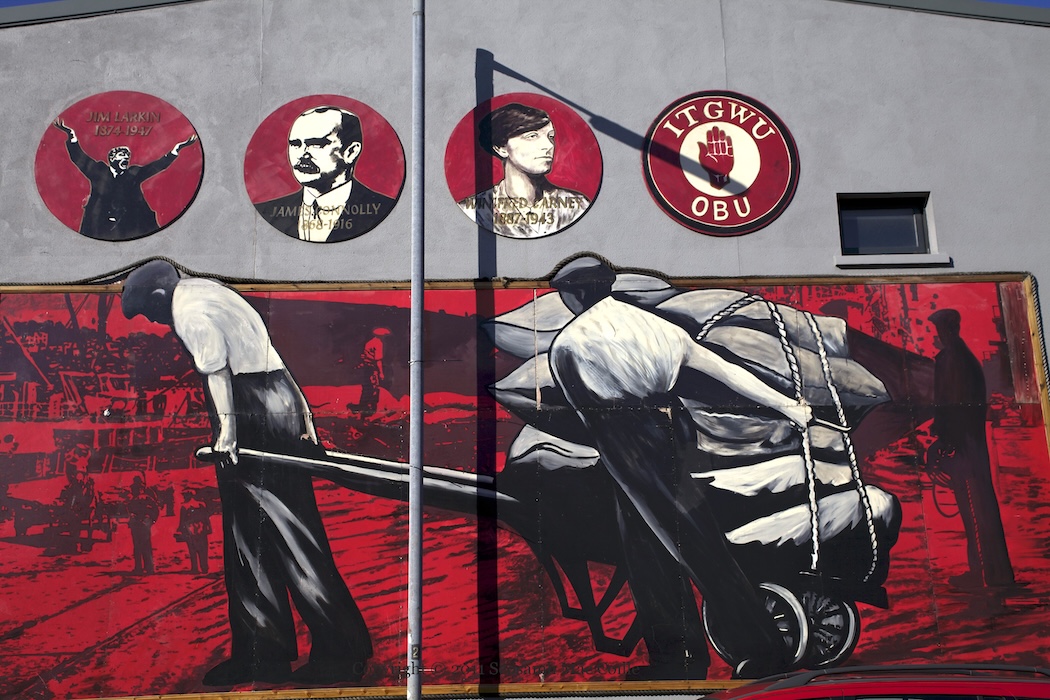
2011 image of the ITGWU/OBU mural previously recorded in 2007. The medallions show portraits of Larkin, Connolly, and Carney.
Click image to enlarge
Copyright © 2011 Seosamh Mac Coılle
X00471
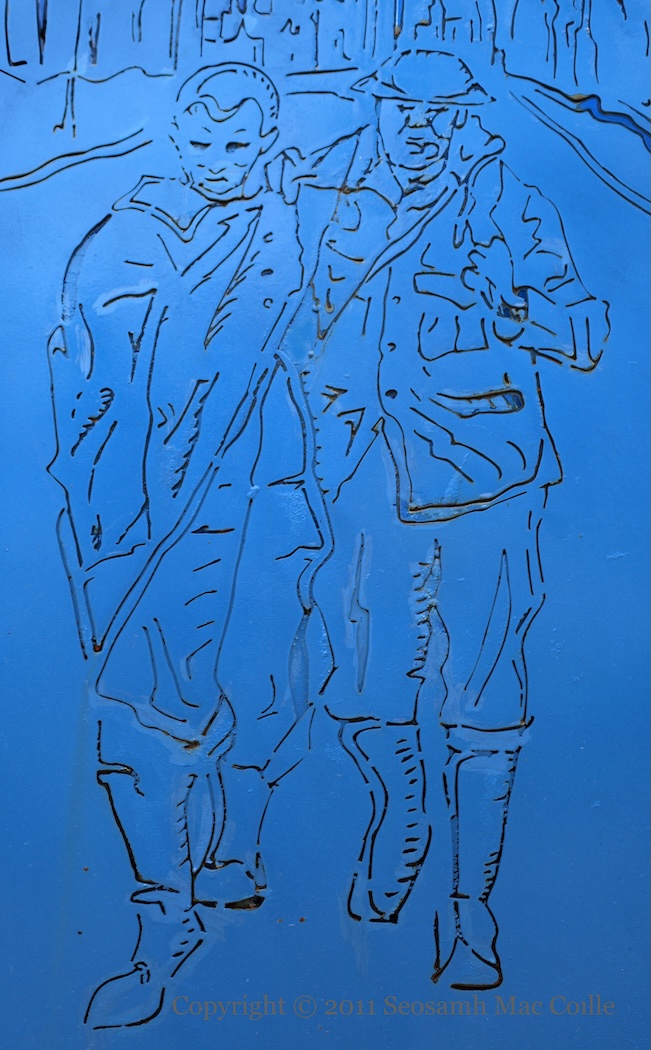
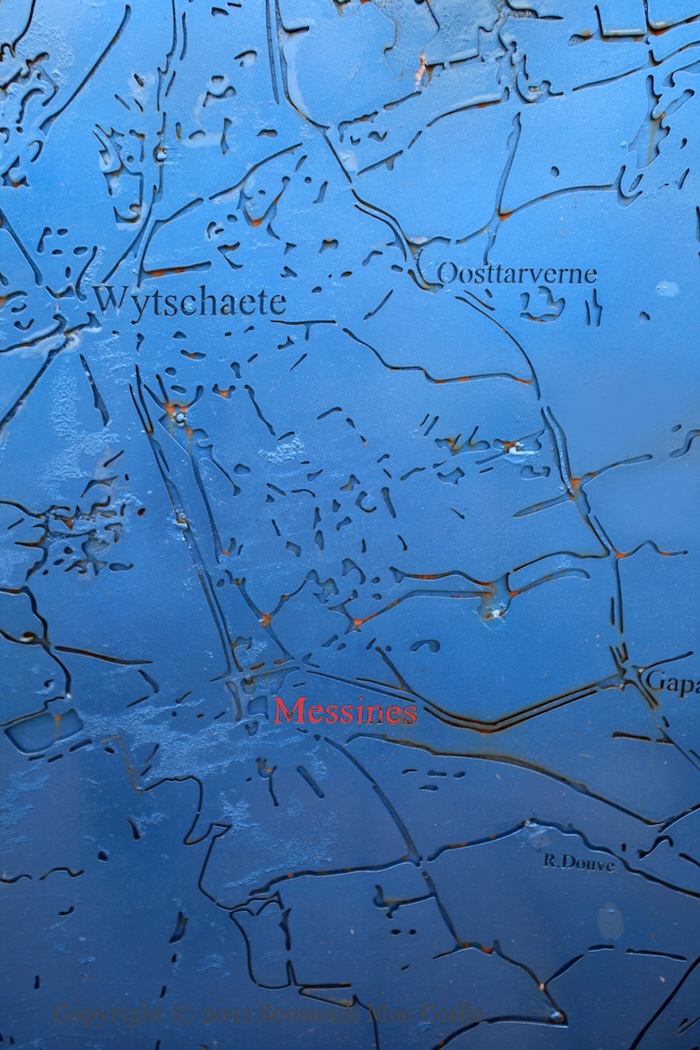
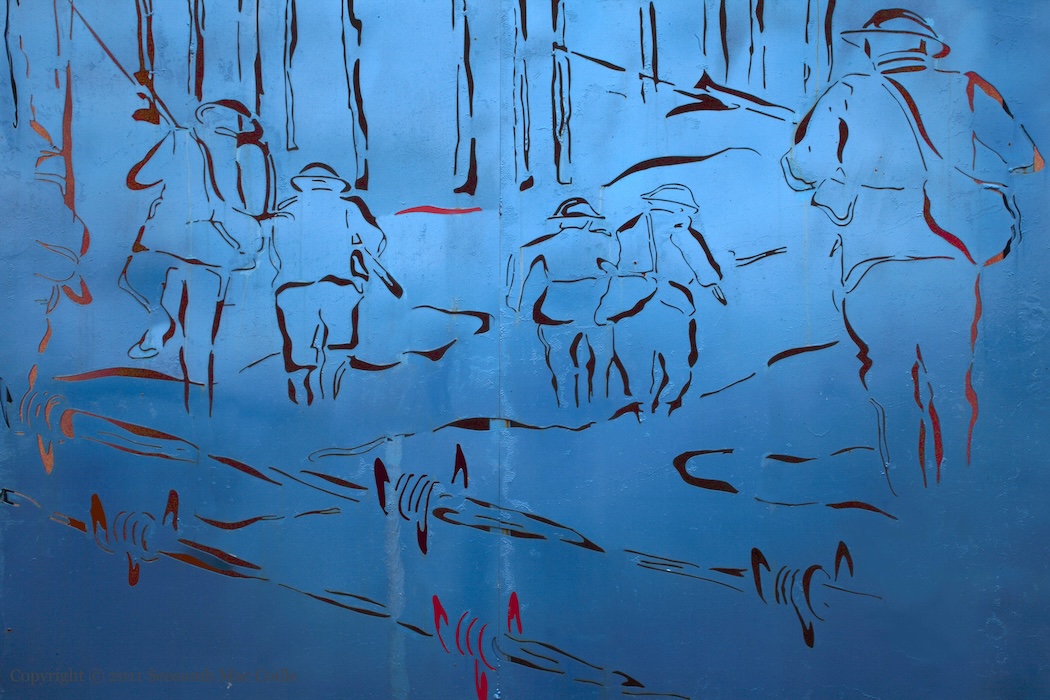
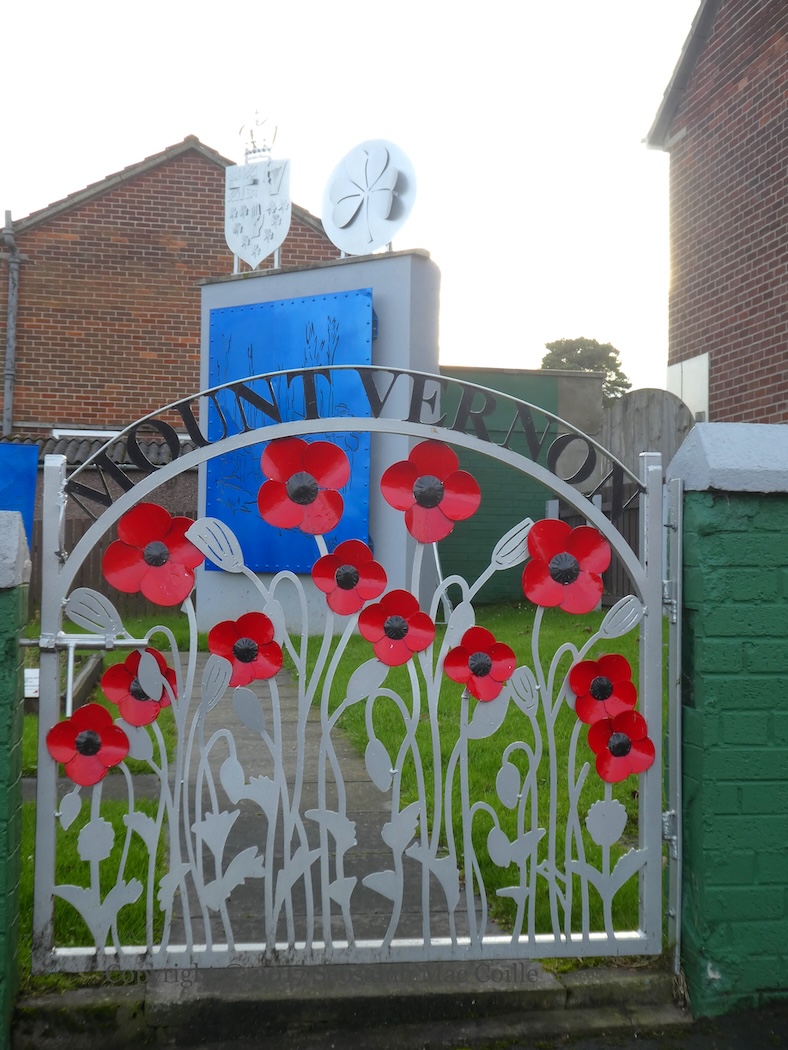
Here are three details from the metalworks in the Mount Vernon WWI memorial garden, showing scenes from the conflict and a map of the area around Messines (photoshopped in red). For more, including the panels to John Cordon and William McFadzean, see M07770.
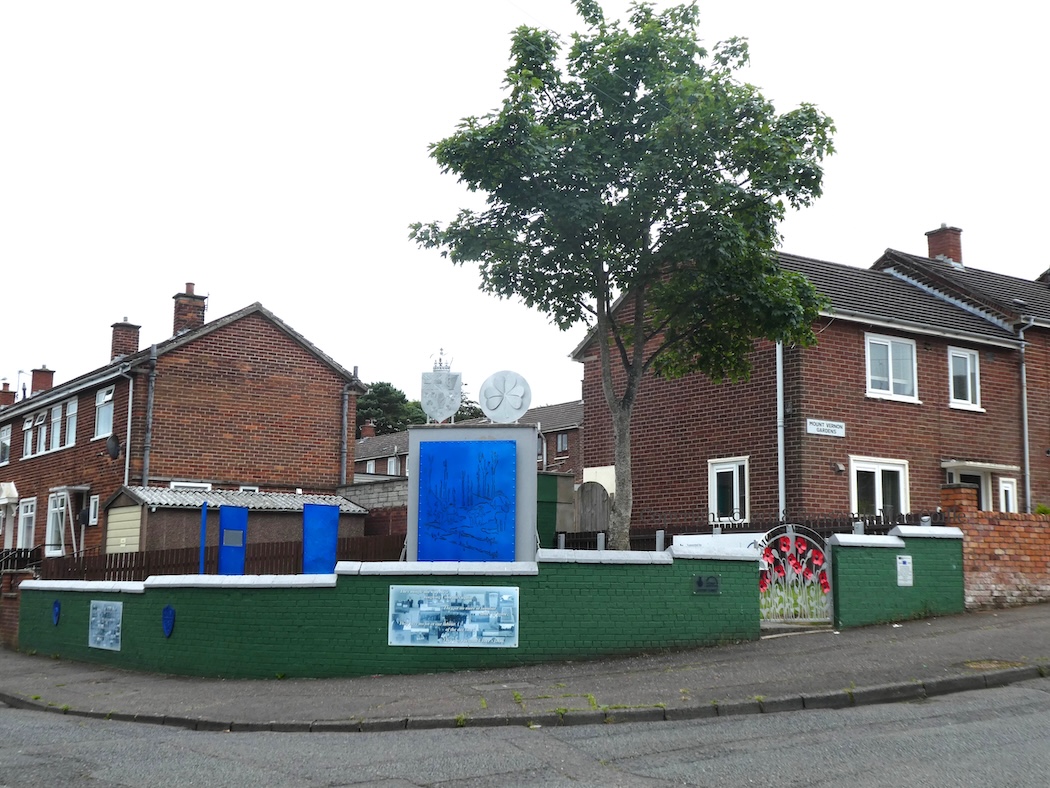
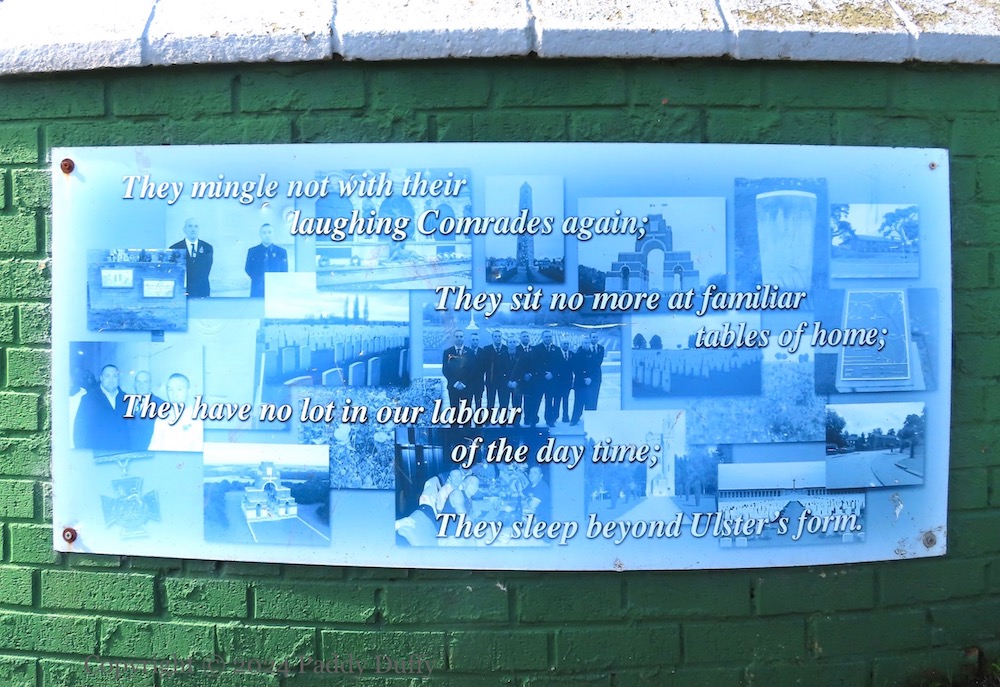
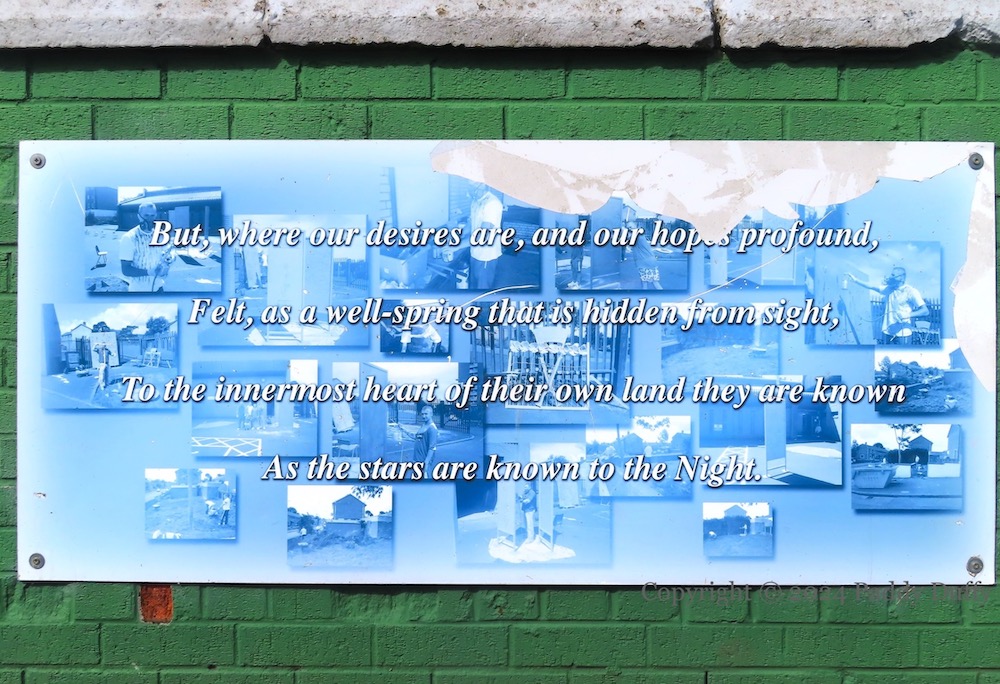
Update: As the images below from 2017 and 2018 show, the metalworks themselves have also been repainted (and replaced in a slightly different configuration), a new gate has been installed and the boards on the surrounding wall have been restored, against a freshly-painted background of green. The boards have verses from Laurence Binyon’s For The Fallen. “They mingle not with their laughing comrades again/They sit no more at familiar tables of home/They have no lot in our labour of the day-time/They sleep beyond Ulster’s [originally, England’s] foam.”
Click image to enlarge
Copyright © 2011/2017/2018 Seosamh Mac Coılle
X00488 X00487 X00489 X06017 X05381
T04420 T04419 courtesy of Paddy Duffy
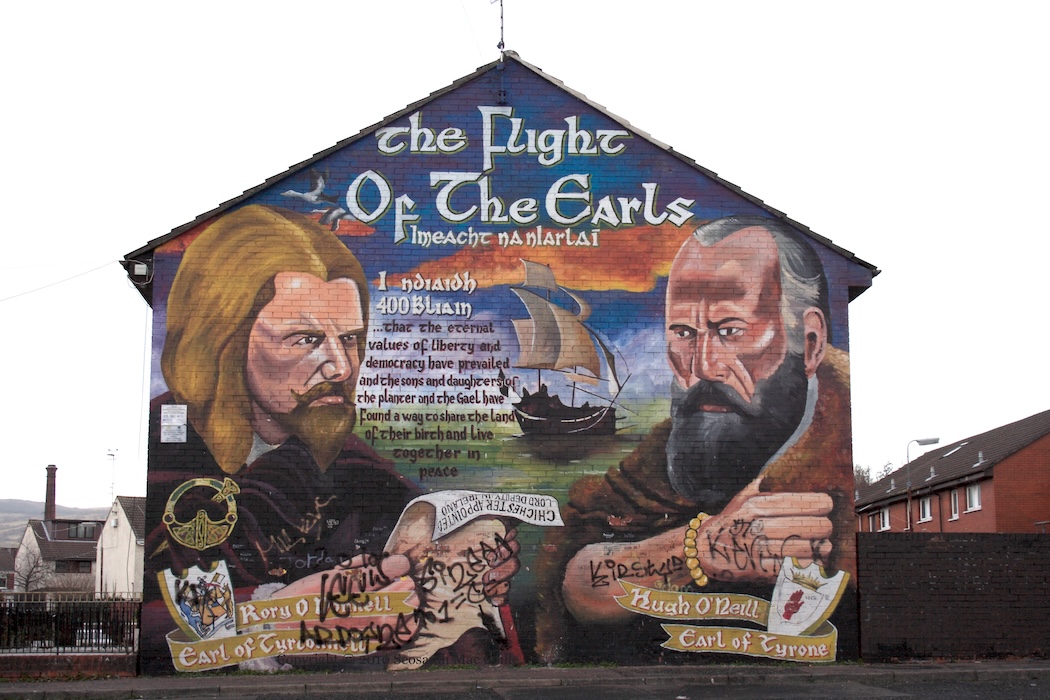
In 1607 – “400 blıaın” after the Anglo-Norman invasion of Ireland – 50 years of newly-asserted English control, most recently at the hands of Charles Blount – who defeated the pair in the Nine Years’ War – and Arthur Chichester – who, as O’Donnell is shown reading, was “appointed Lord Deputy in Ireland” in 1605 – compelled Earls Hugh O’Neill of Tyrone and Rory O’Donnell of Tyrconnell to depart Ireland on a ship bound for Spain in order to petition for Spanish support in reclaiming the lands and status they were losing under English rule. They ended up in Rome instead and never returned, ending the period of Gaelic chiefs’ rule in Ireland and making way for the plantation of Ulster.
The pair of plaques on the left indicate that the mural was painted as part of the Re-Imaging Communities Programme’ (top) and launched by President Mary McAleese on June 19th (bottom). Even though the subject was historical, the state funding for the project required the removal of a sword from O’Neill’s right hand; he is shown instead clutching the collar of his cloak. For more on the re-imaging programme, see Visual History 10.
“Imeacht na nIarlaí. I ndıadh 400 blıaın … that the eternal values of liberty and democracy have prevailed and the sons and daughters of the planter and the Gael have found a way to share the land of their birth and live together in peace.”
Ardoyne Avenue, Belfast
Click image to enlarge
Copyright © 2010 Seosamh Mac Coılle
X05967
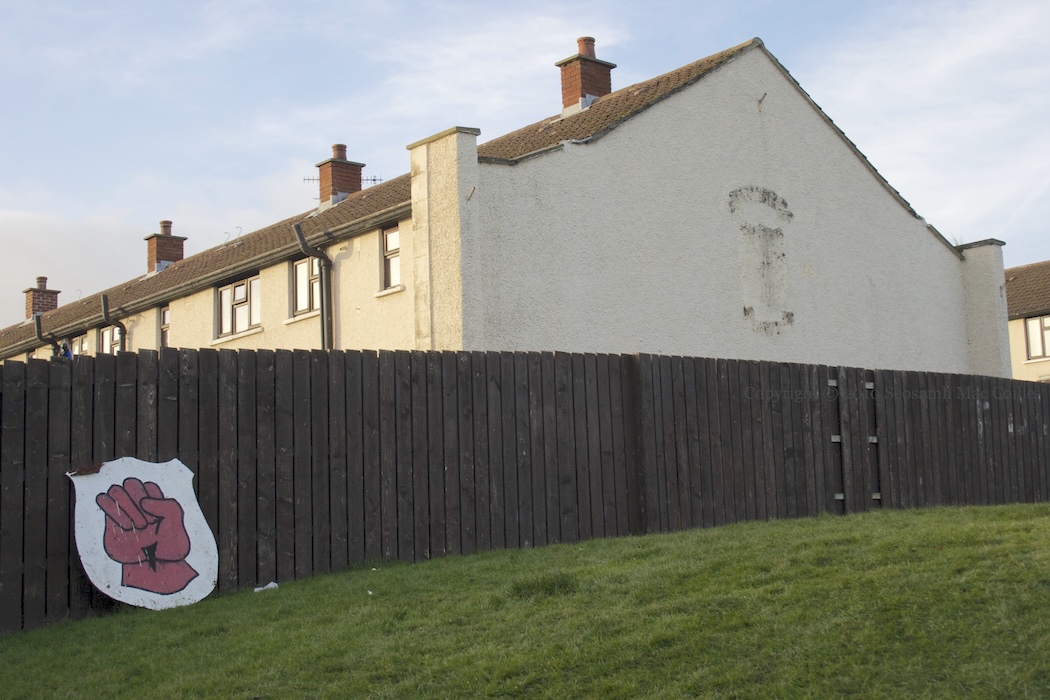
“Tyndale” and “UFF” were originally above and below the fist (see M05695). All three boards have come off the wall.
Click image to enlarge
Copyright © 2010 Seosamh Mac Coılle
X00358
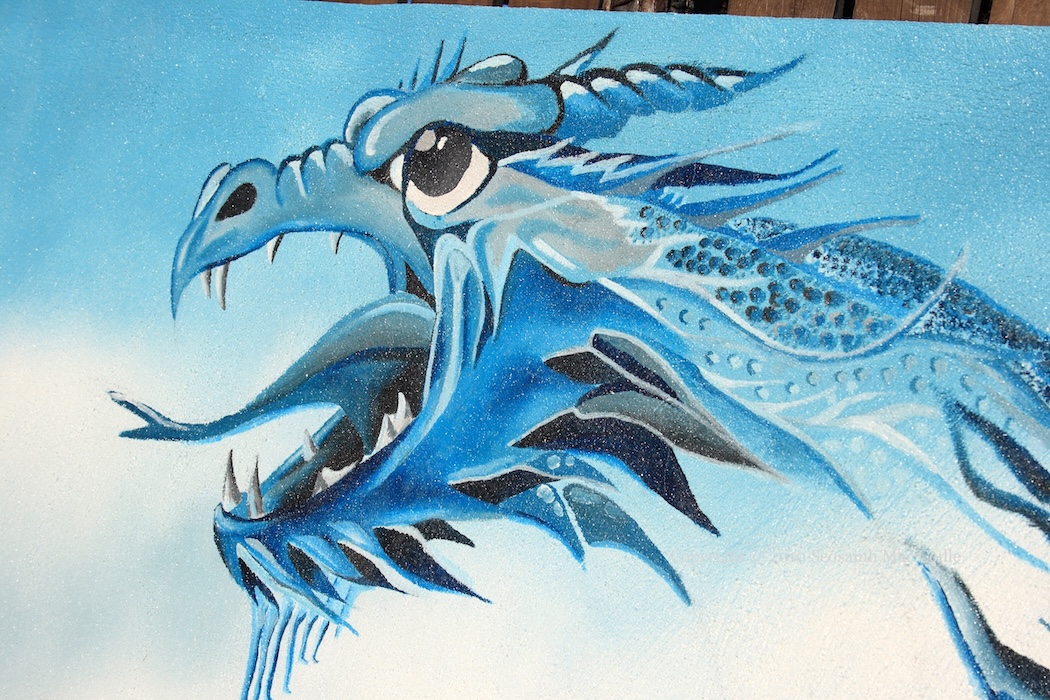
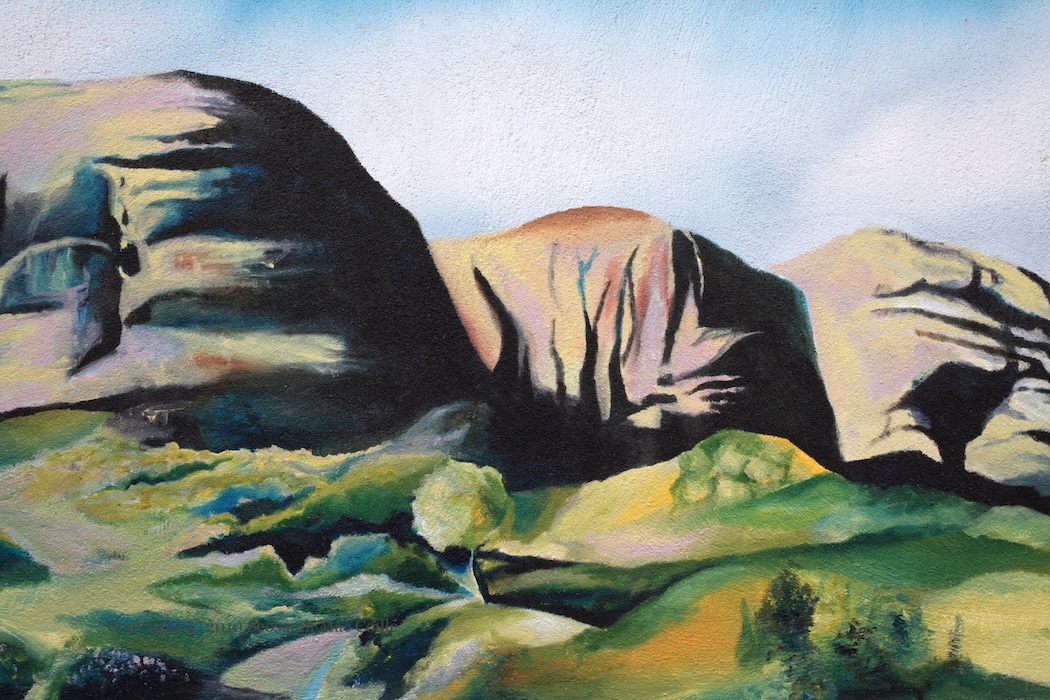
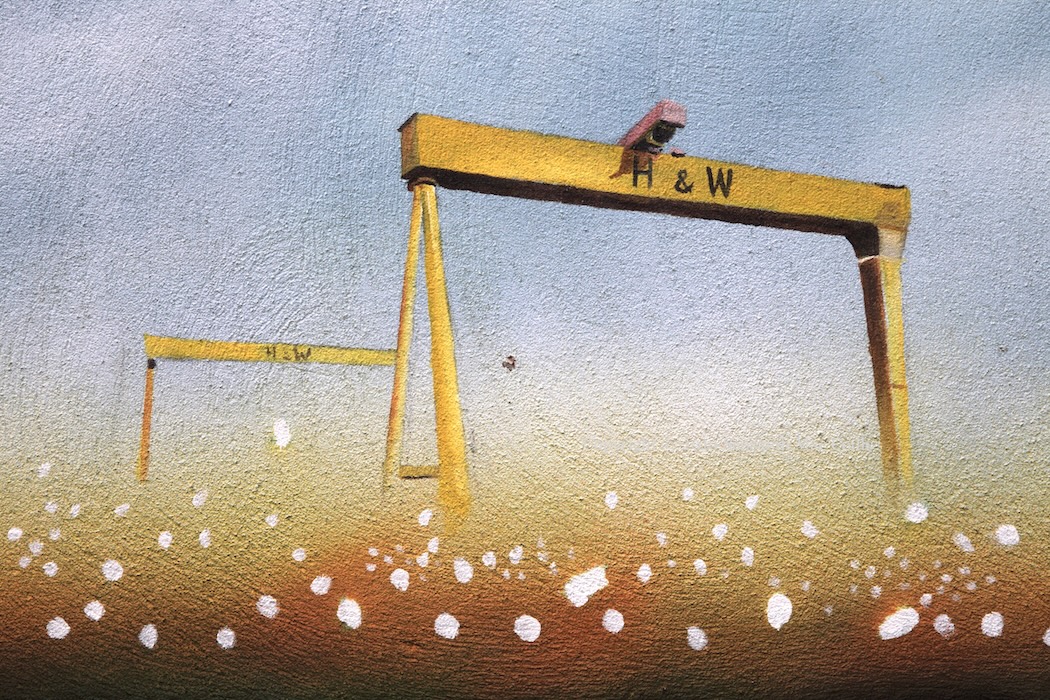
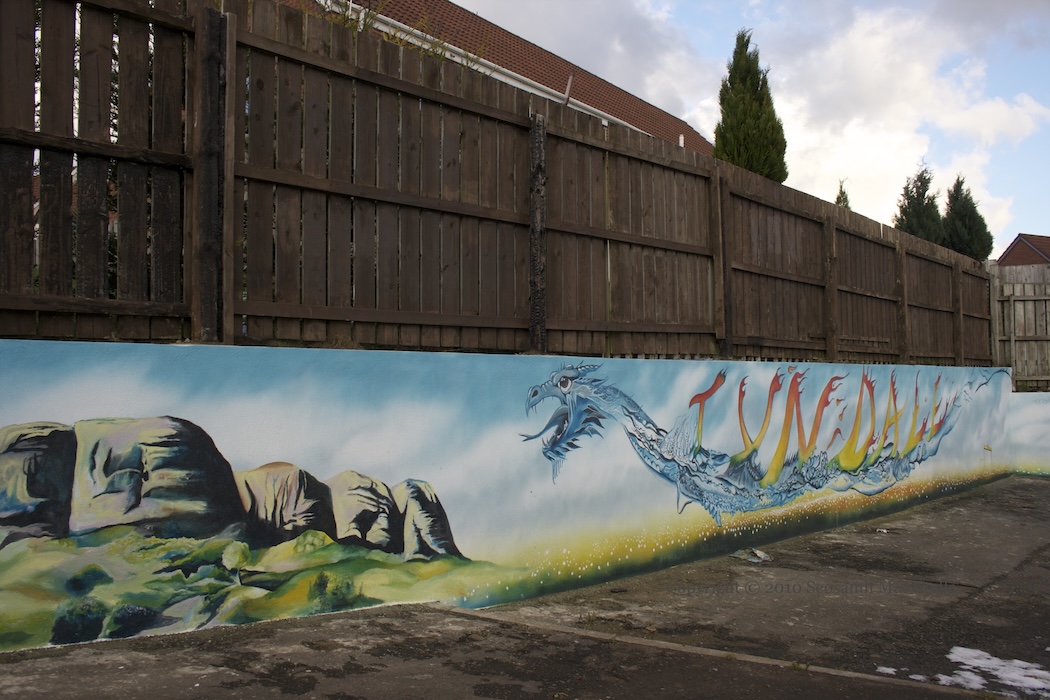
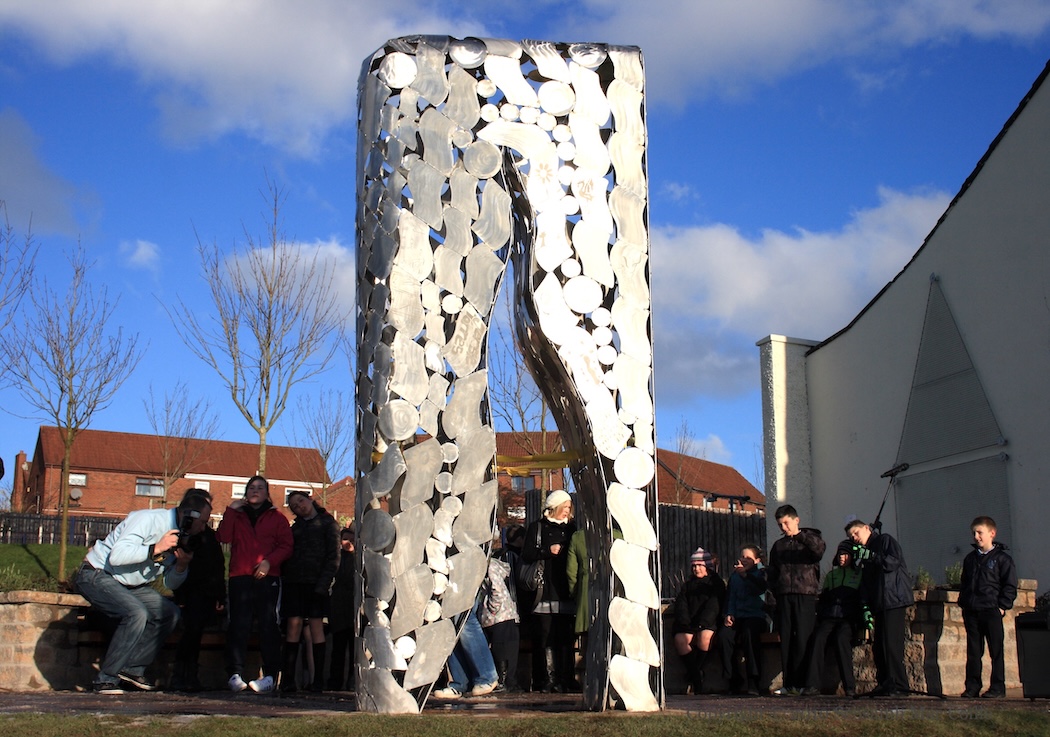
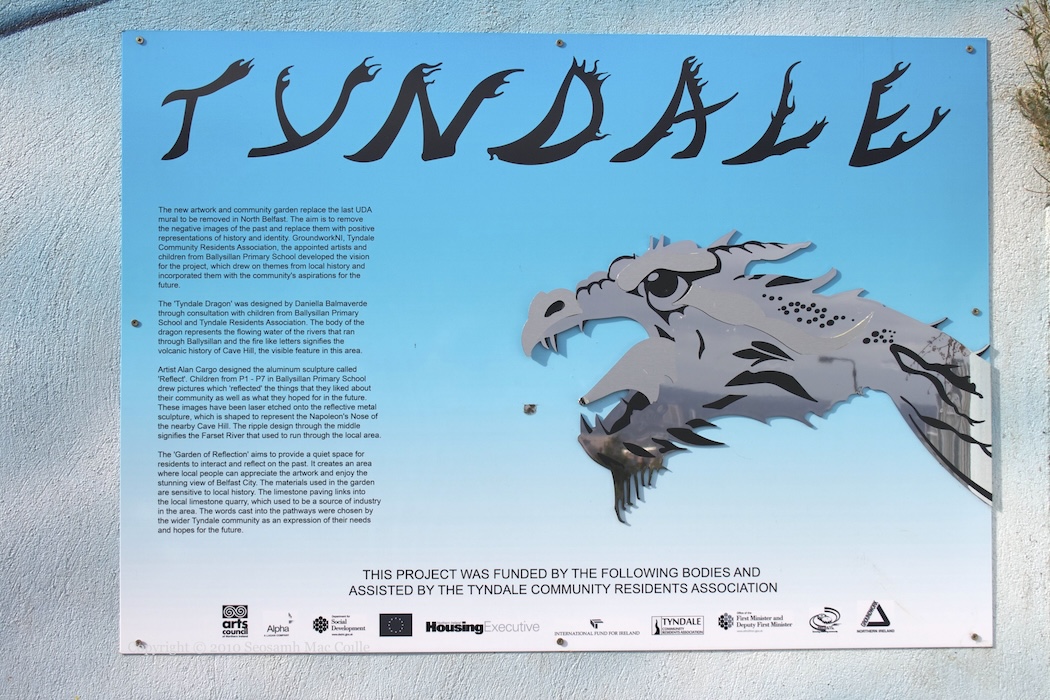
“The new artwork and community garden replace the last UDA mural to be removed in North Belfast. The aim is to remove the negative images of the past and replace them with positive representations of history and identity. GroundworkNI, Tyndale Community Residents Association, the appointed artists and children from Ballysillan Primary School developed the vision for the project, which drew on themes from local history and incorporated them with the community’s aspirations for the future. The ‘Tyndale Dragon’ was designed by Daniela Balmaverde through consultation with children from Ballysillan Primary School and Tyndale Residents Association. The body of the dragon represents the flowing water of the rivers that ran through Ballysillan and the fire like letters signifies the volcanic history of Cave Hill, the visible feature in this area. Artist Alan Cargo designed the aluminium sculpture called ‘Reflect’. Children from P1-P7 in Ballysillan Primary School drew pictures which ‘reflected’ the things that they liked about their community as well as what they hoped for in the future. These images have been laser etched onto the reflective metal sculpture, which is shaped to represent the Napoleon’s Nose of the nearby Cave Hill. The ripple design through the middle signifies the Farset River that used to run through the local area. The ‘Garden of Reflection’ aims to provide a quiet space for residents to interact and reflect on the past. It creates an area where local people can appreciate the artwork and enjoy the stunning view of Belfast City. The materials used in the garden are sensitive to local history. The limestone paving links into the local limestone quarry, which used to be a source of industry in the area. The words cast into the pathways were chosen by the wider Tyndale community as an expression of their needs and hopes for the future.”
Click image to enlarge
Copyright © 2010 Seosamh Mac Coılle
X05064 X05062 X05063 X00375 X05065 X00376
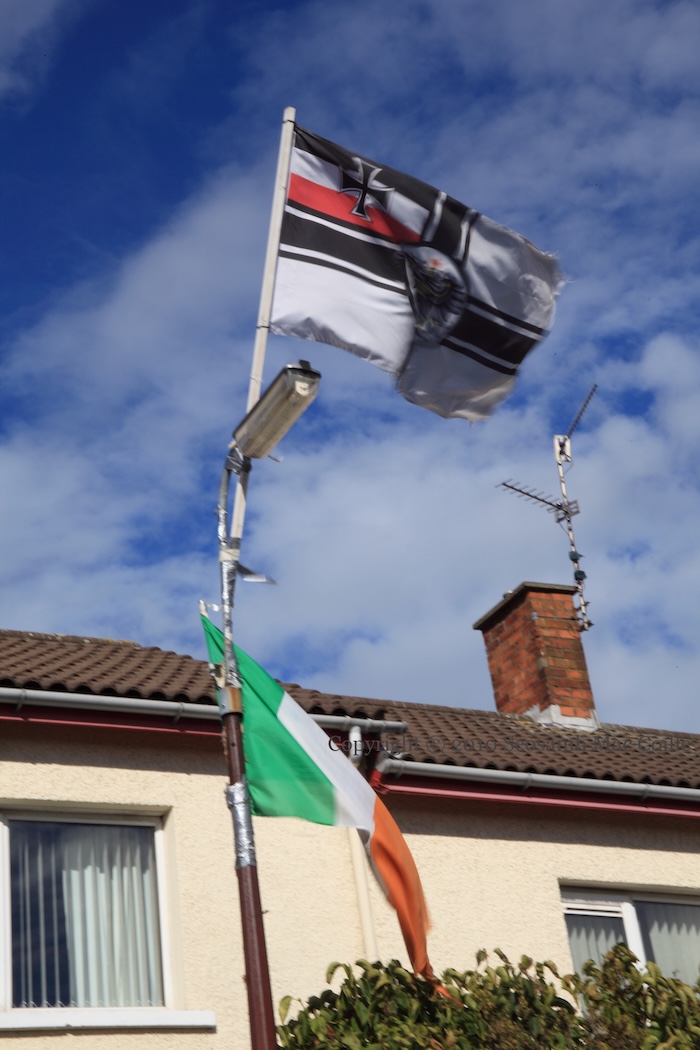
The upper flag appears to be the Imperial War ensign of Germany from 1903-1919, with a Prussian eagle holding a crown and sceptre in the centre, and an iron cross in the canton (CRW Flags).
Ardoyne, north Belfast
Click image to enlarge
Copyright © 2010 Seosamh Mac Coılle
X05938
 Seosamh Mac Coille Collection