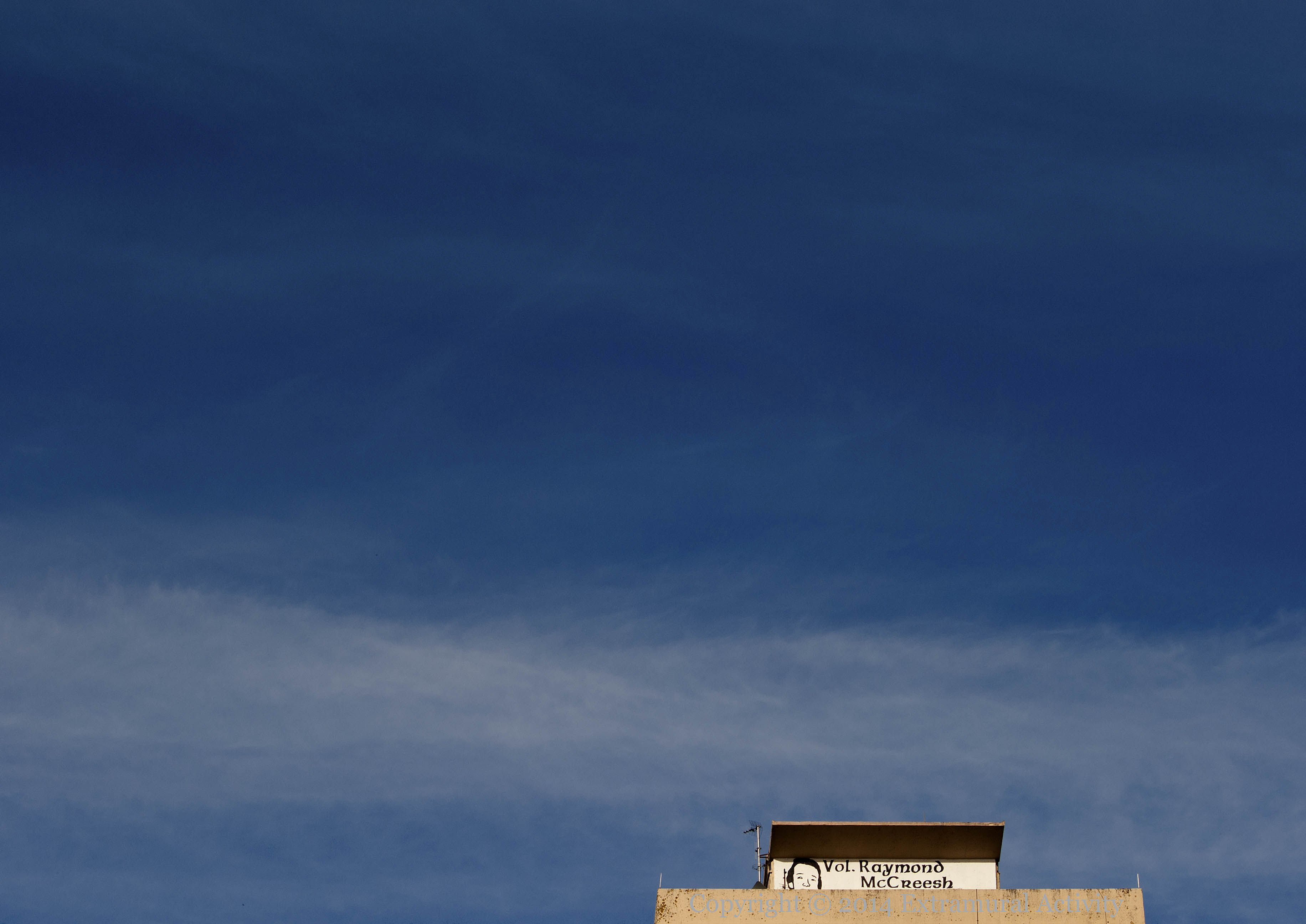
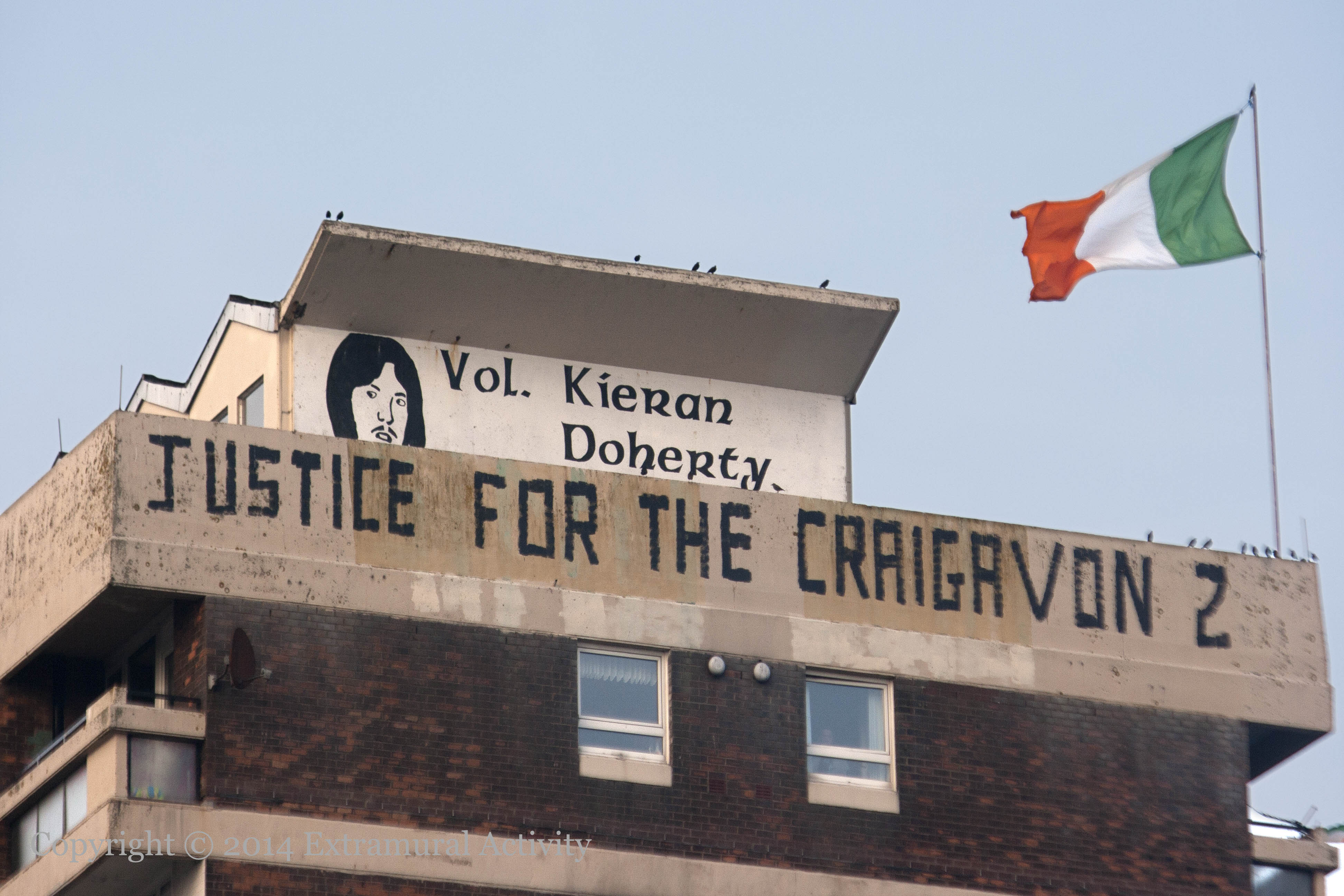
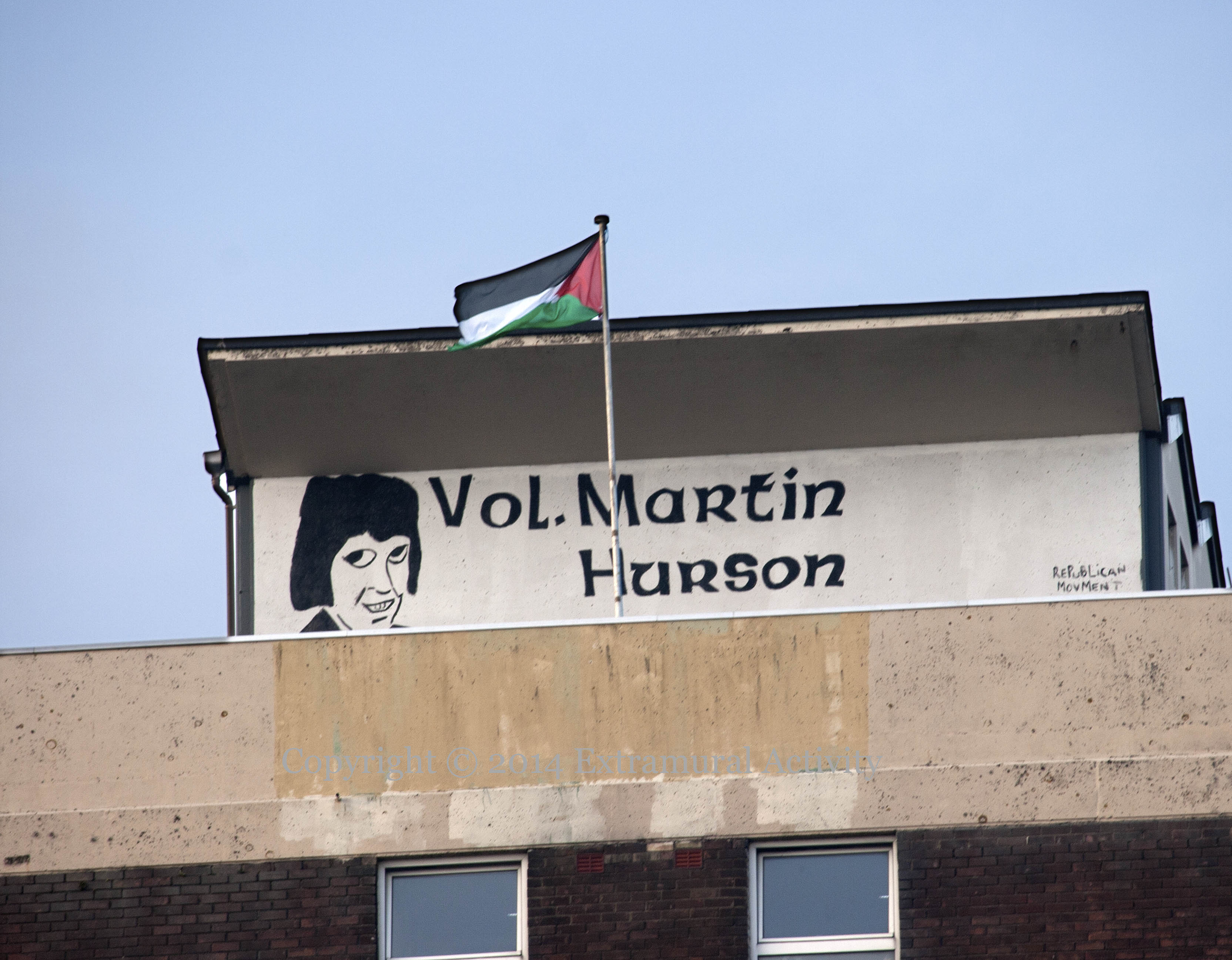
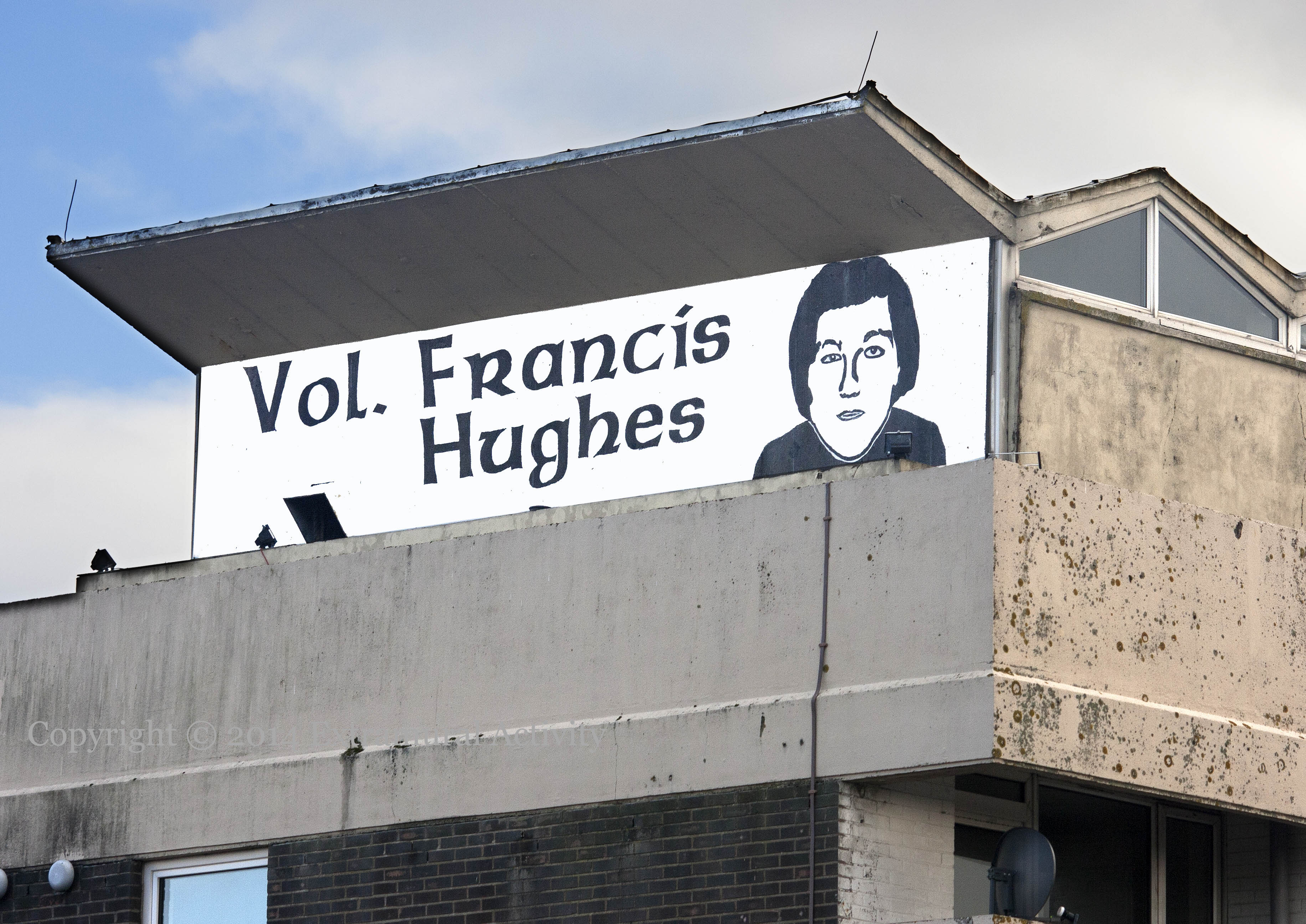
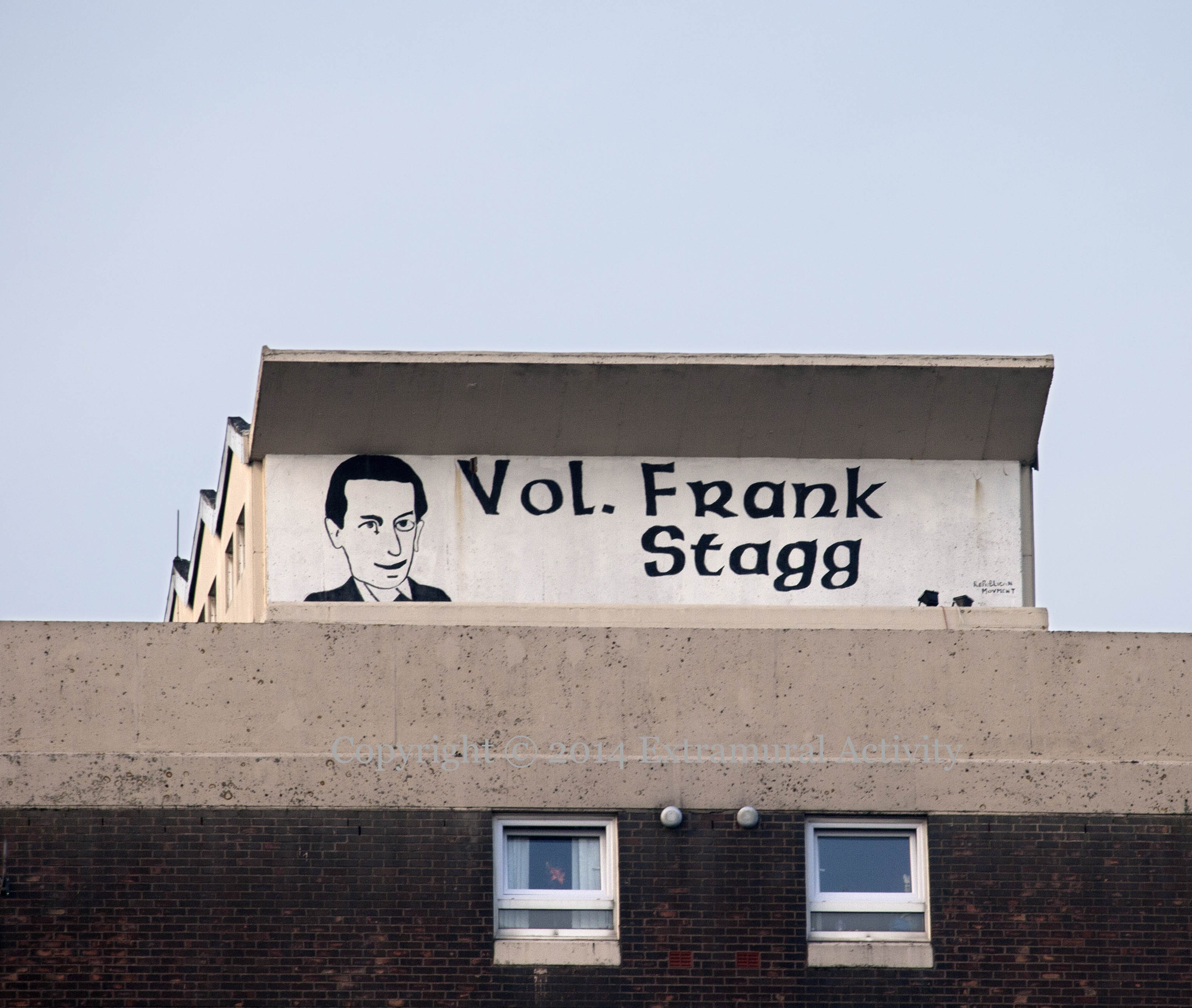
Six of the seven New Lodge tower blocks each feature two hunger strikers, on the narrow sides of the building. Those featured are the ten who died in 1981 along with Frank Stagg and Michael Gaughan. Here are images of five of them. Above is Raymond McCreesh, below is Kieran Doherty with a tricolour and ‘Justice for the Craigavon 2’, third is Martin Hurson and a Palestinian flag, fourth is Francis Hughes, and fifth is Frank Stagg.
An annotated Google map and a table give the Irish, English and former names of the flats (“houses”) as well as their locations and the hunger strikers on each.
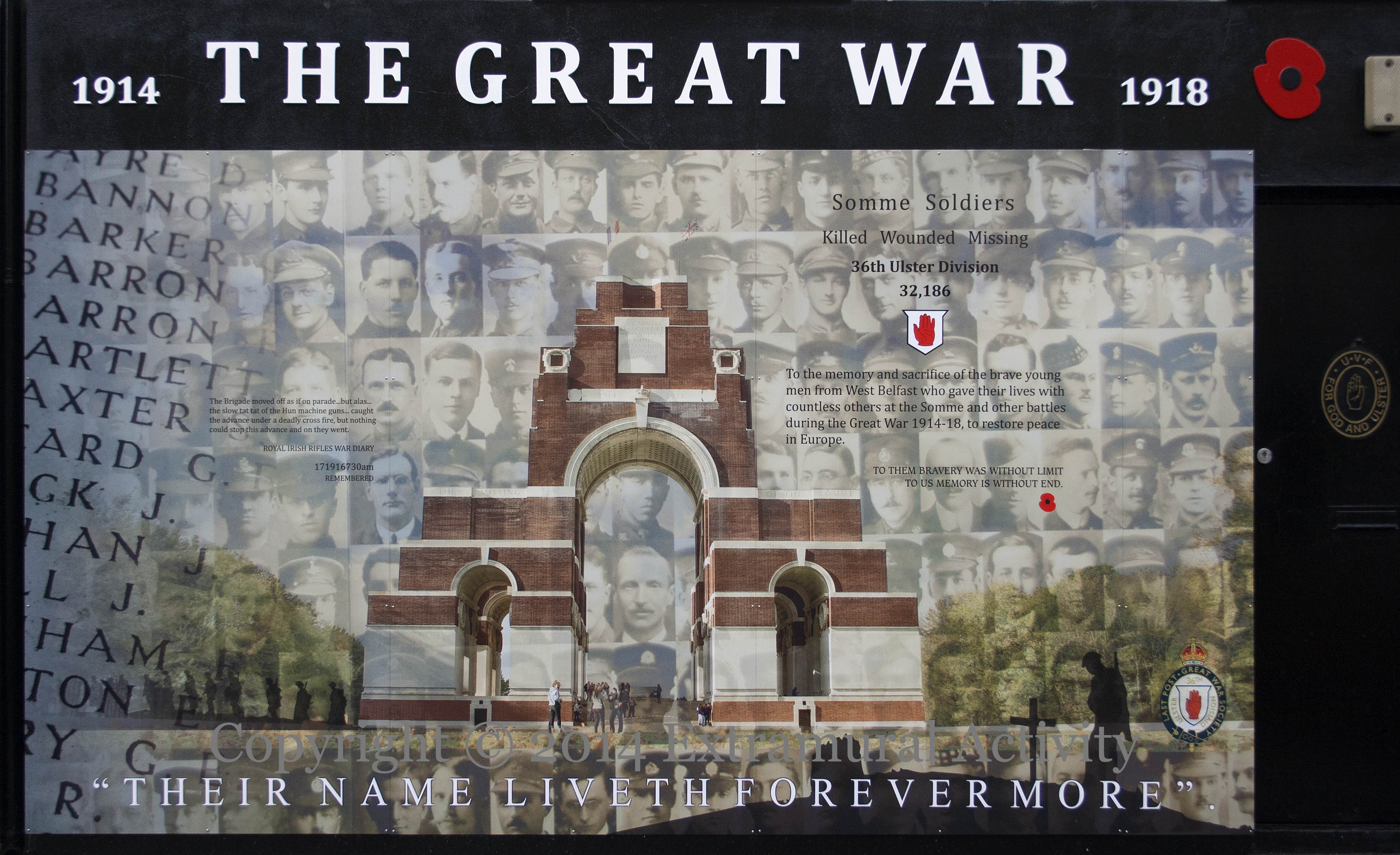
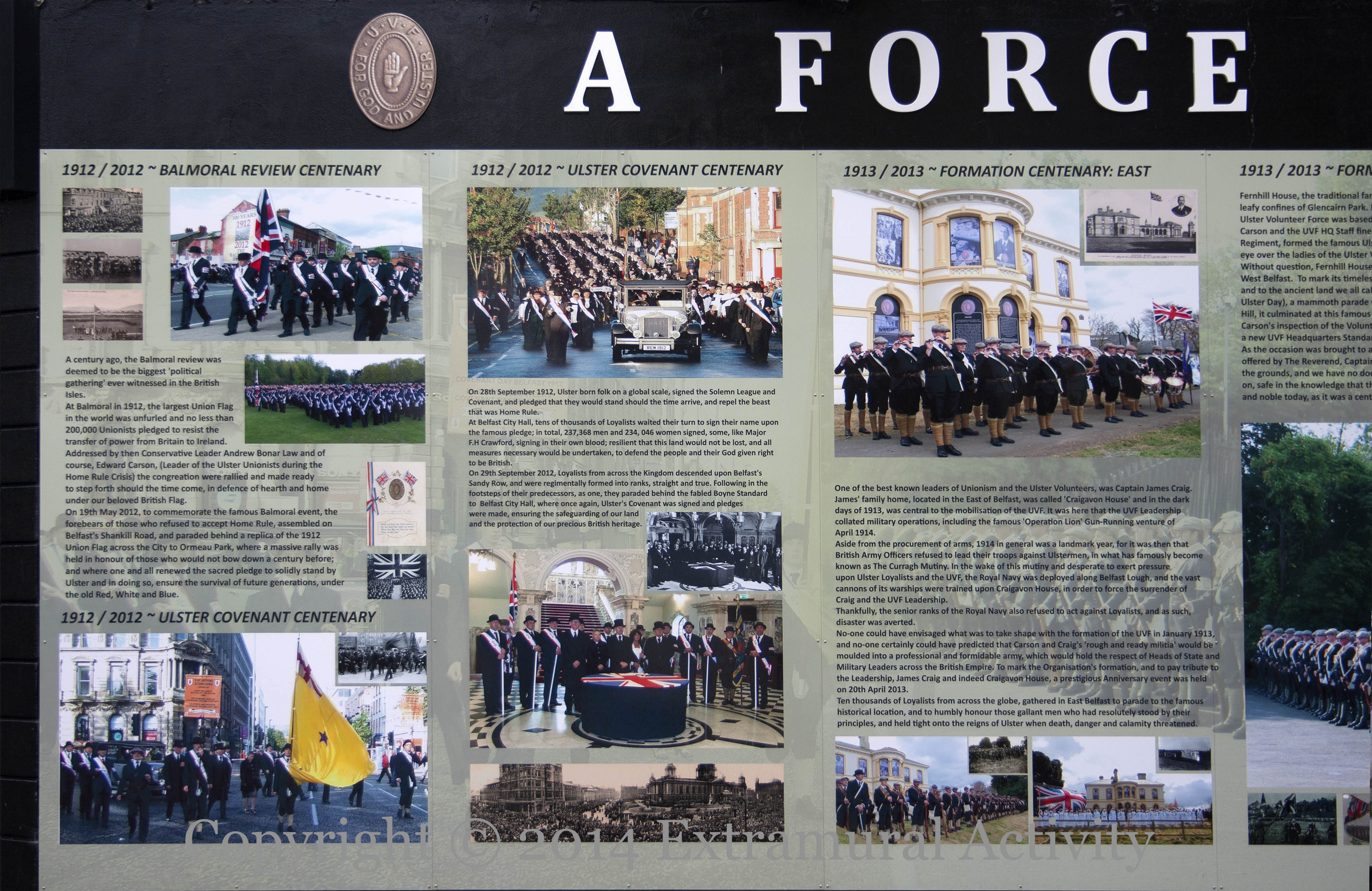
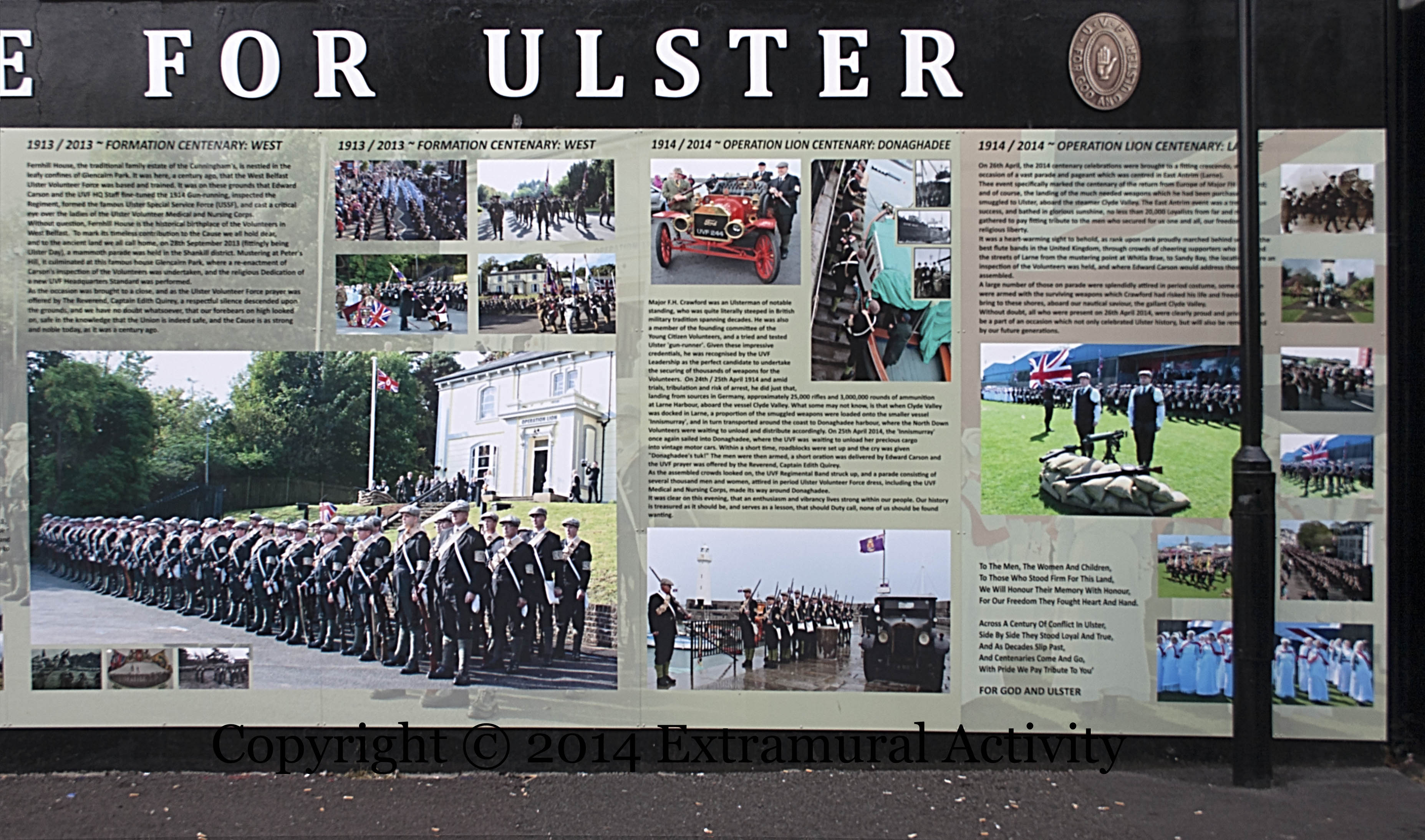
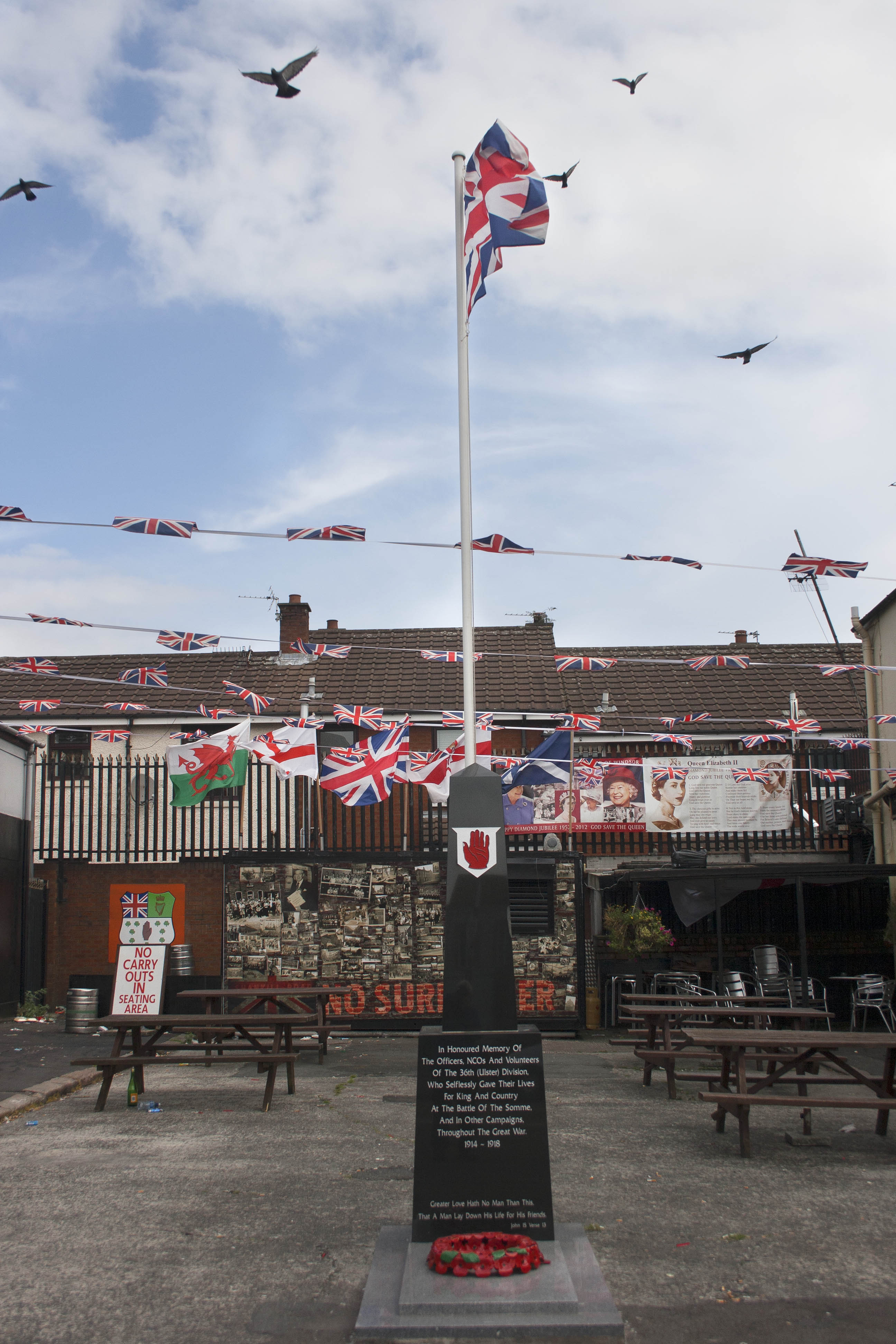
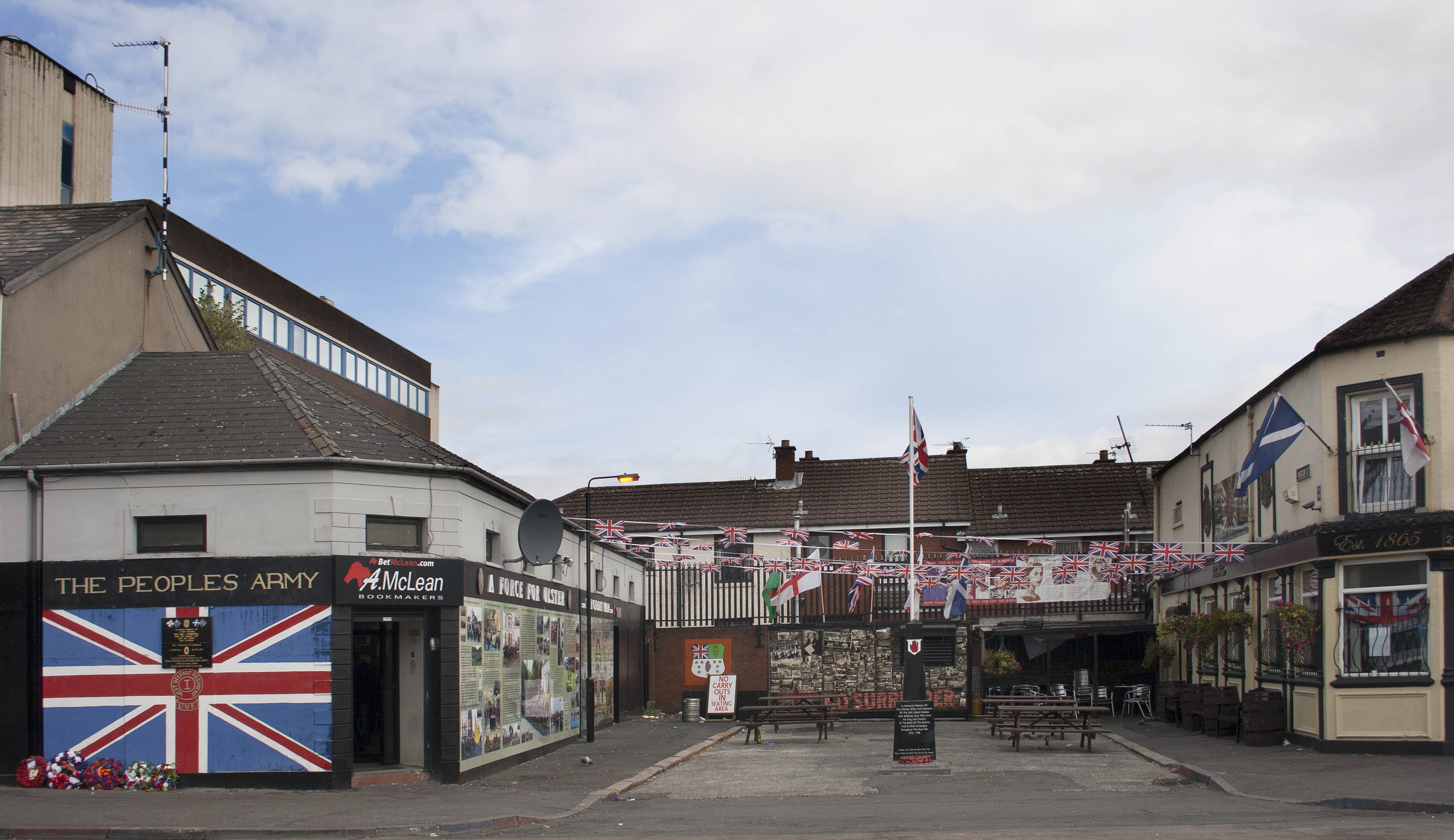
Here are two new boards in the courtyard of the Rex Bar on the Shankill Road, describing the formation of the Ulster Volunteers (‘A Force For Ulster’) and commemorating the losses suffered by the 36th (Ulster) Division of the British Army, which the Volunteers became, at the Somme and in other battles, mowed down by “the Hun machine guns” (‘The Great War’).
‘A Force For Ulster’ includes photographs of the recent centenary re-enactments of the Balmoral Review, the Ulster Covenant, the formation of the Volunteers (“east” and “west”) and “Operation Lion” – more commonly known as the Larne Gun-Running.
According to the ‘The Great War’ board, 32,186 men from west Belfast were killed, wounded, or missing. “To them bravery was without limit, to us memory is without end”. The board shows the Thiepval Memorial To The Missing Of The Somme against a background of portraits.
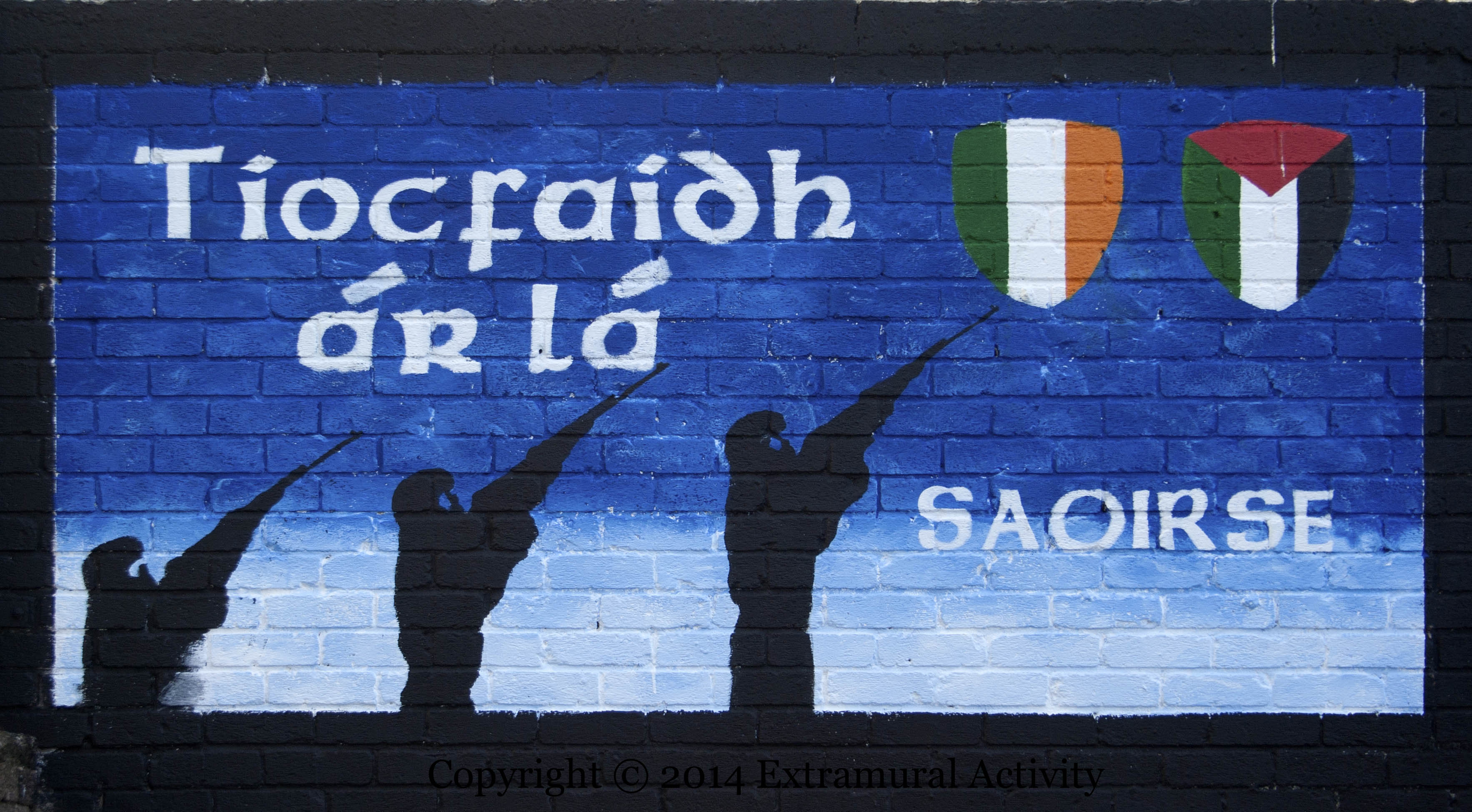
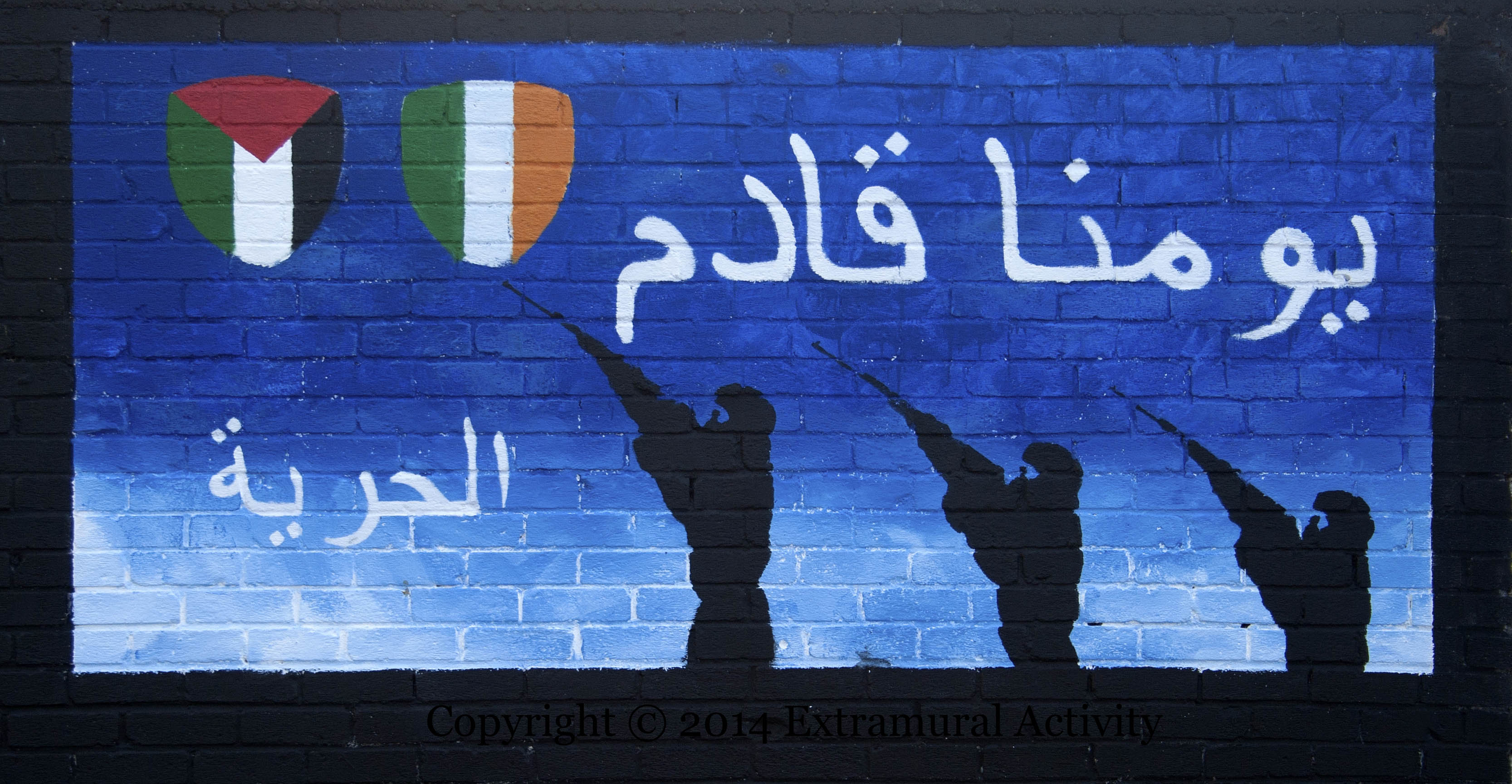
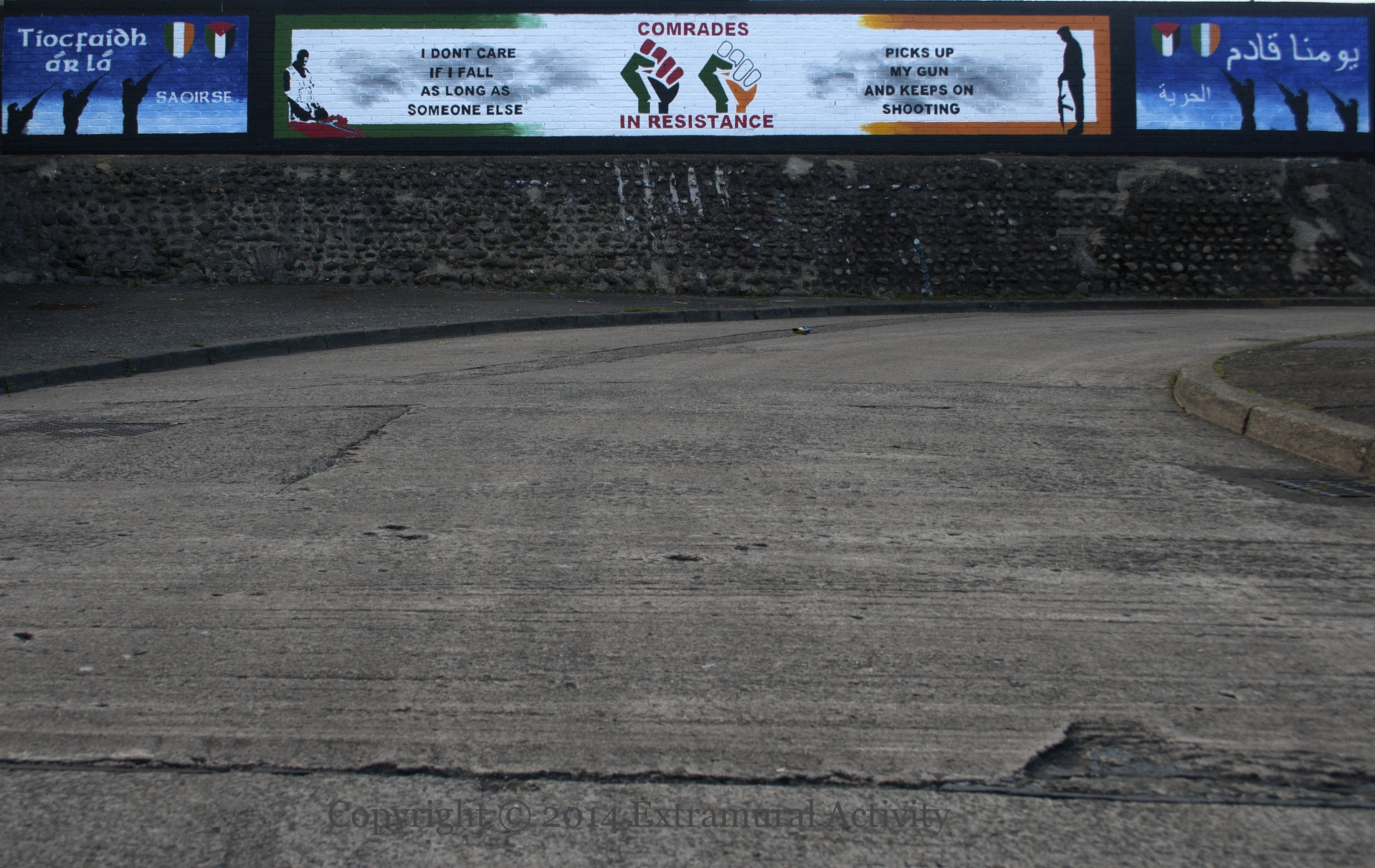
A Che Guevara quote – “I don’t care if I fall as long as someone else picks up my gun and keeps on shooting” – unifies two panels bearing masked men firing funeral volleys, Irish and Palestinian shields, and “Our day will come” in both Irish and Arabic.
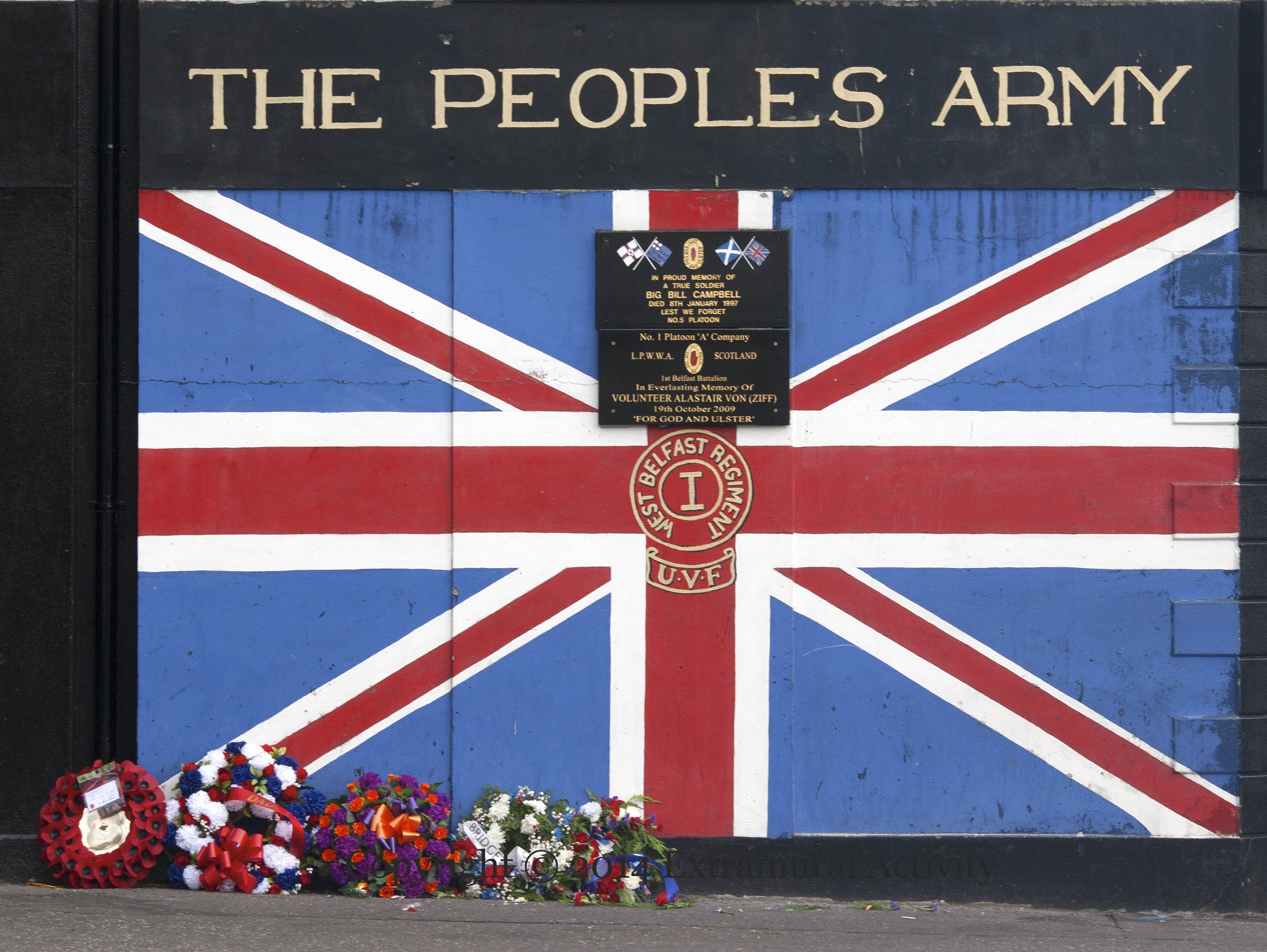
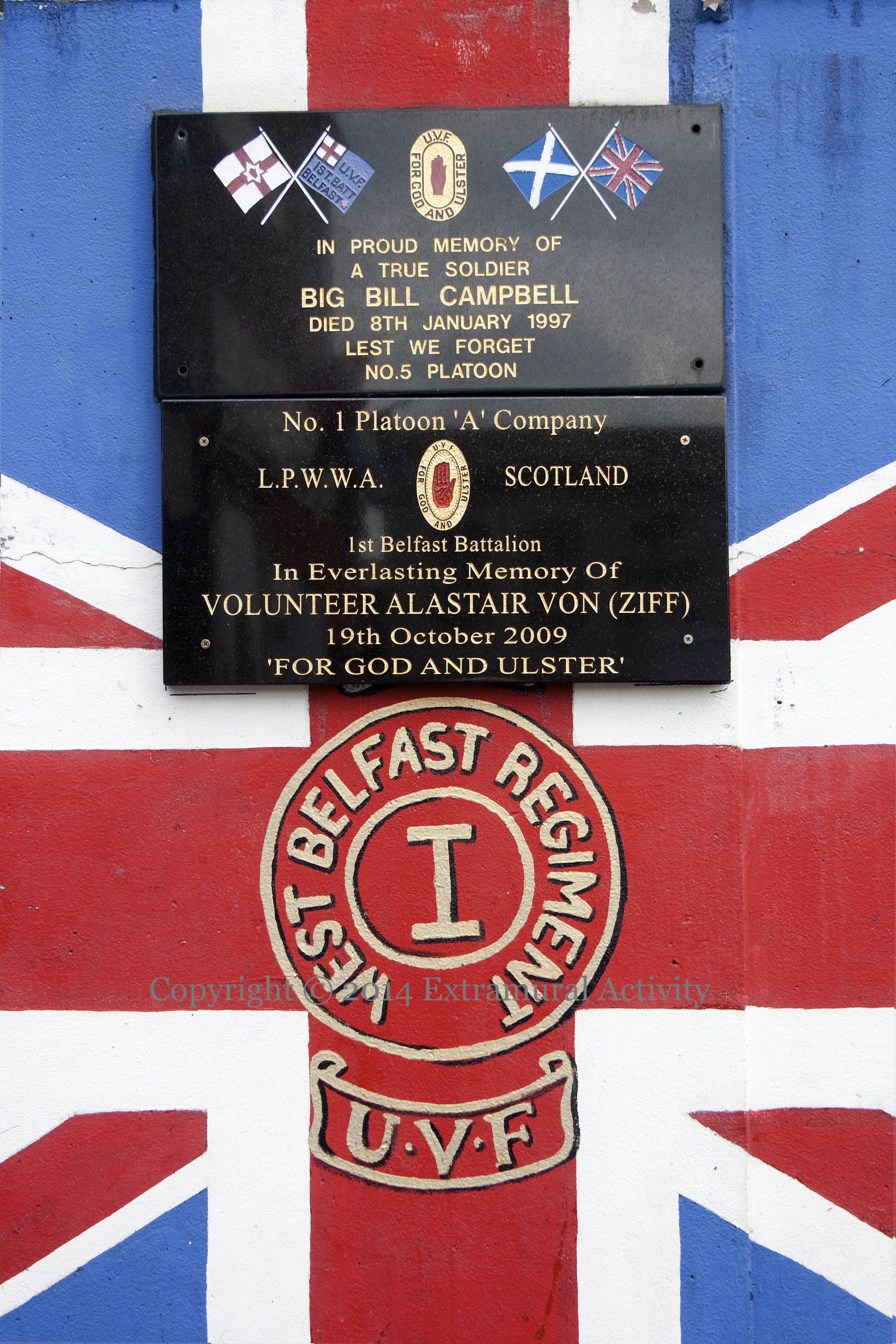
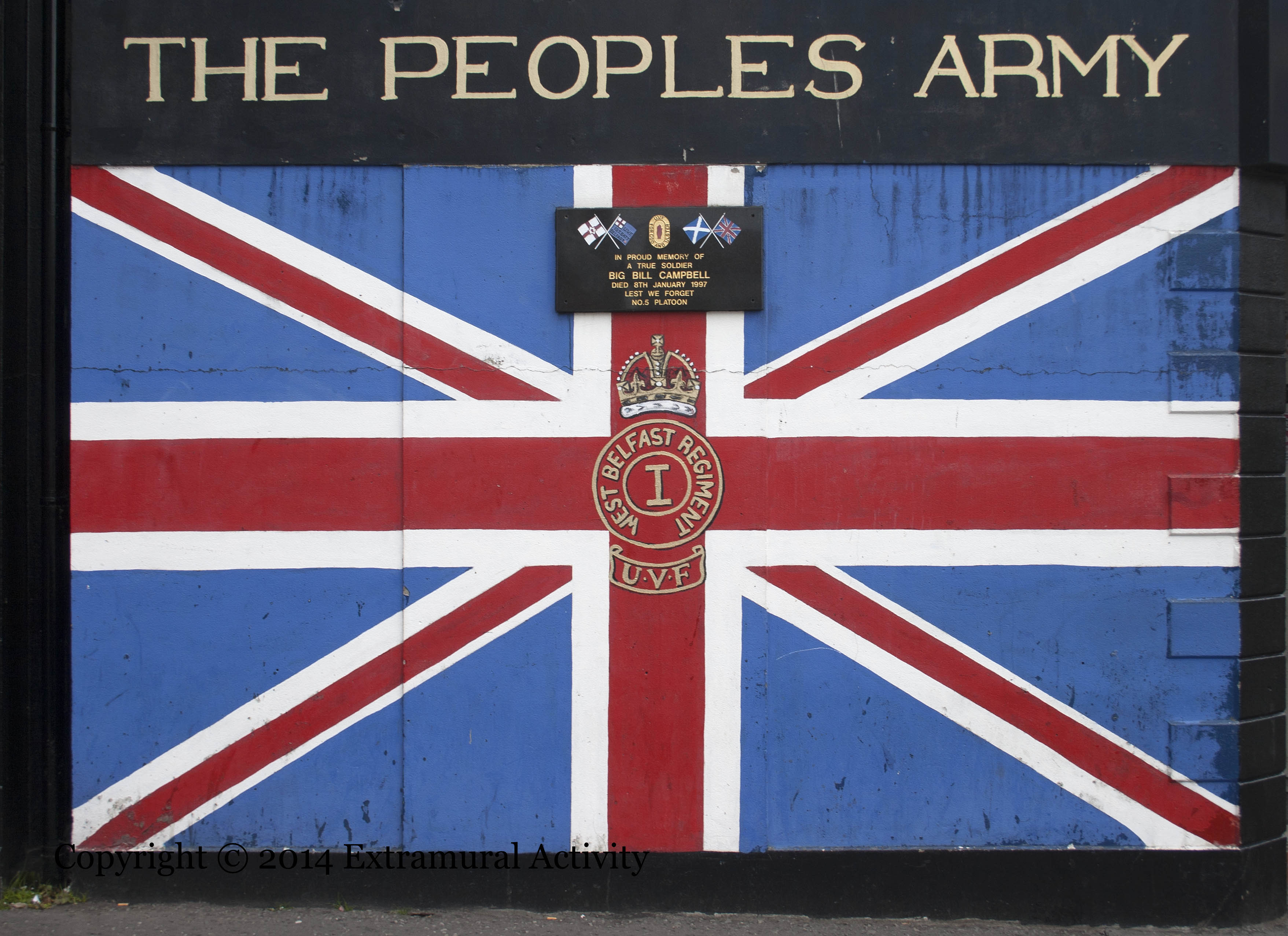
Above and below is the scene at the end of summer in the courtyard of the Rex Bar – bunting and bouquets join the flags of the home nations and various boards celebrating the queen’s diamond jubilee and commemorating the 36th Ulster division “who selflessly gave their lives for King and county at the battle of the Somme”. The new boards (on the left hand side of the wide shot) were featured previously in The Last Post, along with the Union flag of The People’s Army. For the same scene ten years previously, see Betting Office.
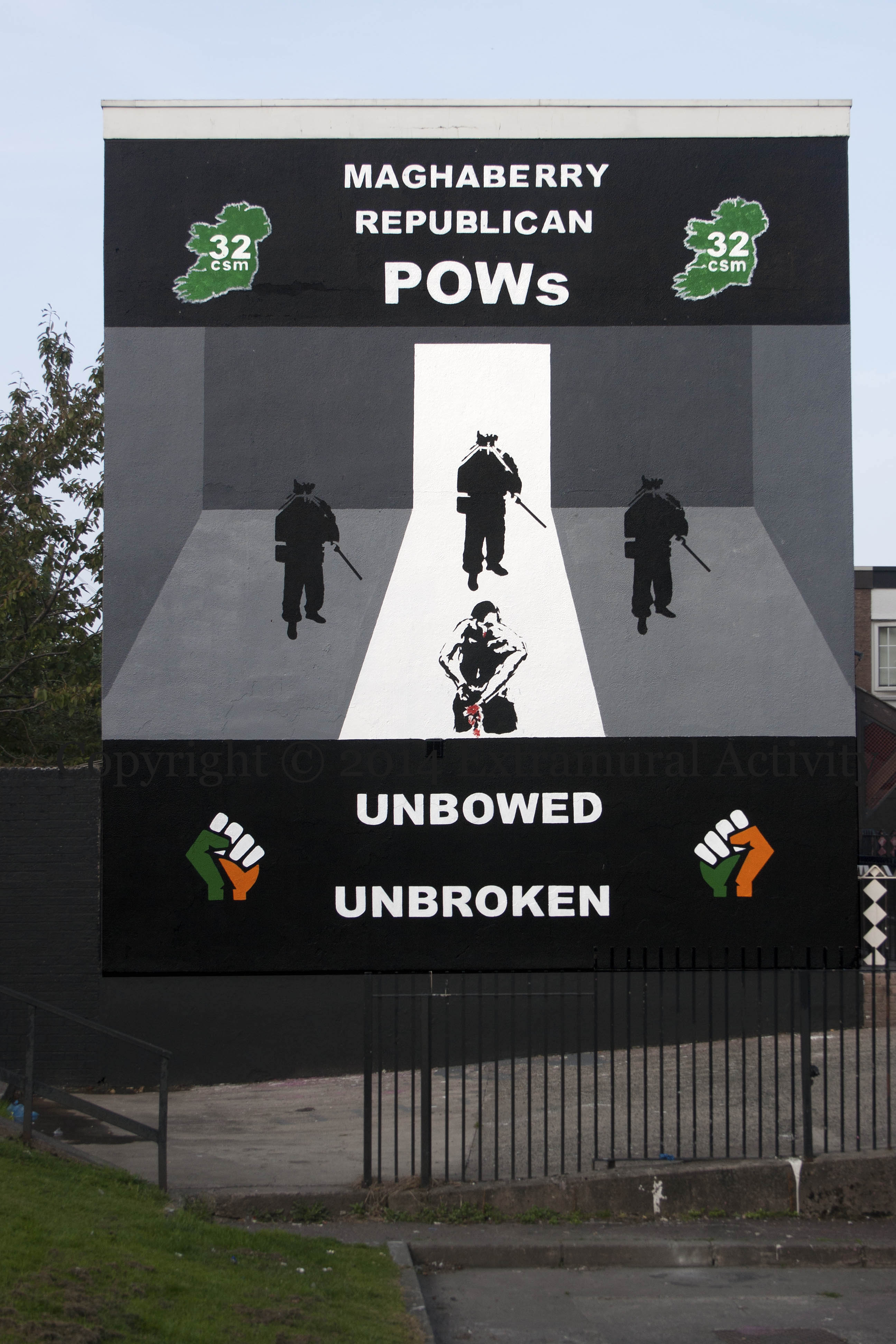
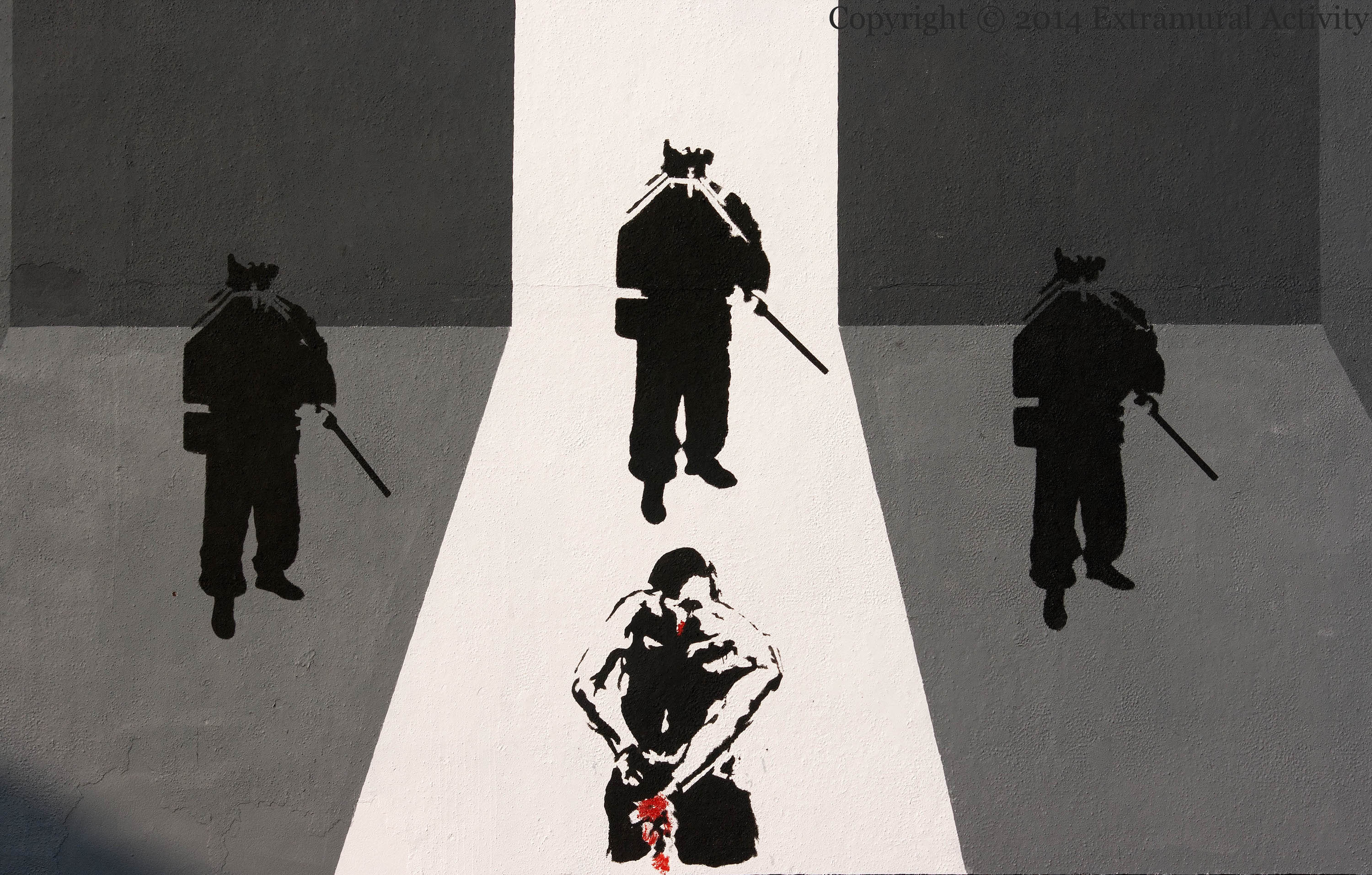
Above is a recent mural by Damian Walker in the New Lodge, in support of republican prisoners in Maghaberry, showing a single shirtless prisoner with a flower (? – see the close-up below) surrounded by three baton-wielding officers. Sponsored the 32-County Sovereignty Movement (web).
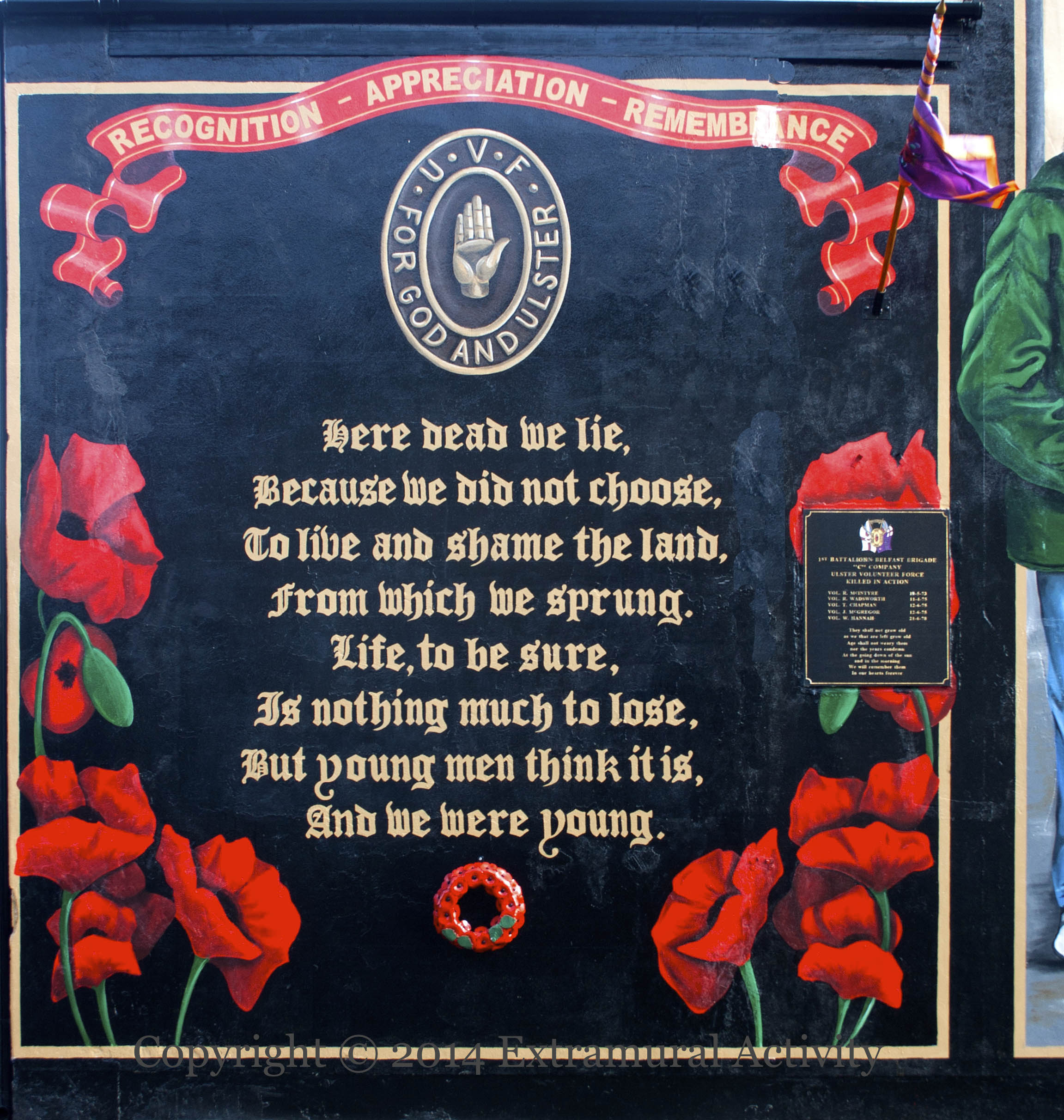
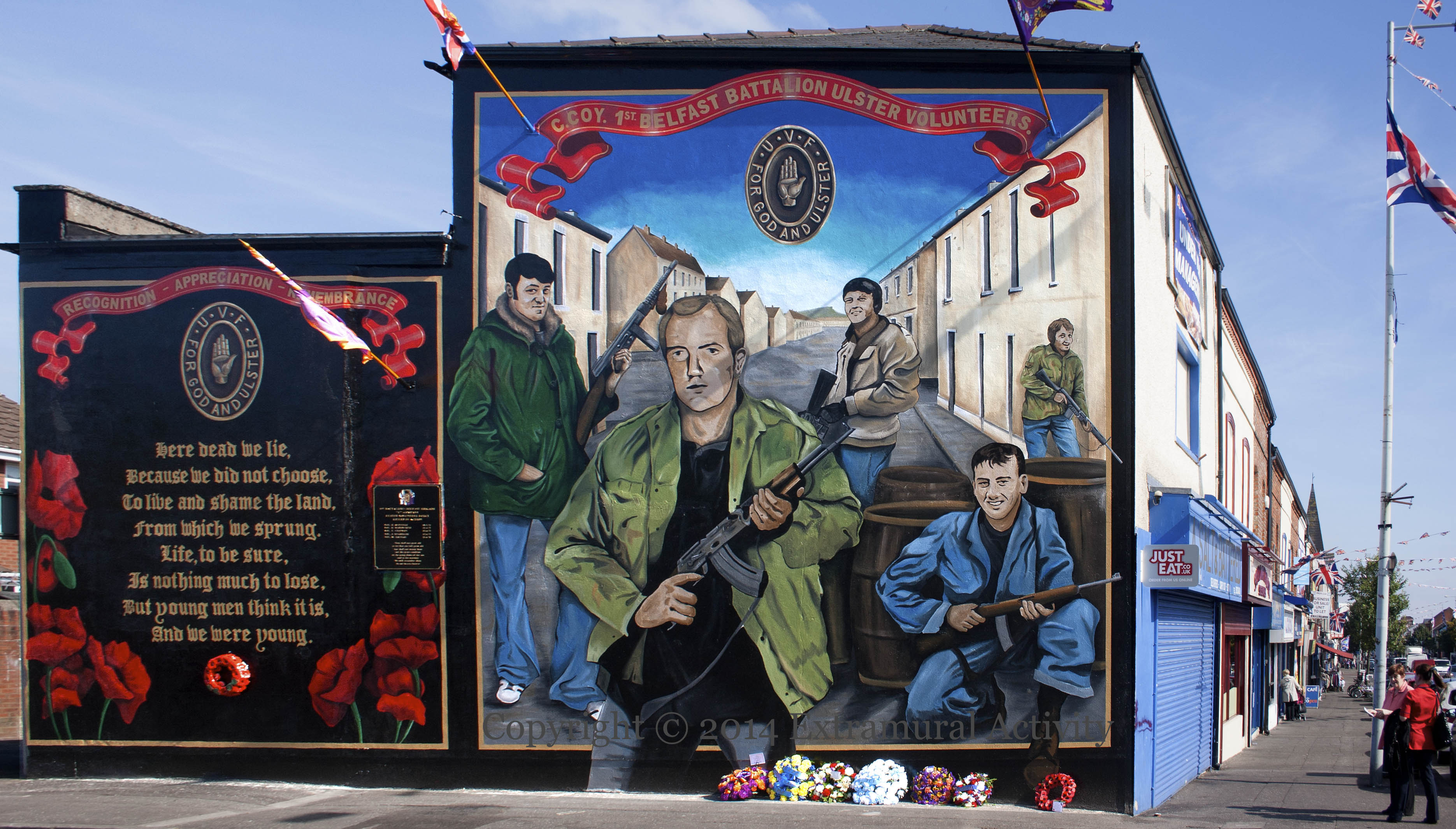
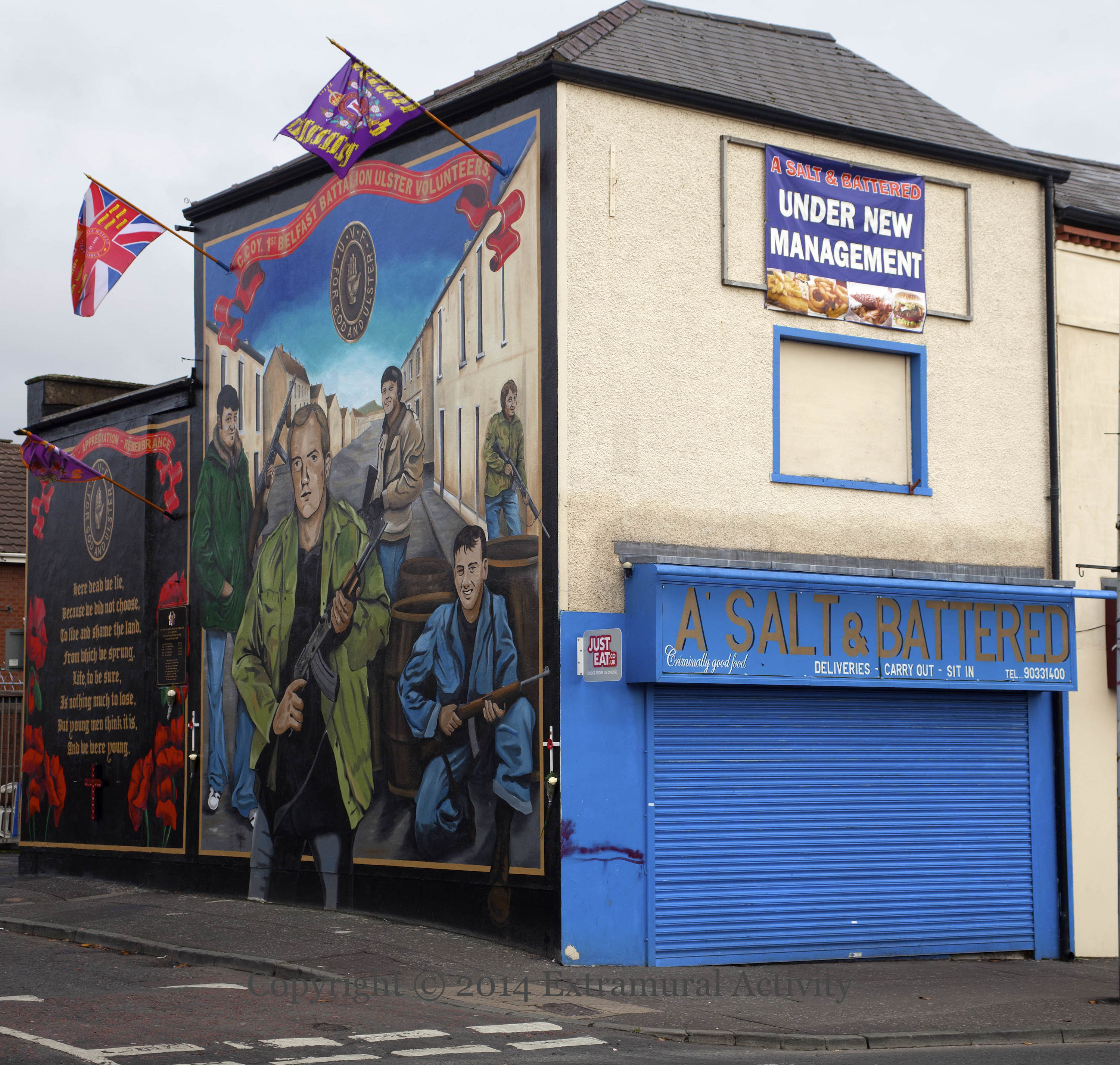
A. E. Housman’s 1919 short poem “Here dead we lie” is featured, together with the poppies that grew on the Western Front in WWI, in this UVF commemorative mural. The 36th (Ulster) Division is not mentioned specifically; the plaque on the right-hand side (which pre-dates the mural) lists the names of five UVF members killed in the 70s who are depicted in the mural just out of picture but seen below in a wide shot of both murals (and by itself in C Coy Street). For a similar connecting of the two Ulster Volunteer Forces, see 100 Years Apart, Armed & Ready, Years Of Sacrifice, and others. Another wide shot is given in C Coy Street, taken from the main road and shows that the fish-and-chip shop on the Shankill is called “A Salt And Battered”.
“Here dead we lie, because we did not choose, to live and shame the land, from which we sprung. Life, to be sure, is nothing much to lose, but young men think it is, and we were young.”
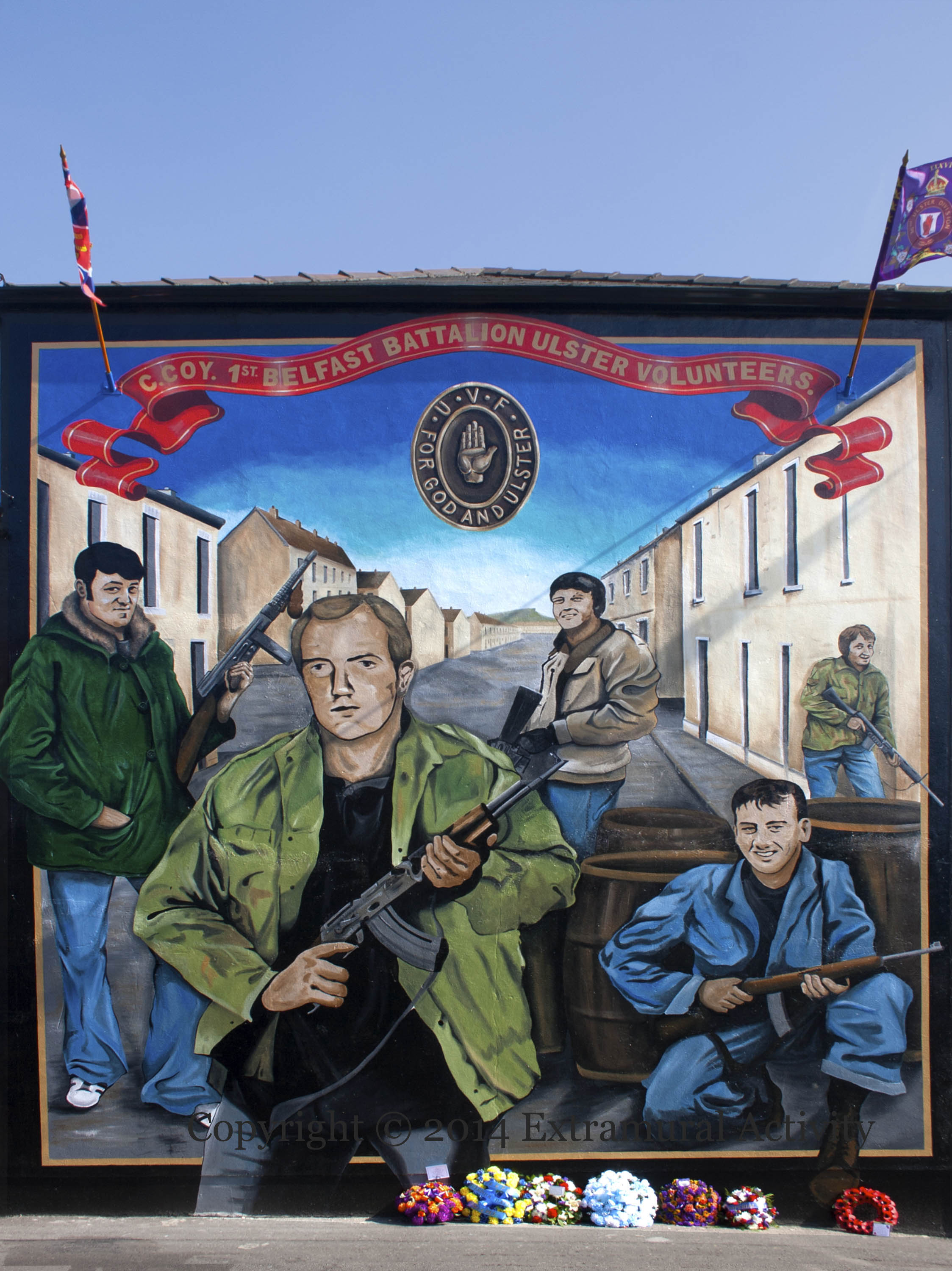
UVF volunteers (l-r) Thomas Chapman, James McGregor, Robert McIntyre, William Hannah, and Robert Wadsworth, who were killed between 1973 and 1978, are commemorated in a new mural in Carnan (or “C. Coy”) Street. The mural is unusual in that it shows bare-faced full figures; loyalist murals sometimes include head-shots (at the top of the mural, in the apex of a gable wall, e.g. Standing Guard) but only masked men appear as full figures. There is a similarity in composition and style (and perhaps even palette) to existing Republican murals such as this one of five B. Coy IRA volunteers in Ballymurphy.
The wide shot (below) is taken from the main road: the fish-and-chip shop on the Shankill is called “A Salt And Battered”. For a straight-on image of the red-and-black mural to the left, see We Were Young. Still shots of the mural in progress are included in this video of the bands parading at the launch.
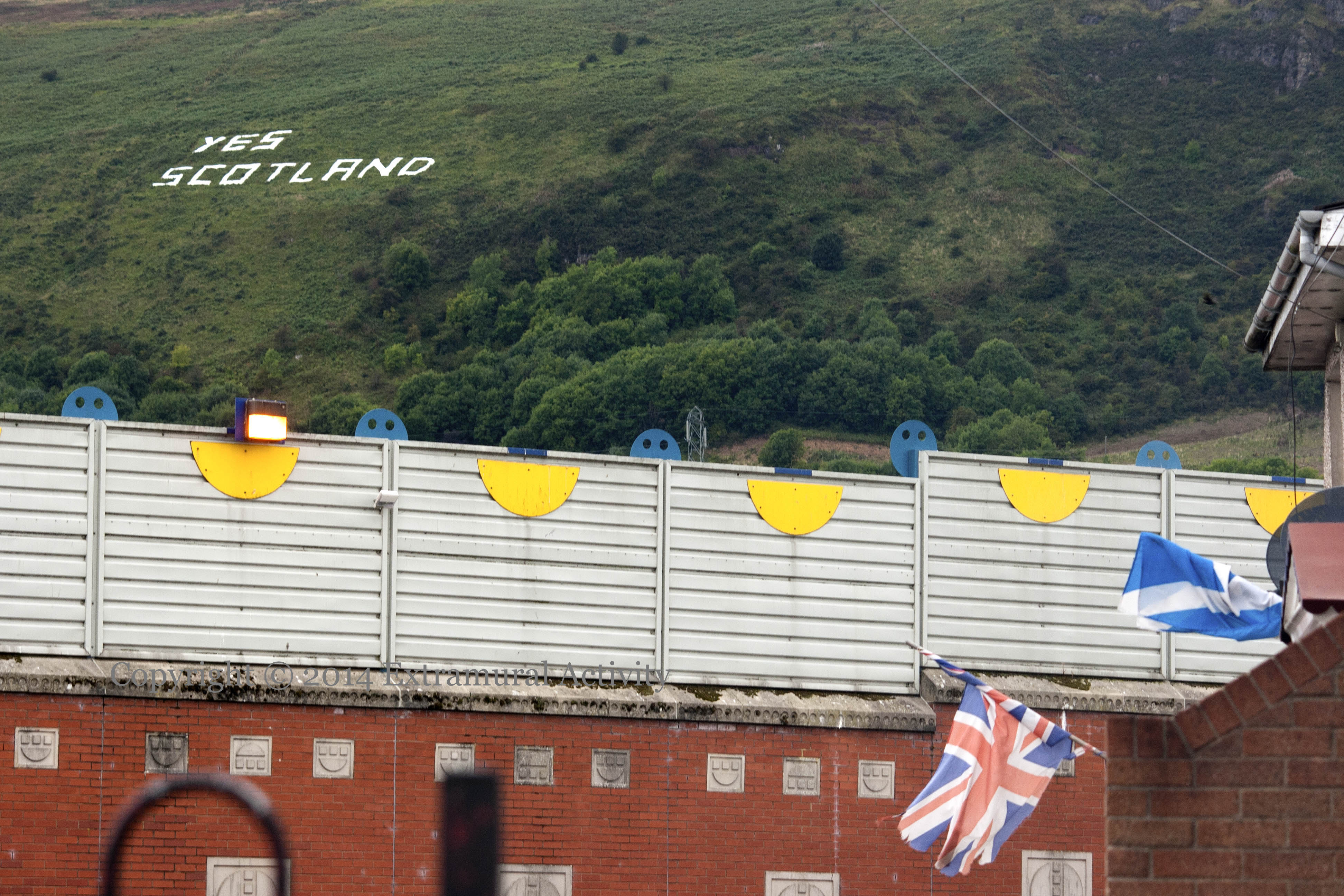
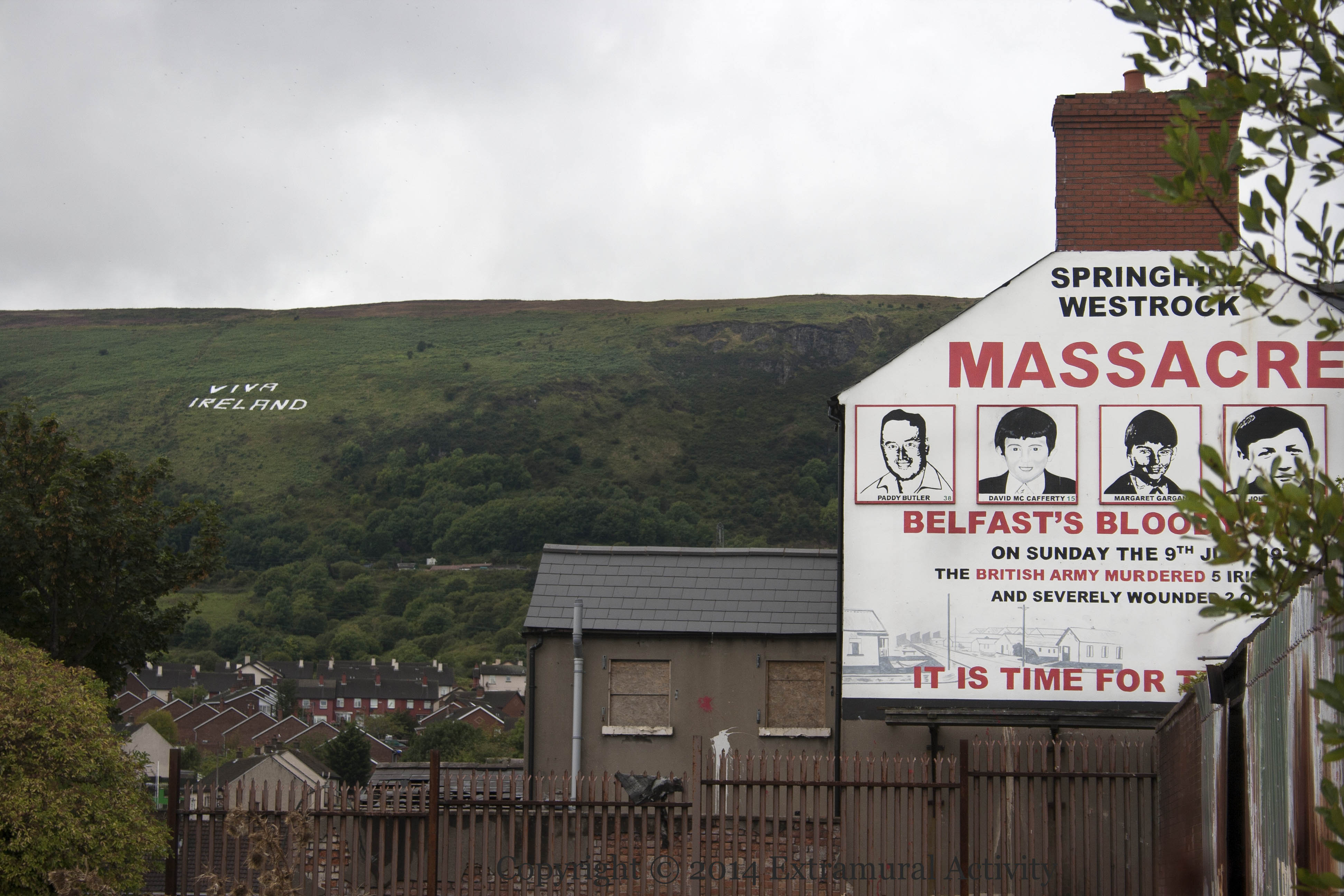
Black Mountain/Slıabh Dubh’s ‘Viva Palestine‘ became ‘Viva Ireland’ – shown below – which in turn was quickly replaced with ‘Yes Scotland’, shown above as seen over the wall of the Springfield PSNI barracks from the (Protestant) Springmartin Road: a union flag and a St. Andrew’s (Scottish) saltire fly from houses in the foreground. These two flags are being used in the media to represent the opposing sides: the Saltire for ‘Yes’ and the Union flag for ‘No’. Scots go to the polls on Thursday the 18th; the two polls of the past week (You-Gov | TNS) suggest that the sides are running neck-and-neck.
 Seosamh Mac Coille Collection