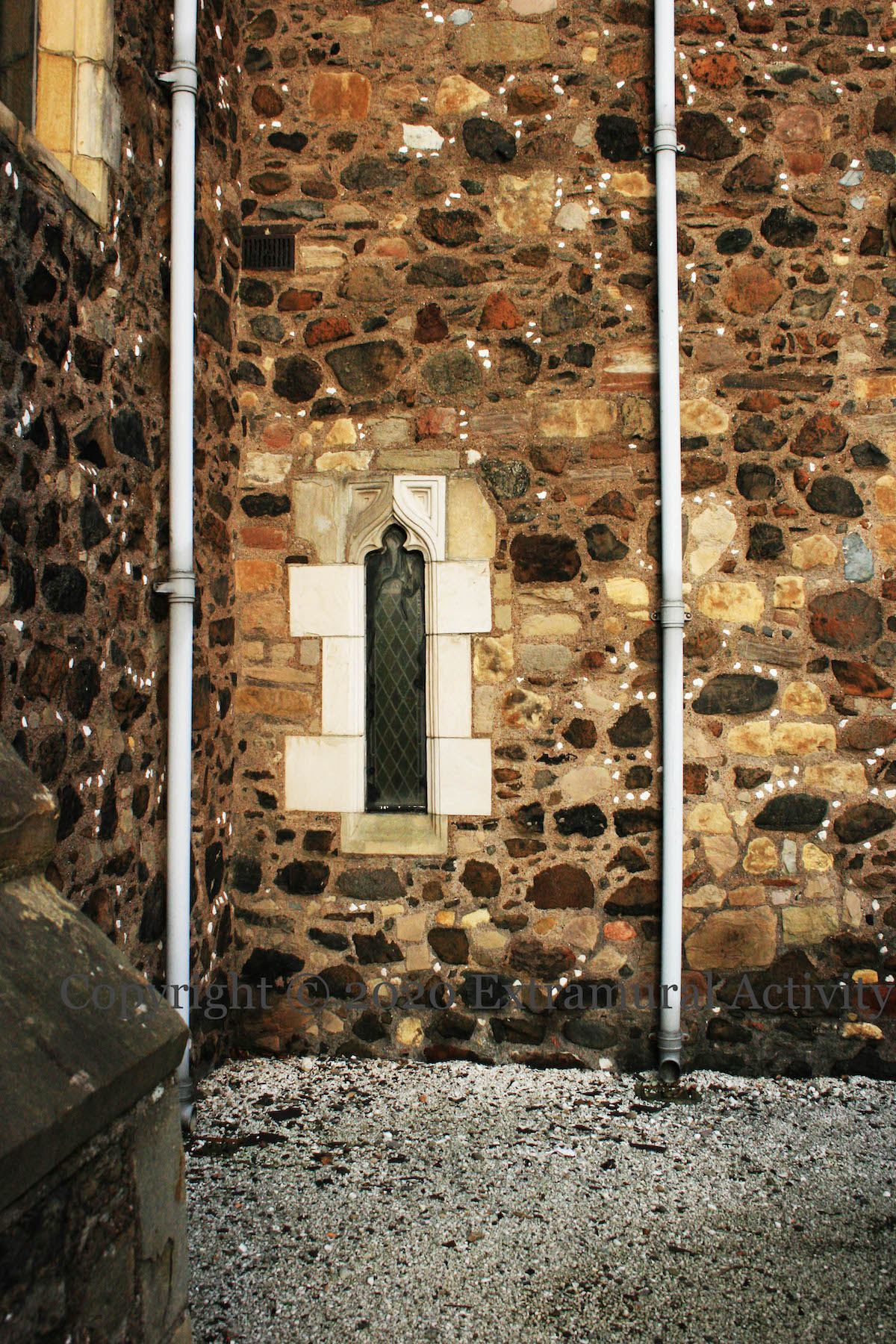
The Leper Window

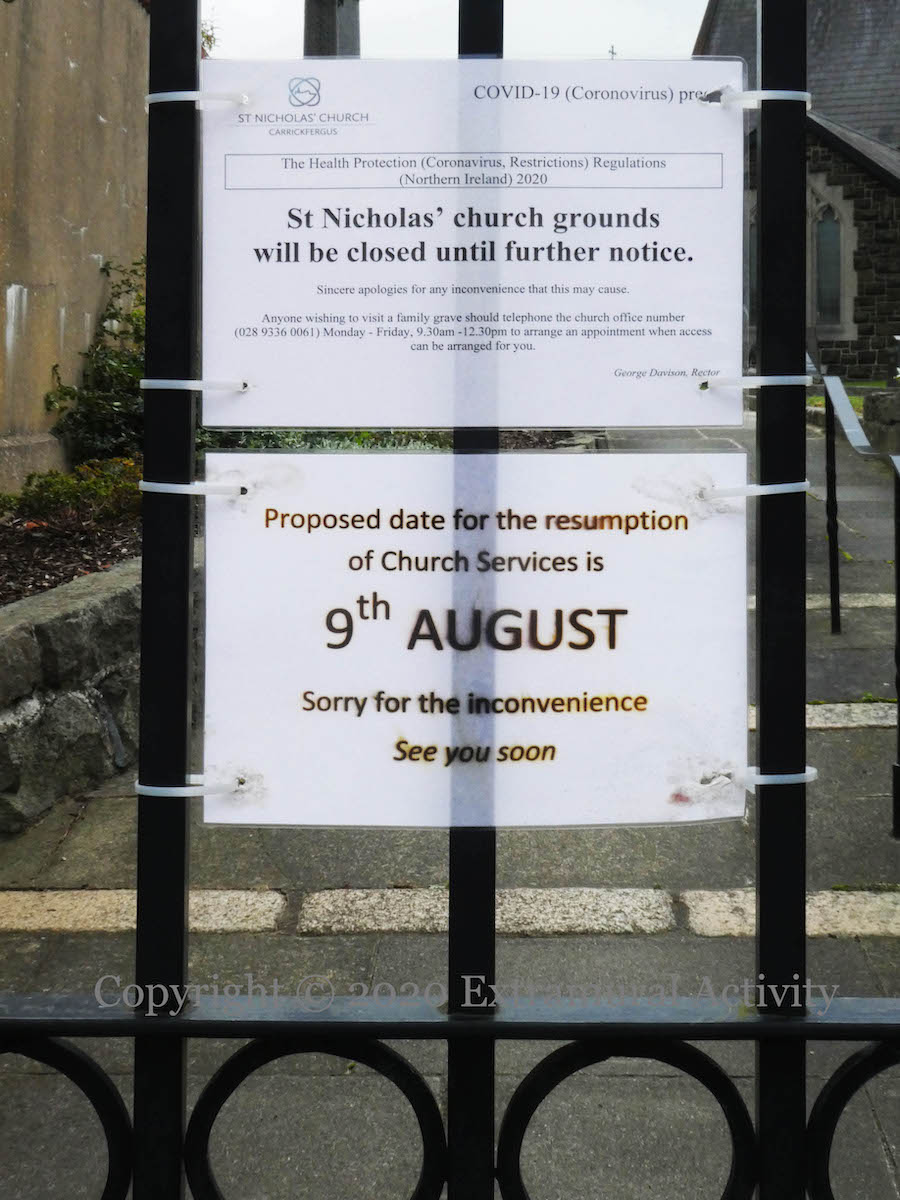
St Nicholas’s (Anglican) church in Carrickfergus dates back to the 1100s, prior to the castle. The low window shown above is known as the “leper window”. Patients from the leper hospital near the (northern) Spittal Gate to the city would come and listen in (Library Ireland). During the coronavirus pandemic of 2020, services are not even being held.

A virtual tour of the church is available in the church’s web site.

Recently in Carrickfergus: The Plague Grave. Covid-19 church-related posts from Belfast: Rediscover The Power Of The Rosary | Prayer In The Time Of Coronavirus
Click image to enlarge
Copyright © 2020 Seosamh Mac Coılle
X07456 X07455
Rock Of Ages

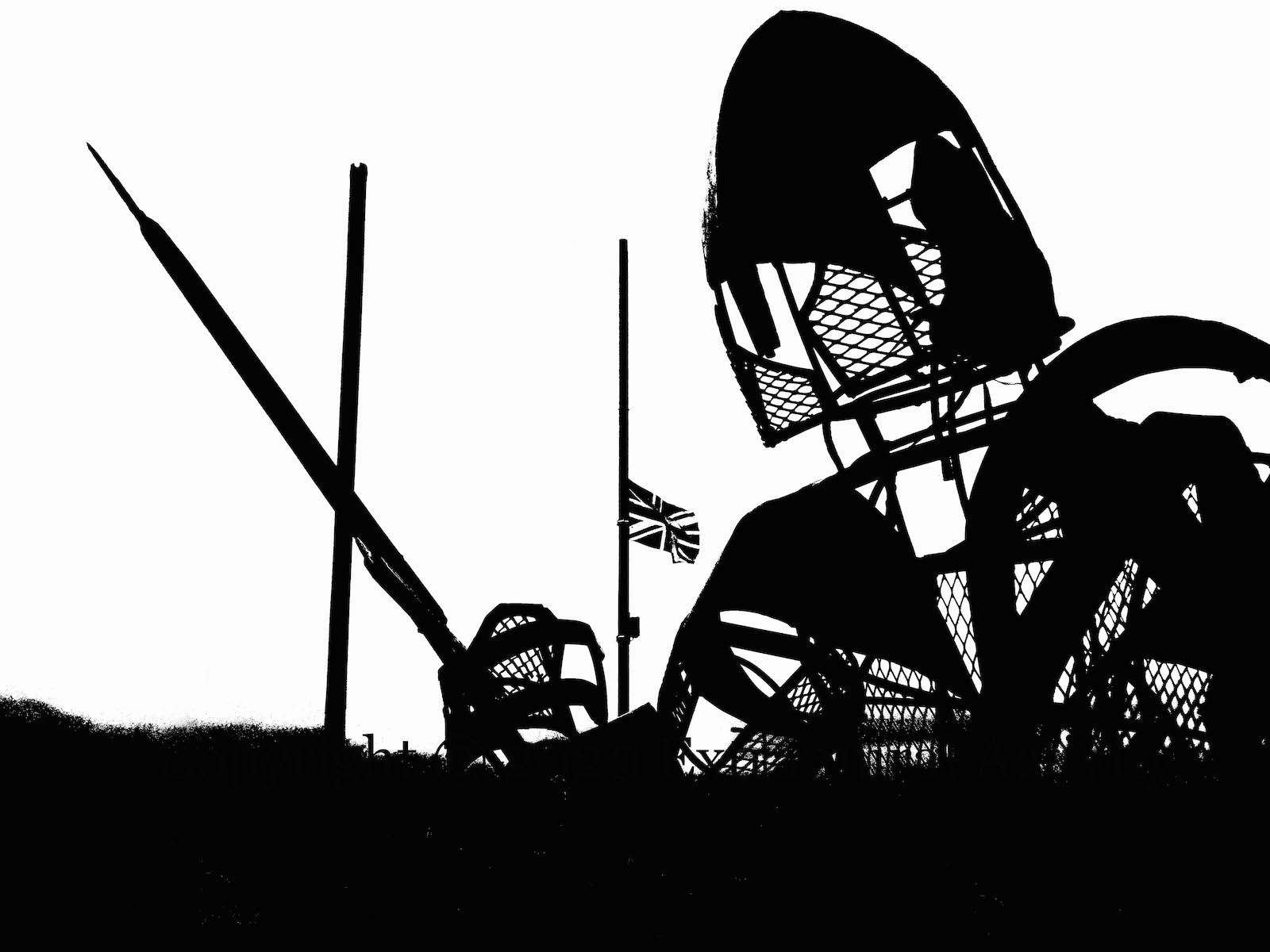
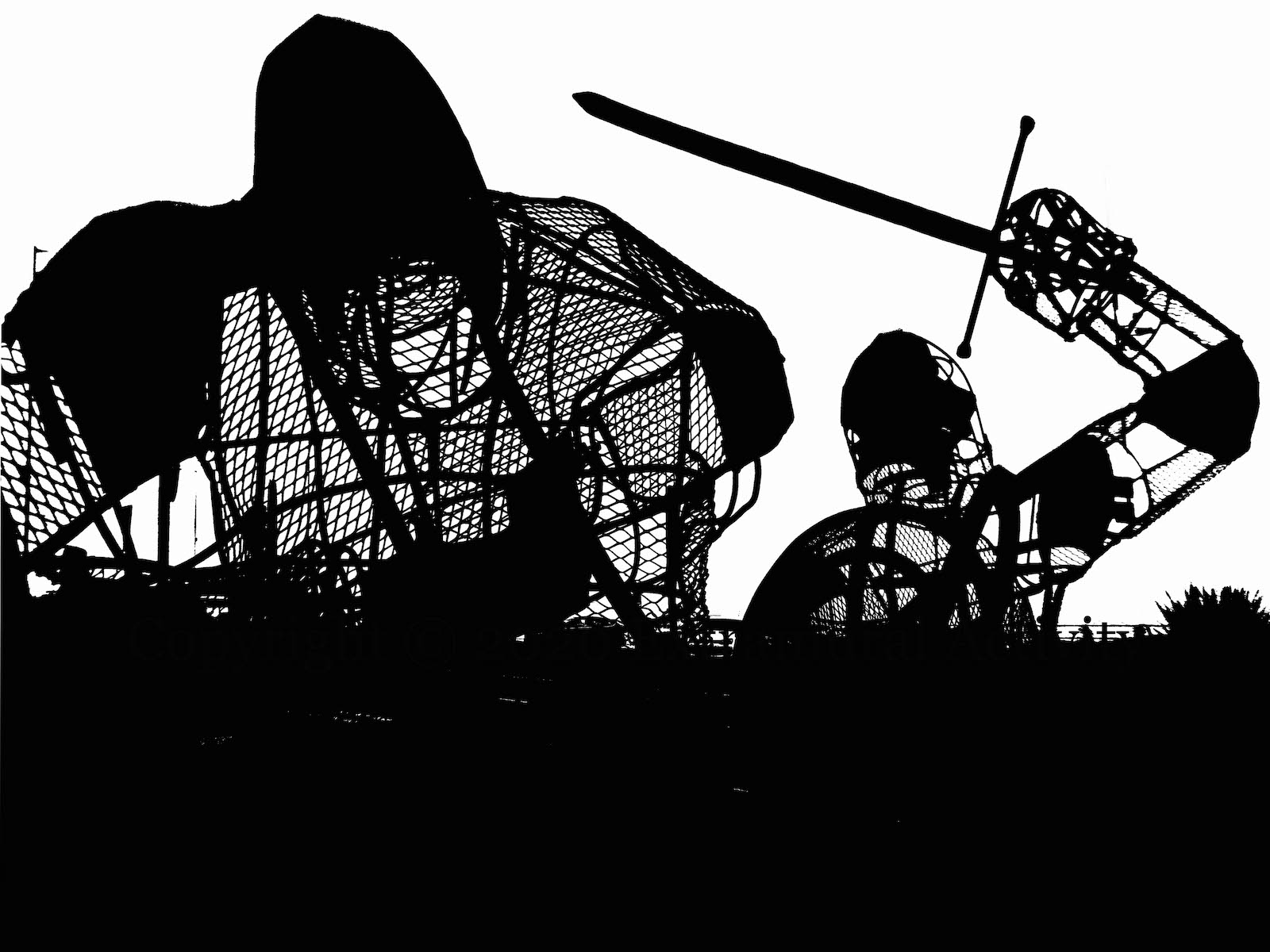
Carrickfergus castle was founded by the Anglo-Norman knight John de Courcy in 1177 and it became the stronghold of power in the north of Ireland, leading to its besiegement over time by a litany of Scots, Irish, English – including under Schomberg in 1689 – and French forces (WP). In the present day, the flag of a Kingdom uniting England, Scotland, and (Northern) Ireland currently flies on Marine Highway next to the sculpture showing three Anglo-Norman knights defending the castle (unsuccessfully) against the forces of Edward Bruce of Scotland in 1315 (info plaque). The sculptor is unknown.

See also The Carrickfergus Knights, a painting of the statues on a shop’s shutters in the town.

Click image to enlarge
Copyright © 2020 Seosamh Mac Coılle
X07412 X07411 [X07413] [X07414]

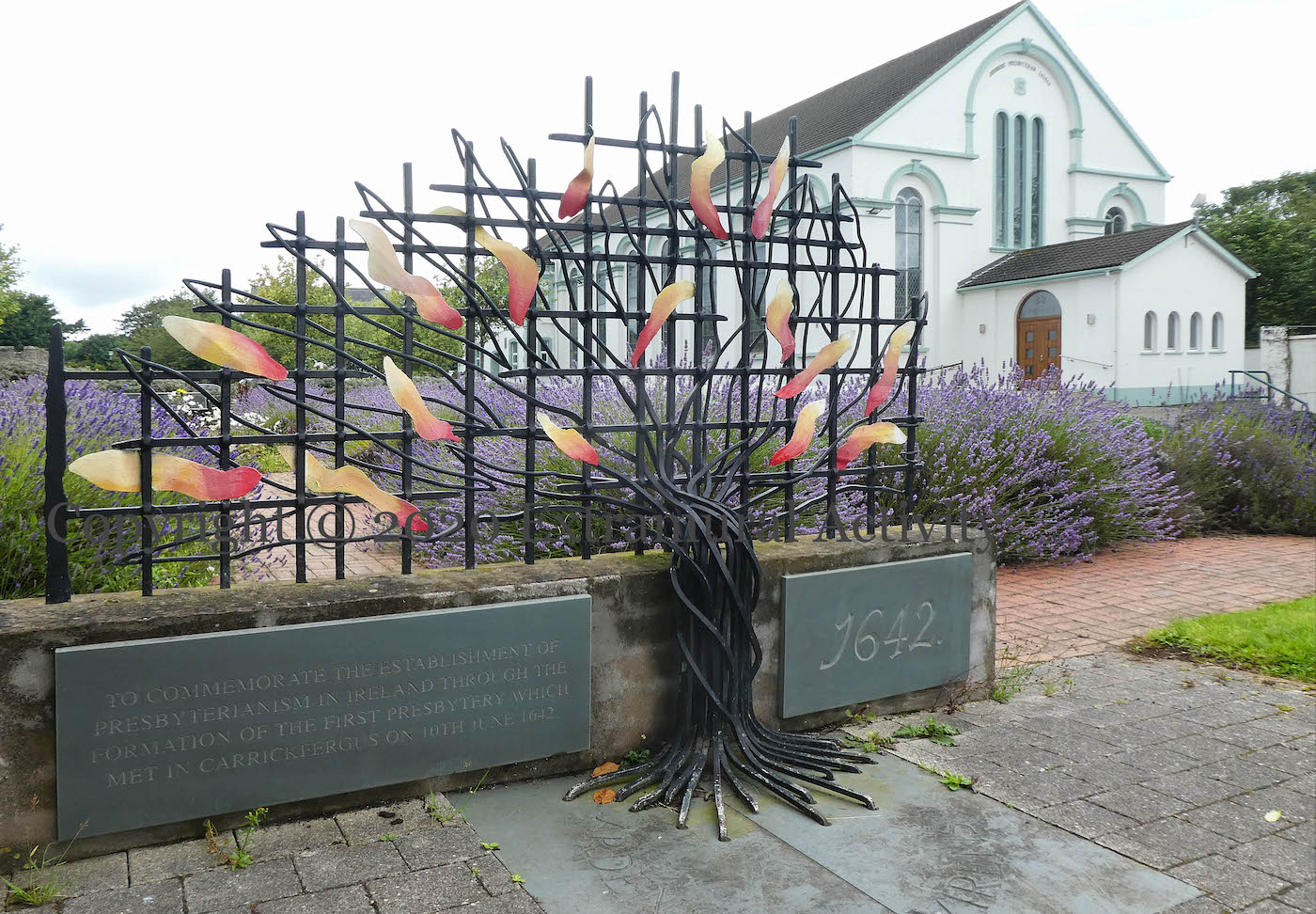
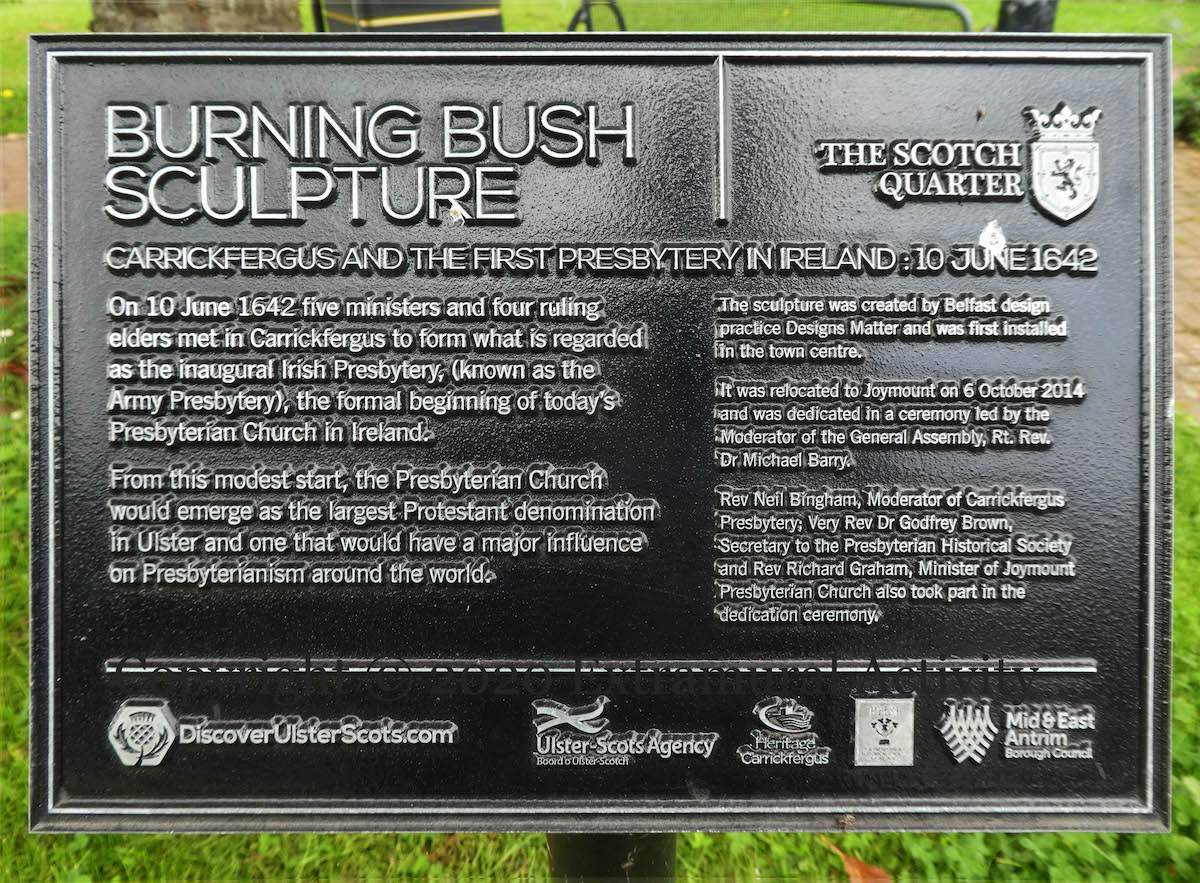
The Burning Bush

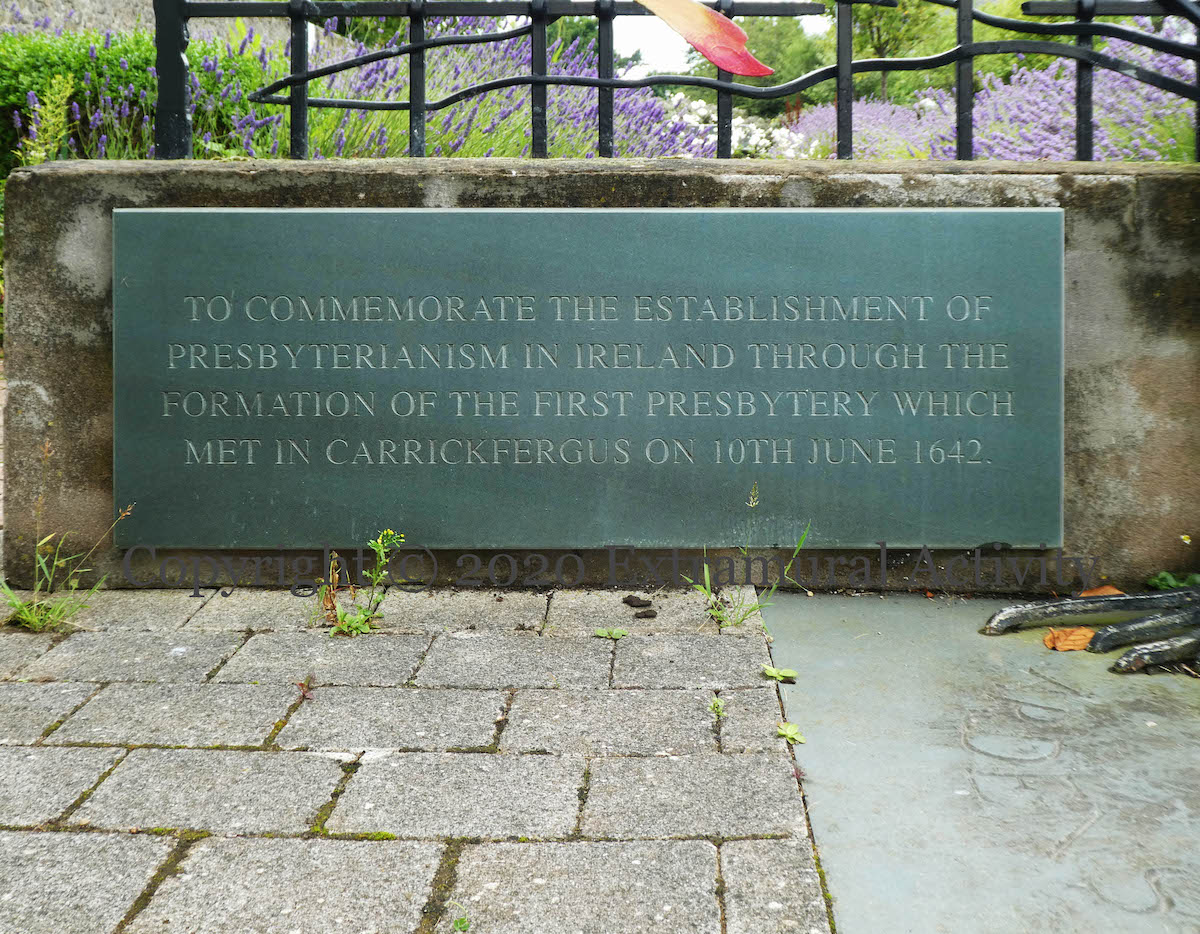
“To commemorate the establishment of Presbyterianism in Ireland through the formation of the first presbytery which met in Carrickfergus on 10th June 1642.” Presbyterianism began in Scotland circa 1560 under John Knox and spread to Ireland with the colonising settlers of the 1600s. (For more on the first presbytery, see Ancestry Ireland.) Although Presbyterians supported the Williamite campaign they were subsequently discriminated against as “dissenters” from Anglicanism.

The sculpture is at Joymount Presbyterian in Carrickfergus.

Click image to enlarge
Copyright © 2020 Seosamh Mac Coılle
X07402 X07403 X07404

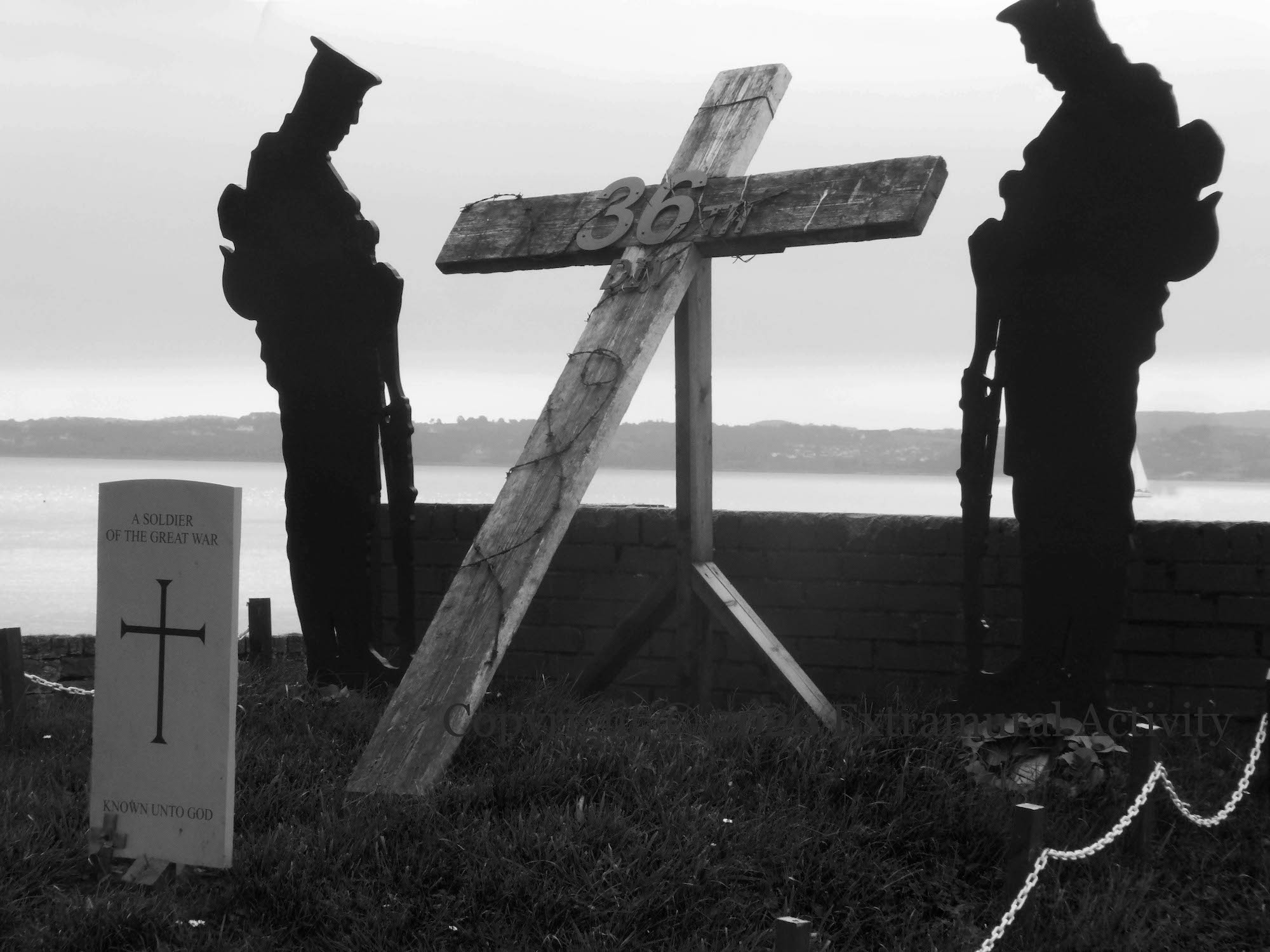
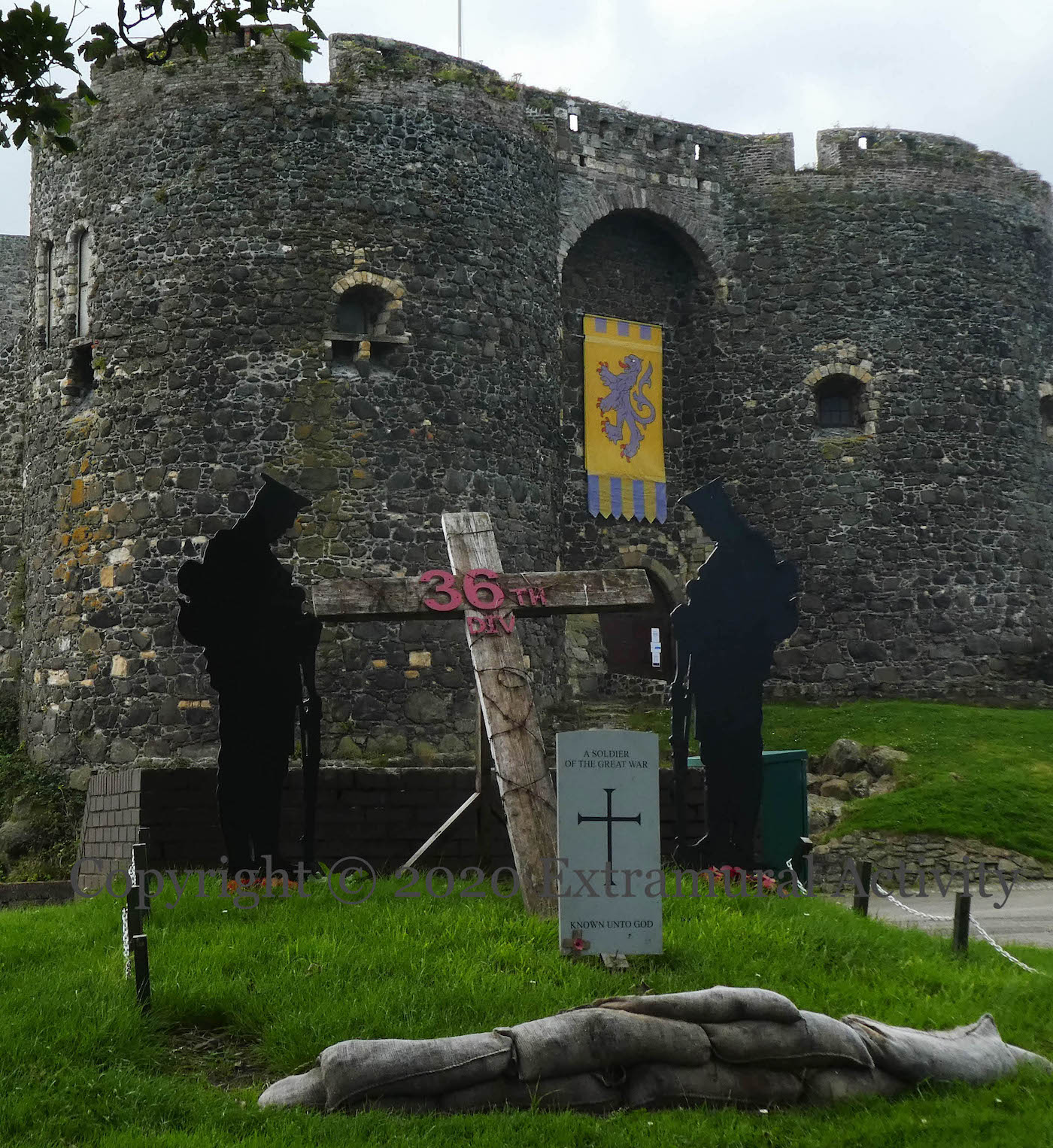
Below The Castle Walls

Carrickfergus castle was built in 1177 and has seen multiple battles in the intervening years, including the Battle Of Carrickfergus in 1597 in which the MacDonnells and O’Neills defeated the forces of Elizabeth I (WP). Its military history makes it a fitting spot for a remembrance of the dead of WWI from the 36th Division.

Click image to enlarge
Copyright © 2020 Seosamh Mac Coılle
X07381 [X07380] X07382 [X07383] [X07379] [X07378]

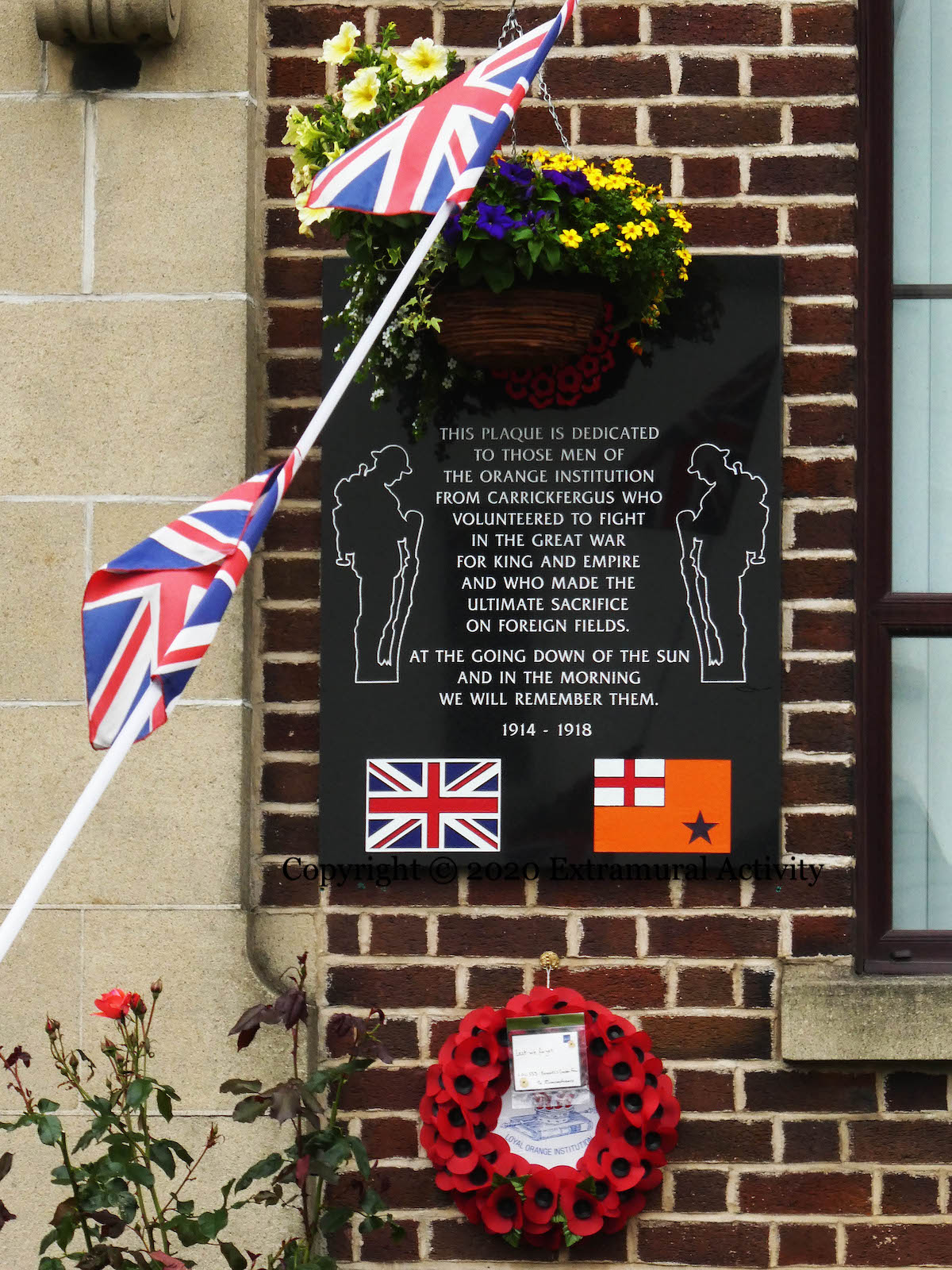
On Foreign Fields

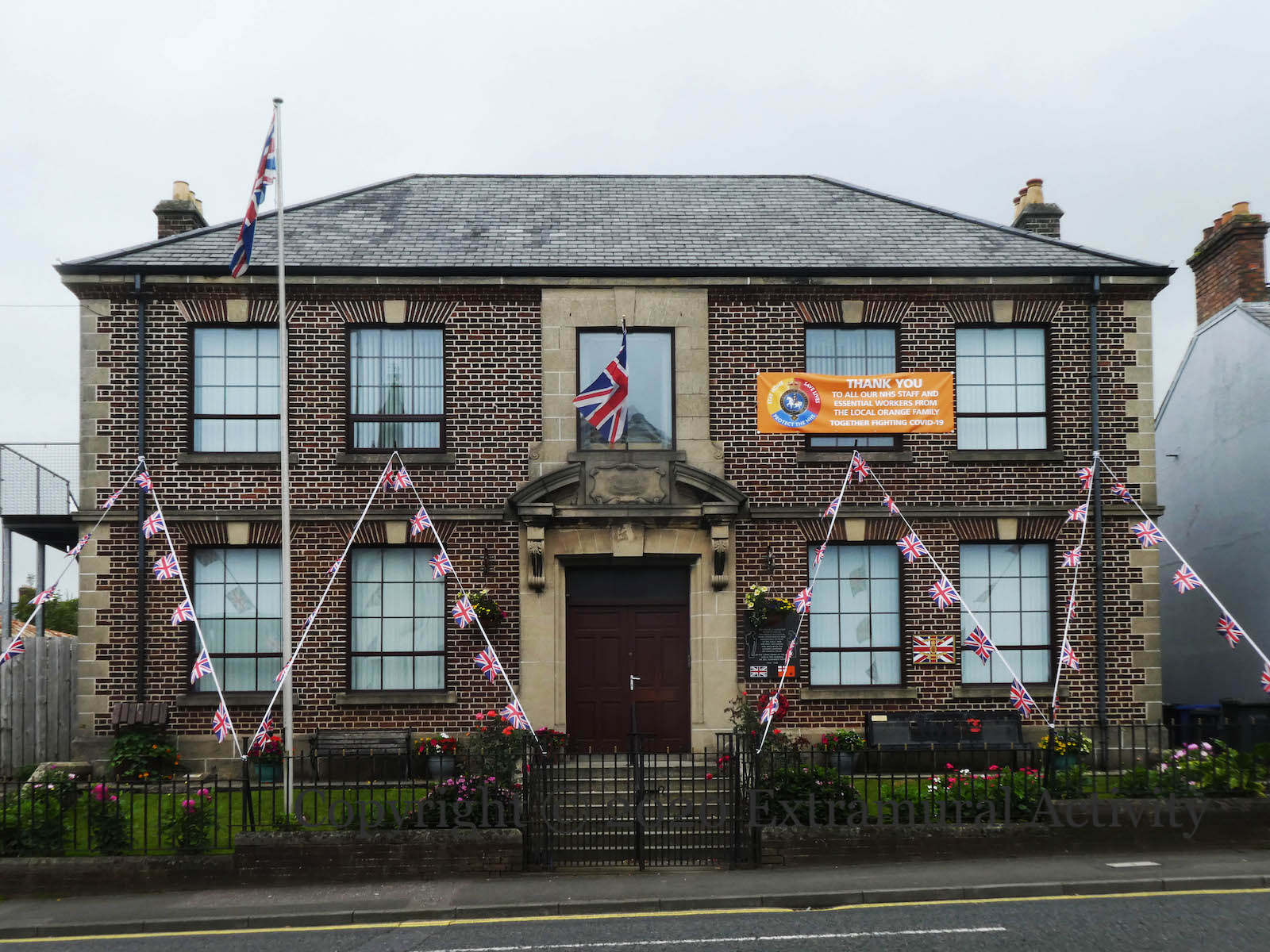
“This plaque is dedicated to those men and women of the Orange Institution who volunteered to fight in the Great War for king and empire and who made the ultimate sacrifice on foreign fields.” A WWI commemorative plaque has been added to the Orange hall in Carrickfergus (seen previously in M05249).

Click image to enlarge
Copyright © 2020 Seosamh Mac Coılle
X07374 X07373

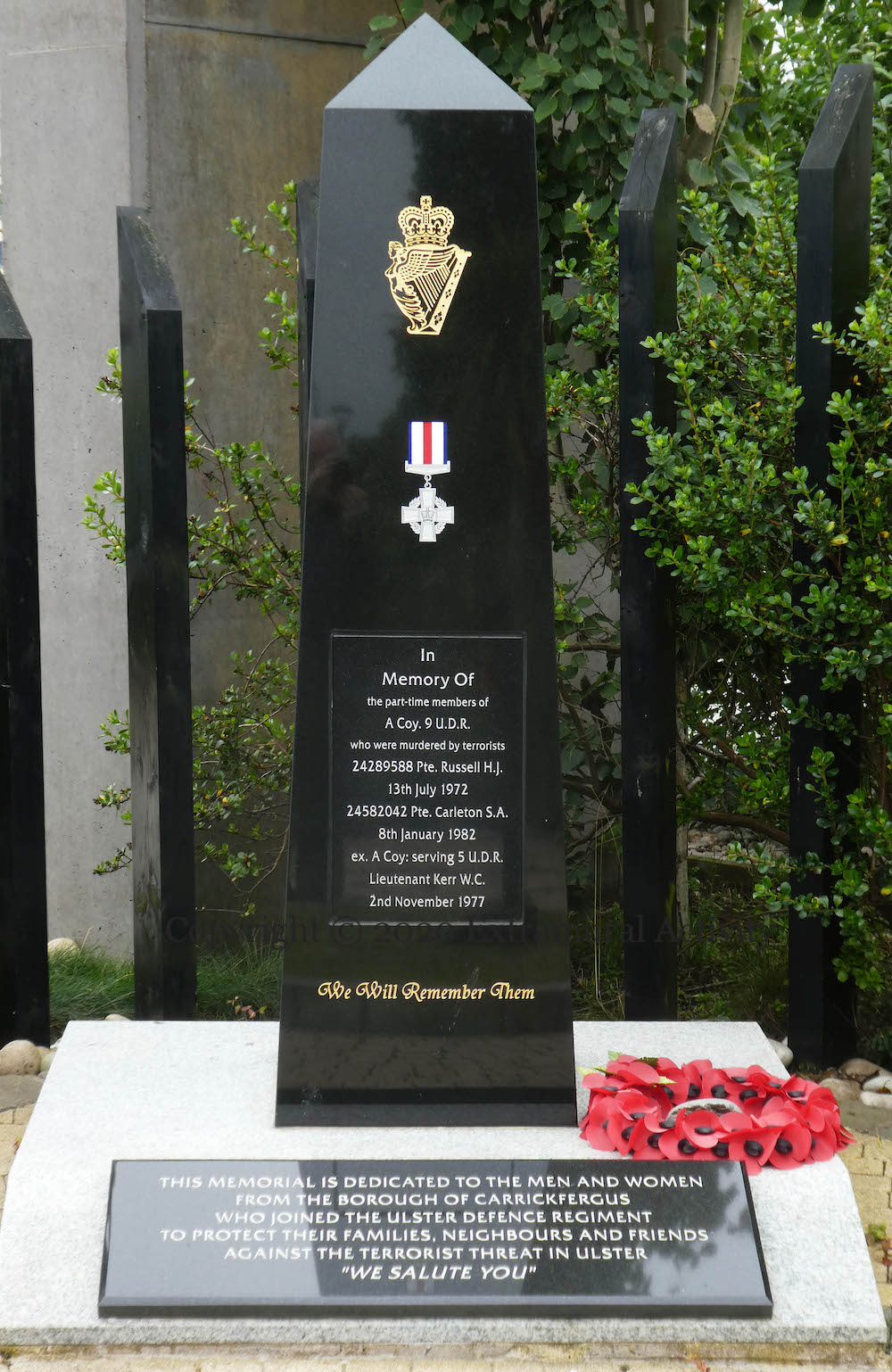
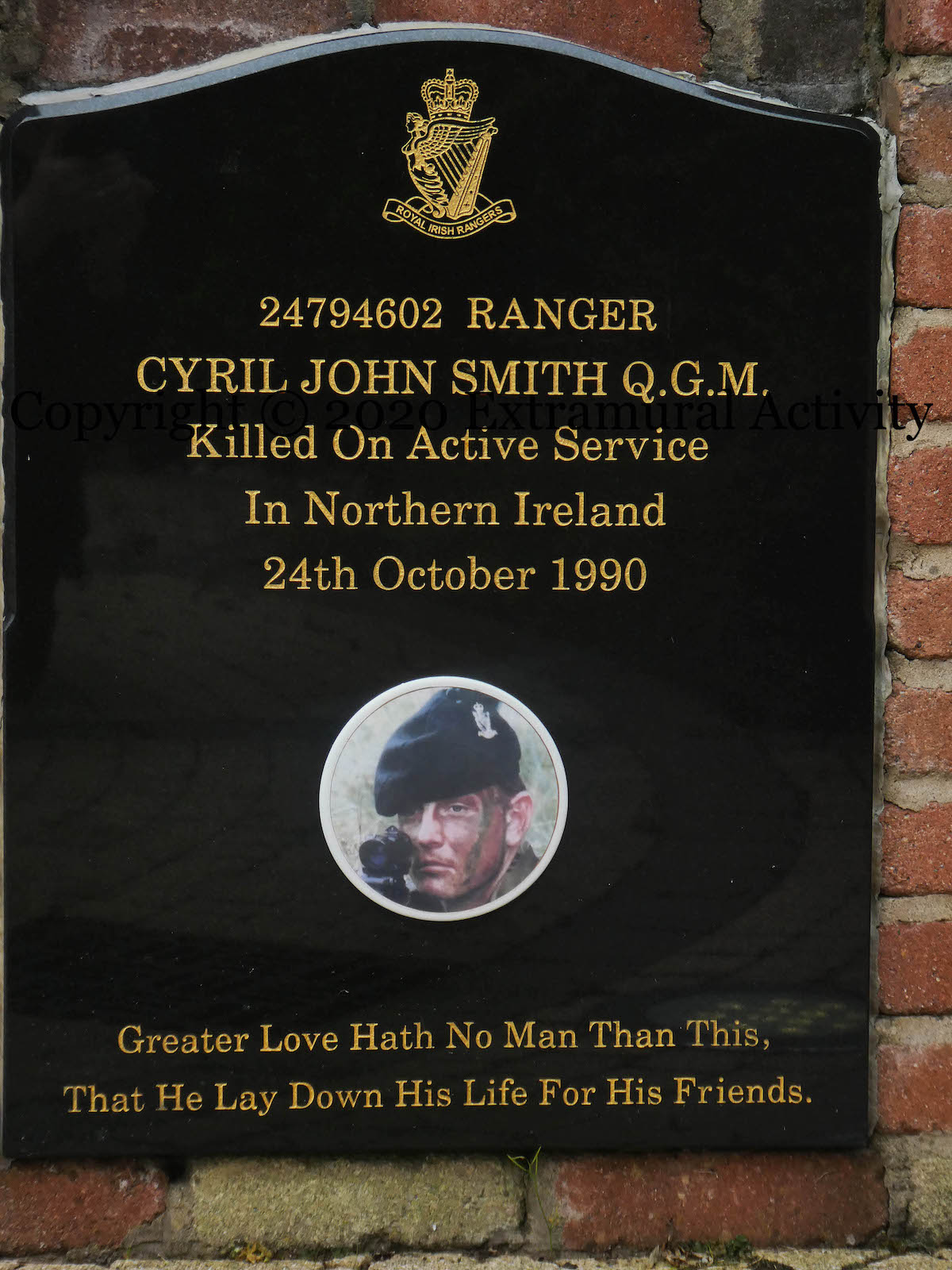
Against The Terrorist Threat In Ulster

The original cairn commemorating three part-time members of the UDR (which can be seen in Carrickfergus RIR/UDR) – Henry Russell, Steven Carlton, and Walter Kerr – was replaced by a new obelisk in 2017. The medal in the middle is the Conspicuous Gallantry Cross, which was awarded to the entire RIR and UDR in 2006. (The UDR was merged with the RIR to form the Royal Irish Regiment in 1992.) (Video of the launch.)

Cyril Smith was a Catholic from Carrickfergus and a Royal Irish Ranger. The original cairn in his memory tells the story of his death at age 21 in 1990. For commentary, see this Irish Times piece.

Click image to enlarge
Copyright © 2020 Seosamh Mac Coılle
X07376 X07375 Marine Gardens

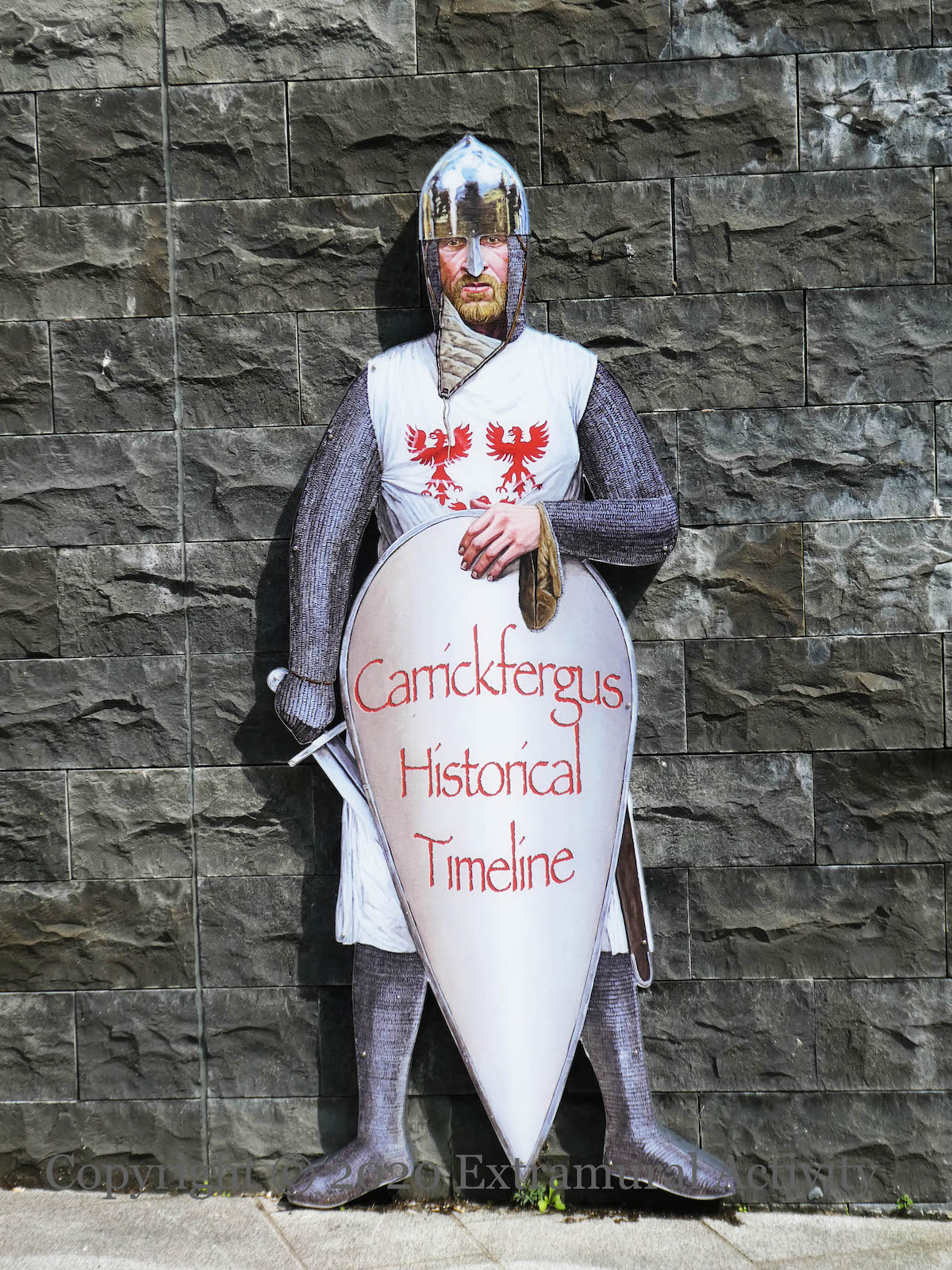
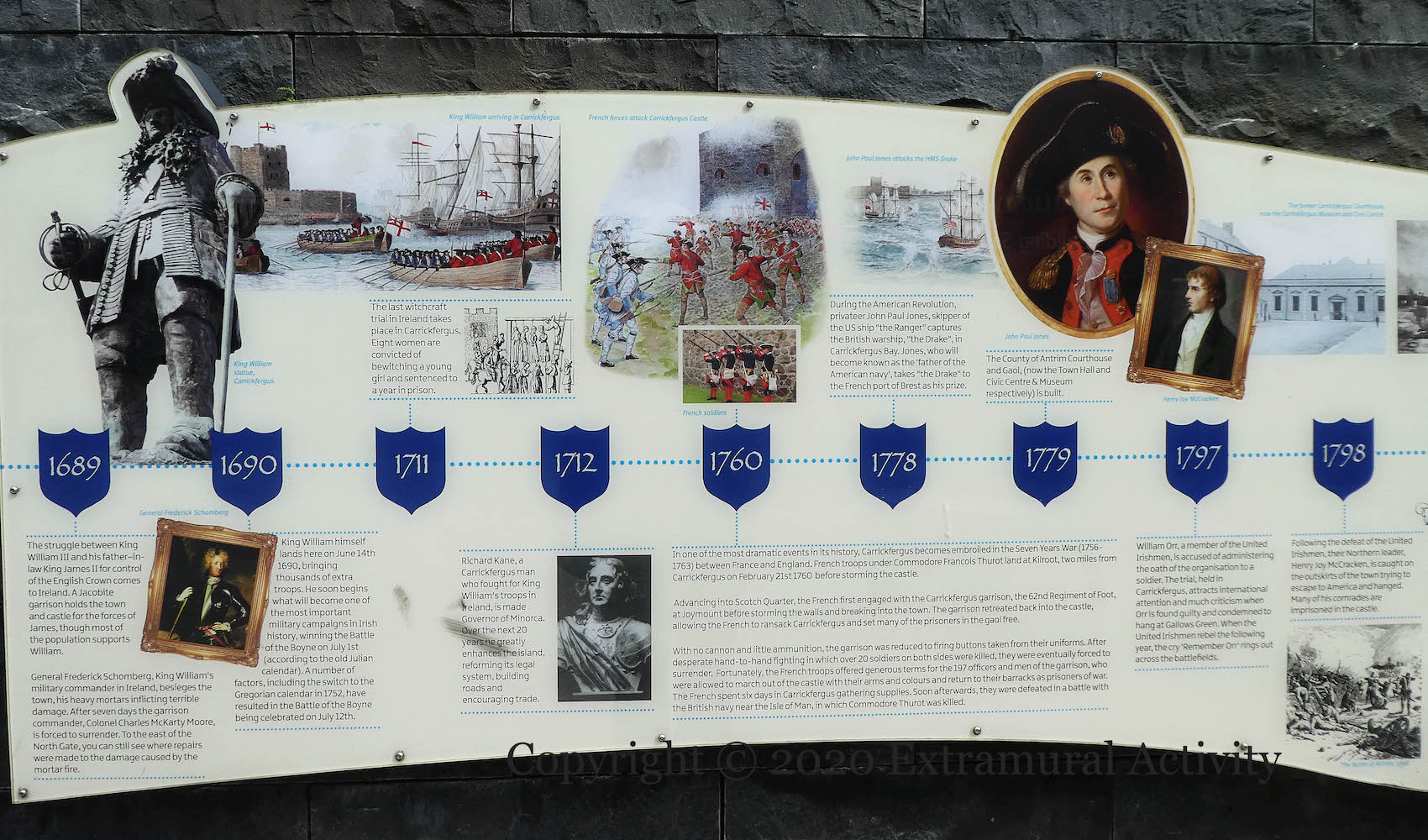
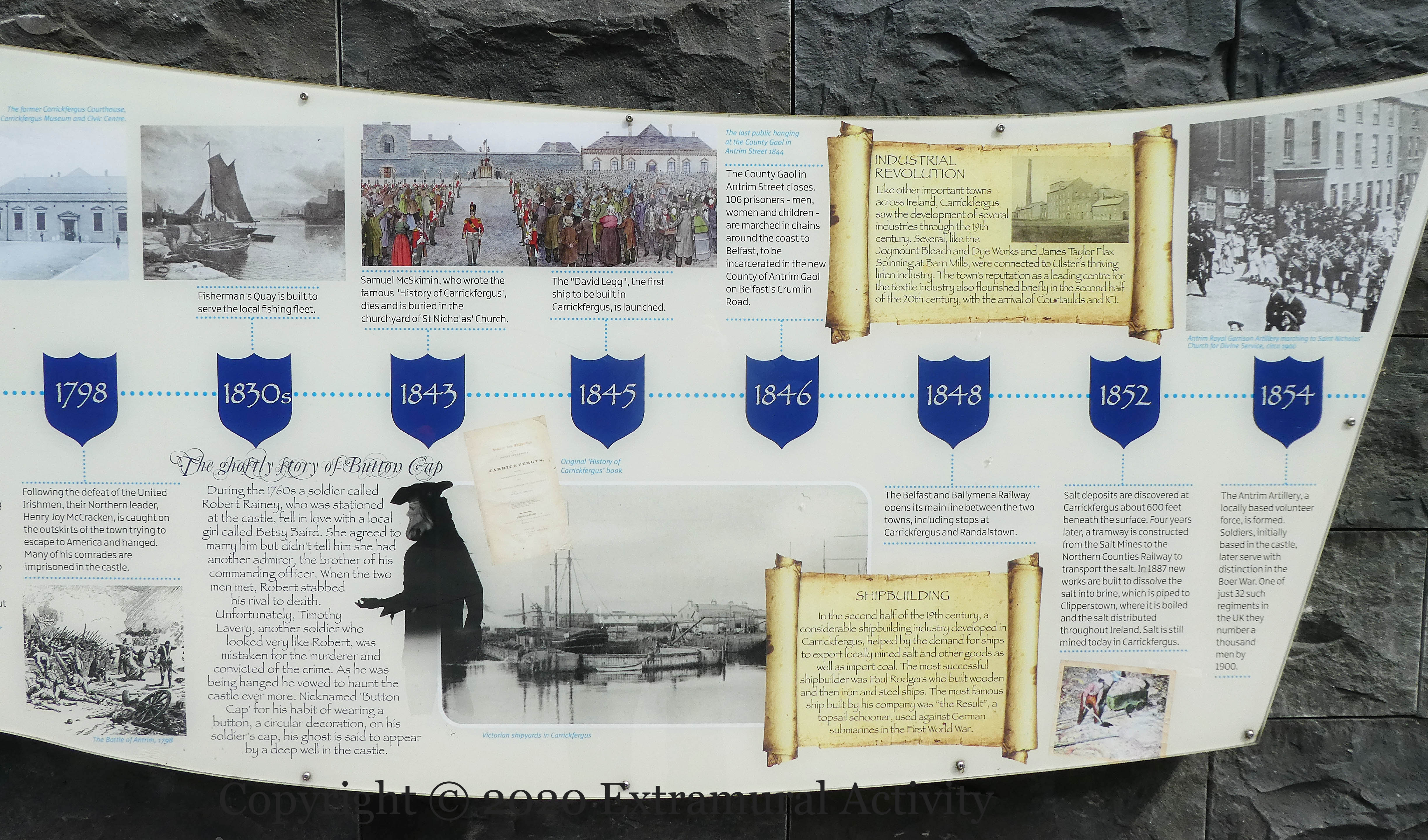
Don’t Let Anything Stop You From Coming To Carrickfergus

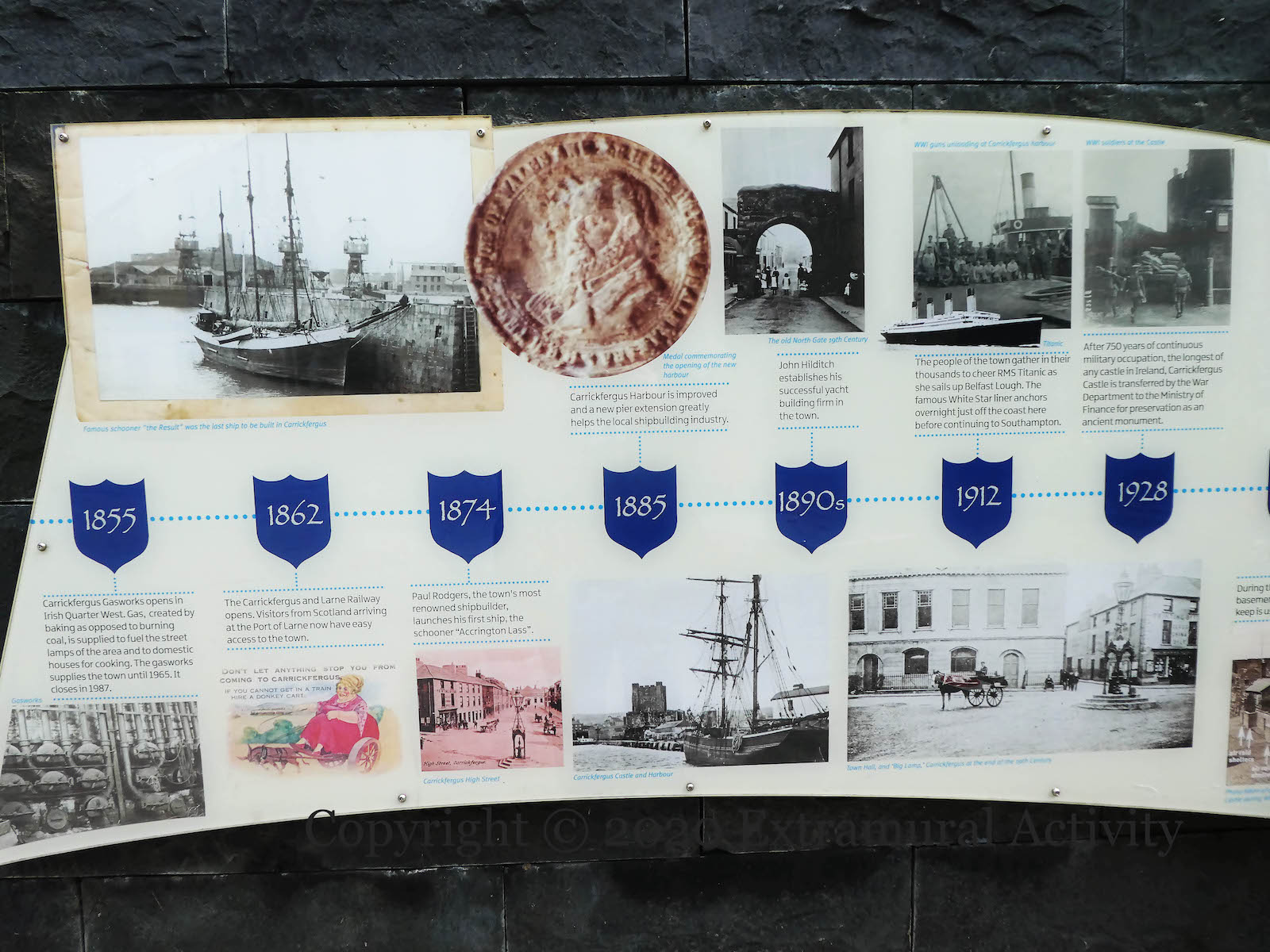
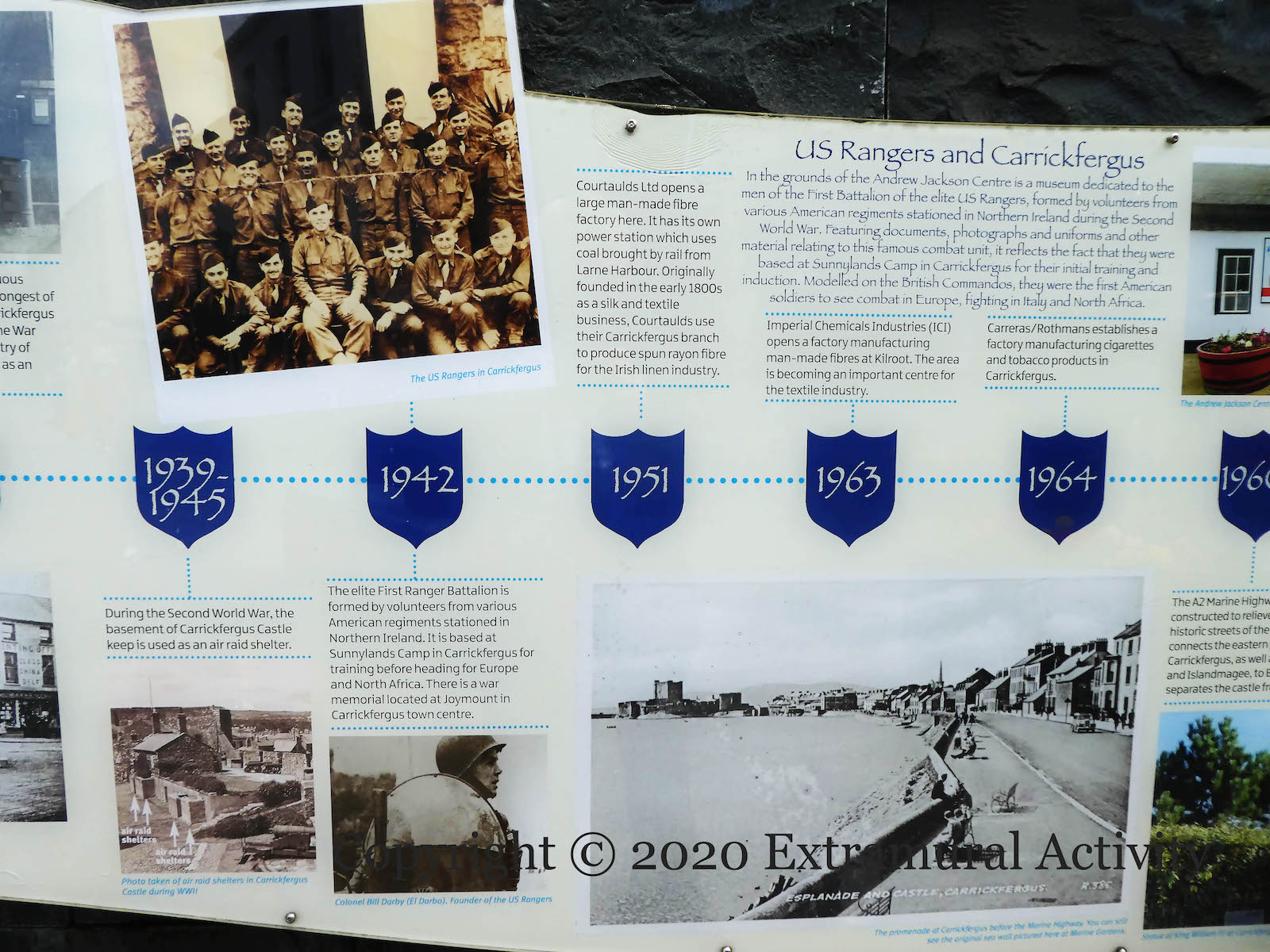
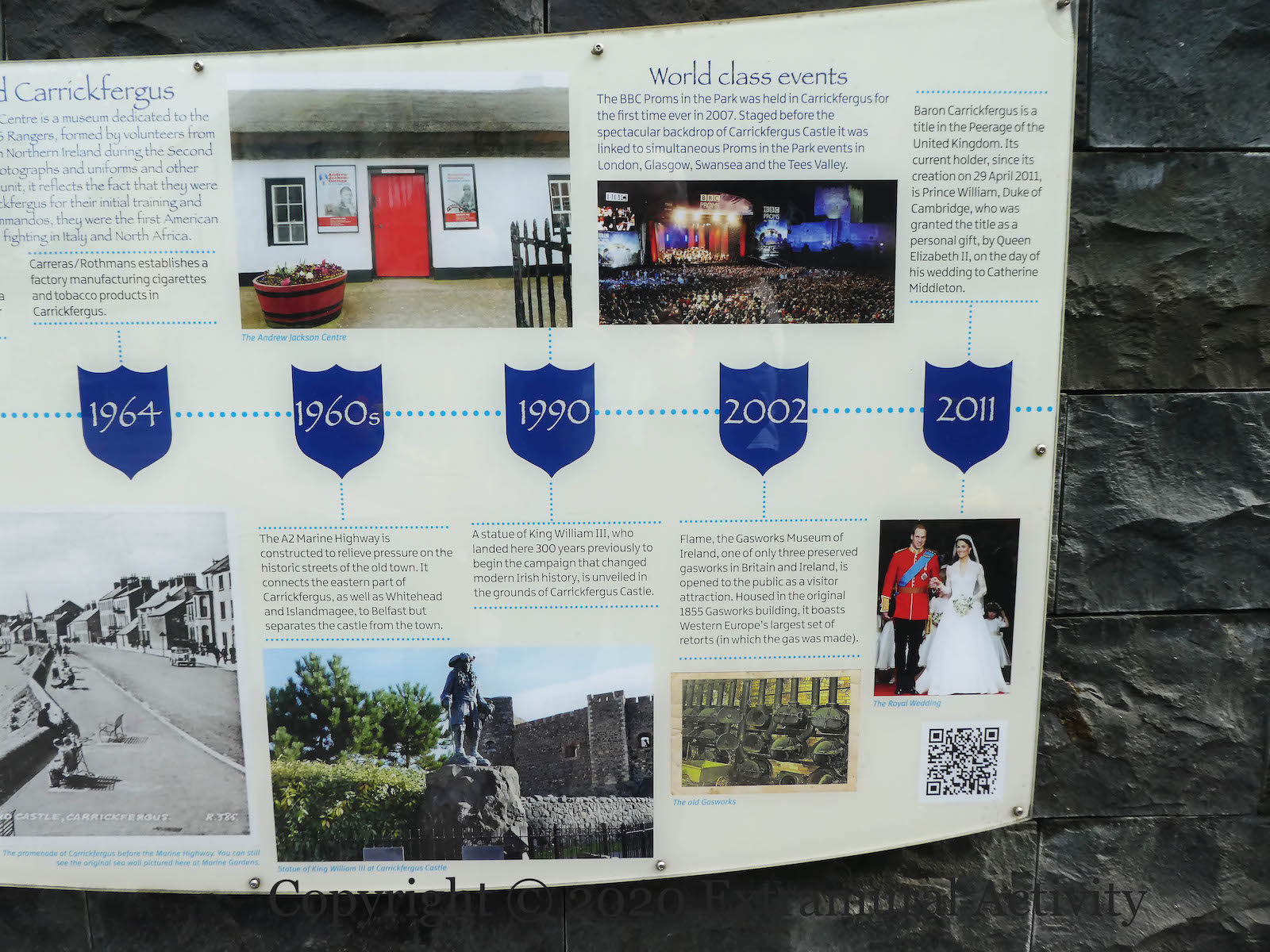
This is the second half of the Carrickfergus Timeline in Market Place, covering the history of the town from arrival of King William and General Schomberg to the modern day, including the last witch trial in Ireland and the construction of a railway allowing tourists sailing into Larne to reach the town easily: “Don’t let anything stop you from coming to Carrickfergus – if you cannot get on a train, hire a donkey cart”. The panels were written by Seth Linder.

Click image to enlarge
Copyright © 2020 Seosamh Mac Coılle
X07369 X07364 X07365 X07366 X07367 X07368

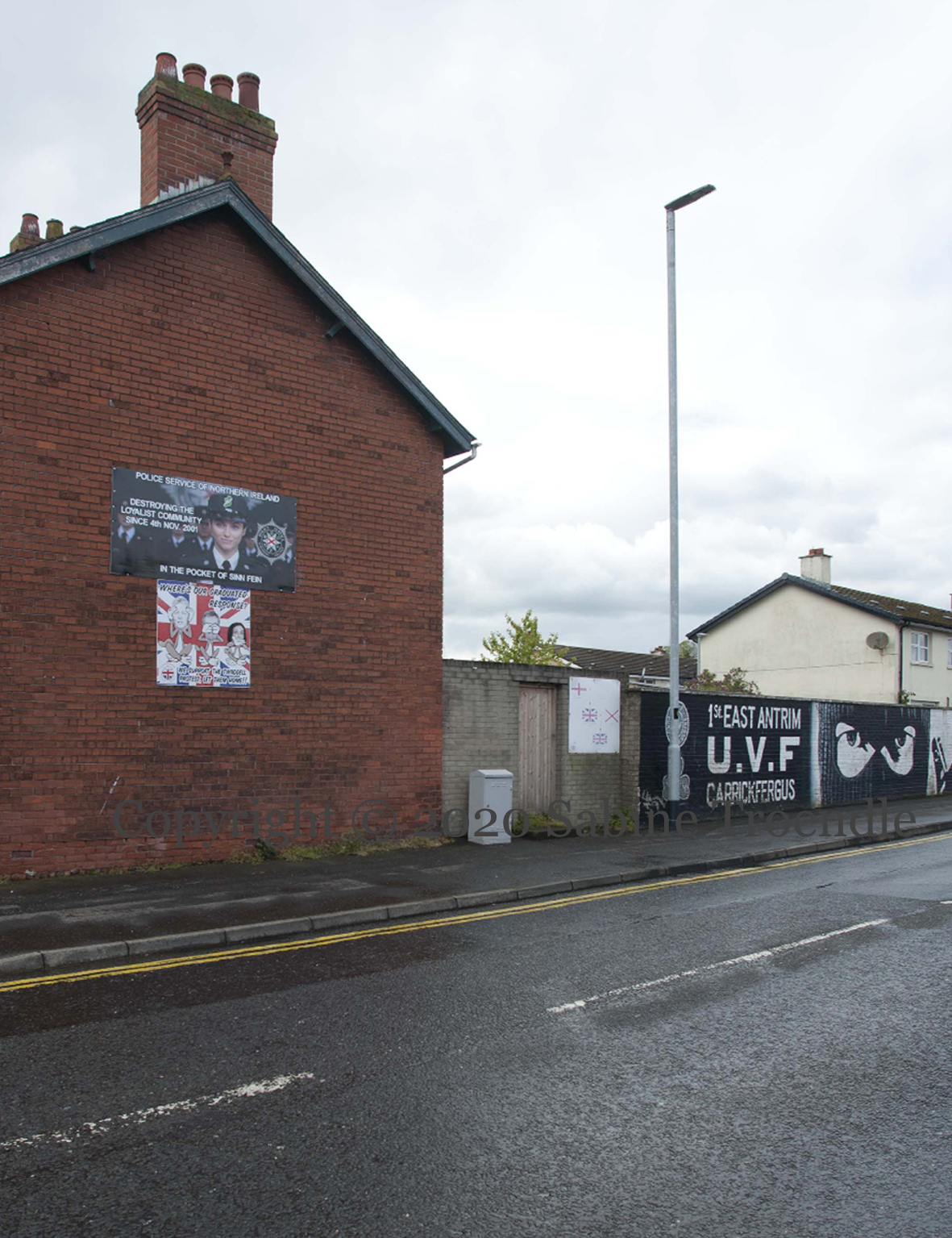
In The Pocket Of Sınn Féın

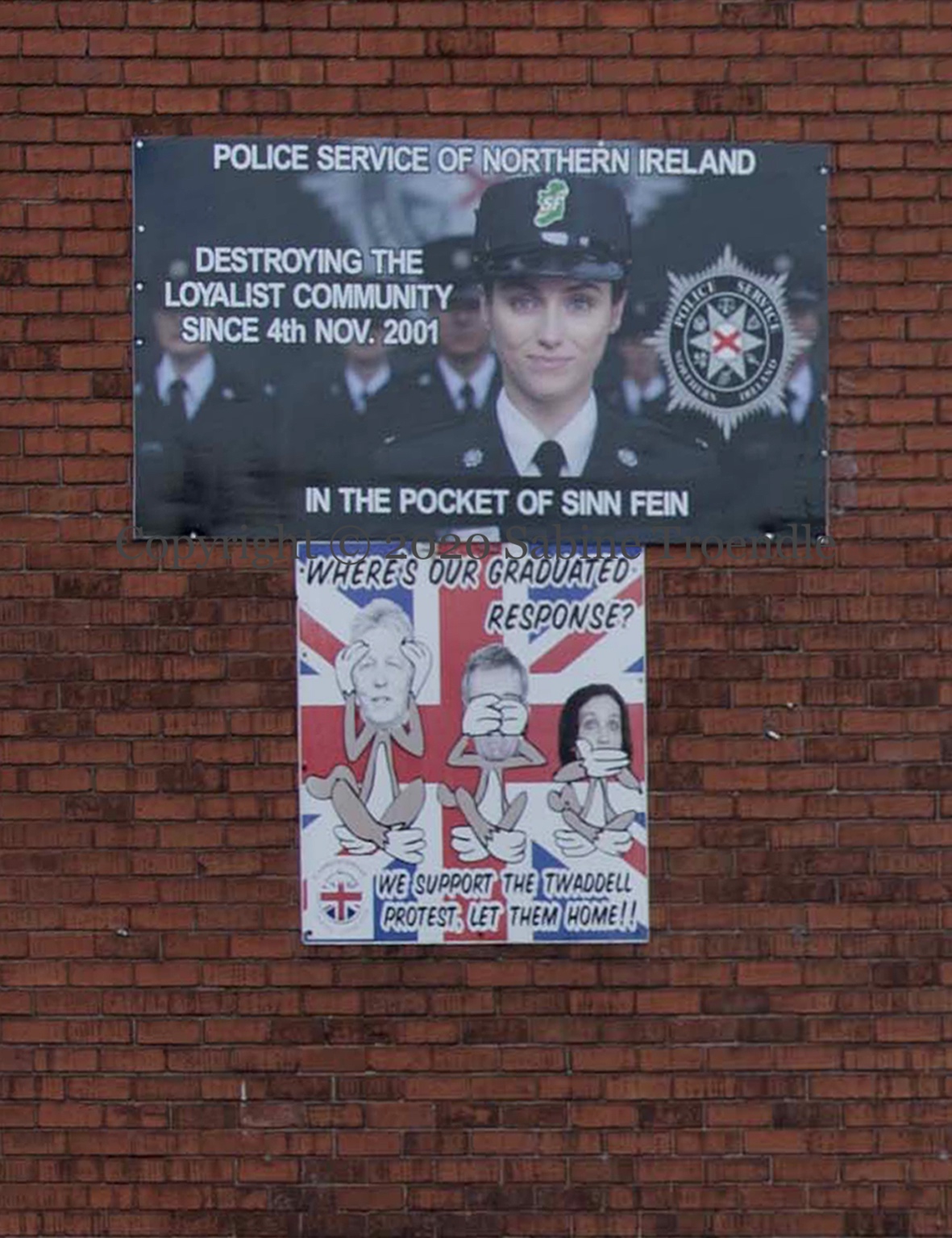
The Sınn Féın logo takes the place of the PSNI service badge (which already contains a harp and a shamrock) on the cap of a PSNI officer. “Police Service Of Northern Ireland – destroying the loyalist community since 4th Nov. 2001. In the pocket of Sinn Fein [sic]”. 

For the board below, see Graduated Response; for the hooded UVF gunman, see Progression Requires Inclusion.

Click image to enlarge
Copyright © 2020 Sabine Troendle (web | Fb)
X07116 X07117 Davys St, Carrickfergus

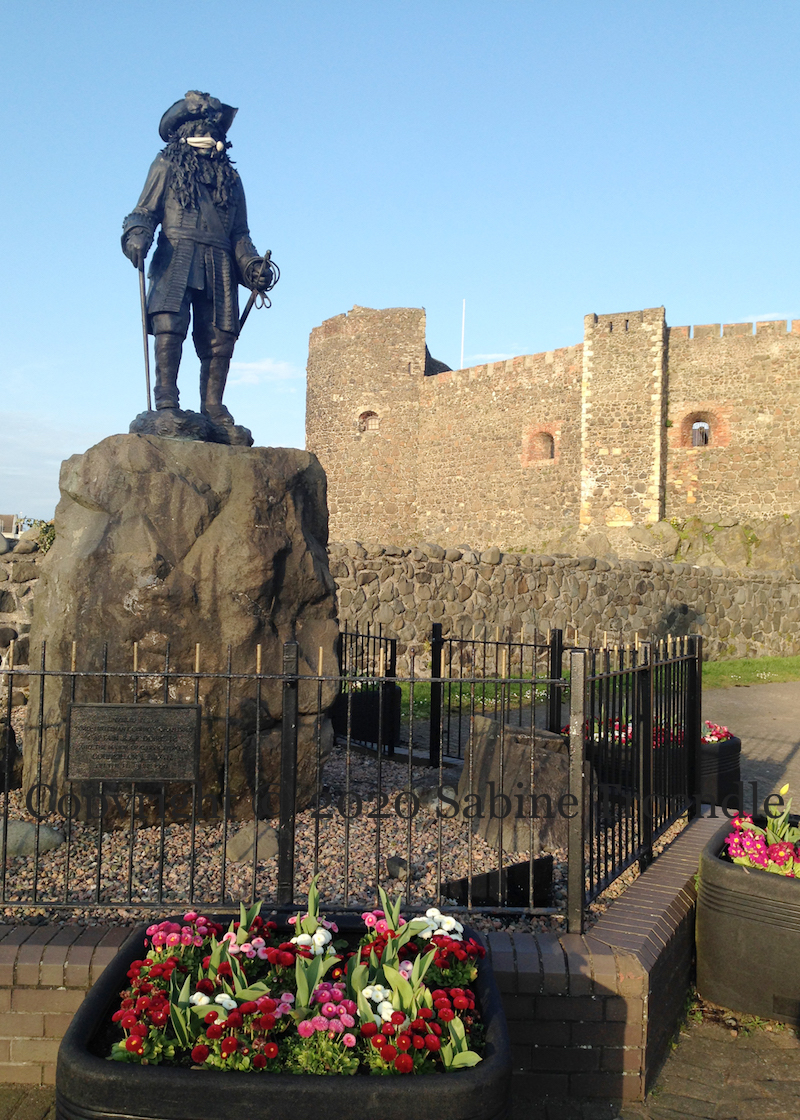
The Landing Of SARS-CoV-2 At Carrickfergus, March 2020

As he begins his trek around Ireland to vanquish the forces of James II, King William III wears a mask to protect himself from the novel coronavirus.

The title of this entry is based on the old Bobby Jackson mural The Landing Of William III At Carrickfergus June 1690, itself based on a popular postcard.

Click image to enlarge
Copyright © 2020 Sabine Troendle
X07046

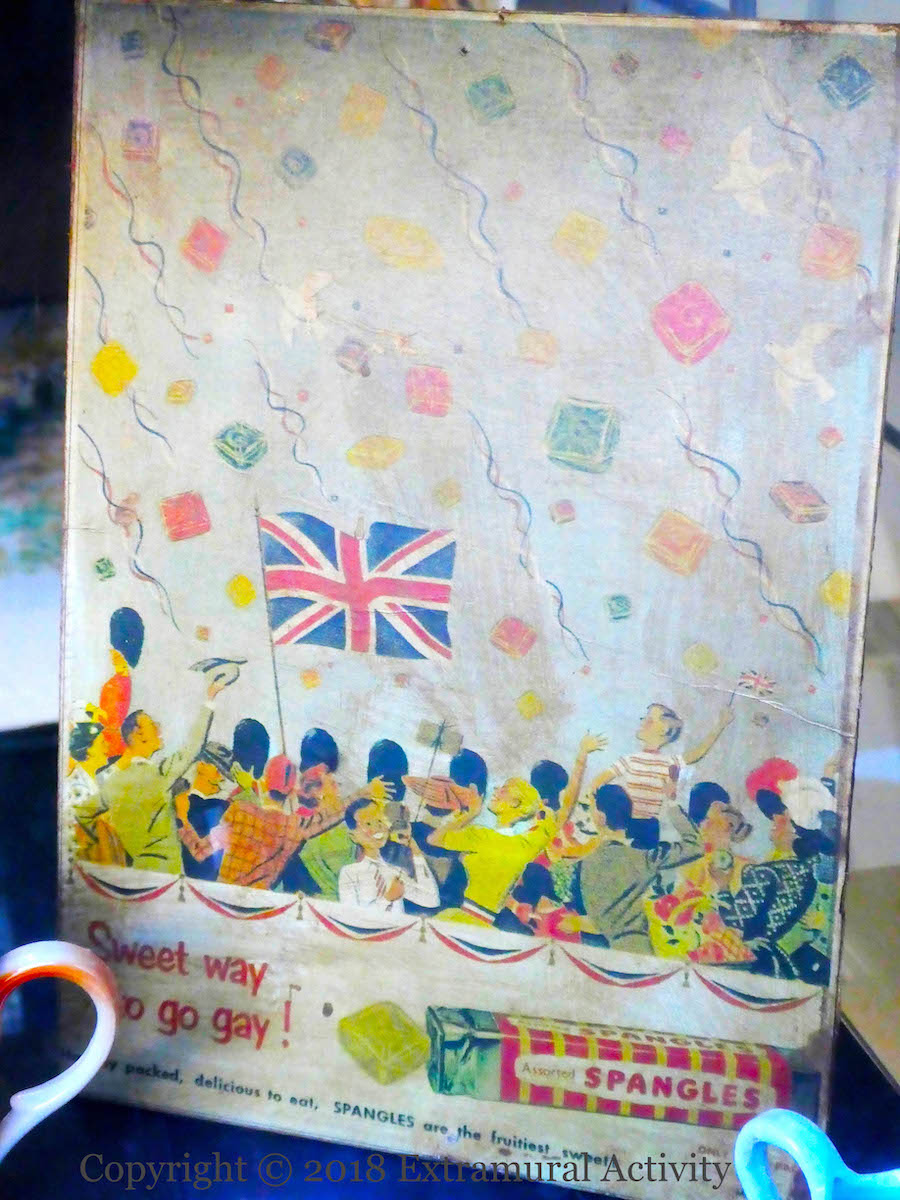
Sweet Way To Go Gay!

“Handily packed, delicious to eat, Spangles are the fruitiest sweet! Only 3d a packet. Made by Mars.” A 1952 magazine advertisement for Spangles in the window of a vintage shop in Carrickfergus, showing a street party, perhaps in anticipation of the coronation of Elizabeth II, 16 months after she became queen in February 1952. The boiled sweets were a staple of life until 1984 (WP).

Other early ads for Spangles, which were introduced in 1950, note the price is 3d “and only one point”, meaning that customers would have to use one of the 16 points for non-essential goods from their ration books; control of sweets did not end until February, 1953 (WP).

Click image to enlarge
Copyright © 2018 Seosamh Mac Coılle
X06301