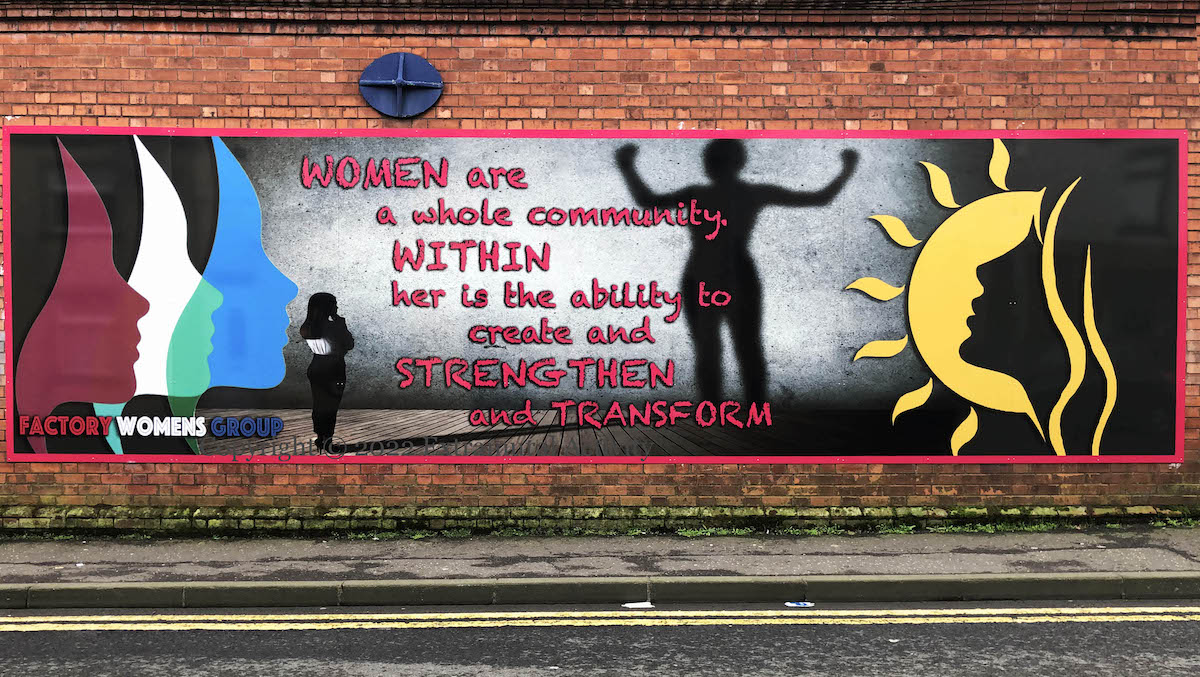
“Women are a whole community – within her is the ability to create and strengthen and transform”. The mural is part of the ‘Communities in transition’ programme from Factory Women’s Group/Factory Community Forum (web | Fb), along with the ‘Be Aware’ mephedone campaign.
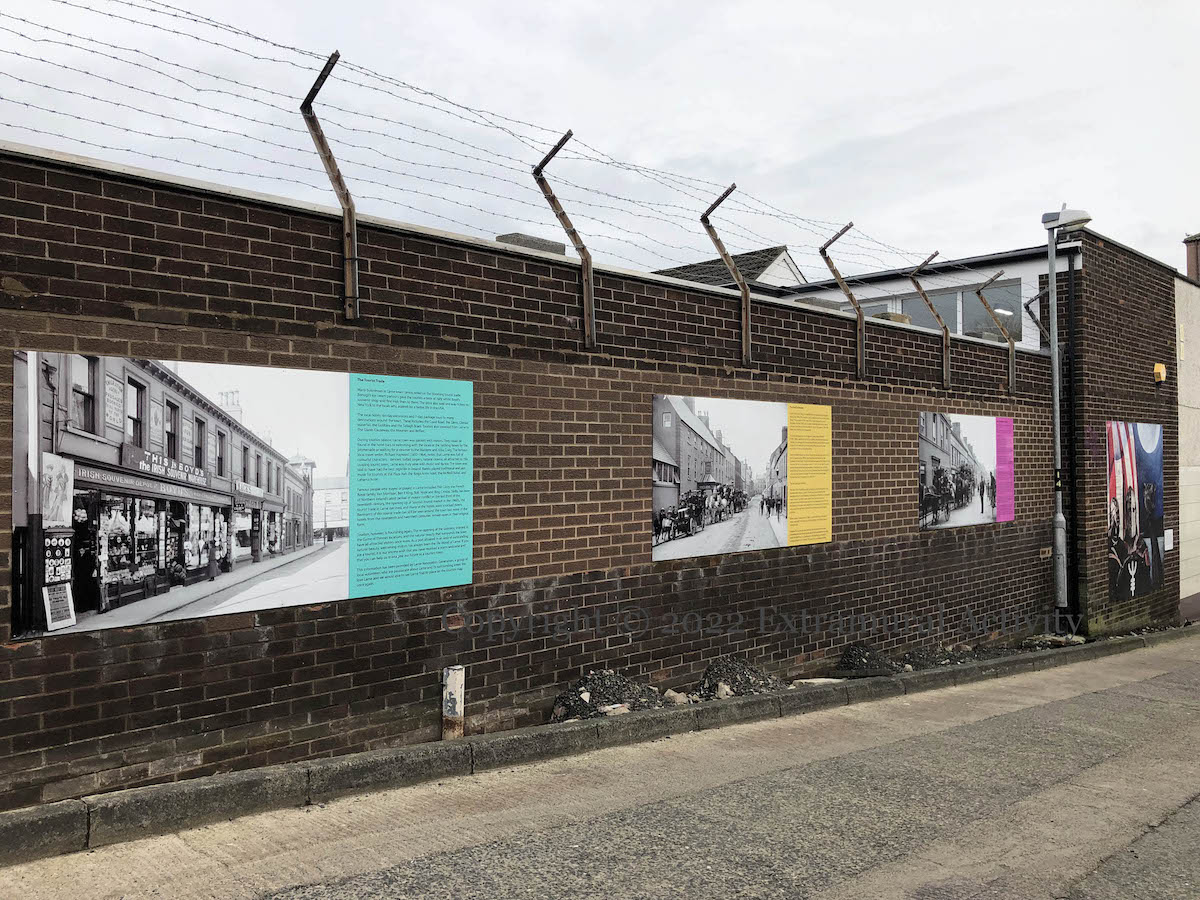
Lower Waterloo Street, Larne, formerly Factory Row, site of Brown’s weaving mill.
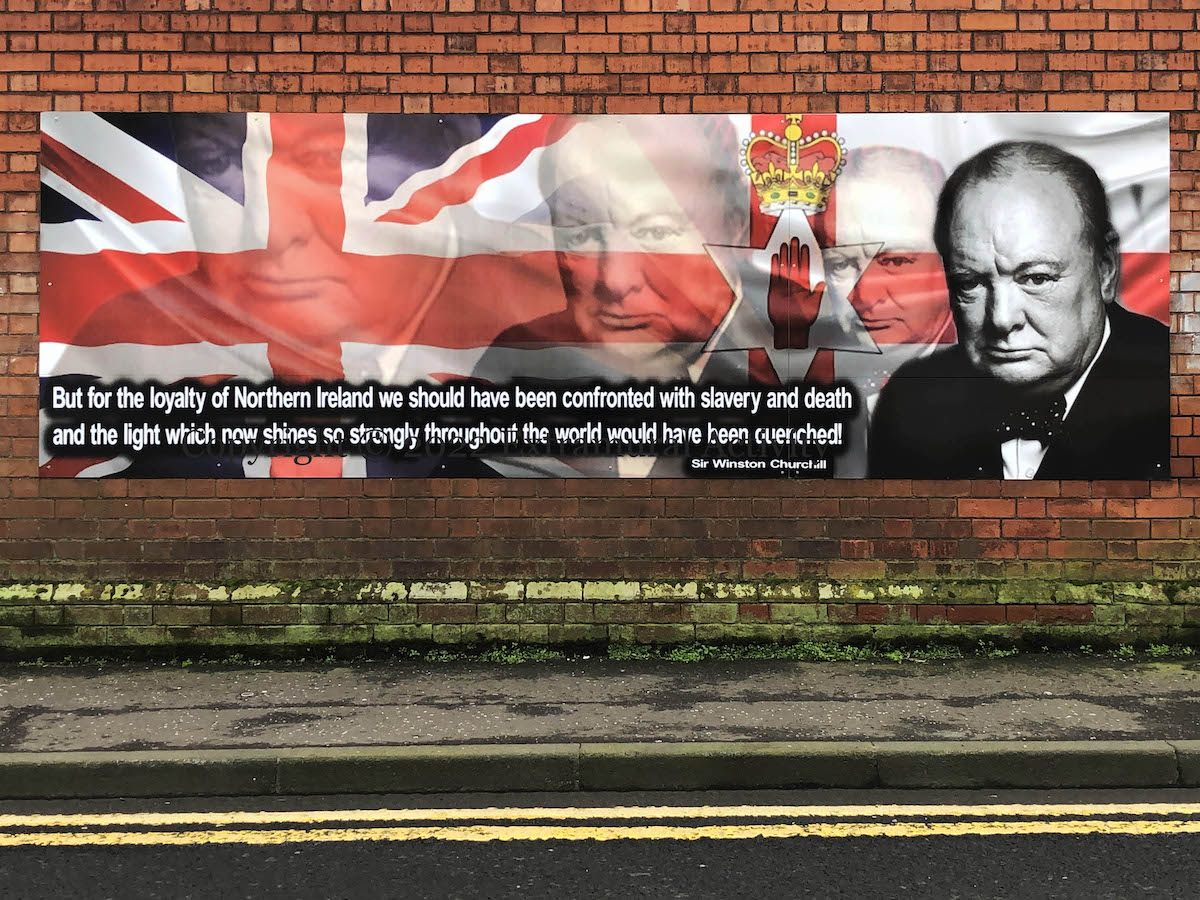
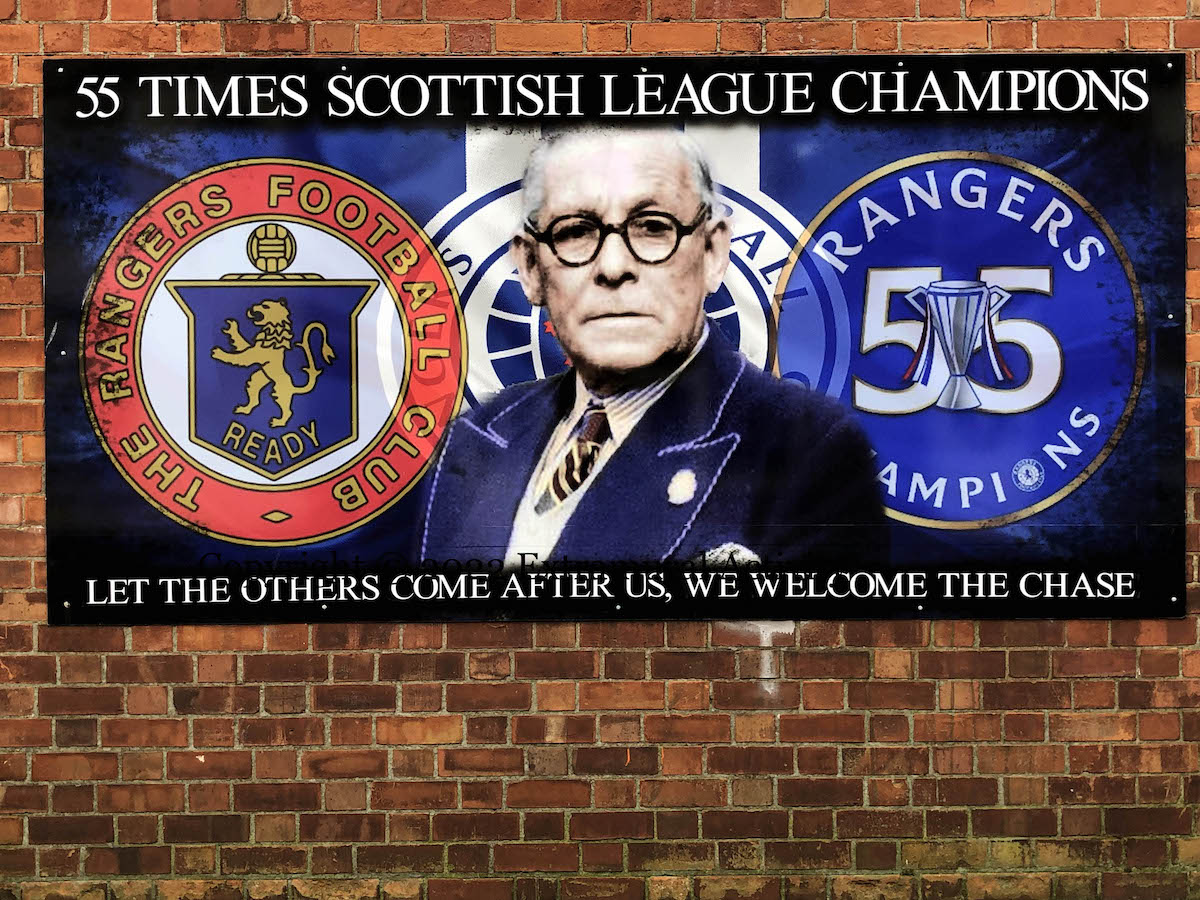
Two final pieces from Lower Waterloo Road, Larne: above, Winston Churchill, and below, Rangers. The Churchill quote comes from a letter to NI Prime Minister John Andrews when he stepped down in 1943. In full it reads “But for the loyalty of Northern Ireland [and its devotion to what has now become the cause of thirty Governments or nations,] we should have been confronted with slavery and death, and the light which now shines so strongly throughout the world would have been quenched.” Had the board been been erected more recently, it might have quoted another line from the letter: “During your Premiership the bonds of affection between Great Britain and the people of Northern Ireland have been tempered by fire, and are now, I firmly believe, unbreakable.”
Below is Walter Smith, two-time manager of Rangers, who died in 2021. See The Gaffer.
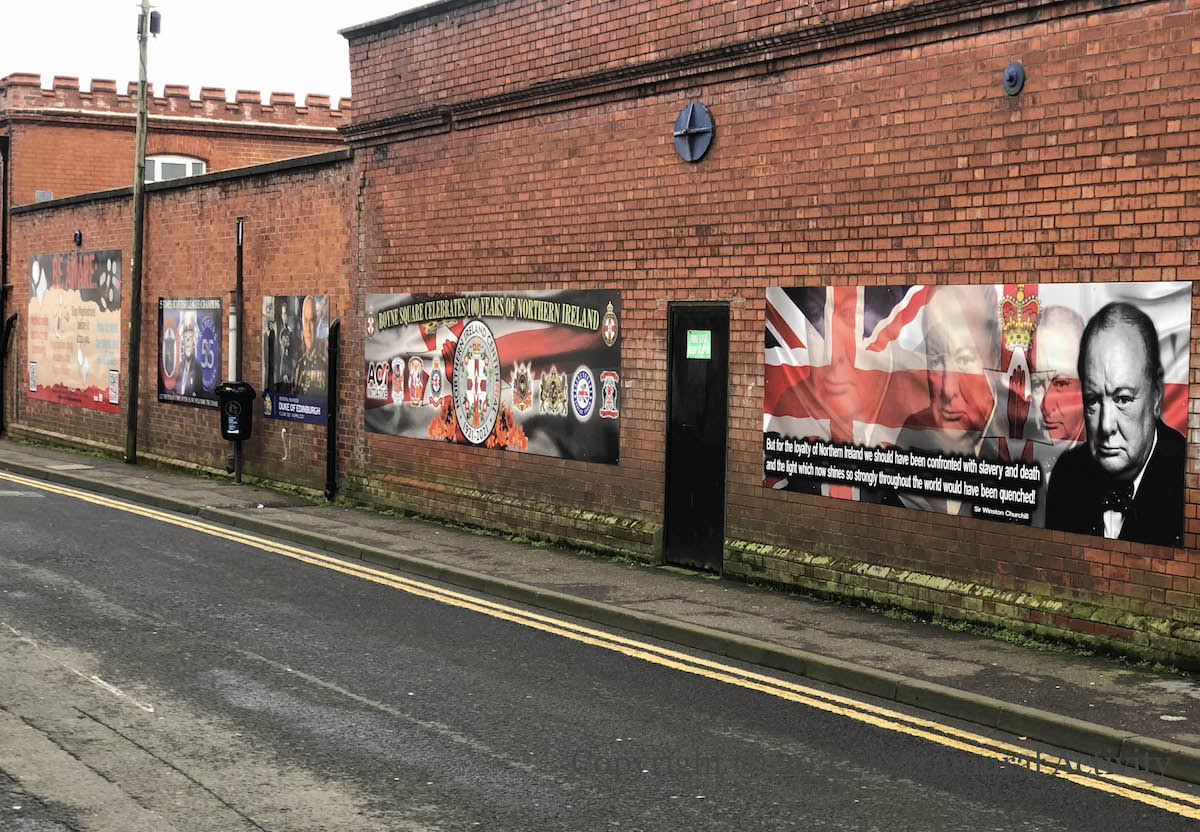
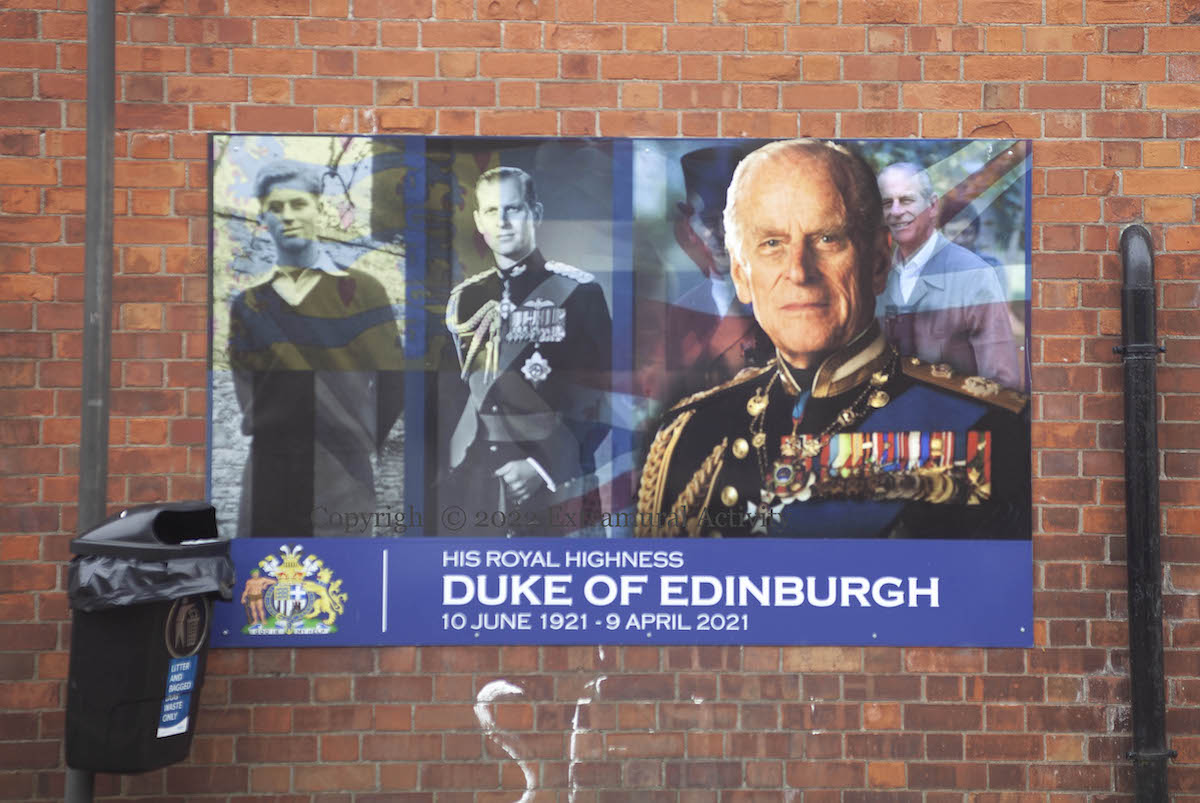
This post completes the set from Lower Waterloo Road in Larne – the wide shot shows Mephedrone to the far left; then Rangers, Duke Of Edinburgh, NI Centenary, and Churchill; Women Are A Whole Community is out of shot to the right.
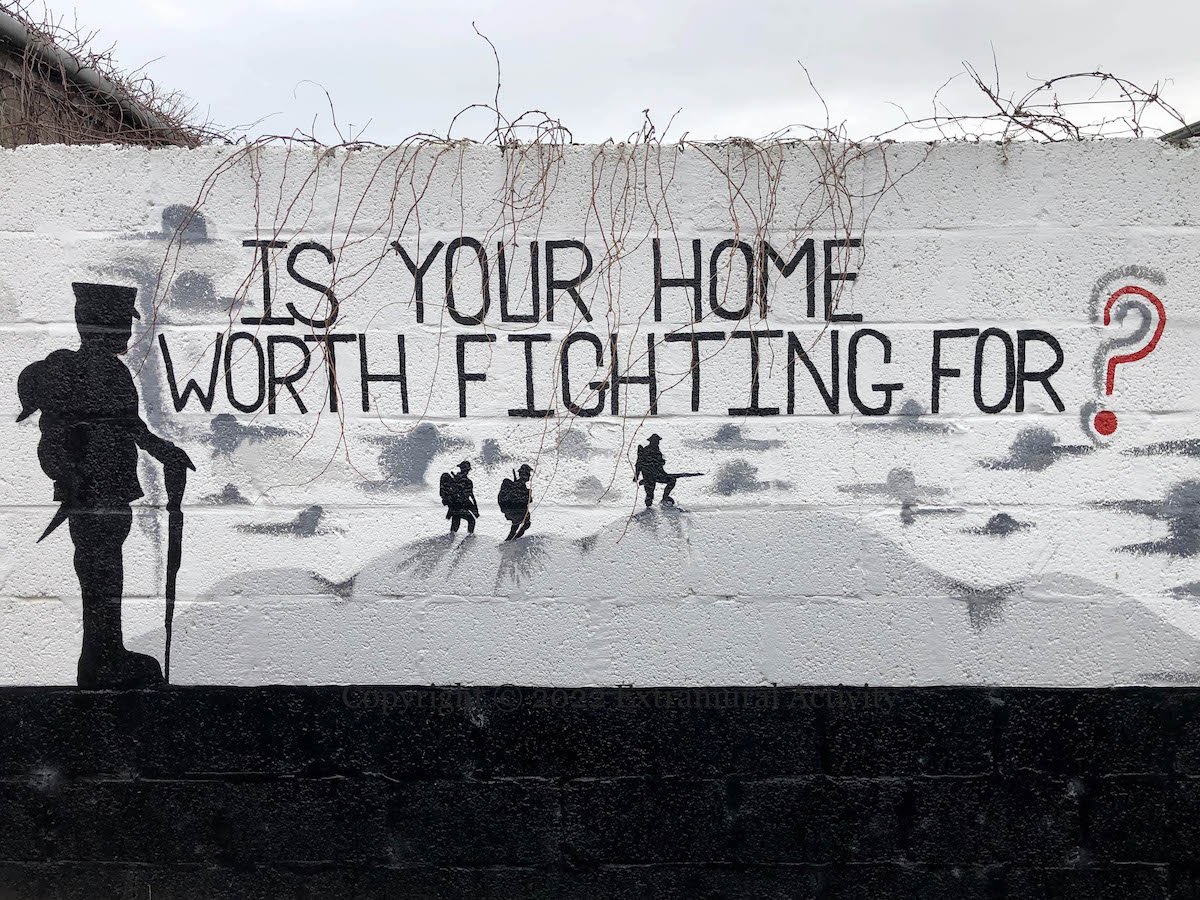
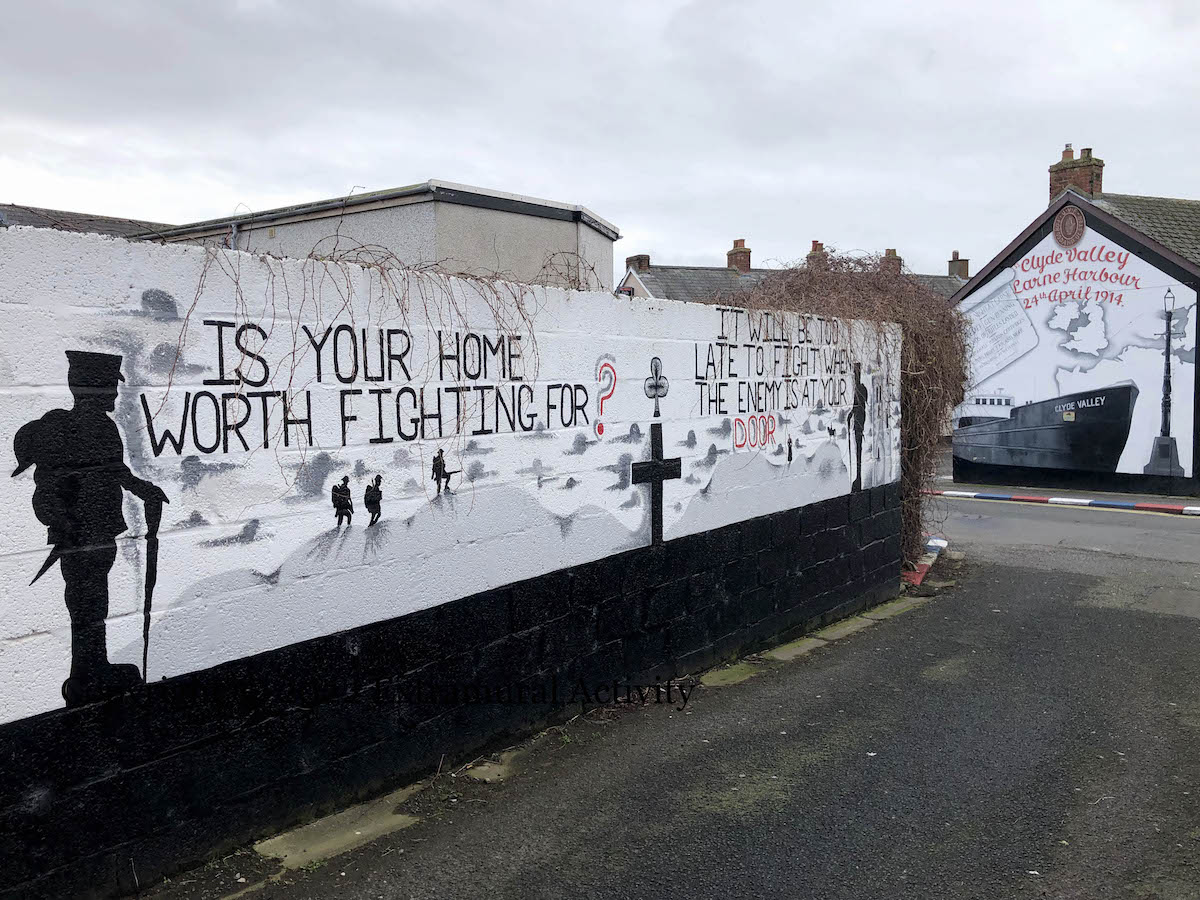
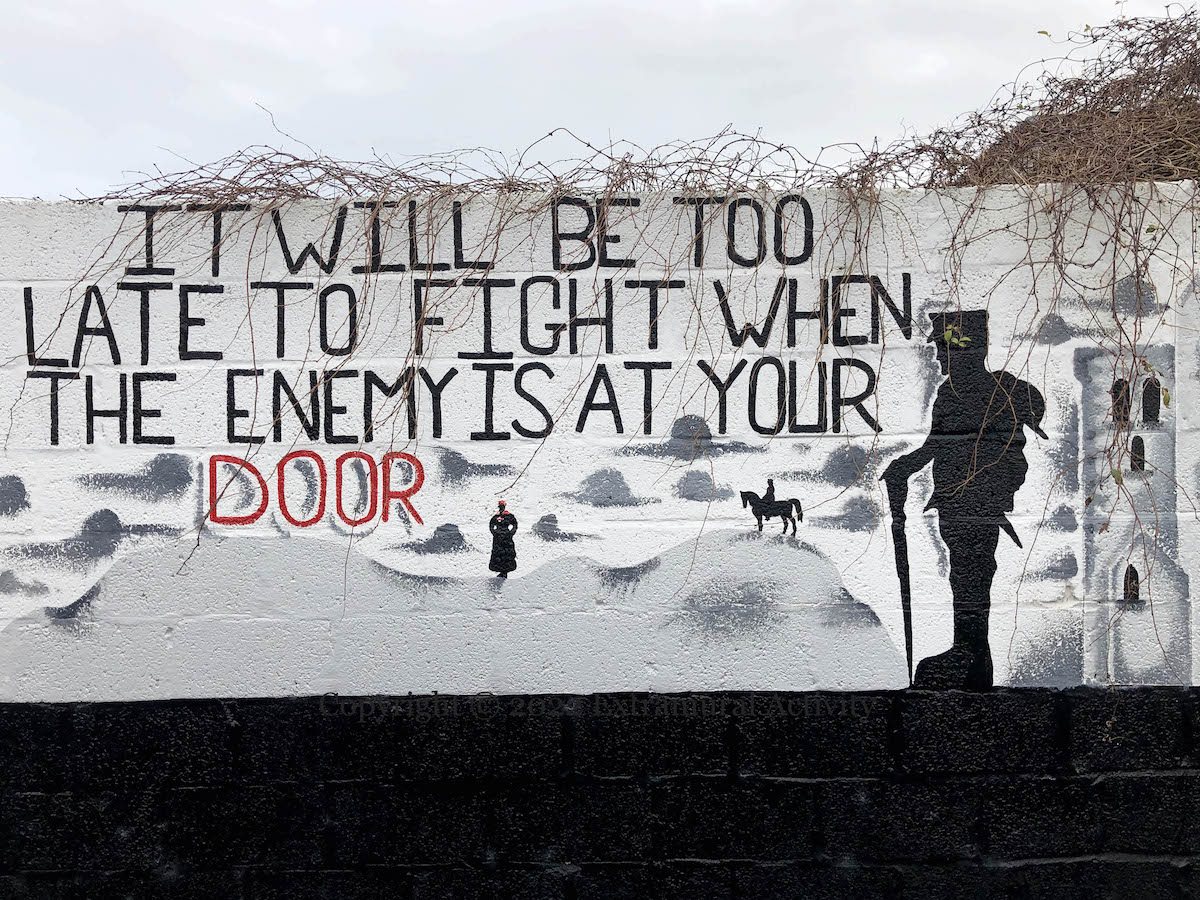
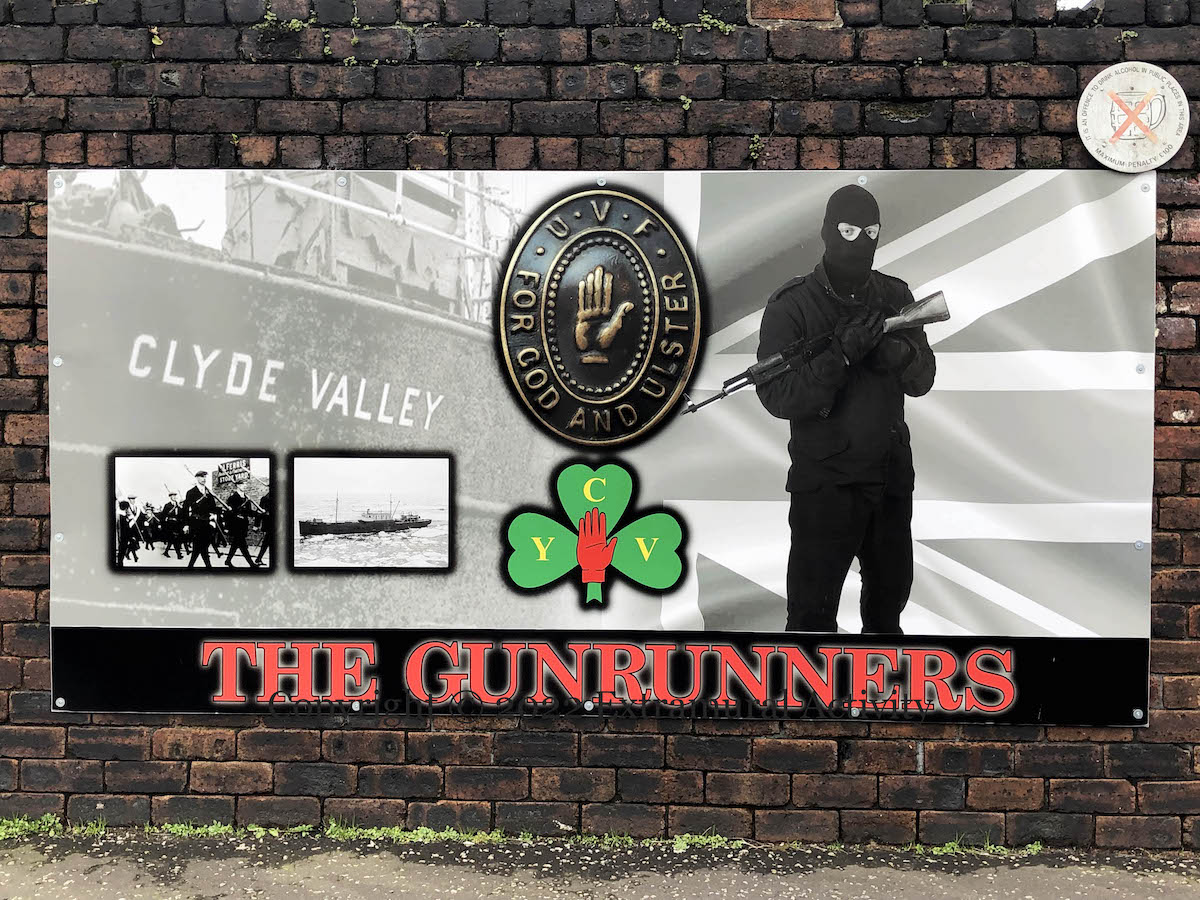
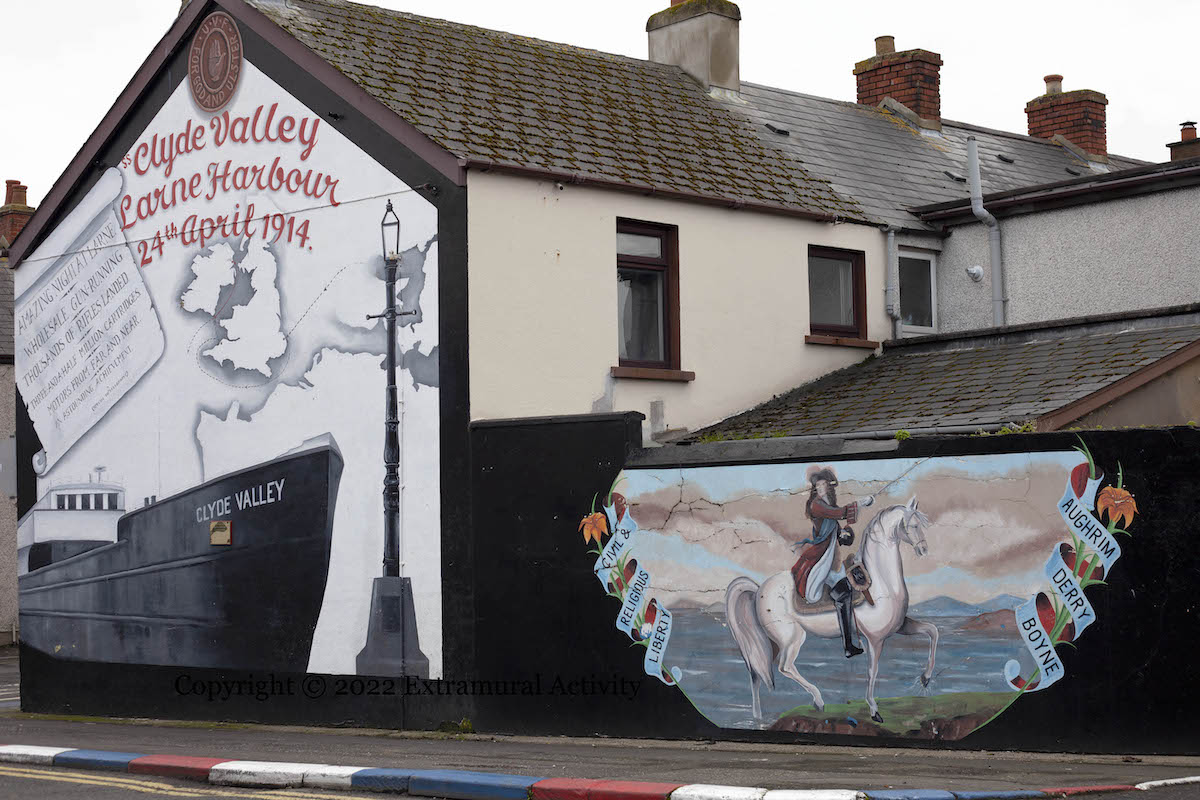
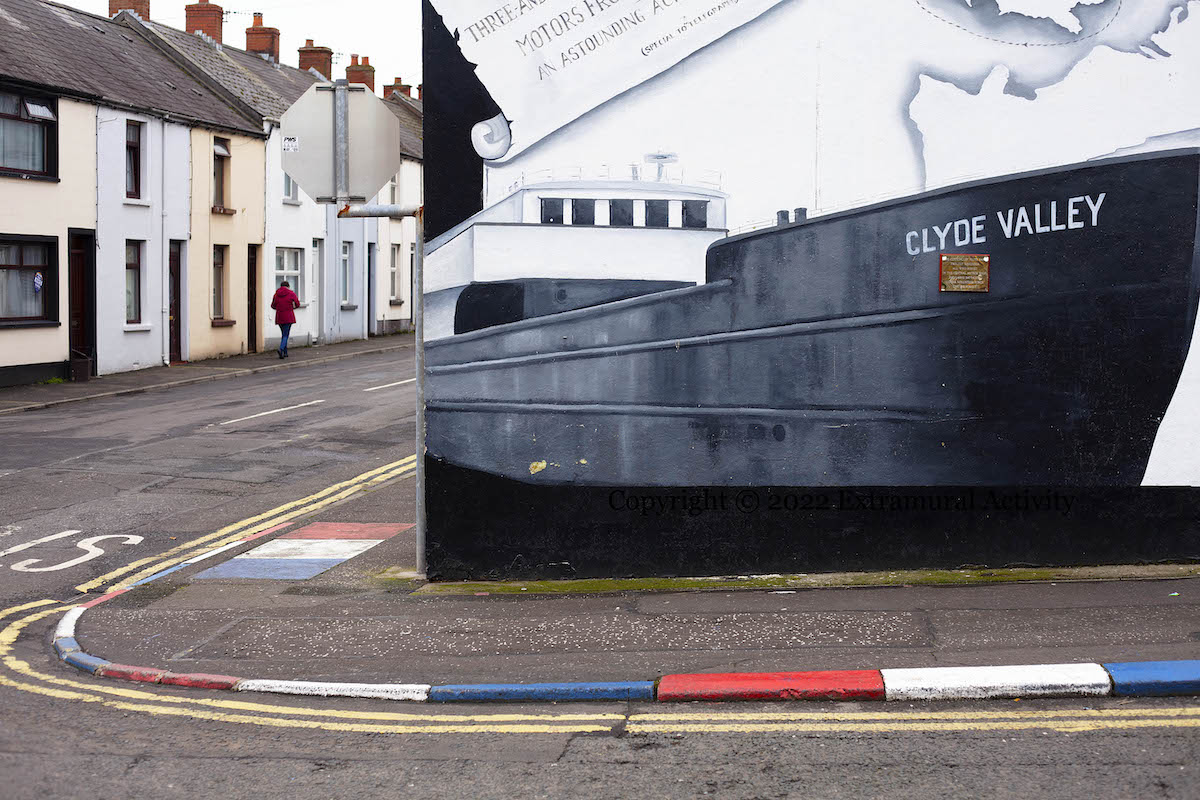
“… It will be too late to fight when the enemy is at your door.” In 1914, at the time of the Larne gun-running – see the mural in the second image and (previously) Amazing Night At Larne – the enemy was the threat of Home Rule and its enforcement by British Army forces and RIC that would remain under British control for at least three years after the commencement of home rule (Home Rule And Ulster’s Resistance p. 9). A bill to amend home rule by excluding some or all of the Ulster counties was introduced in July, 1914 (WP), but both Home Rule and the amendment were put aside when the Great War began; the enemy of Unionists then became the Central Powers. The contemporary enemy is the NI Protocol and Brexit, with the powers in Westminster again suggesting a separation of Britain and (Northern) Ireland.
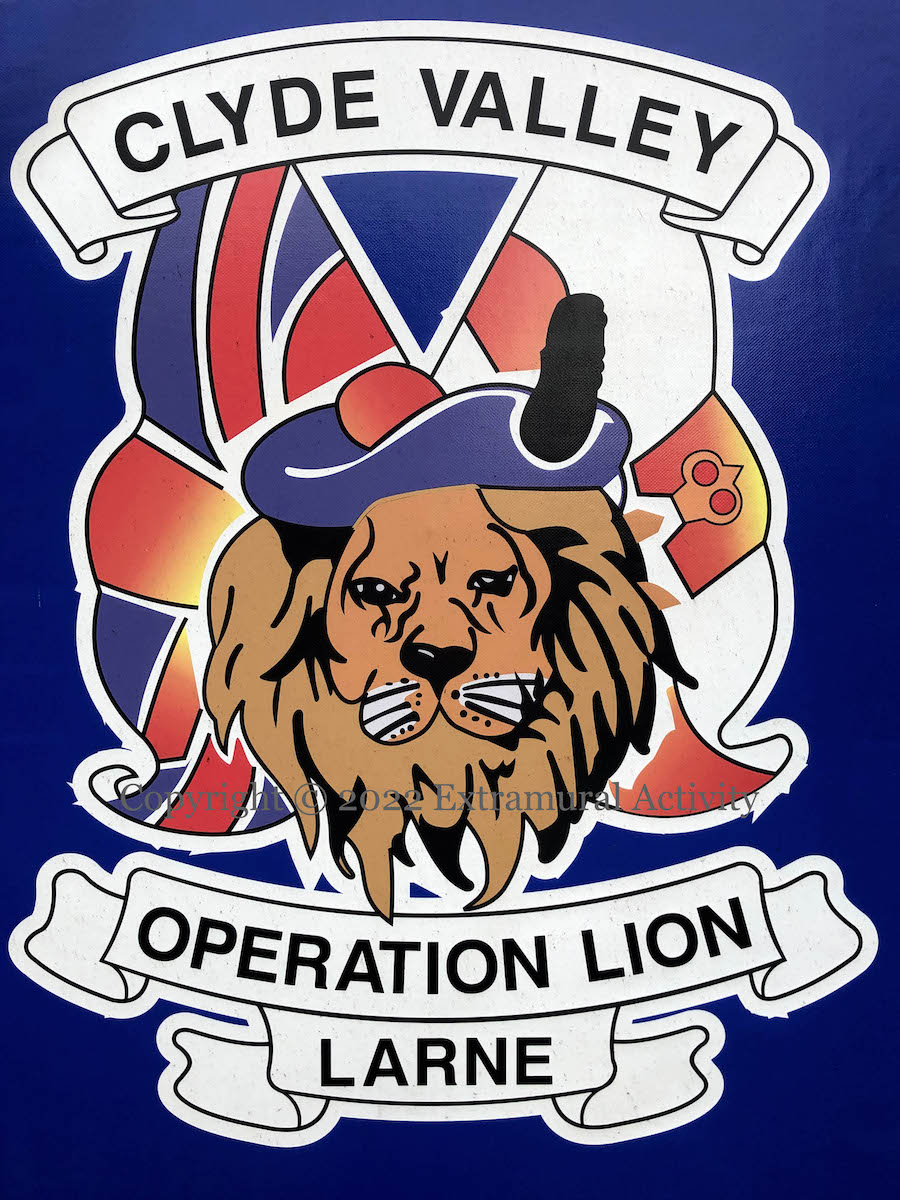
“Operation Lion” was the code named for what is commonly known as the Larne Gunrunning using the ship Clyde Valley which had been renamed Mountjoy II for the occasion (WP) and which now lends its name to a flute band in the area. The hooded gunman on the right is carrying a more modern rifle, rather than surplus German and Italian WWI rifles that came ashore in April, 1914 (Full 30).
For a wide shot containing both pieces, see Norman Anderson.
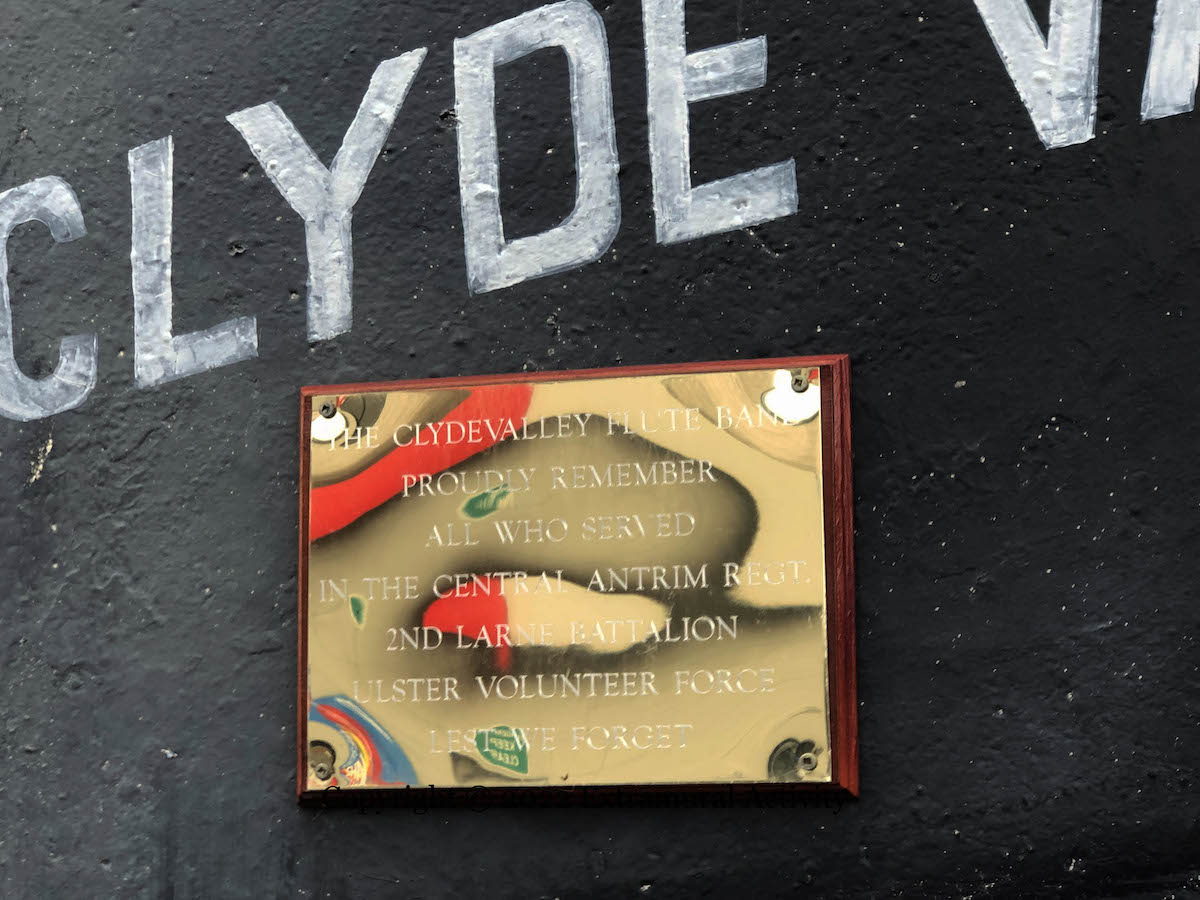
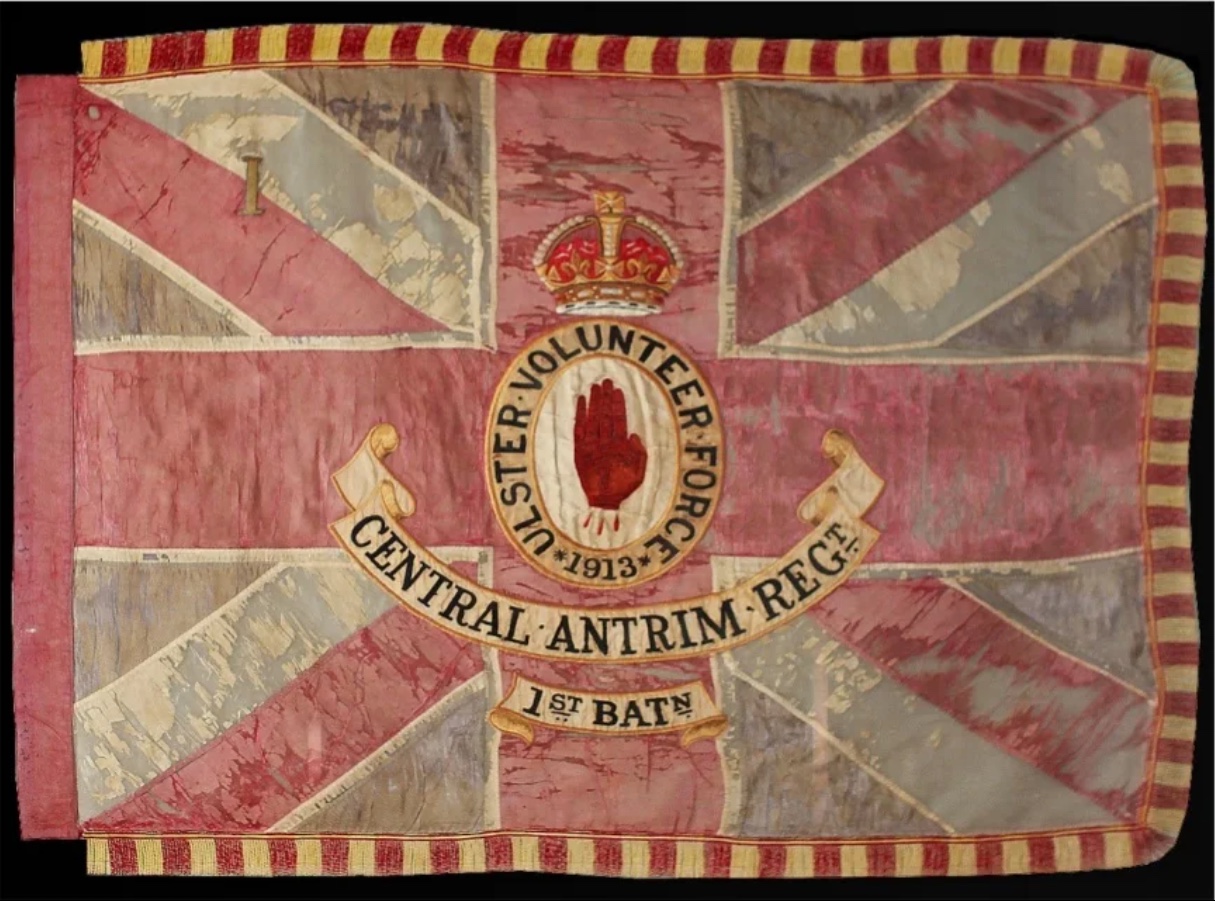
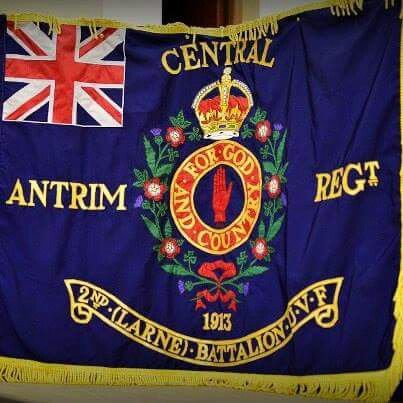
As this plaque in the Factory area of Larne indicates, the 2nd battalion of the Central Antrim regiment (of the Antrim division) of the Ulster Volunteers was drawn from Larne. Edward Carson reviewed the entire regiment at Drumalis in Larne on July 11th, 1914, (here is a postcard depicting the review) where he was presented with the colours of the 2nd from a Lady Smiley of First Larne Presbyterian. (The colours of the 1st and 2nd battalions are included below; the colours of the 3rd (Carrickfergus) Battalion can be seen at Sam’s Flags.) In the Royal Irish Rifles of WWI, Central Antrim became the 12th battalion (War Time Memories Project); its members included Larne man Rifleman Robert King.
“The Clydevalley flute band [Fb] proudly remembers all who served in the [Antrim Division,] Central Antrim Regt, 2nd Larne Battalion, Ulster Volunteer Force. Lest we forget.”
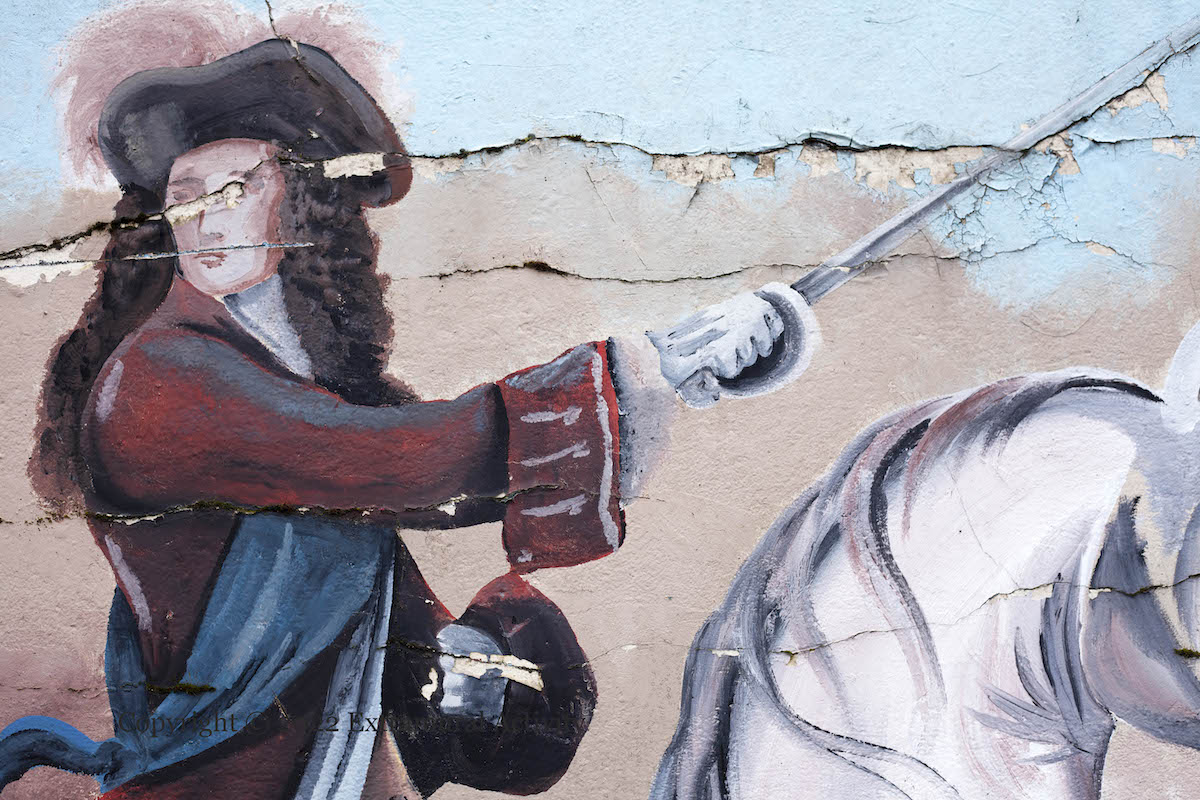
The plaque is on the gun-running mural and next to a King Billy mural in Greenland Drive. Both murals were seen previously in 2016; see Amazing Night At Larne and Civil & Religious Liberty.
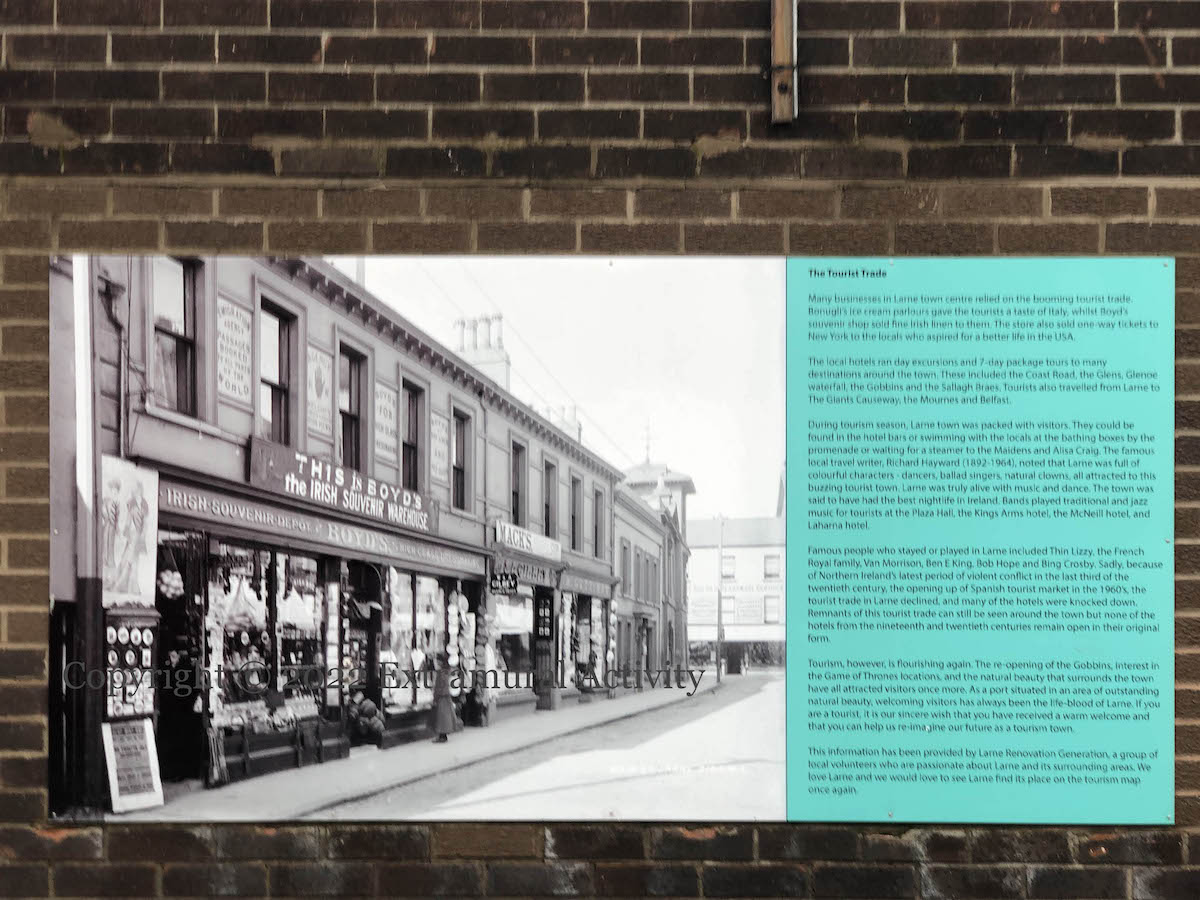
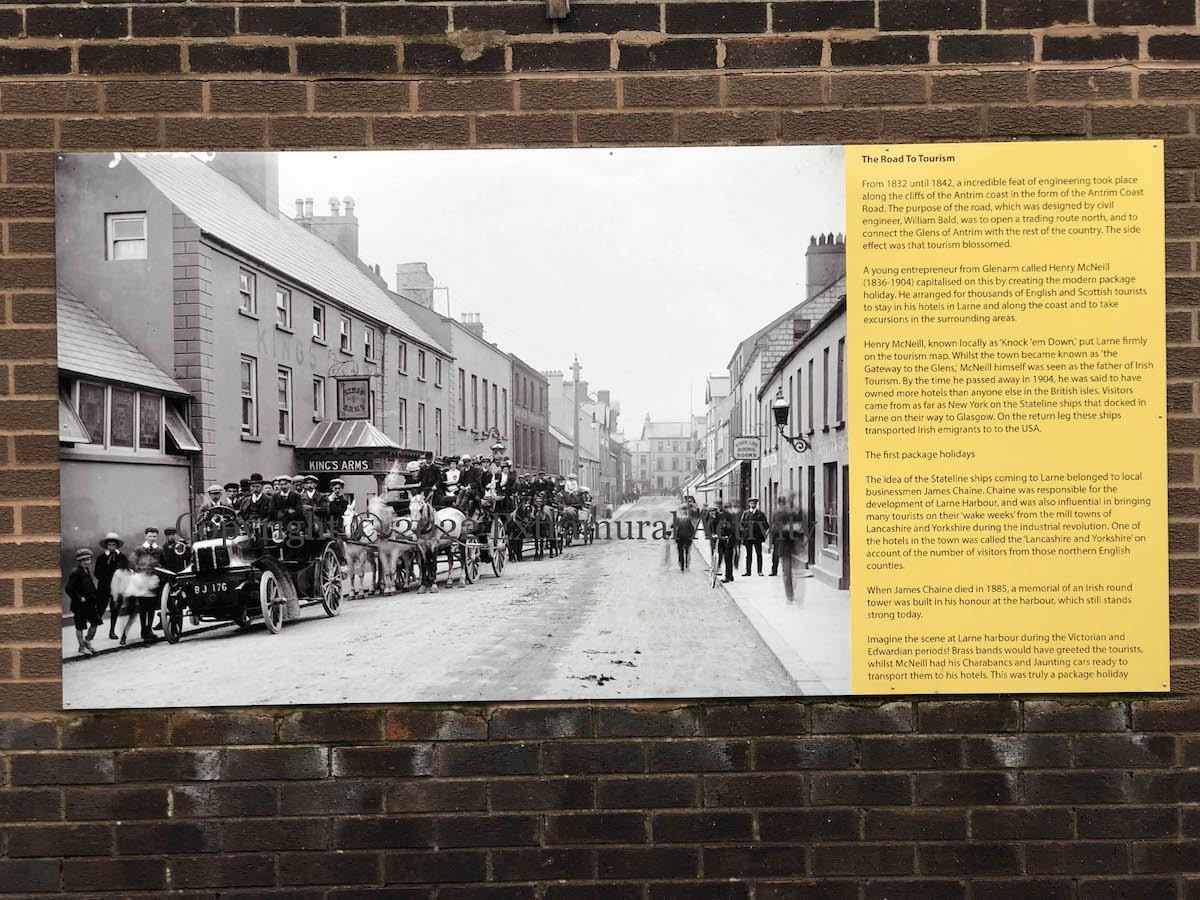
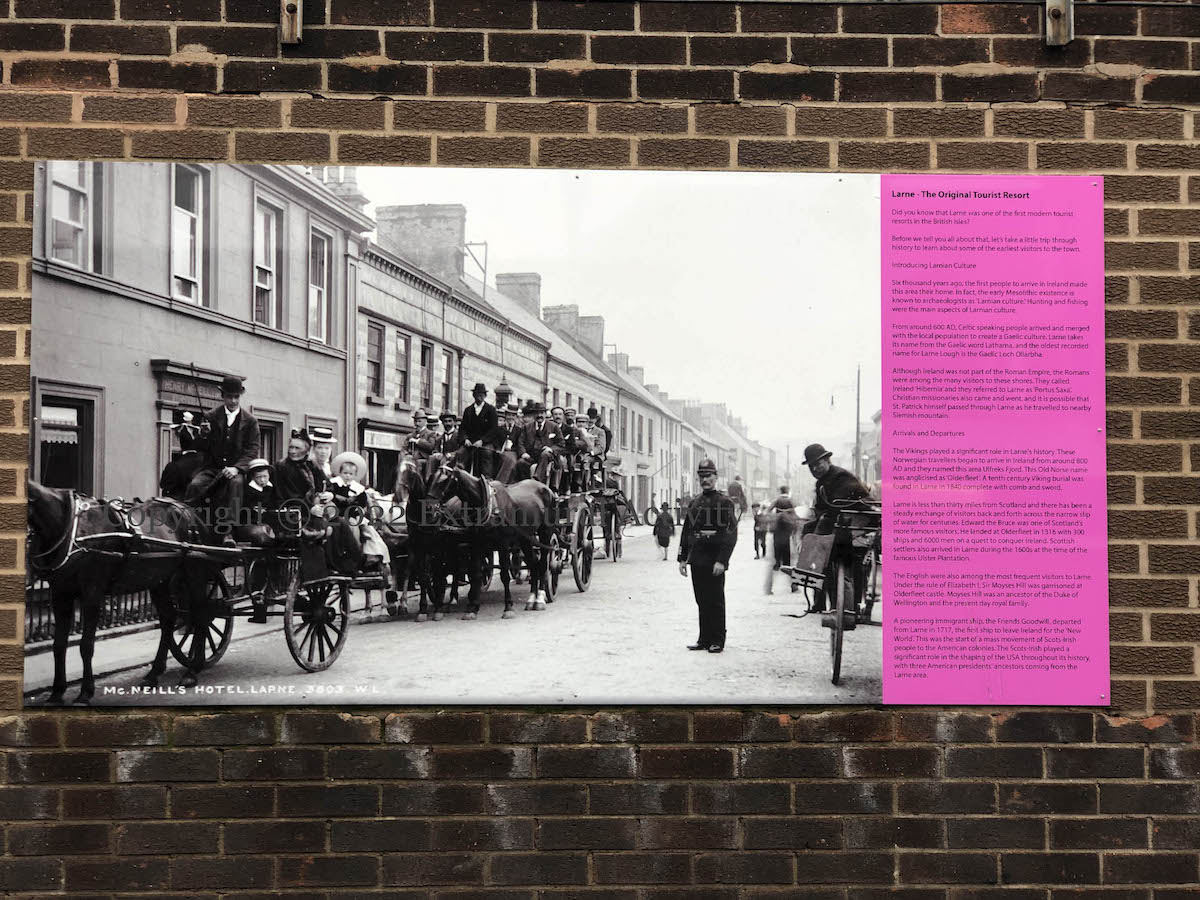
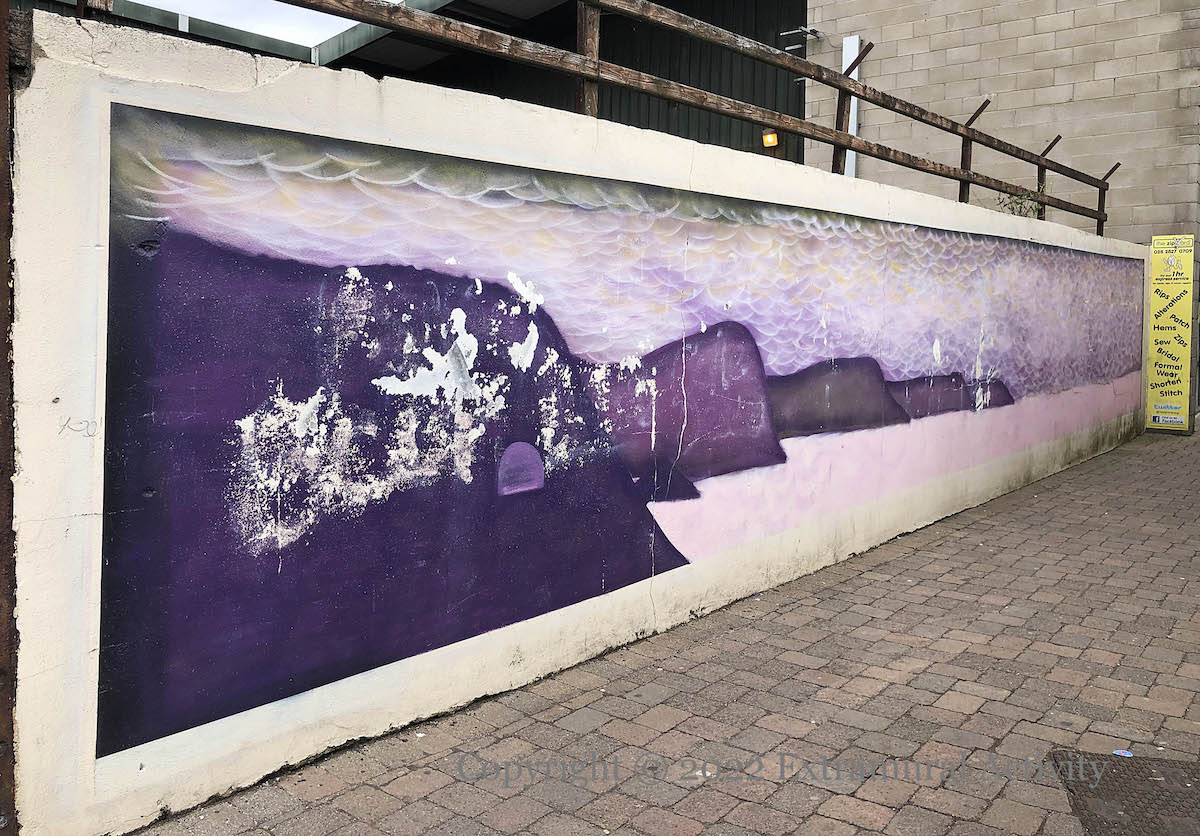
“Larne – the original tourist resort” going back to Larnians, Romans, Christians, vikings, the Scots (Edward The Bruce), the English (Sir Moyses Hill) but most particularly after 1842, when the Coast Road was finished, making Larne the “gateway to the Glens” and inspiring Henry McNeill to create the package holiday (see previously Those Magnificent Men In Their Flying Machines). Ships carrying tourists from America would ferry emigrants on the way back – Boyd’s souvenir shop (shown in the first panel, above) sold Irish linen to tourists and one-way tickets to New York. After a double whammy in the 1960s of the Troubles and easier access to Spain, “tourism is flourishing again” thanks to the Gobbins and Game Of Thrones.
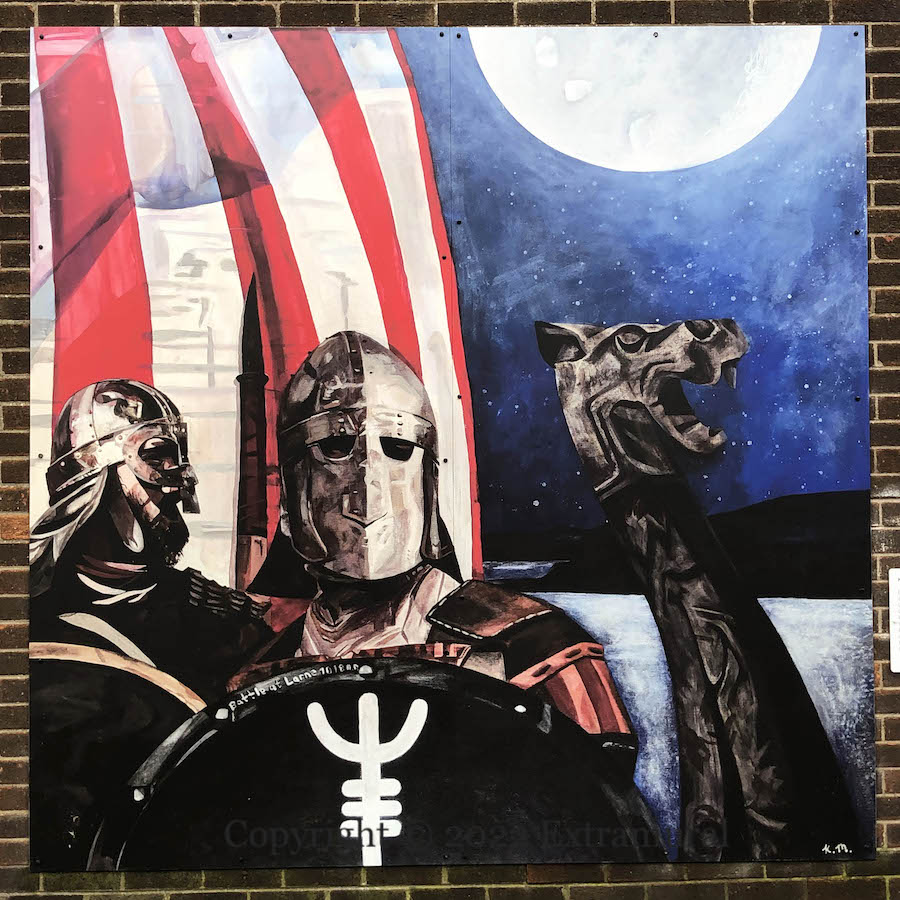
According to 13th century Icelandic historian Snorri Sturluson, The Battle Of Latharna (now Larne) took place in 1018 between Irish warriors and Orkney vikings at Larne Lough or “Ulfreksfjord” which name eventually became “Olderfleet”, to the south of the harbour.
This is the contribution of artist Kim Montgomery (web) to a Larne Council project to add art to the city centre (BelTel). See previously, Dawn Aston’s Dire Wolf.
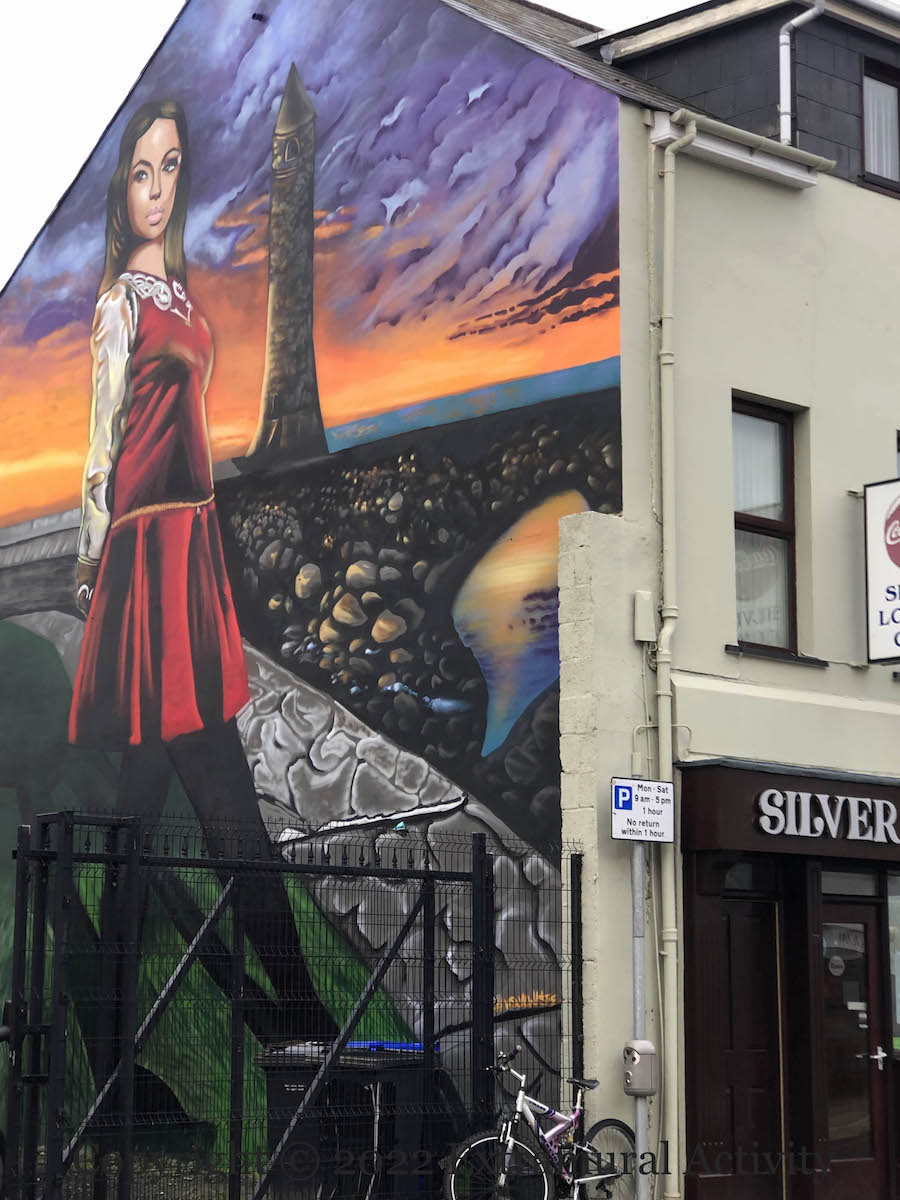
One goal of the voluntary group Larne Renovation Generation (Fb) is to bring “Main Street alive with community spirit in the evenings”. To this end, they are supporting various murals along the street, with this Irish dancer providing a bookmark at the eastern end on the side of the Silver Lounge Café (Fb).
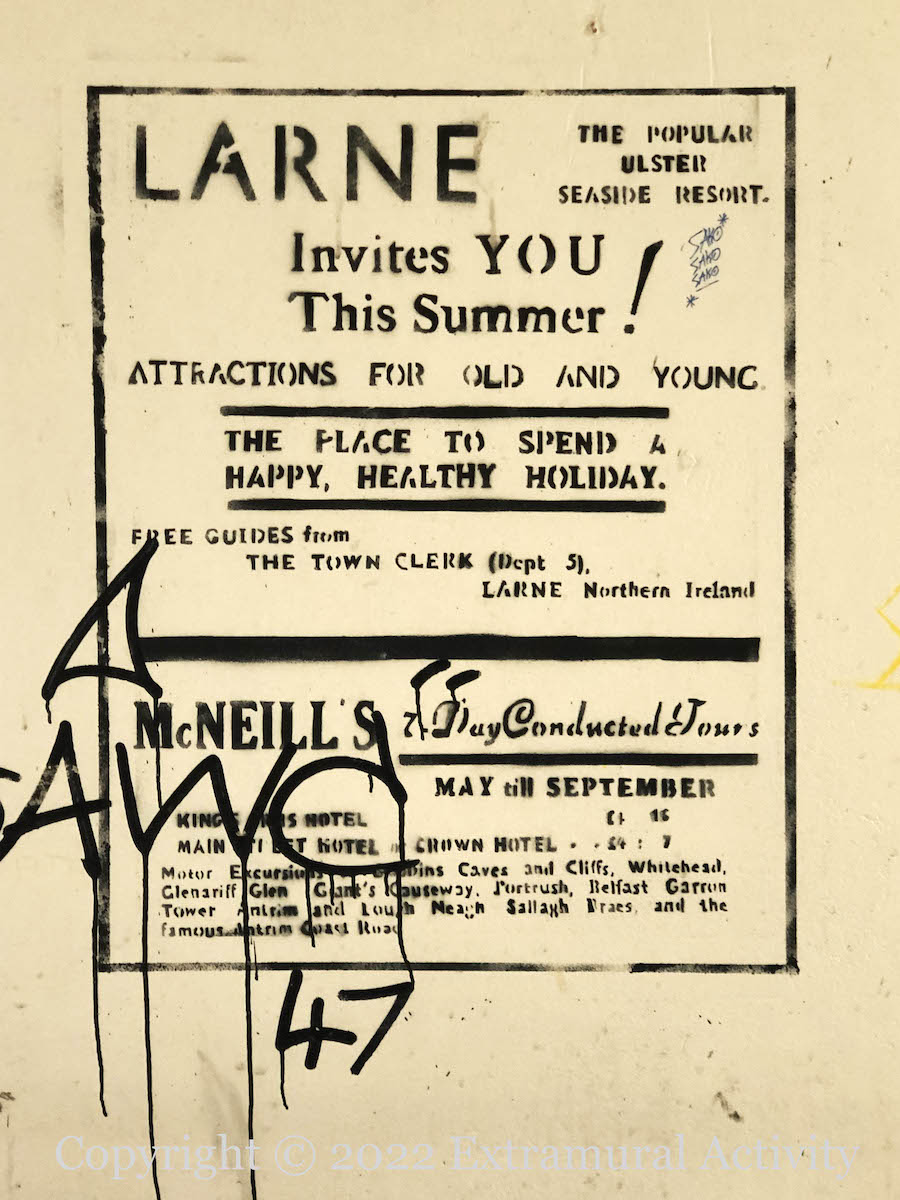
“The popular Ulster seaside resort – Larne invites YOU this summer! – Attractions for the old and young. – The place to spend a happy, healthy holiday. Free guides from the town clerk (Dept 5), Larne, Northern Ireland. – McNeill’s 7-day conducted tours, May till September. Motor excursions to Gobbins caves and cliffs, Whitehead, Glenariff glen, Giant’s Causeway, Portrush, Belfast, Garron Tower, Antrim and Lough Neagh, Sallagh Braes, and the famous Antrim coast road.” – This last is shown in the image above, with the Black Arch in the foreground.
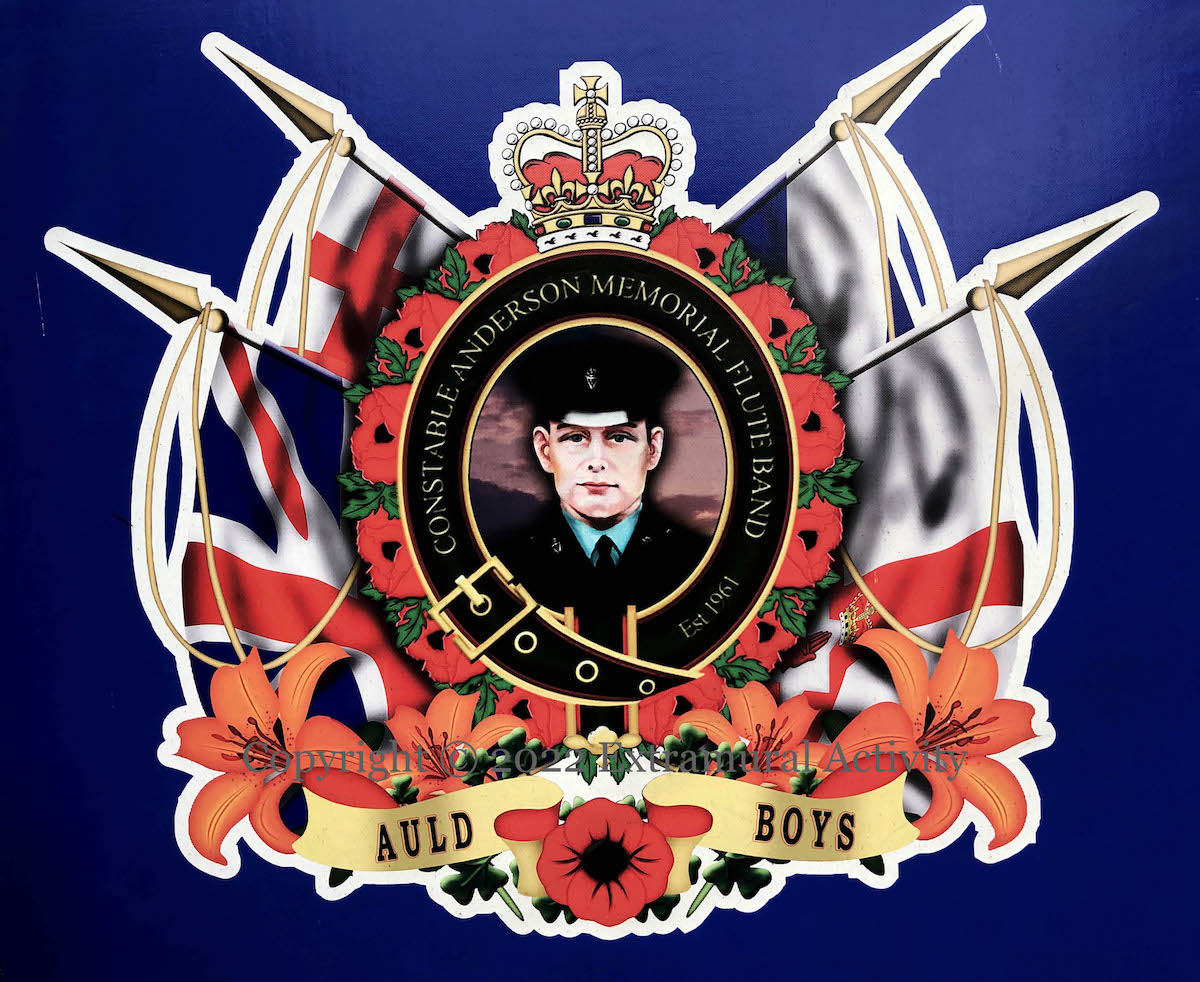
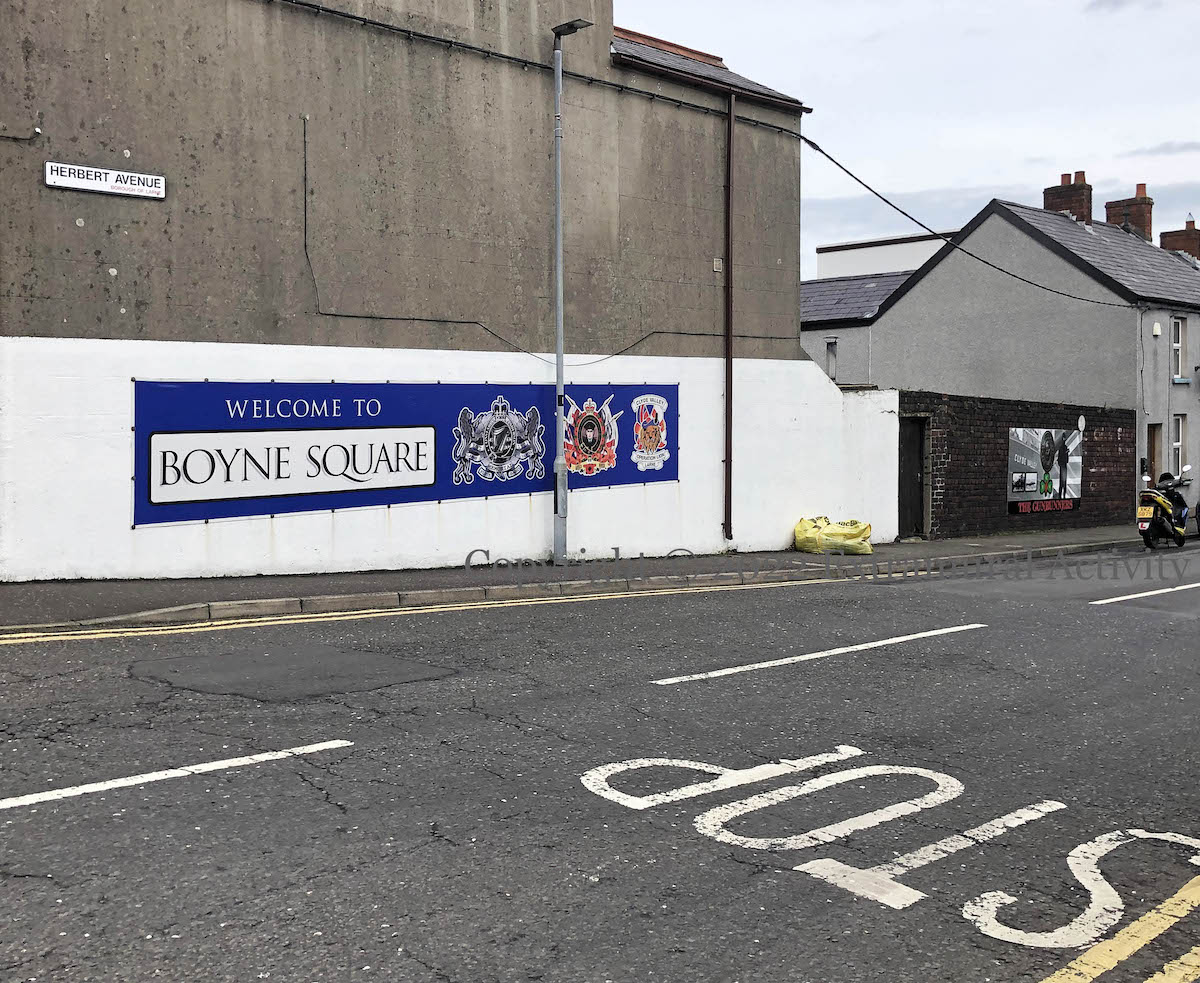
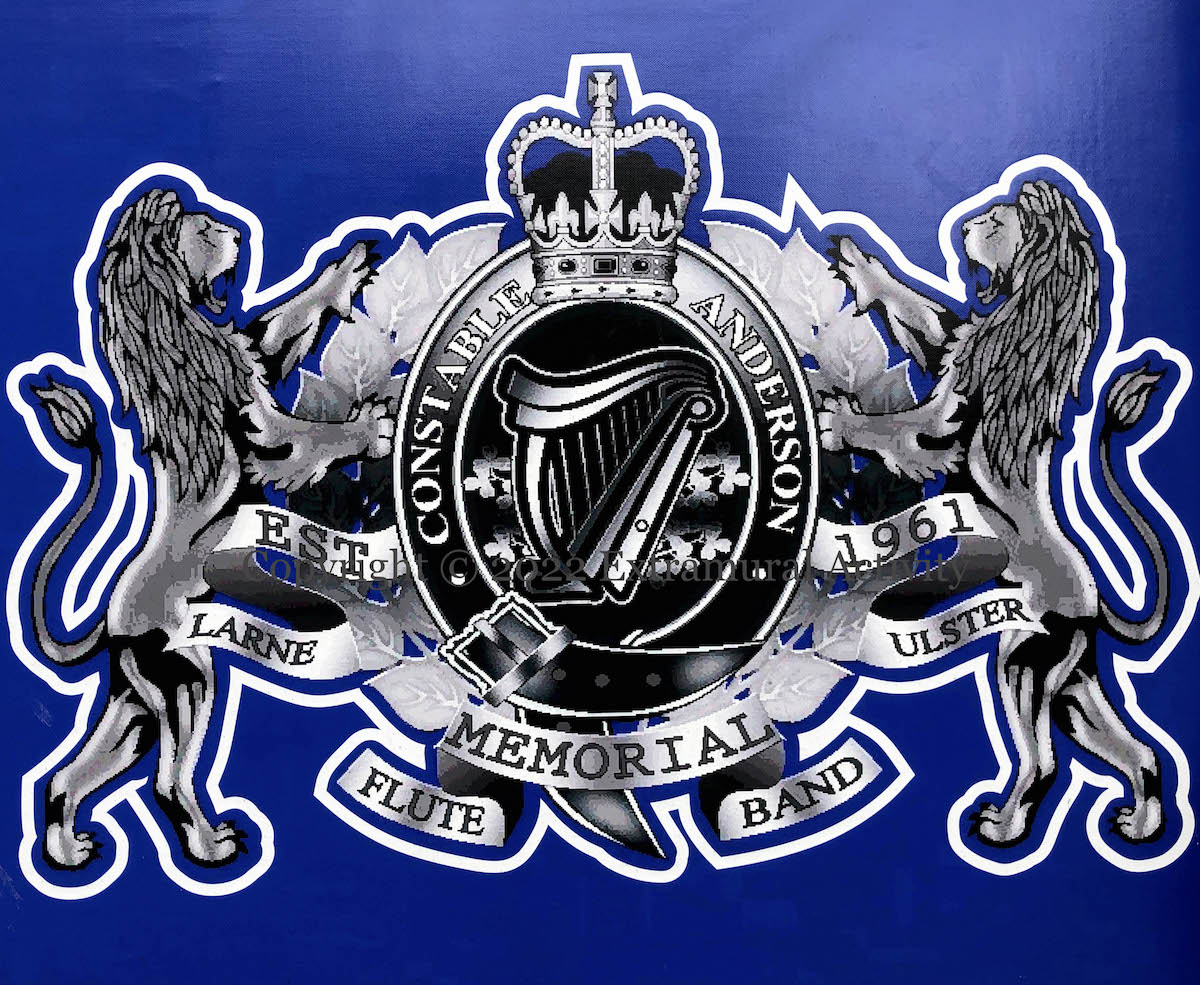
RUC Constable Norman Anderson was set upon and executed in 1961 by the IRA on the Fermanagh border as he returned from visiting his Co Monaghan girlfriend (SEFF) but he and his family hailed from Larne and he is remembered by the Constable Anderson Memorial flute band (emblem below), which was formed in the same year (Fb), and the Auld Boys (emblem above). These are two of three flute bands in the Factory area of Larne, along with the Clyde Valley flute band – see The Gunrunners.
 Seosamh Mac Coille Collection