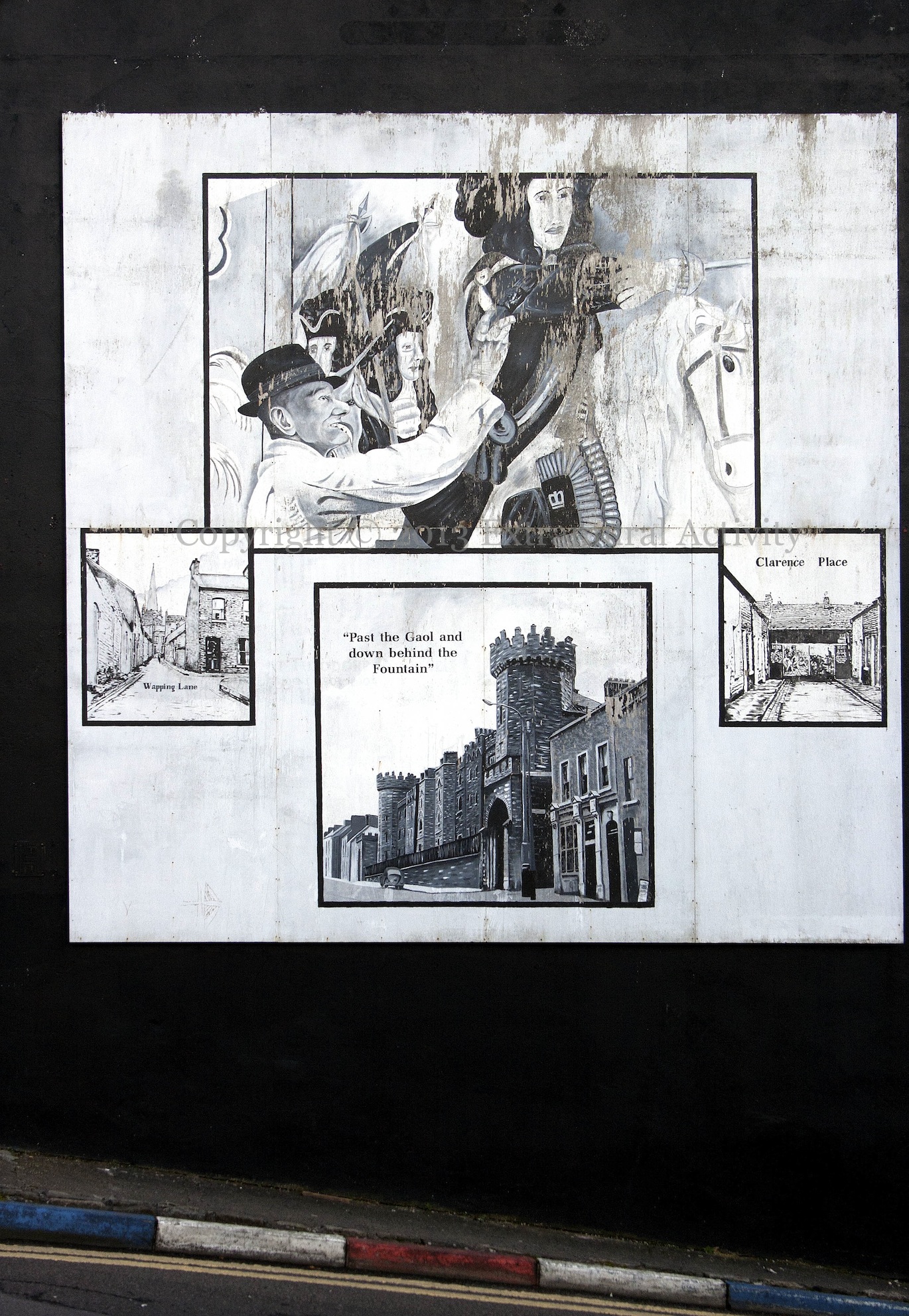
It would seem that the mural being painted in the top panel was in Clarence Place? (Inferred from this first-person account of life in The Fountain from the Londonderry Sentinel. (Add a comment if you can confirm/refute this.)
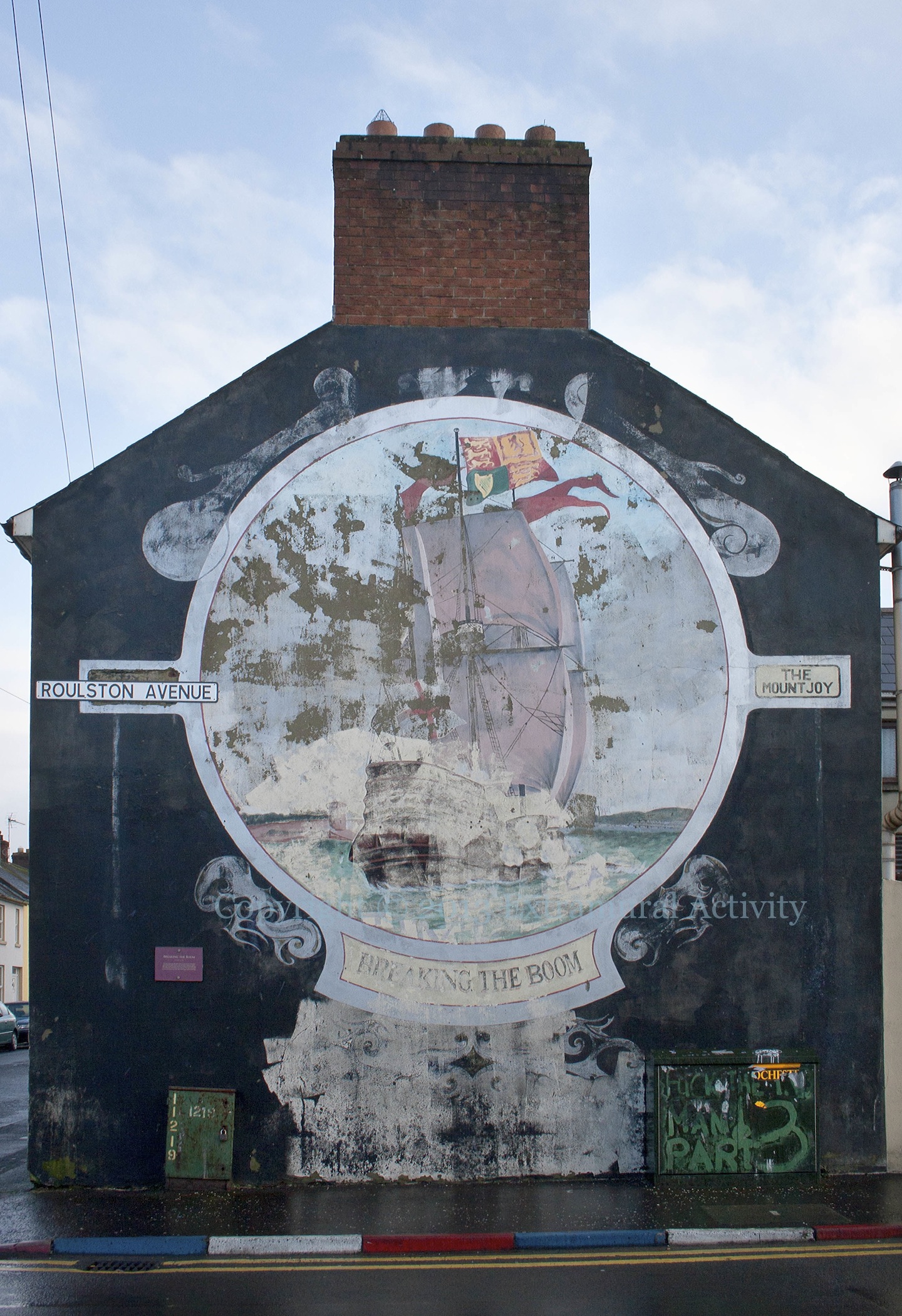
The mural of the Mountjoy, taking part in the Breaking of the Boom that ended the Siege of Derry in 1689, has seen better days, in part because of the replacement of the original two-line street sign with a modern single-line one which does not fit into the mural.
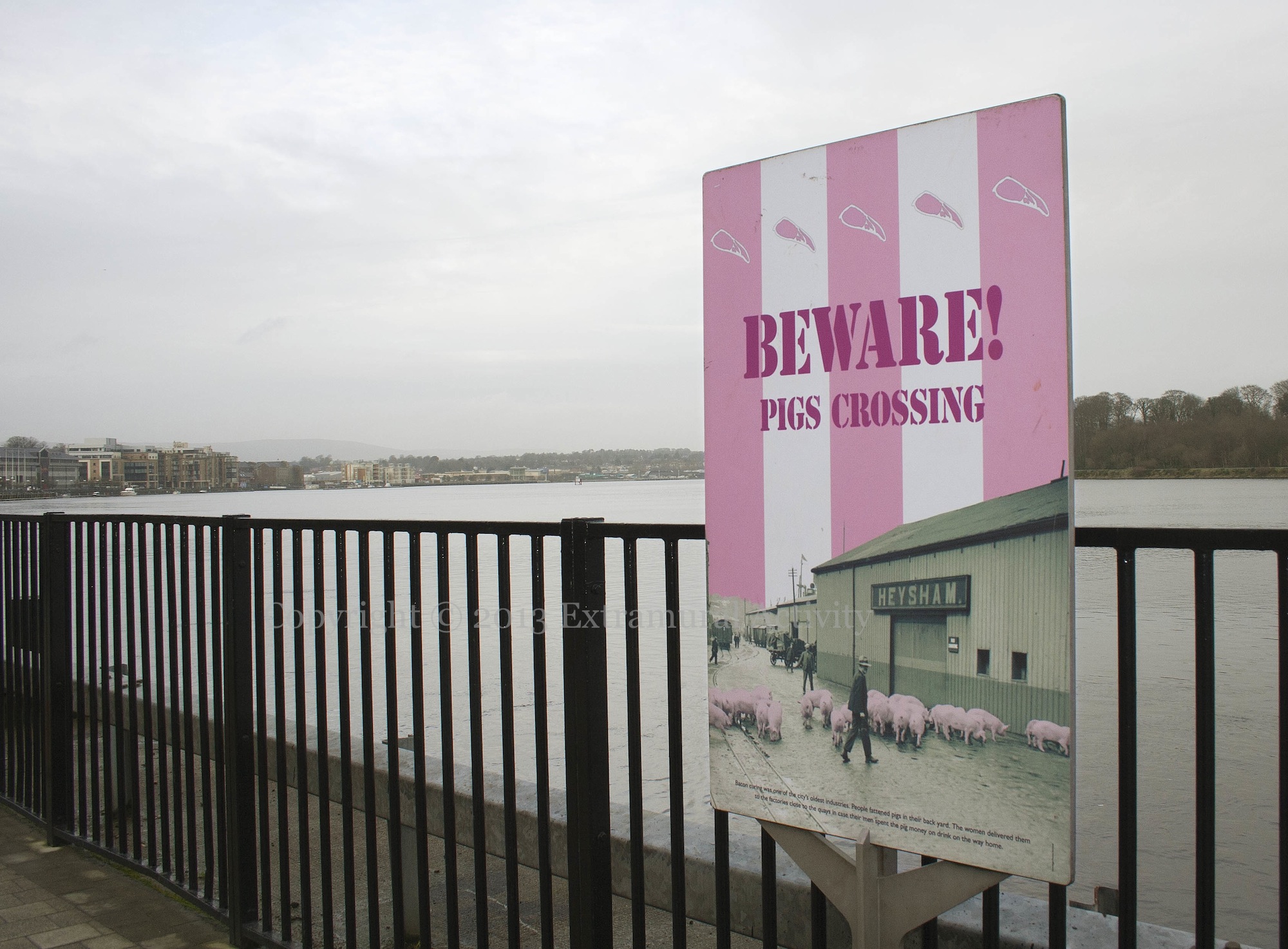
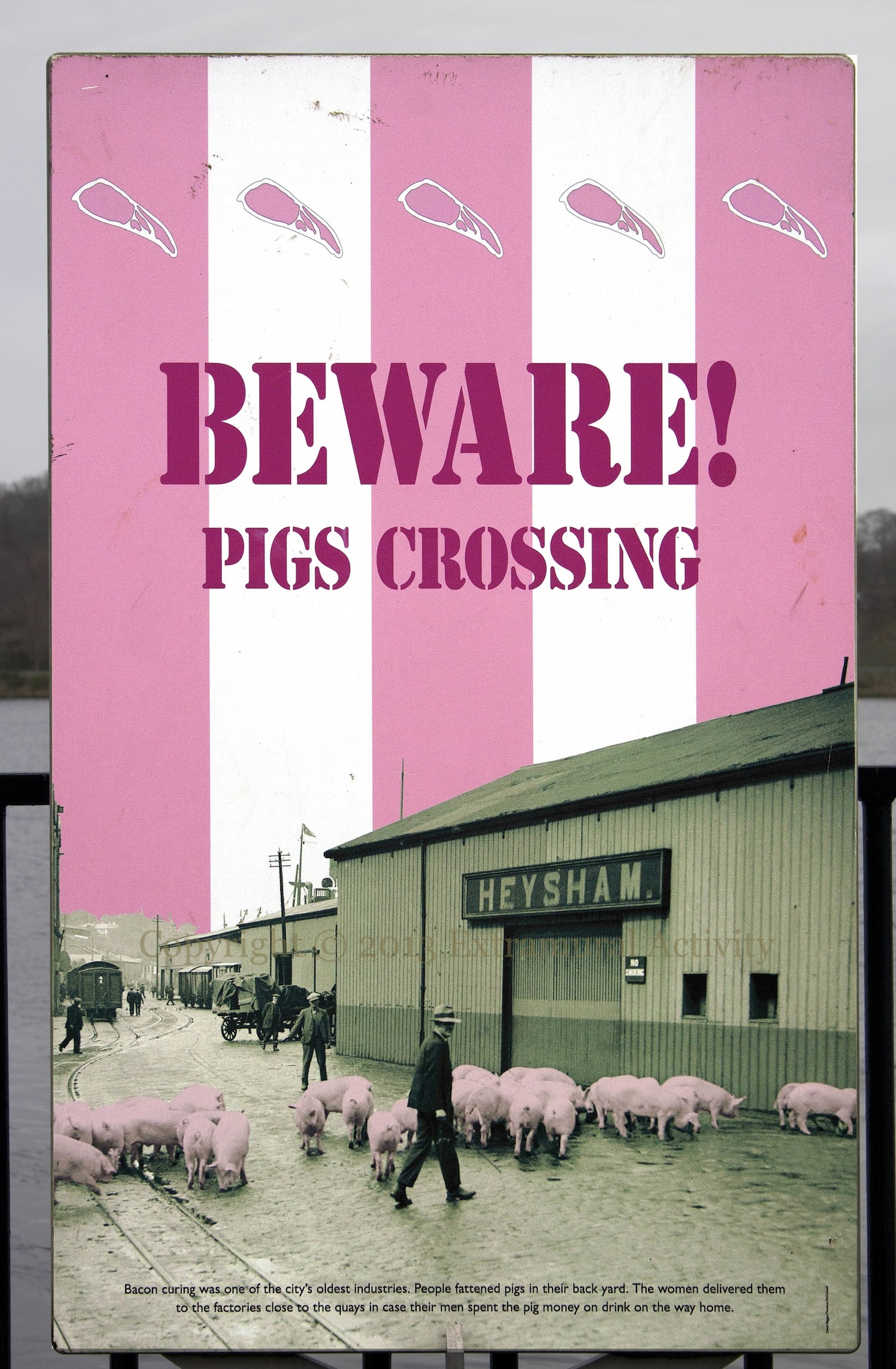
The Irish went to America, the pigs went to England. “Beware! Pigs Crossing. Bacon curing was one of the city’s oldest industries. People fattened pigs in their back yard. The women delivered them to the factories close to the quays in case their men spent the pig money on drink on the way home.”
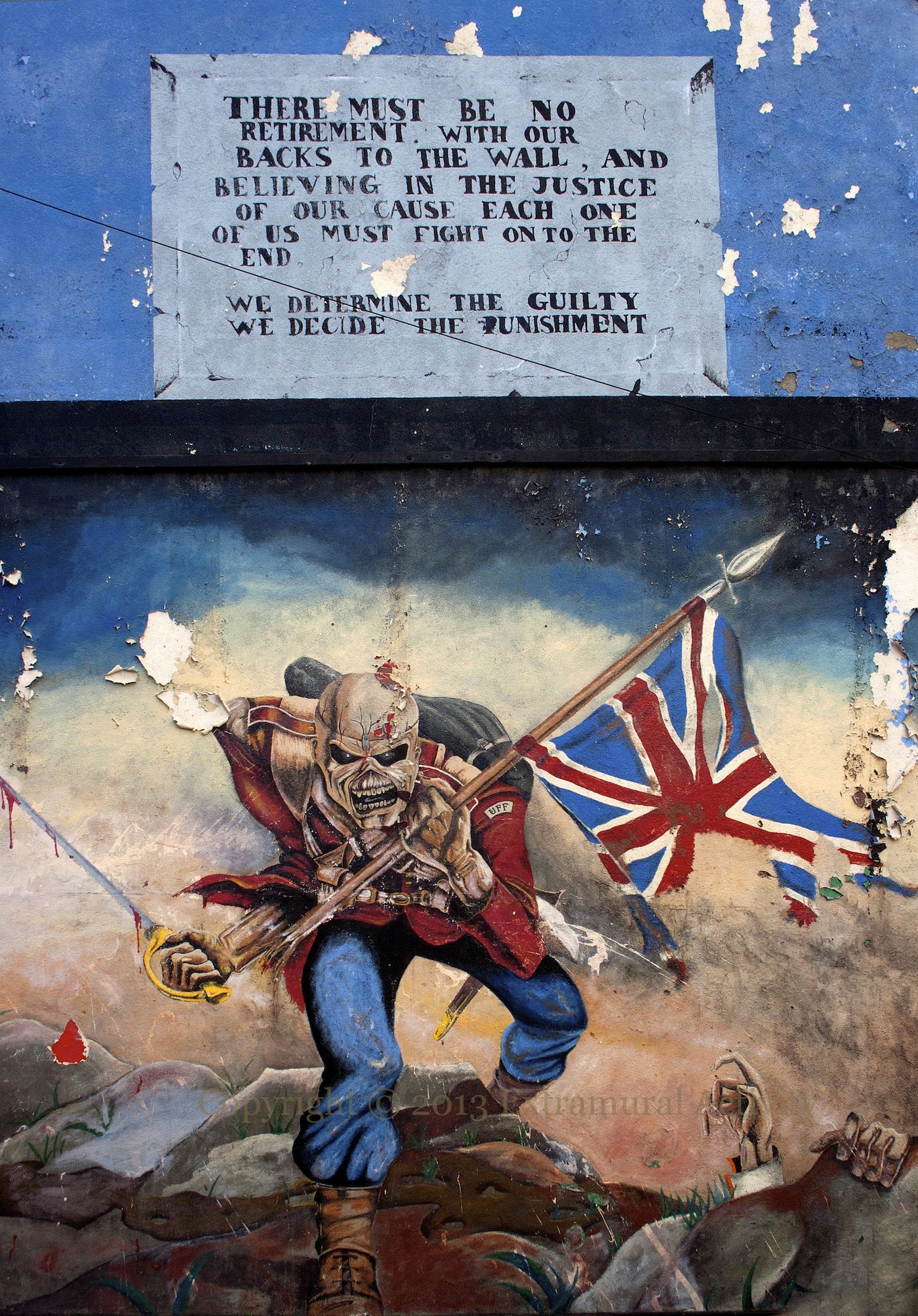
One of loyalism’s most famous muraling icons – paradoxically of the peace-time era – is Eddie The Trooper. This one is in the Waterside’s Ebrington Terrace, Londonderry. For others in other locations, see Eddie’s Visual History page.
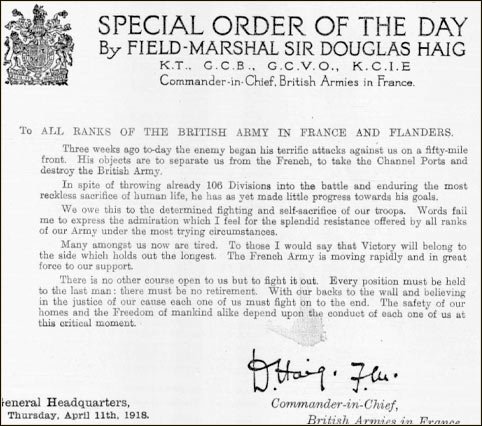
The first part of the words above the board come from the last paragraph of this WWI order: “There must be no retirement. With our backs to the wall and believing in the justice of our cause each one of us must fight on to the end”.
The last sentence of Haig’s order is not included; instead we here have “We determine the guilty. We decide the punishment.” which appears to be the motto of a “fantasy tabletop war game” Warhammer 40,000.
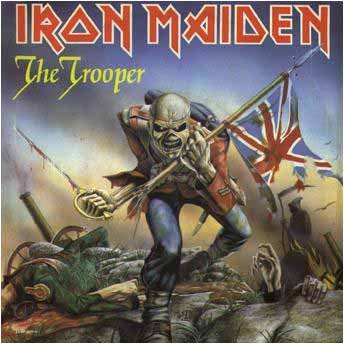
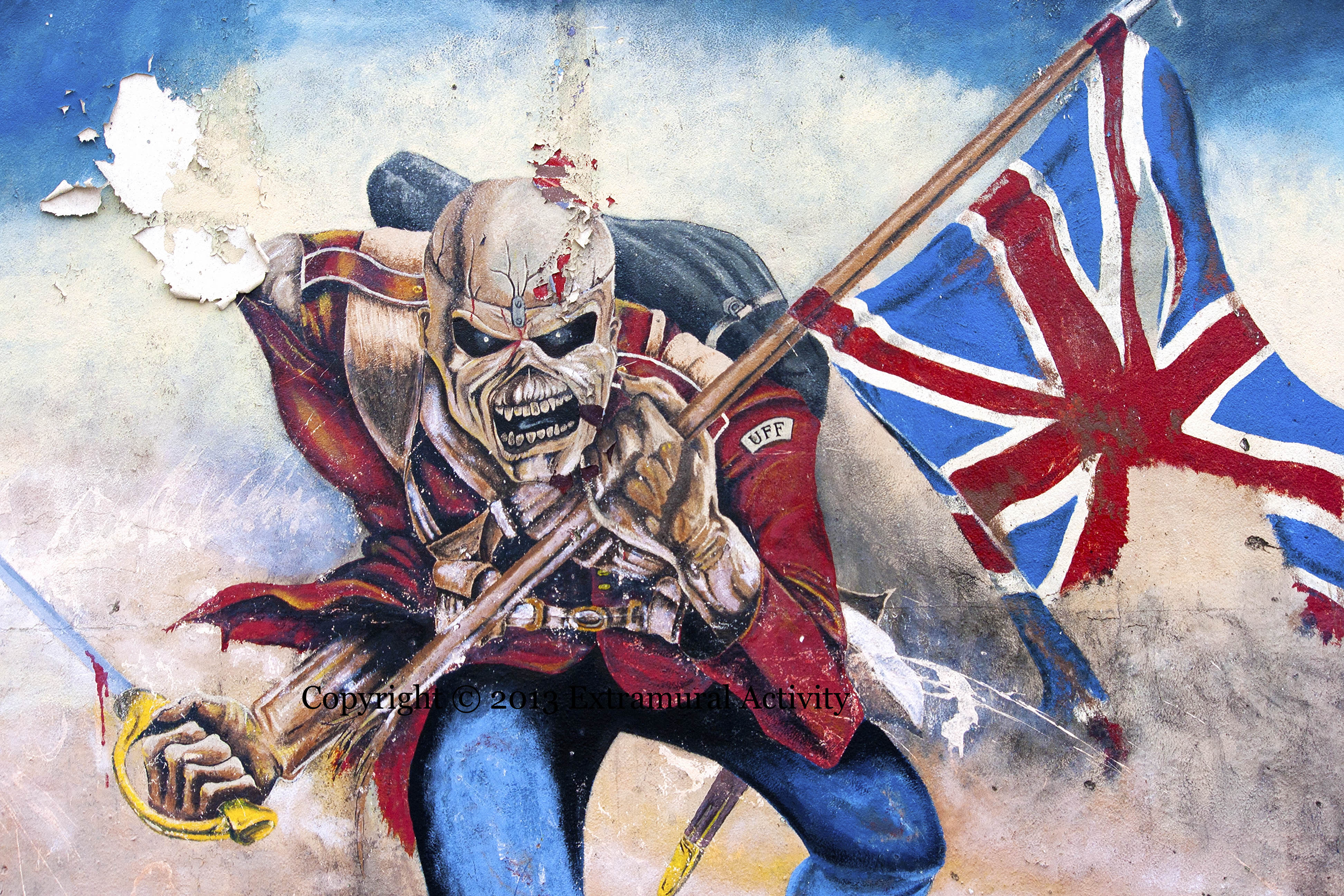
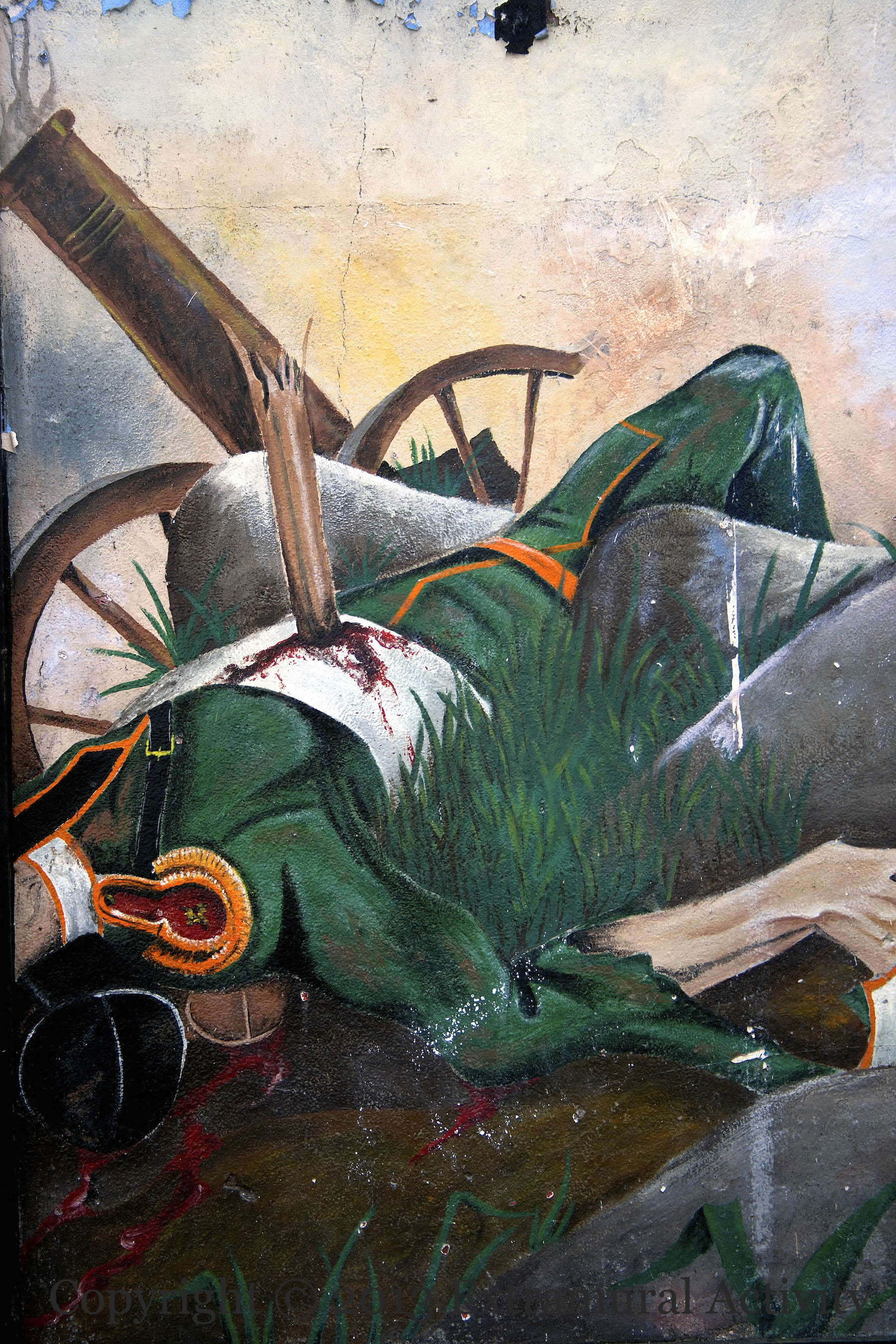
The image is a 1997 (according to Peter Moloney) replica, with additions, of a 1983 Iron Maiden cover (WP). This character, “Eddie”, was featured in much of Iron Maiden’s artwork. The two images below show a close-up of Eddie, now sporting a UFF badge on his shoulder, and of the victim on the left, now wearing a distinctively gold coloured epaulette to go with his green uniform and white sash.
The board was painted by a group called ‘Attitude Artwork’, made up of Dee Logan, Mark Logan, and Marty Edwards (CAIN). In an interview with the BBC, Marty Edwards said, “I work for Attitude Mural Artists. We’re based in the Waterside, Londonderry and we paint predominantly Protestant paintings. We would usually paint paramilitary paintings for UDA people, UVF people in their own estates. You know, sort of to mark their territory bounds like, you know, stuff like that. Usually we’re left to our own devices, to come up with something that’s really intimidating, will antagonise Catholics. But this project I’ve been involved with two groups from both sides of the community, four schools. … ” (BBC)
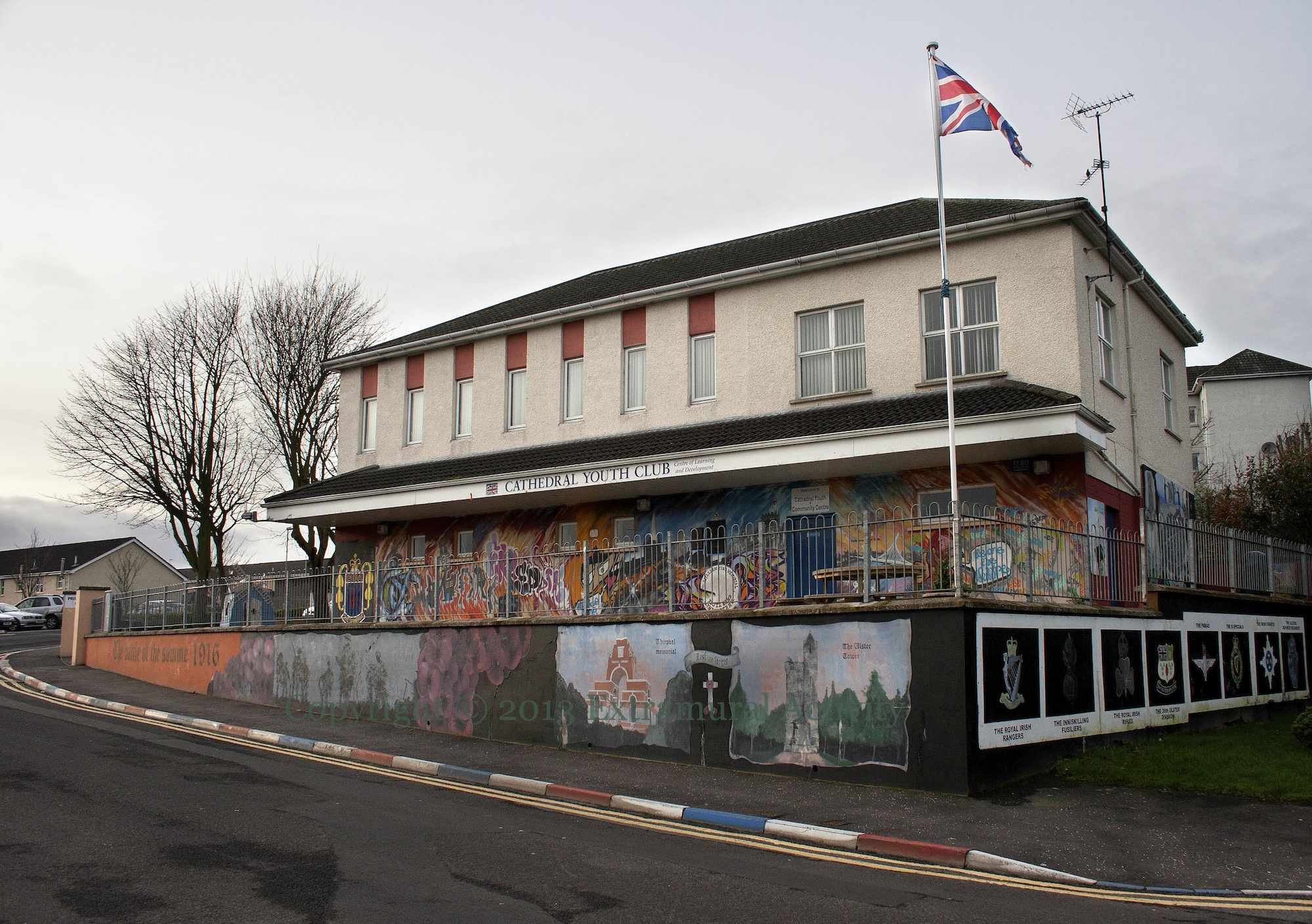
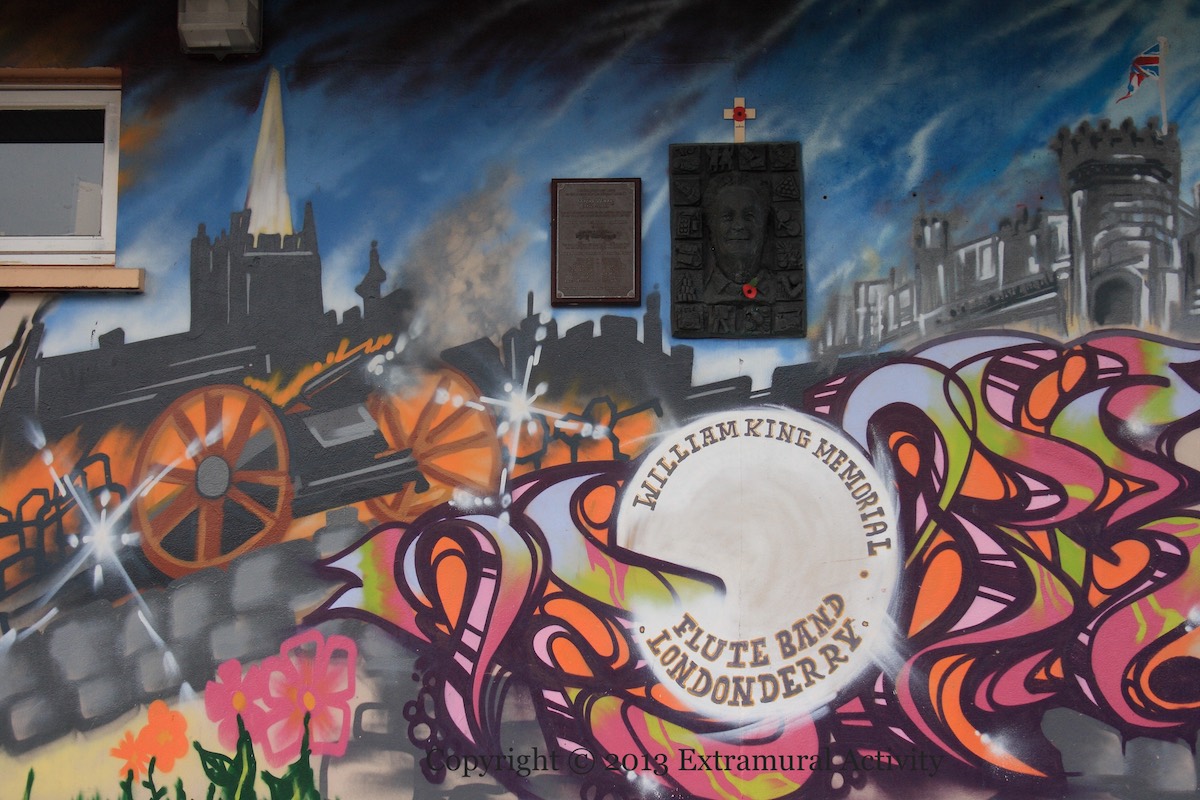
On closer inspection, one can see images relating to WWI, the UDA, the William King Flute Band, and various arms of the military such as the Paras and B Specials adorning the Cathedral Youth & Community Centre/Centre For Learning & Development in The Fountain, London-/Derry/Doire. The close-up below shows a plaque in honour of David Warke, who founded the club in 1972 (Yellow Tom); the profile is perhaps also of Warke.
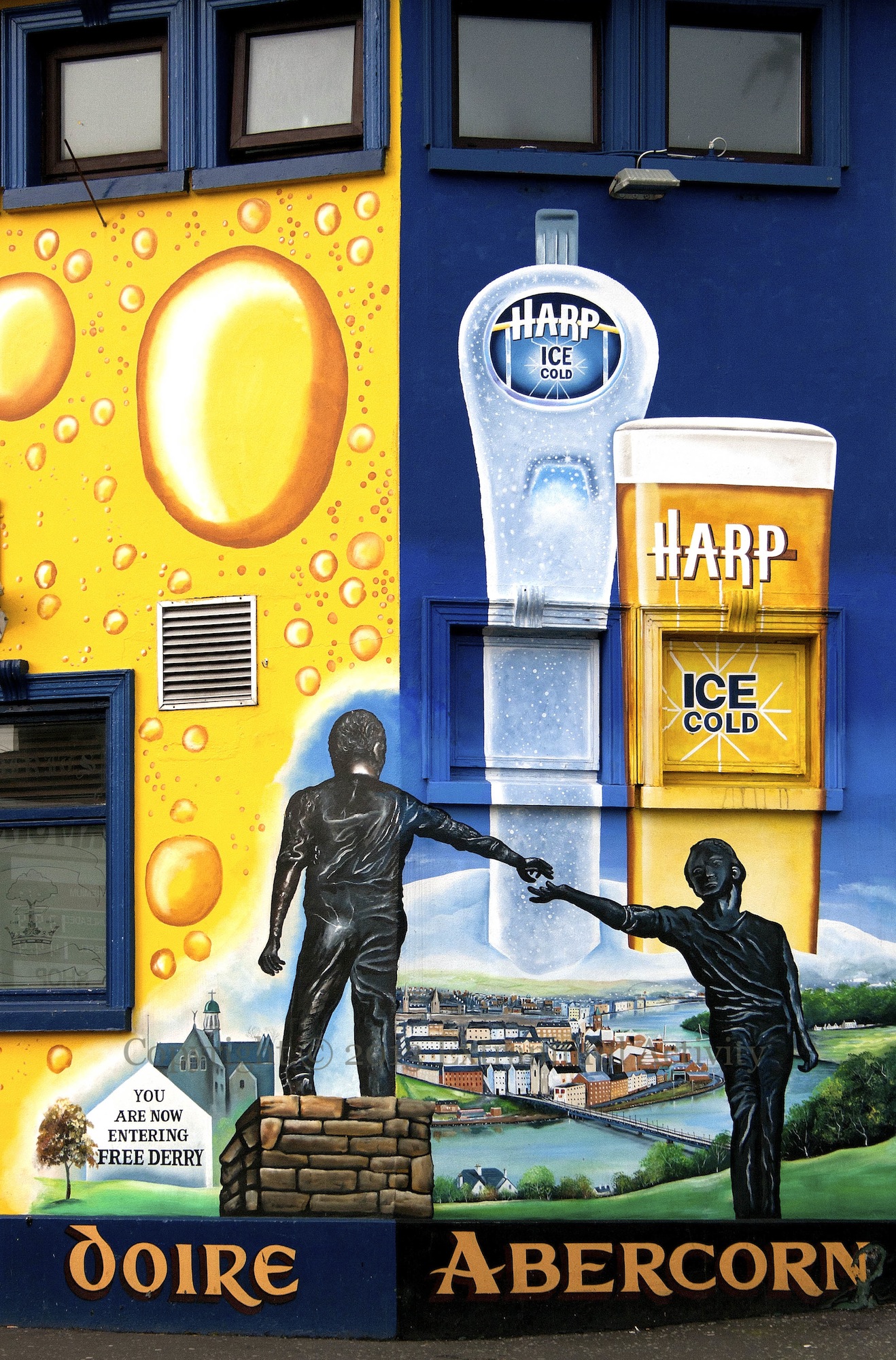
A partly commercial, partly political, mural on the Abercorn Bar, Abercorn Road, London-/Derry/Doire. The figures with outstretched hands are a copy of Maurice Harron’s ‘Hands of Peace’ statue, which is at the roundabout roughly 250m away (where the bridge in the picture lands on the city-side of the Foyle river; the location of the pub is up the hill to the left). He has made a great deal of other interesting work too – check out the video of him at work on his web site.
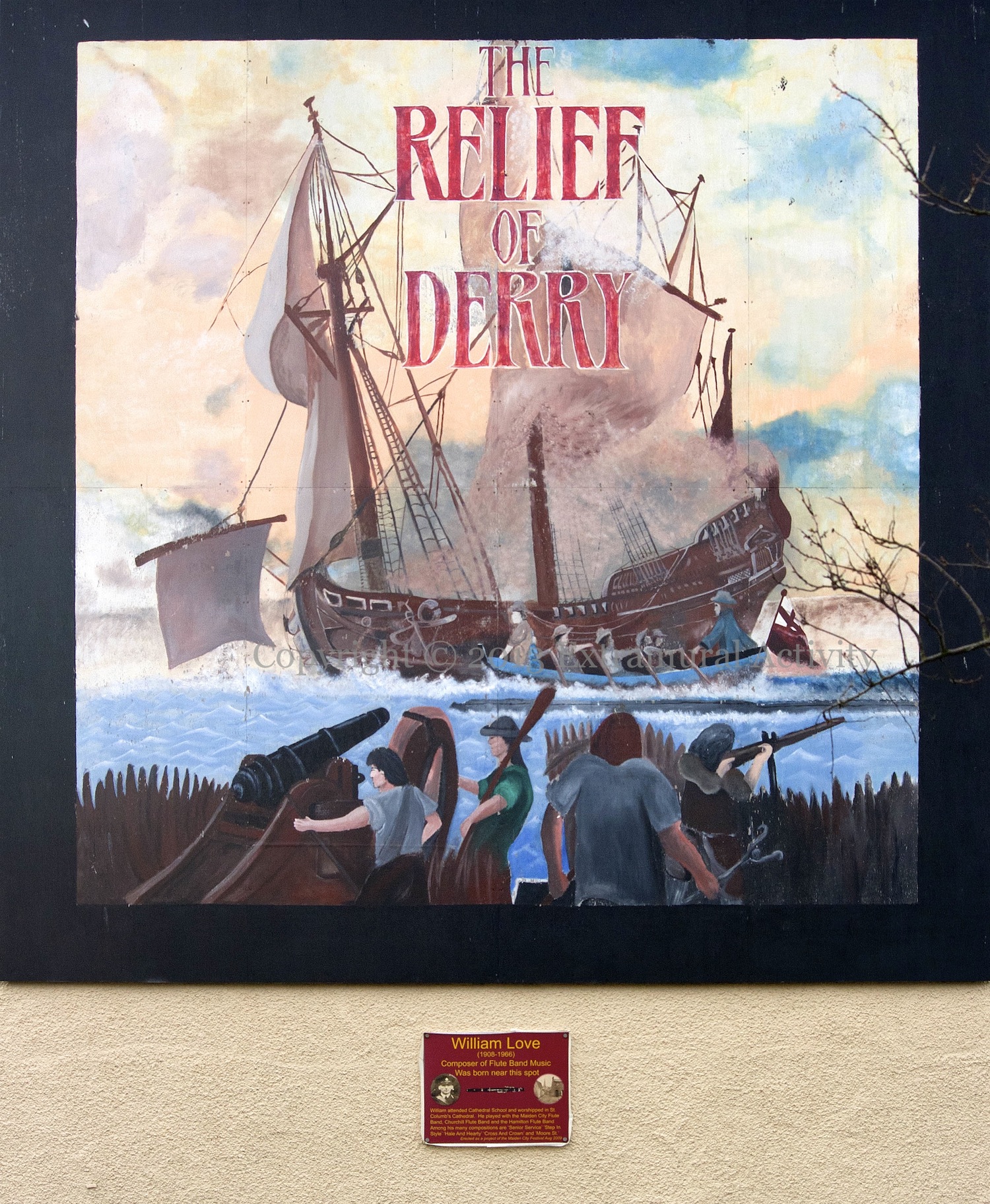
“Derry” became “Londonderry” in 1613, but in 1689 at the time of the siege, as now, it was commonly referred to as “Derry”. The slogan of the defenders was “No Surrender” and the successful resistance to penetration gave rise to the epithet “The Maiden City” (WP).
Pictures of the unveiling of the plaque in 2009, which commemorates William Love, can be seen here.
 Seosamh Mac Coille Collection