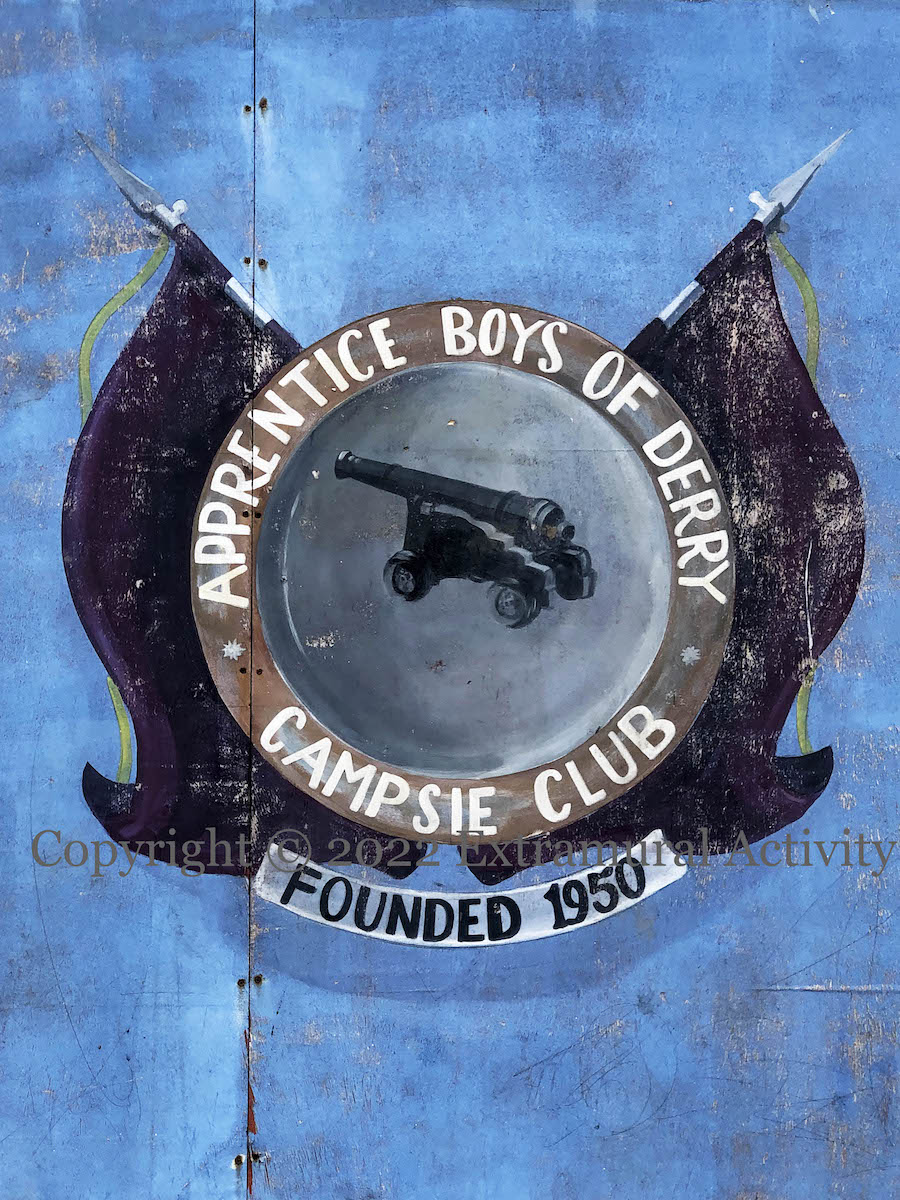
The Campsie Club (of Londonderry) is the youngest of the eight parent clubs of the Apprentice Boys “founded 1950” and is the only one named after one of the apprentice boys who shut the gates against the forces of James II in 1688 – Henry Campsie (web).
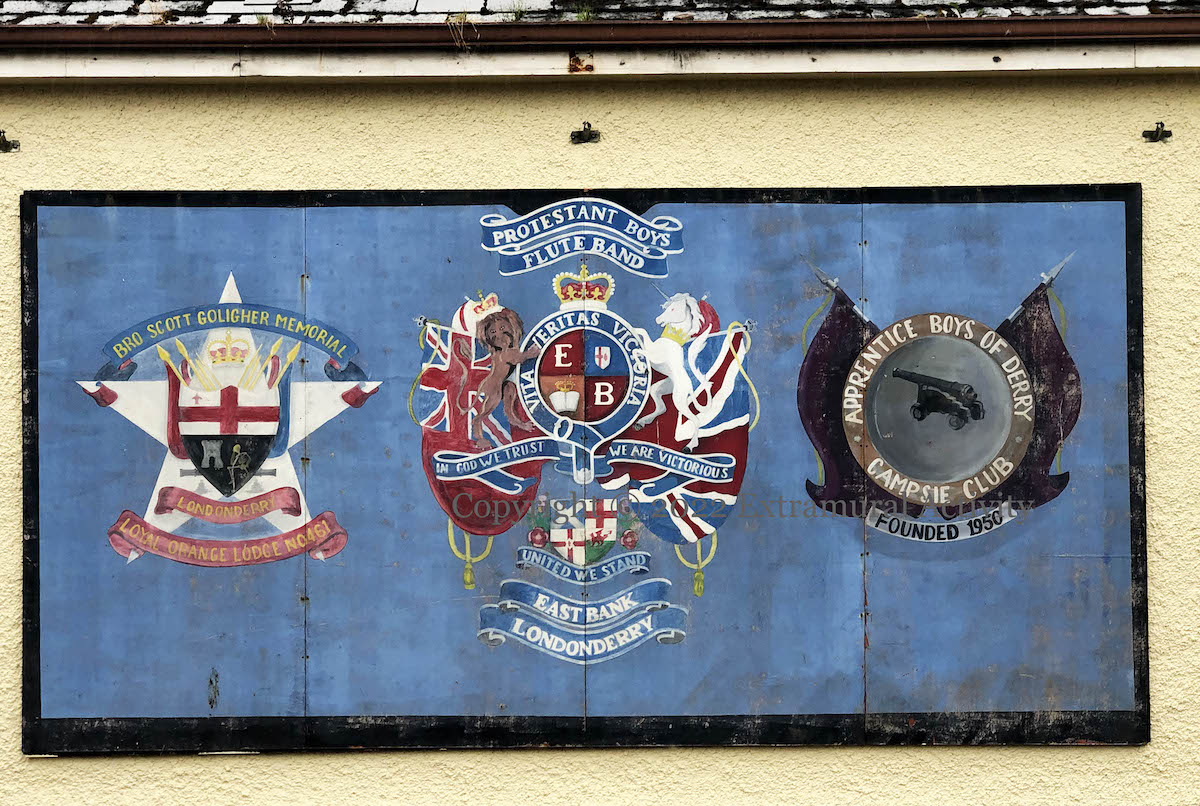
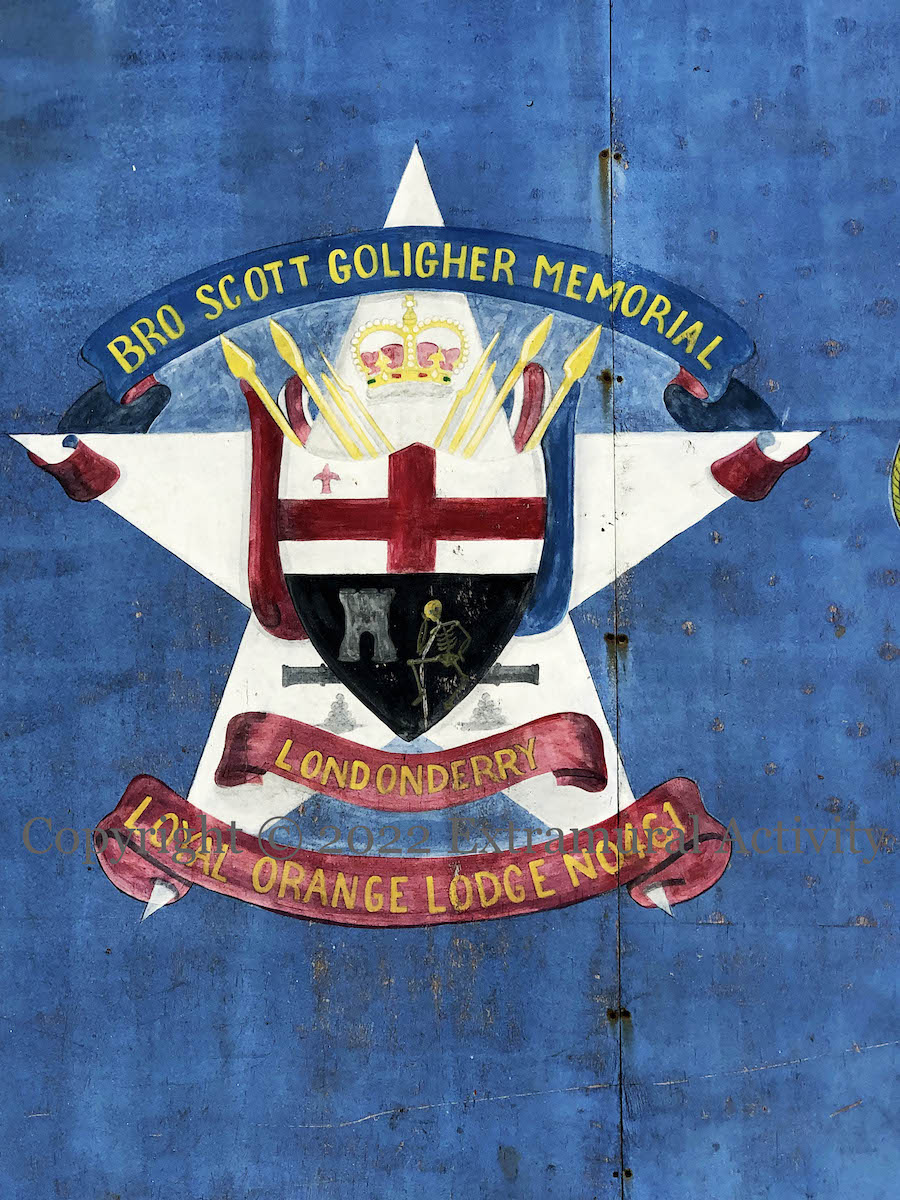
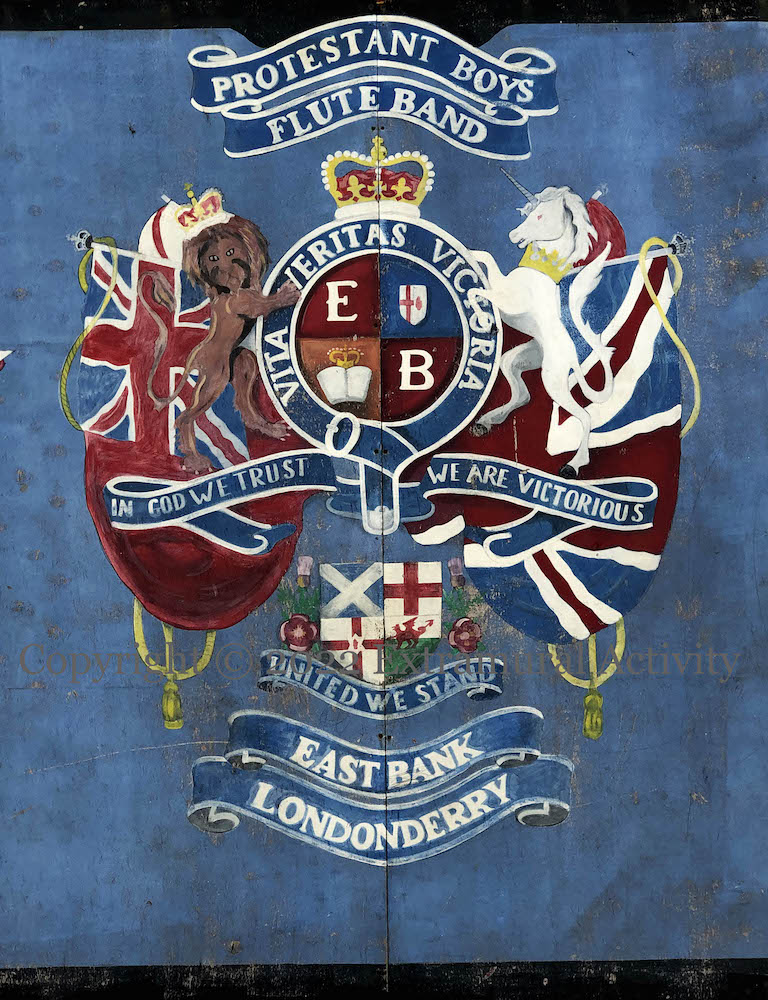
This Irish Street board puts the “Bro. Scott Goligher Memorial, Londonderry, Loyal Orange Lodge No. 461” (history of the lodge at Grand City Lodge) and the Campsie Club on either side of the “Protestant Boys flute band” (Fb).
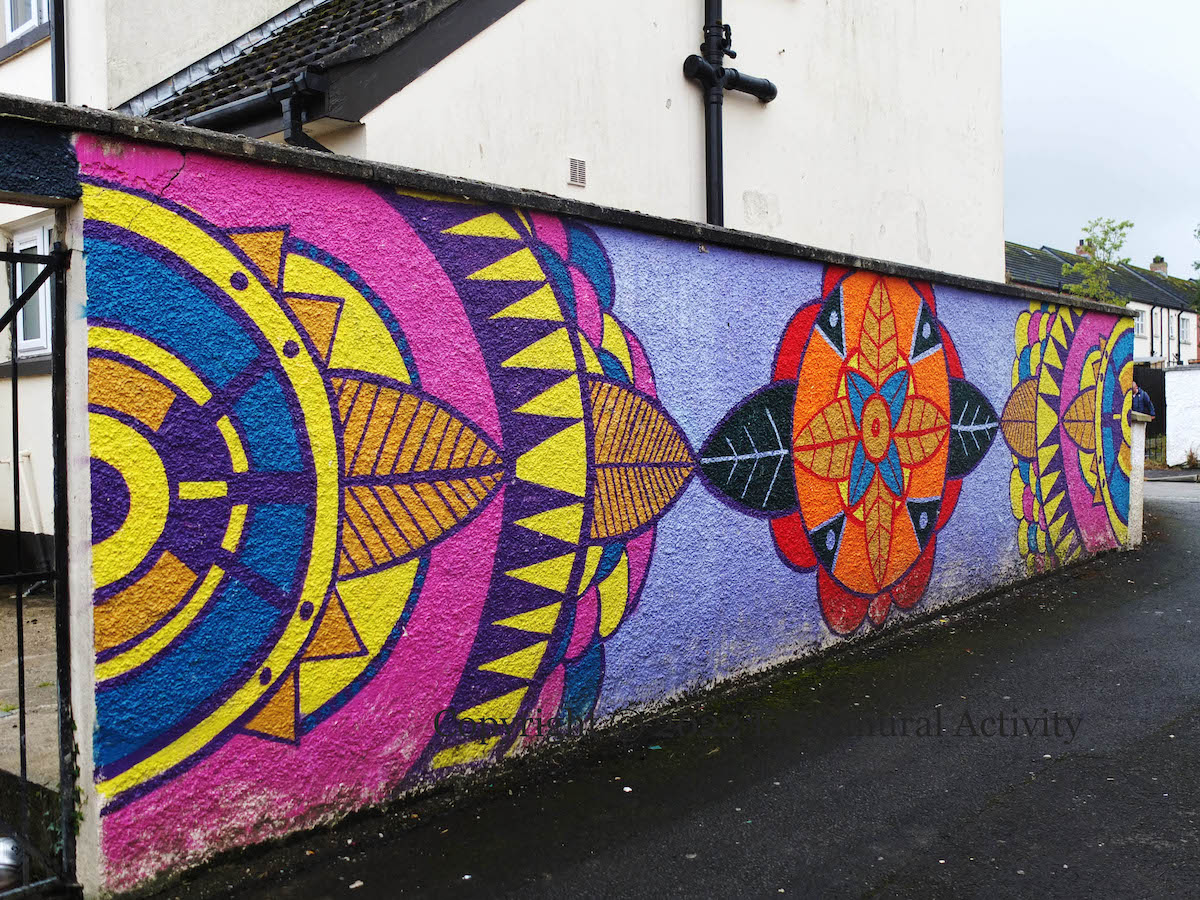
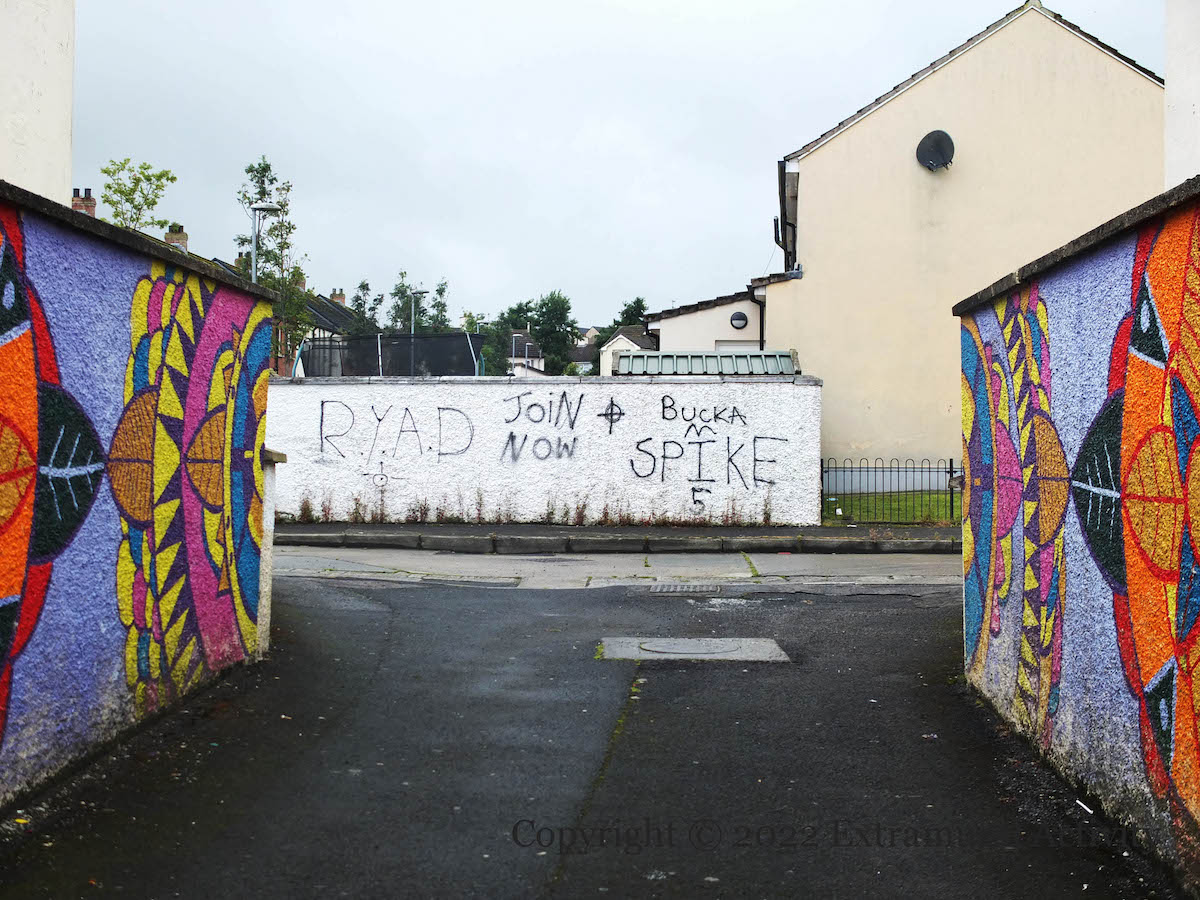
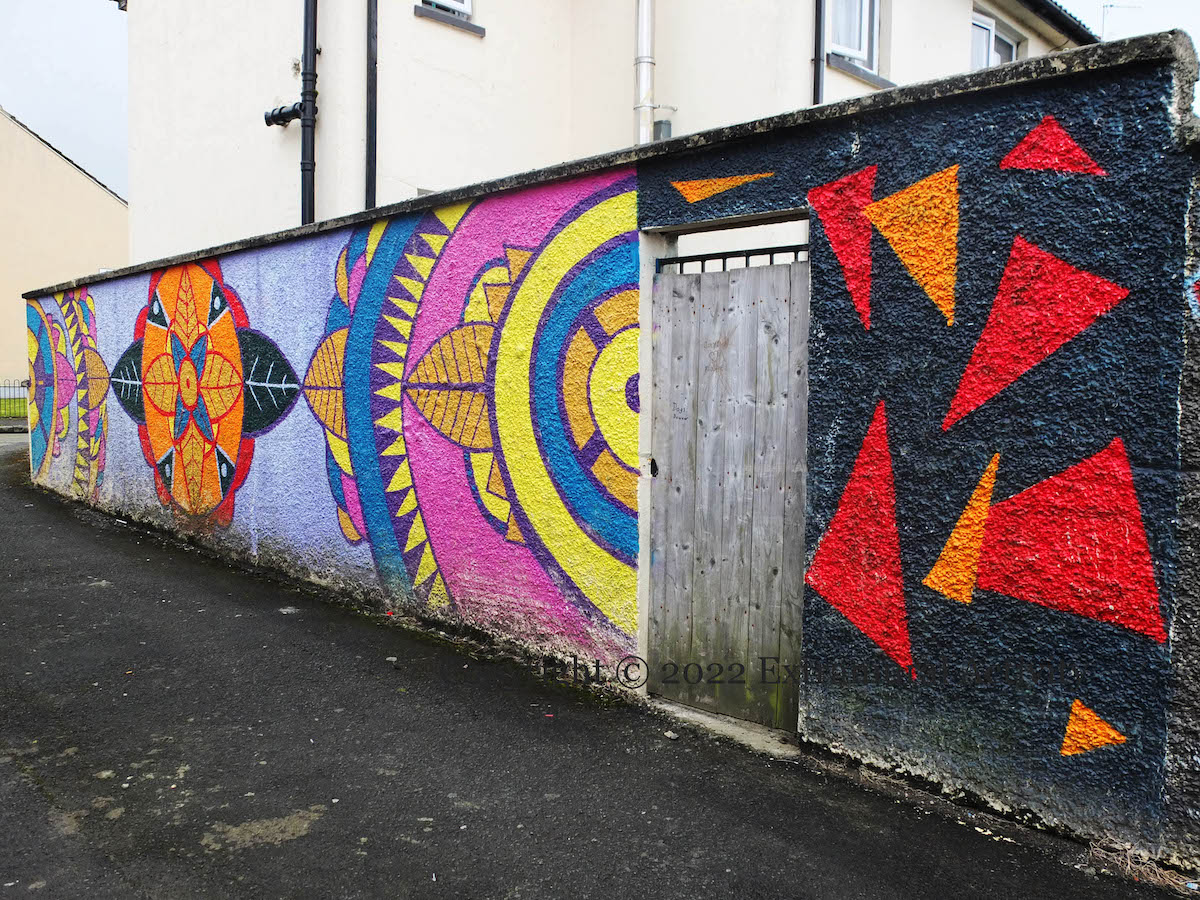
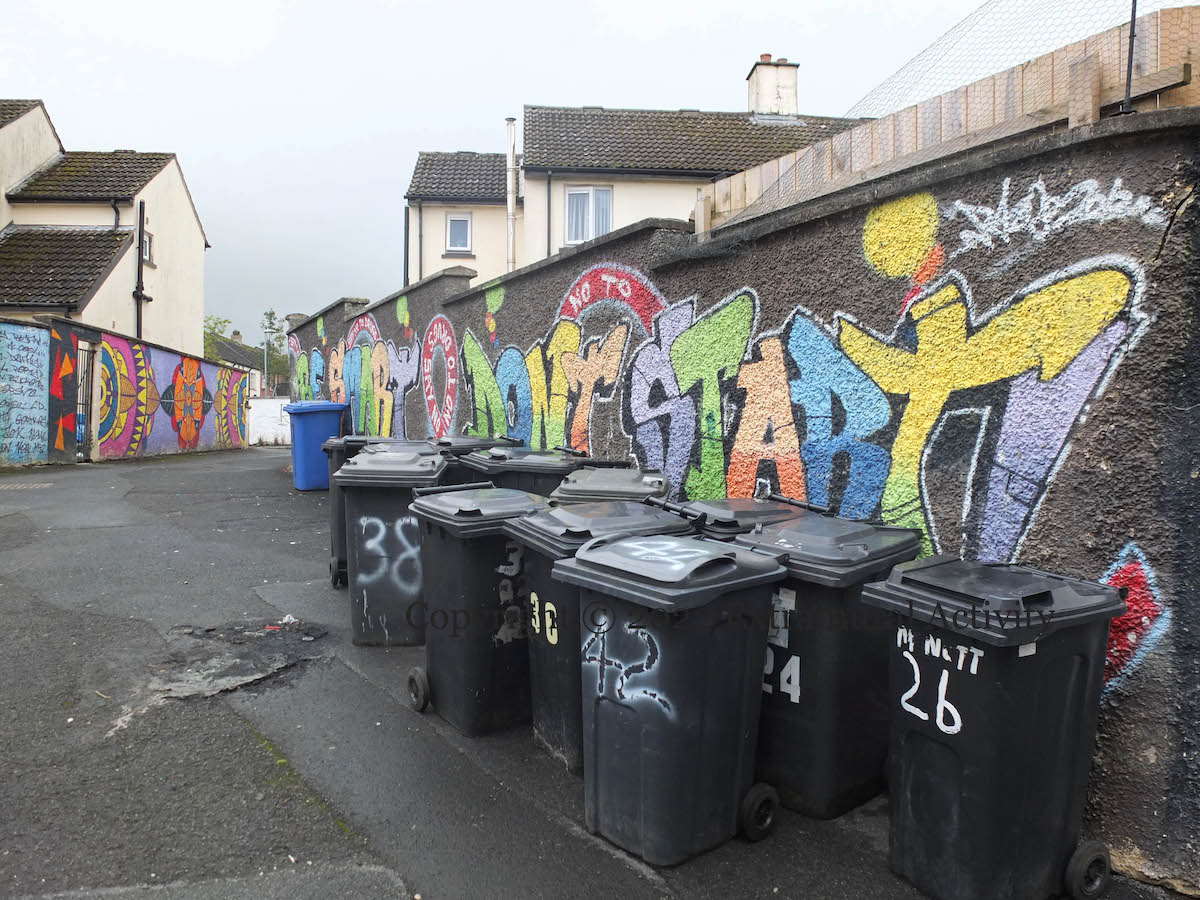
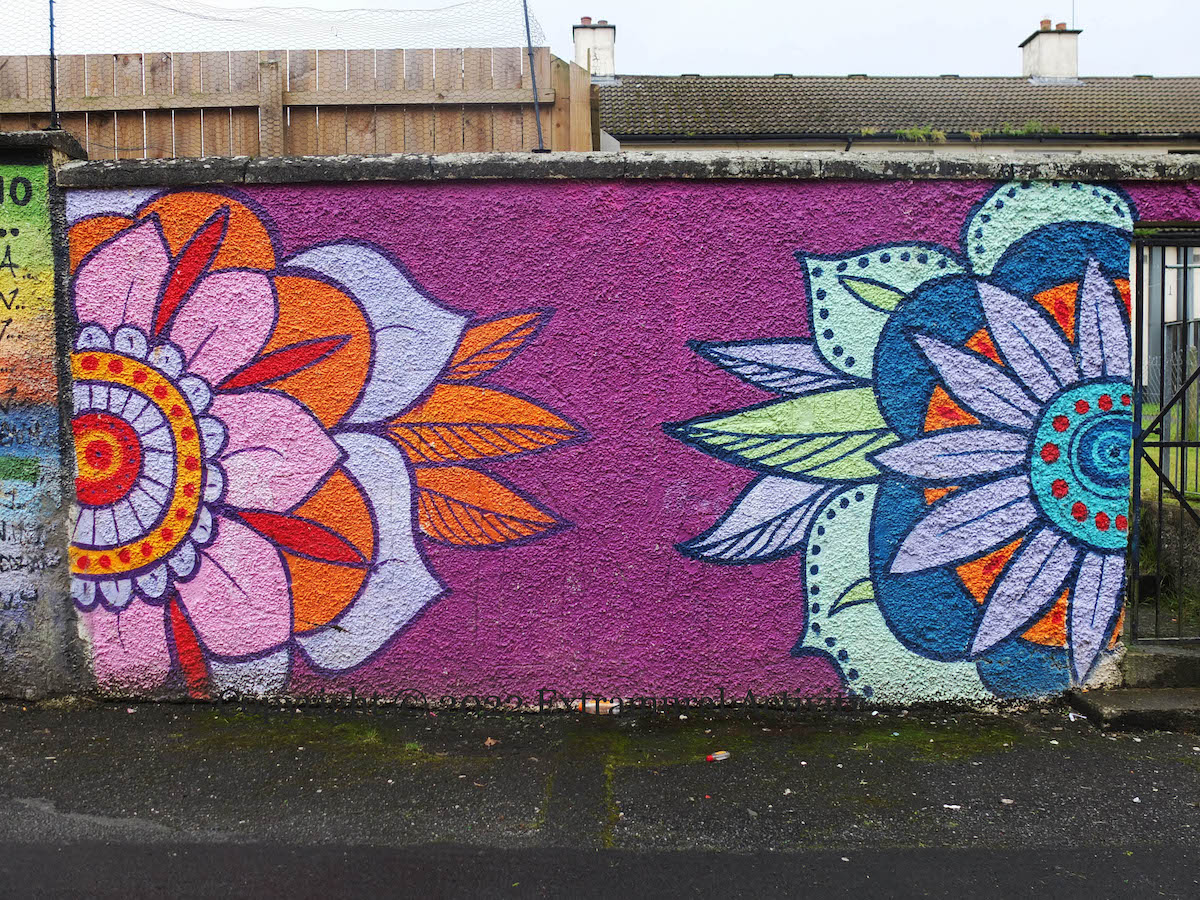
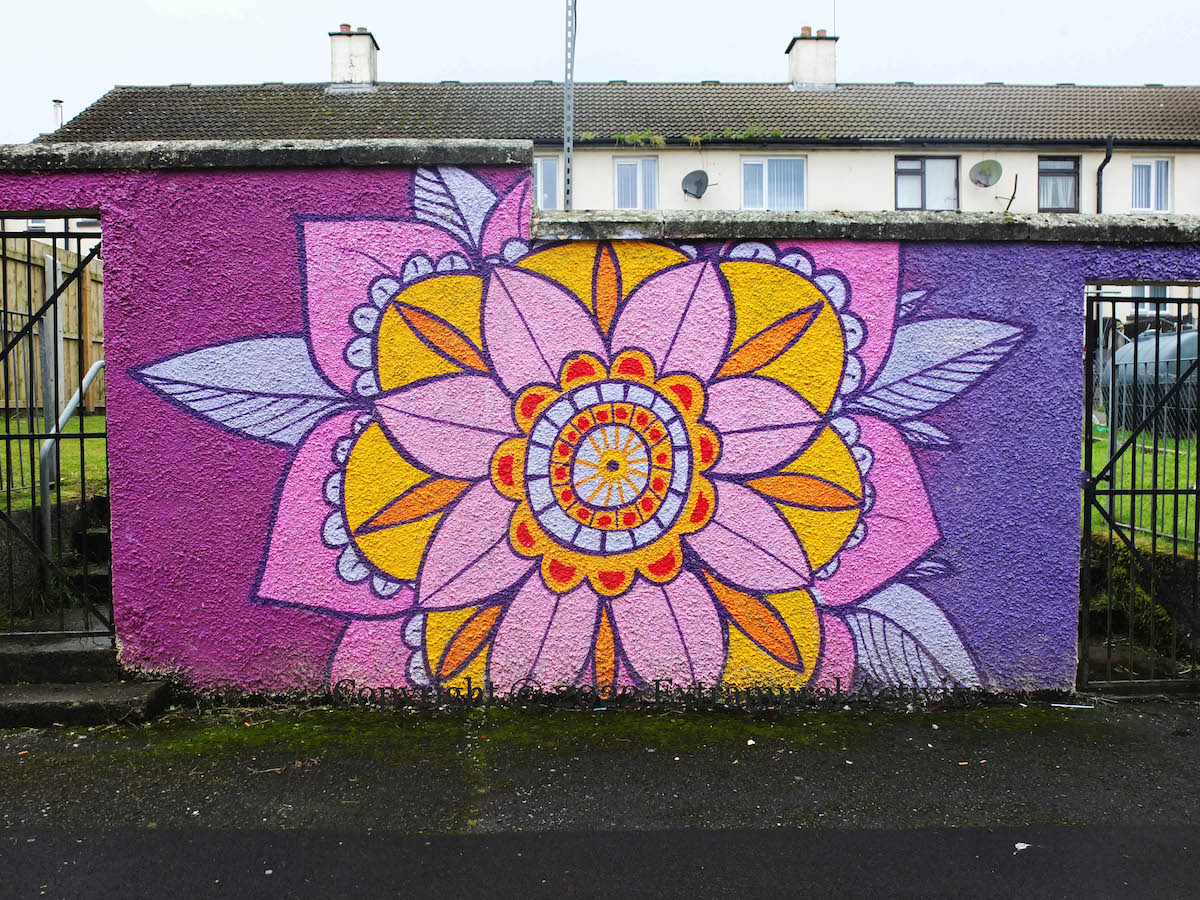
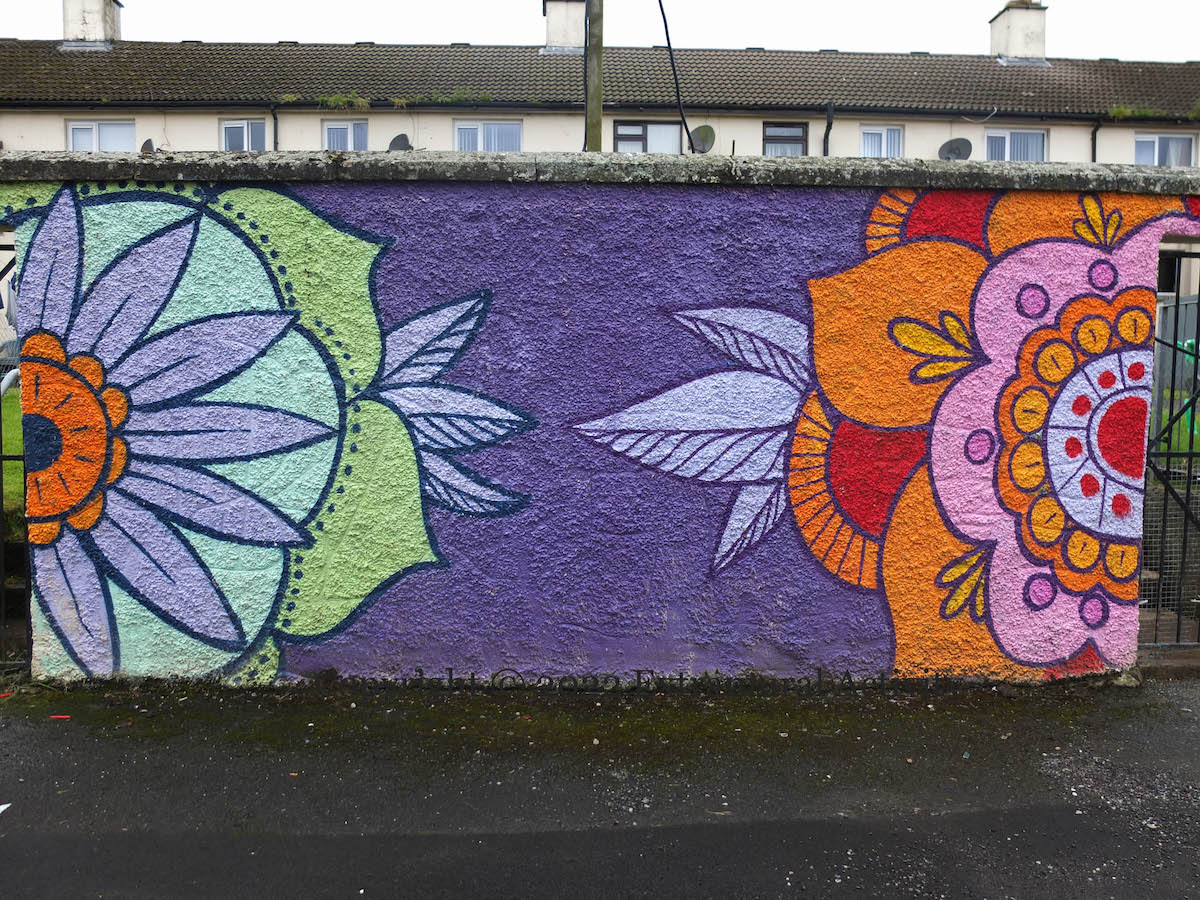
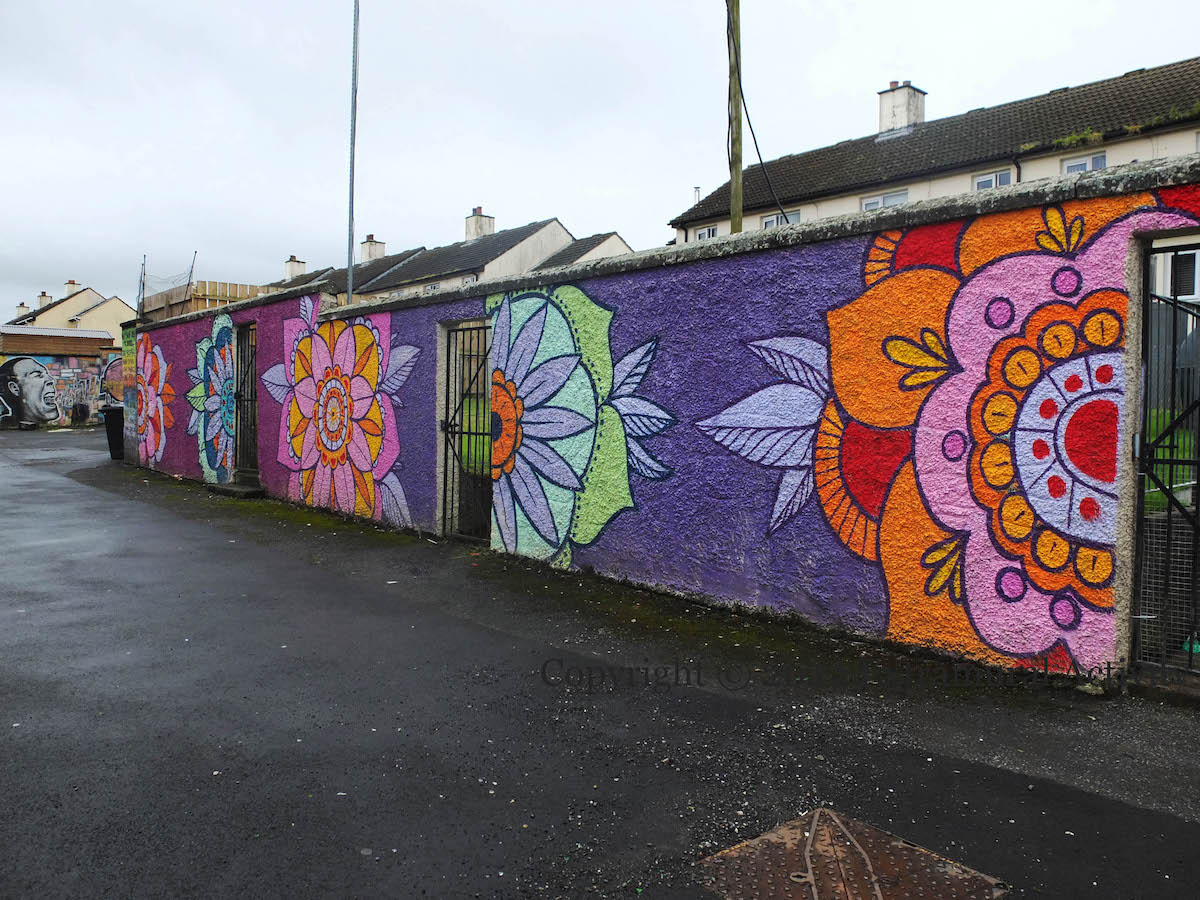
These flowery designs are in the alley leading from Central Drive to Rinmore Drive, where you can see the “RYAD” graffiti, which is presumably a variation on RAAD (see previously External & Internal) meaning “Republican Youth Against Drugs”.
The artist is unknown – please get in touch if you know it.
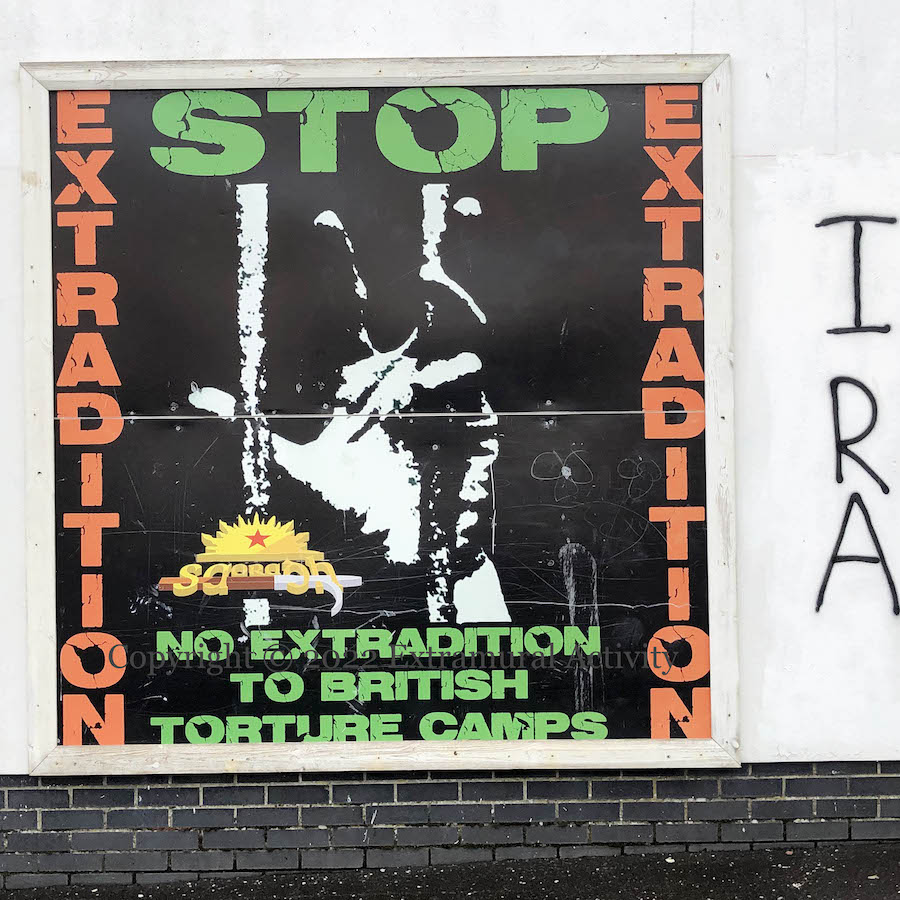
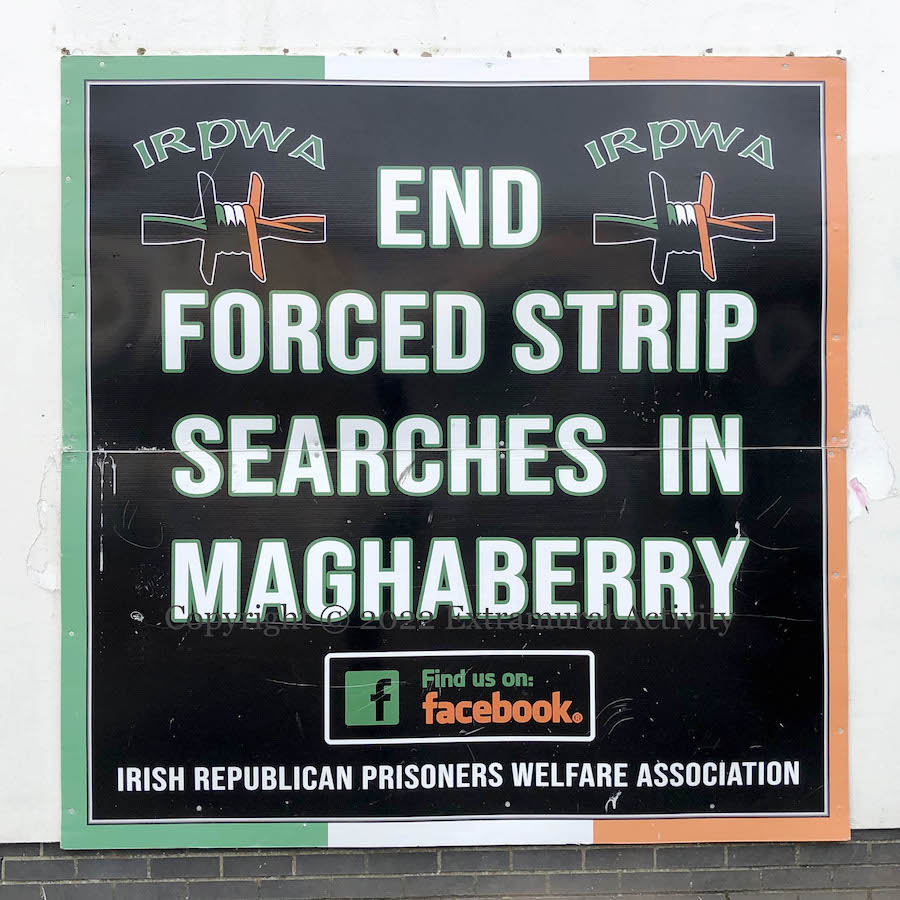
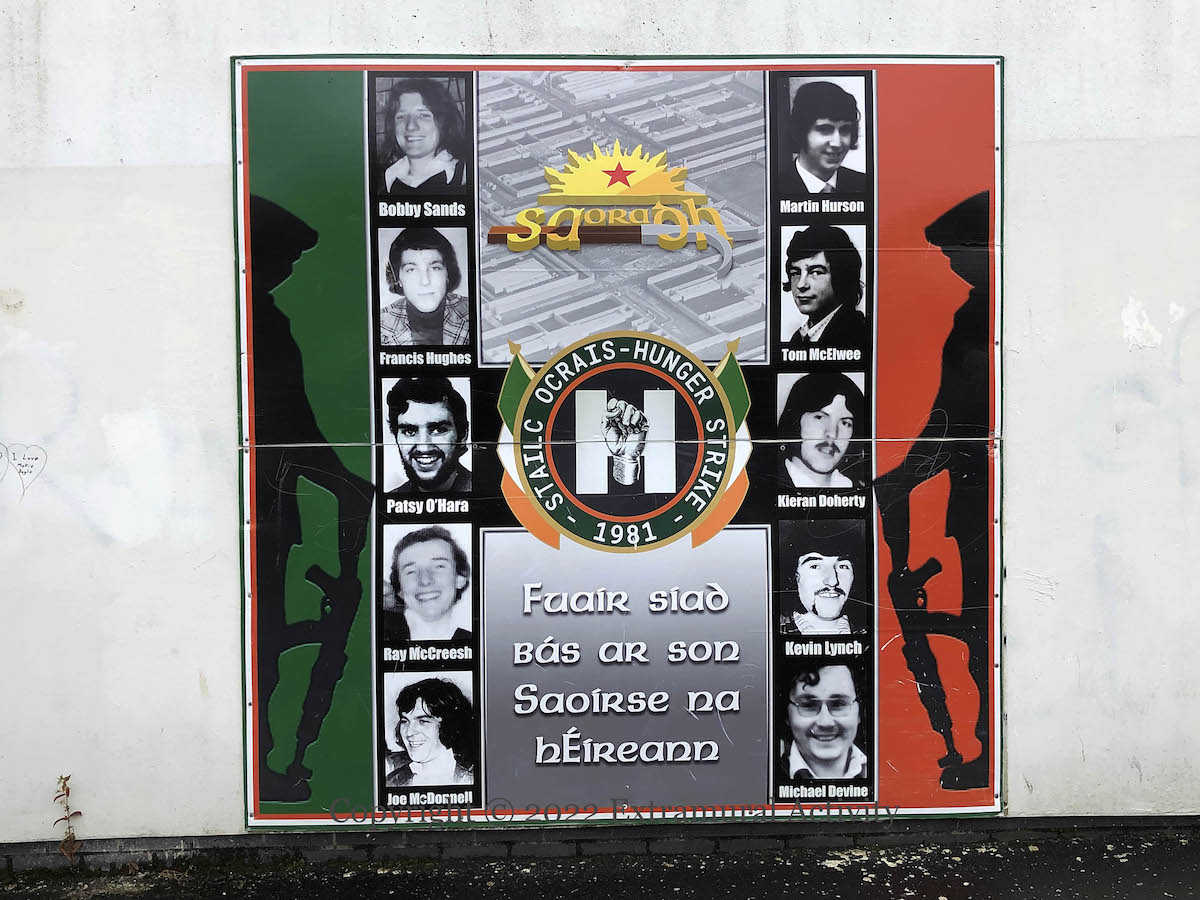
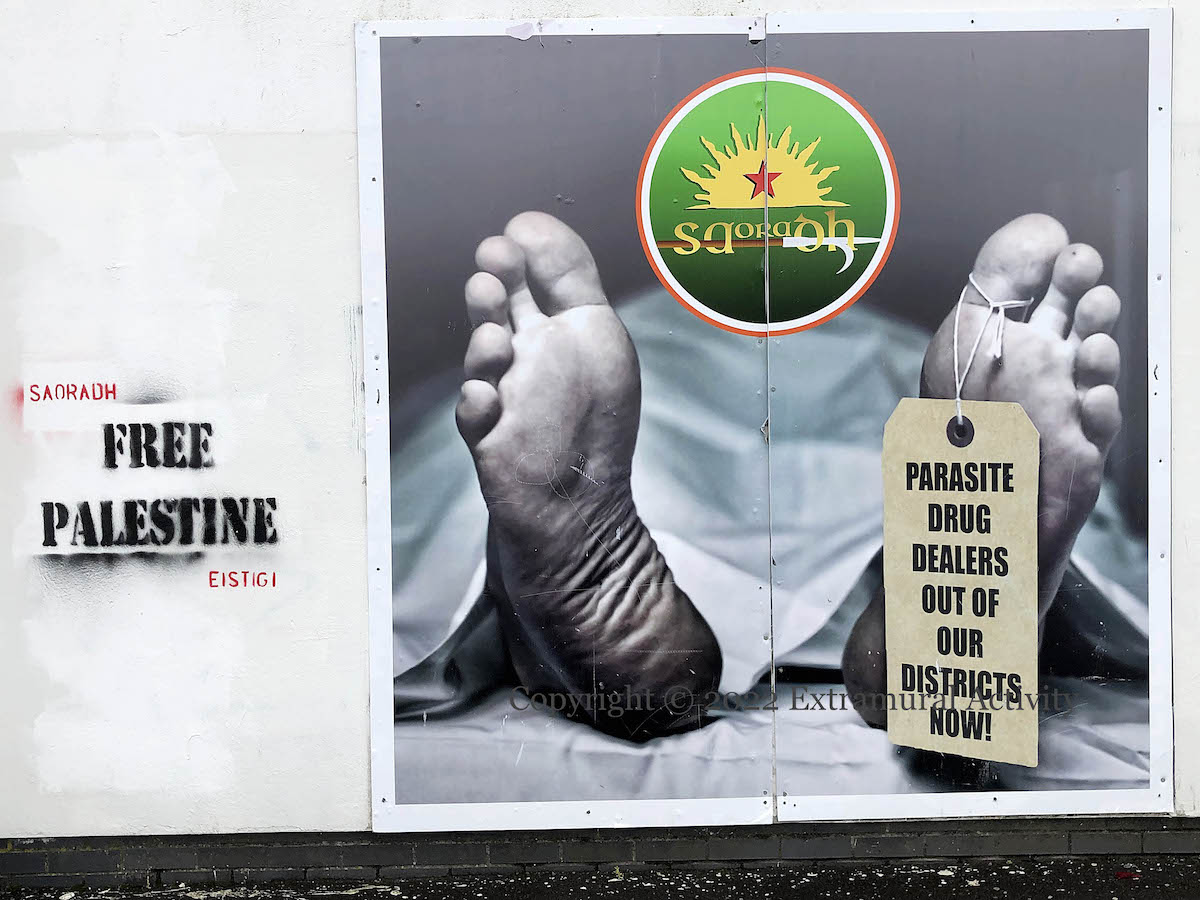
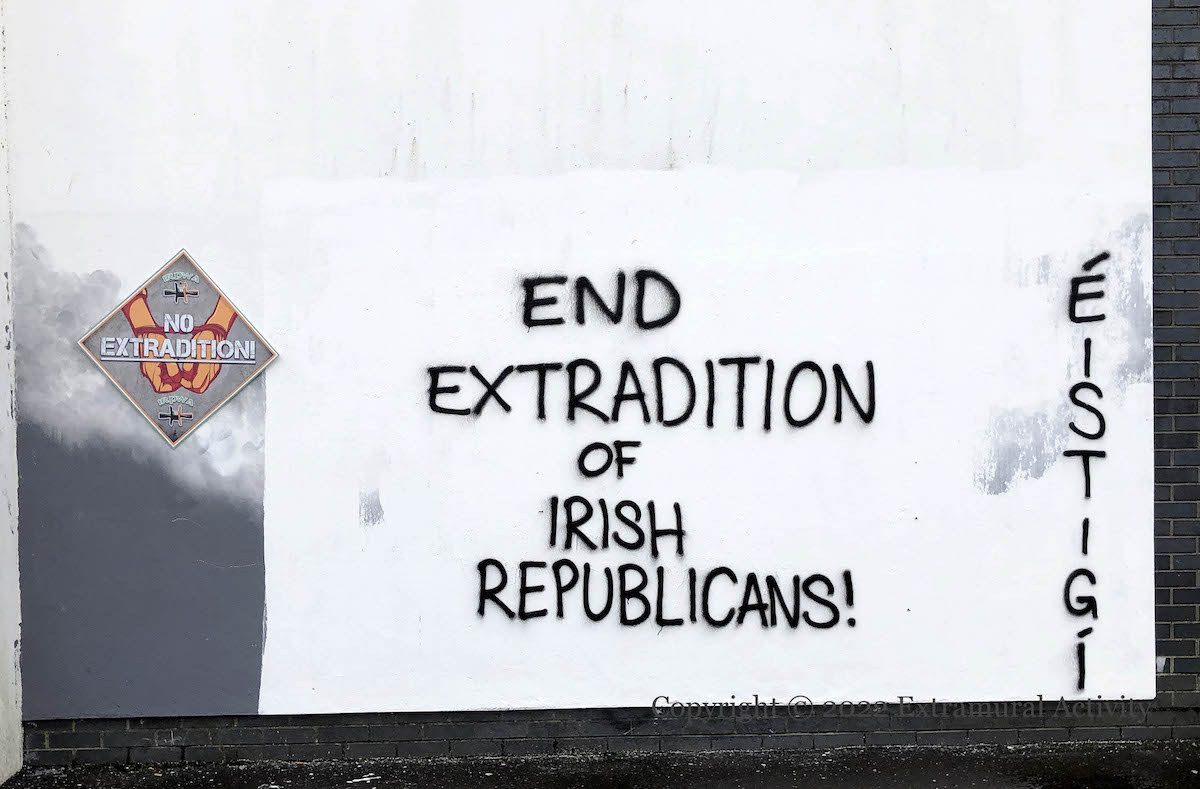
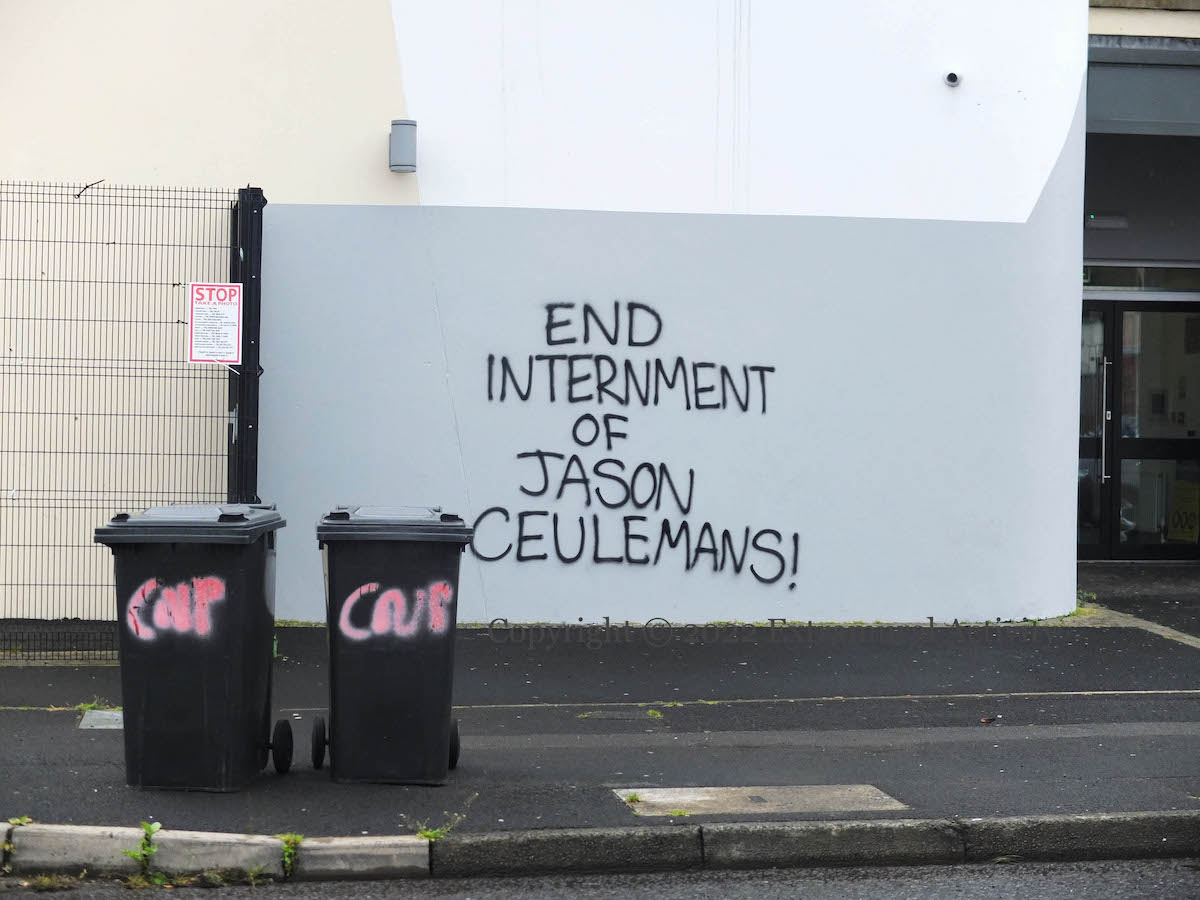
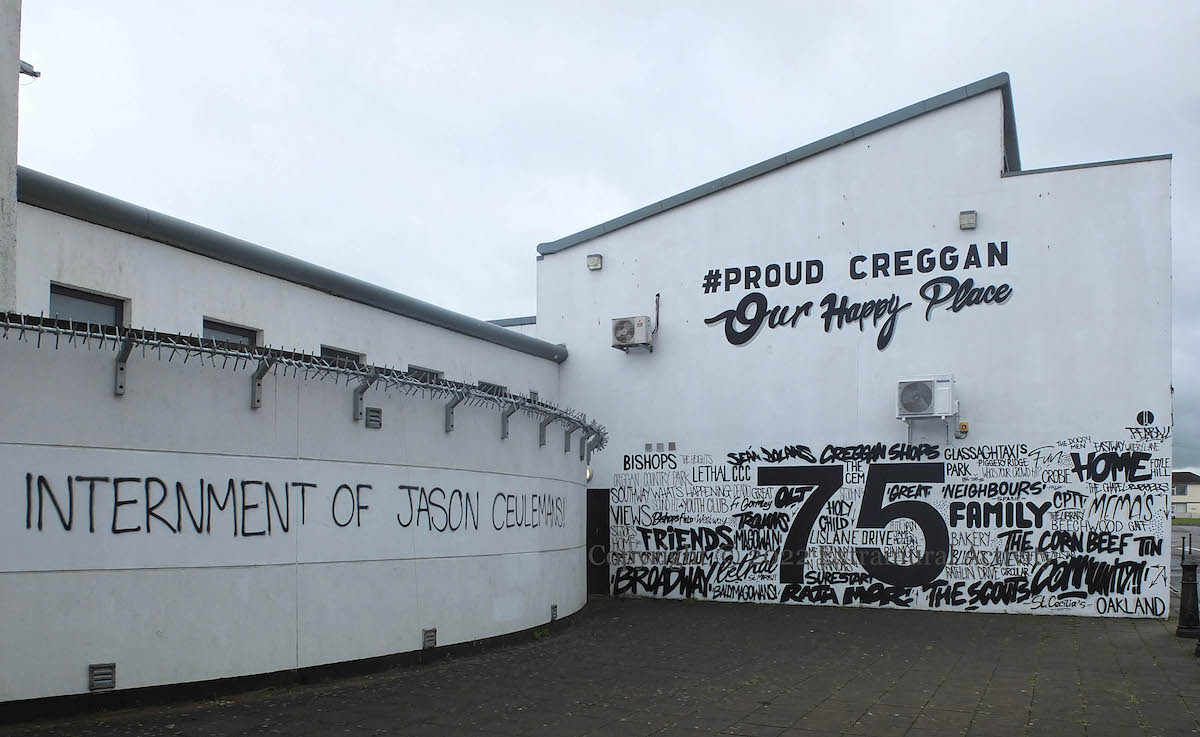
Creggan sports centre opened in October 2009 (Leisure Opportunities) and part of the architecture was to cover the brick exterior with five plain-white panels along Central Drive. These have been taken over by Saoradh/IRPWA, this year to protest the extradition, internment, and treatment of republican prisoners, commemorate the 1981 hunger strikers, support Palestine, and threaten drug dealers.
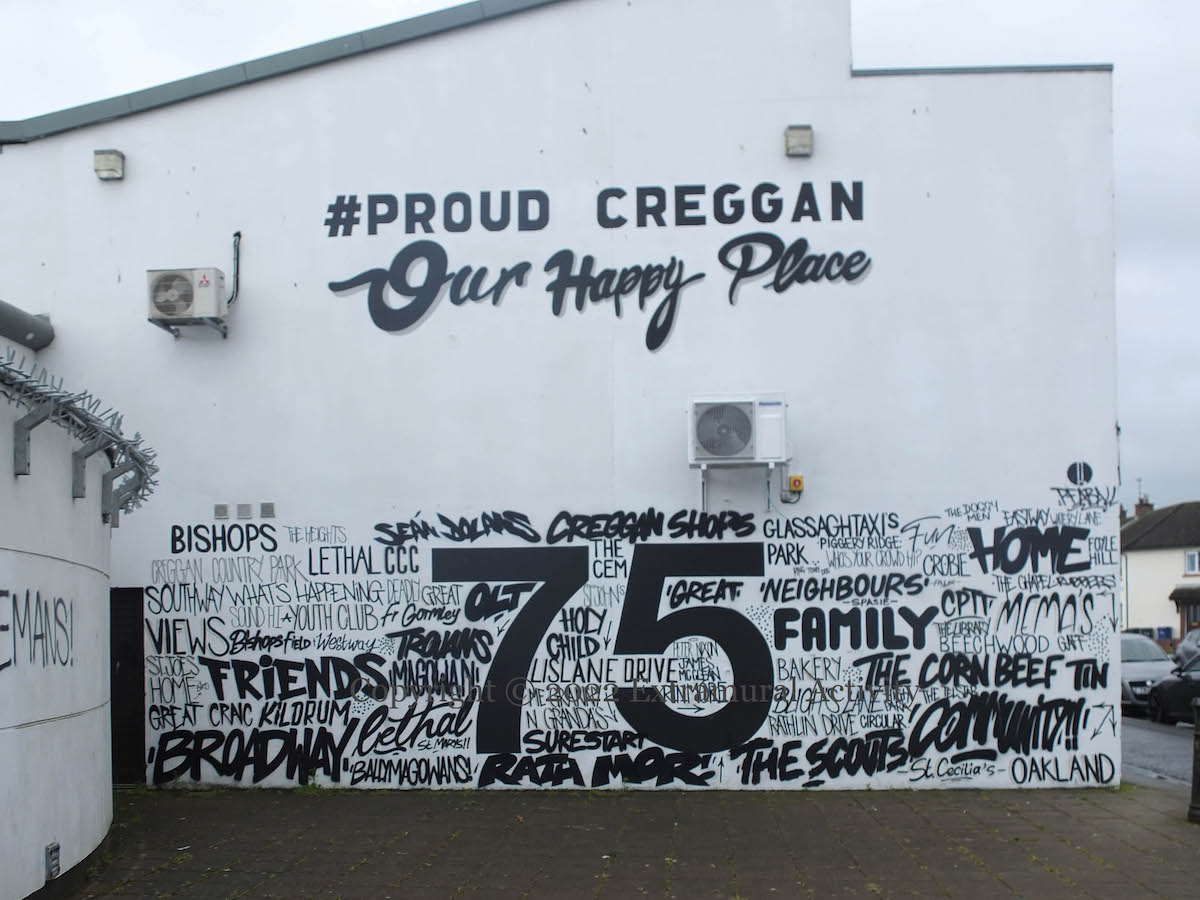
Construction of Creggan estate was begun in 1947, to house a burgeoning Bogside population while keeping them all in the South ward. At its height, there were 15,000 residents in the area. (McGuinness & Downey | An Phoblacht)
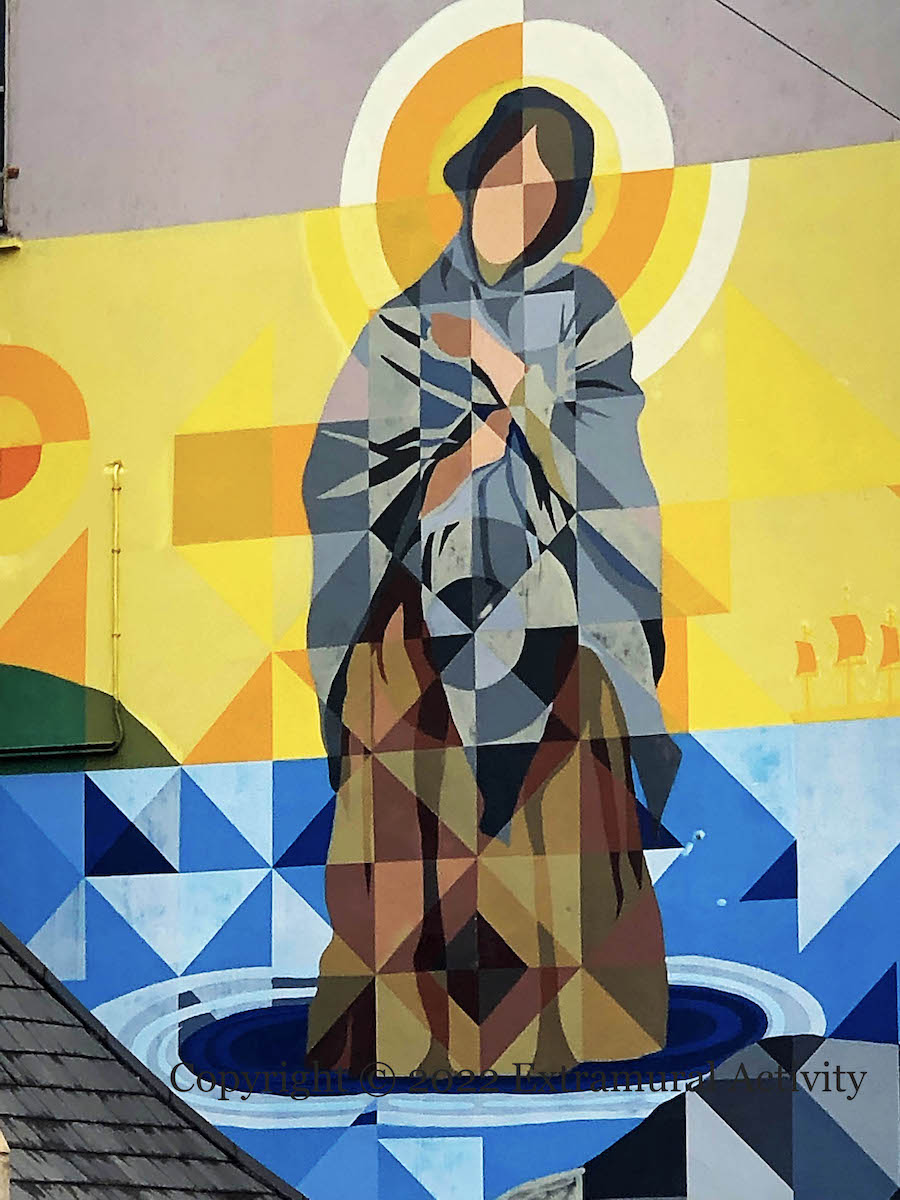
It celebrated its 75th anniversary this year (2022) with a parade, a stage play called A Green Hill Far Away, and a new mural by Peaball (ig) and Vents (ig) along with children from local schools (Derry Journal).
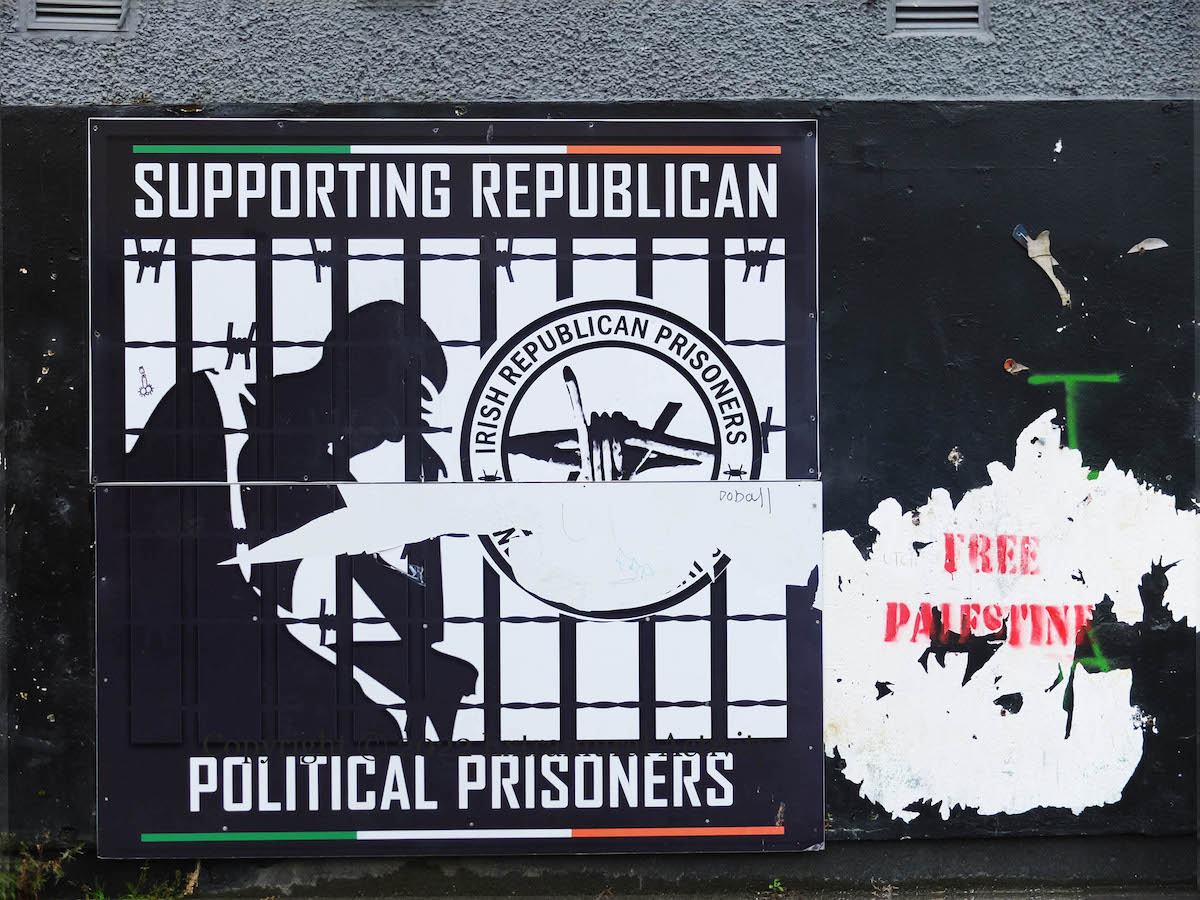
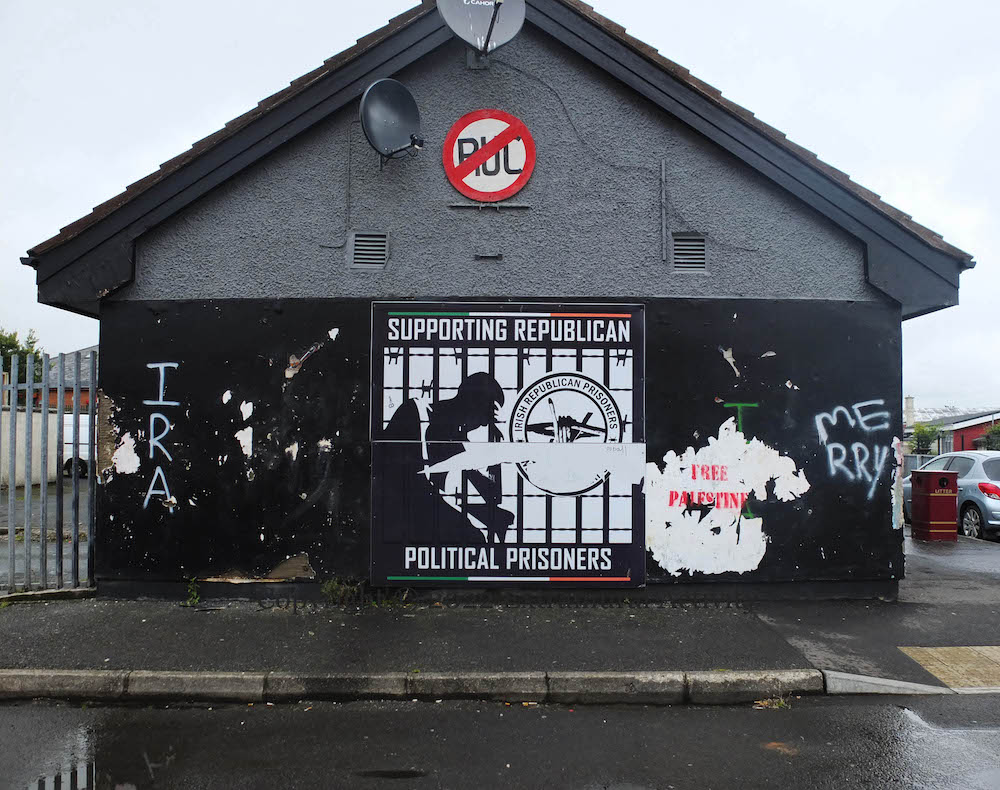
This is the wall at the south end of the Creggan shops that was first muraled in response to the ceasefire (see Time For Peace). This IRPWA (web) board “supporting republican political prisoners” is now in disrepair but it is unclear whether or not it will be replaced, as new construction on Central Drive has greatly reduced its visibility while the new sports centre across the street provides a much more prominent notice-board (see Central Drive).
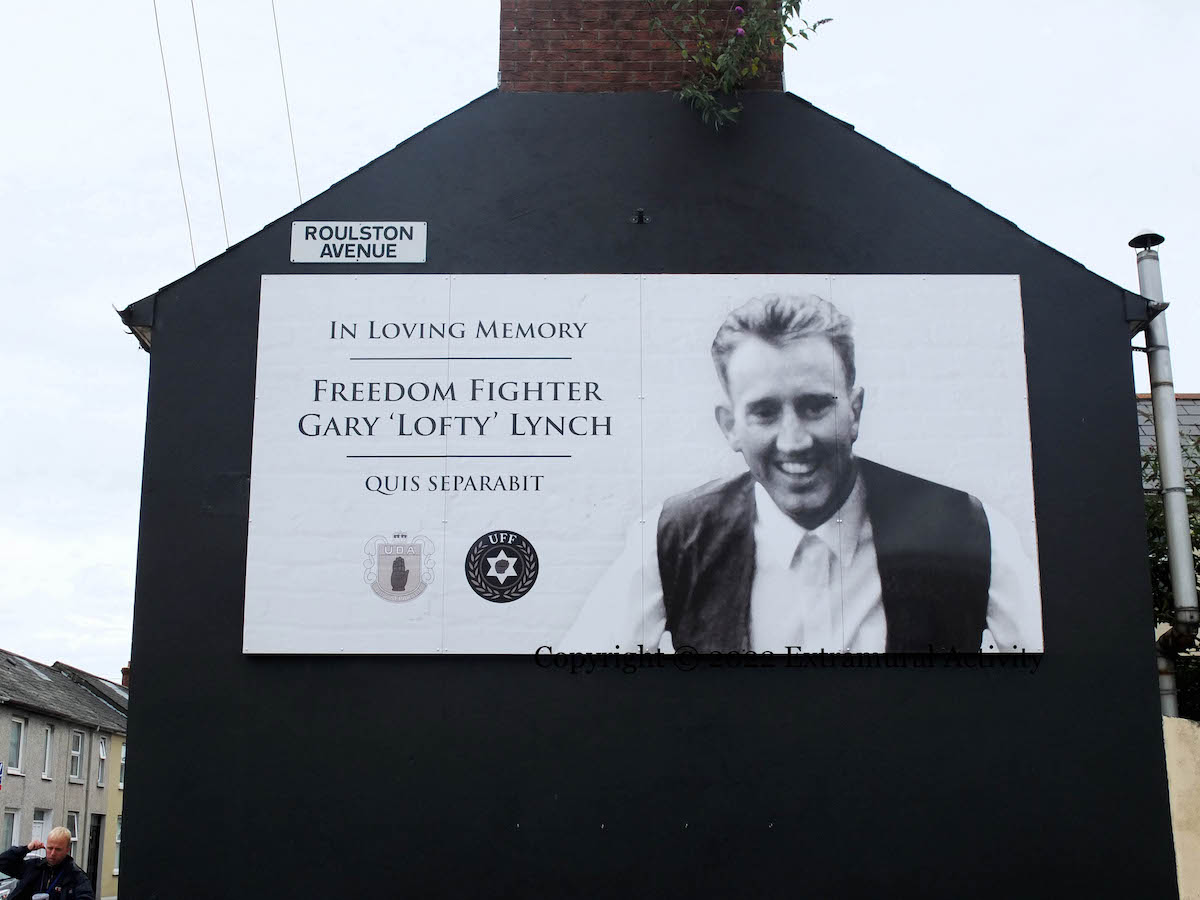
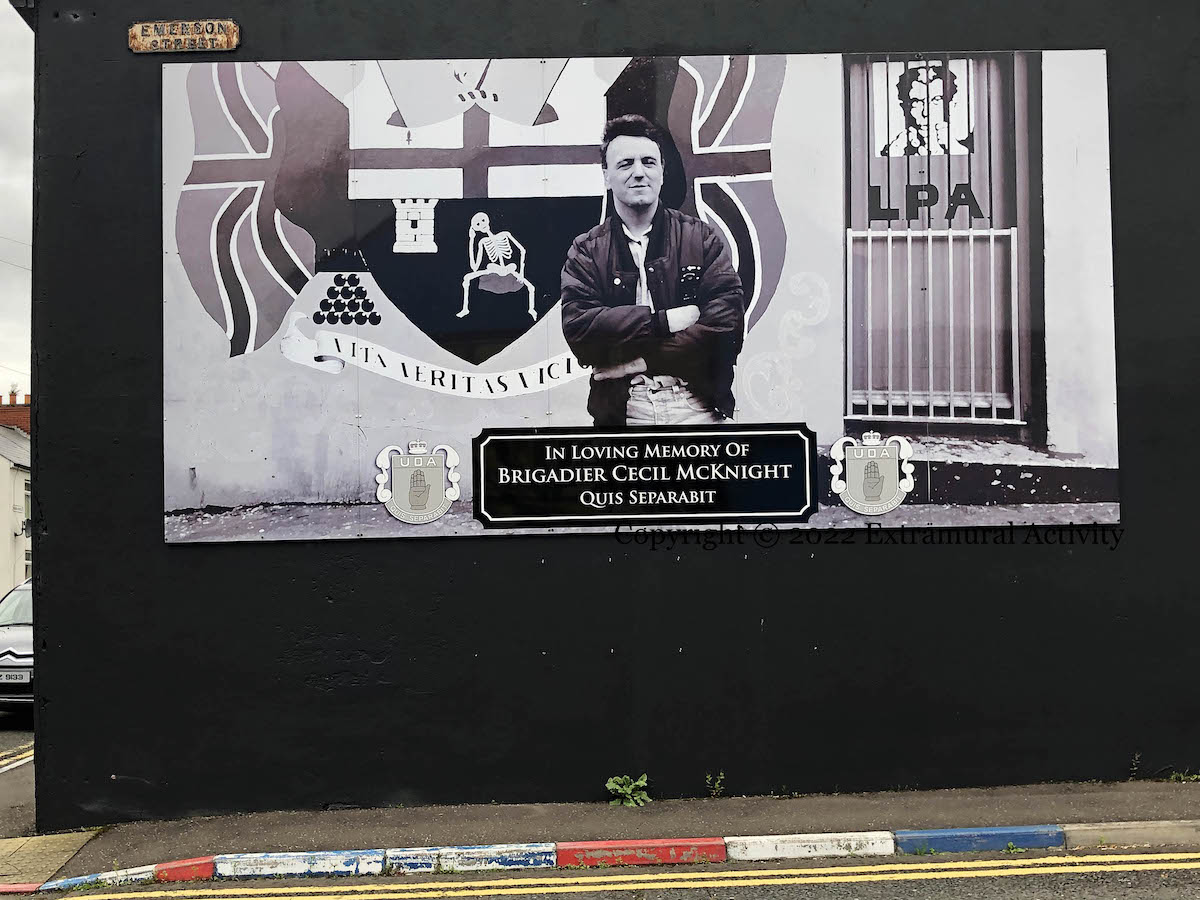
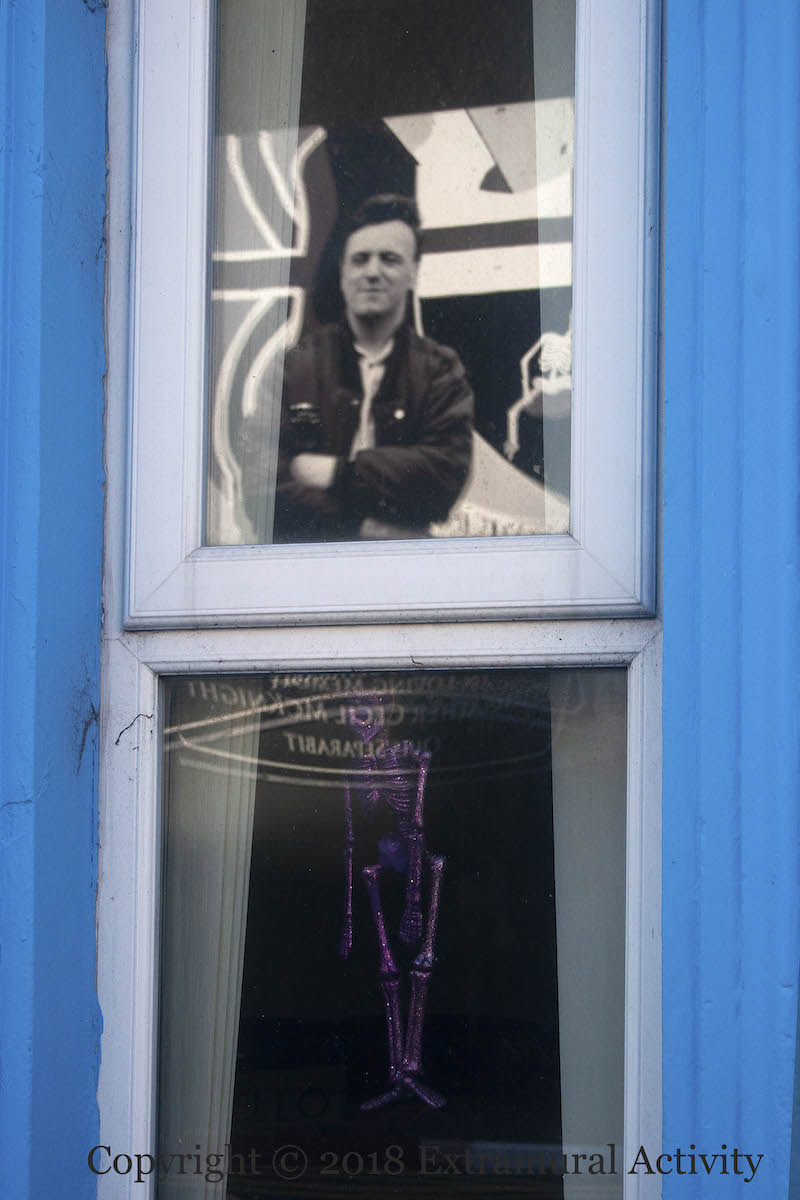
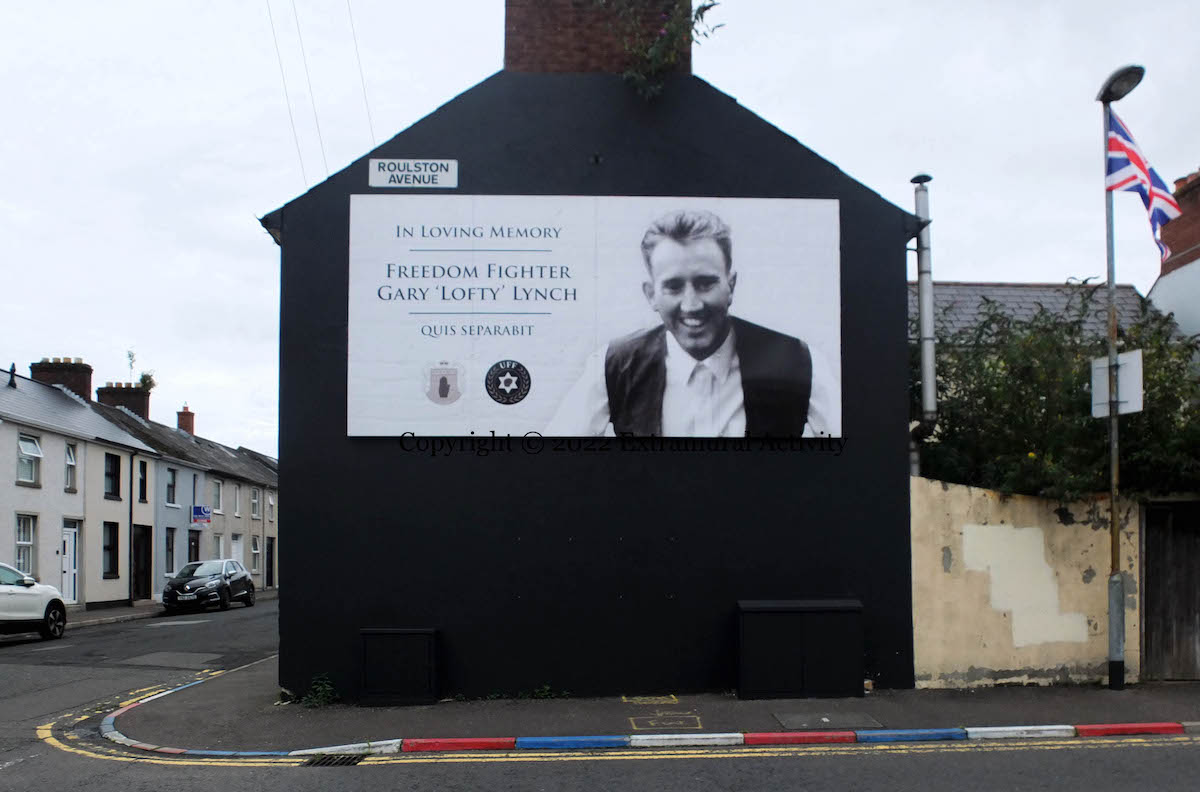
The mural above commemorates the 30th anniversary of the death of Gary ‘Lofty’ Lynch on August 9th, 1991. Lynch was an election worker for the Ulster Democratic Party, whose Ken Kerr held a seat on Derry City Council from 1989 to 1993, representing the Waterside (WP). Lynch was shot and killed by the IRA outside Foyle Meats where he worked, only a few months after UDA commander and UDP party leader Cecil McKnight was killed (UPI).
The UDP was founded as the UDLP (“L” for “loyalist’) in 1981 and was dissolved in 2001 when the UDA rejected the Belfast Agreement (Guardian | Irish Times). It proposed an independent Northern Ireland within the Commonwealth and Europe.
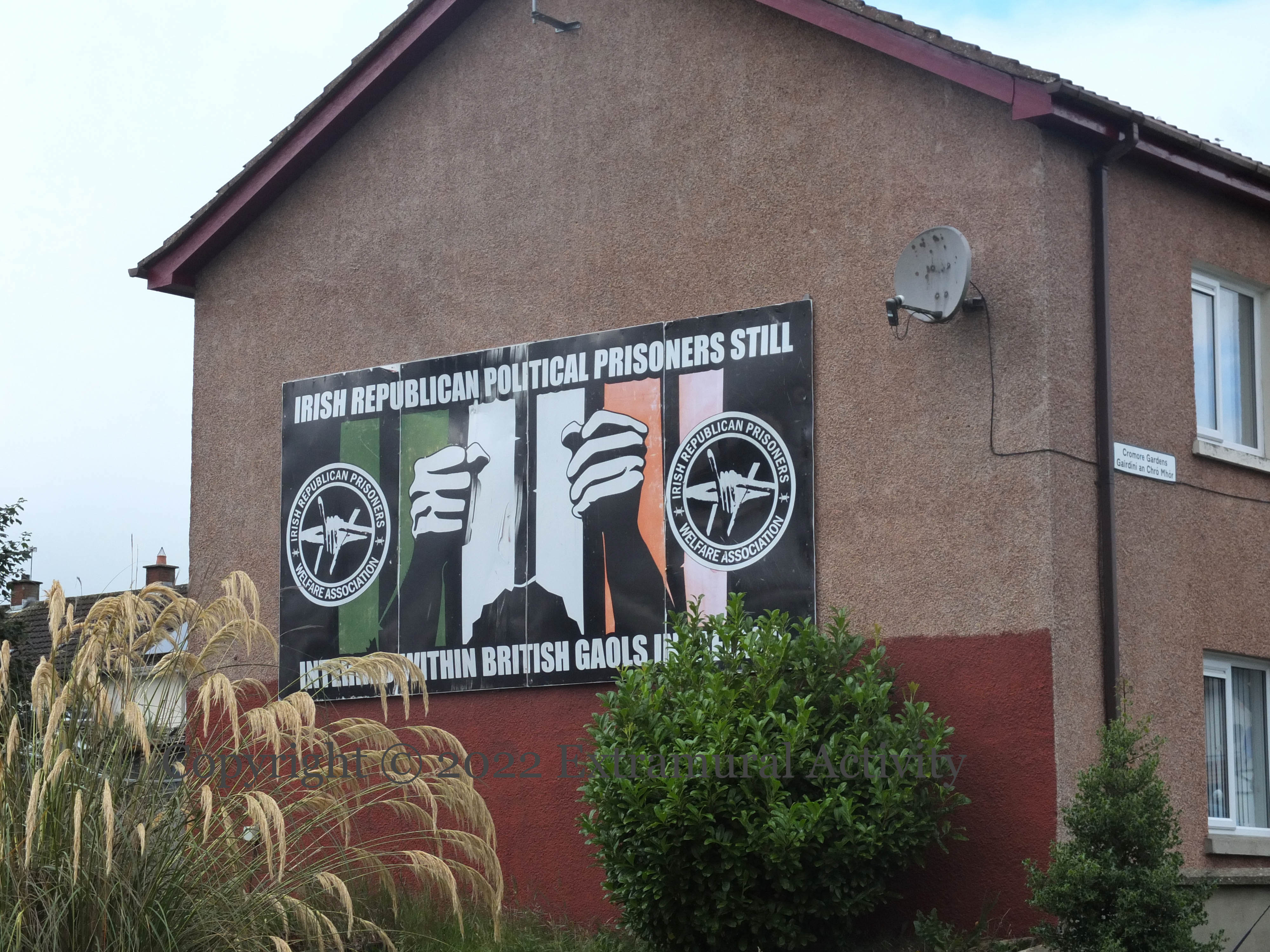
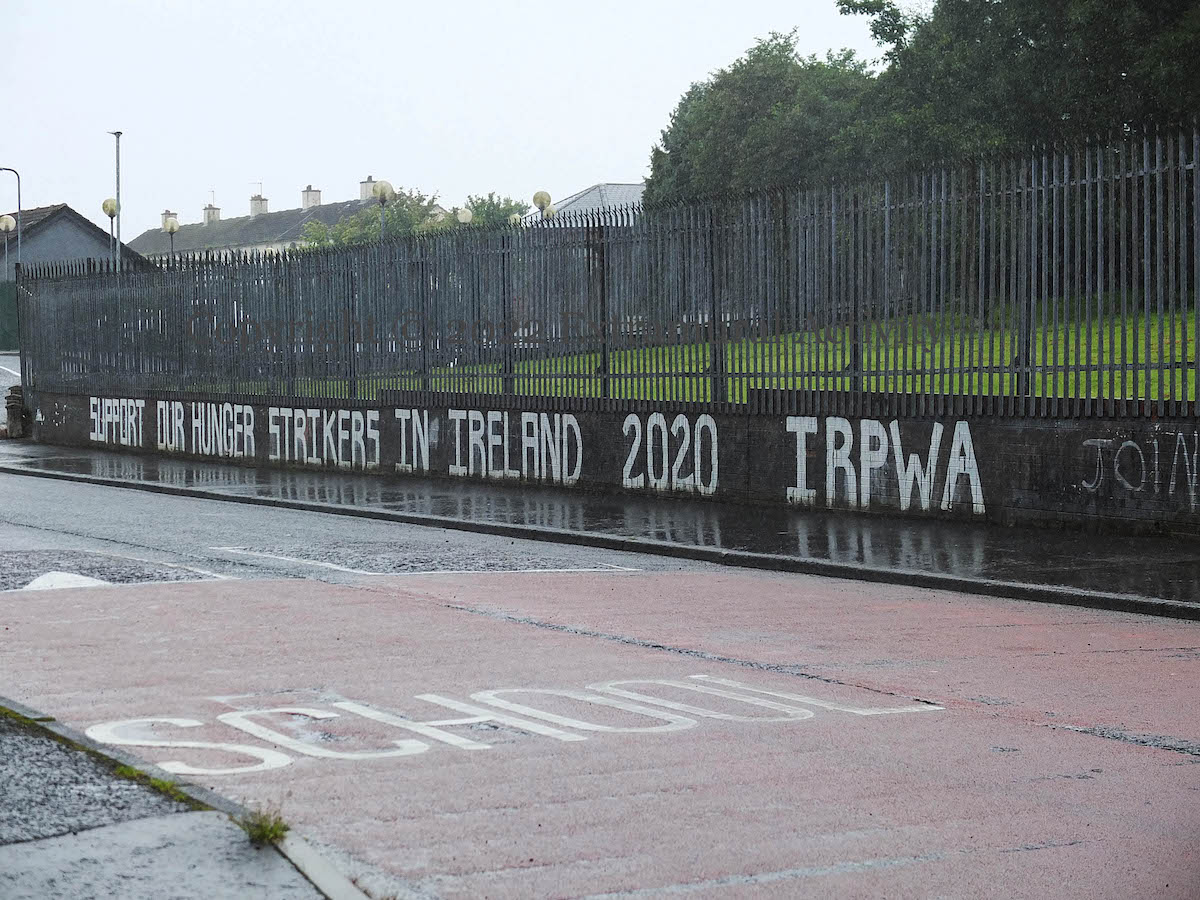
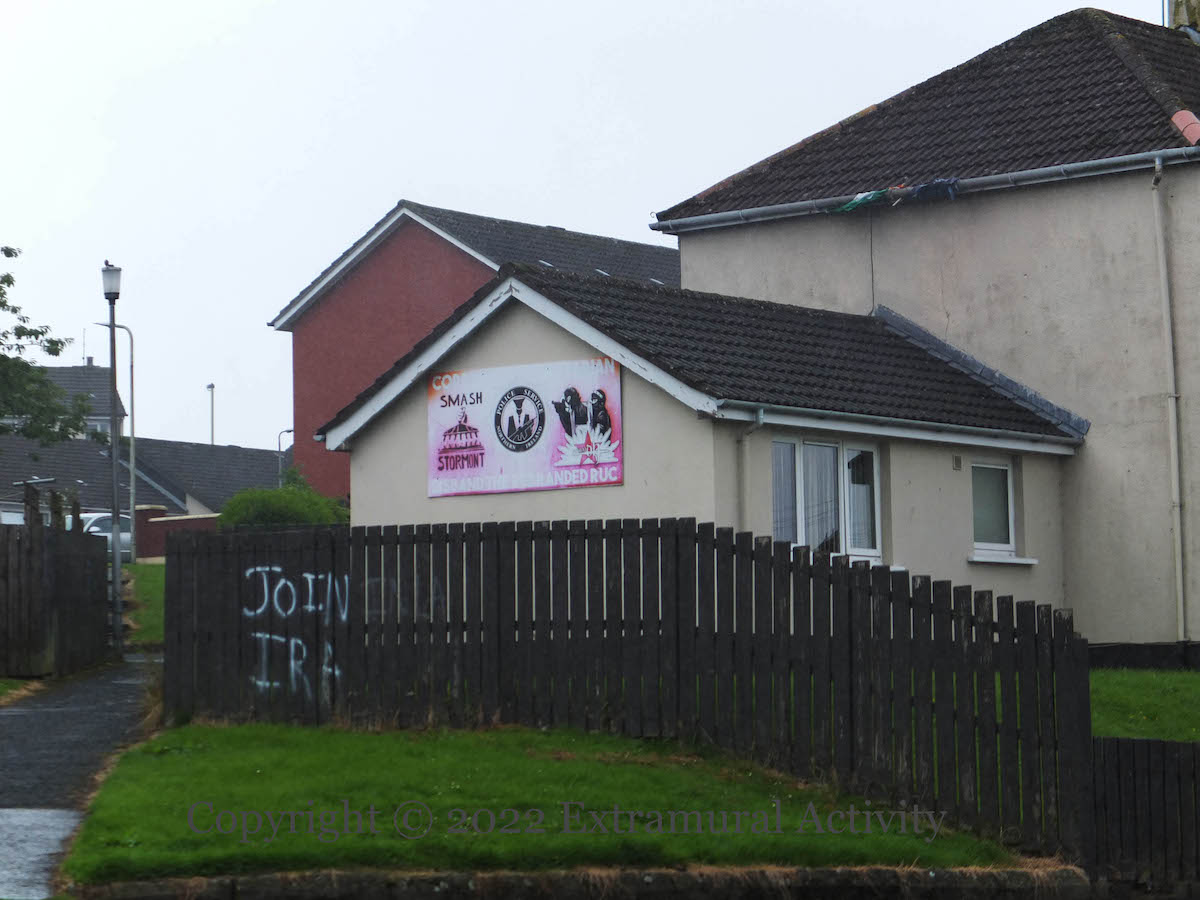
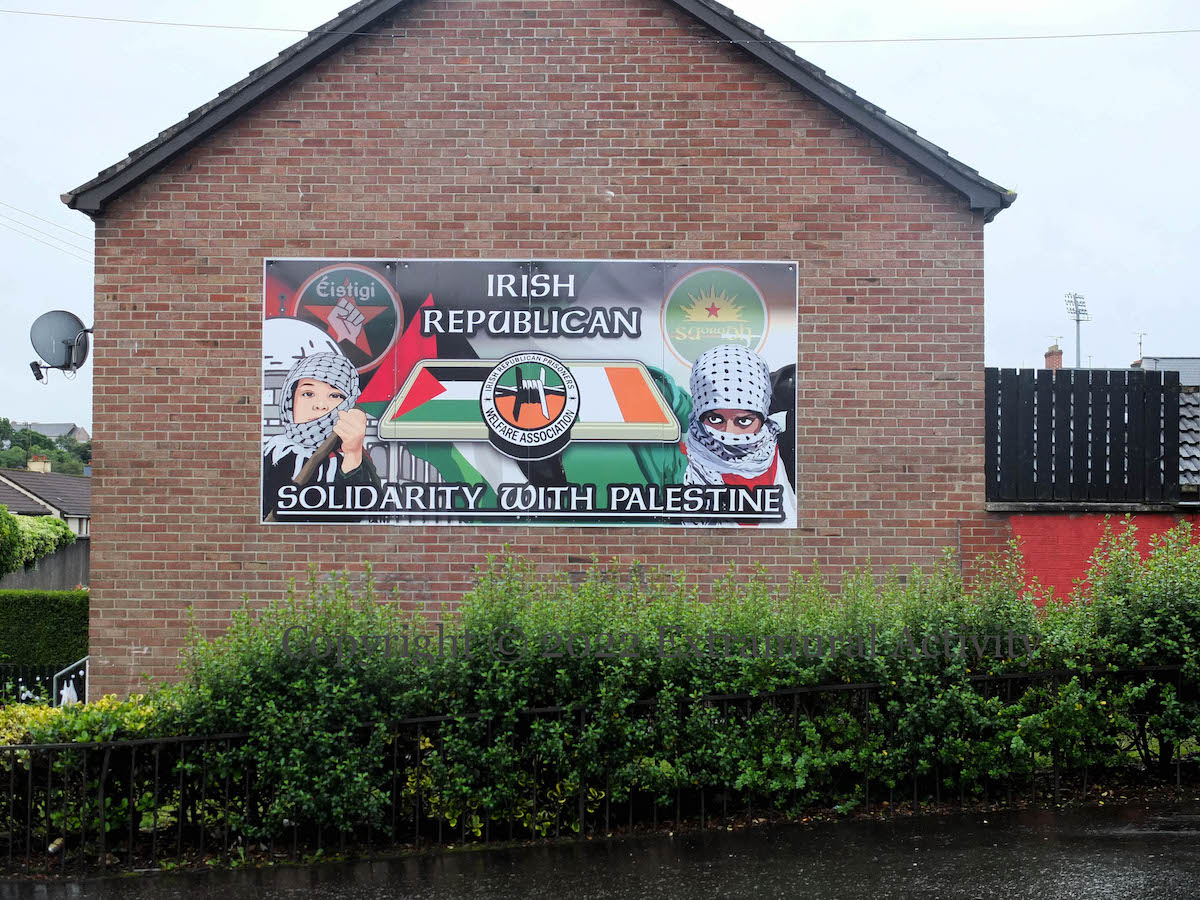
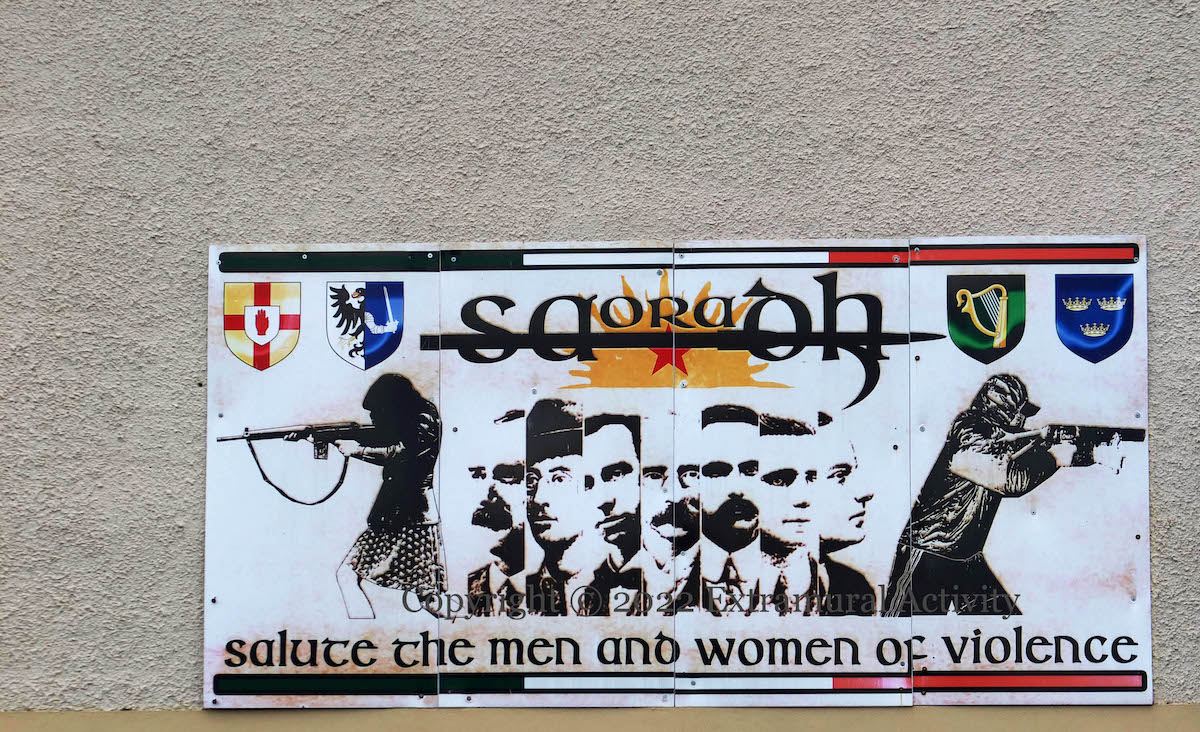
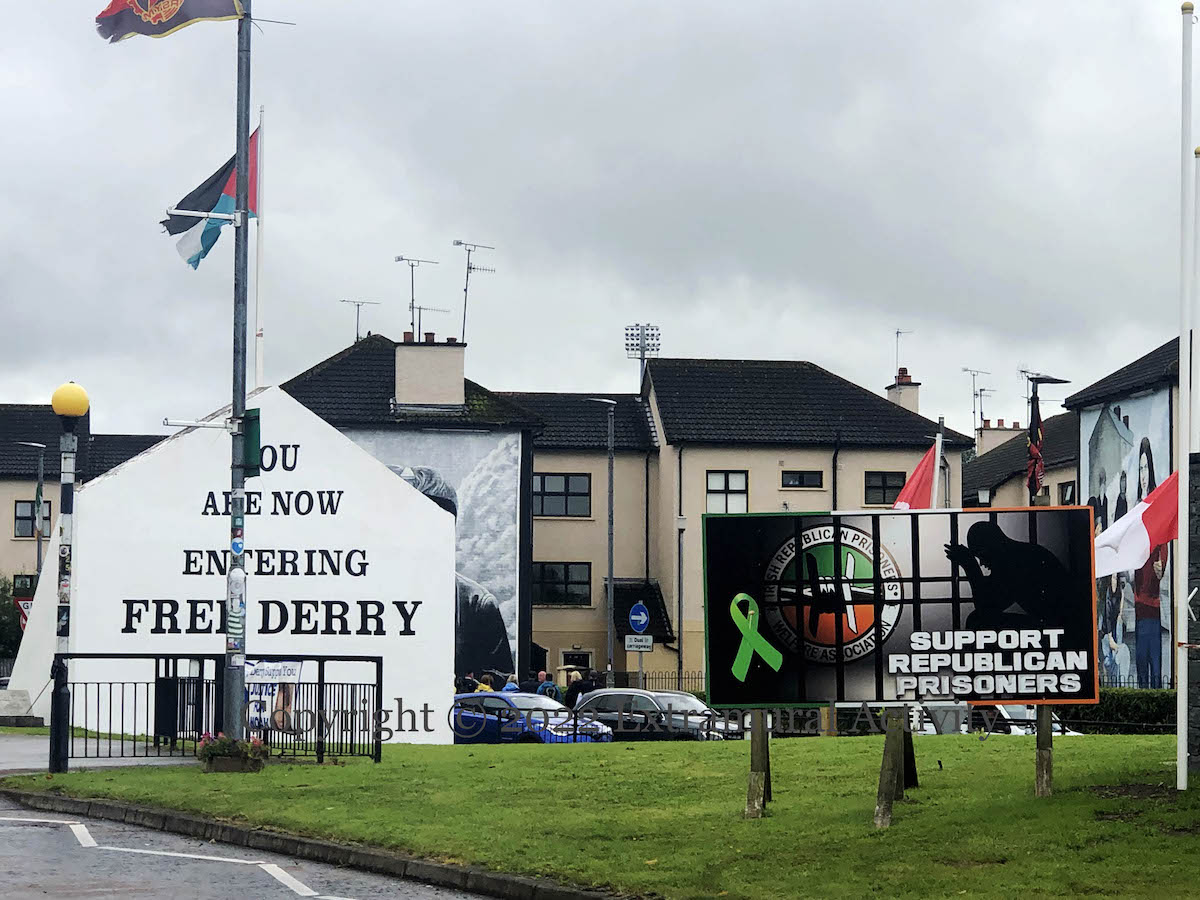
Here are various IRPWA (tw)/Saoradh (web)/Éıstıgí (Fb) statements in Derry’s Creggan and Bogside.
Above, in Iniscarn Road, “Irish republican prisoners still interned within British Gaols in Ireland”. Below that, two from Central Drive, “Support our hunger strikers in Ireland” (explained in Are You On The Side Of The 2020 Hunger Strikers?) and an aging “Disband the rebranded RUC” (seen previously in 2019).
And at the bottom, two from Westland Street, “Irish republican solidarity with Palestine” (described in a north Belfast appearance) and “Salute the men and women of violence” (for which see Her Old Tradition Of Nationhood) and one from the gaggle of boards next to Free Derry Corner: “Support republican prisoner”.
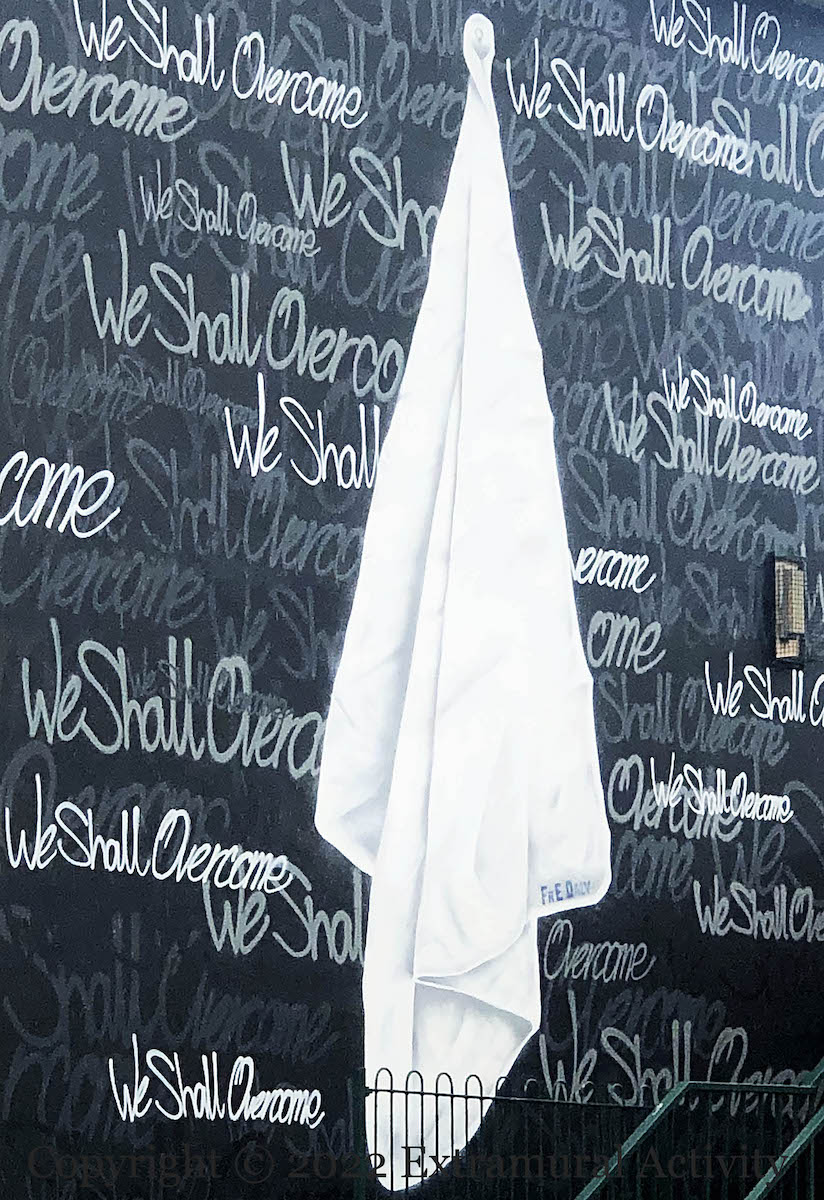
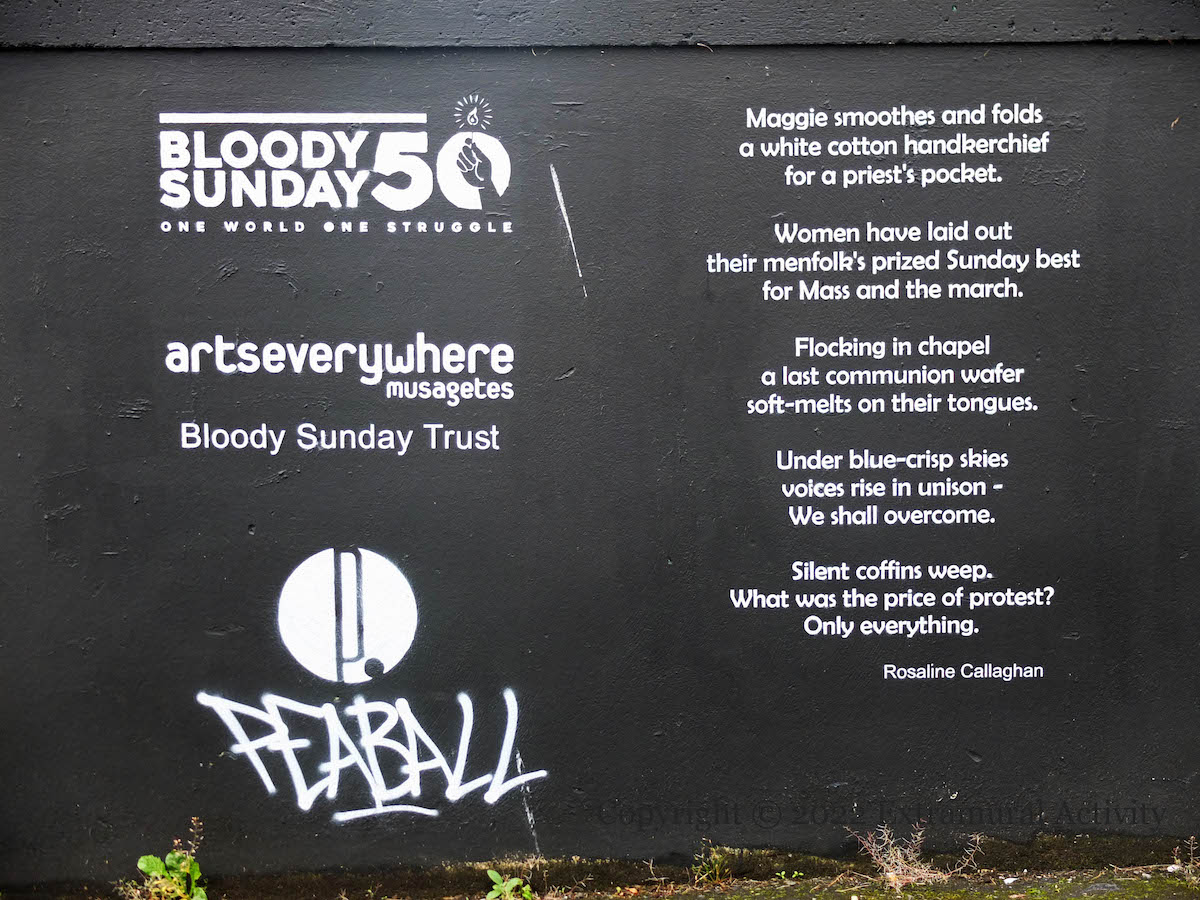
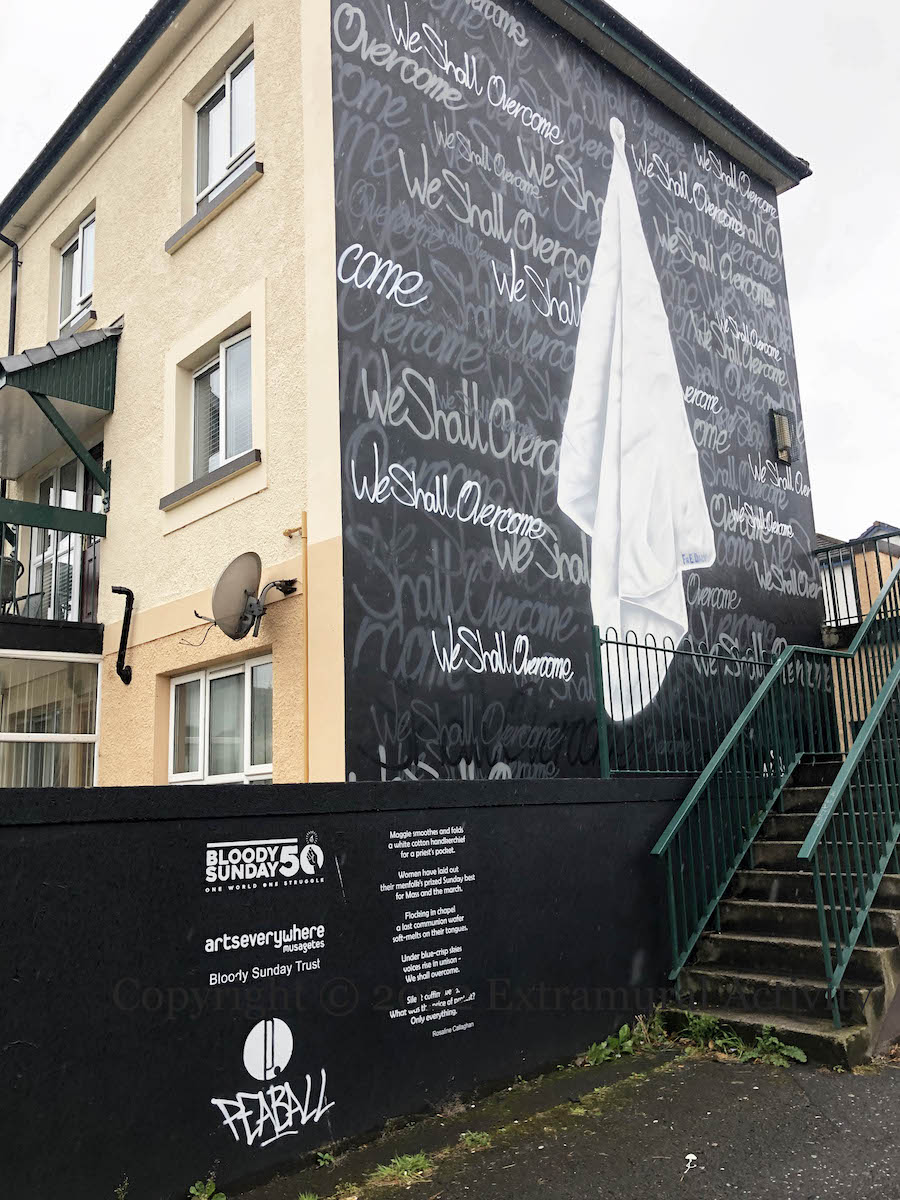
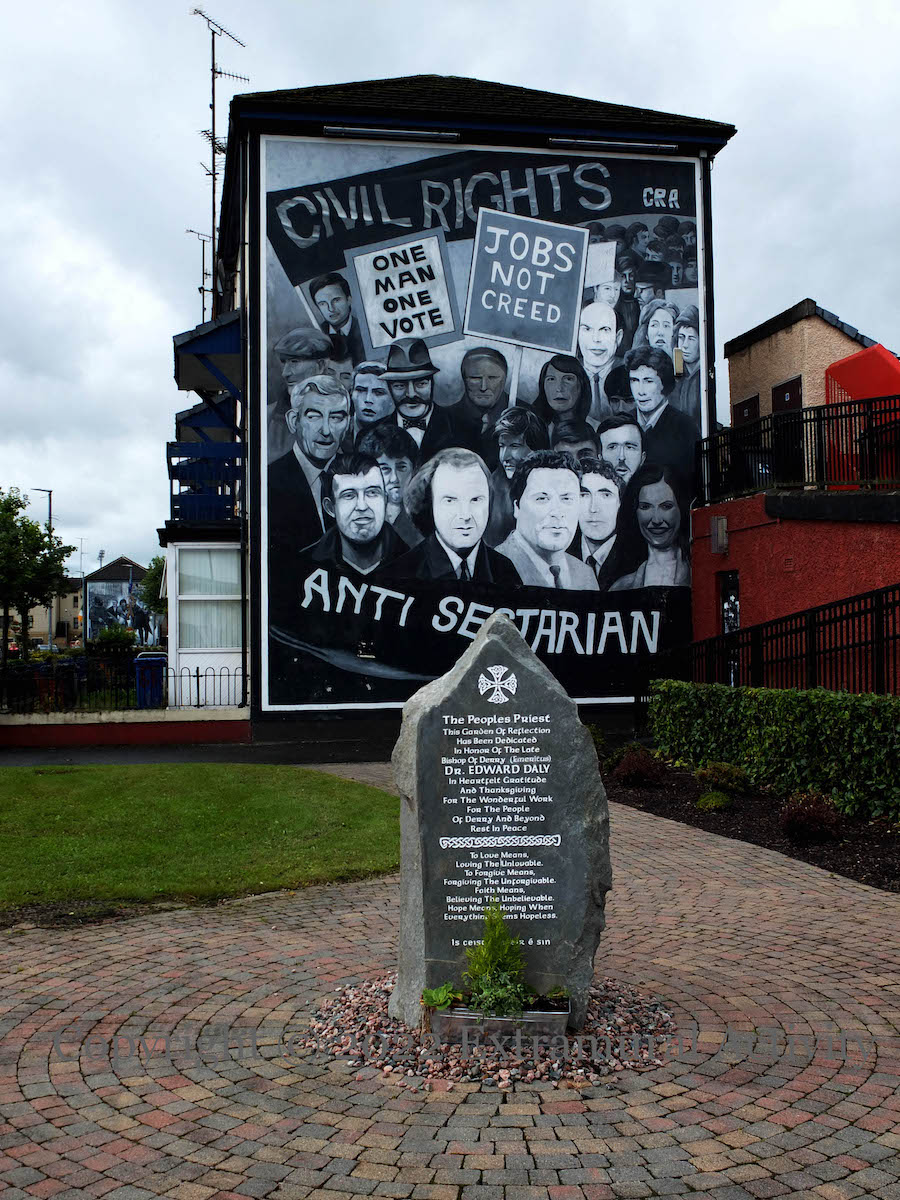
RTÉ has video of James Callaghan touring the Bogside (9m 40s onwards) in August 1969, during which the crowd sings We Shall Overcome, originally a hymn in the US but by 1969 the anthem of the civil rights movements around the world. The white handkerchief waved by Edward Daly ahead of four men carrying the body of Jackie Duddy on Bloody Sunday has become emblematic of the day, as it was shown on televsion coverage and in the Fulvio Grimaldi photograph that was used for the Bloody Sunday/Civil Rights mural next to Free Derry Corner.
“Maggie smoothes and folds/A white cotton handkerchief/For a priest’s pocket.//Women have laid out/Their menfolk’s prized Sunday best/For Mass and the march.//Flocking in chapel/A last communion wafer/Soft-melts on their tongues.//Under blue-crisp skies/Voices rise in unison – /We shall overcome.//Silent coffins weep/What was the price of protest?/Only everything – Rosaline Callaghan”
Painted by Peaball (Fb) in Rossville Street, Derry.
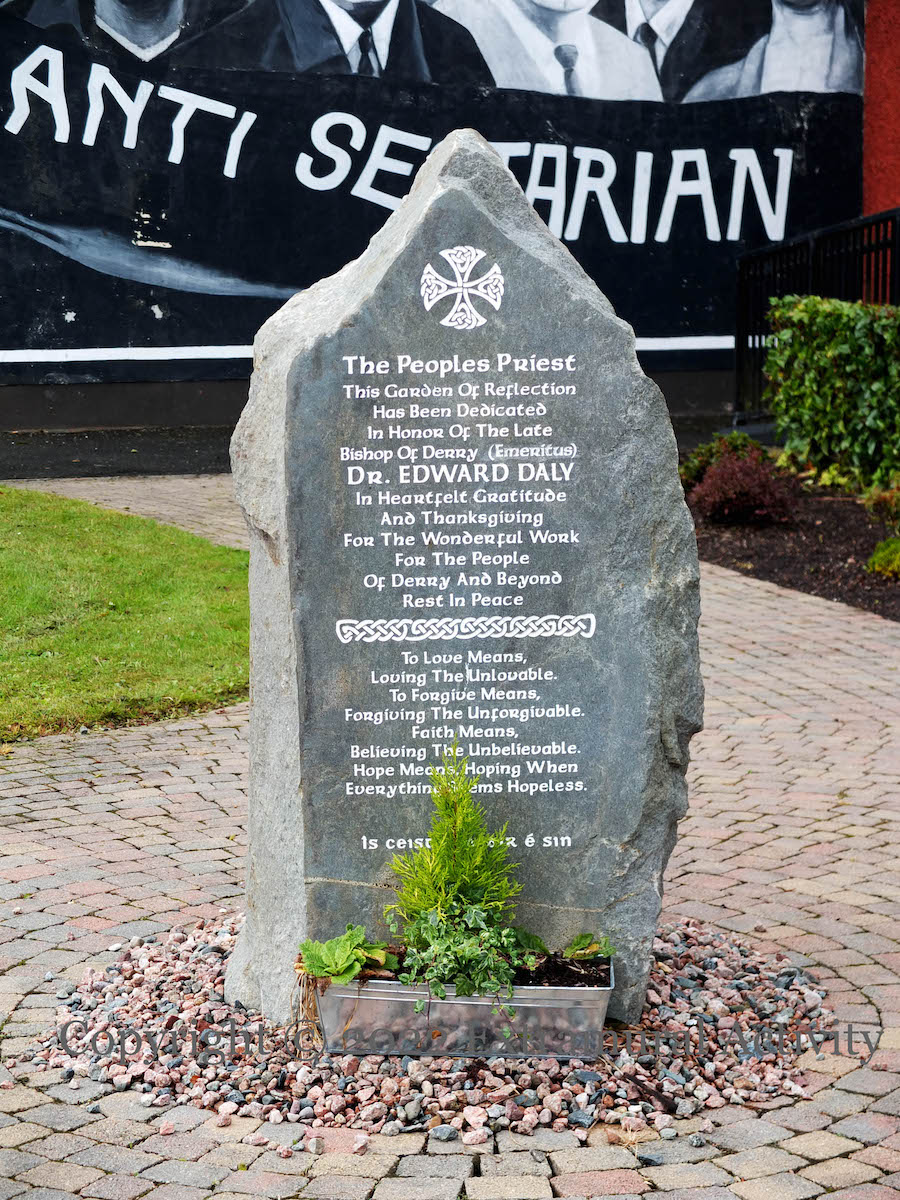
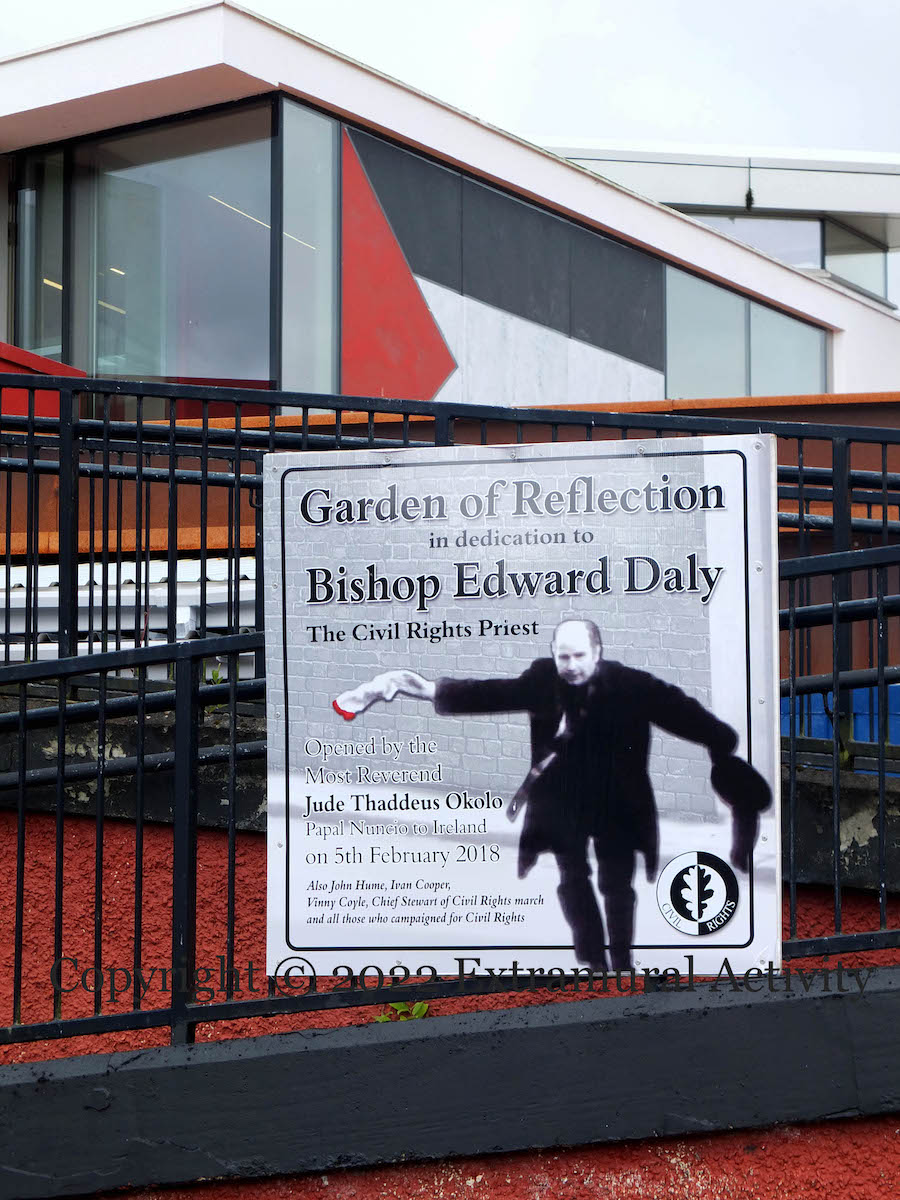
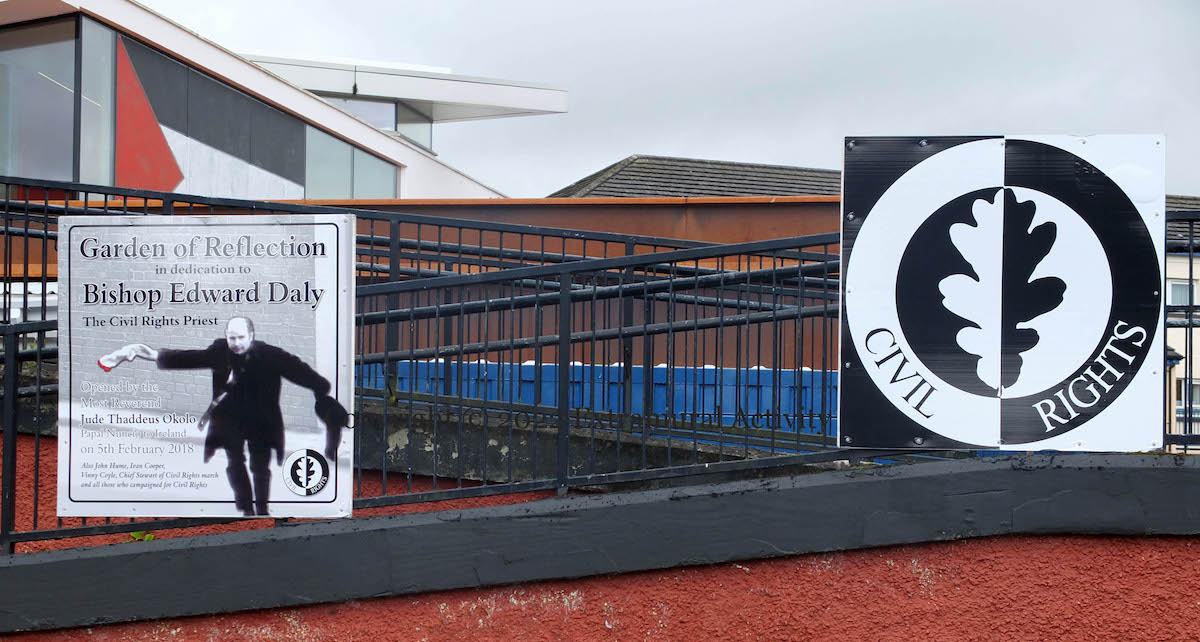
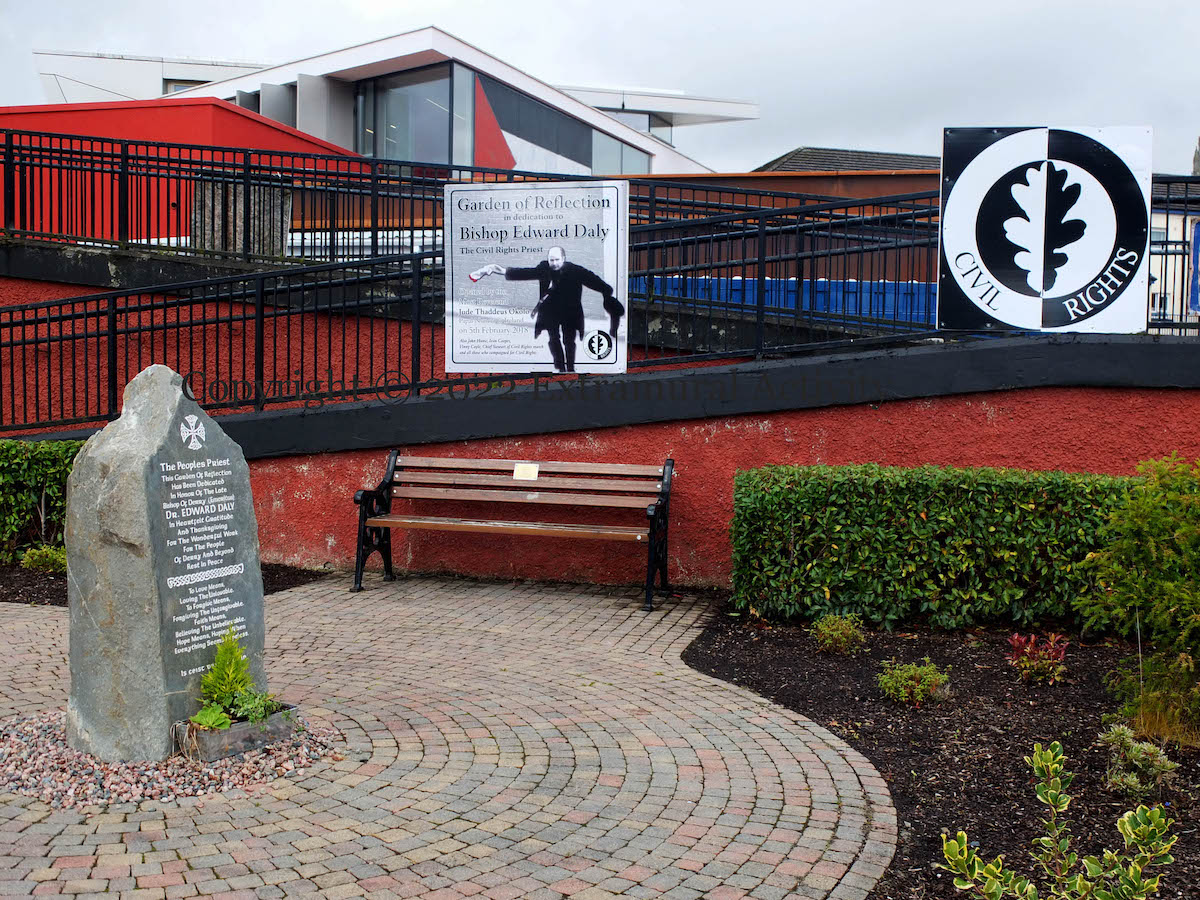
Edward Daly is most famous for waving a white handkerchief on Bloody Sunday, as a dying Jackie Duddy was carried away, but his devotion to the city of Derry spans decades: was a curate and then bishop in Derry from 1962 until 1993 (WP). ‘That’s a difficult question’ was his favourite saying (Derry Journal). The stone was erected after his death in 2016 (see The People’s Priest) and has now been incorporated into a garden of reflection.
“This garden of reflection has been dedicated in honour of the late Bishop of Derry (Emeritus) Dr Edward Daly in heartfelt gratitude and thanksgiving for the wonderful work for the people of Derry and beyond. Rest in peace. ‘To love means loving the unlovable; to forgive means forgiving the unforgivable; faith means believing the unbelievable; hope means hoping when everything seems hopeless.’ Is ceıst deacaır é sın [that is a difficult question]” “Opened by the Most Reverend Jude Thaddeus Okolo, papal nuncio to Ireland, on 5th February 2018. Also John Hume, Ivan Cooper, Vinny Coyle, Chief Stewart [sic] of Civil Rights march and all those who campaigned for Civil Rights.”
 Seosamh Mac Coille Collection