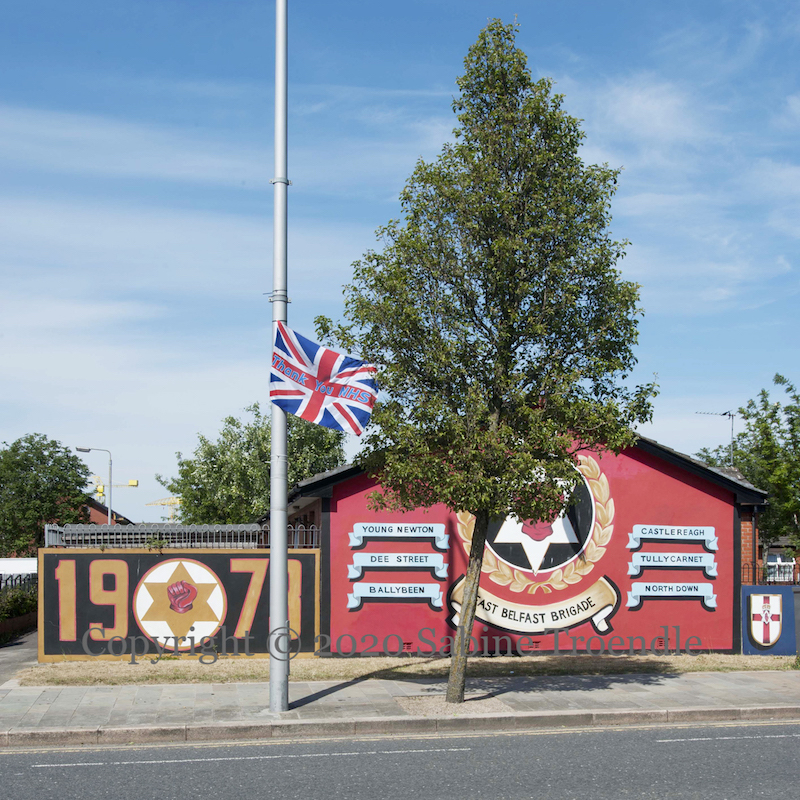
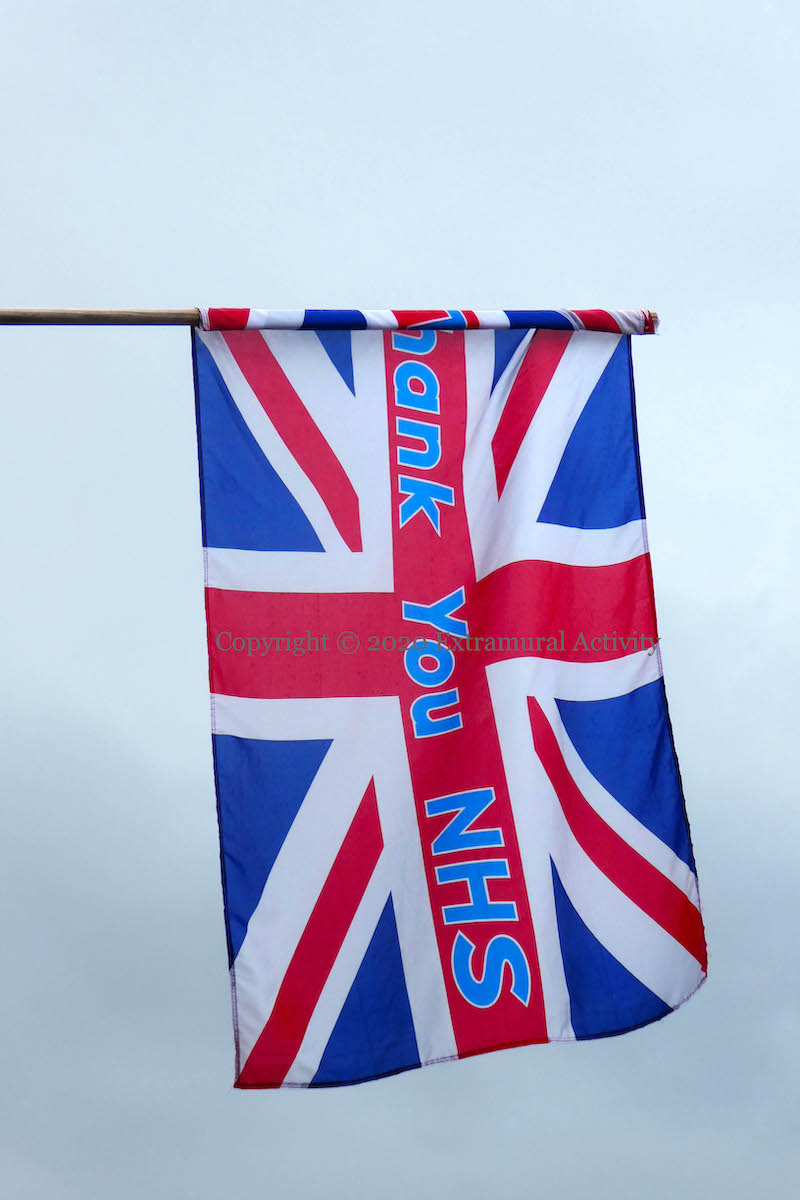
Union flags with “Thank You NHS” in east Belfast, one (above) in front of “Freedom Corner” on Newtownards Road (for the recent history of the mural on the right, see East Belfast Brigade) and another (below) in Ballarat Street.
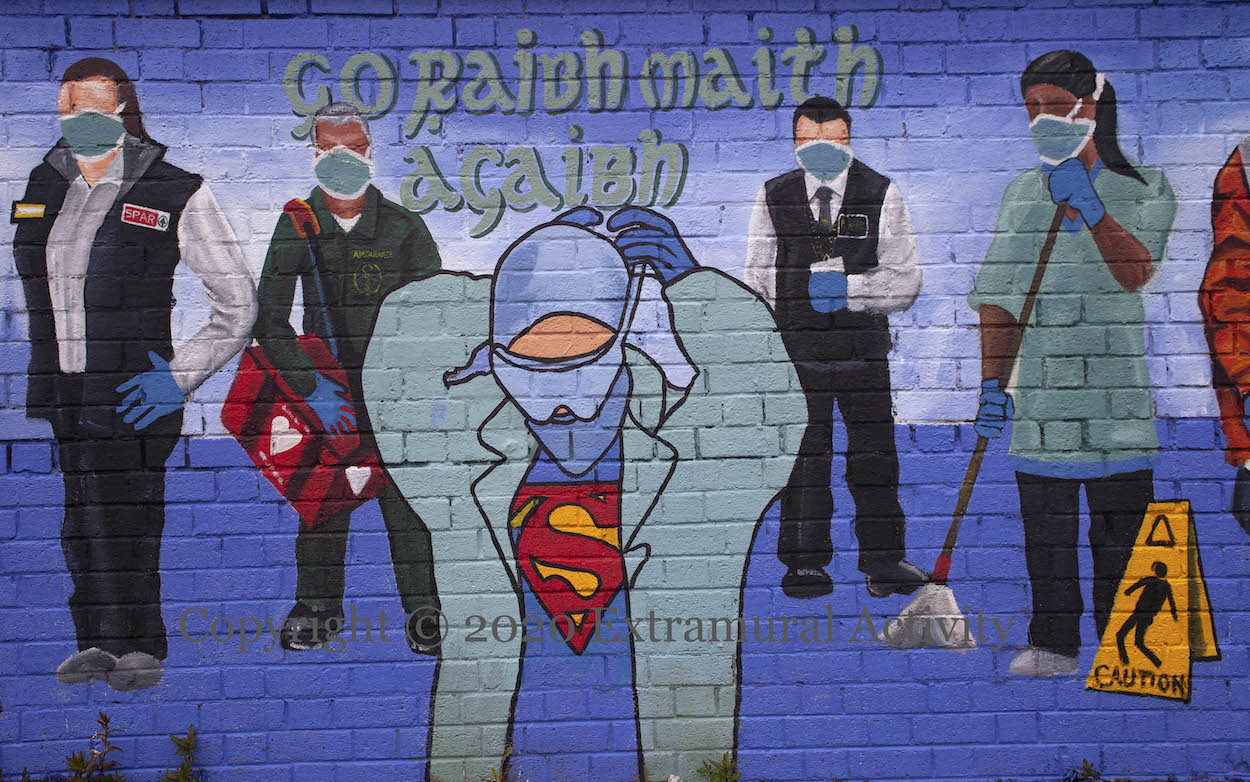
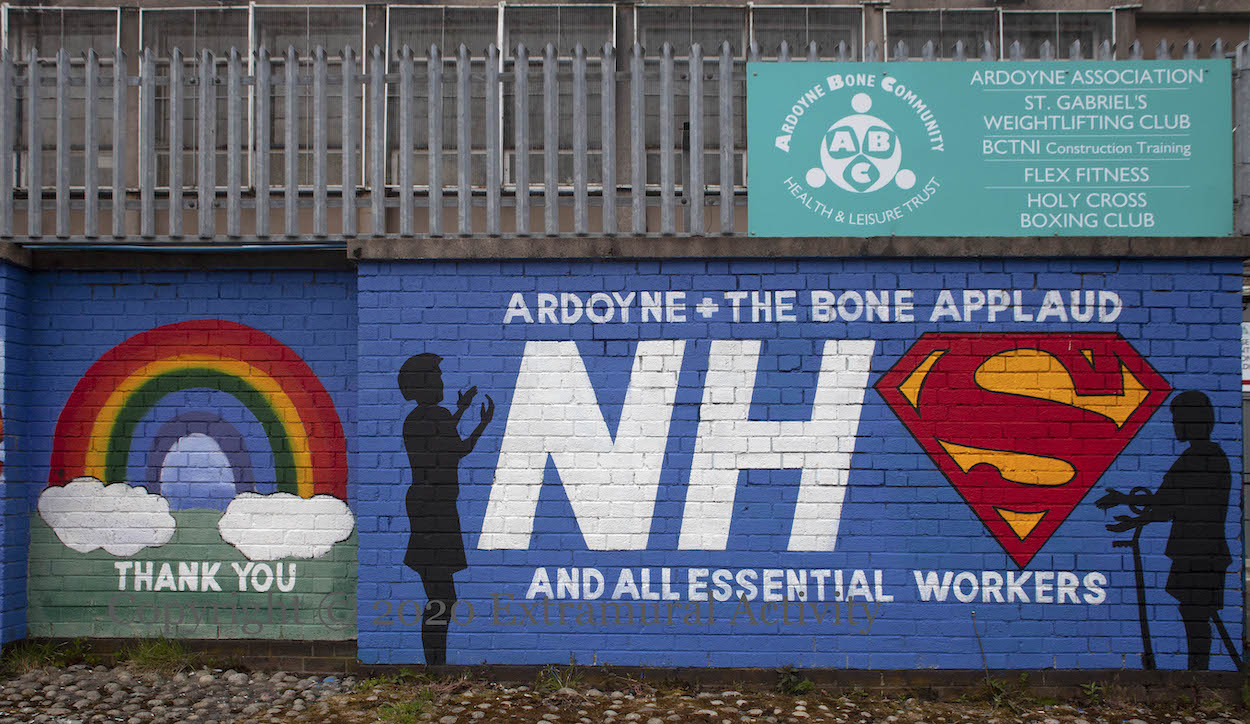
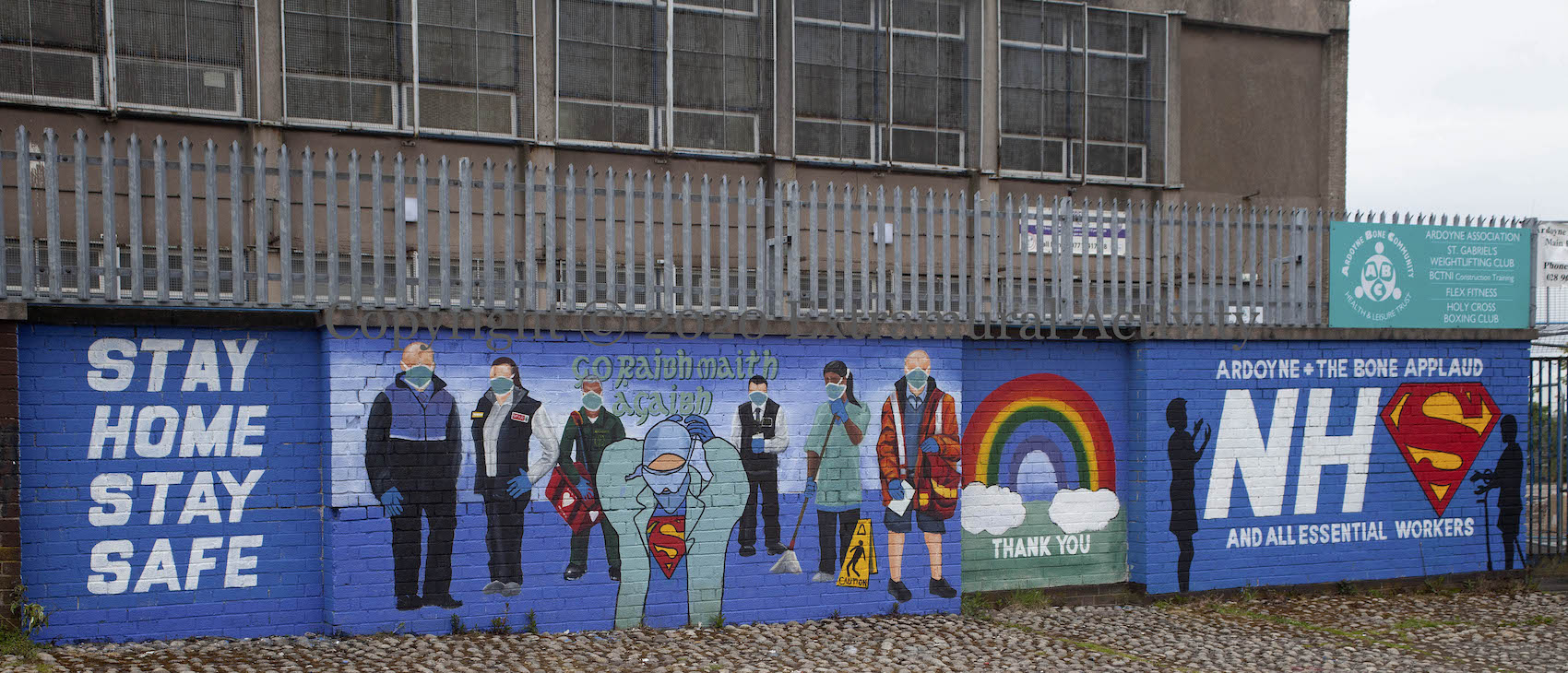
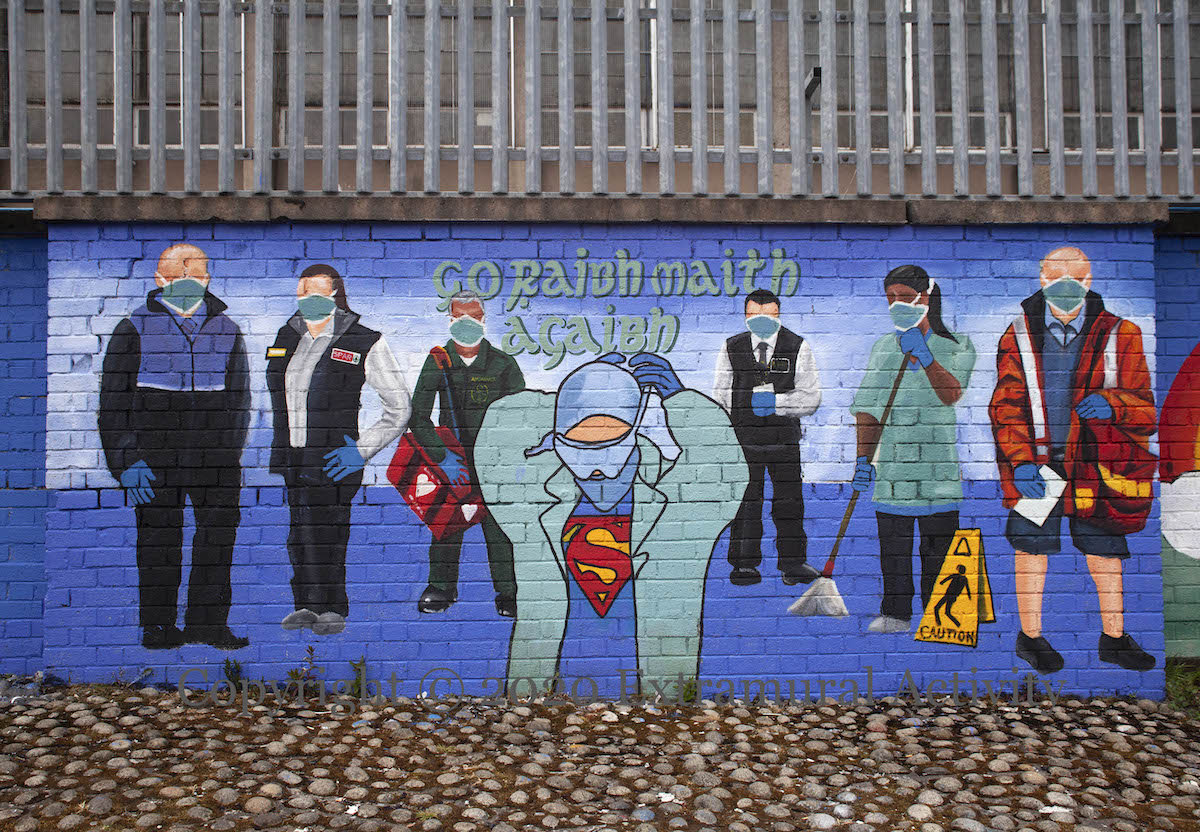
“Go raıbh maıth agaıbh/Thank you – Ardoyne + The Bone applaud NHS and all essential keyworkers”, “Stay home, stay safe”. The keyworkers (including shop servers and hospital janitors) all wear masks and gloves.
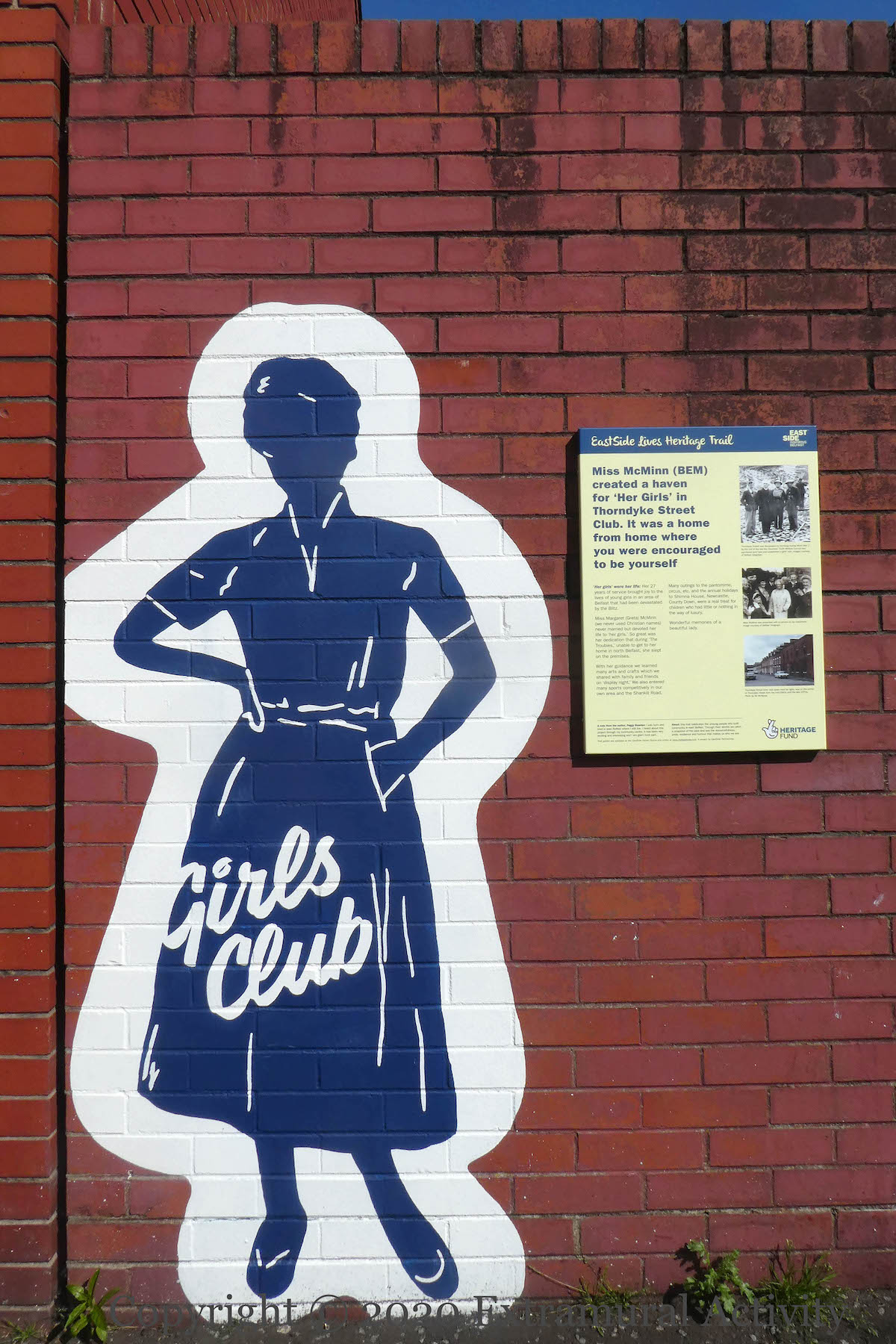
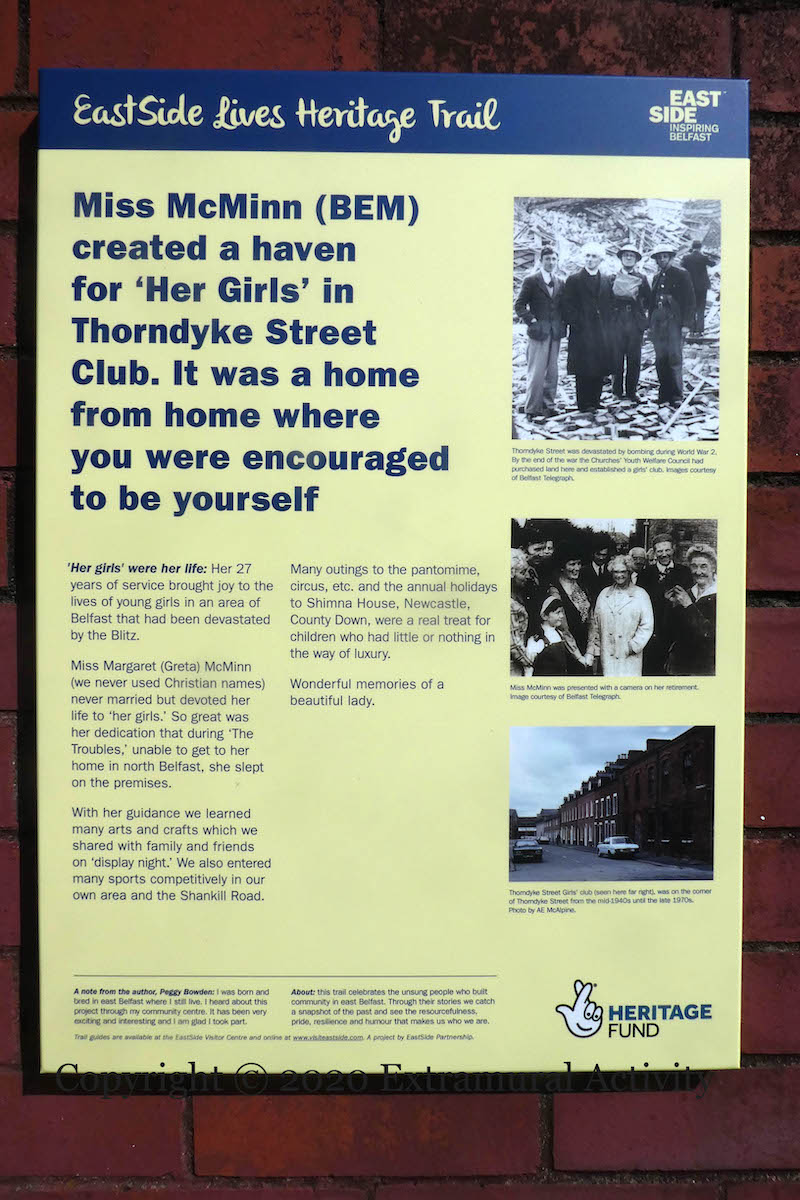
“Miss McMinn (BEM) created a haven for “Her Girls” in Thorndyke Street Club. It was a home from home where you were encouraged to be yourself. ‘Her girls’ were here life: Her 27 years of service brought joy to the lives of young girls in an area of Belfast that had been devastated by the Blitz. Miss Margaret (Greta) McMinn (we never used Christian names) never married but devoted her life to ‘her girls’. So great was her dedication that during ‘The Troubles’, unable to get to her home in north Belfast, she slept on the premises. With her guidance we learned many arts and crafts which we shared with our family and friends on ‘display night’. We also entered many sports competitively in our own area and the Shankill Road. Many outings to the pantomime, circus, etc. and the annual holidays to Shimna House, Newcastle, County Down, were a real treat for children who had little or nothing in the way of luxury. Wonderful memories of a beautiful lady. – Peggy Bowden”.
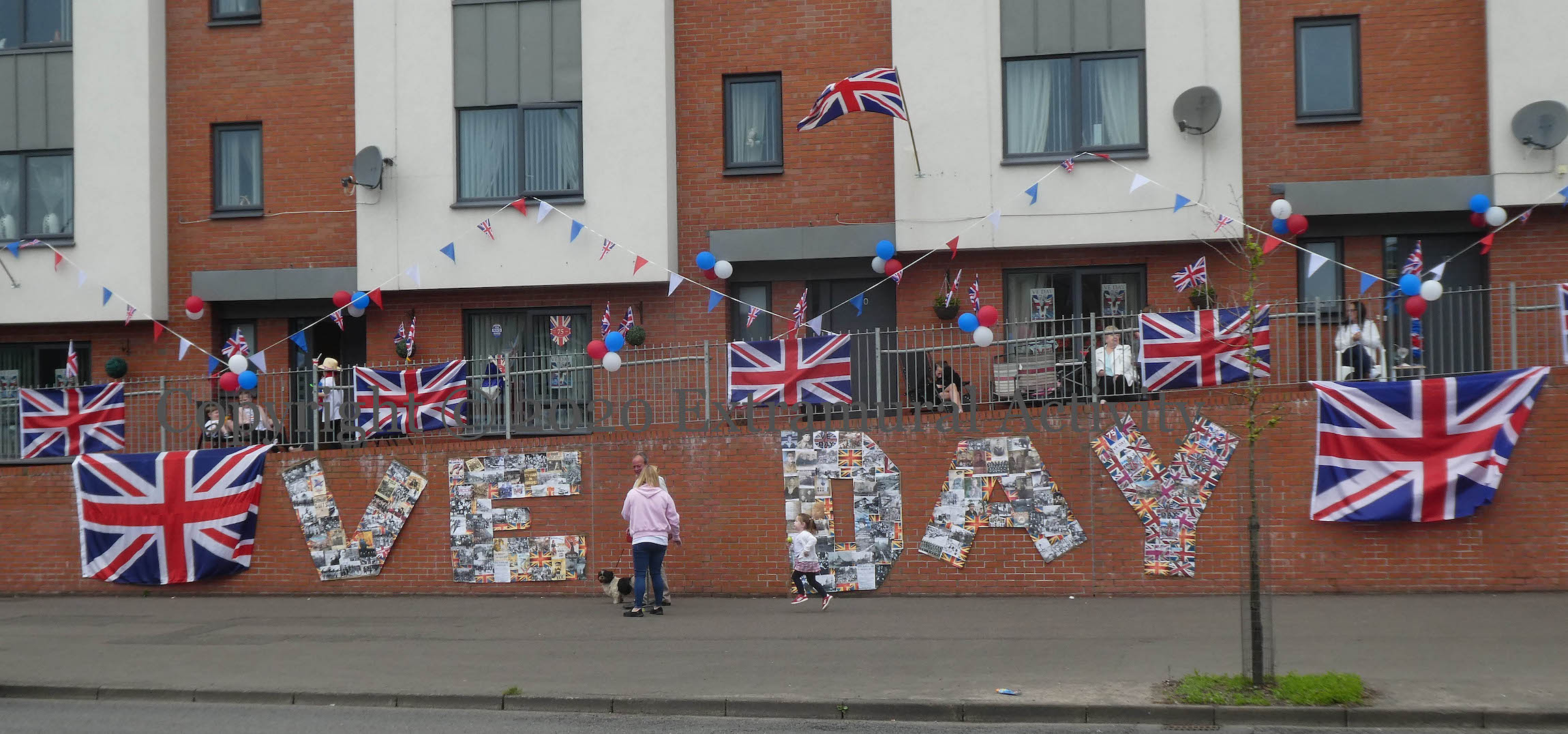
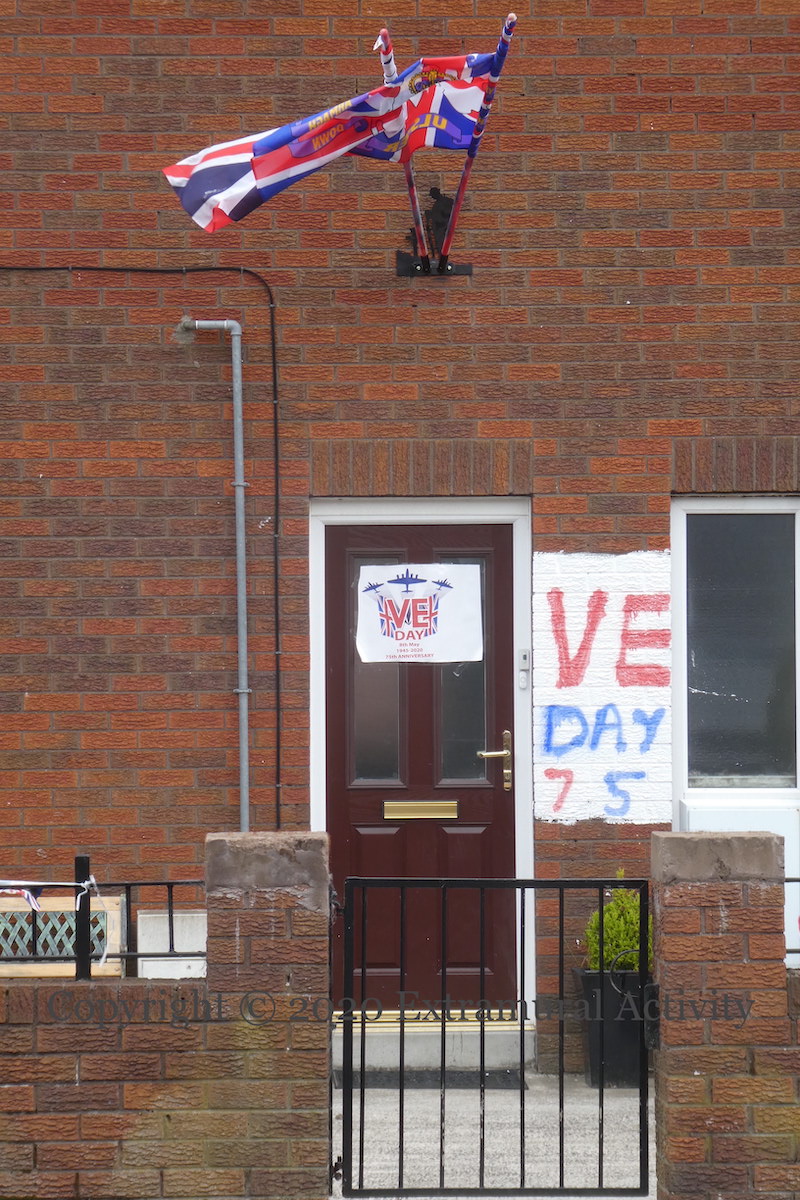
“VE Day” in large letters composed of images, portraits of servicemen, and newspaper front pages (“It’s Over In Europe”, “Germany Quits” and so on) from the period at the end of WWII in Europe, installed along the Shore Road, Belfast, for the 75th anniversary of the event.
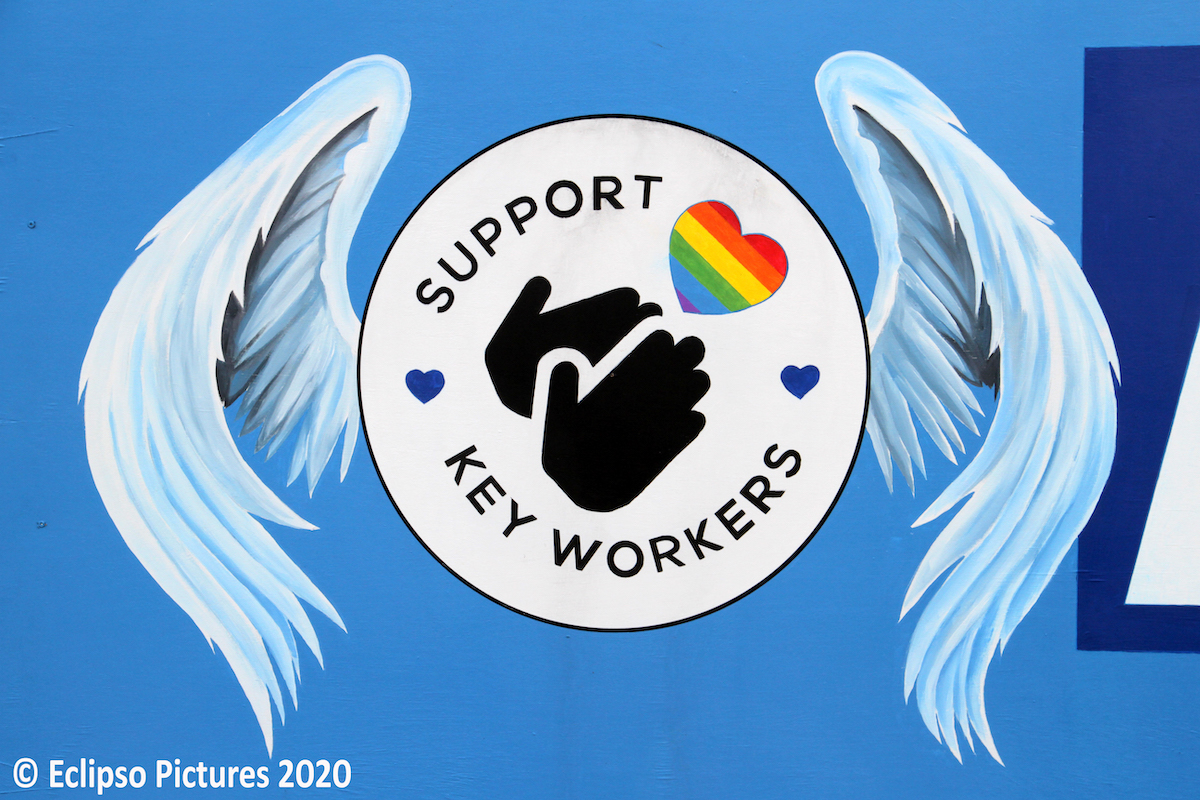
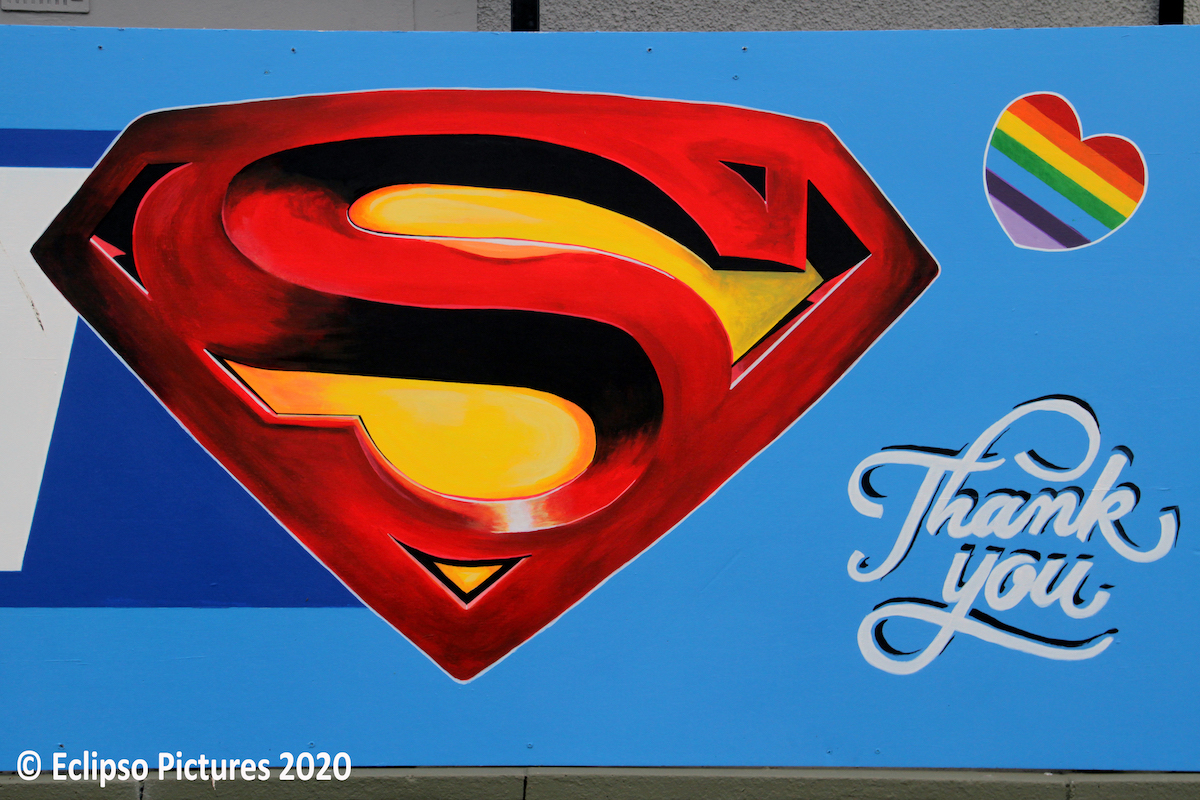
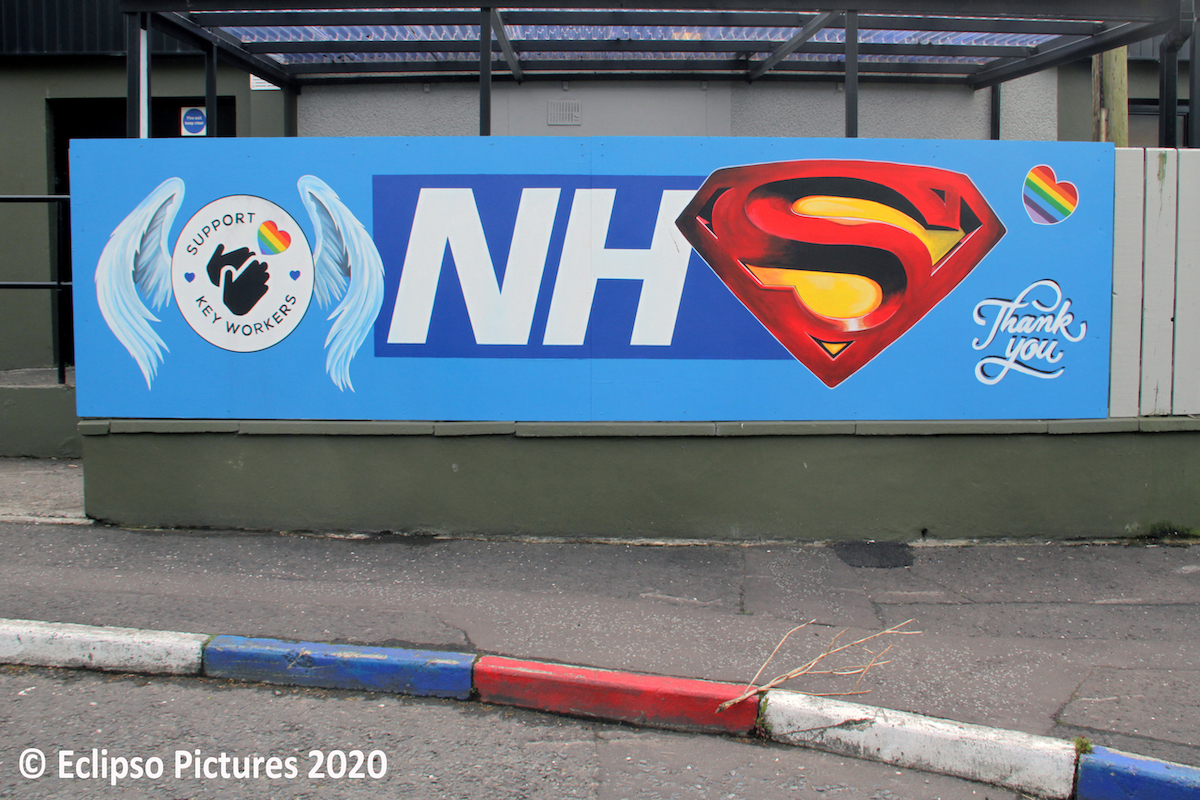
This is the pro-NHS mural in Newbuildings, south of London-/Derry. The “S” of NHS has been turned into the “S” of superman (see also Prepared For Work, Ready For Coronavirus). The rainbow (7-stripe rather than the gay pride 6-stripe) has become a symbol of positivity in the time of the coronavirus pandemic (see e.g. NHS Forever | Thank You, Postmen).
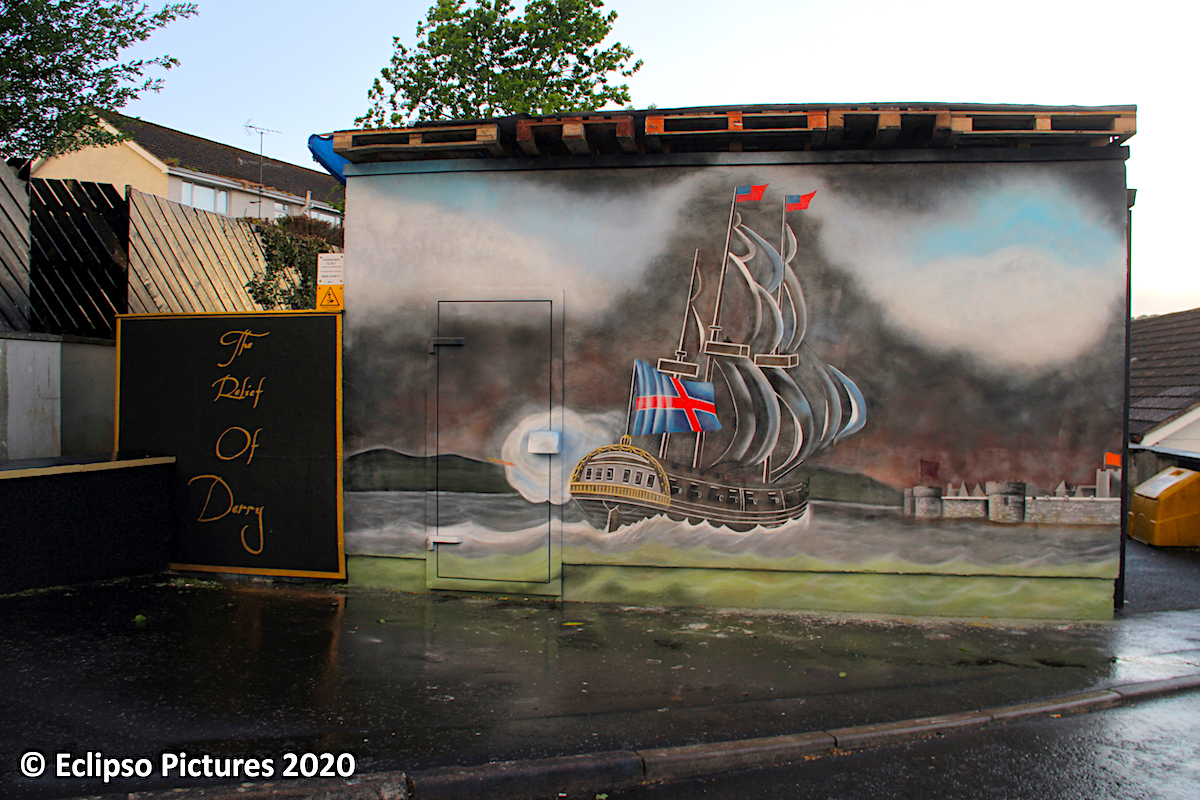
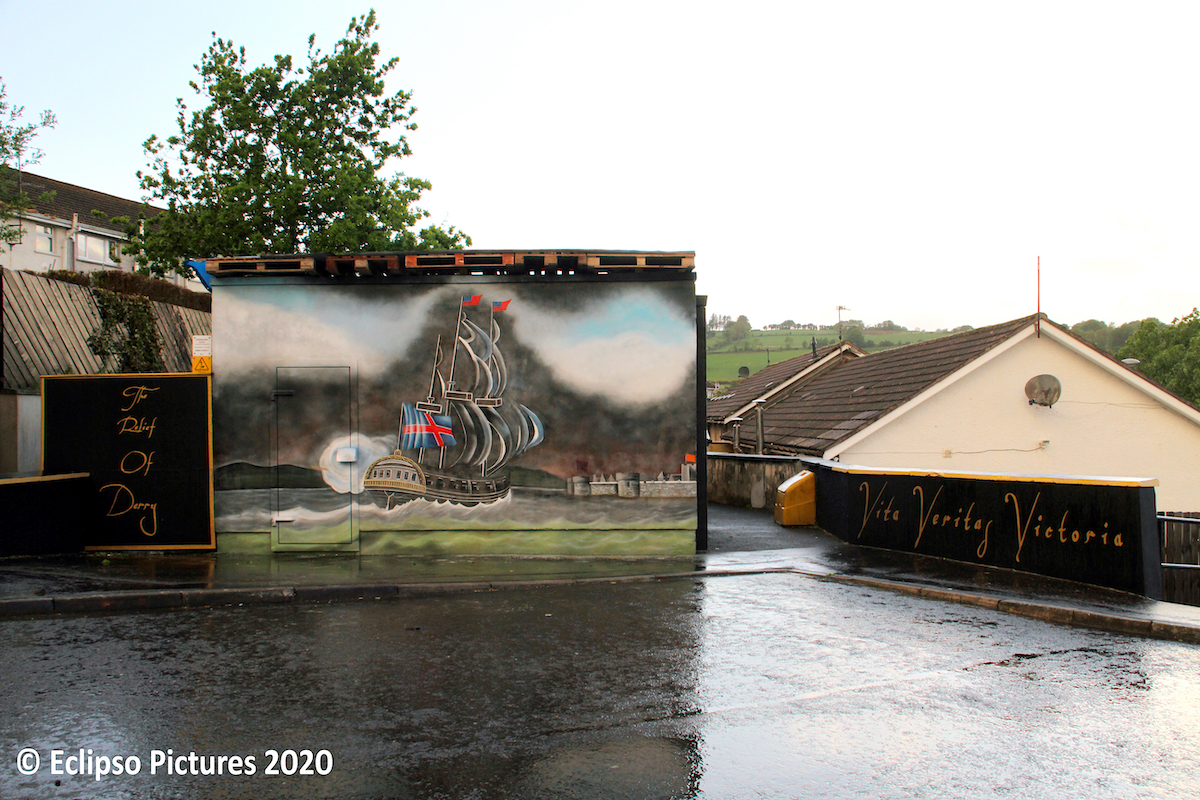
The Siege Of Derry began in June 1689 when King James II was rebuffed with cries of “No surrender!” It lasted 105 days, during which about half of the townspeople died. Part of the siege equipment was a boom placed across the River Foyle about halfway between Derry and Culmore. Five ships took part in ending the siege. Shown in this new Tullyally mural (by Glen Molloy) is the Dartmouth, which attacked the shoreline besiegers at Culmore so that three small ships could bring in provisions – the Mountjoy and Phoenix approaching the boom and the Jerusalem hanging back until success was assured. They were accompanied by a longboat from the Swallow, filled with sailors who with “hatchets and cutlasses” were “hewing and hacking away at the boom” (Witherow at Library Ireland) so that it could be broken by Mountjoy.
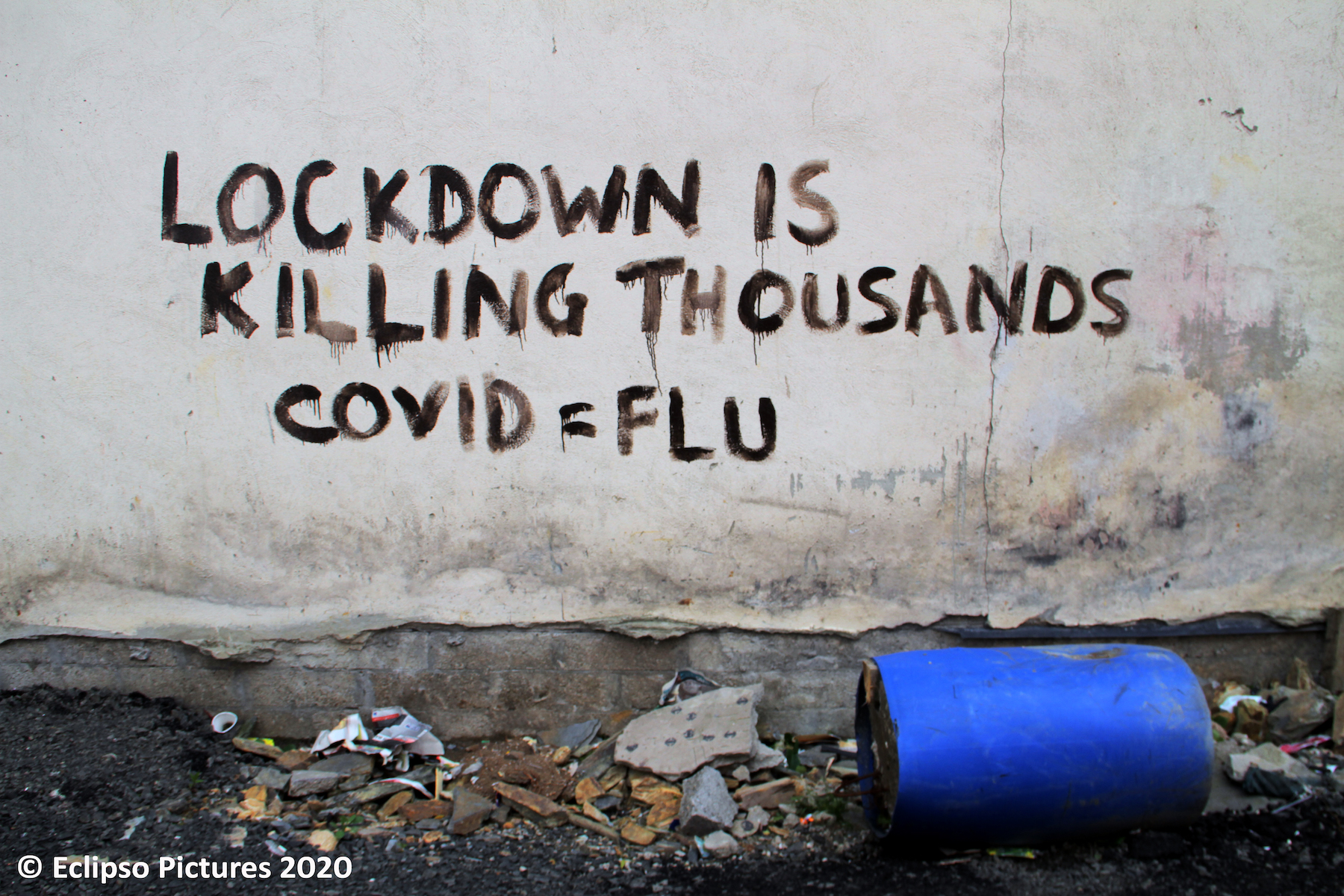
Commentary on the coronavirus pandemic Great James Street, London-/Derry: “Lockdown is killing thousands. Covid = Flu”. The coronavirus ‘shelter in place’ orders in the UK and Ireland have various negative health consequences, including poverty from unemployment, an increase in alcohol consumption and domestic violence, and an unwillingness to seek medical attention for non-Covid-related ailments. But it’s far from clear that “thousands” have died. Nonetheless, the continued isolation and disruption to normal living is proving difficult to bear.
 Seosamh Mac Coille Collection