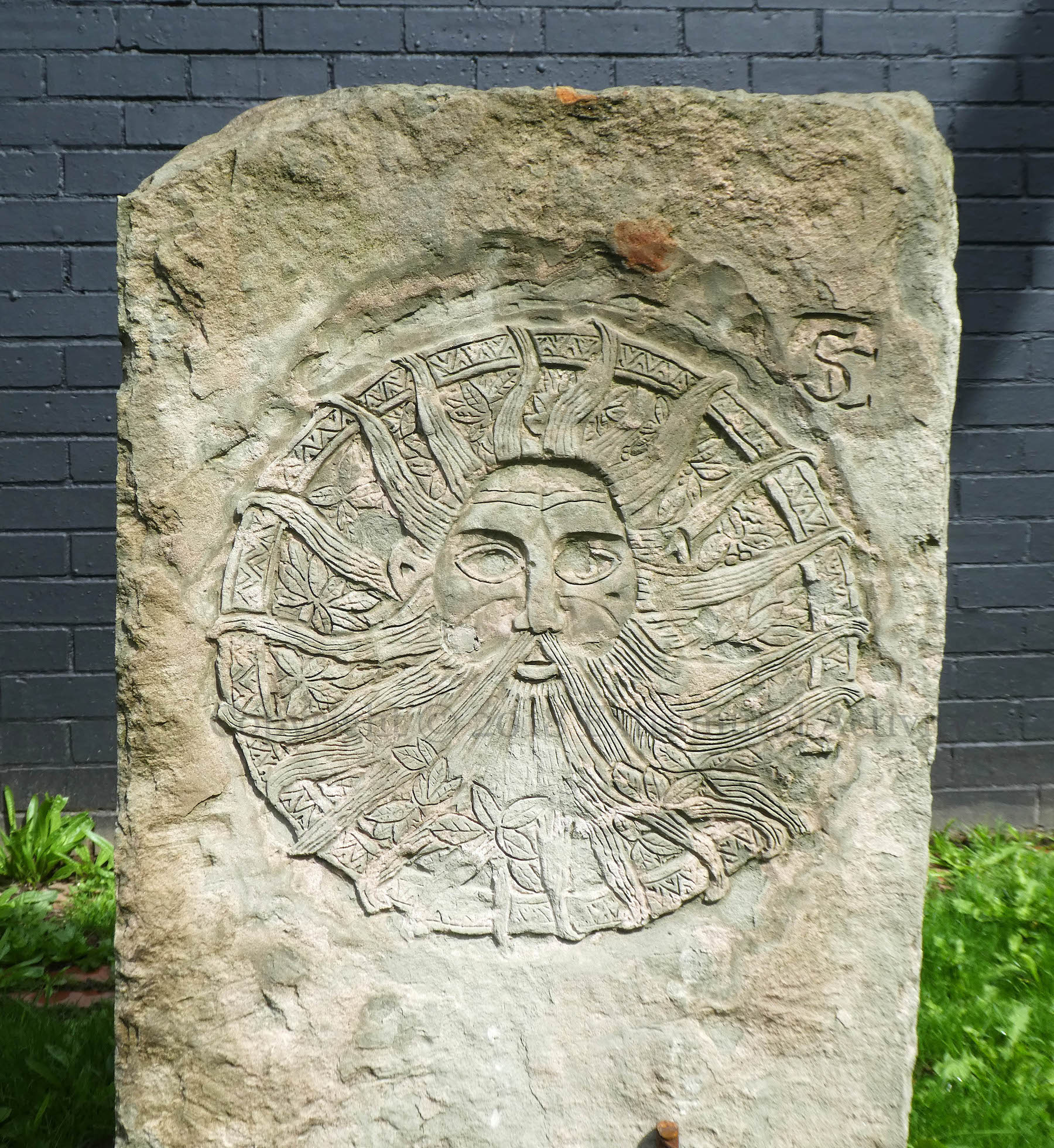
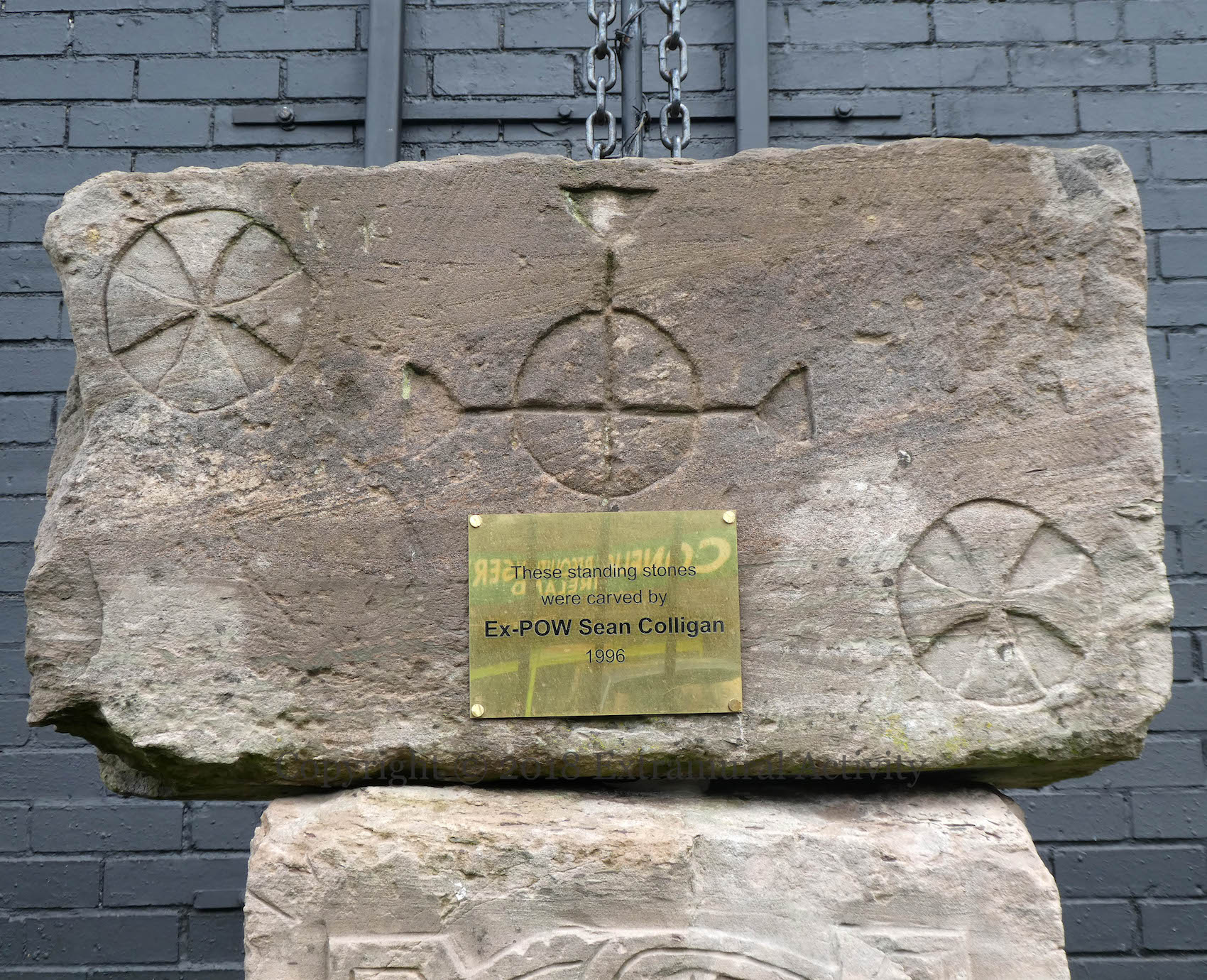
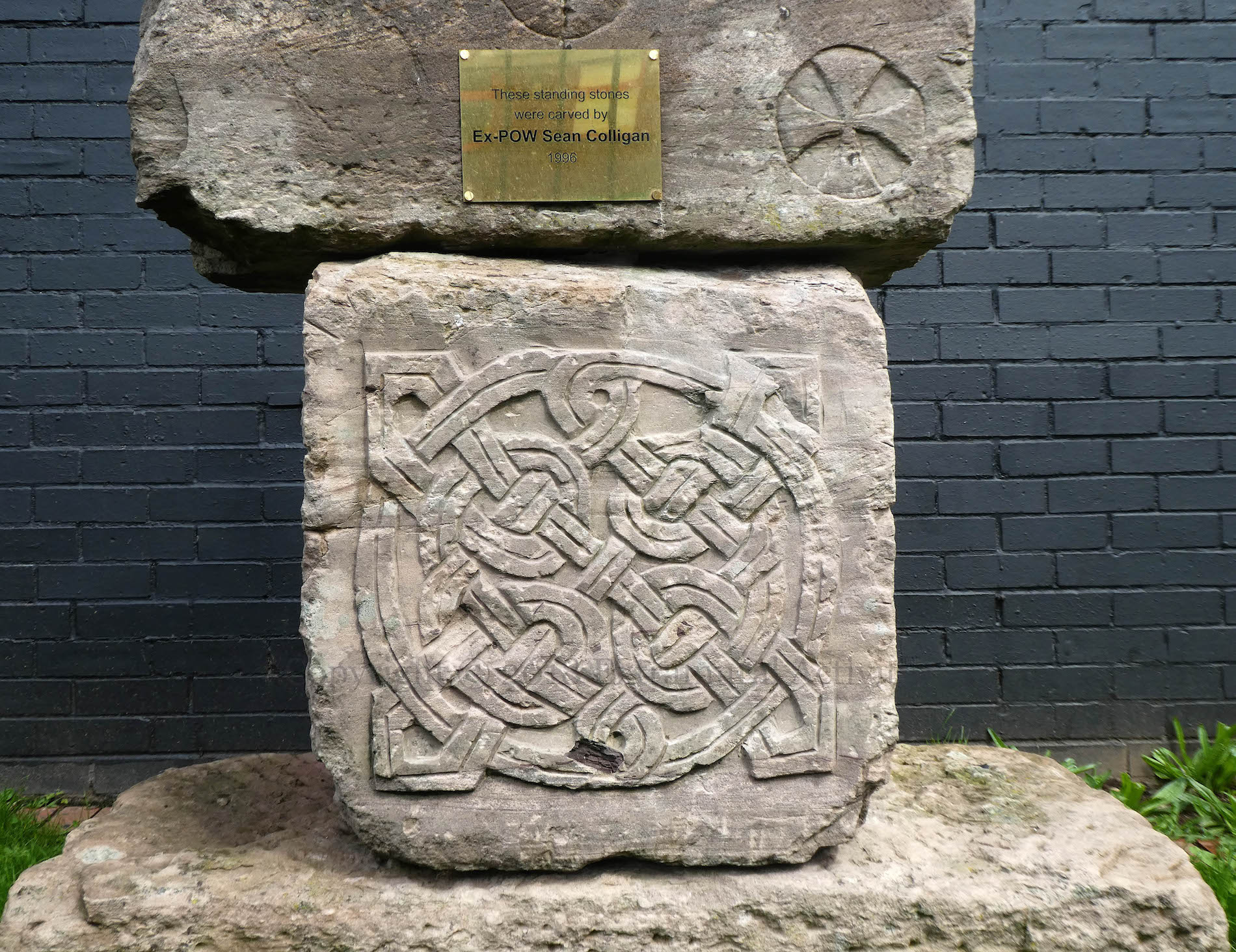
Ardoyne republican Sean Colligan was interned during the troubles and spent his life as an activist in the area, particularly in organising the Ardyne Fleadh (via Saoirse32) and the murals in Ardoyne. He died of a heart attack (in 2004?) but his stone carvings survive him. Two were already in front of the Mass Rock mural, and three more have been added in front of a new commemorative wall for former POWs (to be featured tomorrow).
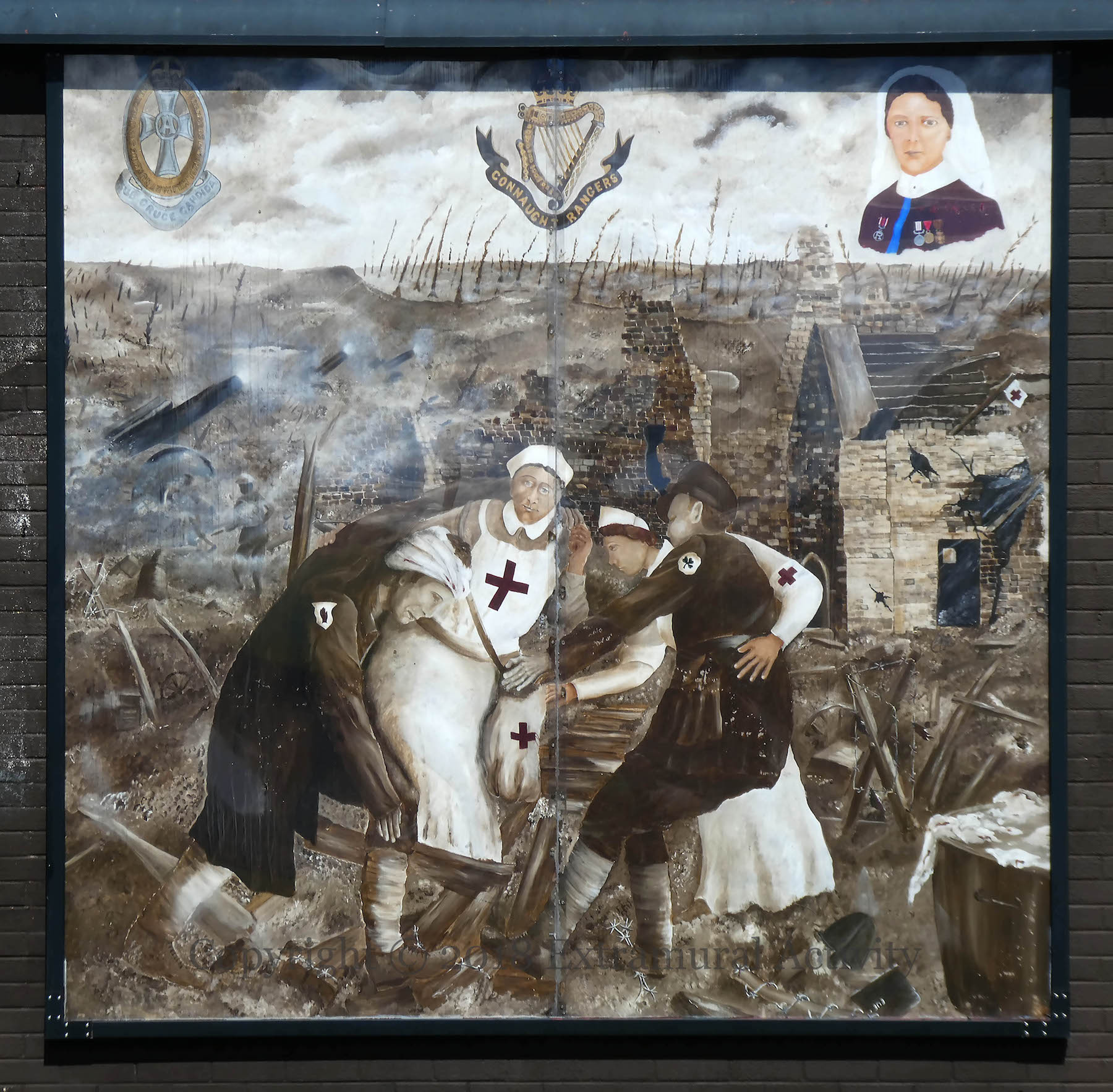
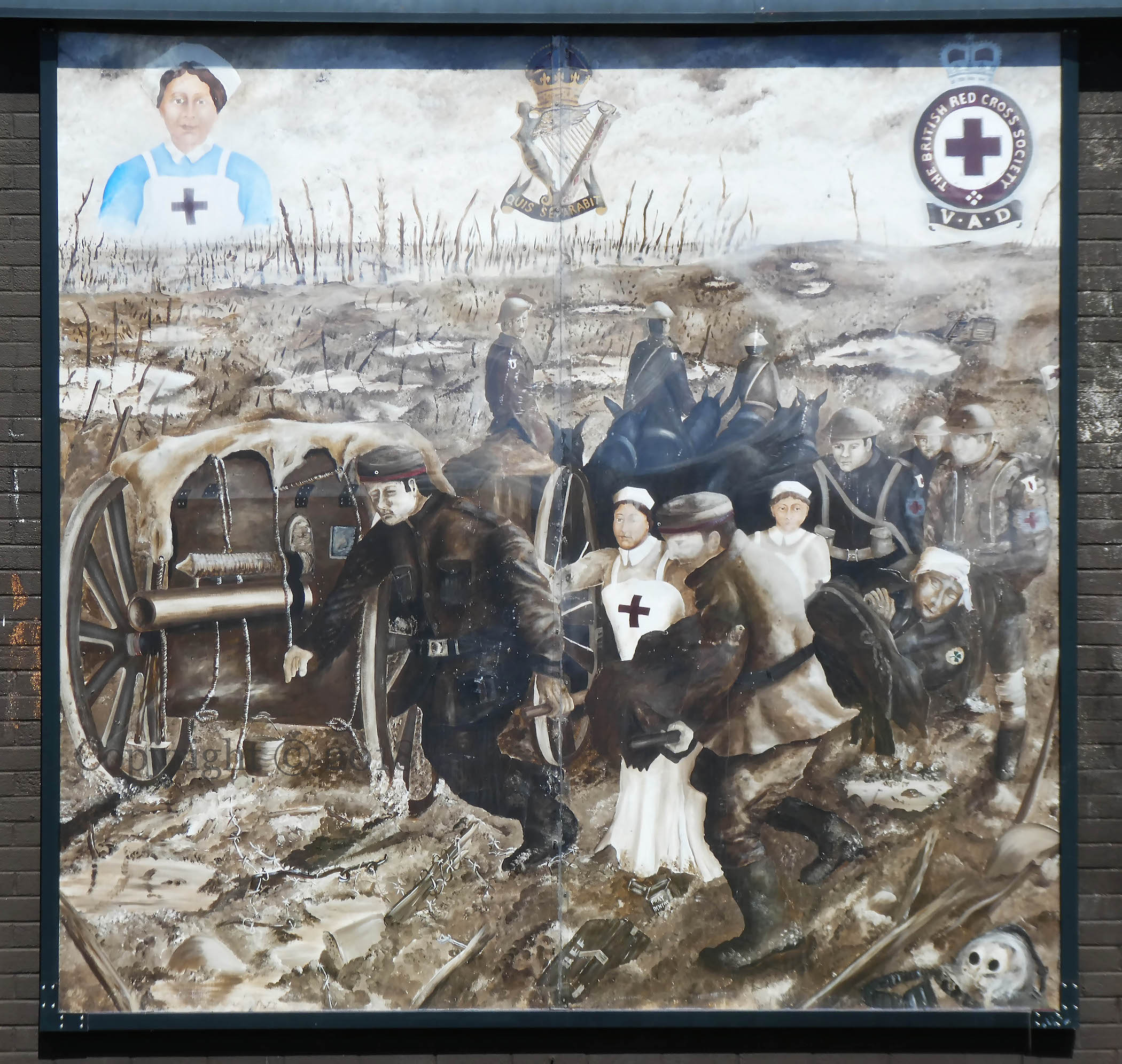
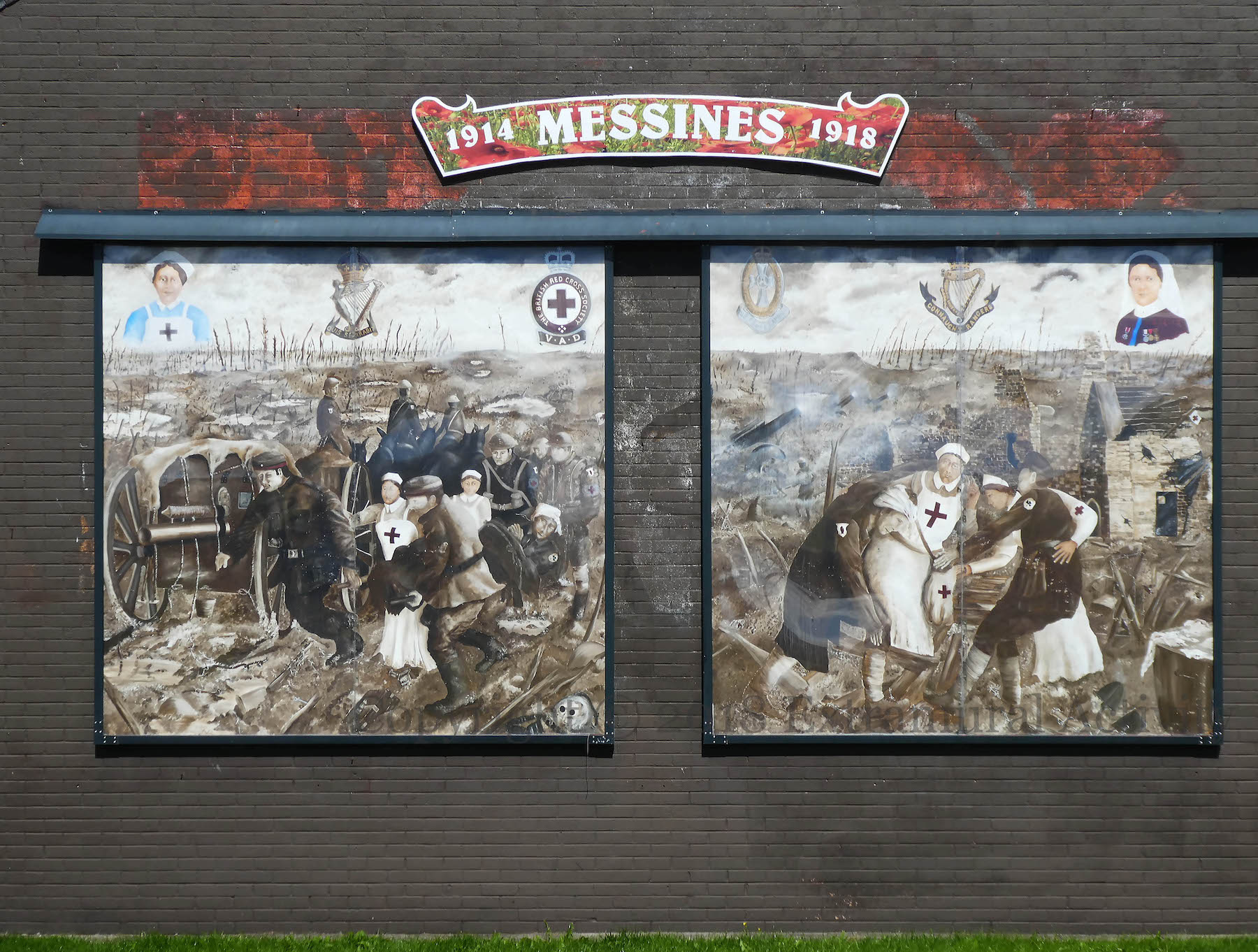
Two panels commemorate the Battle Of Messines in 1917 and the role of nurses in attending to the wounded. This NIHE article says that the two nurses depicted are Annie Colhoun from London-/Derry and Margaret Dewar from Glasgow. “Margaret Dewar lost her life during the battle whilst Annie Colhoun survived and was decorated for her work during the war by the French, Serbian and British Governments.” (This presumably makes her the decorated nurse in the right-hand panel.) An Army Nursing Service page says, however, that they were nurses at Monastir in Macedonia.
“Sub cruce candida” (“under a white cross”) is the motto of the Queen Alexandra’s Royal Army Nursing Corps, though at the time of WWI it was Queen Alexandra’s Imperial Military Nursing Service. “VAD” stands for “voluntary aid detachment” of the British Red Cross.
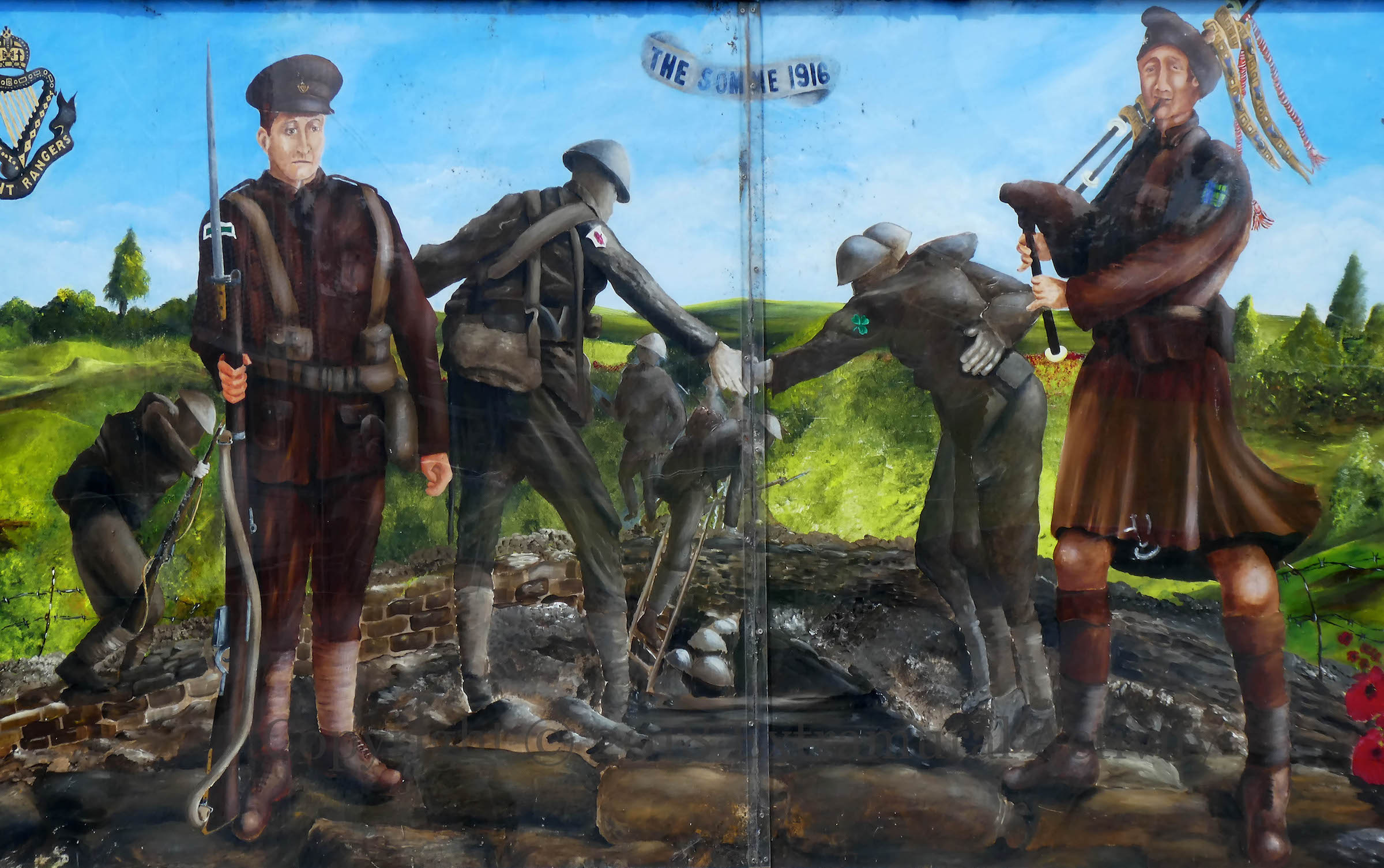
The soldiers wear red hands or shamrocks on their arms. The red hand is for the 36th (Ulster) Division and the cap badge in the left panel is of the 36th. The shamrock is the symbol of the 16th (Irish) Division, and the right panel shows the cap badge of the Connaught Rangers whose battalions served in both the 10th (Irish) and 16th (Irish) Divisions in WWI. Both the 36th and 16th fought at the Somme and at Messines (WP).
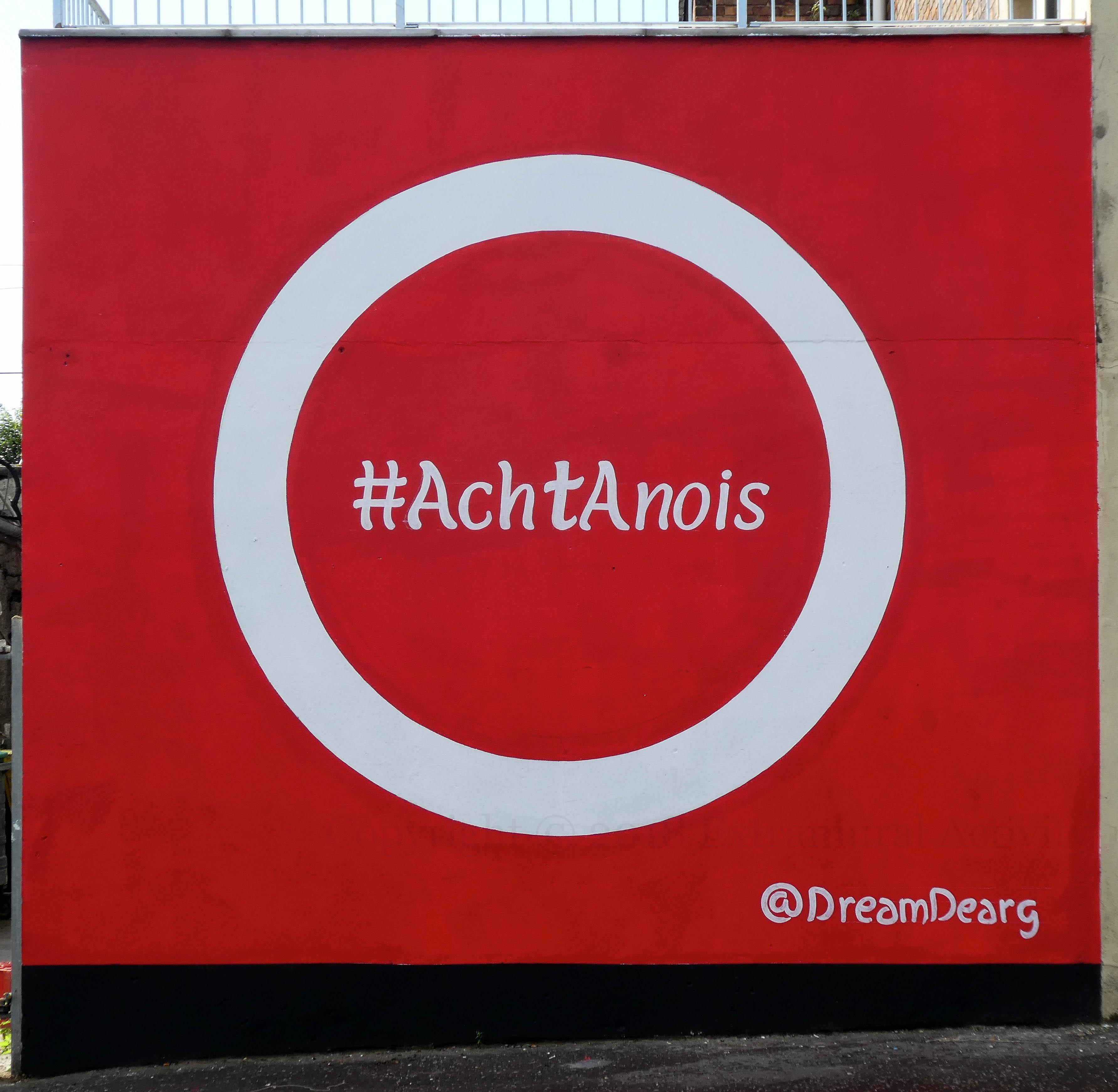
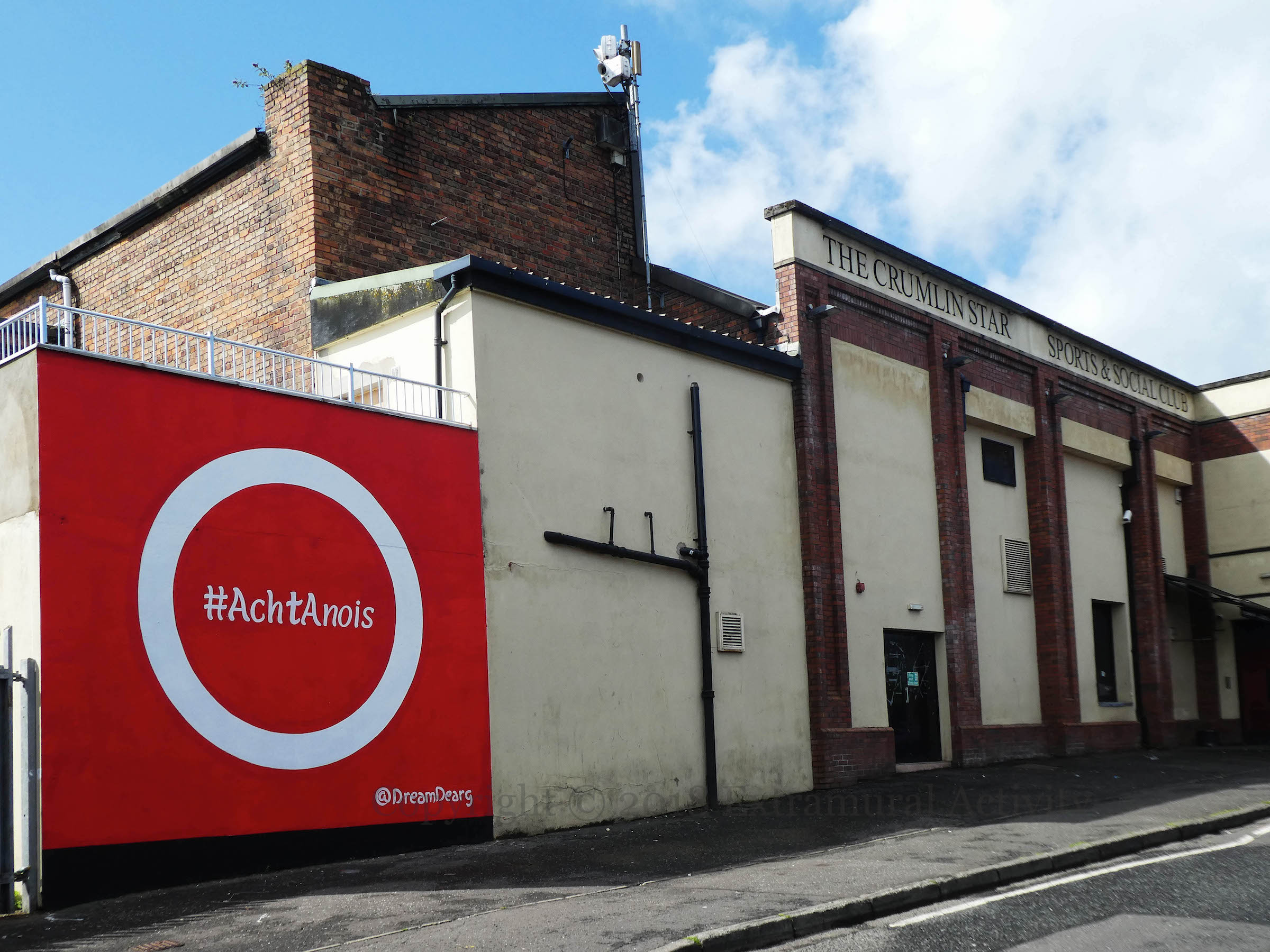
An Dream Dearg (Fb) takes its campaign for an Irish-Language Act (Acht Na Gaeılge) to the streets of Ardoyne after a deal to introduce such an act collapsed in February (BBC-NI | Irish Times).
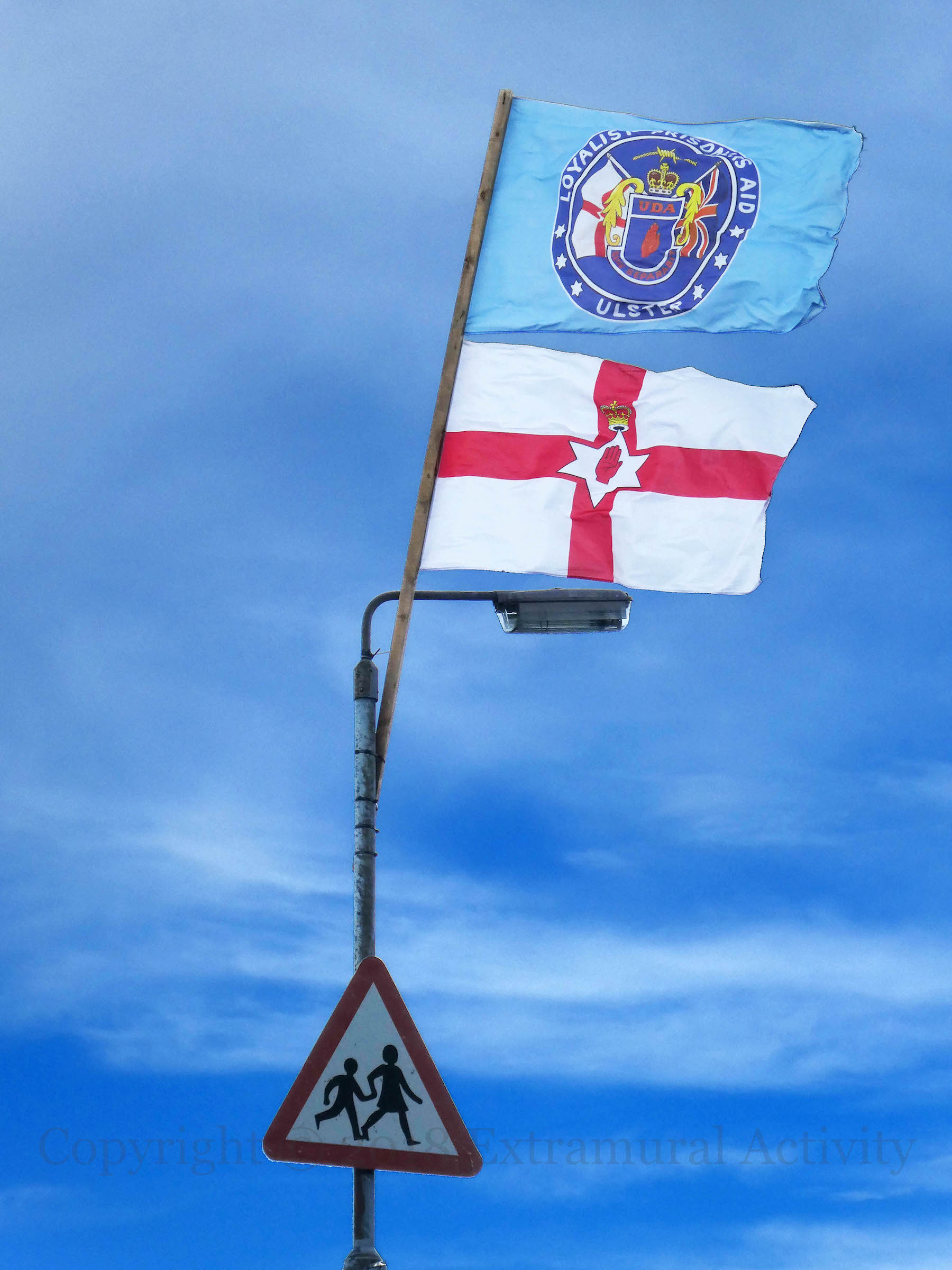
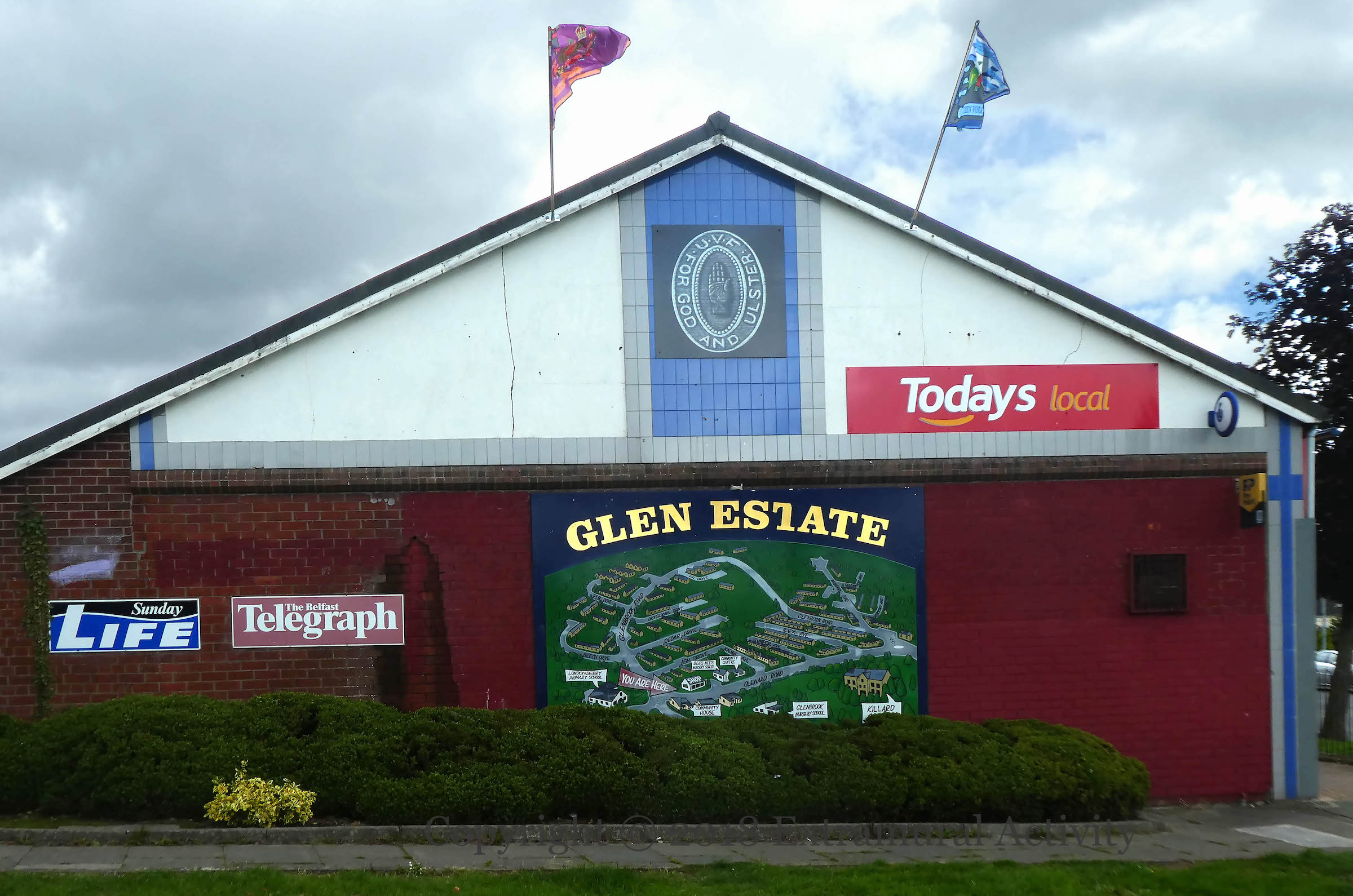
Flying in a stiff breeze above the Glen estate, Newtownards, are an Ulster Banner and the flag of Loyalist Prisoners[‘] Aid, welfare group for loyalist prisoners. The fundraising album of UDA songs was removed from Spotify and iTunes in 2017 (Irish News) but is still available on Amazon.
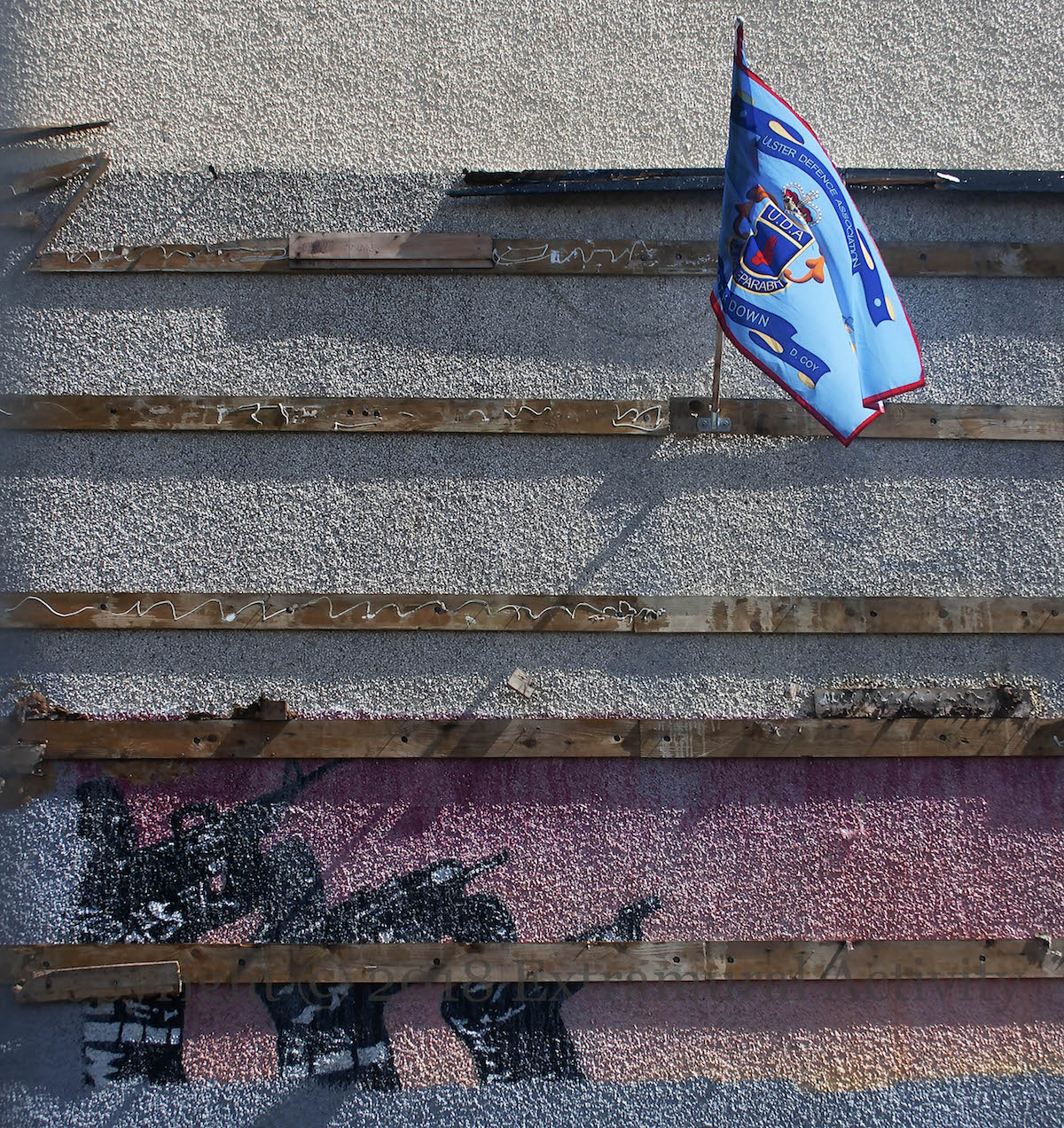
The Blair Mayne mural in Queen Street, Newtownards, which dates back to 2008, has fallen down, revealing the remnants of mural it replaced, a UVF firing party (J1754). A UDA flag, however, has been placed on the mounts.
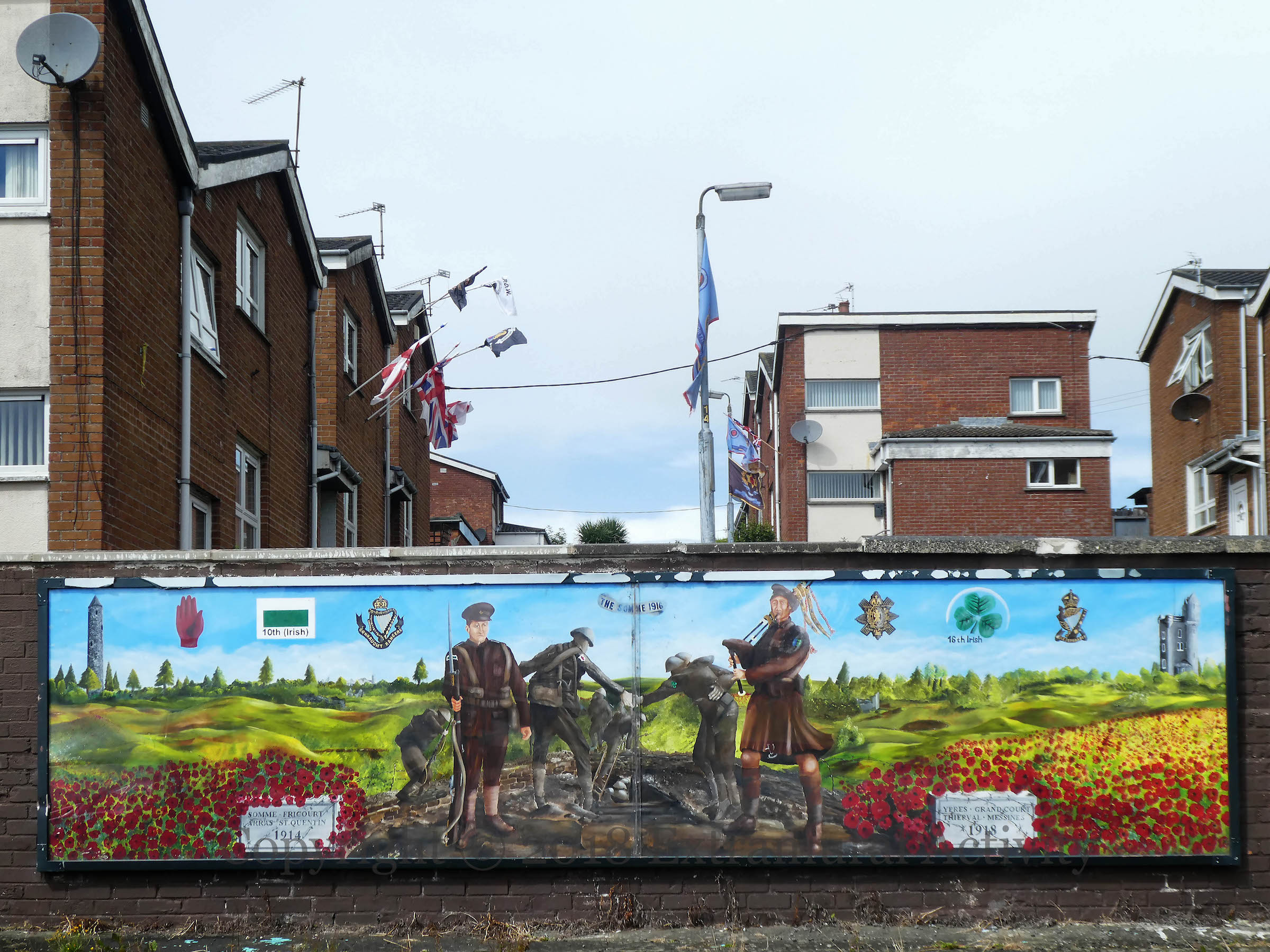
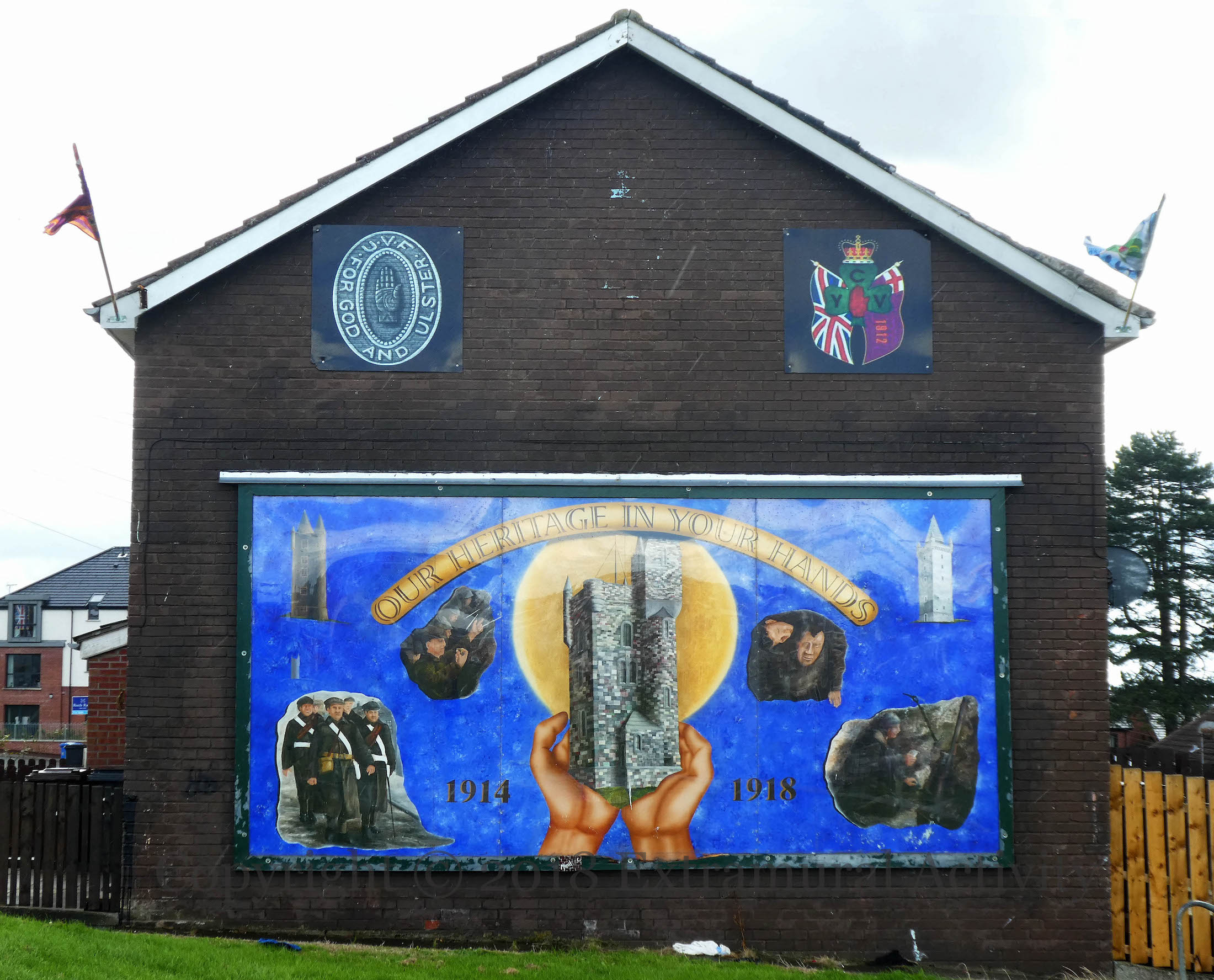
The 36th (Ulster) Division fought in the Battle Of Albert at the beginning of the Battle Of The Somme (July 1st-13th), and the 16th (Irish) in the battles of Guillemont and Ginchy in September (WP). The 10th (Irish) served at Gallipoli (and later in Macedonia and Palestine). The scene above shows soldiers from the 36th and 16th hand-in-hand at “The Somme 1916” – both division took part in the Battle – which lasted four and half months – but not at the same time; such scenes were instead reported of the battle at Messines in 1917 (see previously: Messines 1917).
Of the icons along the top, we see from left to right: Scrabo Tower; the red hand of the 36th; the green bar badge of the 10th (Irish) Division; the harp of the Connaught Rangers (battalions of which served in 10th and 16th Divisions); the emblem of the Black Watch – Royal Highlanders (the piping soldier right of centre wears a tartan patch of the Black Watch); the shamrock of the 16th (Irish) Division; the Maid Of Erin harp of the Royal Irish Rifles; Helen’s Tower/Thiepval Tower. It’s not clear why the Black Watch is included, as its battalions do not seem to have served with any of the 10th, 16th, or 36th and is a Scottish regiment rather than an Irish one. Please comment/get in touch if you can explain.
The Ulster Tower at Thiepval, France, is a replica of Helen’s Tower in Clandeboye, around which the 36th (Ulster) Brigade, formed in August 1914 from the Ulster Volunteers and Young Citizen Volunteers, began their training (see this gallery of images from North Down Museum at BBC-NI). After a year of training in Ireland and England, the Division was deployed to France in September 1915.
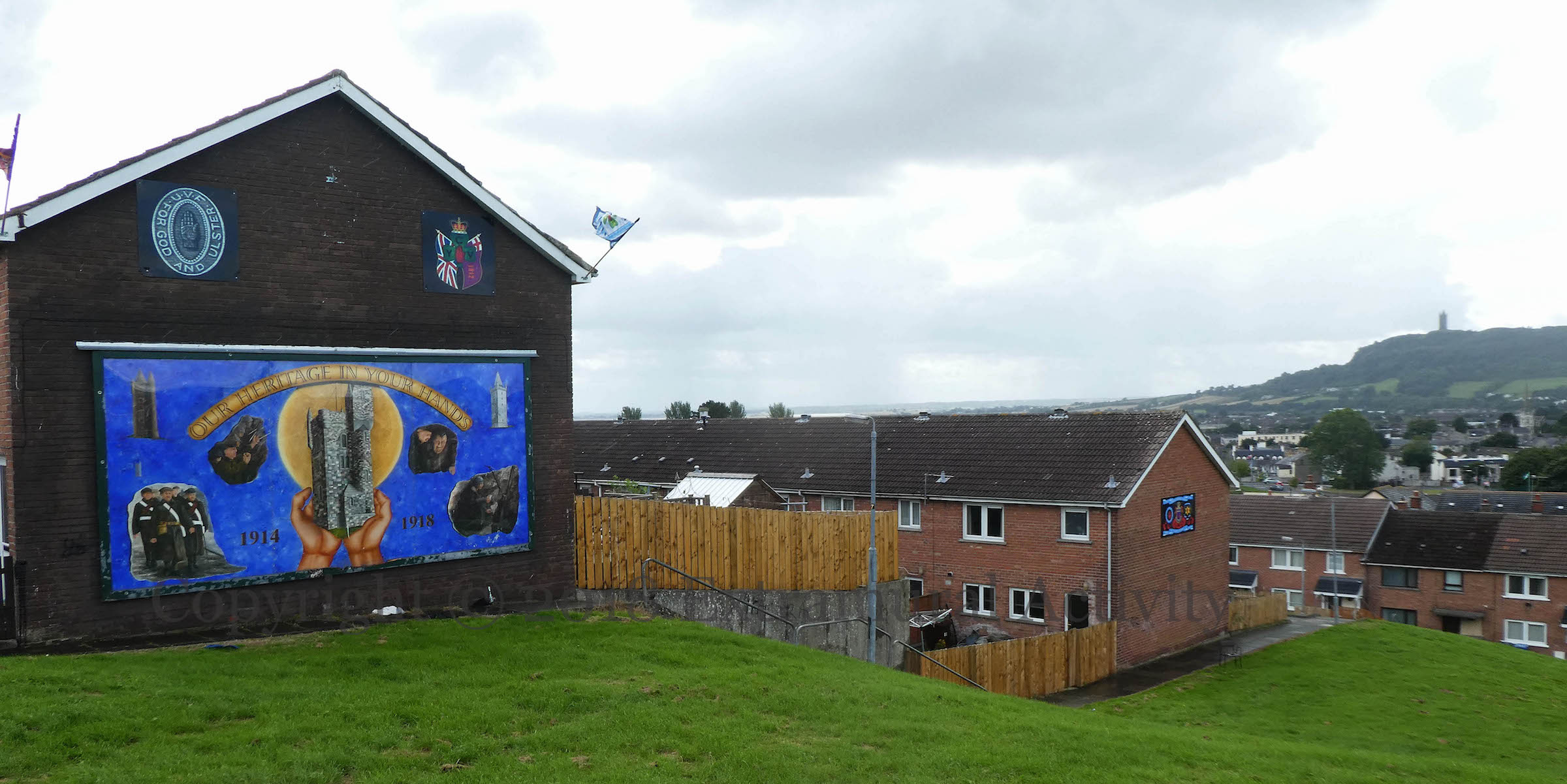
In the top corners are two views of the local Scrabo Tower, which can be seen to the right in the wide shot, below. Produced by muraltec.
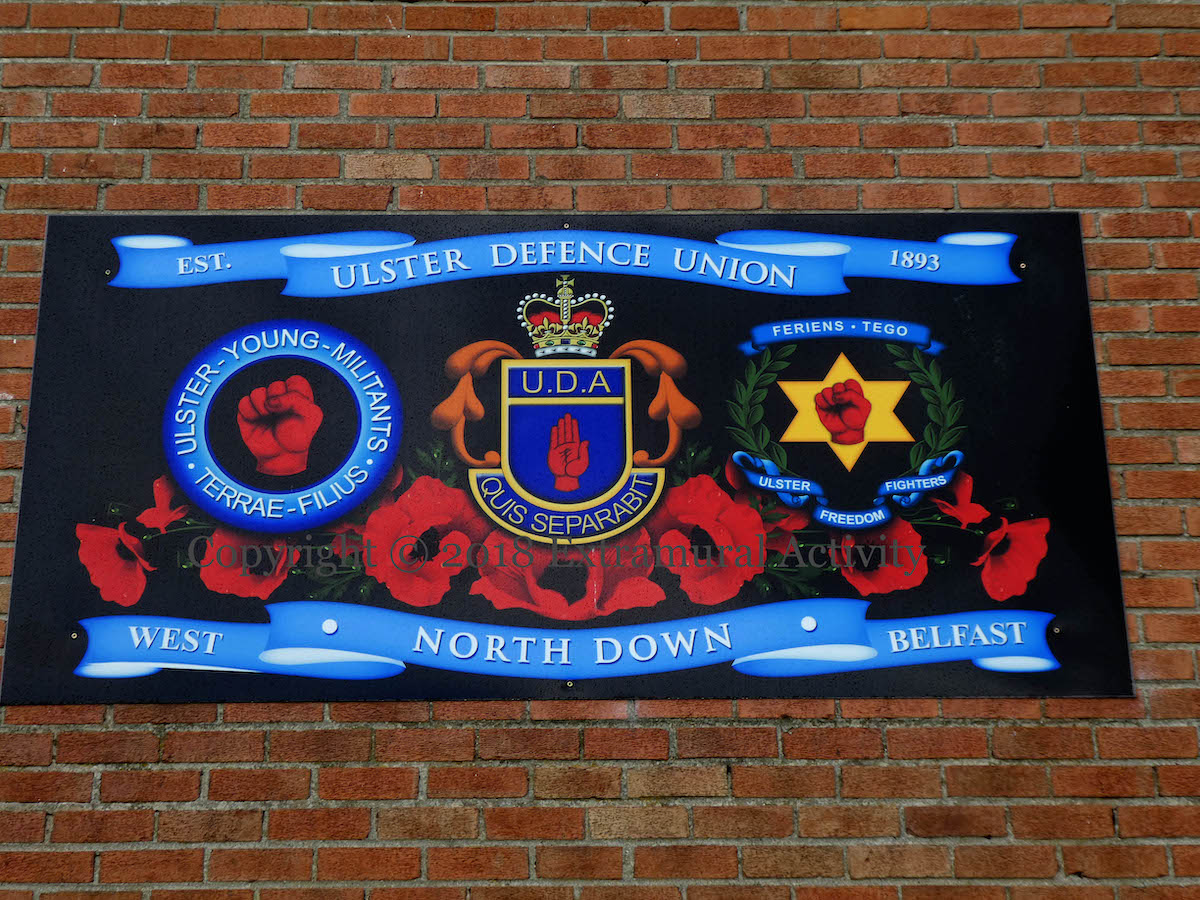
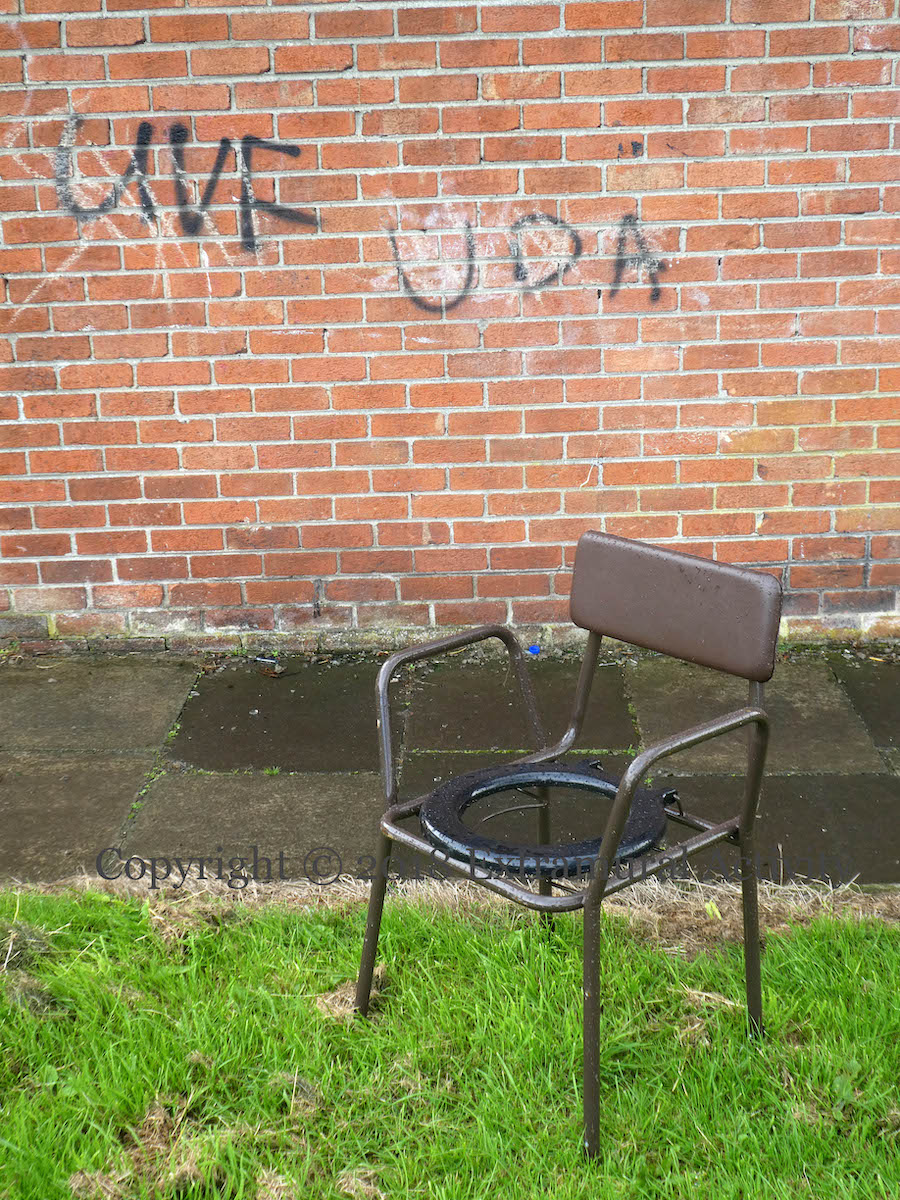
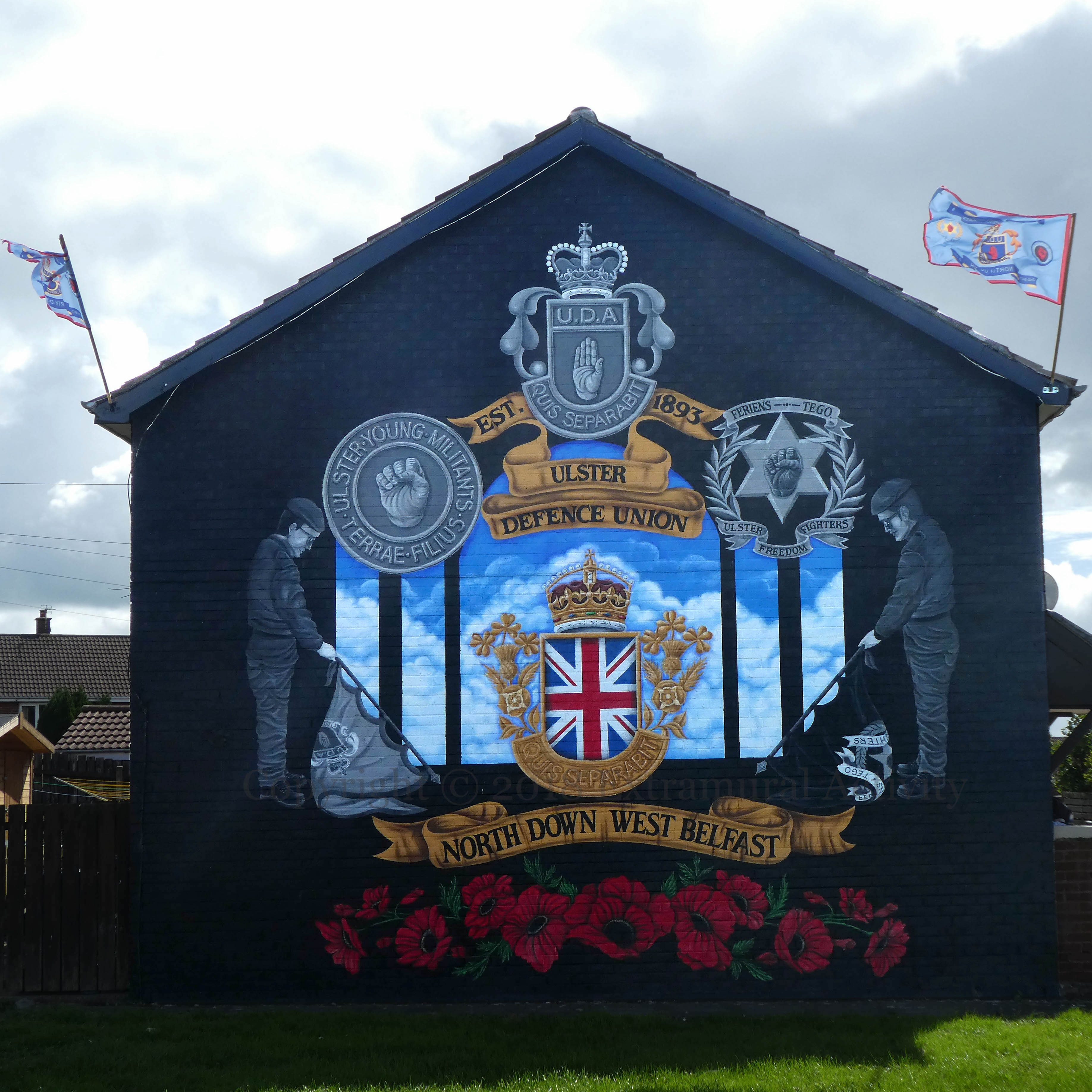
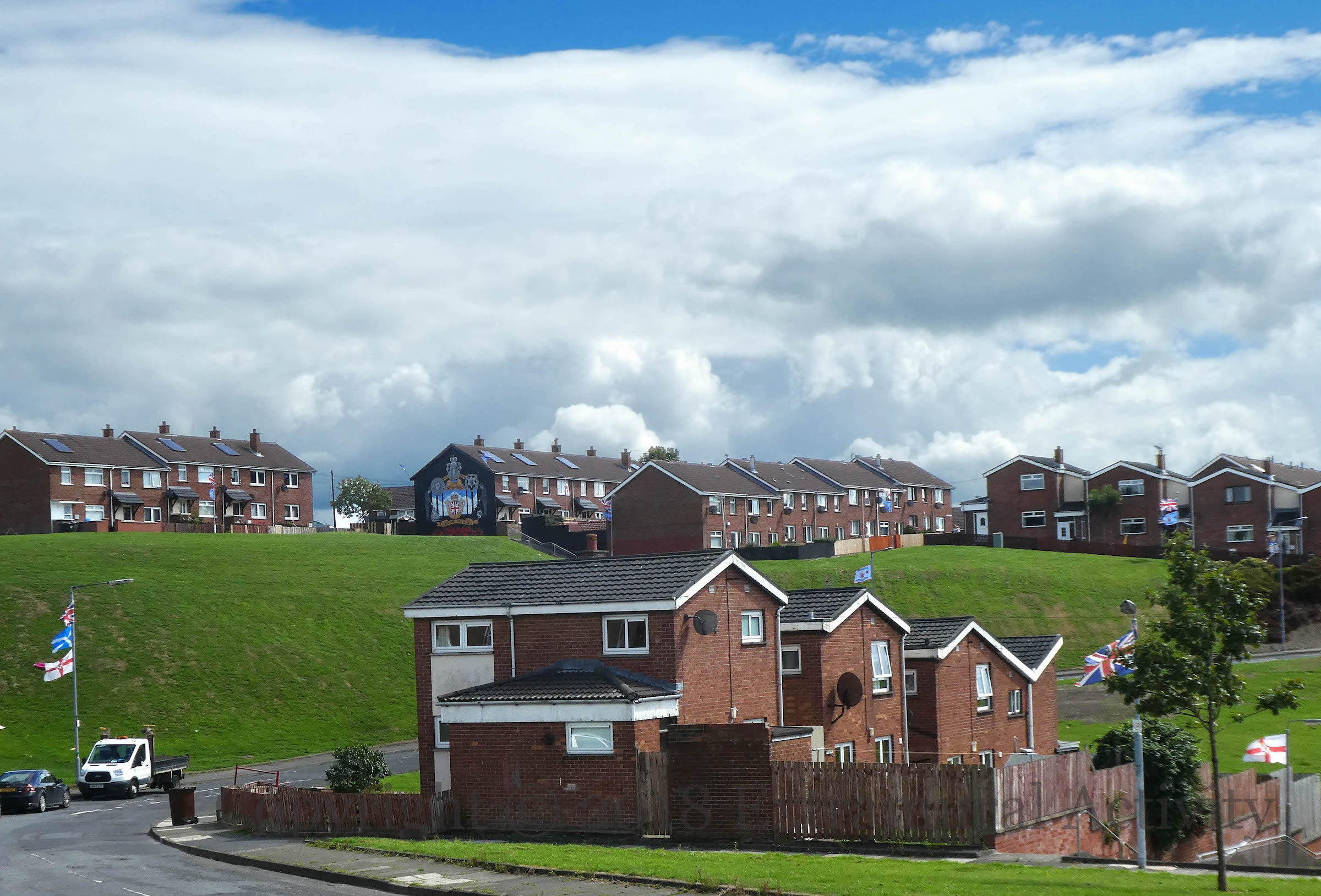
The poppy was used exclusively by the UVF (because of their shared named with the Ulster Volunteers, which became the 36th Division, which served on the western front in WWI, but in the last few years (2016-2018) it has been used frequently by the UDA in memorial murals (e.g. one | two | three), indicated here by the lowered flags and absence of weapons. (The first UDA poppy, however, dates back to the 2012 (if not earlier) tribute to Benson Kingsberry.) For background on the inclusion of “West Belfast” alongside “North Down” in a Newtownards mural, see Ulster Defence Unions, which also contains poppies (and which in turn links to information about the Ulster Defence Union of 1893). “UDU” seems to be used here to represent a desire for greater unity among (at least some parts) of the UDA.
 Seosamh Mac Coille Collection