In Search Of A Better Life

03012 2015-09-17 Emigration Ship 2015 close+

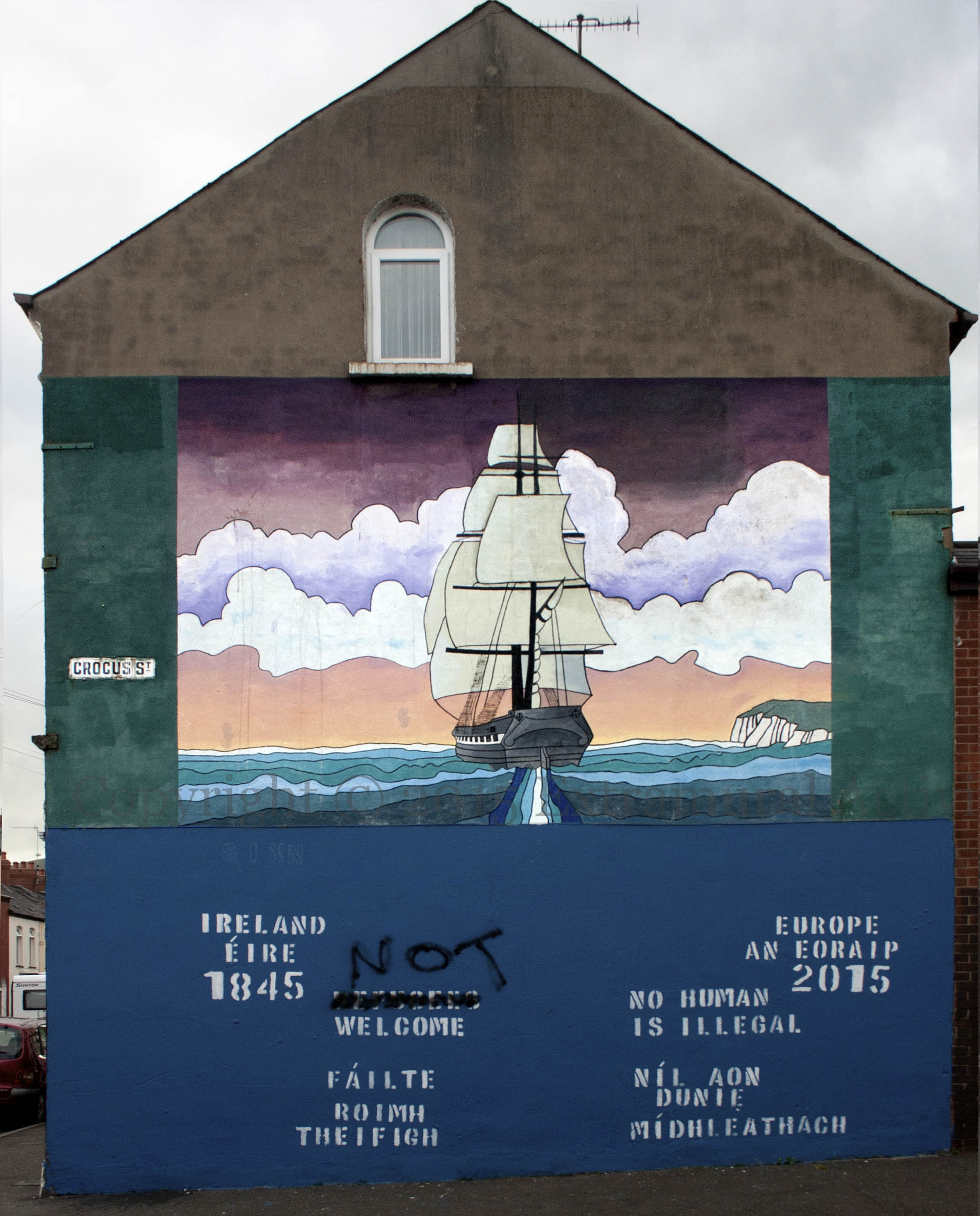
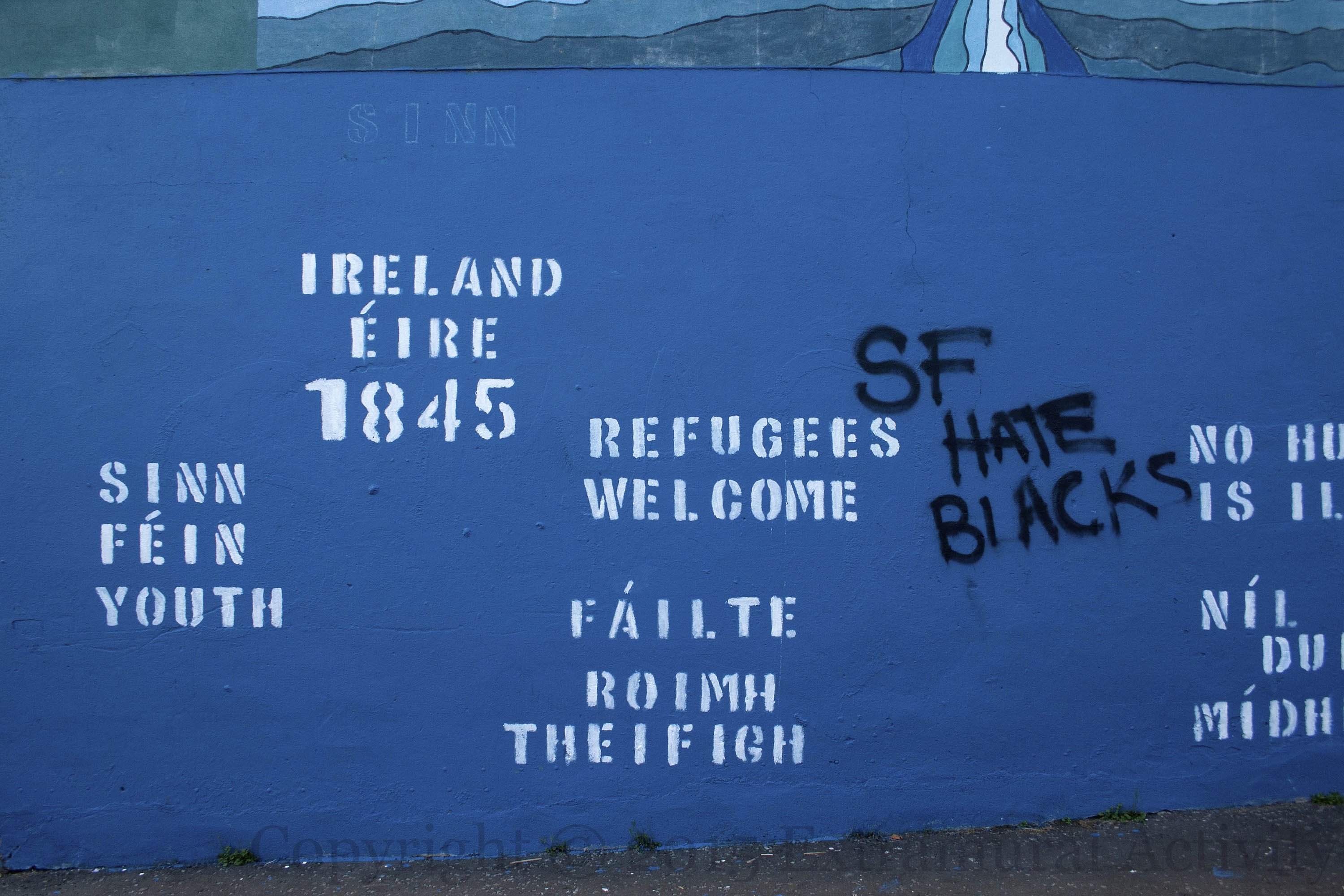
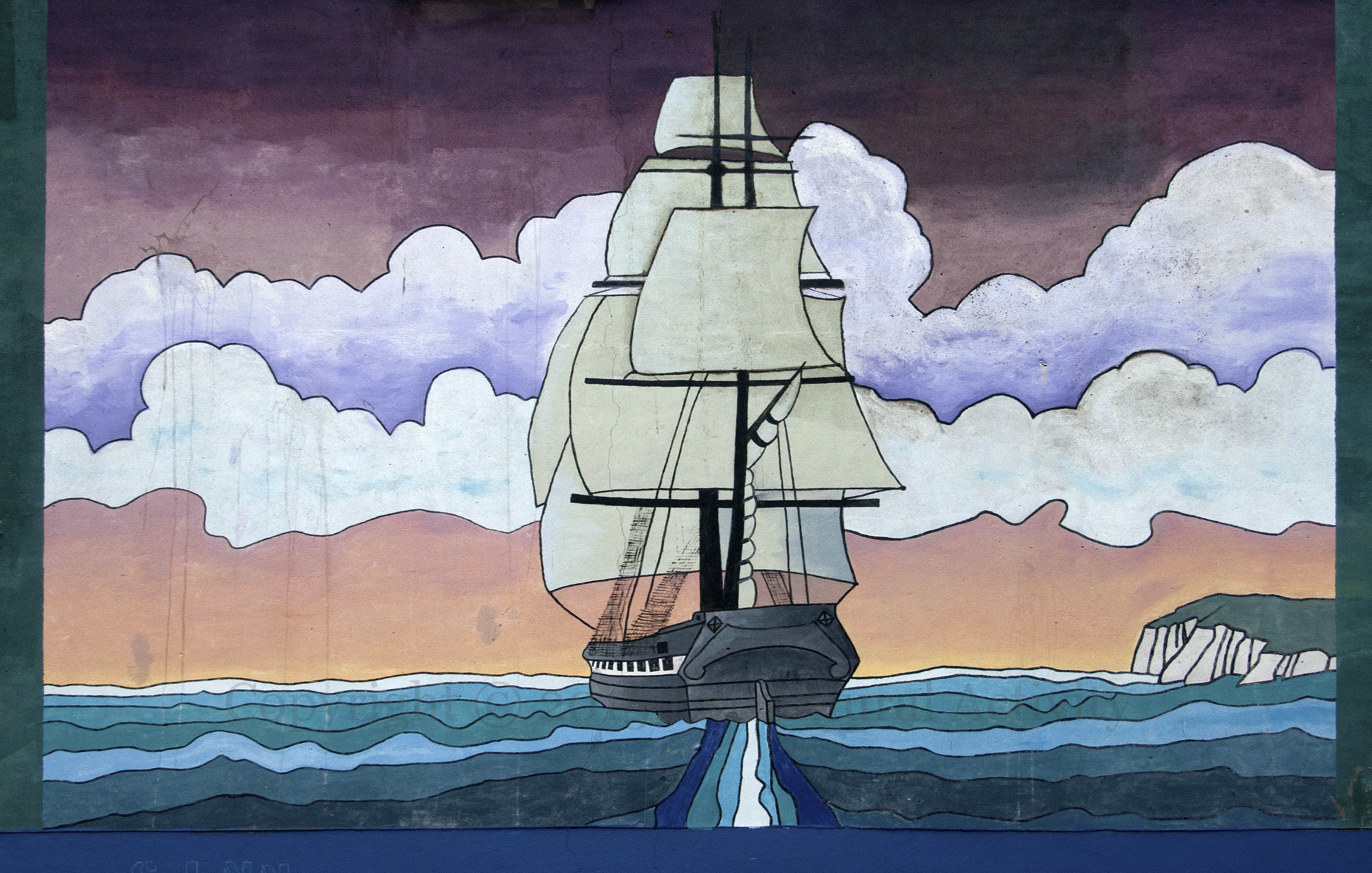
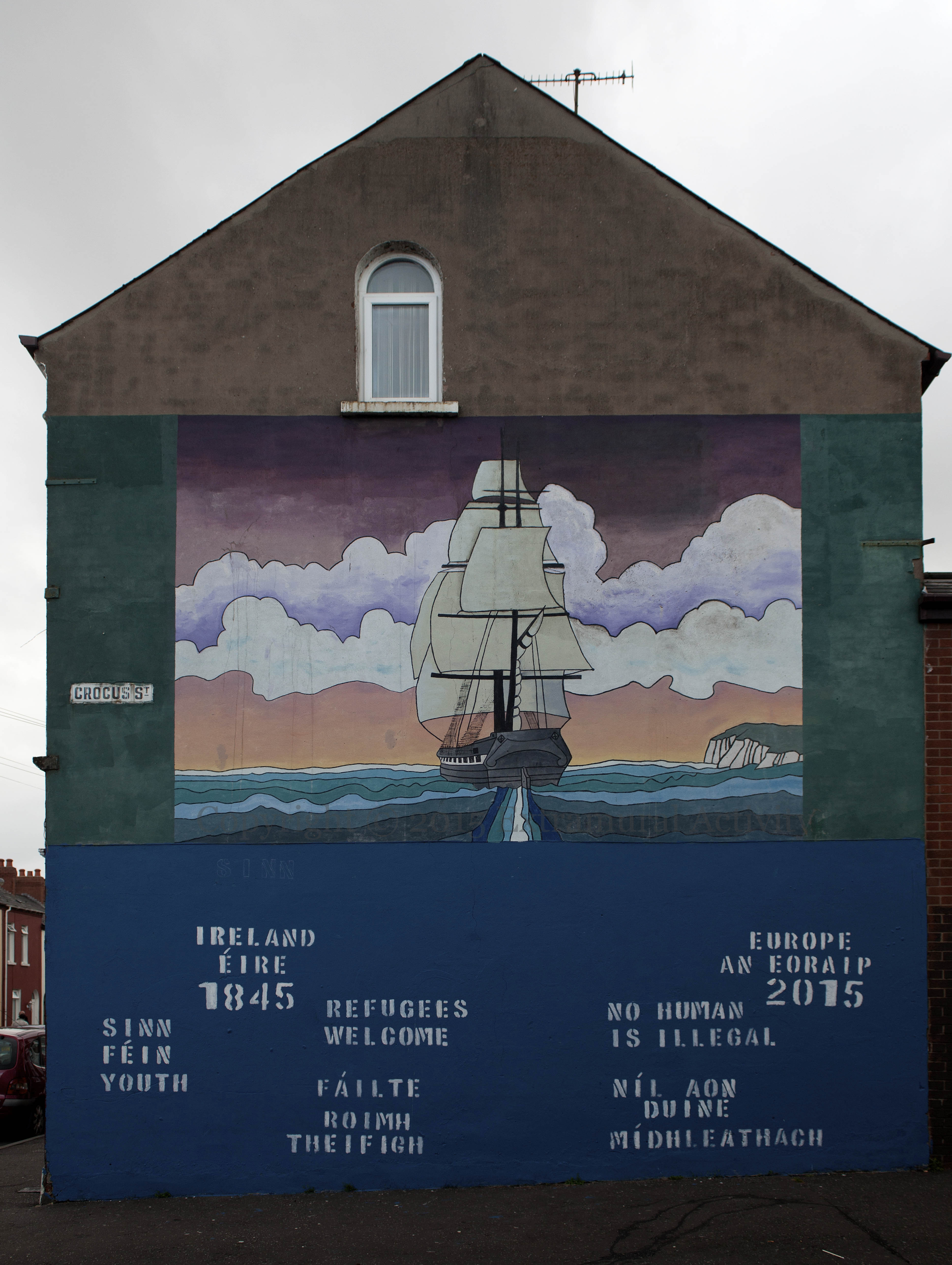
Incidents involving ships of African emigrants seeking refuge in Europe are so many that there is a separate Wikipedia page for them. In response to the crisis, an old mural in Crocus Street (see M01486) remembering the emigration of Irish to North America during the Great Hunger was repainted and the lower part (which had images of the Great Hunger) replaced by stencilling which makes reference to the 2015 situation: “Ireland/Éıre 1845 – Europe/An Eoraıp 2015”, “Refugees welcome – Fáılte roımh theıfıgh”, and “No human is illegal – Níl aon dunıe [duıne] mídhleathach”. It was immediately vandalized with a “not” (see the final image, below; Fb) but has now been repaired, along with the mis-spelling.

Update 2015-10-19: the mural has been graffitied with “SF hate blacks” – see the fourth image, below.
03104 2015-10-07 Emigration Ship 2015 repaired+

03011 2015-09-17 Emigration Ship 2015+

03142 2015-10-19 SF Hate Blacks+

Click image to enlarge
Copyright © 2015 Seosamh Mac Coılle
sınn féın youth famine X03011 X03012 X03104 X03142 originally finished 2015-09-12
Qaxootiga Soo Dhaweyn

02998 2015-09-16 Refugees Welcome+

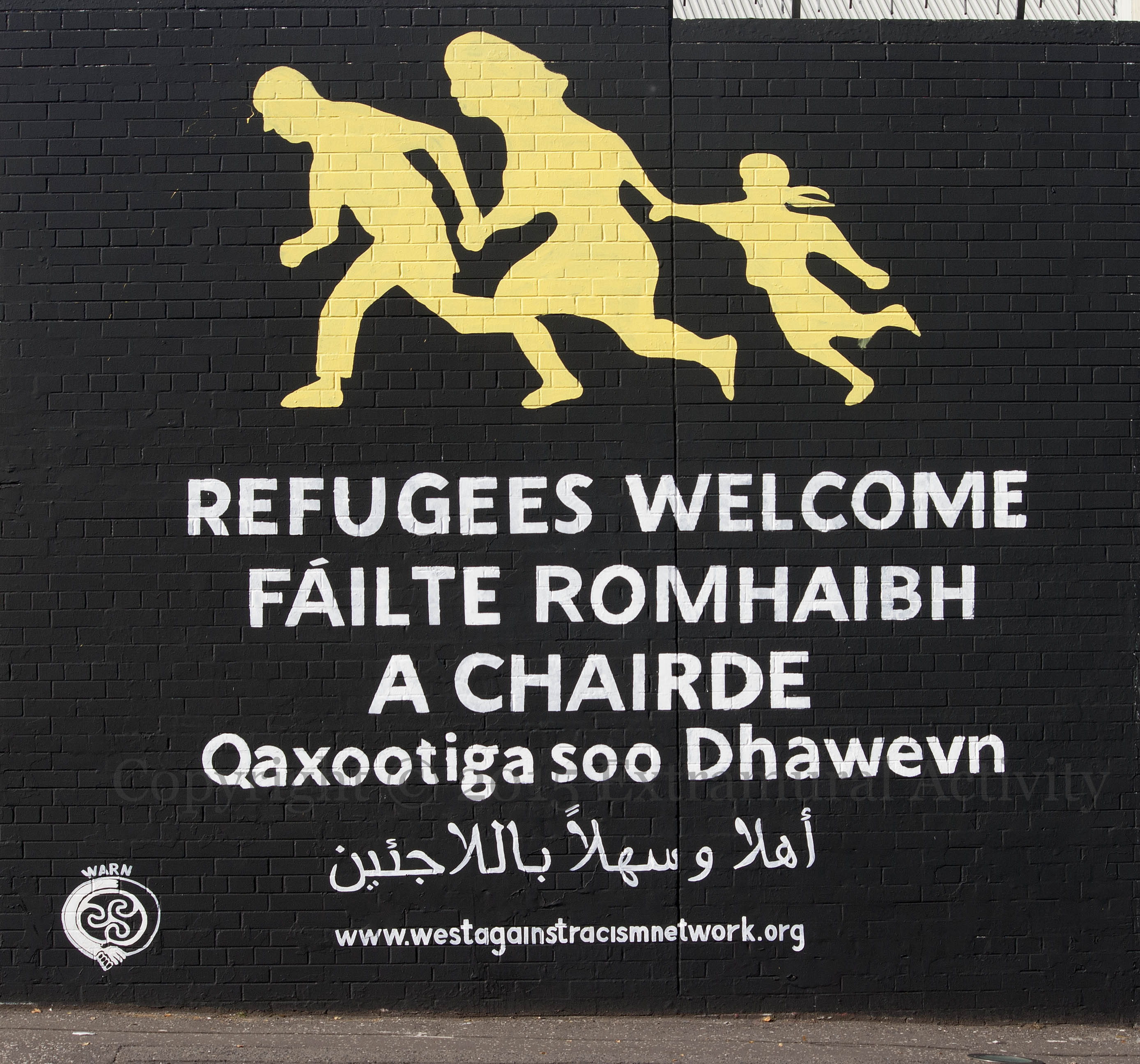
The wave of people seeking asylum from political strife in Europe continues.”Fáılte romhaıbh a chaırde” is Irish for “Welcome, friends” while “Qaxootiga soo Dhaweyn” is Somali for “Refugees welcome”. Somalis make up about 9% of the current wave of migrants from Africa and Syrians 33%. (Irish Times) 2,000 refugees are to be settled in Northern Ireland. (belfastlive) The yellow-on-black outline of parents and daughter running originates in the United States, used on ‘caution’ signs along highways near the US-Mexico border. For images of the mural’s launch on September 12th, see the WARN twitter feed.

Click image to enlarge
Copyright © 2015 Seosamh Mac Coılle
X02998 qaxootiga soo dhawevn westagainstracismnetwork.org arabic

Love Demands Sacrifice

02994 2015-09-16 Battle Of Britain close+

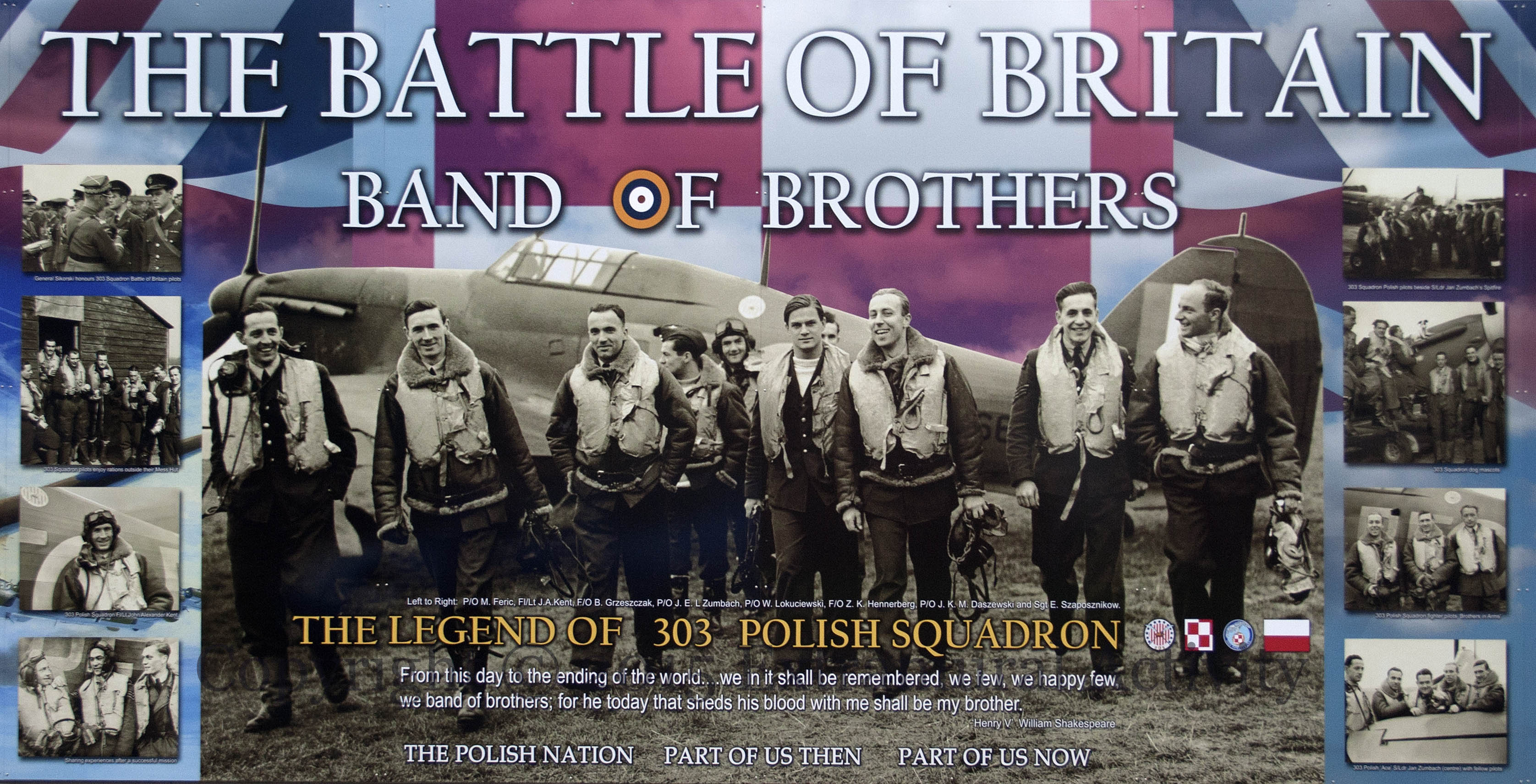
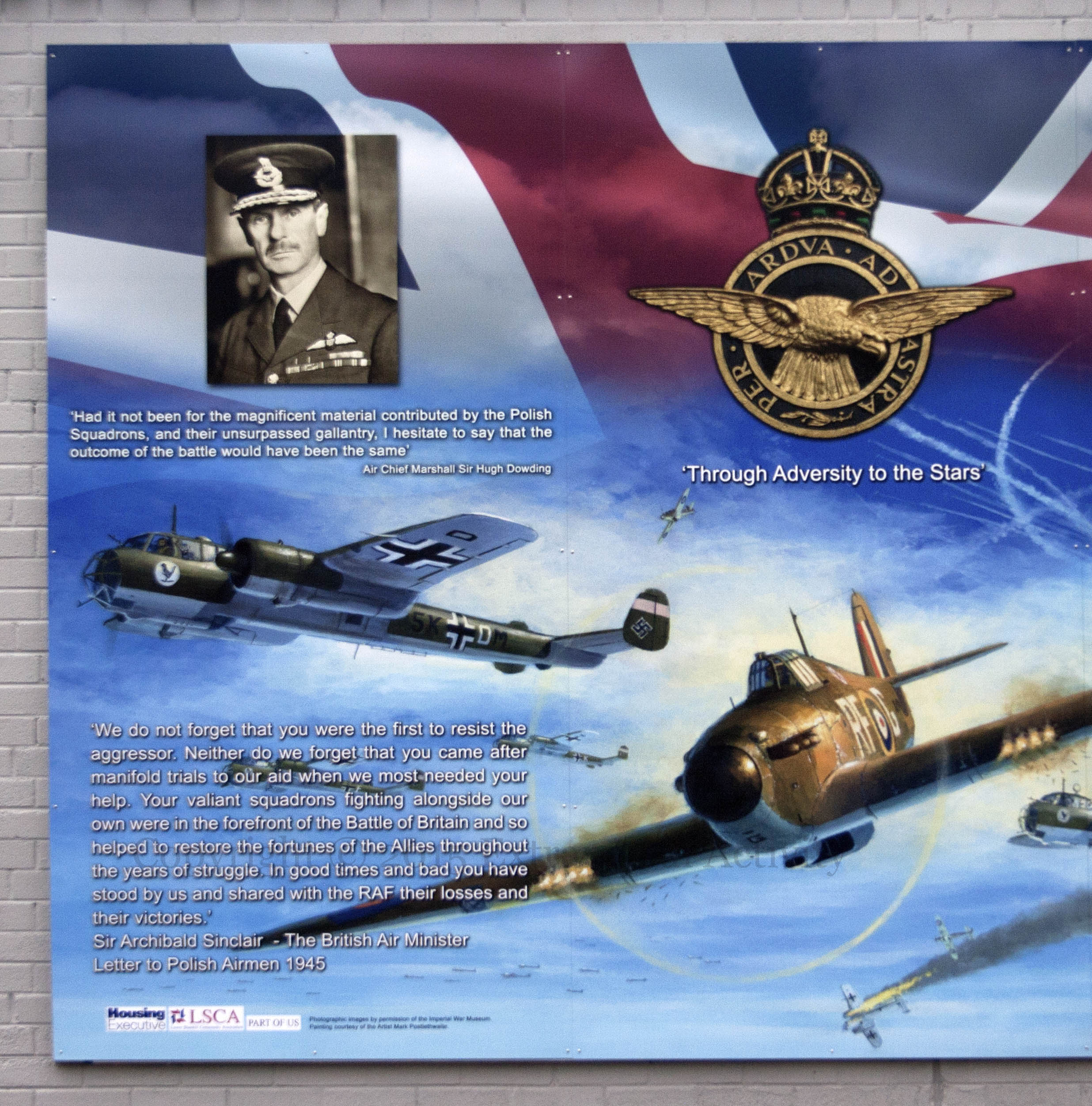
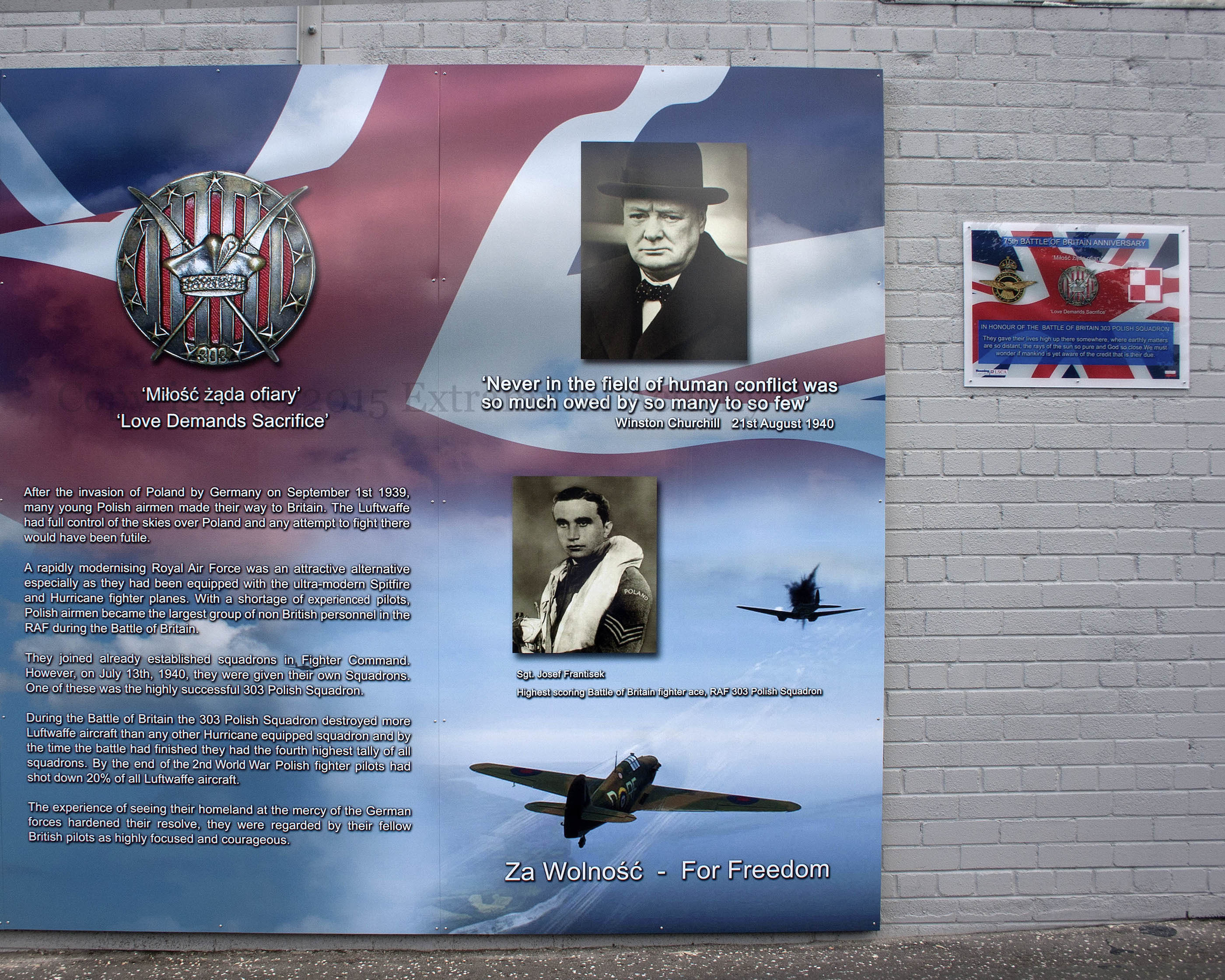
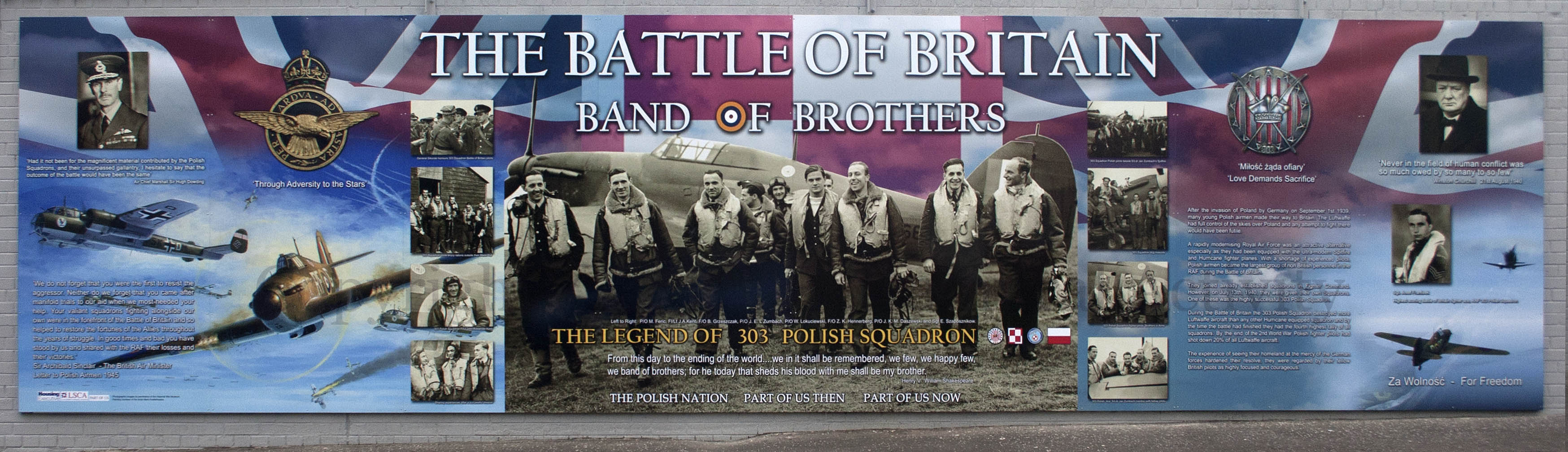
The board featured here (above and three shots below) has a dual purpose. On the one hand, it is part of celebrations marking the 75th anniversary of the Battle Of Britain, which was waged from July to October in 1940. On the other, it is part of an anti-racism project, celebrating in particular the contributions to the Battle made by roughly 145 Polish aviators (WP) and especially the 303 squadron: “The Polish nation – part of us then, part of us now”. The 303 was later stationed in Northern Ireland for a time. (BBC-NI)

The artist is Ross Wilson. The colour version of the central photograph is available at the Housing Executive’s write-up of the project. Other reports: Belfast Live | NewsLetter

Video of speeches from the launch:

02995 2015-09-16 Battle Of Britain left+

02996 2015-09-16 Battle Of Britain right+

02997 2015-09-16 Battle Of Britain w+

Click image to enlarge
Copyright © 2015 Seosamh Mac Coılle
X02994 X02995 X02996 X02997 churchill never in the field of human conflict was so much owed by so many to so few 21st august 1940 after the invasion of poland by germany on september 1st 1939 many young polish airmen made their way to britain the luftwaffe had full control of the skies over poland and any attempt to fight there would have been futile a rapidly modernising royal air force was an attractive alternative especially as they had been equipped with the ultra-modern spitfire and hurricane fighter planes with a shortage of experienced pilots polish airman became the largest group of non british personnel in the RAF during the battle of britain they joined already established squadrons in fighter command however on july 13th they were given their own squadrons one of these was the highly successful 303 polish squadron during the battle destroyed more aircraft than any other fourth highest tally of all 2nd world war shot down 20% of all experience of seeing their homeland at the mercy of the german forces hardened their resolve regarded by fellow pilots as highly focused and courageous josef frantisek highest scoring fighter ace had it not been for the magnificent material contributed and their unsurpassed gallantry i hesitate to say that the outcome of the battle would have been the same air chief marshall sir hugh downing per ardua ad astra we do not forget that you were the first to resist the aggressor neither do we forget that you came after manifold trials to our aid when we most needed your help your valiant fighting alongside in the forefront helped to restore the fortunes of the allies throughout the years of struggle in good times and bad you have stood by us and shared their losses and their victories sir archibald sinclair british air minister letter to polish airmen 1945 general sikorski honours rations outside their mess hut john alexander kent feric grzeszcczak zumbach lokuciewski hennerberg daszewski szaposznikow from this day to the ending of the world we in it shall be remembered we few we happy few we band of brothers for he today that sheds his blood with me shall be my brother henry V william shakespeare the legend of 303 polish squadron they gave their lives high up there somewhere where earthly matters are so distant the rays of the sun so pure and god so close we must wonder if mankind is yet aware of the credit that is their due pete bleakley ross wilson housing executive lower shankill community association

Conor’s Corner

03026 2015-09-06 Conor Head Painting+

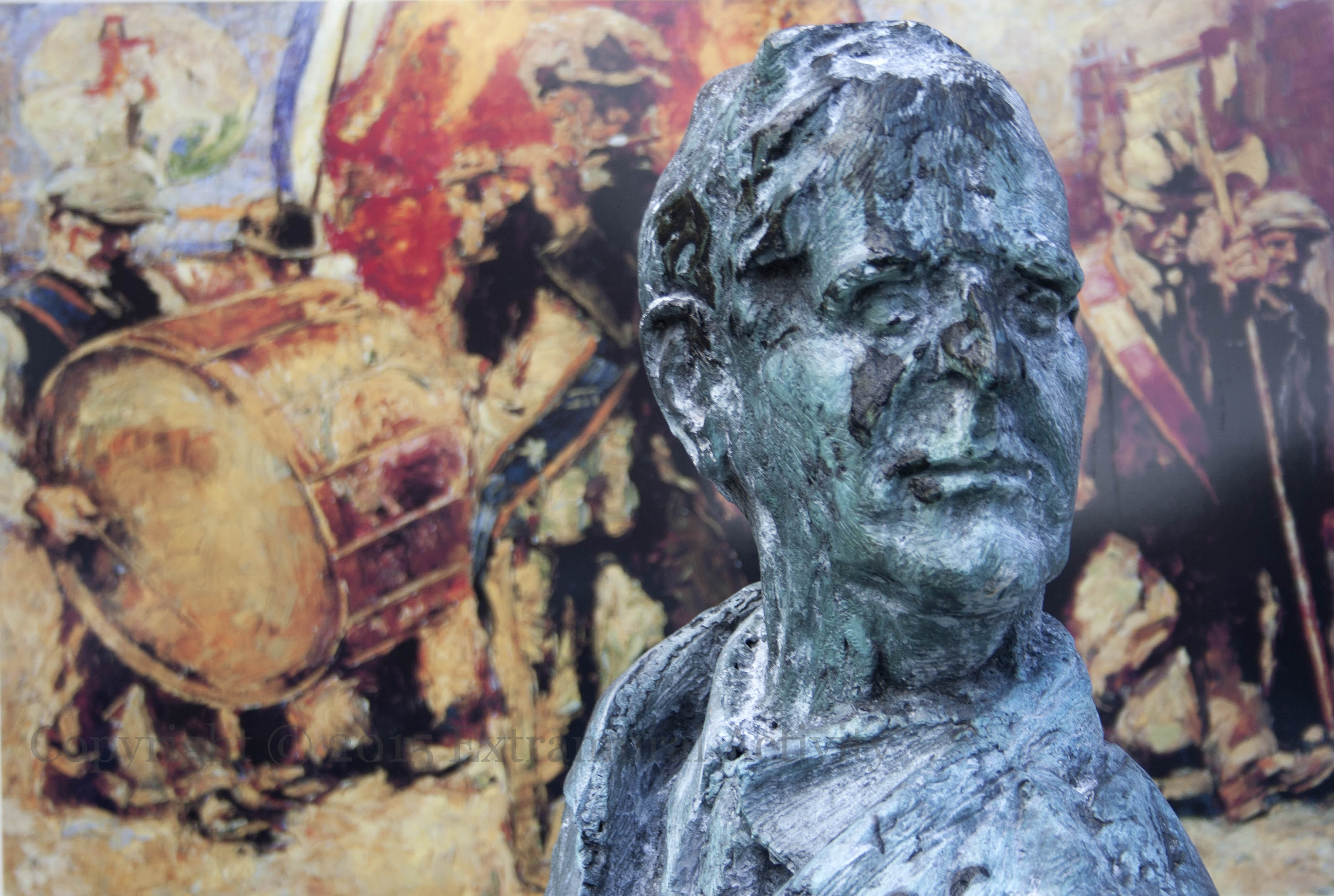
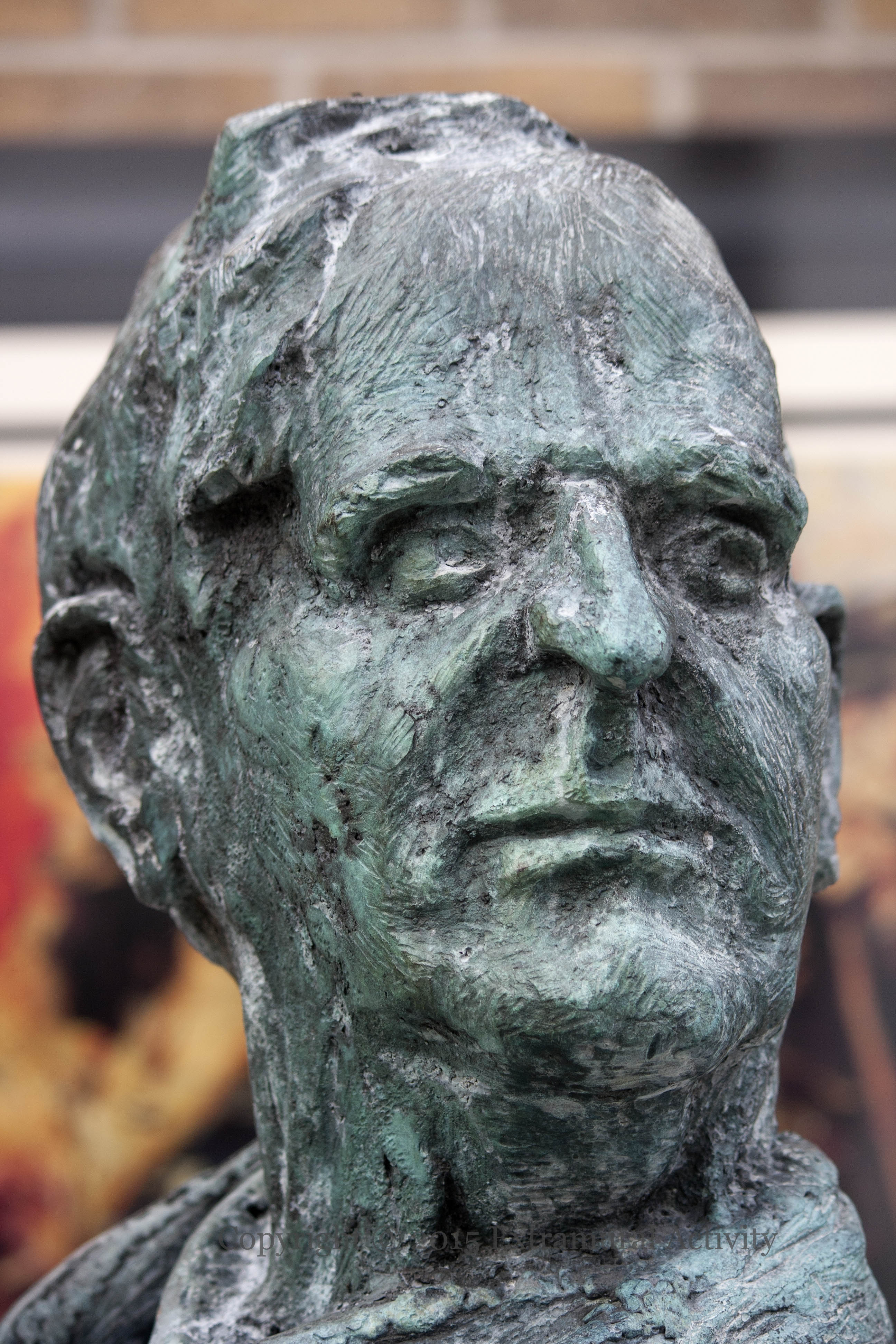
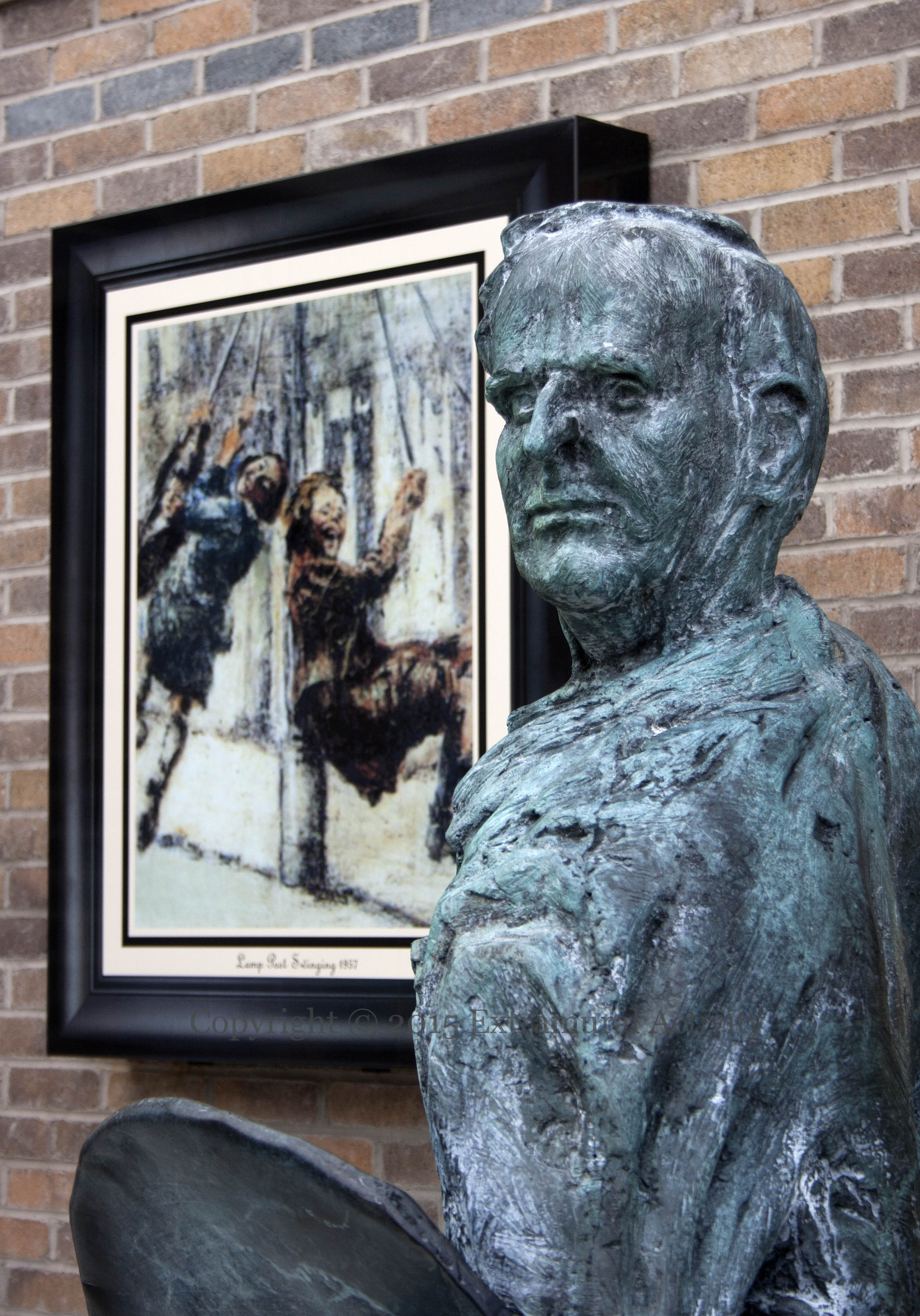
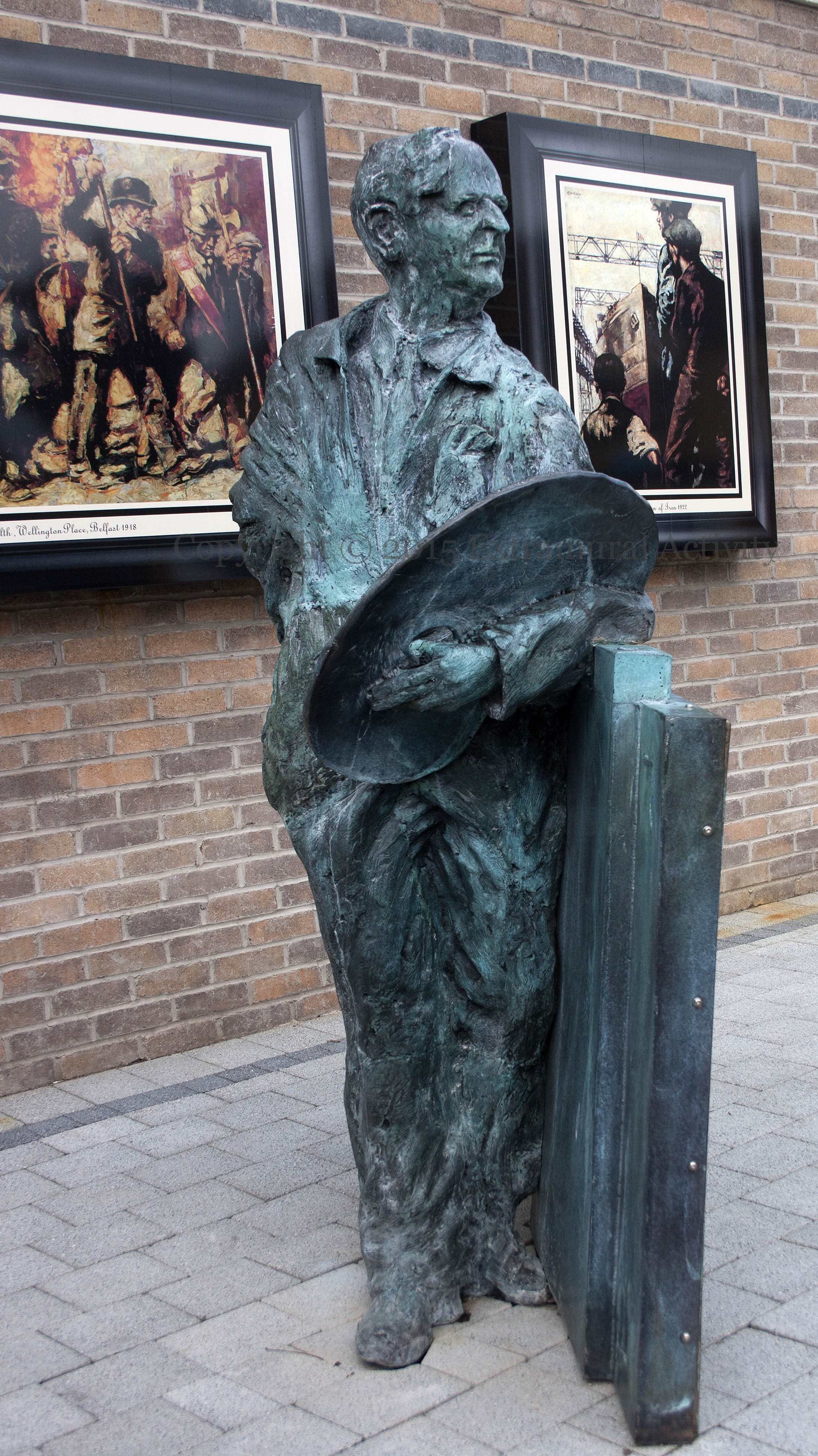
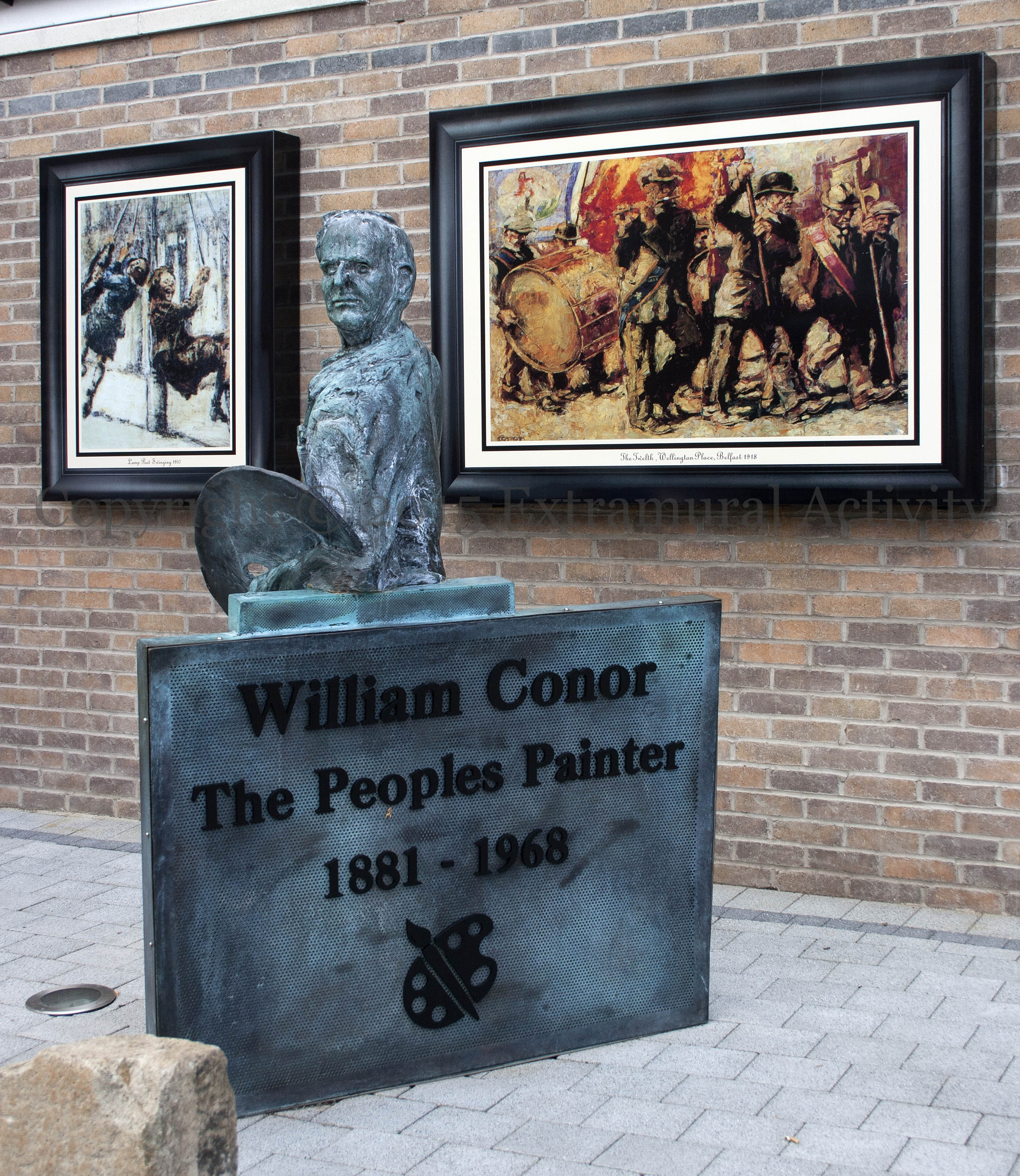
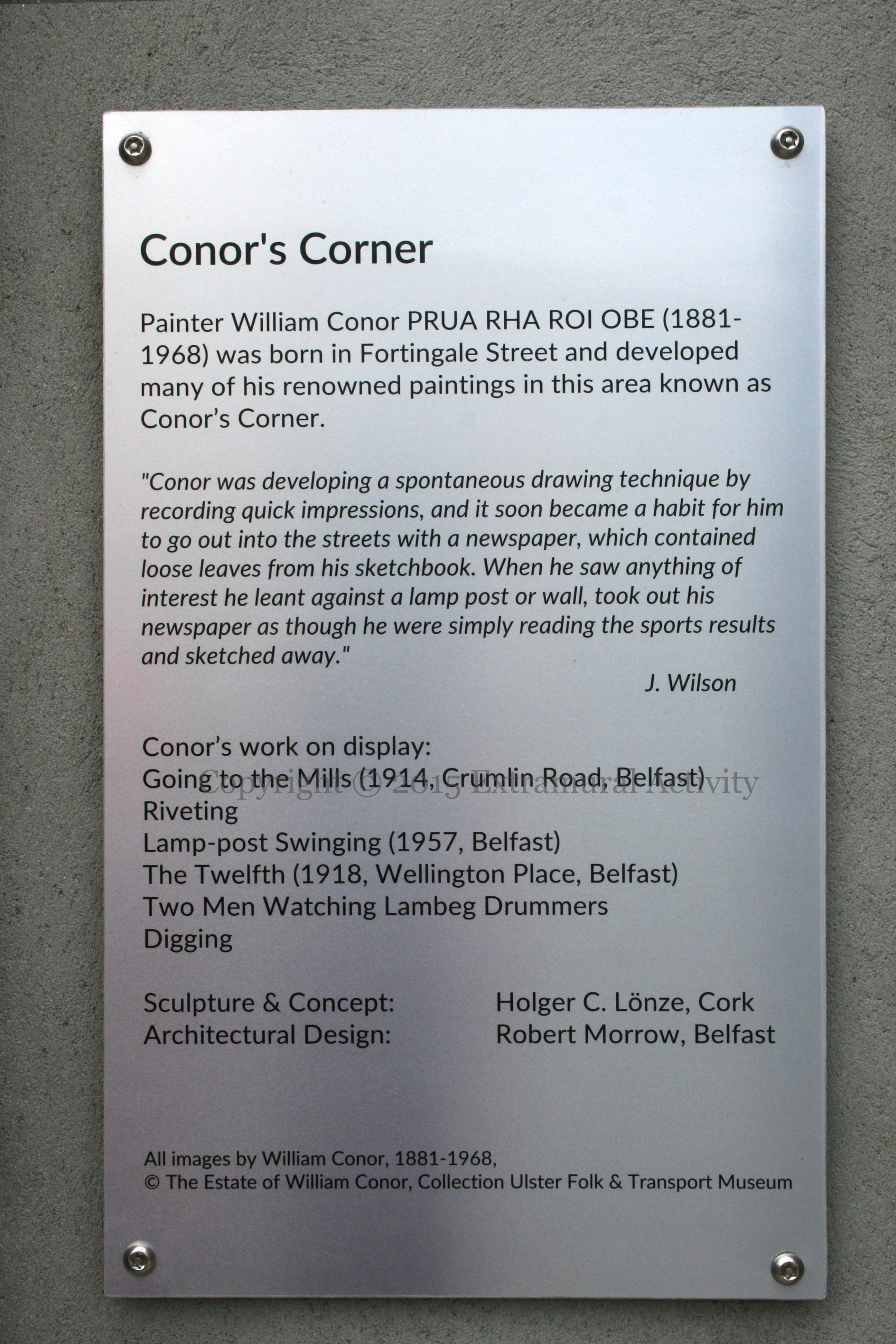
William Connor (later William Conor) was born in the Old Lodge area of Belfast (in 1881) close to the location of the new bronze statue shown in today’s images, which is at the corner of Northumberland Street and Shankill Road, replacing the UVF/Shankill Protestant Boys (see M02457). The info board (shown below) describes his methods in capturing the Belfast street scenes for which he is most famous: “Conor was developing a spontaneous drawing technique by recording quick impressions, and it soon became a habit for him to go out into the streets with a newspaper, which contained loose leaves from his sketchbook. When he saw anything of interest he leant against a lap post or wall, took out his newspaper as though he were simply reading the sports results and sketched away.”

For more info, see the project’s web site. For images of many of Conor’s paintings, see ArtNet. For images of the sculpture in progress, see Lönze’s site and the project’s Facebook page.

Officially launched 2015-09-26

2015-09-03 William Conor face+

2015-09-03 William Conor close+

2015-09-03 William Conor figure+

2015-09-03 William Conor w+

2015-09-03 William Conor info+

Click image to enlarge
Copyright © 2015 Seosamh Mac Coılle
X03026 X02954 X02955 X02956 X02957 X02958 Painter William Conor PRUA RHA ROI OBE (1881-1968) was born in Fortingale Street and developed many of his renowned paintings in this area known as Conor’s Corner. J. Wilson Conor’s work on display: Going to the Mills (1914, Crumlin Road, Belfast), Riveting, Lamp-post Swinging (1957, Belfast), The Twelfth (1918, Wellington Place, Belfast), Two Men Watching Lambeg Drummers, Digging. Sculpture & Concept: Holger C. Lönze, Cork. Architectural Design: Robert Morrow, Belfast. All images by William Conor collection ulster folk and transport museum

Cross & Crane

02989 2015-09-05 Flora St 36th Ulster main+

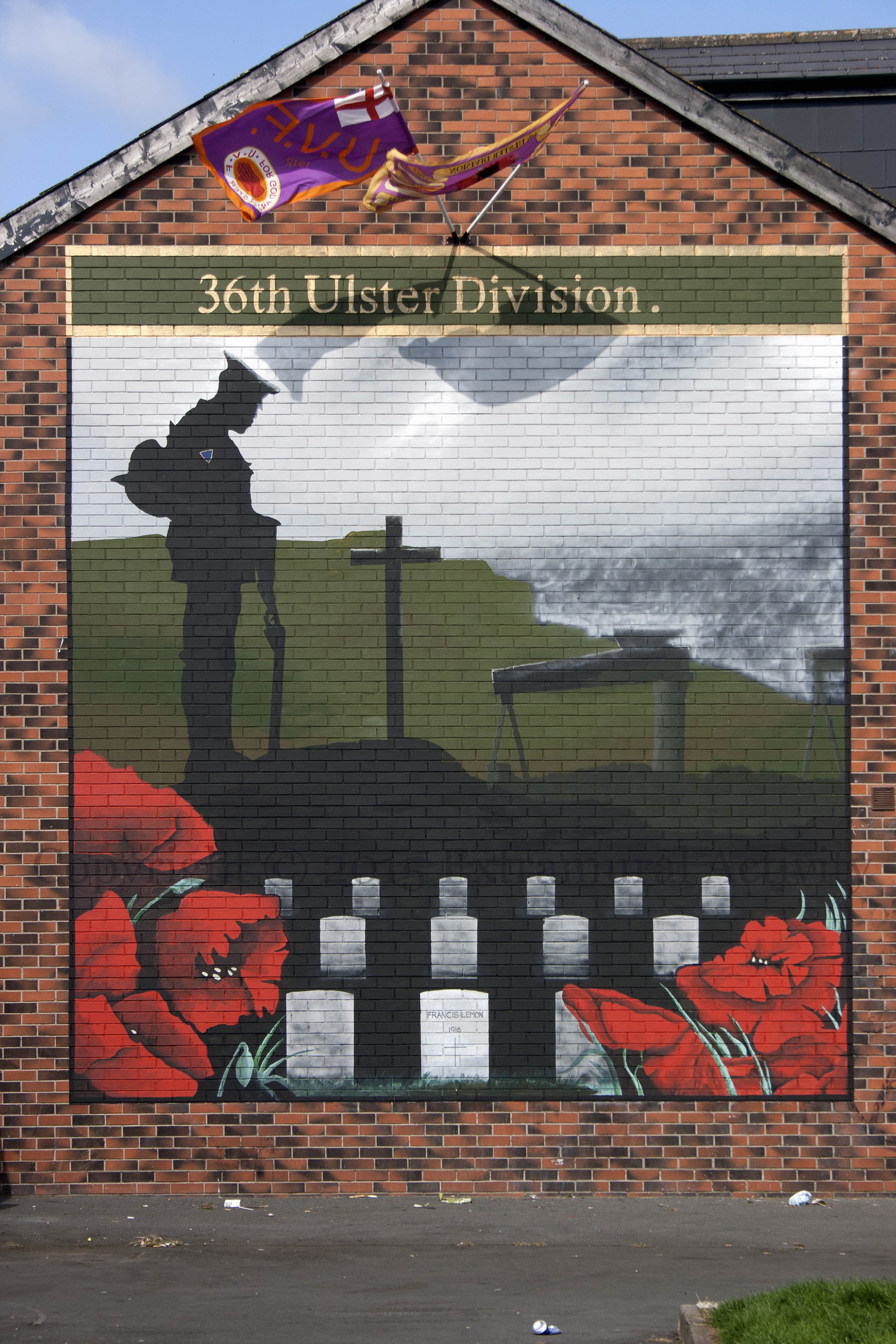
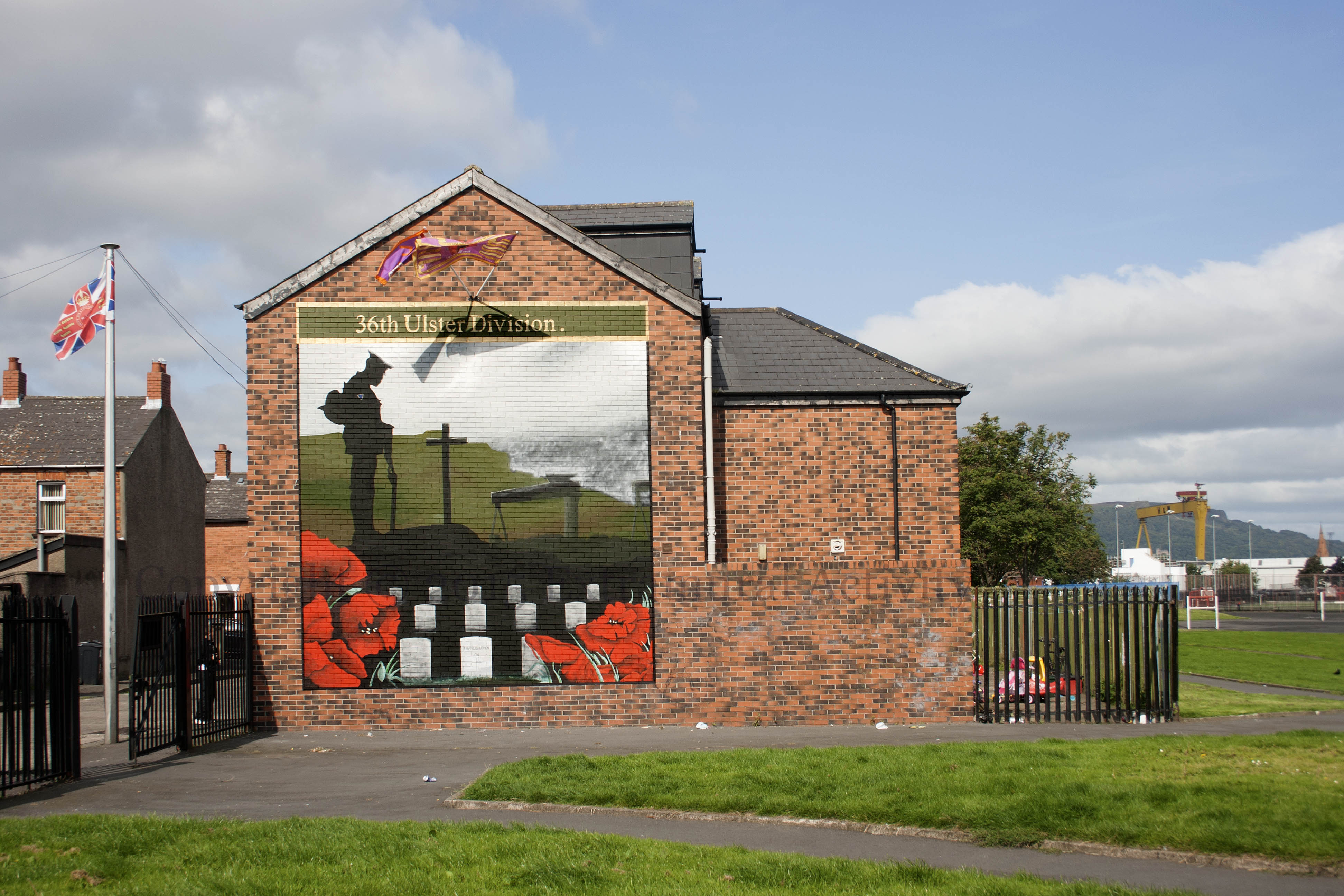
Samson and Goliath, the cranes of the Harland & Wolff shipyard in east Belfast, stand alongside crosses on the burial grounds of the 36th (Ulster) Division in Flanders (though Cave Hill might be in the background) in this Flora Street mural in east Belfast. UVF flags fly overhead. One of the cranes can be seen in the background of the wide shot, below.

On the headstone in the front-middle is written “Francis Lemon 1916”, perhaps this Francis Lemon, from Ballymacarrett, who died on July 2nd: FindAGrave | IWM.

02990 2015-09-05 Flora St 36th Ulster w+

Click image to enlarge
Copyright © 2015 Extramural Activity
X02989 X02990 francis lemon 1916 remembrance day armistice day veterans

How Nobly They Fight And Die

03023 2015-09-04 How Nobly d+

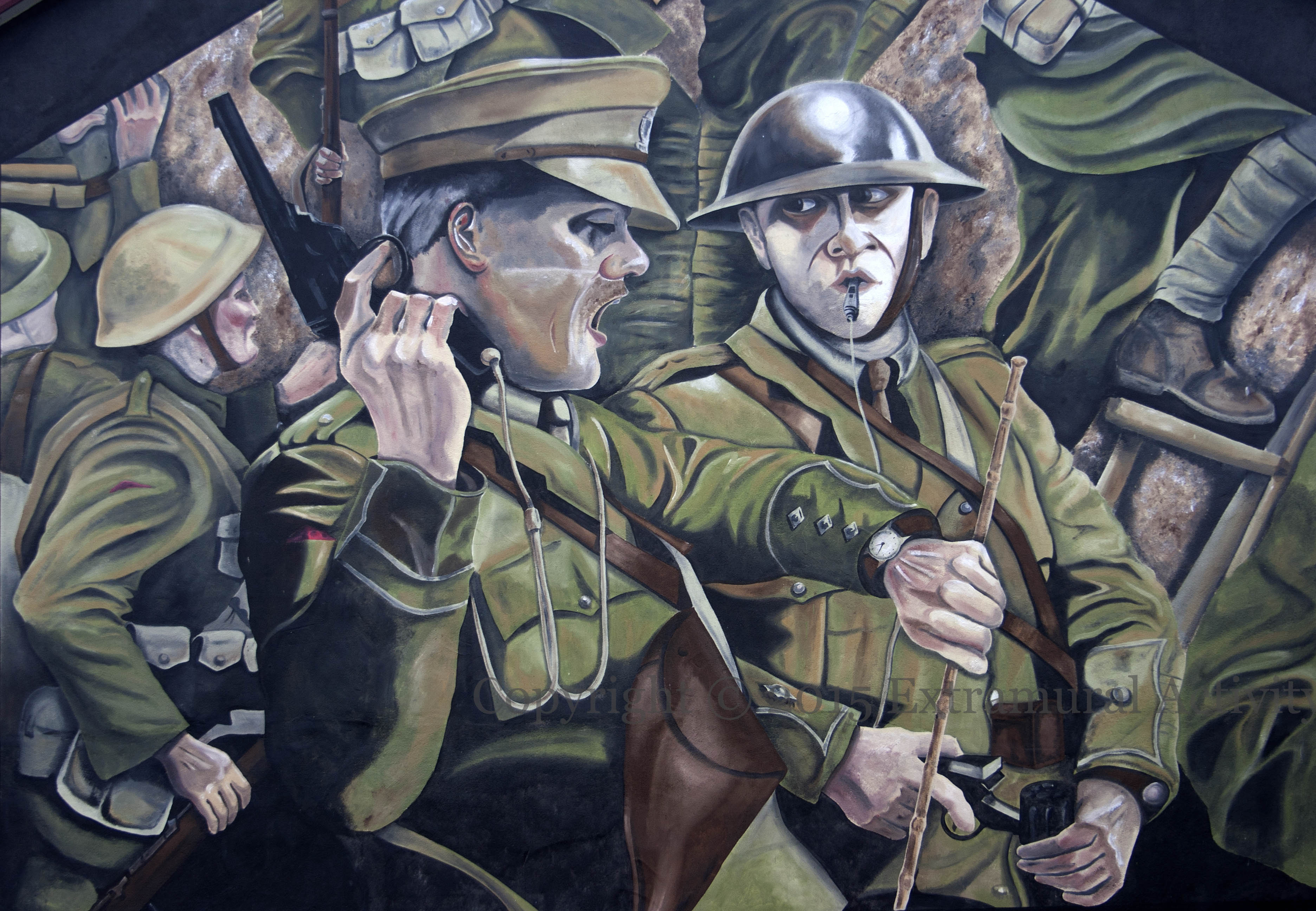
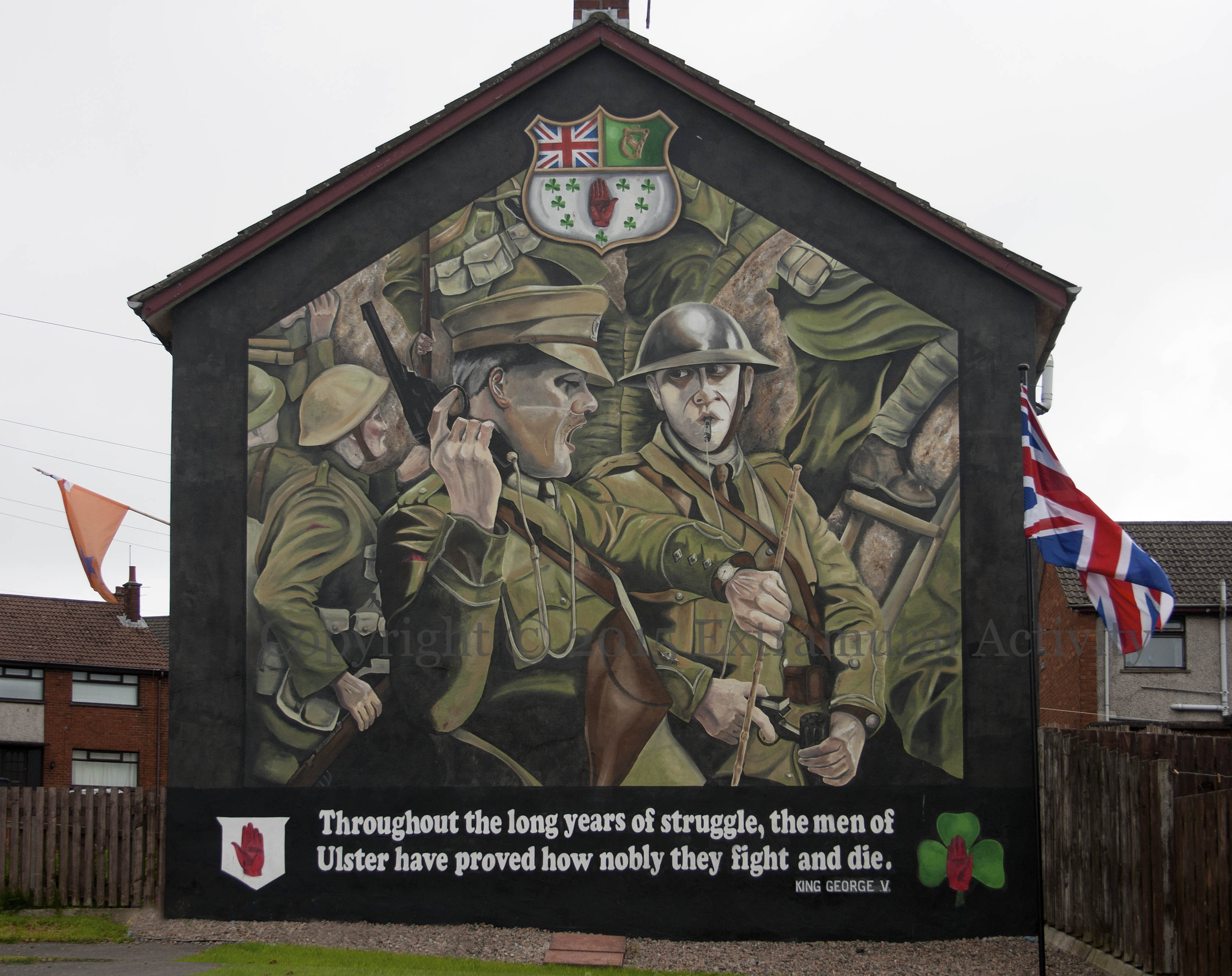
Soldiers from the 36th (Ulster) division in the trenches of WWI prepare to go ‘over the top’. One waits for the precise moment according to his watch, ready to fire a shot, while the other prepares to blow a whistle and launch a flare. “‘Throughout the long years of struggle, the men of Ulster have proved how nobly they fight and die.’ King George V”. The quote also appears on the Ulster Tower in Thiepval (Ulster Tower) and on the Cenotaph in Belfast (WP).

03022 2015-09-04 How Nobly+

Click image to enlarge
Copyright © 2015 Seosamh Mac Coılle
X03023 X03022 flanders somme uvf ycv

Reclaim The Republic

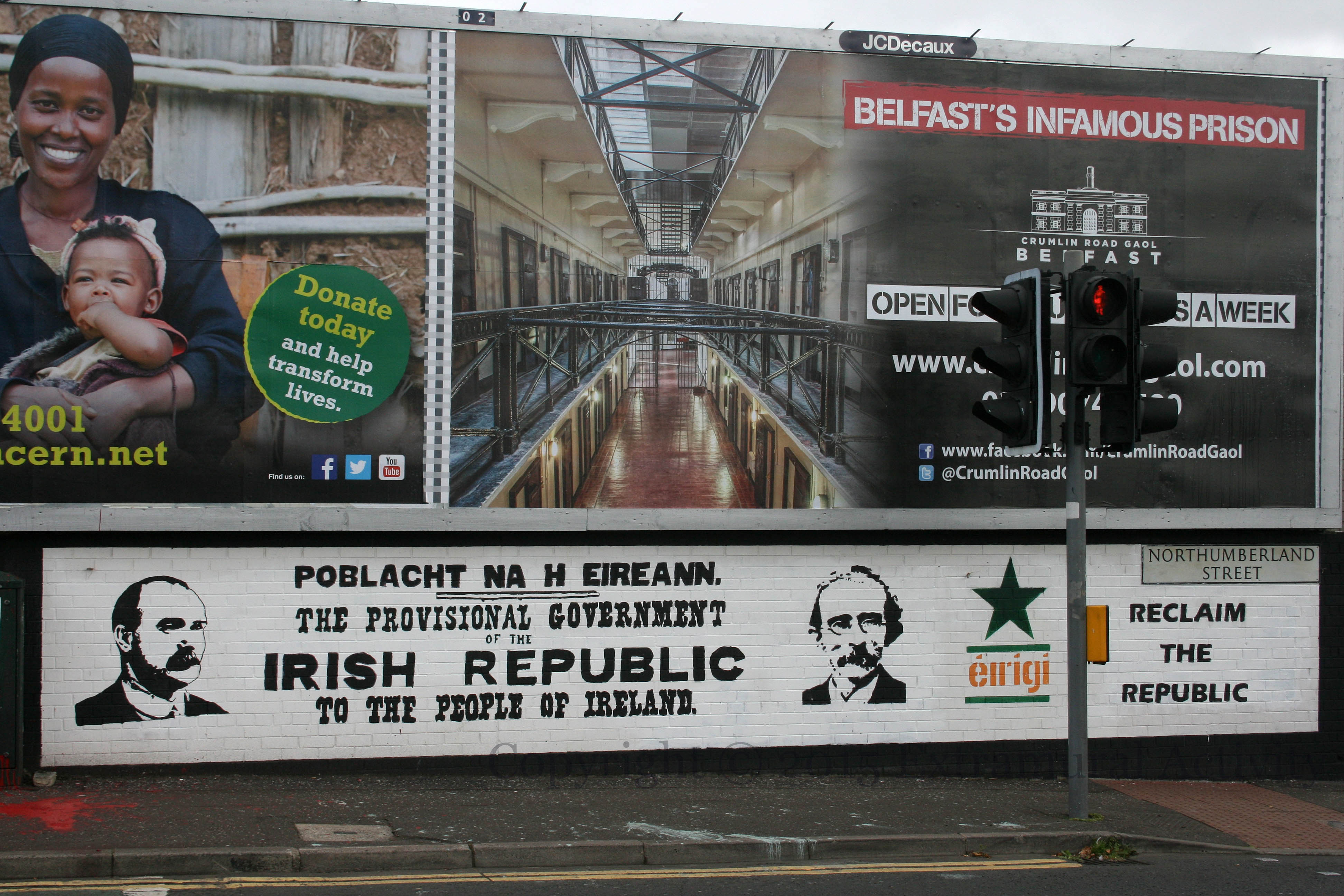
02987 2015-09-03 Poblacht Na hEireann+

The masthead of the 1916 proclamation declaring a “Provisional Government of the Irish Republic” to the “People of Ireland” is faithfully reproduced in this éırígí stencil, along with busts of Padraıg Pearse and Tom Clarke. Pearse, Clarke, and the other signatories will likely be familiar faces in the months leading up to Easter 2016, which is at the end of March, and the anniversary of the date itself, April 24th, 1916.

See also this entry featuring a fly-paper reproduction of the 1916 Proclamation: Brotherhoods.

Click image to enlarge
Copyright © 2015 Seosamh Mac Coılle
X02987 poblacht na héıreann