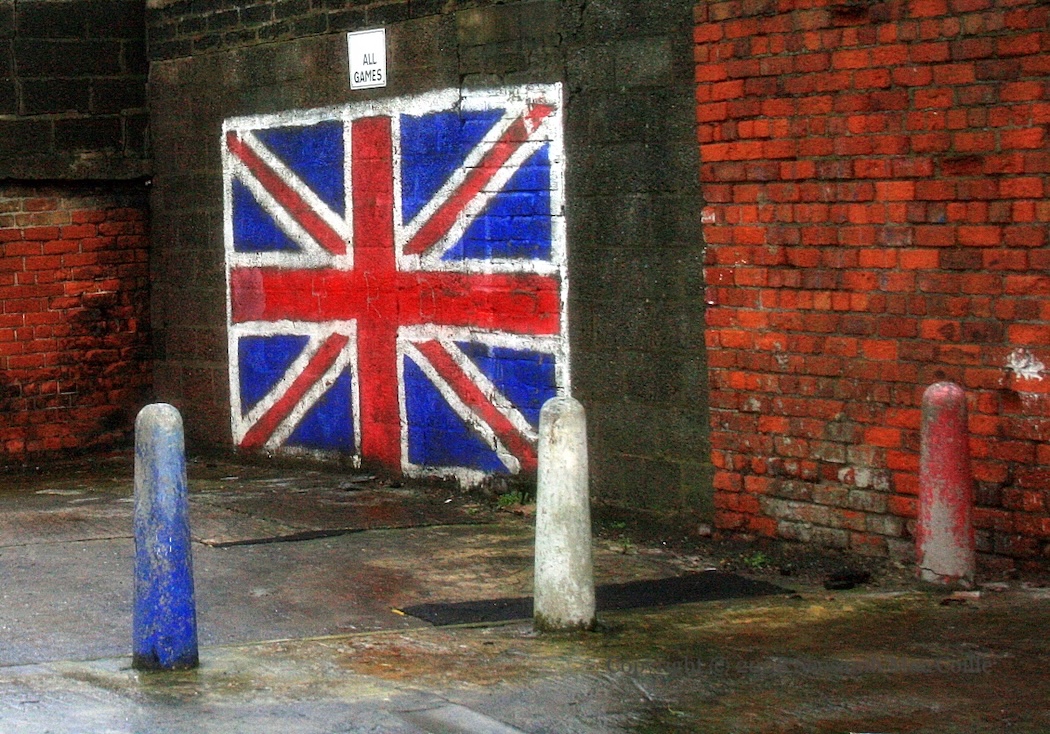
Union flag and red, white, and blue bollards in Ritchie Street, north Belfast.
Click image to enlarge
Copyright © 2008 Seosamh Mac Coılle
X00286 [X05021]
Union flag and red, white, and blue bollards in Ritchie Street, north Belfast.
Click image to enlarge
Copyright © 2008 Seosamh Mac Coılle
X00286 [X05021]
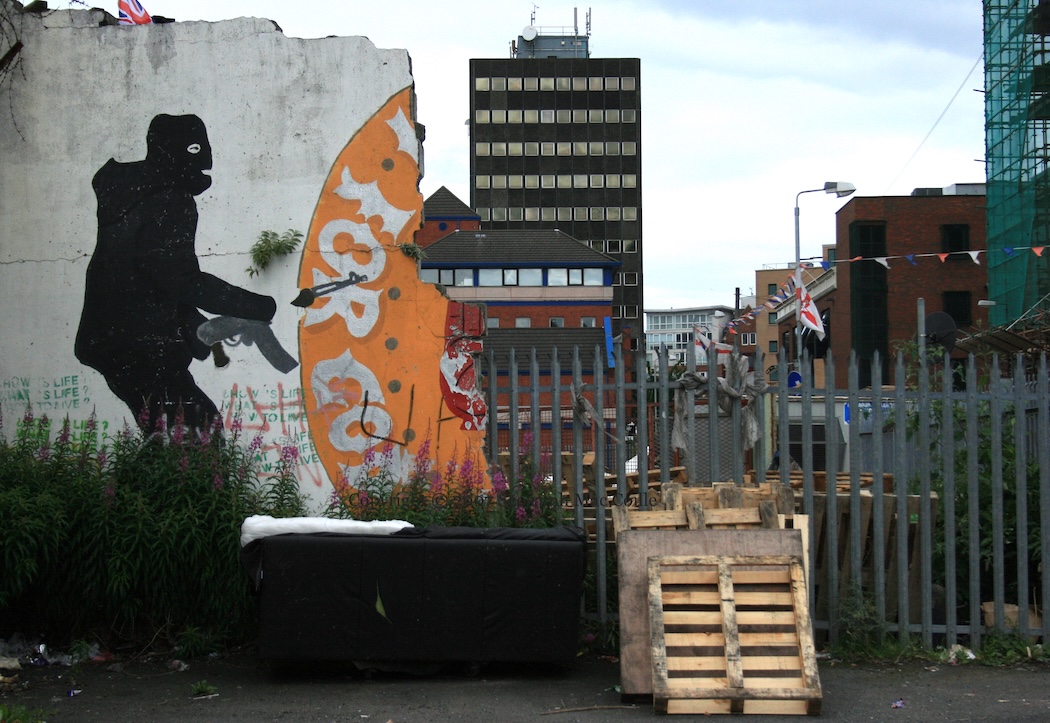
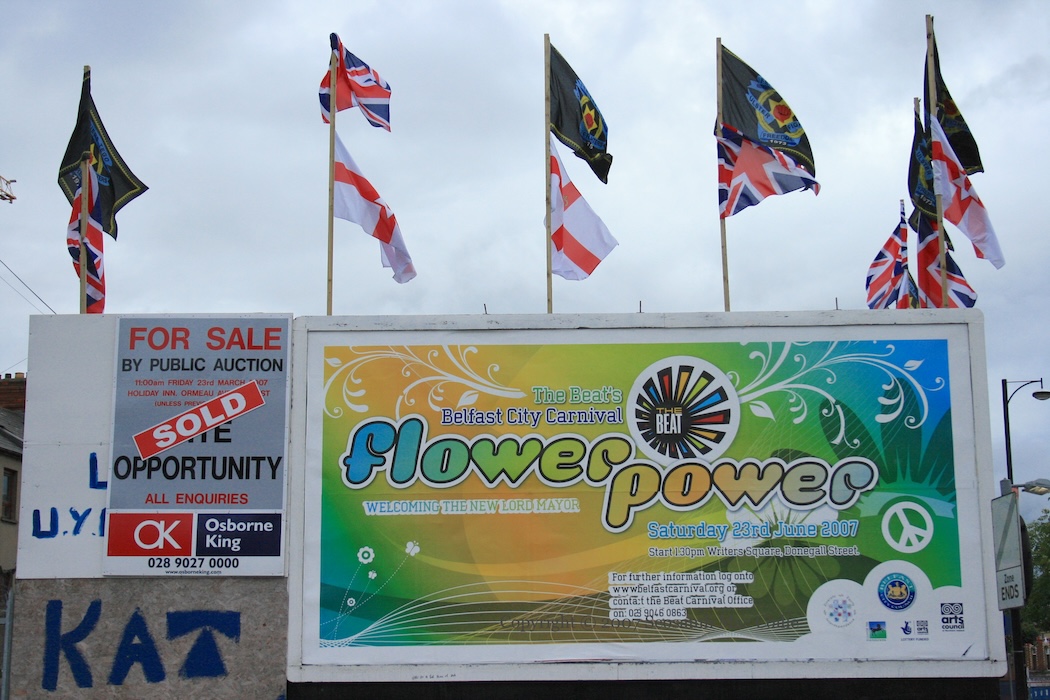
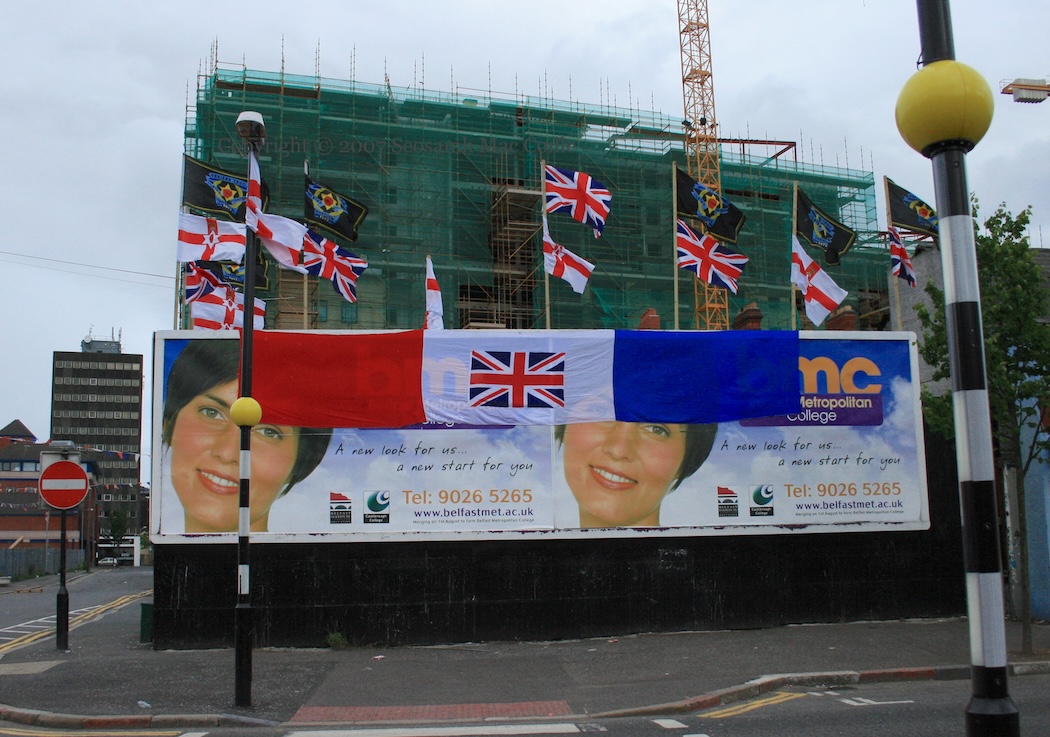
This is the scene at the junction of Wellwood Street and Sandy Row. On the northern side, a sofa and pallets have been dumped against the remaining half of the UVF mural (see C01427 for the whole thing), while on the southern side, the hoardings on the corner have been covered in UFF flags and “Kill all taigs” graffiti. The site behind them would remain vacant until 2014.
Click image to enlarge
Copyright © 2007 Seosamh Mac Coılle
X00183 X00185 X00191
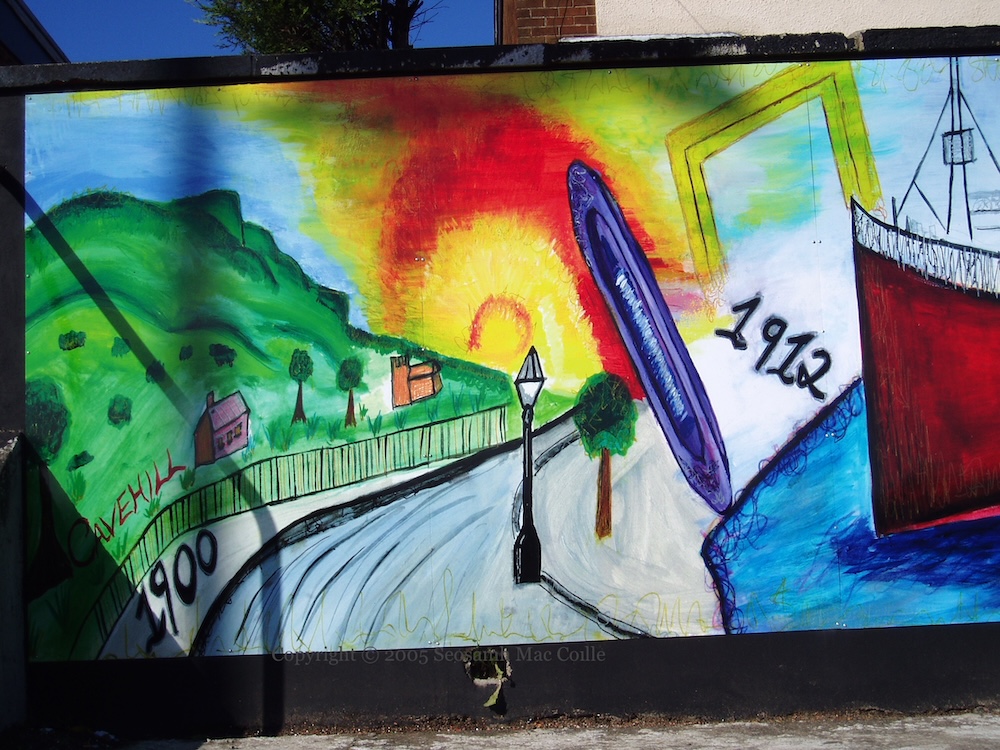
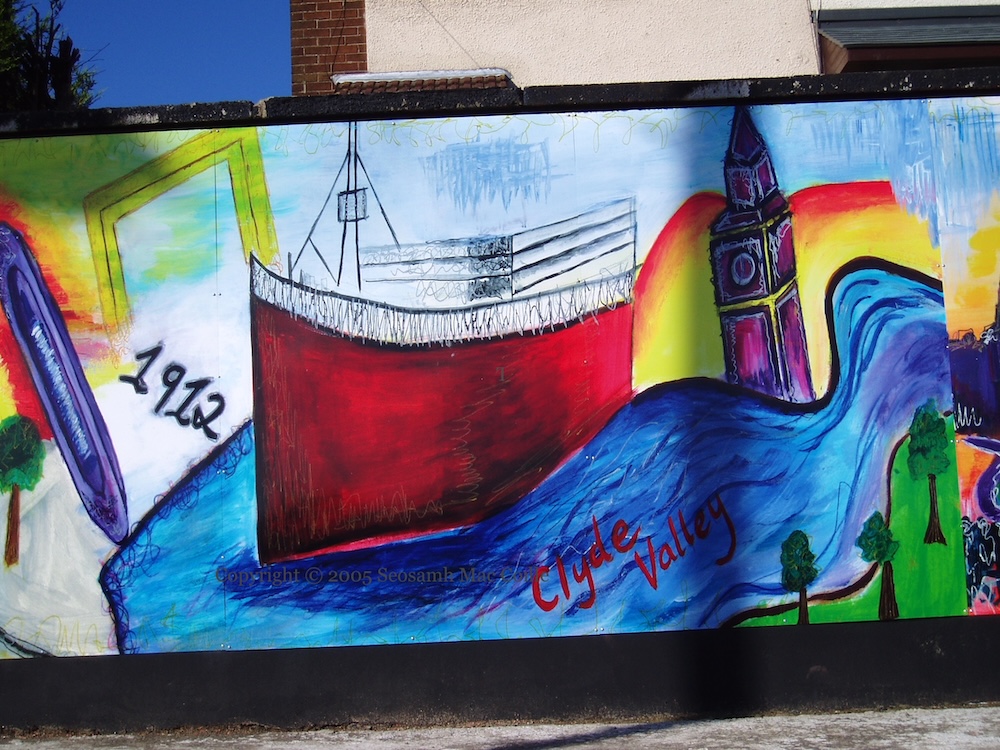
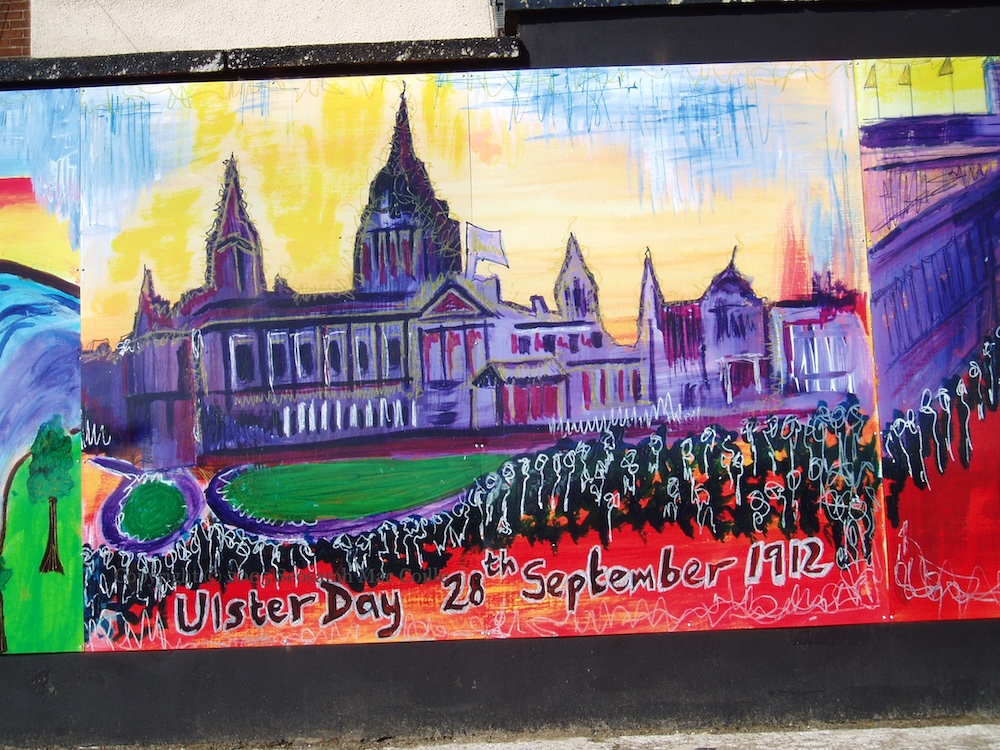
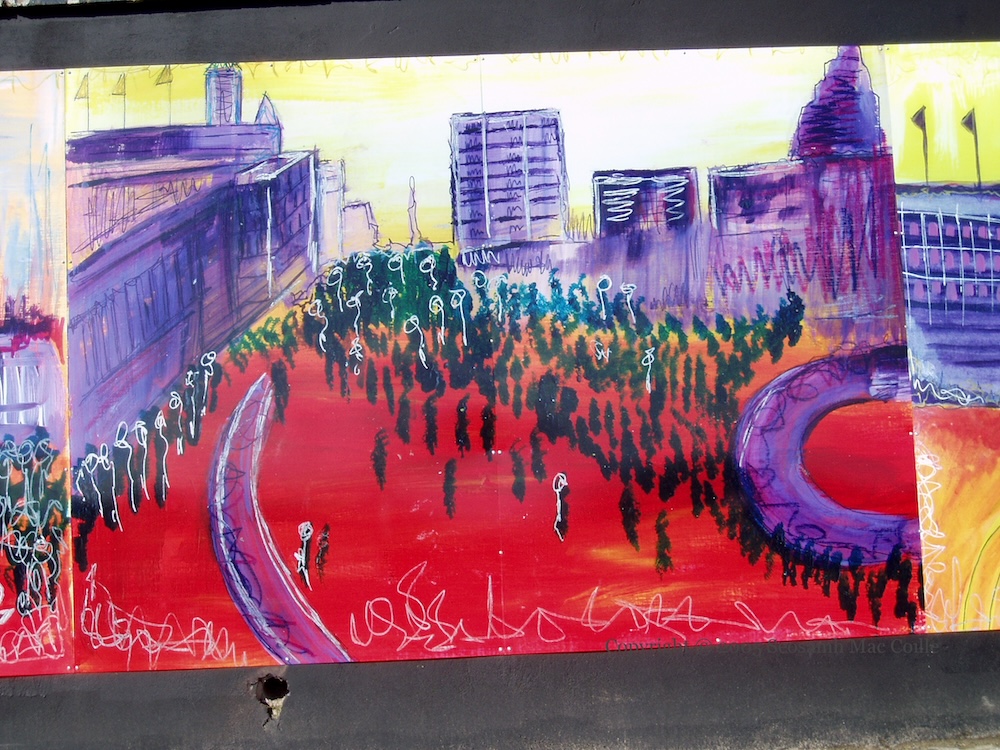
This is an in-progress set of images of the original “Wheatfield Project” panels on the Ballysillan Road, depicting the 20th century in loyalism. The crown on the YCV symbol and the tombstones and Ulster tower have not been finished and Carson’s statue will be added to the foreground of Stormont.
Later on, an info board would replace the first two panels, and the order after it would be Ulster Day, then Carson signing the covenant, then a new double-sized panel of Fernhill House, and then the rest as above, but with the order of the Sunningdale and UWC strike panels reversed.
Ballysillan Road, north Belfast
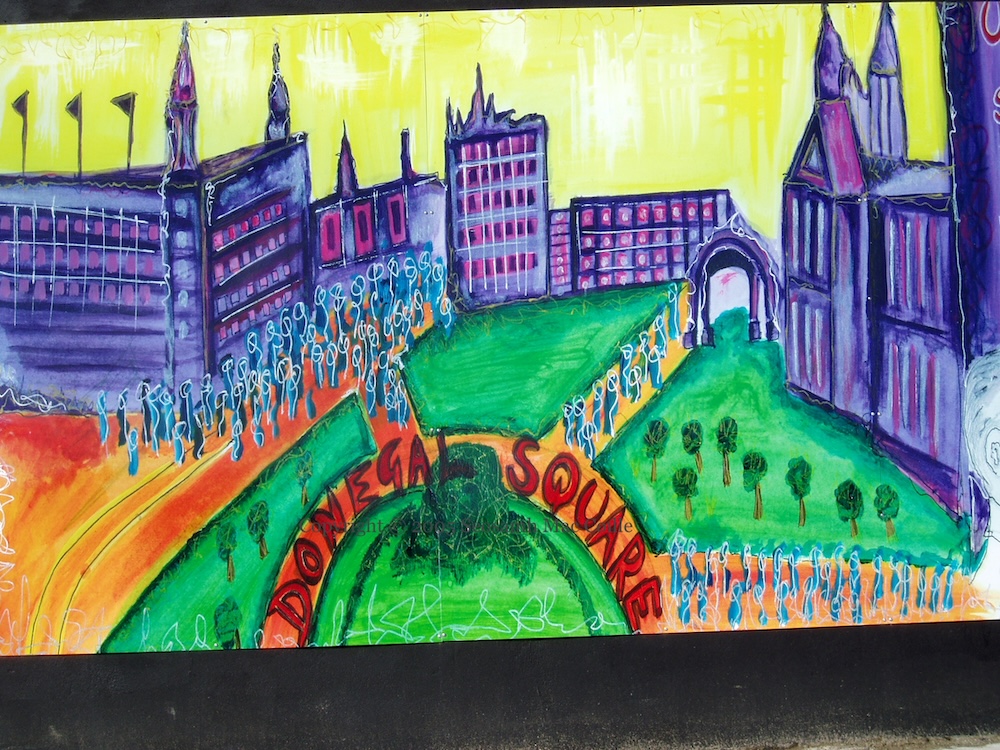
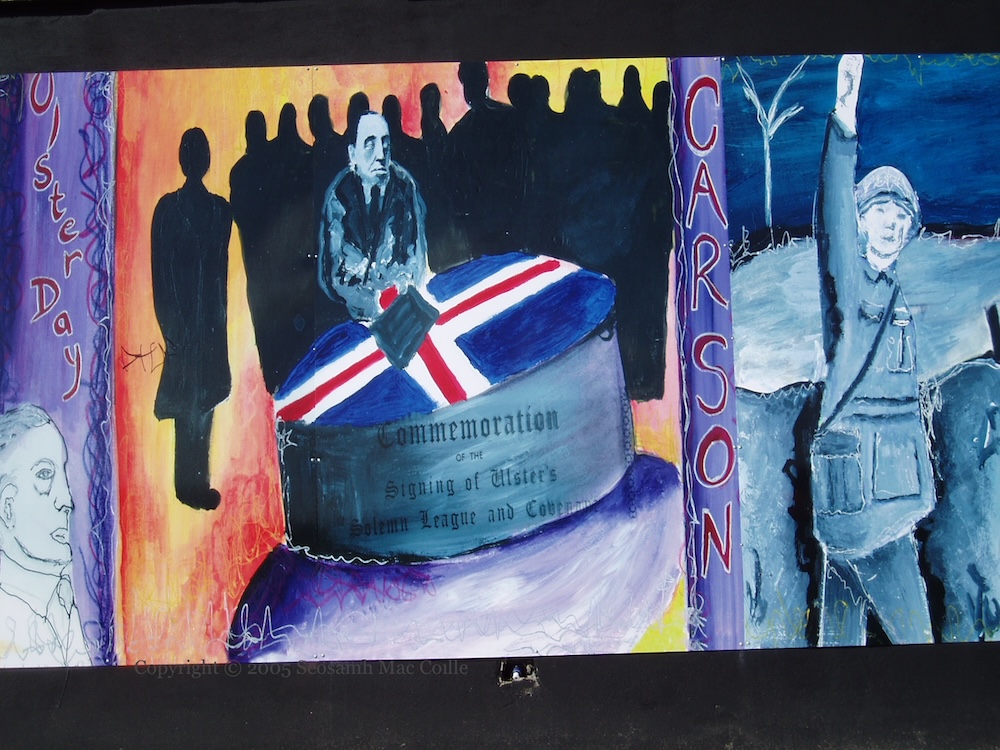
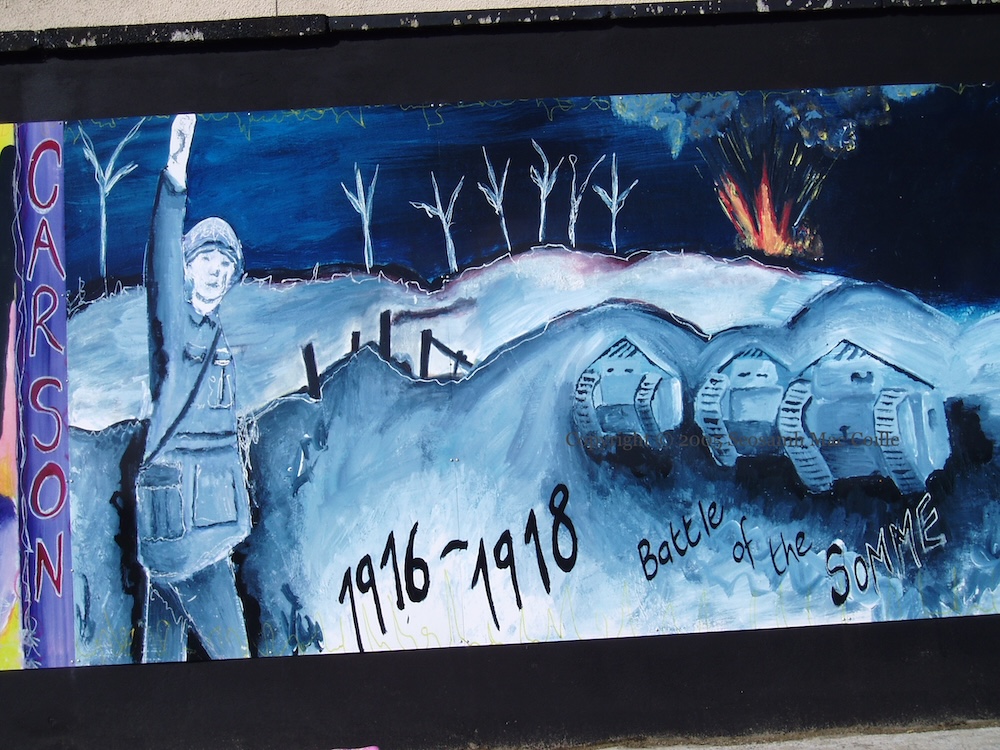
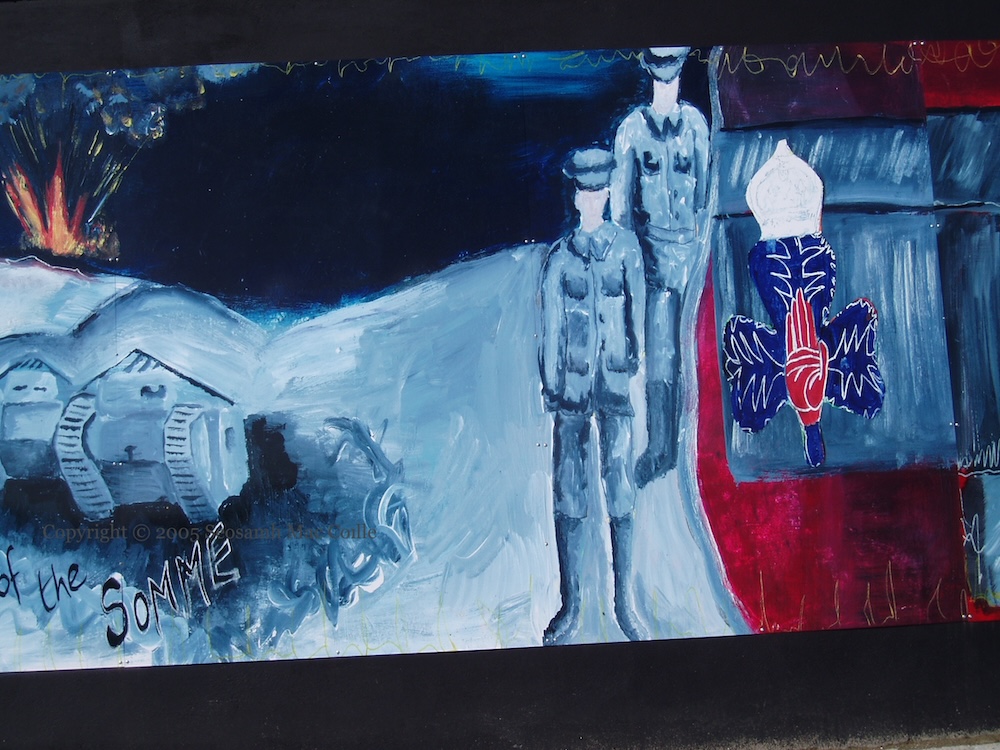
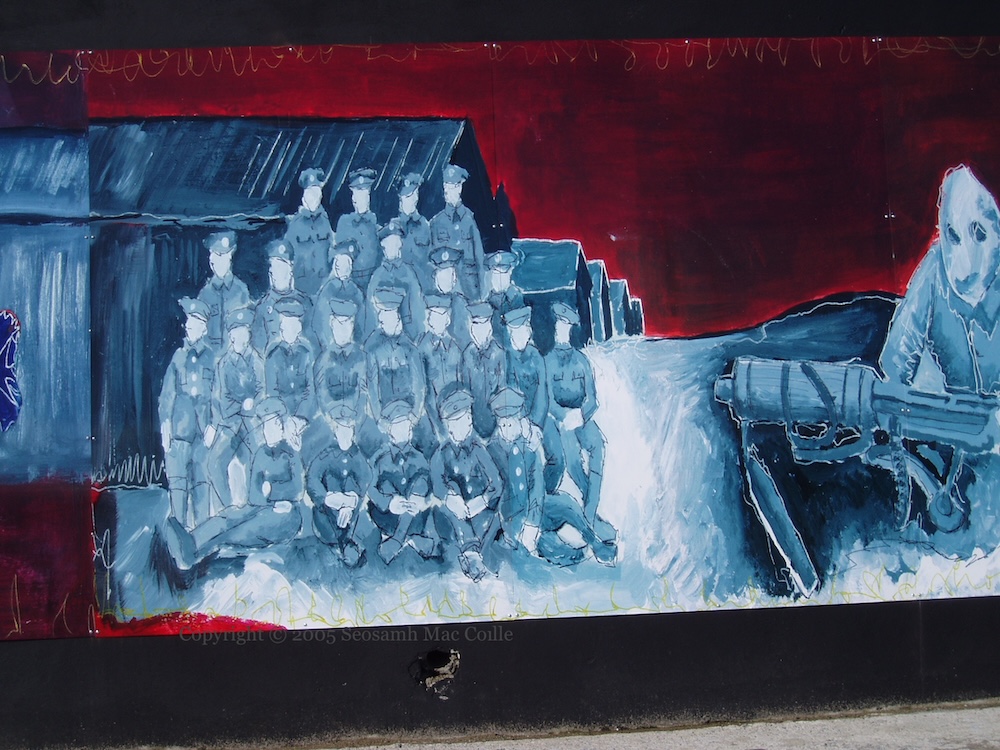
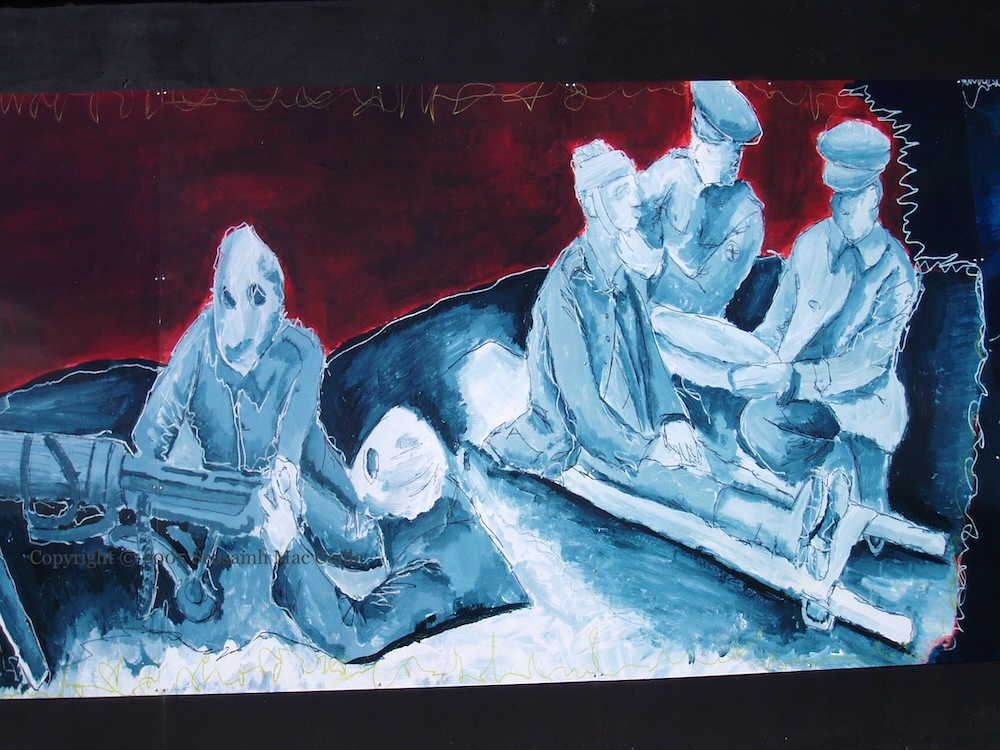
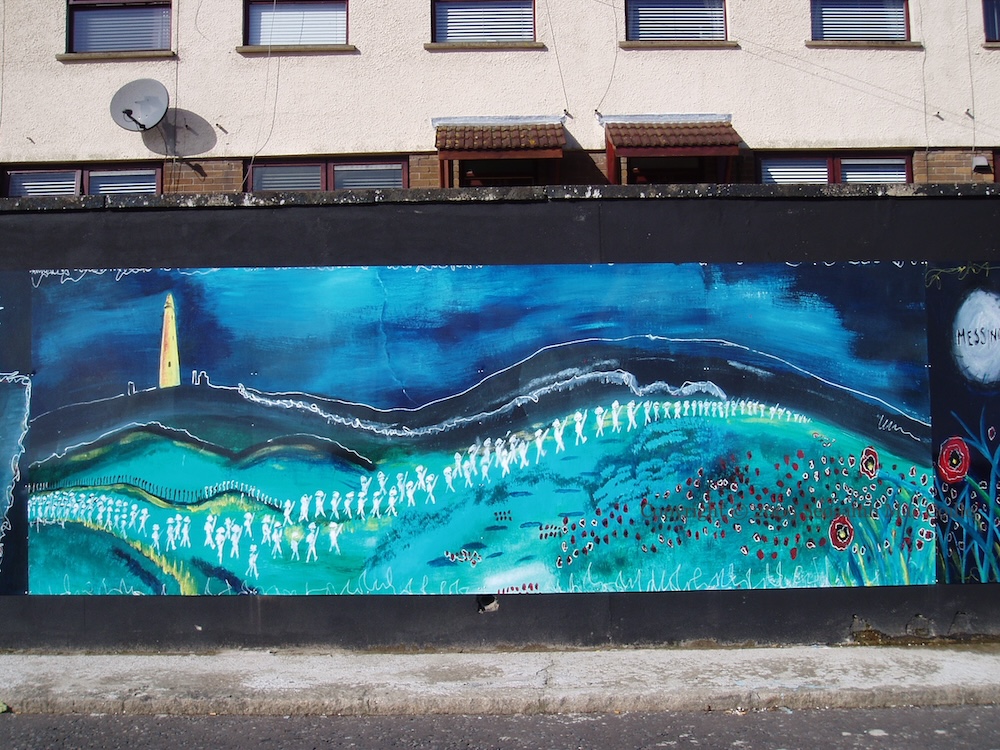
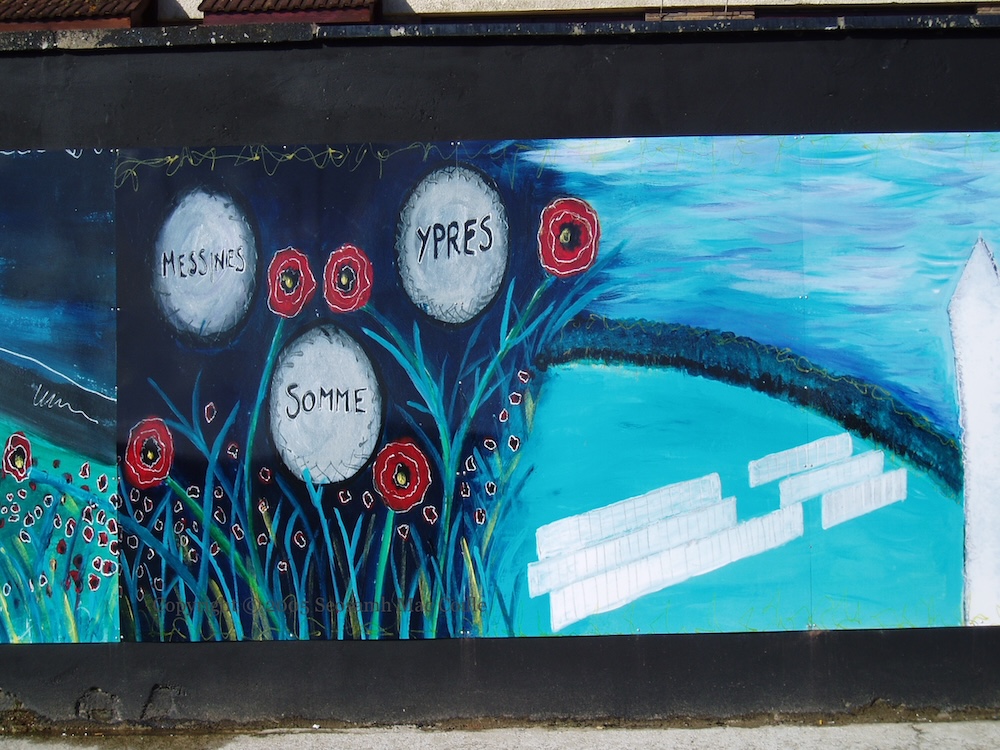
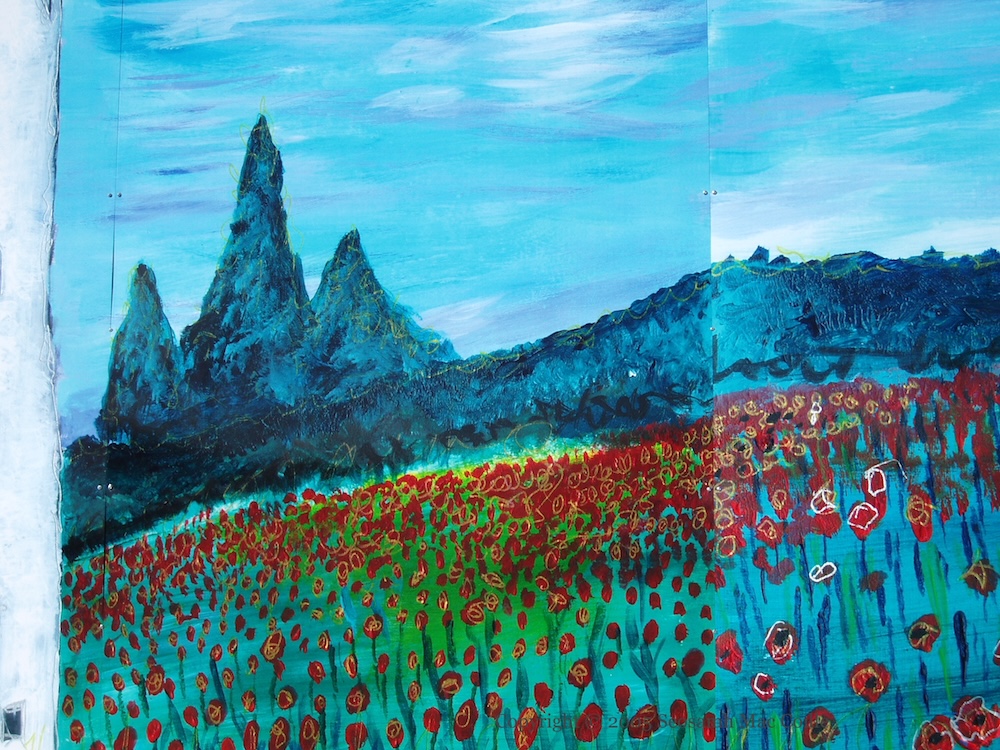
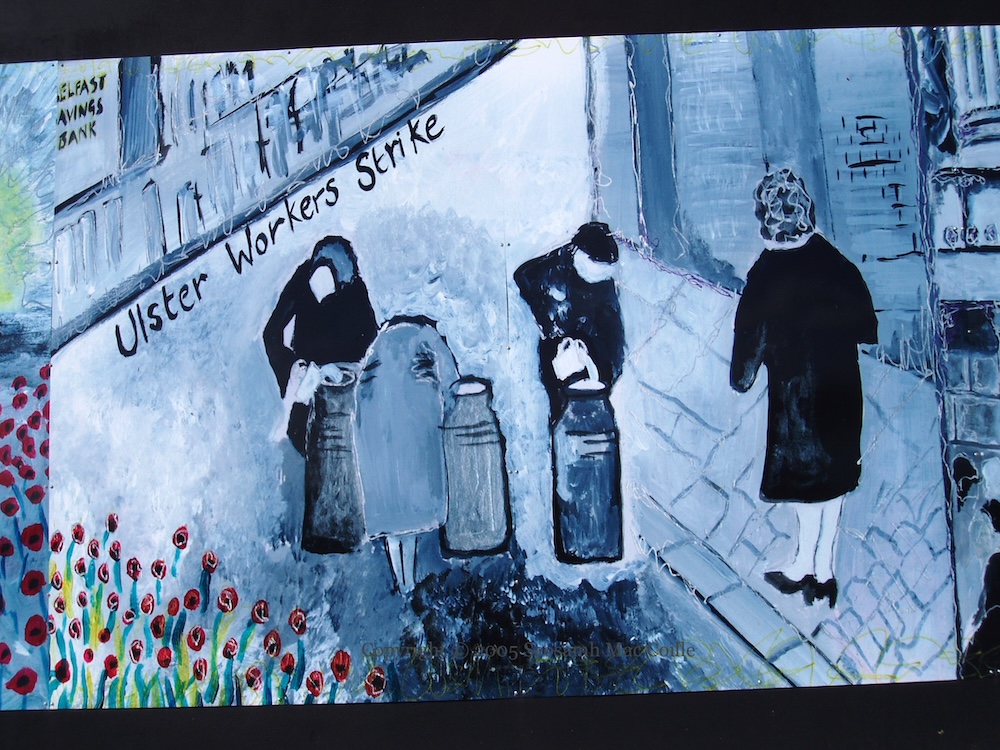
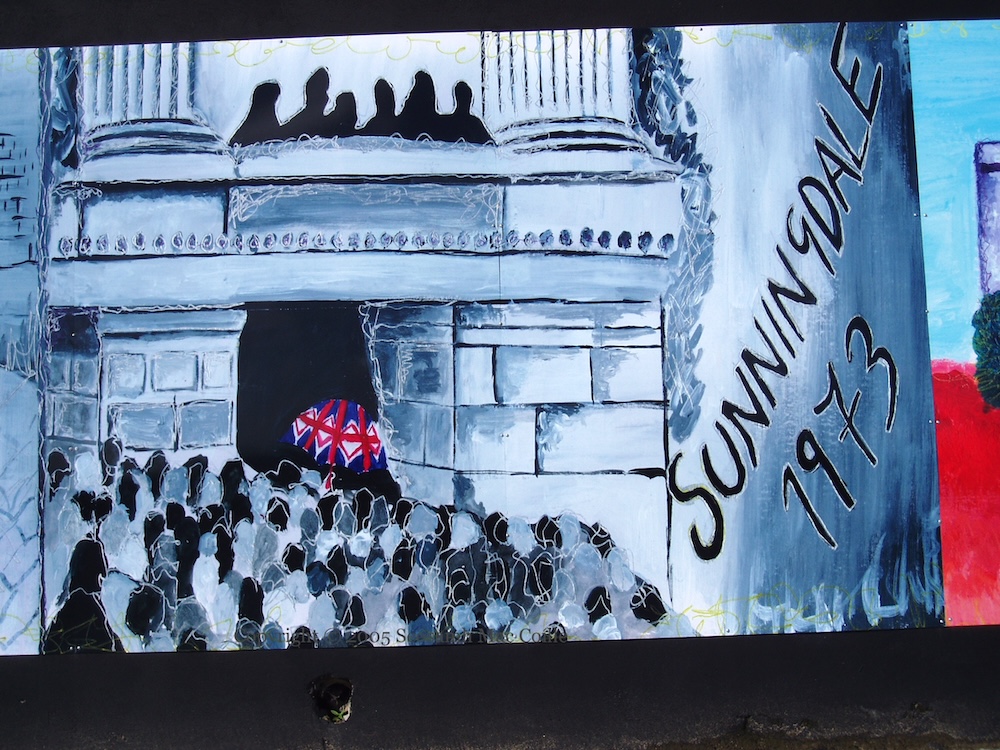
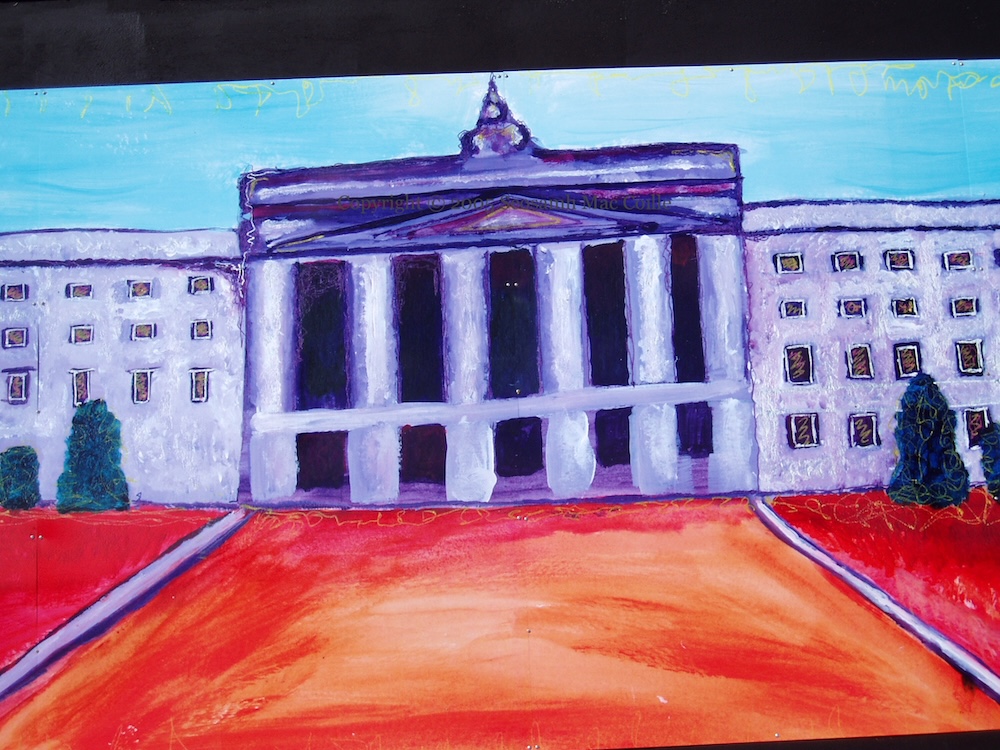
Click image to enlarge
Copyright © 2005 Seosamh Mac Coılle
X00132 X00133 X00134 X00135 X00136 X00137 X00138 X00139 X00140 X00131 X00124 [X00125] X00129 X00130 X00126 X00127 X00128
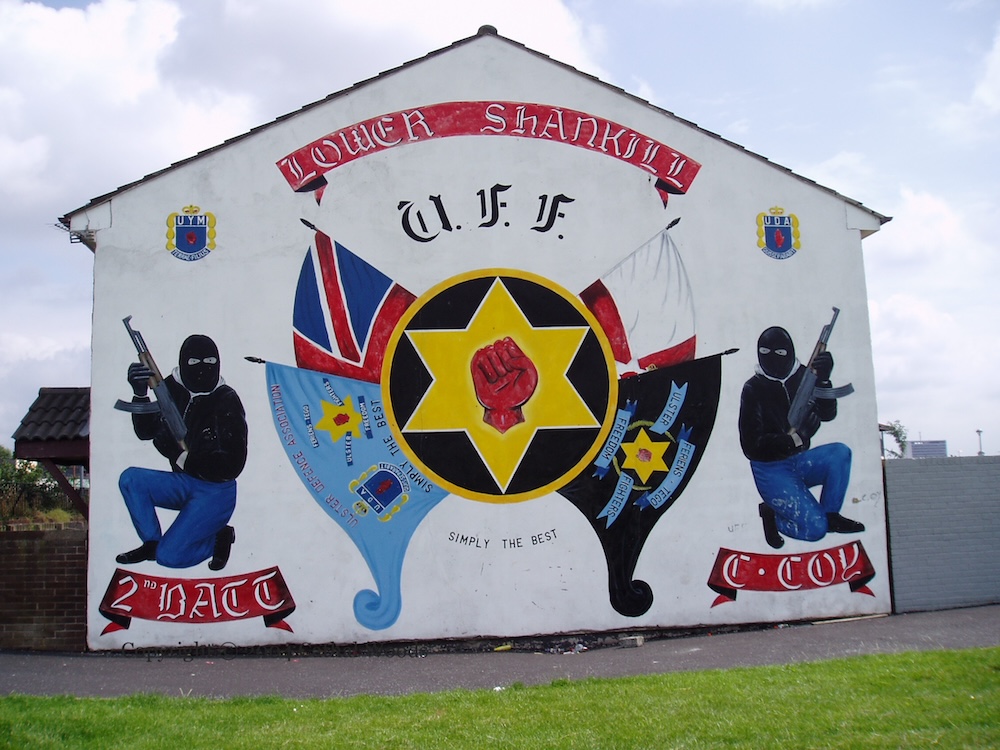
This lower Shankill UDA/UFF C company mural is a survivor from the days of Johnny Adair. There is a separate Visual History page on the Adair-Era Murals.
Shankill Parade, lower Shankill estate, west Belfast
Click image to enlarge
Copyright © 2004 Cathal Woods
X00075 lower shankill uff, uym, uda, terrae filius, quis separabit, ulster defence association, ulster freedom fighters, ferrens, tego, simply the best, 2nd batt, c. coy
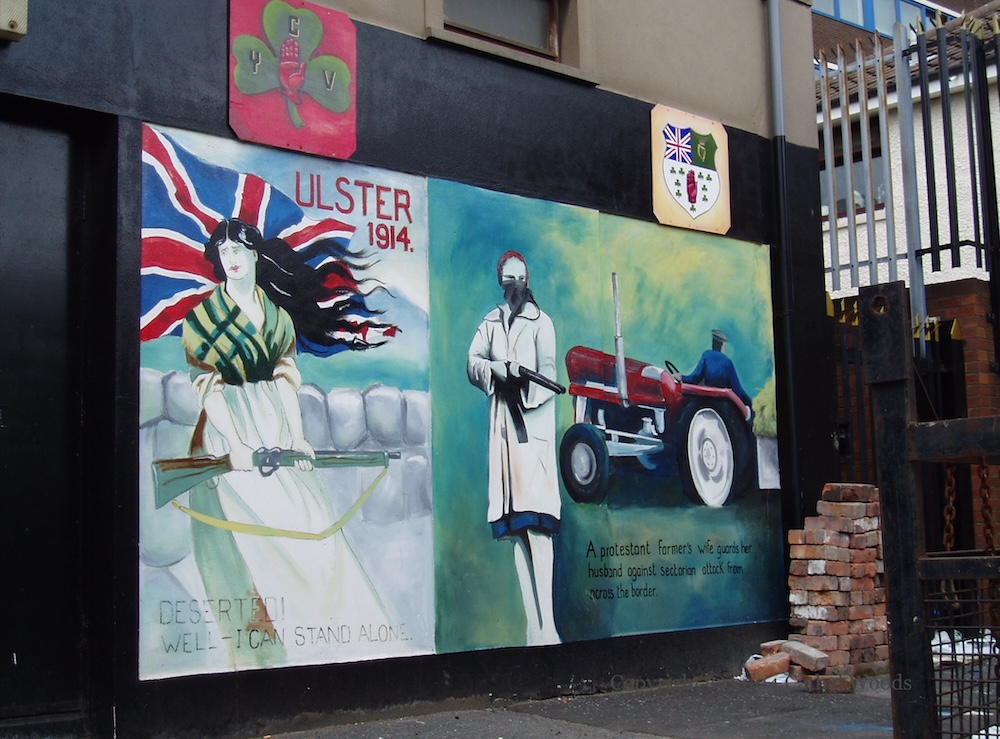
Here are two images of women defending Protestant territory in Ireland. On the left, the date is “1914”, that is, Ulster during the Home Rule Crisis and WWI. The words “Deserted! Well – I can stand alone” can refer both to Britain’s proposed desertion or the absence of menfolk who joined Kitchener’s army.
On the right, the date is the early days of Northern Ireland: “A Protestant farmer’s wife guards her husband against sectarian attack from across the border.”
This is the third of three murals in the courtyard of the Rex Bar at Moscow Street on the Shankill Road. Betting Office | Ready For War. The first also has a wide shot of all three and surrounding area.
Click image to enlarge
Copyright © 2004 Cathal Woods
X00066 ycv moscow street
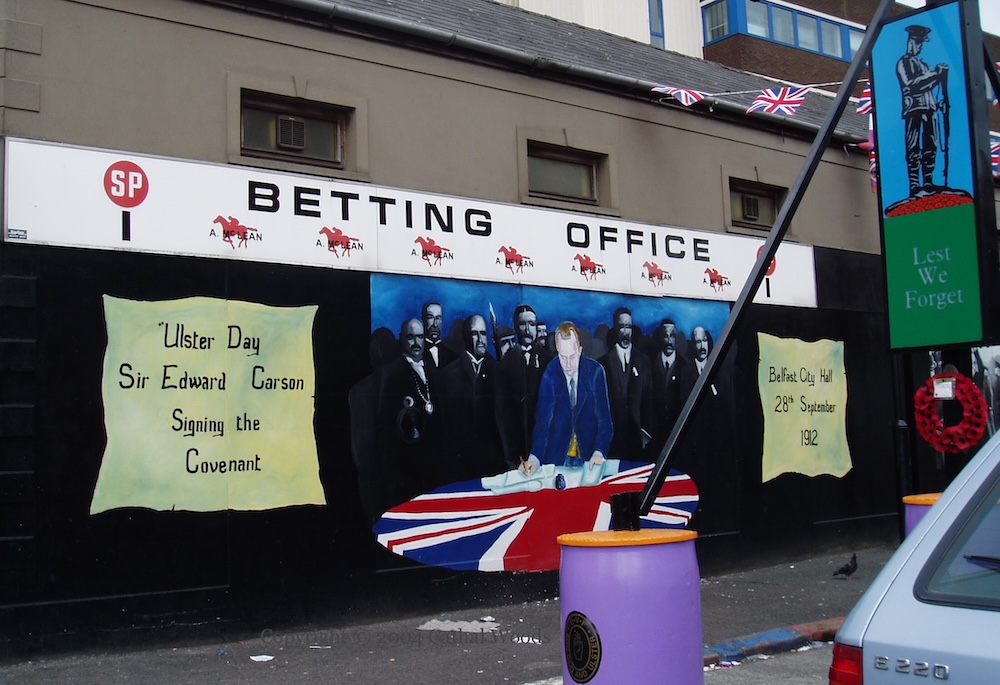
“Ulster Day. Sir Edward Carson (WP) signing the covenant (WP). Belfast City Hall, 28th September, 1912.”
This is the first of three panels on this wall that together trace the history of the Ulster Volunteers; see also the second (Carson and the Ulster Volunteers) and third (women defenders while the men fight in Europe).
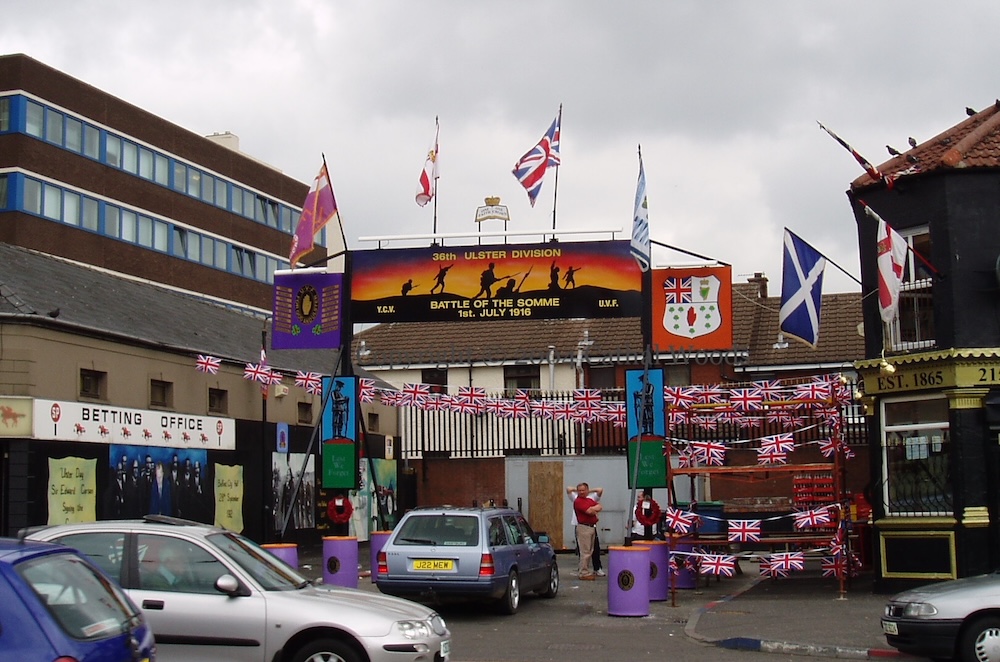
Below is a shot of the full scene in the courtyard of the Rex bar, two weeks away from the 12th
Moscow Street/Shankill Road, west Belfast
Click image to enlarge
Copyright © 2004 Cathal Woods
X00049 X00050 1912, lest we forget, 36th ulster division, battle of the boyne, 1st july 1916, ycv, uvf, rex bar est. 1865 moscow street
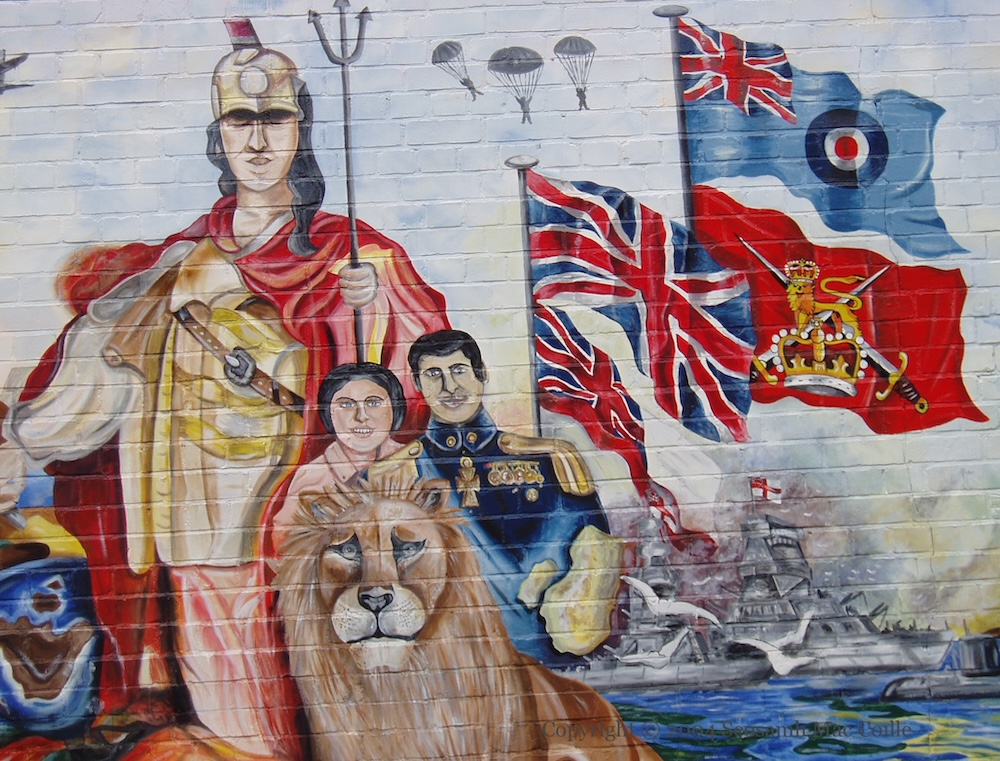
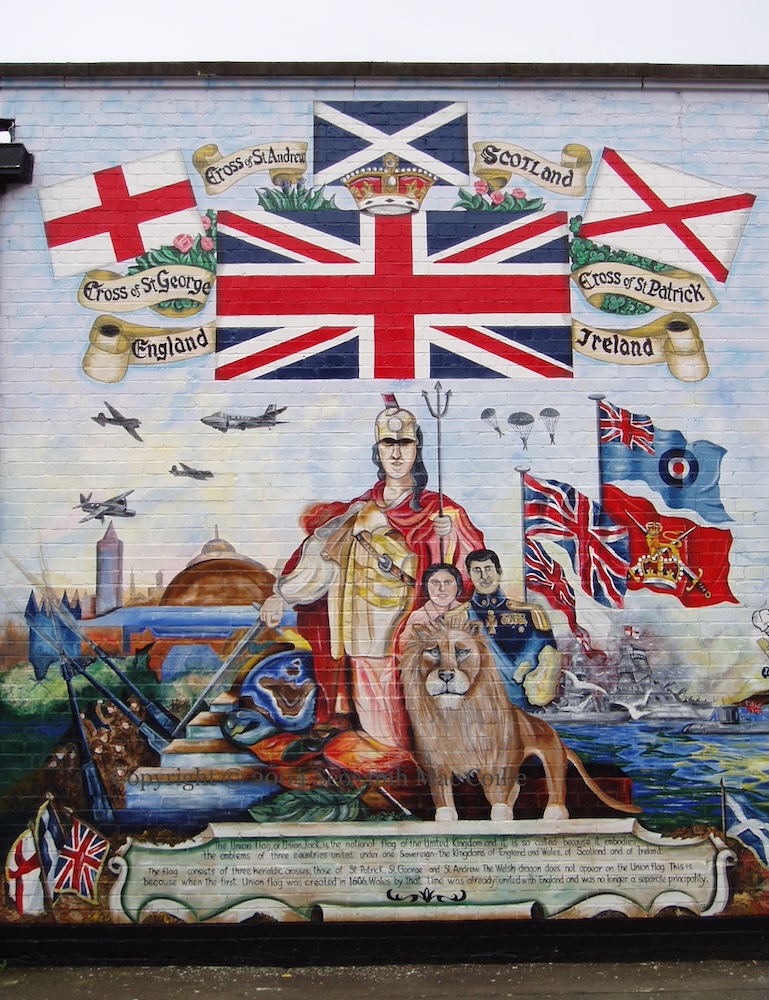
“The Union flag, or Union Jack, is the national flag of the United Kingdom and it is so called because it embodies the emblems of three countries united under one sovereign – the Kingdoms of England and Wales, of Scotland and of Ireland. The flag consists of three heraldic crosses, those of St Patrick, St George and St Andrew. The Welsh dragon does not appear on the Union flag. This is because when the first Union flag was created in 1606, Wales by that time was already united with England and was no longer a separate principality.”
One of fourteen panels in Thorndyke Street, east Belfast. For a list of entries for each panel, see East Belfast Historical And Cultural Society.
Click image to enlarge
Copyright © 2004 Seosamh Mac Coılle
X00029 X00028
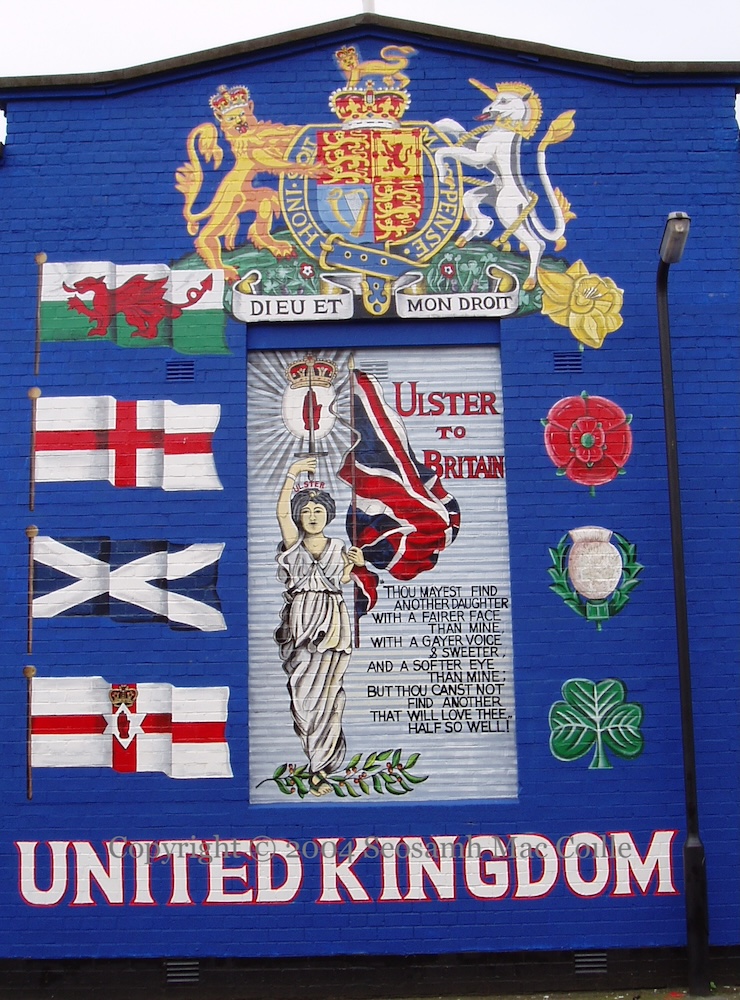
The central panel in Thorndyke Street, Belfast, reproduces a postcard from during the Home Rule debate: “Ulster to Britain: thou mayest find another daughter with a fairer face than mine, with a gayer voice and sweeter and a softer eye than mine; but thou canst not find another that will love thee half so well!” The Ulster Banner (a flag of Northern Ireland) is used to represent Ireland in the quartet of flags while the shamrock stands alongside daffodil, rose, and thistle. For the Anglo-Norman French around the crown’s coat of arms, see Honi Soit Qui Mal Y Pense.
One of fourteen panels in Thorndyke Street, east Belfast. For a list of entries for each panel, see East Belfast Historical And Cultural Society.
Click image to enlarge
Copyright © 2004 Seosamh Mac Coılle
X00027 [X00030]
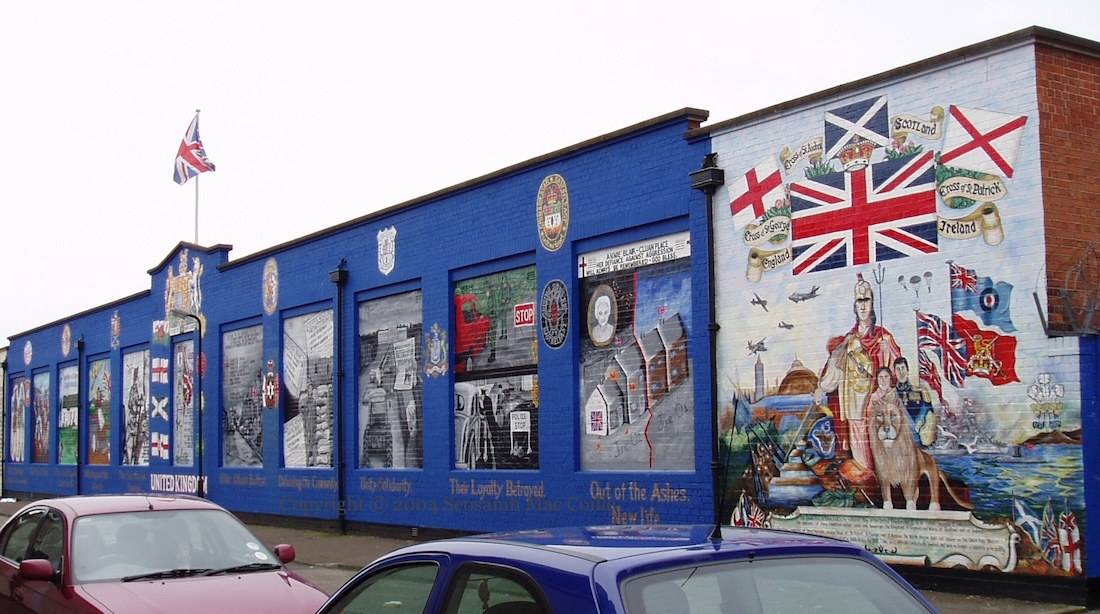
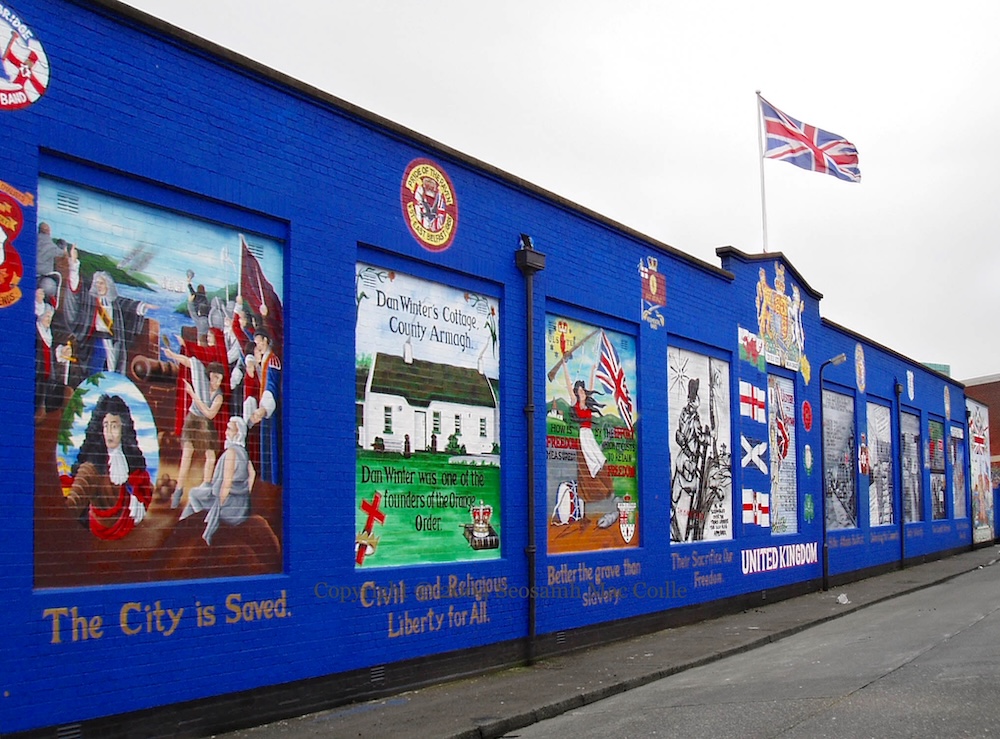
In 2004 the East Belfast Historical And Cultural Society sponsored a series of 14 murals in Thorndyke Street charting Protestant history from Cromwell to Cluan Place.
This entry contains two wide shots. Individual panels, from left to right, can be seen in the following entries: (M includes the info plaques that were added later)
Click image to enlarge
Copyright © 2004 Seosamh Mac Coılle
X00035 X00034
 Seosamh Mac Coille Collection