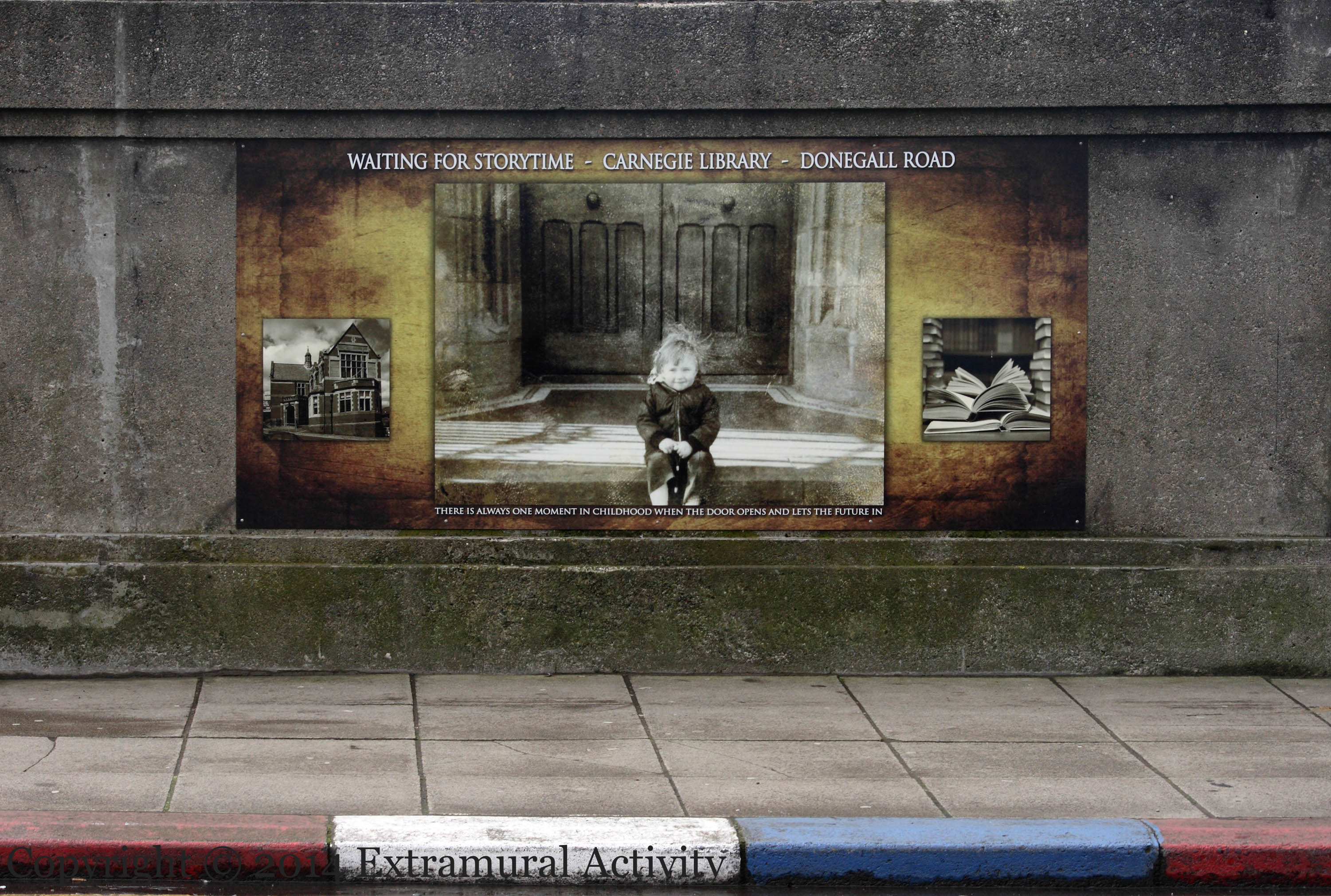
“Waiting for storytime – Carnegie library – Donegall Road. There is always a moment in childhood when the door opens and lets the future in.” A panel from the Donegall Road bridge (south).
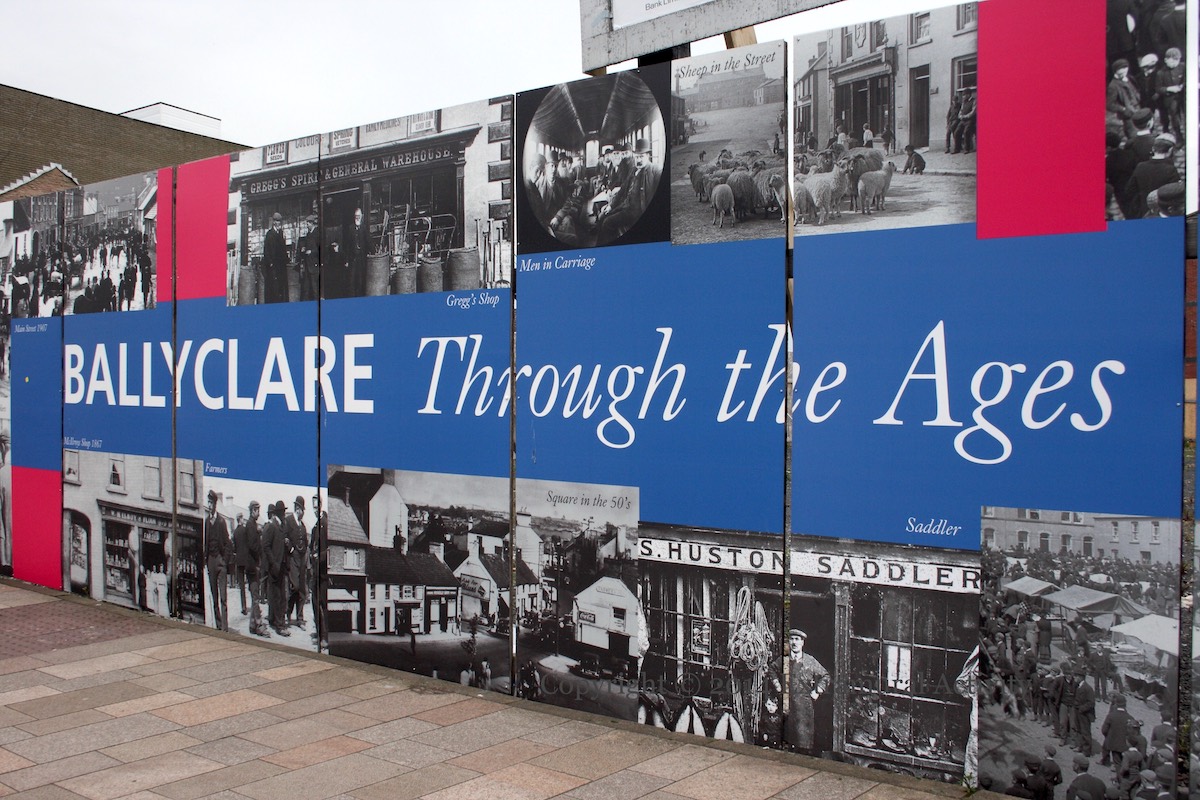
This is the ‘yesteryear’ portion of the hoarding around waste ground on The Square, encouraging people to “Shop, live, enjoy – Ballyclare”. There are photographs of ‘McIlroy’s shop 1867’, ‘Main Street 1907’, and ‘Square in the 50’s’.
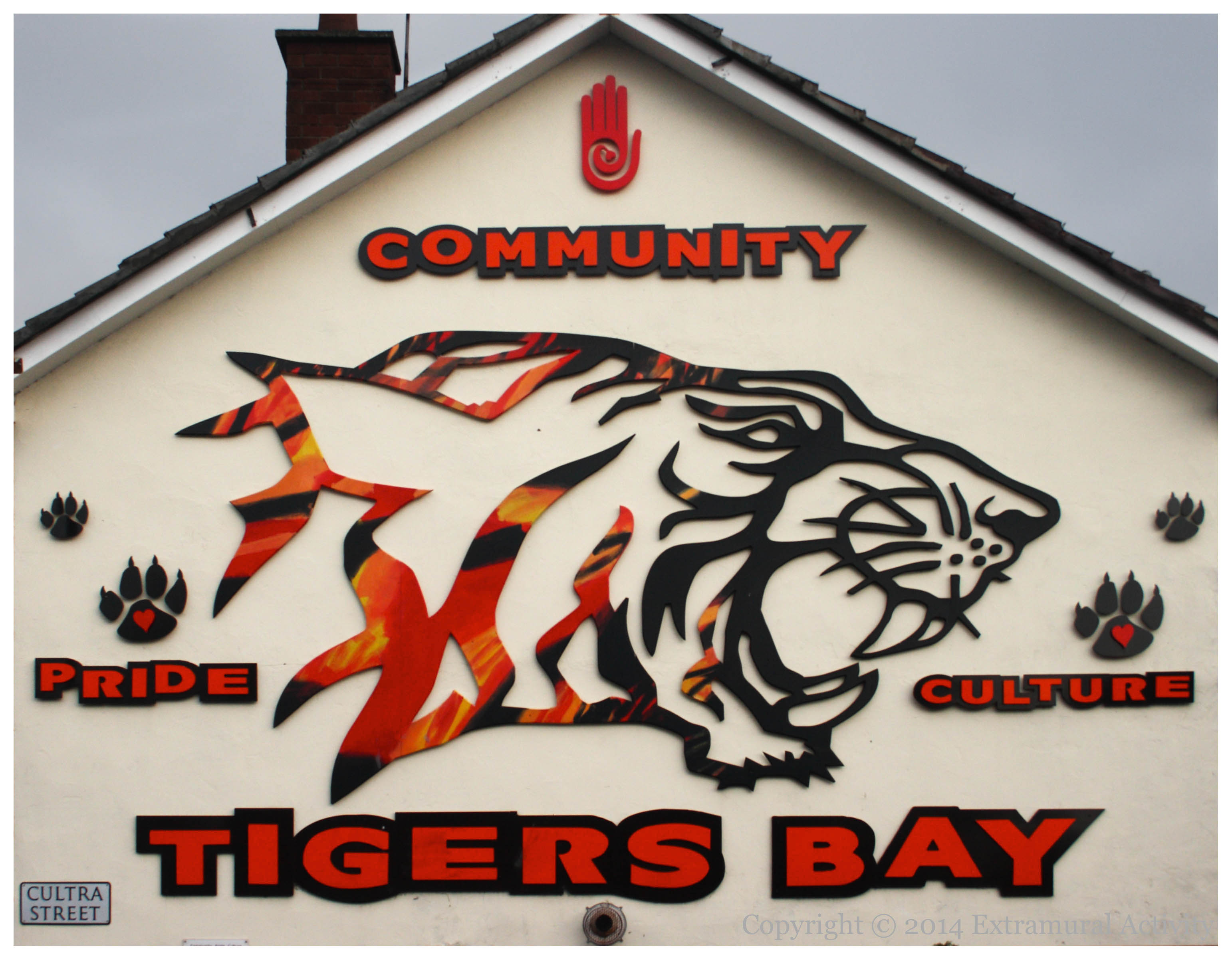
“Community. Pride. Culture.” As part of a 2009-2010 re-imaging program, the UDA mural on Cultra Street in Tiger’s Bay was replaced with this “cut-out” tiger.
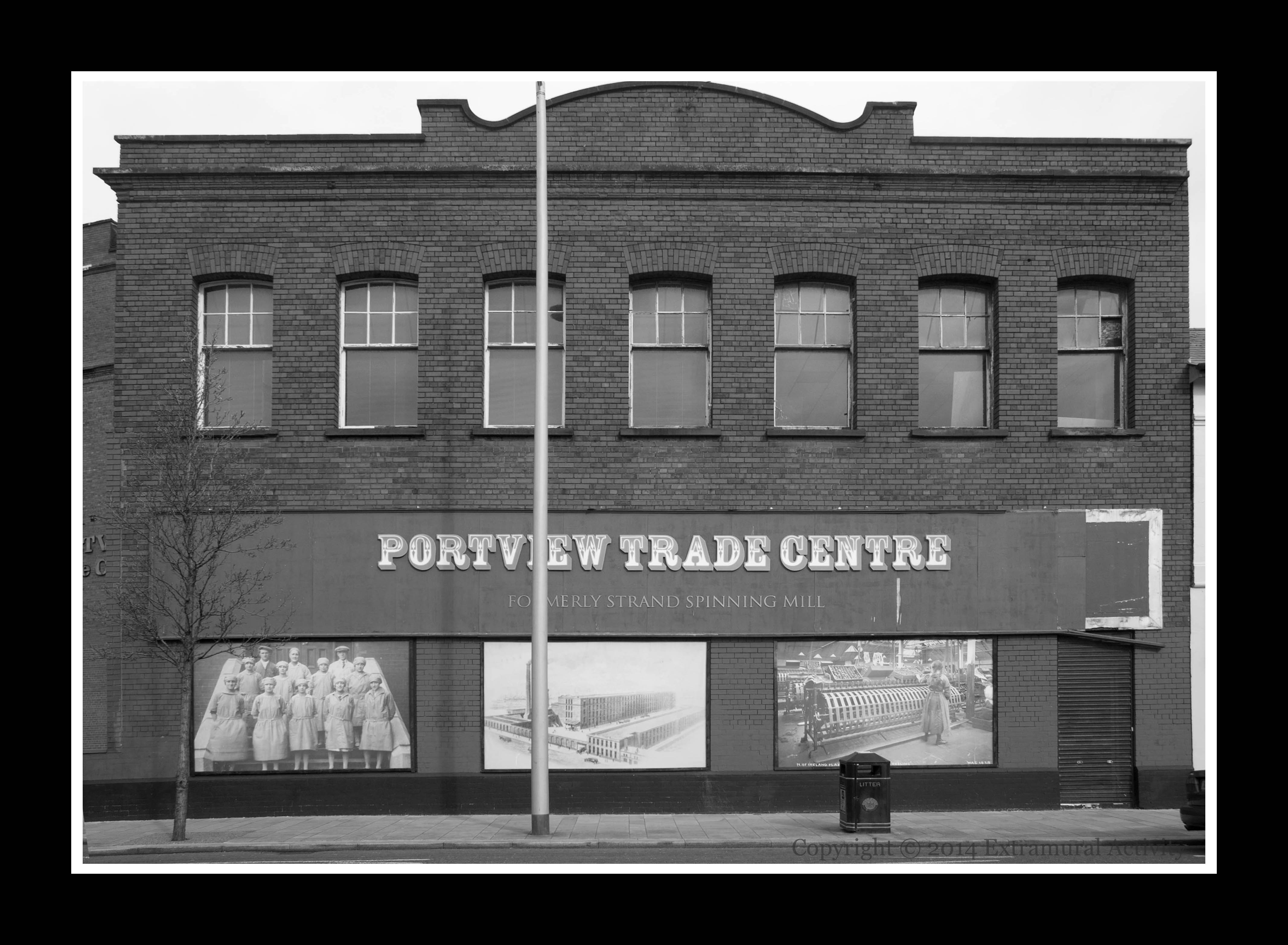
The Strand Spinning Mill on the Newtownards Road in east Belfast began life as the Jaffe Spinning Mill, after Otto Jaffe, a Jewish-German emigrant from Hamburg who became a naturalized citizen, early benefactor of Queen’s University (in 1905 he contributed £3000) and twice Lord Mayor of Belfast. It quickly became the Strand Spinning Mill when he sold it to Mackies in 1912. The mill made munitions during WWI and viscose rayon during WWII. The mill closed in 1983 and now provides space to small businesses as the Portview Trade Centre.
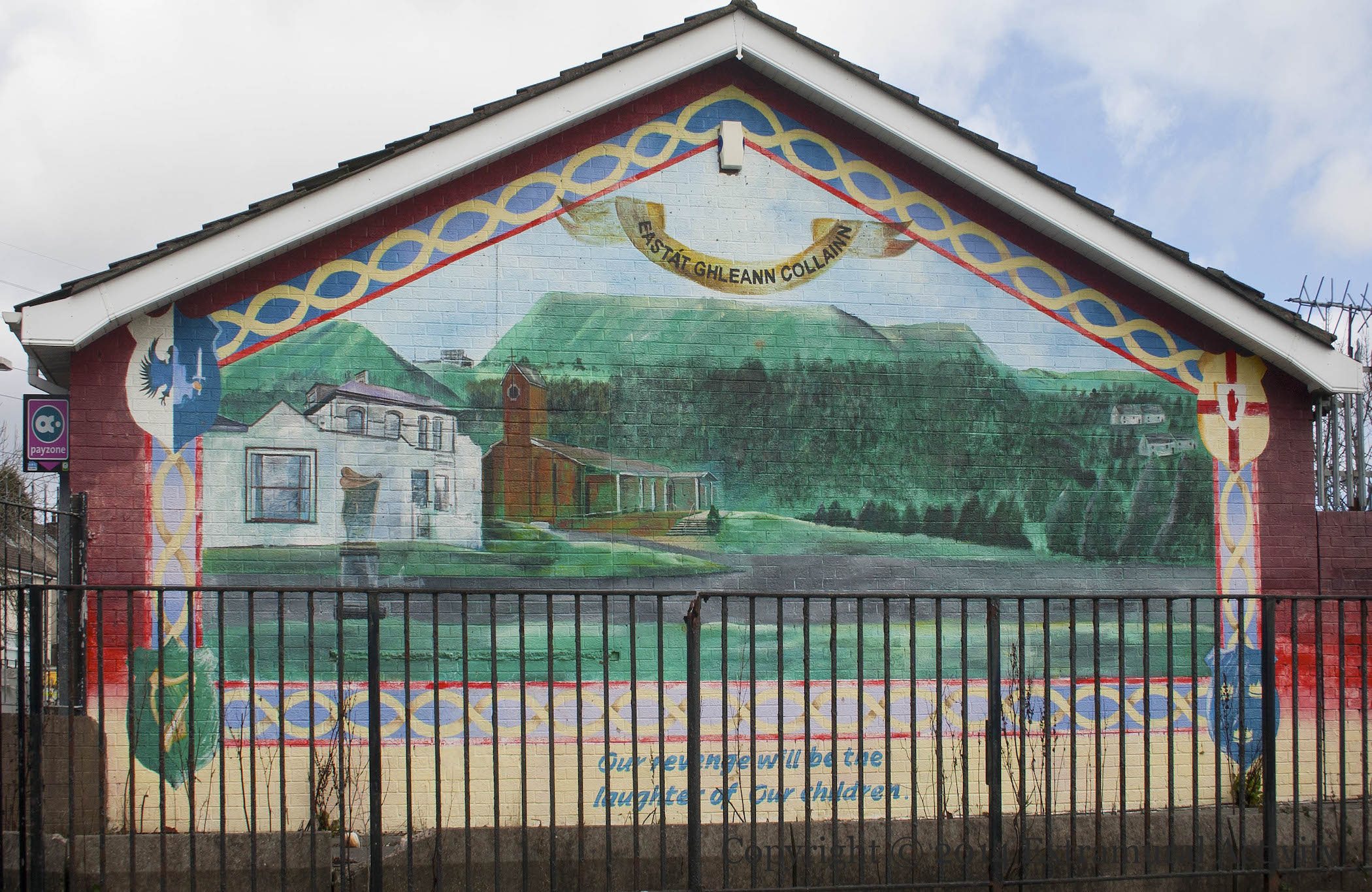
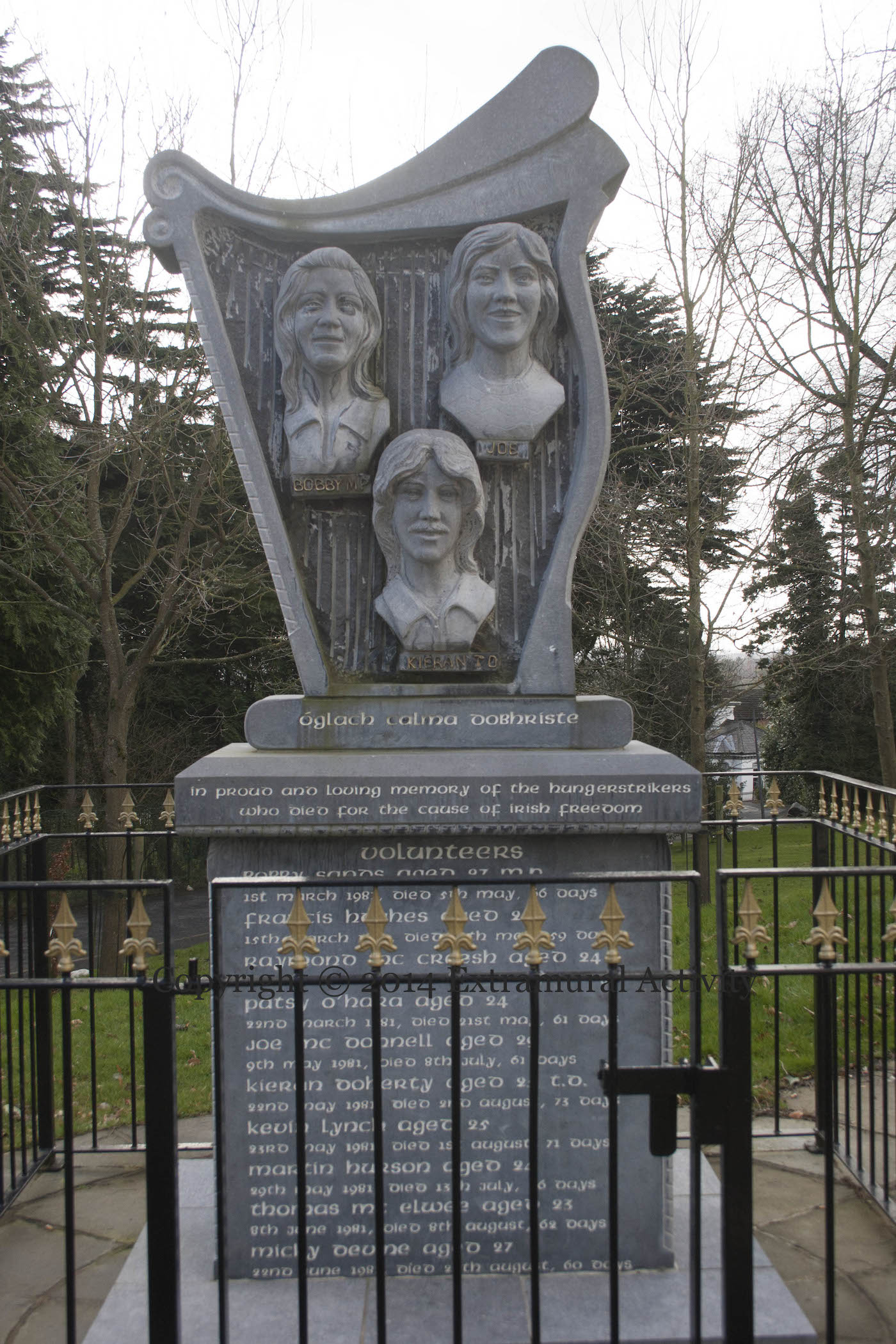
This mural in the Glen Colin estate, just off the Glen Road, shows The Roddy’s club (in white) with the hunger striker memorial in the shape of a harp in front (shown in the image below) and the St. Oliver Plunkett church, which is in fact on the other (southern) side of the Glen Road, with the twin peaks of Divis and Black Mountain in the background. The Bobby Sands quote “Our revenge will be the laughter of our children” is at the bottom.
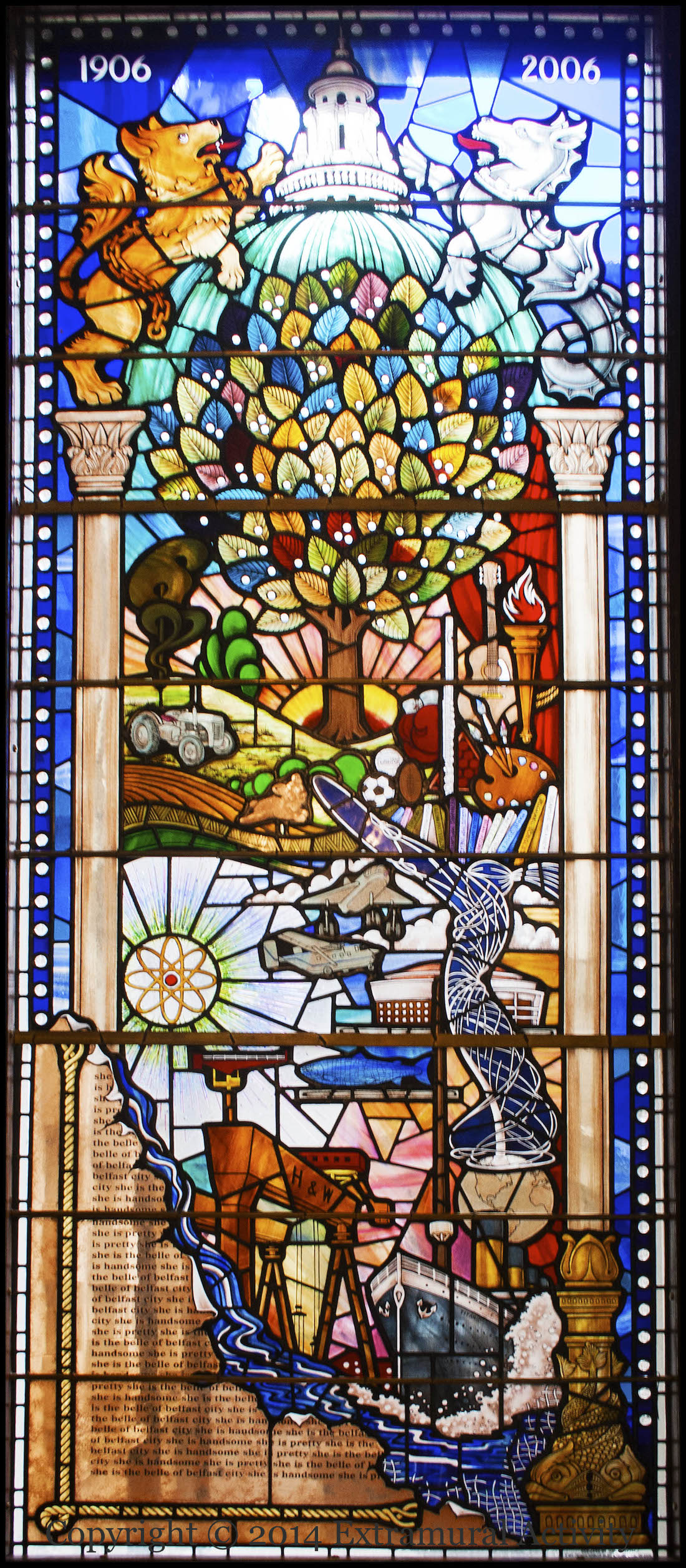
This stained glass by Ann Smyth was designed for the centenary of the construction of Belfast city hall, 1906-2006. At the top are the wolf and seahorse of the Belfast coat of arms, the city hall, and a tree of life. Below these we have a landscape in the style of John Luke’s The Fox, modified with a Massey Ferguson tractor and an electric hare (which CultureNI claims was invented by a Belfast man) instead of the fox. To the right of these stand a guitar, an artist’s palette, boxing gloves, various sports balls, and snooker’s fifteen reds. Ernest Walton smashed the atom in 1932. Short Brothers in 1957 produced the world’s first vertical take-off and landing aircraft and in 1963 the Skyvan. We also see the Waterfront, the Big Fish, the Thanksgiving Square Beacon, and Harland & Wolff’s Samson & Goliath and Titanic. In the bottom left corner is a town page upon which is repeated the refrain from I’ll Tell Me Ma: “She is handsome, she is pretty, she is the belle of Belfast city”.
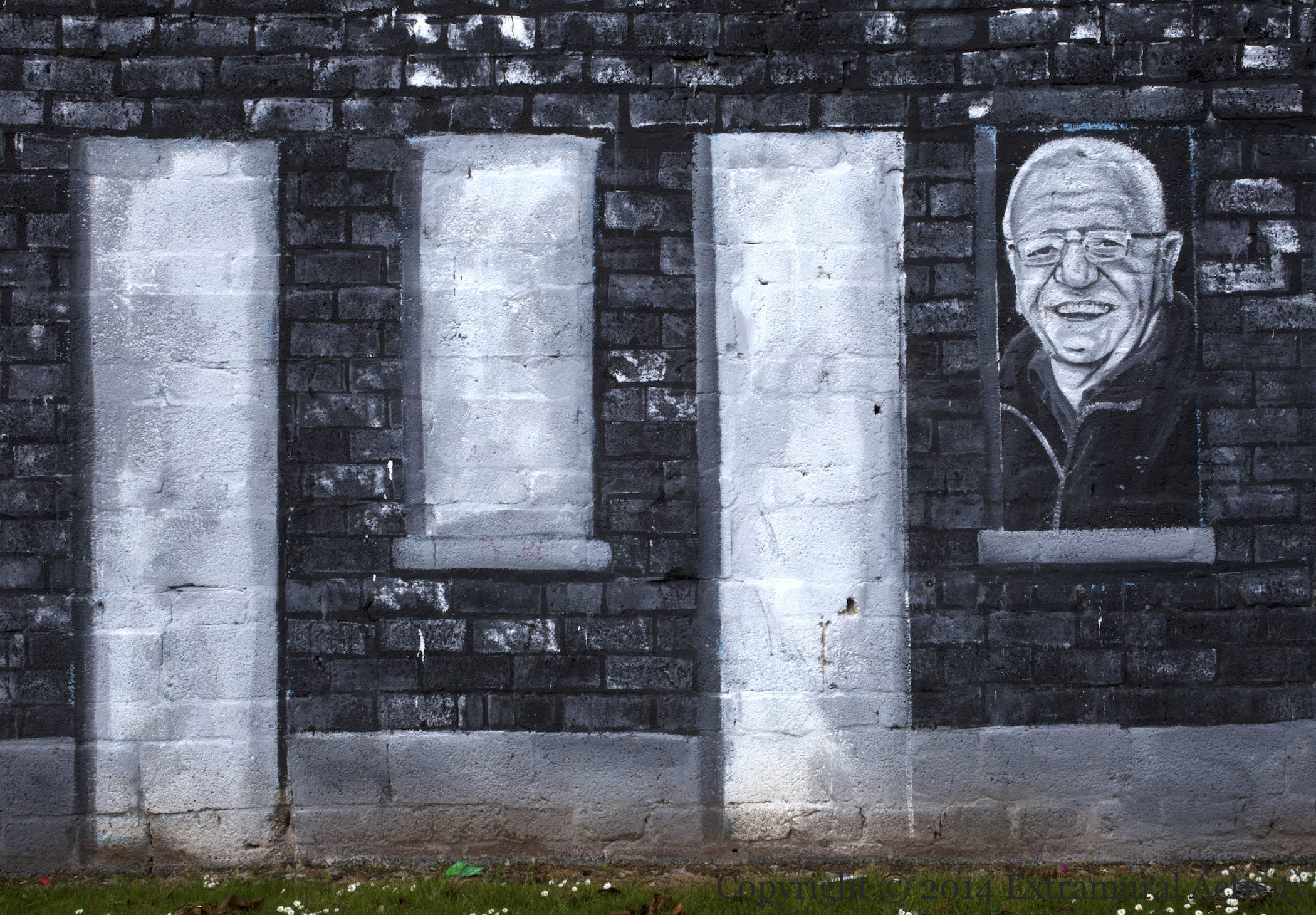
Geordie Bell was caretaker at the Short Strand community centre, on the other side of this mural, as well as a trade unionist and republican. A piece of art in the Skainos centre is dedicated to his memory (East Belfast Mission).
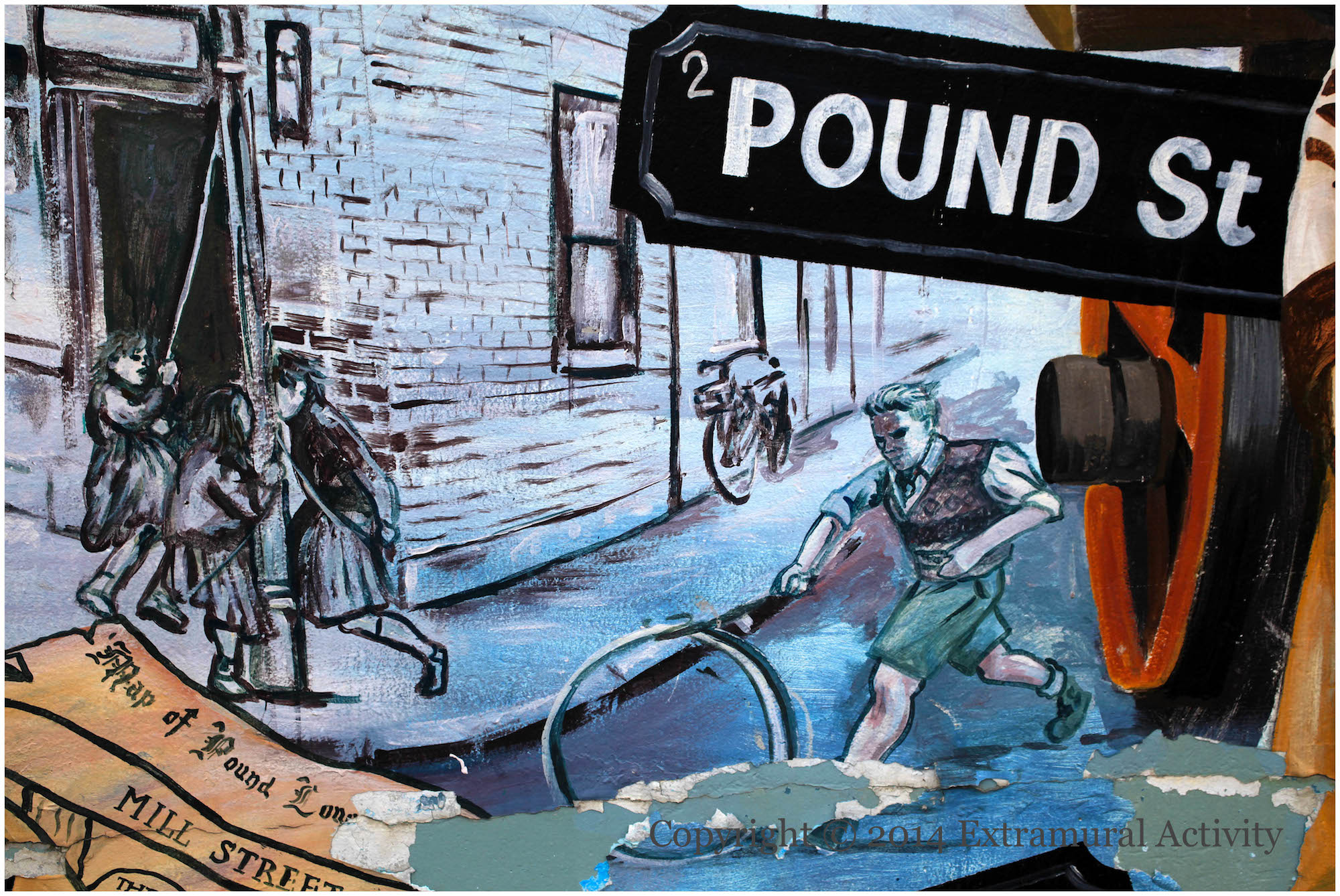
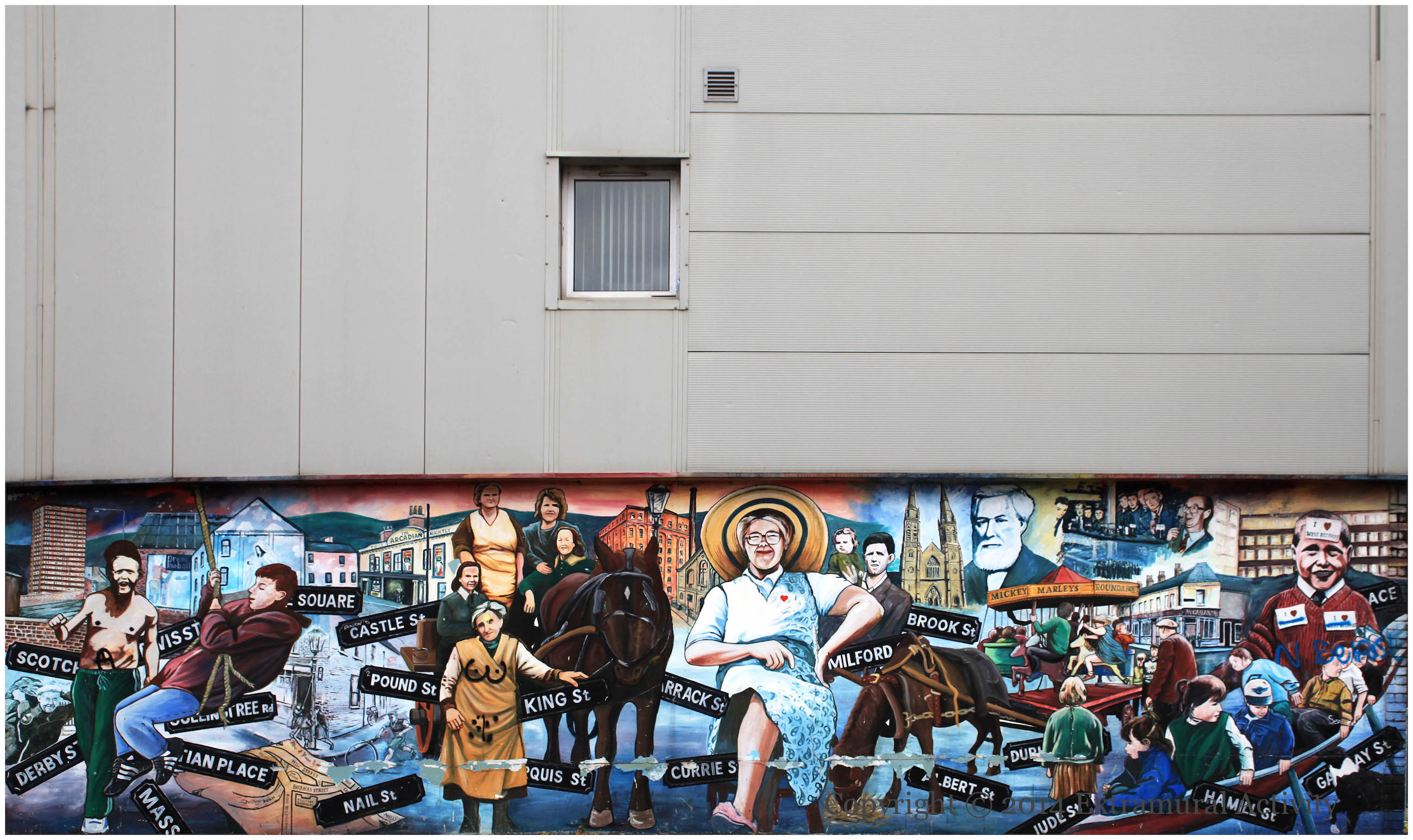
The area known as the Pound Loney is featured in a long mural in Durham Street. The Pound Loney is Divis or the lower part of Divis on either side of Cullingtree Road; a “loney” is a lane and originally a natural path, in this case next to a stream beside the sheep-pound that existed before the area was developed for housing (Old Belfast Districts).
The mural features many of the place-names, landmarks, and personalities of yesteryear, including the Arcadian cinema on Albert Street – left of centre in the full shot below; see also the two images below of the Arcadian in happier days and in 1969, at the start of the troubles (images from Cinema Treasures and the Belfast Forum). Also featured are the Divis tower block, the Blessed Virgin mural, Barney’s mill, McGahan’s pub, Saint Peter’s. The streets include Barrack St, Galway St, Cullingtree Rd, Scotch St, Christian Place, Derby St, Castle St, Pound St, Nail St, Currie St, Albert St, Brook St, Jude St, Hamill St, Divis St, Milford St and Massereene (Row or Path or Walk) in Divis flats. If you can identify any of the characters in the mural, please leave a comment.
 Seosamh Mac Coille Collection