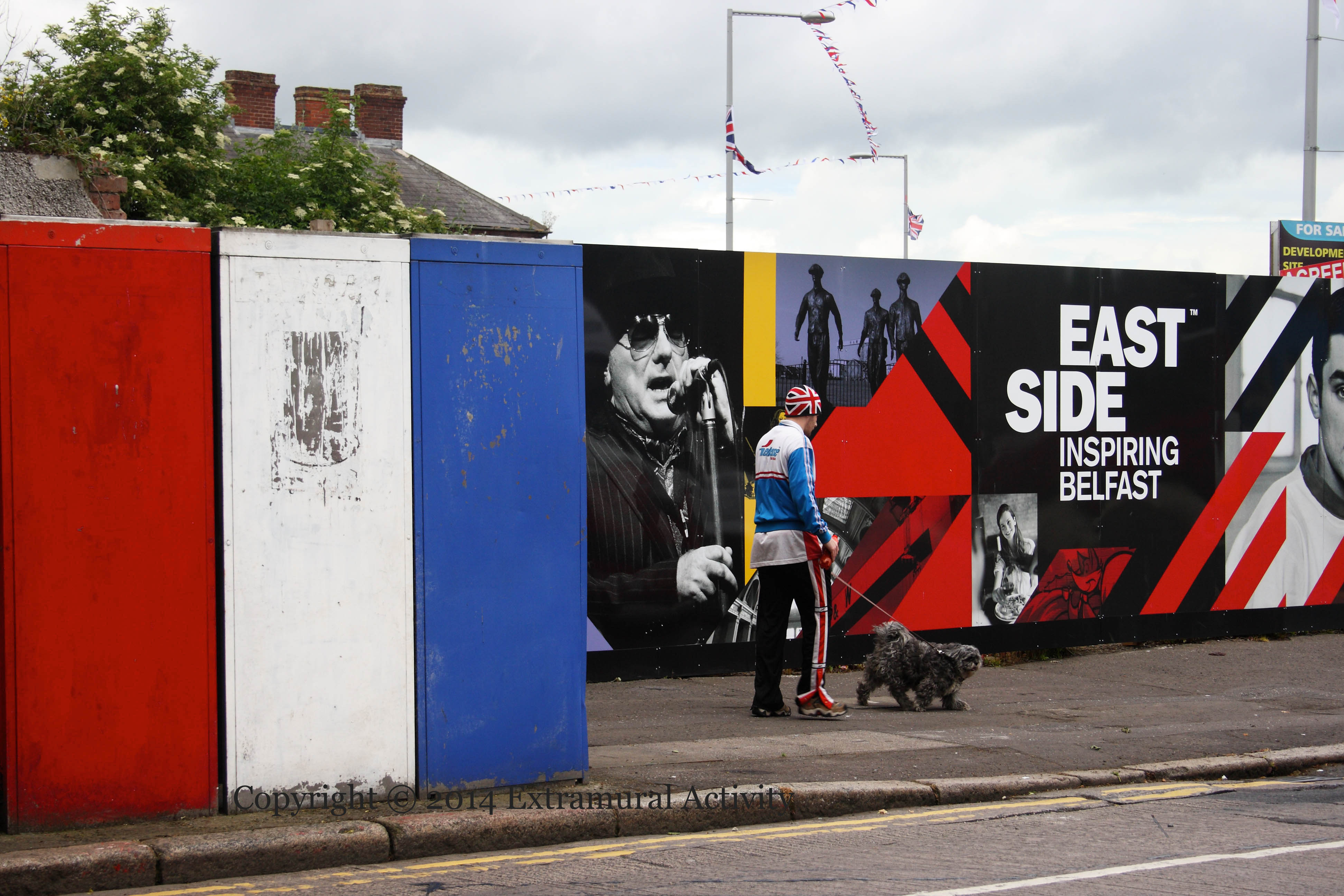
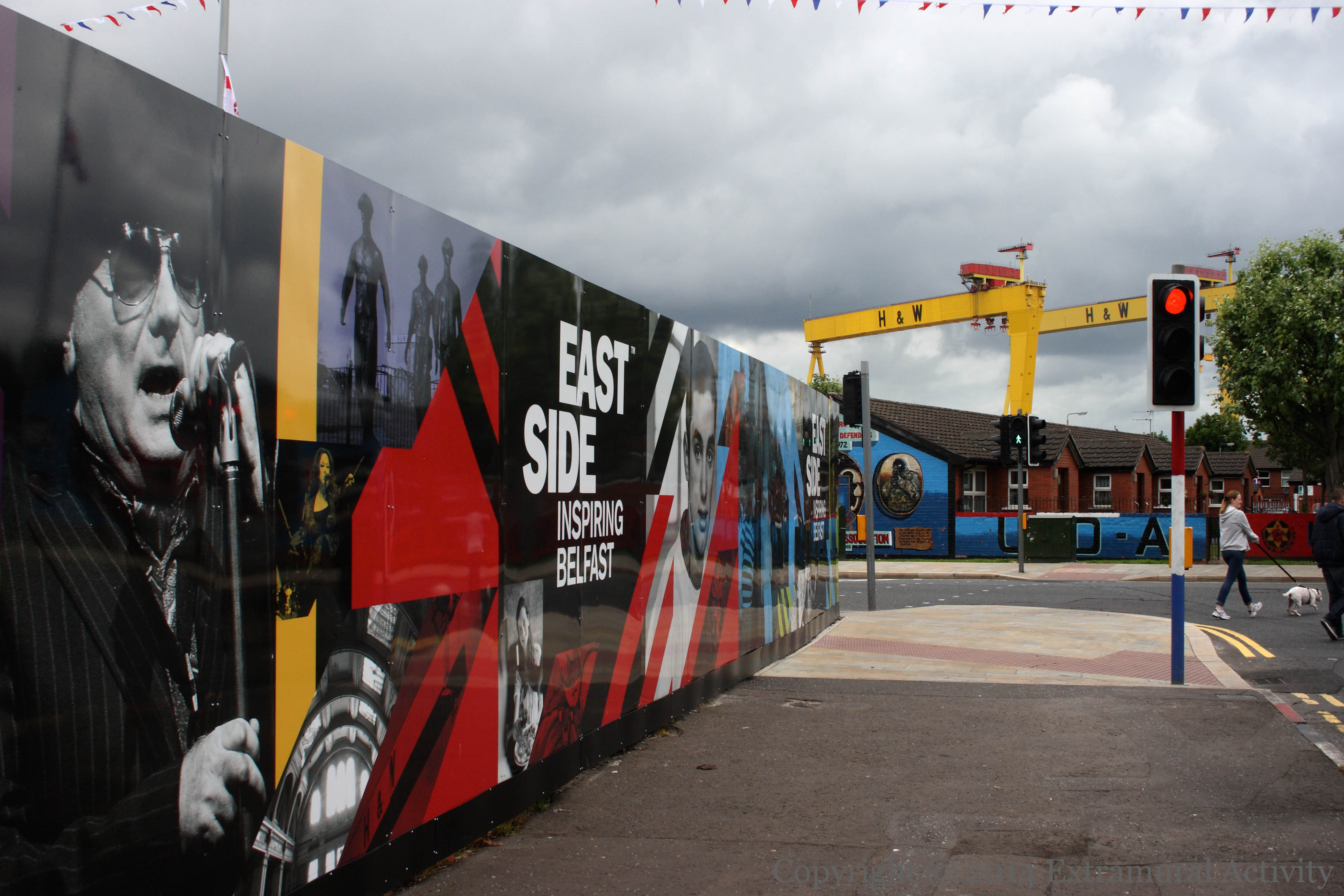
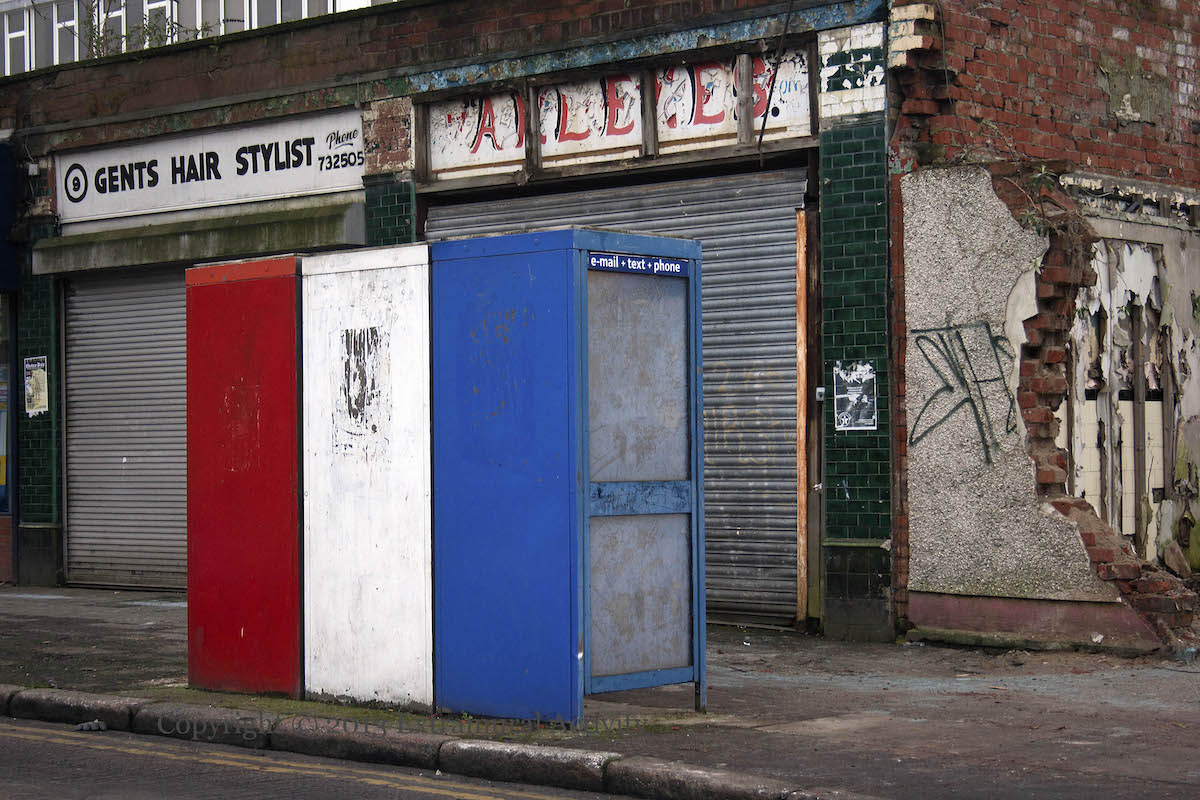
The waste-ground at the corner of Templemore Avenue and Newtownards Road (where the flyers featured in Harland & Why were posted) was given a face-lift with images of east Belfast heroes Van Morrison and George Best and the words “East Side – Inspiring Belfast”. The red-white-and-blue is supplied by the phone-boxes and the passer-by.
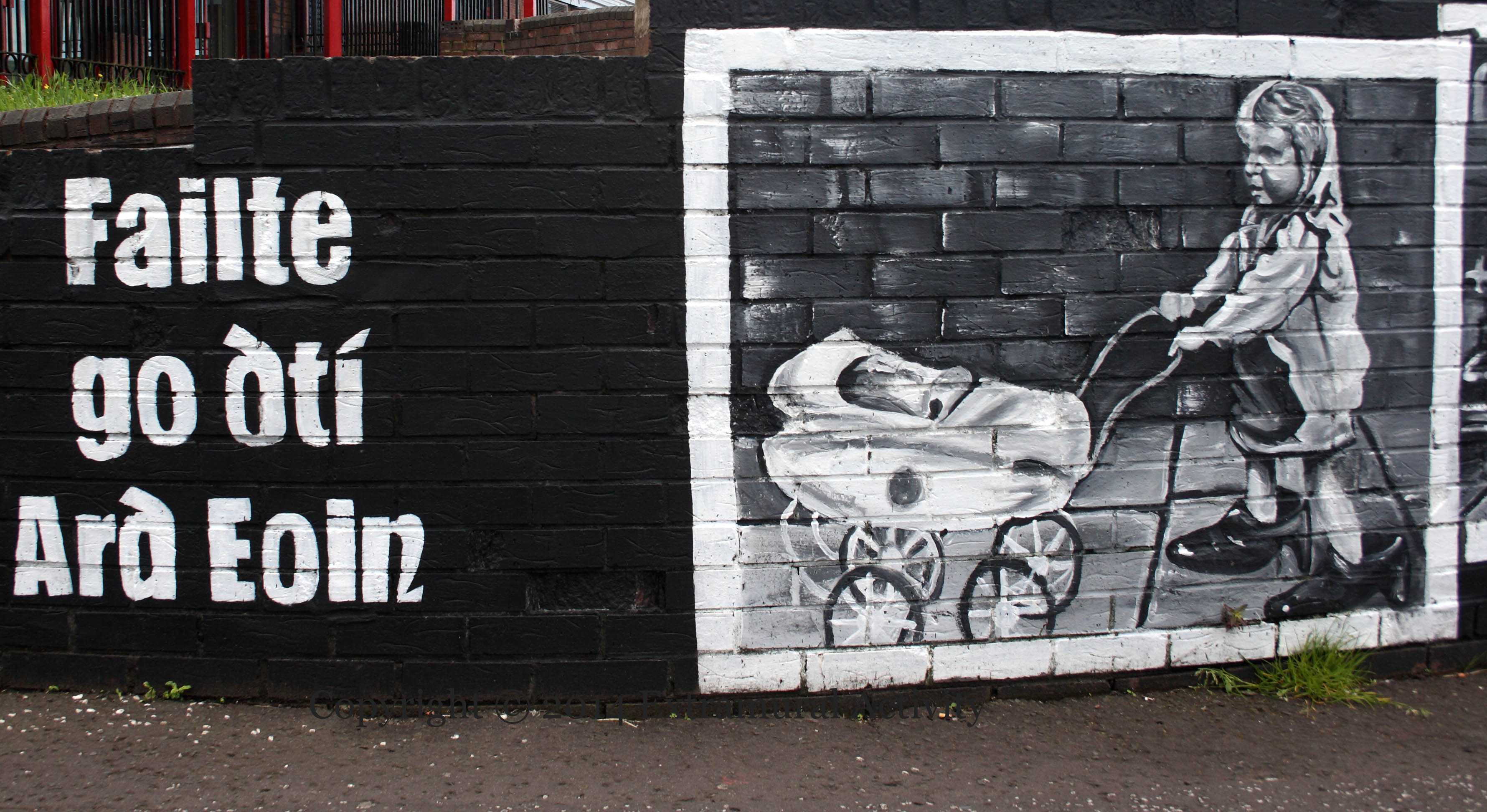
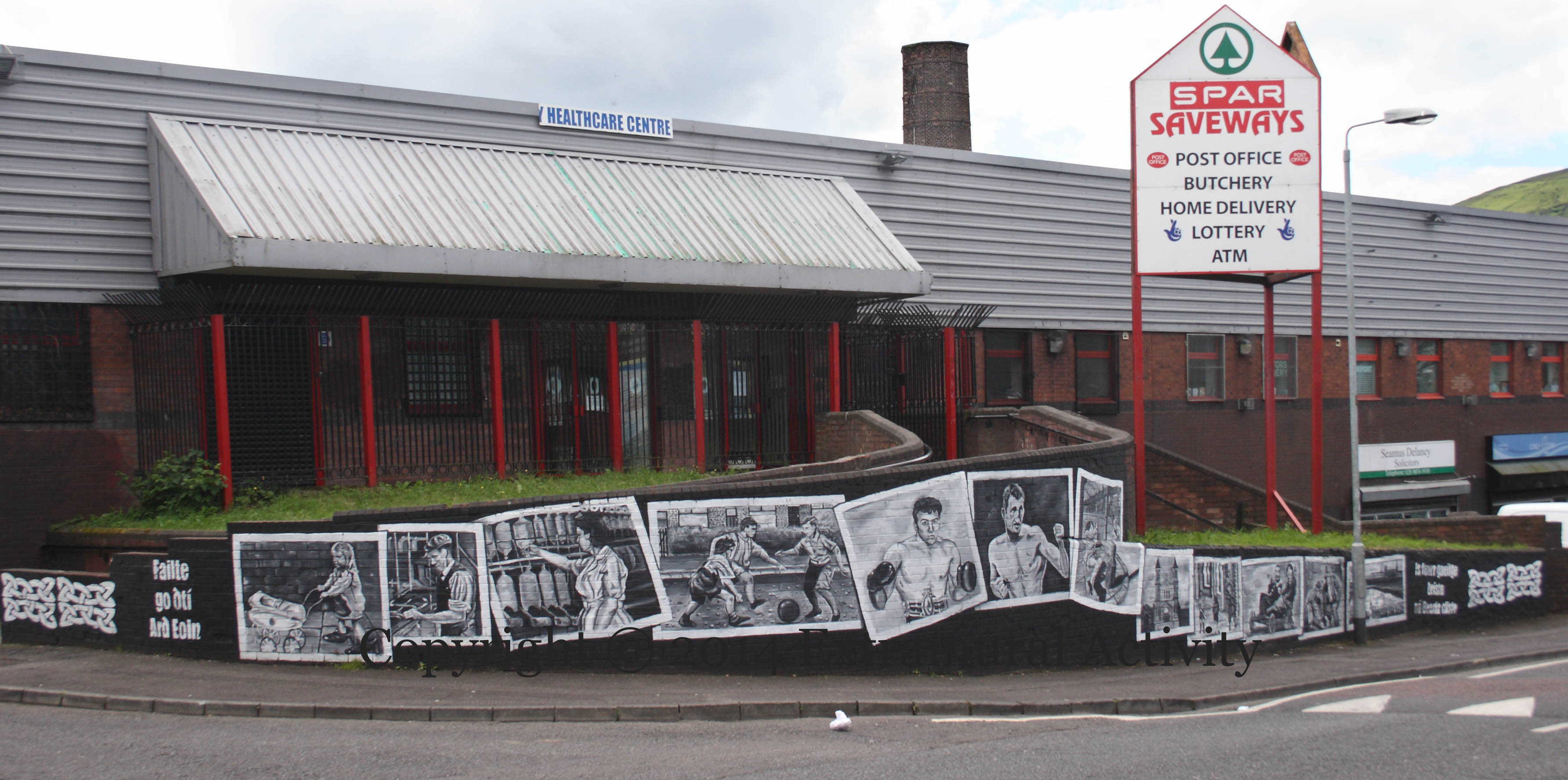
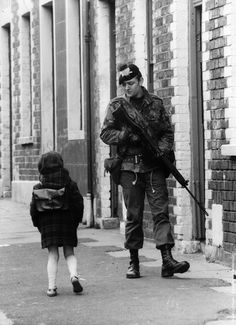
A young girl wearing an adult’s pushes a pram in the first of a dozen panels from the new ‘Fáılte go dtí Ard Eoın’ mural in Ardyone Avenue. The image is perhaps based on the (unattributed) photo, shown below the images of the mural.
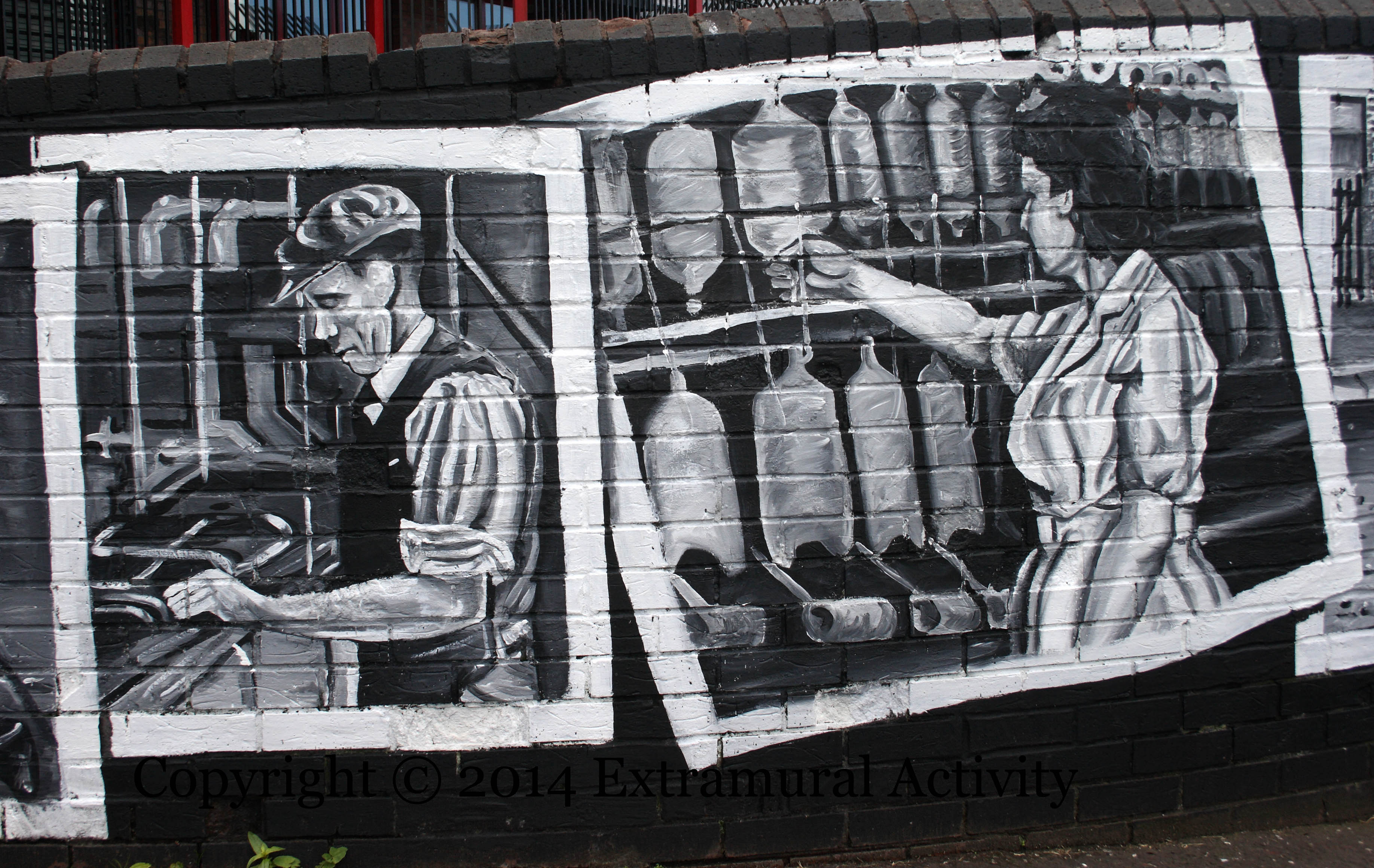
2-3: The woman on the right is a spinner – her job is to ensure that the fibres of threads being wound together to make a strong thread do not break. The occupation of the man on the right is unknown. Please comment or send an e-mail if you recognize his occupation.
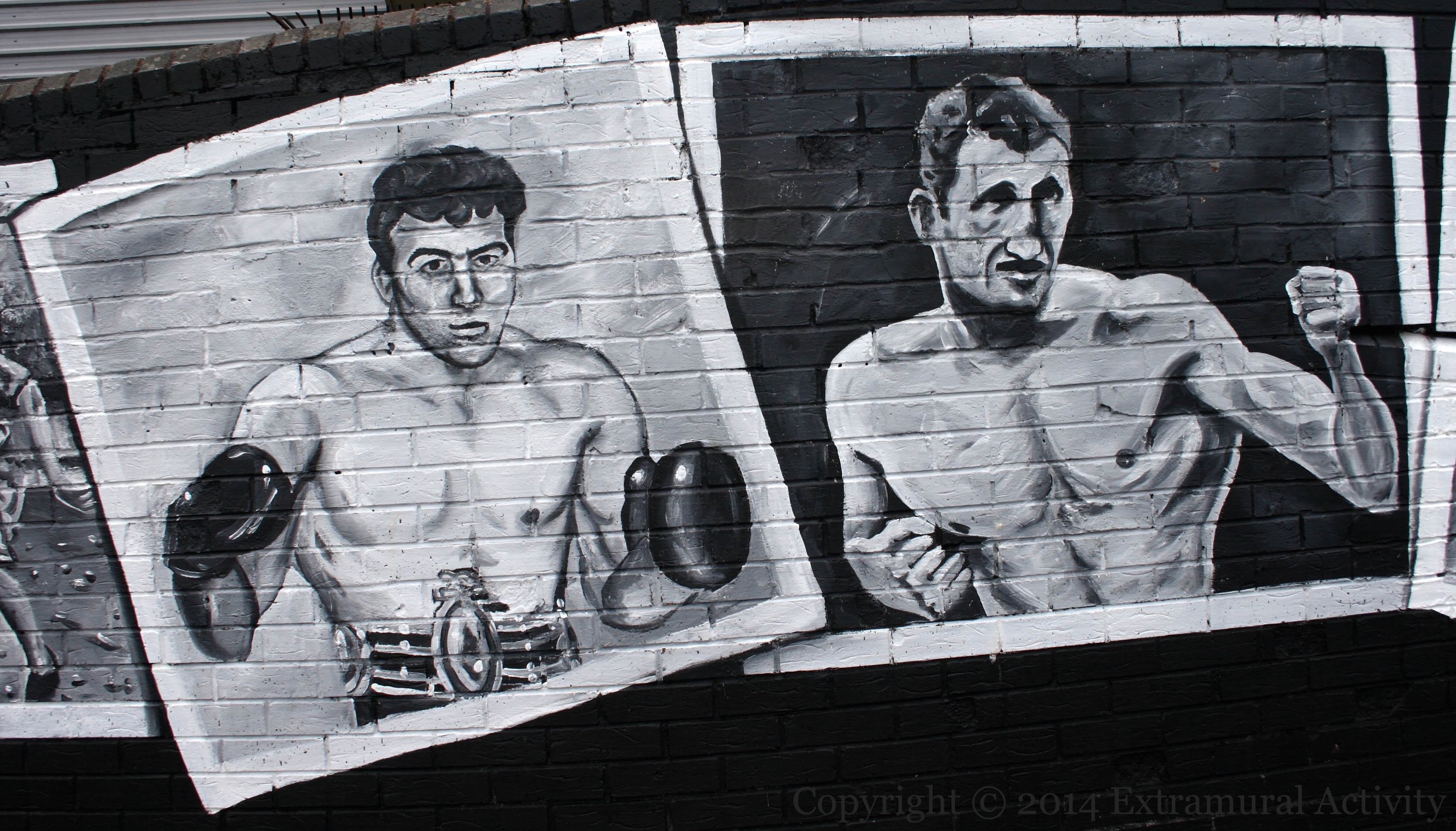
5-6: Two panels featuring boxers, possibly Freddie Gilroy and Eamonn Magee — leave a comment or e-mail if you can identify either.
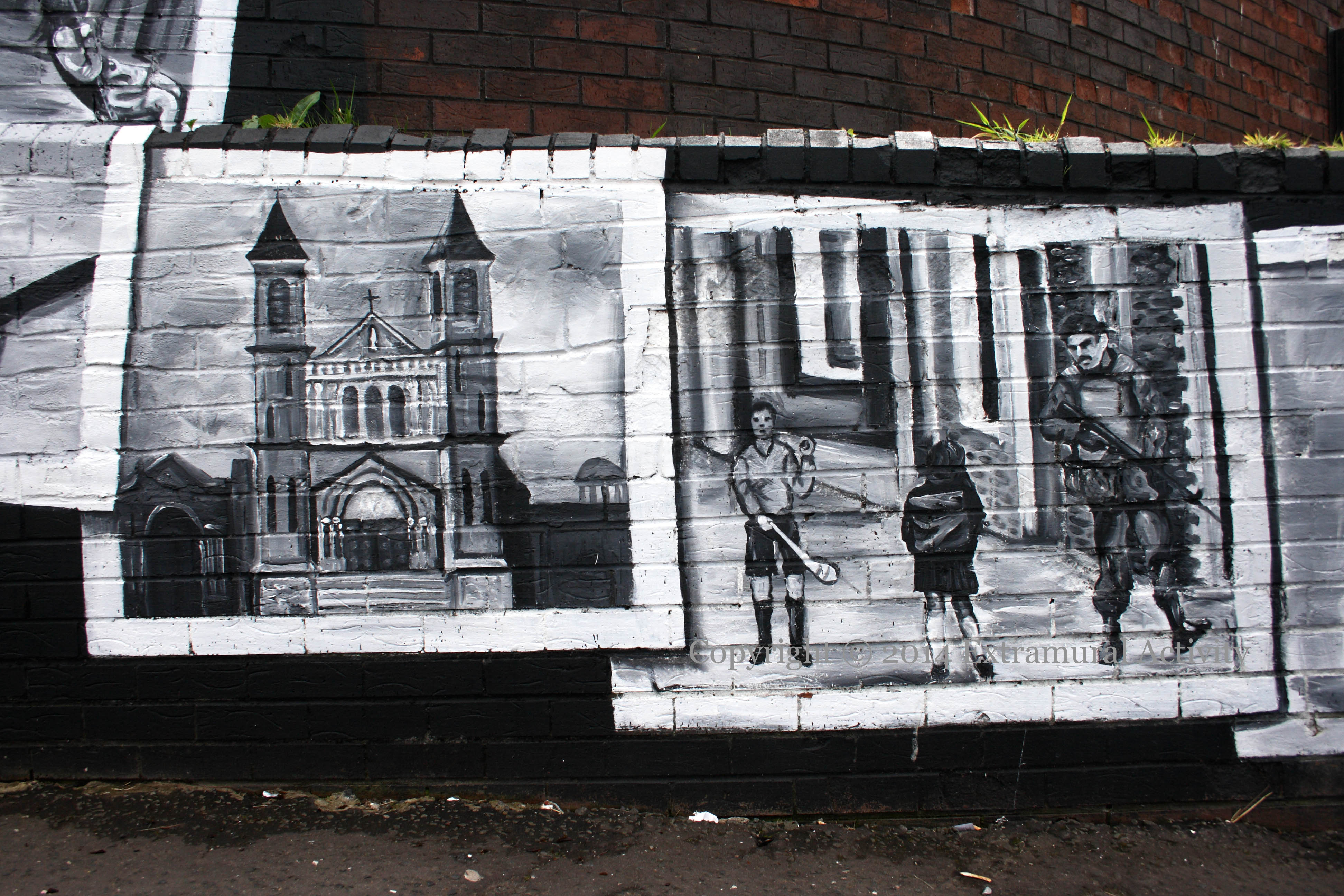
8: Holy Cross church on the Crumlin Road.
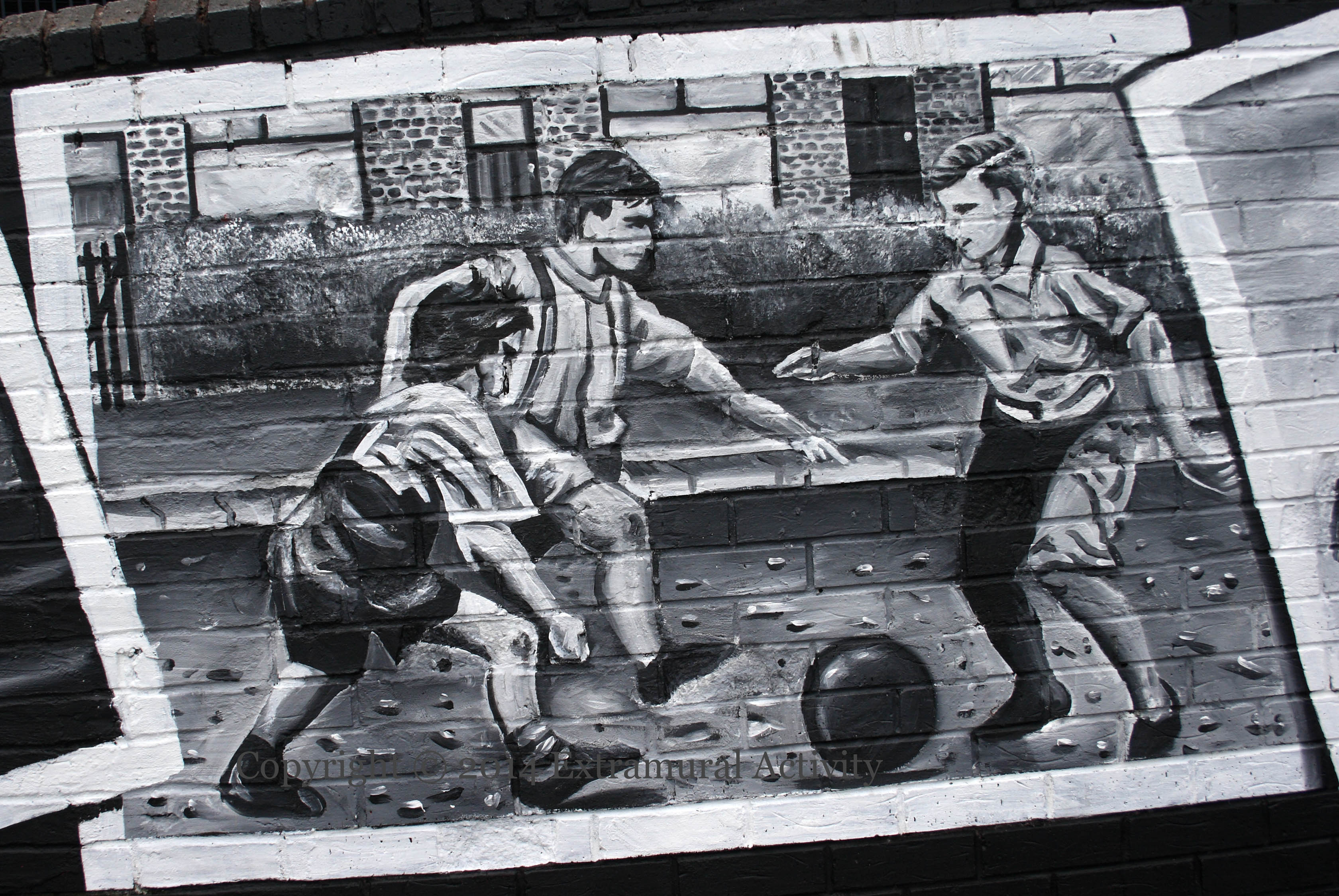
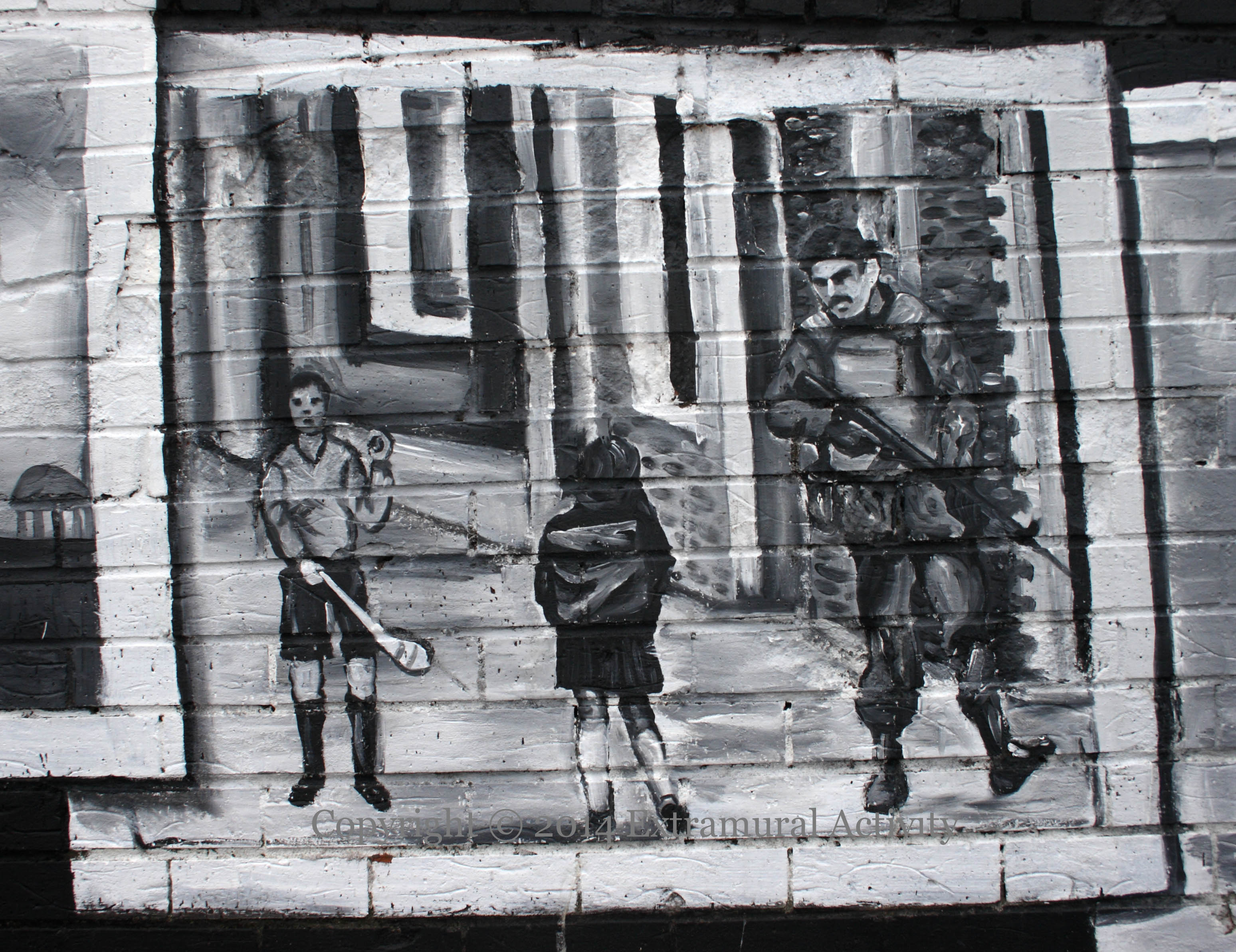
9: A British soldier patrols the streets while a girl walks home from school and a boy plays hurley. This is one of the panels in the long mural at the shops on Ardoyne Avenue.
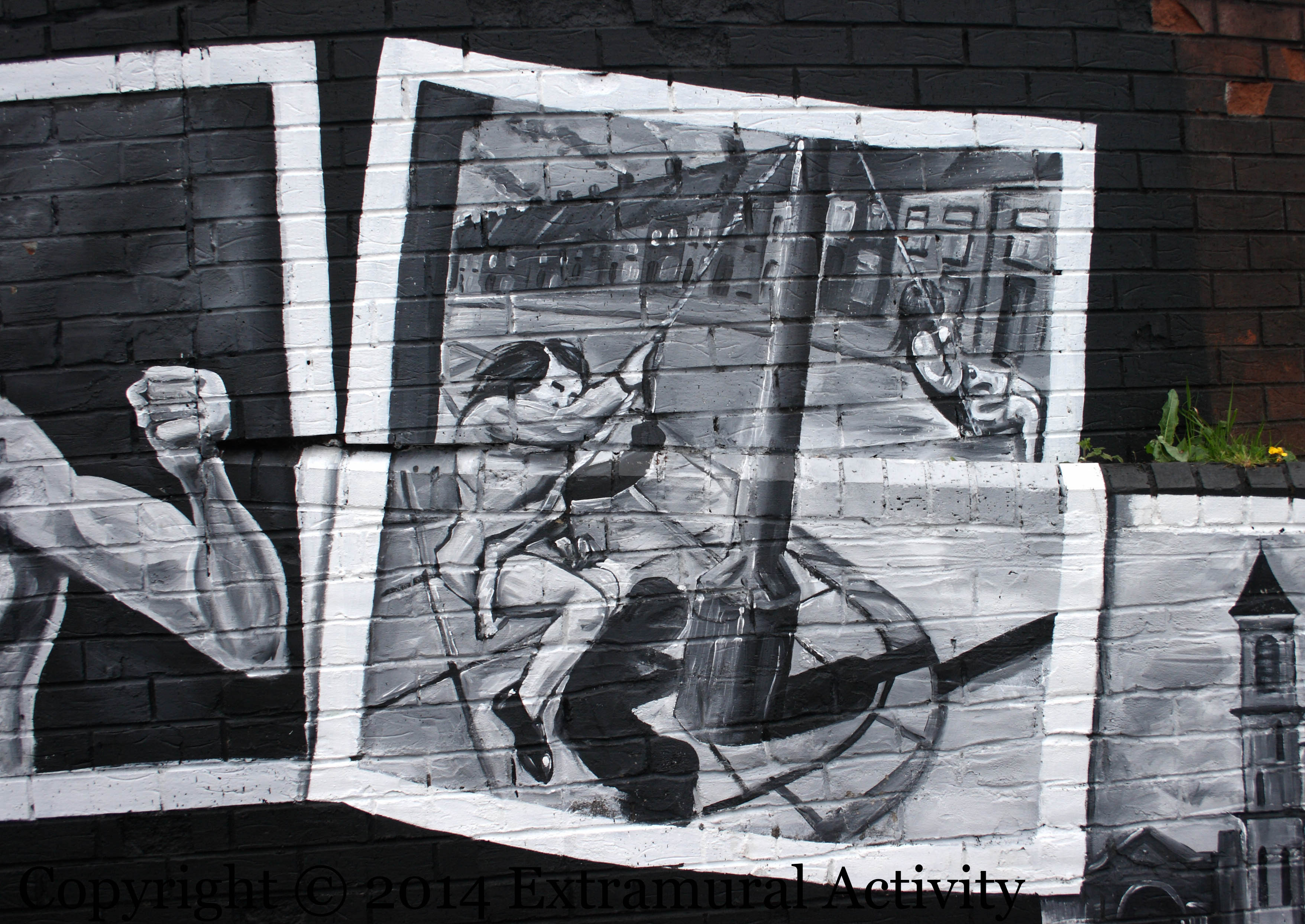
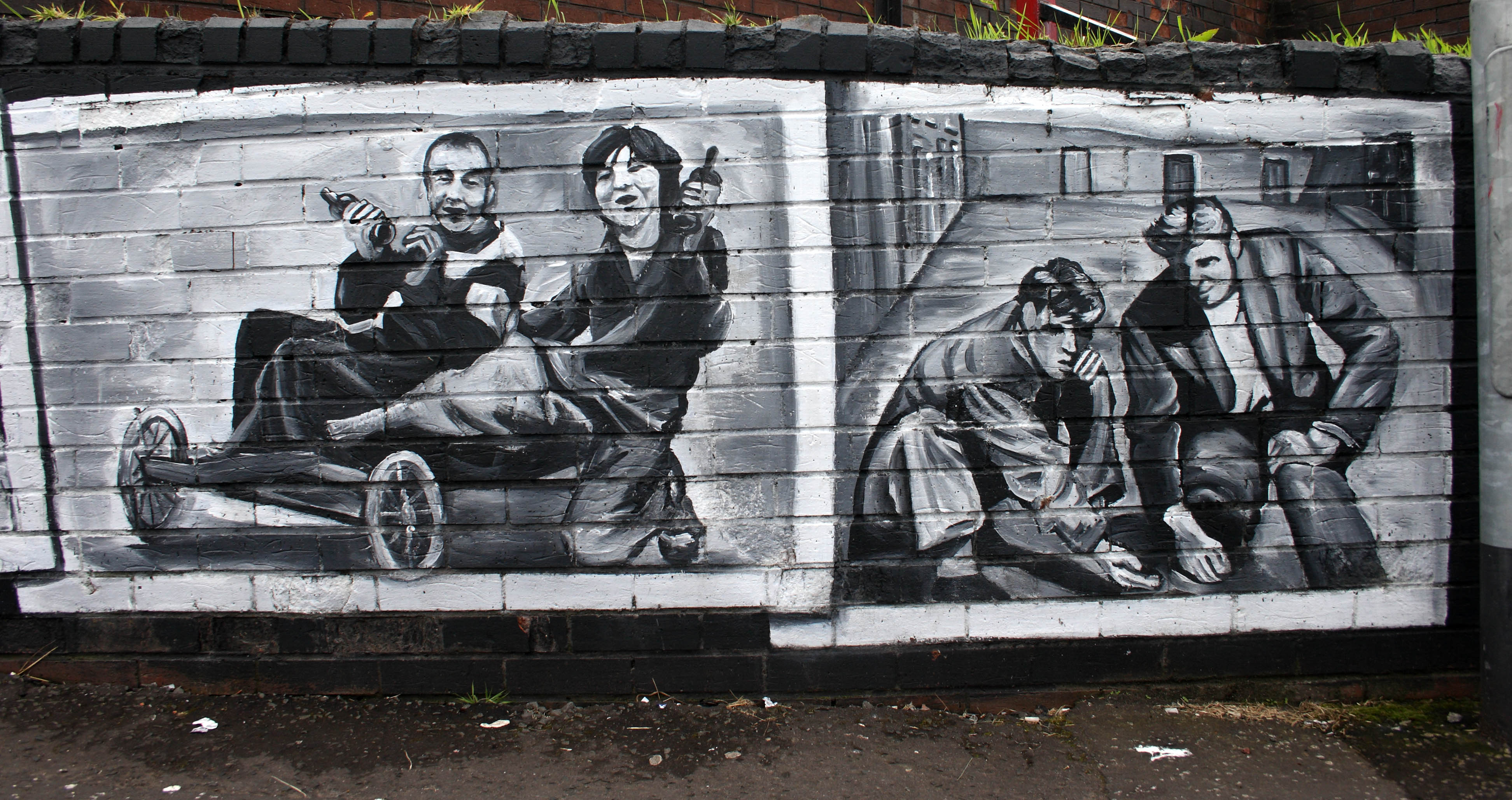
10-11: Two go-karters appear to be brandishing bottles as they ride while, to their left, two (rather stylish?) youths appear to be banging bin-lids.
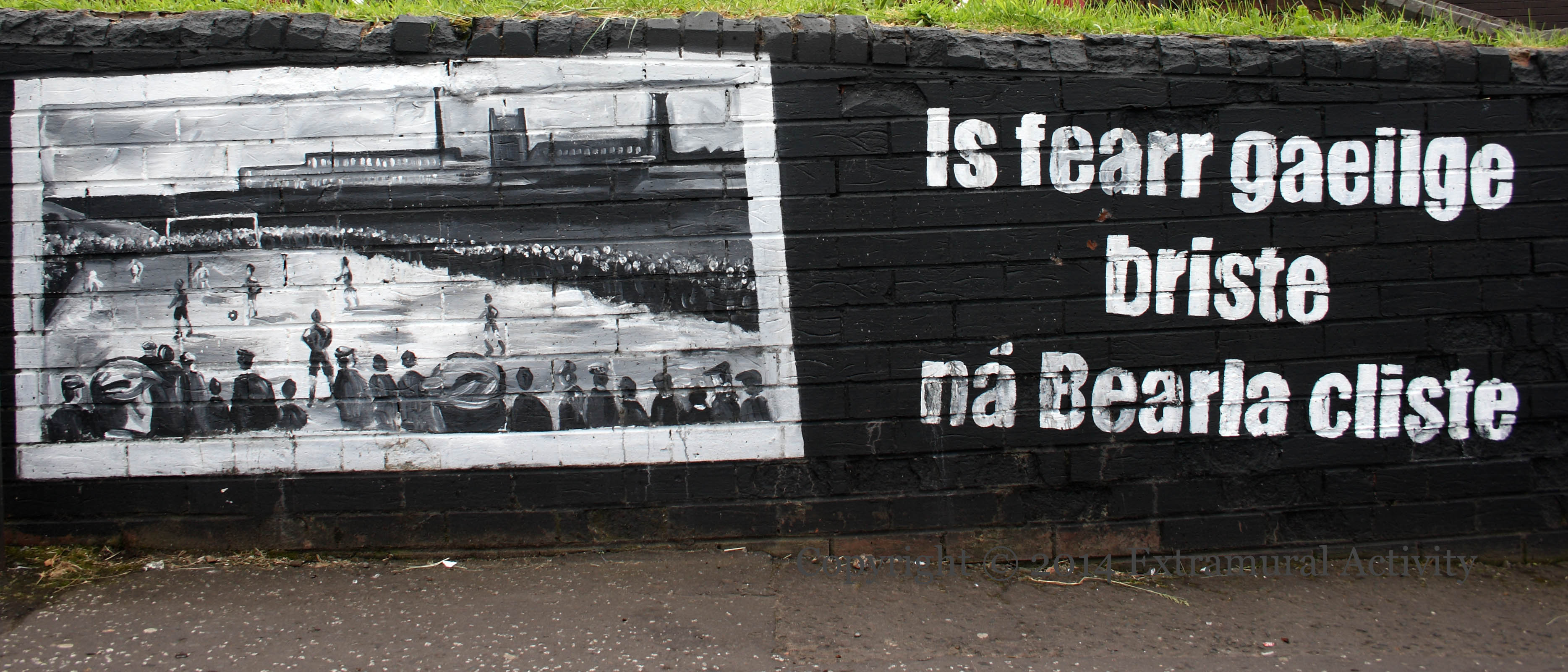
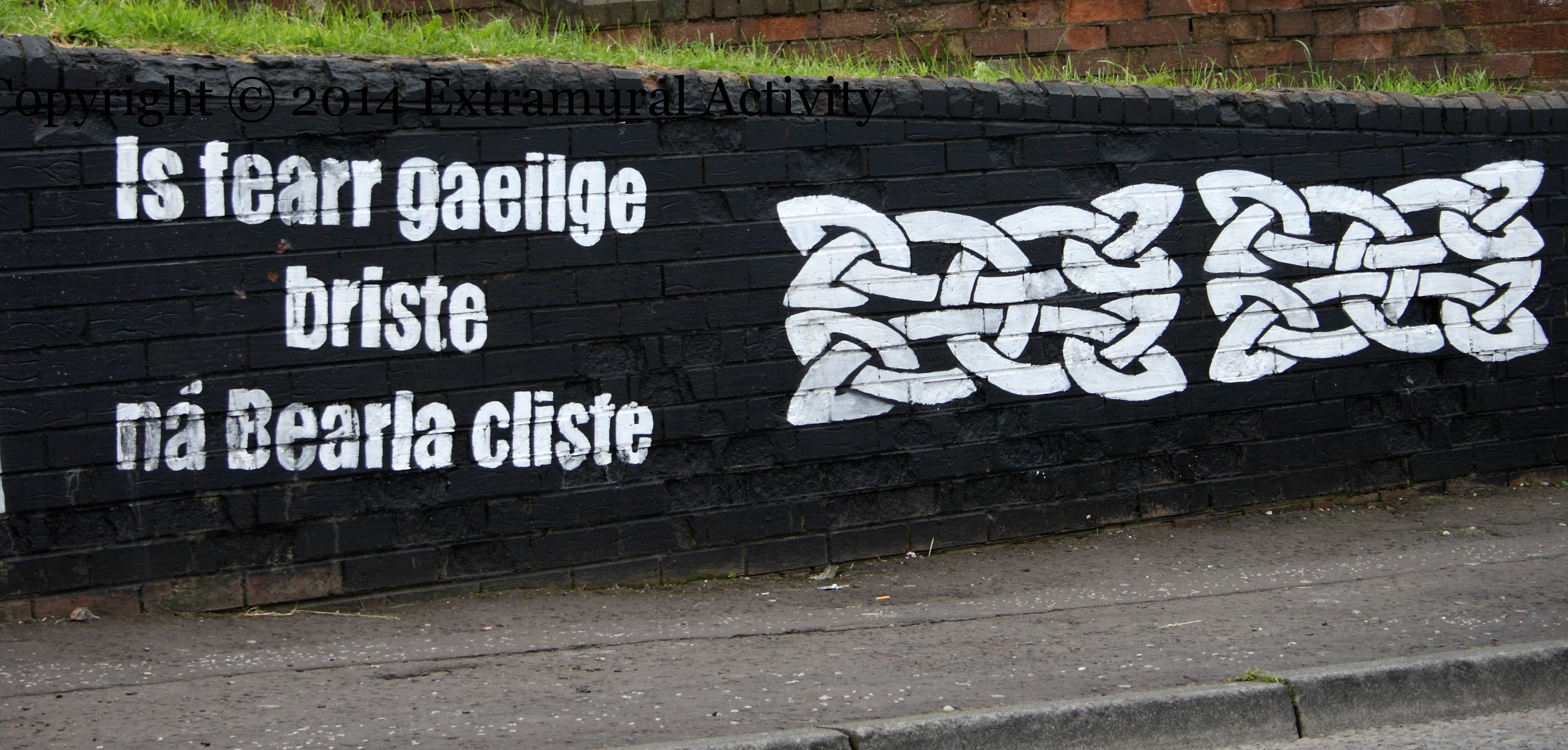
“Is fearr Gaeılge brıste ná Bearla [Béarla] clıste” means “Broken Irish is better than clever English”.
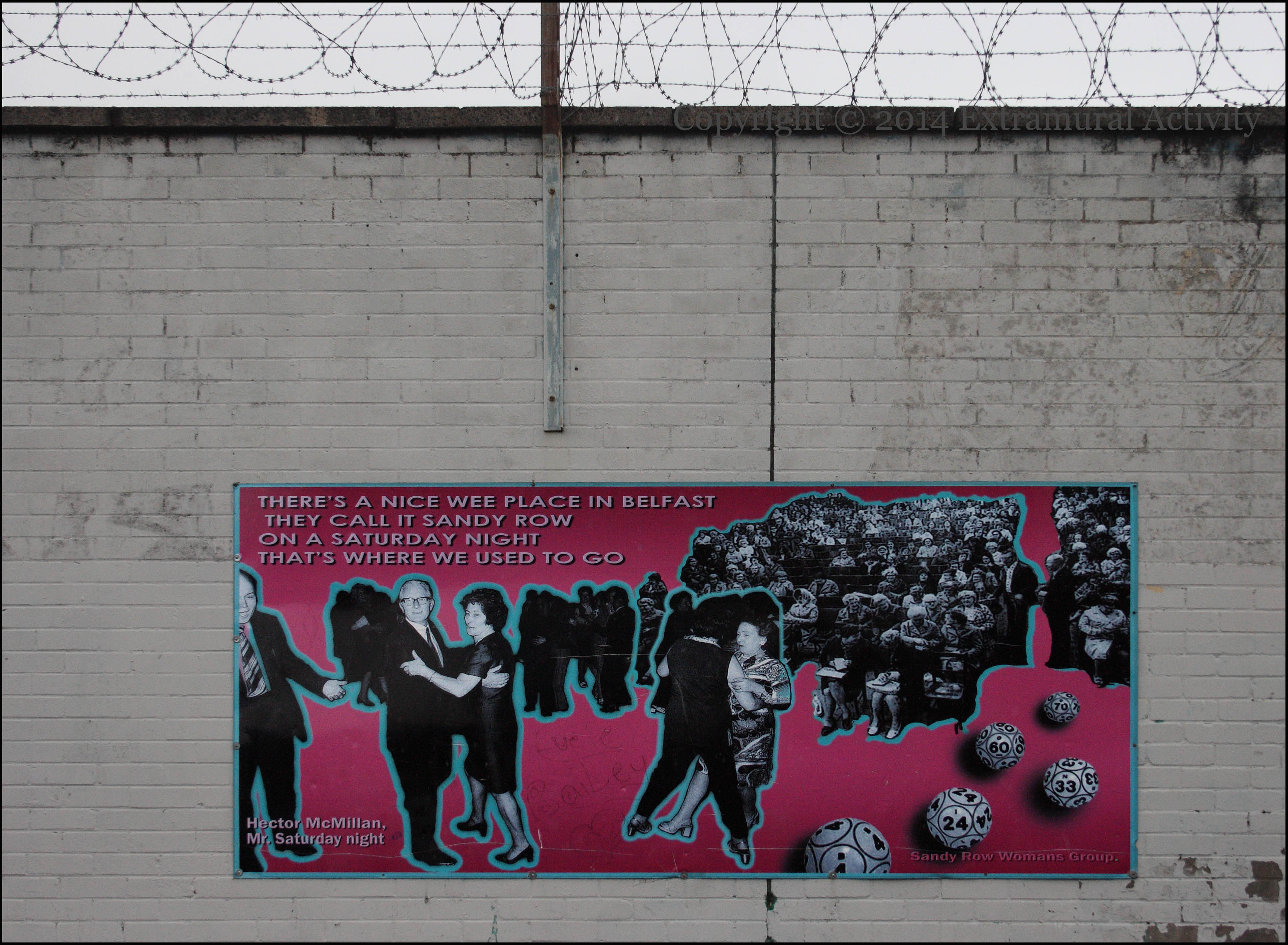
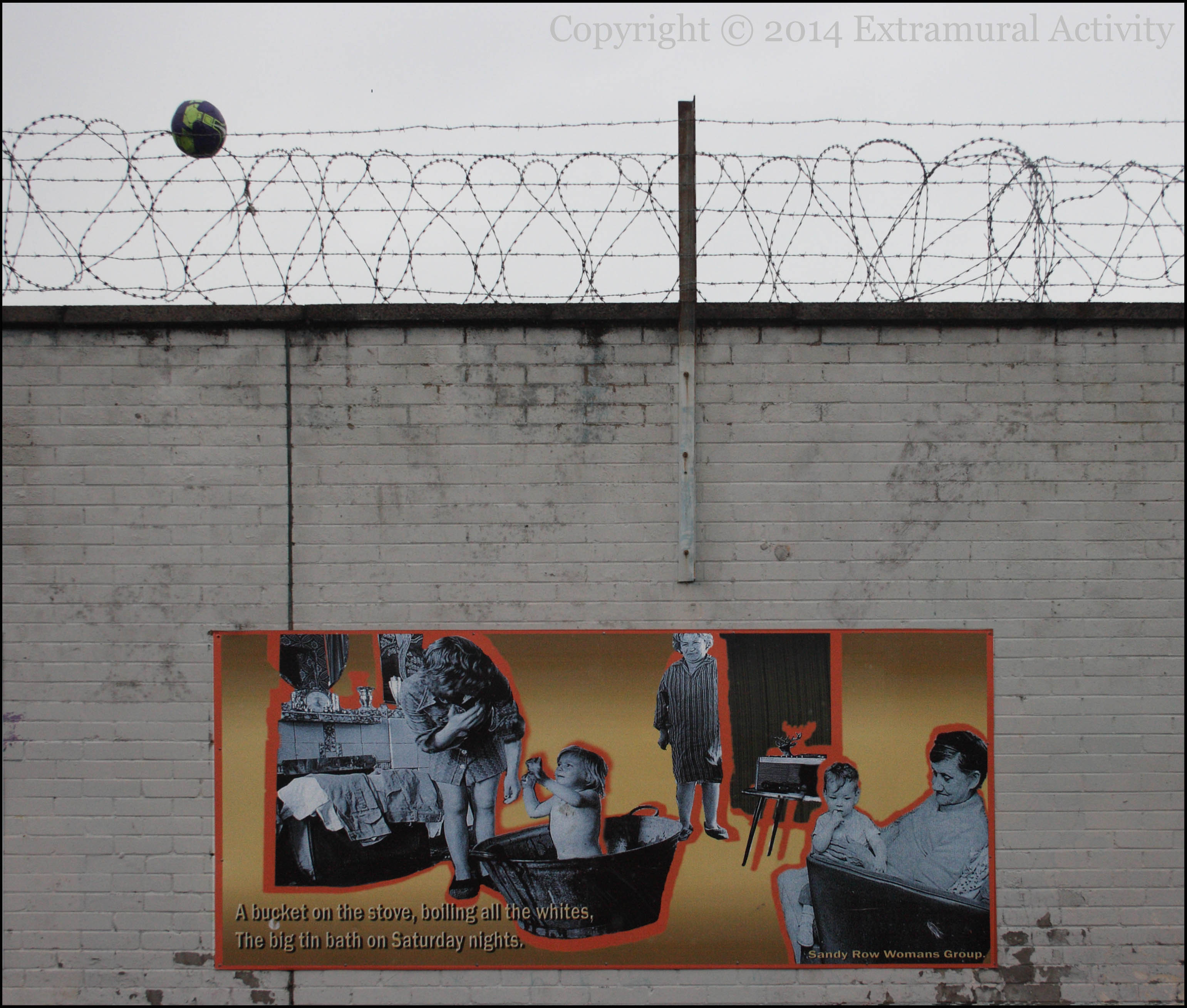
“There’s a nice wee place in Belfast, they call it Sandy Row. On a Saturday night, that’s where we used to go. A bucket on the stove, boiling all the whites, the big tin bath on Saturday nights.”
Here are two boards at the blind end of Blythe Street which together illustrate a short poem about Sandy Row in days gone by. The first, above, shows dancing and bingo (which took place in the Sandy Row Orange Lodge? – The Row You Know: Memories Of Old Sandy Row (ISBN 0953053504) by Donna McCann and published by Nicholson & Bass contains an image with the caption “Saturday night dance at the Orange Hall – Hector McMillan about to break into song”.)
The second, below, shows scenes from home: clothes in front of the fire, a child in a tin bath, a wireless radio, and a grandmother dandling a child.
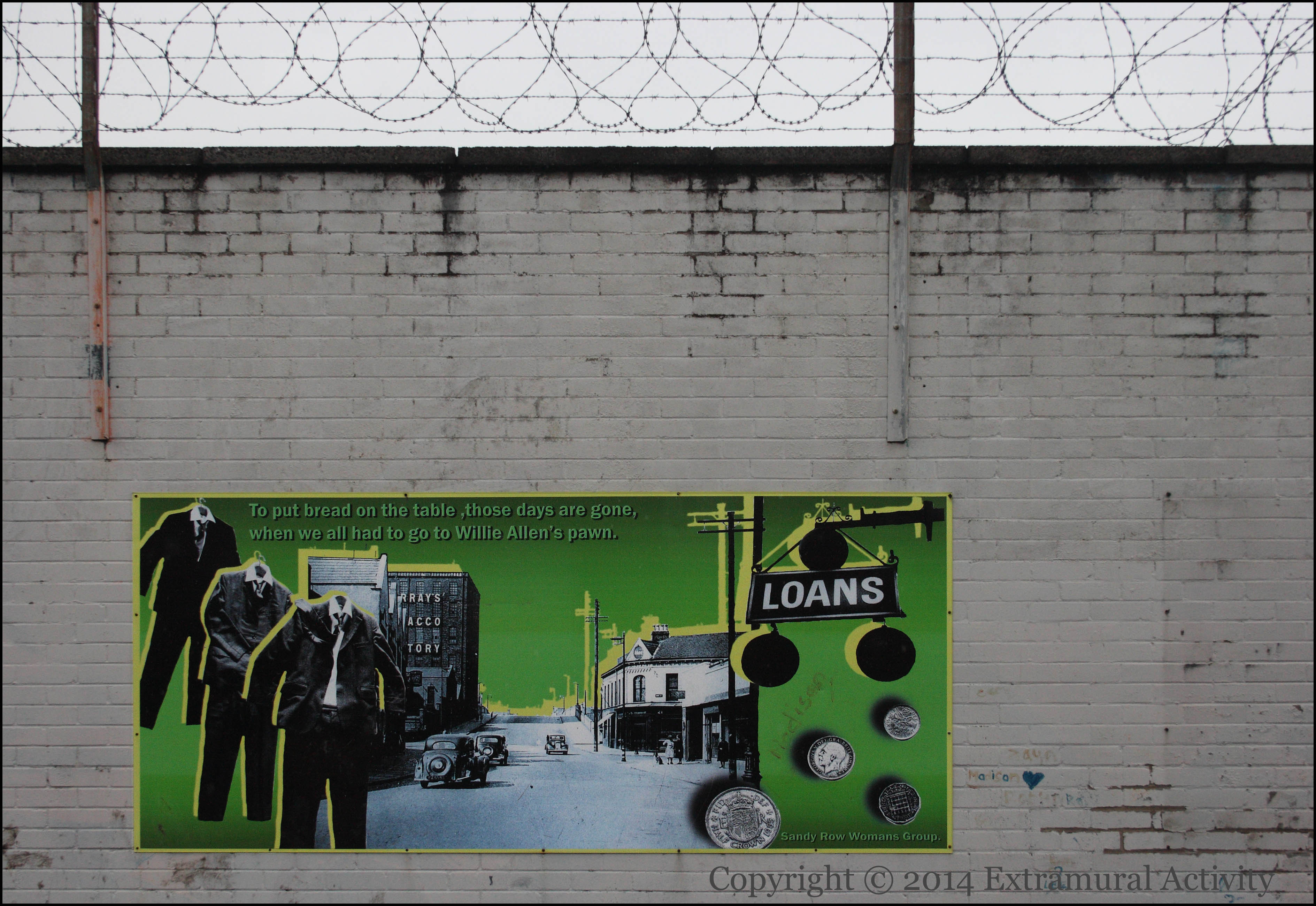
“To put bread on the table, those days are gone, when we all had to to Willie Allen’s pawn.
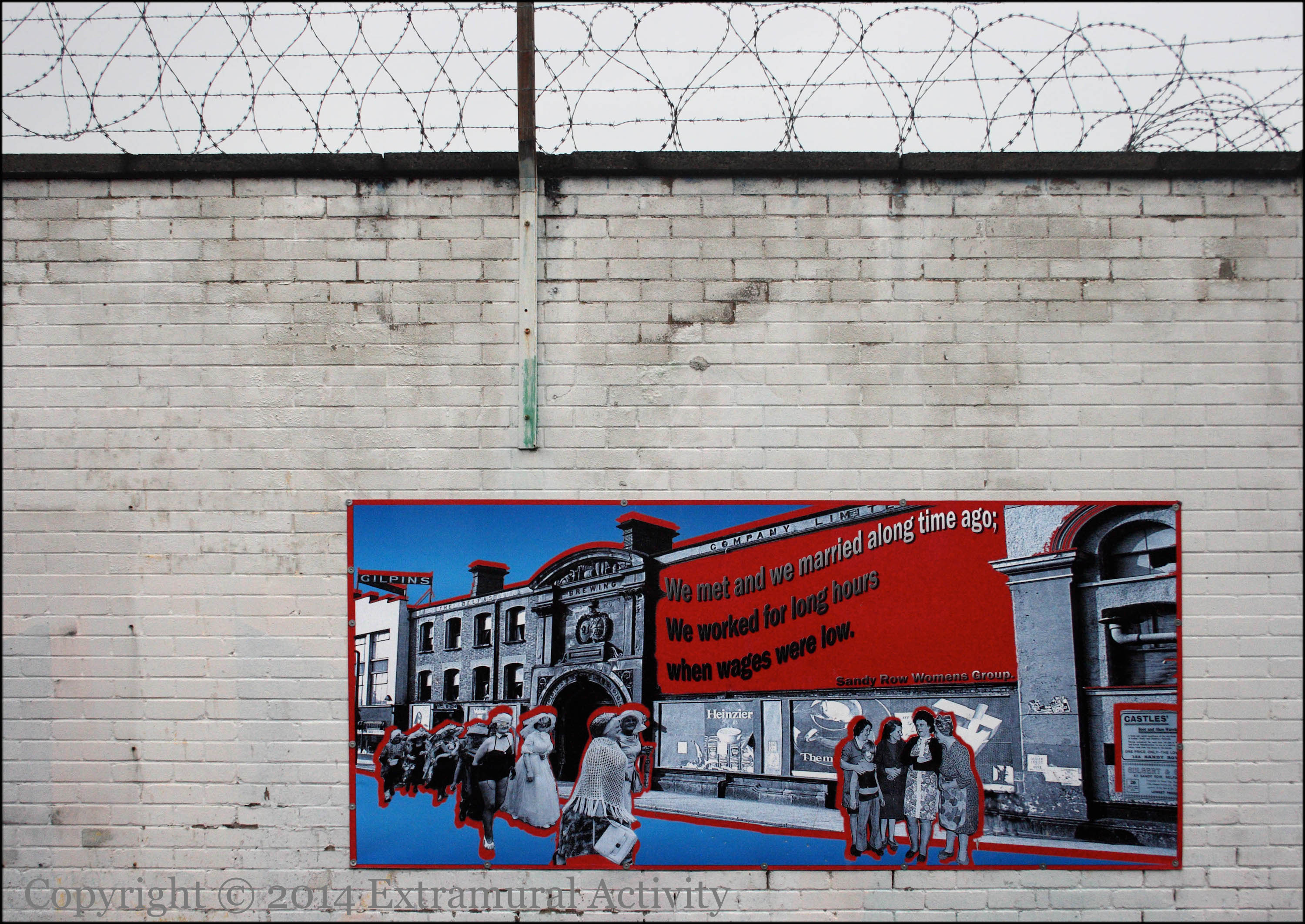
We met and we married along time ago; we worked for long hours when wages were low.”
Above and below are boards 3 and 4 of the ‘Sandy Row memories’ at the end of Blythe Street, showing Murray’s Tobacco Factory (in Linfield Road/Sandy Row, which closed in 2005 before being refurbished and opening in 2012 as Murray’s Exchange) and the old Belfast & Ulster Brewing building (unchanged image here), home to the south Belfast Ulster Volunteers (Sandy Row History) and most recently (until 2007) the home of Gilpin’s Furniture.
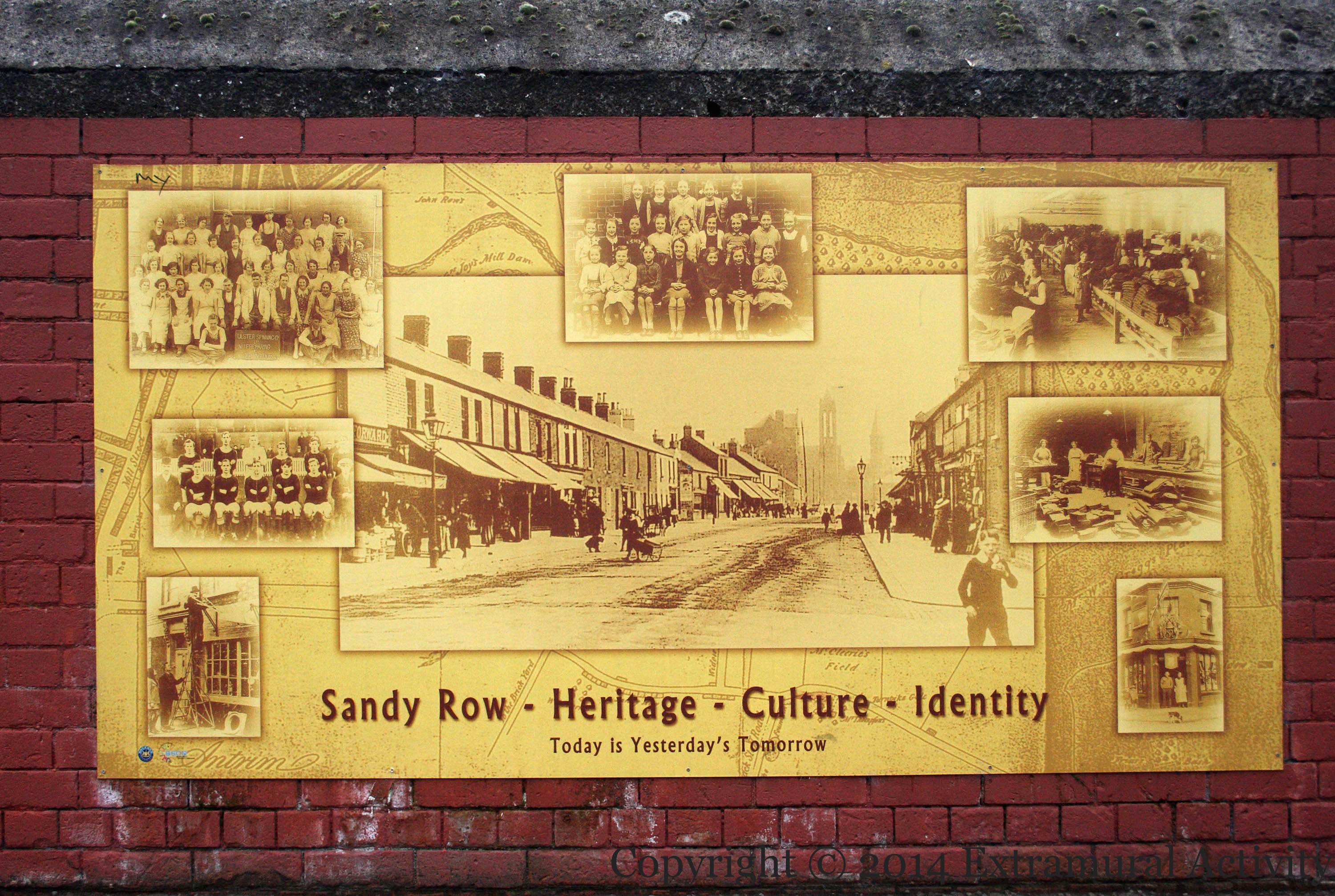
“Today is yesterday’s tomorrow”. Vintage images of Sandy Row, including the Ulster Spinning Company and the Royal Bar, make up this “Heritage – Culture – Identity” board on Donegall Road. The central image is part of this photo montage.
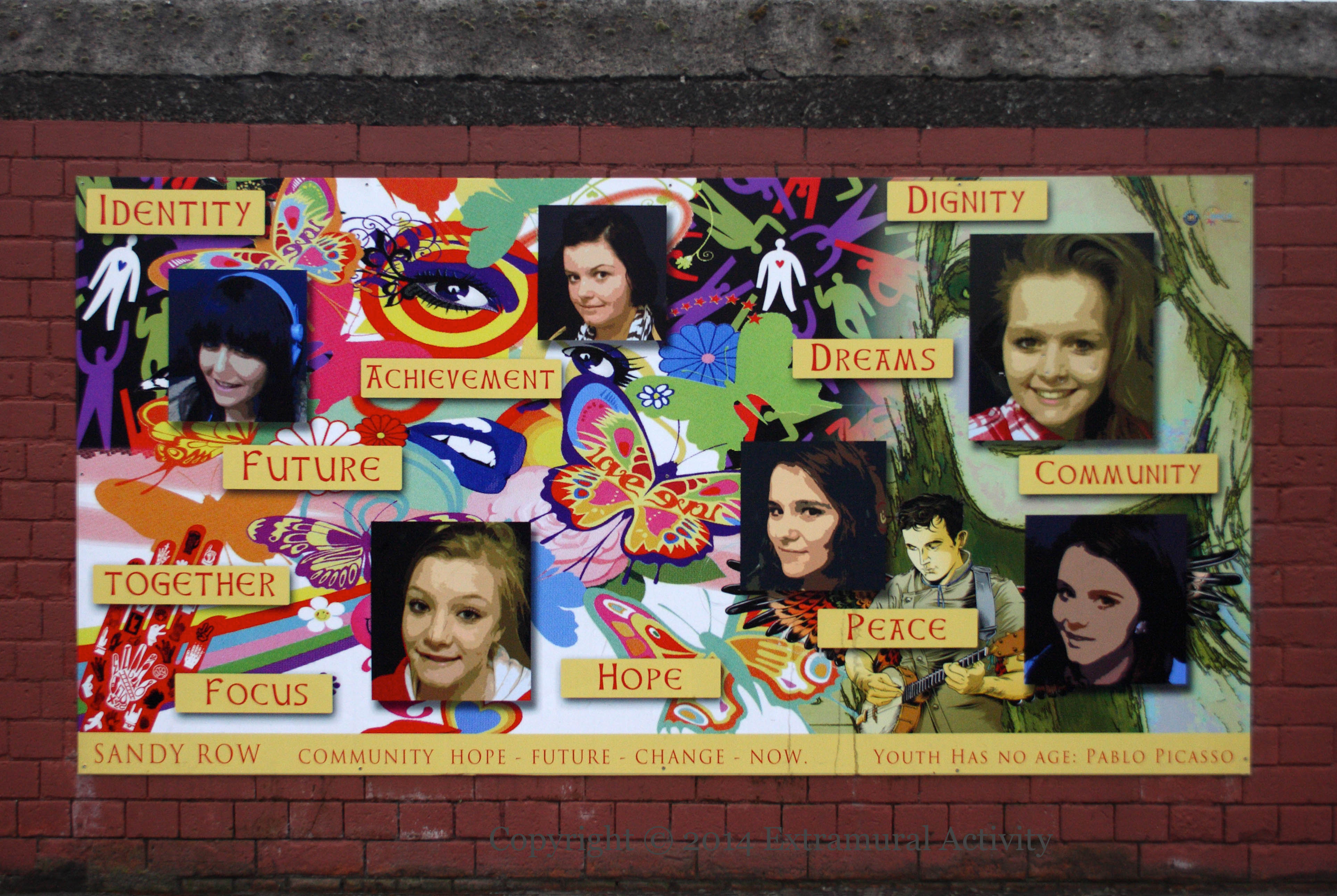
“Youth has no age – Pablo Picasso”. Above is one of the panels on Donegall Road, just above the City Hospital railway stop, celebrating the Sandy Row community.
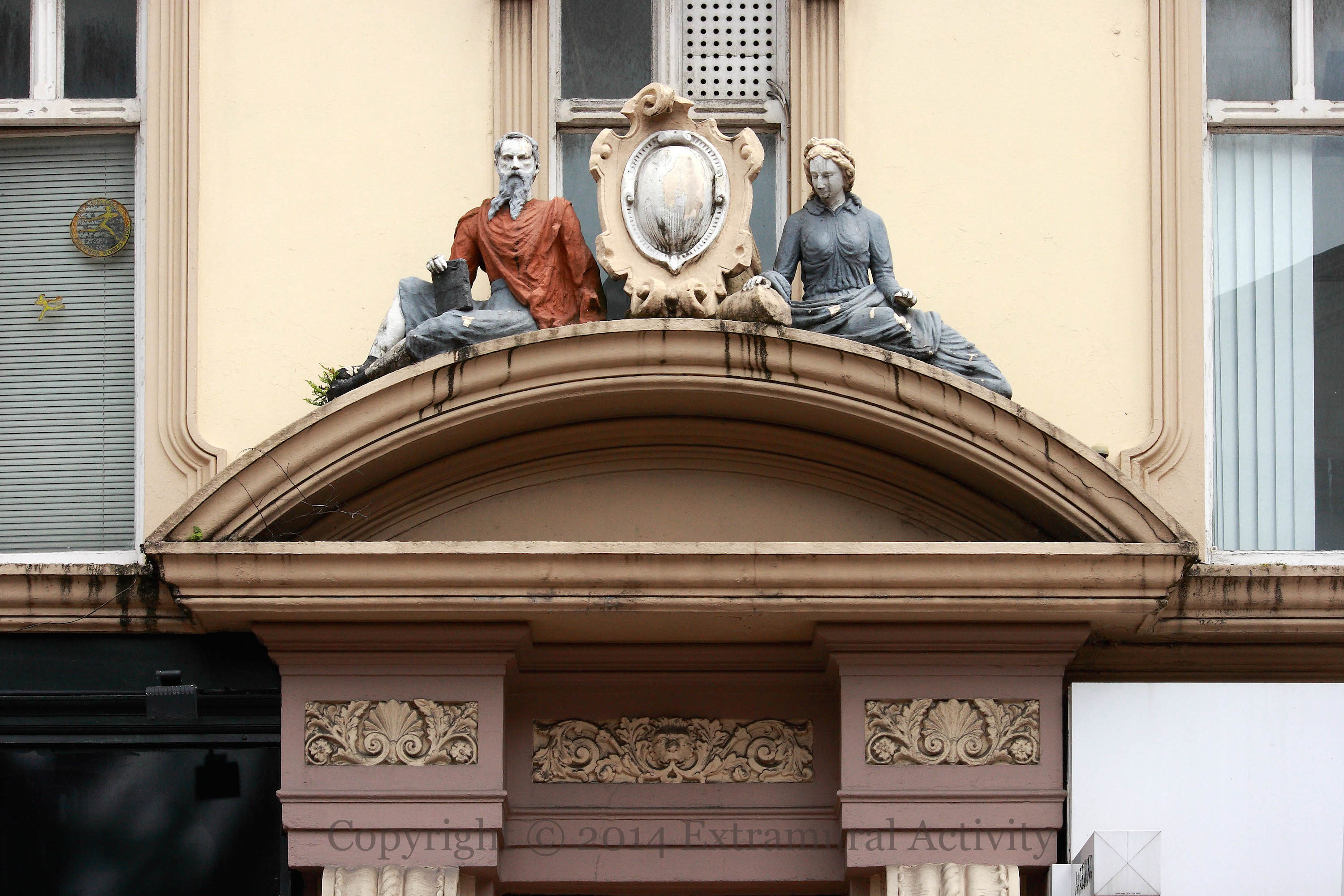
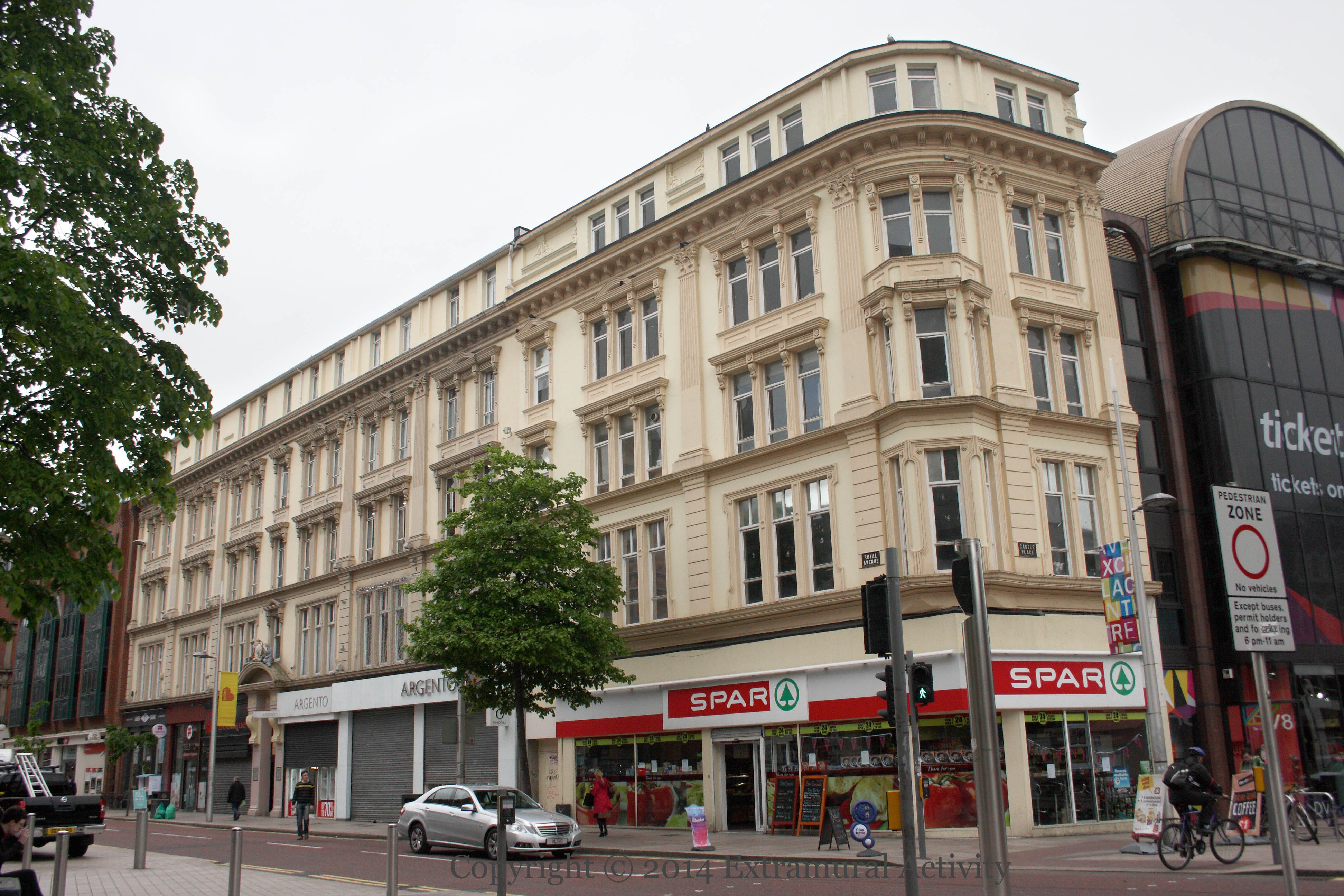
Below is a general view of Nos. 1 – 19 Royal Avenue, that is, Corry House, built in 1881 for John Robb and now a listed building. At No 13 one of the original door-cases remains, the top of which is shown above: a fork-bearded gentleman and a lady with an empty pail on either side of a cartouche. (Planning NI and Historical Belfast – A Historical Gazetteer by Marcus Patton)
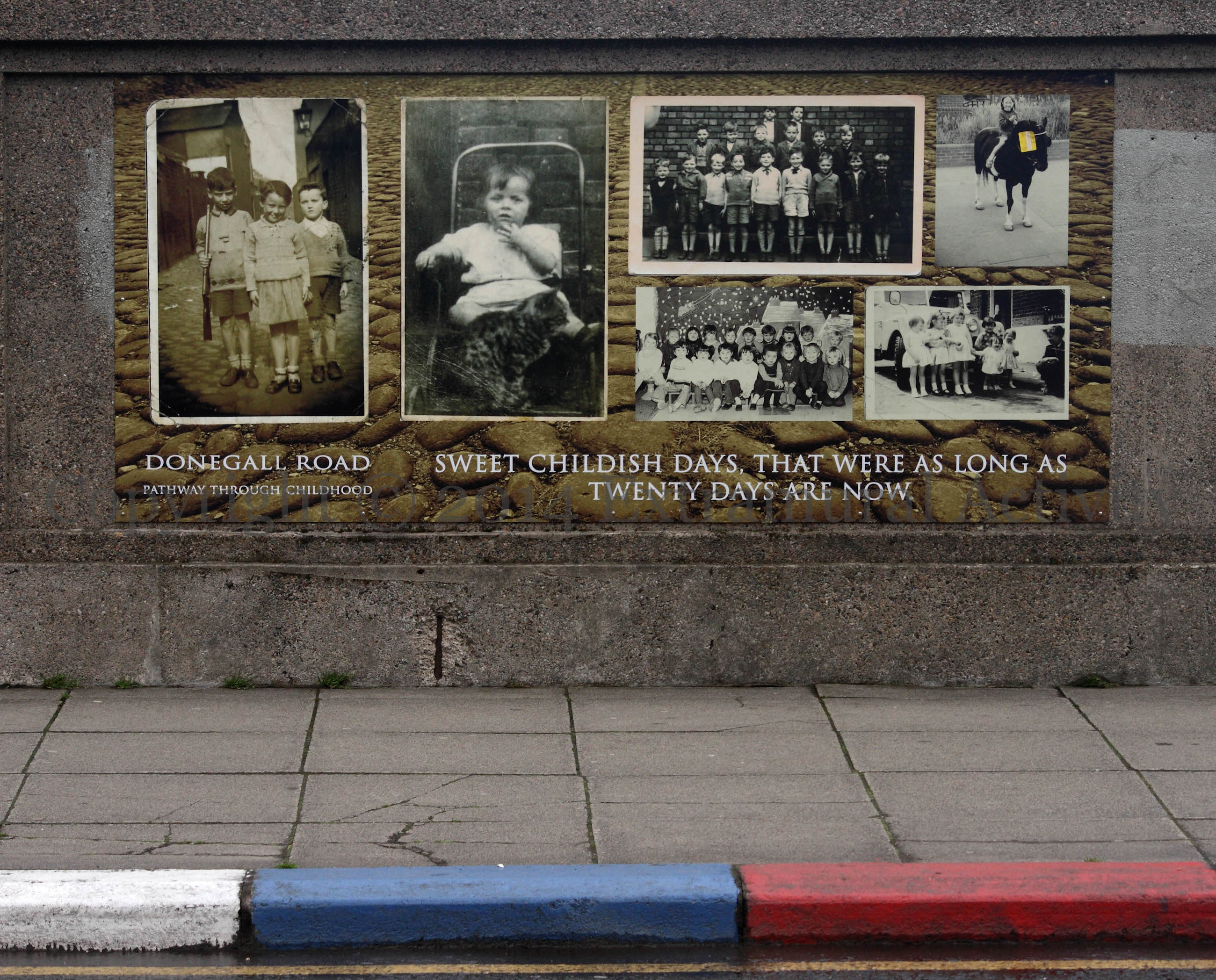
“Pathways through childhood – Sweet childish that were as long as twenty days are now.” The good old days in south Belfast and its streets are remembered in these three panels from the Donegall Road railway bridge.
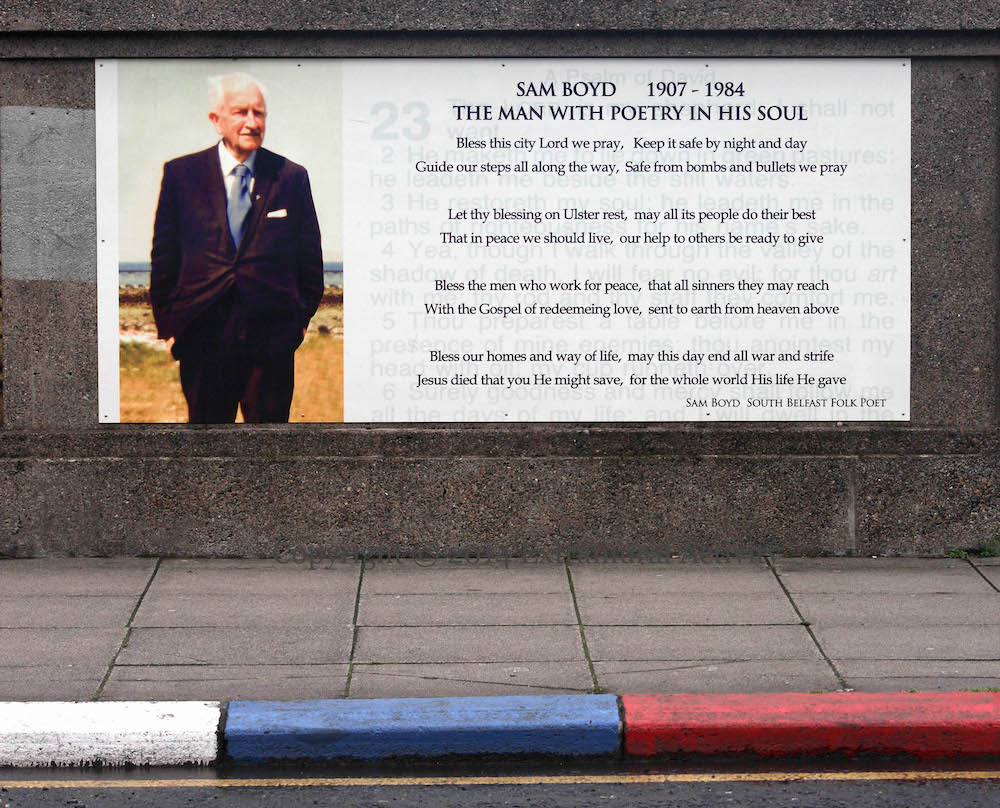
“Sam Boyd, 1907-1984 – the man with poetry in his soul.” “South Belfast folk poet.”
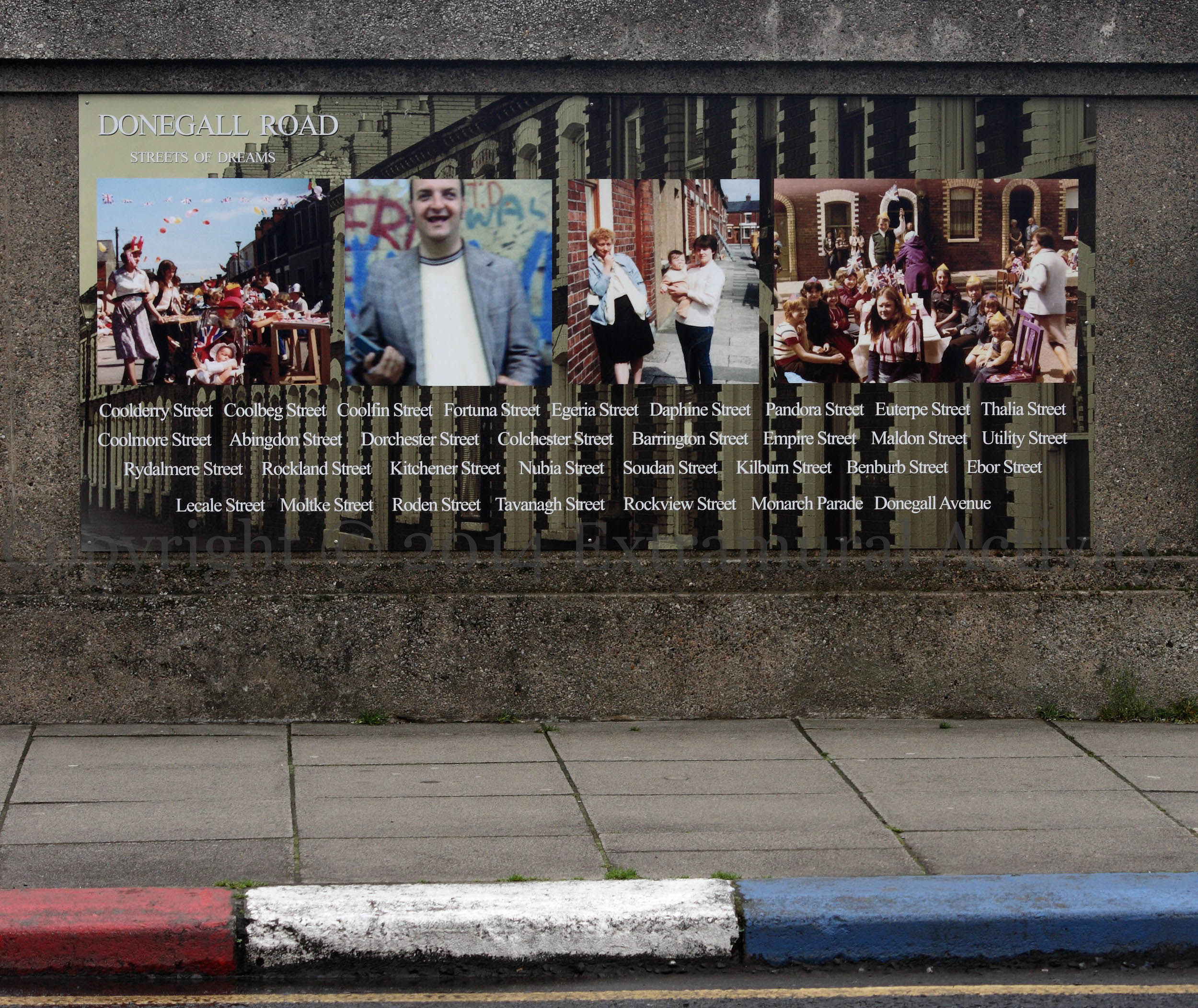
The “Streets of dreams”, some of them no longer in existence, are: Coolderry, Coolbeg, Coolfin, Fortuna, Egeria, Daphine, Pandora, Euterpe, Thalia, Coolmore, Abingdon, Colchester, Barrington, Empire, Maldon, Utility, Rydalmere, Rockland, Kitchener, Nubia, Soudan, Kilburn, Benburb, Ebor, Lecale, Moltke, Roden, Tavanagh, Rockview, Monarch Parade, Donegall Avenue.
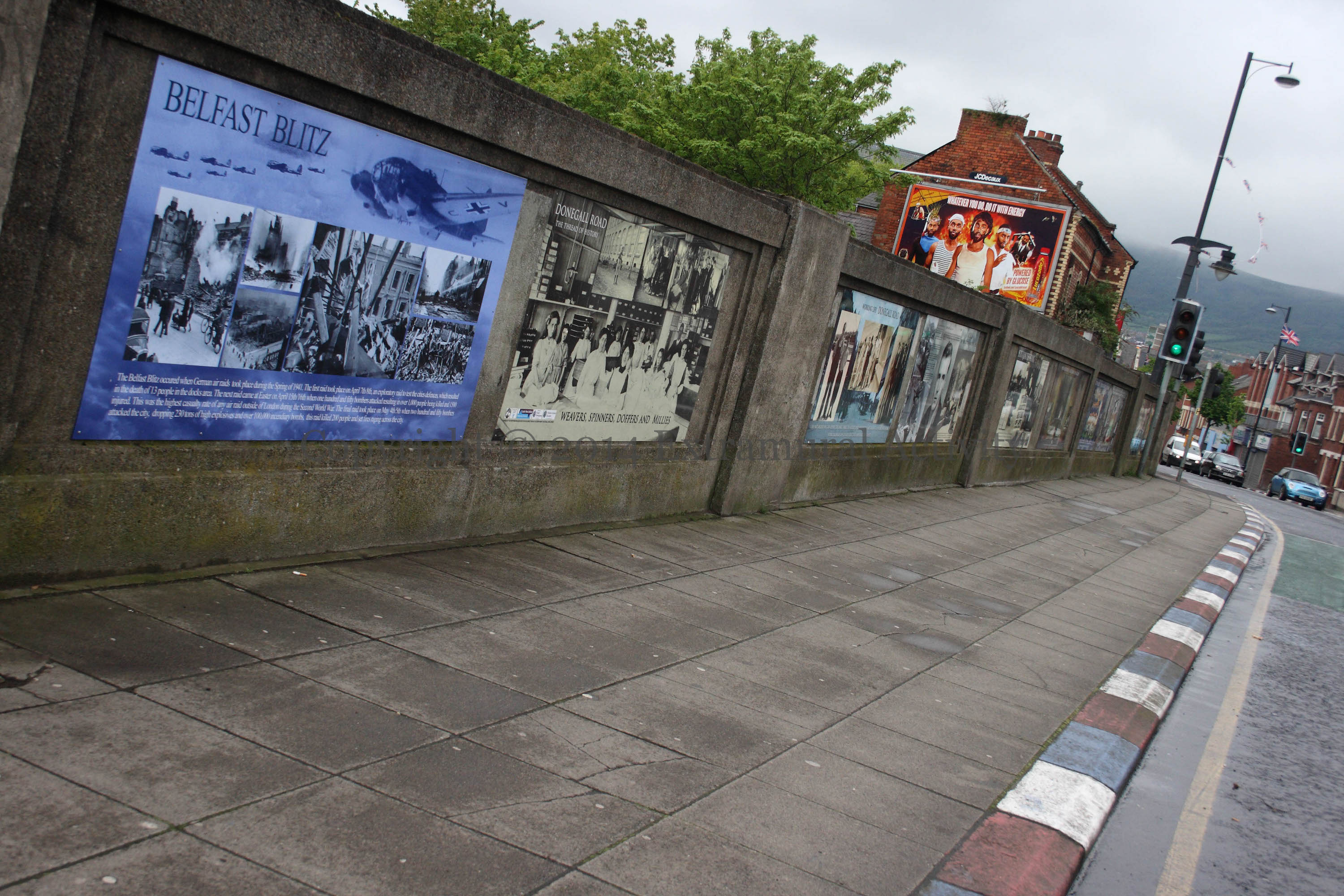
These are seventh, eighth, and tenth panels on the north side of the bridge; for the other panels on this (north) side of the road, see also:
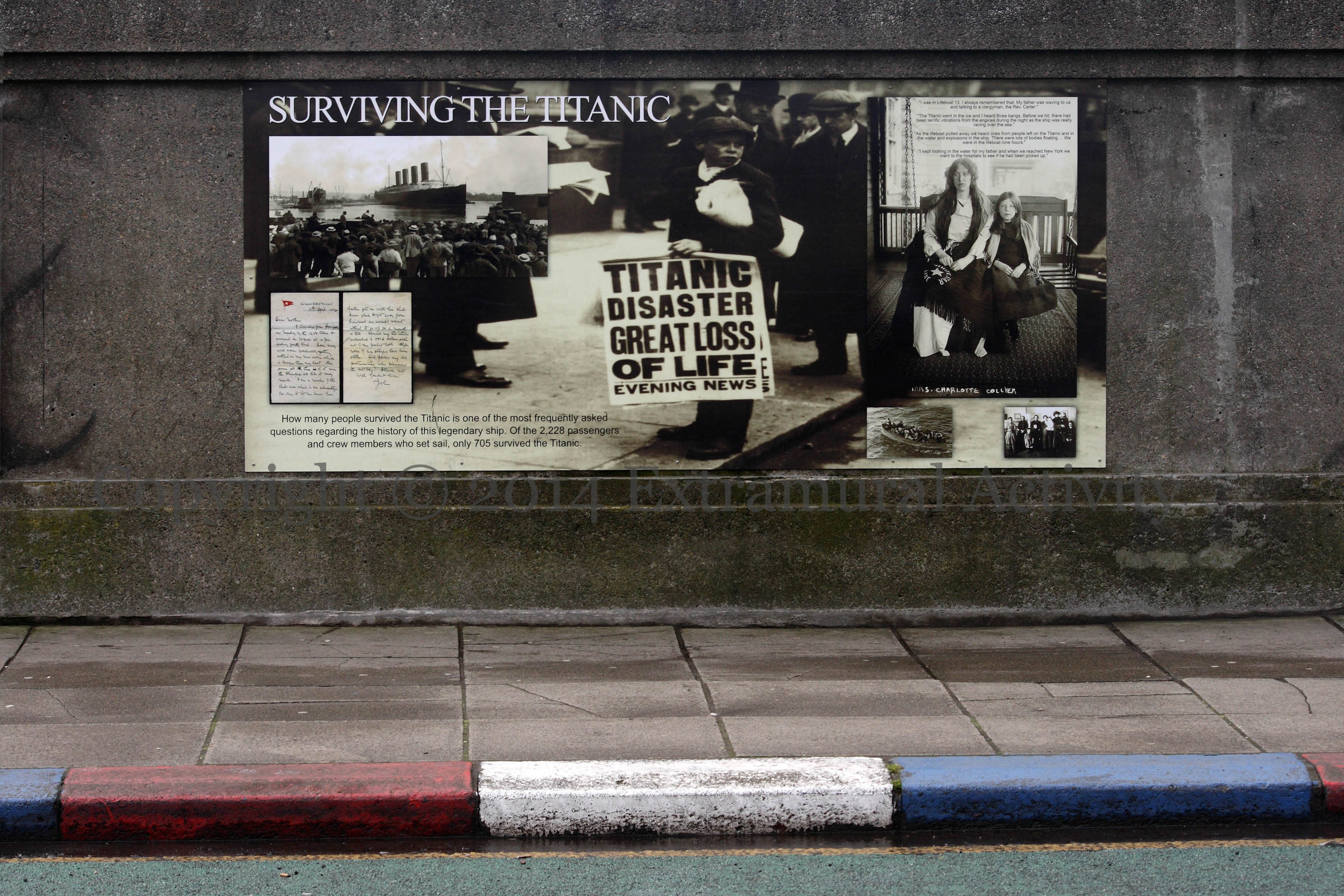
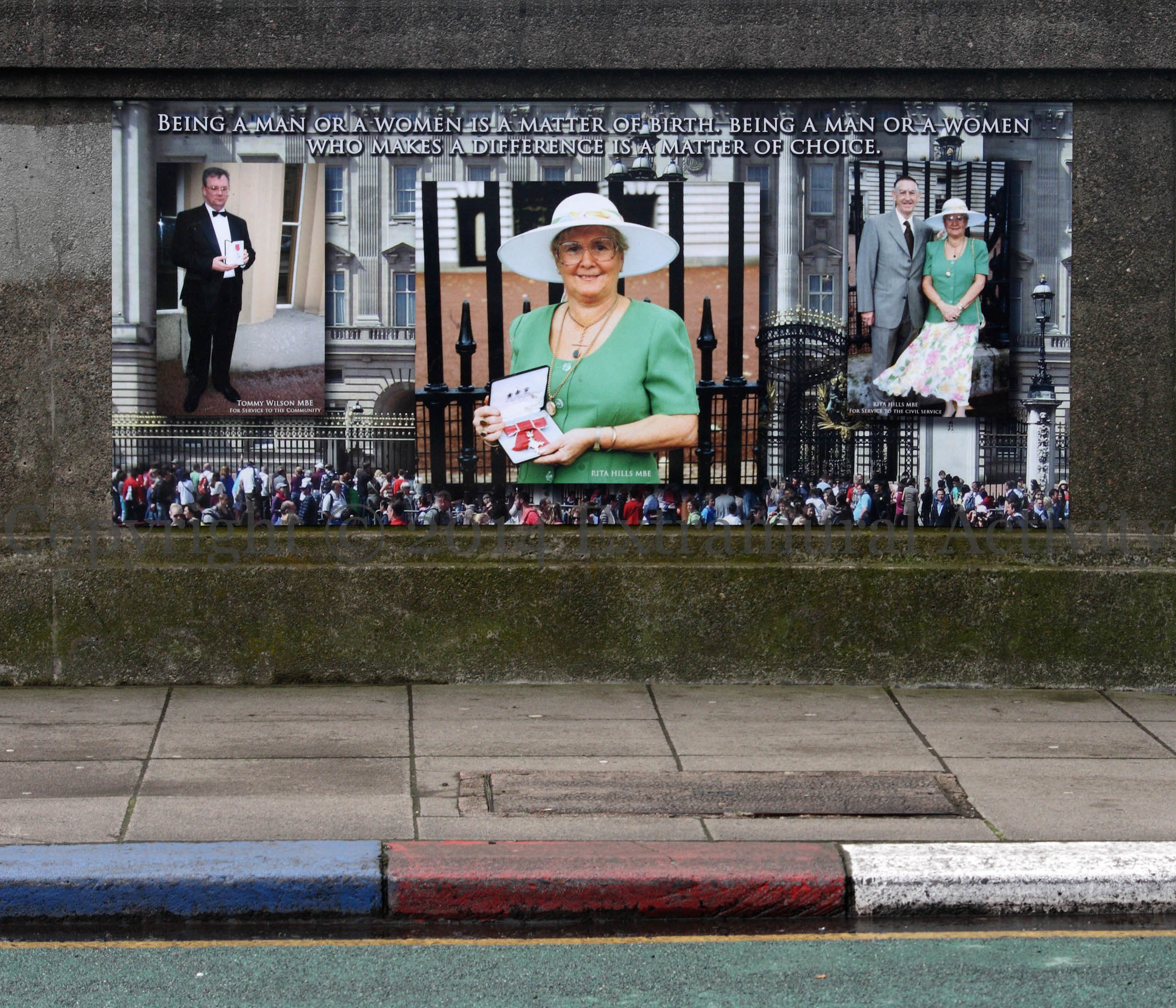
Here are two final images from the south side of the Donegall Road bridge over the Victoria Street line, one about Titanic and the other about locals awarded the MBE.
“I was in Lifeboat 13. I always remember that. My father was waving to us and talking to a clergyman, the Rev. Carter. The Titanic went in the ice and I heard three bangs. Before we hit, there had been terrific vibrations from the engines during the night as the ship was really racing over the sea. As the lifeboat pulled away we heard cries from the people left on the Titanic and in the water and explosions in the ship. There were lots of bodies floating … We were in the lifeboat nine hours. I kept looking in the water for my father and when we reached New York we went to the hospitals to see if he had been picked up.” Mrs. Charlotte Collier
How many people survived the Titanic is one of the most frequently asked questions regarding the history of this legendary ship. Of the 2,228 passengers and crew members who set sail, only 705 survived the Titanic.
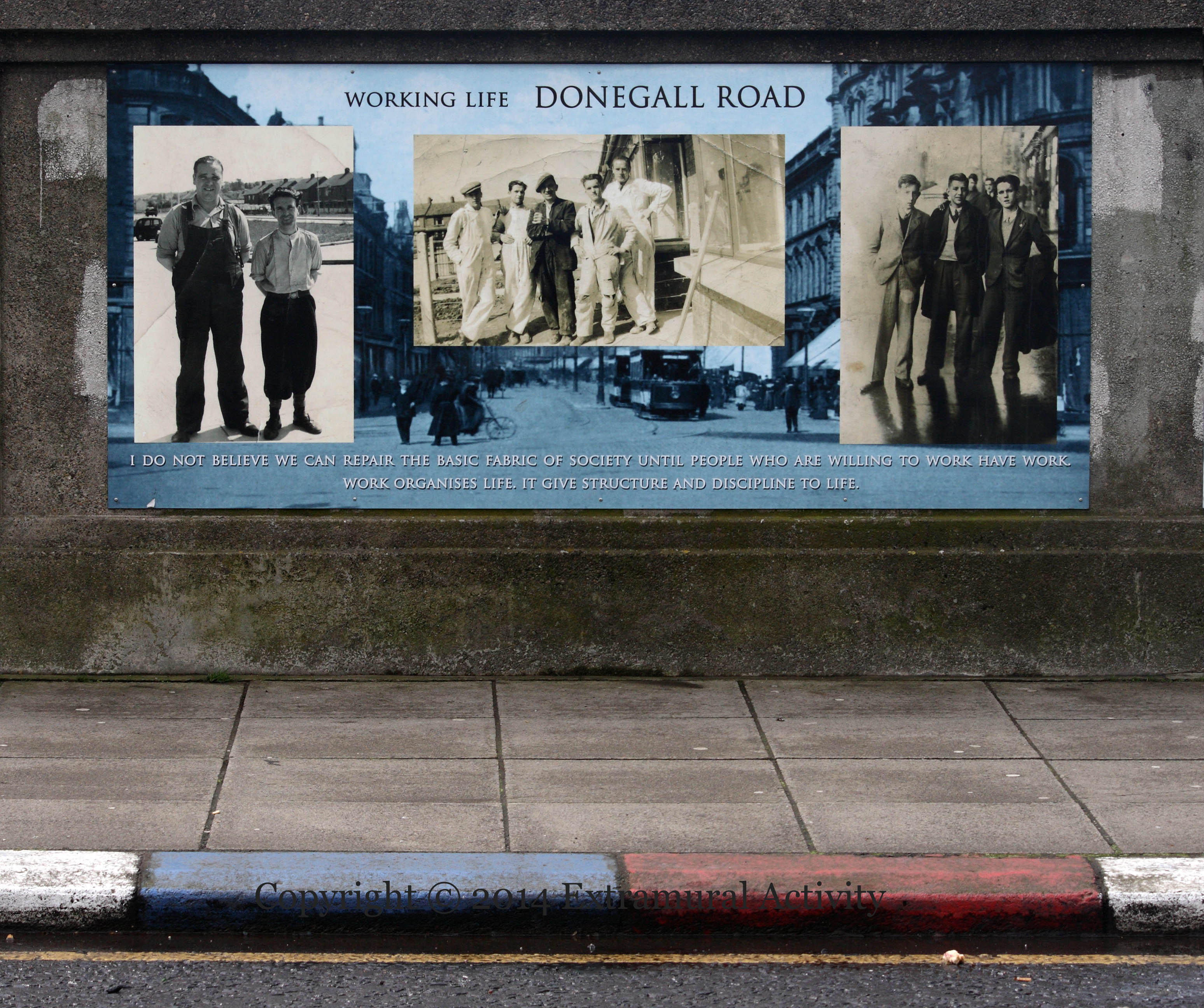
Here are two panels from the Donegall Road bridge at Roden Street both concerned with working life in the area in years gone by. The (uncredited) words at the bottom of the first board come from a Bill Clinton speech. At greater length, it goes “I do not believe we can repair the basic fabric of society until people who are willing to work have work. Work organizes life. It gives structure and discipline to life. It gives meaning and self-esteem to people who are parents. It gives a role model to children …”
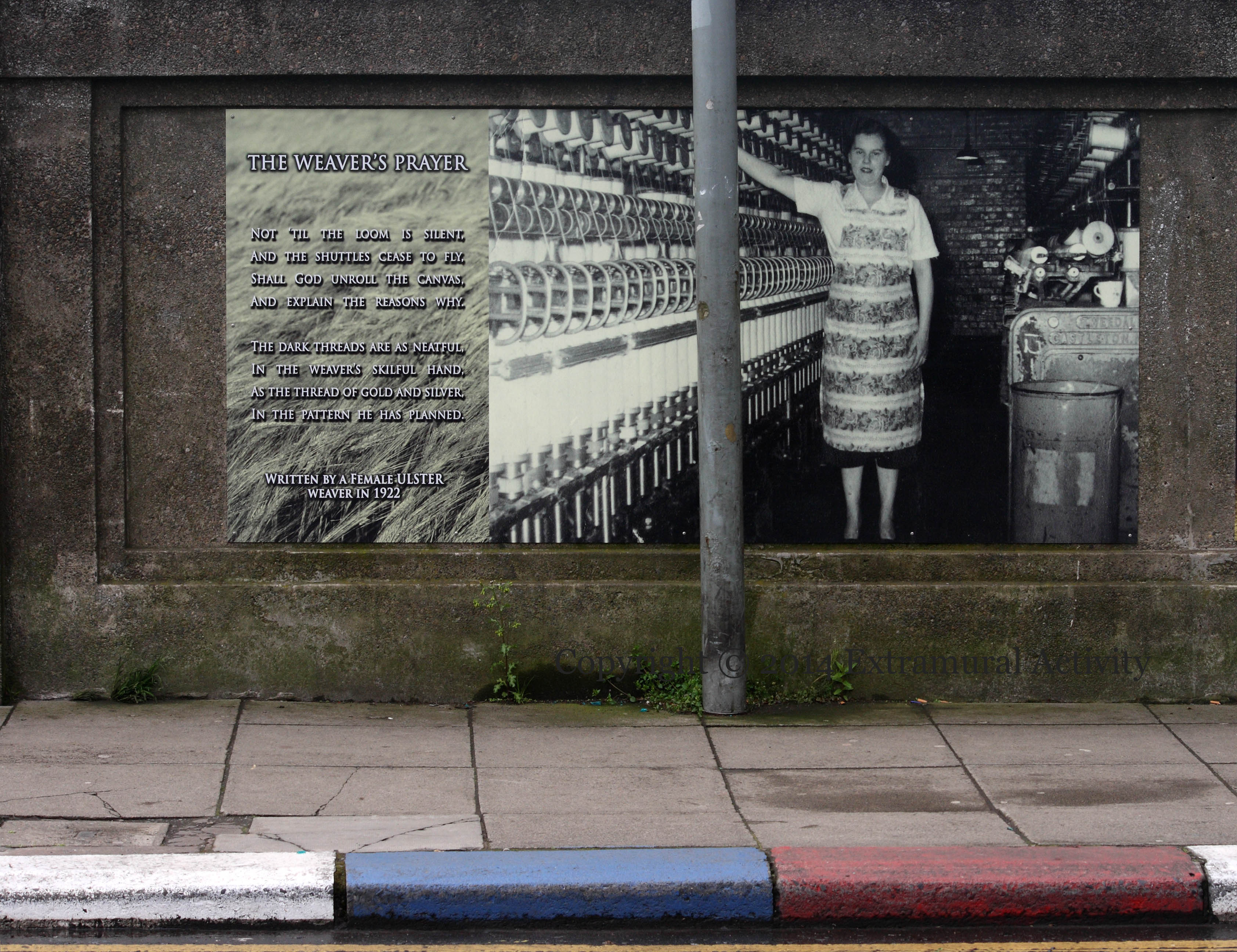
The second features two stanzas from a poem called here “The Weaver’s Prayer” but also known as “The Master Weaver”, “The Weaver”, and “Just A Weaver”, and commonly though not unanimously attributed to one Benjamin Malacia Franklin in the 1940s; it is here said to have been penned by a “female Ulster weaver in 1922”: “Not ’til the loom is silent, and the shuttles cease to fly, shall God unroll the canvas, and explain the reasons why. The dark threads are as neatful, in the weaver’s skilful hand, as the thread of the gold and silver, in the pattern he has planned.”
See previously: The Thread Of History which features two reflections on life as a female weaver.