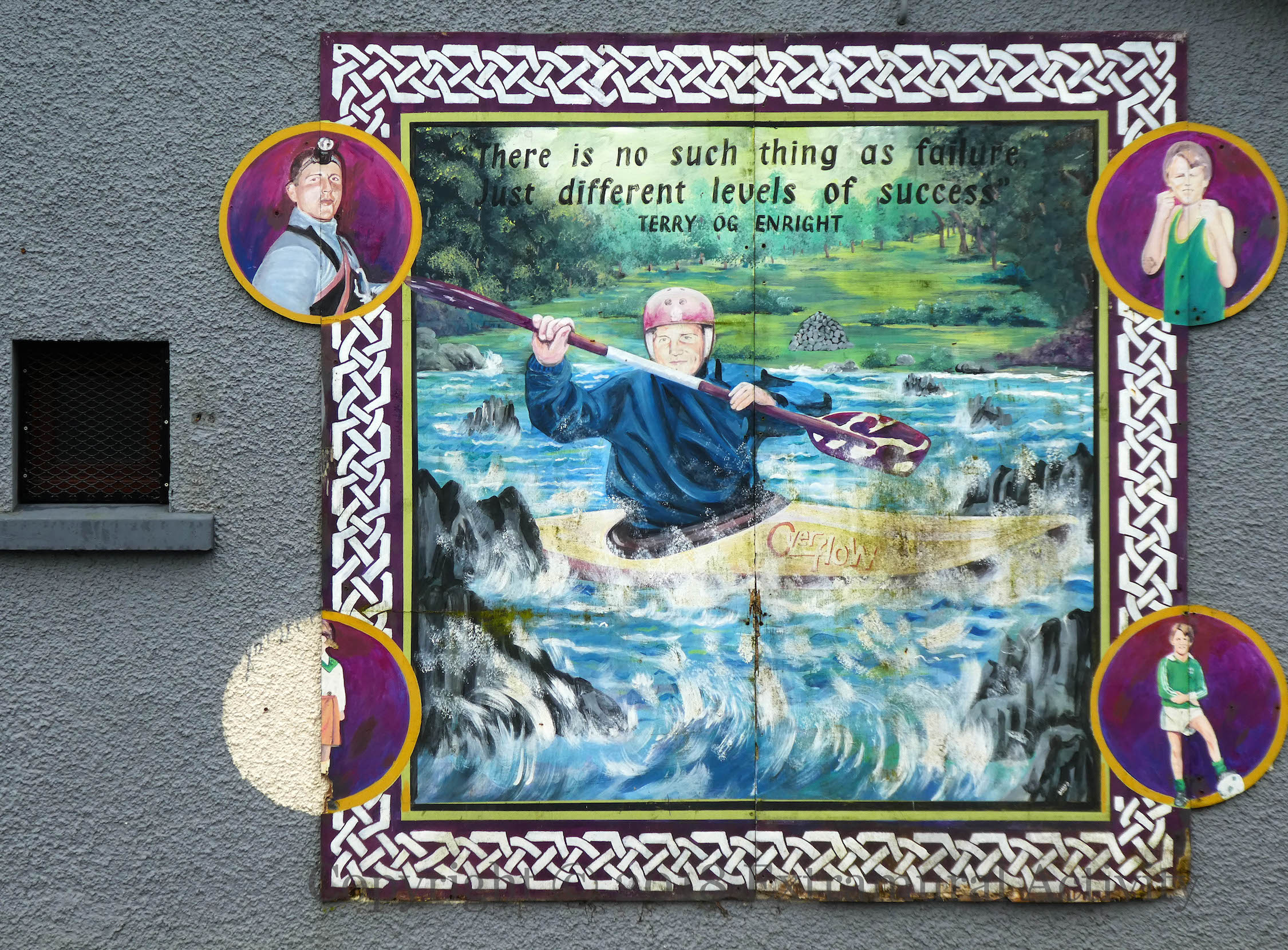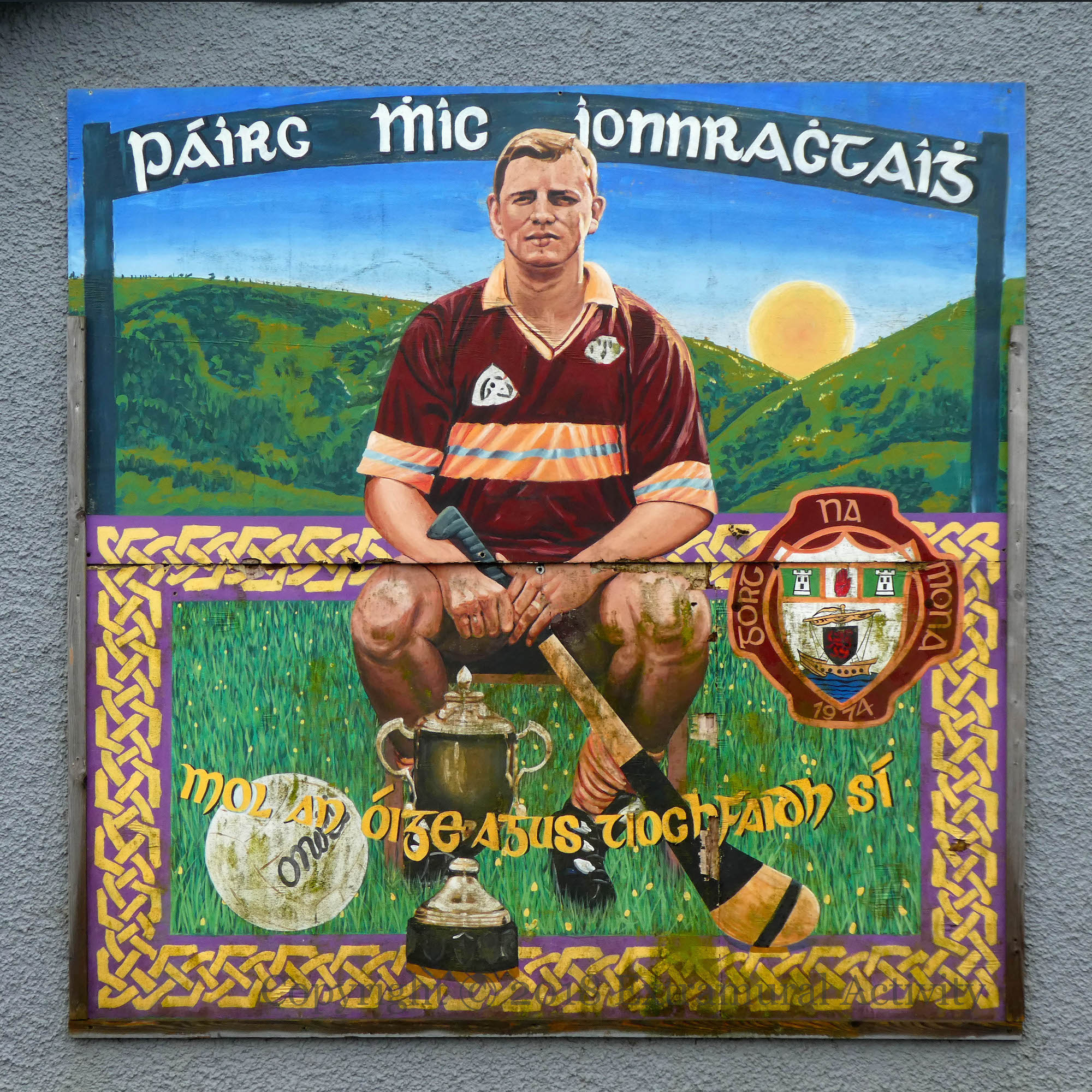
“There is no such thing as failure, just different levels of success – Terry Óg Enright.” The Terry Enright Foundation was set up in April 2002 in tribute to the cross-community and youth worker who was killed in a sectarian attack in 1998 (see Páırc Mhıc Ionnrachtaıgh). Its emblem is a kayaker, as the Foundation includes the opportunity for Level I and II certificates in kayaking in its Youth Leadership programme.
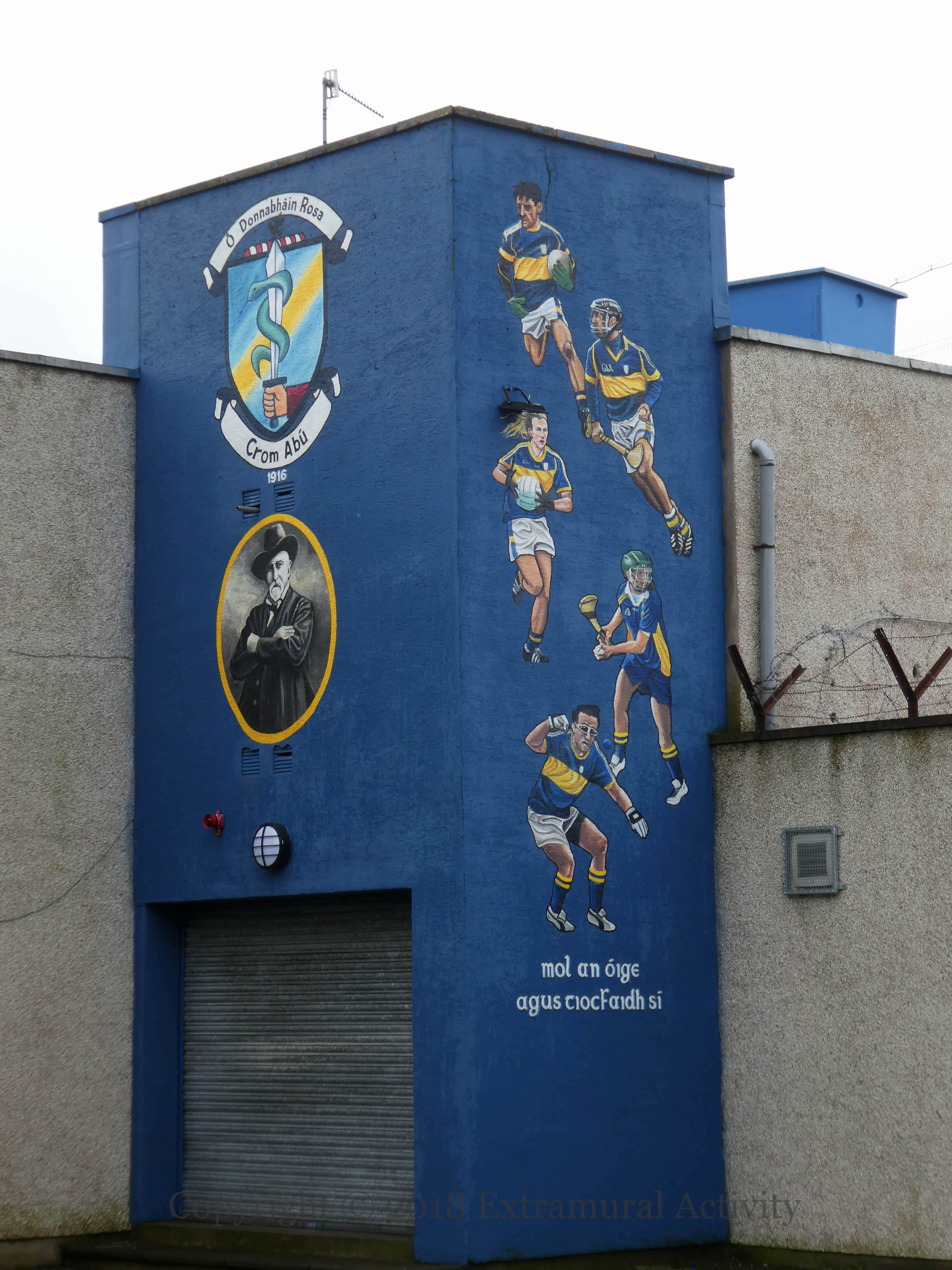
Gort Na Móna (Fb) play their home games at Páırc Mhıc Ionnrachtaıgh/Enright Park, named after the local Enright clan and in particular Terry Óg, who was killed by the LVF in January 1998 as he was working as a doorman at Space nightclub (Independent | Irish Times). In addition to football and hurling, he was a boxer, Irish dancer, and – as will be seen in the other mural to his memory – a lover of the outdoors.
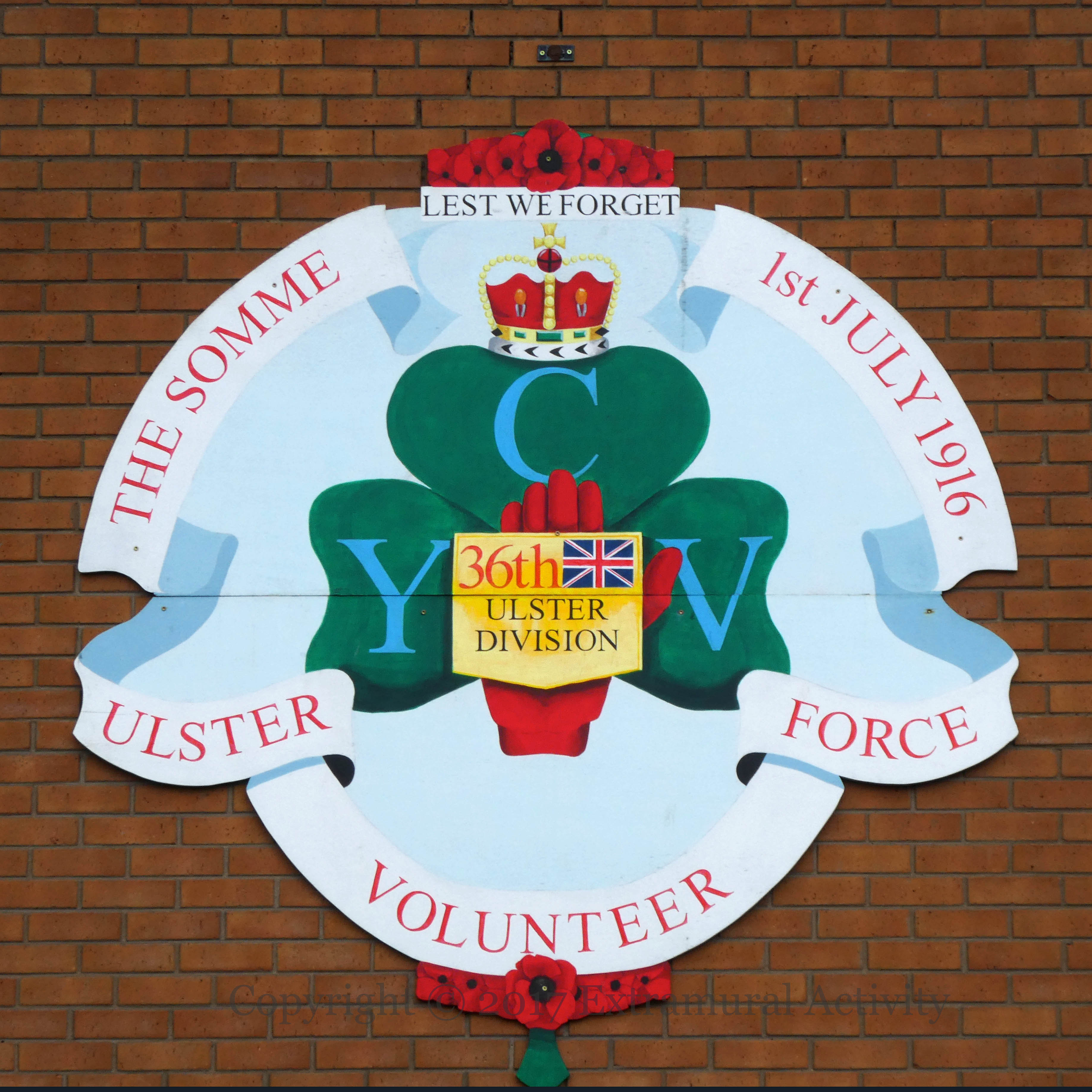
The Young Citizen Volunteers began as a civic organisation and domestic reserve force in 1912 but by the time of the first World War had become a battalion of the Ulster Volunteers and went to the Western Front as the fourteenth battalion of the Royal Irish Rifles, part of the 36th (Ulster) Division, landing at Boulogne in October, 1915. The force was mainly Protestant but History Hub Ulster has a page on the 42 Ulster Catholics who served in the 14th (YCV) RIR.
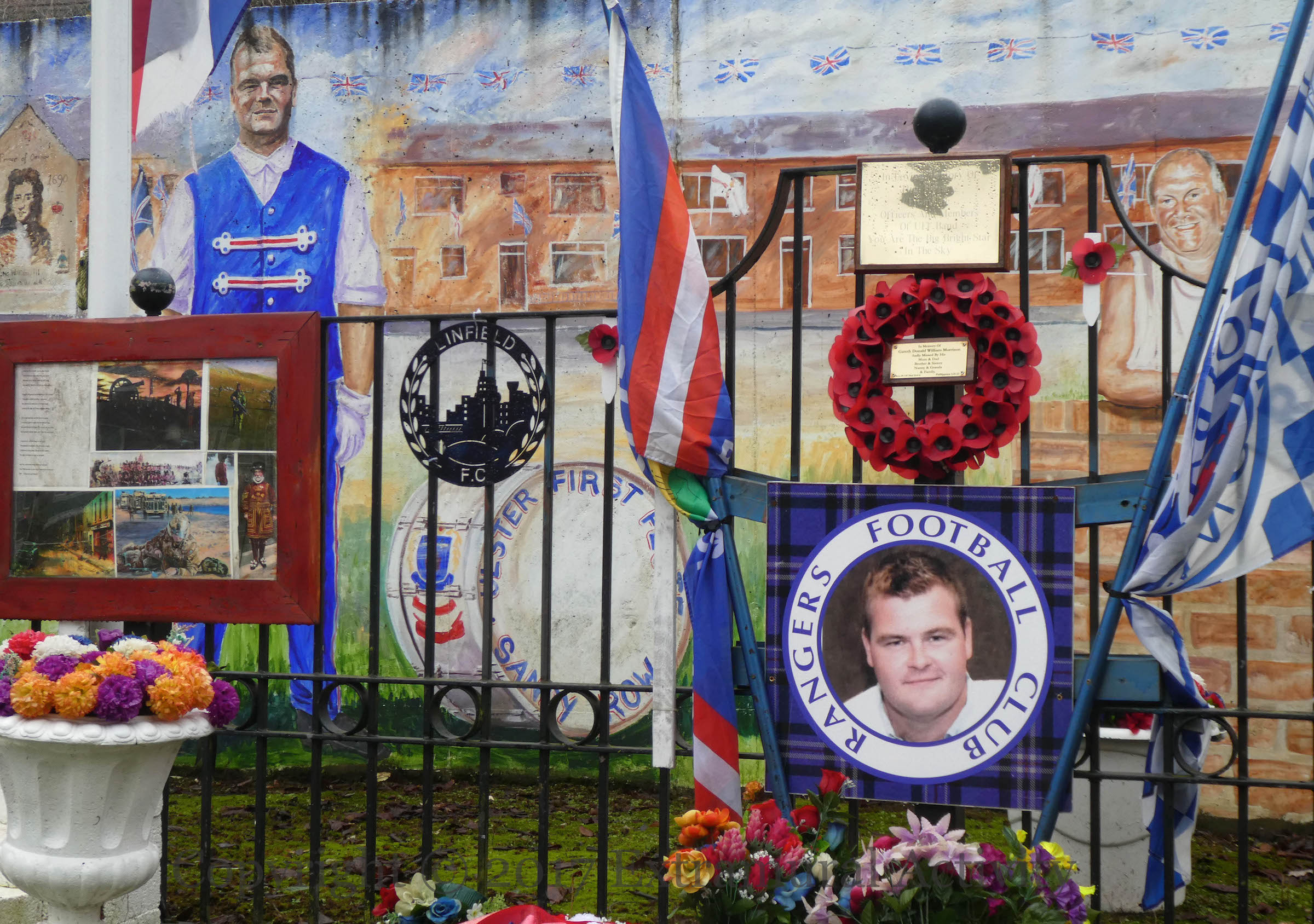
Gareth “Big Henry” Morrison was a drummer in the Ulster First Flute band in Sandy Row and a Rangers supporter. He died at age 26 on June 23rd, 2013 from a dose of PMA (BelTel), one of eight such deaths in Northern Ireland and seven in western Scotland. (1997 image of a UFFB mural in Linfield Road.)
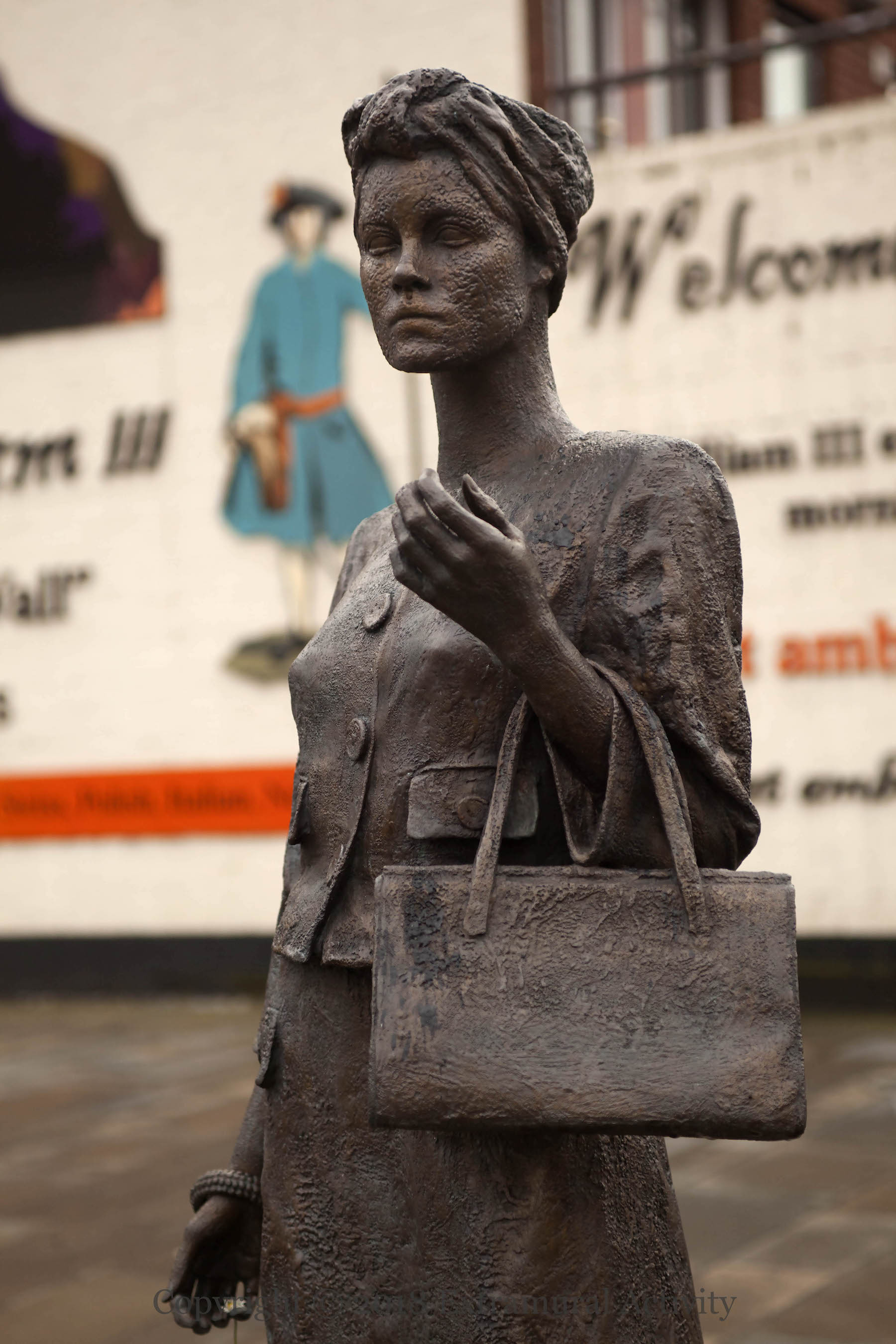
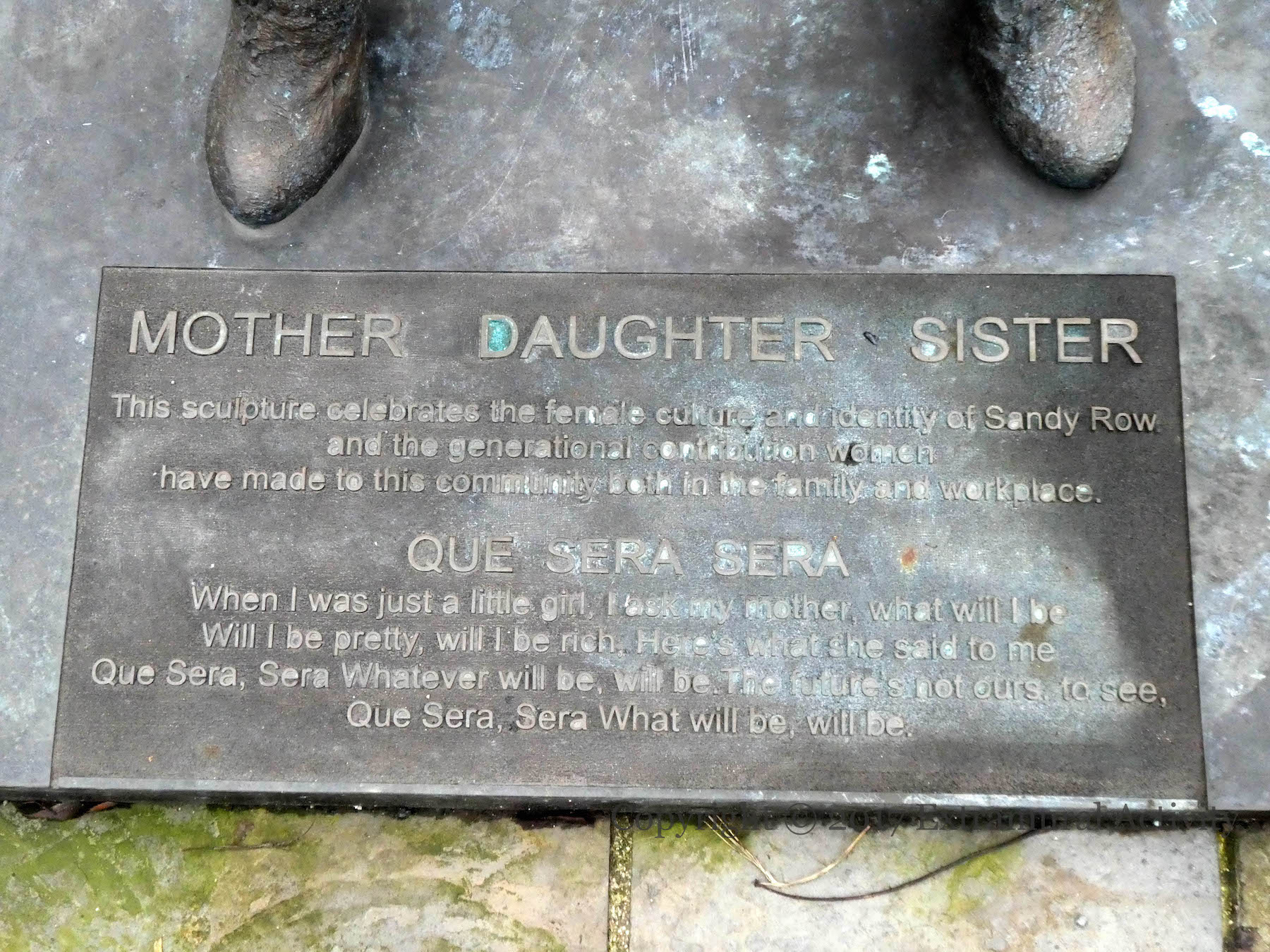
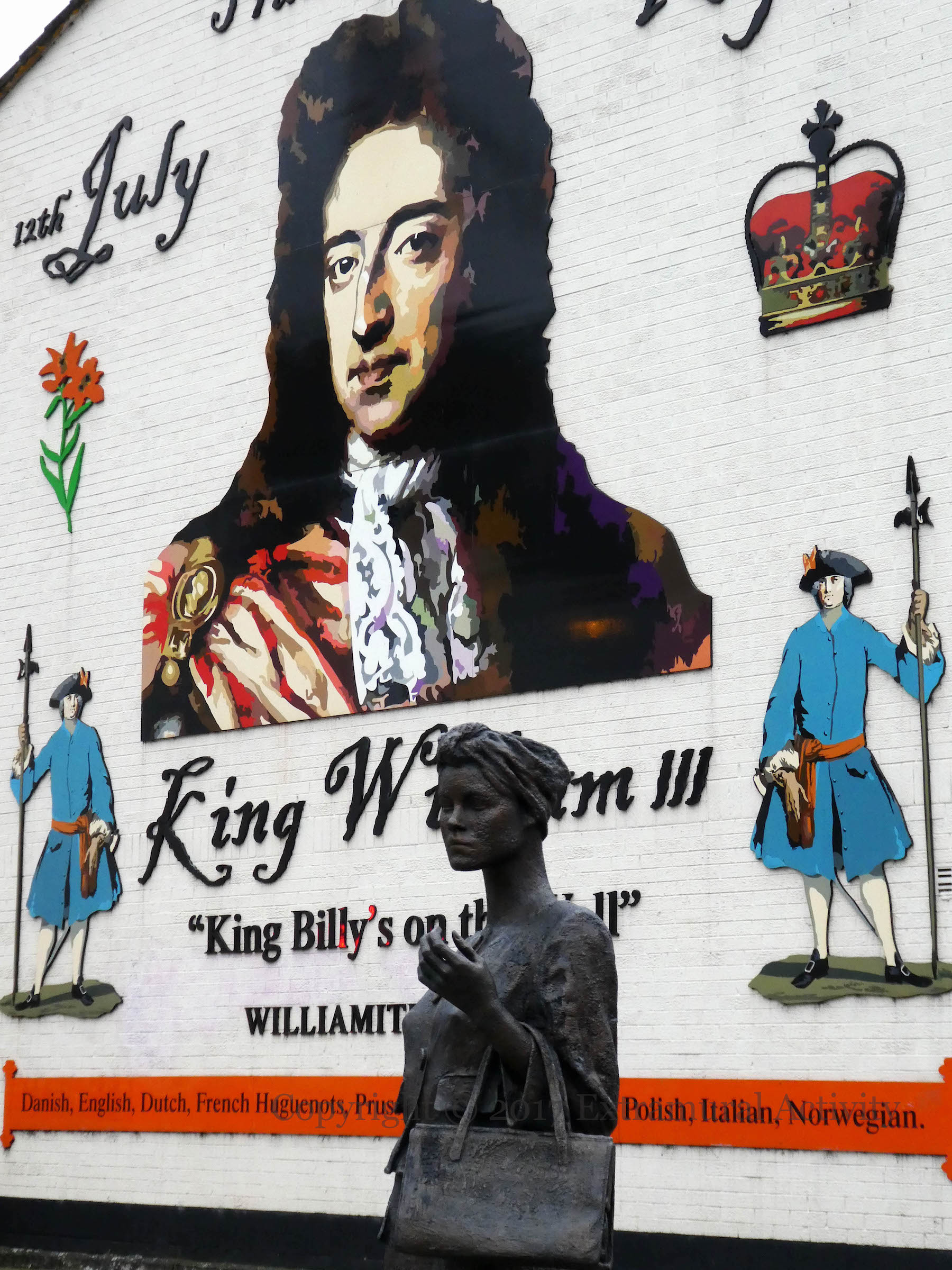
Ross Wilson’s statue ‘Mother – Daughter – Sister’ was launched in 2015 (Art Council NI), two years after his King William mural which towers over it (see final image). “This sculpture celebrates the female cultural identity of Sandy Row and the generational contribution women have made to this community both in the family and workplace.” With a verse from the Doris Day song ‘Que Sera Sera’ from Hitchcock’s The Man Who Knew Too Much.
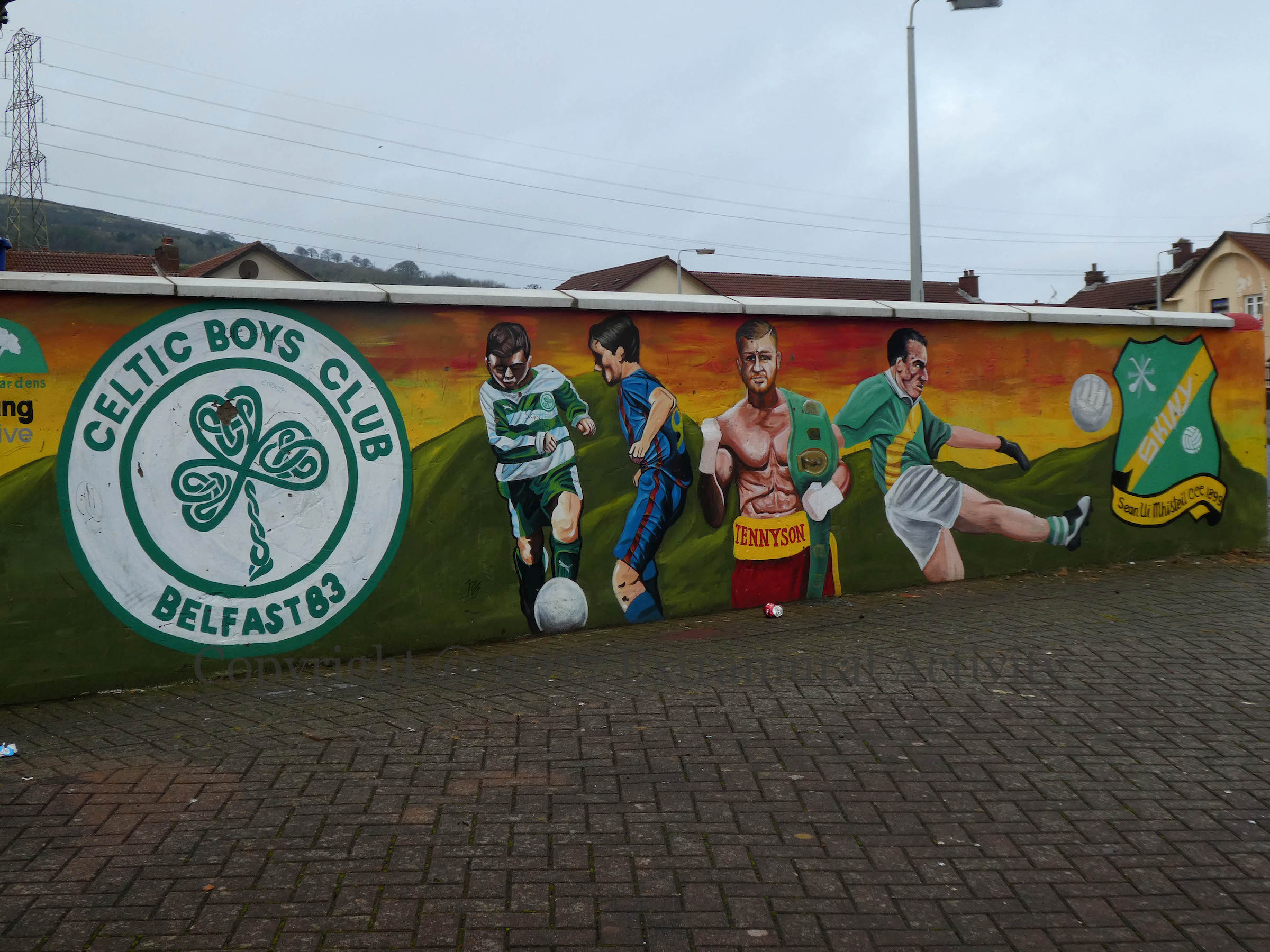
Lisburn boxer James “The Assassin” Tennyson, current Irish super-featherweight champion, (BoxRec | tw) provides the centre-piece between soccer and gaelic games in this Glenbawn mural: on the left, the Celtic Boys Club (web), established 1983) and Gaelic games club Seán Uí Mhistéil (web | Fb) originally formed in the New Lodge in 1899.
Though the tradition might pre-date Christianity, on the day after Christmas – known also as Boxing day and St Stephen’s day – the wren (the king of winter and symbol of the past year) is hunted by strawboys or mummers who disguise themselves with straw headgear and make a parade and go around the houses asking for money to bury the wren.
The map in the lower left corner of this WWI commemorative mural shows the defensive lines of both the Allies and the Central Powers. As the inscription on the mural describes, the Ulster Tower is situated close to the Schwaben Redoubt, the primary objective of the 36th Division on the first day of battle.
“Ulster Tower, officially opened 19th November, 1921, by Field Marshall Sir Henry Wilson.” “This Tower is dedicated to the glory of God in grateful memory of the officers and men of the 36th (Ulster) division, and of the sons of Ulster in other forces who laid down their lives in the Great War, and of all their comrades-in-arms who, by divine grace, were spared to testify to their glorious deeds.” “The Ulster Tower stands on what was the German front line during the Battle Of The Somme, 1st July to 18th November 1916. It was erected on the site of the Schwaben Redoubt, a strongly fortified position which the 36th (Ulster) Division eventually captured. It’s opposite Thiepval Wood from where the (Ulster) Division made it’s [sic] historic charge on 1st July 1916, and within close proximity to the village of Thiepval.” “32,186 killed, wounded, missing.” “Greater love hath no man than this that a man lay down his life for his friends.”
Here are eight images of the new Ardoyne mural featuring (from left to right in the image below) Ardoyne Youth Club, Ard Eoın Kickhams, and the John Paul II Youth Club as alternatives to bullying, racism, homophobia, addiction and other social ills. In addition to Irish dancing, soccer, and Gaelic games, there are also images of young people practicing martial arts, DJing, and boxing.