Though the tradition might pre-date Christianity, on the day after Christmas – known also as Boxing day and St Stephen’s day – the wren (the king of winter and symbol of the past year) is hunted by strawboys or mummers who disguise themselves with straw headgear and make a parade and go around the houses asking for money to bury the wren.
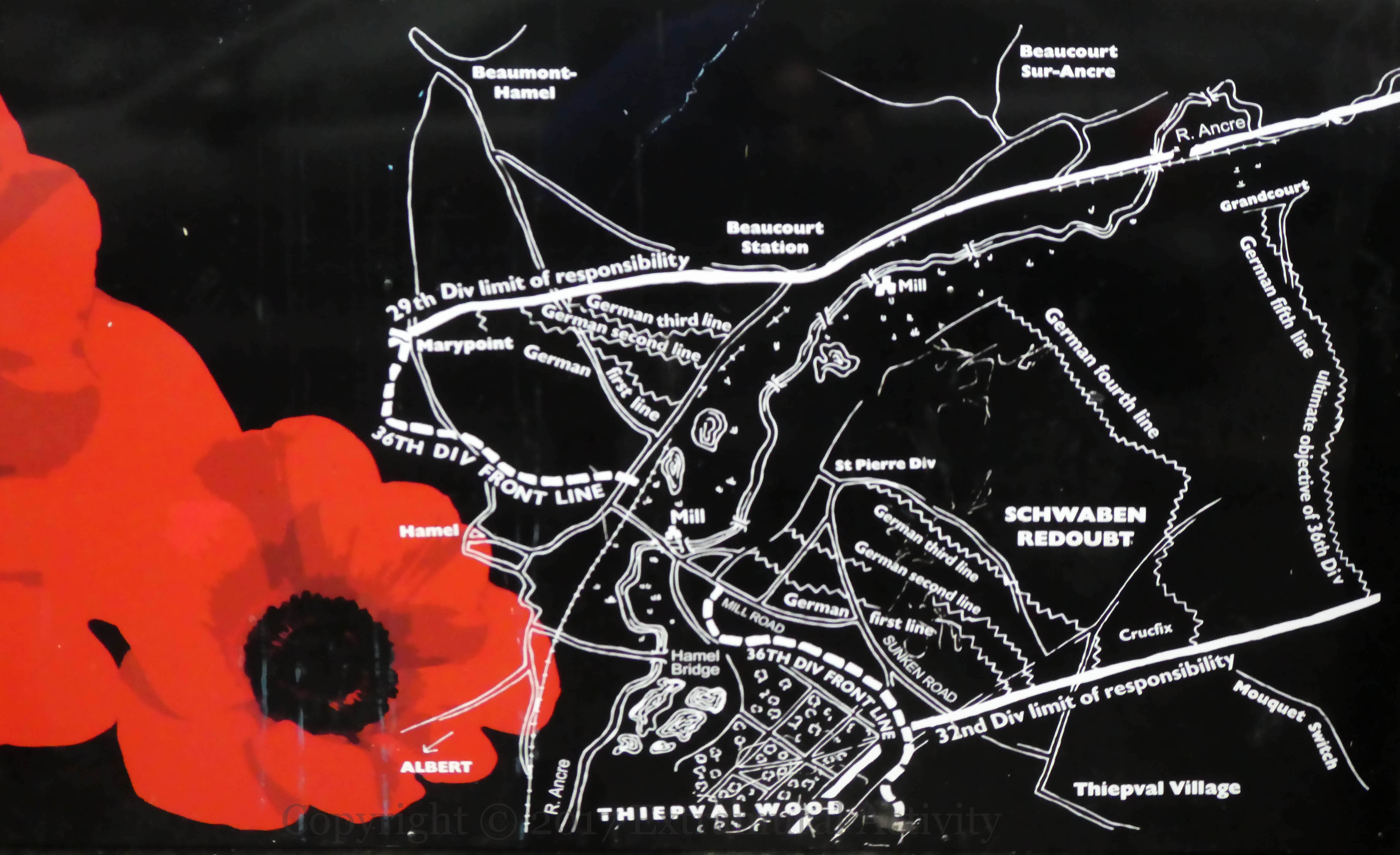
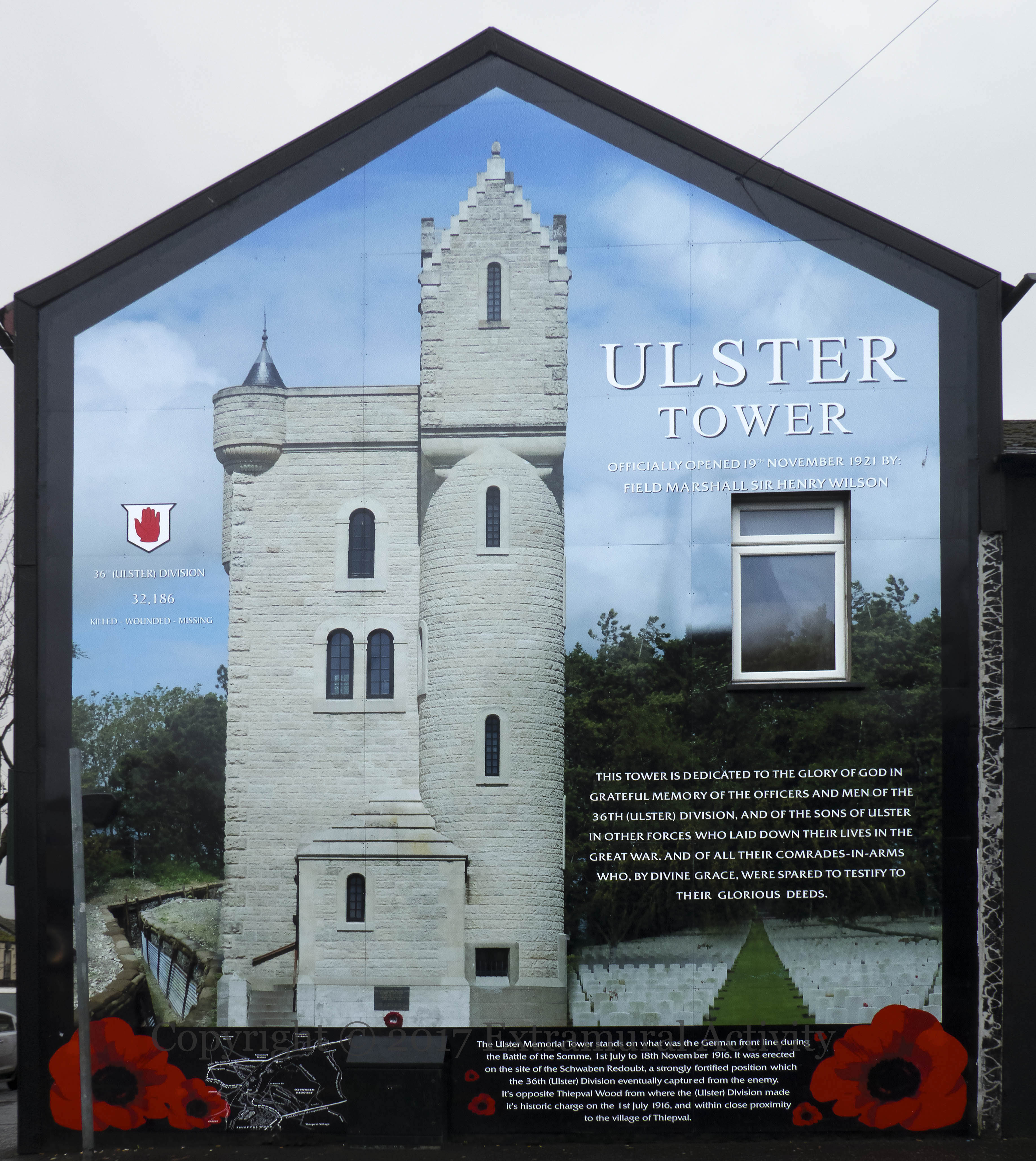
The map in the lower left corner of this WWI commemorative mural shows the defensive lines of both the Allies and the Central Powers. As the inscription on the mural describes, the Ulster Tower is situated close to the Schwaben Redoubt, the primary objective of the 36th Division on the first day of battle.
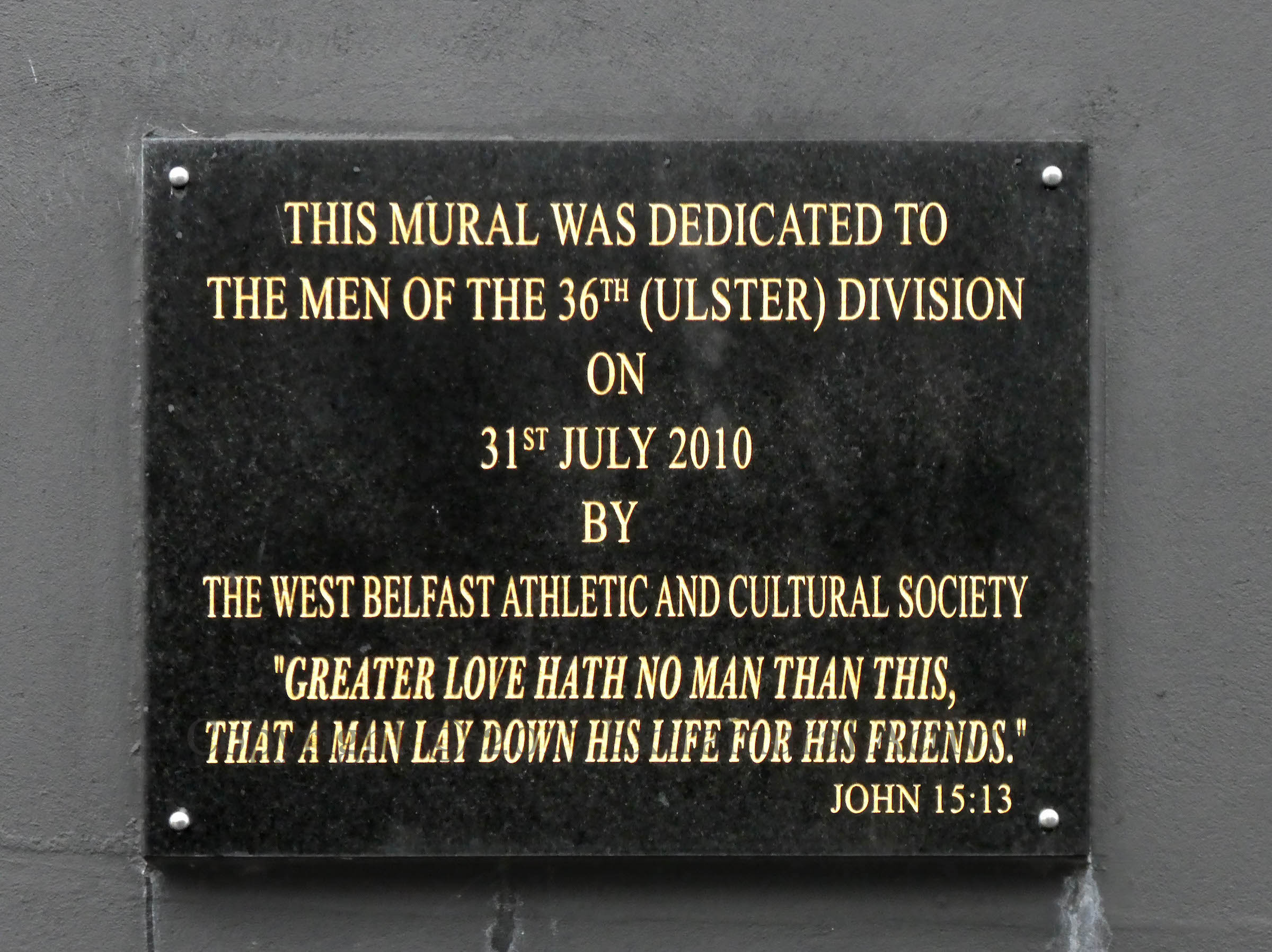
“Ulster Tower, officially opened 19th November, 1921, by Field Marshall Sir Henry Wilson.” “This Tower is dedicated to the glory of God in grateful memory of the officers and men of the 36th (Ulster) division, and of the sons of Ulster in other forces who laid down their lives in the Great War, and of all their comrades-in-arms who, by divine grace, were spared to testify to their glorious deeds.” “The Ulster Tower stands on what was the German front line during the Battle Of The Somme, 1st July to 18th November 1916. It was erected on the site of the Schwaben Redoubt, a strongly fortified position which the 36th (Ulster) Division eventually captured. It’s opposite Thiepval Wood from where the (Ulster) Division made it’s [sic] historic charge on 1st July 1916, and within close proximity to the village of Thiepval.” “32,186 killed, wounded, missing.” “Greater love hath no man than this that a man lay down his life for his friends.”
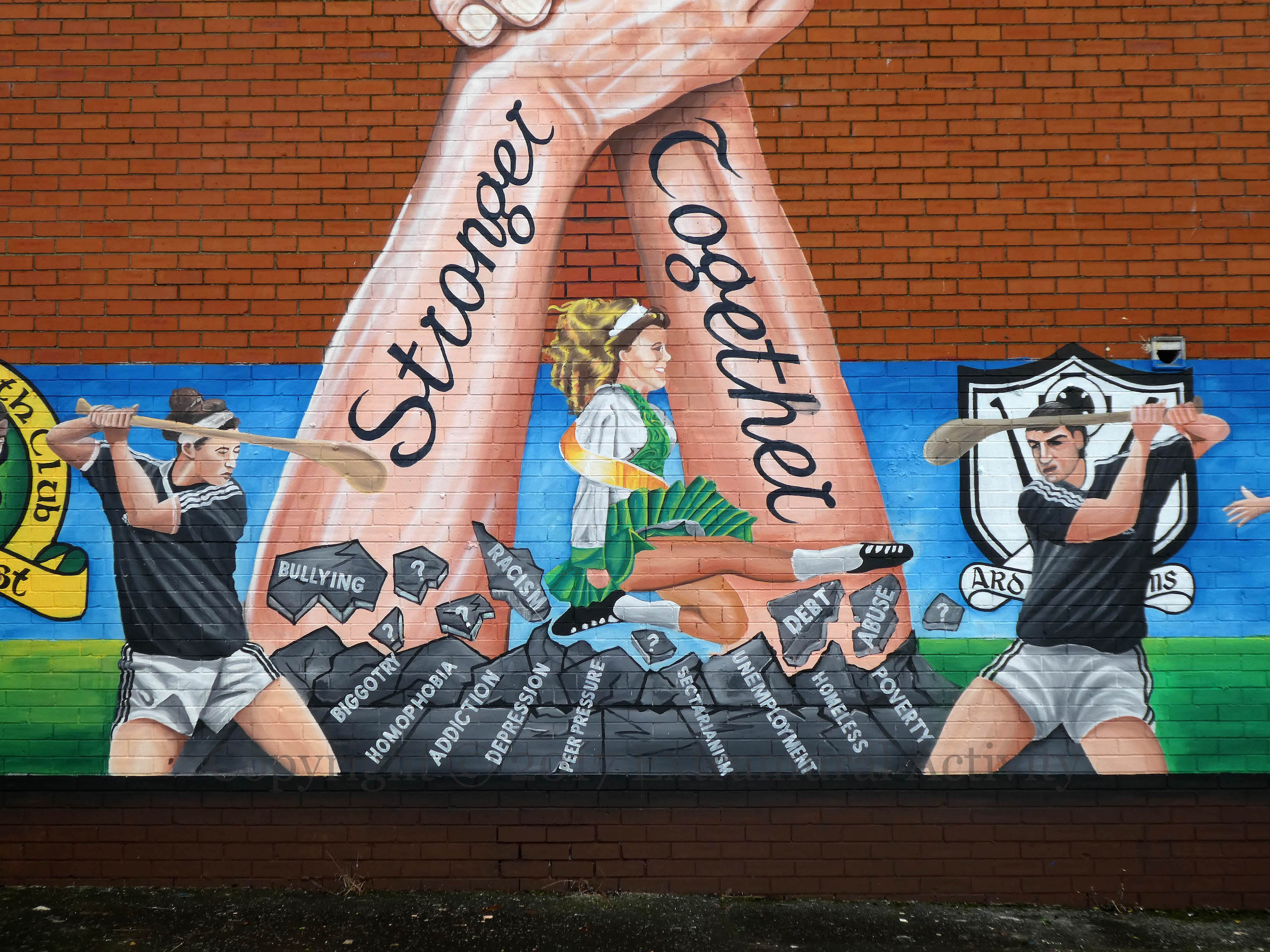
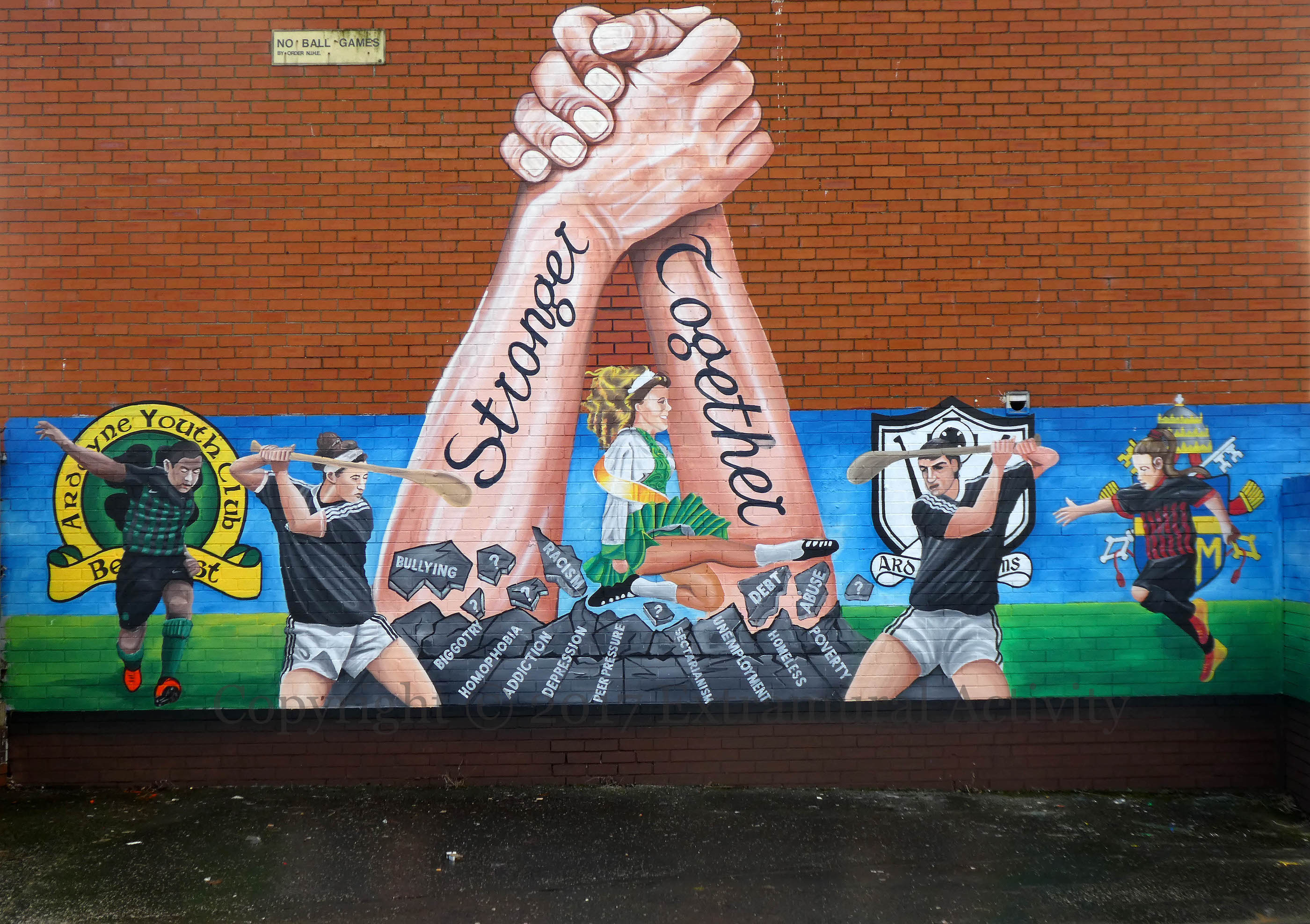
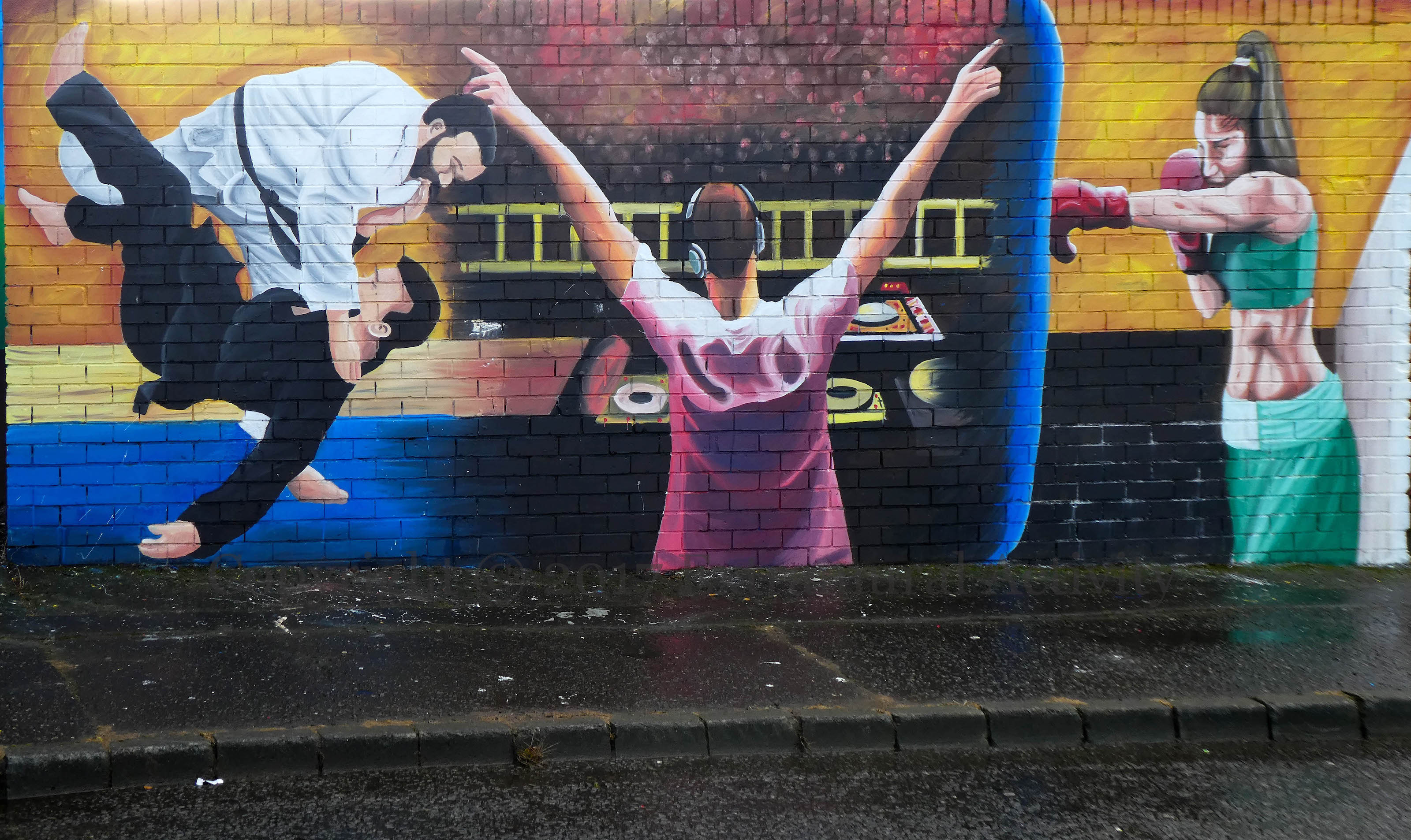
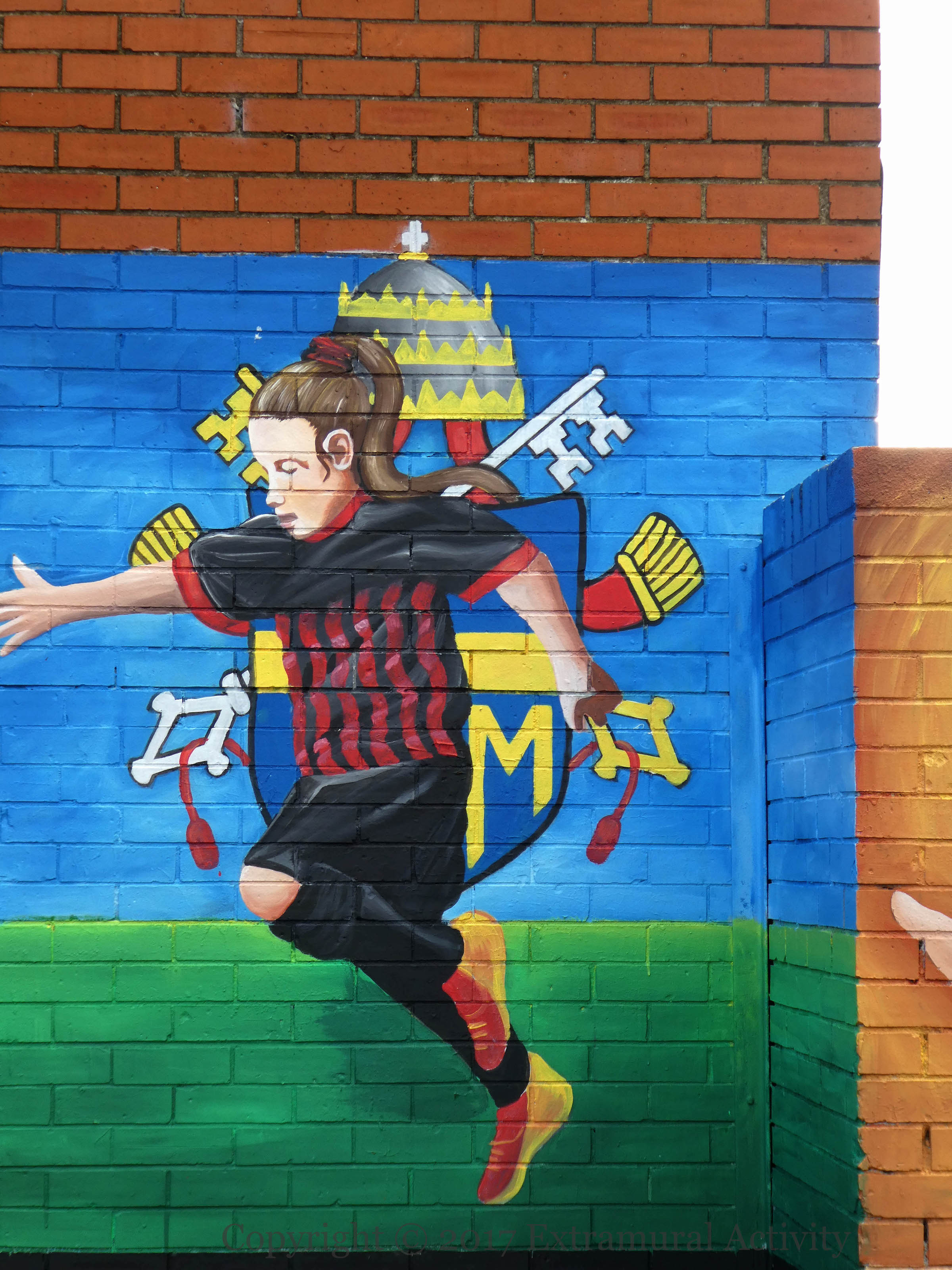
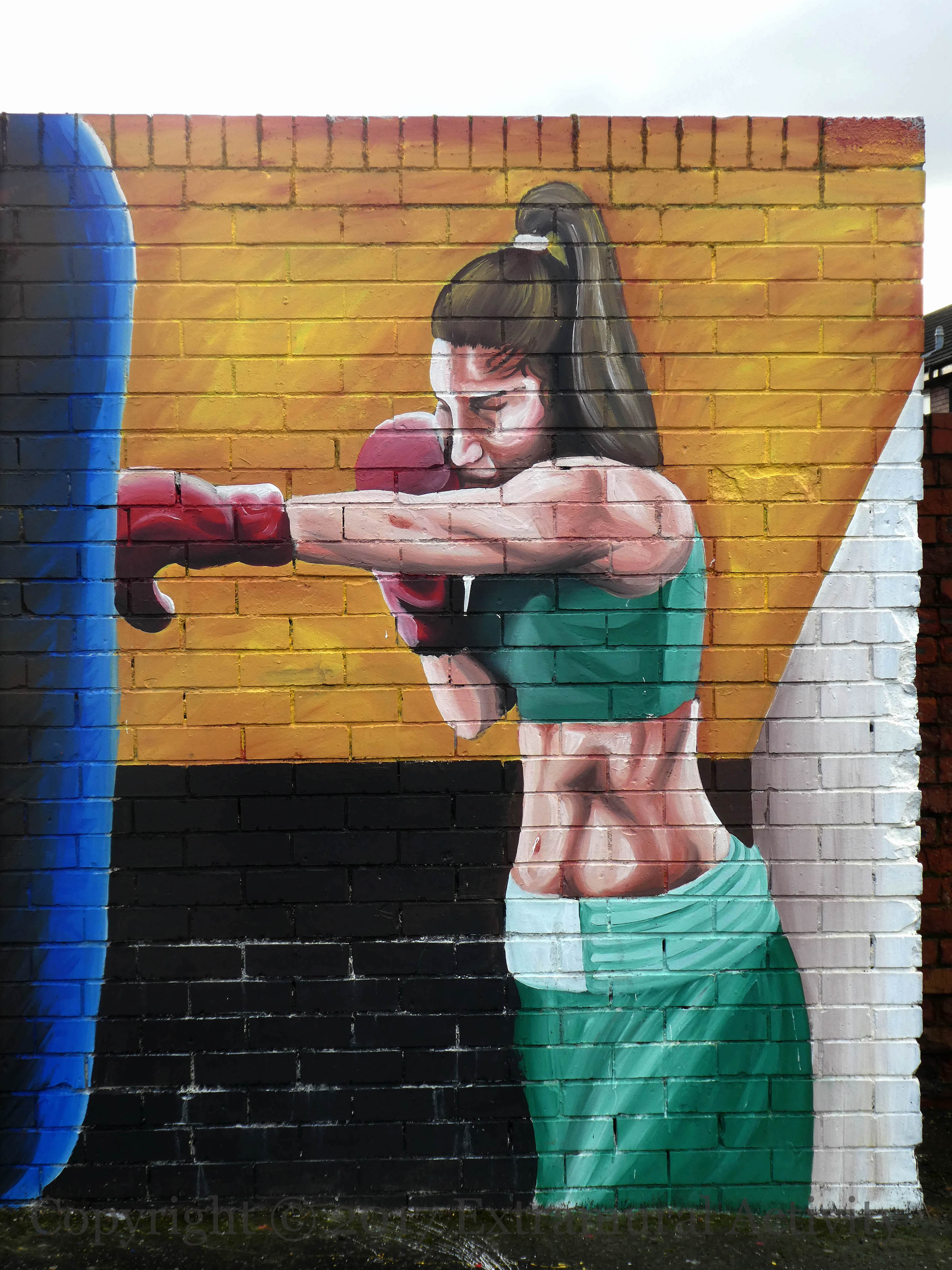
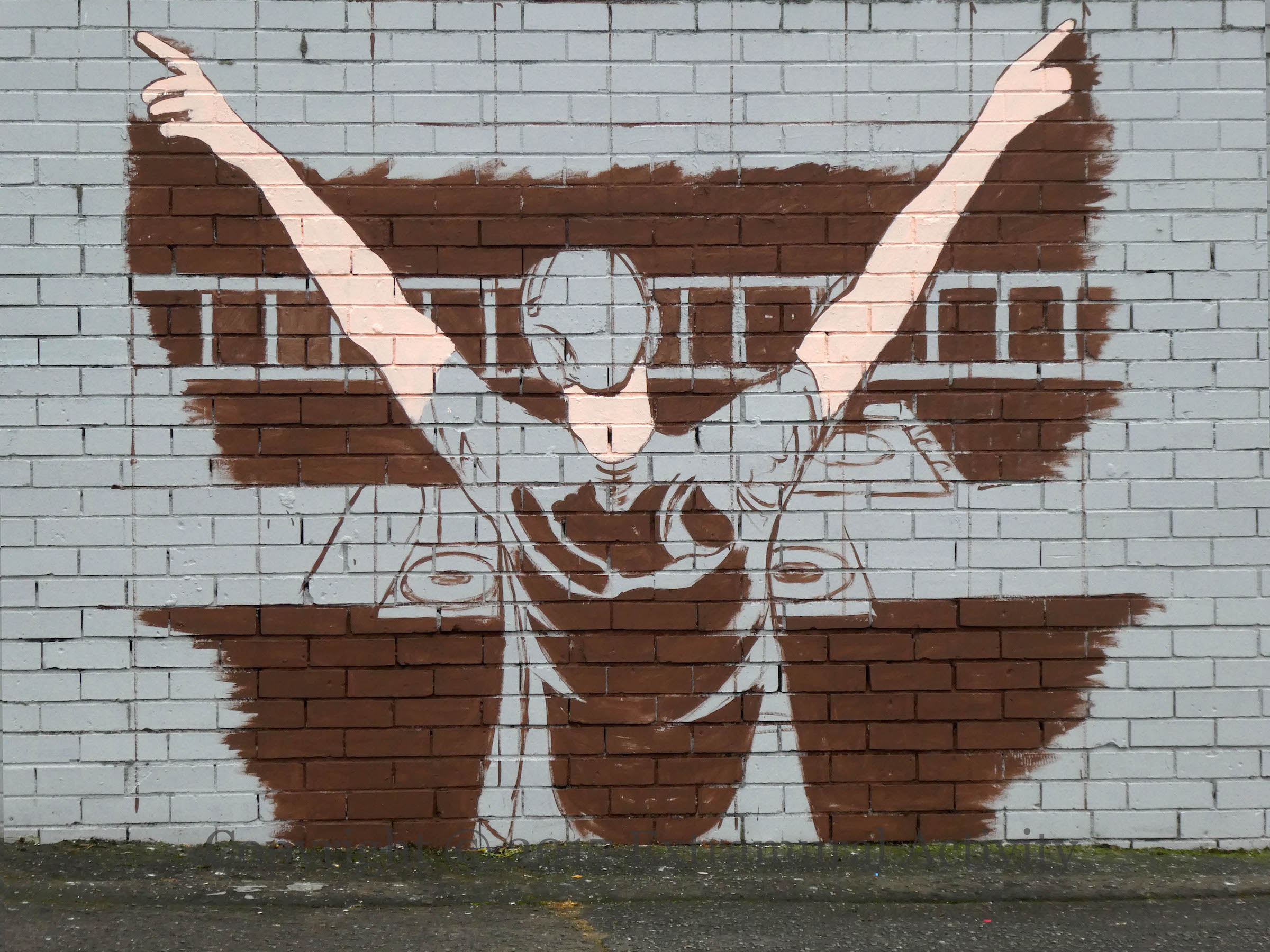
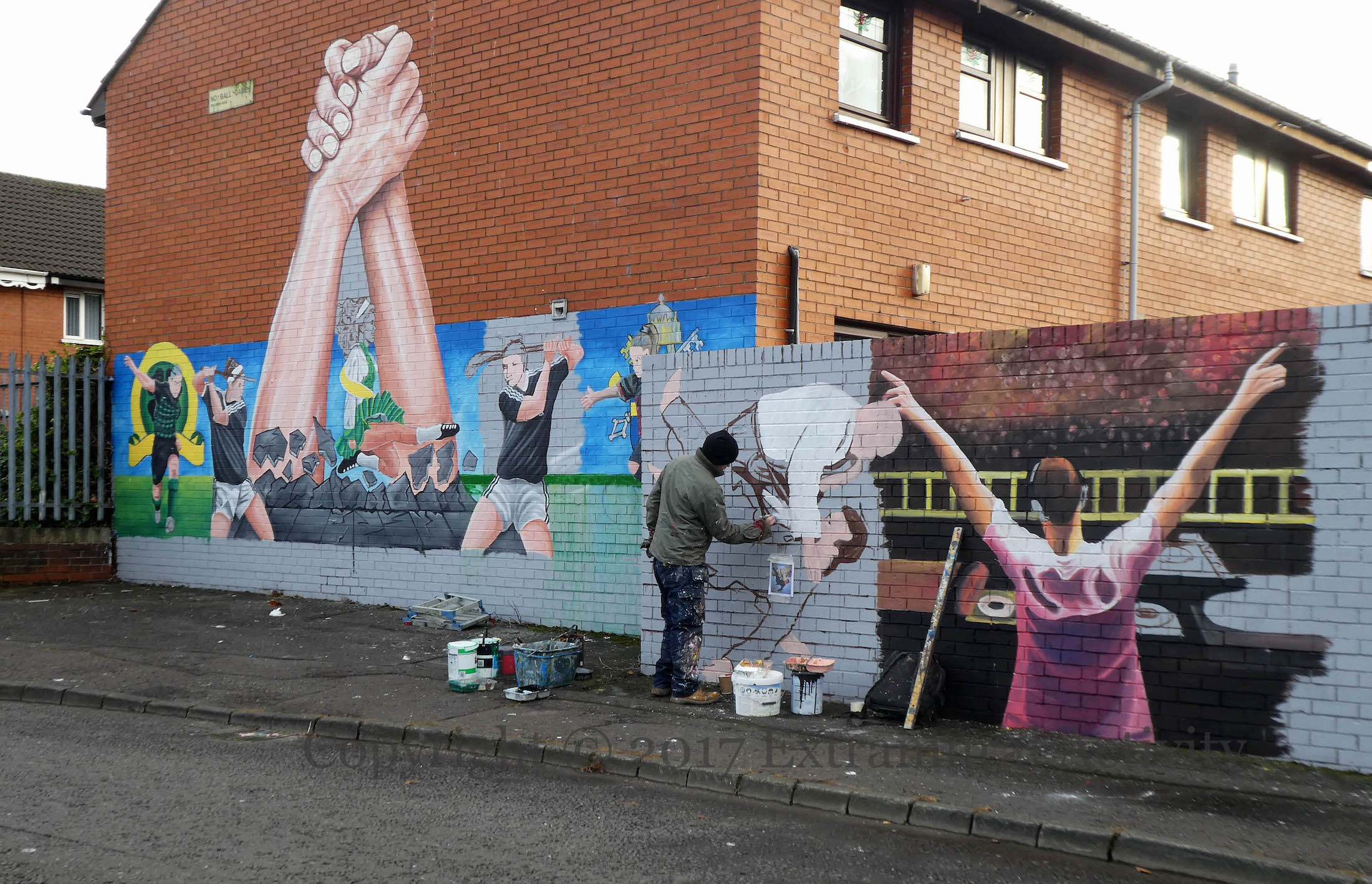
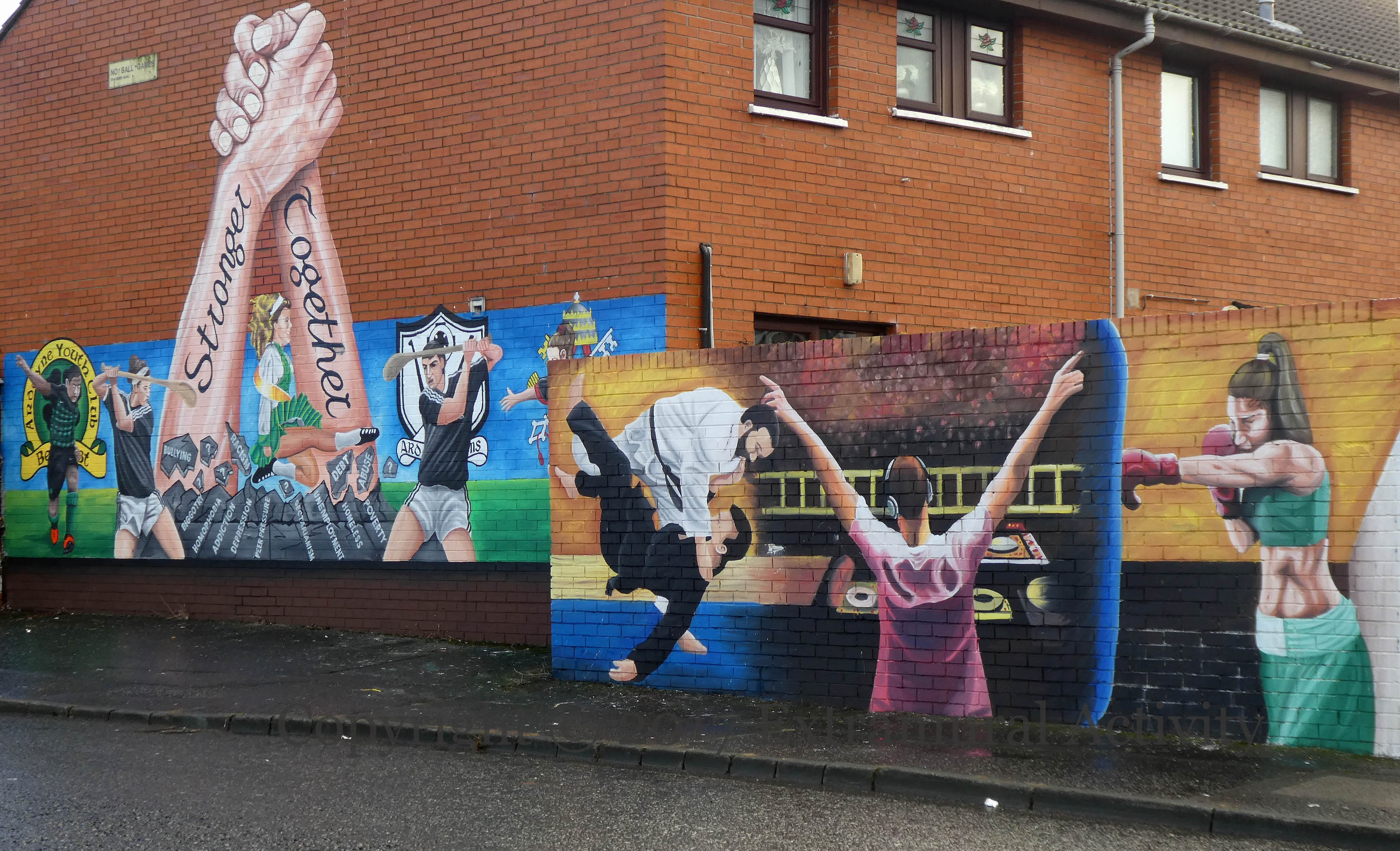
Here are eight images of the new Ardoyne mural featuring (from left to right in the image below) Ardoyne Youth Club, Ard Eoın Kickhams, and the John Paul II Youth Club as alternatives to bullying, racism, homophobia, addiction and other social ills. In addition to Irish dancing, soccer, and Gaelic games, there are also images of young people practicing martial arts, DJing, and boxing.
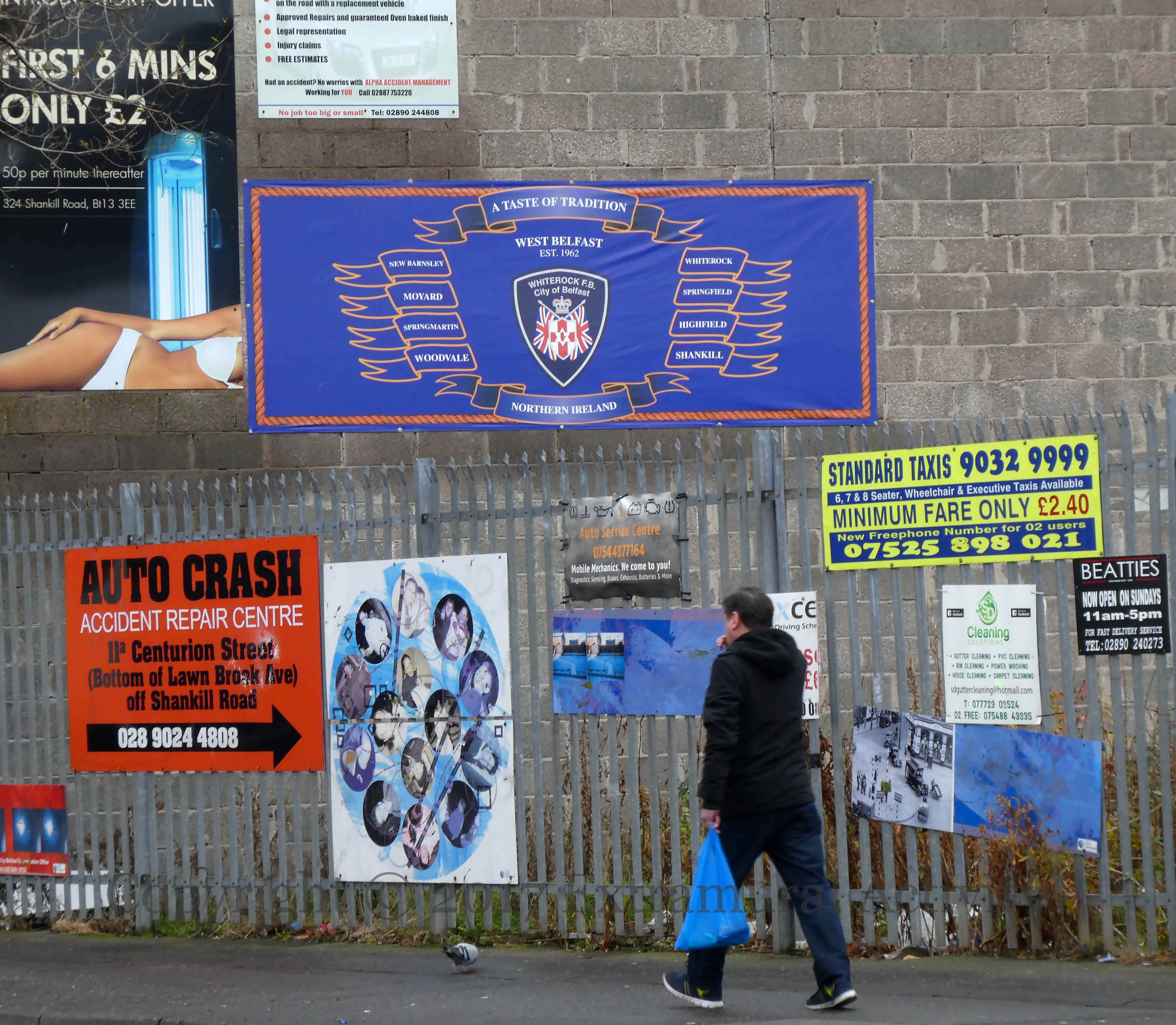
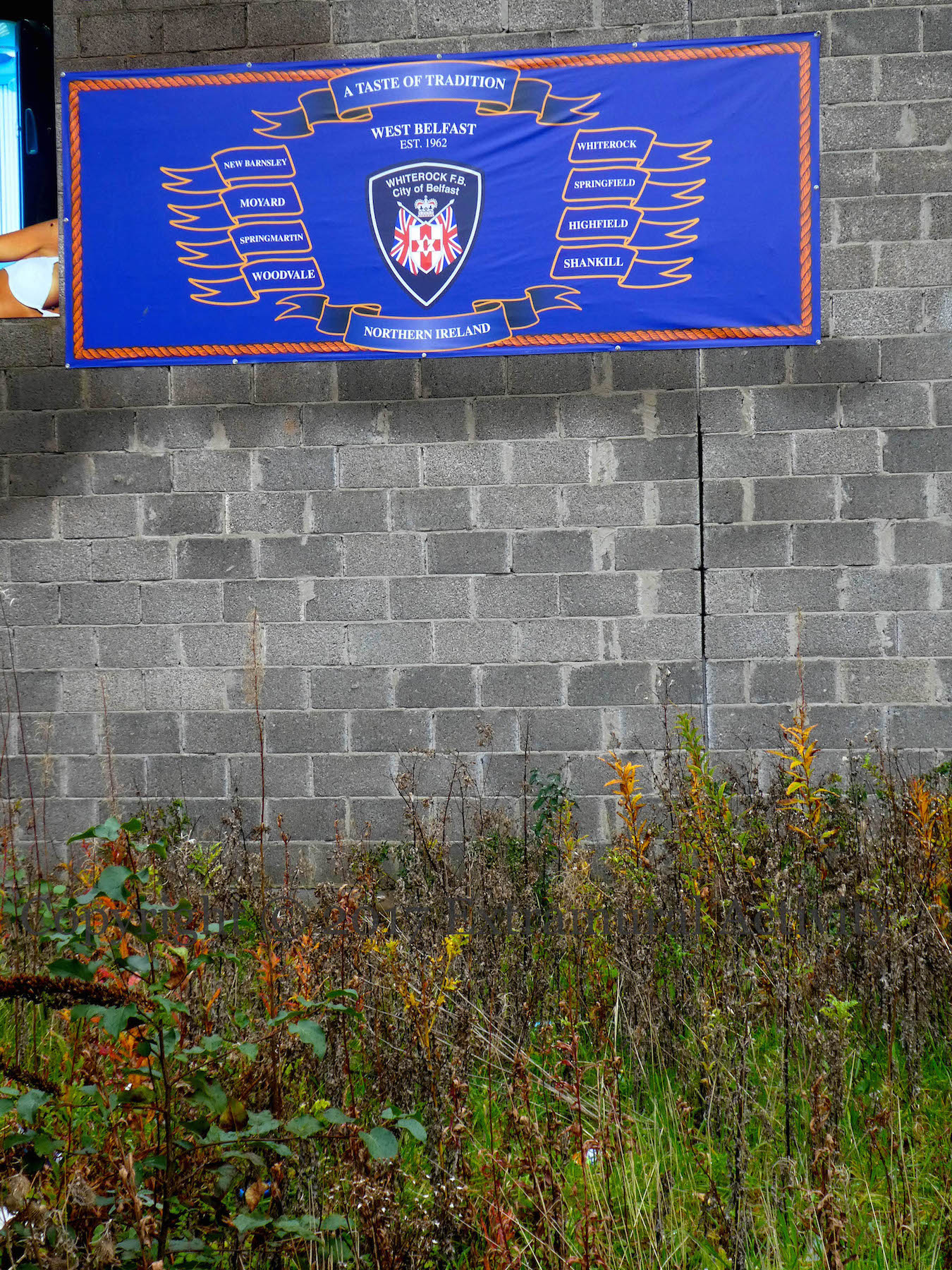
The Whiterock Flute Band was founded in 1962 by the the local Temperance Lodge and drew on areas near the now nationalist areas of New Barnsley, Moyard, Whiterock, and the upper Springfield for its membership. Over the years has seen the route of its annual parade changed “by the authorities or at the whim of nationalists” (band history pages one | two | three).
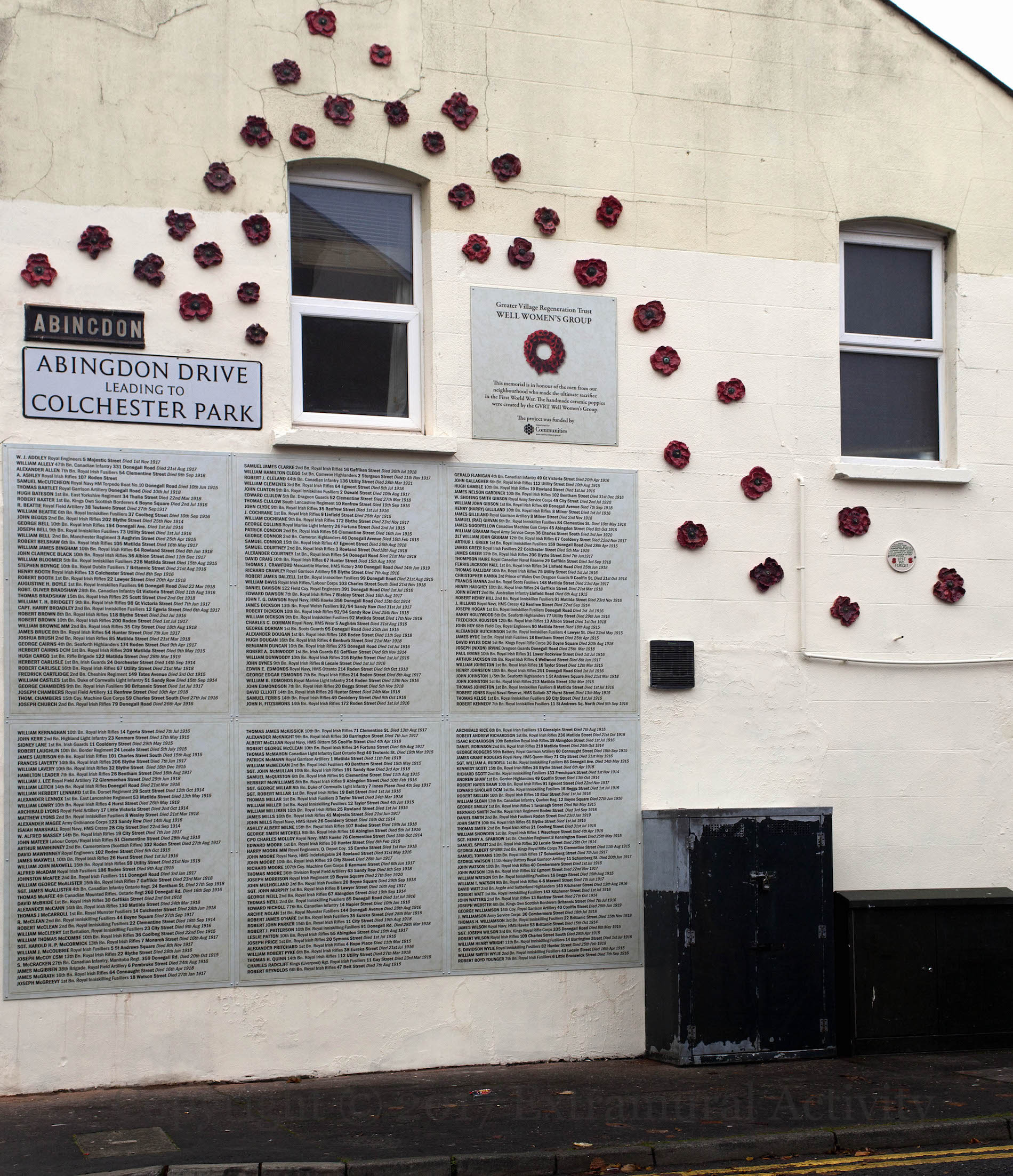
“This memorial is in honour of the men from our neighbourhood who made the ultimate sacrifice in the First World War. The handmade ceramic poppies were created by the GVRT [Greater Village Regeneration Trust] Well Women’s Group.”
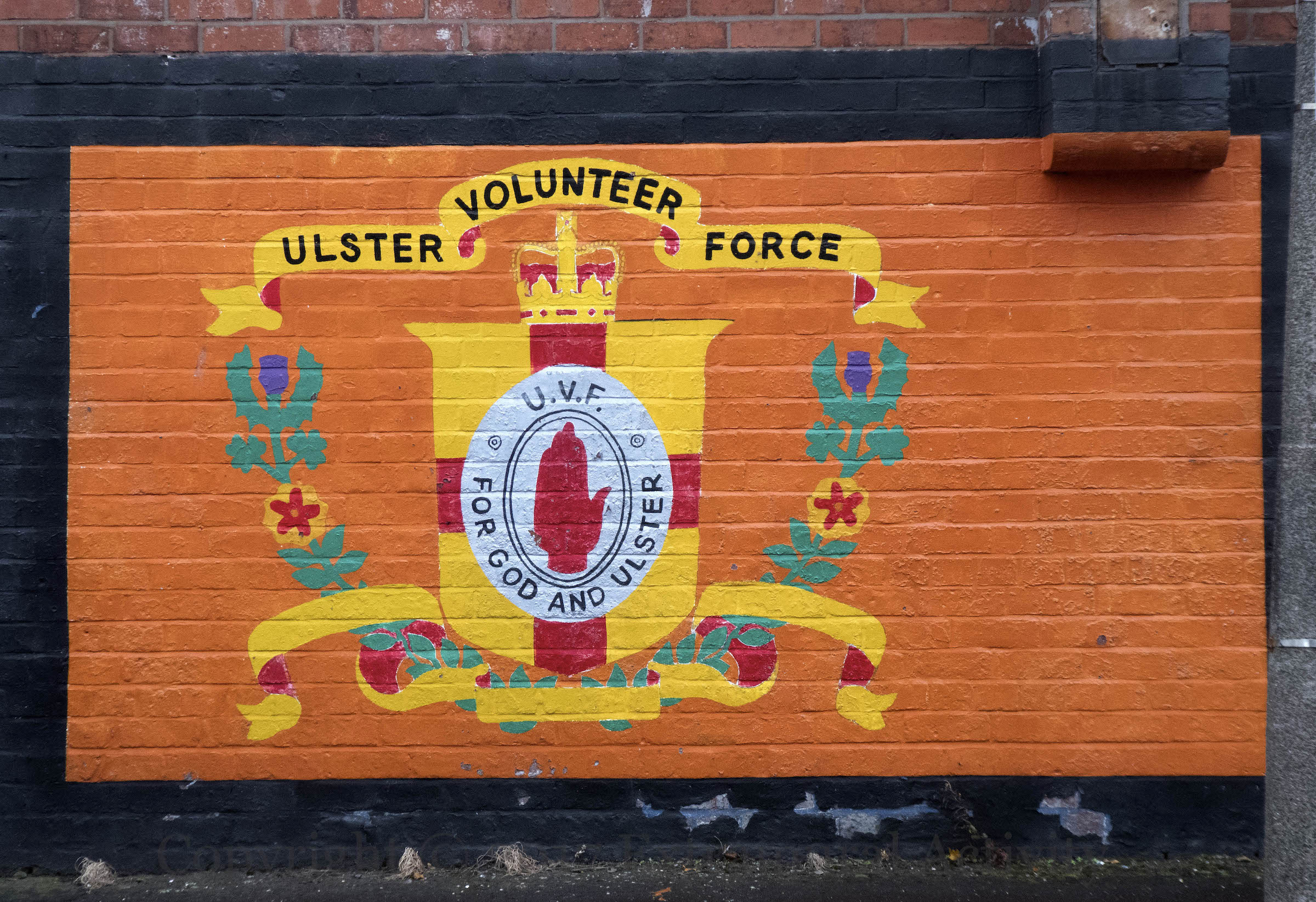
The Ulster Special Service Forces (USSF) was an elite unit of the Ulster Volunteers. Its flag includes the UVF emblem with a garland of thistle, shamrock, and rose. For an earlier (1988) example and more info, see USSF in Belfast; also another in Londonderry (1998).
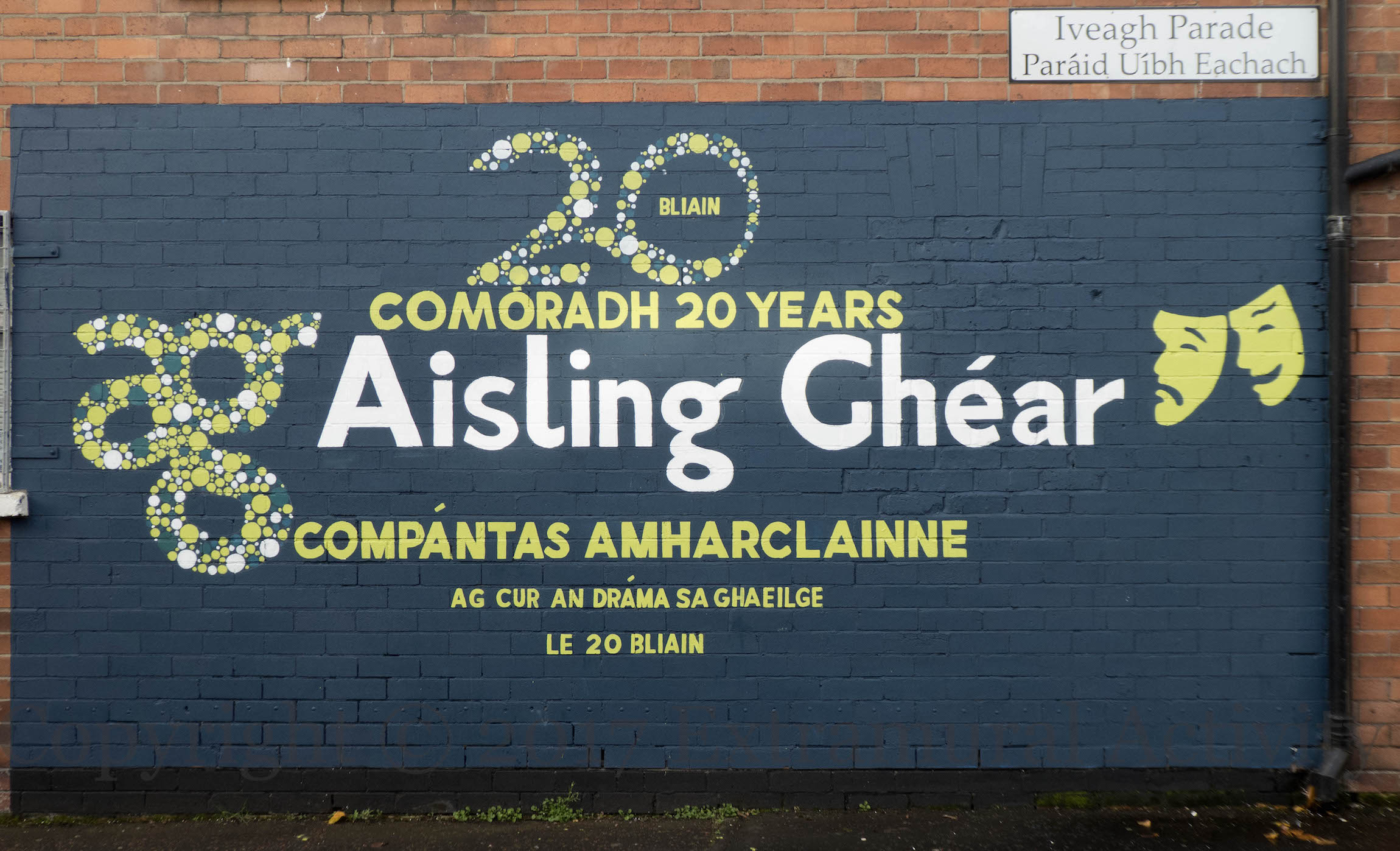
This (2017) summer the Irish-language theatre company Aıslıng Ghéar (web | Fb) celebrated its twentieth anniversary “ag cur an dráma sa Ghaeılge le 20 blıaın”.
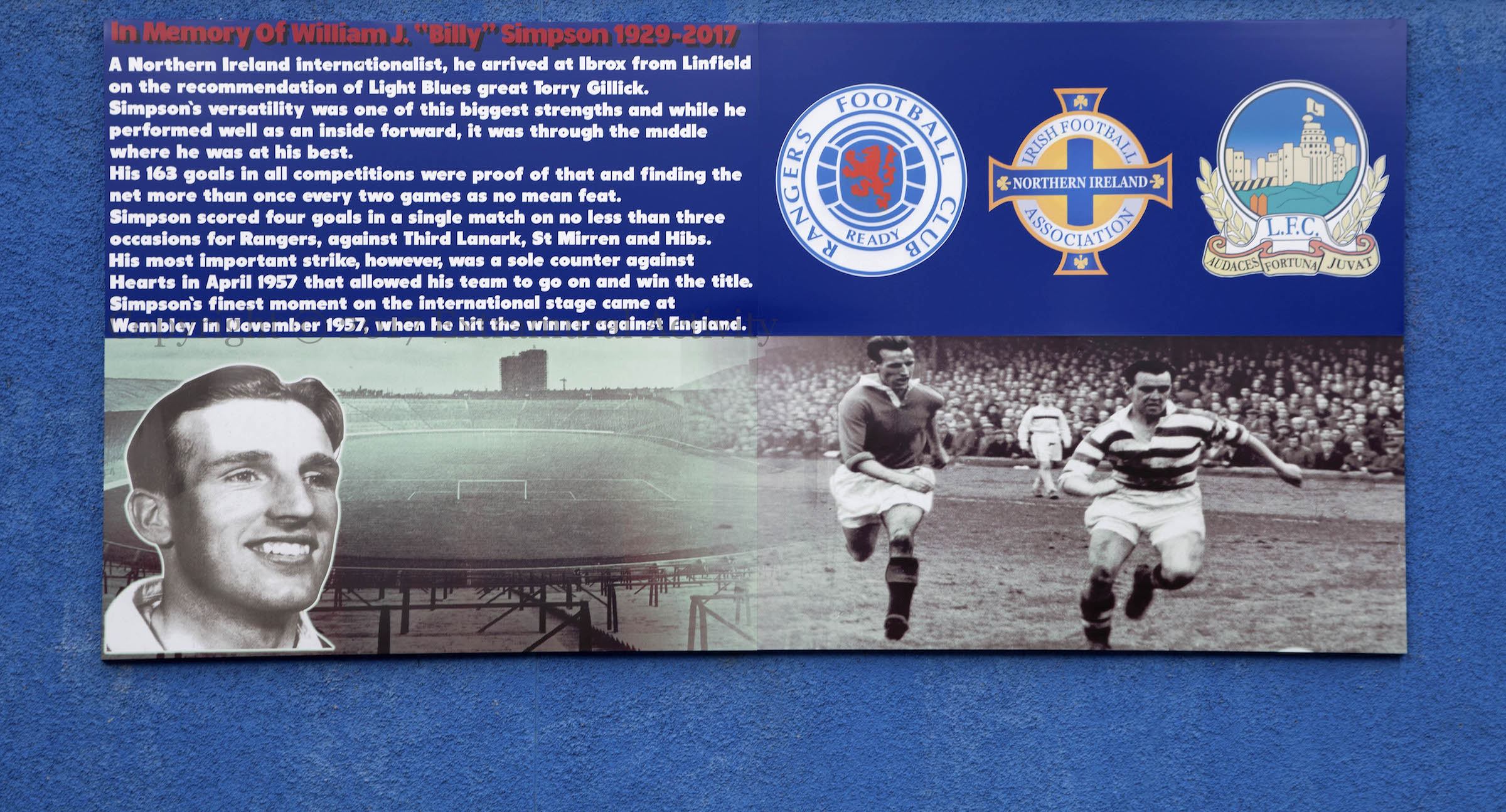
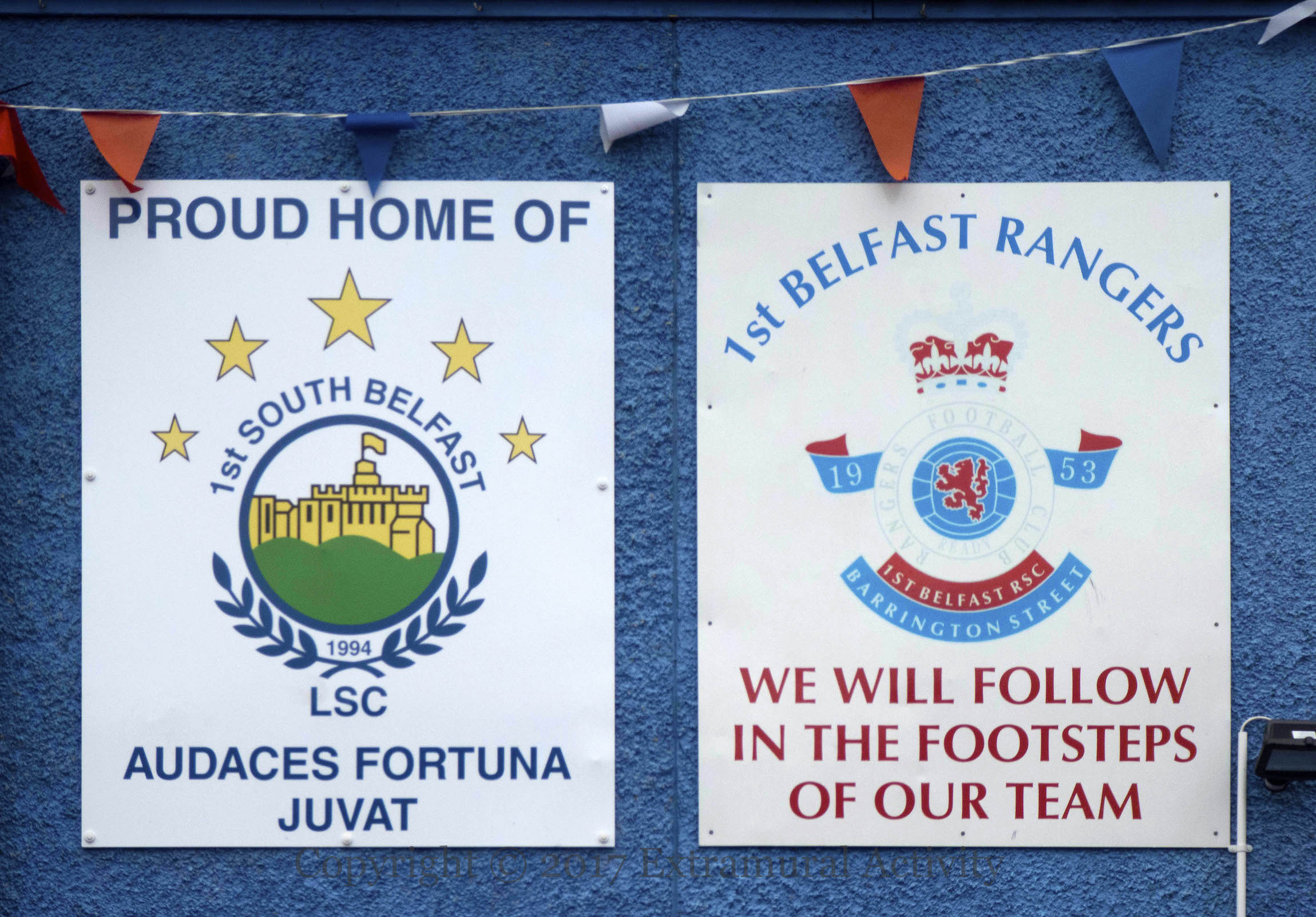
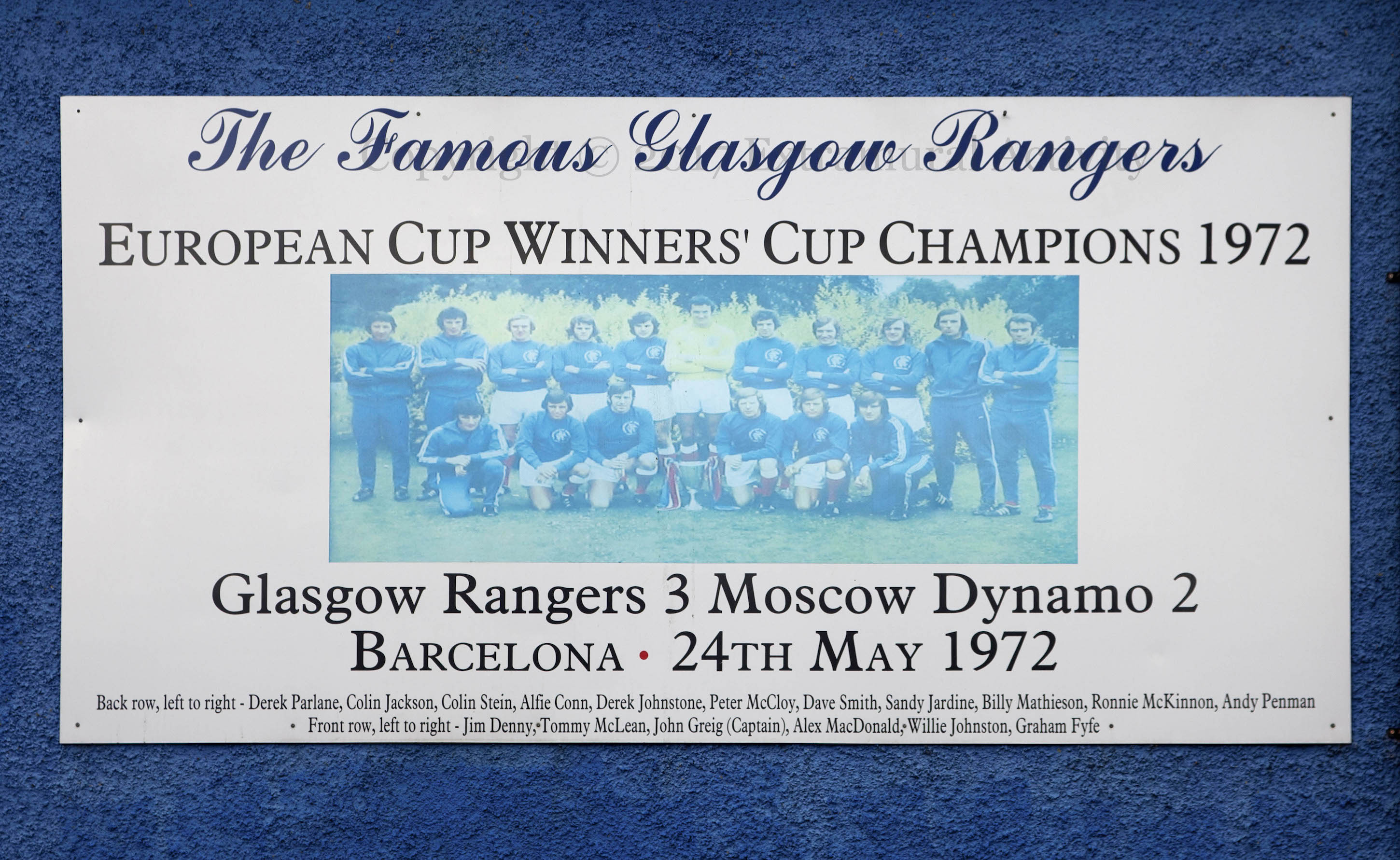
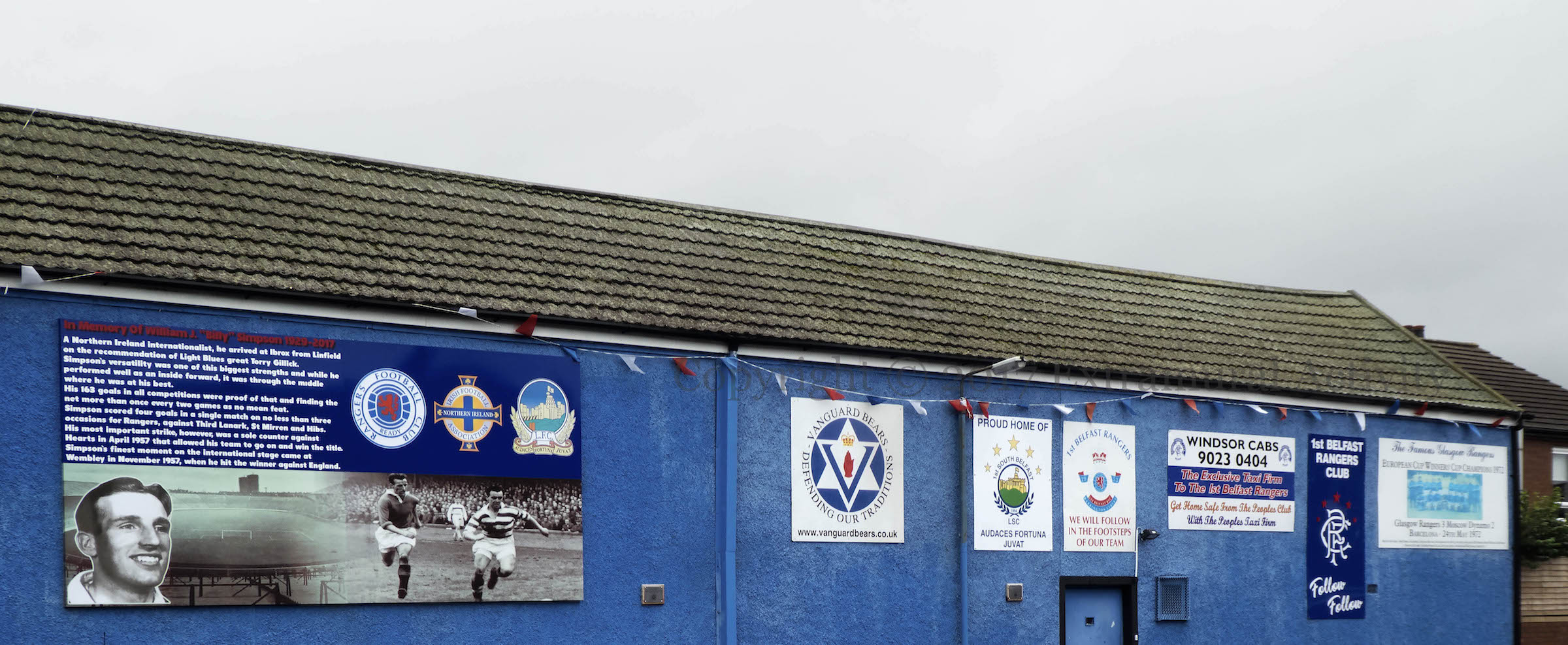
Footballer Billy Simpson moved from Linfield to Rangers in 1950 and over the course of nine years and 239 appearances scored 163 goals. He also scored the winner for Northern Ireland against England in 1957. Simpson died in January of this year (2017) and is remembered by this board outside the Supporters’ Club in Barrington Street, south Belfast. Other boards include a celebration of Rangers’ European Cup Winners’ Cup win in 1972 over Dynamo Moscow in Camp Nou, Barcelona.
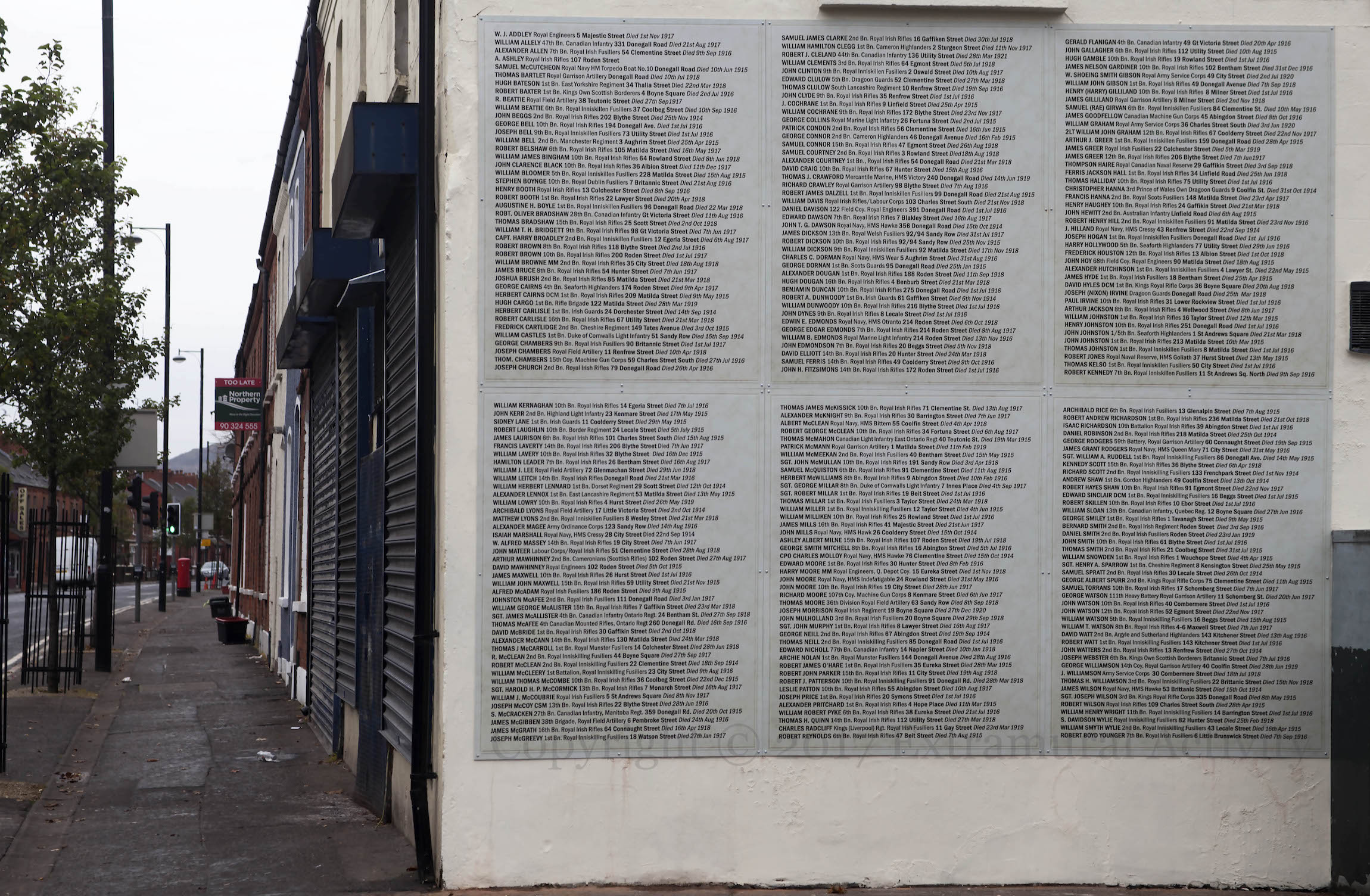
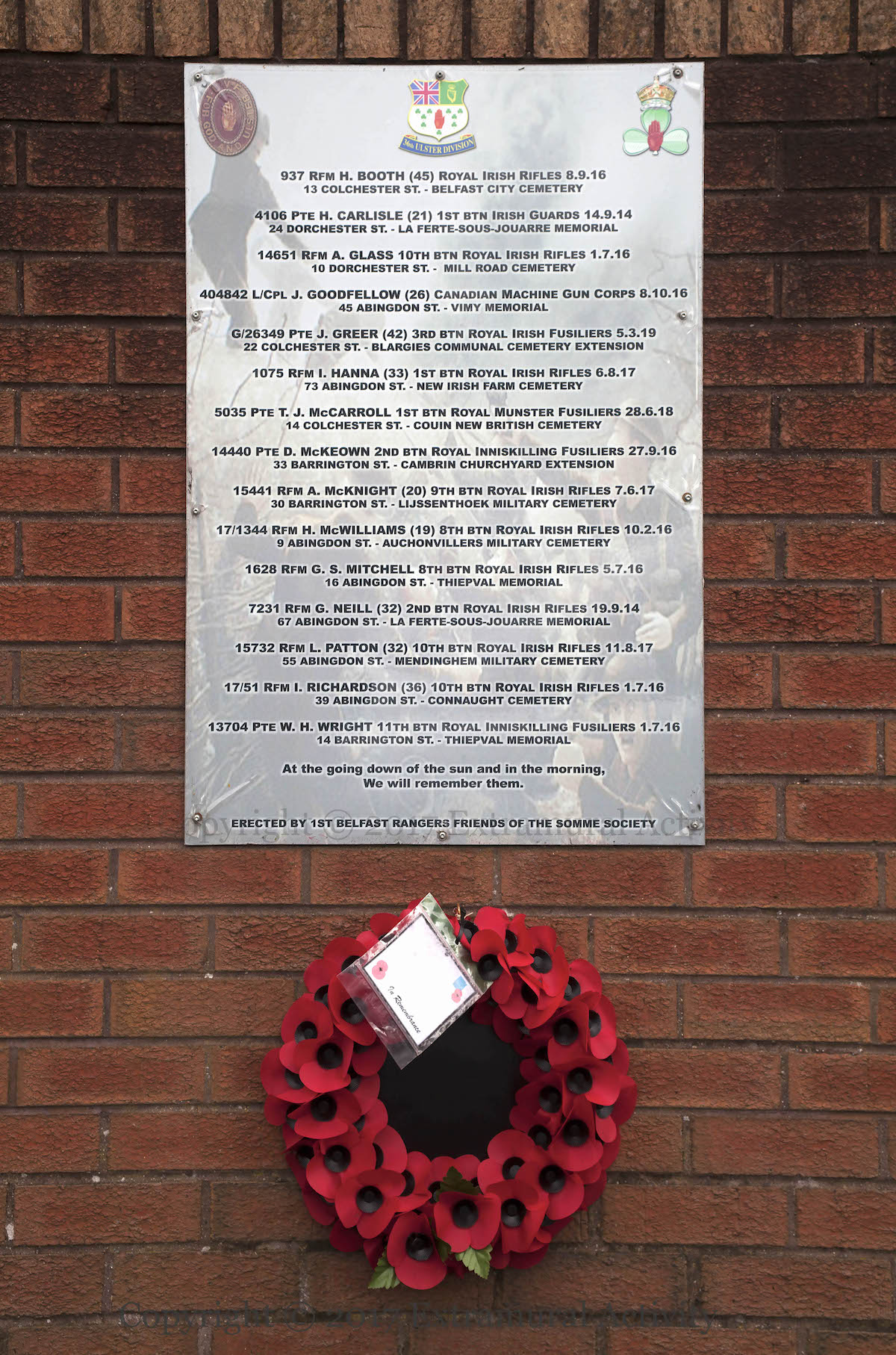
British Army soldiers from four streets are commemorated in a plaque in Barrington Gardens. All four streets – Abingdon, Barrington, Colchester, and Dorchester – have changed their names or disappeared entirely (Dorchester) since 1914. “Erected by 1st Belfast Rangers Friends Of The Somme Society” – the supporters club is right next door.
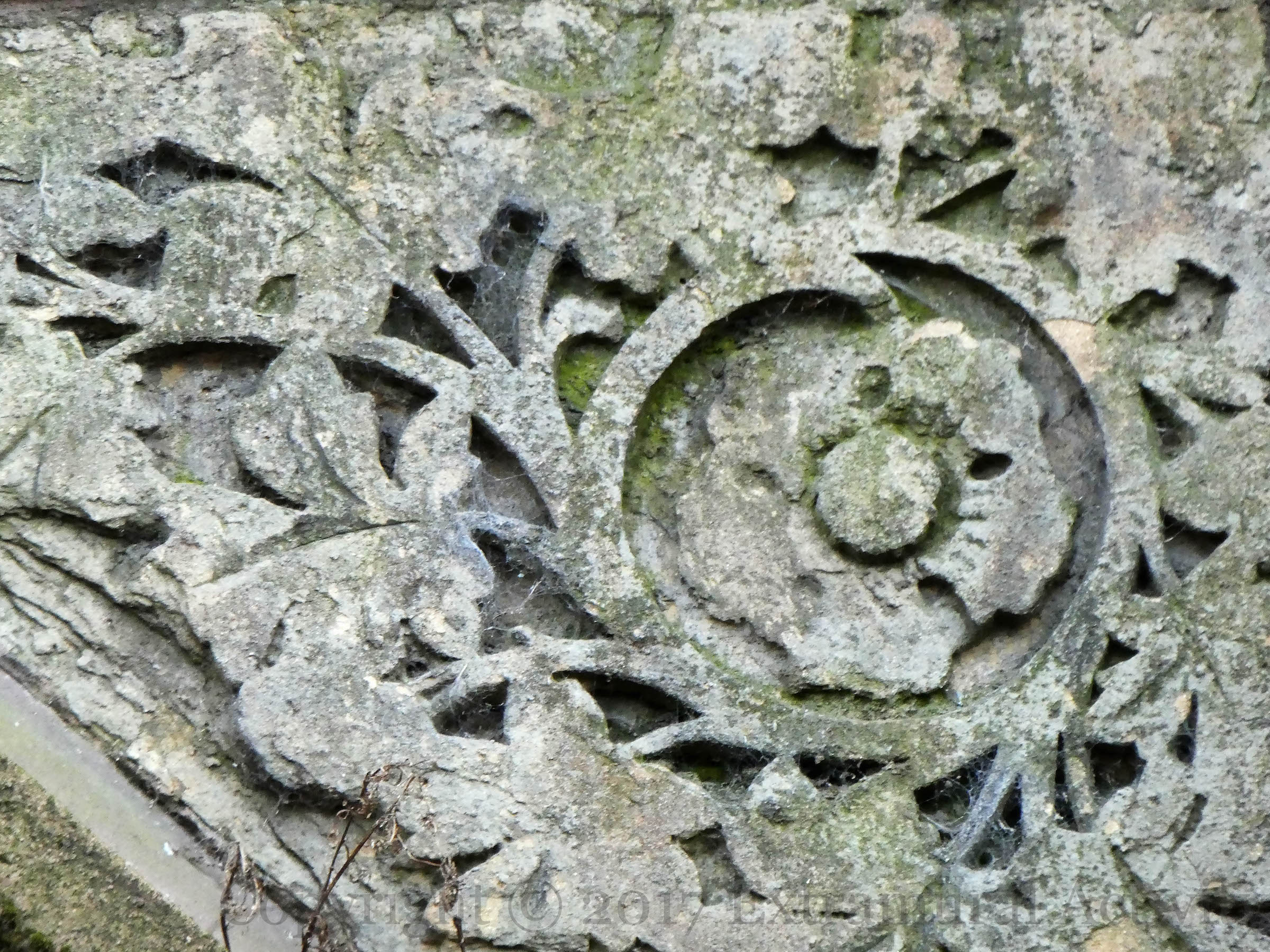
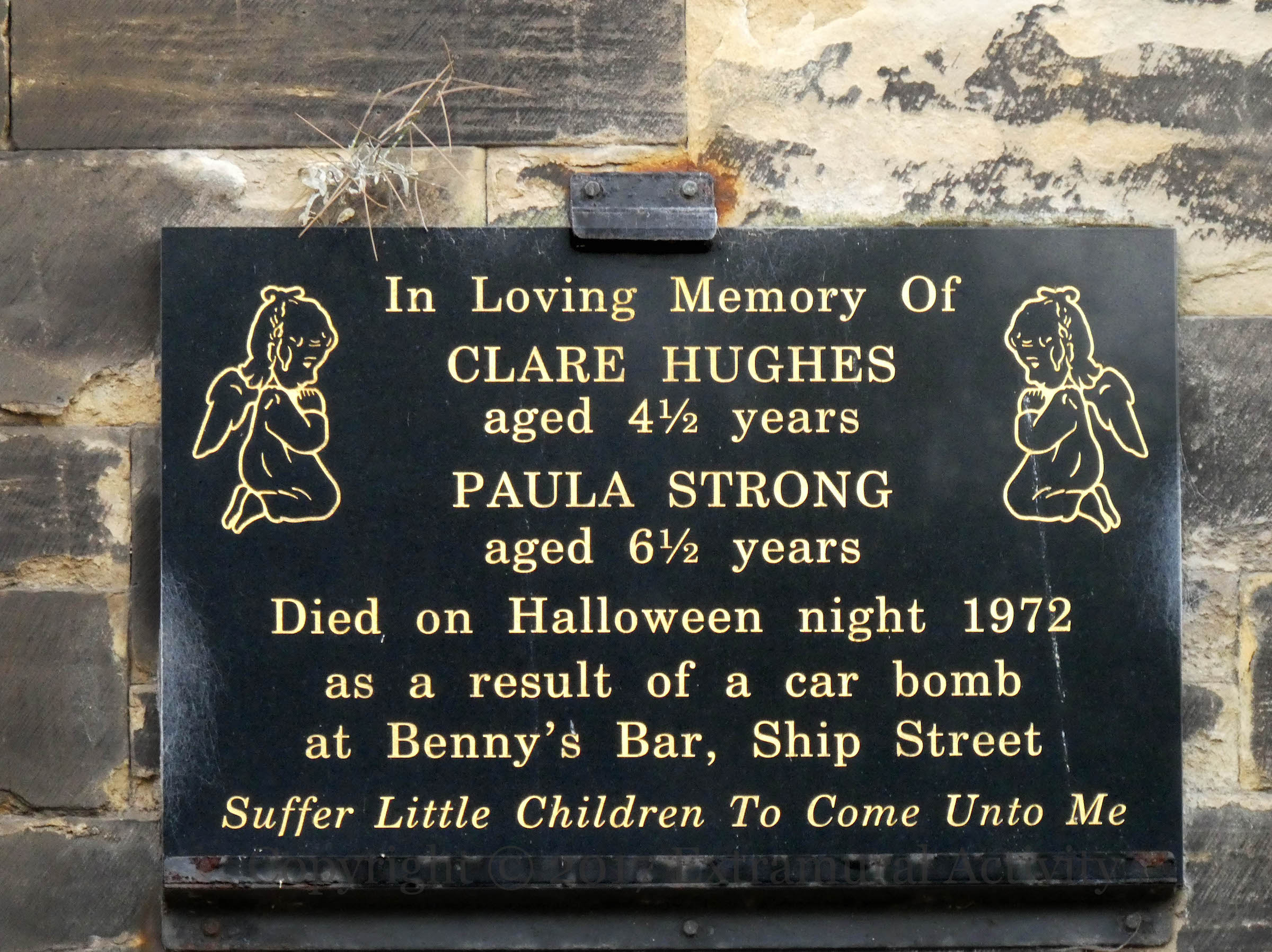
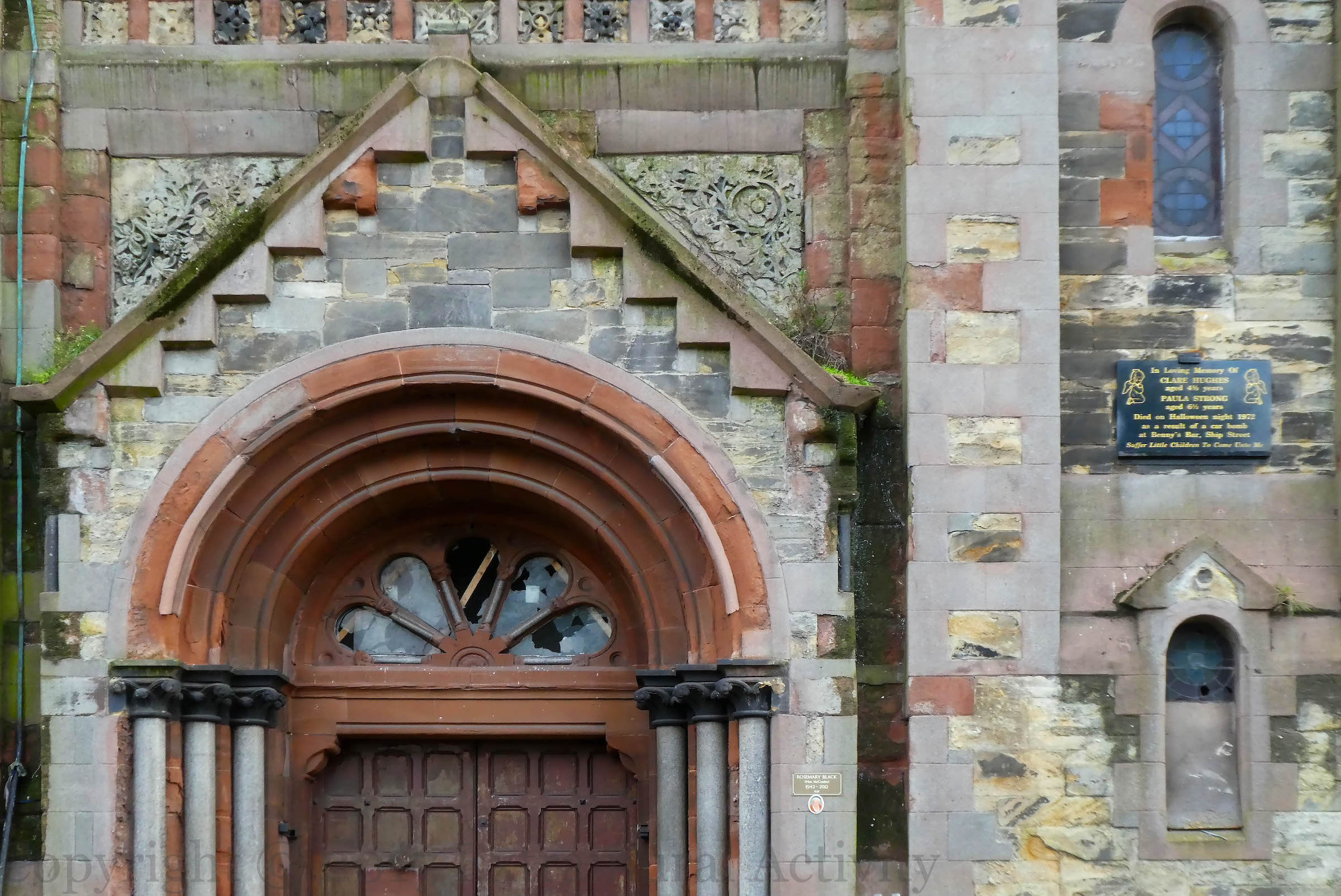
Restoration on the exterior St Joseph’s chapel in Sailortown – a Catholic church decommissioned in 2001 – is set to begin this month (BelTel). The building, originally constructed in 1880, is in such a state that it was declared a dangerous building earlier this year (Irish News). Here are three images from the front: a masonry rose above the door; a plaque to two young girls who were killed by a UDA car bomb in 1972; and a wide shot. BelfastLive has a gallery of the interior, which also needs restoration.