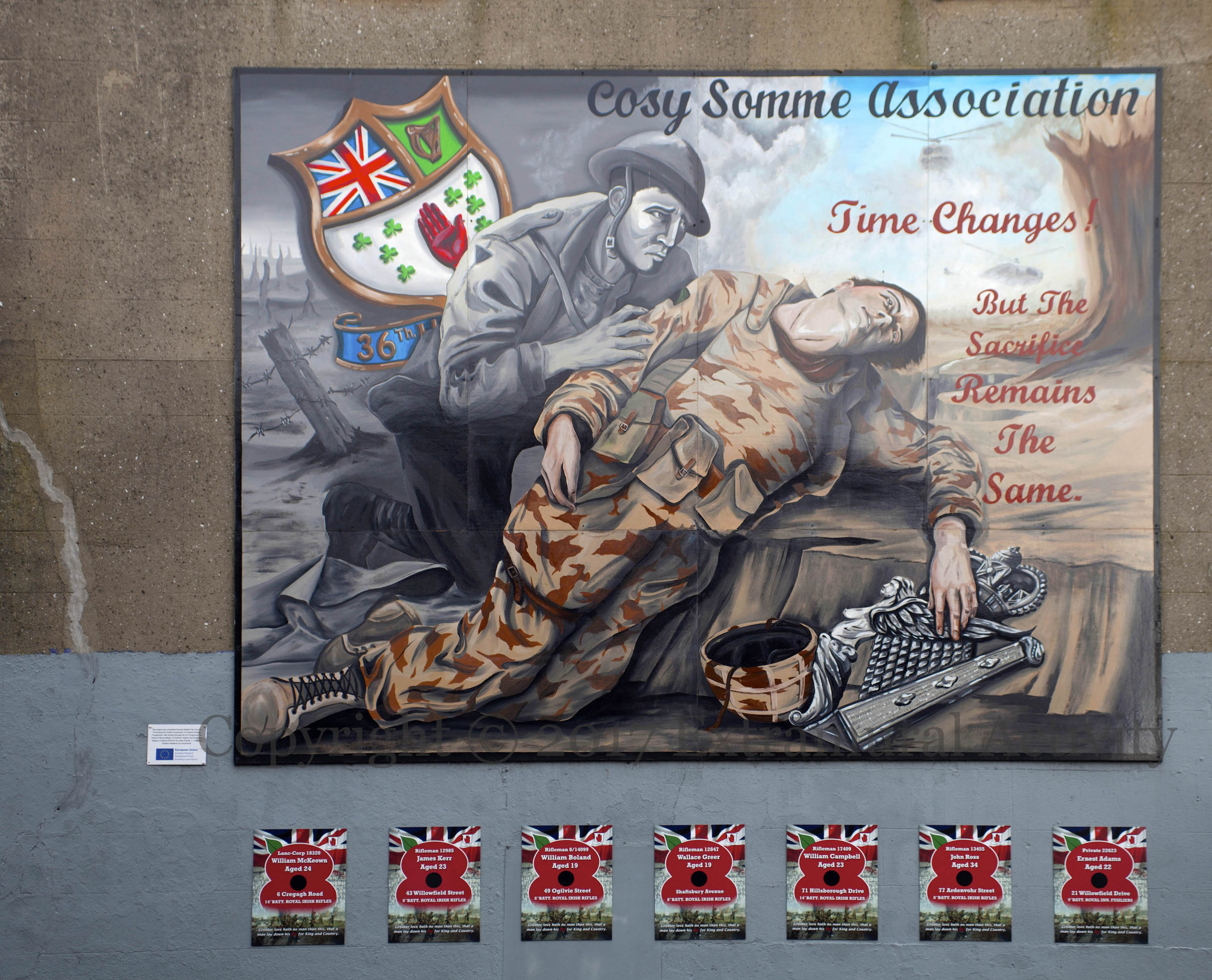
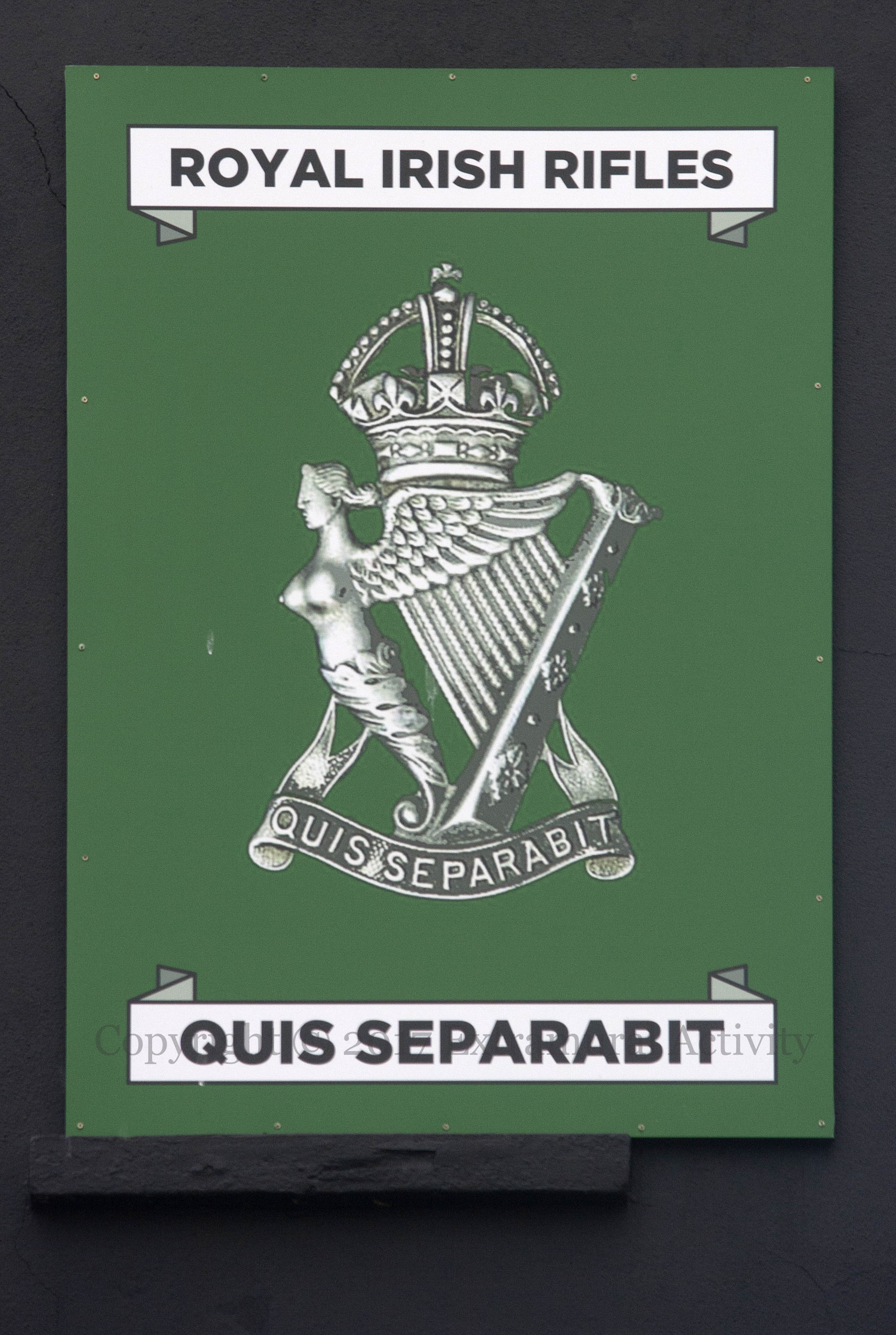
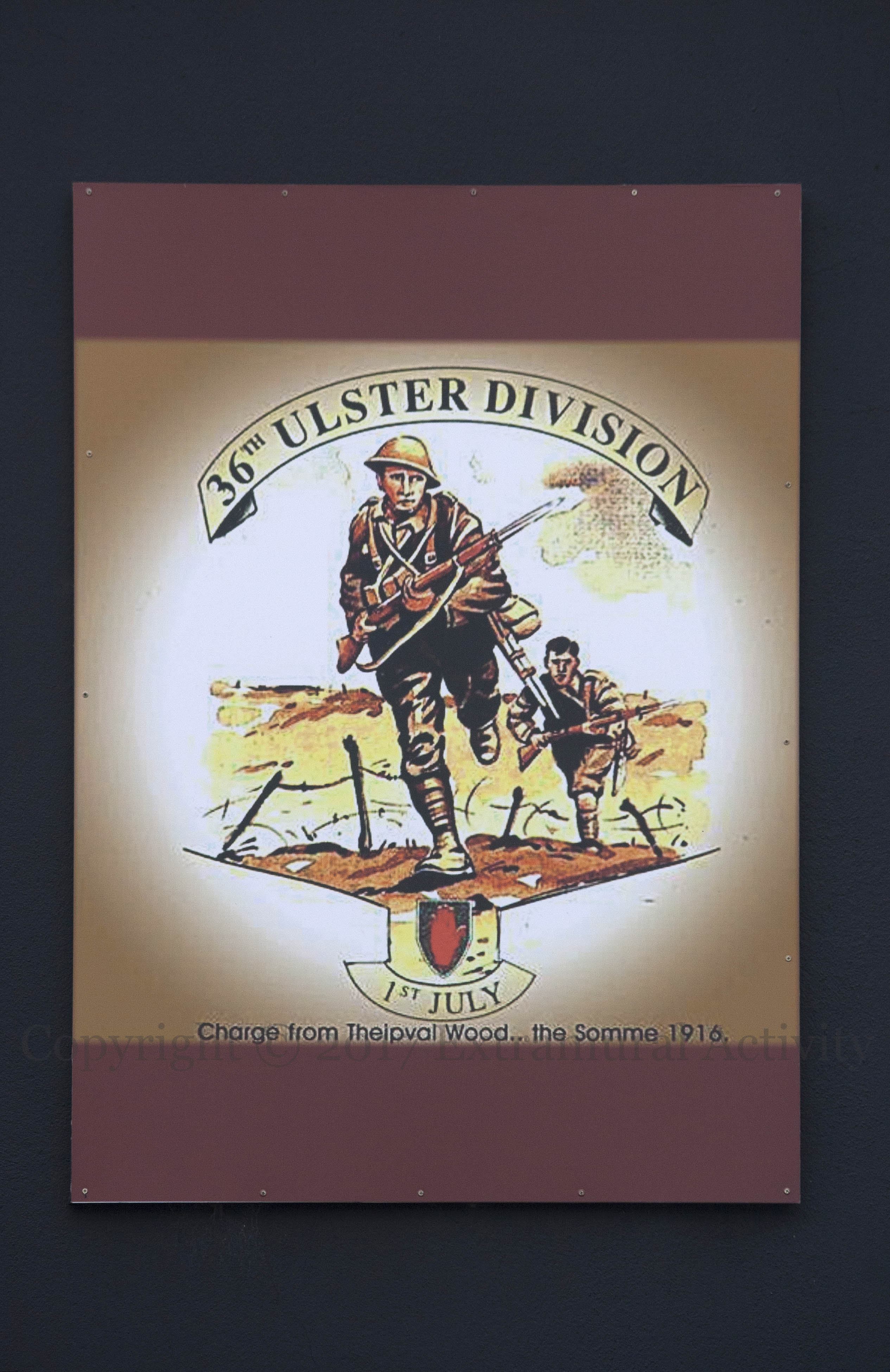
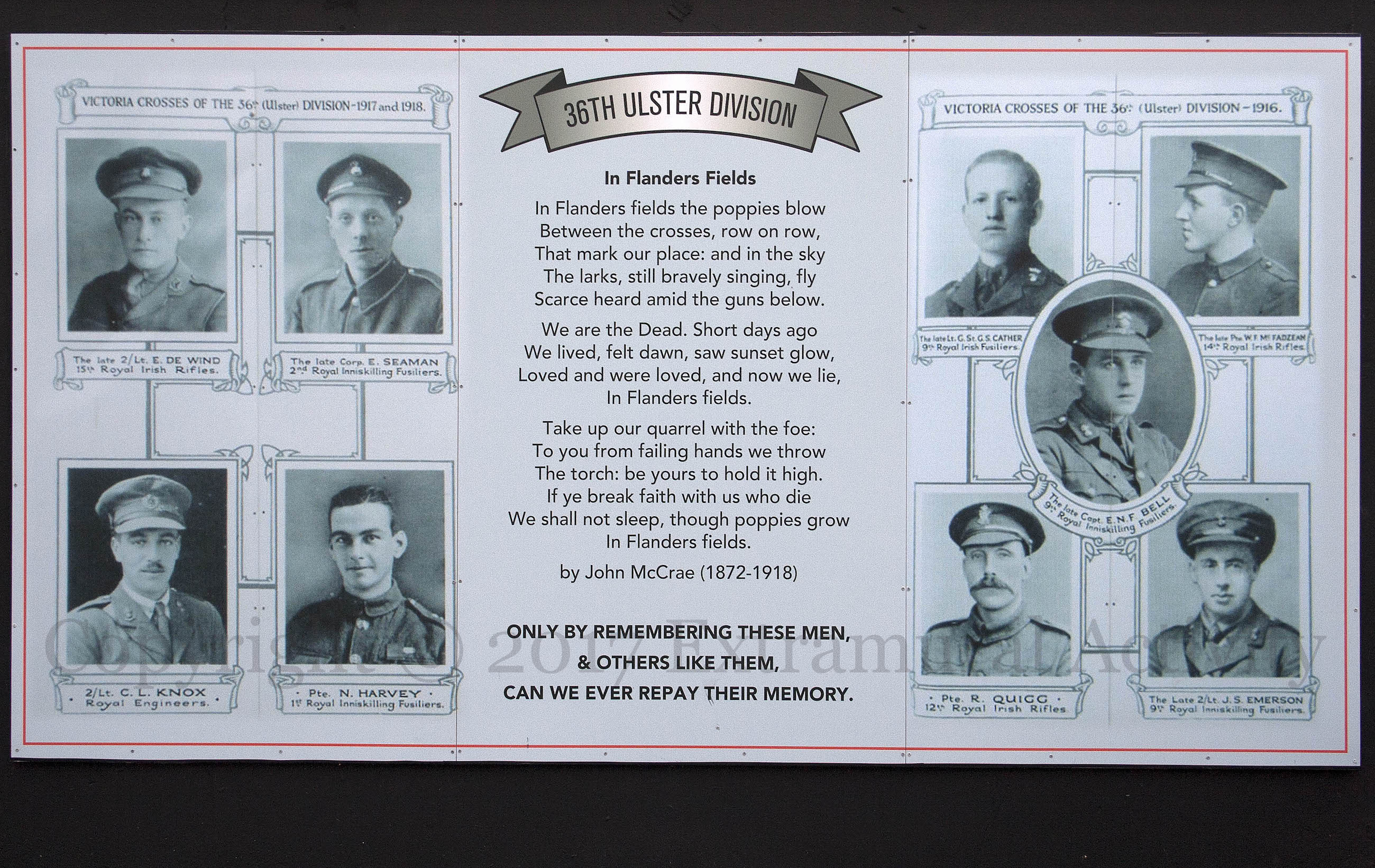
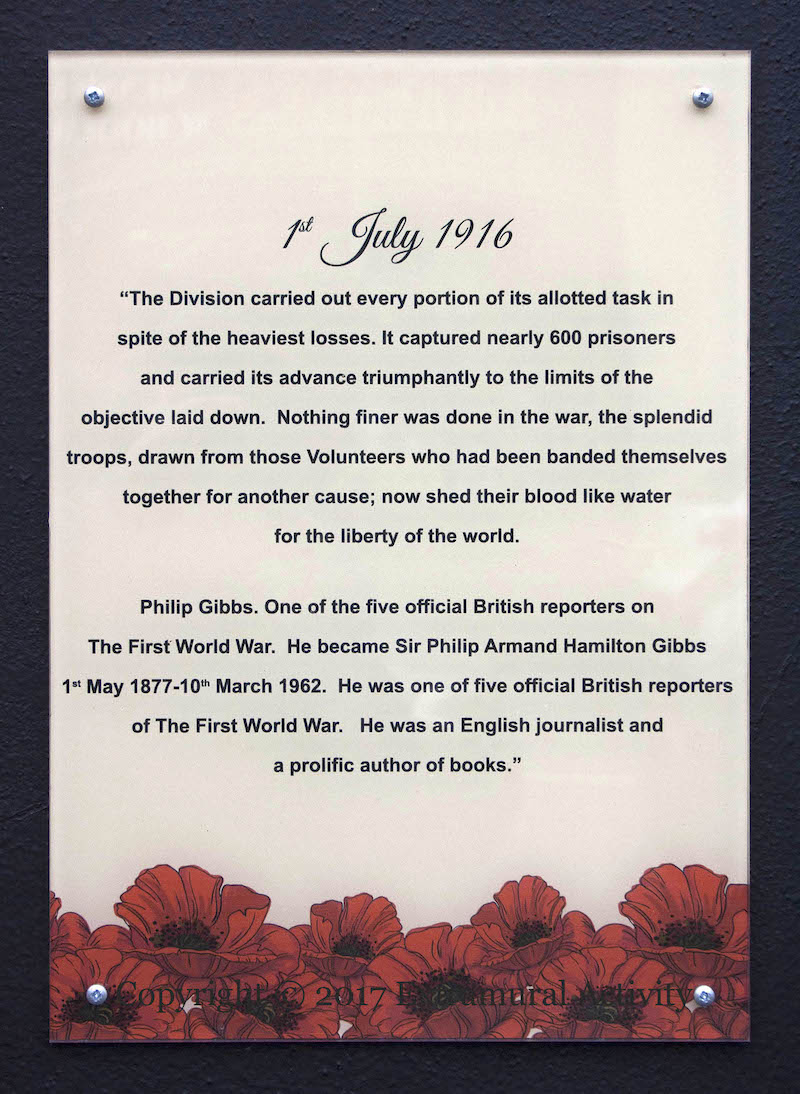
Poppy Trail boards have been added below the 2013 Time Changes board commemorating the sacrifice of the 36th (Ulster) Division – in black-and-white on the left – and the Royal Irish Rifles – in colour on the right.
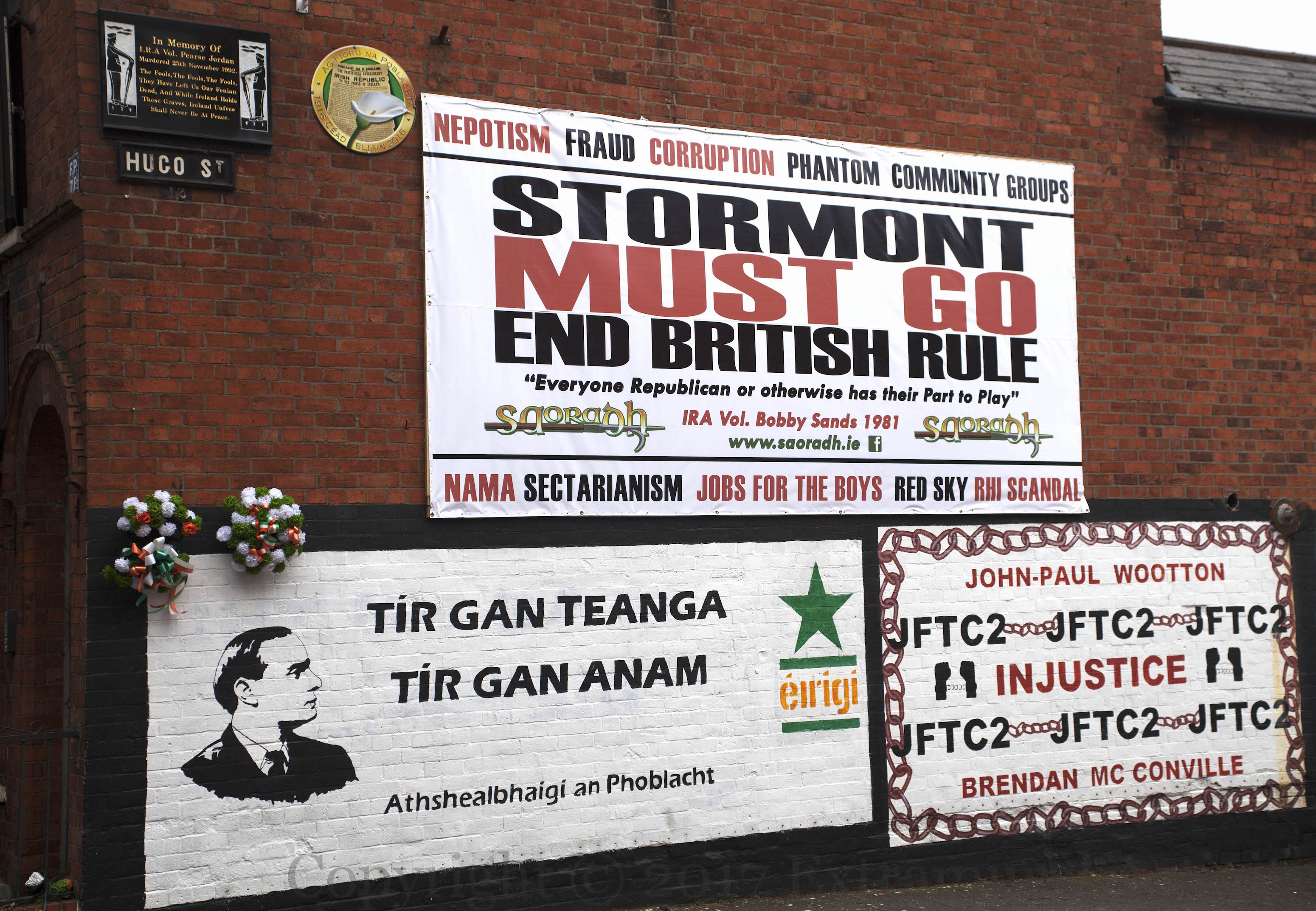
New political party Saoradh (Fb) is advocating a boycott of the upcoming (March 2nd) Stormont election, claiming that Stormont espouses “the co-dependent ideologies of imperialism, sectarianism and capitalism”. The tarp shown above lists various problems and scandals (“Nepostism, fraud, corruption, phantom community groups, NAMA, sectarianism, jobs for the boys, Red Sky, RHI scandal”) and evokes the spirit of 1981 hunger striker Bobby Sands: “Everyone Republican or otherwise has their Part to Play.” Also visible are a board celebrating the 100th anniversary of the Easter Rising (see versions in Andersonstown | Ardoyne | St James), an éırígí mural featuring Patrick Pearse, and a call for the release of the Craigavon Two (previously featured).
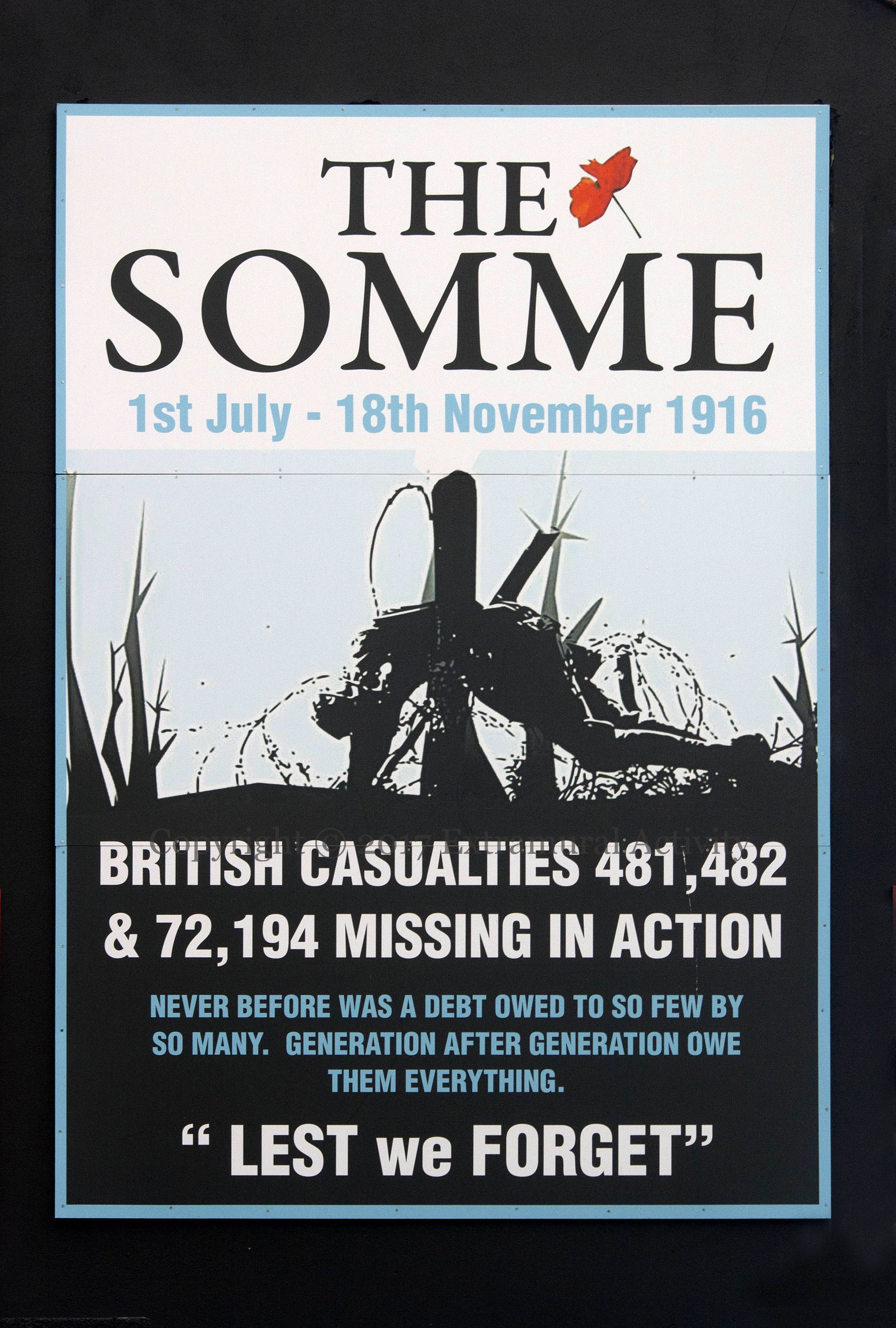
Winston Churchill’s line about the British Air Force in WWII, that “Never in the field of human conflict was so much owed by so many to so few“, is echoed in this WWI board about the battles at the Somme between July 1st and November 18th, 1916. “The few” in this case, however, number nearly half a million dead and more than 72,000 missing. “Never before was a debt owed to so few by so many. Generation after generation owe them everything. Lest we forget.”
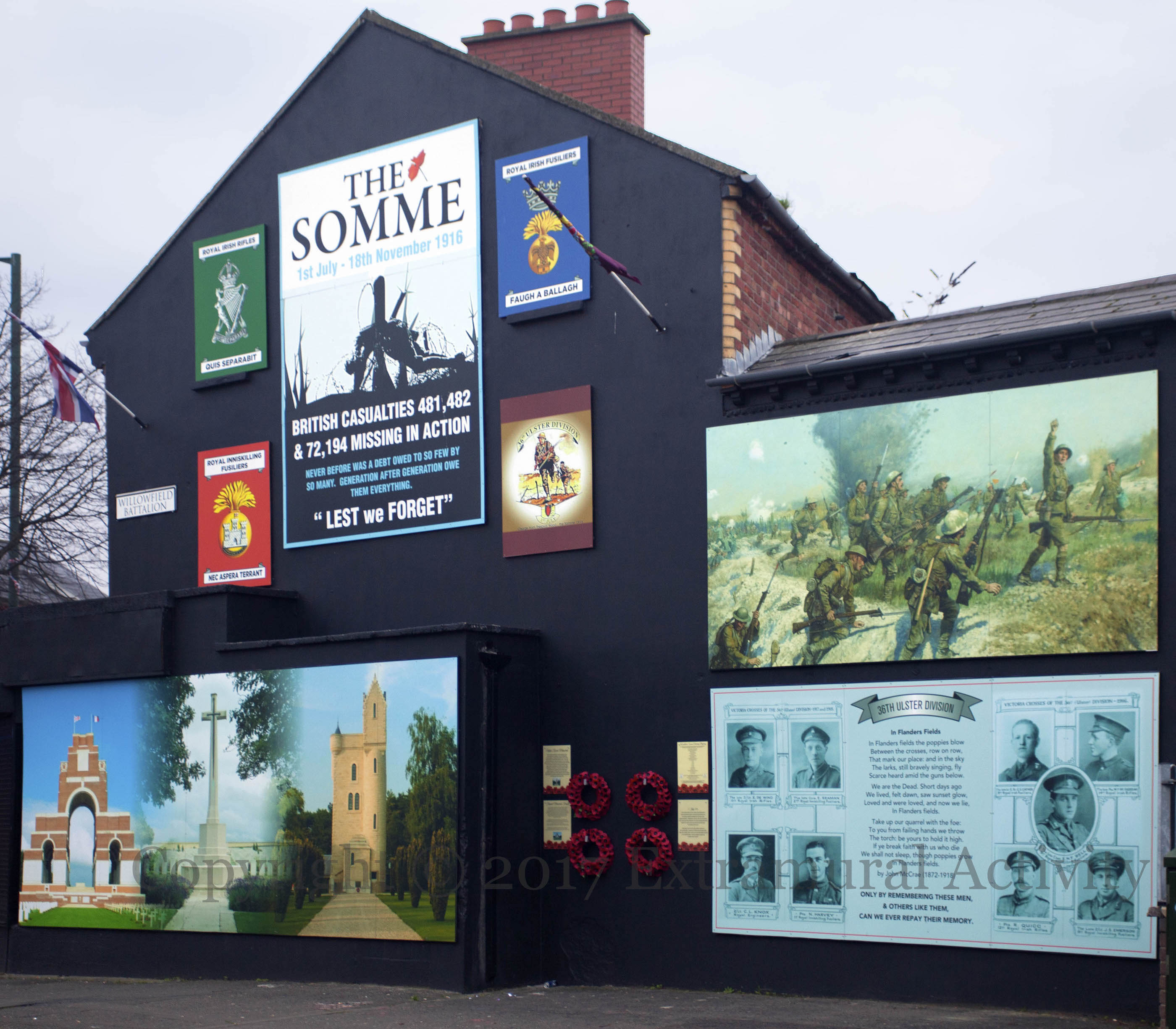
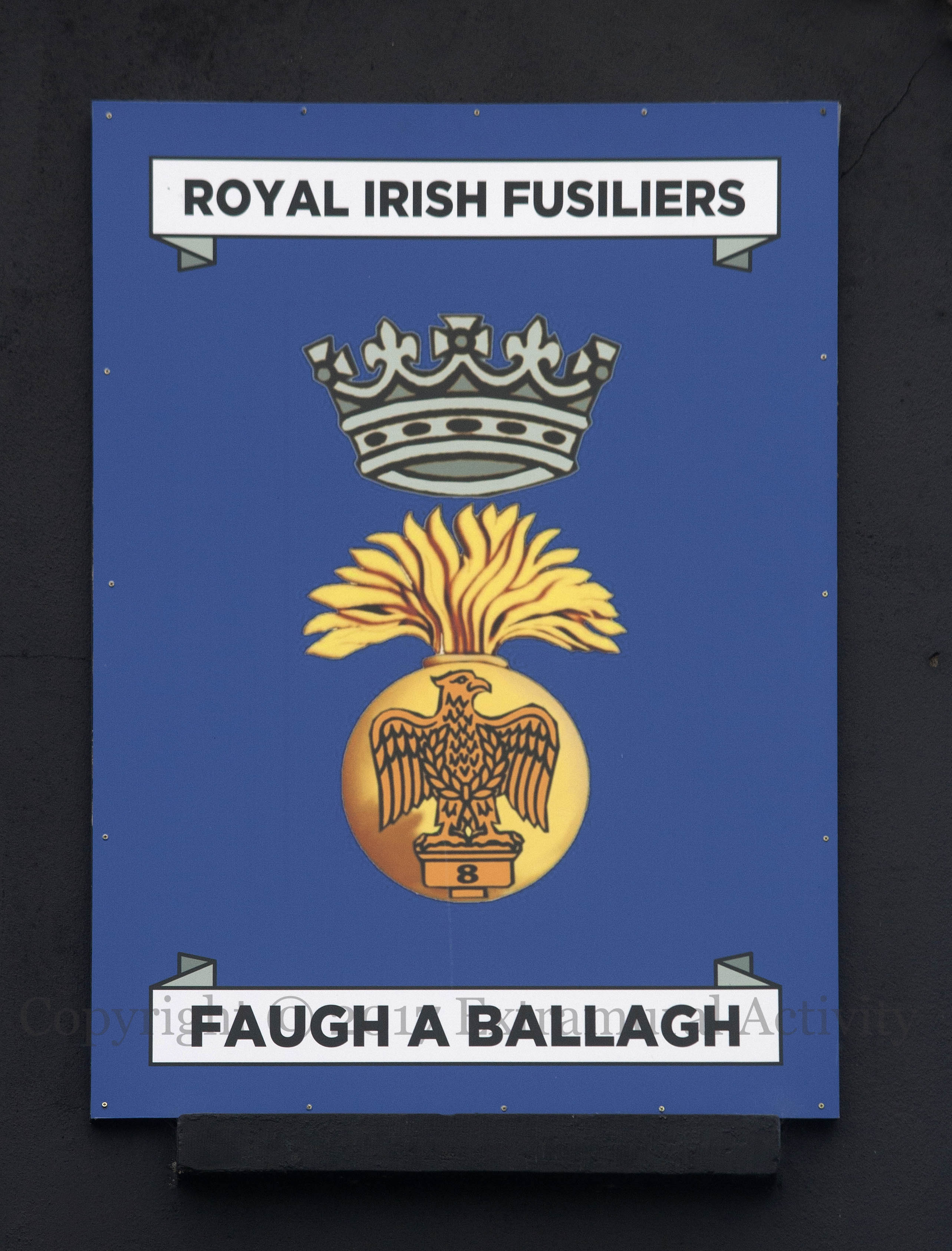
“Faugh a ballagh” (Clear the way) was the motto of the Royal Irish Fusiliers (and then of the Royal Irish Rangers and currently of the Royal Irish Regiment). The Fusiliers served on the western front during WWI – the first and ninth battalions serving in the 36th (Ulster) Division – and the 3rd battalion helped put down the Easter Rising in 1916. Its coat of arm are one of four panels along with the 36th, the Royal Irish Rifles, and the Royal Inniskilling Fusiliers.
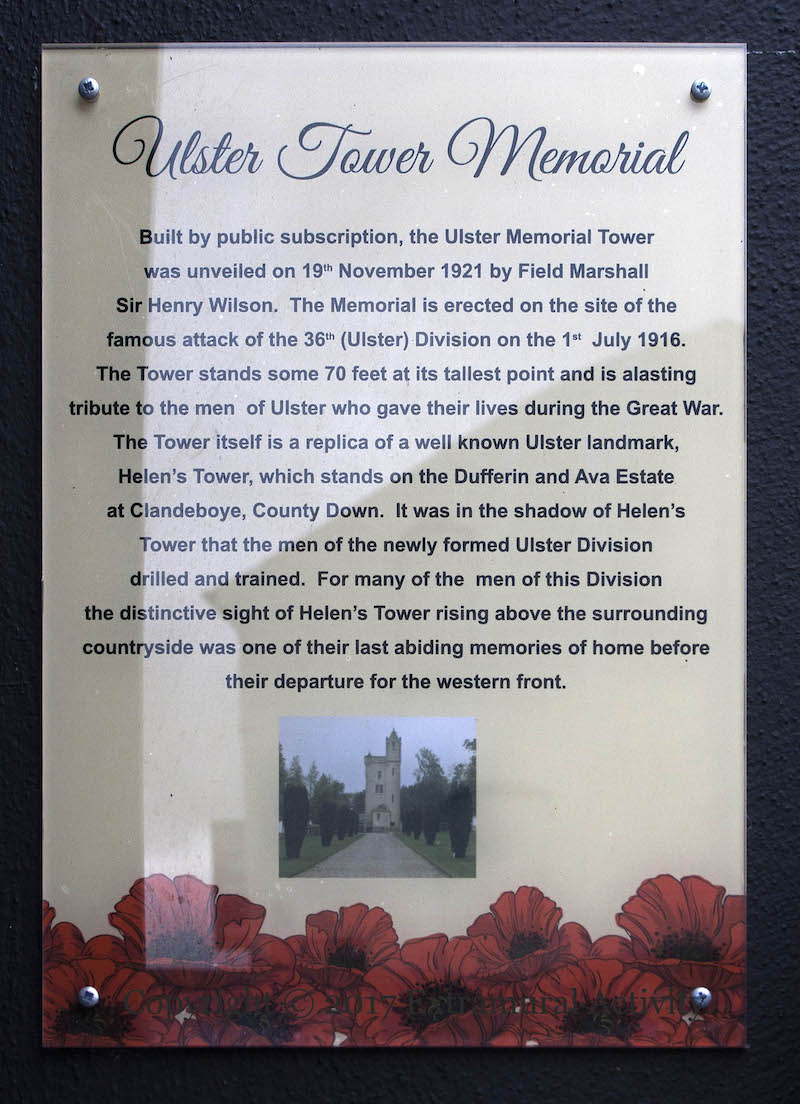
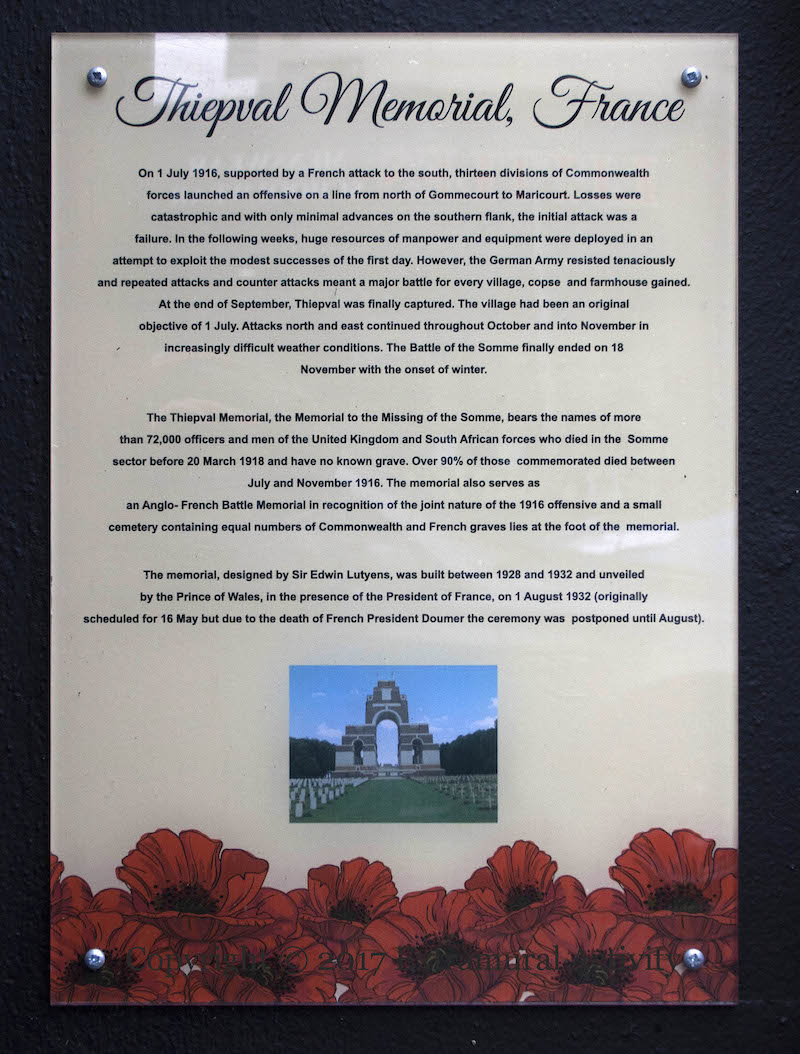
The Thiepval Memorial, the Cross of Sacrifice, and the Ulster Tower are pictured in the bottom left.
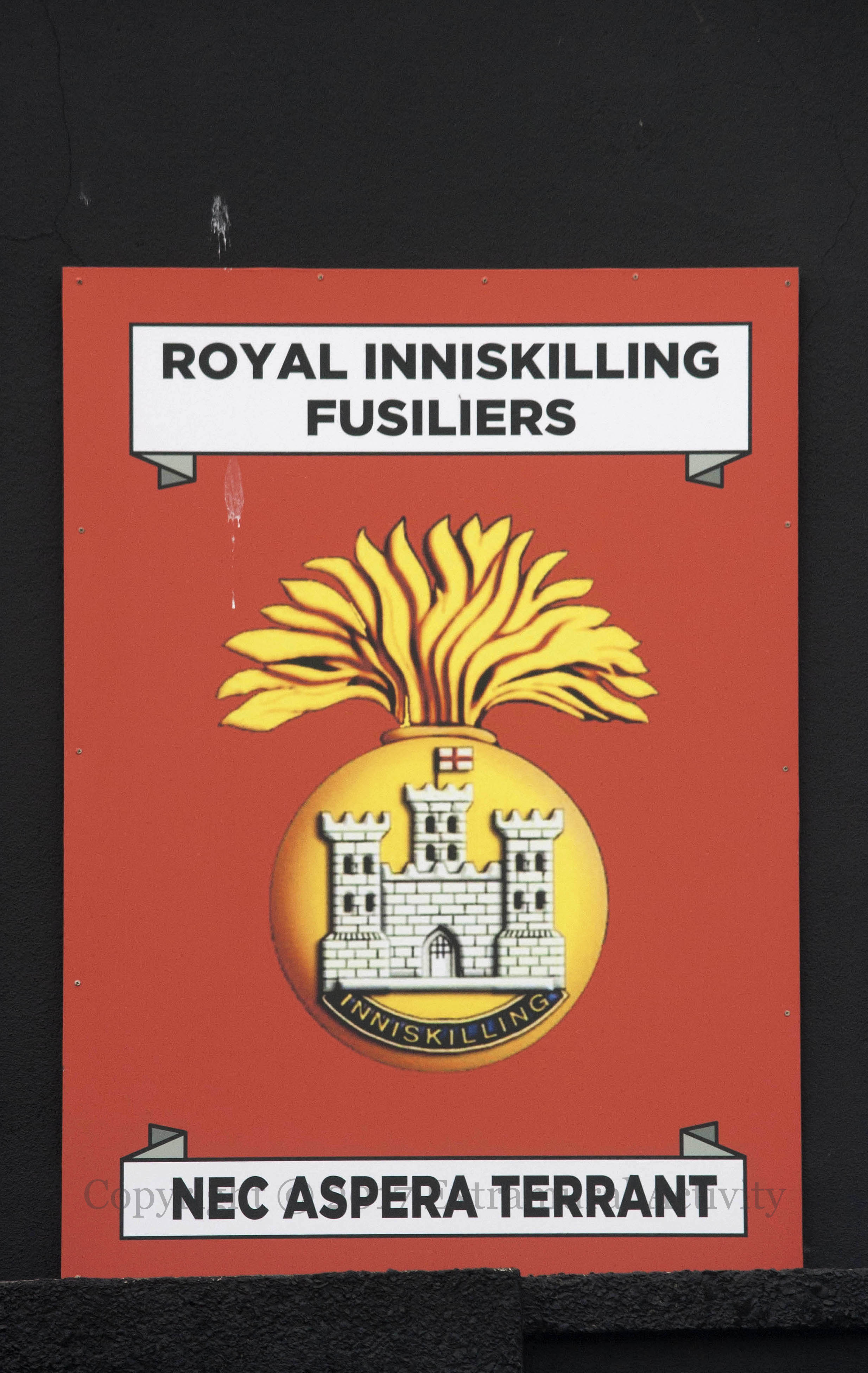
Close-ups of the four regimental insignia are included below. “Nec Aspera Terrant [sic, for “terrent”]”, meaning “frightened by no difficulties”, was the motto of the Inniskilling Fusiliers, who fought in both Boer Wars and both World Wars – its battalions saw action at Gallipoli and on the Western front – before being amalgamated in the Royal Irish Rangers in 1968, along with the Royal Ulster Rifles and the troop featured in the third image, the Royal Irish Fusiliers. Their arms are shown along with those of the Royal Irish Rifles and a board commemorating the charge from Thiepval Wood during the Somme
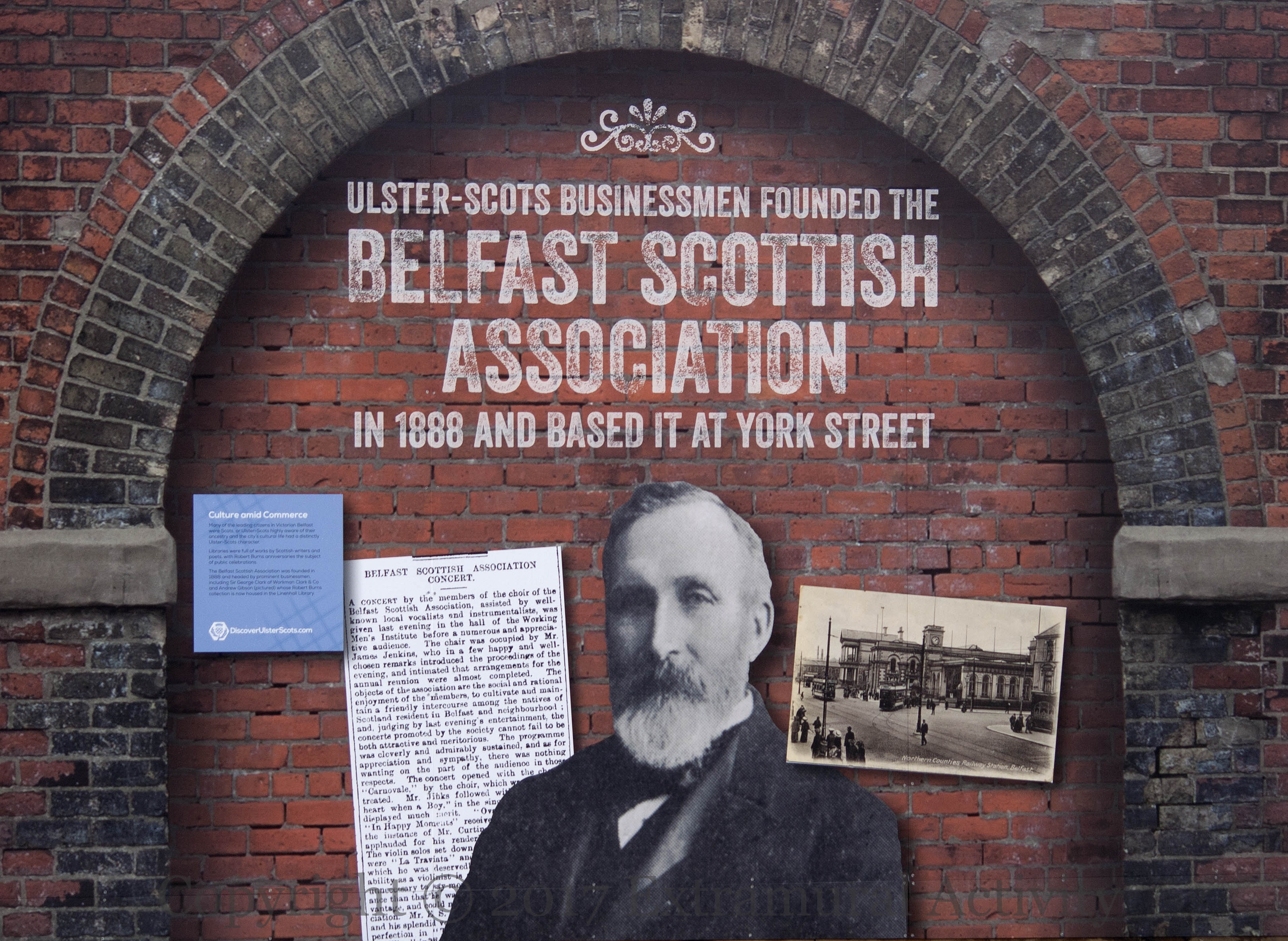
“The Belfast Scottish Association was founded in 1888 and headed by prominent businessmen, including Sir George Clark of Workman Clark and Andrew Gibson (pictured) whose Robert Burns collection is now housed in the Linenhall Library.”
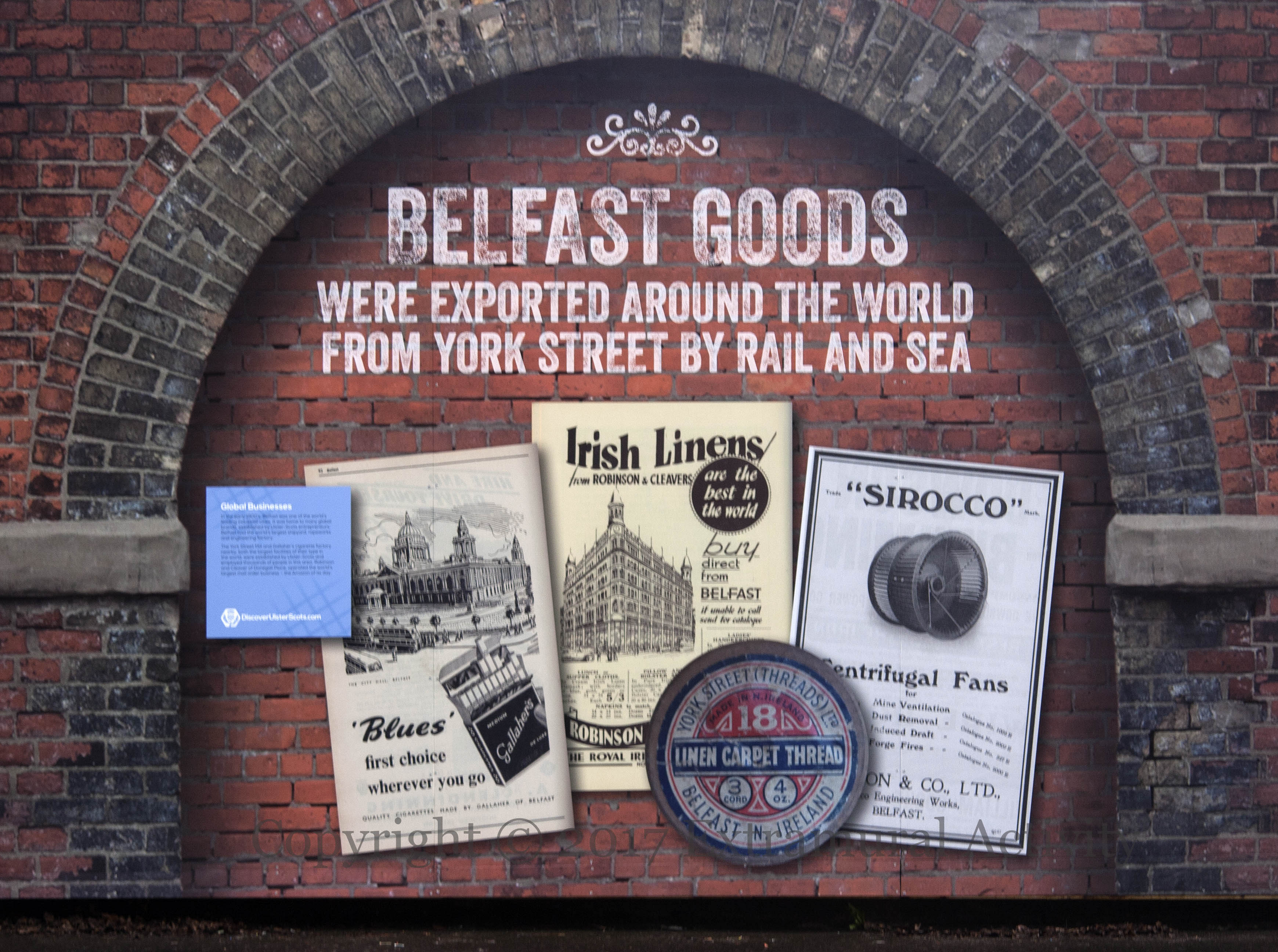
Among the Belfast goods “exported around the world from York Street by rail and sea” were Gallaher’s Blues (cigarettes), Irish linens, Davidson & Co (Samuel Davidson, born in County Down to an Ulster-Scots family, was the inventor of the Sirocco centrifugal fan “for mine ventilation, dust removal, induced draft, forge fires”), and linen carpet thread from York Street (Threads) Ltd. Robinson & Cleaver’s department store is now out of business. Gallaher’s is now the multinational Gallaher Group, but its factories in Belfast and Ballymena have closed. And Davidson’s company was bought by Howden UK in 1988.
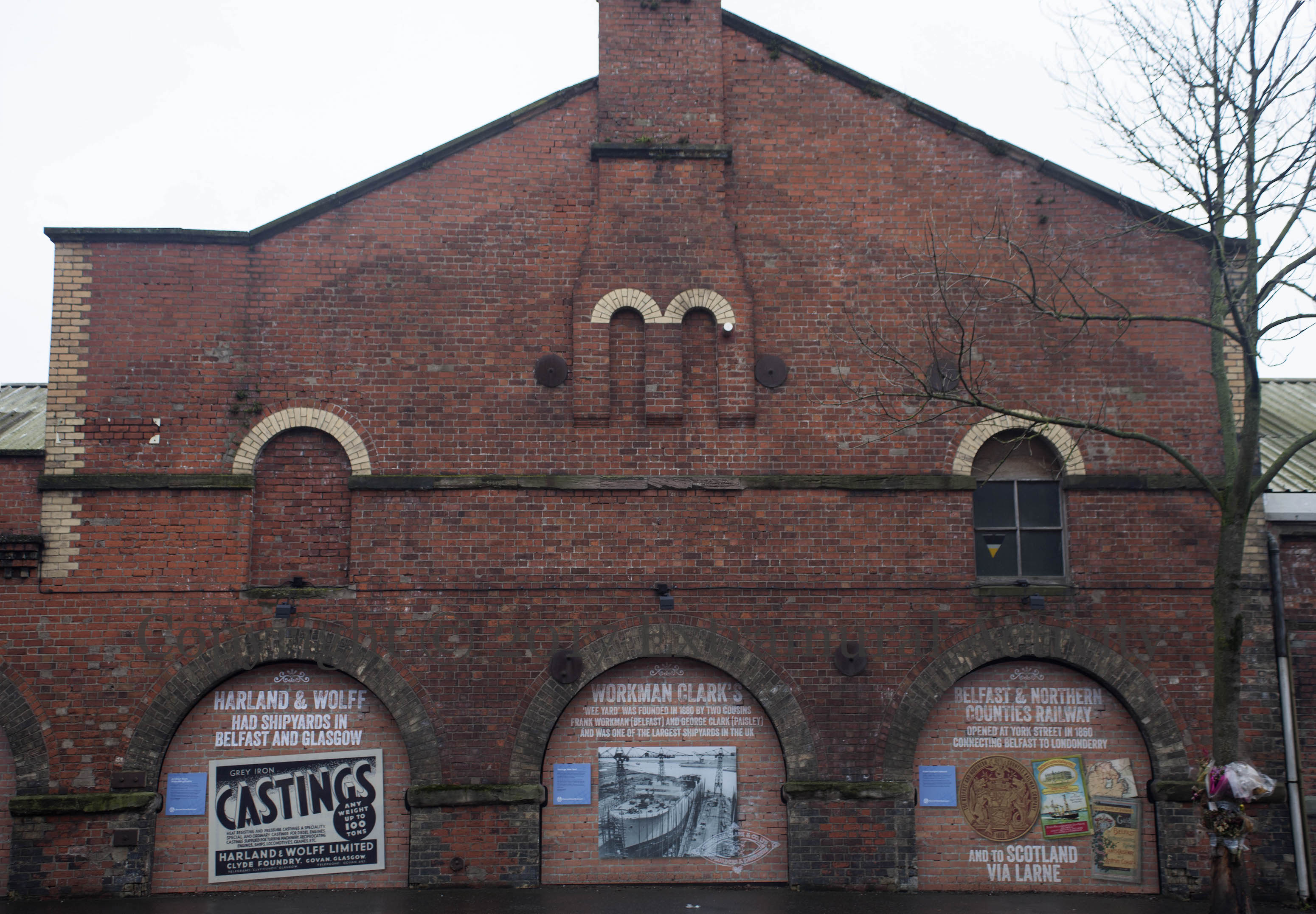
Workman & Clark’s (in the centre panel above) was a Belfast shipyard existing from 1880 to 1935. During the first world war it took over the construction of two monitor ships (specifically, M29 and M31) for the Royal Navy that H&W did not have space to build. For more, see Grace’s Guide | BBC audio on monitor ships and their construction, including a record for number of rivets hammered in by one John Moore at Workman Clark’s.
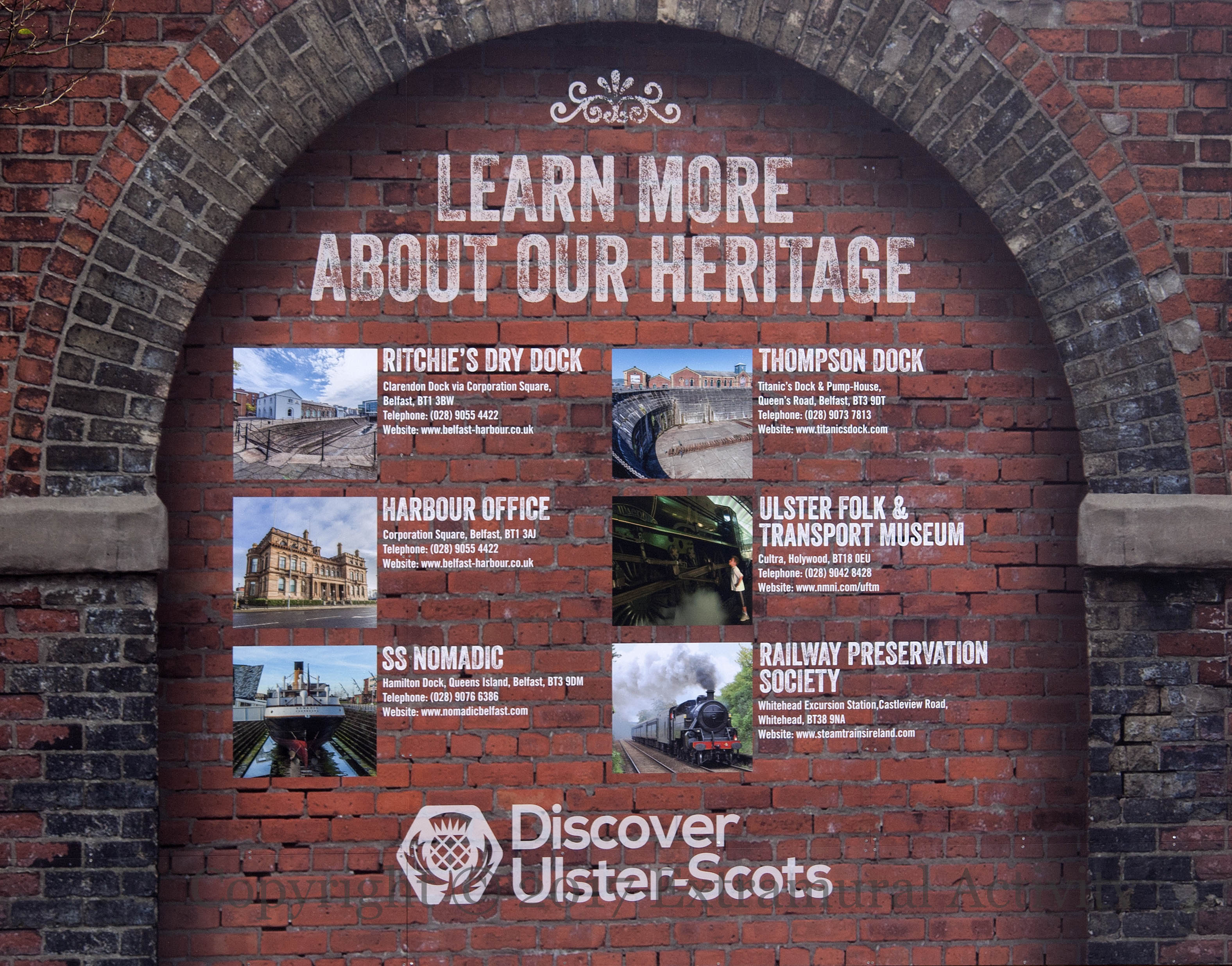
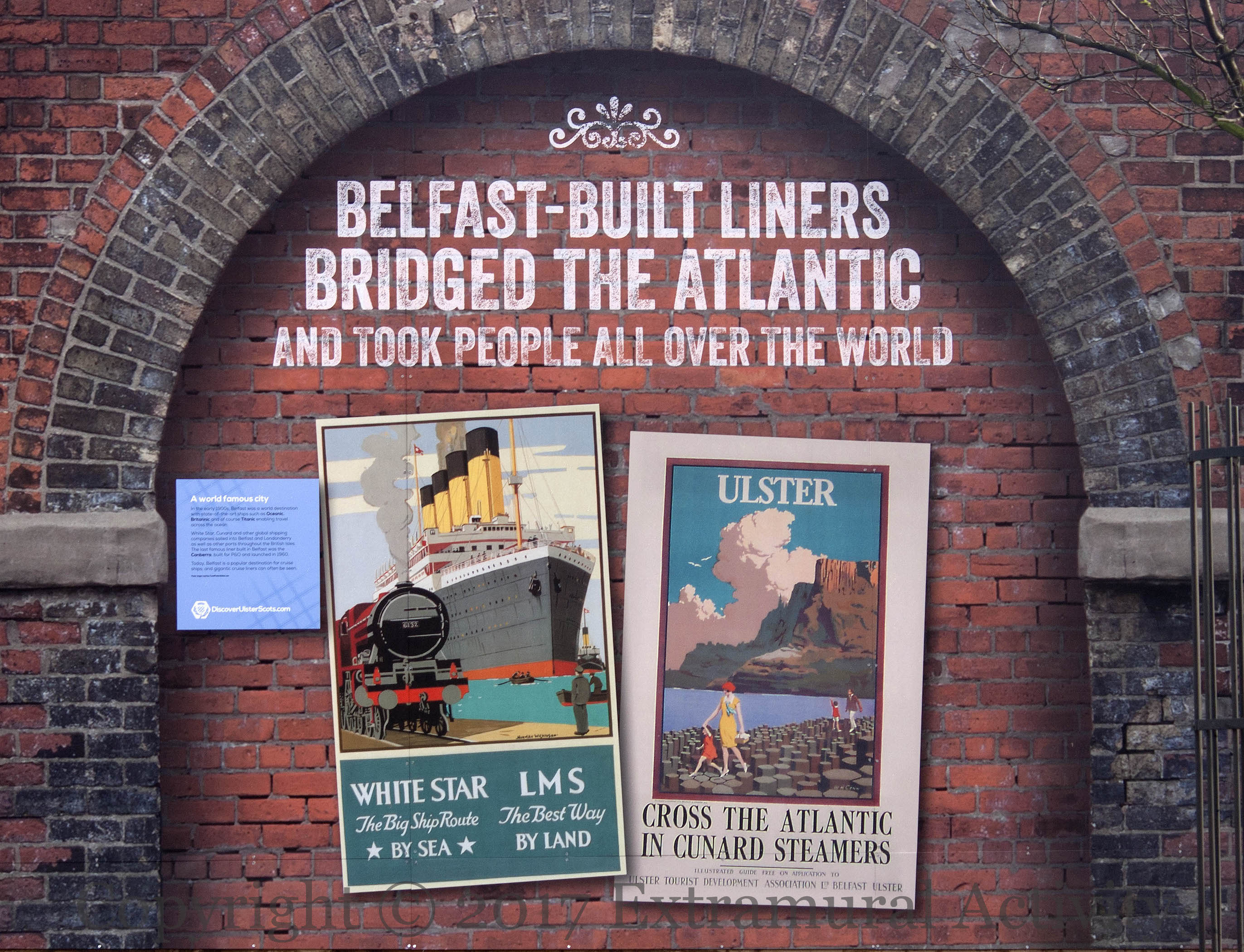
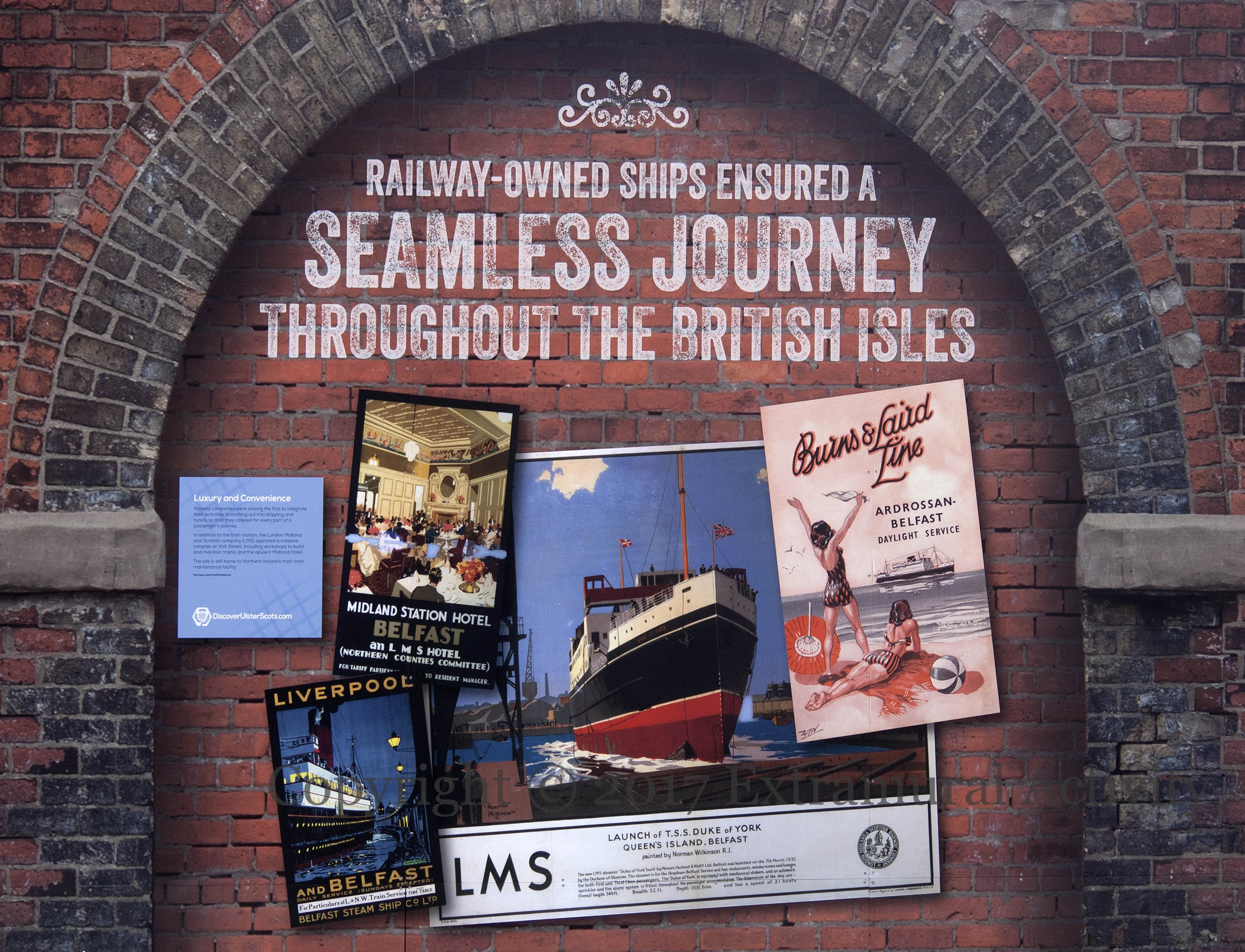
These are panels 6, 7, and 8 from the new boards along York Street on the outer wall of the NI Railways mechanical engineering workshop.
In addition to the famous trans-Atlantic ships (image above), Belfast was part of the travel network in the UK and Ireland (image below). Before there was British Railways, there were the Big 4: the Southern, Great Western, London and Northeastern, and London, Midland, and Scottish (LMS) railways. The latter included the railways in the Northern Counties. In addition to railways, the company owned canals, ships (including the Princess Victoria which sank on the Larne-Stranraer route), and hotels. “Belfast-built liners bridged the Atlantic and took people all over the world.” “Railway-owned ships ensured a seamless journey throughout the British Isles.”
Previously:The history of Shipbuilding in Belfast.
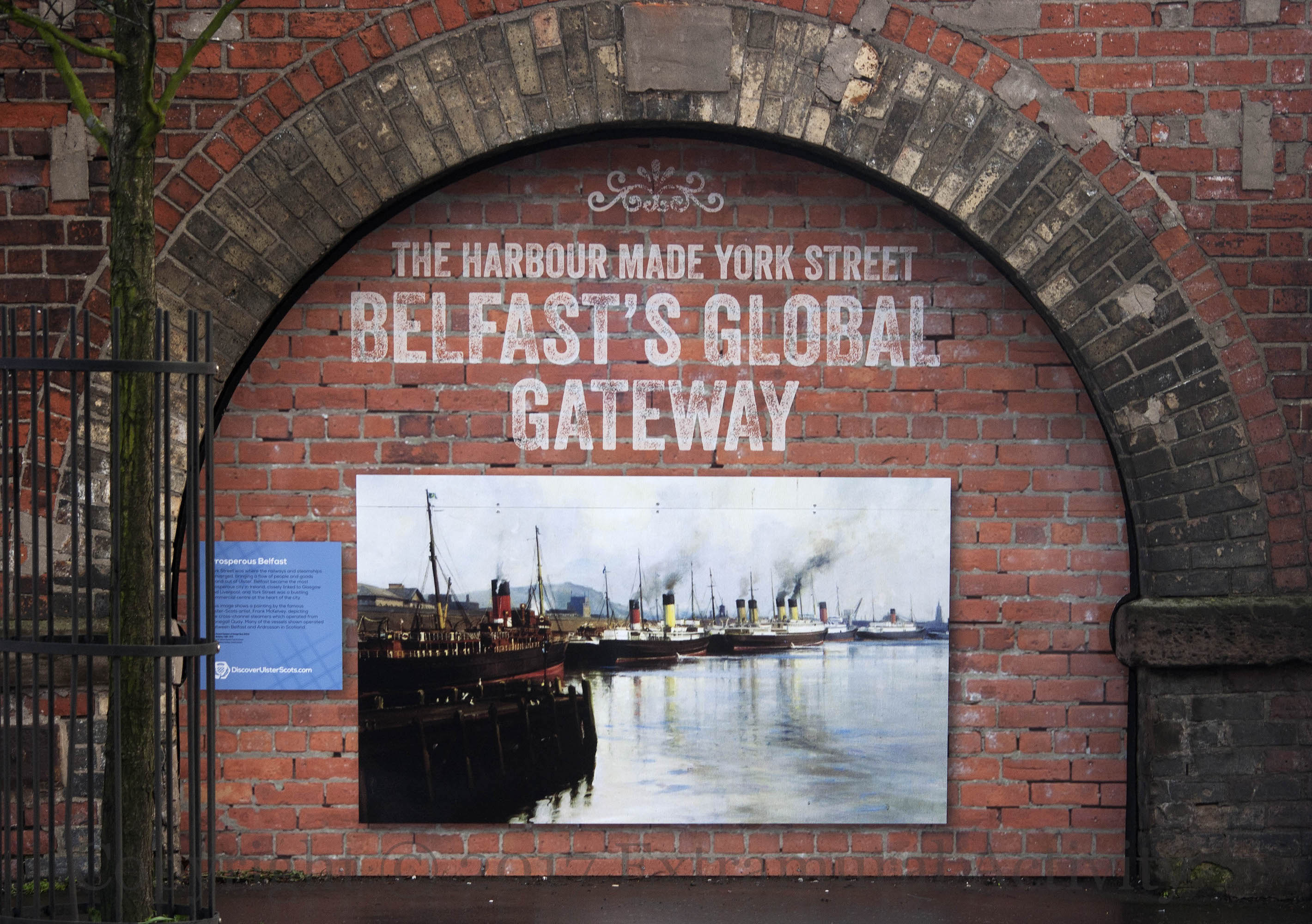
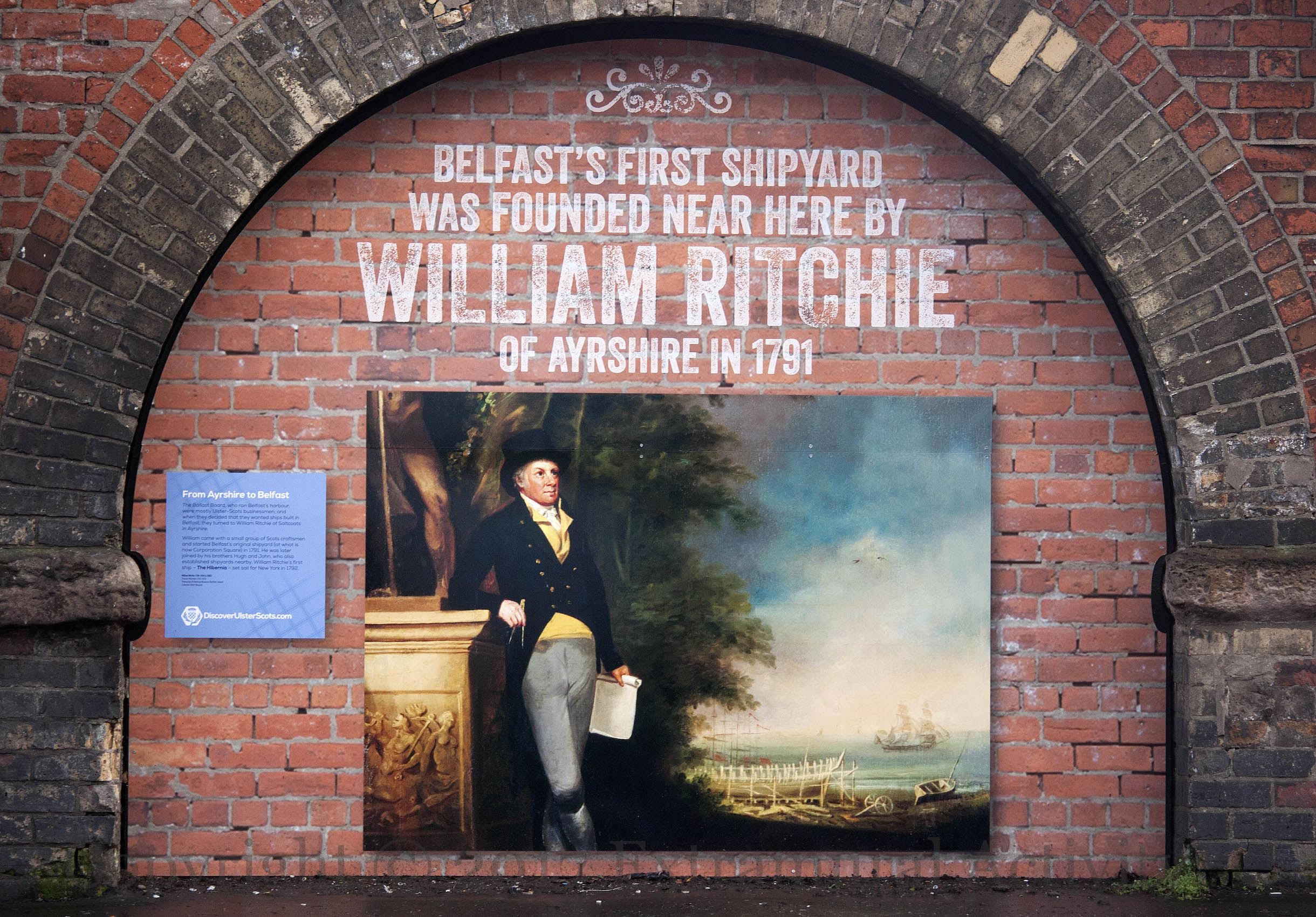
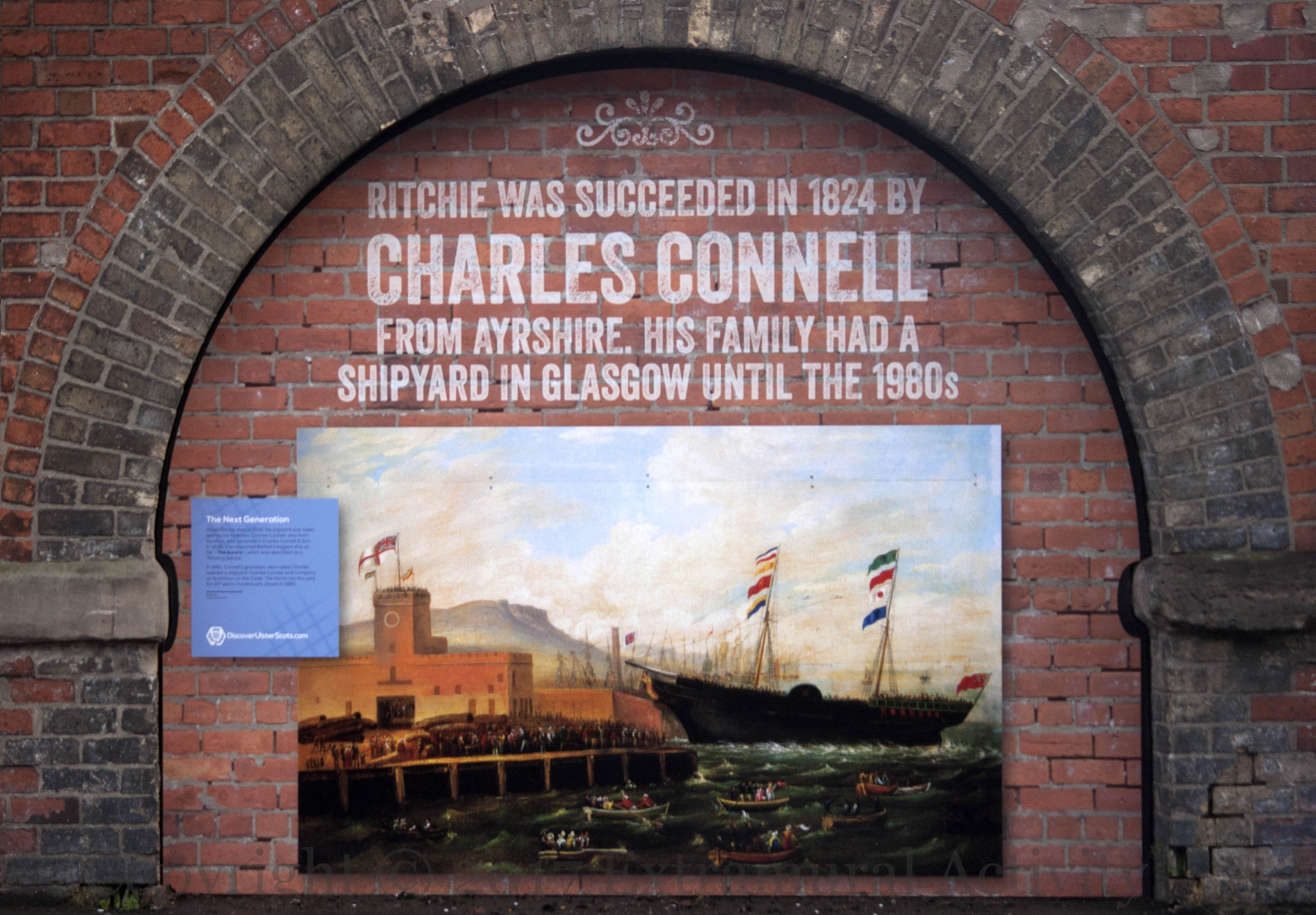
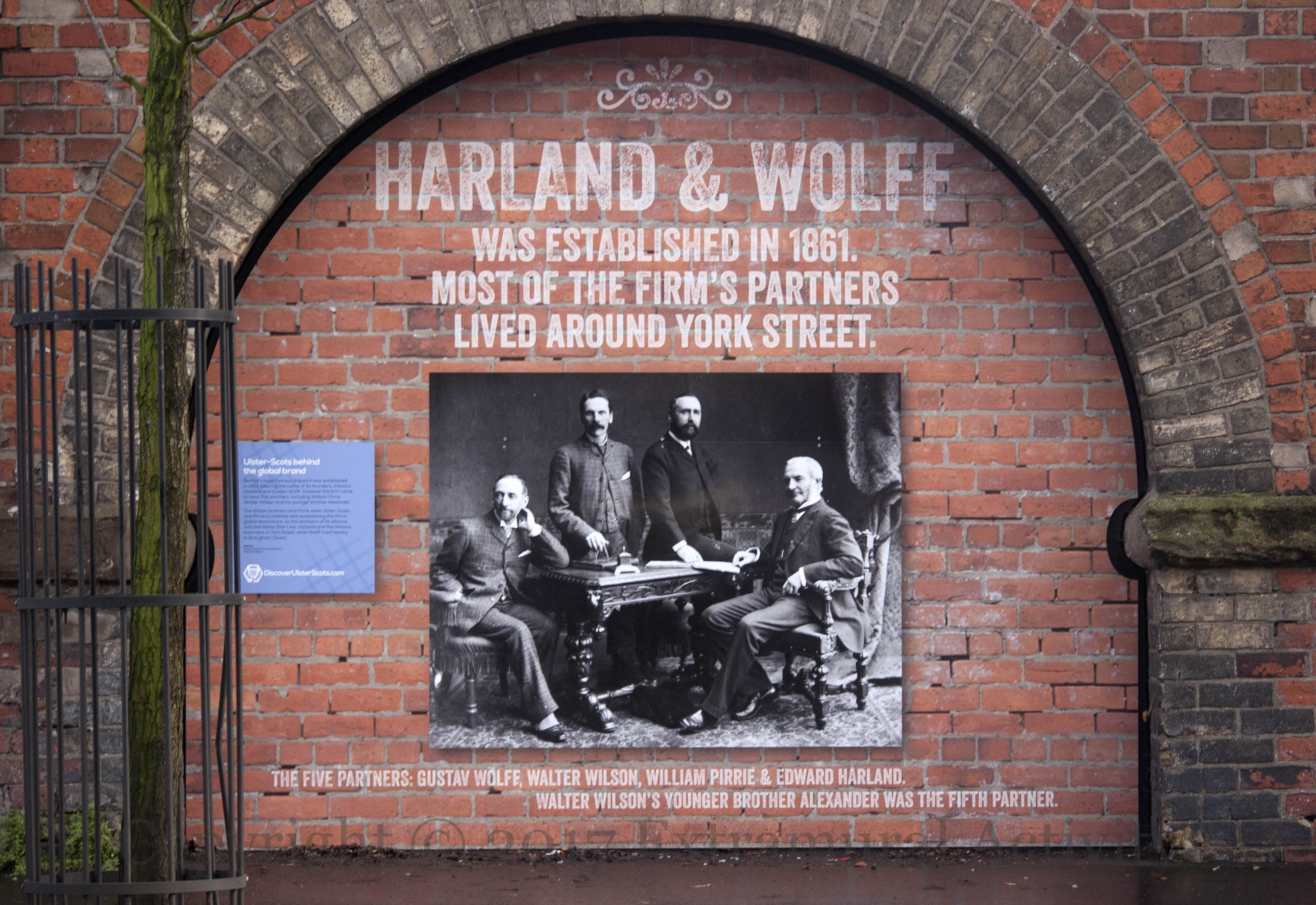
A history of shipbuilding and its role in Belfast’s industrial life is told in the first five panels of a 13-panel installation along York Road (“The harbour made York Street Belfast’s global gateway”) and in particular its connection with Scotland. (It is sponsored by Discover Ulster Scots.) Two Scots, William Ritchie (whose 1802 portrait by Thomas Robinson is shown) and Charles Connell (who oversaw the construction of the first wooden steamboat in Belfast – Aurora, pictured below) along with another Scot, Alexander MacLaine, were the leading shipbuilders in Belfast from 1791 until the 1860s, when Englishman Edward Harland (soon joined by German Gustav Wolff, and then in 1874 by William Pirrie and Wilson brothers Walter and Alexander) took over the rival Hickson yard (which included land on Queen’s Island and on the south side of the Lagan) and became dominant. Their connection to York Street is that all of them except Pirrie lived on or near York Street.
 Seosamh Mac Coille Collection