Stand United Or Hang Alone

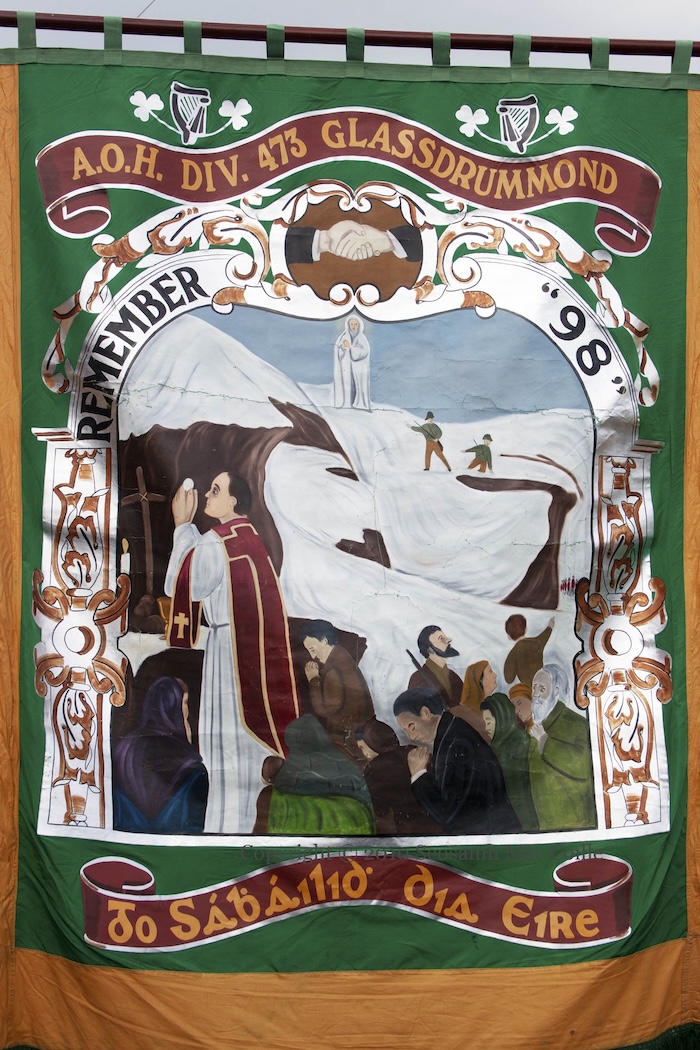
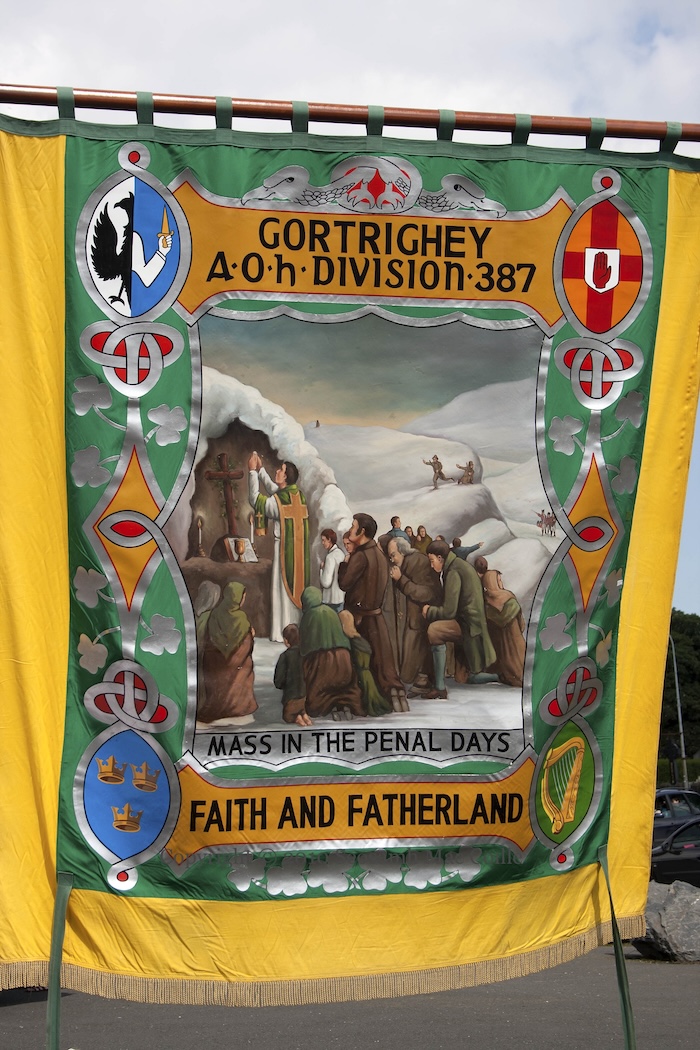
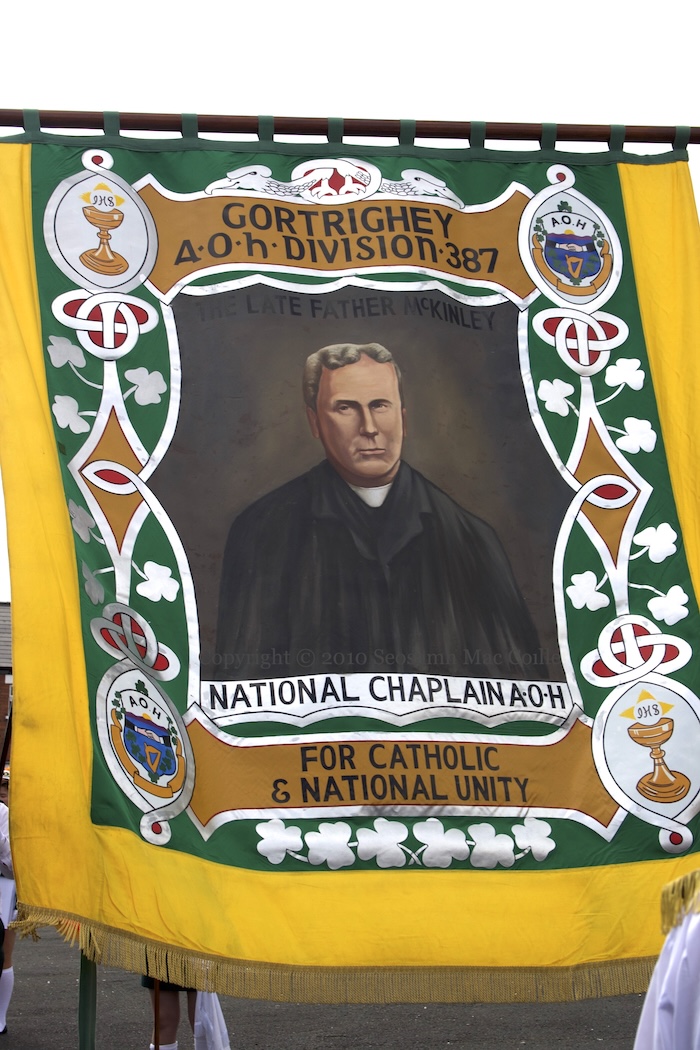
Above and below are images from the August 15th (feast of the assumption) march of the Ancient Order Of Hibernians, taken at Milltown Cemetery where AOH leader Joe Devlin is buried. The first two show  banners of the Gortrighey division (387) – the first includes an image of a priest celebrating the nativity on Christmas morning at a mass rock in the penal days which is also reproduced in an Ardoyne mural. The Glassdrummand banner shown next includes a very similar image.

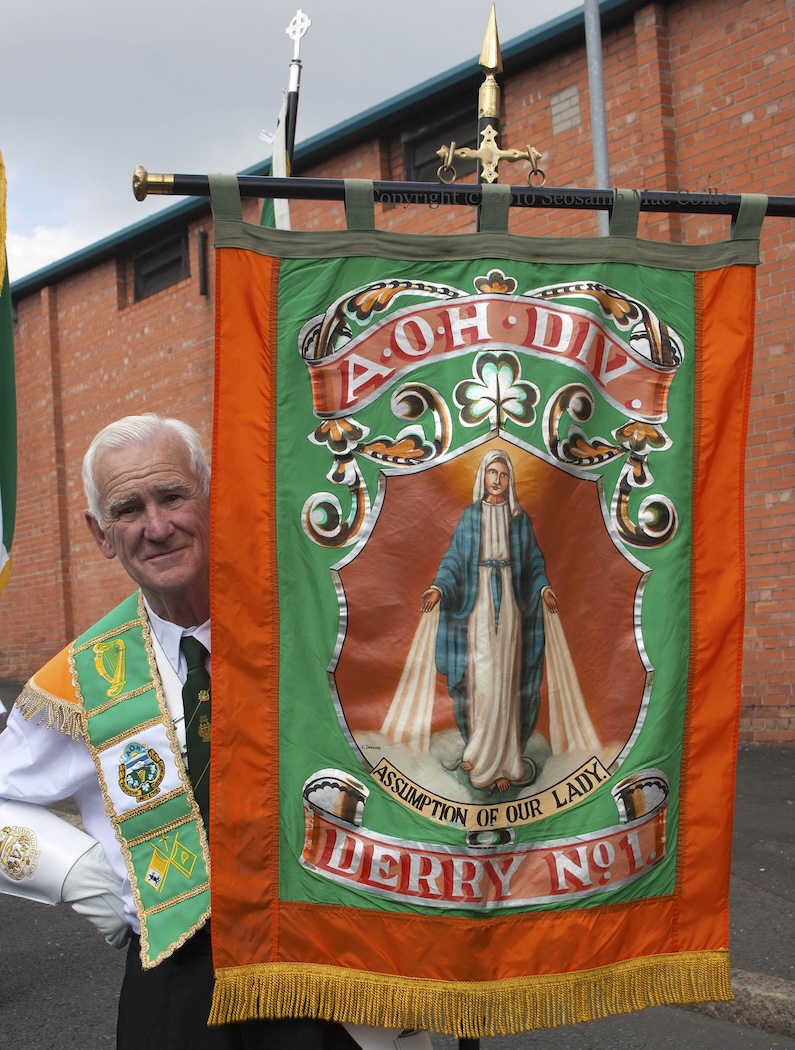
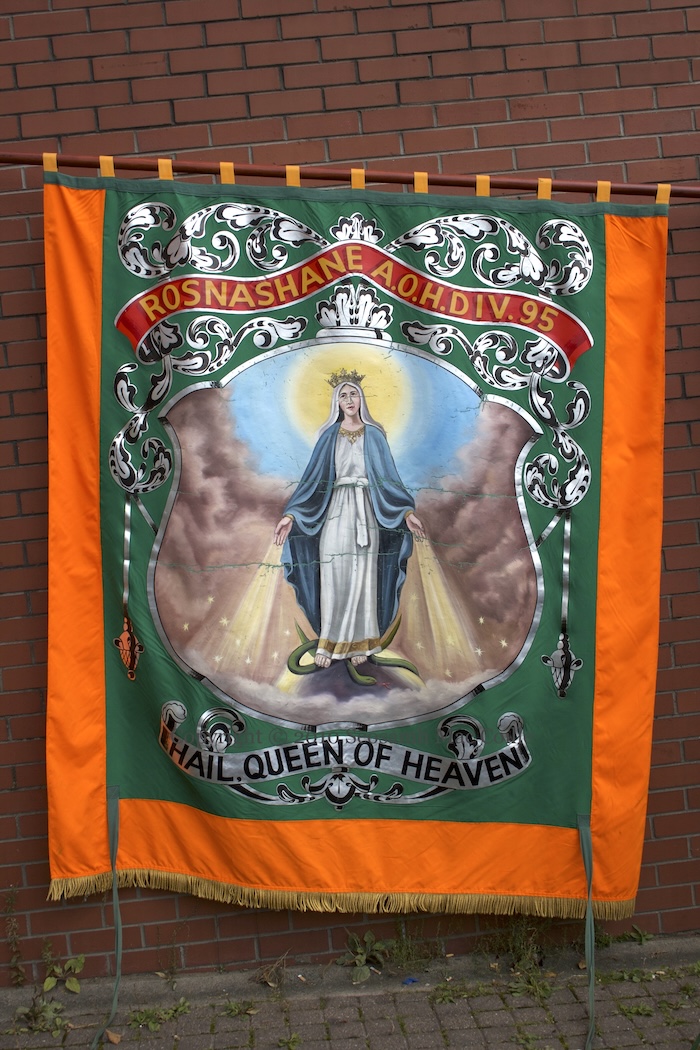
We then have two showing the assumption of our lady, the first from the first Derry division and the second from Rosnashane.

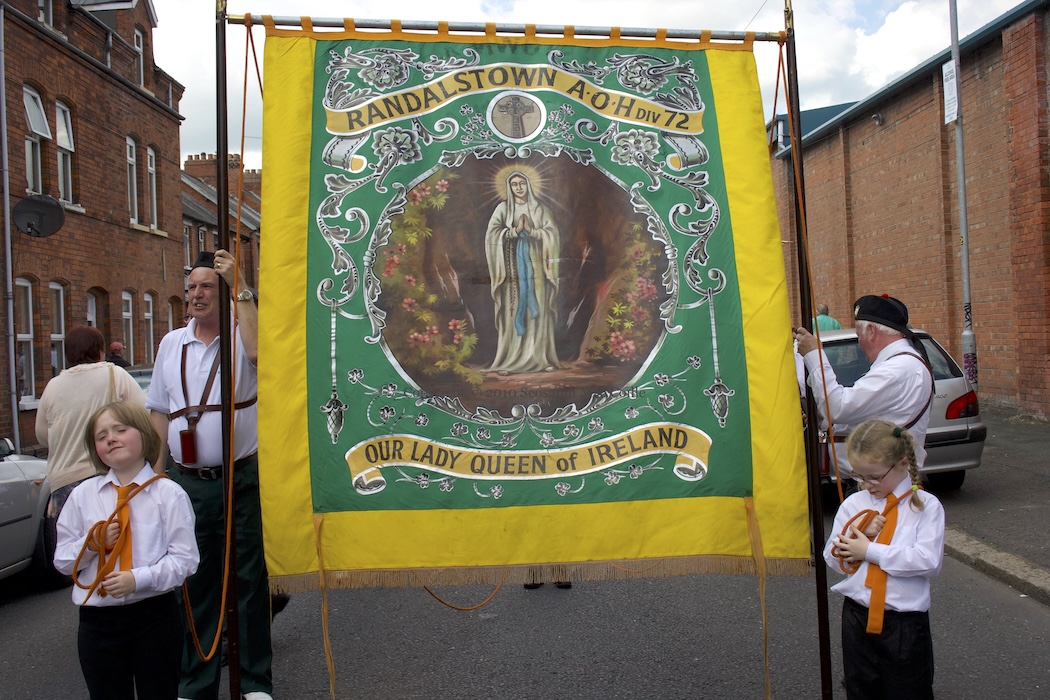
The final banner, from Randalstown, shows ‘Our Lady Queen Of Ireland”.

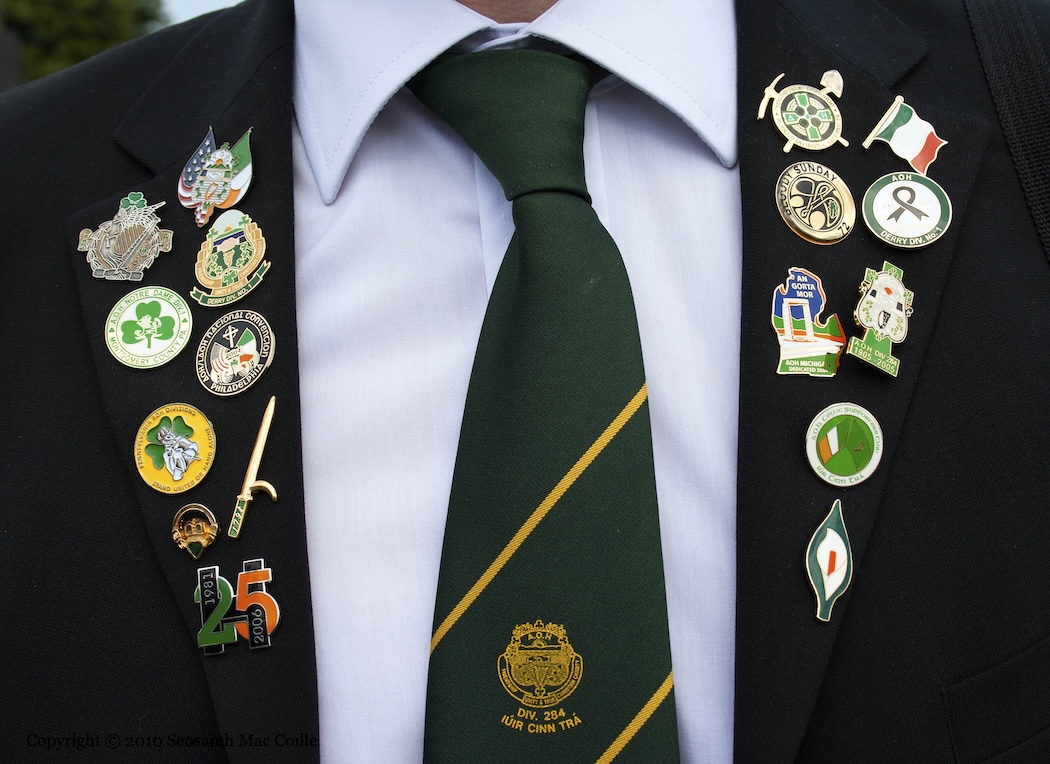
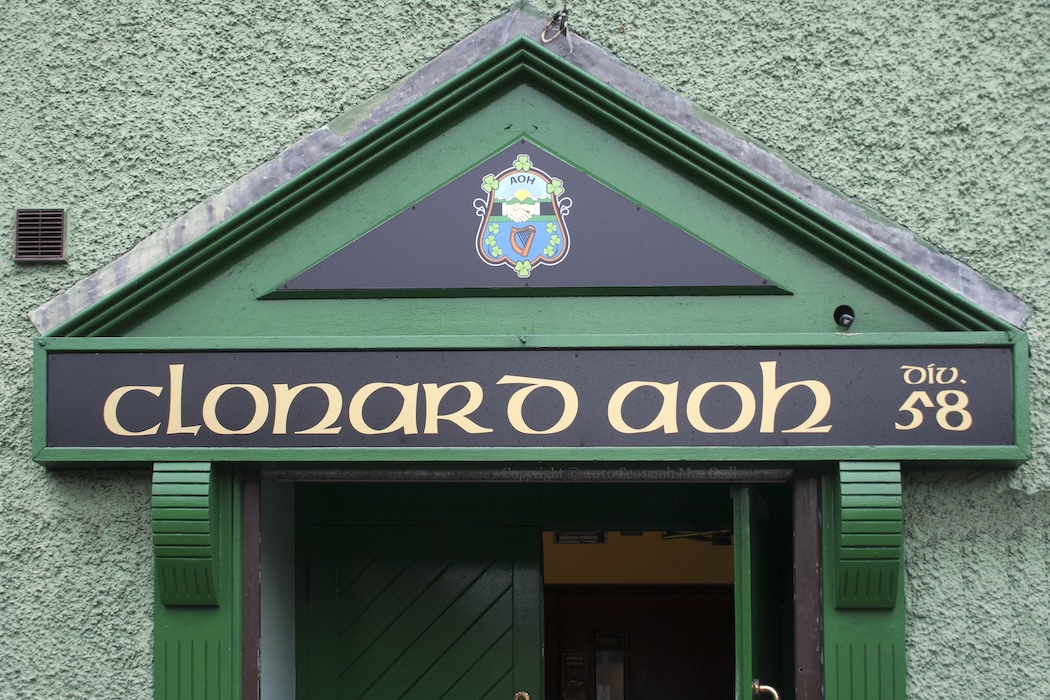
The final two images are of the lapels of a well-traveled Newry member, with badges from Michigan and Pennsylvania alongside a pike (1798), an easter lily (1916) and commemorations of Bloody Sunday and the hunger strikers, and of the side entrance to the local Clonard AOH lodge, division 58, which hosted the gathering.
Click image to enlarge
Copyright © 2010 Seosamh Mac Coılle
X02417 X07262 X07259 X02413 X07261 X07260 X02412 X02419 [X02411] [X02414] [X02415] [X02416] [X02418] rasharkin ıuır cınn tra yellow jack donohue montco hatfield bloody sunday 72 an gorta mor 284 1905-2005 celtic supporters club hunger strike 25 1981-2006 claddagh 1798 pike stand united or hang alone national convention philadelphia notre dame montgomery county friendhsip unity & true christian charity cromwell 1695
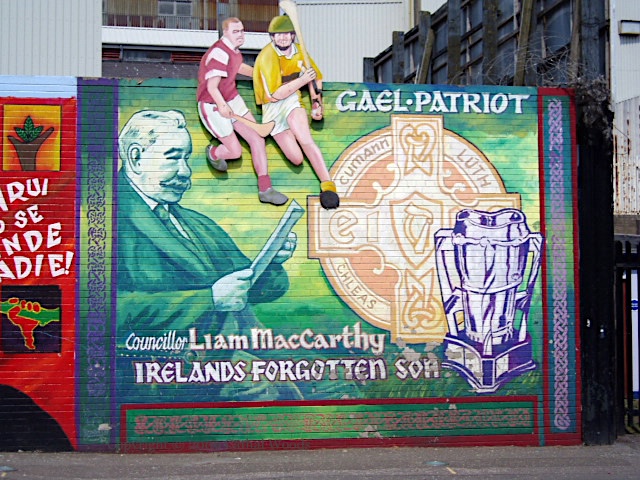
Liam MacCarthy Cup

“Councillor Liam MacCarthy, Ireland’s forgotten son. Gael, patriot. Winners of the All-Ireland hurling championship are awarded a trophy named after MacCarthy.

This is an unusual mural in terms of form: it is a mix of mural and board and the knot-work border does not go around the top, so that the hurley players extend the painting and not do not break the frame of the painting.

International wall, Divis Street. To the right of the Cuba 50 mural.

(Replaced in 2012 by Never Actually Existed)

Click image to enlarge small image
Copyright © 2009 Cathal Woods
X00303 cumann lúthchleas

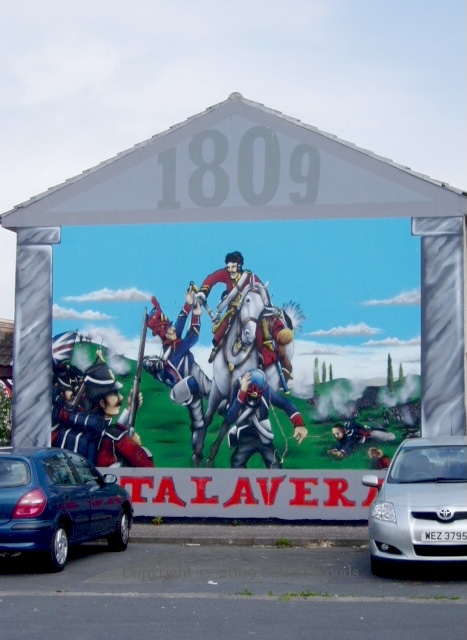
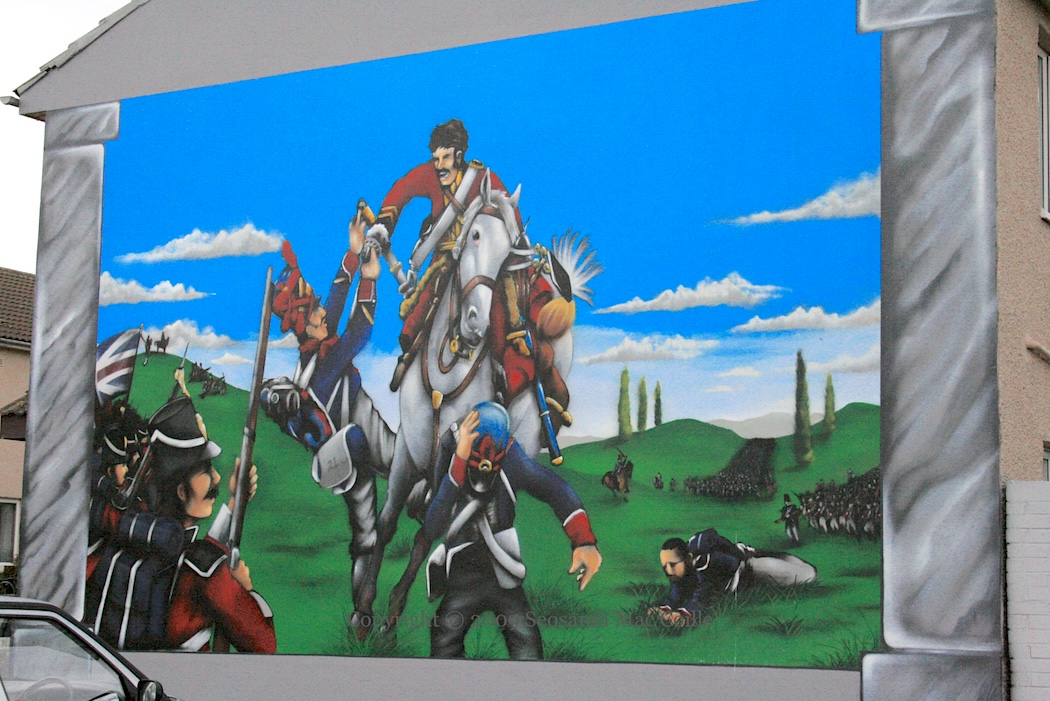
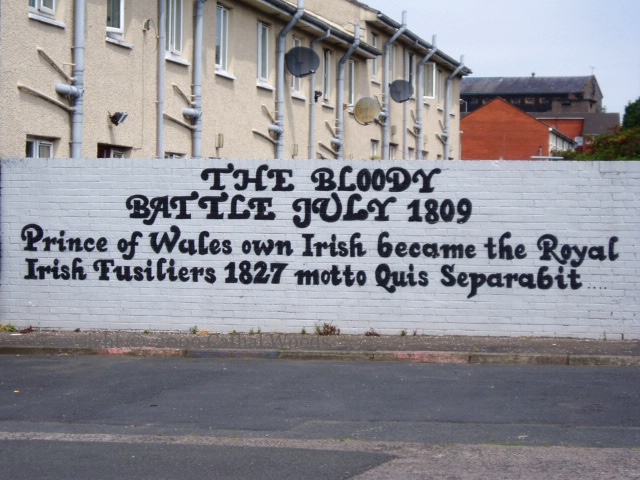
Talavera 1809

“The Bloody Battle, July 1809. Prince of Wales own Irish became the Royal Irish Fusiliers 1827, motto Quis separabit.”

Talavera de la Reina is southwest of Madrid, Spain. The French, who had invaded Portugal but been driven out by British forces under Wellesley, fought the combined forces of the Spanish (previously allies of the French in the Peninsular War) and British armies. The second battalion of the Prince Of Wales’s Irish fought at Talavera. It then became the Prince Of Wales’s Own Irish, the Prince Of Wales’s Own Irish Fusiliers, and finally the Royal Irish Fusiliers (after the prince had been king for seven years). Its motto seems to have been “Faugh A Ballagh” rather than “quis separabit” but sources are scarce.

Click image to enlarge
Copyright © 2009 Cathal Woods X00325 [X00326] X00327
Copyright © 2008 Seosamh Mac Coılle X00279

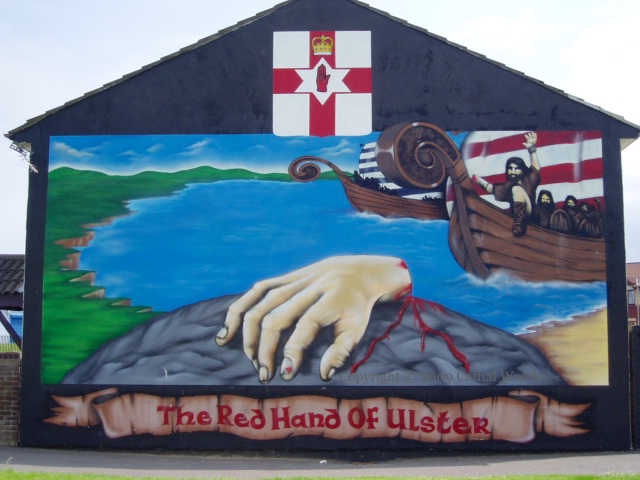
I Would Give My Right Hand …

Legend has it that Ulster was won in a competition among warriors to be the first to touch the land. In order to win the race, one contestant cut off his hand and threw it ahead of the others. The flag of Northern Ireland (the Ulster Banner) is in the apex.

WP entry on the legend.

Shankill Parade, lower Shankill estate, west Belfast

Click image to enlarge small image
Copyright © 2009 Cathal Woods
X00309 the red hand of ulster

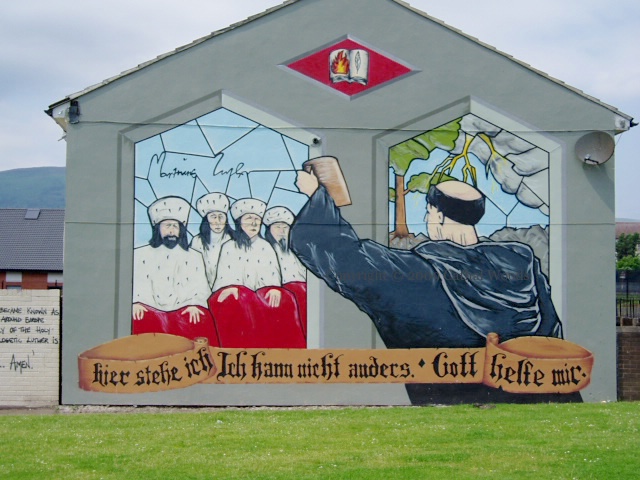
Here I Stand; I Can Do No Other

The Protestant Reformation is here attempted as a re-imaging theme in the lower Shankill. Luther’s signature is worked into the “stained glass” on the left.

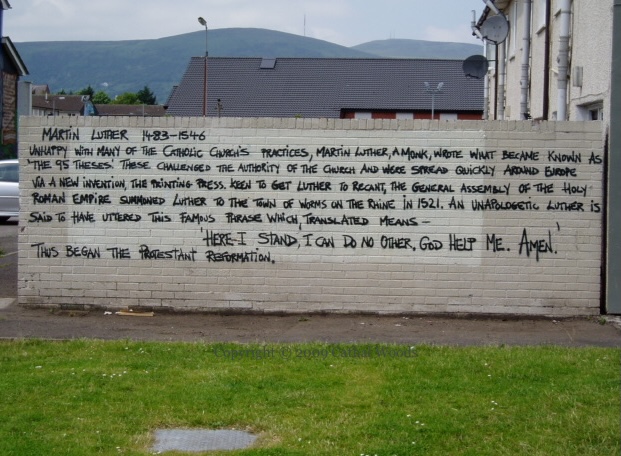
Below, the accompanying text … “Hier stehe ich, Ich kann nich anders, Gott helfe mir.” Martin Luther 1483-1546. Unhappy with many of the Catholic church’s practices, Martin Luther, a monk, wrote what became know as ‘the 95 theses’. These challenged the authority of the church and were spread quickly around Europe via a new invention, the printing press. Keen to get Luther to recant, the general assembly of the Holy Roman Empire summoned Luther to the town of Worms on the Rhine in 1521. An unapologetic Luther is said to have uttered this famous phrase which, translated means ‘Here I stand, I can do no other. God help me. Amen’. Thus began the Protestant Reformation.”

Click image to enlarge small image
Copyright © 2009 Cathal Woods
X00301 X00302