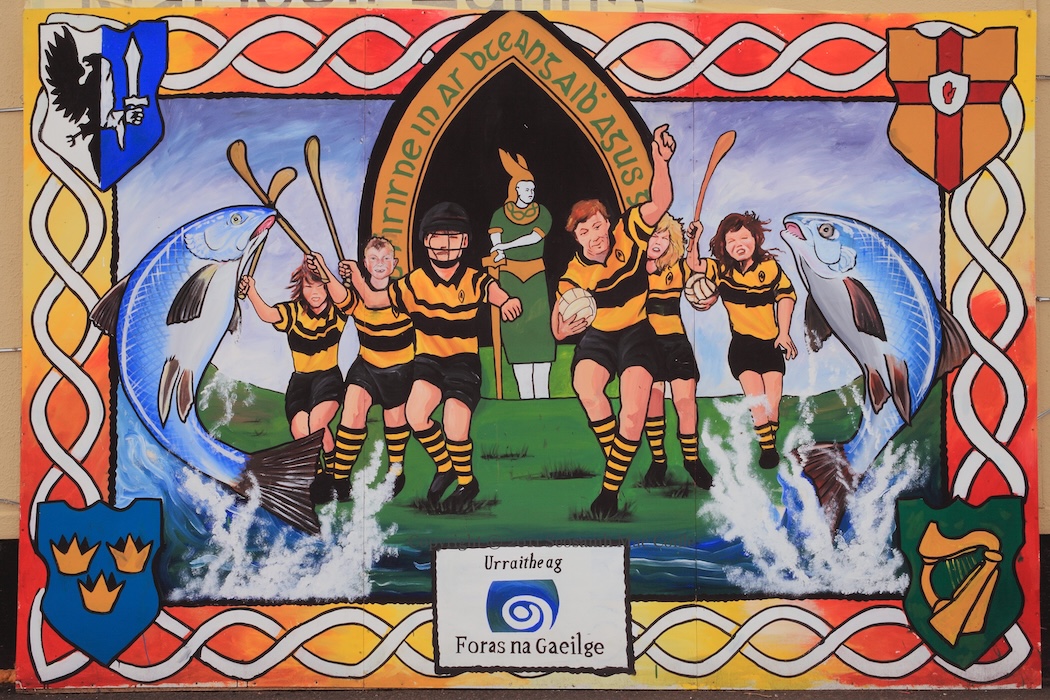
Naomh Éanna (St Enda) Gaelic Athletic Club is located in Glengormley and fields teams in football, hurling, and camogie. The grounds now also host a naíscoıl, which was opened in 2004, with a bunscoıl following in 2007.
The motto is in pre-Caıghdeán Irish: “Neart ın ár lámhaıbh [= lámh], fírınne ın ár dteangthaıbh [= dteangacha], agus glaıne ın ár gcroíthe.”
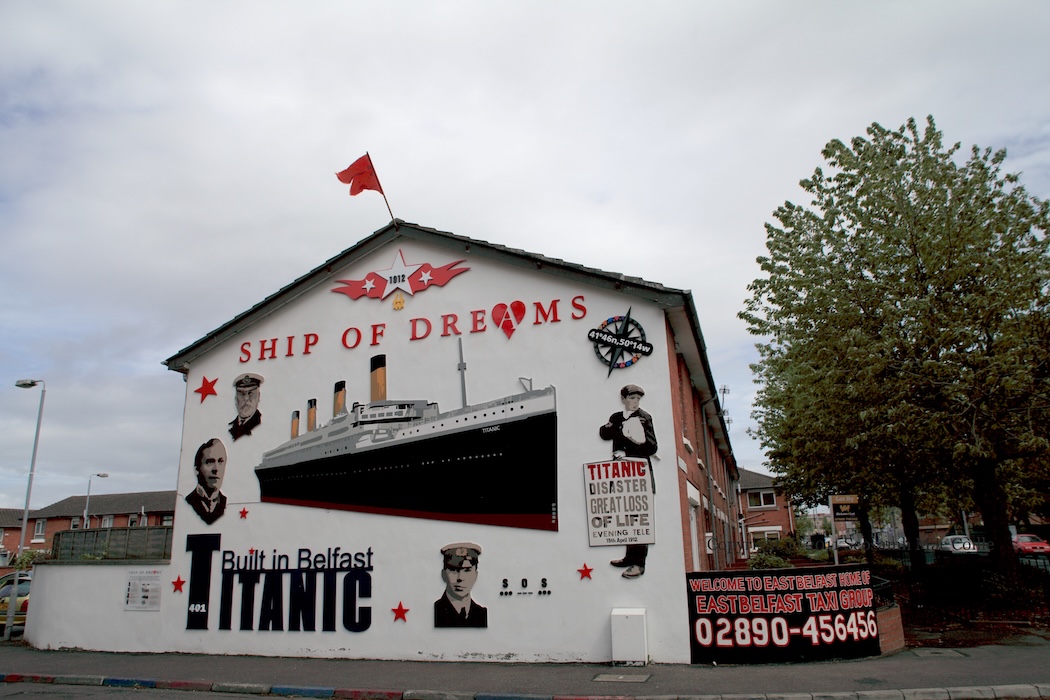
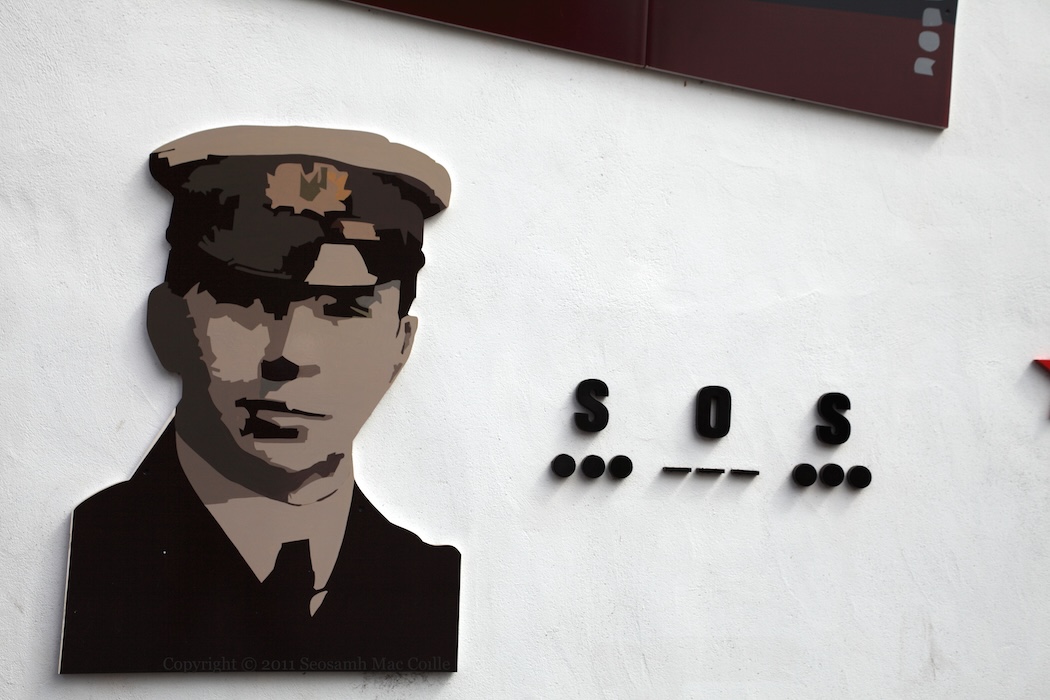
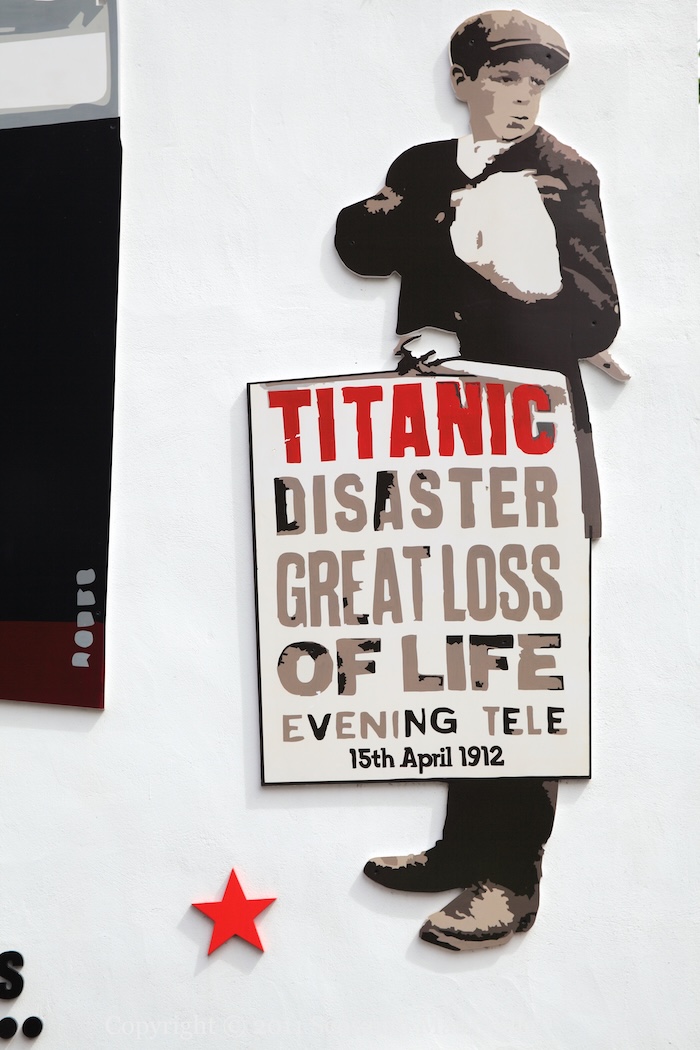
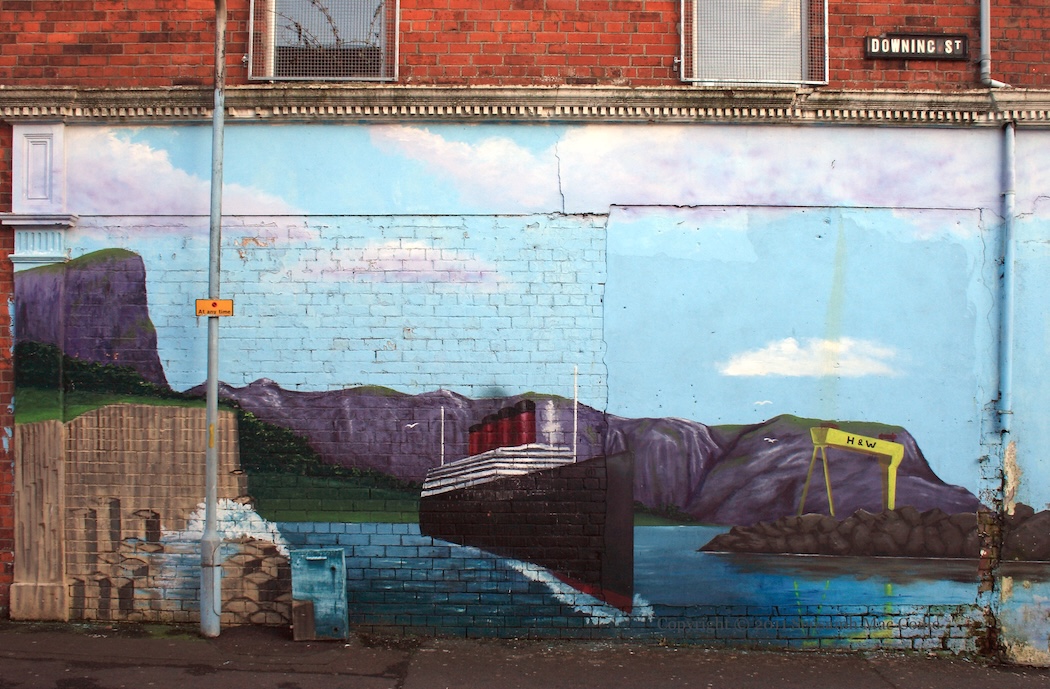
The White Star Line ship Titanic sank in the Atlantic in the early morning of April 15th, 1912, a thousand miles from New York (the co-ordinates are given in the top right), having been launched from Belfast’s Harland & Wolff shipyard, which is near this mural just off the Newtownards Road in east Belfast. The portraits are of Captain Edward Smith, architect Thomas Andrews, Jack Phillips (wireless officer), and paperboy Ned Parfett.
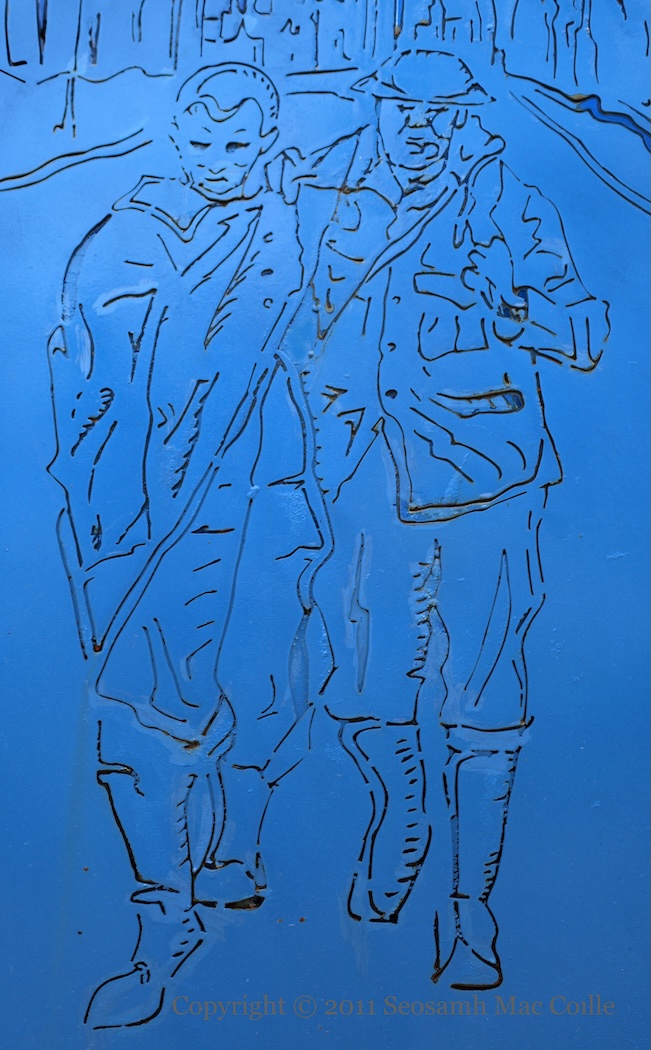
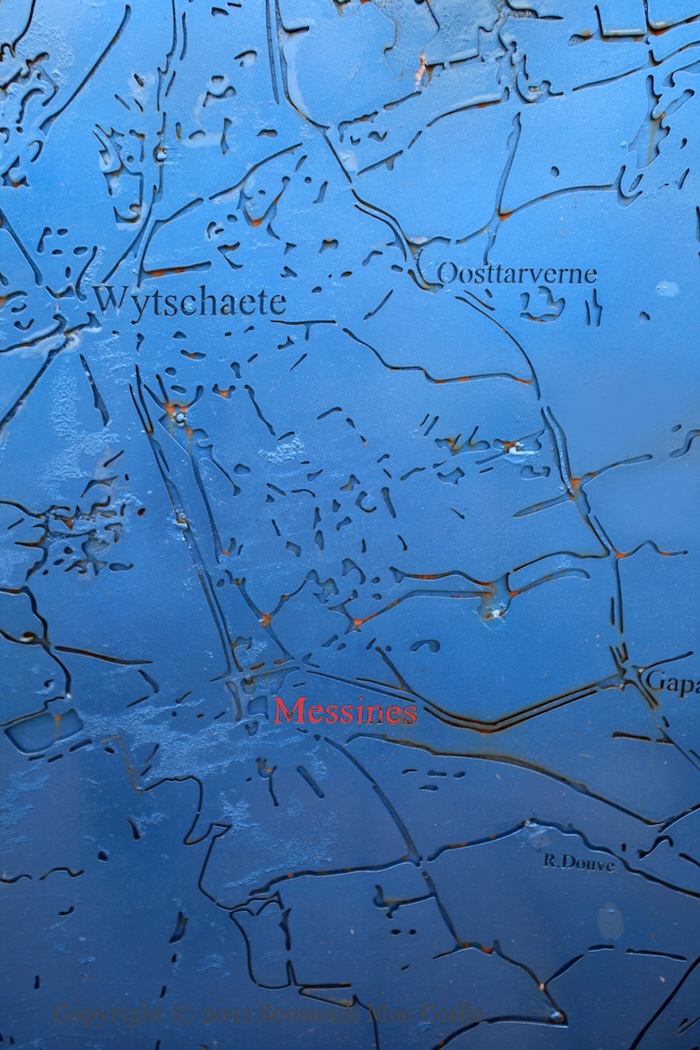
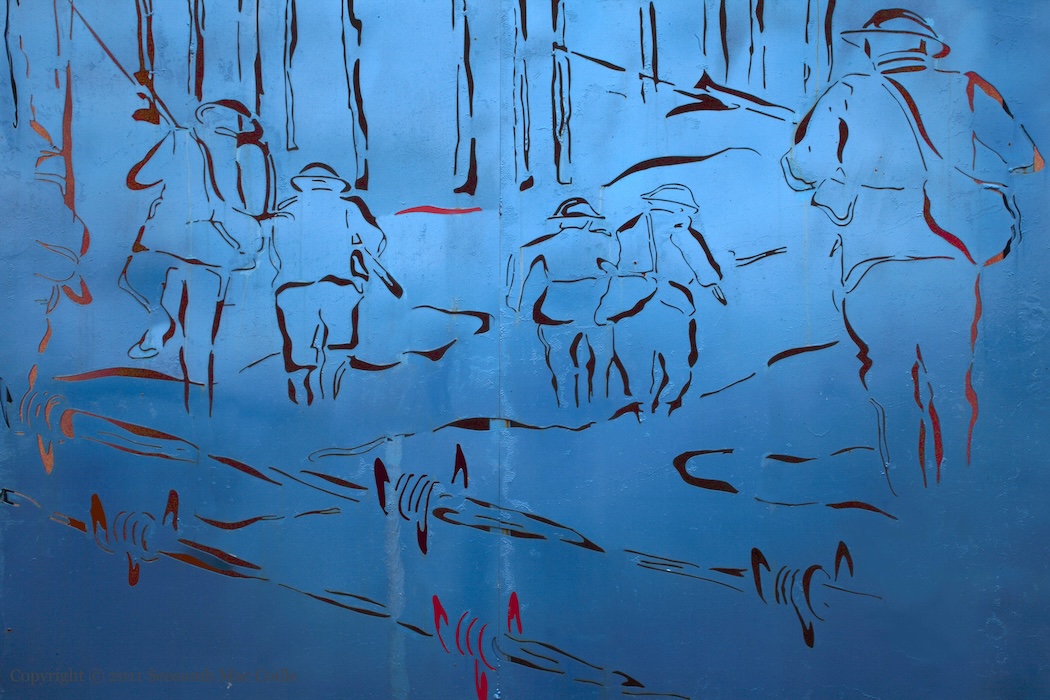
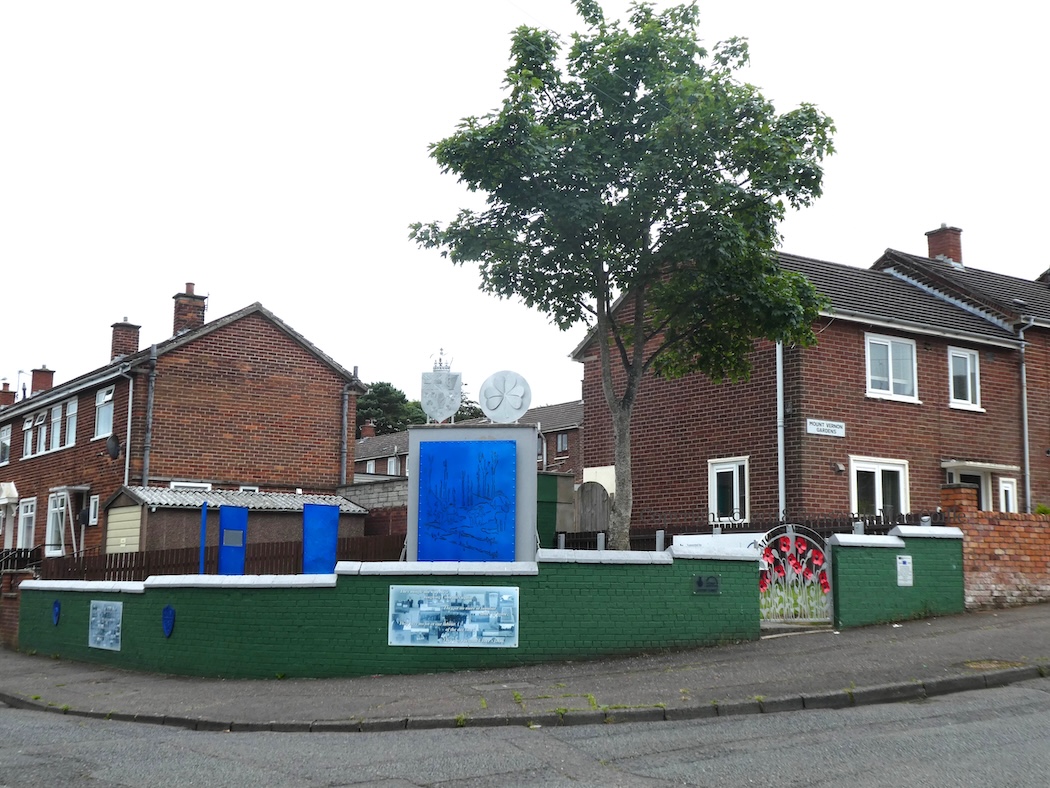
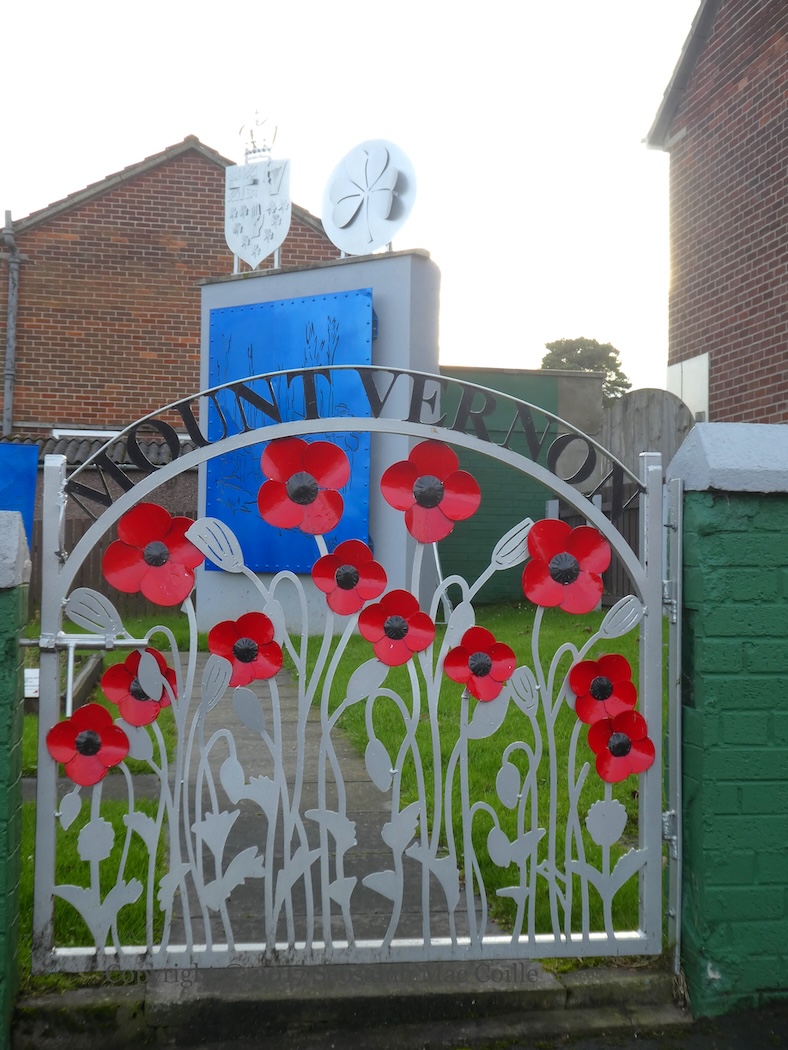
Here are three details from the metalworks in the Mount Vernon WWI memorial garden, showing scenes from the conflict and a map of the area around Messines (photoshopped in red). For more, including the panels to John Cordon and William McFadzean, see M07770.
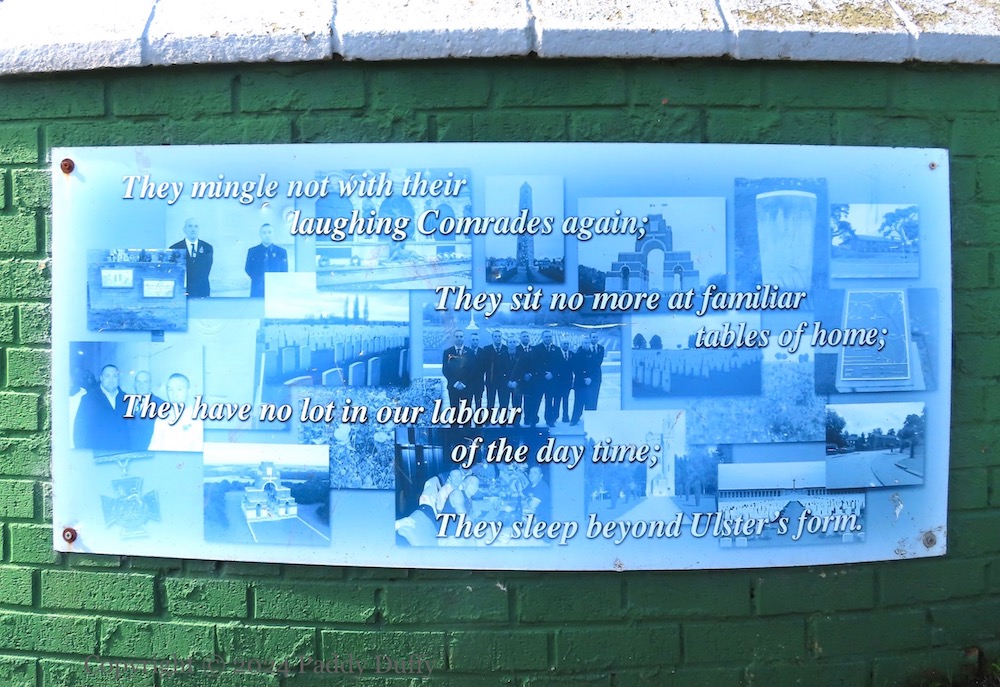
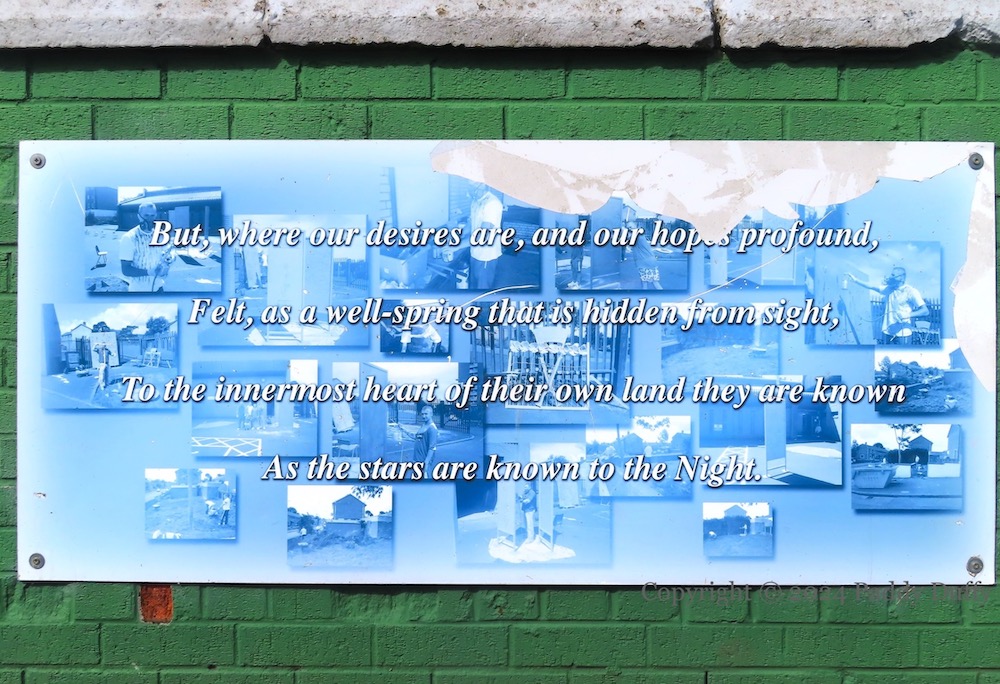
Update: As the images below from 2017 and 2018 show, the metalworks themselves have also been repainted (and replaced in a slightly different configuration), a new gate has been installed and the boards on the surrounding wall have been restored, against a freshly-painted background of green. The boards have verses from Laurence Binyon’s For The Fallen. “They mingle not with their laughing comrades again/They sit no more at familiar tables of home/They have no lot in our labour of the day-time/They sleep beyond Ulster’s [originally, England’s] foam.”
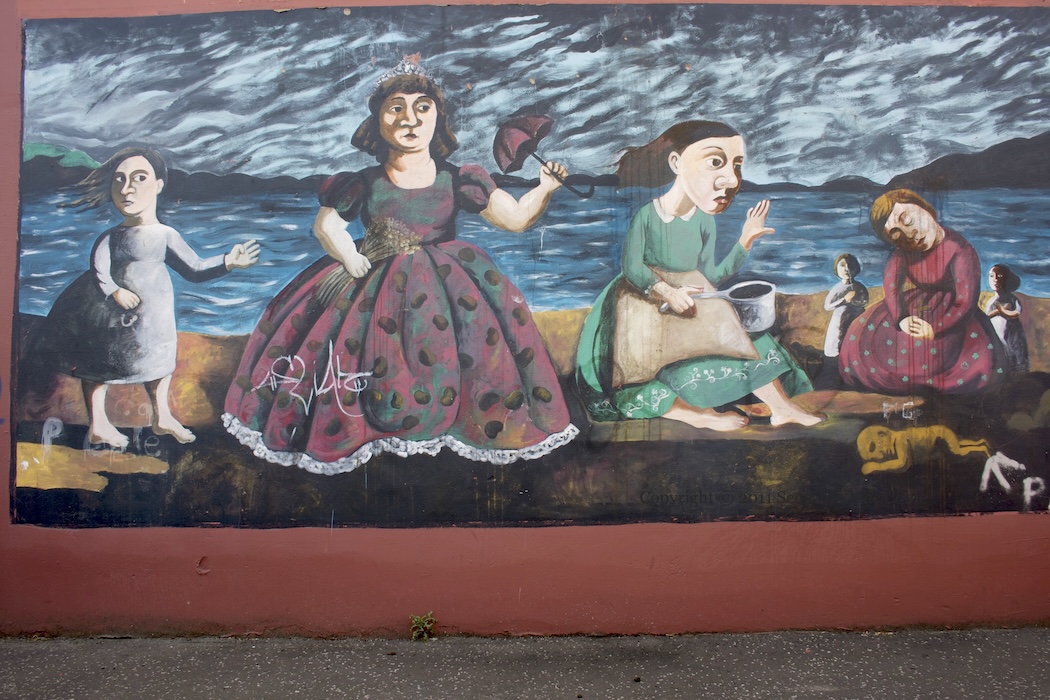
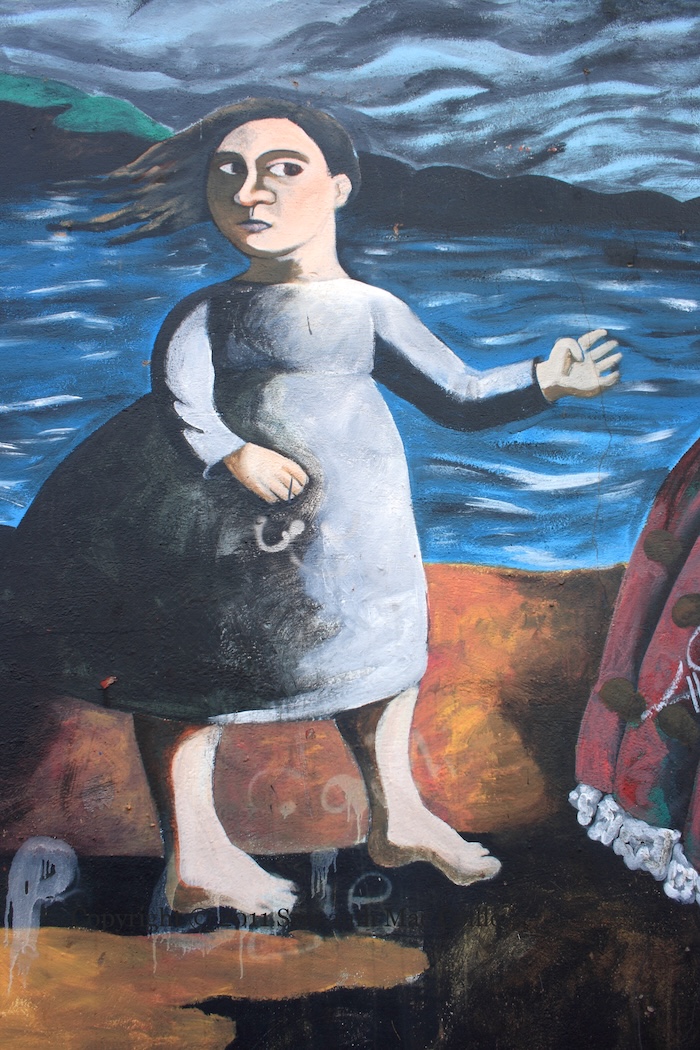
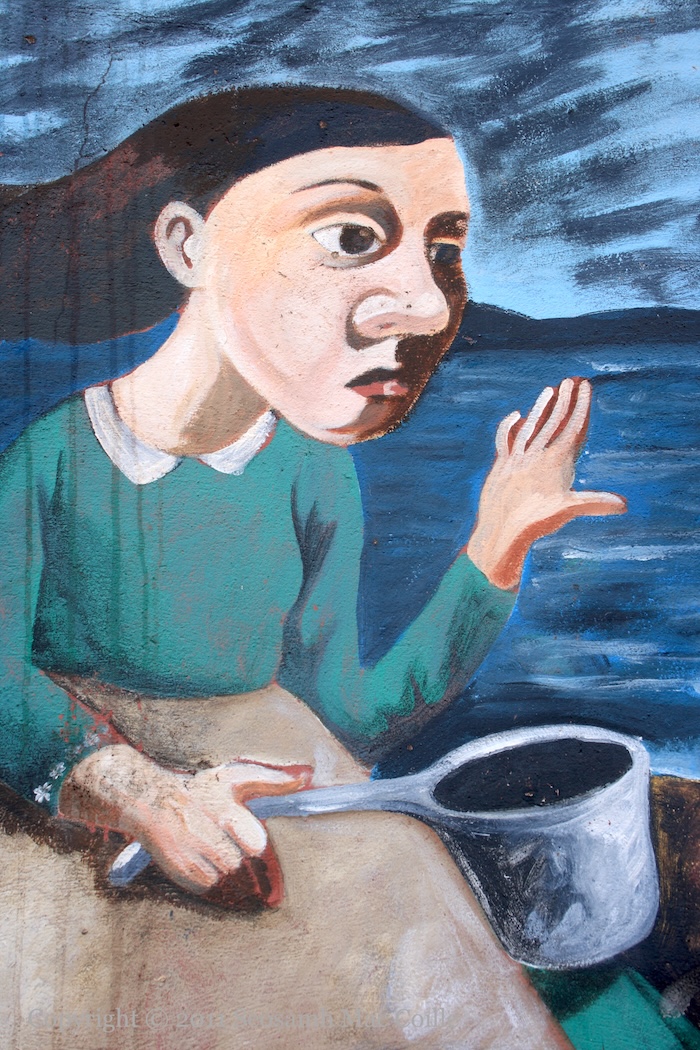
Queen Victoria and entourage paddle along the Irish shore at the end of the Great Hunger. (Here are one | two discussions of her visit and (un)involvement with famine relief.) Work by Rosie McGurran (Fb) in (the old) Linden Street, west Belfast.
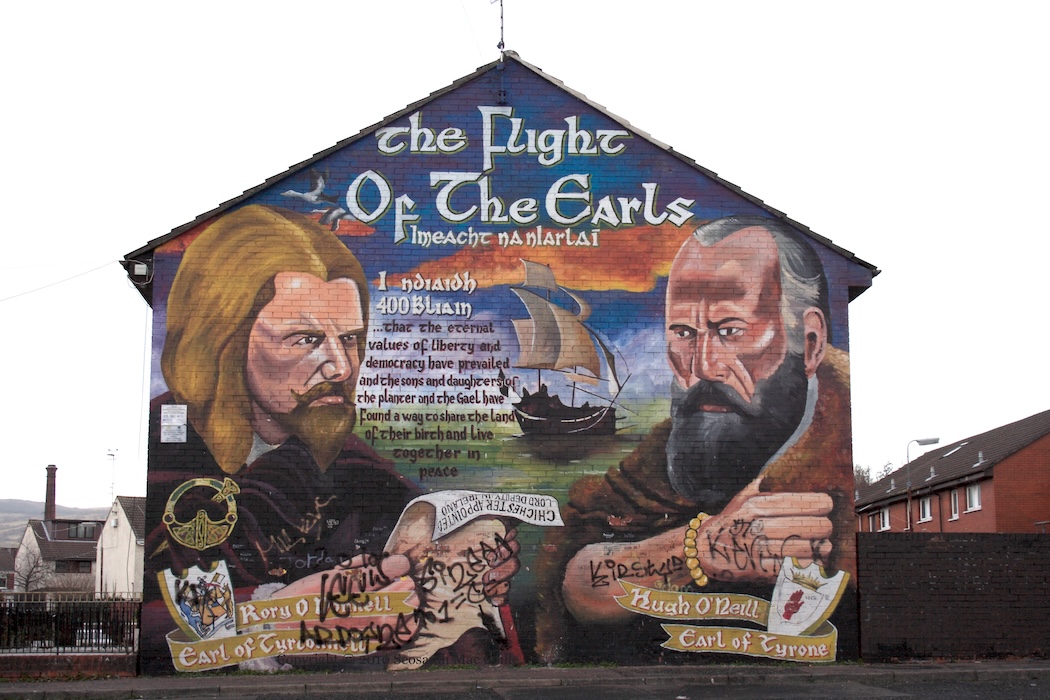
In 1607 – “400 blıaın” after the Anglo-Norman invasion of Ireland – 50 years of newly-asserted English control, most recently at the hands of Charles Blount – who defeated the pair in the Nine Years’ War – and Arthur Chichester – who, as O’Donnell is shown reading, was “appointed Lord Deputy in Ireland” in 1605 – compelled Earls Hugh O’Neill of Tyrone and Rory O’Donnell of Tyrconnell to depart Ireland on a ship bound for Spain in order to petition for Spanish support in reclaiming the lands and status they were losing under English rule. They ended up in Rome instead and never returned, ending the period of Gaelic chiefs’ rule in Ireland and making way for the plantation of Ulster.
The pair of plaques on the left indicate that the mural was painted as part of the Re-Imaging Communities Programme’ (top) and launched by President Mary McAleese on June 19th (bottom). Even though the subject was historical, the state funding for the project required the removal of a sword from O’Neill’s right hand; he is shown instead clutching the collar of his cloak. For more on the re-imaging programme, see Visual History 10.
“Imeacht na nIarlaí. I ndıadh 400 blıaın … that the eternal values of liberty and democracy have prevailed and the sons and daughters of the planter and the Gael have found a way to share the land of their birth and live together in peace.”
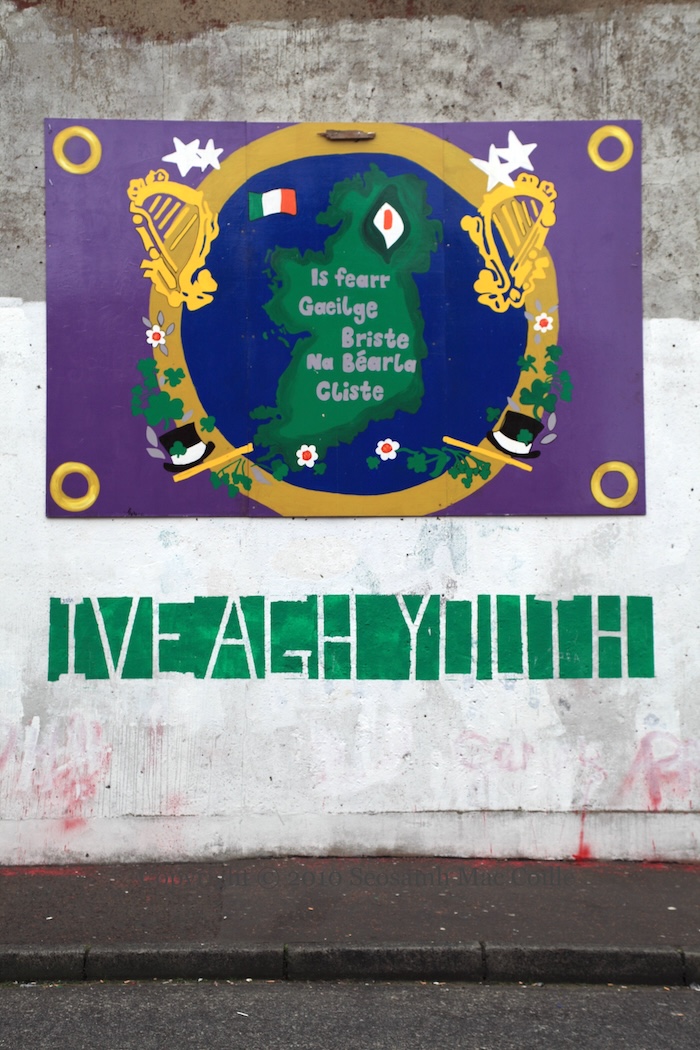
“Broken Irish is preferable to skilful English”, itself written in somewhat broken Irish. In each corner is a gold ring (fáınne óır), sometimes worn by fluent Irish-speakers. The top hat and the ?daisies? alongside the harp, shamrock, and ?flute? are unusual; if you can explain their appearance here, please comment or get in touch.
Iveagh Youth mural in Iveagh Drive/Céıde Uíbh Eachach
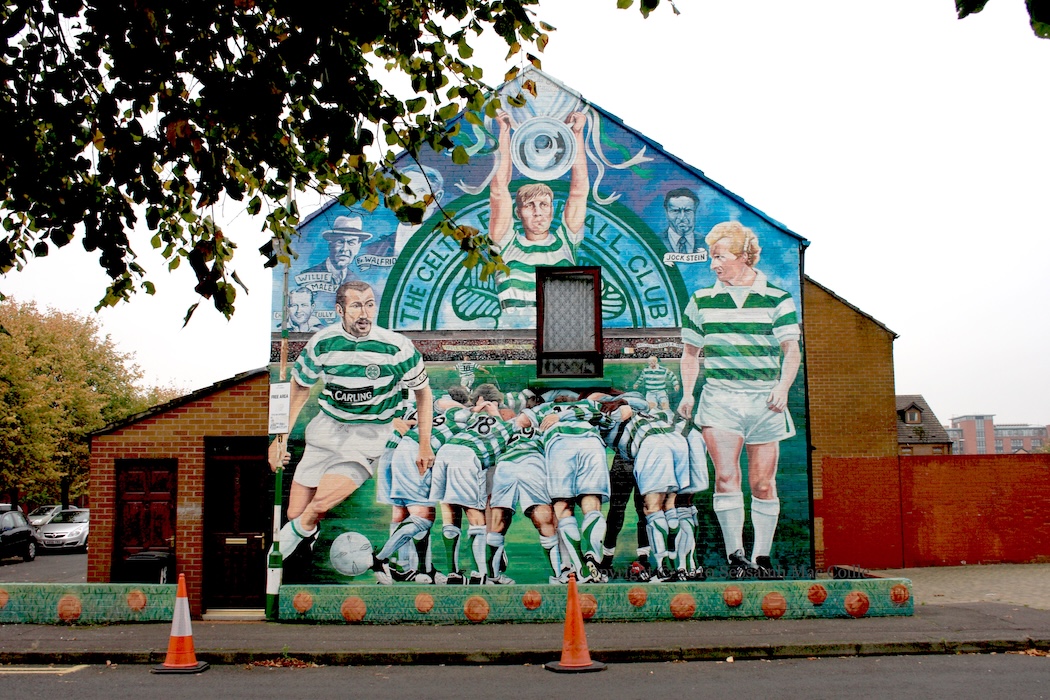
Glasgow Celtic football club was founded in 1888 by Brother Walfrid who is partially obscured here by a leaf to the left of centre. Joining him in the apex are (from left to right) Charlie Tully (of Belfast and Glasgow Celtic), Willie Maley (the first manager), [Wilfrid], Billy McNeil lifting the European Cup in 1967, Jock Stein (player 1951-1957 and manager 1965-1978). On the field are former players Henrik Larsson (1997-2004) and Jimmy Johnstone (1962-1965) on either side of the team “doing the huddle”.
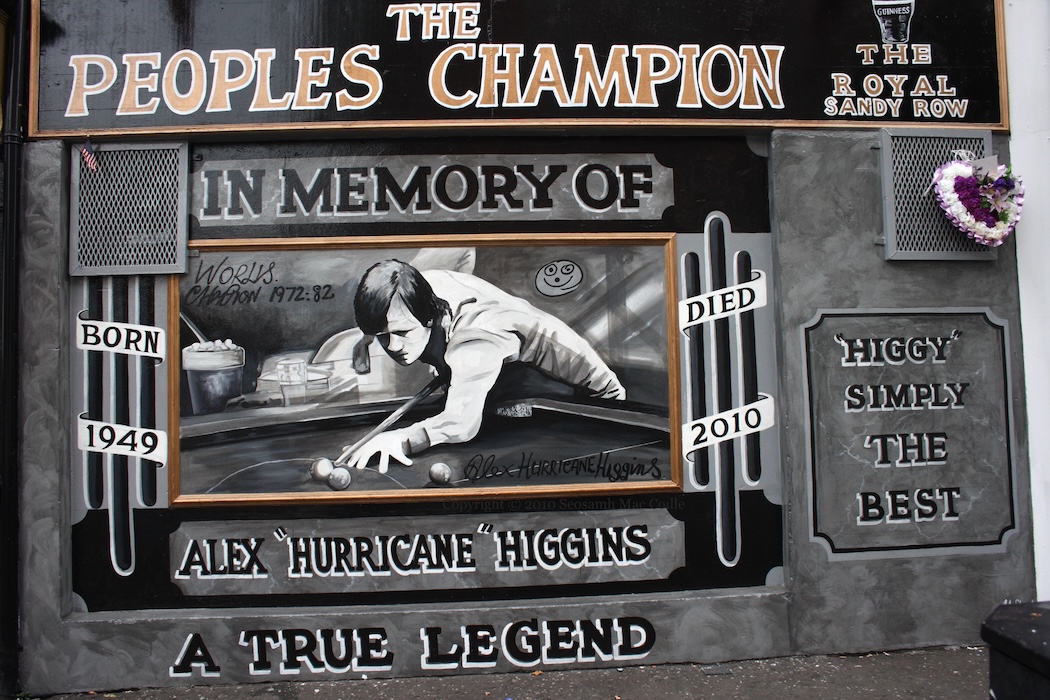
Alex “Hurricane” Higgins died on July 24th, and a new mural has been painted in his memory outside The Royal at the top of Sandy Row (shown above).
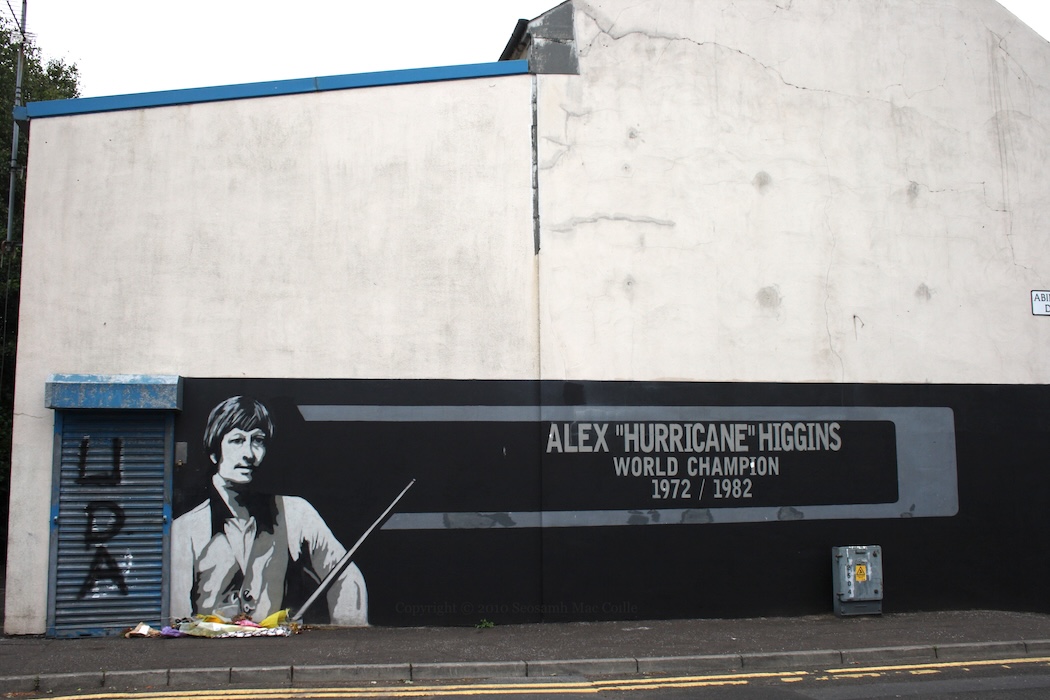
It joins a slightly older mural on Donegall Avenue, at the end of the street where Higgins grew up, Abingdon Street (which is now Abingdon Drive).
Both are near the clubs where he learned the game – the Jam Pot and the YMCA – before going on to twice become world snooker champion, in 1972 and 1982. He was a heavy smoker and suffered mouth and throat cancers. (WP)
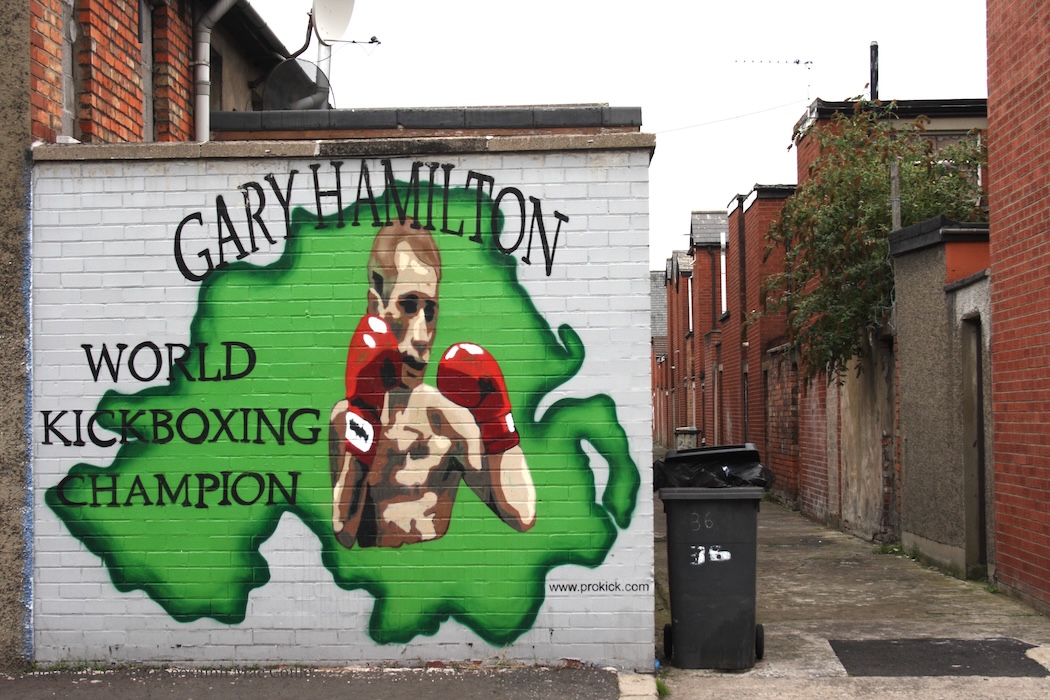
“Gary Hamilton – world kickboxing champion – www.prokick.com“. Hamilton held the featherweight full contact world title from 2002-2009 (WP). The Prokick gym is in east Belfast.