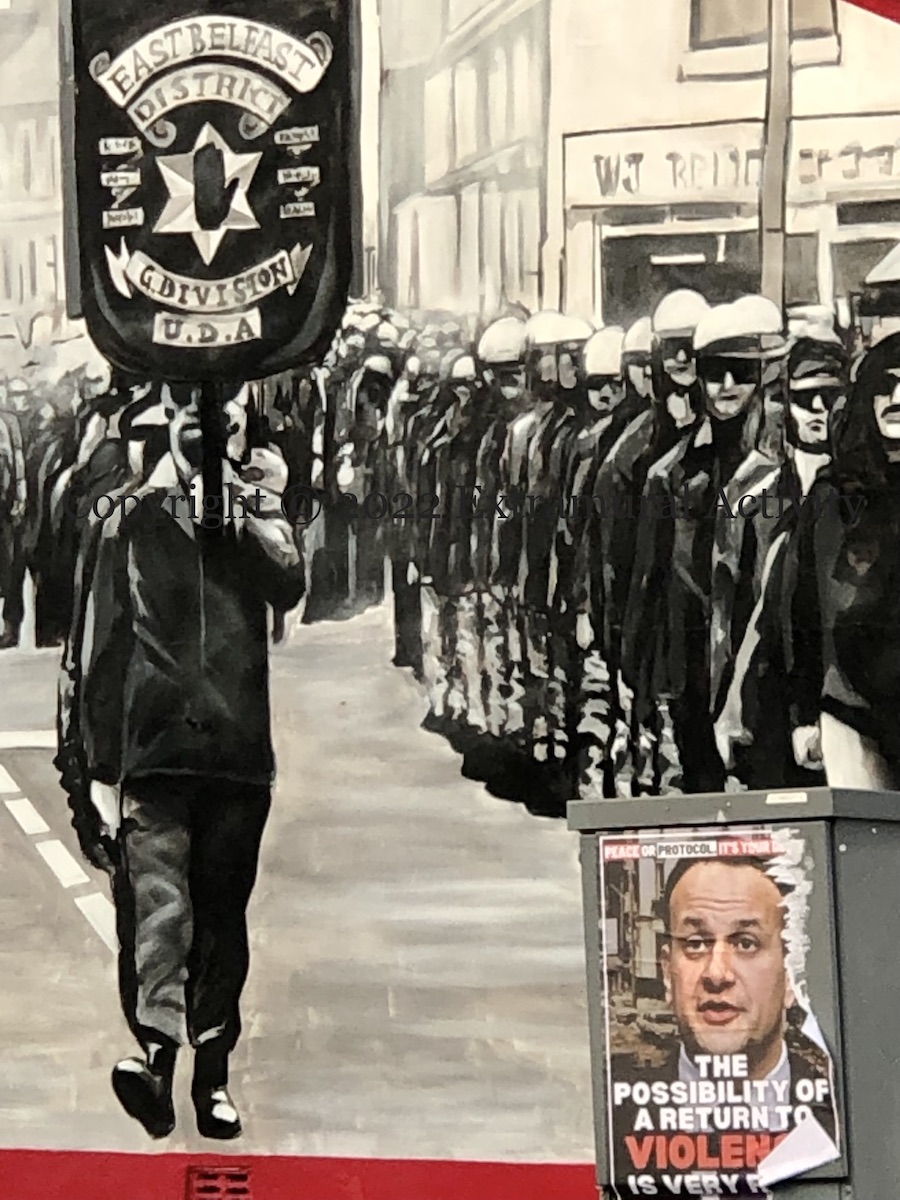
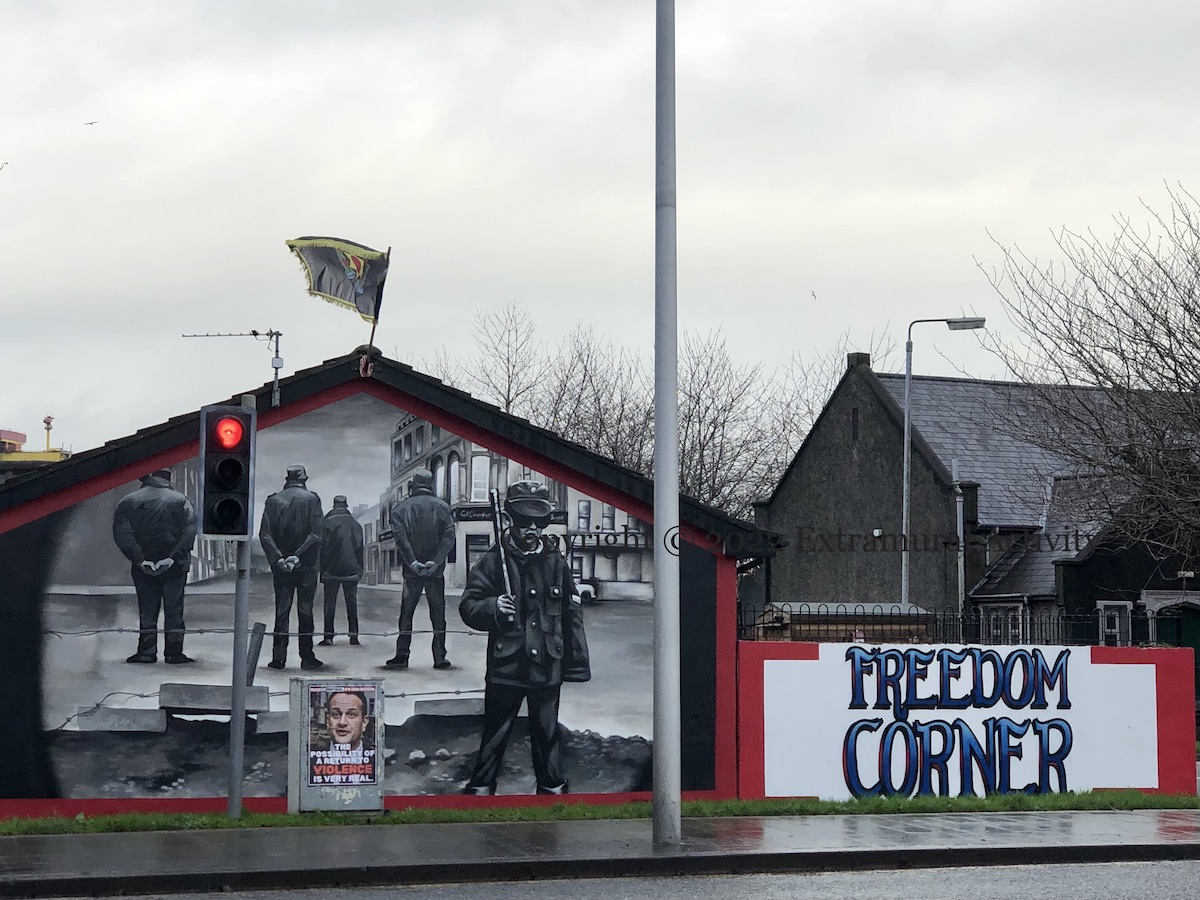
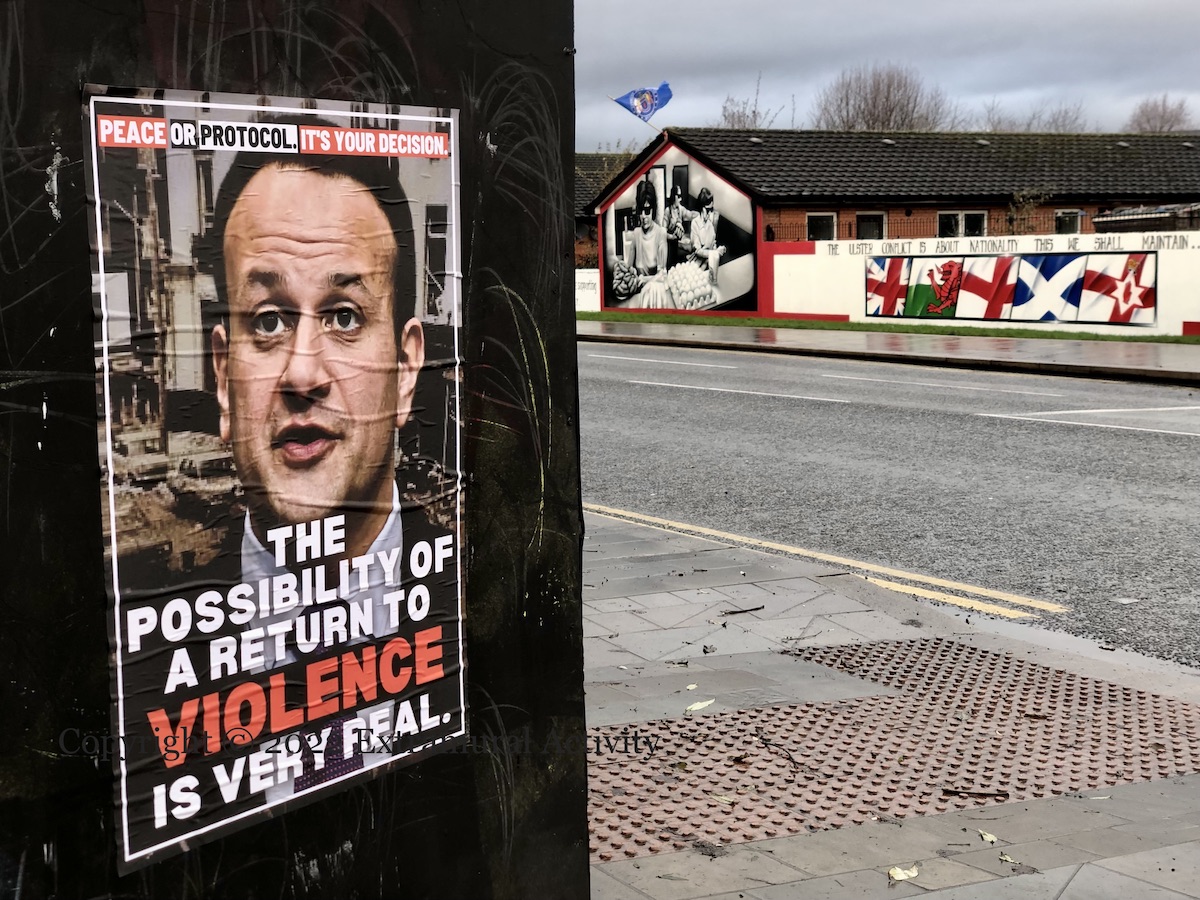
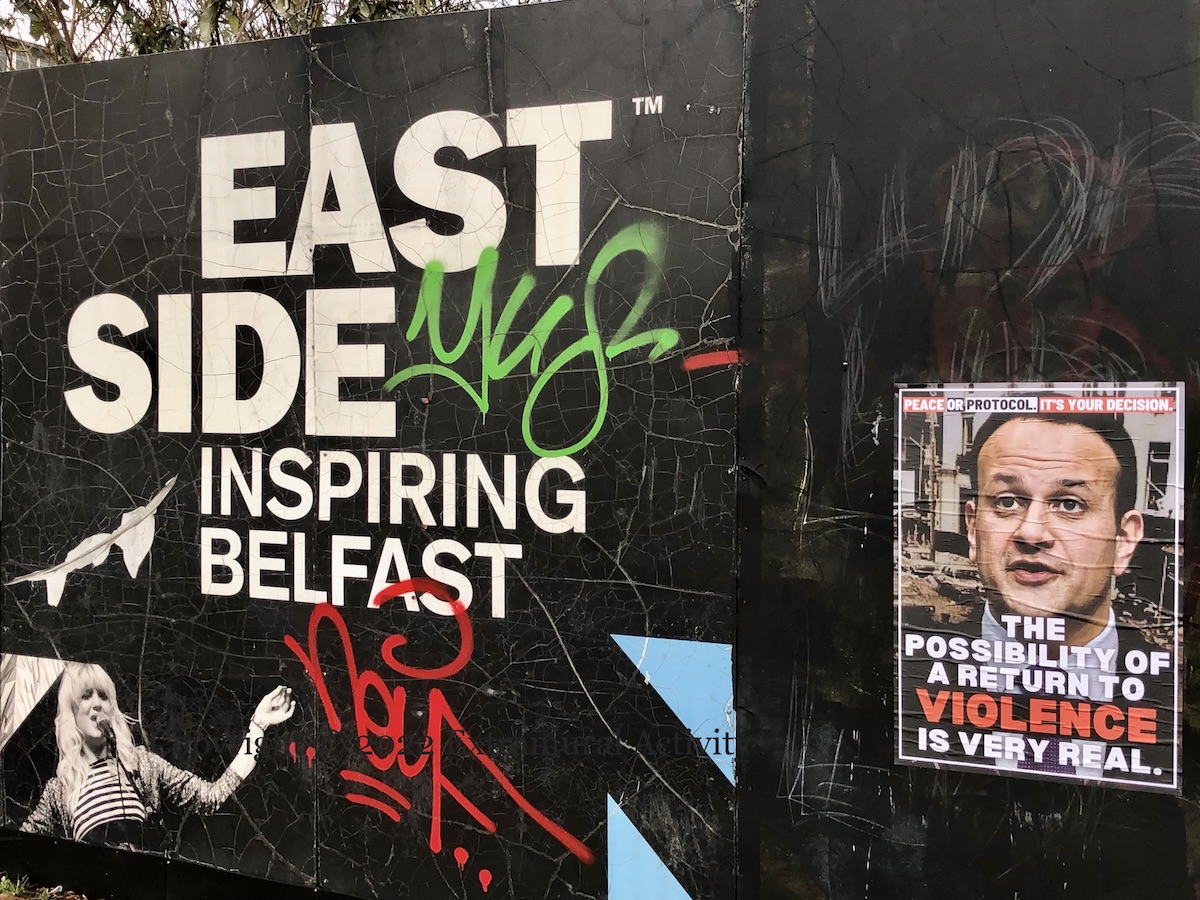
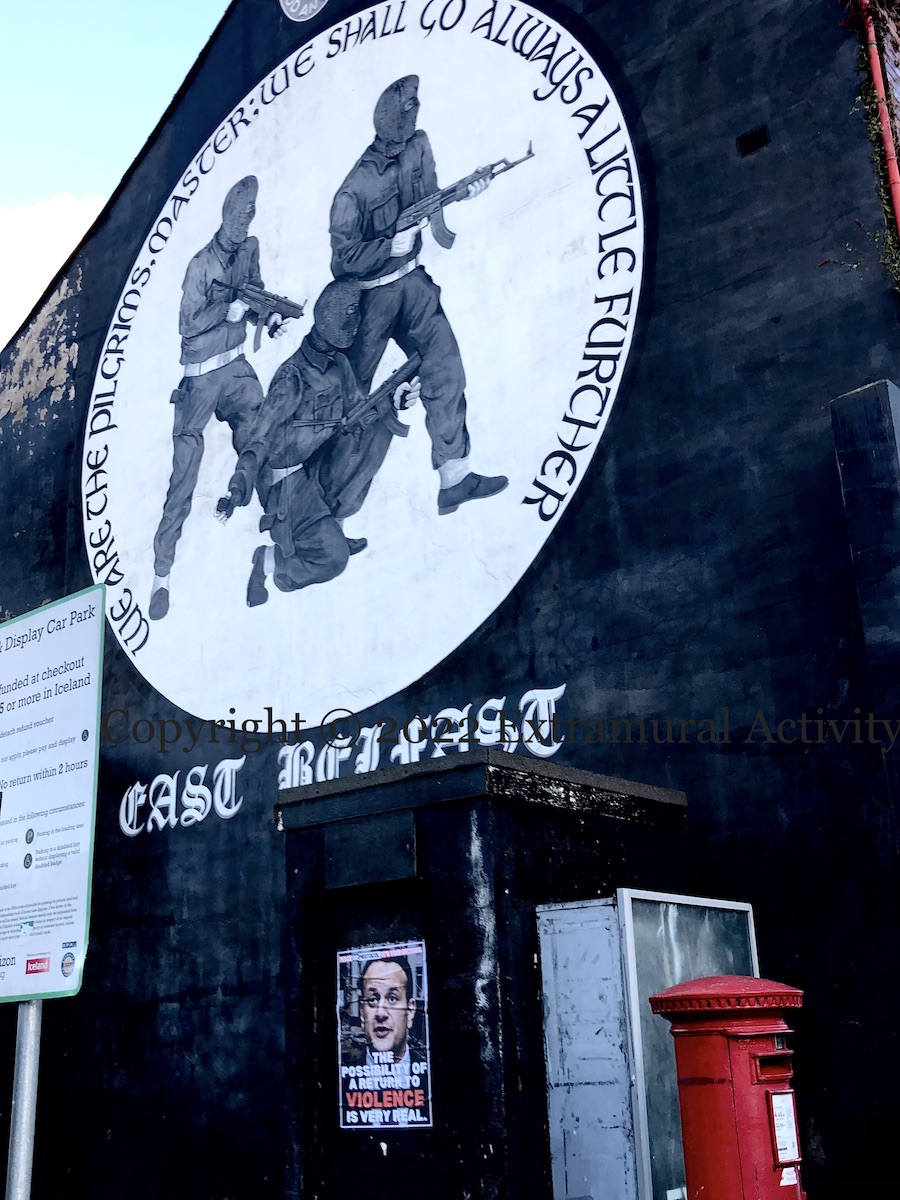
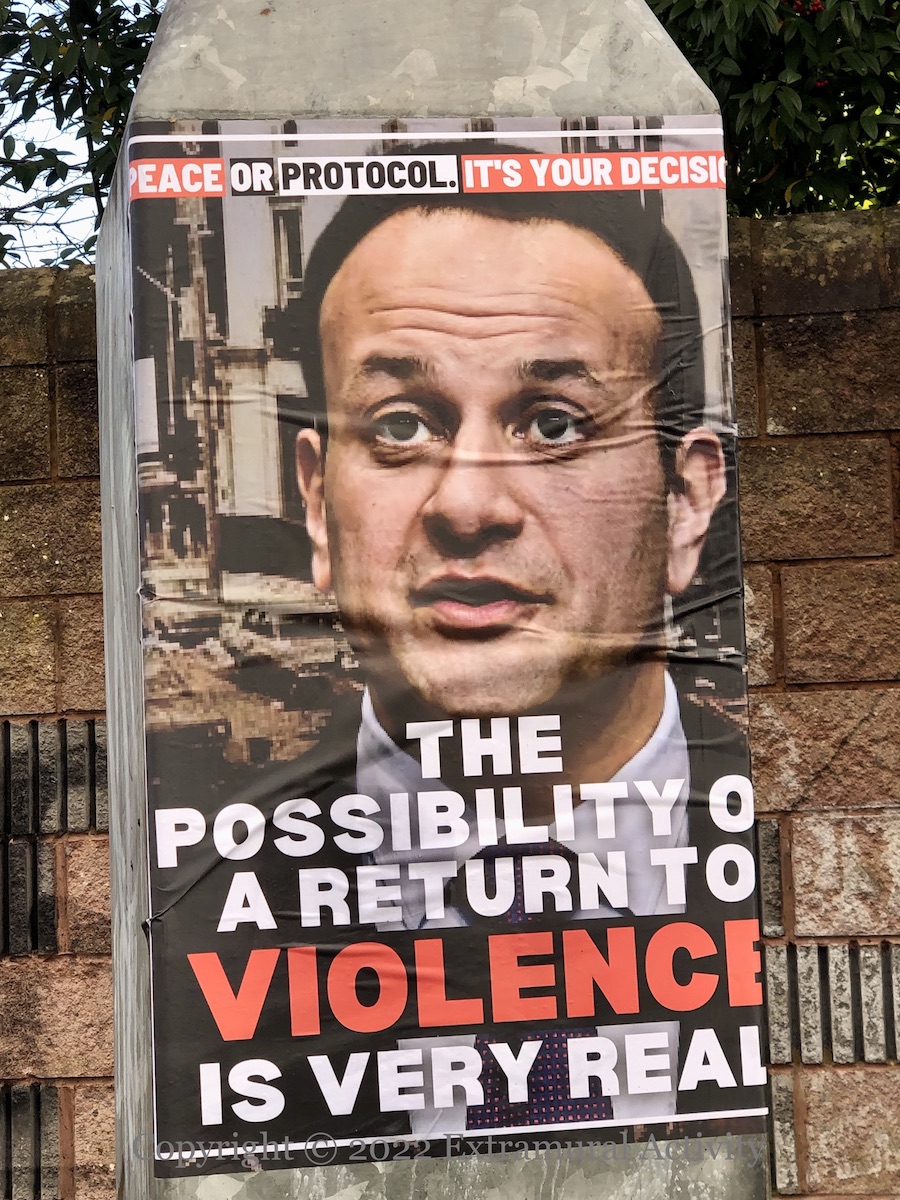
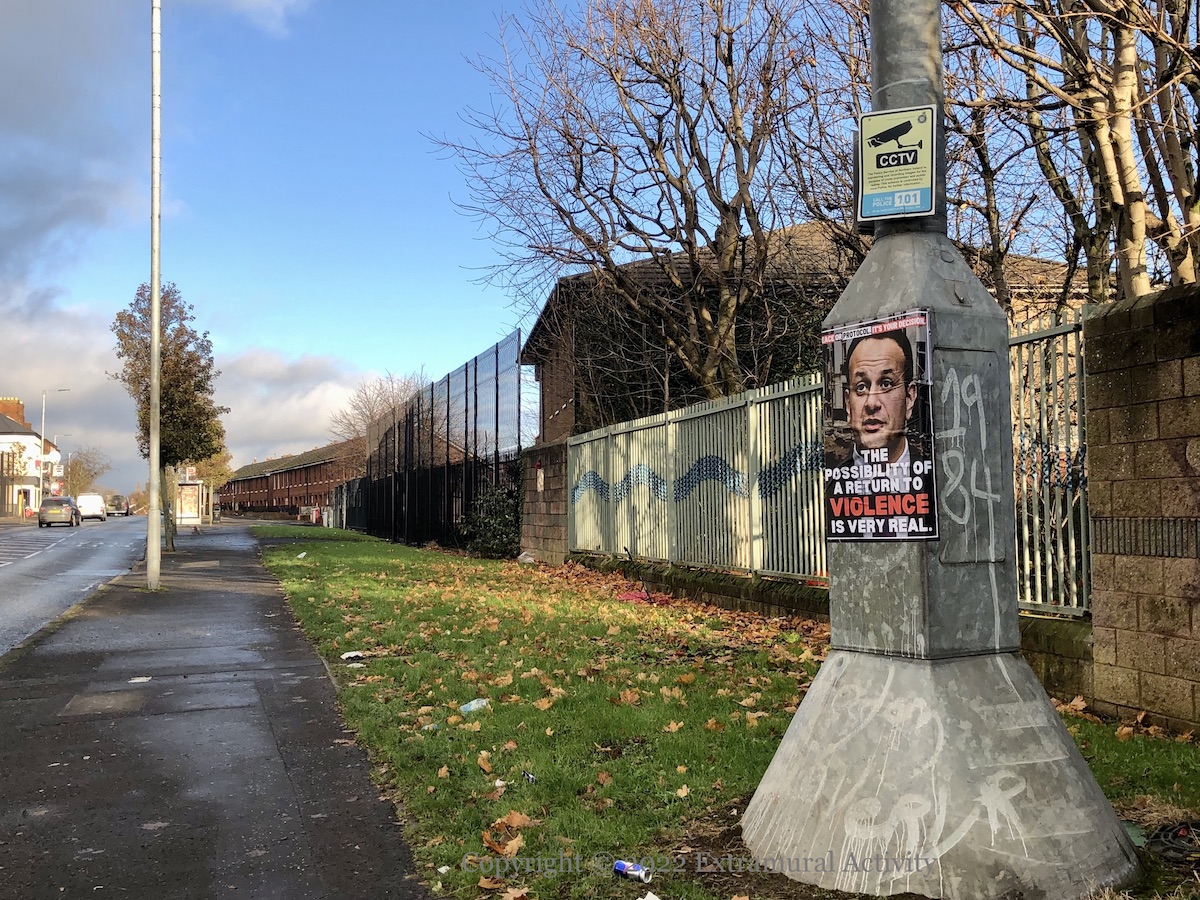
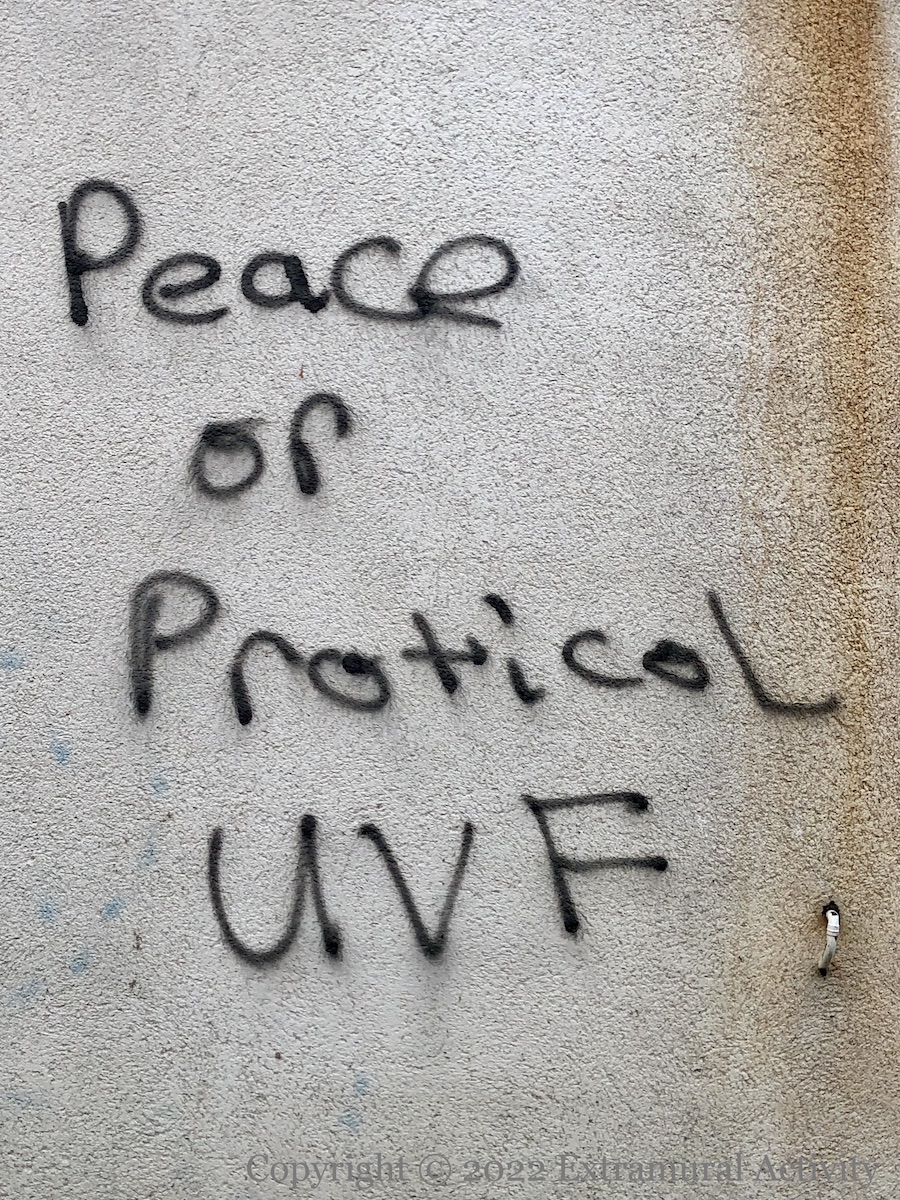
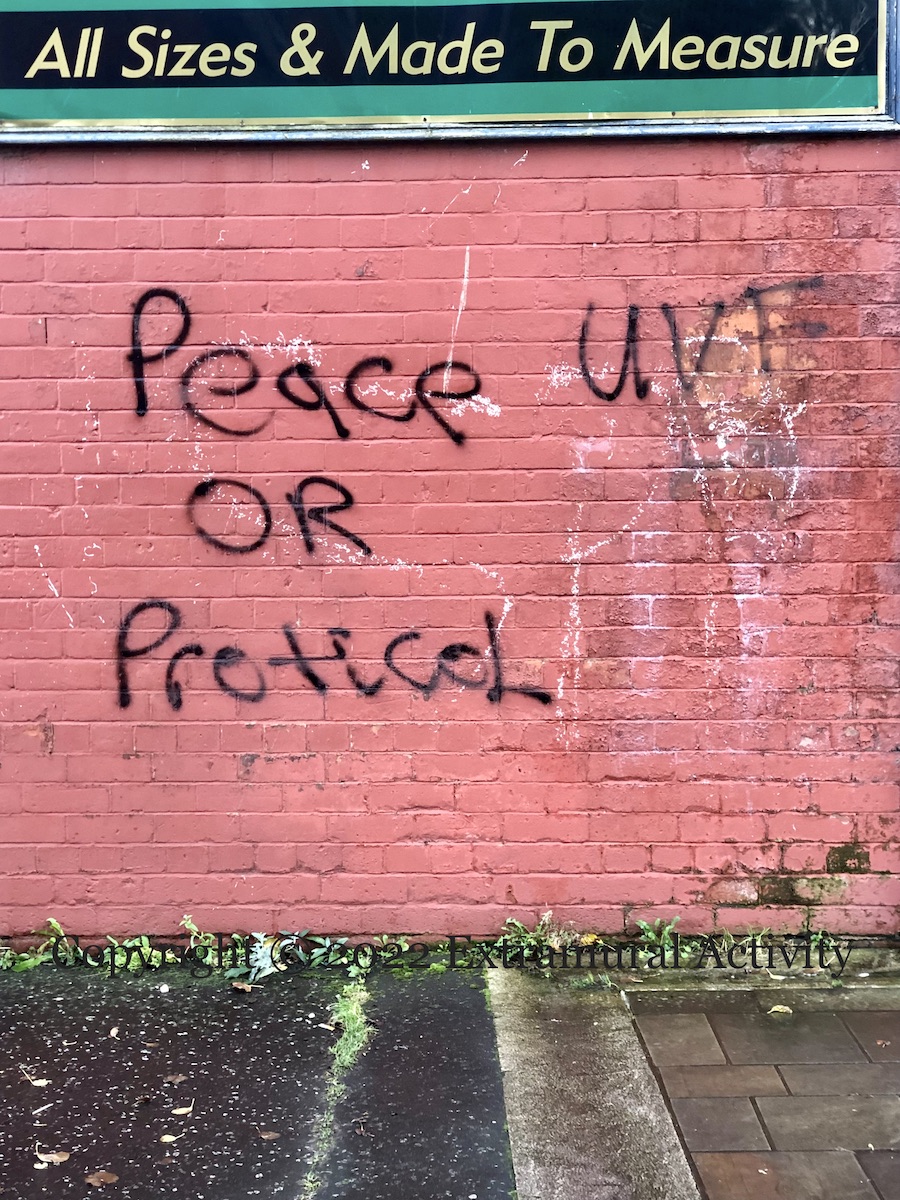
Here is a second set of images showing the “peace or protocol” poster that has appeared in PUL areas in the city, three in east Belfast – along the Newtownards Road. Two others in north Belfast were seen previously in A Return To Violence, which also explains the poster.
Following the east Belfast “Peace or proticol” graffiti, here we have “Peace or protocol – it’s your decision”, aimed at Leo Varadkar on the day that he again became Taoiseach (Irish Times) and repeating his words back to him from a speech in 2018: “The possibility of a return to violence is very real”. At that meeting, Varadkar was anticipating violence by anti-Agreement republicans in response to customs posts on the Ireland-Northern Ireland border, and brought a newspaper describing the death of four customs officials, two lorry drivers, and three IRA volunteers at a Monaghan post in 1972 (BelTel).
The authors of this poster are not known, but the parallel statement (mutatis mutandis) would be that anti-Protocol agents – perhaps the “young loyalists” that the UVF “can no longer contain” (UK Daily; see also RTÉ from November) – might return to acts of violence such as the 1974 “Dublin & Monaghan Bombings” that killed 33 people – in the background of the poster is part of a photograph (Irish News) of bomb damage in Talbot Street – if the Protocol’s “Irish Sea border” is not removed.
The instance of the poster shown in this entry is on the edge of Tiger’s Bay, on North Queen Street; the posters have also been appearing in east Belfast: Newtownards Rd (at Templemore Ave tw; at Dee St tw) | Beersbridge Rd (reddit).
A group called Let’s Talk Loyalism greeted the new premier with a mock funeral in Dublin for the Good Friday Agreement; the flowers behind the coffin read “GFA is dead” (tw).
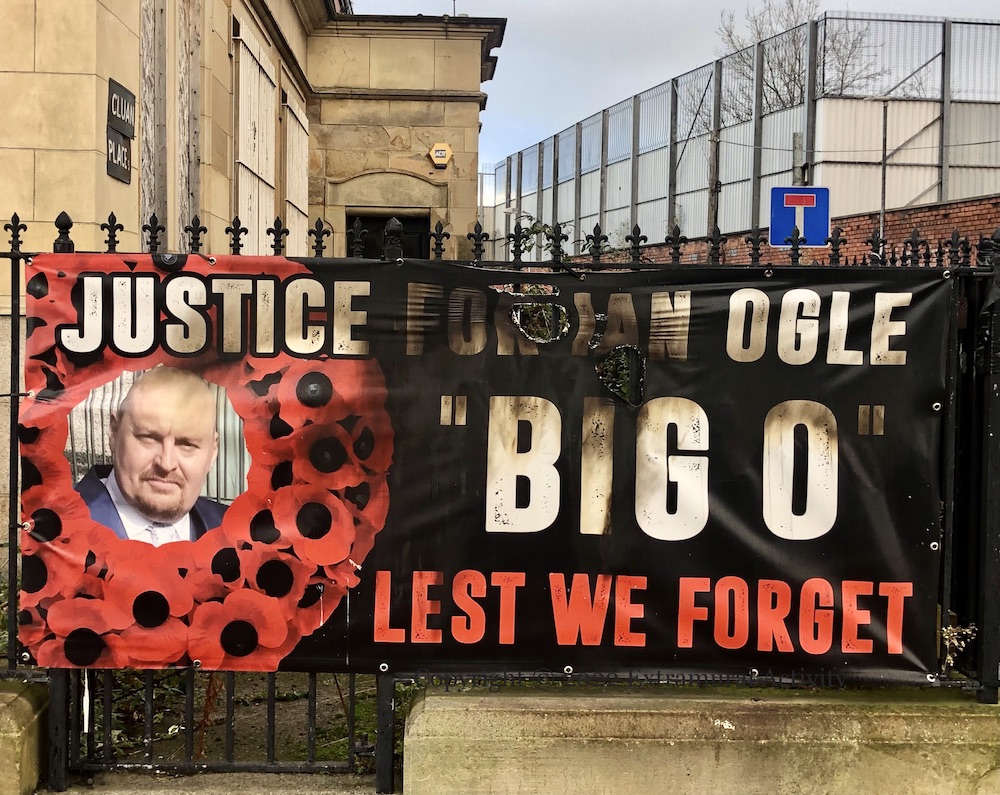
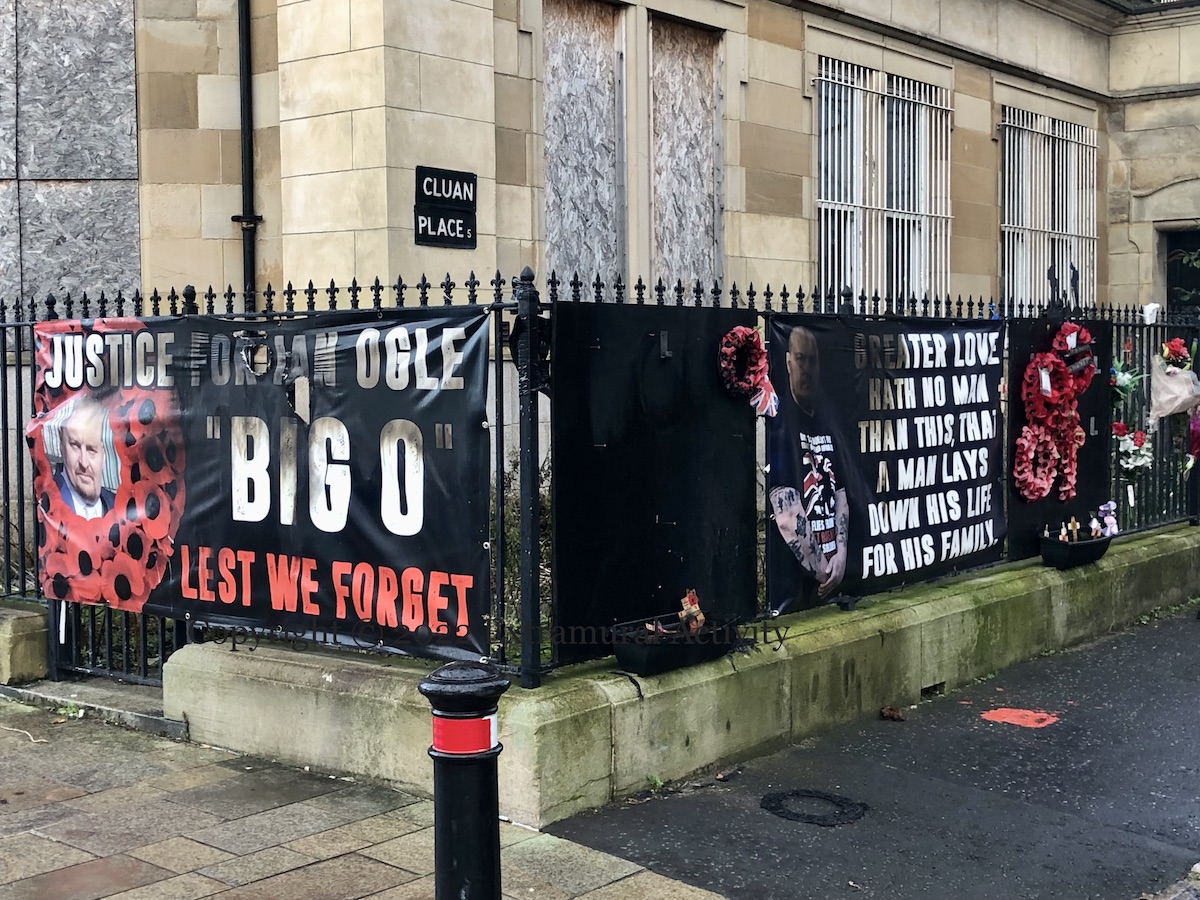
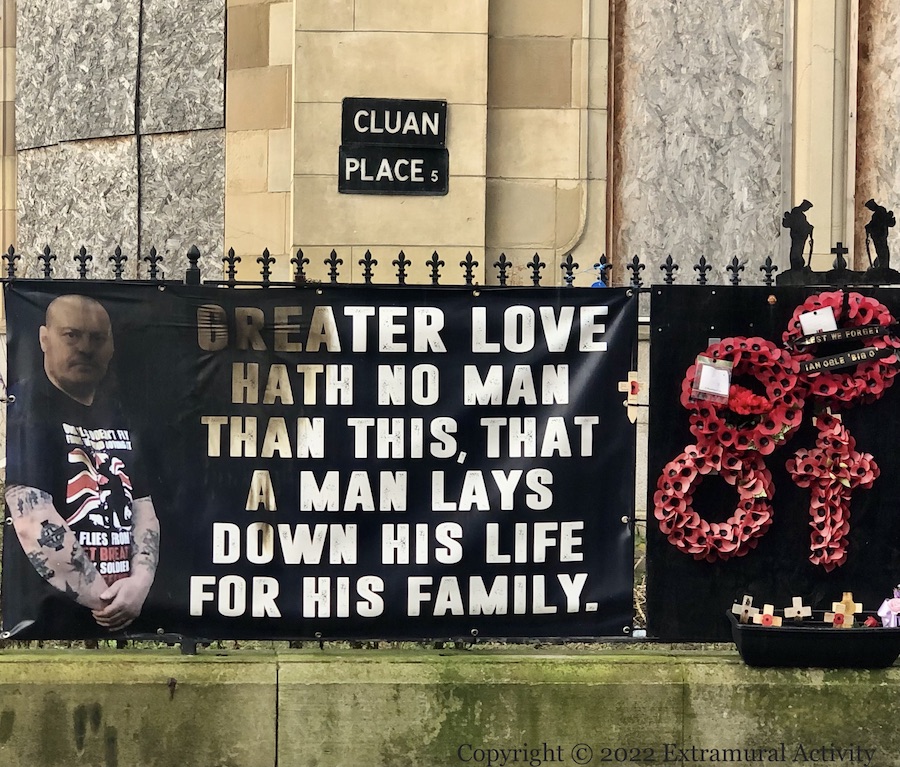
The memorial tarps to Ian Ogle were photographed on October 5th and appeared in a November 13th post: For His Family. On about the 18th of November they were subject to an arson attack. Belfast Live has reaction from the family.
Agriculture minister Edwin Poots’s directive to stop checks on goods coming from Britain to Northern Ireland – which did not come into practical effect – was struck down on Friday, and reverting the policy to what it was under the NI Protocol and Brexit deals. The High Court judge who handed down the decision did so on the grounds that Poots’s directive was politically motivated (BBC) – in other words, it was taken as part of the DUP’s opposition to the Protocol, which next (in February, 2022) involved collapsing the executive.
Sales from GB to NI increased 7% (about 1 billion pounds in value) in the year after the Protocol came into effect (BBC | BelTel) but money isn’t everything (the “erosion of our identity” is “non-negotiable“) and protests persist, offering the bargain of “the peace” (i.e. the Belfast/Good Friday Agreement) or “the proticol”. Efforts continue by the UK government to reach a new deal with the EU and/or to pass a bill allowing unilateral changes (News Letter).
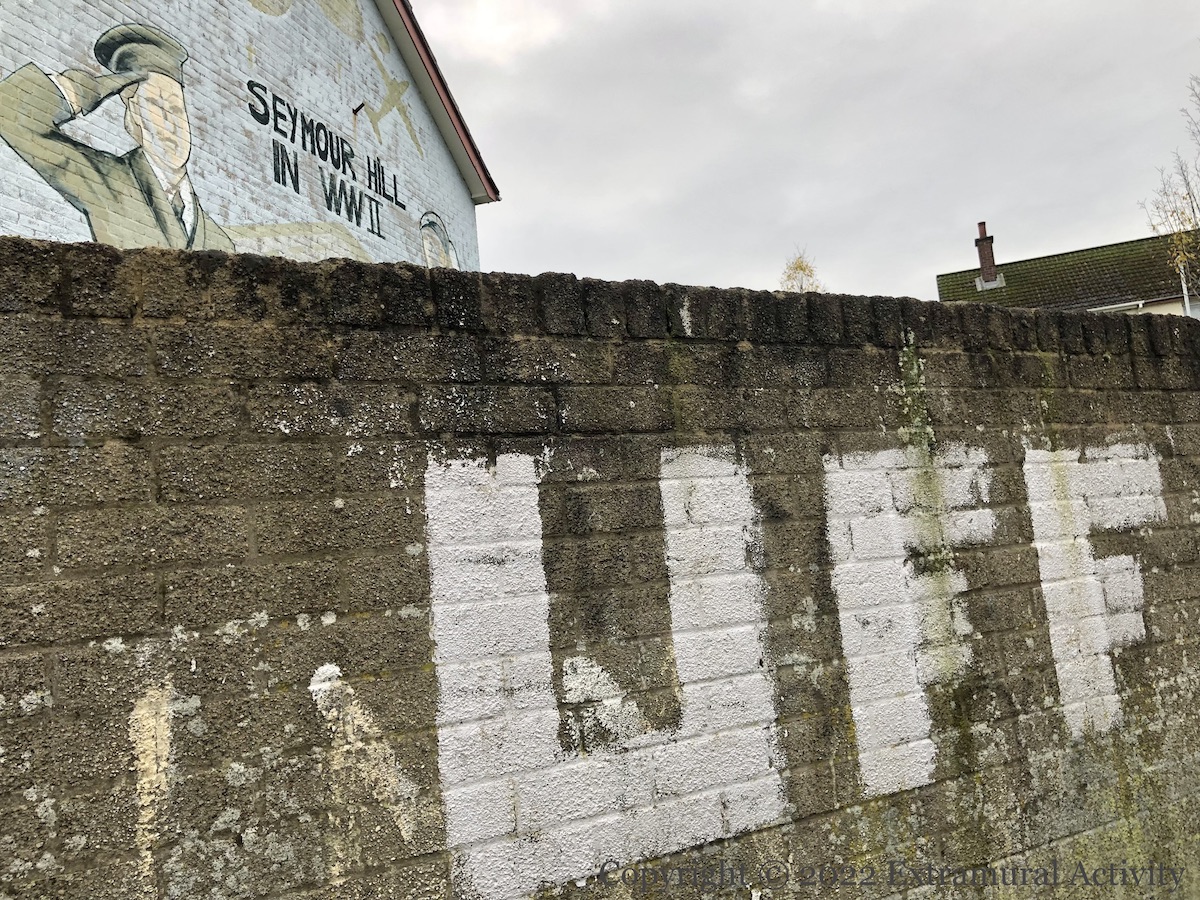
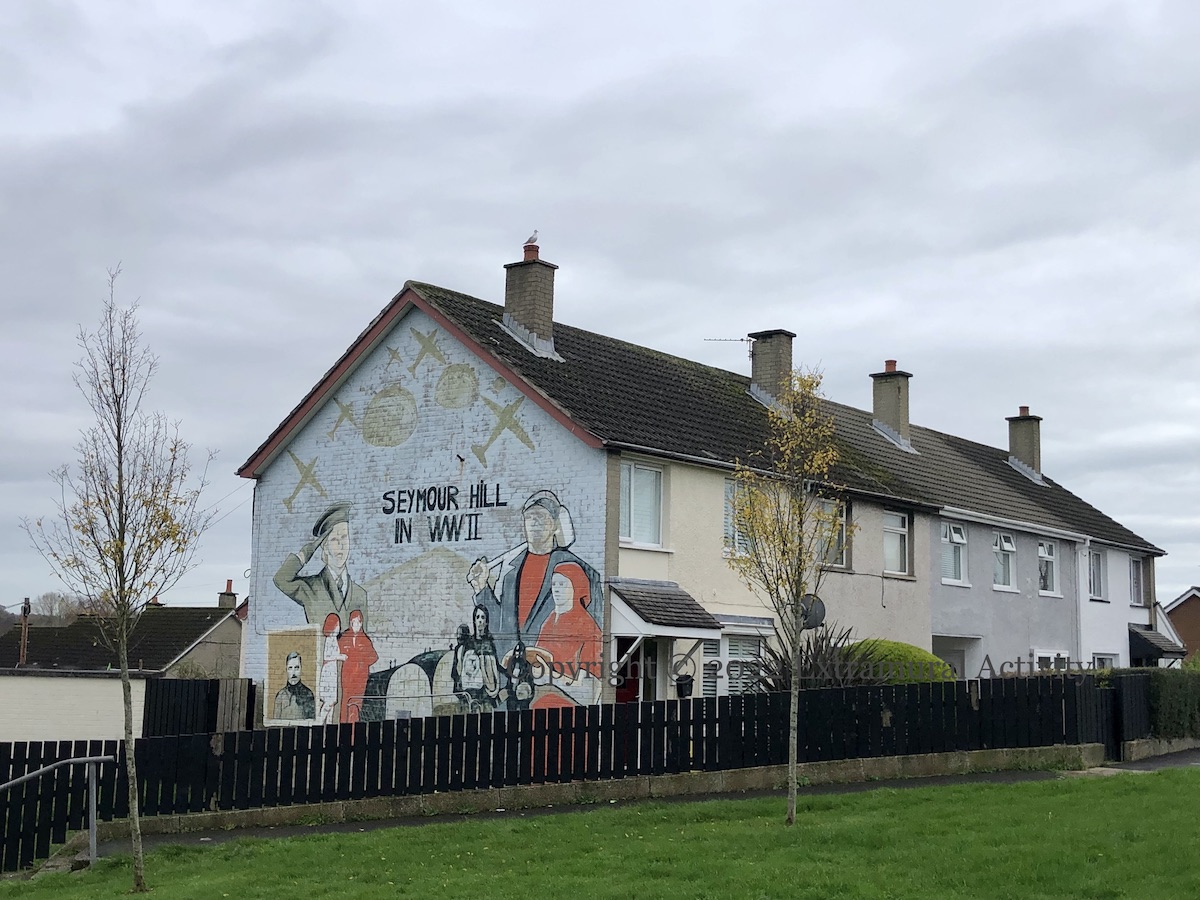
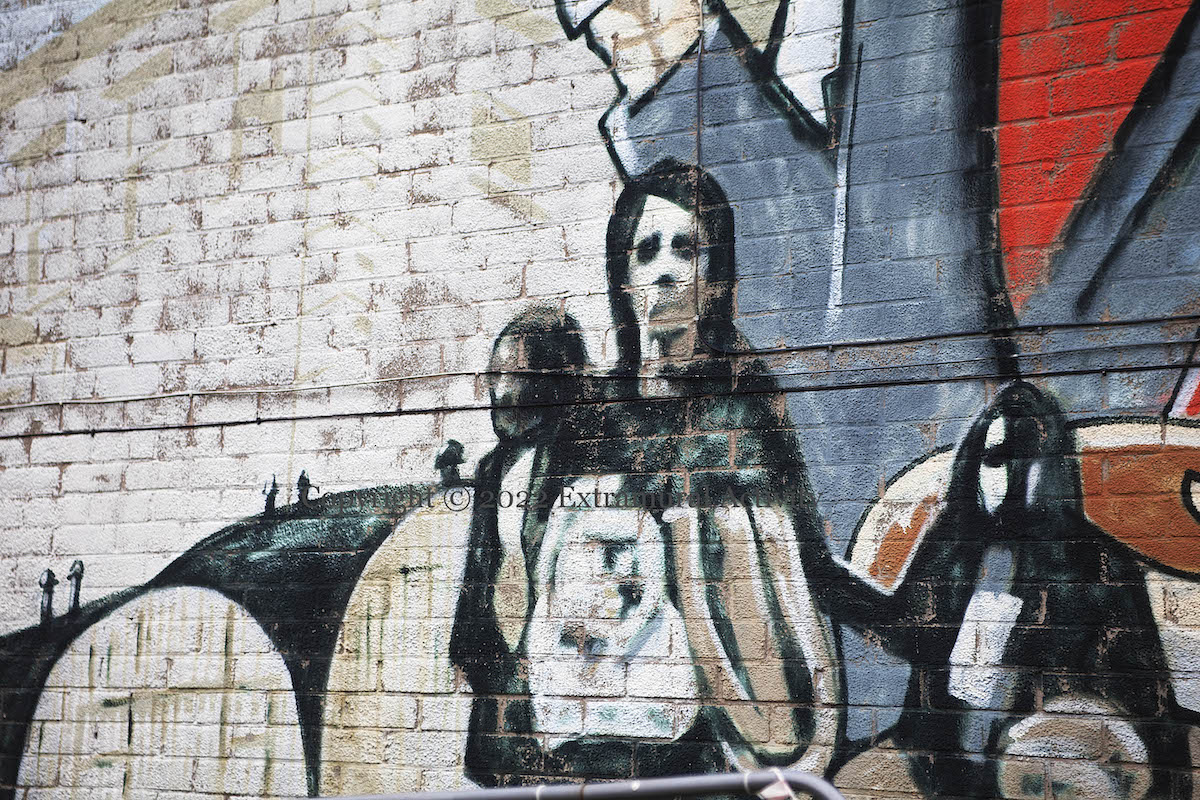
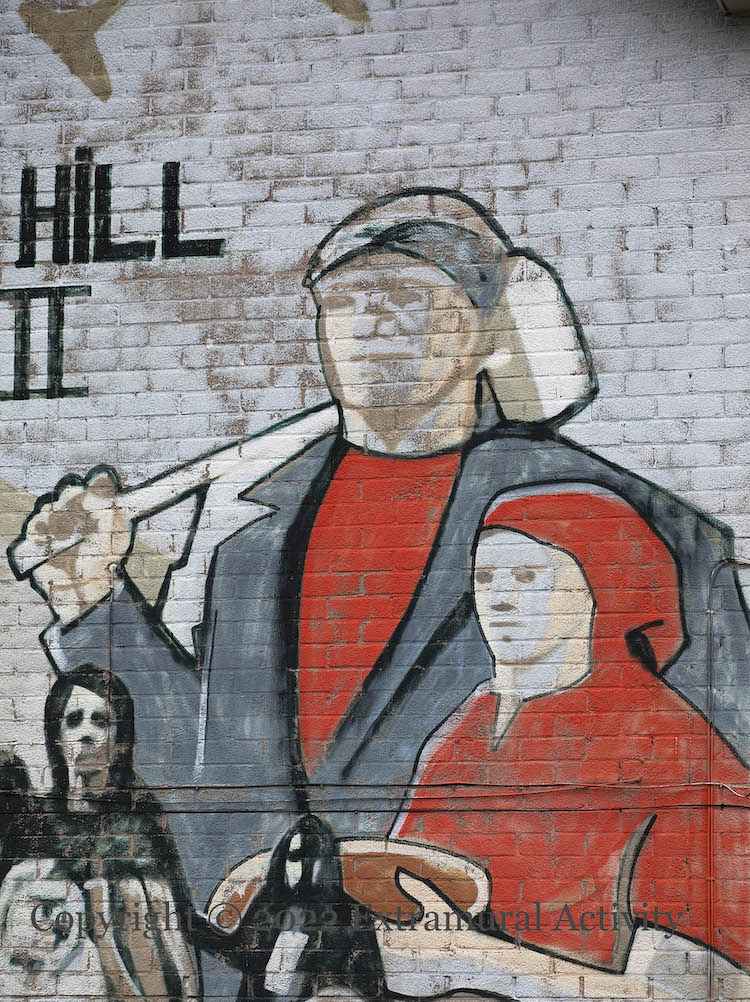
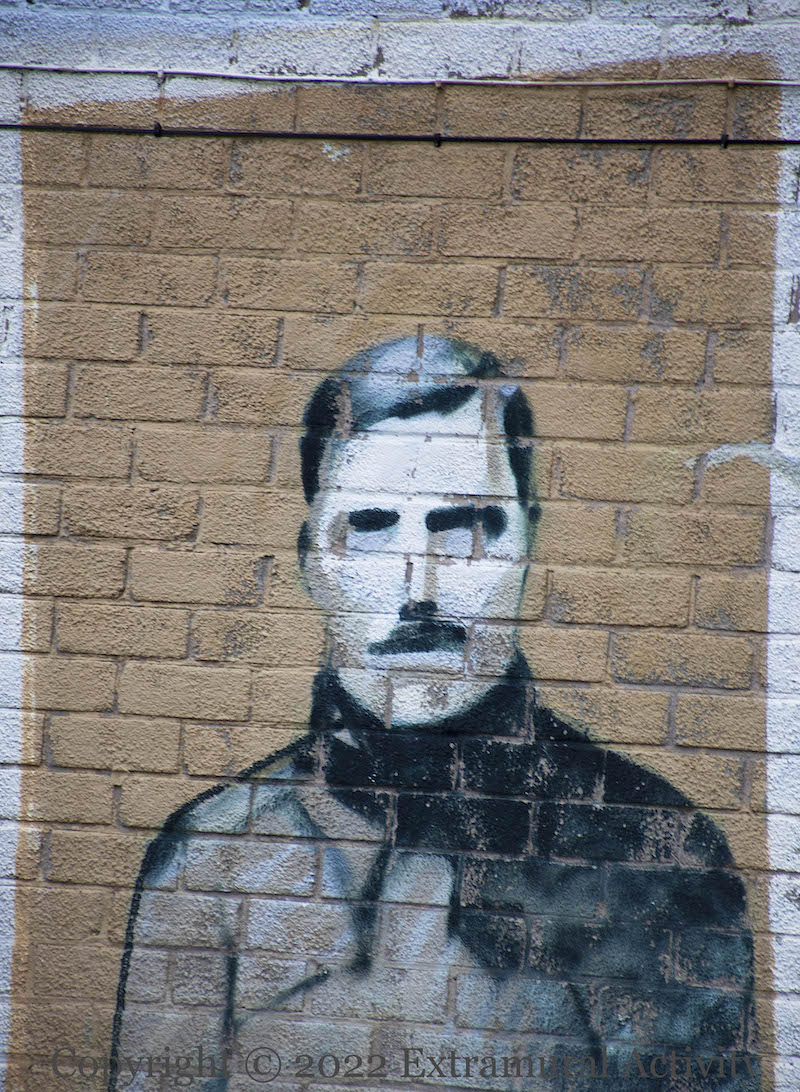
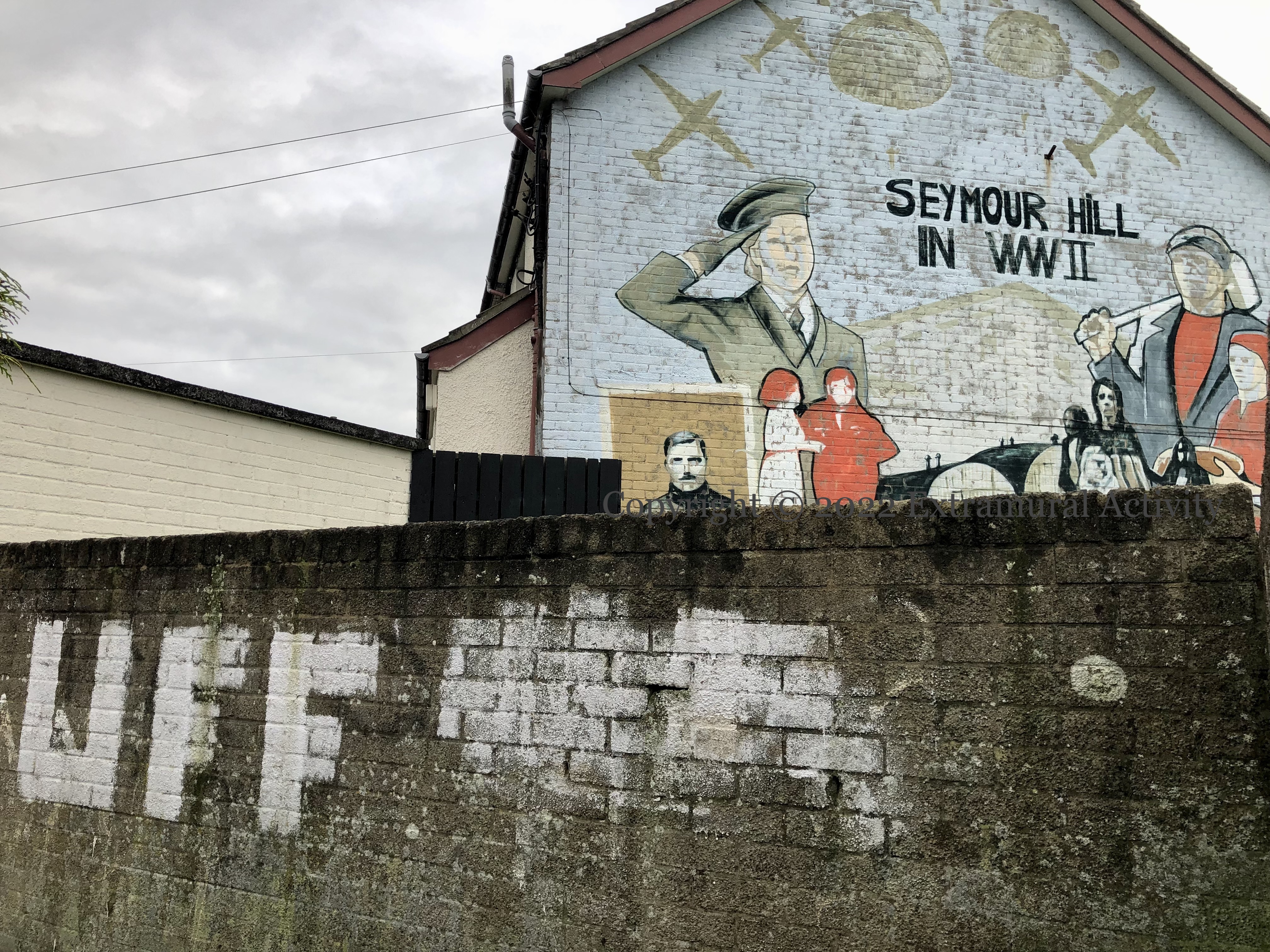
The Seymour Hill WWII mural will be 14 years old this coming July (2023) but it is hanging on fairly well. It is quite faded – especially the parachutes at the top – but there is no graffiti on the wall itself, only on the wall below it. For the mural when new and information about the US camp and portrait of Colditz prisoner William Harbinson, see M04776.
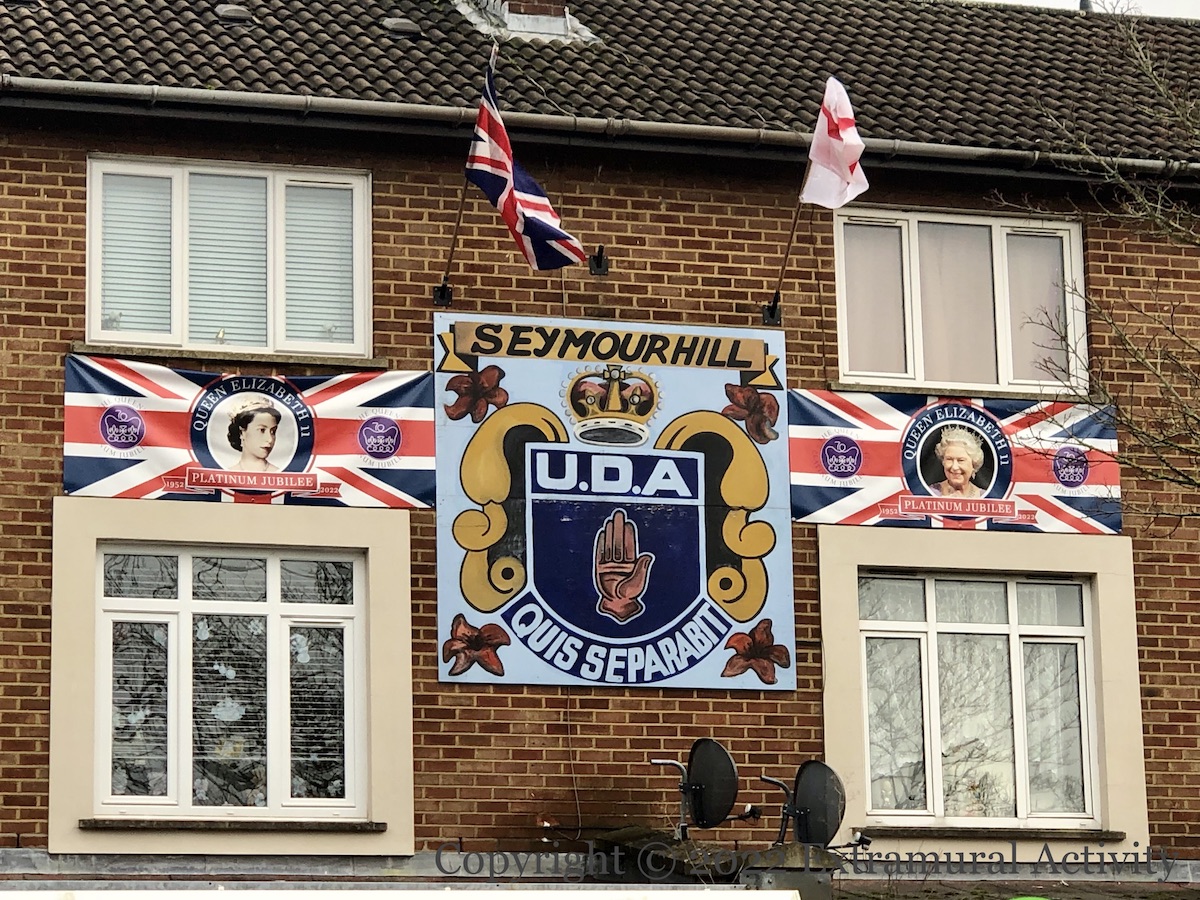
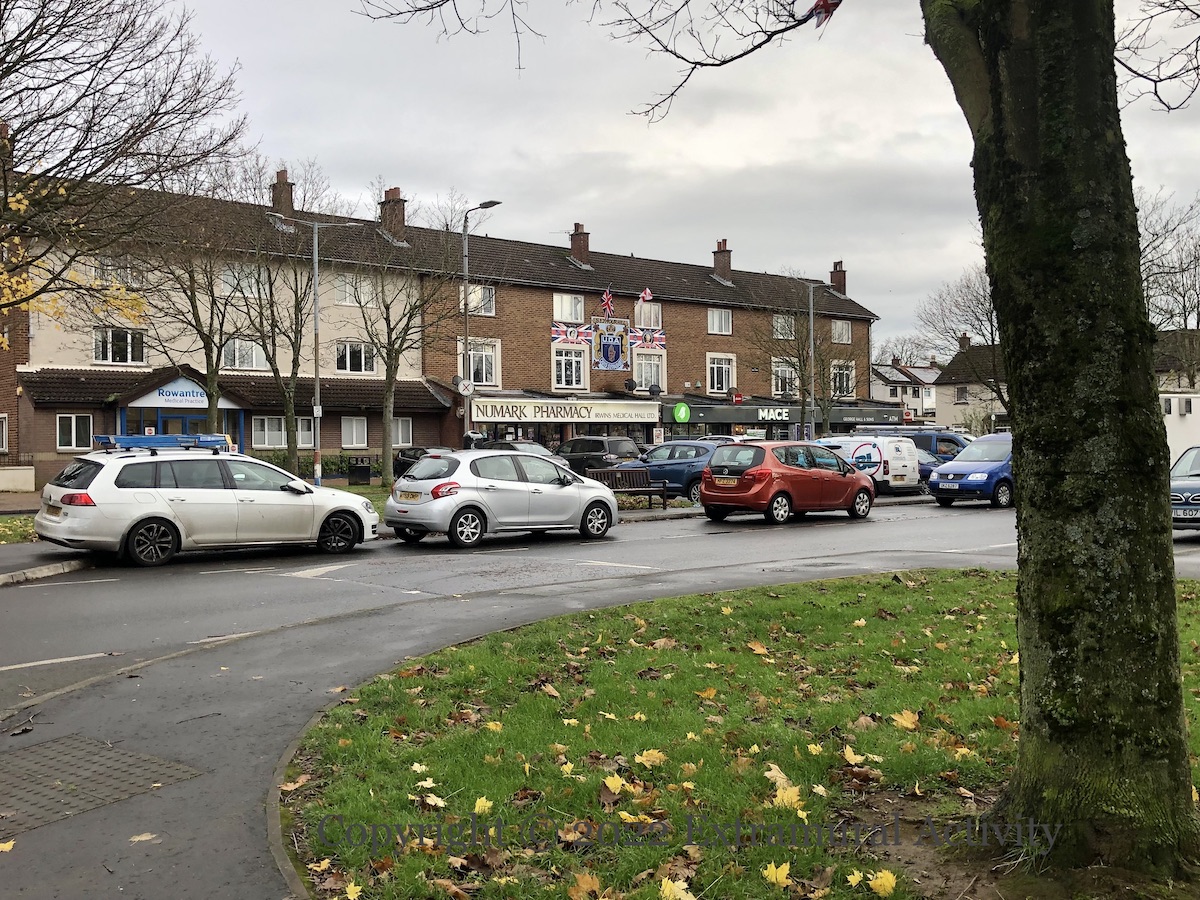
Queen Elizabeth II 70th/platinum Jubilee banners remain on either side of the UDA board above the Seymour Hill shops, even after her death in September (previously there were two NI Centenary banners). There are orange lilies at the four corners of the UDA emblem.
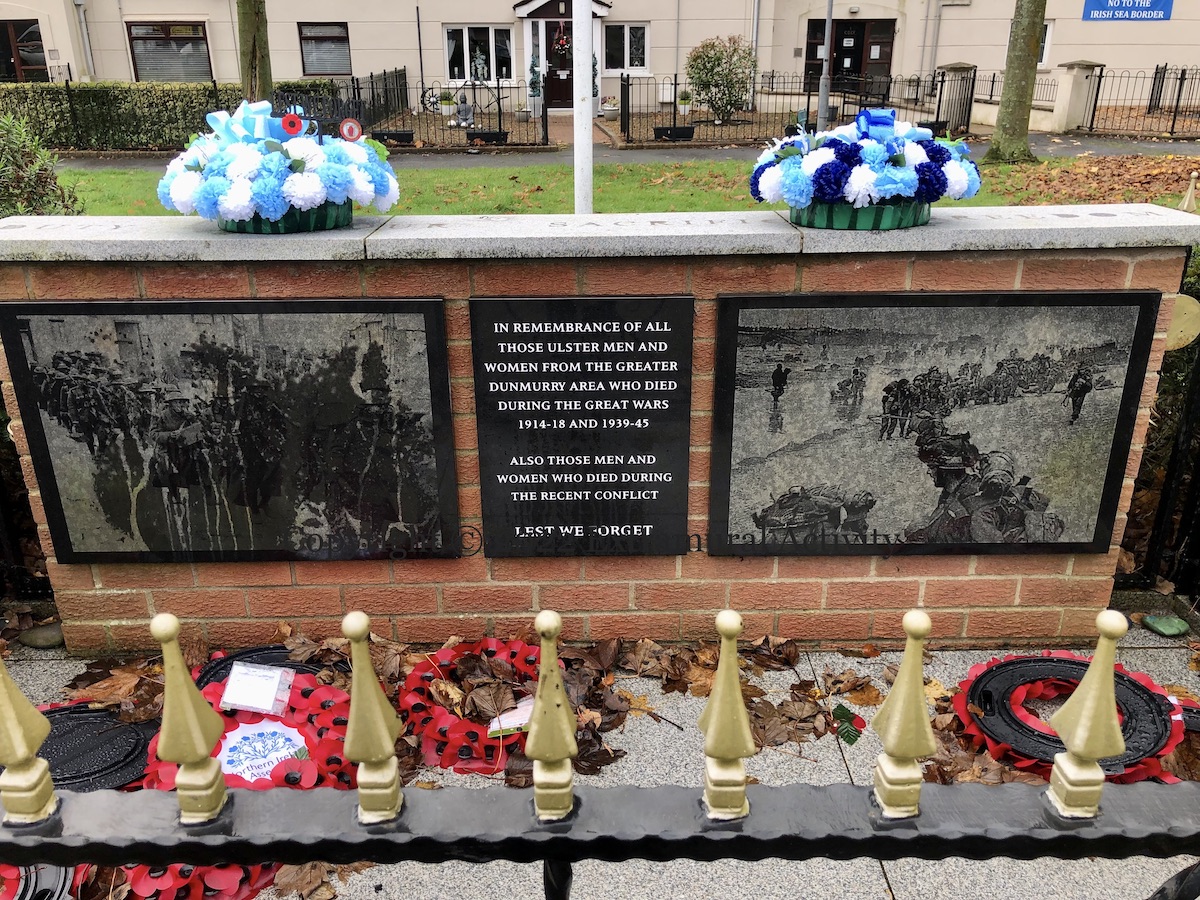
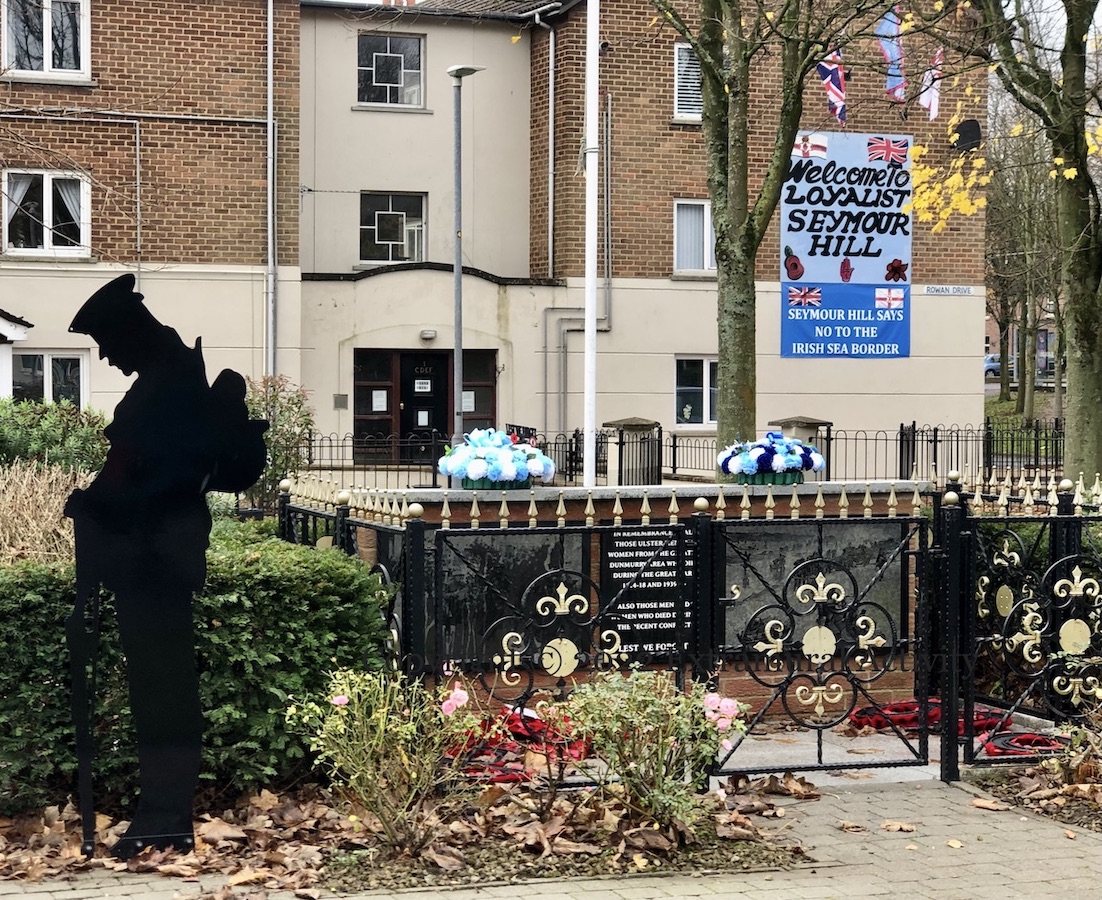
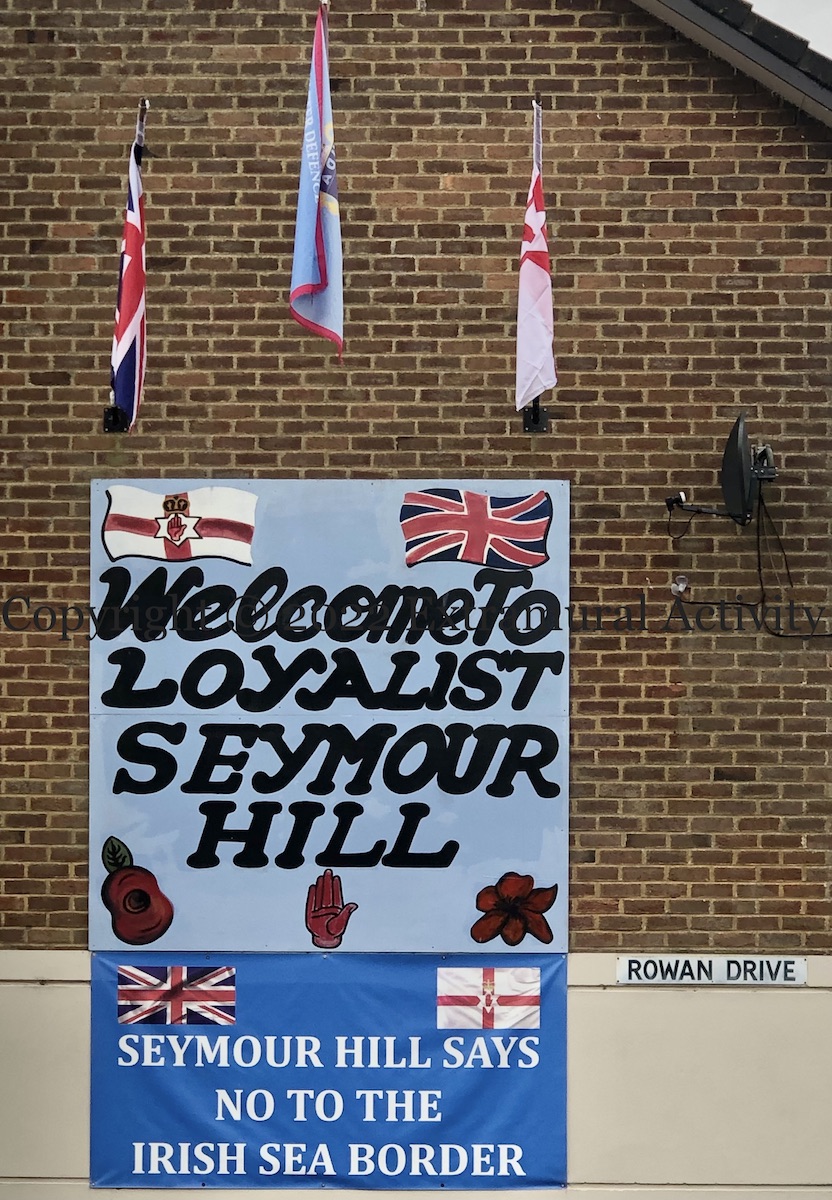
“In remembrance of all those Ulster men and women from the greater Dunmurry area who died during the Great Wars 1914-18 and 1939-45. Also those men and women who died during the recent conflict. Lest we forget.” These are the same words as appeared on a plaque on the previous memorial, which included the Special Constabulary. In the background is a “Welcome to loyalist Seymour Hill” board with flags and poppies, along with a 2021 tarp reading “Seymour Hill says no to the Irish Sea border”.
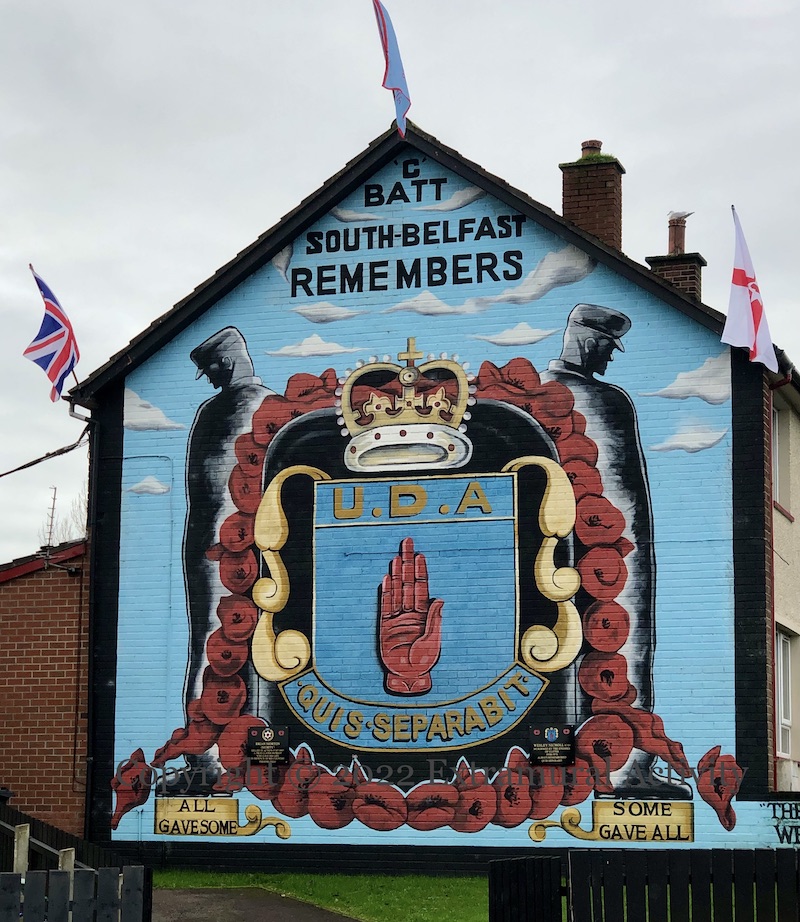
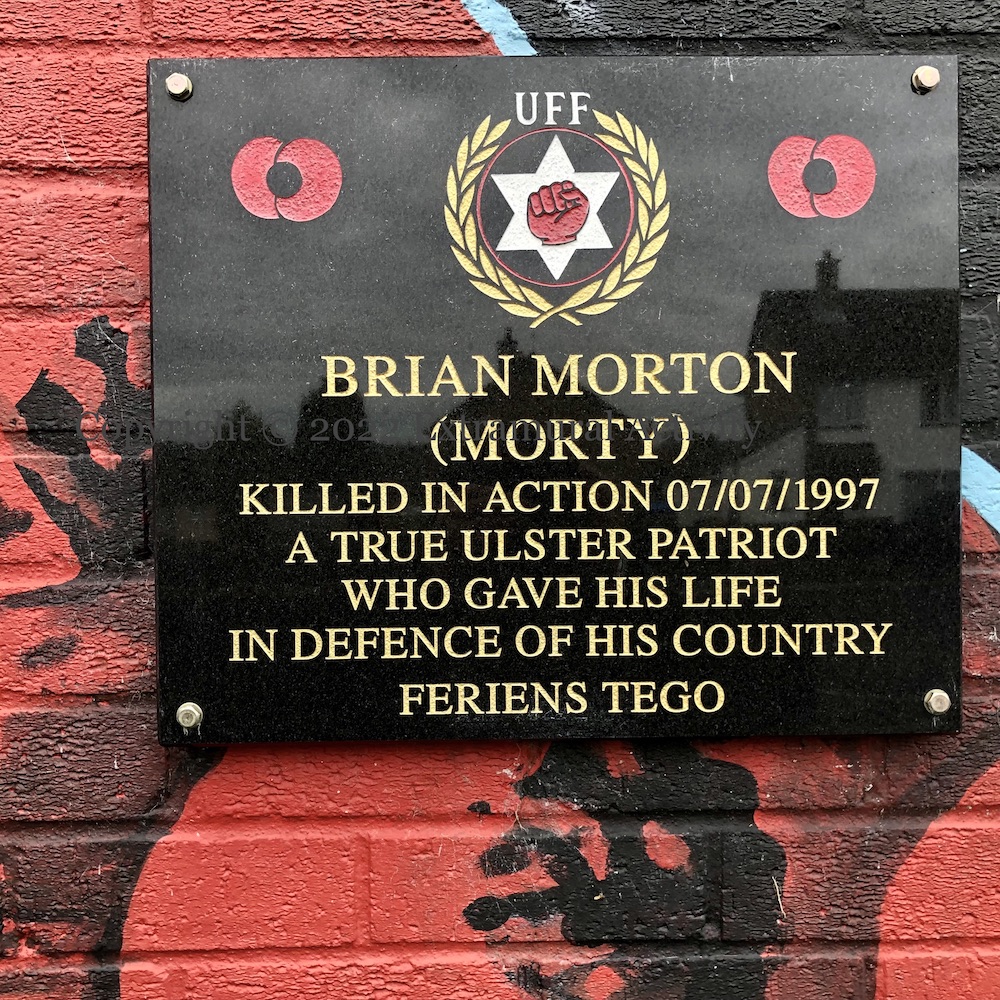
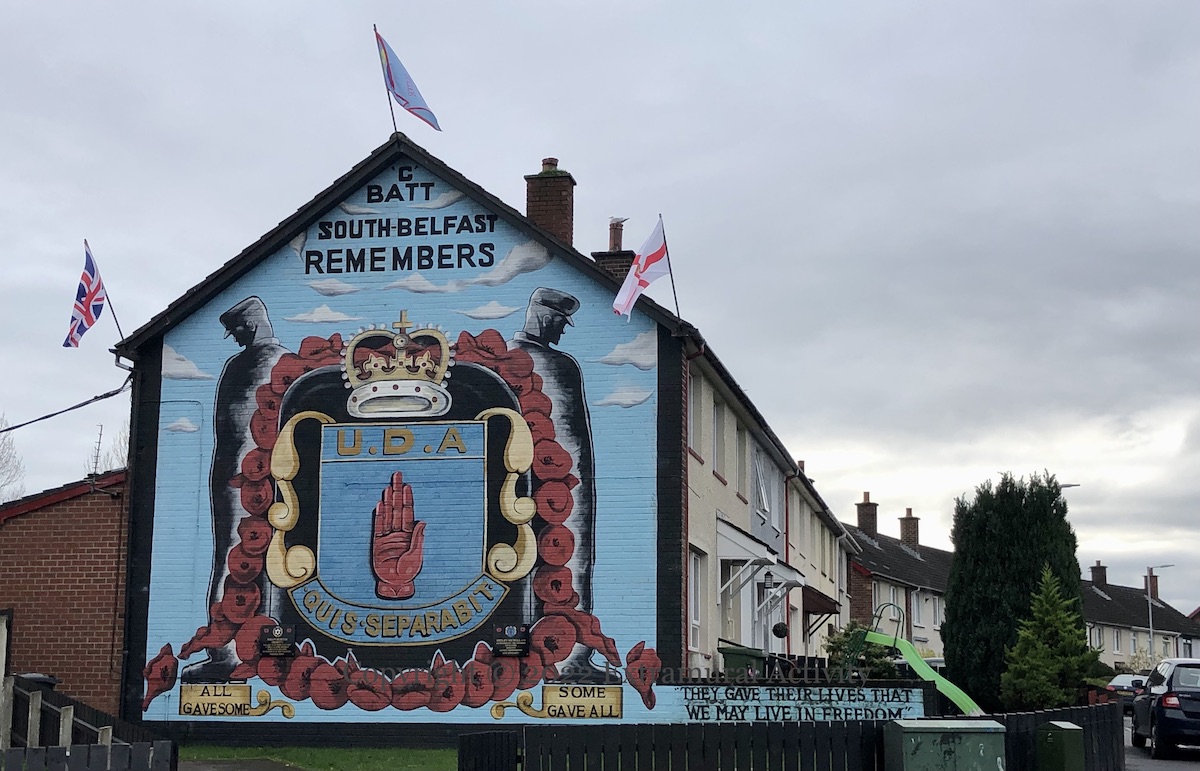
The old C Batt mural further up Hornbeam Road has long been painted over. It used the same line – “They gave their lives that we may live in freedom” – to remember Wesley Nicholl and Brian Morton. A plaque to Morton is now included on top of the new mural. “Brian Morton (Morty) killed in action 07/07/1997, a true Ulster patriot who gave his life in defence of his country. Feriens tego.” As with republican memorials, “active service” means that Morton was killed by a premature bomb exploding.
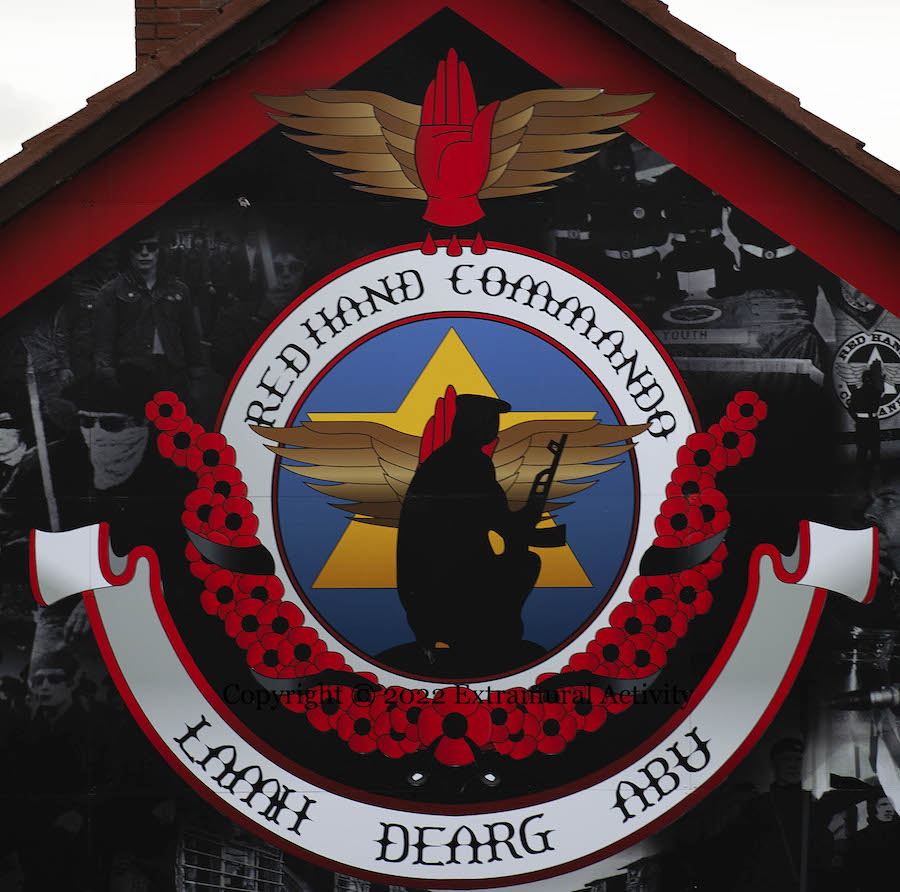
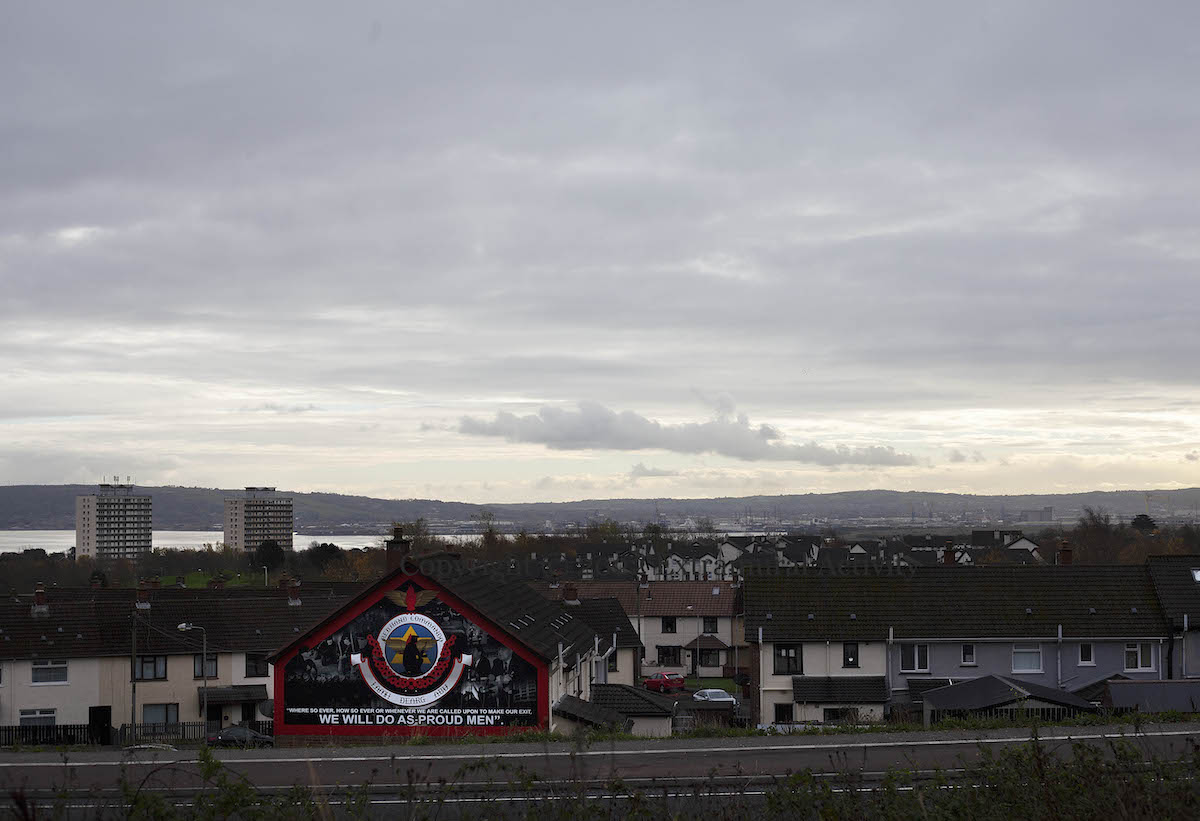
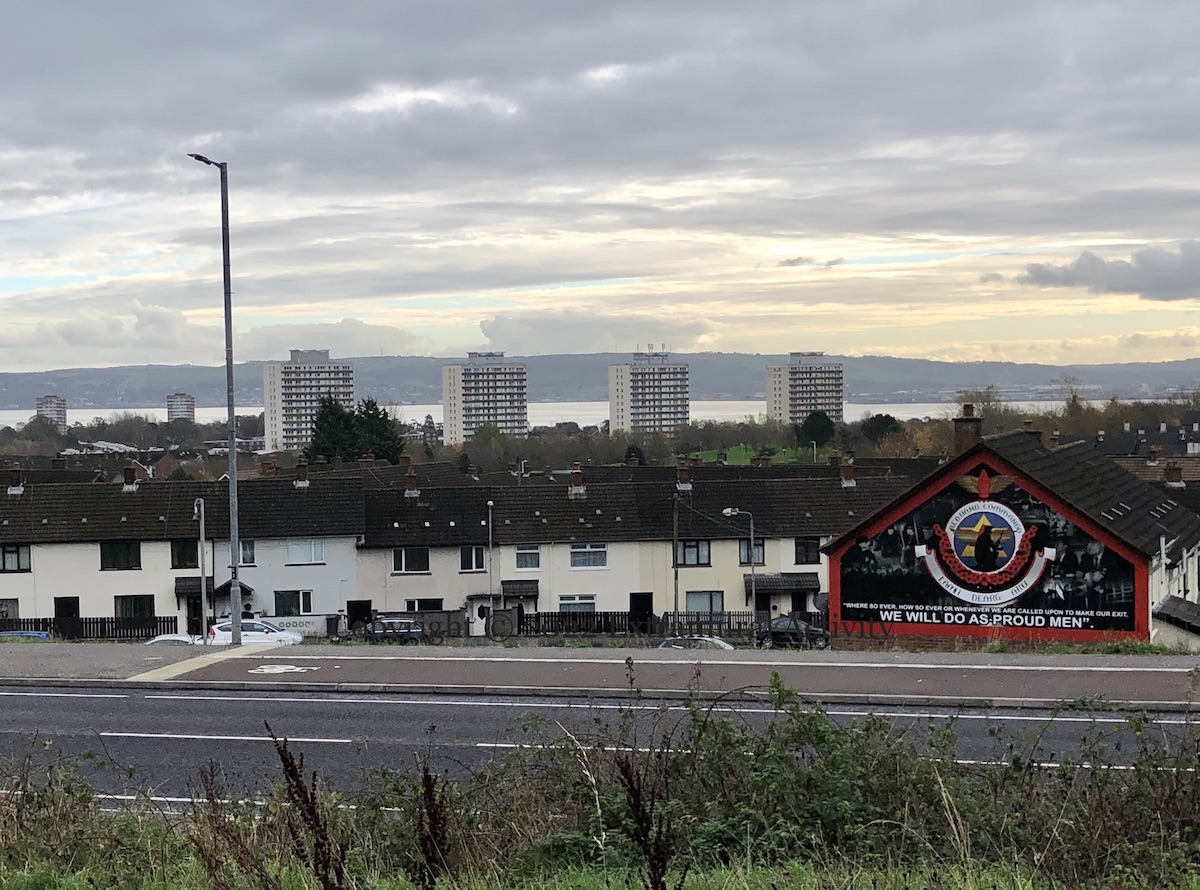
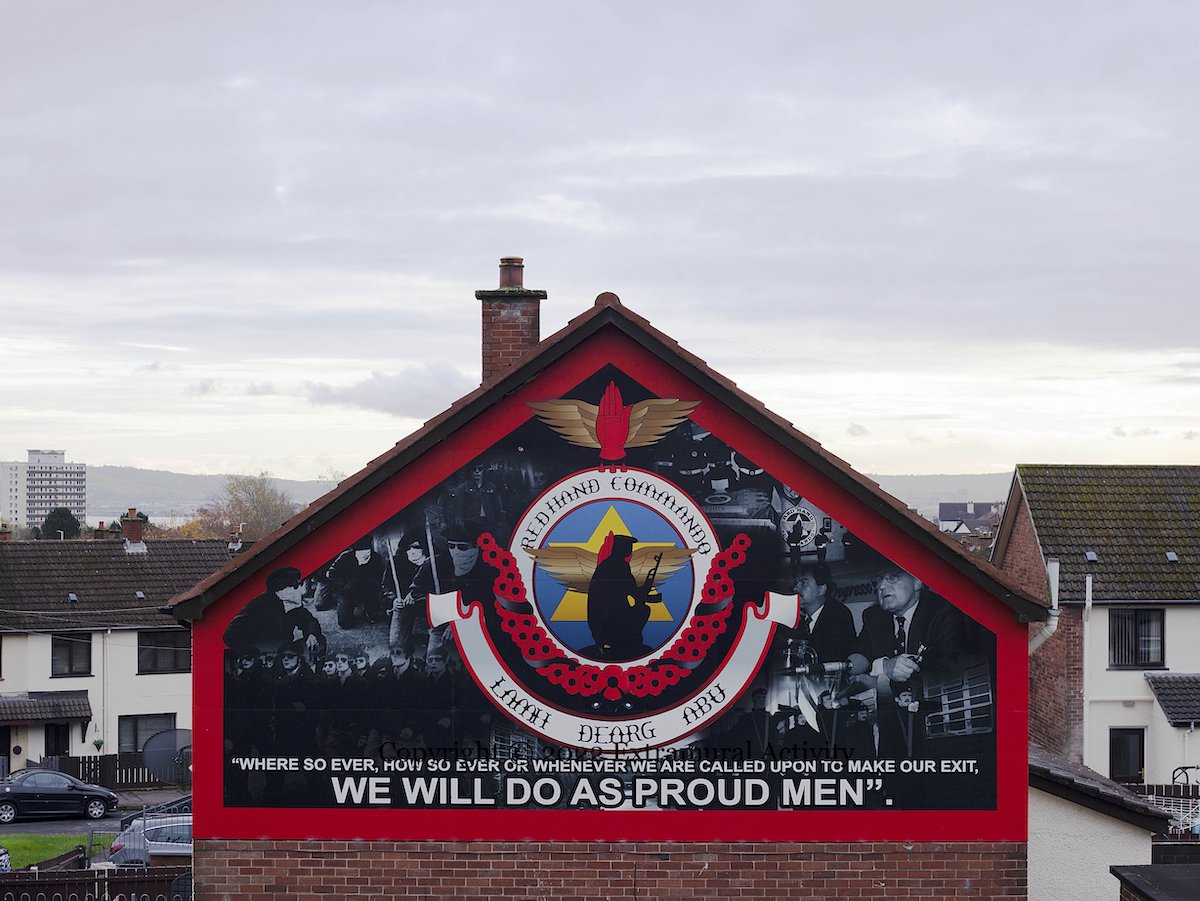
“Where so ever, how so ever or whenever we are called upon to make our exit, we will do as proud men.” This is quite a different message from the one produced within the Rathcoole estate for the 50th anniversary of the Red Hand Commandos, which stated that despite its venerable age, the four Rathcoole companies of the RHC “Await In The Shadows“. (That mural also depicted the kneeling men with sticks (on the left of the mural, best seen in the final image.)
It’s not clear who or what within loyalism might call upon the RHC to stand down; loyalist rhetoric at the moment is full of anger at the protocol and warnings/threats about of a return to violence (e.g. BelTel | BBC).
For the use of “Lamh Dear Abu” as the slogan, see Ulster Says “Tá”.