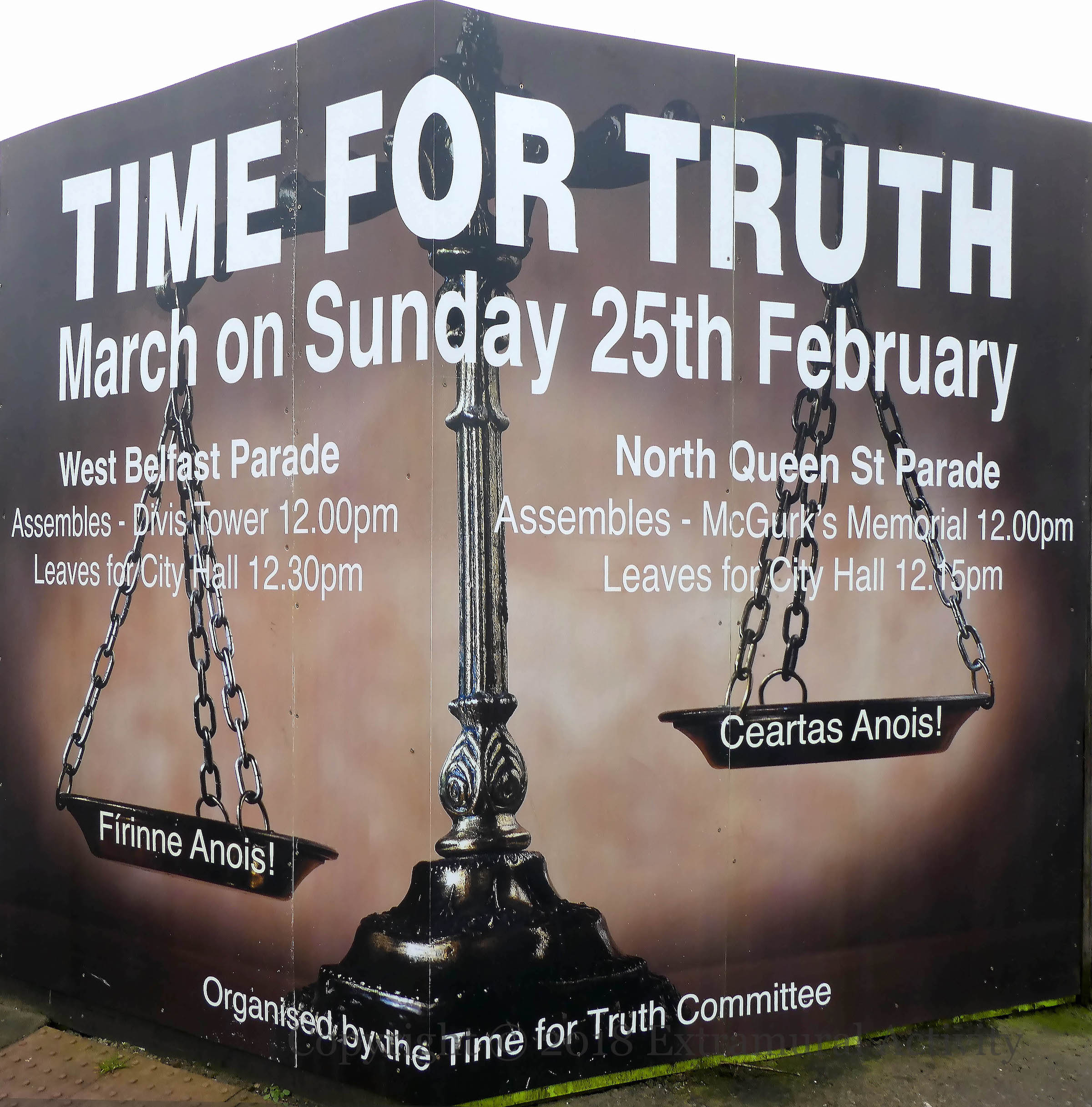
Since the 14th, the Time For Truth Committee on its Facebook page has been rolling out videos by relatives who lost family members to British Army or loyalist paramilitary attacks during the Troubles. This Saturday, February 25th, sees a march in support of their call for investigations into these and other deaths. “Fírınne anoıs! Ceartas anoıs!” (Truth now! Justice now!)
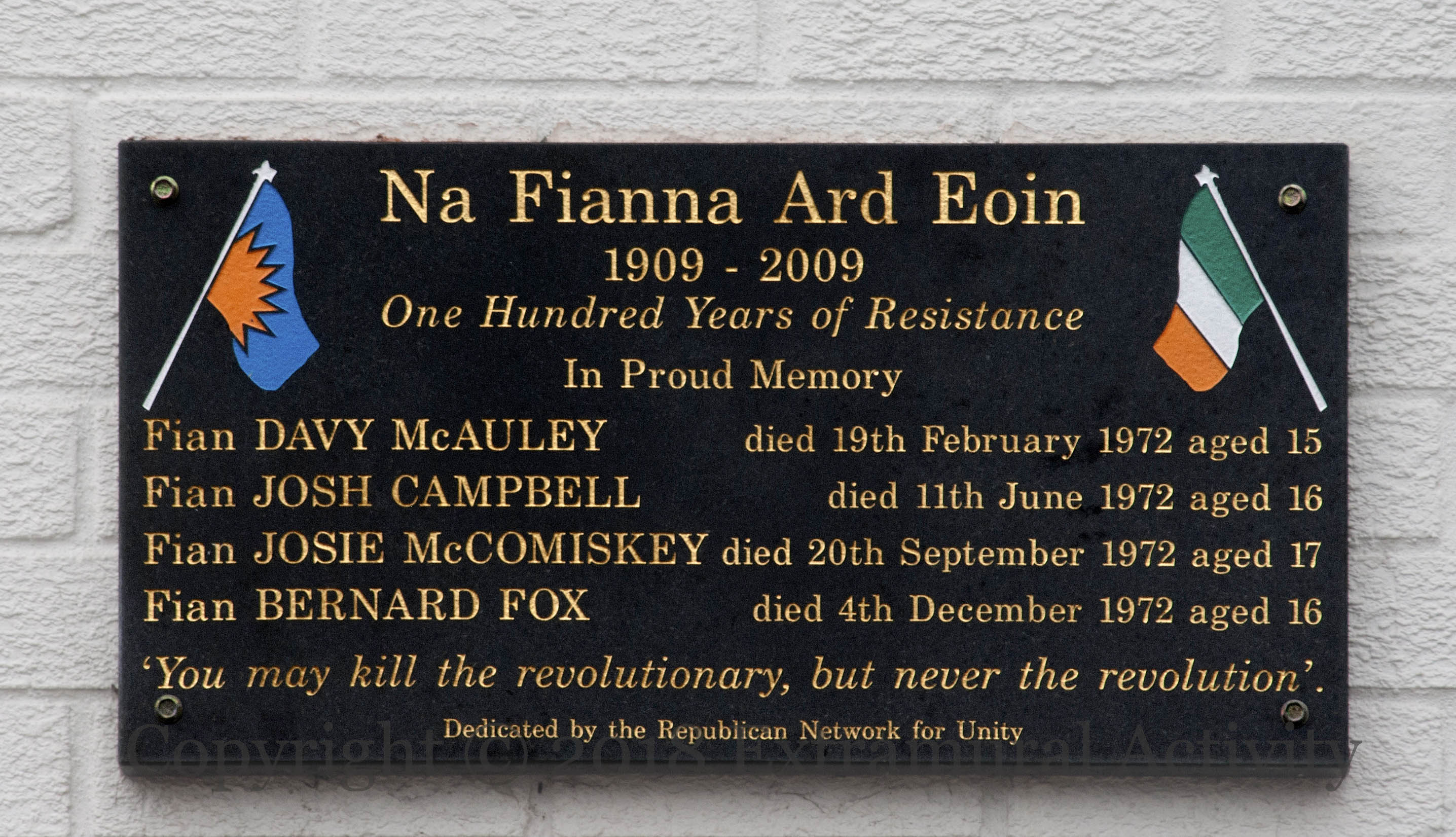
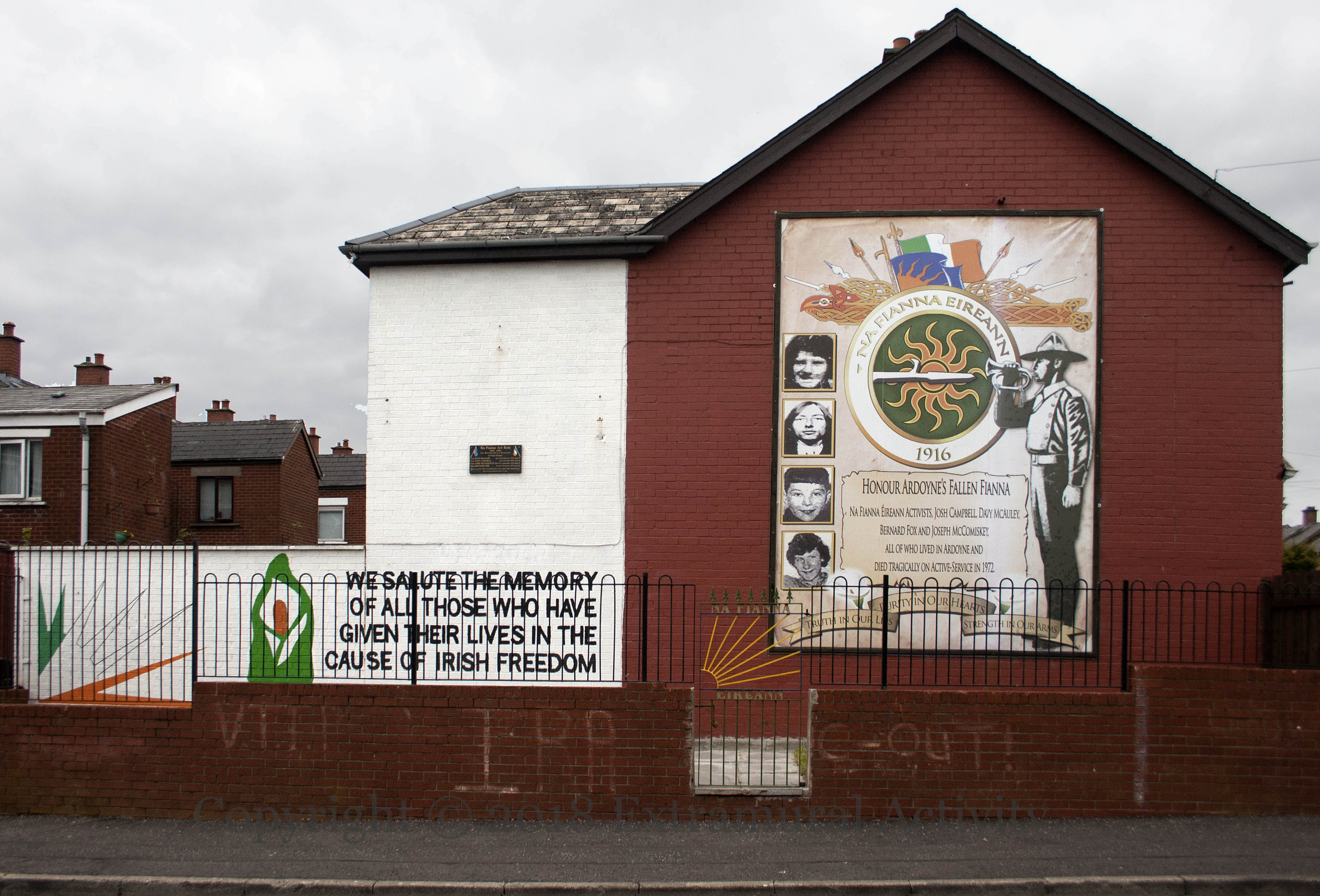
Above is the plaque on Berwick Road/Paráıd An Ardghleanna to four teenaged members of Na Fıanna Éıreann who died in 1972 – Davy McAuley, Josh [Joseph] Campbell, Josie McComiskey and Bernard Fox – all four from Ardoyne/Ard Eoın. McAuley died of a gunshot wound, perhaps at a Louth training camp (Nelson McCausland). Campbell was shot in Eksdale Street in a gun battle with the British Army; McComiskey was shot in Flax Street in a gun battle with the British Army; Fox was shot by British Army in Brompton Street. For the tarp, see Purity In Our Hearts; for the 2016 lily, see In The Cause Of Irish Freedom.
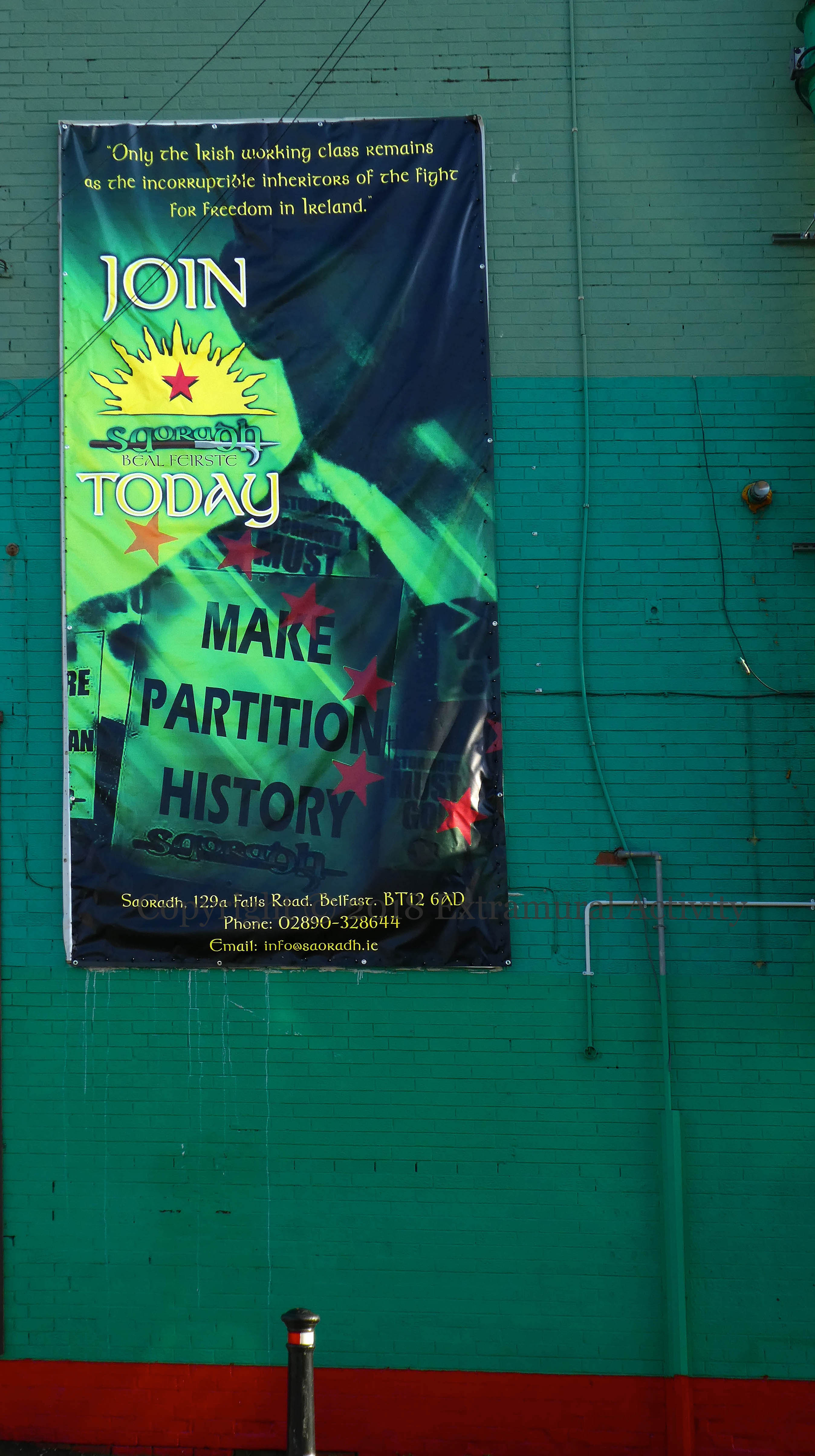
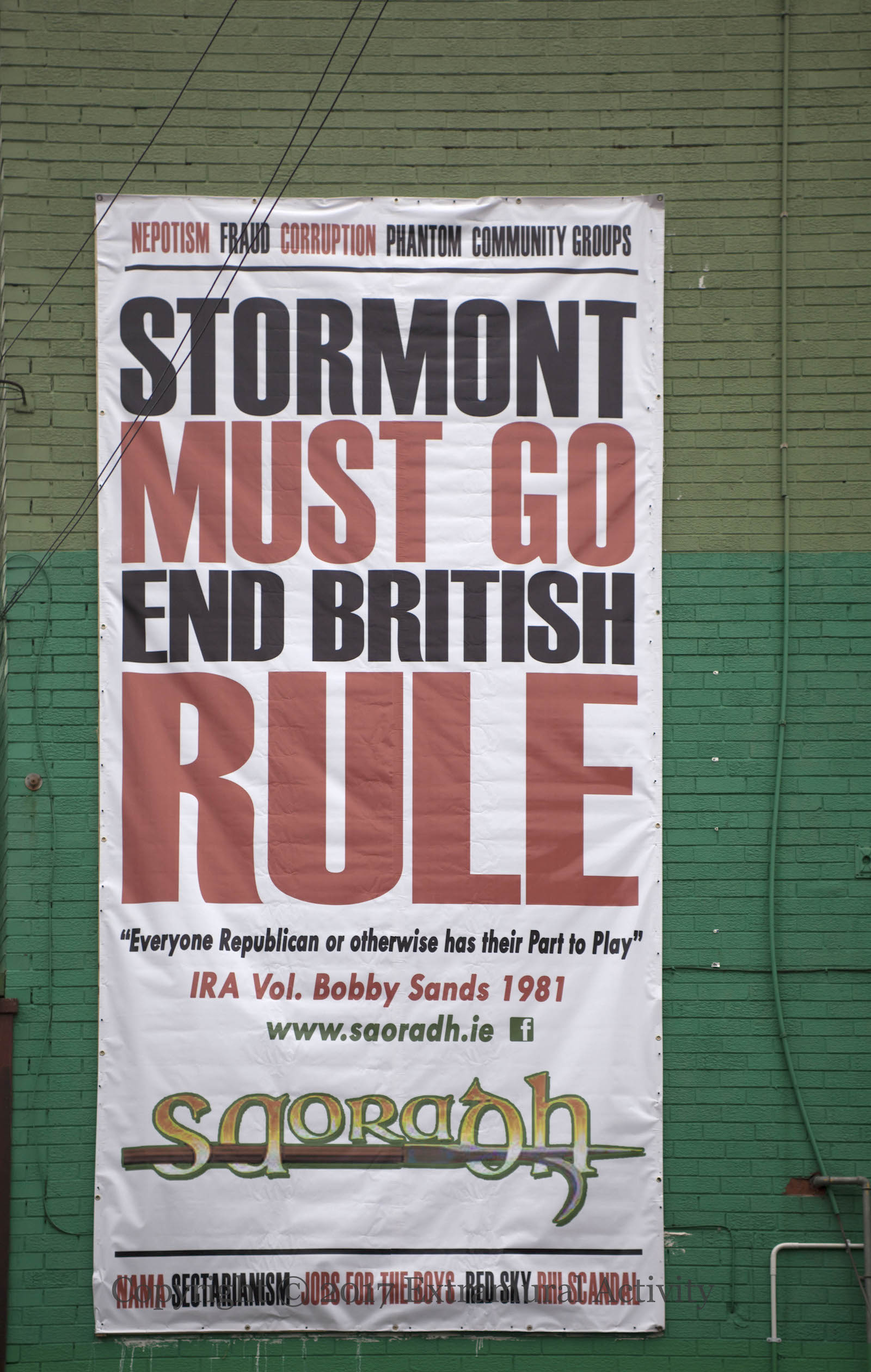
The Thames Street wall of Salvezza’s pizzeria doesn’t allow for full murals because of a giant flue, but Saoradh (web | Fb) are making the most of the space with long vertical tarps. The quote on the tarp above (new for 2018) is from James Connolly, from his foreword to Labour In Irish History: “Only the Irish working class remains as the incorruptible inheritors of the fight for freedom in Ireland.”
The tarp that hung for most of 2017 is included below.
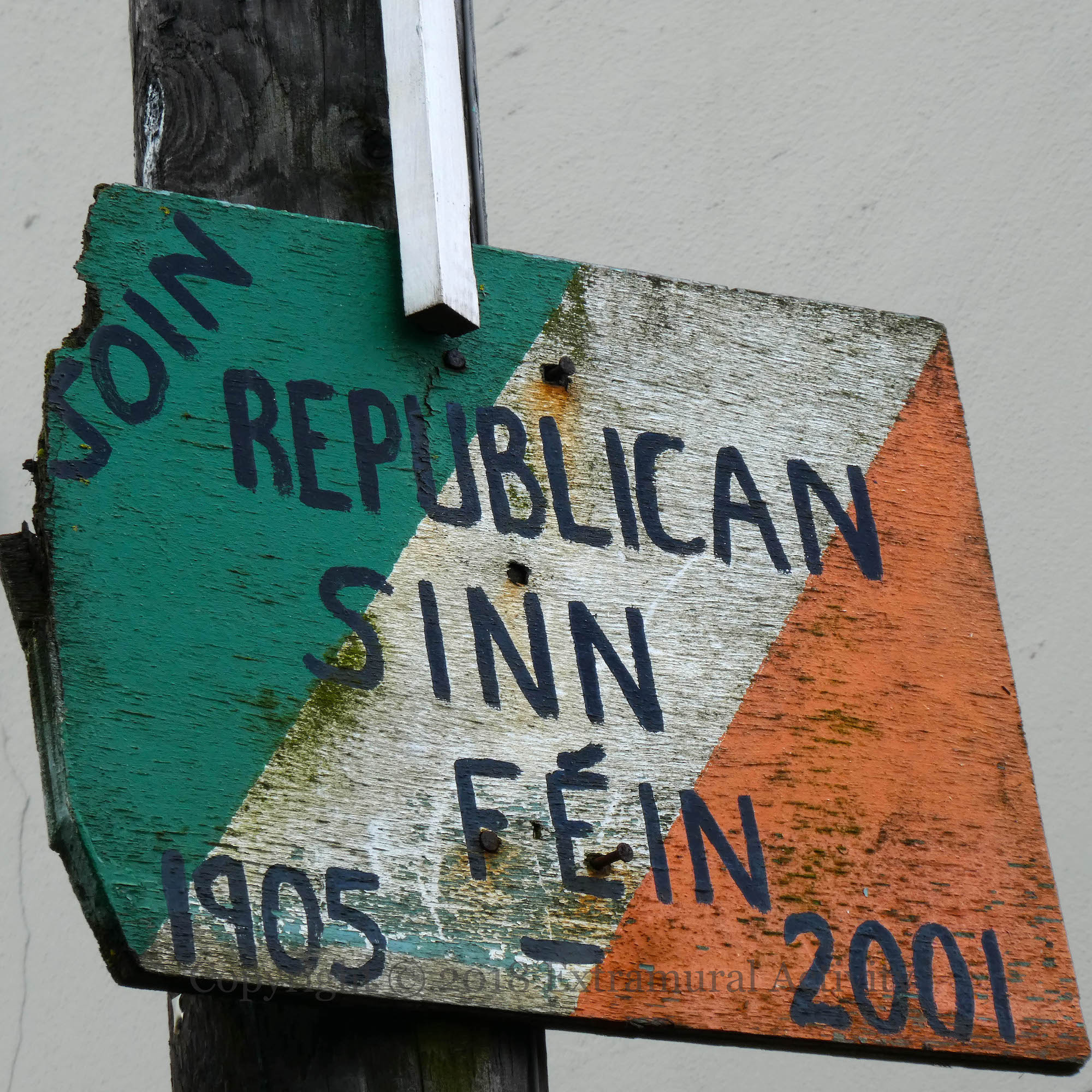
This vintage nail-up is in Thames Street, next to the Red Devil urges people to join Sınn Féın Poblachtach, which split from (Provisional) Sınn Féın in 1986 over the decision to take seats in the Dáıl.
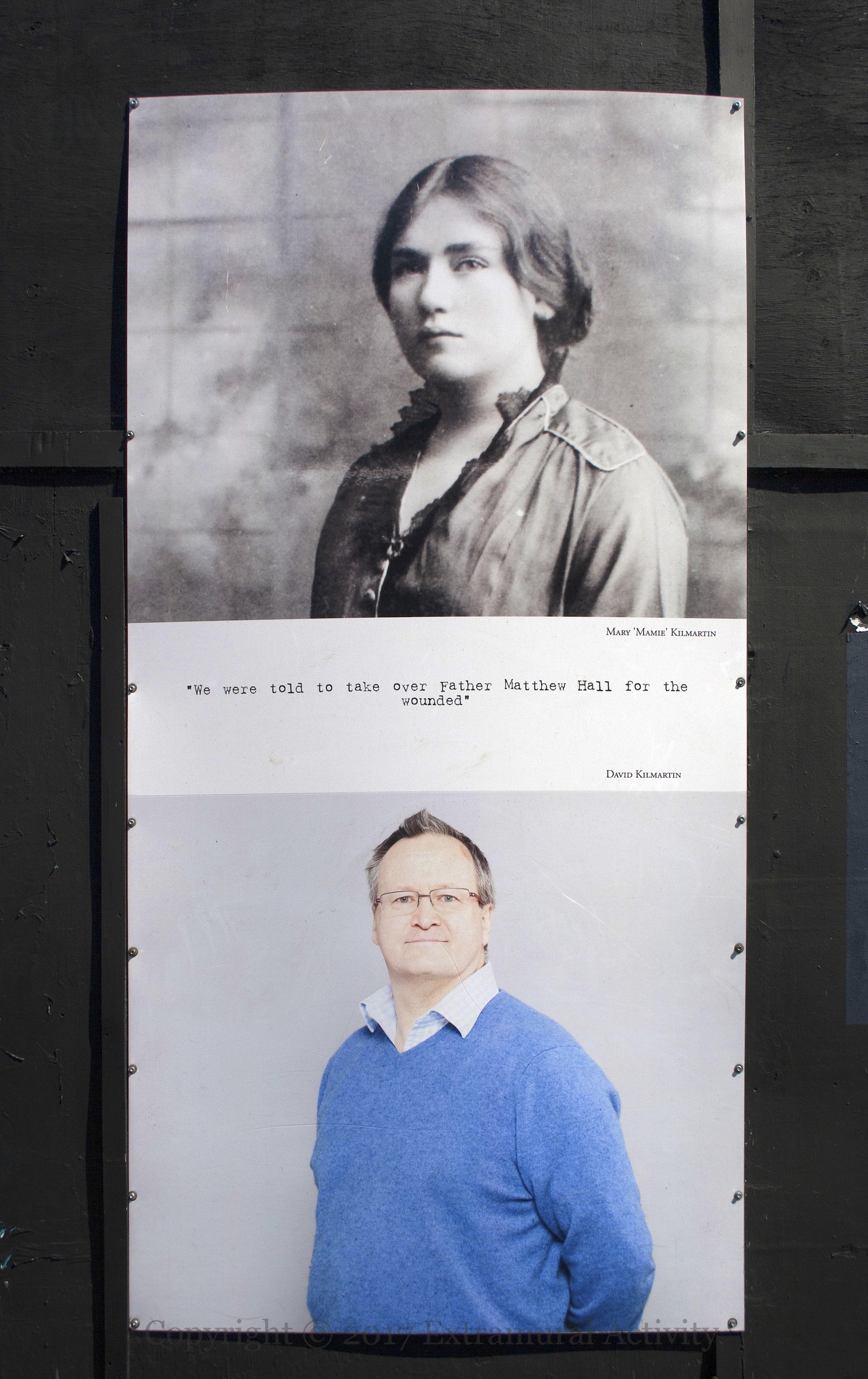
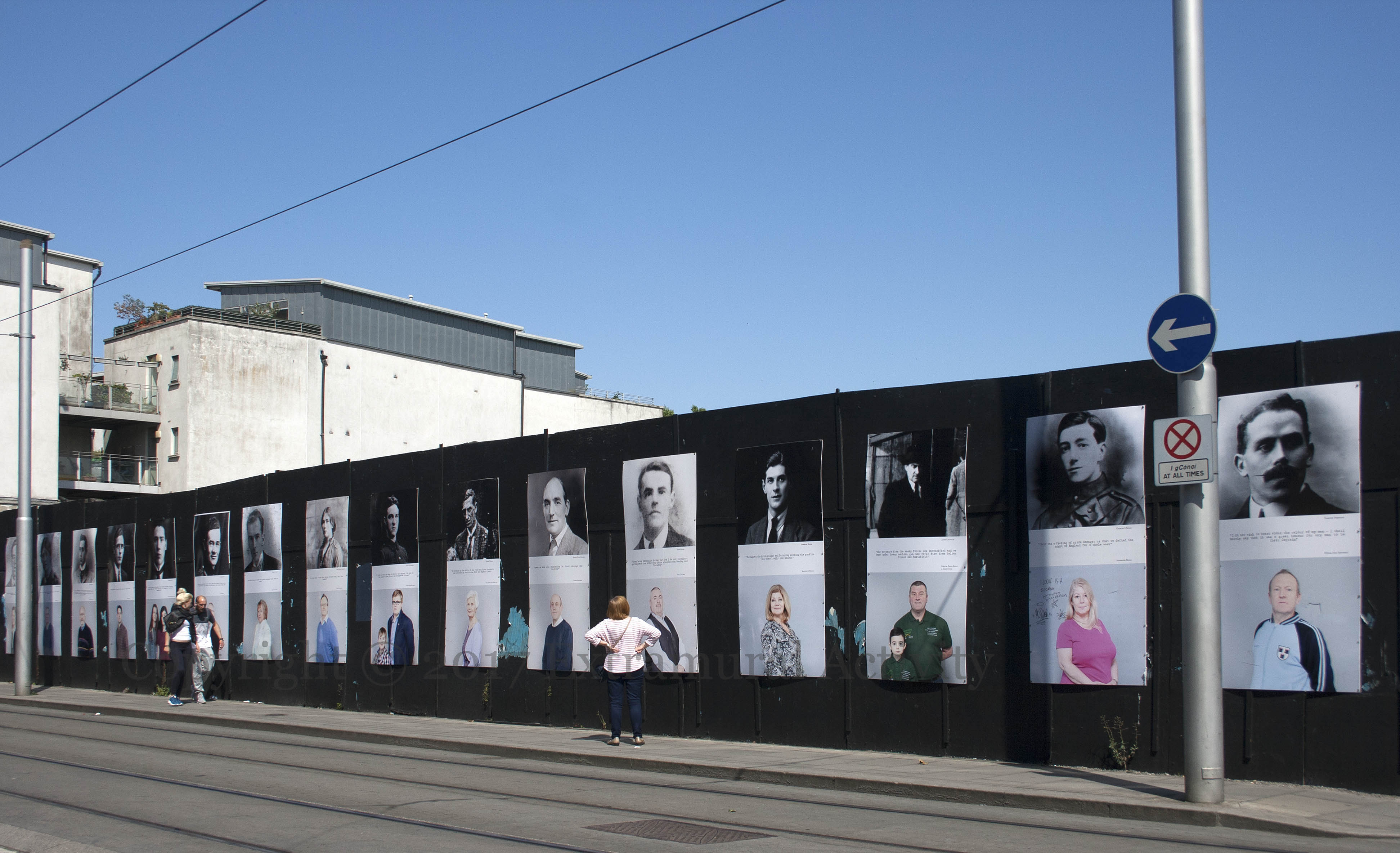
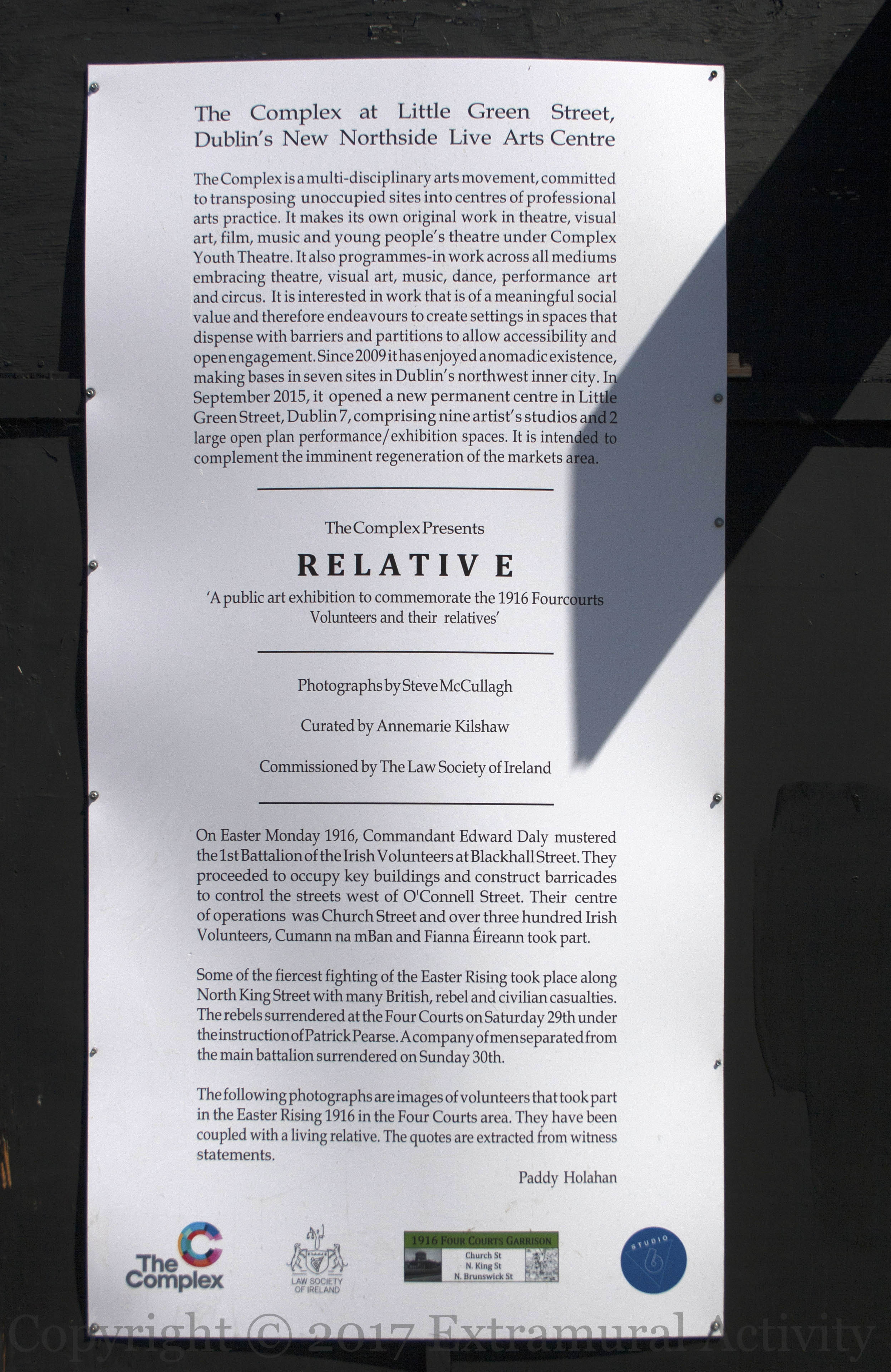
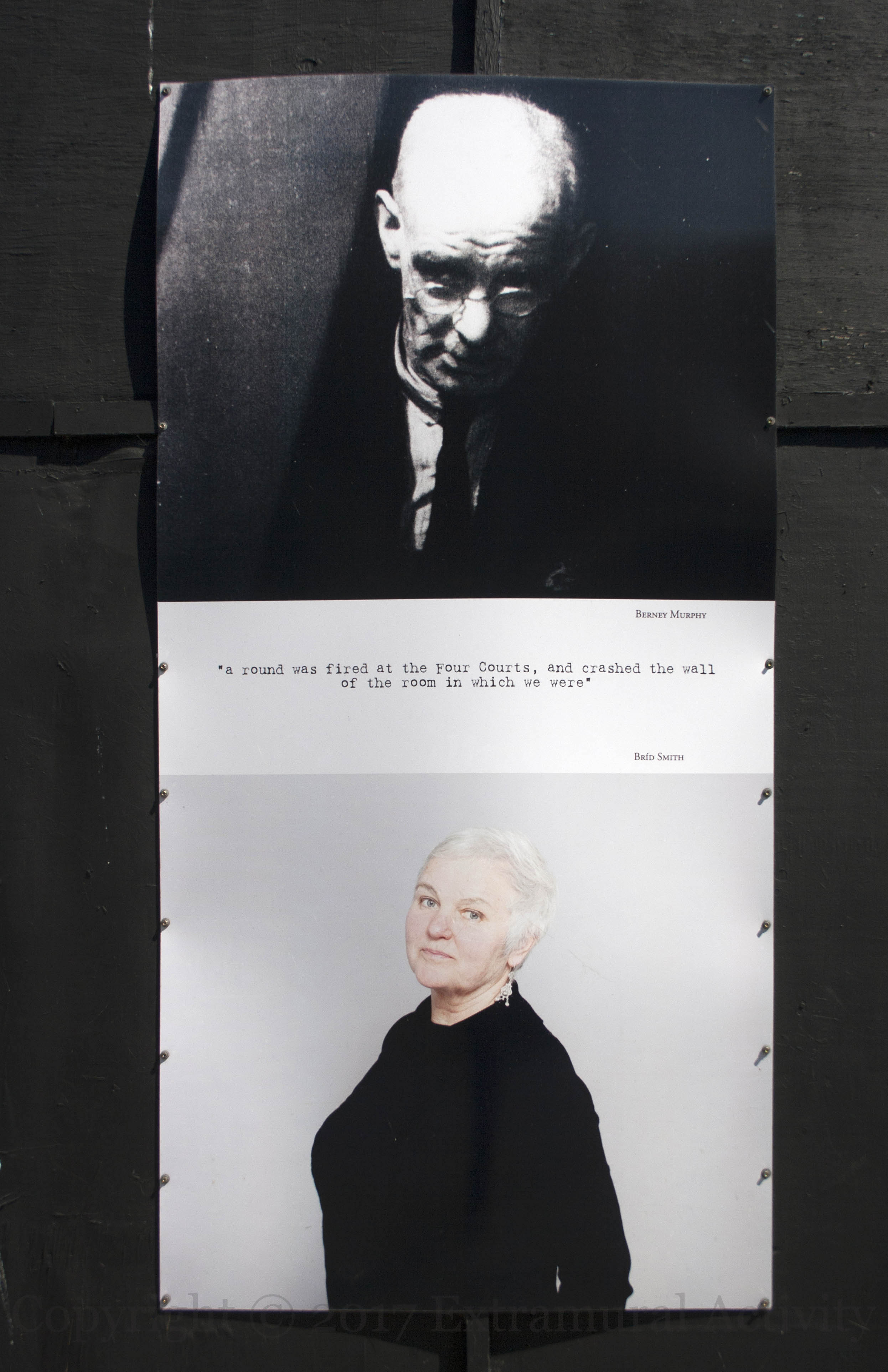
This Dublin exhibition from The Complex pairs images of rebels from the 1916 Rising with a statement from witness accounts and an image of a relative. (Witness accounts of soldiers from 1913-1921 are archived at the Bureau Of Military History.) Above is Mamie Kilmartin, a nurse. Bríd Smith, grand-daughter of Barney Murphy (shown in the final image, below) is People Before Profit TD for Dublin South Central and launched the original exhibition, which ran for nine months in the Law Society Of Ireland in 2016 before being moved to Benburb Street.
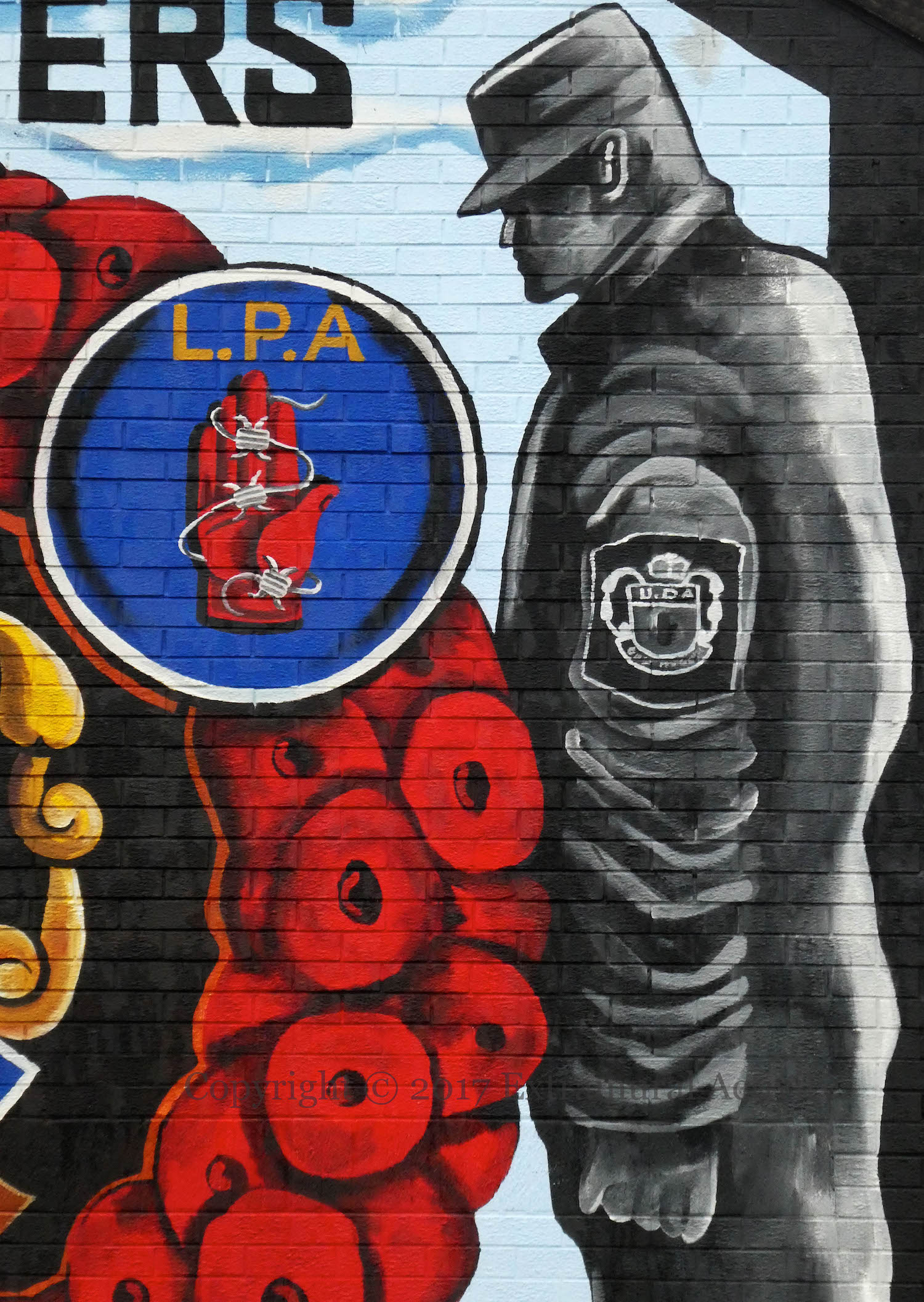
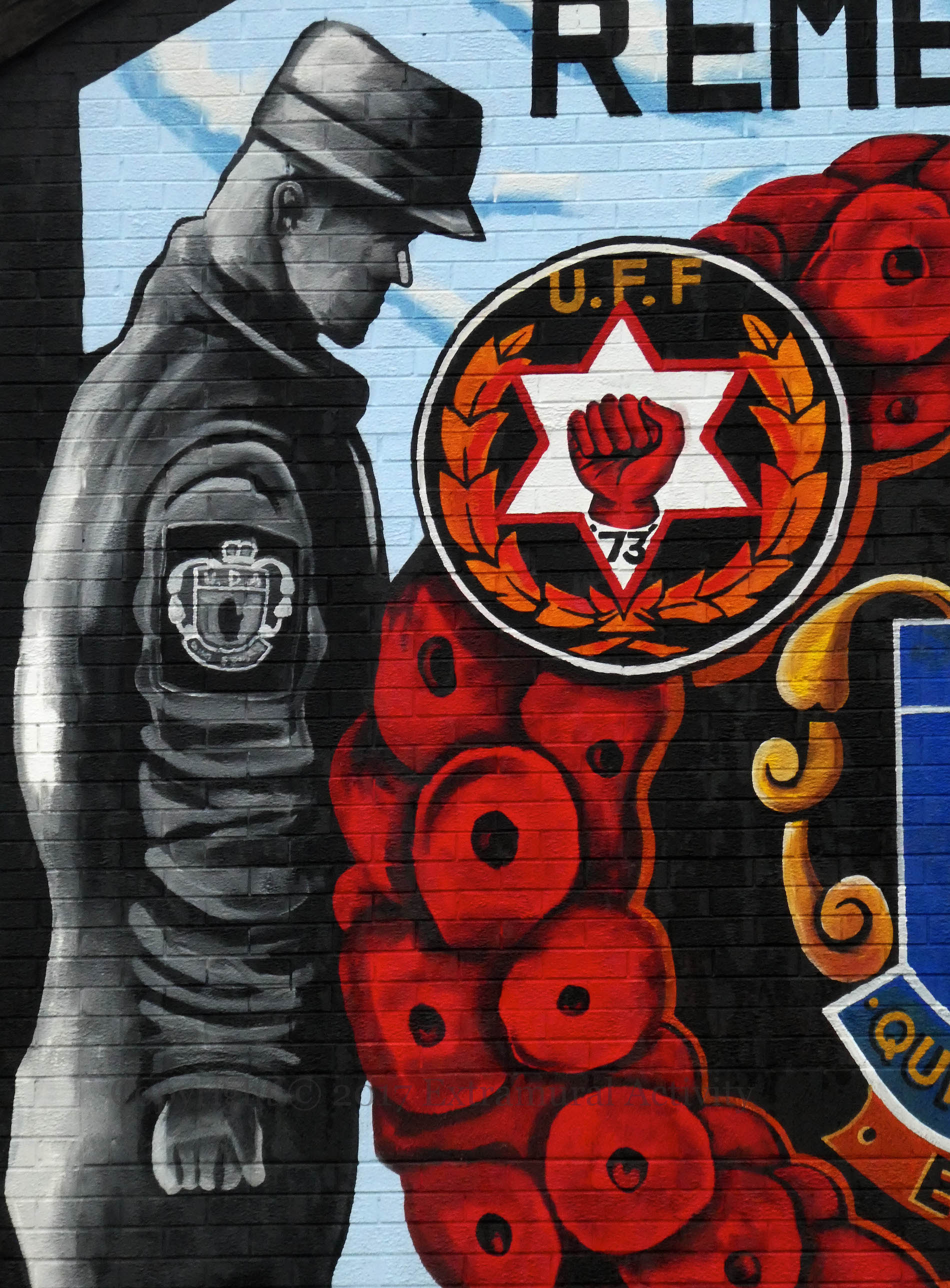
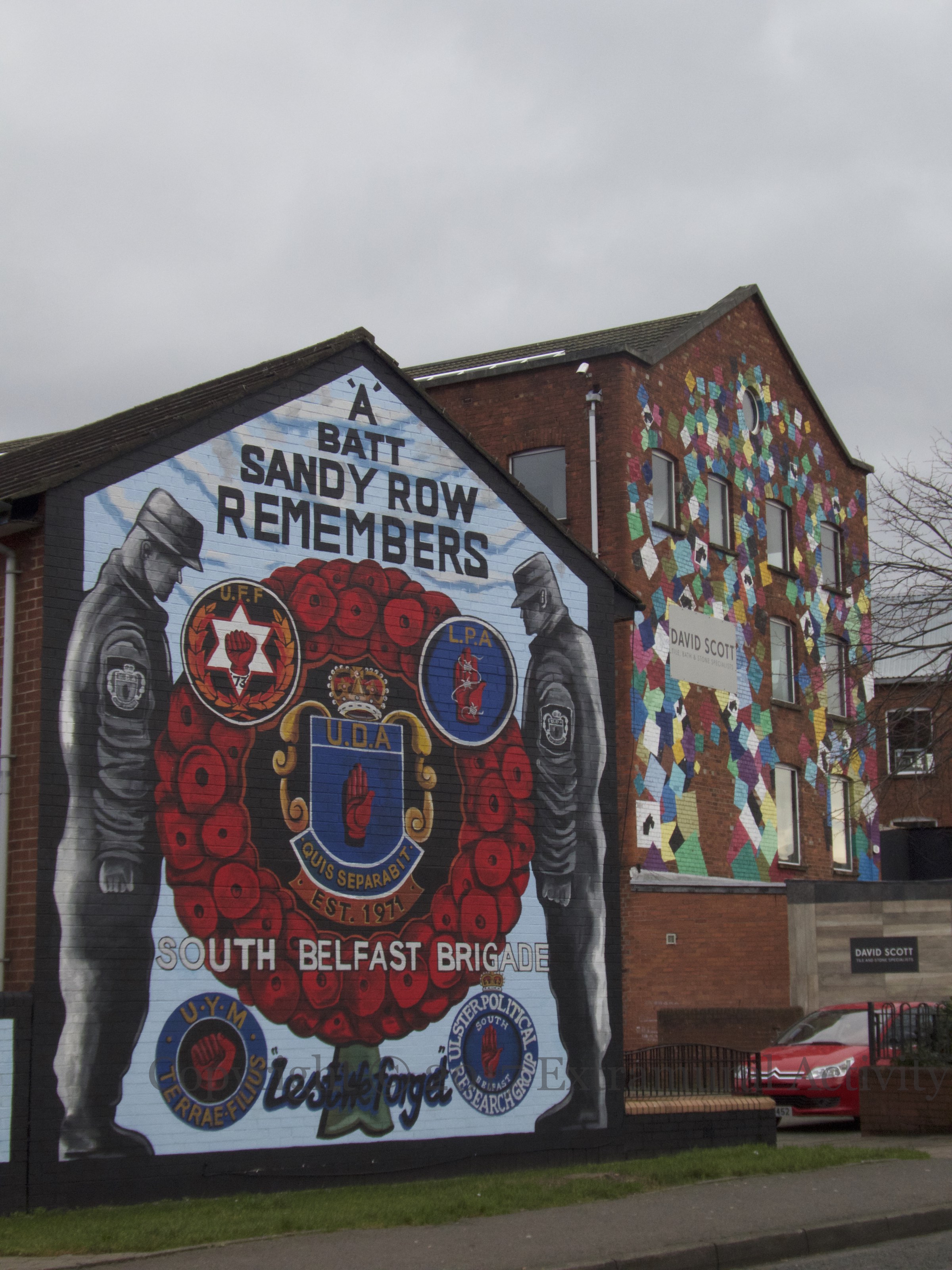
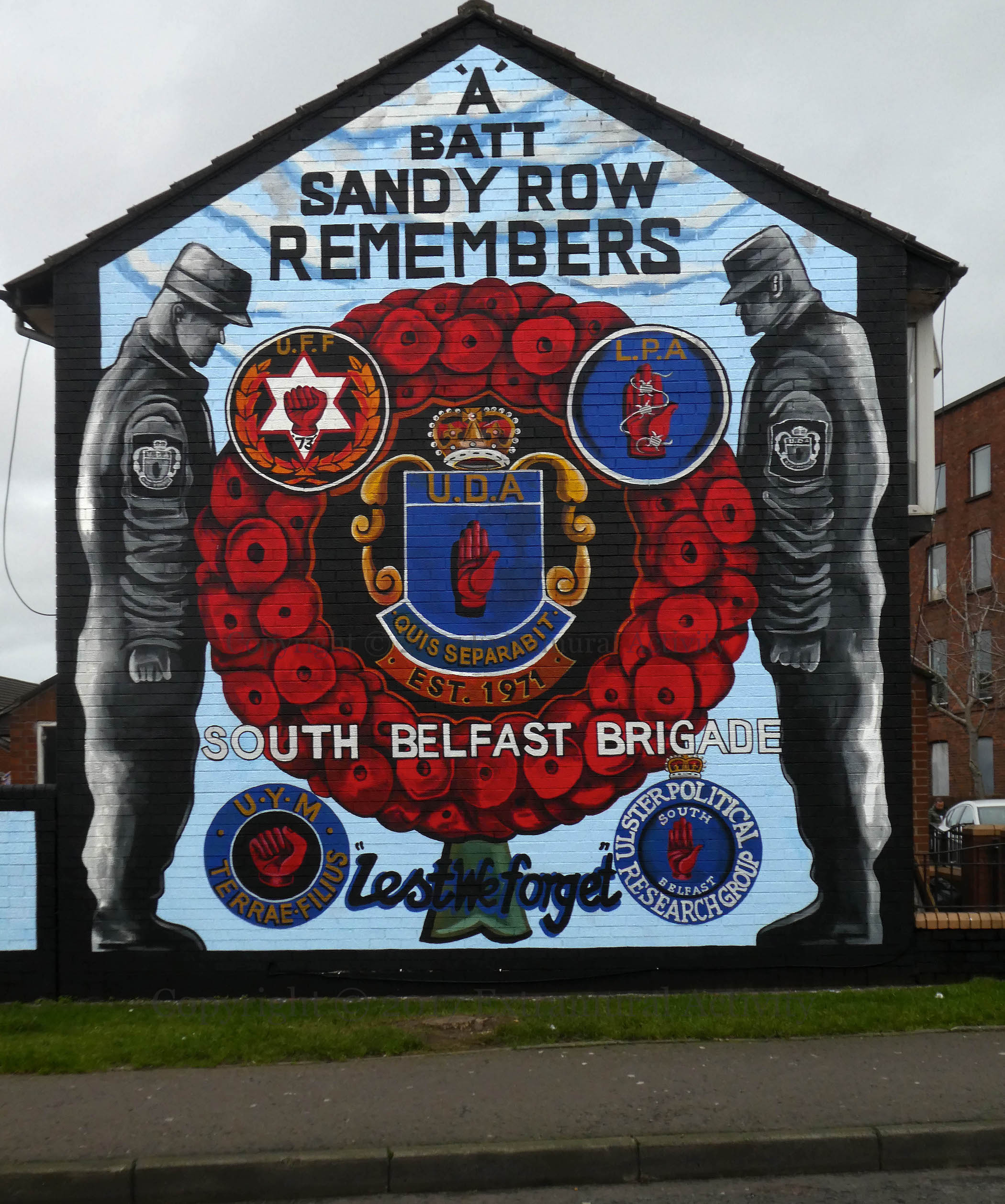
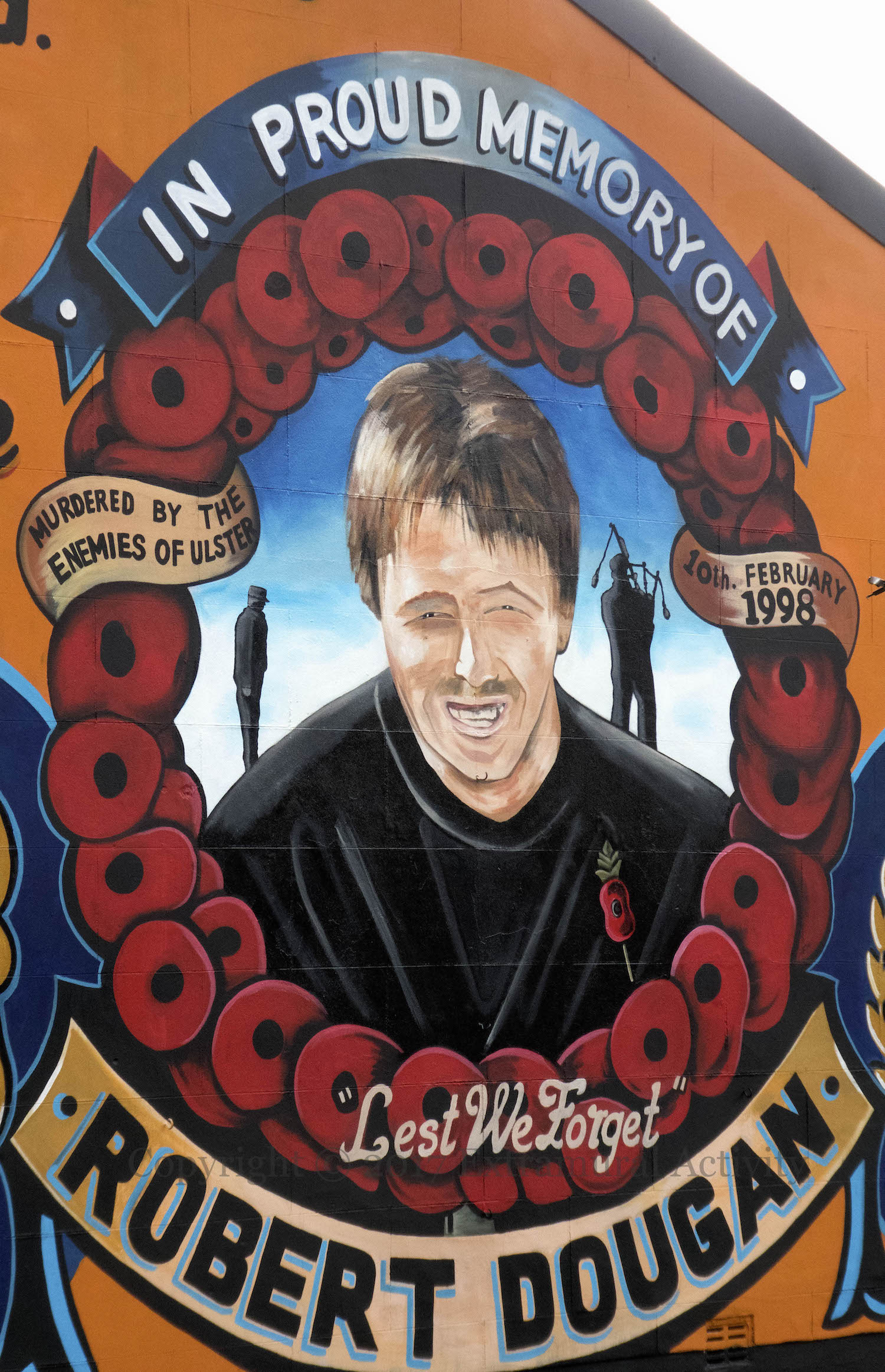
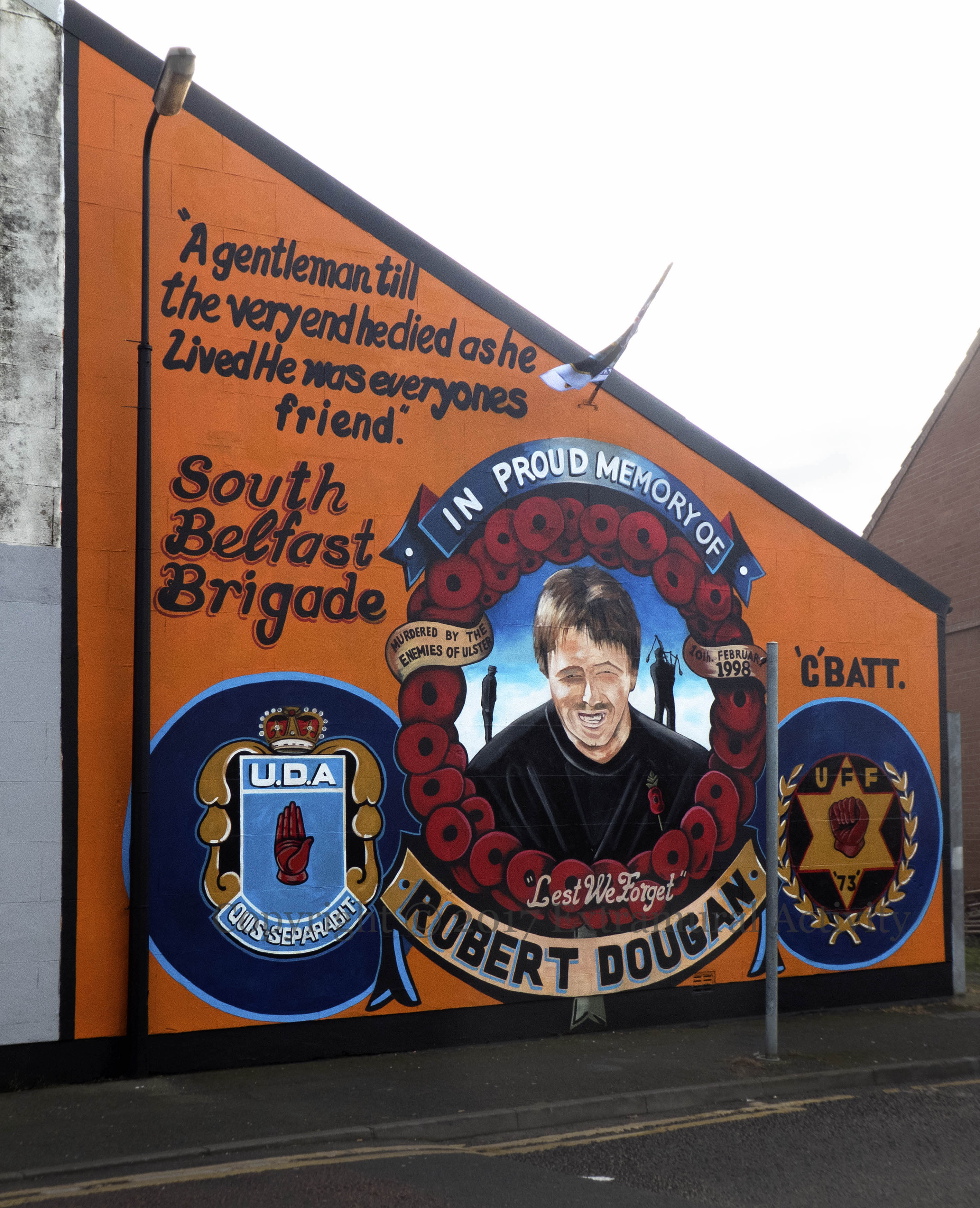
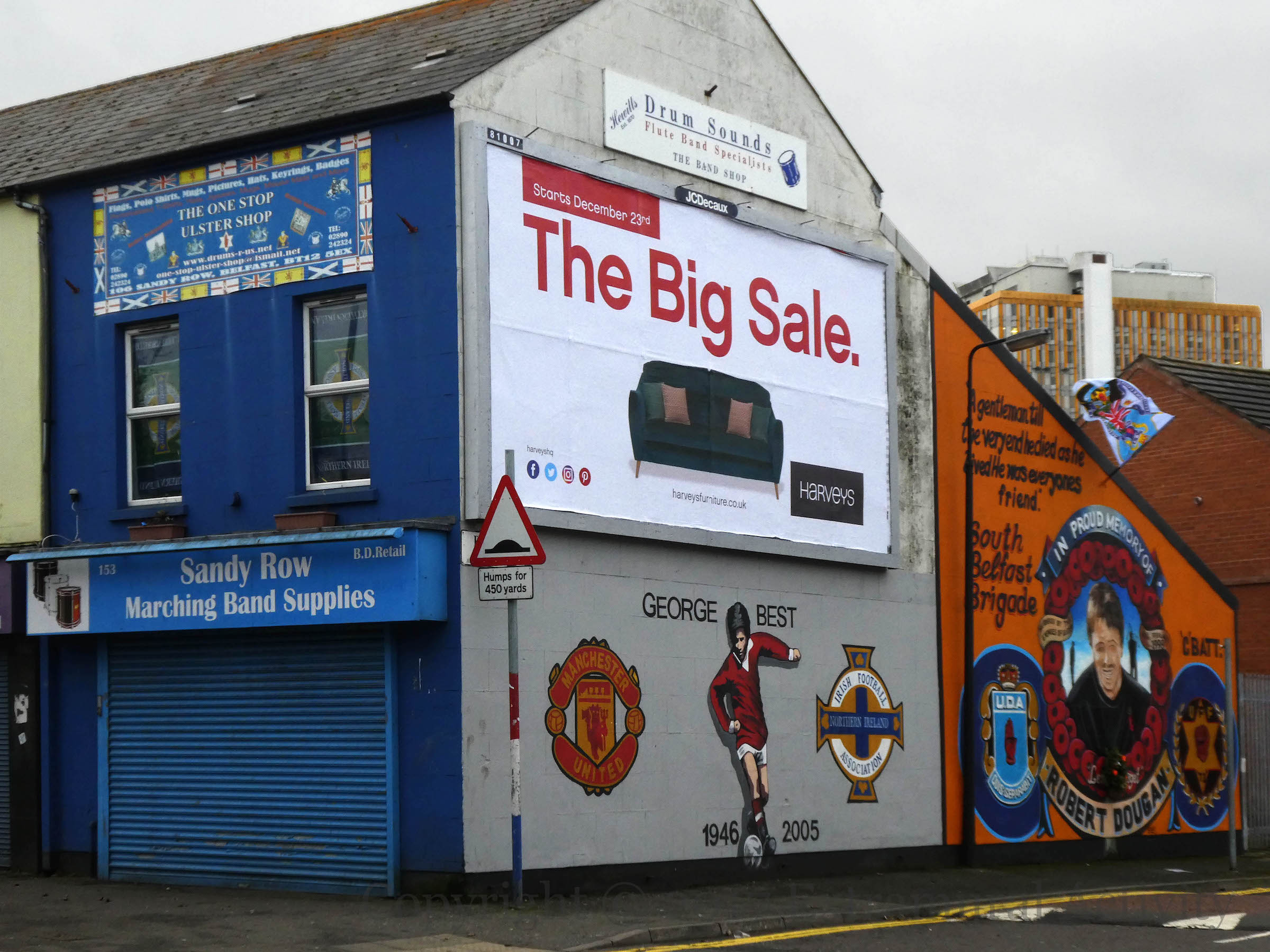
“‘A’ Battalion Sandy Row remembers” fellow members of the South Belfast Brigade. The use of poppies in UDA murals is unusual, as it is the Ulster Volunteer Force that shares its name with the Ulster Volunteers who fought in WWI as the 36th (Ulster) Brigade.
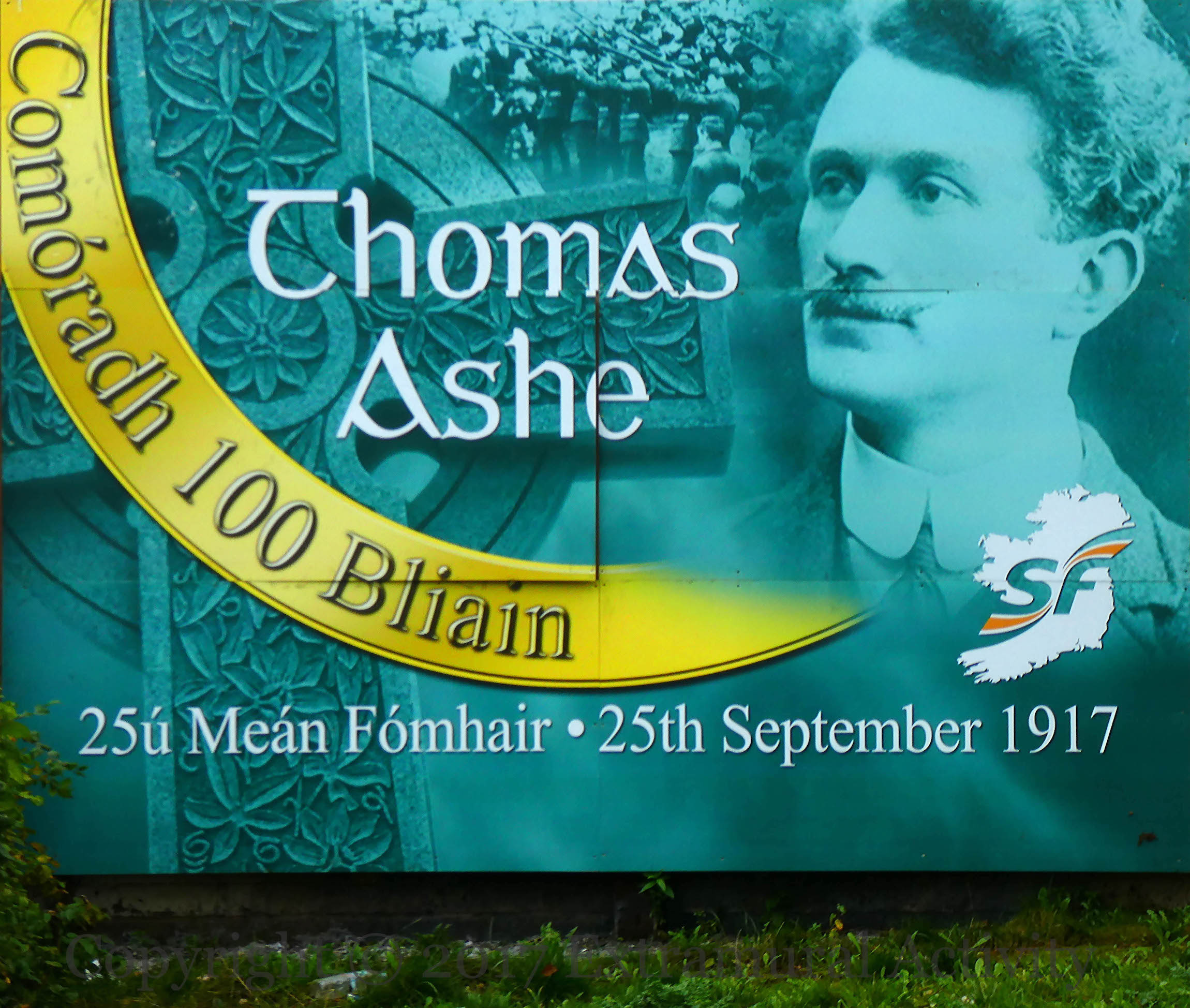
Thomas Ashe was born on January 12th, 1885, in County Kerry, into a bi-lingual household. He became an Irish teacher in Lusk and joined the Gaelic League and the Irish Volunteers, commanding the Fingal battalion during the Easter Rising. His death sentence was commuted to life imprisonment, which in fact lasted only a year. He was released but soon charged and convicted with sedition, and died on hunger strike on September 25th, 1917, after an “inhuman and dangerous” attempt at force-feeding by the authorities (WP). See also Tomás Ághas.
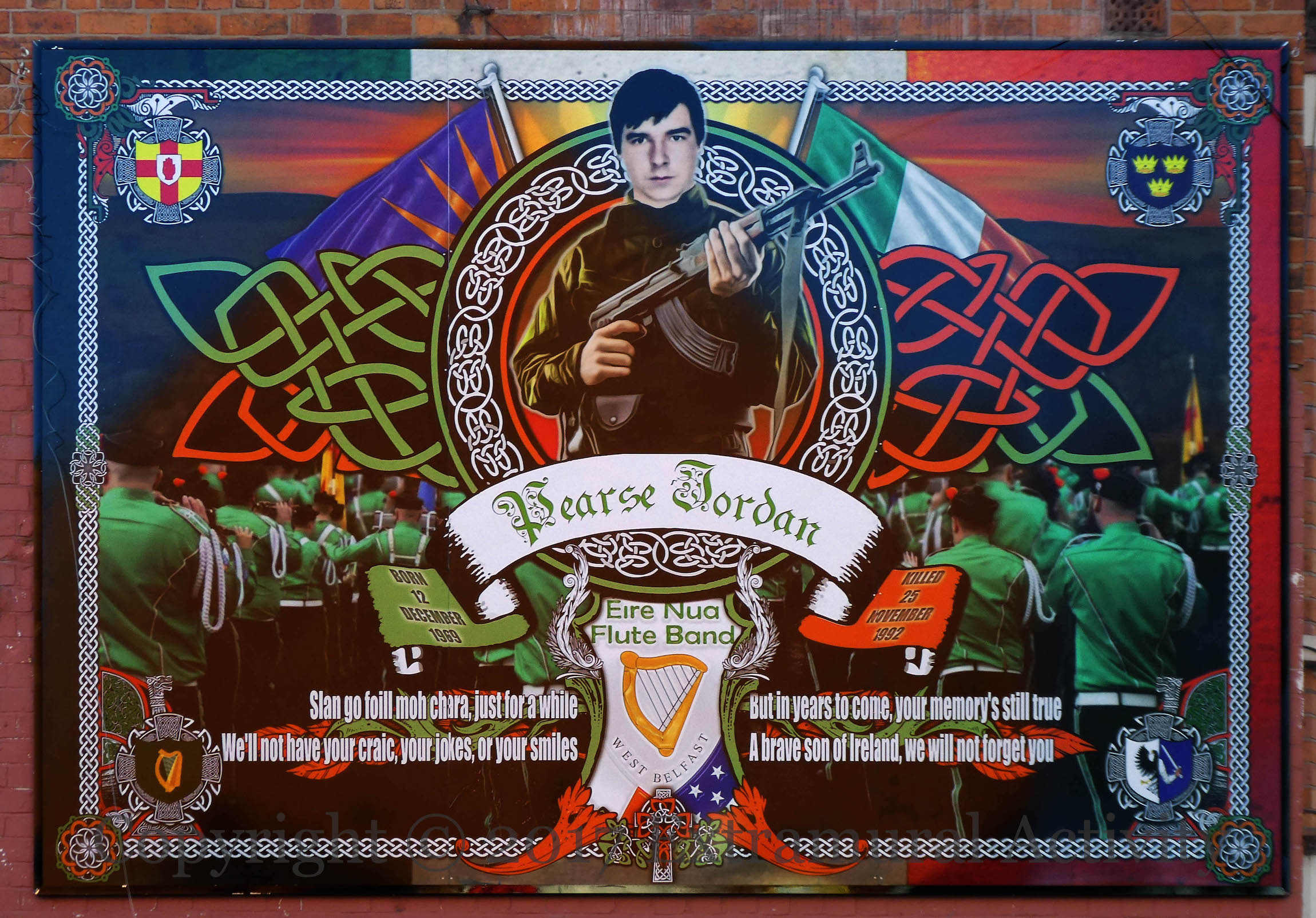
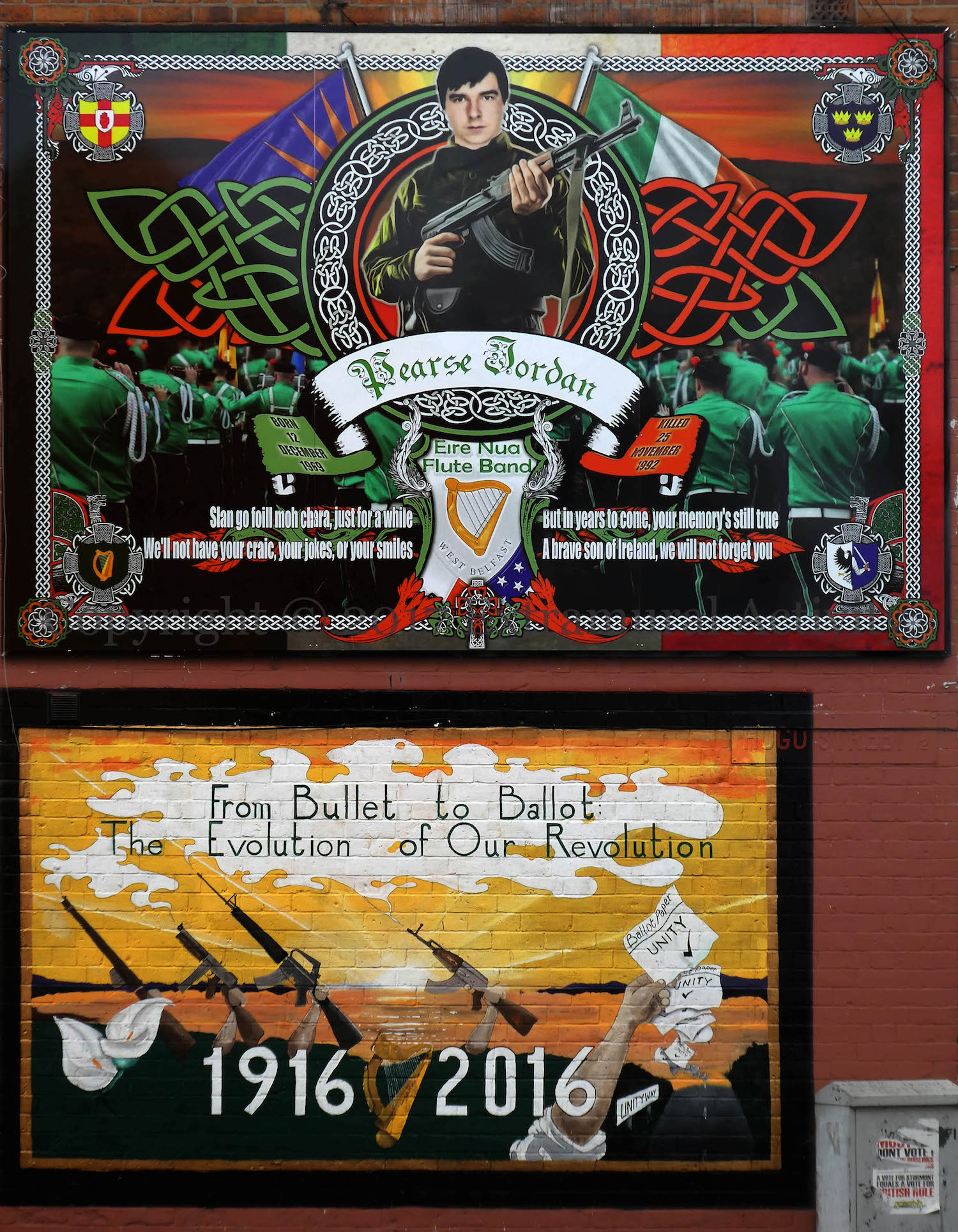
Pearse Jordan was unarmed when he was killed by the RUC on November 25th, 1992 but in this new Éıre Nua Flute Band board he leaves his prints on an assault rifle. (previous Éıre Nua board) His killing was ruled unlawful, and subsequent inquest insufficient, by the European Court Of Human Rights in 2001. The campaign for an inquest continues (An Phoblacht).
The words on the board – “Slan [sic] go foıll [sic] moh [sic] chara, just for a while/We’ll not have your craic, your jokes, or your smiles/But in years to come, your memory’s still true/A brave son of Ireland, we will not forget you” – are the chorus of The Ballad Of Pearse Jordan (words | sung by The Irish Brigade).
The board is in Hugo Street, which is also the site of his memorial plaque, just above the Evolution Of Our Revolution, as seen in the second image, below.
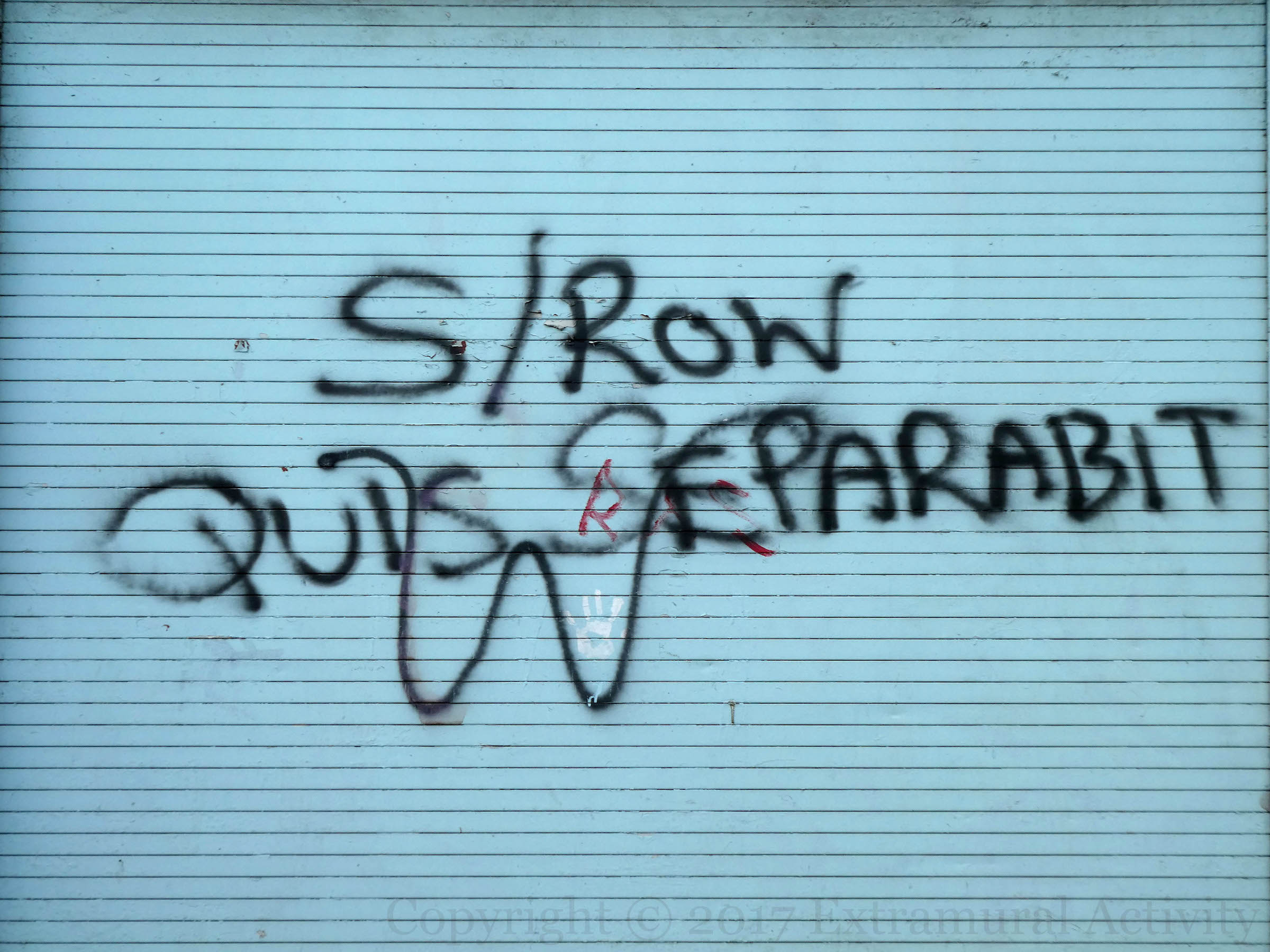
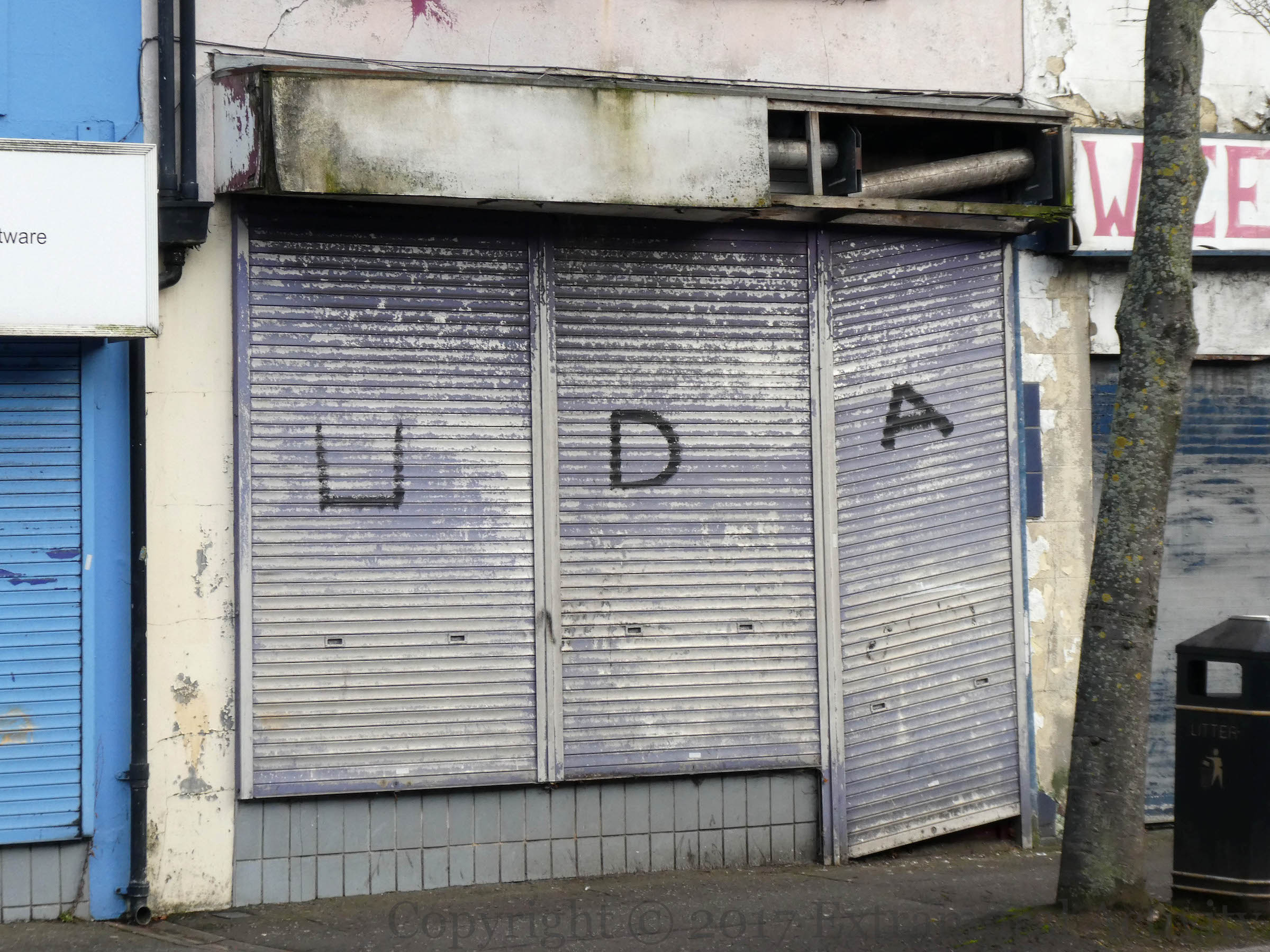
Two pieces of UDA on the shop shutters on Sandy Row. Above, “S[andy]/Row – Quis Separabit” (who will separate us?) and “UDA”. See also: Wee Ruby’s from 2013.
South Belfast UDA commander Robert Dougan killed by the IRA on February 10th, 1998 while sitting in a car outside Balmoral Textiles in Dunmurry, two months before the Good Friday Agreement was signed. Ed Maloney summed up the situation at the time in a Sunday Tribune article. “A gentleman till the very end, he died as he lived, he was everyone’s friend.”
 Seosamh Mac Coille Collection