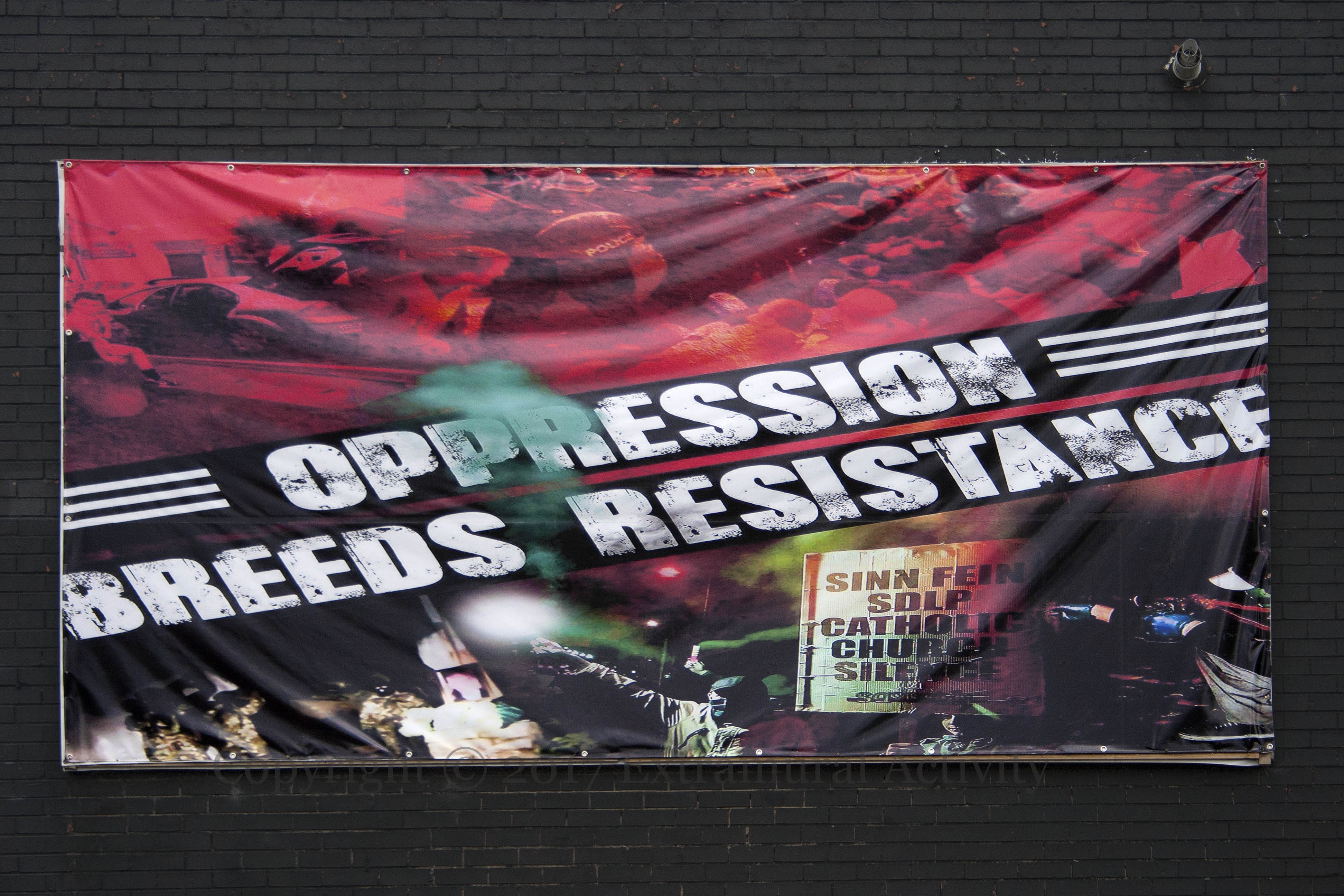
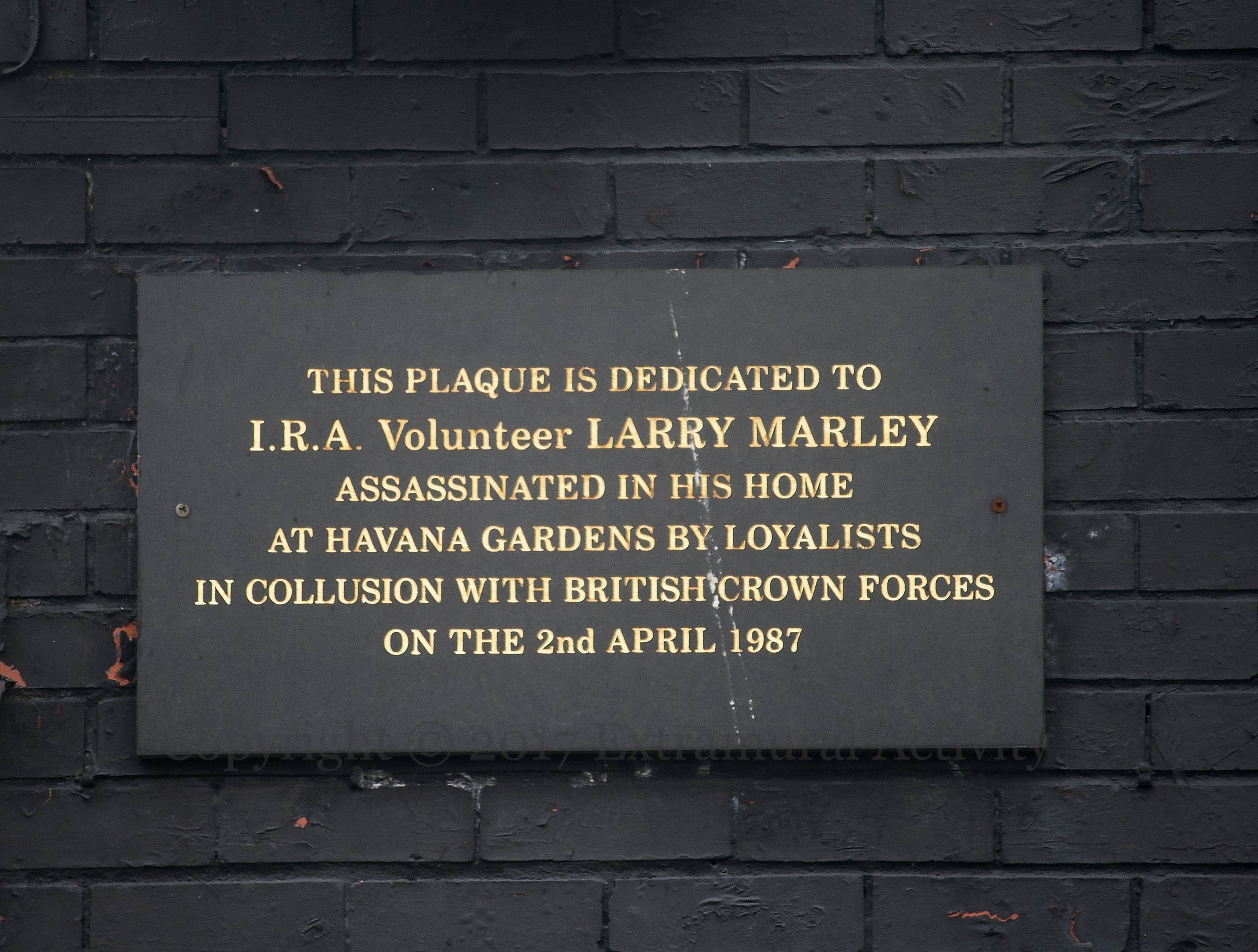
Saoradh (Fb) tarp in Ardoyne with scenes of protest, including a placard reading “Sinn Fein, SDLP, Catholic church silence”. The tarp is next to the plaque for IRA volunteer Larry Marley (shown below), whose protracted funeral meant scenes from Ardoyne being broadcast worldwide.
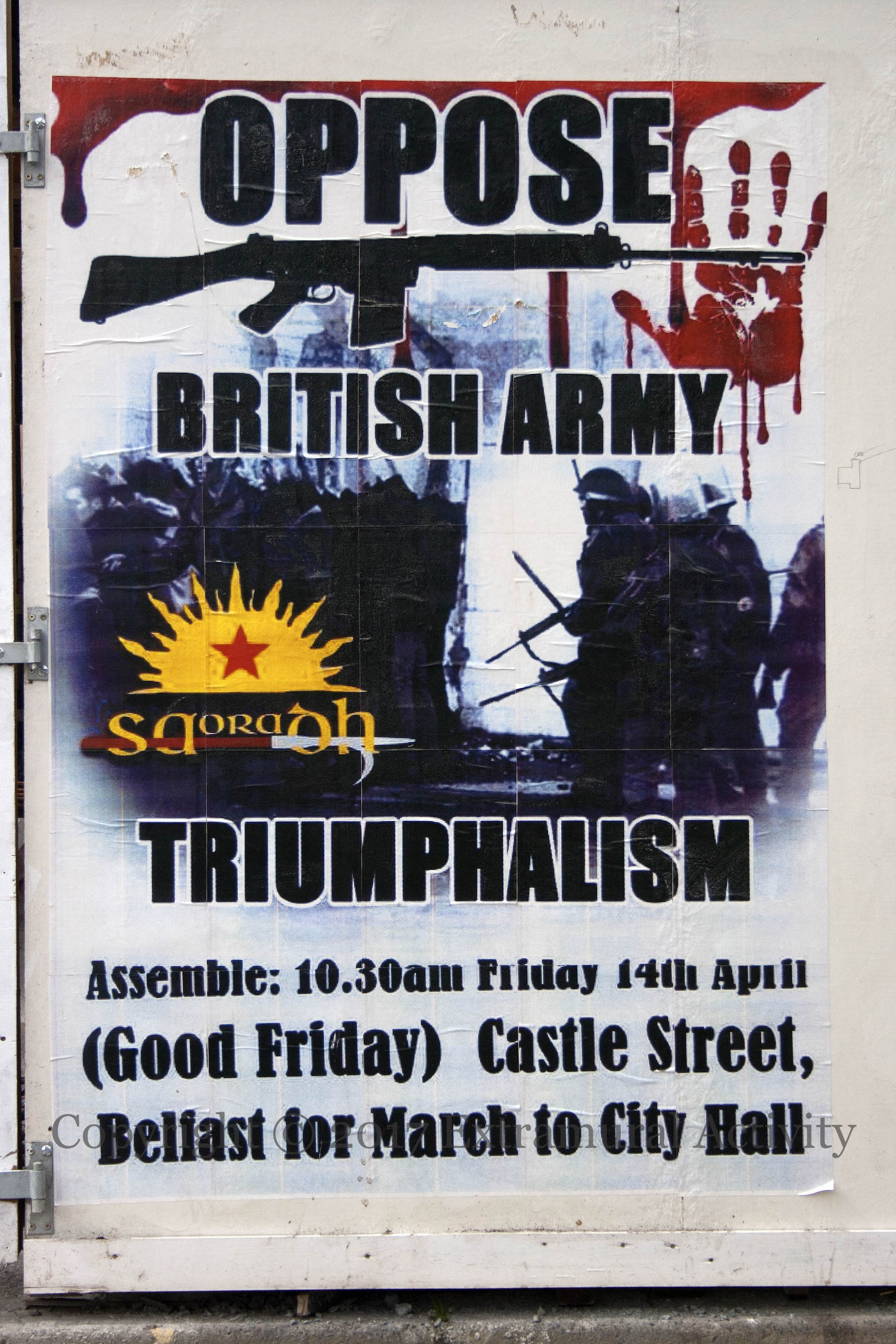
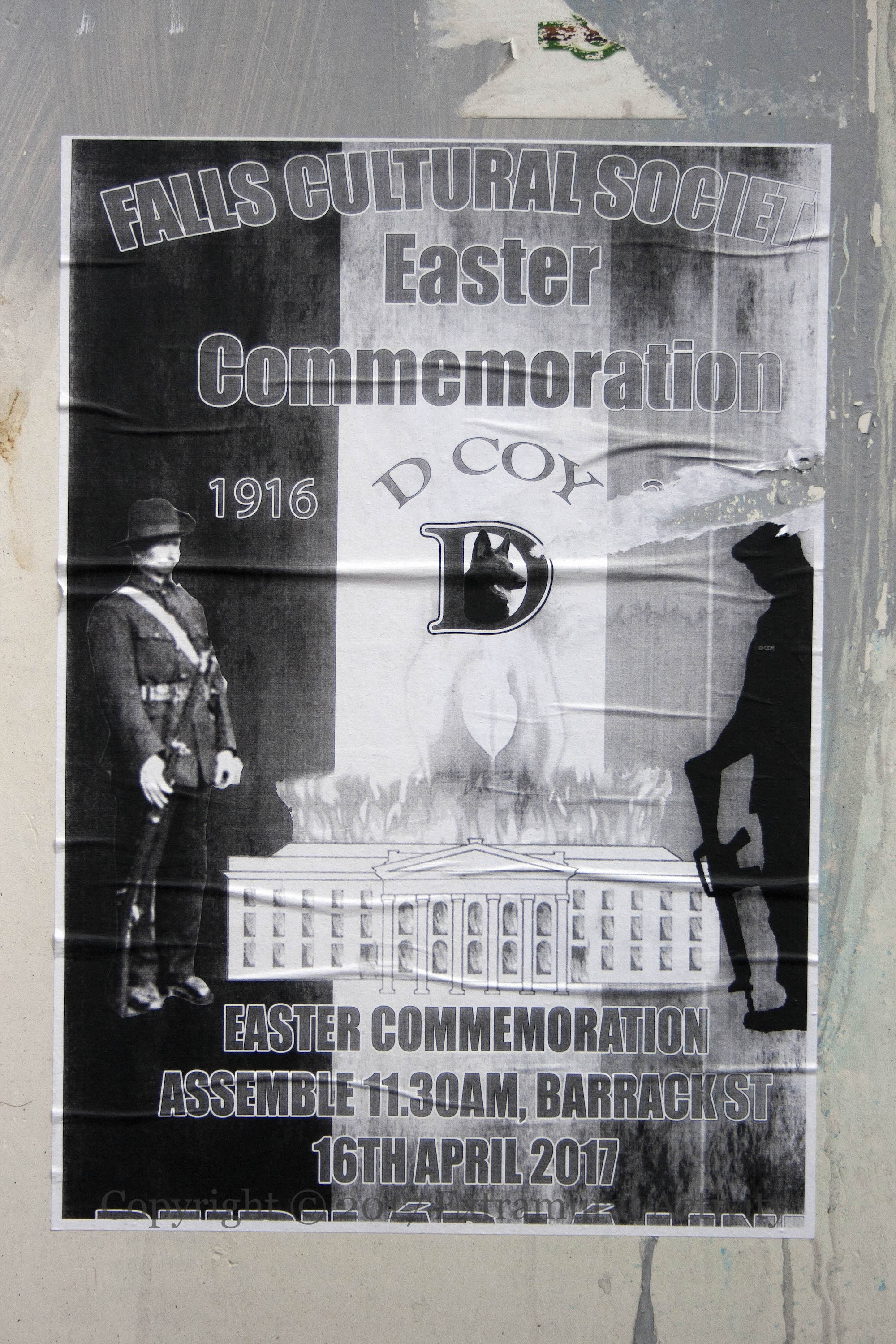
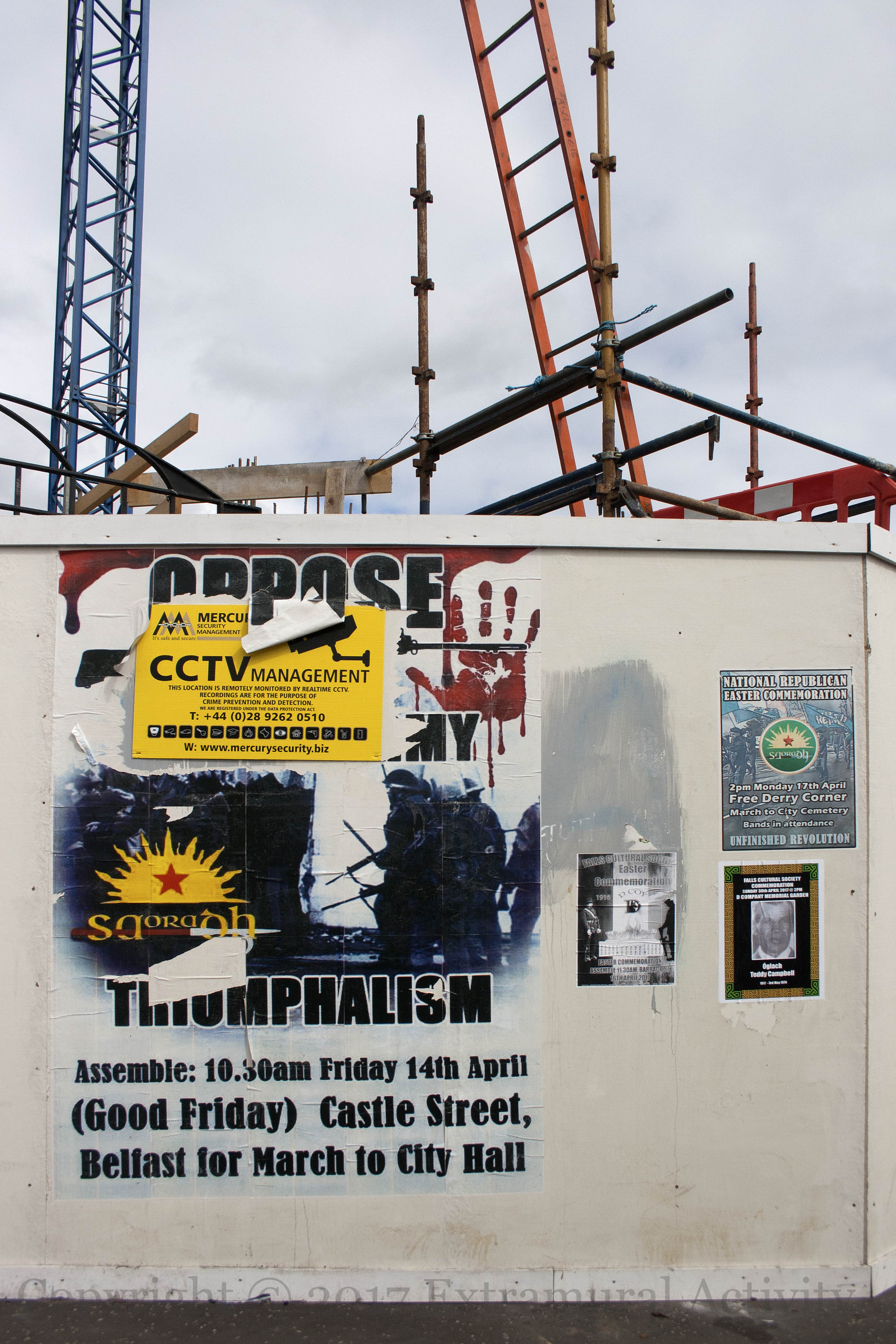
A variety of posters for marches in Easter week: on the 14th, Saoradh’s call for a counter-protest to the march by former soldiers against prosecutions for deaths during the Troubles (see e.g. Irish News); on the 16th, an Easter Rising commemorative march, somehow associated with the IRA’s D Company; on the 17th (see the final image, below), an Easter Rising commemoration in Derry, organised by Saoradh (and on the 30th – also in the final image below – a commemoration for “Óglach Teddy Campbell”).
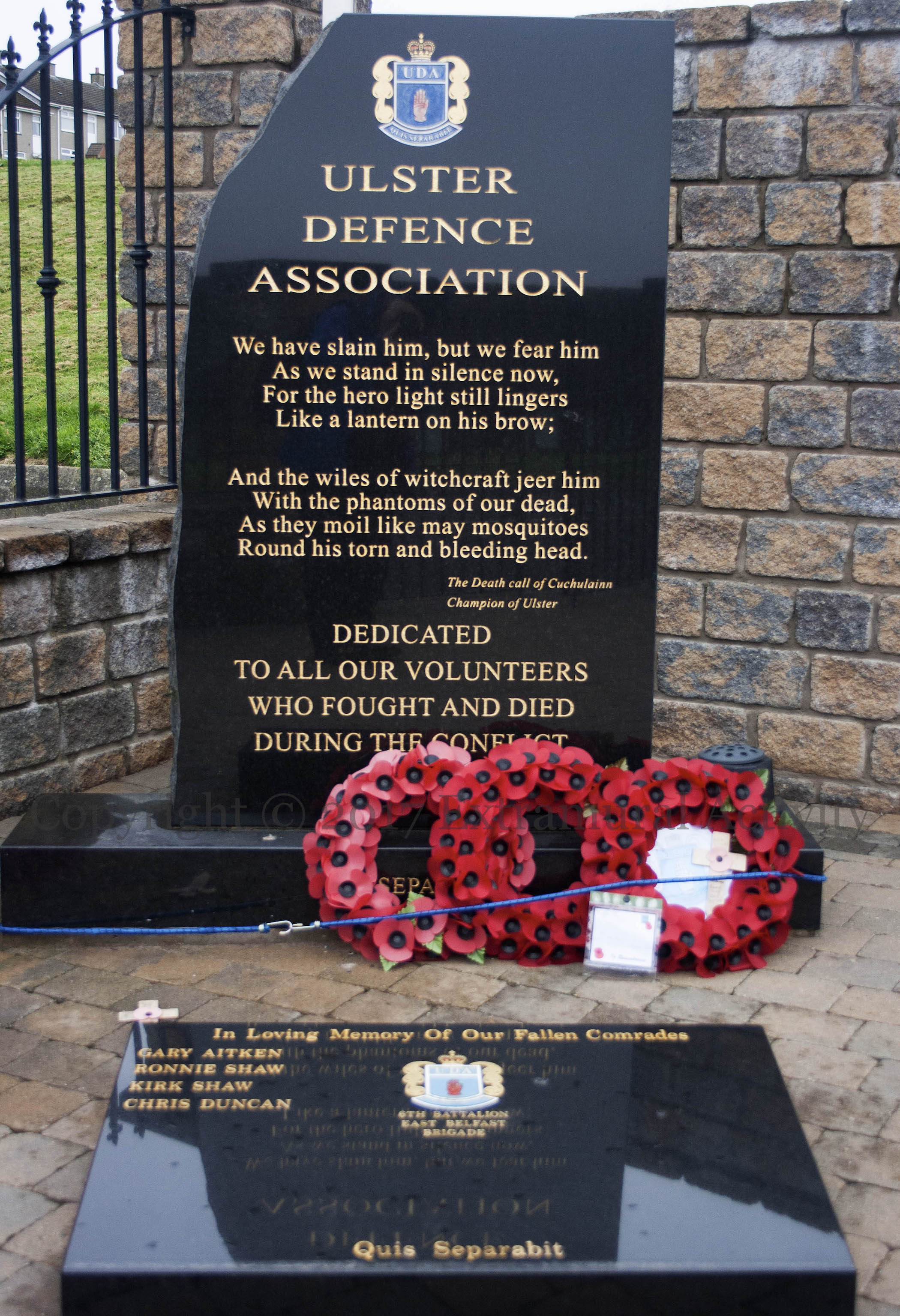
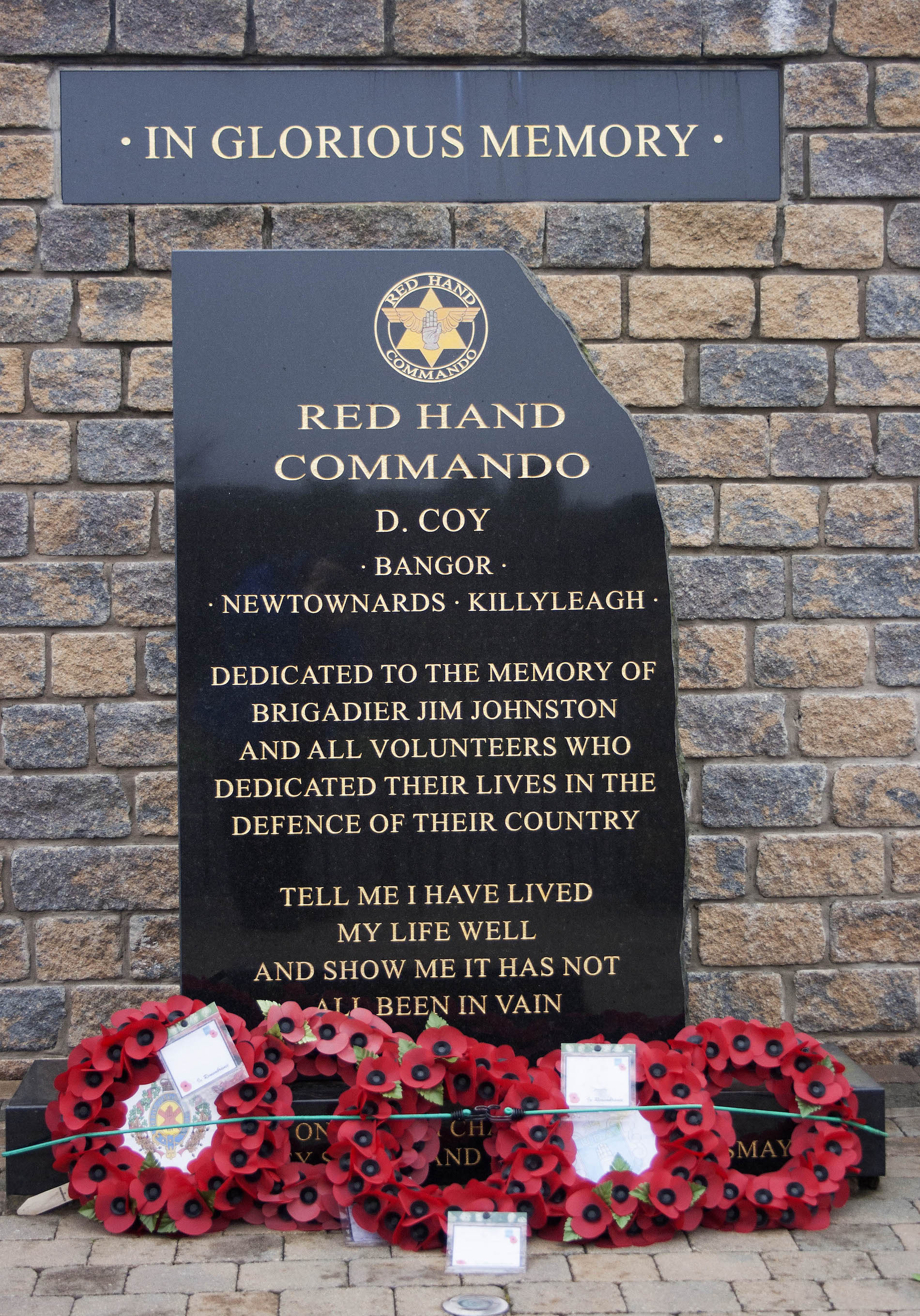
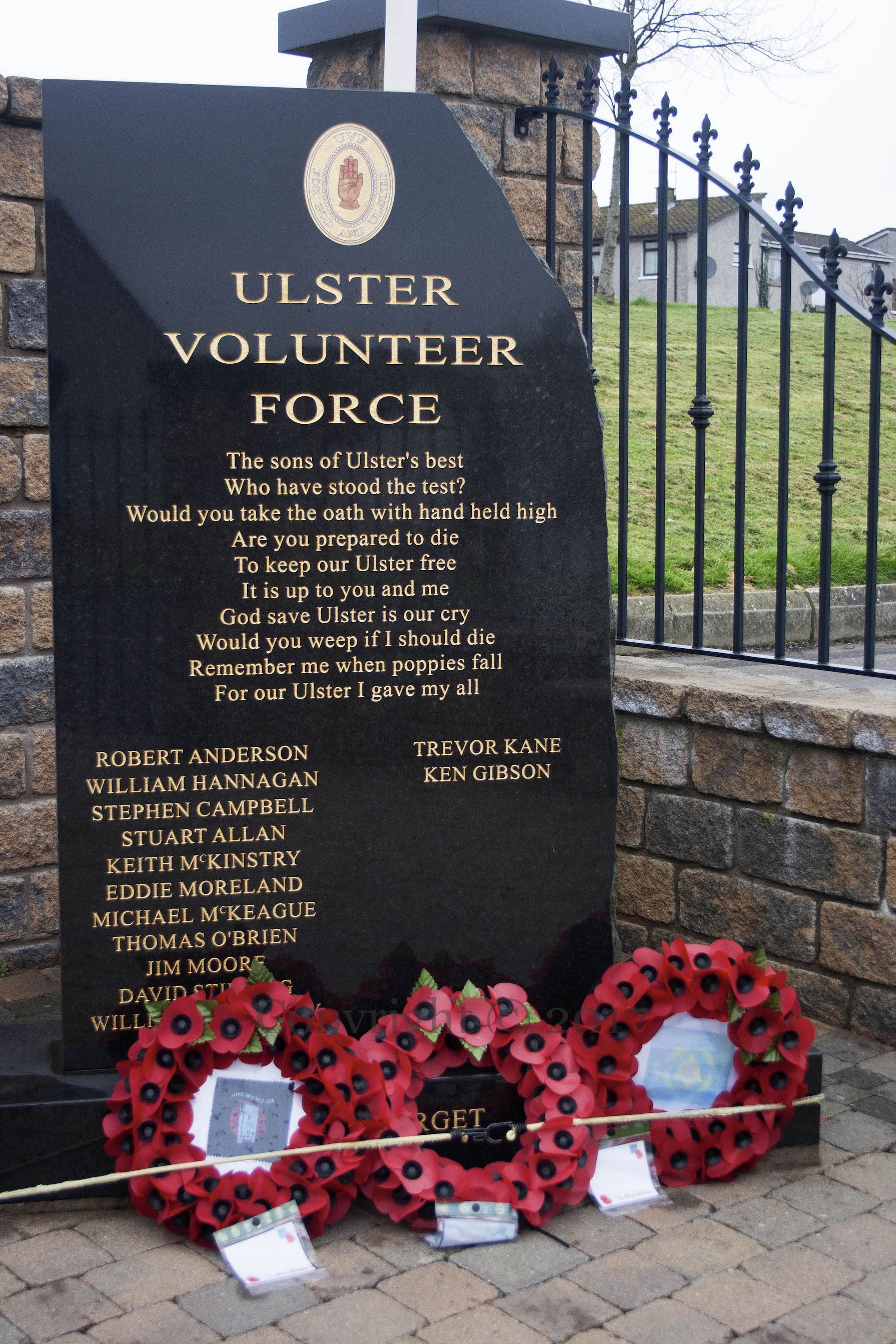
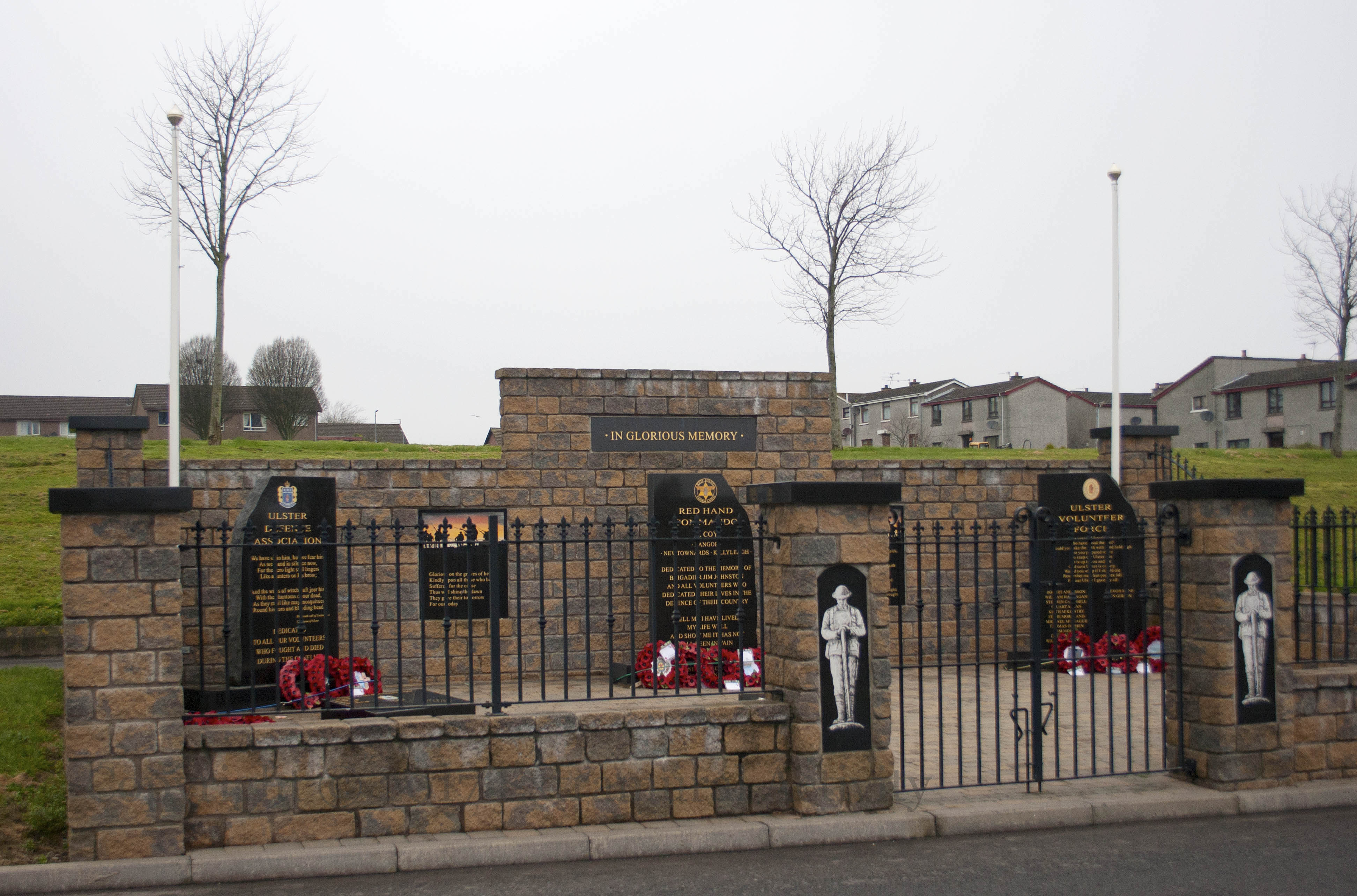
“We have slain him but we fear him/As we stand in silence now/For the hero light still lingers/Like a lantern on his brow. And the wiles of witchcraft jeer him/With the phantoms of our dead/As they moil like may mosquitoes/Round his torn and bleeding head.” Cuchulainn is invoked as a “defender of Ulster” on the UDA memorial stone in the Kilcooley estate. The Red Hand Commando and UVF stones are shown below. The three paramilitary stones were added independently of the WWI garden (BelTel).
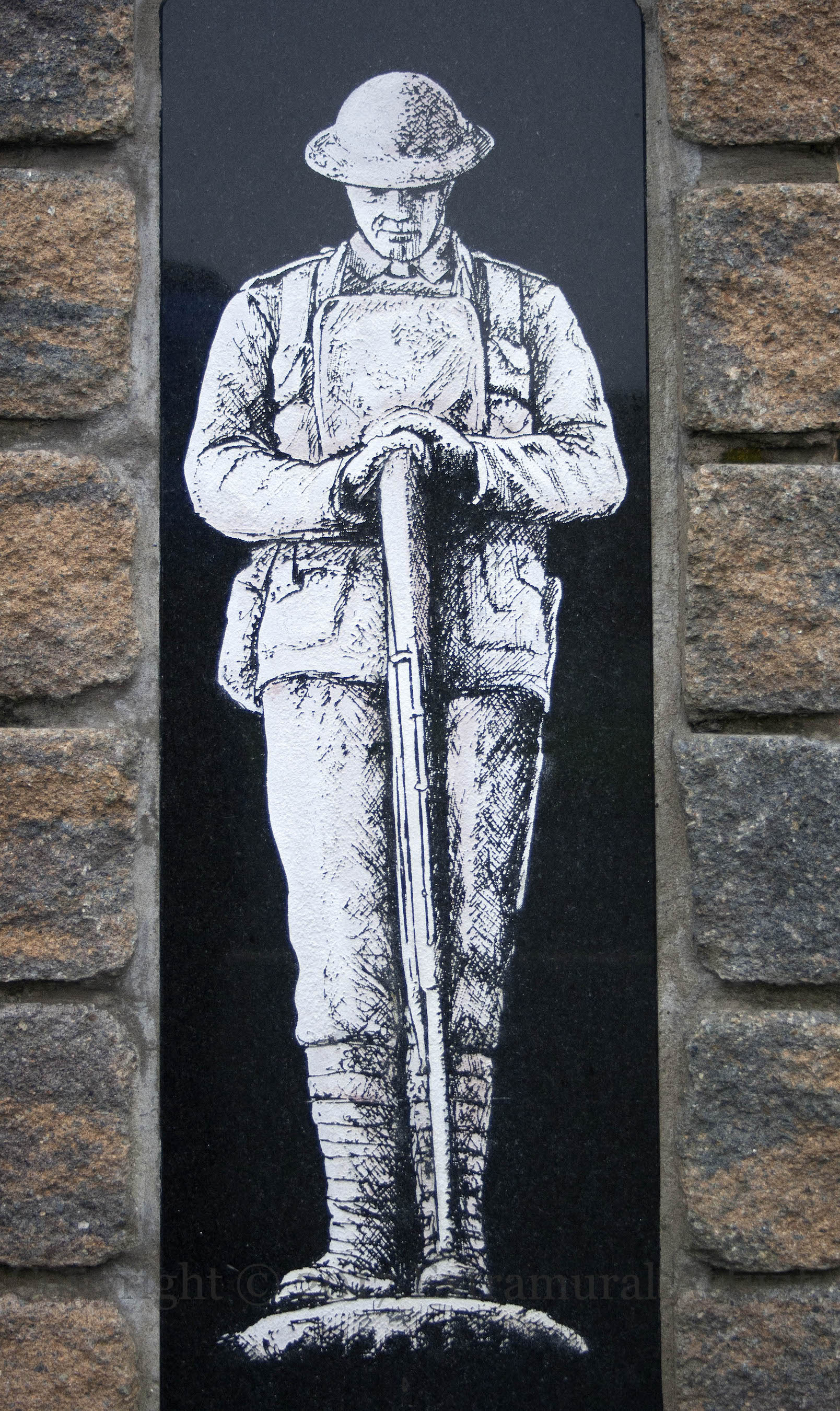
Here are two final images from the memorial garden in Kilcooley. It seems that the combination of WWI imagery (compare this entry and Across The Wire) and paramilitary memorials (To Keep Our Ulster Free), was not the plan approved by the Department of Social Development, which contributed funds to the project (Belfast Telegraph). A wide shot of the whole is included below.
According to an article in the Tele last Friday (2017-04-21), the Housing Executive has a list of over 100 memorial on Executive-owned land that it considers illegal. The list itself does not seem to be available and so it is not not known if the Kilcooley garden is one of these.
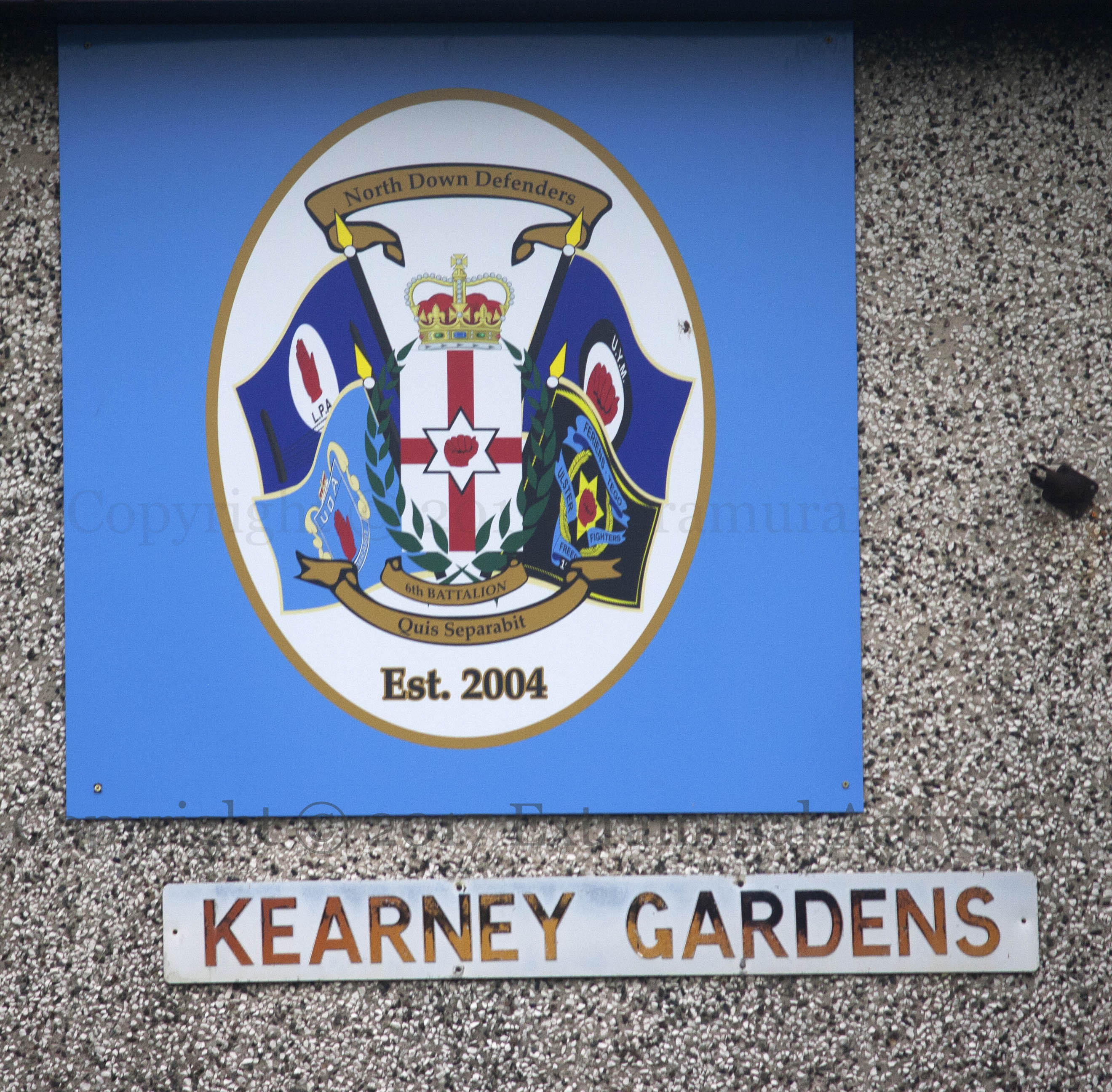
Here is a small board in Bangor from the North Down Defenders flute band (Fb), unusual due to the modified Ulster banner with clenched red hand in the centre. Surrounding it are the flags of the LPA, UDA, UFF, and UYM.
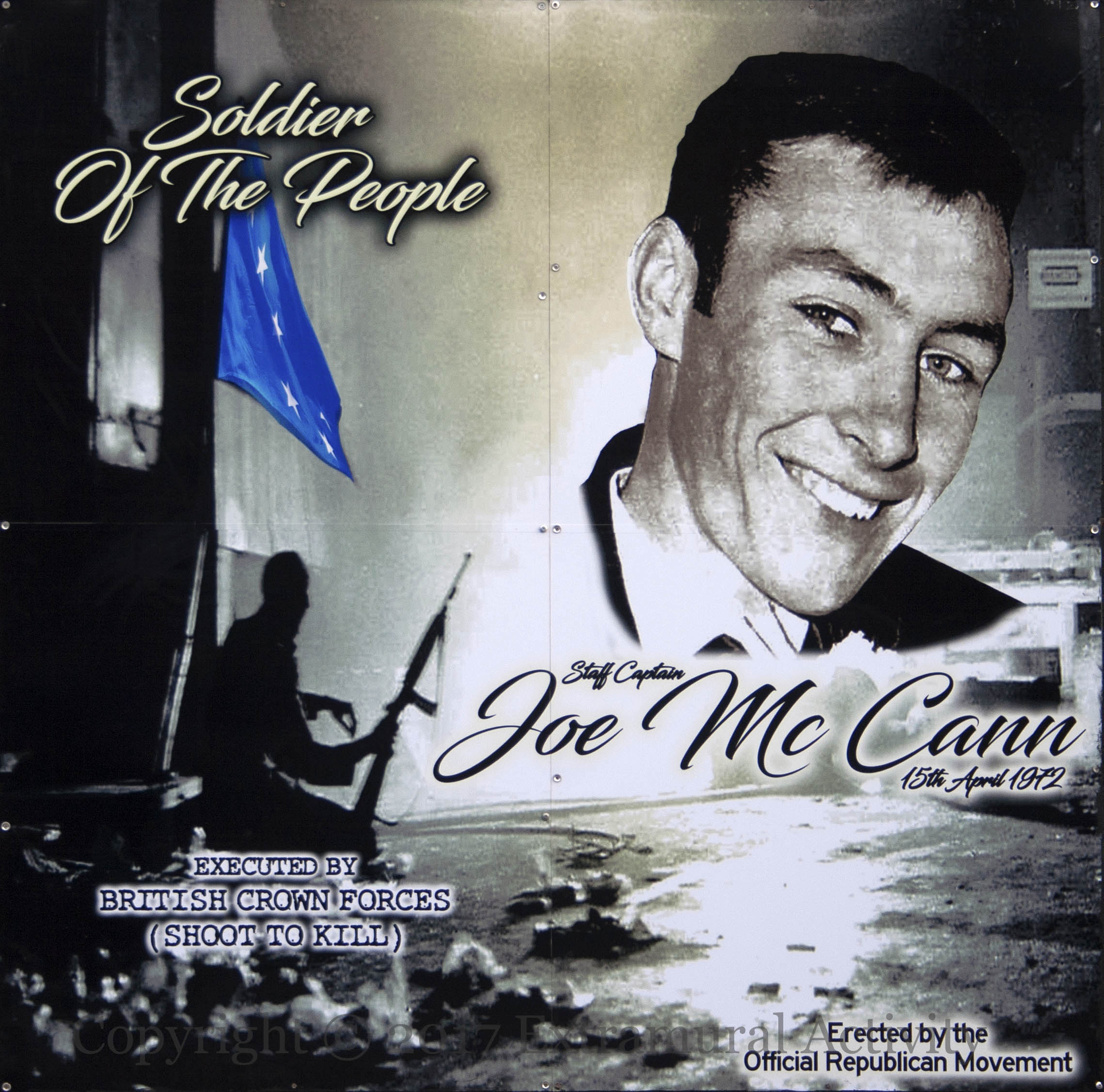
Joe McCann was (Official) IRA OC in the Markets area of south Belfast, where he was shot by paratroopers in 1972. The HET in 2013 found that the killing was unjustified, as McCann was unarmed and shot multiple times at close range; the DPP announced in December 2016 that two soldiers – now in their 60s – are to stand trial for the shooting. (WP | Irish Times | Telegraph which also includes the photograph used as a background, which shows McCann, with MI, during the occupation of the Inglis bakery in the Markets on August 9th, 1971 – Internment Day.)
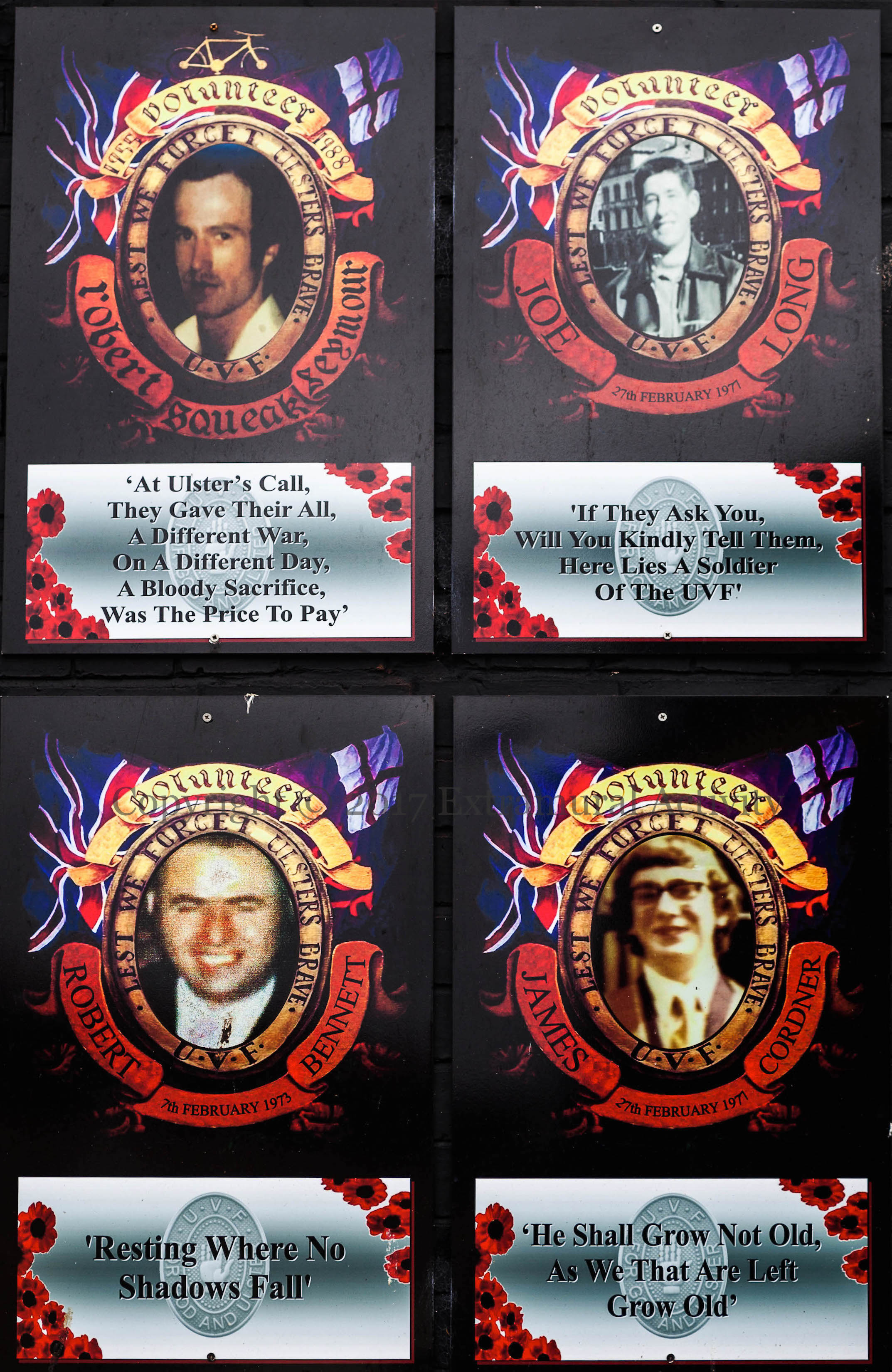
Photographic portraits of four UVF members – Robert “Squeak” Seymour (east Belfast commander), Joe Long, Robert Bennett, James Cordner – on panels adjacent to a new Somme mural (shown tomorrow). Seymour died in 1988, the others in the early seventies. The same four are commemorated on a mural (and a plaque) on Ballymacarrett Road. “At Ulster’s call, they gave their all, a different war, on a different day, a bloody sacrifice, was the price to pay.”
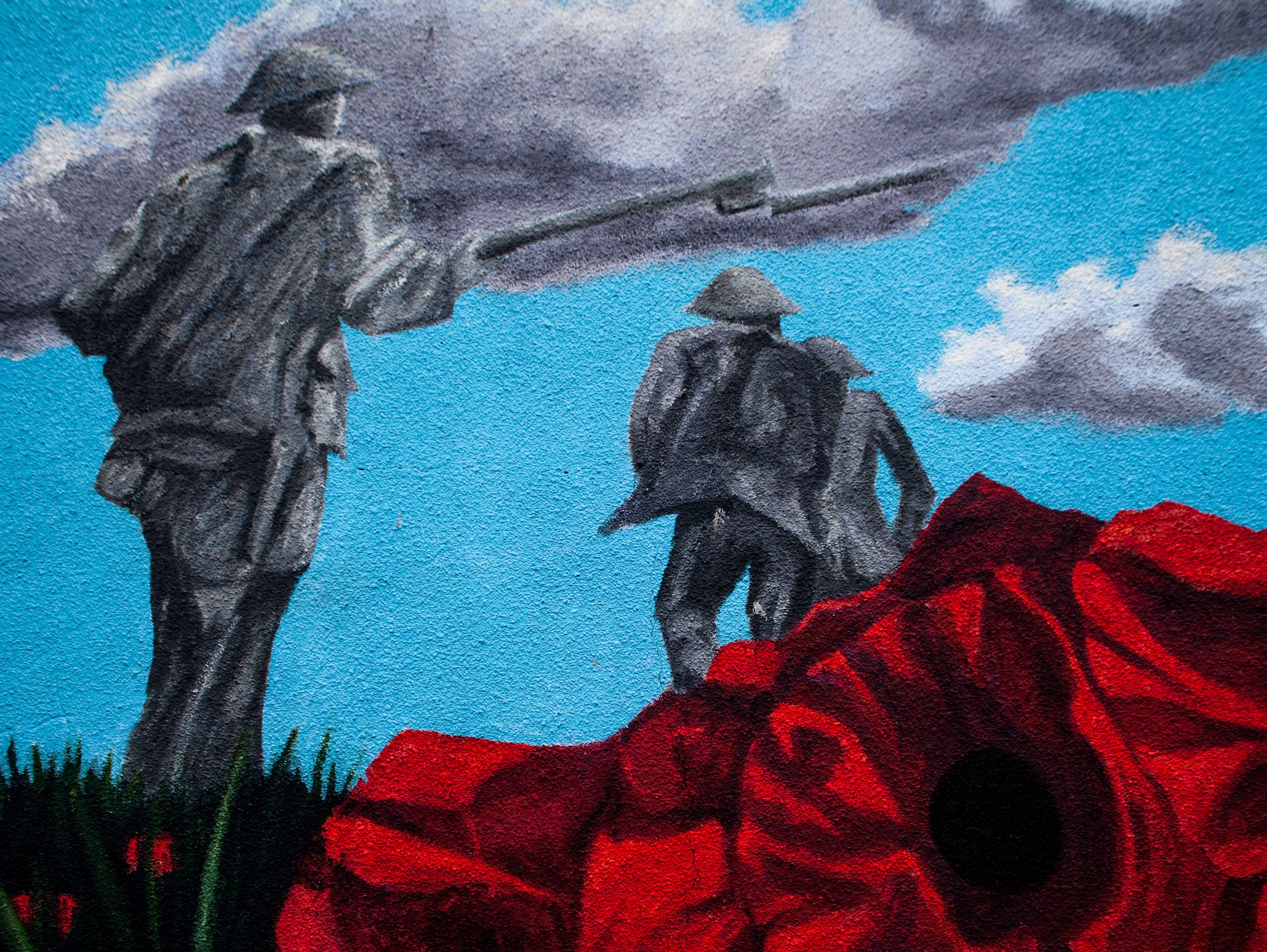
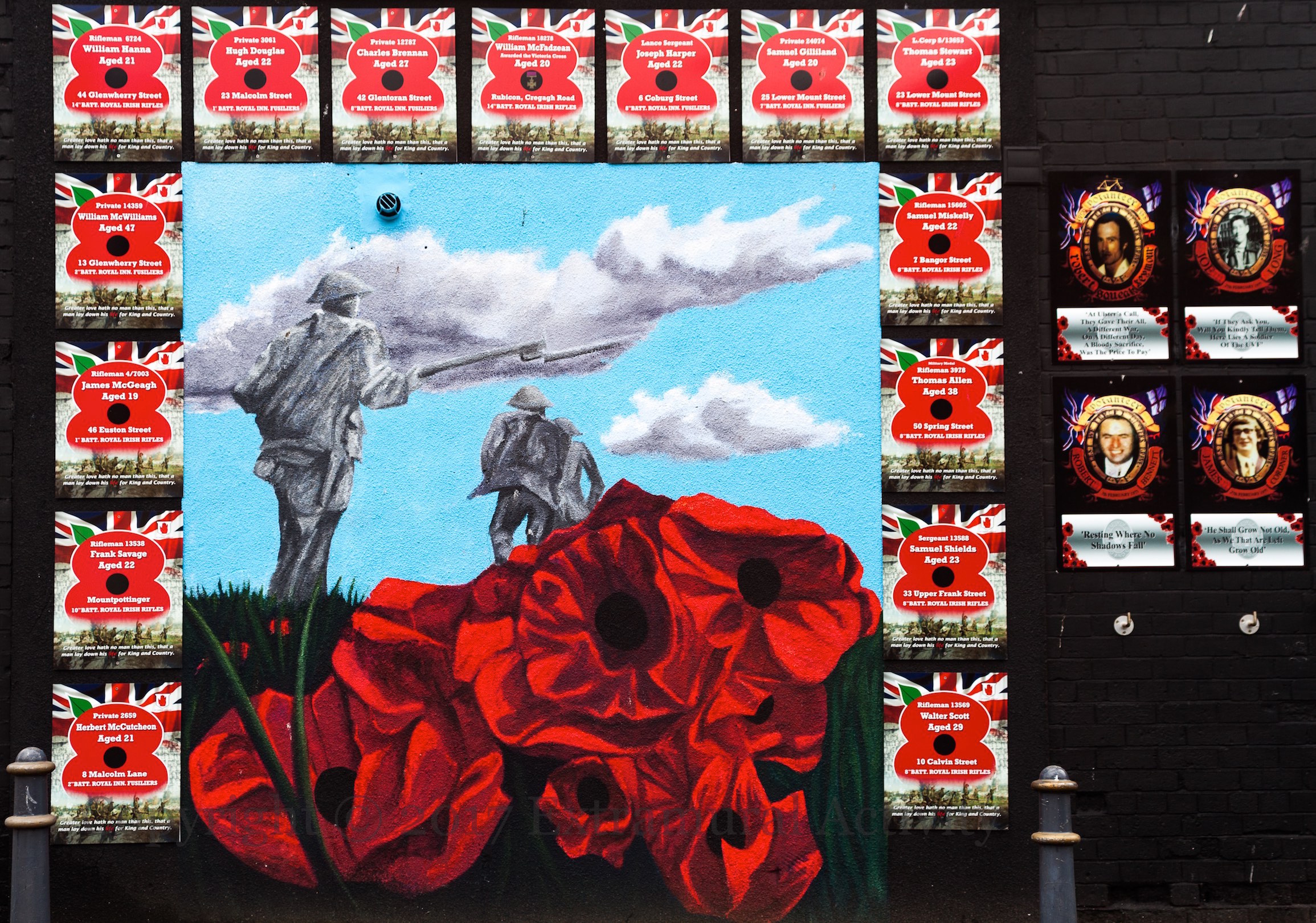
The “Jesus” tag at the corner of My Lady’s and London roads has been replaced with a WWI mural showing soldiers running through a field of poppies, and which is surrounded by plaques from the Poppy Trail with the details of some of those from the 36th (Ulster) Division who were killed.
By Mark Ervine in London Road.
For the four panels on the right, see Ulsters Brave.
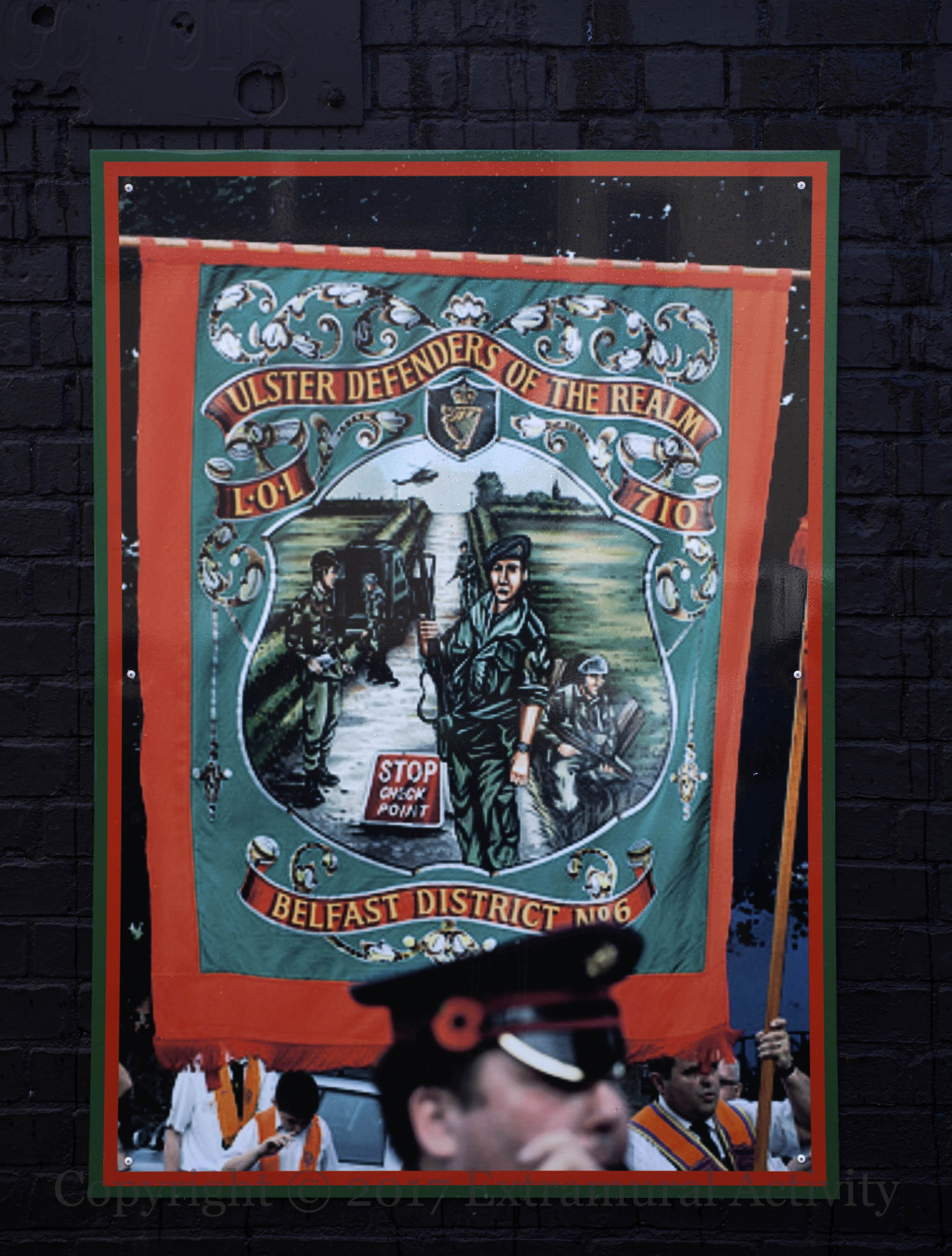
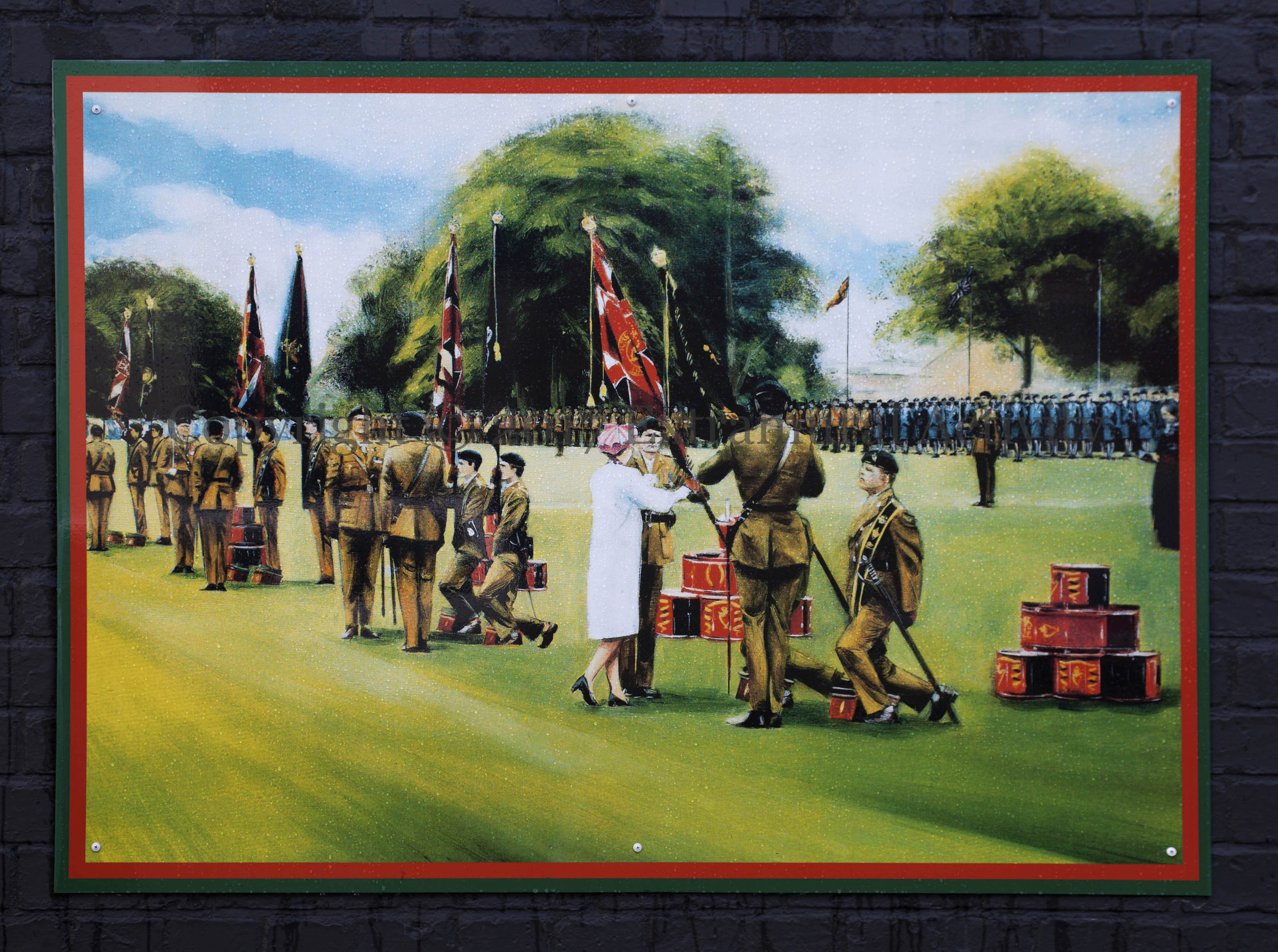
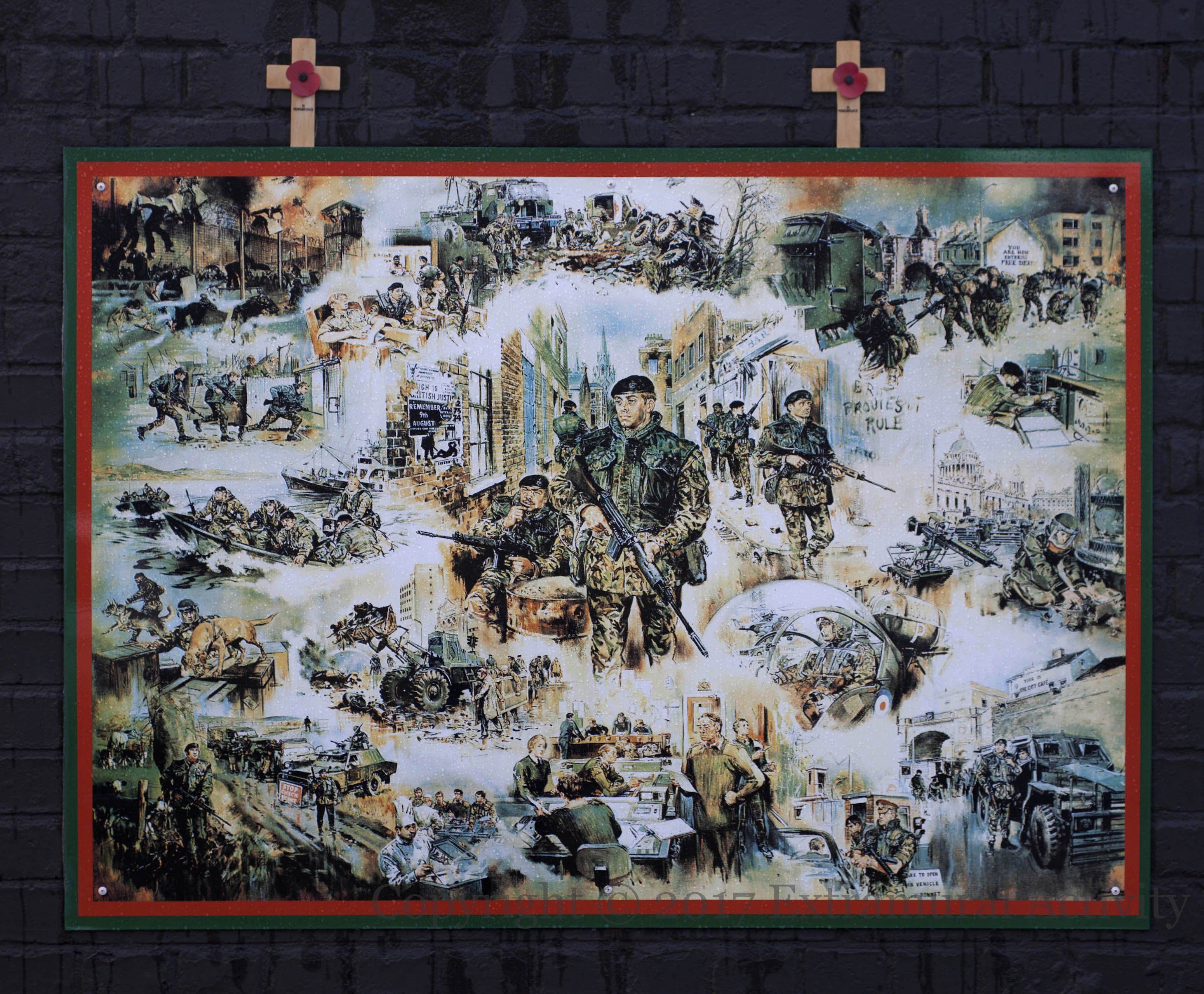
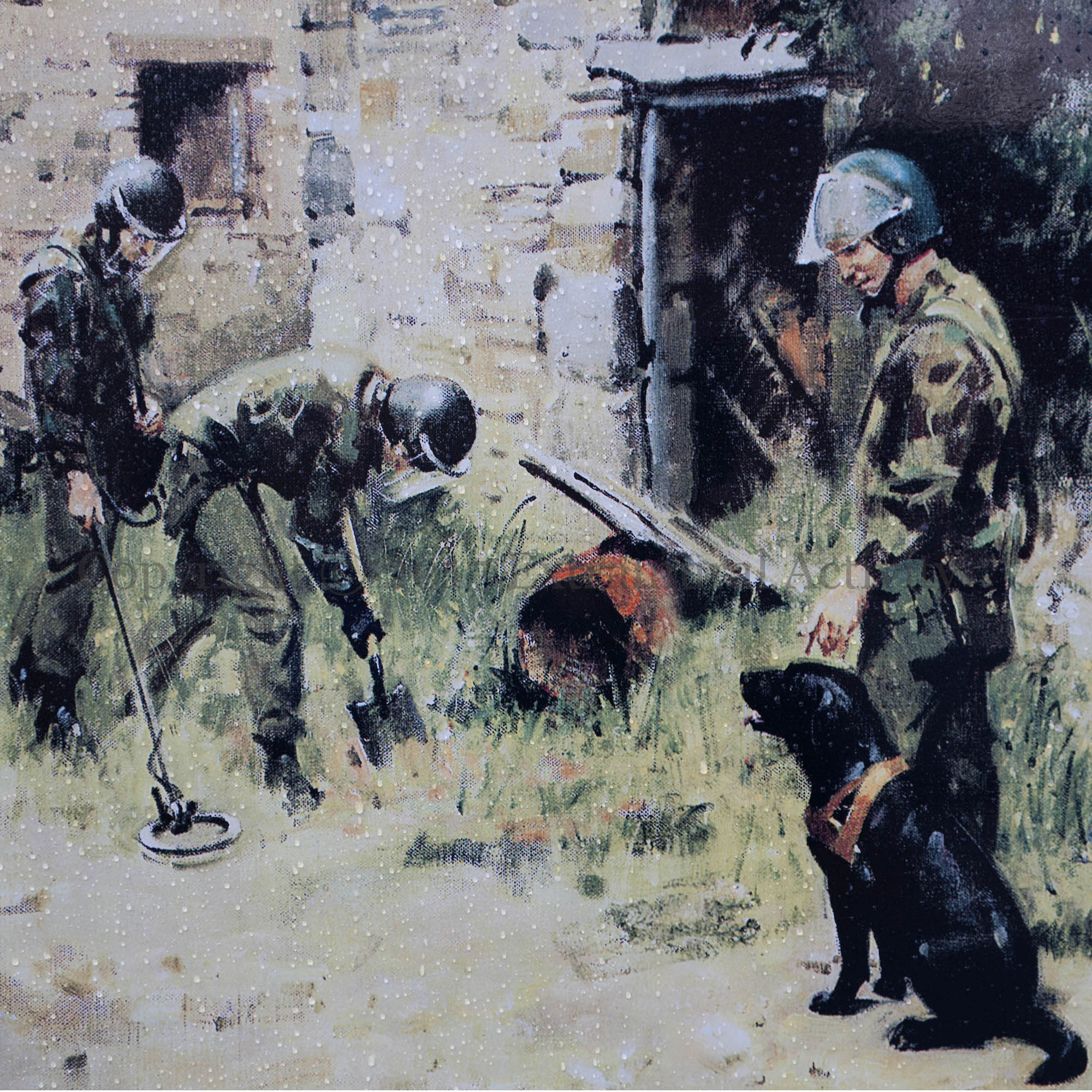
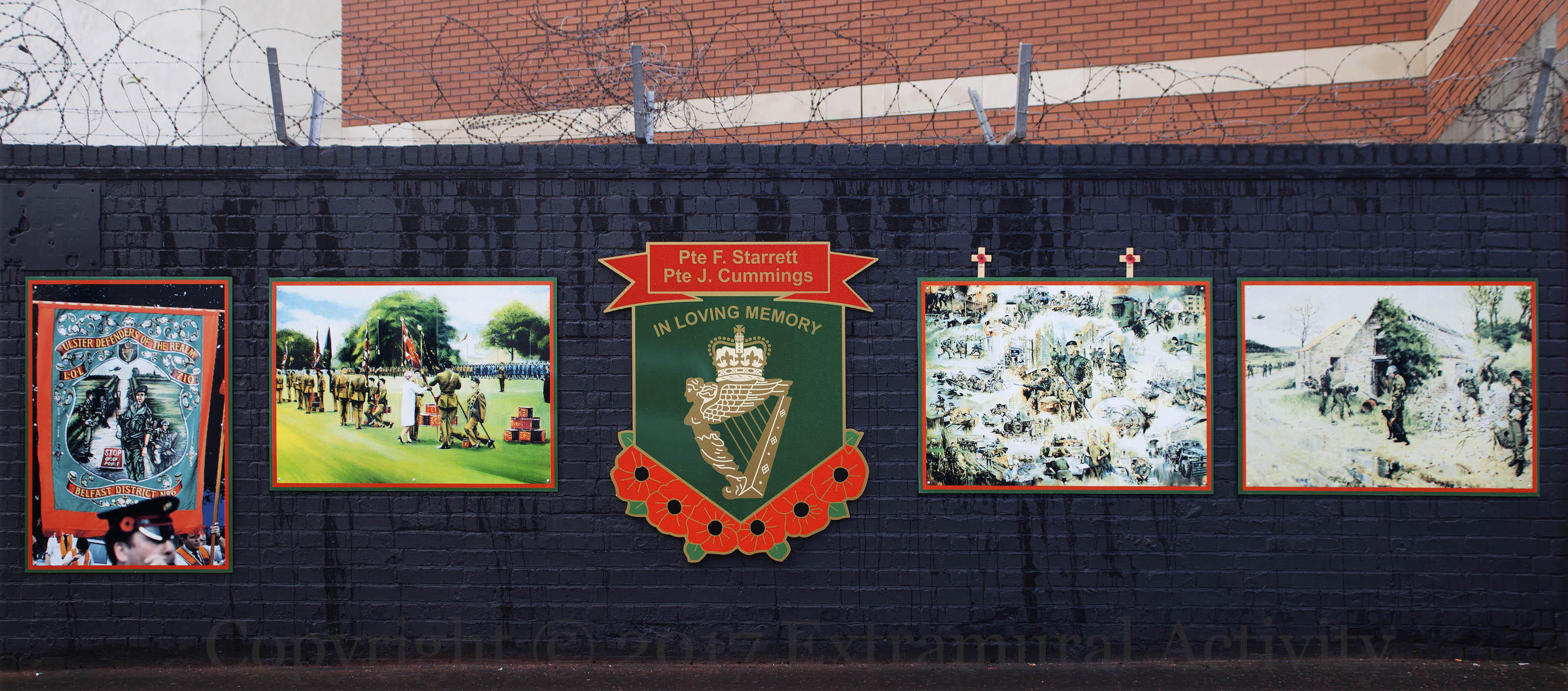
Privates Fred Starrett and James Cummings died in an IRA bombing on Belfast’s Royal Avenue on February 24th, 1988. Both Orangemen, their deaths are commemorated every year by a parade from east Belfast to the city centre. Shown in today’s post are the panels from a new UDR commemorative wall in east Belfast.
The fourth panel is a collage of UDR activities (on the streets, on base, manning check-points, in boats, helicopters, with dogs) with a few pieces of republican signs as backdrop (Free Derry Corner, “Provies rule”, “Such is British justice – remember 9th August”) and the fifth shows soldiers searching for arms near some outbuildings.
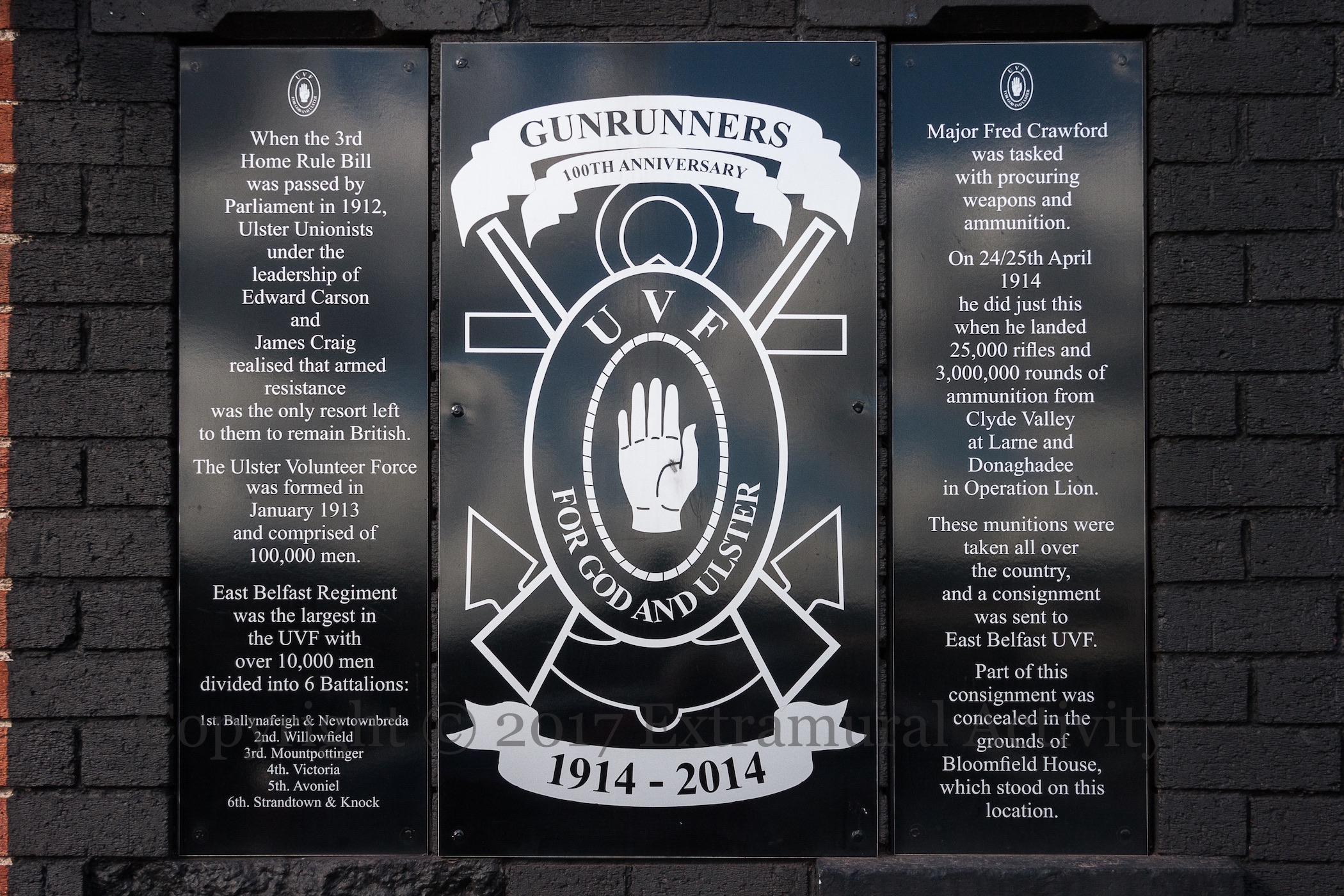
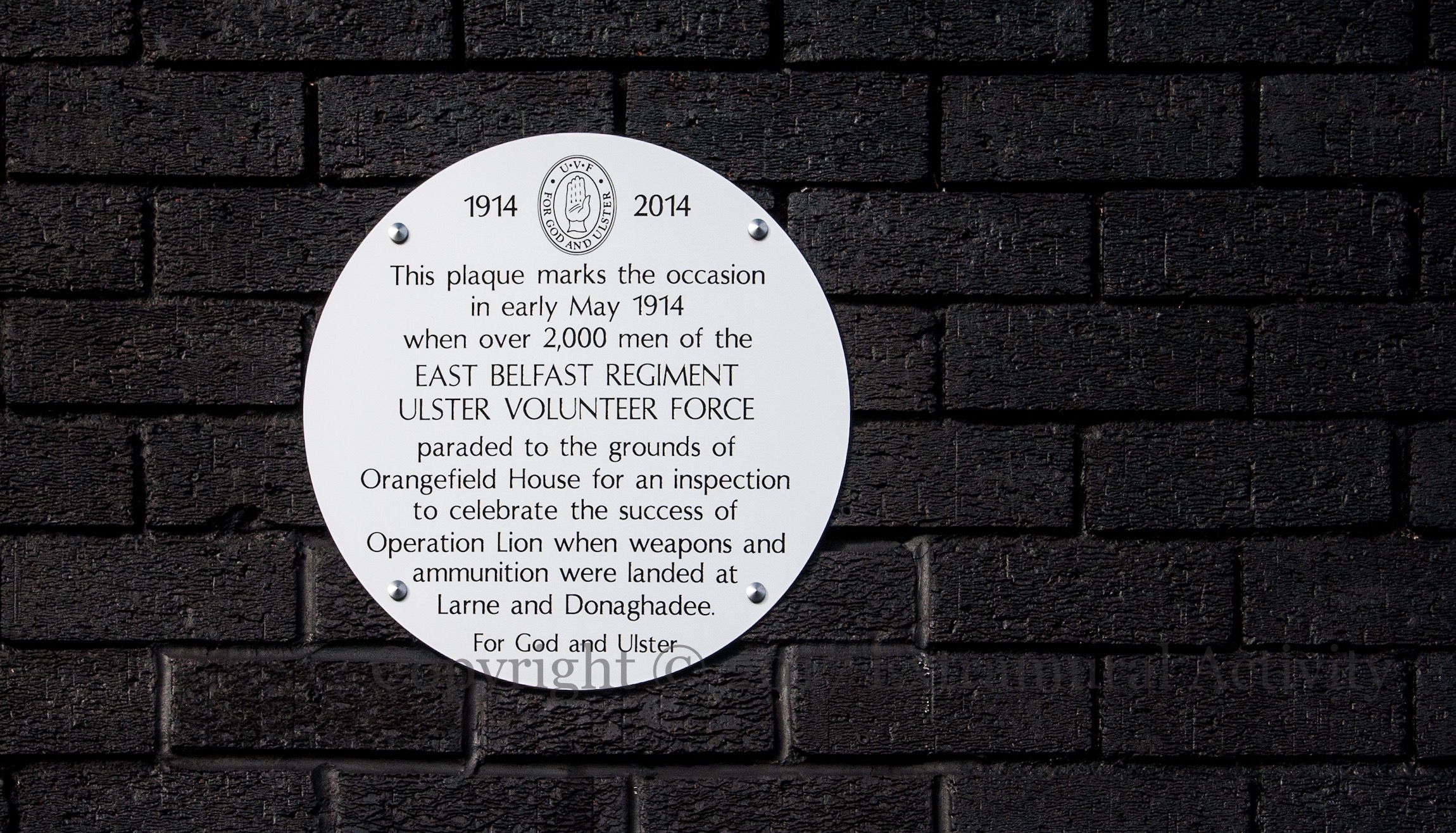
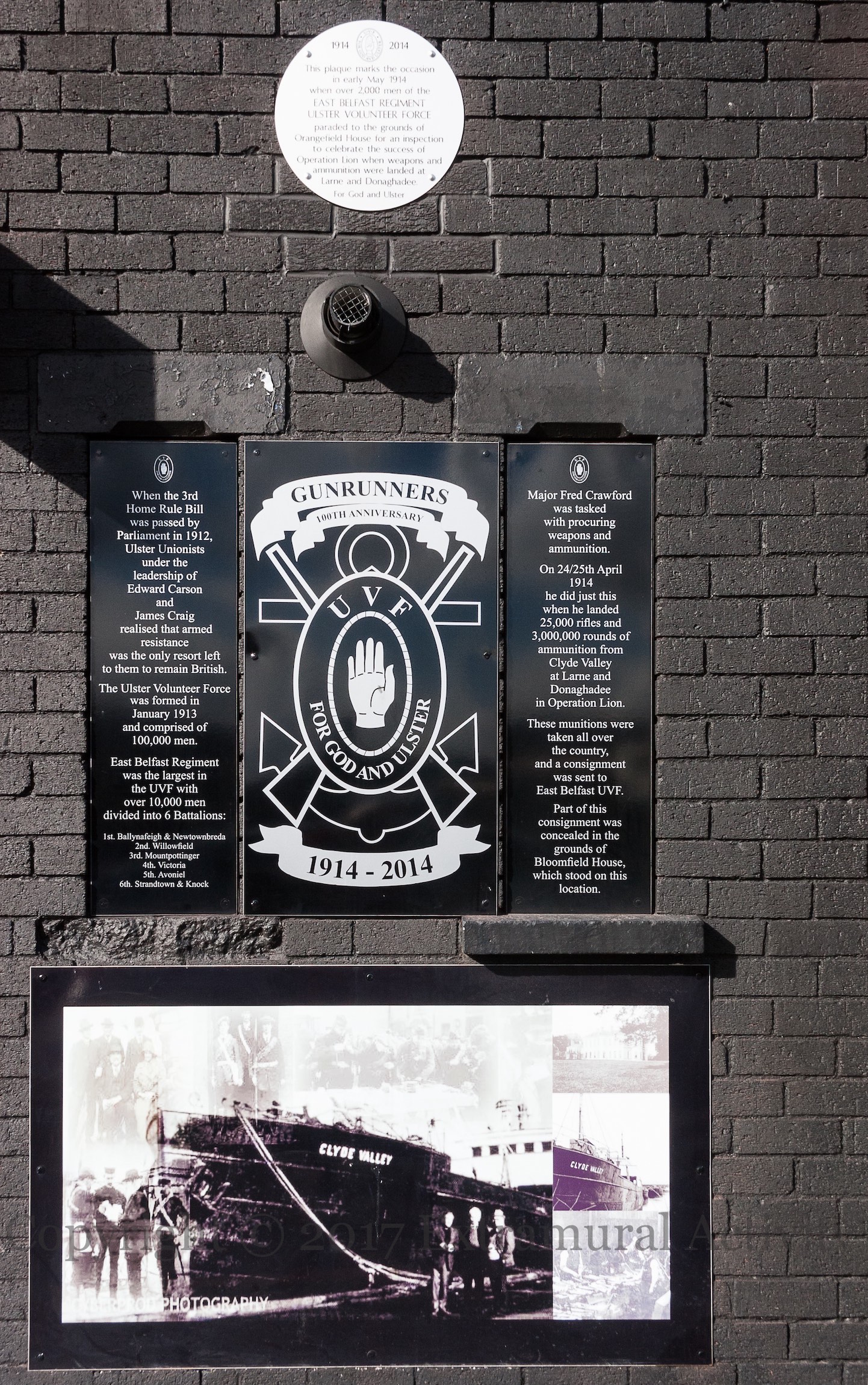
The 100th anniversary plaque and board shown in this entry are on the spot of Bloomfield House (web), where guns from Clyde Valley were held for the East Belfast battalion of the Ulster Volunteers in 1914. See also: John Henry Patterson’s involvement in Operation Lion.
“When the 3rd Home Rule Bill was passed by Parliament in 1912, Ulster Unionists under the leadership of Edward Carson and James Craig realised that armed resistance was the only resort left to them to remain British. The Ulster Volunteer Force was formed in January 1913 and comprised of 100,000 men. East Belfast Regiment was the largest in the UVF with over 10,000 men divided into 6 Battalions: 1st. Ballynafeigh & Newtownbreda, 2nd. Willowfield, 3rd. Mountpottinger, 4th. Victoria, 5th. Avoniel, 6th. Strandtown & Knock. Major Fred Crawford was tasked with procuring weapons and ammunition. On 24/25th April 1914 he did just this when landed 25,000 rifles and 3,000,000 rounds of ammunition from Clyde Valley at Larne and Donaghadee in Operation Lion. These munitions were taken all over the country, and a consignment was sent to East Belfast UVF. Part of this consignment was concealed in the grounds of Bloomfield House, which stood on this location.”
“This plaque marks the occasion in early May 1914 when over 2,000 men of the East Belfast Regiment, Ulster Volunteer Force paraded to the grounds of Orangefield House for an inspection to celebrate the success of Operation Lion when weapons and ammunition were landed at Larne and Donaghadee. For God and Ulster.”
These three are next to (and the same black background) as the Orangefield memorial – see In All Theatres Of Conflict.
 Seosamh Mac Coille Collection