Derry Remembers

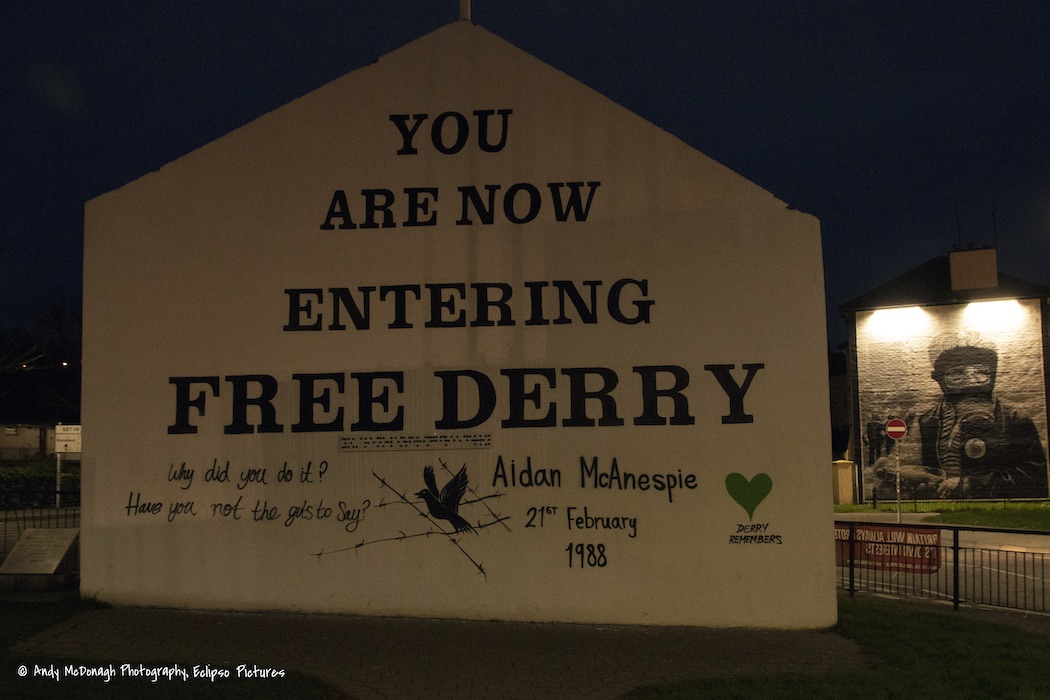
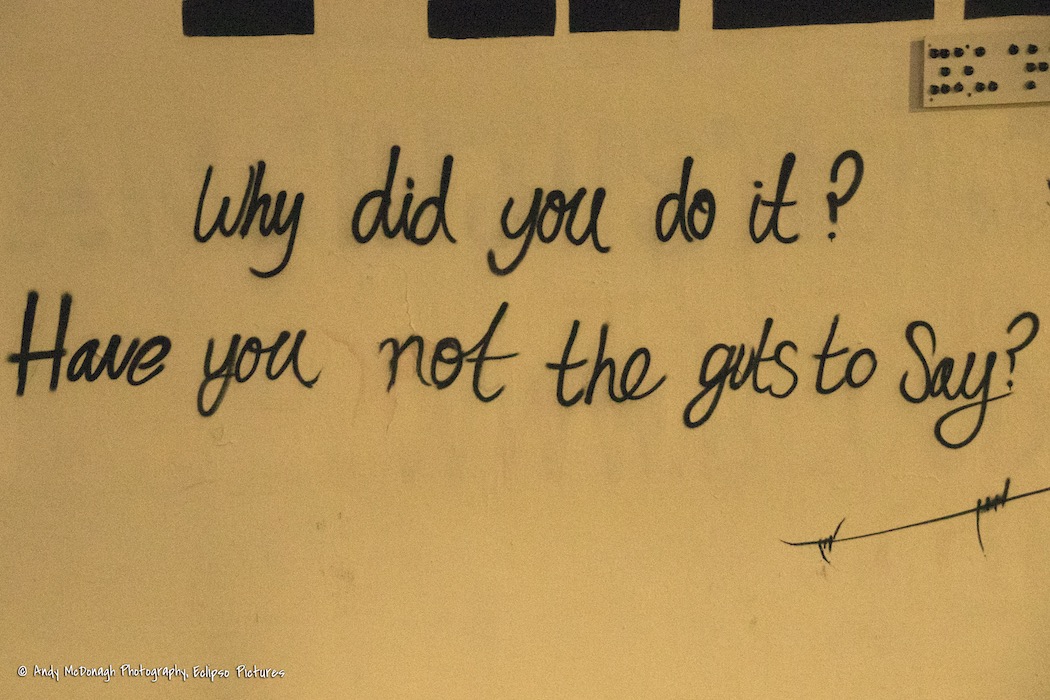
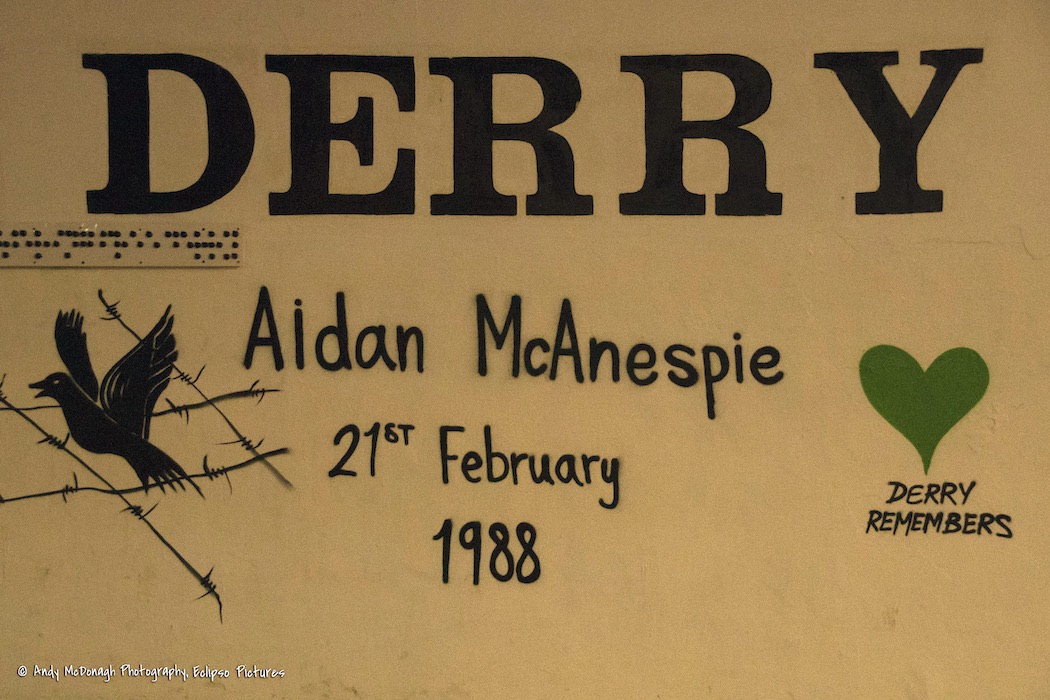
“Why did you do it? Have you not the guts to say?” The question is for David Holden, who in 1988 was an 18-year-old Grenadier Guardsman, manning a checkpoint in Aughnacloy, Co. Tyrone. On February 21st, Holden shot Aidan McAnespie as he was walking to the nearby GAA club. Holden was convicted of manslaughter by gross negligence (BBC | Belfast Live) and was sentenced in February to three years, suspended for three years. The family expressed disappointment, saying that Holden did give a clear account of what happened nor express remorse (Sky News | Journal). Holden has now decided to appeal his conviction (BBC | RTÉ).

The lark in barbed wire is used here not as a symbol of political prisoners but of the struggle for justice in the UK system. (See the Visual History page on the lark and the dove.)

Also visible is the recently-added Braille translation of “You are now entering Free Derry”.
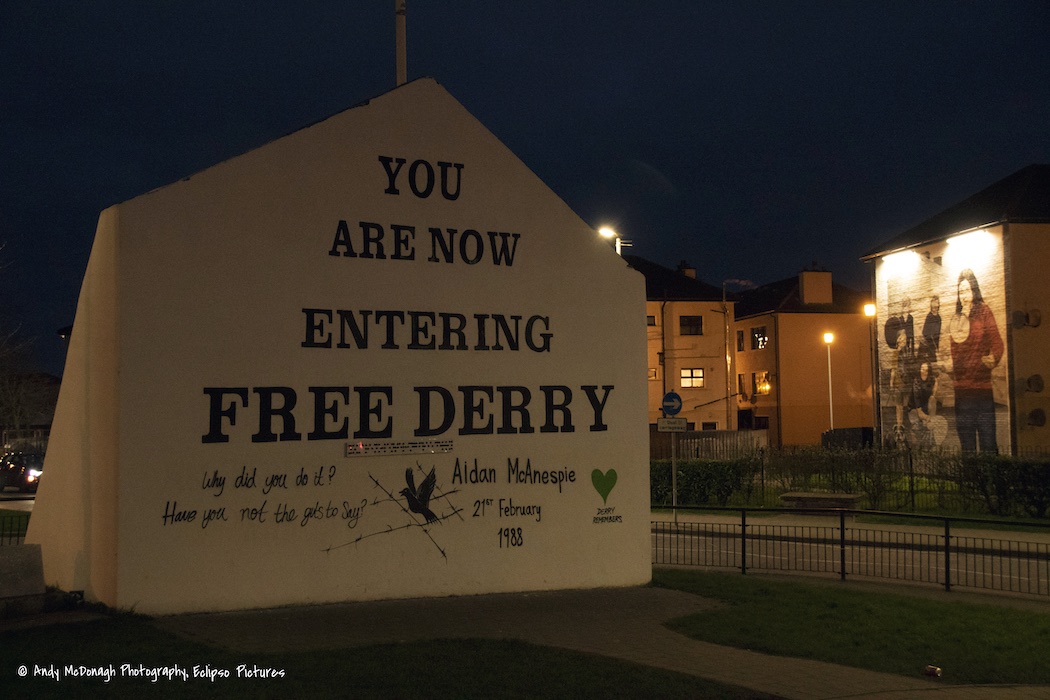
Click image to enlarge
Copyright © 2023 Andy McDonagh/Eclipso Pictures (ig | Fb)
X12142 X12139 X12140 X12141
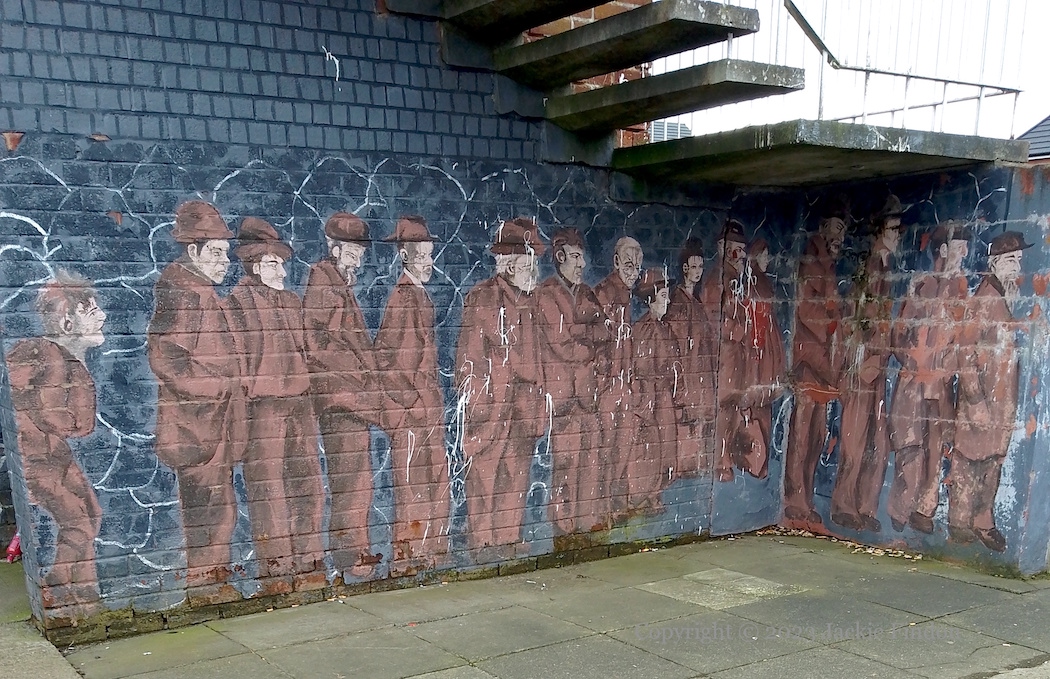
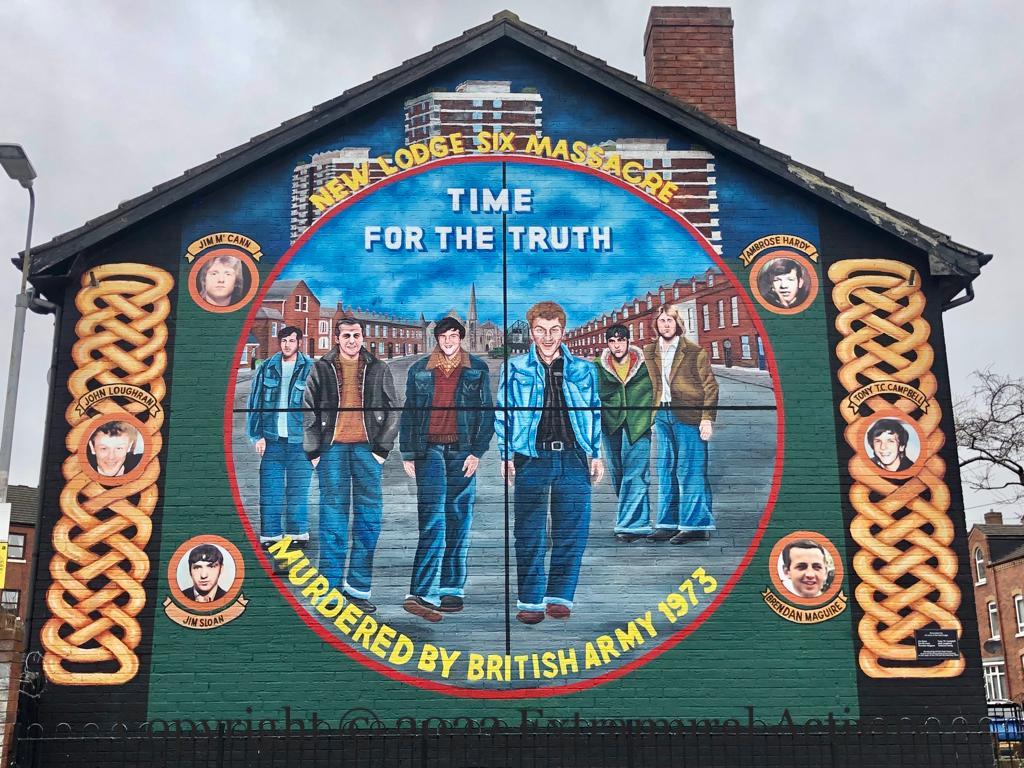
Time For The Truth

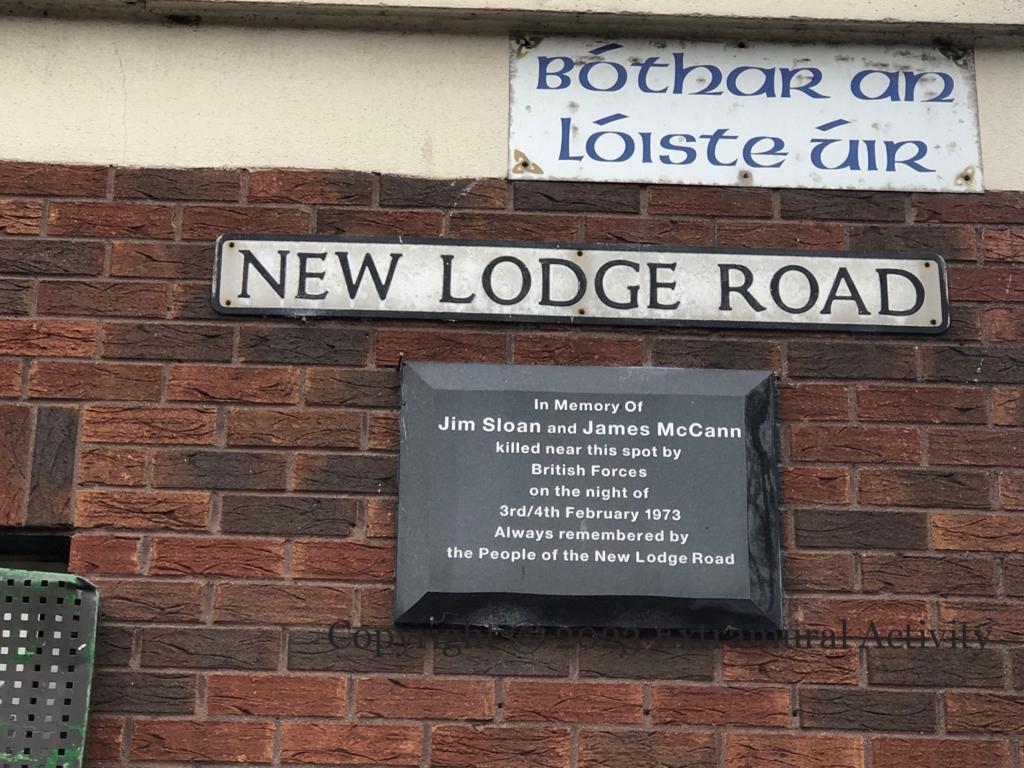
A candle-lit vigil (youtube | iTV) took place last Friday (February 3rd) to commemorate the 50th anniversary of the “New Lodge Six Massacre”. Shortly before midnight on the night of February 3rd-4th, 1973, Jim Sloan and James McCann were killed by the UDA outside a bar – or so the authorities alleged; the plaque shown below near the spot where they were shot reads “killed by British Forces”; full details of what is currently known about the killings can be found at Paper Trail.

Four more – Tony ‘TC’ Campbell, Ambrose Hardy, Brendan Maguire, John Loughran – were among those who came to the area of the initial shootings and were killed by British Army snipers from their positions on top of the flats, using night-vision sights.

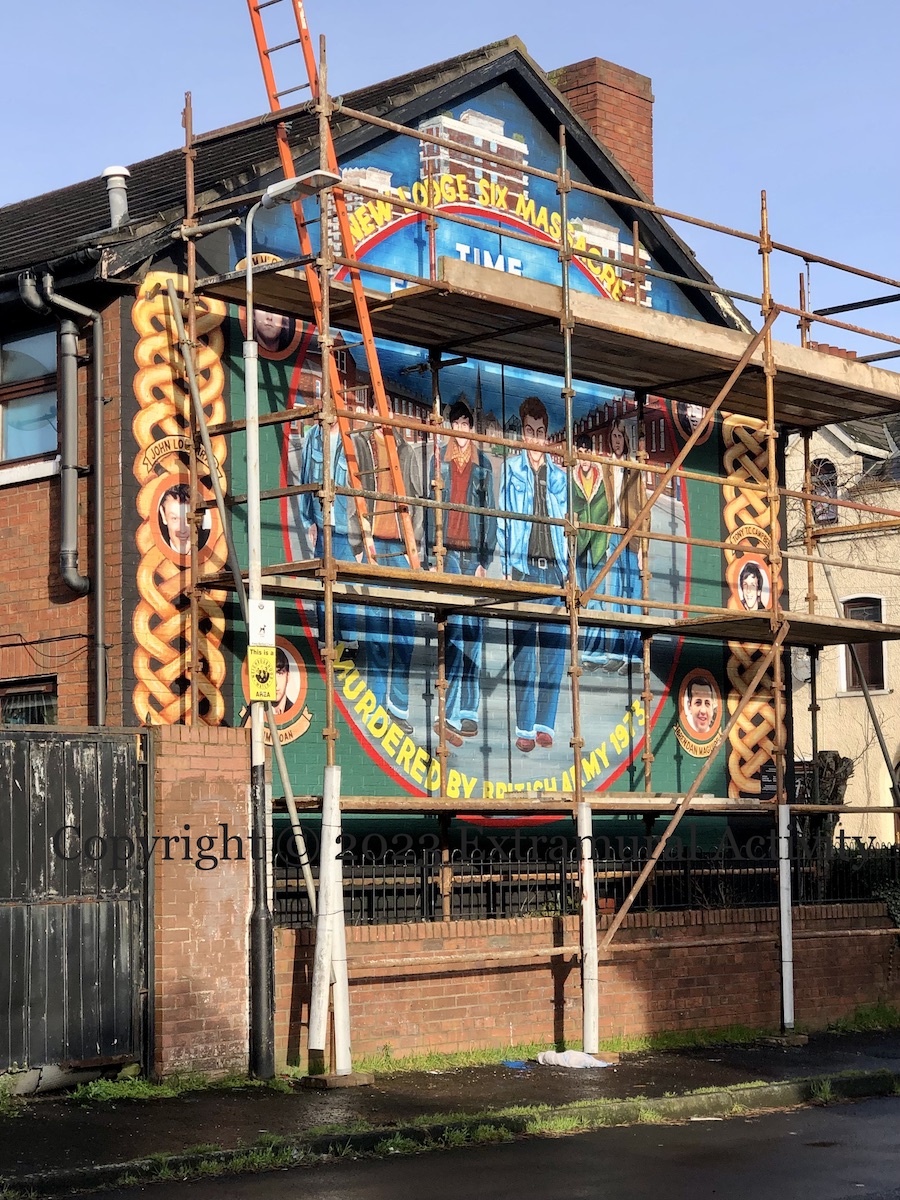
The memorial mural in Donore Court was repainted for the event. From left to right, it shows Hardy, Maguire, Campbell, Loughran, Sloan, and McCann walking down New Lodge Road with (what was) Duncairn Presbyterian and (what was) the RUC station on the Antrim Road behind them. The previous (2011) version of the mural showed a body being carried whereas this new one shows them smiling as they walk, though still in the sights of a sniper’s rifle. Other changes were made: the six portraits in the medallions are now photographs rather than paintings; the background is green rather than pink.

Click image to enlarge
Copyright © 2023 Seosamh Mac Coılle
X12001 [X12000] [X12002]
X11995
X11982 [X11981]

From The Top Down

In a 2020 reflection on the tenth anniversary of the Saville report, Eamonn McCann wrote: “Saville pointed the finger of blame at 10 rank and file soldiers and one allegedly undisciplined officer. The top brass and the politicians were, without exception, given a clean bill of health.” (Hot Press)

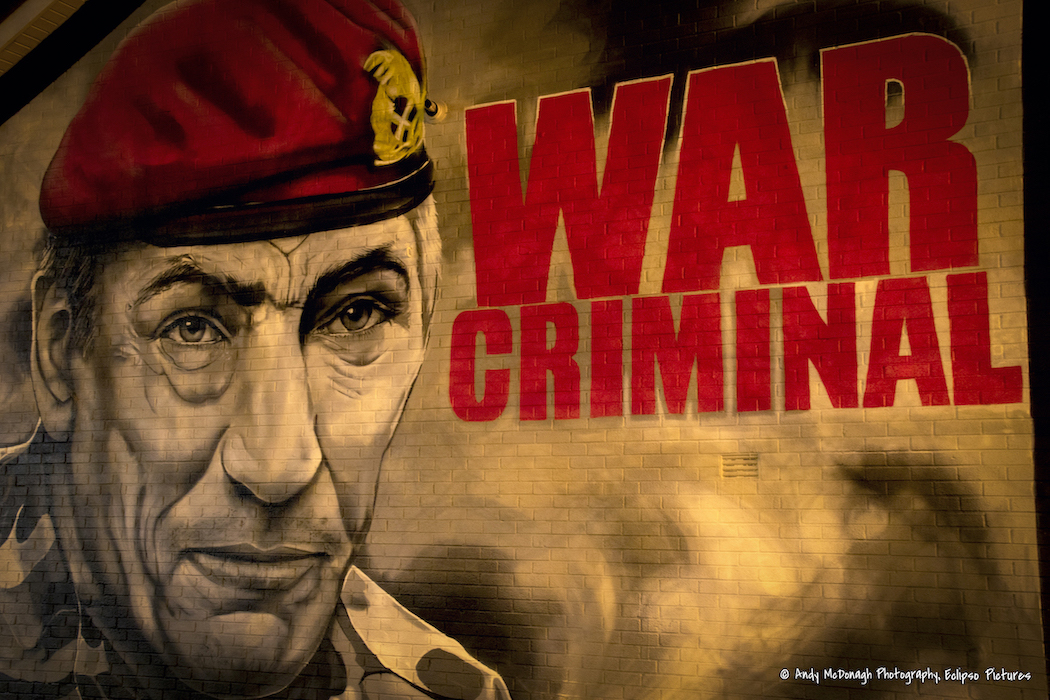
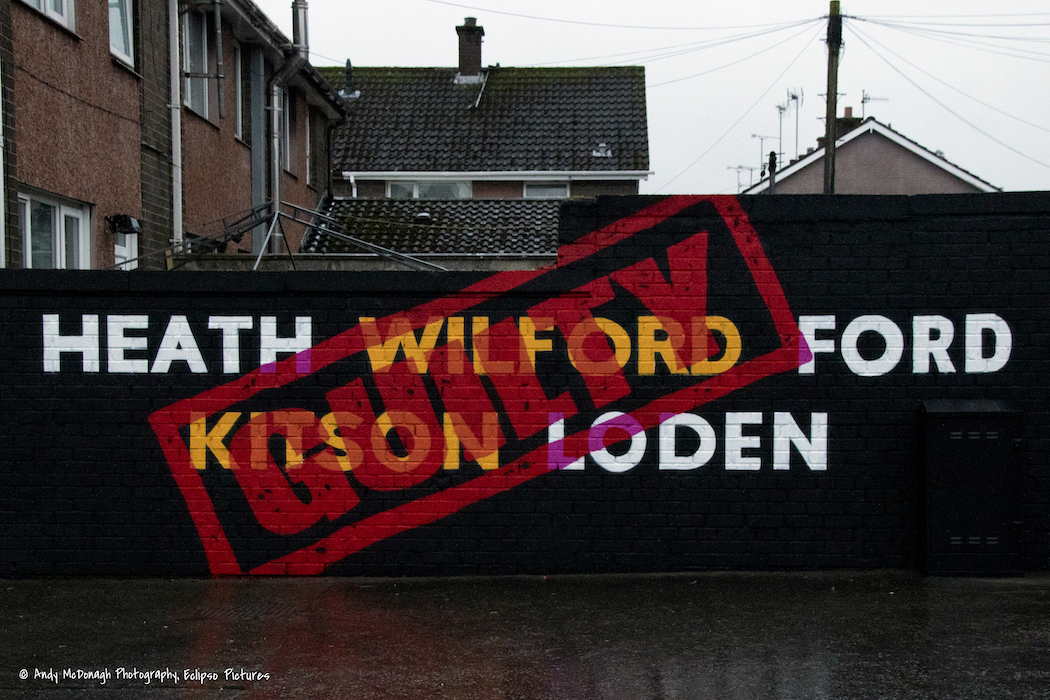
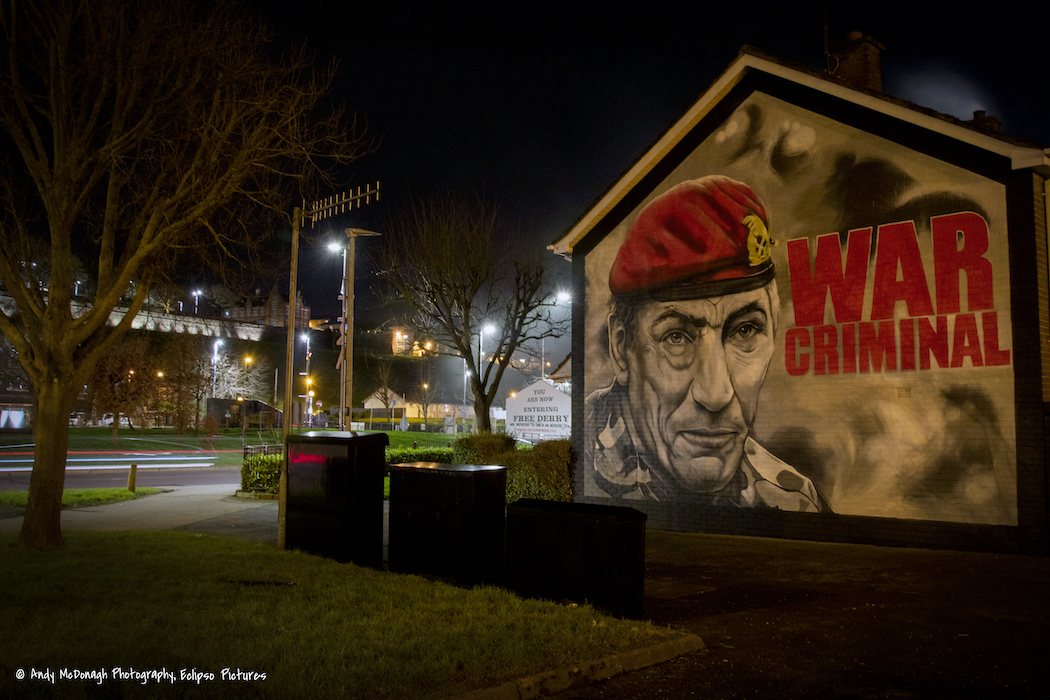
On the side wall to the new Bloody Sunday mural in Derry, the chain of command is found guilty war crimes in Northern Ireland on January 30th, 1972 – Bloody Sunday: “Guilty; Heath, Wilford, Ford, Kitson, Loden”. From the top down, the five people mentioned are:

Ted Heath, UK Prime Minister, 1970-1974

Frank Kitson, “counterinsurgency theorist” and commander of troops in Belfast 1970-1972 (History Ireland)

Robert Ford, commander of land forces 1971-1973, who wanted to block the march and make arrests in Creggan, and who wrote a January 7th memo suggesting that gaining control of Derry would require the shooting of “young hooligans” in Derry (The Irish Story).

Derek Wilford, commander of the 1st Parachute regiment on Bloody Sunday, who gave the order for soldiers to make arrests

Ted Loden, commander of ‘Support Company’, the soldiers that went into the Bogside.

The main panel shows General Sir Michael Jackson, second-in-command on Bloody Sunday and who acted as spokesperson for the event and provided the inaccurate account of the killings that was used by the media and the Widgery Report of April 1972 (see An Phoblacht and previously Jail Jackson for his connection to the Ballymurphy Massacre).

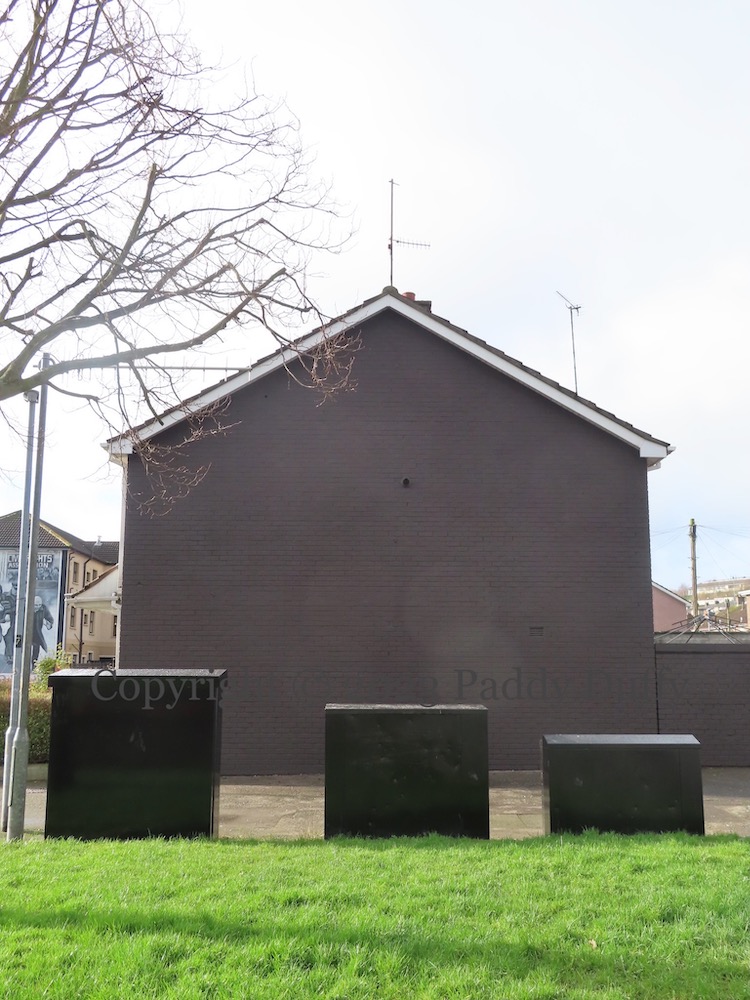
Update: By February 14th, the mural had been painted out – see final image, below.

Fahan Street, Bogside, Derry

Click image to enlarge
Copyright © 2023 Andy McDonagh/Eclipso Pictures (ig | Fb)
X11976 X11978 X11977
Final image Copyright © 2023 Paddy Duffy T02156 Ray Bonner

Political Leaders Are Not Listening

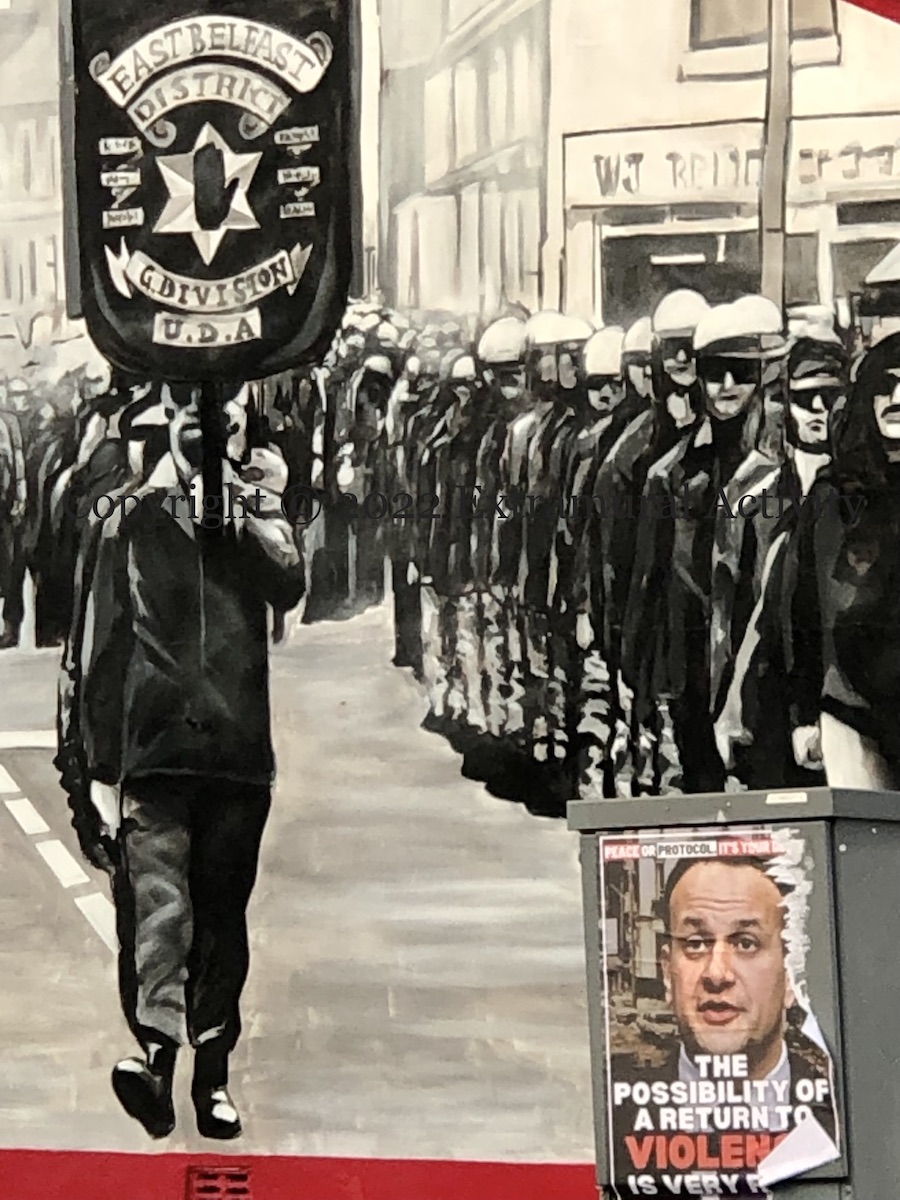
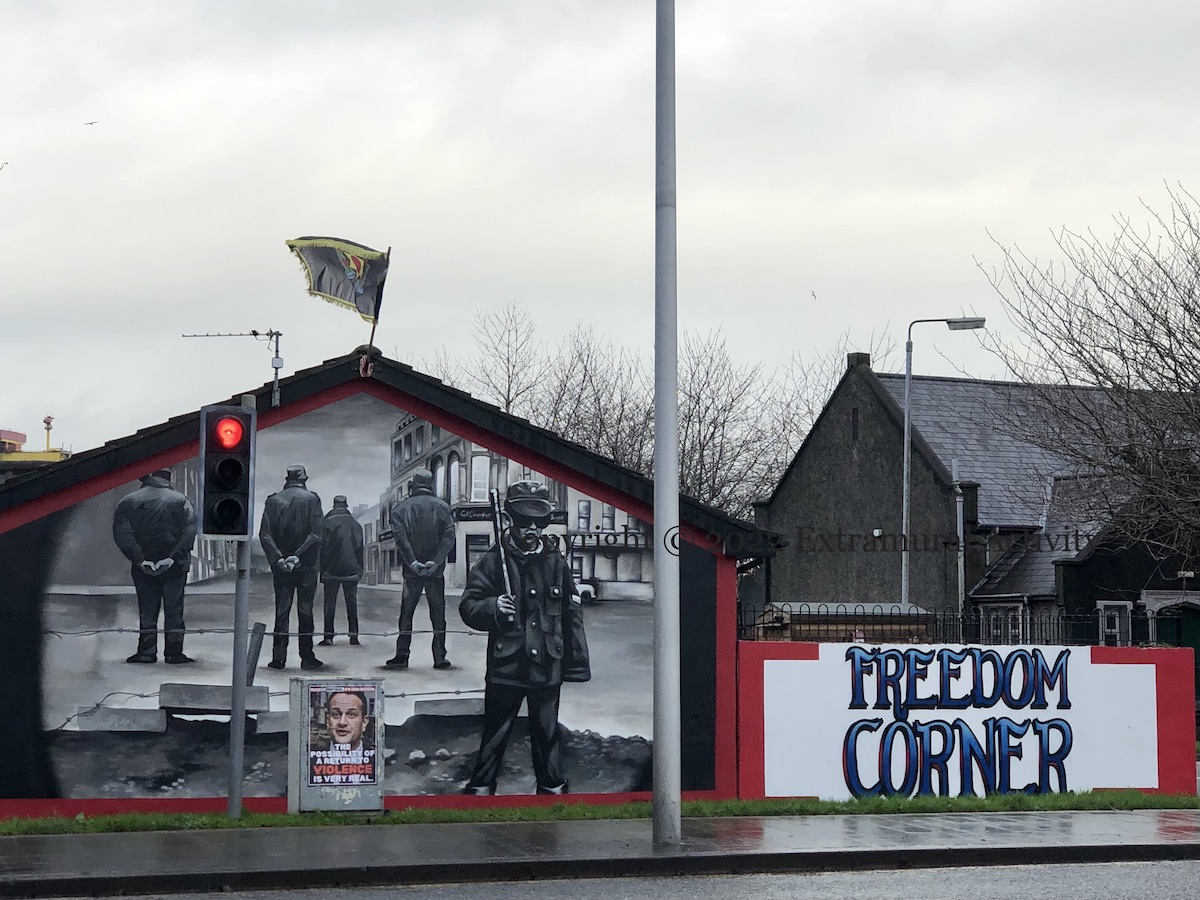
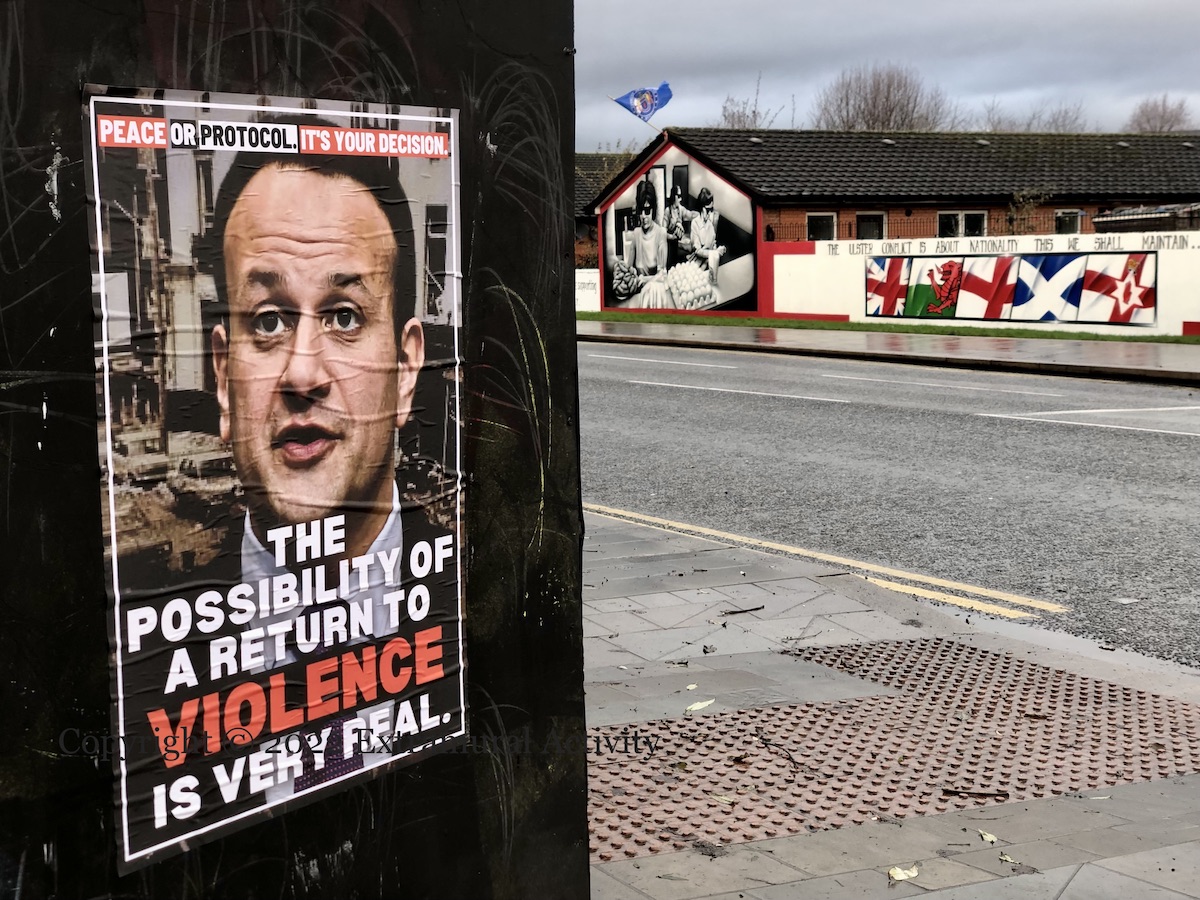
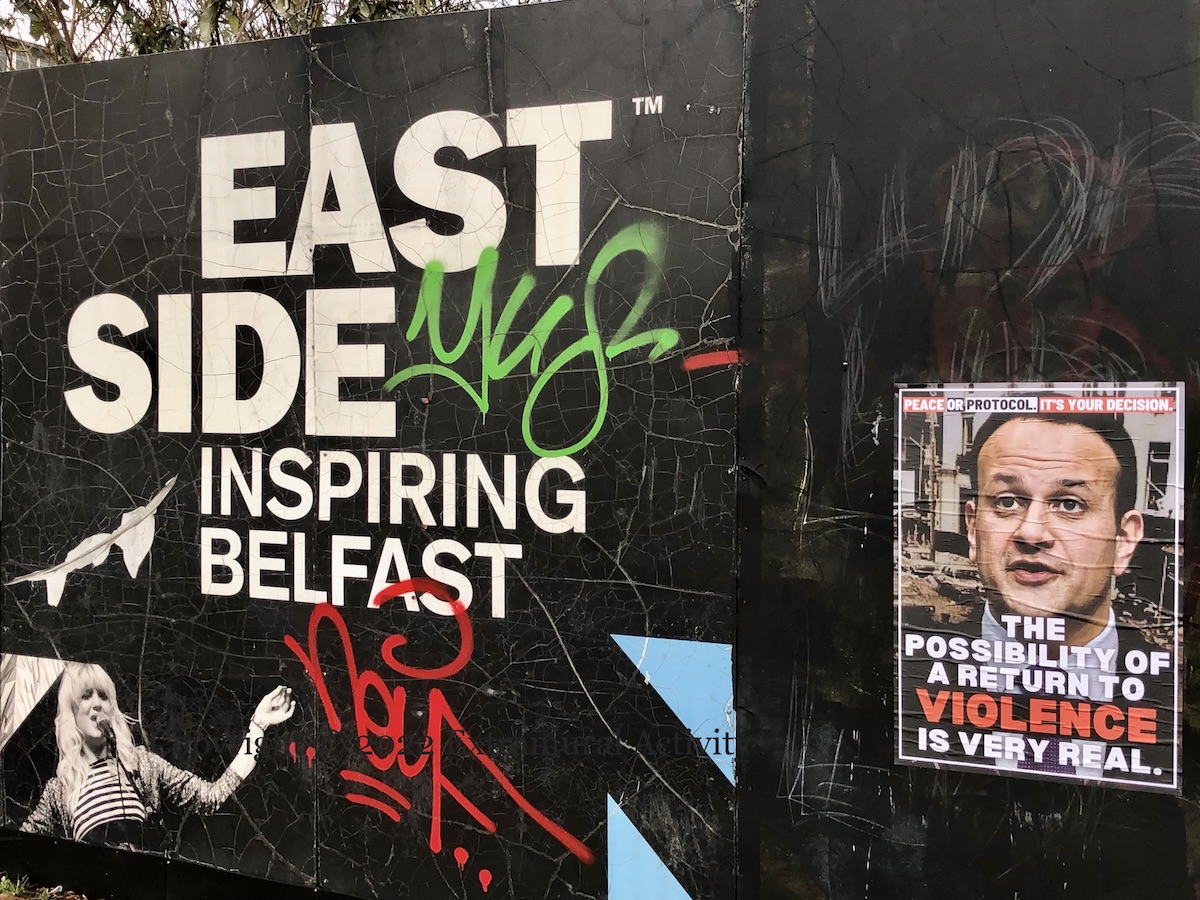
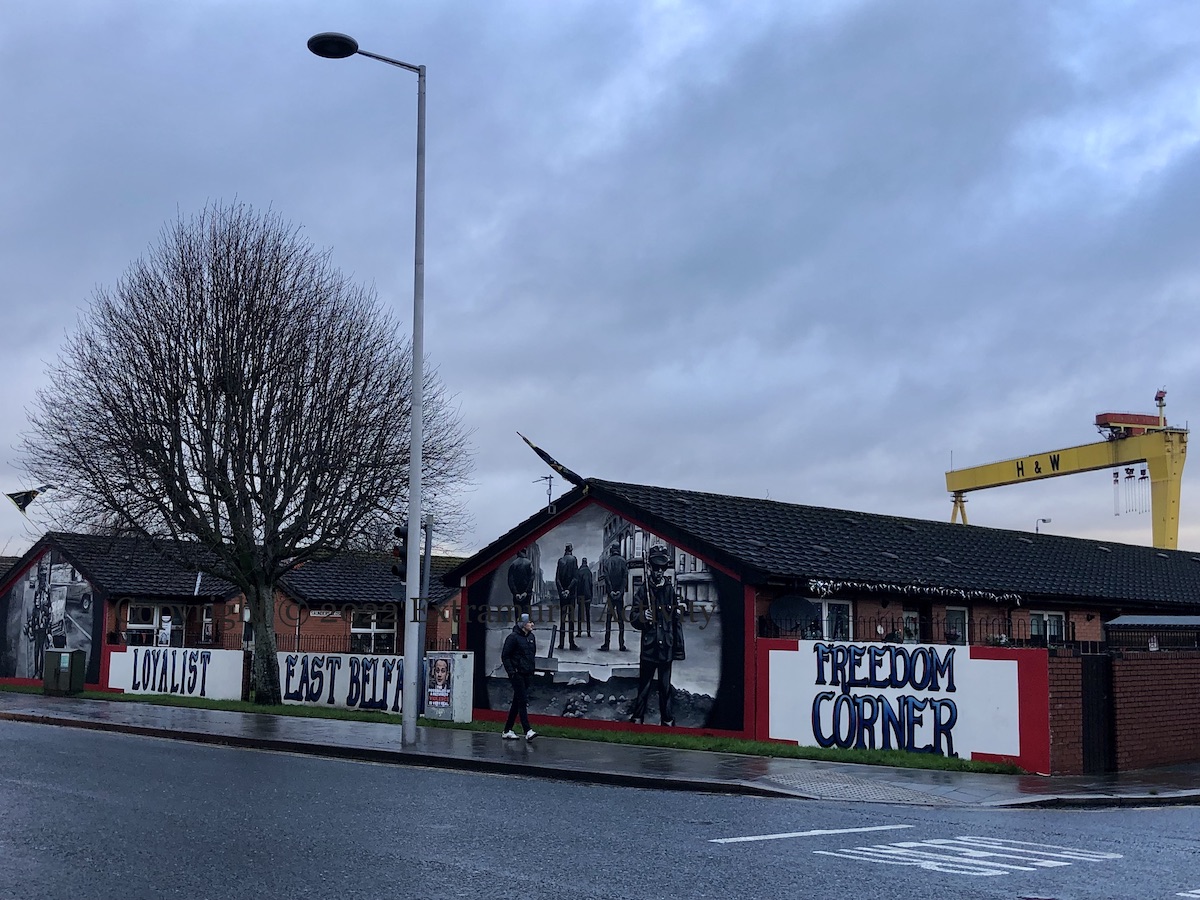
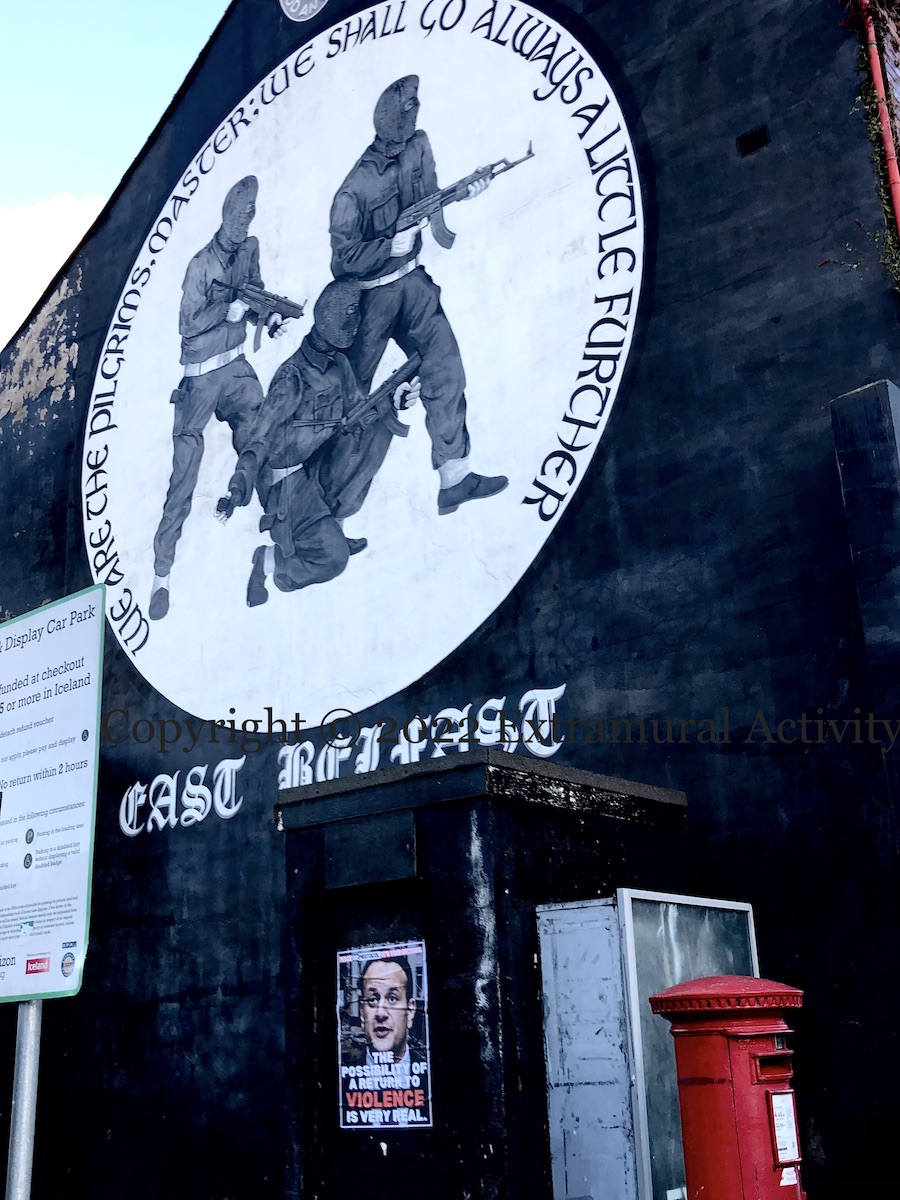
Here is a second set of images showing the “peace or protocol” poster that has appeared in PUL areas in the city, three in east Belfast – along the Newtownards Road. Two others in north Belfast were seen previously in A Return To Violence, which also explains the poster.

For the murals along “Freedom Corner” see 50th Anniversary; for the black-and-white mural, see Please Pay Here. See also Choose One Or The Other!

Click image to enlarge
Copyright © 2022 Seosamh Mac Coılle
X11932 X11933 X11934 X11936 X11951 X11938

Seymour Hill In The Wars

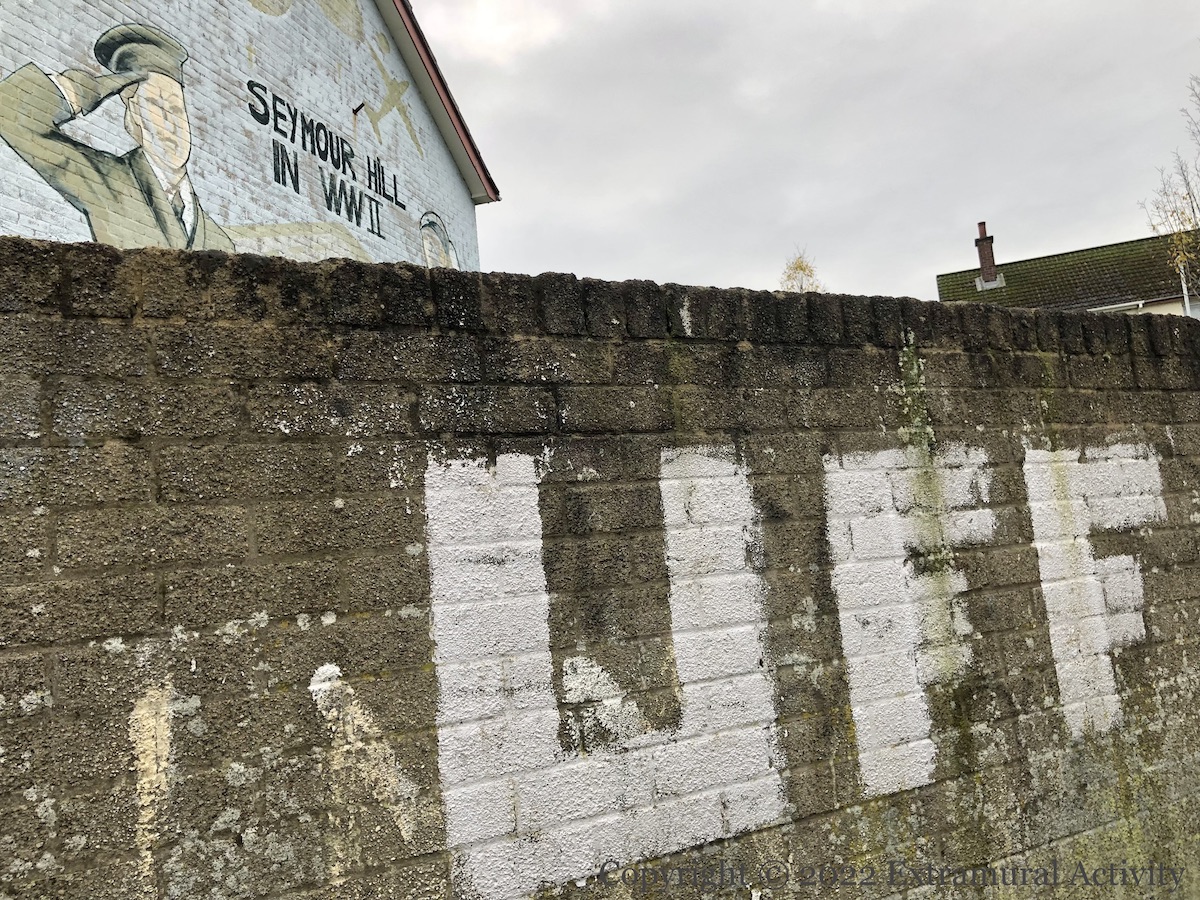
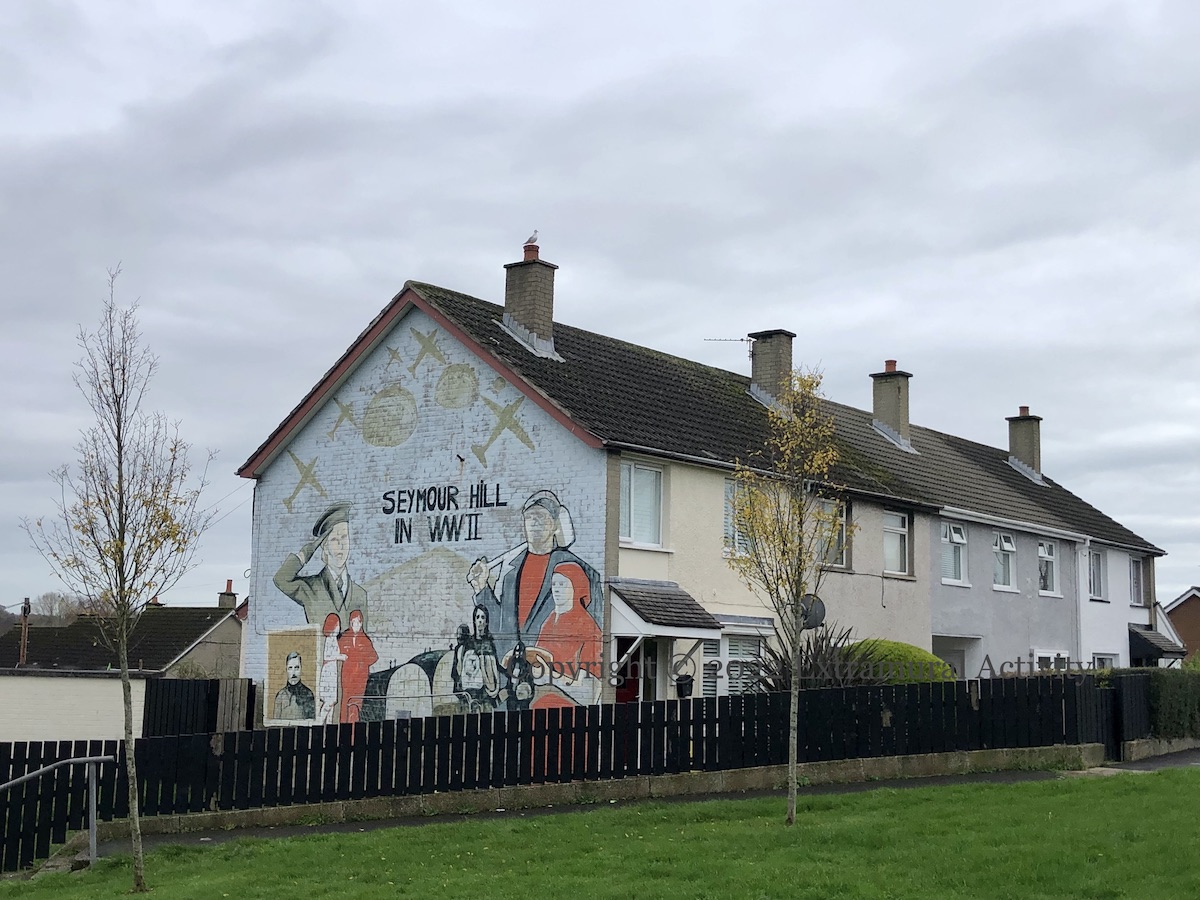
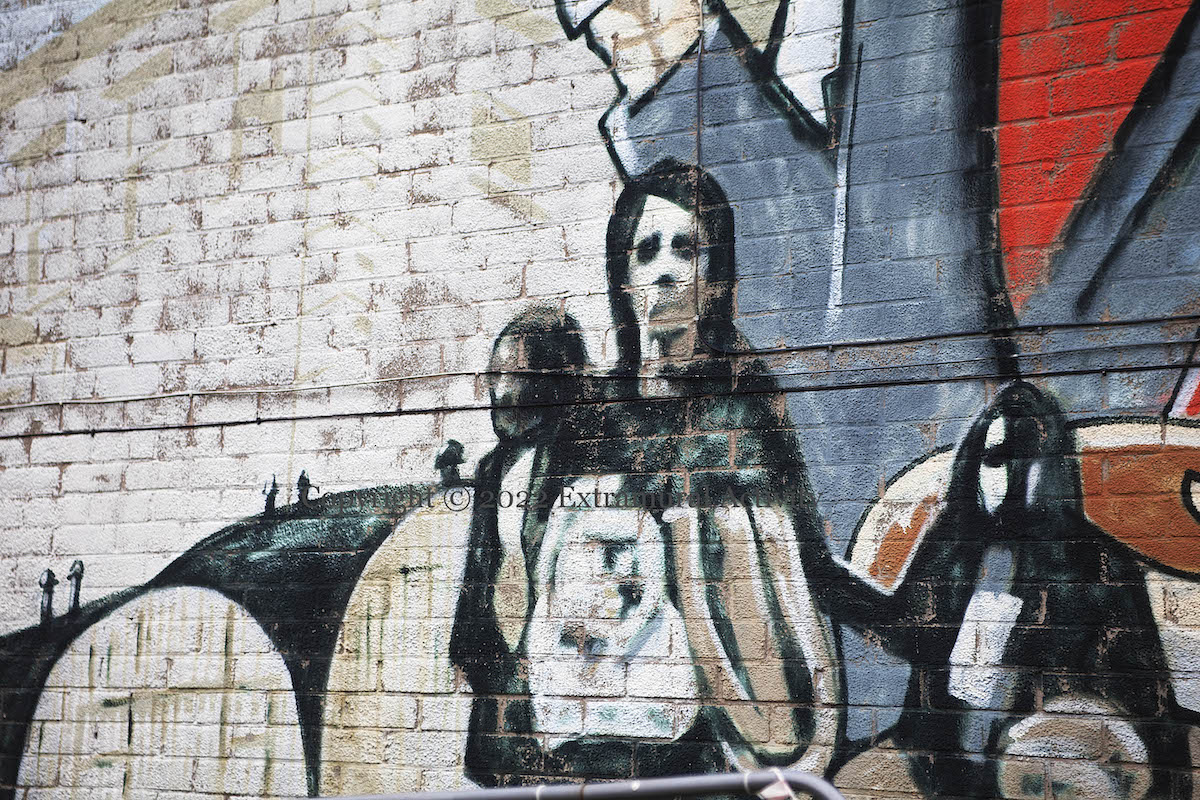
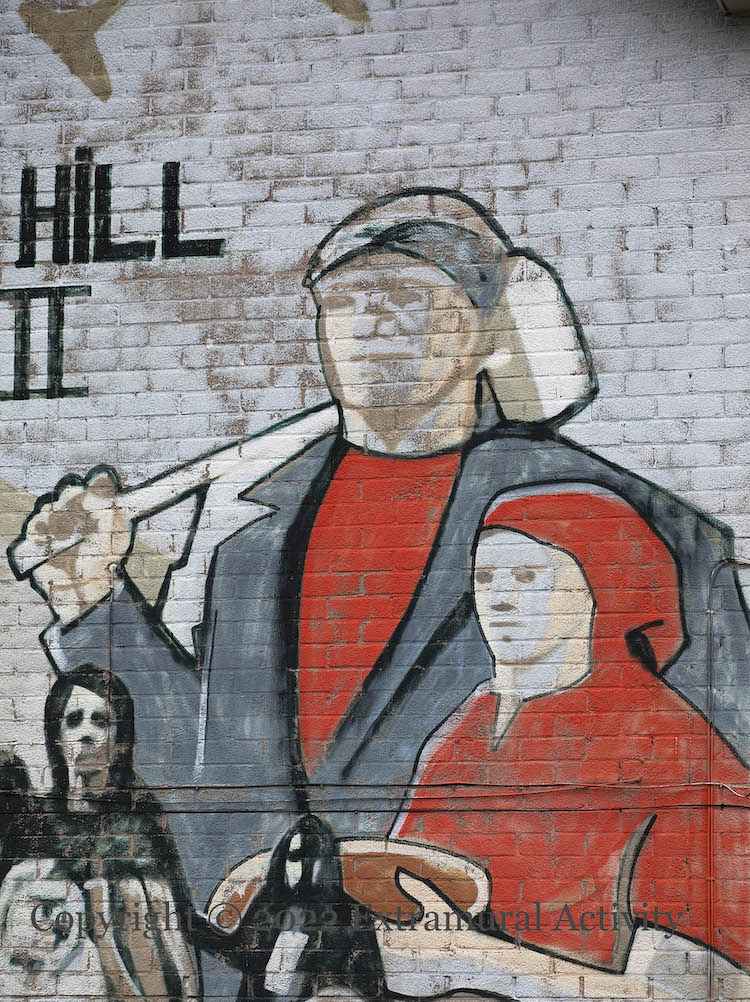
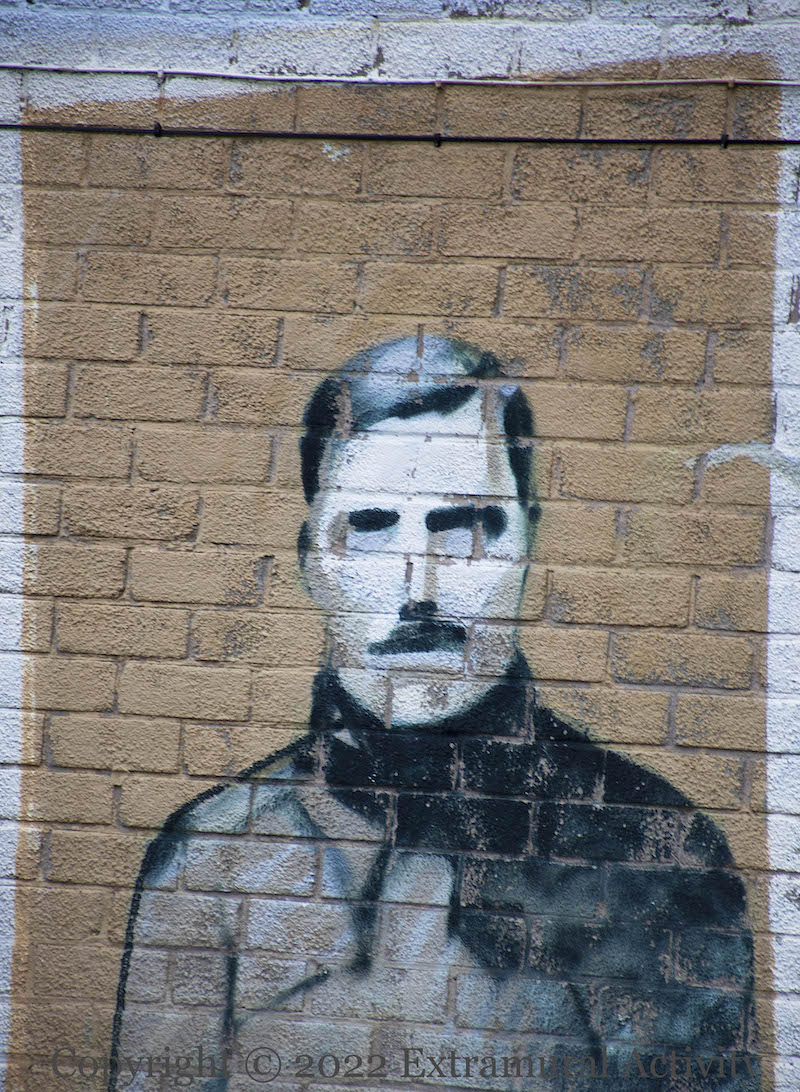
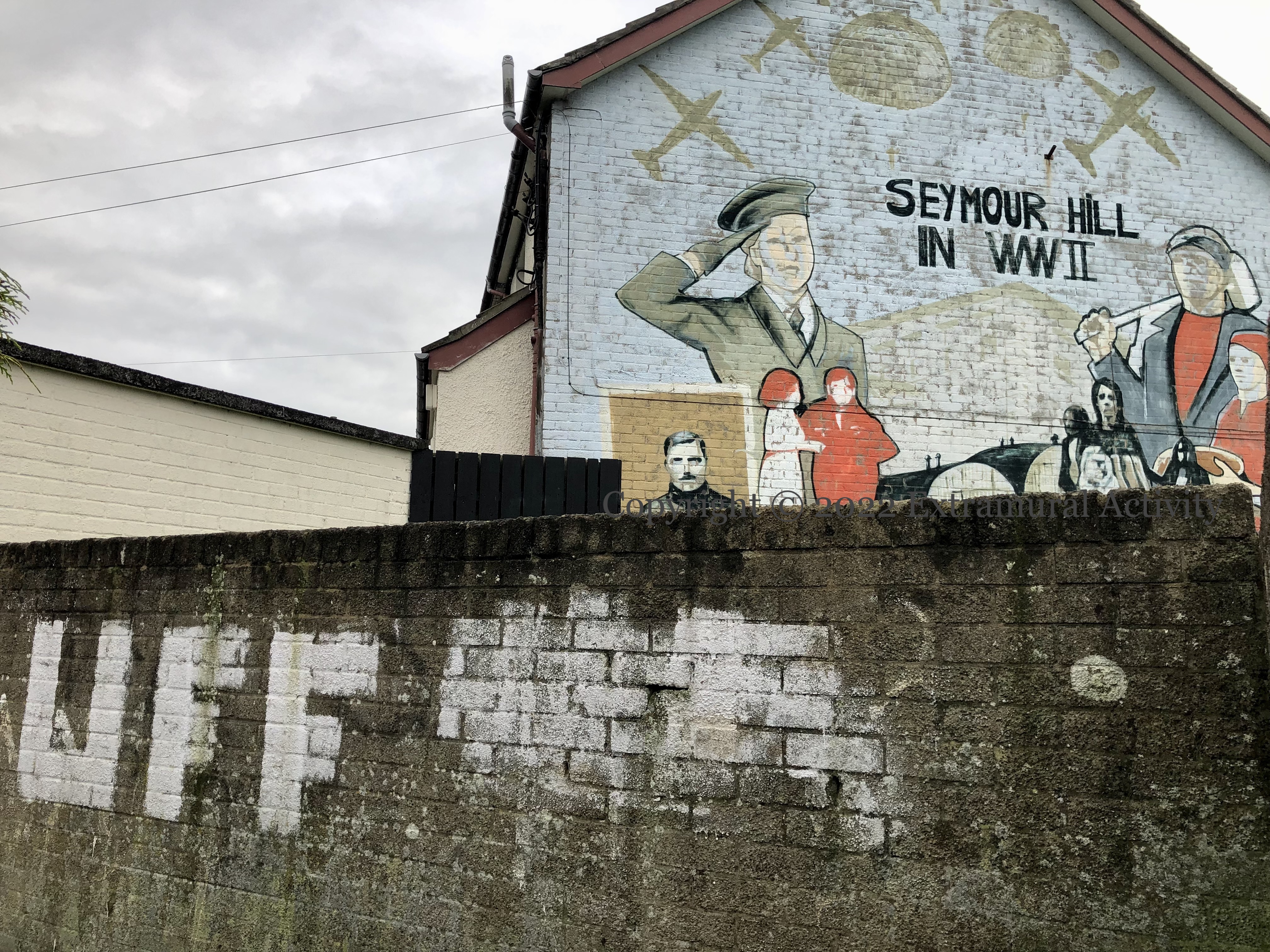
The Seymour Hill WWII mural will be 14 years old this coming July (2023) but it is hanging on fairly well. It is quite faded – especially the parachutes at the top – but there is no graffiti on the wall itself, only on the wall below it. For the mural when new and information about the US camp and portrait of Colditz prisoner William Harbinson, see M04776.

Click image to enlarge
Copyright © 2022 Seosamh Mac Coılle
X11913 X11906 [X11907] [X11908] X11909 X11910 X11911 X11914 [X11912]

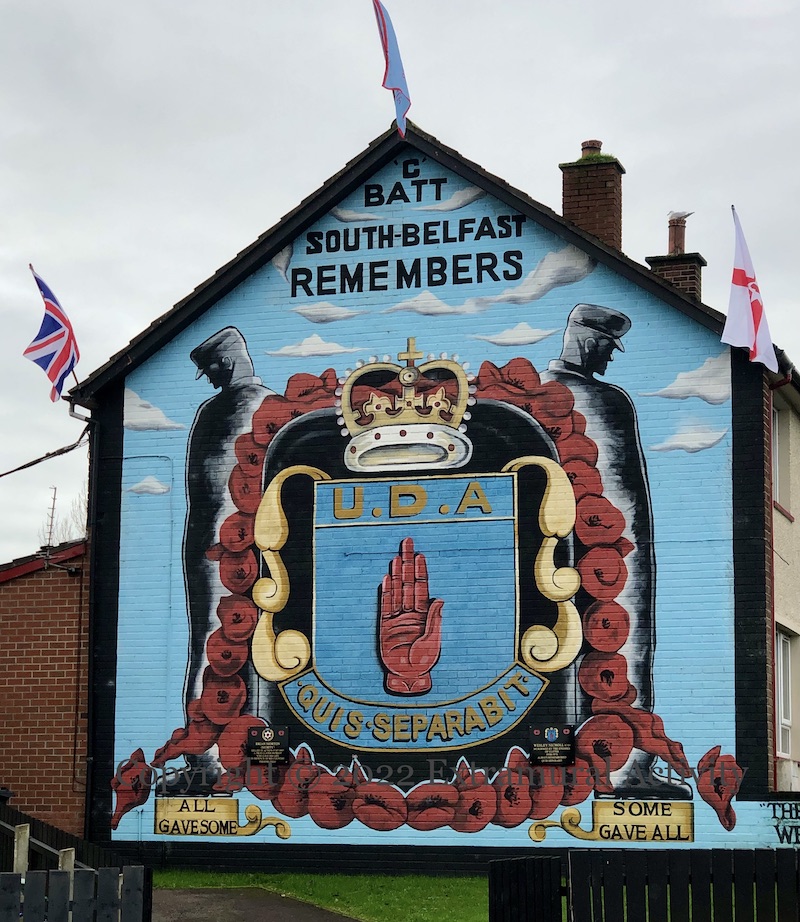
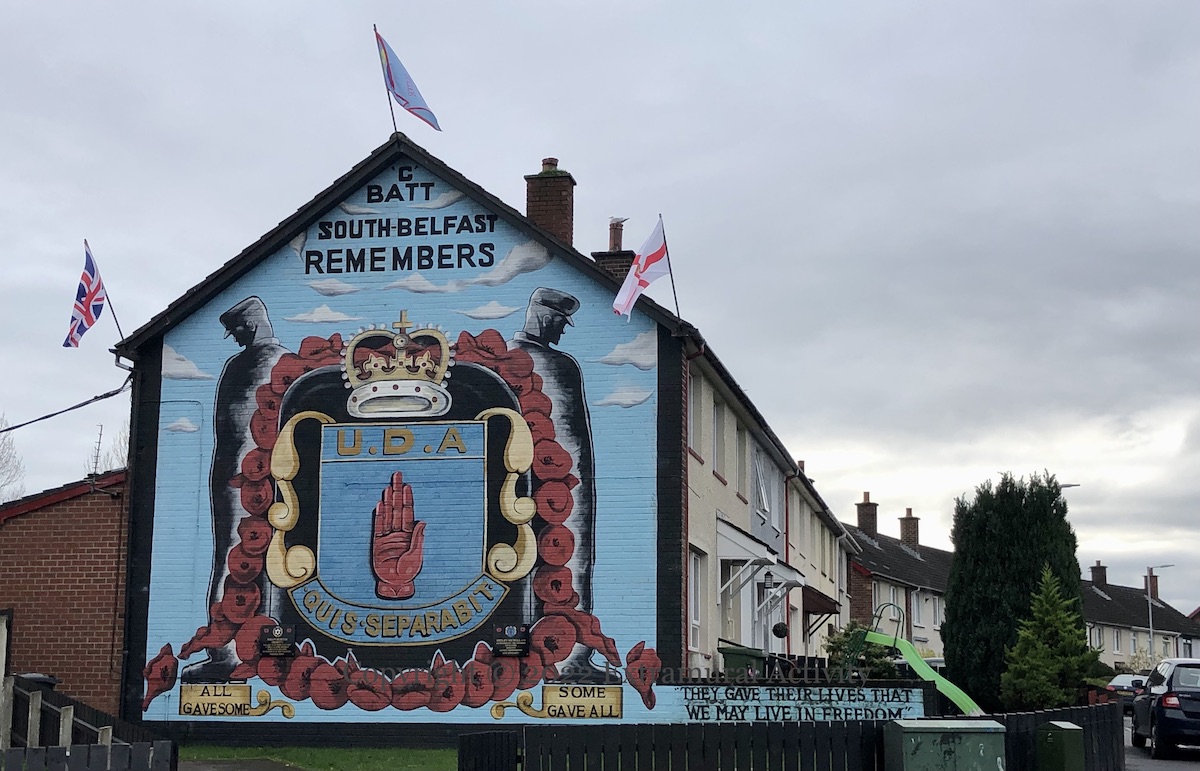
That We May Live In Freedom

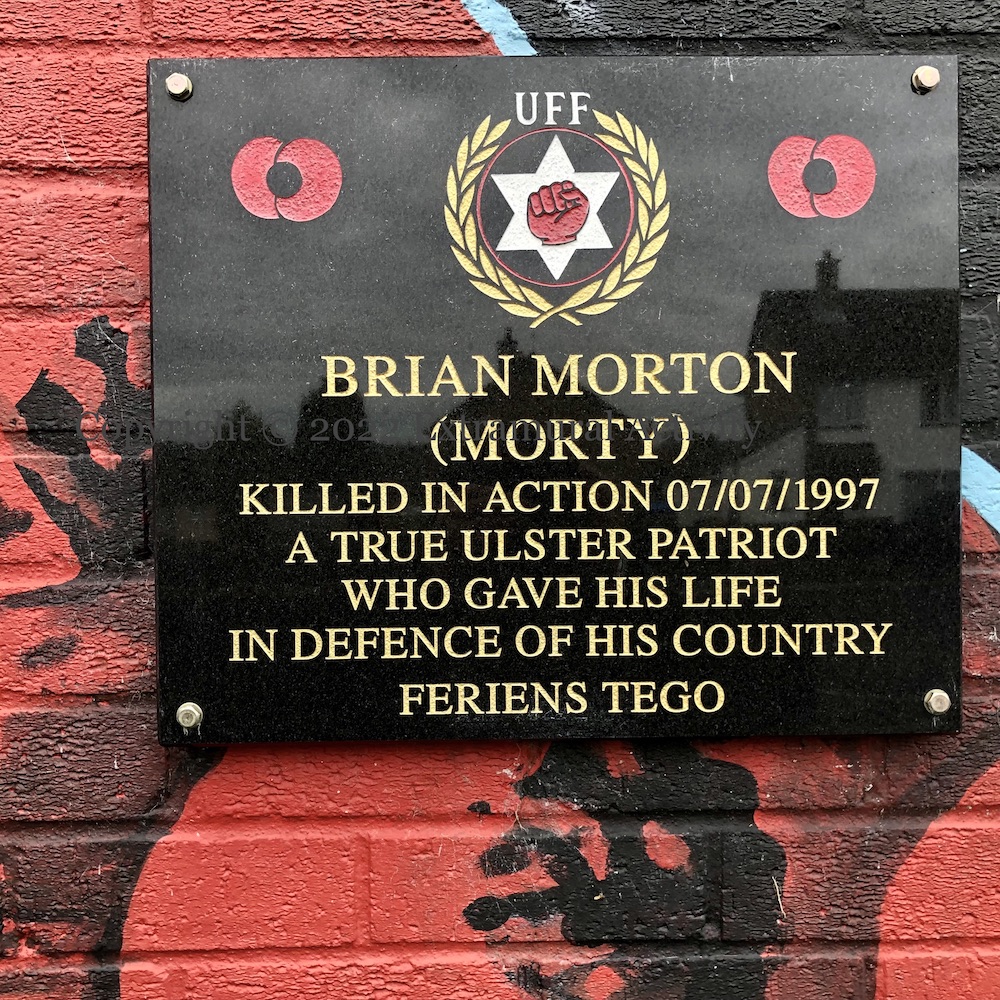
The old C Batt mural further up Hornbeam Road has long been painted over. It used the same line – “They gave their lives that we may live in freedom” – to remember Wesley Nicholl and Brian Morton. A plaque to Morton is now included on top of the new mural. “Brian Morton (Morty) killed in action 07/07/1997, a true Ulster patriot who gave his life in defence of his country. Feriens tego.” As with republican memorials, “active service” means that Morton was killed by a premature bomb exploding.

Previously on this wall: Queensway Flute Band.

Click image to enlarge
Copyright © 2022 Seosamh Mac Coılle
X11904 X11905 X11903 All gave some, some gave all.

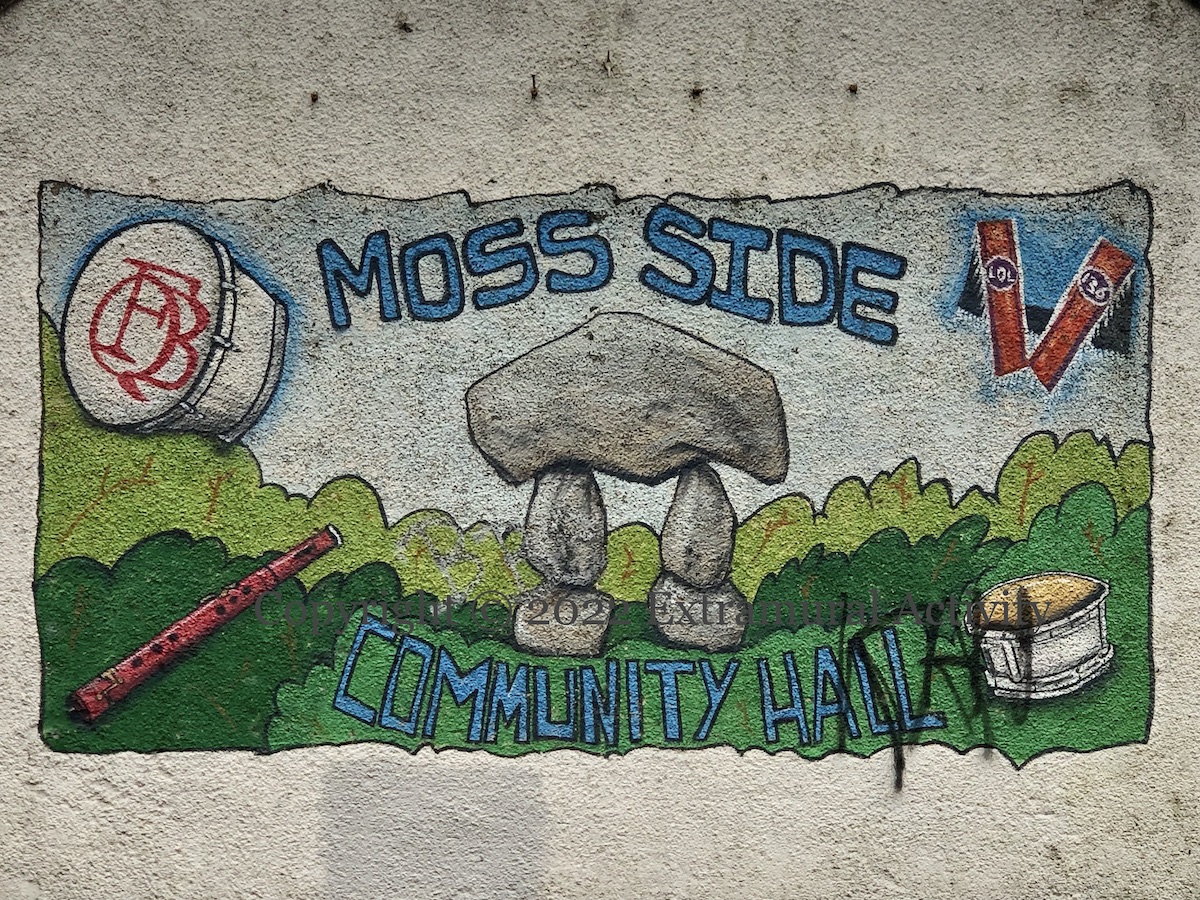
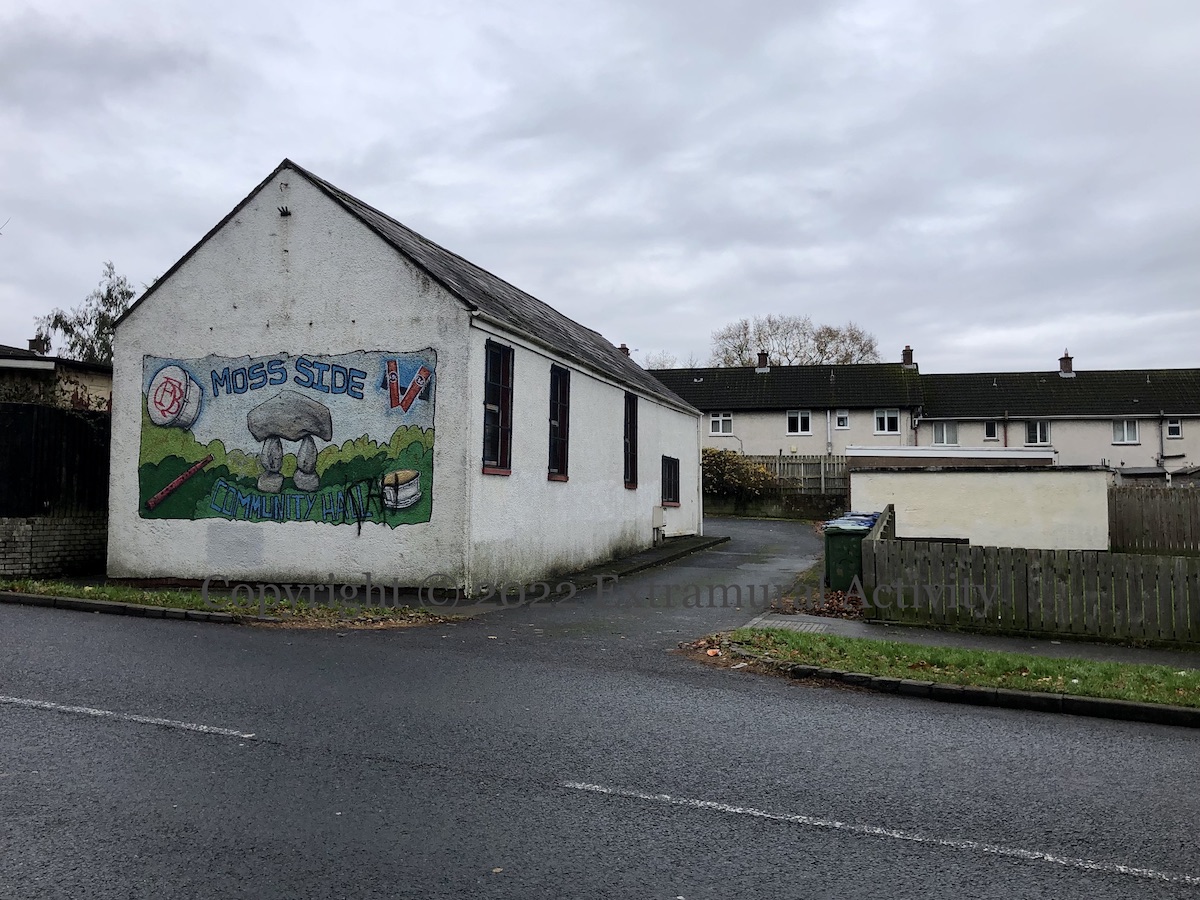
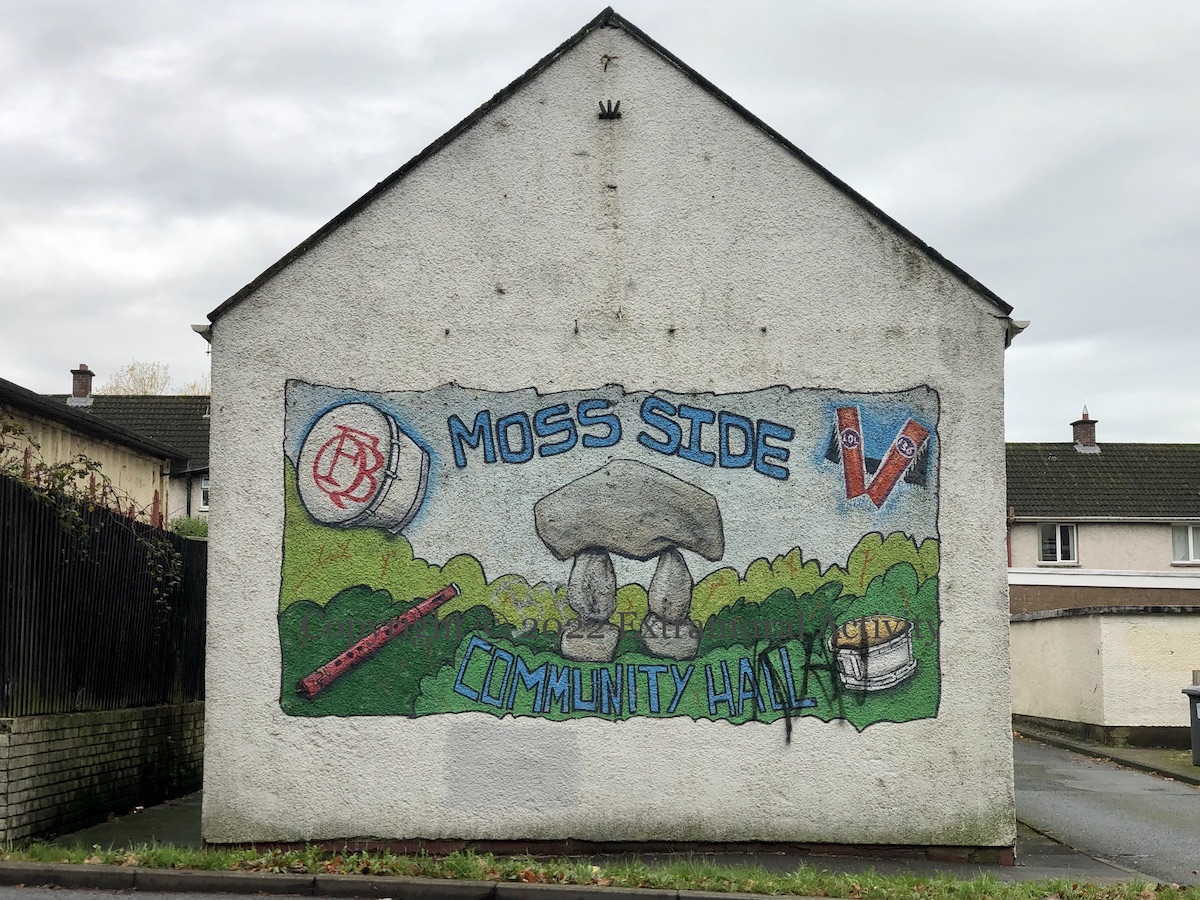
Moss Side Community Hall

“Moss side” is probably Scots, with “moss” meaning “marsh” or “(peat) bog” (DSL) and this mural is appropriately on Ballybog Road (in Dunmurry), “bog(ach)” in Irish meaning “soft (ground)..

In the mural, “QFB” is Queensway Flute Band – they used to have a mural in Seymour Hill – and “LOL 136” is a lodge in the Derriaghy District (Fb). It’s not clear if there is a specific referent for the dolmen in the centre. The mural is at least 12 years old and it is not clear what functions the hall currently serves; it previously (2017) was home to a men’s shed and in 2018 a Youth Hub opened in the building next to the hall (NIWorld).

With “KAH” graffiti.

Click image to enlarge
Copyright © 2022 Seosamh Mac Coılle
X11902 X11900 X11901