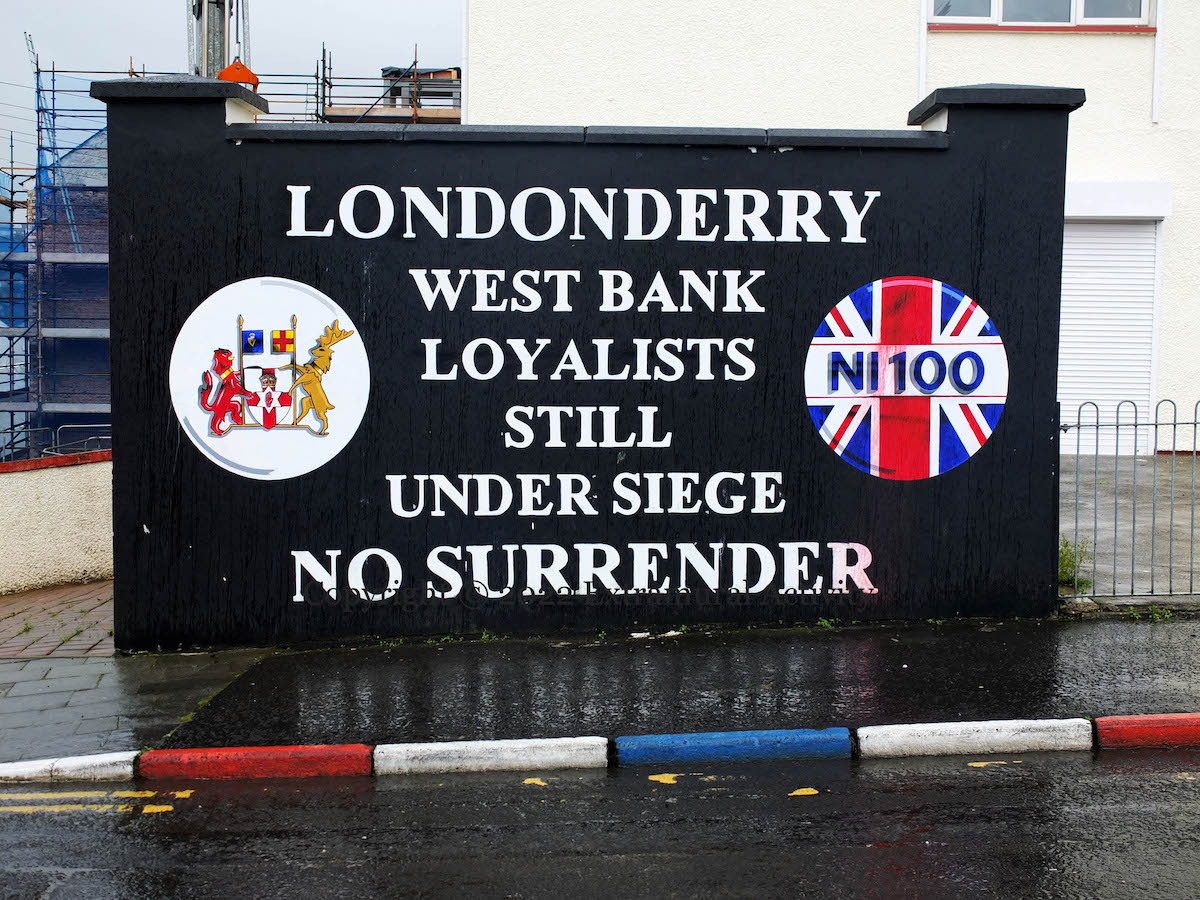
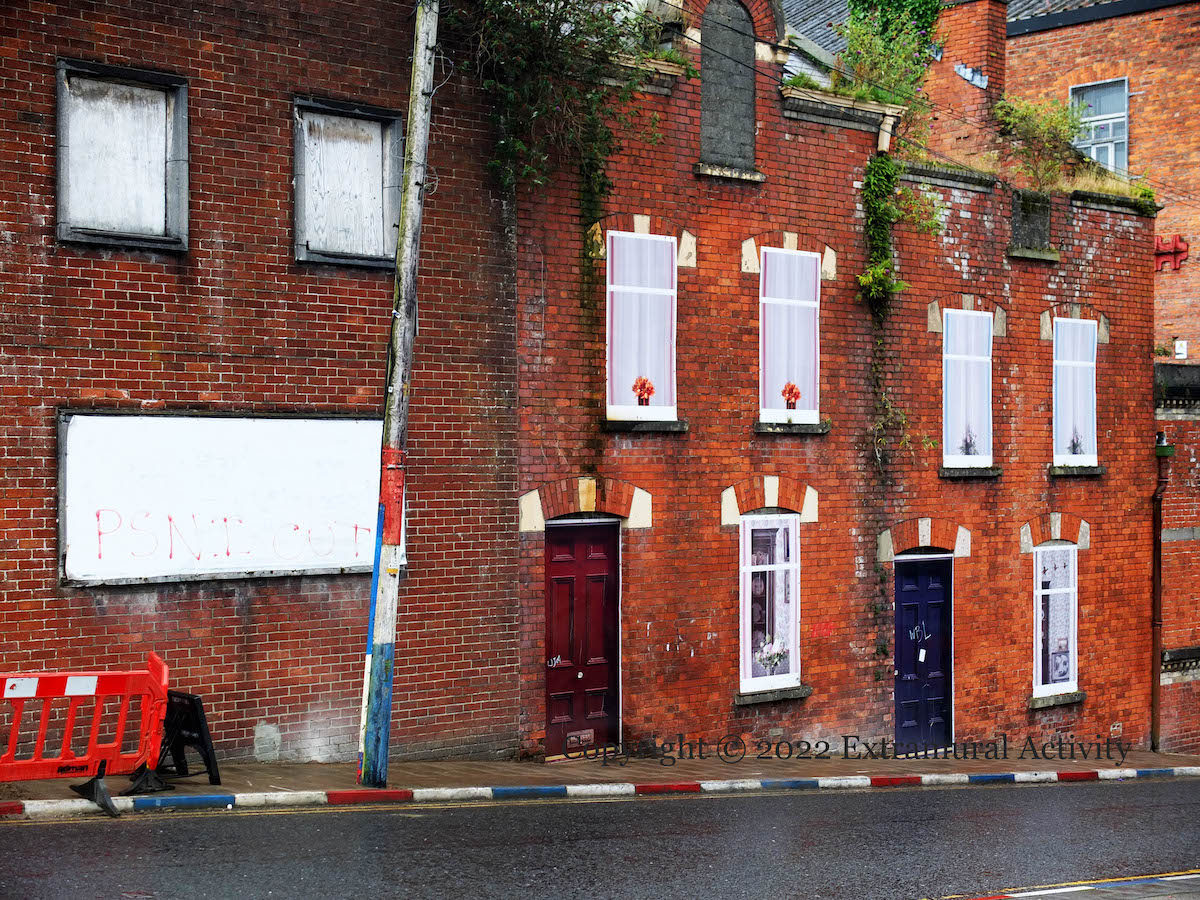
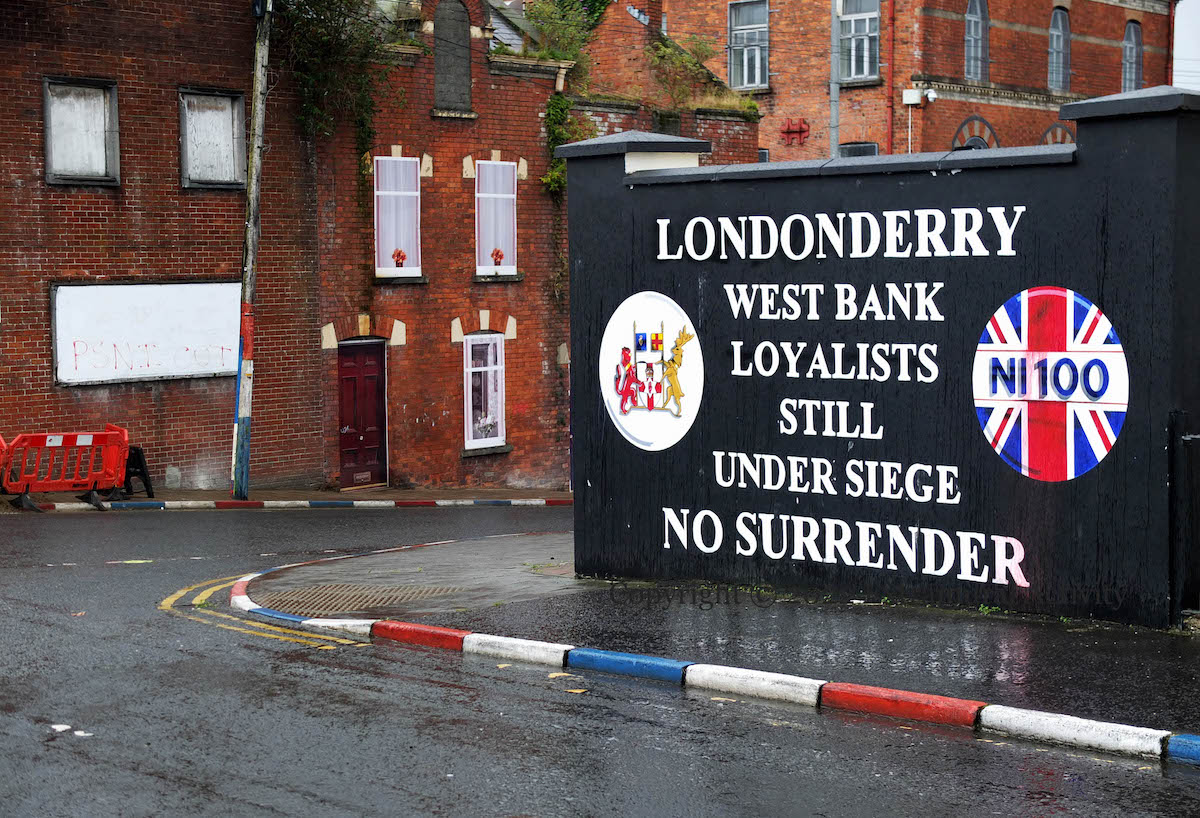
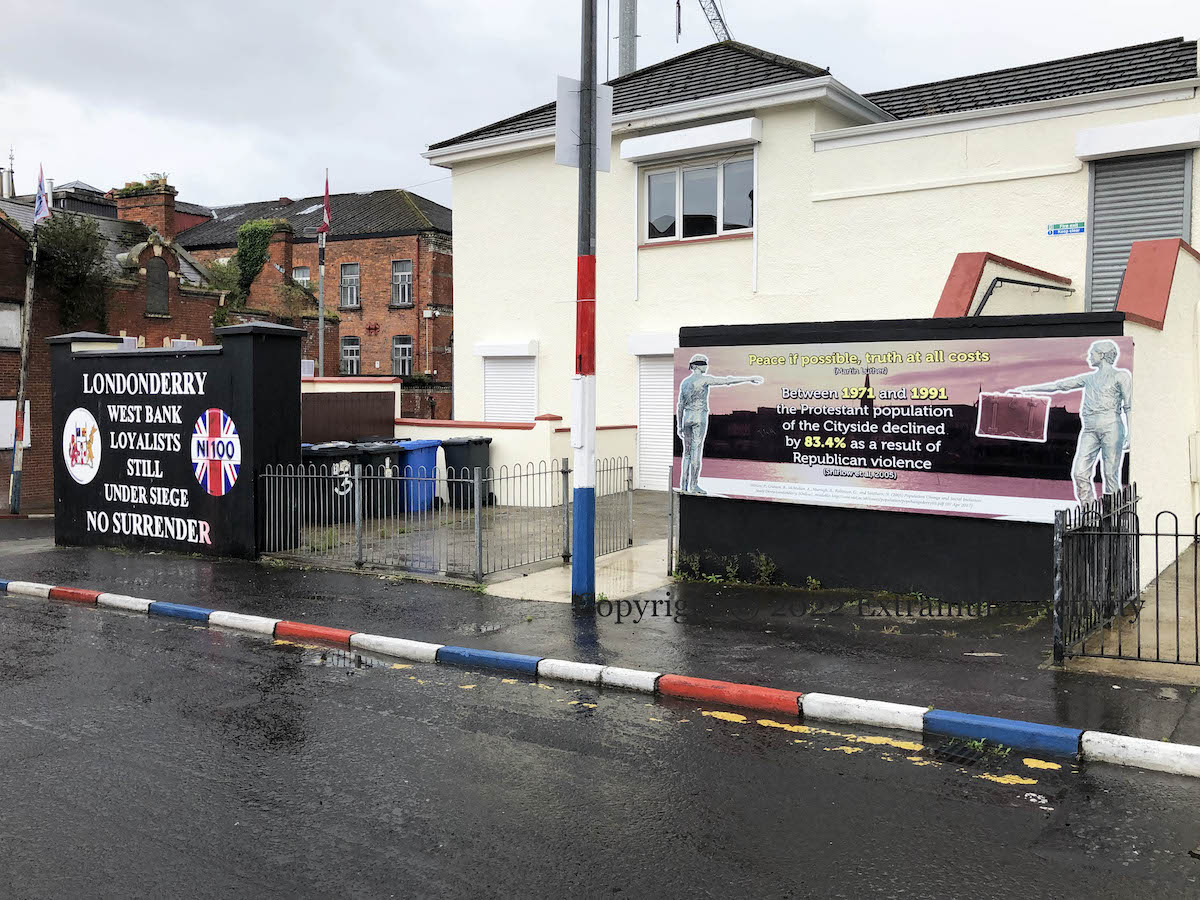
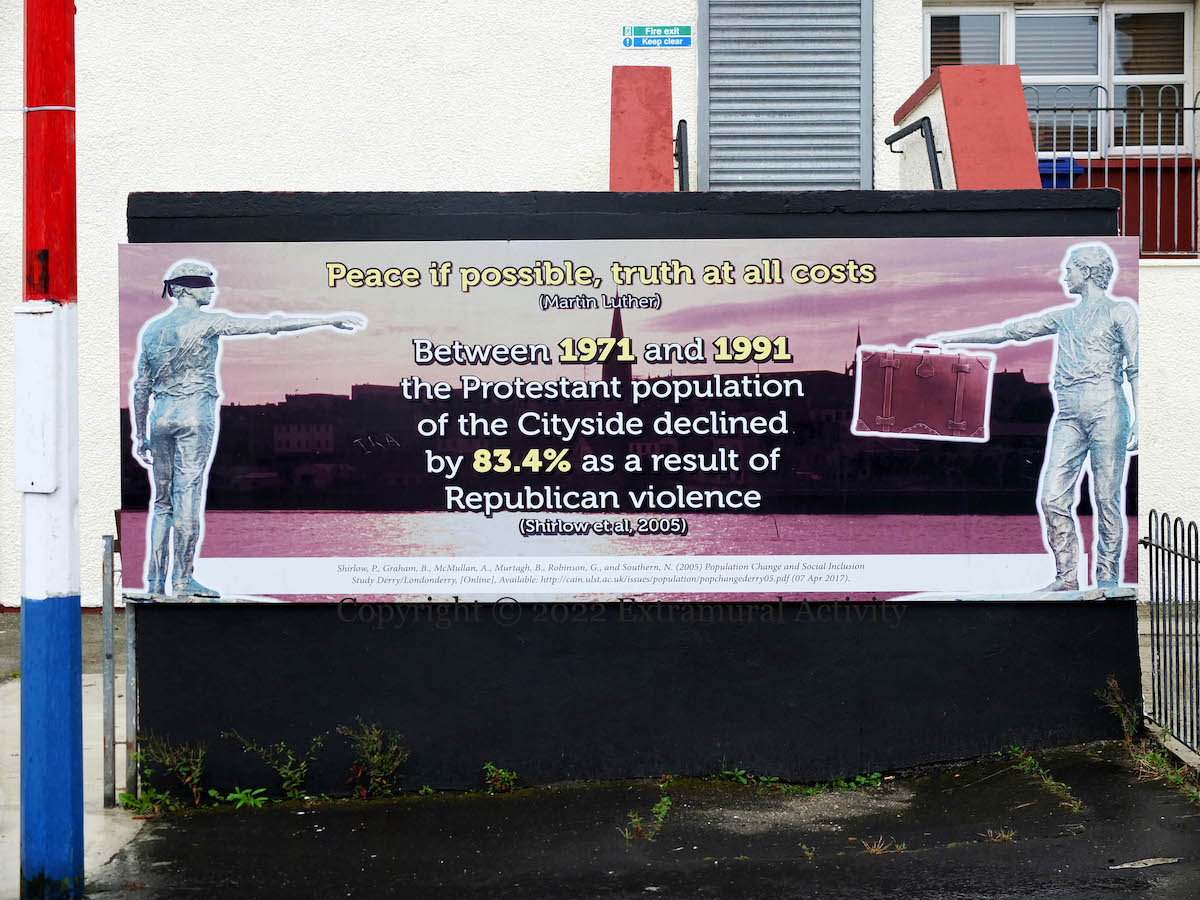
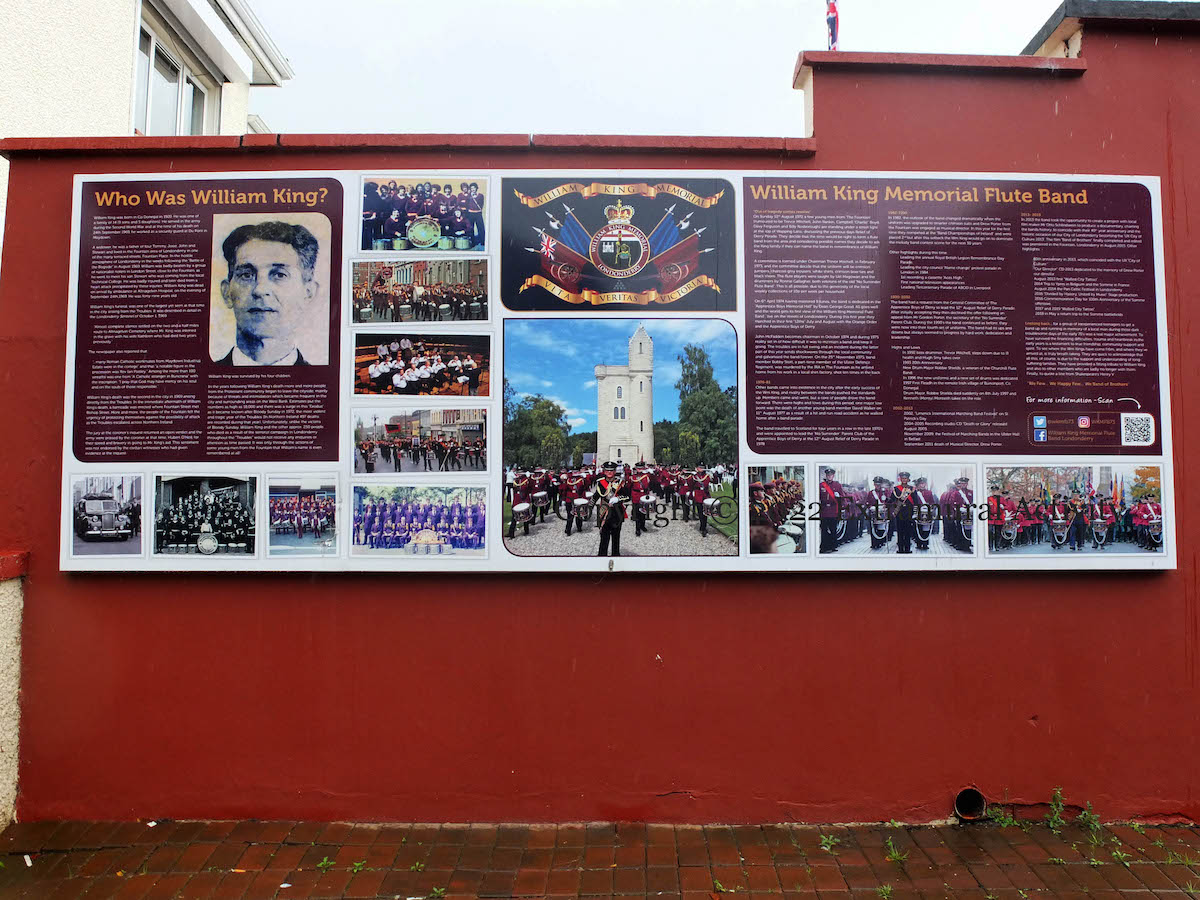
“Londonderry west bank loyalists” are “still under siege”, at first from two decades of “Republican violence” – “Between 1971 and 1991 the Protestant population of the Cityside declined by 83.4% as a result of Republican violence (Shirlow et al. 2005)” – hence the boarded- and dressed-up windows – and now from the “PSNI”.
(The words “as a result of Republican violence” are not included in the Shirlow article).
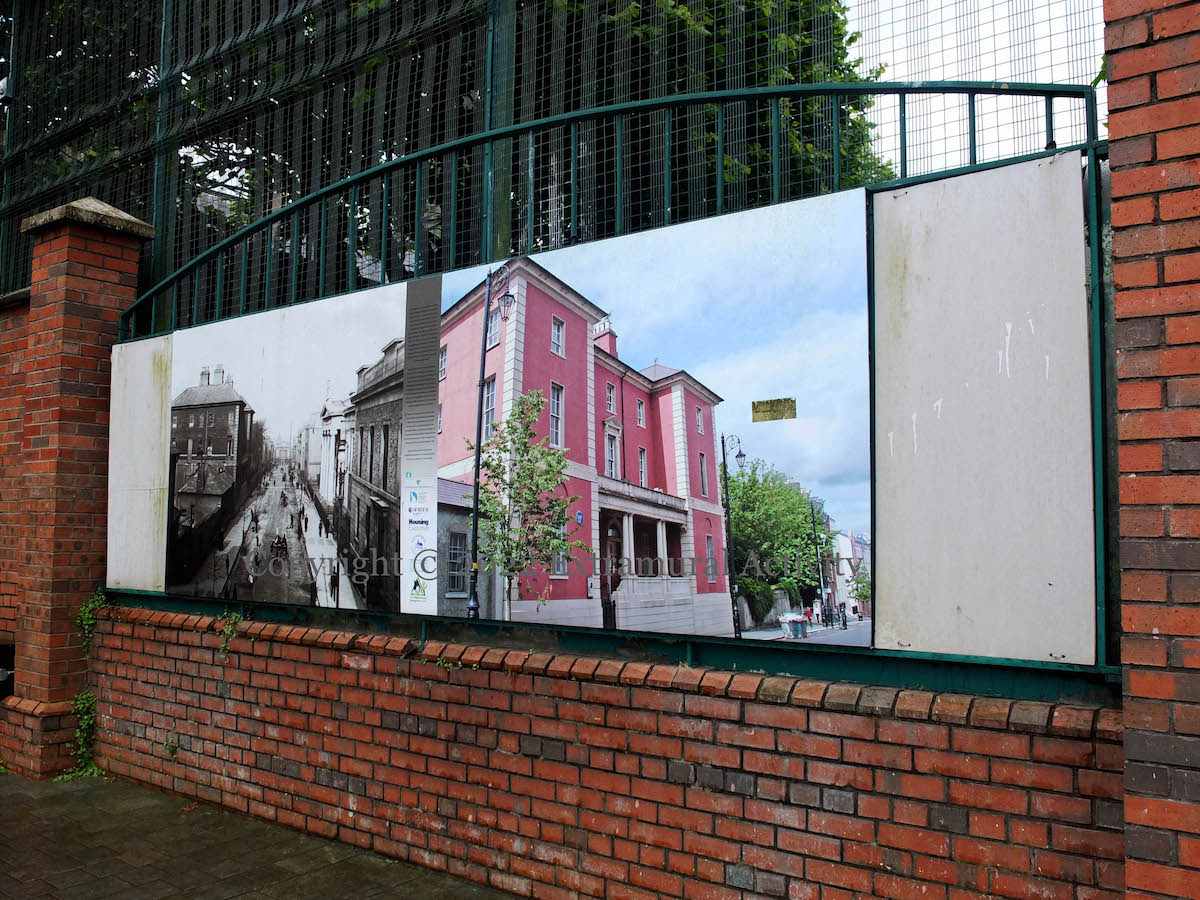
Fountain Street and Hawkin Street, in the Fountain, Londonderry.
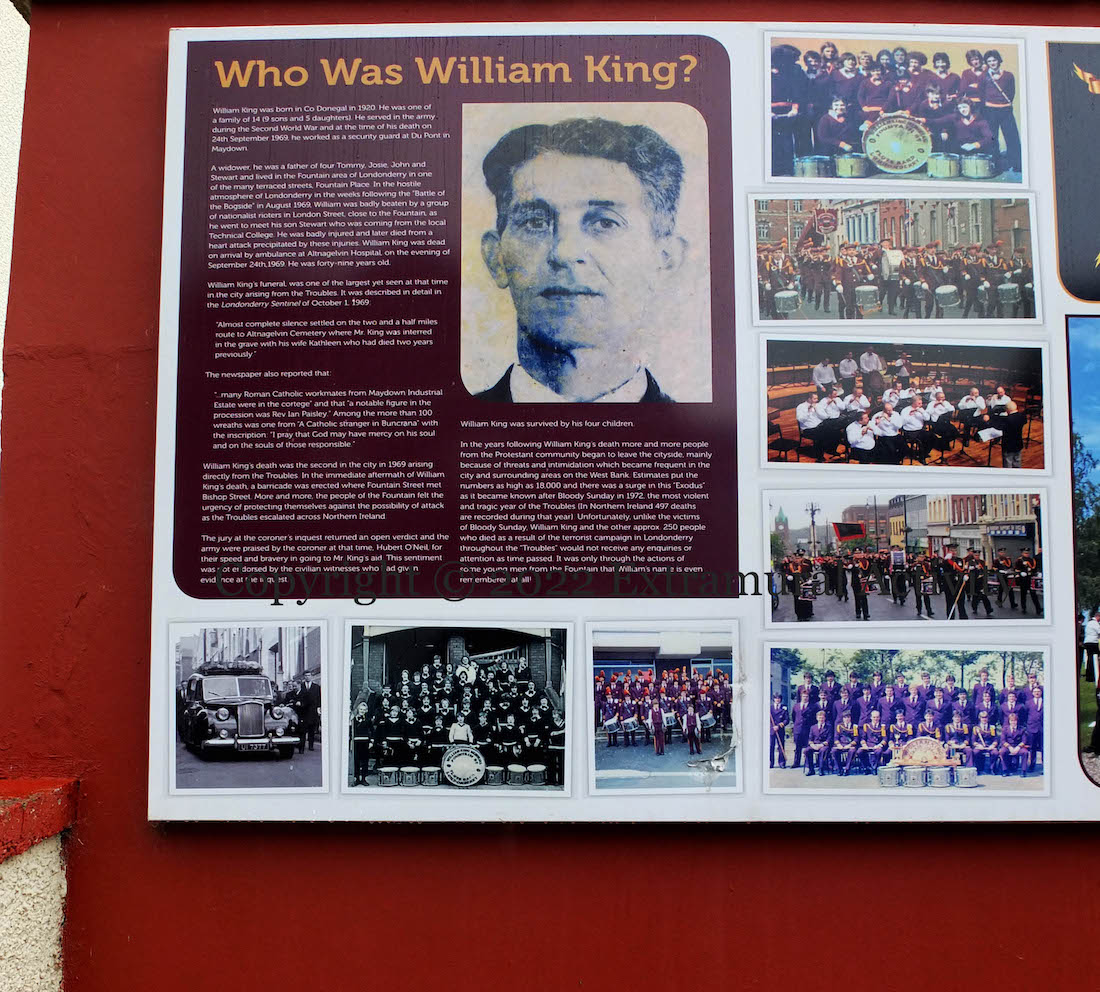
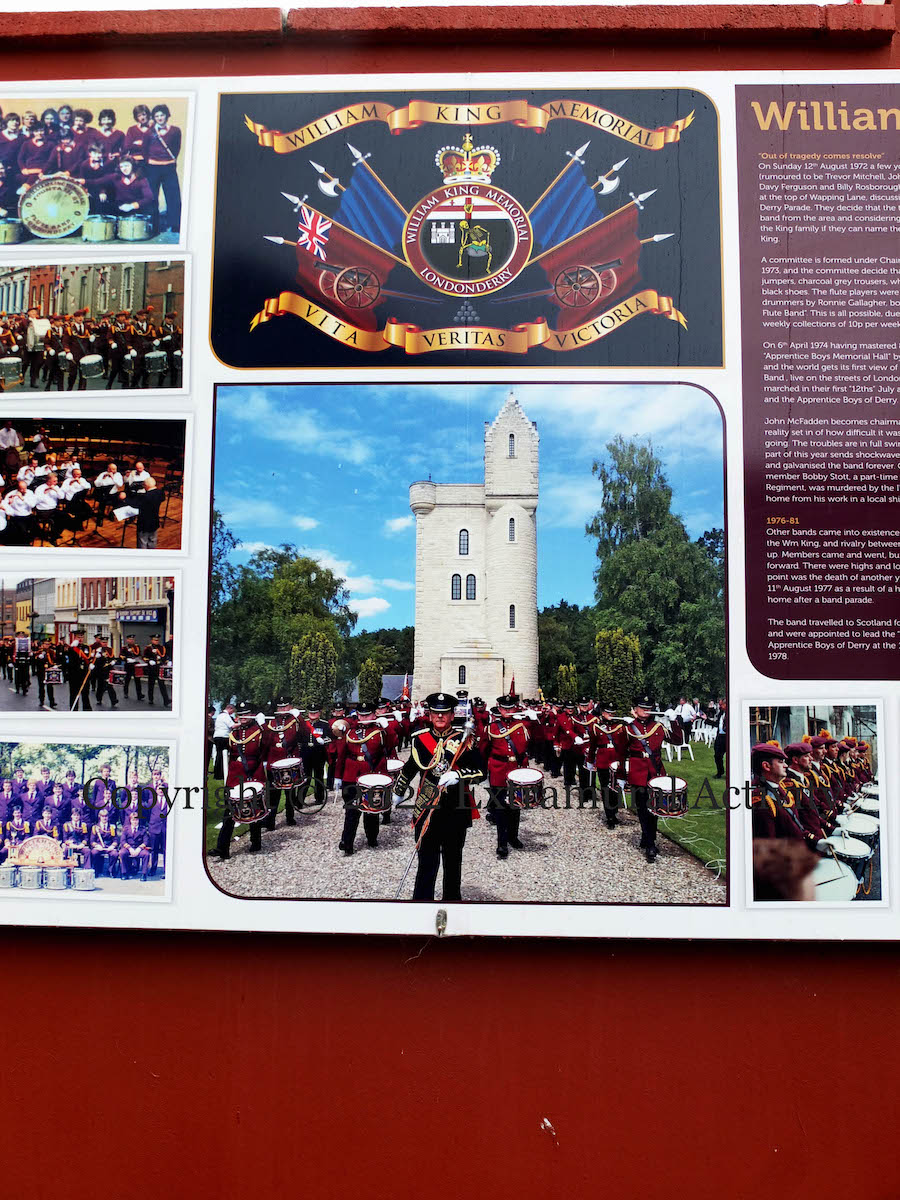
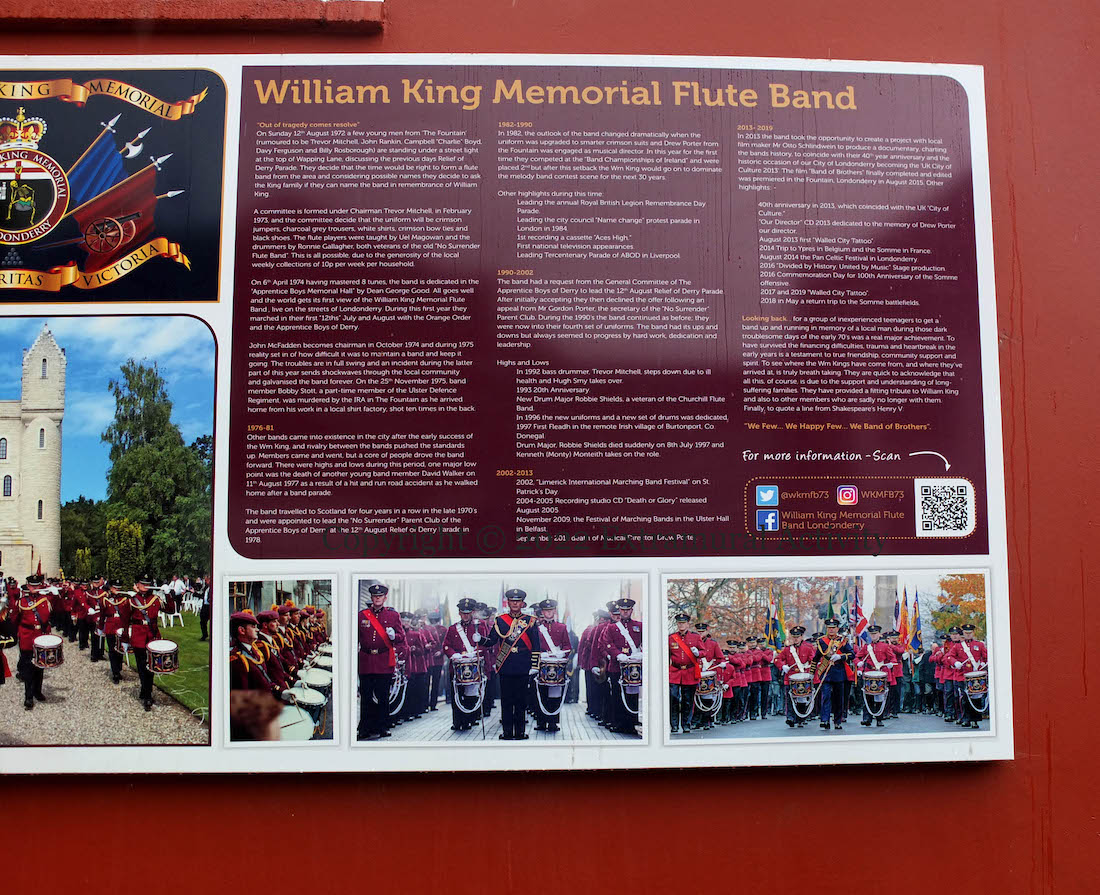
On the left is the story of William King,and on the right, the story of the William King Memorial Flute band (Fb), including the death of Bobby Stott on, forty-seven years ago yesterday. These images were taken during the summer; the board was vandalised two weeks ago (BelTel).
William King “was born in Co Donegal in 1920. He was one of a family of 14 … He served in the army during the Second World War and at the time of his death on 24th September 1969, he worked as a security guard at Du Pont in Maydown. A widower, he was a father of four … and lived in the Fountain area of Londonderry … In the hostile atmosphere of Londonderry in the weeks following the ‘Battle of the Bogside’ in August 1969, William was badly beaten by a group of nationalist rioters in London Street, close to the Fountain … and later died from a heart attack precipitated by these injuries. … unlike the victims of Bloddy Sunday, William King and the other approx. 250 people who died as a result of the terrorist campaign throughout the “Troubles” would not receive any enquiries or attention as time passed.”
“On 6th April 1974 having mastered 8 tunes, the band is dedicated on the “Apprentice Boys Memorial Hall” by Dean George Good … On the 25th November 1975, band member Bobby Stott, a part-time member of the Ulster Defence regiment, was murdered by the IRA in The Fountain … [in 1982] they competed at the “Band Championships of Ireland” and were placed 2nd but after this setback the Wm King would go on to dominate the melody band contest scene for the next 30 years.
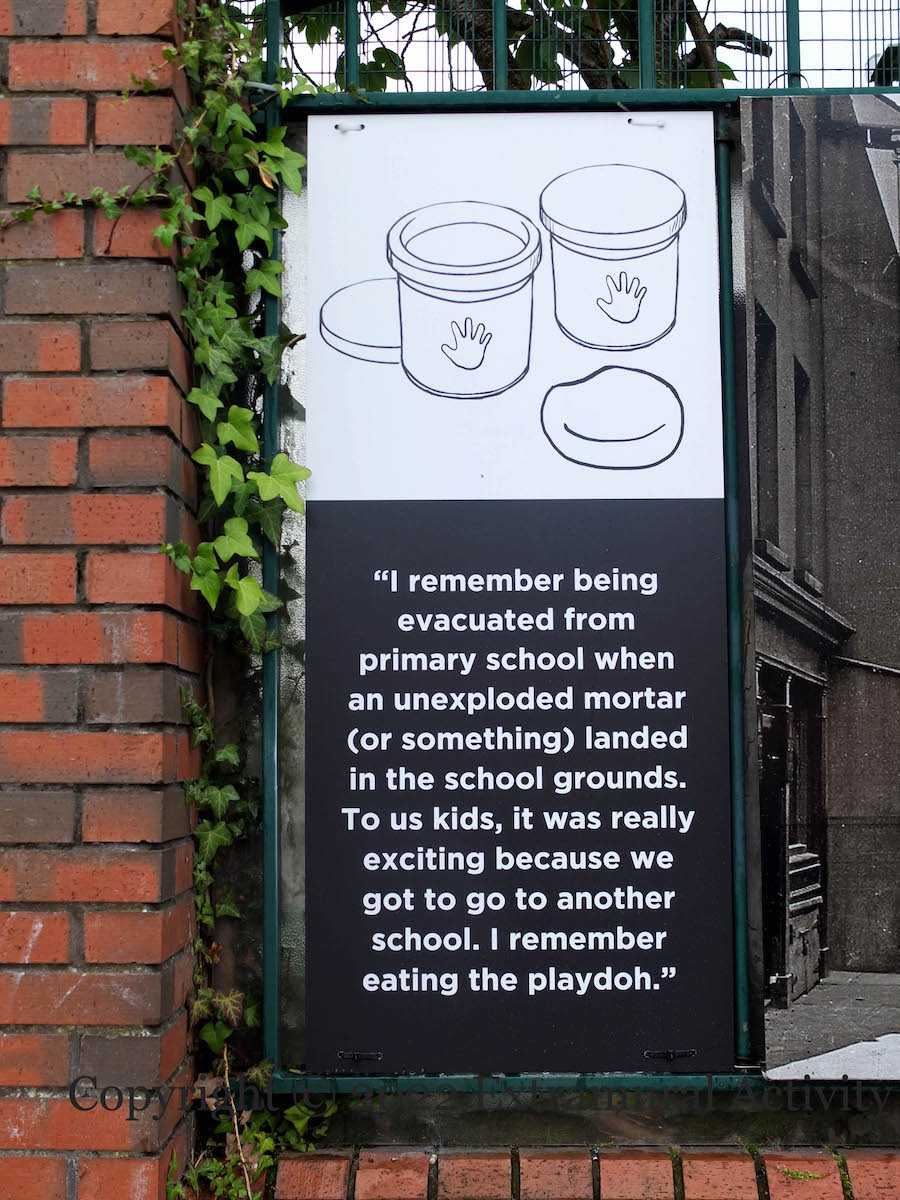
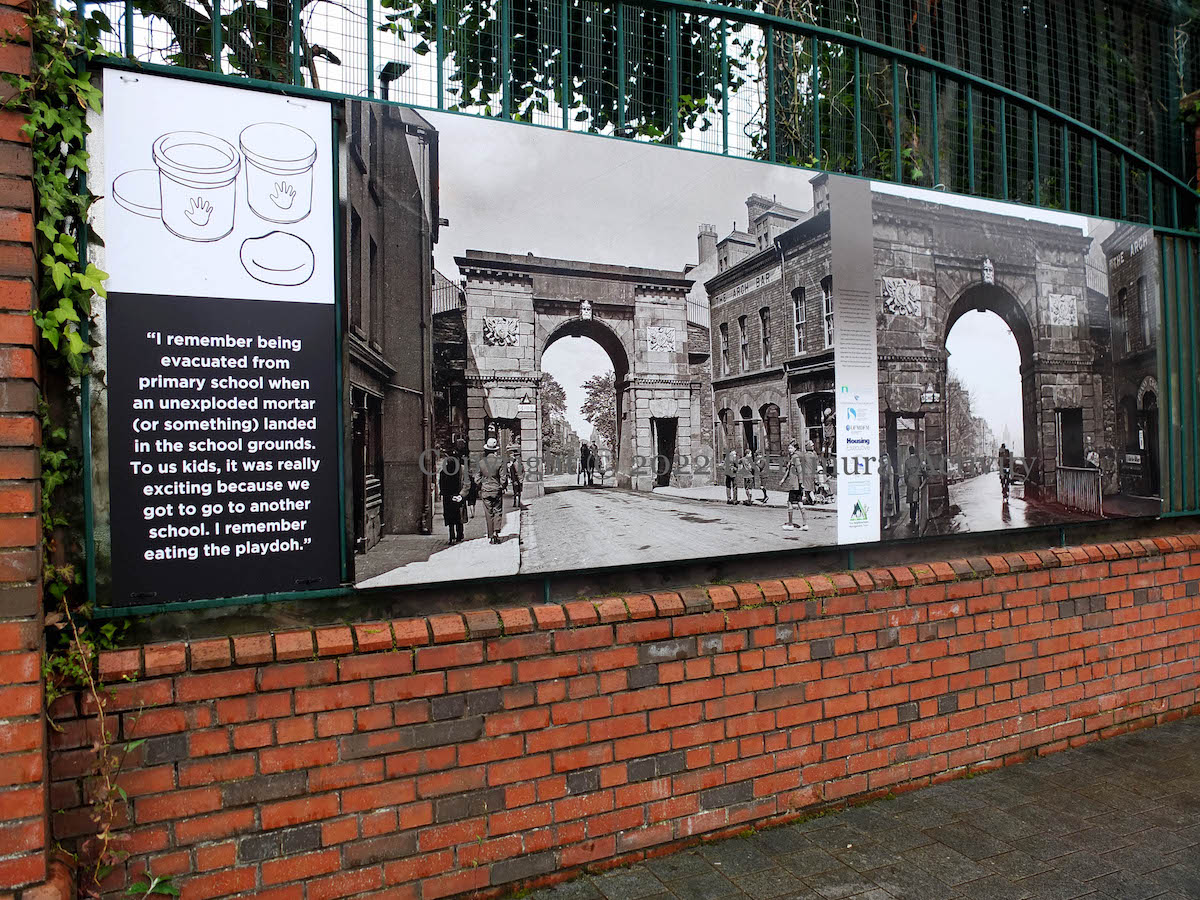
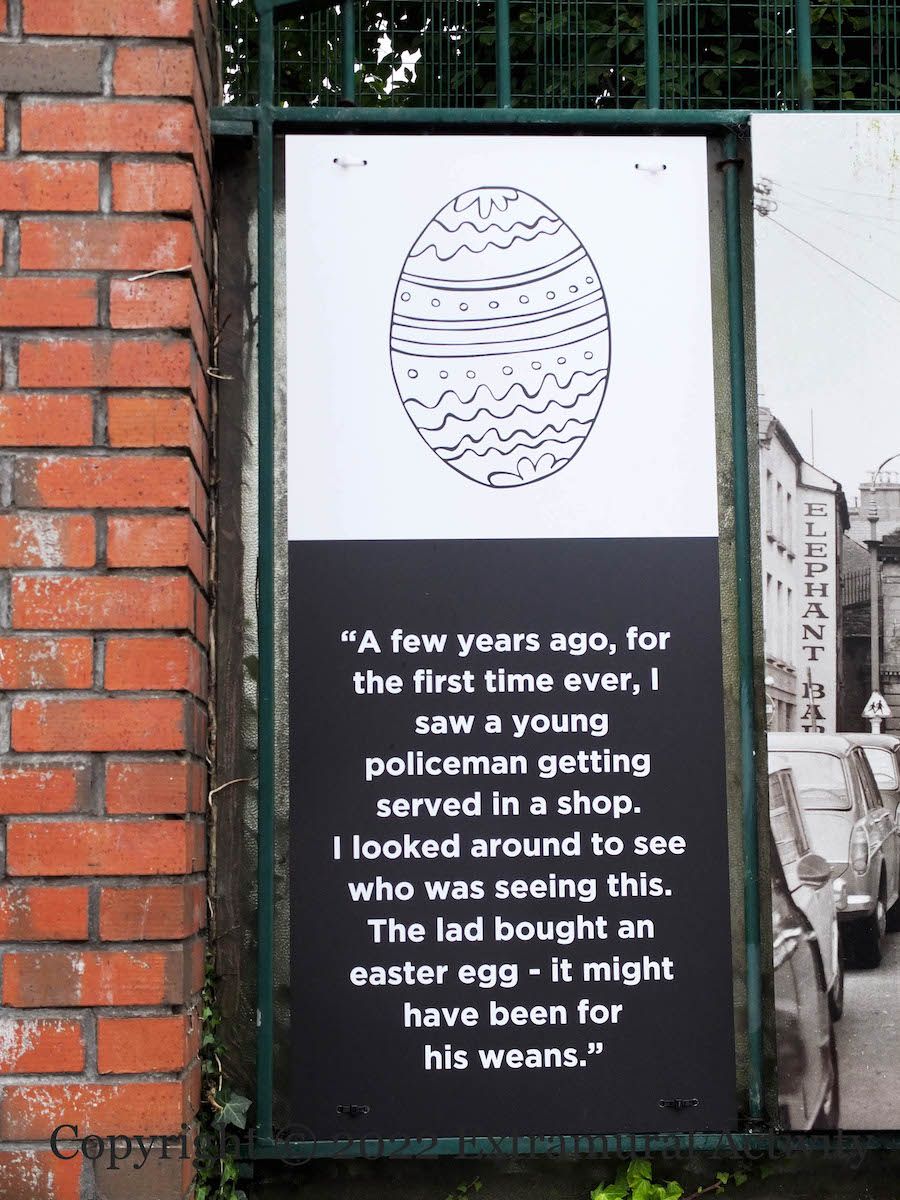
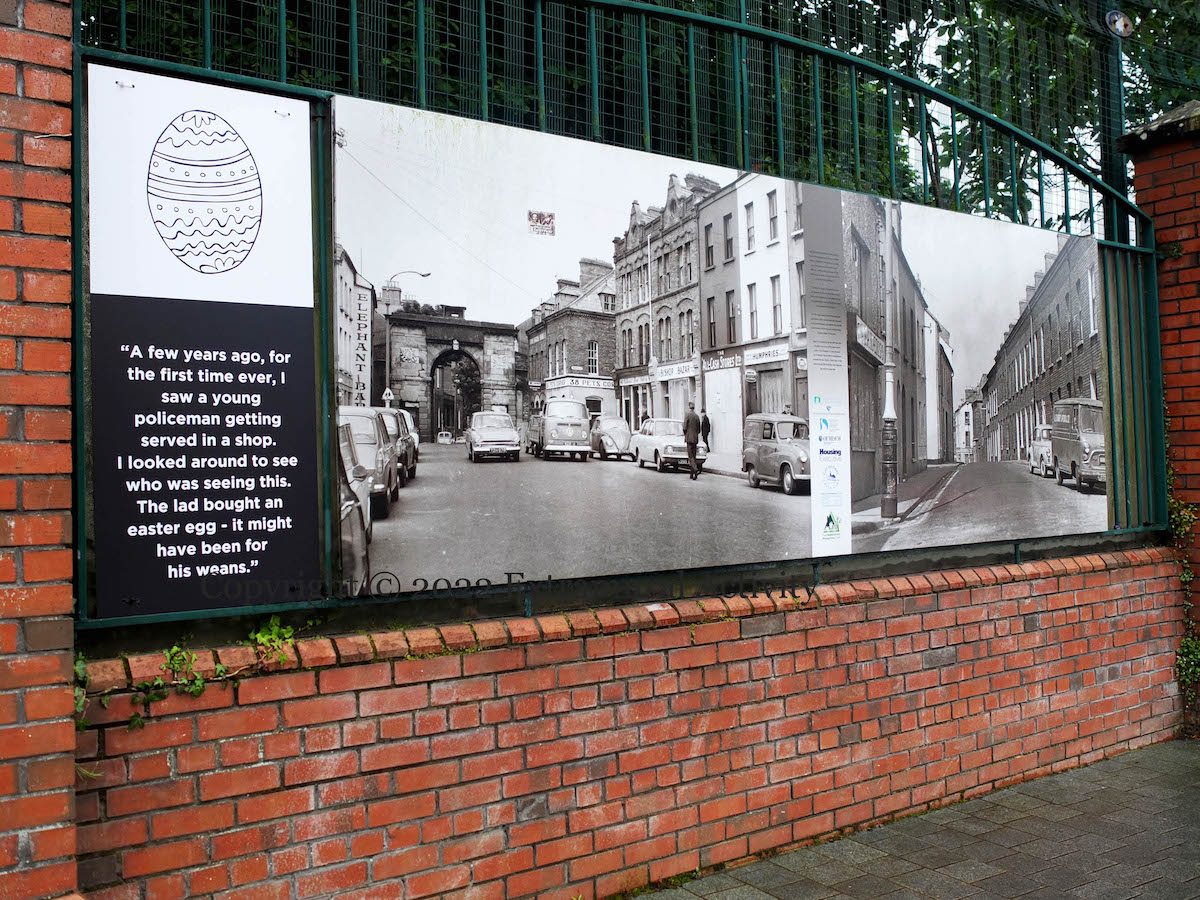
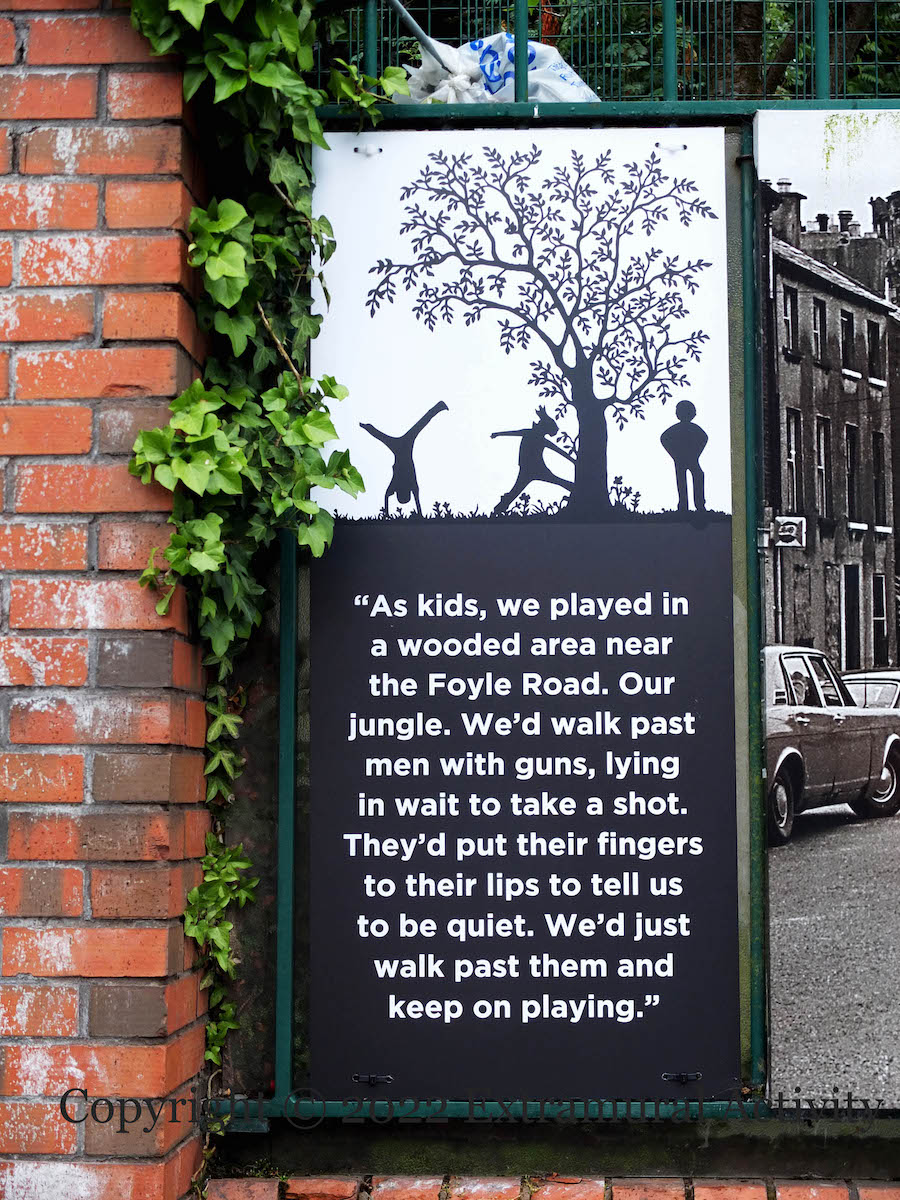
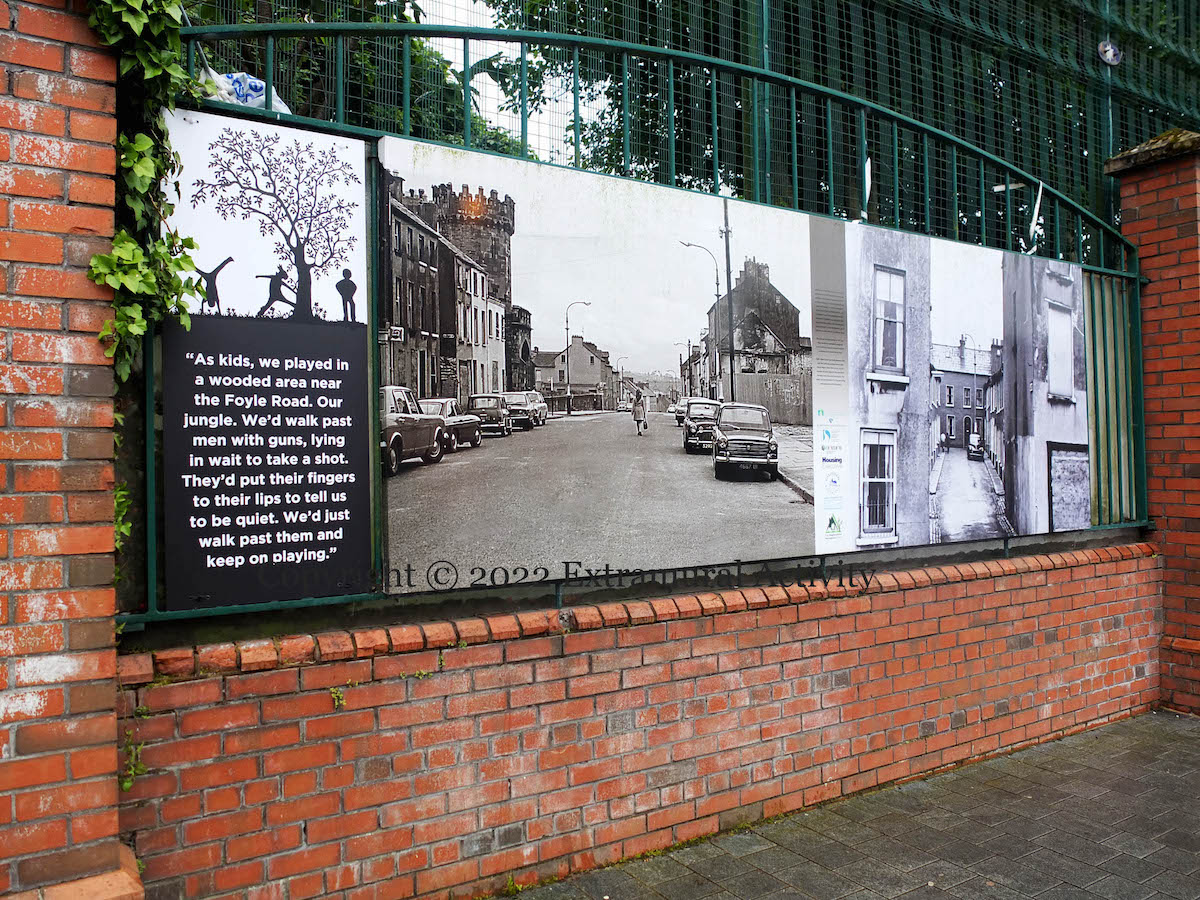
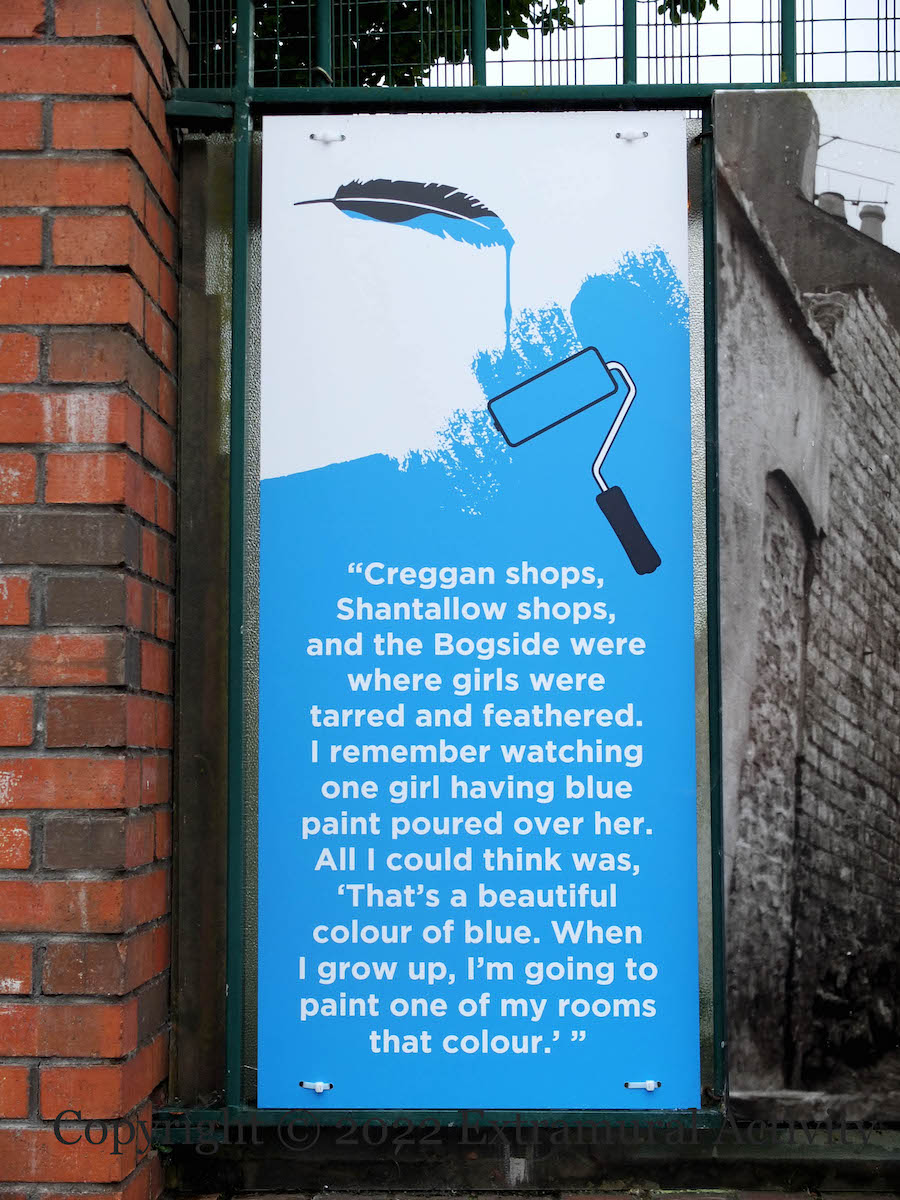
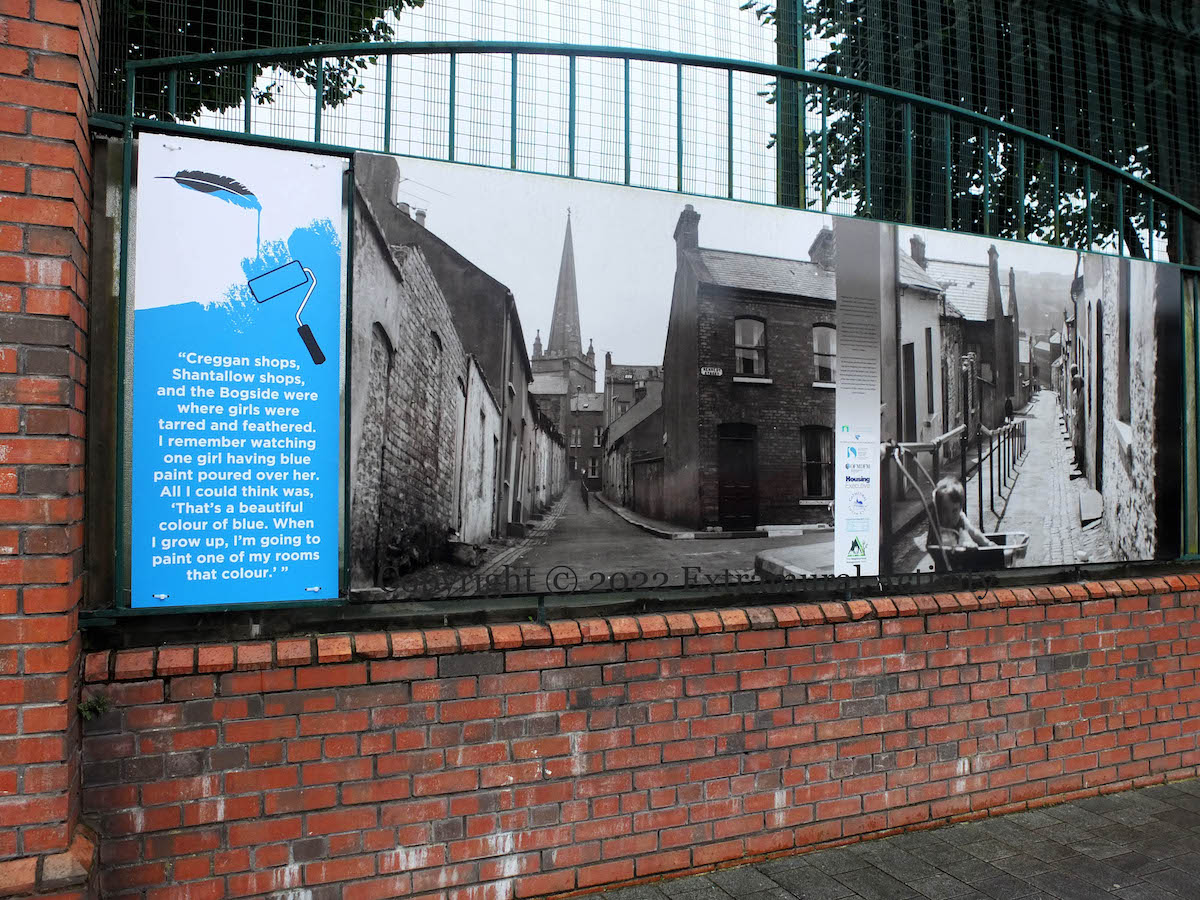
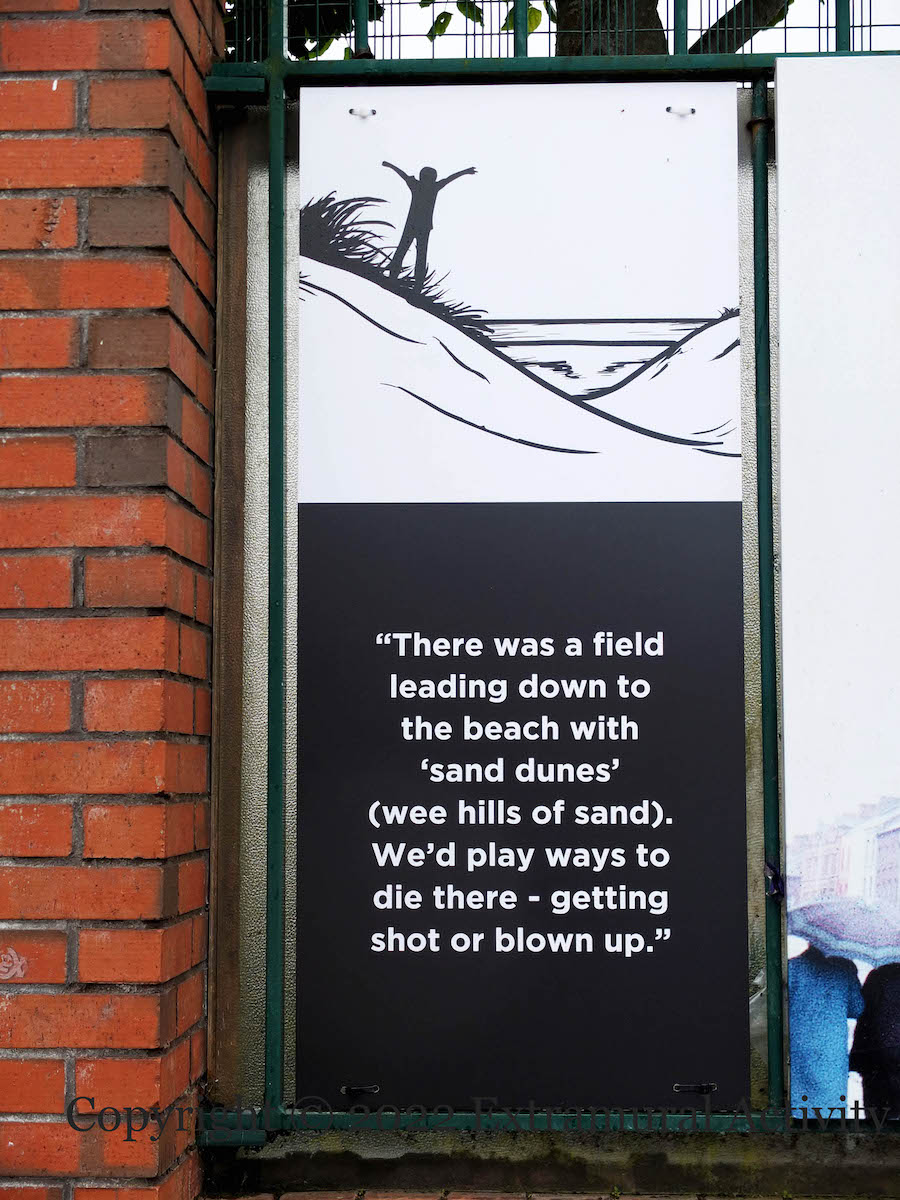
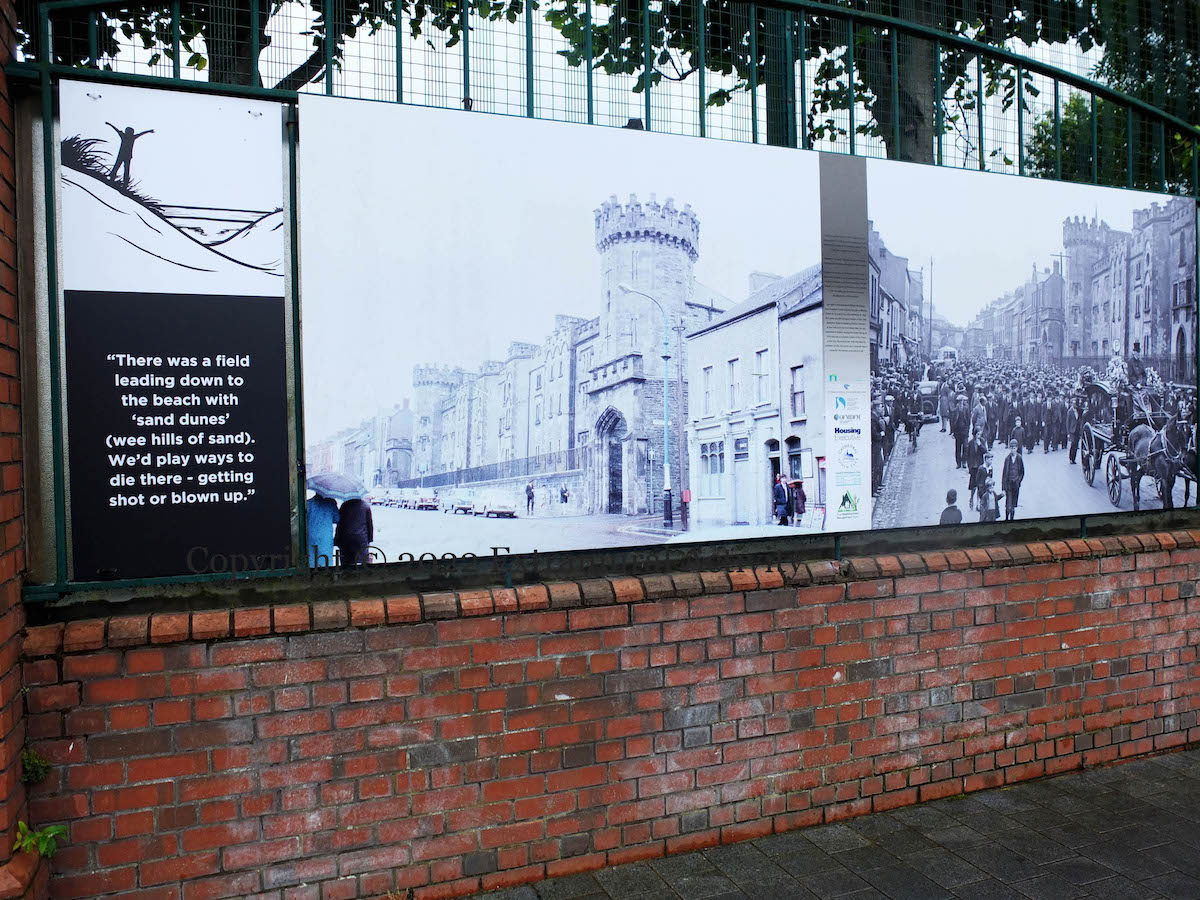
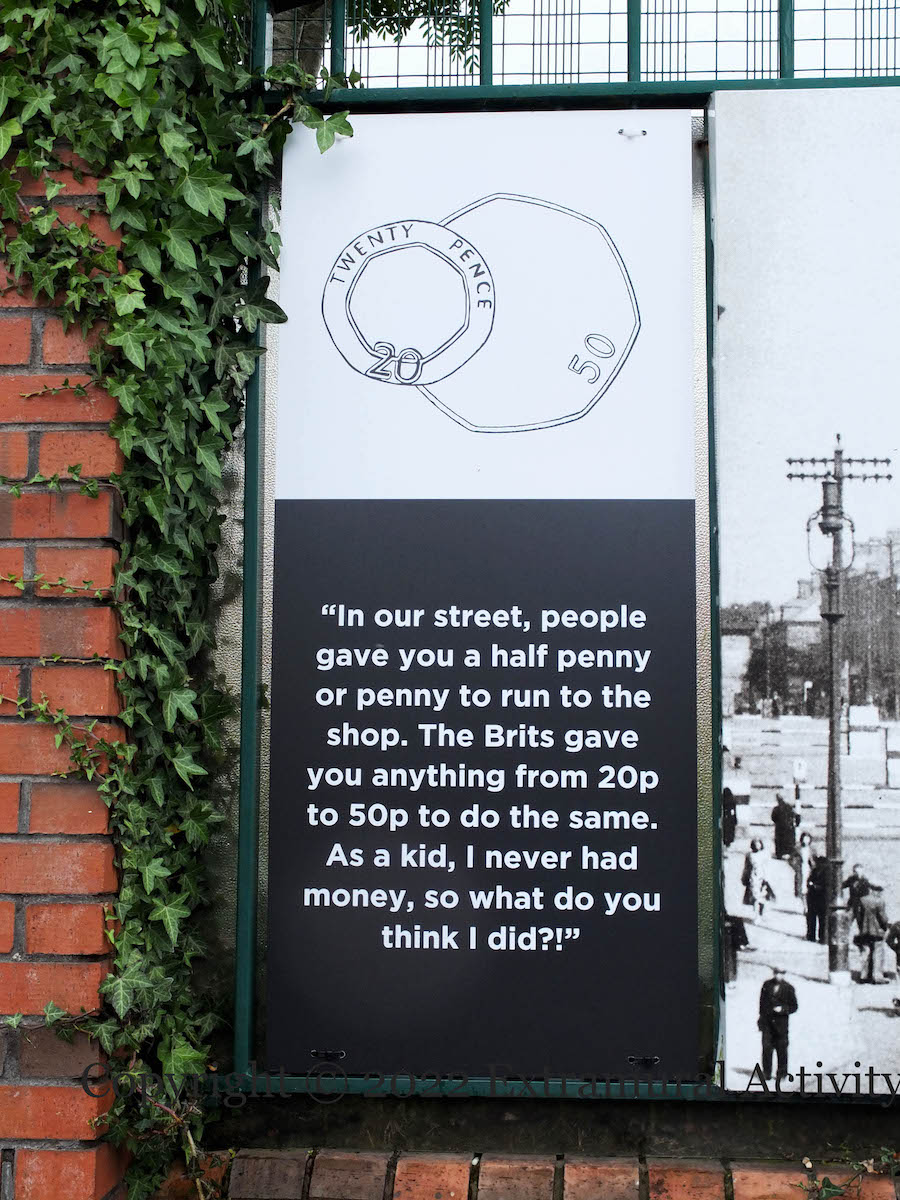
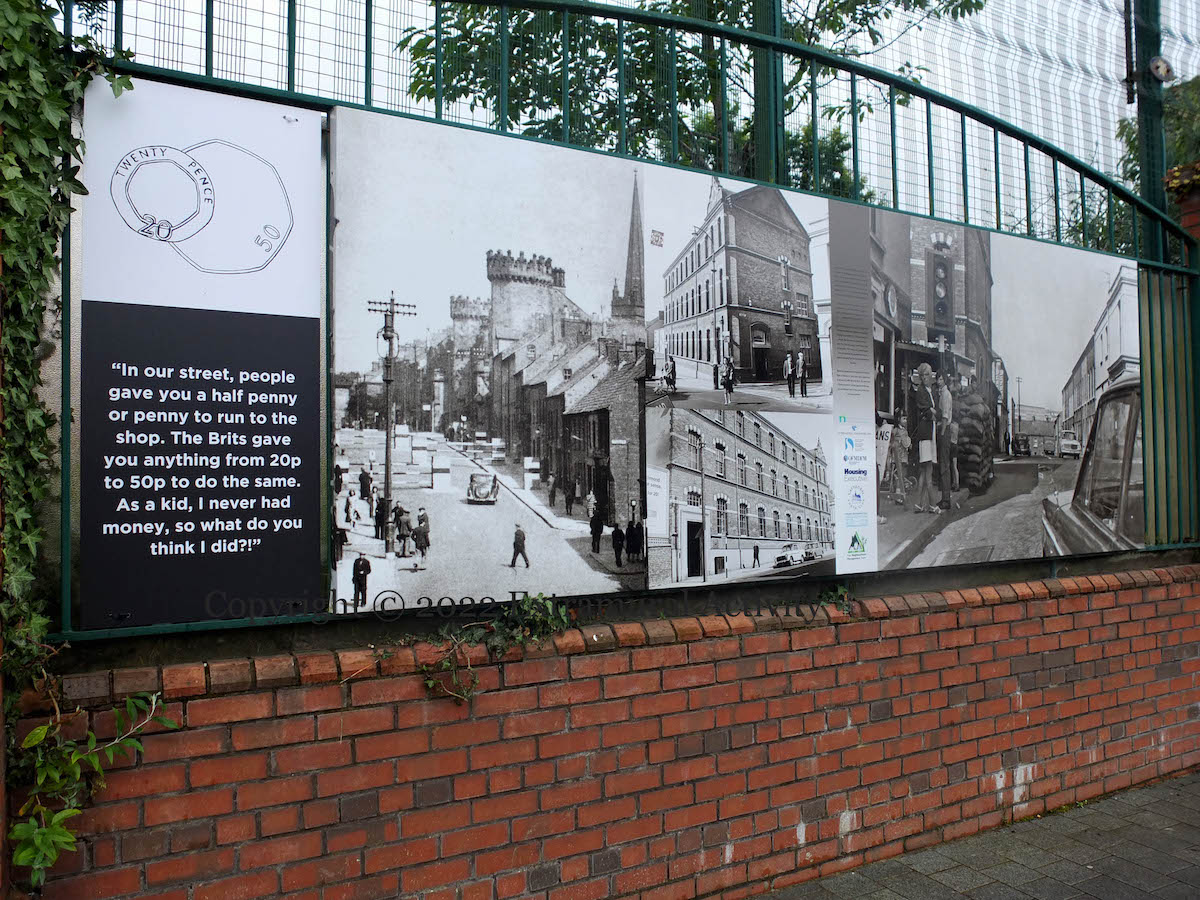
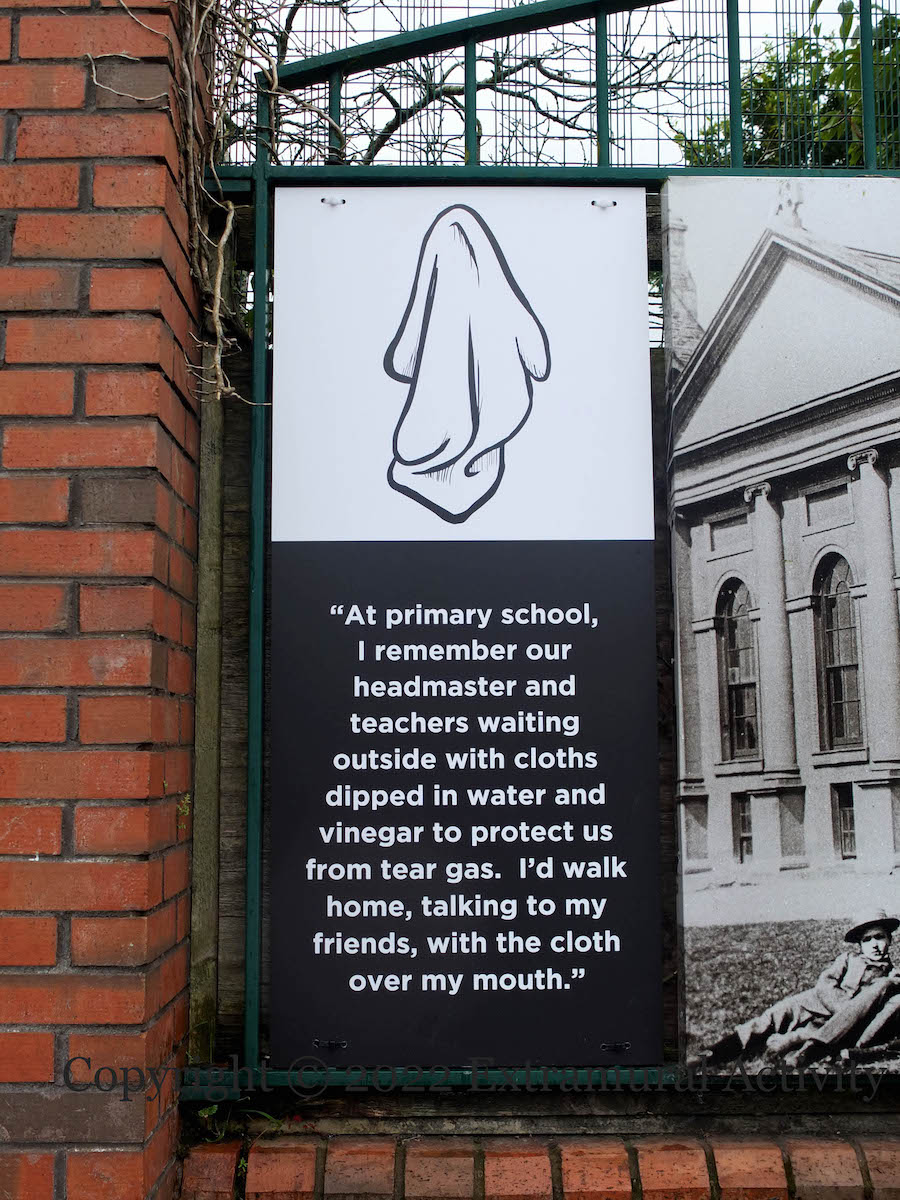
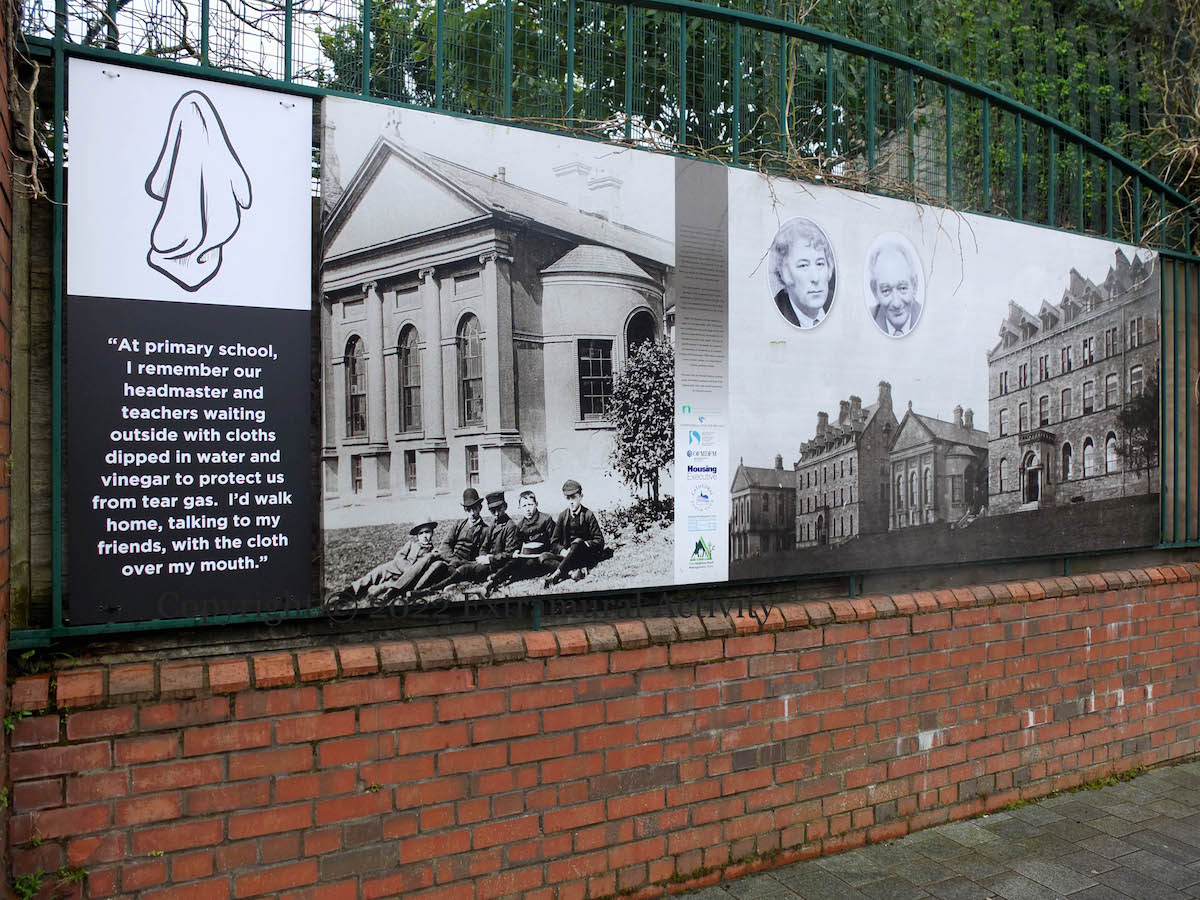
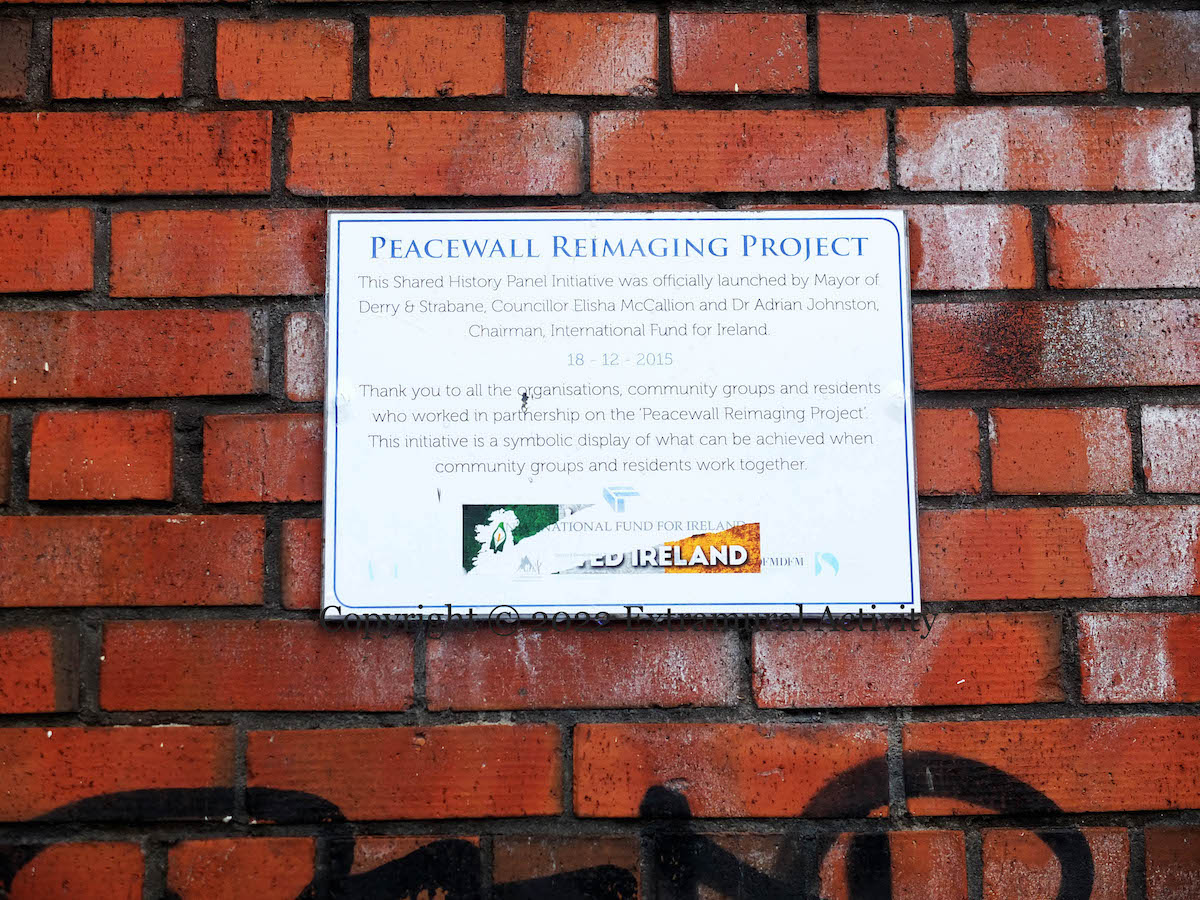
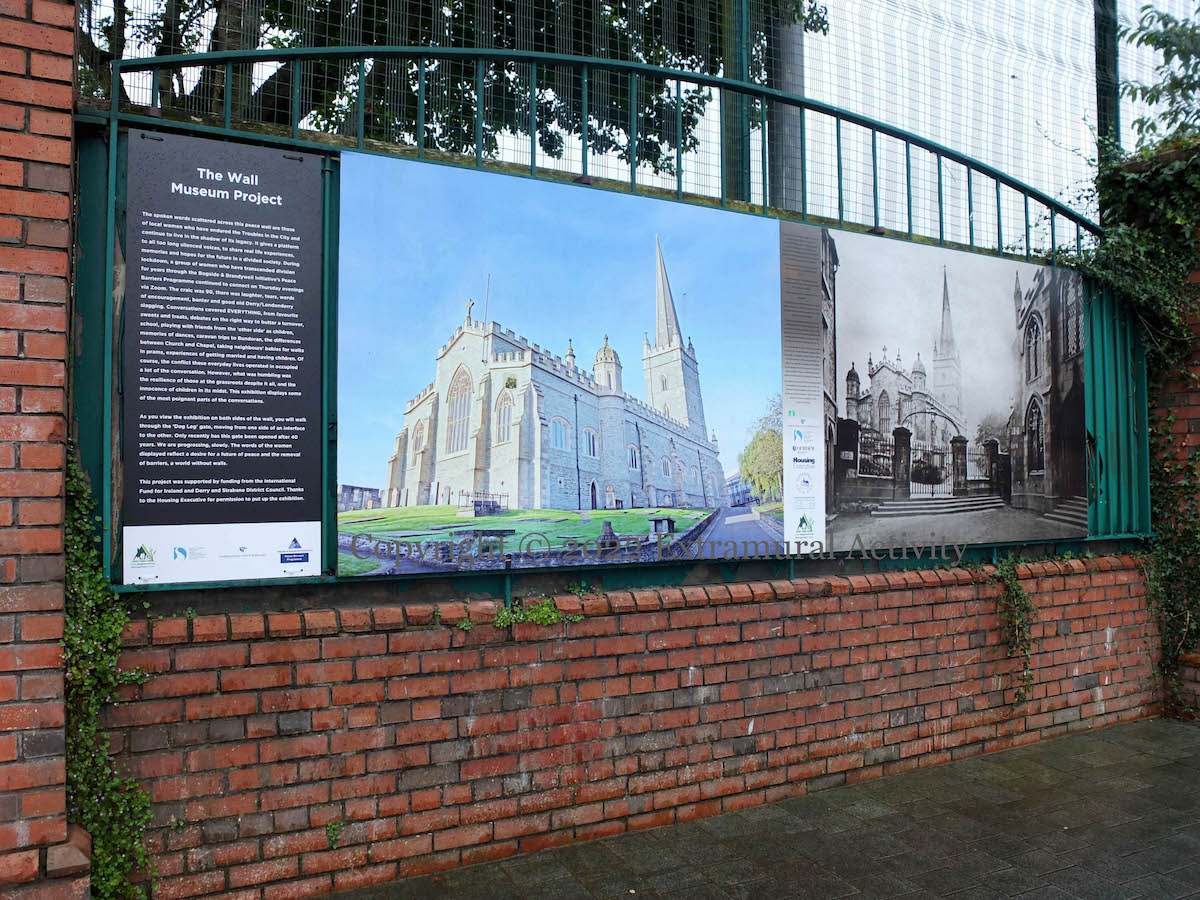
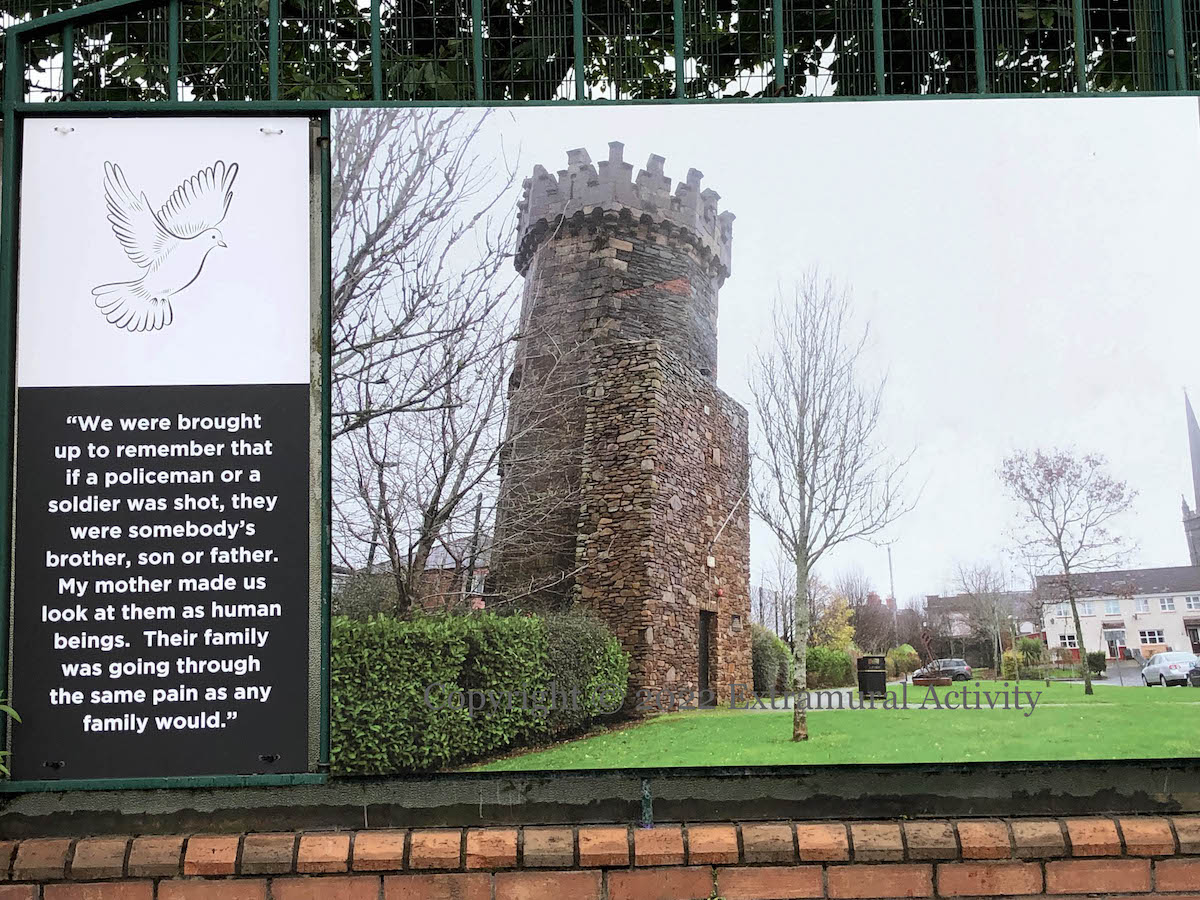
New panels of quotes and information – apparently under the title the ‘Wall History Project’ – have been added to the previous row of vintage images of the area (the “Peacewall Reimaging Project” (image below) | Derry Journal), telling personal stories of life during the Troubles including positive interactions with British soldiers and RUC officers.
The “peace” wall in question runs along the top of the Fountain in Londonderry along Bishop Street WIthout. (The street was also “settled’ by the construction of a senior citizens’ home, Alexander House.)
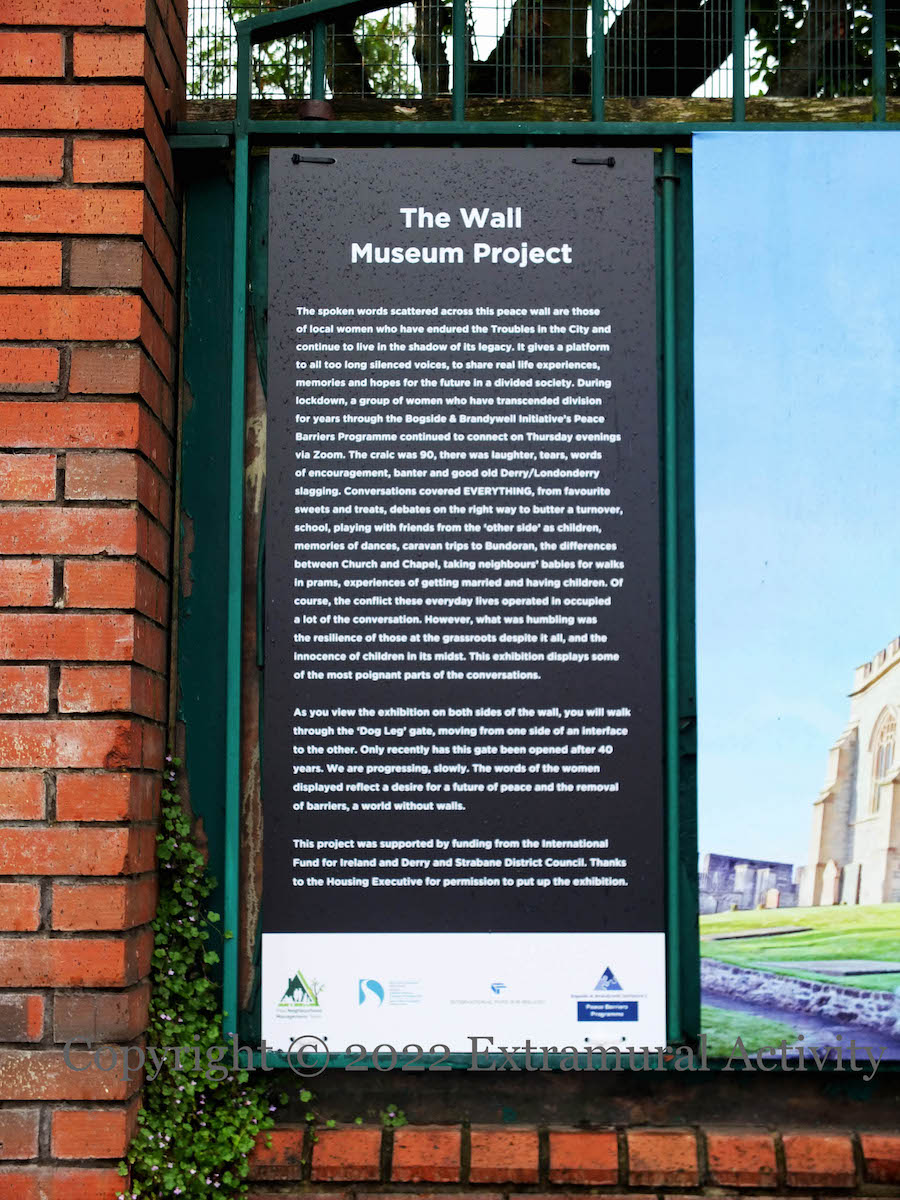
“The spoken words scattered across this peace wall are those of local women who have endured the Troubles in the City and continue to live in the shadow of its legacy. It gives a platform to all too long silenced voices, to share real real life experiences, memories and hopes for the future in a divided society. During lockdown, a group of women who have transcended division for years through the Bogside & Brandywell Initiative’s Peace Barriers Programme continued to connect on Thursday evenings via Zoom. The craic was 90, there was laughter, tears, words of encouragement, banter and good old Derry/Londonderry slagging.”
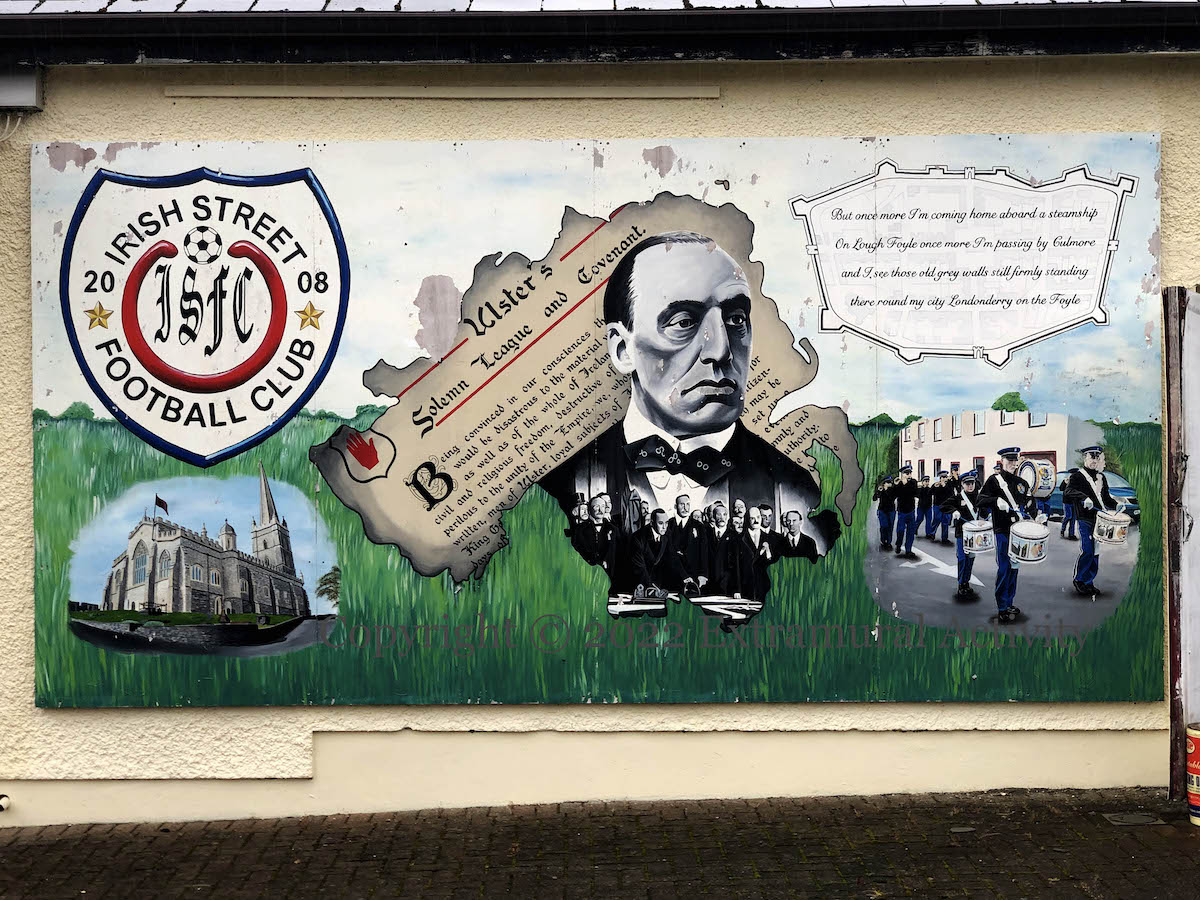
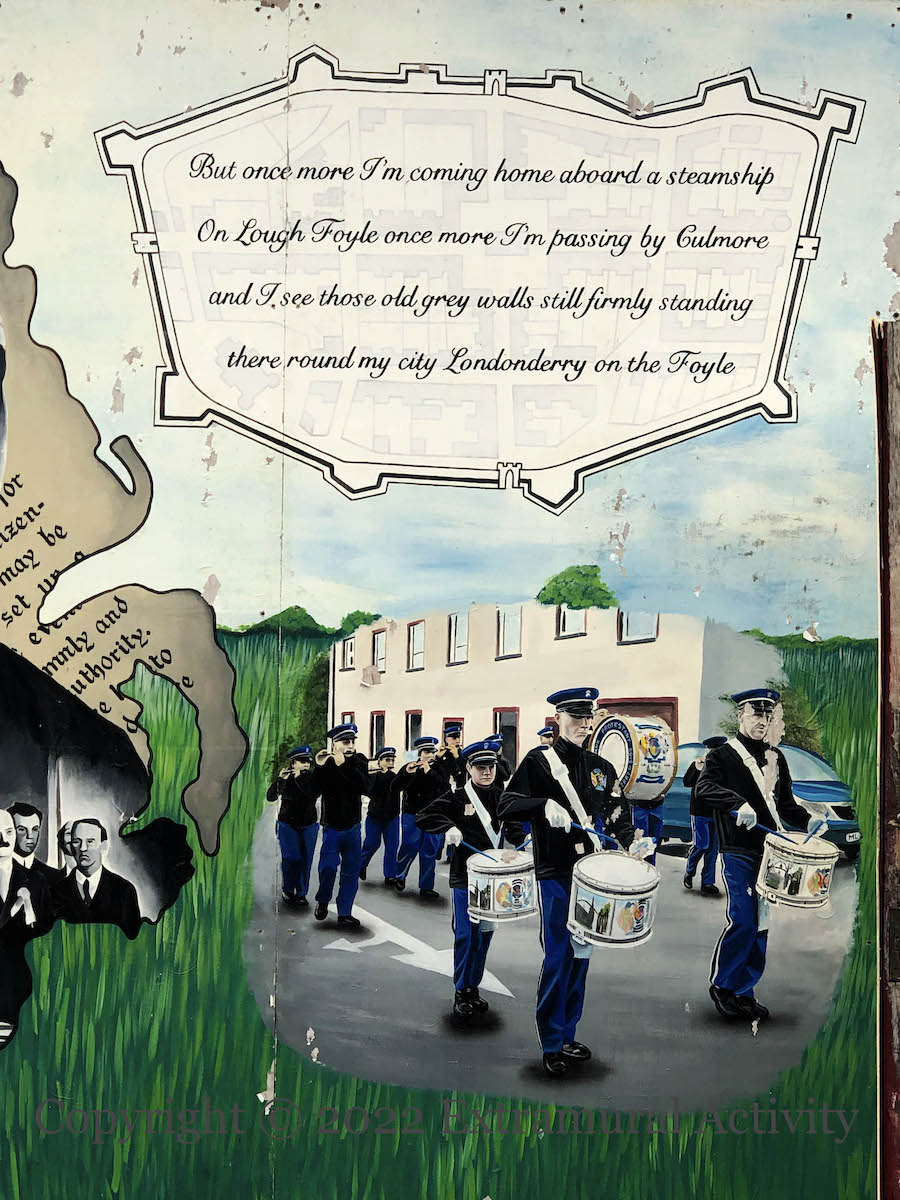
The sights and sounds of Irish Street and Londonderry: (clockwise from right) a verse from Londonderry On The Foyle (youtube) in a frame of the walls of the city of Derry – “But once more I’m coming home aboard a steamship/On Lough Foyle once more I’m passing by Culmore/And I see those old grey walls still firmly standing/There ’round my city Londonderry on the Foyle”; East Bank (Irish Street) Protestant Boys (Fb) on parade; Carson and the signing of the 1912 Covenant; St Columb’s Cathedral; Irish Street FC (Fb).
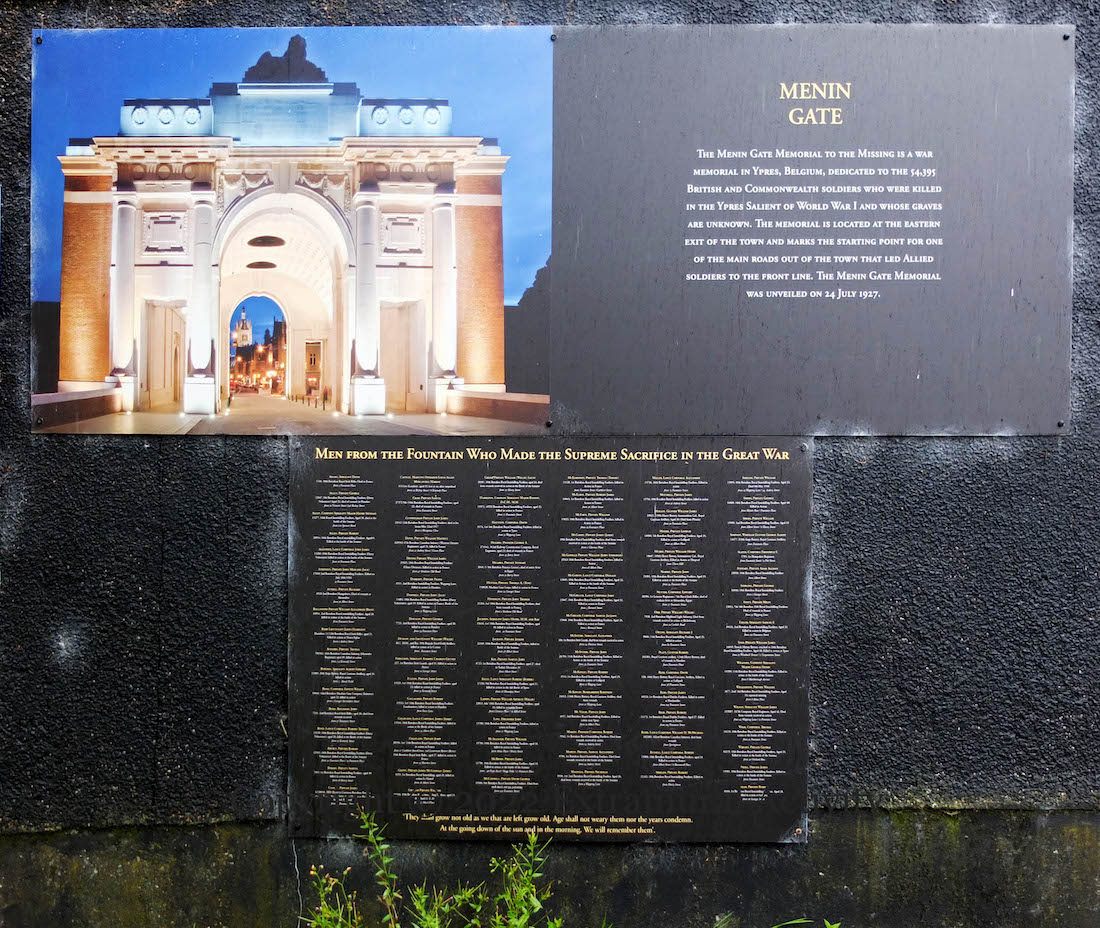
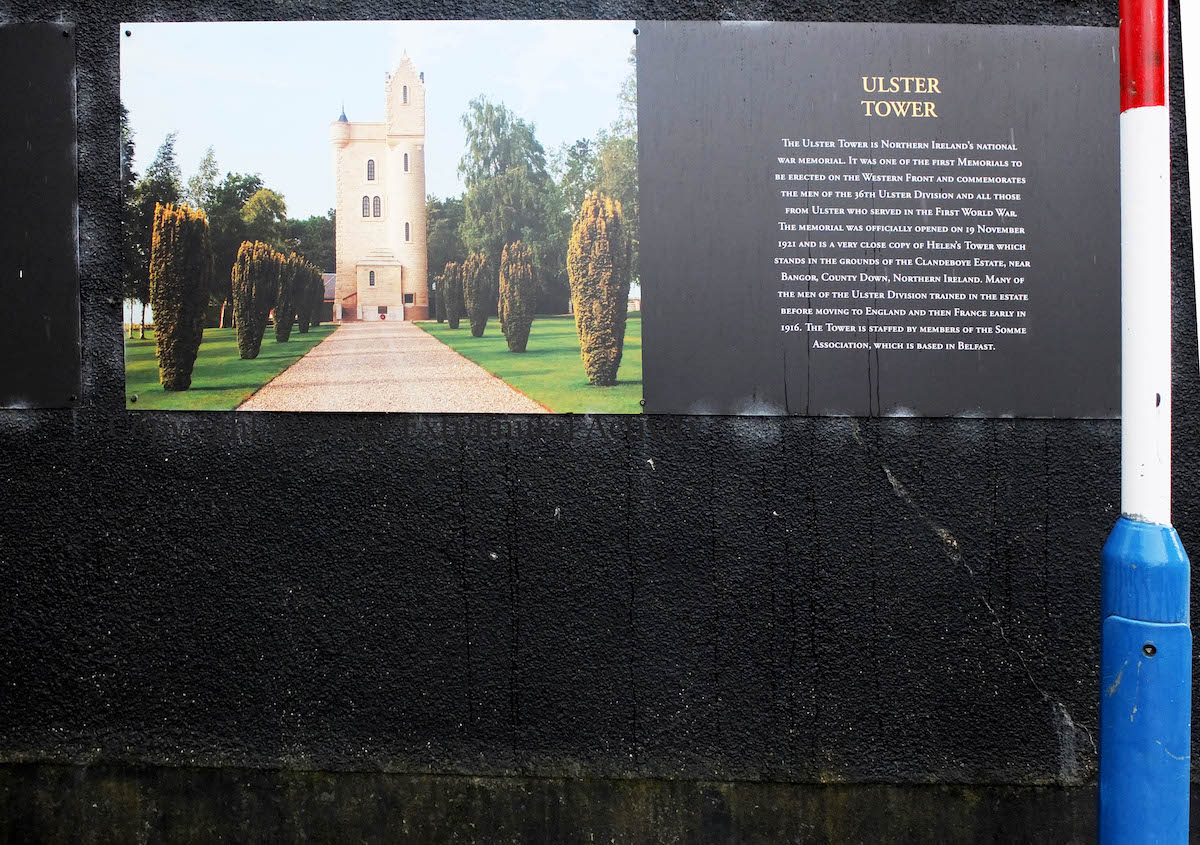
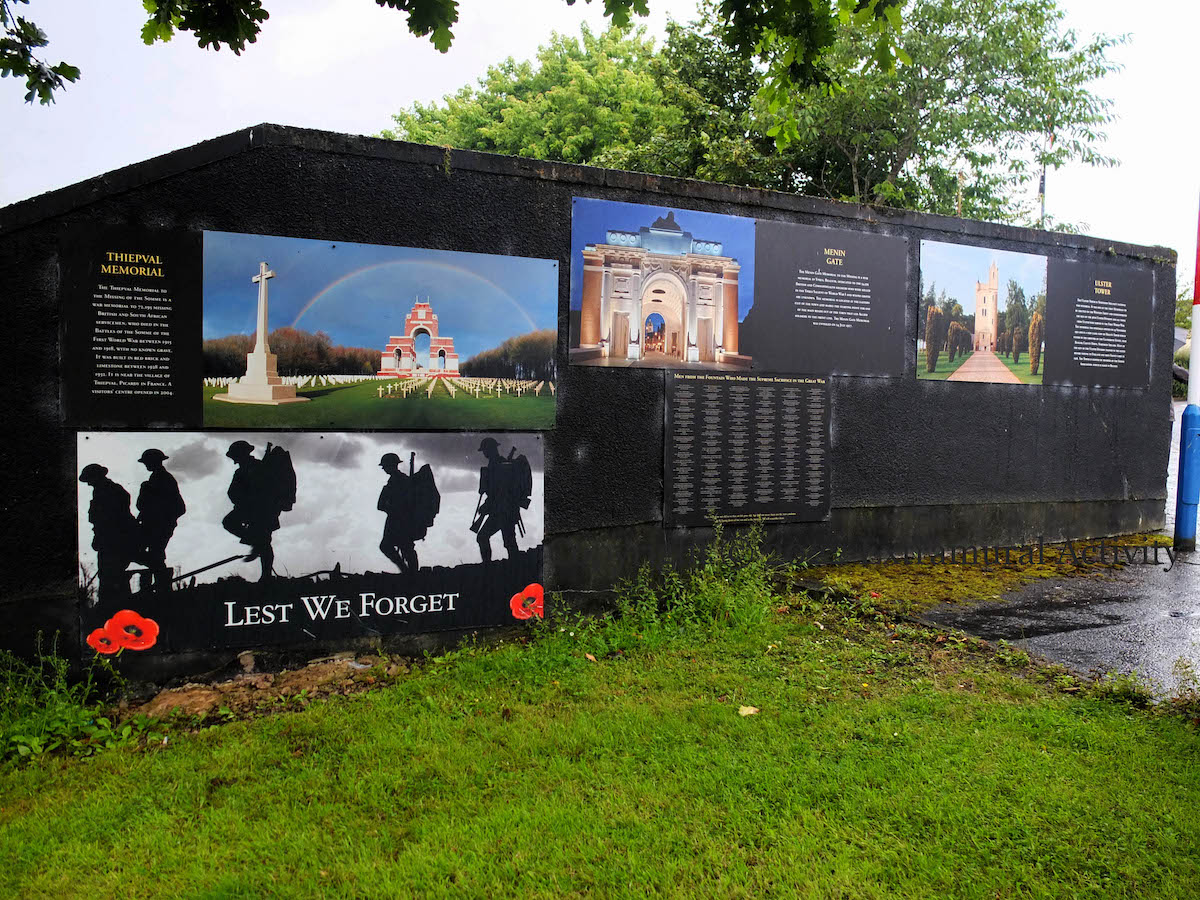
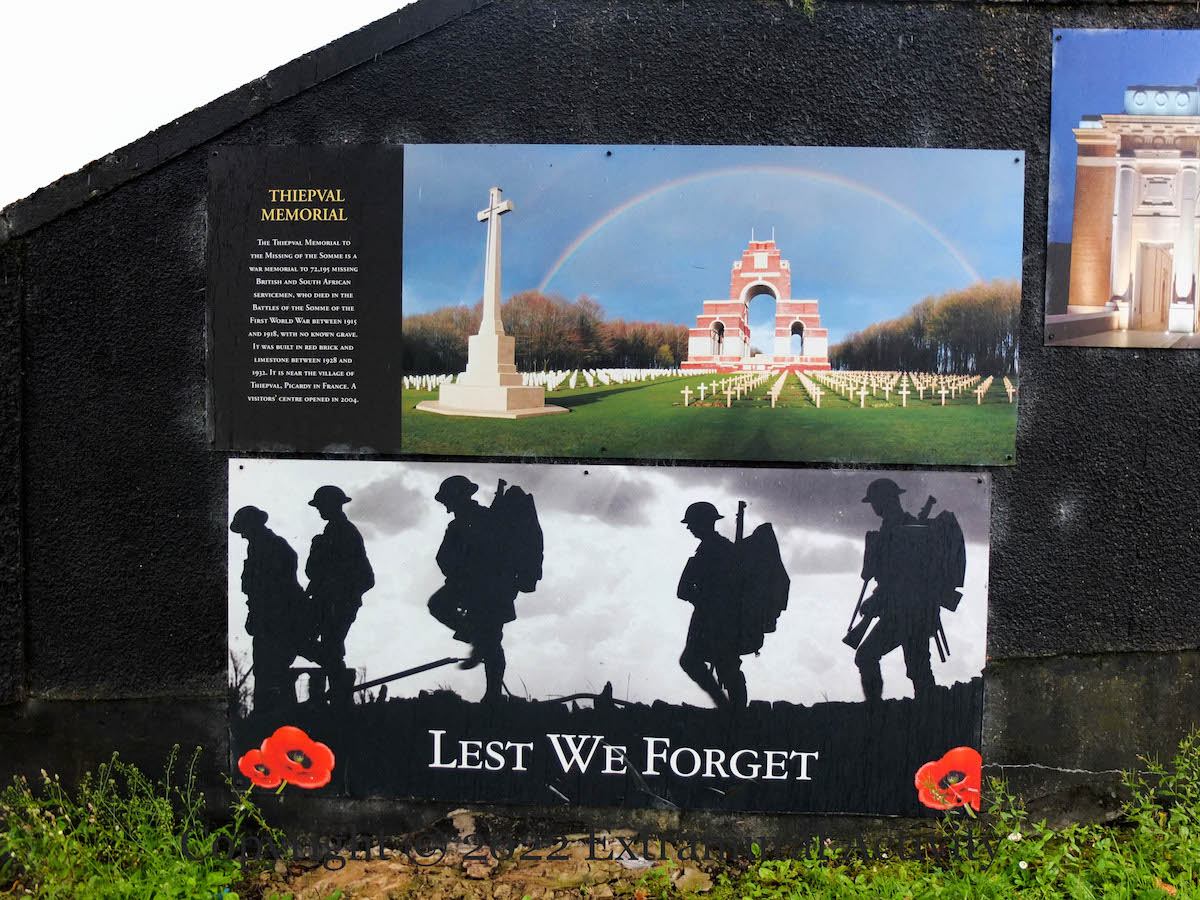
All three major WWI memorials with relevance to Ulster – Thiepval Memorial, Menin Gate, Ulster Tower – are brought together in a gallery in Londonderry’s Fountain as part of a tribute to the “Men from the Fountain who made the supreme sacrifice in the Great War.”
“Thiepval Memorial: The Thiepval Memorial to the missing of the Somme is a war memorial to 72,195 missing British and South African servicemen, who died in the battles of the Somme of the First World War between 1915 and 1918, with no known grave. It was built in red brick and limestone between 1928 and 1932. It is near the village of Thiepval, Picardy in France. A visitors’ centre opened in 2004.”
“Menin Gate: The Menin Gate memorial to the missing is a war memorial in Ypres, Belgium, dedicated to the 54,395 British and Commonwealth soldiers who were killed in the Ypres salient of World War I and whose graves are unknown. The memorial is located at the eastern exit of the town and marks the starting point for one of the main roads out of the town that led Allied soldiers to the front line. The Menin Gate memorial was unveiled on 24 July 1927.”
“Ulster Tower: The Ulster Tower is Northern Ireland’s national war memorial. It was one of the first memorials to be erected on the western front and commemorates the men of the 36th (Ulster) Division and all those from Ulster who served in the First World War. The memorial was officially opened on 19 November 1921 and is a very close copy of Helen’s Tower which stands in the grounds of the Clandeboye estate, near Bangor, County Down, Northern Ireland. Many of the men of the Ulster division trained in the estate before moving to England and then France early in 1916. The Tower is staffed by members of the Somme Association, which is based in Belfast.”
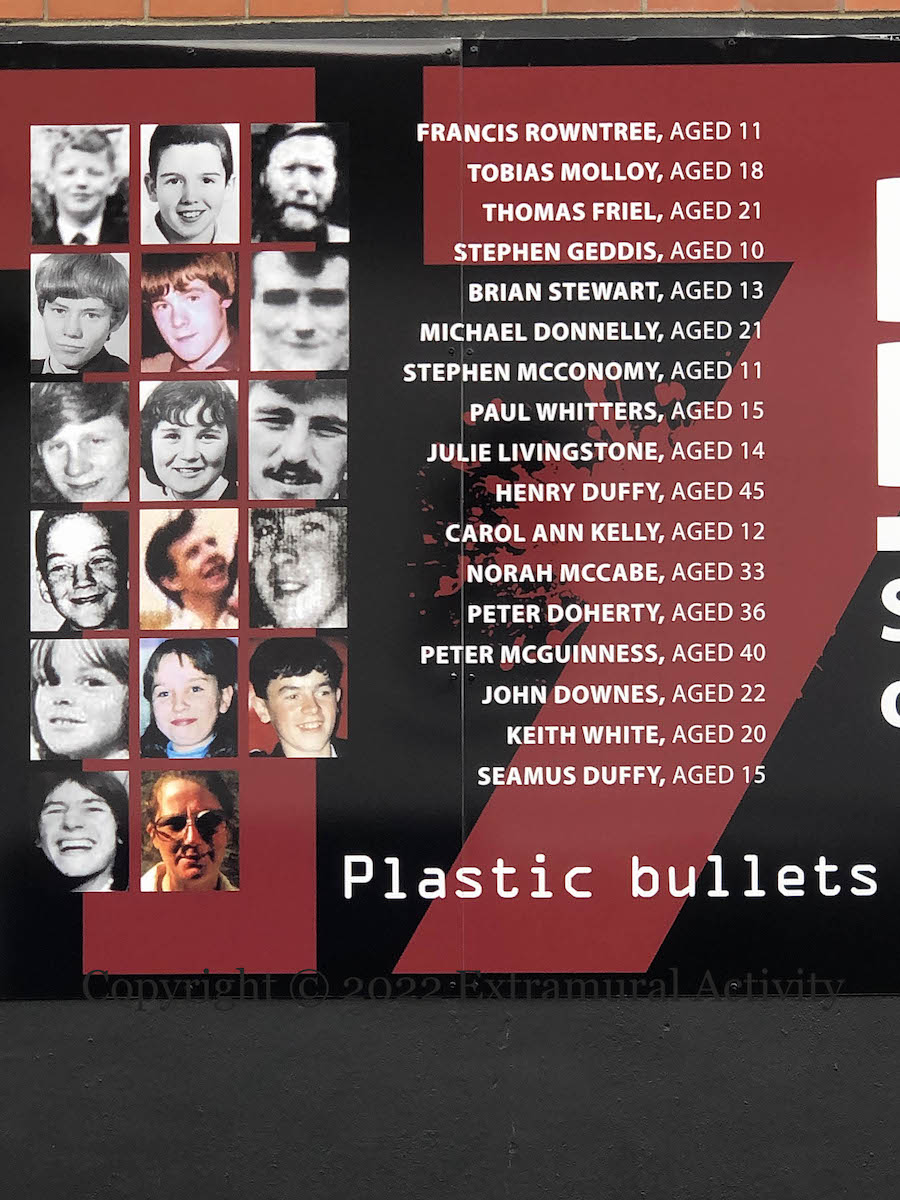
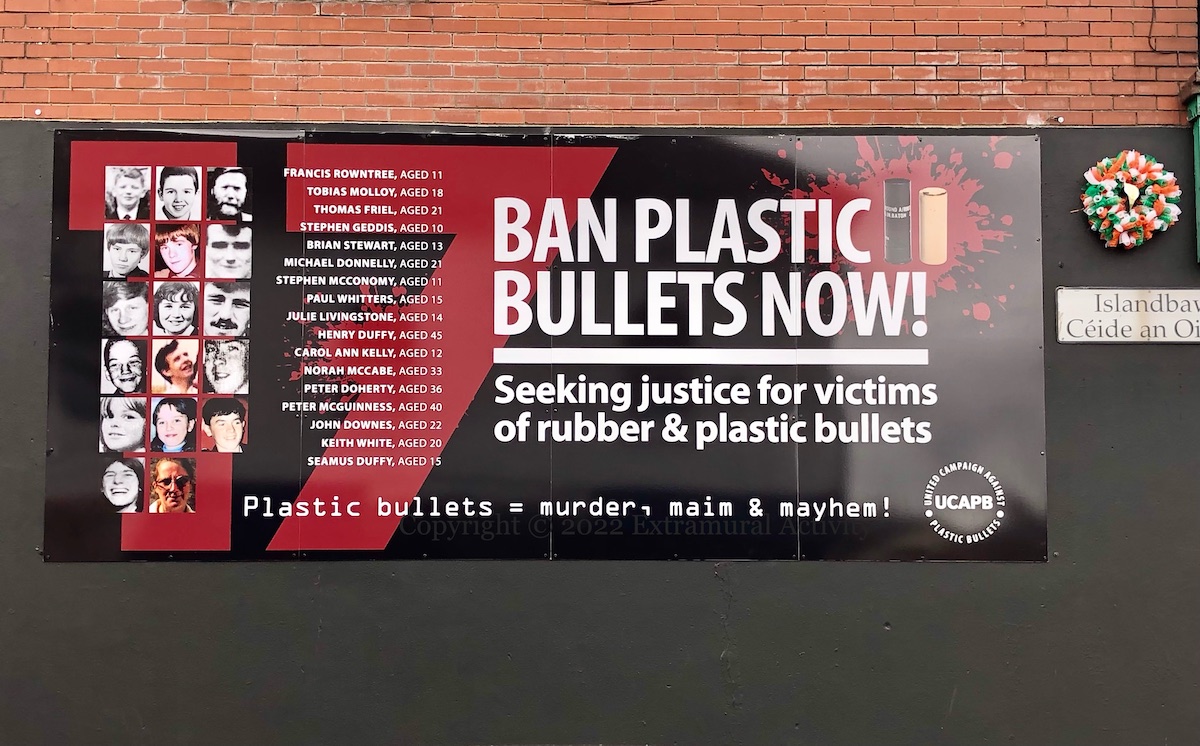
The United Campaign Against Plastic Bullets organised a march on July 16th, from Divis to the middle Falls, ending in Islandbawn Street with the launch of a new mural commemorating 17 victims of rubber or plastic bullets (Irish News). (Belfast Media has a gallery from the march.) Amnesty International last year released a report on the continued use of Attenuating Energy Projectiles (AEPs).
“Seeking justice for victims of rubber and plastic bullets. Plastic bullets = murder, main & mayhem”
For the previous plastic bullets board in Islandbawn Street, see Plastic Death.
Francis Rowntree, Tobias Molloy, Thomas Friel, Stephen Geddis, Brian Stewart, Michael Donnelly, Stephen McConomy, Paul Whitters, Julie Livingstone, Henry Duffy, Carol Ann Kelly, Norah McCabe, Peter Doherty, Peter McGuinness, John Downes, Keith White, Seamus Duffy.
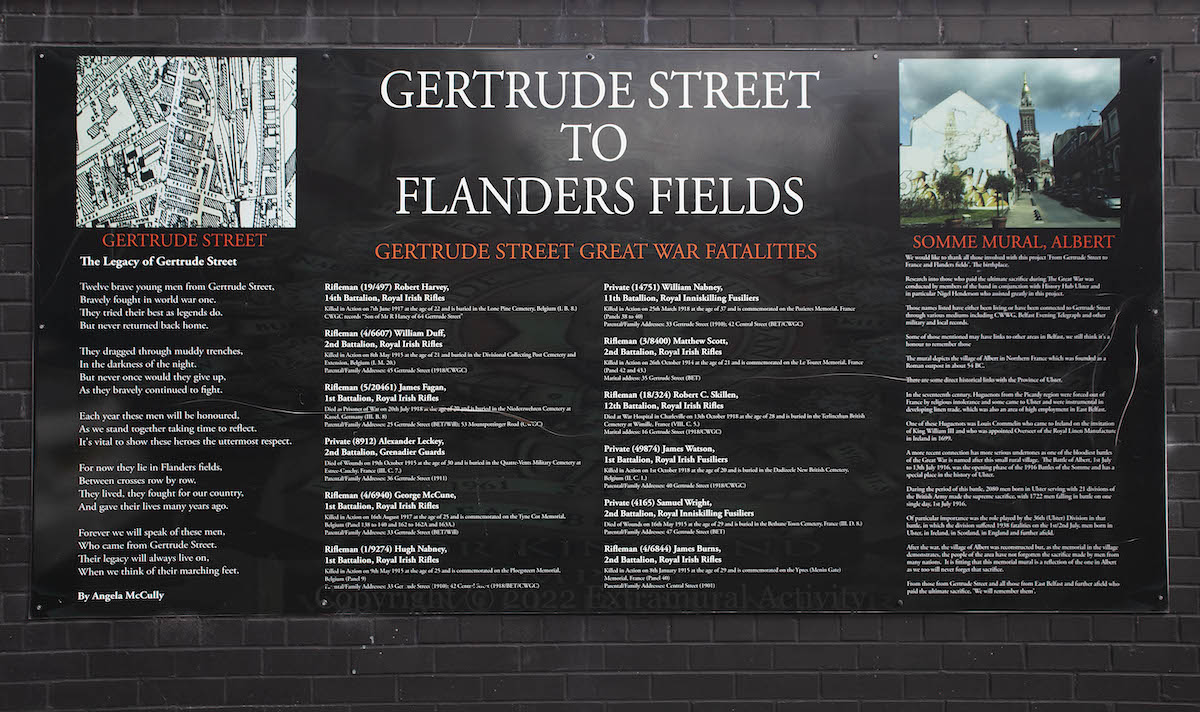
The twelve “Gertrude Street Great War Fatalities” are: Robert Harvey; William Duff; James Fagan; Alexander Leckey; George McCune; Hugh Nabney; William Nabney; Matthew Scott; Robert C. Skillen; James Watson; Samuel Wright; James Burns.
This board was originally next to the To France And Flanders mural on the adjacent wall; the mural also named these twelve but which only lasted a year. That mural depicted the damaged basilica tower in the village of Albert and there is a similar mural in the village itself – a photograph of the mural and the rebuilt tower can be seen in the top right of the board; the mural can be seen in full here.
As the map in the top left shows, Gertrude Street was where Wolff Close now is, running north from the Newtownards Road; the original Gertrude Star mural (circa 1989) was on the first gable of what is now called “Freedom Corner” – see D00388.
“‘The Legacy Of Gertrude Street. Twelve brave young men from Gertrude Street,/Bravely fought in world war one./They tried their best as legends do./But never returned back home.//They dragged through muddy trenches,/In the darkness of the night./But never once would they give up,/As they bravely continued to fight.//Each year these men will be honoured,/As we stand together taking time to reflect./It’s vital to show these heroes the uttermost respect.//For now they lie in Flanders fields,/Between crosses row by row./They lived, they fought for our country,/And gave their lives many years ago.//Forever we will speak of these men,/Who came from Gertrude Street./Their legacy will always live on,/When we think of their marching feet.’ By Angela McCully”
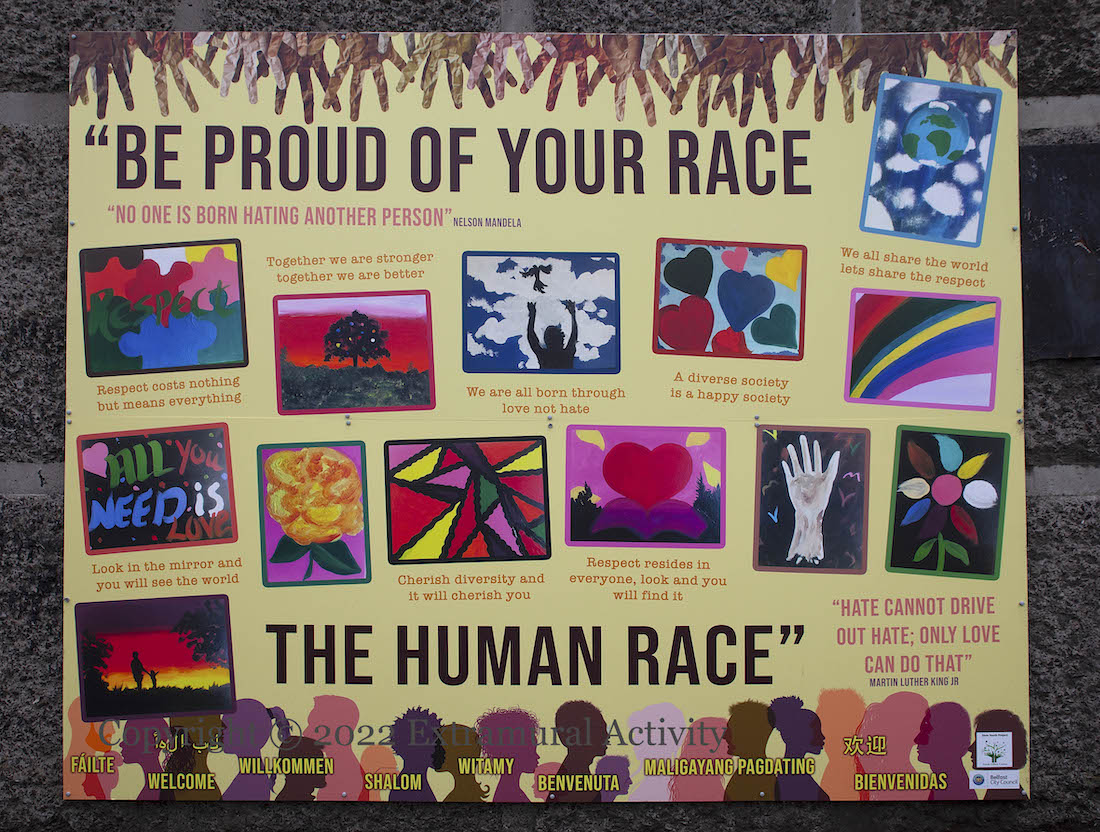
“Be proud of your race – the human race.” Local school-children from the Divis area worked with artist Fra Maher to produce this anti-racism mural – including quotes from Nelson Mandela (“No one is born hating another person”) and Martin Luther King, Jr (“Hate cannot drive out hate; only love can do that”) – that was unveiled on St Patrick’s Day at Divis Tower (Belfast Live has a gallery from the launch.)
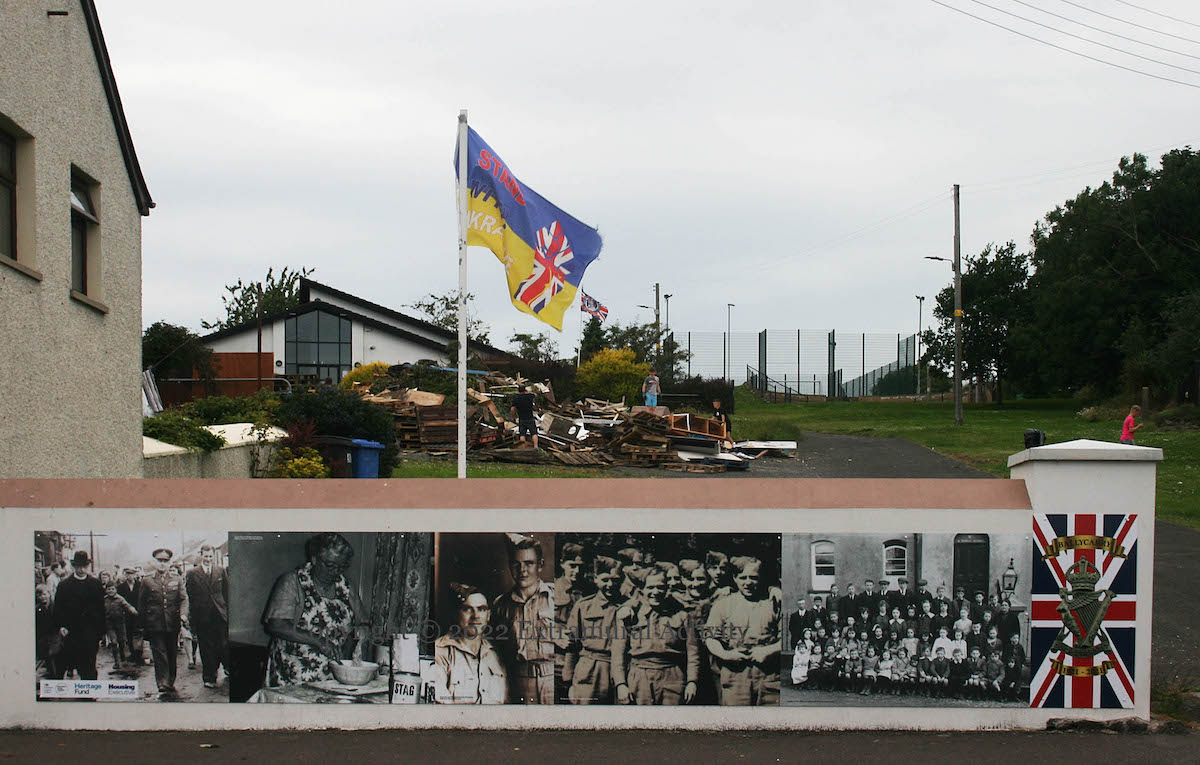
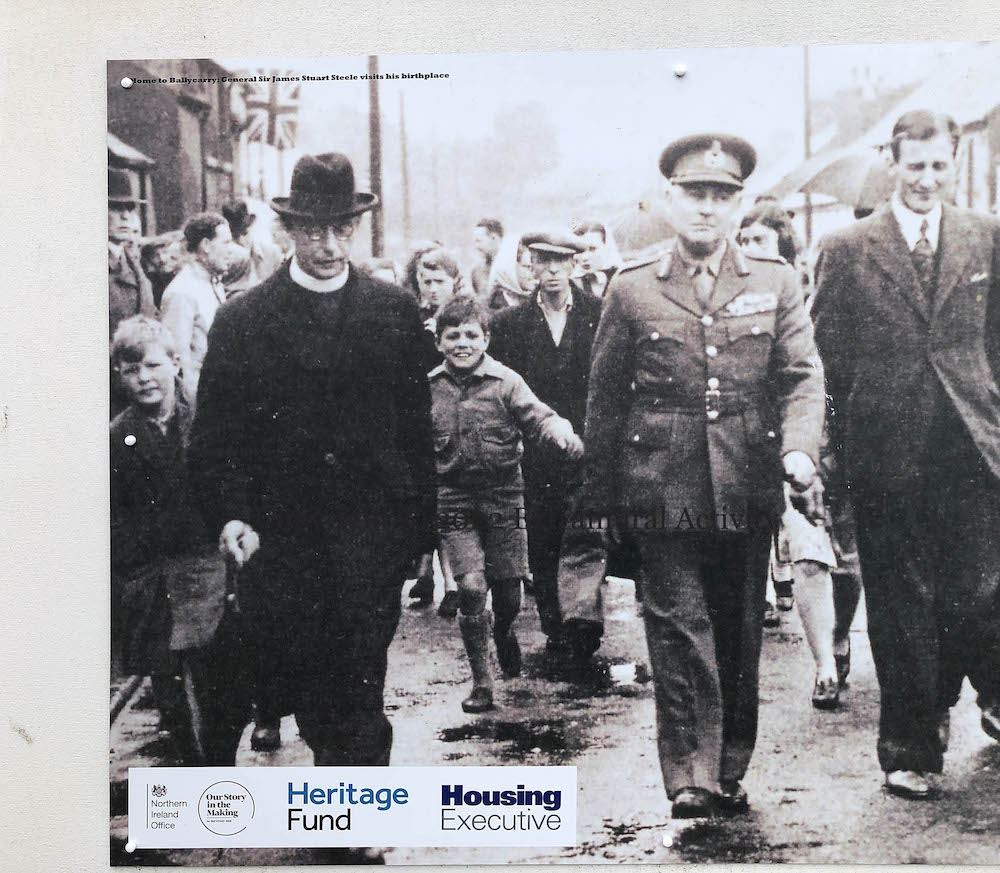
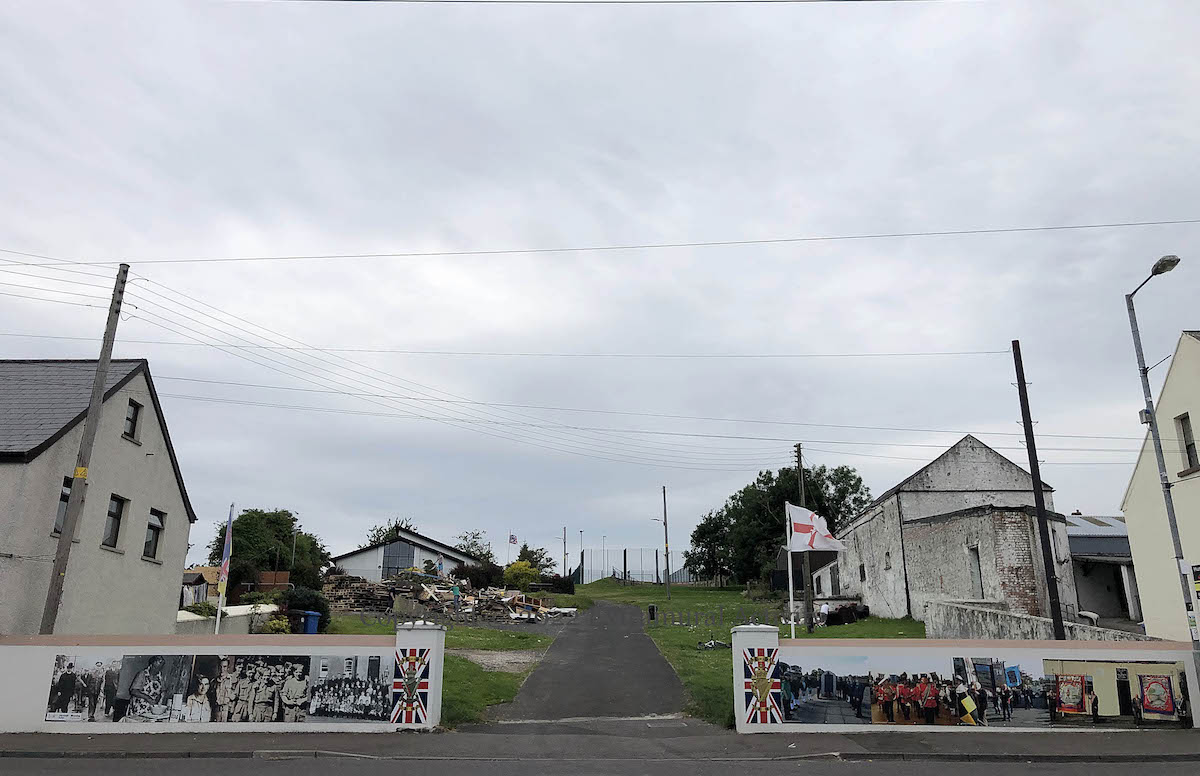
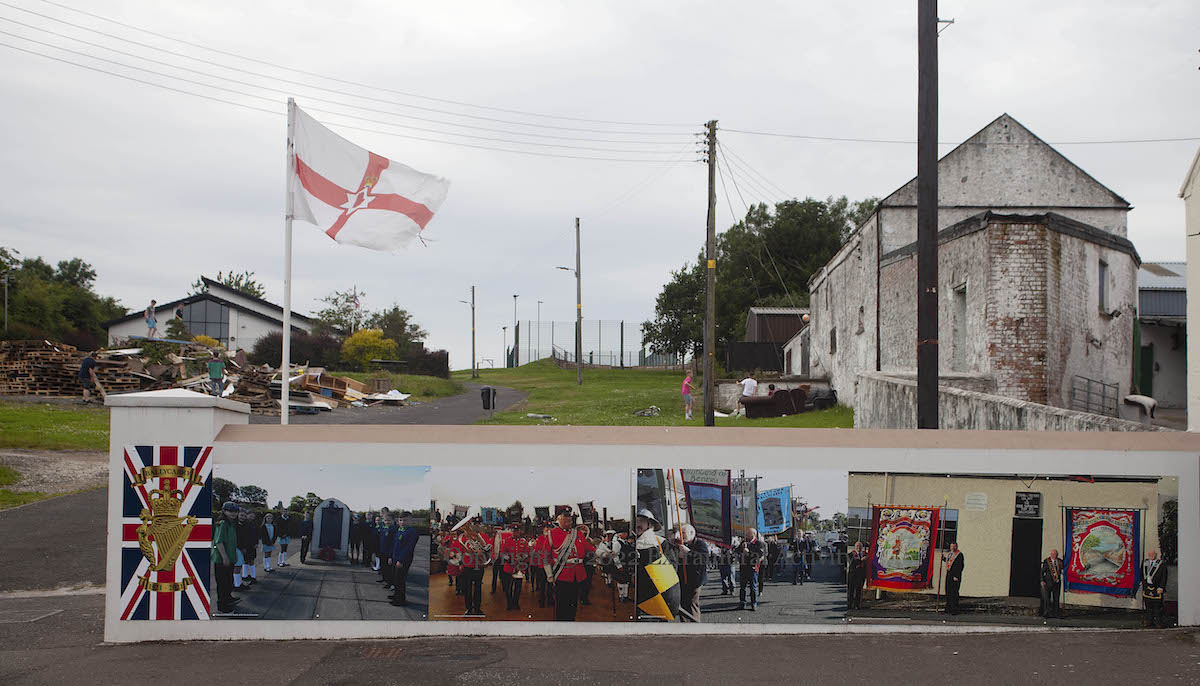
Our Story In The Making – NI Beyond 100 is a NI Office programme collecting stories showcasing Northern Ireland “on the world stage”. It has lent its brand to the Ballycarry centenary boards shown in this entry, which have black-and-white photographs on the left (beginning with “Home to Ballycarry – General Sir James Stuart Steele visits his birthplace”) and colour photographs on the right (beginning with children visiting the Steele monument).
A ‘Stand With Ukraine’ flag and Ulster Banner fly above the walls; a bonfire is being hastily erected in the background.