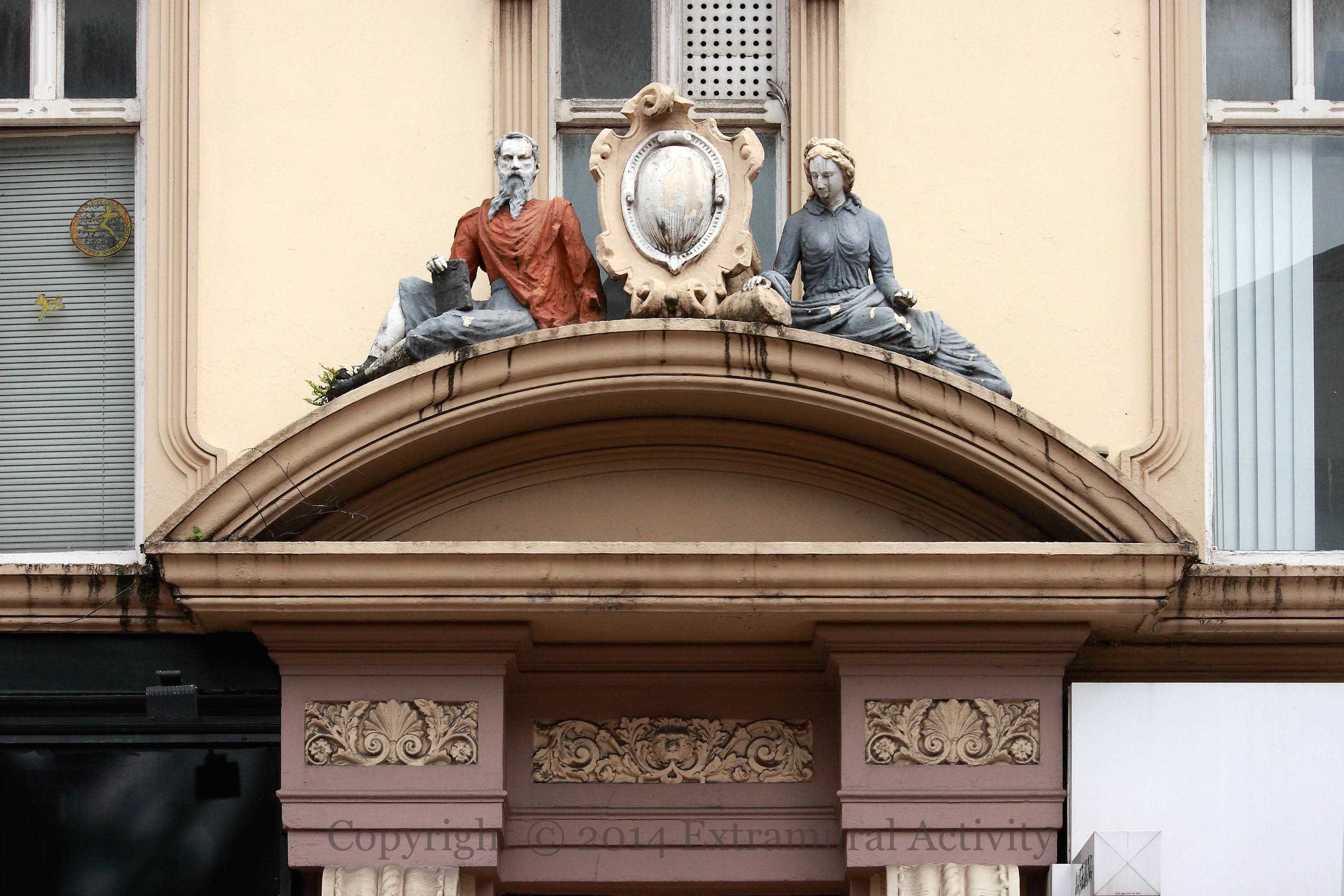
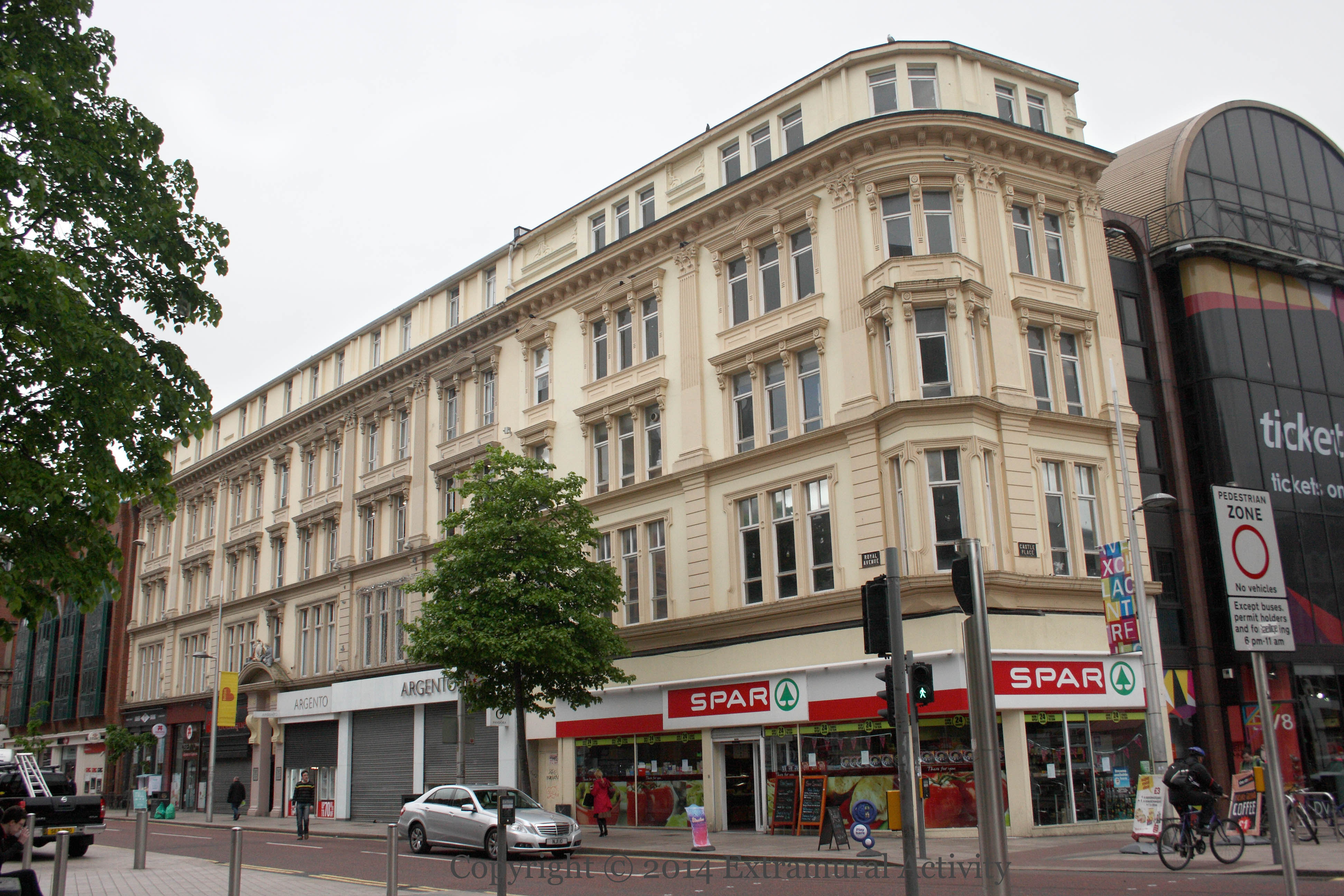
Below is a general view of Nos. 1 – 19 Royal Avenue, that is, Corry House, built in 1881 for John Robb and now a listed building. At No 13 one of the original door-cases remains, the top of which is shown above: a fork-bearded gentleman and a lady with an empty pail on either side of a cartouche. (Planning NI and Historical Belfast – A Historical Gazetteer by Marcus Patton)
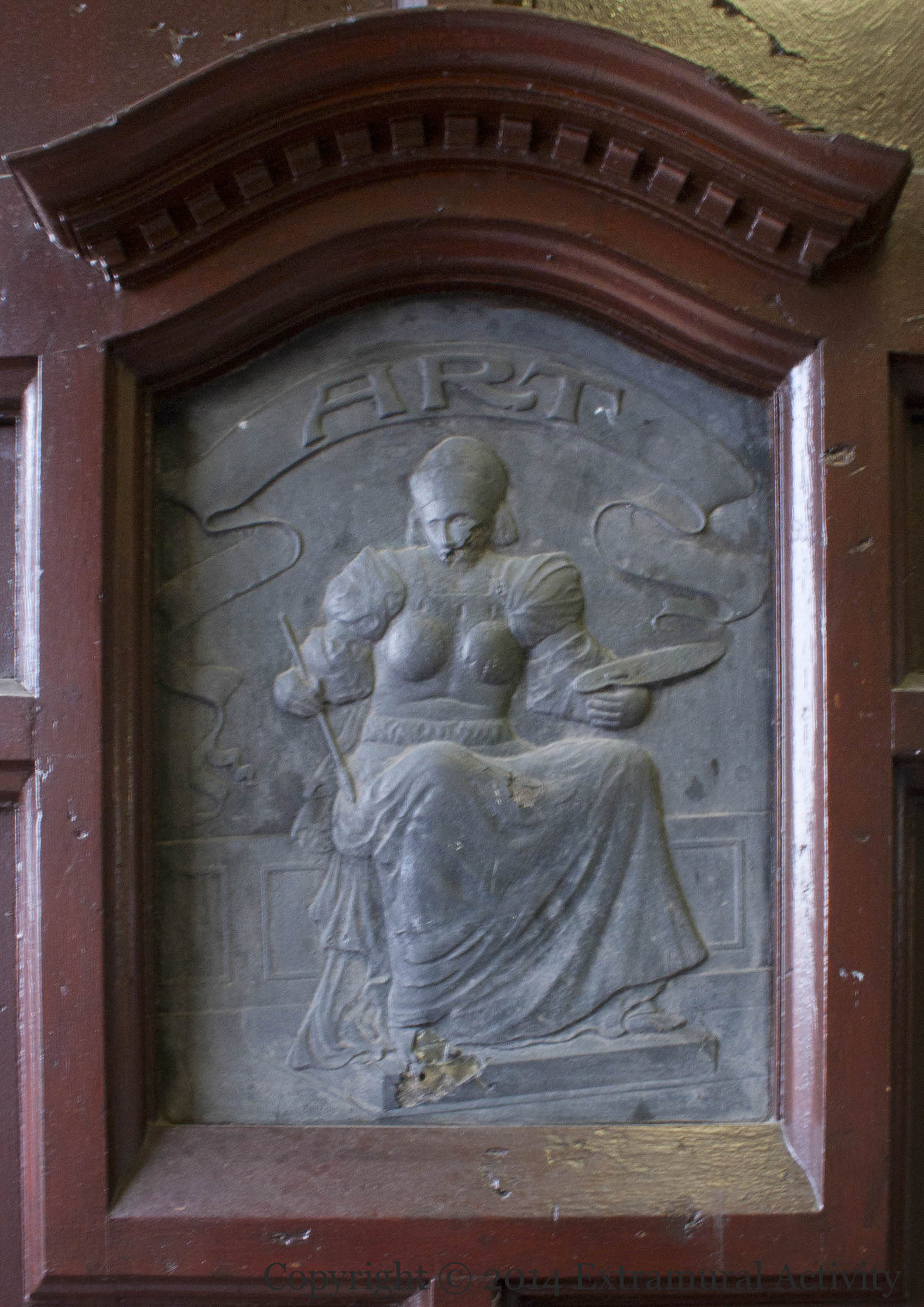
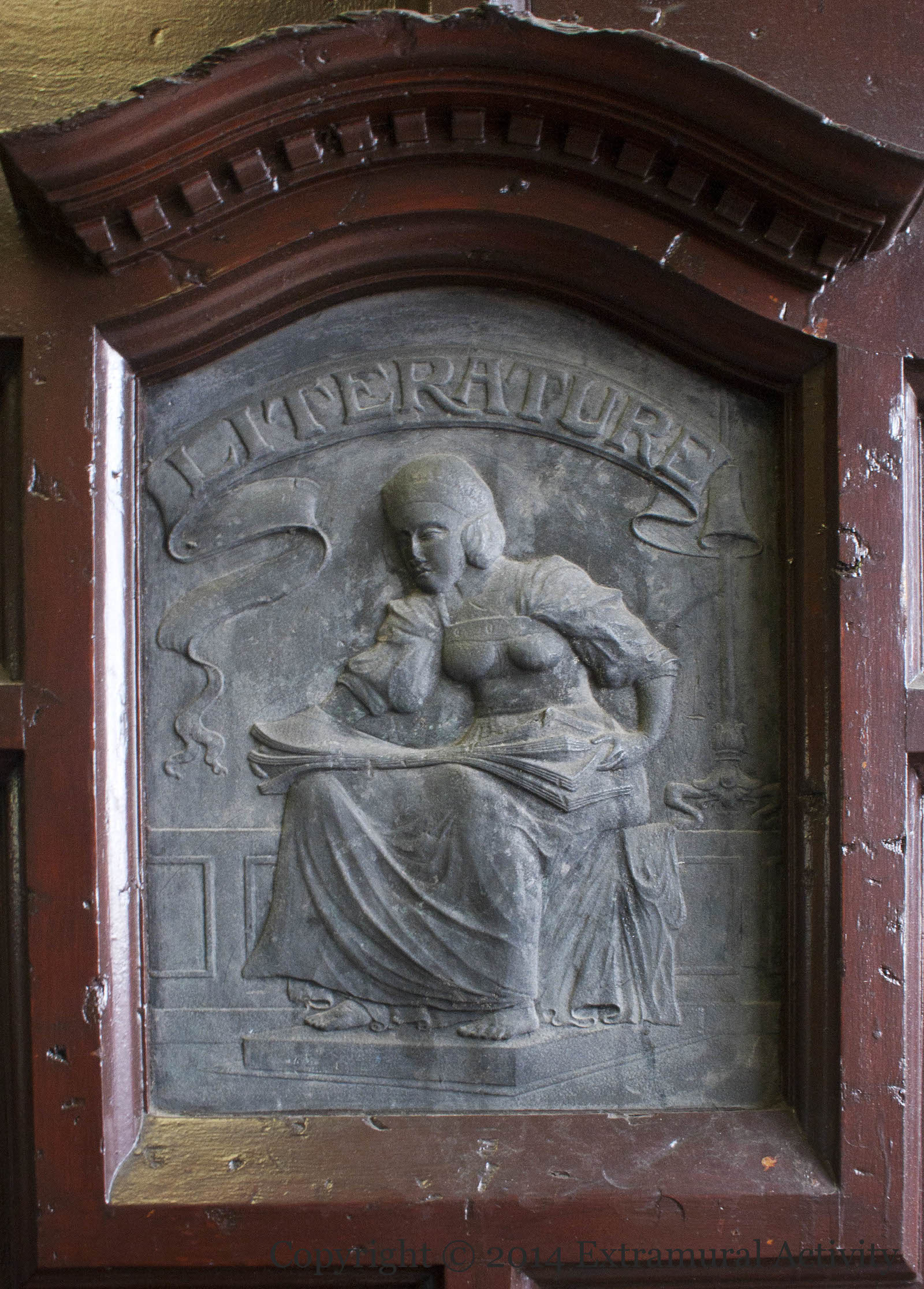
The Falls Road library is a ‘Carnegie Library’ (WP) – built with almost 4,000 pounds donated by Scotland-born American Andrew Carnegie. It opened on January 2nd, 1908, the second of three such libraries in Belfast, alongside Oldpark and Donegall Road. Its doors feature these two pieces by Holywood artist Rosamund Praeger: Art, seen here holding an artist’s palette – and Literature, seen below reading a folio. Art and Literature also take the form of angels, along with a third muse, Science, in the stonework above the doors.
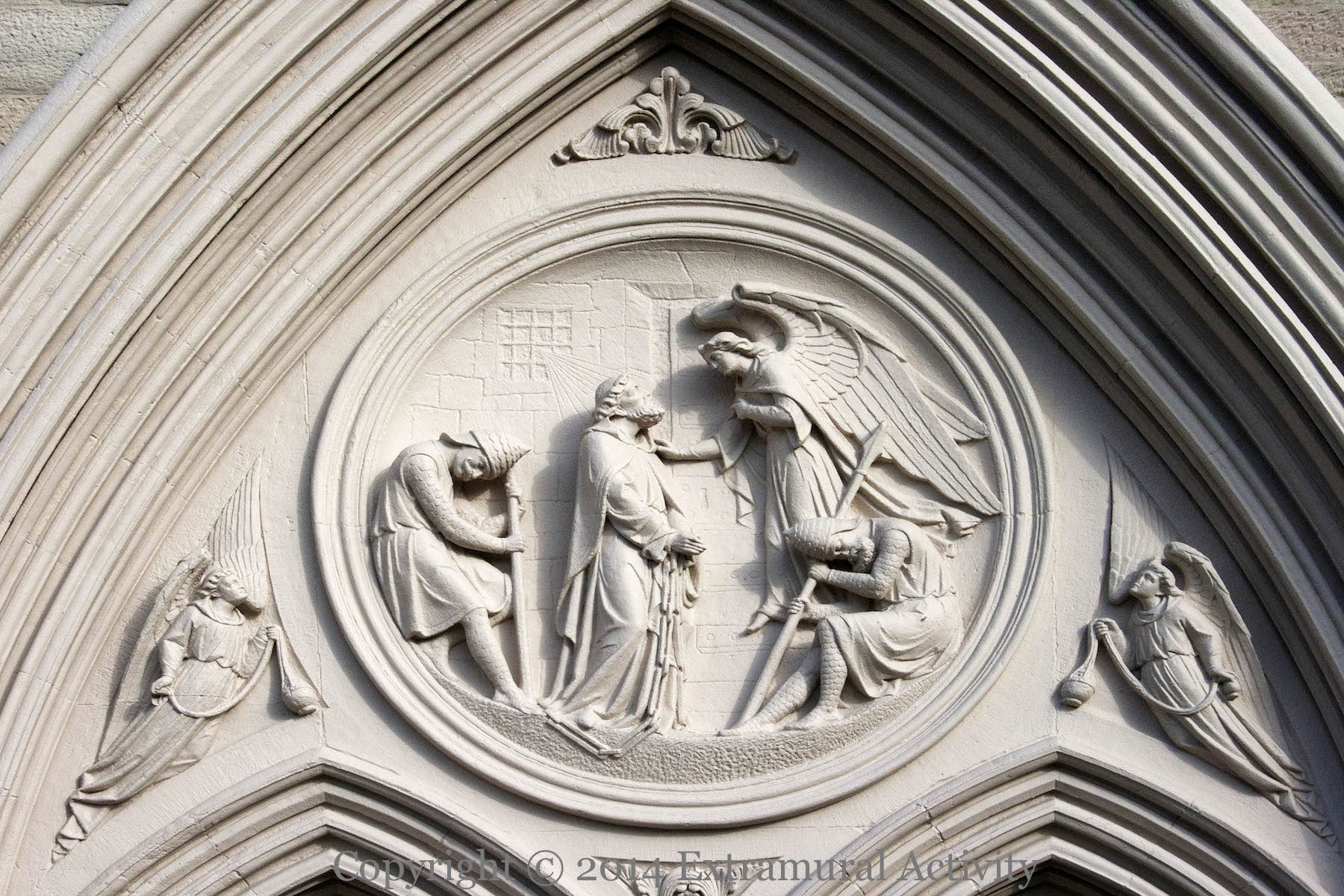
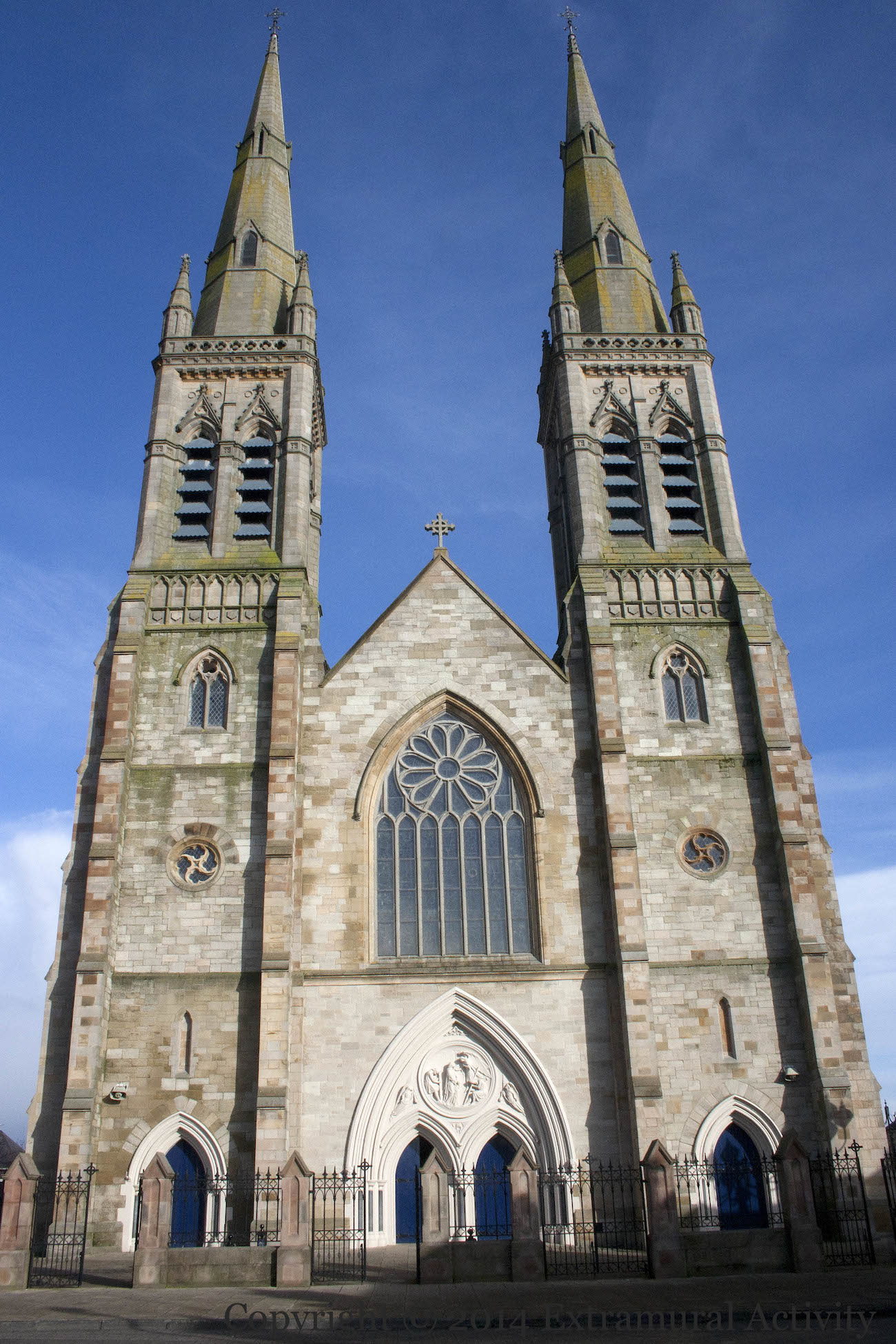
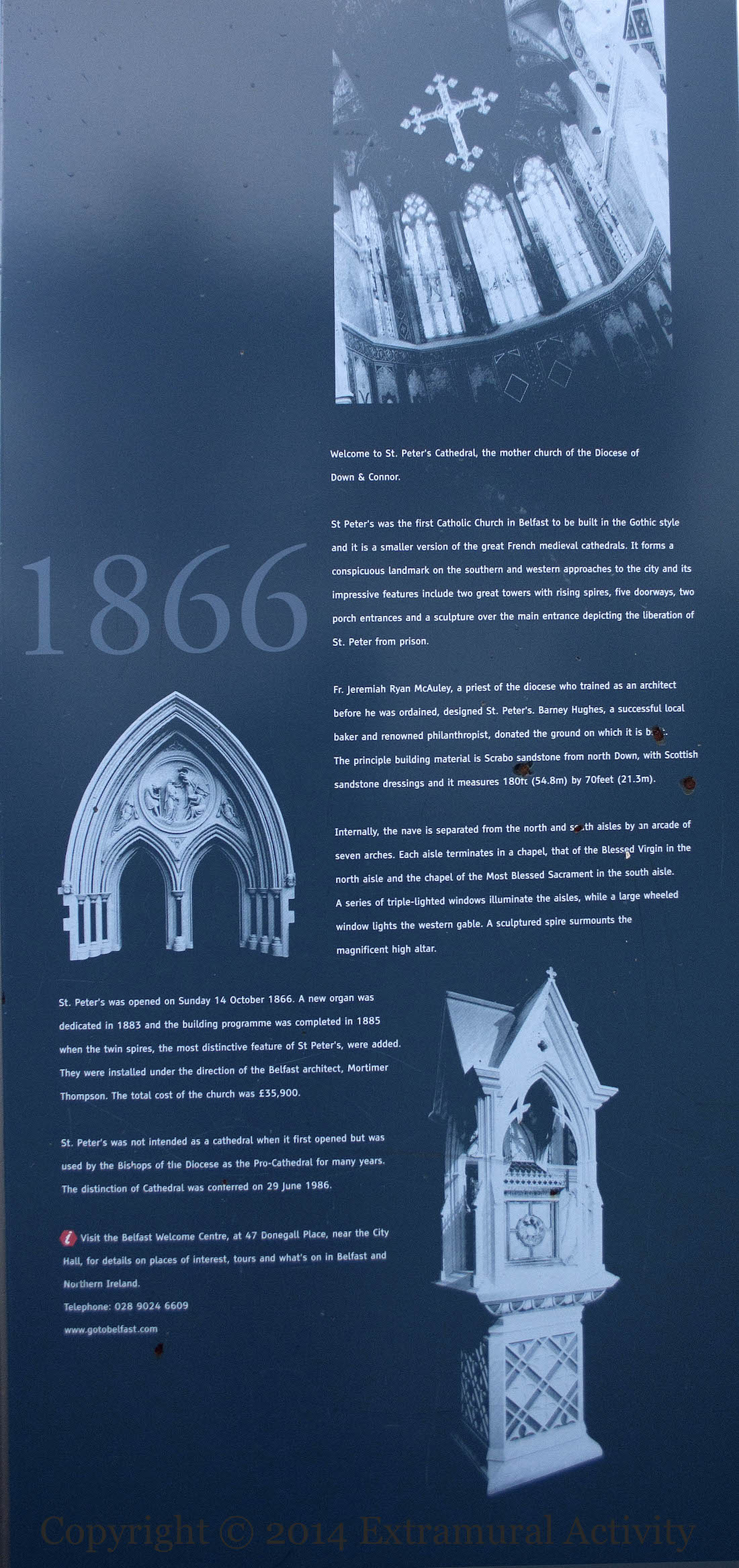
Like some of the residents of the Divis area in which this cathedral that bears his name now stands, (Saint) Peter found himself in prison. But the night before his trial, there comes an angel who magically releases his shackles and opens all the doors (Acts 12:3-19). James, on the other hand, is not so fortunate. As a scholar on the WP page notes, why James should die while Peter escapes is a “mystery of divine providence”. Wide shot and info board below.
Another previously-featured scriptural conundrum: Occupy Til I Come (Luke 19:13)
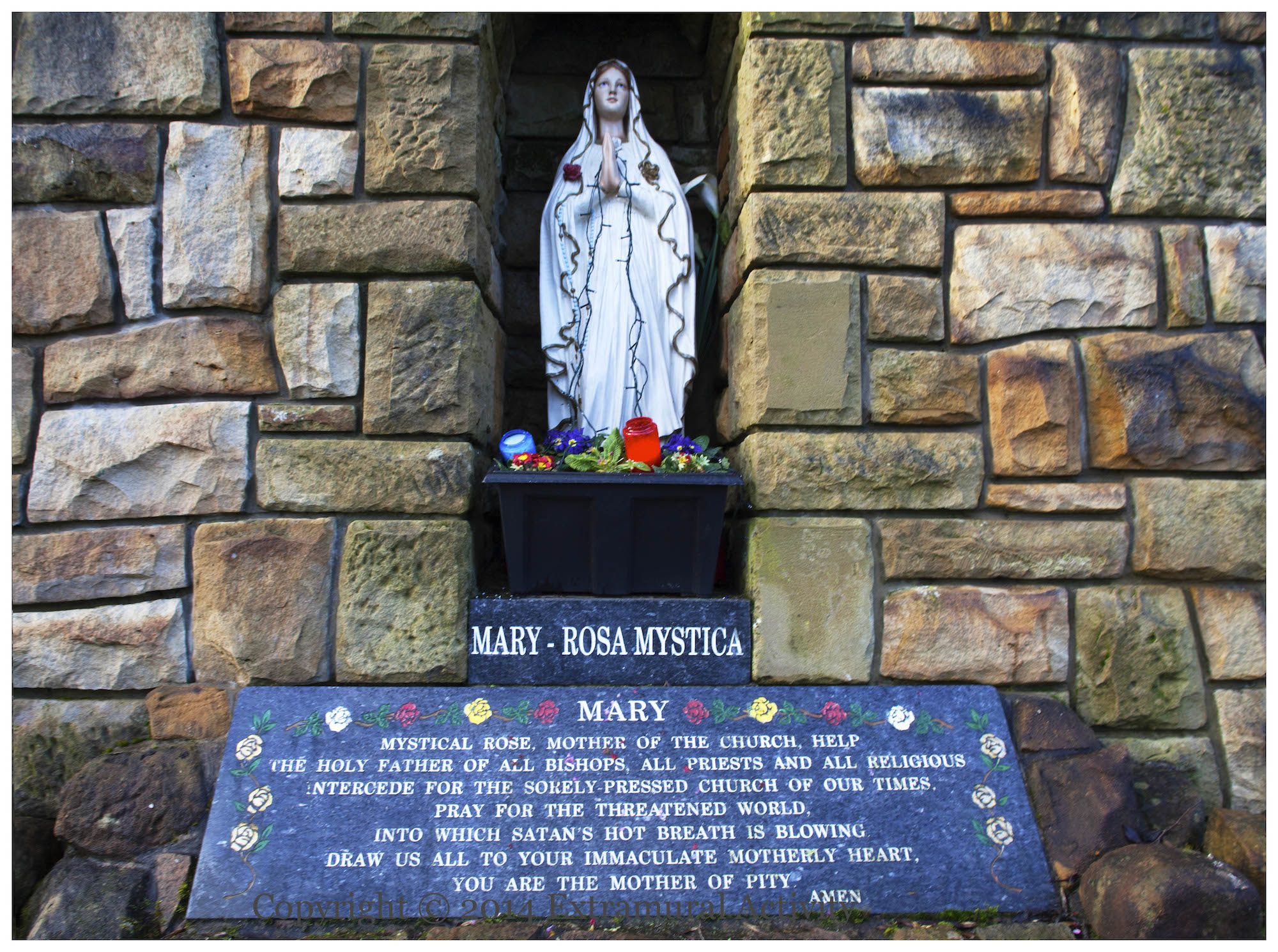
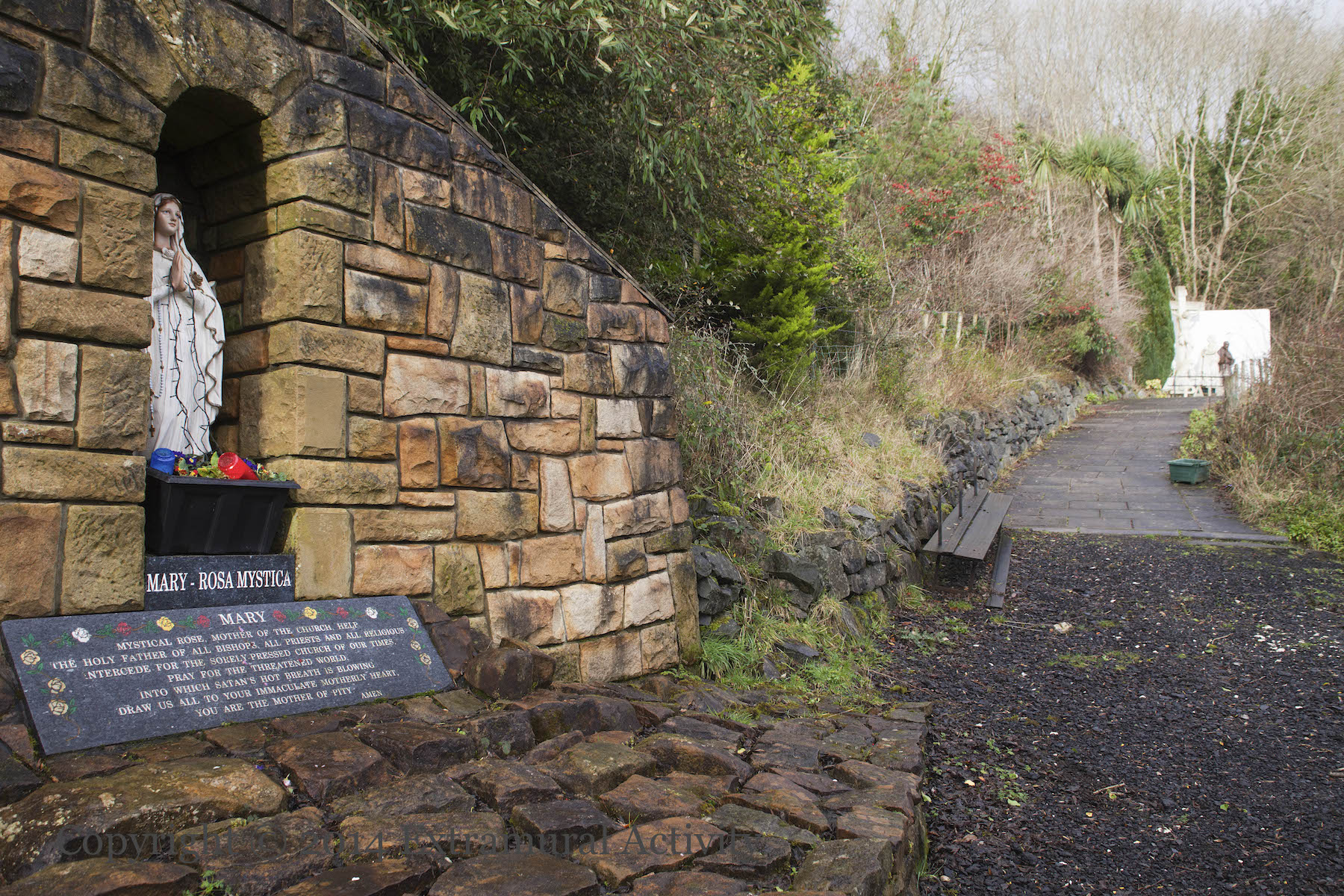
At the very top of the Whiterock Road, which is to say, half-way up Sliabh Dubh/Black Mountain, there are two shrines (wide shot below). The shrine to the Virgin Mary includes the apocalyptic prayer shown above: Mary, mystical rose, mother of the church, help the holy father of all bishops, all priests and all religious. Intercede for the sorely-pressed church of our times. Pray for the threatened world into which satan’s hot breath is blowing. Draw us all to your immaculate motherly heart. You are the mother of pity. Amen.
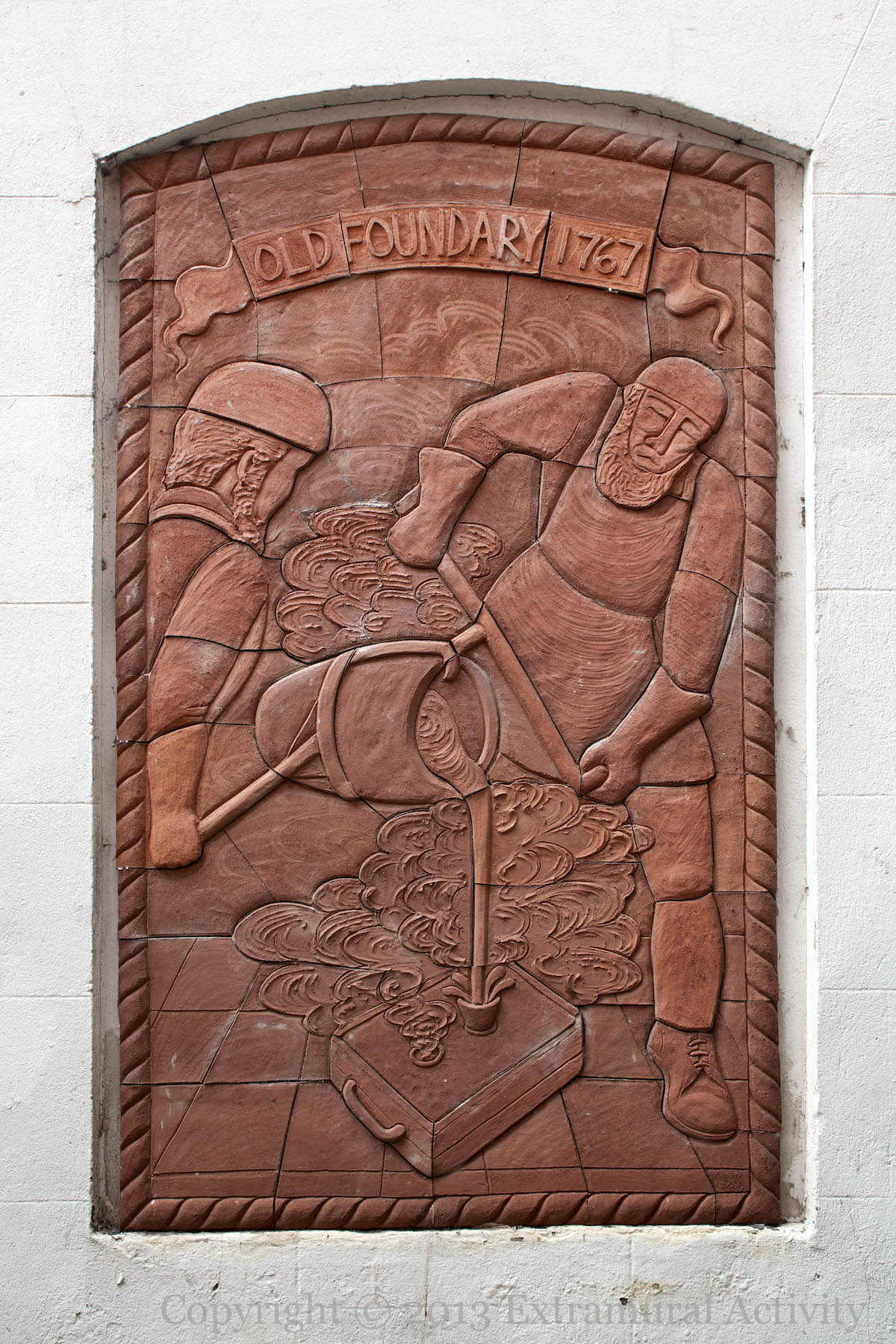
Above is a scored clay piece showing workers in a “foundary” (foundry). There are foundries in Belfast dating to the mid-to-late 1700s (e.g. Eileen McCracken, “Charcoal-Burning Ironworks in Seventeenth and Eighteenth Century Ireland”, Ulster Journal of Archaeology, 21 (1957)) but nothing specifically about 1767 or about a foundry in Exchange Place (or whatever preceded it – Exchange Place dates to the Victorian era). If you have information, please get in touch. There is a set of six pieces in a similar style on the Cupar Way “peace” line, regrettably covered in graffiti and tourists’ signatures. See also: Pot-House Lane.
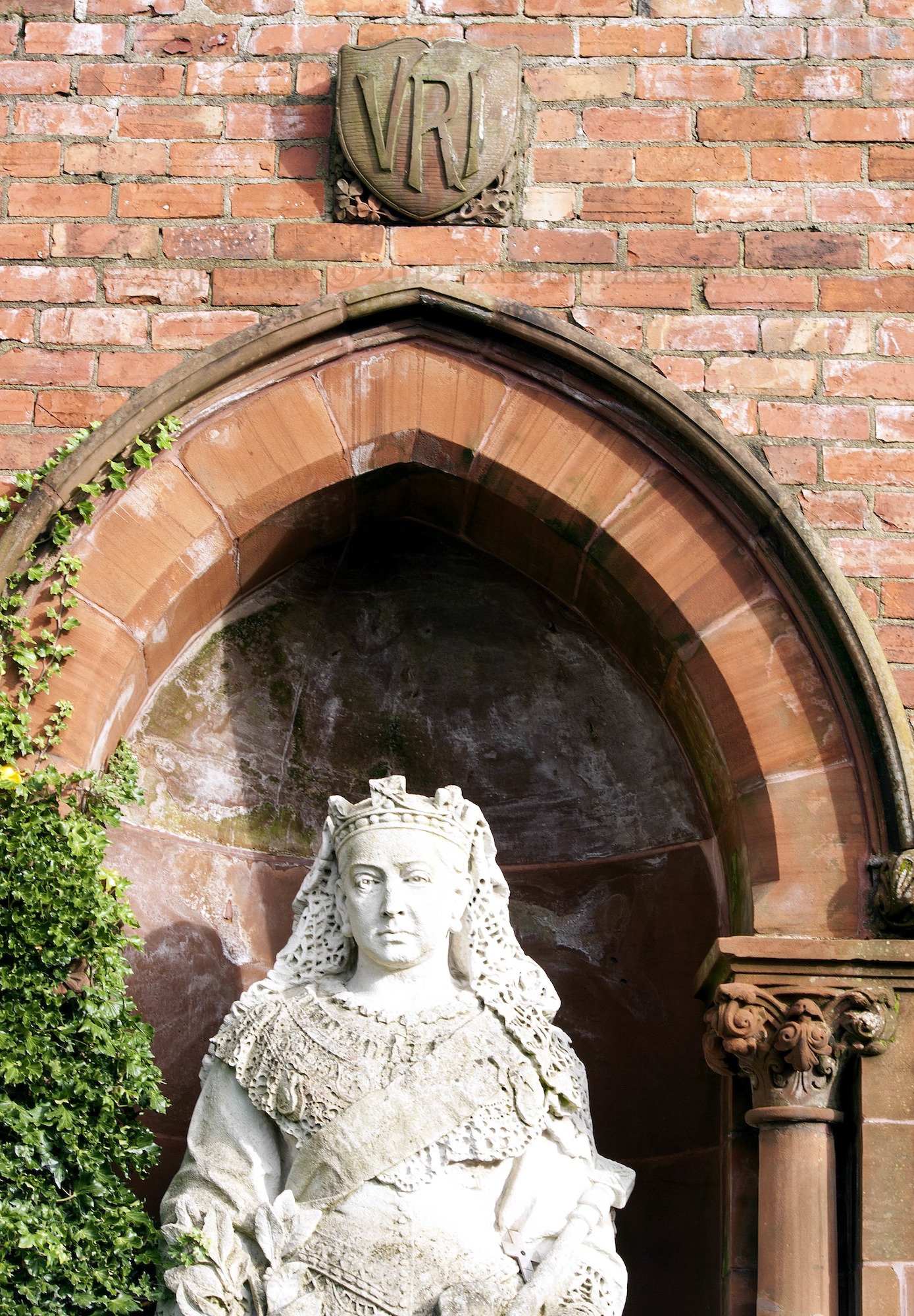
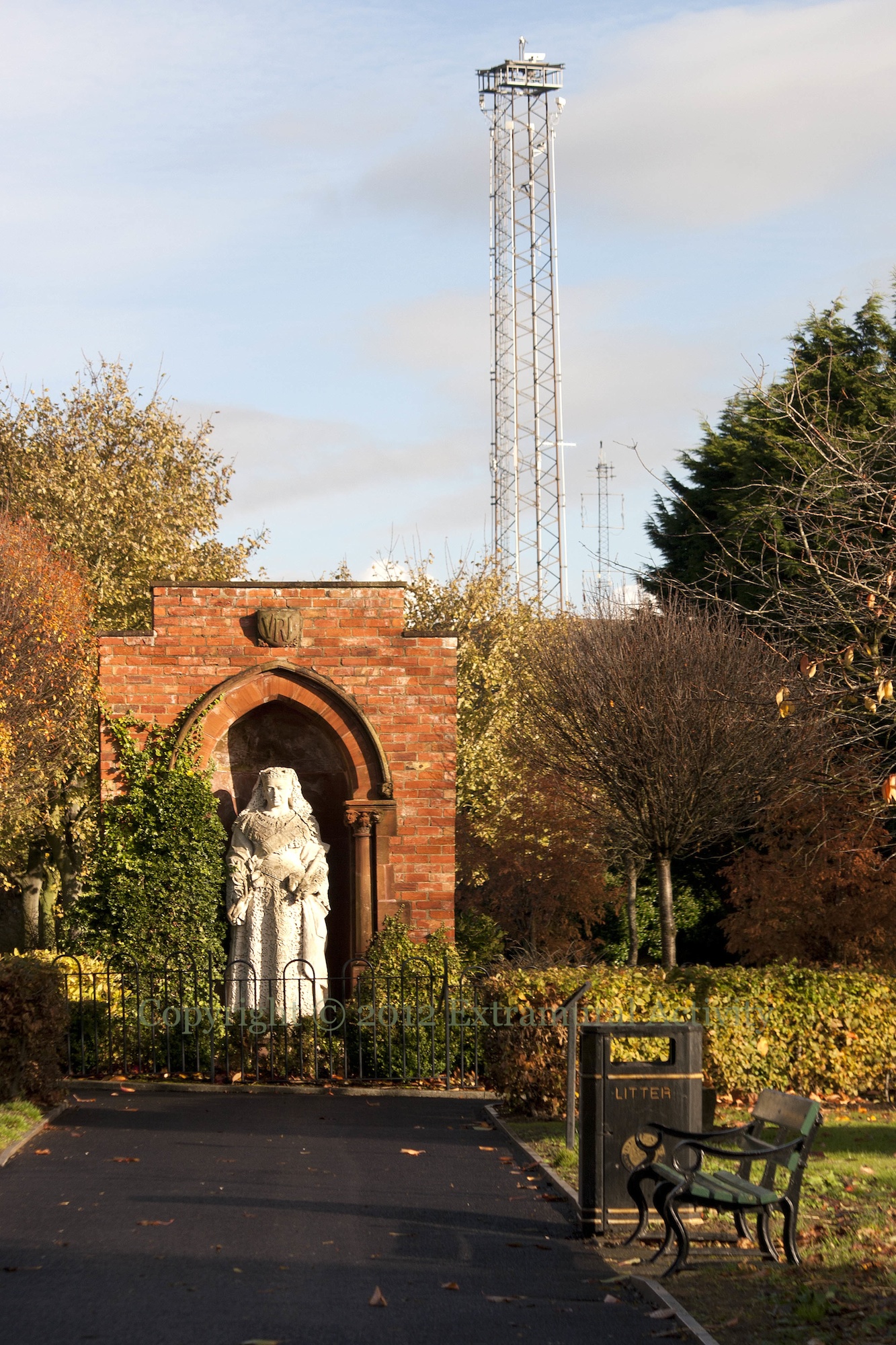
From the old Shankill Graveyard. The statue of Queen Victoria was carved by John Cassidy from Slane, Co. Meath in 1897 to mark Victoria’s Diamond Jubilee – she was 78 years of age at the time. She is depicted wearing Nottingham lace. Victoria was Queen Of Ireland 1837 – 1901 and Empress of India 1876 – 1901.
Wide shot below, with the antenna on Tennent St. police station in view …
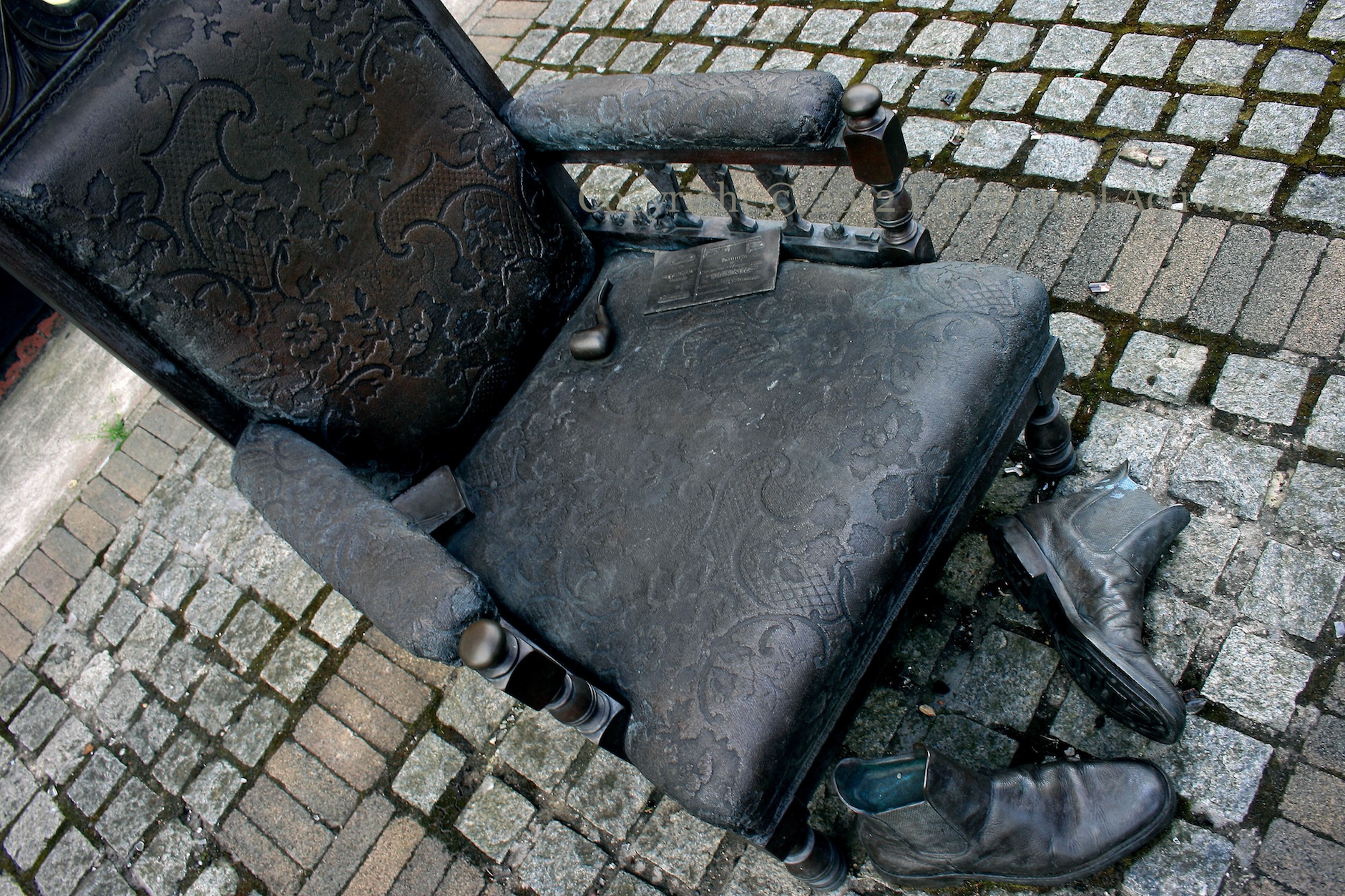
The chair and shoes in the foreground of the David Ervine board are a bronze sculpture, shown above. There are a number of (sculpted) items on the seat of the chair: a ticket for the Titanic, a little (prayer?) book with a poppy on the cover, and a pipe.
According to the Belfast Telegraph, the whole is meant to symbolize the industrial and cultural heritage of the area and the pipe is David Ervine’s pipe. The pipe would also tie him to Gusty Spence (cited in this republican mural about collusion), who also smoked a pipe. The prayer book would be for Protestantism, the poppy for loyalism and service in WWI, and the ticket for the shipyard. As for the boots, they appear to be of a modern design, but are perhaps meant to symbolize the working class, today and yesterday.
Both the sculpture and the board are by Ross Wilson.
 Seosamh Mac Coille Collection