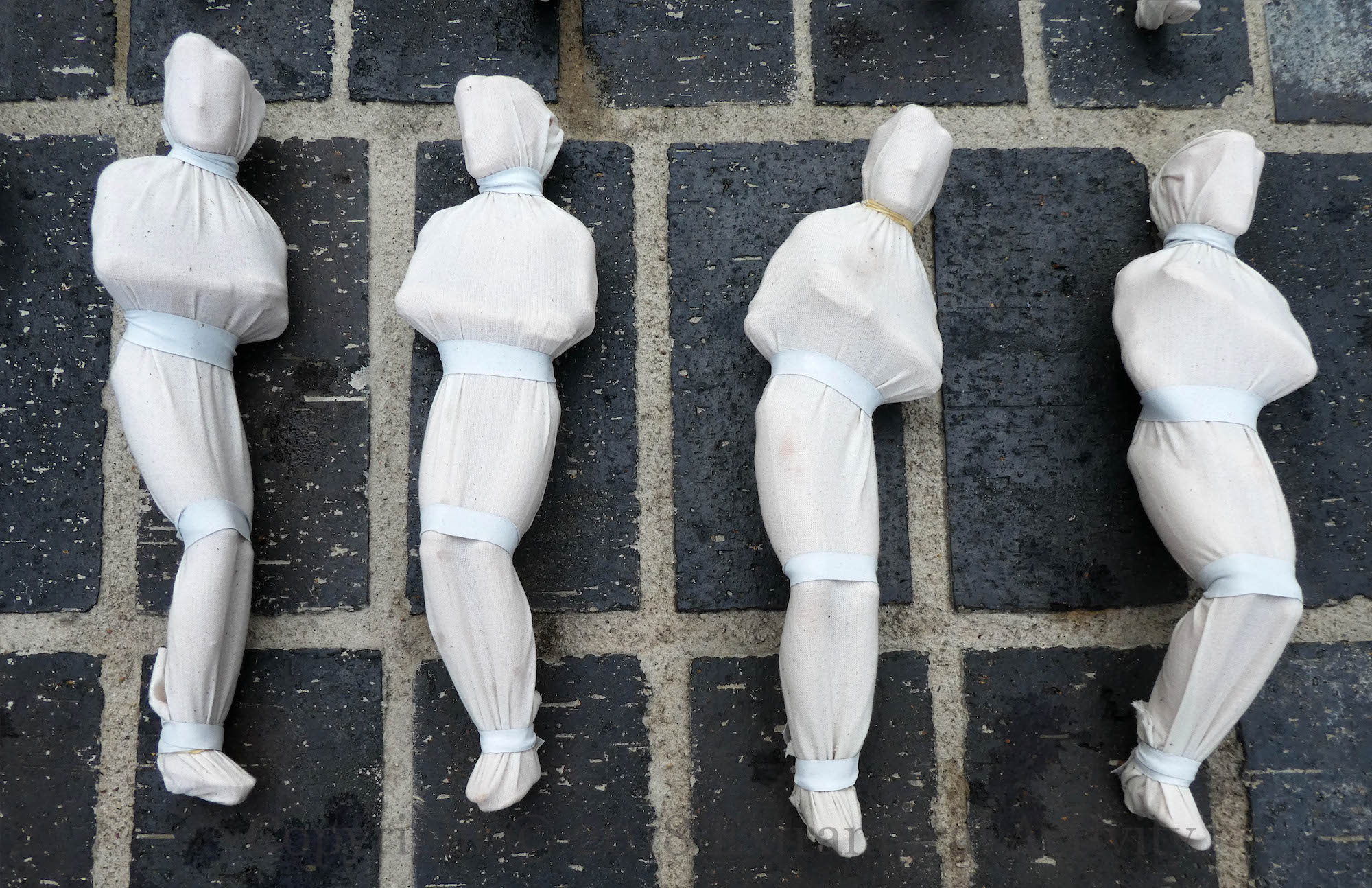
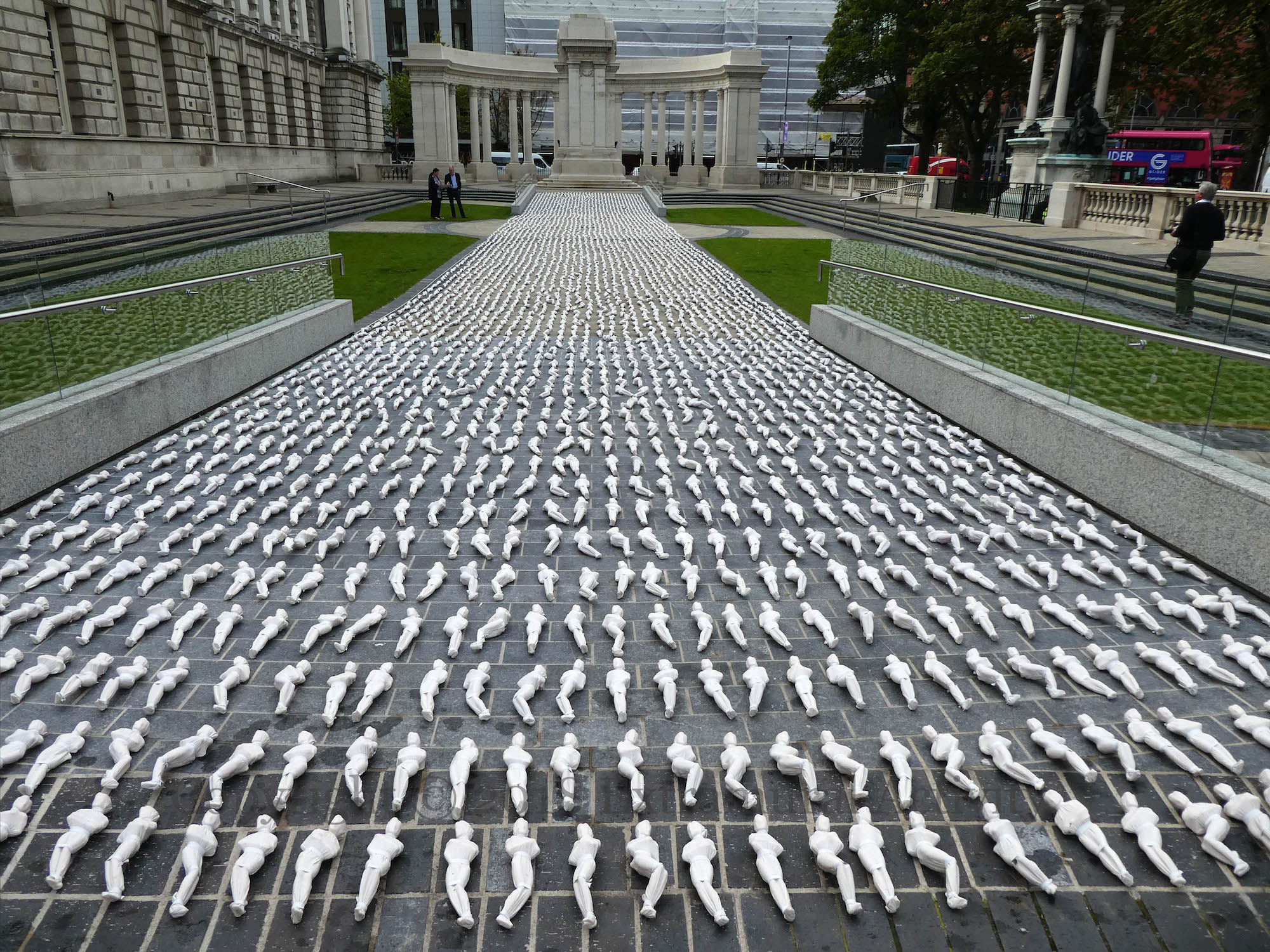
English artist Rob Heard (web | tw) created 3,775 jointed wooden sculptures, wrapped in calico, one for each soldier from the 36th (Ulster) and 10th (Irish) and 16th (Irish) regiments, or from Belfast, whose body was not recovered from the Somme battlefields. They were laid out last month in the Garden Of Remembrance at Belfast City hall (see second image). On Armistice Day this November, the Belfast figures will be included in a larger display commemorating 72,396 Commonwealth soldiers in London (more info).
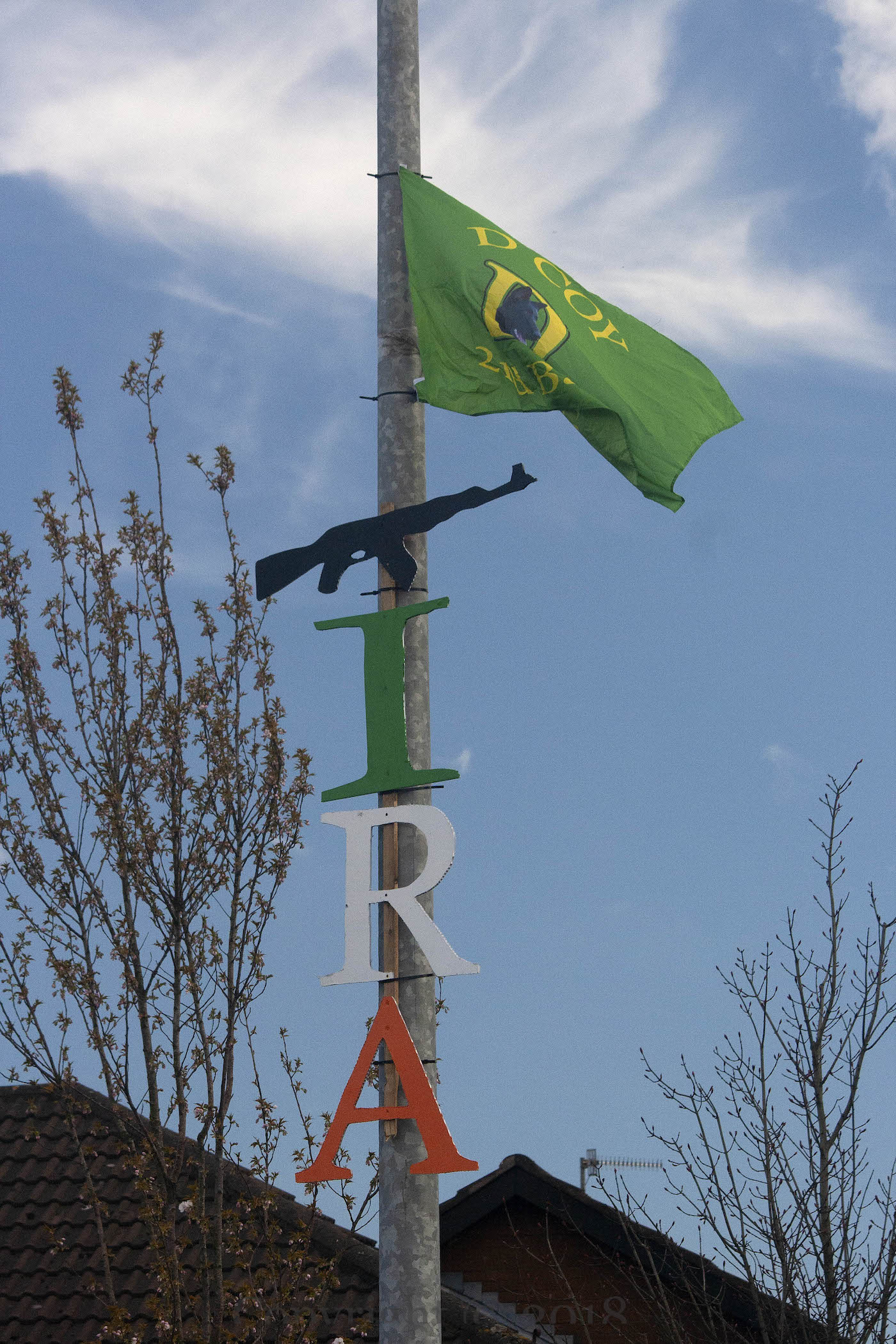
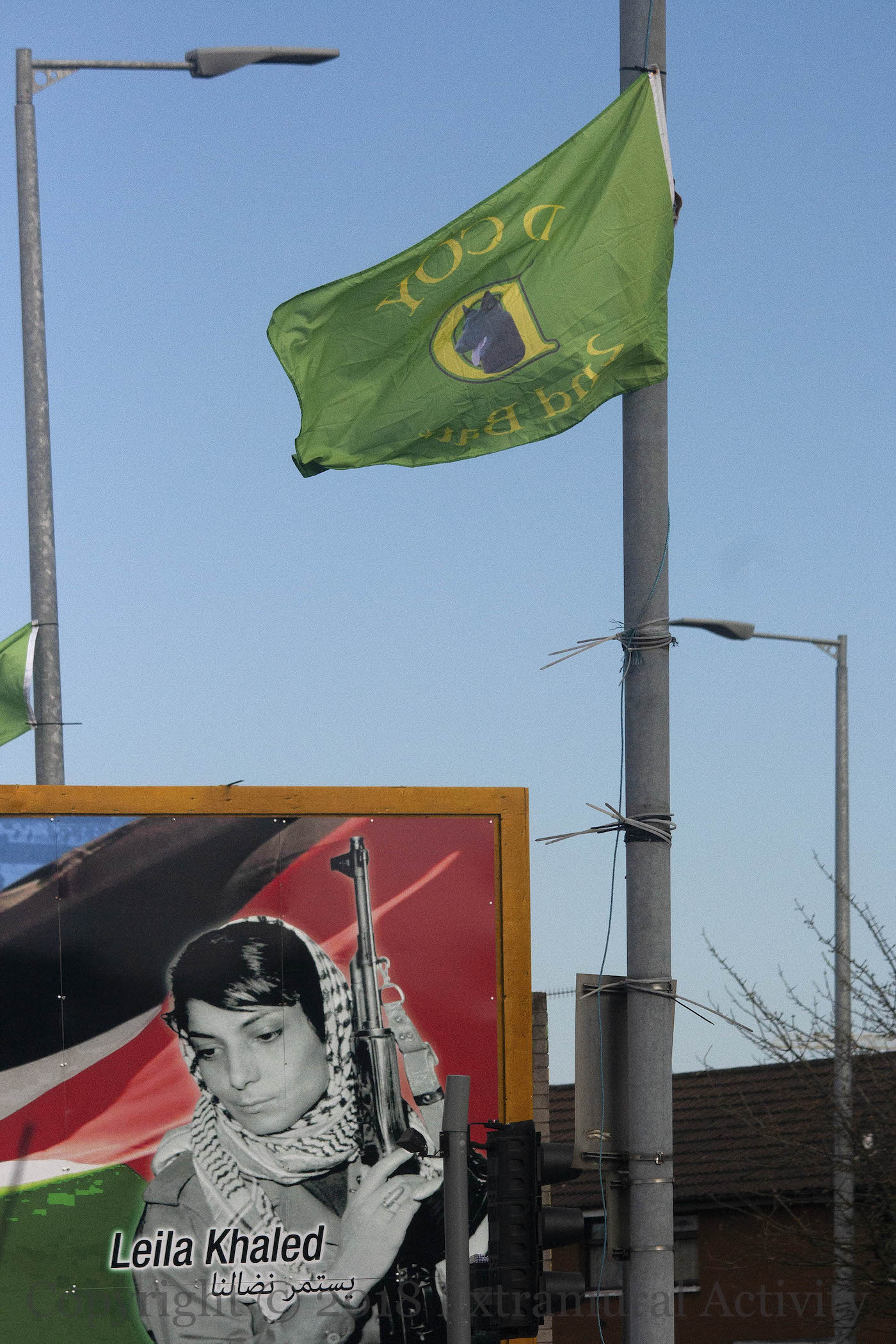
In addition to their Easter parade in April (Irish News) and large hoarding celebrating Charlie Hughes and Leila Khaled at the corner of Northumberland Street, IRA D Company’s presence in Divis now includes a cut-out assault rifle and tricoloured “IRA” mounted on the light pole.
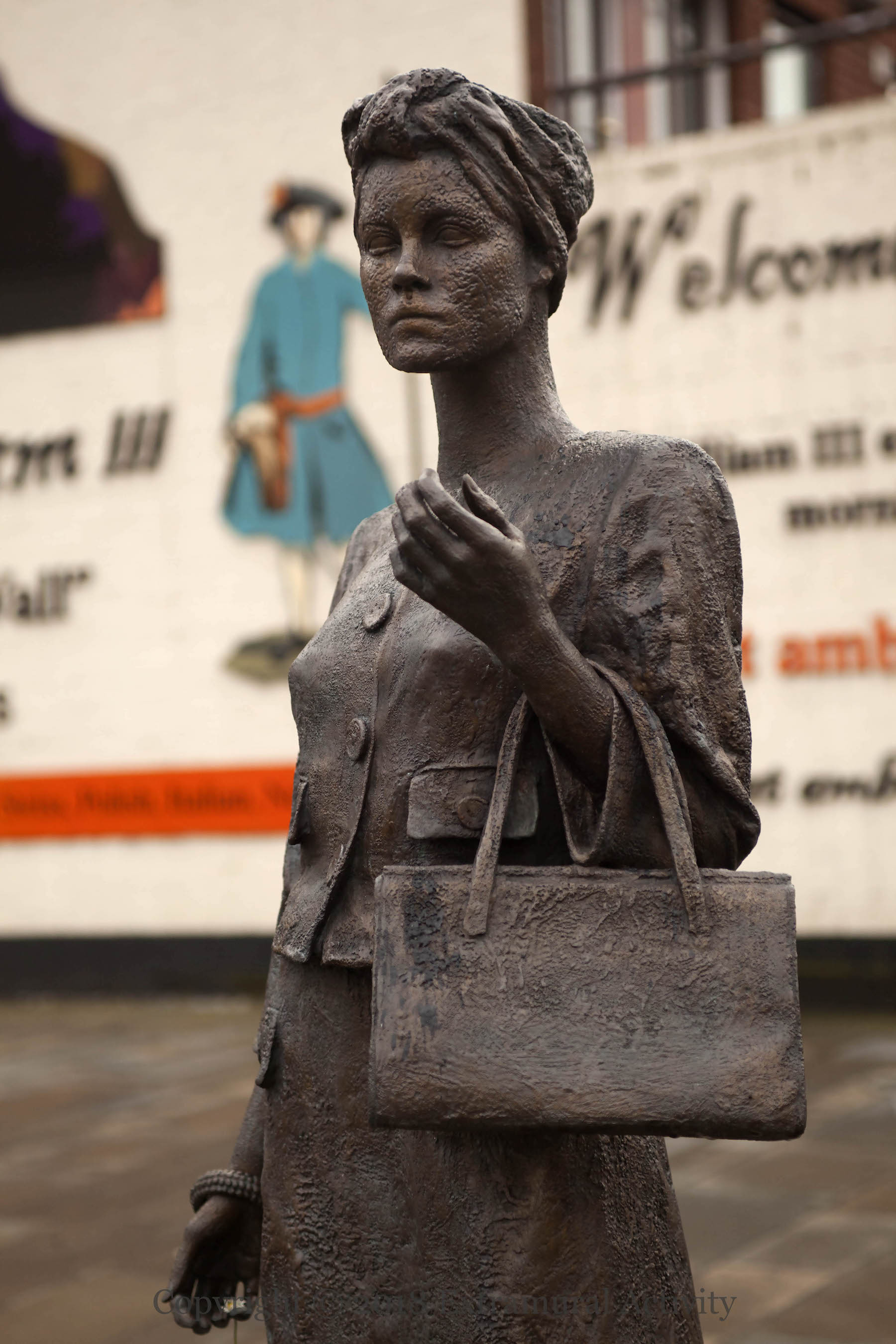
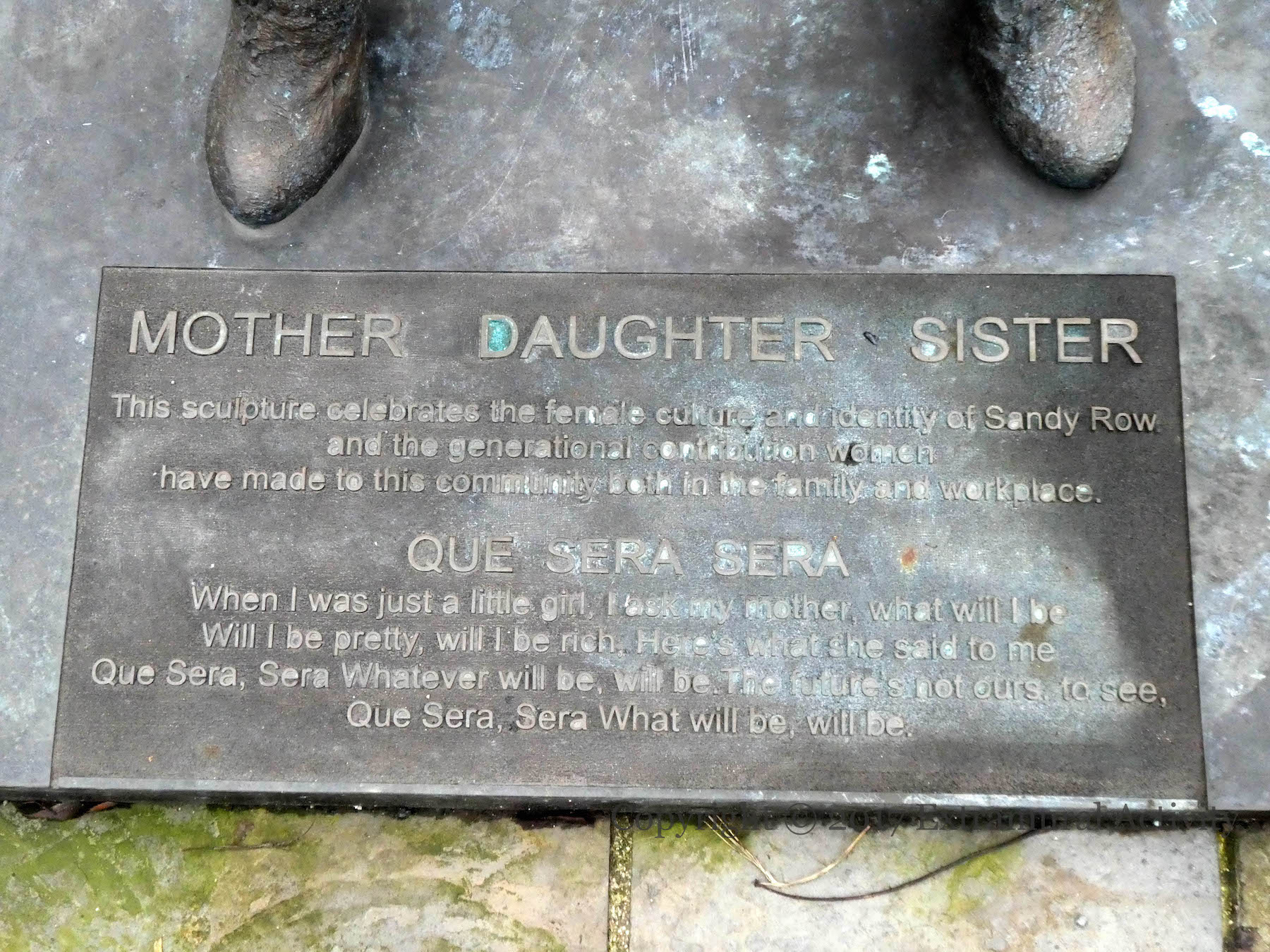
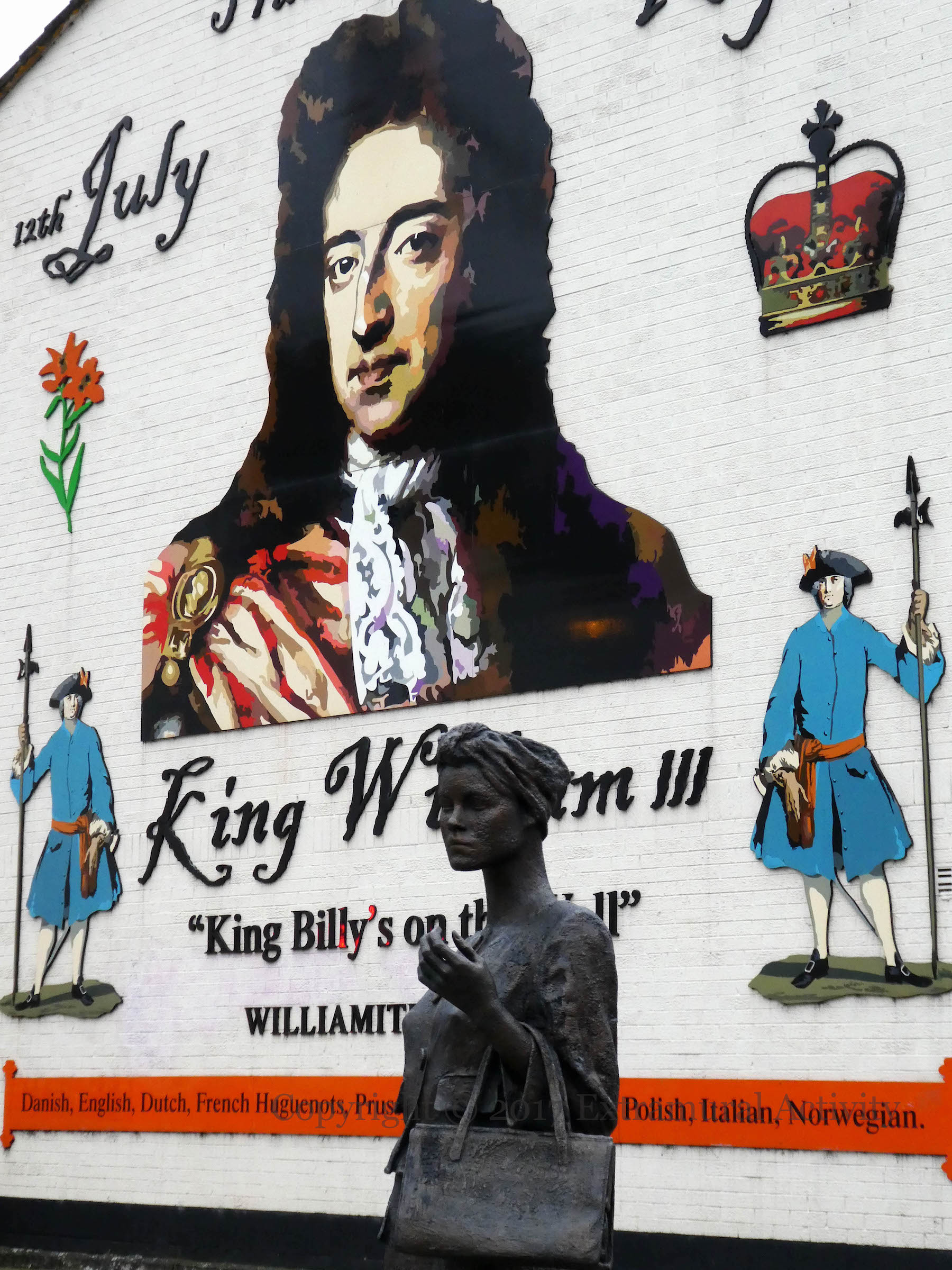
Ross Wilson’s statue ‘Mother – Daughter – Sister’ was launched in 2015 (Art Council NI), two years after his King William mural which towers over it (see final image). “This sculpture celebrates the female cultural identity of Sandy Row and the generational contribution women have made to this community both in the family and workplace.” With a verse from the Doris Day song ‘Que Sera Sera’ from Hitchcock’s The Man Who Knew Too Much.
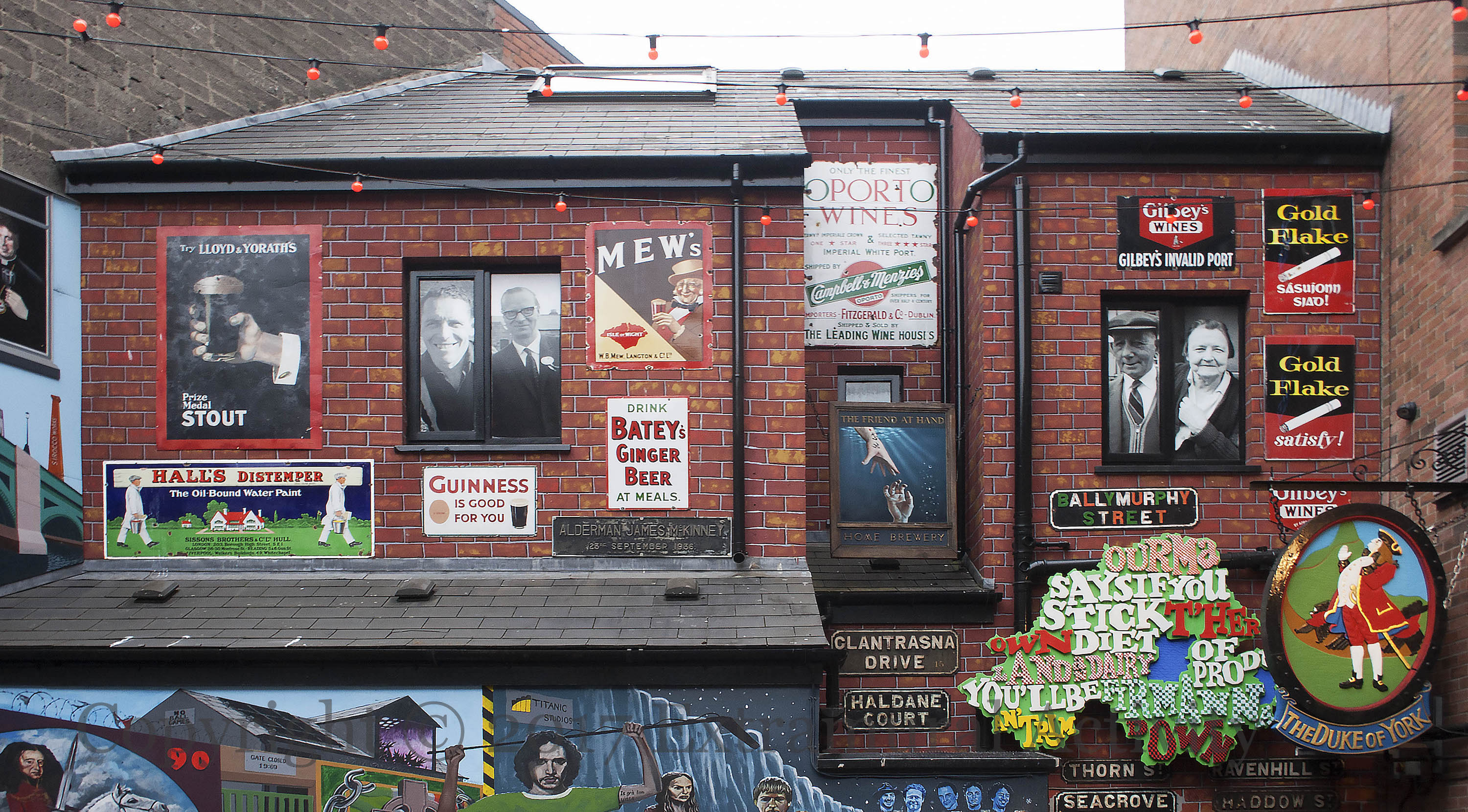
“Ourma says if you stick t’herown diet of landandairy prod you’ll be firmanna an’trim down” – a saying in which the names of all six Northern Irish counties are (phonetically) included. Above it are a variety of vintage advertisements from the late 1800s and early 1900s: Mew’s brewery (Isle of Wight), Lloyd & Yorath’s stout (Newport, Wales), Hall’s paints (Hull), Batey’s ginger beer (London), Campbell & Menzies’s shipments of Oporto wines, Gilbey’s wines, Gold Flake tobacco (in both English and Irish: Sásuíonn sıad!).
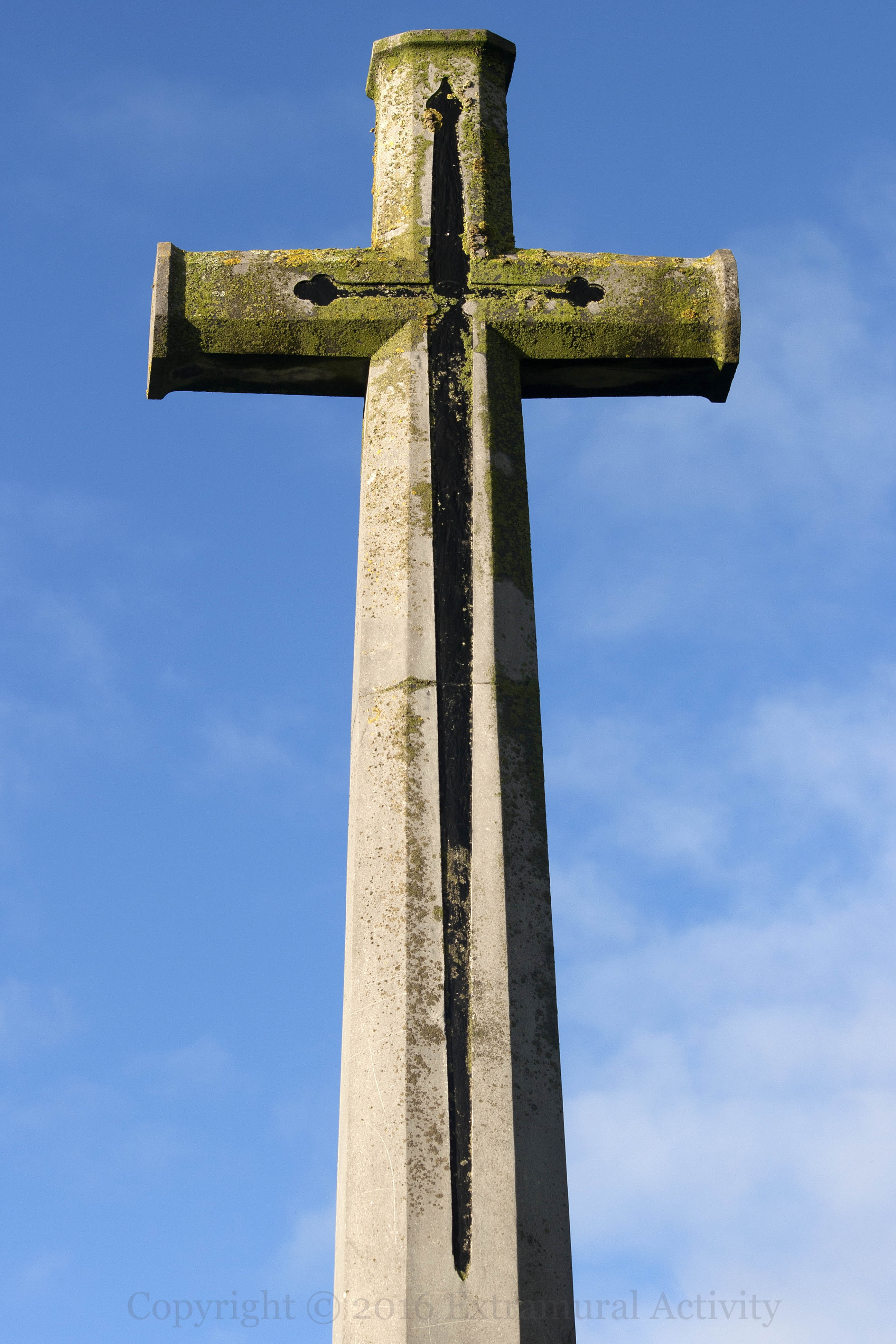
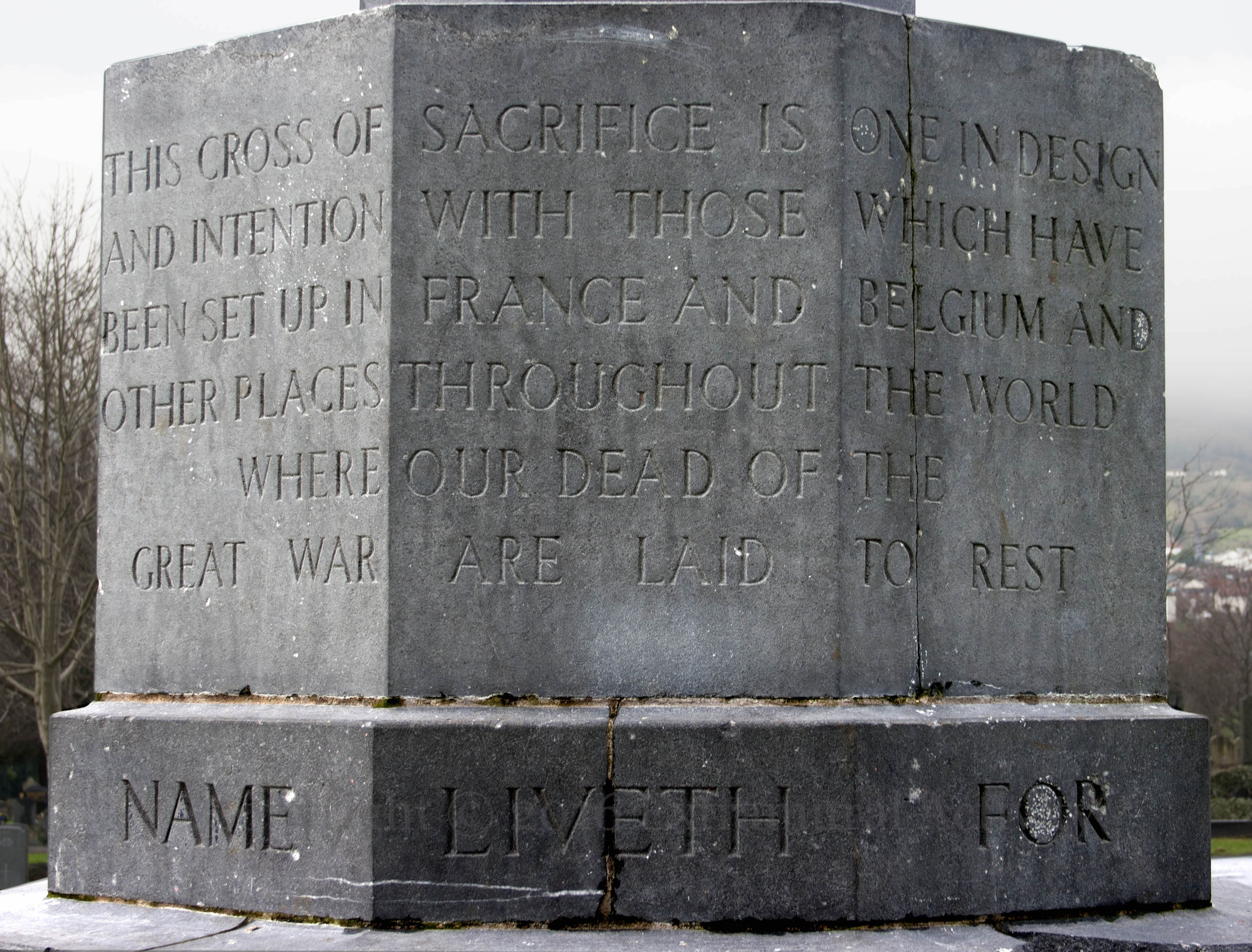
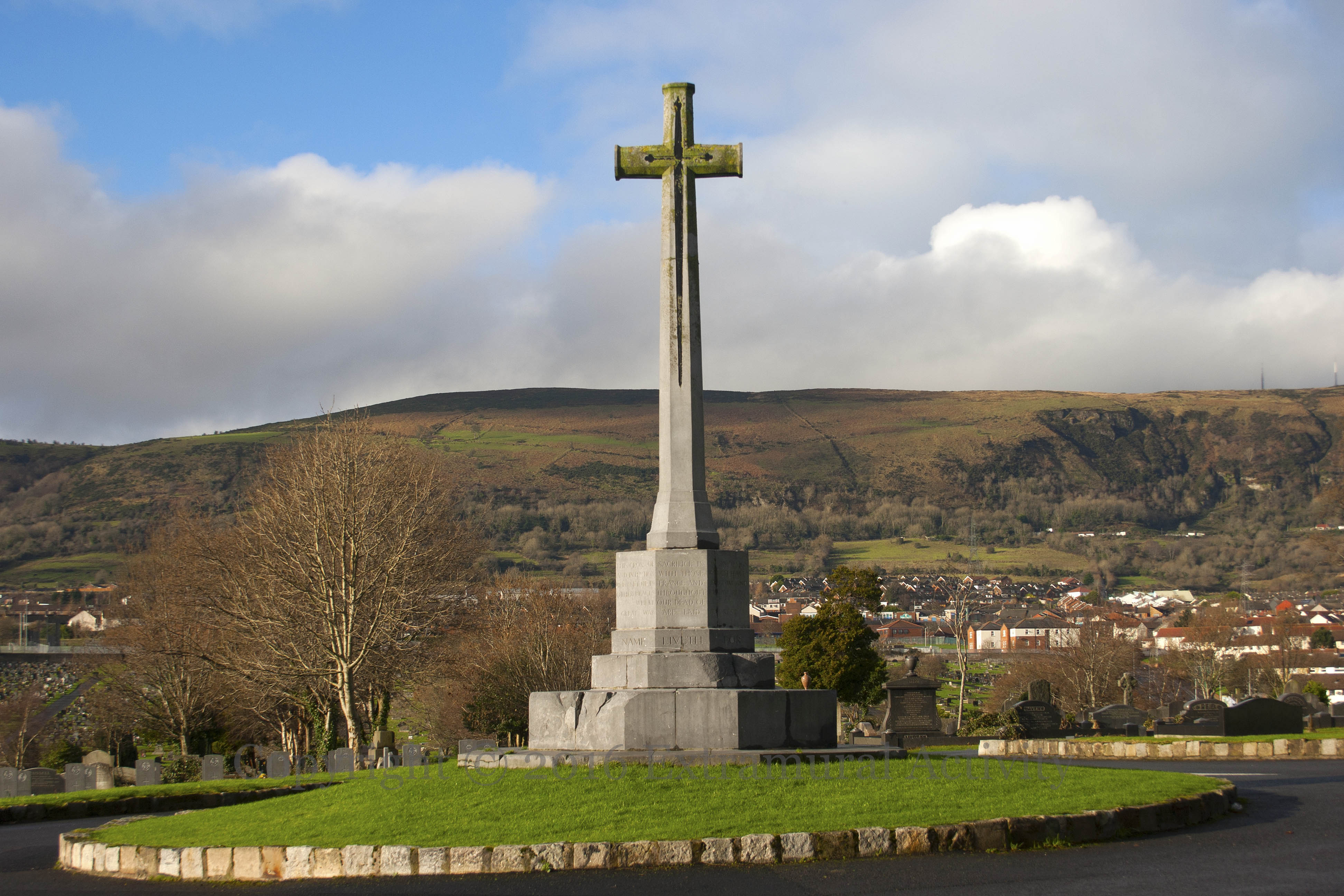
Religion and military might are one in this giant (see the wide shot, below) cross in Belfast’s City Cemetery, which commemorates the dead of World War I. The base (shown below) reads: The cross of sacrifice is one in design and intention with those which have been set up in France and Belgium and other places throughout the world where our dead of this great war are laid to rest. Their name liveth for ever more.” There is a similar memorial in Dundonald Cemetery. According to the Commonwealth War Graves Commission, “There are now 296 Commonwealth burials of the 1914-1918 war and 274 of the 1939-1945 war commemorated here.”
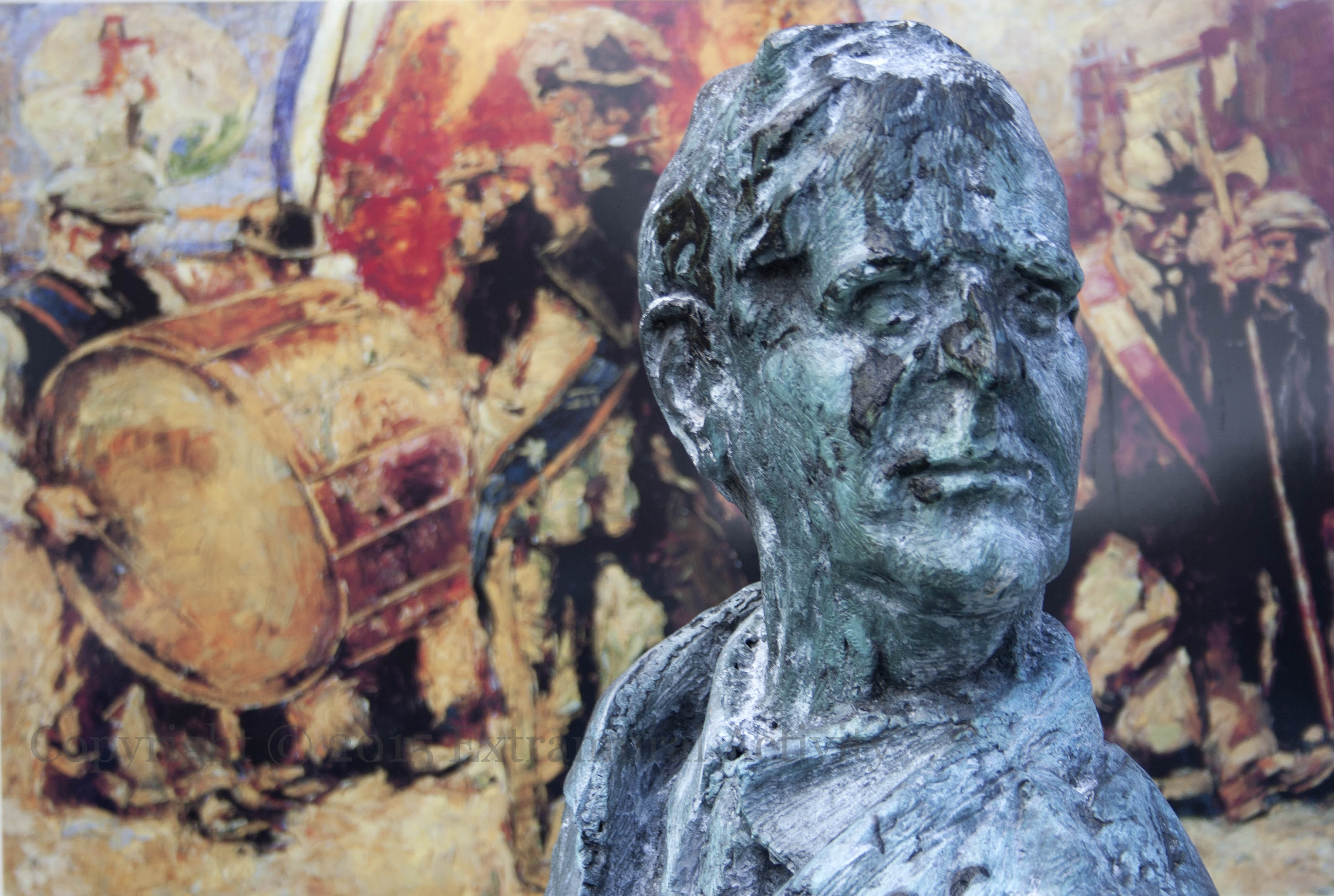
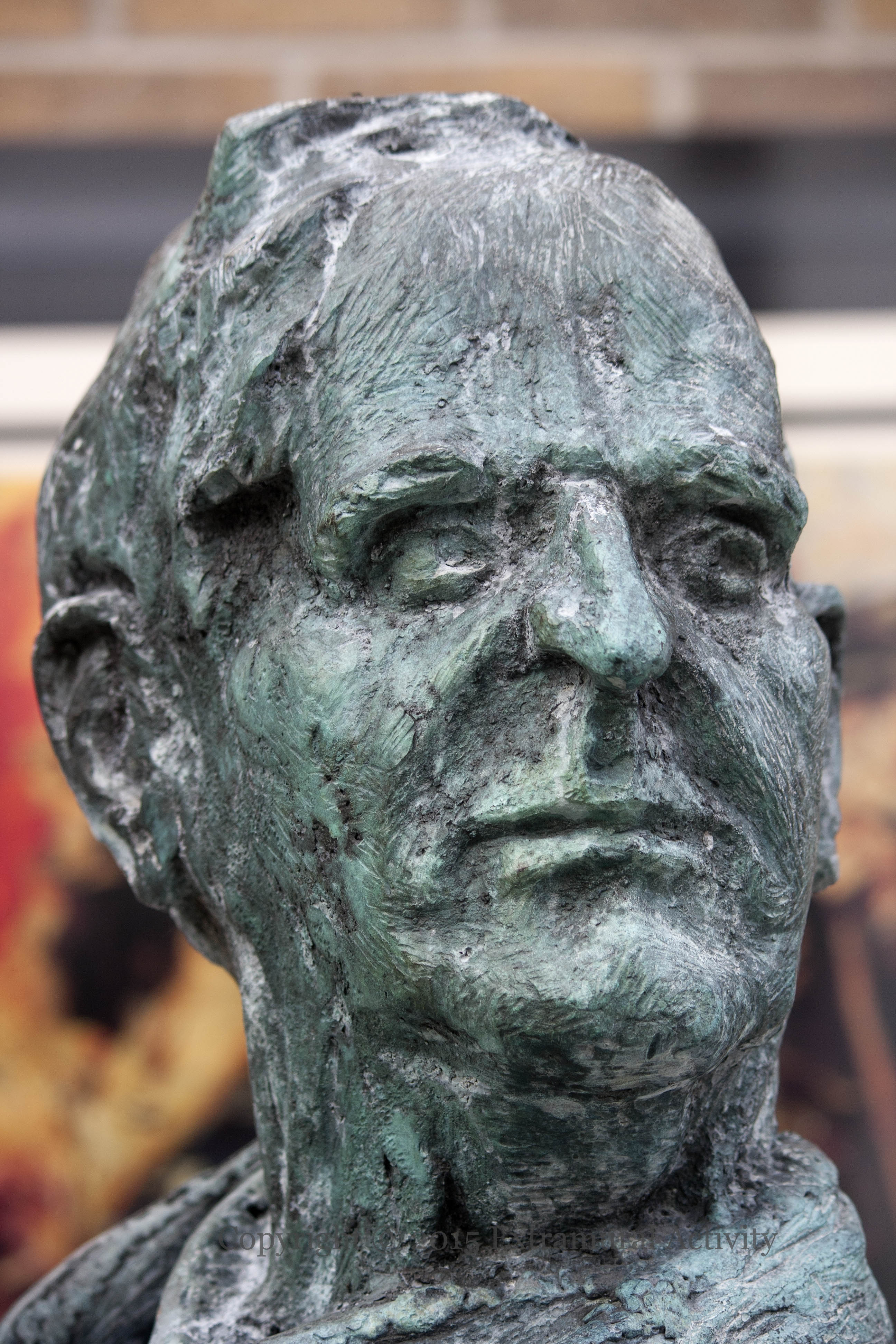
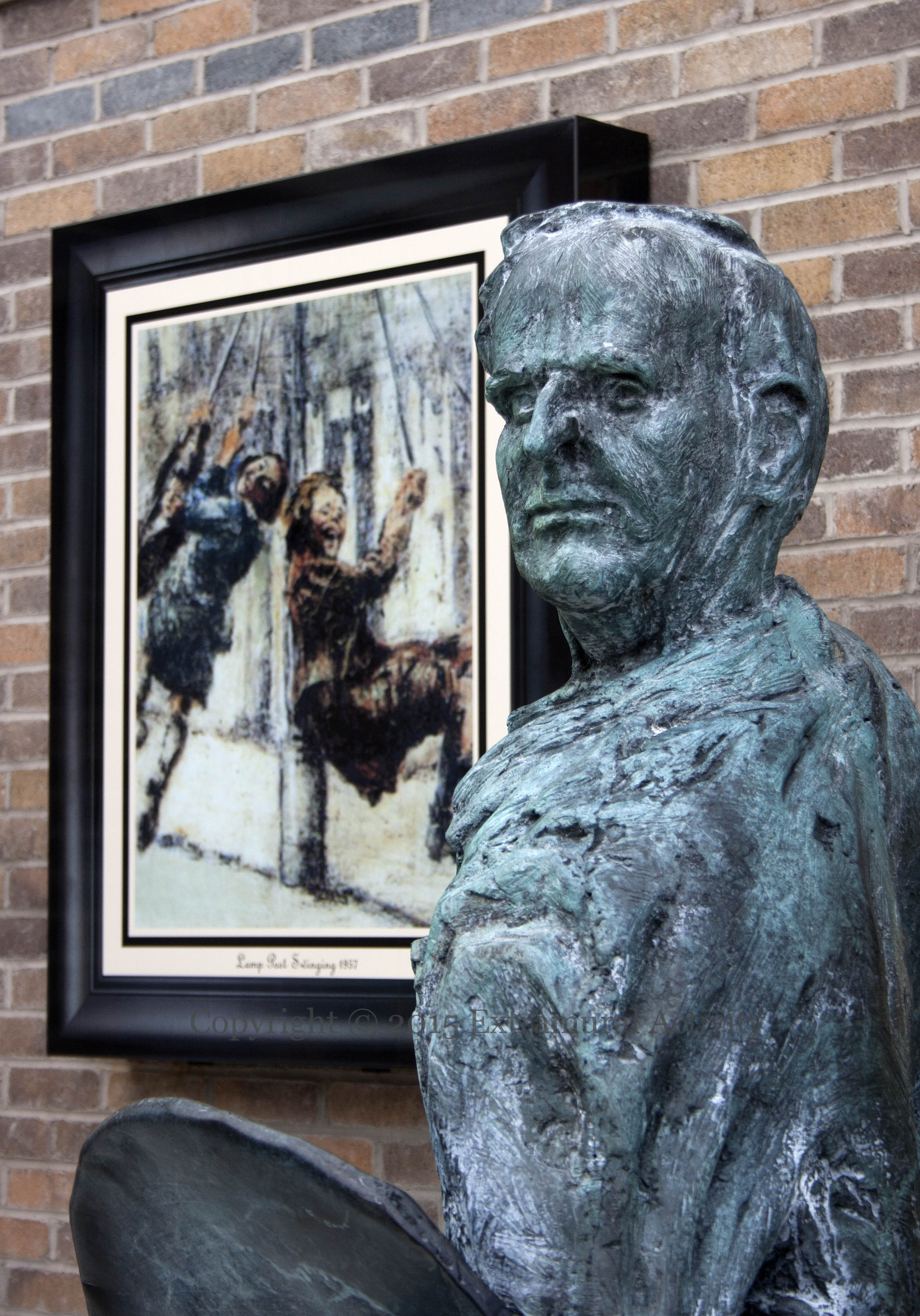
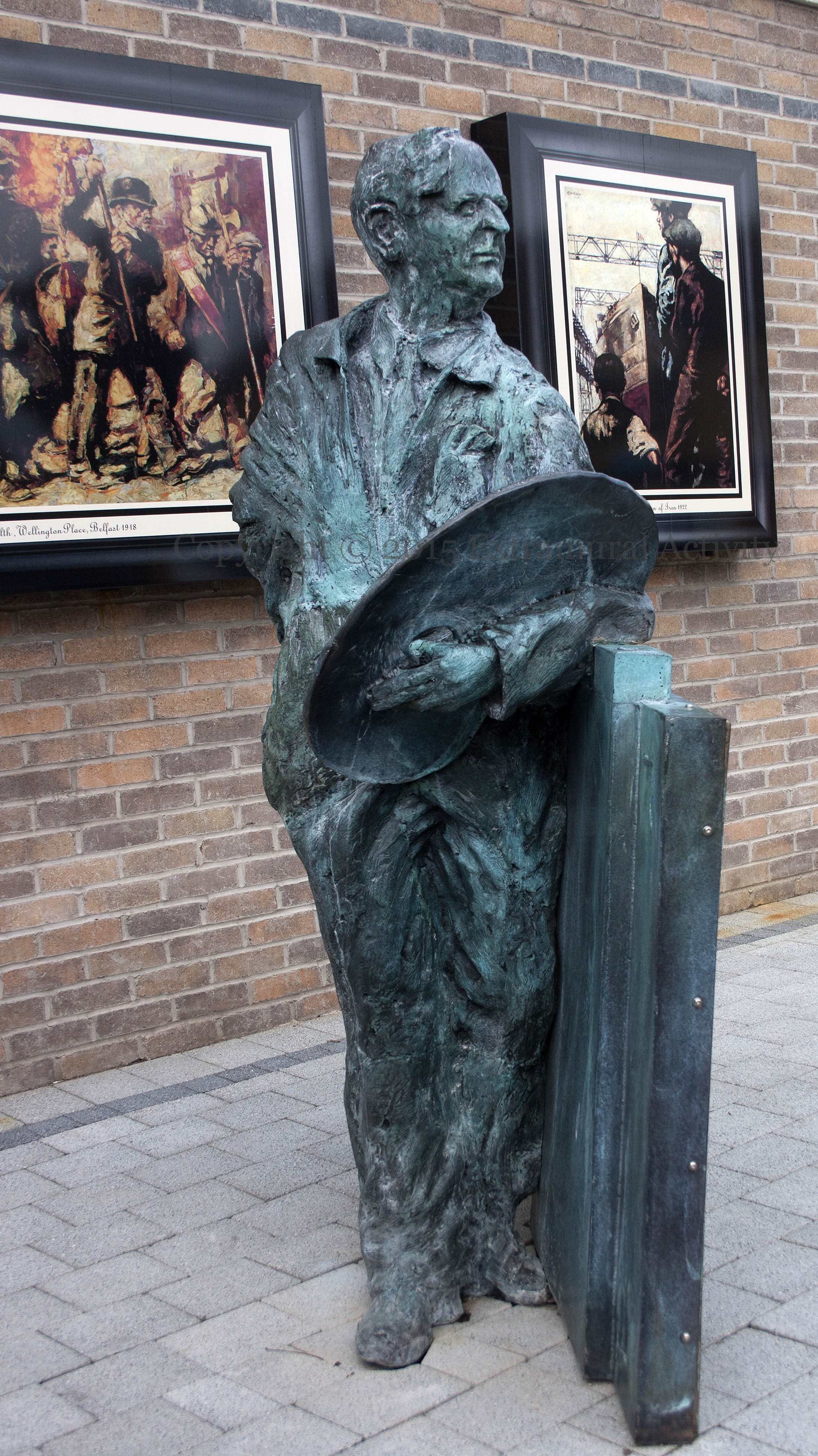
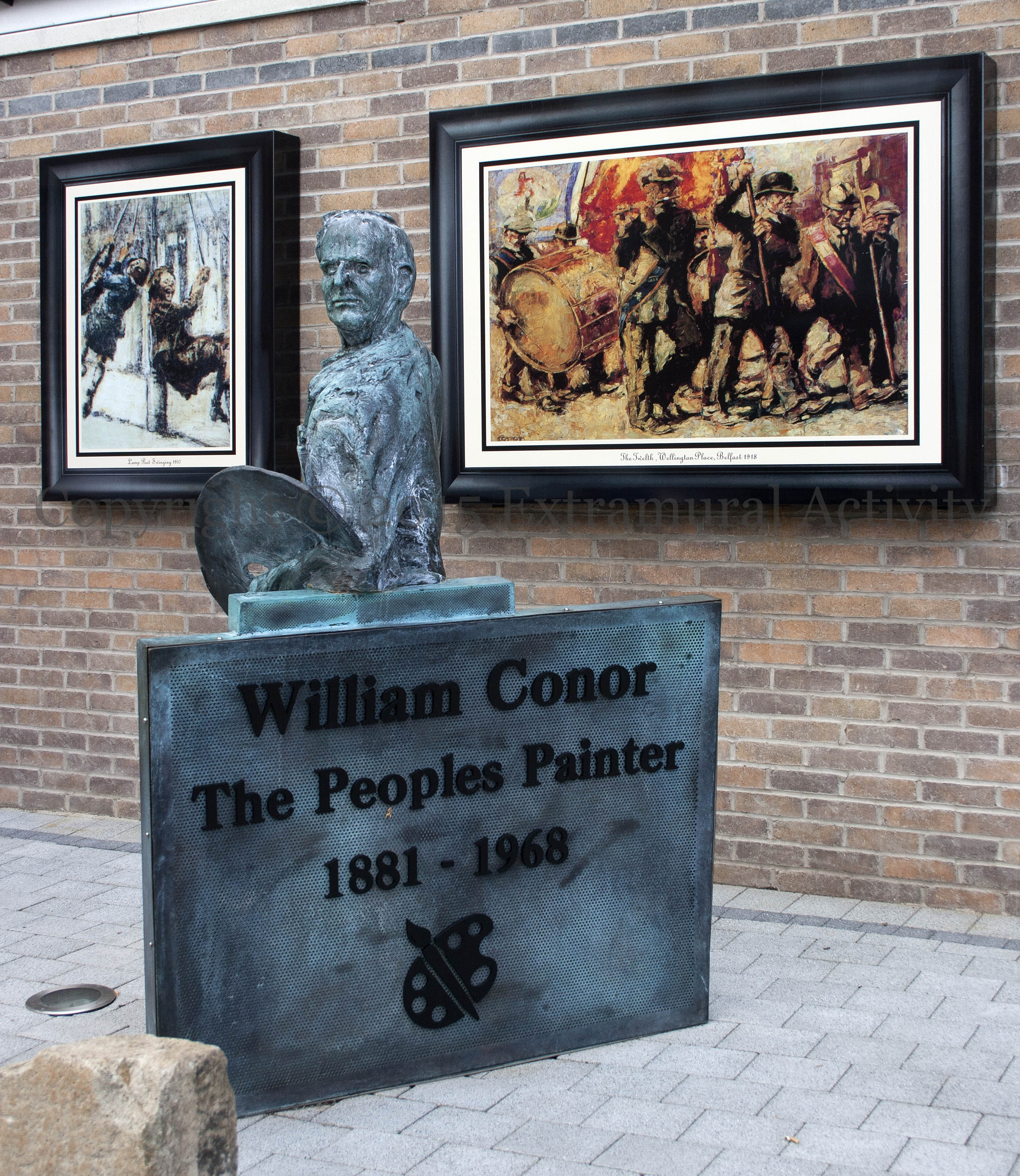
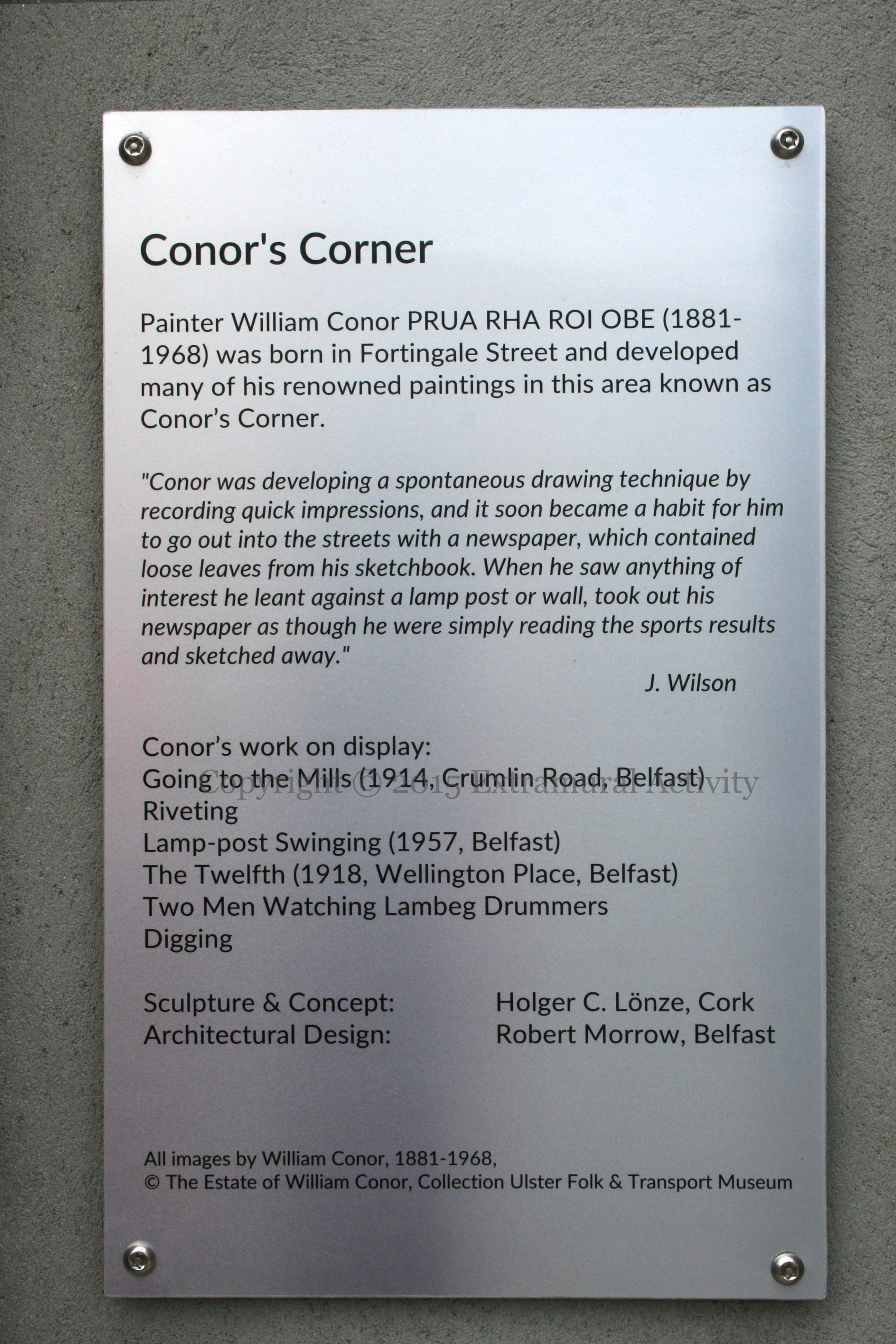
William Connor (later William Conor) was born in the Old Lodge area of Belfast (in 1881) close to the location of the new bronze statue shown in today’s images, which is at the corner of Northumberland Street and Shankill Road, replacing the UVF/Shankill Protestant Boys (see M02457). The info board (shown below) describes his methods in capturing the Belfast street scenes for which he is most famous: “Conor was developing a spontaneous drawing technique by recording quick impressions, and it soon became a habit for him to go out into the streets with a newspaper, which contained loose leaves from his sketchbook. When he saw anything of interest he leant against a lap post or wall, took out his newspaper as though he were simply reading the sports results and sketched away.”
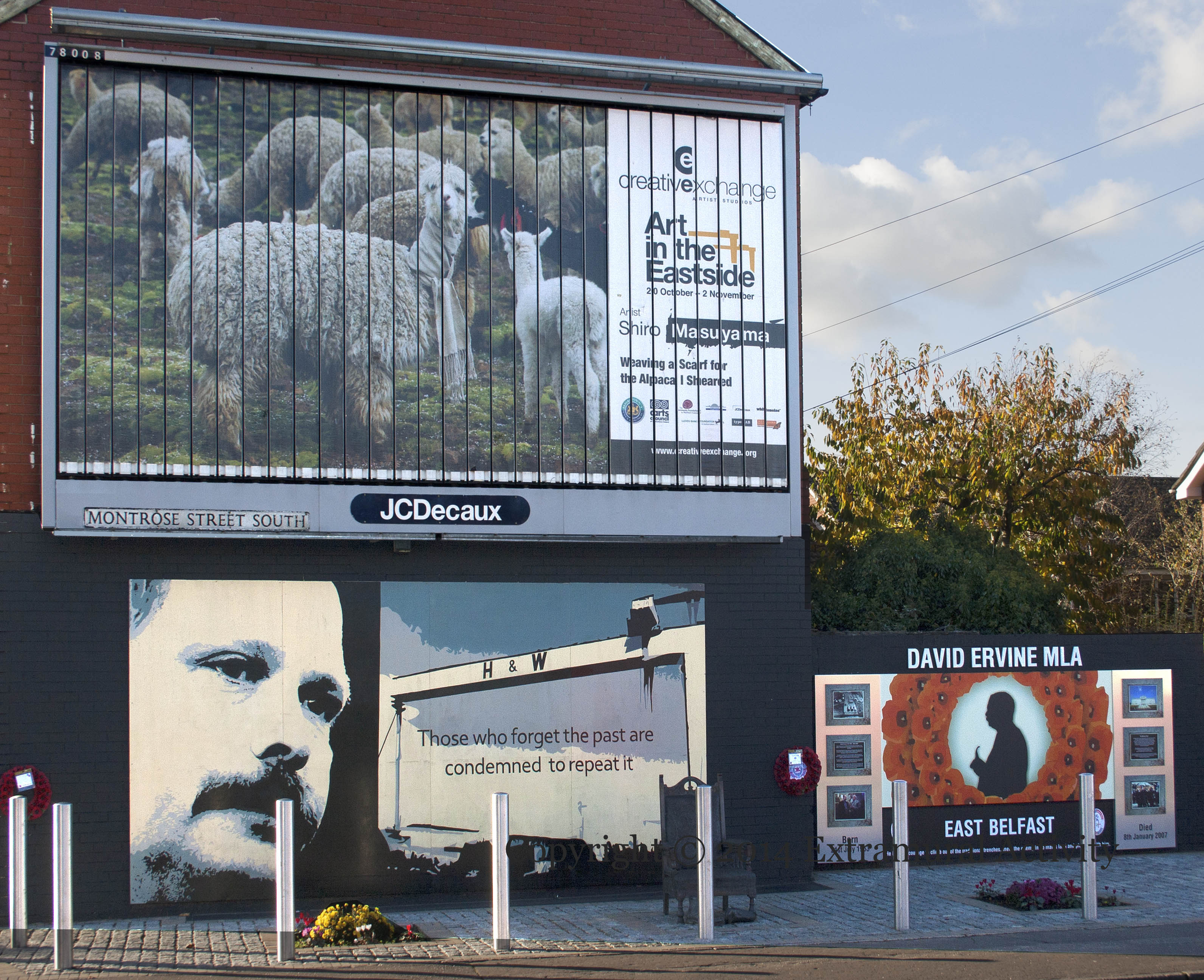
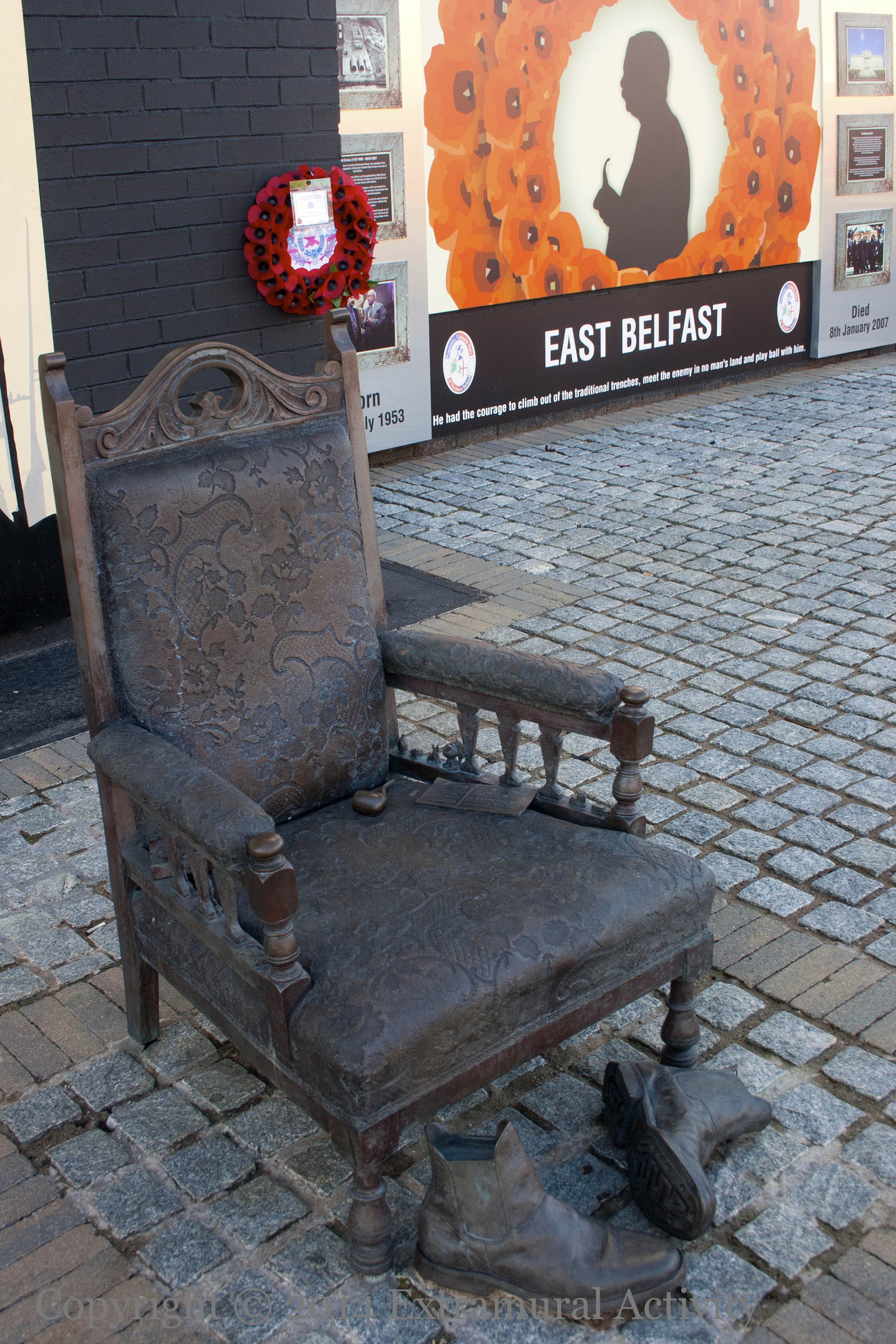
At the same time that the new David Ervine board was put in place, the existing board next to it, which dates to 2008, was spruced up. The image above is a wide shot of both boards, while the image below shows the commemorative casting in front. For the original board, see David Ervine; for explanations of the sculpture, including its pipe, prayer-book, ticket, and boots, see Memory Chair.
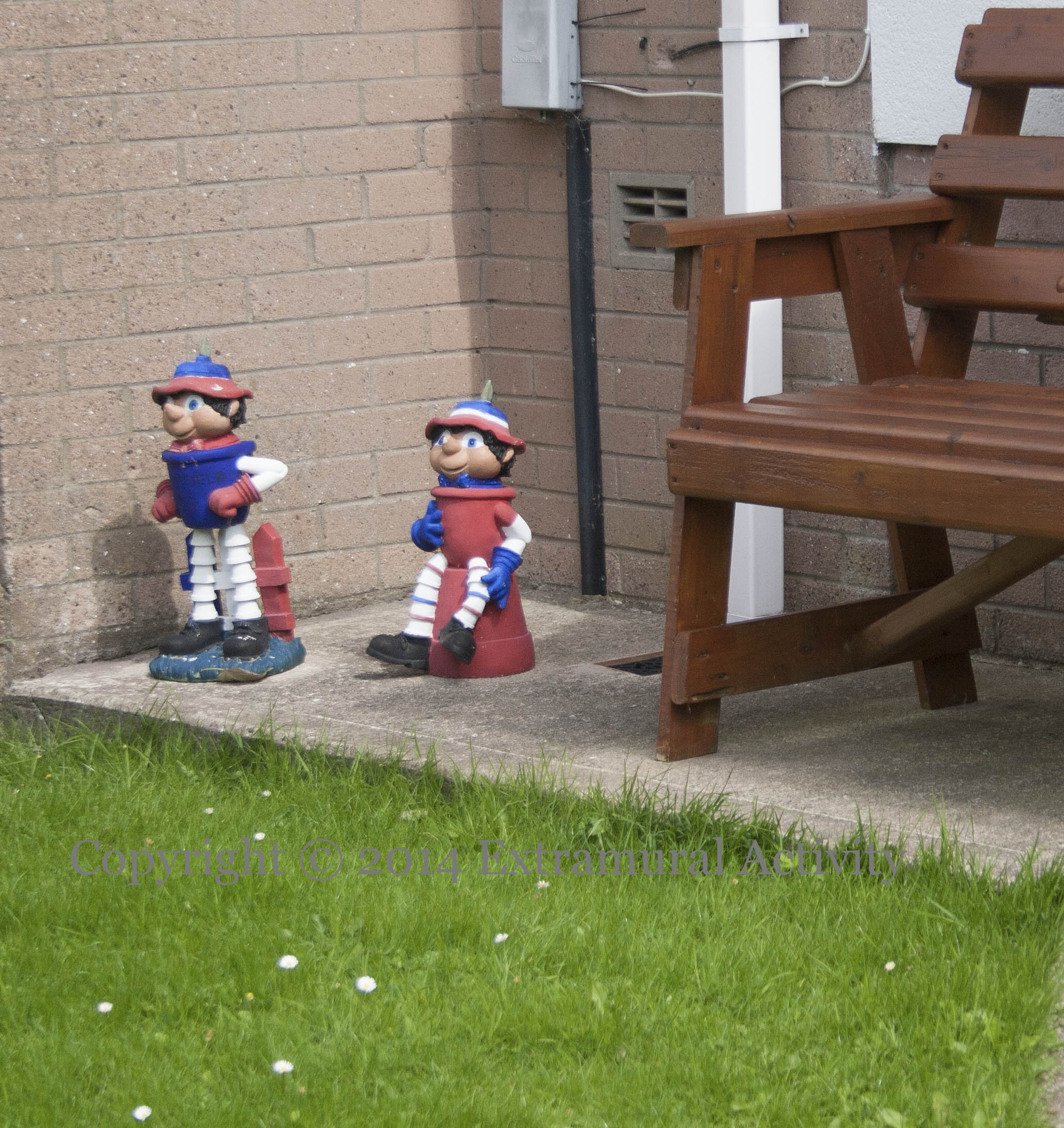
The original ‘Flower Pot Men’ was a radio show in 1951 and then a television series in December 1952; it featured the adventures/mishaps of two flower pot men, ending – because they were identical – with the question ‘Which of those two flower pot men – was it Bill or was it Ben?” The few (10? IMDb) episodes produced were repeated until 1970. “Bill” and “Ben” were the names of the younger brothers of creator Hilda Brabban and ‘Little Weed’ was based on her younger sister, Phyllis (Toonhound | Daze Of Our Lives). The characters were revived in 2001 and given a new look; the garden ornaments above from in a yard in Monkstown are based on the modern pair, though painted in red, white, and blue.
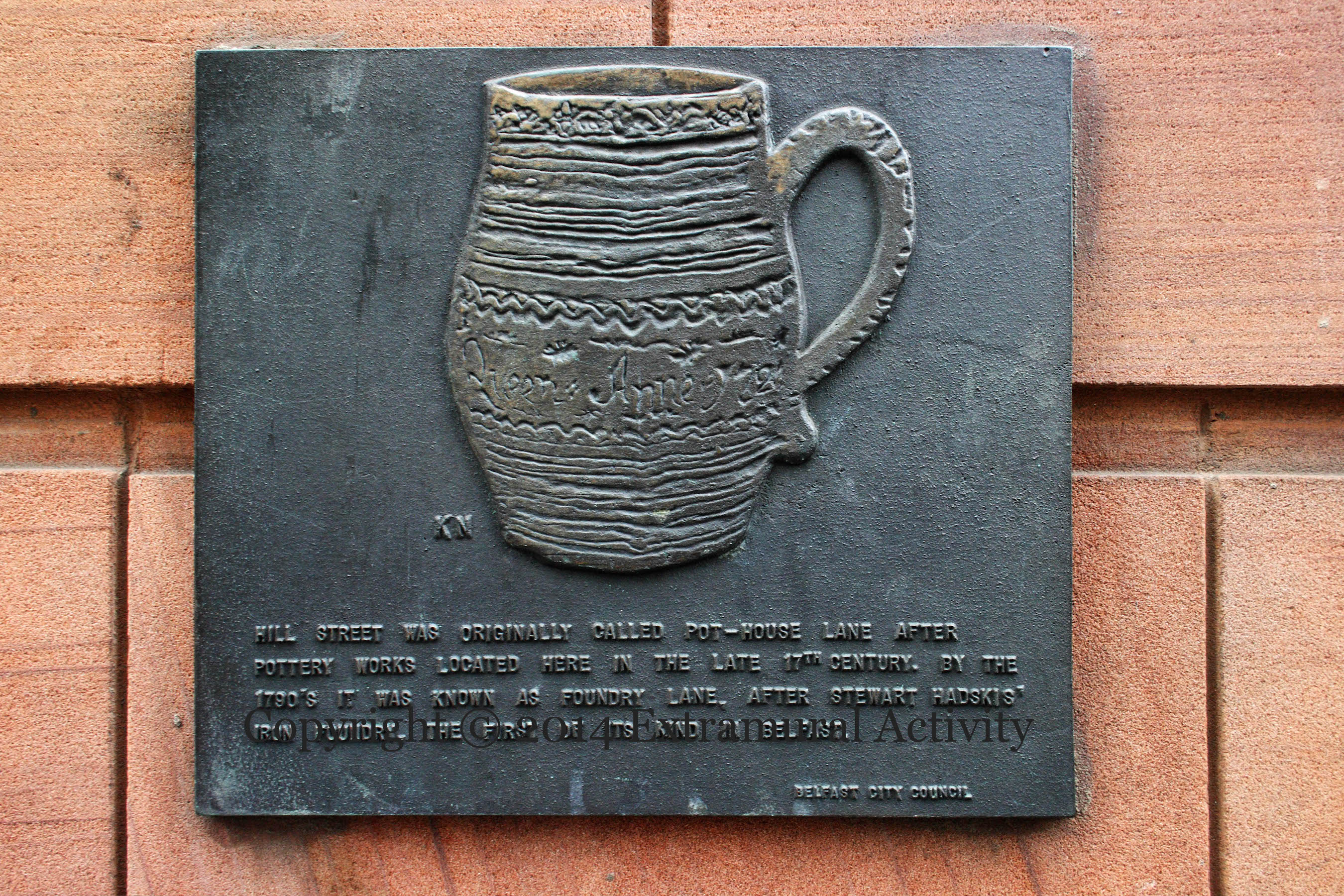
“Hill Street was originally called Pot-House Lane after pottery works located here in the late 17th century. By the 1790’s it was known as Foundry Lane, after Stewart Hadski’s iron foundry, the first of its kind in Belfast.” The original of the tin-glazed earthenware tankard shown can be seen in this lot from Christie’s (worth 10,000 pounds). The words “Queen Anne 1720” are inscribed on the tankard, a memorial to the queen who reigned from 1702-1714.
 Seosamh Mac Coille Collection