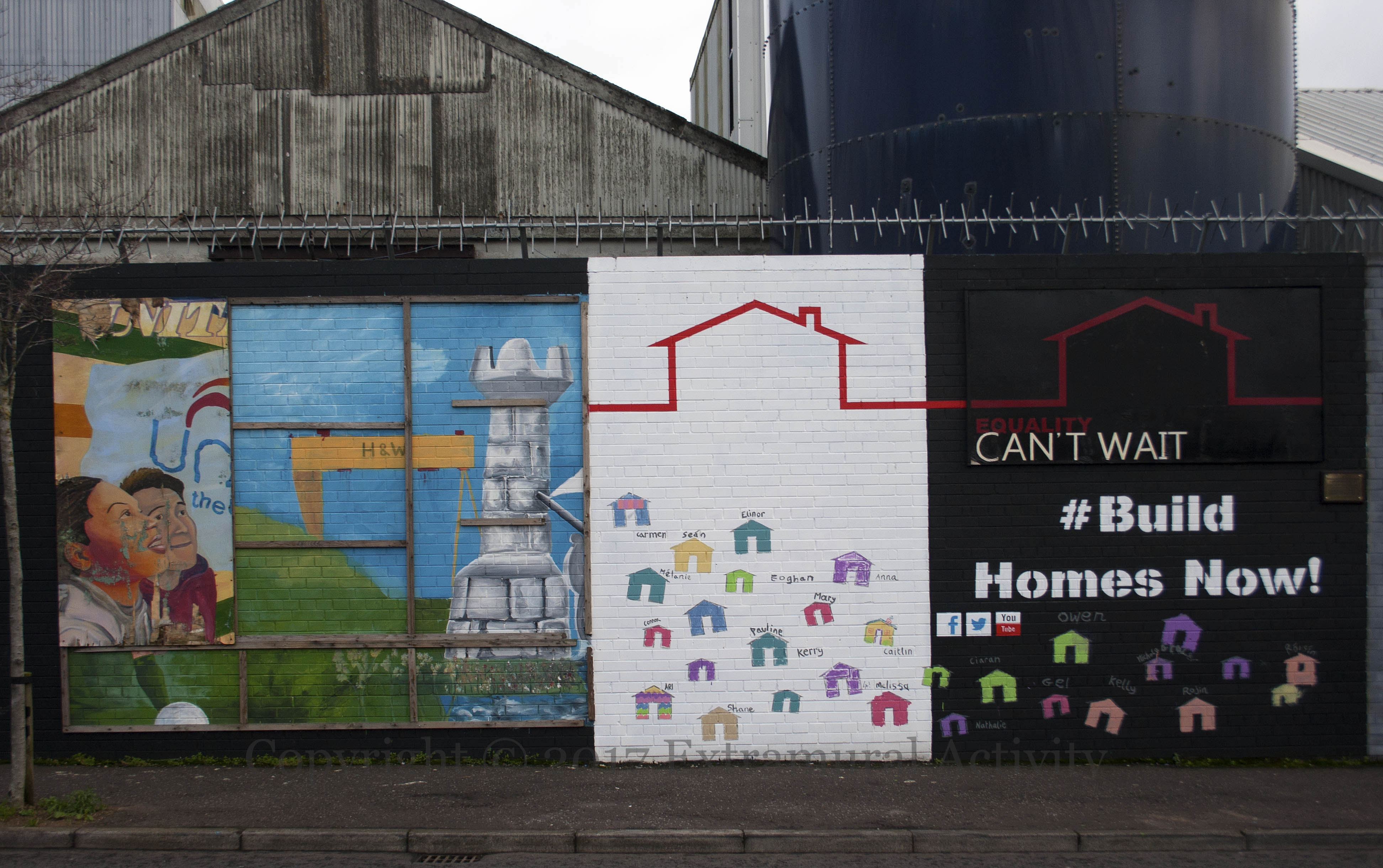
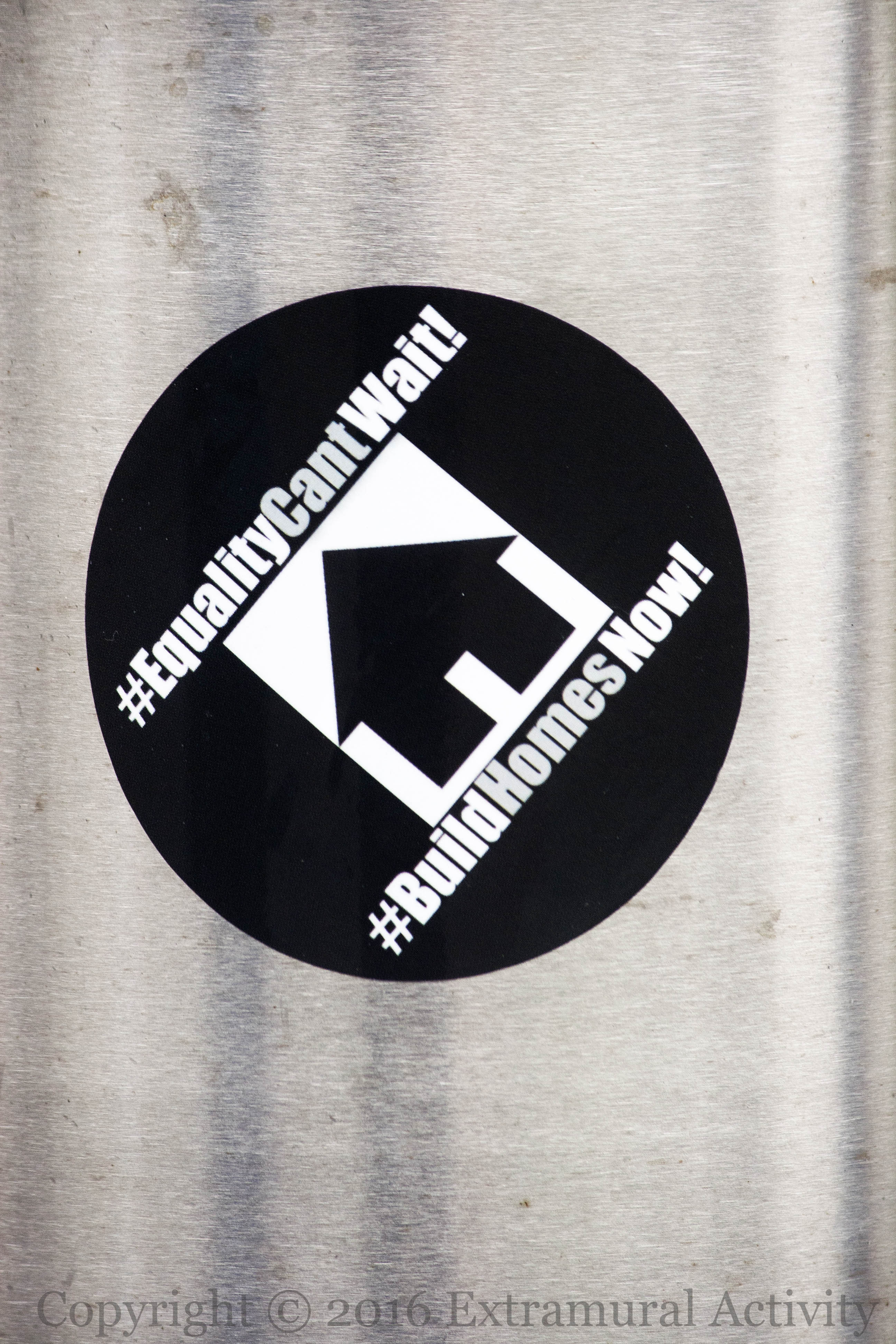
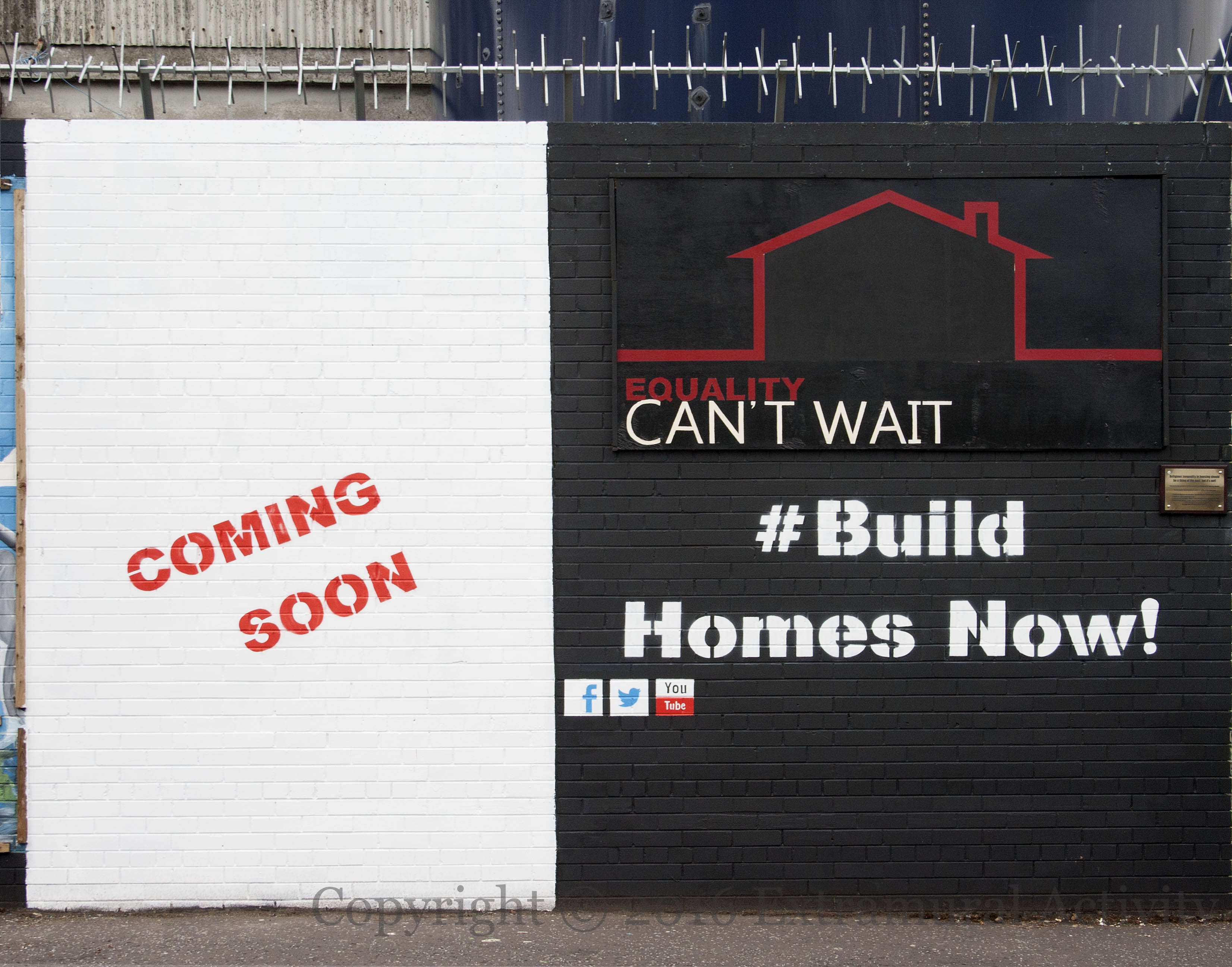
Children’s drawings of houses complete a mural for the Equality Can’t Wait/Build Homes Now (Fb | web) mural that has remained unfinished for a long time on Northumberland Street – the intermediate stage in the last image below, beneath a lamppost sticker for the campaign.
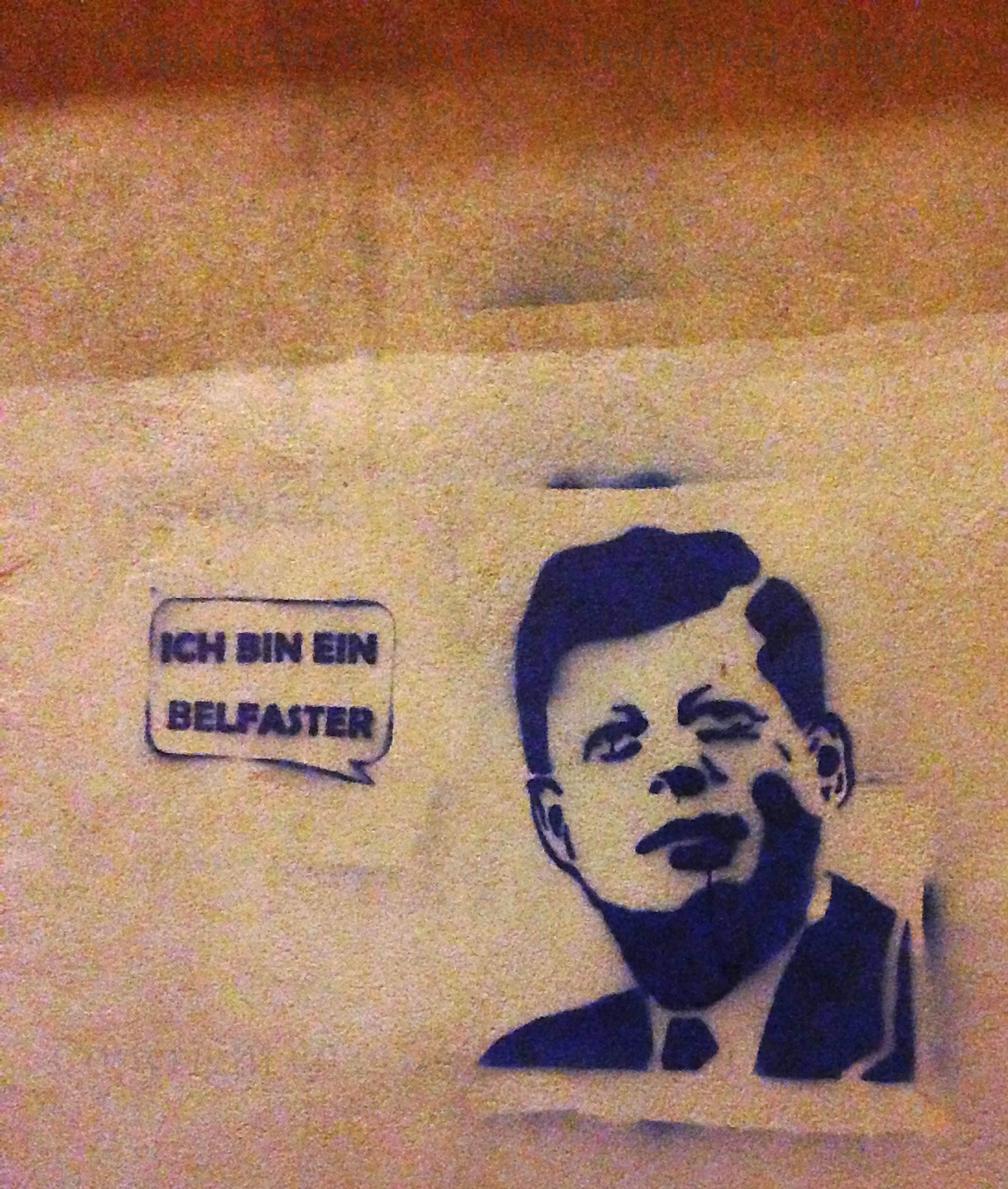
Travel site In Your Pocket recently solicited a good term for people from Belfast. In 1963, JFK went to West Berlin and expressed solidarity with the encircled residents by saying “Ich bin ein Berliner” (inviting the misunderstanding that he was a Berliner Krapfen or jelly doughnut”, but the spirit of the message was clear). (WP has more info and video.) The stencil above puts Kennedy in Belfast: Ich bin ein Belfaster.
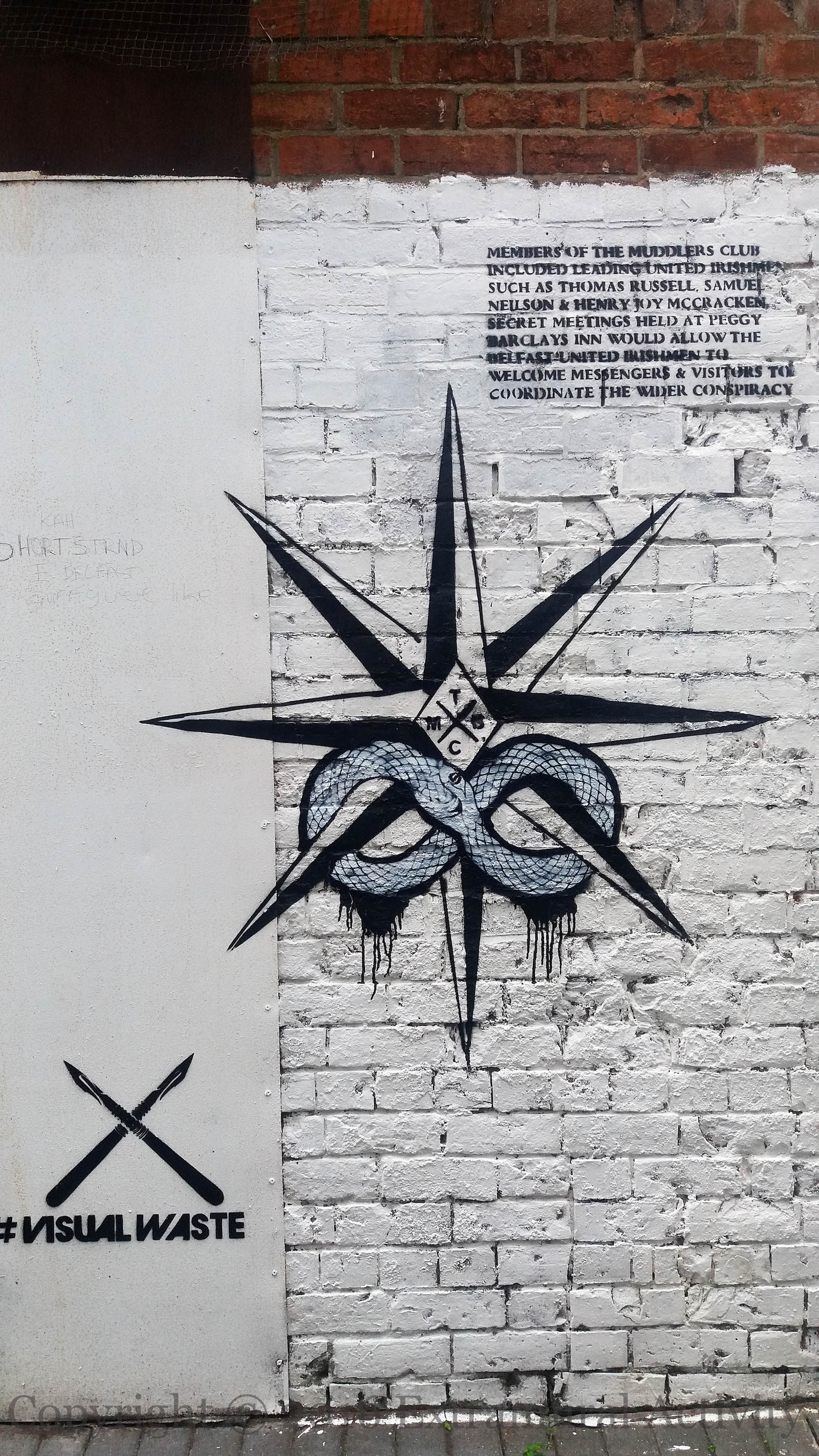
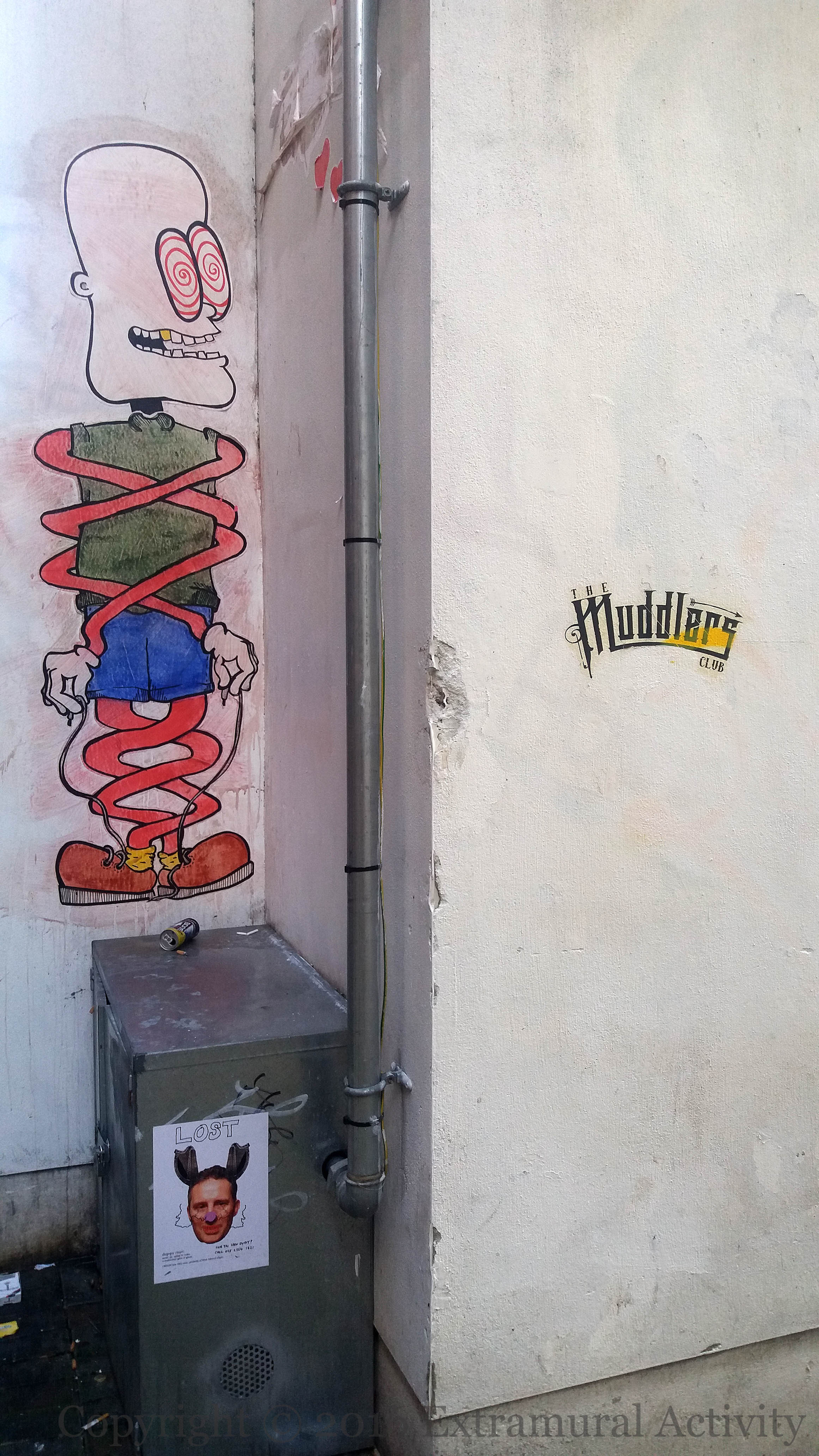
Here are two more images related to The Muddlers’ Club (see previously God Approves Our Undertakings), featuring an ouroboros (snake eating its own tail) in the shape of the symbol for infinity, on an eight-pointed star/compass, by VisualWaste.
“Members of the Muddler’s Club included leading United Irishmen such as Thomas Russell, Thomas Neilson & Henry Joy McCracken. Secret meetings held at Peggy Barclay’s inn would allow the Belfast United Irishmen to welcome messengers & visitors to coordinate the wider conspiracy.” For more information on the history of the location, see this BBC-NI article on the (canvas) paintings in Warehouse Lane.
In the second image: an unknown (FGB?) piece of tangled arms and legs, and, Lost Duppy by TLO.
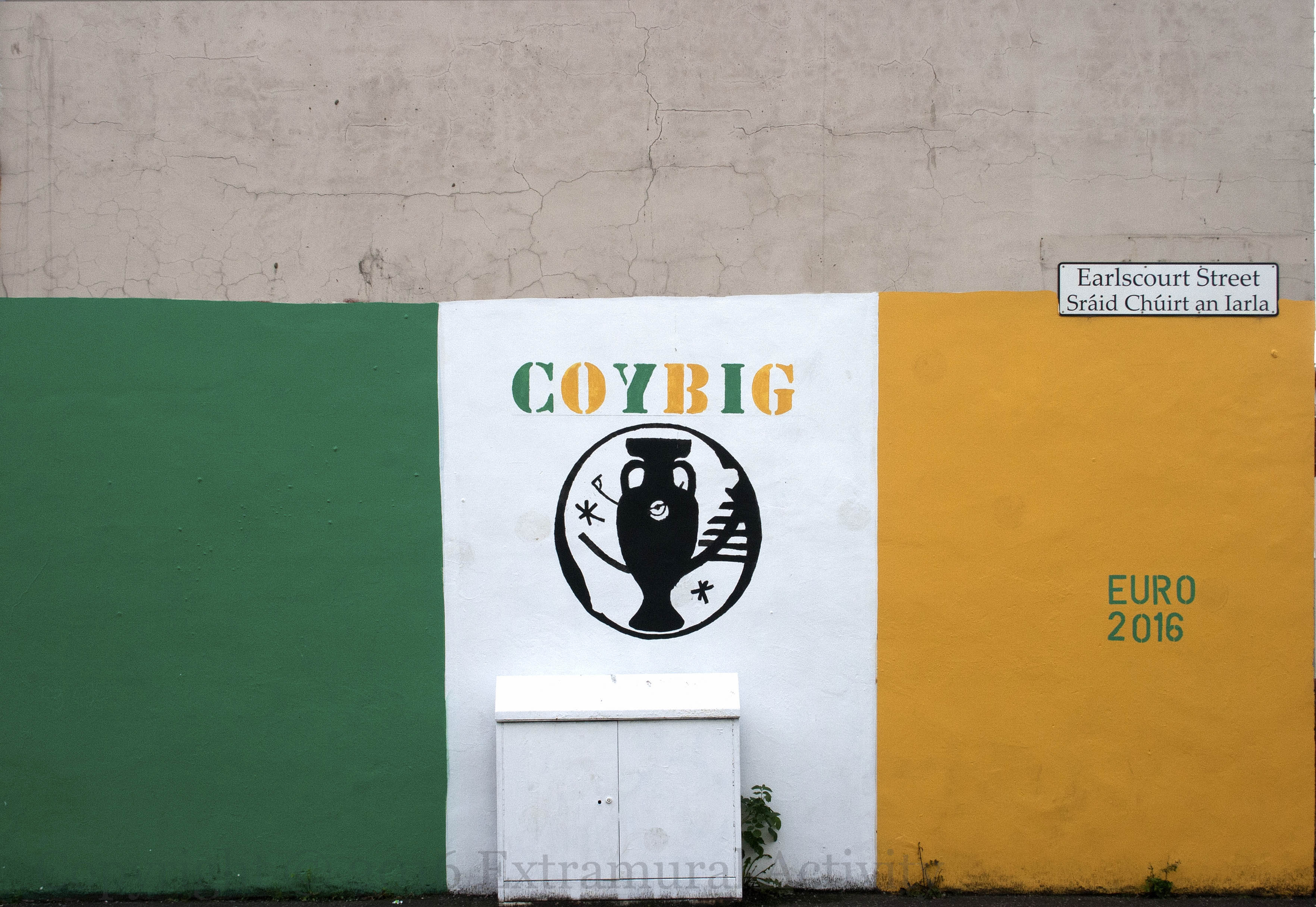
“Come on, you boys in green!” Here’s a mural from the summer, when Ireland (and Northern Ireland) took part in the European soccer championships. The Euro 2016 trophy is at the centre of an Irish Tricolour.
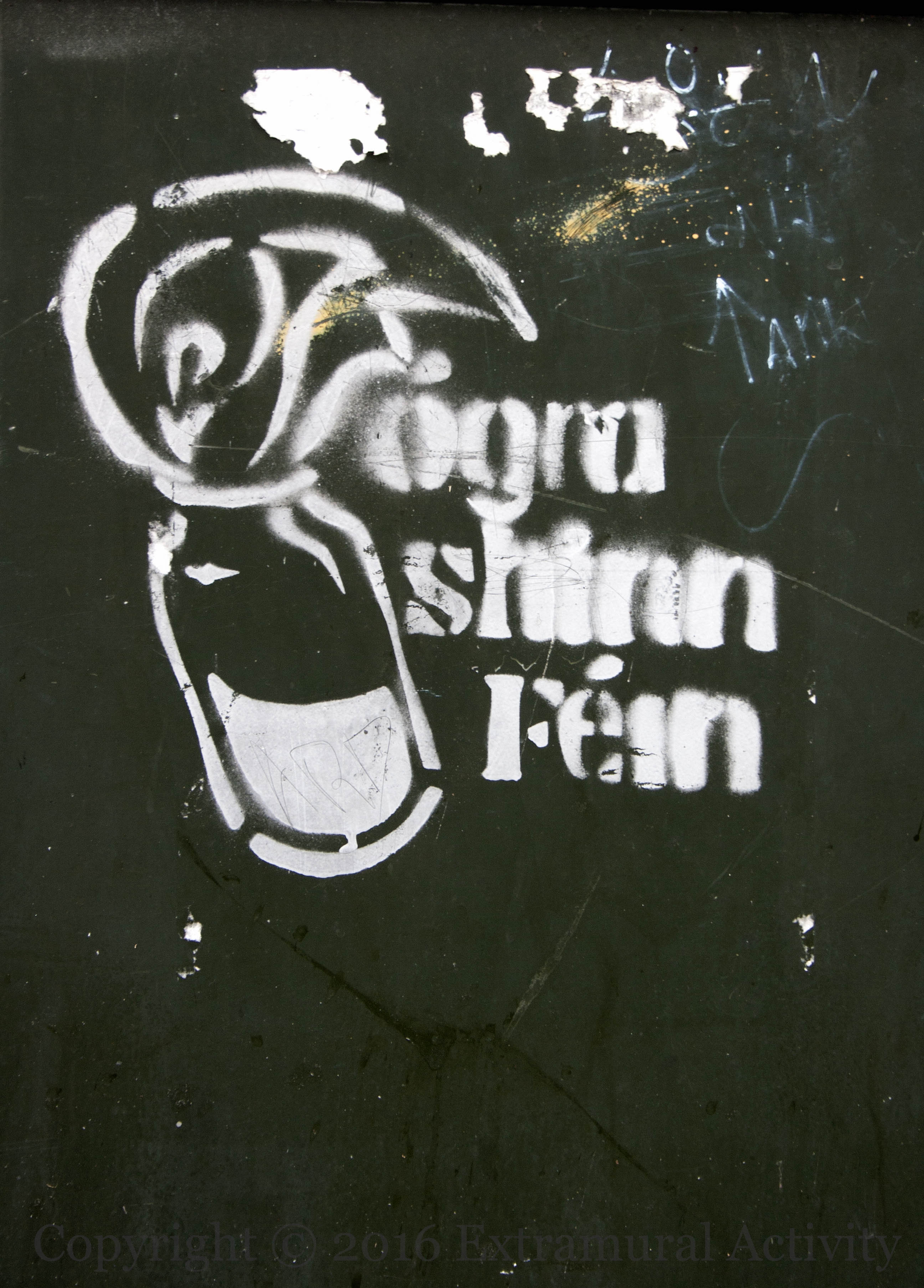
A vintage Ógra Shınn Féın stencil still visible in north Belfast. On the removal of the petrol bomb from the modern Sınn Féın Youth logo, see Slugger O’Toole.
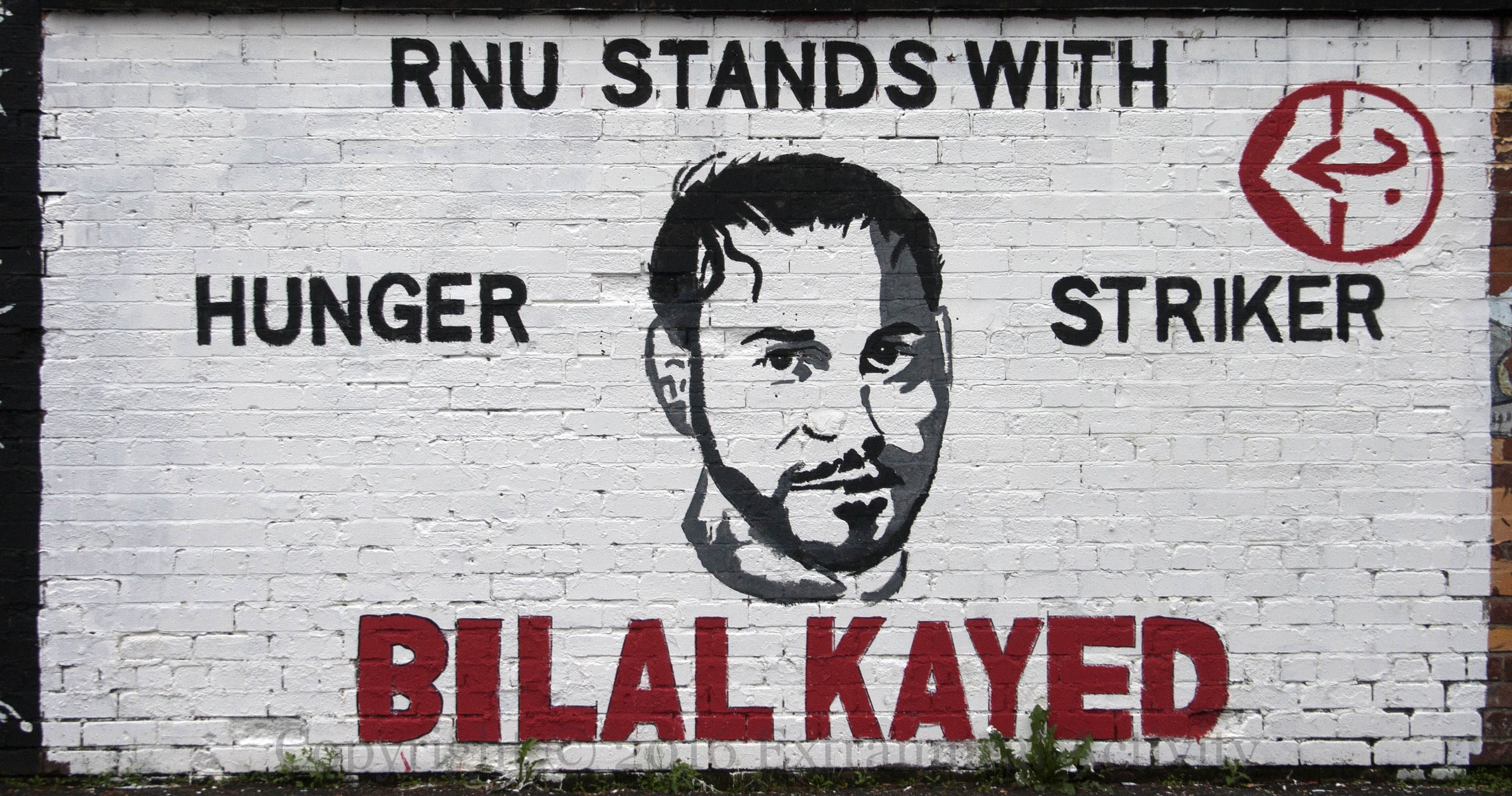
“RNU stands with hunger striker Bilal Kayed”. For more information on this Palestinian prisoner who recently ended his hunger strike, see Administrative Detention. Update: released 2016-12-12.
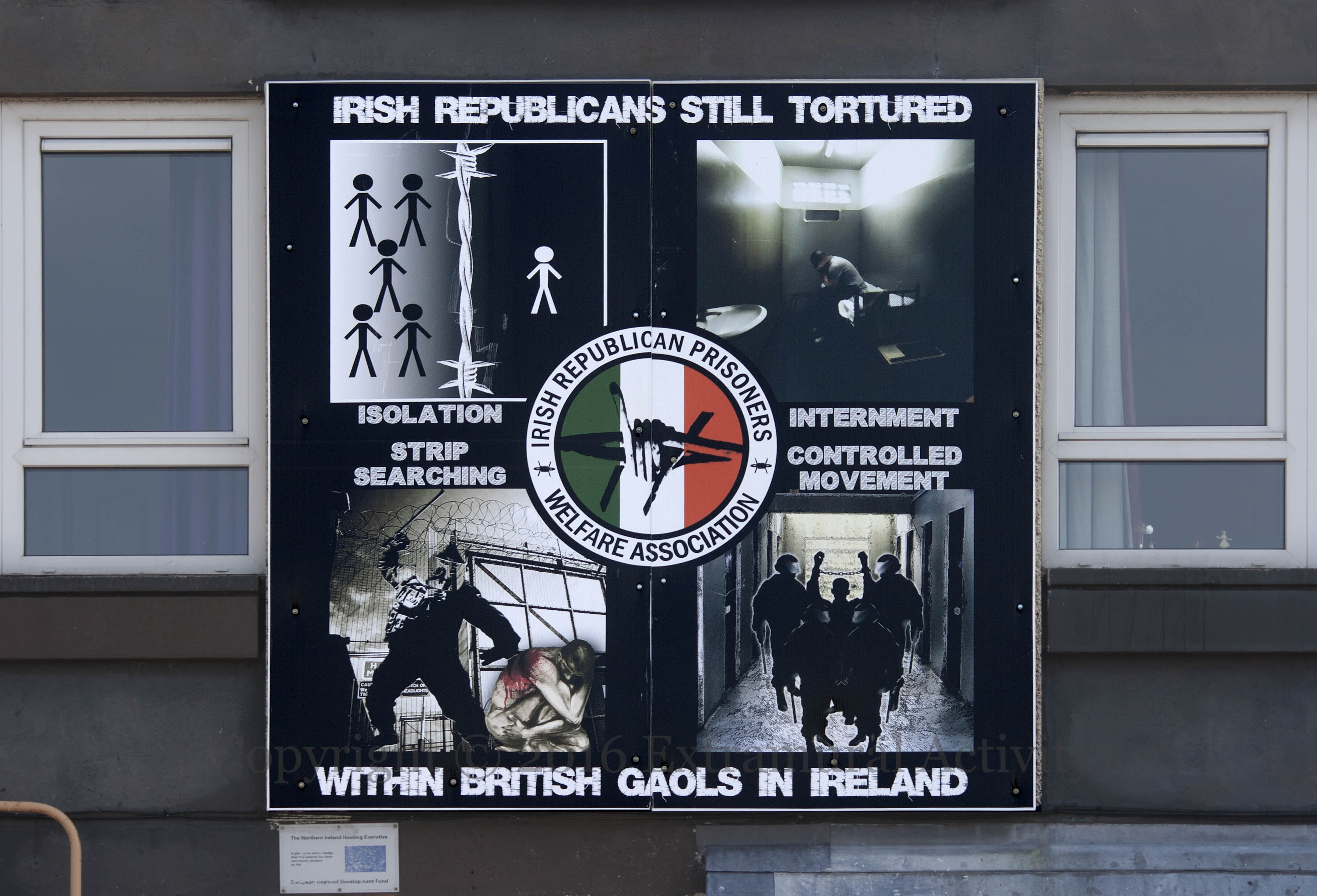
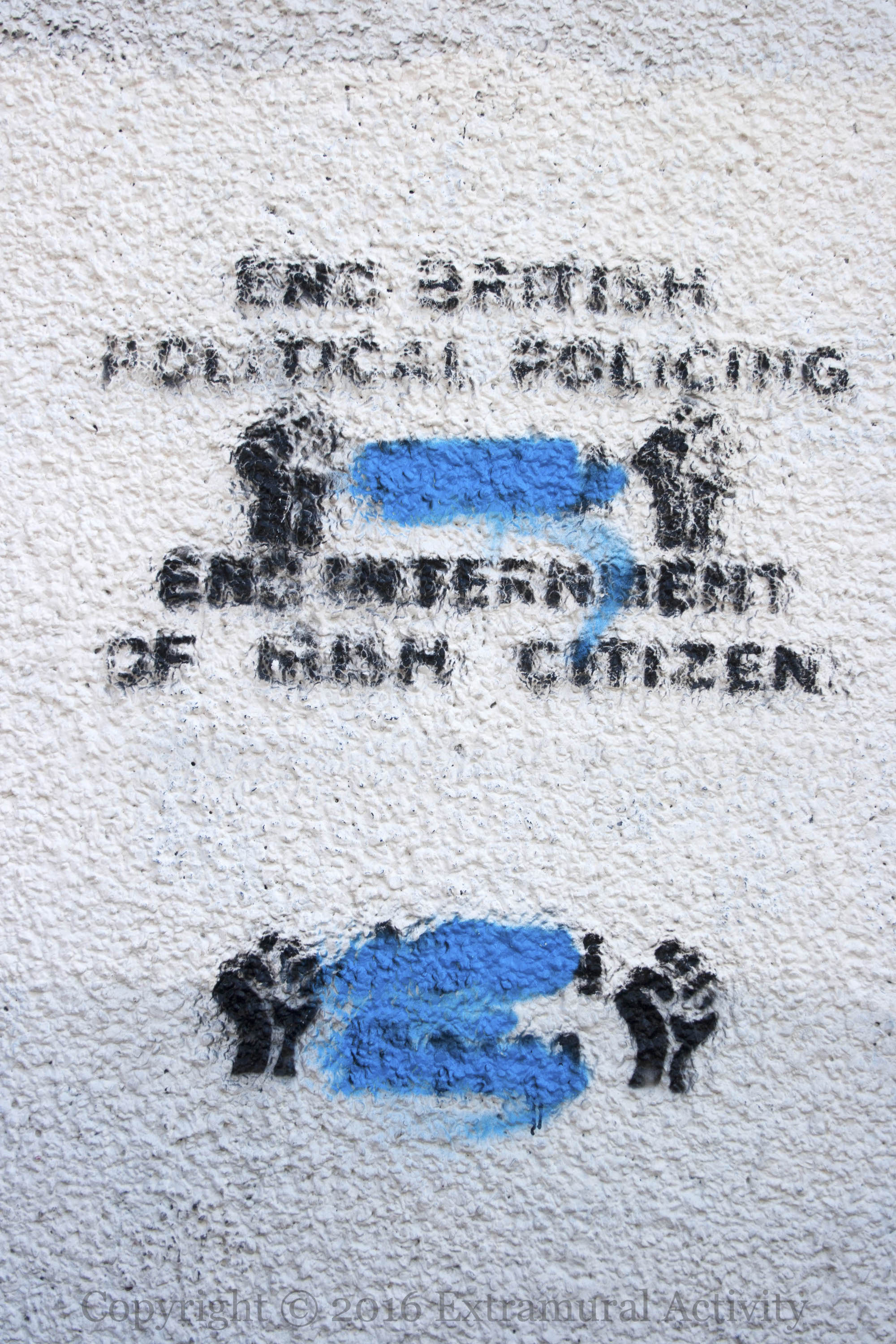
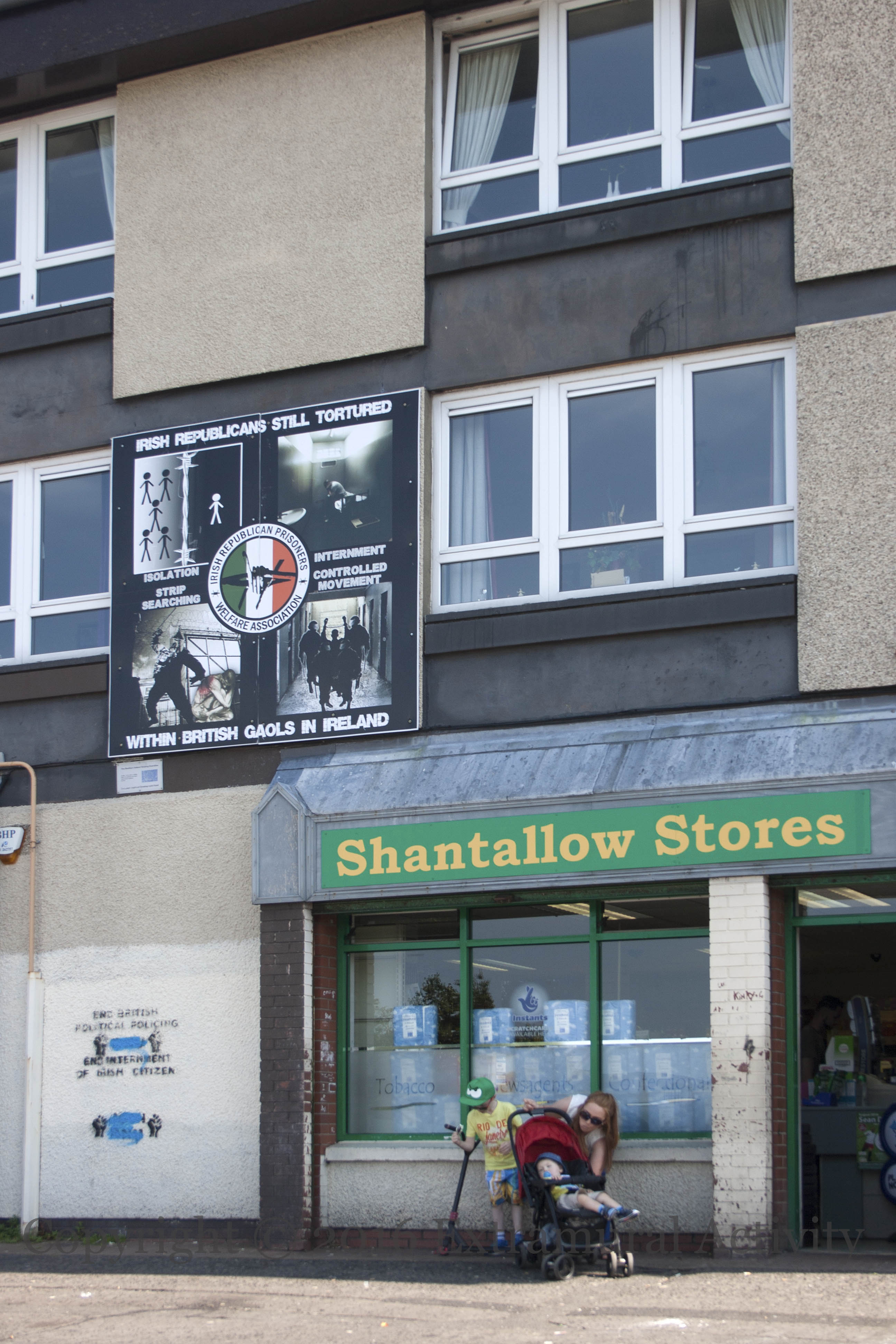
IRPWA board (and stencil) in Shantallow, Derry, articulating the forms of torture of Irish republicans in “British gaols in Ireland”: isolation, internment, strip searching, and controlled movement.
In January (2016) a stencil like the one above appeared in Moore Street, Dublin. Moore Street was the place of the last stand of the Easter Rising after the GPO caught fire and campaigners were thus fighting to save it from redevelopment (Irish Times). (Moore Street’s future is still uncertain at this time, late summer 2016.)
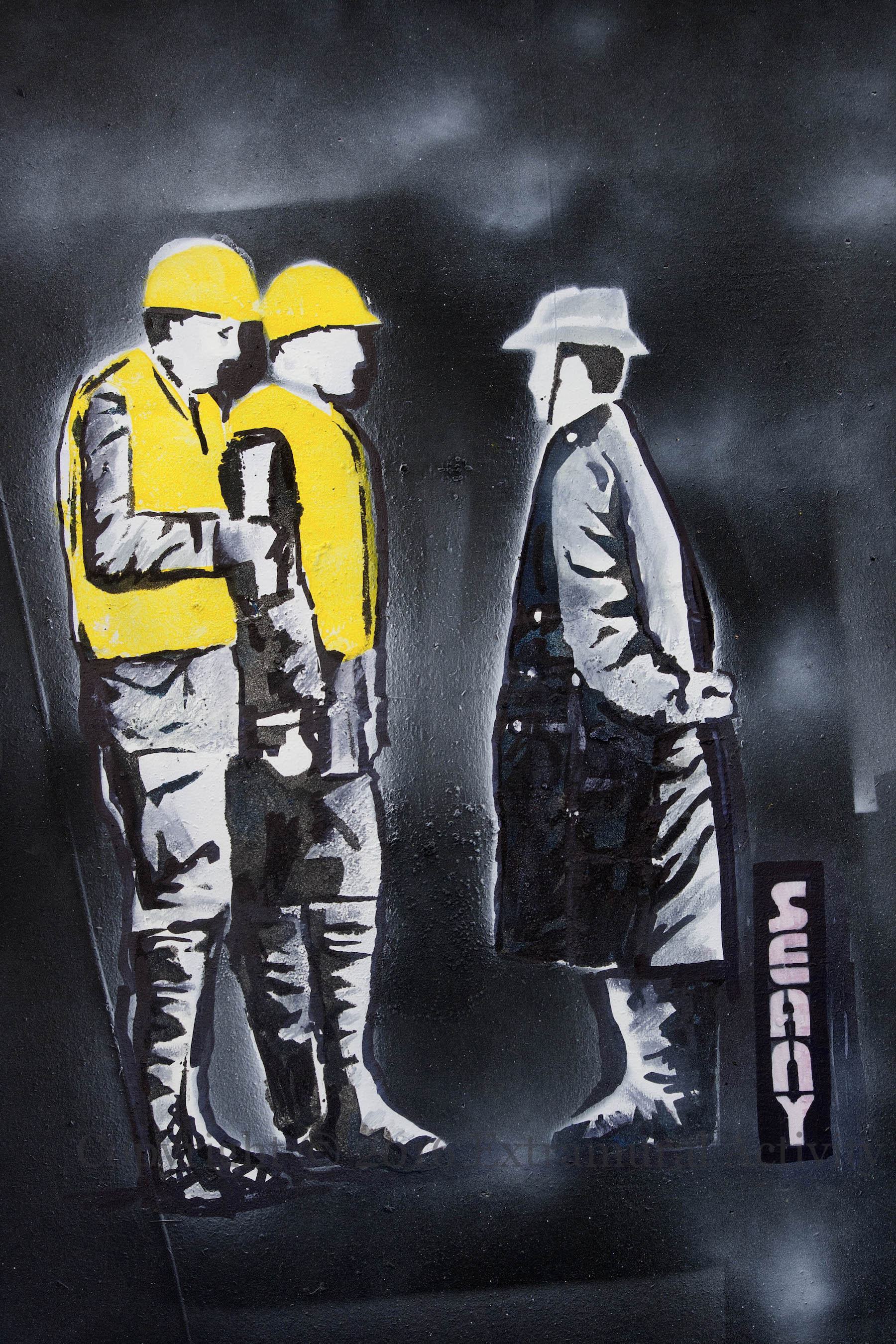
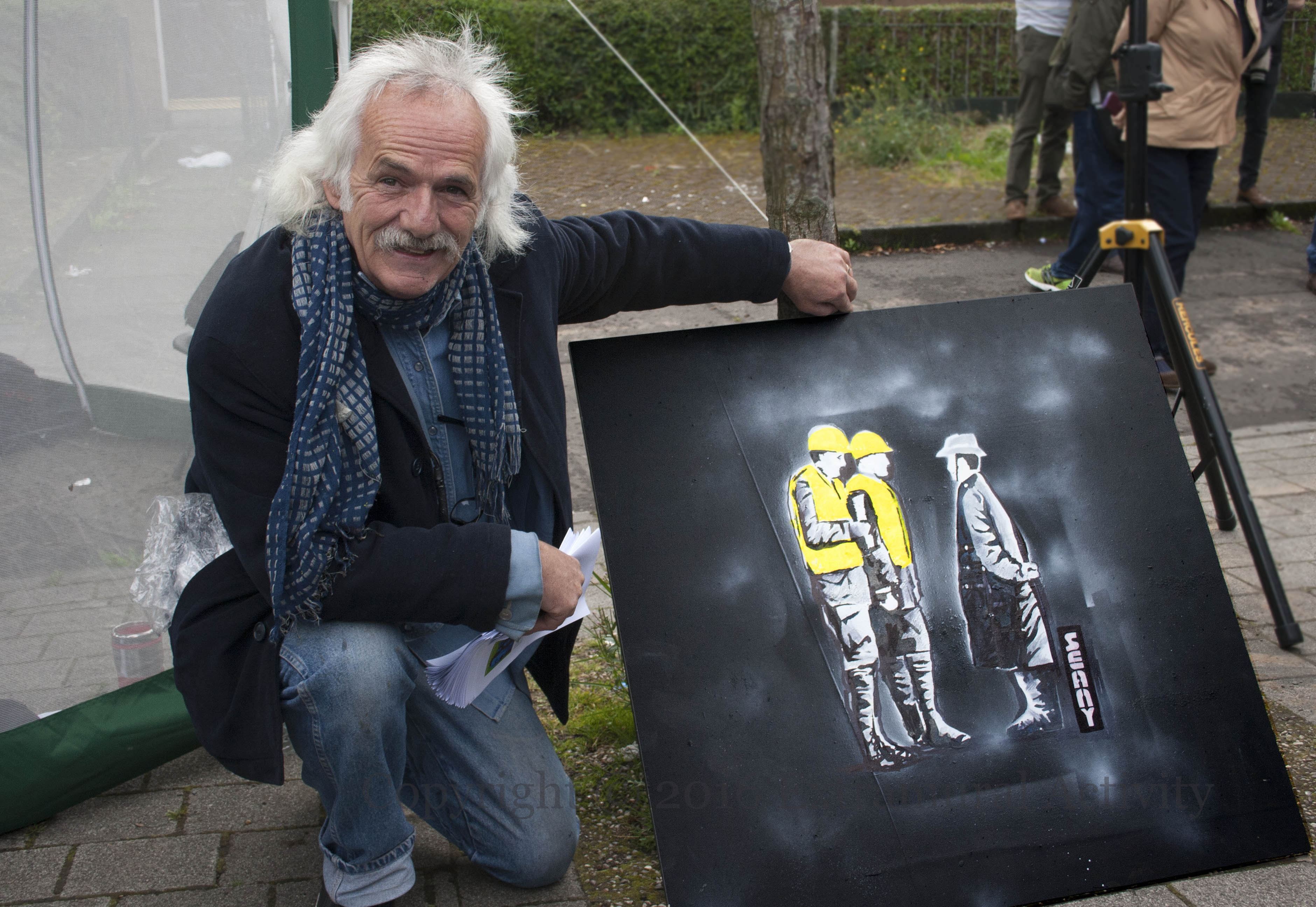
The stencil is based on a photograph of Padraig Pearse and Elizabeth O’Farrell surrendering to the British General Lowe. The piece was ‘signed’ by Banksy, though it was immediately suspected to be not by Banksy, as he had not signed any pieces for some years, and indeed, Banksy denied that it was his (e.g. Irish Times) and Will St Ledger wished that the artist had had the confidence to claim it as their own (RTÉ).
The artist was in fact Short Strand man Séan “Seany” McVeigh, who then died in June. In honour of his life, a fellow Short Strand resident (see second image, below) produced this version of McVeigh’s piece, with the name “Seany” proudly attached. (For his other “Banksy” see a Belfast version of Banksy’s Palestinian “peace” wall stencil.)
 Seosamh Mac Coille Collection