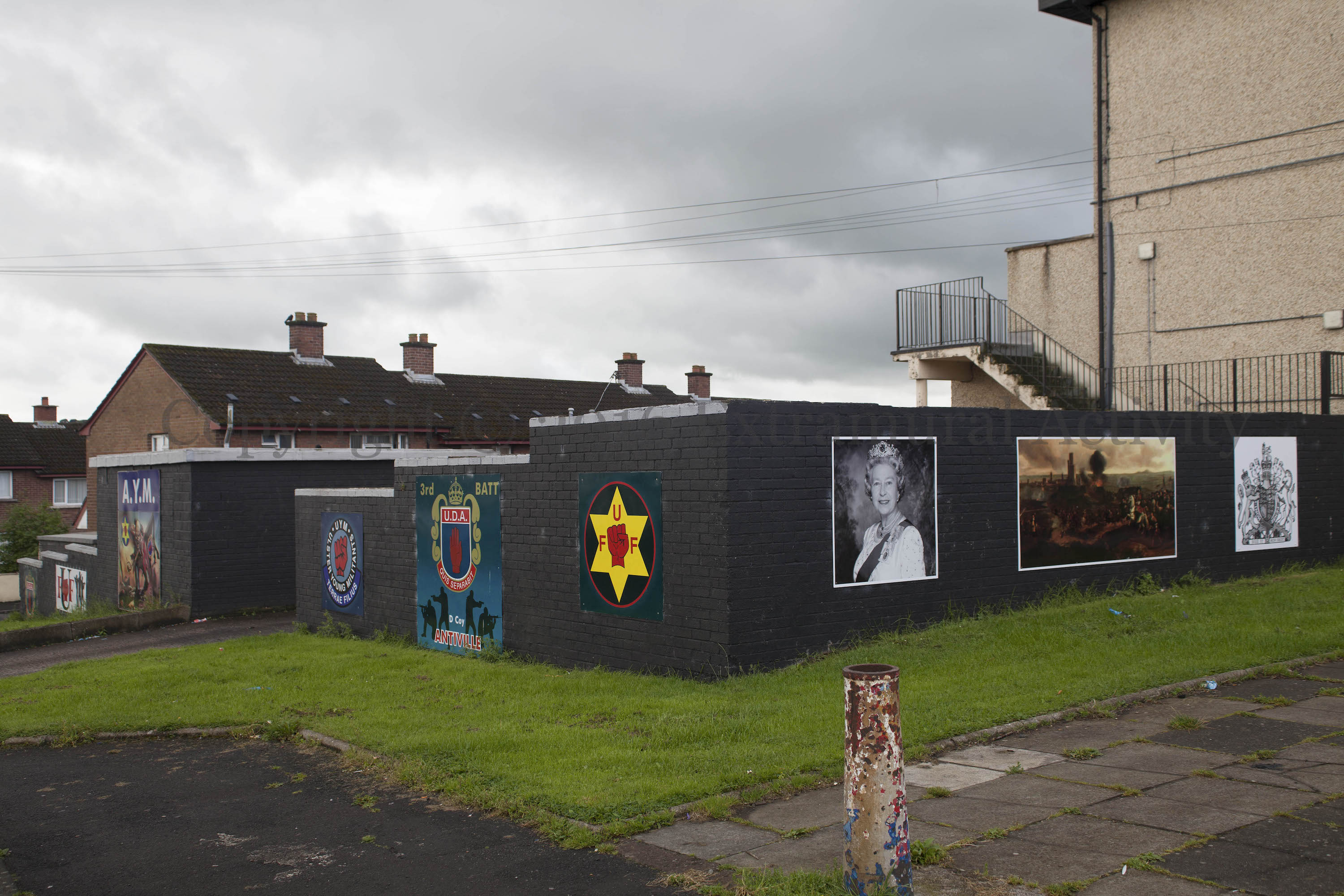
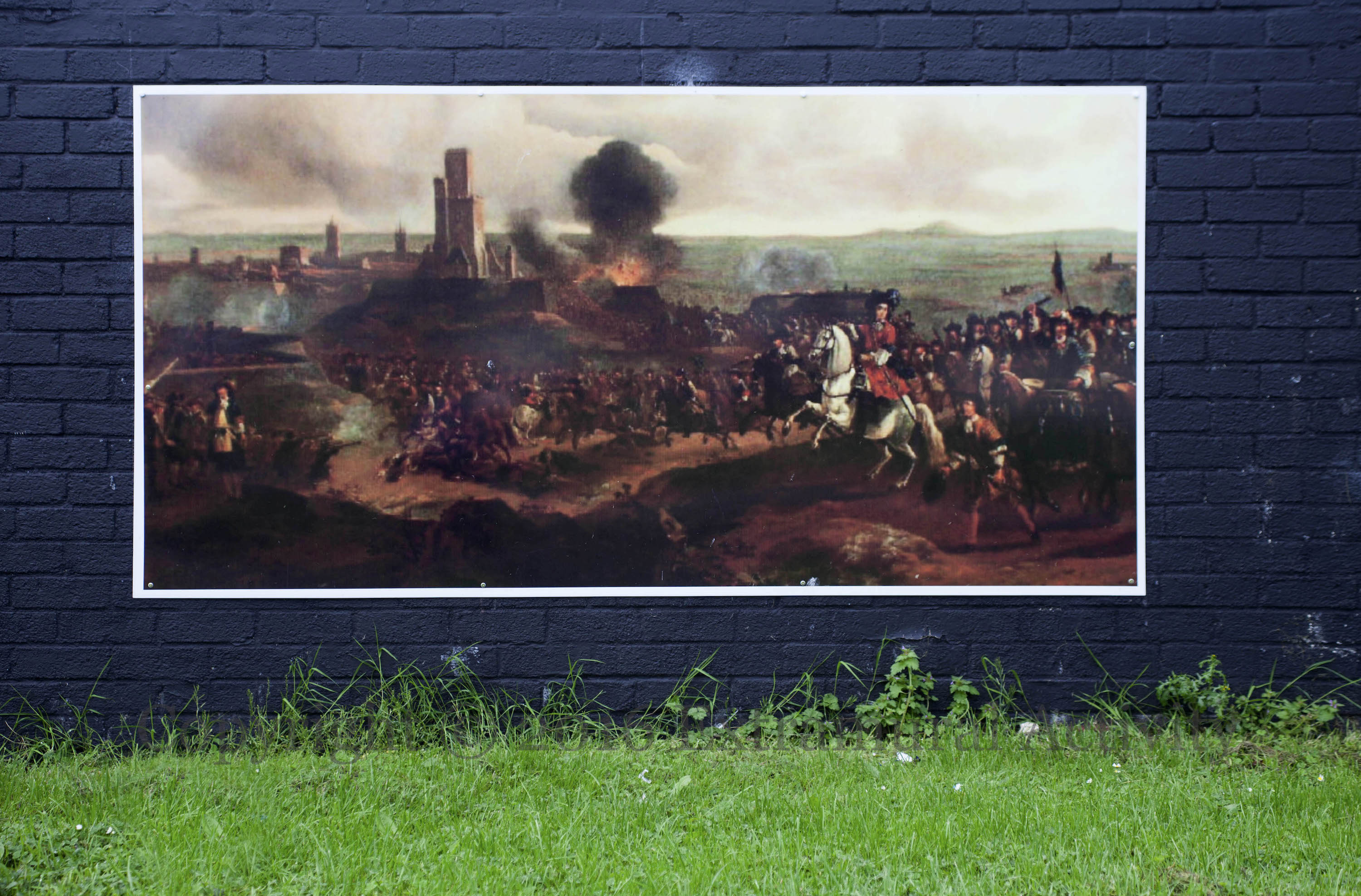
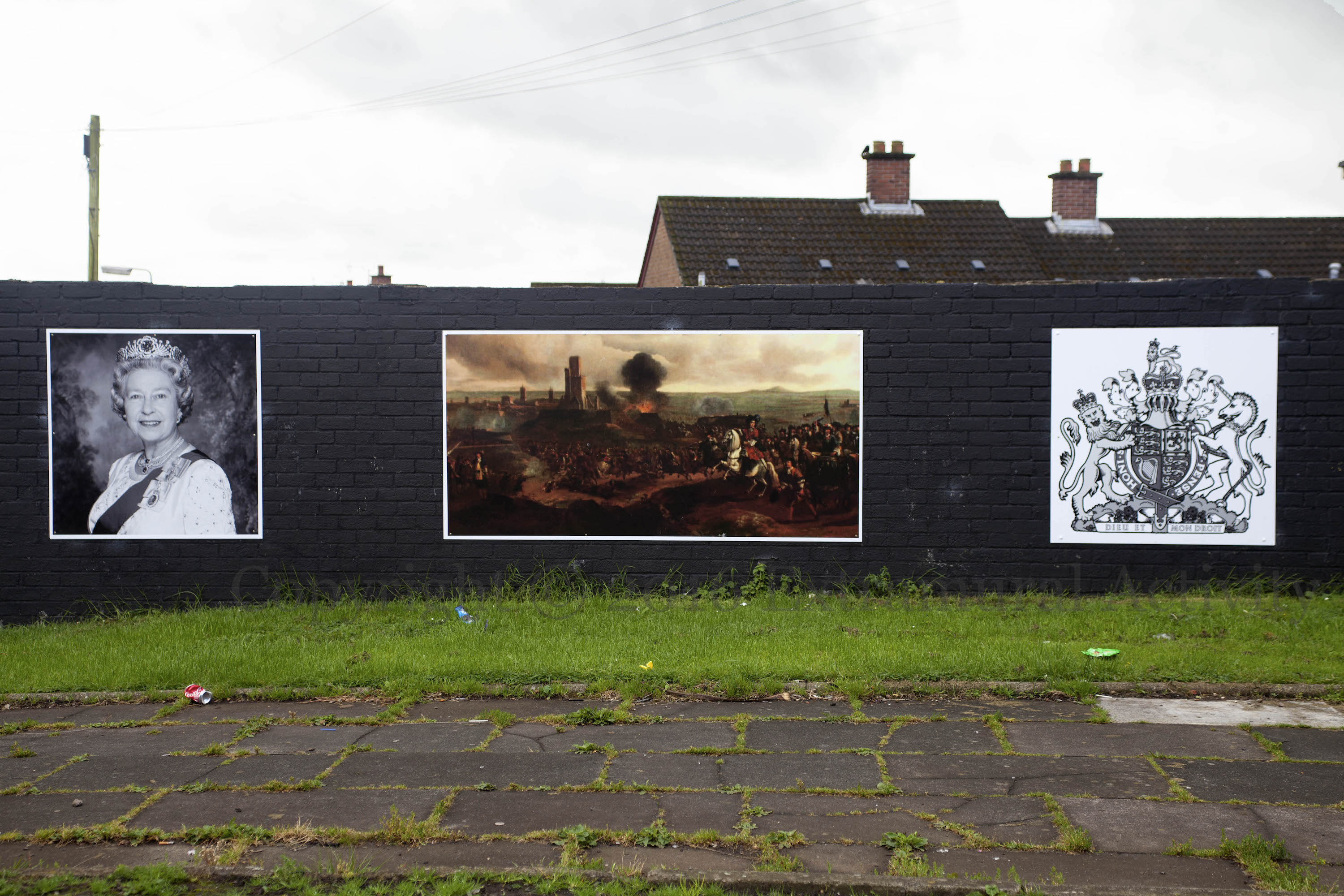
The experts’ best guess is that the gentleman on the white horse (on the right of the painting) is James Scott, Duke of Monmouth, at the siege of Maastricht in 1673. Scott was commander of the English forces fighting with the French during the Franco-Dutch war. It’s not clear, thus, what the connection is to the Antiville area of Larne or the wars fought in Ireland over the English crown. It was painted by Jan Wyck, who also did a painting of the Battle of the Boyne. On either side (as shown below) are a portrait of Queen Elizabeth II and the English version of the Royal coat of arms of the United Kingdom.
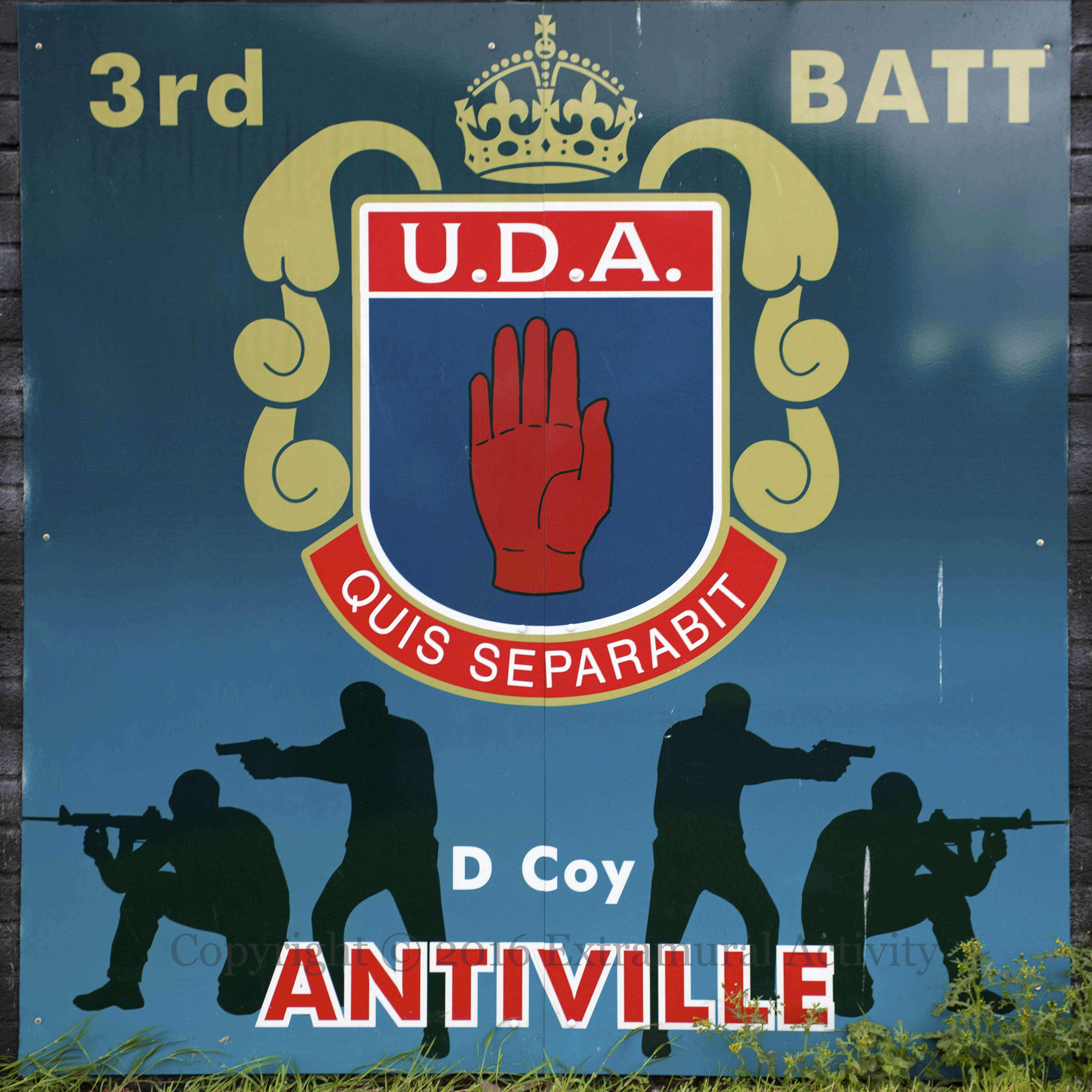
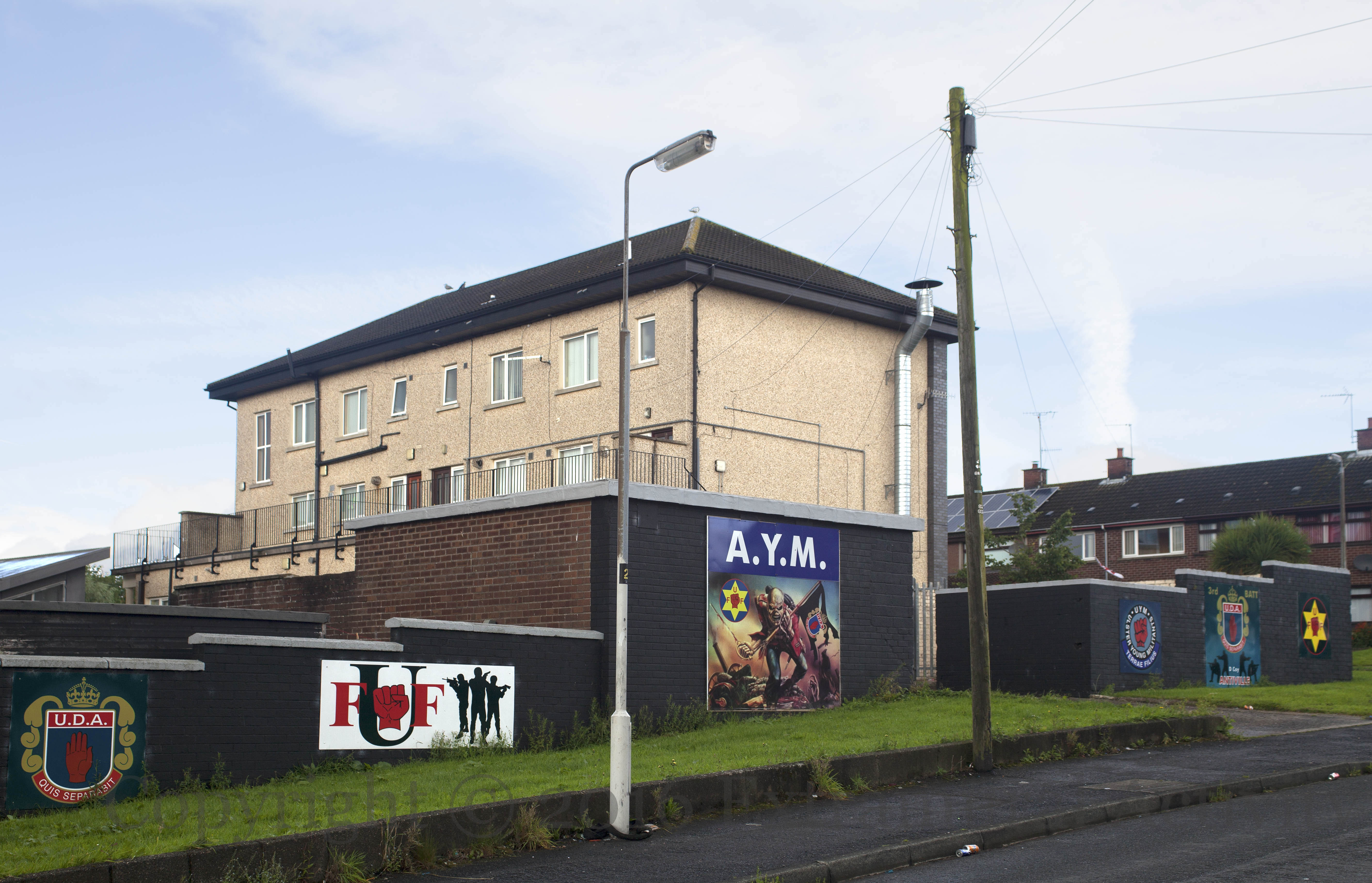
This trio of boards has been added to a wall behind the Antiville community centre, softening (somewhat) a very aggressive set of six UDA boards (seen in UDA Flag Bearer and Secret Army Silhouettes.)
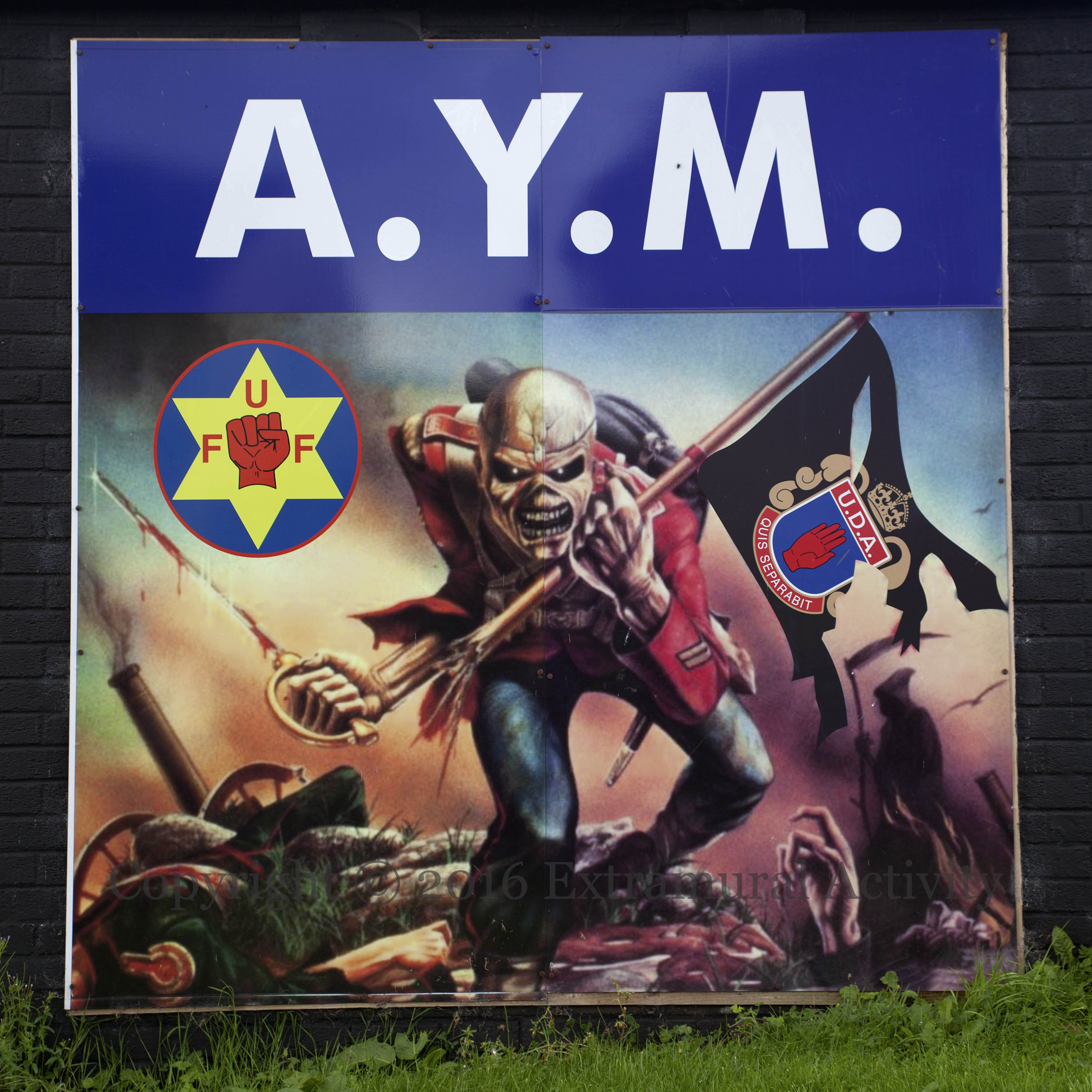
Rather than the Union flag that he carries in other murals and on the original Iron Maiden album cover (see The Trooper), in this version Eddie The Trooper carries a UDA flag (with the UFF symbol also shown). “AYM” is probably “Antiville Young Militants”.
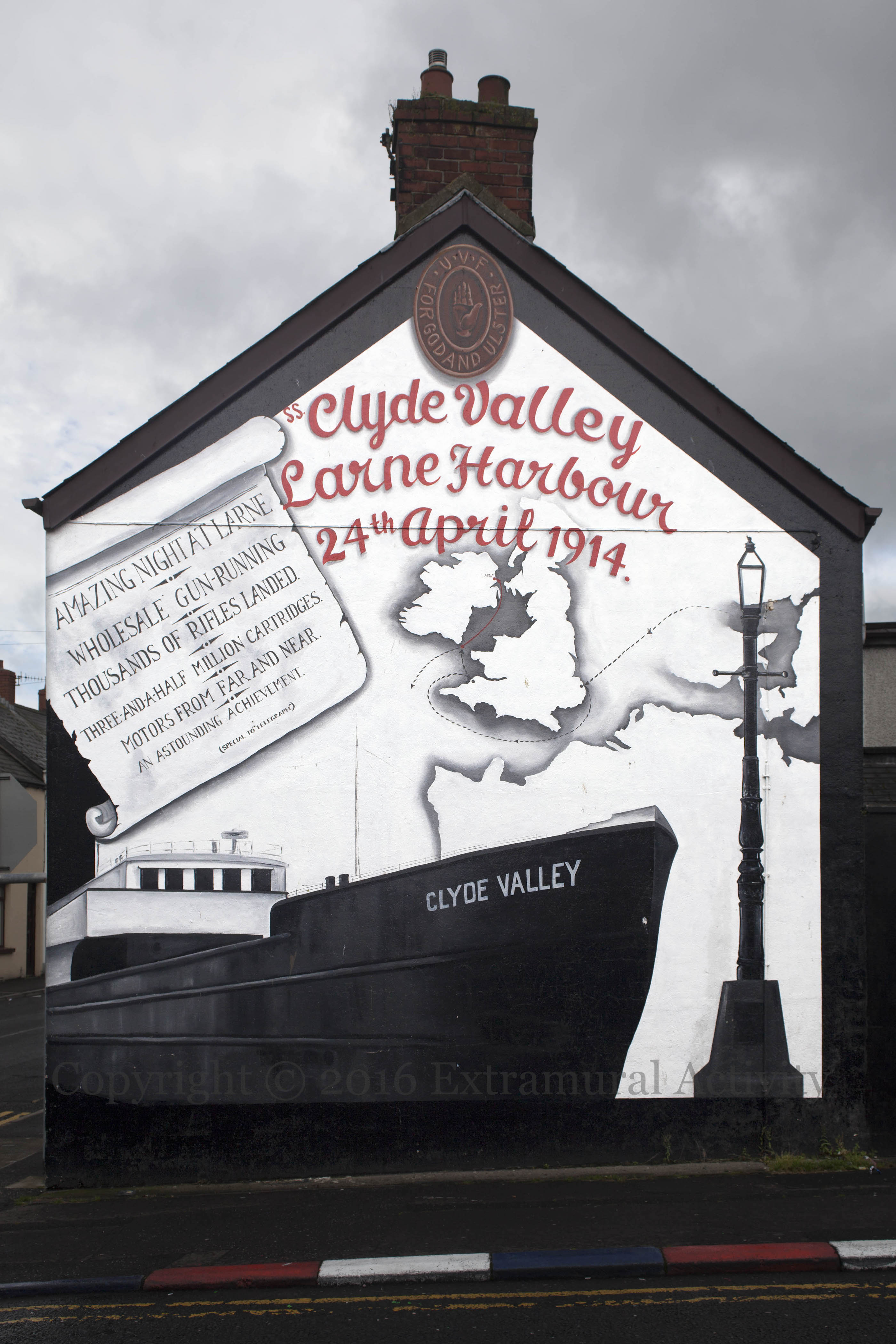
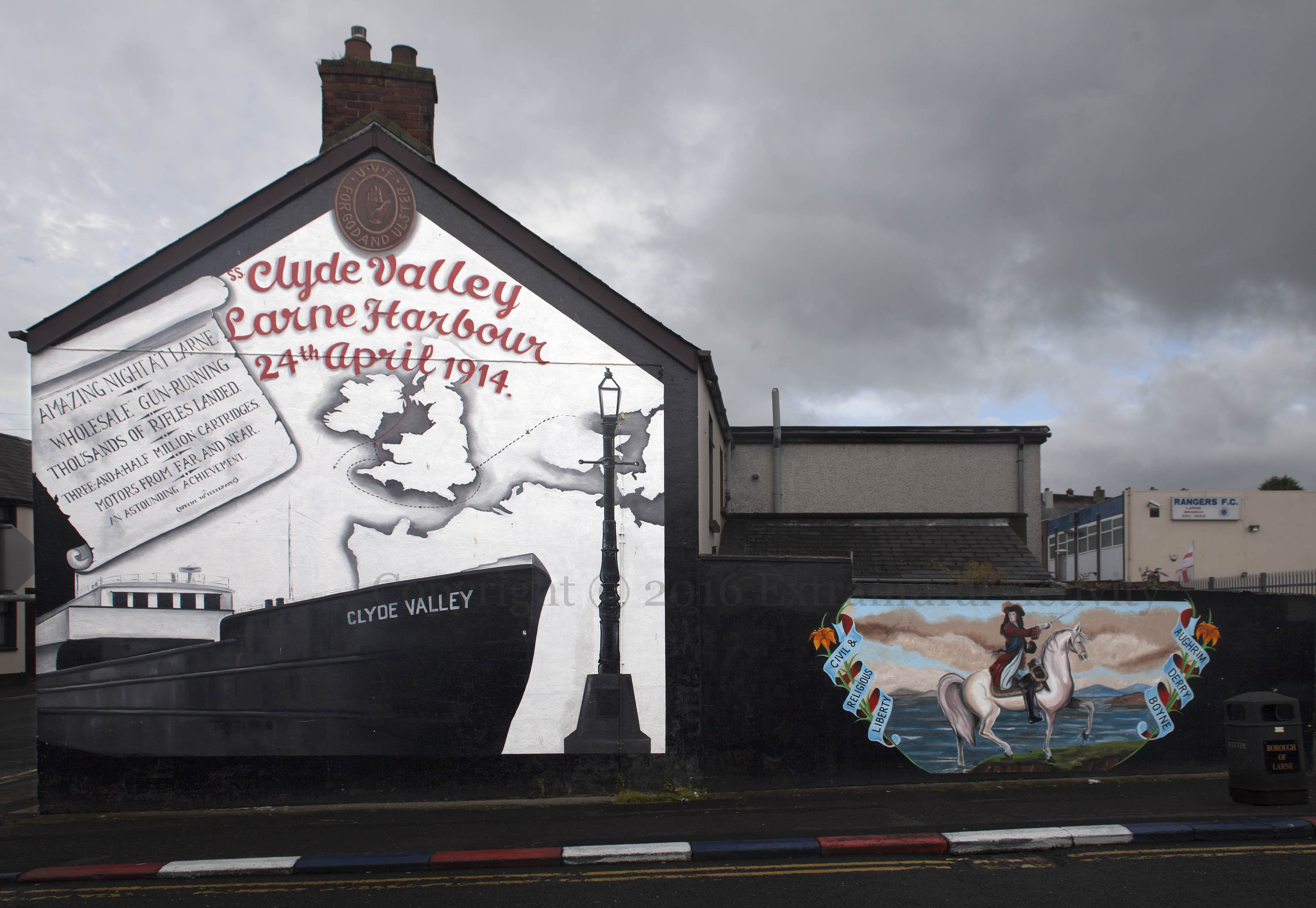
“Amazing night at Larne – Wholesale gun-running — Thousands of rifles landed — Three-and-a-half million cartidges – Motors from far and near – Astounding achievement — Special To Telegraph”.
The weapons on board the Clyde Valley began their journey on a different ship, the Fanny. However, Fanny’s papers were siezed by Danish authorities, as they thought the weapons were destined for home-rulers in Iceland! The ship escaped in bad weather and Clyde Valley sailed from Glasgow to the Irish sea off Wexford where it met Fanny, took the materiel on board, and temporarily renamed itself Mountjoy II using canvas sheets. From there, it sailed to Larne and then Bangor, off-loading weapons in both places for use by the Ulster Volunteers.
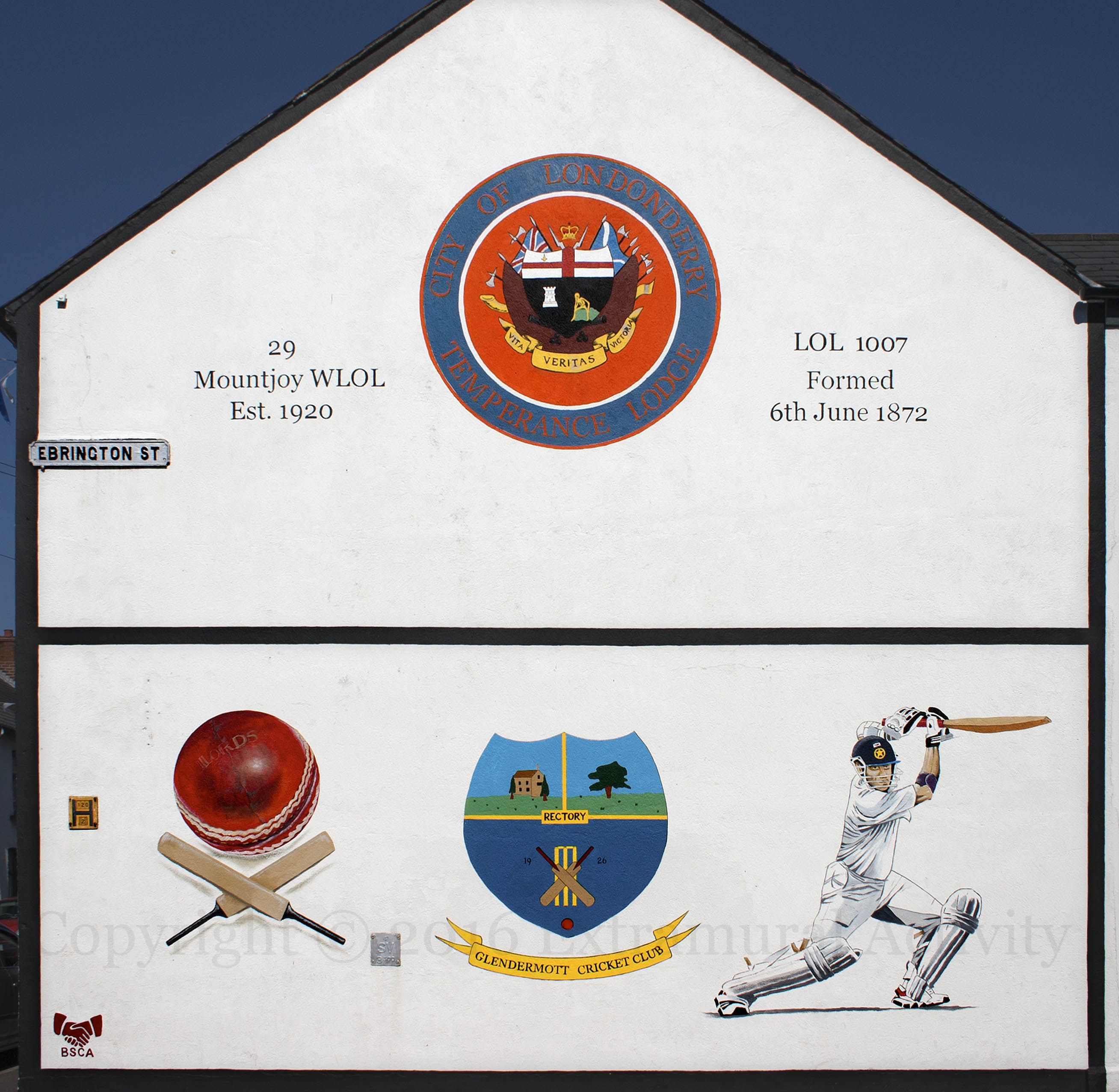
The mural above in Londonderry’s Ebrington Street celebrates three local organisations: in the upper portion, Orange Lodge #1007 “City Of Temperance” lodge (web) and Women’s Lodge #29 “Mountjoy”; in the lower portion, Glendermott Cricket Club (Tw), whose home pitch is Rectory Field (shown on the shield in the middle).
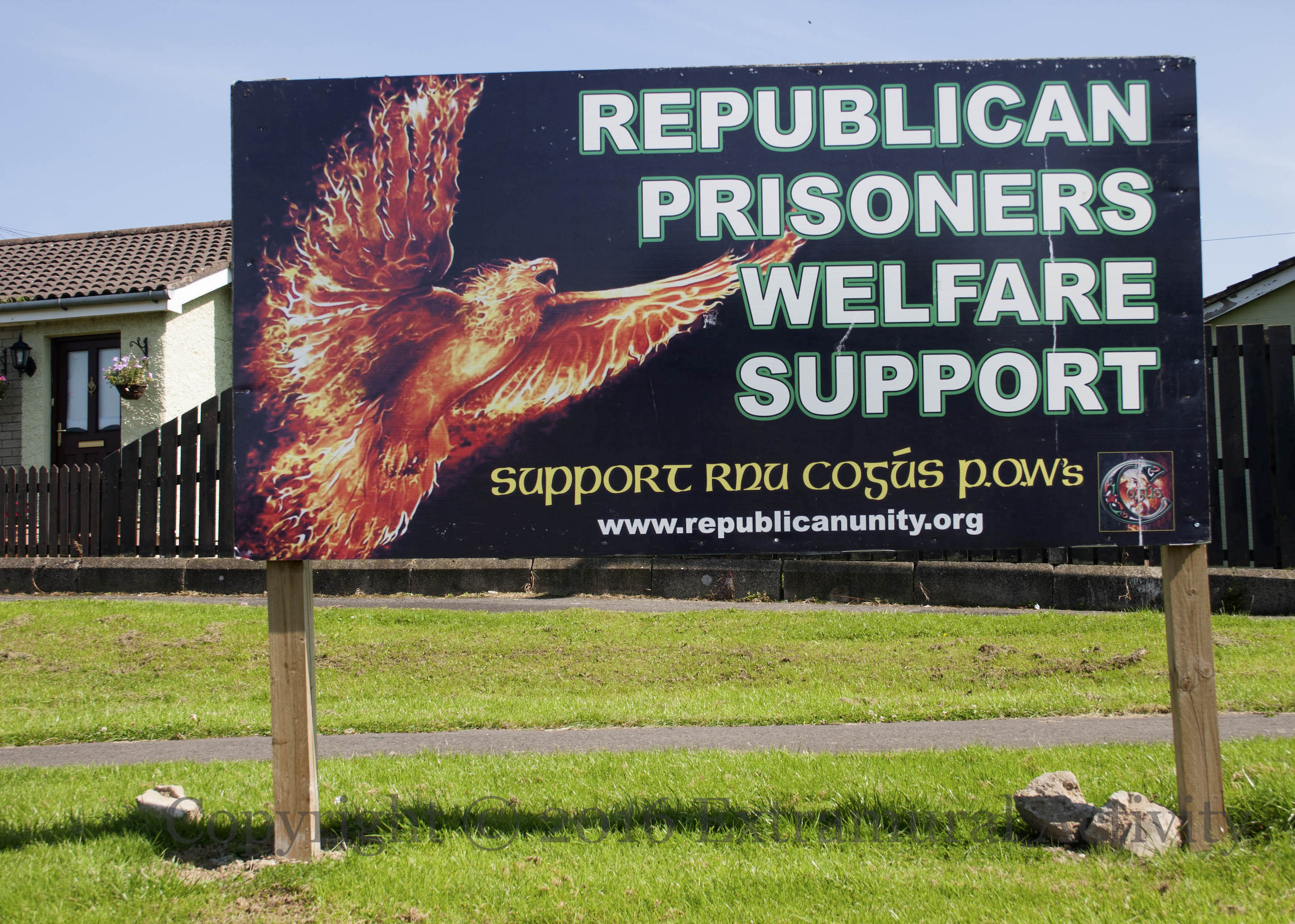
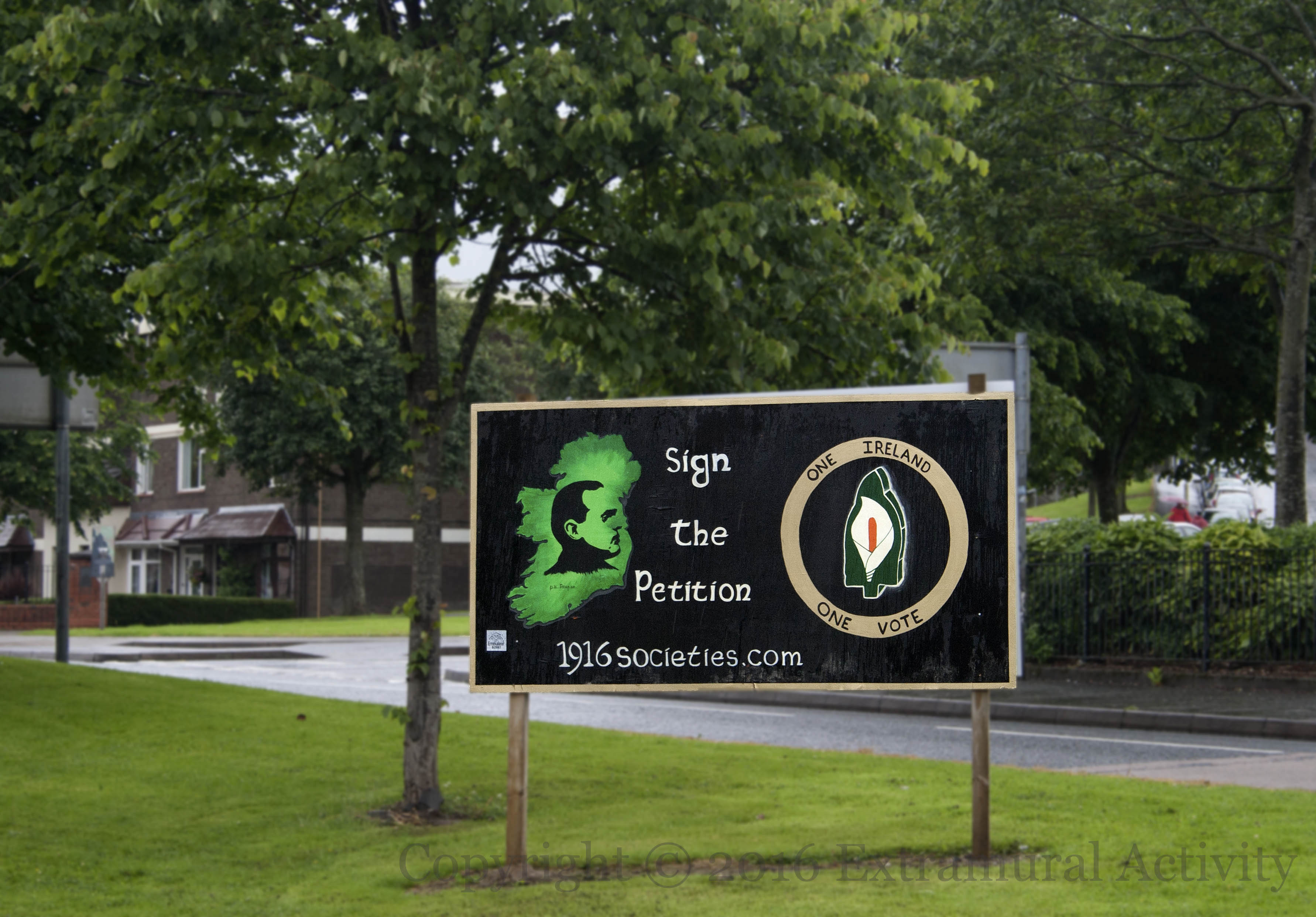
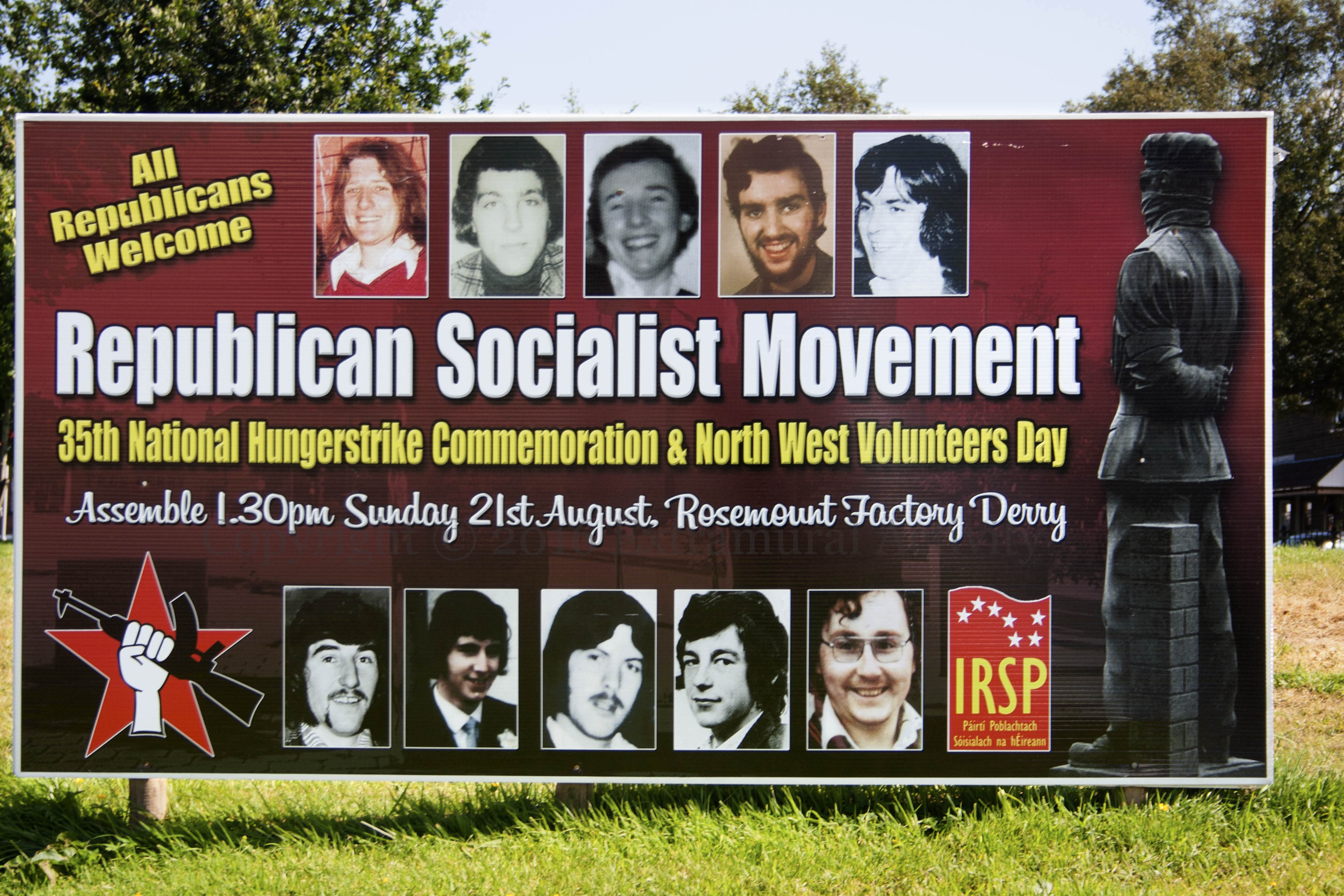
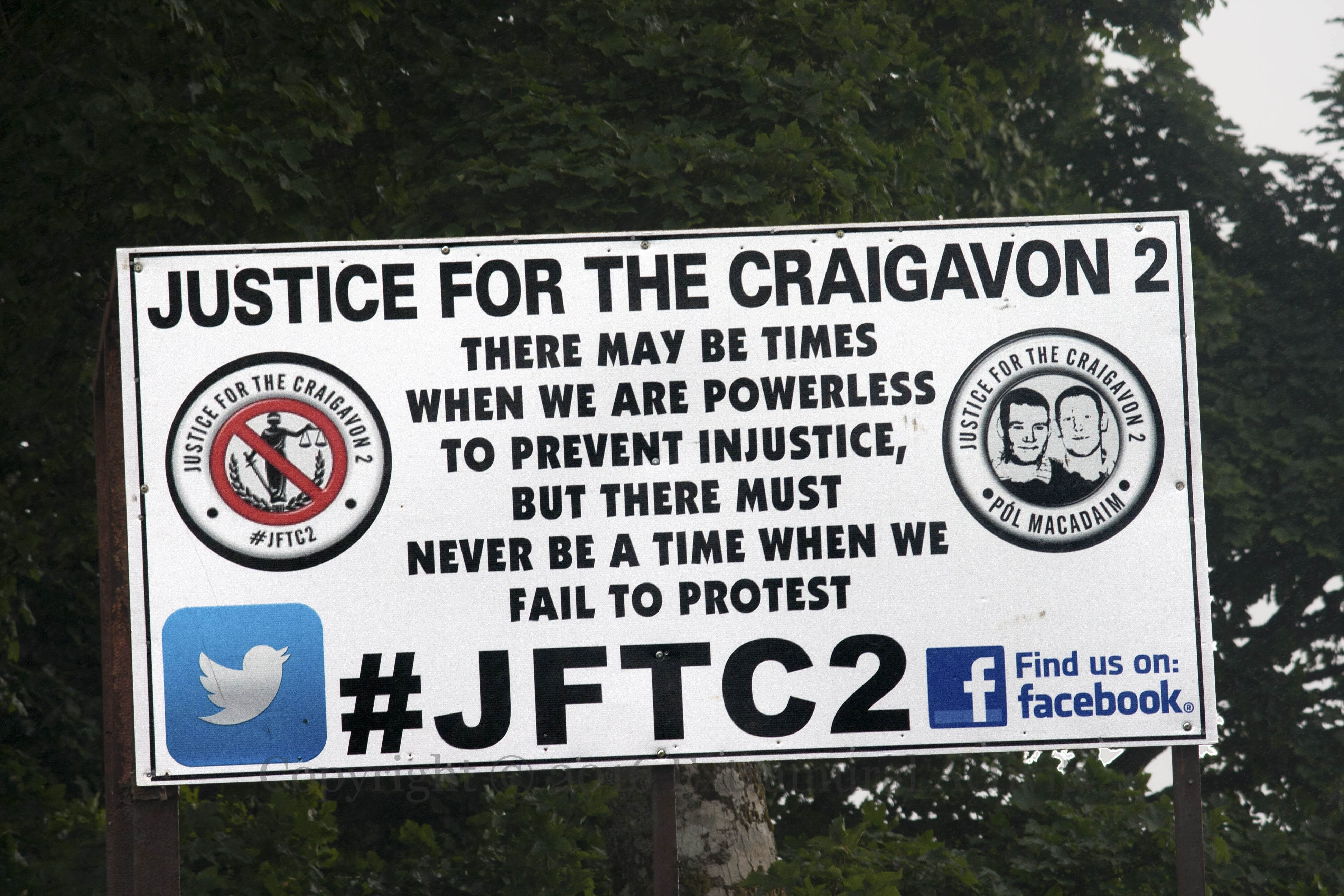
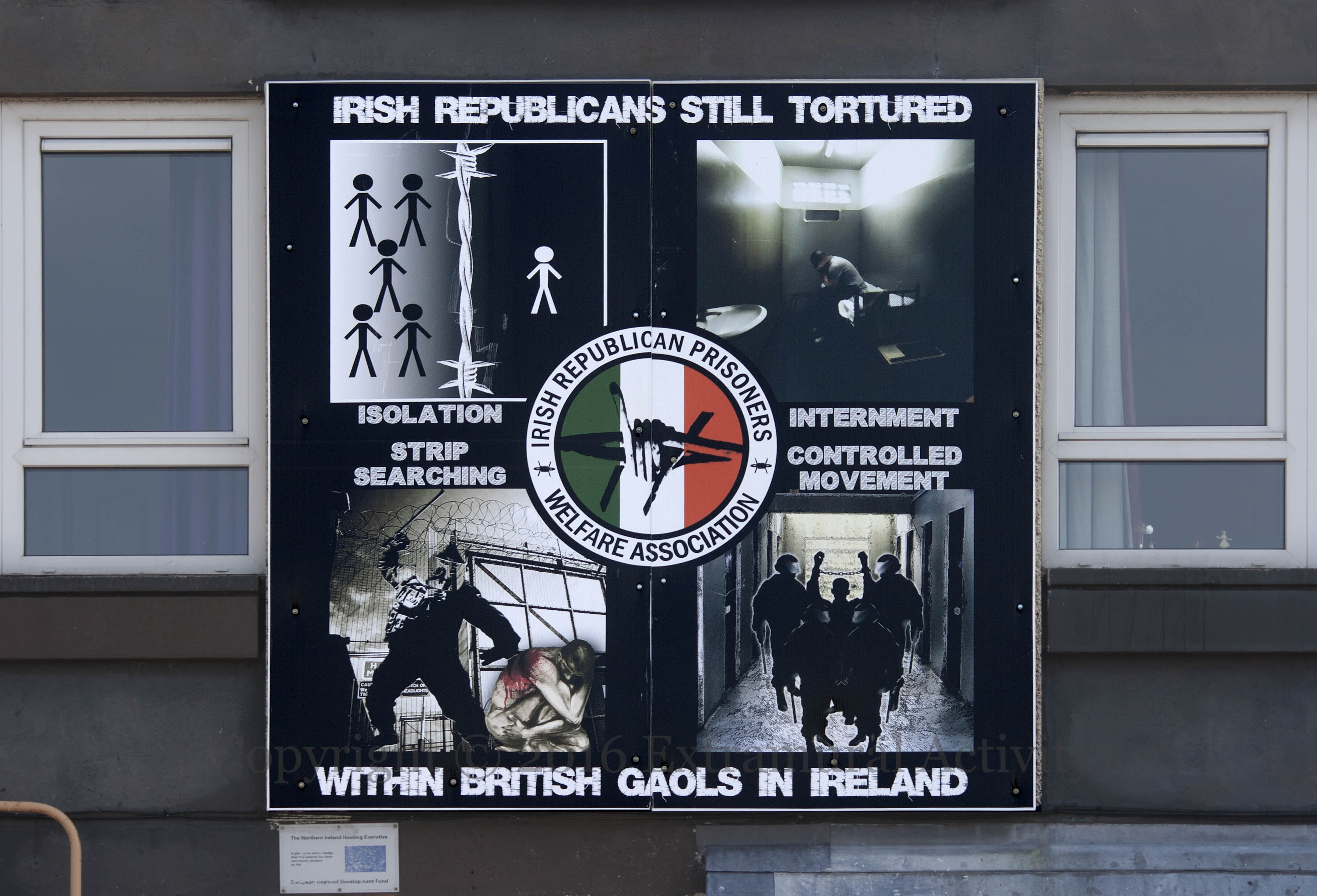
Here are four republican boards from Derry/Doıre and Dungiven/Dún Geımhın, from Cogús (republican prisoners’ welfare), 1916 Societies, IRSP, and the campaign for Justice For The Craigavon Two (Brendan McConville and John-Paul Wootton). The title comes from the last image: “There may be times when we are powerless to prevent injustice, but there must never be a time when we fail to protest.”
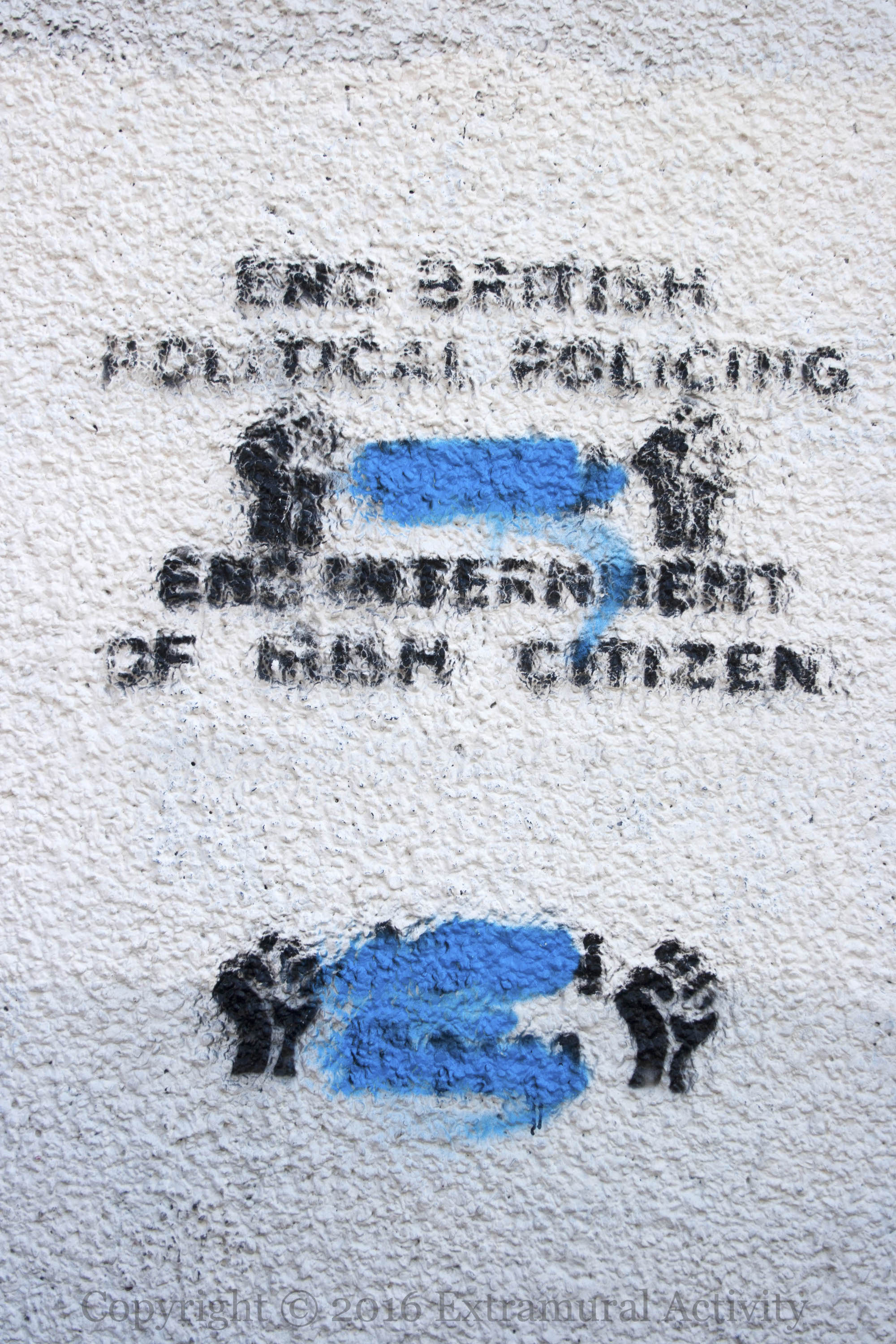
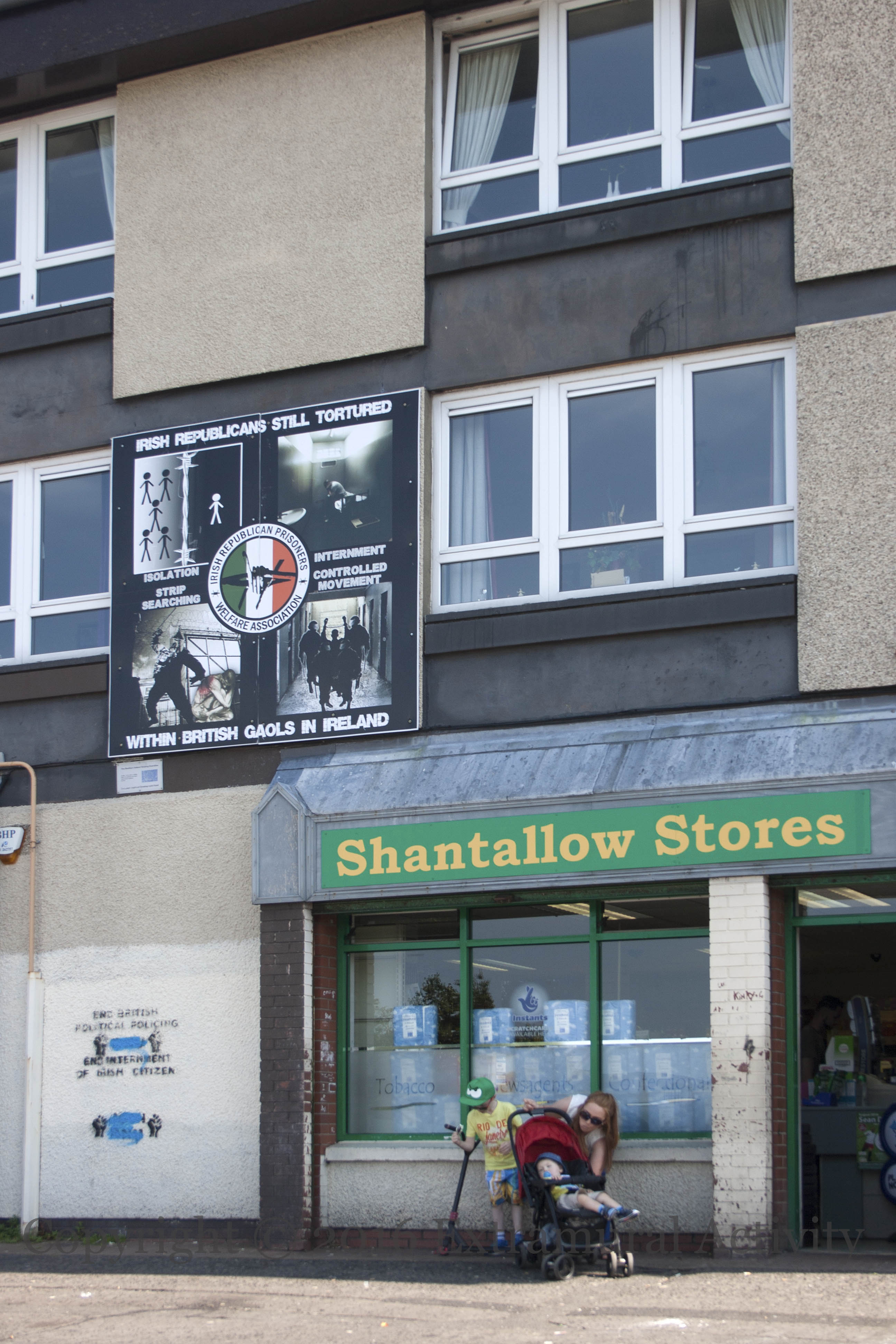
IRPWA board (and stencil) in Shantallow, Derry, articulating the forms of torture of Irish republicans in “British gaols in Ireland”: isolation, internment, strip searching, and controlled movement.
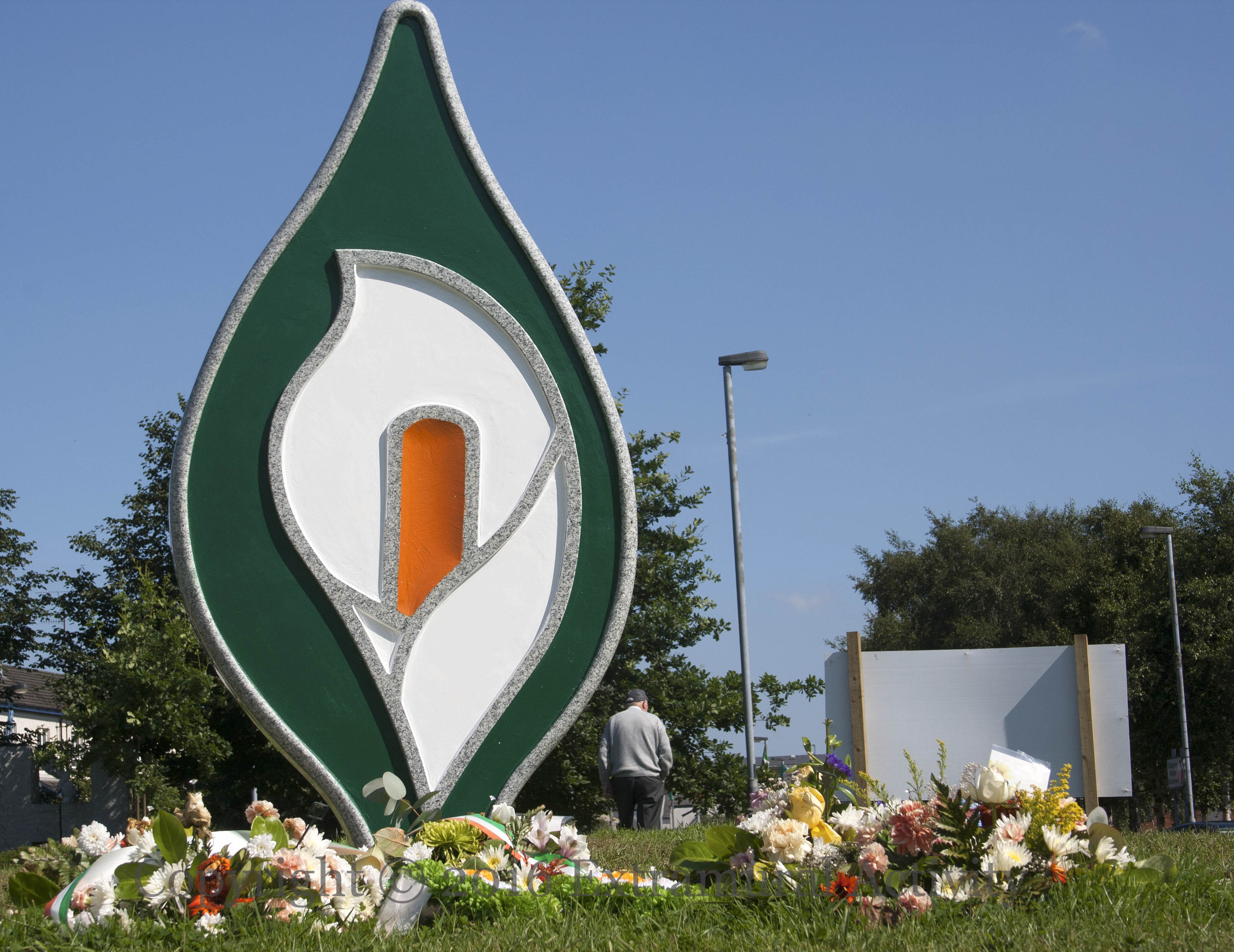
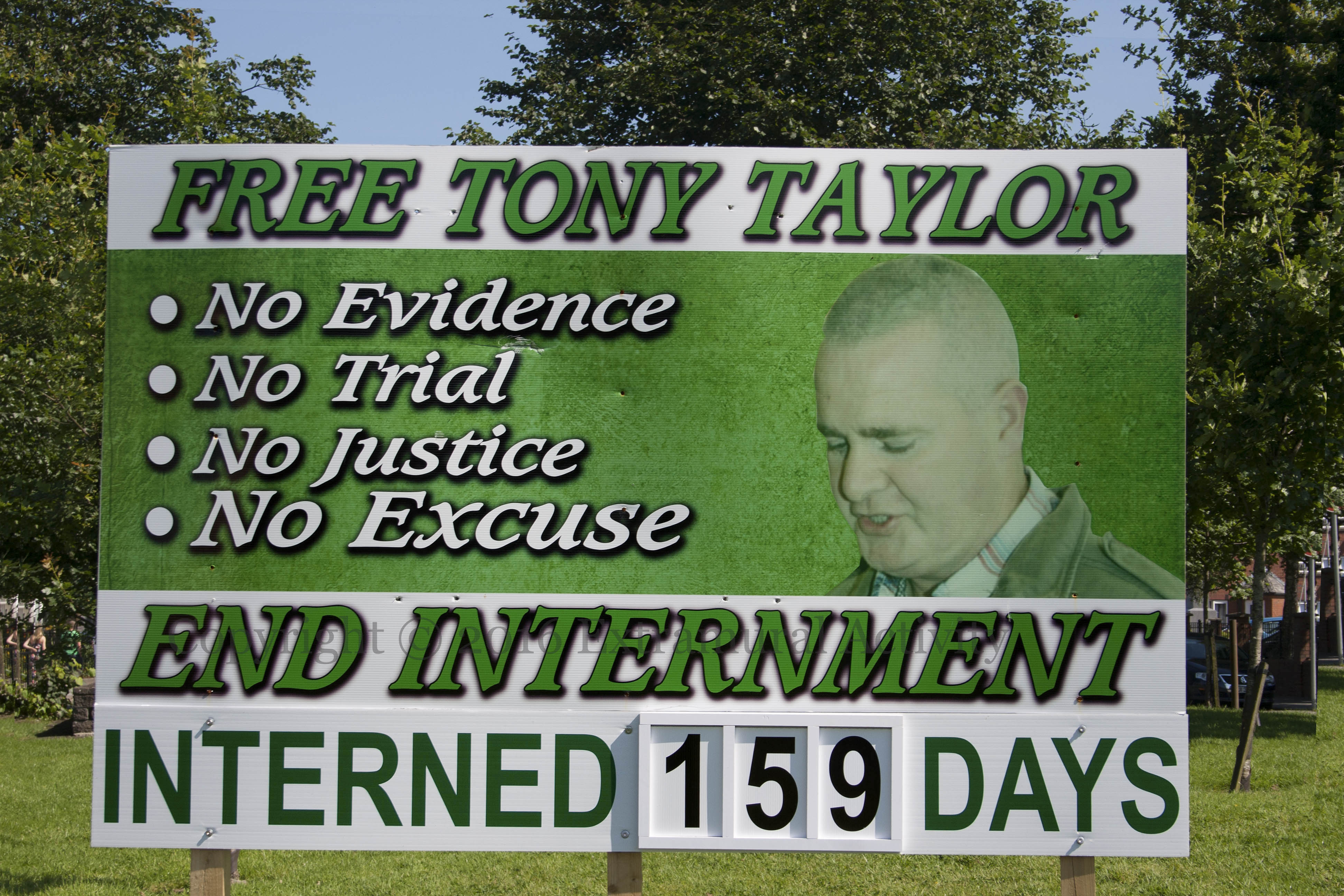
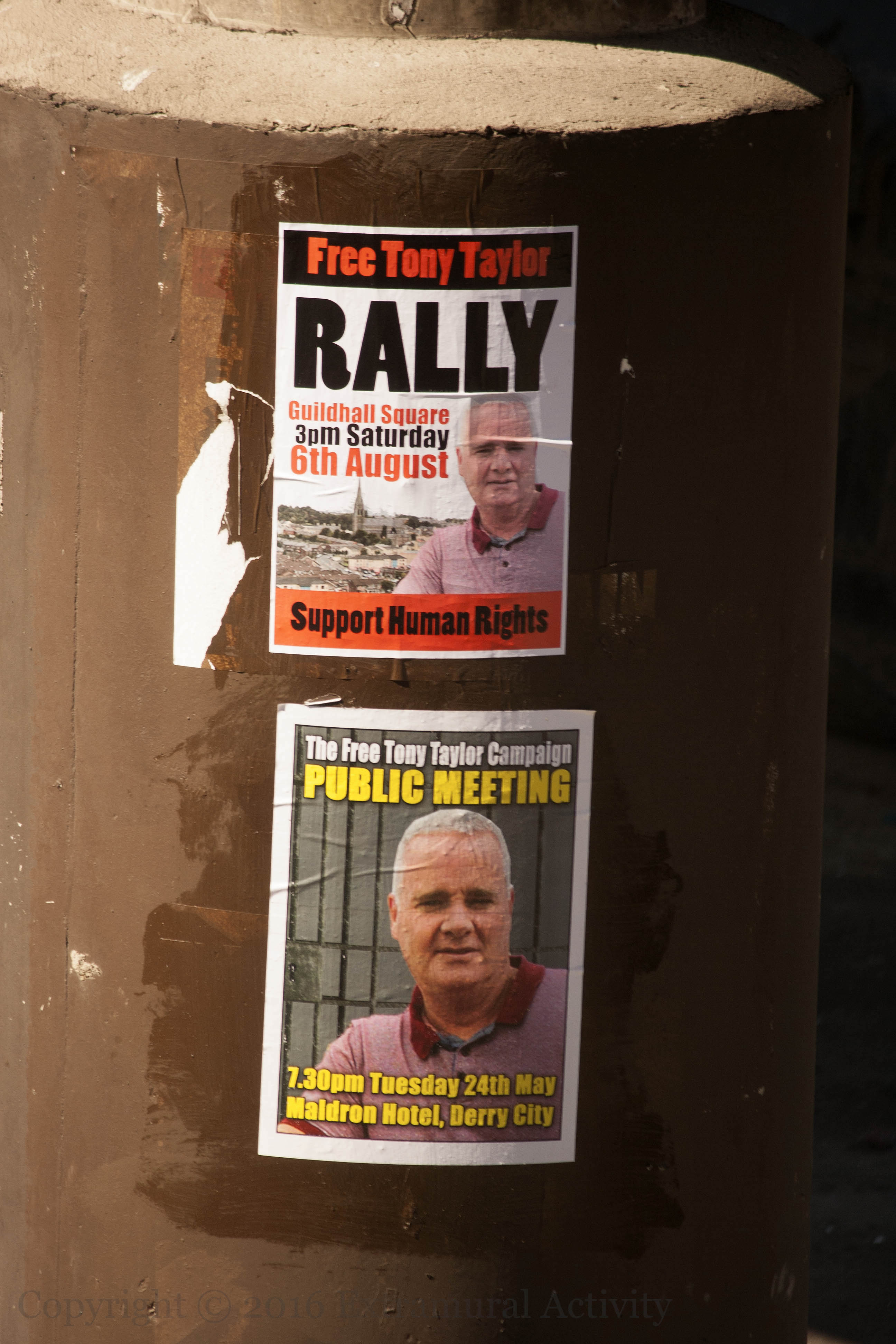
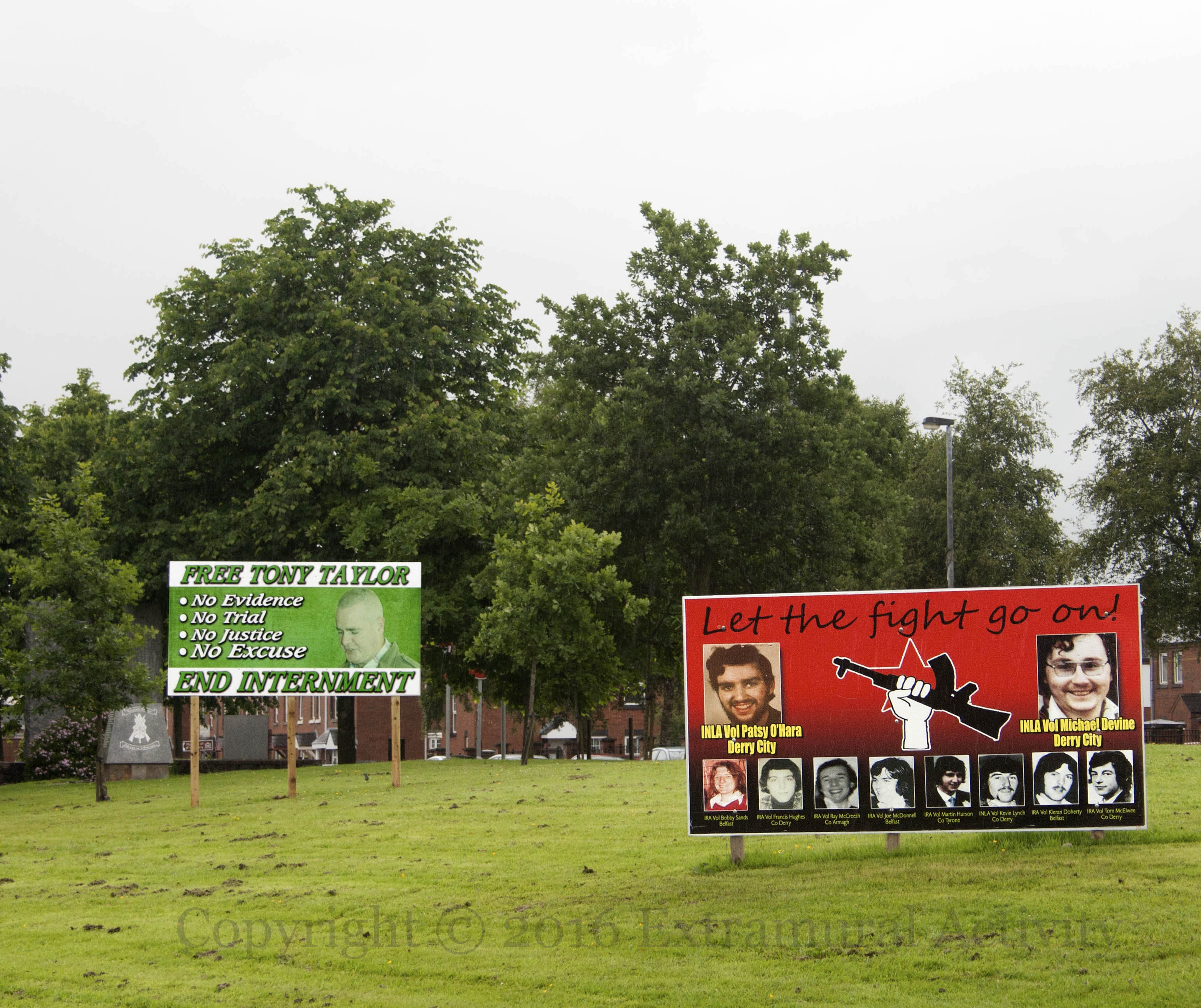
As a comparison of the first and third images – taken six weeks apart – show, a count of the days in prison has been added to the Tony Taylor board on the green in front of the H-Block memorial in Derry, reminiscent of the counts that were kept of the hunger strikers in 1981 (see, for example, Day 55 | Day 61 in the Peter Moloney Collection collection).
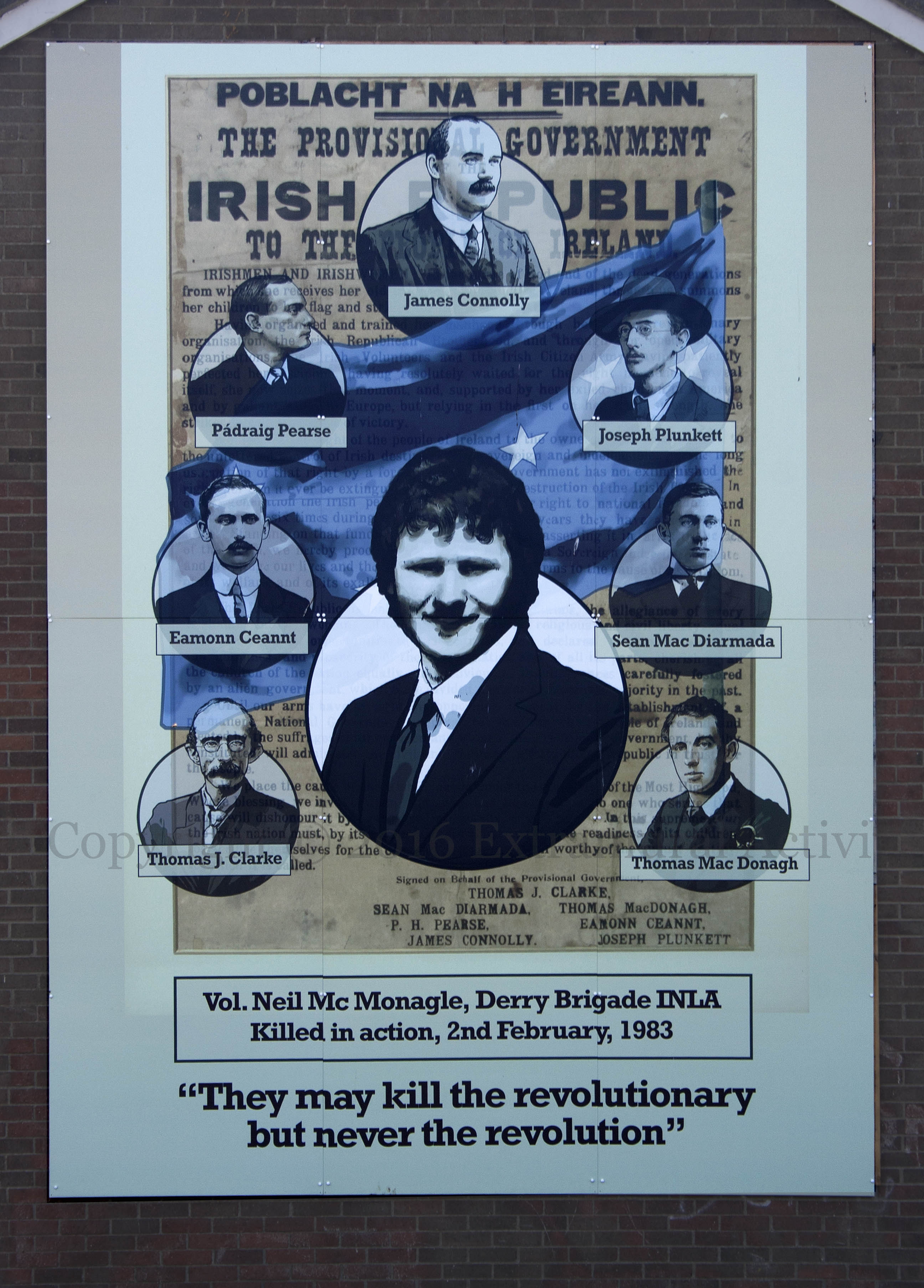
Derry INLA man Neil McMonagle – who died in February 1983 – is placed among the seven signatories of the proclamation of the provisional government of the Irish Republic.
For more information about his life, see previously McMonagle.
The board was launched on January 31st, 2016, just before the anniversary of McMonagle’s death (Derry Now).