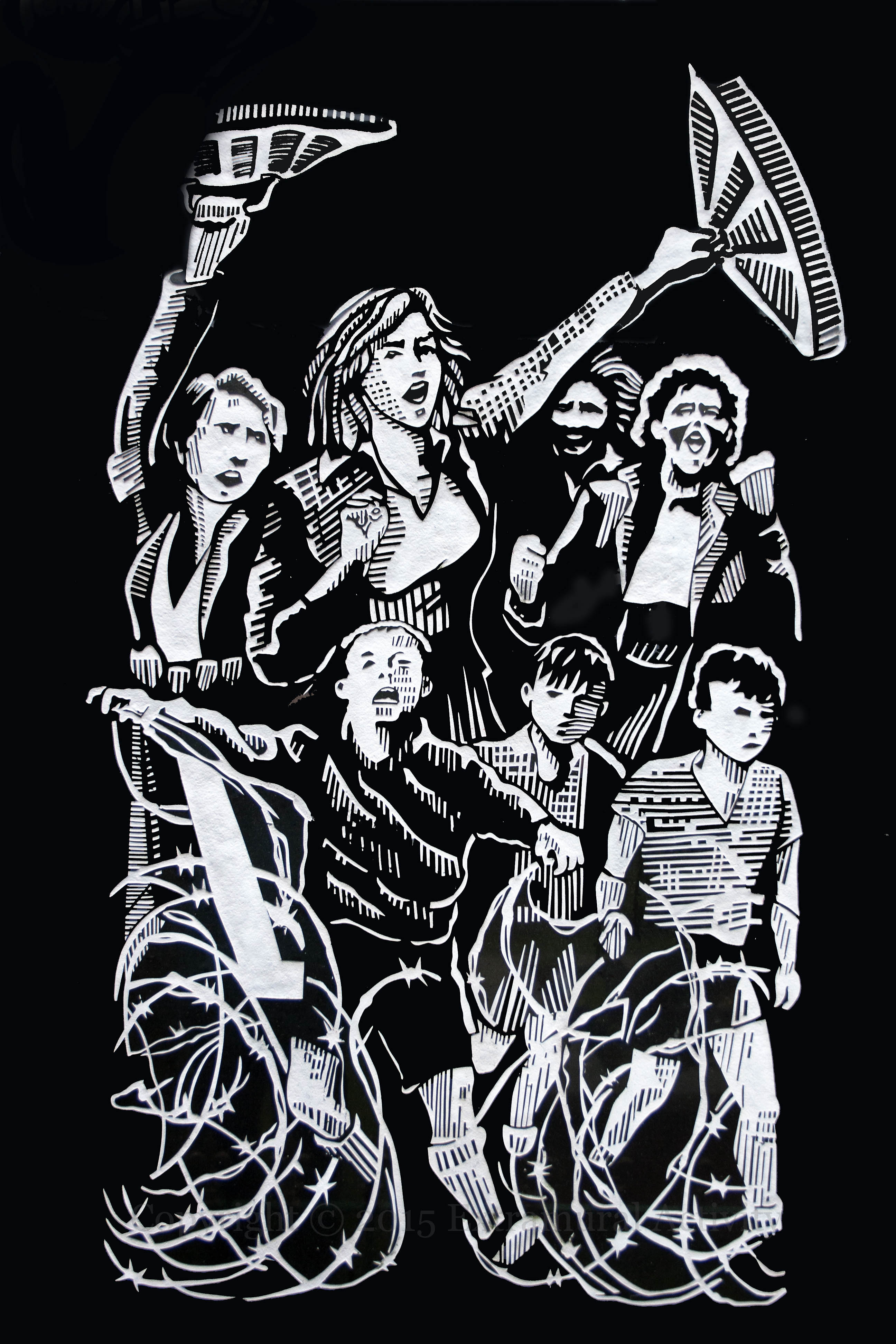
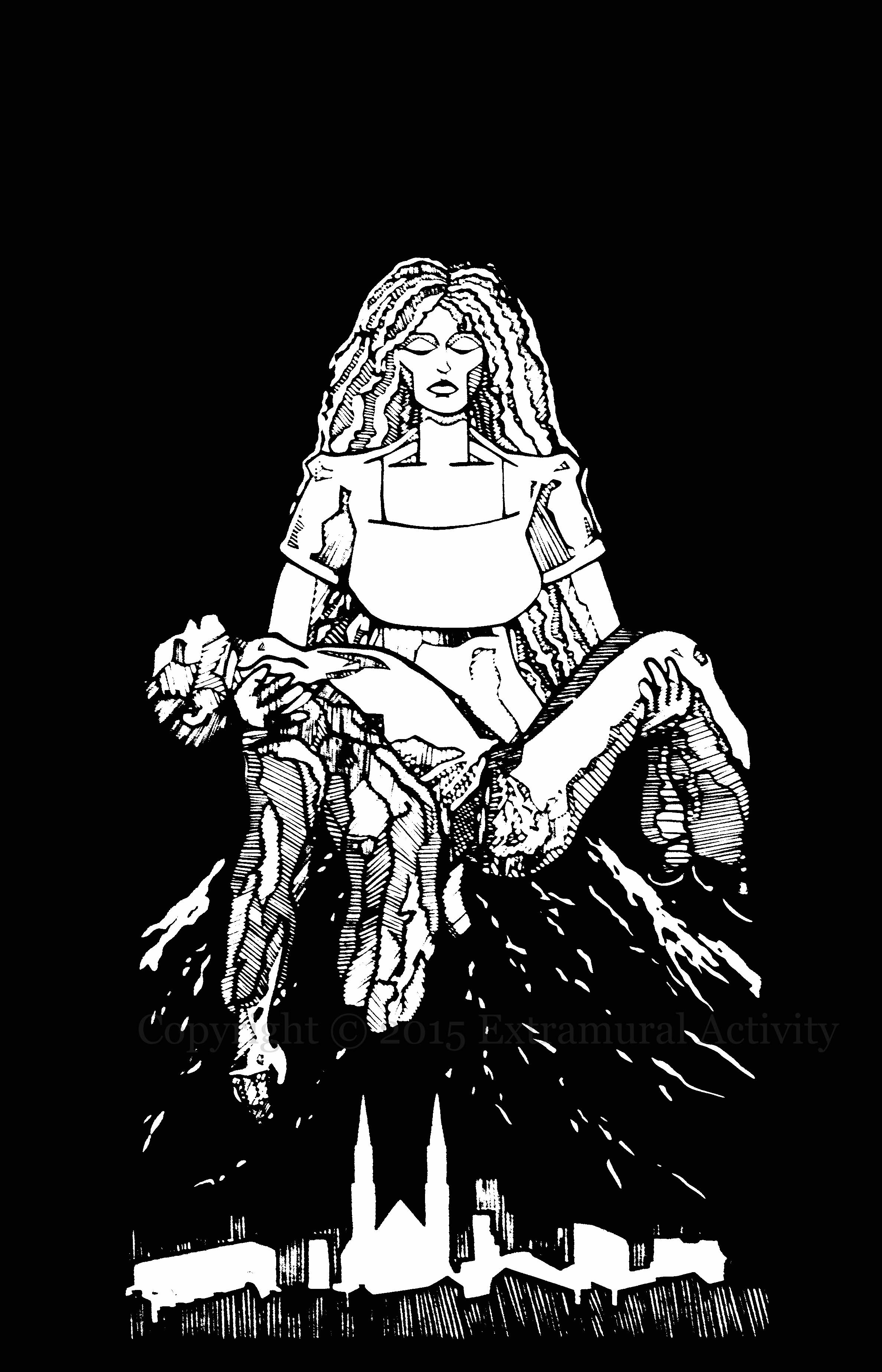
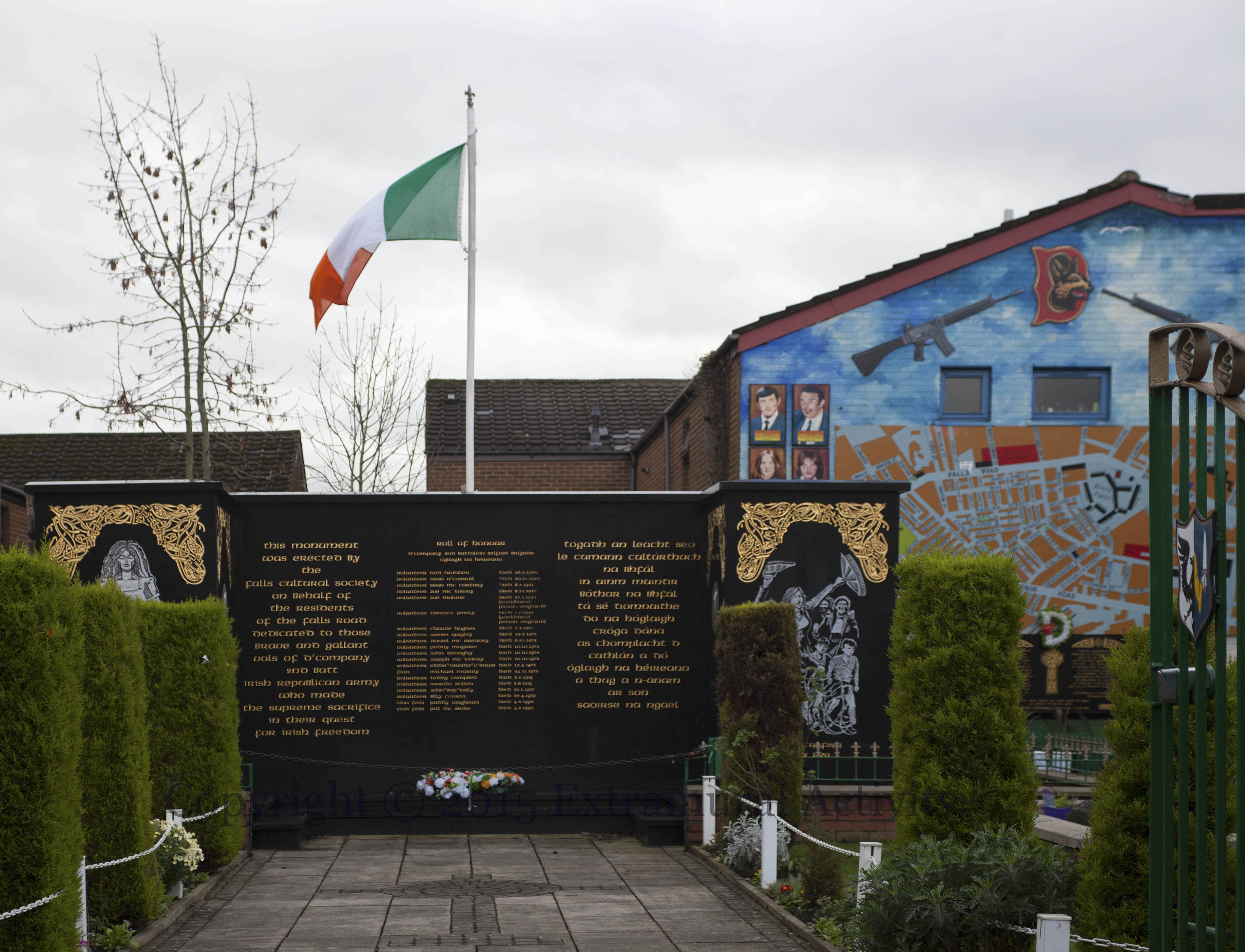
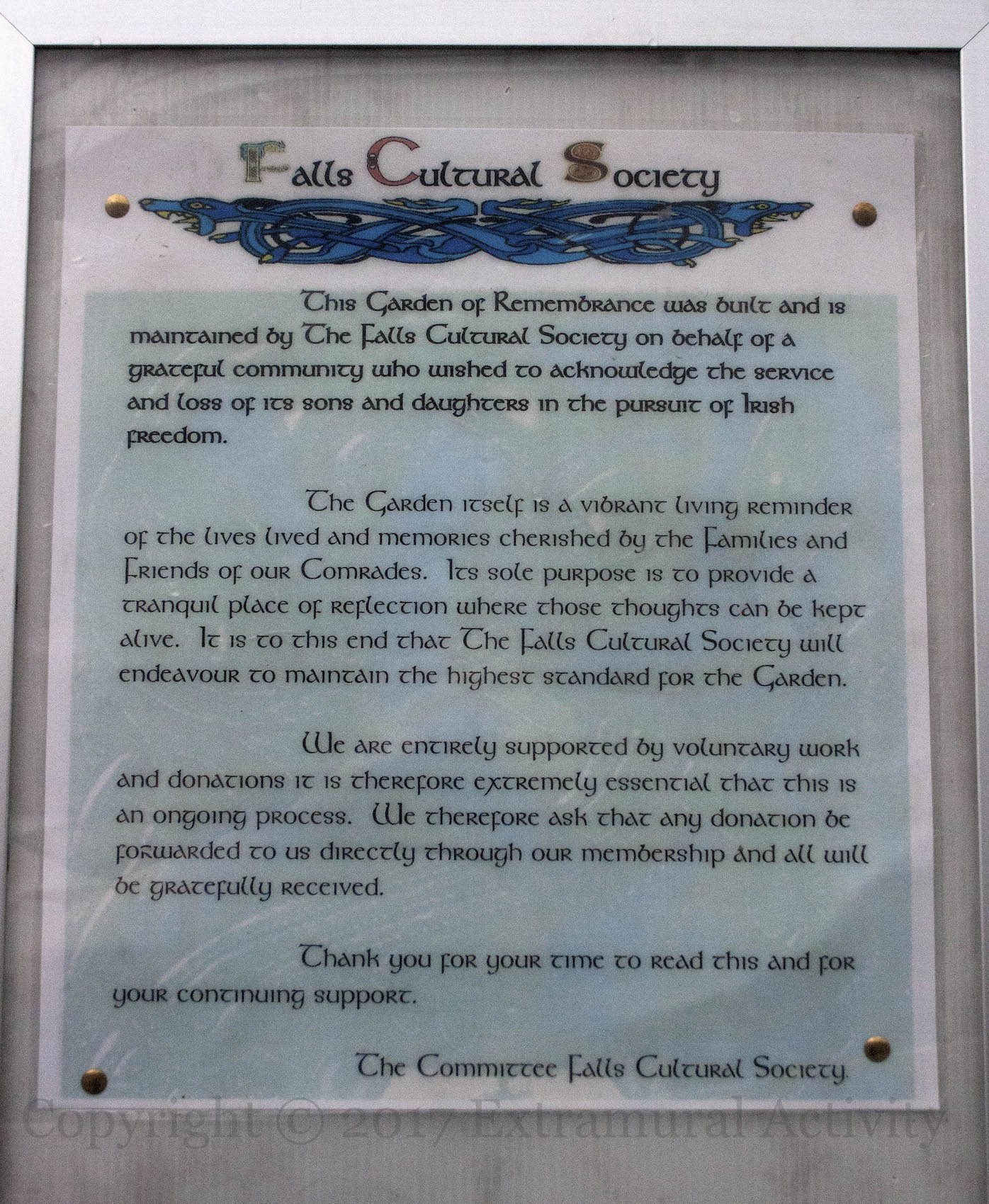
The two images featured today are of carved panels in the Falls Garden Of Remembrance (with the gold-plated surround removed). The garden commemorates fallen members of (IRA) D company but the panels suggest a wider appreciation of lower Falls residents. The same is also true of the mural in the background of the wide shot (third image, below), for which see Cry “Havoc”.
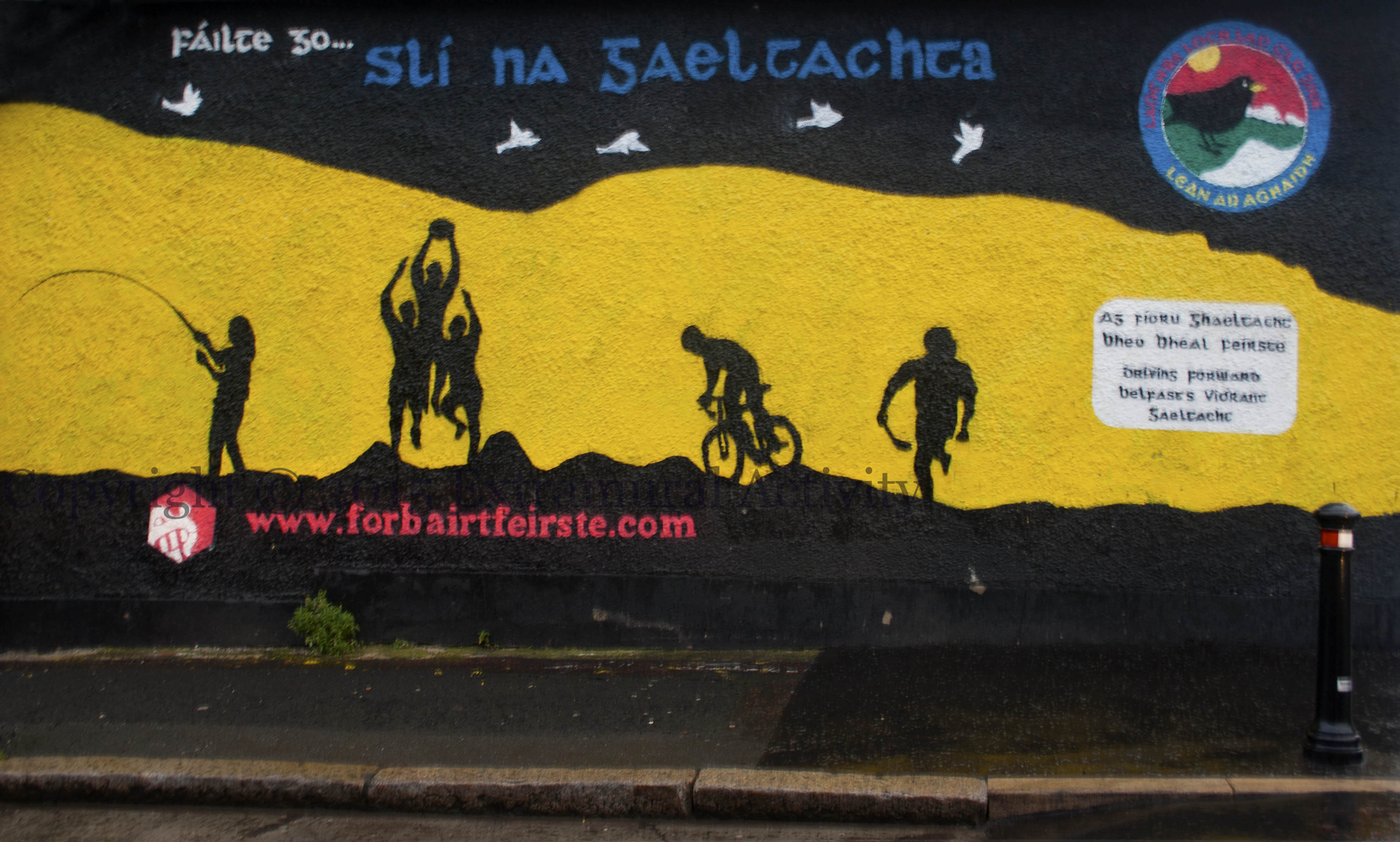
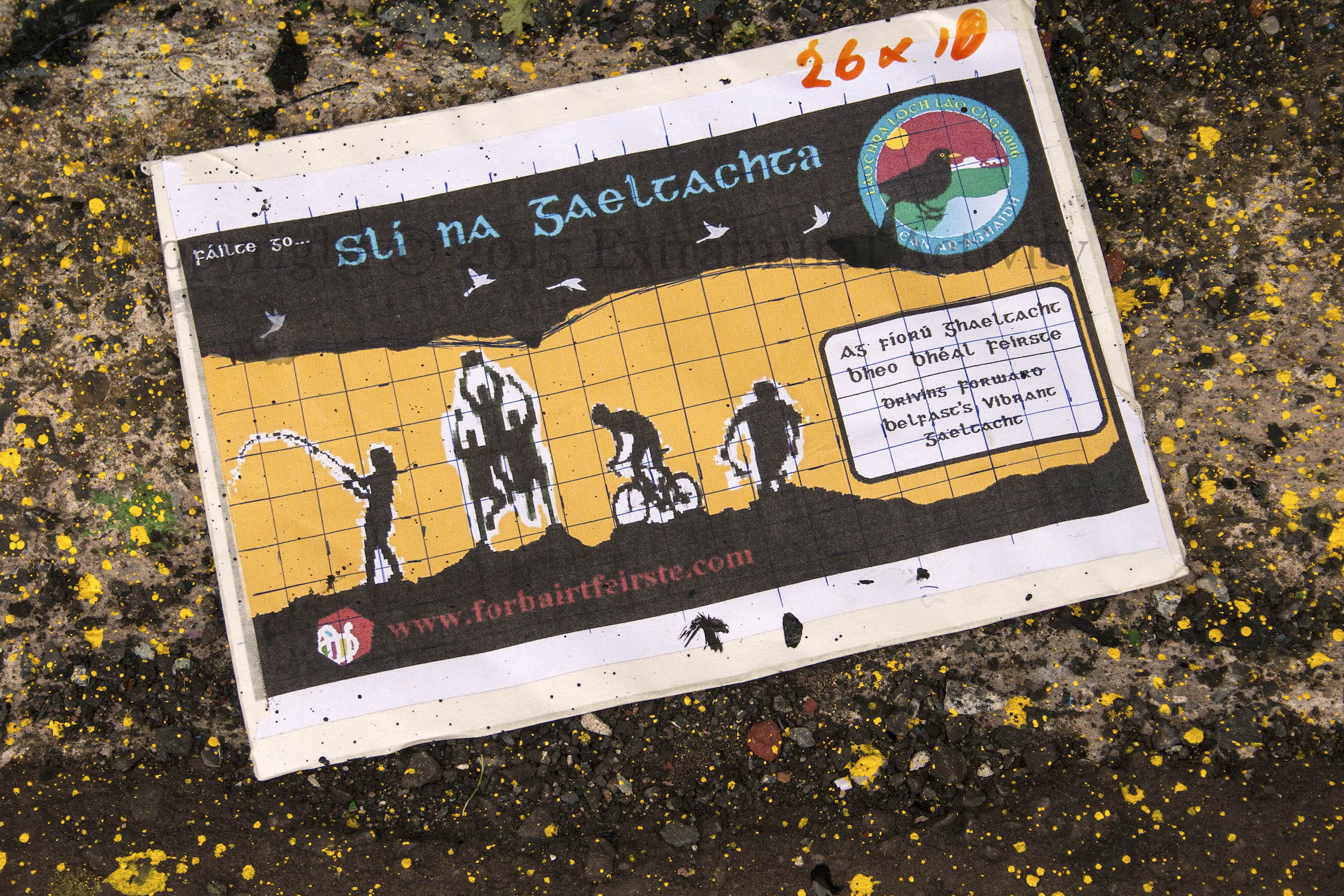
Slí Na Gaeltachta (The Gaeltacht Way) is a 2.5-mile trail of twenty-six “art and heritage” stops from the city centre to the Whiterock Road in west Belfast. A gaeltacht is an Irish-speaking region.
See previously: Onwards – memorial mural to Clive Dutton, author of the Dutton Report calling for the regeneration of west Belfast by (in part) developing its Irish-language identity.
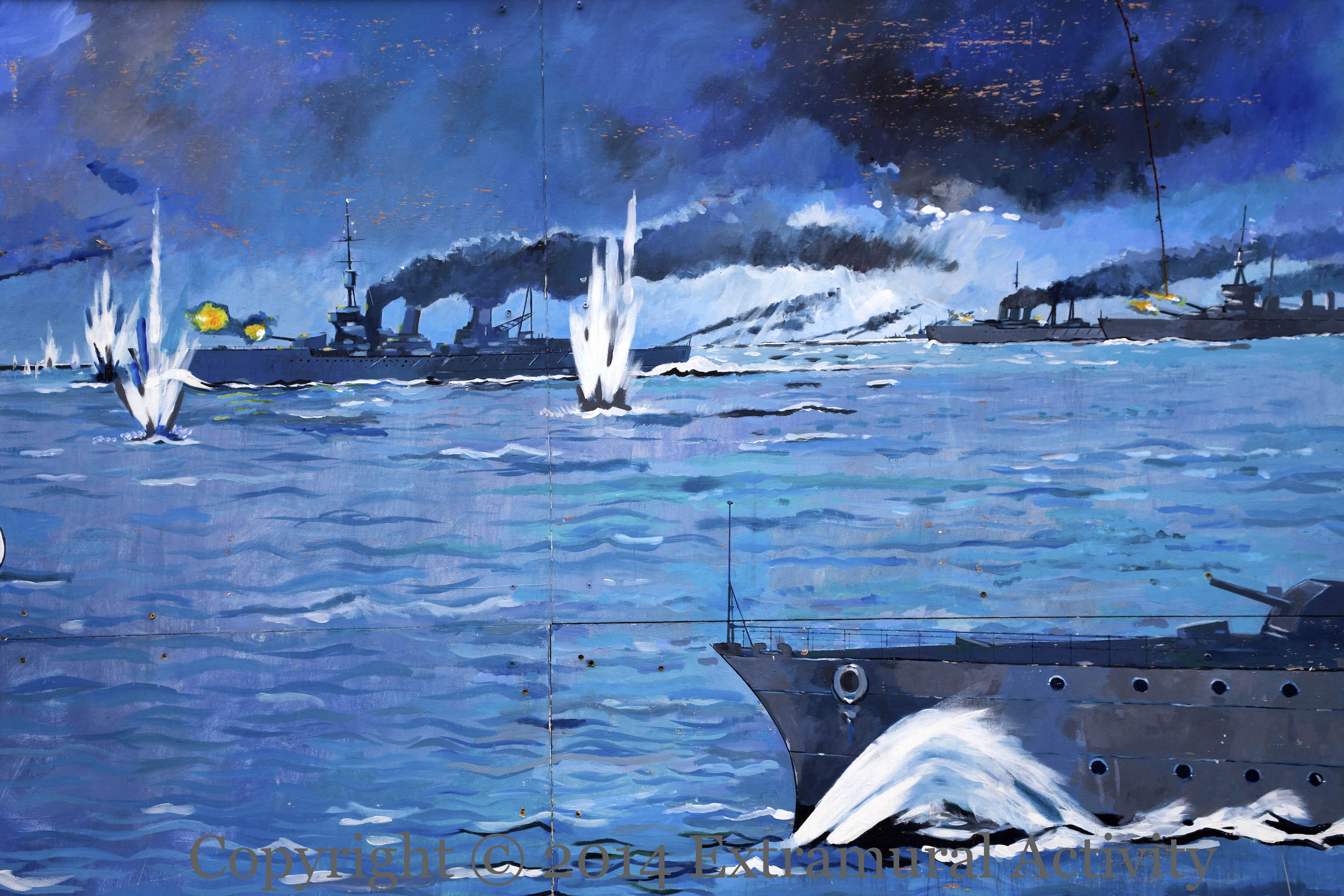
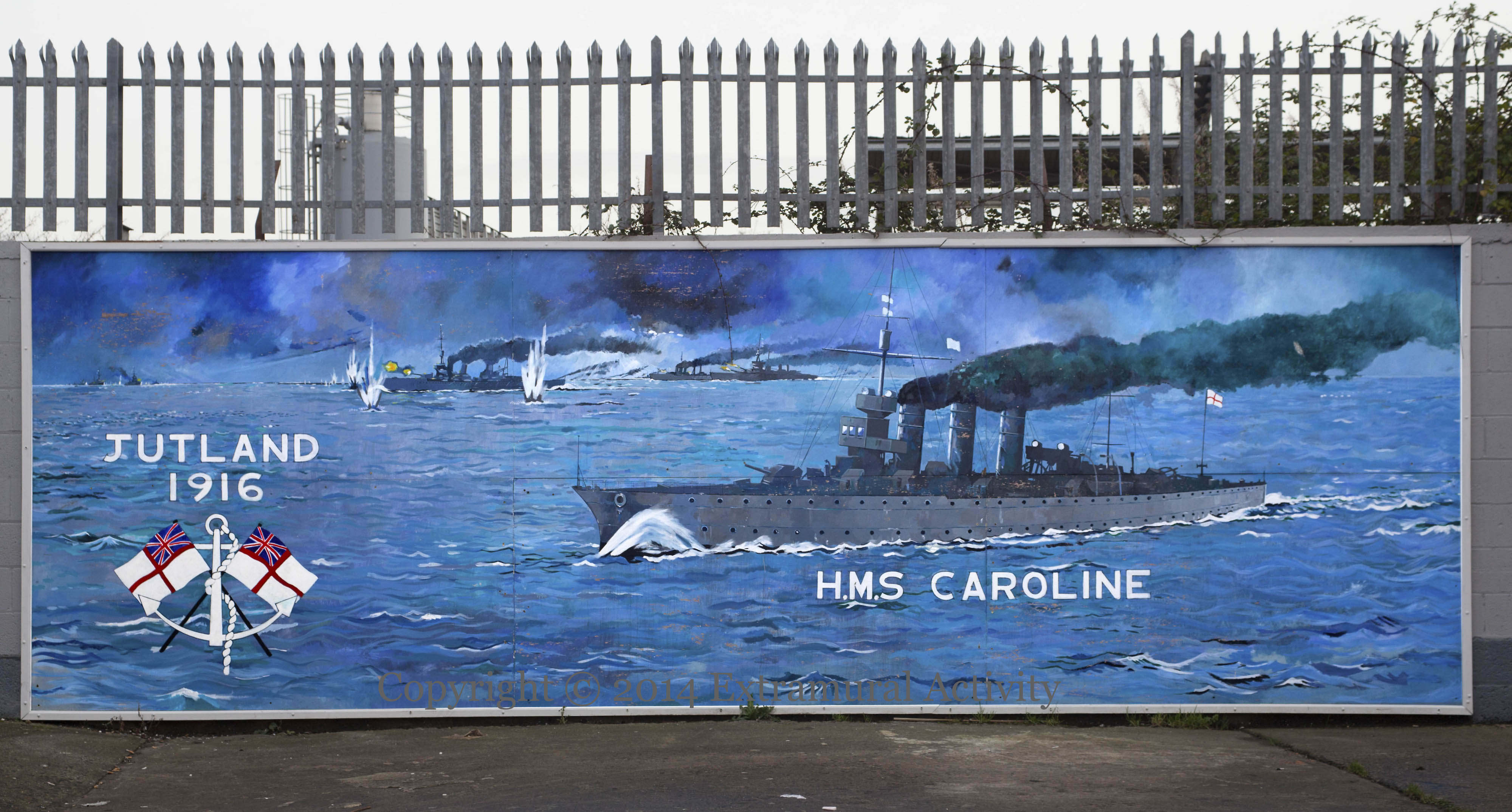
HMS Caroline’s connection to Belfast is that she served as the headquarters for the Royal Naval Reserve in Alexandra Dock. Originally built in 1914, she served in the Grand Fleet and took part in the battle of Jutland on May 31st, 1916, as shown in the images above and below. She was decommissioned in 2011; it is hoped to open her as a museum and visitor attraction by the time of the centenary of the battle (WP). The Daily Mail has a gallery of images of the ship in its current state. Also present at the battle of Jutland, as captain of HMS Nestor, was Commander (later Sir) Edward Bingham.
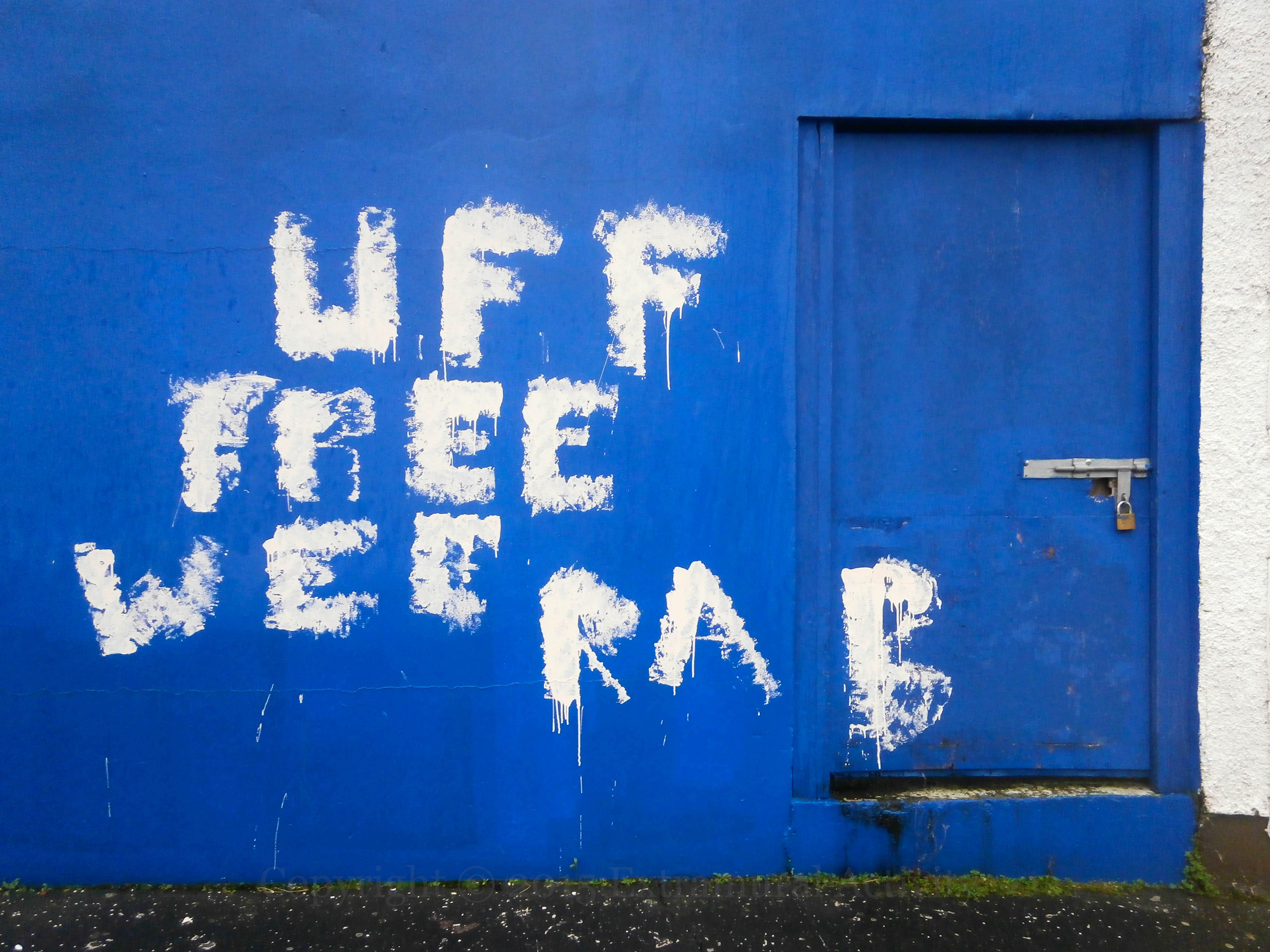
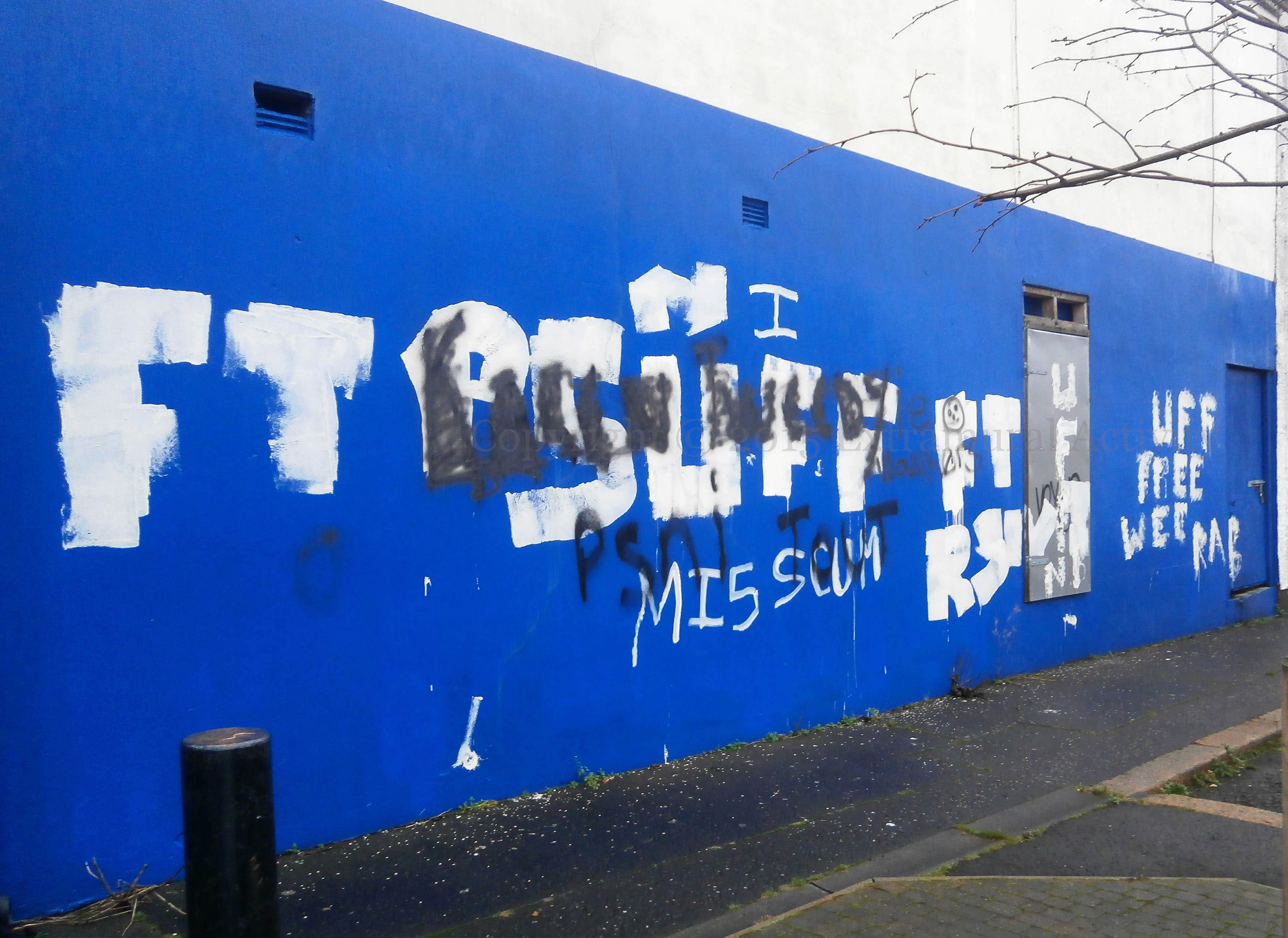
This graffiti is in the Ligoniel area of north Belfast: “UFF – Free Wee Rab”. If you know who Wee Rab is or how he is being constrained, please e-mail or comment!
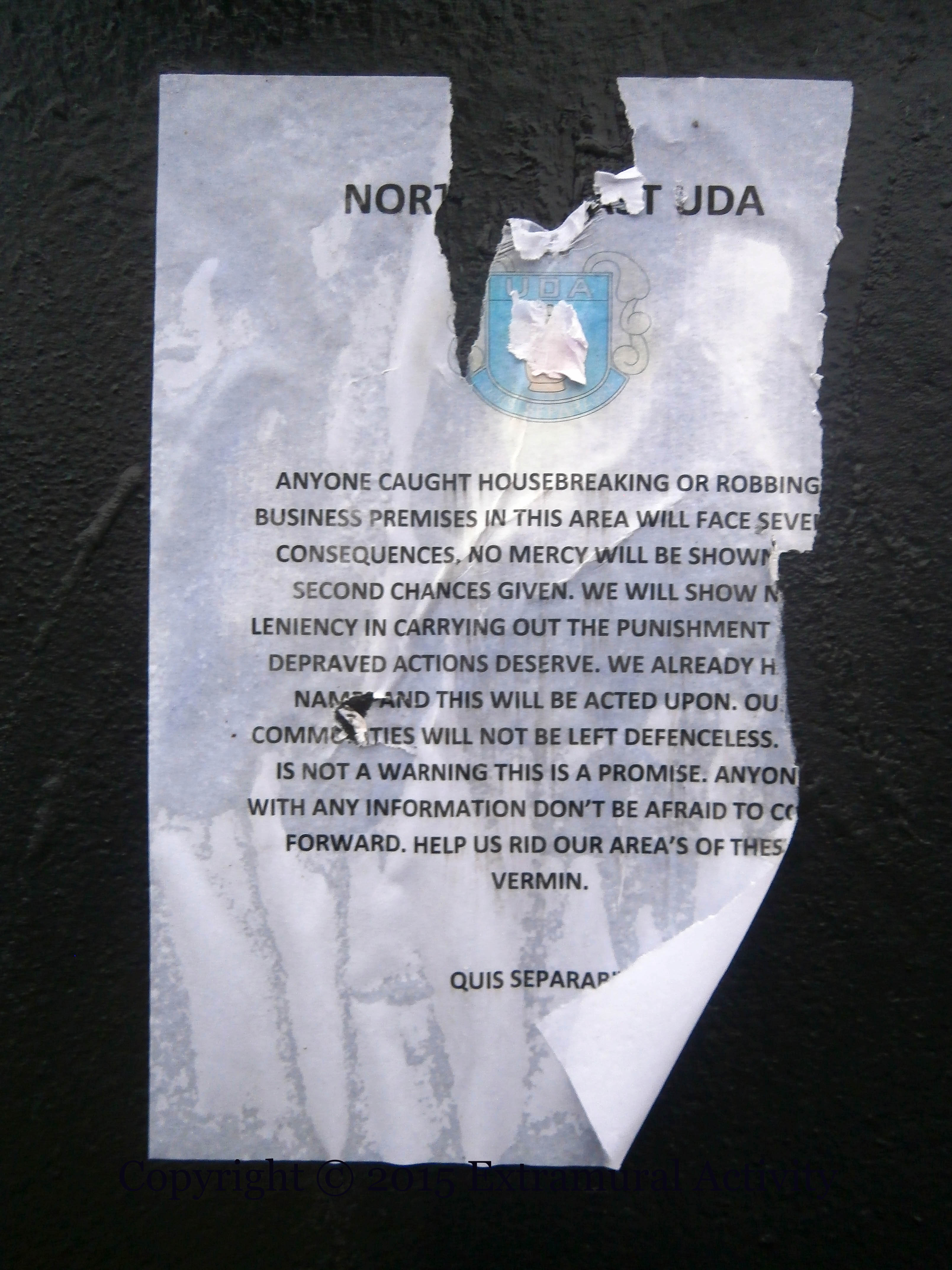
According to this Irish News article (see also Irish Republican News), the flyer above (this one is on the Crumlin Road in the centre of Ligoniel) is the work of a UDA faction that has intimidated people out of their homes in the Glenbryn area. (See also Irish Republican News.)
“North Belfast UDA: Anyone caught housebreaking or robbing business premises in this area will face severe consequences. No mercy will be shown or second chances given. We will show no leniency in carrying out the punishment your depraved actions deserve. We already have names and this will be acted upon. Our communities will not be left defenceless. This is not a warning this is a promise. Anyone with any information don’t be afraid to come forward. Help us rid our area’s of these vermin. Quis separabit.”
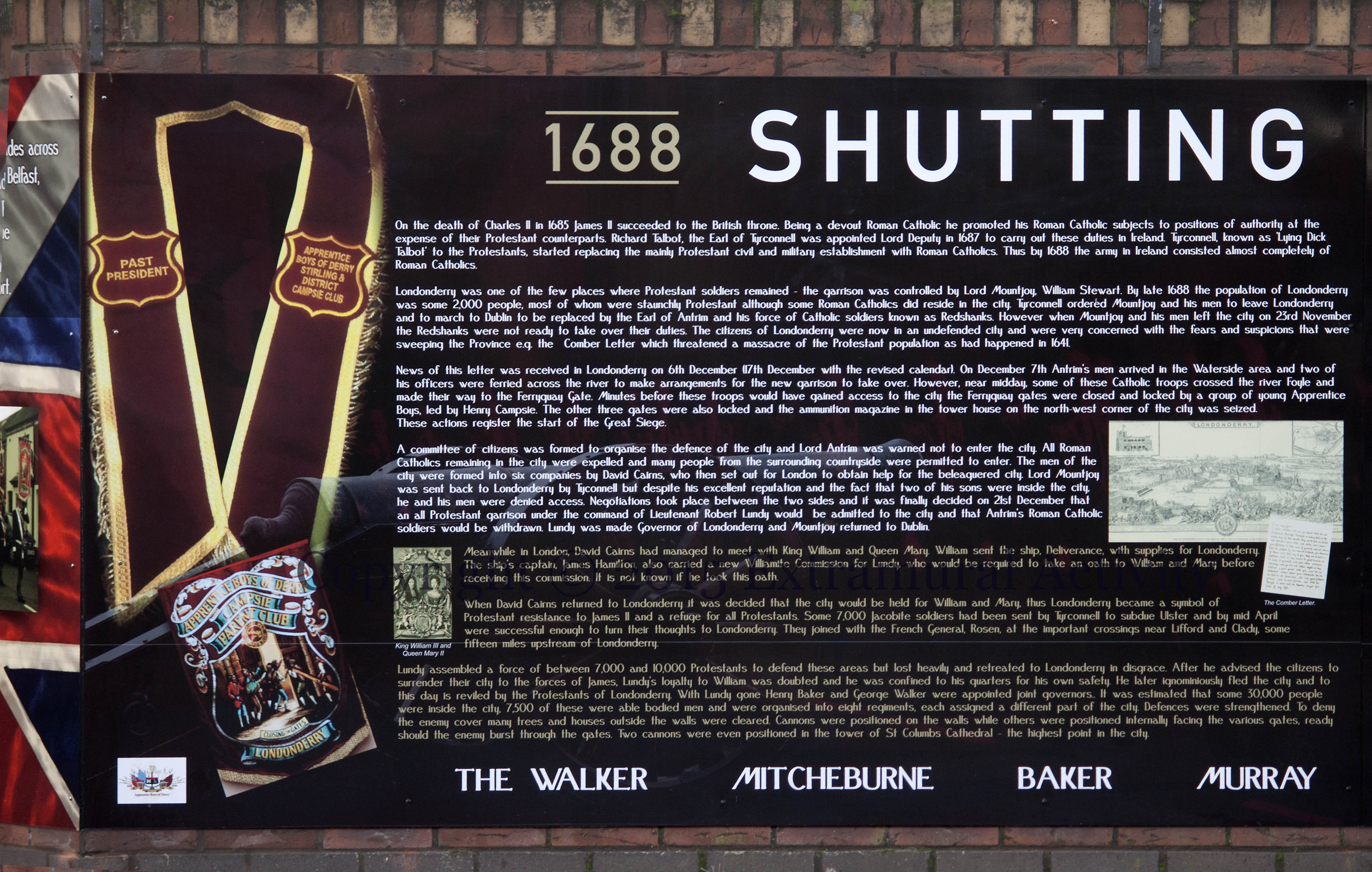
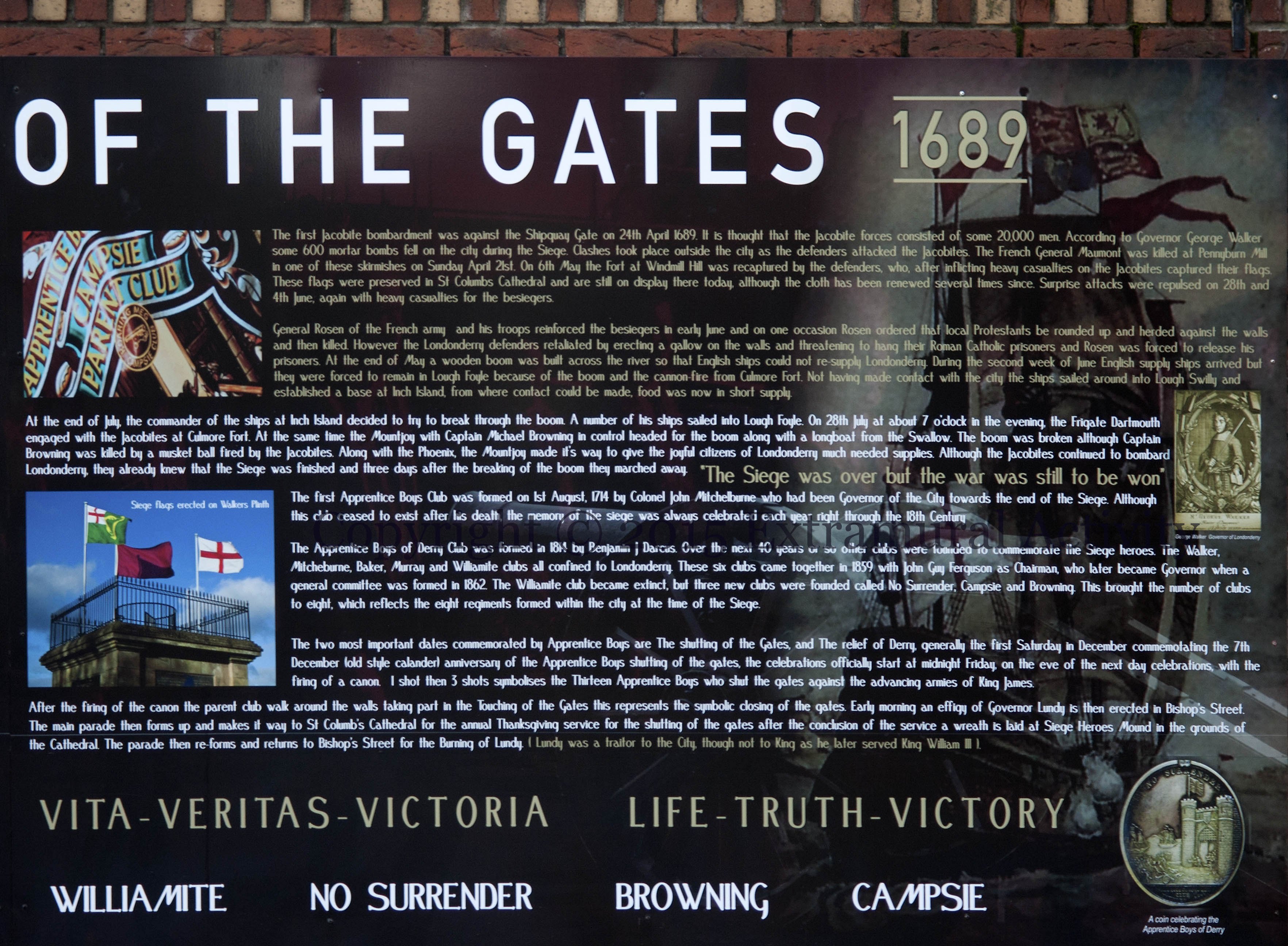
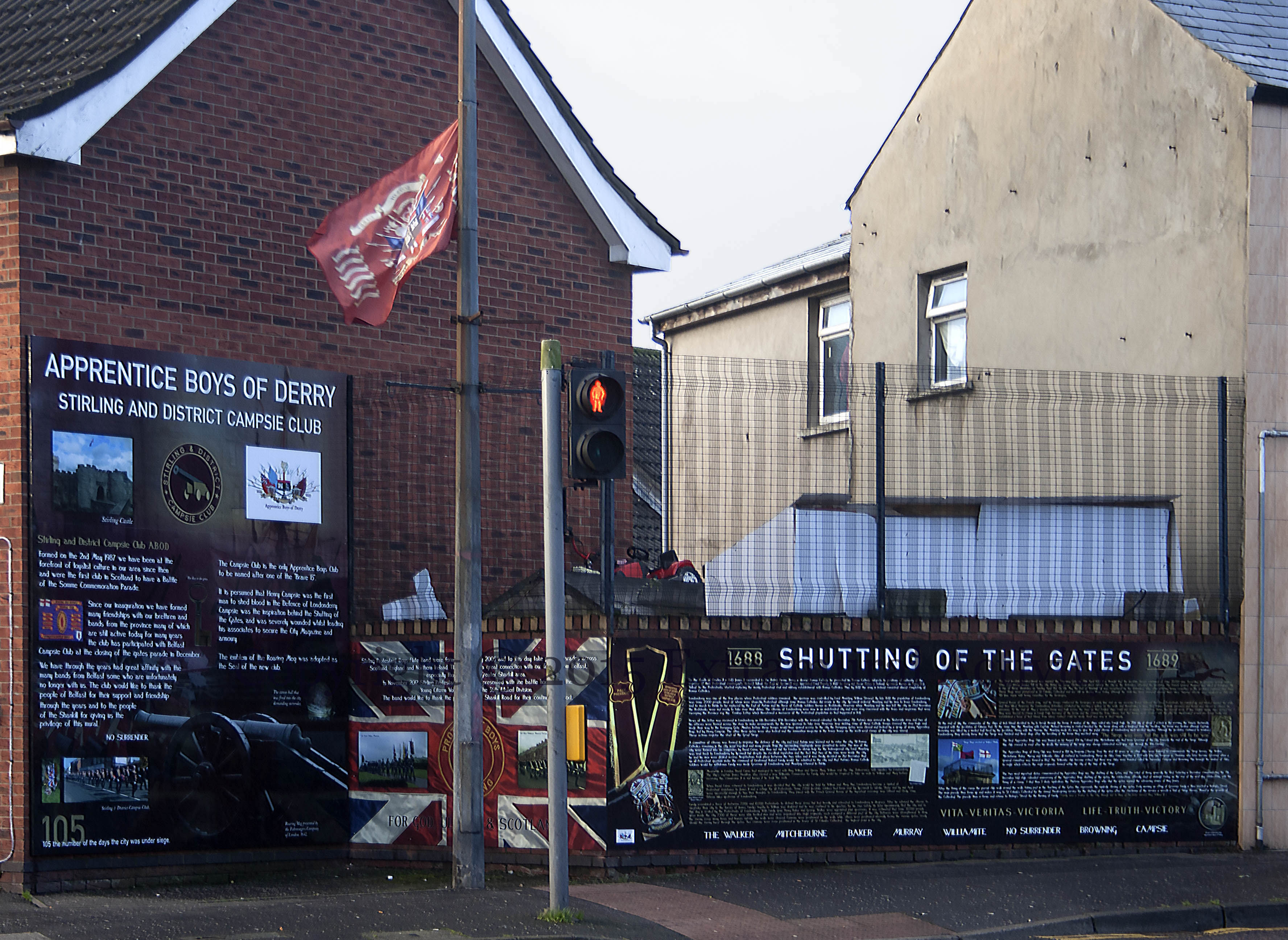
The third of three new panels celebrating the Apprentice Boys contains a long description of the Shutting Of The Gates in December 1688 and the Siege Of Derry, which was ended with the breaking of the boom of the river Foyle in July 1689.
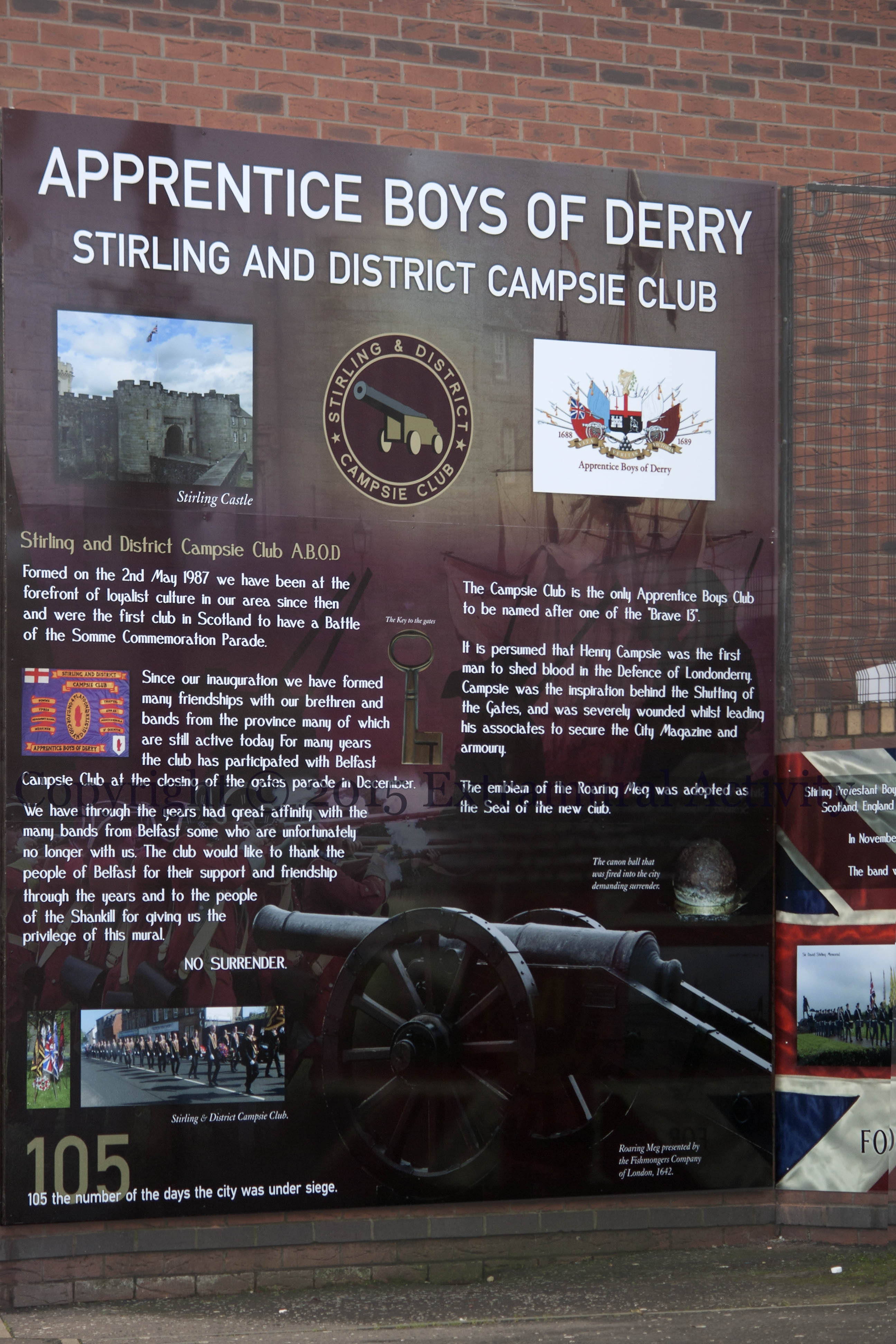
Here is the second of three panels from a new mural on the Shankill Road celebrating the ties between Belfast and the Stirling & District Campsie Club, a branch of one of the associated clubs of the Apprentice Boys Of Derry. It features the cannon “Roaring Meg” (“presented by the Fishmongers Company of London 1642″) which is used as the seal for the club, the club’s flag which includes a red hand of Ulster, the key to the gates, and the emblem and coat of arms of the Apprentice Boys.
“Formed on the 2nd May 1987 we have been at the forefront of loyalist culture in our area since then and were the first club in Scotland to have a Battle of the Somme Commemoration Parade. Since our inauguration we have formed many friendships with our brethren and bands from the province many of which are still active today. For many years the club has participated with Belfast Campsie Club at the closing of the gates parade in December. We have through the years had great affinity with the many bands from Belfast some who are unfortunately no longer with us. The club would like to thank the people of Belfast for their support and friendship through the years and to the people of the Shankill for giving us the privilege of this murals.
No surrender.
The Campsie Club is the only Apprentice Boys Club to be named after one of the “Brave 13″. It is persumed presumed that Henry Campsie was the first man to shed blood in the Defence of Londonderry. Campsie was the inspiration behind the Shutting of the Gates and was severely wounded whilst leading his associates to secure the City Magazine and armoury. The emblem of the Roaring Meg was adopted as the Seal of the new club.”
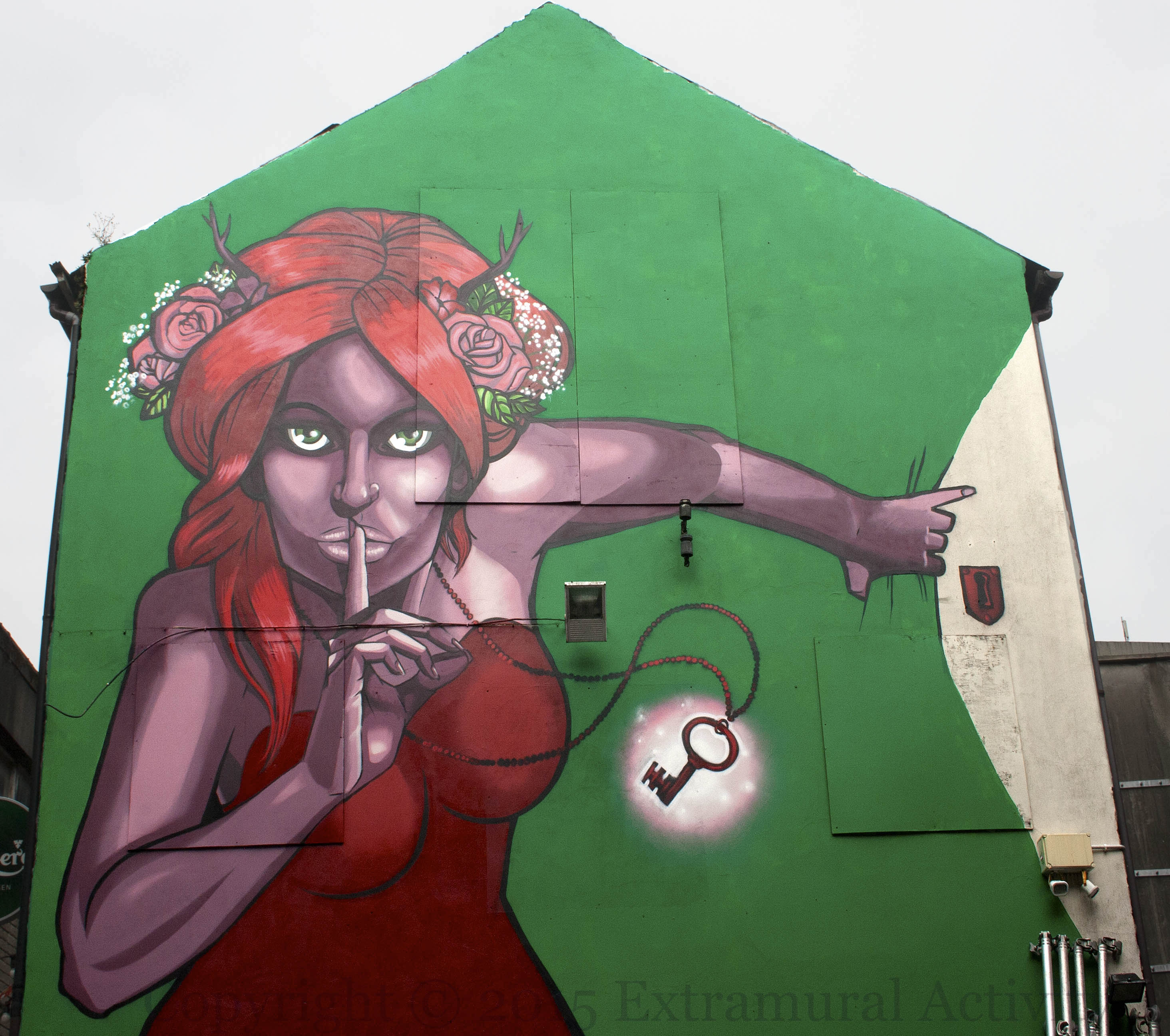
A woman cautions secrecy as she pulls back a curtain to reveal a keyhole in the wall, the key for which is on a chain around her neck — two-storey mural by Friz (web) for CNB15 in Joy’s Entry on the side of McCracken’s bar.
 Seosamh Mac Coille Collection