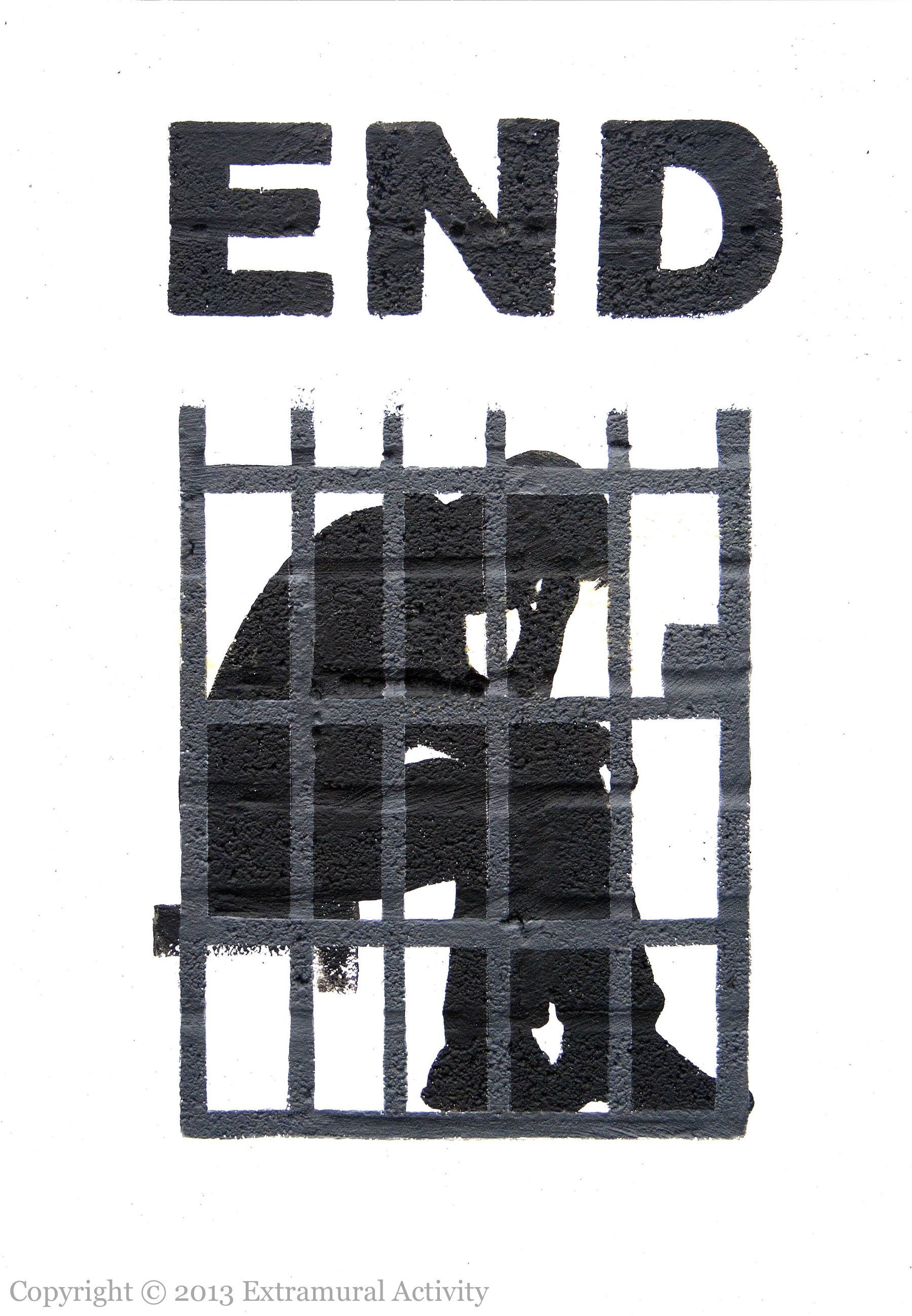
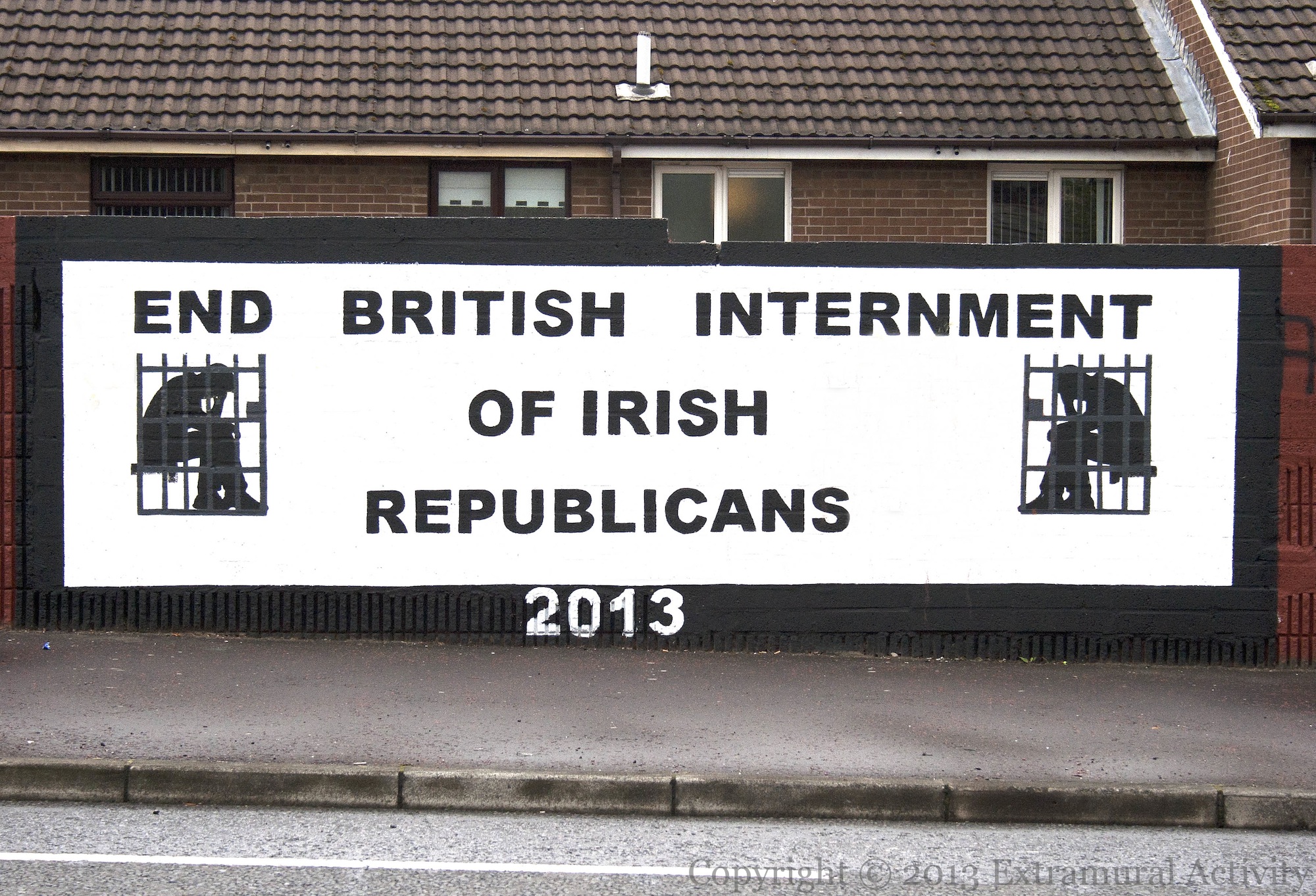
Detail from a new mural on the Springfield Road, opposite the barracks: End British internment of Irish Republicans, 2013. Painted by Rebel Rebel of the Gael Force Art group. A shot of the whole piece can be found below.
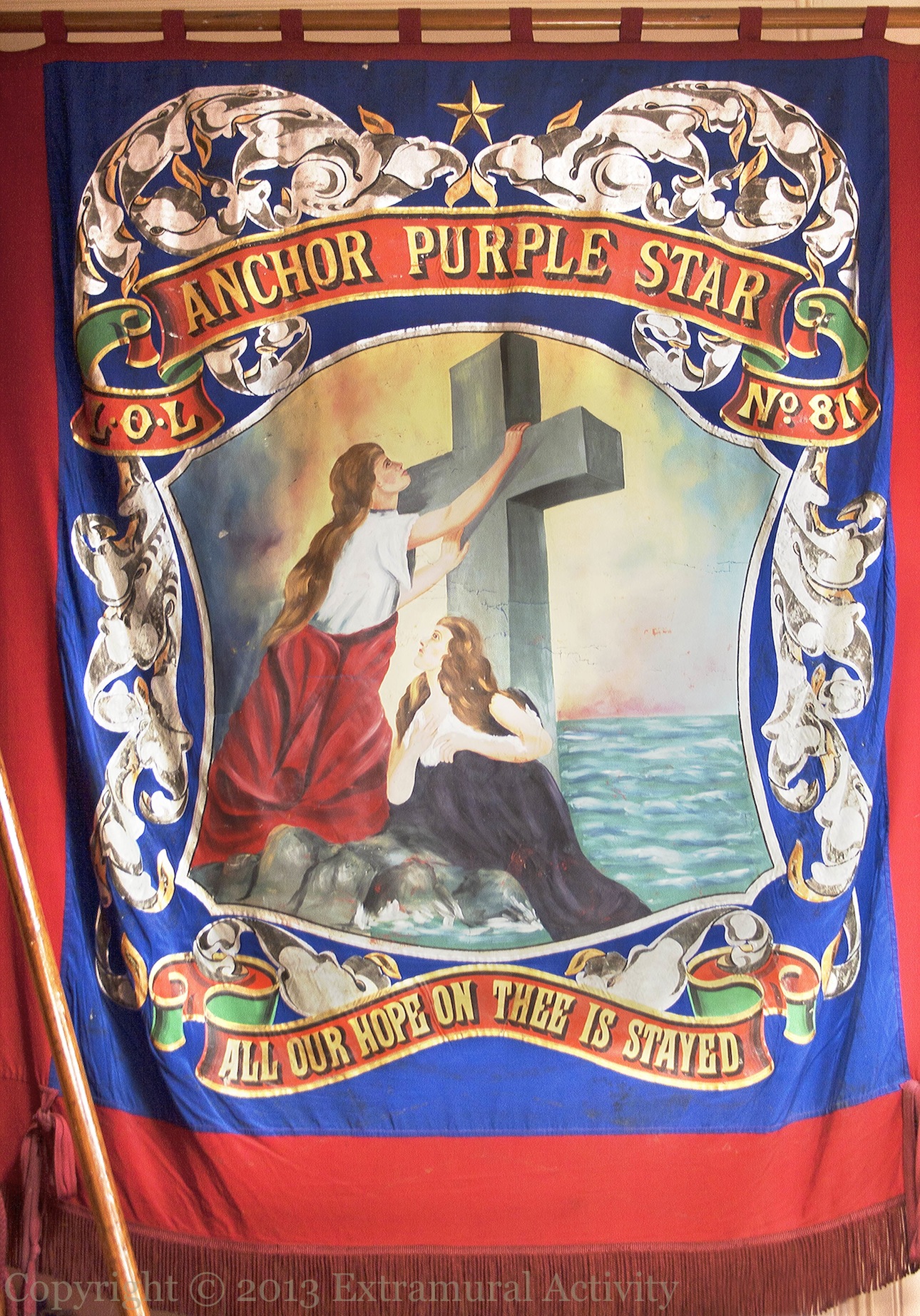
Last weekend (September 14th and 15th) saw many buildings typically closed to the public open up for European Heritage Open Days. Among those was the Orange hall on Clifton Street. Military and religious themes were prevalent throughout.
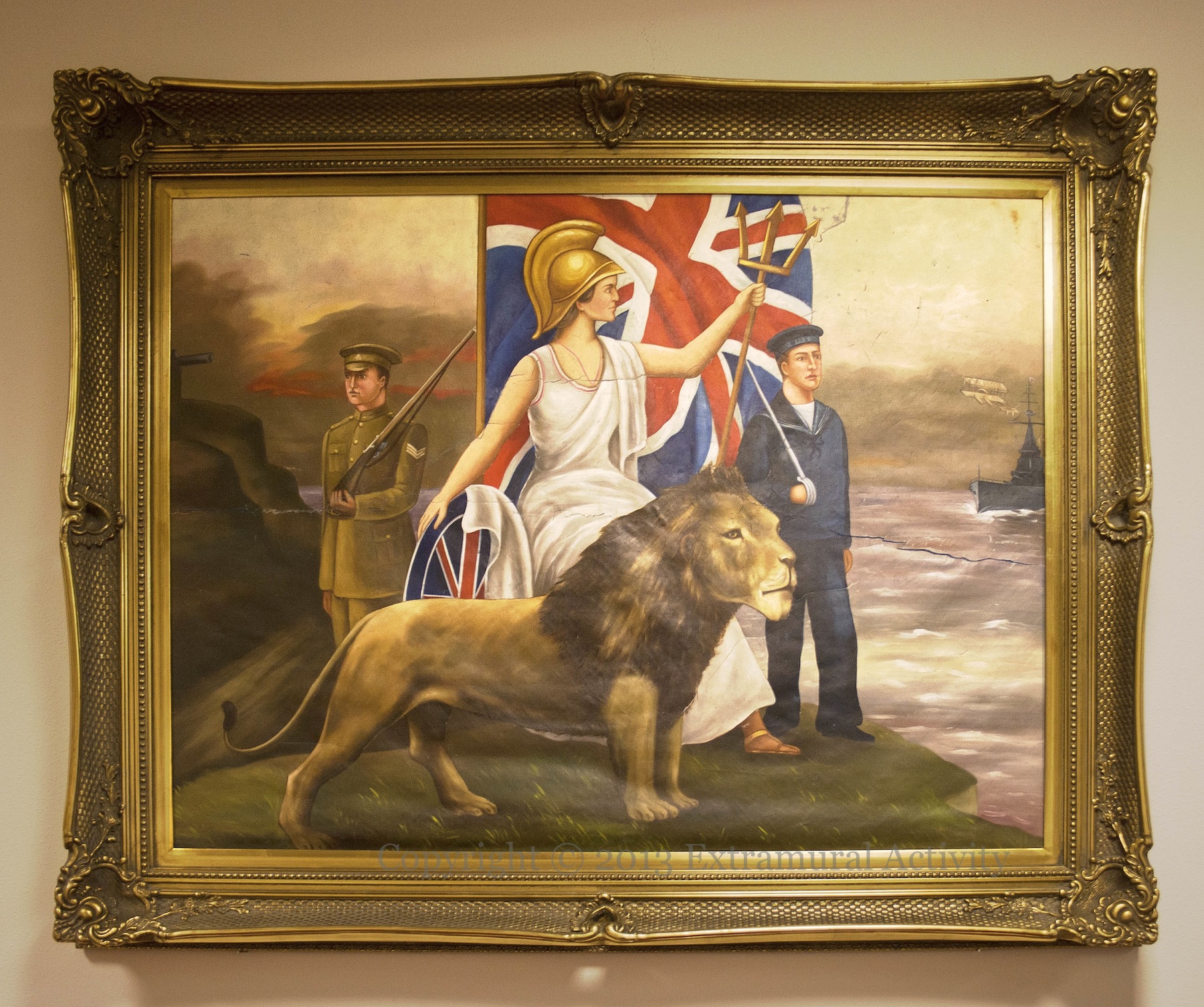
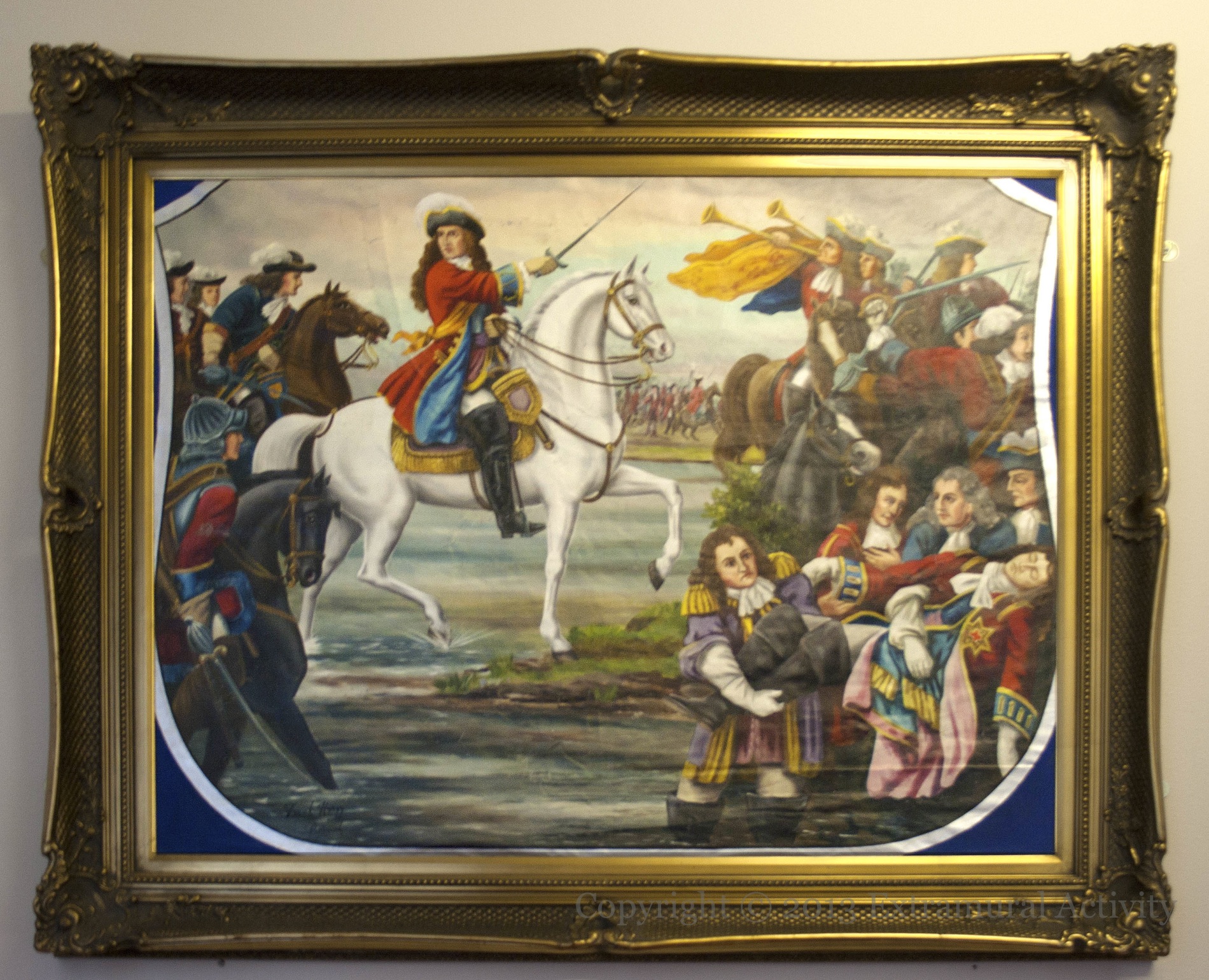
Two more images from inside the Clifton Street Orange Lodge, one of Britannia and a lion by the shore, between the army and the navy, and the other (below) of the victory of William of Orange over James in 1690.
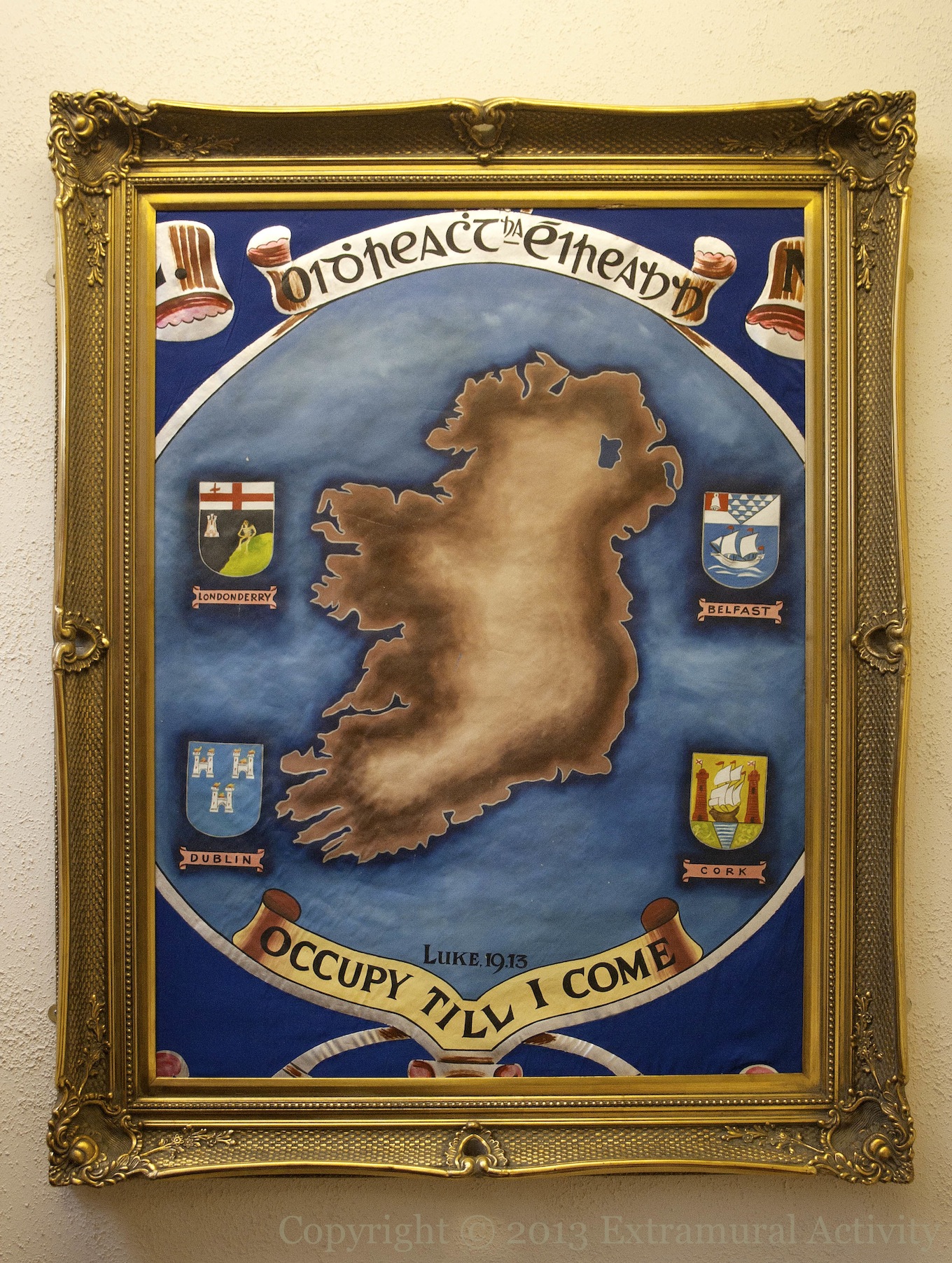
Another image from inside the Clifton Street Orange Order hall: an outline of the island of Ireland under the title (in Old Irish script) Oḋreaċt na [h]Éıreann – The Heritage of Ireland – surrounded by the coats of arms of the cities of Londonderry, Dublin, Cork and Belfast, and with the words “Occupy Till I Come – Luke 19:13” at the bottom.
“Occupy until I come” is the King James translation of Luke 19:13 (Greek: πραγματεύσασθαι ἐν ᾧἔρχομαι) and is better translated as “conduct business until I come [back]”. It is from the story of the king who gave money to 10 servants to see what they would make with it. The one who does nothing with it says he knows the king is exploitative and harsh (αὐστηρὸς, austere!) and he was afraid (to lessen or lose the money, presumably). To which the king says, roughly, ‘if you knew that I expect to profit from other people, you should have done something with it!’ and has his money taken away; meanwhile, the citizens who spoke against the king in his absence are executed. So the moral of the story for Ireland is … the King has given Ireland to Protestants in order to increase its value, and they better make sure they do, because he expects to collect the profit; and anyone among the natives who protests is to be executed upon his return?
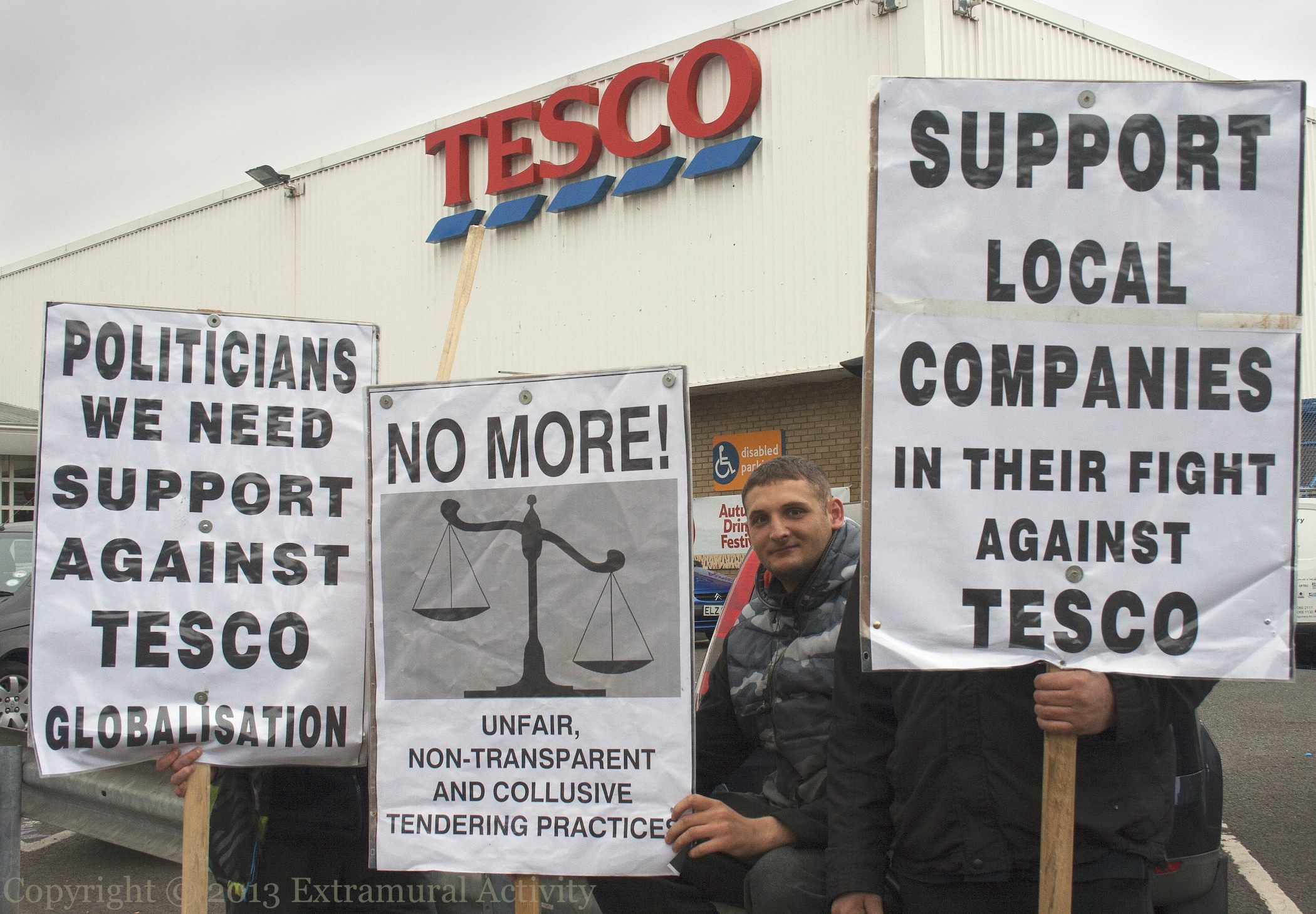
These protesters are outside the Antrim Road Tesco’s, with placards bearing messages about globalisation: “Politicians, we need support against Tesco globalisation”, “No more! Unfair, non-transparent and collusive tendering practices”, “Support local companies in their fight against Tesco”.
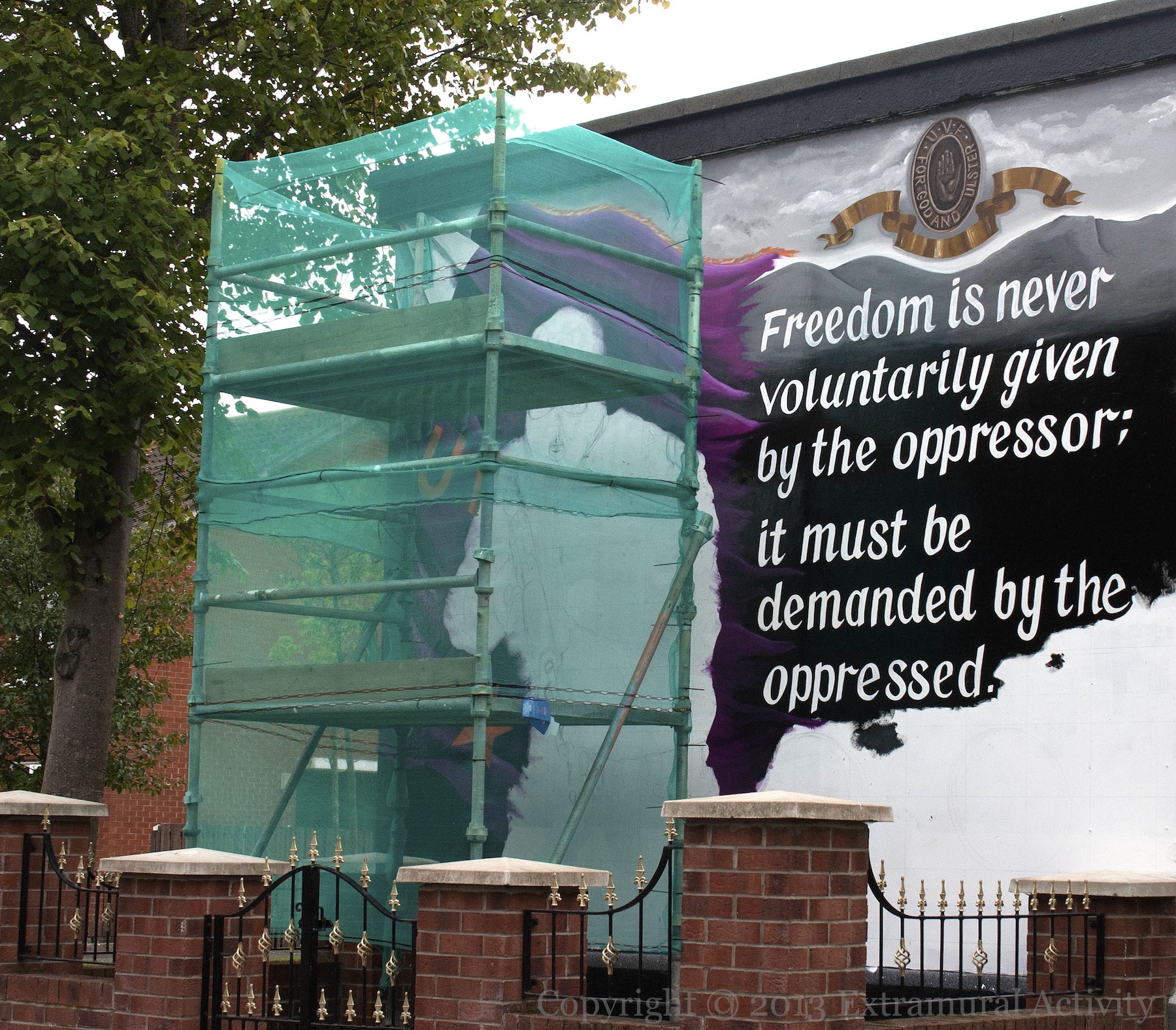
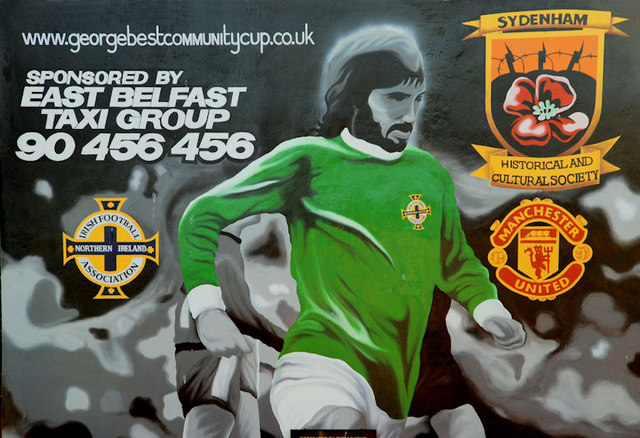
As reported in the media a week ago (BBC | Guardian | U.tv video | Slugger), an east Belfast mural featuring footballer George Best, which itself replaced a UVF mural, has been painted over and is being replaced by a new UVF mural. Progress on the piece, however, seems to have halted. This image shows the progress as of Monday 9th, showing no change since the 4th. The mural quotes Martin Luther King’s Letter From Birmingham Jail (pdf), drawing a parallel between the Civil Rights movement in the US and the situation of contemporary Protestants. Below is an image of the George Best piece, courtesy of the Geograph project.
Update 2013-09-13 U.tv reports that the work on the mural has indeed been halted.
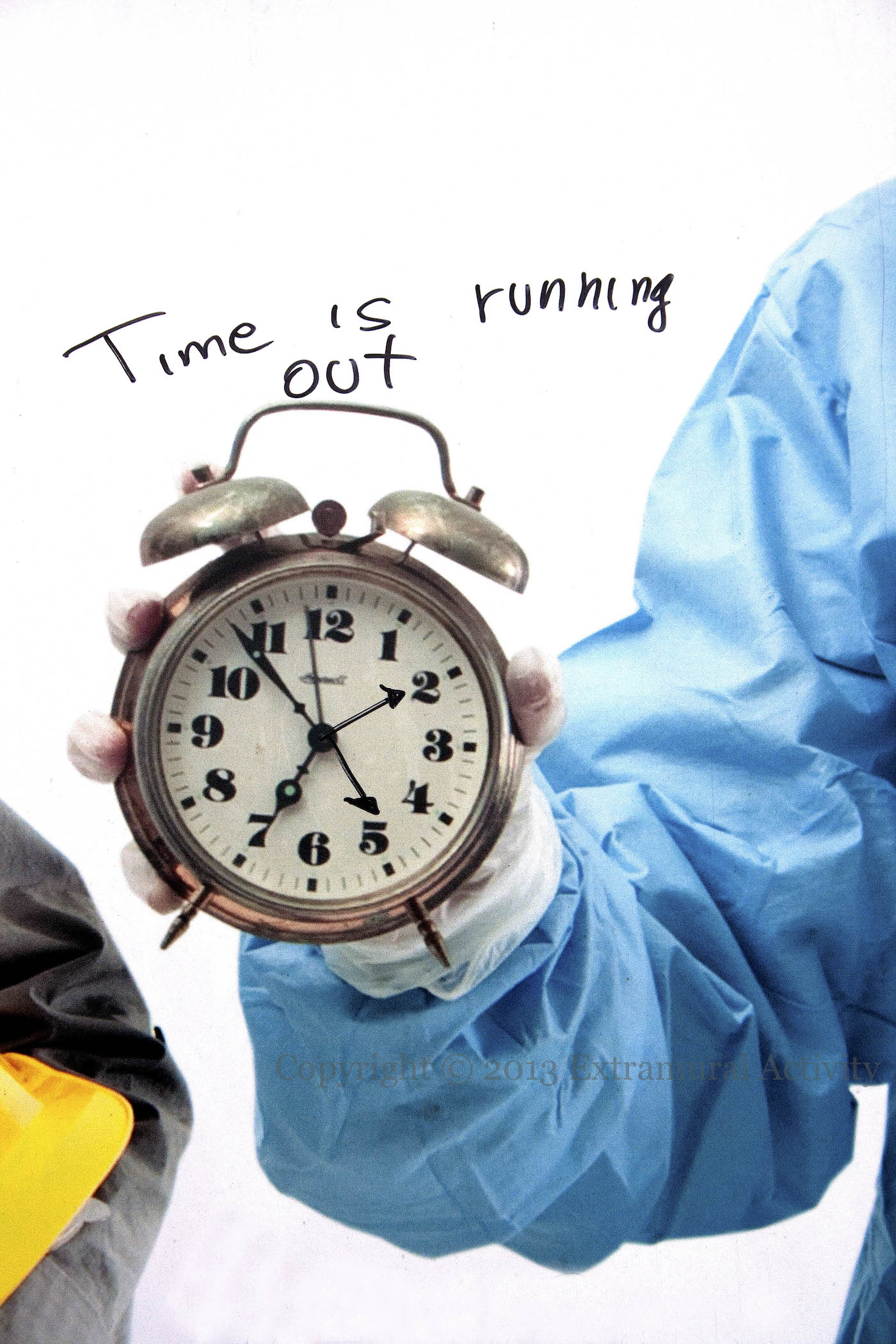
“Time Is Running Out” – Graffiti (including some fake clock hands) has been added to Rita Duffy’s ‘Banquet’ piece on the Cupar Way “peace” line. The whole board is presented separately.
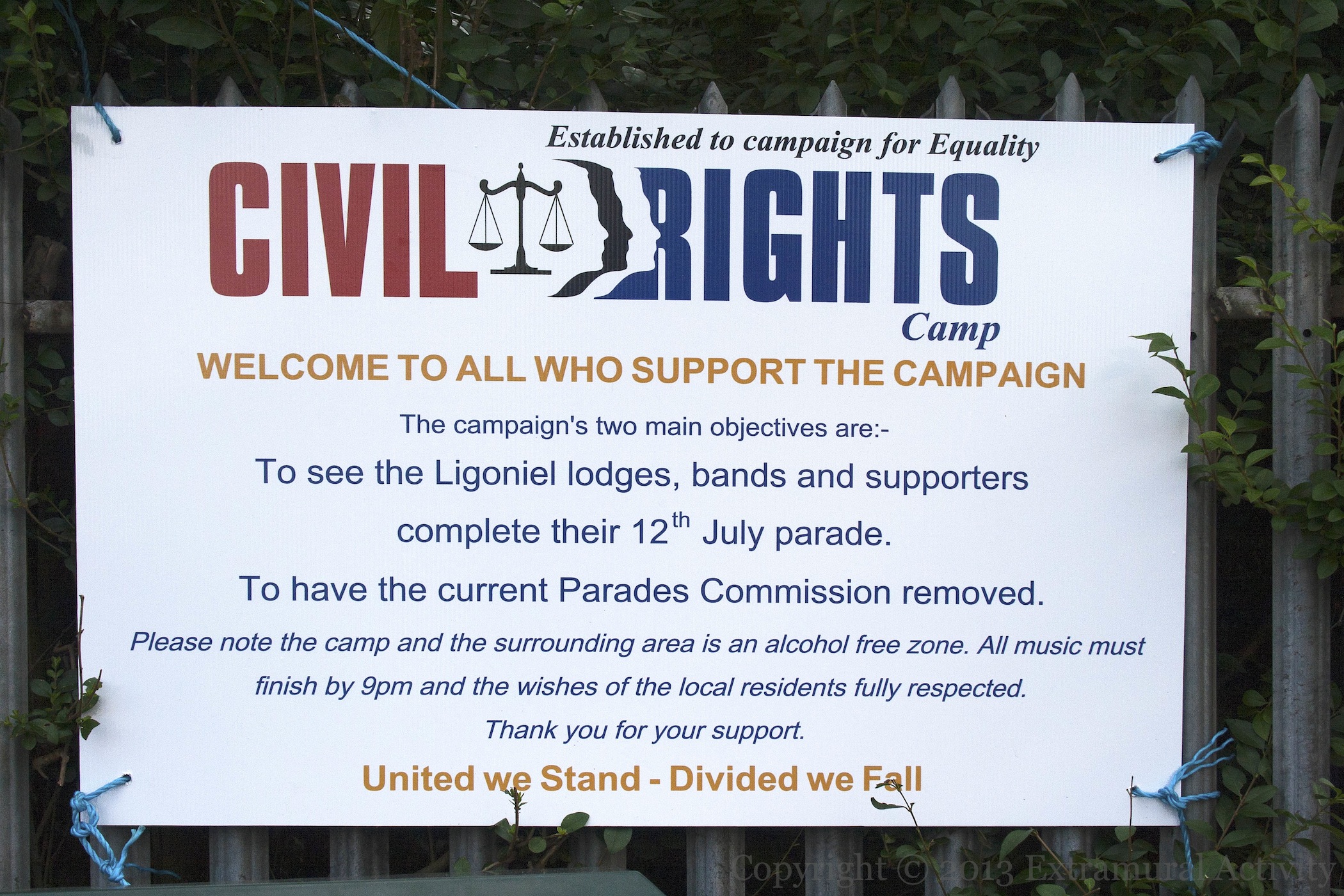
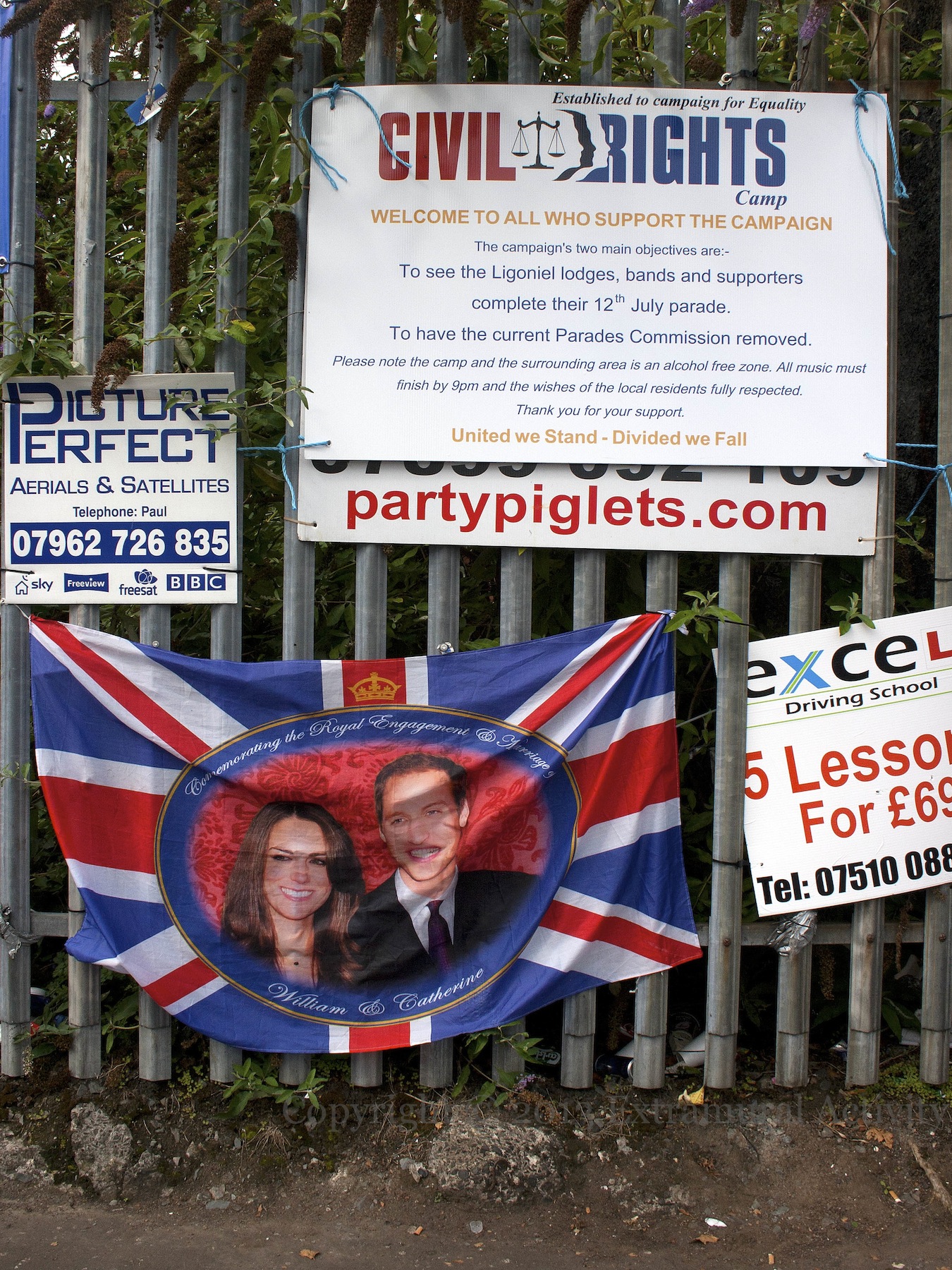
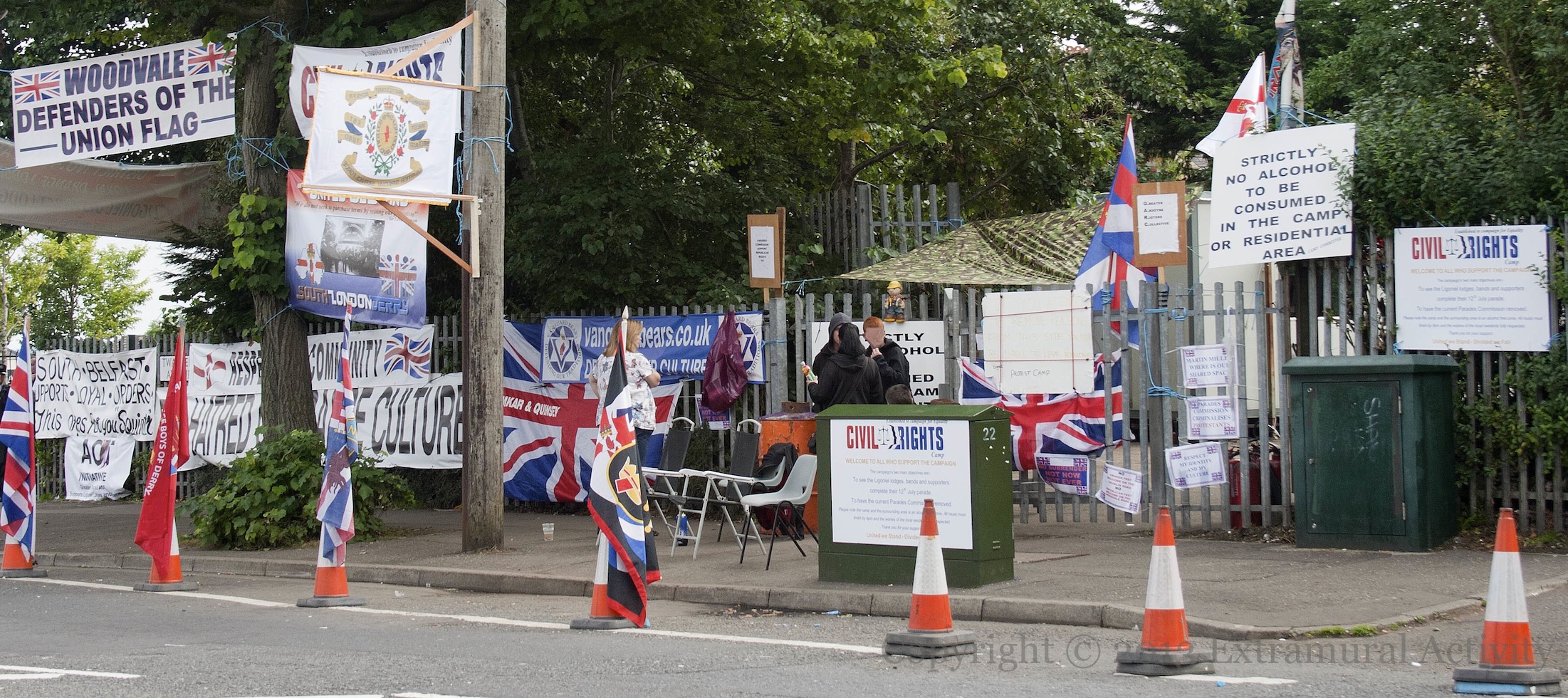
The language of “civil rights” and “equality” is being used at the Twaddell site, as can be seen in the placard shown here there are three copies of this sign: the second image, below, is of one on the north side of the street (visible in the previous set of Twaddell pictures) and the third image shows an additional copy on the electrical box on the south side of the street.
“Established to campaign for Equality. Civil Rights. Welcome to all who support the campaign. The two main objectives are to see the Ligoniel lodges, bands and supporters complete their 12th july parade; to have the current parades commission removed. Please note the camp and the surrounding area is an alcohol free zone. All music must finish by 9 p.m. and the wishes of the local residents fully respected. Thank you for your support. United we stand – divided we fall.”
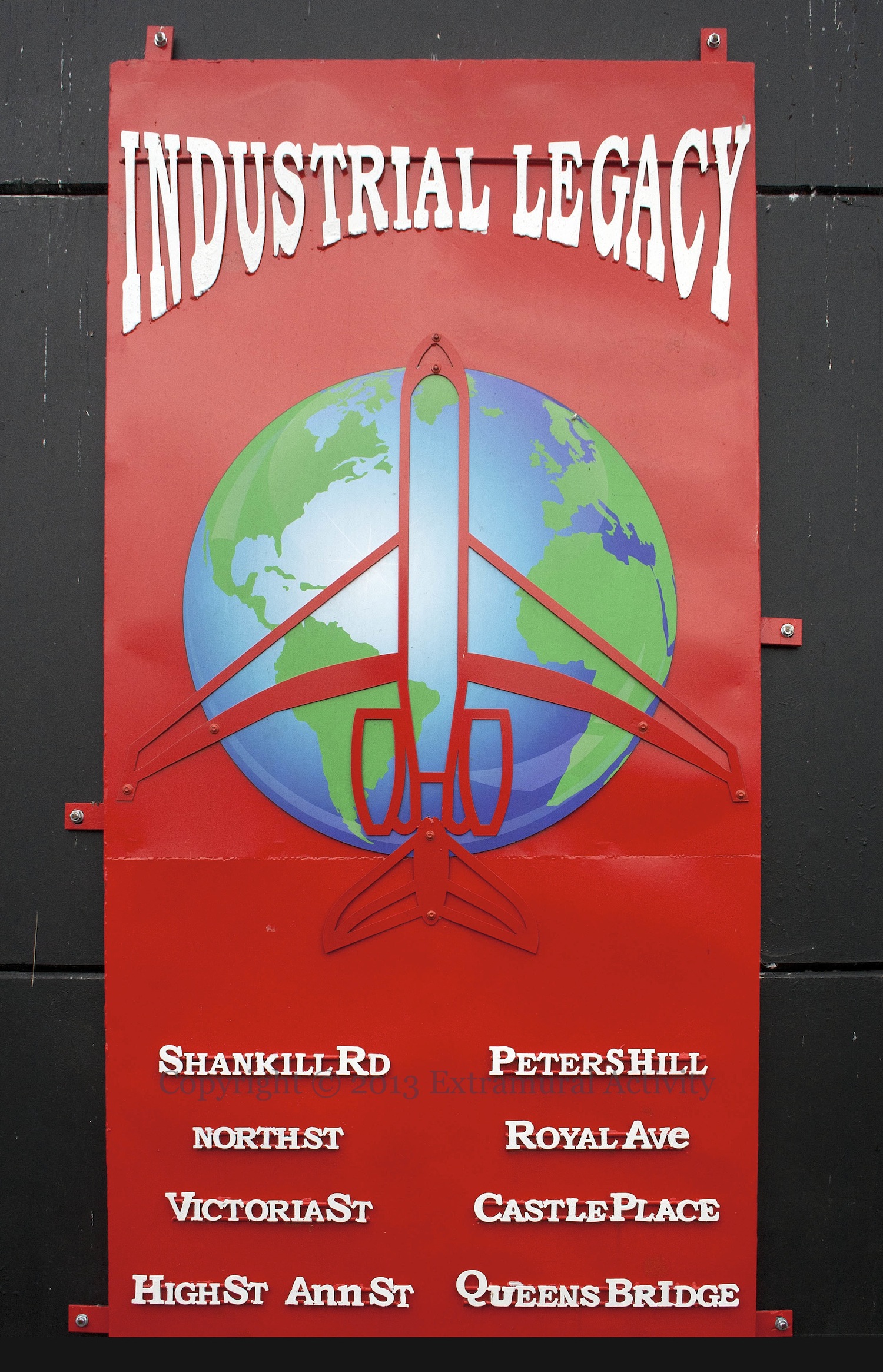
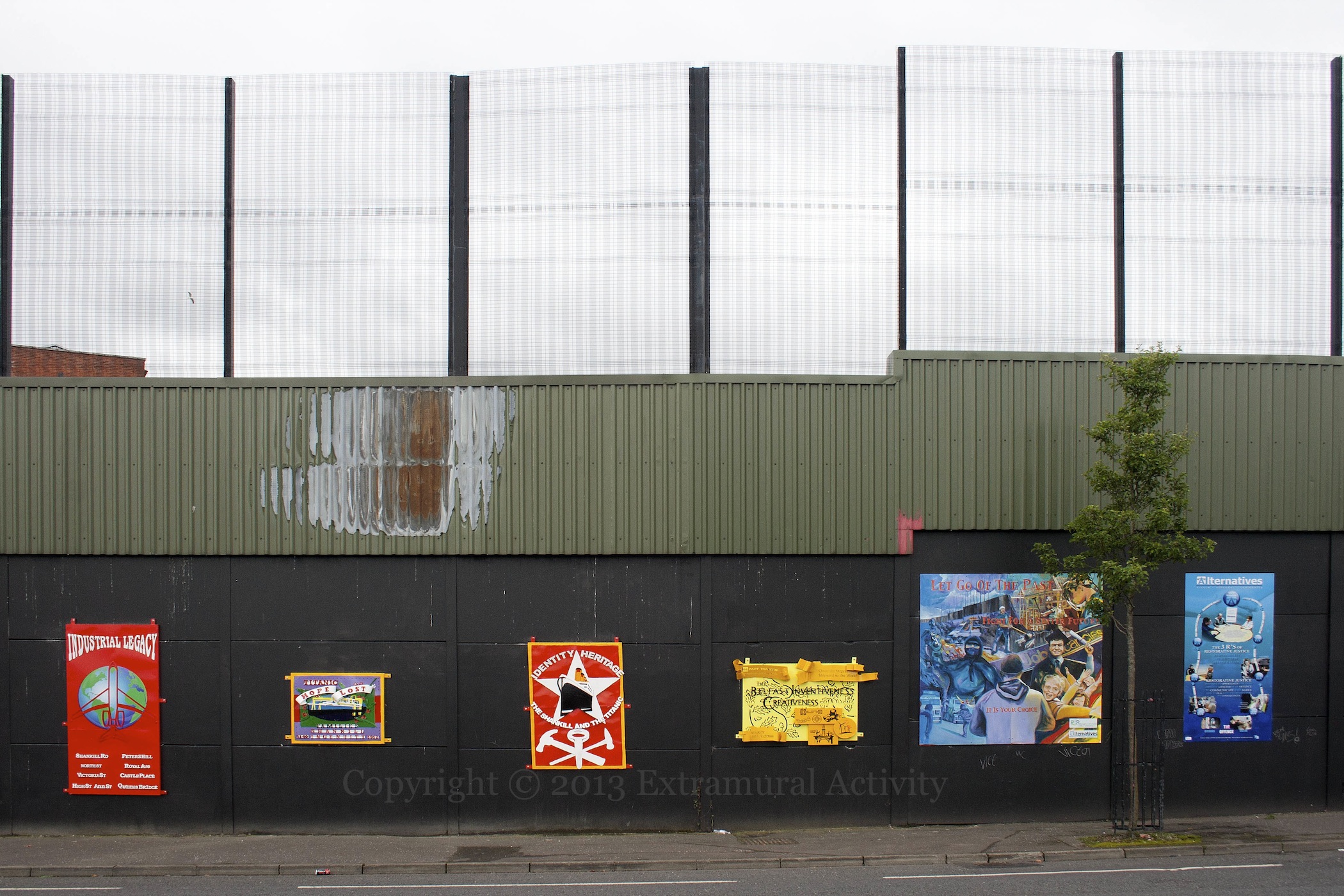
A fourth and final metal-work piece from the Cupar Way “peace” line shows an aeroplane in outline over a globe and gives a list of various Belfast streets which were formerly industrial centres: Shankill Rd., North St., Victoria St., High St., Ann St., Peters Hill, Royal Ave., Castle Place, Queens Bridge. A wide shot of all (one | two | three) four pieces (as well as Let Go Of The Past and 3 R’s) can be found below.