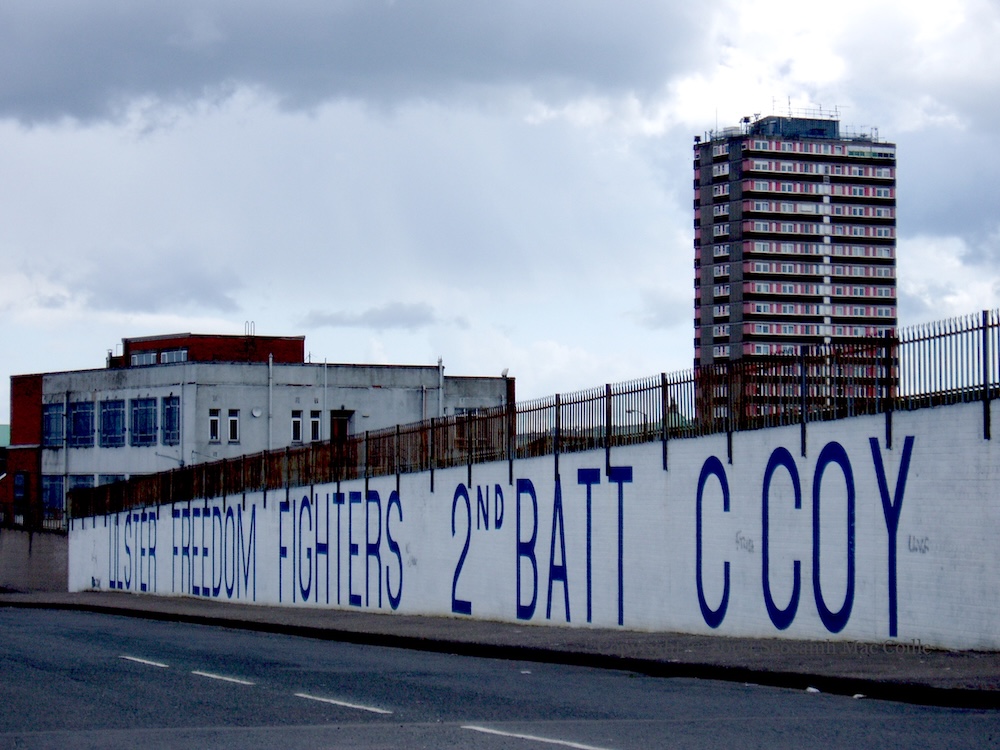
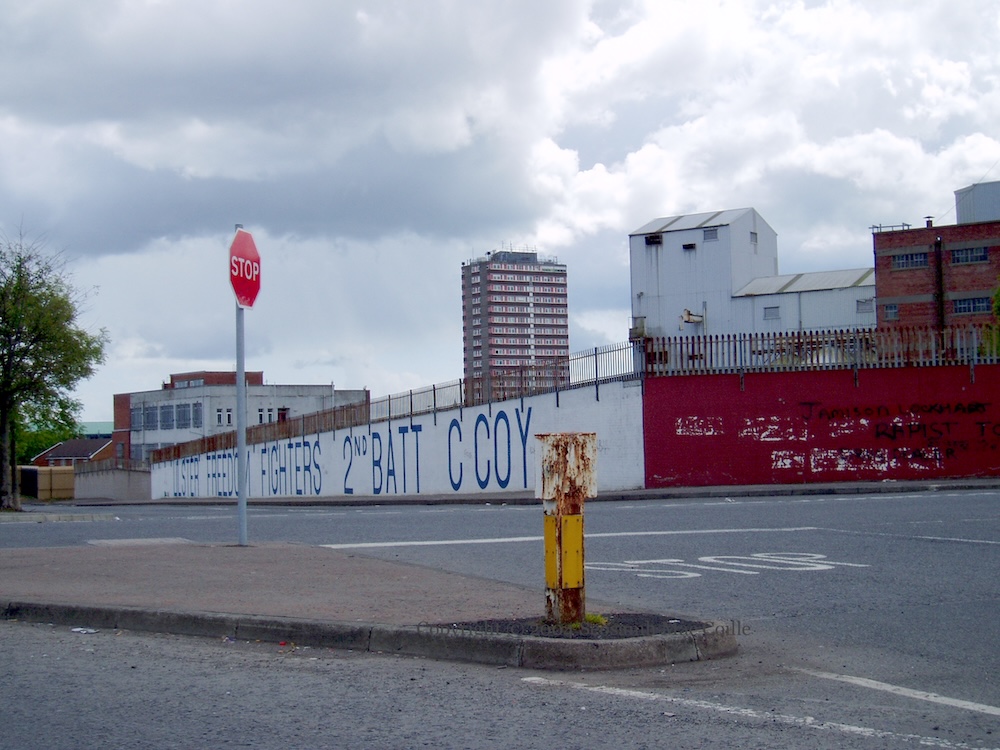
C Company of UFF 2nd battalion was the lower Shankill company headed by Johnny Adair until he was expelled from the UDA in September 2002 and his friends and family fled to Scotland in February 2003.
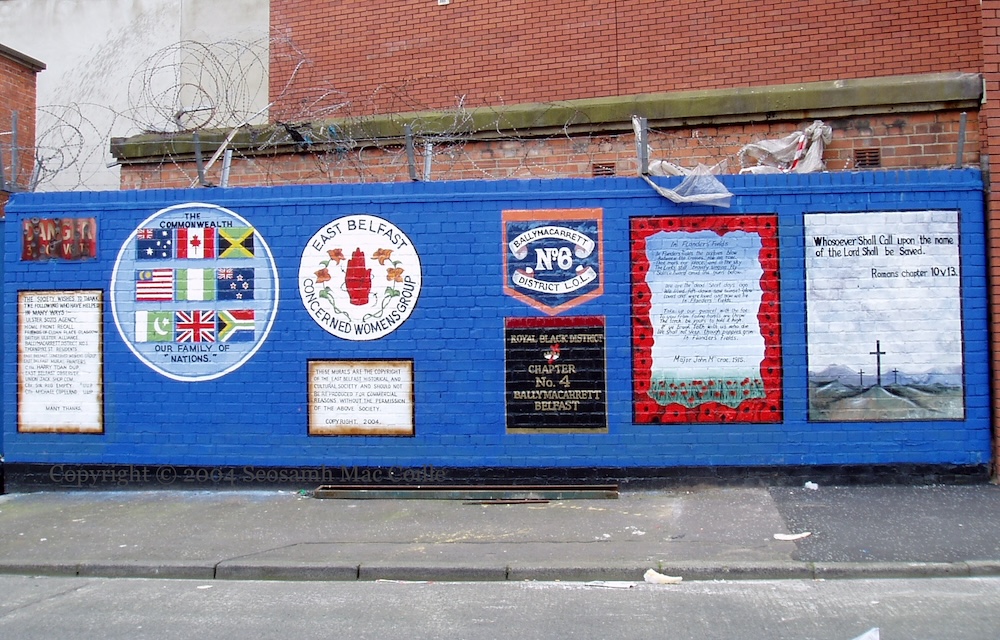
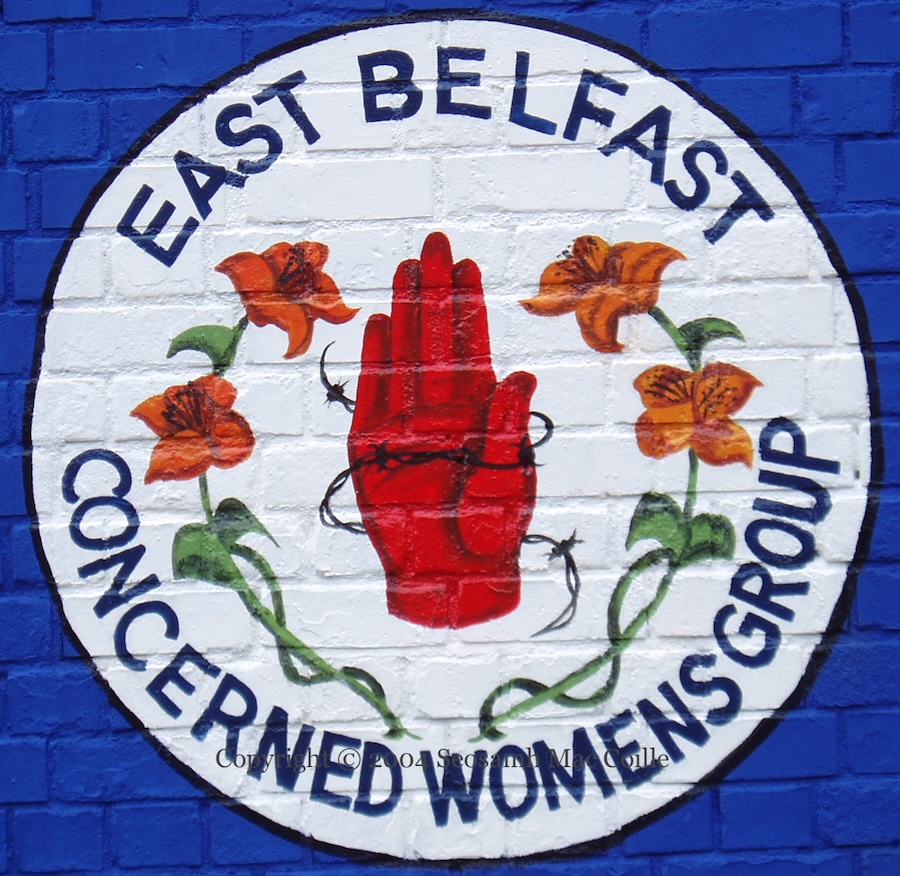
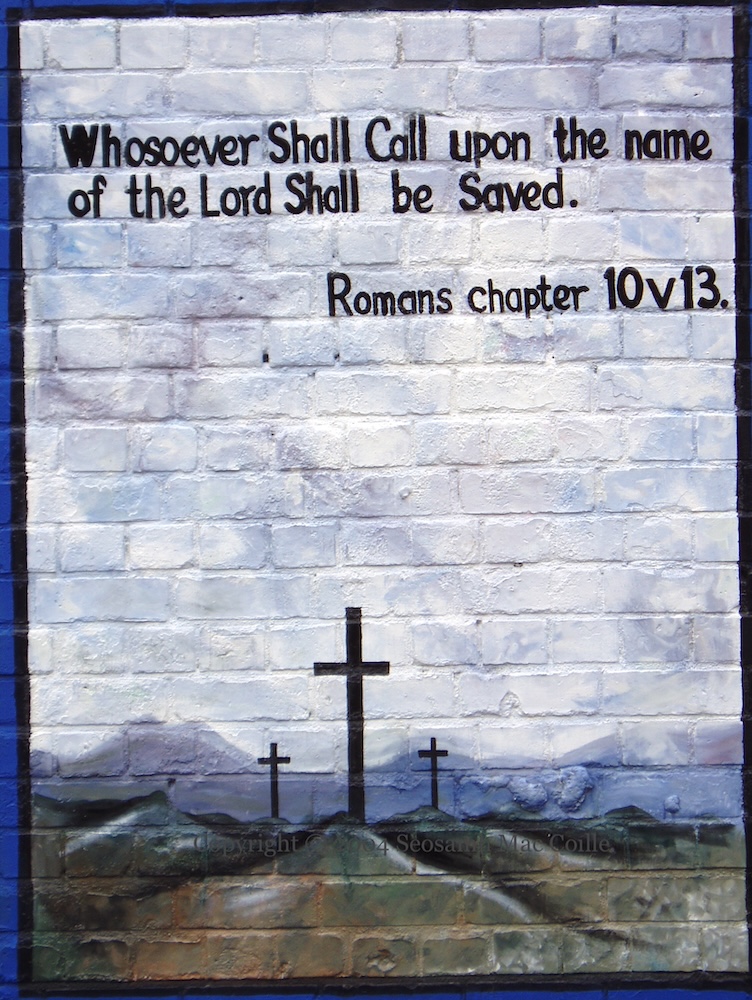
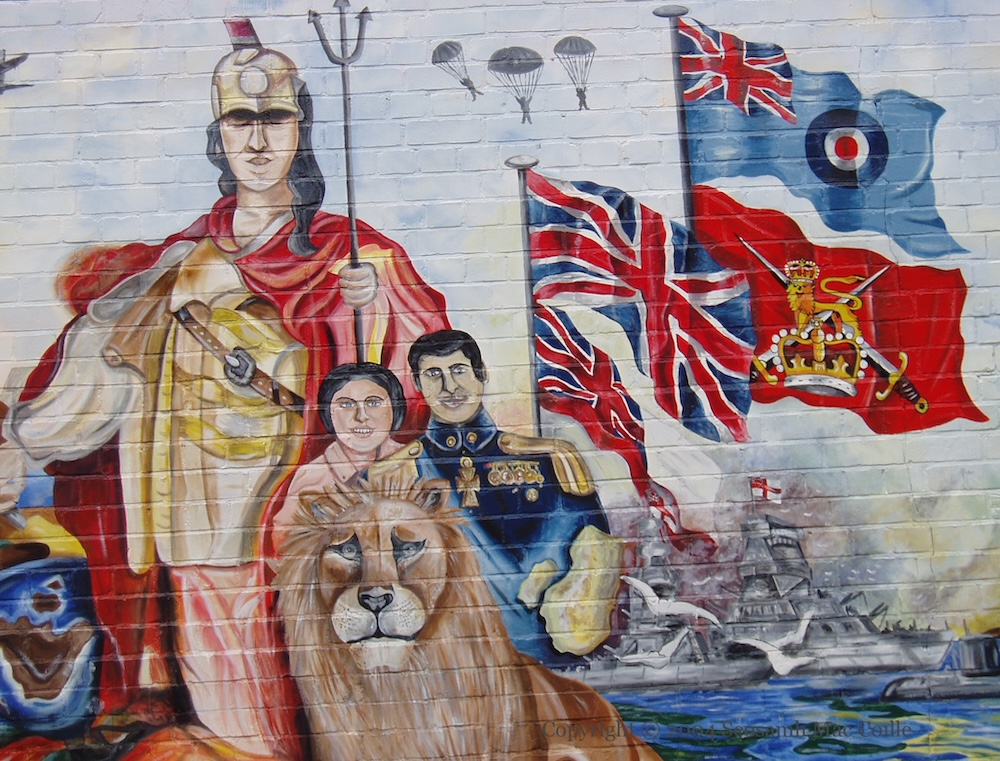
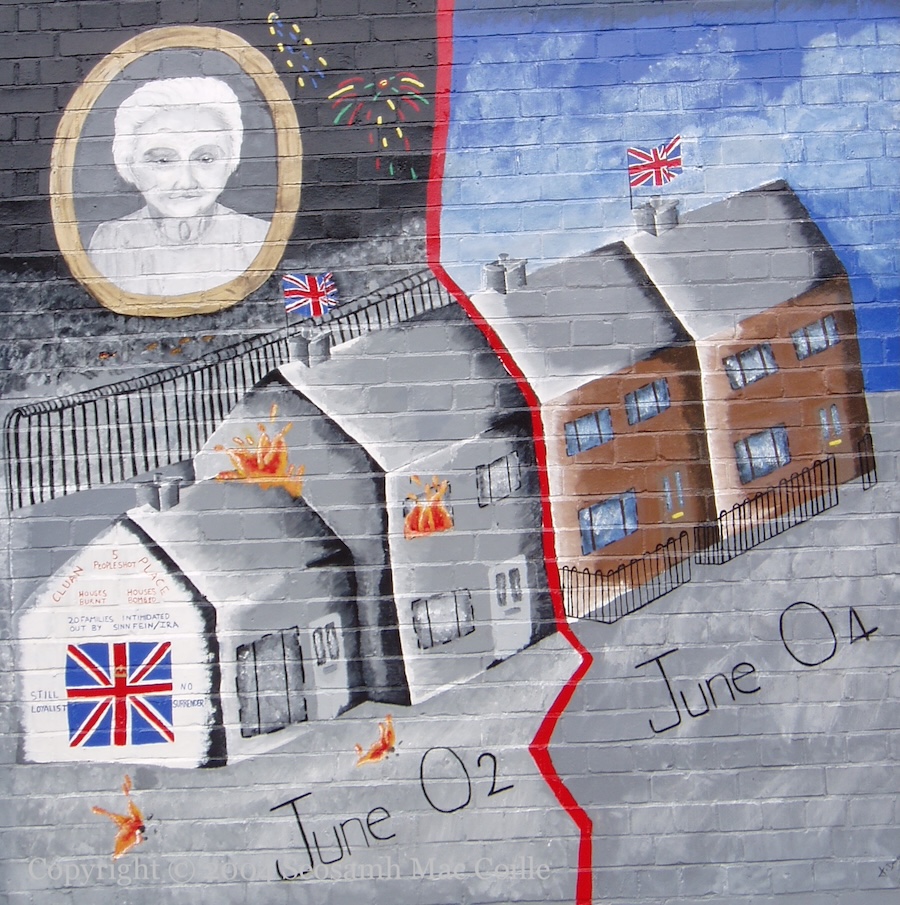
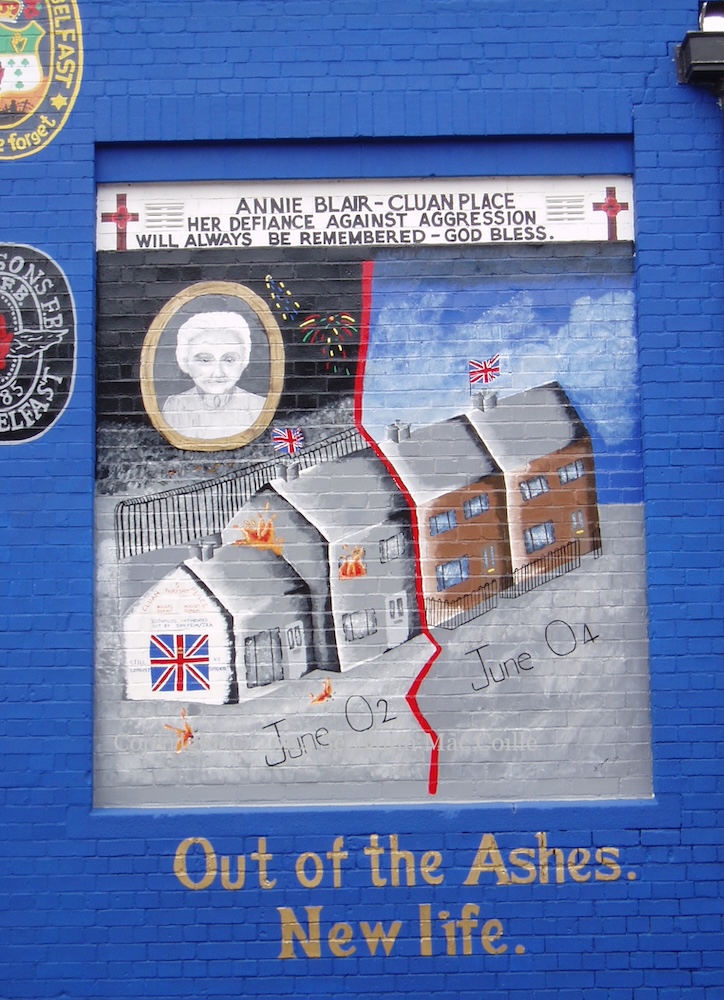
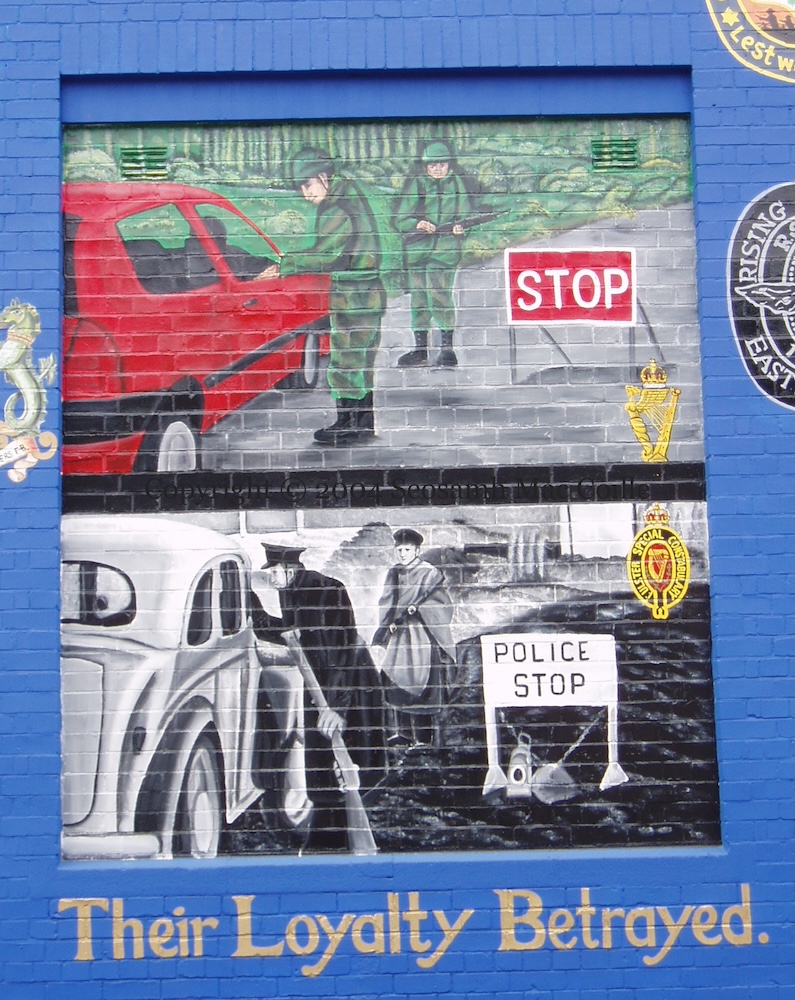
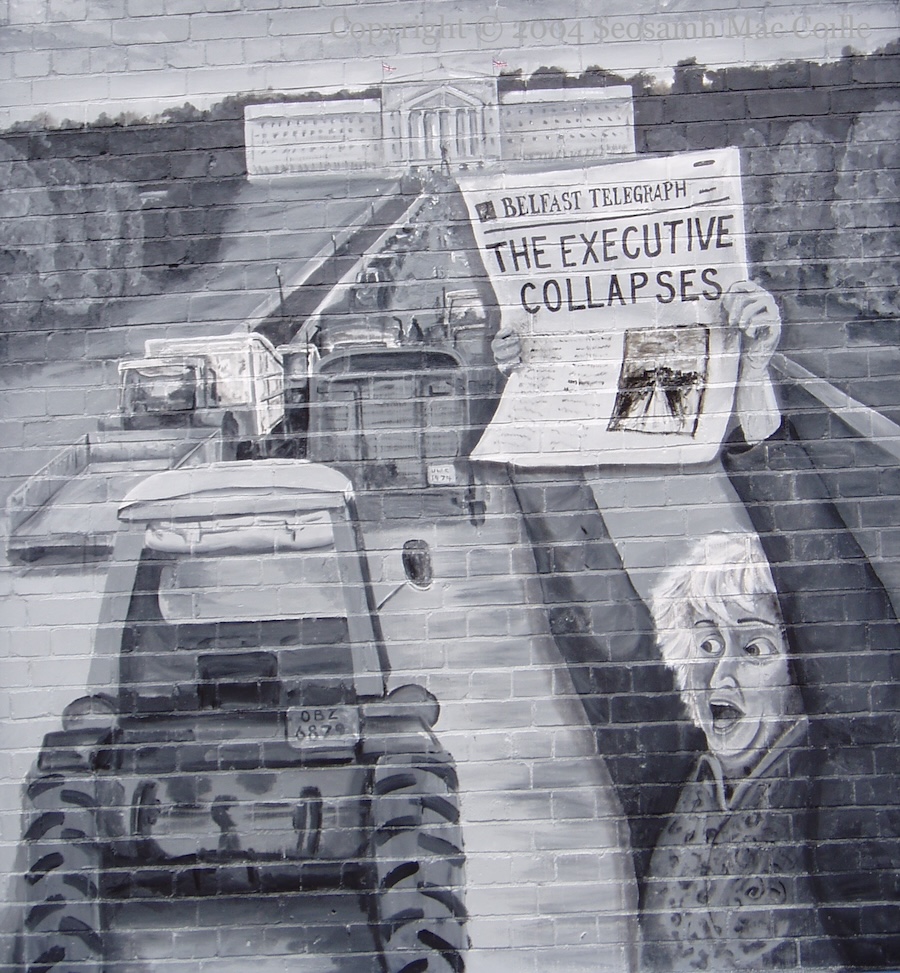
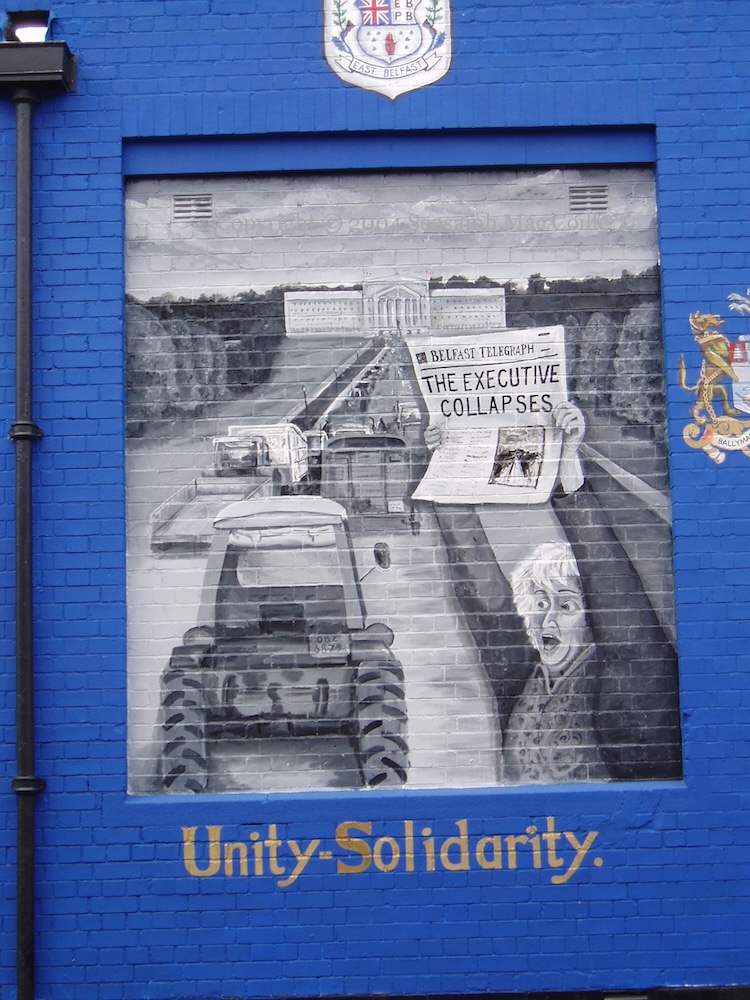
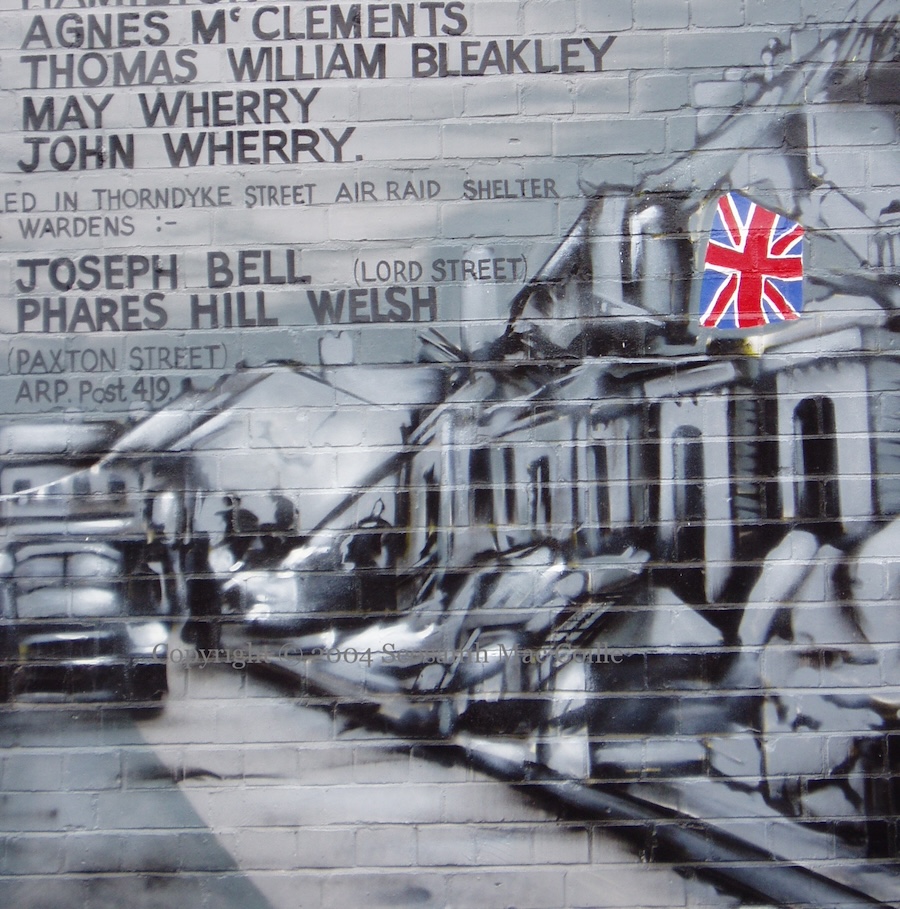
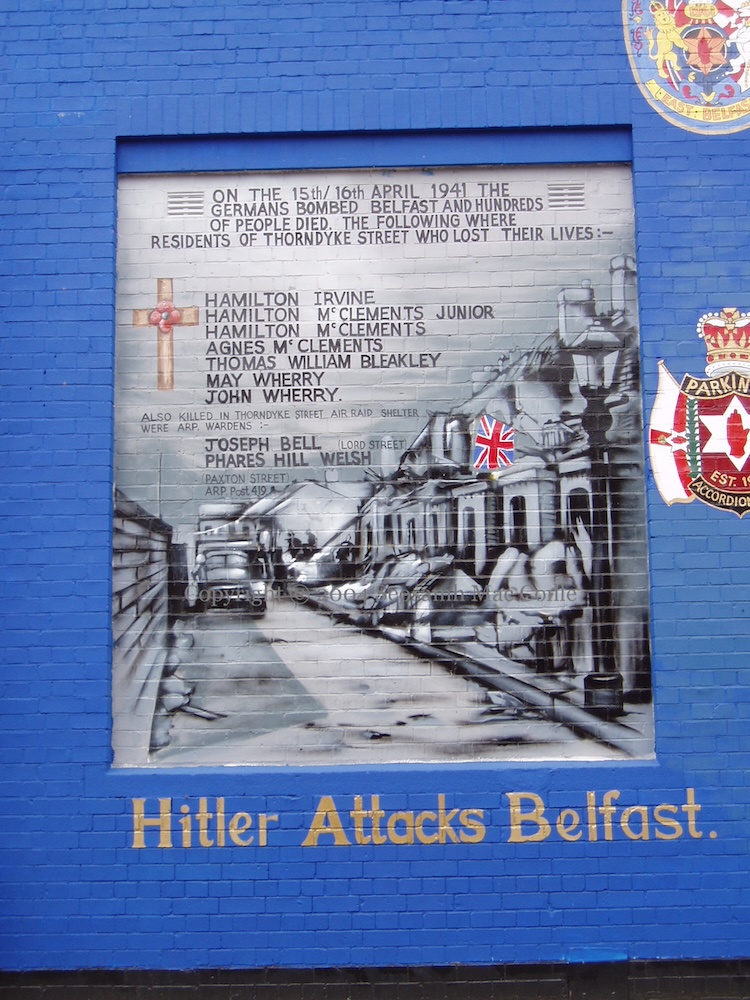
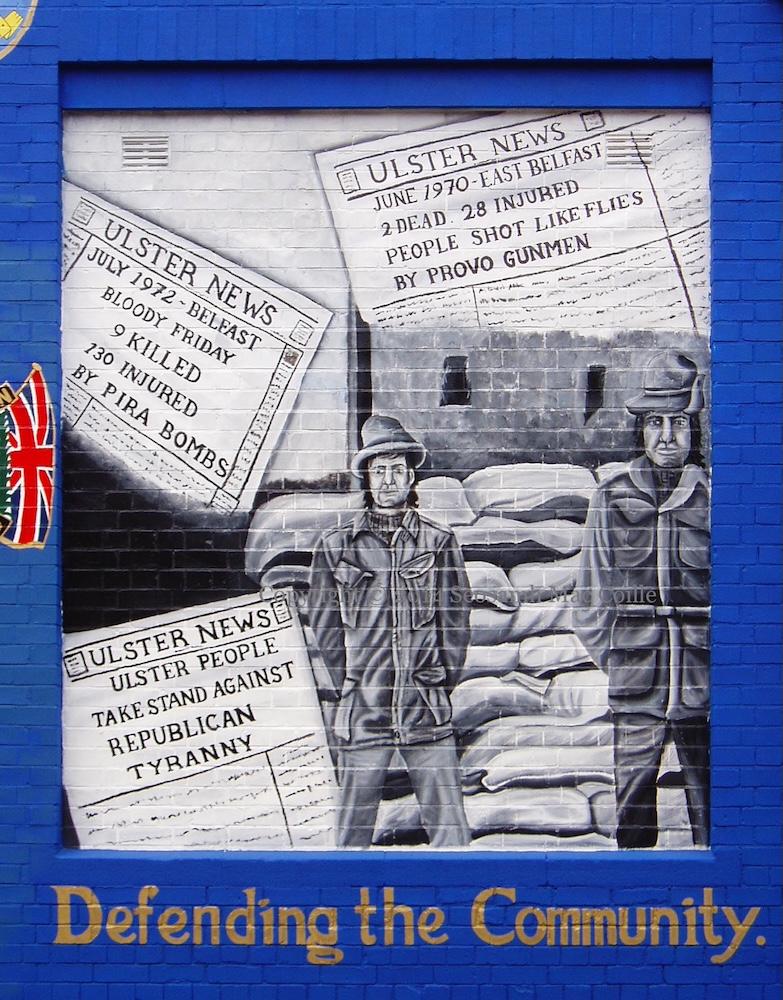
The fourteenth and final panel in Thorndyke Street contains a number of small panels, including the two above, along with emblems of local Orange and Black lodges, John McCrae’s In Flanders Fields, a list of acknowledgements, and a copyright claim.
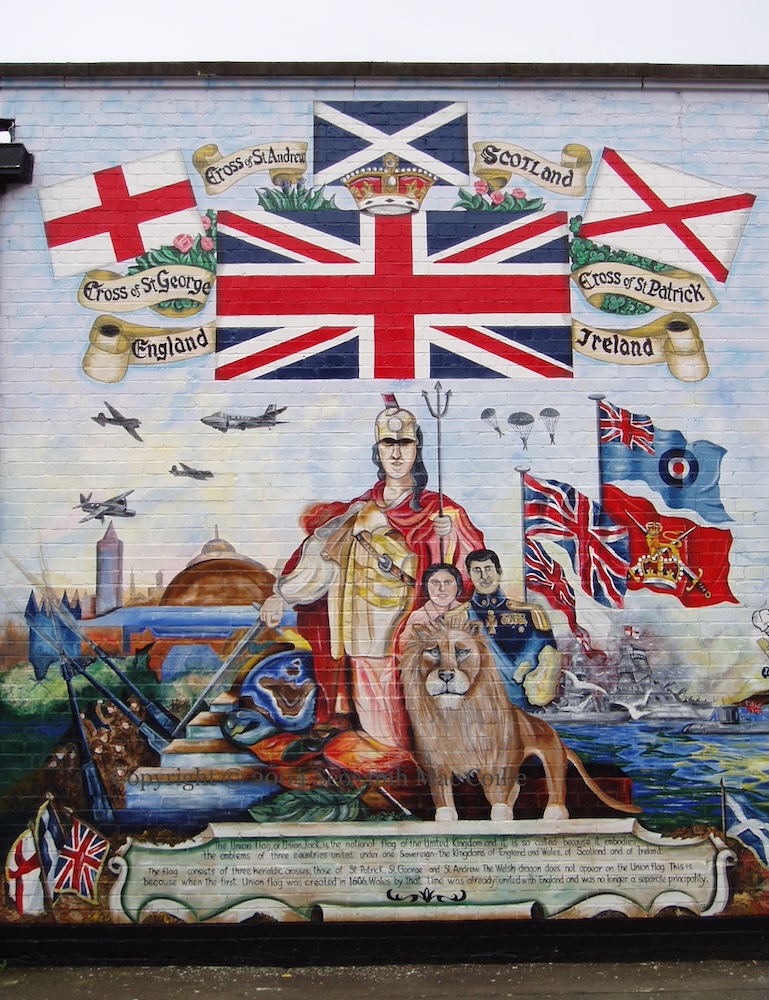
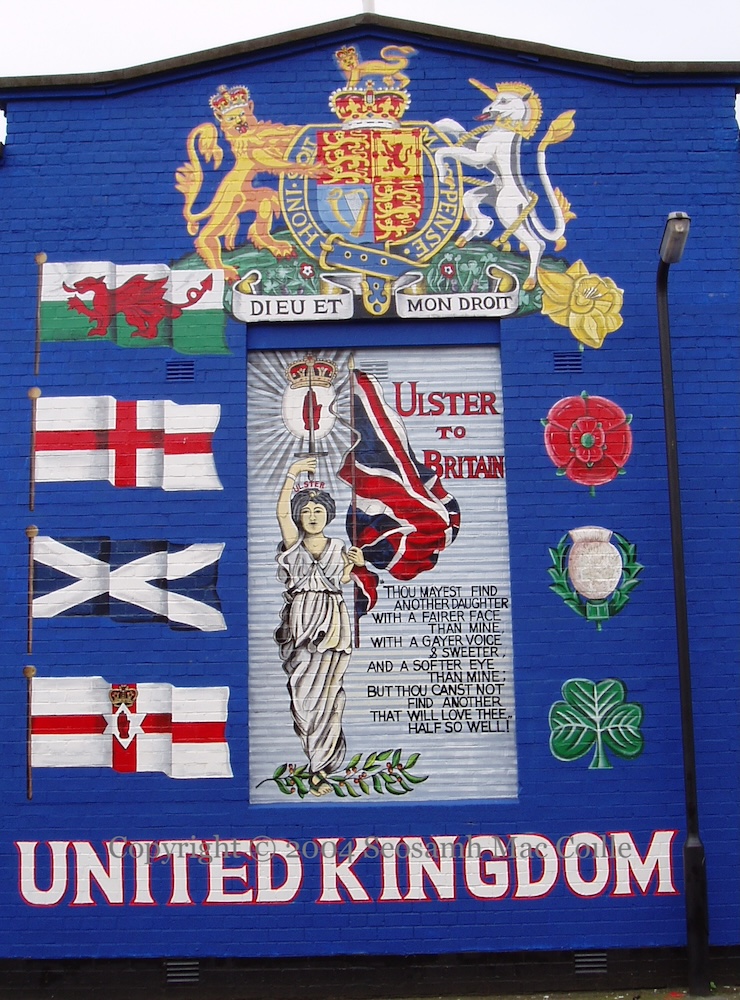
“The Union flag, or Union Jack, is the national flag of the United Kingdom and it is so called because it embodies the emblems of three countries united under one sovereign – the Kingdoms of England and Wales, of Scotland and of Ireland. The flag consists of three heraldic crosses, those of St Patrick, St George and St Andrew. The Welsh dragon does not appear on the Union flag. This is because when the first Union flag was created in 1606, Wales by that time was already united with England and was no longer a separate principality.”
From the info board, added later: In the blitz of 15/16th April 1941, “Across Belfast 745 civilians were killed, 420 were seriously injured and more than 1,000 less seriously. April and May 1941 an estimated 56,000 houses were damaged.”
The central panel in Thorndyke Street, Belfast, reproduces a postcard from during the Home Rule debate: “Ulster to Britain: thou mayest find another daughter with a fairer face than mine, with a gayer voice and sweeter and a softer eye than mine; but thou canst not find another that will love thee half so well!” The Ulster Banner (a flag of Northern Ireland) is used to represent Ireland in the quartet of flags while the shamrock stands alongside daffodil, rose, and thistle. For the Anglo-Norman French around the crown’s coat of arms, see Honi Soit Qui Mal Y Pense.
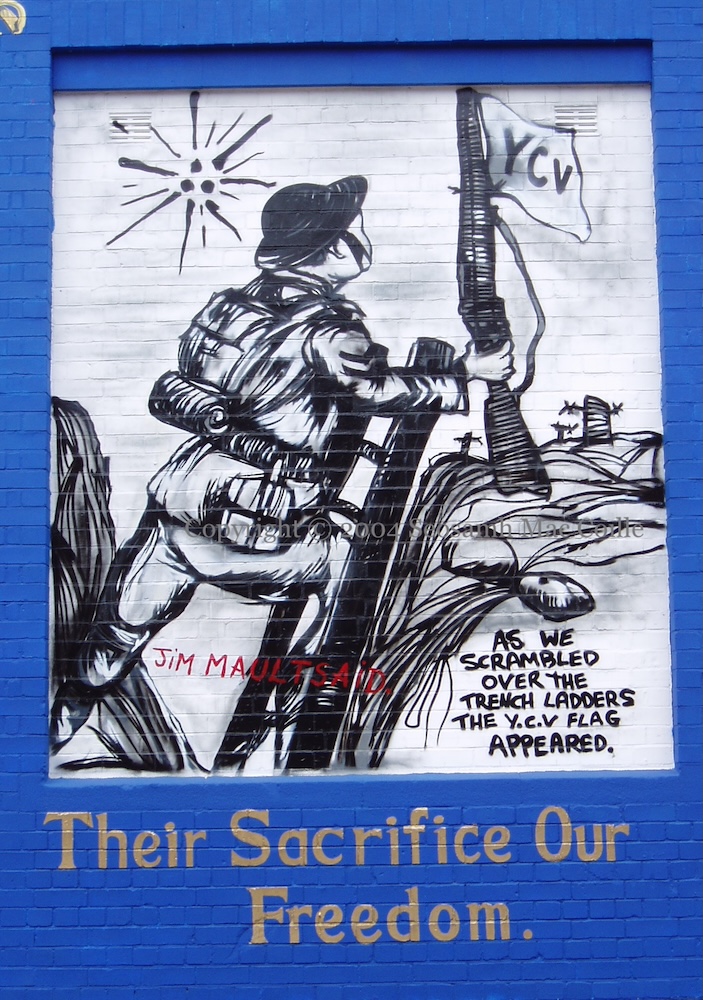
“As we scrambled over the trench ladders the Y.C.V. flag appeared.” One of the many panels in an extended mural in Thorndyke Street, this one inspired by a drawing by Jim Maultsaid, who joined the YCV in 1914 and kept a diary and sketch-book. More of his sketches can be found as part of the Friends Of The Somme’s account of the war in 1916.