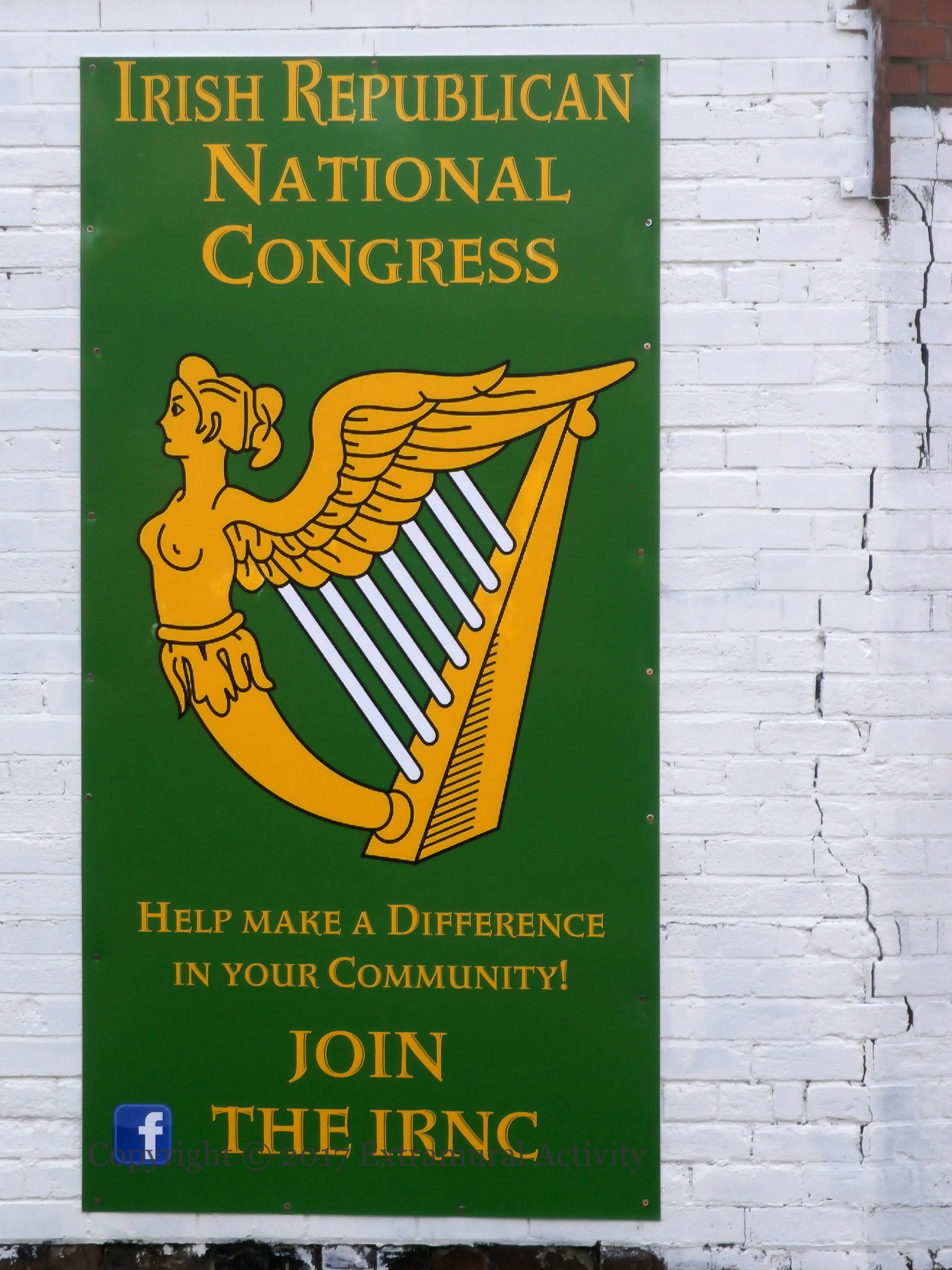
The harp as a symbol of Ireland dates back to the 1500’s, with the ‘winged maiden’ version current by the late 1700s. The United Irishmen replaced the crown typically added above it (used, for example, by the Royal Irish Rifles) with a cap of freedom (for another image see the 2000 Bobby Sands mural). The Irish Republican National Congress (web) is a 2014 group with the goal of a united Ireland.
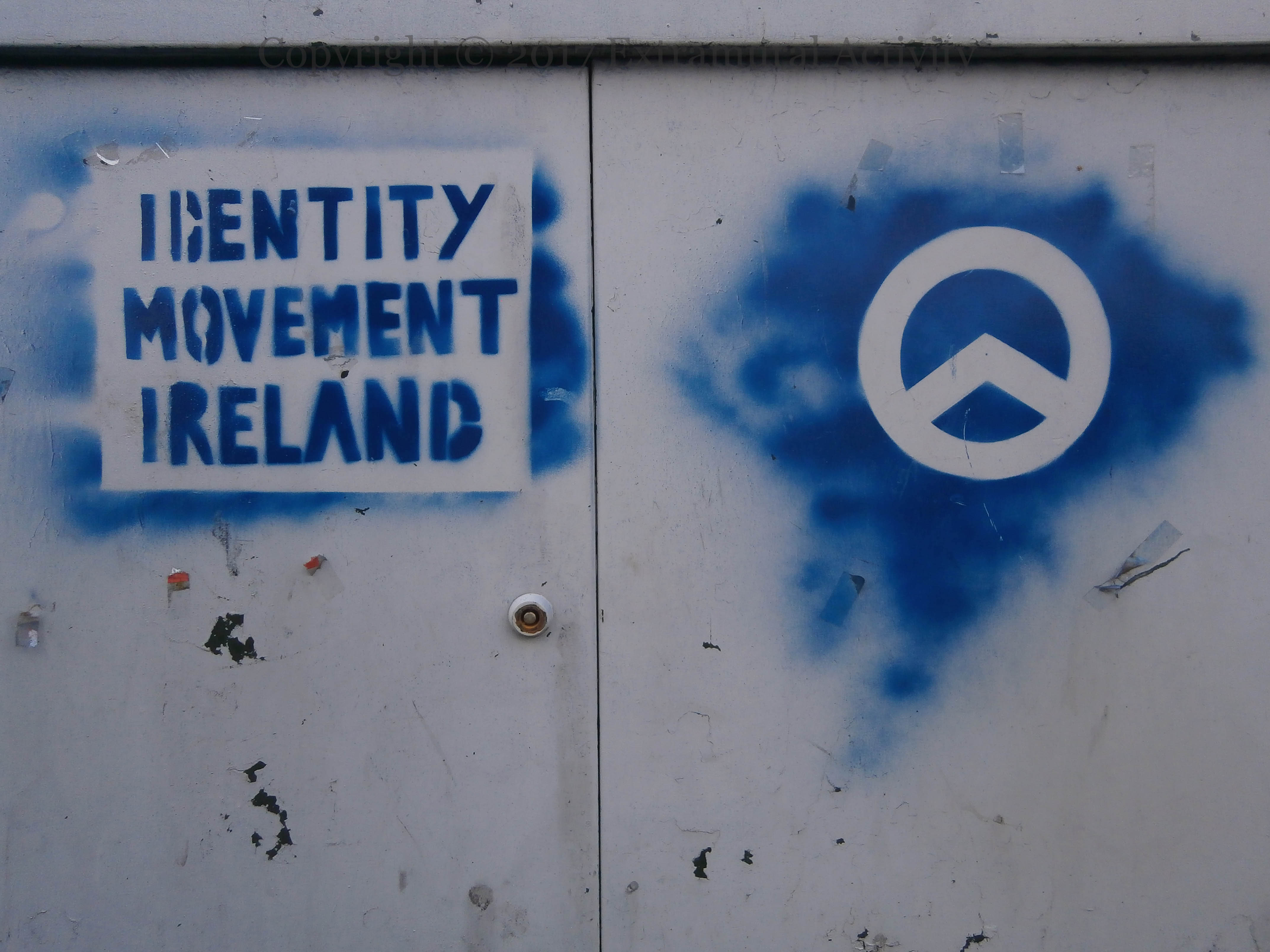
Based on the ‘lambda’ symbol on the right (ancient Greek “L” standing for “Lakedaimon”), ‘Identity Movement Ireland’ appears to be ‘Generation Identity Ireland’ (Fb), which appears to be (associated with) Identity Ireland (web | Fb), a relatively new (July 2015) nationalist party in favor of EU withdrawal and increased (Muslim) immigration control. It has joined with similar organisations in fifteen other European countries who subscribe to PEGIDA – Patriotische Europäer gegen die Islamisierung des Abendlandes (Patriotic Europeans Against the Islamisation of the West).
The stencil above has appeared on the Cavehill Road, Belfast.
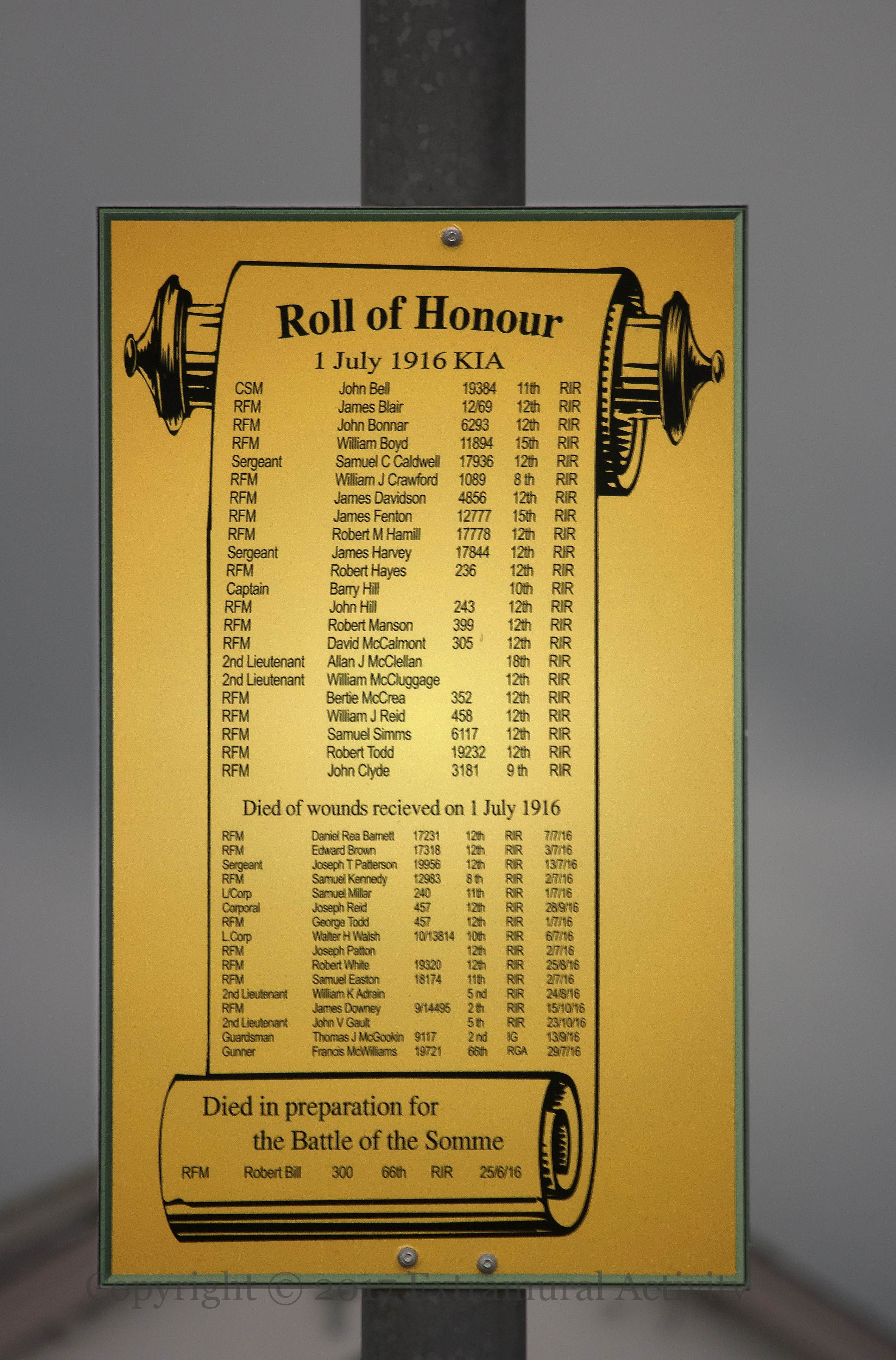
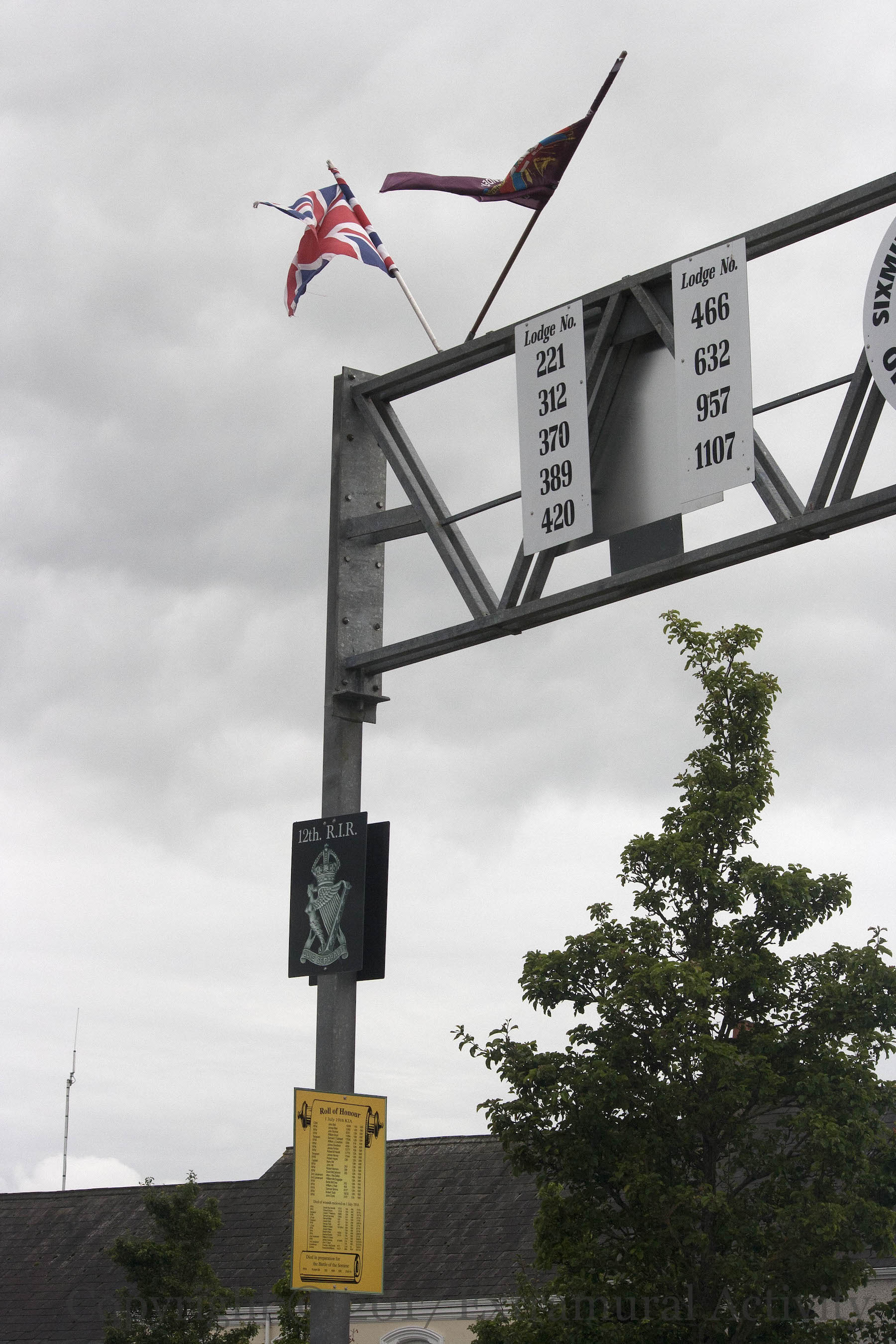
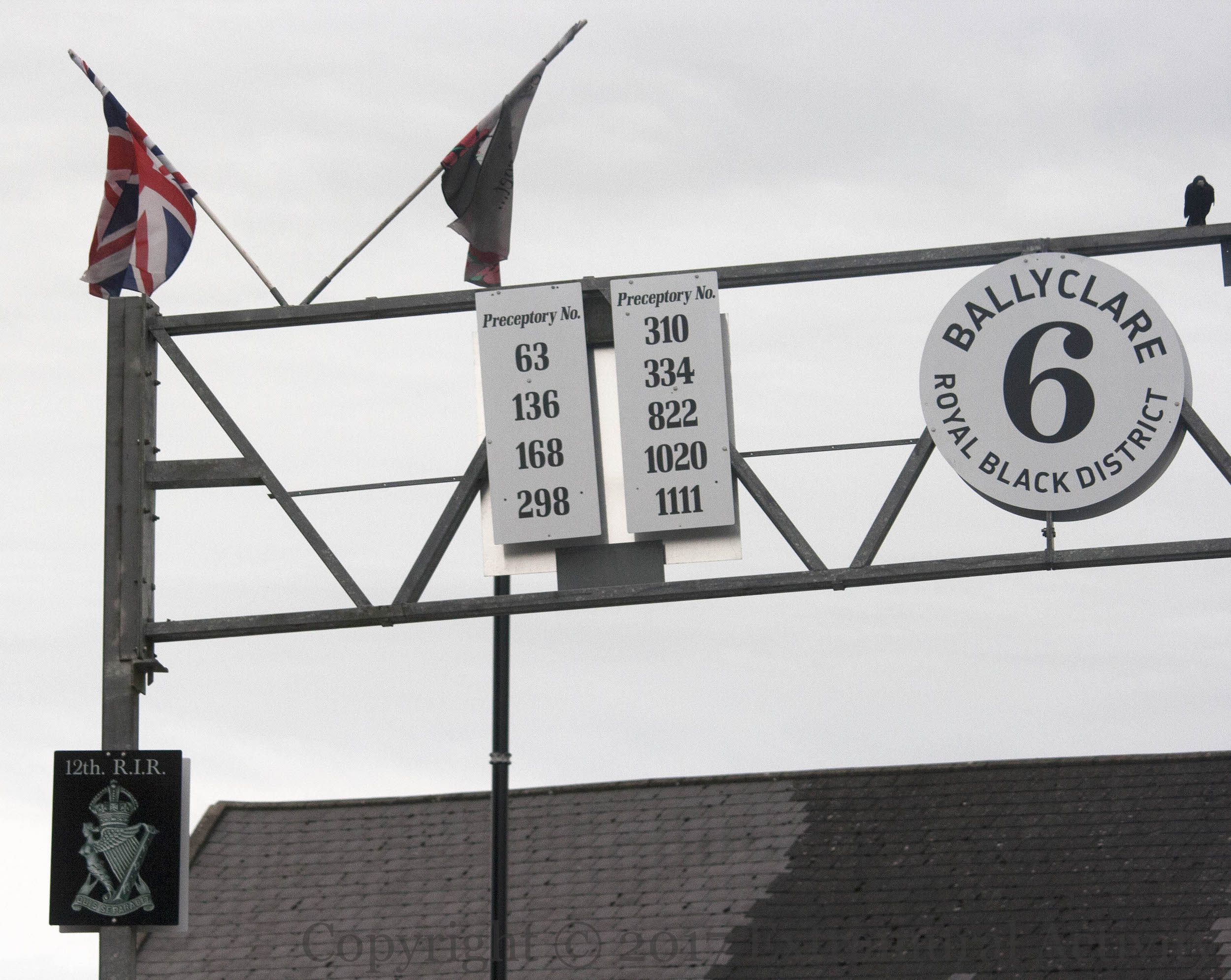
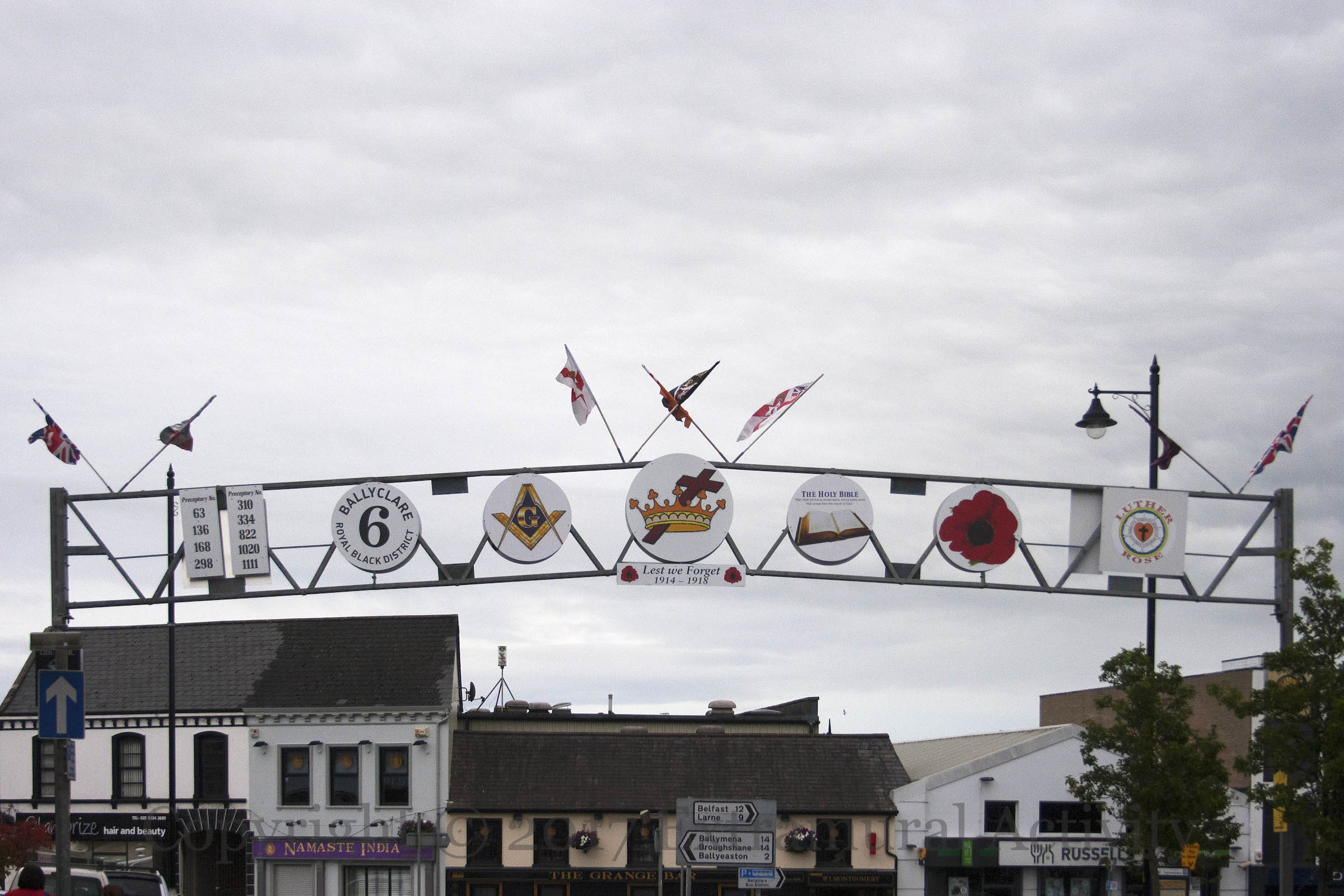
The 12th battalion of the Royal Irish Rifles was drawn from central Antrim towns such as Ballymena and Ballyclare. There is a web site and a Facebook page dedicated to the battalion. For more pictures of the Ballymena arch, see Cross And Crown.
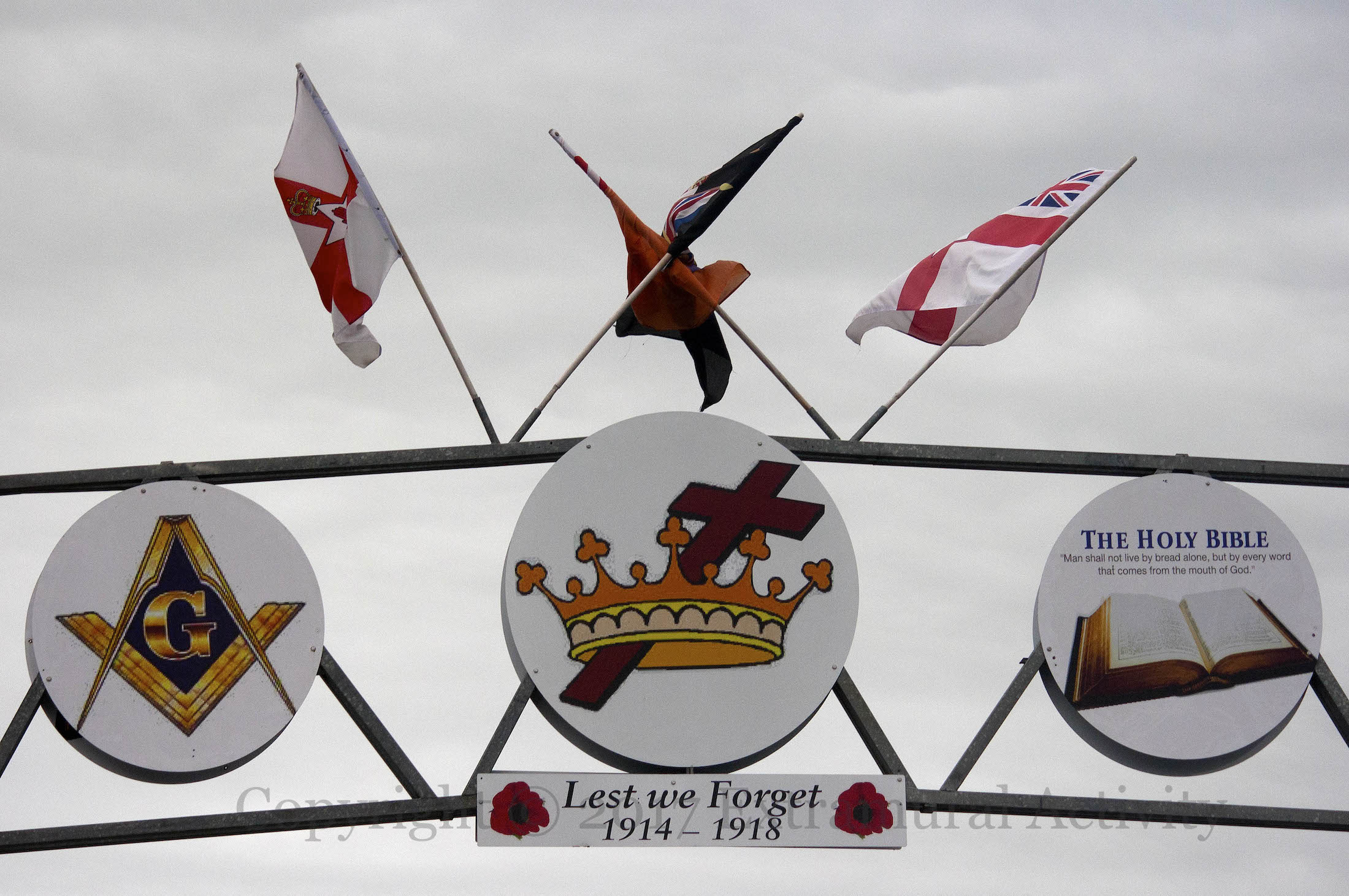
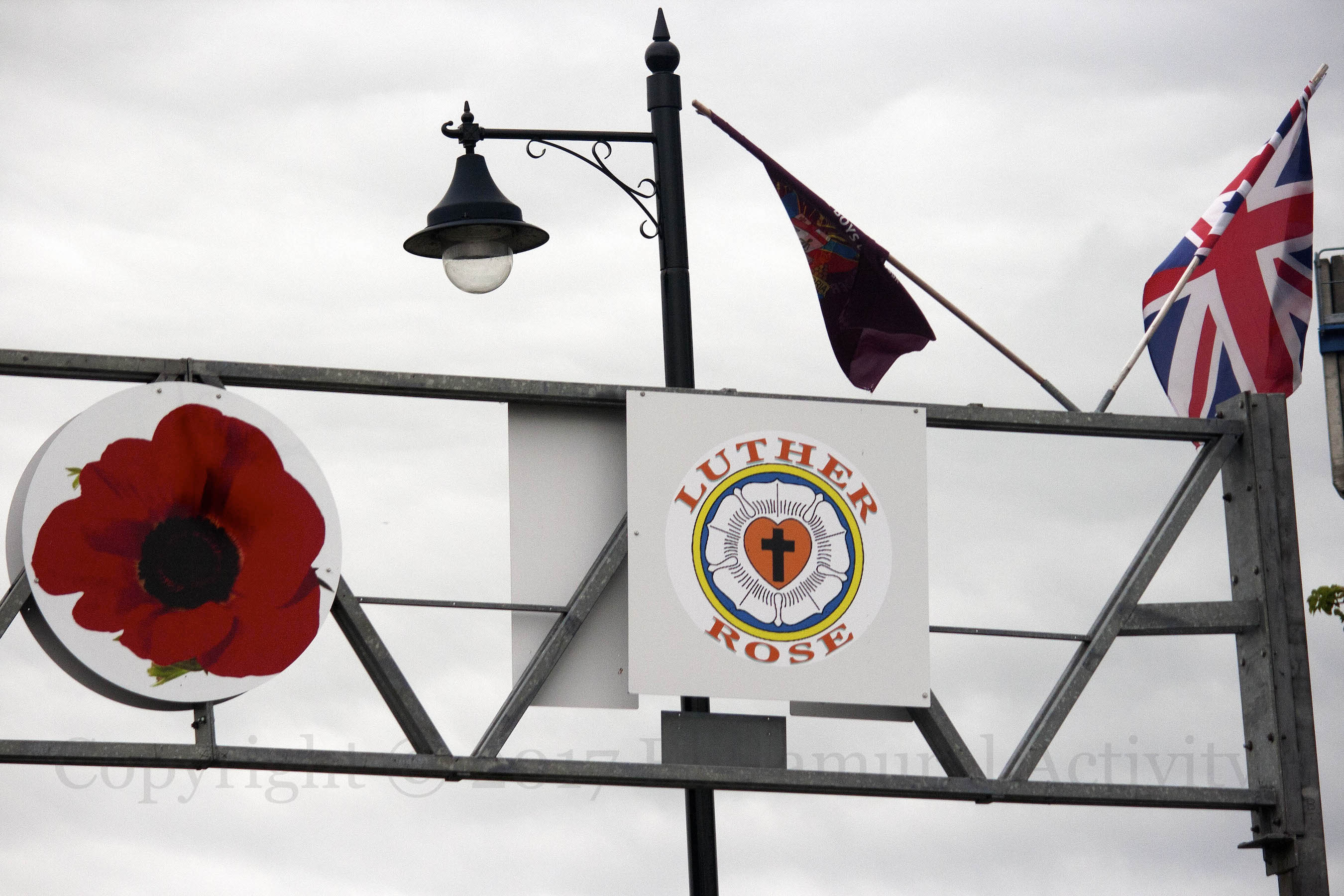
The ‘cross and crown’ is the emblem of the Royal Black Institution, an institution two years younger than the Orange Order; a list of local preceptories in District 6 (Ballyclare) is given in the first image below. To the left (in the image above) is the Square And Compasses, the symbol of the Freemasons. This is a newer arch than seen previously in 2009.
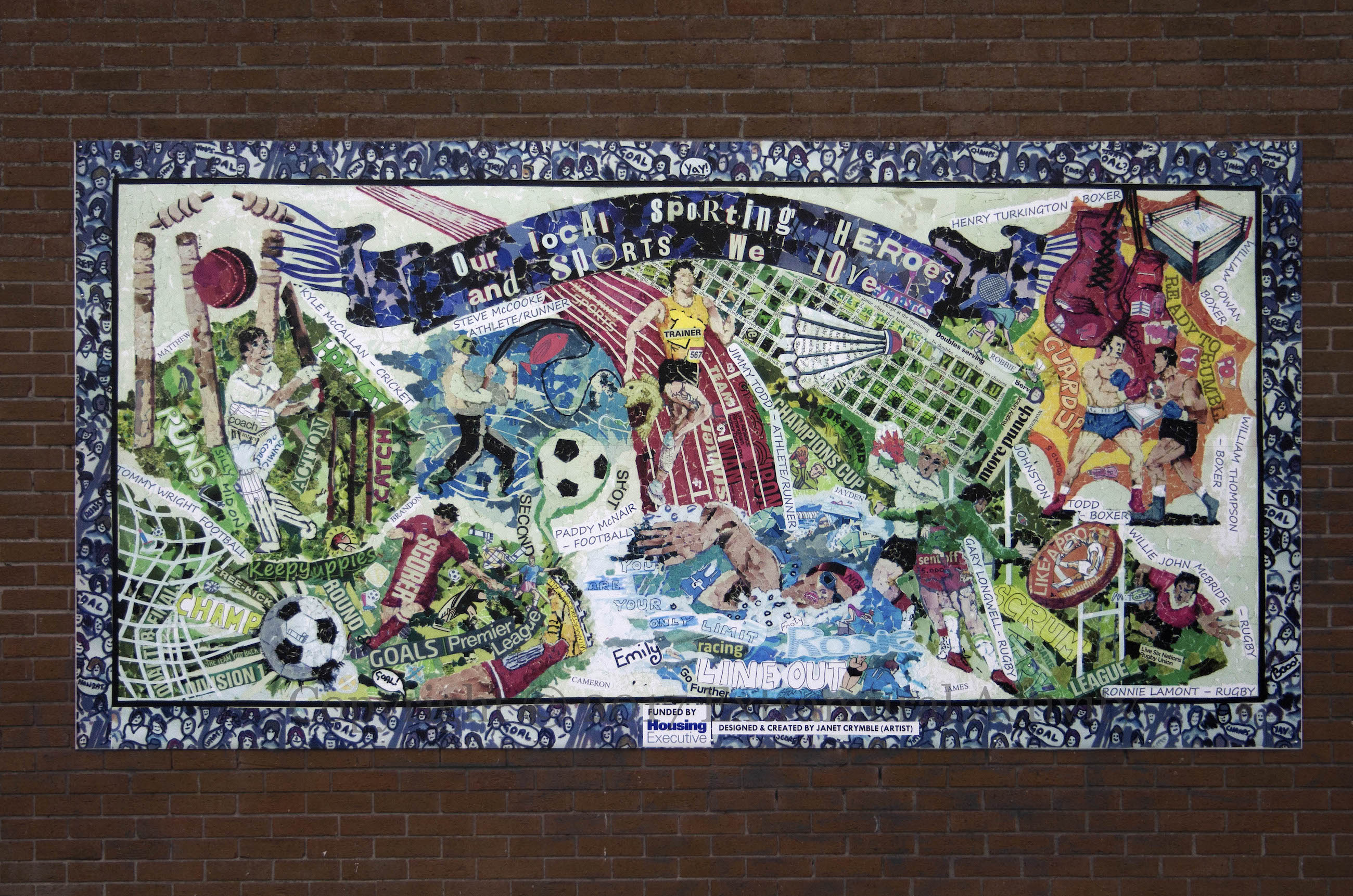
Whitehead artist Janet Crymble “designed & created this new collage in Ballyclare, featuring south Antrim sporting heroes past and present: Kyle McCallan, Steve McCooke, Paddy McNair, Jimmy Todd, Gary Longwell, Ronnie Lamont, Henry Turkington, William Cowan, William Thompson, Johnston Todd, Willie John McBride. John Reid from the NIHE – which sponsored the mural – has an image from the launch of local children posing with the piece.
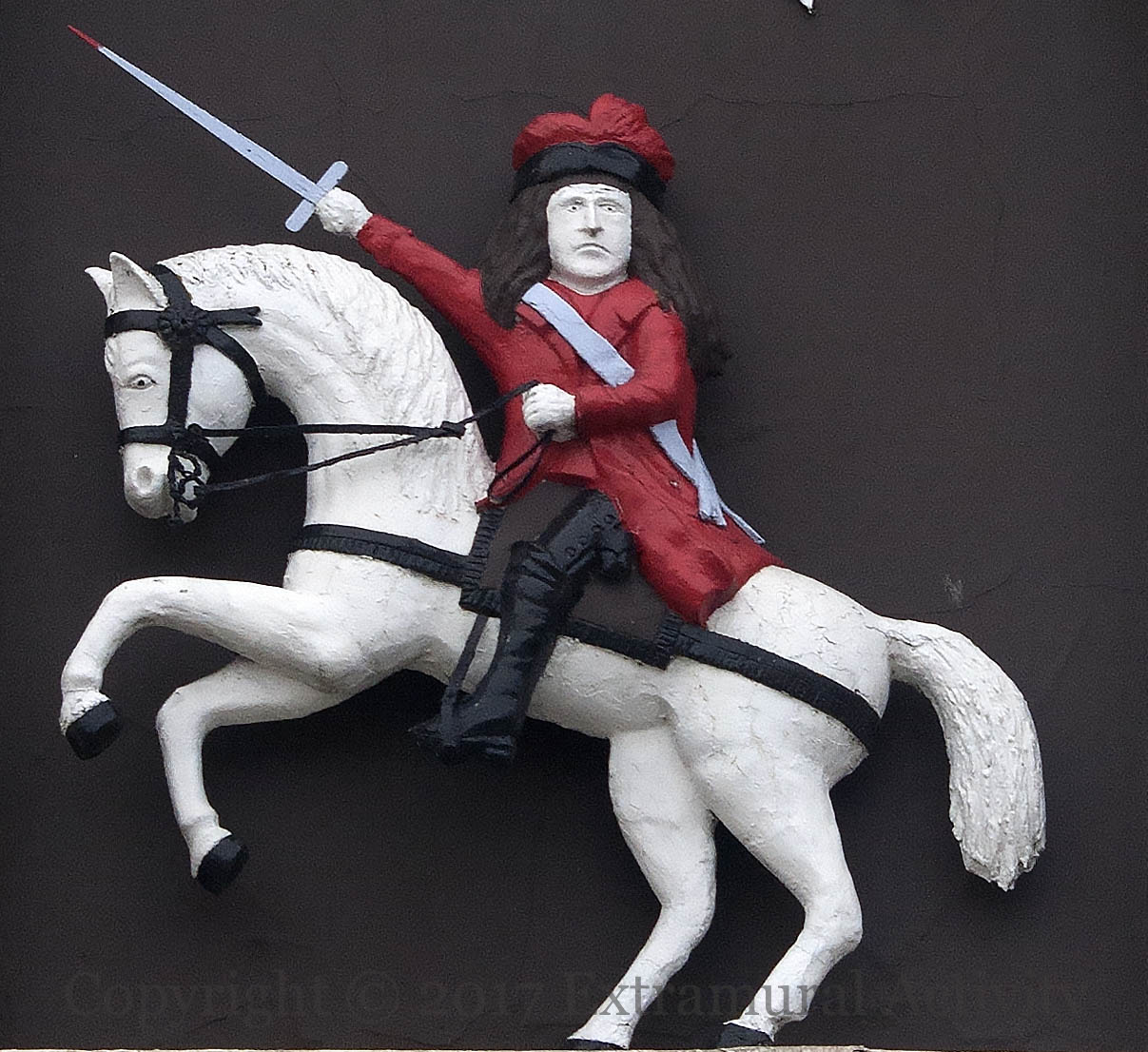
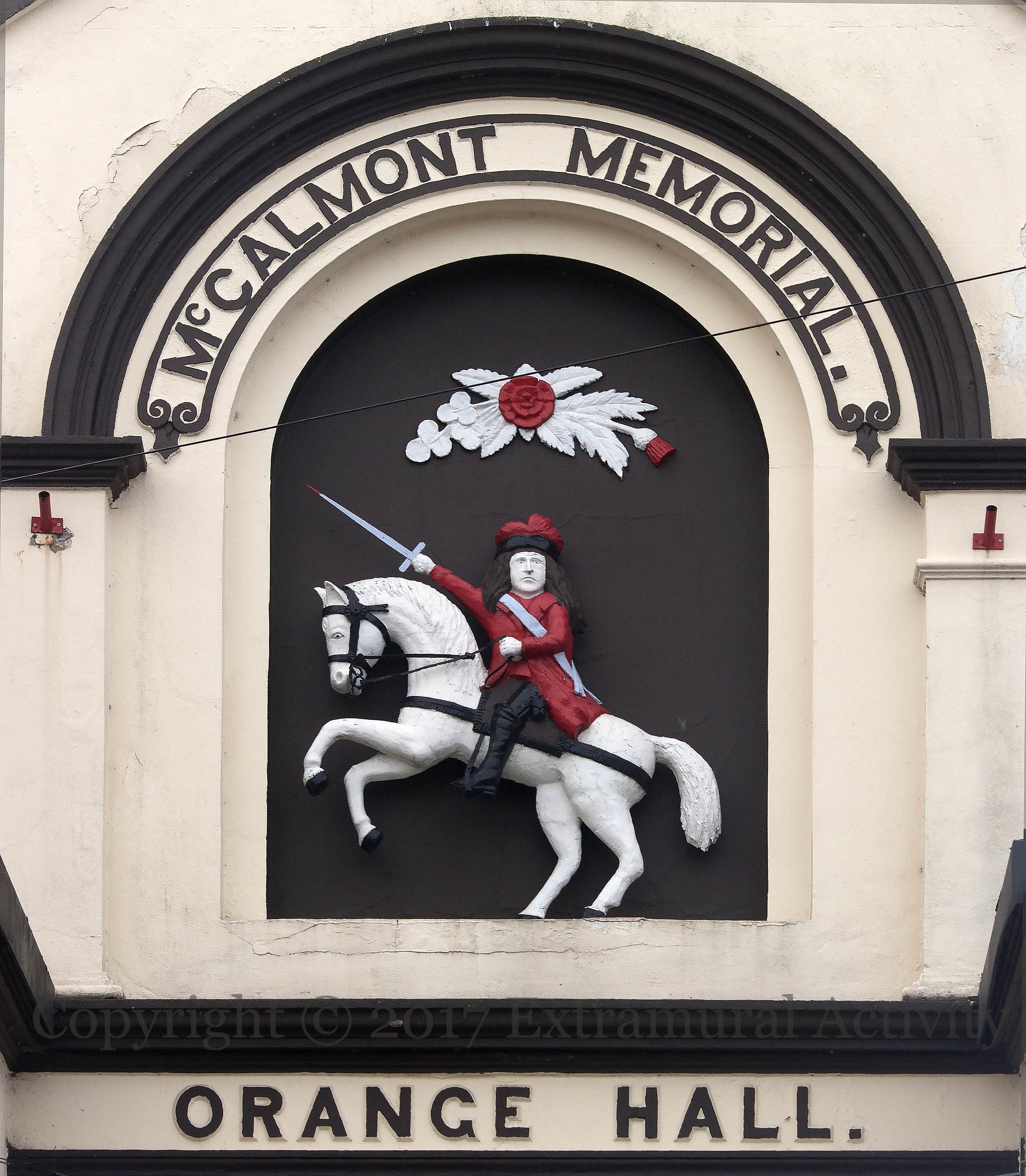
King Billy’s sword is tipped in blood, and he rides below a shamrock, rose, and thistle, uniting the kingdoms. Ballyclare Orange Hall is named after Hugh McCalmont, a major-general in the British Army Ulster Unionist MP for North Antrim in 1895 (and East Antrim in 1918?). His Whiteabbey house was burned down by suffragettes in 1914 because it was used as a training ground by the UVF of the anti-franchise Carson.
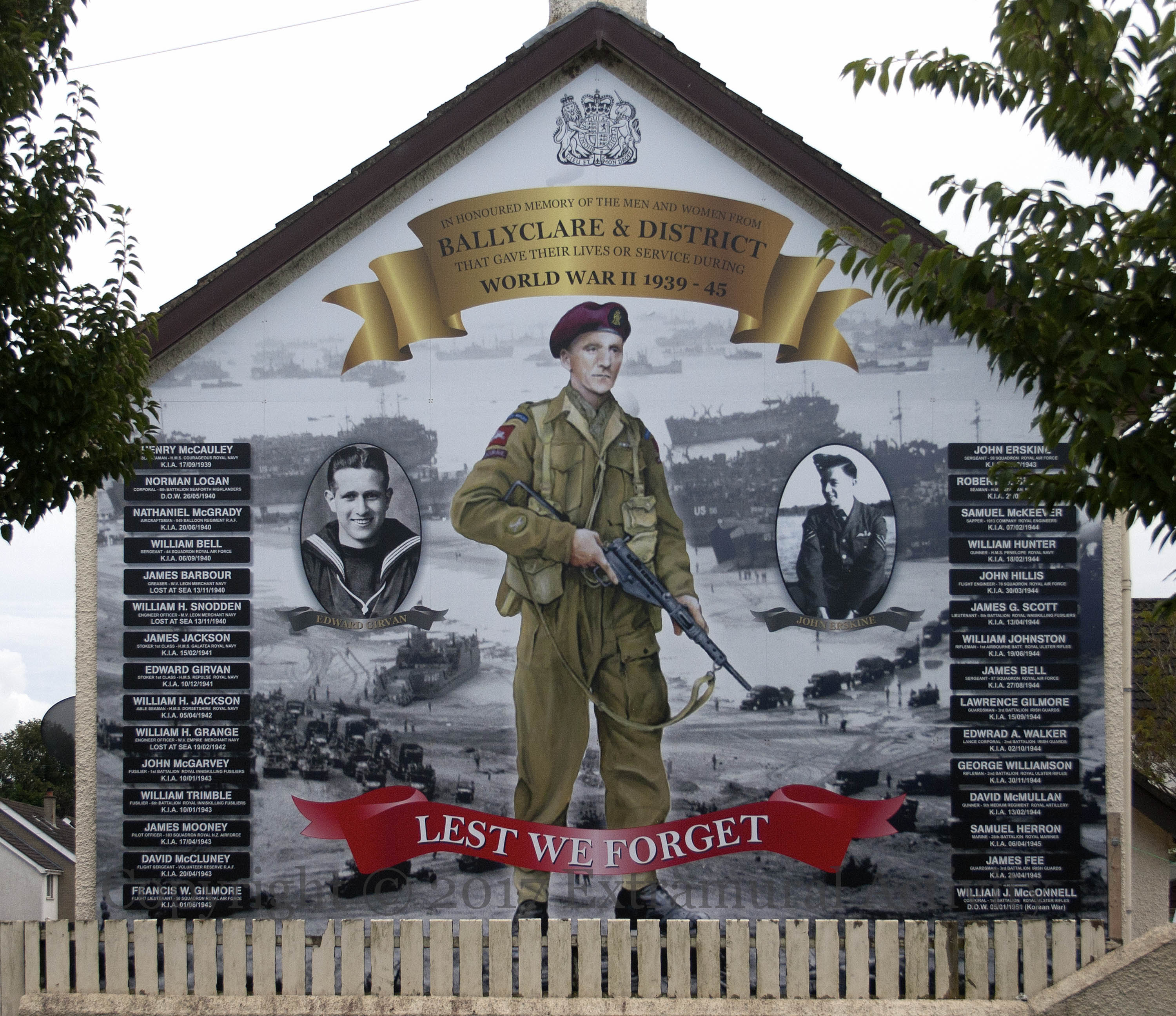
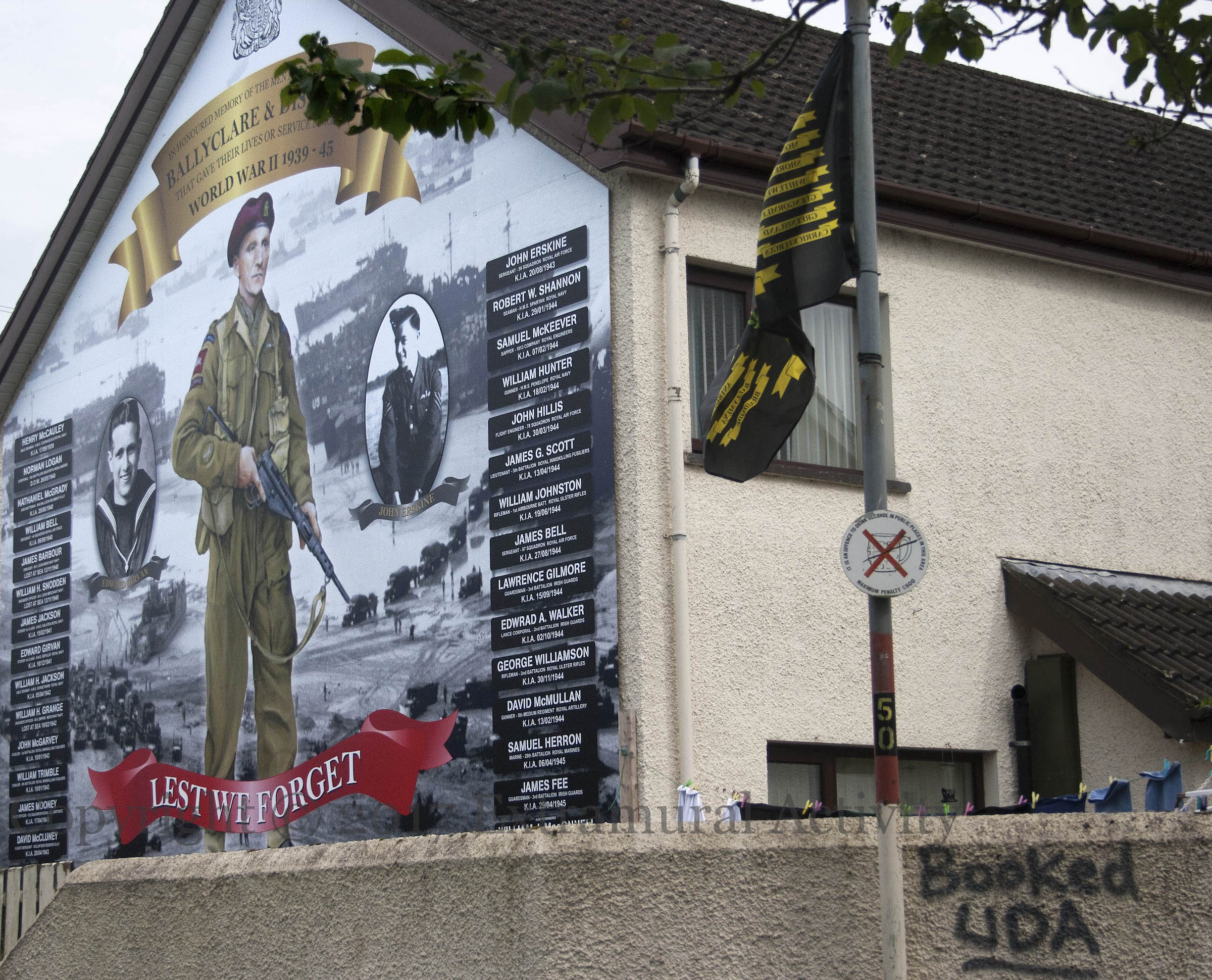
On 20 August 1943, second pilot Sergeant John Erskine and the Liberator crew of seven others failed to return from a convoy patrol of the west of Ireland (59 Squadron). Erksine and 28 others from WWII (and one from the Korean War) are commemorated in a new mural in Erskine Park, Ballyclare. It’s not known if the street name is connected to Sergeant John.
The left-hand portrait is of Edward Girvan, from Ballynure, who was killed on the H.M.S. Repulse, when it was attacked by Japanese aircraft and struck by torpedo bombs in the South China Sea on December 10th, 1941 (WP).
The soldier in the centre of the mural wears the emblem of the Royal Ulster Rifles, Parachute Regiment on his cap. William Johnston 7018189 and George Williamson 7022501 are listed (on the right) as riflemen in airborne battalions of the RUR, but this appears to be a reproduction of an original painting of an RUR major.
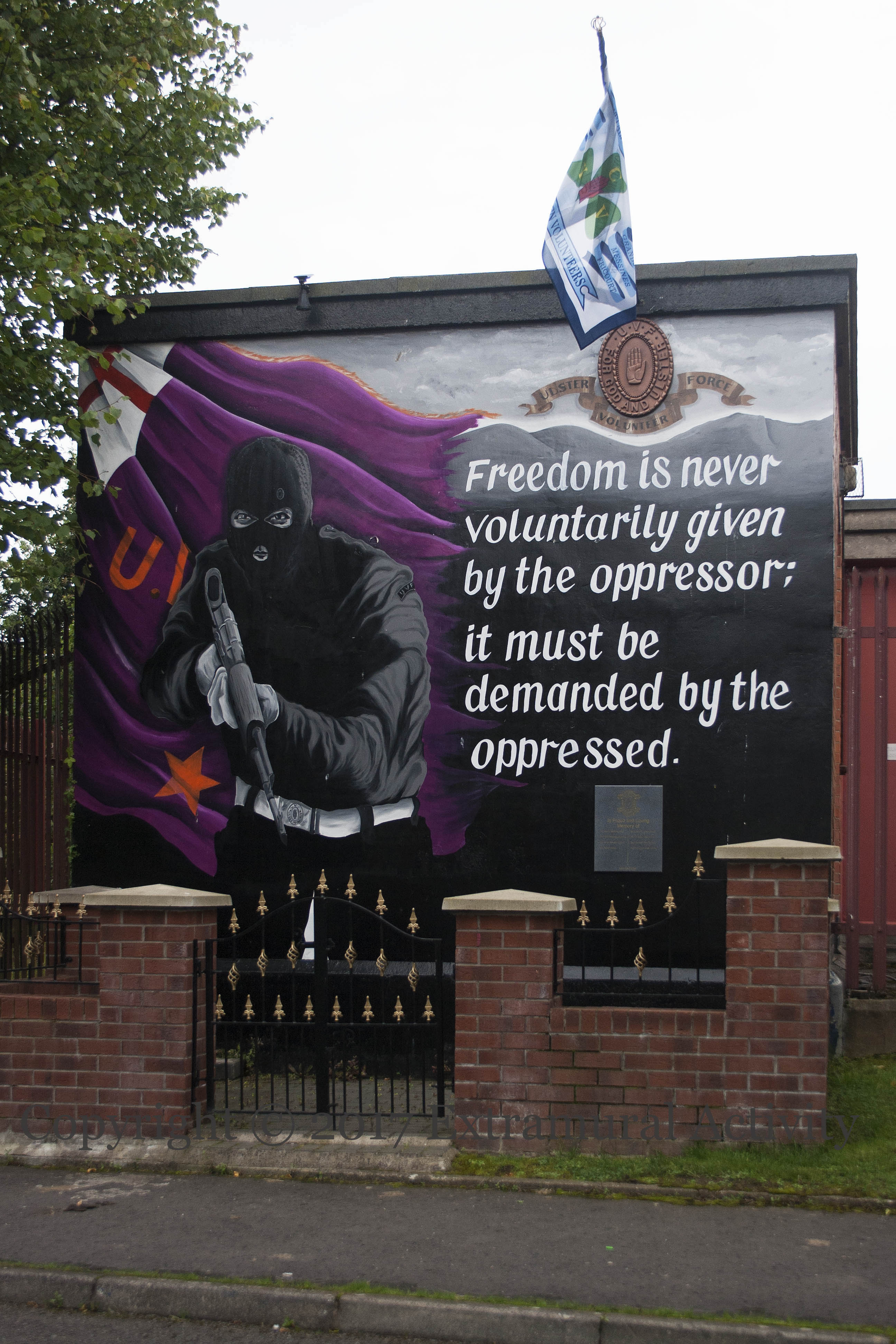
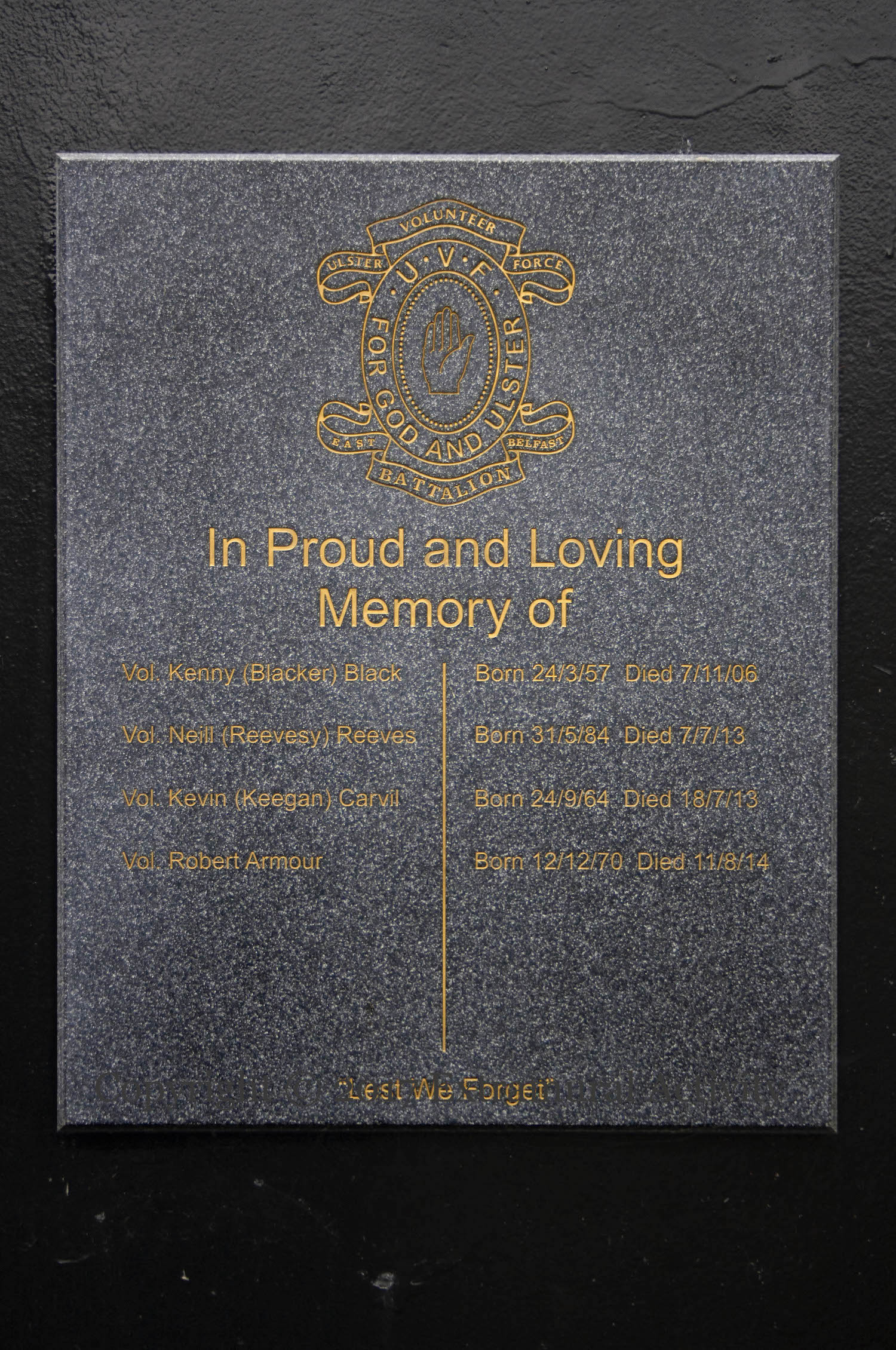
A plaque has been added to the controversial 2013 UVF mural in Inverwood Court, commemorating (fairly) recently-deceased volunteers Kenny Black, Neill Reeves (21 years old, possibly from tainted drugs) Kevin Carvil, and Robert Armour.
The quote – Freedom is never voluntarily given by the oppressor; it must be demanded by the oppressed – is from Martin Luther King. For more on the history of this wall and the MLK quote, see Direct Action.
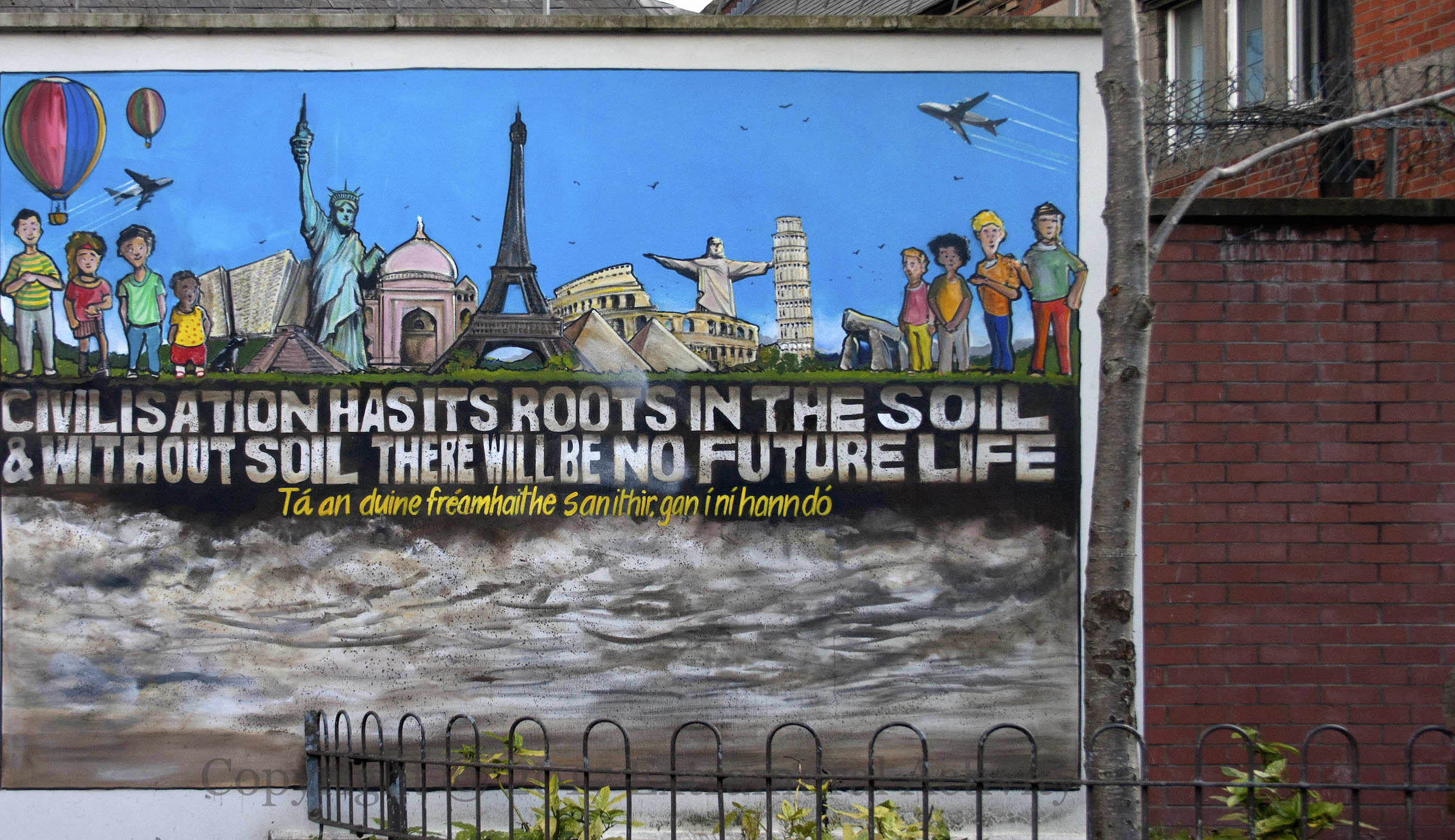
“Civilisation has its roots in the soil & without soil there will be no future life – Tá an duıne fréamhaıthe san ıthır, gan í ní hann dó” by Ed Reynolds (web) and Tancredi Caruso. Together they put on an exhibition and painted a mural for the Belowground Visions Of Life project (Soil Security Programme). The mural is outside Bunscoıl Mhıc Reachtaın (hence the Irish translation) in the old ‘Little Italy’ area of Belfast. Sand or soil has been added to the mural to give it texture.
 Seosamh Mac Coille Collection