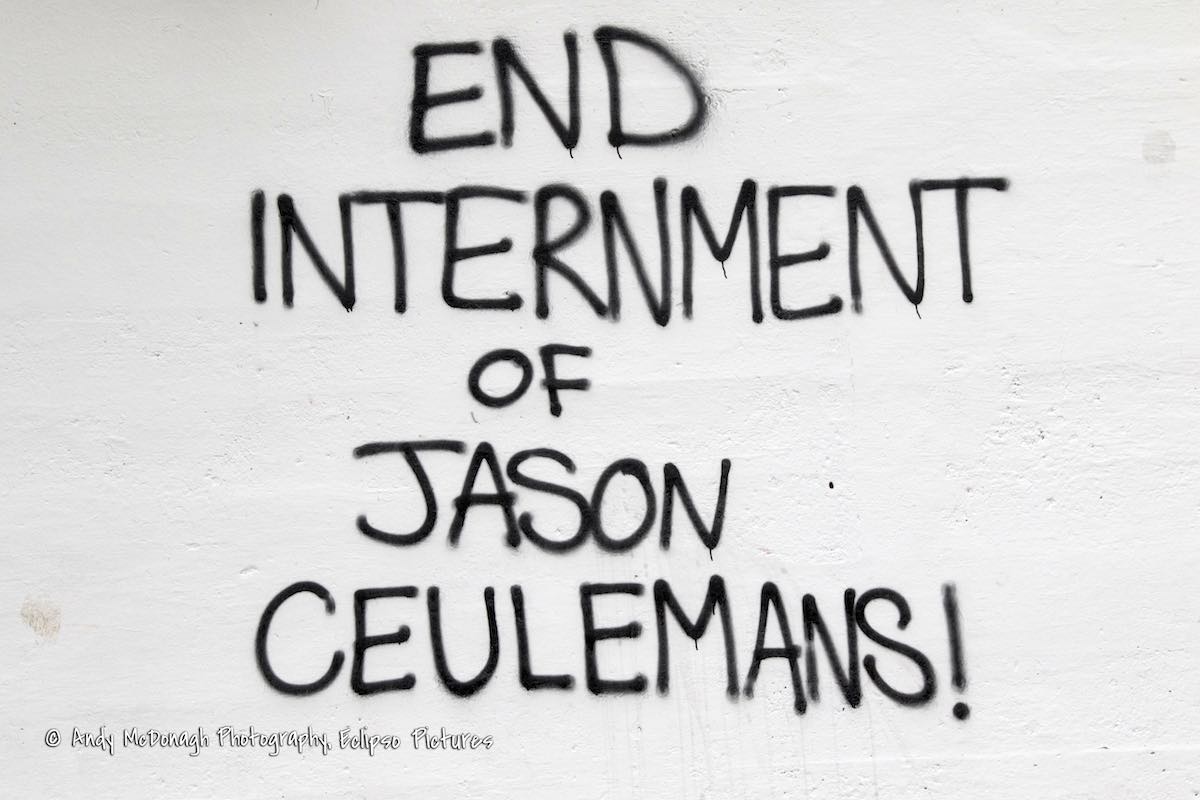
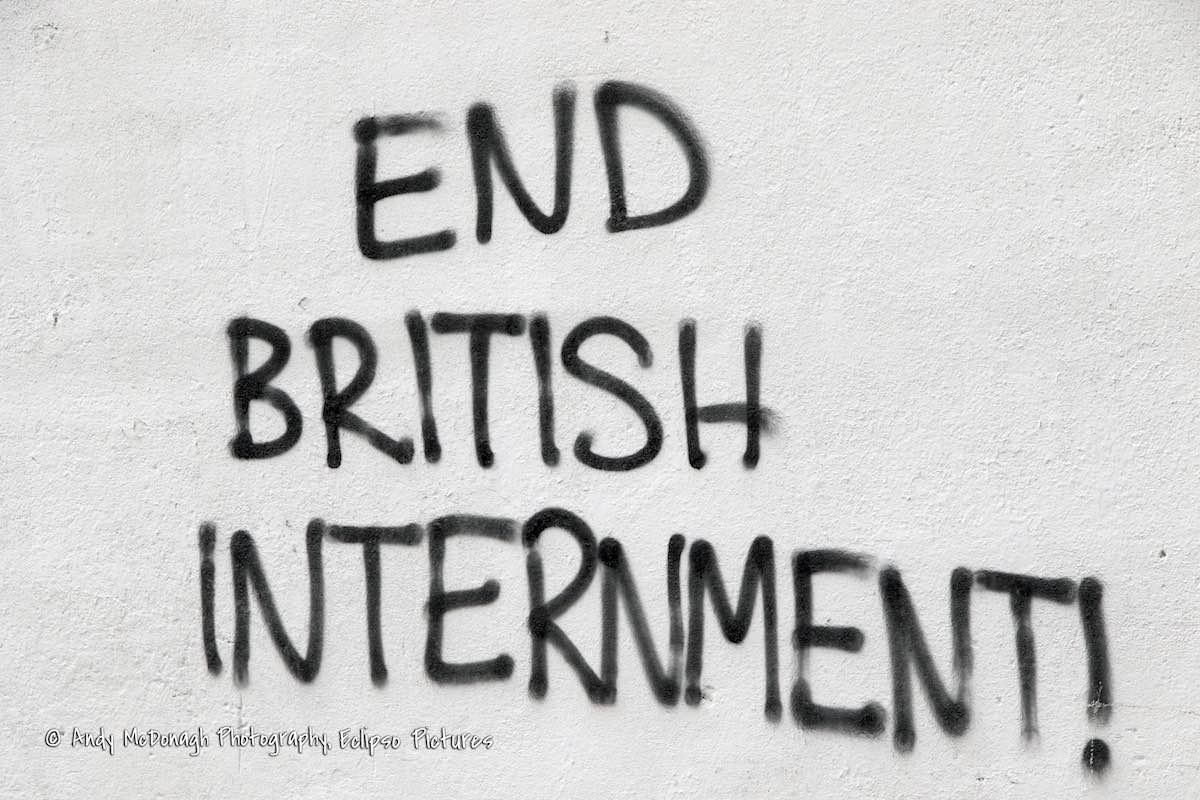
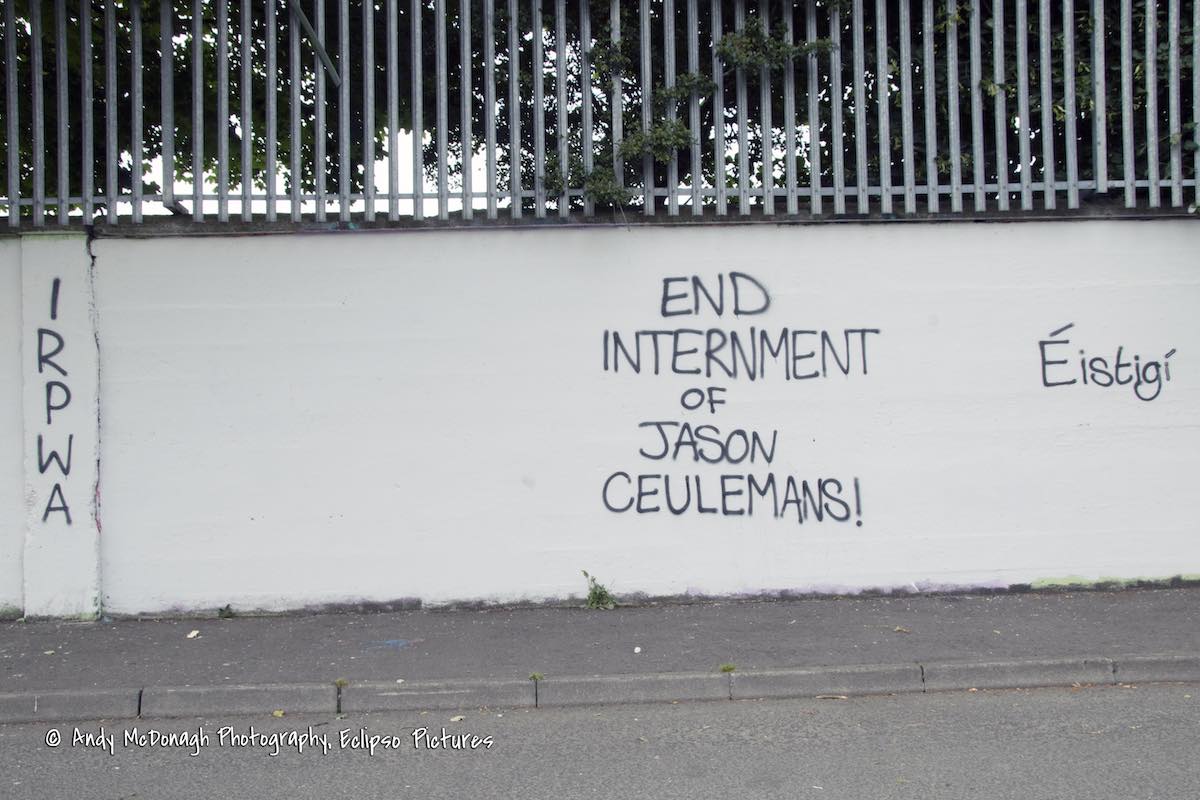
Jason Ceulemans was sentenced to ten years with five years to be served on supervised licence in 2014 for possession of an explosive. He had his licence revoked in June after attending an Easter commemoration which, according to Saoradh, he had permission to attend (Irish News | Saoradh).
The graffiti in support of his release is in Anne Street, Derry. There was also graffiti in Creggan – see Creggan 75 and Central Drive – and the Brandywell.
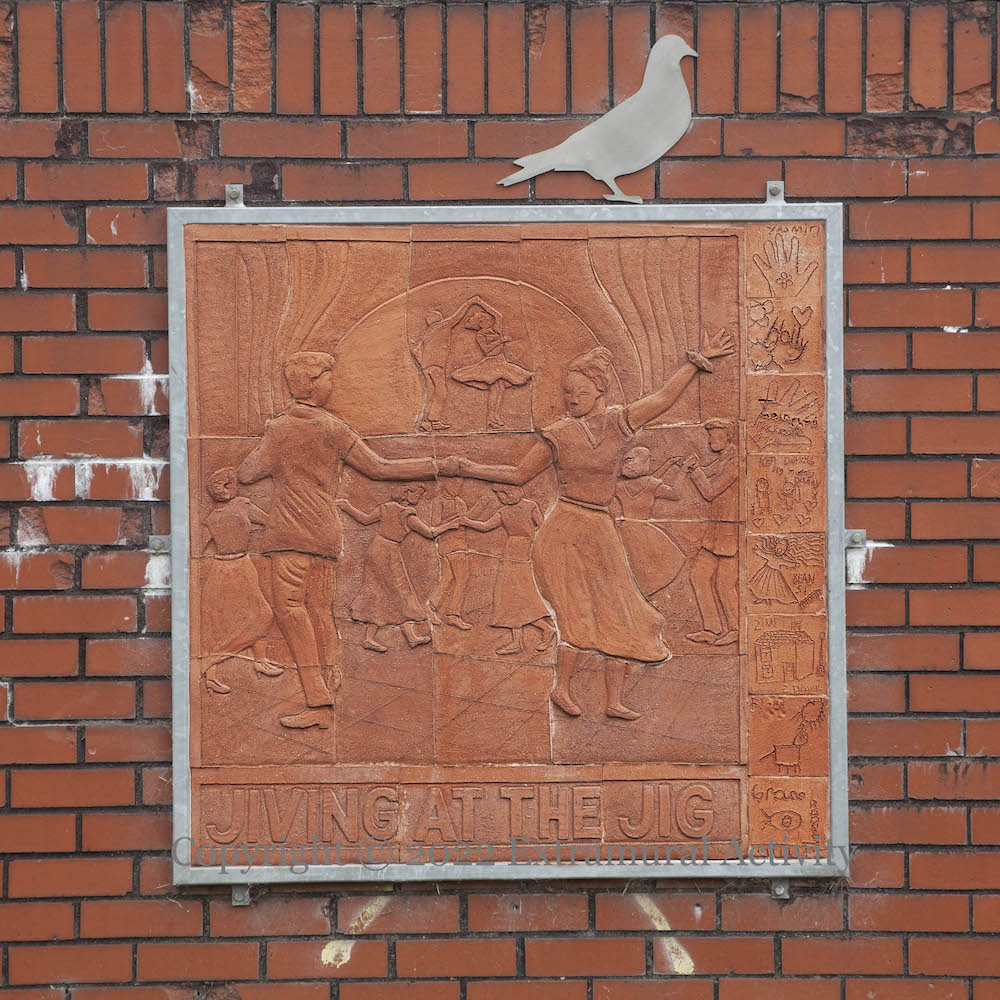
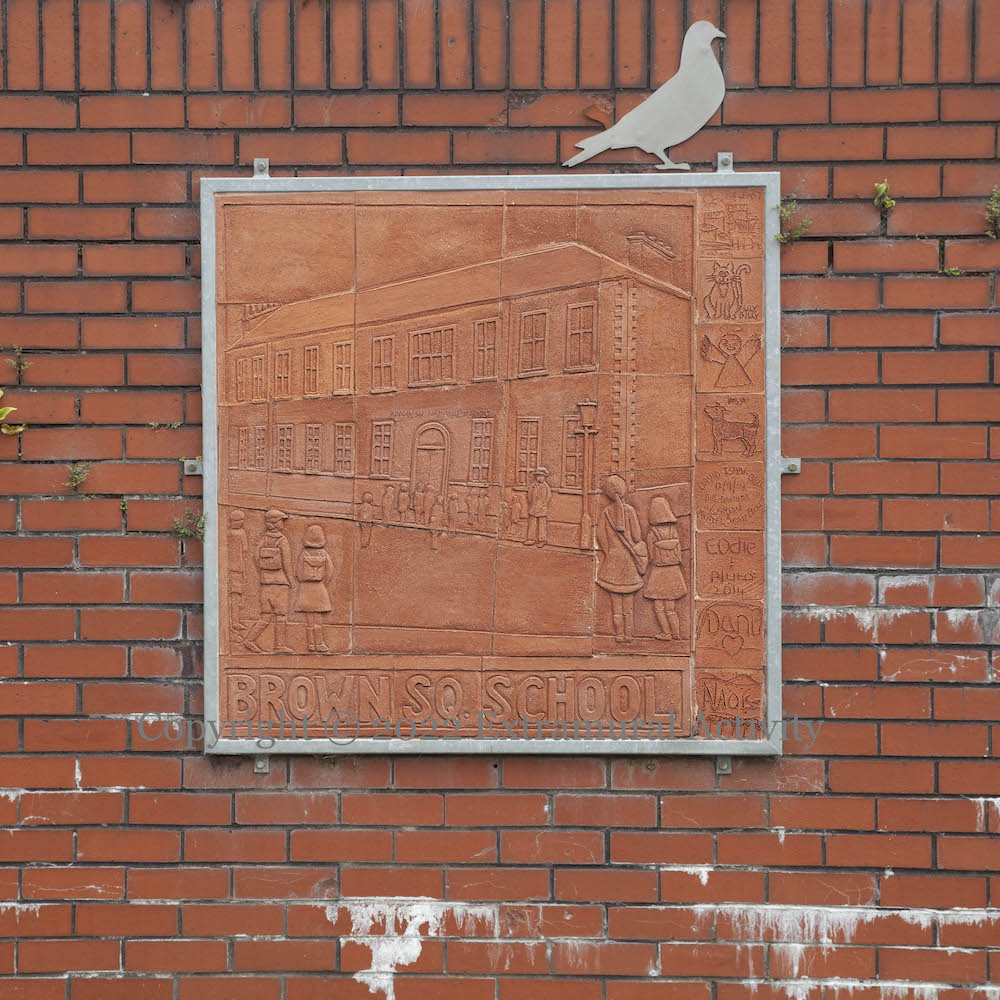
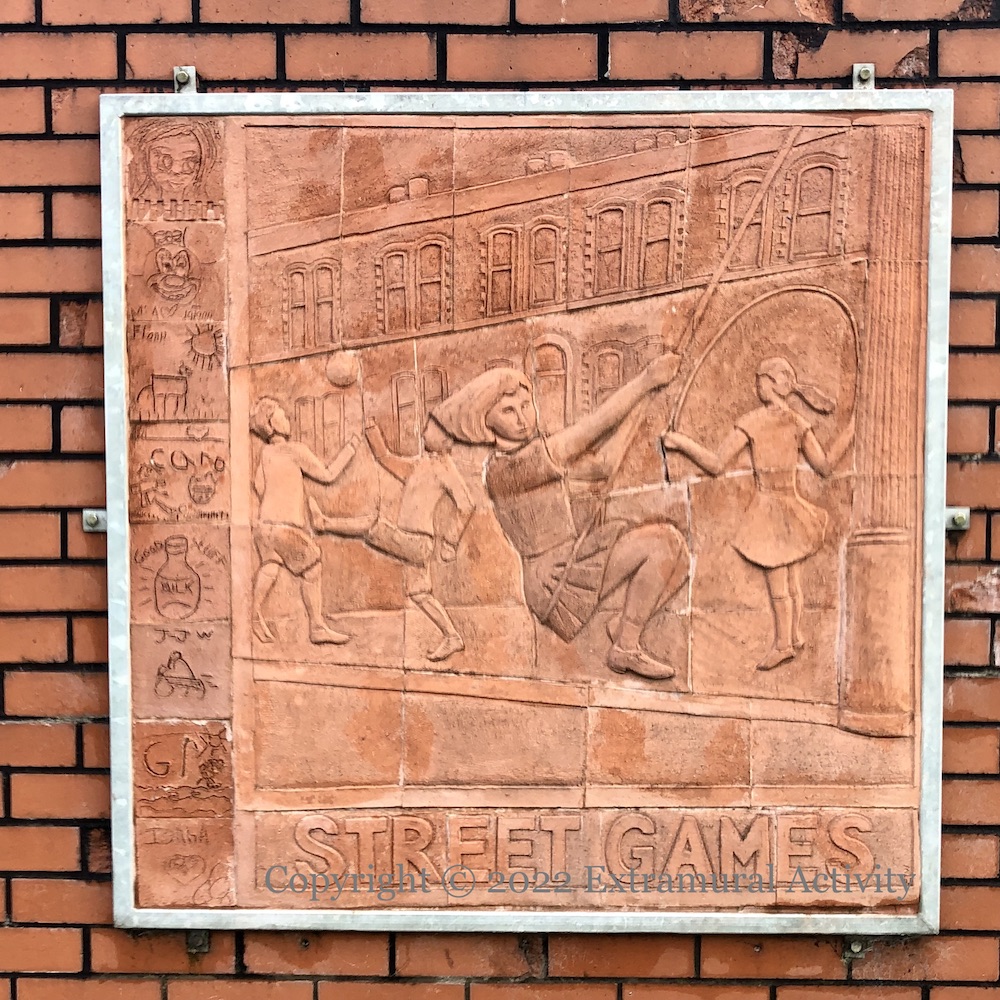
According to a history of Brown’s Square, the area was known as “the oasis” during WWII on account of its 3 dance-halls and 22 pubs (Religion, Riots And Rebels). As with so much publicly-funded art (though we cannot find any provenance for this art) it depicts Belfast in the “good old days” – that is, before the Troubles, which produced the so-called “peace line” dividing west Belfast.
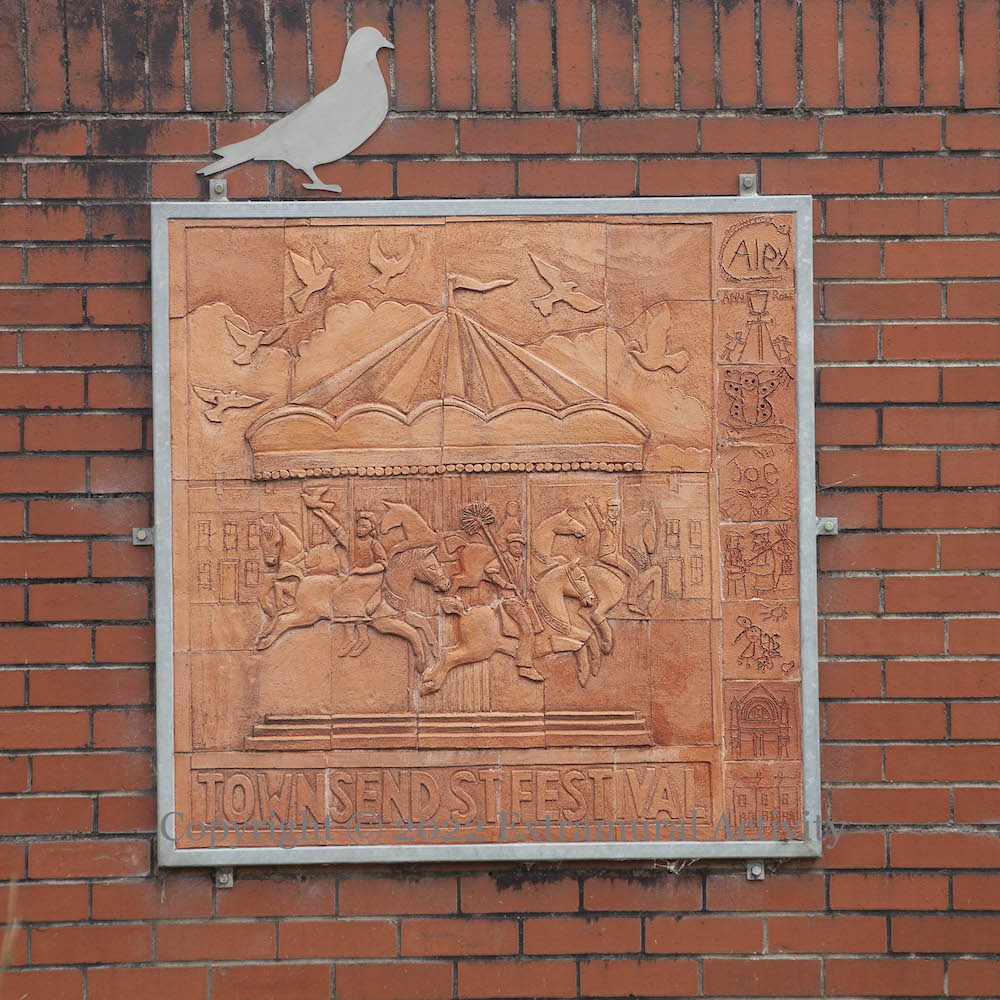
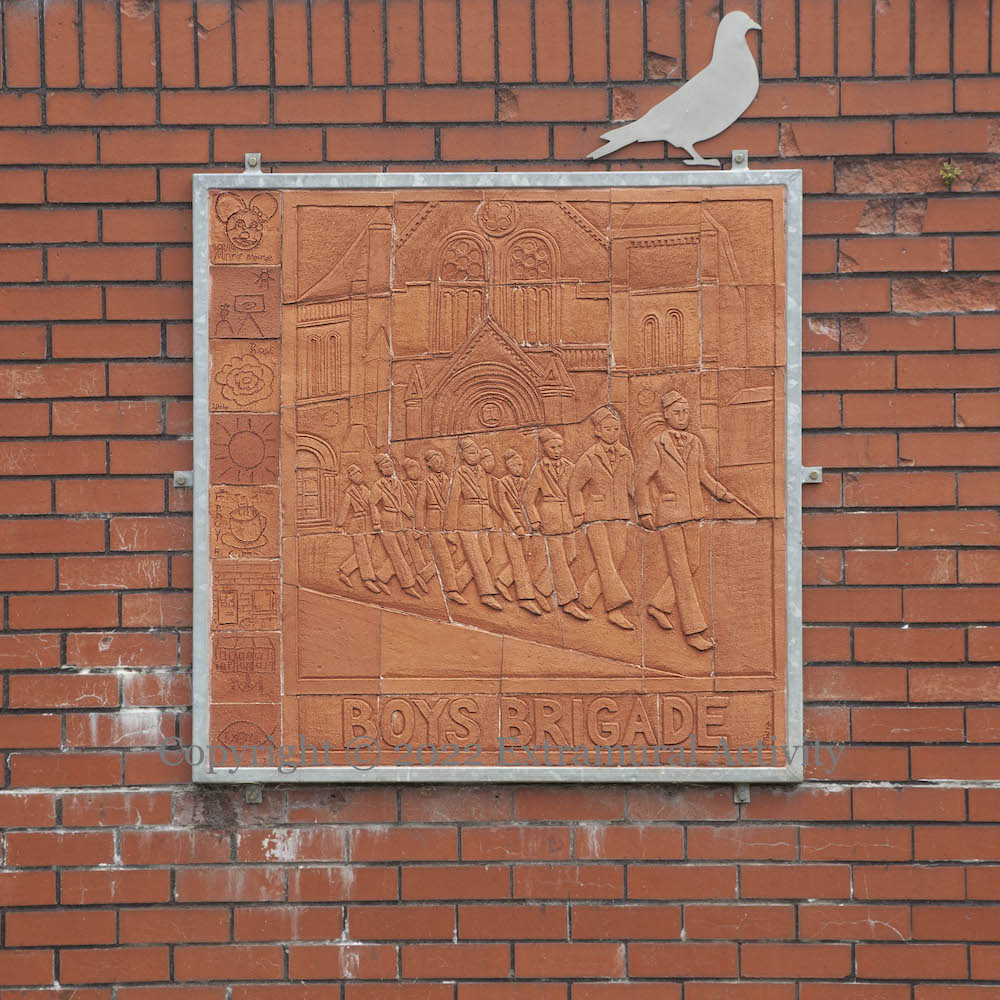
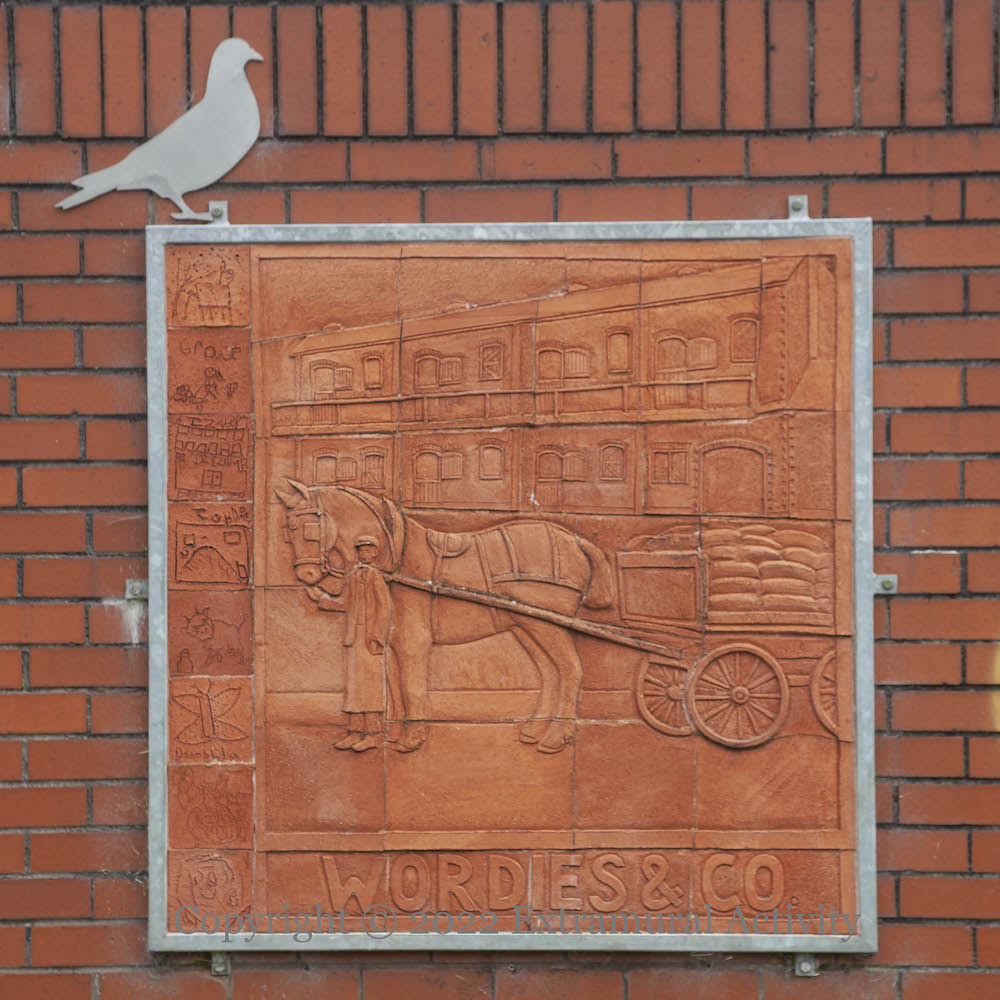
In this case of Brown’s Square, the area was further desolated in anticipation of a planned ring road (formally to be known as the Belfast Urban Motorway). the plan produced only the subterranean “Westlink” that cut Brown’s Square in half. The images in this entry are in Townsend Street, (these are from below the security gates; there are others above it). Before the construction of the Westlink, which opened in 1981, Townsend Street was considered the western border, and part of Brown’s Square. John Gilbert’s photographs at the Belfast Archive Project show the area in the mid-seventies, when much of it had been abandoned but prior to construction.
The Boys Brigade are shown parading in front of Townsend Presbyterian which held its last service in September and is being handed over to the Ulster Orchestra (Belfast Media) (see previously On The Other Side for stained glass windows inside the church). The Brown’s Square school was at the junction of Brown’s Square (the street) and Melbourne Street.
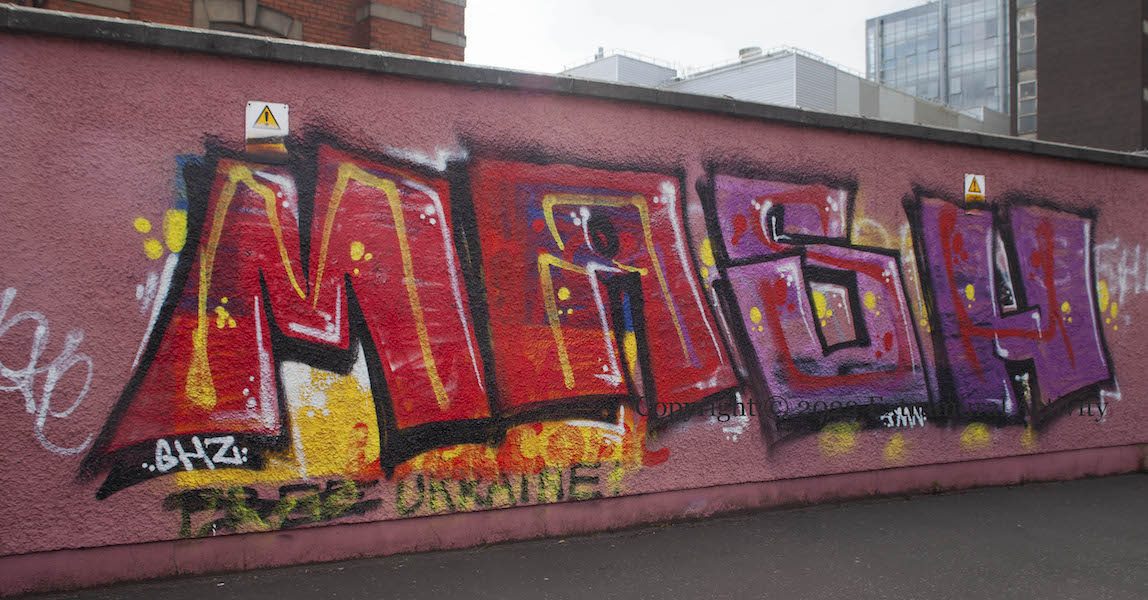
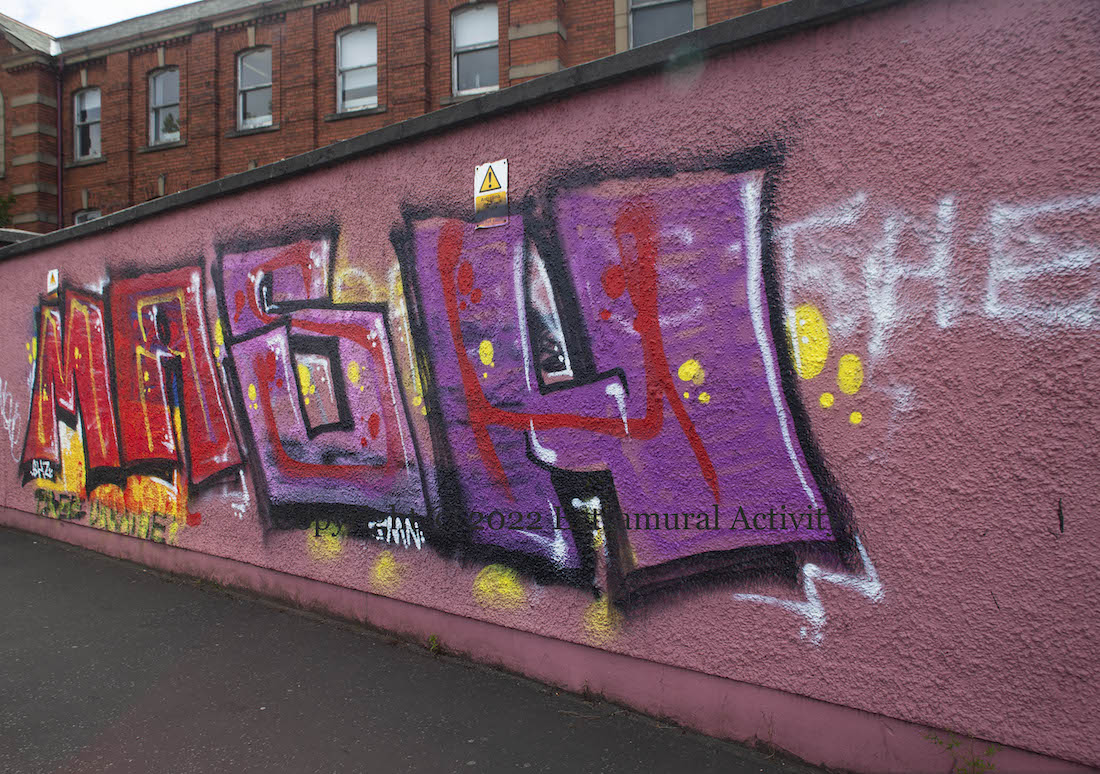
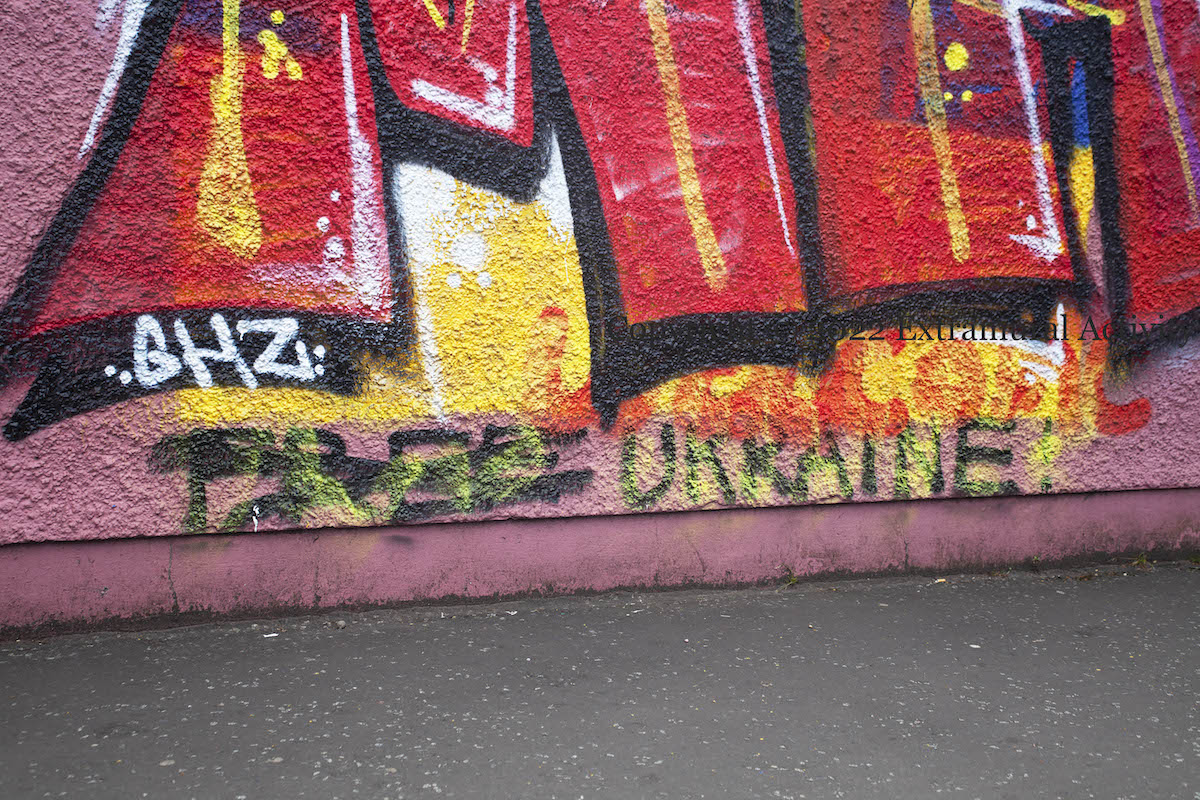
The Ireland Supports The People Of Donetsk graffiti outside the RVH has been modified, perhaps twice. Most prominent is a the writing by MASH (of TMN krew) – highly unusual appearance by a tagger on a central thoroughfare (and in west Belfast, too).
It is possible is that the “Free Ukraine” in the bottom left was an earlier response to the original graffiti. It is not clear why “Free” has been x-ed out.
Support for either Ukraine or Russia in CNR areas is non-existent, perhaps because of anti-imperial attitude applied – in equal but opposite measure – to both NATO and Russia. At the beginning of the conflict, Sinn Féin deleted thousands of comments critical of the EU’s or NATO’s stance towards Russia from its web site (Indo | Irish Times | journal.ie | see also Irish Examiner).
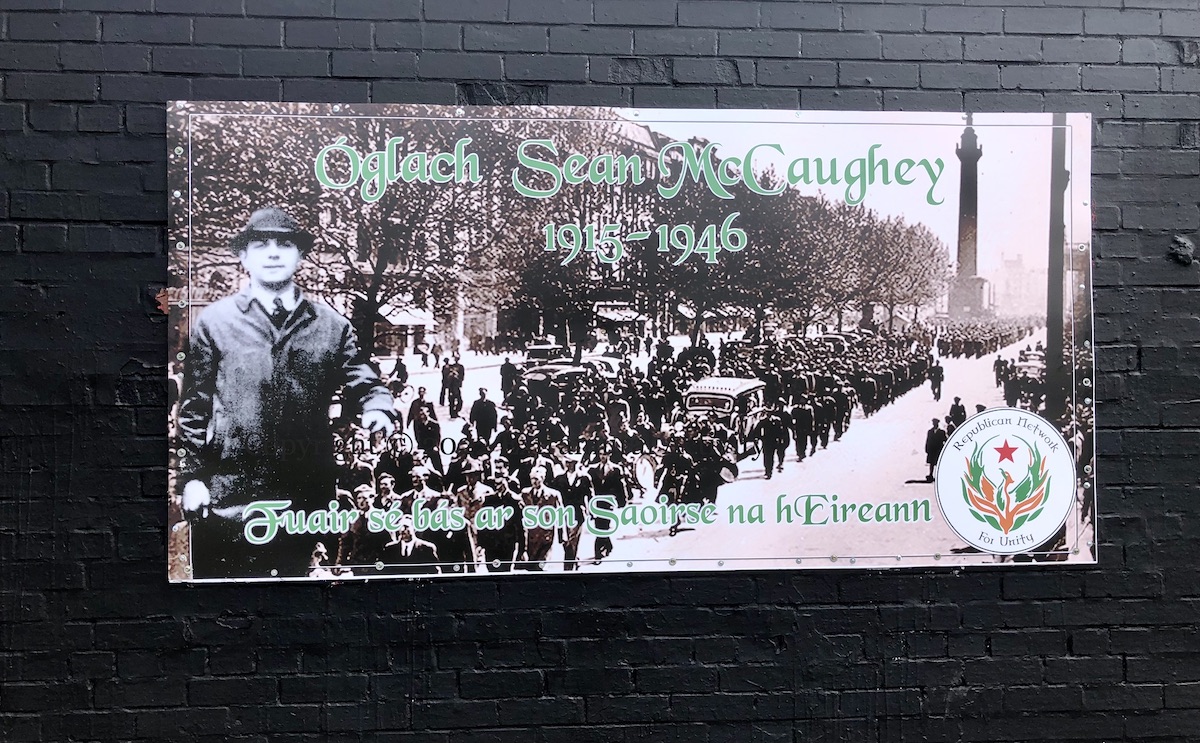
Sean McCaughey was born in Aughnacloy but the family moved to Ardoyne when he was six years old (both Duneden Park and Heathfield Road are mentioned). He was IRA acting chief of staff when he was arrested in 1941 and sentenced to life in Portlaoise. He went on the blanket and was confined to solitary. After five years he went on a hunger and thirst strike, and died after 23 days, on May 11th, 1946. The background image in the board shown above is of McCaughey’s cortège moving through Dublin before he was buried in the republican plot in Milltown cemetery (Belfast). (An Phoblacht | RN | Bobby Sands Trust | 2008 mural)
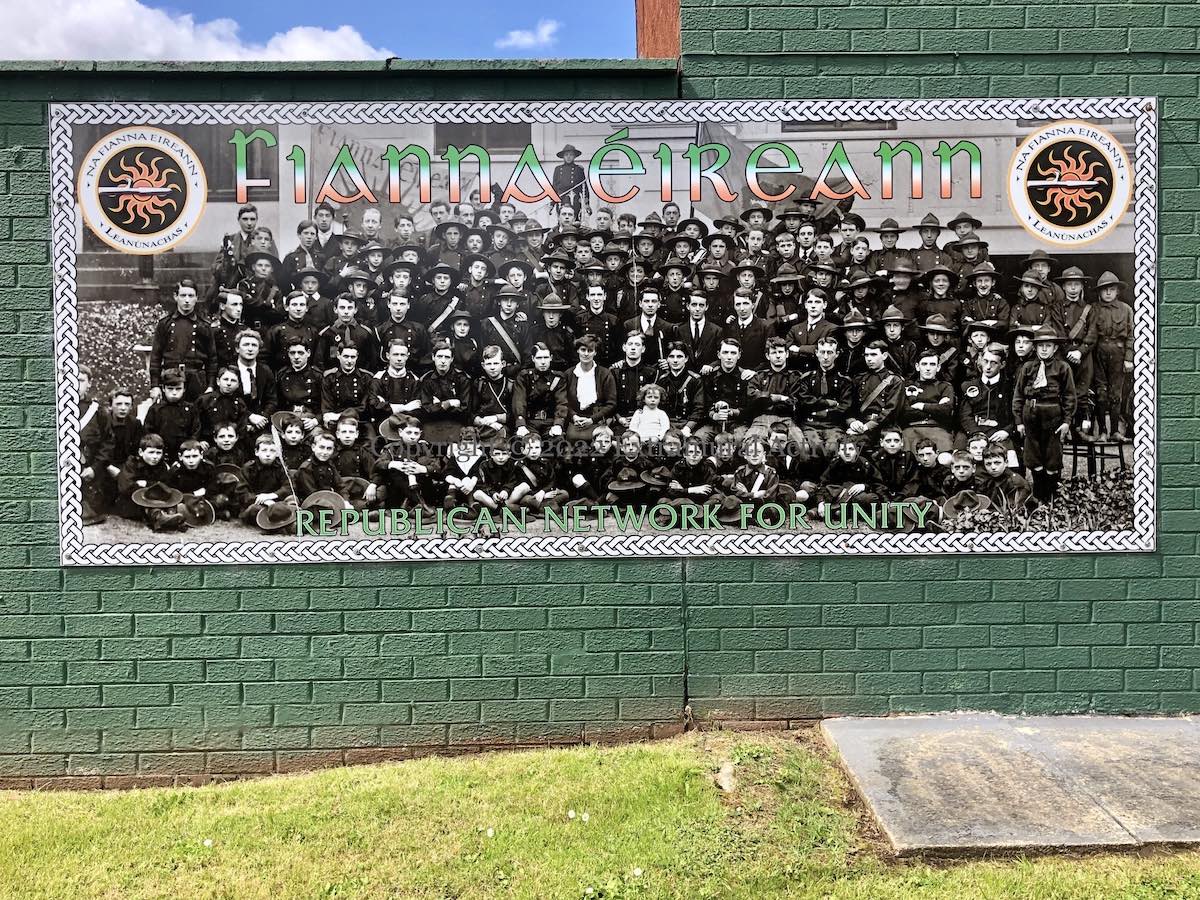
“The Continuity Fıanna”. The Irish National Boy Scouts or “junior IRA” were founded in 1909 by Bulmer Hobson and Countess Markievicz, who is at the centre of this photograph. The Fıanna followed the Provisionals in 1969 and Republican Sınn Féın (and the Continuity IRA) in 1986 (Fianna History blog | Irish Examiner), while Provisional Fianna became Ógra Shınn Féın and then Sınn Féın Republican Youth (An Sionnach Fionn).
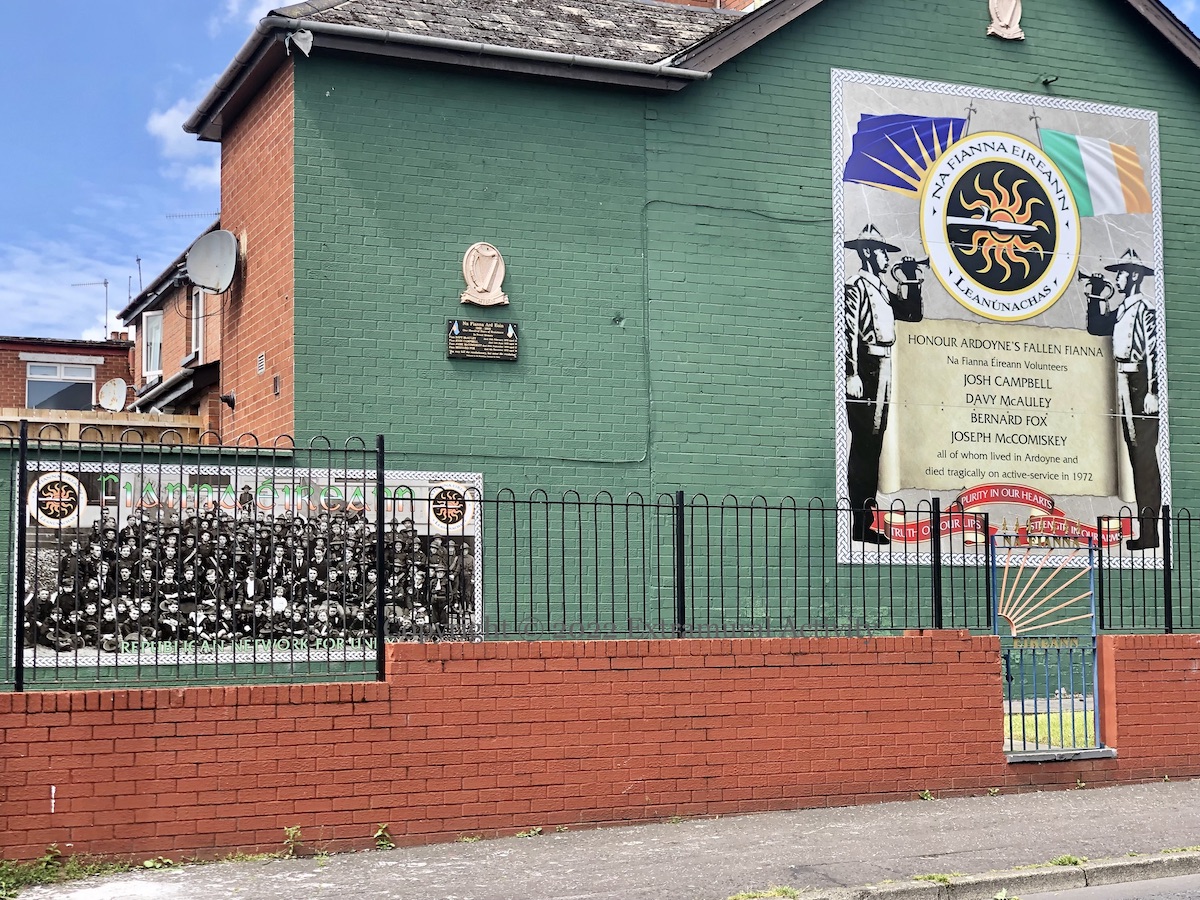
For the previous stencilling in this spot, see In The Cause Of Irish Freedom. For the plaque and old (single bugler) tarp (to Josh Campbell, Davy McAuley, Bernard Fox, and Joseph McComiskey), see Purity In Our Hearts.
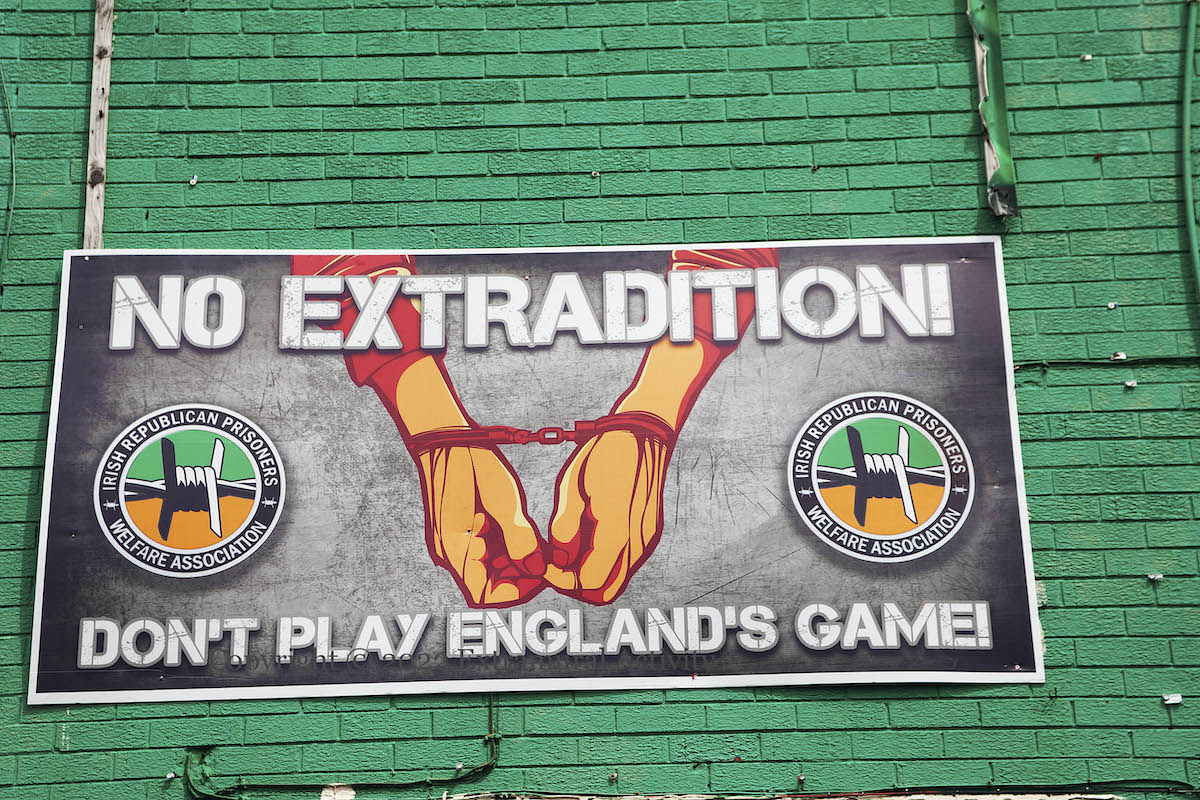
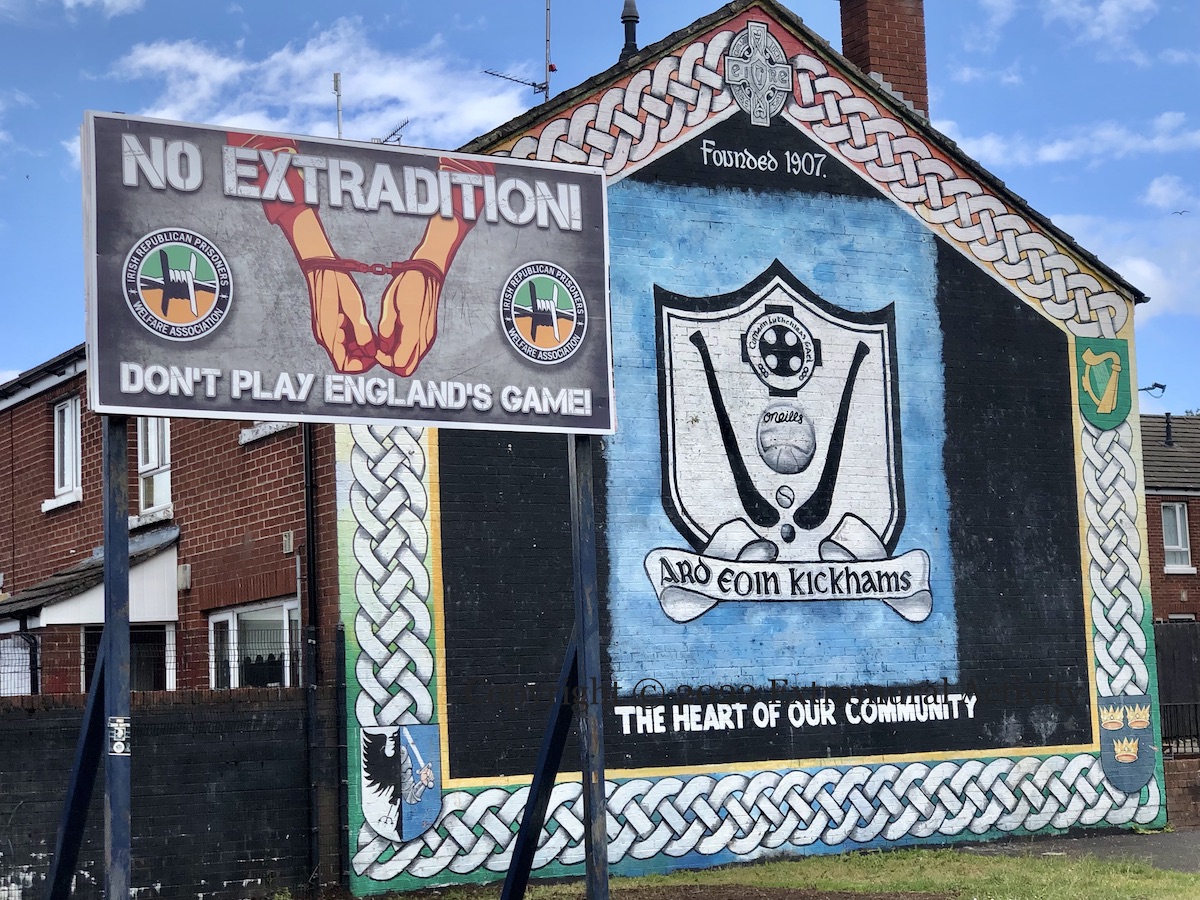
“No extradition! Don’t play England’s game” – after years of legal wrangling, Liam Campbell was extradited to Lithuania on charges of procuring weapons for the Real IRA (BBC | Saoradh). See previously: Silence Is Complicity. Cıarán Maguire was handed over to the PSNI by Gardaí in April 2021 (Donegal Daily).
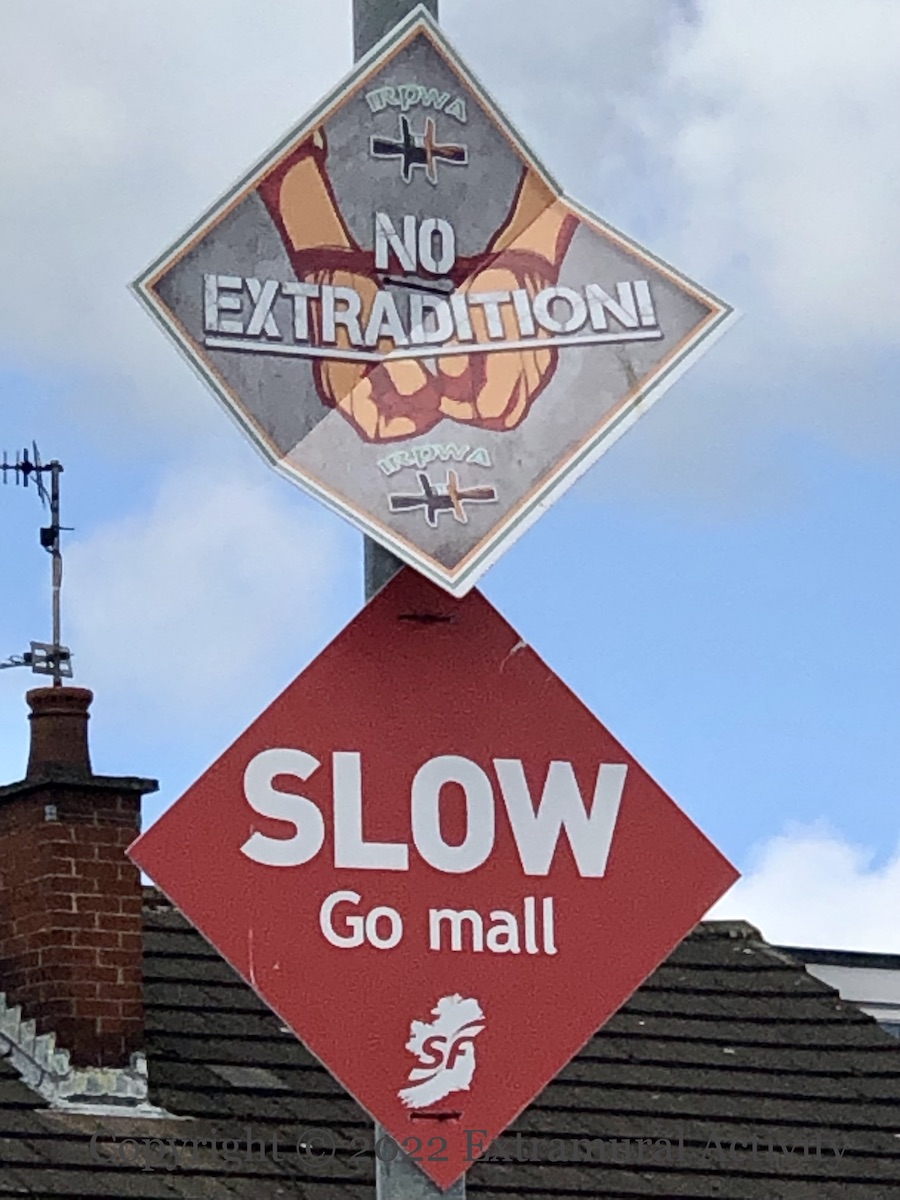
The boards shown above and at bottom are in Braemar Street (Falls) and Brompton Park (Ardoyne). The small diamond version (also in Ardoyne) is mounted above one of the “Slow – Go mall” signs from Sınn Féın that were described as “intimidatory” by local DUP Assembly member and are perhaps also illegal under the Roads Order (NI) 1993 (Belfast Live).
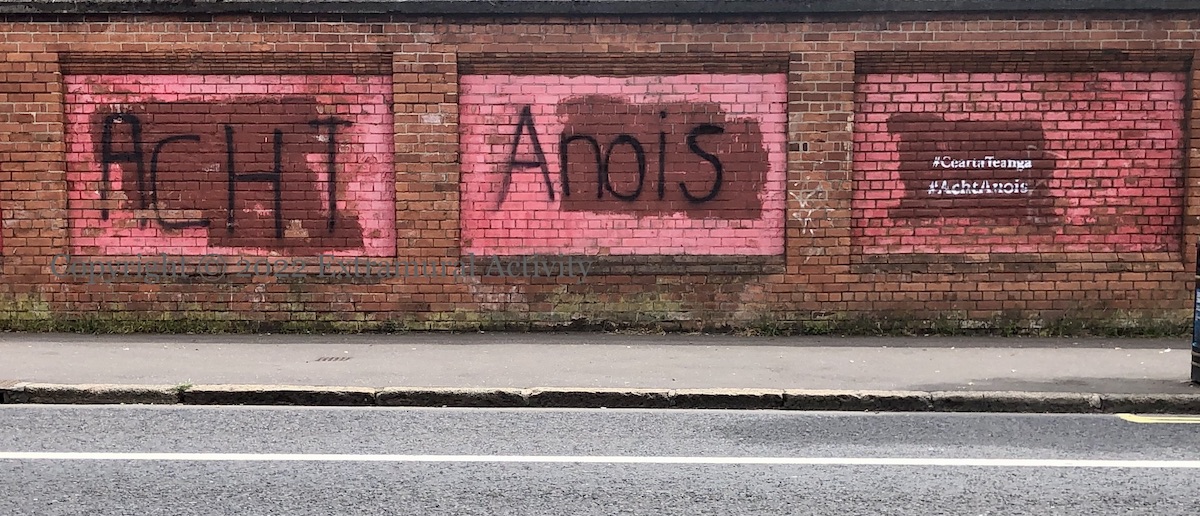
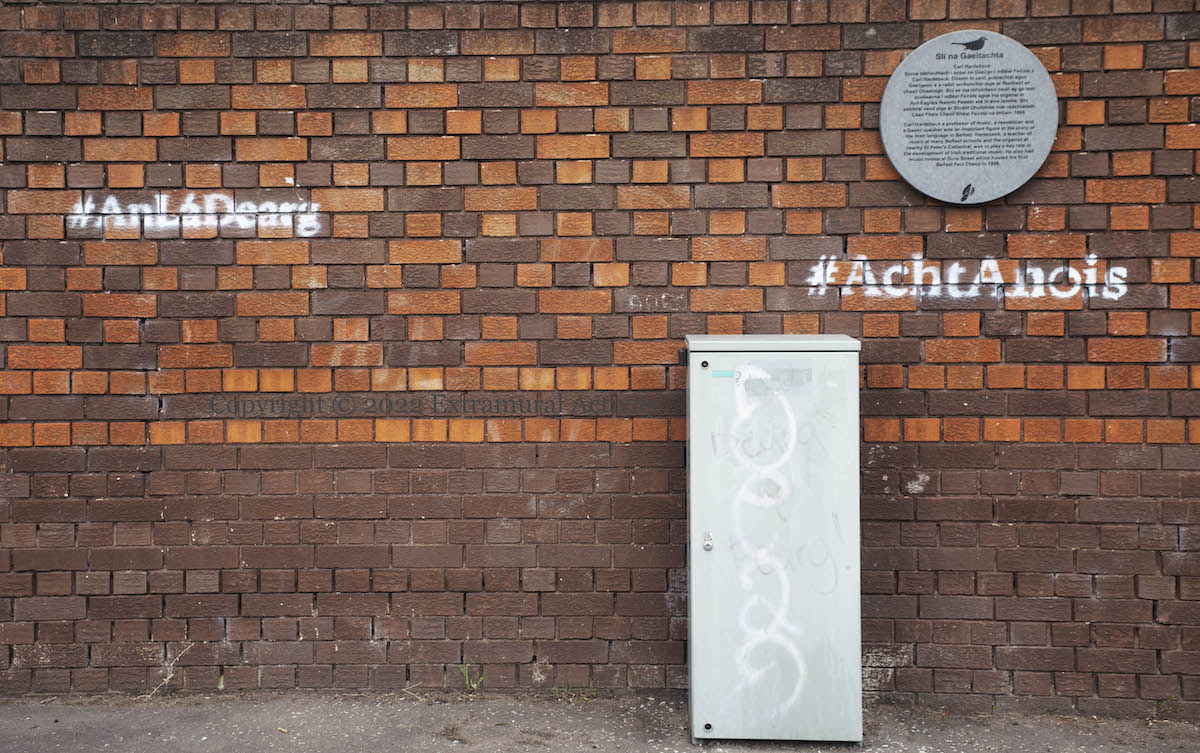
The Identity And Language bill is making its way through the House Of Lords. Here is the web page for the stages of the processes. The “report” stage – when it is open to the whole body for amendment – begins on July 6th; the bill drew criticism from DUP peers during the second reading (BelTel). The graffiti and stencil shown above in support of an Act is on the Falls Road.
There’s no sectarian muraling yet concerning the Russian invasion of Ukraine, as distinct from pieces in shared spaces by street artists – see Ukraine Has Suffered Enough by FGB | Take These Seeds by emic | Нет войне! by Leo Boyd.
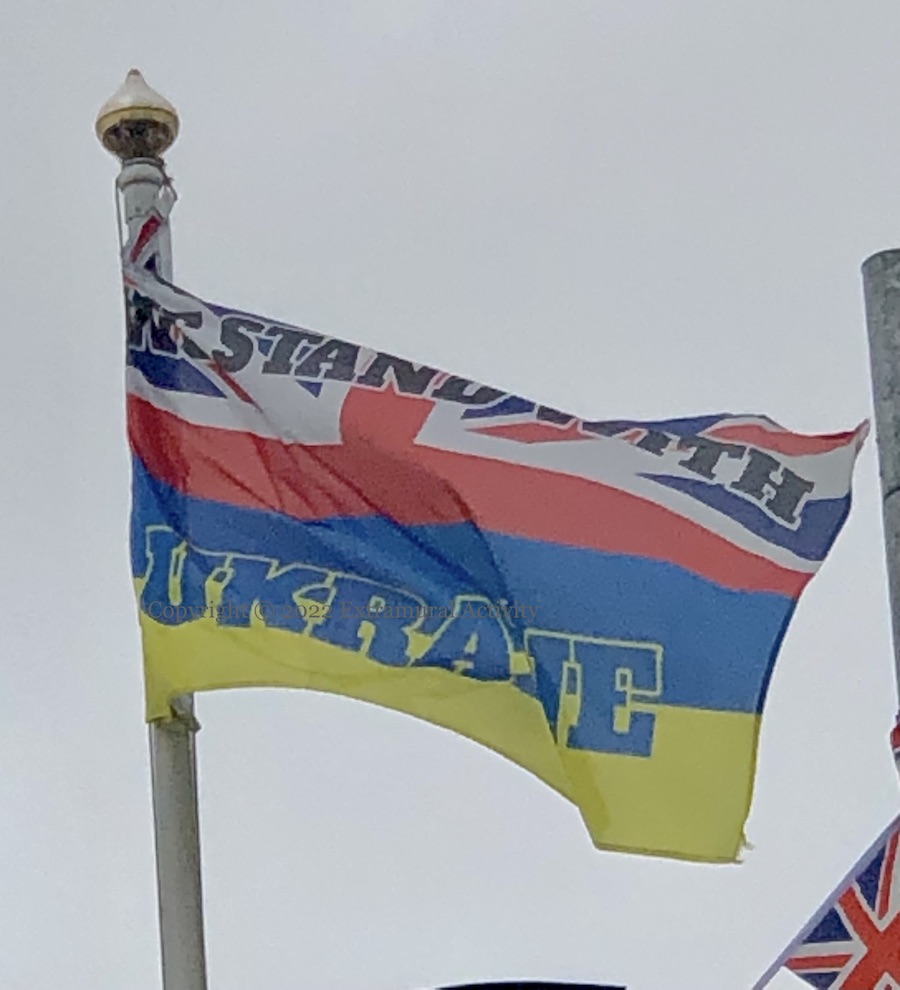
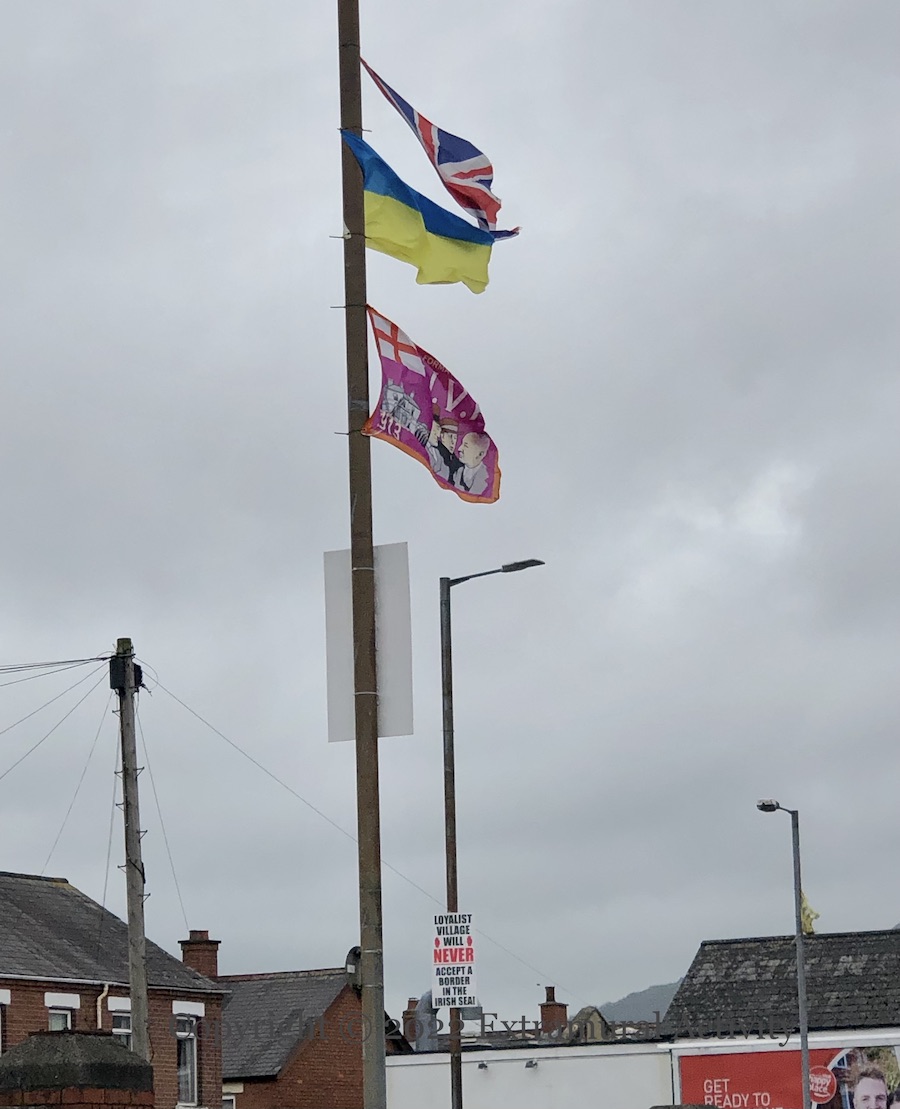
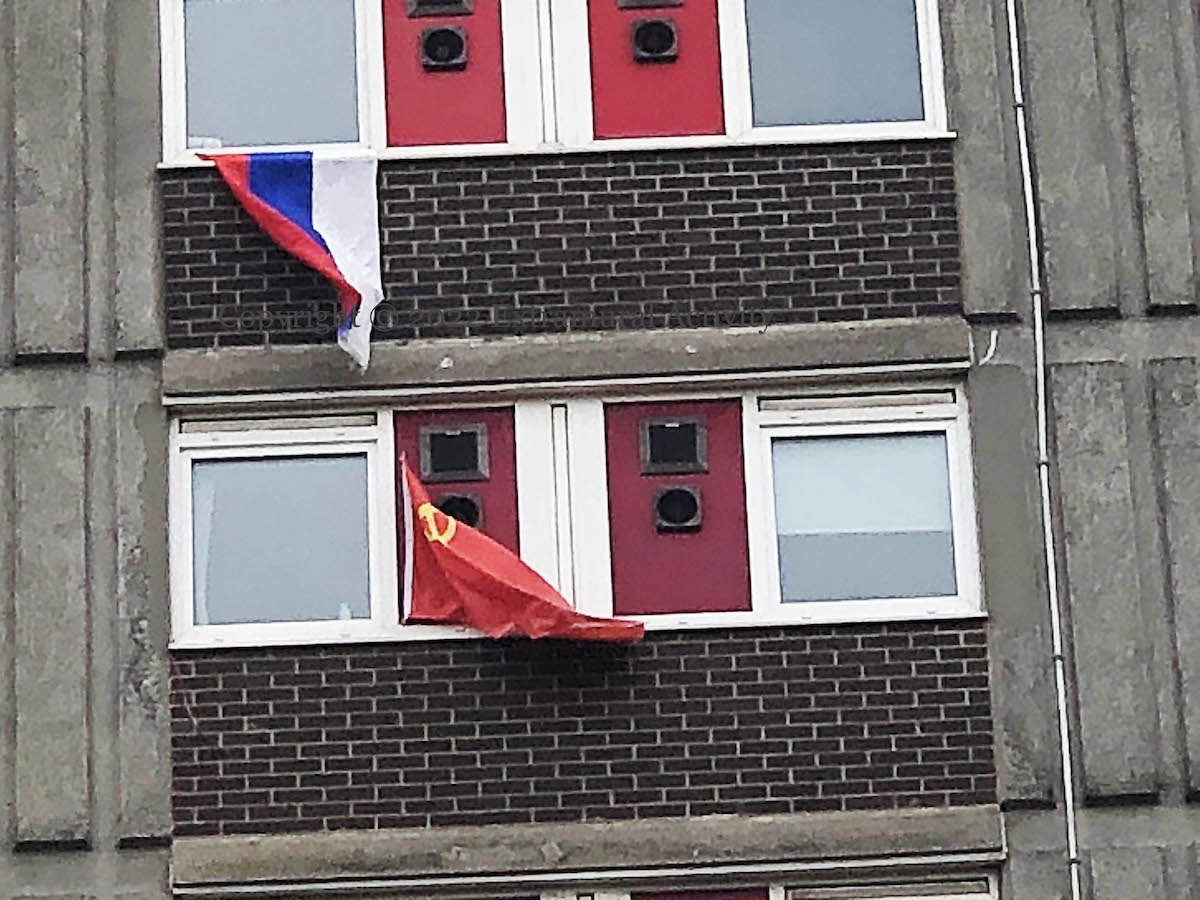
This entry shows a small sample of pro-Ukraine flags in PUL areas, including the Shankill (above, over the Bayardo Bombing memorial; something similar was seen in Ballycarry) and (below) the Village, and on the CNR side, a Russian and a Soviet flag flying from Divis tower (final image).
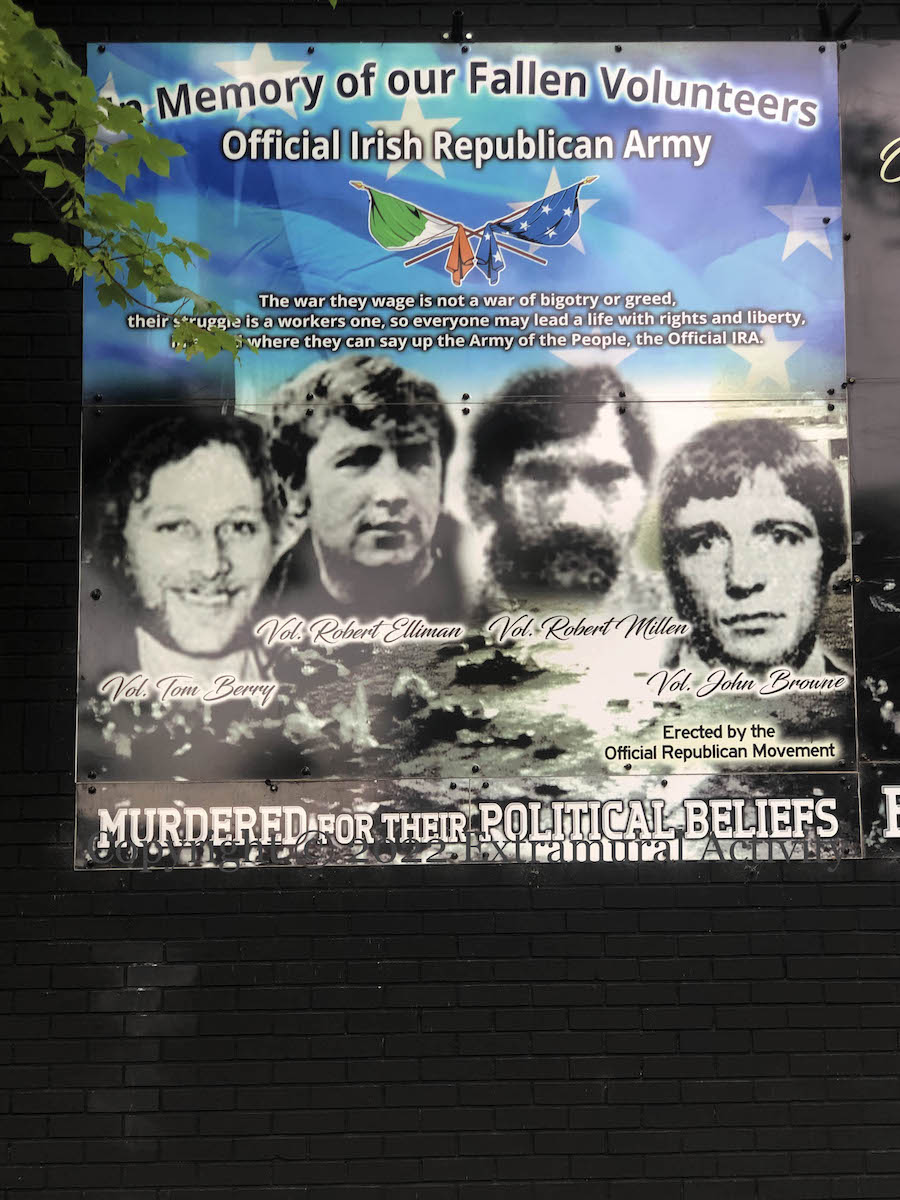
“Murdered for their political beliefs: Tom Berry, Robert Elliman, Robert Millen, John Browne”. All four had a connection Markets or Ormeau area of south Belfast. Millen, from the Ormeau area, was shot in 1973 by the UVF; he played on the same soccer team (Bankmore Star) as Thomas Berry, who was shot in a Short Strand GAA club; Elliman was shot in a Markets pub; John Brown (without the “e”) was shot in his Cooke Street home in front of his family. The first three were all Protestants; the latter three were among 11 people who died in the 1975 feud between the Officials and the Provisionals. (Lost Lives)
“The war they wage is not a war of bigotry or greed, their struggle is a workers one, so everyone may lead a life with rights and liberty, in a land where they can say “Up the Army of the people, the Official IRA”.” “Erected by the Official Republican Movement.”
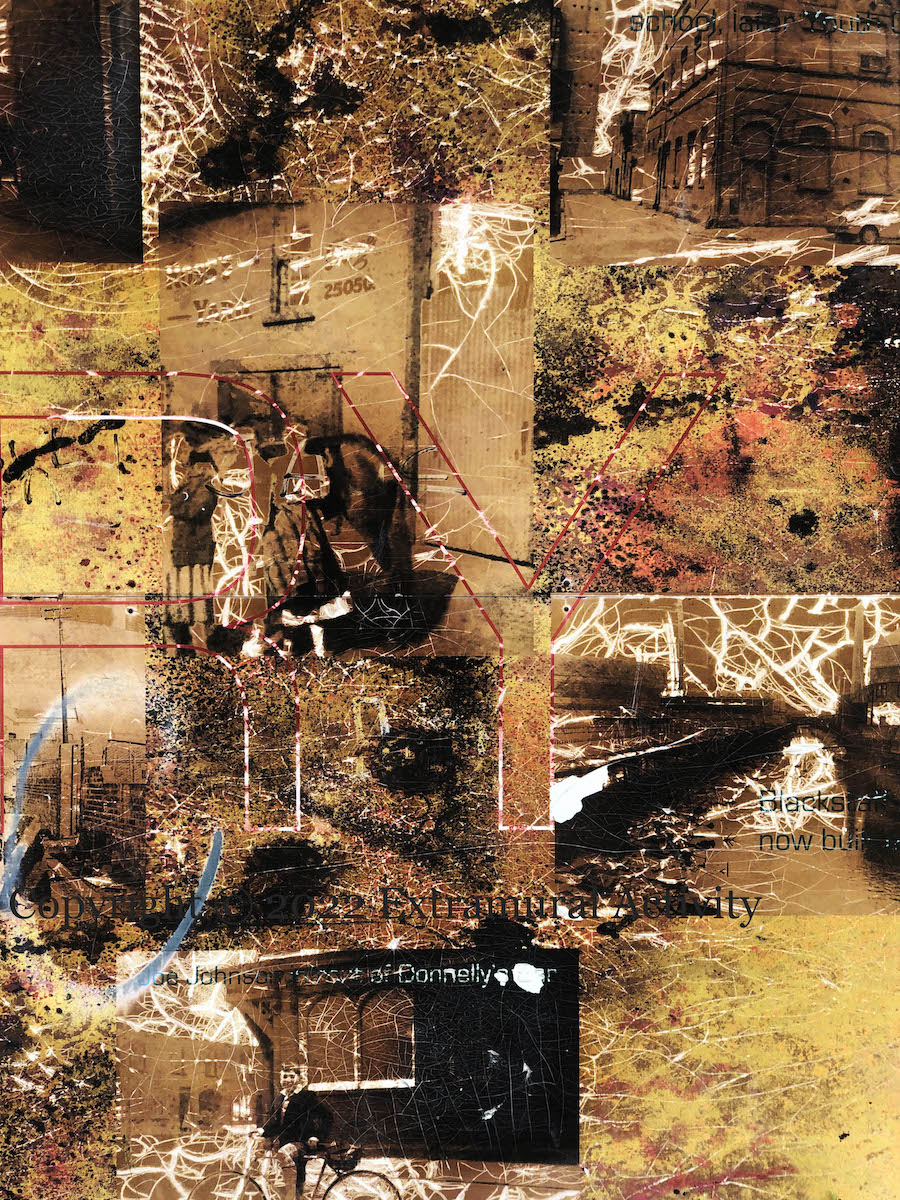
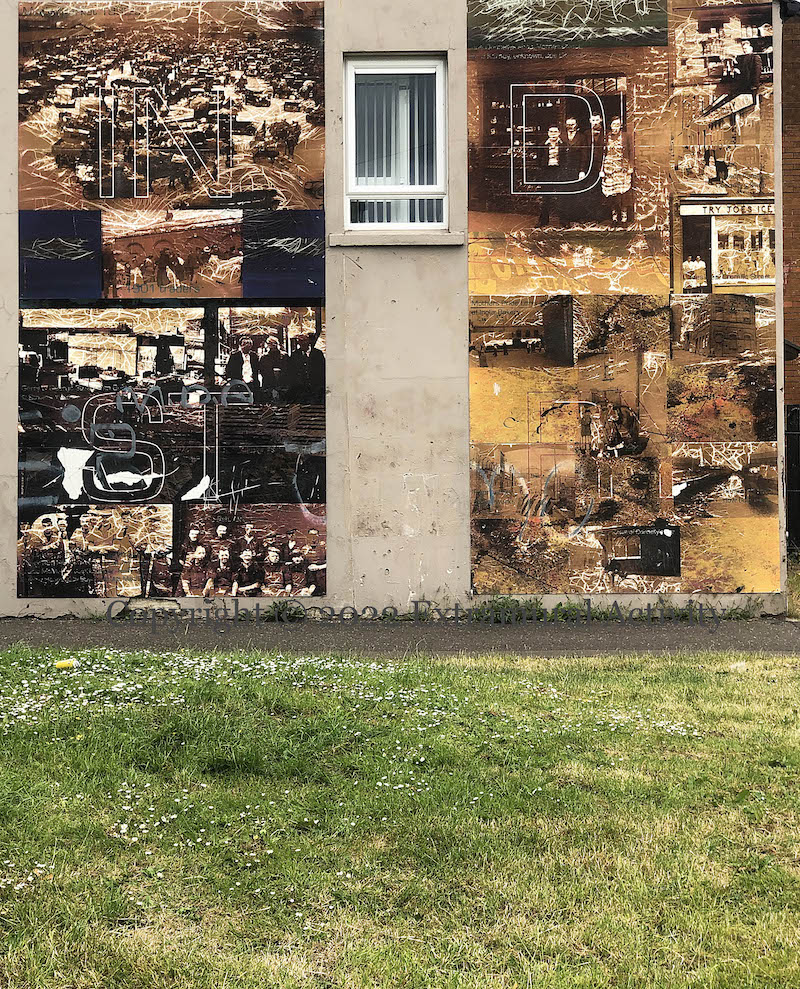
Artist Raymond Henshaw produced a series of Markets-related boards in 2008-2009 with support from the Arts Council and despite being printed on laminates they are not indestructible; there is crazing – as well as human-caused damage – on some of them, the worst of which is the ‘Industry’ board in Upper Stanfield Street.