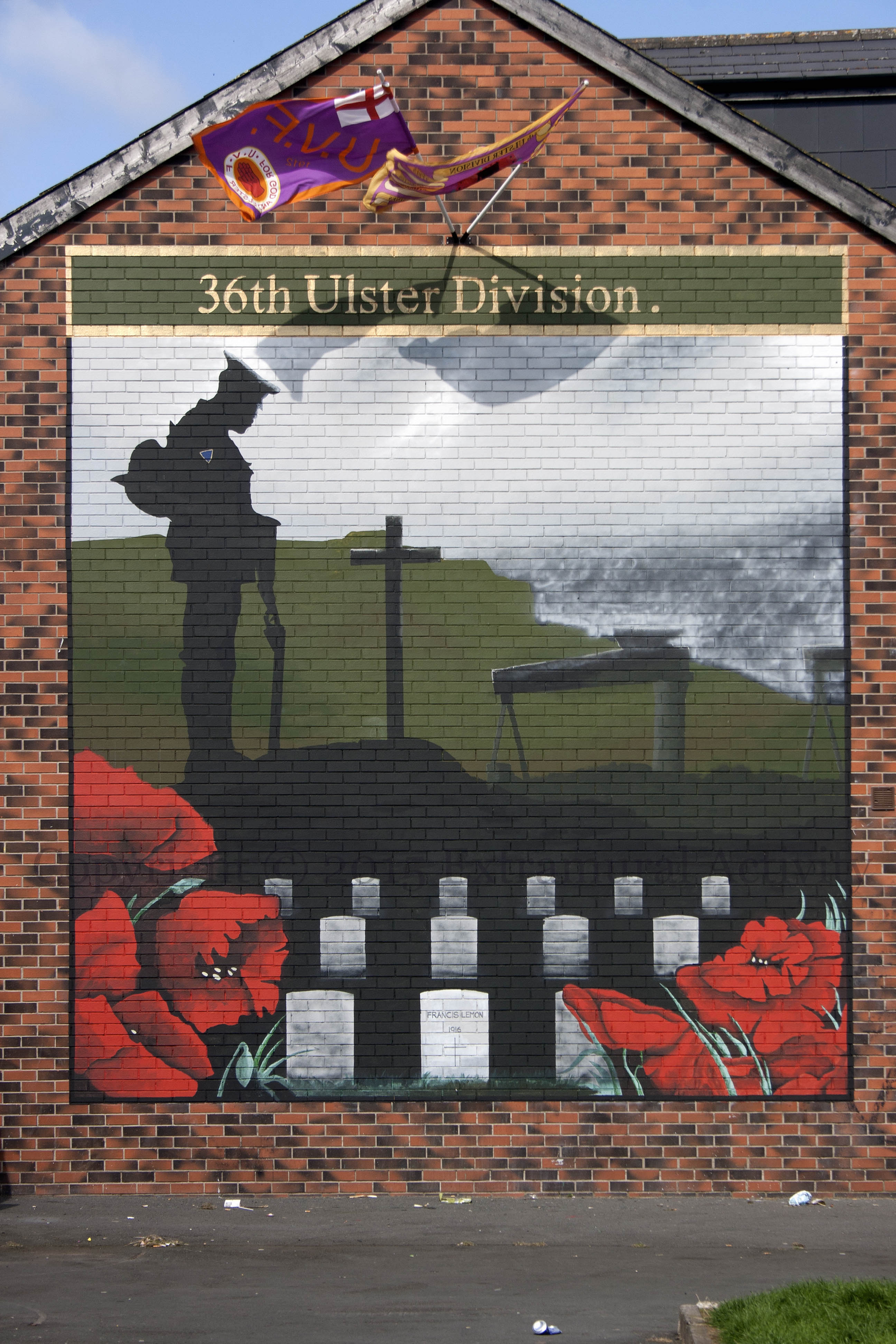
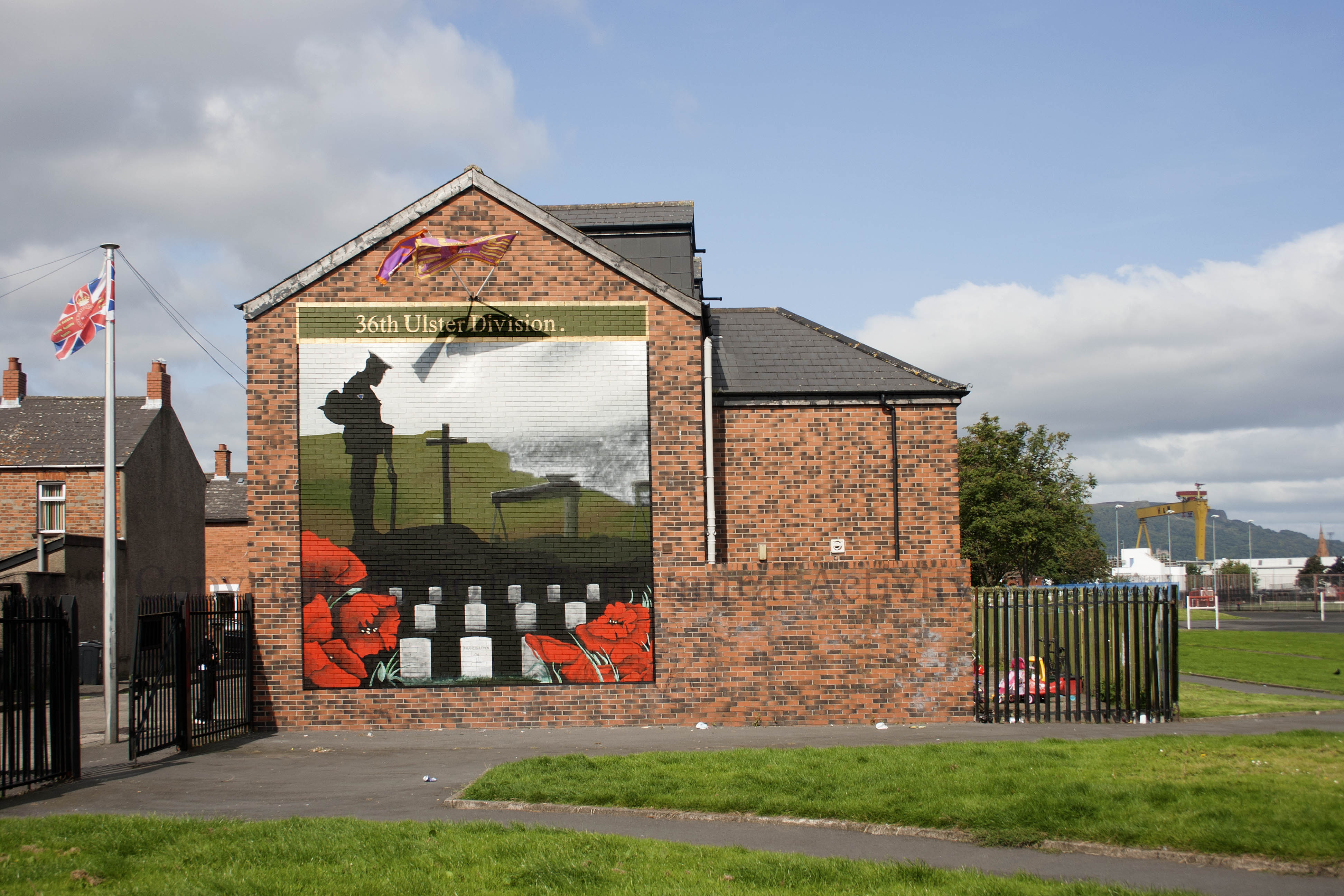
Samson and Goliath, the cranes of the Harland & Wolff shipyard in east Belfast, stand alongside crosses on the burial grounds of the 36th (Ulster) Division in Flanders (though Cave Hill might be in the background) in this Flora Street mural in east Belfast. UVF flags fly overhead. One of the cranes can be seen in the background of the wide shot, below.
On the headstone in the front-middle is written “Francis Lemon 1916”, perhaps this Francis Lemon, from Ballymacarrett, who died on July 2nd: FindAGrave | IWM.
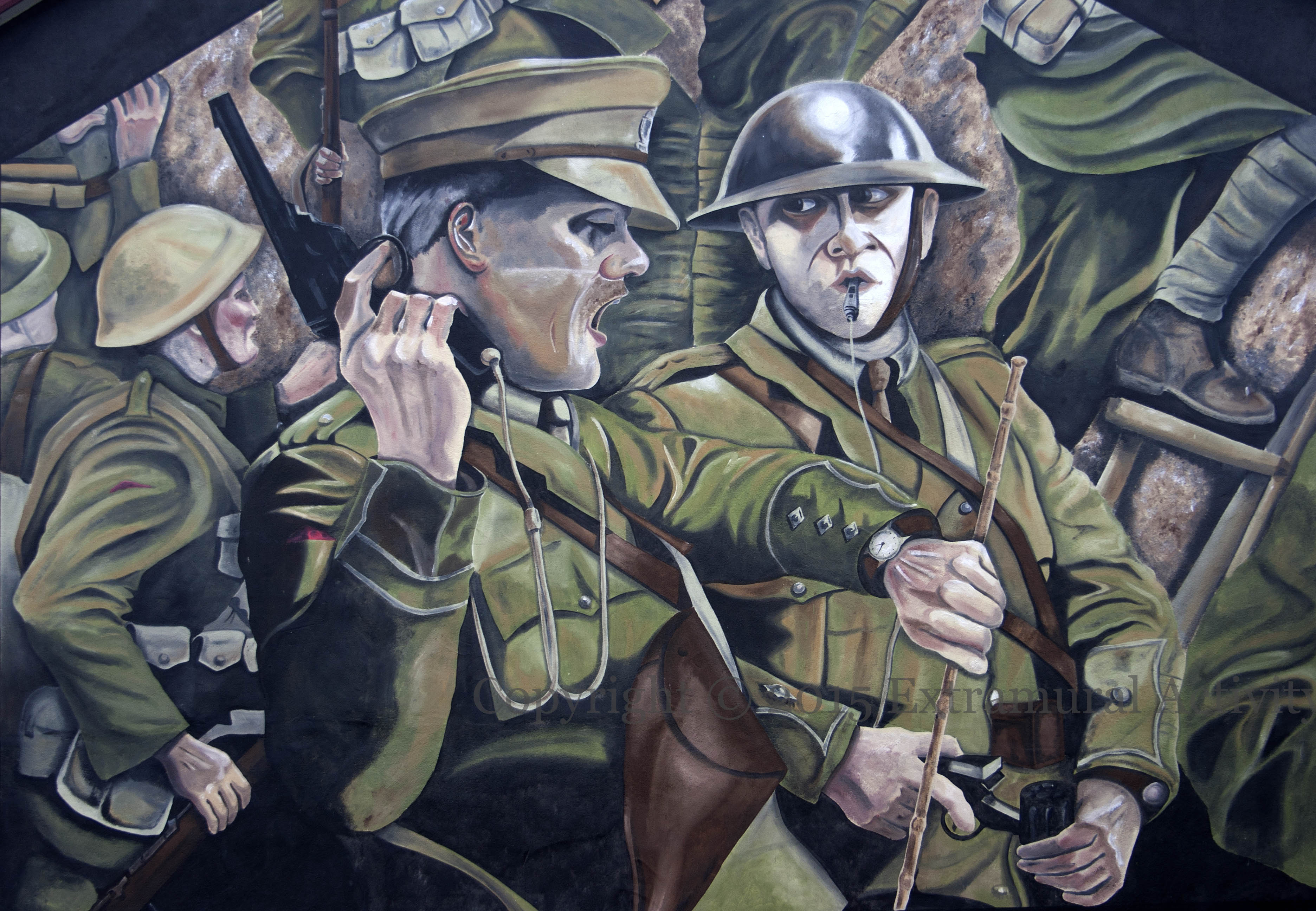
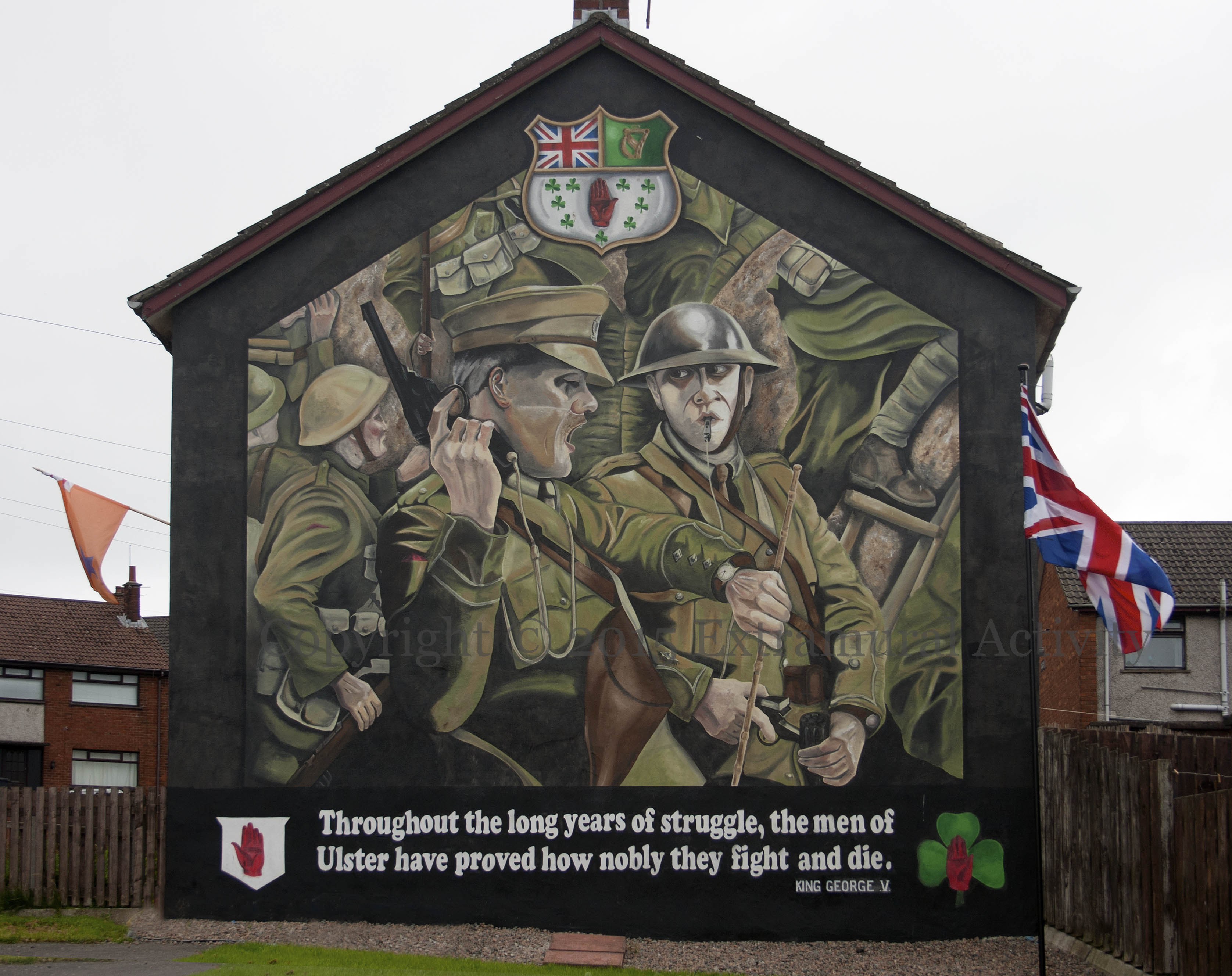
Soldiers from the 36th (Ulster) division in the trenches of WWI prepare to go ‘over the top’. One waits for the precise moment according to his watch, ready to fire a shot, while the other prepares to blow a whistle and launch a flare. “‘Throughout the long years of struggle, the men of Ulster have proved how nobly they fight and die.’ King George V”. The quote also appears on the Ulster Tower in Thiepval (Ulster Tower) and on the Cenotaph in Belfast (WP).
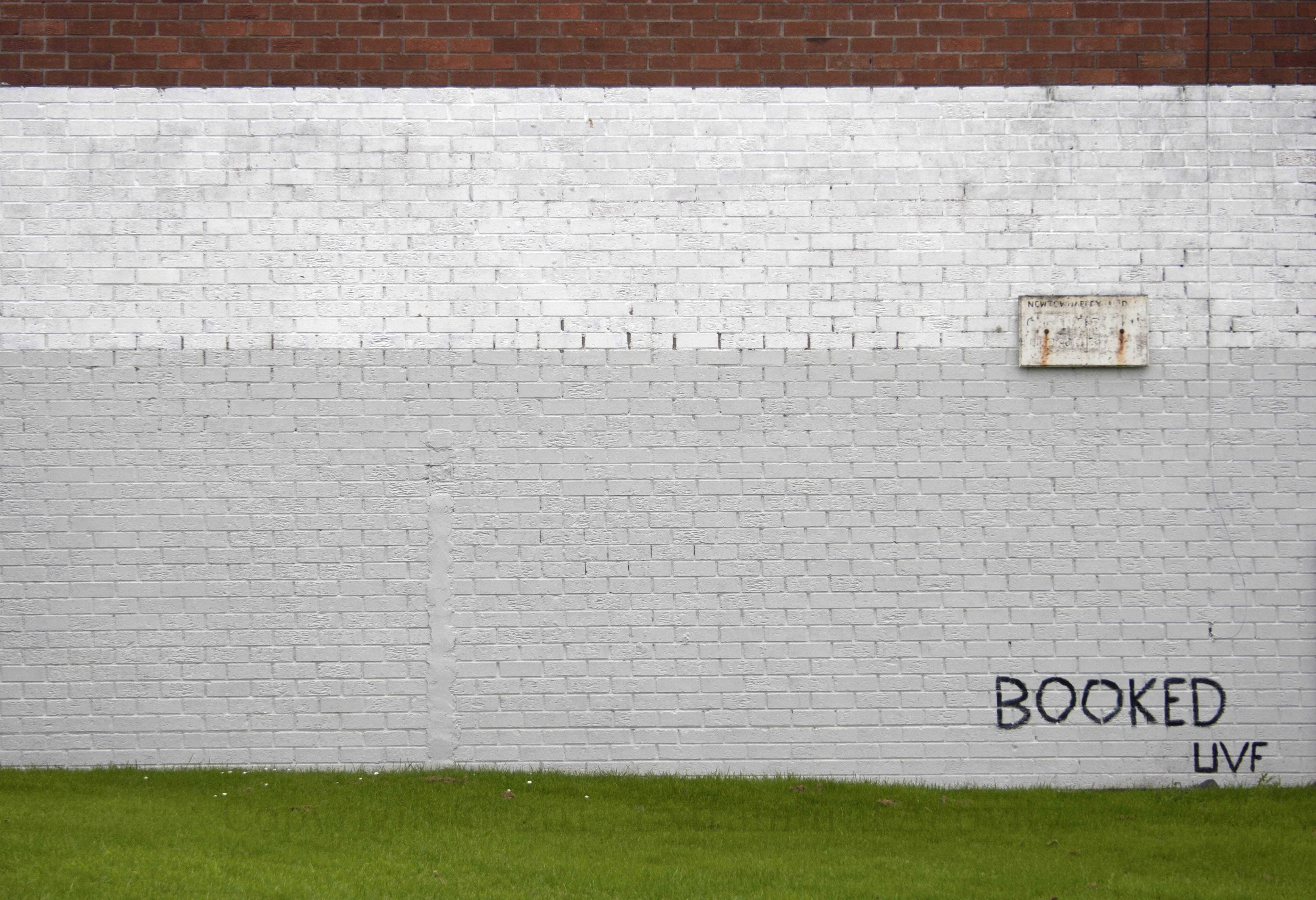
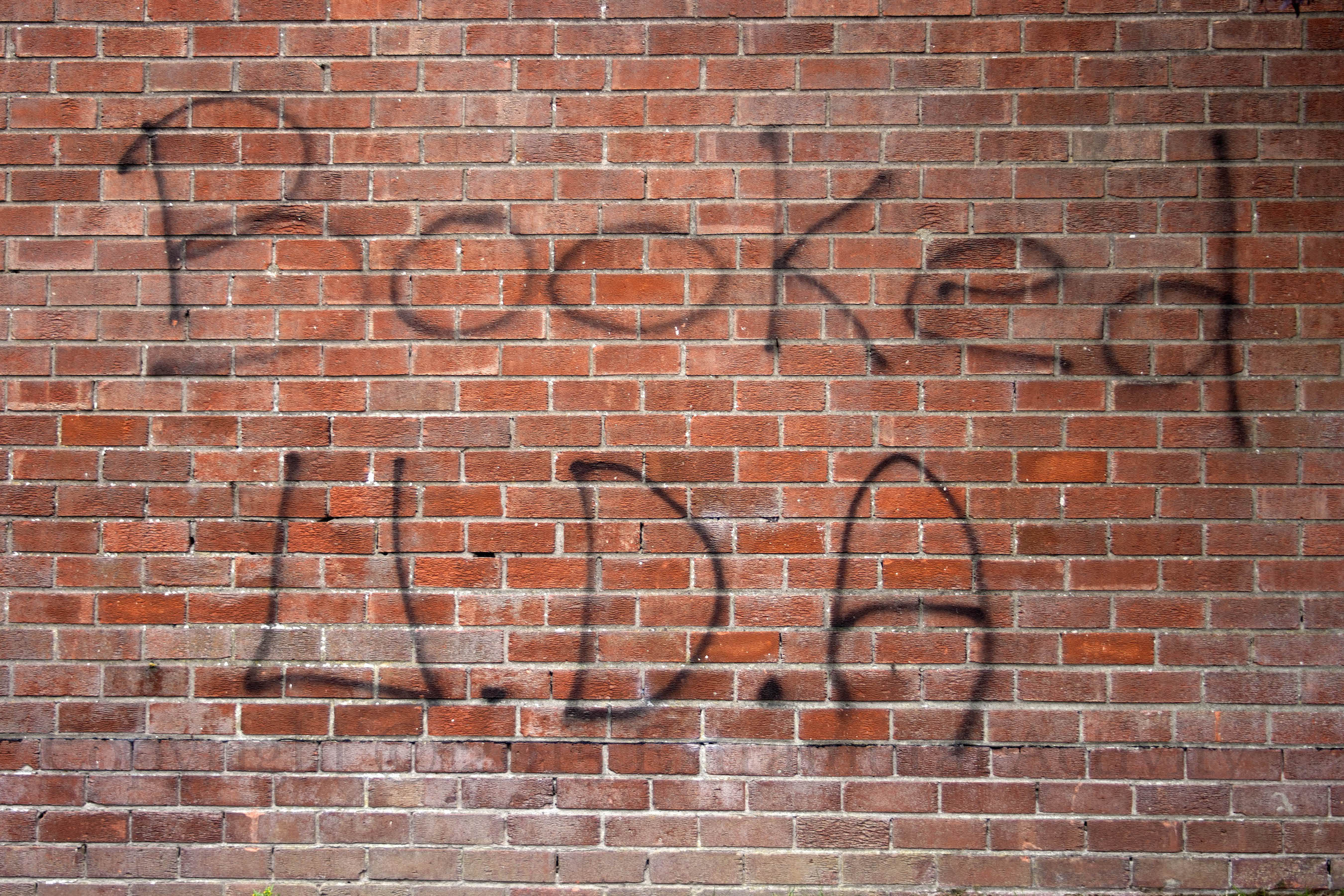
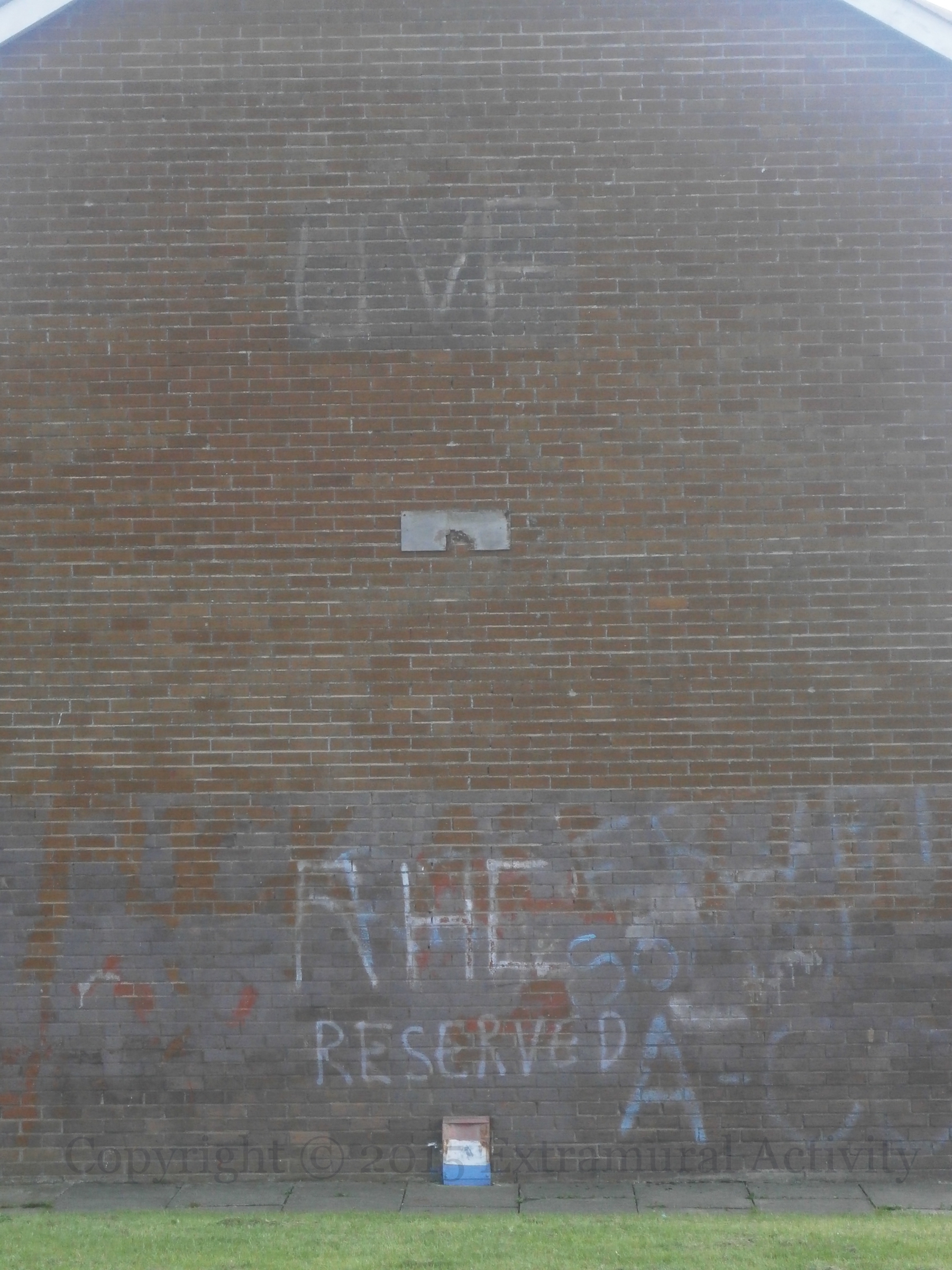
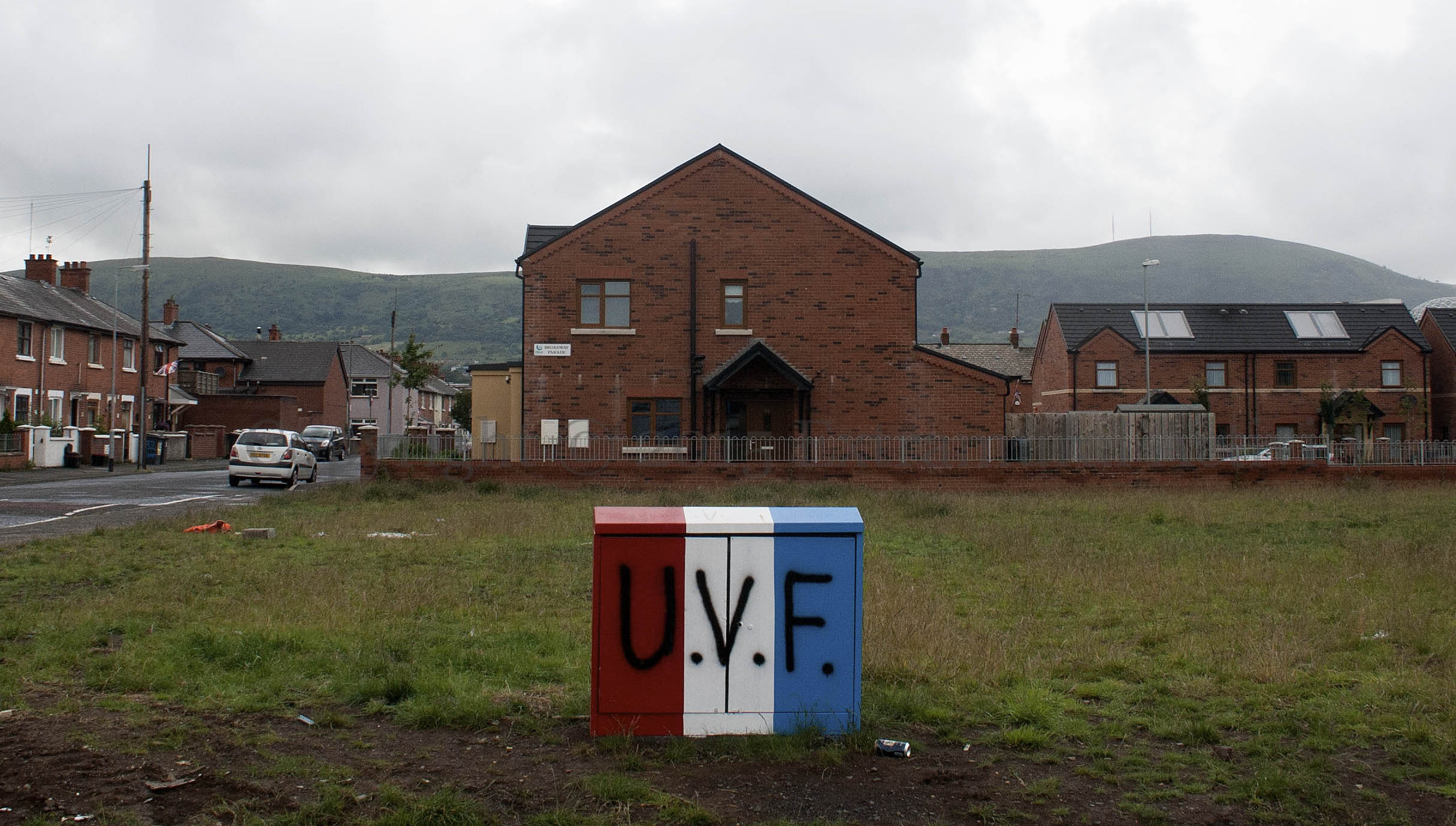
Good walls for murals can be hard to come by. Here are three ‘reservations’, two from Newtownabbey and one from Bangor, claiming walls for the UVF, UDA, and RHC, respectively.
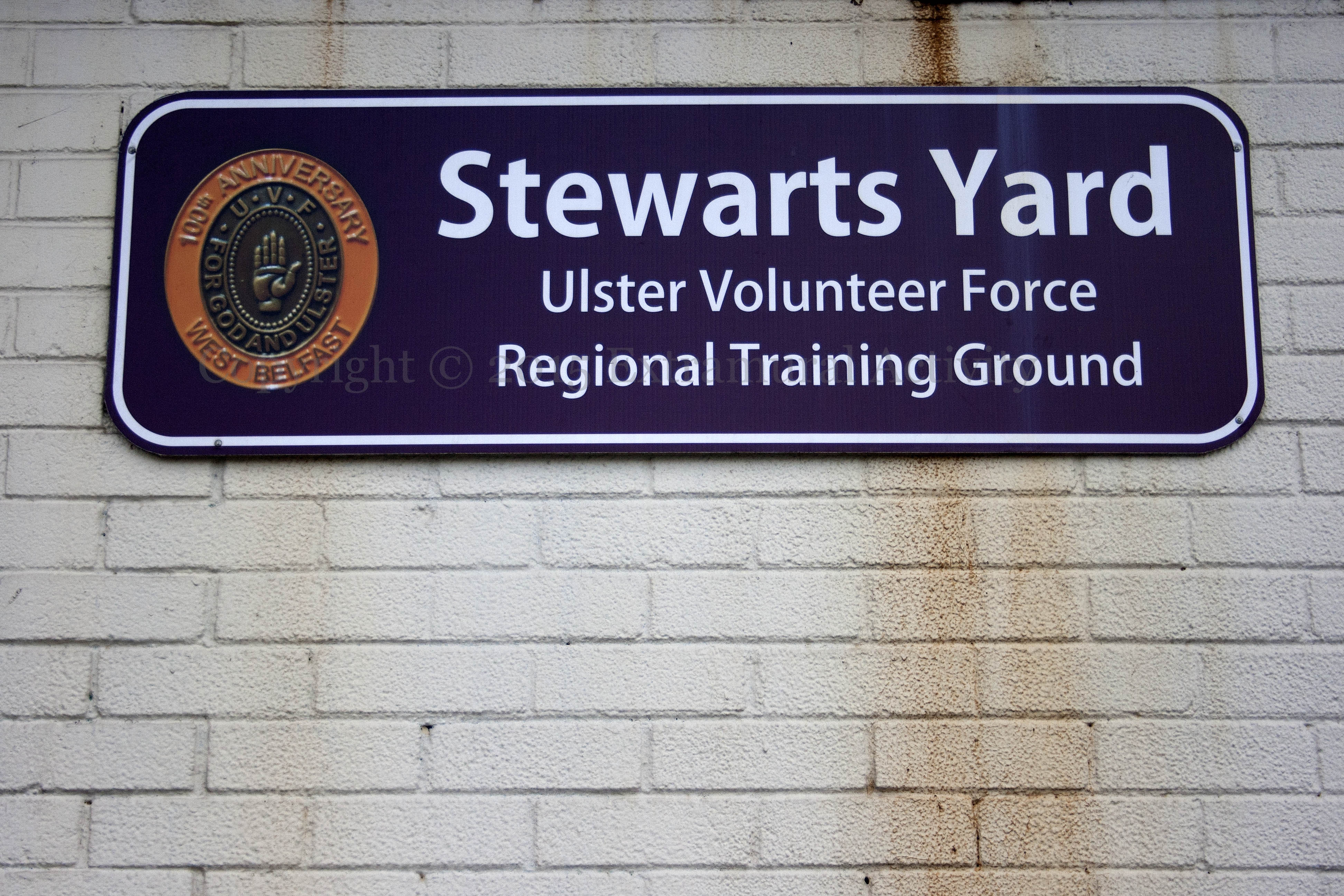
As the sign says, the area of what is now an Iceland supermarket on the Shankill Road was, at the time of World War I, a training ground for the Ulster Volunteers. The sign was erected to commemorate the 100th anniversary of the force, which then became the Ulster Volunteer Force which served in the war. “On the first day of enlistment for the West Belfast UVF, volunteers assembled at Stewart’s Yard in the Shankill Road. They were addressed by Colonel T. E. Hickman, the Conservative MP for Wolverhampton and a senior UVF figure who had become the Recruiting Officer for the whole of Ulster. Joining Hickman were James Craig MP, plus Stewart Blacker Quin, who was the Unionist candidate for West Belfast and the commander of the 1st Battalion West Belfast UVF.” (Richard S. Grayson, Belfast Boys: How Unionists and Nationalists Fought and Died Together in First World War, p. 12) “The day following the opening of enlistment for the Division, 360 men assembled at the same yard, where after being presented with a box of cigarettes, they marched to the railway station to board trains for Donard Camp near Newcastle. These men became the corps of the 9th Battalion Royal Irish Rifles.” (Bygone Days)
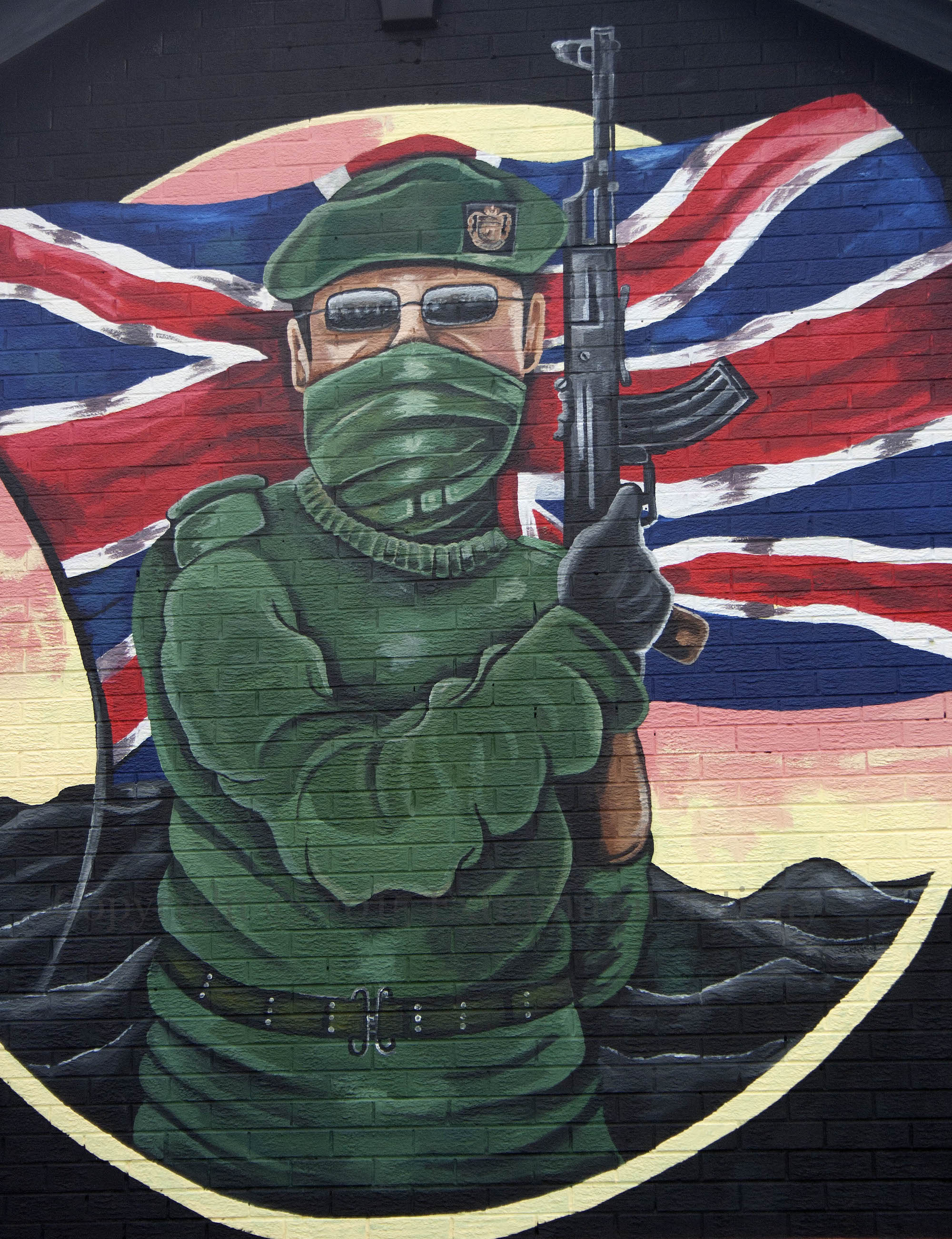
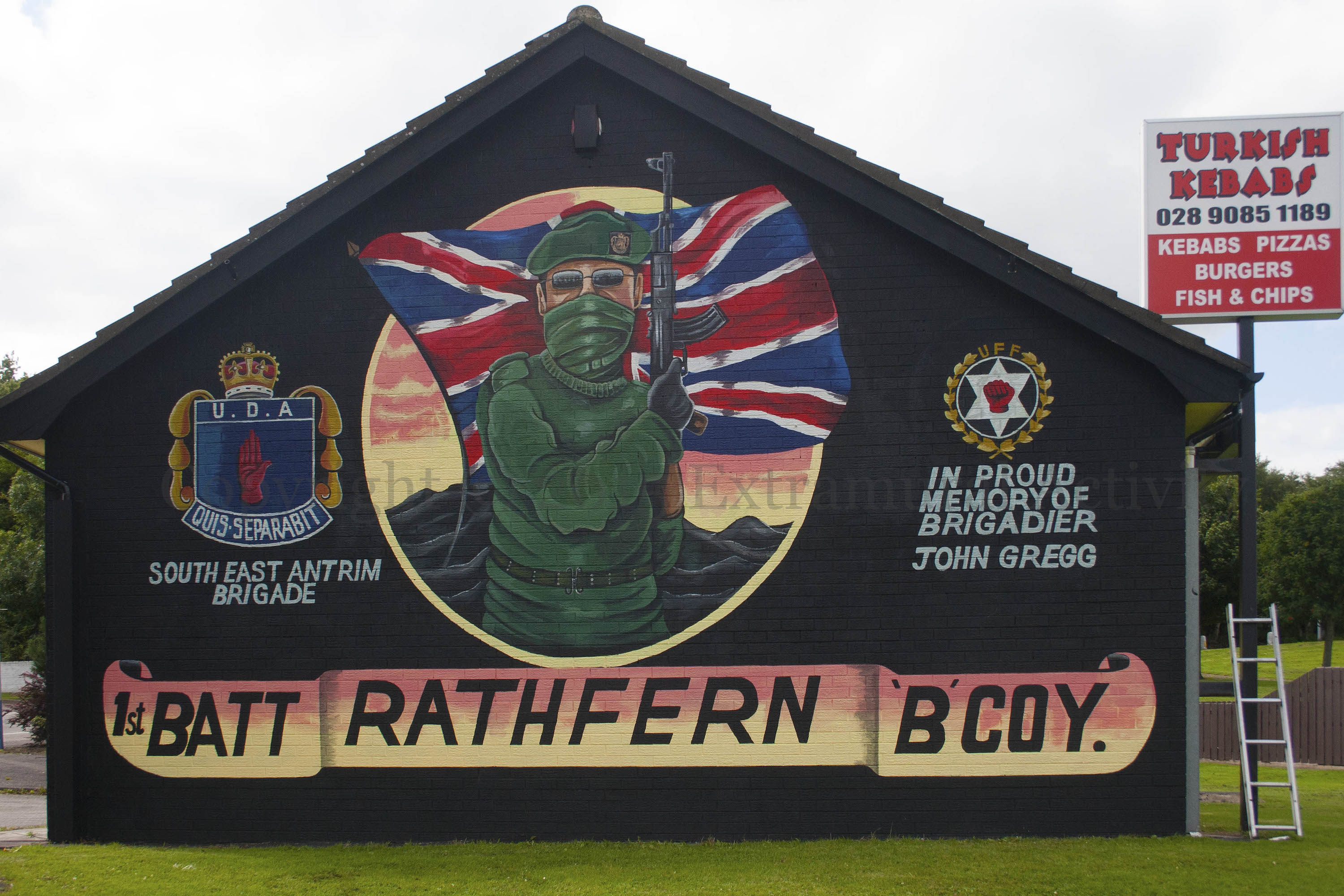
The images above and below show a new UDA mural in memory of John Gregg, “The Reaper”, who waged a campaign of terror against Catholics in south-east Antrim and was reputedly associated with British neo-Nazi groups. Gregg was gunned down in 2003, while returning from a Rangers match, as part of the power struggle with Johnny Adair. Watta-Chip (from the previous mural) has been replaced by Turkish Kebabs (Fb).
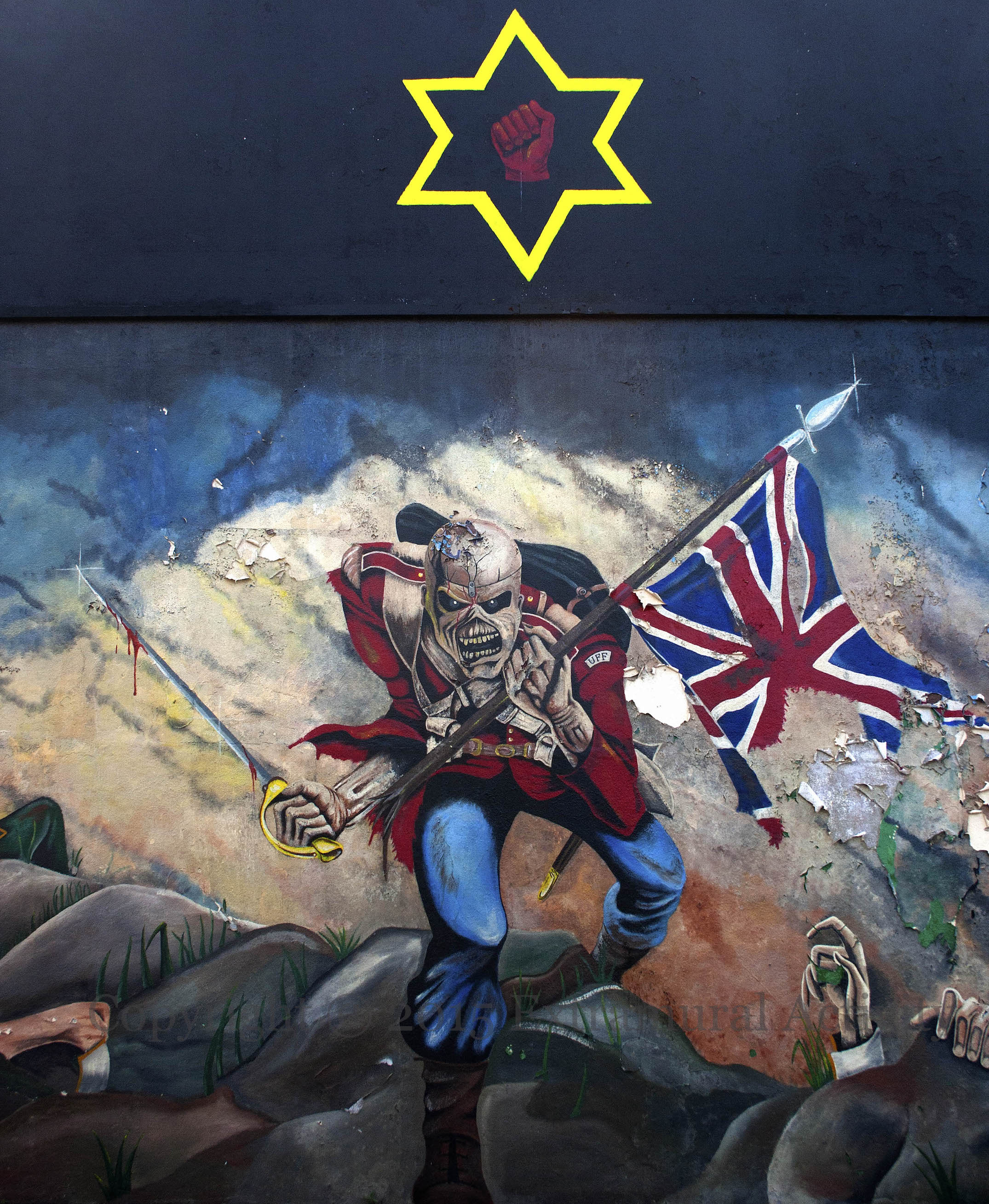
Here is an update to a mural featured previously in Londonderry’s Waterside: The Trooper. British WWI Field-Marshall Douglas Haig’s “backs to the wall” quote originally stood above the image of Iron Maiden’s “Eddie” but this was replaced (when the mural was repainted in 2013 – see M10234) by the red fist and six-pointed star of the UFF on a black border.
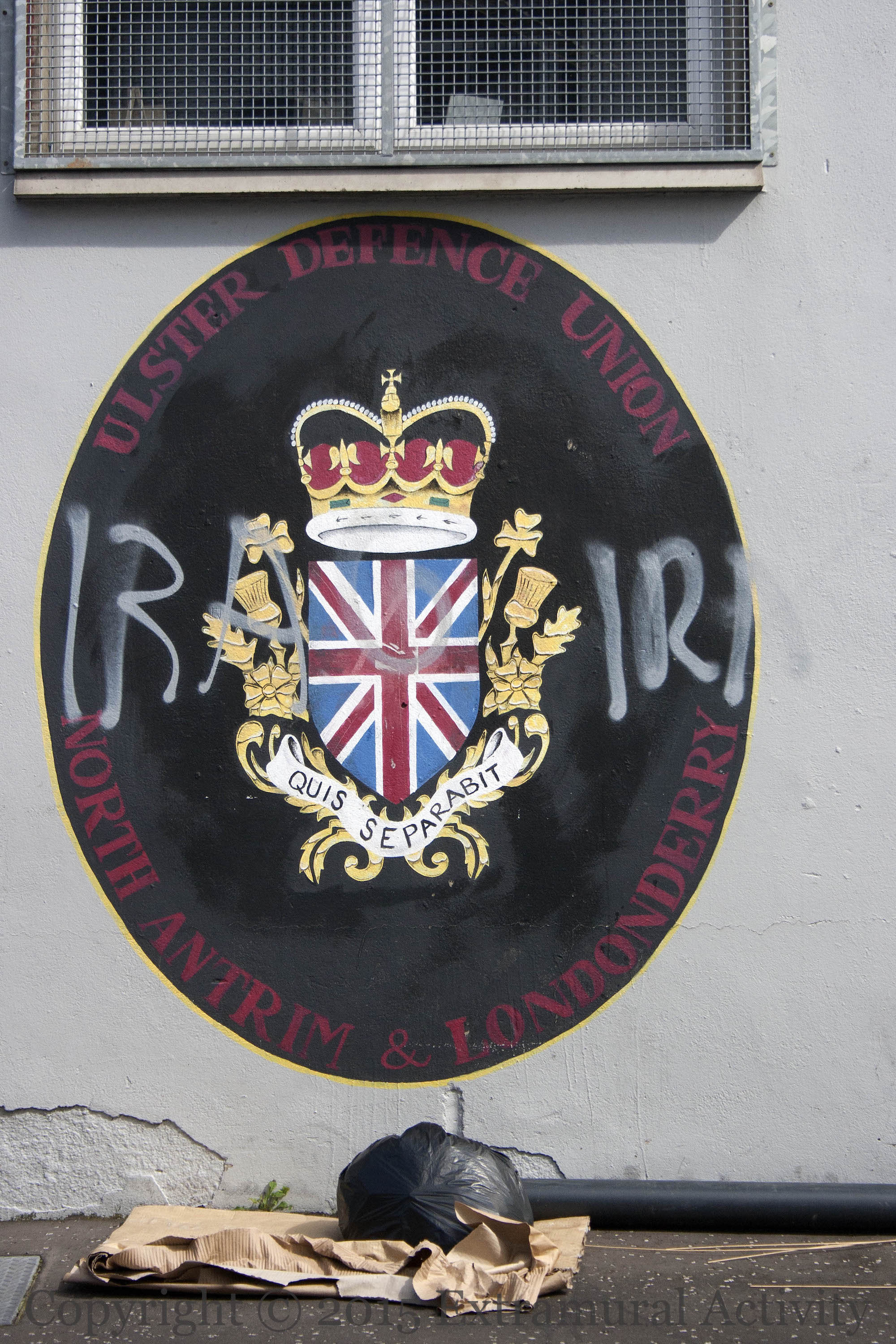
UDU (Ulster Defence Union) mural in Pine Street, Londonderry, vandalised with “IRA” graffiti. The mural has since been repaired. For the original, see Union Shield.
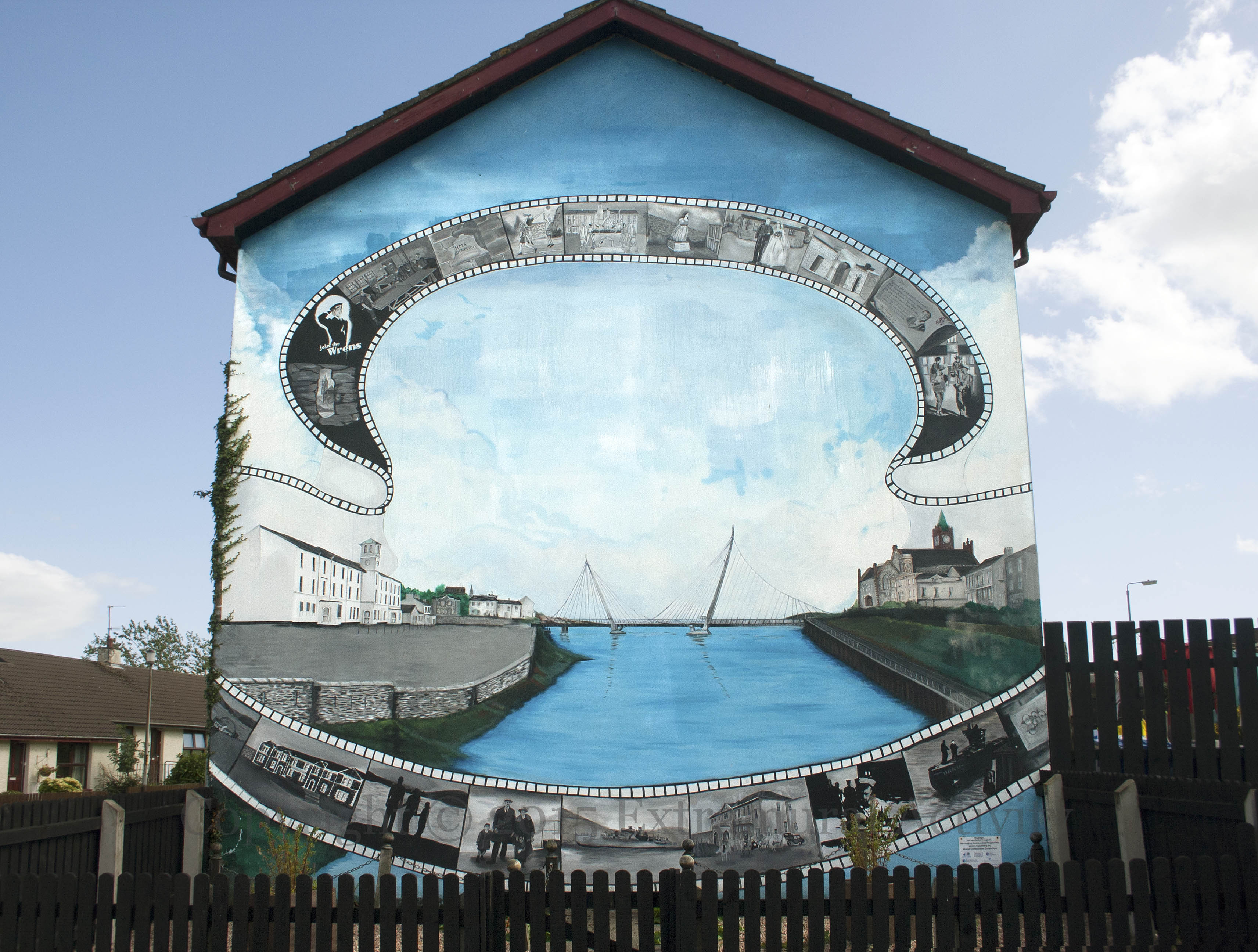
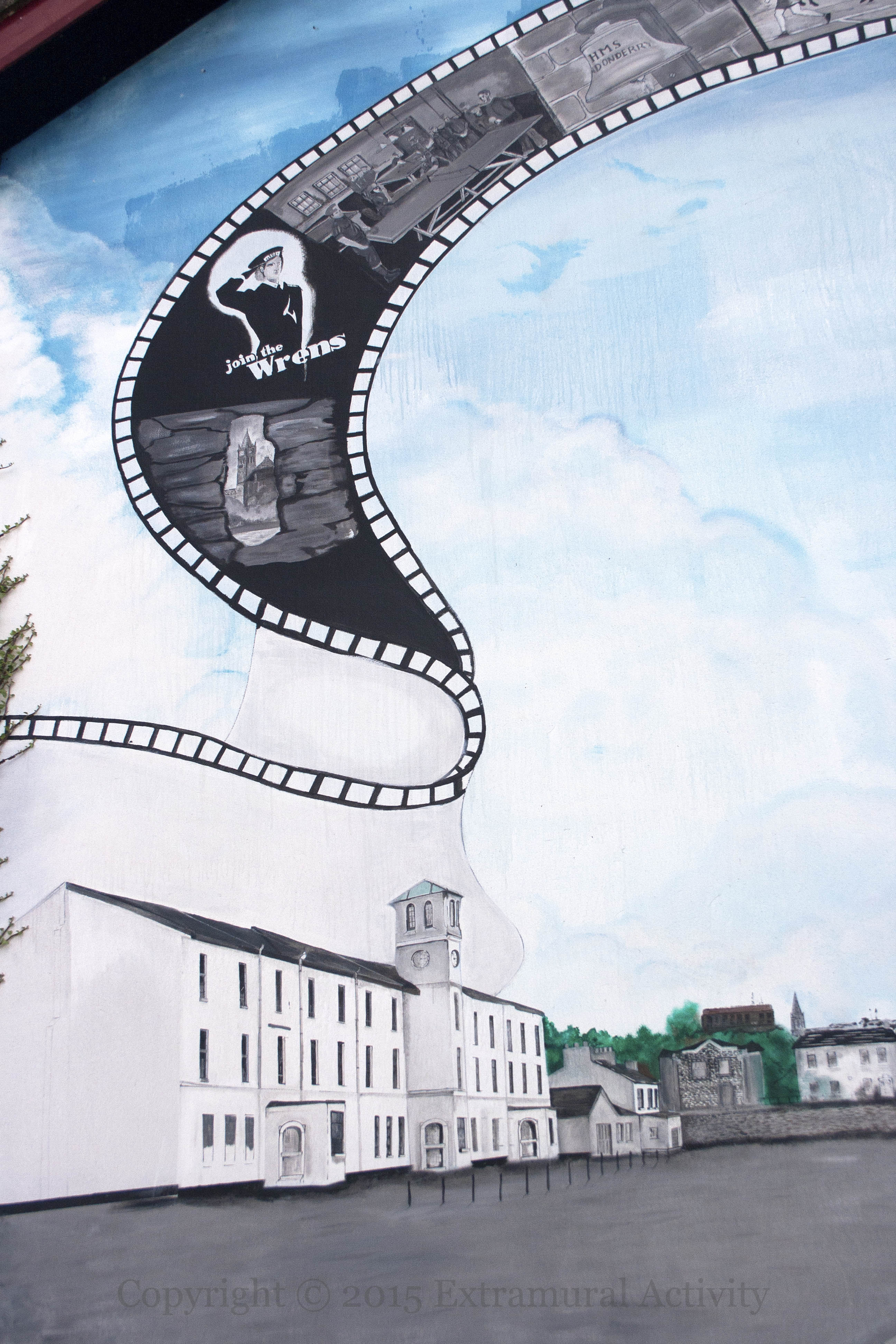
The Peace Bridge is shown spanning the Foyle between (the former) Ebrington barracks and the Guildhall, with a film-strip of images, many depicting naval and military scenes, above and below. The detail below shows a gap in the walls of Derry, a poster encouraging people to “Join the Wrens [and free a man for the fleet]” (the Women’s Royal Naval Service; see the poster at IWM), soldiers playing ping-pong in their barracks, and the ship’s bell of the HMS Londonderry (which served as a training ship during the Falkland War (WP)).