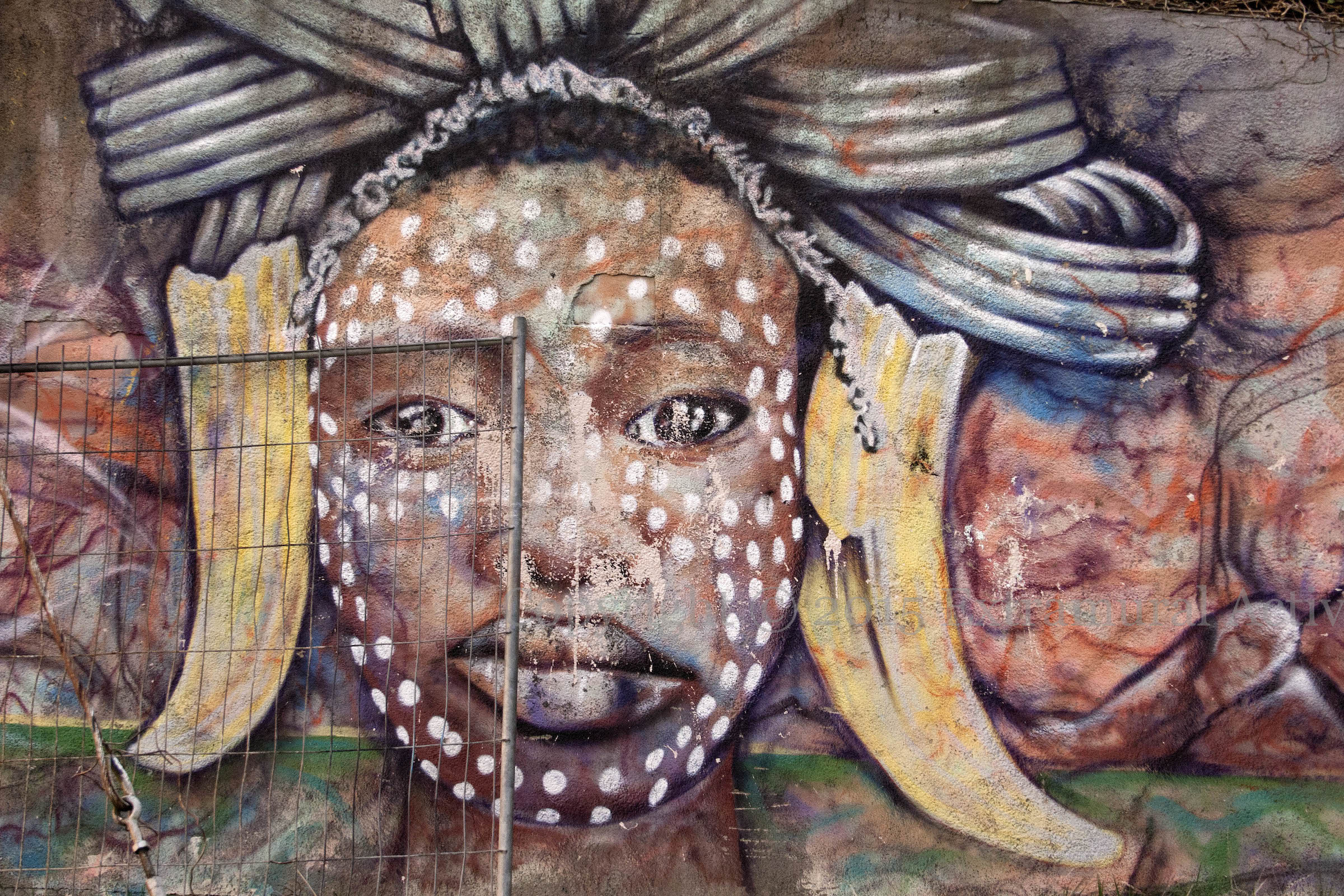
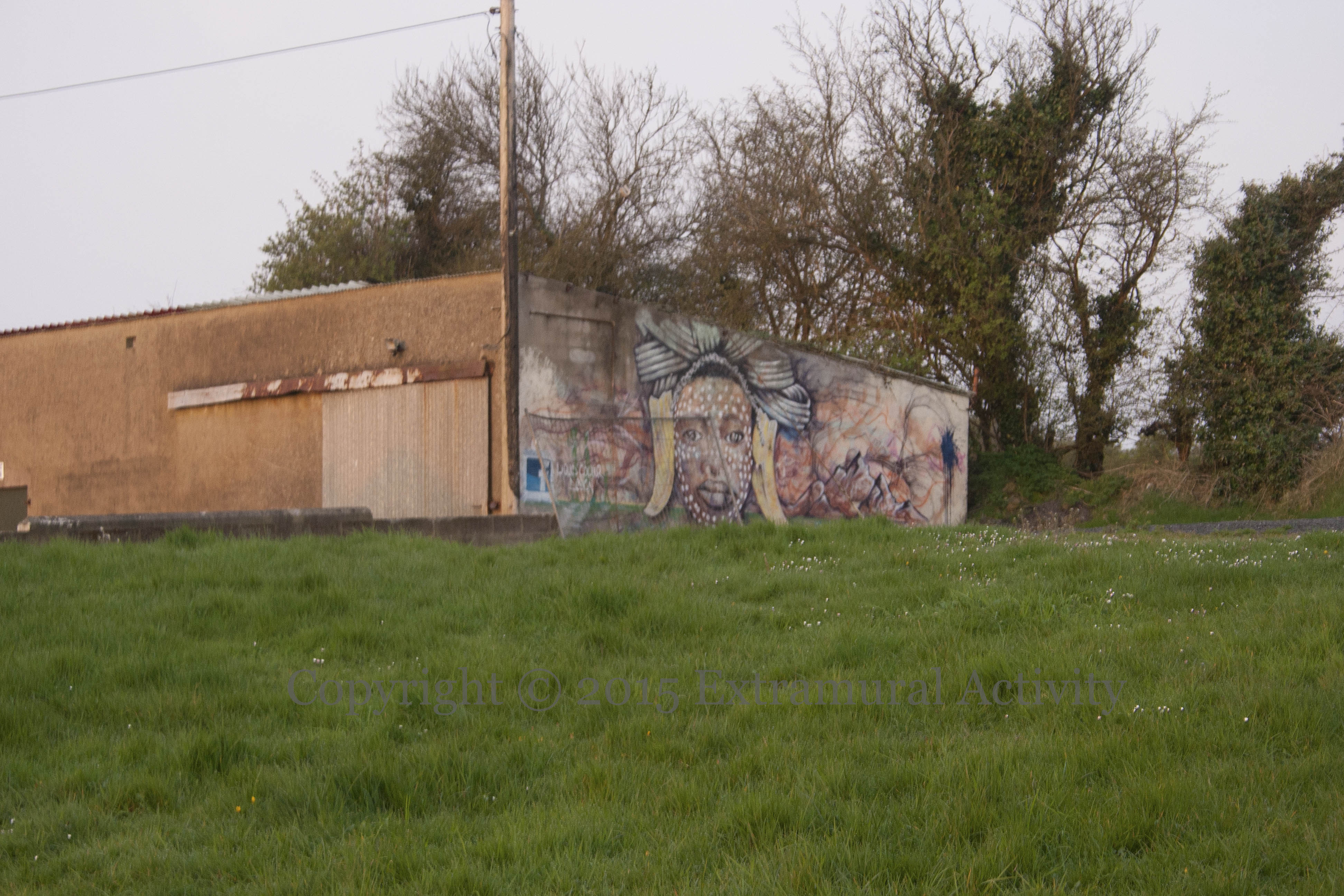
On a barn wall in Ballycarry, County Antrim: a African youth (perhaps Ethiopian Mursi tribe) with painted face and a headdress of warthog tusk and aluminium coils. (By Liquid Colour Design – see also The Craic Is Mighty.)
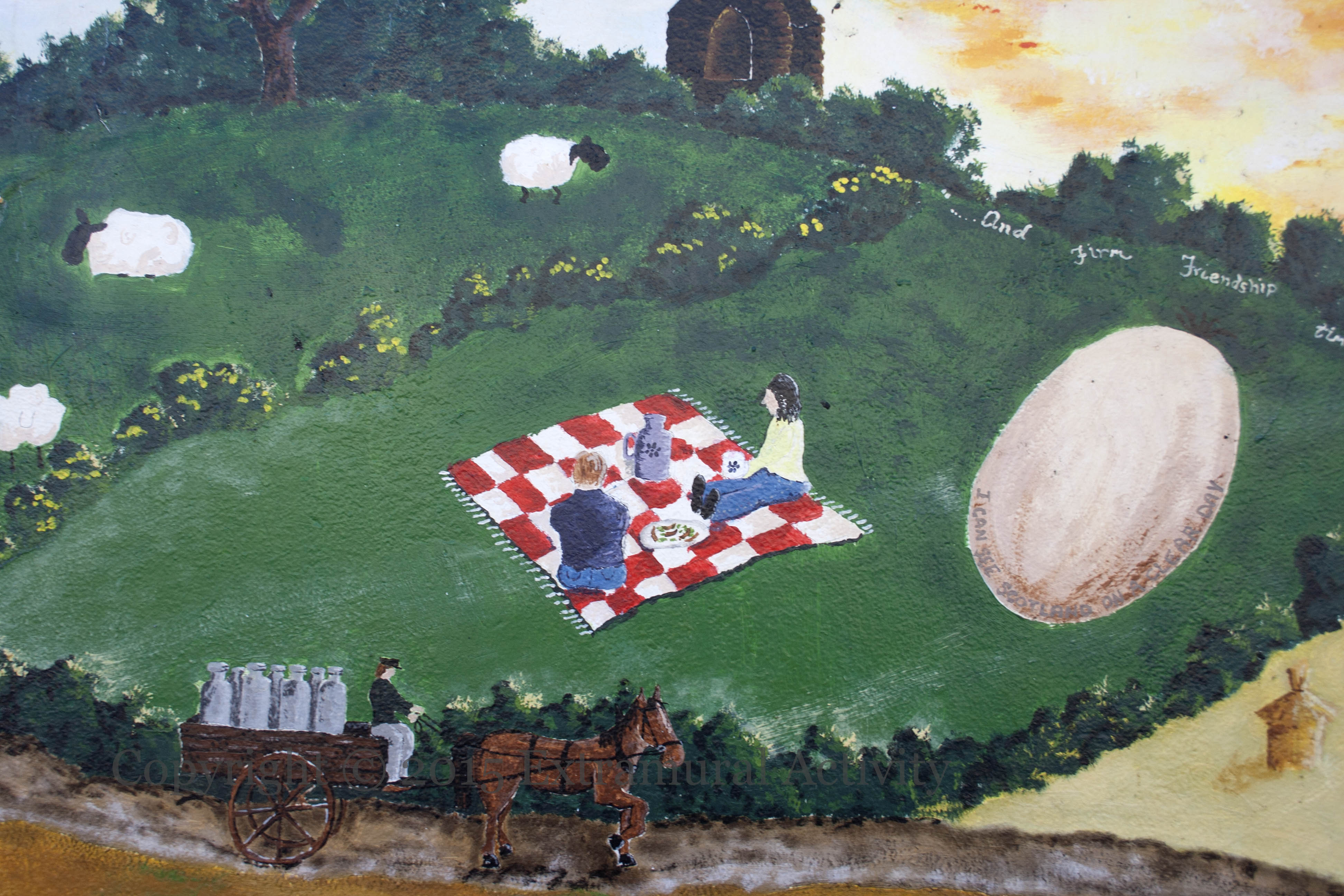
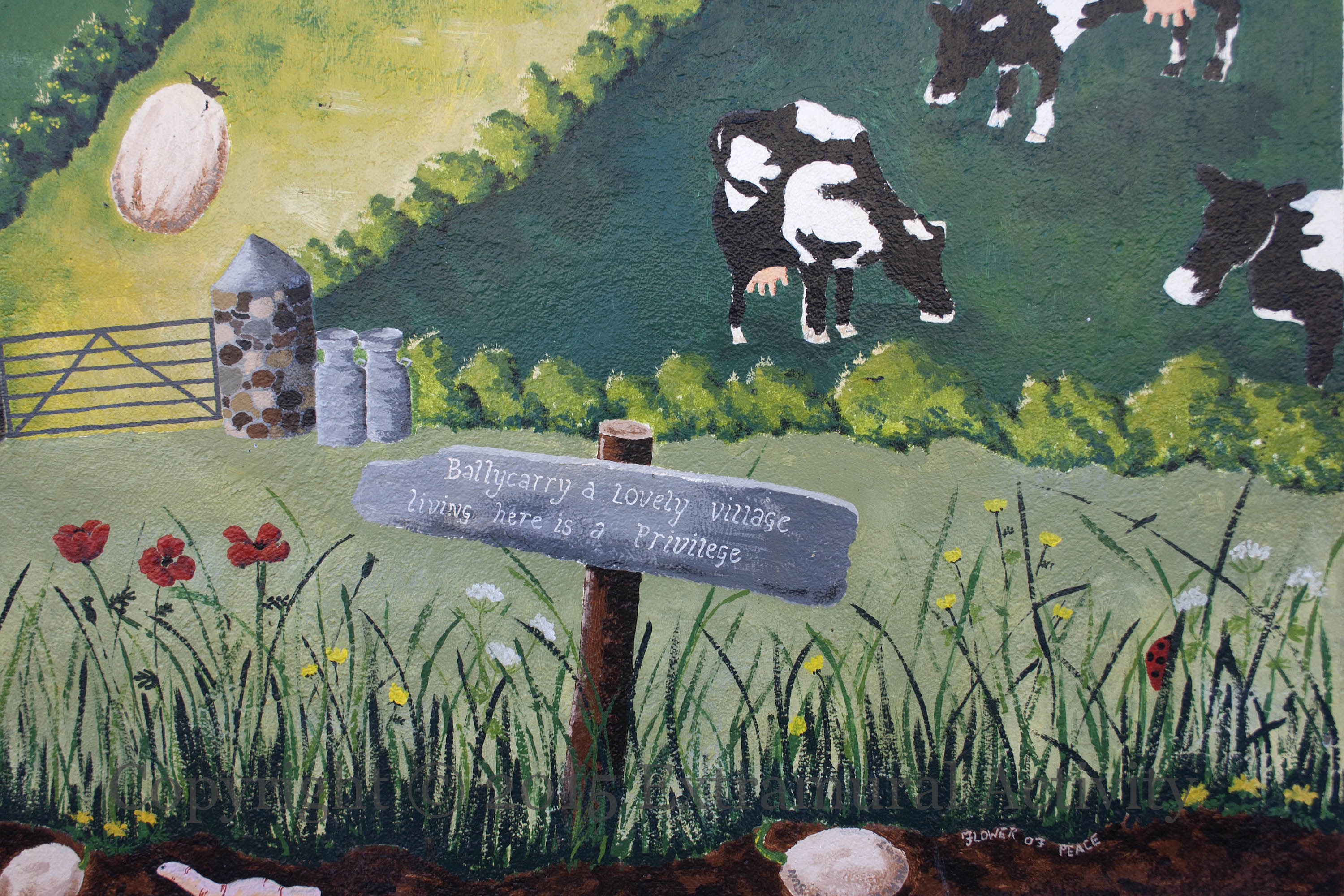
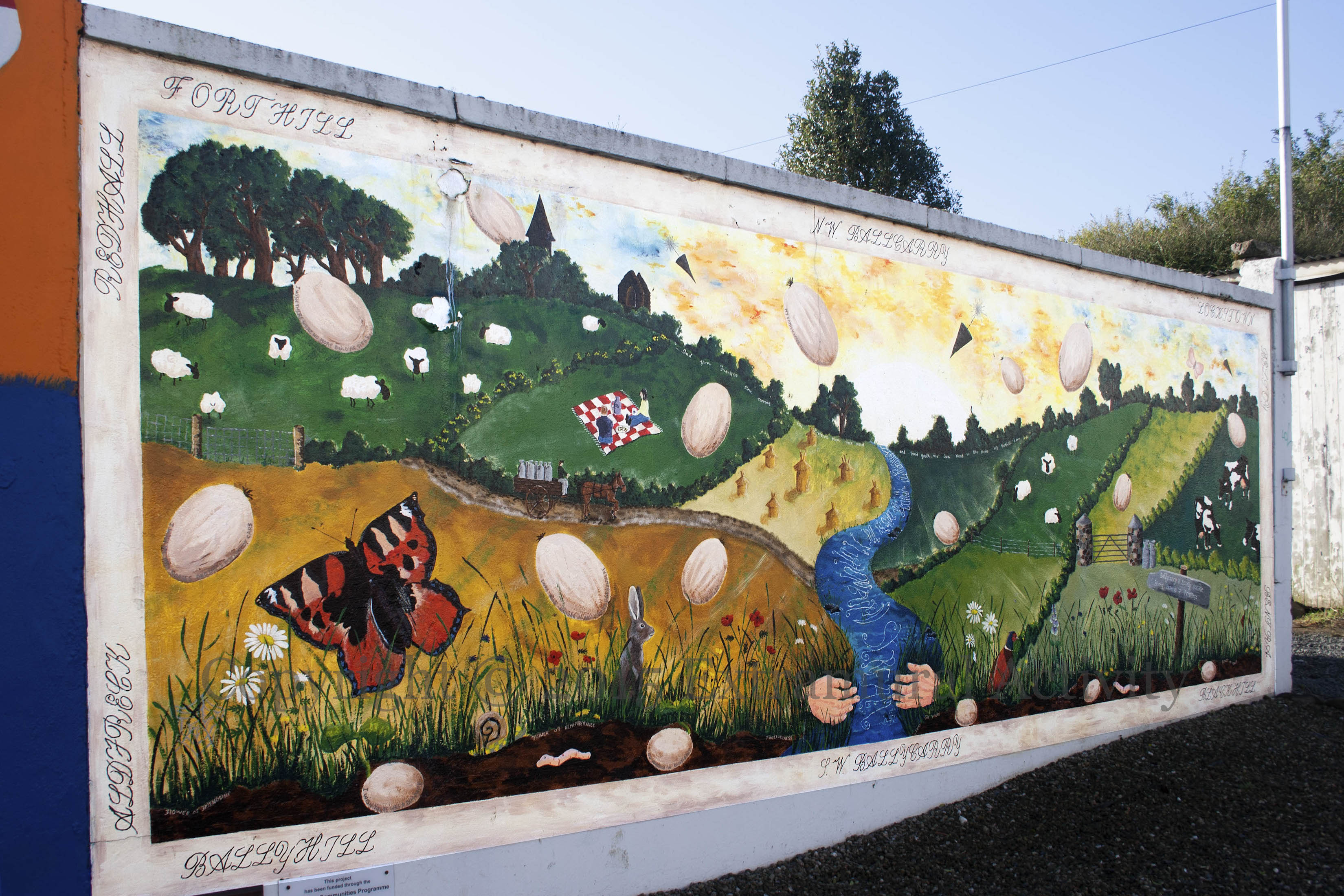
Ballycarry village sits in County Antrim countryside surrounded by the townlands of Ballyhill, Redhall, Forthill, Blackhill, Aldfreck, Lochstown, Beltoy, Bentra. The large pale oval to the right of the picnickers is one of many “seeds” falling from the sky and settling into the earth, which by growing make Ballycarry a pleasant place: “I can see Scotland on a clear day”. The Mutton Burn Stream (lyrics | music from the Ulster-Scots agency) is a song written by Ballycarry resident William Hume (QUB) about the river to the north-west of the village (WP). More about Ballycarry from the BBC’s Ulster-Scots page.
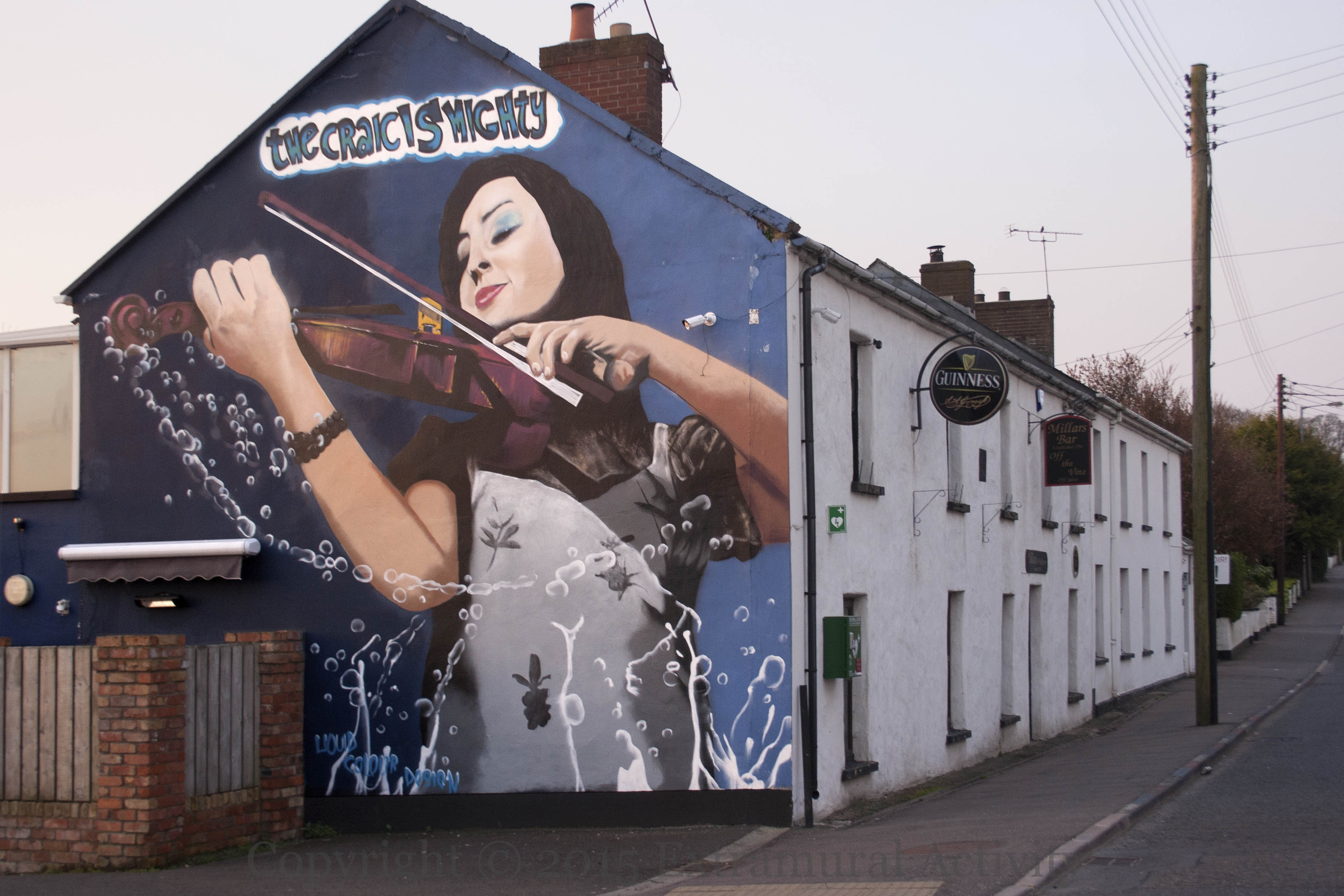
Fiddling in the north of Ireland is common to both Nationalist and Unionist communities and the “old Antrim” style is influenced by Scottish playing (USFO).
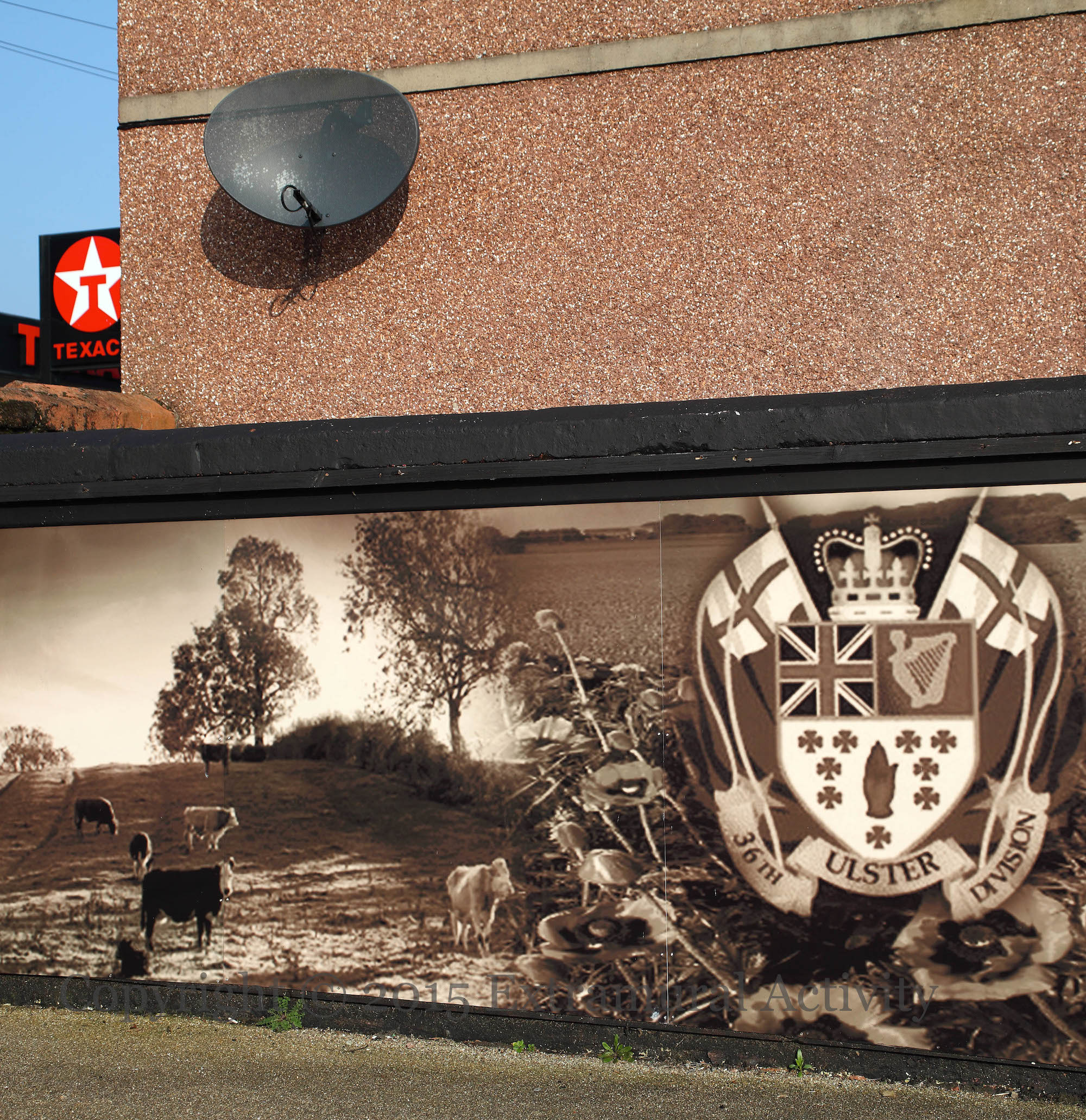
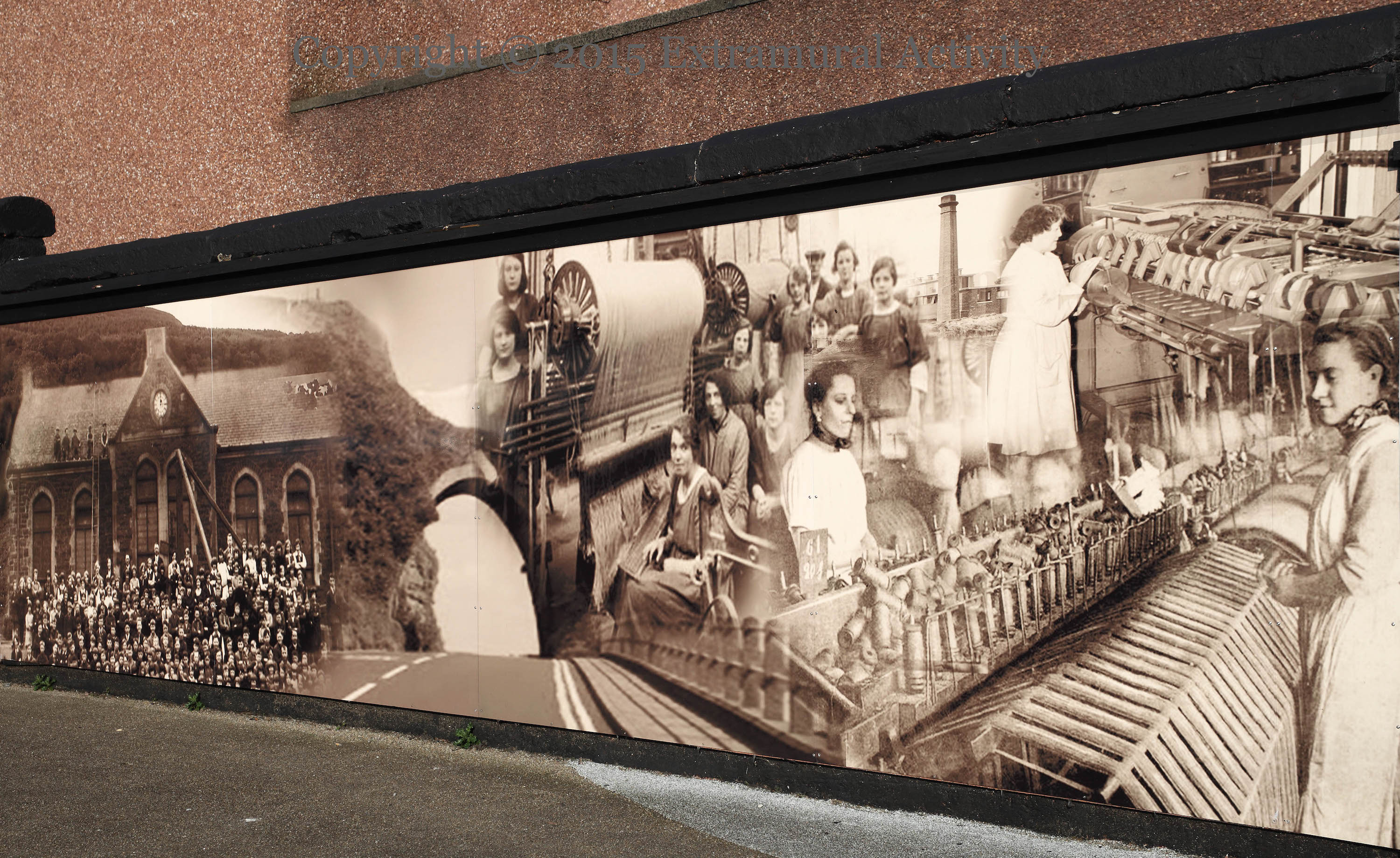
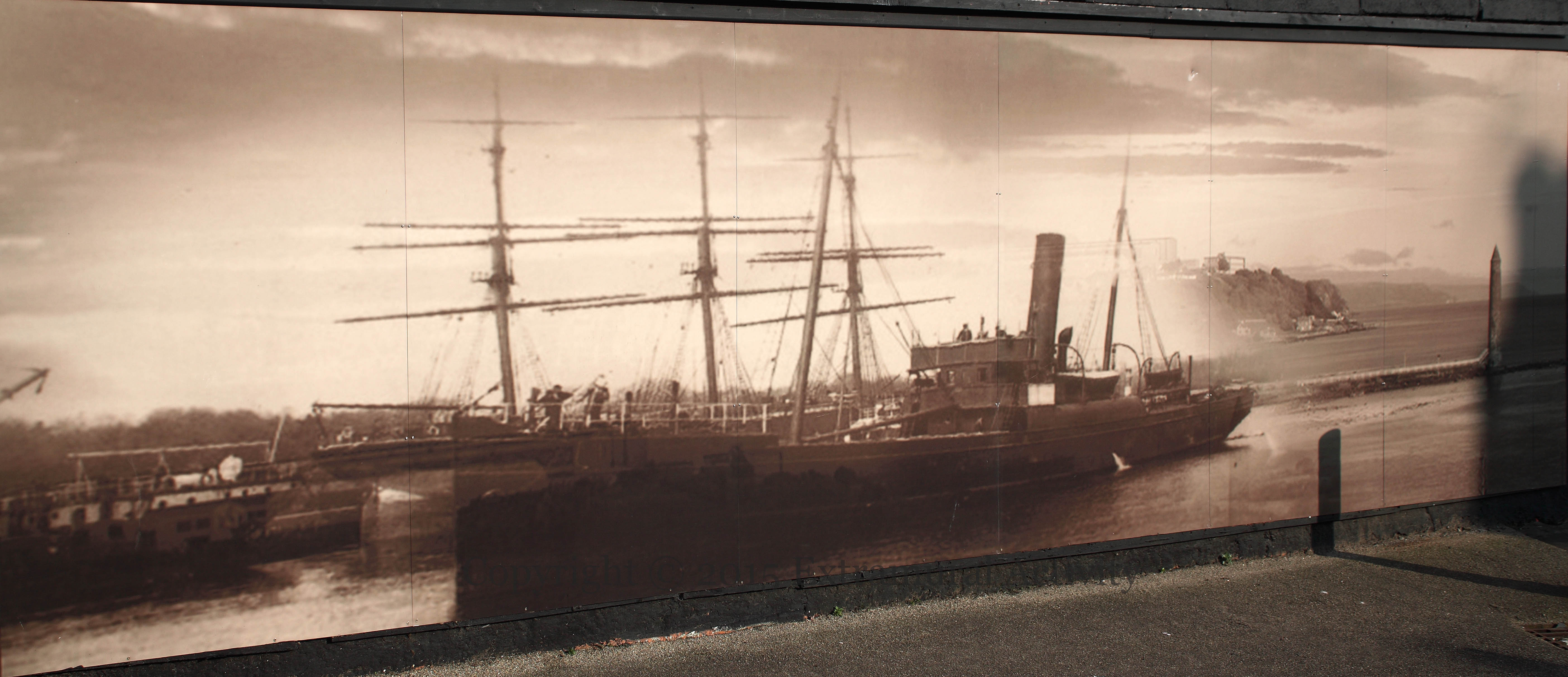
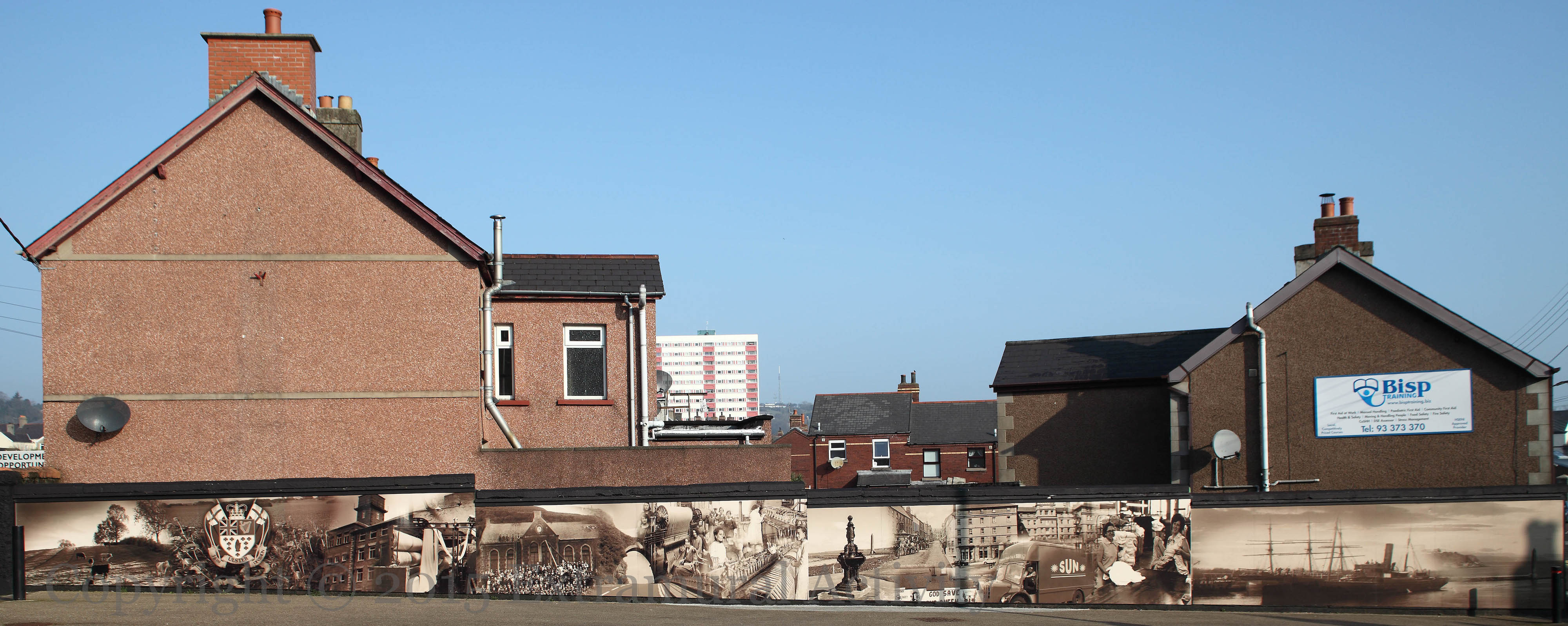
The Tullygarley mural in Larne, originally painted by Caroline Jeffrey, has been replaced with a computer-generated version reproducing most of the images. The bleaching green is gone; the Black Arch has been added, as has part of the mural that was on this site three generations of murals ago: God Save The Queen.
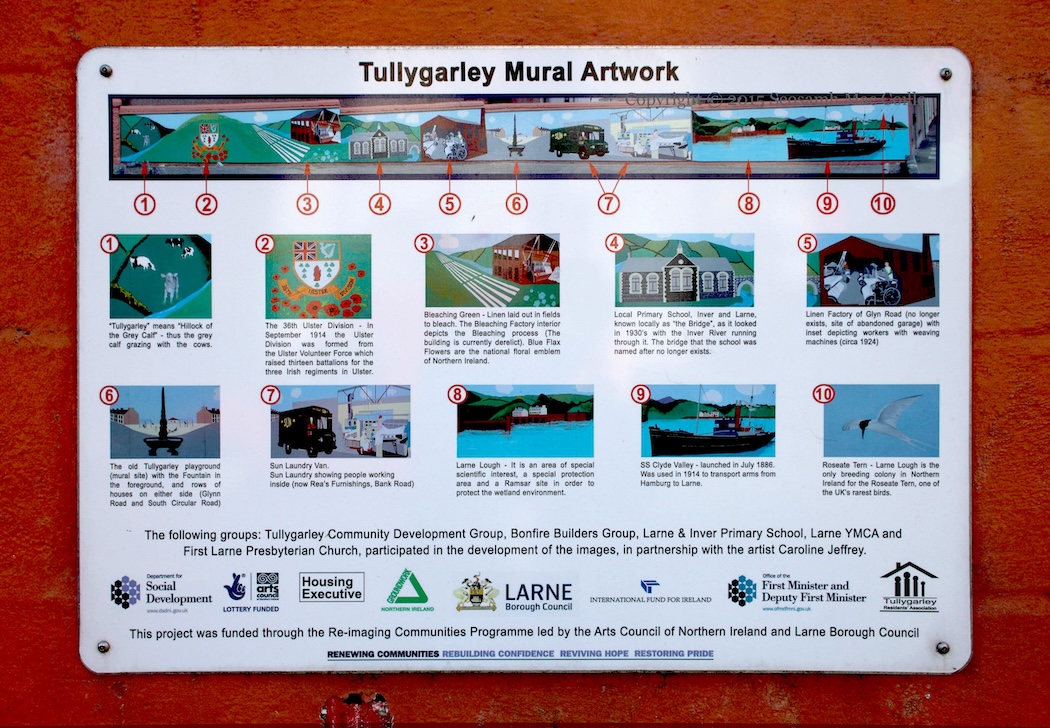
From the info-board for the previous version, included below:
“Tullygarley” means “Hillock of the Grey Calf” – thus the grey calf grazing with the cows.
The 36th Ulster Division – In September 1914 the Ulster Division was formed from the Ulster Volunteer Force which raised thirteen battalions for the three Irish regiments in Ulster.
Bleaching Green – Linen laid out in fields to bleach. The Bleaching Factory interior depicts the Bleaching process. (The building is currently derelict.) Blue Flax Flowers are the national floral emblem of Northern Ireland.
Local Primary School, Inver and Larne, known locally as “the Bridge”, as it looked in the 1930’s with the Inver River running through it. The bridge that the school was named after no longer exists.
Linen Factory of Glyn [Glynn] Road (no longer exists, site of abandoned garage) with inset depicting workers with weaving machines (circa 1924).
The old Tullygarley playground (mural site) with the Fountain in the foreground, and rows of houses on either side (Glynn Road and South Circular Road).
Sun Laundry Van. Sun Laundry showing people working inside (now Rea’s Furnishings, Bank Road).
Larne Lough – it is an area of special interest, a special protection area and a Ramsar site in order to protect the wetland environment.
SS Clyde Valley – launched in July 1886. Was used in 1914 to transport arms from Hamburg to Larne.
Roseate Tern – Larne Lough is the only breeding colony in Northern Ireland for the Roseate Tern, one of the UK’s rarest birds.
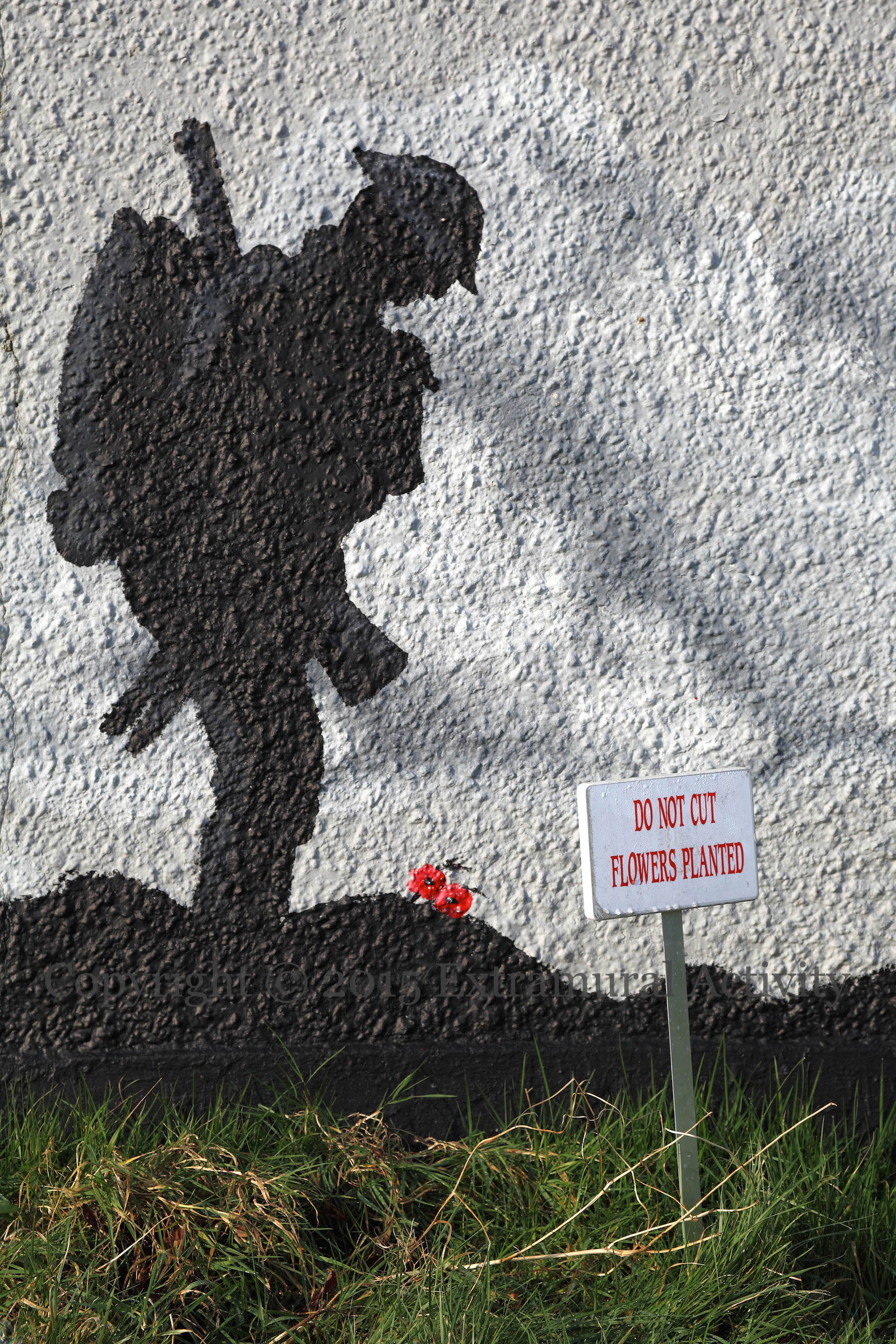
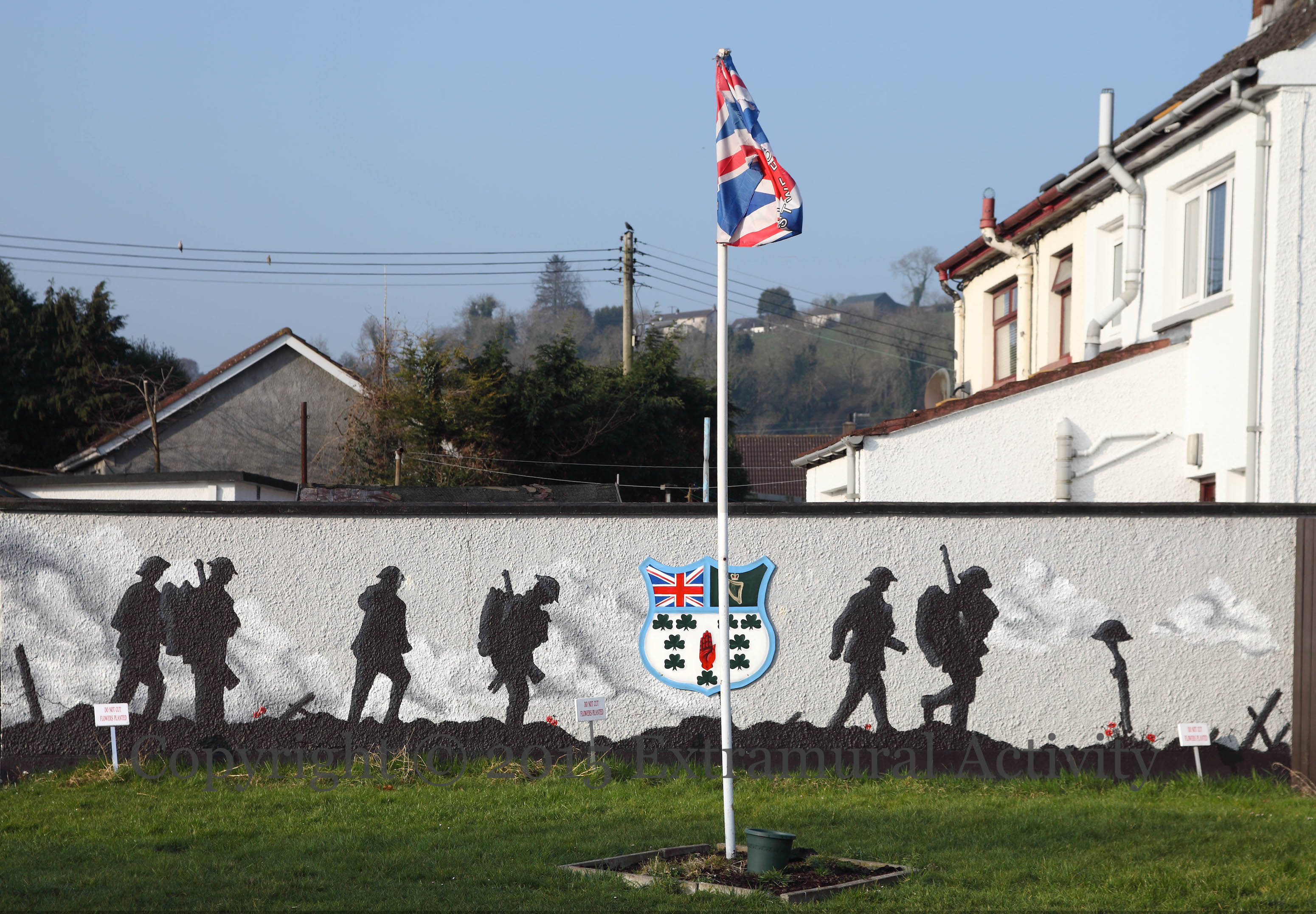
The Somme mural in Glynn, County Antrim has been repainted. The previous version had troops silhouetted against the colours of sunset; the new version has them against a cloudy sky and includes a grave and poppies.
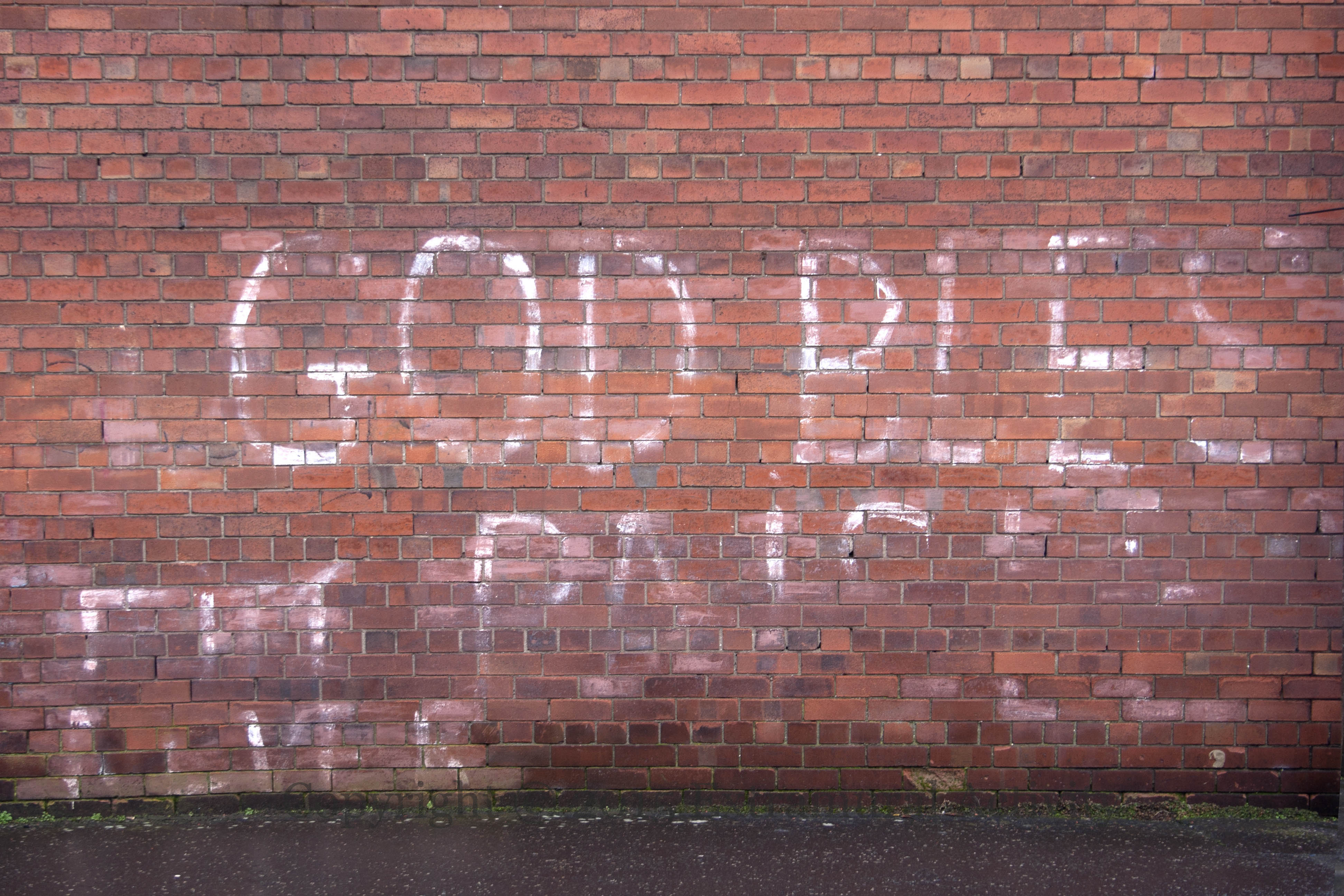
Gardiner Street graffiti: “God Bless Paisley, Fitt Never.” The graffiti is more than 40 years old, dating to 1969 or earlier (it appears in the Sunday Times magazine 1969-03-23). In 1971, Ian Paisley founded the DUP (in September) and had supplanted Terence O’Neill as the leading unionist politician. Gerry Fitt at that time had recently formed the SDLP and would represent West Belfast under that affiliation in 1974 and 1979 until Gerry Adams won the seat in 1983. The Northern Ireland Assembly was still sitting.
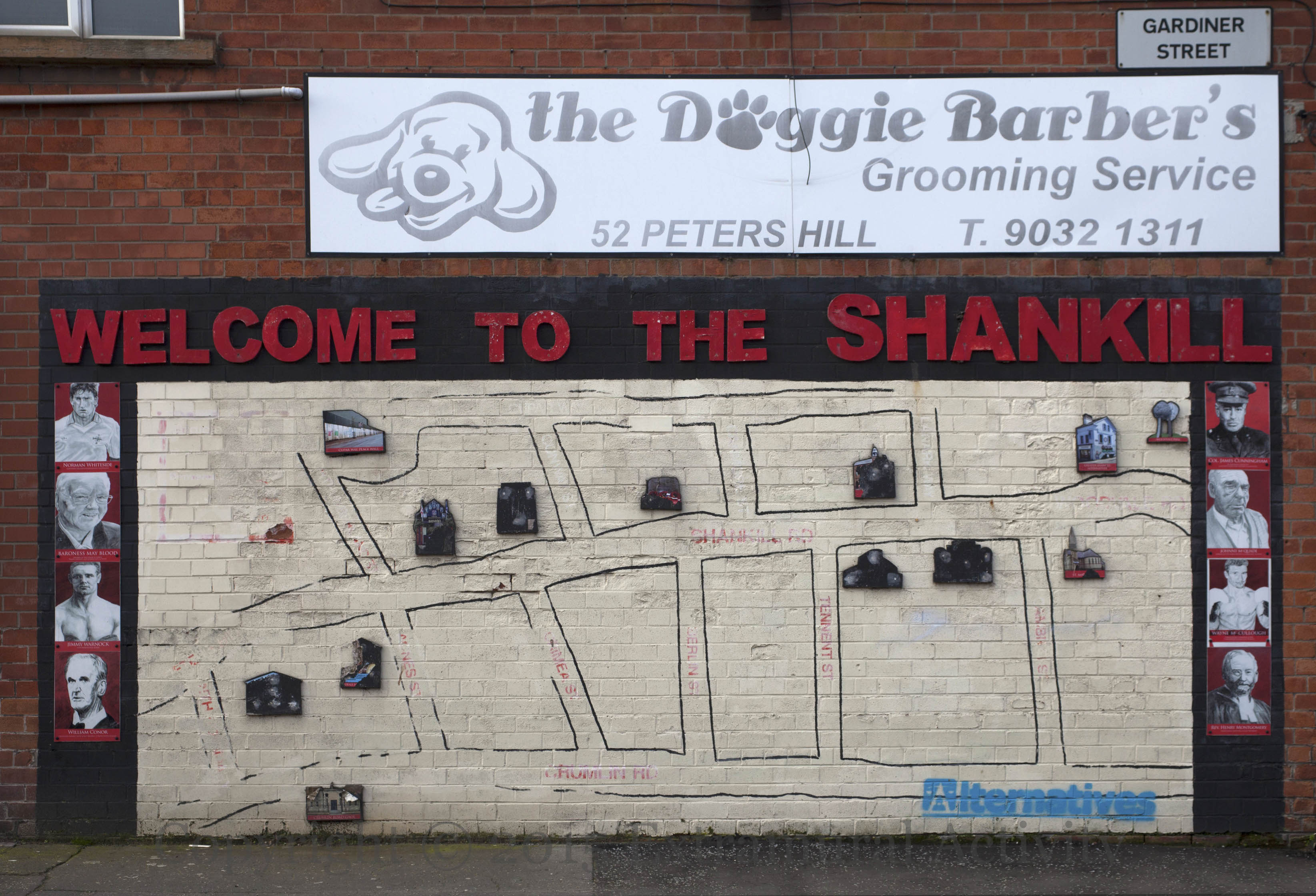
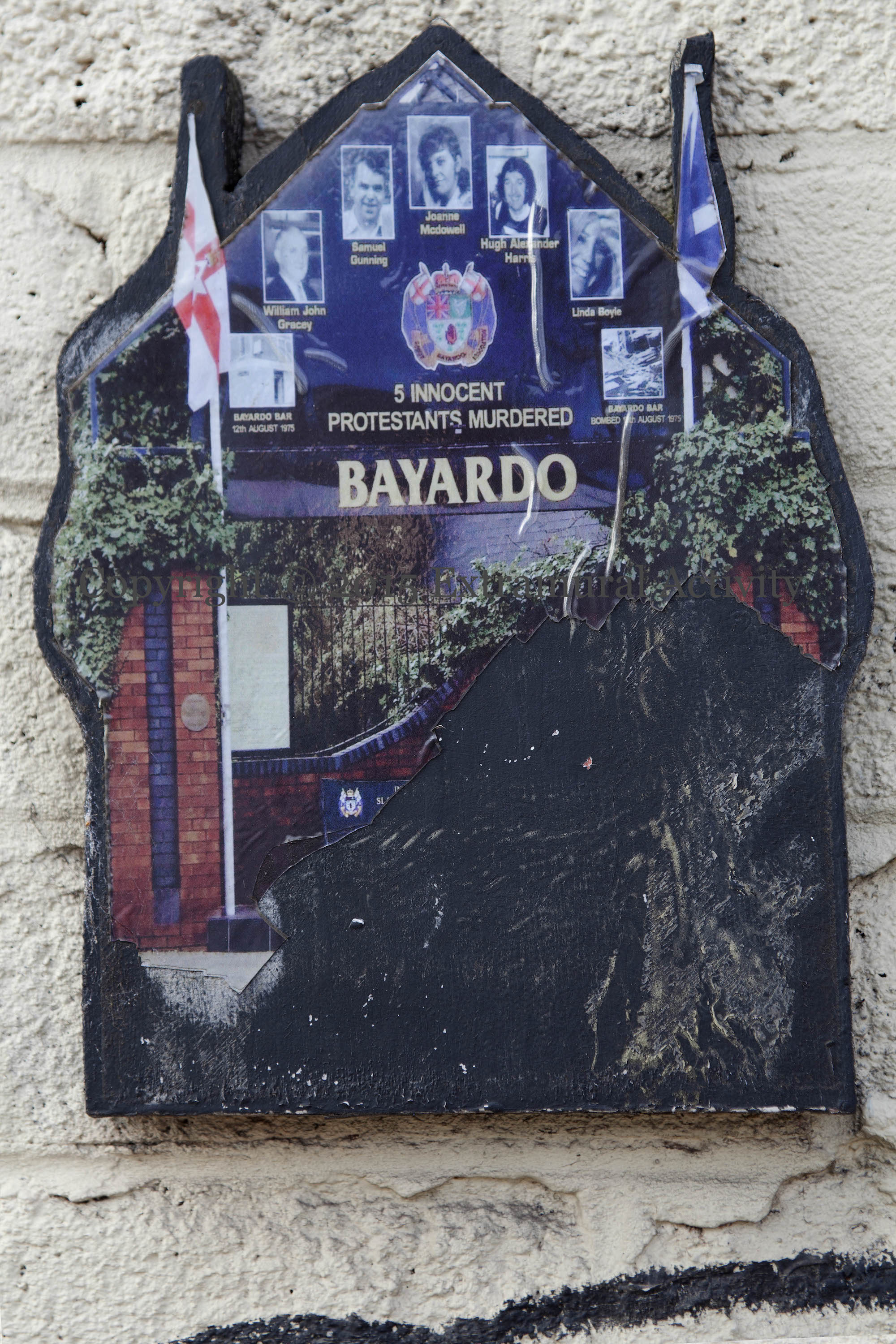
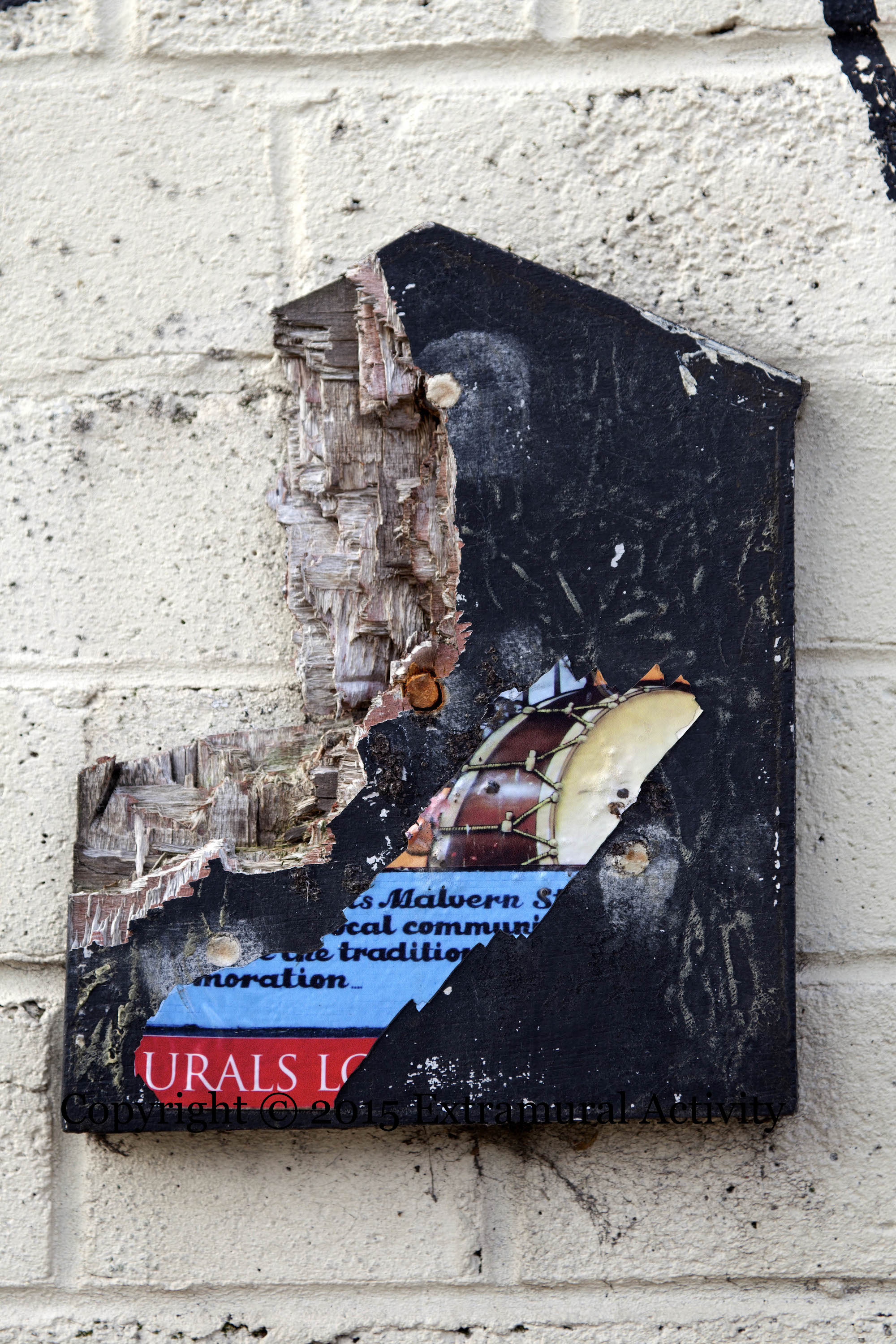
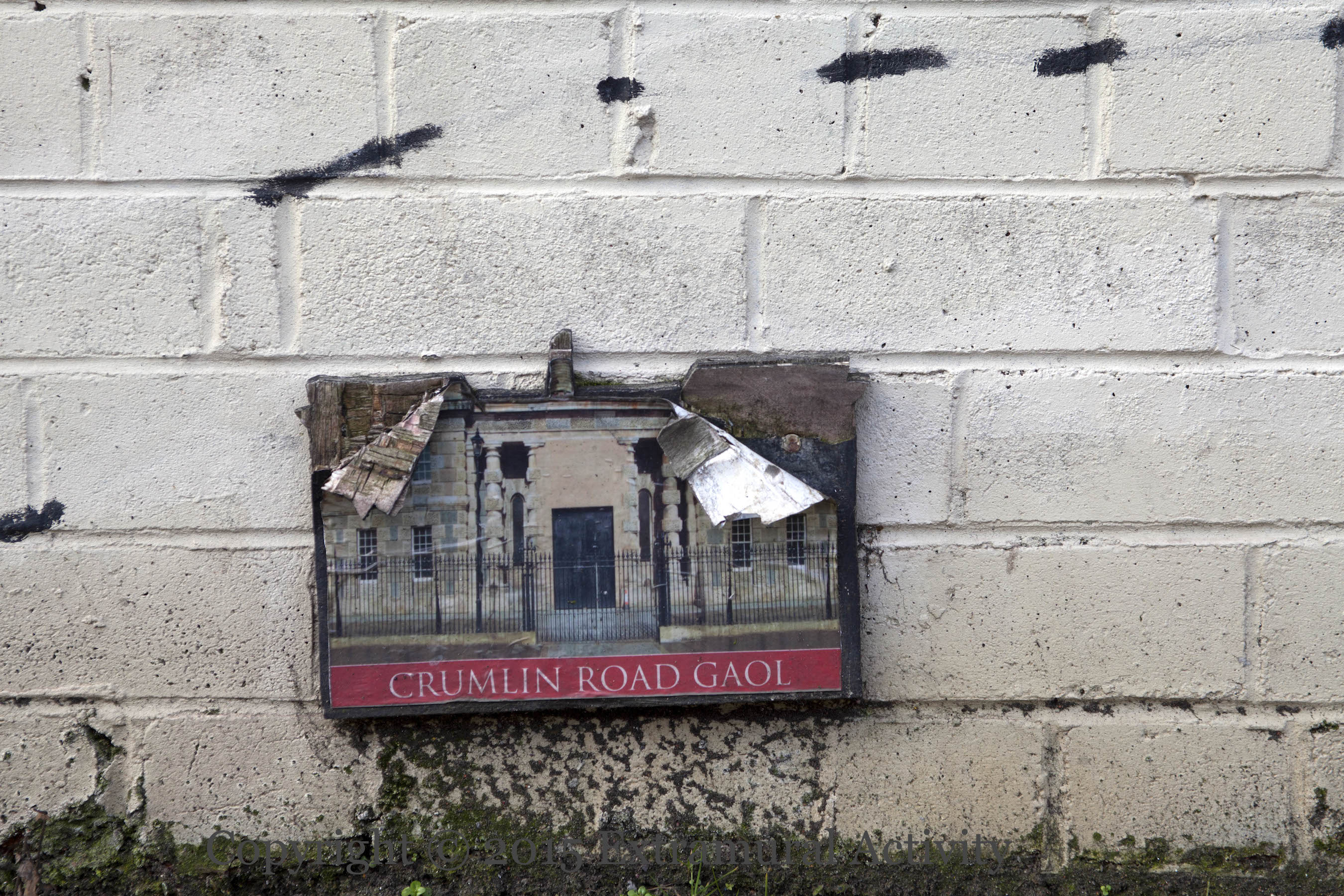
The ‘Welcome To The Shankill’ board is looking the worse for wear, as can be seen particularly in the three close-ups below of the Boyardo memorial at Aberdeen Street, the (previously featured) Malvern Arch mural in Hopewell, and the Crumlin Road Gaol. For the two strips of ‘famous faces’ on either side, see Welcome To The Shankill Road.
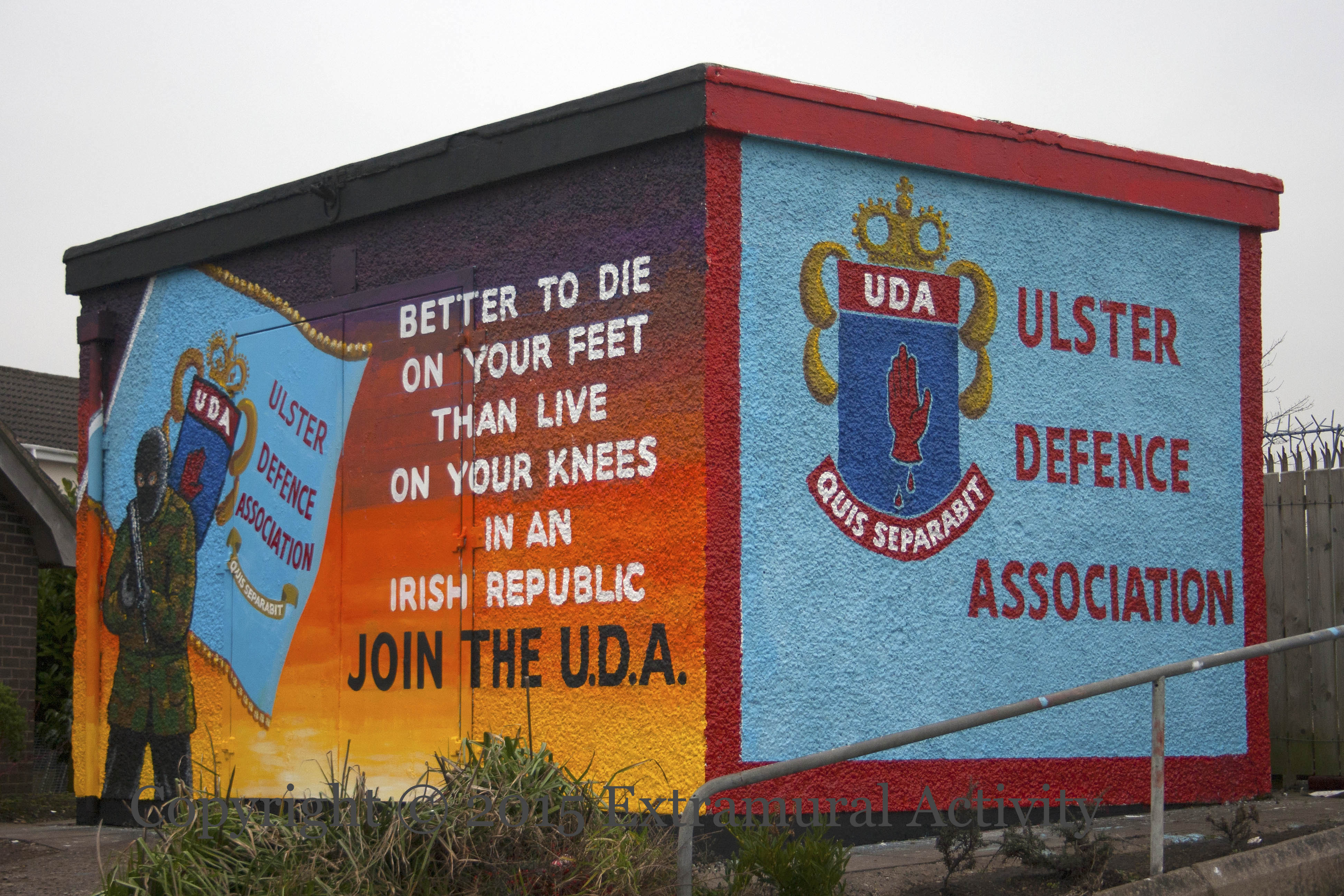
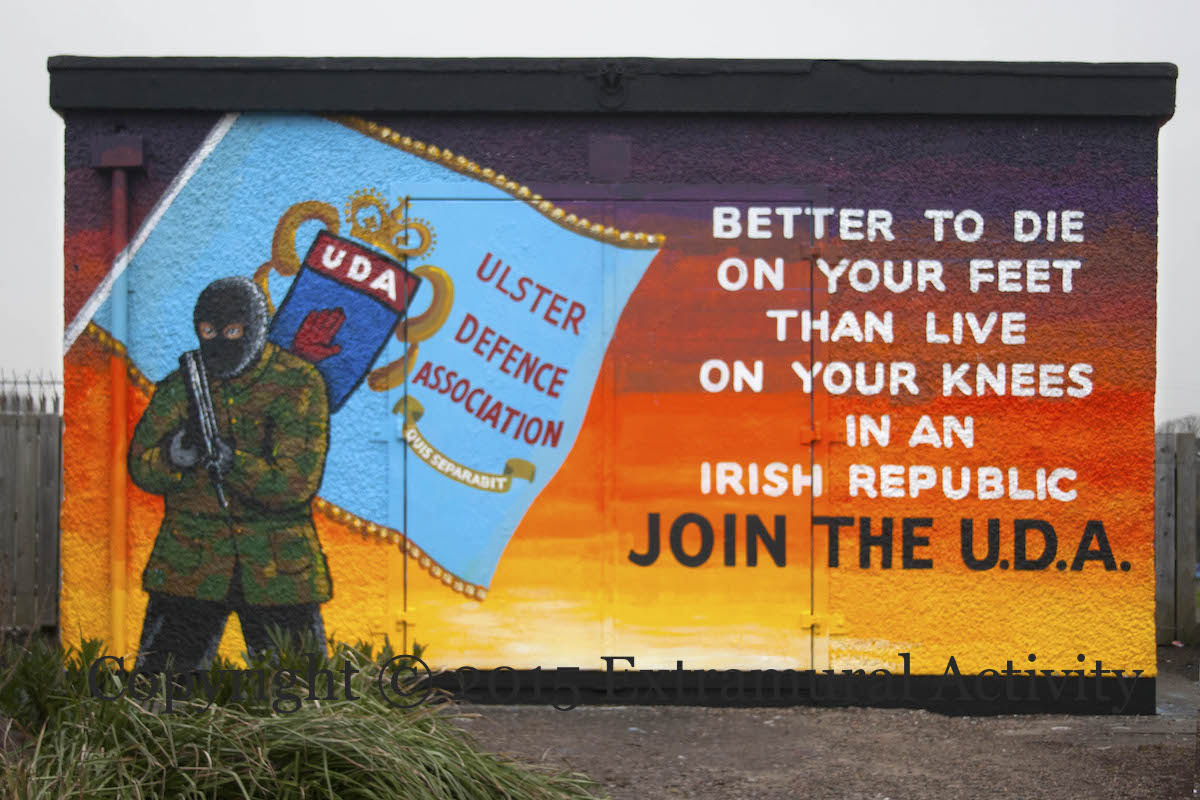
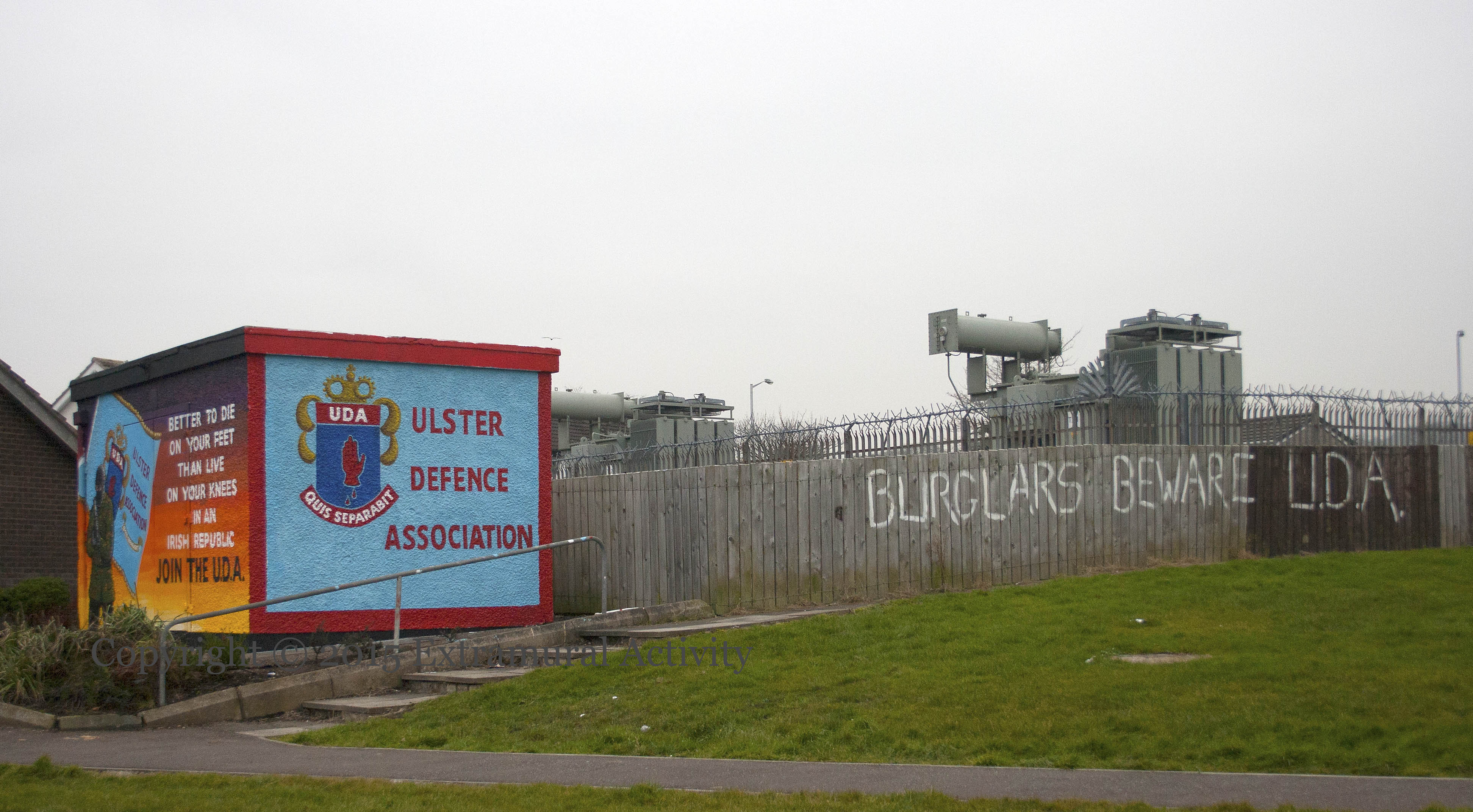
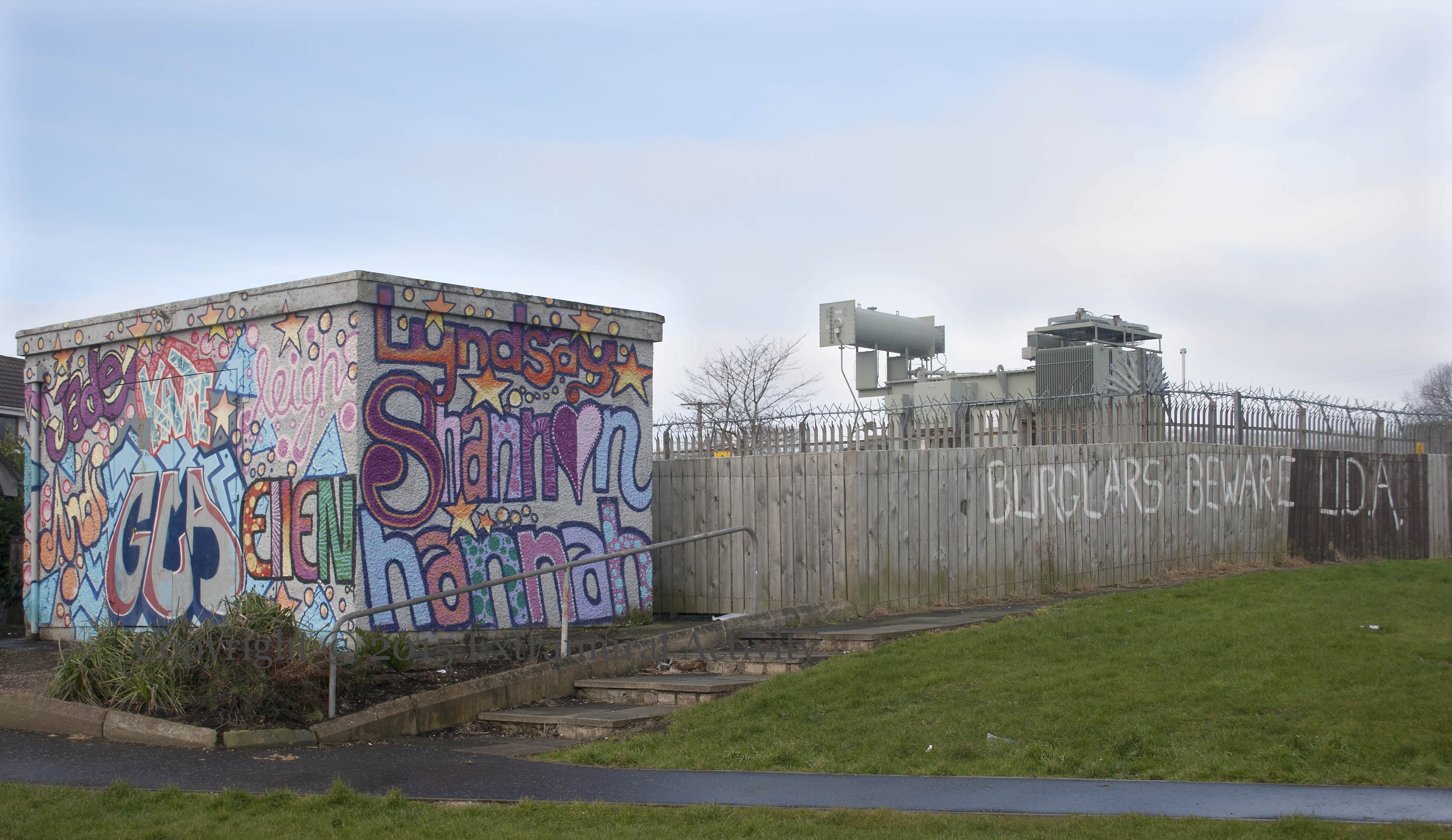
The 2010 work of Jade, Andi, Katie, Leigh, Ellen, Lyndsay, Shannon, and Hannah on the substation at the top of the Glenfield estate’s Oakfield Road has been replaced this week by a new UDA mural sporting a hooded gunman facing the viewer with a slogan borrowed from Mexican revolutionary Emiliano Zapata: “Better to die on your feet than live on your knees in an Irish republic. Join the UDA.”. The two wide shots below allow you to compare the scene this week with last week.
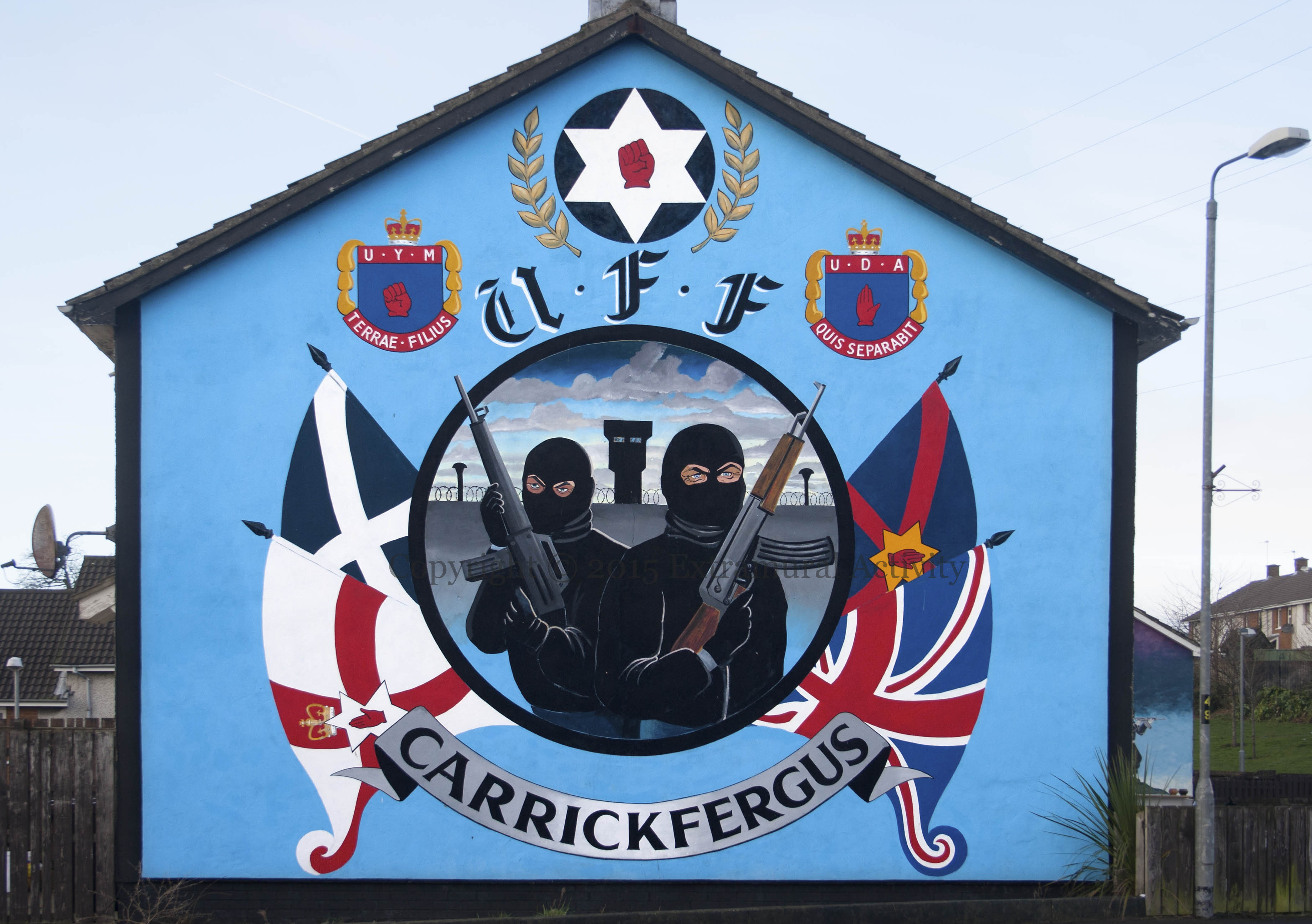
The mural has been criticized by both DUP and Alliance councillors (Newsletter). The final words – Join the UDA – have drawn particular ire, as in other respects it is similar to other murals in featuring hooded gunmen, such as these two other Carrickfergus murals: Inclusion | Eternal Vigilance.
Nolan Show discussion of the mural on 2015-02-11: Part 1 | Part 2
The upper flag on the right-hand side of this mural – purple saltire on a blue background with star and red hand – is the proposed flag of Ulster nationalists. The position was espoused by the UDA of the 1970s, under the guise of the political parties the Ulster Loyalist Democratic Party and the Ulster Democratic Party, and for a time by the Red Hand Commandos under the Ulster Loyalist Central Coordinating Committee.
For the previous (identical) version, see UFF Carrickfergus in the Peter Moloney collection.
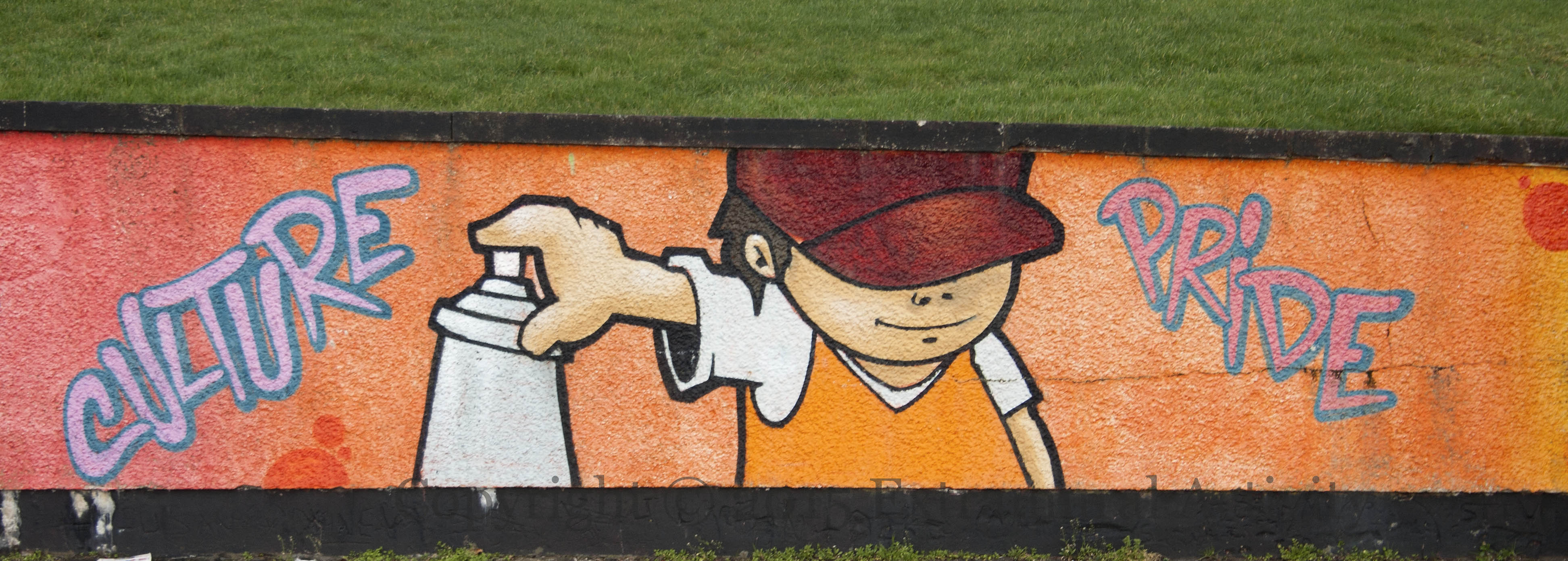
Spray painting is an approved type of youth activity in this Glenfield/Castlemara community mural on a low wall on Oakfield Drive. You can see the ‘coat of arms’ (from the wide shot, below) of the Glenfield Community Association more clearly via their Facebook page.