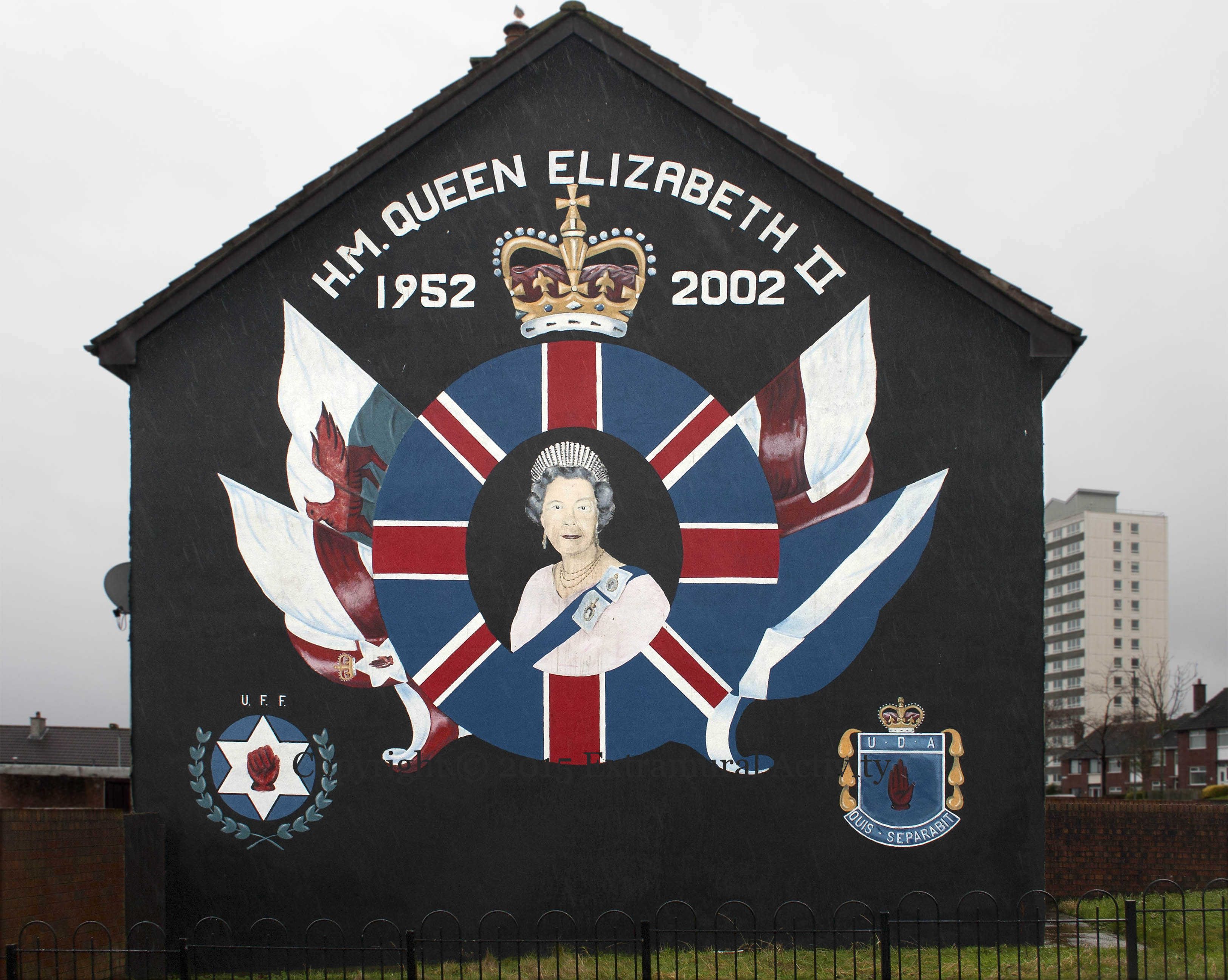
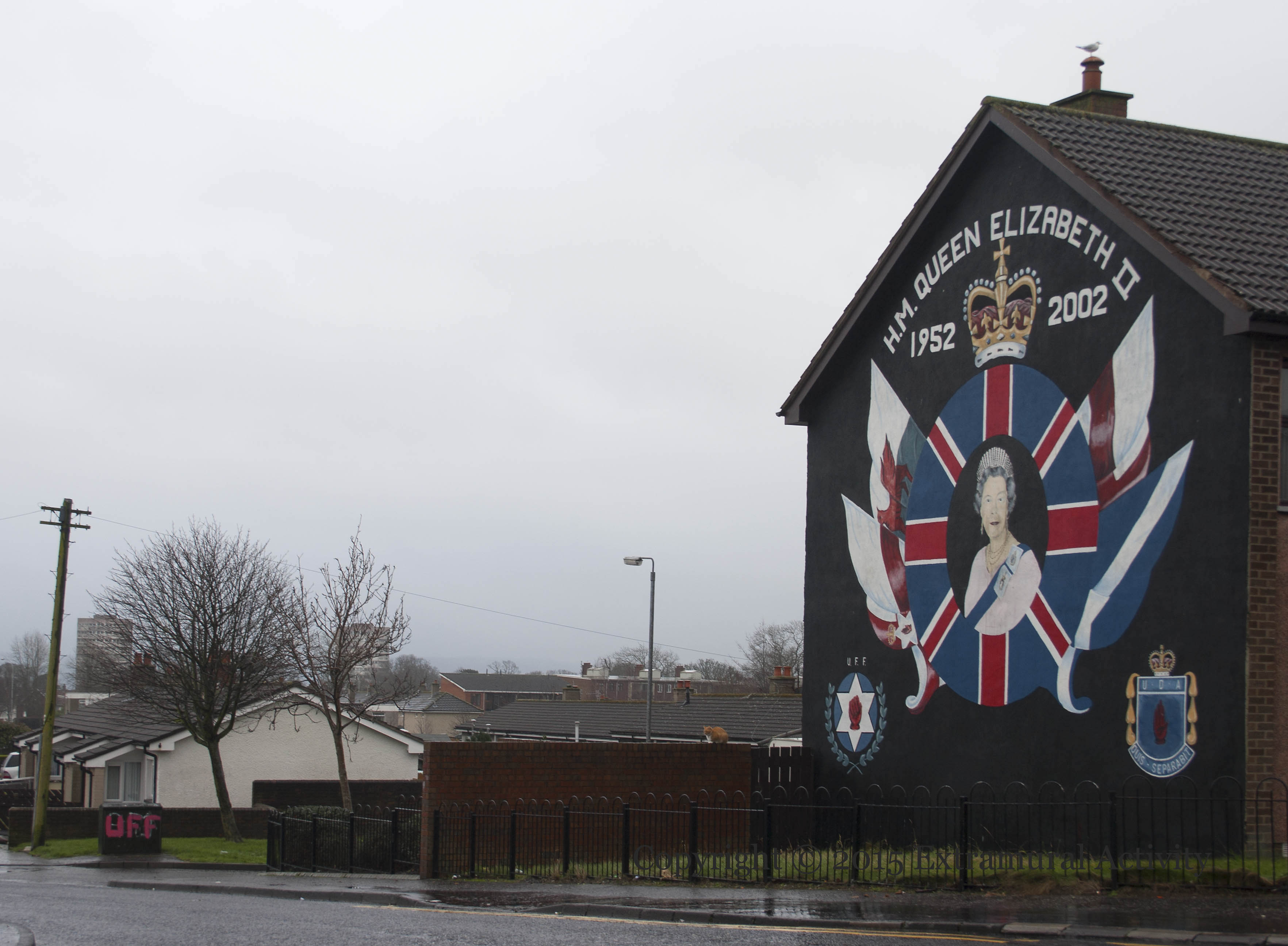
The Queen’s golden jubilee (50th anniversary 1952 – 2002) is celebrated in this long-lasting UFF/UDA mural in Rathcoole. It originally included a (painted) “plaque” at the bottom, which has been painted out. On September 10th, 2015, Elizabeth II will surpass Victoria as the longest reigning British monarch.
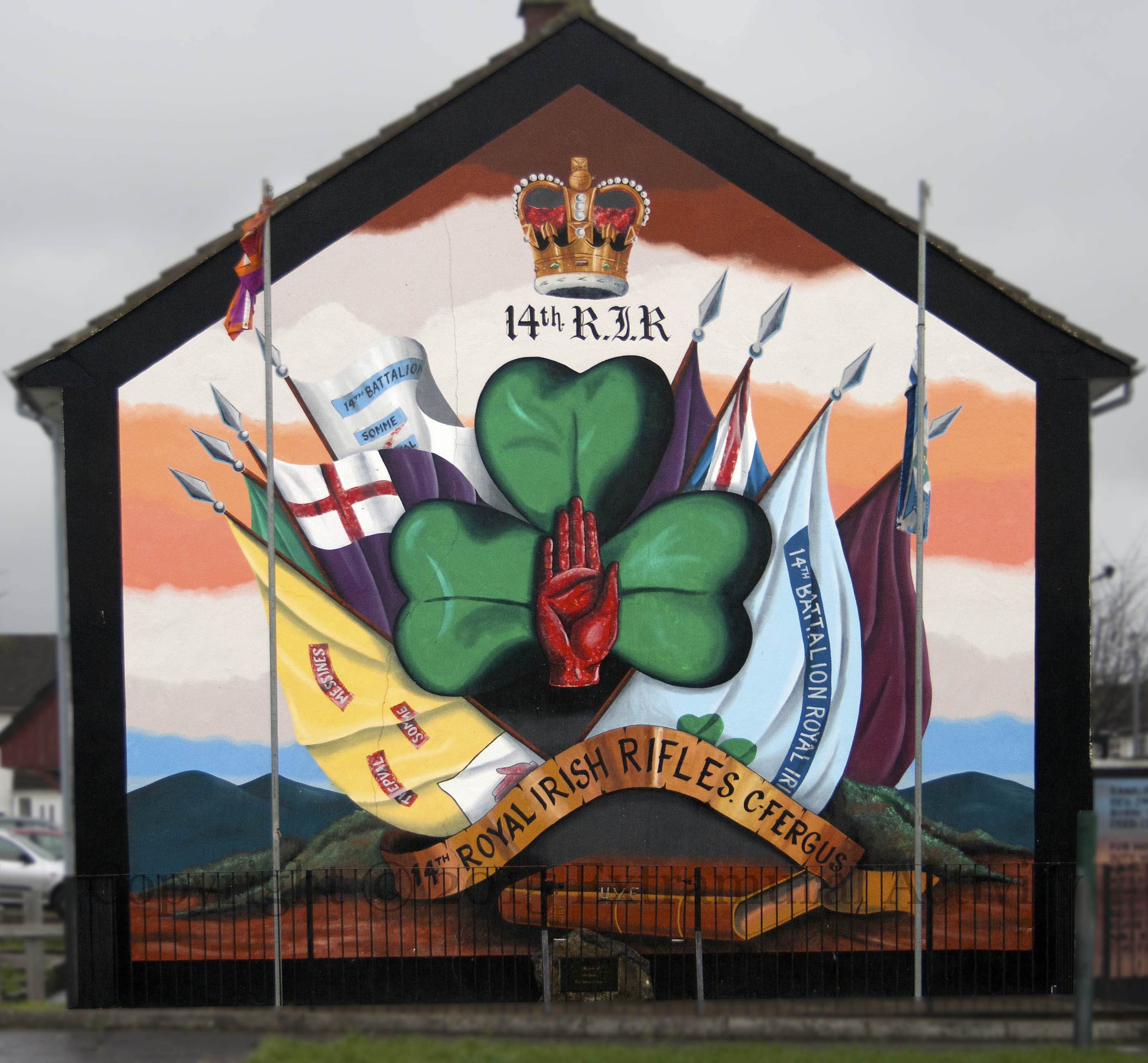
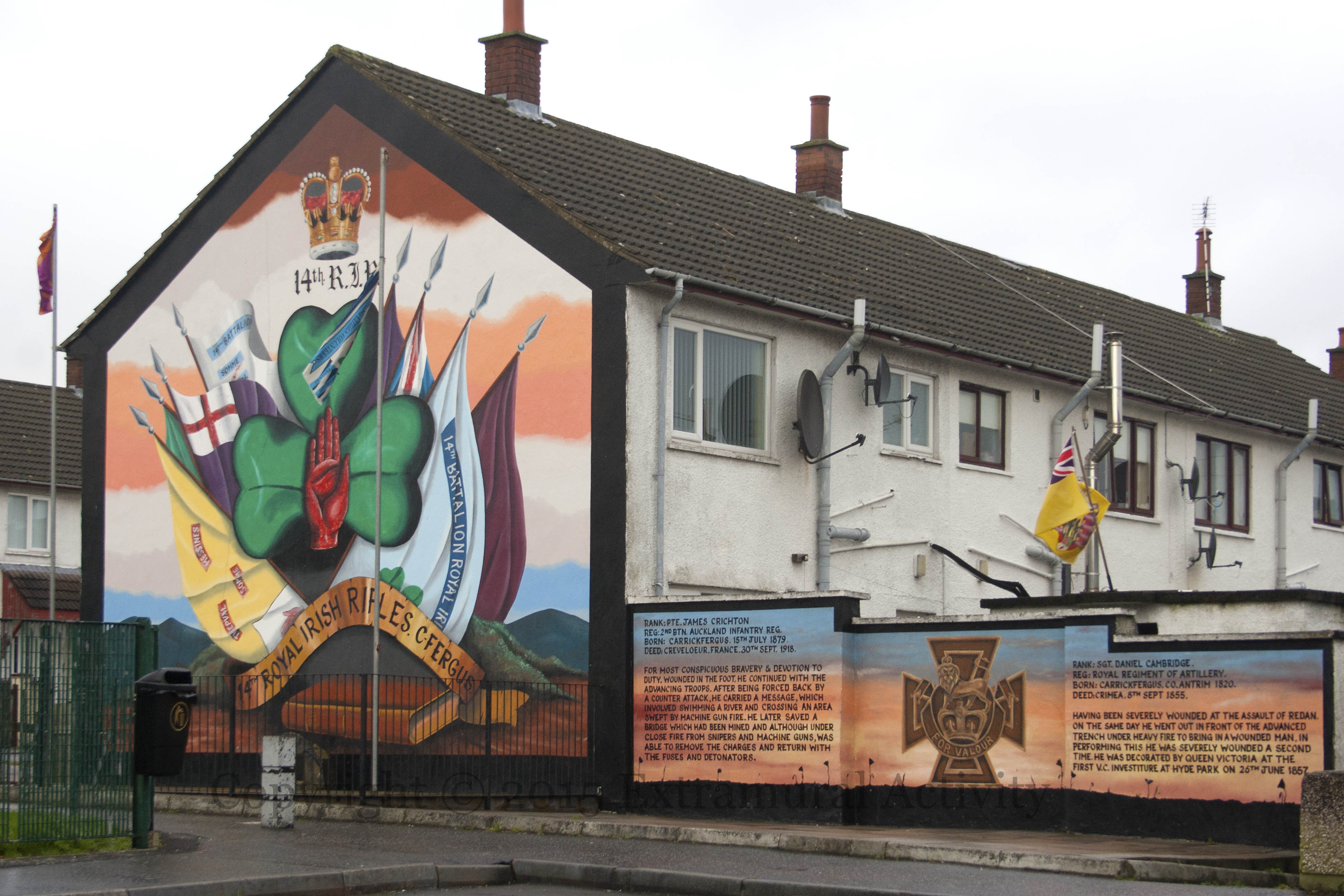
This mural celebrates the 14th Battalion of the Royal Irish Rifles and the Victoria Cross-winning exploits of two soldiers born in Carrickfergus: James Crichton, who served in the New Zealand forces (WP) and Daniel Cambridge, who served in the Royal Artillery in the Crimean War (WP). Their bravery is described as follows on the side-wall (in the image below):
Rank: Pte. James Crichton. Reg: 2nd Btn Auckland Infantry Reg. Born: Carrickfergus 15th July 1879. Deed: Creveloeur, France 30th Sept. 1918
For most conspicuous bravery & devotion to duty, wounded in the foot, he continued with the advancing troops. After being forced back by a counter attack, he carried a message, which involved swimming a river and crossing an area swept by machine gun fire. He later saved a bridge which had been mined and although under close fire from snipers and machine guns, was able to remove the charges and return with the fuses and detonators.
Rank: Sgt. Daniel Cambridge. Reg: Royal Regiment Of Artillery. Born: Carrickfergus Co. Antrim 1820. Deed: Crimea, 8th Sept. 1855
Having been severely wounded at the assault of Redan, on the same day he went out in front of the advanced trench under heavy fire to bring in a wounded man. In performing this he was severely wounded a second time [having been shot through the jaw]. He was decorated by Queen Victoria at the first V.C. investiture at Hyde Park on 26th June 1857.
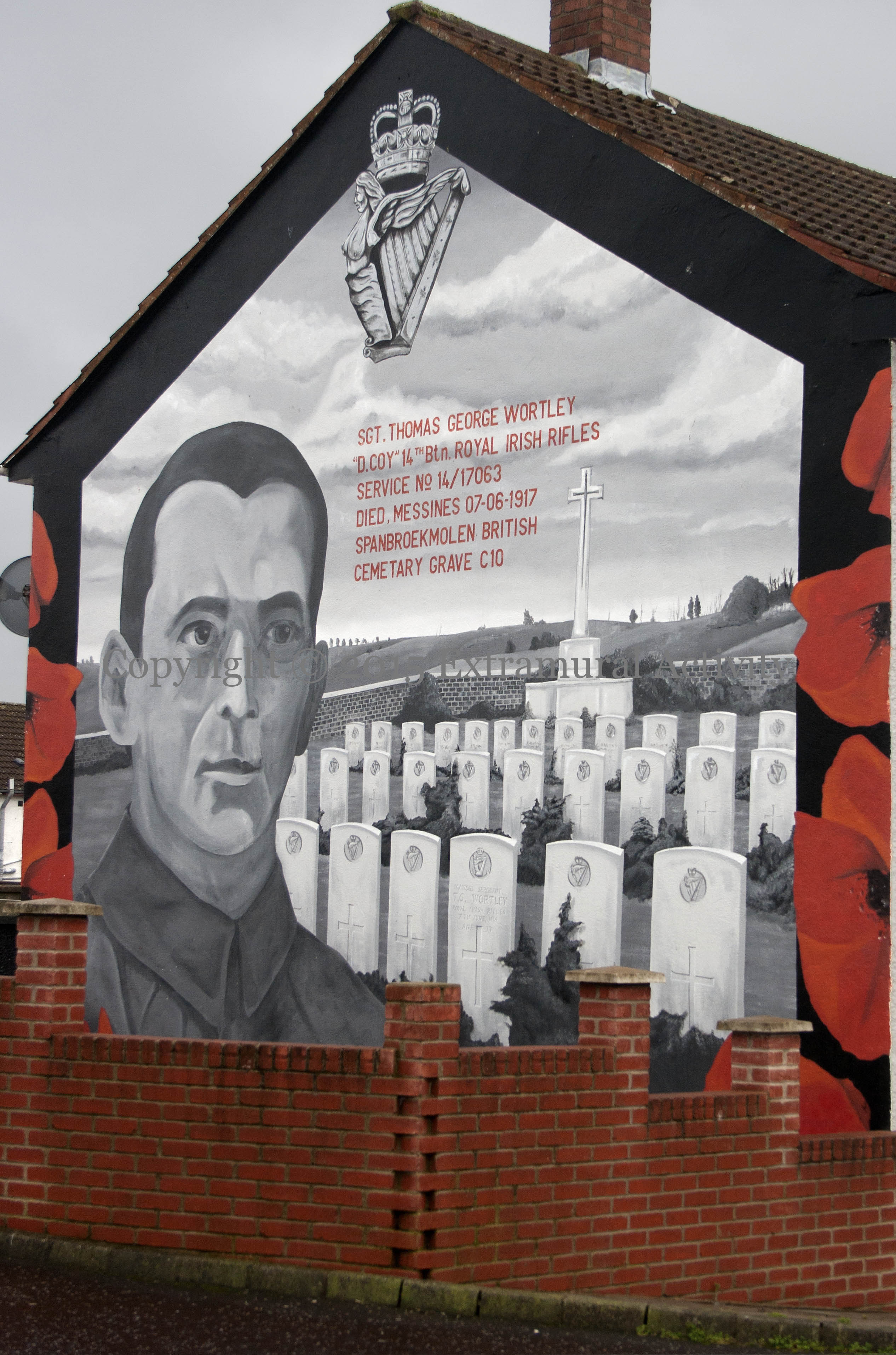
“Sgt. Thomas George Wortley , “D Coy” 14th Btn. Royal Irish Rifles, Service No. 14/17063, Died Messines 07-06-1917, Spanbroekmolen British Cemetary Grave C10″. Wortley was born in Carrickfergus, lived in Belfast, died on the first day of the battle at Messines (findagrave), buried in a small cemetery of British soldiers, many from the 36th (Ulster) Division, in Spanbroekmolen on the Ypres Salient in Flanders (WP) – shown in the mural – and is remembered in Carrickfergus with a parade each year on the date of his death (carrickfergusrollofhonour).
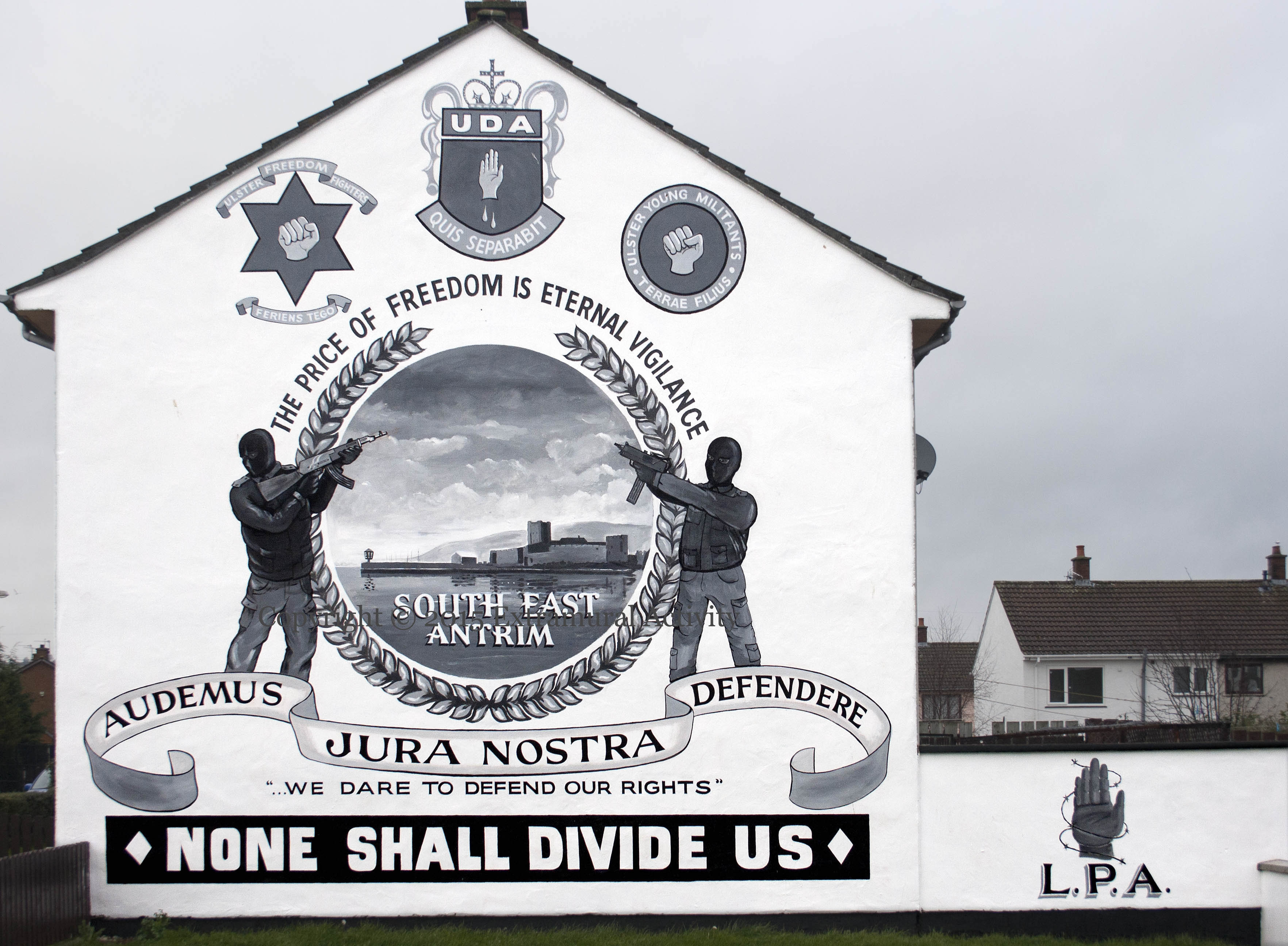
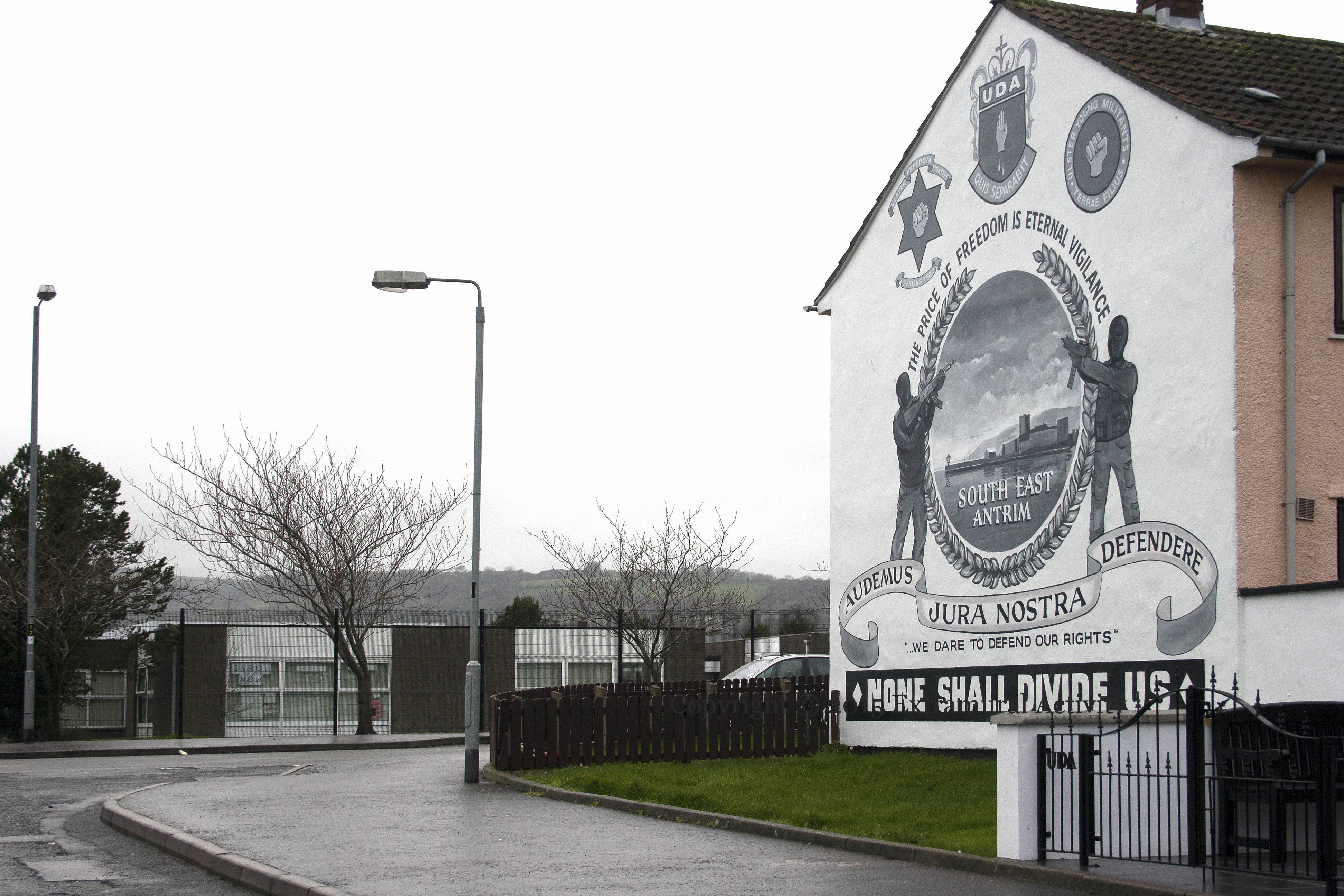
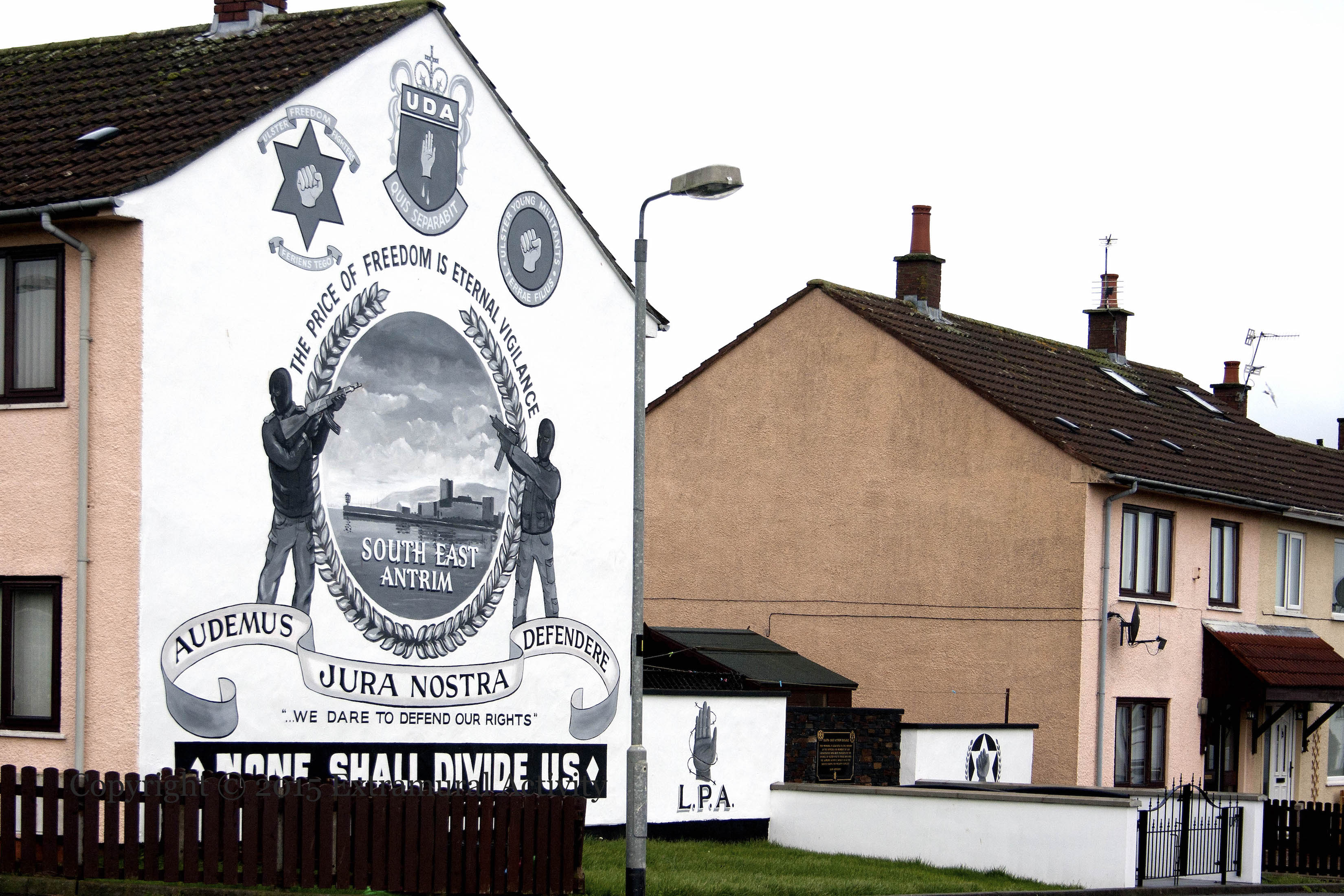
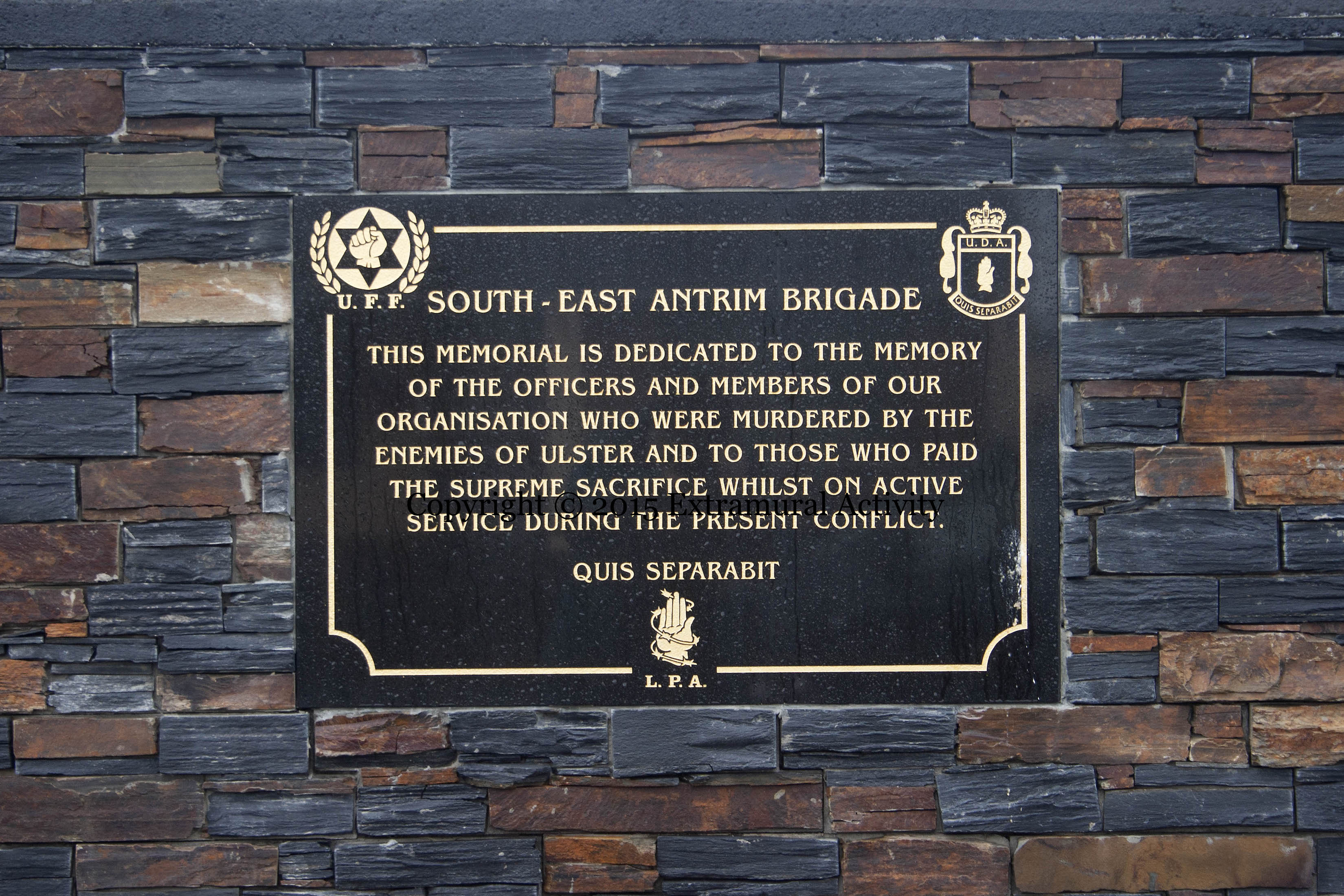
“Audemus jura nostra defendere – We dare to defend our rights”. The UDA/UFF/UYM/LPA mural above shows hooded gunmen standing either side of a view of Carrickfergus castle. The phrase “The price of peace is eternal vigilance” is associated with British politician Leonard Courtney (who also said “Lies – damned lies – and statistics”) though it probably goes further back. As can be seen from the second image, the mural watches over Woodlawn primary school. The third image shows the memorial garden off to the right-hand side; the plaque is shown fourth: “This memorial is dedicated to the memory of the officers and members of our organisation who were murdered by the enemies of Ulster and to those who paid the supreme sacrifice whilst on active service during the present conflict. Quis separabit.”
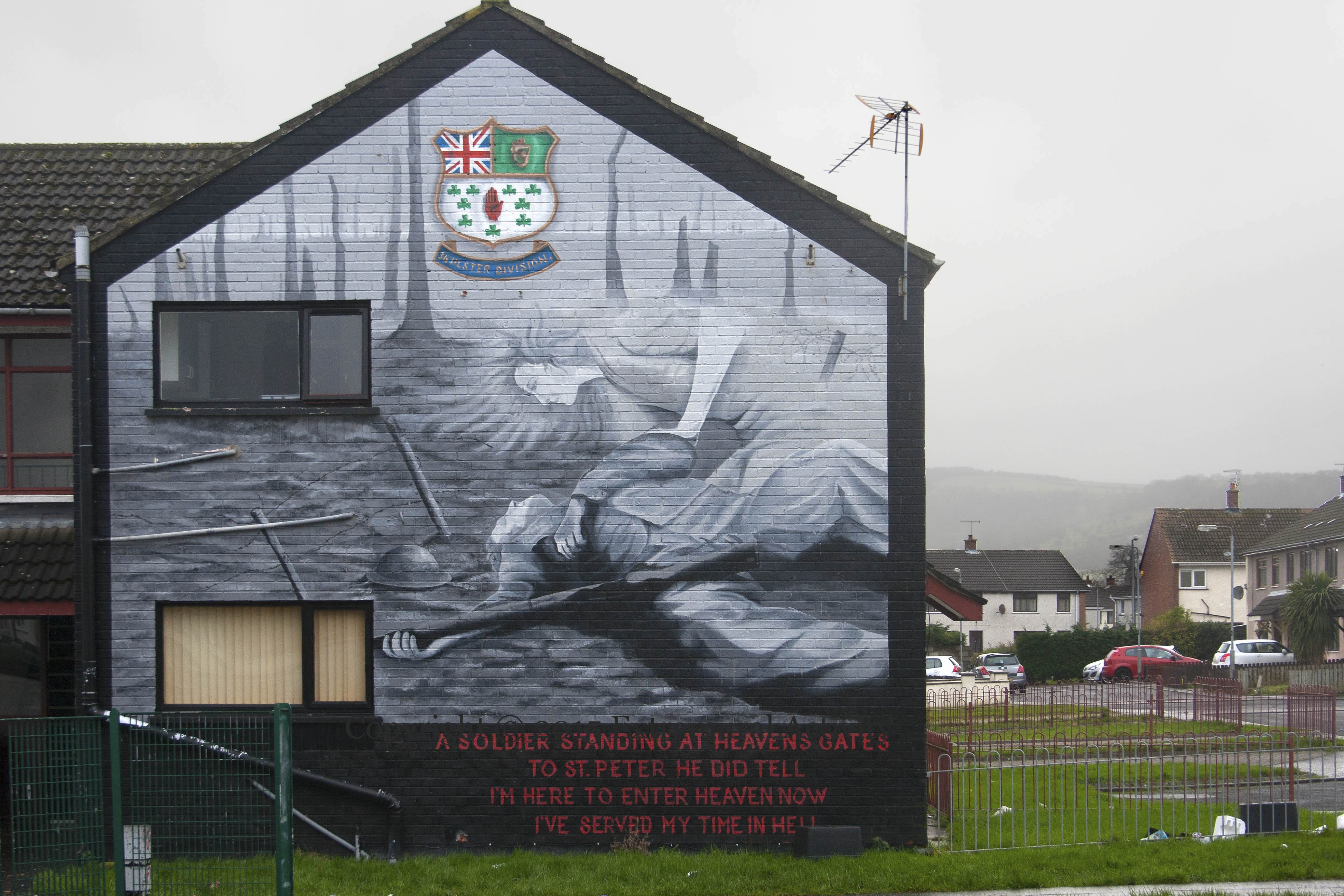
A dead WWI soldier in the scorched Belgian countryside is comforted by an ethereal figure who will convey him to heaven: A soldier standing at heaven’s gate/To St. Peter he did tell/I’m here to enter heaven now/I’ve served my time in hell – a variation on James Donahue’s WWII Soldier’s Poem (WP). The poem was previously used of Republicans in a 1981 mural in Derry (see I Refuse To Change/M00151).
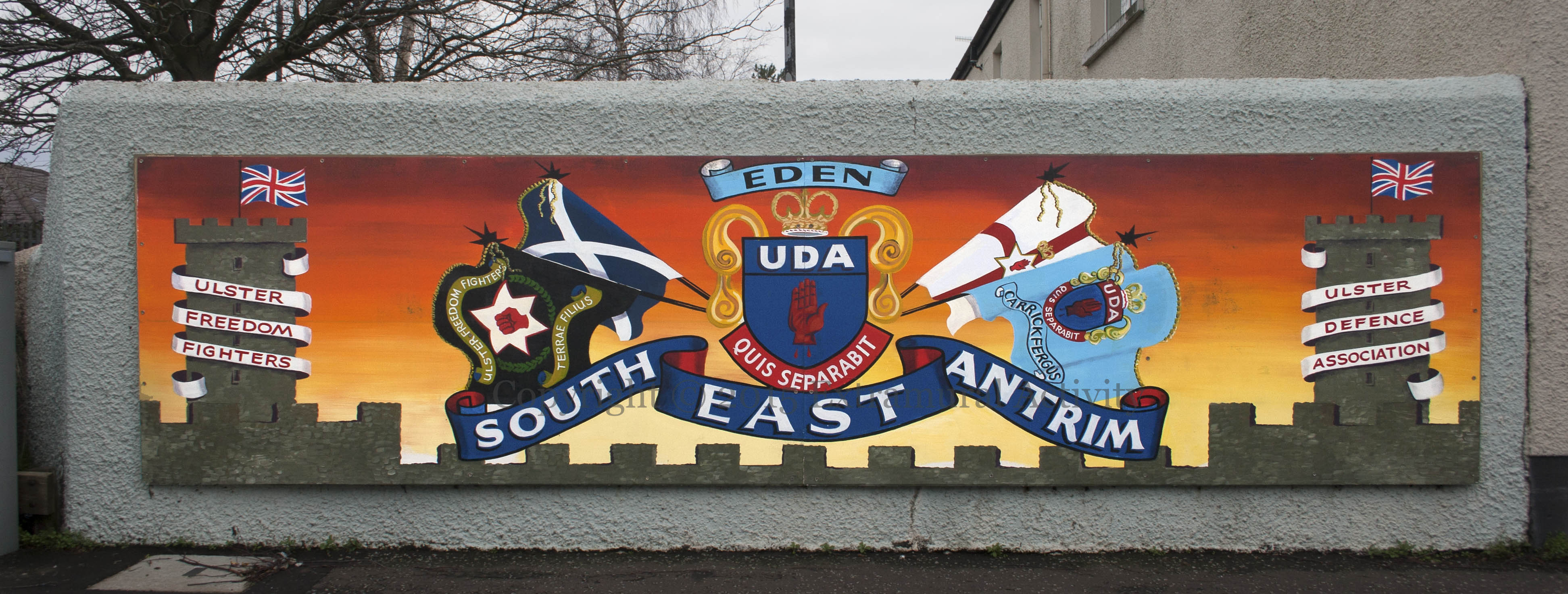
The town of Eden, on the outskirts of Carrickfergus, is defended by the walls of Carrickfergus castle and the arms of the UDA. For the previous version of this board, see Loyalist Eden.
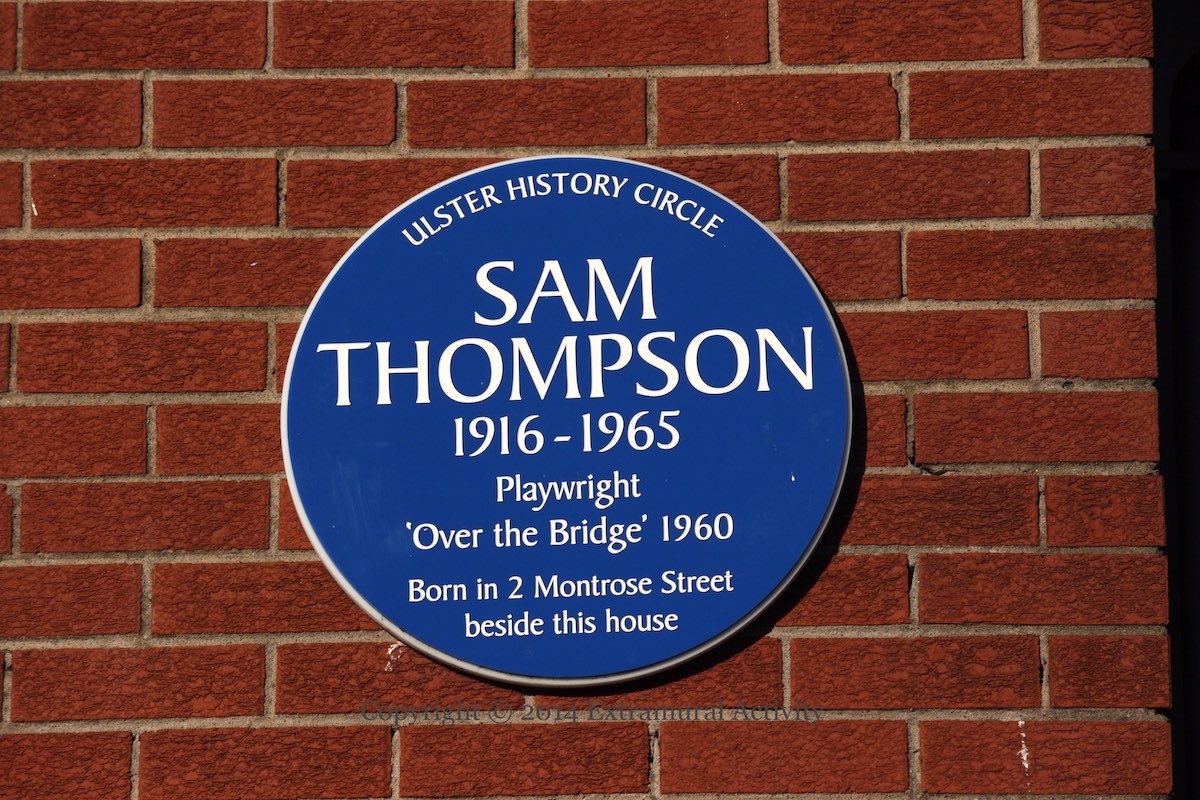
“Sam Thompson 1916-1965 Playwright ‘Over The Bridge’ 1960. Born in 2 Montrose Street beside this house.” In addition to his written works, Thompson was a painter for H&W and the Corporation, a trade unionist and Labour candidate (WP).
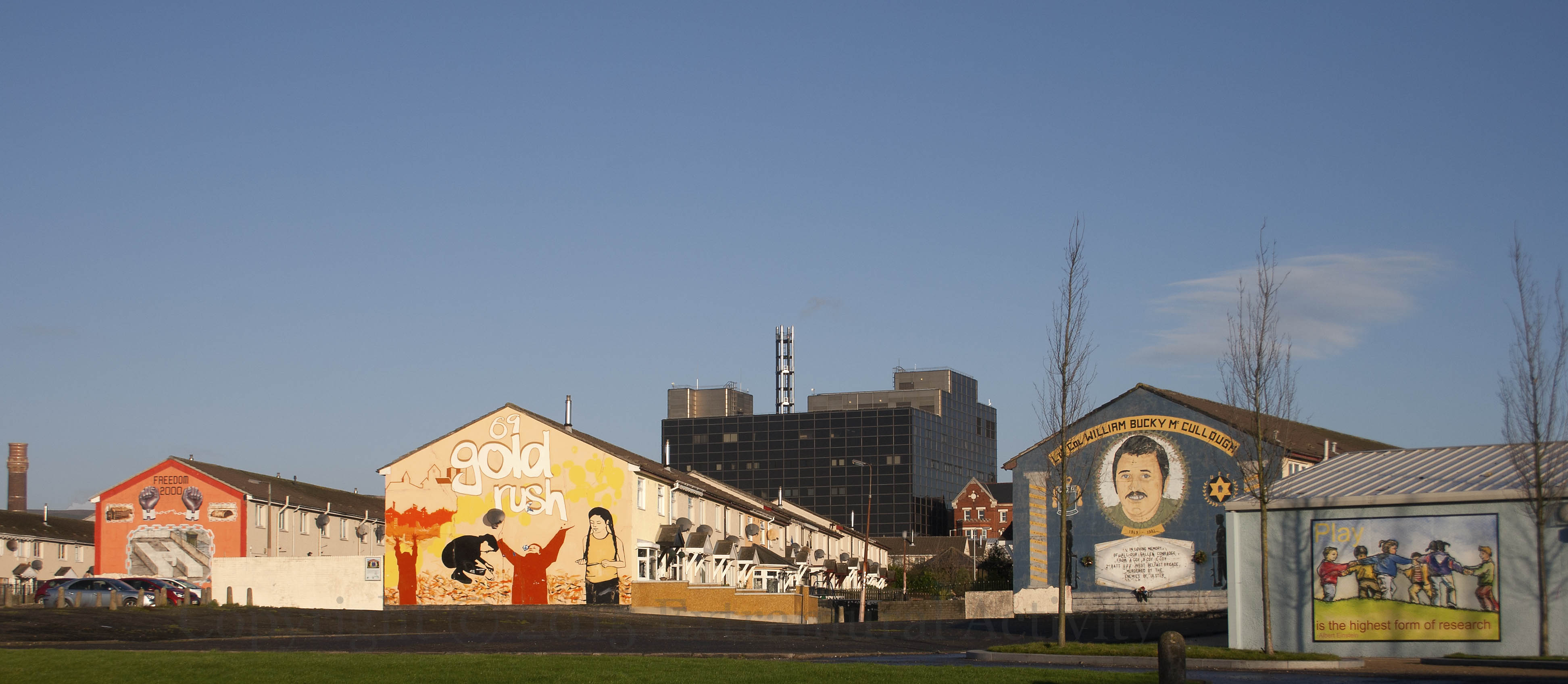
Here’s a wide shot of the right-hand side of the murals in the lower Shankill estate. These gables have remained in place while the estate has been redeveloped, causing the removal of the Red Hand, Martin Luther and Cuchulainn murals.
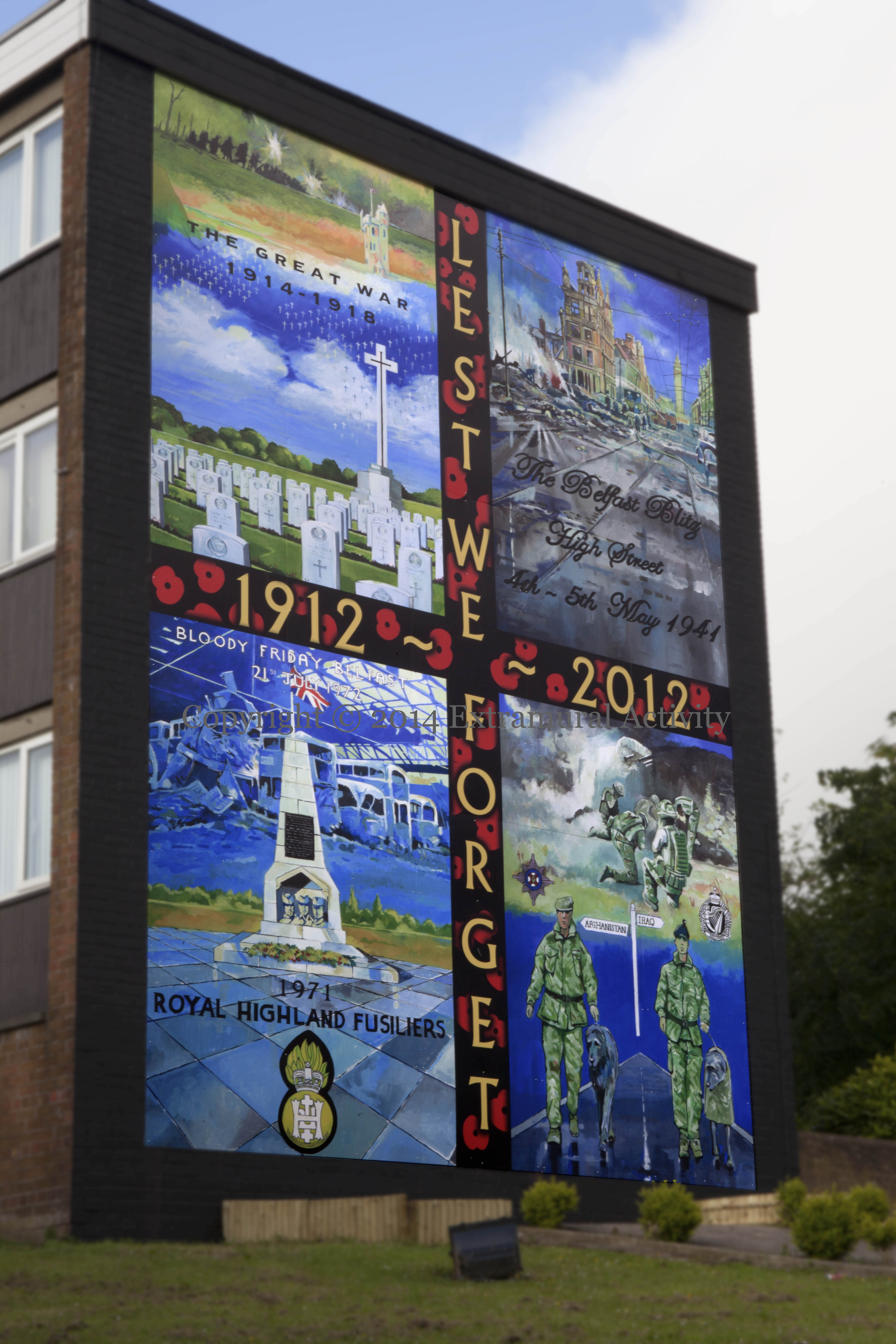
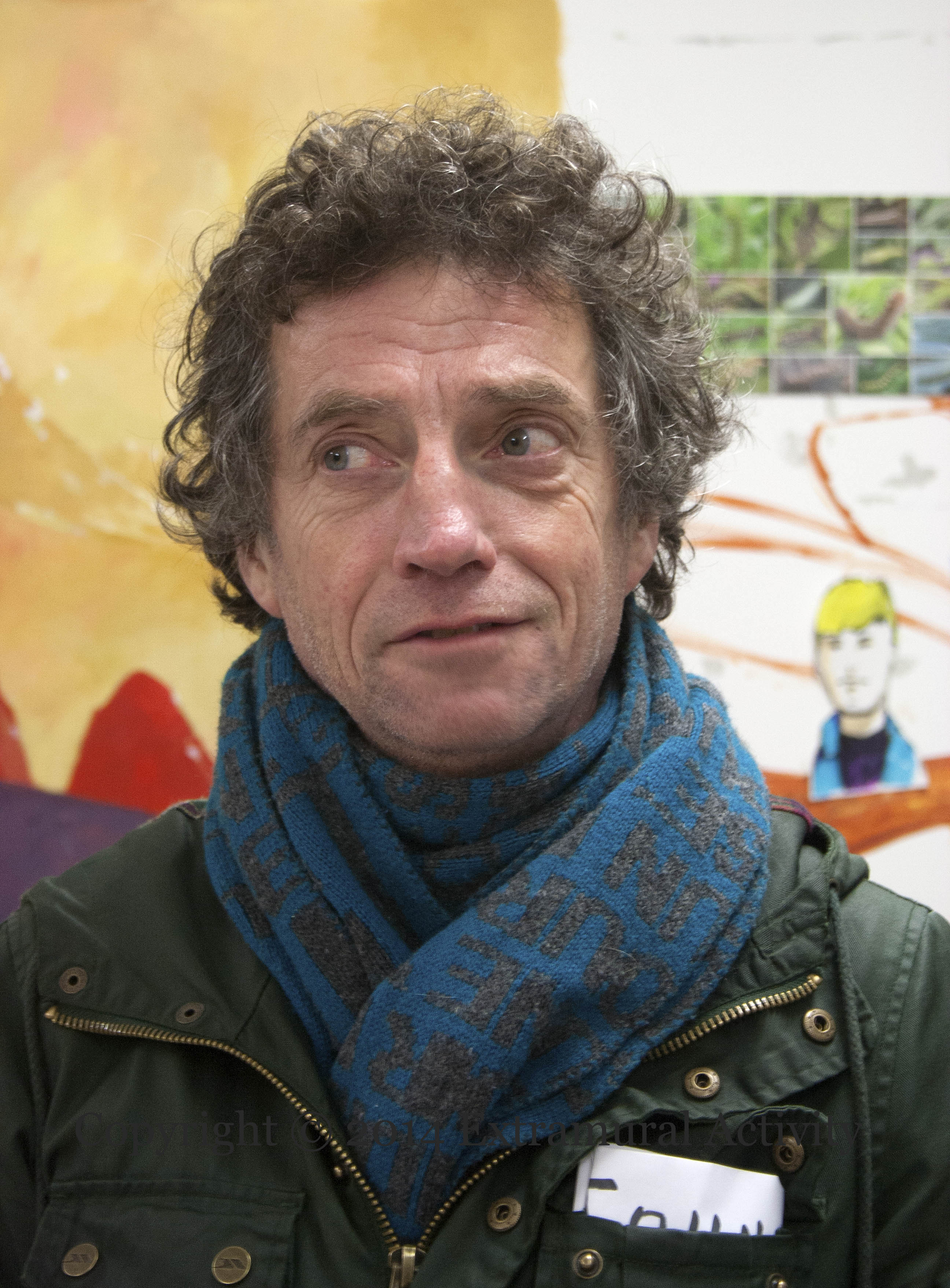
The three-storey mural above is in Ballysillan and replaced a UVF mural when it was added in 2011. The mural is the work of Jim Russell, shown below at Arts For All where he is artist-in-residence. The information below was provided by Arts For All.
The Great War: The first panel commemorates the Great War that ravaged Europe from 1914 to 1918 and shows troops advancing into battle, the Ulster Tower at Thiepval commemorating the sacrifice at the Somme and an image showing one of the war cemeteries and highlighting the true cost of war.
Second World War: The second panel features some of the devastation visited upon Belfast during a series of Luftwaffe raids during the early years of the Second World War. Belfast suffered greatly with over 1,000 people dying in four nights of bombing in April and May of 1941.
The Troubles: In the third panel highlight the dark history known as the Troubles. It features two events from the years of that time – the murder of the three young off-duty Scottish soldiers in 1971 [the monument depicted was featured in The Highland] and the Bloody Friday bombings of July 1972. In the midst of the horror that accompanied the early years of the Troubles these events still caused many to struggle to understand how people could carry out such atrocities.
Present Day Conflict: Panel four brings us up to the present day. Military service is a tradition for many in Northern Ireland and for many their first overseas trip came on the back of an overseas posting whilst serving in one of the Armed Forces. From times past, through the World Wars, the Korean War, to more recent conflicts in Iraq and Afghanistan soldiers and regiments drawn from Norther Ireland continue to play a role.
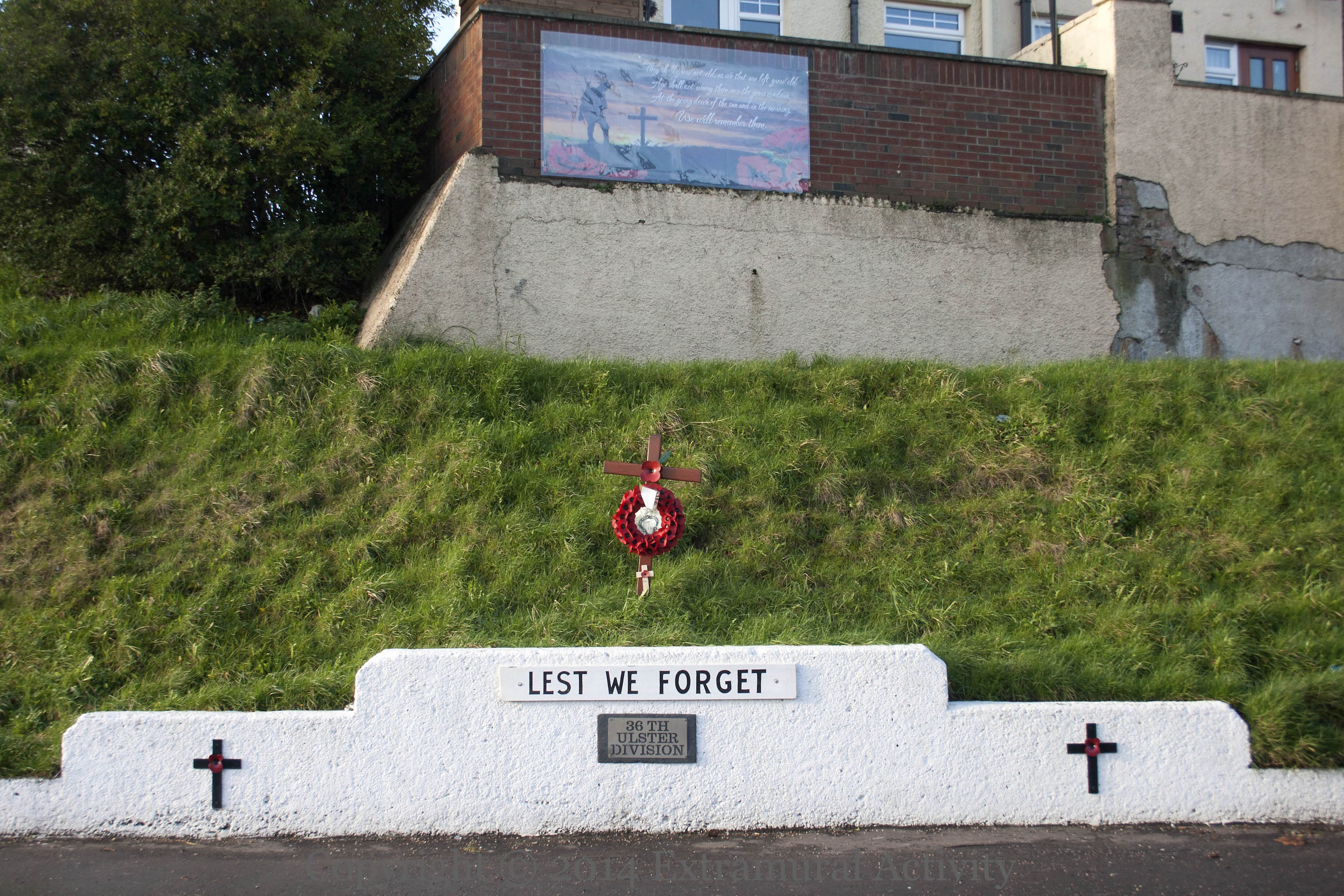
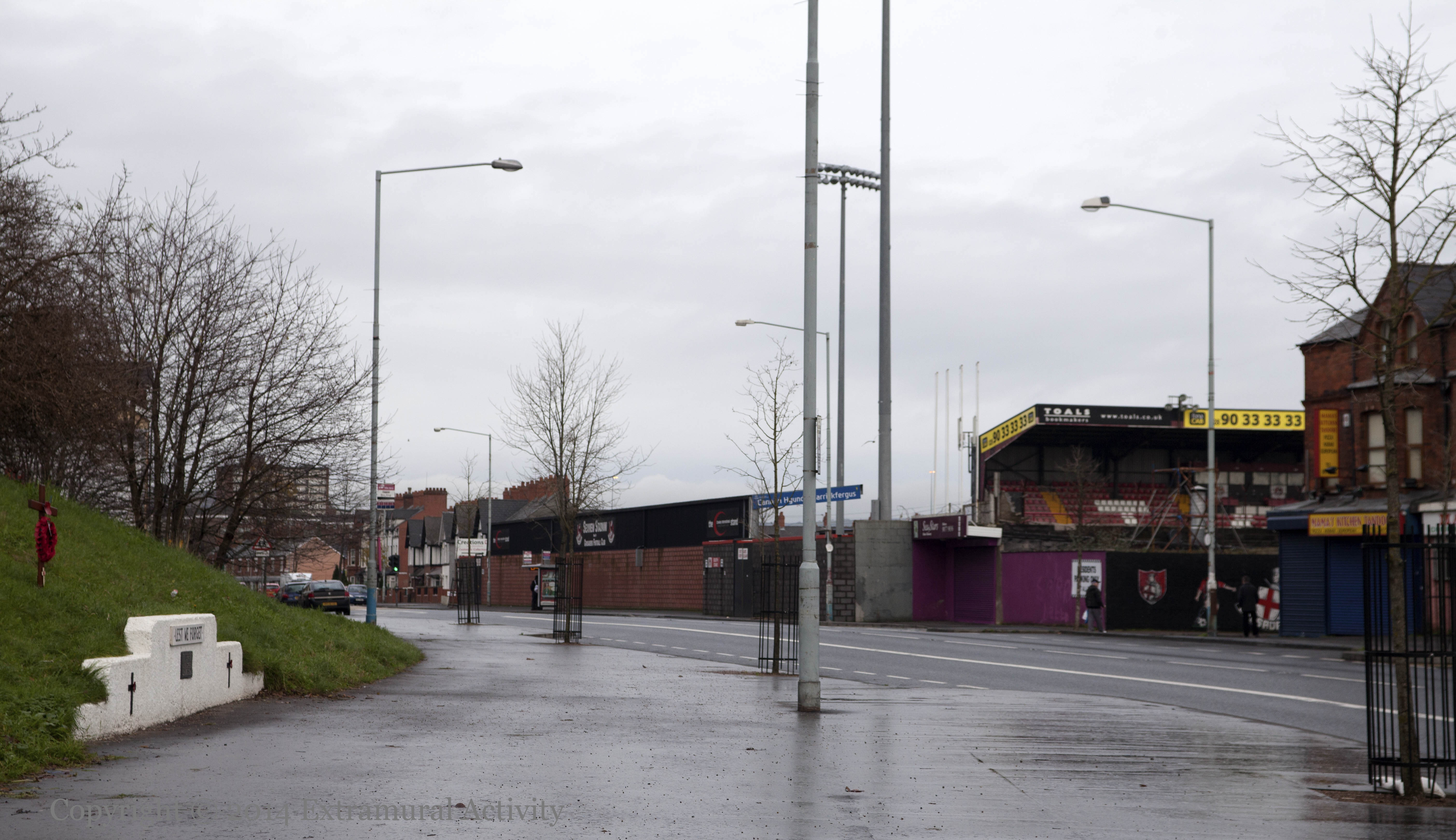
This new roadside memorial to the 36th (Ulster) Division in WWI, of wooden crosses on white stone along with a board on the wall above, has appeared on the Shore Road, across from Seaview, home of Crusaders FC, the Hatchet Men.
 Seosamh Mac Coille Collection