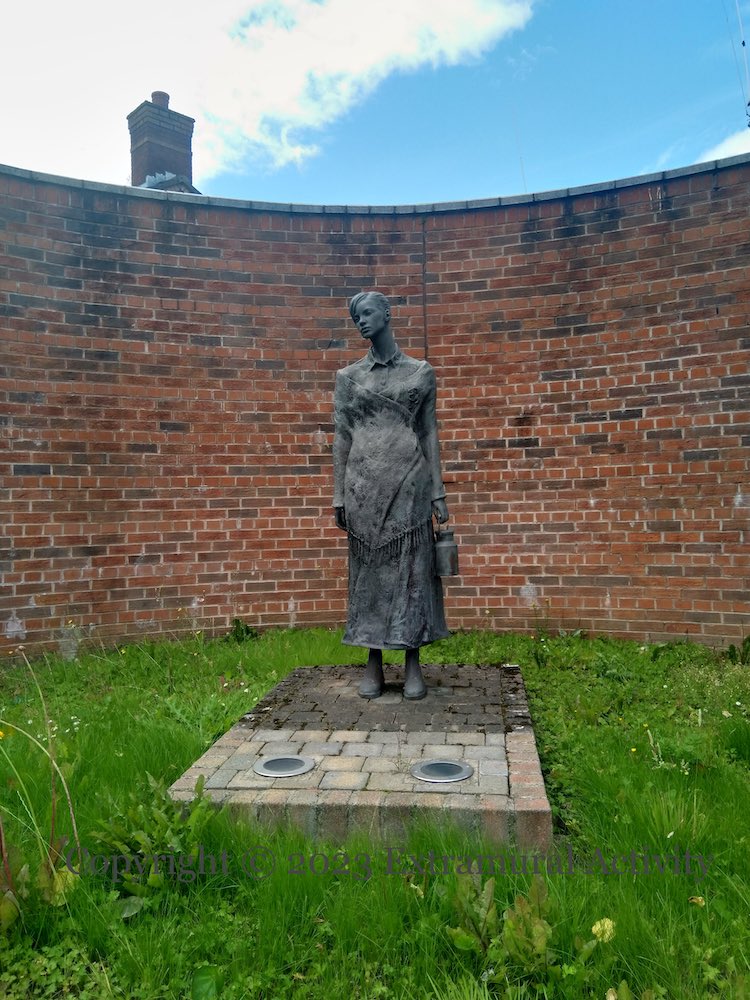
Shawlies

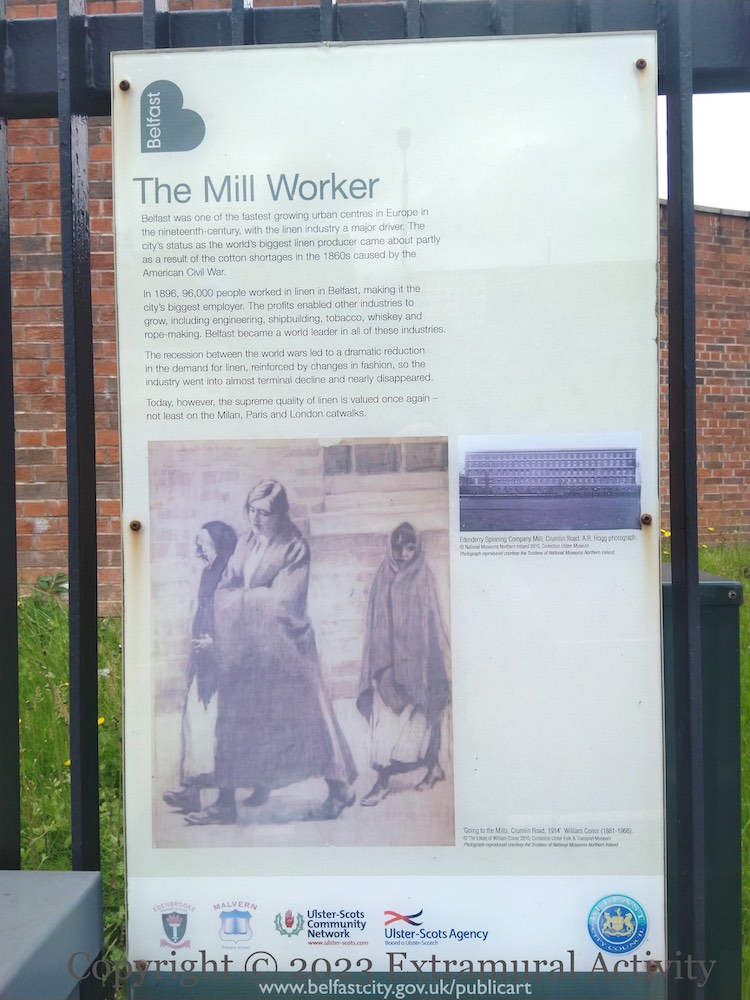
A shawlie is a working-class woman wearing a shawl to serve as a coat and hat. In Belfast they are particularly associated with the workers in the linen mills, such as the Brookfield Mill on the Crumlin Road. This statue, designed by Ross Wilson, was inspired by William Conor’s painting of mill workers (and pehaps specifically “Going to the mills, Crumlin Road, 1914” which is included in the info board, below) and installed at the top of Cambrai Street in 2010 (BelTel | BBC).

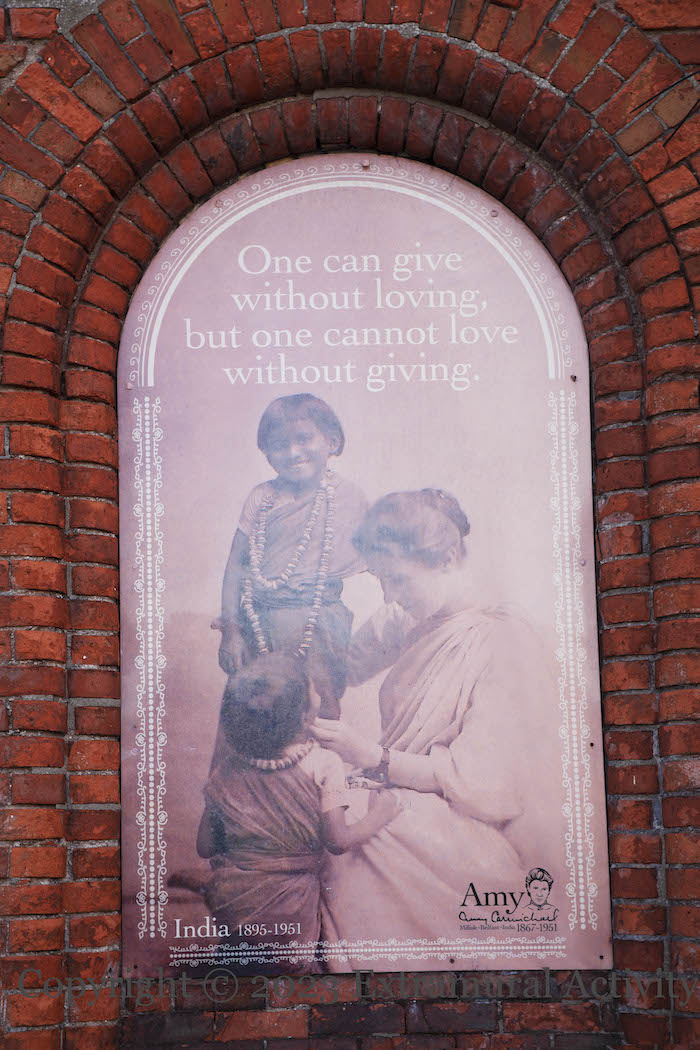
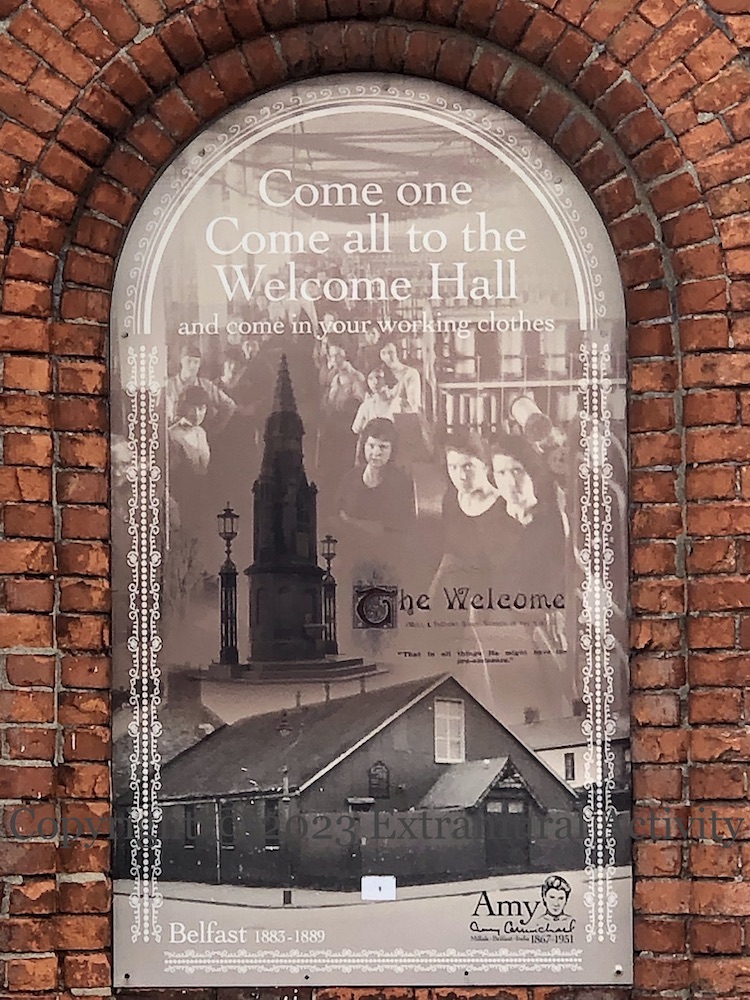
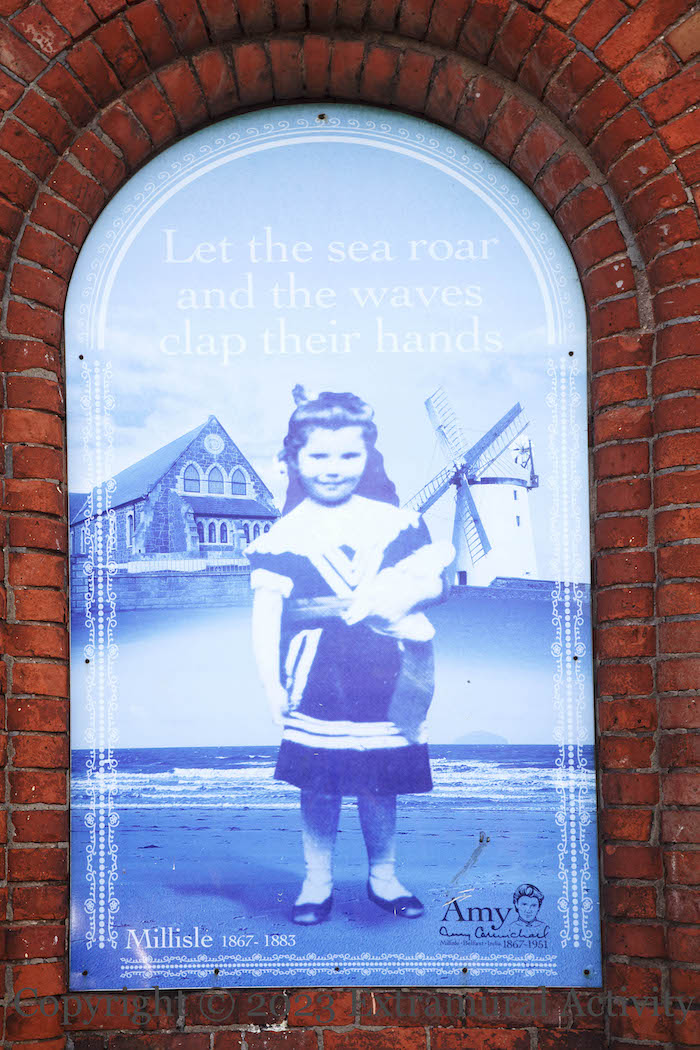
See also: the trio of boards in tribute to missionary Amy Carmichael, who set up Sunday worship for shawlies at the nearby Welcome Hall.

“The Mill Worker. Belfast was one of the fastest growing urban centres in Europe in the nineteenth-century, with the linen industry a major driver. The city’s status as the world’s biggest linen producer came about partly as a result of the cotton shortages in the 1860s caused by the American Civil War.
In 1896, 96,000 people worked in linen in Belfast, making it the city’s biggest employer. The profits enabled other industries to grow, including engineering, shipbuilding, tobacco, whiskey and rope-making. Belfast became a world leader in all of these industries.
The recession between the world wars led to a dramatic reduction in the demand for linen, reinforced by changes in fashion, so the industry went into almost terminal decline and nearly disappeared.
Today, however, the supreme quality of linen is valued once again – not least on the Milan, Paris and London catwalks.”
Click image to enlarge
Copyright © 2023 Seosamh Mac Coılle
X12980 X12981
Come In Your Working Clothes

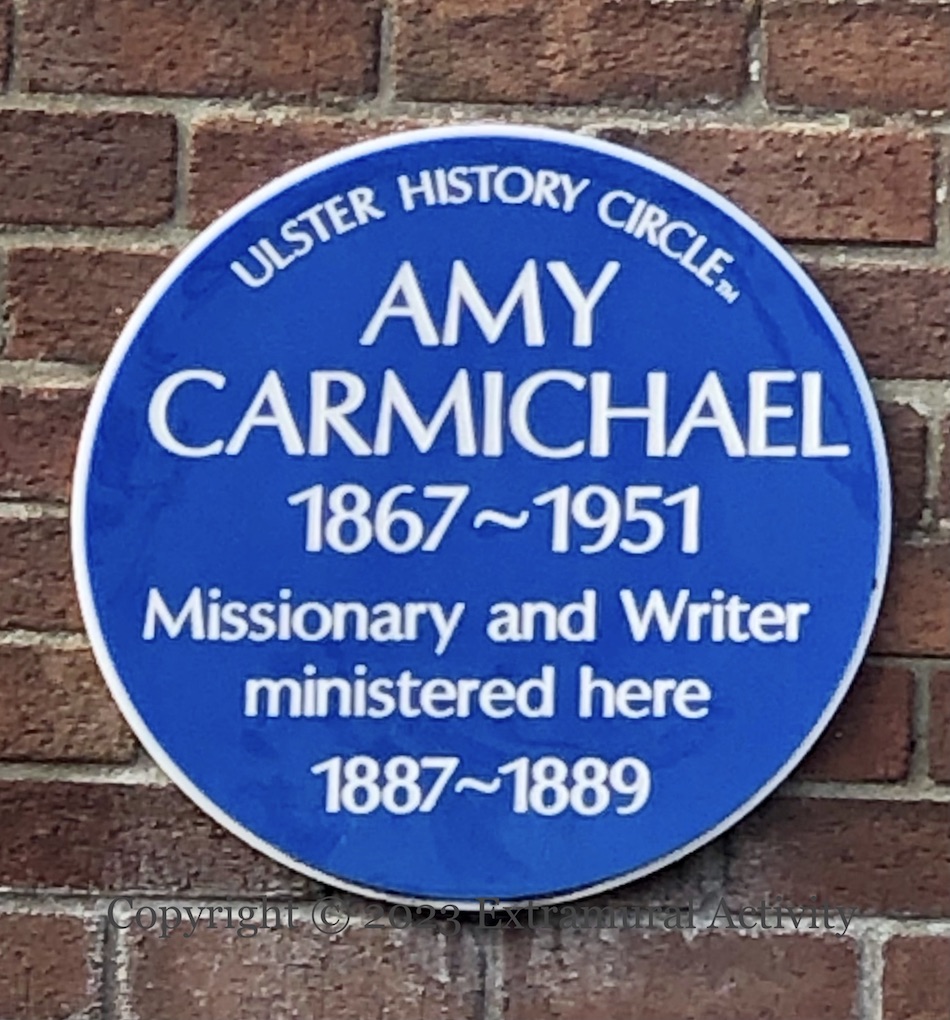
“Come one, come all, to the Welcome Hall, and come in your working clothes.” Amy Carmichael was born in Millisle, Co. Down, in 1867. In 1884 the family moved to Belfast, where Amy started Sunday classes in Rosemary Street Presbyterian for “shawlies” who worked in the mills. These were successful enough that a larger venue was required, and so, in 1887, the Welcome Hall, with seating for 500, opened in Cambrai Street (this subsequently became the Welcome Evangelical Church, where the blue plaque shown below is mounted). Carmichael then went to England (Manchester), Japan, Sri Lanka, and India (Bangalore). (Welcome Church | WP)

Click image to enlarge
Copyright © 2023 Seosamh Mac Coılle
X12838 [X12866] X12865 X12867
X12864

Billy Was Wright

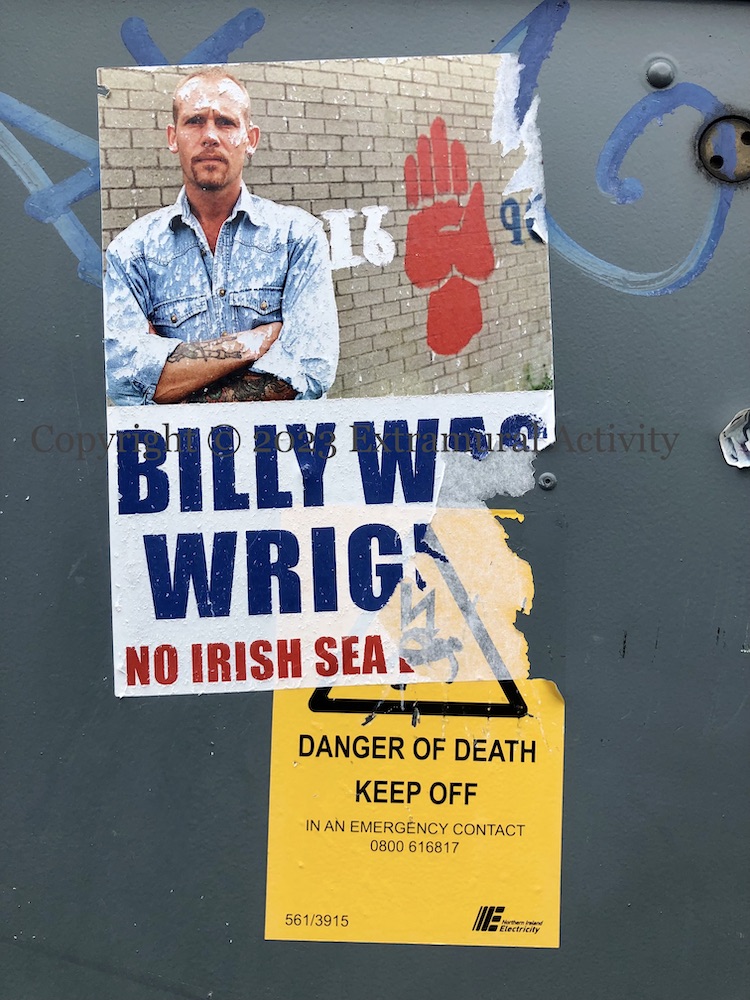
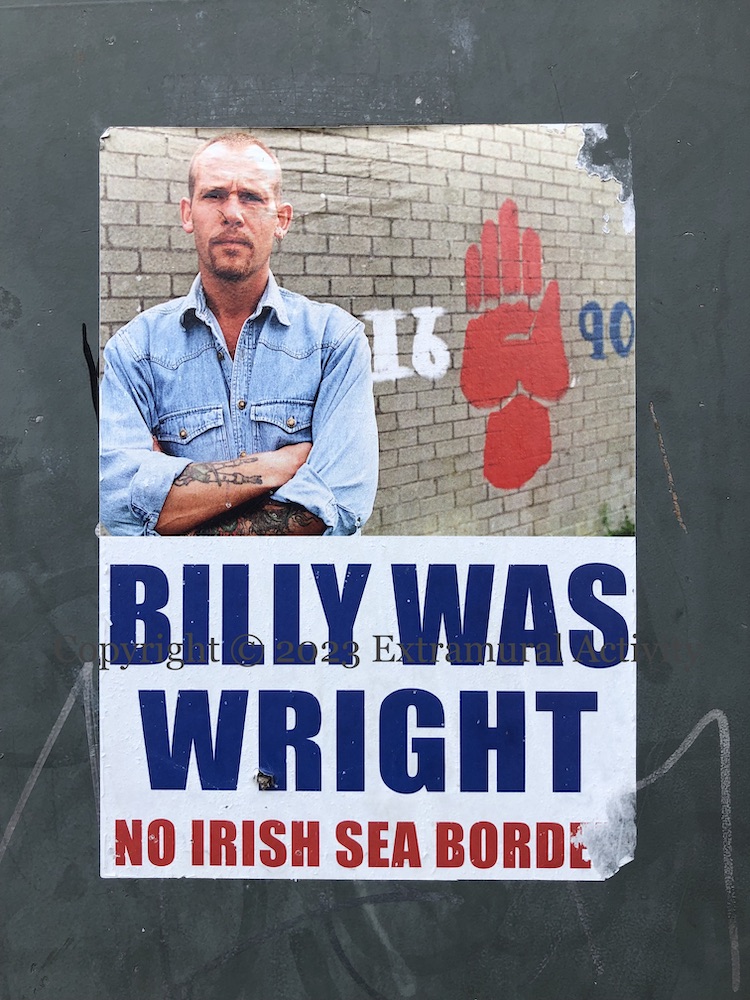
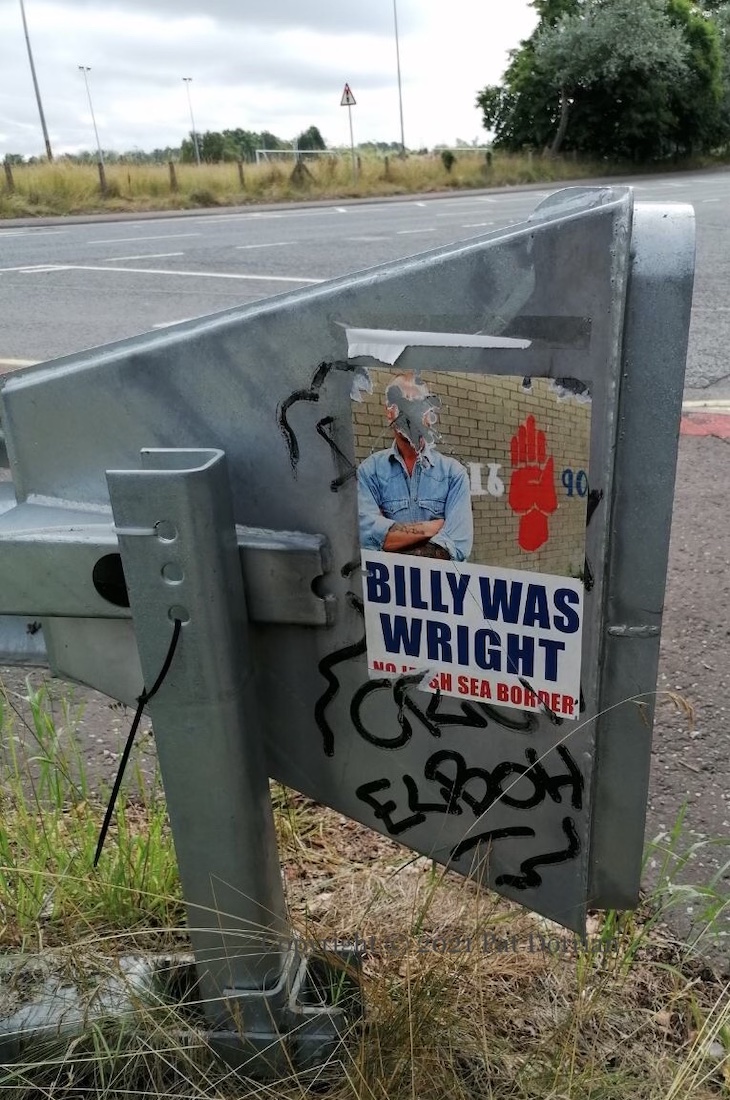
“Billy was Wright – no Irish Sea border.” Billy Wright broke with the UVF in 1996 over loyalist concessions made during the peace-process that ultimately led to the Agreement in 1998. He soon formed the LVF but was killed in prison in 1997 by members of the INLA, which, like the LVF, had not joined the ceasefire.

These posters are in Cambrai Street and Conway Street; attempts to remove them have proven unsuccessful. The Sunday World reports that a similar banner has appeared in Ballymena (Sunday World) and that the same poster was also spotted in the lower Shankill (Sunday World).

Wright is shown standing in front of a small mural in Old Rectory Park, Portadown – see D01068.

Click image to enlarge
Copyright © 2023 Seosamh Mac Coılle
X12835 [X12836] X12851
Copyright © 2021 Pat Dorrian
X15337

Glenbryn Remembers

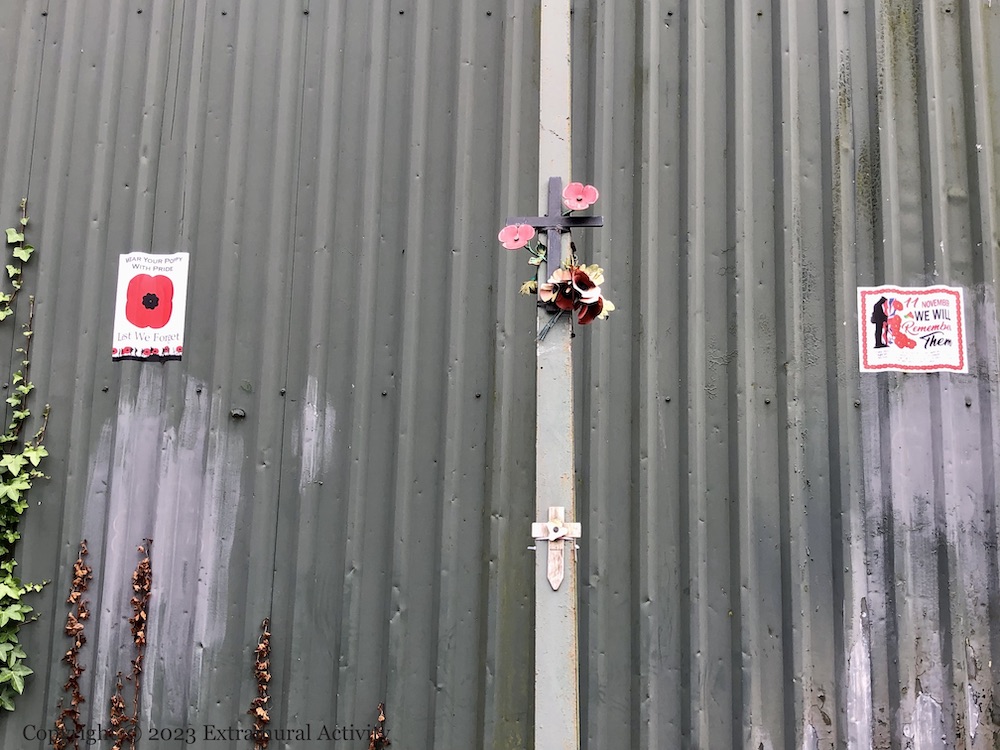
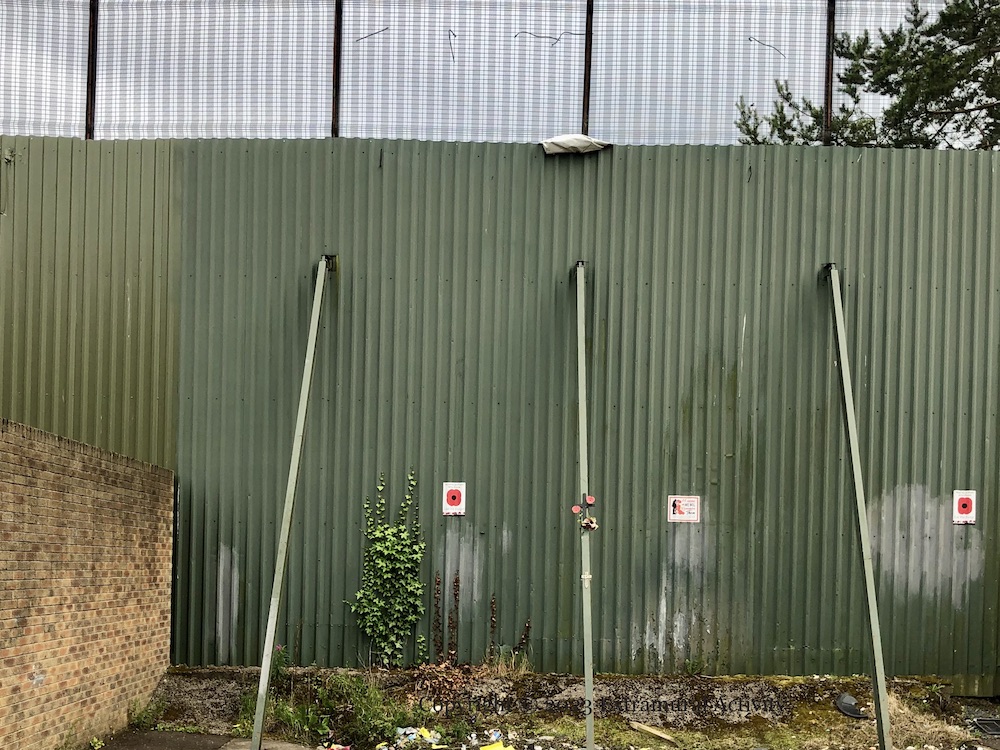
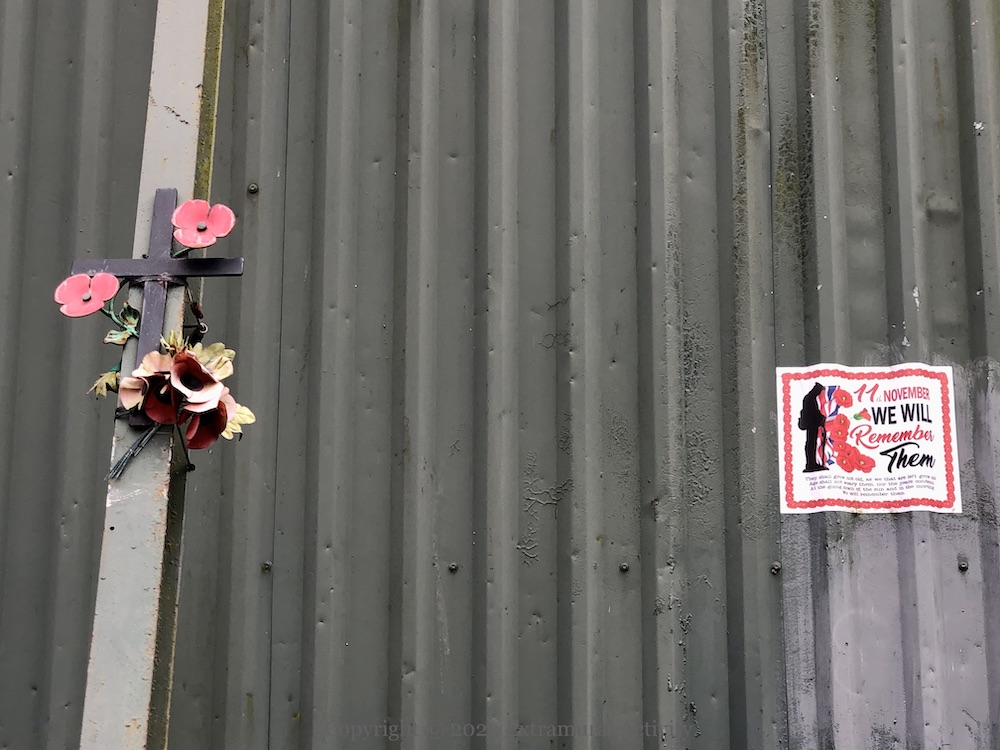
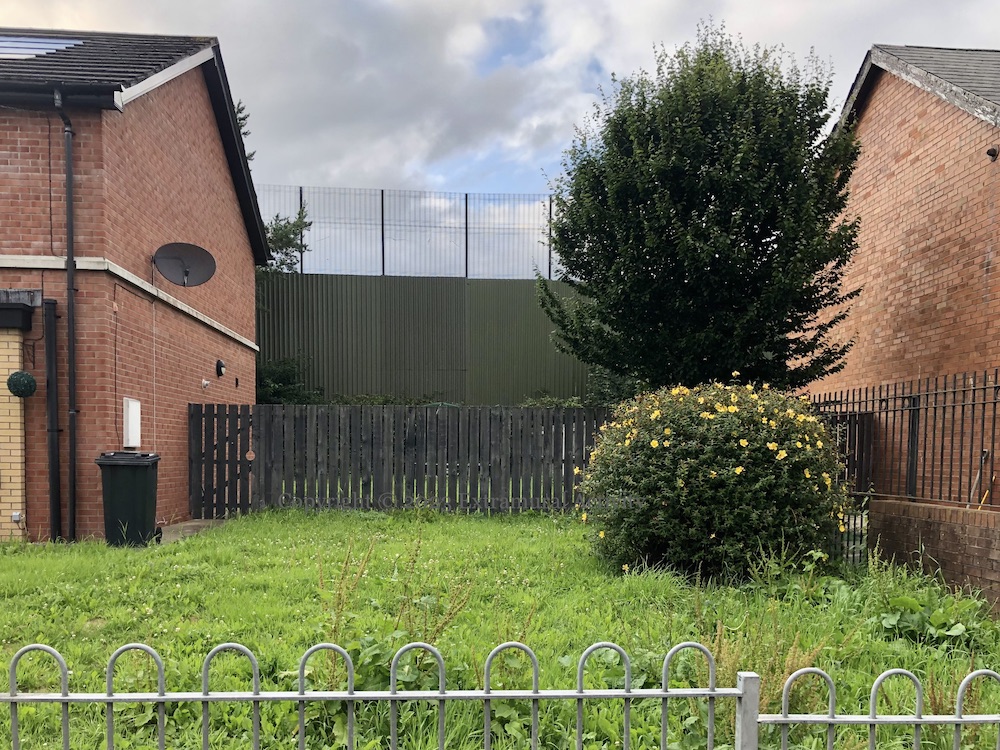
The first “peace” line along Alliance Avenue was a temporary barried constructed by the British Army in 1971 (Heatley at CAIN); parts of it today are nine metrers high (Belfast Interface Project). The central road in Ardoyne, Berwick Road/Paráıd An Ardghleanna was cut off by the line but in the recent redevelopment no house was built in front of the spot where the road ran through. Instead there are now support beams and a small cross in memory of WWI dead.

The final image is of the same spot on the Ardoyne side of the line.

Click image to enlarge
Copyright © 2023 Seosamh Mac Coılle
X12816 X12815 [X12814] [X12817] X12818
X12819 [X12820]


This Country Is Worth Fighting For

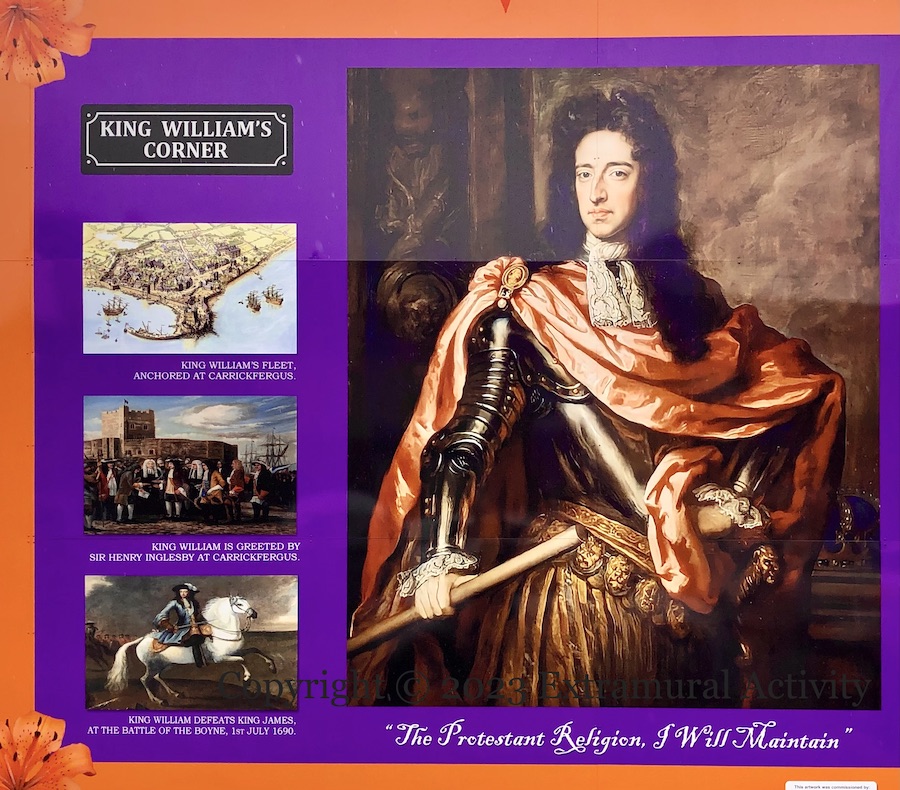
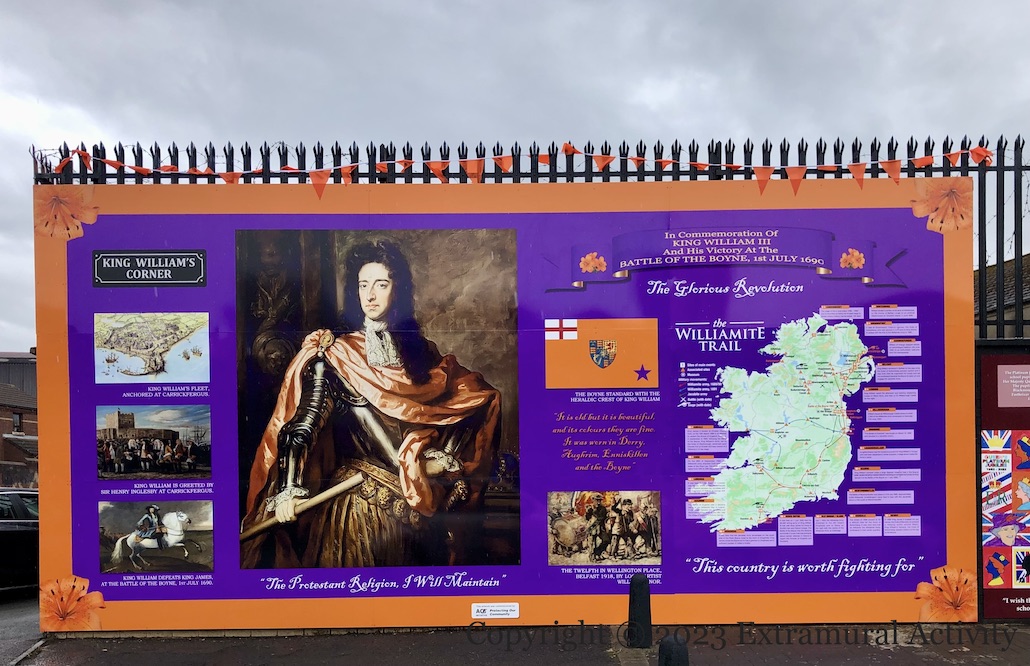
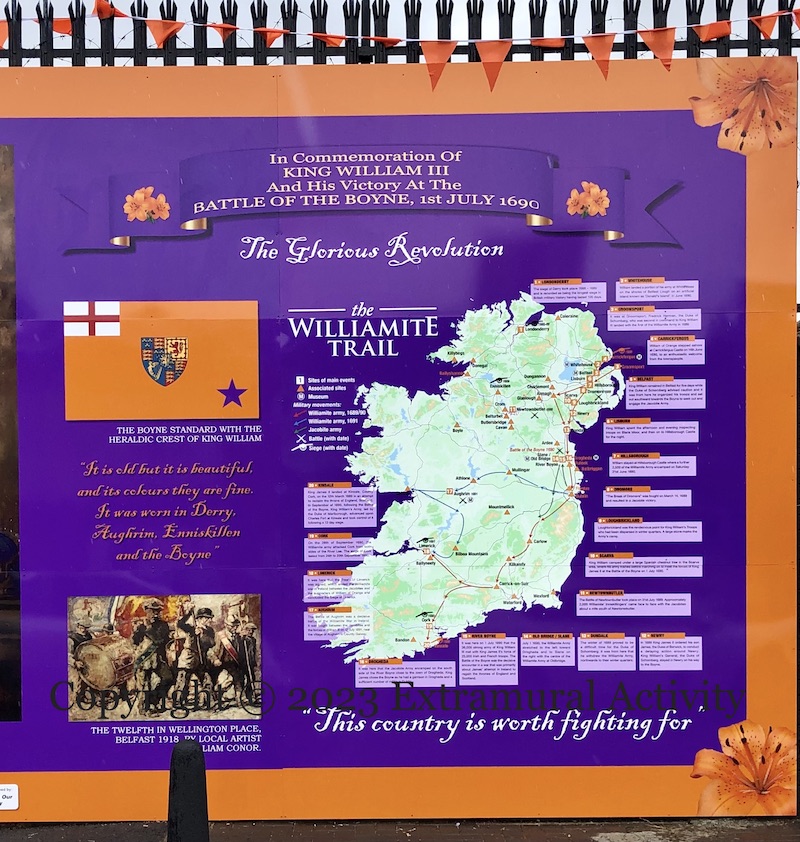
“In commemoration of King William III and his victory at the Battle Of The Boyne, 1st July 1690.” King William and images of Carrickfergus and the Boyne are included on the left of the board: in Ireland, William in person travelled from Carrickfergus to Drogheda and – after the victory at the Boyne – to Dublin, from which he left to pursue the war in Europe; his troops, on the other hand, after landing in Groomsport (1689) and Carrickfergus (1690) and fighting at the Boyne, continued on southward, to Cork and then to Limerick, and westward, to Athlone, Aughrim, and (again) Limerick. The campaign ended in October, 1691, with the signing of the Treaty Of Limerick. The information is available in pdf format from the Schomberg House Museum.

King William’s Corner joins Queen’s Corner and King’s Corner (and first of them all, Conor’s Corner –Conor’s ‘The Twelfth In Wellington Place, Belfast 1918’ is included to the left of the map, under a few lines from The Sash – “It is old but it is beautiful, and its colours they are fine/It was worn at Derry, Aughrim, Enniskillen and the Boyne” – and “The Boyne Standard [a.k.a. the flag of the Orange Order] with the heraldic crest of King William”).

Click image to enlarge
Copyright © 2023 Seosamh Mac Coılle
X12764 [X12763] X12762 [X12761] X12765 “This artwork was commissioned by ACT Initiative [web] – Protecting Our Community.”

Bloom With Grace

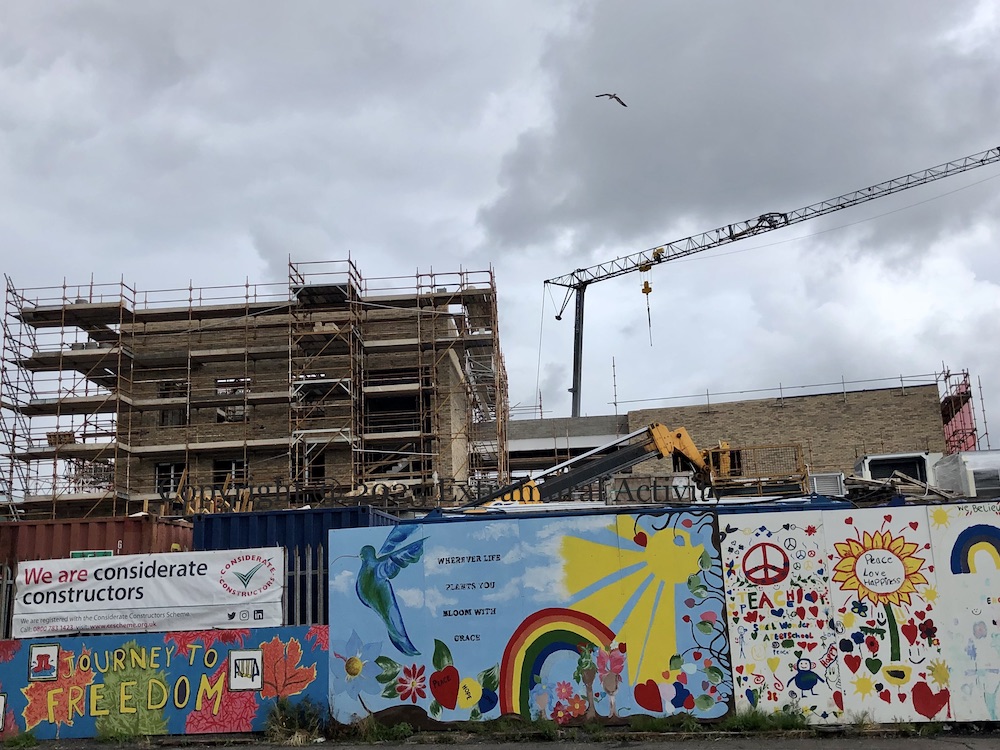
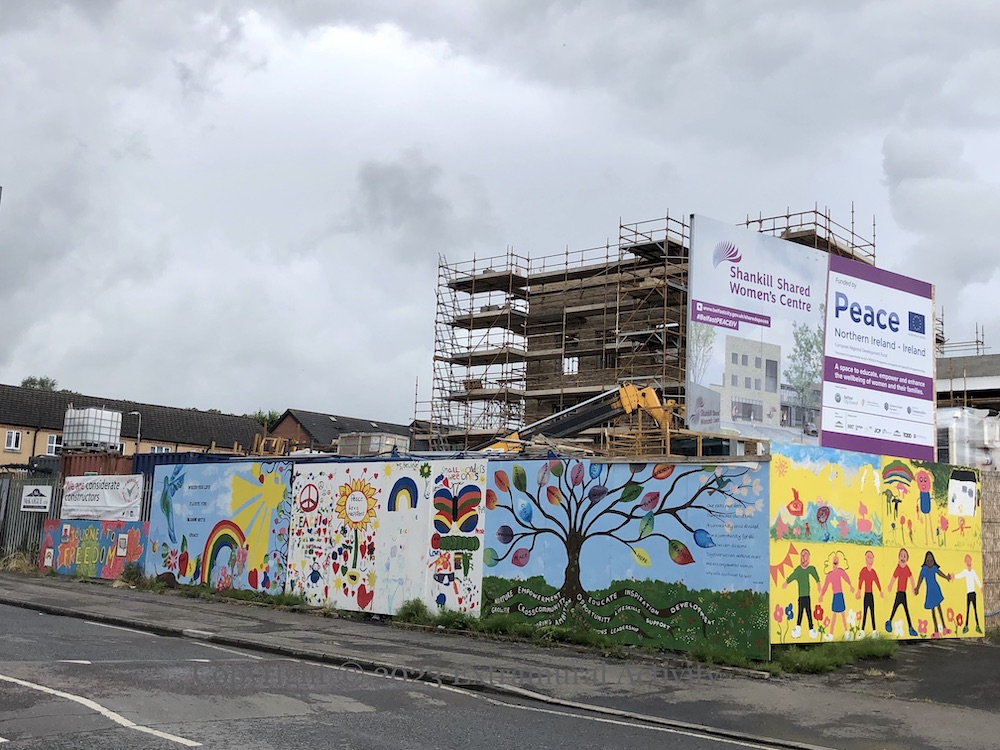
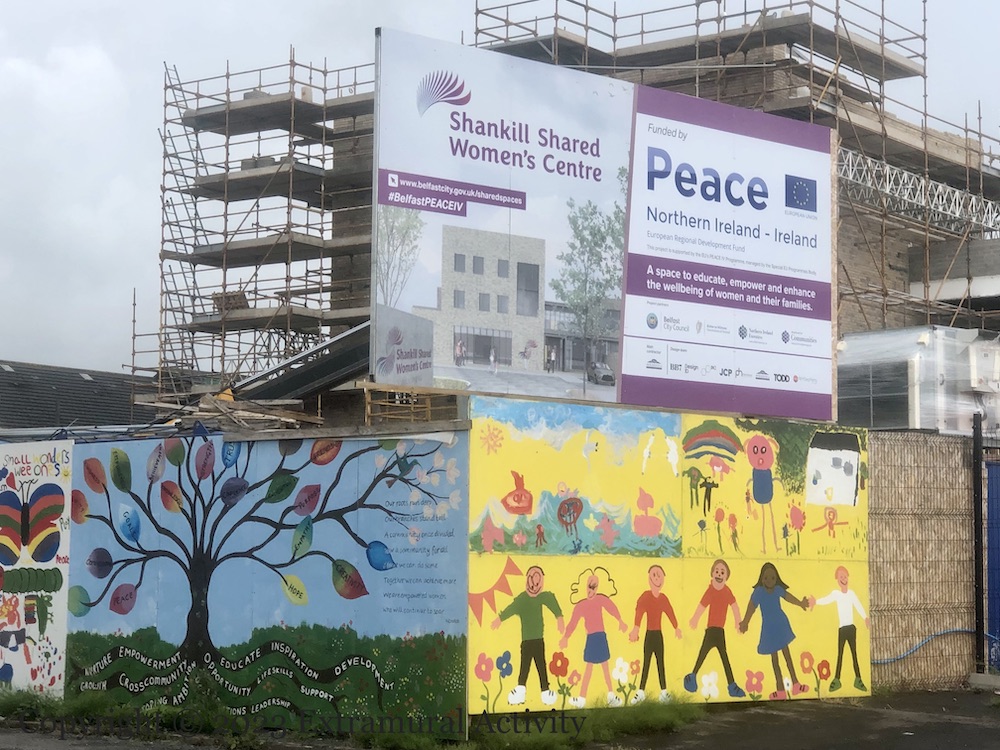
“Wherever life plants you, bloom with grace.” When the Shankill Women’s Centre was first formed, in 1987, it was located in The Hummingbird on the lower Shankill (SWC). (When the Wellbeing Centre was built on that site, the Women’s Centre moved further up the Shankill to its current location in the Hammer.) A hummingbird features in one of the paintings on the hoarding around the construction site of a new “Shankill Shared Women’s Centre” on Lanark Way, a 6.5 million euro project funded by PEACE IV (Belfast CC).

Click image to enlarge
Copyright © 2023 Seosamh Mac Coılle
X12773 X12772 X12774

Model Learner

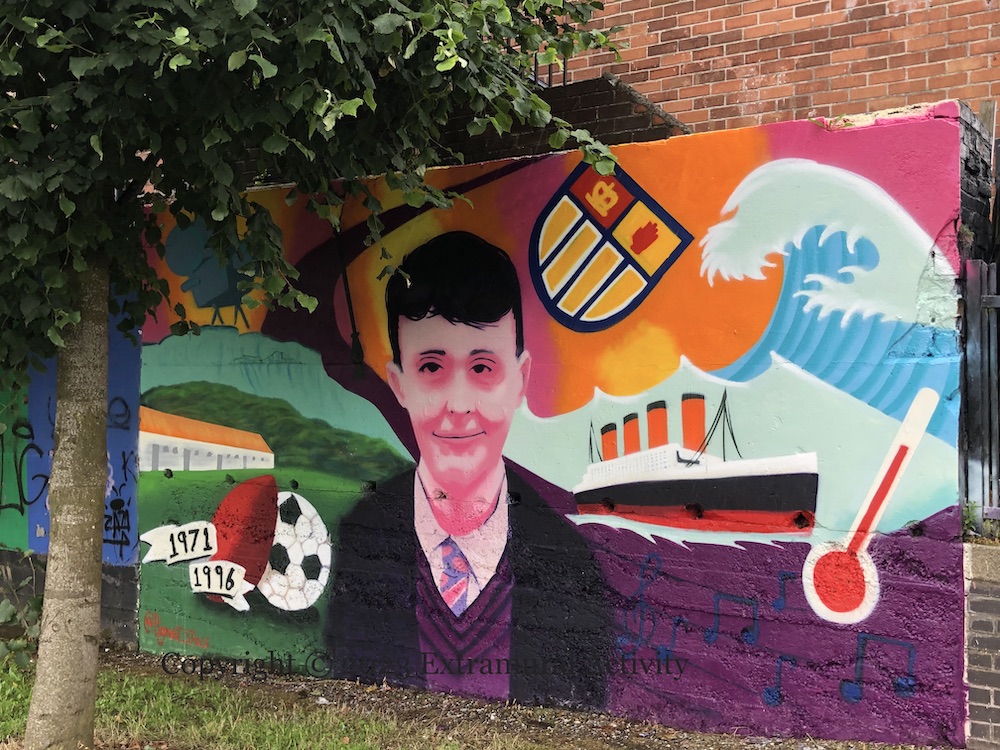
This is a new mural on the Ballysillan Road by MWAK/Pigment Space (ig) close to the Boys’ Model and featuring a student at the centre of symbols of learning – a film camera in the top left; Hokusai’s Great Wave in the top right, for art; Titanic (for engineering?) and a thermometer (for chemistry? or global warming?) on the right; musical notes in the bottom right; sports in the bottom left. The dates on the left are obscure. “1971” is perahps for the year the school won the Schools’ Cup in rugby (News Letter); there is a soccer ball next to “1996” but no similar victory can be found – get in touch if you can supply a meaning.

Replaces the Alternatives mural seen in Our Wee Country and No Alternative.

Click image to enlarge
Copyright © 2023 Seosamh Mac Coılle
X12744

You’ll Know Us By Our Noise

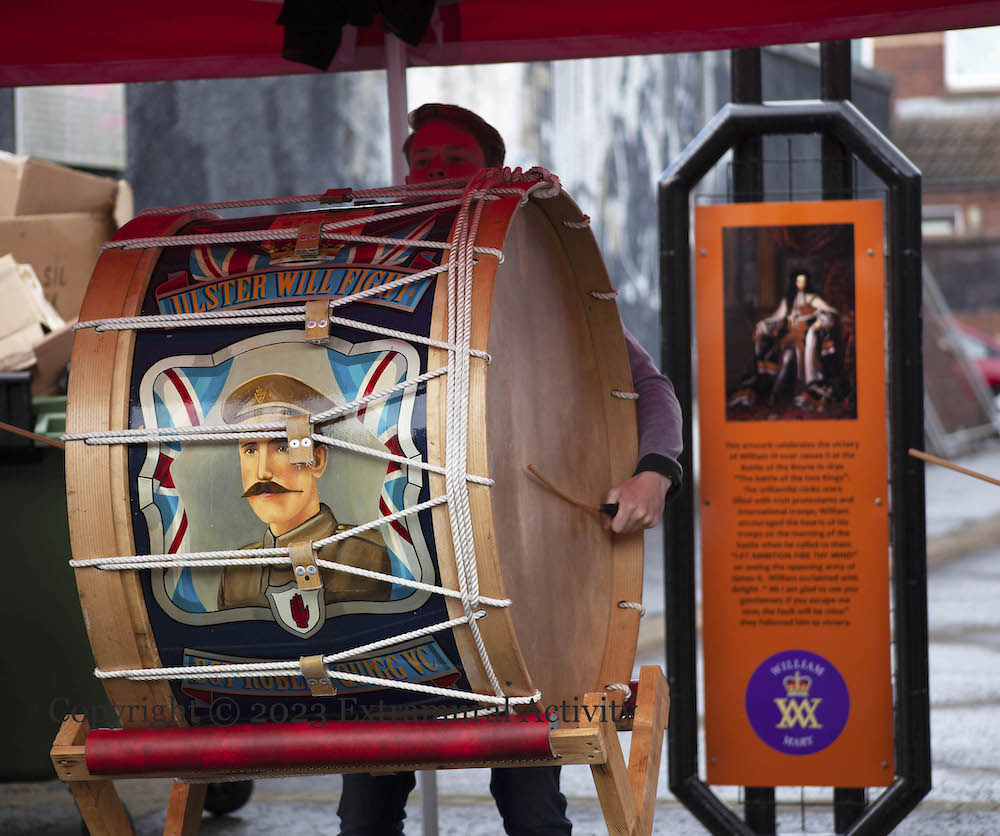
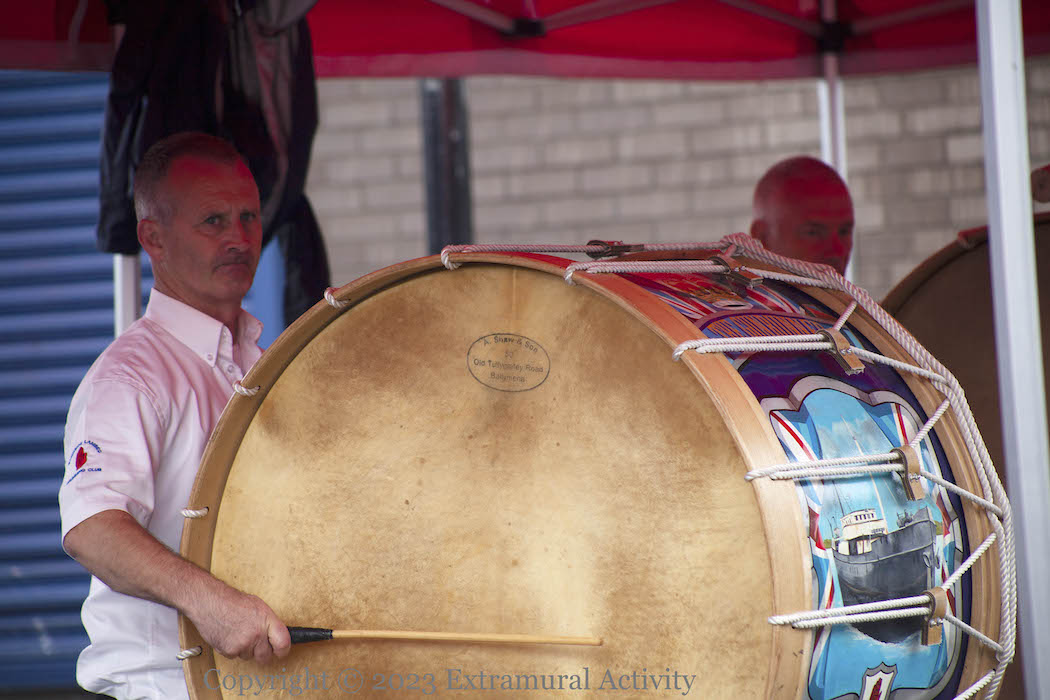
The “Lambeg drum” is named for the village near Lisburn, perhaps invented there to celebrate a visit by King Billy (LAD), or perhaps because it was there that the (already existing) drum was played with canes (WP).

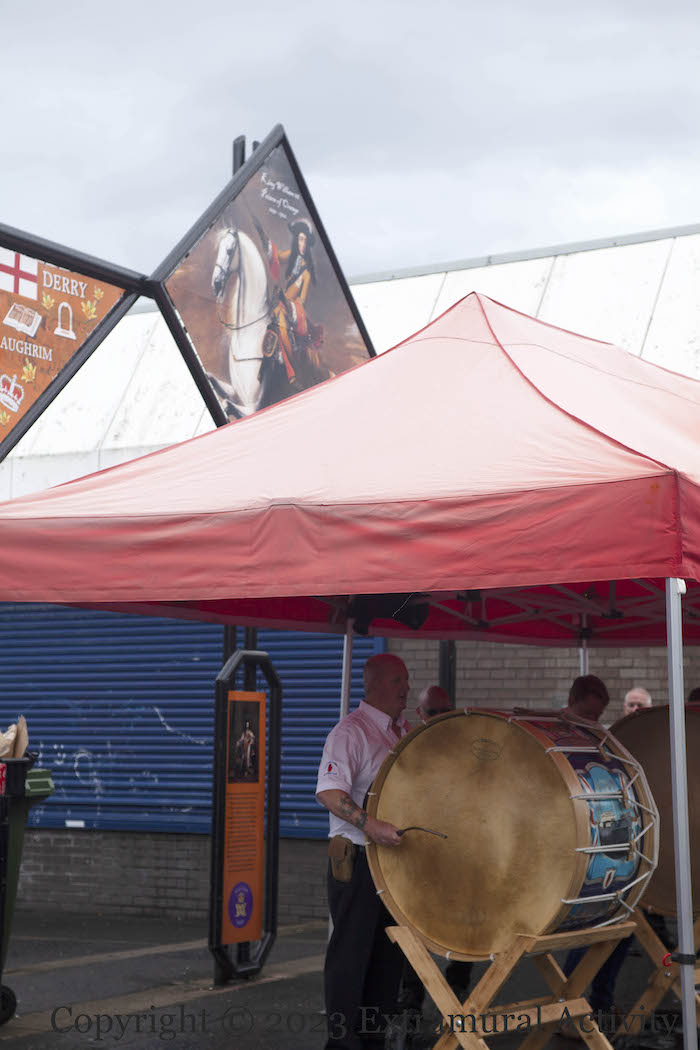
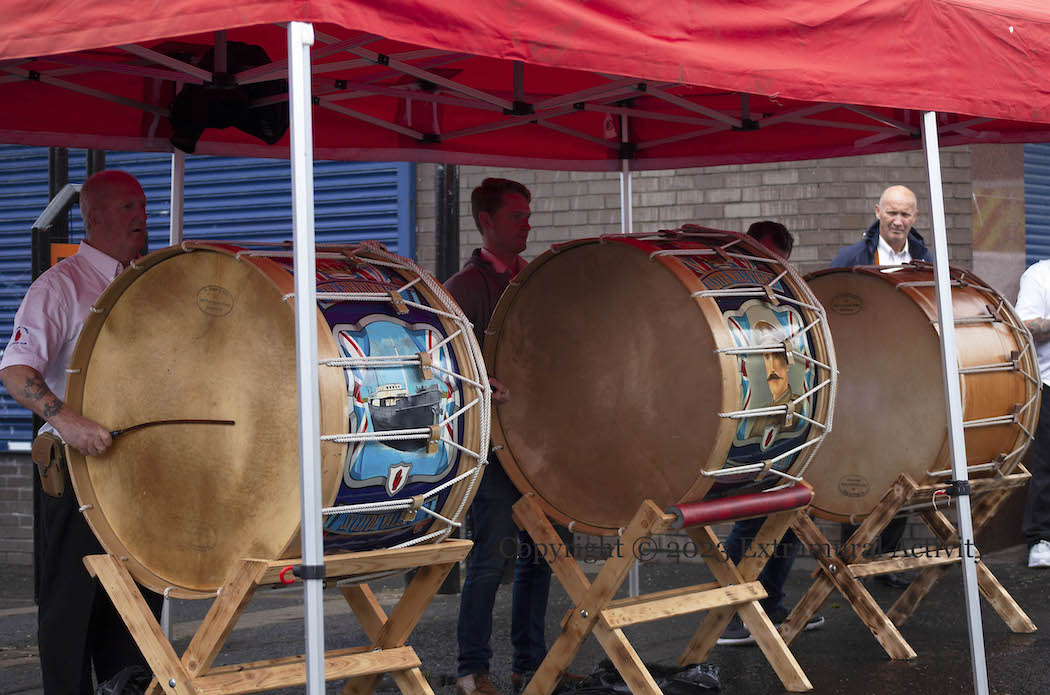
As can be seen from these images, the drums are extemely large – three feet in diameter – which makes them difficult to use in parades, as does their immense noise (up to 120 dB); they are more frequently seen on their own at drumming displays such as this one on the Shankill yesterday (July 11th).

See also: Lambeg drums in Glynn last year (2022) in While I Live I’ll Crow.

For the King William railings, see Let Ambition Fire Thy Mind.

For the Clyde Valley, see An Astounding Achievement.
For Robert Quigg, see Victoria Crosses Of The 36th (Ulster) Division.

Click image to enlarge
Copyright © 2023 Seosamh Mac Coılle
X12758 X12759 X12757 [X12756] X12760

Belfast Beacons

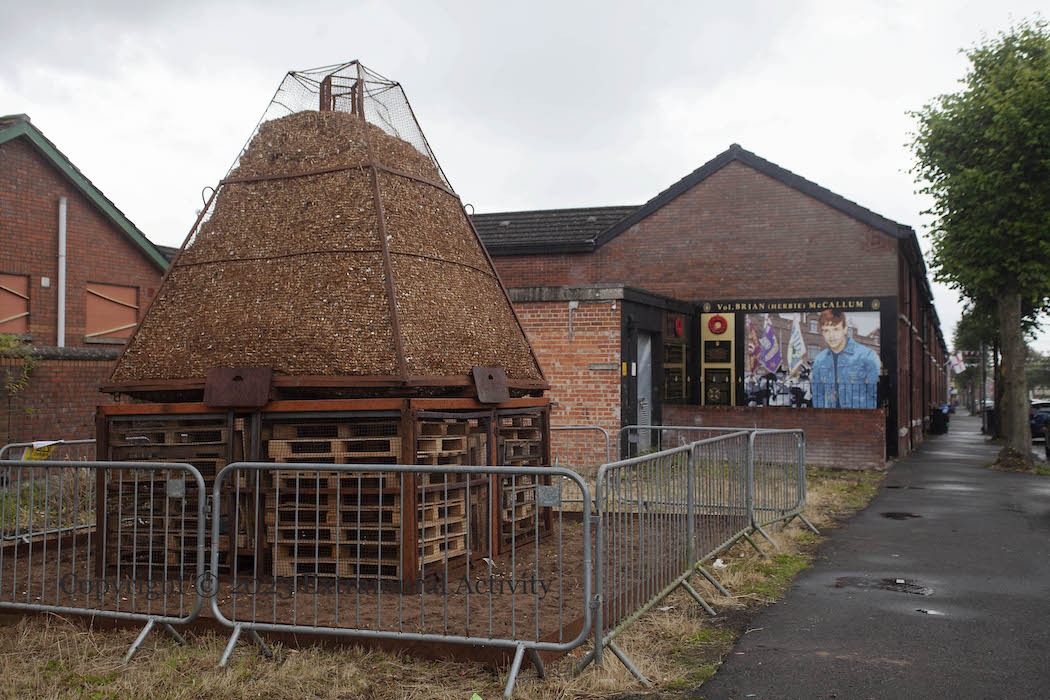
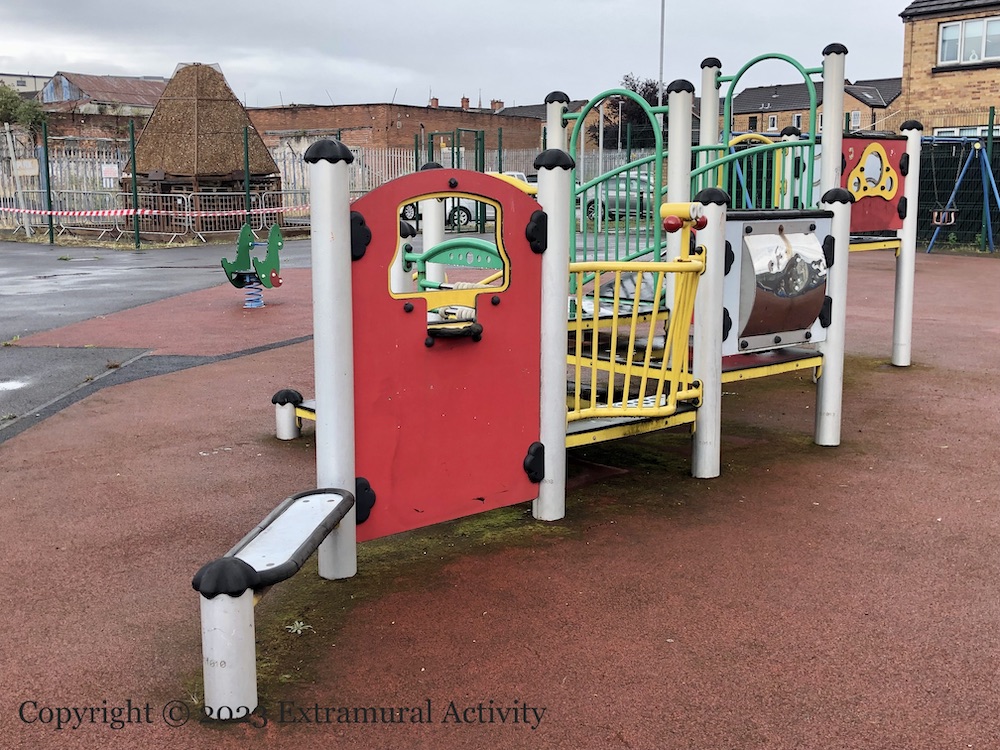
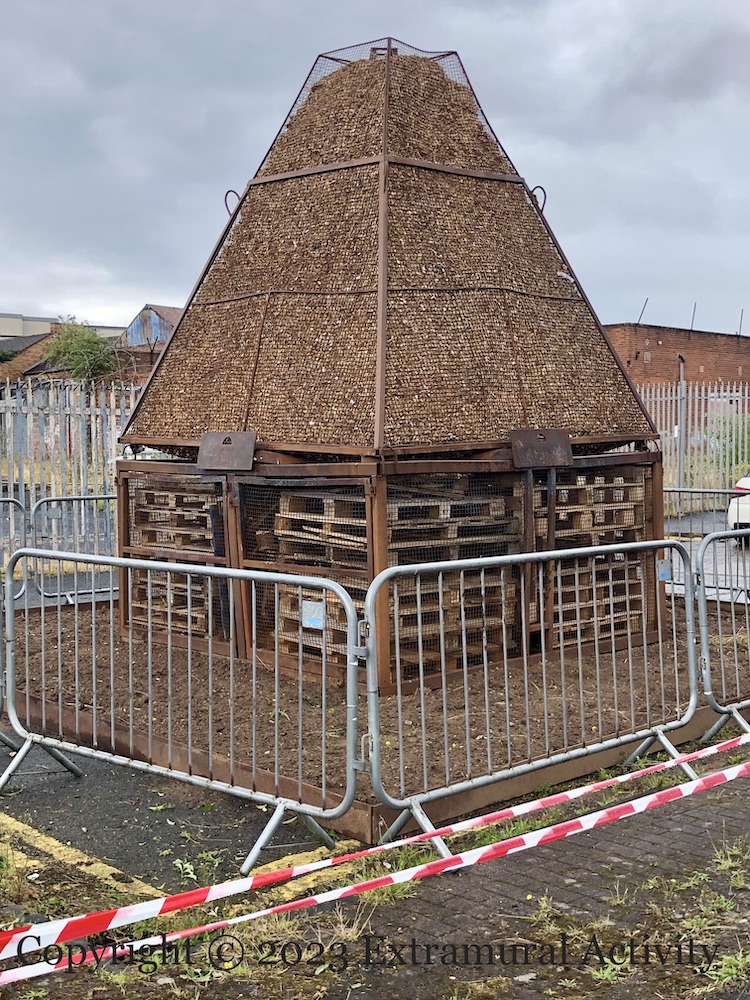
11 “beacons” are being lit across Belfast this evening, an increase over the eight from last year (Belfast Live). They are re-usable metal frames filled with willow wood (above a base of pallets) and sit on a bed of sand in order to avoid scarring the ground (BBC). The name evokes the beacons lit in the hills of Antrim and Down that allowed King William’s forces to land at Carrickfergus in 1690; the practice of lighting bonfires for festivals goes back to pagan times (Gailey).

Rather than being collected by the local commuinity, the materials are provided by a City Council programme now in its fifteen year of operation; the cost of the beacons this year is 81,000 pounds (BelTel). For discussion of the beacons (and the wider bonfire programme), see this Slugger article.

The two beacons shown here are in Woodvale (above) and Brown’s Square (below). For the Herbie McCallum memorial, see Some Day Soon We’ll Proudly March On Parade.

Click image to enlarge
Copyright © 2023 Seosamh Mac Coılle
X12771
X12751 [X12449]
X12750 [X12747] [X12748]