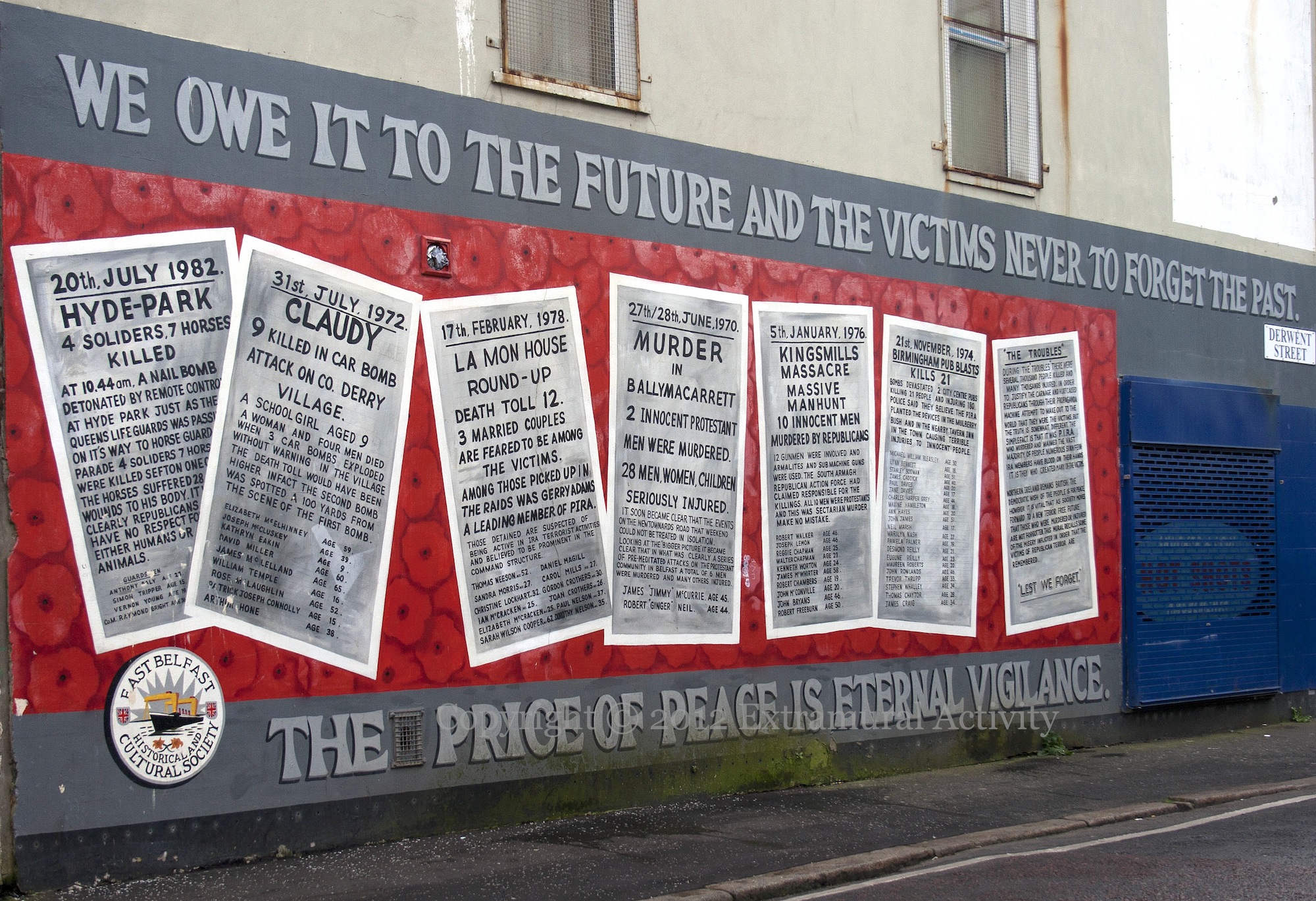
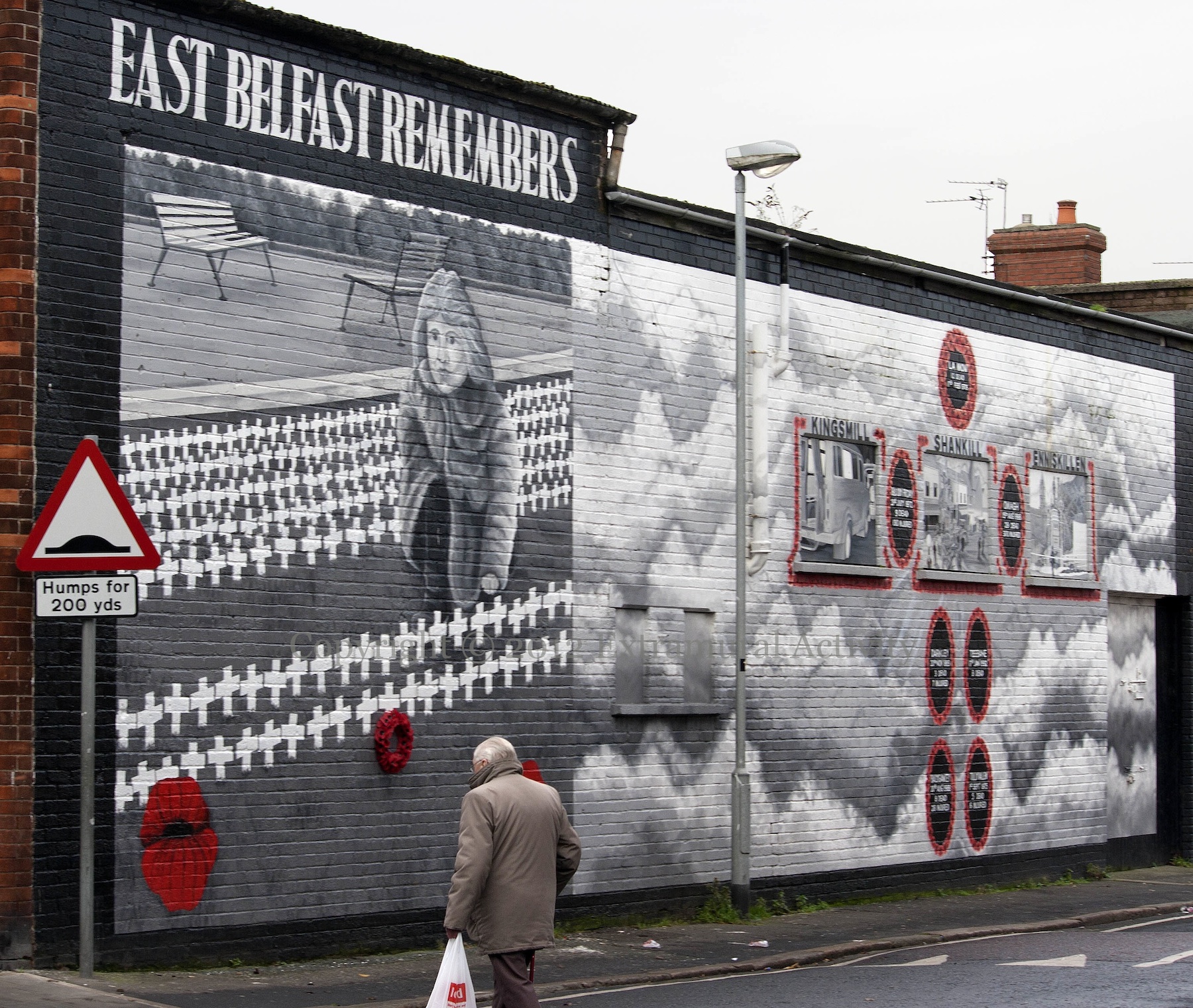
Relatively recent (late 2011?) mural replacing an advertising hoarding in Derwent St. (Newtownards Rd.) remembering the first world war, immediately next to another commemorating the dead and injured of various attacks during the troubles. The panels of the mural on the right are in/on bricked-up windows.
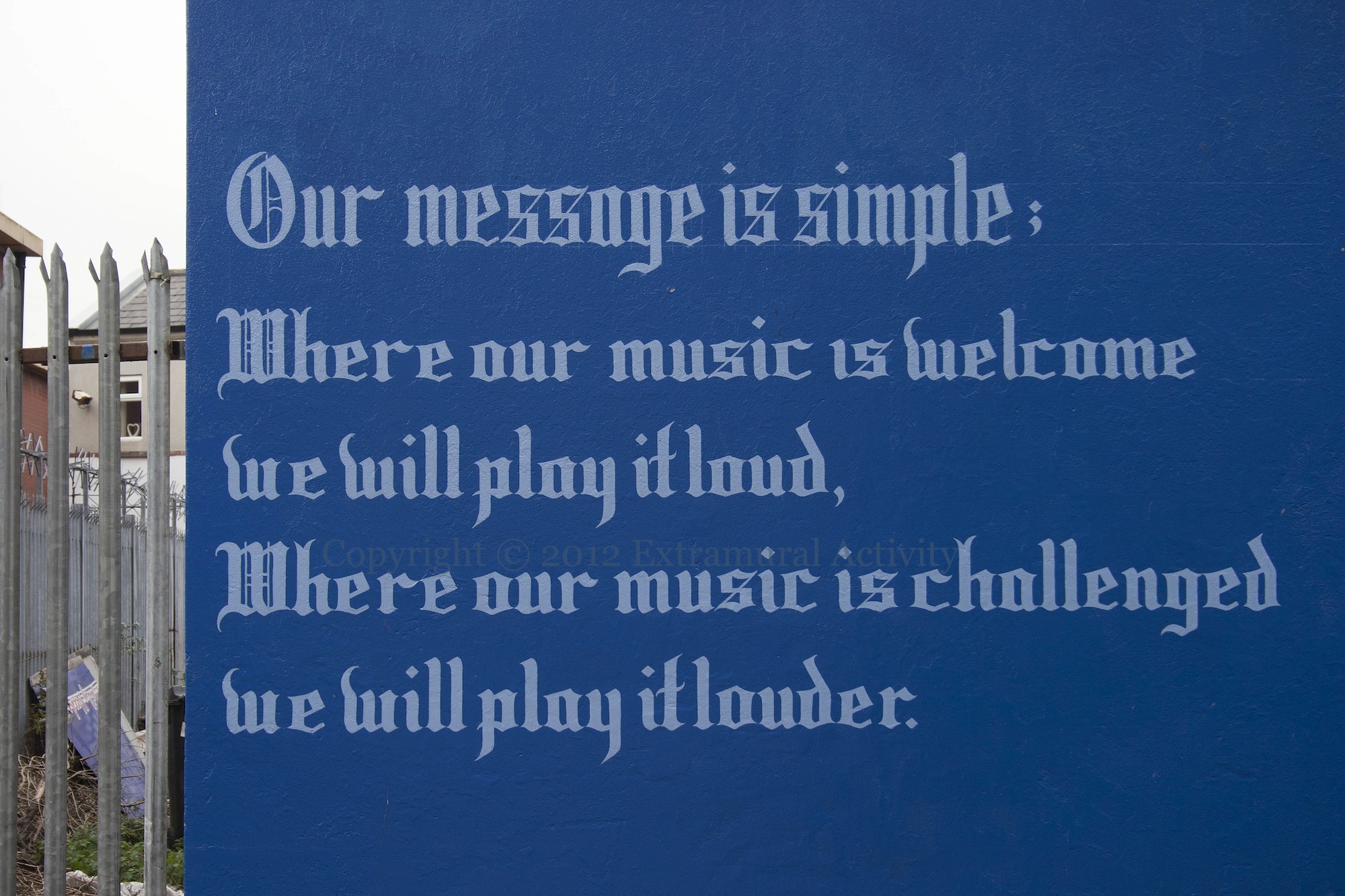
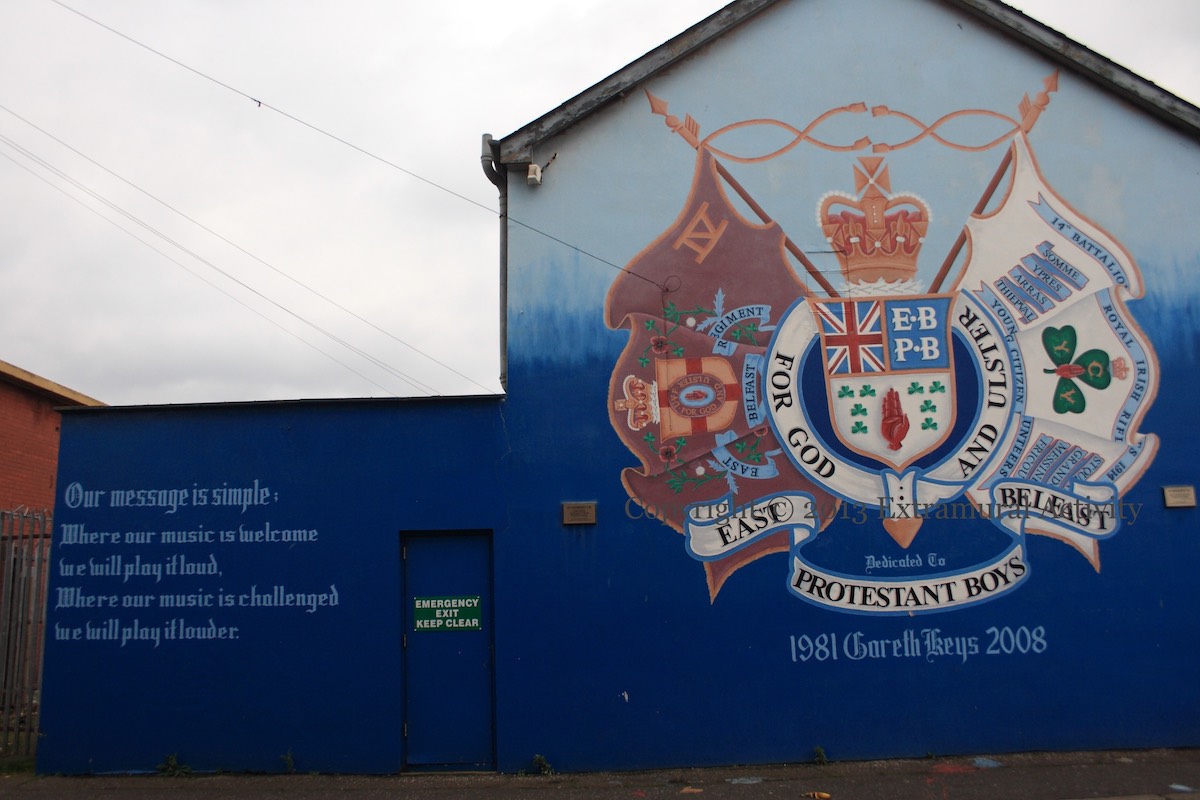
East Belfast Protestant Boys (Fb) mural “dedicated to Gareth Keys” with the statement “Our message is simple: where our music is welcome, we will play it loud; where our music is challenged, we will play it louder.”
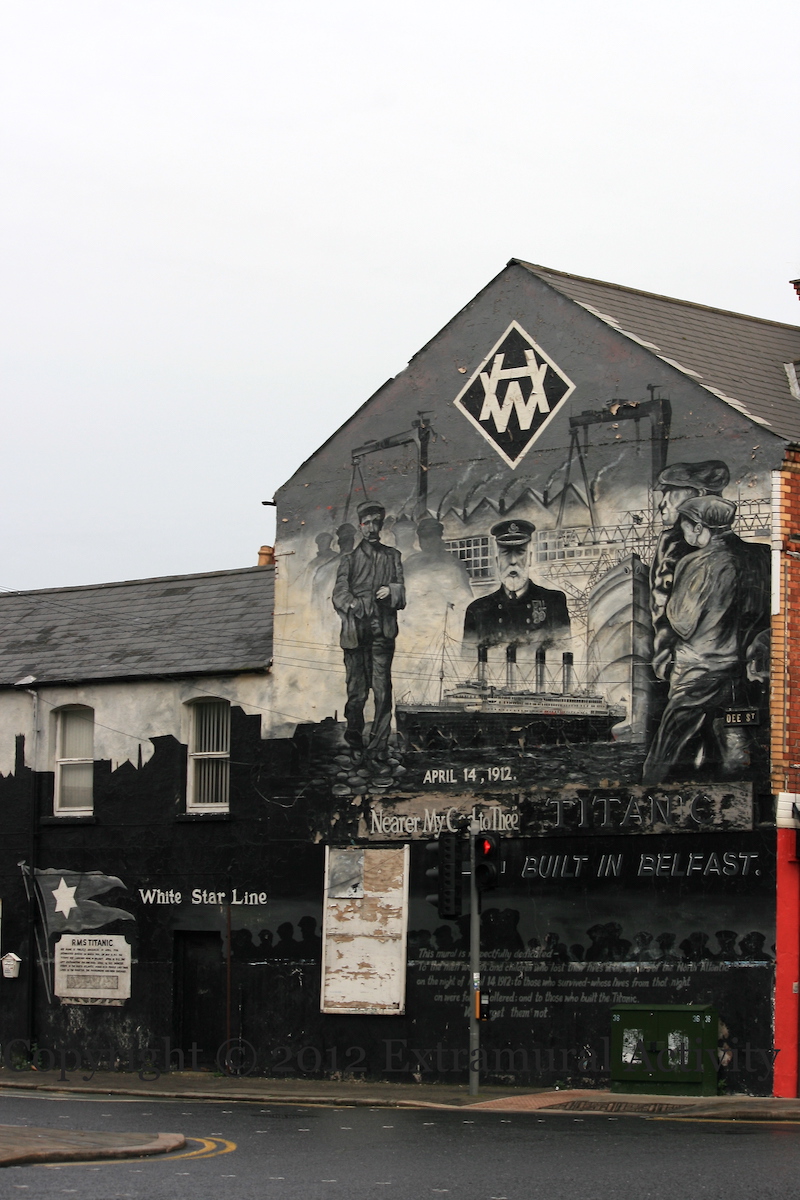
In the old Hemp Street, nearly opposite Derwent St.
Pictured in the centre of the mural is Captain Edward John “Ted” Smith – who, as captain of the ship, went down with Titanic after it hit an iceberg in the North Atlantic – in between shipyard workers at Harland & Wolff, where the ship was built.
On the painted “plaque” to the left: “Her name is publicly announced in April 1908. Designation begins in March 1909. On May 31. 1911, the Titanic was launched here in Belfast, April 10, 1912. She left Southampton for New York. April 14, 1912 disaster struck in the North Atlantic ocean, 1523 people lost their lives in the disaster, 705 passengers and crew survived.”
At the bottom of the mural: “This mural is respectfully dedicated to the men, women and children who lost their lives in the waters of the North Atlantic on the night of April 14, 1912: to those who survived – whose lives from that night on were forever altered; and to those who built the Titanic [at Harland and Wolff]. We forget them not.”
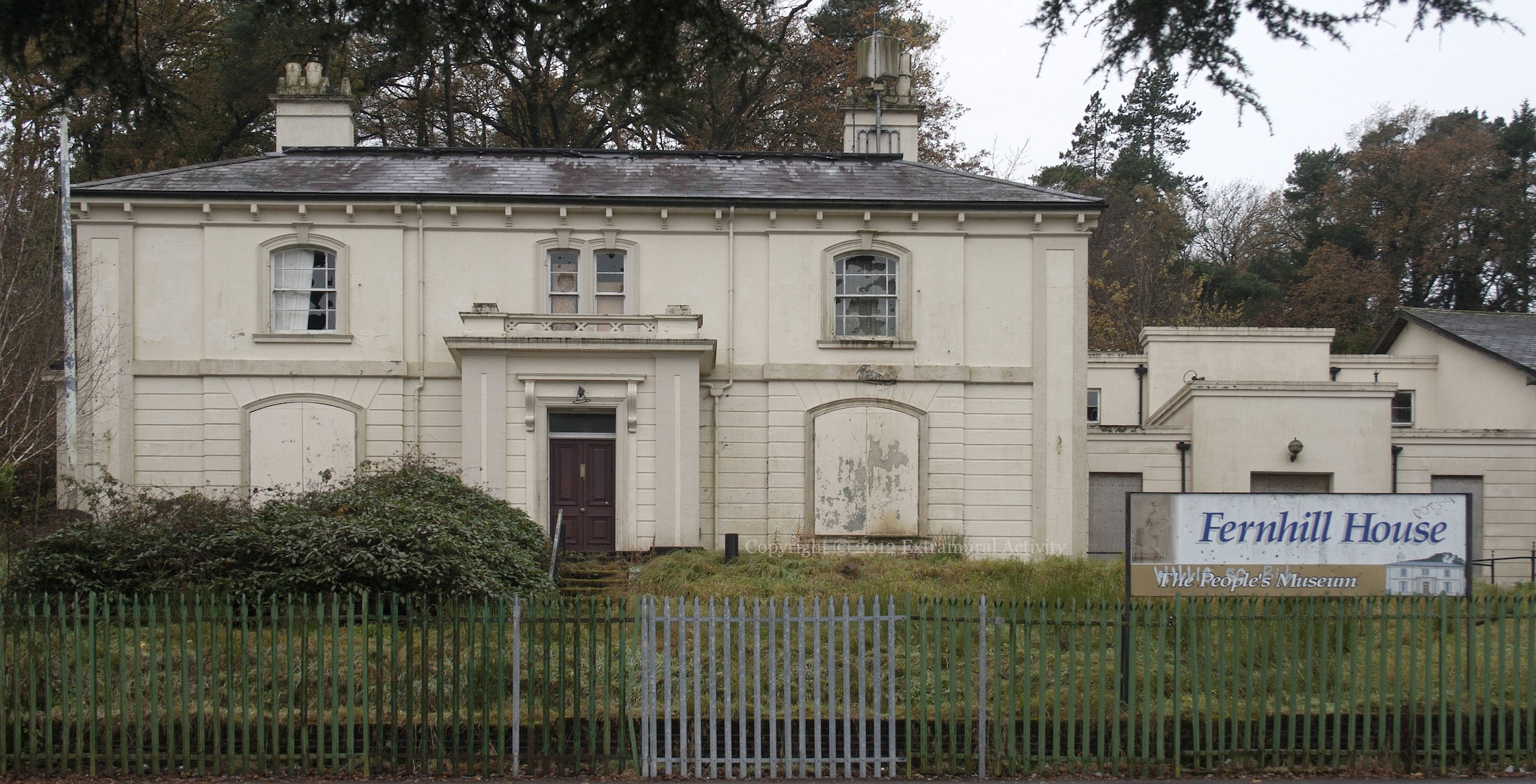
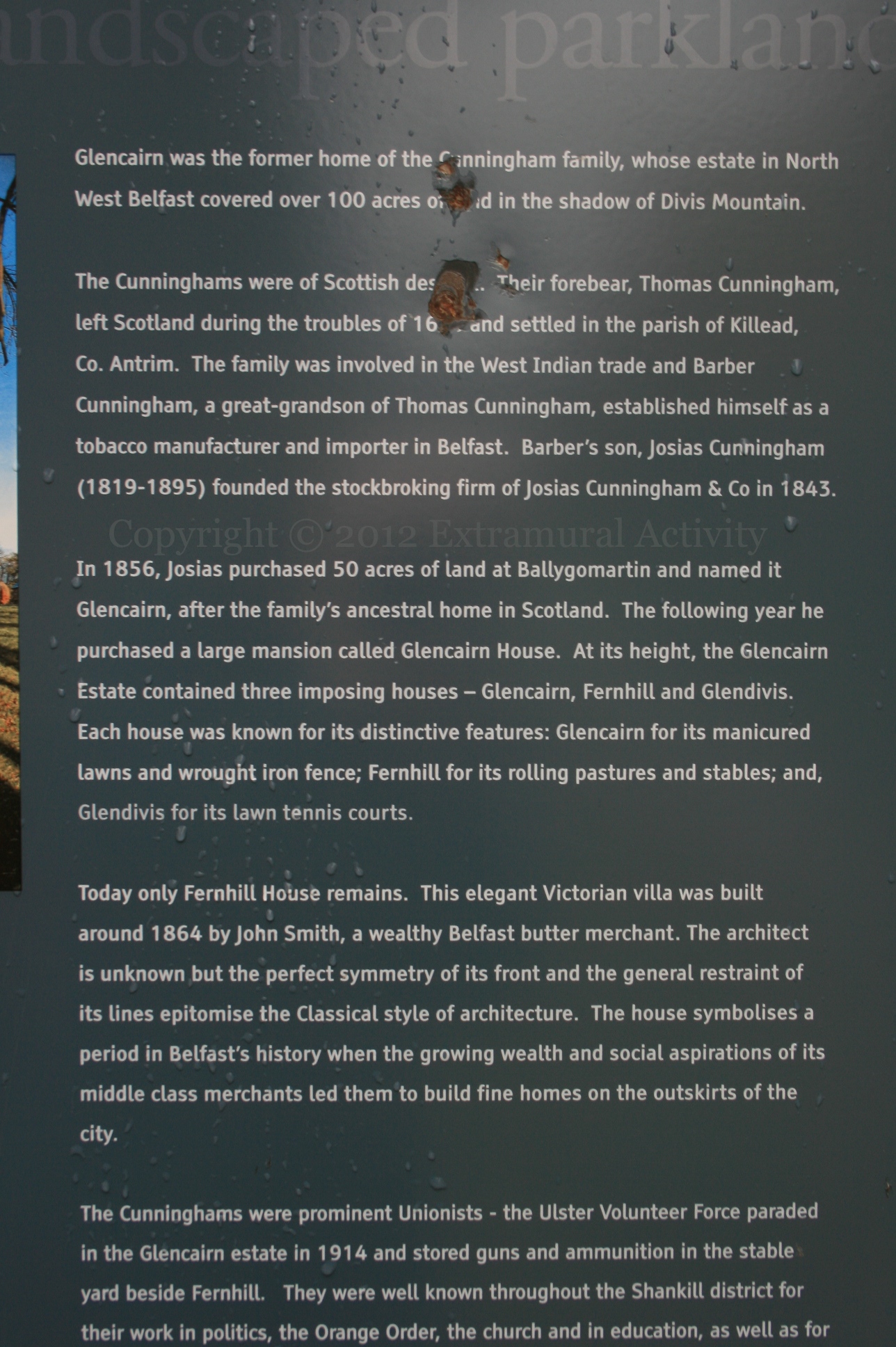
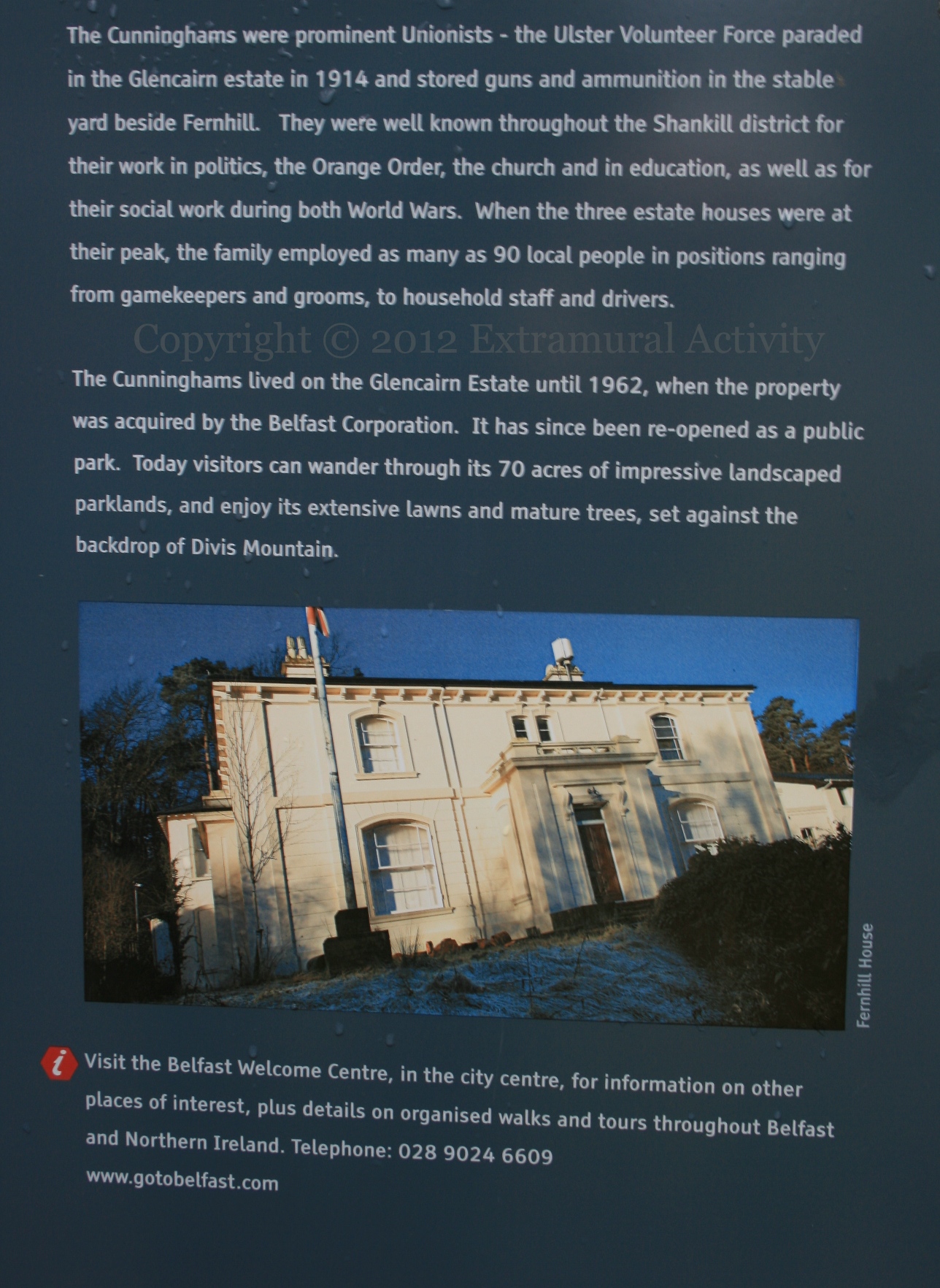
Fernhill House, which features in various loyalist murals/boards, in its present state. In 1996 it was opened as a museum, but has since been shuttered and is gradually falling into disrepair. The house is located off the modern-day Ballygomartin Road, in Glencairn Park.
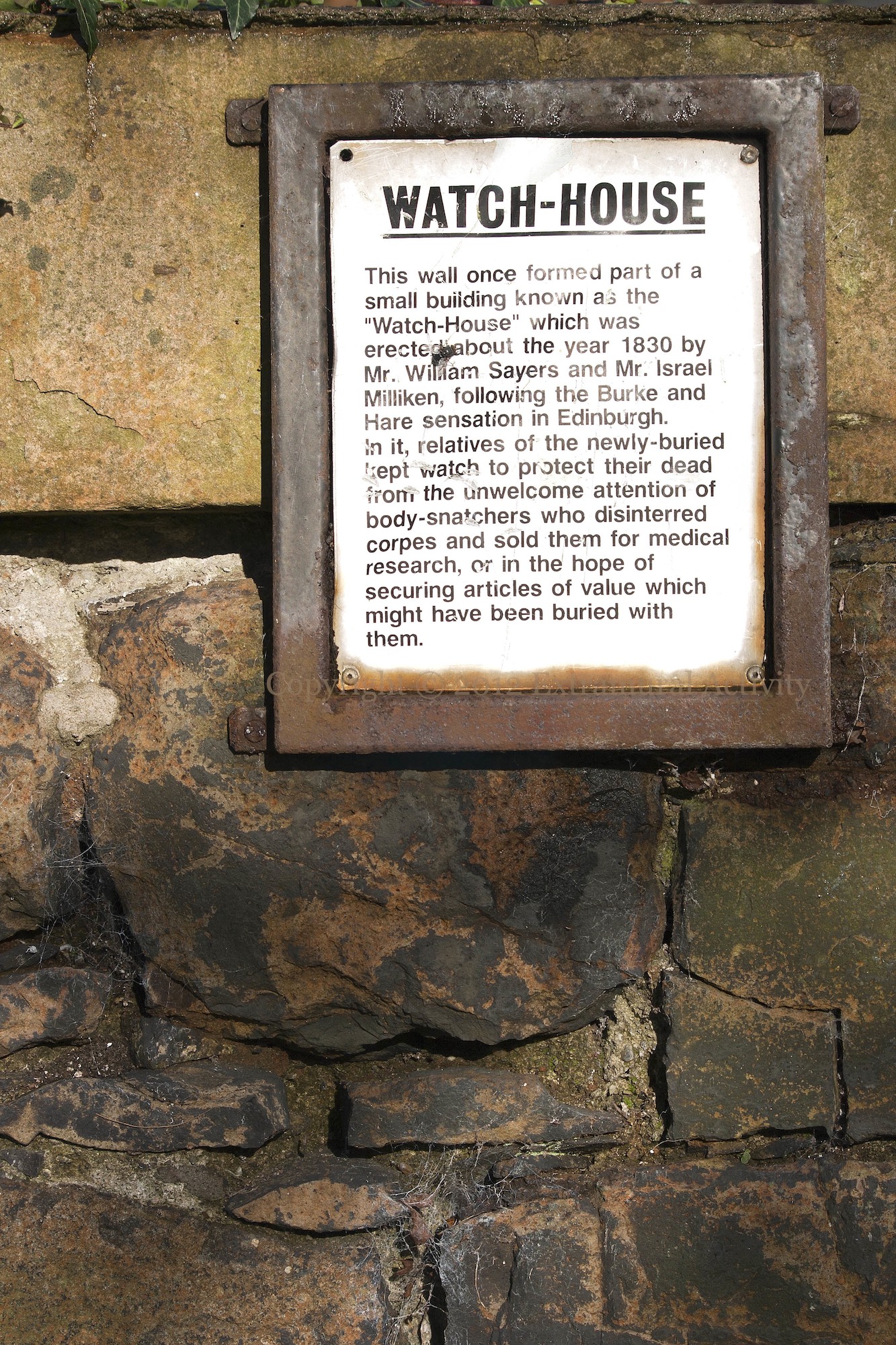
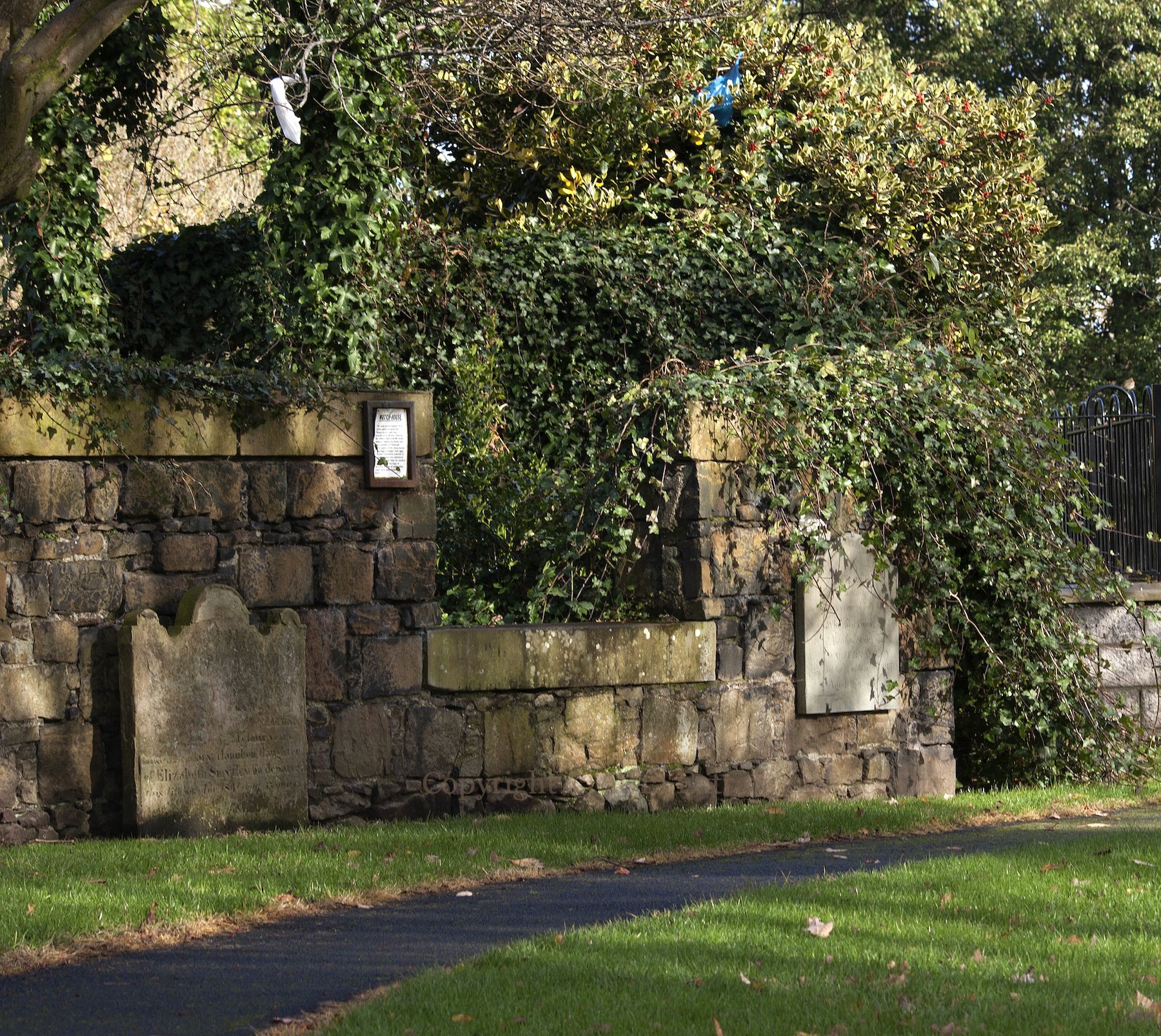
A plaque in the old Shankill graveyard. “Watch-House: This wall once formed part of a small building known as the “Watch-House” which was erected about the year 1830 by Mr. William Sayers and Mr. Israel Milliken, following the Burke and Hare sensation in Edinburgh. In it, relatives of the newly-buried kept watch to protect their dead from the unwelcome attention of body-snatchers who disinterred corpes [corpses] and sold them for medical research, or in the hope of securing articles of value which might have been buried with them.”