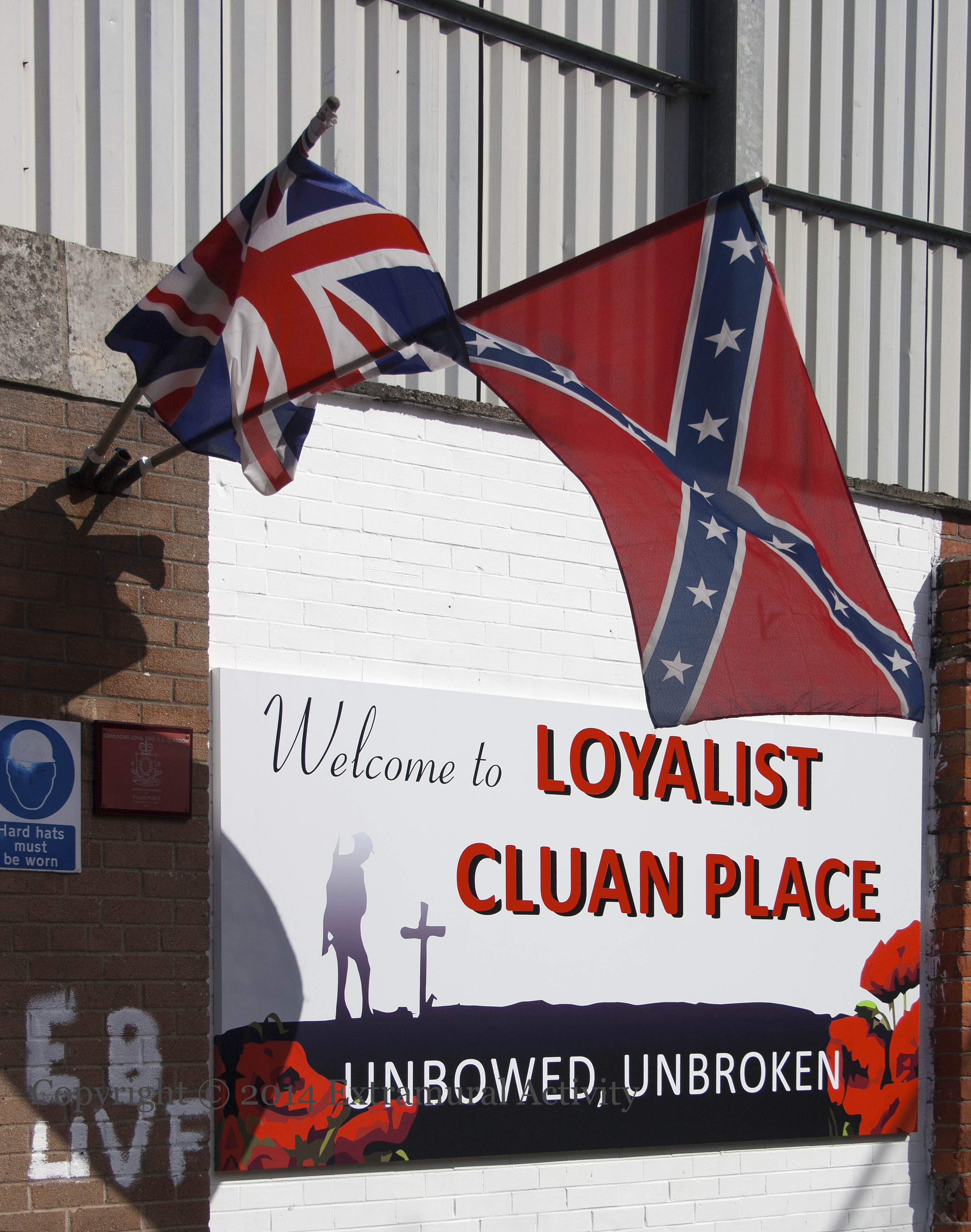
Below the “peace” line, a confederate flag flies alongside the union jack over a new board in Cluan Place reading “Unbowed, Unbroken” and “east Belfast UVF” graffiti.
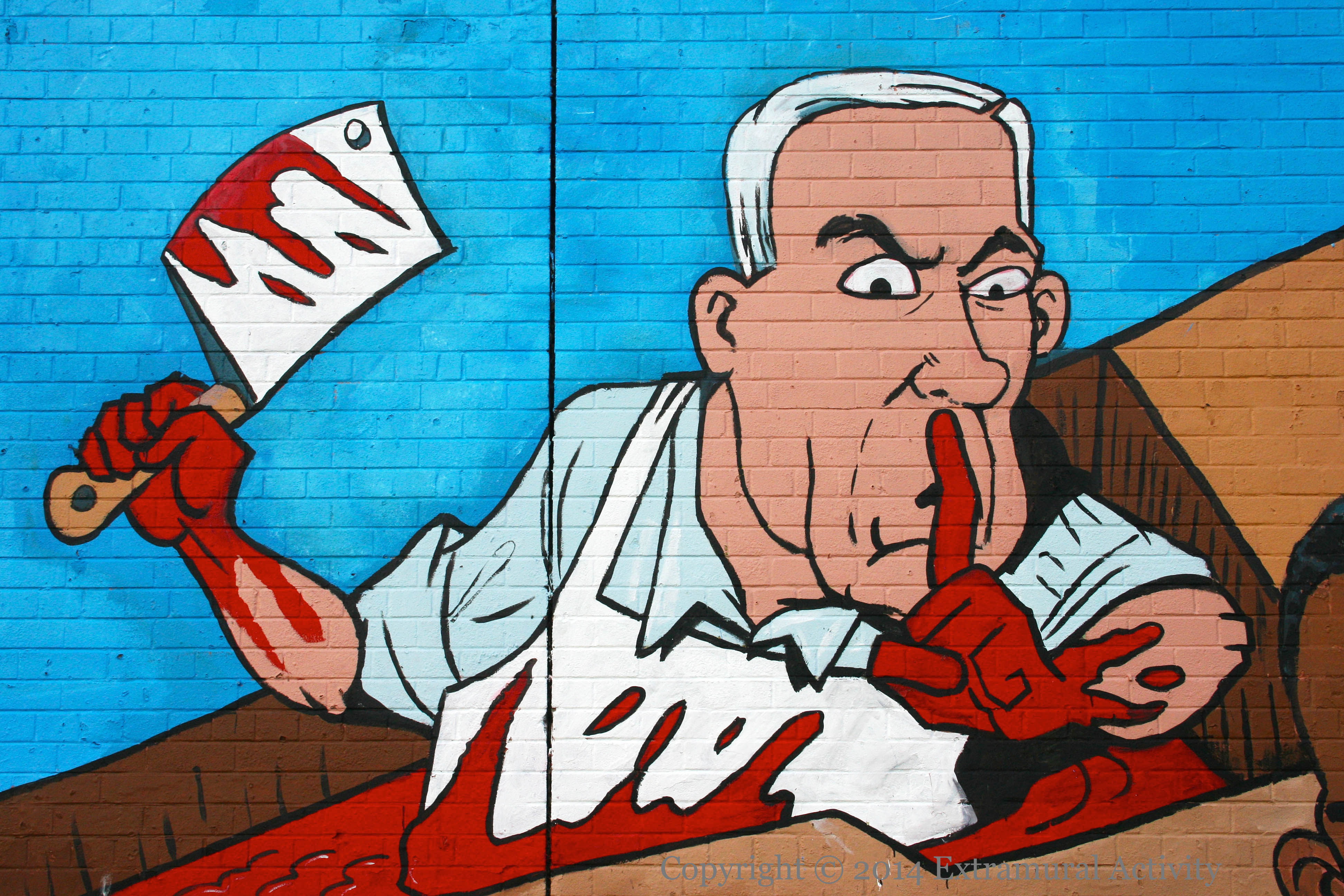
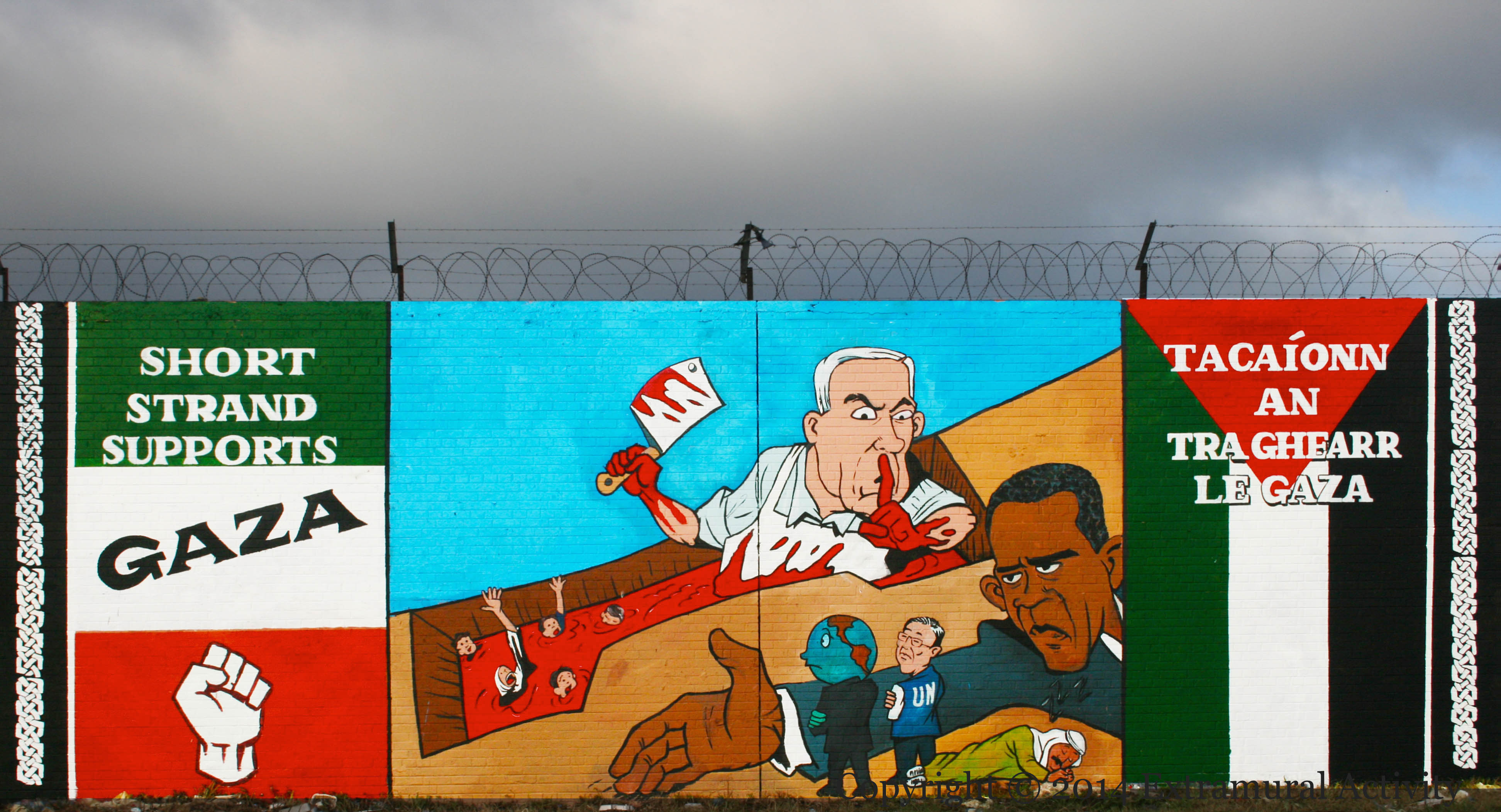
Carlos Latuff’s cartoon Do Not Disturb – War Criminals Working is reproduced as part of a new mural in the Short Strand – shown in full below. An aproned Benjamin Netanyahu sits in a Gaza trough, filled with the blood of people he butchers with a cleaver in his right hand while gesturing for secrecy with his left. The world watches with some concern, Ban Ki-Moon and the UN look away, and the Arab League is asleep. Barack Obama prevents any intervention with an outstretched arm.
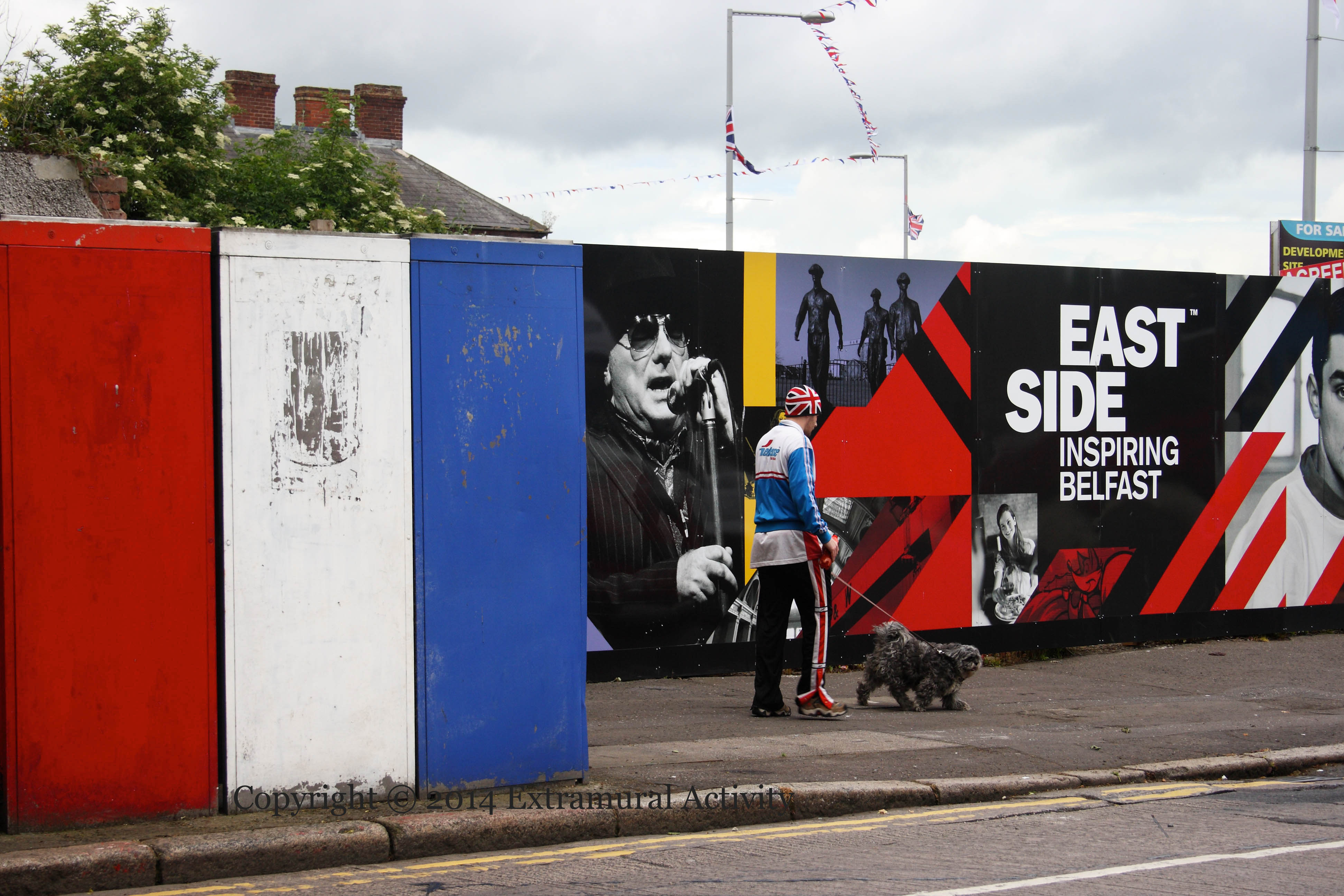
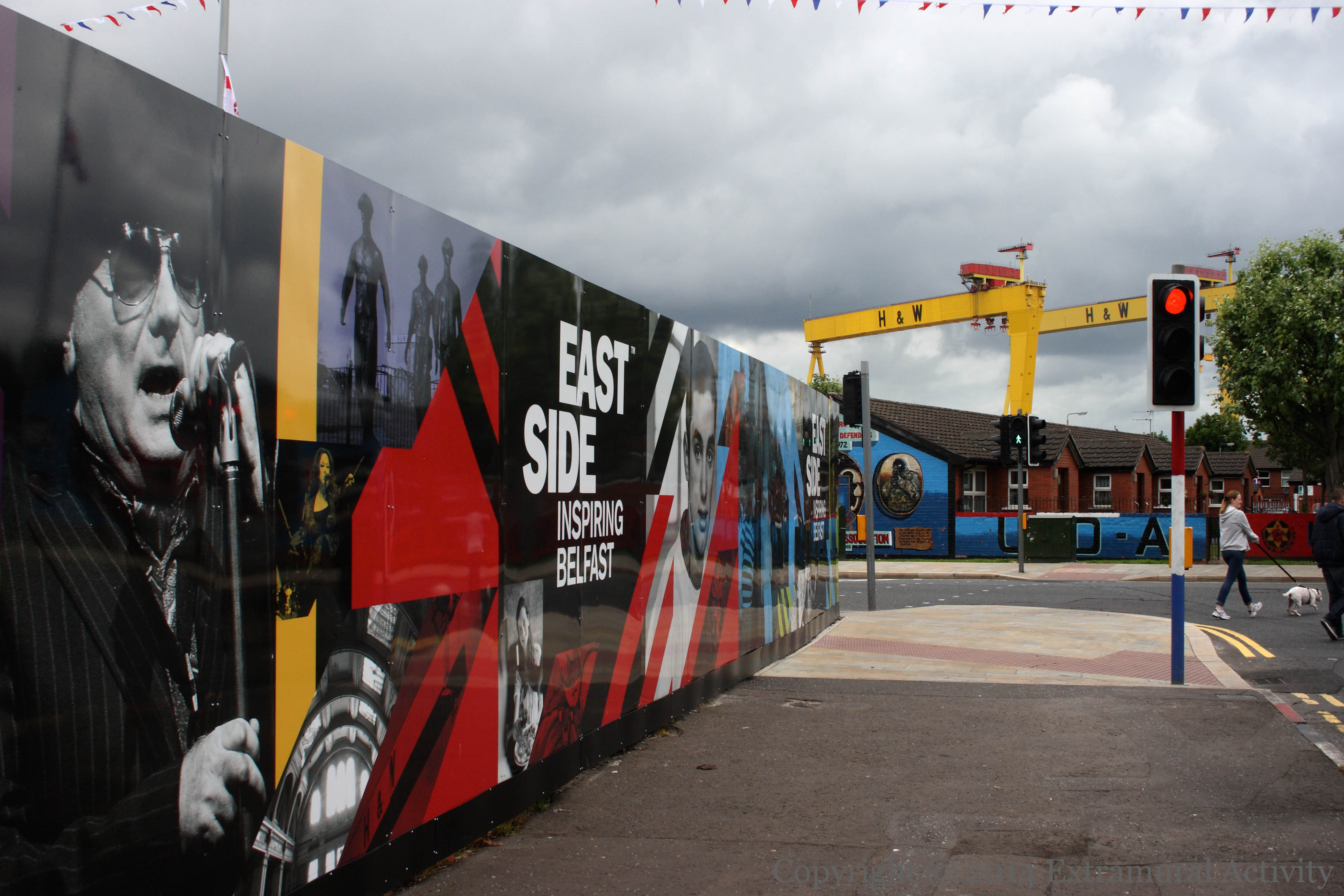
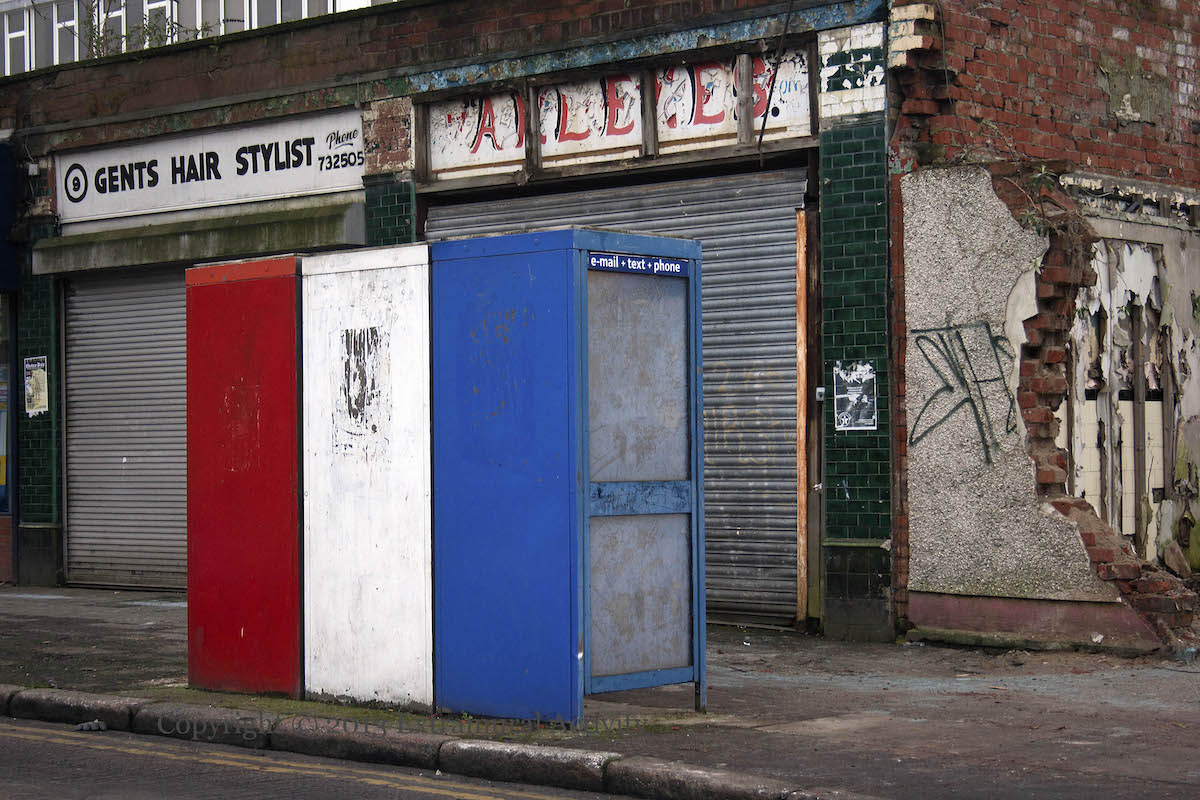
The waste-ground at the corner of Templemore Avenue and Newtownards Road (where the flyers featured in Harland & Why were posted) was given a face-lift with images of east Belfast heroes Van Morrison and George Best and the words “East Side – Inspiring Belfast”. The red-white-and-blue is supplied by the phone-boxes and the passer-by.
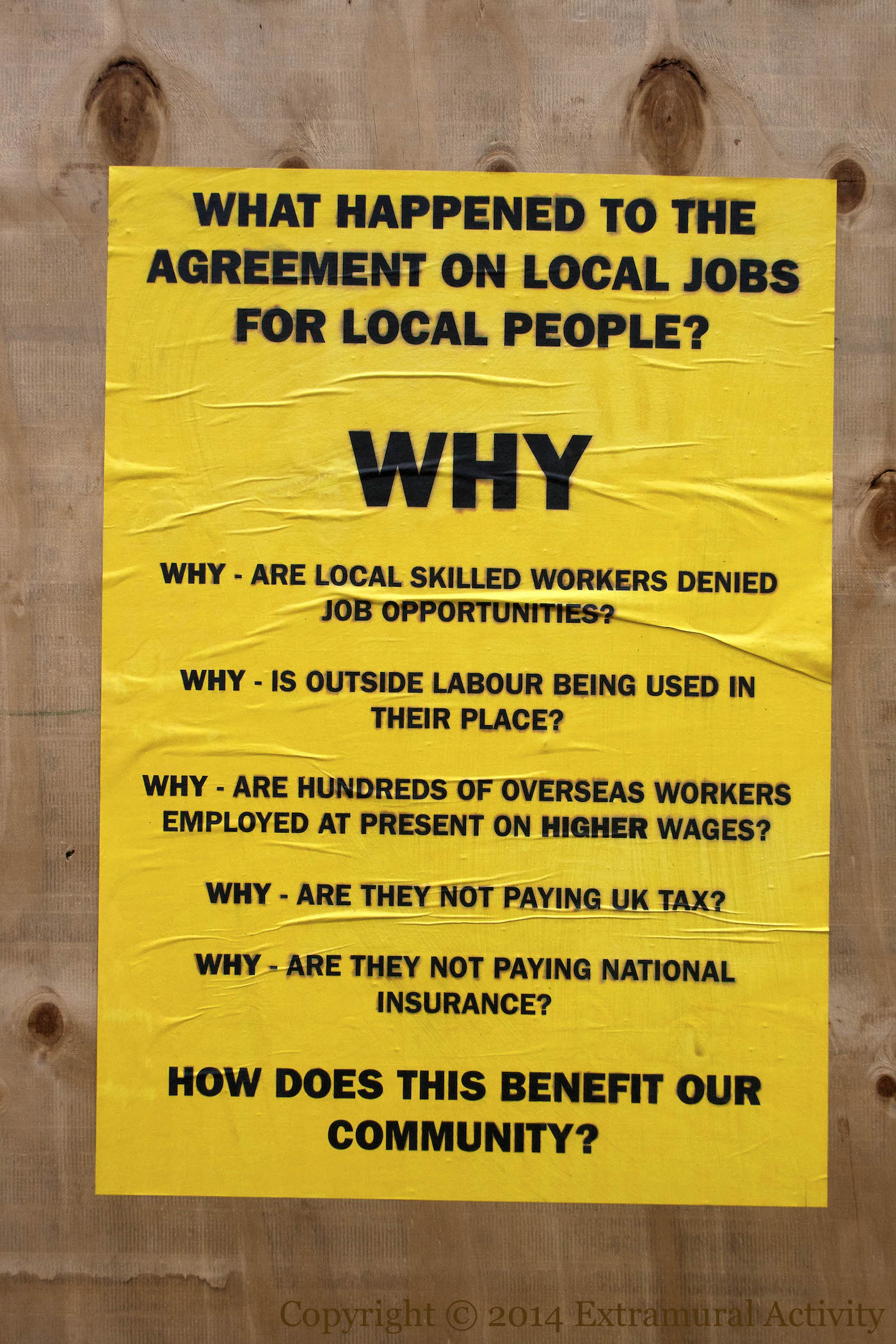
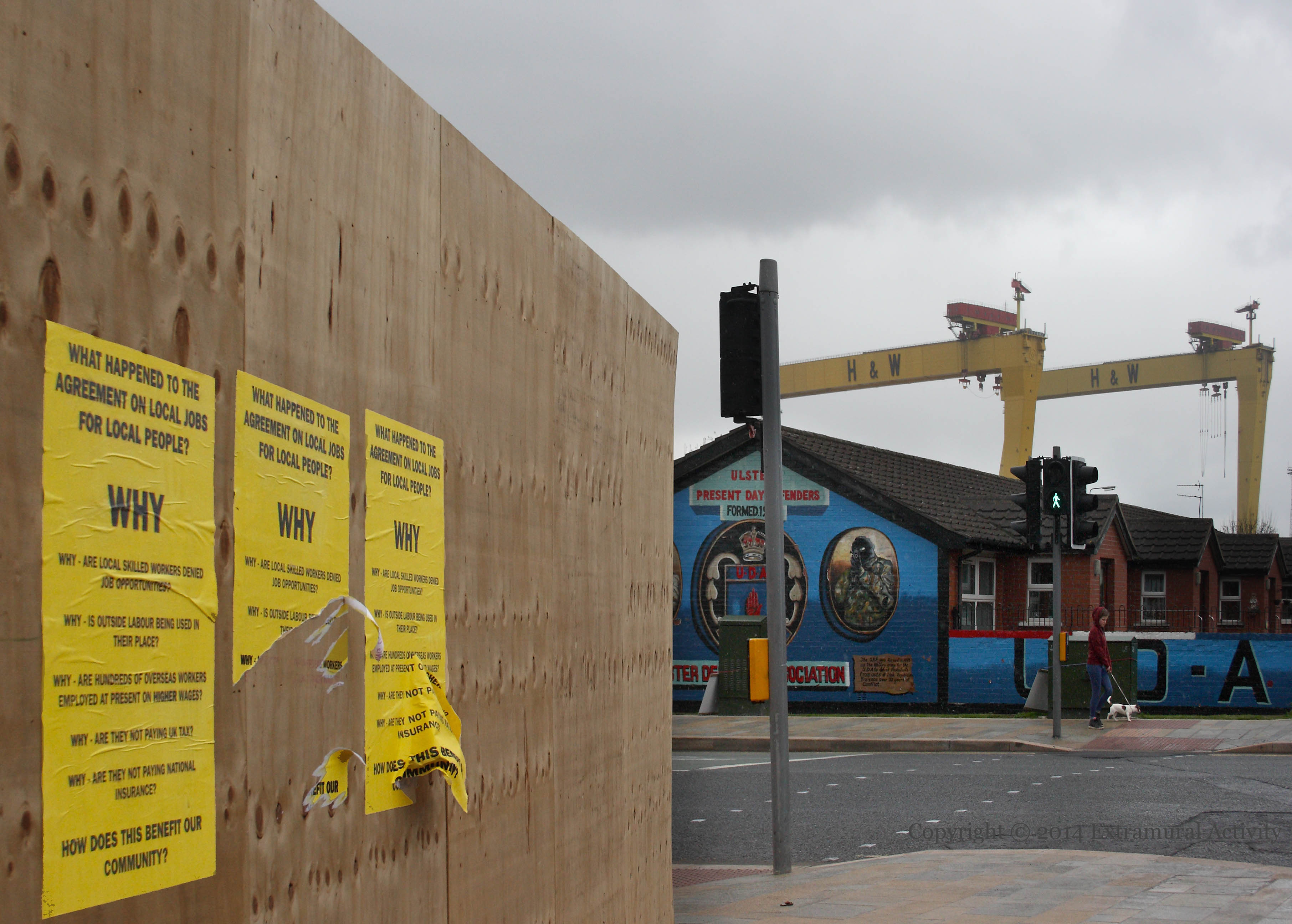
The poster above – seen in east and south Belfast – has been called “racist” by the Alliance party. “What happened to local jobs for local people? Why are local skilled workers denied job opportunities? Why is outside labour being used in their place? Why are hundreds of overseas workers employed at present on higher wages? Why are they not paying UK tax? Why are they not paying national insurance?”
The poster concerns the 600 temporary jobs at H&W refurbishing the oil rig ‘Blackford Dolphin‘. According to the BBC (video) only one third of the jobs could be filled from the Northern Irish workforce. A BelTel article from November 2013 specifies that another third came from Britain and the final third from “Poland and Lithuania”.
Below: Some posters with the H&W cranes in the background, just off the Newtownards Road.
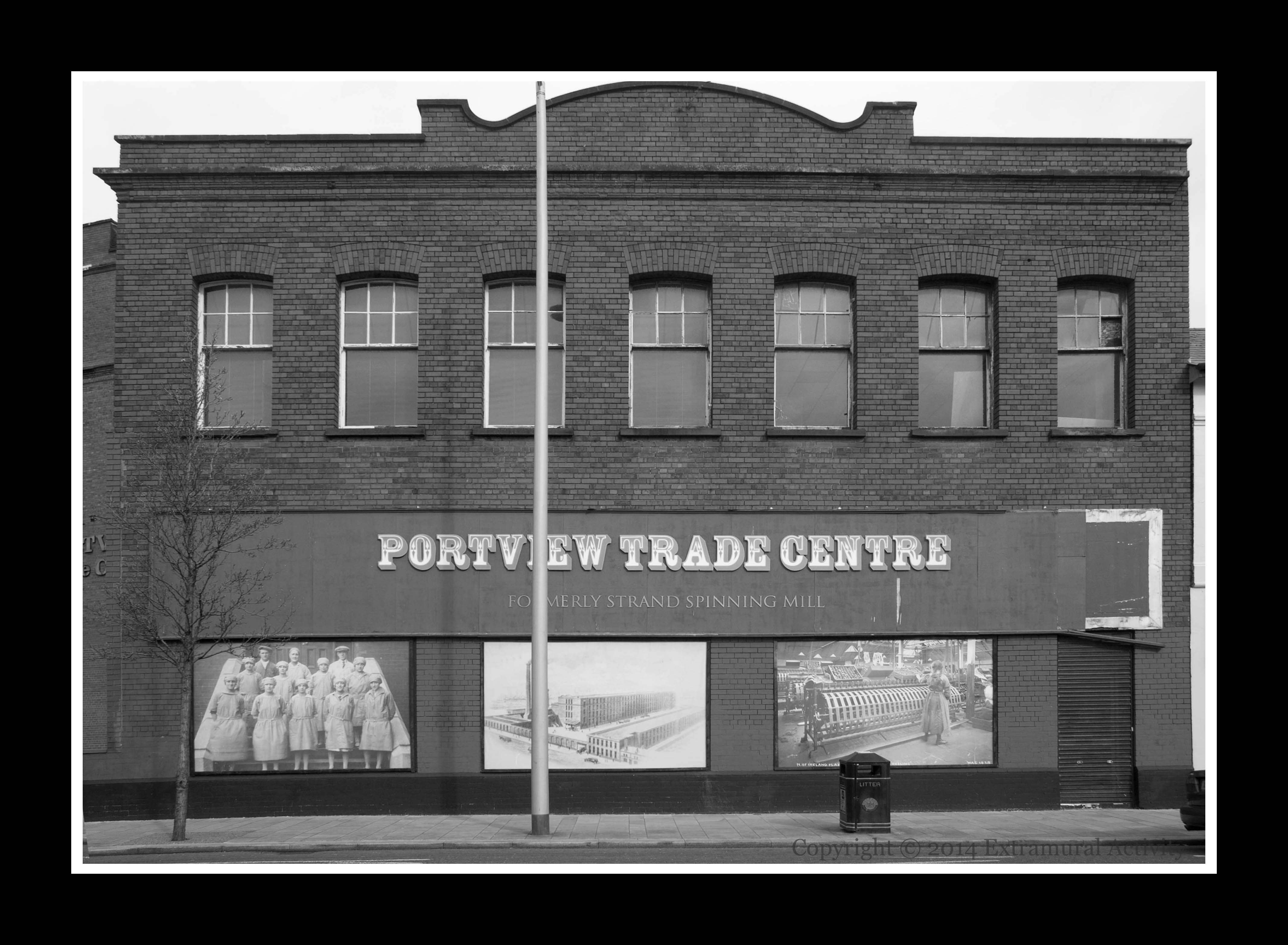
The Strand Spinning Mill on the Newtownards Road in east Belfast began life as the Jaffe Spinning Mill, after Otto Jaffe, a Jewish-German emigrant from Hamburg who became a naturalized citizen, early benefactor of Queen’s University (in 1905 he contributed £3000) and twice Lord Mayor of Belfast. It quickly became the Strand Spinning Mill when he sold it to Mackies in 1912. The mill made munitions during WWI and viscose rayon during WWII. The mill closed in 1983 and now provides space to small businesses as the Portview Trade Centre.
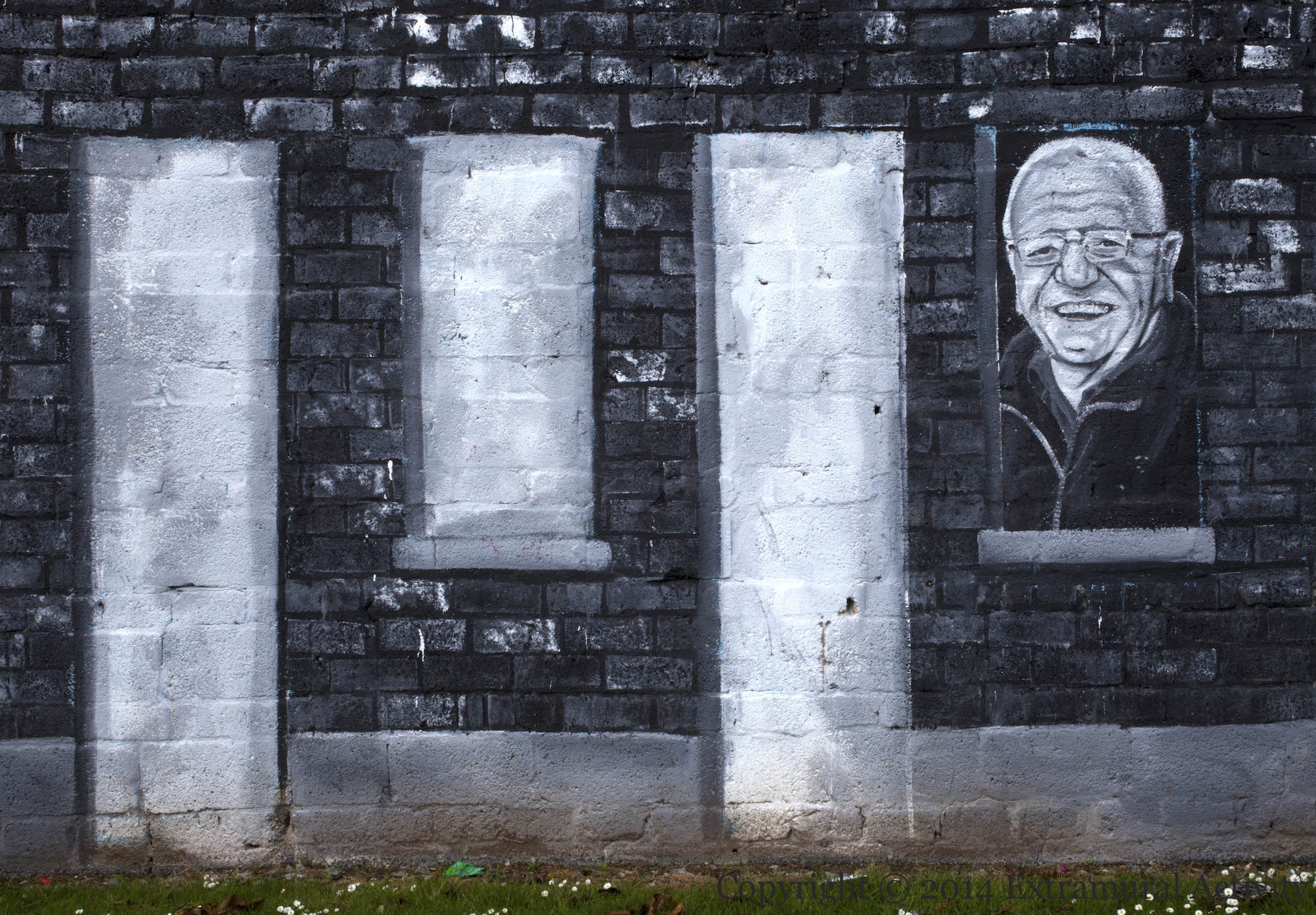
Geordie Bell was caretaker at the Short Strand community centre, on the other side of this mural, as well as a trade unionist and republican. A piece of art in the Skainos centre is dedicated to his memory (East Belfast Mission).
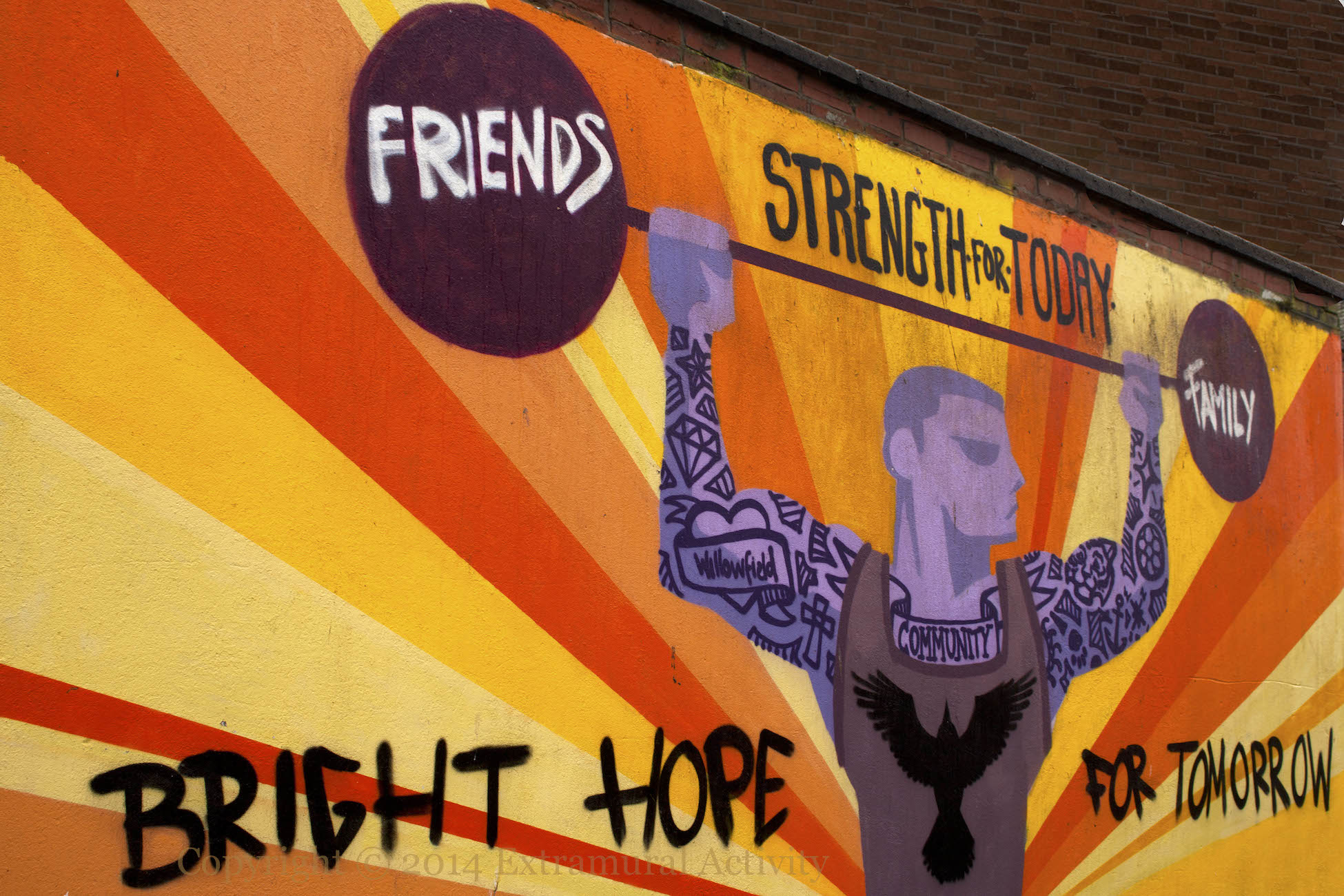
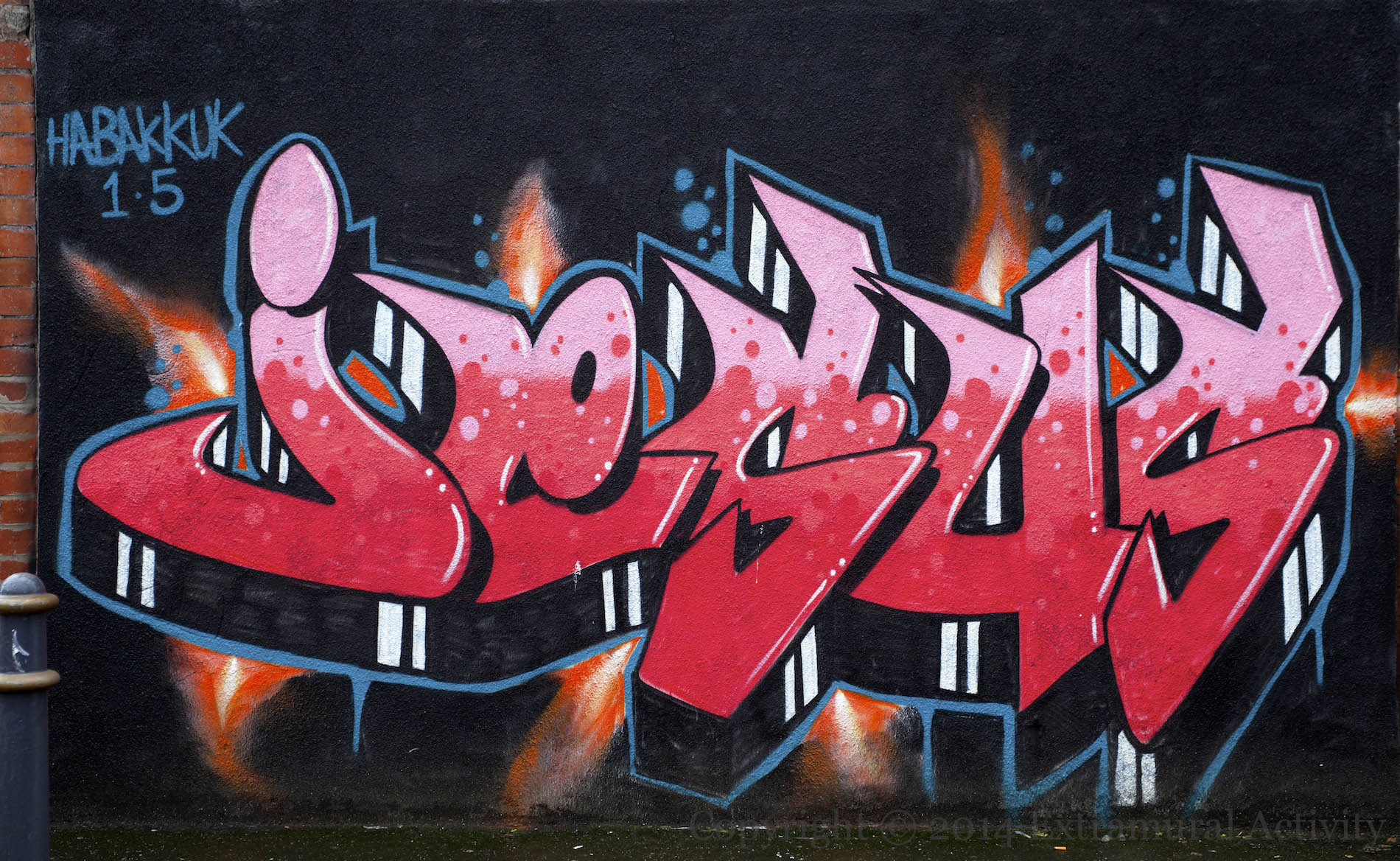
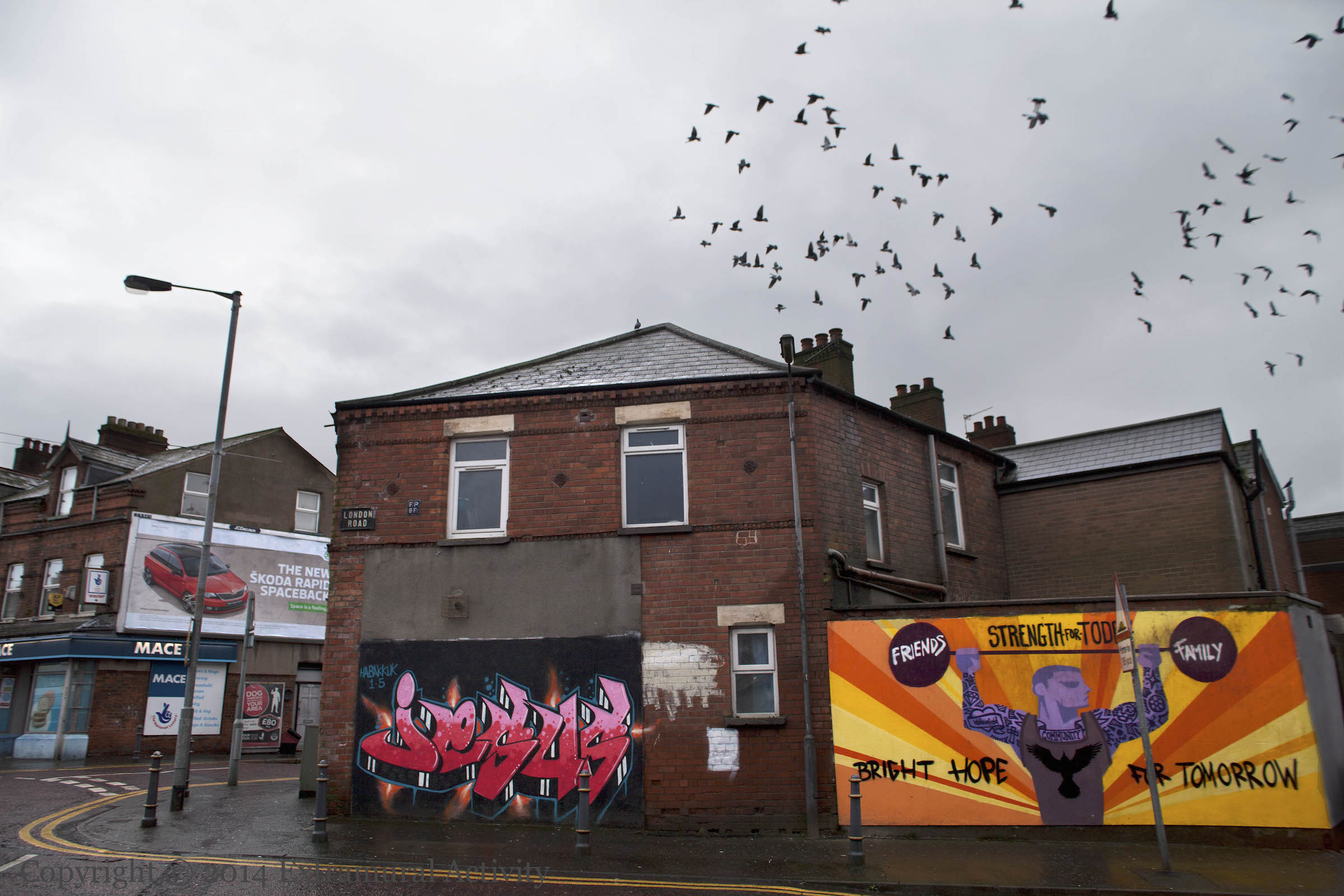
“Strength for today, bright hope for tomorrow.” A “Willowfield community” strong man lifts a barbell of “friends” and “family” as he gets in shape. Below, a “Jesus” tag and a wide shot of both pieces, at the top of London Road.
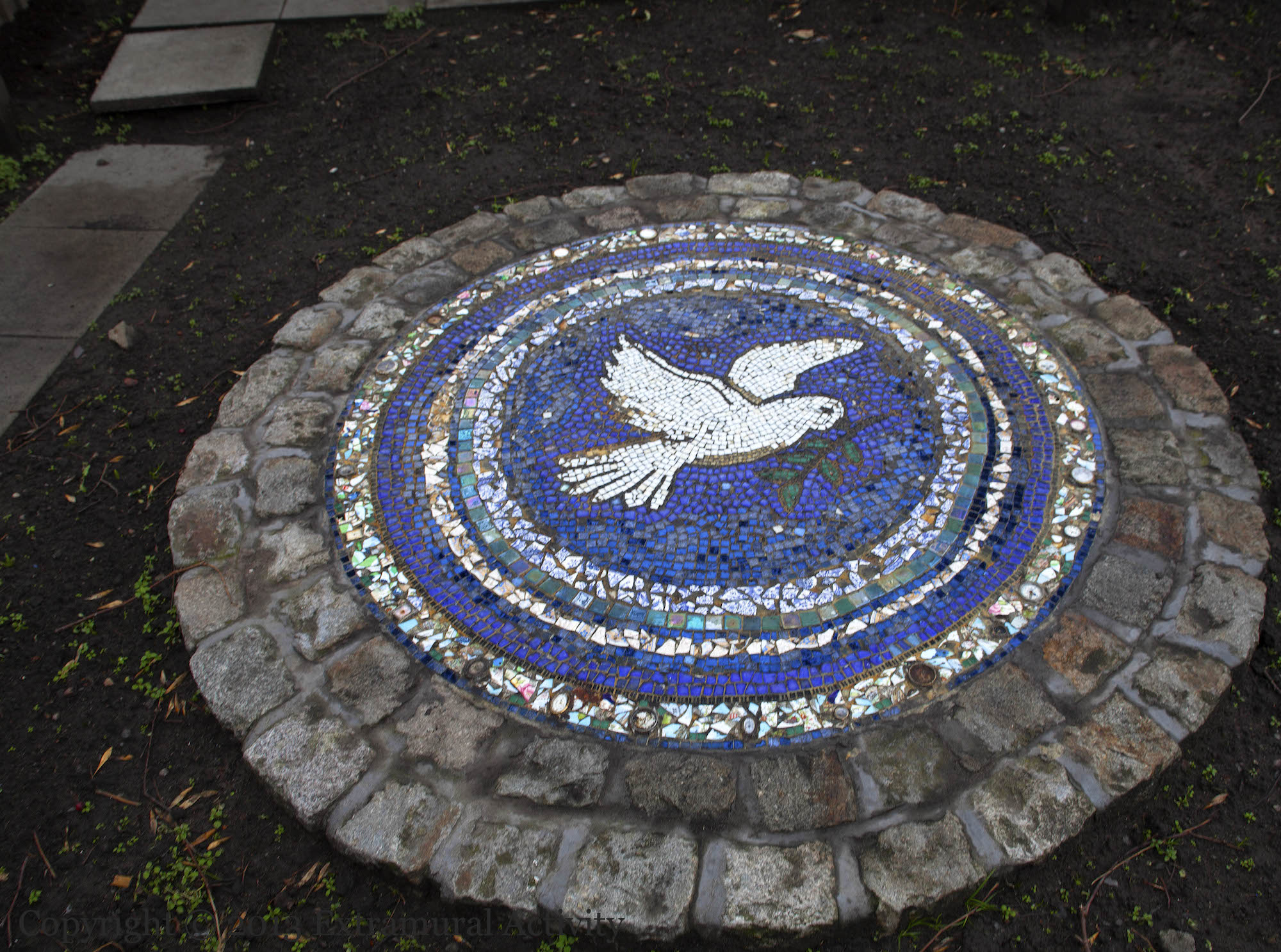
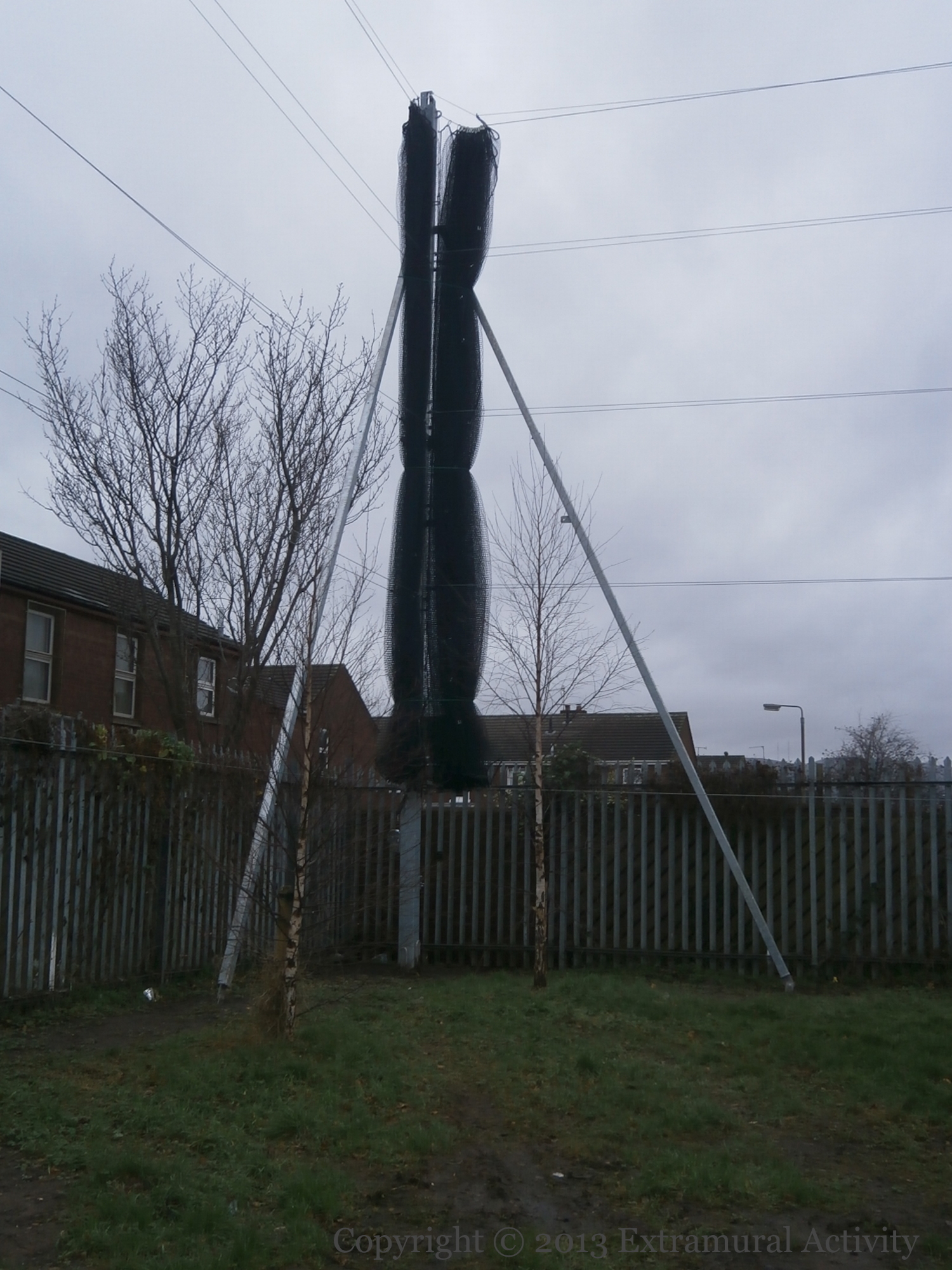
A ‘peace curtain’ (see below) was erected in November inside the grounds of St. Matthew’s chapel which, when opened, will stop stone-throwing between the Short Strand and the Newtownards Road. (News reports: U.tv | BBC – includes video.) It has already ensnared the dove in the image above.
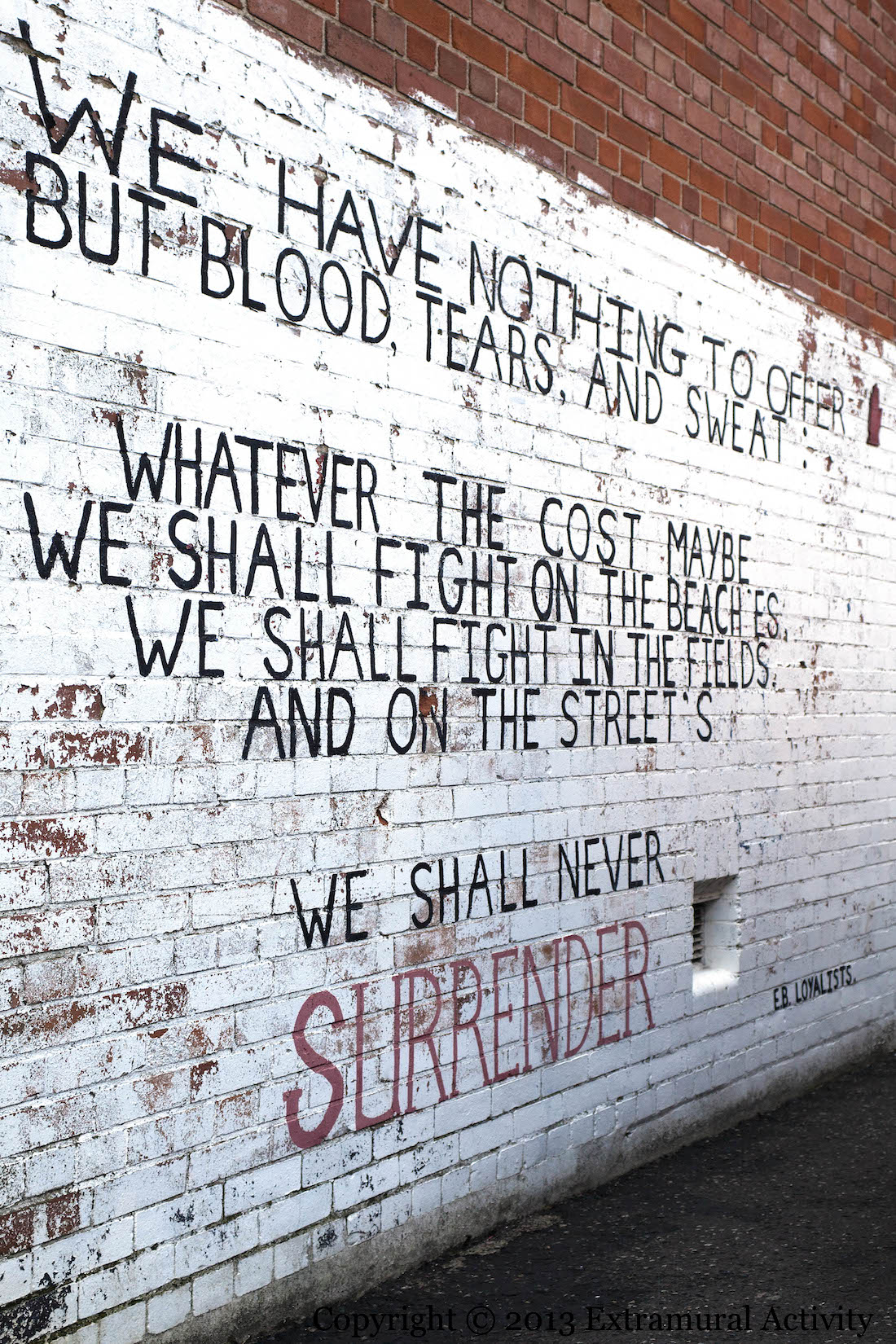
A message from “E.B. [east Belfast] Loyalists” in Castlereagh Parade, combining two speeches of Winston Churchill’s: “We have nothing to offer but blood, tears, and sweat” and “Whatever the cost maybe, we shall fight on the beach’es [sic], we shall fight in the fields and on the street’s [sic]. We shall never surrender.”
1940-05-13: “I would say to the House, as I said to those who have joined the government: I have nothing to offer but blood, toil, tears and sweat. We have before us an ordeal of the most grievous kind. We have before us many, many long months of struggle and of suffering. You ask: What is our policy? I will say: It is to wage war, by sea, land and air, with all our might and with all the strength that God can give us, to wage war against a monstrous tyranny, never surpassed in the dark and lamentable catalogue of human crime.”
1940-06-04: “We shall defend our island whatever the cost may be. We shall fight on the beaches. We shall fight on the landing grounds. We shall fight in the fields and in the streets. We shall fight in the hills. We shall never surrender. “
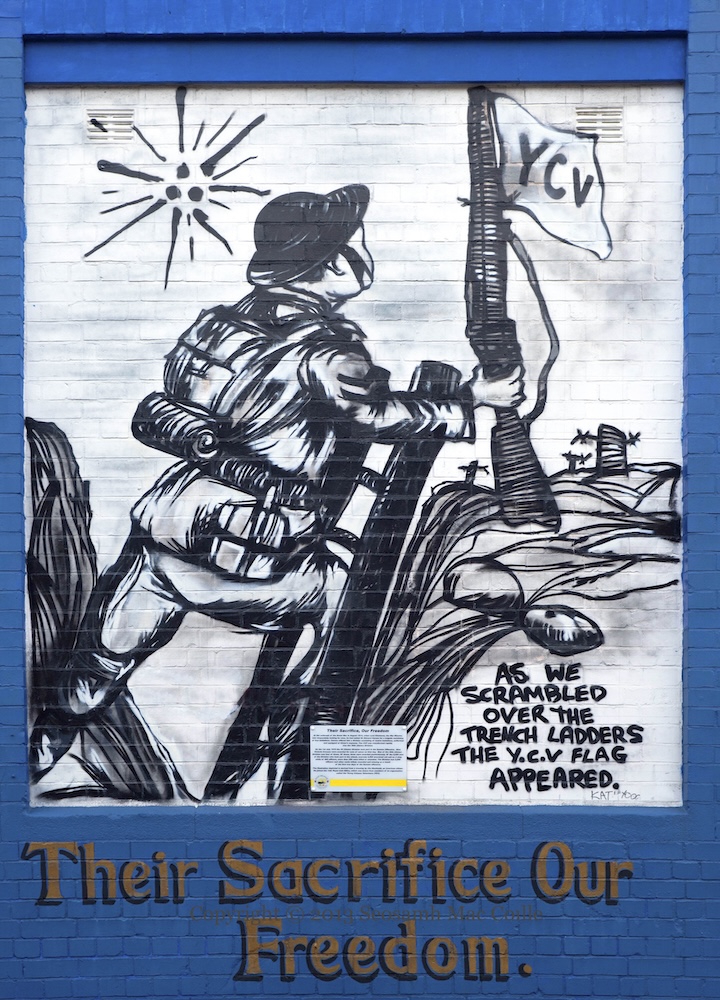
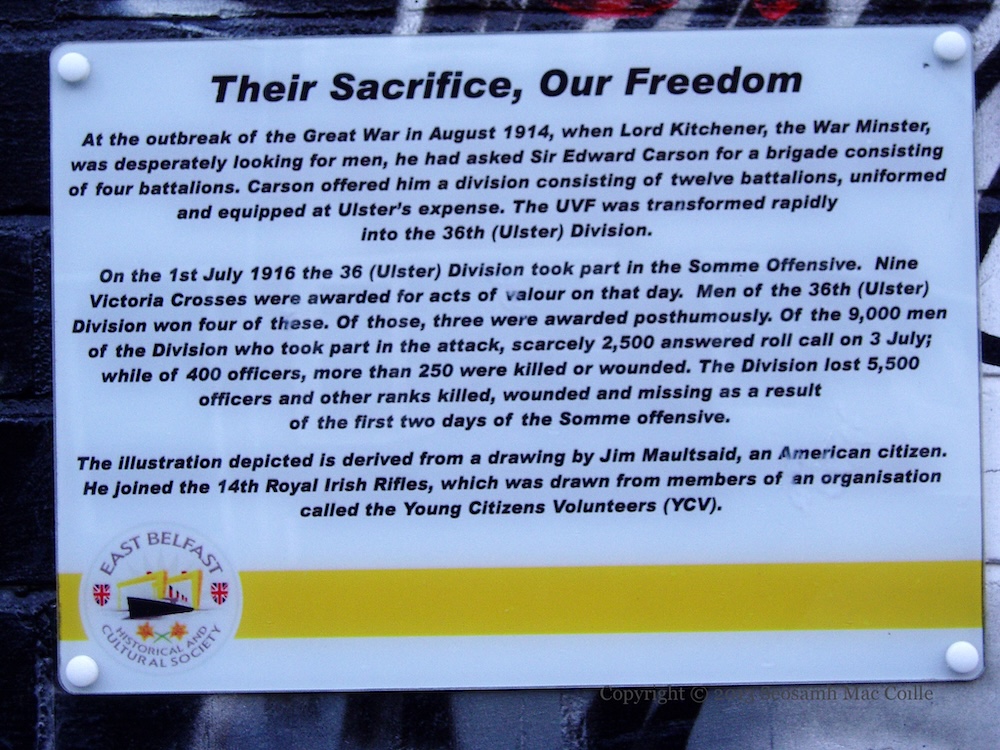
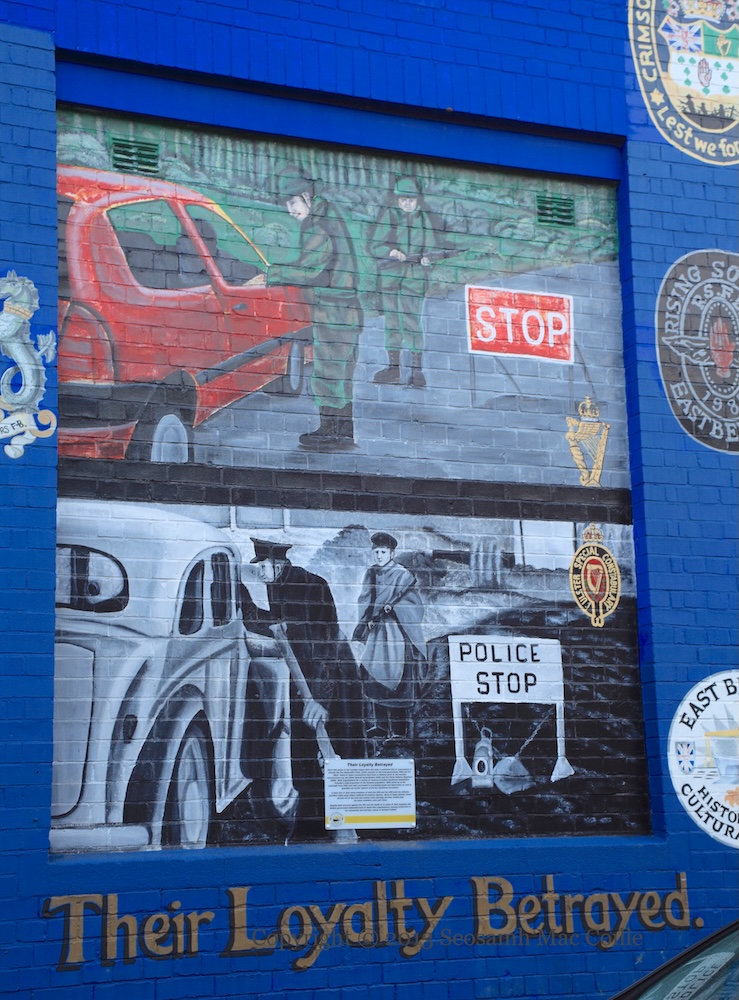
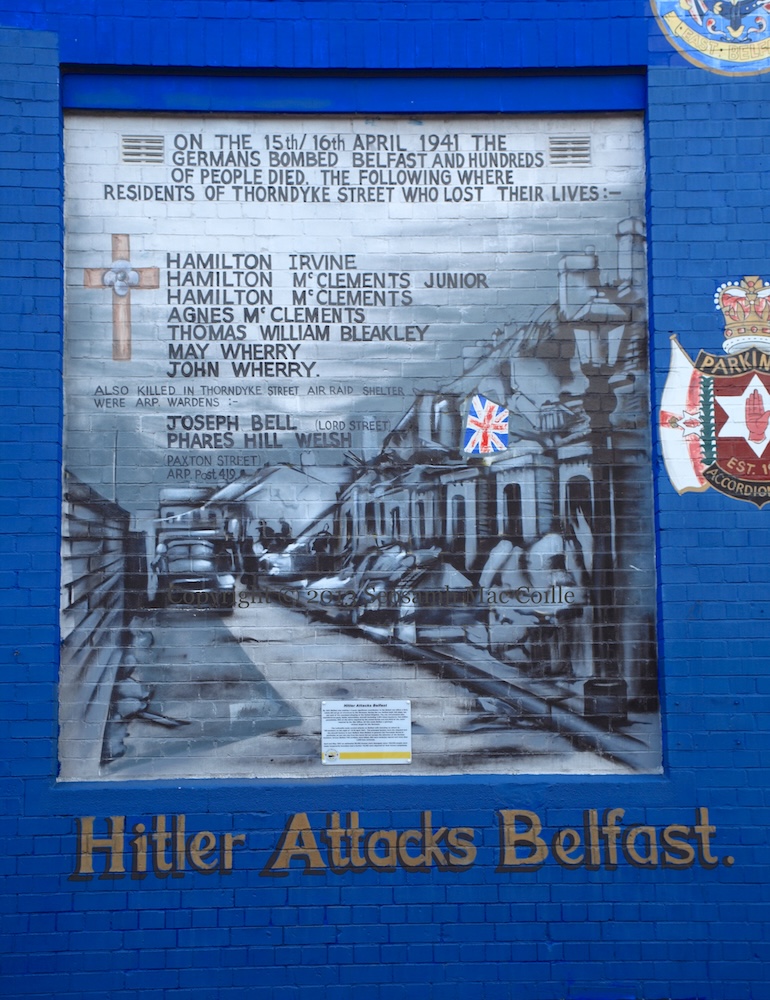
Information plaques were added (in 2007?) to the 14 panels in Thorndyke Street originally launched in 2004. They were originally off to the side of each panel (see e.g. the entry for this panel in Peter Moloney’s Collection), but have now been placed at the bottom of each panel on top of the illustration – three examples are given in this entry.
The paintings themselves do not appear to have changed, though there is one small change to the Jim Maultsaid WWI panel (compared to 2004) – Maultsaid’s name has been painted out.
The plaque for the Maultsaid panel reads: At the outbreak of the Great War in August 1914, when Lord Kitchener, the War Minister, was desperately looking for men, he had asked Sir Edward Carson for a brigade consisting of four battalions. Carson offered him a division consisting of twelve battalions, uniformed and equipped at Ulster’s expense. The UVF was transformed rapidly into the 36th (Ulster) Division. On the 1st July 1916 the 26 (Ulster) Division took part in the Somme Offensive. Nine Victoria Crosses were awarded for acts of valour on that day. Men of the 36th (Ulster) Division won four of these. Of those, three were awarded posthumously. Of the 9,000 men of the Division who took part in the attack, scarcely 2,500 answered roll call on 3 July; while of 400 officers, more than 250 were killed or wounded. The Division lost 5,500 officers and other ranks killed, wounded and missing as a result of the first two days of the Somme offensive. The illustration depicted is derived from a drawing by Jim Maultsaid, an American citizen. He joined the 14th Royal Irish Rifles, which was drawn from members of an organisation called the Young Citizen Volunteers (YCV). – East Belfast Historical And Cultural Society”