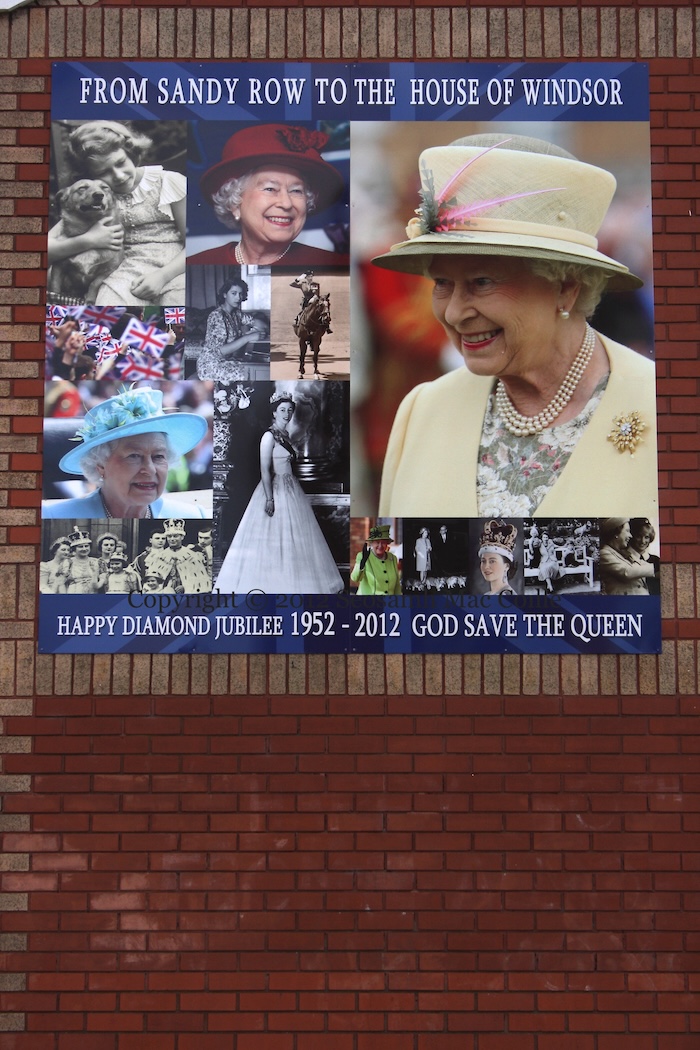
“From Sandy Row to the house of Windsor: happy diamond jubilee 1952-2012. God save the Queen.” Although the coronation was held in June 1953, Elizabeth acceded to the throne immediately upon the death of George VI, on February 6th, 1952.
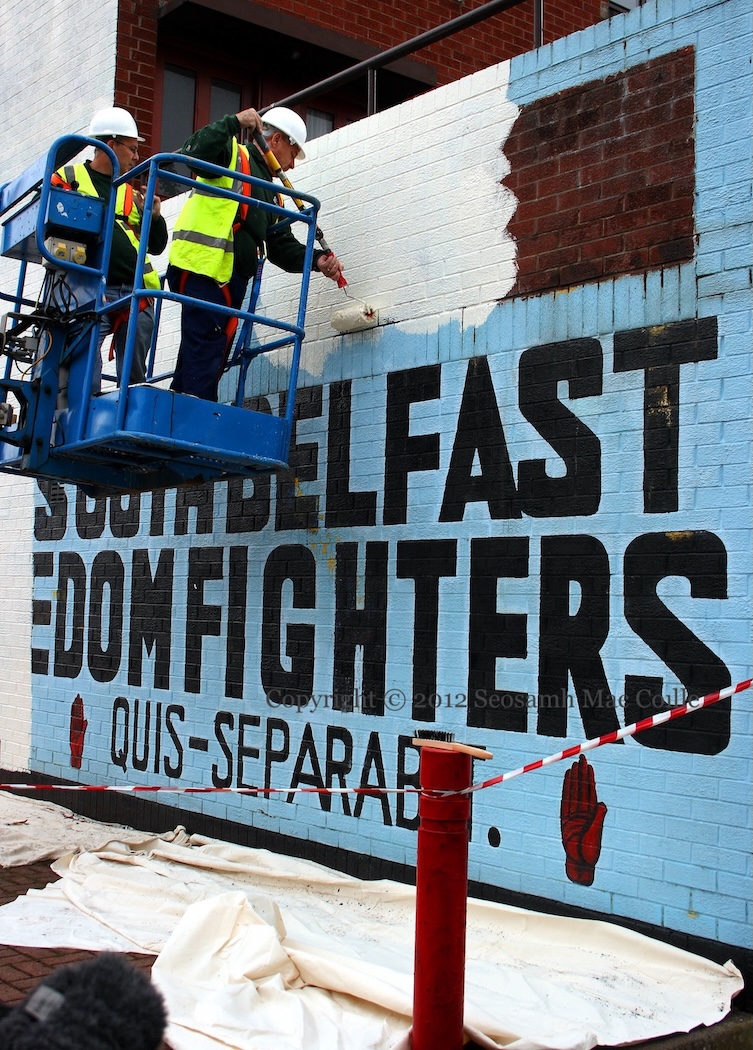
The ‘Welcome to Sandy Row’ mural is painted over, June 25th, 2012. The new King William mural was then launched on July 4th. More pics of the painting-out, from the BBC. Video from UTV.
“Hang out our banners … The cry is still “They come!”” – Shakespeare, Macbeth Act V, Scene V
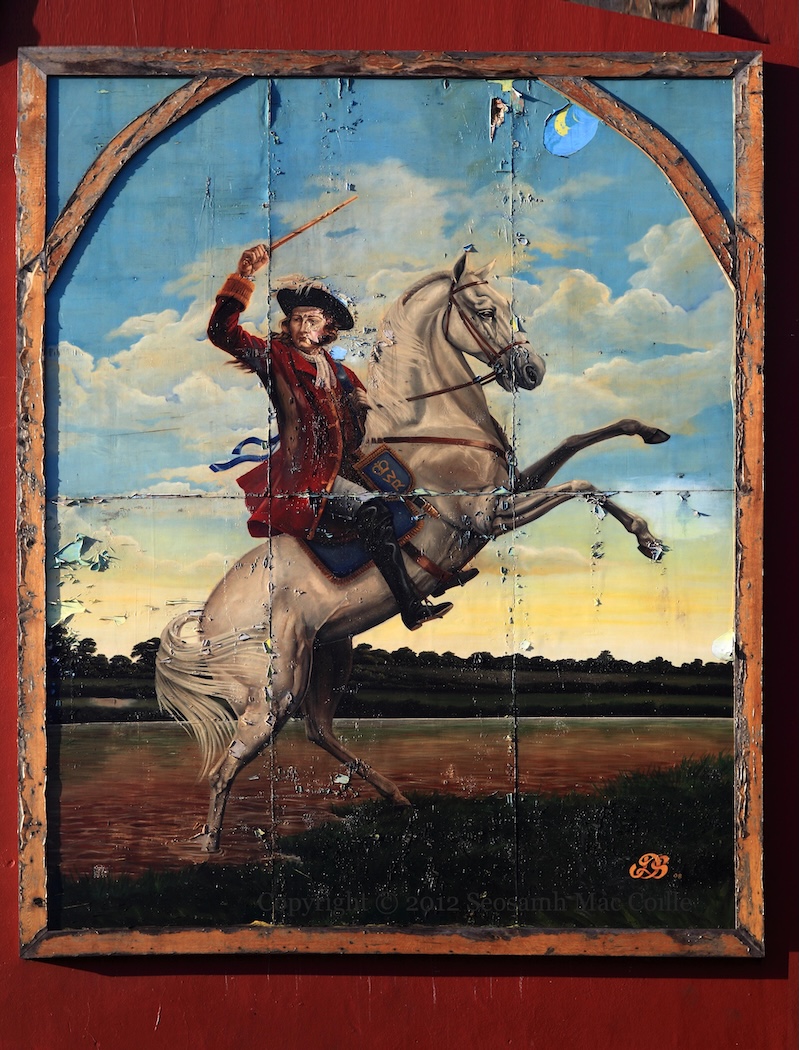
King Billy crossing the Boyne replaces a UFF ‘Eddie’ mural (see M02487) as part of the re-imaging of loyalist murals in 2008. Rolston (2012 p. 455) reports that the Arts Council thought King Billy was too divisive an image to replace the Village Eddie, but lost this particular battle (though Billy does not carry a sword but a stick/crop).
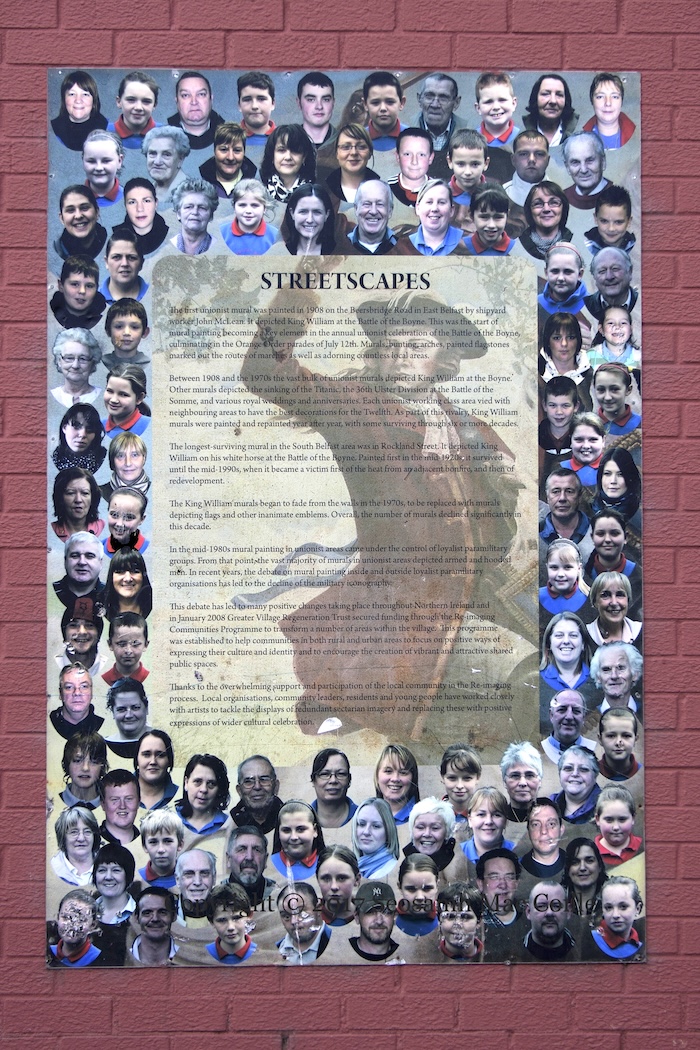
The info board, shown below, places the painting in the history of loyalist muraling as a return to traditional images after a period of paramilitary control.
By John Darren Sutton in Tavanagh Street, Village, south Belfast
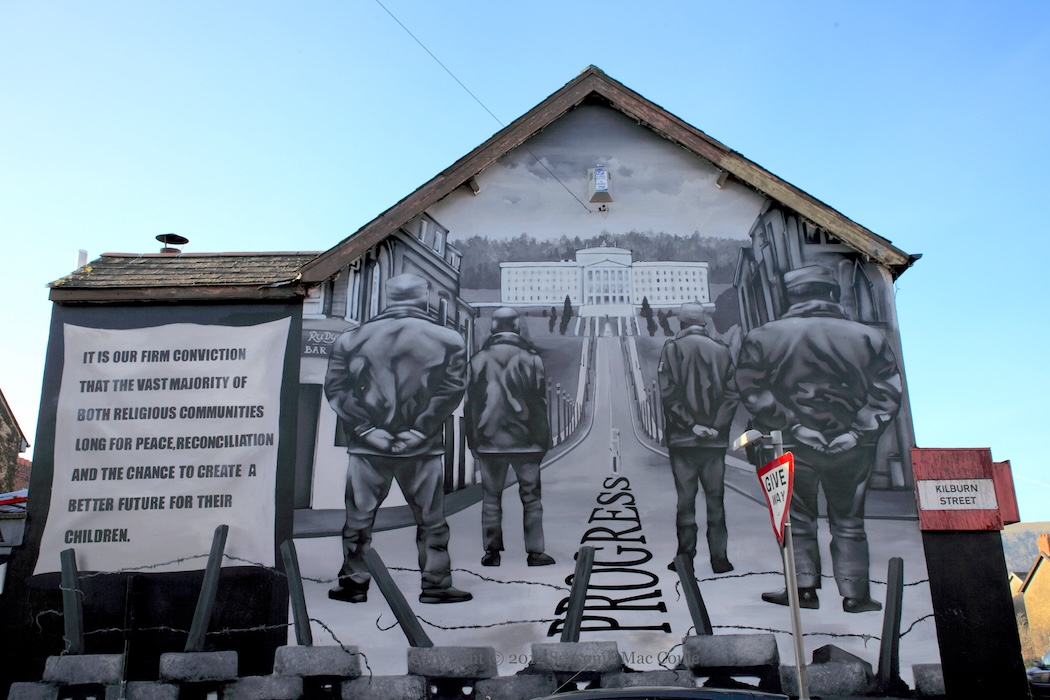
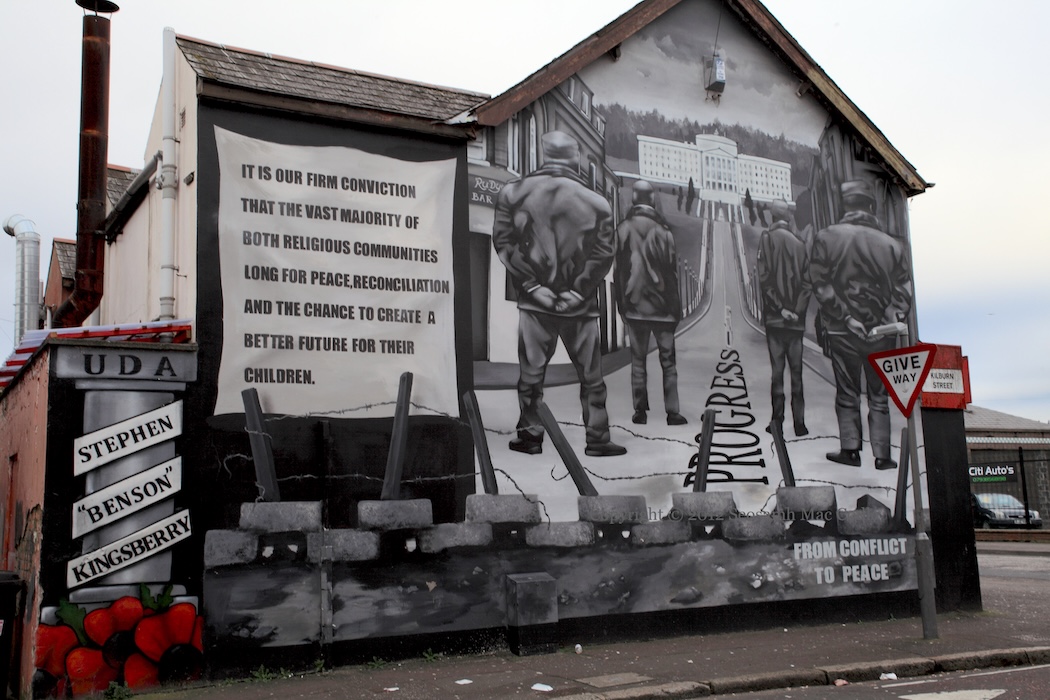
“It is our firm conviction that the vast majority of both religious communities long for peace, reconciliation and the chance to create a better future for their children.” UFF volunteers in the previous mural on this wall turn their back on violence and look towards Stormont for a political solution.
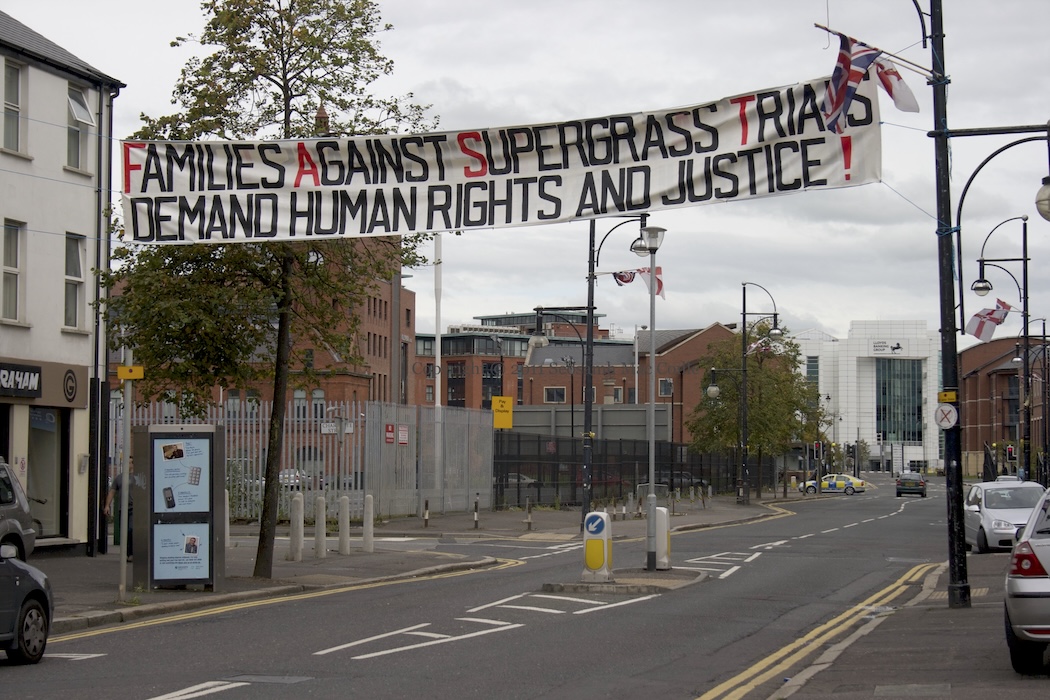
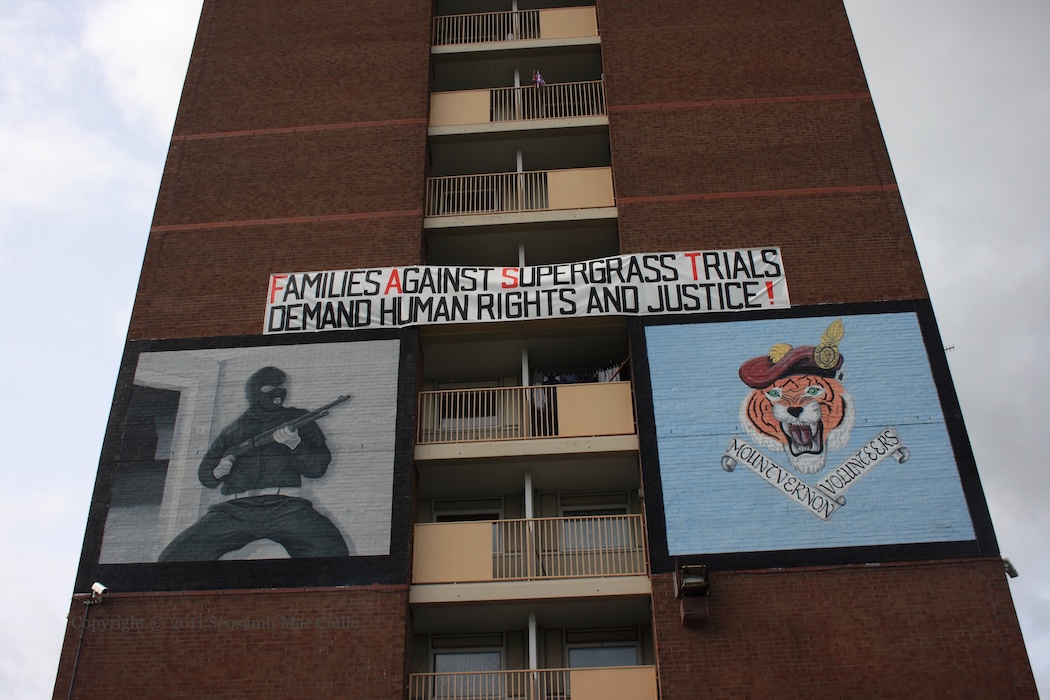
Families Against Supergrass Trials was formed to protest the first supergrass trial in 26 years (after the system collapsed during the trial), to begin on September 8th, related to the killing of Tommy English (Belfast Telegraph | BBC | BBC). The banner above is in Donegall Pass, the one below is on the Mount Vernon flats. There was another in Newtownards Road (Irish News). (And in 2012, one in Spier’s Place/Shankill Rd.)
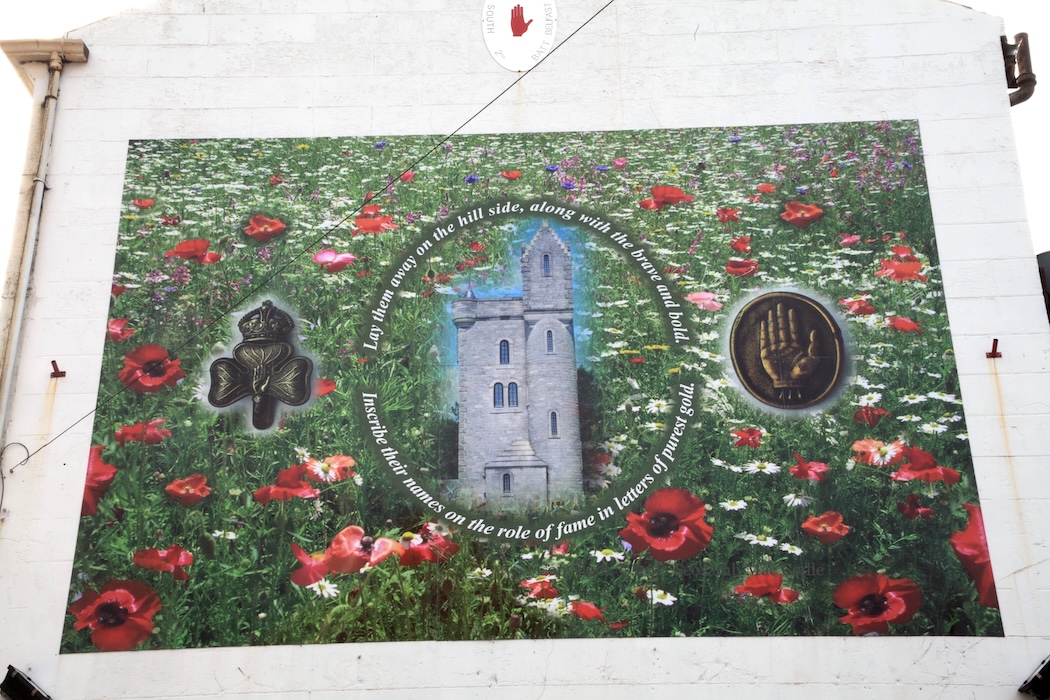
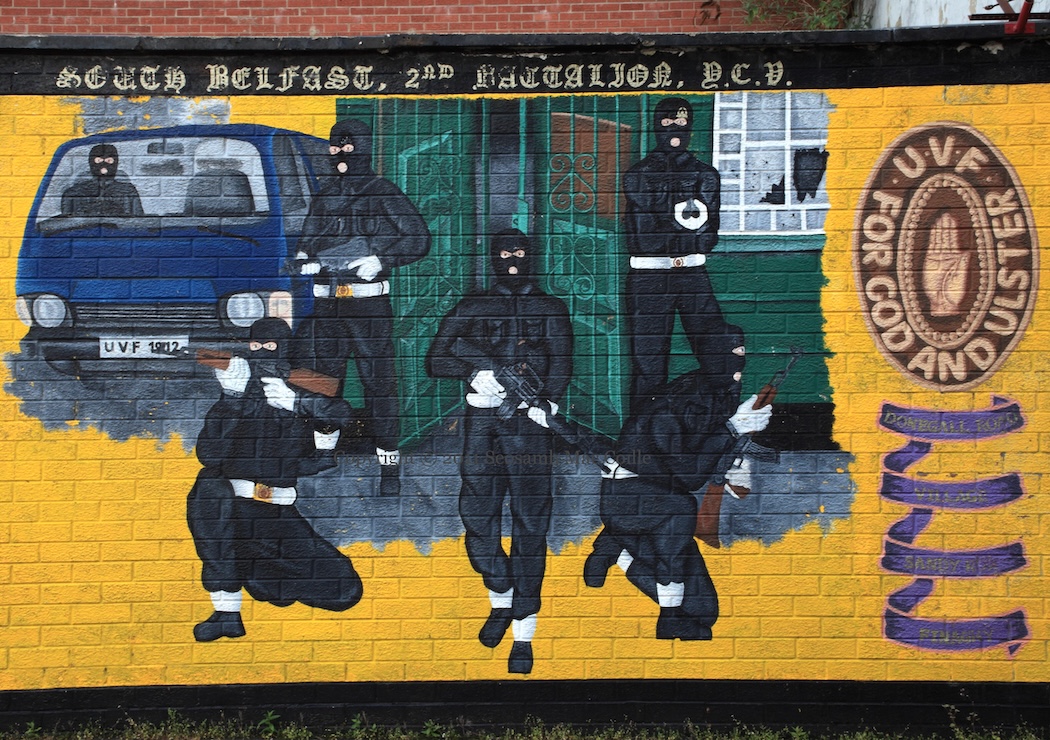
“Lay them away on the hill side/along with the brave and the bold/Inscribe their names on the role [sic] of fame/in letters of purest gold.” The Ulster Tower at Thiepval commemorates the WWI dead of the 36th (Ulster) Division. The words, however, come from a song about James Daly, who was executed by firing squad for taking part in a 1920 mutiny of the Connacht Rangers in India in protest of the activities of the Black and Tans. Above (and below – not shown) are the insignia and names of UVF volunteers from UVF South Belfast 2nd battalion – see Lay Them Away On The Hill Side.
On the side of The Hideout, Pine Street, Donegall Pass, south Belfast
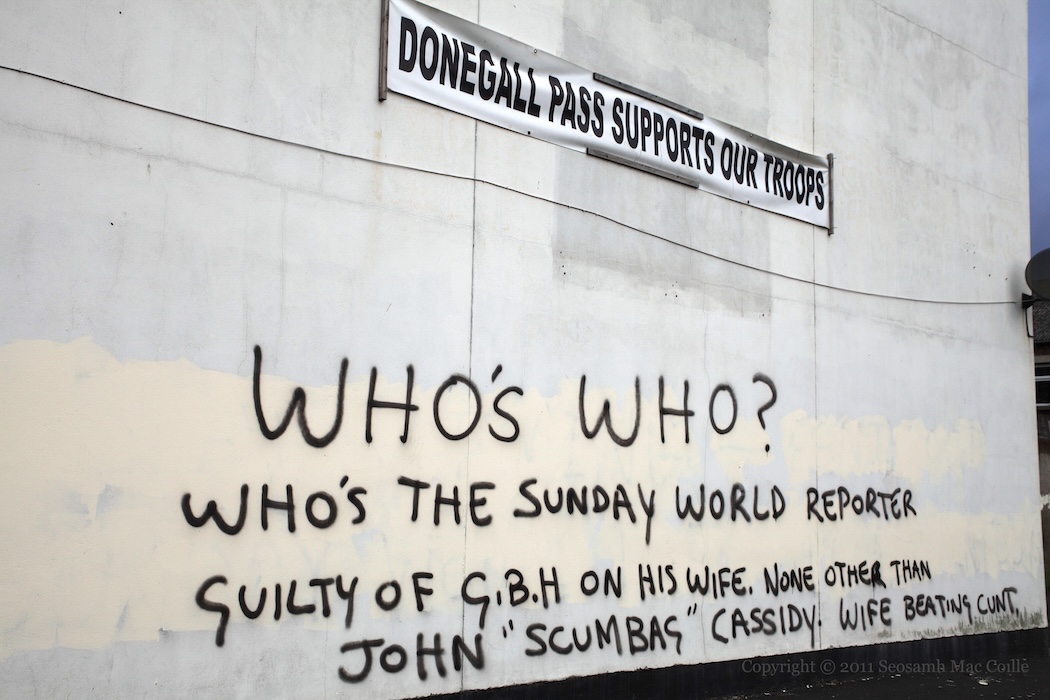
The troops in question are British forces in Afghanistan and Iraq, though the withdrawal of troops from Iraq had just taken place (on May 22) prior to the photographing of the image above (June 26).
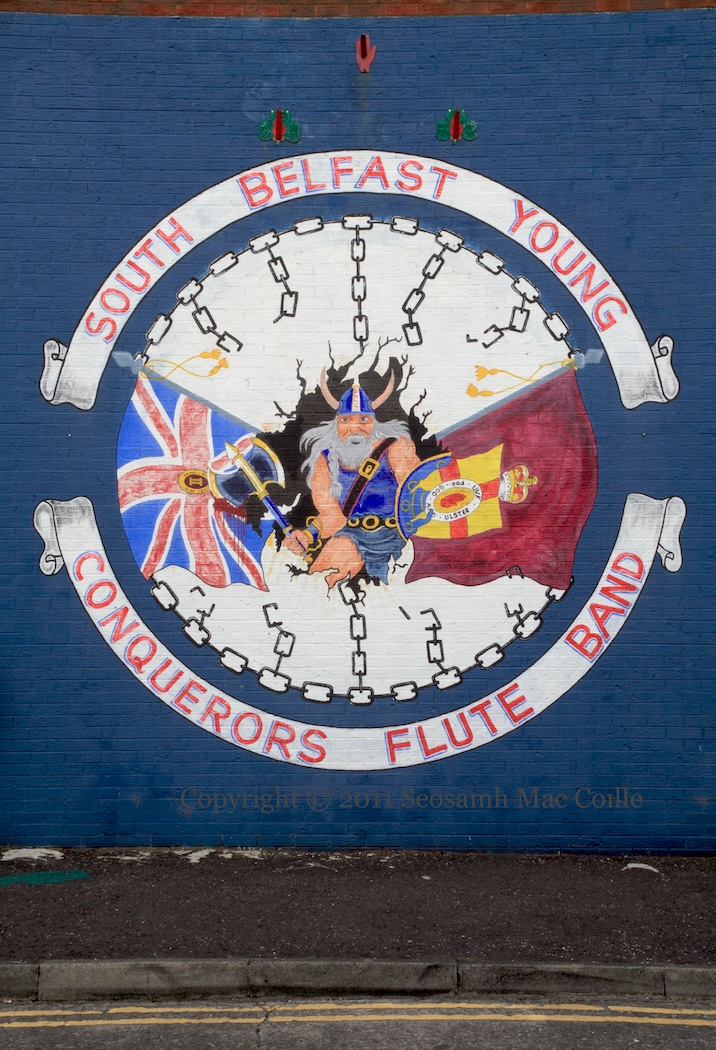
Young Conquerors flute band (Fb) mural in Donegall Pass. Flanking the central viking are (left) the flag of Ulster Volunteers south Belfast battalion and (right) the USSF flag.
 Seosamh Mac Coille Collection