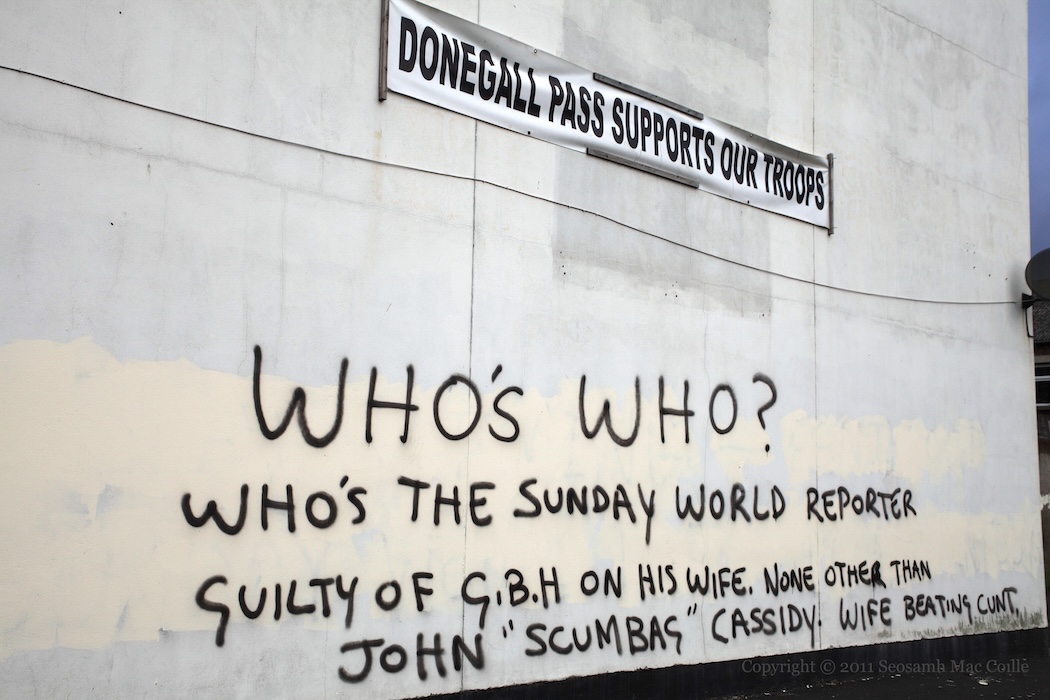
The troops in question are British forces in Afghanistan and Iraq, though the withdrawal of troops from Iraq had just taken place (on May 22) prior to the photographing of the image above (June 26).
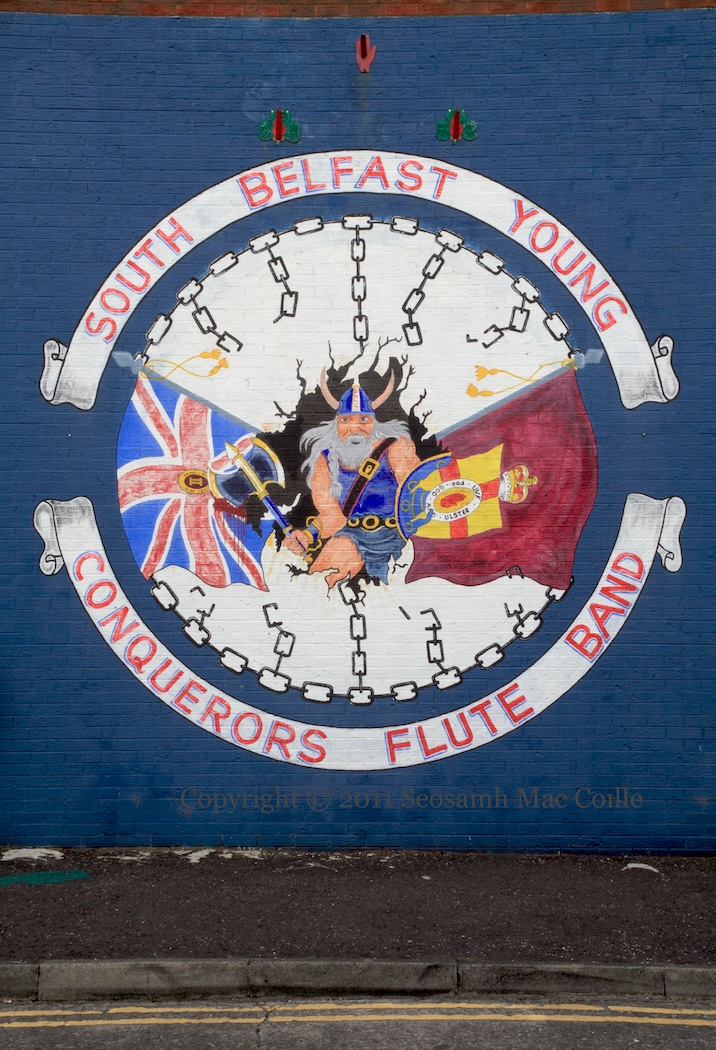
Young Conquerors flute band (Fb) mural in Donegall Pass. Flanking the central viking are (left) the flag of Ulster Volunteers south Belfast battalion and (right) the USSF flag.
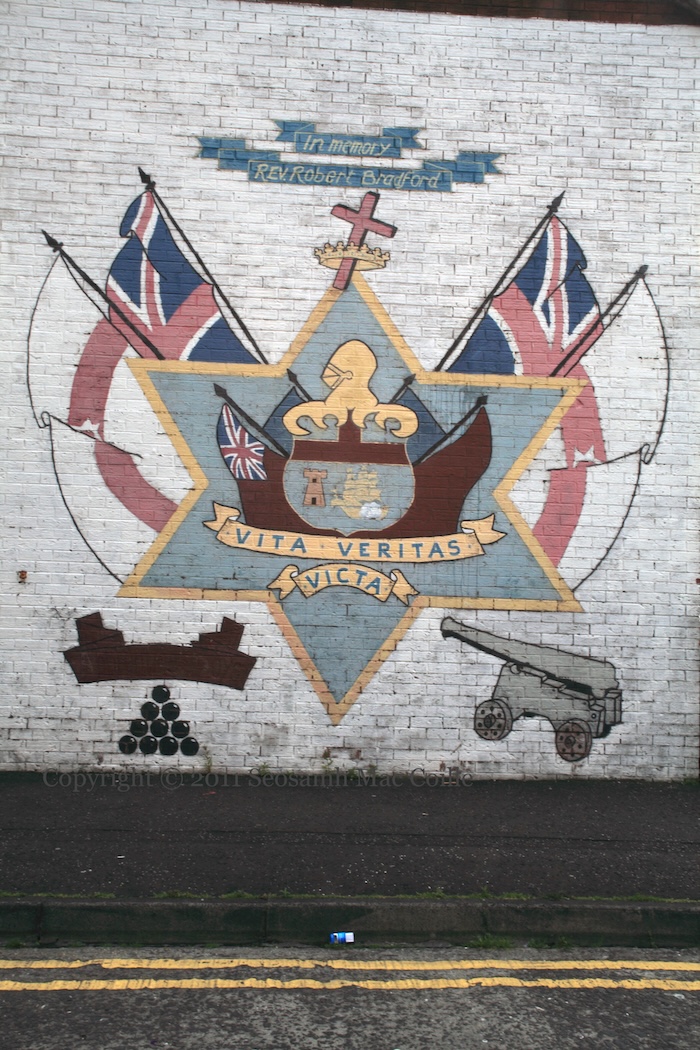
South Belfast MP Robert Bradford was assassinated by the Provisional IRA in Finaghy at a meeting with constituents; the caretaker of the community centre, Ken Campbell, was also killed by the fleeing attackers. In late 1981, with the hunger strikes having ended only a month before, the killing was noted around the world and raised fears of broad civil unrest (BBC | NYTimes).
“Vita, veritas, victoria” [life, truth, victory] is the motto of Londonderry. Here we have “vita, veritas, victa” [life, truth, conquered; perhaps the intended meaning was “conquering” rather than the passive]. The crest is also not quite the crest of the Apprentice Boys, with a ship in the bottom right rather than a skeleton. Get in touch if you can resolve either discrepancy.
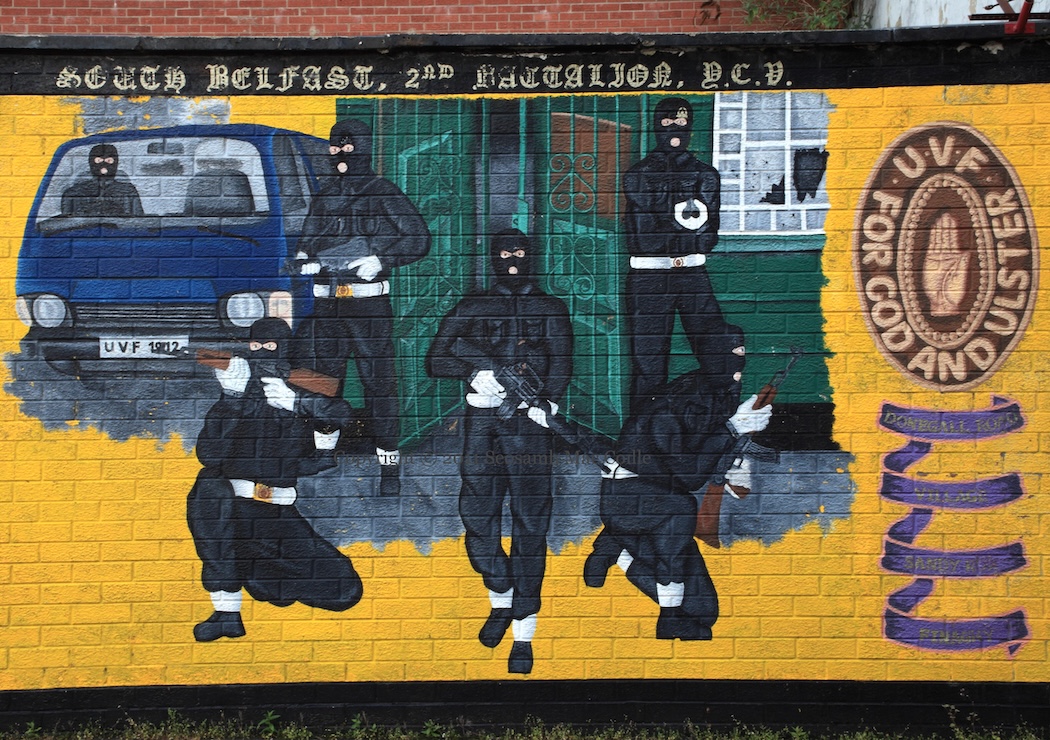
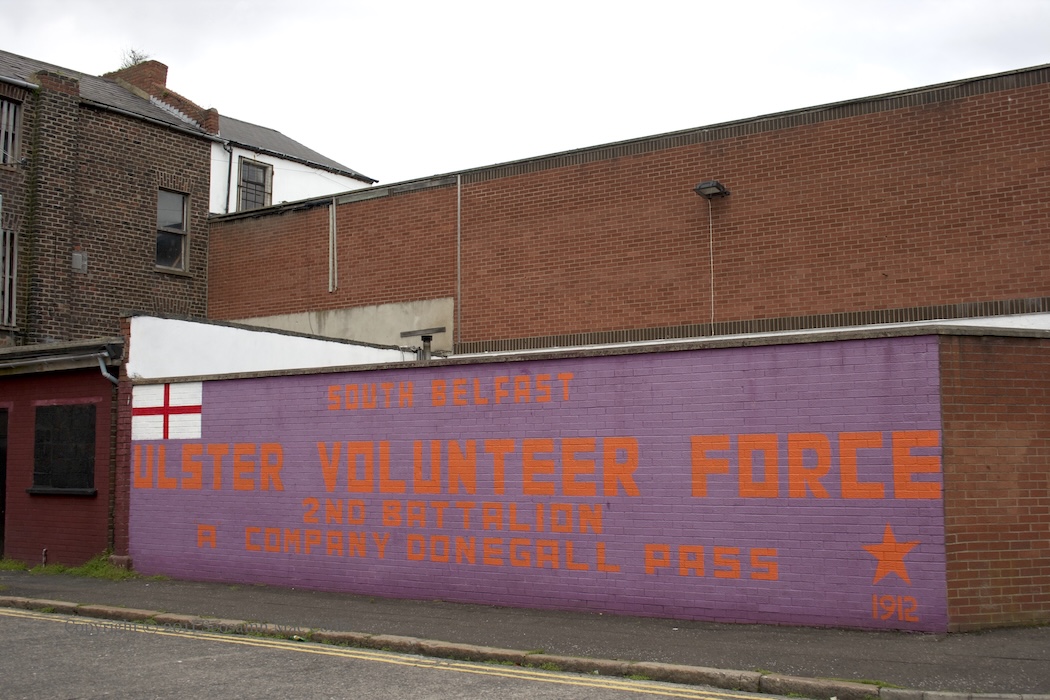
South Belfast Ulster Volunteer Force 2nd Battalion “A” Company Donegall Pass, with the flag of England (St. George’s Cross) in one corner and in the other an orange star with “1912” written below, the year the Ulster Volunteers were founded. The colour-scheme is the reverse of the Orange Order’s: its flag has the purple star of the Williamites on an orange field.
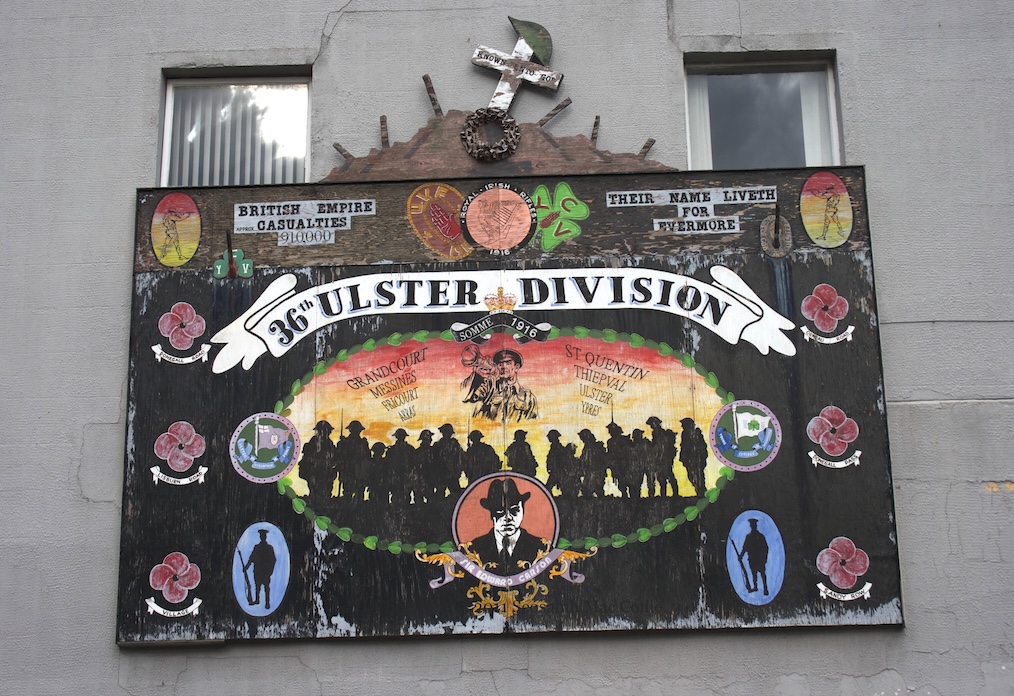
The apocryphal book of the Bible ‘Ecclesiasticus’ reads, “their bodies are buried in peace, but their name liveth for evermore” (44:14). The last clause is here applied to 910,000 “British empire casualties” from the Great War, including the Ulster Volunteers and Young Citizen Volunteers raised by “Sir Edward Carson” (here looking like Al Capone) which became the 36th (Ulster) Division and particularly the Royal Irish Rifles and fought at the Somme 1916.
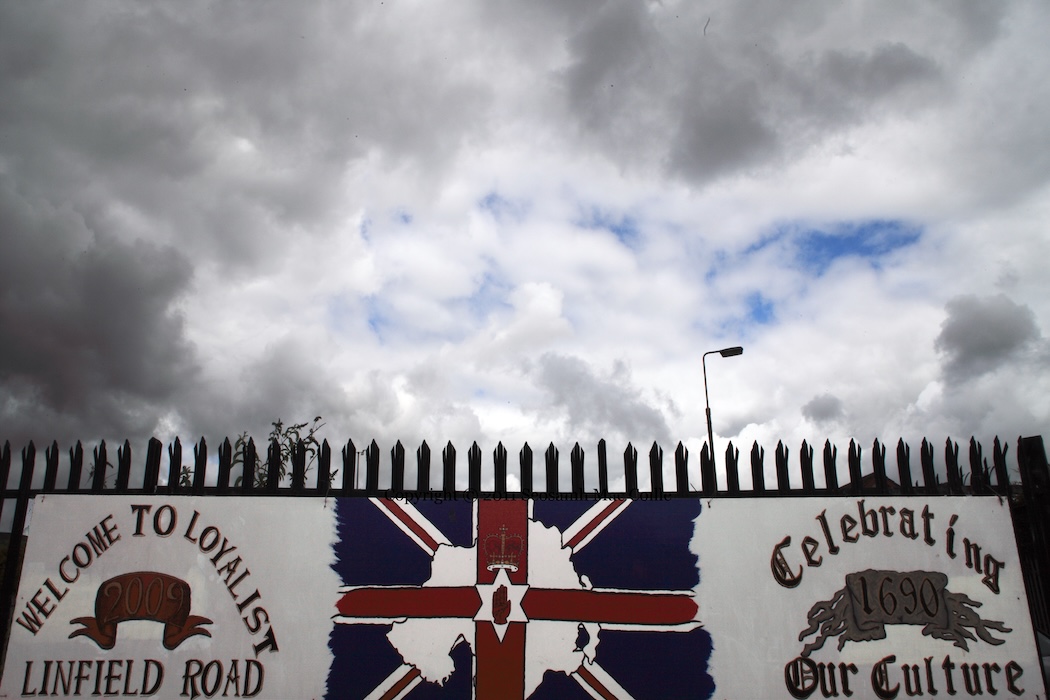
“2009: Welcome To Loyalist Linfield Road. Celebrating Our Culture 1690.” The central panel is a combination Union Flag, Ulster Banner, and free-floating Northern Ireland.
The banner hung on the railings in Linfield Road from 2009 until it was stolen and placed on a 2013 republican bonfire (see Bonfire Flags) which then elicited a comment on the wall just east of this location (see They May Have Stole Our Banner).
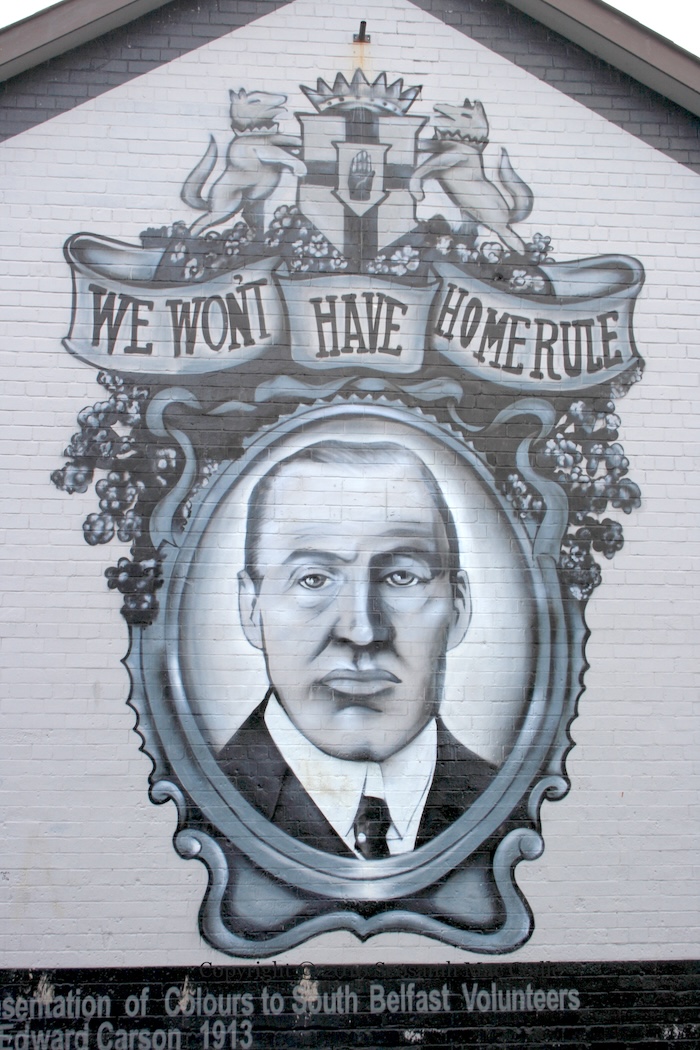
Dublin barrister Sir Edward Carson was the figurehead of Unionism at the time of the Home Rule crisis, overseeing the formation of the Ulster Volunteers and the Covenant in response to the third bill. Carson’s aim was to keep all of Ireland within the UK but advised unionists to accept the six-county Northern Ireland stipulated by the 1920 Bill.
For the side wall out of shot to the left, see M04206.
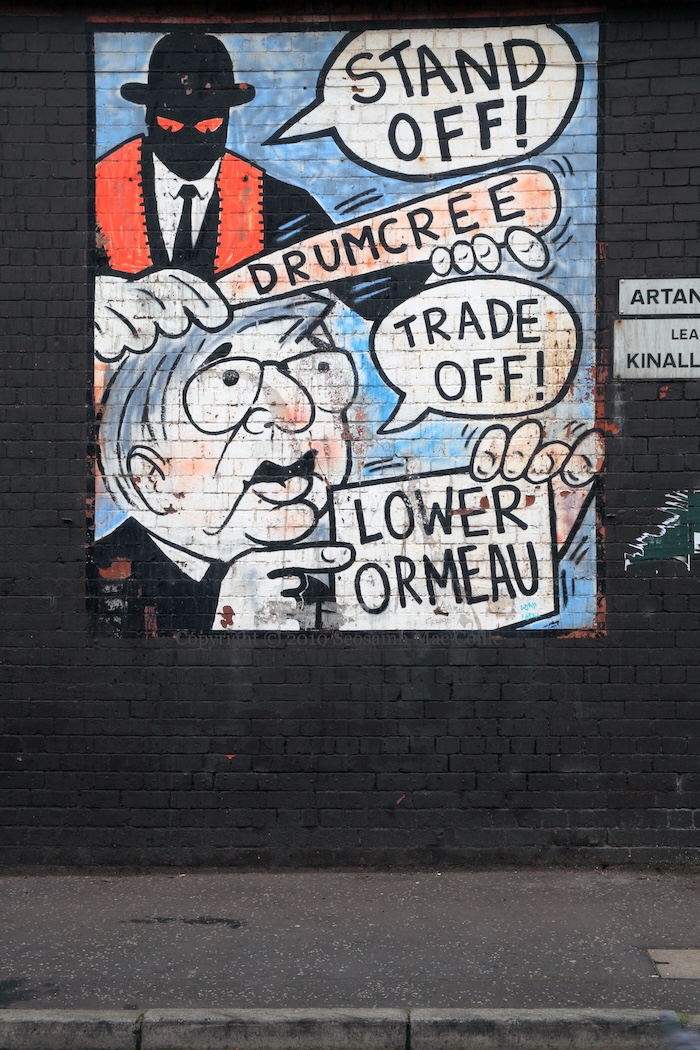
This “stand-off – trade-off” mural reappears in Artana Street, Belfast, previously recorded in Stand Firm. The mural dates to 1998, when an Orange Order march was allowed to parade along Ormeau Road. Parades Commission chairman Alistair Graham (pictured in the mural beneath the evil-eyed OO member) “insisted that the Ormeau Road decision “was not a simple trade-off for our earlier decision on Drumcree”” (Irish Times).
Painted by Troy Garity, recreating an Ian Knox cartoon (Belfast Media).
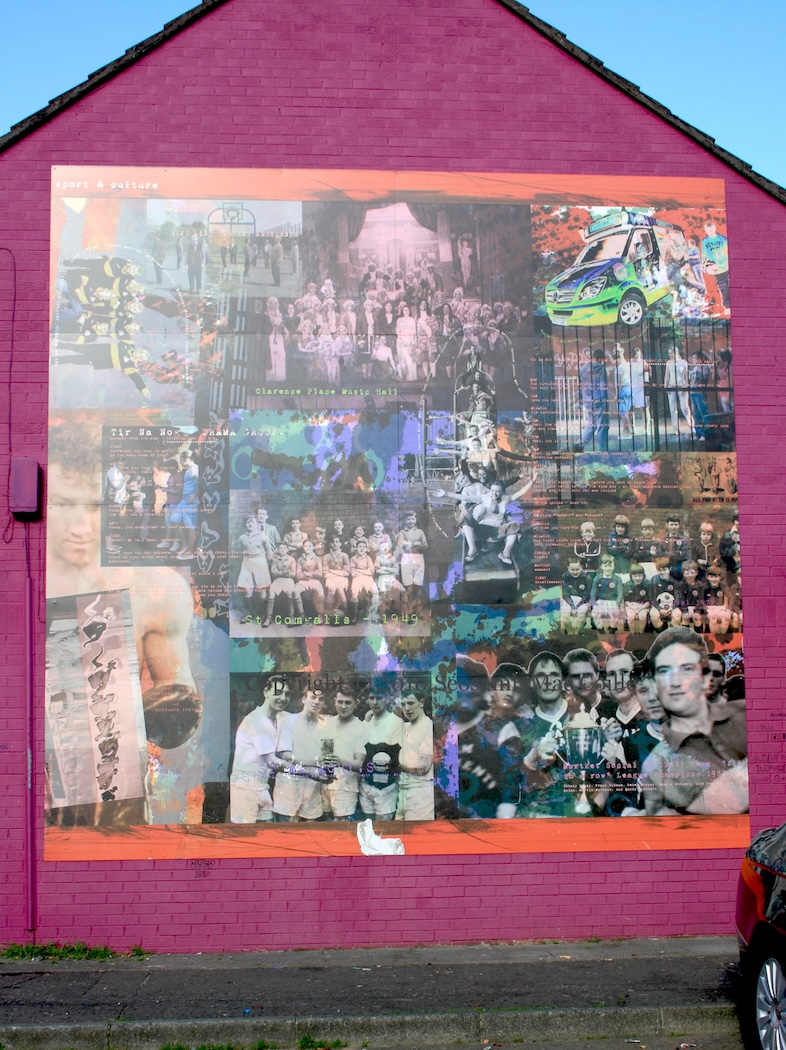
In 2008 and 2009 artist Raymond Henshaw completed a series of cultural murals about the Markets are of Belfast. This one focuses on sport but Clarence Place Music Hall and Tir Na Nog Drama Group are included to represent ‘culture’.