Godfather Of The Israeli Army

2015-05-15 Patterson8+

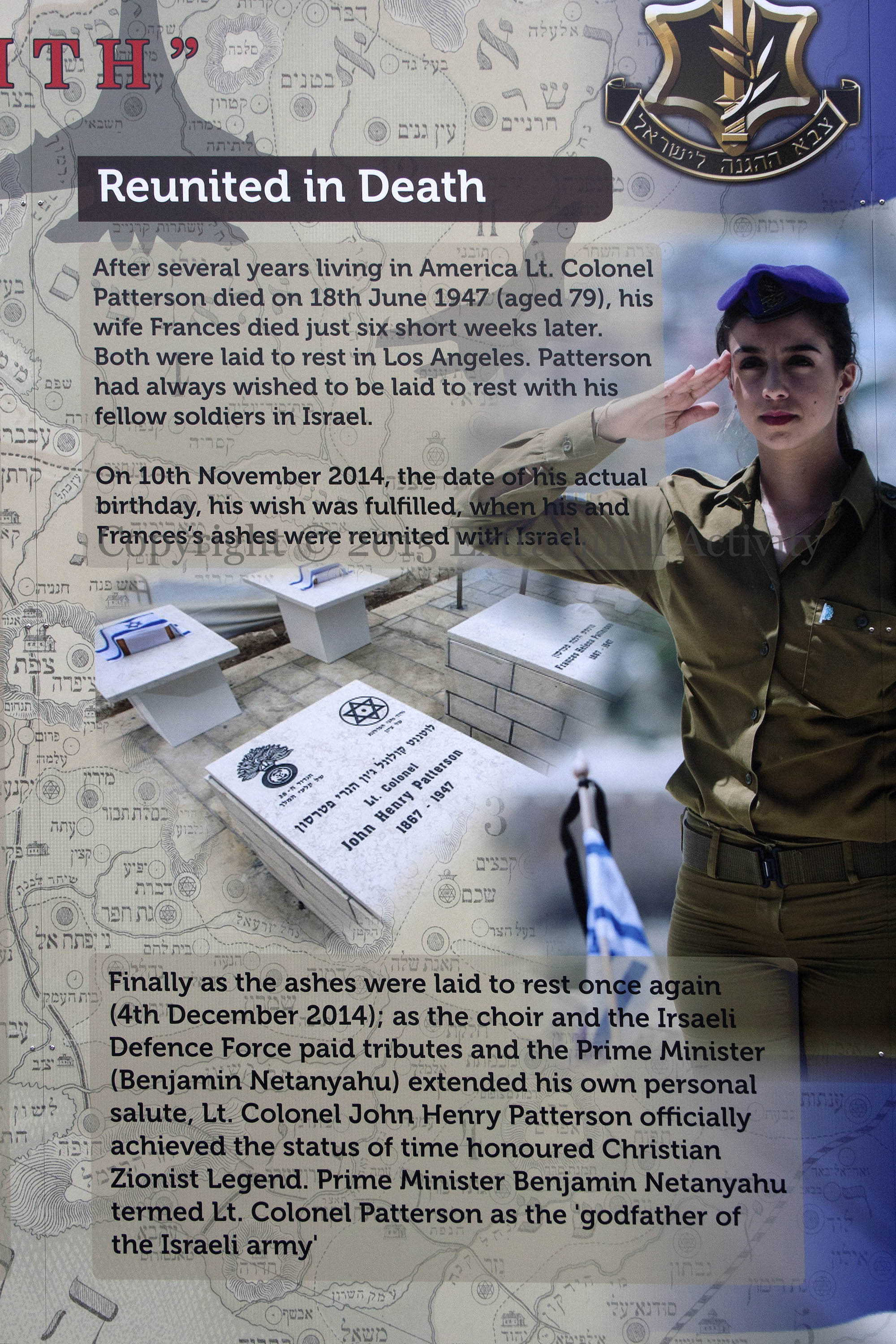
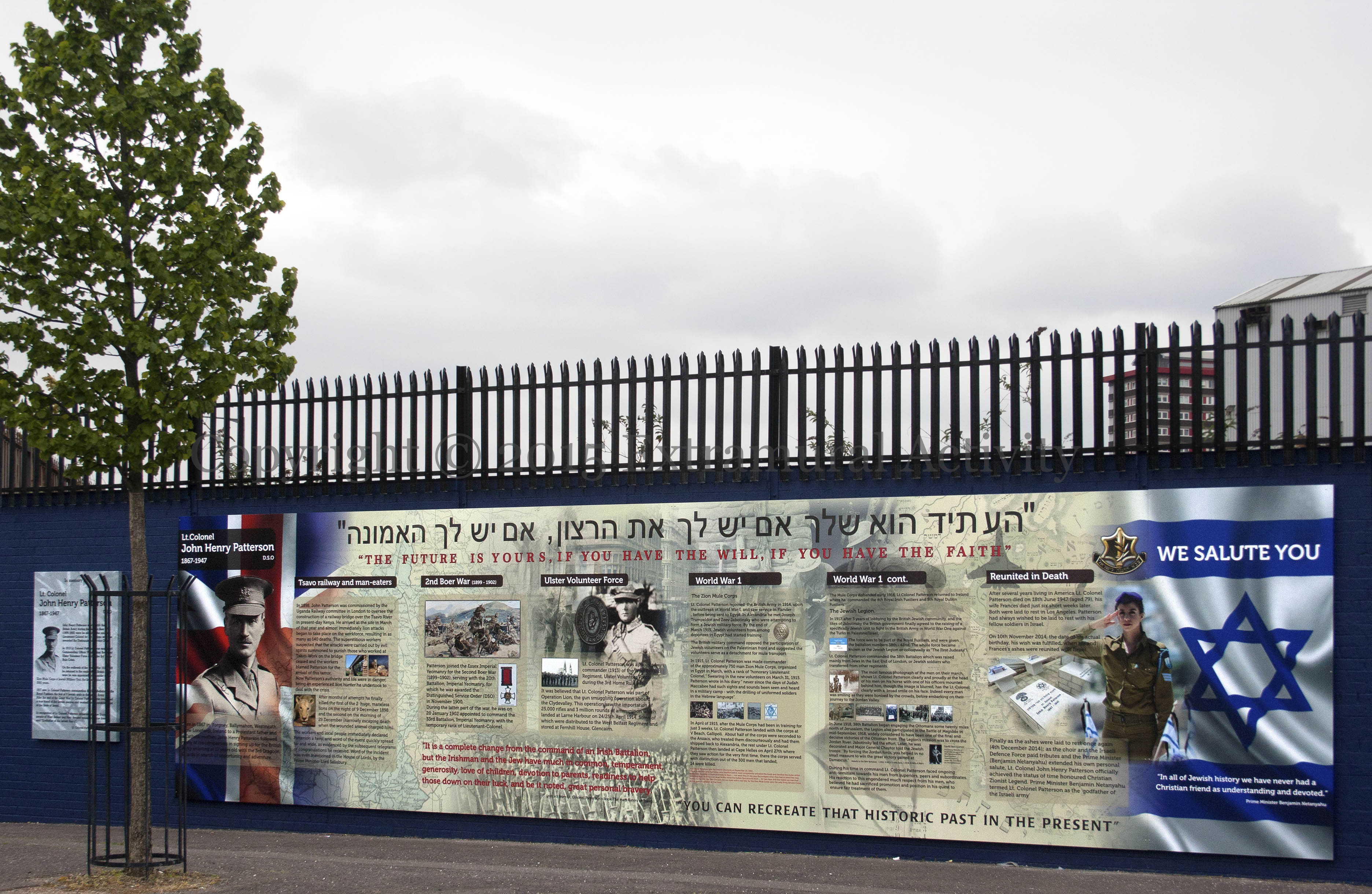
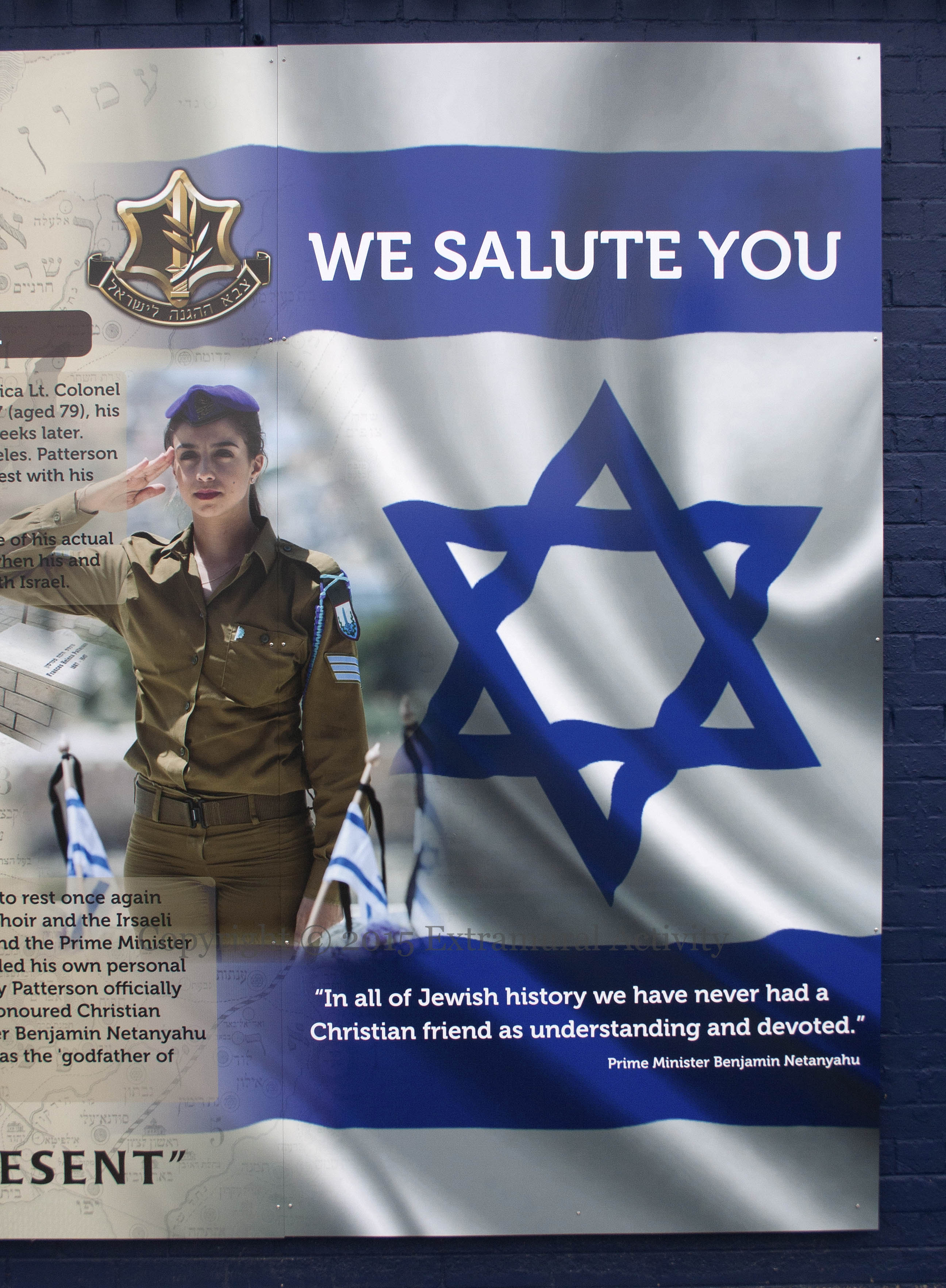
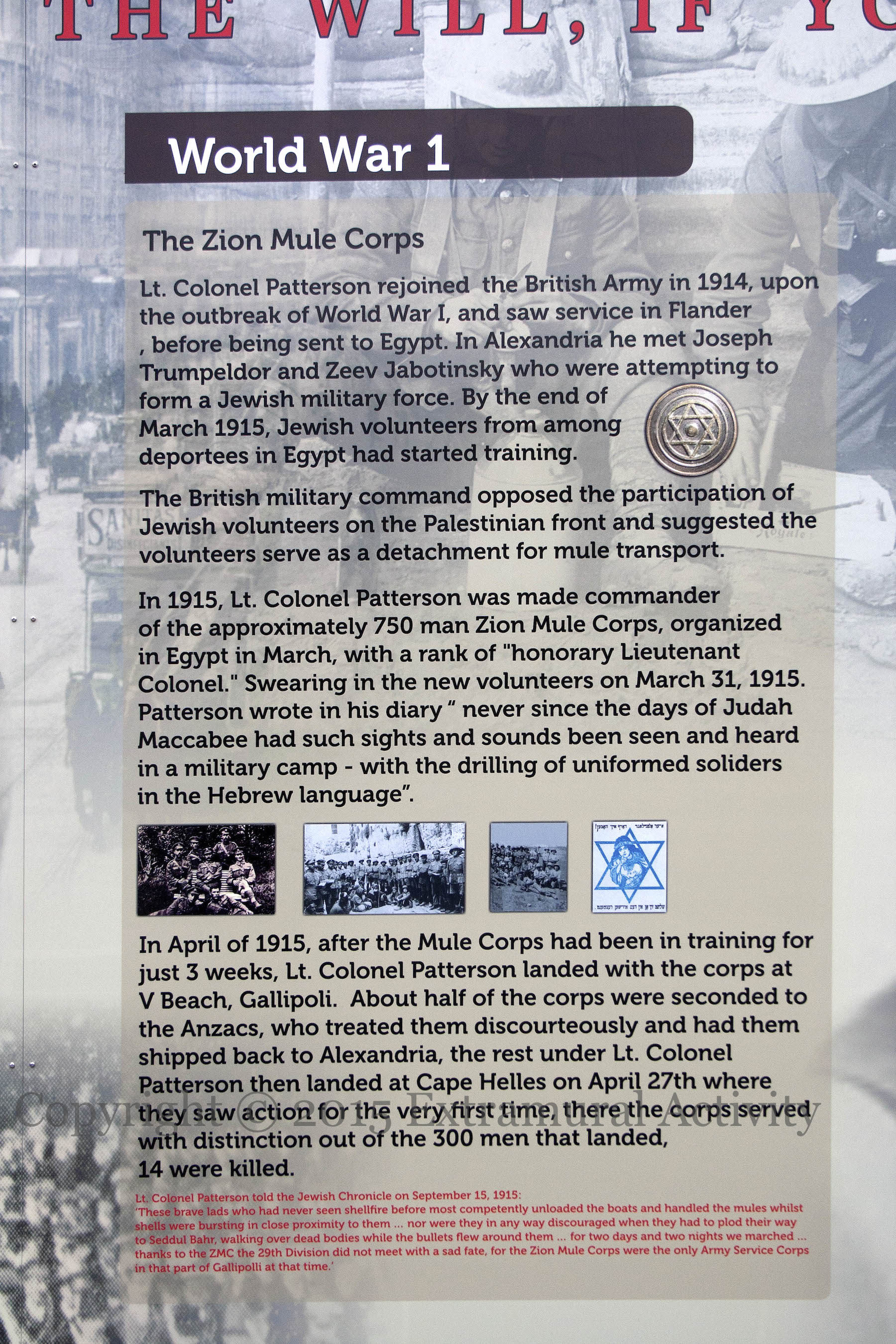
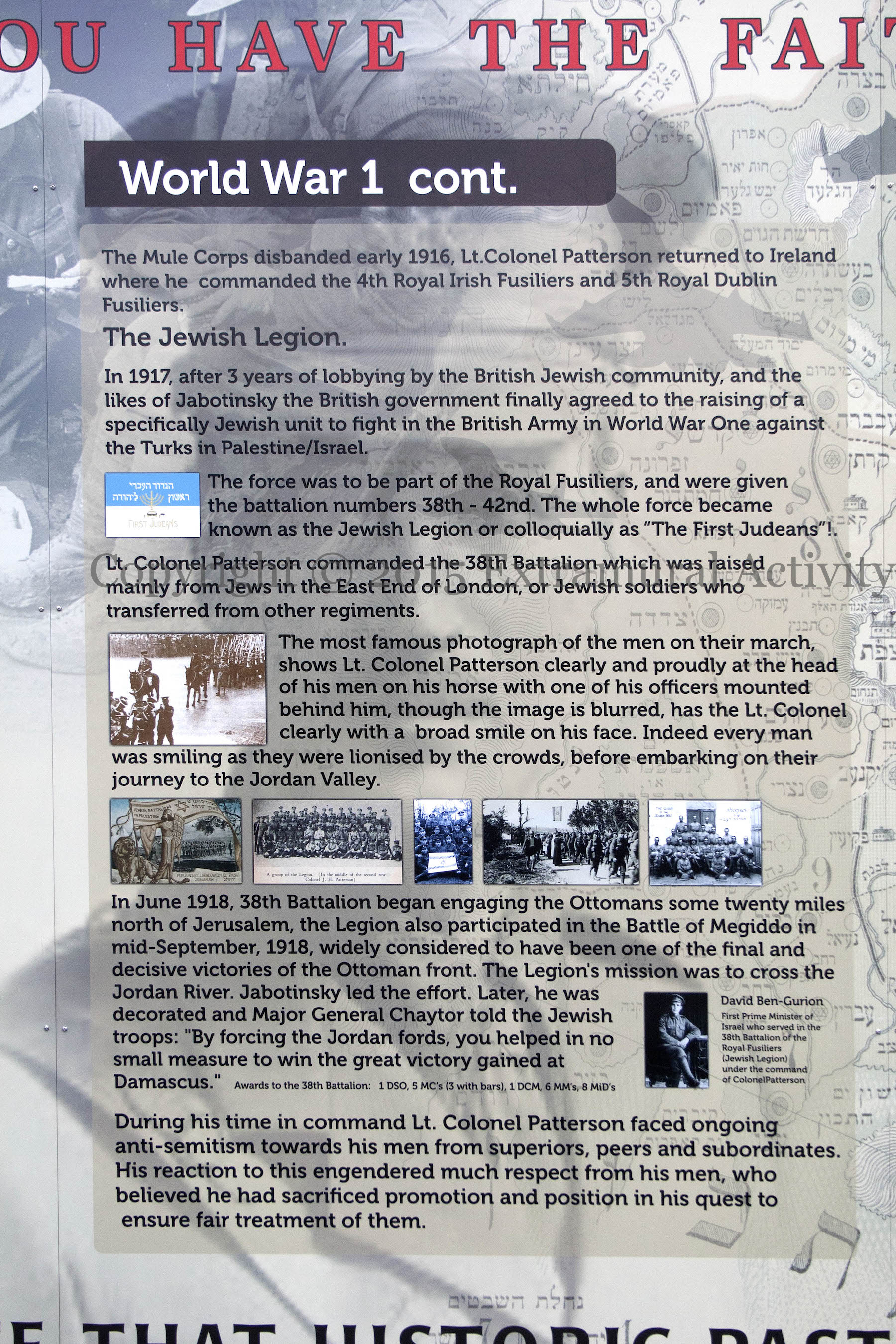
Here are panels 8, 5, 6, and 7 from the Patterson board featured in Operation Lion. The final panel shows the star of David and a quote from Prime Minister Benjamin Netanyahu: “In all of Jewish history we have never had a Christian friend as understanding and devoted.” The interim panels described Patterson’s raising and leading of the Jewish battalions of the Royal Fusiliers in WWI. After dying in obscurity in Los Angeles in 1947, his remains were transported to Israel in December 2014 and re-interred (video). For more, including a recording of Patterson’s voice, see this BBC Magazine article.

Video of the launch:

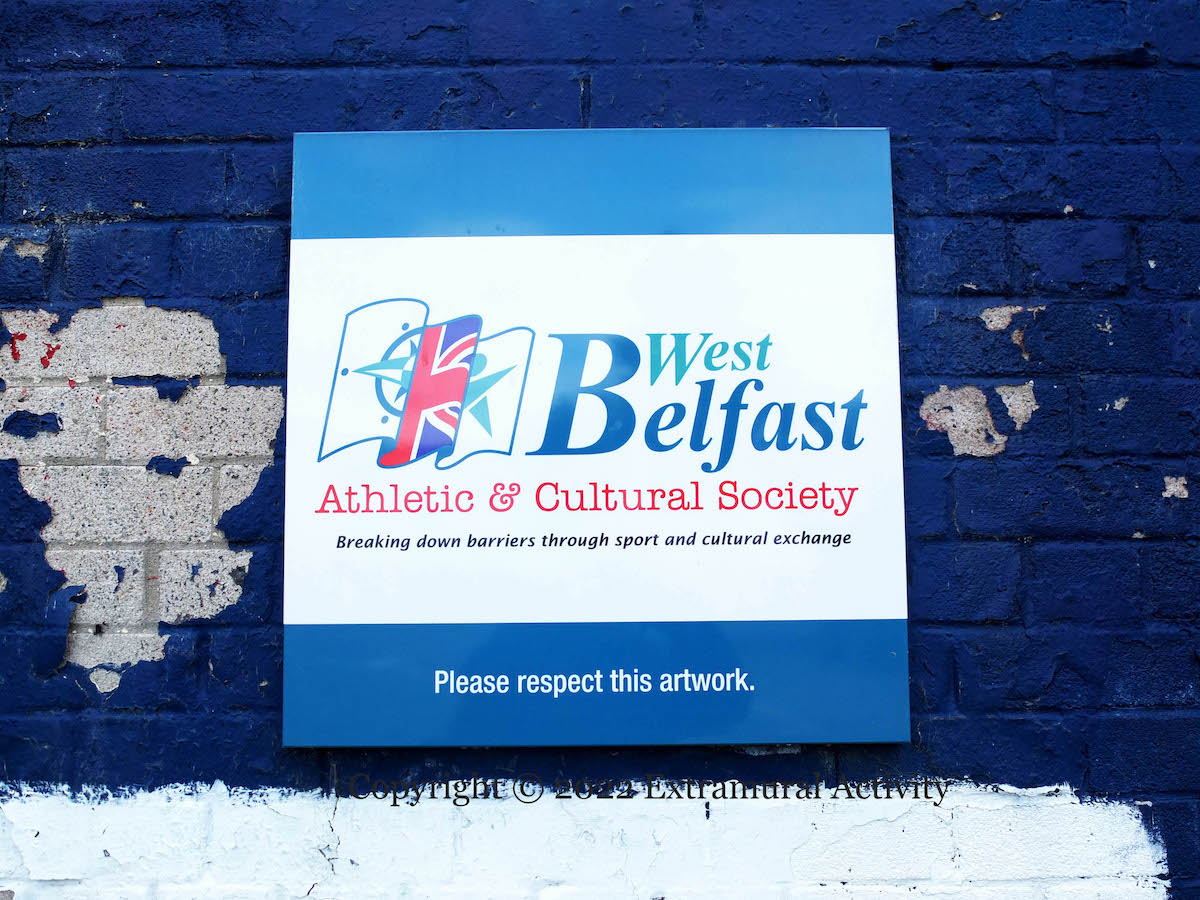
The plaque to the right asks viewers to “please respect this artwork” but a fire was set below it in 2016; see Where Is The Reconciliation?
2015-05-15 Patterson5+

2015-05-15 Patterson6+

2015-05-15 Patterson7+

2015-05-15 PattersonFull+

X11329 2022-08-06 Patterson WBACS info+

Click image to enlarge
Copyright © 2015 Seosamh Mac Coılle
X02621 X02618 X02619 X02620 X02622
Copyright © 2022 Extramural Activity
X11329
“The Zion Mule Corps. Lt. Colonel Patterson rejoined the British Army in 1914, upon the outbreak of World War I, and saw service in Flander[s] before being sent to Egypt. In Alexandria he met Joseph Trumpeldor and Zeev Jabotinsky who were attempting to form a Jewish military force. By the end March 1915, Jewish volunteers from among deportees in Egypt had started training. The British military command opposed to participation of Jewish volunteers on the Palestinian front and suggested the volunteers serve as a detachment for mule transport. In 1915, Lt. Colonel Patterson was made commander of the approximately 750 man Zion Mule Corps, organized in Egypt in March, with a rank of “honorary Lieutenant Colonel.” Swearing in the new volunteers on March 31, 1915. Patterson wrote in his diary “never since the days of Judah Maccabee had such sights and sounds been seen and heard in a military camp – with the drilling of uniformed soldiers in the Hebrew language”. In April of 1915, after the Mule Corps had been in training for just 3 weeks, Lt. Colonel Patterson  landed with the corps at V Beach, Gallipoli. About half of the corps were seconded to the Anzacs, who treated them discourteously and had them shipped back to Alexandria, the rest under Lt. Colonel Patterson then landed at Cape Helles on April 27th where they saw action for the very first time, there the corps served with distinction out of the 300 men that landed, 14 were killed.” 
“The Mule Corps disbanded in early 1916, Lt. Colonel Patterson returned to Ireland where he commanded the 4th Royal Irish Fusiliers and 5th Royal Dublin Fusiliers. In 1917, after 3 years of lobbying by the British Jewish community, and the likes Jabotinsky the British government finally agreed to the raising of a specifically Jewish unit to fight in the British Army in World War One against the Turks in Palestine/Israel. The force was to be part of the Royal Fusiliers and were given the battalion numbers 38th-42nd. The whole force became known as the Jewish Legion or colloquially as “The First Judeans” The most famous photograph of the men on their march shows Lt. Colonel Patterson clearly and proudly at the head of his men on his horse with one of his offices mounted behind him though the image is blurred has the Lt. Colonel clearly with a broad smile on his face. Indeed every man was smiling as they were lionised by the crowds before embarking on their journey to the Jordan Valley. In June 1918 38th Battalion began engaging the Ottomans some twenty miles north of Jerusalem the Legion also participated in the Battle of Megiddo in mid-September  1918 widely considered to have been one of the final and decisive victories of the Ottoman front. The legion’s mission was to cross the Jordan river. Jabotinsky led the effort. Later he was decorated and Major General Chaytor told the Jewish troops “By forcing the Jordan fords, you helped in no small measure to win the great victory gained at Damascus. During his time in command Lt. Colonel Patterson faced ongoing anti-semitism from superiors, peers and subordinates. His reaction to this engendered much respect from his men, who believed he had sacrificed promotion and position in his quest to ensure fair treatment of them.”
“After several years living in American Lt Colonel Patterson died on 18th June 1947 (aged 79), his wife Frances died just six short weeks later. Both were laid to rest in Los Angeles. Patterson had always wished to be laid to rest with his with fellow soldiers in Israel. On 10th November 2014, the date of his actual birthday, his wish was fulfilled, when his and Frances’s ashes were reunited with Israel. Finally as the ashes were laid to rest once again (4th December 2014); as the choir and the Israeli Defence Force paid tributes and the Prime Minister (Benjamin Netanyahu) extended his own personal salute, Lt. Colonel John Henry Patterson officially achieved the status of time honoured Christian Zionist Legend. Prime Minister Benjamin Netanyahu termed Lt. Colonel Patterson as the ‘godfather of the Israeli army’. 
historic past in the present future is yours if you have the will faith david ben-gurion we salute you
On The Way To War

2015-05-09 36thSliabhDubh+

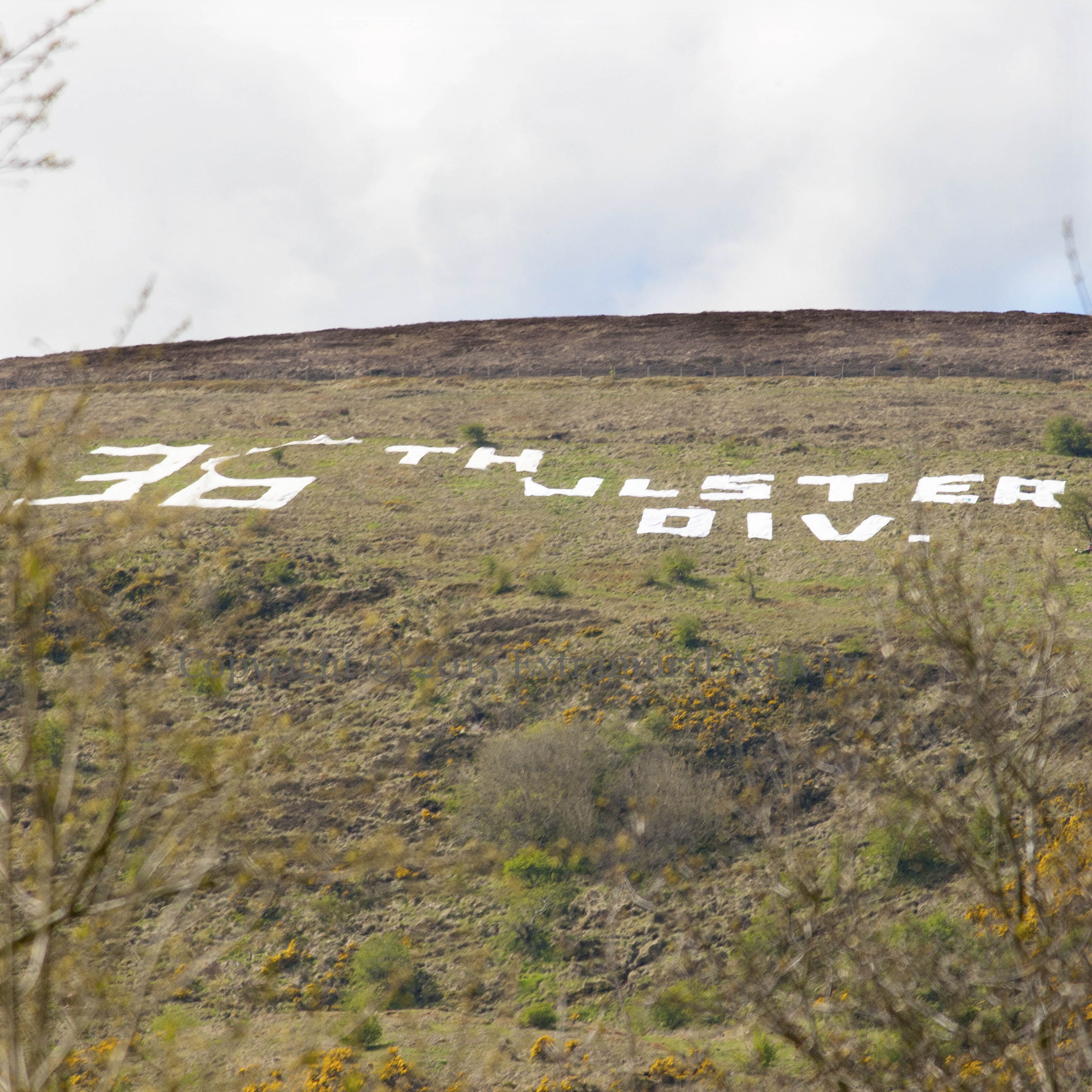
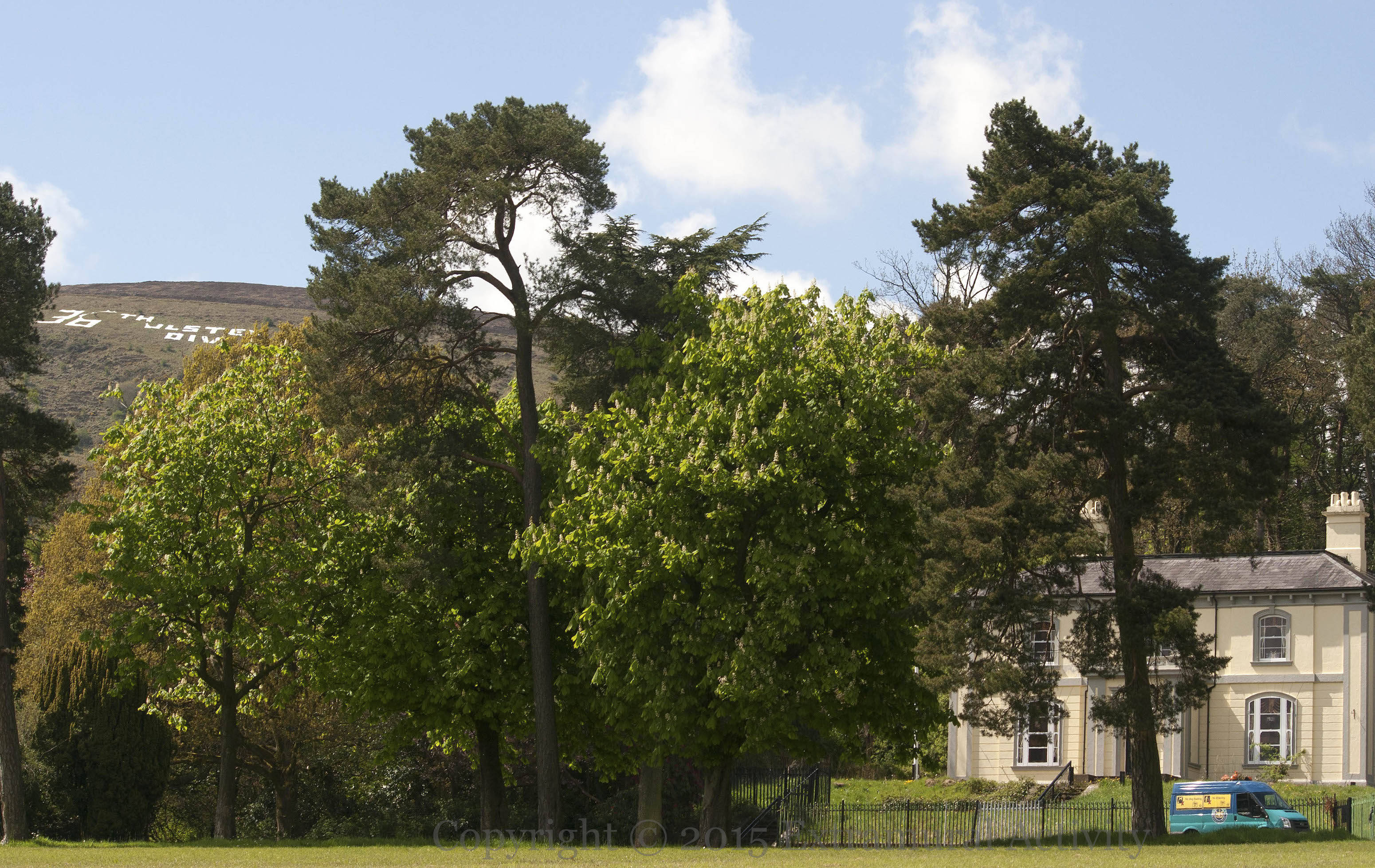
On May 8th, 1915, the various brigades of the 36th (Ulster) Division gathered together from all over the province (including some soldiers from Cavan, Monaghan, and Donegal) to be reviewed by Major General McCalmont in south Belfast; they then paraded to City Hall (South Belfast Friends Of The Somme Association). To commemorate the event the words “36th Ulster Div” have appeared on Black Mountain above Highfield and Ballygomartin (taking a leaf from the Gael Force Art book). The wide shot, below, is taken in front of Fernhill House in the Glencairn estate, where the Ulster Volunteers paraded in 1914. In July 1915 the 36th would leave for Sussex to continue their training and eventually find themselves at the battle of the Somme in 1916.

Progress shots from Greater Shankill ACT

See previously: Slıabh Dubh Visual History pageFernhill House | Fernhill House, 2012 | UVF Headquarters

2015-05-09 36thSliabhDubhFernhill+

Click image to enlarge
Copyright © 2015 Seosamh Mac Coılle
X02606 X02607

Carving Out A Place In History

2015-05-08 SPBCrest+

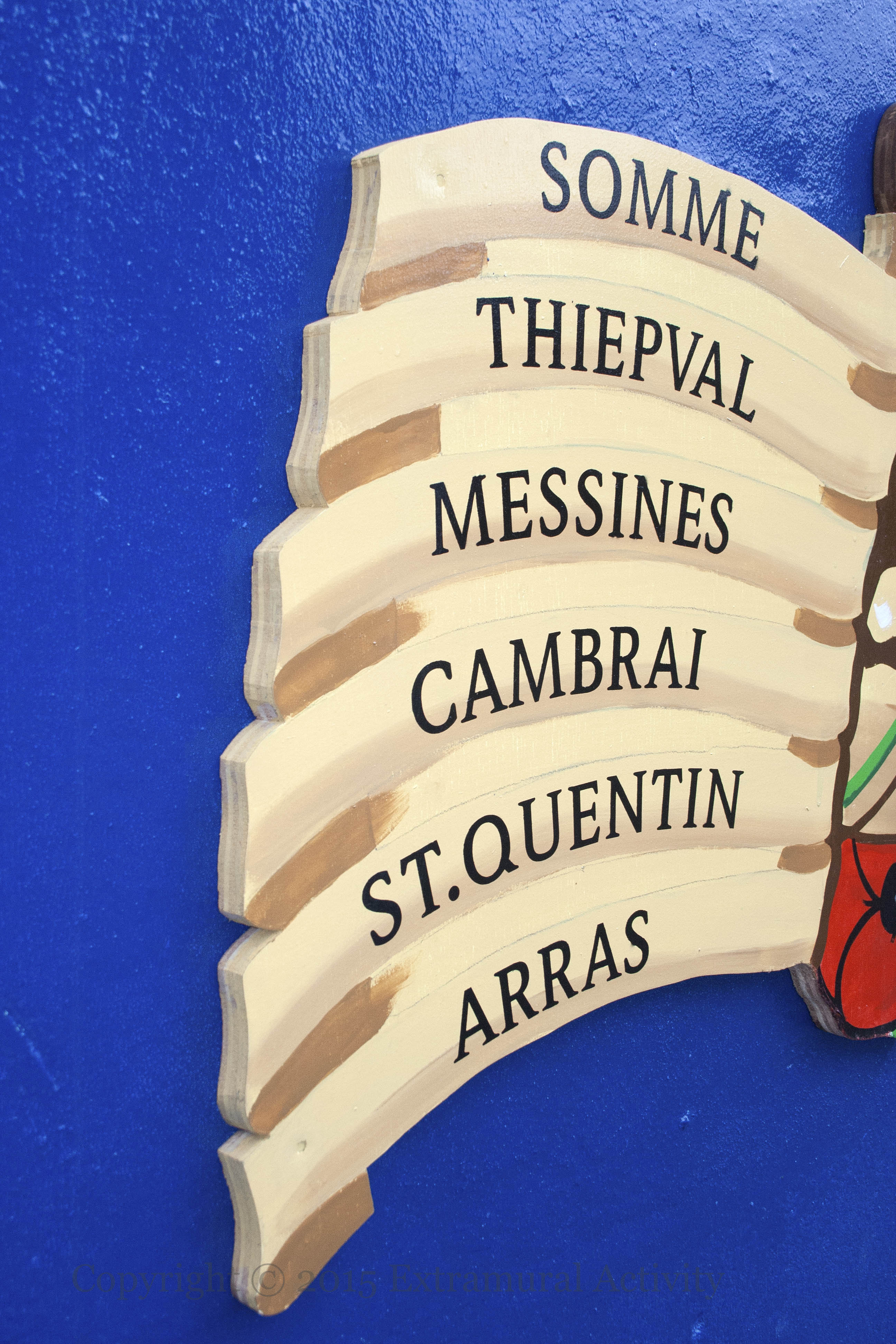
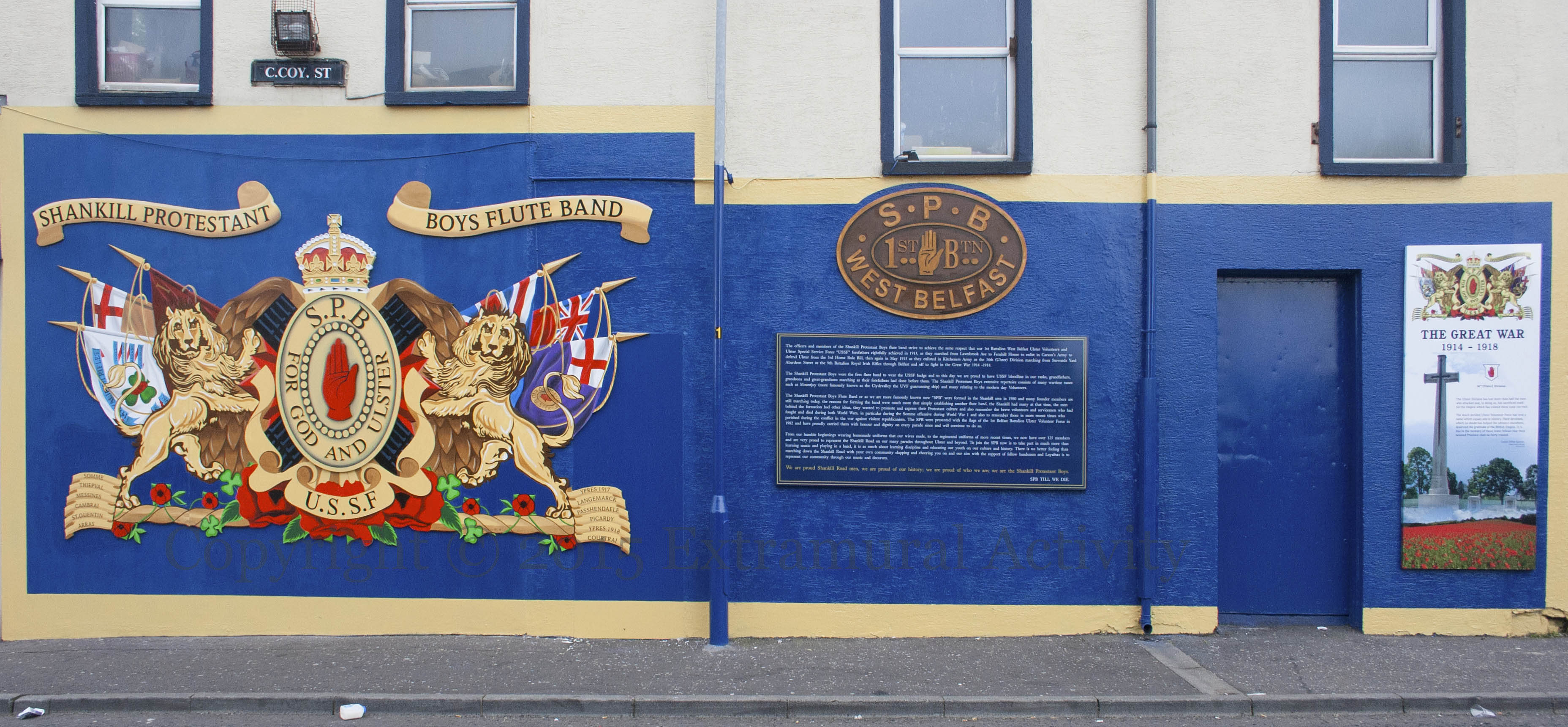
At first glance the piece above looks like a colourful mural but, as the close-up immediately below shows, it is in fact a large painted carving of lions rampant on either side of the emblem of the Shankill Protestant Boys flute band (Fb), named for the Shankill Boys of the original Ulster Volunteers and the Ulster Special Service Force unit within it which was designed to be a unit of “first responders”, ready to react at short notice to action by republicans or British forces anywhere in northern Ireland (historyireland).

2015-05-08 SPBCarving+

2015-05-08 SPBWWI+

2015-05-08 SPBInfo+

2015-05-08 SPBFull+

Click image to enlarge
Copyright © 2015 Seosamh Mac Coılle
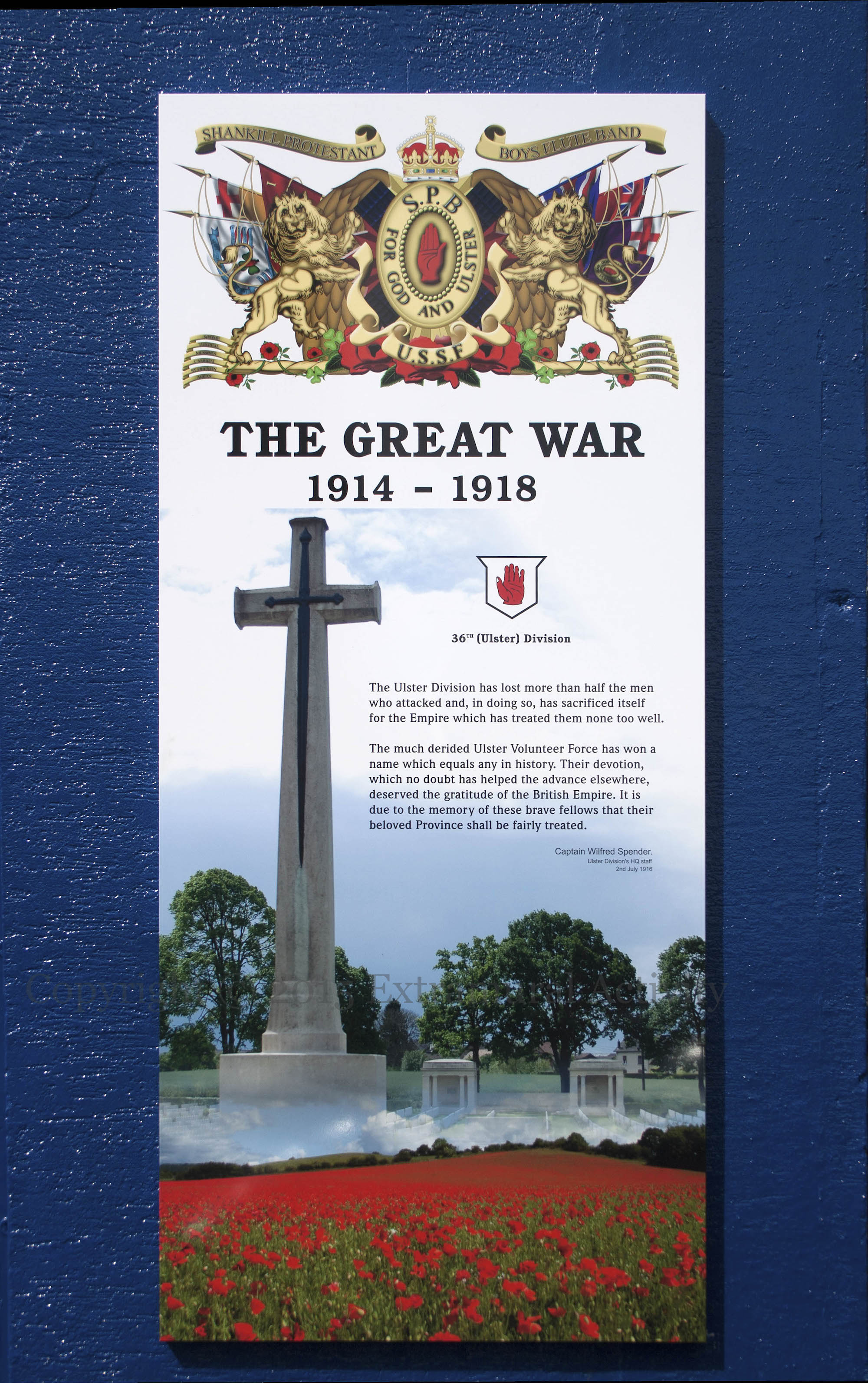
X02602 X02601 X02605 X02604 X02603 the great war 1914-1918 36th “The Ulster Division has lost more than half the men who attacked and in doing so has sacrificed it for the empire which has treated them none too well. The much derided Ulster Volunteer Force has won a name which equals any in history. Their devotion, which no doubt has helped the advance elsewhere, deserved the gratitude of the British Empire. It is due to the memory of these brave fellows that their beloved Province shall be fairly treated.” Captain Wilfred [sic] Spender HQ staff 2nd July 1916

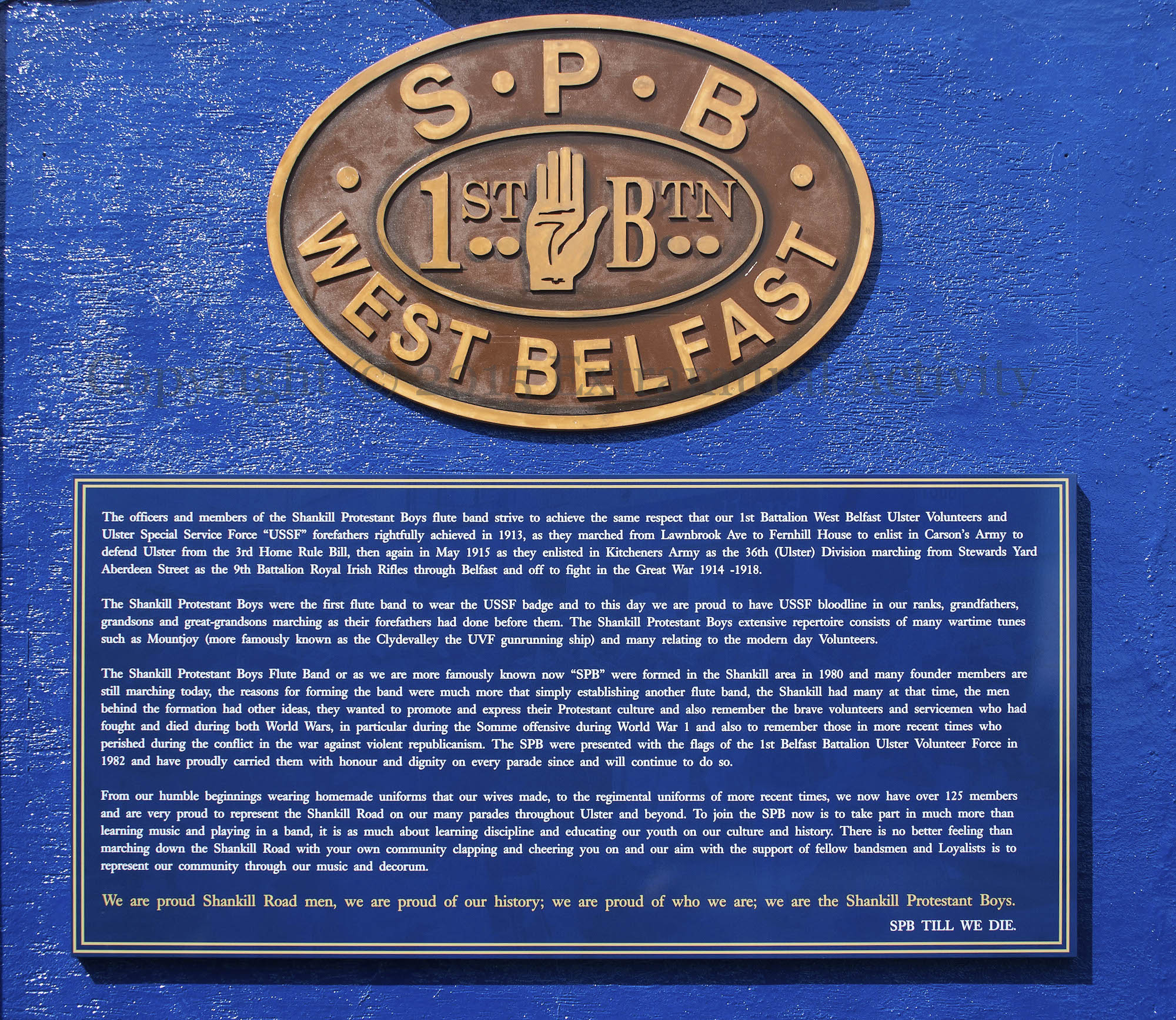
The officers and members of the Shankill Protestant Boys flute band strive to achieve the same respect that our 1st battalion West Belfast Ulster Volunteers and Ulster Special Service Force “USSF” forefathers rightfully achieved in 1913, as they marched from Lawnbrook Ave to Fernhill House to enlist in Carson’s Army to defend Ulster from the 3rd Home Rule Bill, then again in May 1915 as they enlisted in Kitcheners Army as the 36th (Ulster) Division marching from Stewards Yard Aberdeen Street as the 9th Battalion Royal Irish Rifles through Belfast and off to fight in the Great War 1914-1918. wear the USSF badge and to this day we are proud to have USSF bloodline in our ranks, grandfathers grandsons and great-grandsons marching extensive repertoire consists of many wartime tunes such as Mountjoy clydevally the UVF gunrunning ship and many relating to the modern day volunteers SPB were formed in 1980 and many founder members are still marching today the reasons for forming the band were much more simply that establishing another flute band wanted to promote and express culture remember servicemen fought and died during the Somme offensive perished in during the conflict against violent republicanism flags 1982 carried with honour and dignity every parade humble homemade uniforms our wives made regimental uniforms over 125 members join more than learning music discipline educating our youth on our culture and history. no better feeling than marching with your own community clapping and cheering you on fellow bandsmen decorum SPB till we die carnan street c coy thiepval messines cambrai st. quentin arras ypres 1917 langemarck passhendaele passchendaele picary courtrai uvf ycv

Éırí Amach 1798

03126 2015-10-12 GPO 1916 d Pikemen+

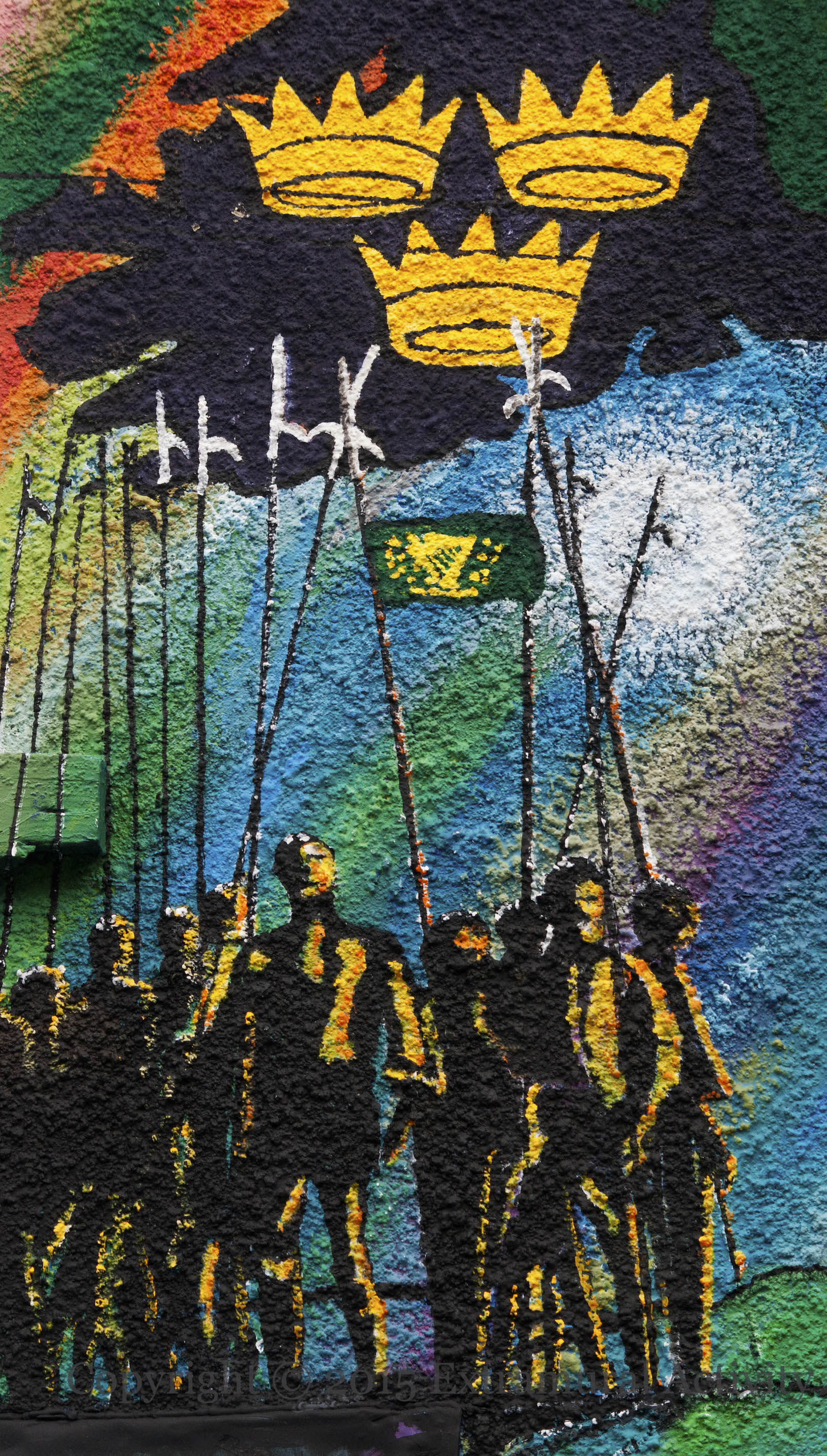
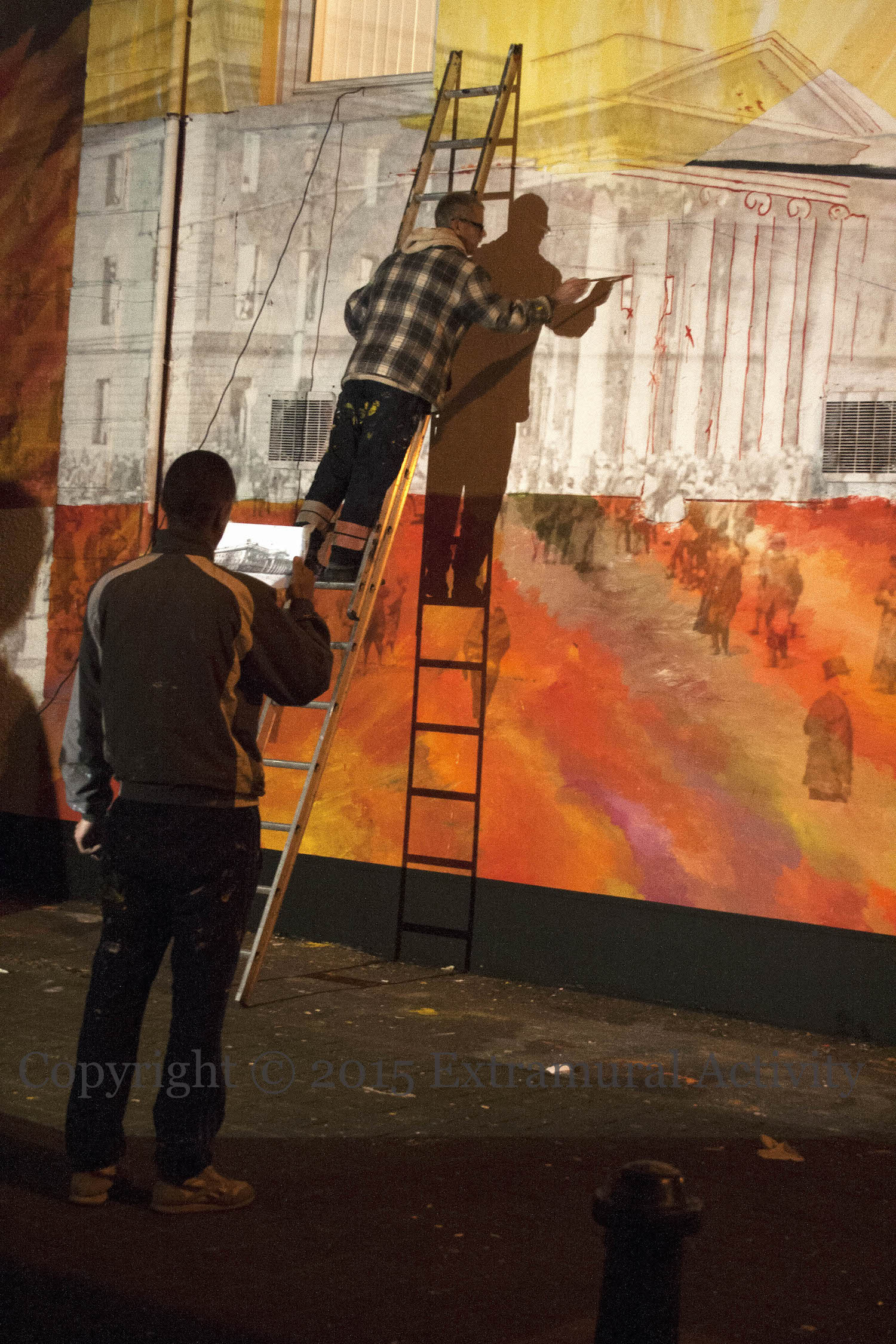
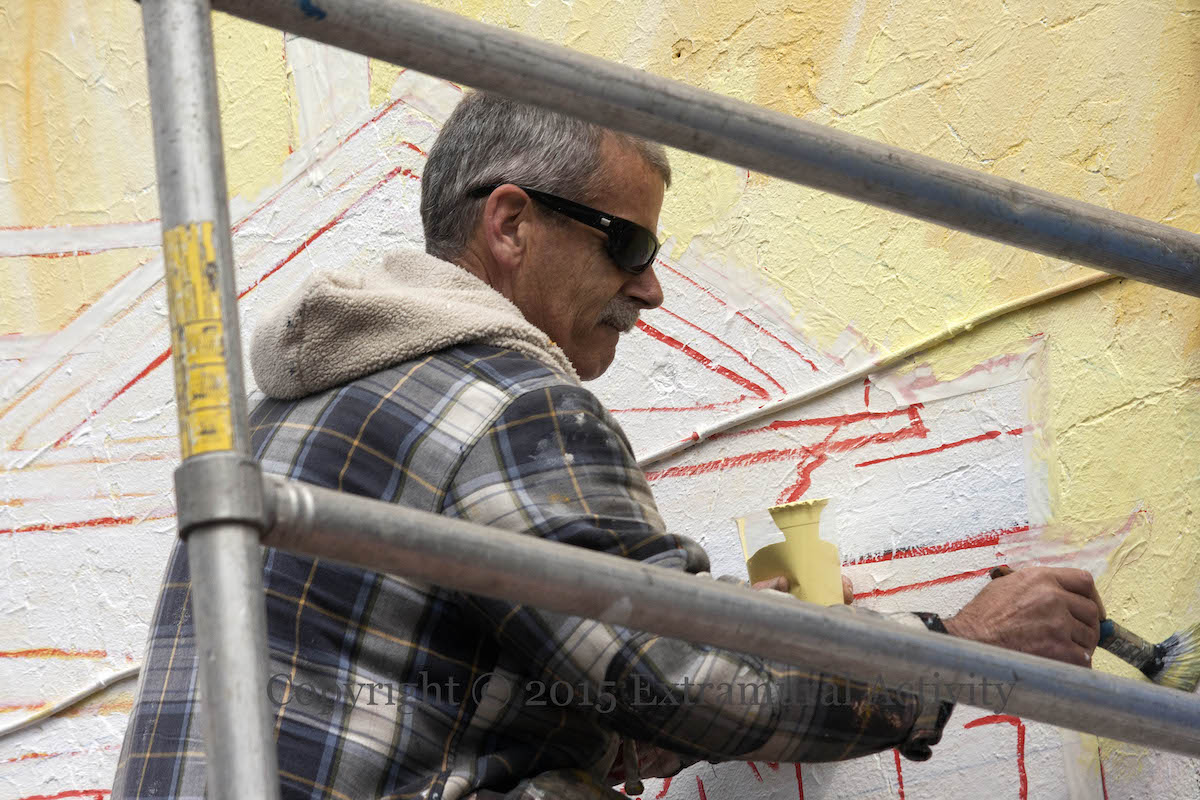
The pikemen of 1798 go into battle under the flag of the United Irishmen in a detail from a new mural on the Falls Road for the centenary of the 1916 Easter Rising. Below are work-in-progress images showing artists Gerard ‘Mo Chara’ Kelly and Bill Bradley.

03128 2015-04-23 GPOInProgressWide+

03129 2015-04-24 GPOInProgressNight+

X03132 2015-04-28 GPOInProgressGK+

Click image to enlarge
Copyright © 2015 Seosamh Mac Coılle
X03126 X03128 X03129 X03132 mcquillan st halberd

Release Leonard Peltier

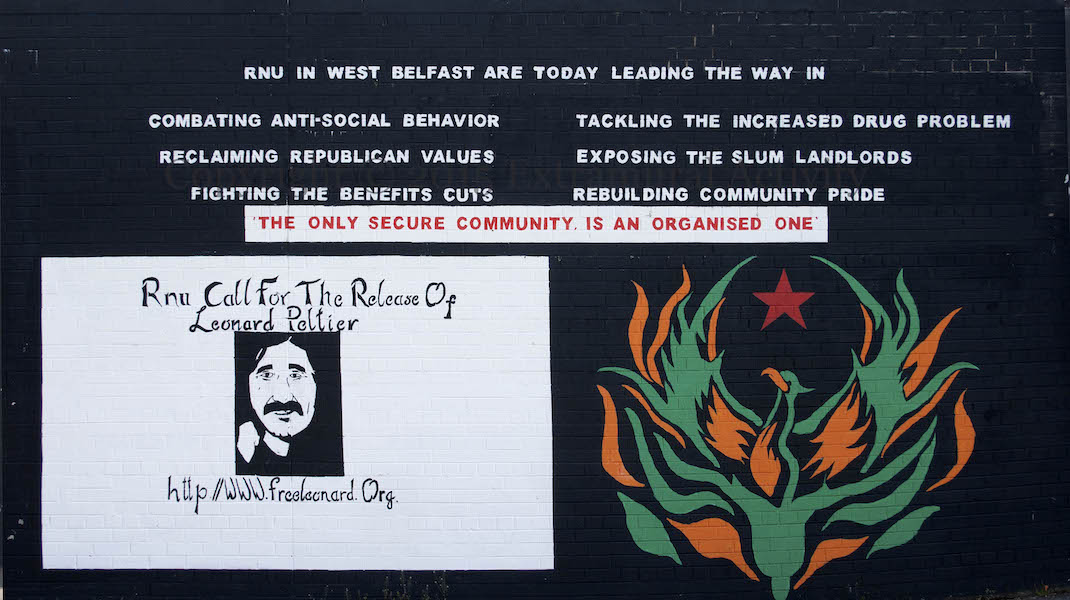
“RNU call for the release of Leonard Peltier – http://www.freeleonard.org“. The lower left-hand panel of the RNU spot on Northumberland Street is serving as a changeable notice-board – it was previously The Popular Front.

Peltier has been in jail since 1977, convicted of killing two FBI agents on the Pine Ridge Reservation in 1975 and sentenced to two life-sentences (WP).

Click image to enlarge
Copyright © 2015 Seosamh Mac Coılle
X03312

The Accordion Player

02993 Aerosol Accordian+

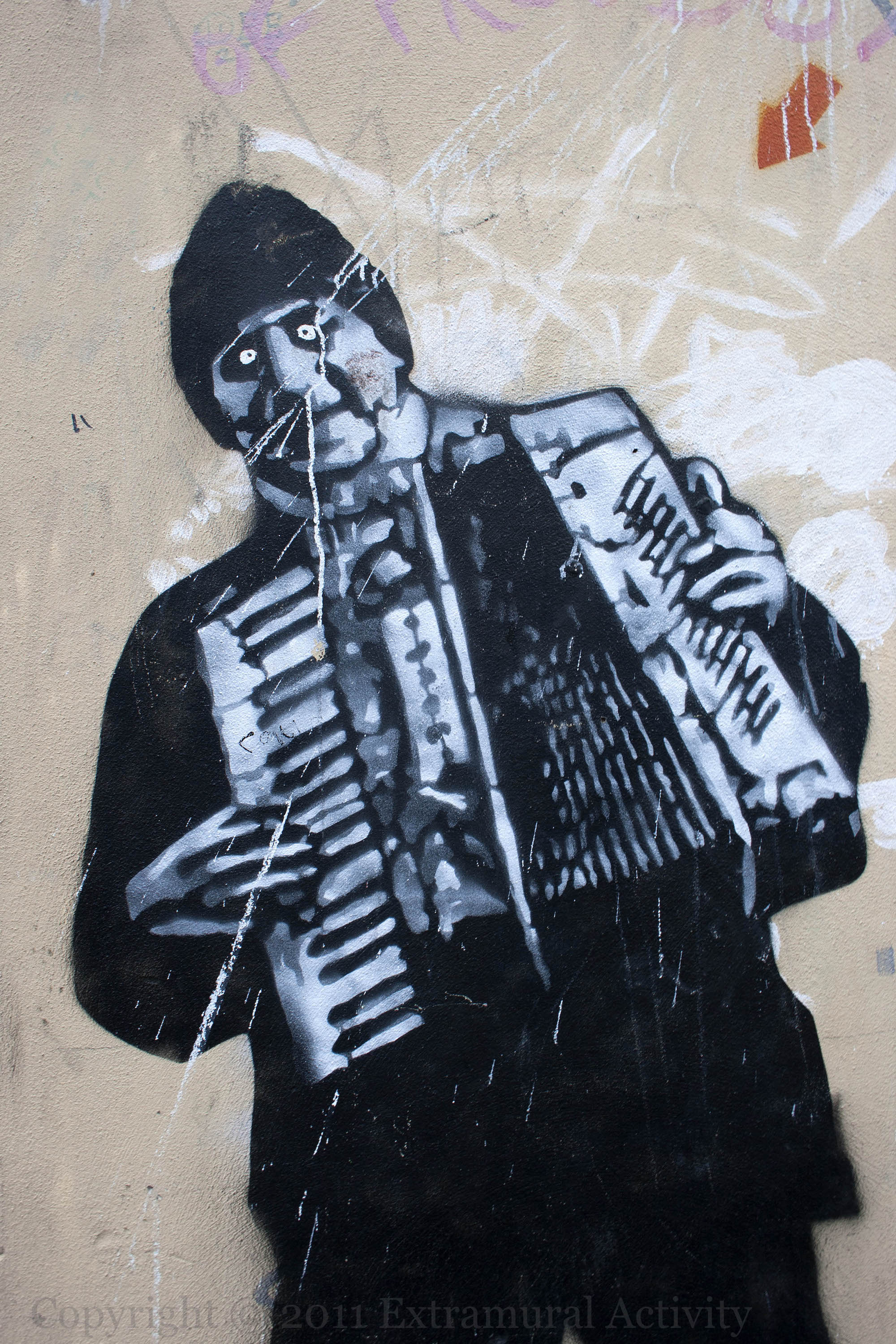
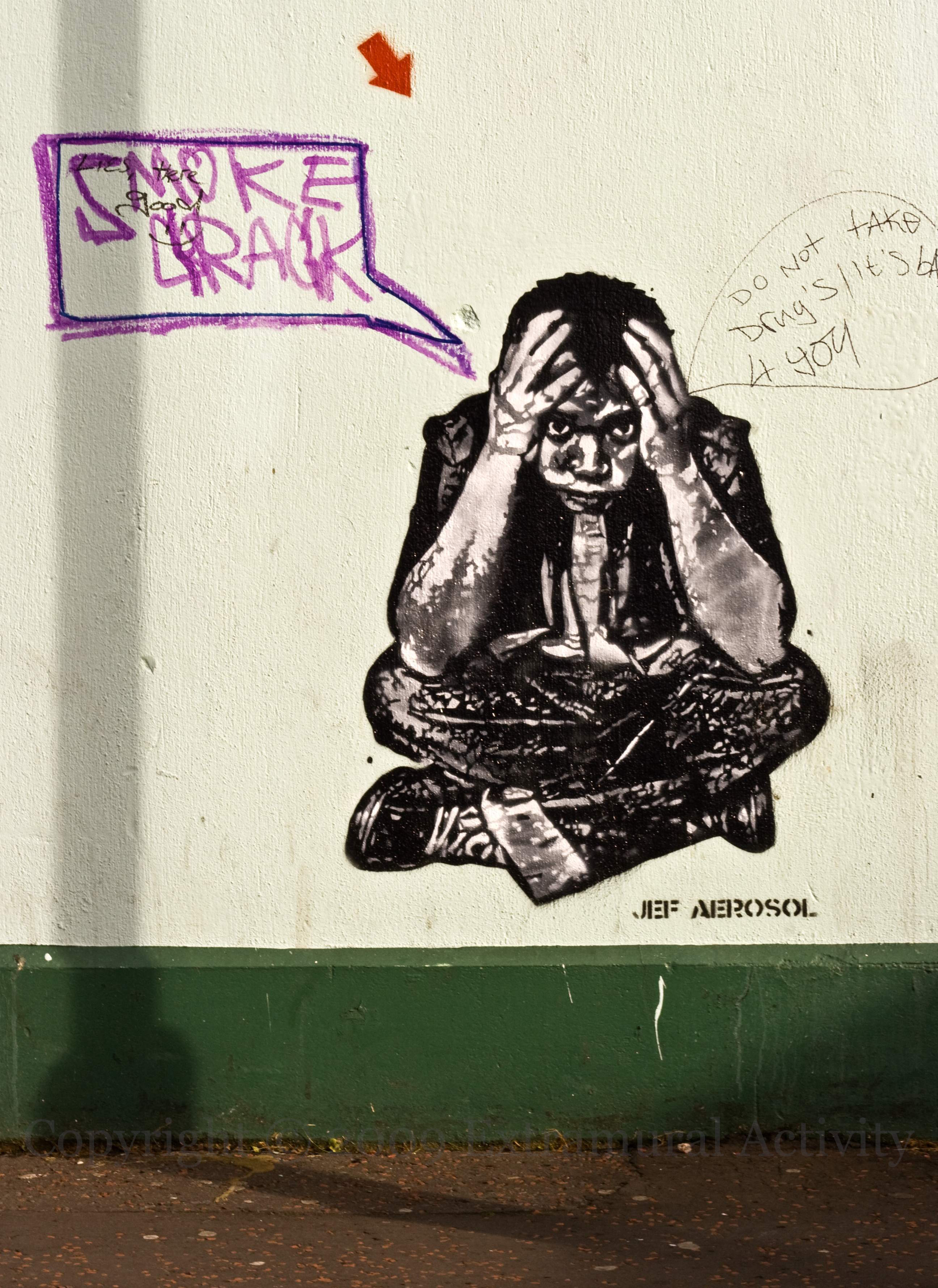
Jef Aérosol (Jean-François Perroy) is a French stencil-artist who did (at least) three pieces in Belfast. Below is a crossed-legged boy that was in Islandbawn Street and above is an accordion-player in Sevastopol Street; for a third piece, on Northumberland Street, see C02031. When the nearby Bobby Sands mural was extended this past year (2015), the stencil was retained. (See also the Visual History page of the Bobby Sands wall.)

02588 2015-04-16 SandsSide+

00330 AerosolCrossLegged+

Click image to enlarge
Copyright © 2011/2015/2009 Seosamh Mac Coılle
X02993 X02588 X00330

Facelift

2015-04-16 SandsFull+

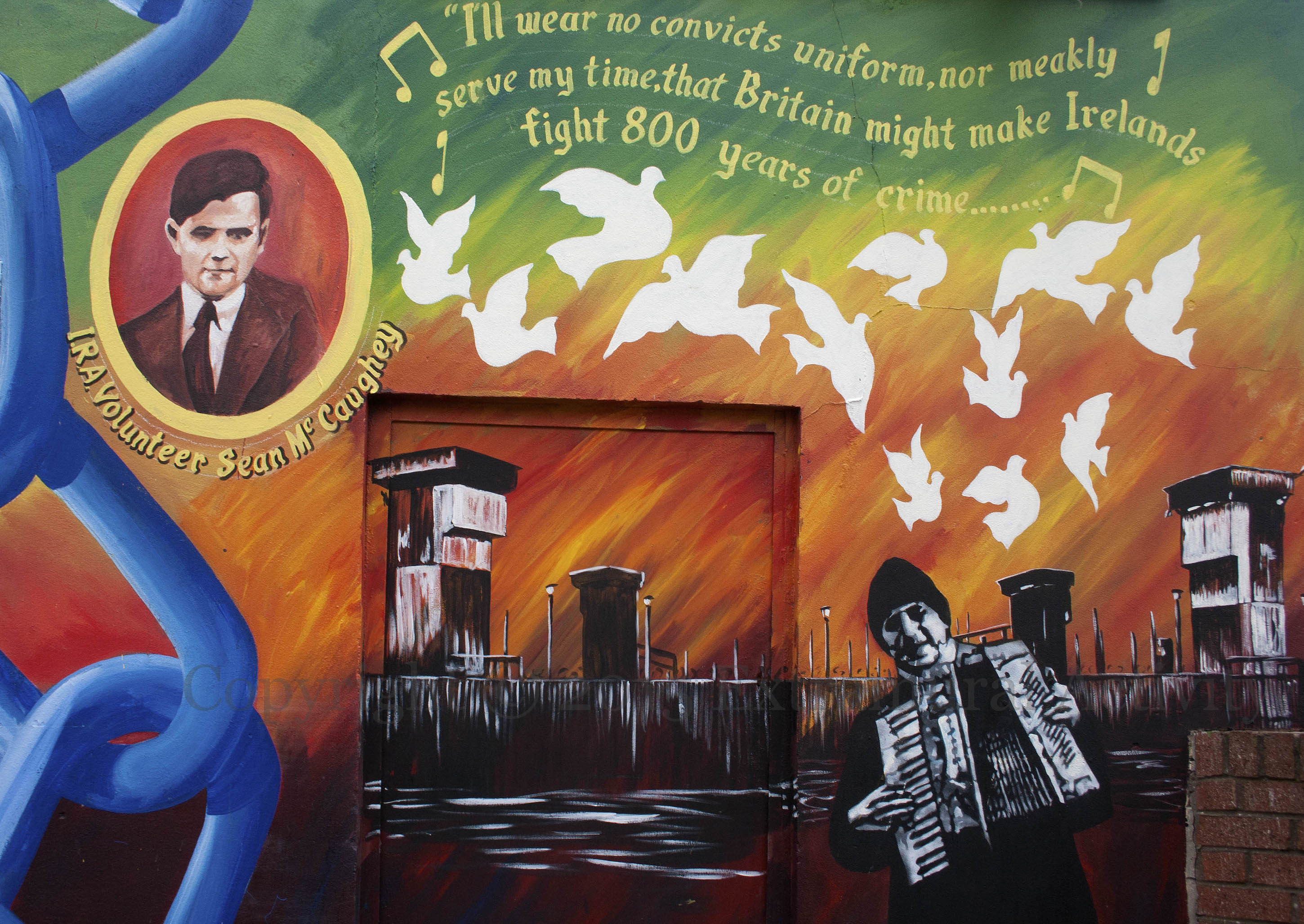
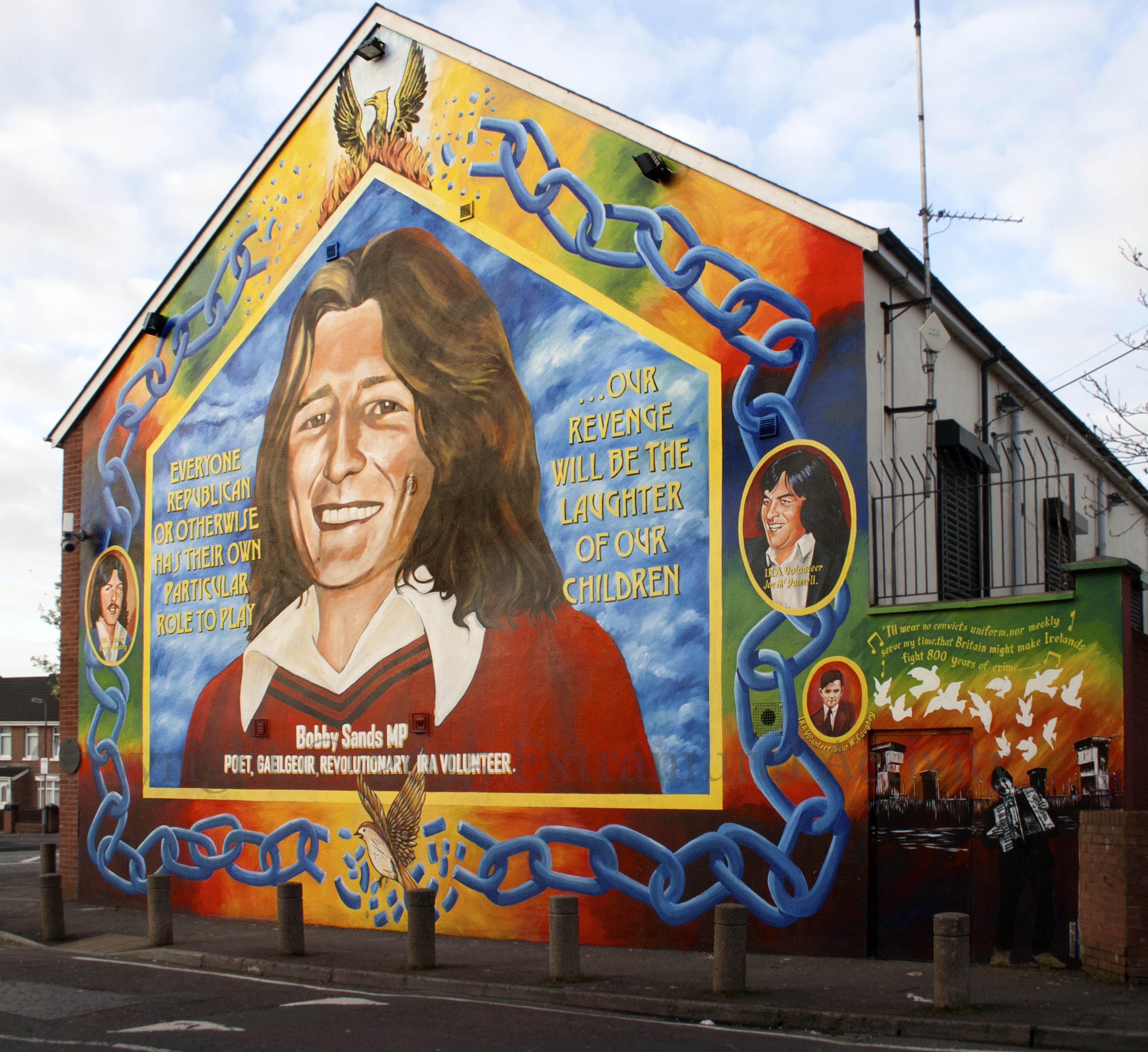
The Bobby Sands mural in Sevastopol Street has been given a facelift, including the blocking-up of a vent on Sands’s left cheek. Kieran Doherty and Joe McDonnell have been added in place of the 1798 medallions on each side. On the side-wall are Sean McCaughey, ten doves representing the 1981 hunger-strikers, and Long Kesh. Aerosol‘s accordion-player stencil has been also been retained.

For a full history of the wall, see the Bobby Sands (Sevastopol Street) Visual History page.

2015-04-16 SandsPlaque+

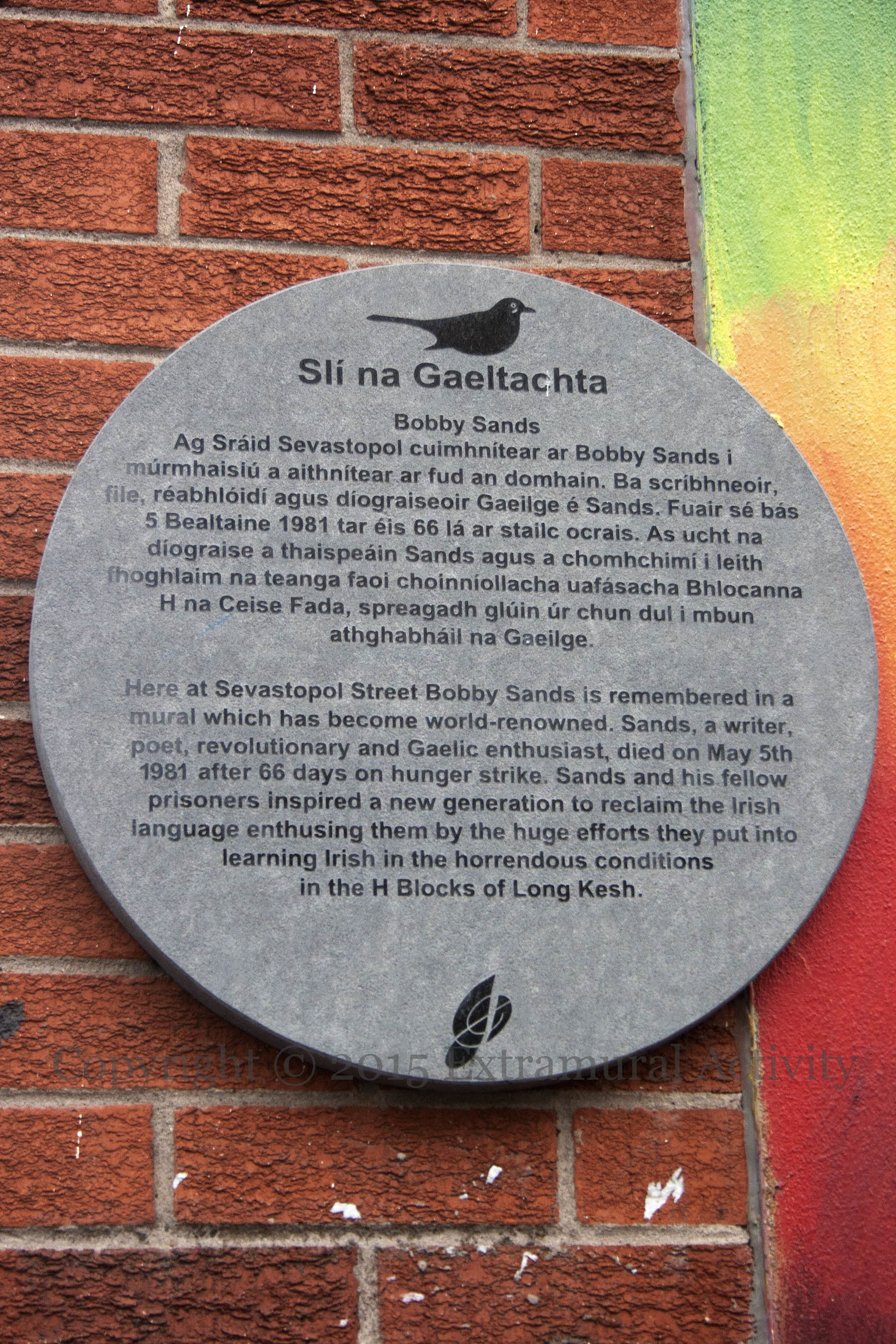
Ag sráıd Sevastopol cuımhnıtear ar Bobby Sands ı múrmhaısıú a aithnıtear ar fud an domhaın. Ba scrıbhneoır, file, réabhlóıdí agus díograıseoır Gaeılge é Sands. Fuaır sé bas 5 Bealtaıne 1981 tar éıs 66 lá ar stailc ocraıs. As ucht na dıograıse a thaıspeáın Sands agus a chomhchımí ı leıth fhoglaım na teanga faoı choınníollacha uafásacha Bhlocanna H na Ceıse Fada, spreagadh glúın úr chun dul ı mbun athghabháıl na Gaeılge.

Here at Sevastopol Street Bobby Sands is remembered in a mural which has become world-renowned. Sands, a writer, poet, revolutionary and Gaelic enthusiast, died on May 5th 1981 after 66 days on hunger strike. Sands and his fellow prisoners inspired a new generation to reclaim the Irish language enthusing them by the huge efforts they put into learning Irish in the horrendous conditions on the H Blocks of Long Kesh.

Click image to enlarge
Copyright © 2015 Seosamh Mac Coılle
X02586 X02587 everyone Republican or otherwise has their own particular role to play our revenge will be the laughter of our children joe mcdonnell i’ll wear no convicts uniform nor meakly meekly serve my time that Britain might make Irelands fight 800 years of crime ira volunteer

Rest In Peace

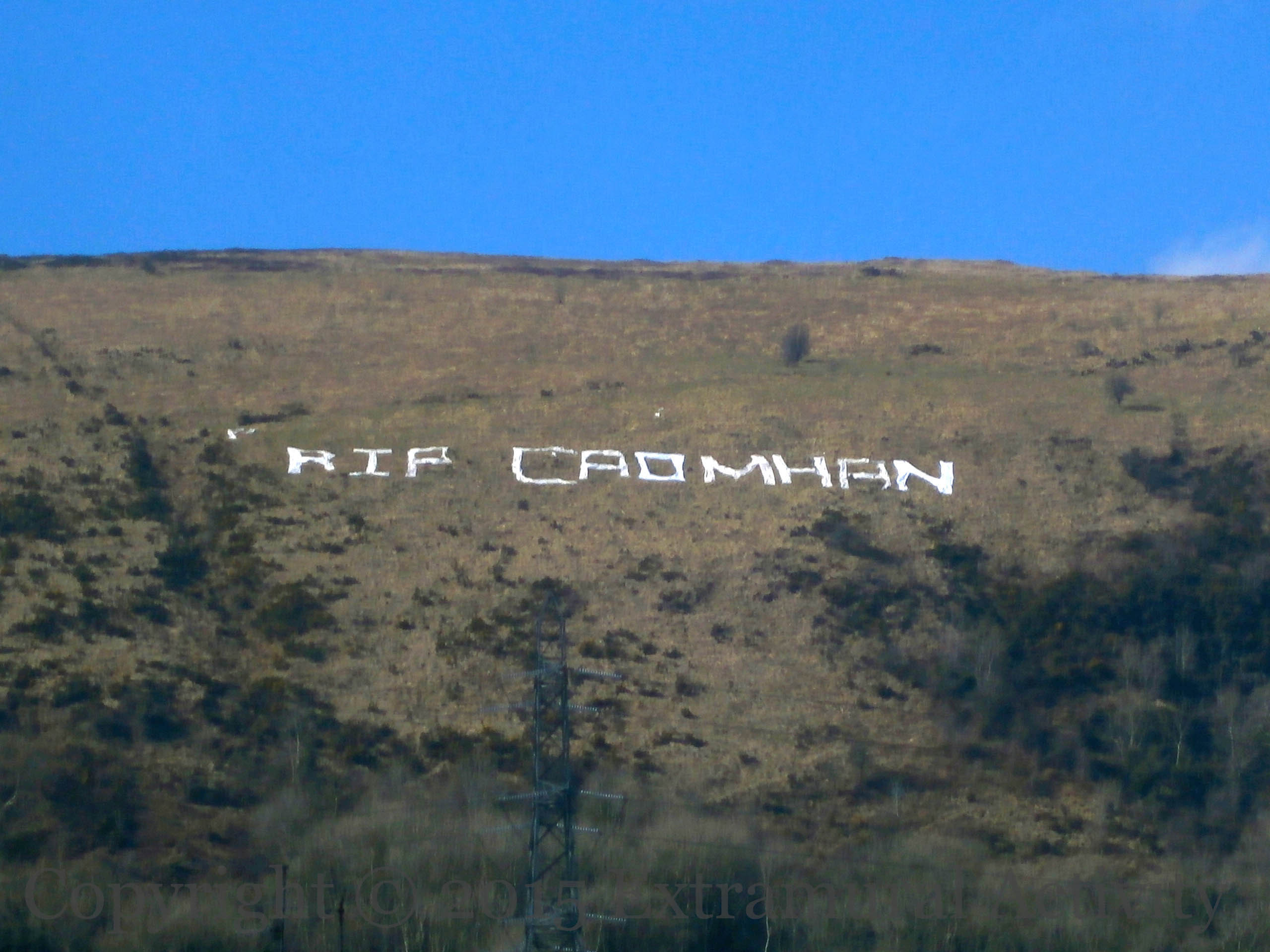
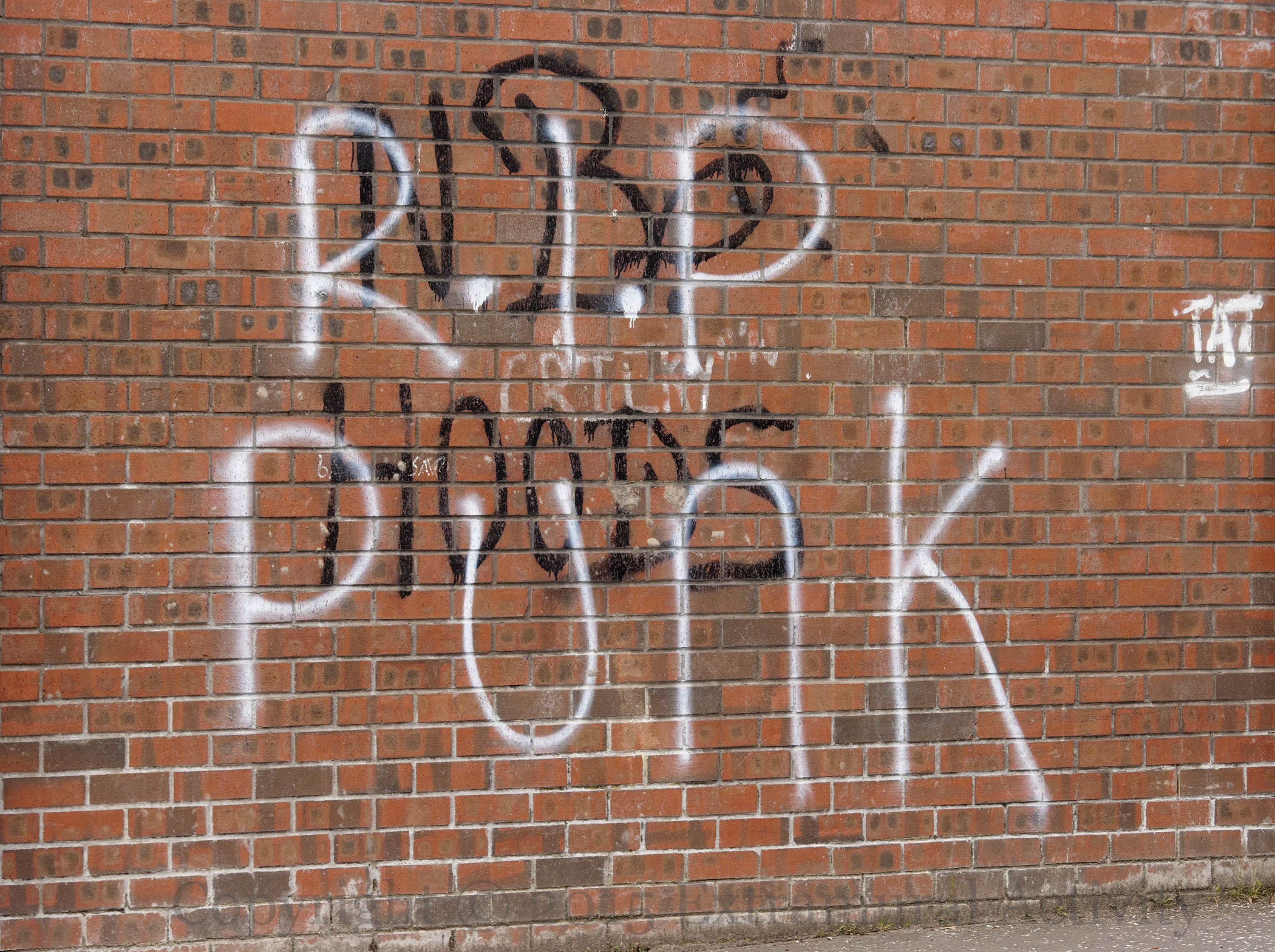
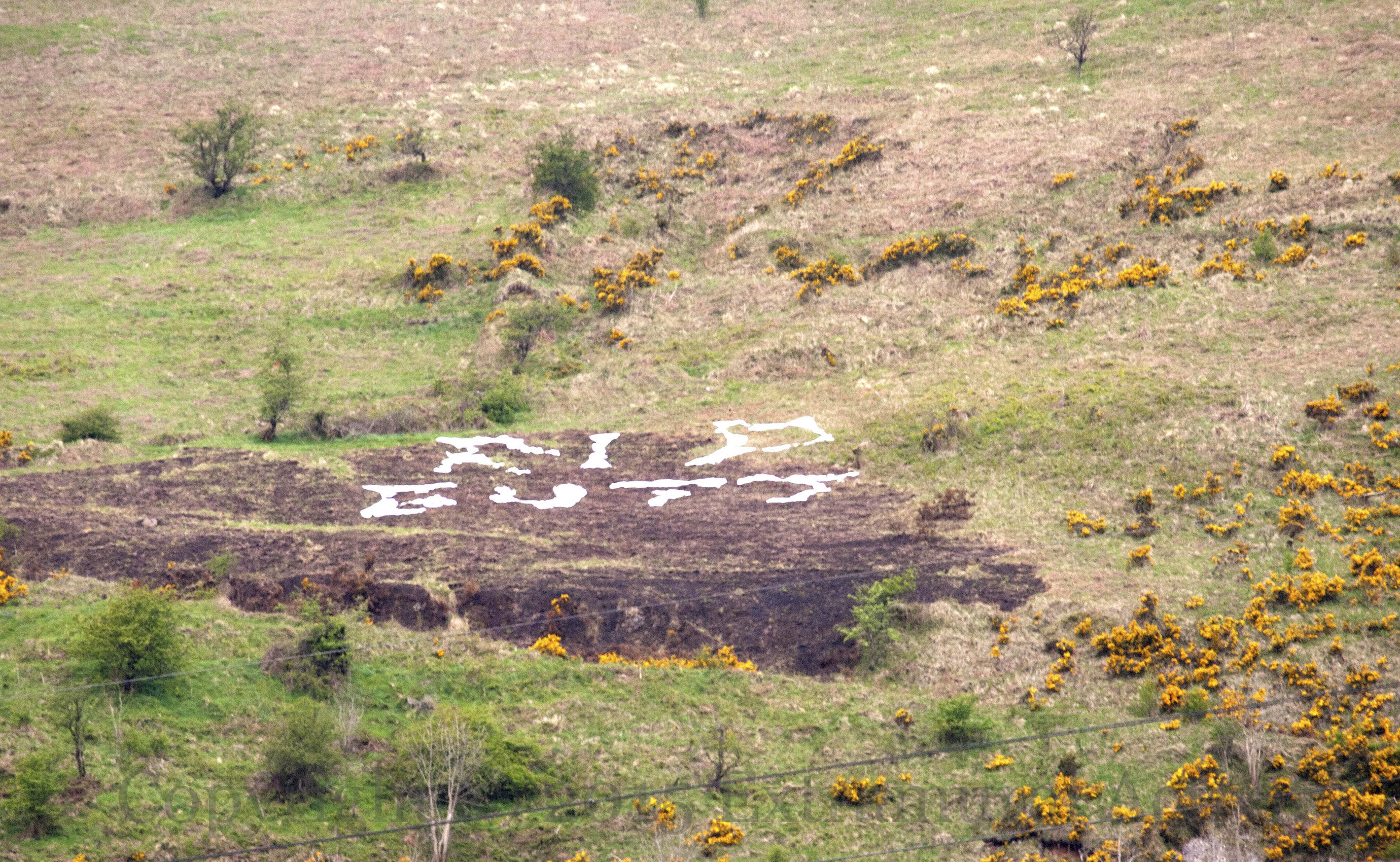
The suicide of young people continue to cast a shadow over Belfast and the rest of Northern Ireland. (The suicide rate has almost doubled since the ceasefire; a fifth of those dying are under 25.) Here are three images from west Belfast, two from Black Mountain – “RIP Caomhan” and “RIP Butts” where the lettering from “End Brit/S’Mont Cuts” (see Credit Union Limited) has been repurposed. “RIP Punk” is from the junction of the Whiterock and Springfield Roads.

2015-05-14 RIPPunk+

2015-05-14 RIPButt+

Click image to enlarge
Copyright © 2015 Seosamh Mac Coılle
X02578 X02613 X02611