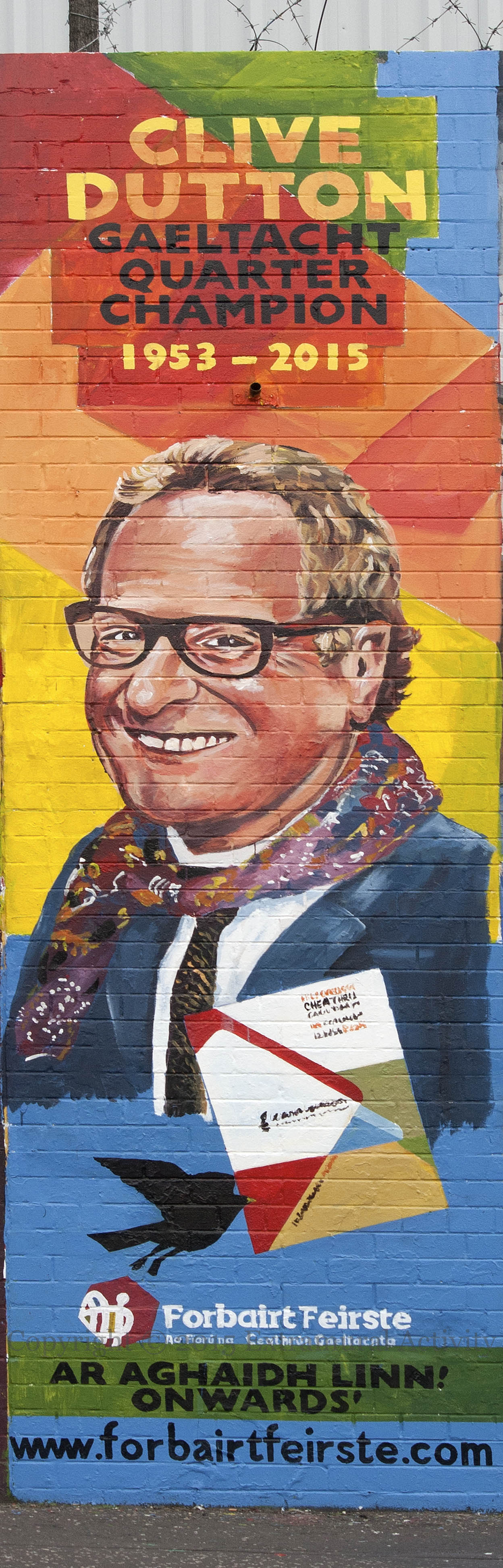
Englishman Clive Dutton was an urban planner who was best known for work in Birmingham, London (Newham), and Belfast. He produced “The Dutton Report” in 2004 and “The Big Plan” (pdf) (the cover of which is pictured in the mural) in 2013. In them, he proposed and then updated a plan to tackle economic deprivation in west Belfast by the creation of a ‘Gaeltacht Quarter’ or ‘Ceathrú Gaeltachta’. He died on June 8th at the age of 62 and the mural above has been painted in remembrance.
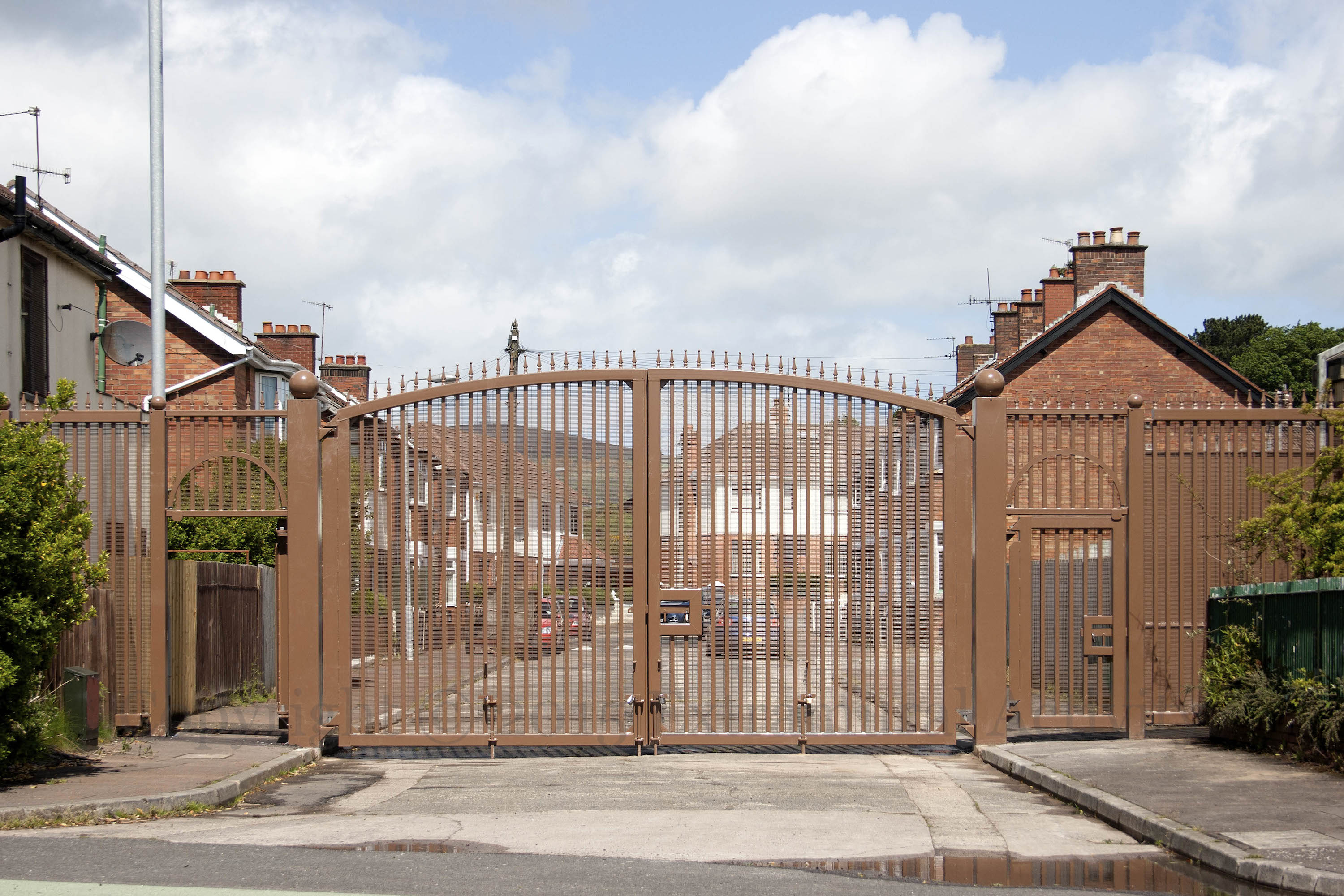
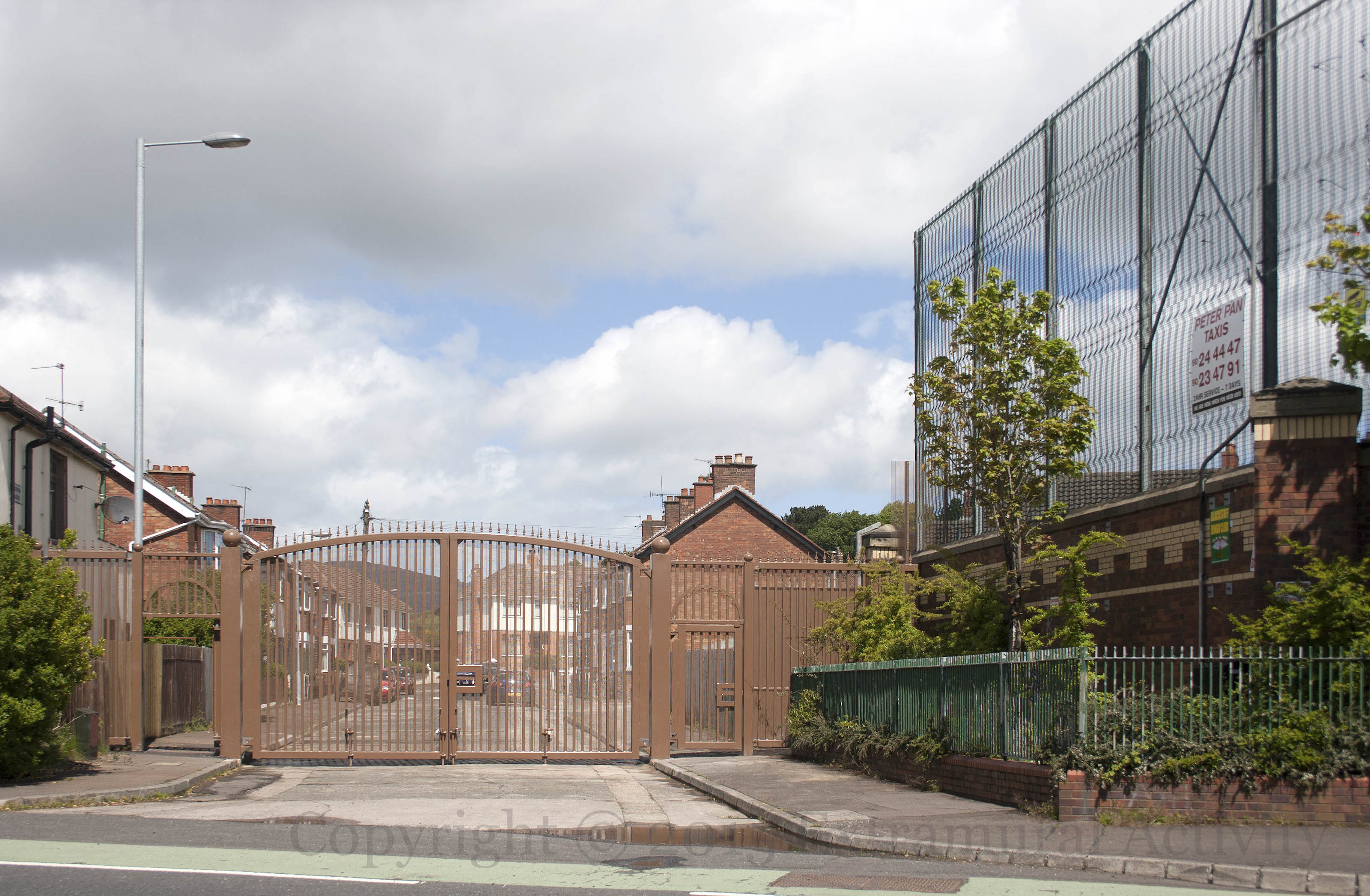
In May 2013 the Executive pledged to remove “peace” lines in ten years – by 2023 (Tele). One step in this process is see-through gates, such as those at Workman Avenue in the image above. There is no change, however, to the fence on the Springfield Road – see the image below. See previously: the new gates in Howard Street.
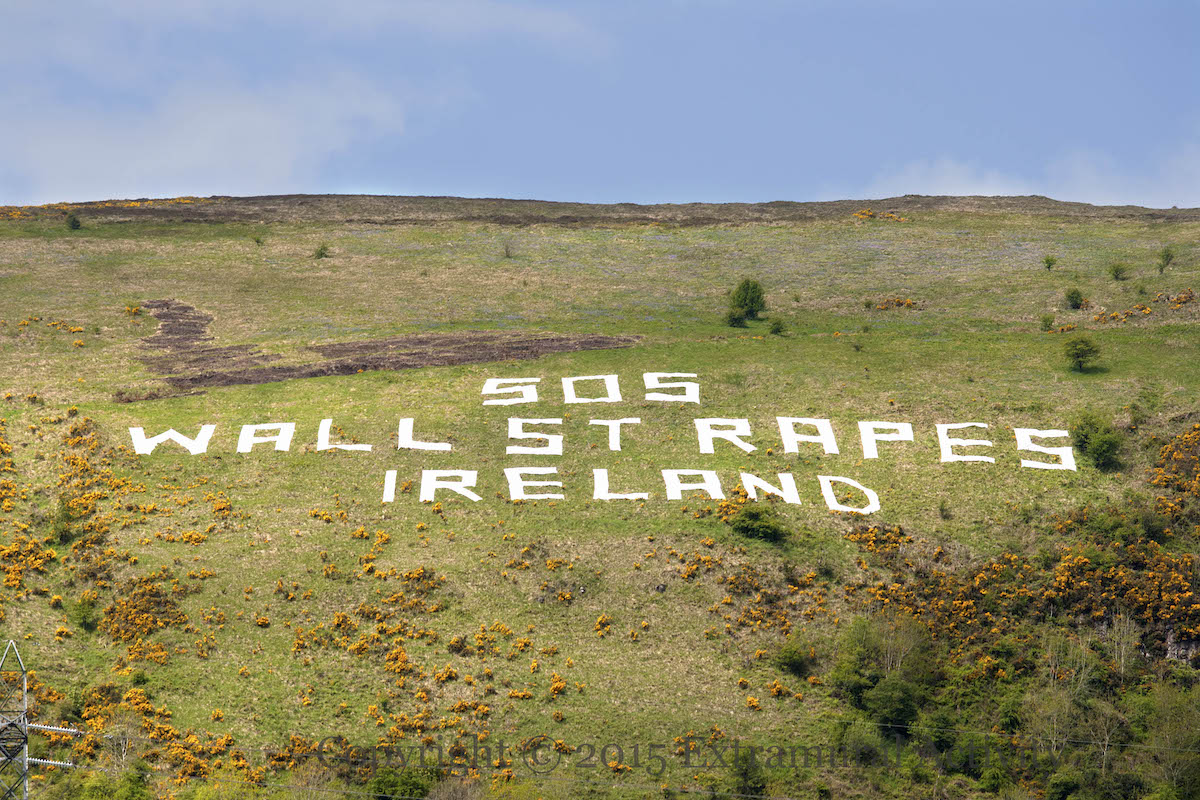
“SOS – Wall St rapes Ireland”. Conor Devine (at EamonnMallie.com) provides context. This message on the mountain (Slıabh Dubh) came and went in a matter of days, if not hours, because the television exposé it was designed to coincide with was not in fact broadcast; also perhaps because parents did not appreciate having to explain rape to their young children – the mountain can be seen from a large portion of west and central Belfast.
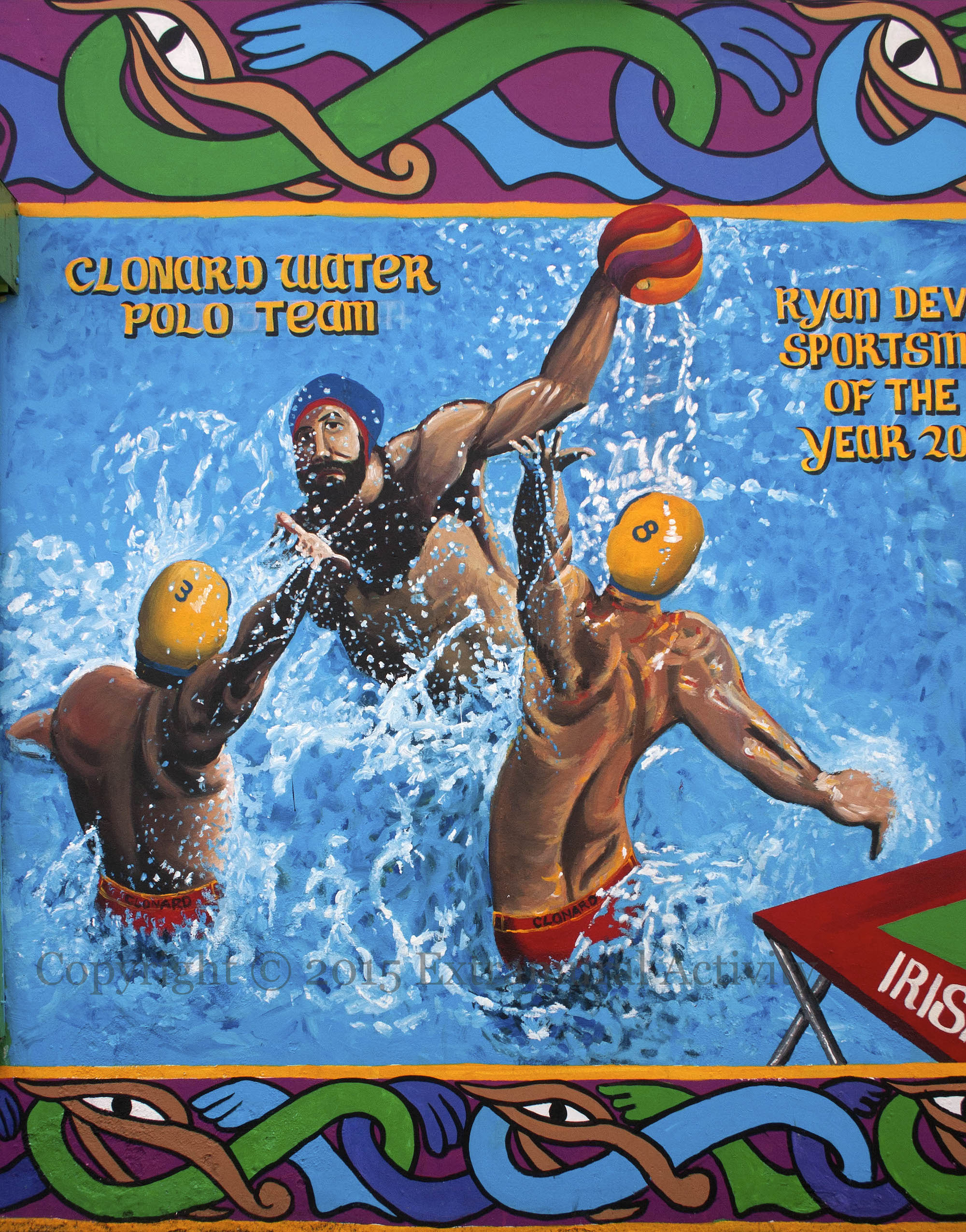
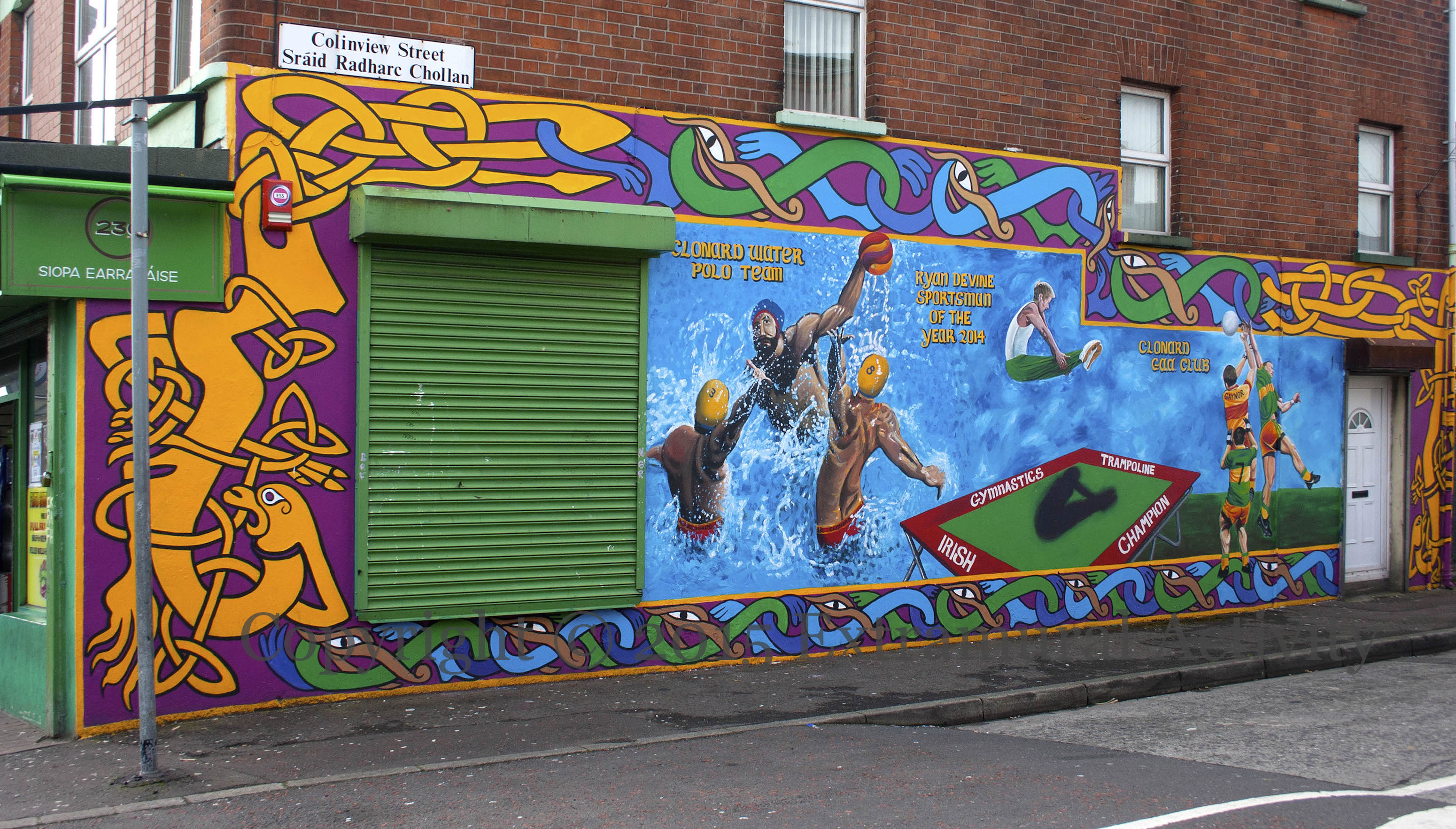
A new mural on Colinview Street/Sráıd Radharc Chollan celebrates local sports: first (shown above) is the Clonard water polo club (Fb), second (in the wide shot, below) is Ryan Devine of Anderstonstown Trampoline Club, junior sportsman of the year, 2014 (Fb), and third, Clonard GAA. The mural is on the side wall of The Flush newsagents, near the former location (above ground) of the Farset and Forth rivers, where dams and races were put in to supply a cotton mill and linen mill and, later, a laundry, a hat-makers, and a biscuit factory. The river, flowing south, then became the Blackie in Beechmount. (Information gleaned from the Belfast Forum).
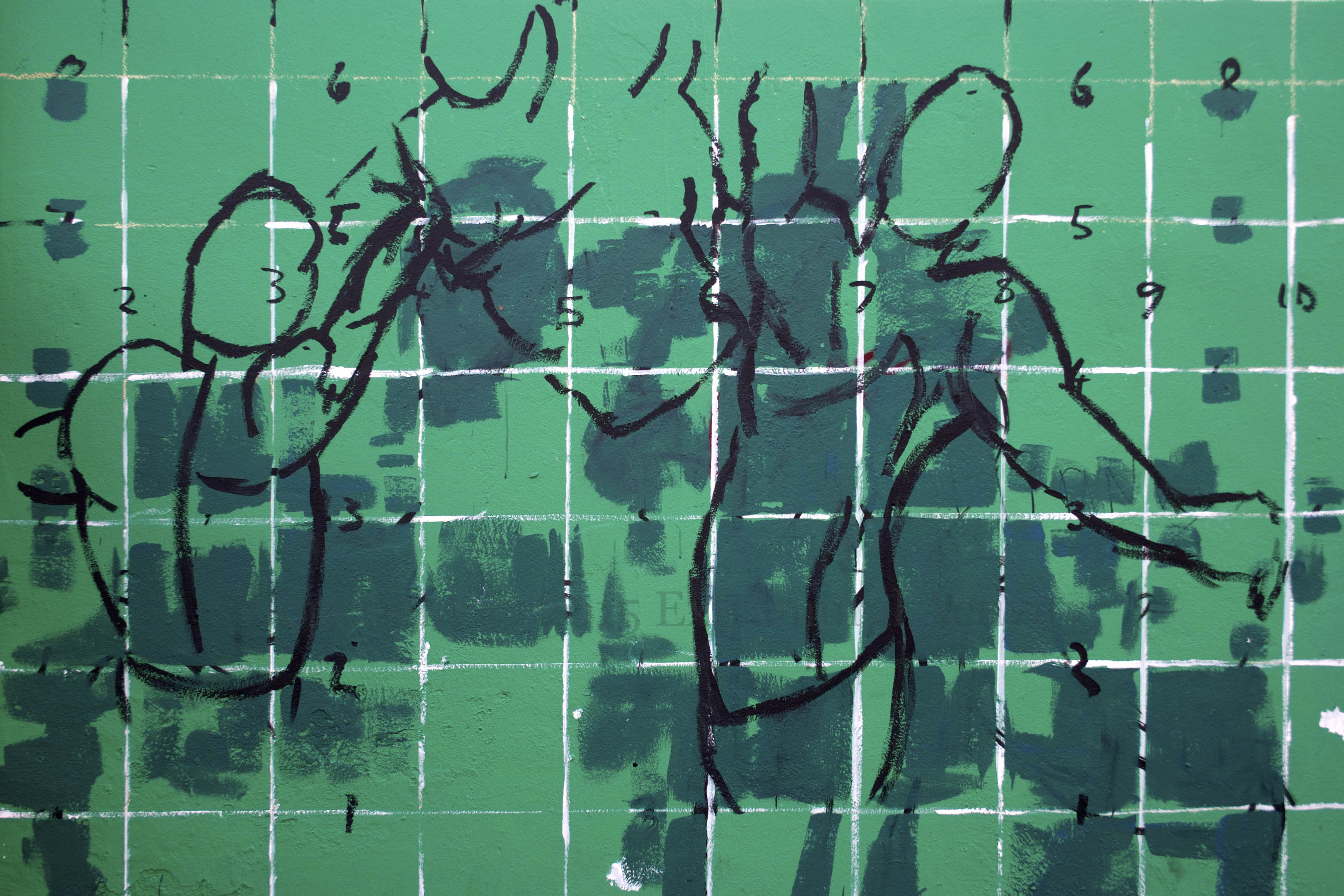
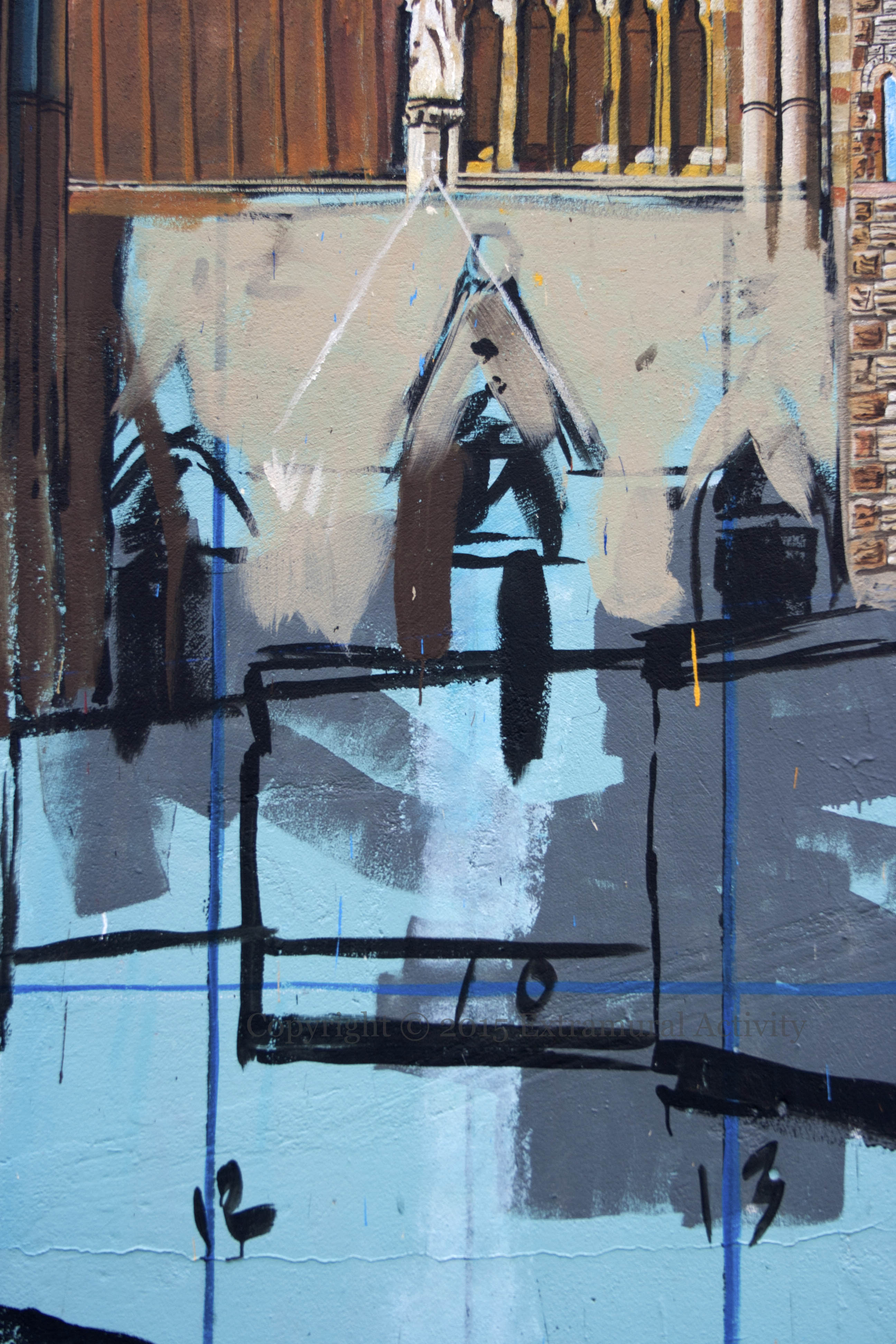
The final image below is the cartoon for the water polo part of mural, which was begun back in February.
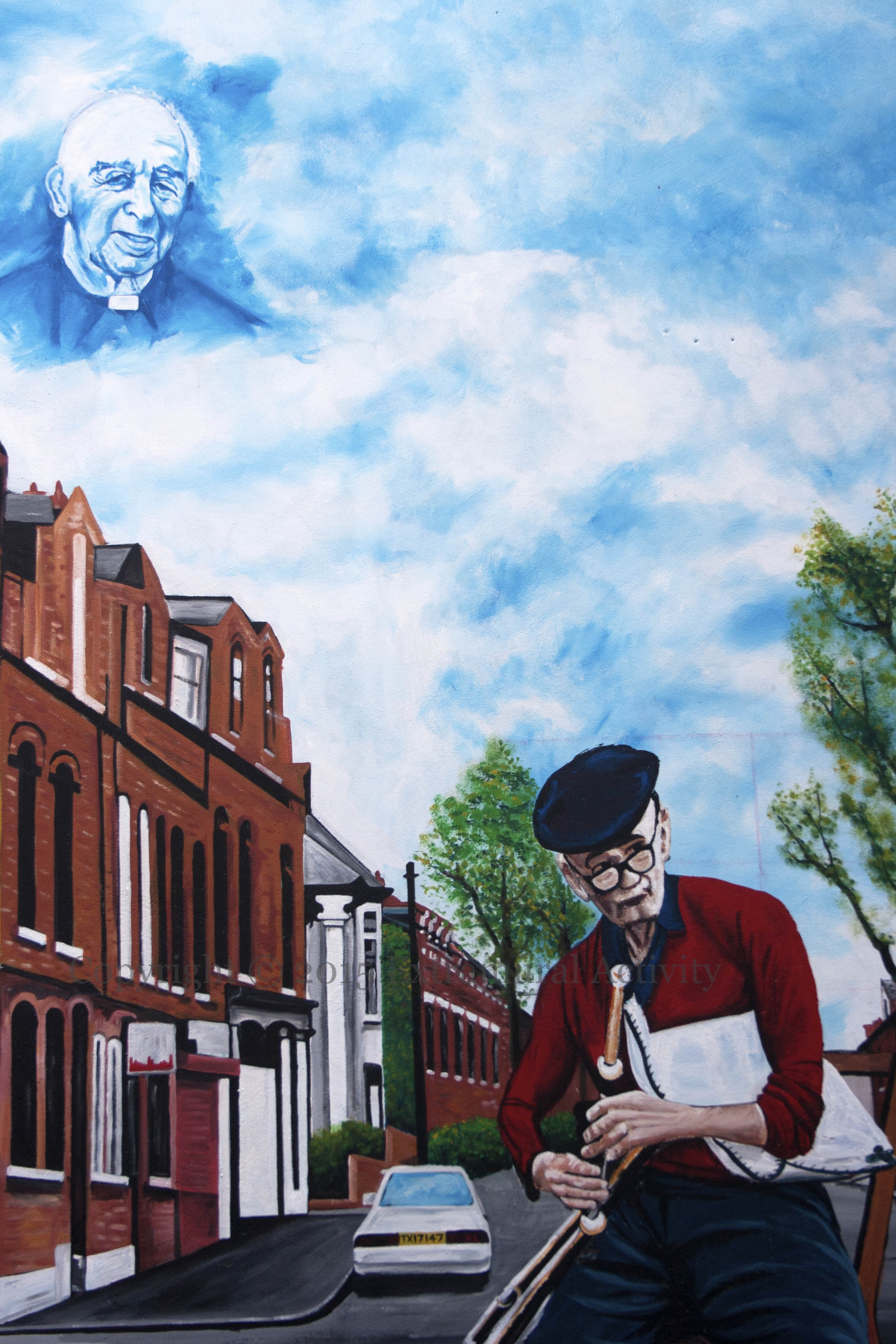
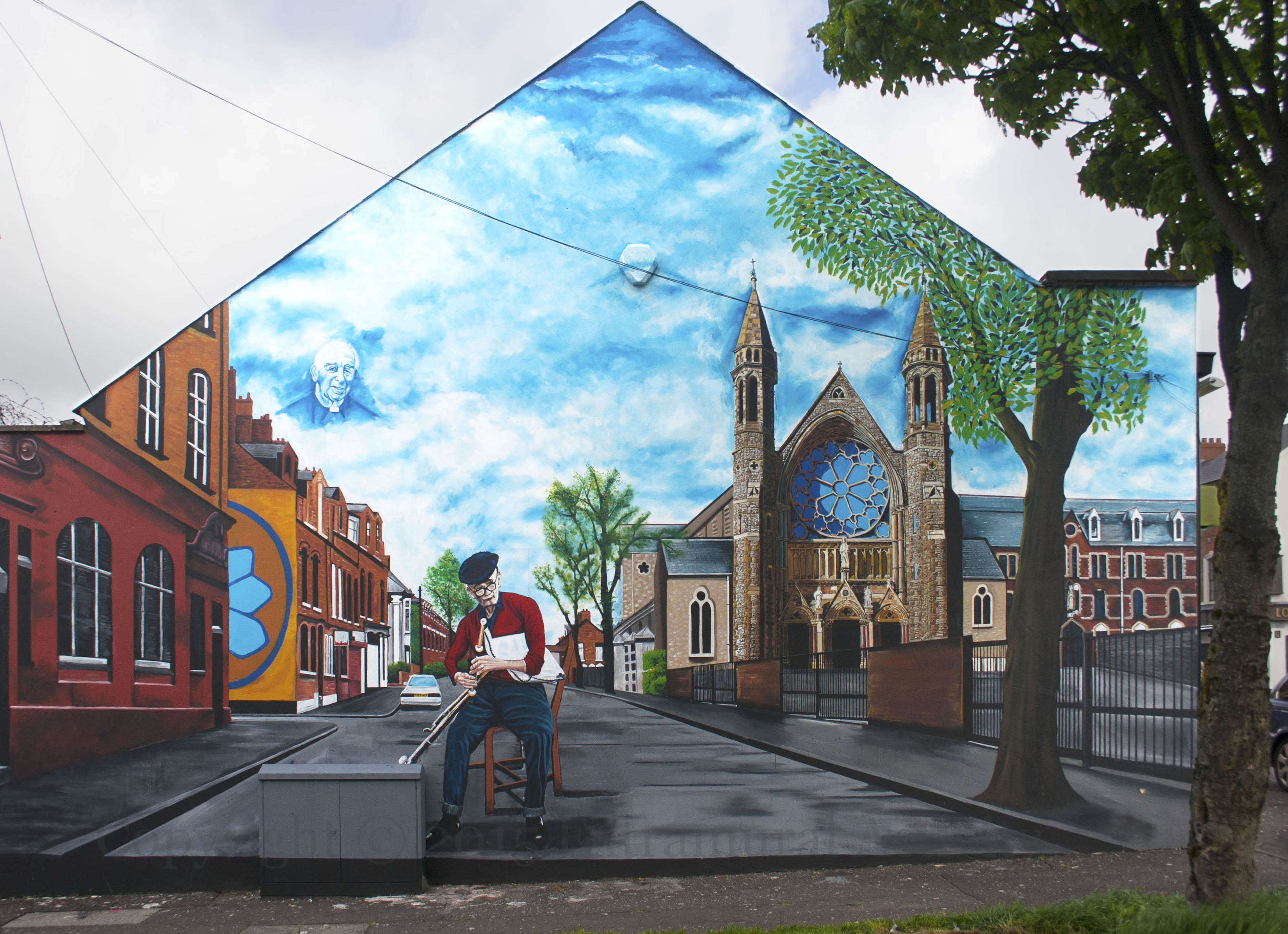
This new mural pays tribute to two long-time residents of Clonard. On a good day, Noel Fitzpatrick, a cobbler with a little shop on the corner of Odessa and Clonard streets, would take his chair out into the street and play the uıleann pipes. Looking down from above is Alec Reid, the Redemptorist priest who spent 40 years at Clonard monastery and played an important role in the peace process. He died in 2013 at age 82. (WP)
Painted by Marty Lyons & Mickey Doc in Springfield Drive. For the large ‘flower’ mural to the left of this mural (which imitates the stained glass in the cathedral), see C01044.
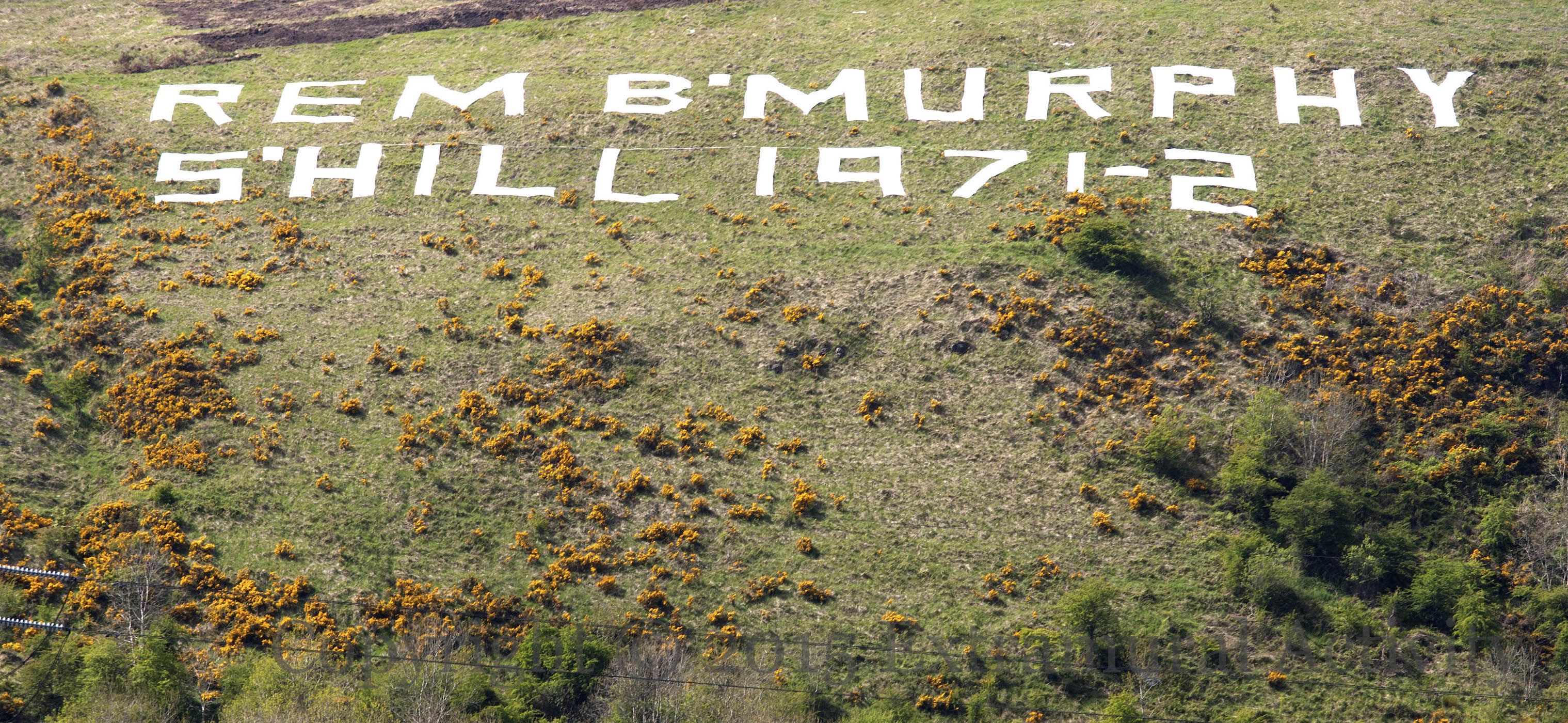
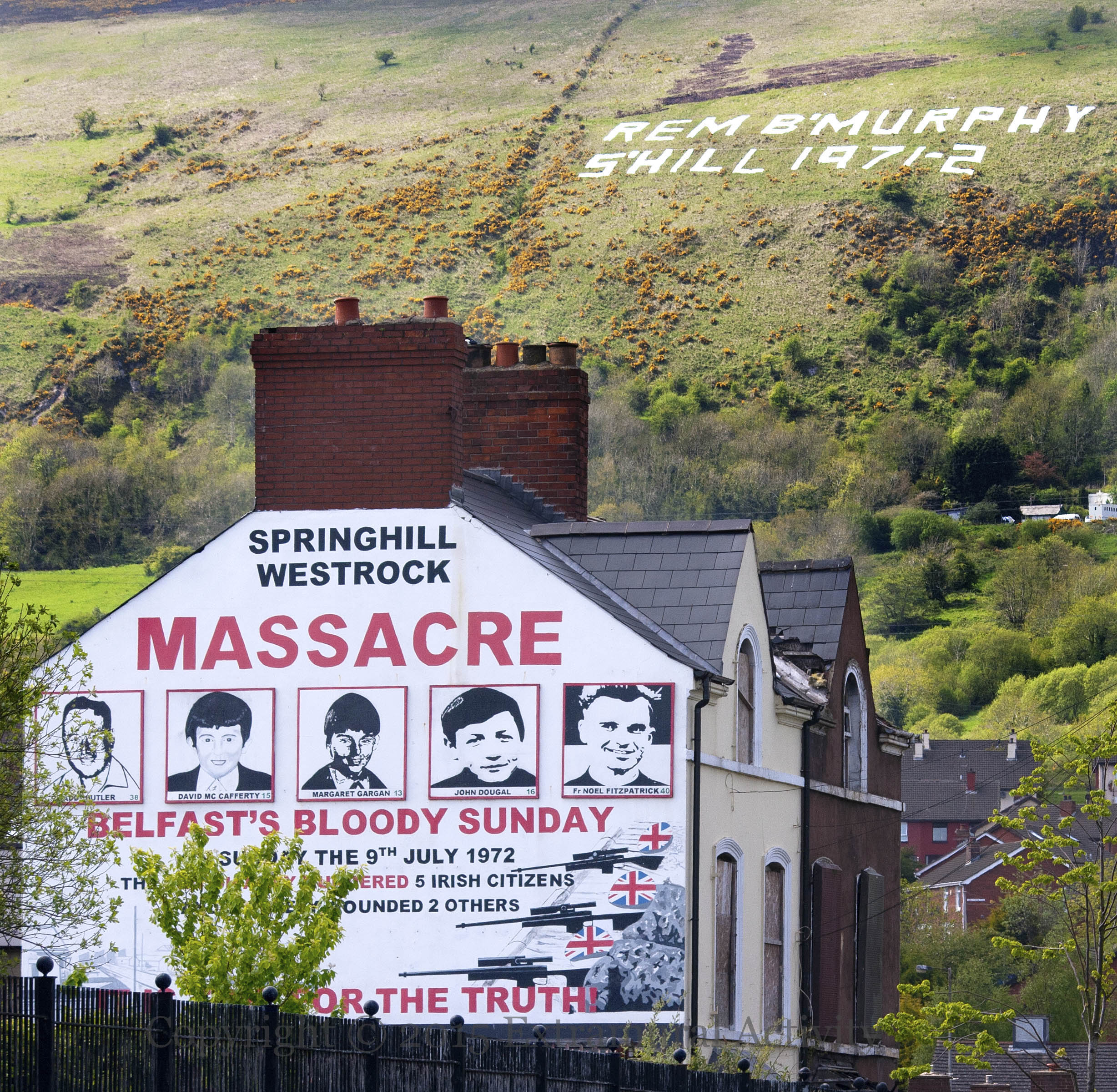
Prince Charles’s last day drew this respond from Gael Force Art on Sliabh Dubh/Black Mountain, “Remember Ballymurphy and Springhill 1971-1972”, a reference to the Ballymurphy Massacre of August 1971, in which 11 people died at the hands of the Prince’s Parachute Regiment (WP) and the Springhill-Westrock Massacre of July 1972, in which five people were killed by British army snipers (WP).
For more Republican reaction to the Prince’s visit last week, see Operation Banner.
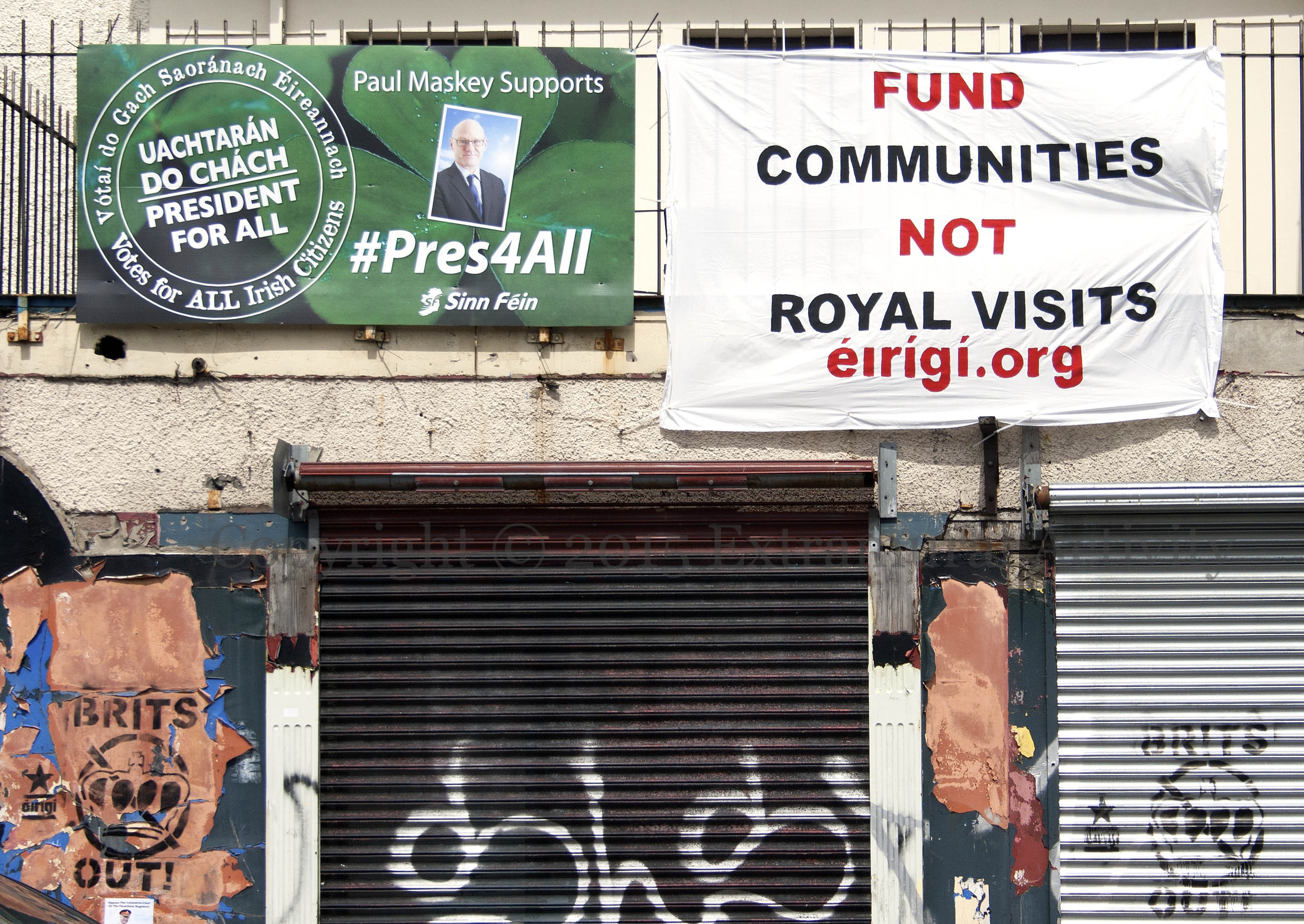
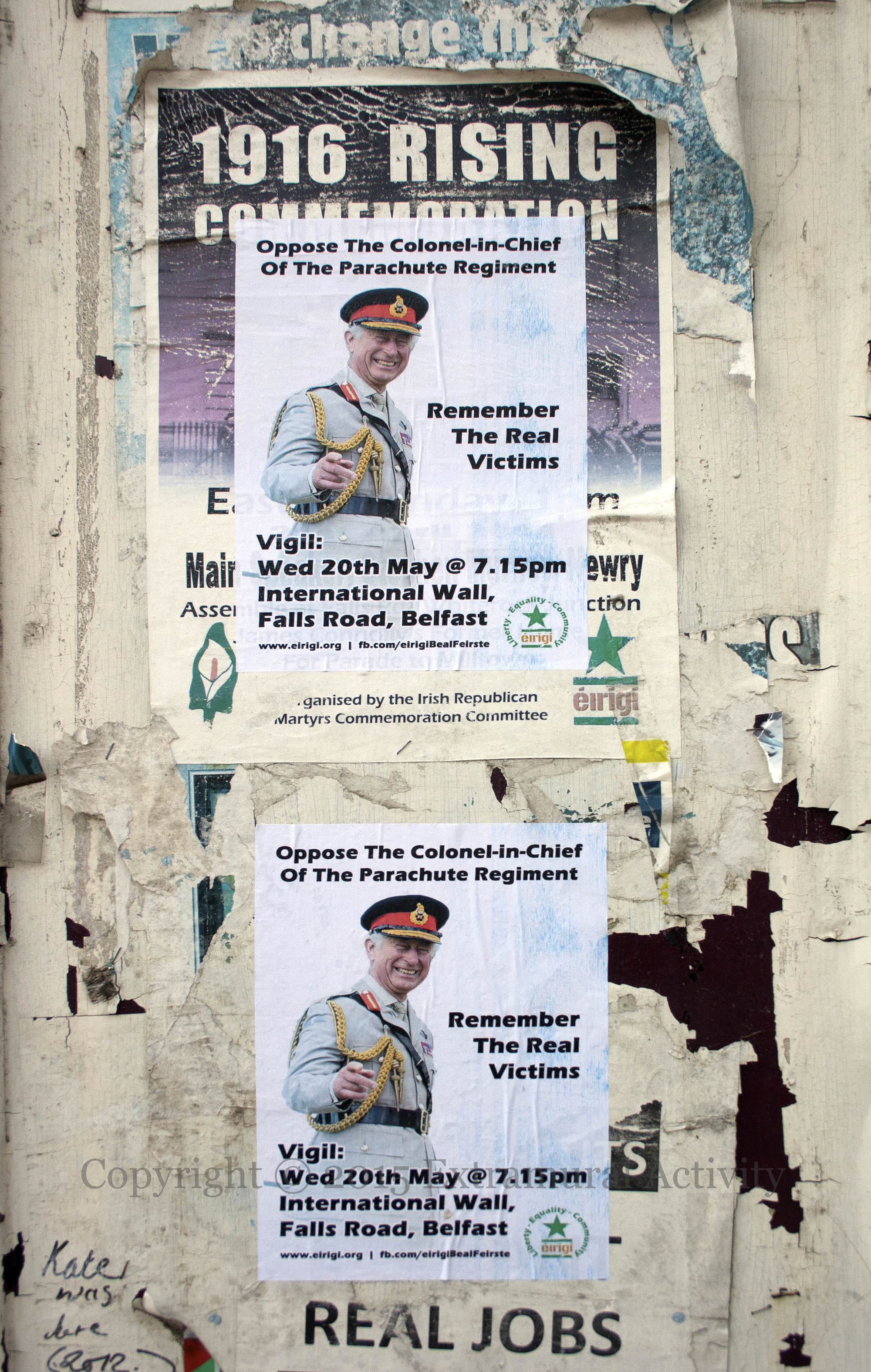
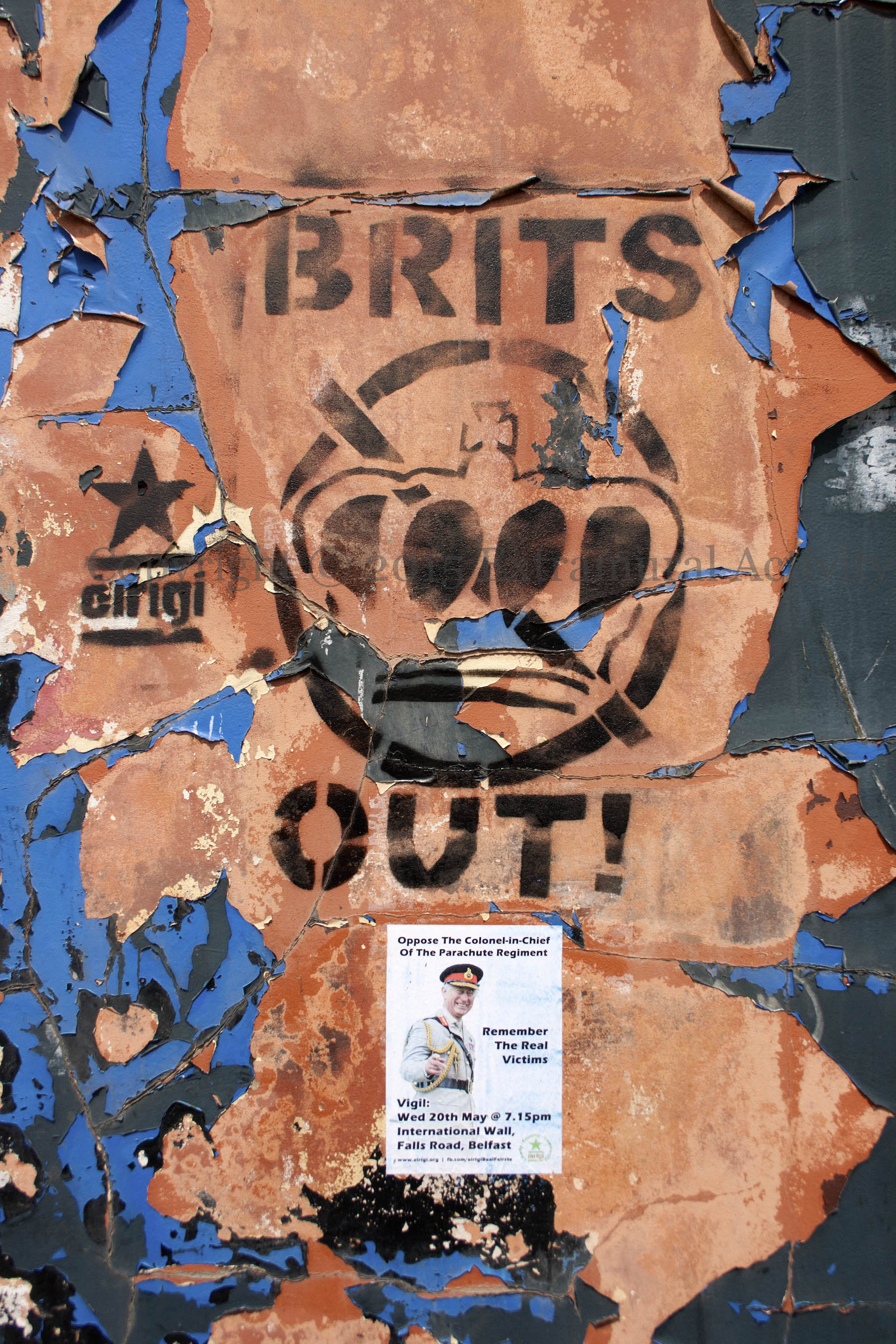
Charles, Prince Of Wales, Duke Of Rothesay, Duke Of Cornwall, and heir to the British throne, concludes a four-day visit to Ireland north and south today with a tour of Corrymeela peace and reconciliation centre. He is also colonel-in-chief of the Parachute Regiment (the Paras) which served in Northern Ireland from 1969 to 2007. Flyers have appeared protesting the visit (see the two images below), and The Rebels Rest on the Falls road is flying the banner shown above: “Fund communities, not royal visits – éırígí.org”. Éırígí also produced a video in memory of some of those killed by the Regiment during its time in Northern Ireland.
The Sınn Féın board to the left is from their campaign to extend voting in the Irish Presidential election to the north: “Vótaí do gach saoránach Éireannach”, “Paul Maskey supports #pres4all – Uachtarán do chách/President for all”
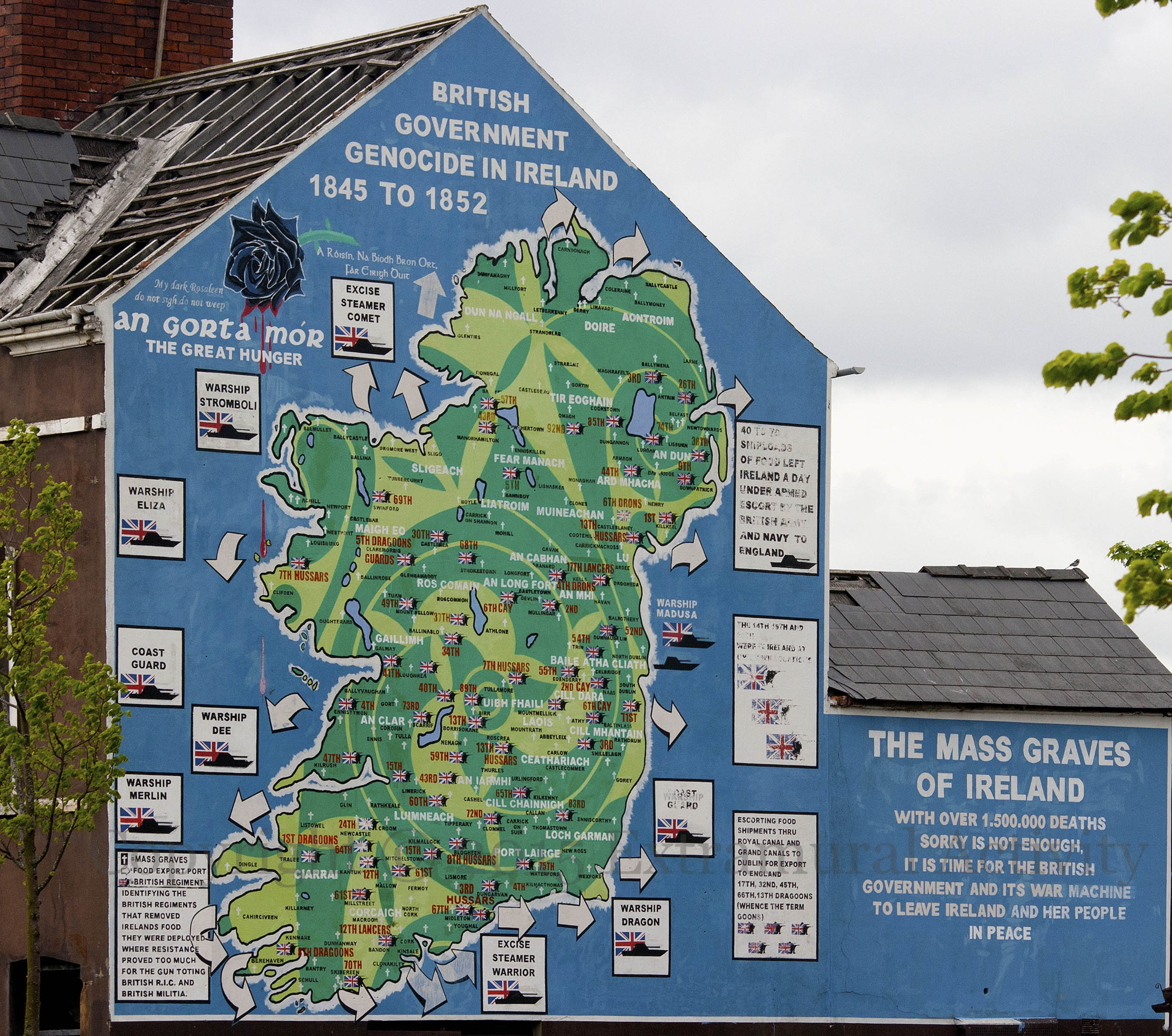
In 1997, the office of then-Prime Minister Tony Blair issued a statement acknowledging that the administration of the time of the Hunger failed to intervene (Guardian | Independent).
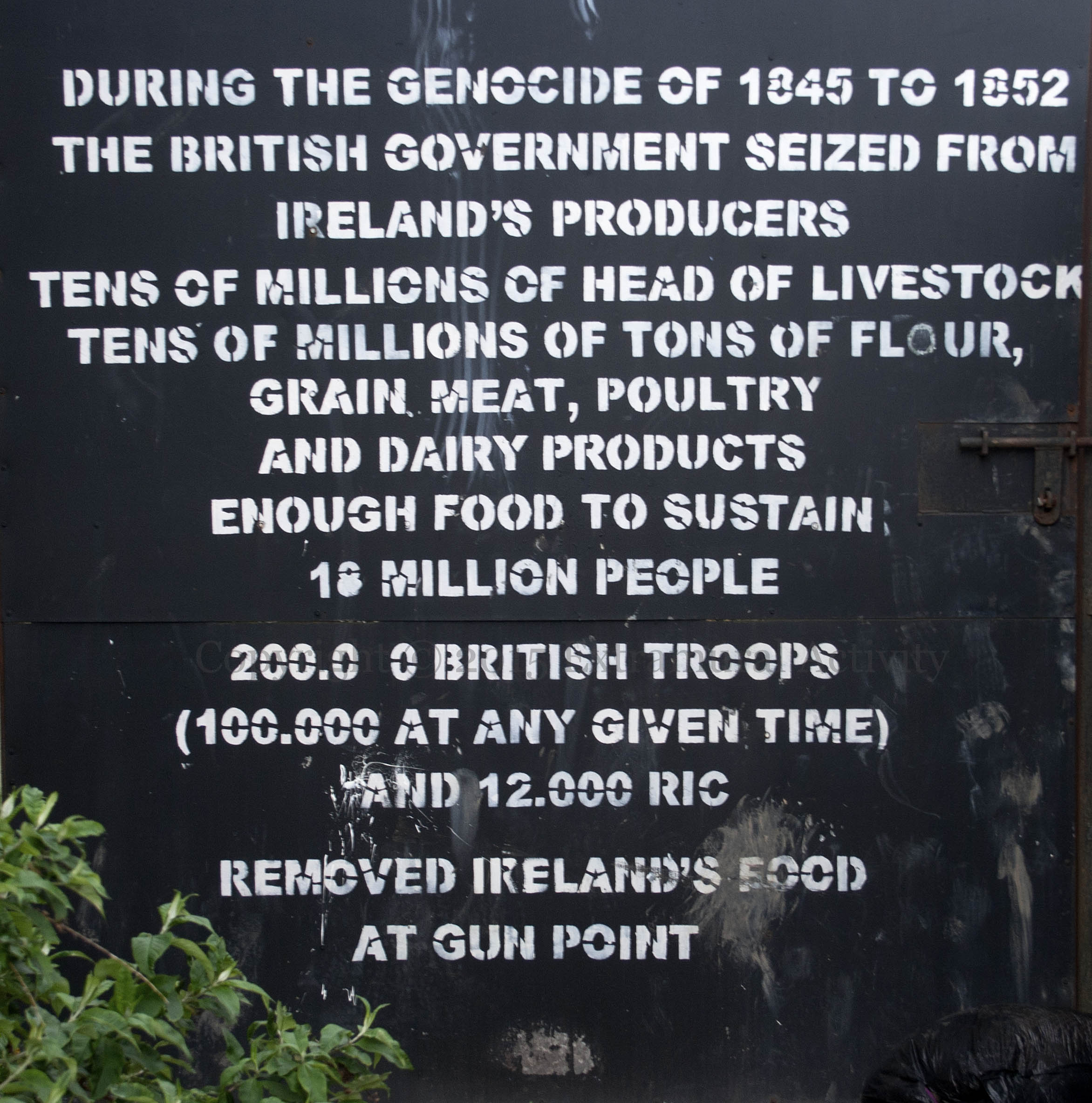
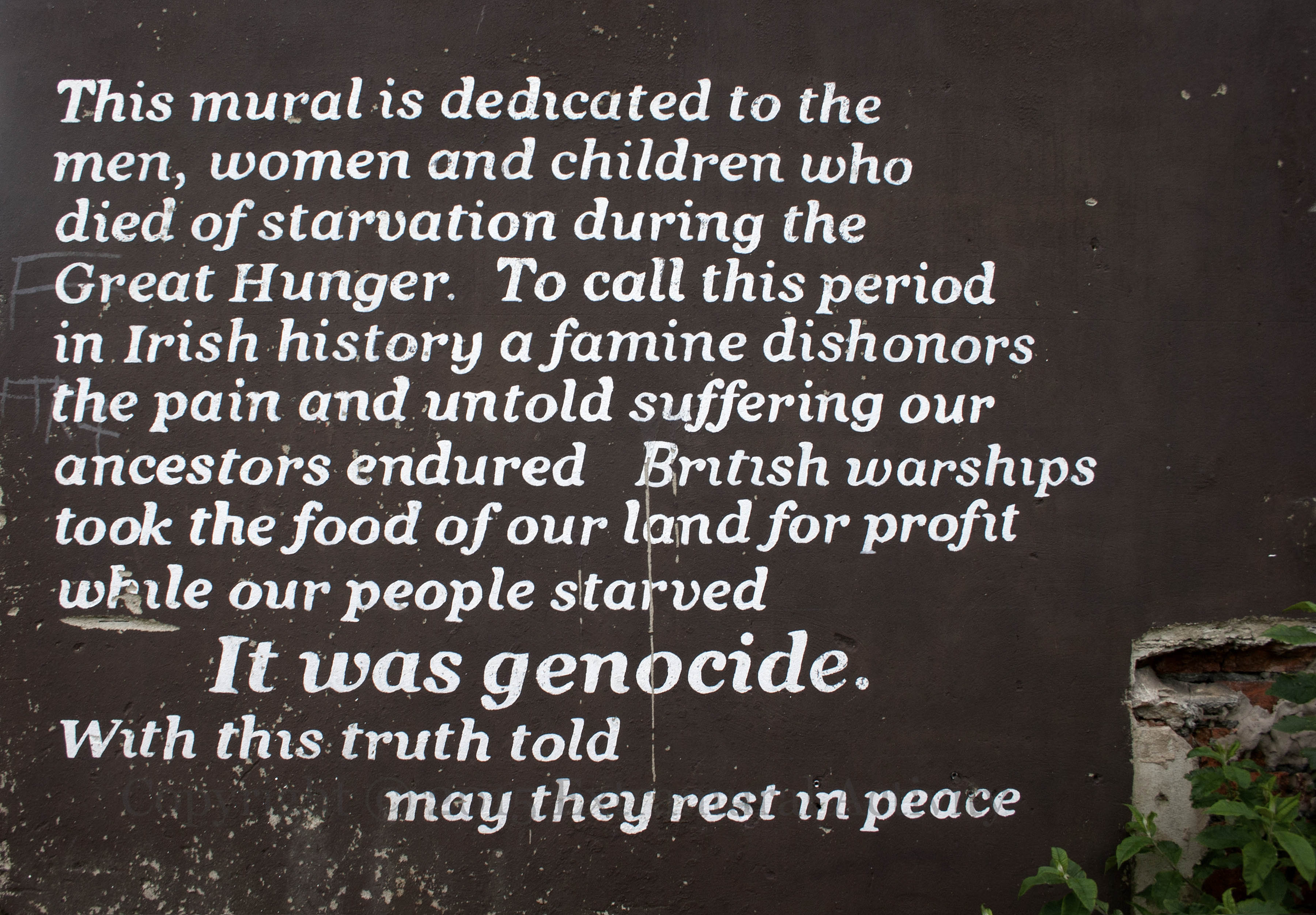
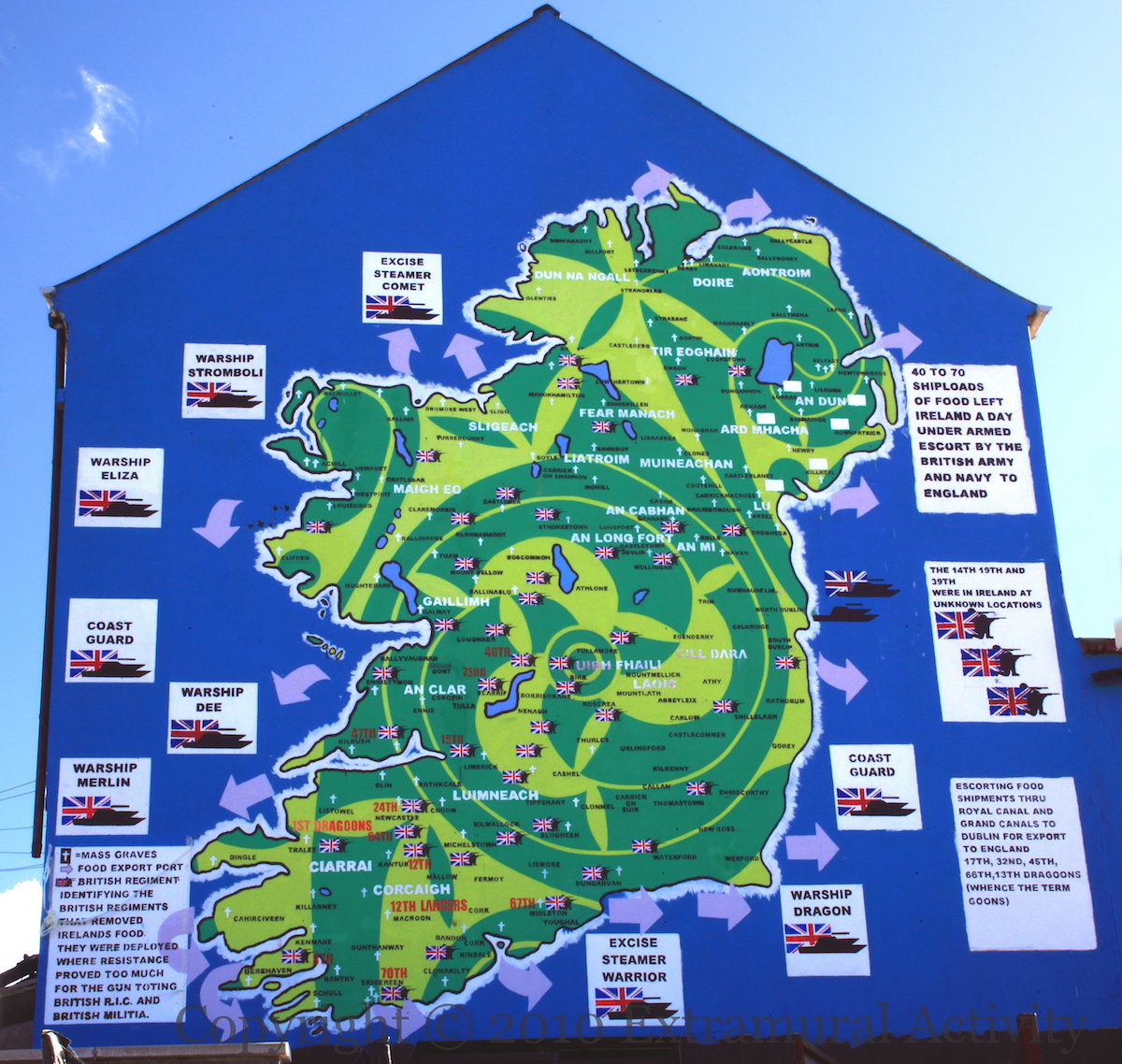
The mural above asserts that government’s inaction was not merely a matter of negligence but of will: “With over 1,500,000 deaths “sorry” is not enough. It is time the British government and its war machine to leave Ireland and her people in peace. During the genocide of 1845 to 1852 the British government seized from Ireland’s producers tens of millions of head of livestock, tens of millions of tons of flour, grain, meat, poultry and dairy products, enough food to sustain 18 million people. 200,000 British troops (100,000 at any given time) and 12,000 RIC removed Ireland’s food at gun point. This mural is dedicated to the men, women and children who died of starvation during the Great Hunger. To call this period in Irish history a famine dishonors the pain and untold suffering our ancestors endured. British warships took the food of our land for profit while our people starved. It was genocide. With this truth told may they rest in peace.”
Each white cross on the map represents a mass grave. The map is originally from irishholocaust.org.
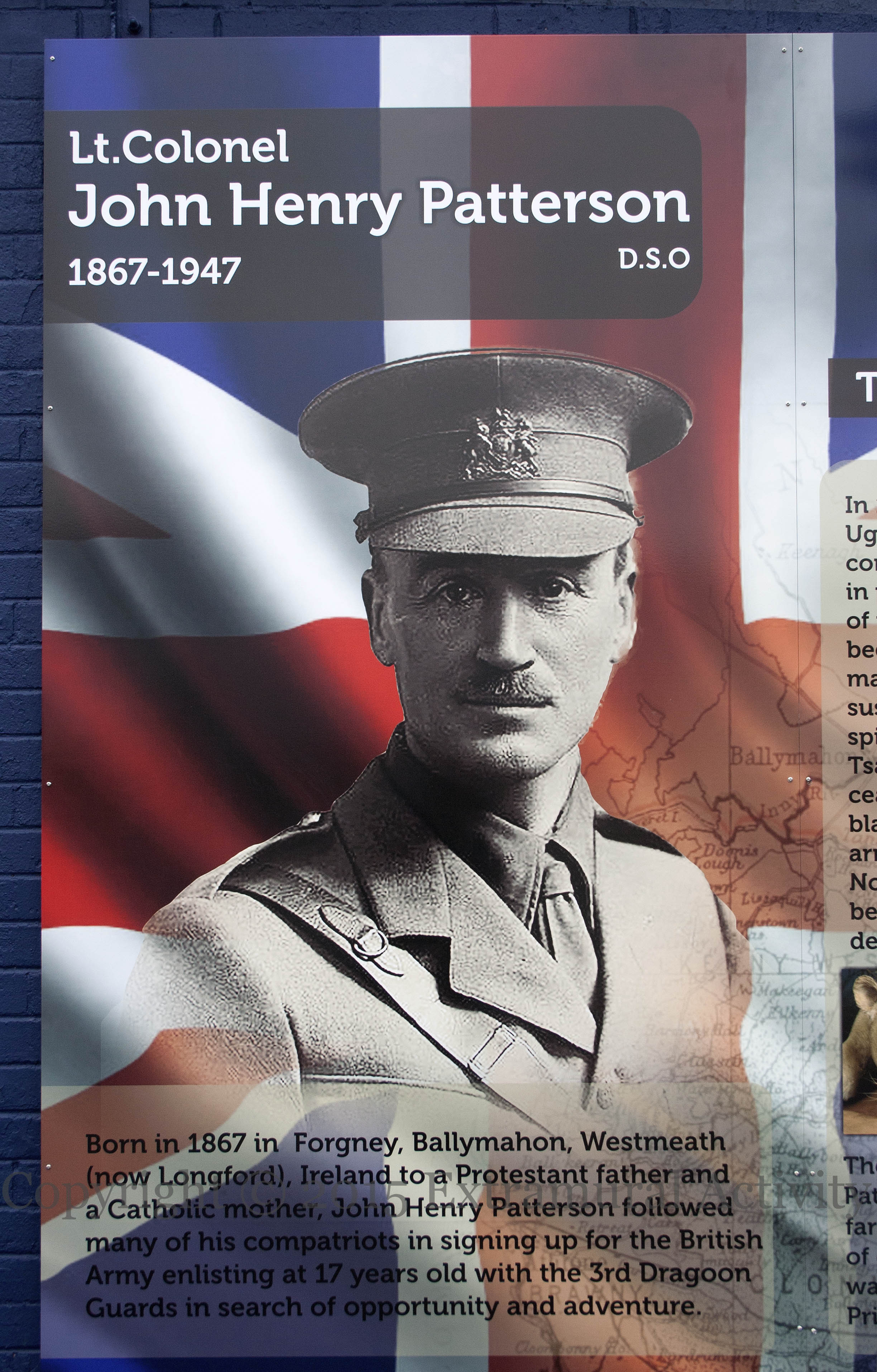
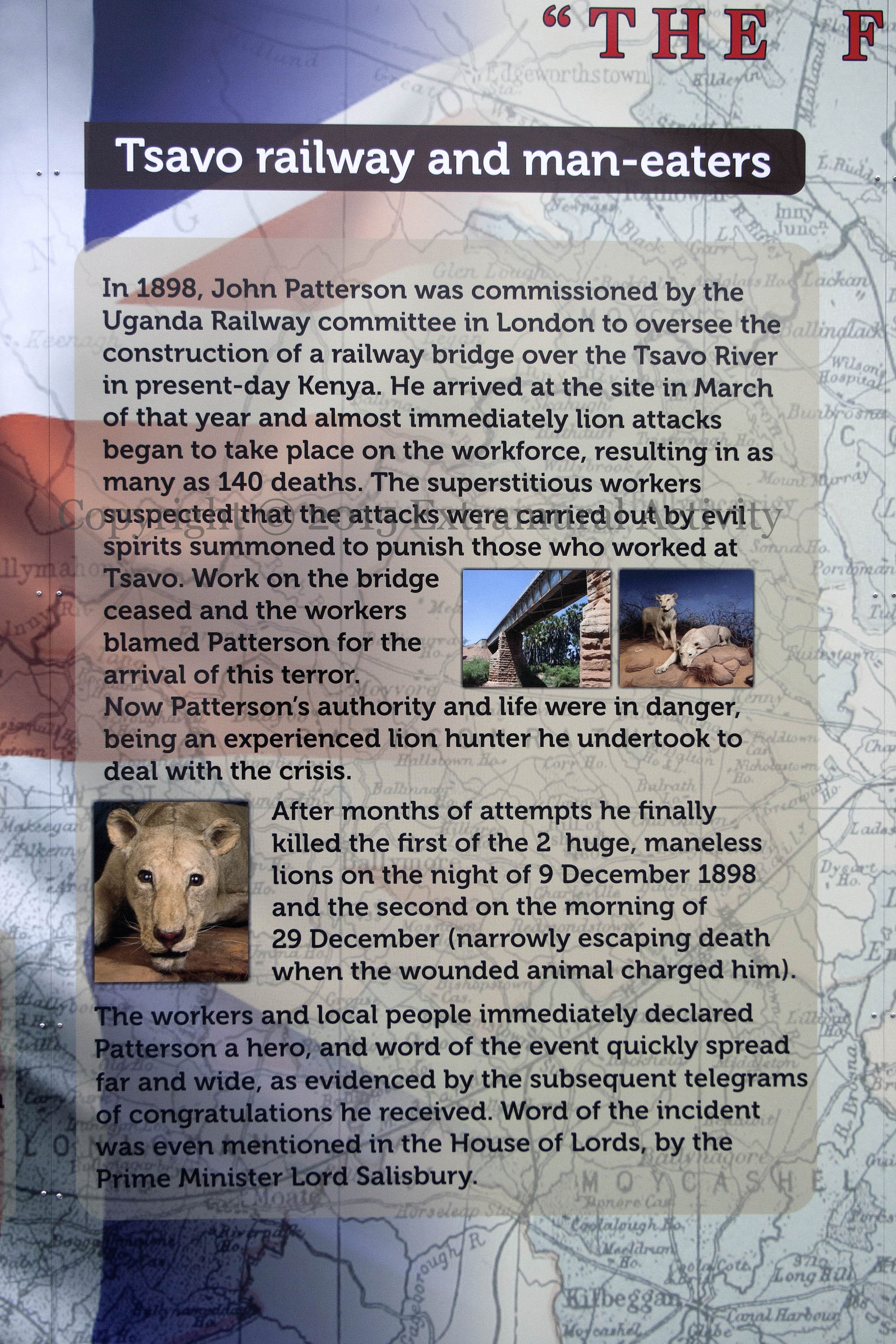
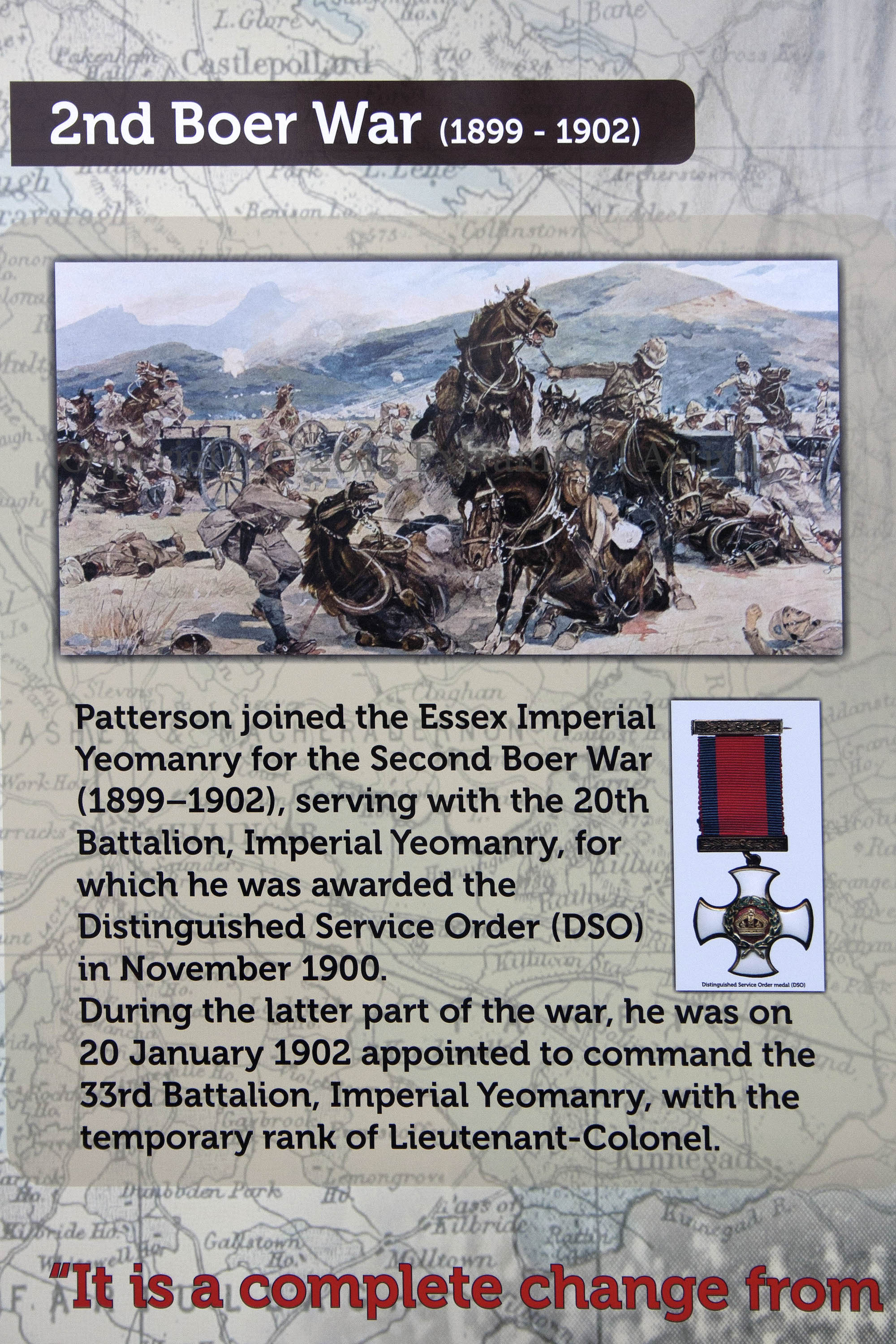
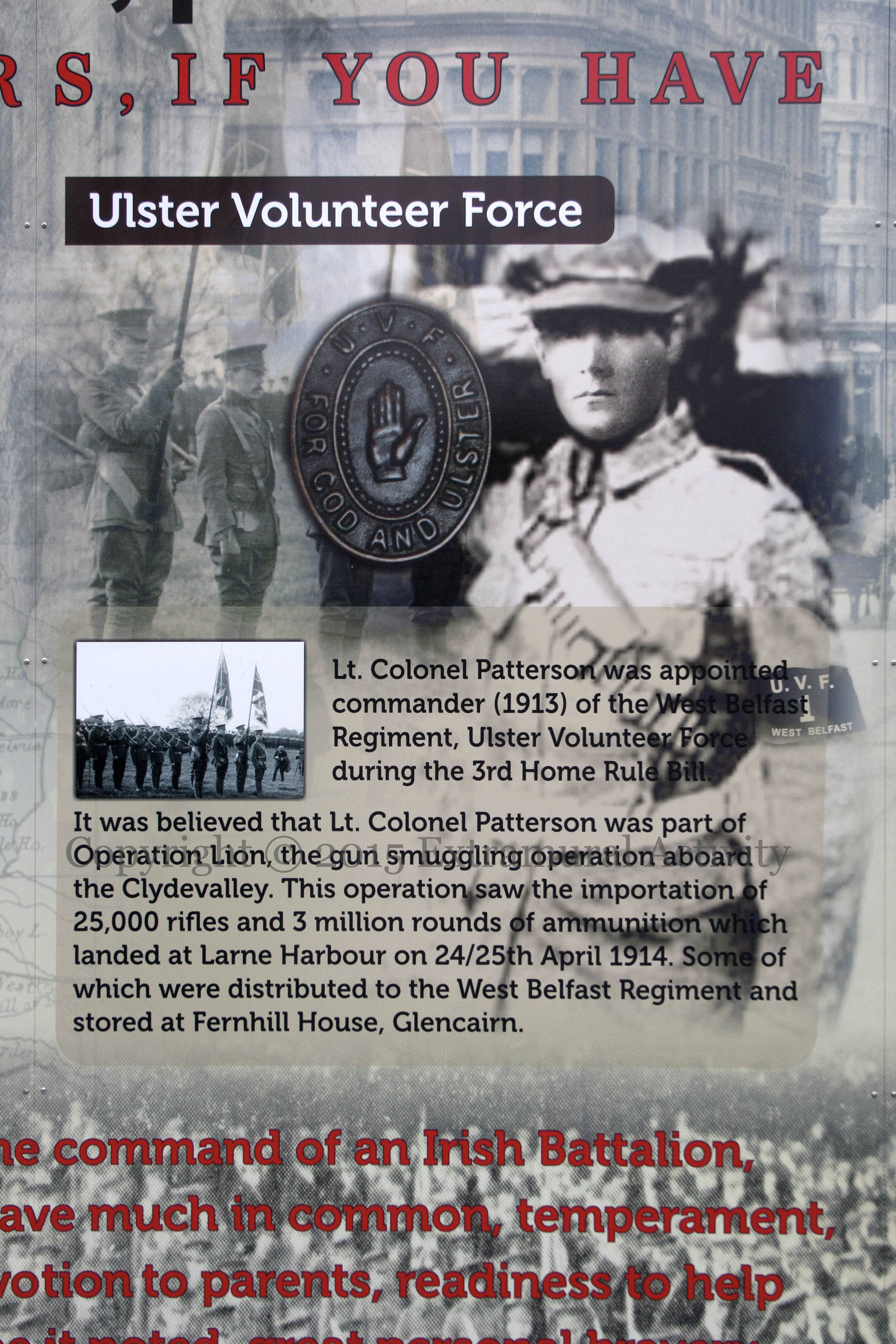
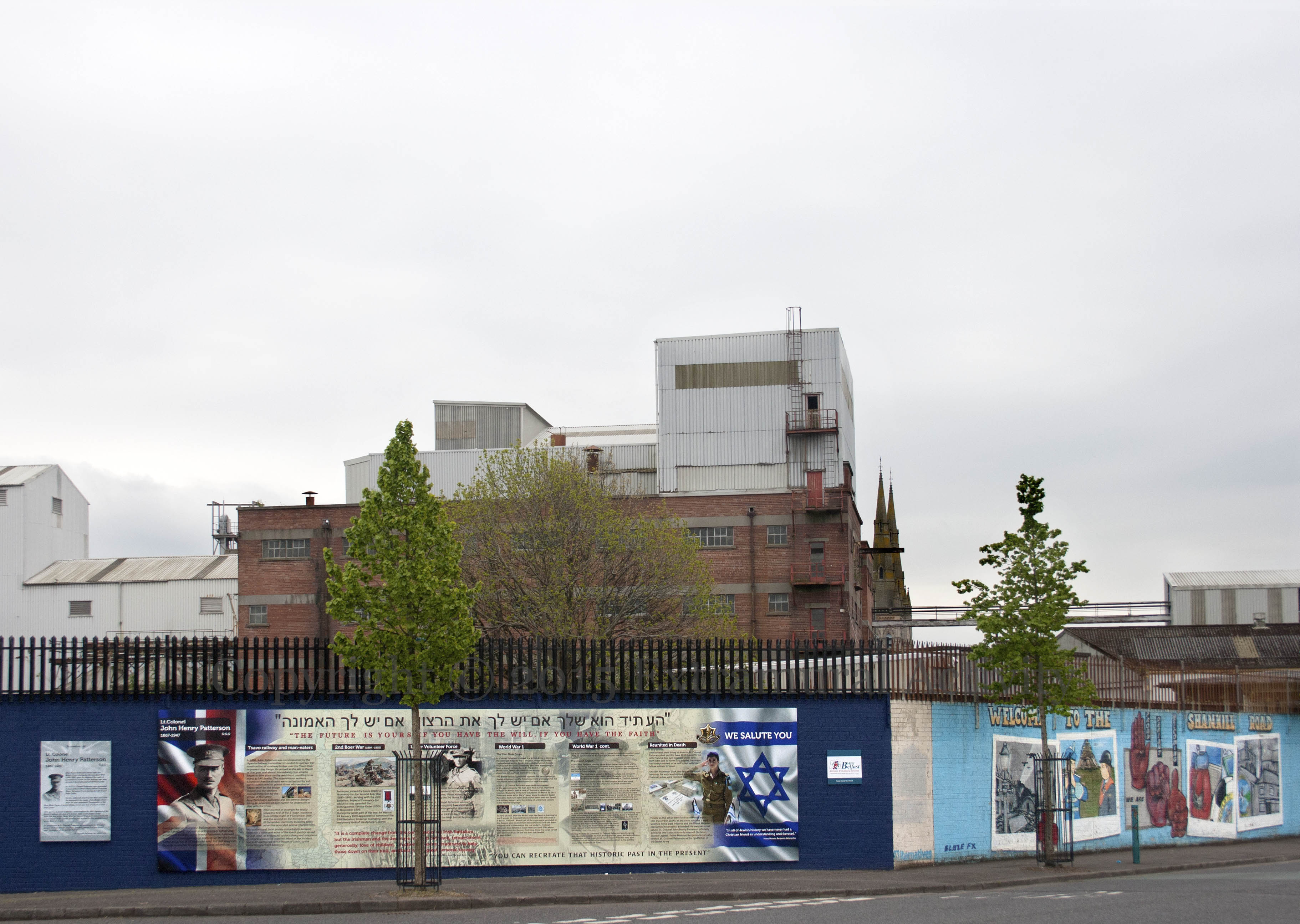
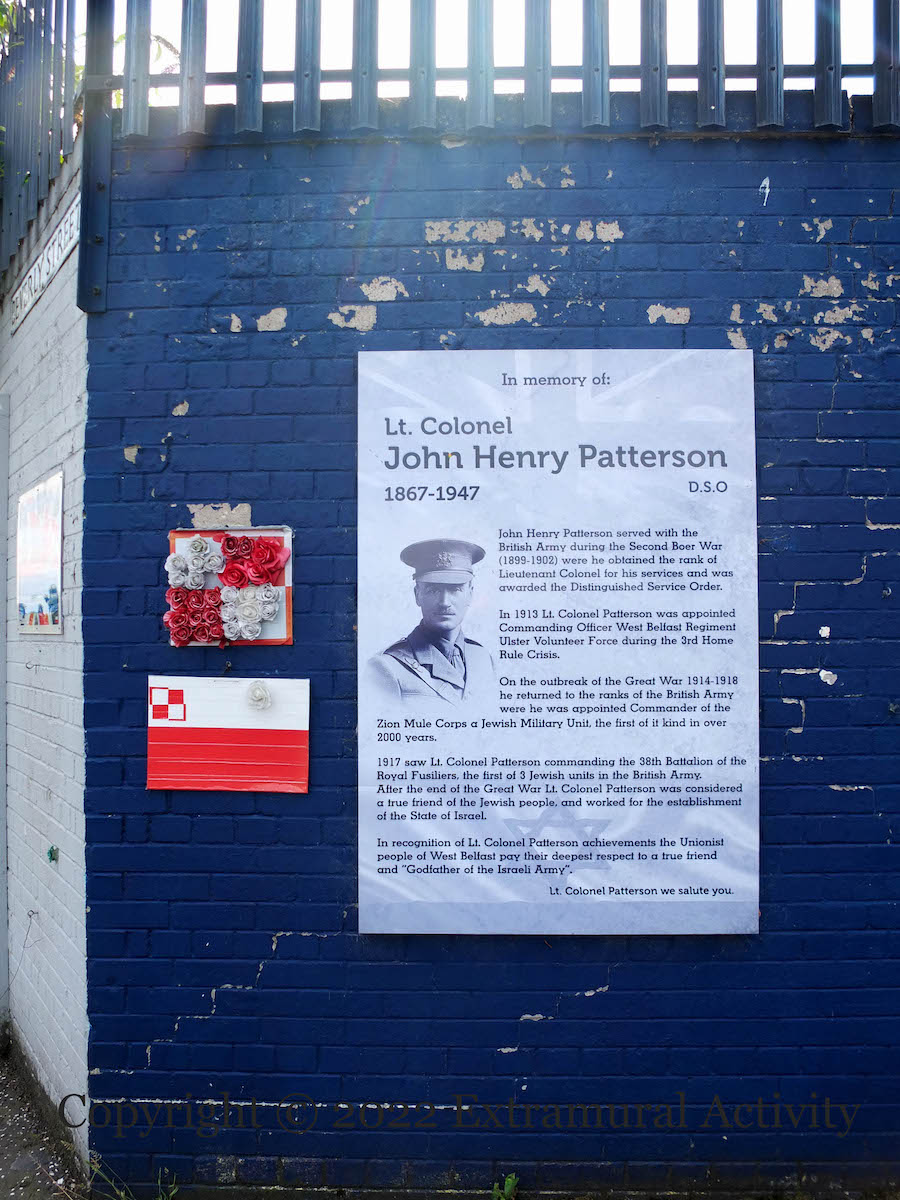
Here are the first four of eight images (plus one wide shot) of the new Patterson memorial at the junction of Northumberland and Beverly Streets. As the text on the board describes, Patterson went from Ireland to Kenya, where he killed several lions after months of hunting. He wrote an account of the hunt ‘The Man-Eaters of Tsavo’ which has inspired three movies; the lions, named The Ghost and The Darkness, were both over nine feet in length. Back in Ireland he commanded a battalion of the UVF and was involved in the Larne gun-running of 1914: Operation Lion.
 Seosamh Mac Coille Collection