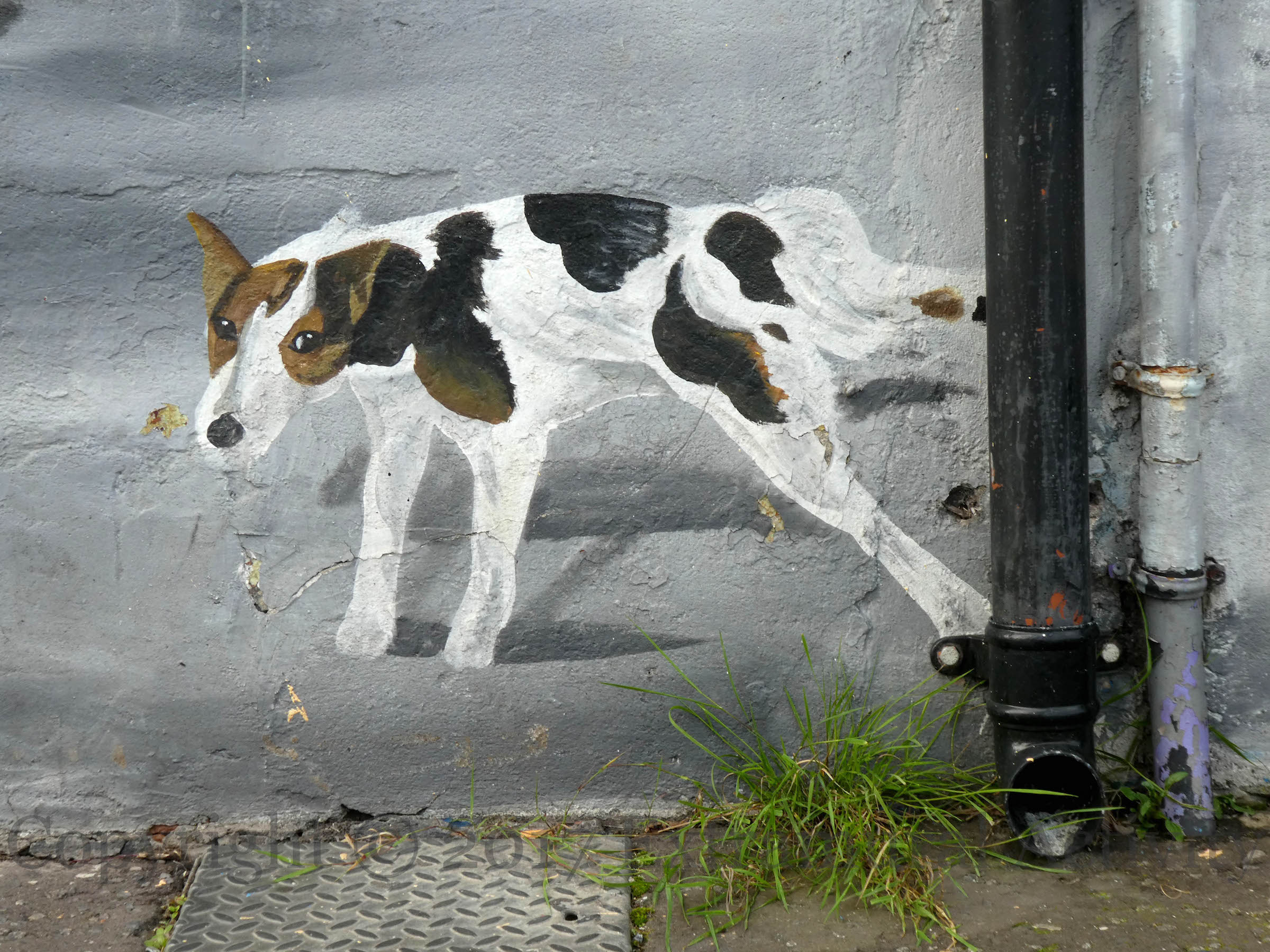
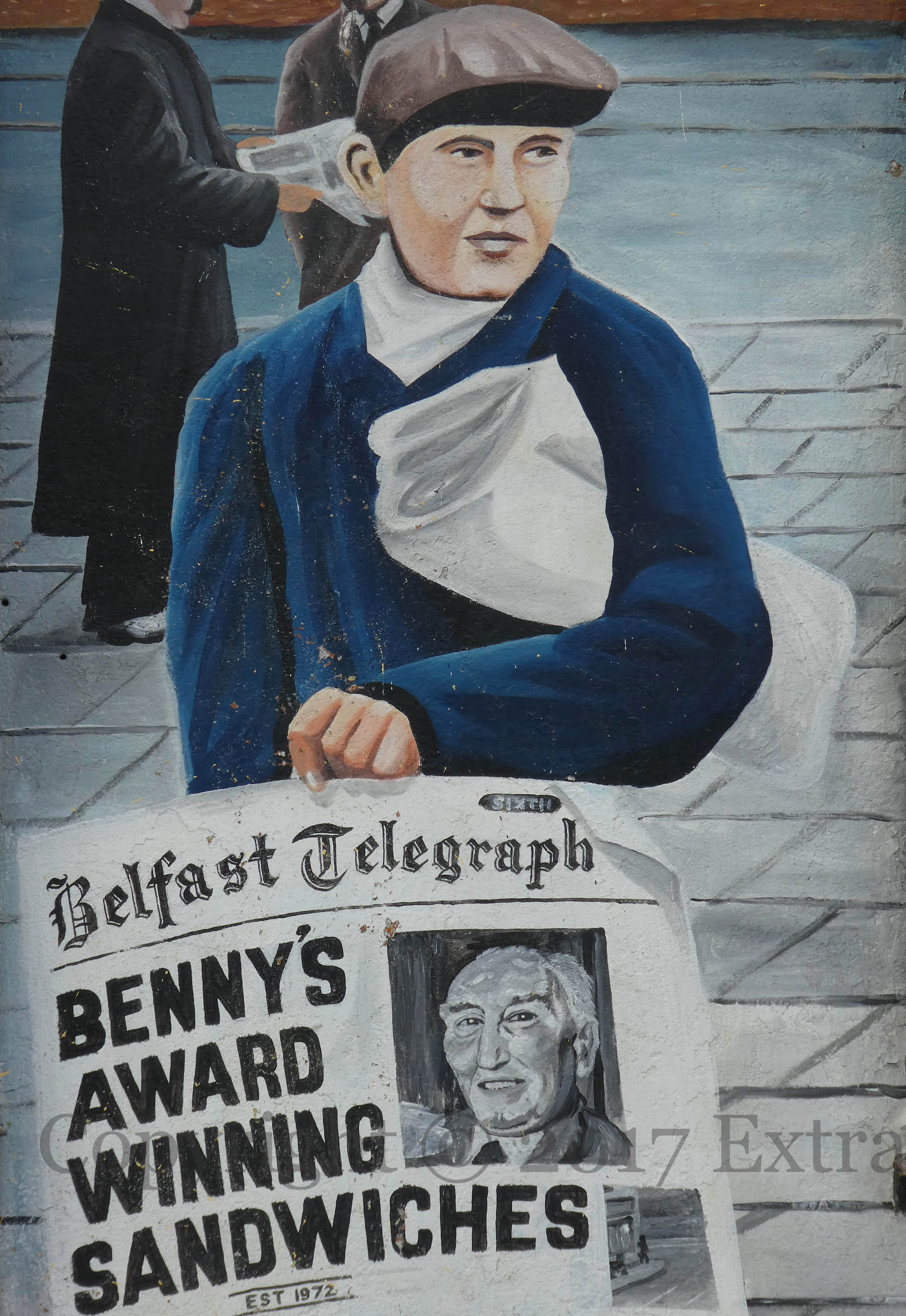
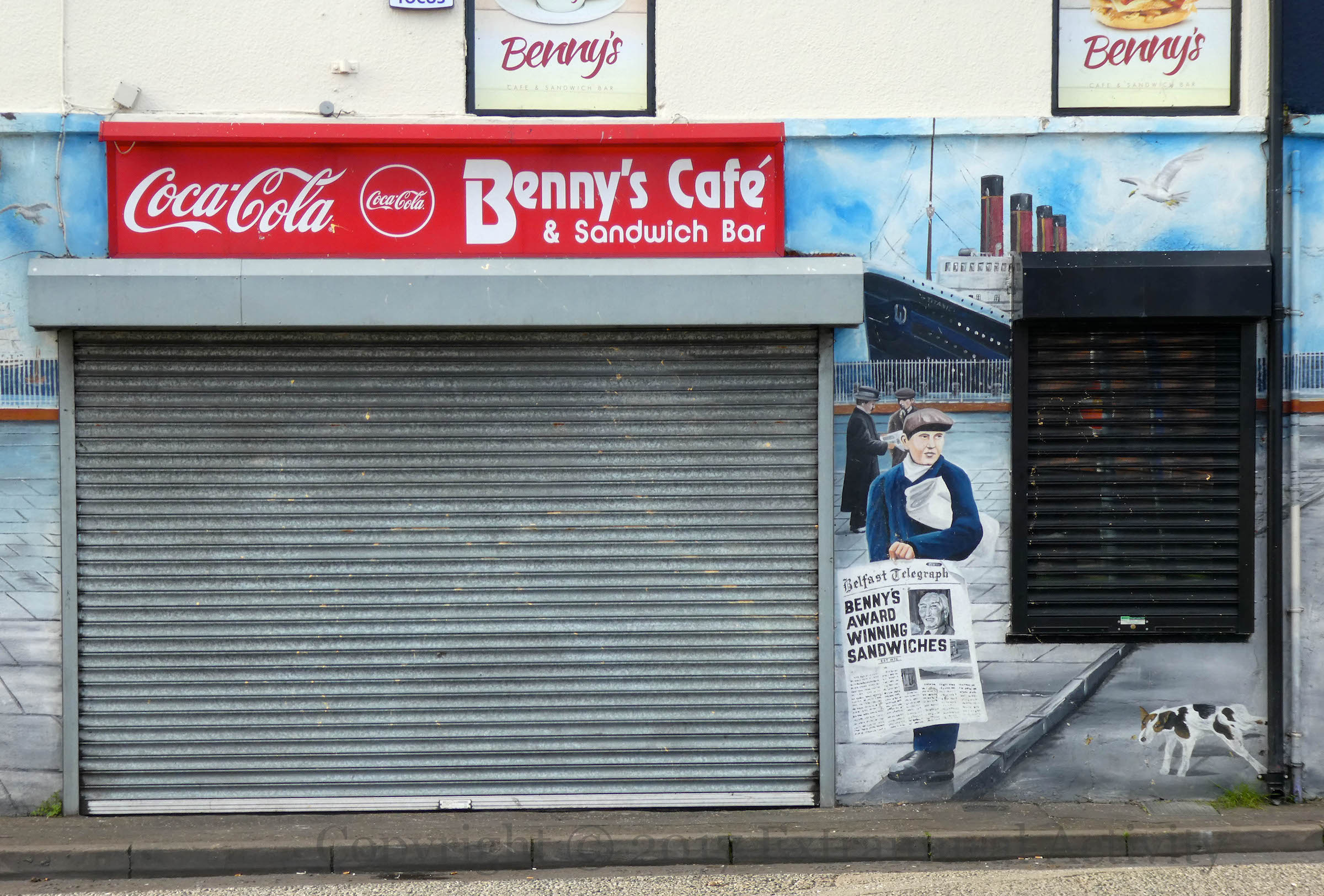
Benny’s Café was opened after the Ship Bar – run by Benny Coyle – was blown up in 1972 by a loyalist car bomb, killing two children, Clare Hughes and Paula Strong. (A memorial plaque is on the front of St Joseph’s.) Benny’s is the last remaining business in Short Street in Sailortown (BBC-NI).
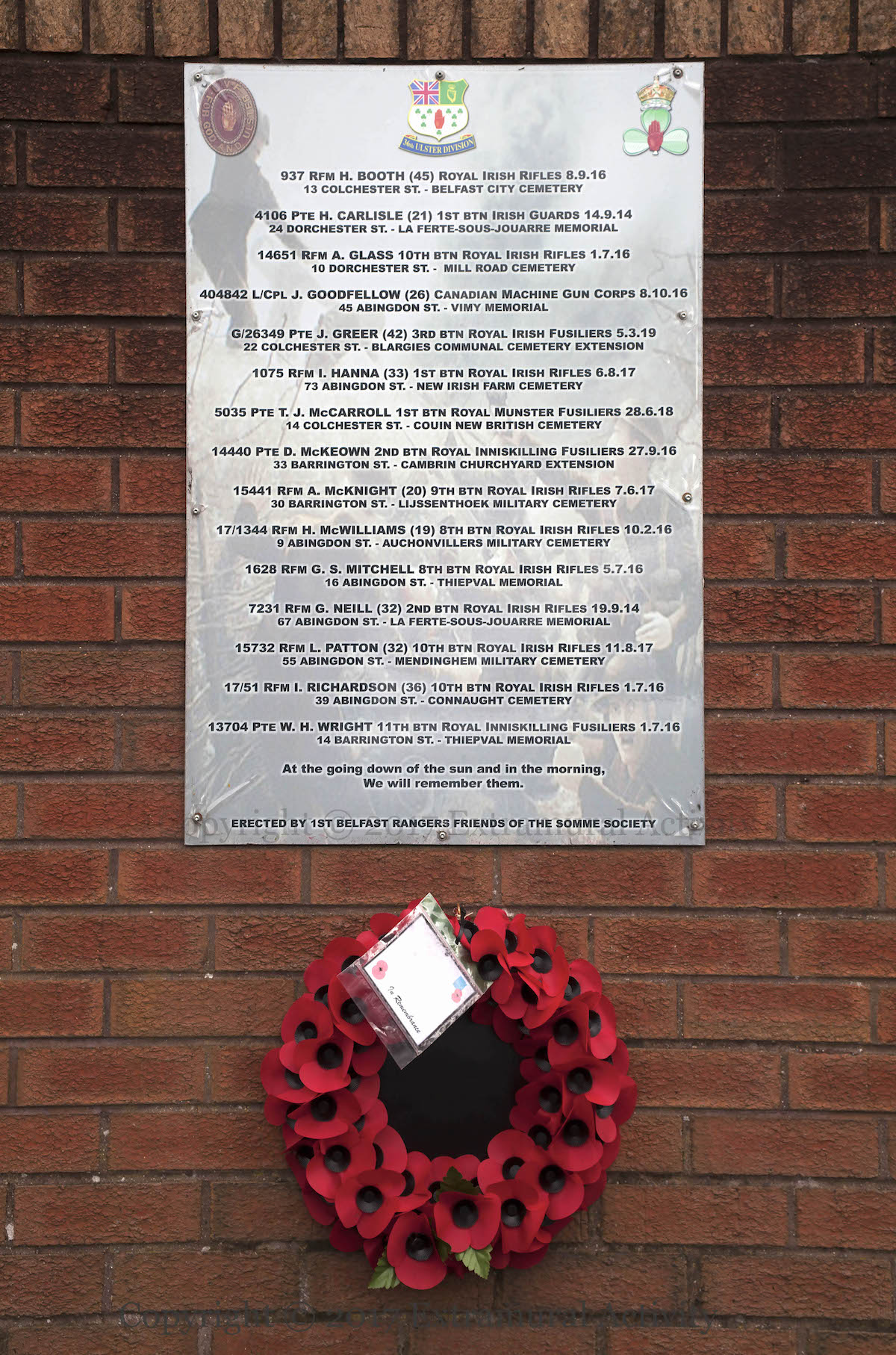
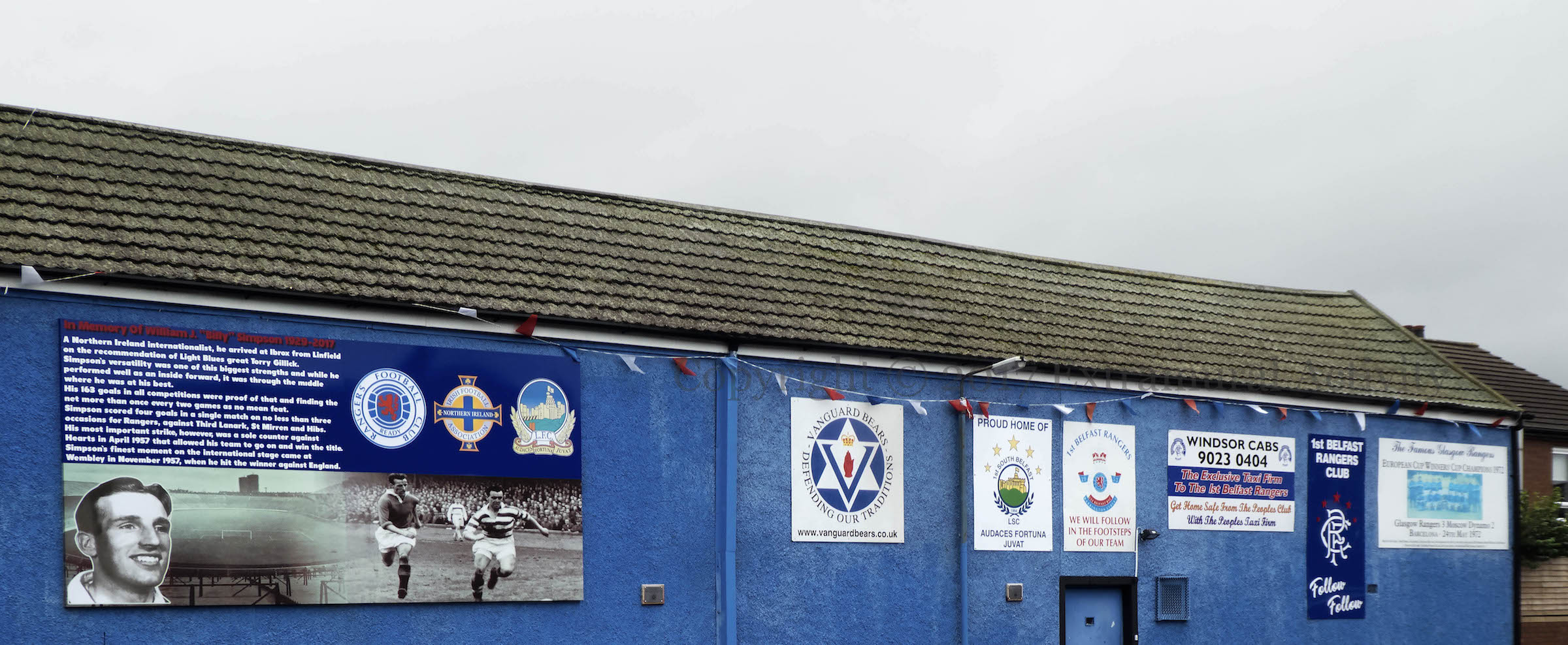
British Army soldiers from four streets are commemorated in a plaque in Barrington Gardens. All four streets – Abingdon, Barrington, Colchester, and Dorchester – have changed their names or disappeared entirely (Dorchester) since 1914. “Erected by 1st Belfast Rangers Friends Of The Somme Society” – the supporters club is right next door.
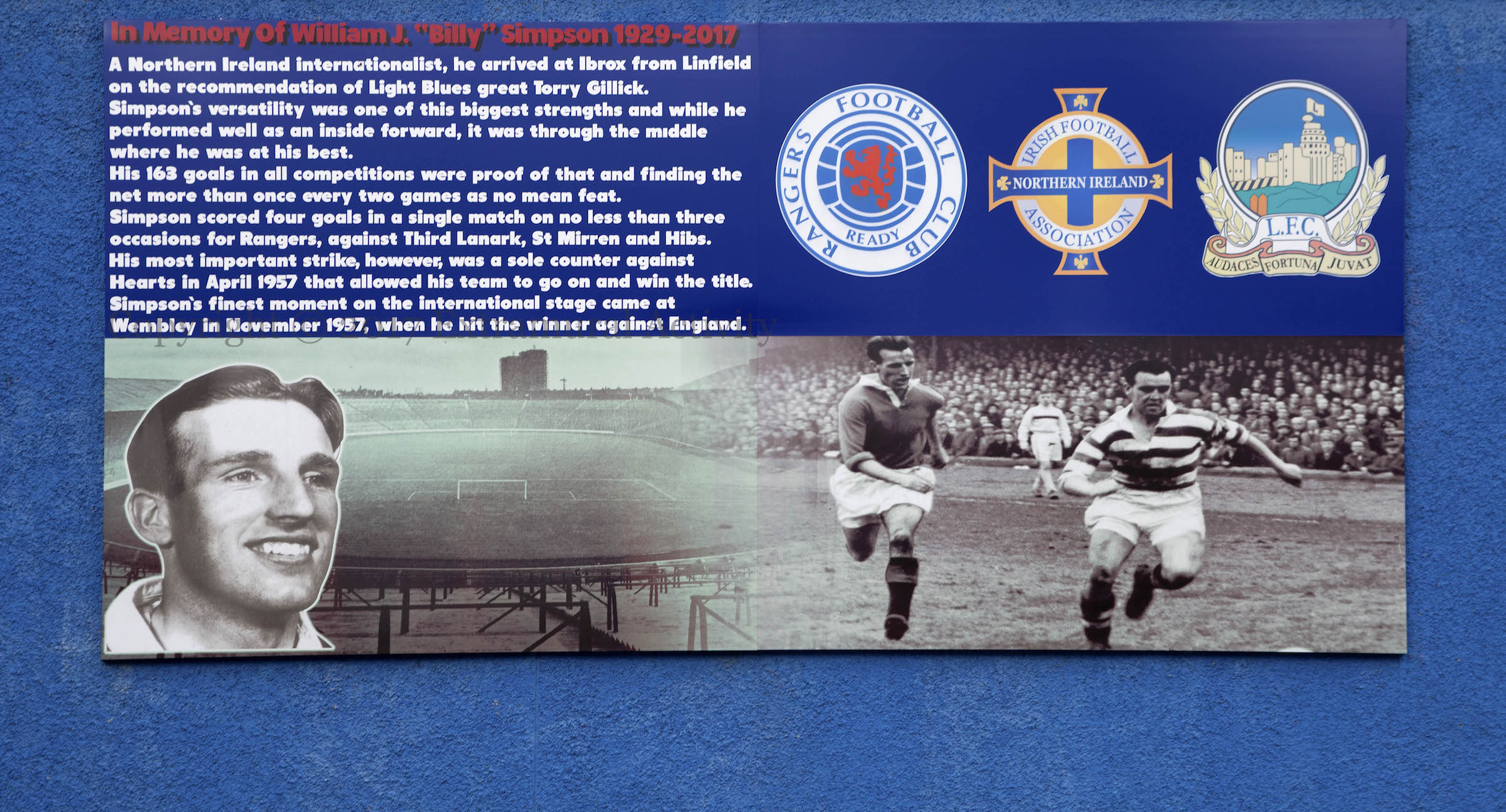
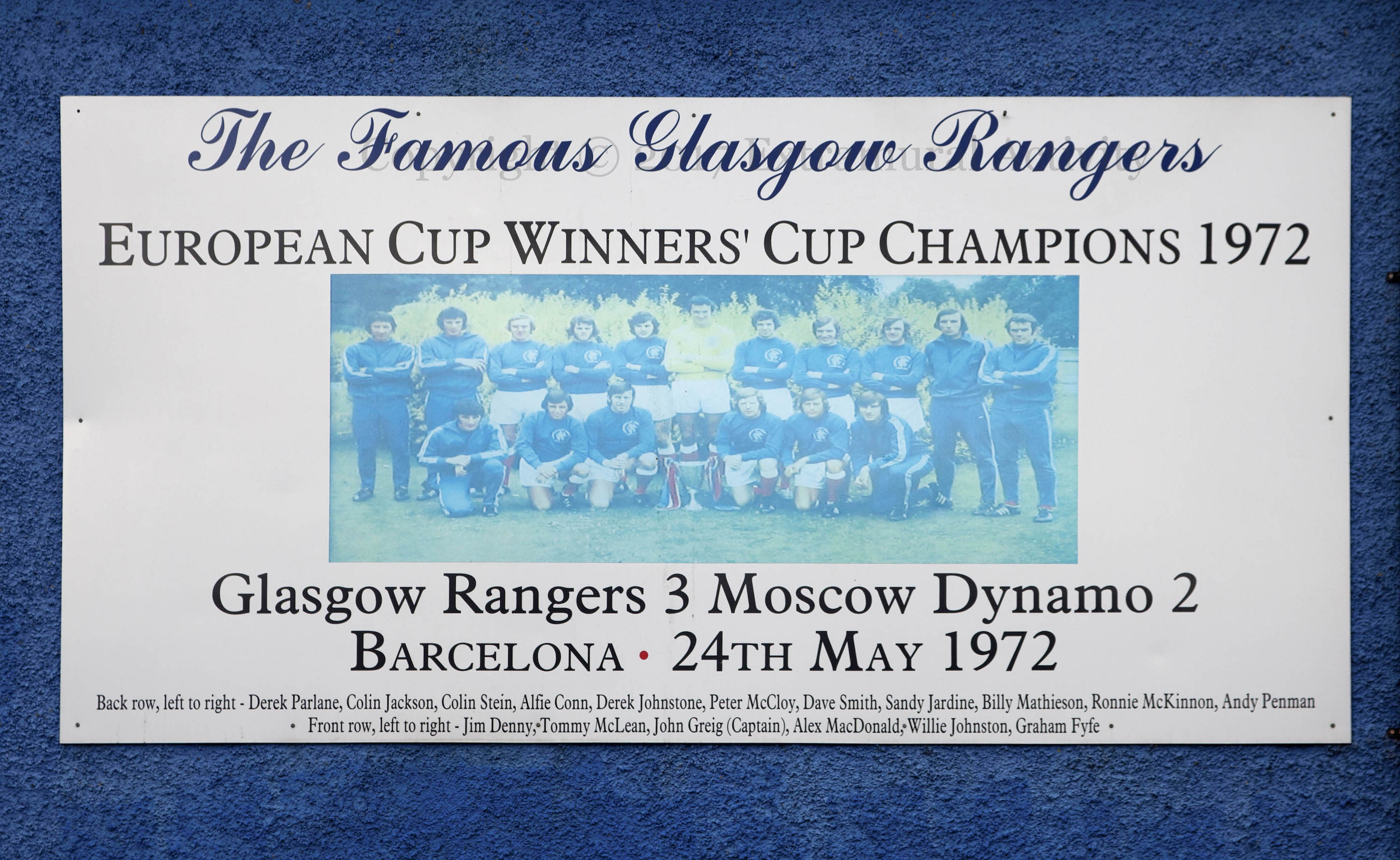
Footballer Billy Simpson moved from Linfield to Rangers in 1950 and over the course of nine years and 239 appearances scored 163 goals. He also scored the winner for Northern Ireland against England in 1957. Simpson died in January of this year (2017) and is remembered by this board outside the Supporters’ Club in Barrington Street, south Belfast. Other boards include a celebration of Rangers’ European Cup Winners’ Cup win in 1972 over Dynamo Moscow in Camp Nou, Barcelona.
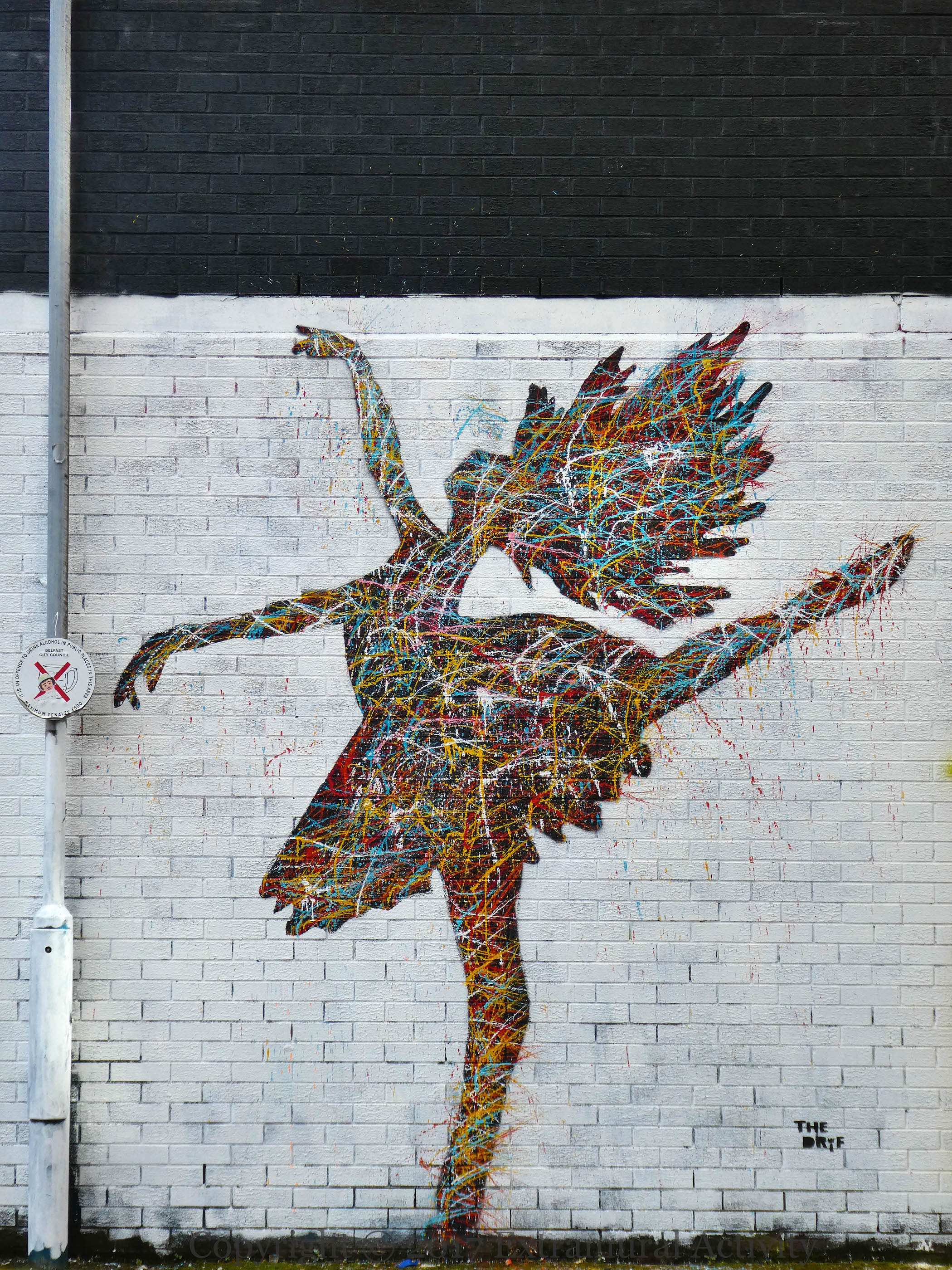
We begin our 2017 Culture Night Belfast/Hit The North coverage with New York street artist and co-founder of the LISA (Little Italy Street Art) project The DRiF (aka Rey Rosa) (Fb | web | tumblr) who came to town to paint a Belfast version of his “Tiny Dancer“.
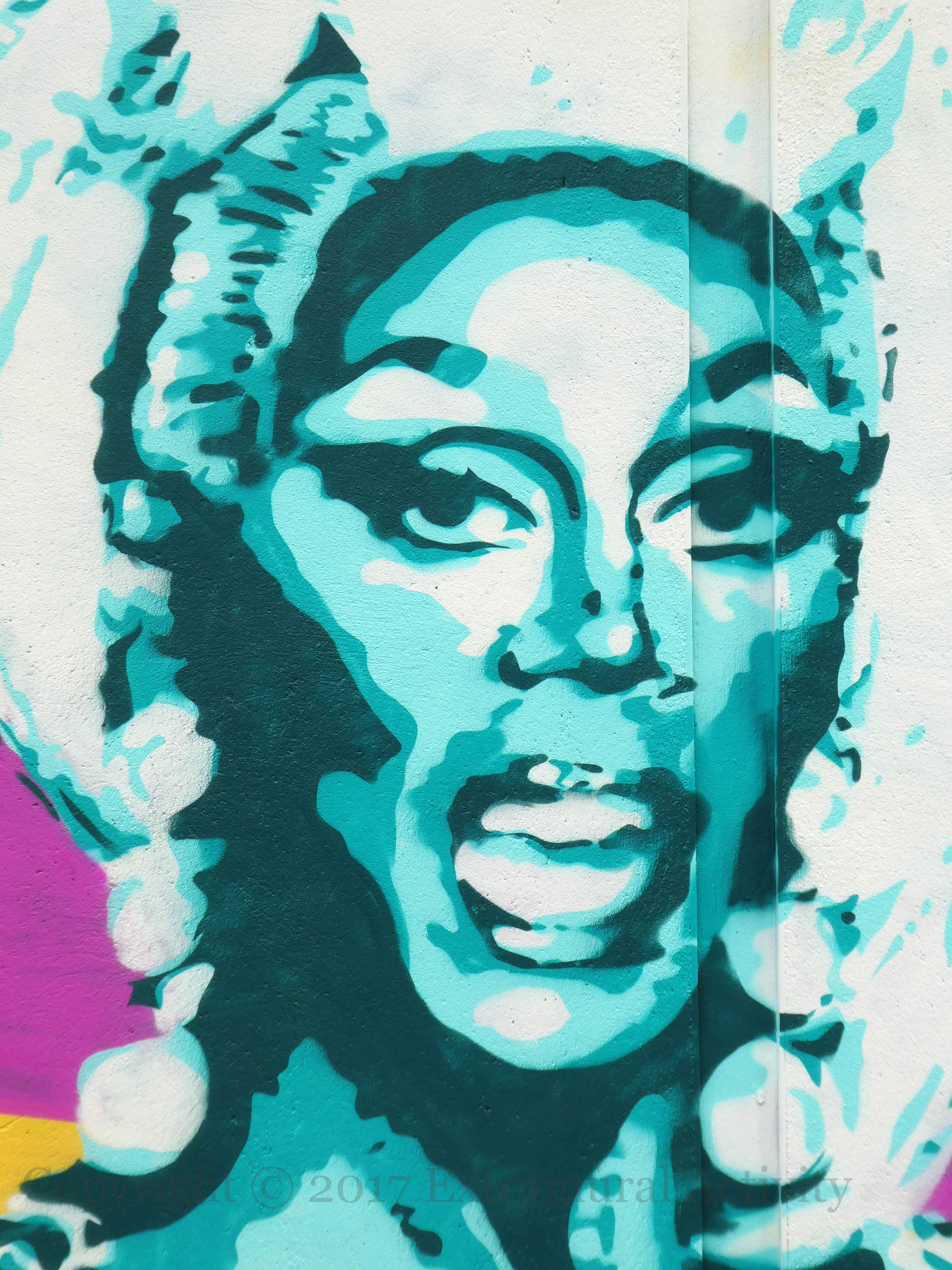
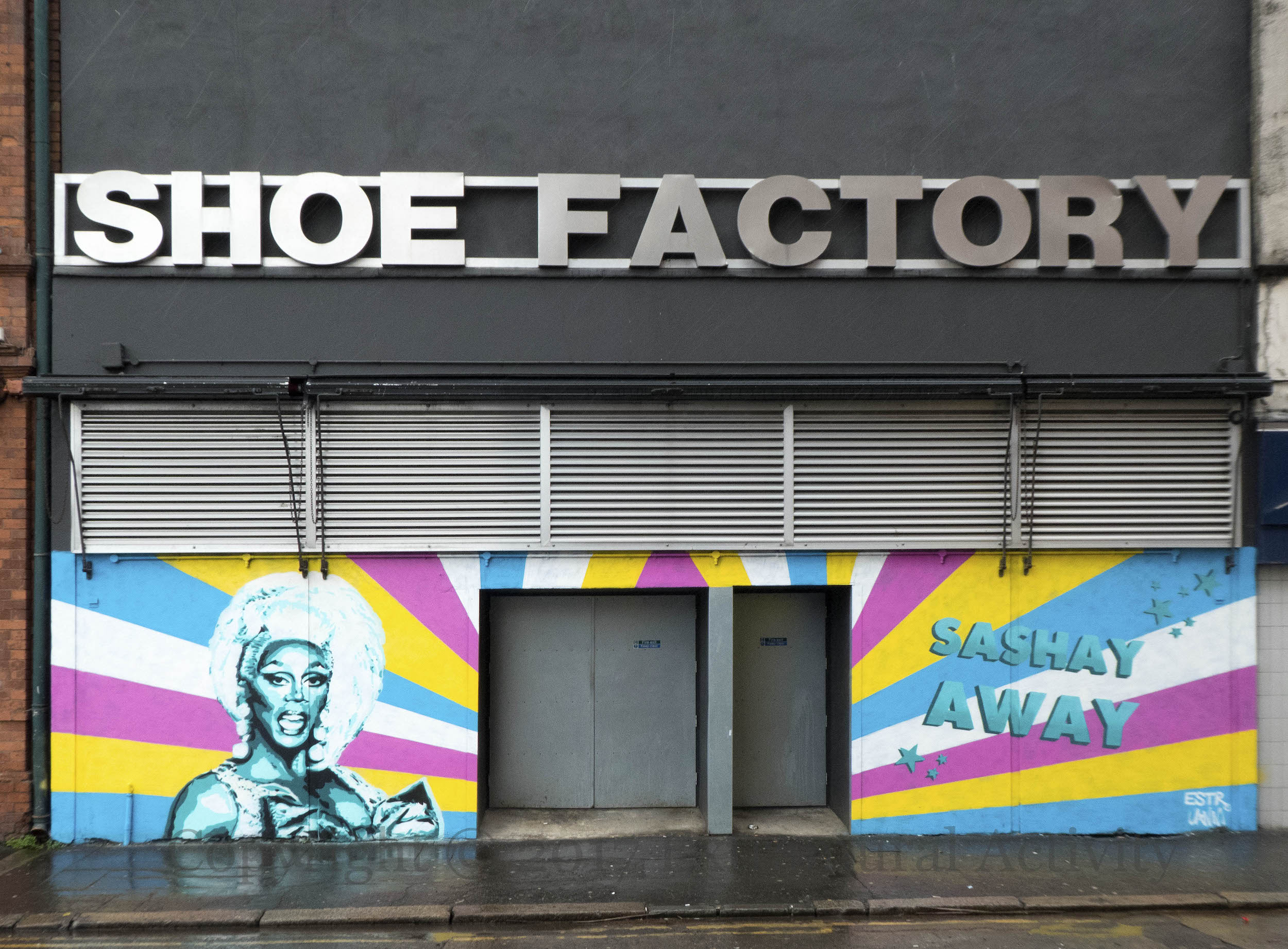
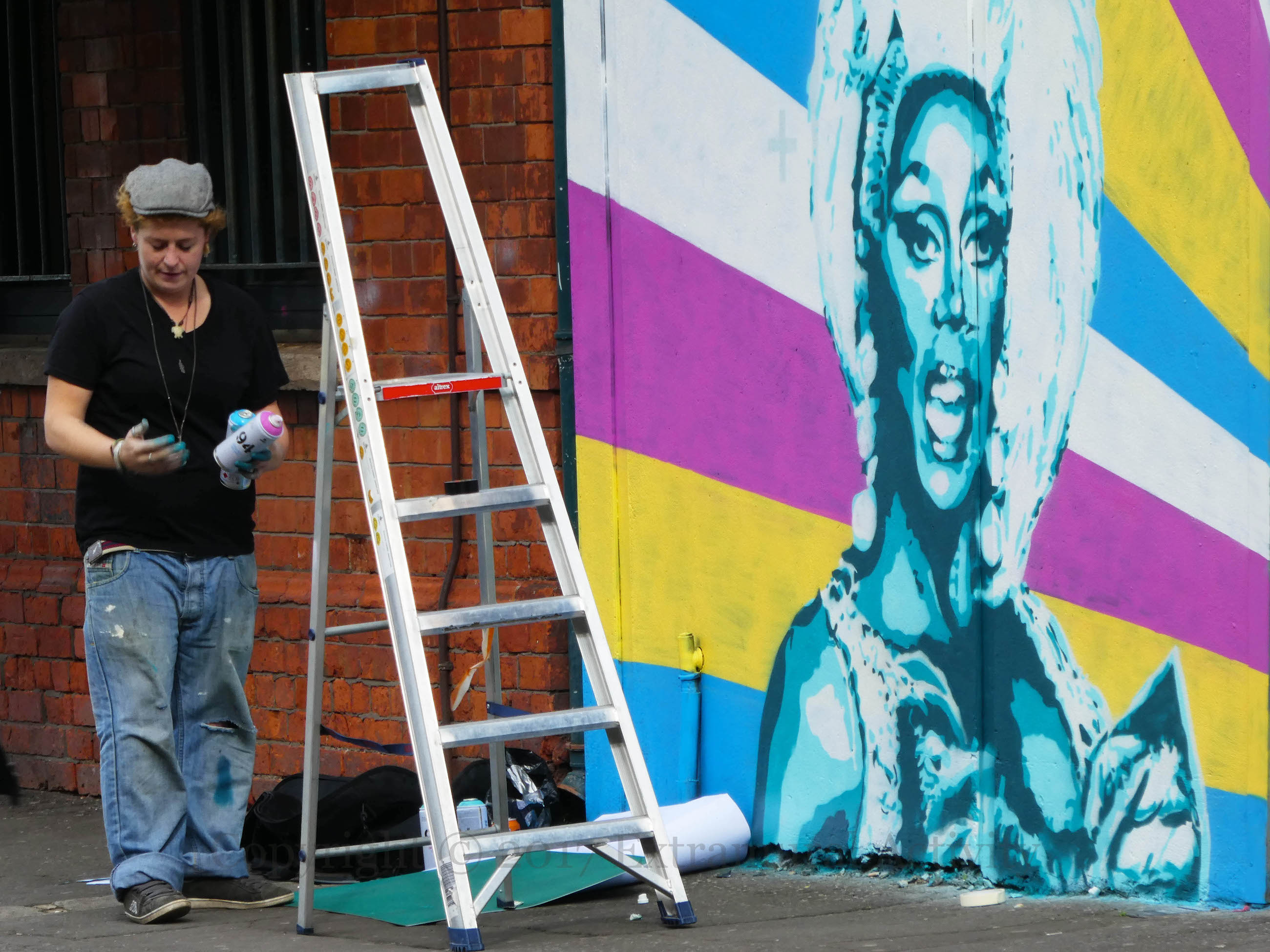
ESTR (Emmalene Blake web | Inst) and Lanni Powder (Inst) painted this colourful RuPaul mural for Culture Night Belfast/Hit The North. Here is a time-lapse video of their work.
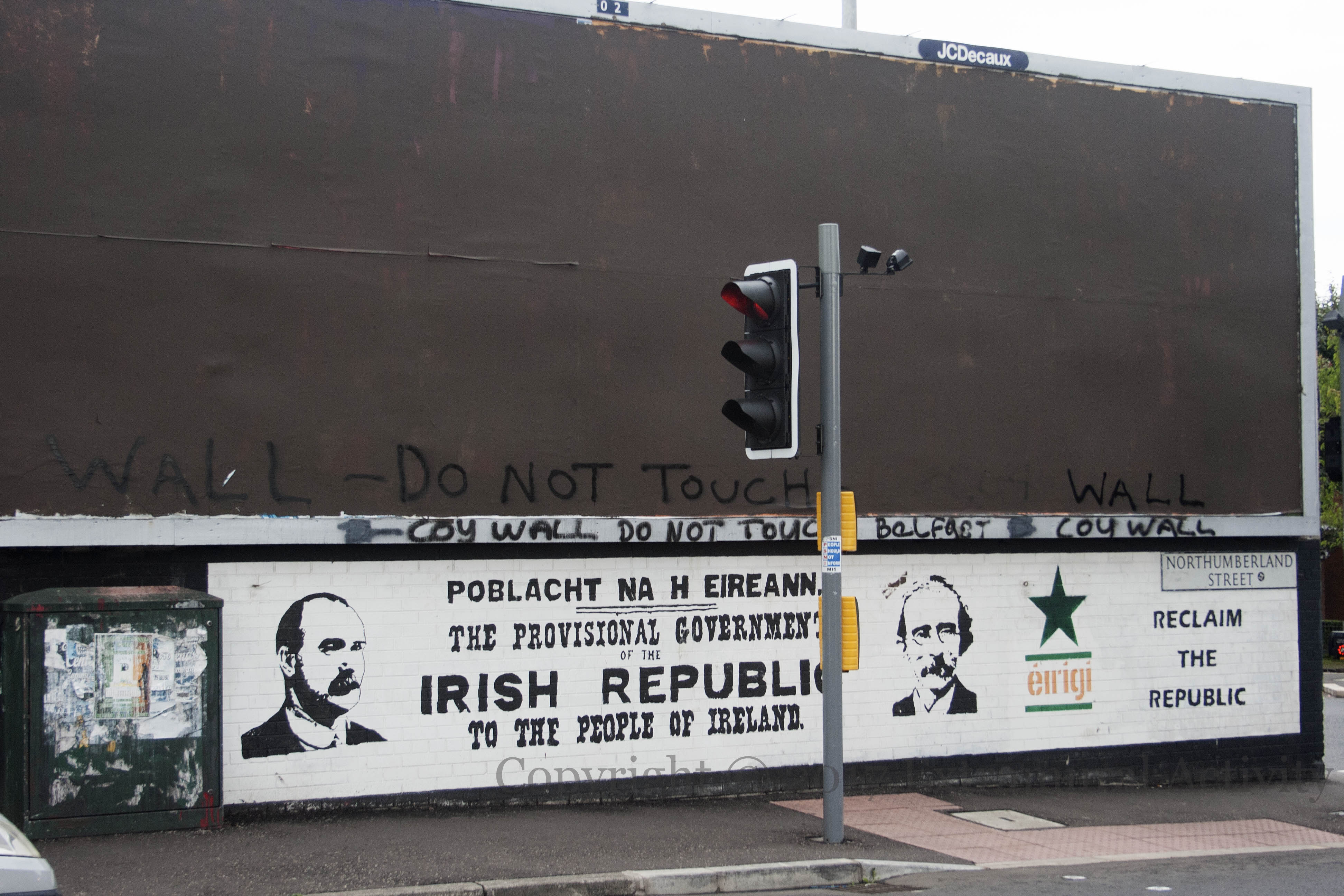
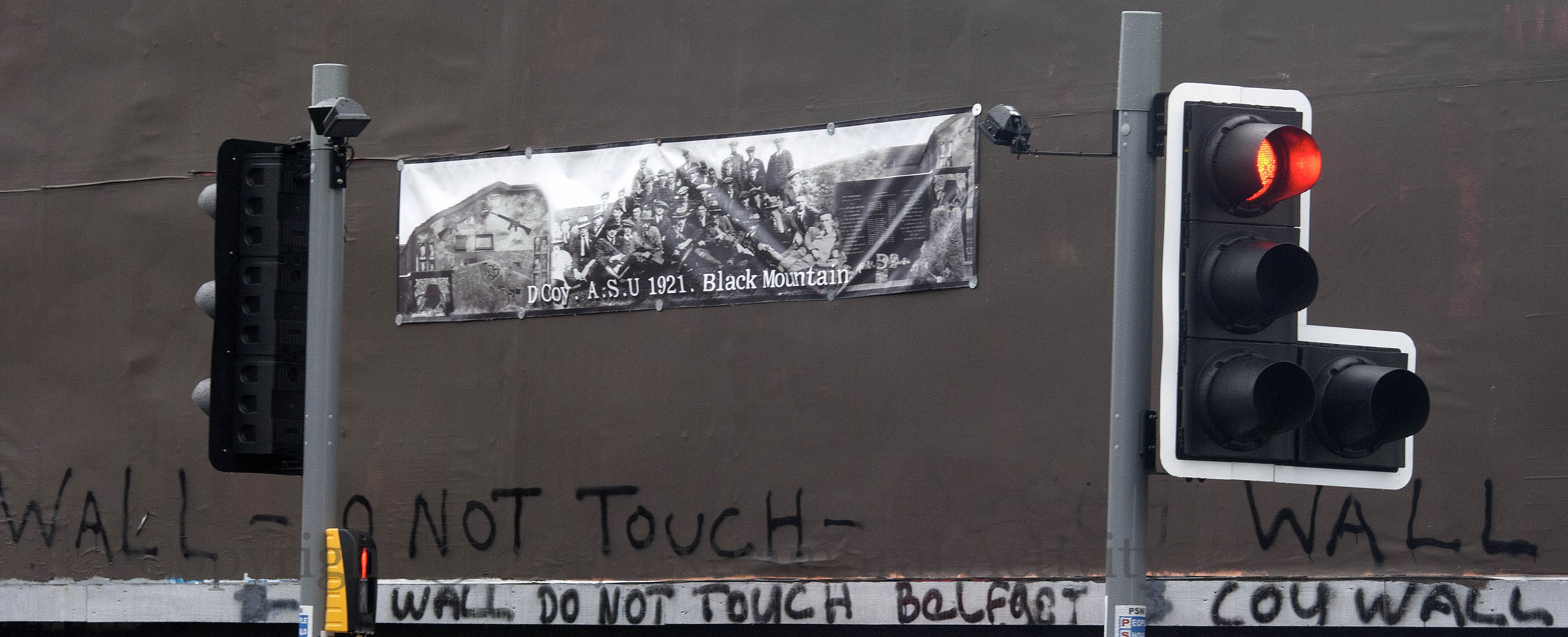
Towards the end of August the advertising hoarding at the corner of Divis and Northumberland Streets was covered with brown paint and a warning scrawled along the bottom rail: “D-Coy wall – Do not touch – Belfast D Coy wall” (though the two “D”s were painted over). (See the second image.)
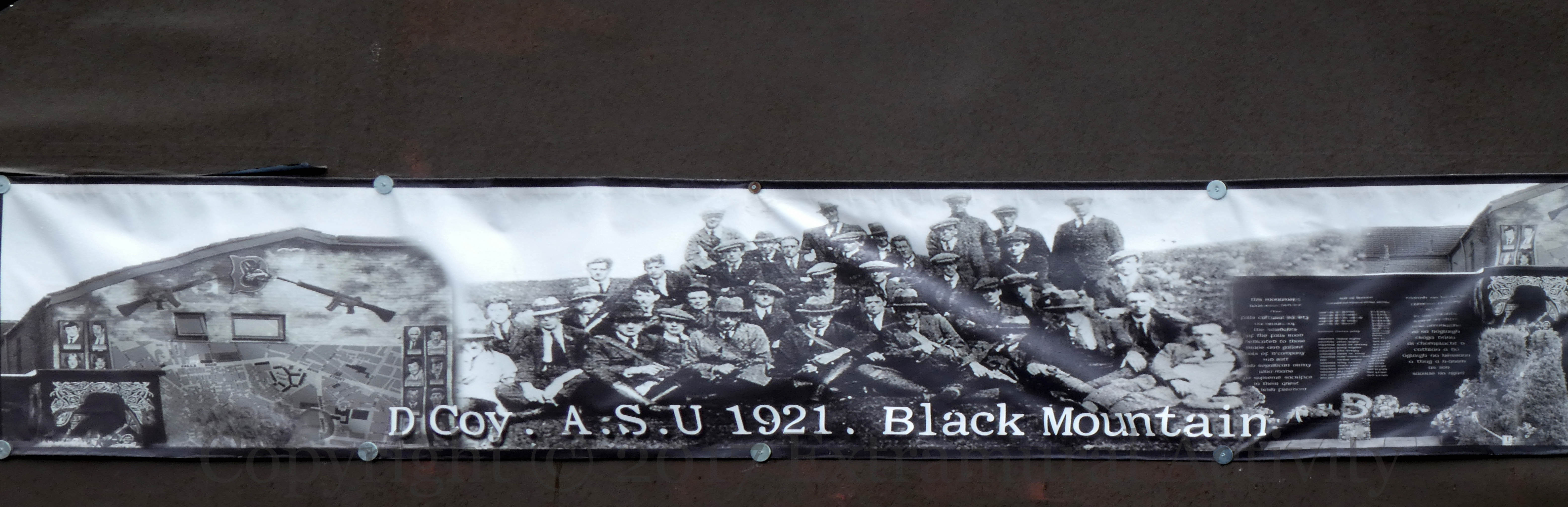
A few weeks later, the banner above was added, showing the men of the northern IRA’s D Coy “active service unit” (“ASU”), between images of the (Troubles-era) D Coy mural and memorial garden (PMC | History Carved In Stone). A direct line between the IRA of and the PIRA unit is possible – some of the Northern Division went with Joe McKelvey, leader of the 3rd Division, to Dublin to support the anti-Treaty forces (WP) though most of the northern IRA accepted the assurance that the six counties would soon join the South. (For some guesstimates at the number of northerners who served pro-Treaty, see treasonfelony.)
But perhaps only an ideological heritage is intended, that the Black Mountain unit of 1921, and the D Coy of the Troubles, and the contemporary D Coy, alike aim at (Northern) Irish independence.
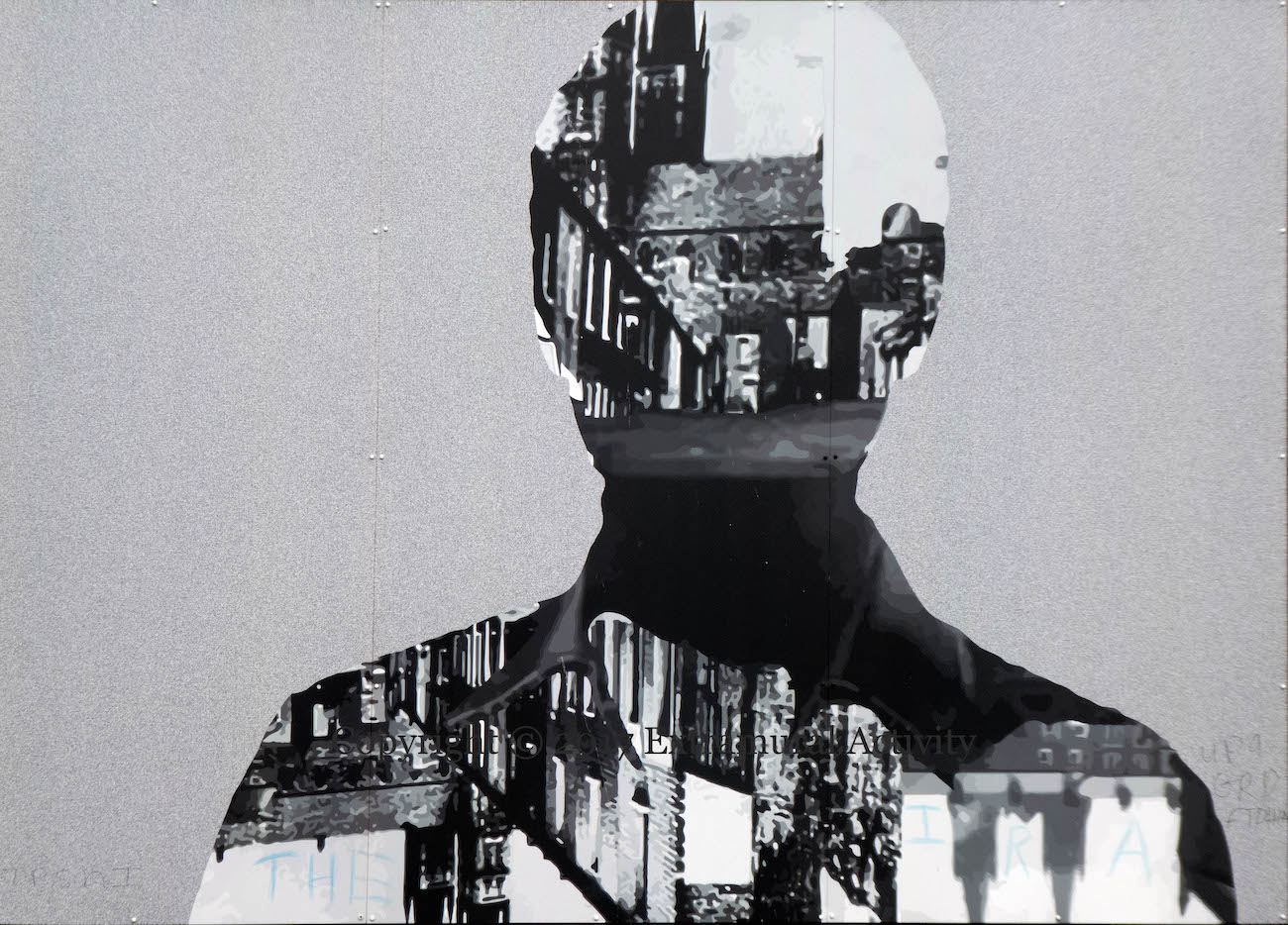
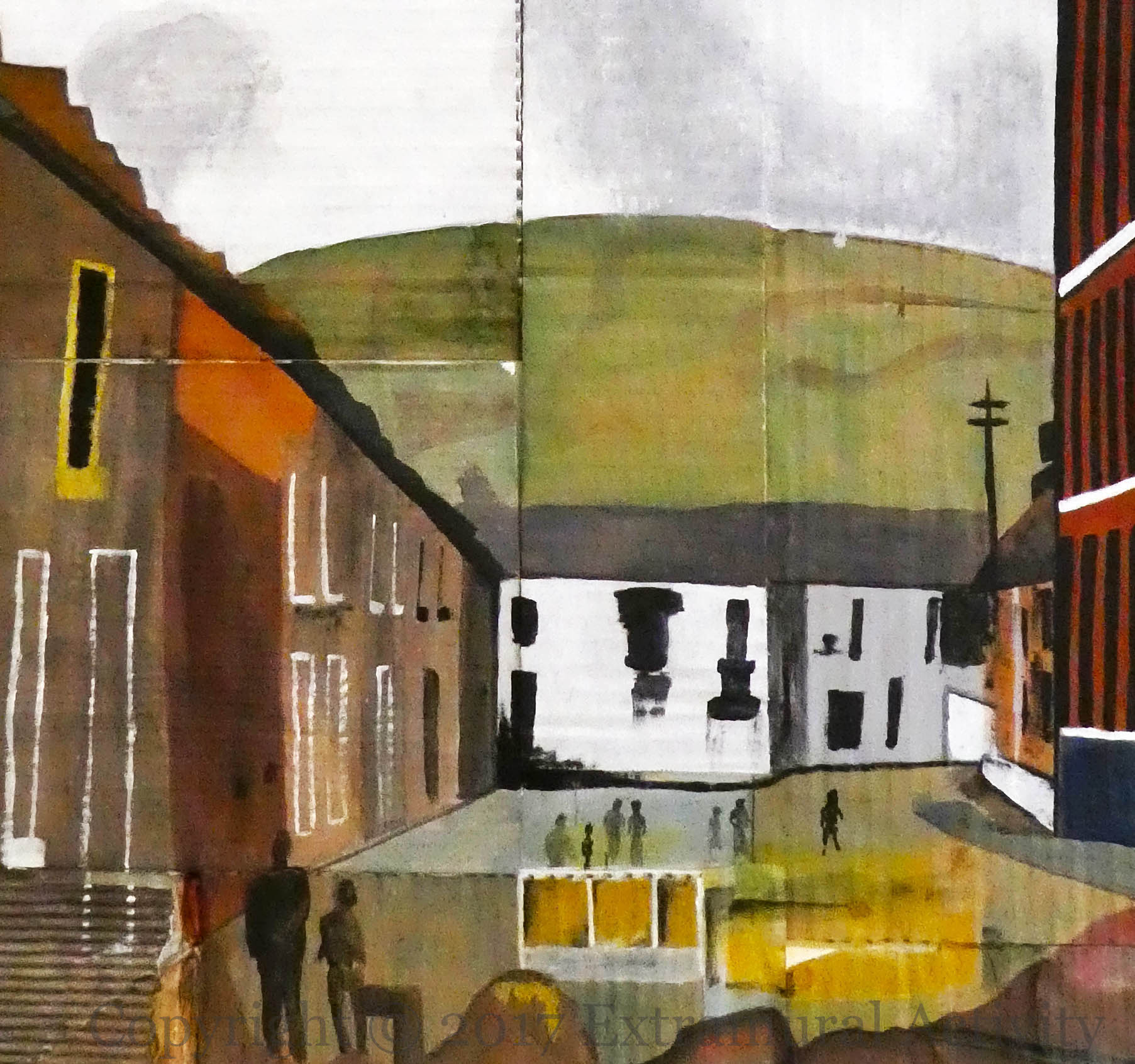
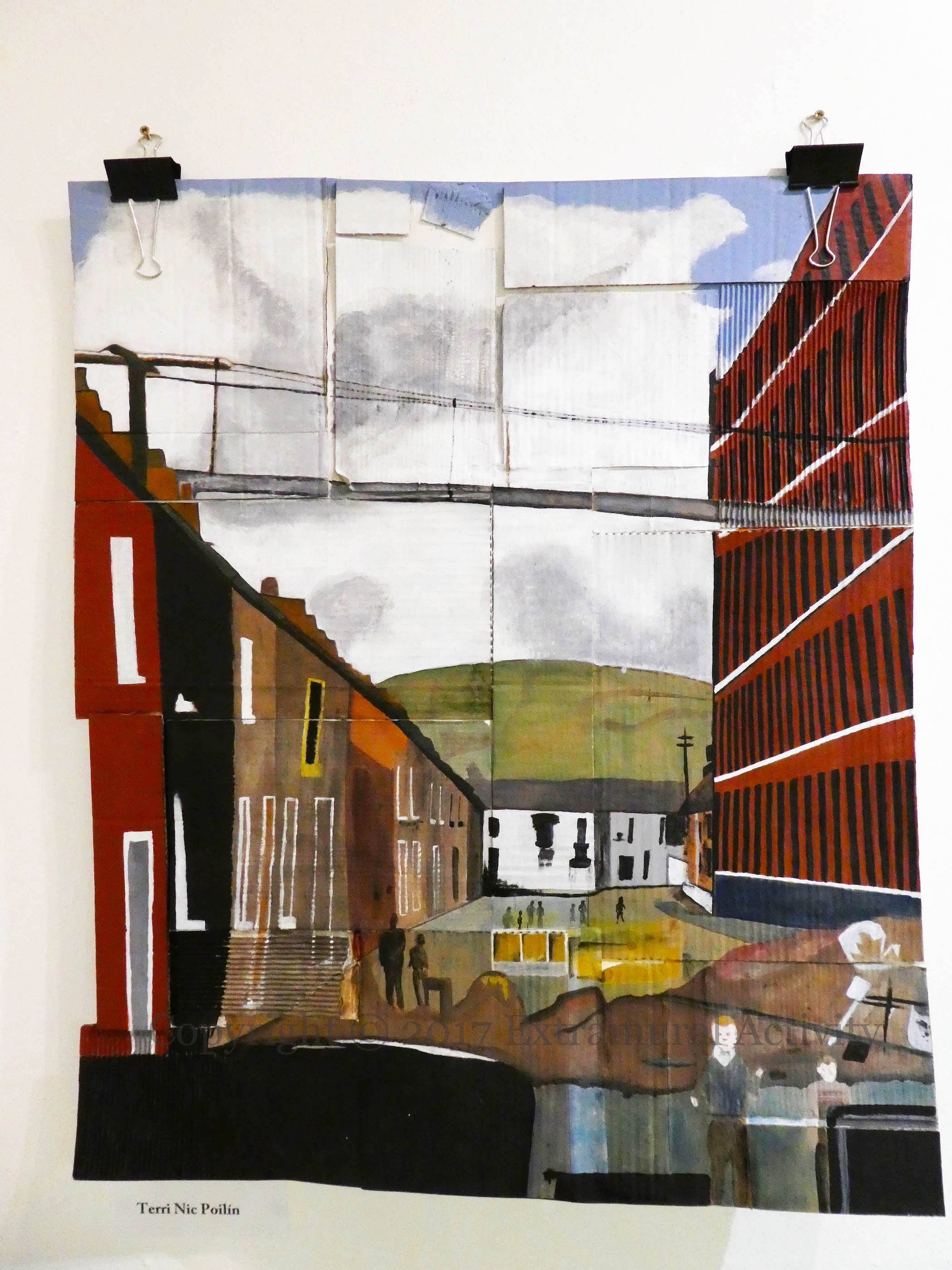
Year 10 GCSE student Terri Nıc Poılín imagines what the view would be like if the “peace wall” were removed, using cardboard as a canvas. The piece was part of the Coláıste Feirste art show in An Chultúrlann.