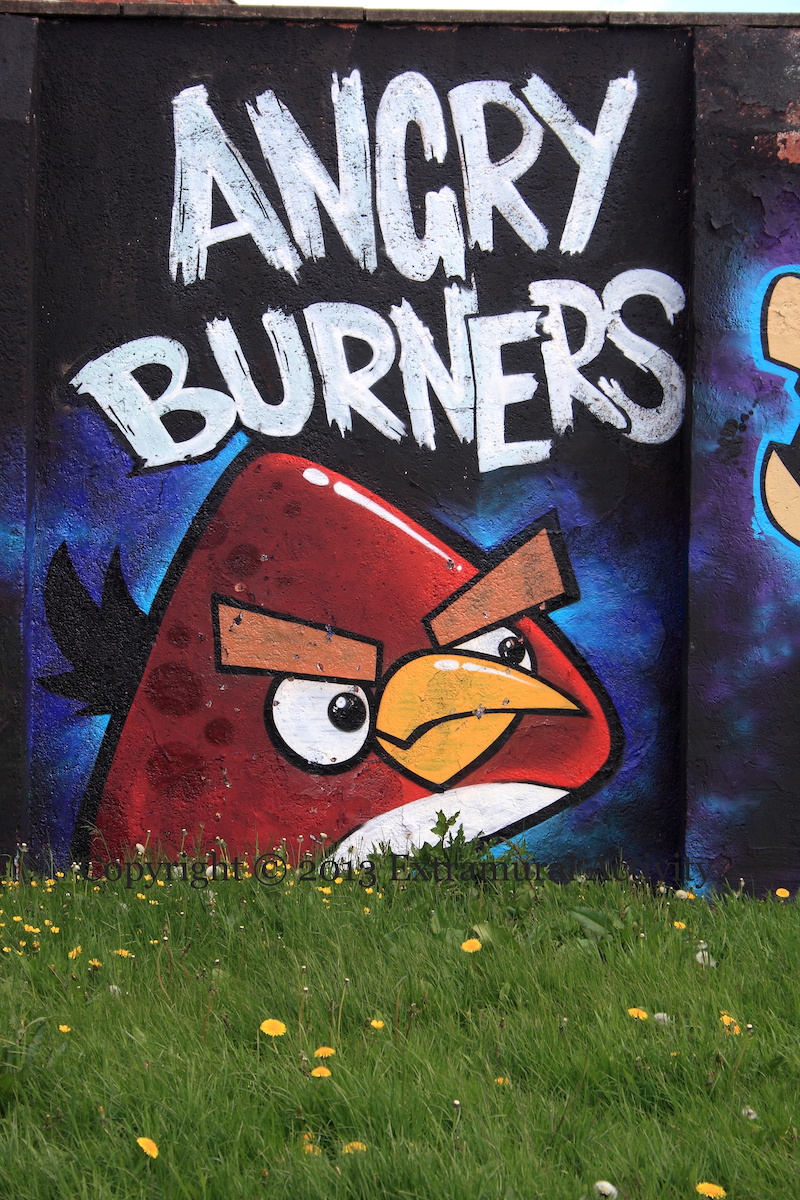
The Angry Birds puzzle game (on mobile devices and on Facebook) is a smash hit for Finnish game developers Rovio (WP) and is now a part of popular culture, including this take-off on the Comber Walkway – angry burners.
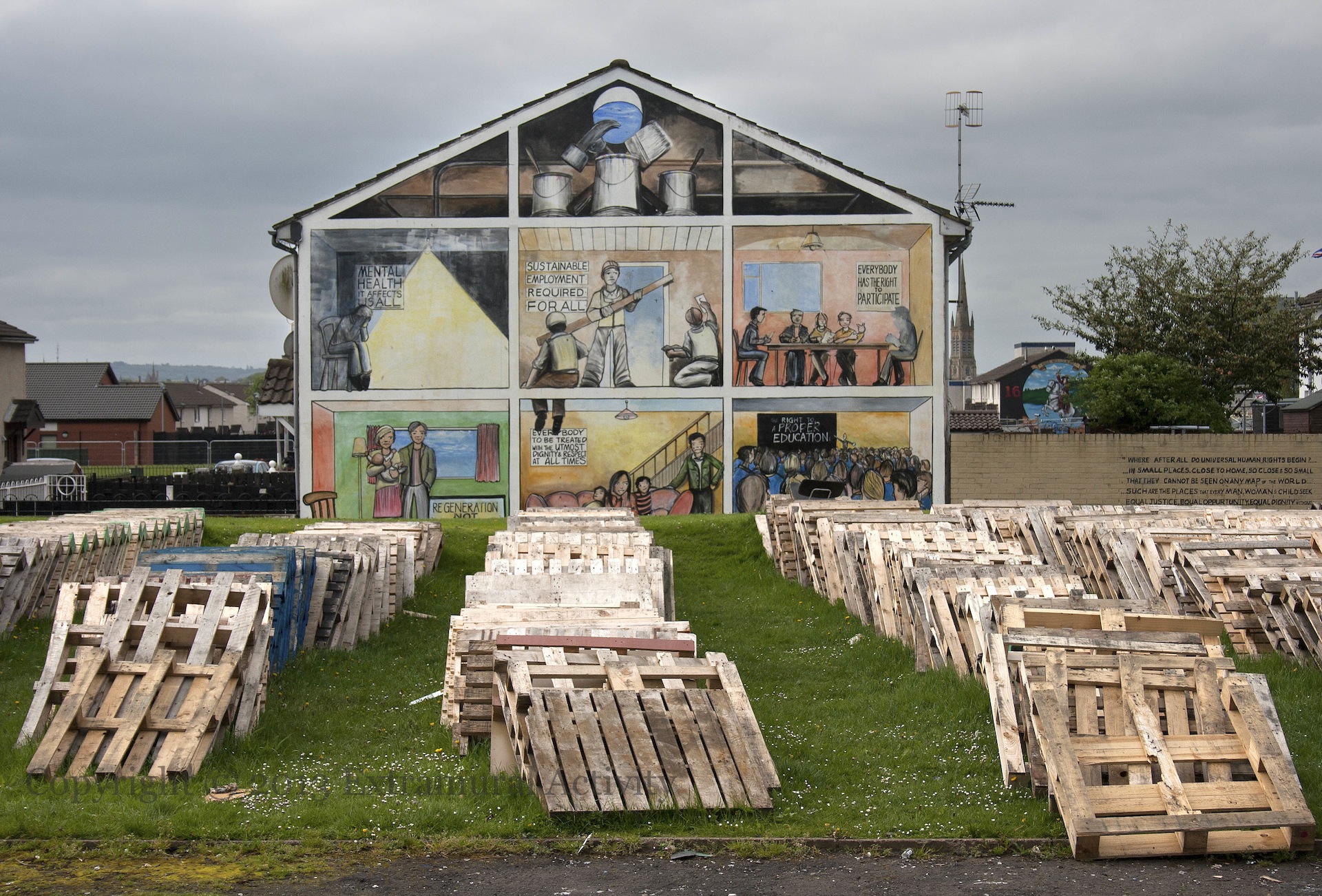
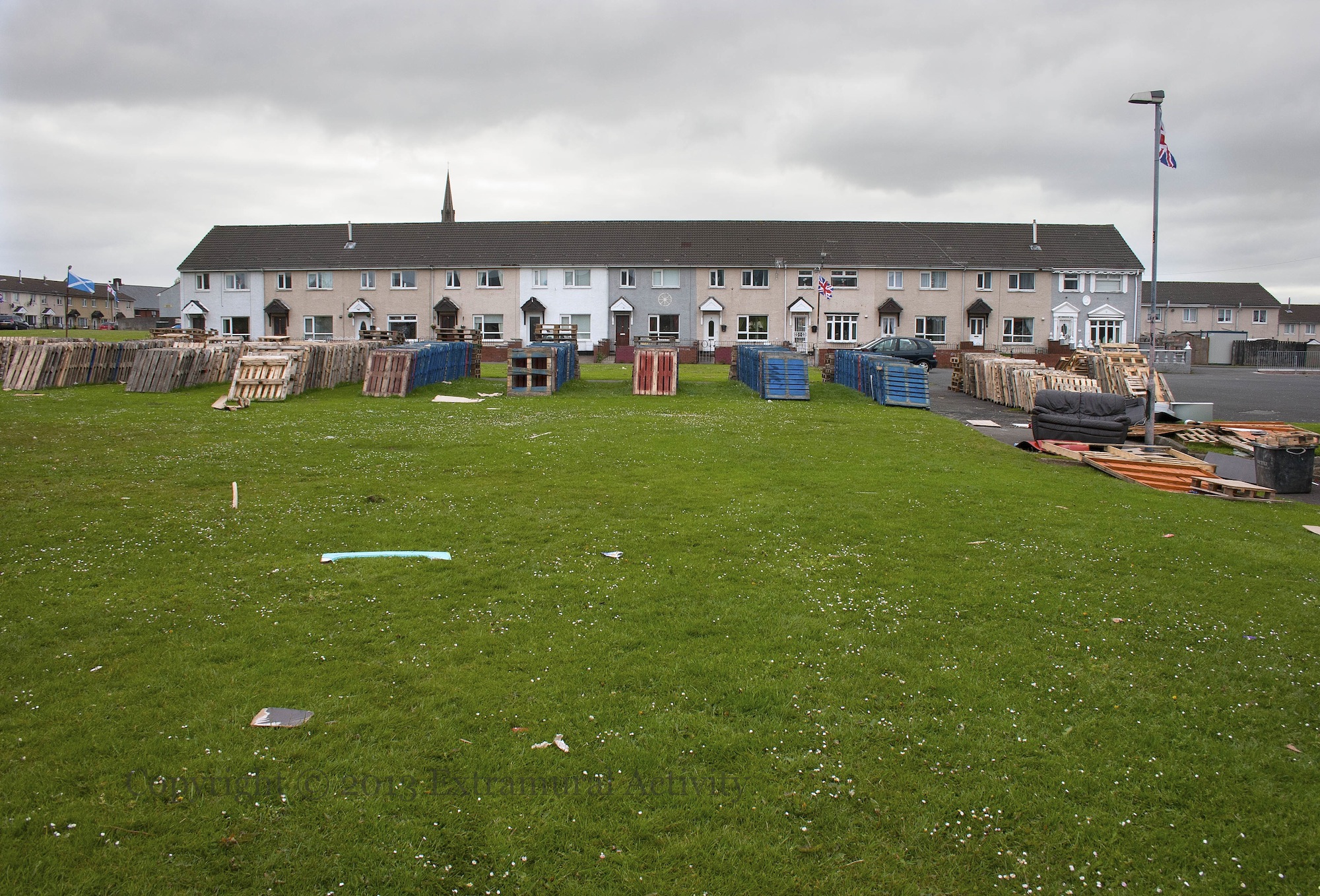
Pallets lined up in preparation for bonfires on the Twelfth (of July) in front of the human rights mural on the green behind Hopewell Crescent. A mural of the event being celebrated – King Billy (William Of Orange) crossing the Boyne river in 1690 – can be seen in the distance on the right. The words on the wall to the right read: “Where after all do universal human rights begin? … In small places close to home, so close & so small that they cannot be seen on any map of the world … such are the places that every man, woman & child seek equal justice, equal opportunity, equal dignity.”
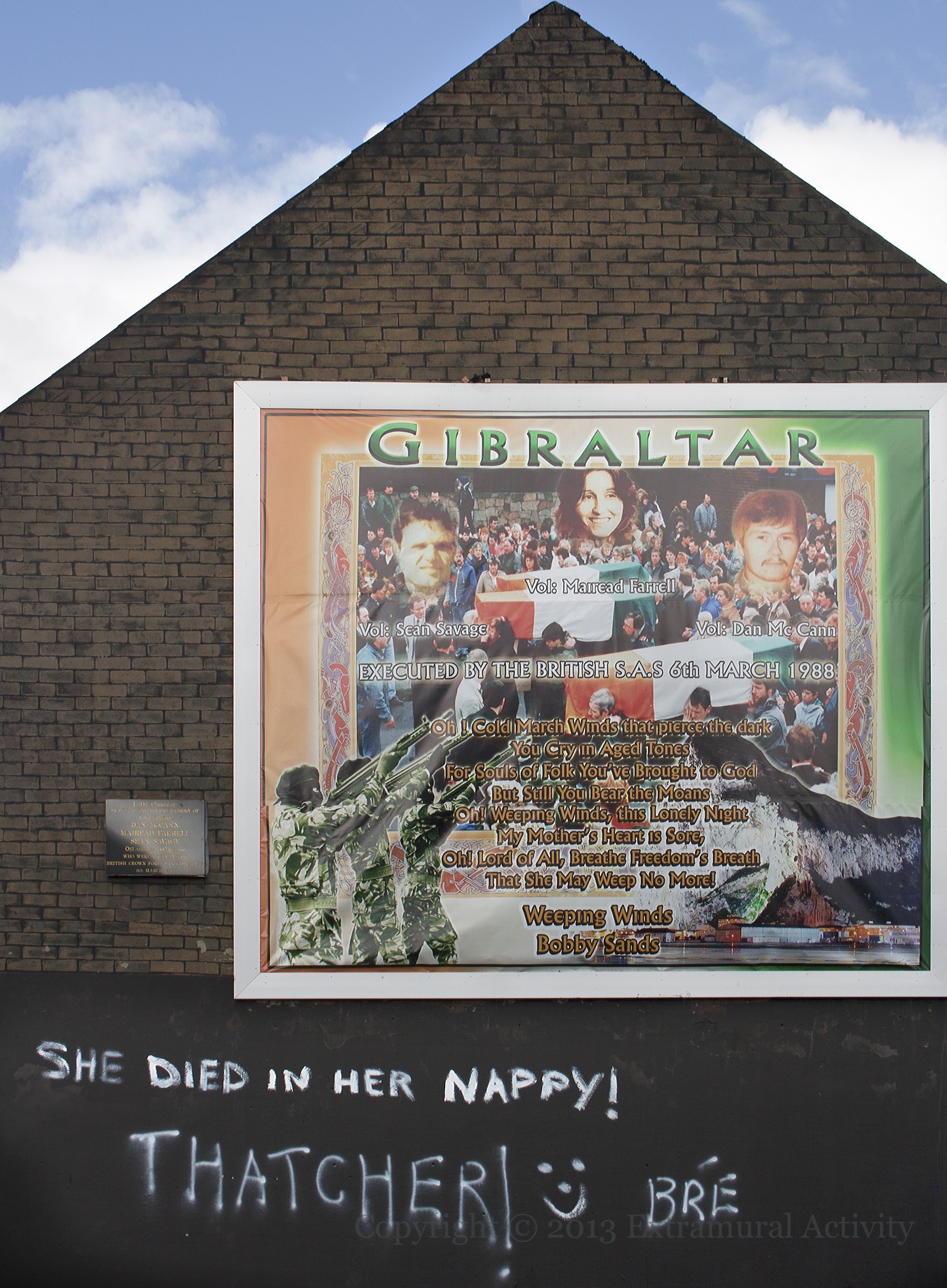
This graffiti at the junction of Hawthorn Street/Sráıd na Sceıthe and Cavendish Road exulting in the death of Margaret Thatcher is just below a board memorialising the three IRA members killed in Gibraltar (one of whom, Dan McCann, lived in the street). (Previously: Ding Dong | Thatcherism | The Real Criminal | Rot In Hell | Rust In Peace)
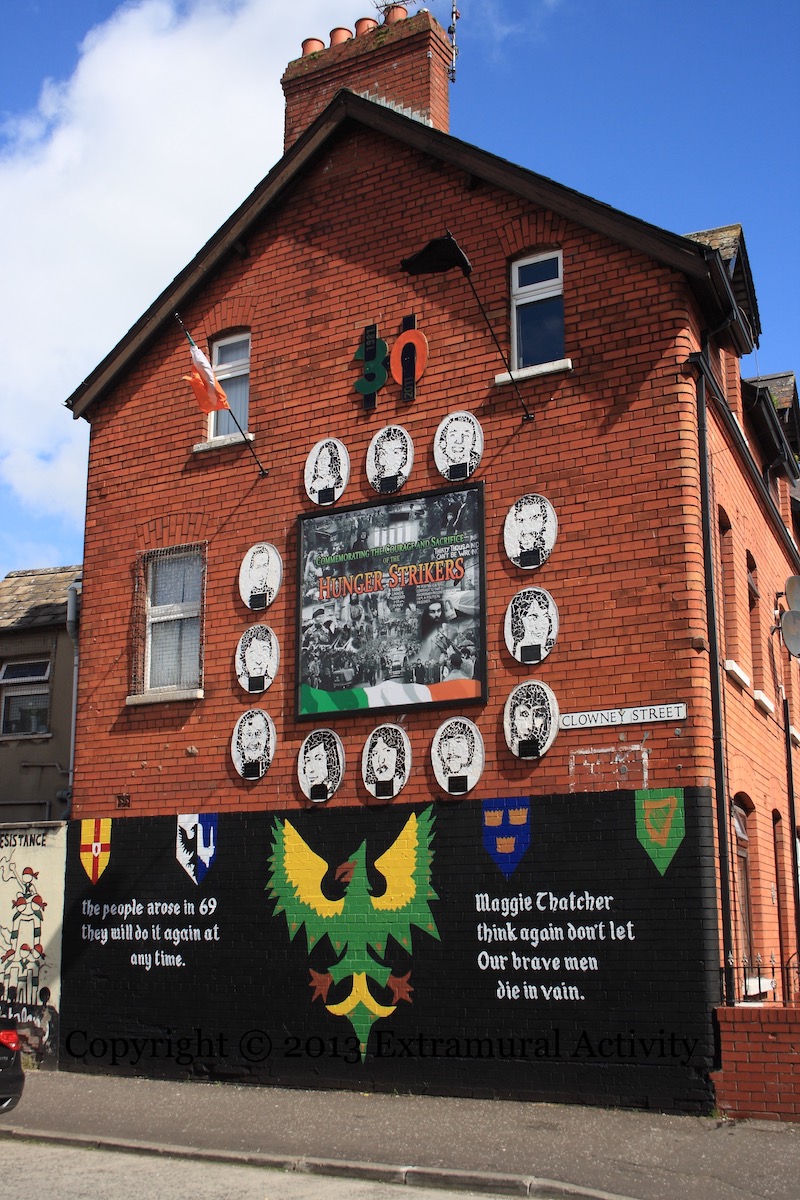
The Clowney Street phoenix, which dates back to 1981 (see The Oldest Murals), has been repainted, and above, the blanketmen painting (see 1981-2011) has been replaced with a montage of photographs from the period, including prisoners on the blanket and dirty protest, the funeral of Sands and of McDonnell, and three pieces of graffiti: “Thirty thousands can’t be wrong” (Sands’s election to Westminster), “Bobby Sands murdered 1.17 am 5th May 1981”, and “My position is in total contrast to that of an ordinary prisoner. I am a political prisoner.”
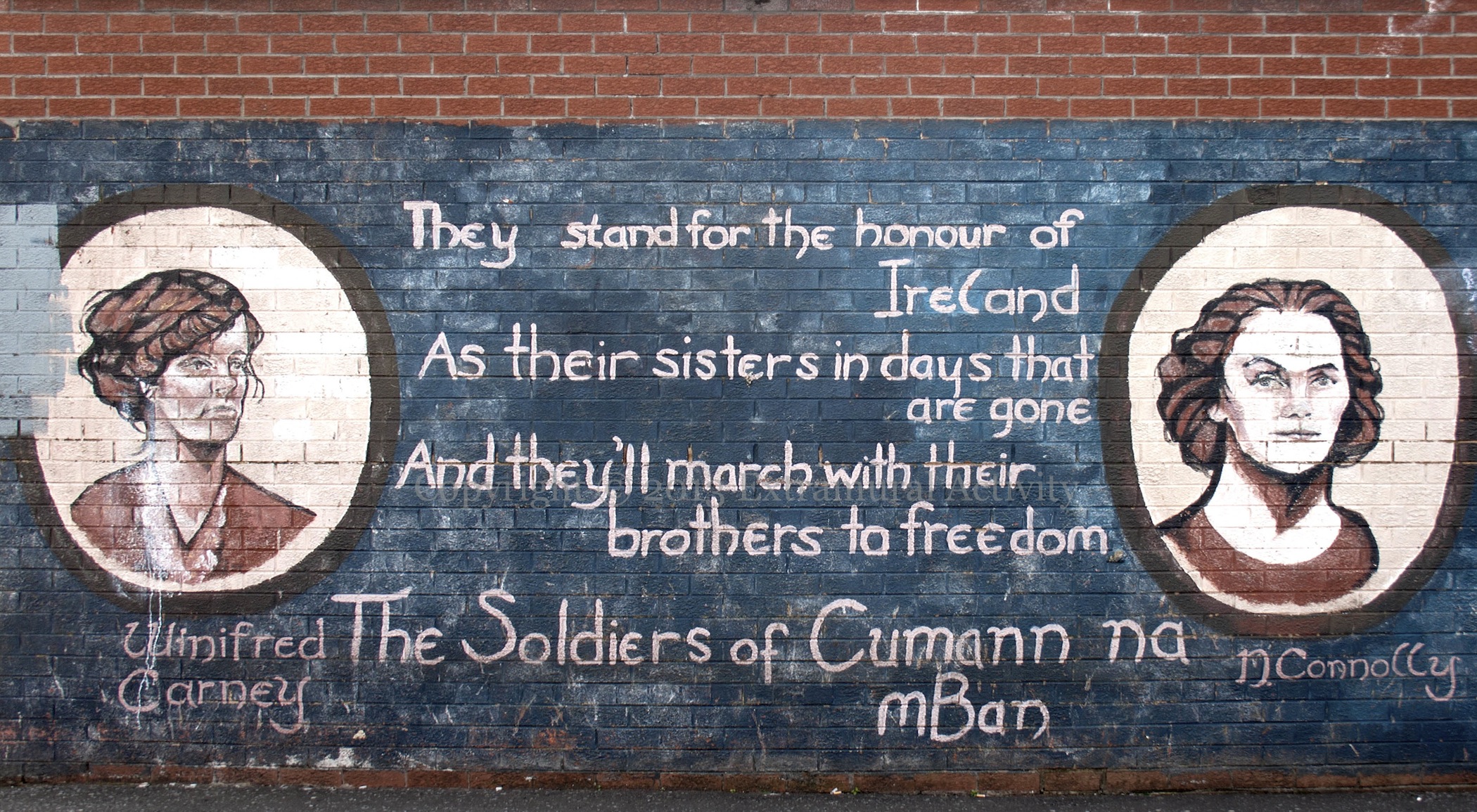
Republican mural in Sráıd Na Sceıthe/Hawthorn Street at the junction with Cavendish Street celebrating the lives of Winifred Carney and Nora Connolly. “They stand for the honour of Ireland, As their sisters in days that are gone, And they’ll march with their brothers to freedom, The soldiers of Cumann Na mBan.” Below is a 1965 video of Connolly talking about her life (1893-1981 (WP)) and her father James Connolly, who was executed after the 1916 rising. Carney, who grew up and lived in Belfast, was inside the GPO with Connolly. After the rising, she returned to Belfast, married a Protestant, and continued to advocate socialism (WP).
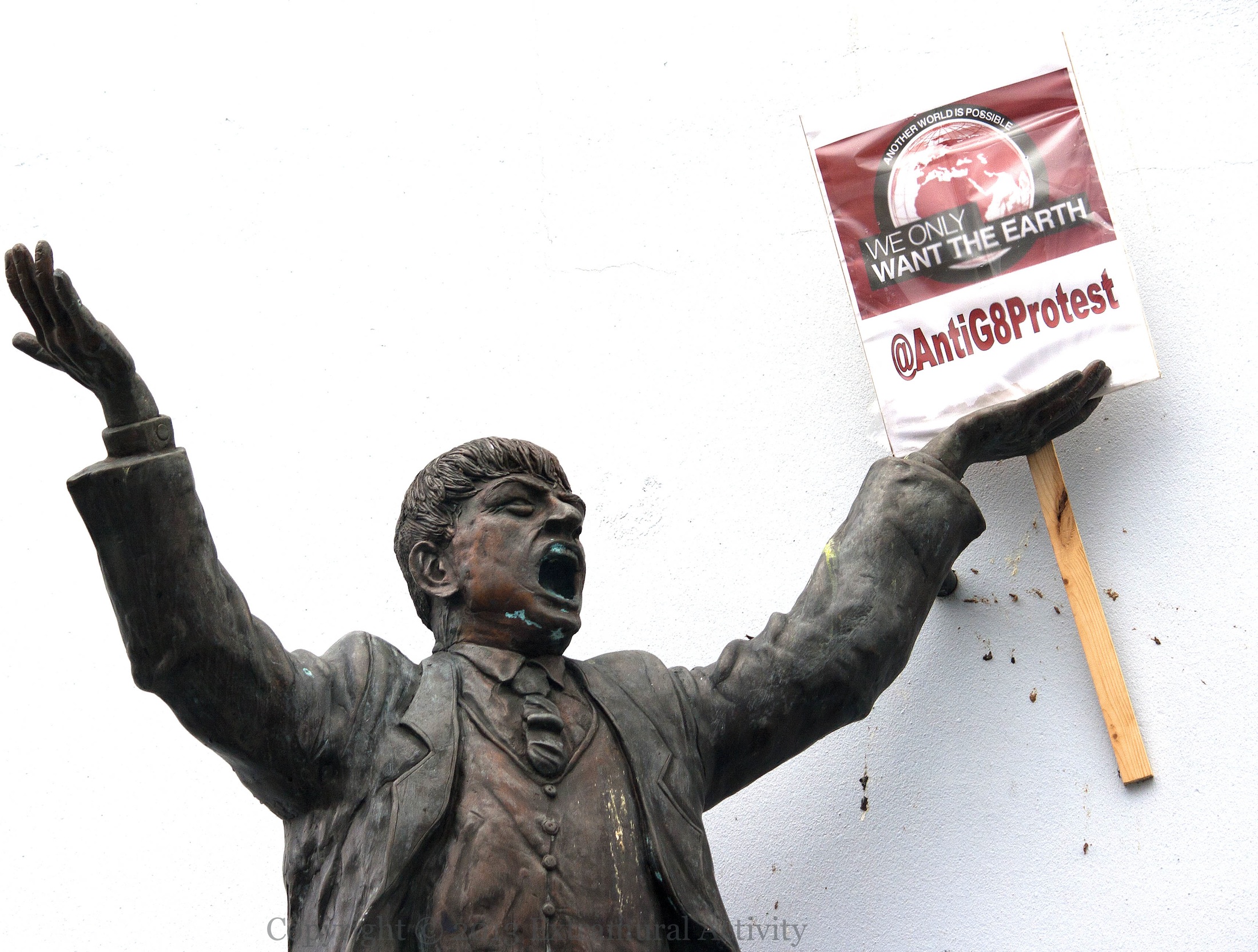
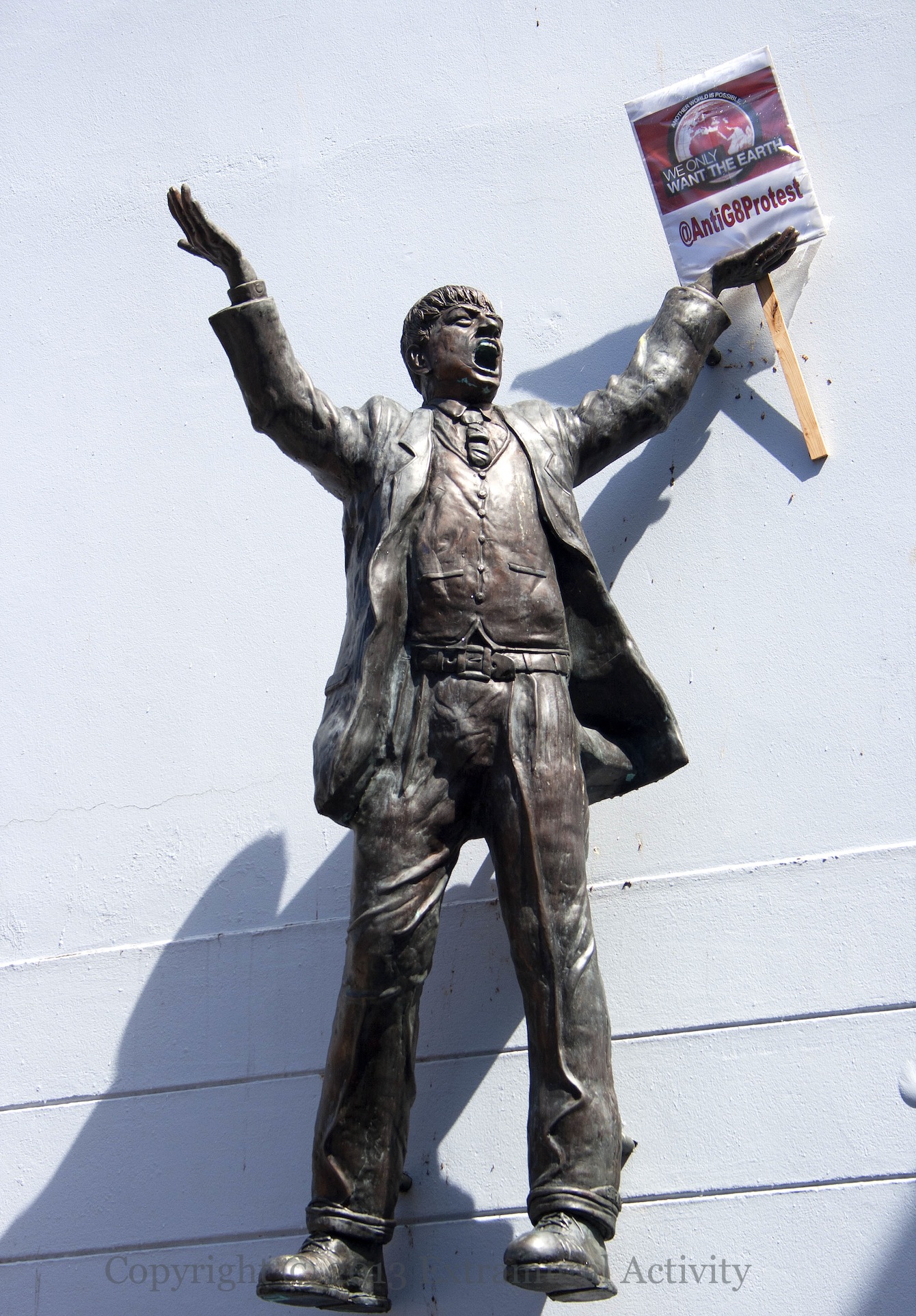
Irish labour leader James (Jim) Larkin in Donegall Street Place (the entry below the John Hewitt) adorned with an G8 protest placard. Larkin organised strikes in Belfast in 1907 (WP). According to the antig8protest twitter feed, a festival is being put on in Belfast to rival the G8 meeting in Enniskillen (see previously: G8 Cover-Up).
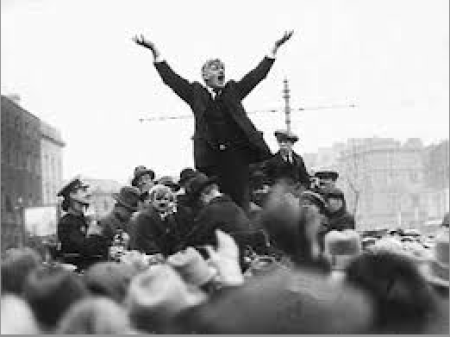
The pose is based on the (unattributed) image shown last, below.
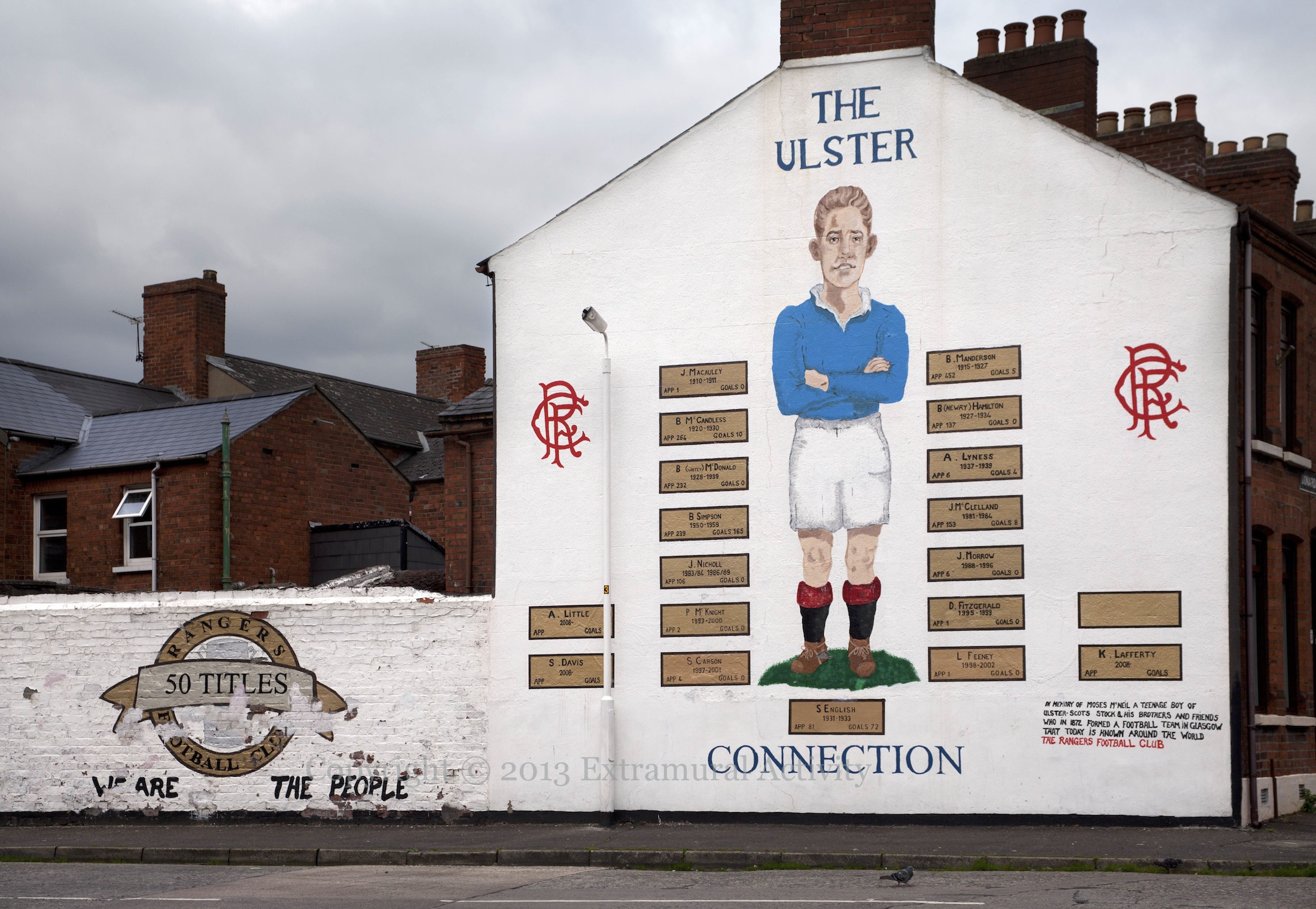
A mural in east Belfast listing local players who have played for Rangers, in Glasgow, Scotland. Featured in the centre is S. English, who scored 72 goals in 81 appearances, including 44 in the 1931-1932 season. Additional player plaques have been added since 2008, as well as the dedication in the lower right corner: “In memory of Moses McNeill, a teenage boy of Ulster-Scots stock & his brothers and friends who in 1872 formed a football team in Glasgow that today is known around the world as the Rangers Football Club “.
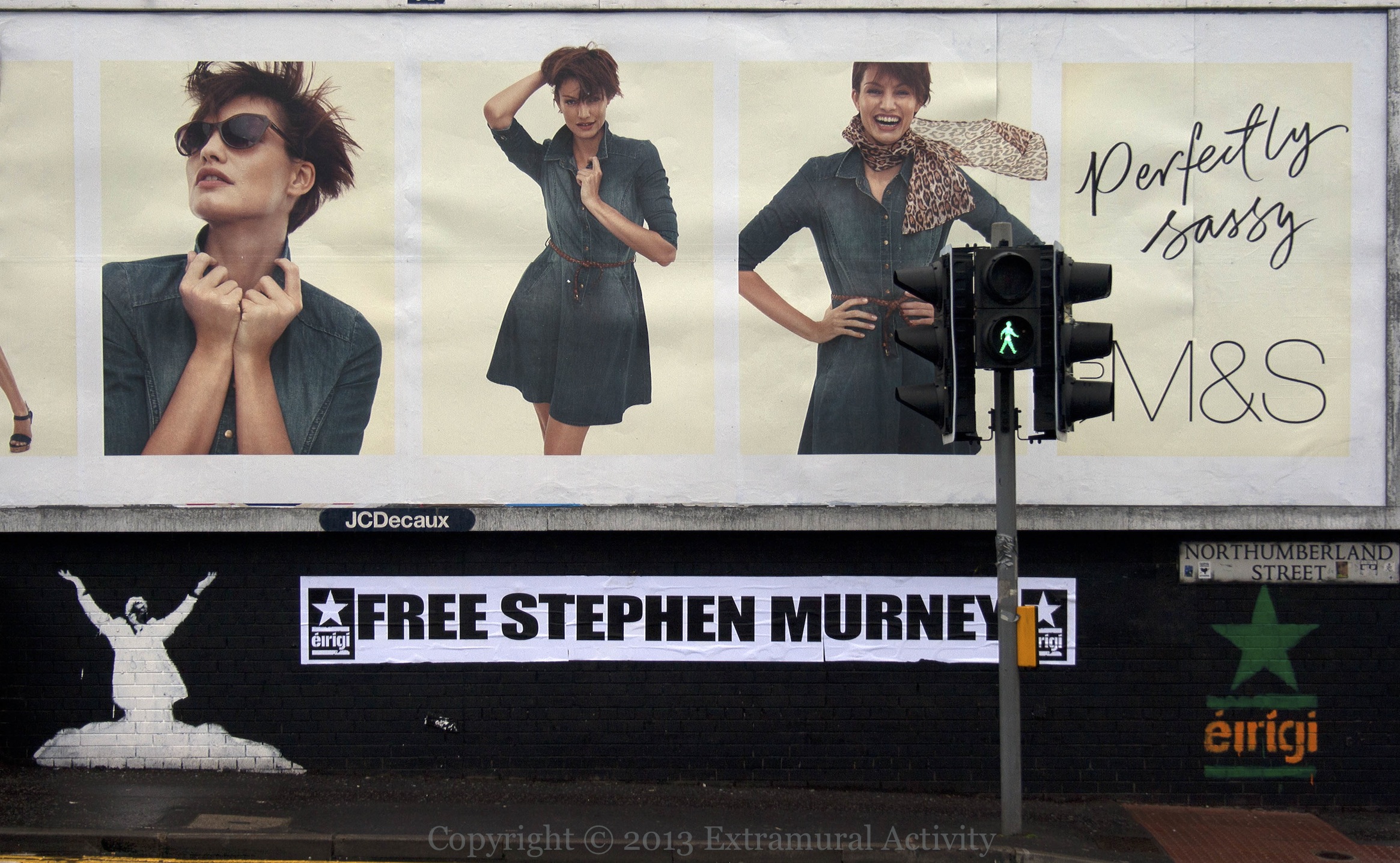
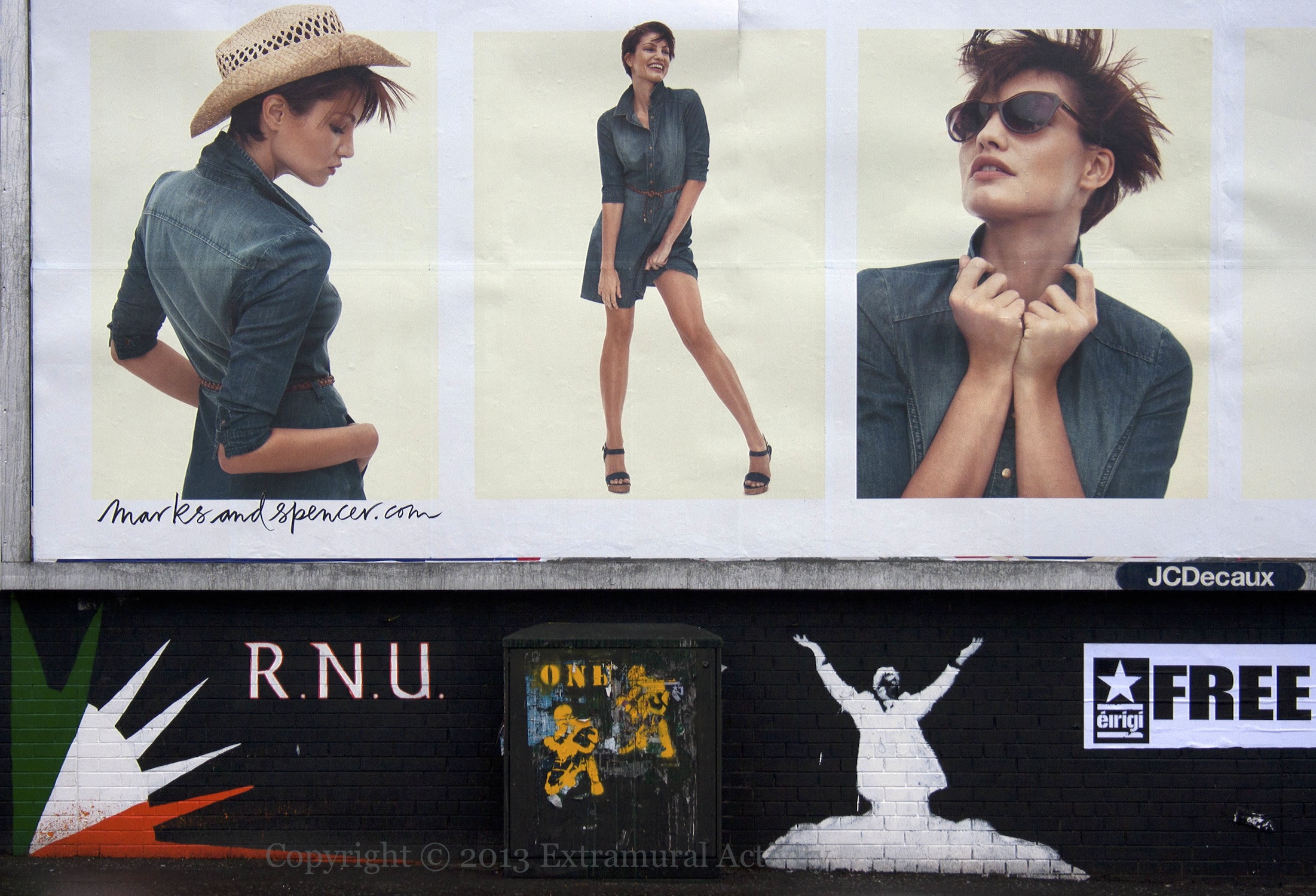
The advertising hoarding at the corner of Divis Street and Northumberland Street continues to provide incongruouscounterpoints to the material below it. Stephen Murney is an éirígí activist currently in prison on terrorism charges (BBC-NI). On the left are the outstretched arms of Jim Larkin, whose statue was featured two days ago.
 Seosamh Mac Coille Collection