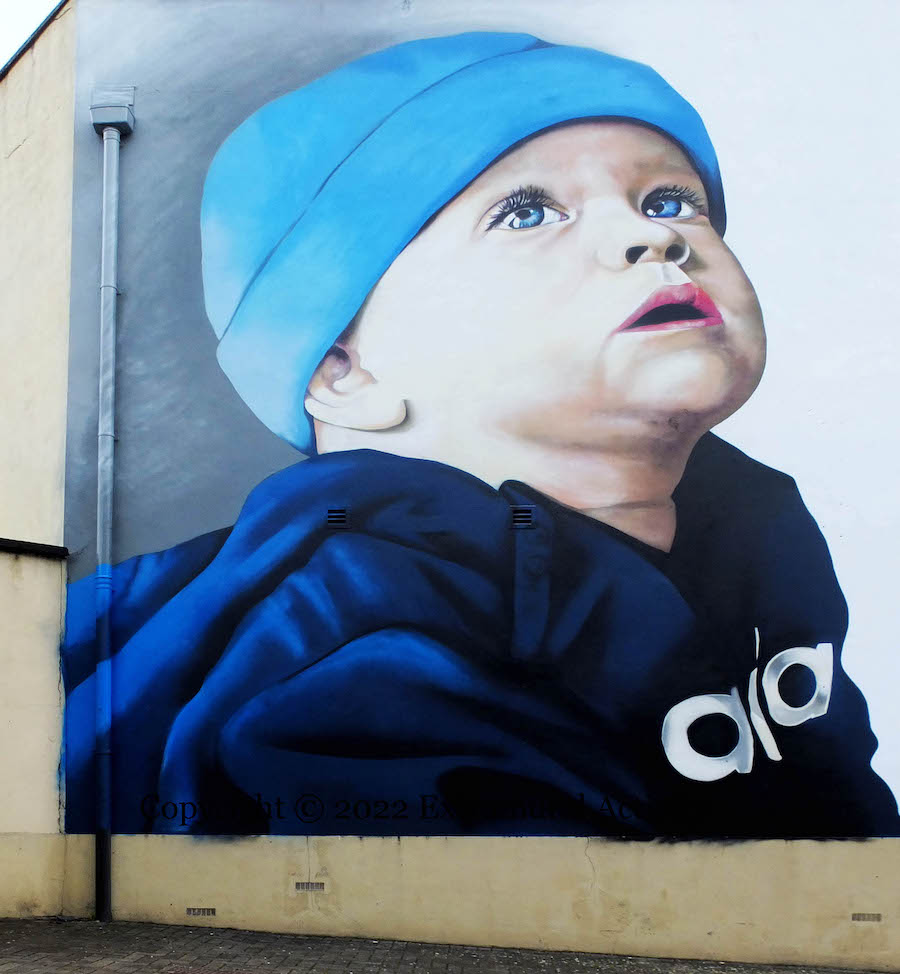
This mural is alternatively entitled ‘Baby Jake’ after the nephew of its creator, artist RAZER (Fb) (Belfast Live). It was painted on a wall at the site of the old Gasyard for the 30th Gasyard Féile.
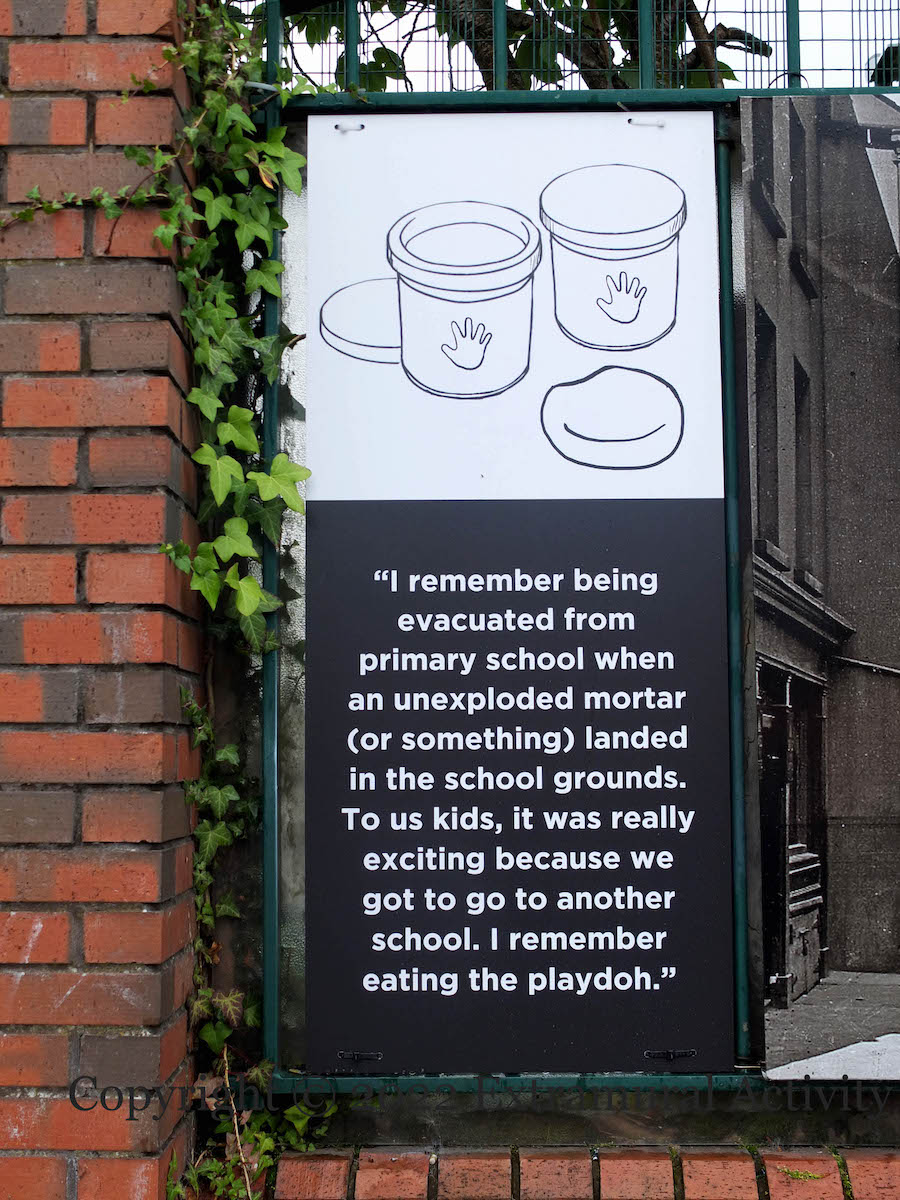
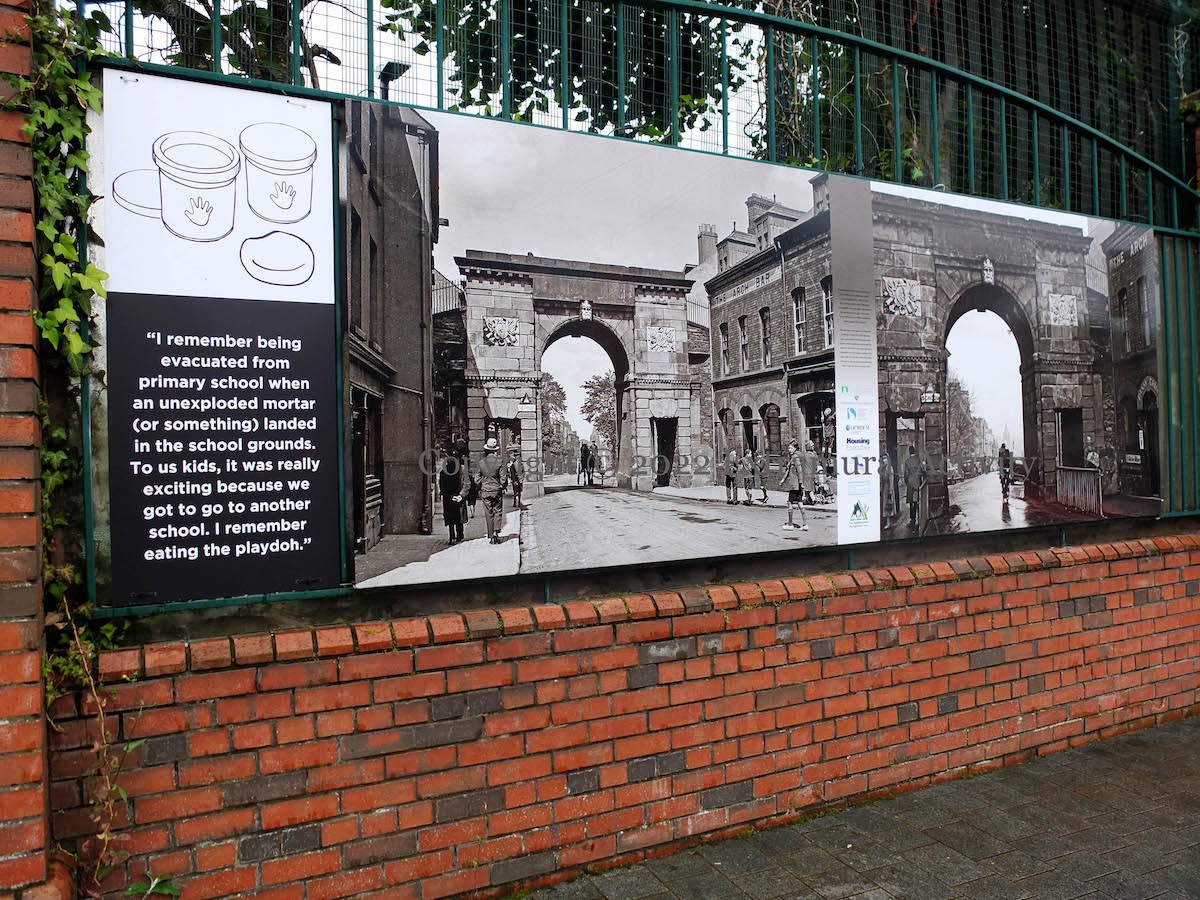
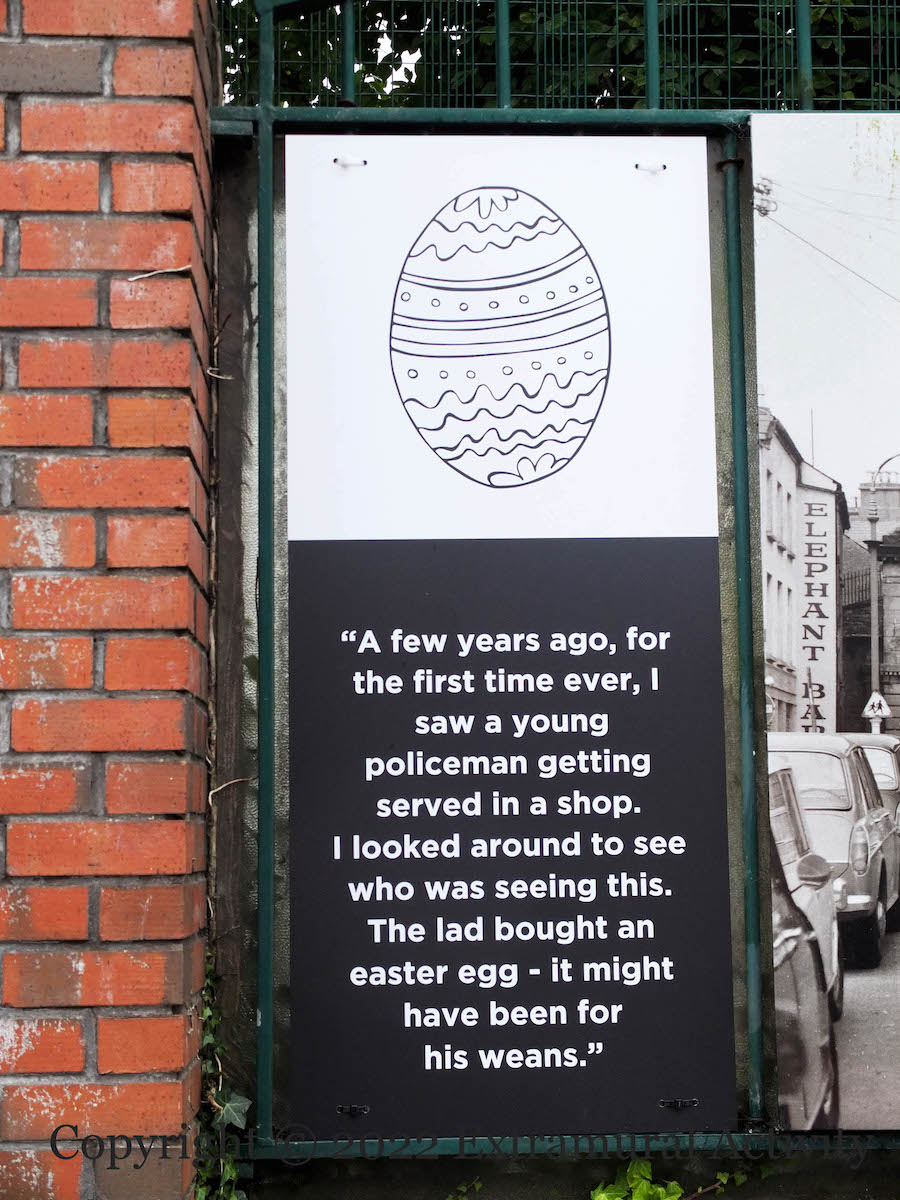
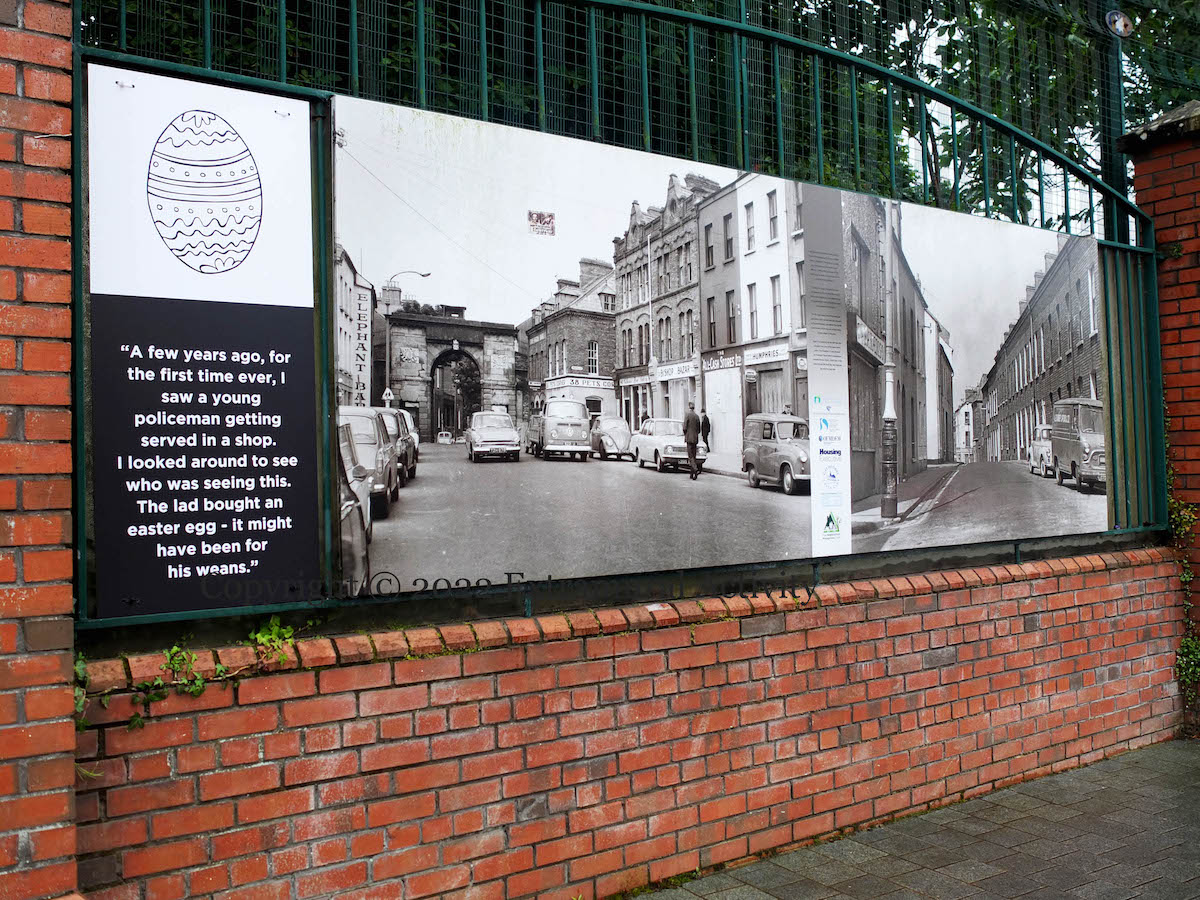
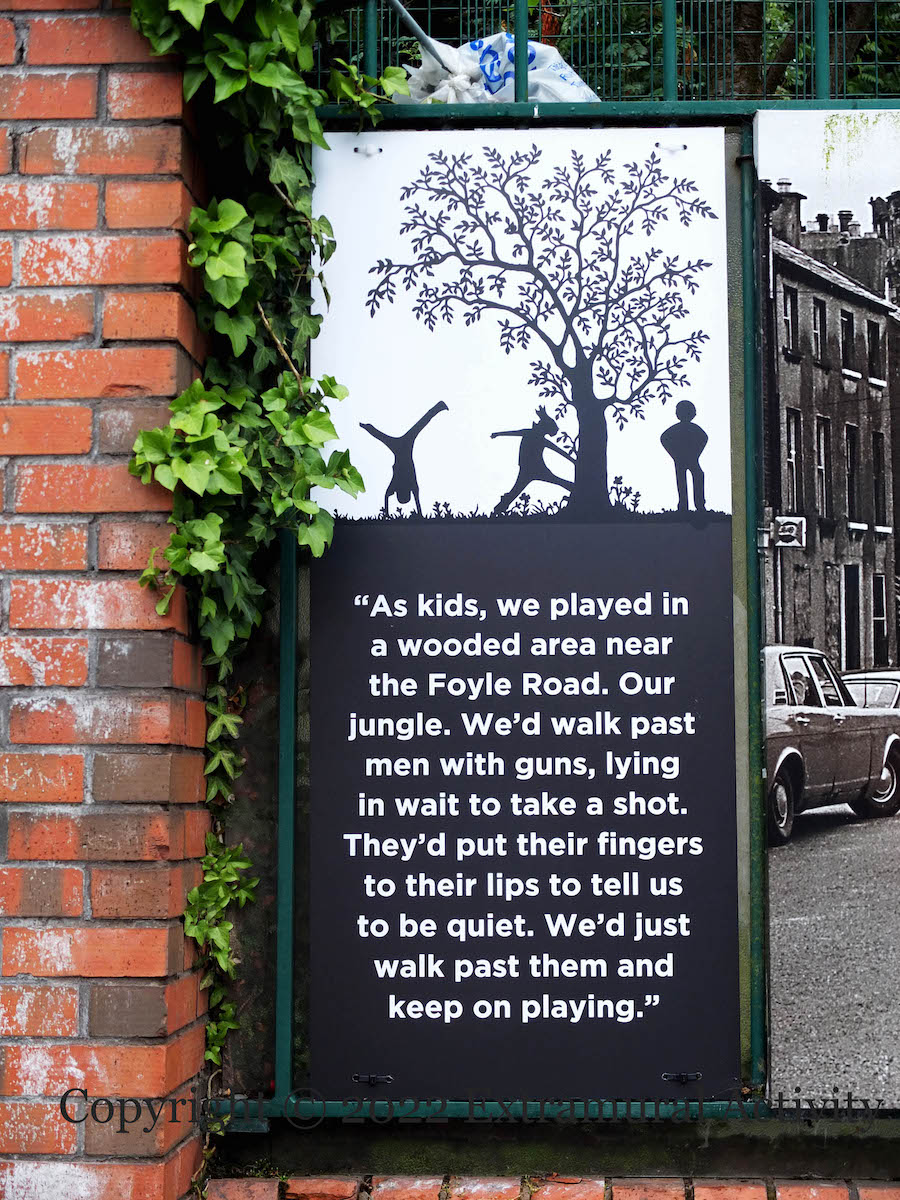
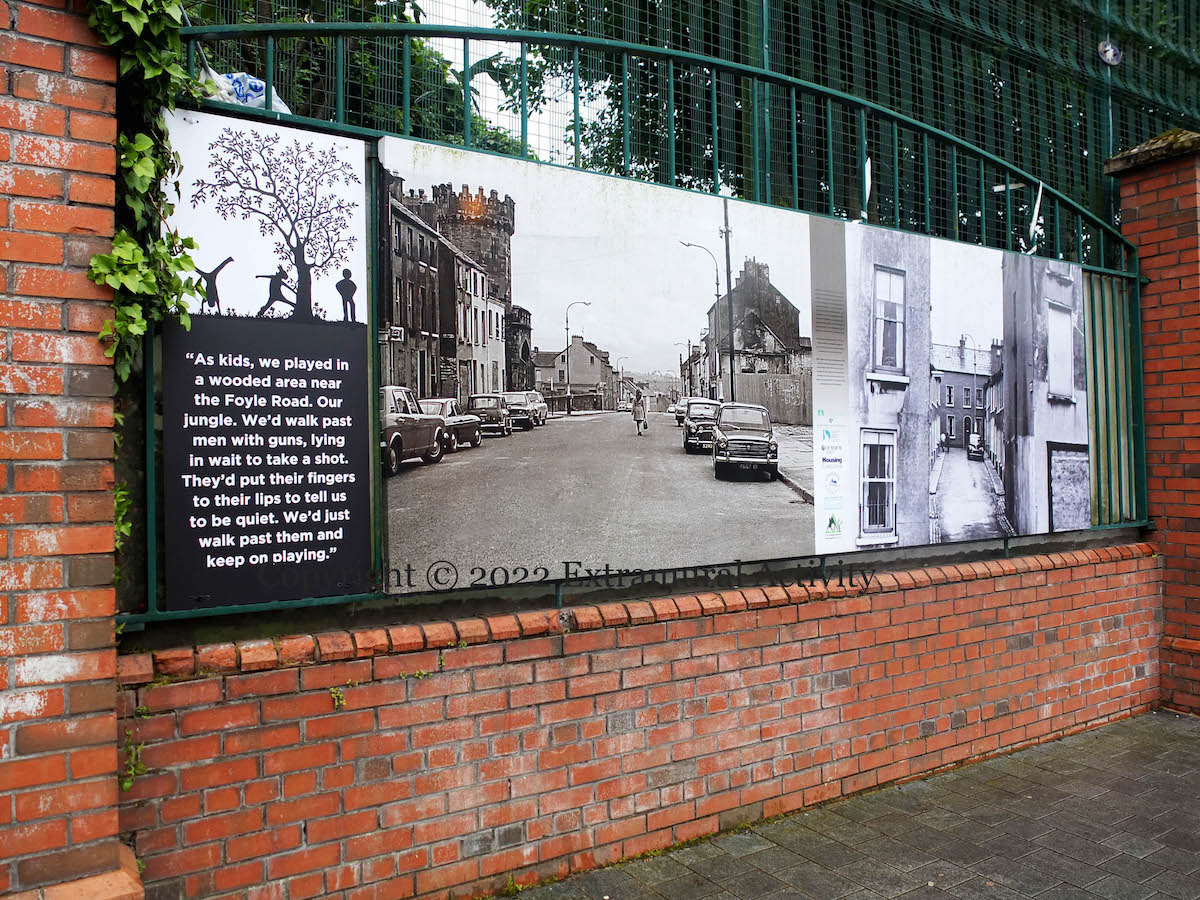
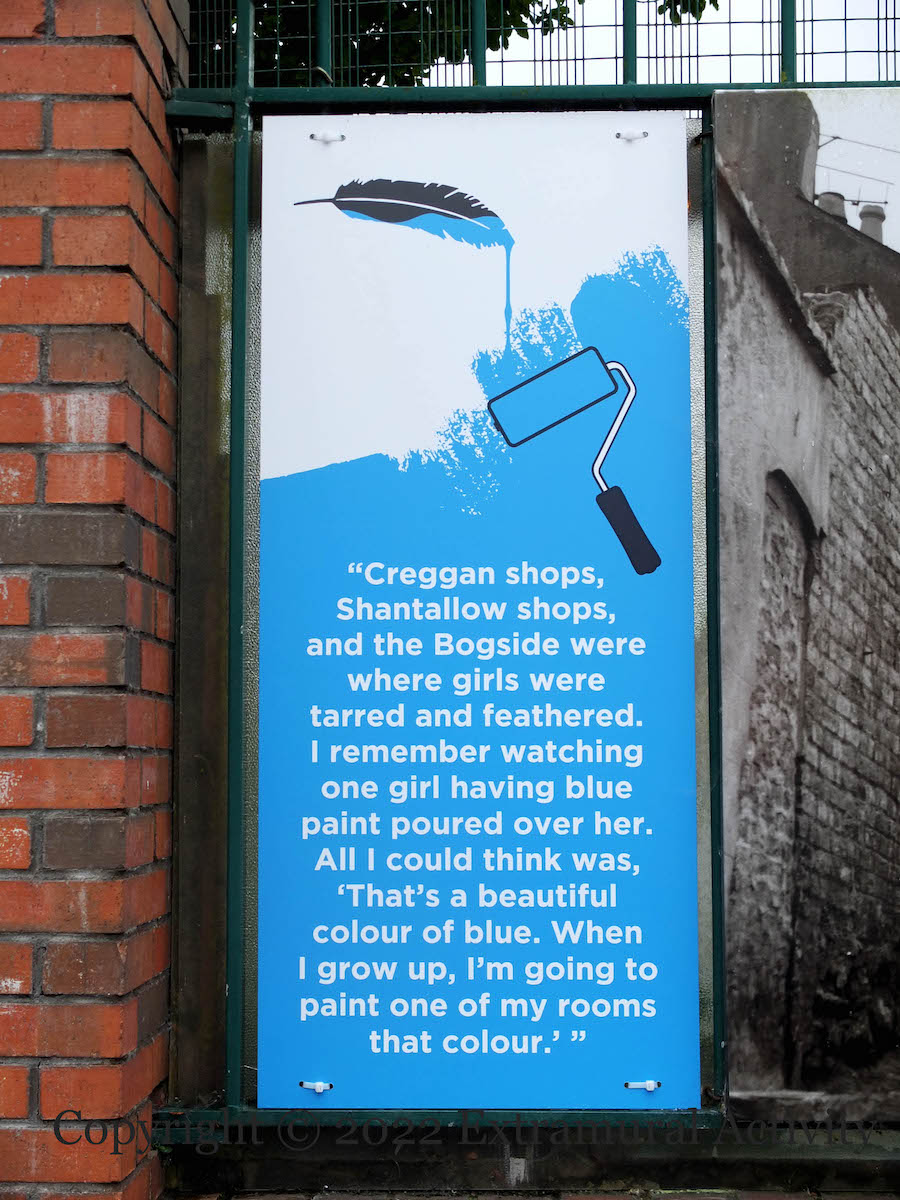
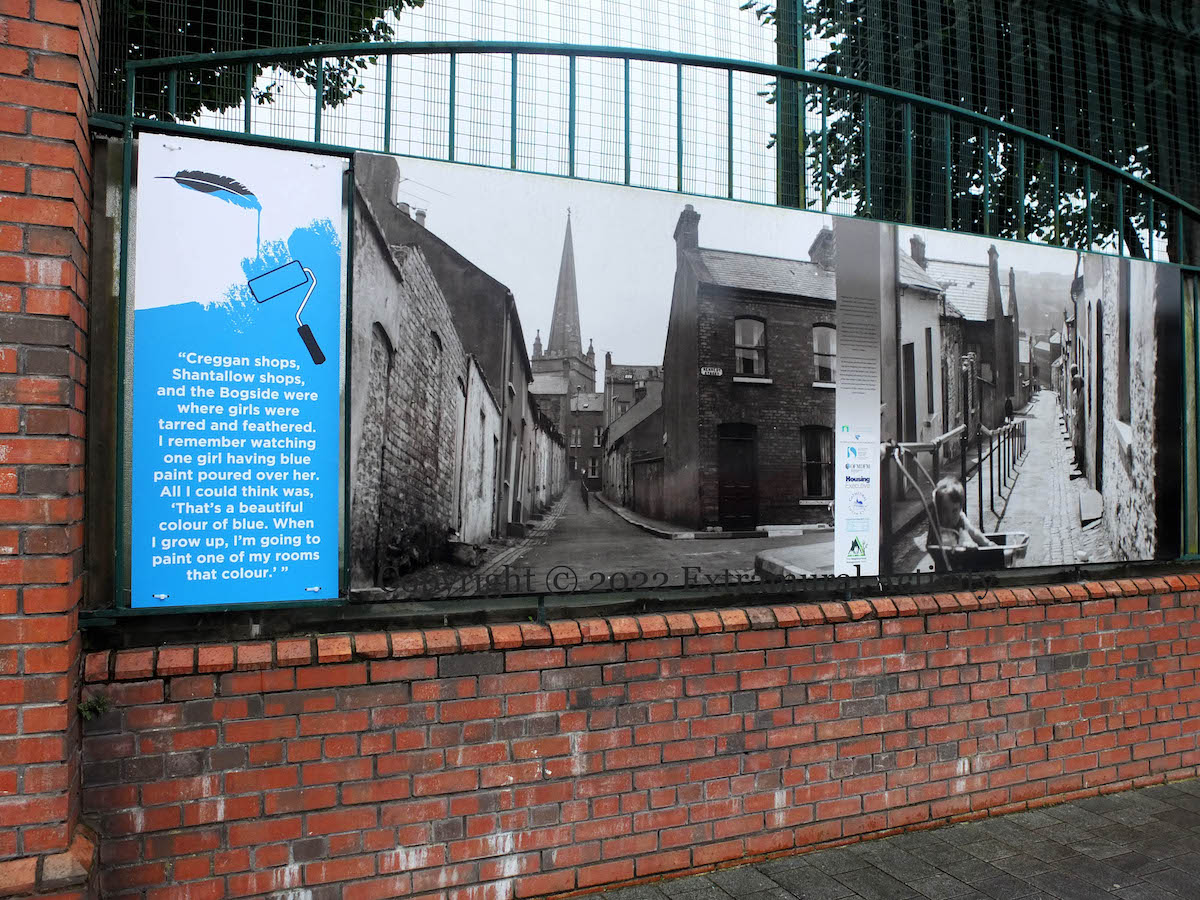
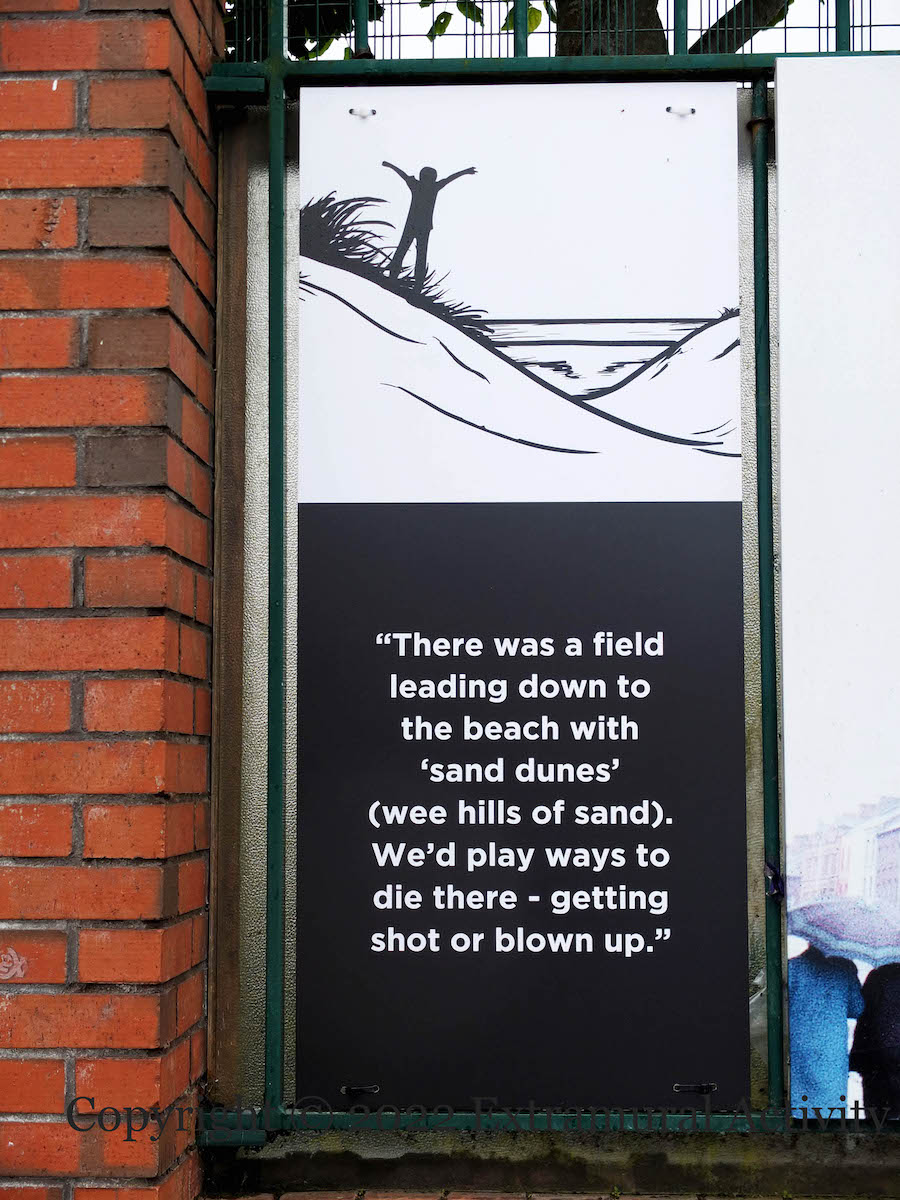
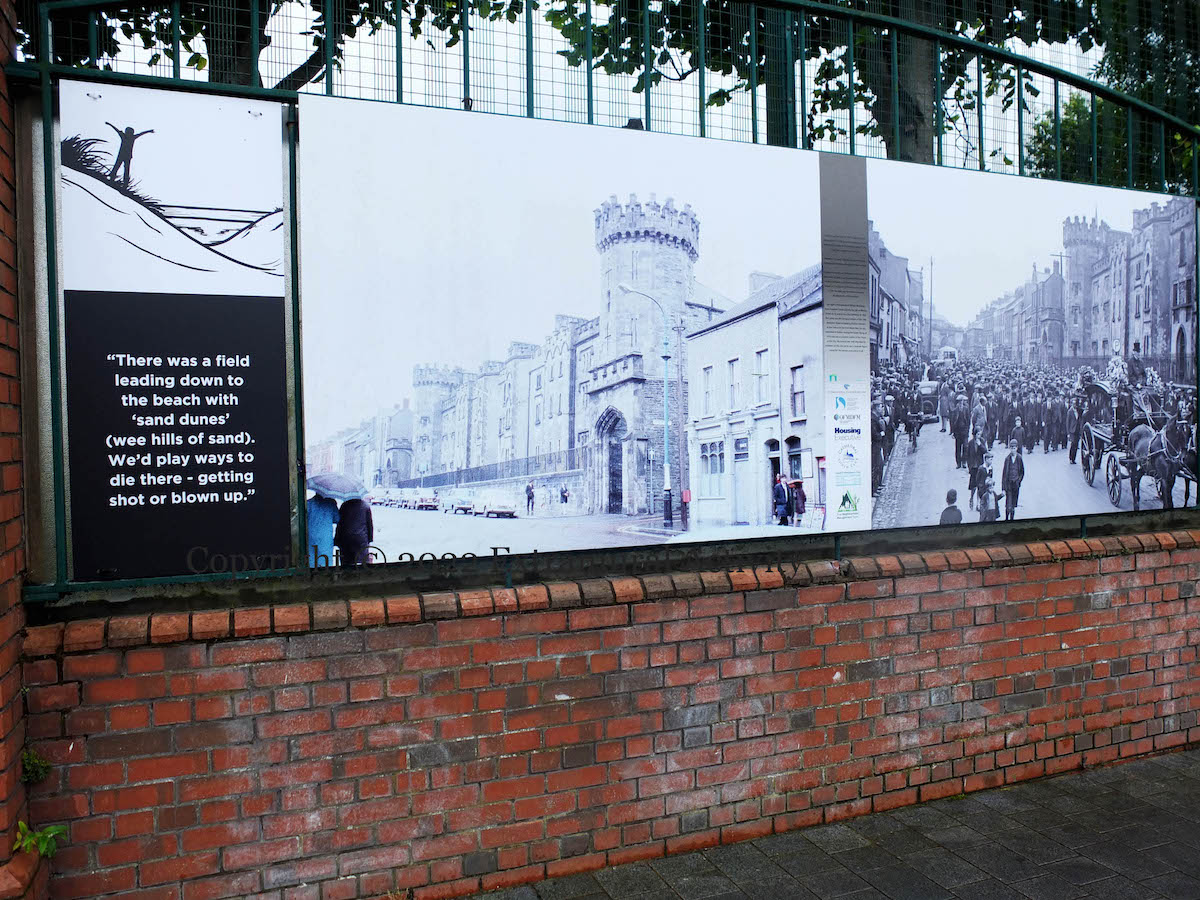
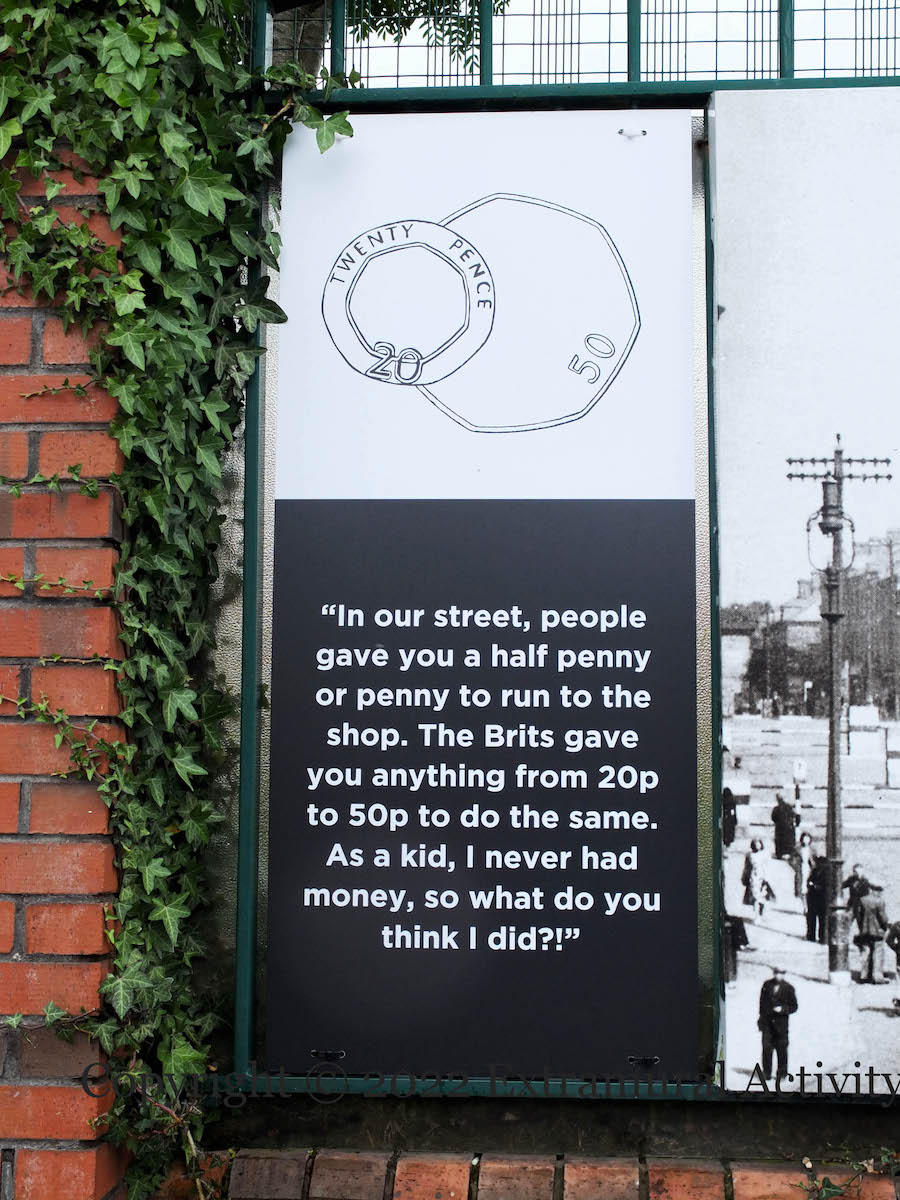
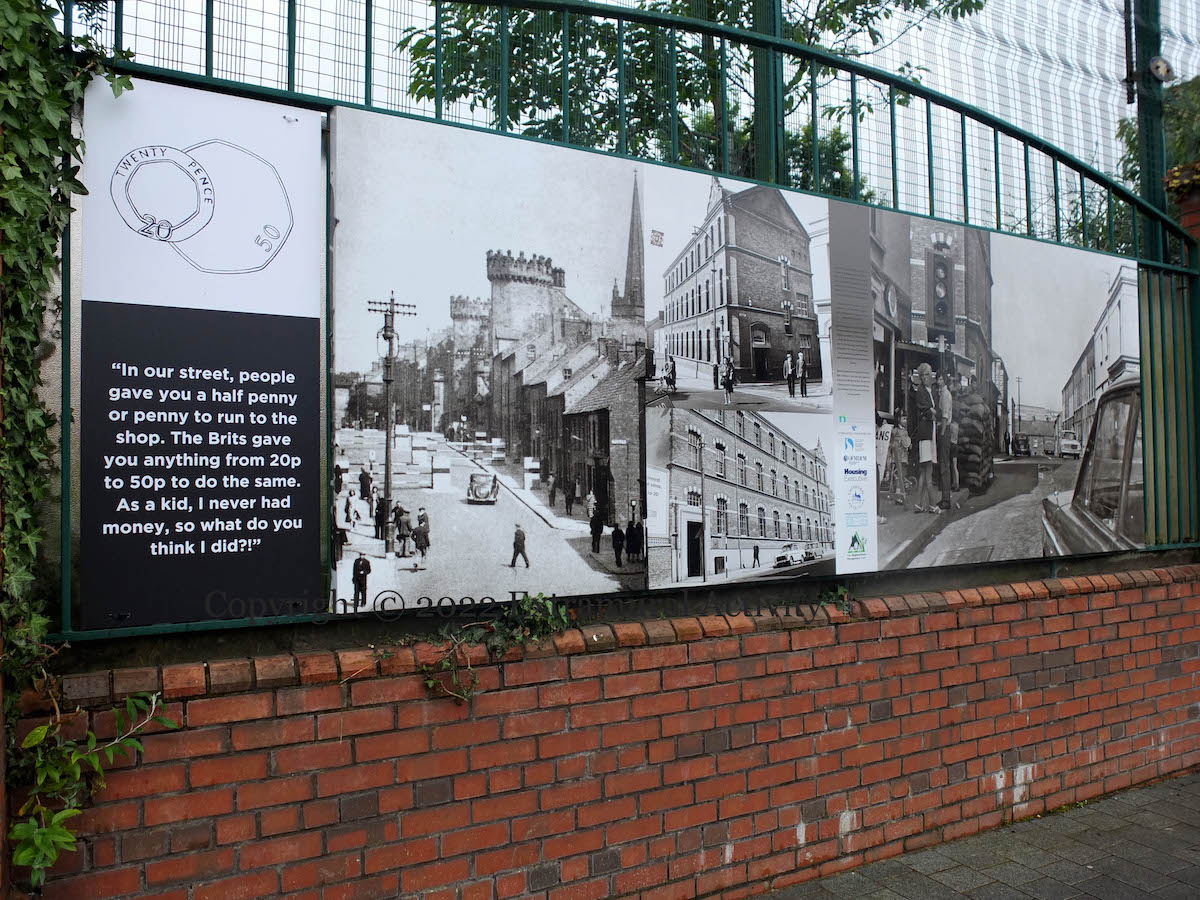
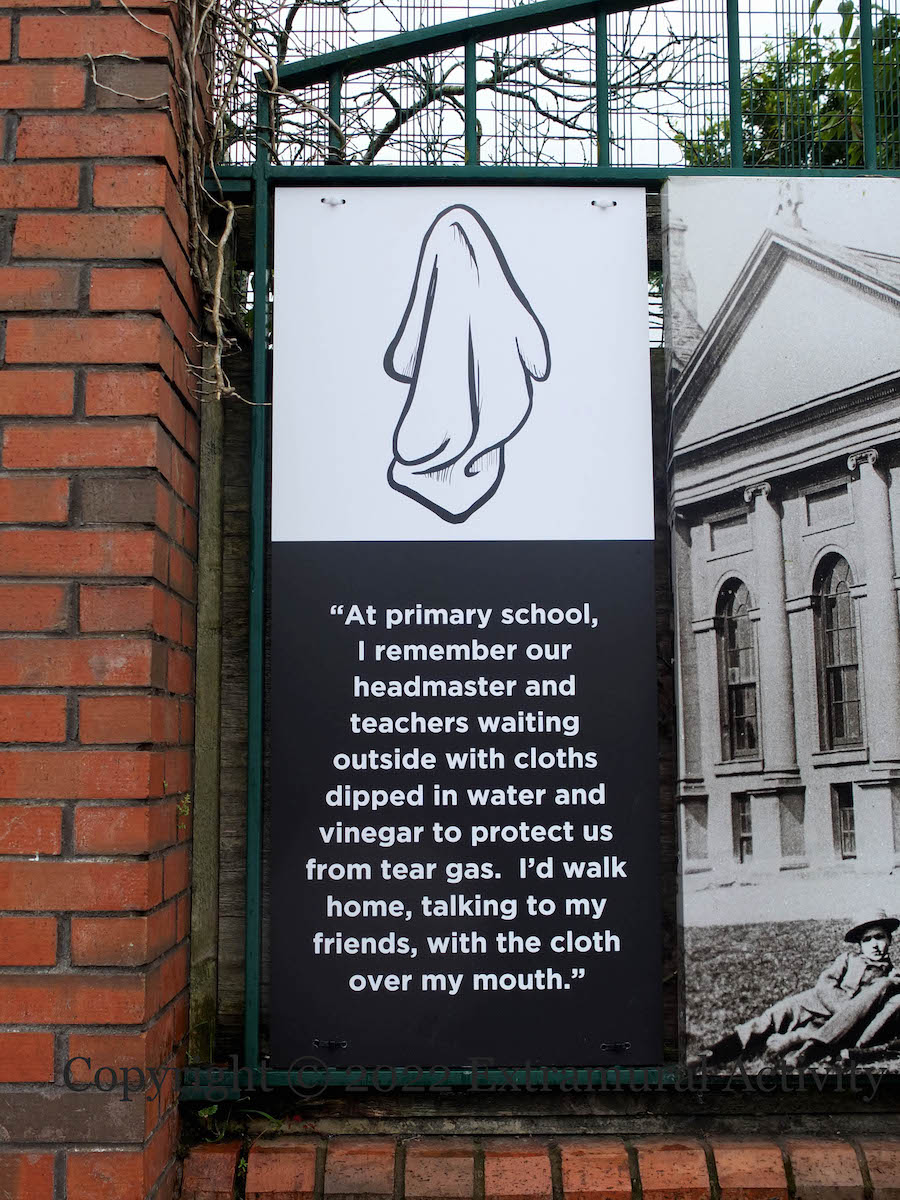
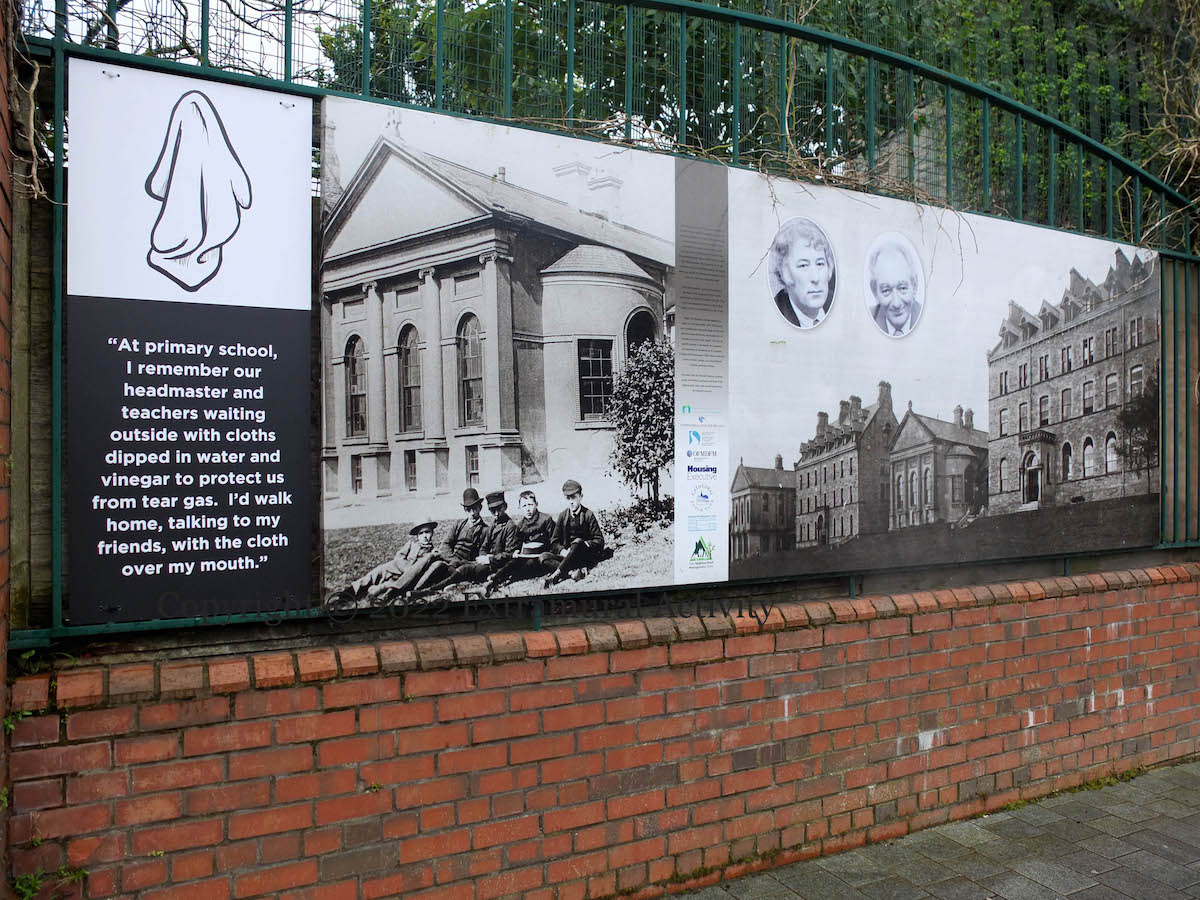
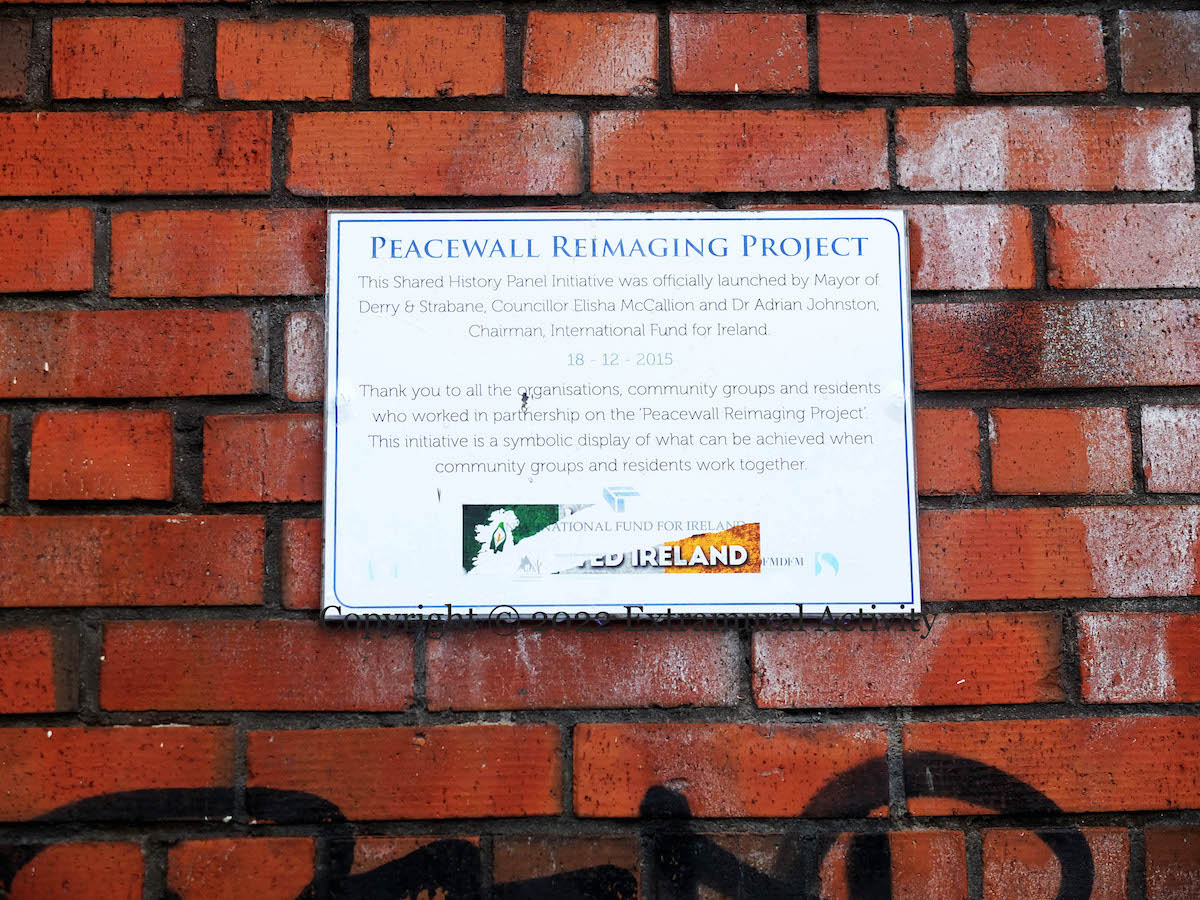
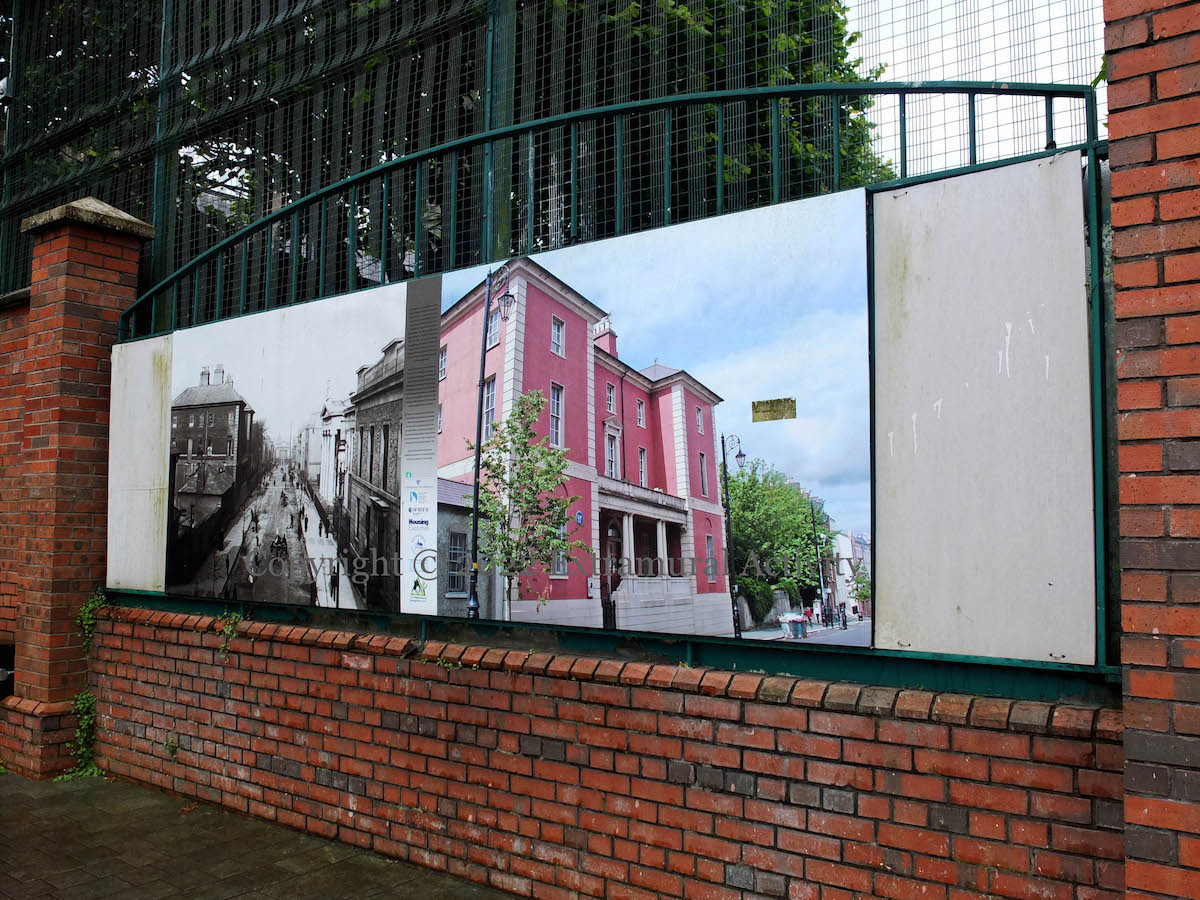
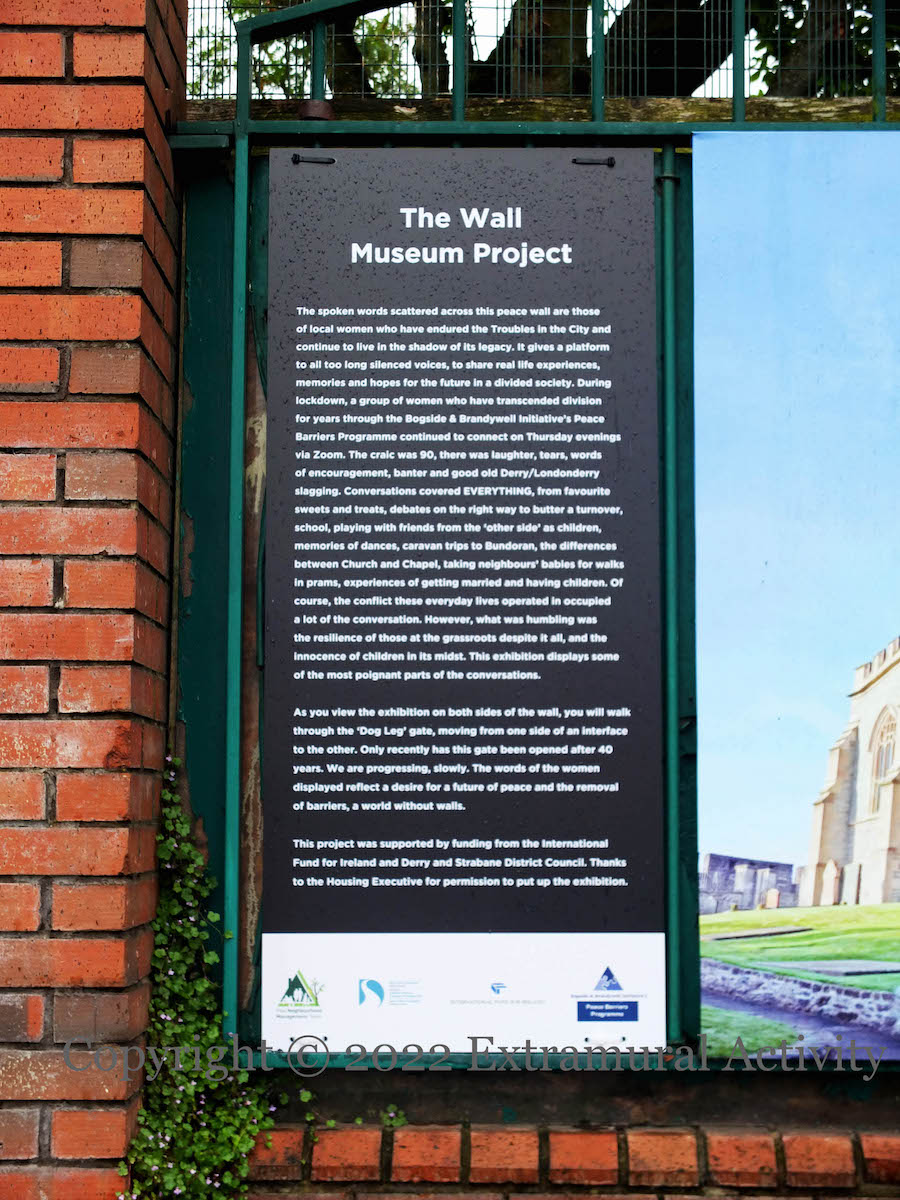
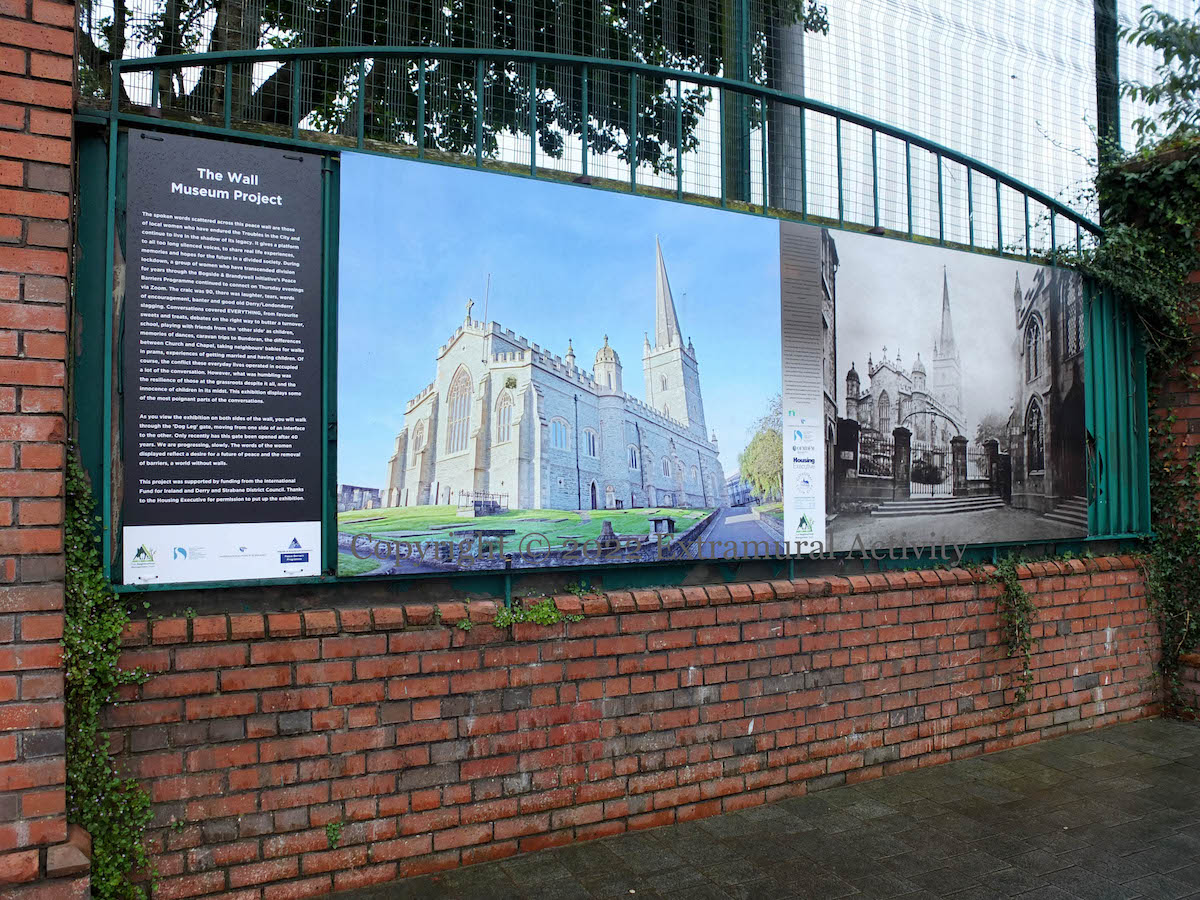
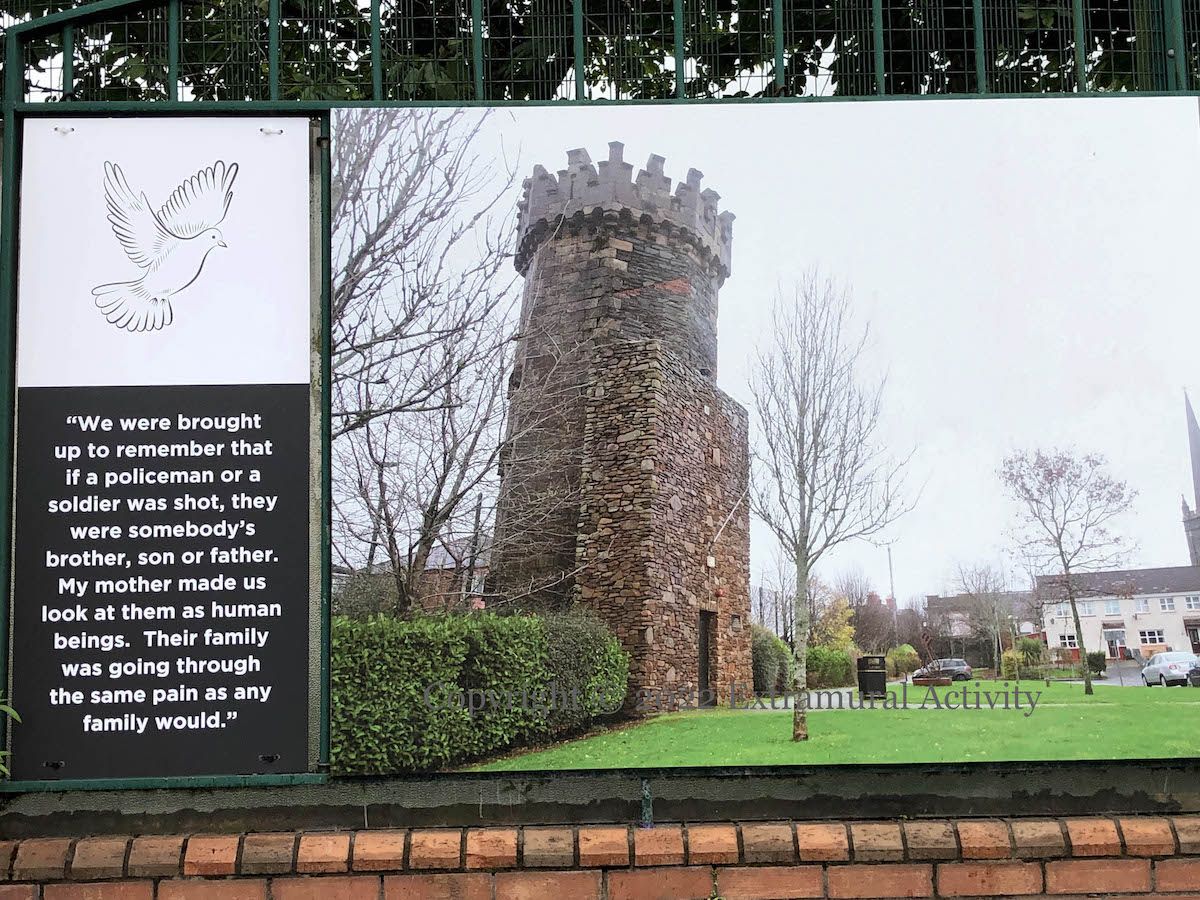
New panels of quotes and information – apparently under the title the ‘Wall History Project’ – have been added to the previous row of vintage images of the area (the “Peacewall Reimaging Project” (image below) | Derry Journal), telling personal stories of life during the Troubles including positive interactions with British soldiers and RUC officers.
The “peace” wall in question runs along the top of the Fountain in Londonderry along Bishop Street WIthout. (The street was also “settled’ by the construction of a senior citizens’ home, Alexander House.)
“The spoken words scattered across this peace wall are those of local women who have endured the Troubles in the City and continue to live in the shadow of its legacy. It gives a platform to all too long silenced voices, to share real real life experiences, memories and hopes for the future in a divided society. During lockdown, a group of women who have transcended division for years through the Bogside & Brandywell Initiative’s Peace Barriers Programme continued to connect on Thursday evenings via Zoom. The craic was 90, there was laughter, tears, words of encouragement, banter and good old Derry/Londonderry slagging.”
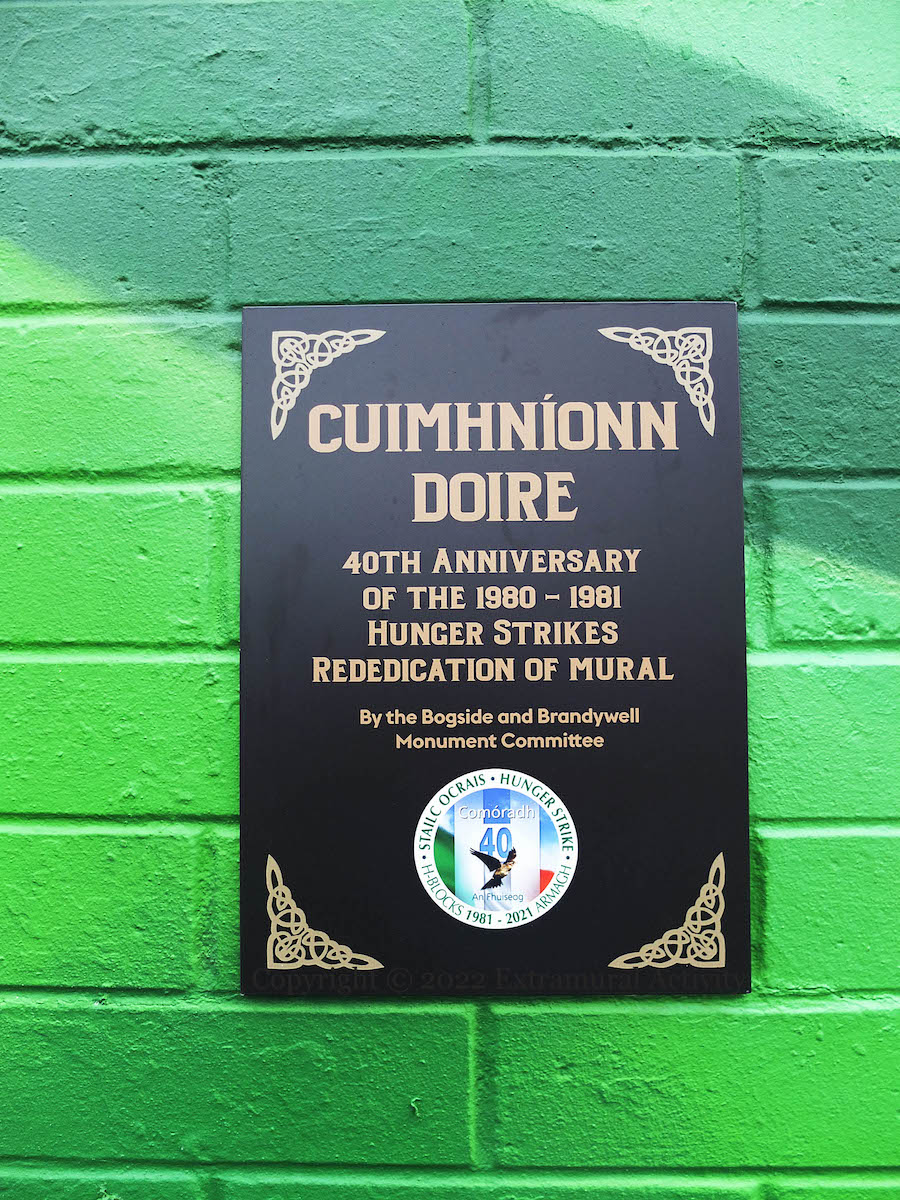
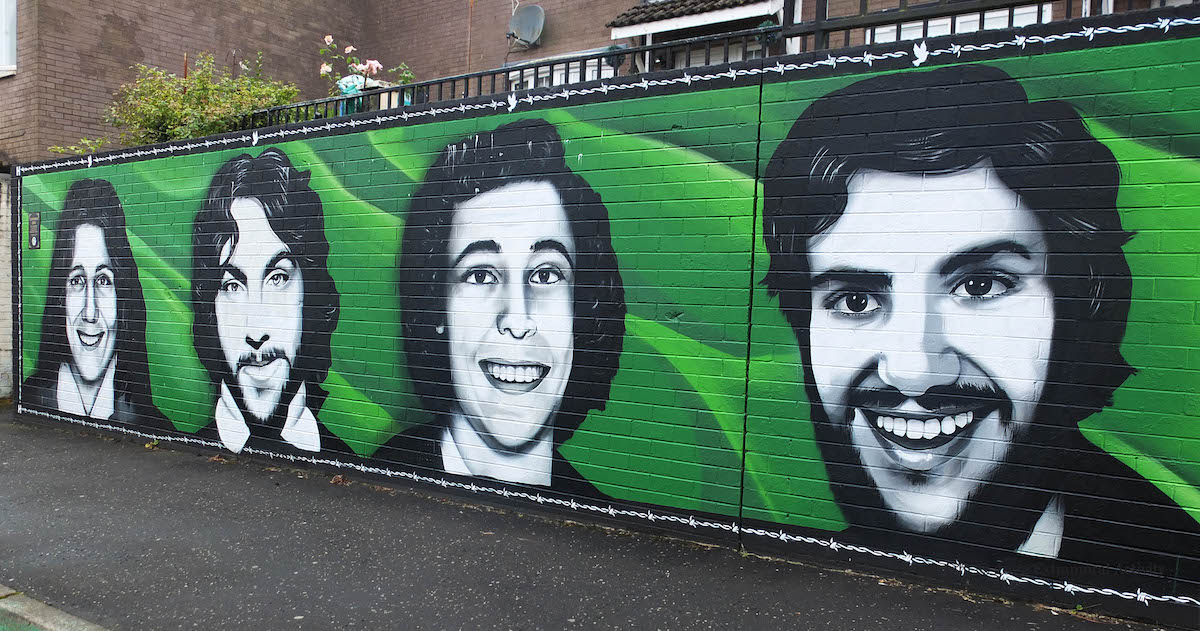
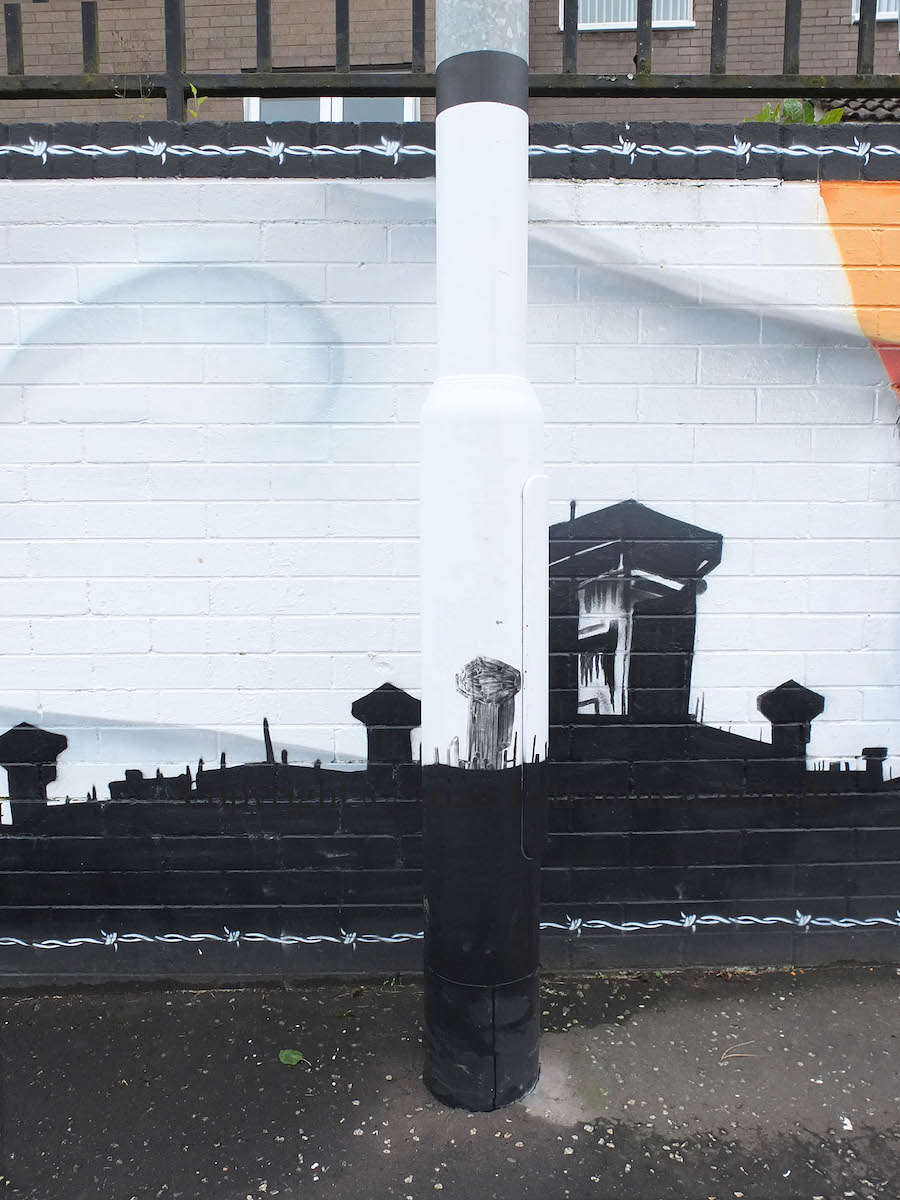
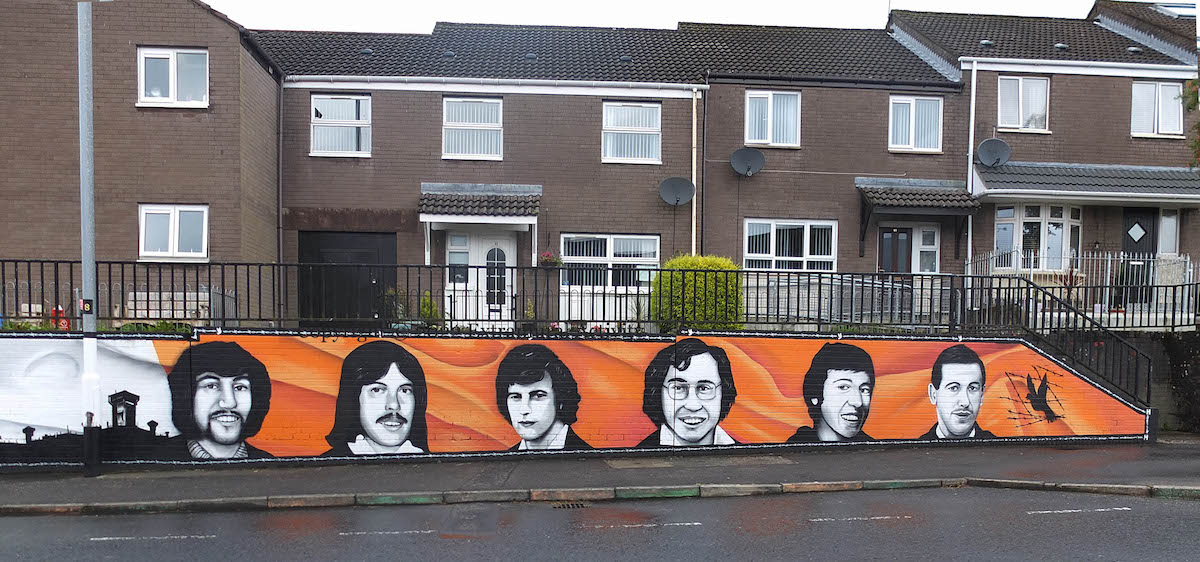
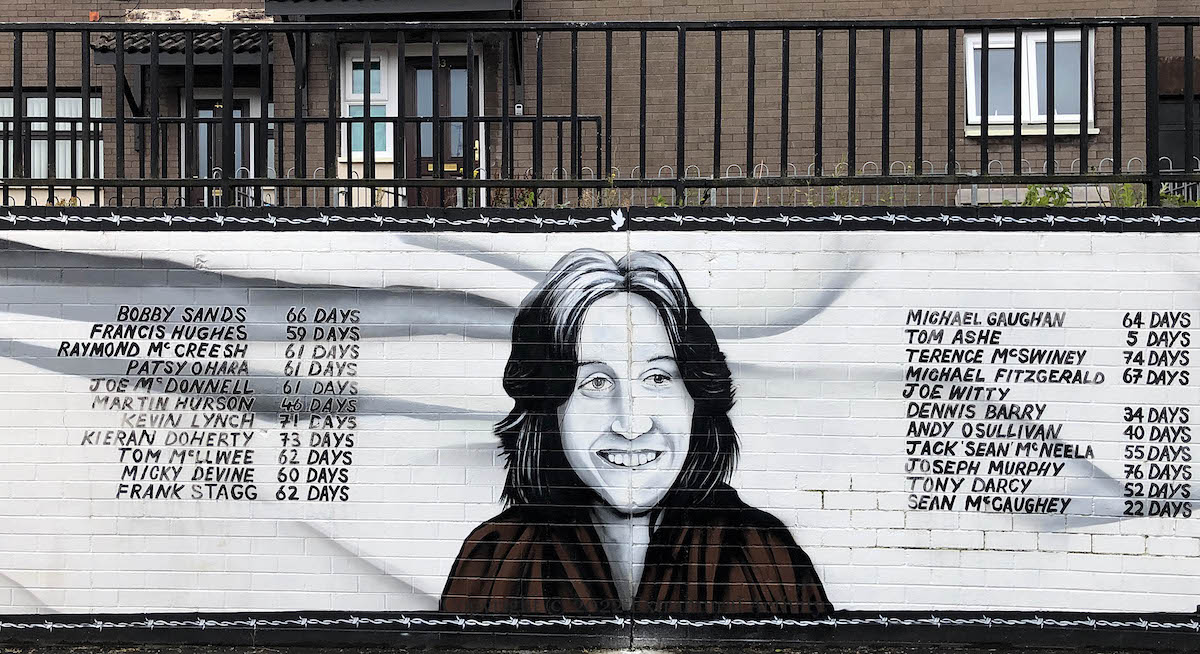
For many years there were portraits of the hunger strikers (either the 10 deceased from 1981 or the 12 from the 70s and 80s) along the long wall in Bishop St Without – see 2009, 2004, and 1998 (before that time the wall was divided into a number of panels for a variety of republican imagery – see 1984 and 1982) but in the portraits – which were on boards – soon started coming off and over the next decade the wall began to fade and become covered in graffiti (as can be seen in Street View). For the 40th anniversary, the deceased hunger strikers were restored to the wall, as shown here: “40th anniversary of the 1980-1981 hunger strikes. Rededication of mural, by the Bogside and Brandywell Monument Committee.”
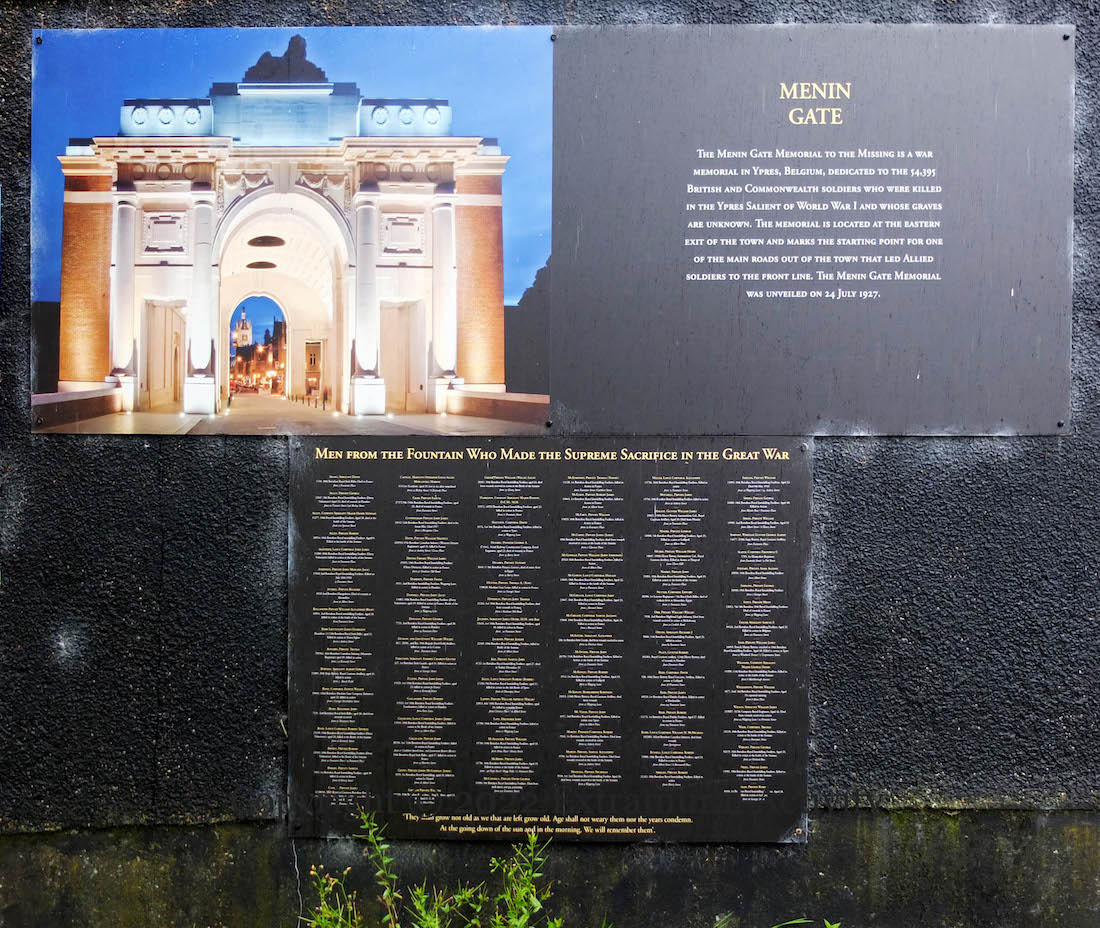
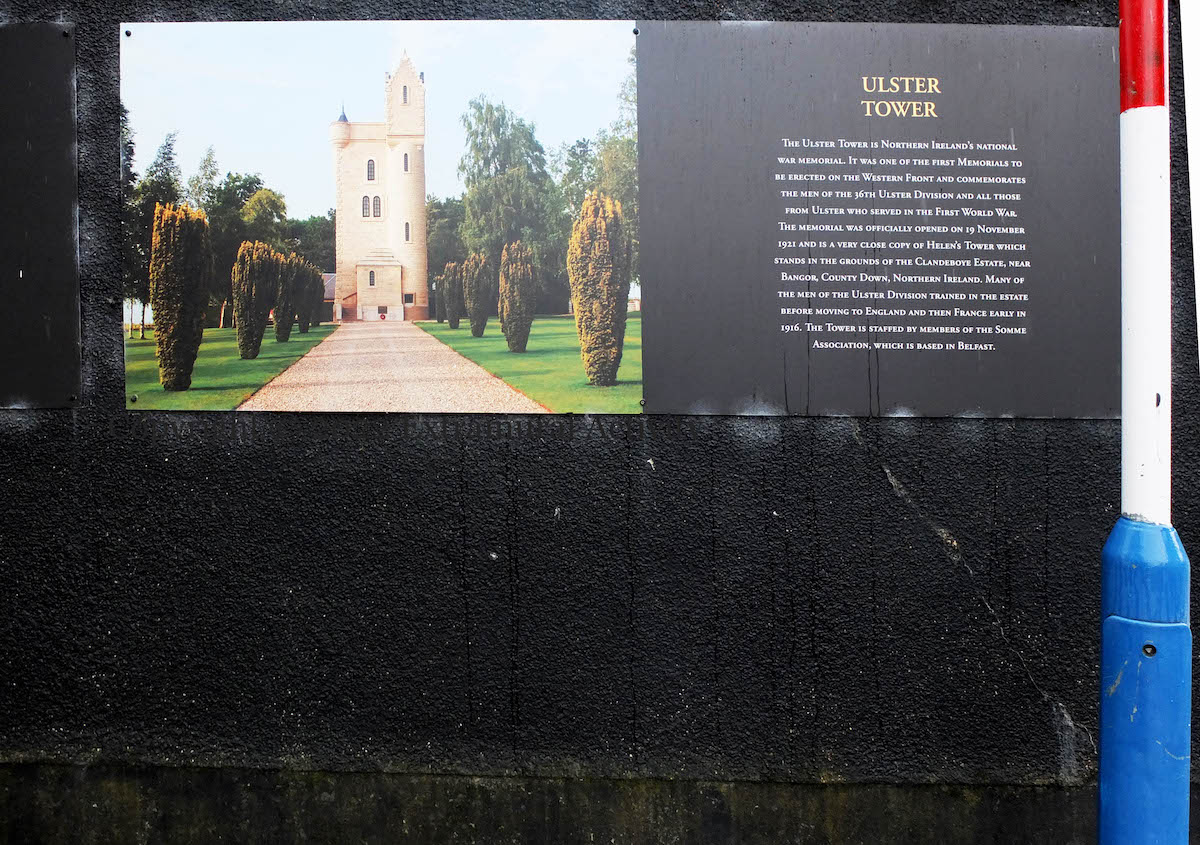
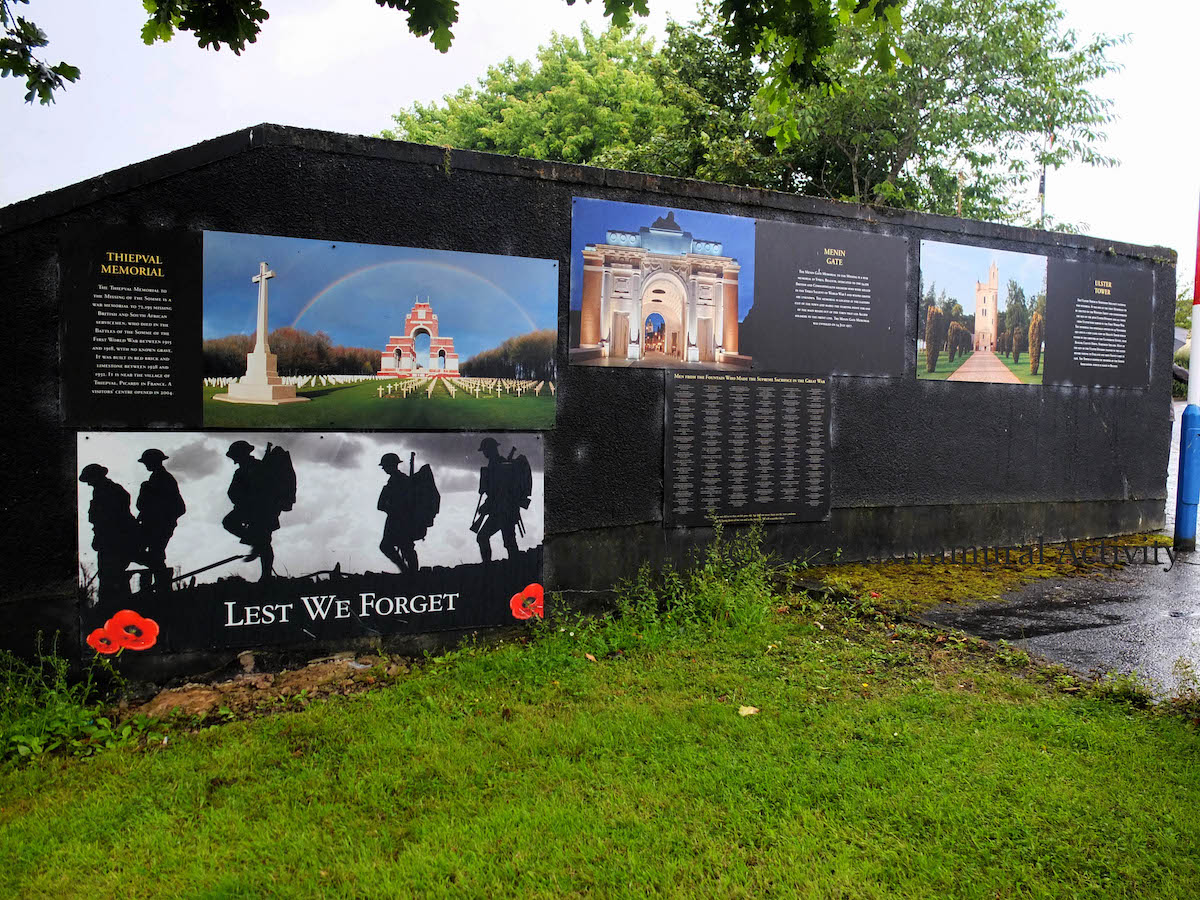
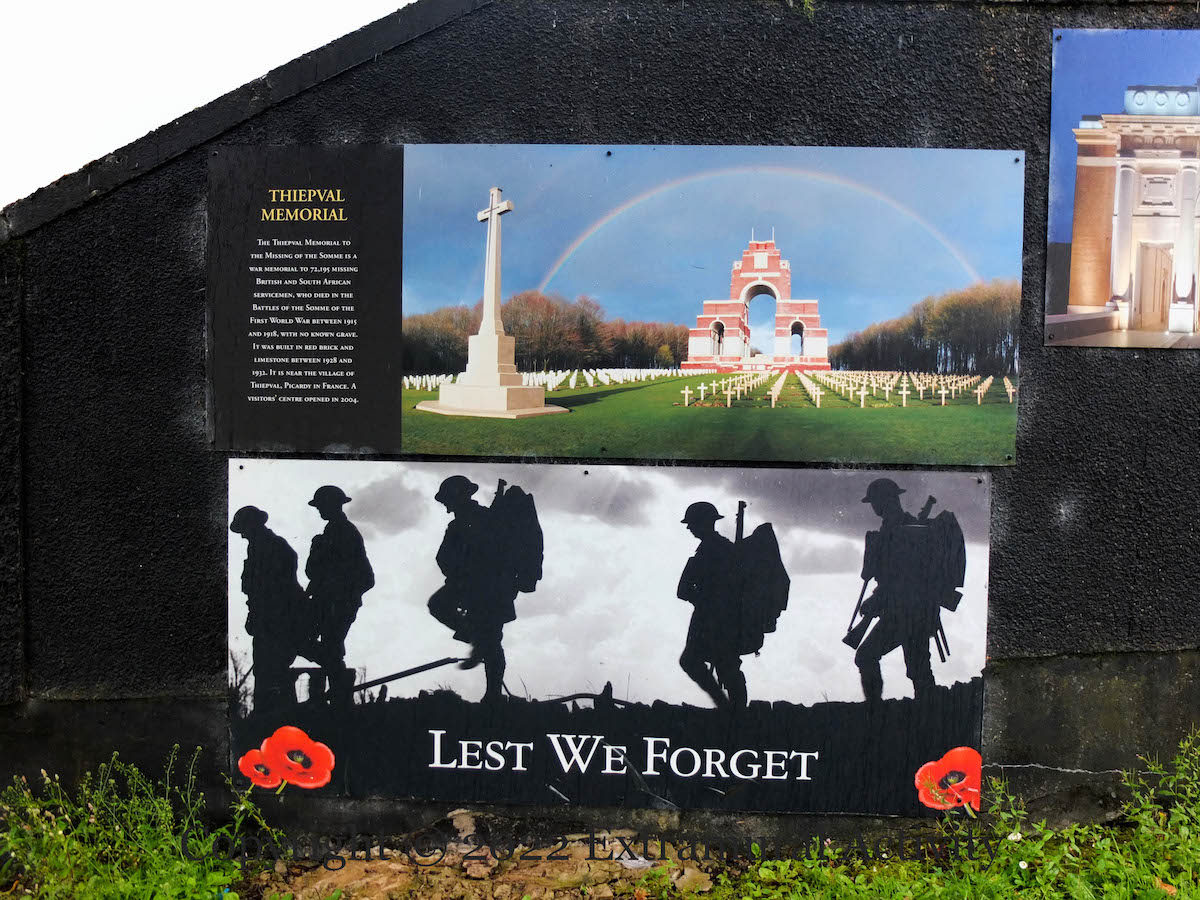
All three major WWI memorials with relevance to Ulster – Thiepval Memorial, Menin Gate, Ulster Tower – are brought together in a gallery in Londonderry’s Fountain as part of a tribute to the “Men from the Fountain who made the supreme sacrifice in the Great War.”
“Thiepval Memorial: The Thiepval Memorial to the missing of the Somme is a war memorial to 72,195 missing British and South African servicemen, who died in the battles of the Somme of the First World War between 1915 and 1918, with no known grave. It was built in red brick and limestone between 1928 and 1932. It is near the village of Thiepval, Picardy in France. A visitors’ centre opened in 2004.”
“Menin Gate: The Menin Gate memorial to the missing is a war memorial in Ypres, Belgium, dedicated to the 54,395 British and Commonwealth soldiers who were killed in the Ypres salient of World War I and whose graves are unknown. The memorial is located at the eastern exit of the town and marks the starting point for one of the main roads out of the town that led Allied soldiers to the front line. The Menin Gate memorial was unveiled on 24 July 1927.”
“Ulster Tower: The Ulster Tower is Northern Ireland’s national war memorial. It was one of the first memorials to be erected on the western front and commemorates the men of the 36th (Ulster) Division and all those from Ulster who served in the First World War. The memorial was officially opened on 19 November 1921 and is a very close copy of Helen’s Tower which stands in the grounds of the Clandeboye estate, near Bangor, County Down, Northern Ireland. Many of the men of the Ulster division trained in the estate before moving to England and then France early in 1916. The Tower is staffed by members of the Somme Association, which is based in Belfast.”
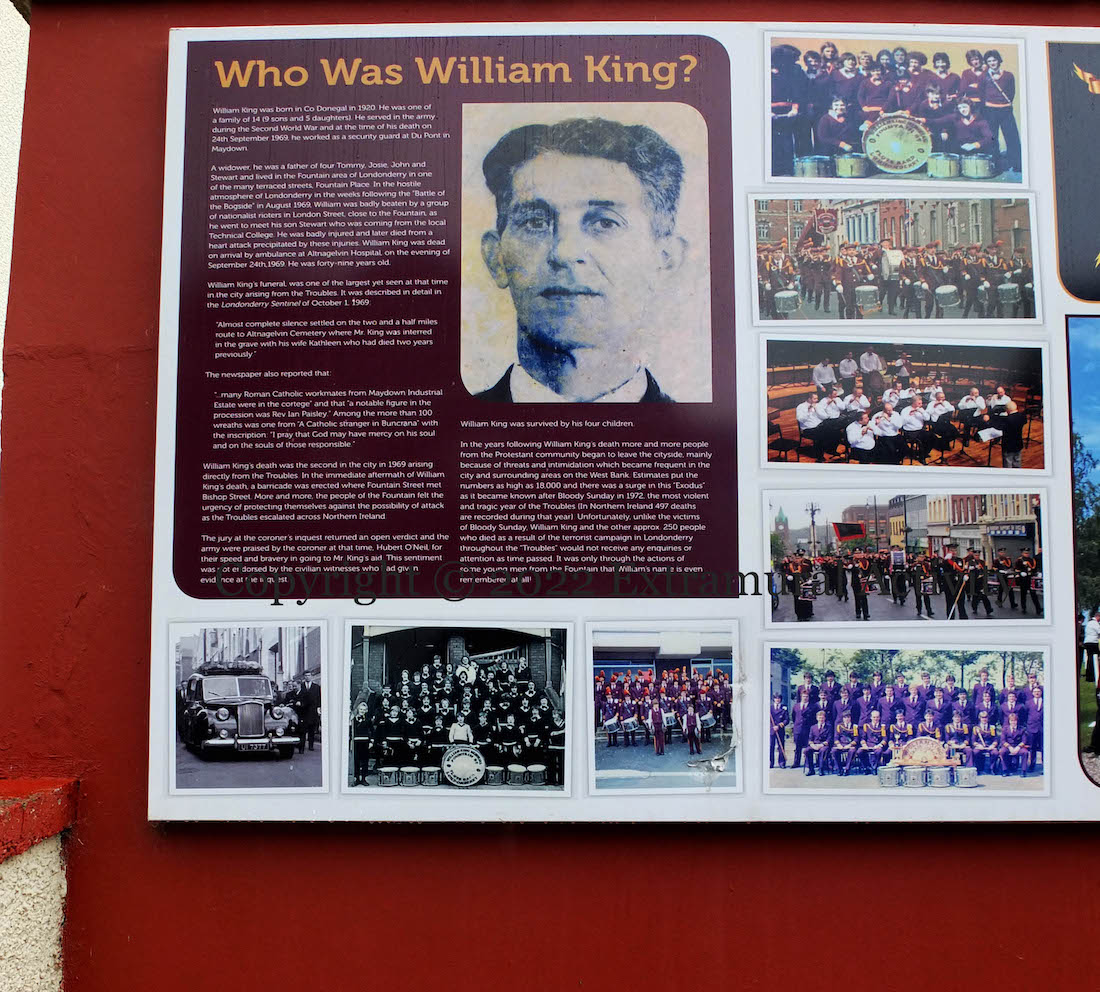
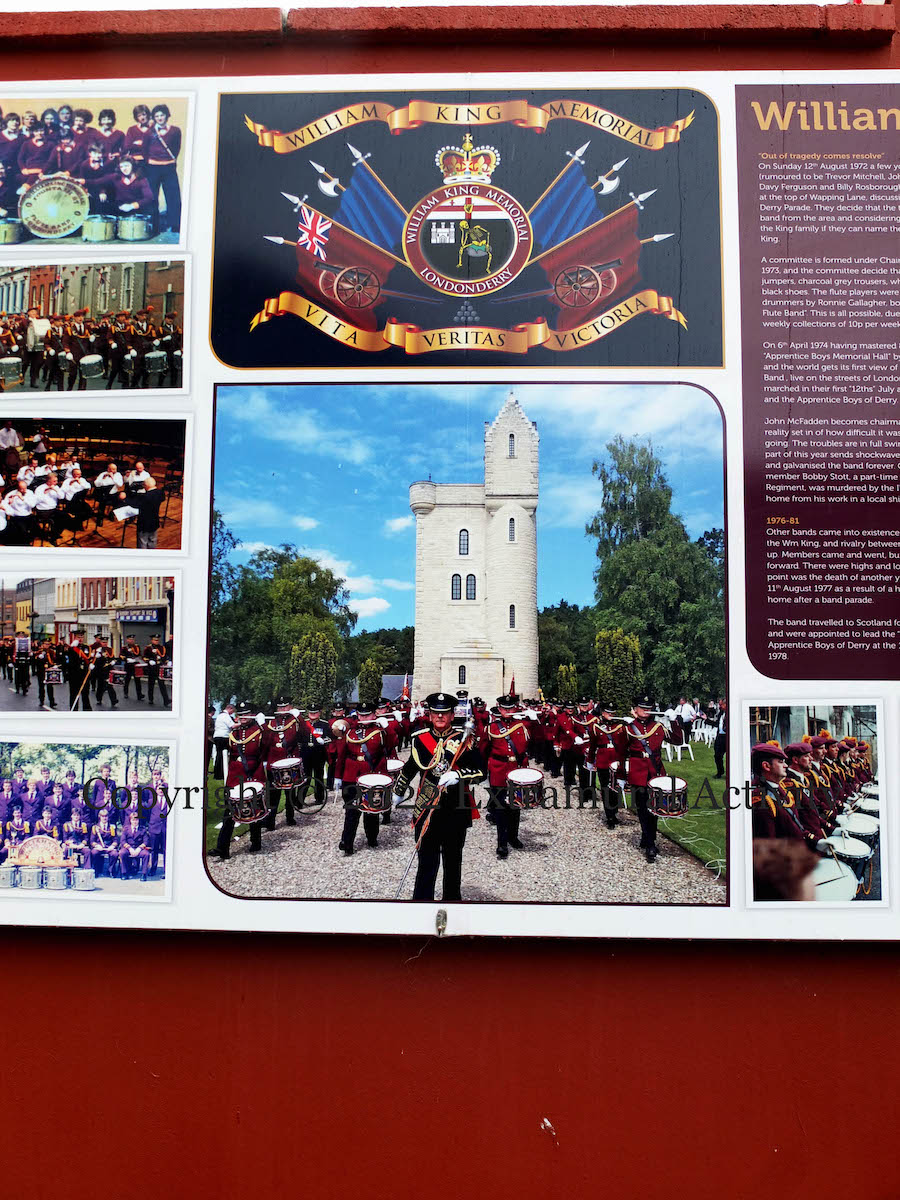
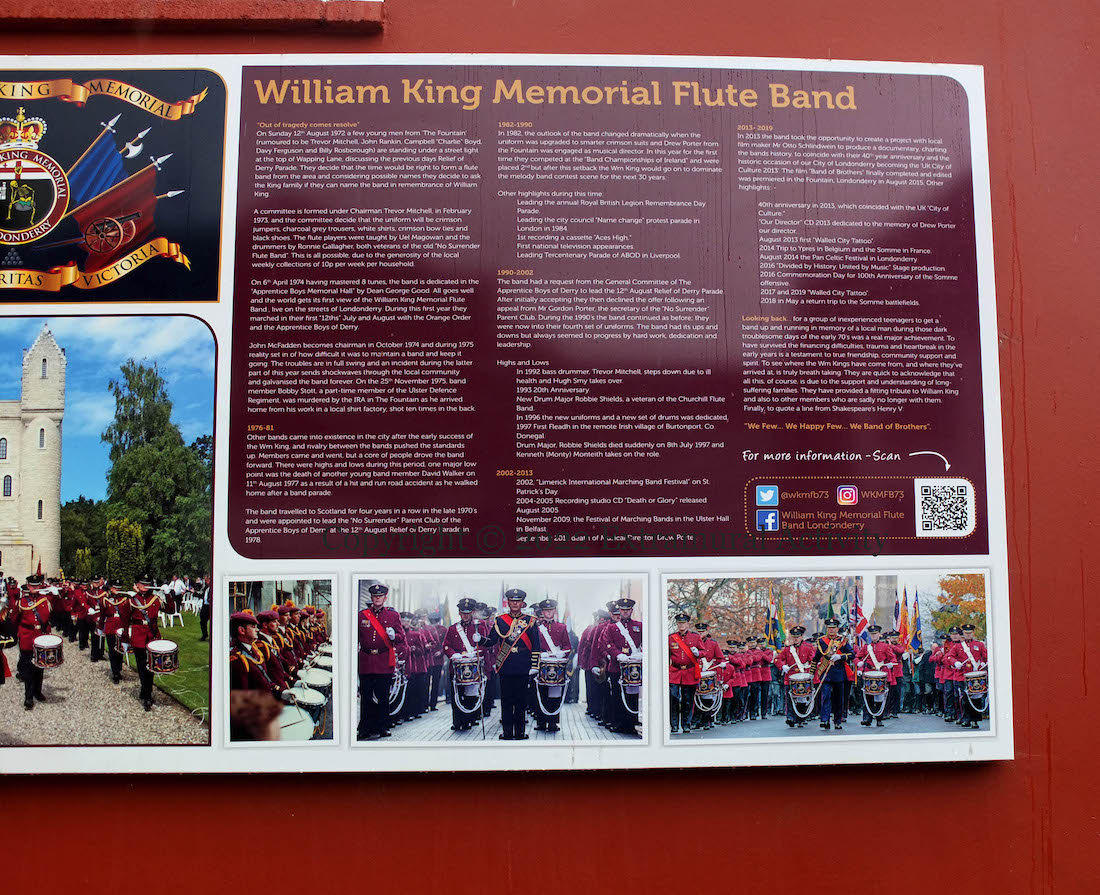
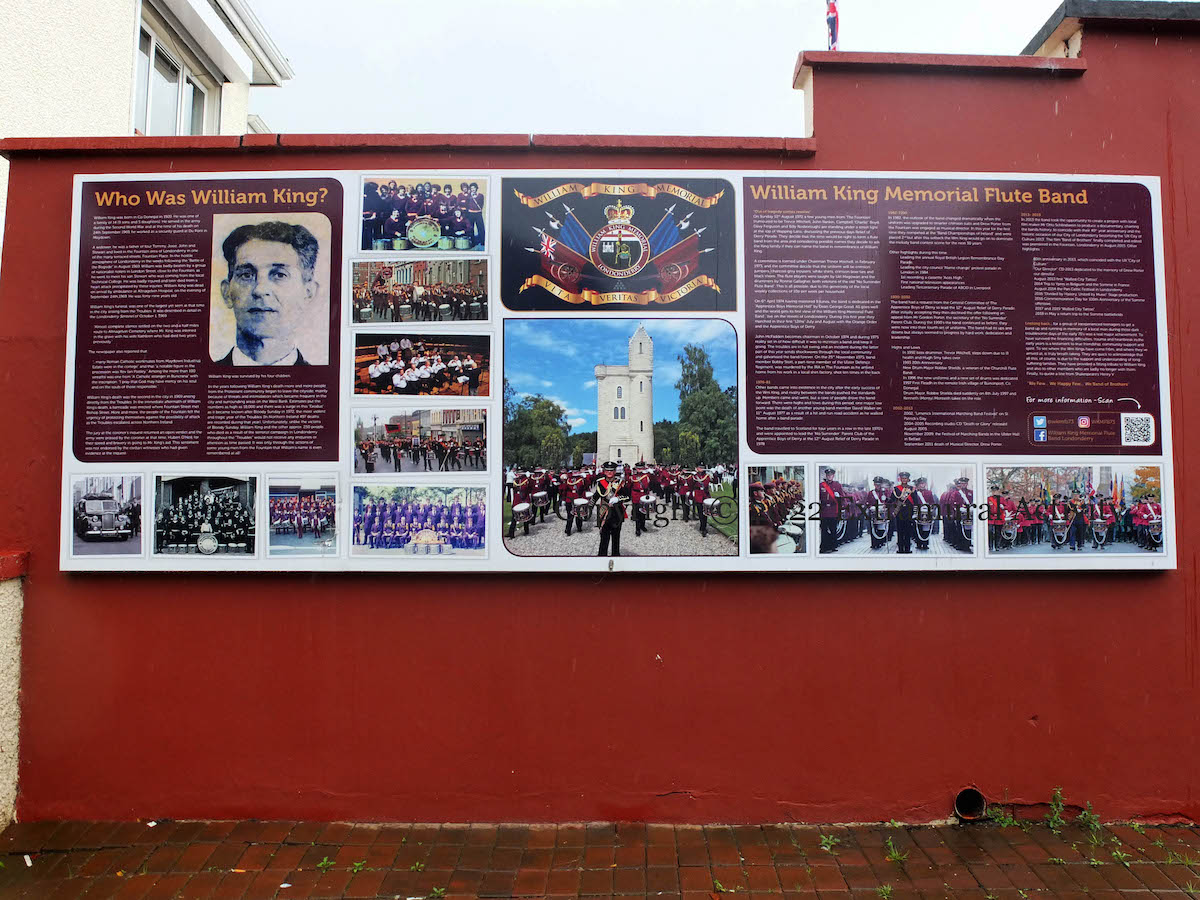
On the left is the story of William King,and on the right, the story of the William King Memorial Flute band (Fb), including the death of Bobby Stott on, forty-seven years ago yesterday. These images were taken during the summer; the board was vandalised two weeks ago (BelTel).
William King “was born in Co Donegal in 1920. He was one of a family of 14 … He served in the army during the Second World War and at the time of his death on 24th September 1969, he worked as a security guard at Du Pont in Maydown. A widower, he was a father of four … and lived in the Fountain area of Londonderry … In the hostile atmosphere of Londonderry in the weeks following the ‘Battle of the Bogside’ in August 1969, William was badly beaten by a group of nationalist rioters in London Street, close to the Fountain … and later died from a heart attack precipitated by these injuries. … unlike the victims of Bloddy Sunday, William King and the other approx. 250 people who died as a result of the terrorist campaign throughout the “Troubles” would not receive any enquiries or attention as time passed.”
“On 6th April 1974 having mastered 8 tunes, the band is dedicated on the “Apprentice Boys Memorial Hall” by Dean George Good … On the 25th November 1975, band member Bobby Stott, a part-time member of the Ulster Defence regiment, was murdered by the IRA in The Fountain … [in 1982] they competed at the “Band Championships of Ireland” and were placed 2nd but after this setback the Wm King would go on to dominate the melody band contest scene for the next 30 years.
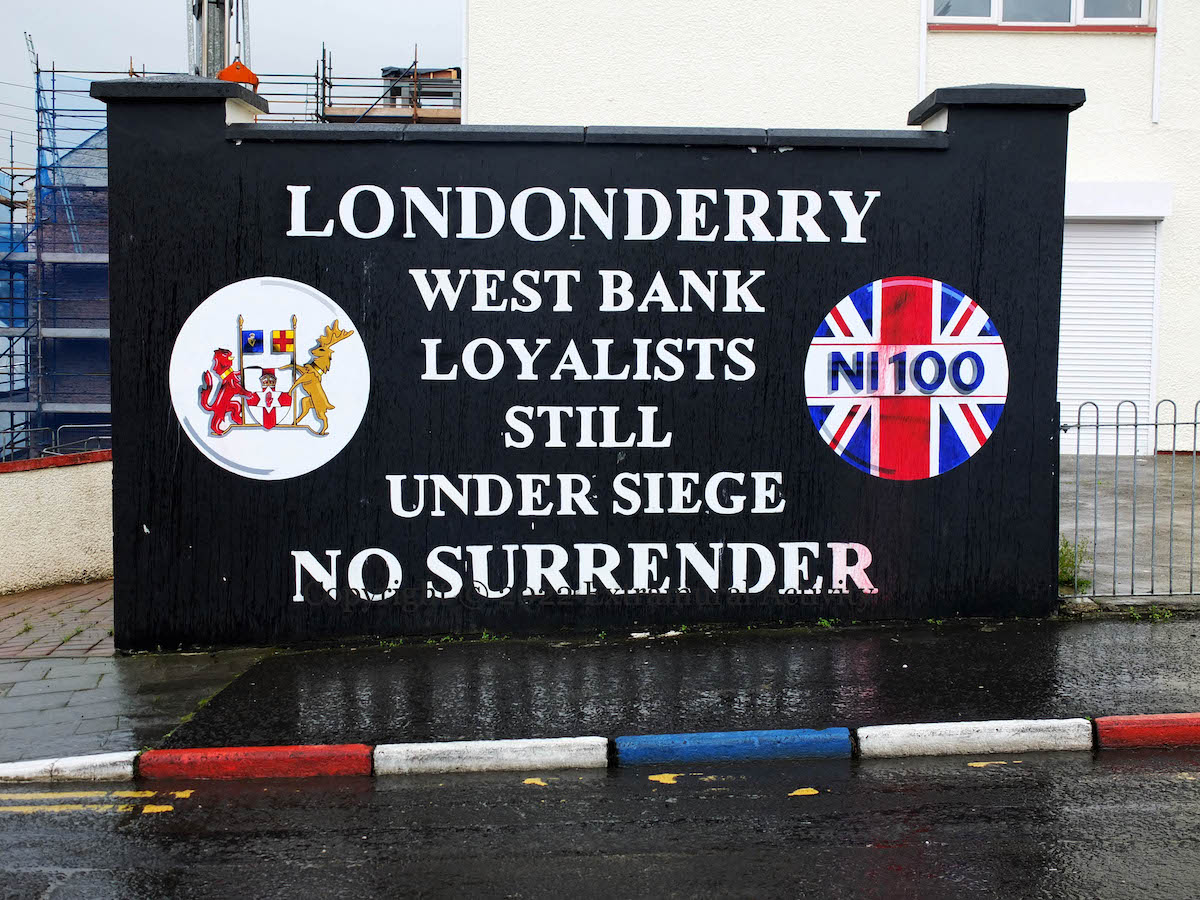
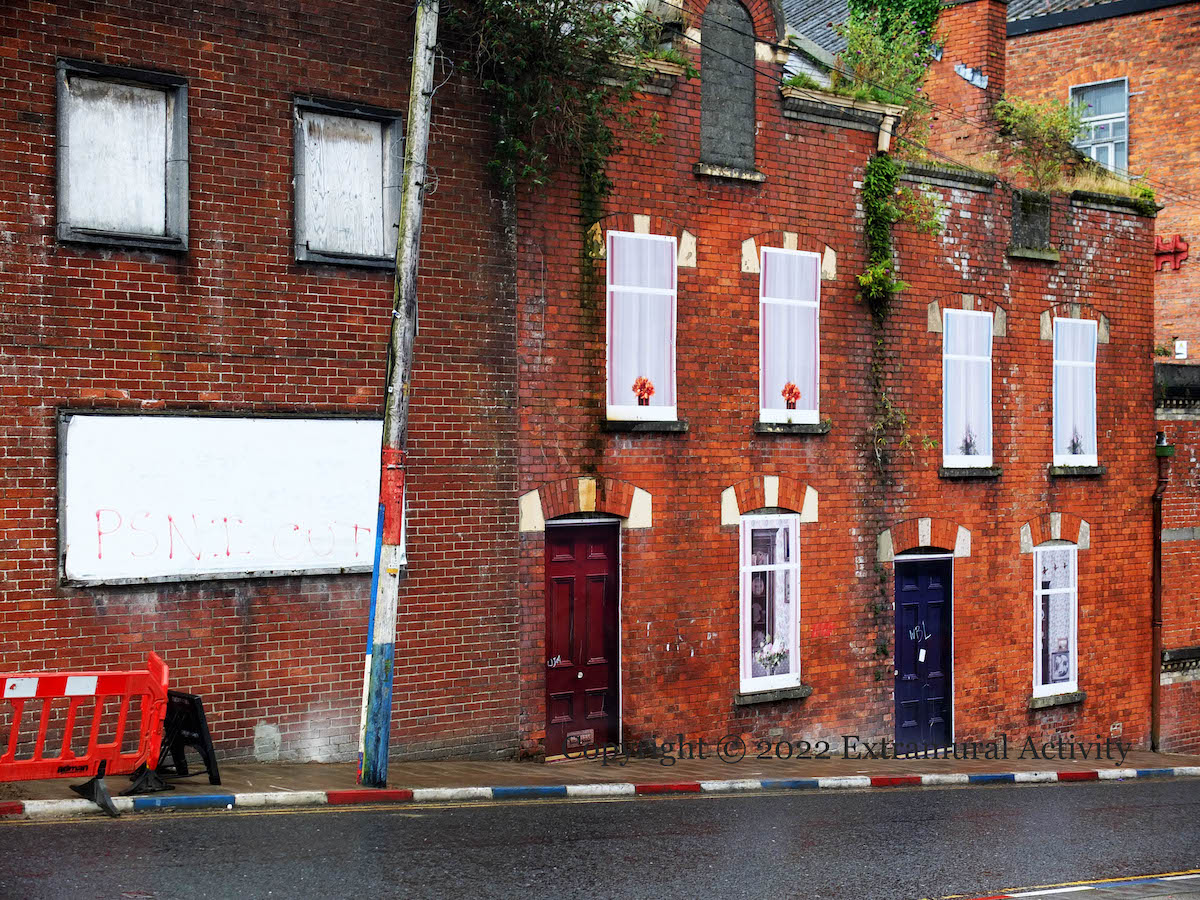
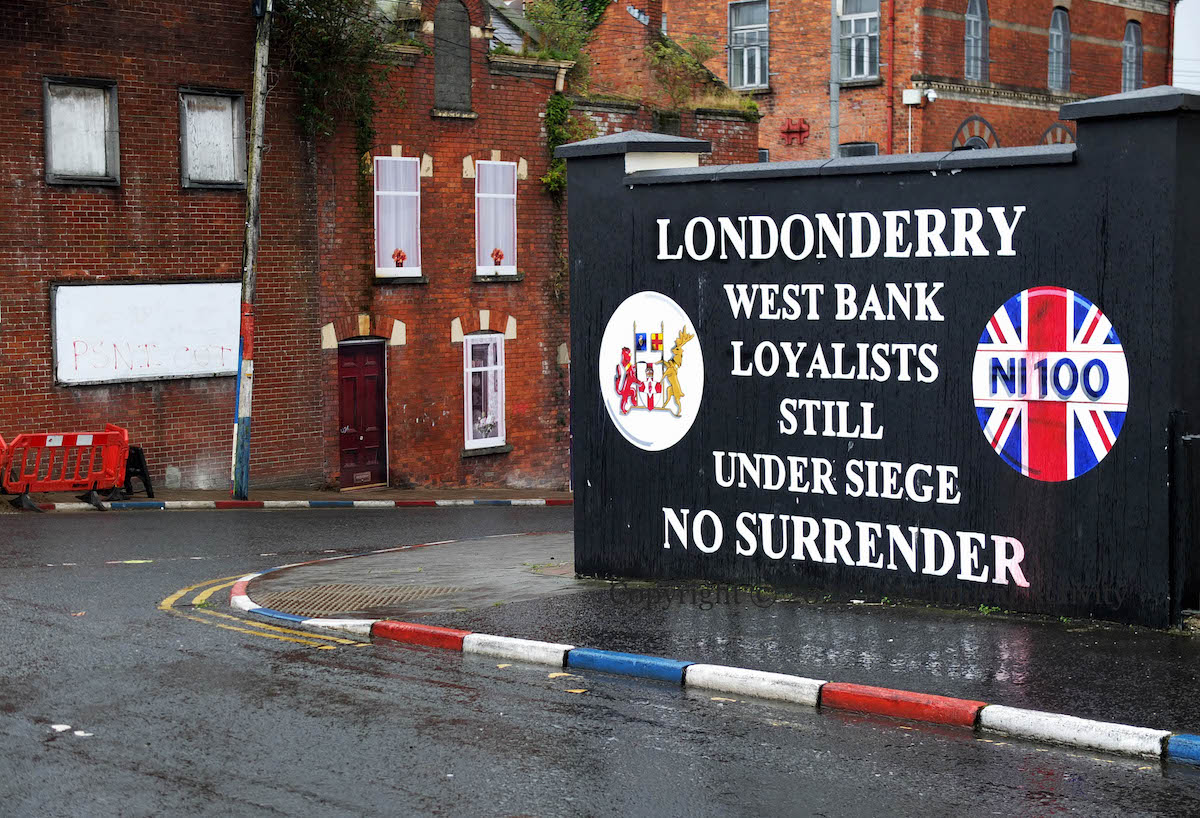
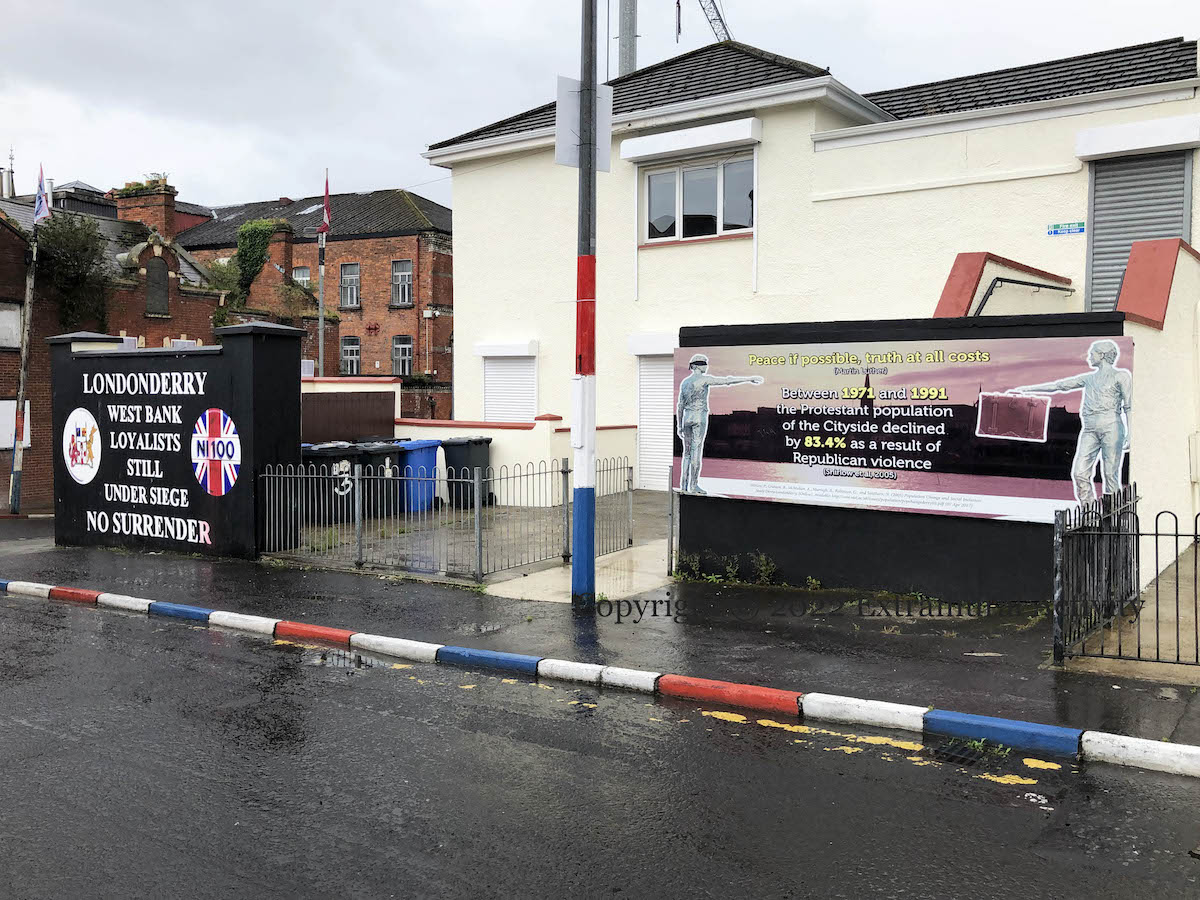
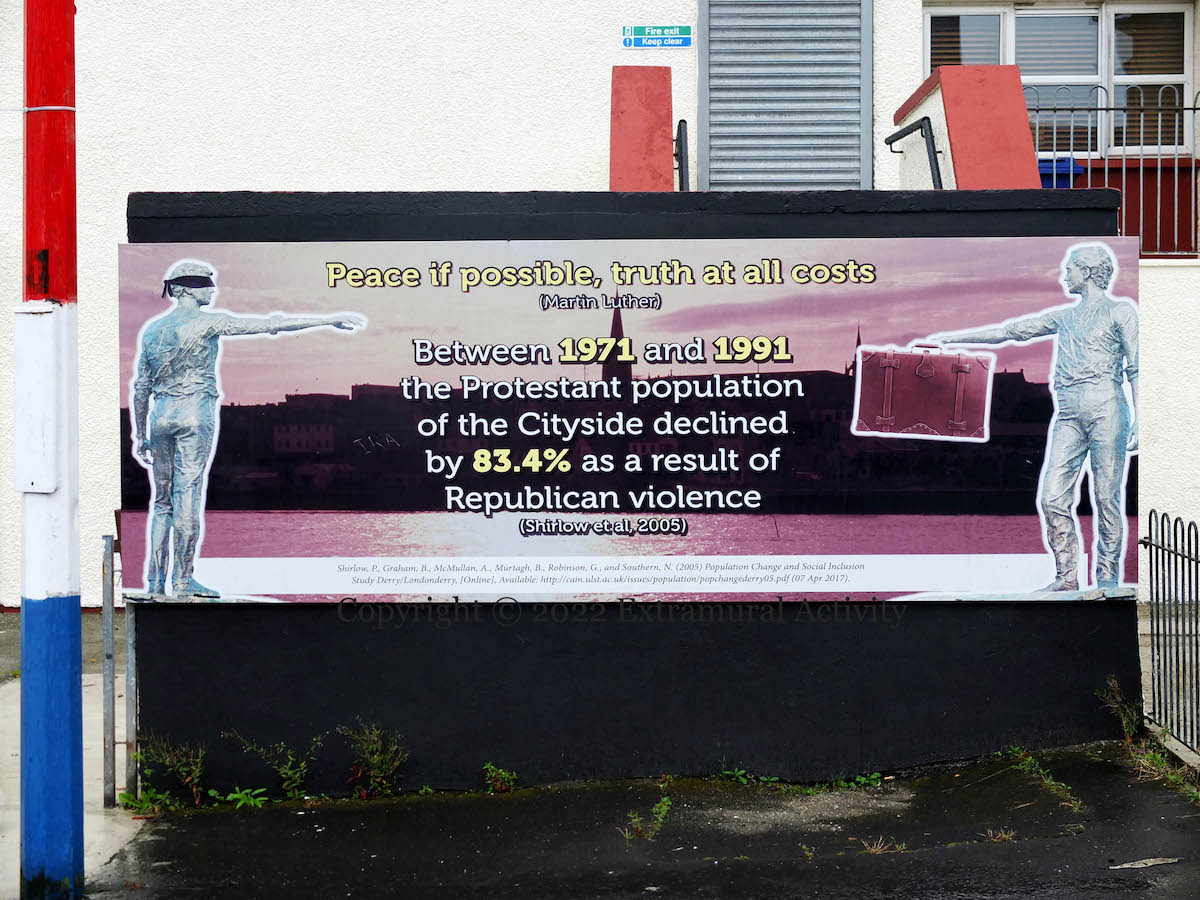
“Londonderry west bank loyalists” are “still under siege”, at first from two decades of “Republican violence” – “Between 1971 and 1991 the Protestant population of the Cityside declined by 83.4% as a result of Republican violence (Shirlow et al. 2005)” – hence the boarded- and dressed-up windows – and now from the “PSNI”.
(The words “as a result of Republican violence” are not included in the Shirlow article).
Fountain Street and Hawkin Street, in the Fountain, Londonderry.
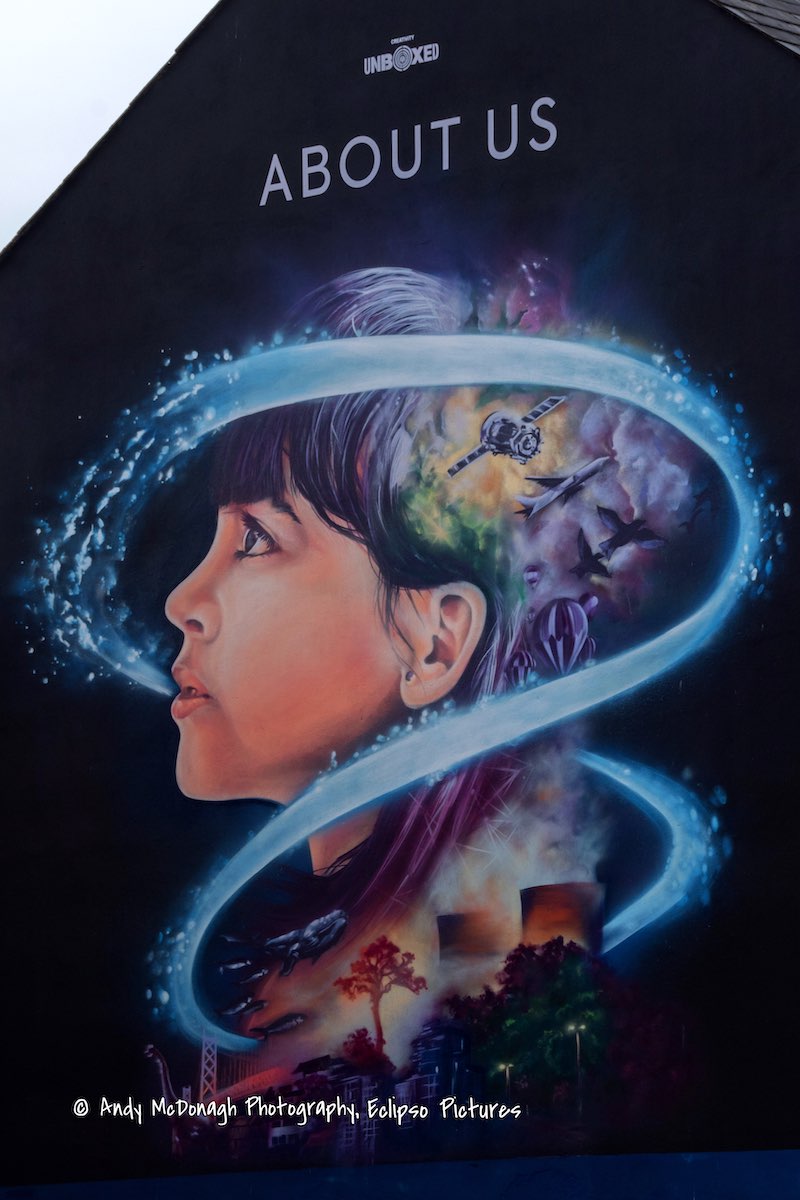
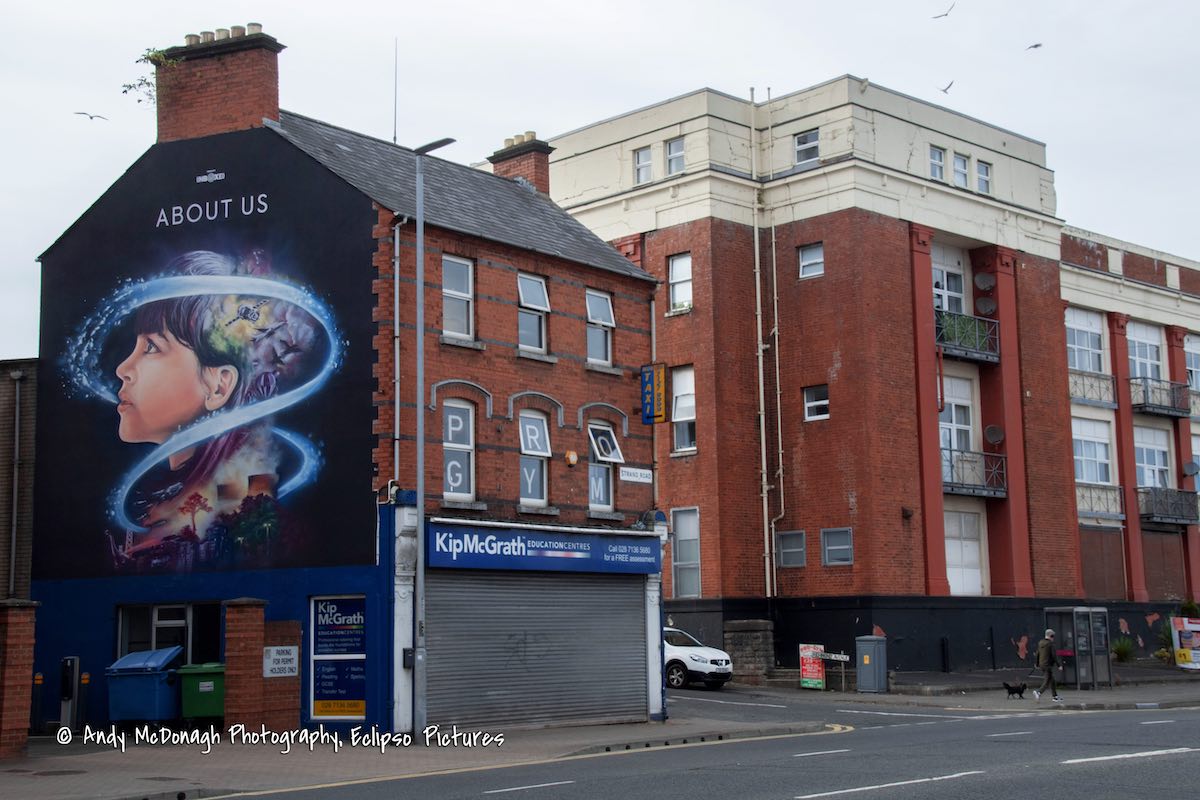
This is the mural painted by UVArts (web) to accompany the About Us film exhibition that visited London-/Derry in March, showing life from the Big Bang until the present day, commissioned by Unboxed.
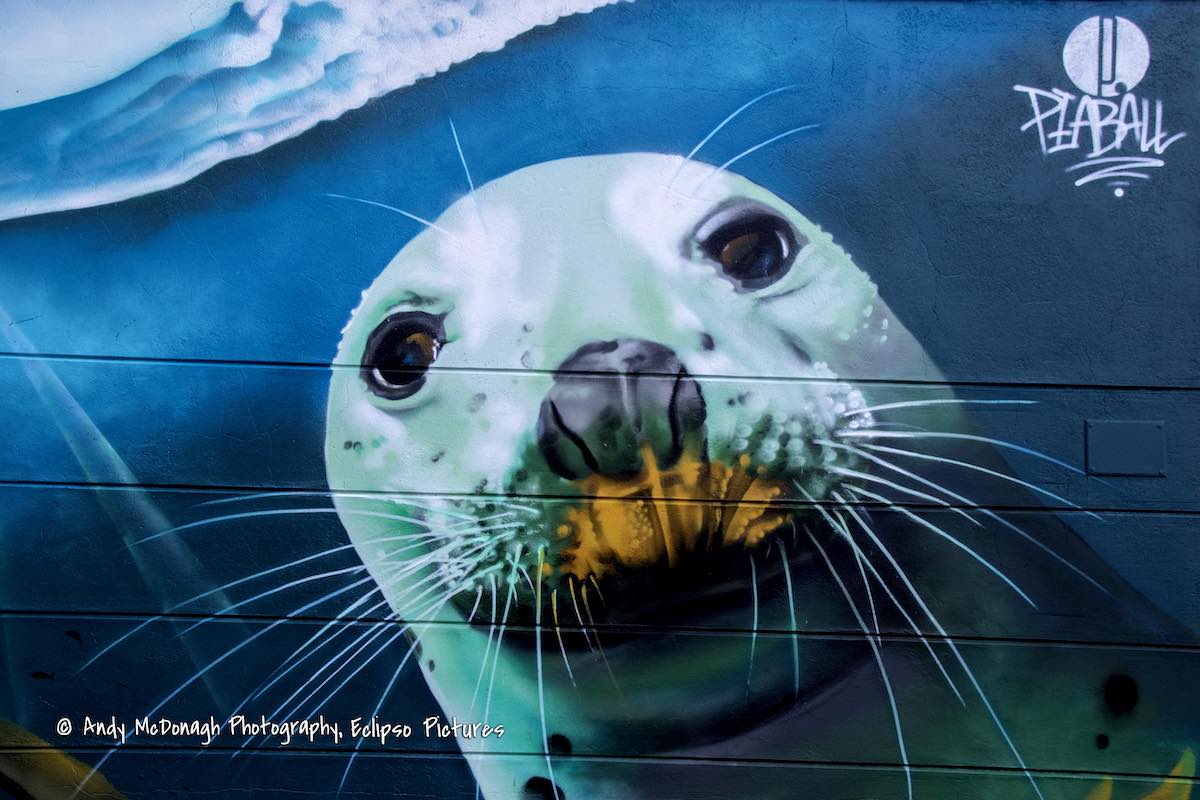
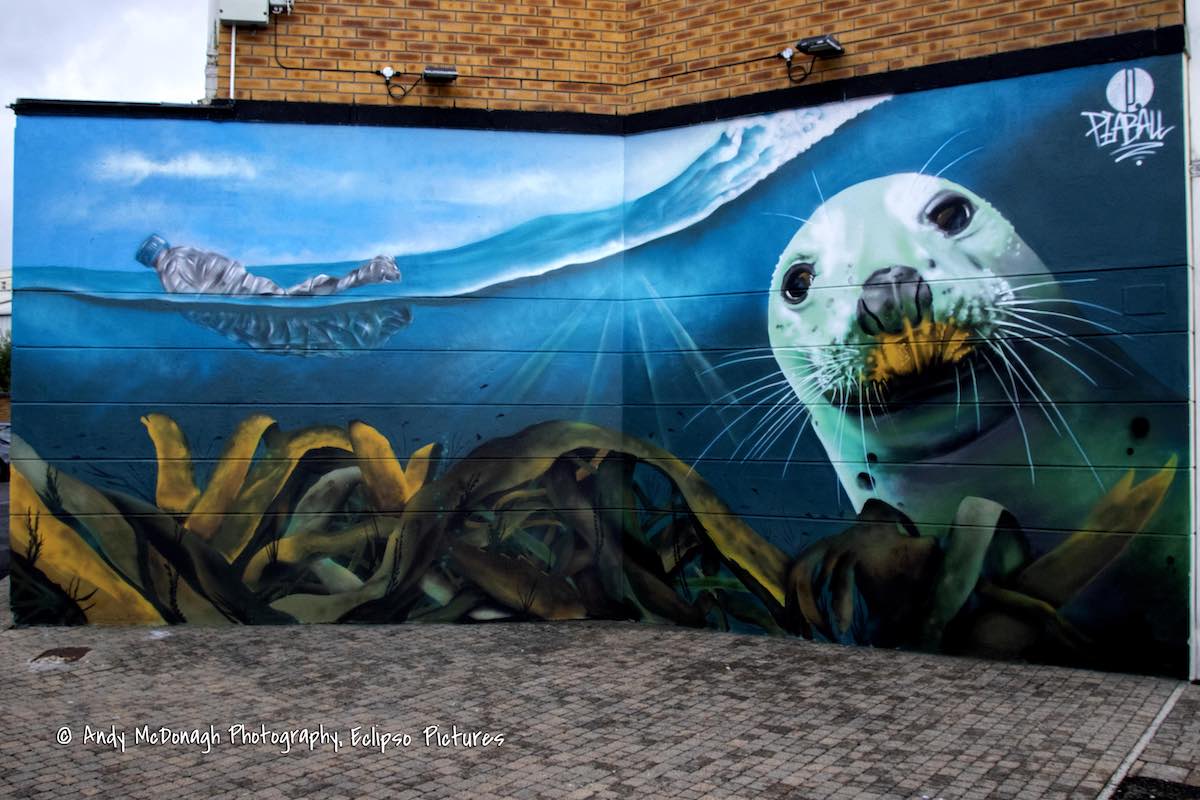
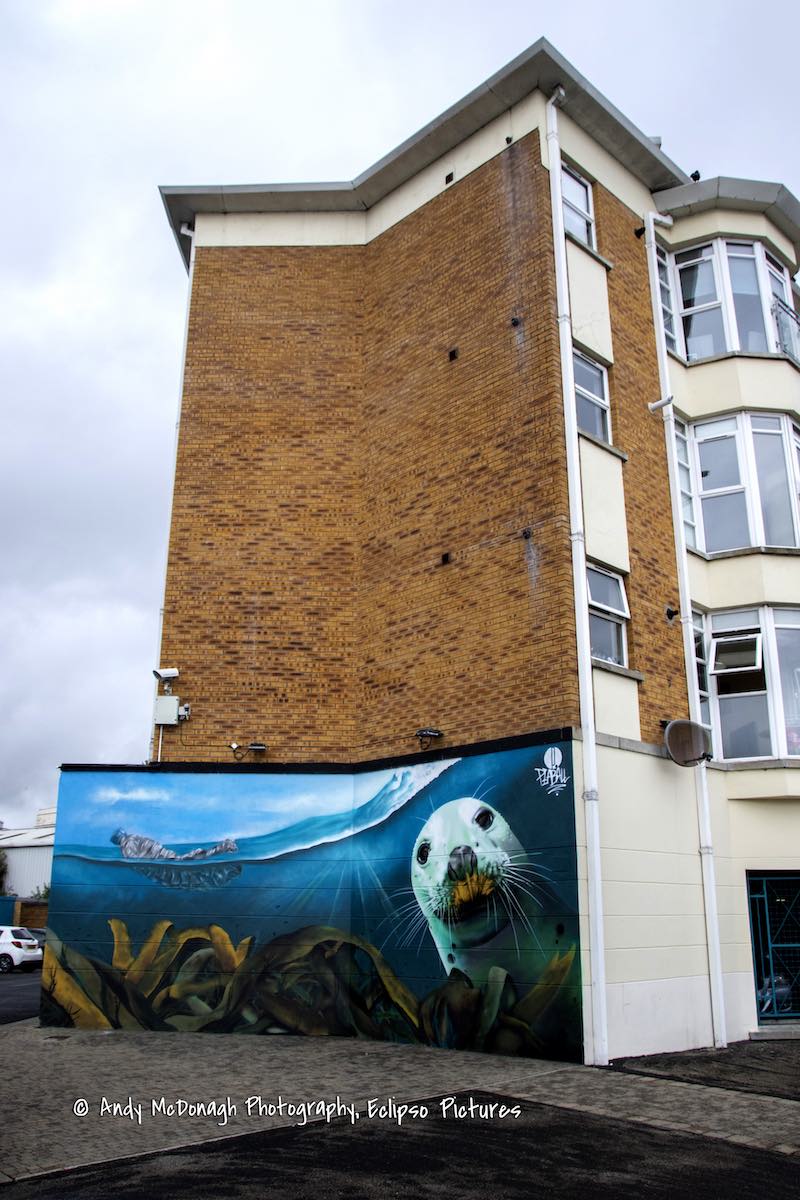
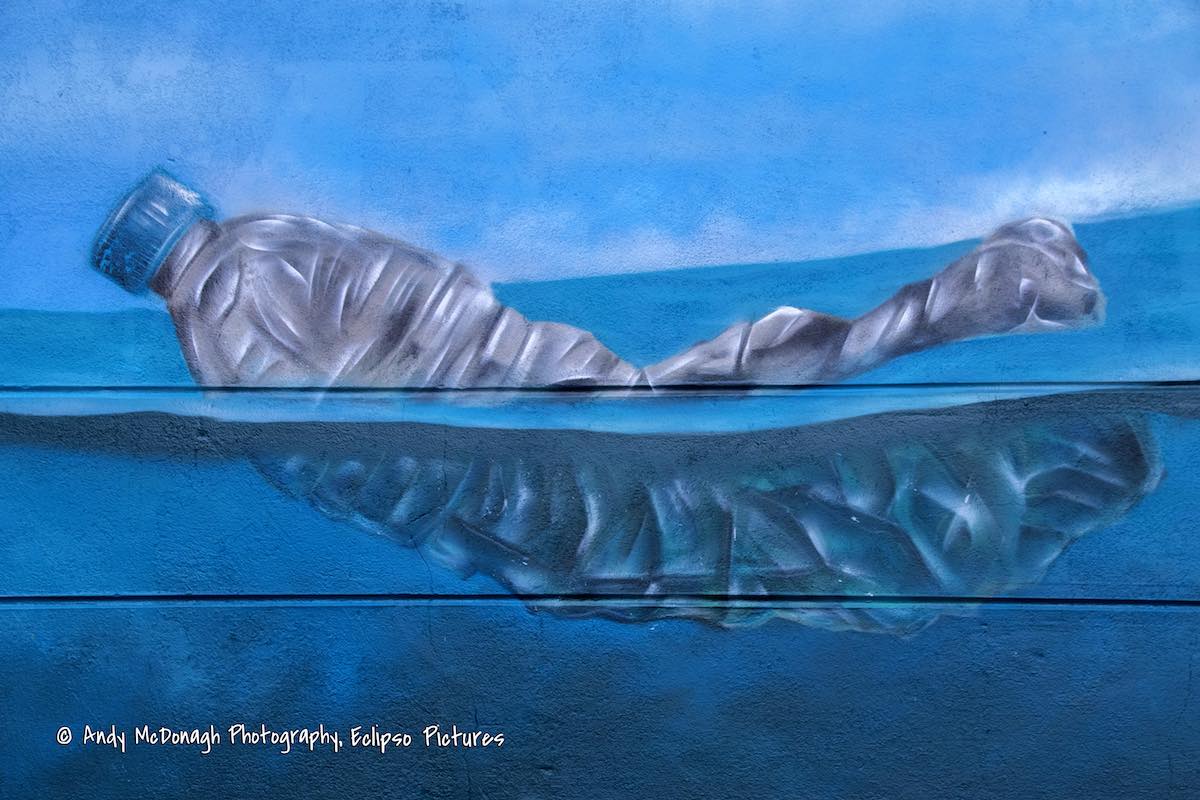
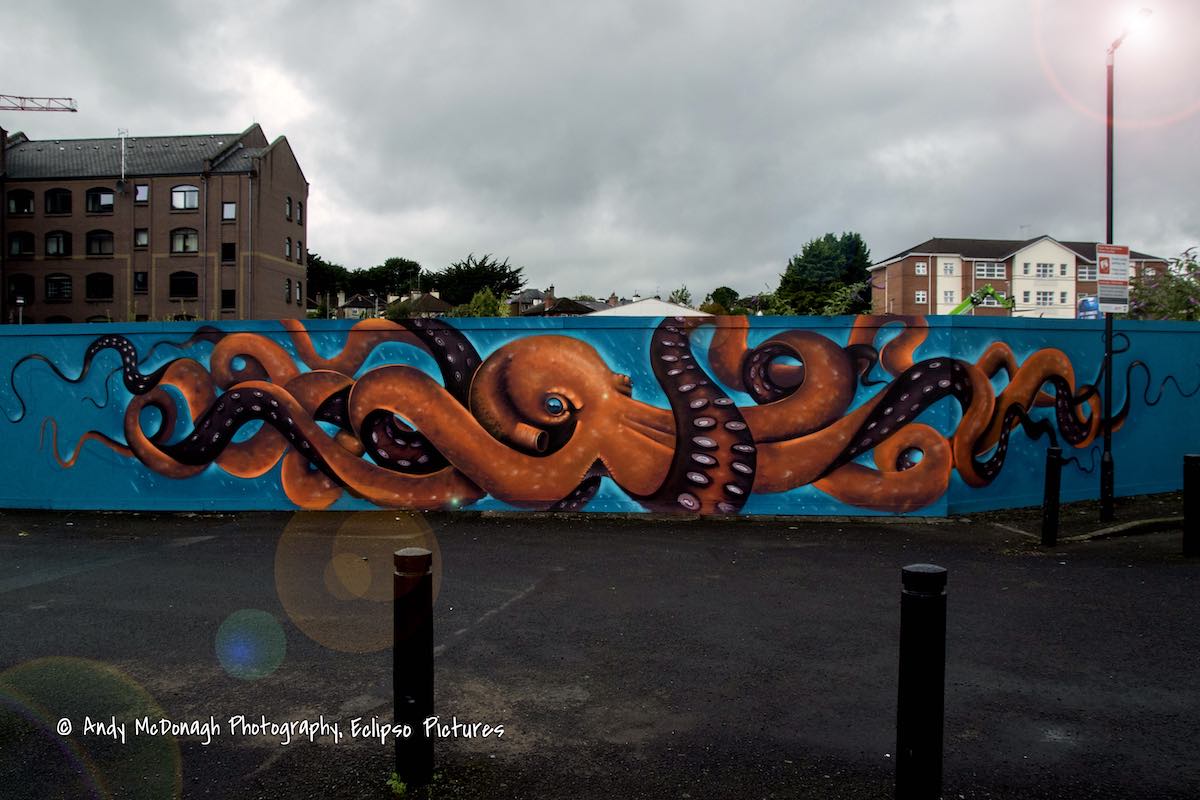
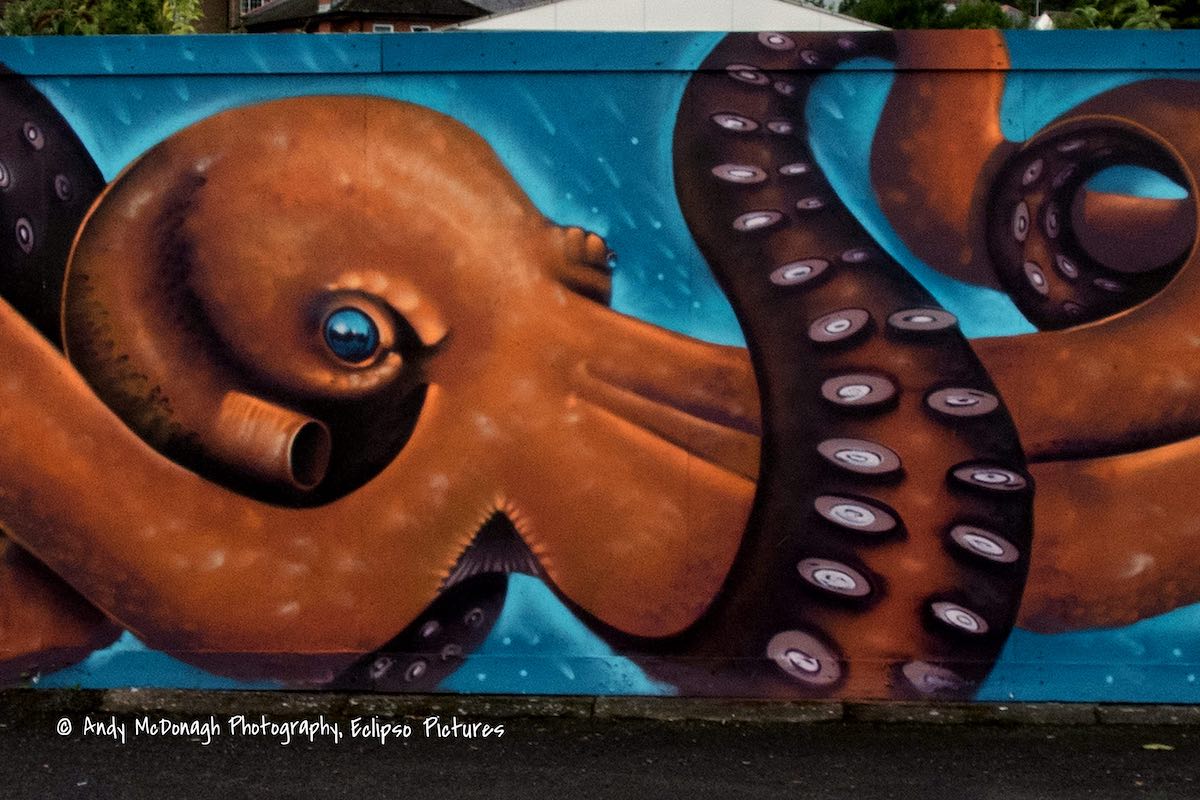
The Foyle Maritime Festival encourages people to pledge to reduce their use of plastics, so that the amount of plastic entering the seas and waterways is reduced. London-/Derry was host to the ships sailing in the Clipper 2022 Race in July and to accompany the festival, Derry City & Strabane Council had two murals painted by Peaball (ig) at Foyleview apartments. The Council had a competition to name the seal; the winner was “Ronan” or “Rónán” meaning “little seal” in Irish (ig video). The octopus does not appear to have a name.
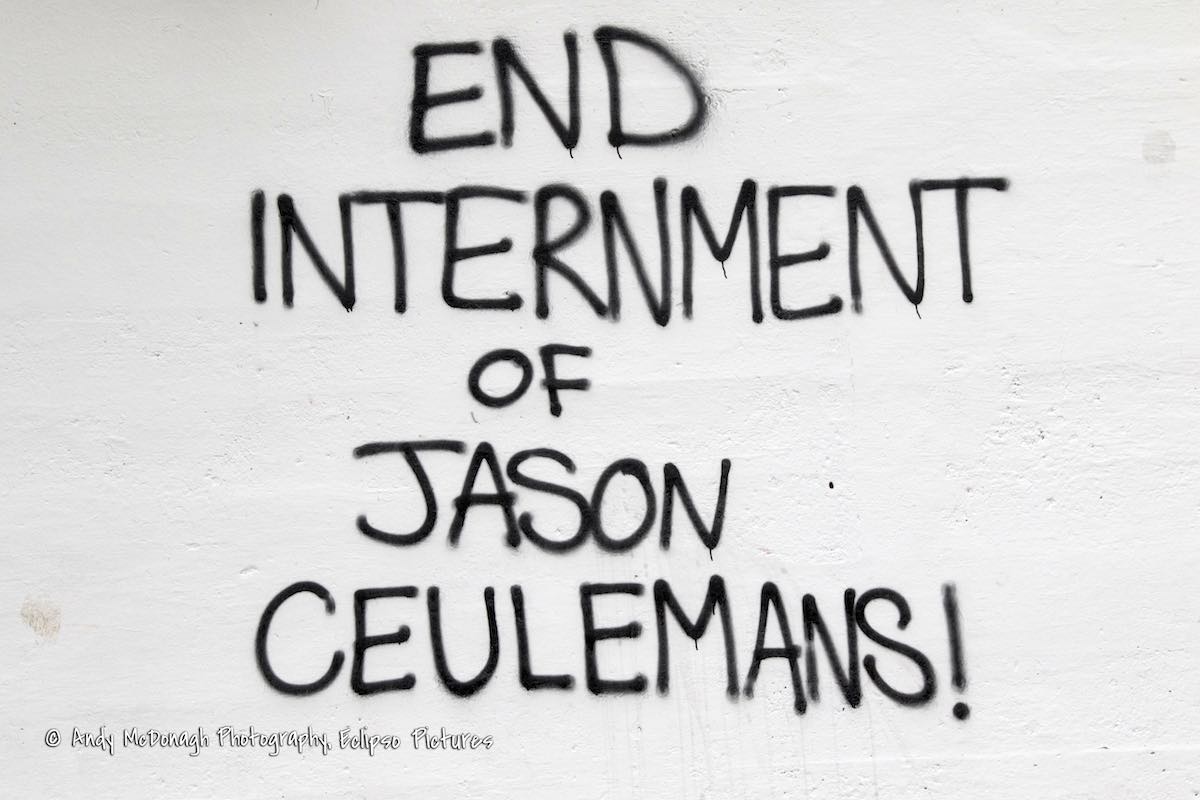
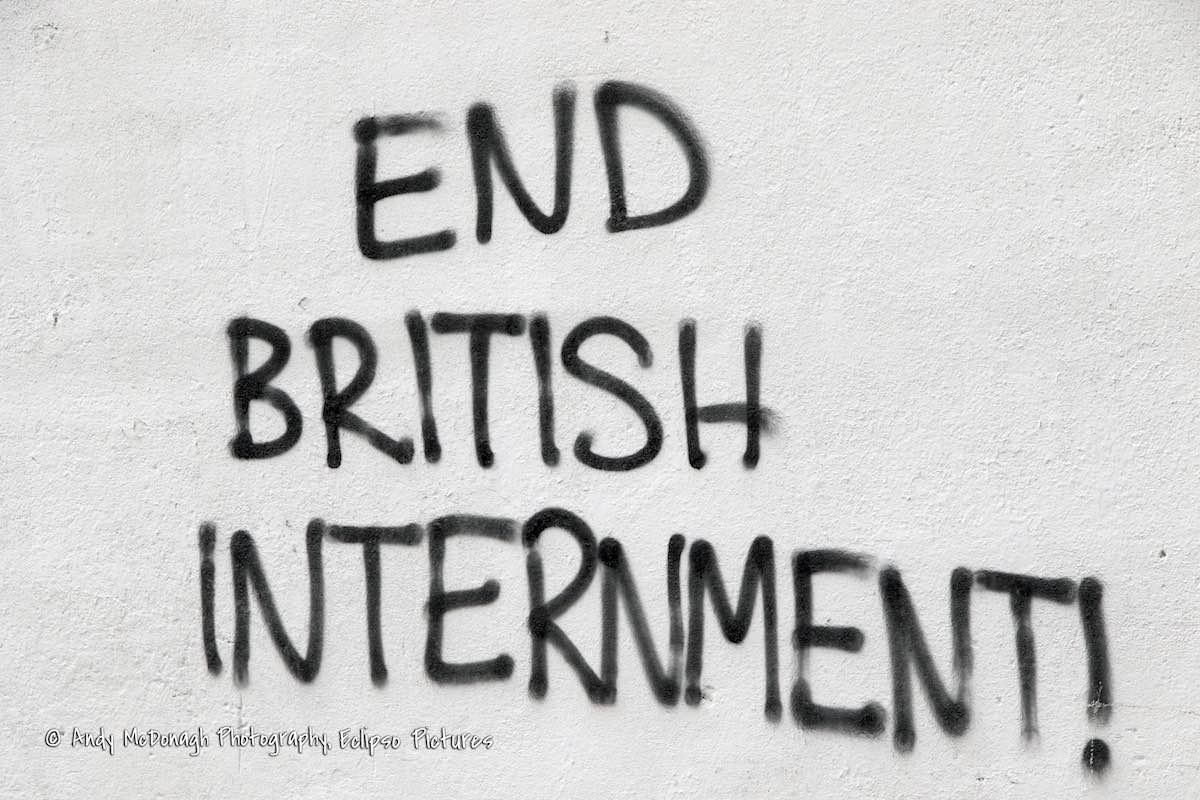
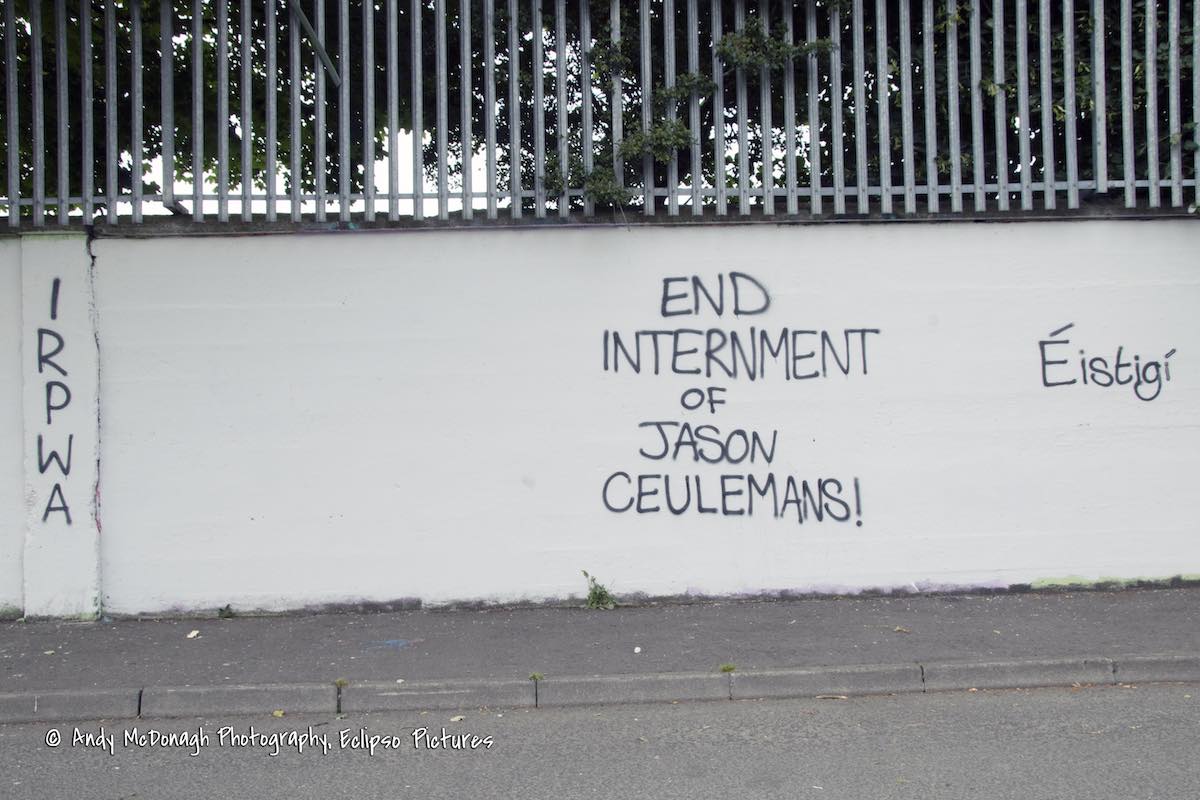
Jason Ceulemans was sentenced to ten years with five years to be served on supervised licence in 2014 for possession of an explosive. He had his licence revoked in June after attending an Easter commemoration which, according to Saoradh, he had permission to attend (Irish News | Saoradh).
The graffiti in support of his release is in Anne Street, Derry. There was also graffiti in Creggan – see Creggan 75 and Central Drive – and the Brandywell.
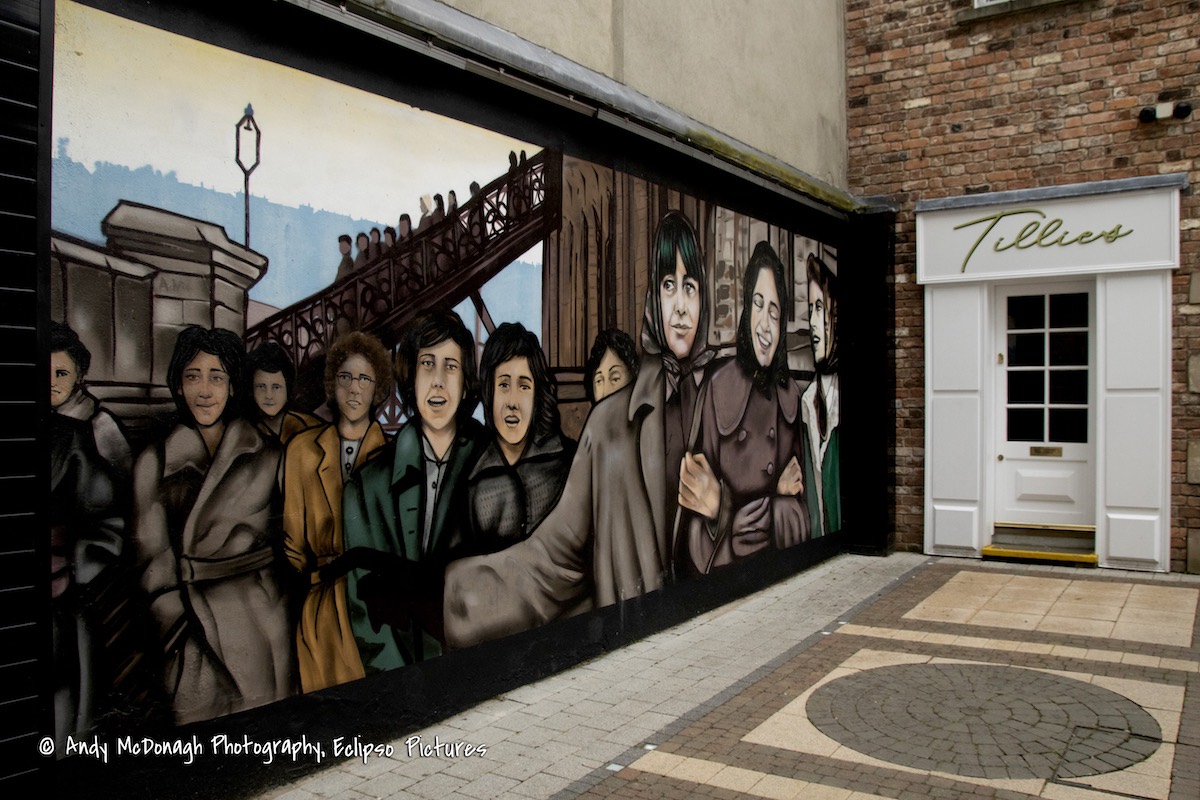
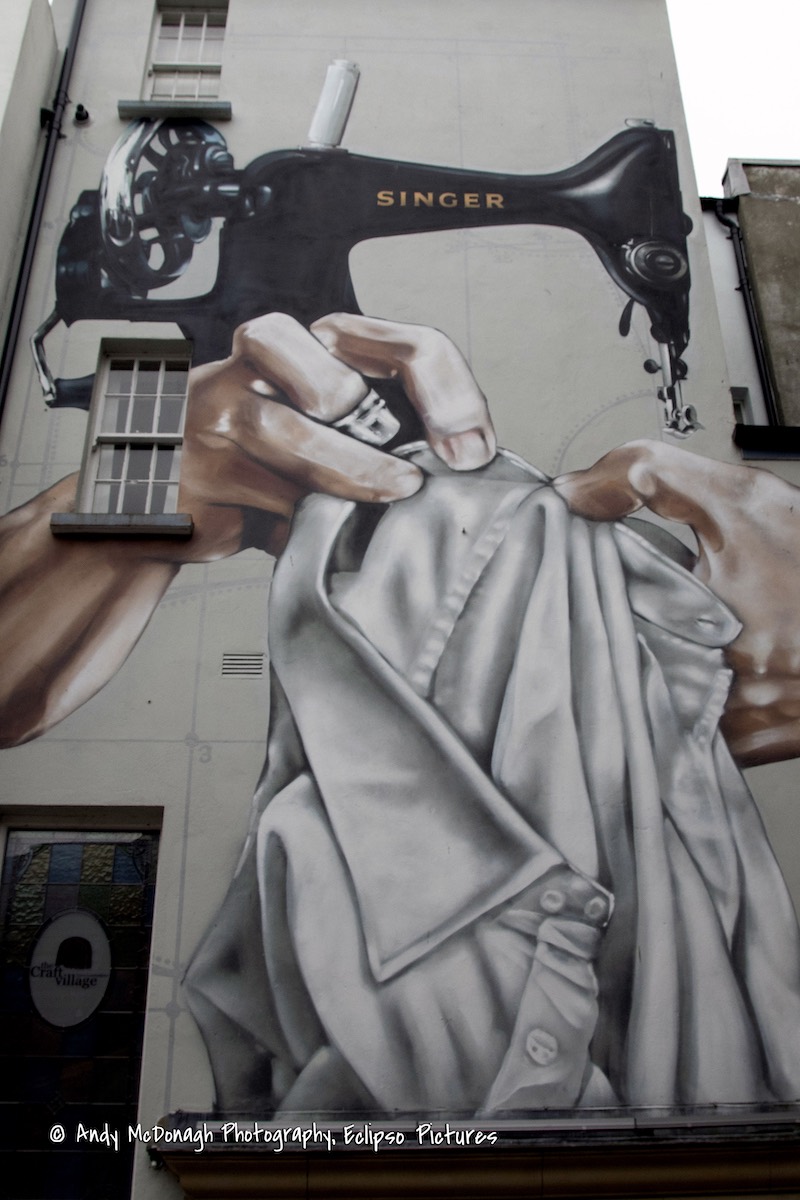
Tillie & Henderson’s shirt factory opened in 1856 at the junction of Abercorn Road and Foyle Road, Derry (next to the ‘Hands Across The Divide’ statue) and survived until 2003 when it was demolished after a fire (BBC); an apartment block is currently planned for the site (Derry Journal | BBC). It was the largest such factory in the world and one of 44 shirt factories in the city in 1900, all of which employed women, many starting in their teens.
 Seosamh Mac Coille Collection